
A well-planned driveway entrance can add privacy, define your property, and make the entire front yard feel more welcoming. The strongest designs treat the driveway surface, fence, gate, planting beds, lighting, and house facade as one connected composition. This approach also prevents fencing from looking harsh or disconnected from the landscape. Choose materials that complement your home, preserve clear street sightlines, and leave enough room for vehicles to turn safely. Layered shrubs, ornamental grasses, flowering perennials, and small trees can soften solid panels or metal rails while improving curb appeal. Fencing can also establish boundaries, increase security, and screen the property from passing traffic. () Below, these 20 Driveway Entrance Landscaping Fence Ideas offer complete looks for different homes, budgets, and yard sizes.

1. White Picket Fence Driveway Entrance
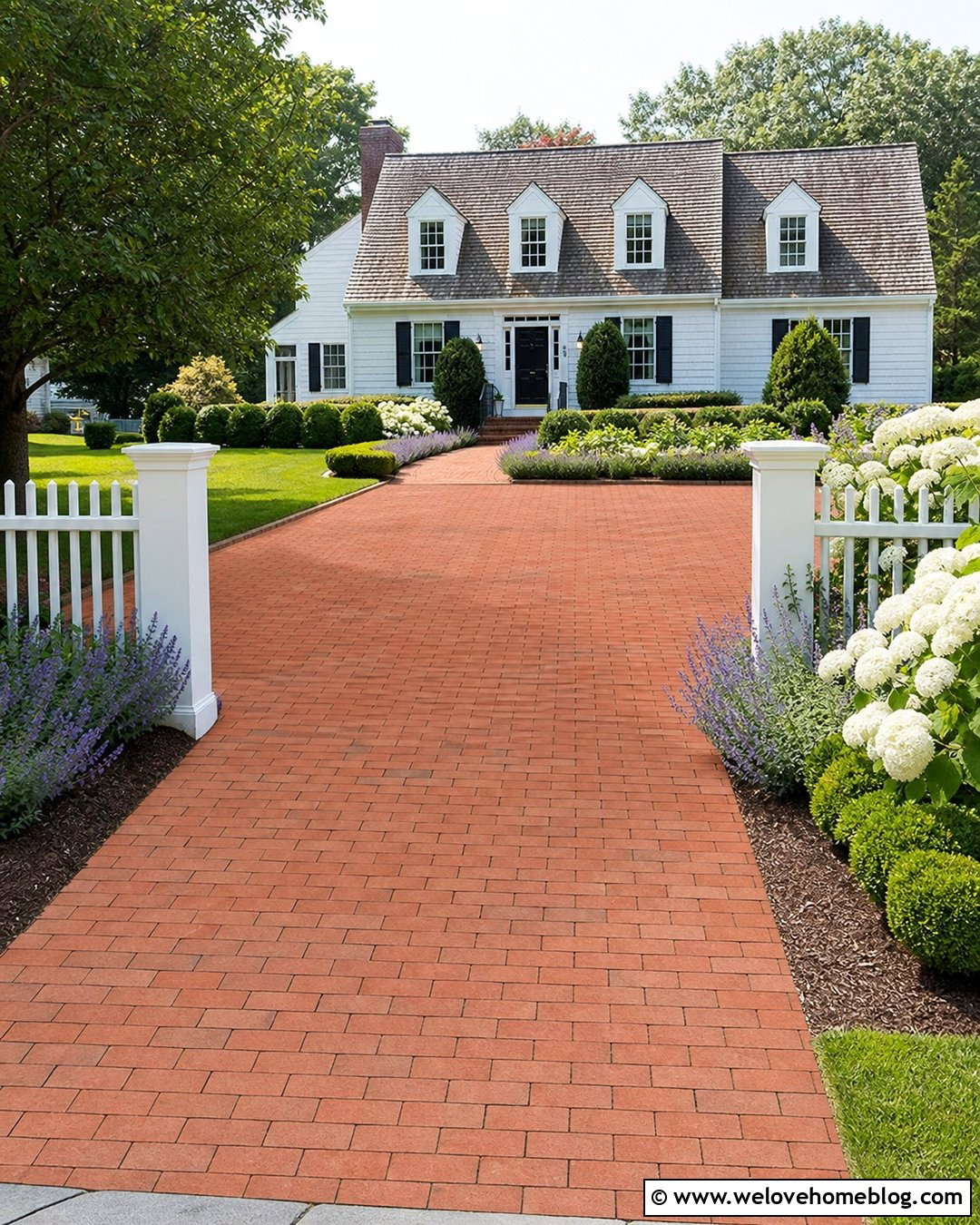
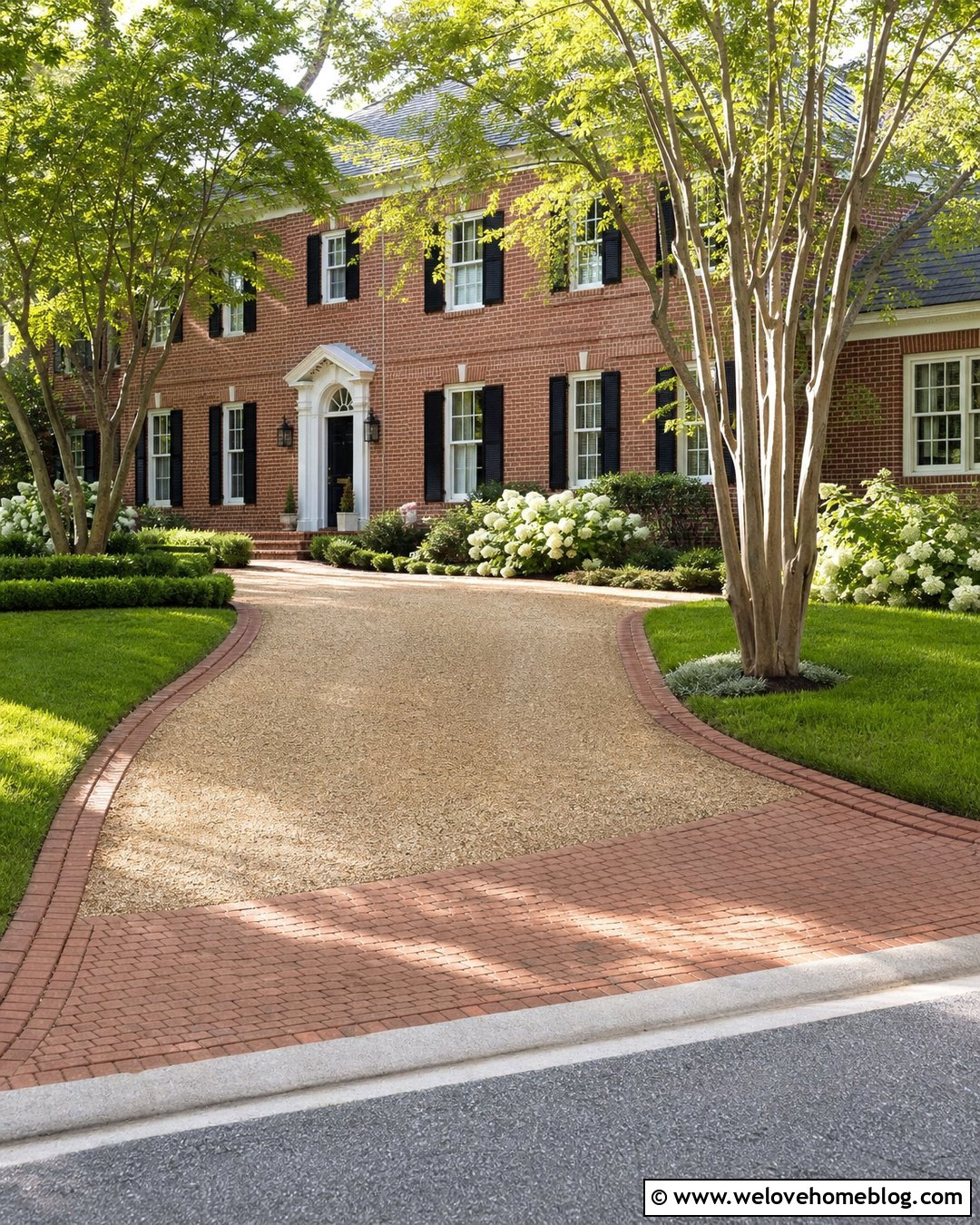
A white picket fence creates an open, friendly entrance that works especially well with cottage, Cape Cod, and traditional homes. Pair it with a warm clay brick driveway in a running-bond pattern for a classic foundation. Keep the fence around three to four feet tall so the front yard remains visible from the street. At both sides of the entrance, widen the planting beds and add hydrangeas, catmint, dwarf boxwood, and seasonal flowers. Matching white posts can mark the driveway without requiring a gate. A curved brick walkway leading from the driveway to the porch completes the layout. Use crisp metal edging around the beds, and leave low plants near the street to protect visibility when vehicles exit.
2. Horizontal Wood Fence Driveway Entrance
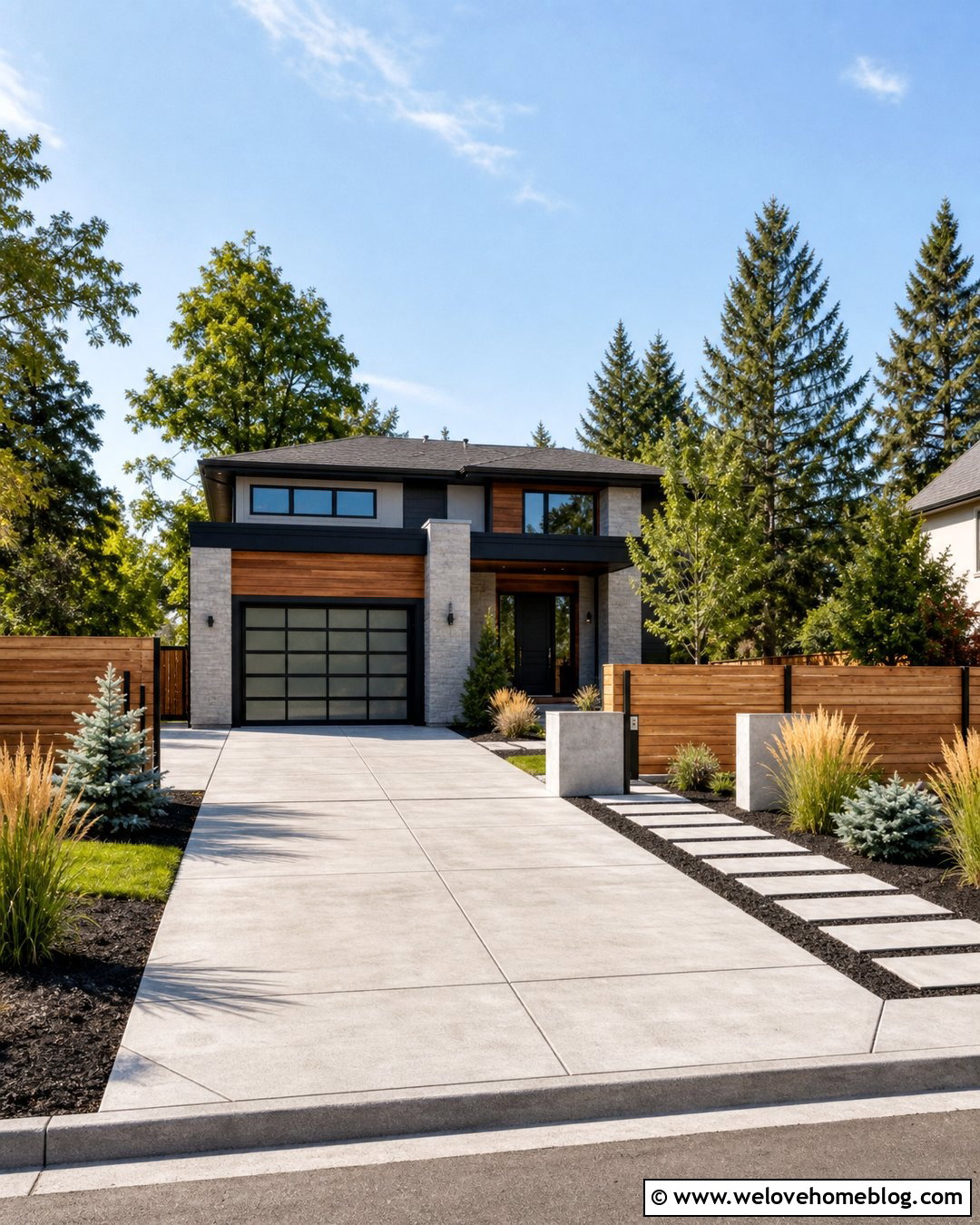
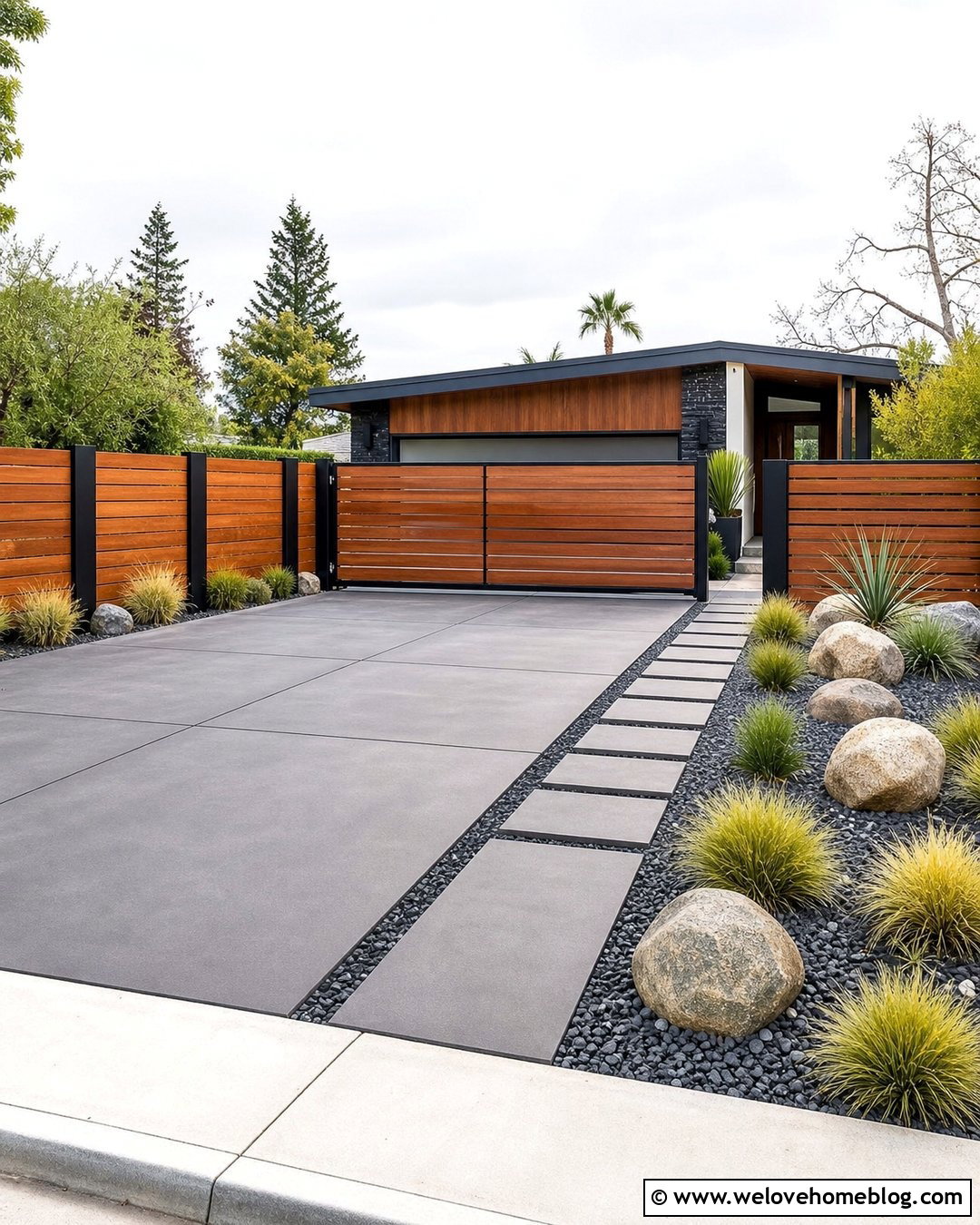
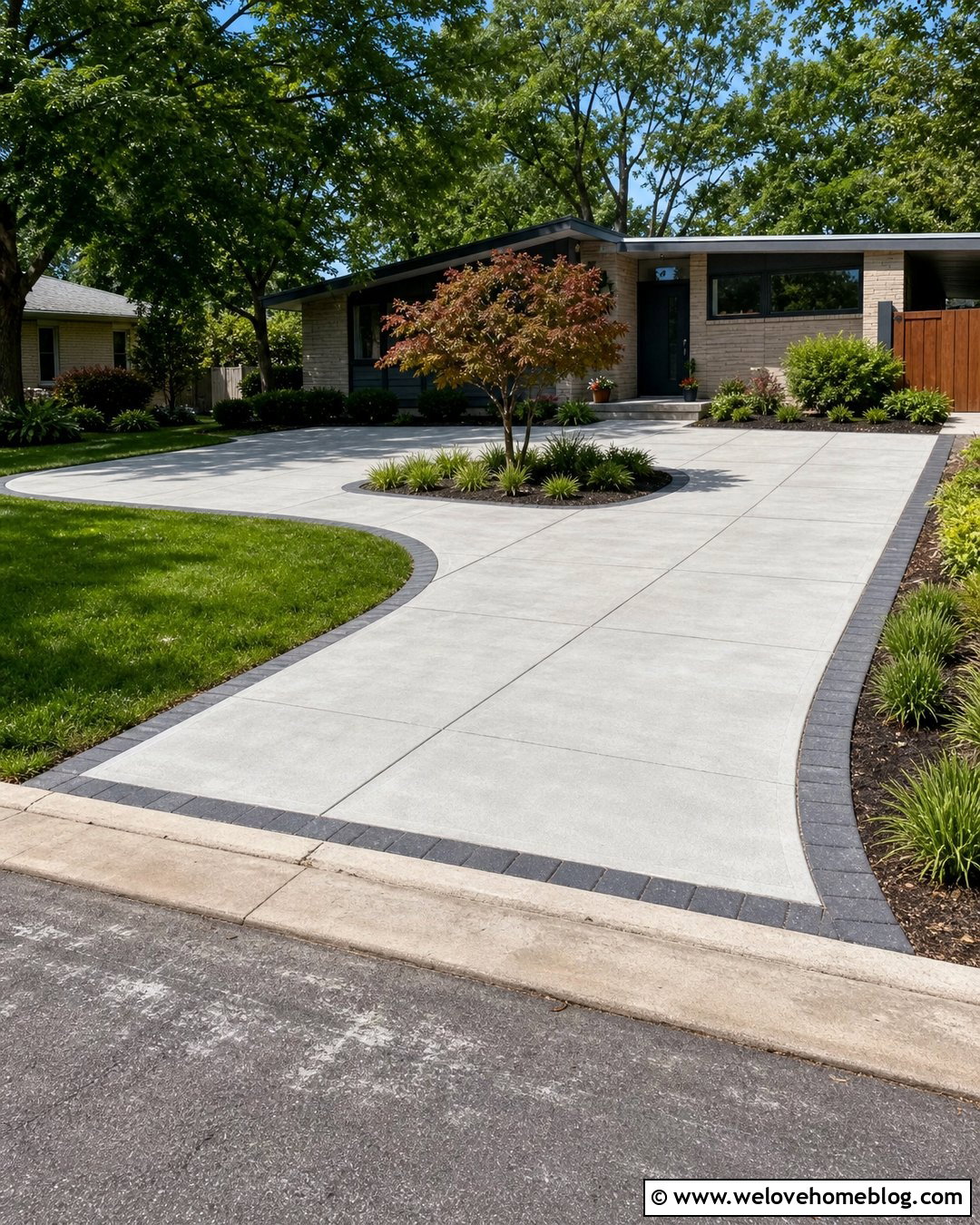
Clean horizontal boards give a driveway entrance a modern appearance while offering more privacy than an open picket design. A light gray poured concrete driveway with subtle saw-cut joints keeps the overall look simple and contemporary. Use warm cedar boards to prevent the entrance from feeling cold, then repeat that wood tone on the garage door or front porch. Narrow beds filled with feather reed grass, dwarf evergreen shrubs, and dark mulch can soften the base of the fence. Position taller screening plants farther from the road, where they will not block drivers’ views. A wide opening without a gate feels spacious, while low concrete pillars and modern address numbers create a clear threshold between the street and property.
3. Black Metal Fence Driveway Entrance
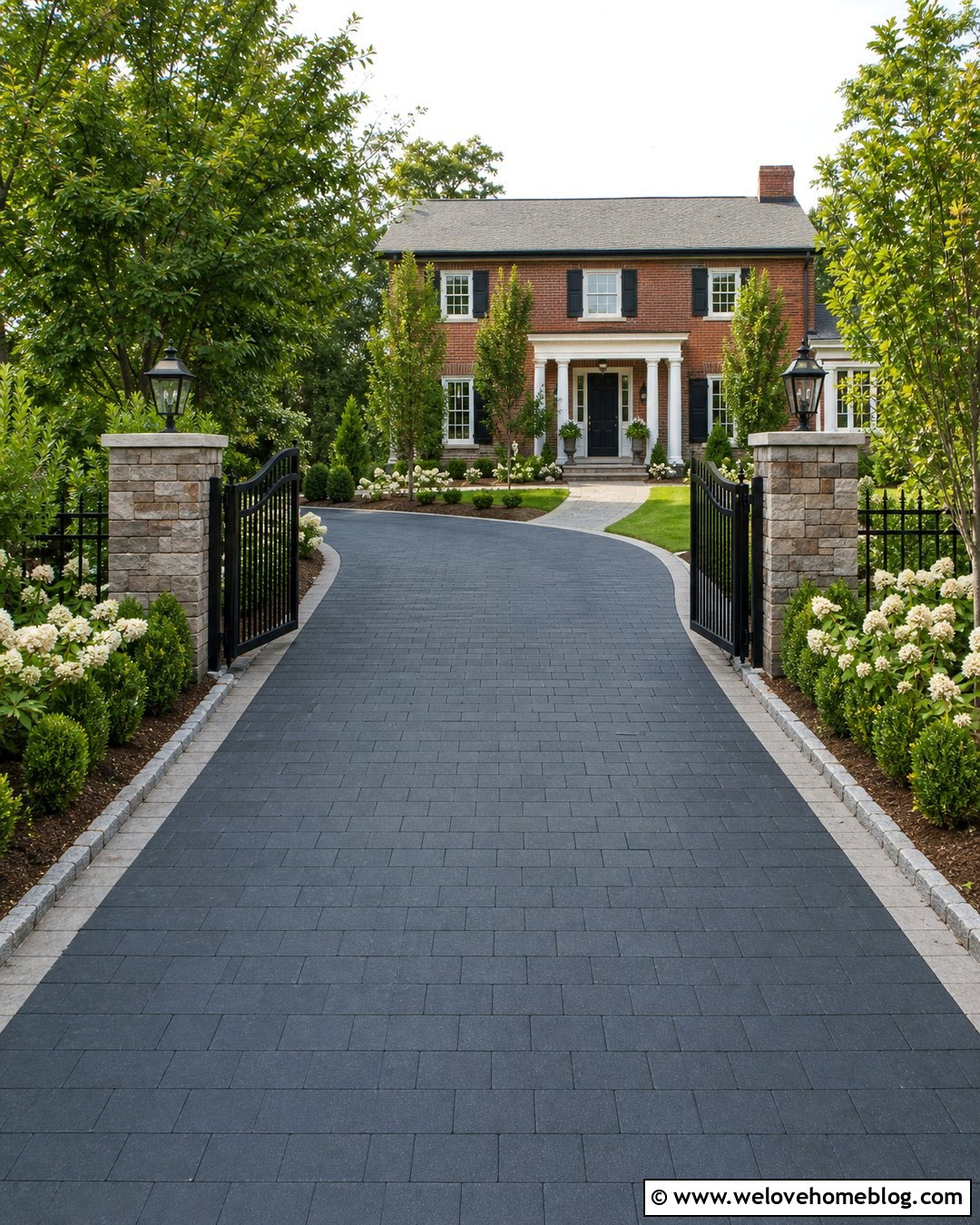
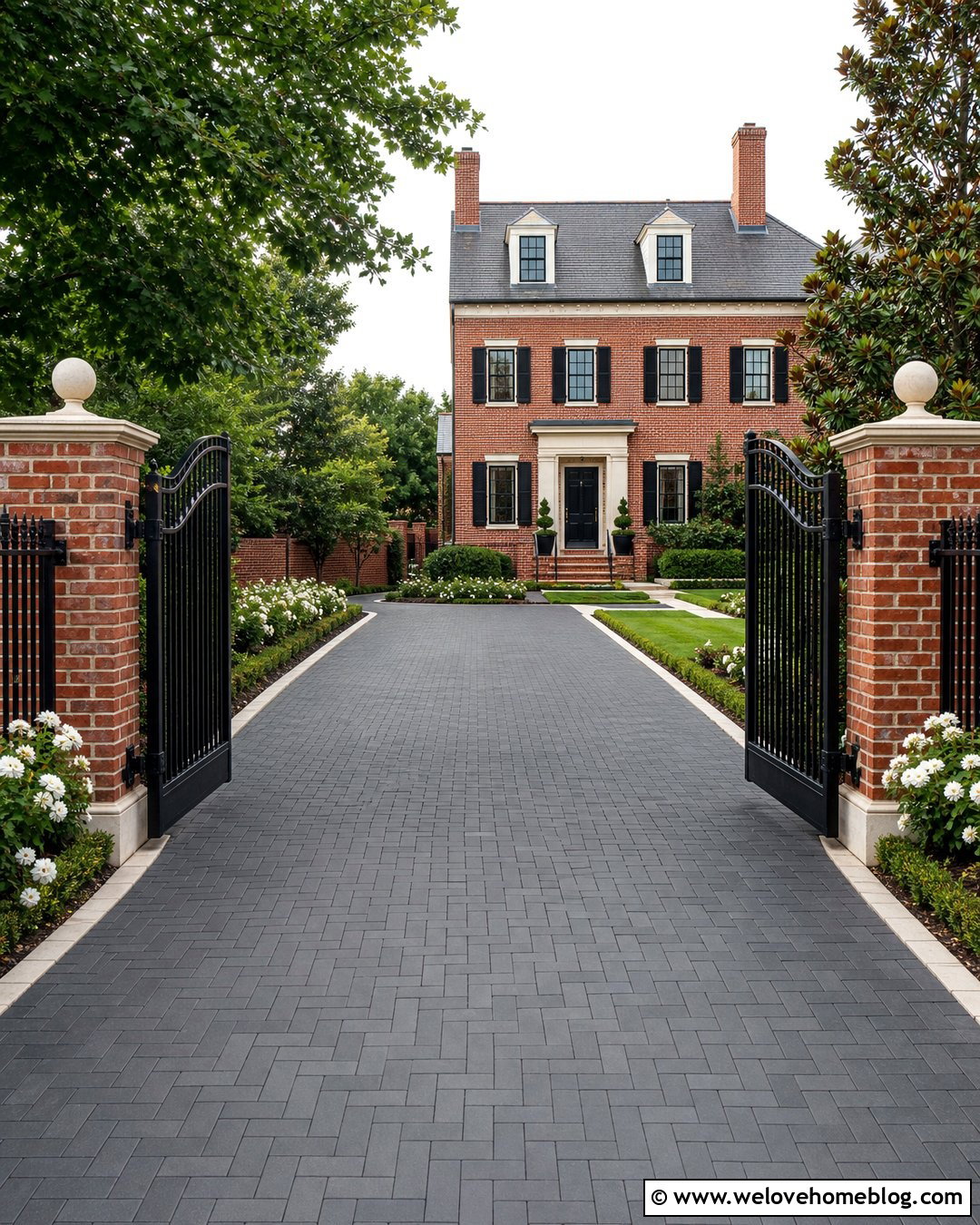
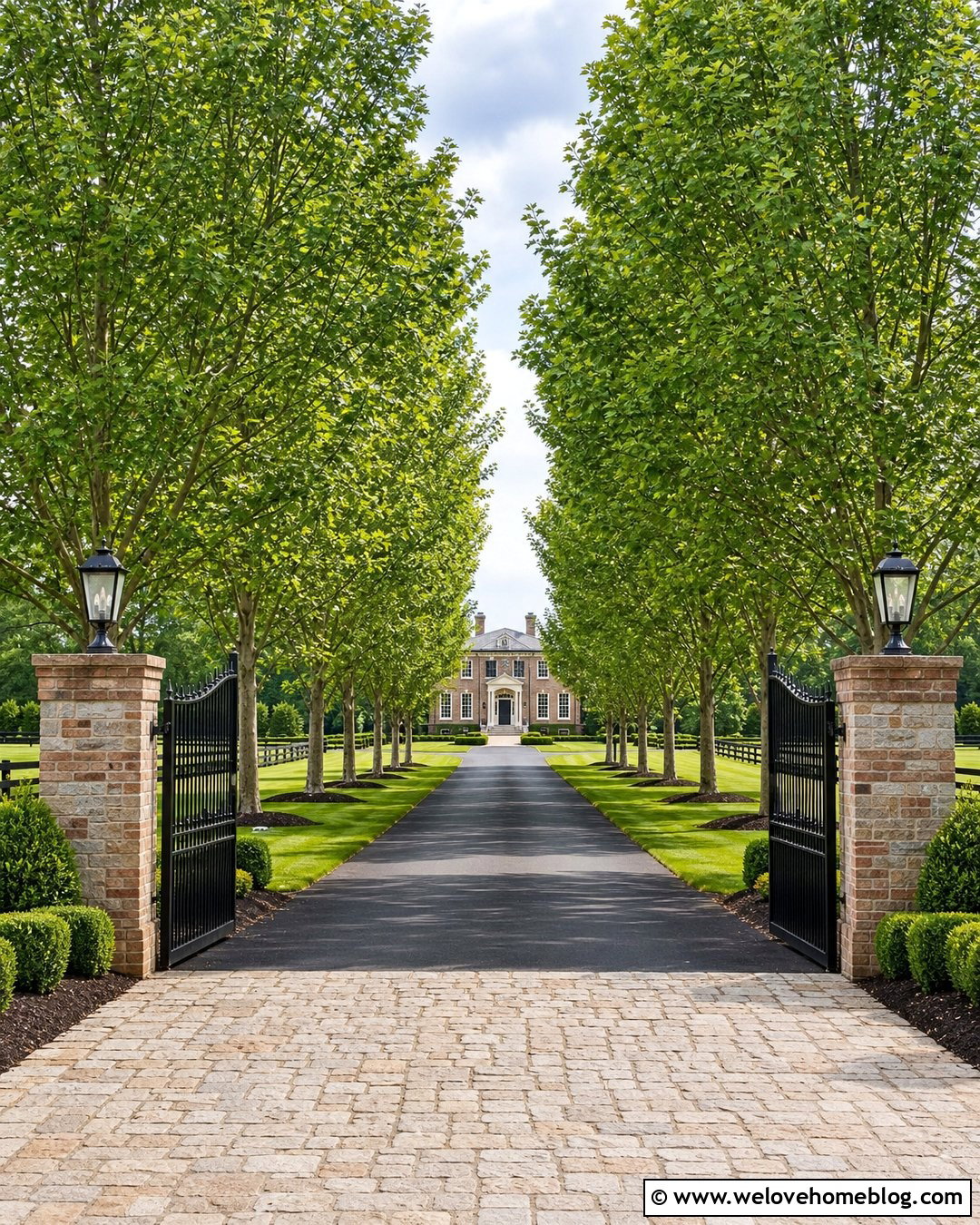
Black metal fencing gives a traditional driveway definition without hiding the house or surrounding landscape. Combine slim vertical rails with a charcoal paver driveway laid in a straightforward running-bond pattern. Brick or natural stone pillars at the entrance can anchor the lightweight fence and connect it visually to the home. For balanced landscaping, plant rounded boxwoods near the pillars and repeat low flowering perennials along both fence lines. A pair of upright ornamental trees can add height farther inside the property. Keep the planting design symmetrical if the house has a formal colonial facade. Black lanterns mounted on the pillars provide a polished finishing detail, while the open rail design maintains light, visibility, and a welcoming connection to the street.
4. Split Rail Fence Driveway Entrance
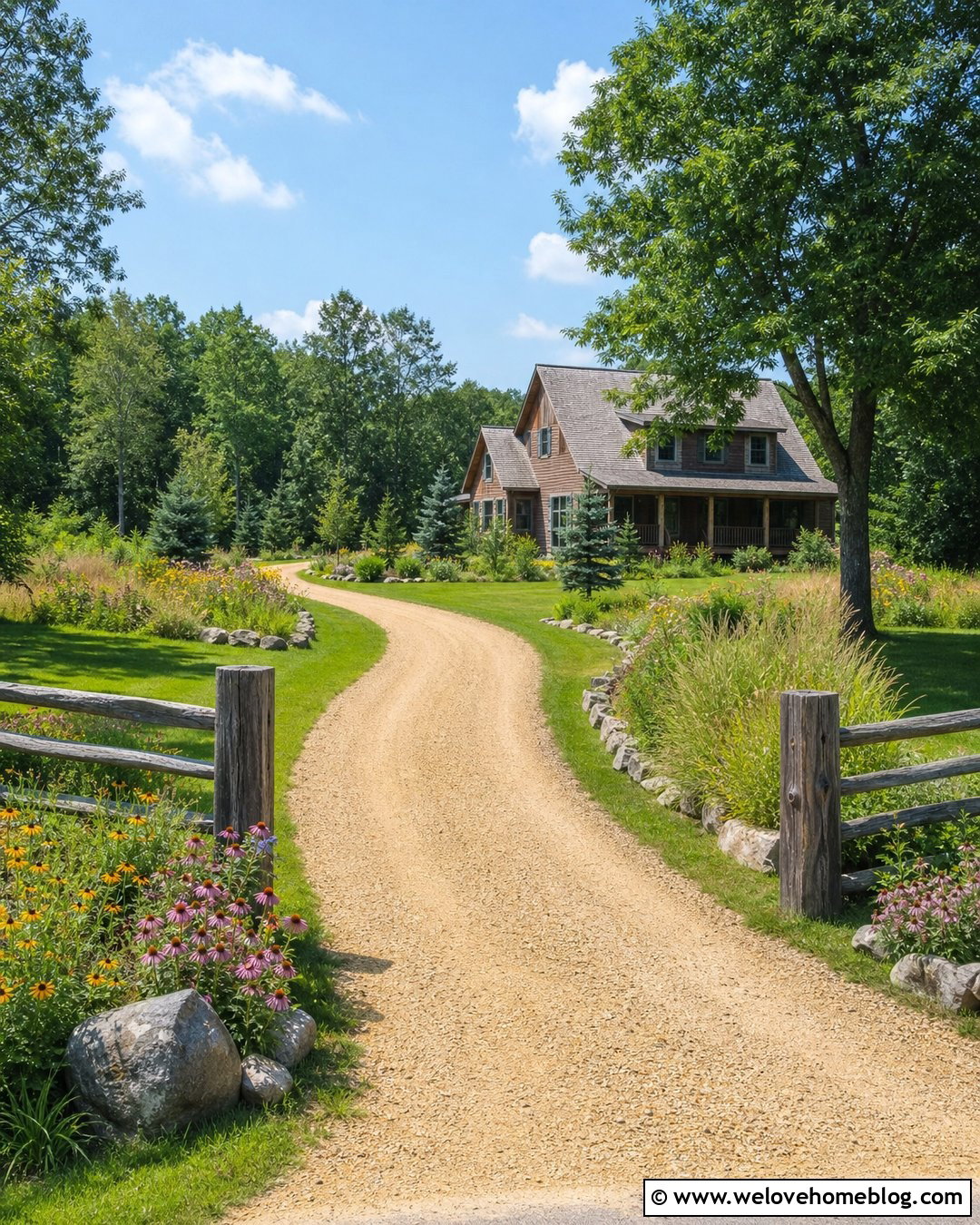
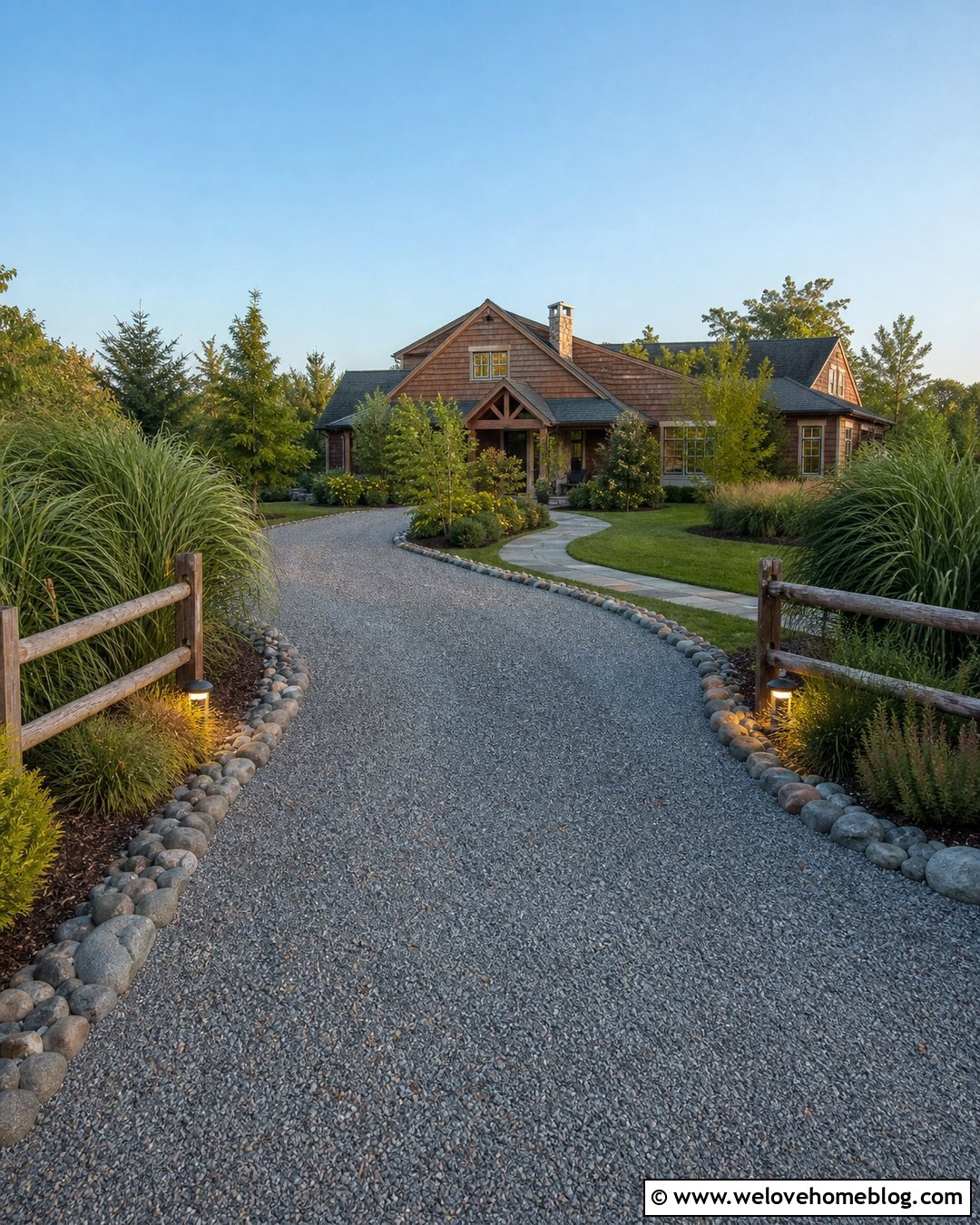
A split rail fence brings relaxed country character to a gravel driveway and feels appropriate around farmhouse, ranch, and wooded properties. Use tan crushed gravel for the driving surface, with larger fieldstones defining the edges and preventing material from spreading into the lawn. Let the fence follow the natural contours of the property instead of forcing perfectly straight lines. Near the entrance, create informal beds filled with native grasses, coneflowers, black-eyed Susans, and compact evergreen shrubs. A simple timber address post can match the weathered fence. Avoid placing dense shrubs directly beside the driveway opening. Instead, use low flowers near the road and gradually increase plant height toward the house, creating a layered landscape that looks natural throughout the year.
5. Stone Wall And Fence Driveway Entrance
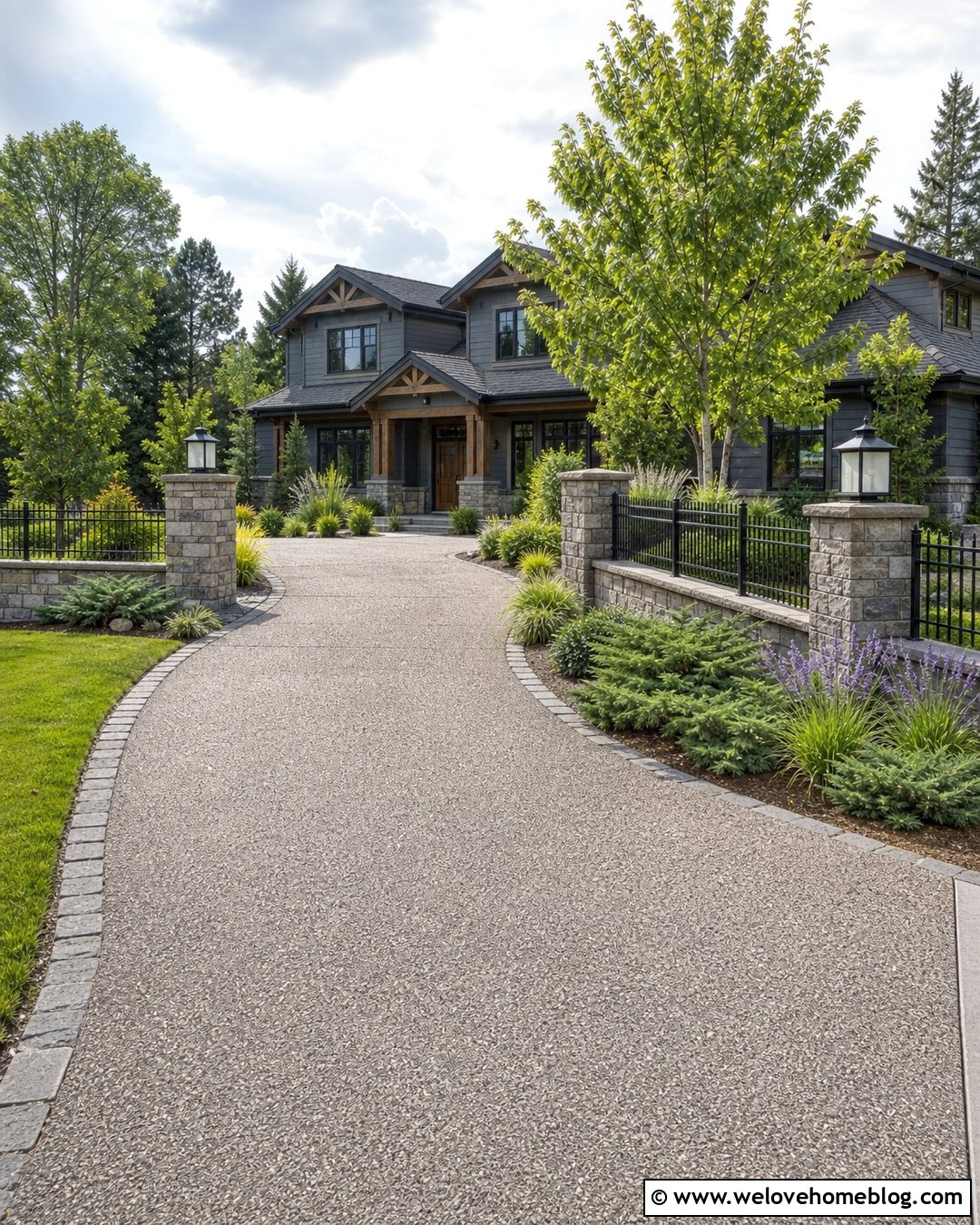
Combining a low stone wall with open metal fencing gives a driveway entrance weight, texture, and visibility. This arrangement works beautifully with a curved exposed aggregate driveway leading to a craftsman or stone-front home. Use locally appropriate stone colors so the wall connects naturally with the surrounding landscape. Cap the wall with flat stones, then install simple black rails between substantial masonry pillars. Plant spreading junipers, ornamental grasses, and flowering salvias along the outside edge to soften the hard surfaces. Inside the entrance, small multi-stem trees can frame the driveway without crowding it. Repeat the same stone beside the front walkway or porch steps. This repetition makes the entrance look intentional rather than like a separate structure added later.
6. Farmhouse Fence Driveway Entrance
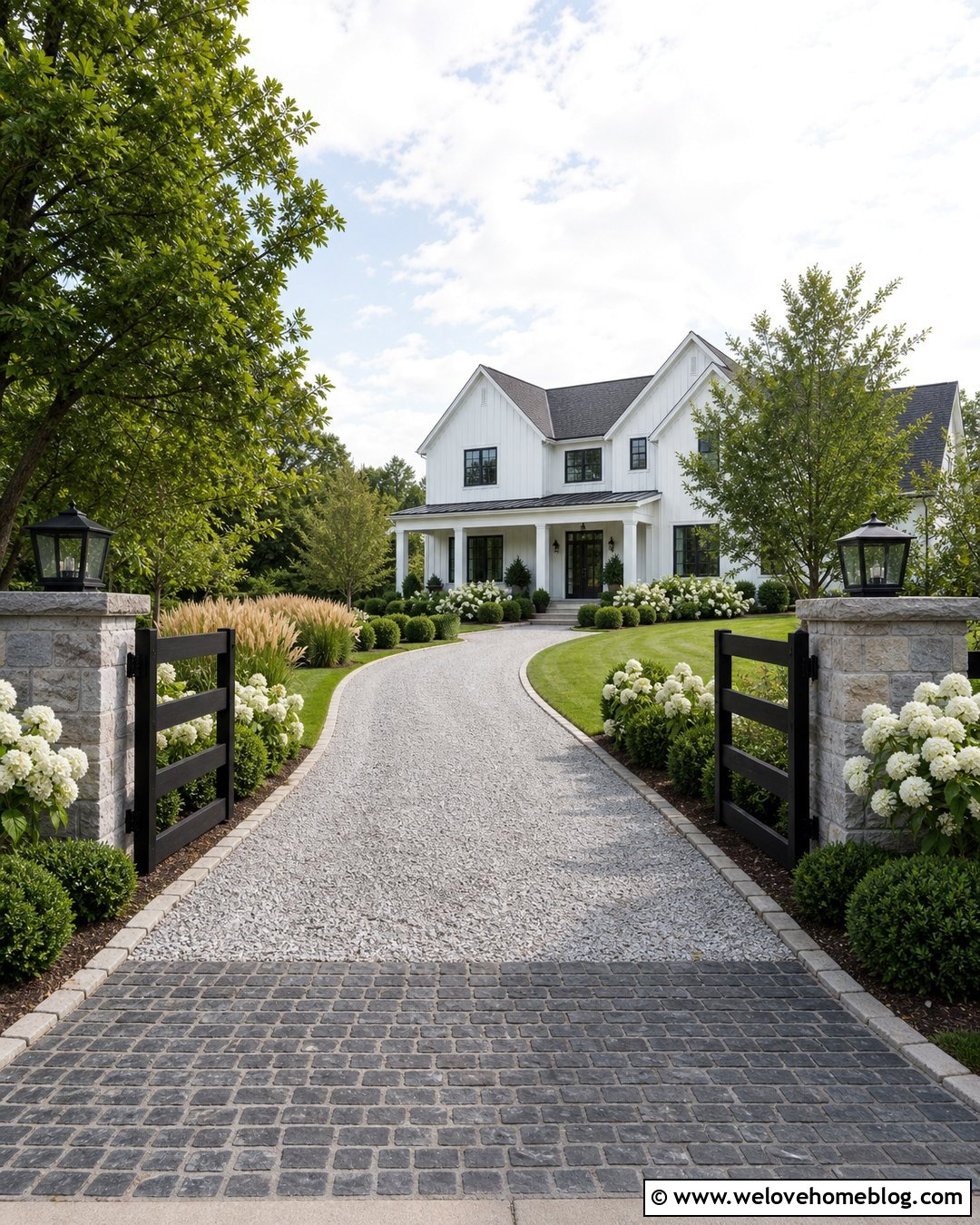
A black board fence can create a strong farmhouse entrance while keeping the property open and easy to see. Pair it with a pale gray gravel driveway that curves gently toward a white modern farmhouse. Wide grass shoulders and simple planting beds will prevent the entrance from looking overly decorated. Add clusters of white hydrangeas, panicle grasses, and compact hollies near the fence corners. Stone pillars can support black lanterns and provide space for a clearly visible address plaque. Continue the fence several sections along the road, then turn it inward to guide attention toward the driveway. A narrow cobblestone apron at the street will help contain loose gravel and create a durable transition between the public road and private drive.
7. Modern Slatted Fence Driveway Entrance
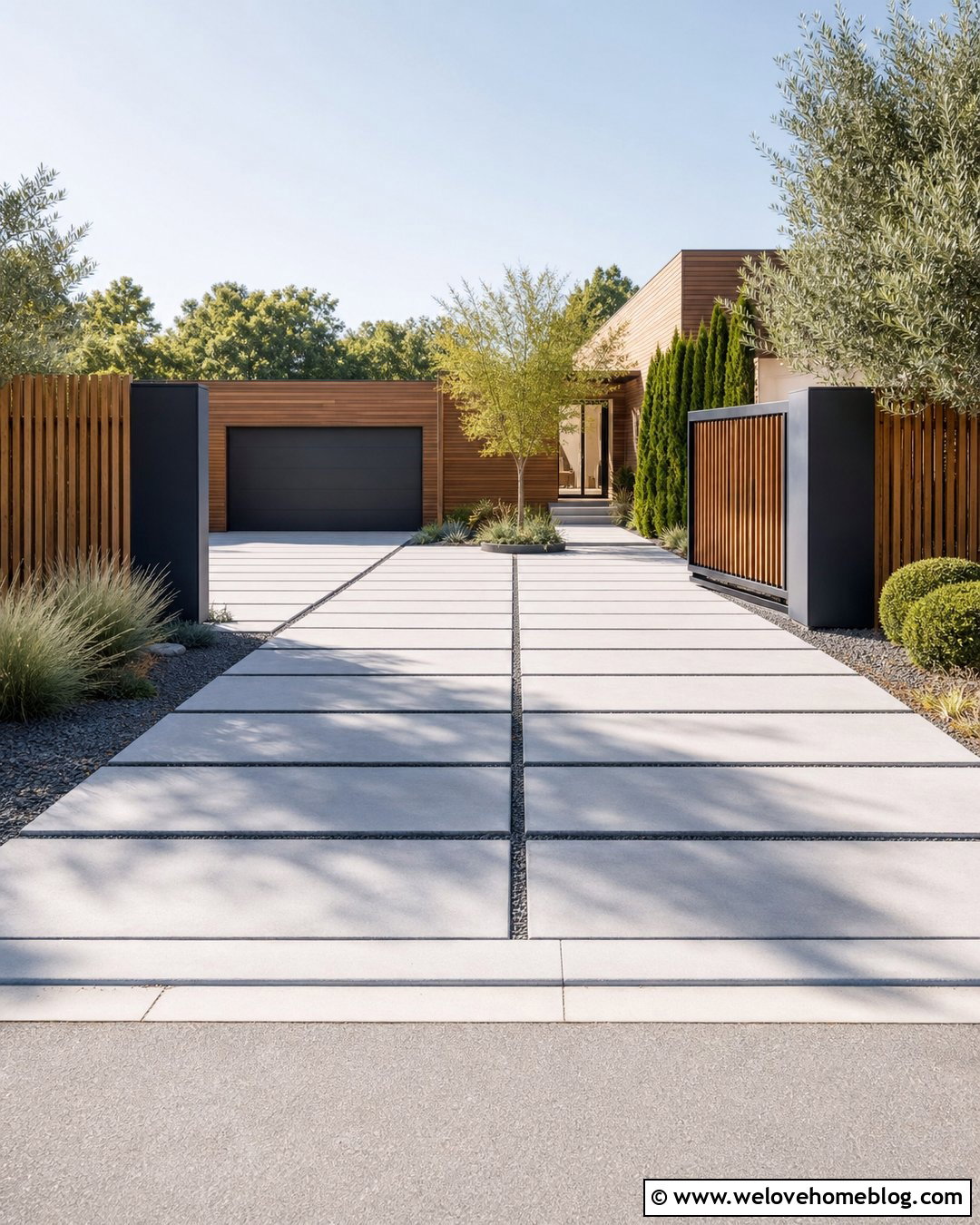
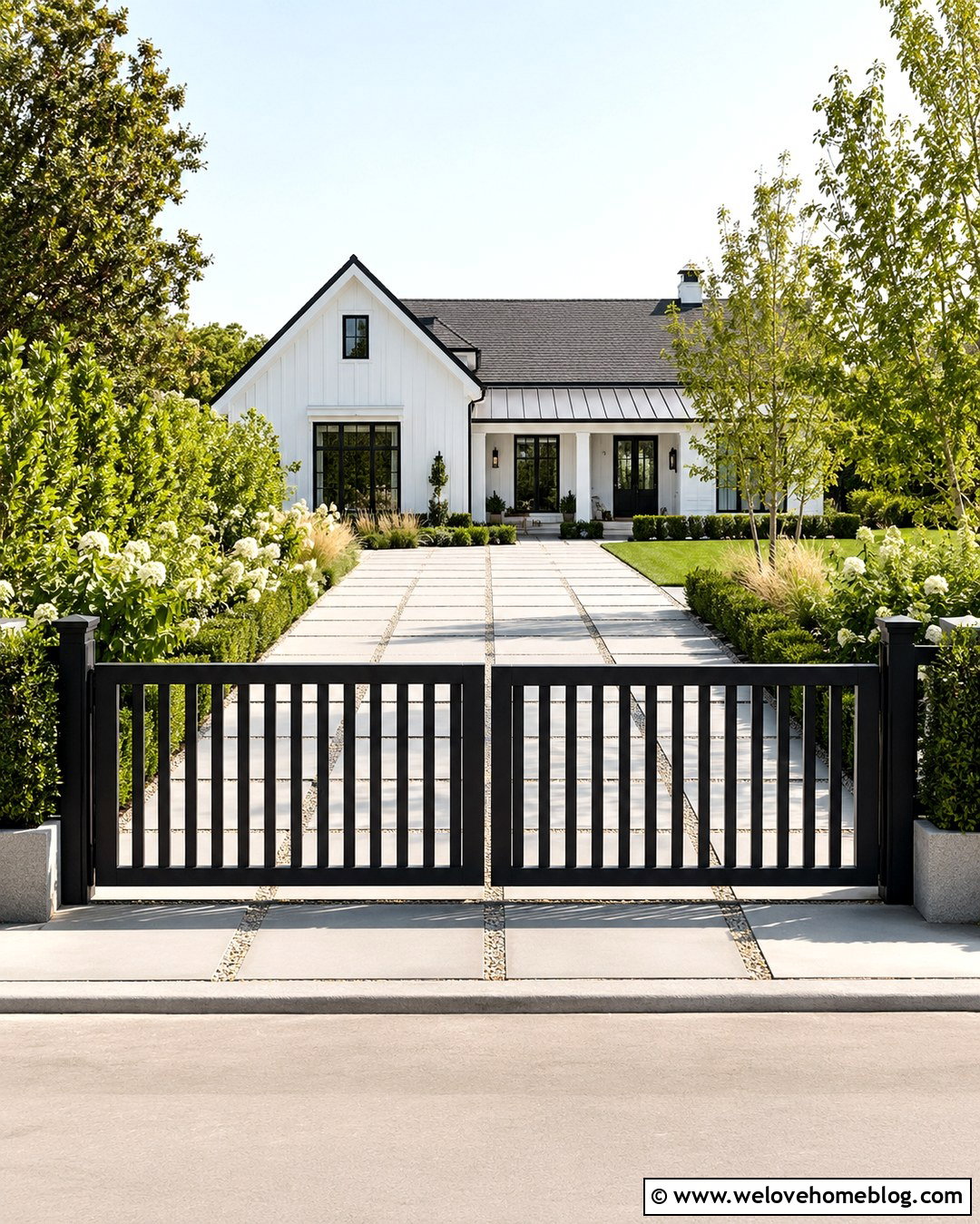
A vertical slatted fence gives a modern driveway entrance privacy without creating the heavy appearance of a completely solid wall. Choose stained cedar or composite slats with narrow, consistent gaps. A straight driveway made from large-format concrete pavers and dark gravel joints will reinforce the clean geometry. Extend matching slats across a sliding gate if additional security is needed. Plant architectural grasses, compact agaves in suitable climates, and clipped evergreen forms in linear beds along the fence. Gravel mulch keeps these areas tidy and reduces visual clutter. Use low-profile lighting beneath the address sign or along the pillars rather than decorative lanterns. The finished entrance should repeat the home’s wood, concrete, and dark metal finishes for a coordinated street-facing design.
8. Brick Fence Driveway Entrance
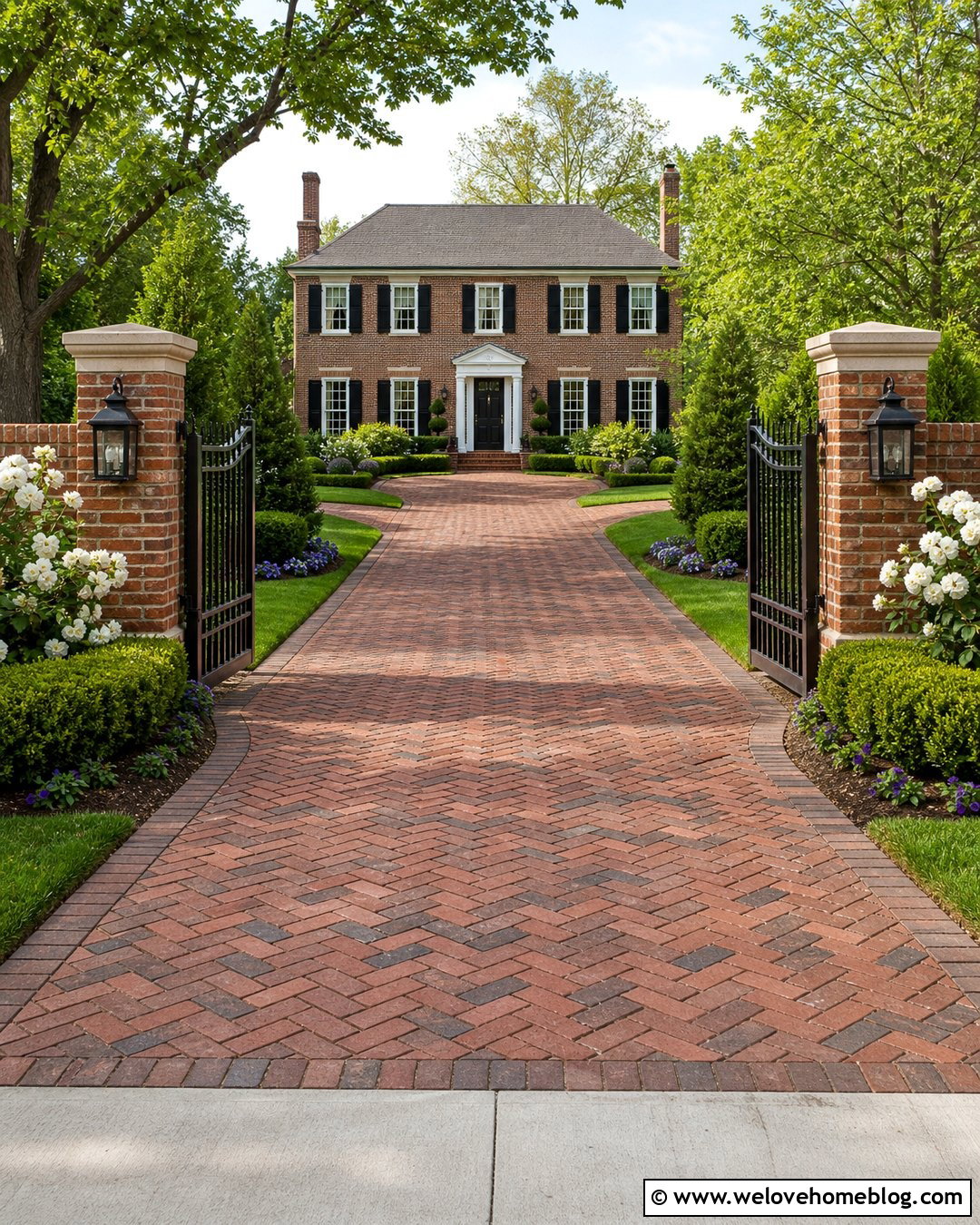
Brick fence pillars and short connecting walls can give a driveway entrance a permanent, established appearance. This layout is particularly effective with a colonial, Georgian, or traditional brick house. Use clay brick pavers in a herringbone pattern for the driveway, selecting a slightly different shade from the walls to avoid a flat, overly matched look. Black metal fence panels between the brick columns add openness and contrast. Create deep planting beds around the base with boxwoods, white roses, and spring bulbs. Keep the shrubs clipped below the masonry caps near the roadway. Curved bed lines can soften the strong architecture, while matching brick borders connect the beds to the driveway. Traditional lanterns and understated address numbers complete the formal entrance.
9. Privacy Fence Driveway Entrance
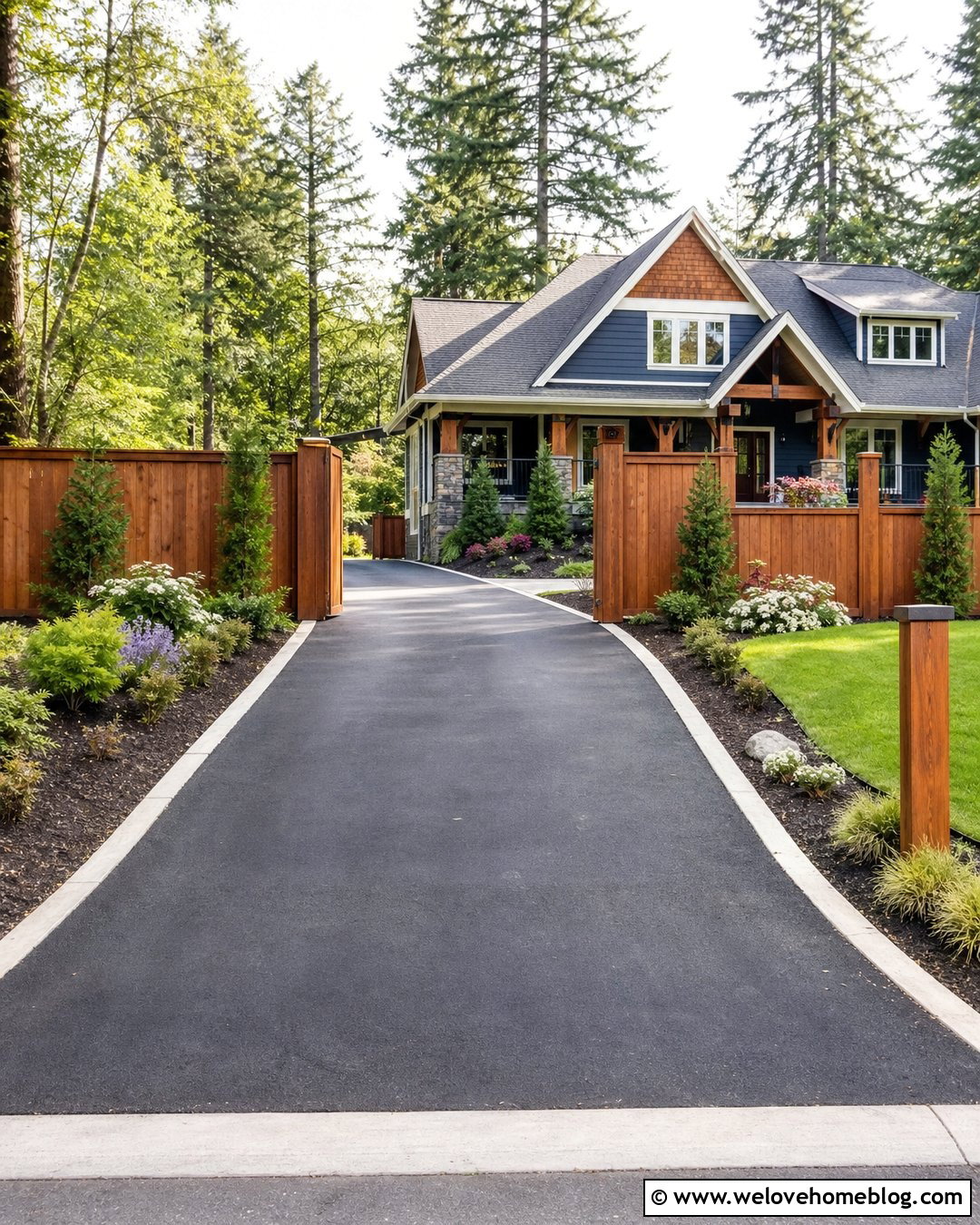
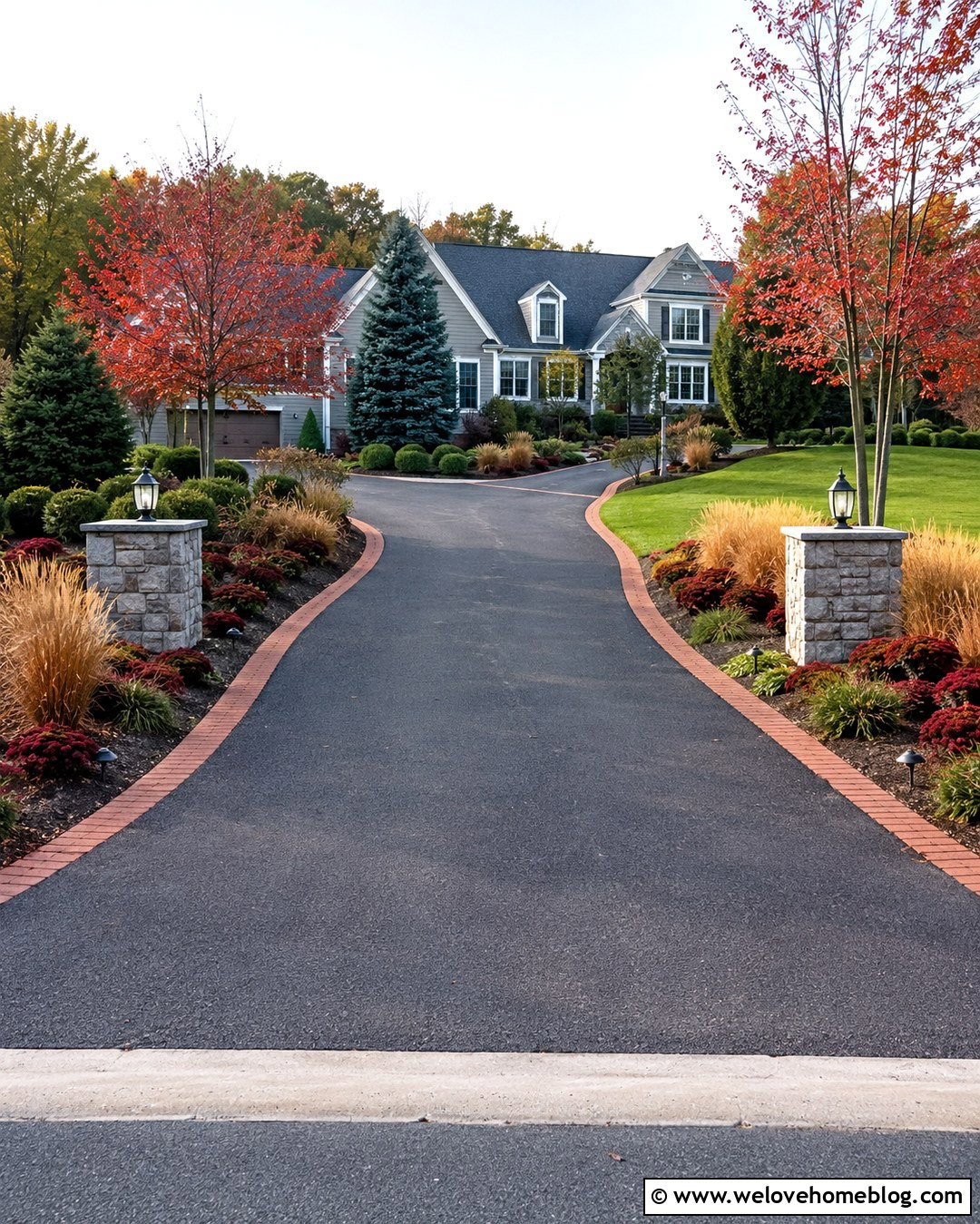
A solid privacy fence can screen a busy road, neighboring property, or exposed parking area, but landscaping is essential for softening its scale. Pair a warm wood fence with a black asphalt driveway edged in contrasting concrete curbs. Place layered beds along the street-facing side of the fence, using low ground covers in front, medium flowering shrubs in the middle, and narrow evergreen plants behind. Leave the driveway opening generous and maintain clear views in both directions. A matching wood gate can sit farther back from the road, providing enough space for a vehicle to pull in before stopping. Use the same stain on the fence, gate, and address post. This creates a calm, cohesive entrance instead of a collection of unrelated practical features.
10. Low Fence Driveway Entrance
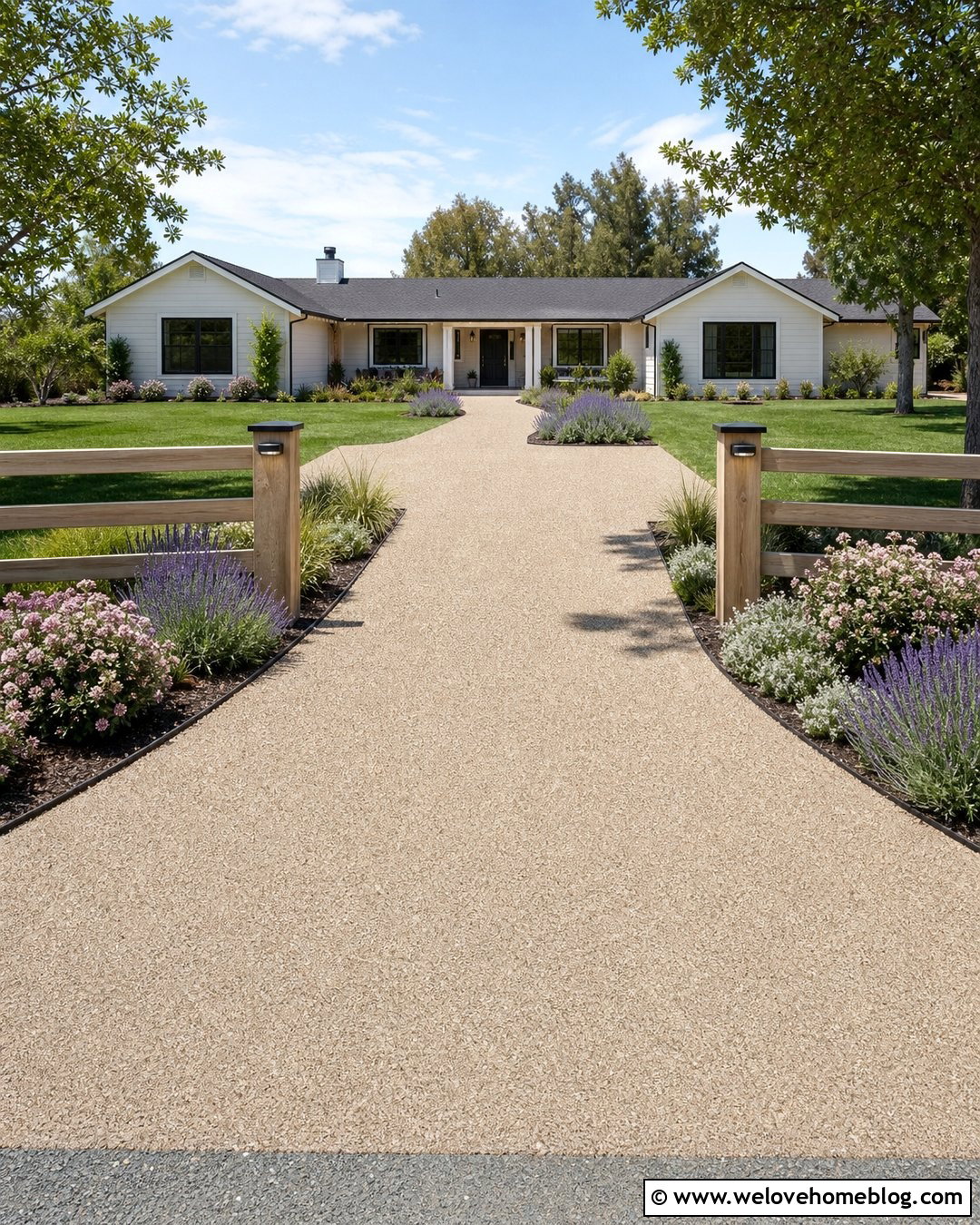
A low fence can define the entrance without making a small front yard feel enclosed. Try a simple two-rail wood fence beside a light beige resin-bound gravel driveway. The smooth, uniform surface gives the entrance a tidy appearance, while the open fence maintains a broad view of the lawn and house. Create narrow planting beds inside the fence using lavender, dwarf spirea, creeping thyme, and compact ornamental grasses. These plants bring softness without overwhelming the limited space. At the driveway opening, use slightly taller square posts with small downward-facing lights. Continue the driveway edging into the front walkway to make both routes easy to understand. This understated arrangement suits ranch homes, bungalows, and suburban properties where space and visibility are priorities.
11. Fence And Hedge Driveway Entrance
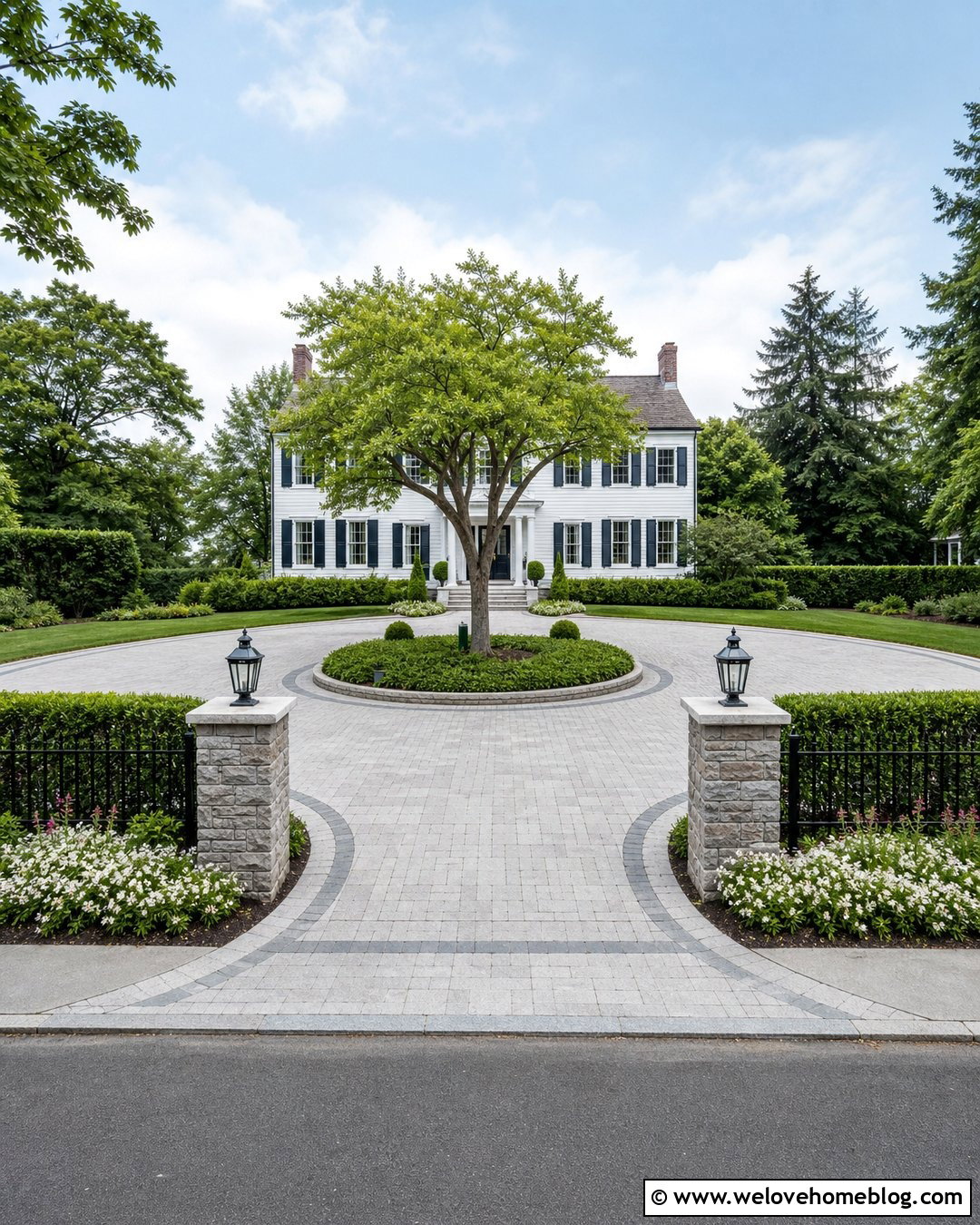
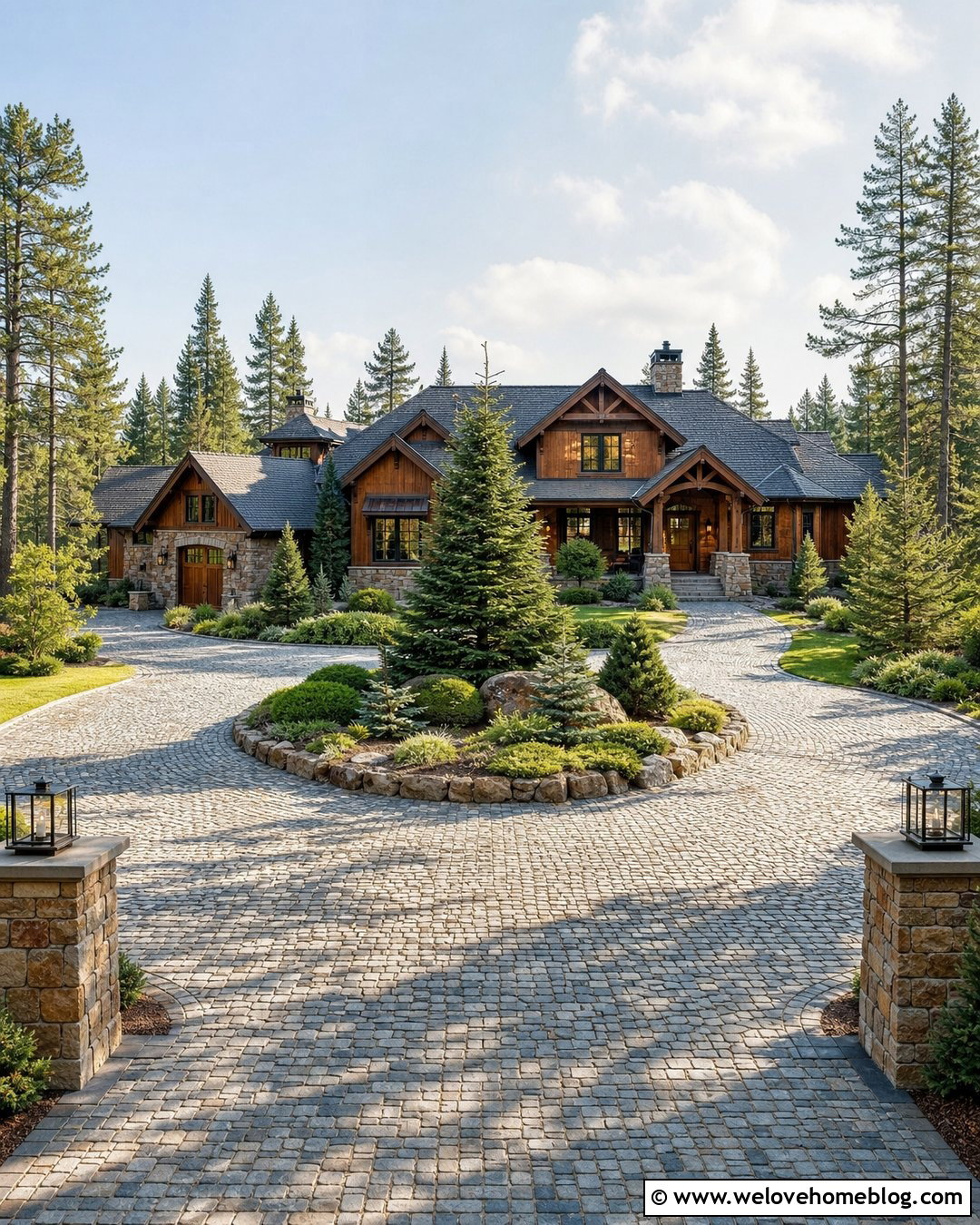
Combining fencing with a clipped hedge provides structure, greenery, and adjustable privacy. A black metal rail fence can support the formal outline, while boxwood, privet, or another regionally suitable hedge grows just behind it. Pair the boundary with a circular gray concrete paver driveway leading to a symmetrical colonial house. At the entrance, stone pillars and low flower beds can break up the long green line. Keep the hedge lower near the road and gradually raise it farther into the property. This protects sightlines and creates a more graceful transition. Inside the circular drive, use one specimen tree surrounded by a simple ground cover. The open metal fence remains visible through the greenery, adding depth and preventing the hedge from appearing like a solid barrier.
12. Rustic Wood Gate And Fence Entrance
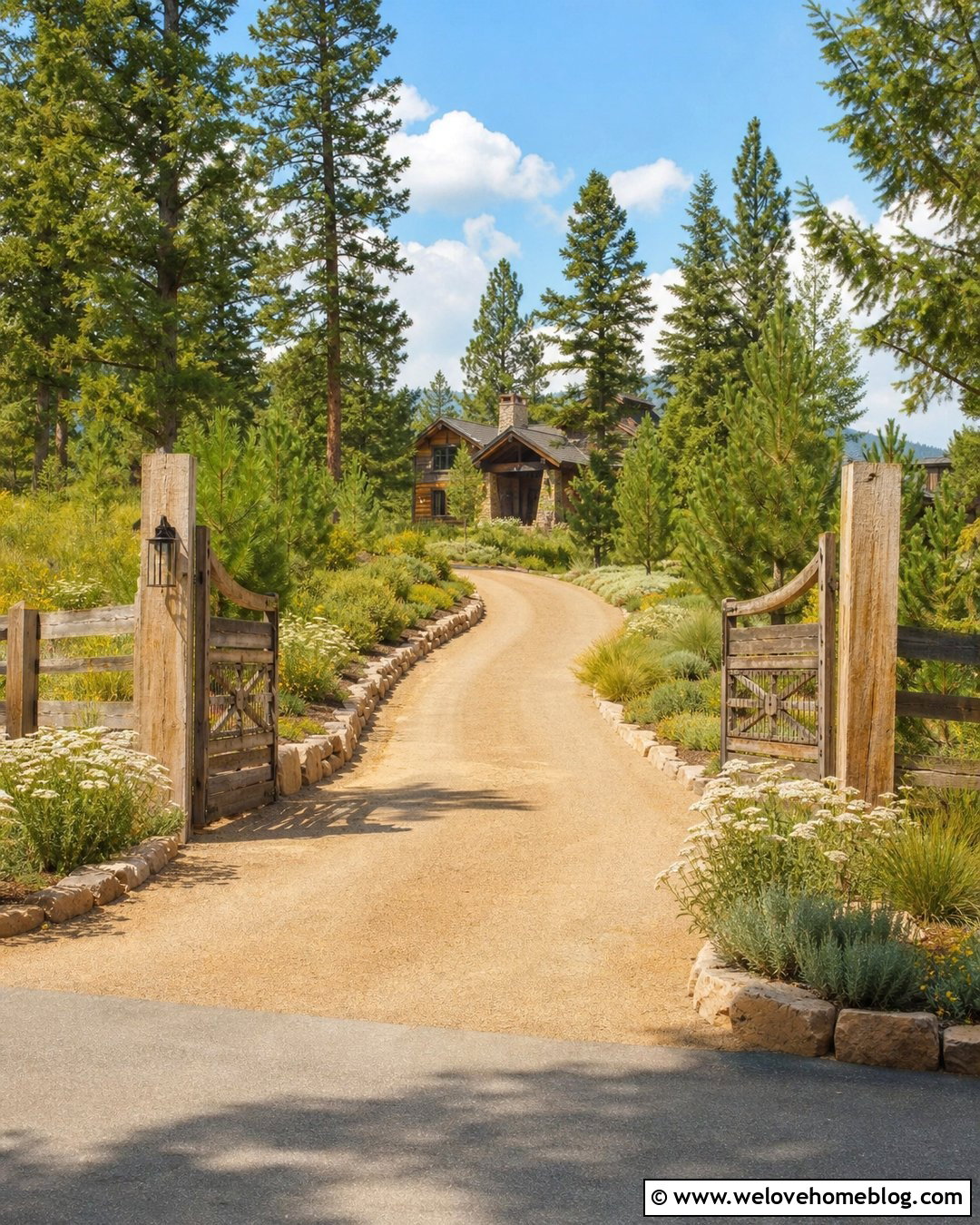
Weathered timber fencing and a simple double gate can make a long rural driveway feel connected to the surrounding land. Use compacted decomposed granite for the driveway, with rough fieldstone edging near the entrance and natural grass shoulders farther inside. Oversized wood posts provide a strong visual anchor without needing ornate details. Around their bases, plant native grasses, flowering yarrow, and low evergreen shrubs that tolerate roadside conditions. A timber address sign should be visible but modest. Set the gate far enough from the road for convenient vehicle access, and choose hardware designed for exterior exposure. Continue clusters of native plants along the driveway rather than creating a rigid hedge. The result should feel practical, relaxed, and appropriate for a country or mountain setting.
13. Aluminum Fence Driveway Entrance
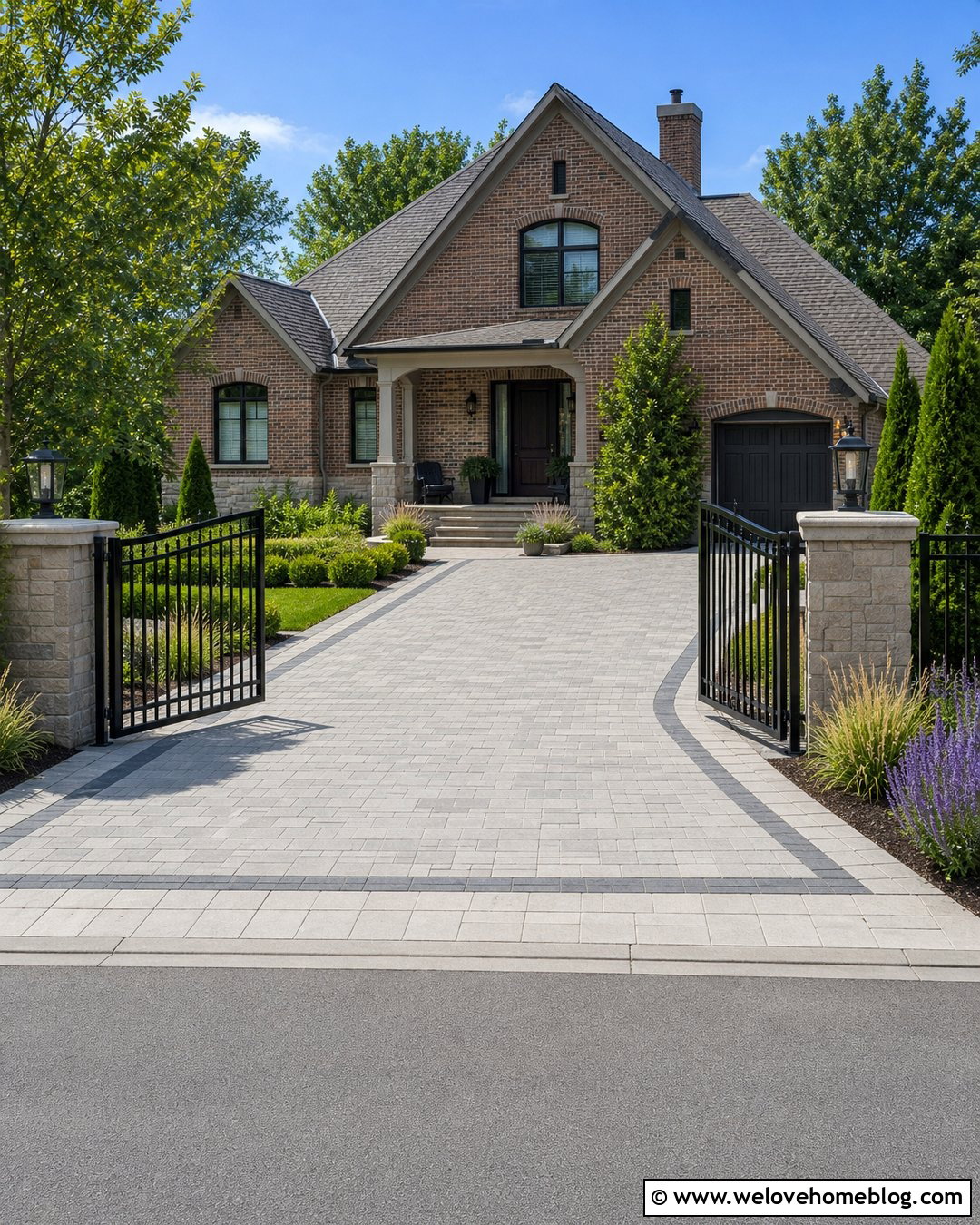
Powder-coated aluminum fencing offers the appearance of traditional metal with a clean, low-maintenance finish. It pairs well with a medium-gray interlocking concrete paver driveway and a brick or craftsman-style home. Choose simple rails rather than highly ornamental patterns, especially when the house has restrained architectural details. Use matching aluminum gates between stone-clad pillars for a coordinated entrance. Along the fence, plant evergreen foundation shrubs, purple salvia, and low ornamental grasses in repeating groups. The repetition will make the landscape feel organized from the street. Add a paver apron across the driveway opening and connect it to a matching pedestrian path. Because aluminum fencing remains visually open, the plants, house facade, and full driveway continue to contribute to the entrance design.
14. Coastal Fence Driveway Entrance
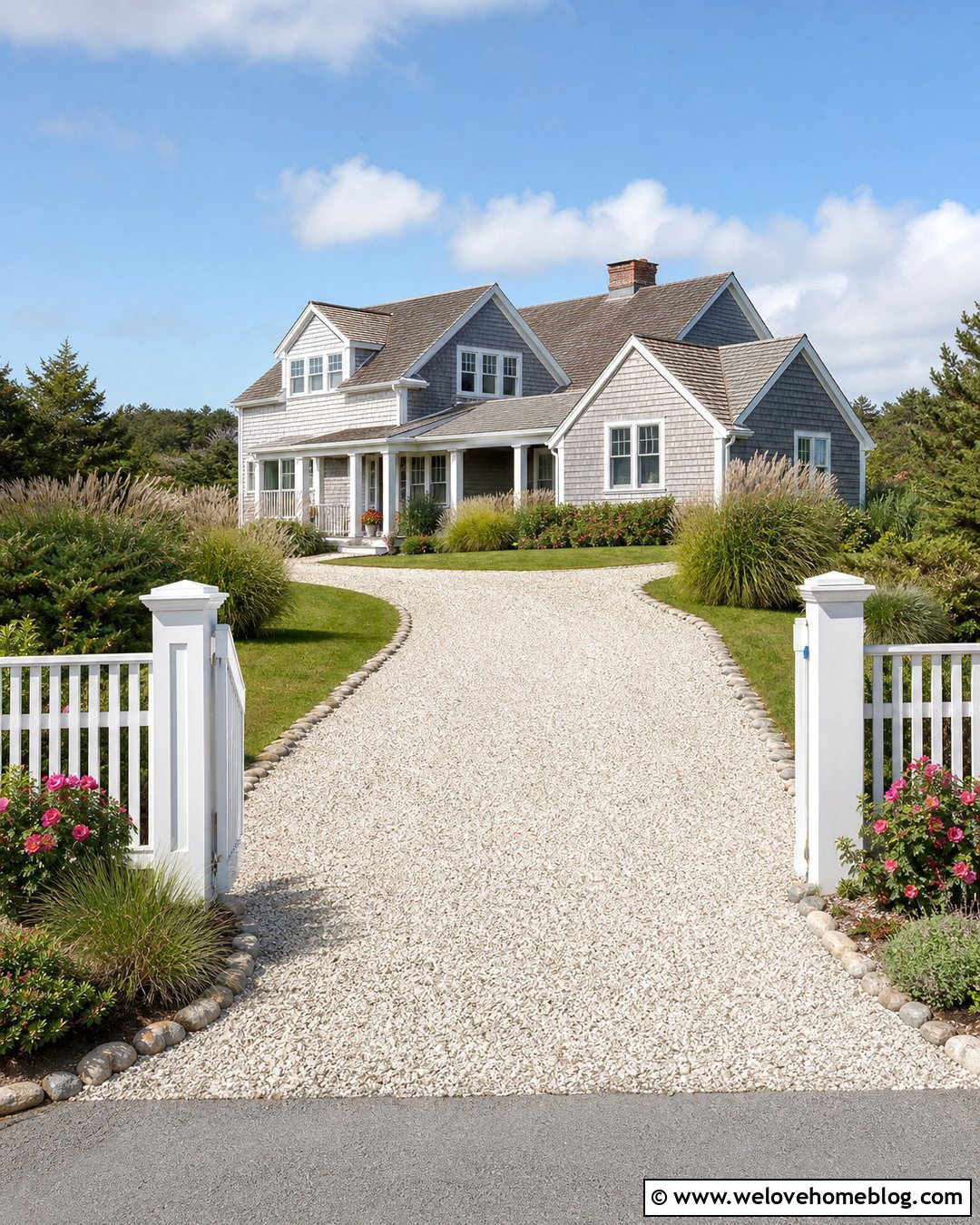
A coastal entrance should feel light, durable, and easy to maintain. Begin with an oyster-toned crushed shell driveway or pale permeable gravel surface leading toward a shingle, beach cottage, or coastal farmhouse. Frame the opening with a low white fence made from weather-resistant materials, using wider posts to define the entrance. Plant salt-tolerant ornamental grasses, rugosa roses, dwarf junipers, and low ground covers in loose drifts. Rounded beach stones can edge the beds and keep gravel away from the plant roots. Avoid dense formal hedges, which may feel too heavy for the setting. A simple horizontal address plaque and compact post lights finish the entrance. The pale driveway, airy fence, and windswept planting should create one relaxed, cohesive coastal landscape.

15. Desert Fence Driveway Entrance
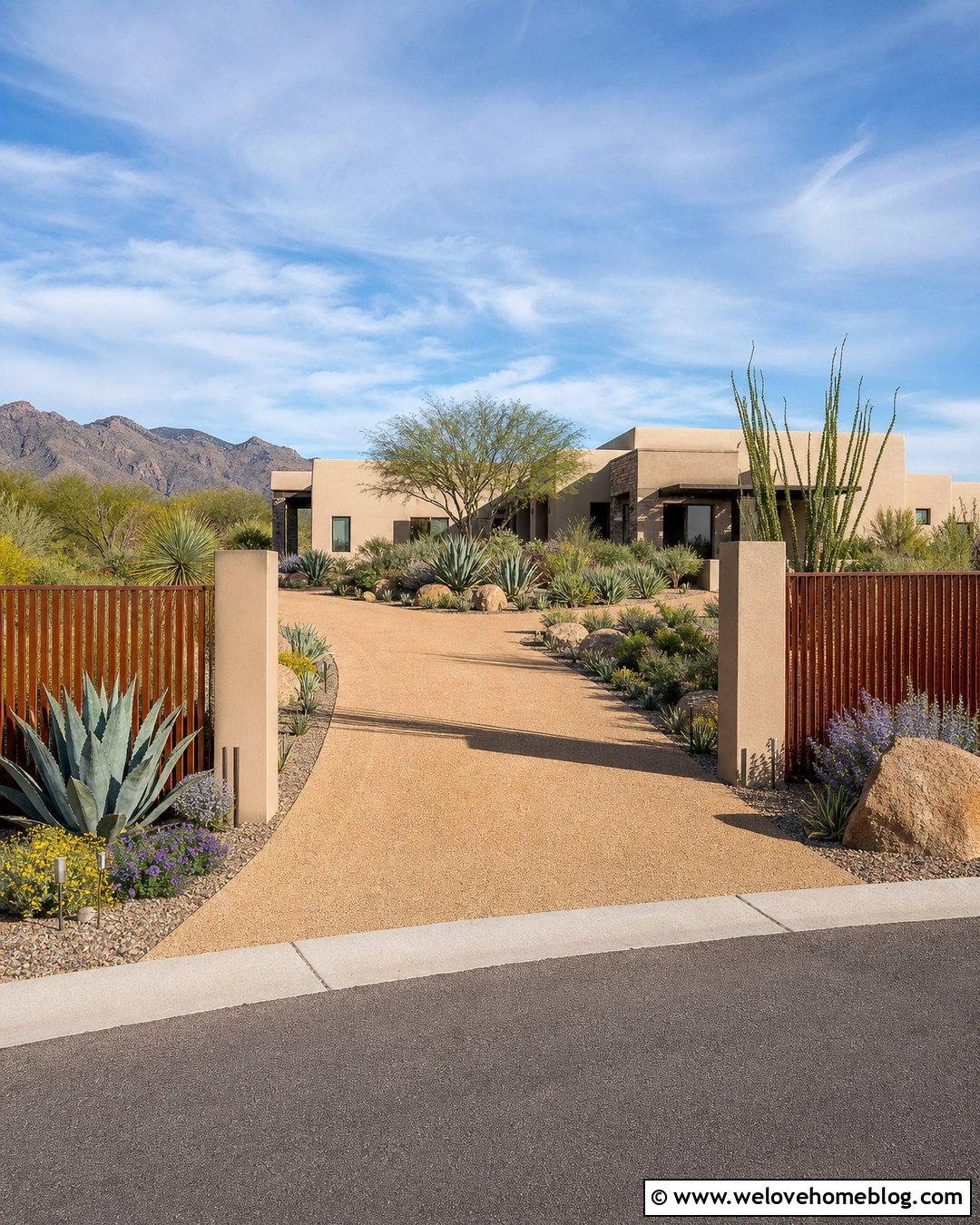
A desert driveway entrance can combine privacy and curb appeal without relying on water-intensive lawns. Use a warm tan decomposed granite driveway with a broad, gently curved approach. Low rust-colored steel fencing or dark metal rails will blend with the earth tones while clearly defining the property. Build gravel planting beds around the entrance using agaves, yuccas, desert spoon, flowering native perennials, and carefully placed boulders. Keep thorny or sharply pointed plants well away from vehicle doors, sidewalks, and visibility zones. Stucco pillars in a color borrowed from the home can hold simple metal address numbers. Repeat a few plant varieties rather than filling the beds with many unrelated specimens. This makes the entrance look calm, modern, and naturally suited to an arid landscape.
16. Craftsman Fence Driveway Entrance
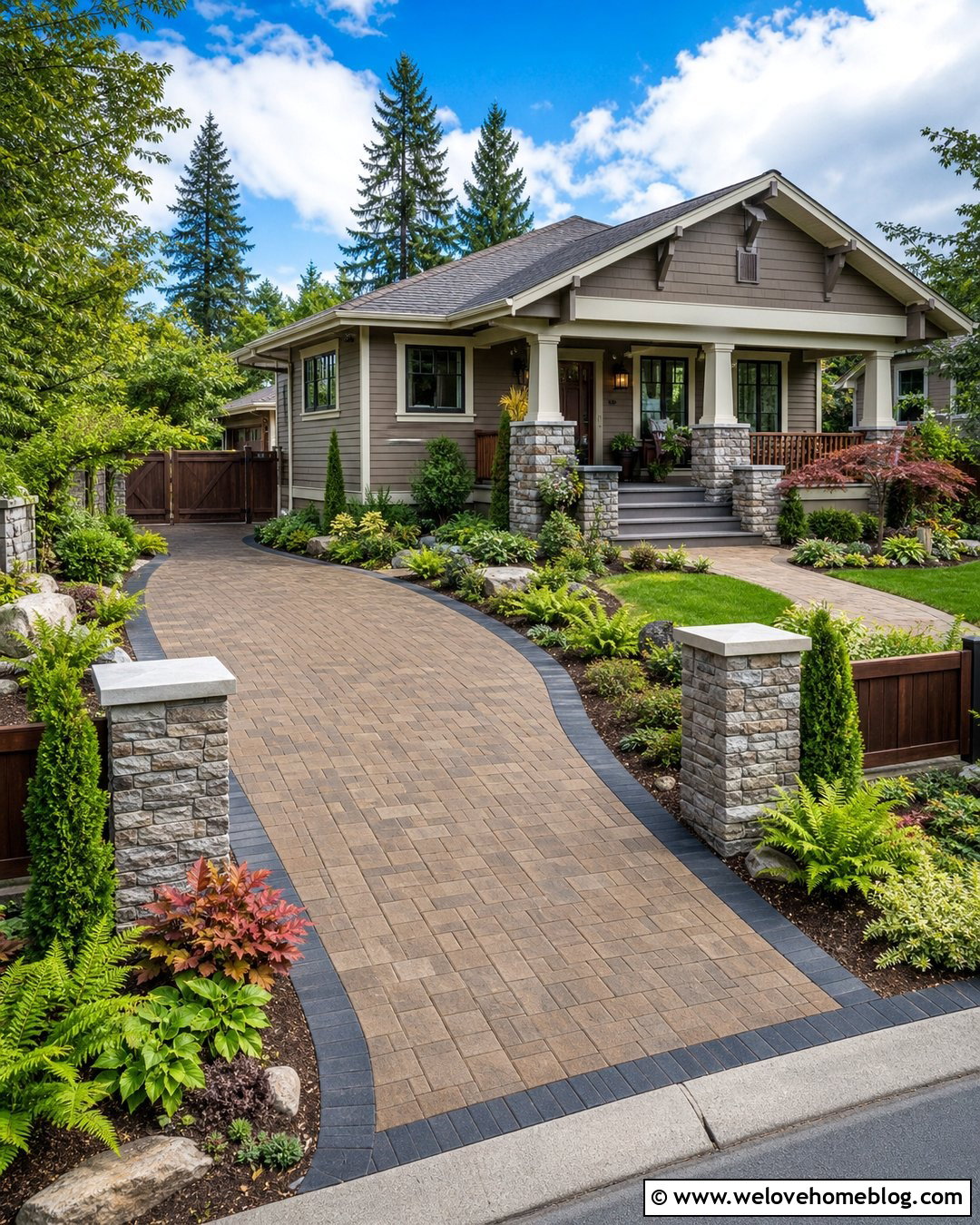
A craftsman entrance looks most convincing when the fence repeats the home’s strong horizontal lines and natural materials. Choose a warm brown concrete paver driveway with a contrasting dark border. Build short stone piers at the entrance, then connect them with stained wood fence panels featuring simple square details. Layer evergreen shrubs, ferns, coral bells, and shade-tolerant ground covers around the piers and along the fence. If the yard receives more sun, substitute ornamental grasses and flowering perennials suited to local conditions. Carry the driveway border into the walkway leading toward the porch. Low path lights can highlight the transition without competing with the architecture. Matching stone, wood, and dark metal finishes will make the entrance feel like an original part of the house.
17. Ranch Fence Driveway Entrance
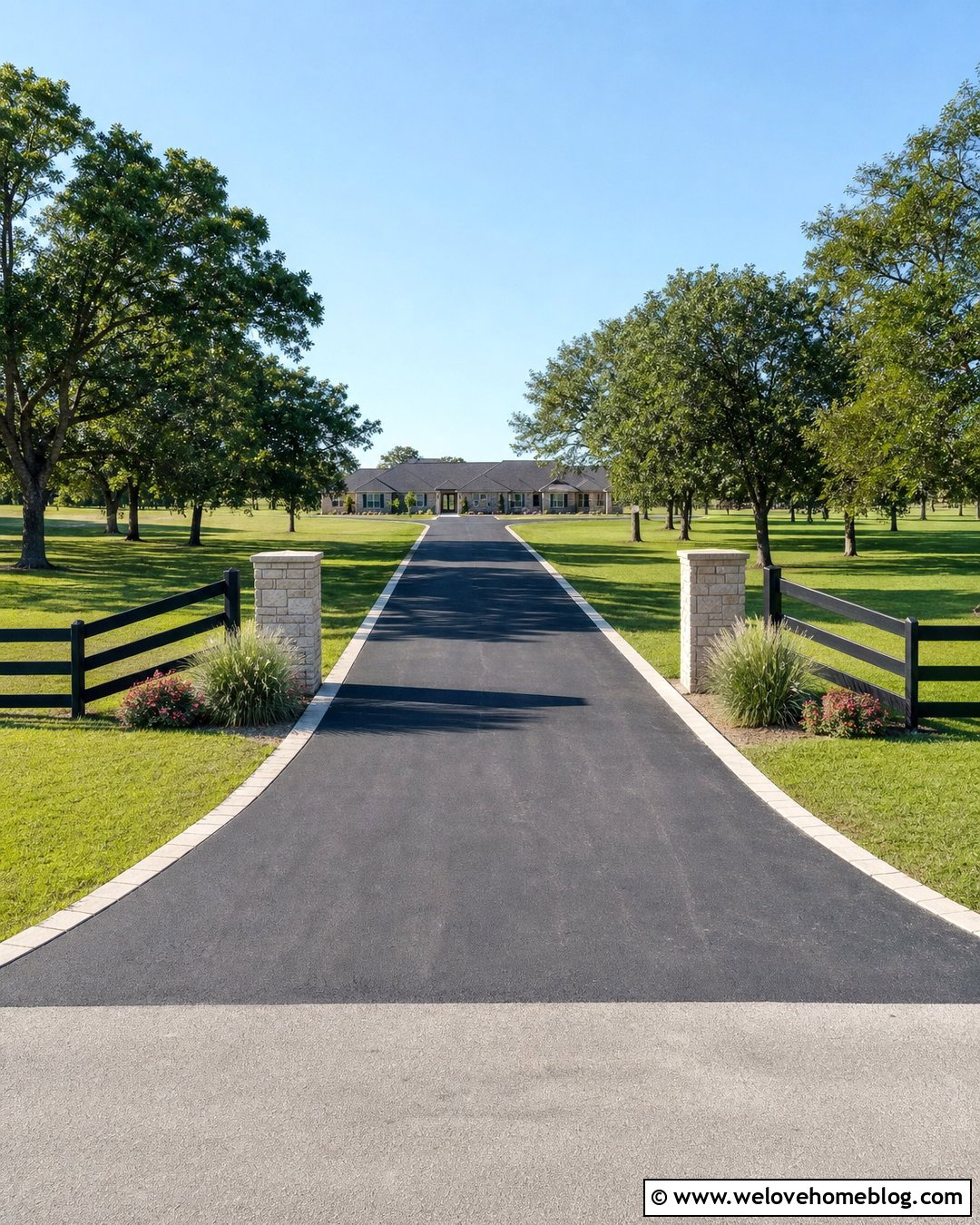
A long ranch driveway benefits from horizontal fencing that emphasizes the property’s width. Use a three-rail wood or dark composite fence beside a broad black asphalt driveway with light concrete edging. At the road, angle the final fence sections outward to create a wider, more inviting entrance. Plant drought-tolerant grasses, low flowering shrubs, and a few widely spaced shade trees along the interior fence line. Avoid a continuous row of identical plants, which can make a large property feel rigid. Stone columns at the opening can support lighting and an address marker without appearing overly formal. The asphalt, fence, and landscaping should guide the eye toward the low-profile ranch house. Broad planting groups will provide better visual balance than small, scattered flower beds.
18. Cottage Fence Driveway Entrance
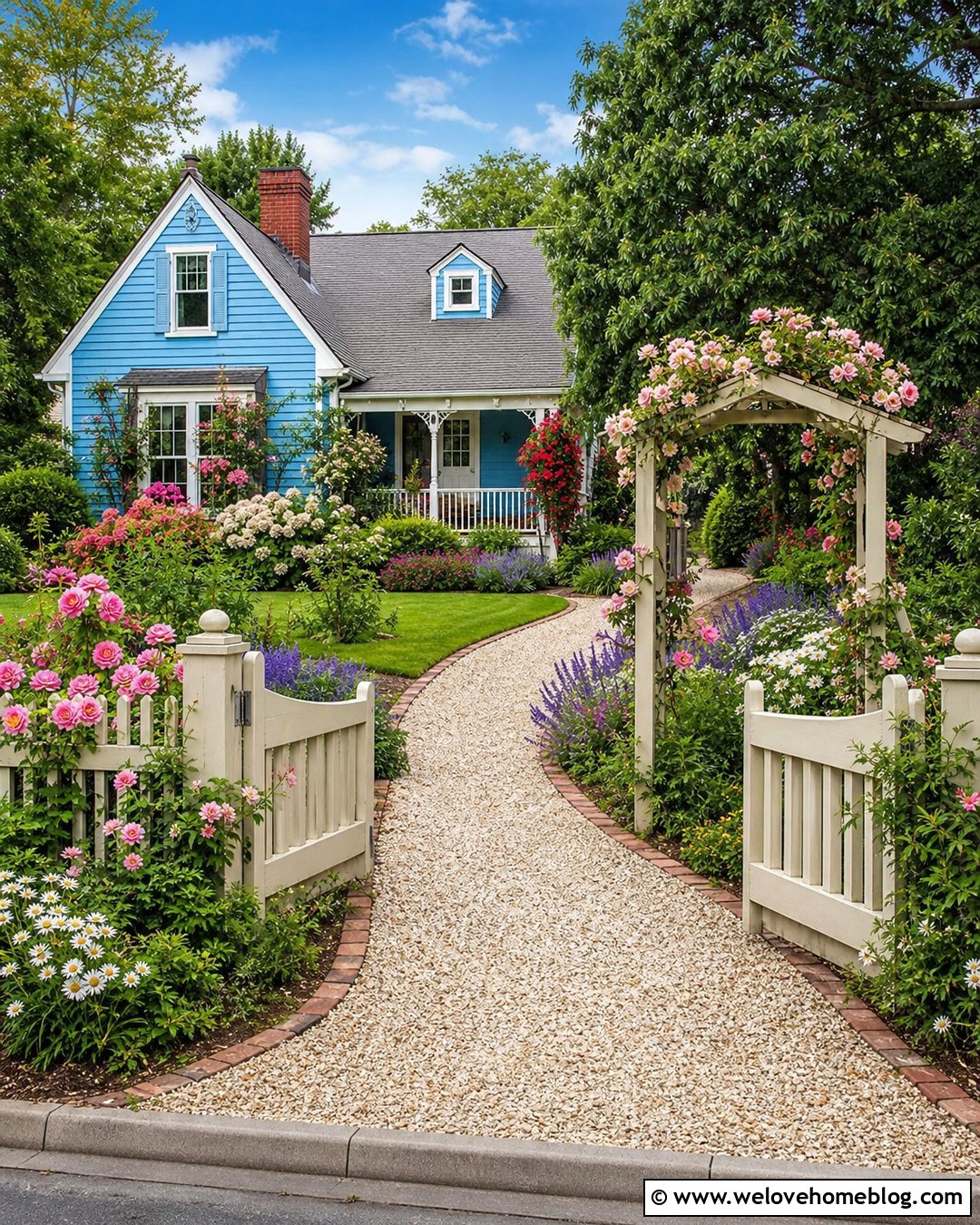
A cottage entrance can feel colorful and welcoming while remaining practical for daily vehicle use. Pair a narrow pea gravel driveway with a low painted wood fence and a simple swinging gate. Use reclaimed brick or granite setts as edging to control the gravel and give the surface a finished outline. Behind the fence, create generous beds containing roses, lavender, salvia, daisies, and compact flowering shrubs. Allow a few plants to arch naturally over the fence, but trim anything that interferes with the driveway opening. A matching pedestrian arbor beside the drive can make the front walkway easy to identify. Choose two or three dominant flower colors that complement the house. This keeps the abundant planting cheerful rather than visually chaotic.
19. Stone Pillar Fence Driveway Entrance
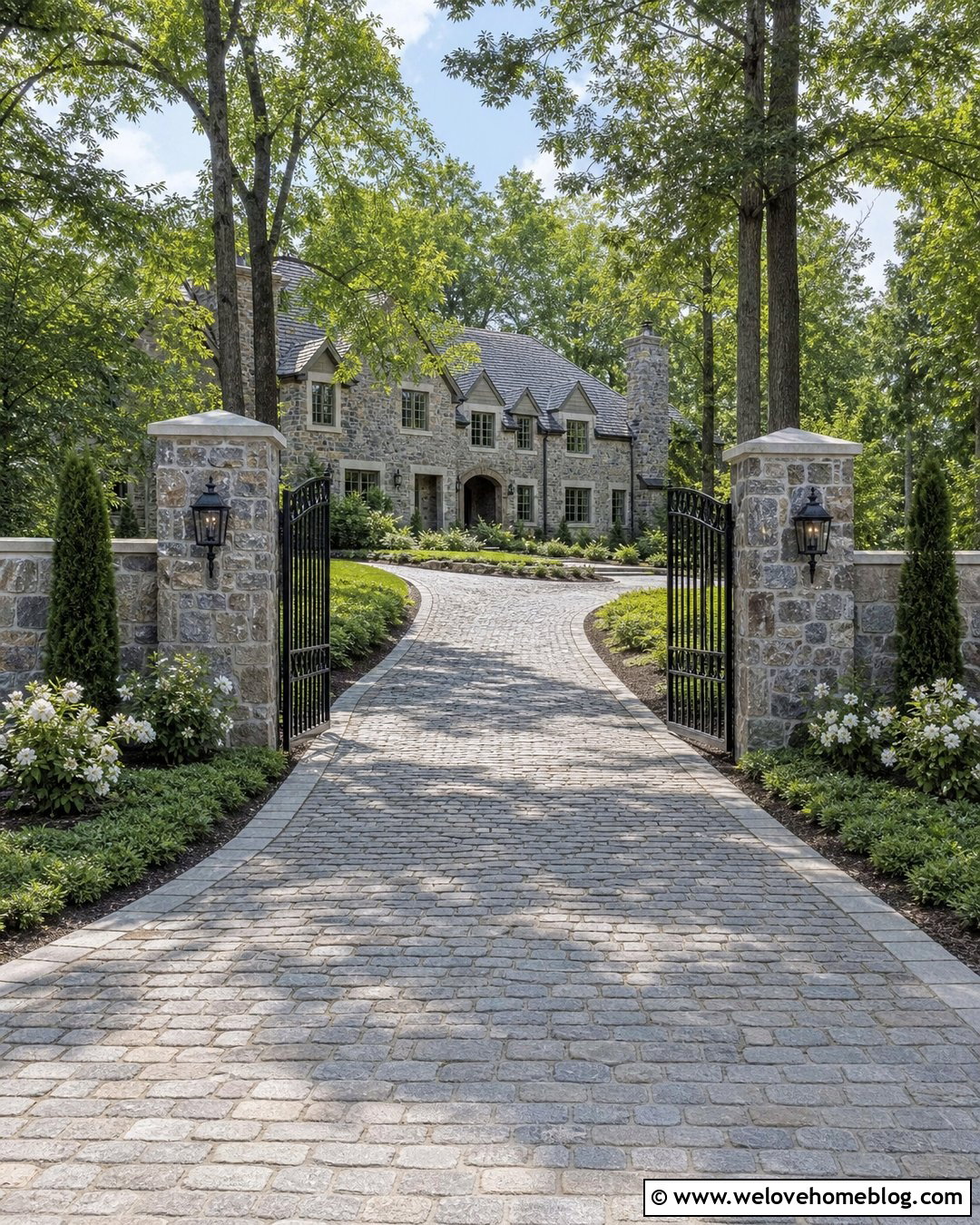
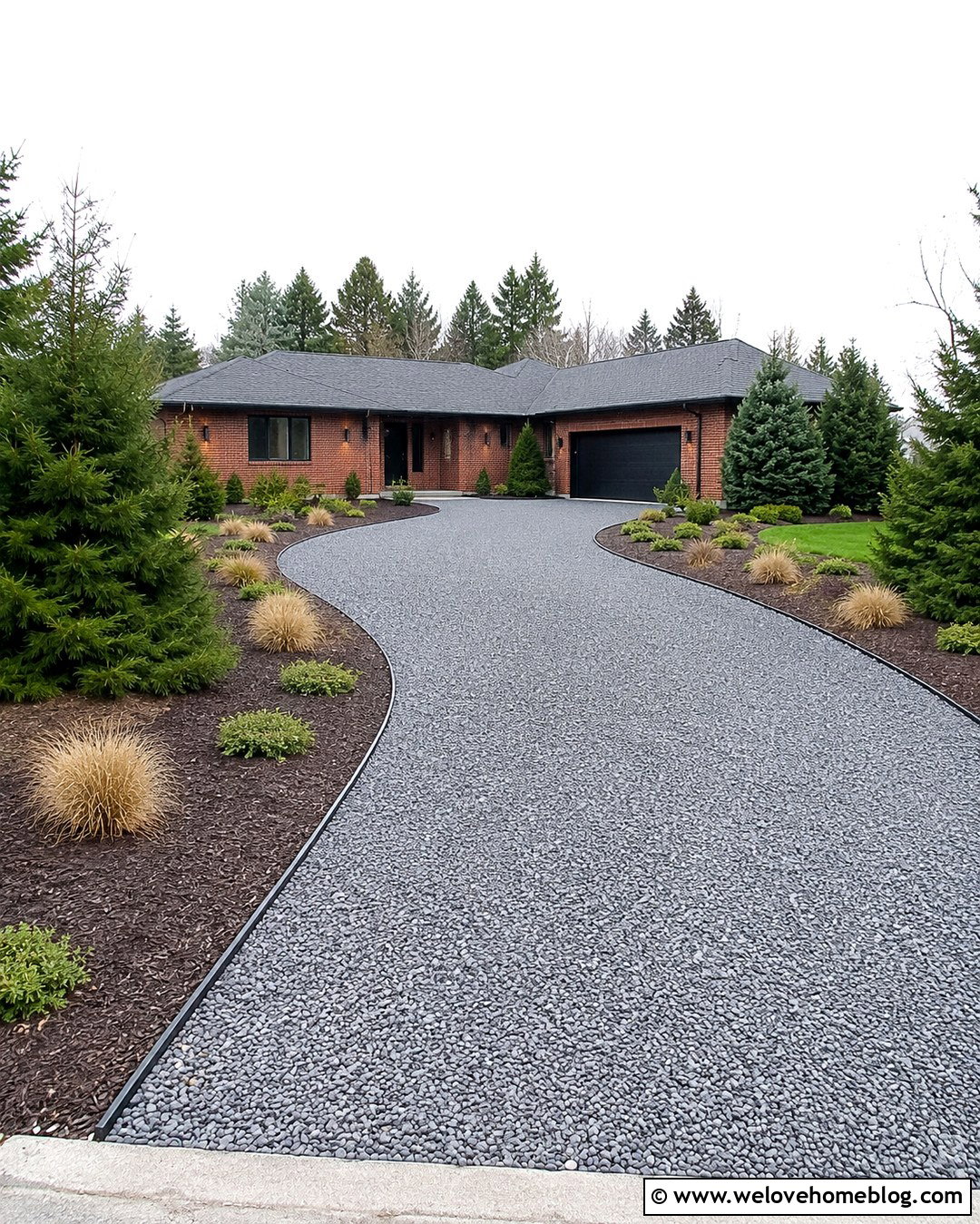
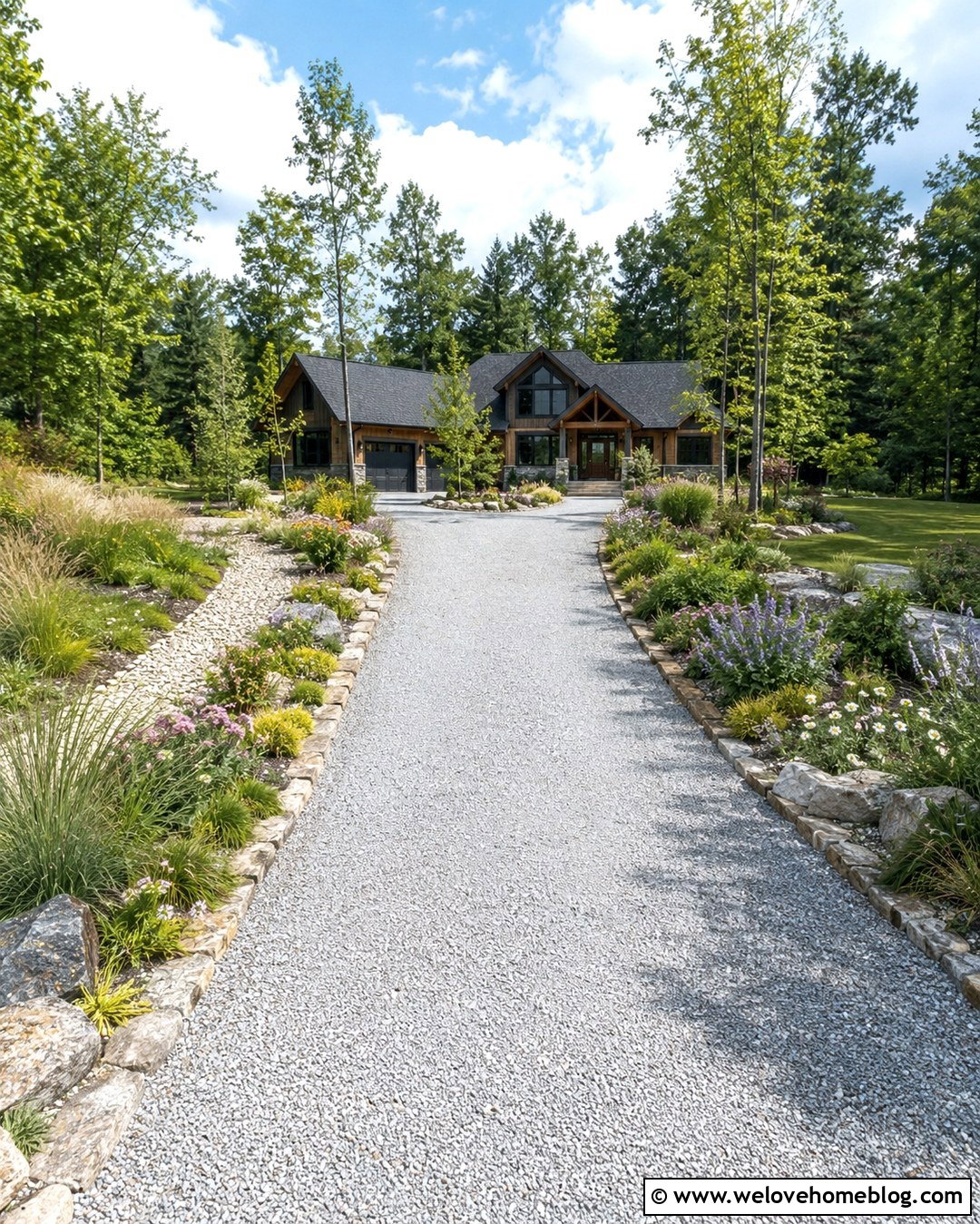
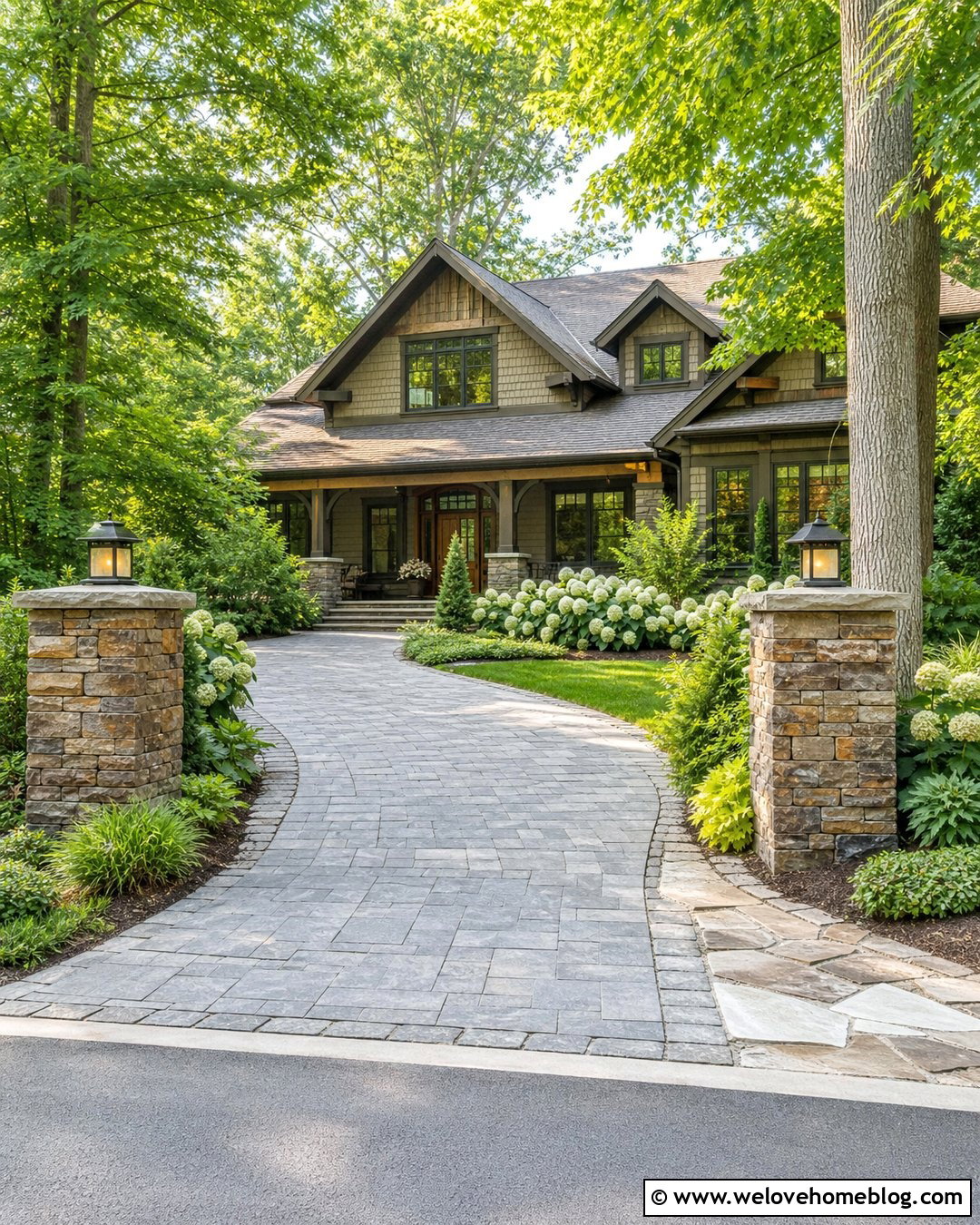
Large stone pillars can give a wide driveway a clear sense of arrival, especially when they connect to low walls or open fencing. Use a curved cobblestone driveway in mixed gray tones to complement the masonry. Black steel fence panels should extend from the pillars and follow the edge of the property without hiding the landscape. Place upright evergreens behind each pillar and soften the wall bases with spreading ground covers and white flowering shrubs. Keep the plants balanced but not perfectly mirrored if the driveway curves through an informal front yard. Recessed lighting in the masonry can illuminate the entrance while preserving a clean appearance. Repeat the stone around the mailbox, front steps, or walkway to connect the roadside structure with the house.
20. Small Driveway Entrance Fence
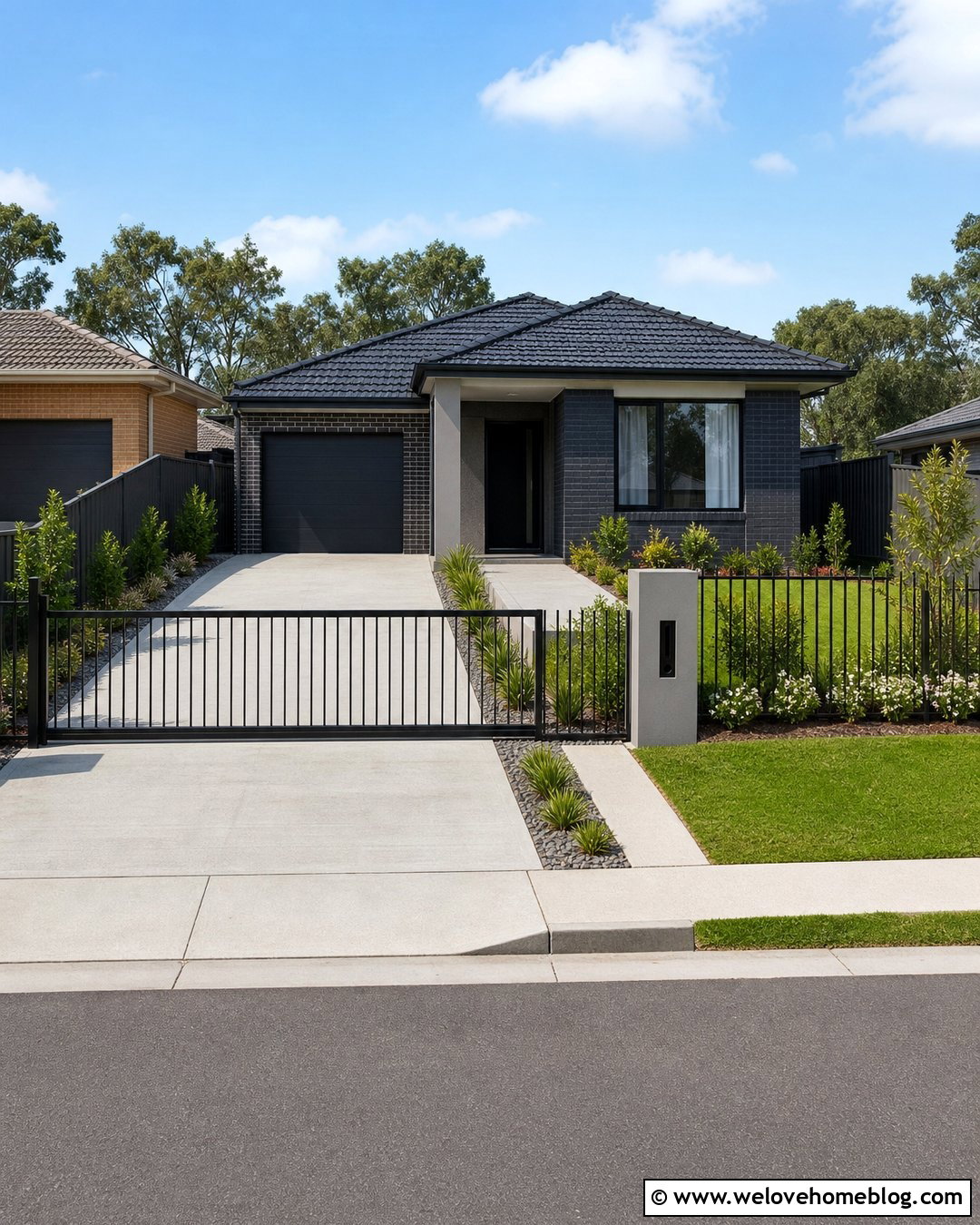
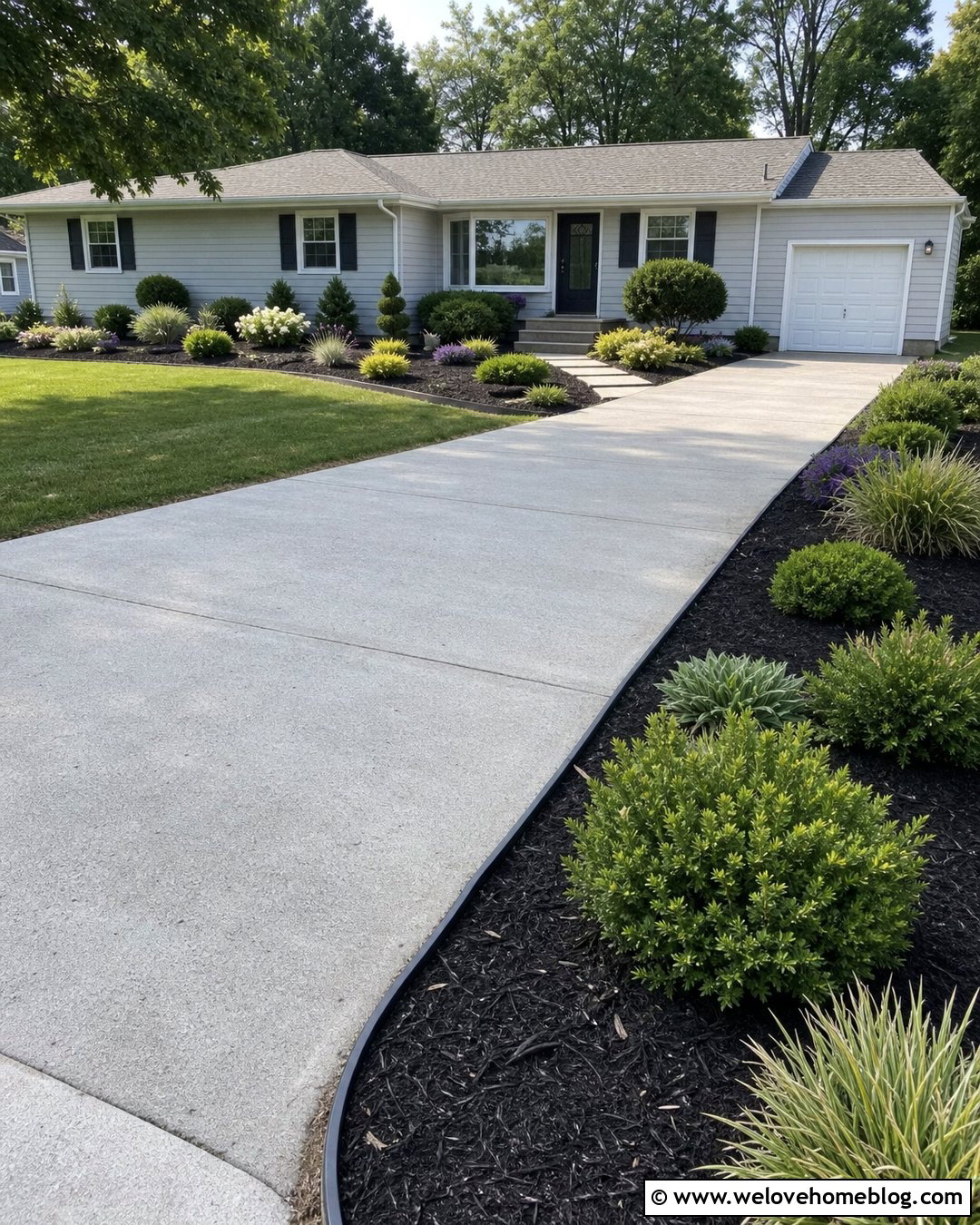
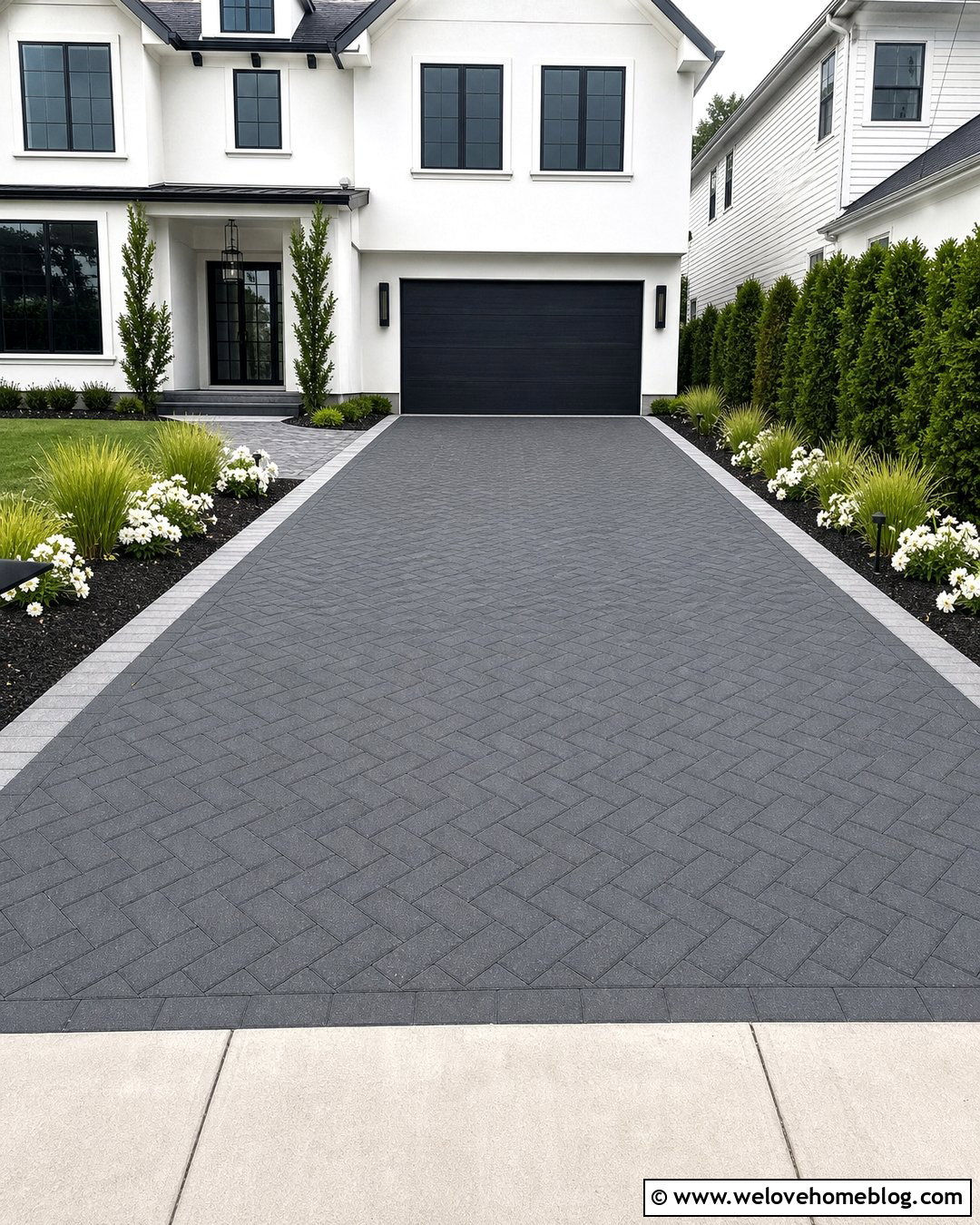
Even a compact driveway can have a defined entrance without losing valuable parking or turning room. Use narrow vertical metal fencing along one boundary and a matching short panel on the opposite side. A straight light gray brushed concrete driveway will keep the layout simple and make the space feel wider. Replace deep planting beds with slim gravel strips containing dwarf grasses, compact evergreen shrubs, and low flowering plants. A wall-mounted or pillar-mounted address sign saves ground space near the road. If a gate is necessary, select a sliding model rather than one that swings across the driveway. Coordinate the fence color with exterior window frames or porch railings. Every component should have a clear purpose, allowing the small entrance to remain open, attractive, and functional.
Conclusion:
The best 20 Driveway Entrance Landscaping Fence Ideas combine appearance with everyday function. A fence should guide the eye, frame the property, and complement the driveway rather than dominate the front yard. Match its material to the home, then use layered planting beds to soften posts, rails, walls, and gates. Keep landscaping low near the street so drivers can see pedestrians and approaching traffic clearly. Before construction, check local requirements for fence height, setbacks, drainage, utilities, and gate placement. Whether you prefer white pickets, black metal rails, rustic timber, or modern slats, repeat a few materials and colors throughout the entrance. That simple coordination will create a polished, welcoming, and practical first impression.

Related posts:
Leave a Reply