
A well-designed driveway fence does more than mark the edge of your property. It can improve privacy, guide vehicles, frame landscaping, and make the entire front yard feel more finished. The best 30 Driveway Fence Ideas combine the fence with the driveway surface, entrance, gate, house architecture, and surrounding plants. A low picket fence may brighten a cottage driveway, while horizontal cedar or black metal panels can sharpen a modern home. Before building, consider visibility near the street, gate clearance, maintenance, drainage, and local requirements. You can then choose a complete look that feels attractive and practical. Explore these distinctive, cohesive, and approachable 30 Driveway Fence Ideas.
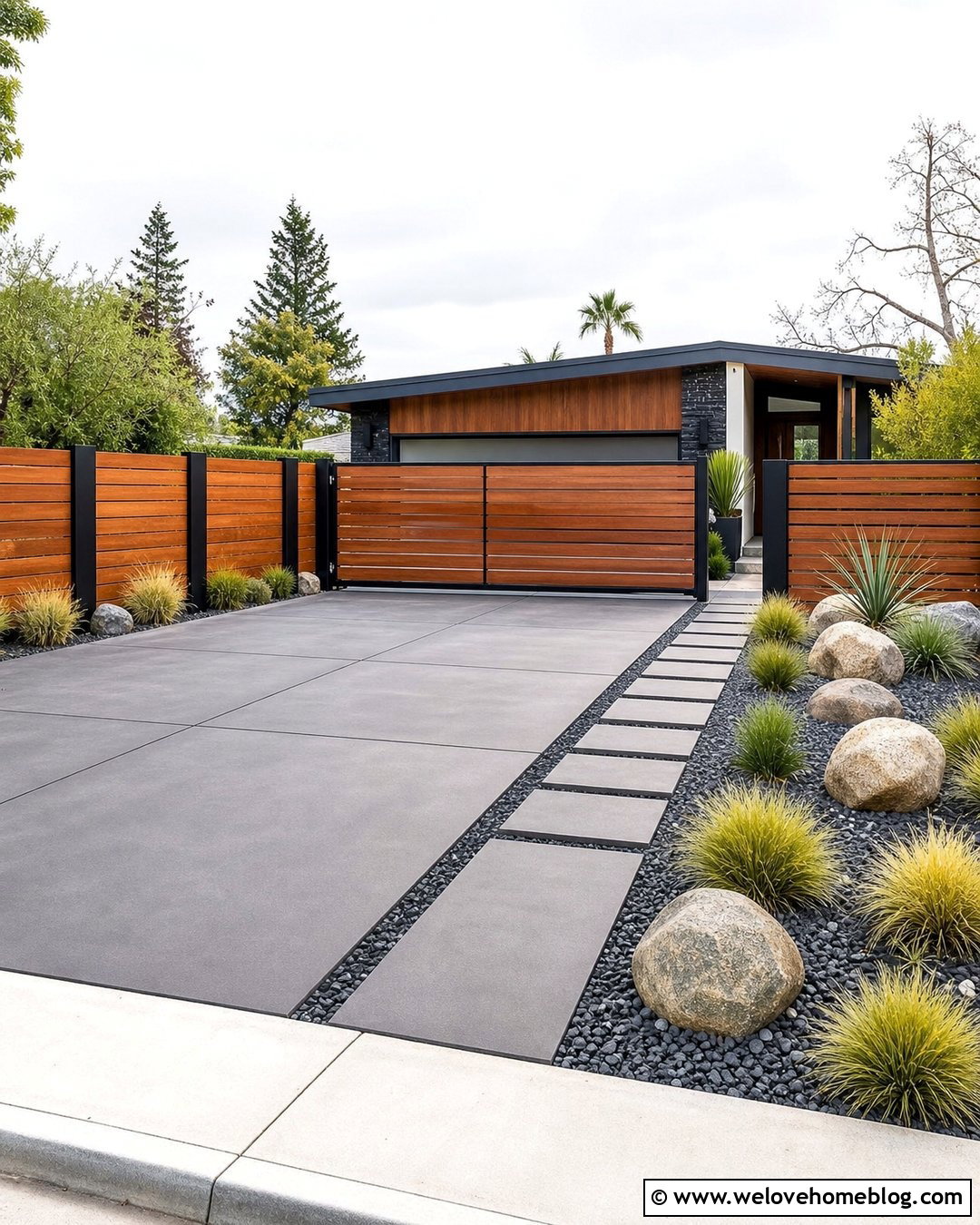
1. Modern Horizontal Driveway Fence
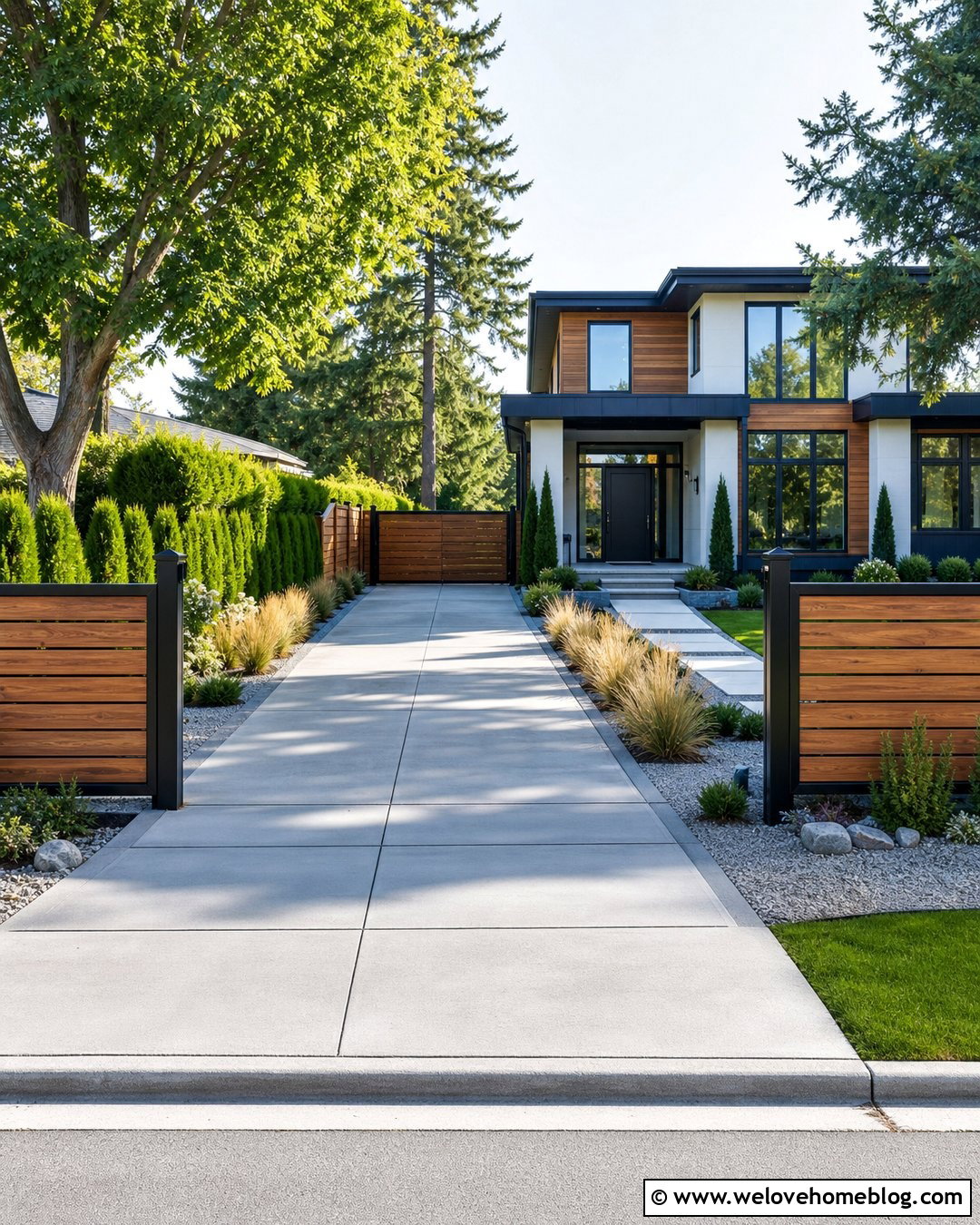
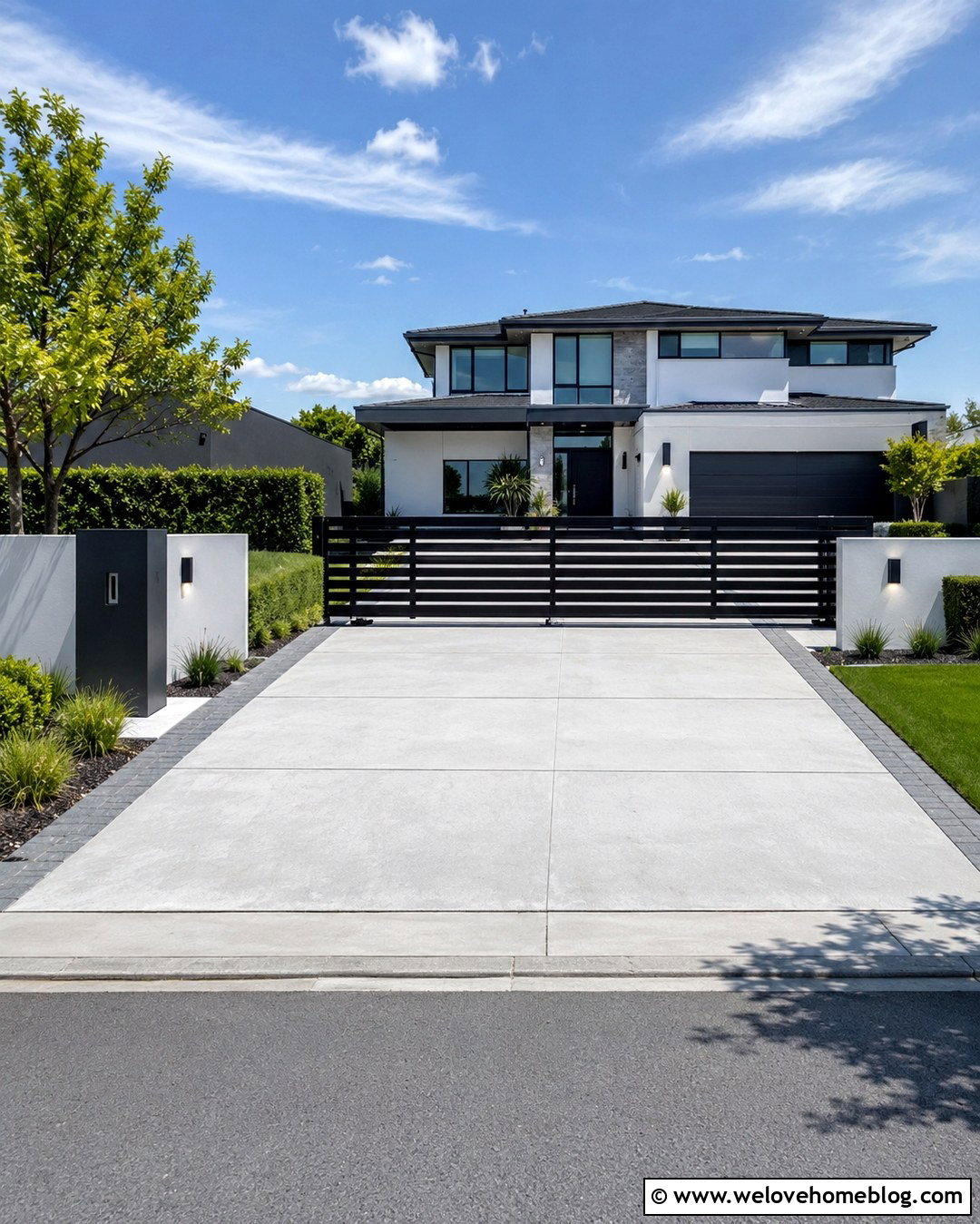
Clean horizontal boards can make an ordinary driveway feel wider and more intentional. Pair a warm cedar fence with a straight, light-gray poured concrete driveway leading to a modern home. Leave narrow gaps between the boards to soften the solid appearance while retaining useful screening. Black metal posts create definition and connect the fence to dark window frames or exterior fixtures. Along the driveway, add a slim bed of ornamental grasses, compact evergreens, and pale gravel. A matching horizontal gate can complete the entrance without introducing a different design language. Keep the fence height lower near the street so drivers have an open view of sidewalks and traffic. This complete layout offers privacy while preserving a bright, uncluttered curb view.
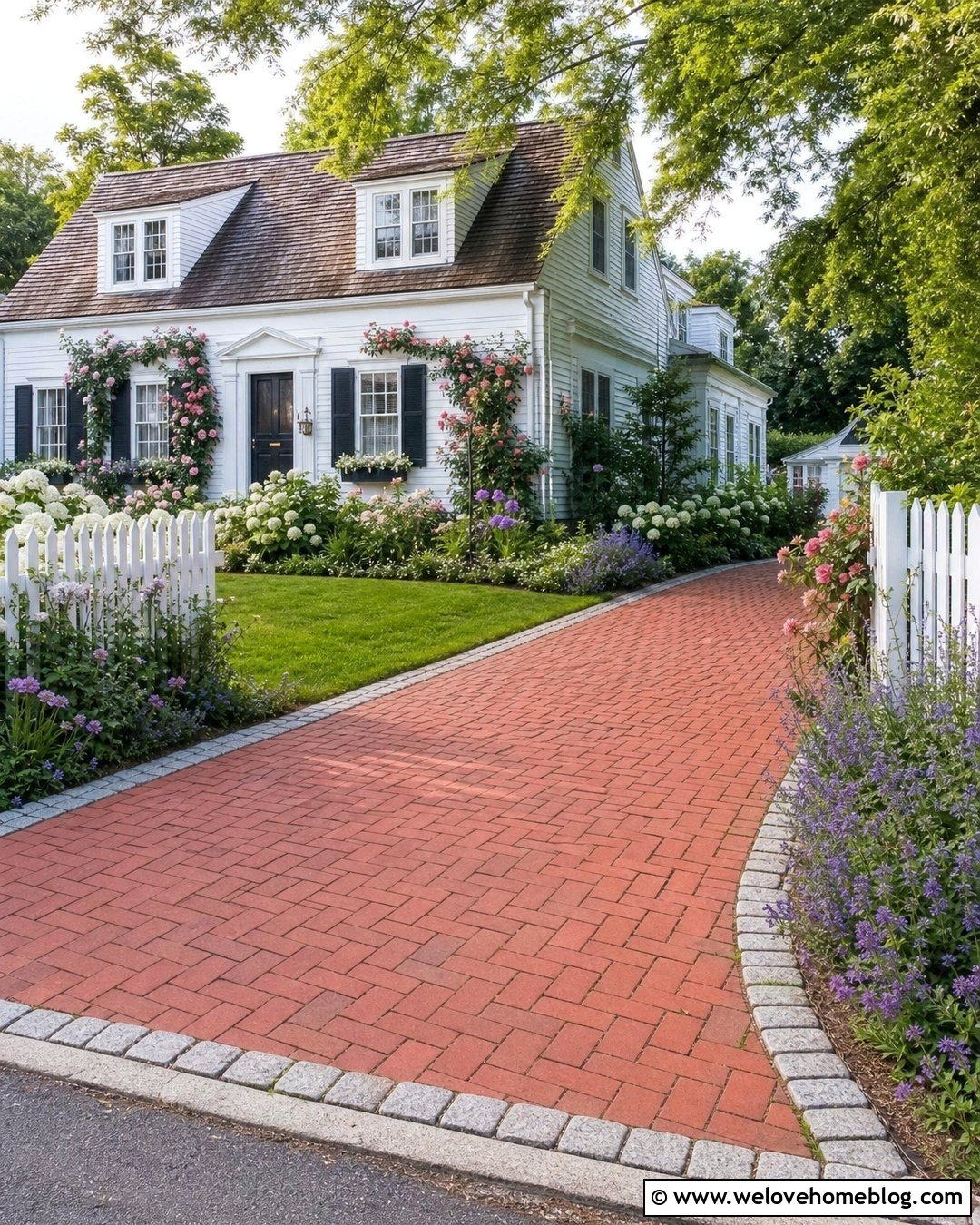
2. White Picket Driveway Fence
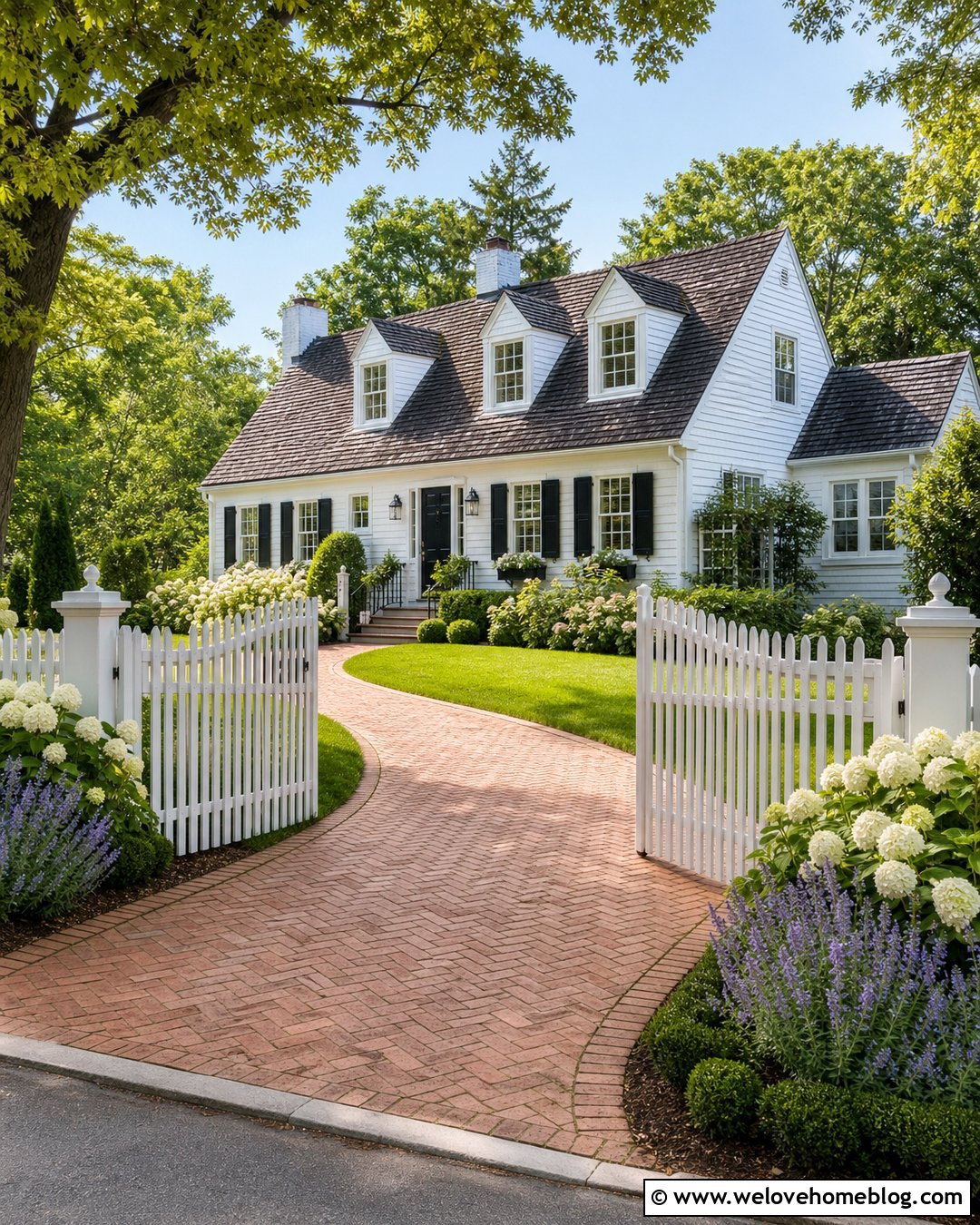
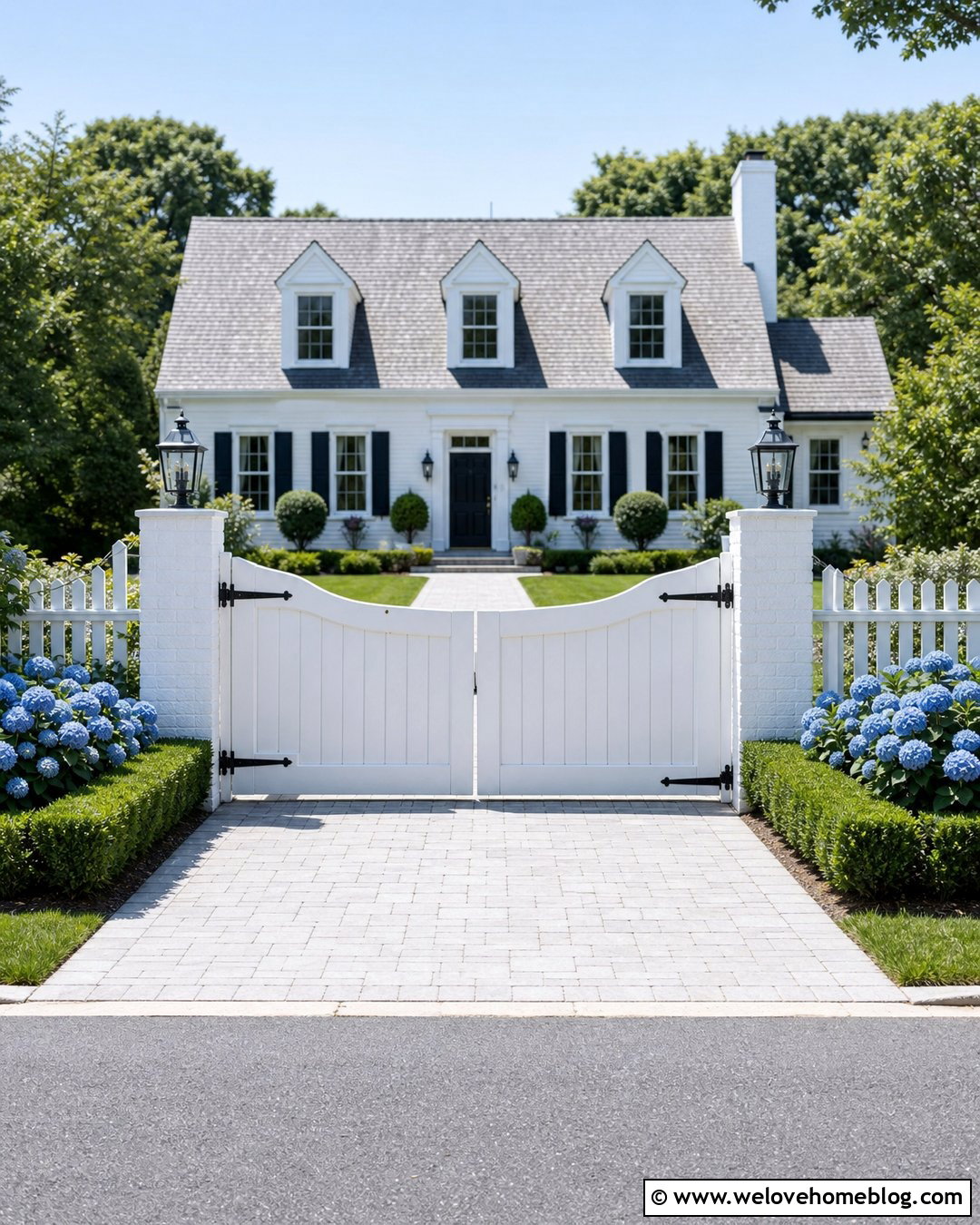
Few combinations feel more welcoming than a white picket fence beside a gently curved driveway. Use clay brick pavers in a herringbone pattern to bring warmth and traditional texture to the approach. The fence can follow the curve, ending at a matching double gate with softly arched tops. Plant hydrangeas, catmint, and compact boxwood behind the pickets so flowers remain visible from the street. A narrow brick mowing strip beneath the fence keeps lawn maintenance manageable. This look works beautifully with Cape Cod, colonial, and cottage homes featuring white trim. Keep the pickets low enough to maintain an open front yard. Matching the gate hardware to porch lights helps the fence, driveway, landscaping, and home read as one carefully coordinated entrance.
3. Black Metal Driveway Fence
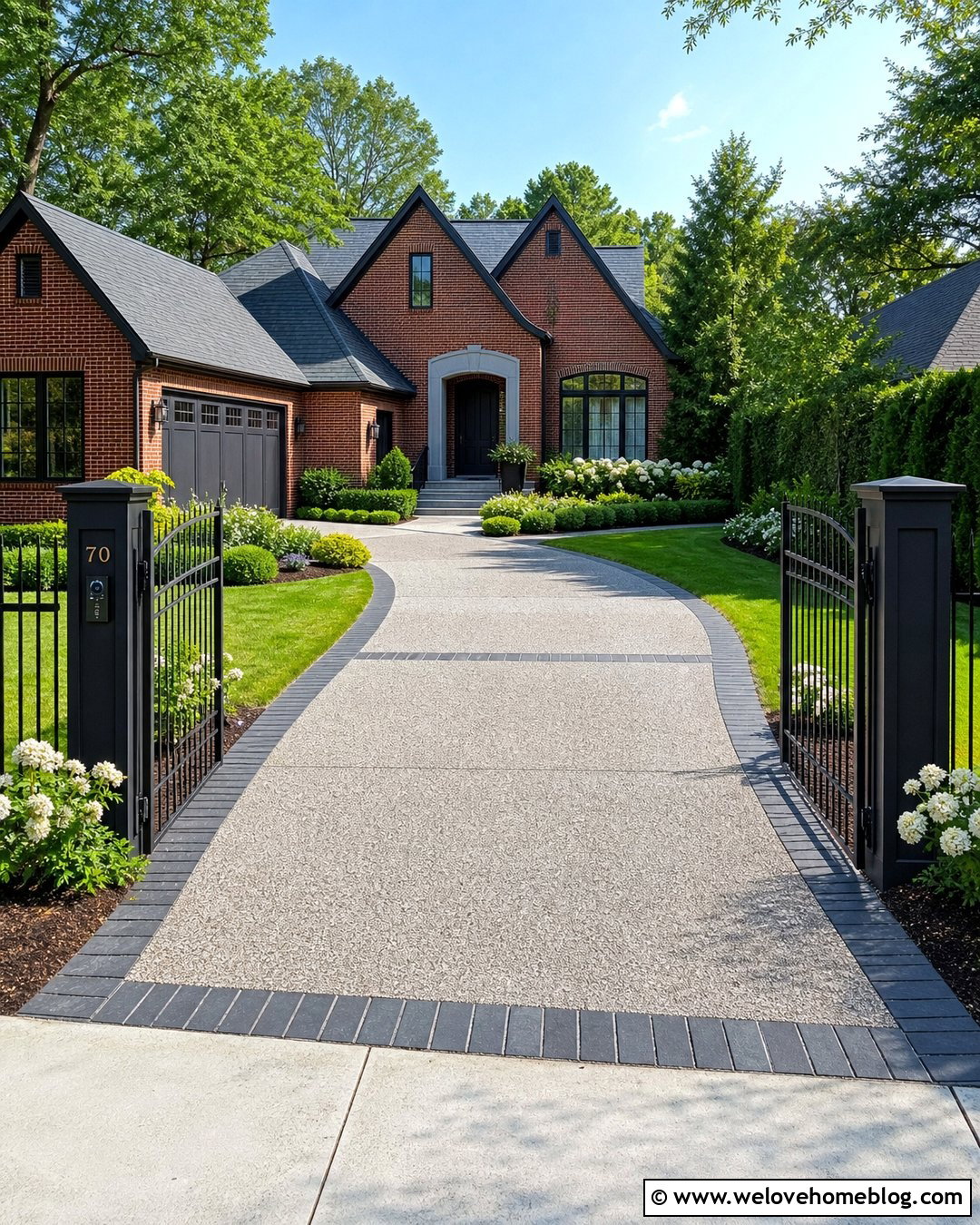
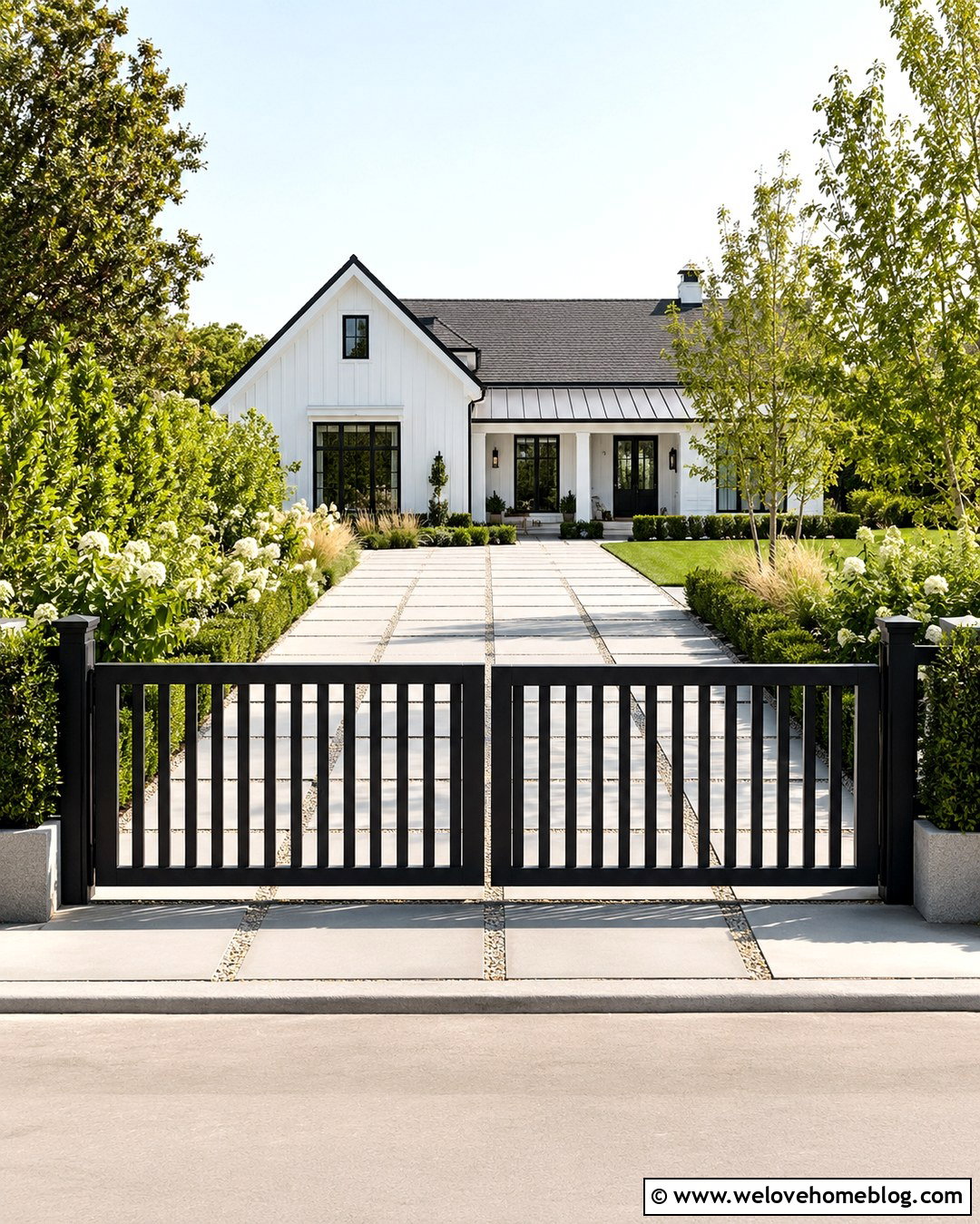
A slim black metal fence delivers definition without visually closing off the property. Combine it with a wide exposed aggregate concrete driveway and a slightly curved approach to a brick or transitional home. Simple vertical bars provide a crisp outline, while square posts add enough structure to frame the entrance. Continue the black finish on a double swing gate, house numbers, and pathway lights. Low evergreen shrubs and white flowering perennials can soften the metal without hiding it. Use a dark brick ribbon along the driveway edges to connect the surface with the fence color. The result feels secure yet open, making it suitable for front yards where visibility matters. Avoid excessive ornamentation if you want a clean, adaptable appearance.
4. Cedar Privacy Driveway Fence
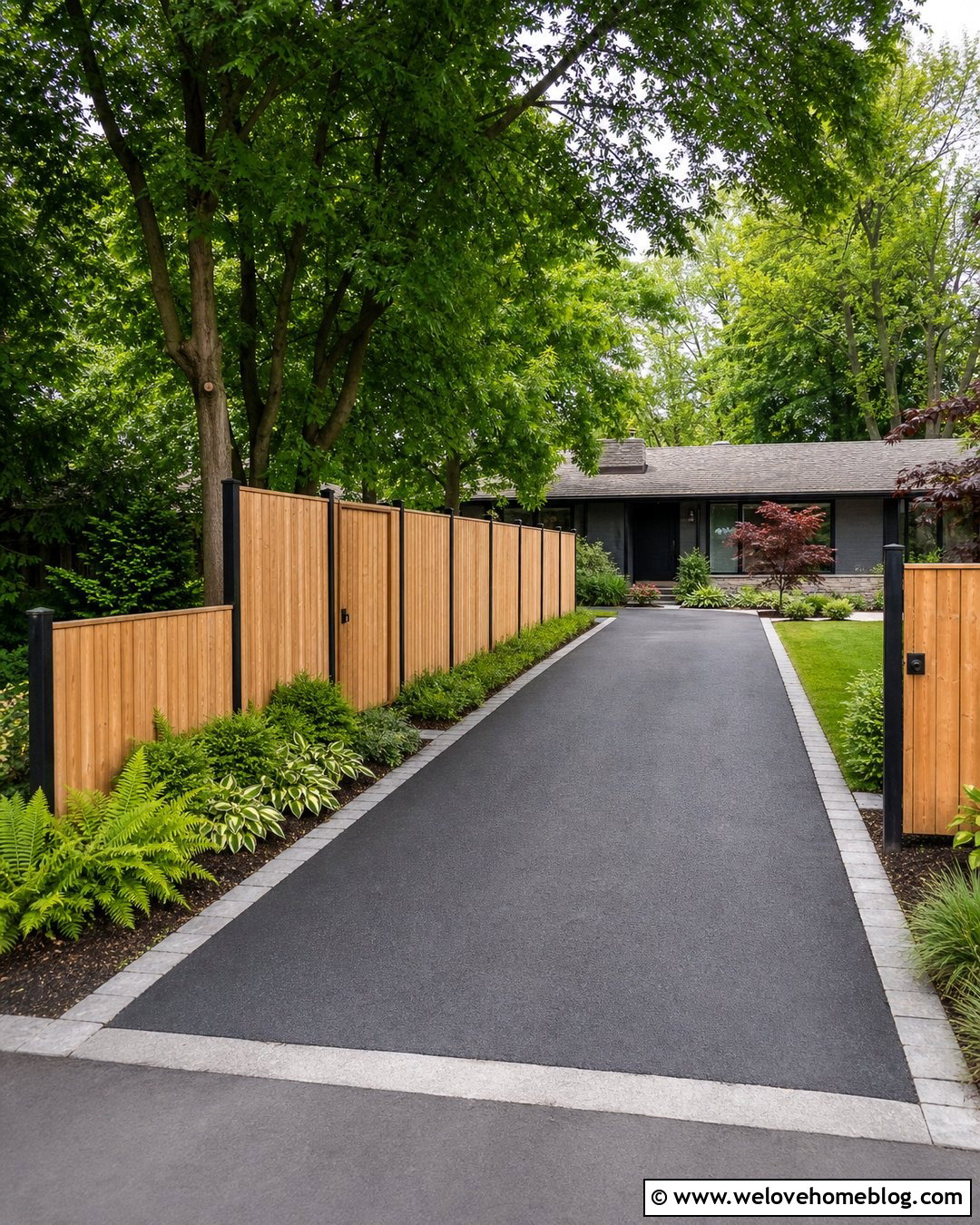
When a driveway runs close to a neighboring yard, a cedar privacy fence can turn an exposed area into a calm arrival space. Pair vertical cedar boards with a dark gray asphalt driveway and a straight layout leading to a ranch home. Set the fence behind a narrow planting strip rather than directly against the pavement. Ferns, hostas, inkberry, and shade-tolerant grasses can create a softer transition. A cap rail gives the fence a tailored finish, while black steel posts provide dependable visual contrast. Near the street, step the panels down gradually to prevent the entrance from feeling boxed in. The cedar color warms the asphalt and works naturally with stone, brick, or painted siding. A matching pedestrian gate can connect the driveway to the backyard.
5. Vinyl Driveway Fence With Gate
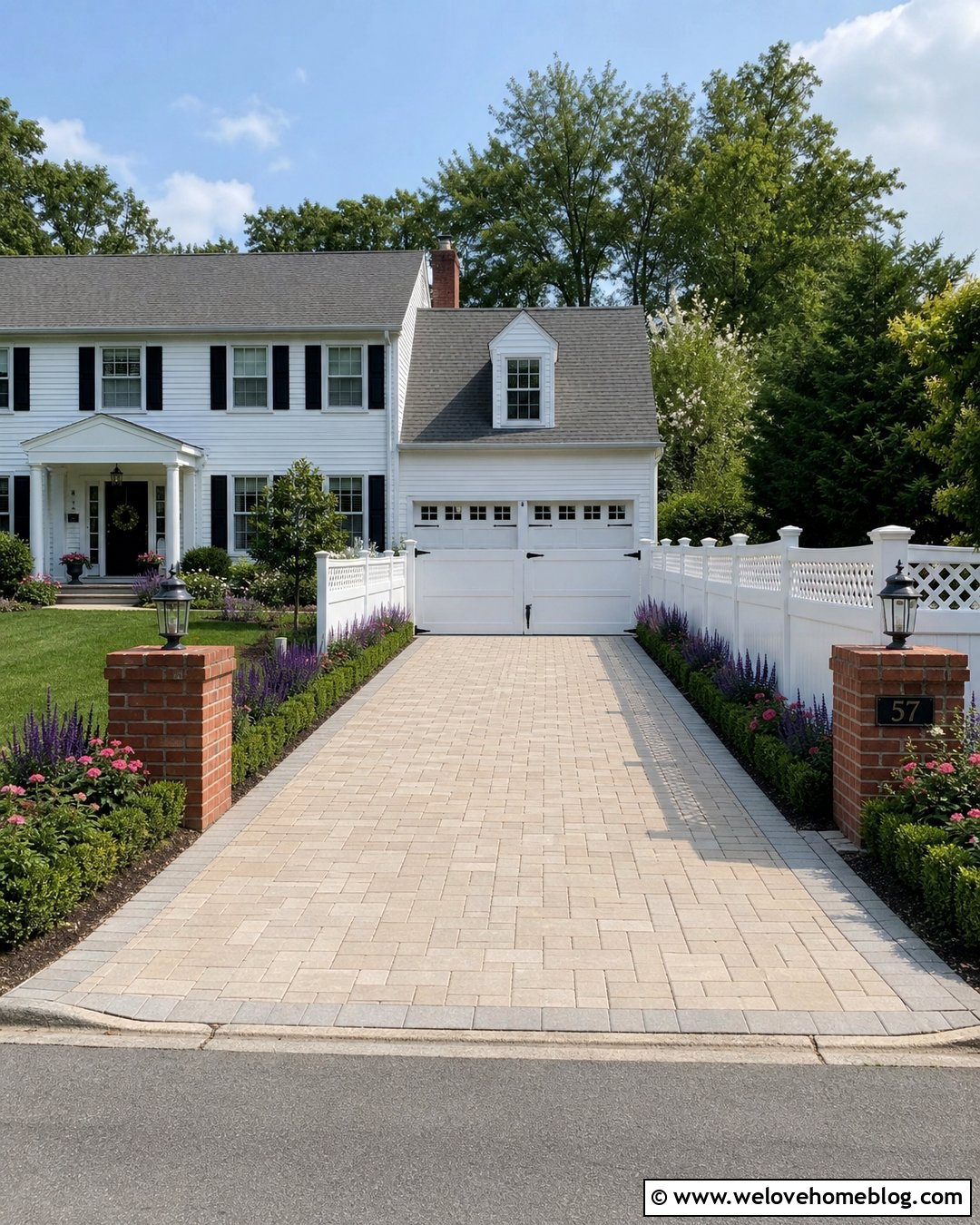
A crisp vinyl fence can create an orderly entrance without demanding the regular refinishing associated with painted wood. Use white vinyl panels alongside a pale tan concrete paver driveway arranged in a running bond pattern. A straight approach and matching double gate suit a suburban colonial or traditional two-story home. Choose semi-private panels with a narrow lattice top to balance screening and daylight. Anchor the entrance with brick pillars that coordinate with the home’s facade. Boxwood, salvia, and low roses can fill the beds without overwhelming the clean fence lines. Continue the pavers into a separate walkway for a cohesive layout. This design works best when the gate, fence panels, posts, and pillar caps share consistent proportions instead of appearing like unrelated additions.
6. Split Rail Driveway Fence
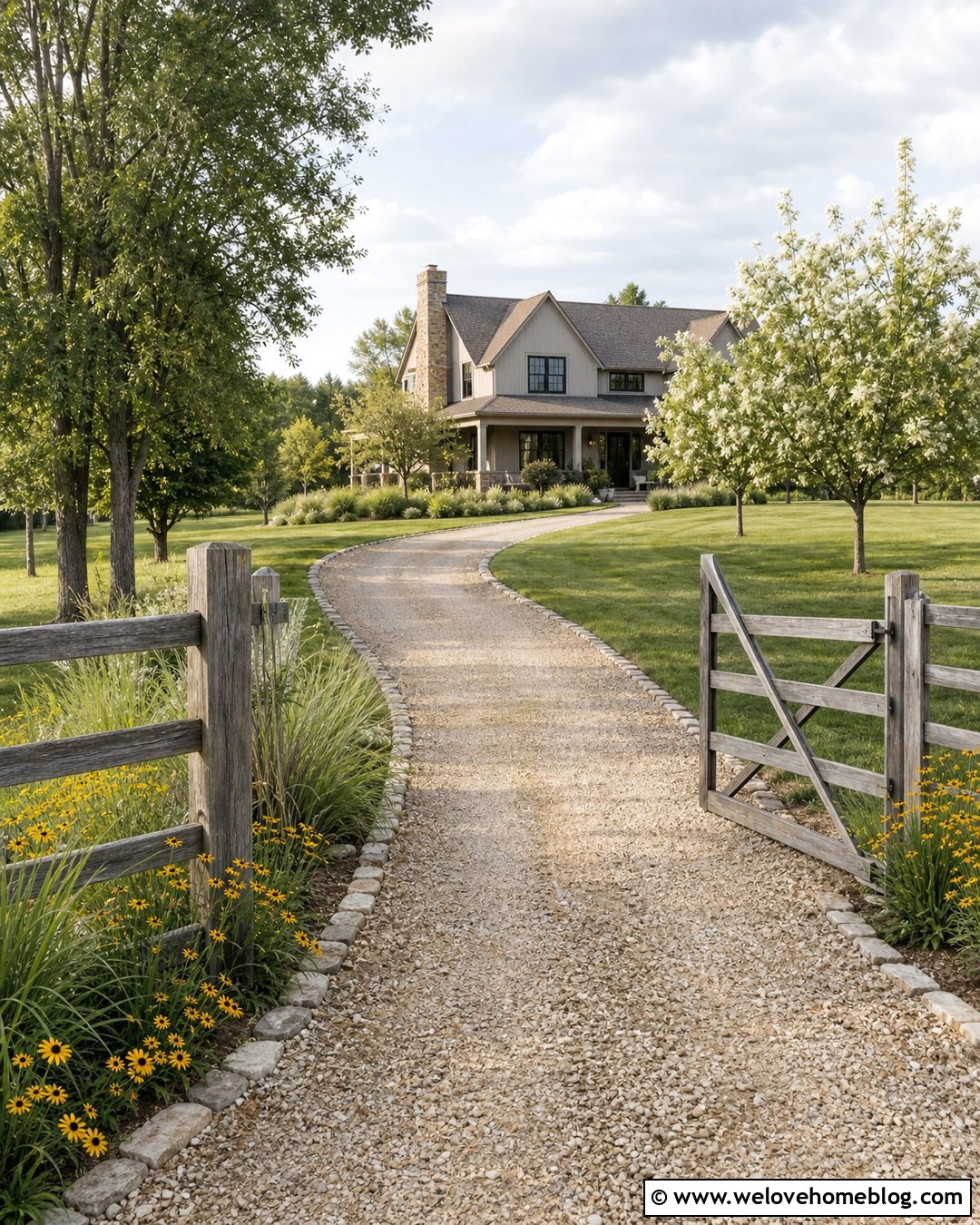
A split rail fence brings relaxed character to a long rural or country driveway. Pair weathered cedar rails with a buff gravel surface that curves through an open lawn toward a farmhouse. Fieldstone edging can contain the gravel while echoing the natural texture of the fence. At the entrance, use a simple timber farm gate or leave the opening ungated for a more informal approach. Native grasses, black-eyed Susans, and small flowering trees can create loose planting groups along the fence line. Avoid placing dense shrubs where they would hide the rustic rails. This complete driveway look feels spacious rather than heavily enclosed. It also allows views across the property, making it a practical visual boundary for larger front yards and homes surrounded by natural scenery.
7. Brick Driveway Fence With Pillars
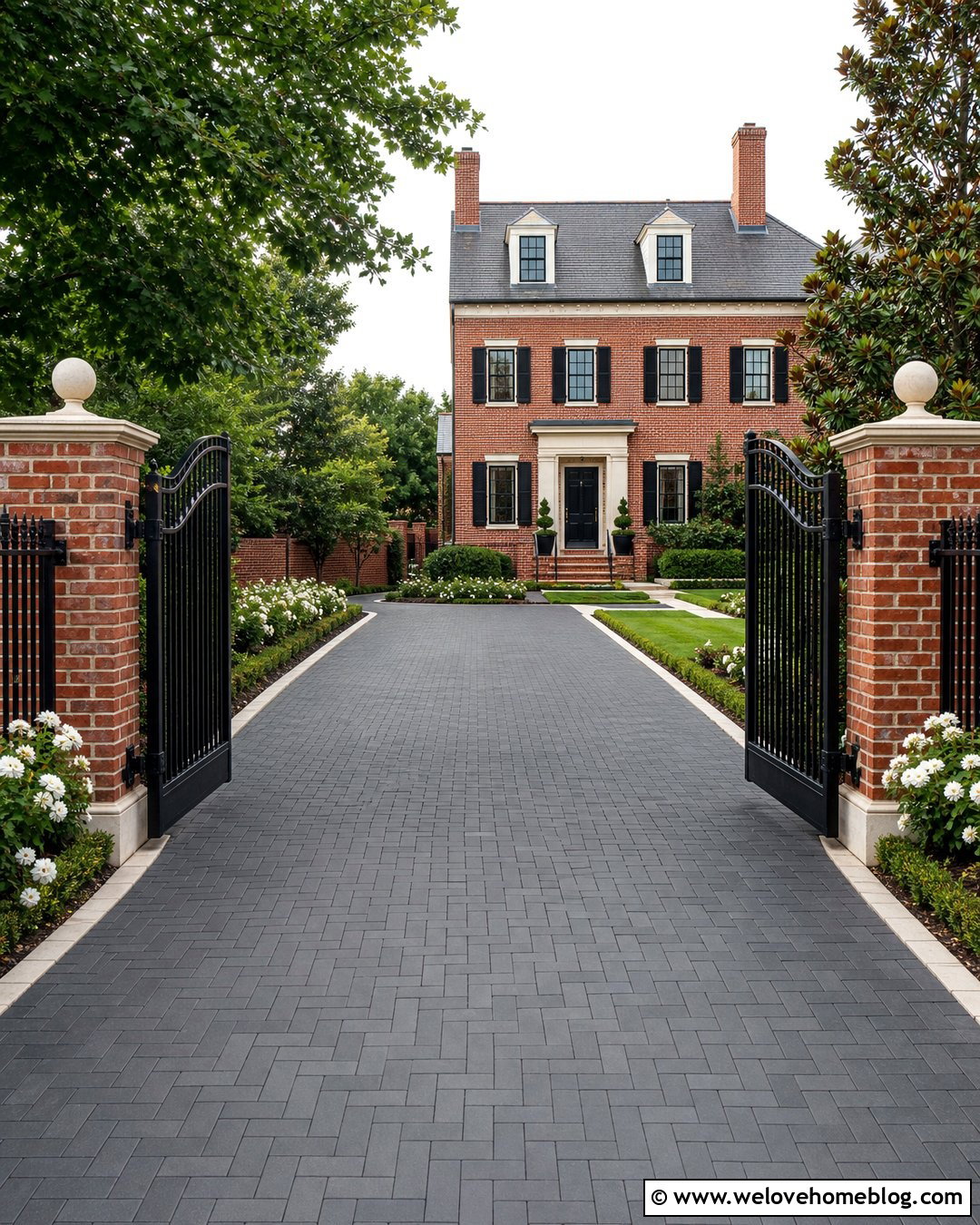
Brick pillars and low brick fence sections can give a driveway a substantial, architectural frame. Combine them with charcoal concrete pavers laid in a herringbone pattern across a broad, straight driveway. Insert black metal railings between the pillars to keep the front yard visible. At the entrance, repeat the pillar design on both sides of a simple metal gate. Limestone or cast-stone caps provide a finished transition and prevent the masonry from looking too heavy. Plant compact hollies, white roses, and ground cover in beds behind the fence. This combination is especially effective with Georgian, colonial, and traditional brick homes. Match the masonry color carefully; coordinating undertones generally look more polished than using several competing shades of red, brown, and orange brick.
8. Stone Wall Driveway Fence
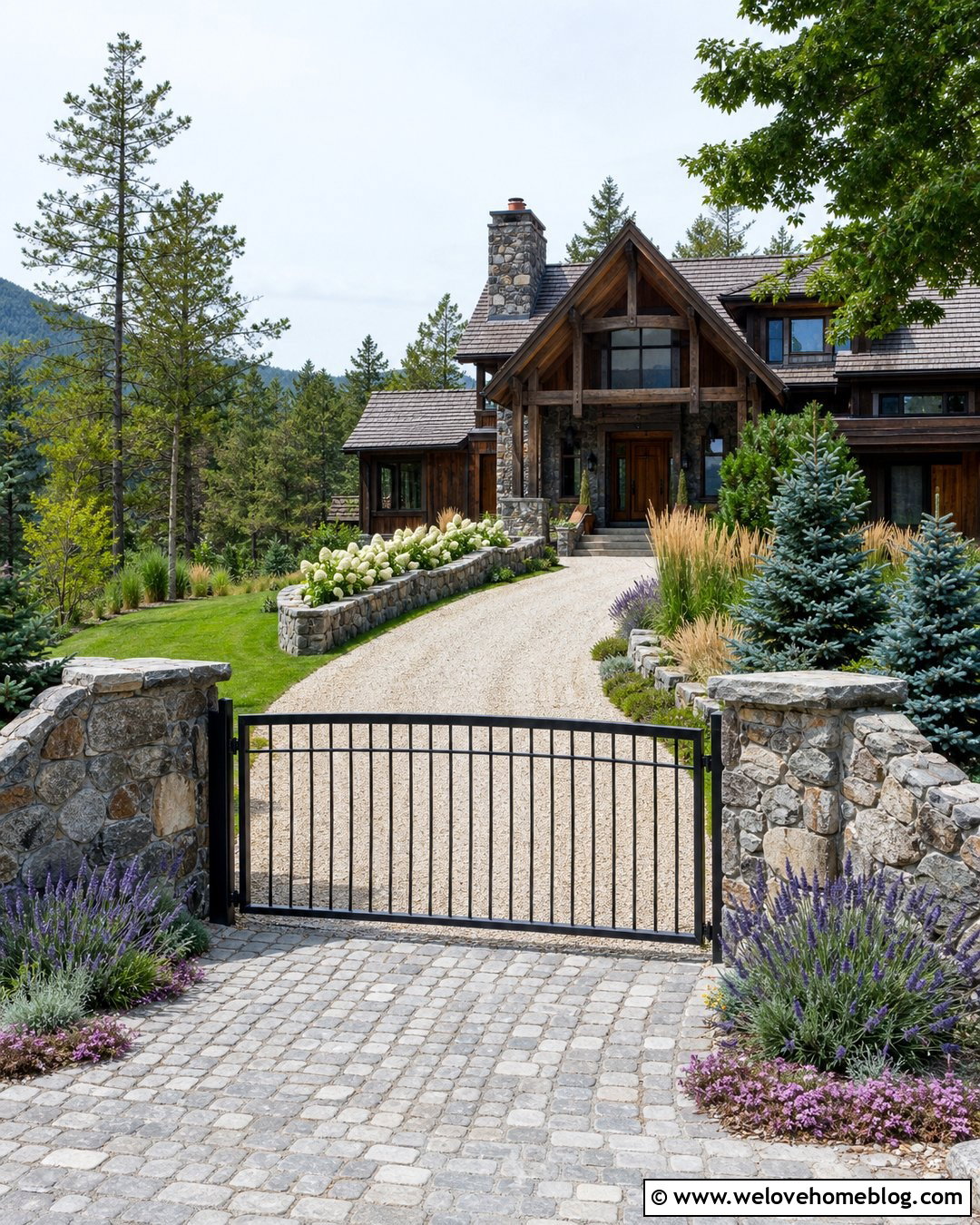
A low stone wall can function as a driveway fence while blending naturally into the landscape. Pair irregular gray fieldstone with a light pea gravel driveway that curves toward a craftsman or mountain-style home. The wall should follow the driveway’s shape, gradually lowering near the road and rising closer to the house. Add simple wooden or black metal gates between wider stone pillars if controlled access is needed. Plant lavender, creeping thyme, ornamental grasses, and compact conifers around the masonry. Their softer forms prevent the stone from feeling severe. A cobblestone apron at the street can create a durable-looking visual transition into the gravel. Use the same stone on porch columns or foundation details so the driveway boundary feels like part of the home’s original architecture.
9. Farmhouse Driveway Fence
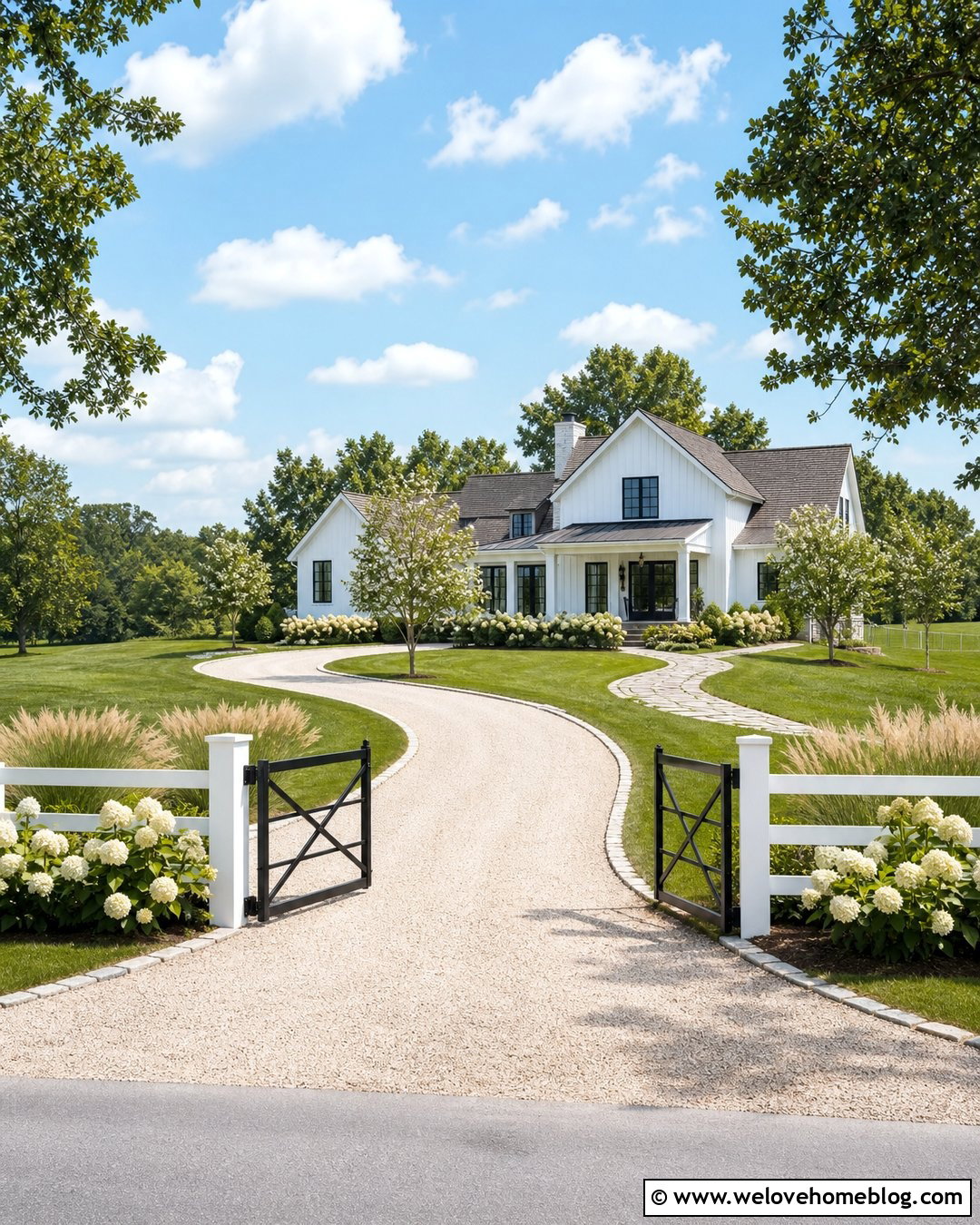
A farmhouse driveway feels complete when its fence, gate, surface, and planting reflect the same relaxed character. Use a white three-rail fence along a wide crushed limestone driveway with a gentle S-curve. A black wooden or powder-coated metal farm gate adds contrast at the entrance. Frame the opening with simple square posts rather than formal masonry pillars. Plant hydrangeas, panicle grasses, and small groups of flowering trees beyond the fence, leaving open lawn between them. The pale driveway surface brightens the approach and complements a white modern farmhouse with black windows. Add a separate flagstone walkway so pedestrians do not need to use the vehicle entrance. This balanced design feels rural and spacious without requiring an exceptionally large property or elaborate decorative features.
10. Ranch Driveway Fence
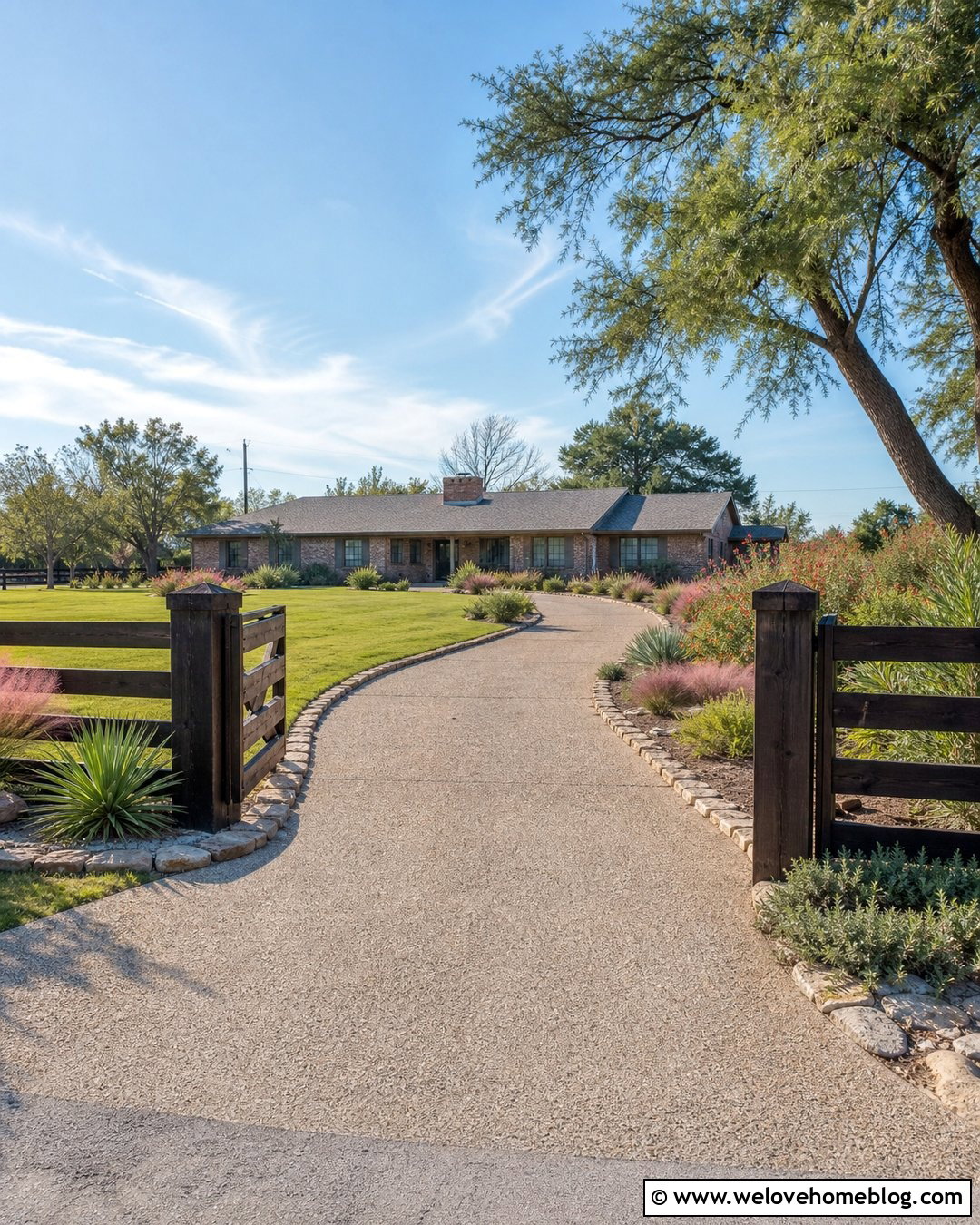
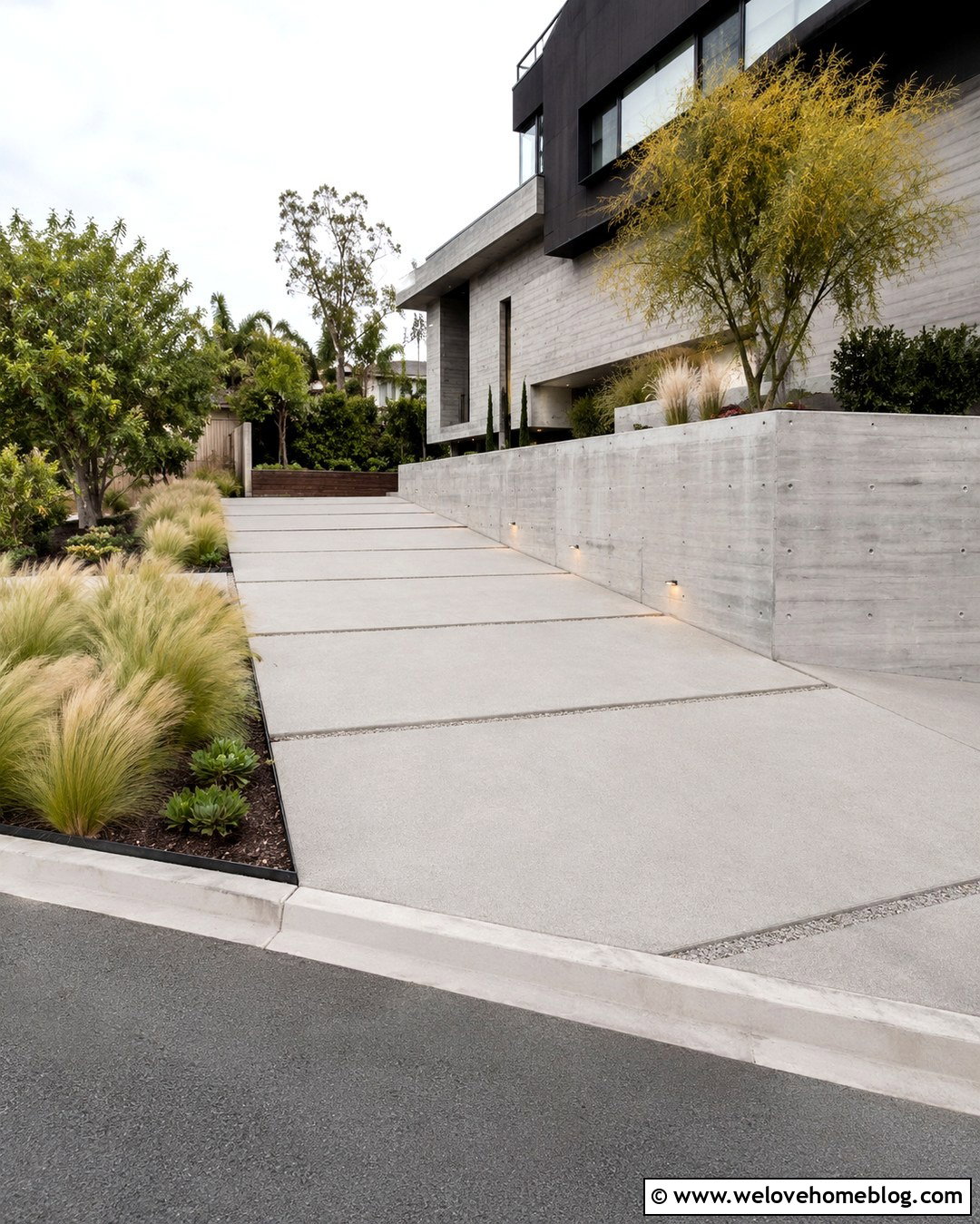
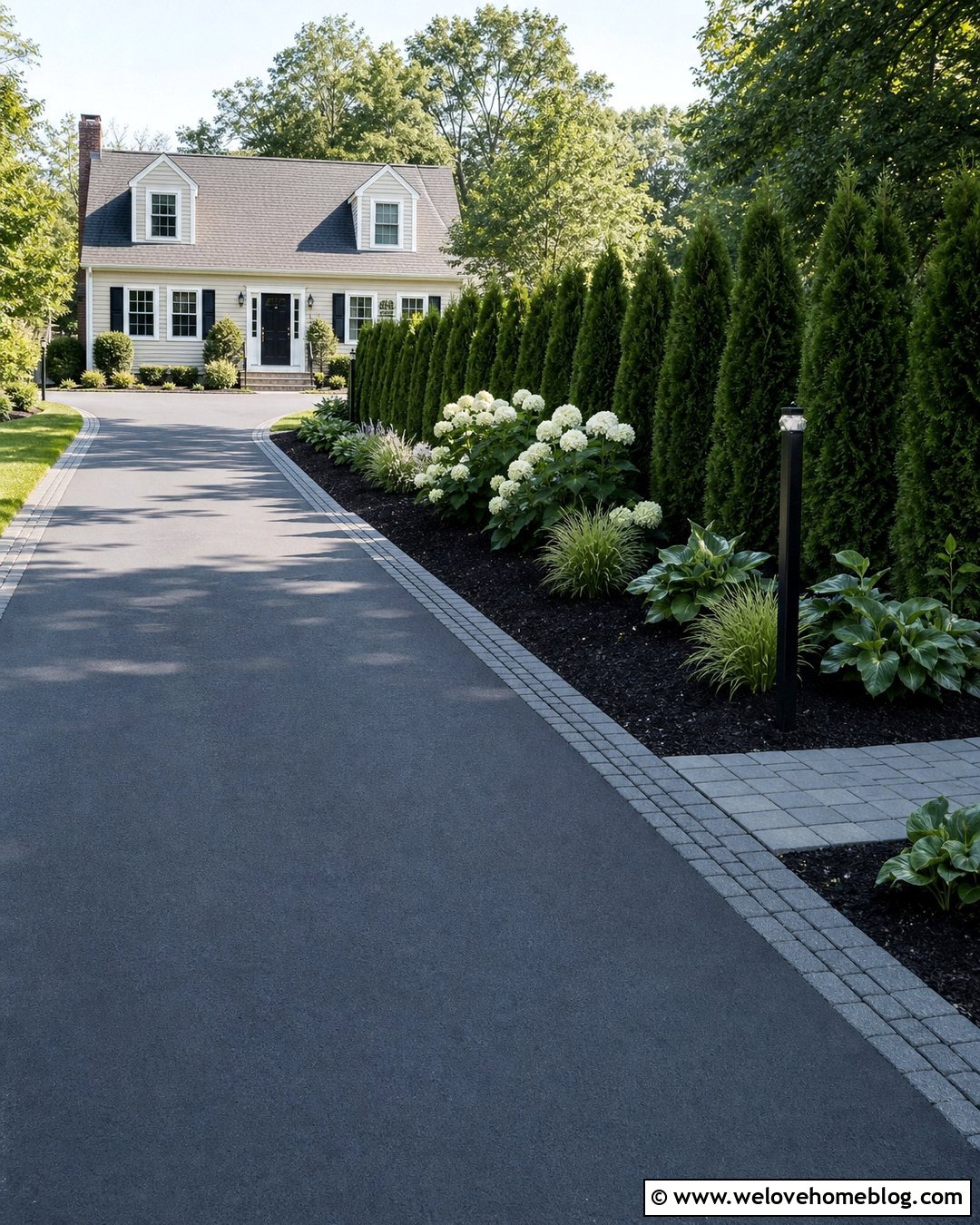
A low ranch fence creates a strong horizontal line that suits a single-story home. Pair dark-stained timber rails with a warm exposed aggregate driveway that sweeps gently toward a brick ranch house. Use substantial square posts spaced evenly along both sides of the entrance. A matching two-panel gate can provide closure without blocking the view of the home. Beds of yucca, muhly grass, juniper, and drought-tolerant perennials complement the low architecture. Natural stone edging helps separate the planting beds from the driveway surface. Keep the fence simple and broad rather than tall or ornate. Repeating its dark wood tone on the garage door or porch beams can tie the property together. The finished look is grounded, practical, and well suited to a wide suburban lot.
11. Rustic Wood Driveway Fence
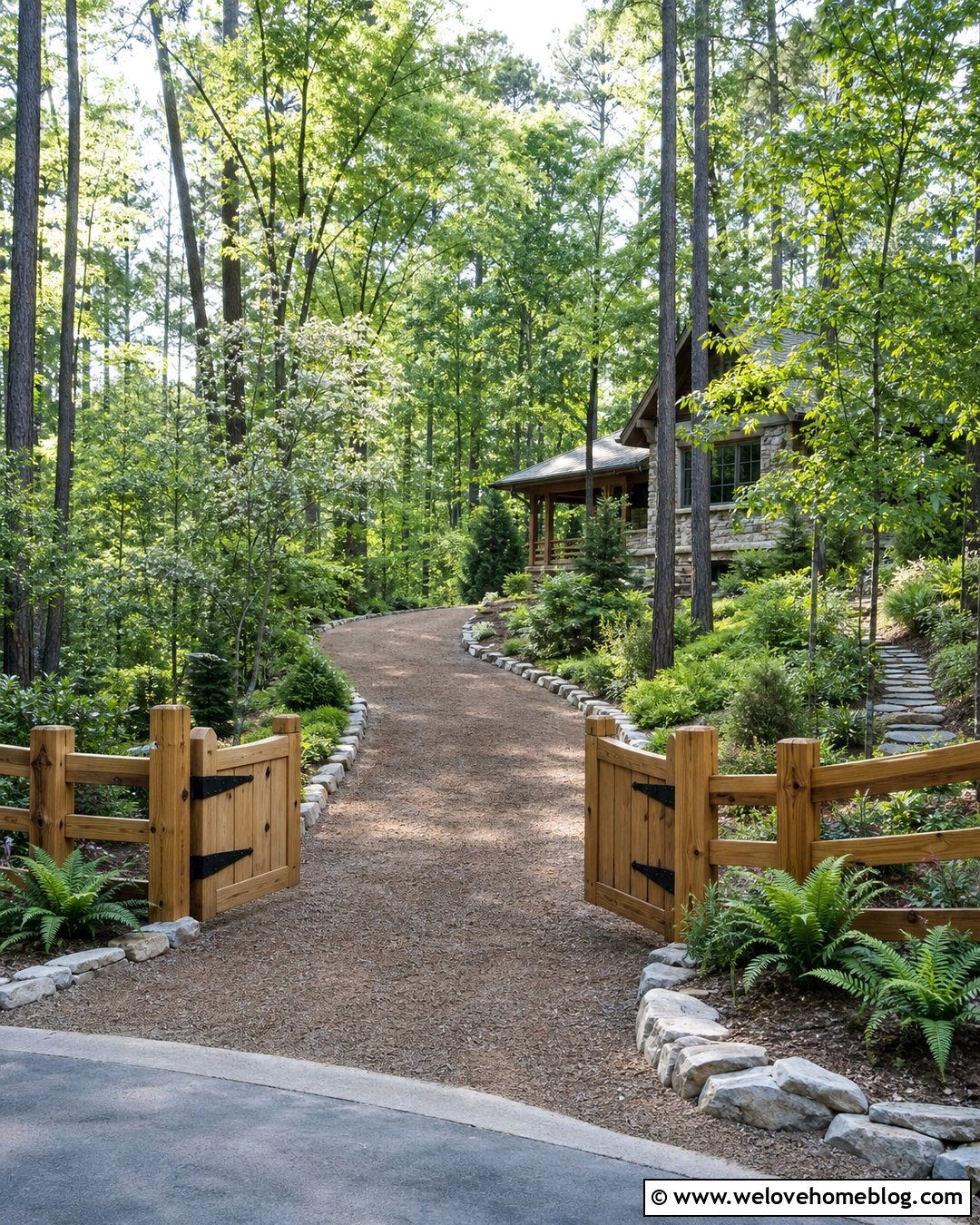
Rough-sawn wood gives a driveway entrance an established look that works well in wooded settings. Use chunky vertical boards or uneven timber rails beside a brown crushed-stone driveway leading to a cabin-inspired home. Stone edging can control loose material and provide a clean line beneath the fence. Add a heavy double gate with black strap hinges, supported by sturdy timber posts. Layer the surrounding landscape with ferns, native grasses, serviceberry, and evergreen shrubs. Instead of perfectly symmetrical planting, use natural-looking groups that echo the woodland setting. Warm, low-profile post lights can be included while still photographing the design in bright daylight. The key is maintaining enough refinement around the entrance that the rustic materials look intentional rather than unfinished or improvised.
12. Contemporary Slatted Driveway Fence
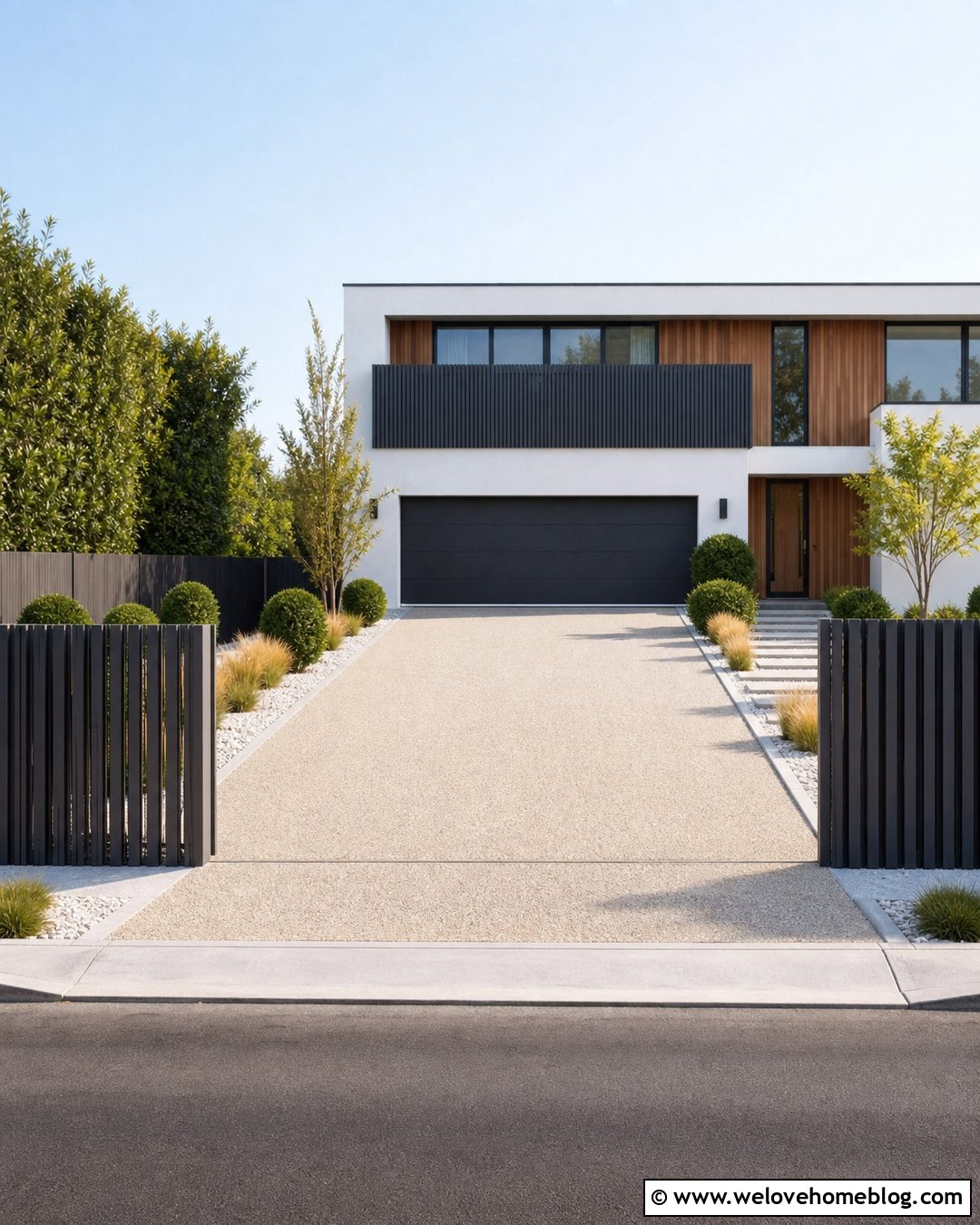
Narrow vertical slats offer a fresh alternative to common horizontal fence boards. Combine a charcoal composite slatted fence with a pale resin-bound gravel driveway arranged in a straight, minimalist layout. Small, consistent spaces between the slats introduce light while screening the front yard. A flush sliding gate can continue the same pattern across the entrance without interrupting the clean lines. Use poured concrete curbs along the driveway and rectangular planting beds filled with feather reed grass, clipped evergreens, and white flowering ground cover. This design suits a contemporary house with flat rooflines, smooth stucco, or mixed wood siding. Conceal hinges, controls, and utility equipment whenever possible. A restrained palette allows the driveway texture, fence rhythm, and architecture to work together without visual clutter.
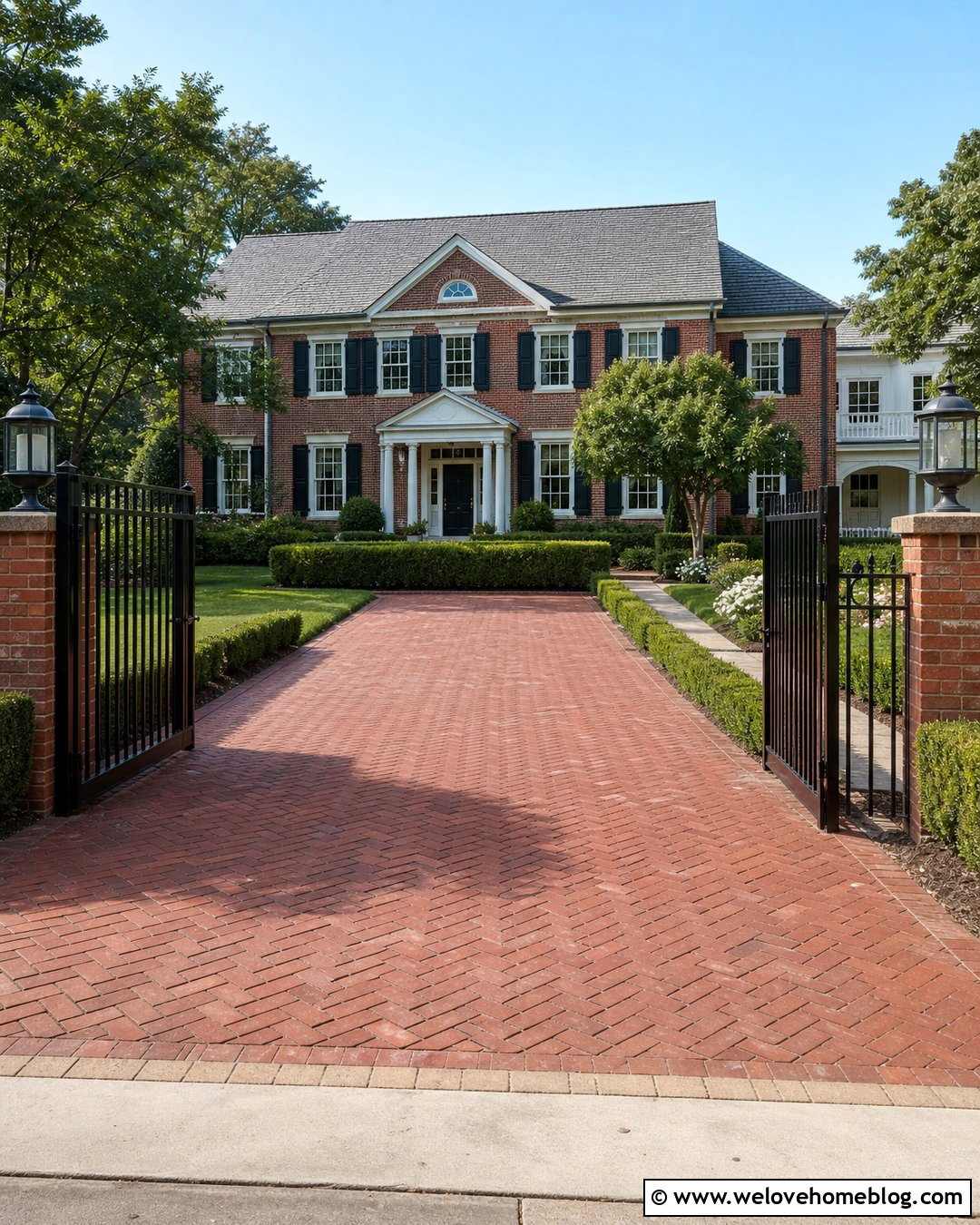
13. Wrought Iron Driveway Fence
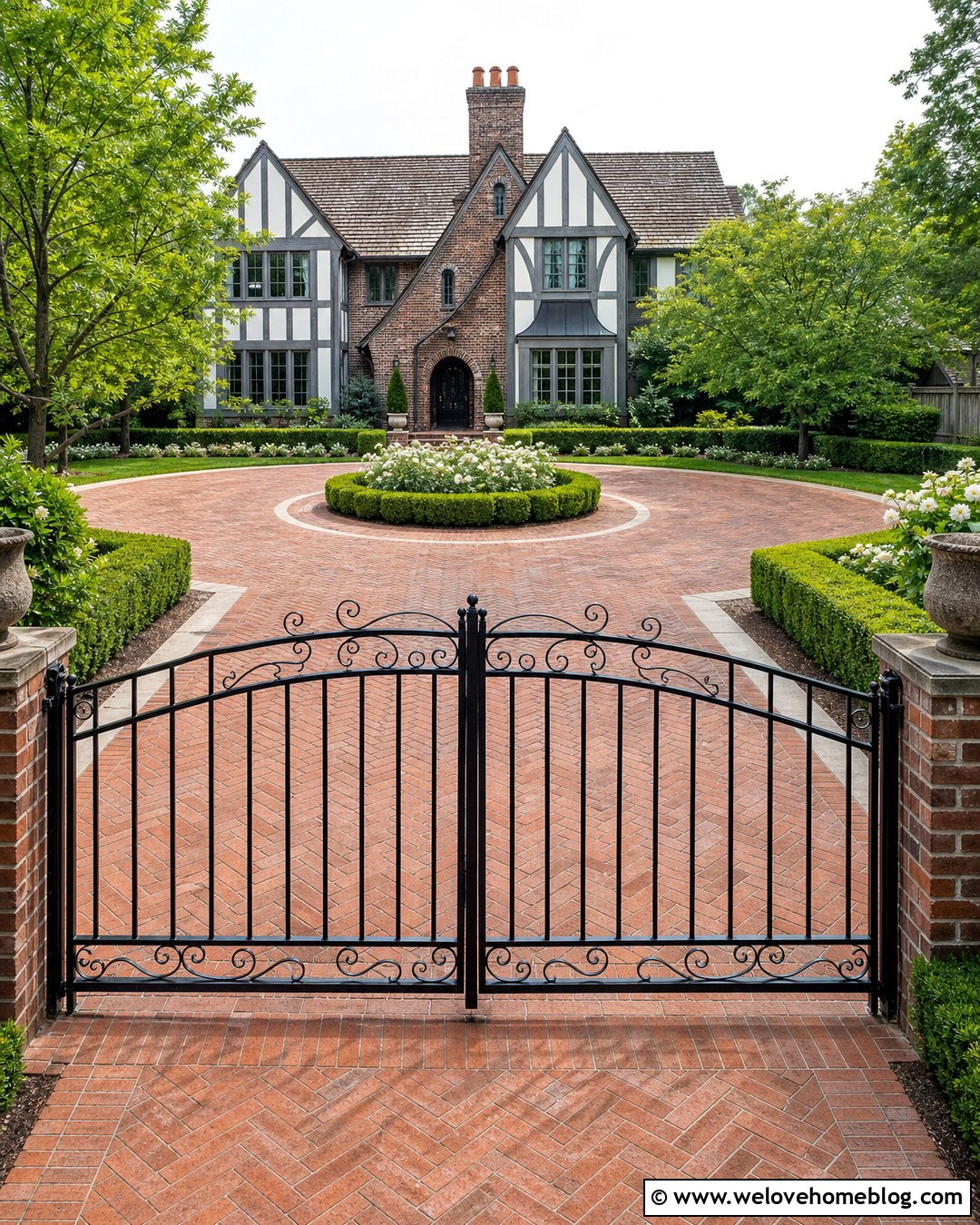
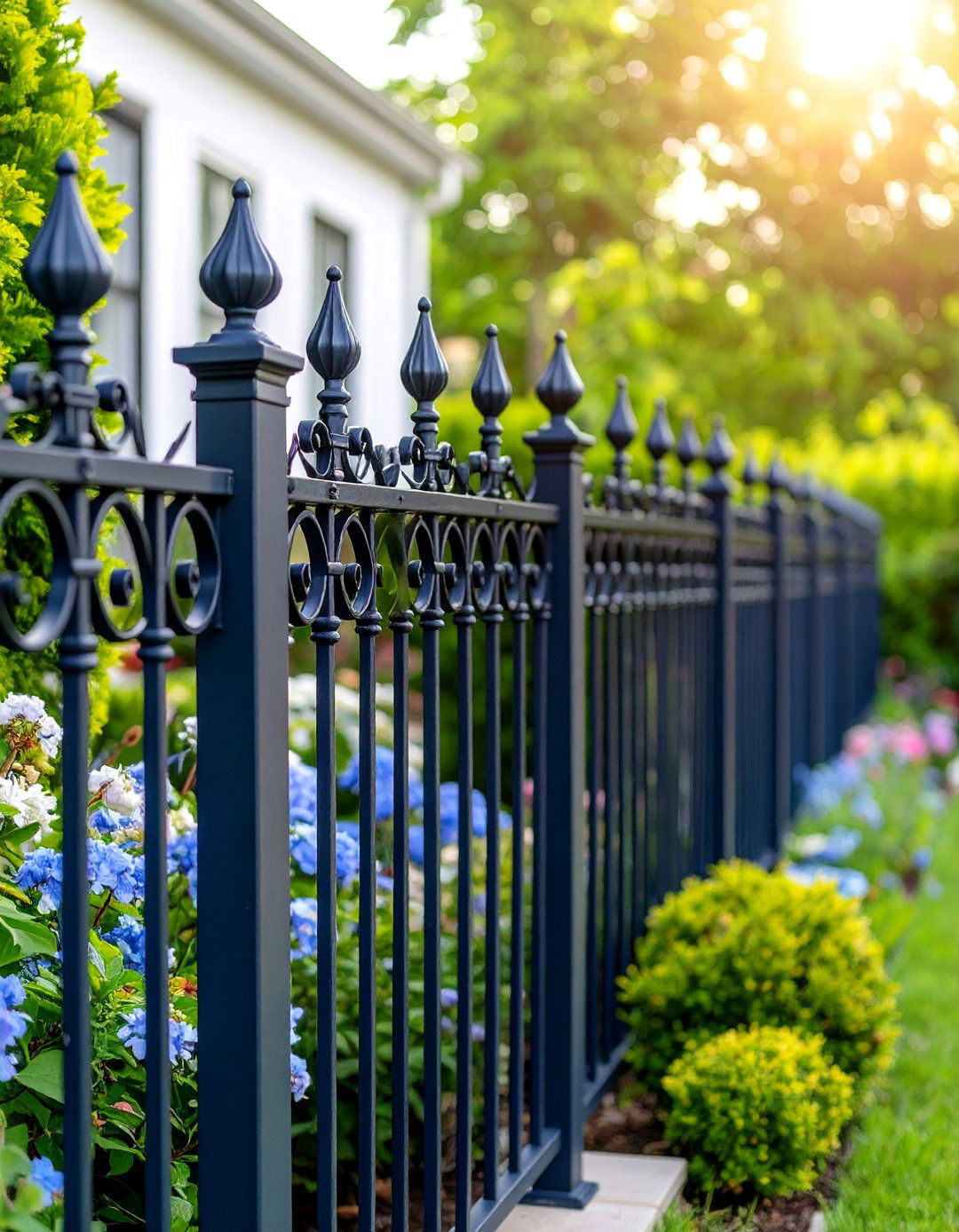
Decorative wrought iron can bring traditional detail to a formal circular driveway. Pair a black iron fence with warm red brick pavers laid in a classic herringbone pattern. Curved fence sections should follow the driveway and connect to masonry pillars at the main entrance. Choose a double gate with restrained scrollwork rather than an overly complex pattern that competes with the home. Plant clipped boxwood, white roses, and small ornamental trees in balanced beds behind the ironwork. A brick walkway can branch from the driveway toward the front door. This look works especially well with Tudor, French country, or traditional brick homes. Repeating black iron on balcony rails, lanterns, or porch details helps the fence feel integrated with the property rather than added as a separate decorative feature.
14. Aluminum Driveway Fence
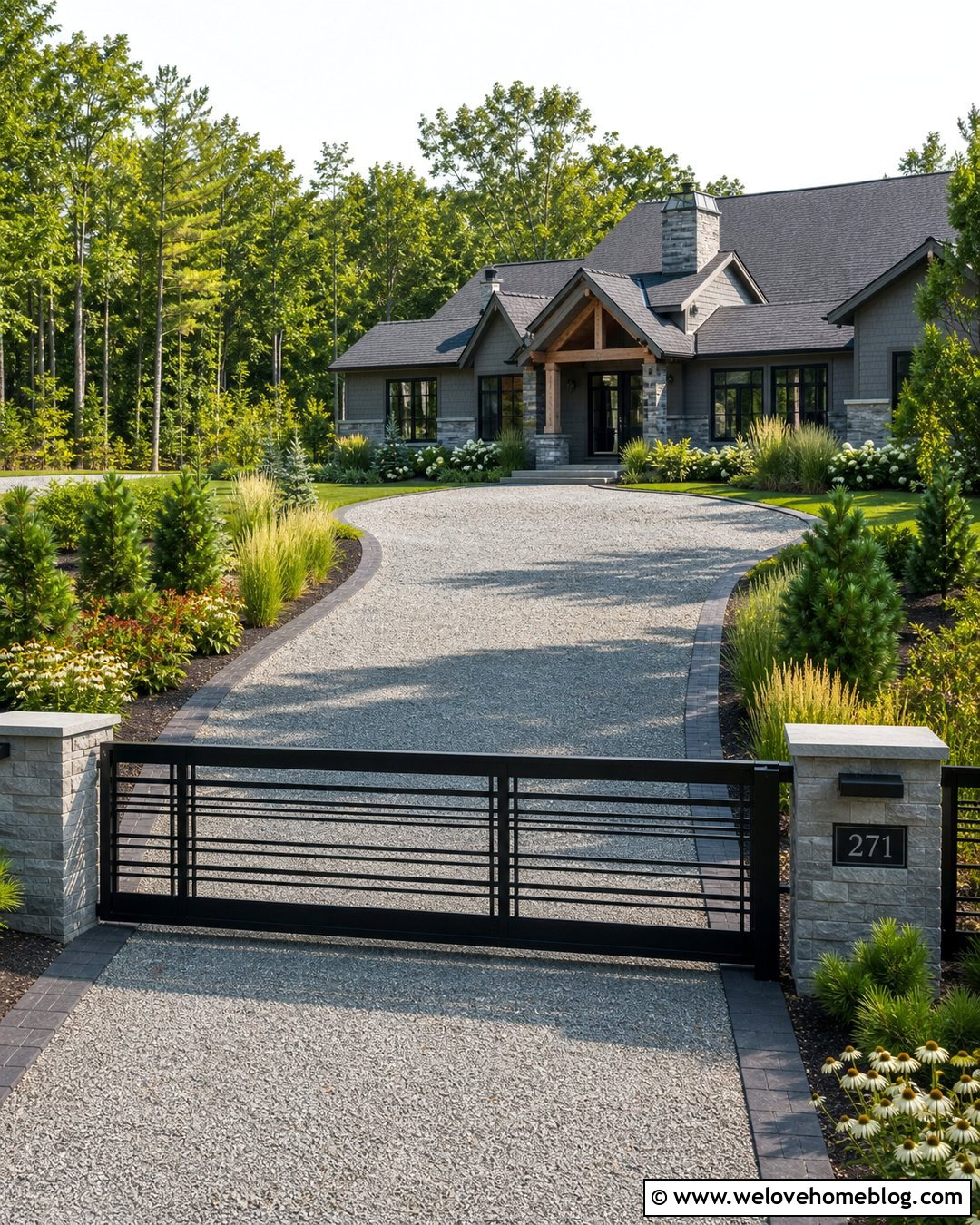
Powder-coated aluminum offers the appearance of traditional metal with a clean, streamlined profile. Place a matte black aluminum fence beside a silver-gray gravel driveway that curves toward a contemporary craftsman home. Use simple vertical pickets, flat rails, and square posts for a balanced design. A matching cantilever-style sliding gate can suit an entrance where swinging panels would occupy too much driveway space, although the site must provide adequate room along the fence line. Border the gravel with dark concrete pavers to reduce loose-stone migration. Plant airy ornamental grasses, dwarf pines, and white coneflowers behind the fence. The open metalwork preserves views of the house and landscaping. Coordinated address numbers and pillar lights can turn the driveway opening into a distinct, easy-to-recognize entrance.
15. Composite Driveway Fence
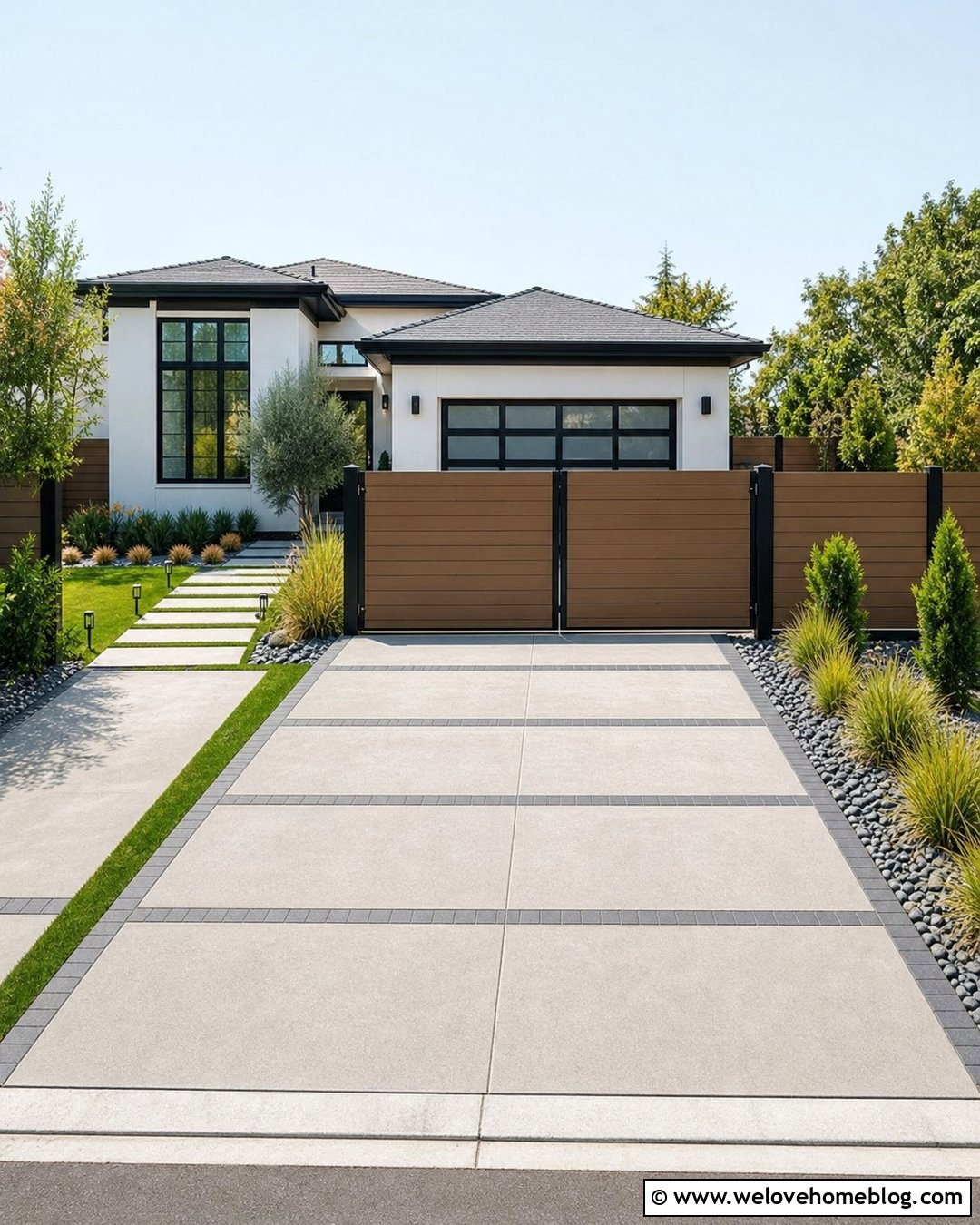
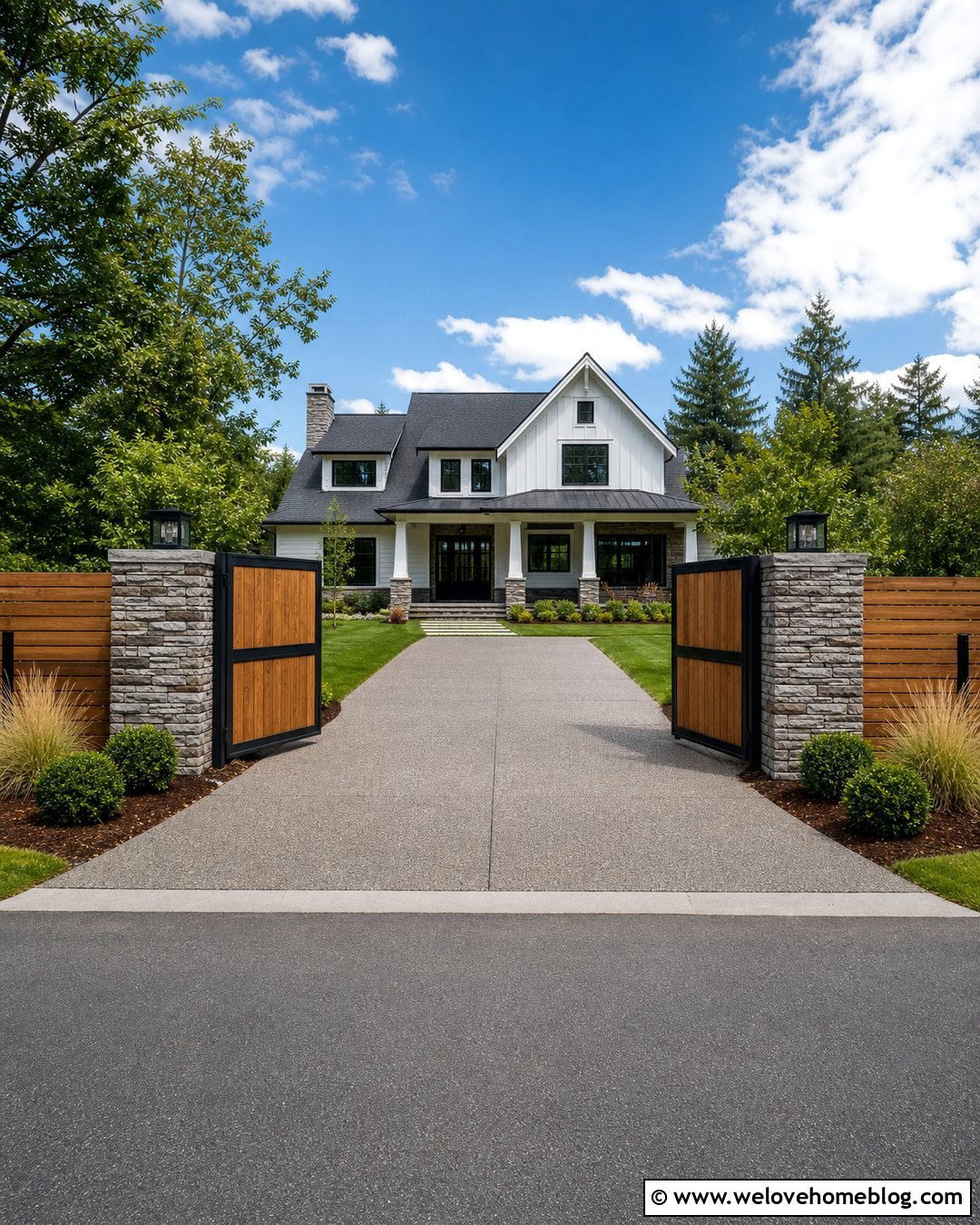
A composite fence can provide a warm woodlike appearance within a crisp, contemporary layout. Pair medium-brown composite boards with a smooth gray poured concrete driveway divided by narrow paver bands. Arrange the boards horizontally between black metal posts, then repeat the same treatment on a broad double gate. A straight driveway works well with the fence’s strong geometry and leads the eye toward a modern suburban home. Use river rock, ornamental grasses, and compact evergreen shrubs in low beds along the boundary. A concrete walkway separated by a grass strip can keep pedestrians away from the vehicle route. Choose a limited color palette so the composite surface does not compete with the house. The complete look should feel warm, private, and easy to visually maintain.
16. Driveway Fence With Sliding Gate
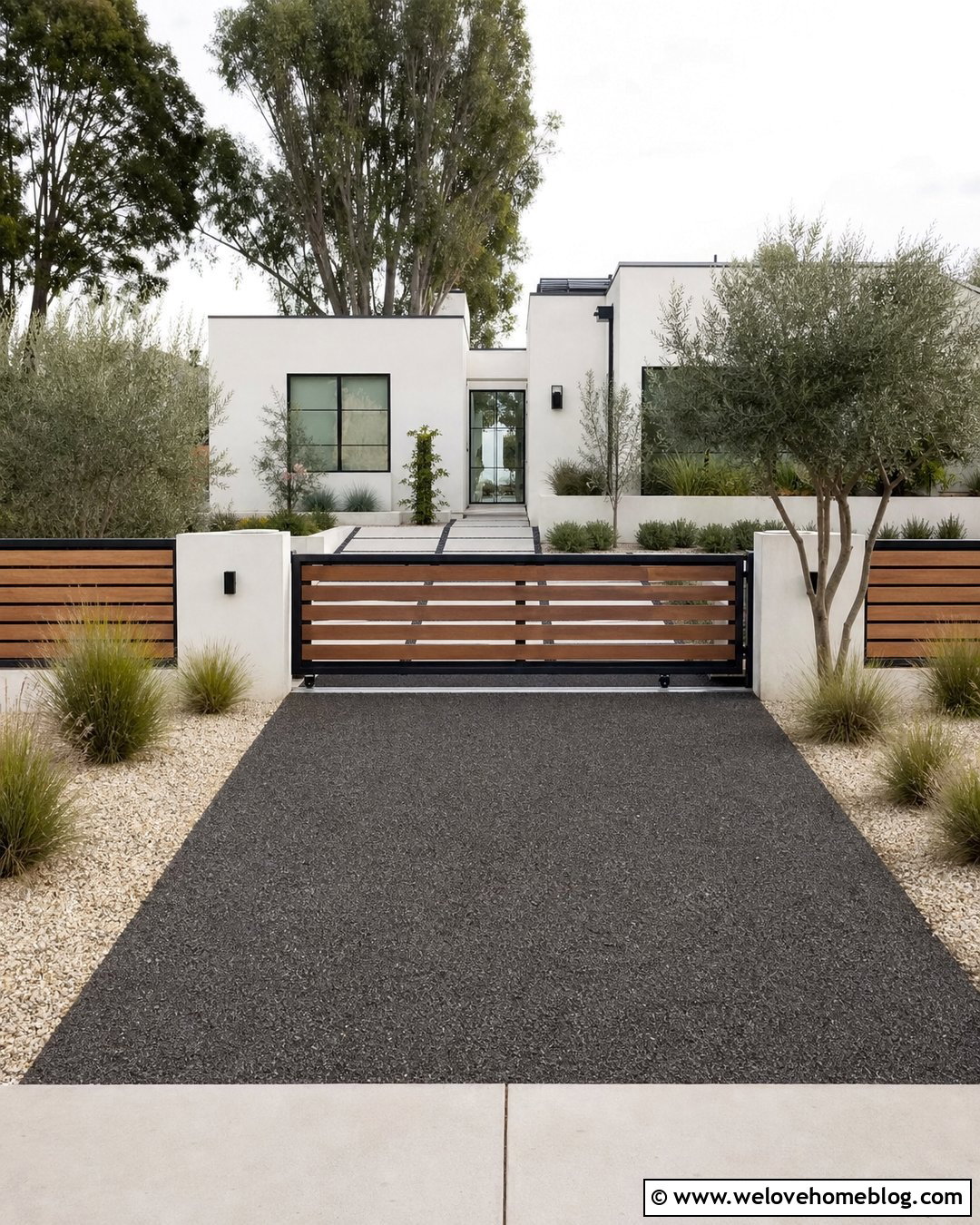
A sliding gate creates a clean entrance where the driveway is flat and there is sufficient fence length beside the opening. Use black steel framing with horizontal cedar infill, paired with a dark resin-bound gravel driveway. The gate can slide behind a matching fence, creating one continuous wall when closed. Frame the entrance with low concrete pillars and simple integrated address numbers. Along the driveway, add raised beds containing fountain grass, dwarf olive trees, and pale gravel mulch. This arrangement fits a modern stucco home with warm wood accents. Keep the sliding path clear of shrubs, edging, and landscape stones that could visually crowd the mechanism. The cedar softens the steel, while the dark driveway provides an elegant base that makes the entire entrance feel cohesive.
17. Driveway Fence With Double Swing Gate
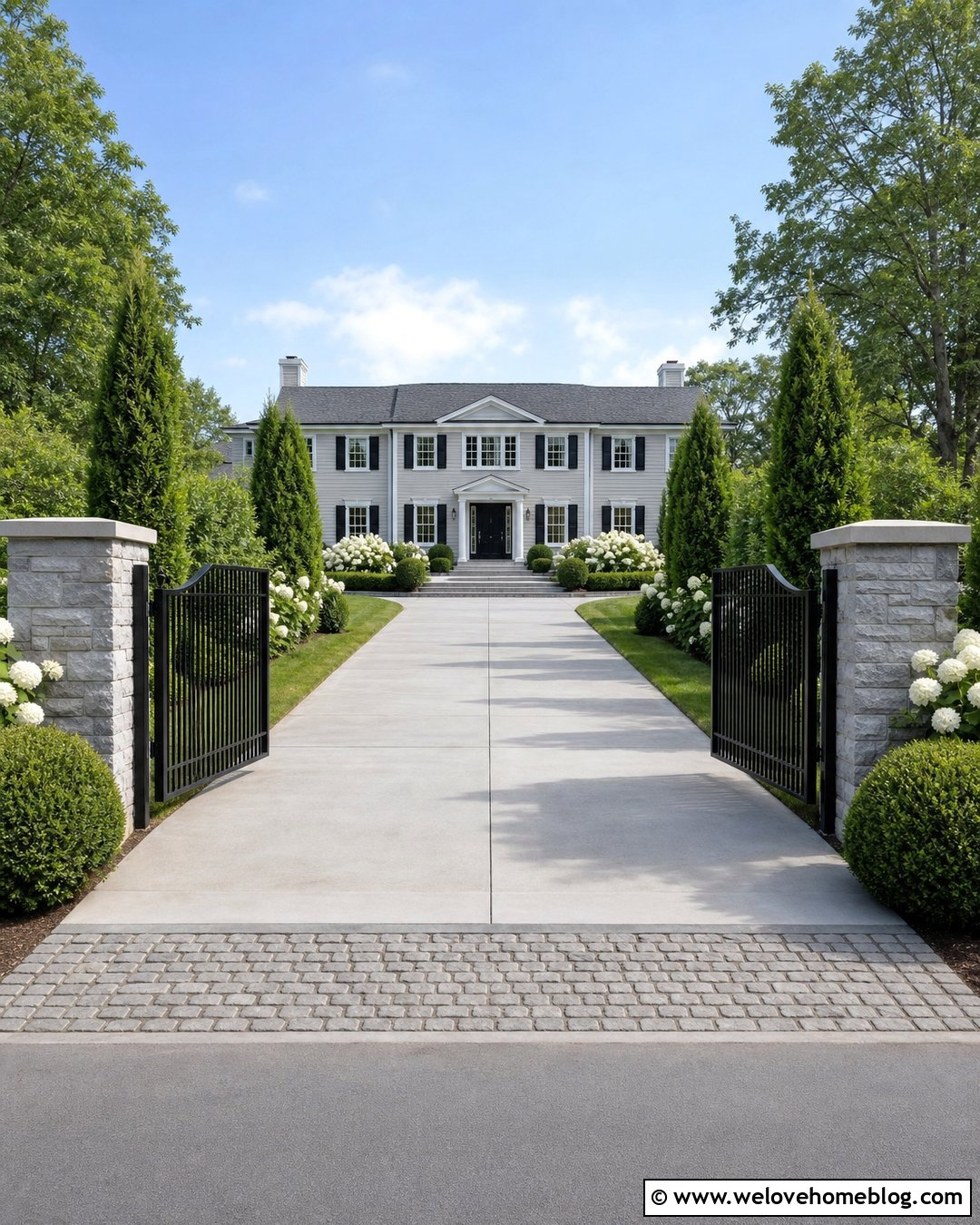
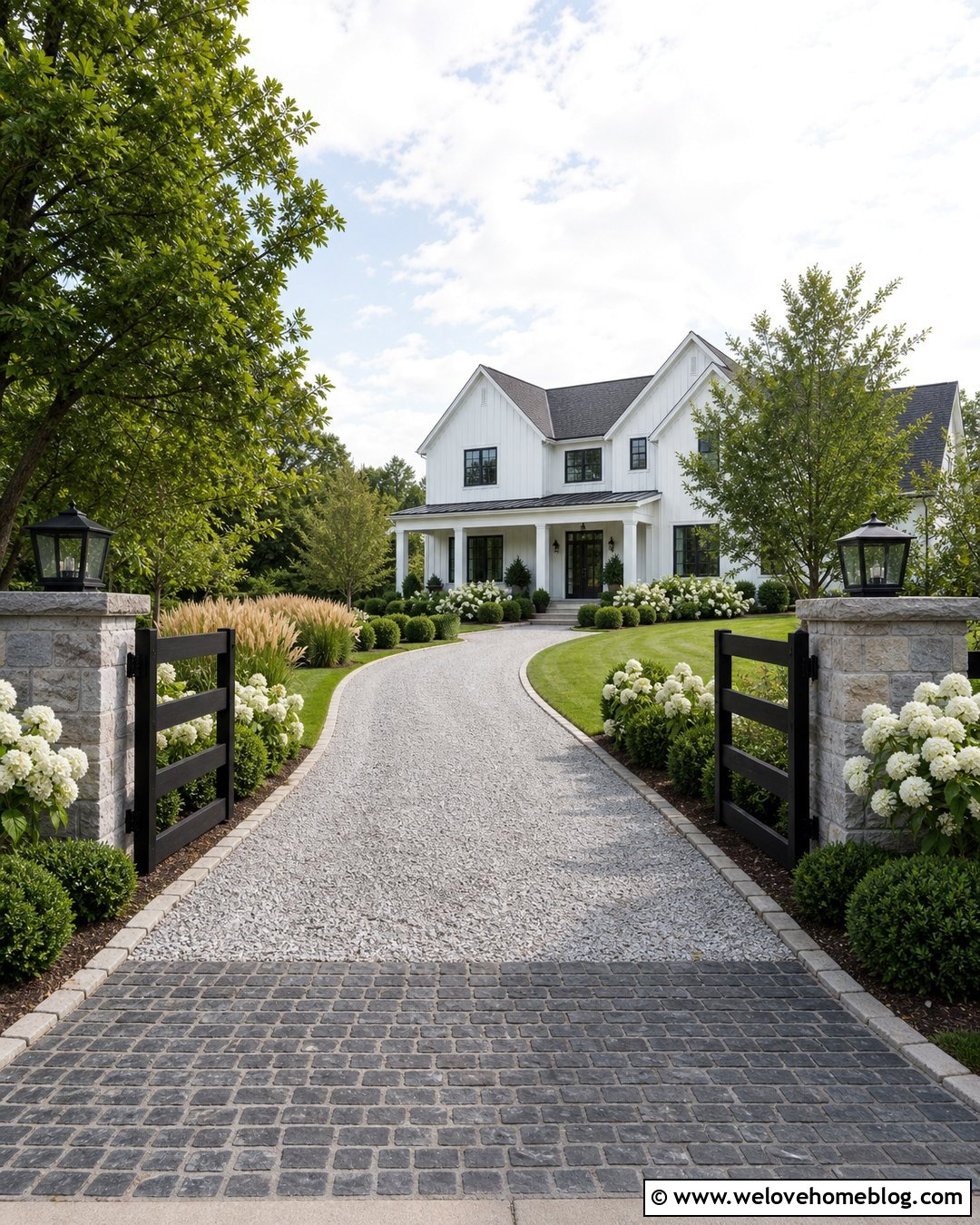
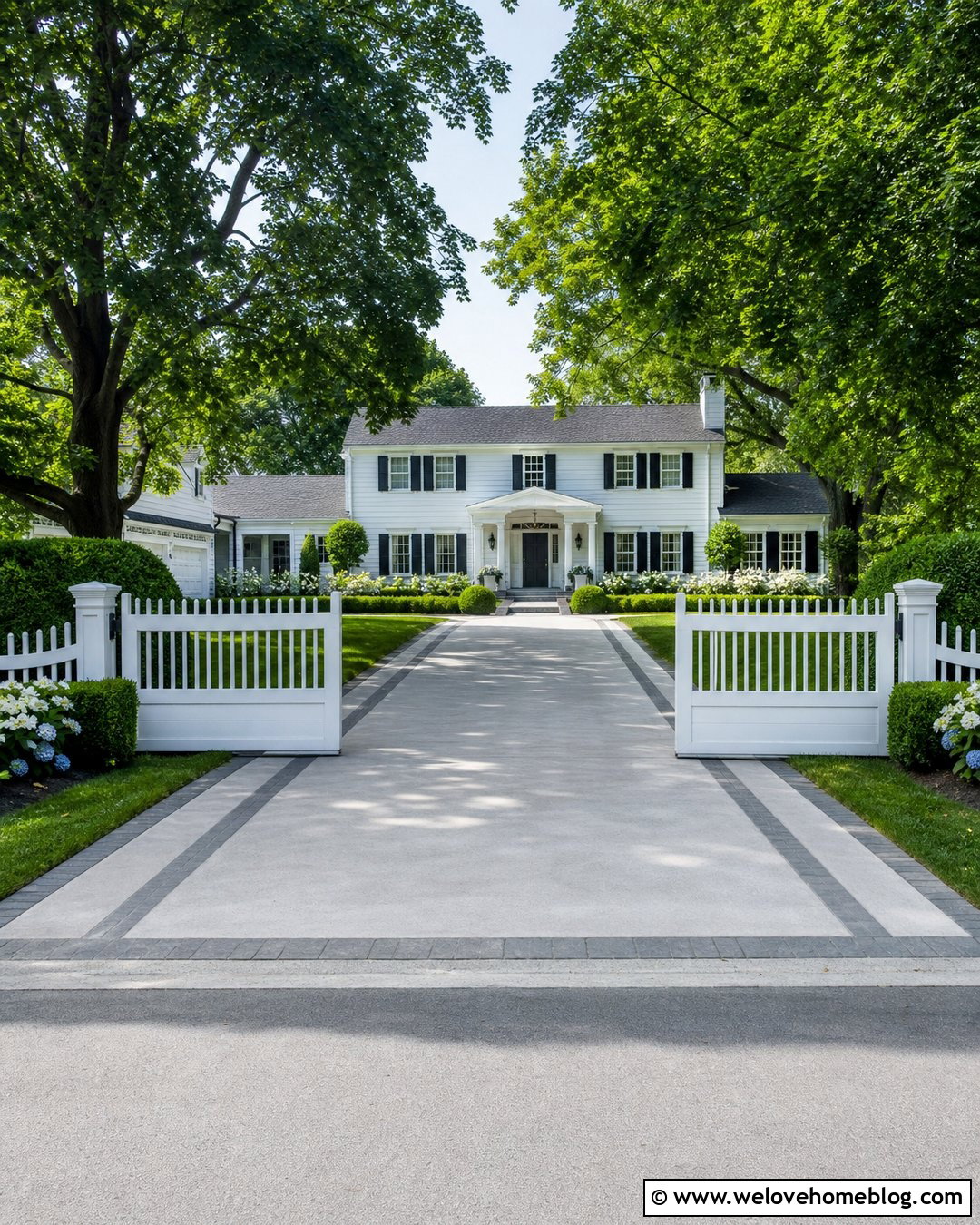
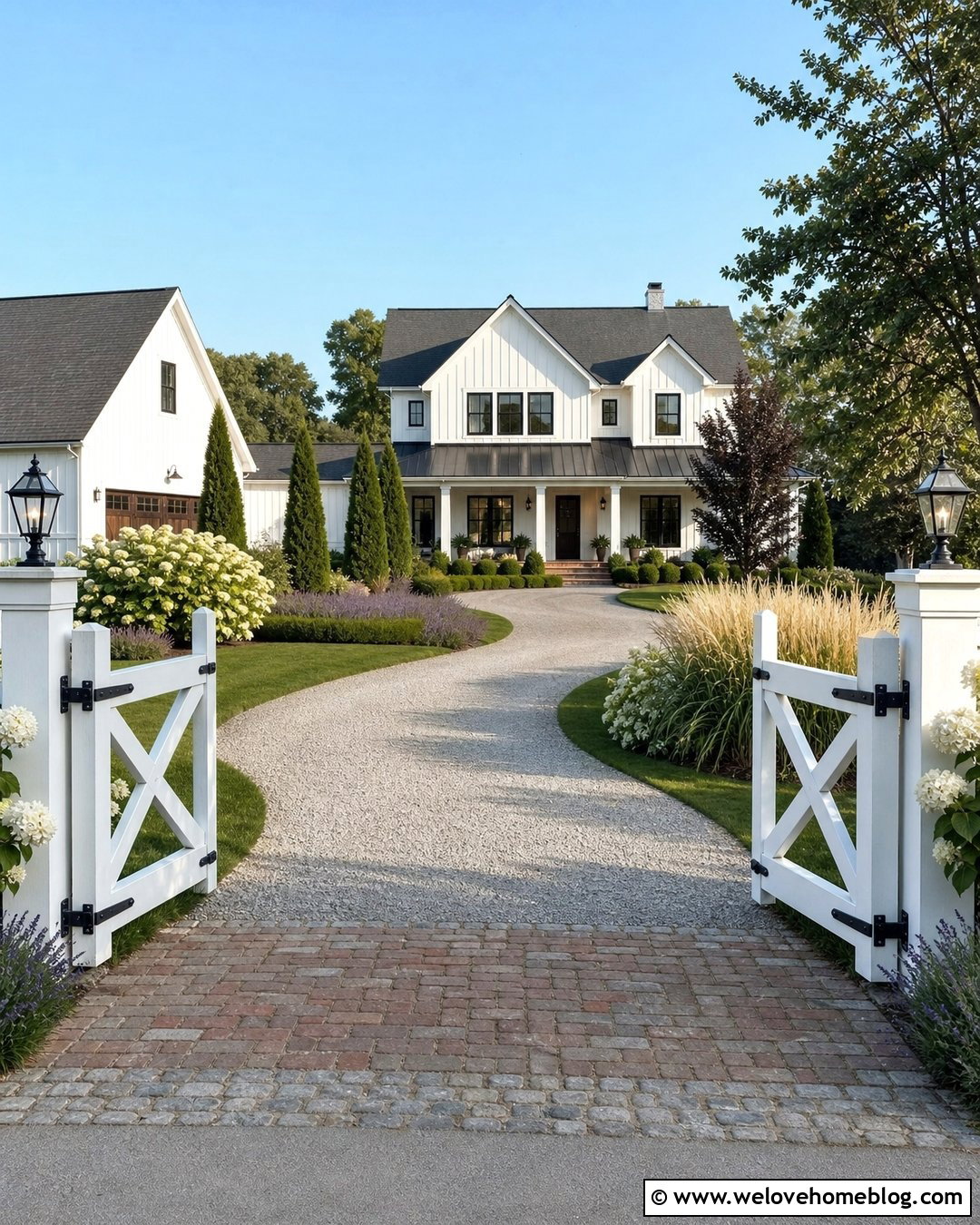
A double swing gate naturally creates symmetry at the front of a straight driveway. Pair an open black metal gate with low metal fencing and substantial stone pillars. A light-gray concrete driveway with a cobblestone apron gives the entrance a polished foundation. Make each gate panel equal in width and align the central meeting point with the driveway and garage. Low boxwood hedges, white hydrangeas, and upright evergreens can reinforce the balanced layout without blocking visibility. This complete design suits a colonial or traditional home with a centered front door. Allow the gate design to reflect details already found on the house, such as arches, square patterns, or simple vertical lines. Proper proportions matter more than heavy ornamentation in creating an impressive and welcoming entrance.
18. Driveway Fence With Pedestrian Gate
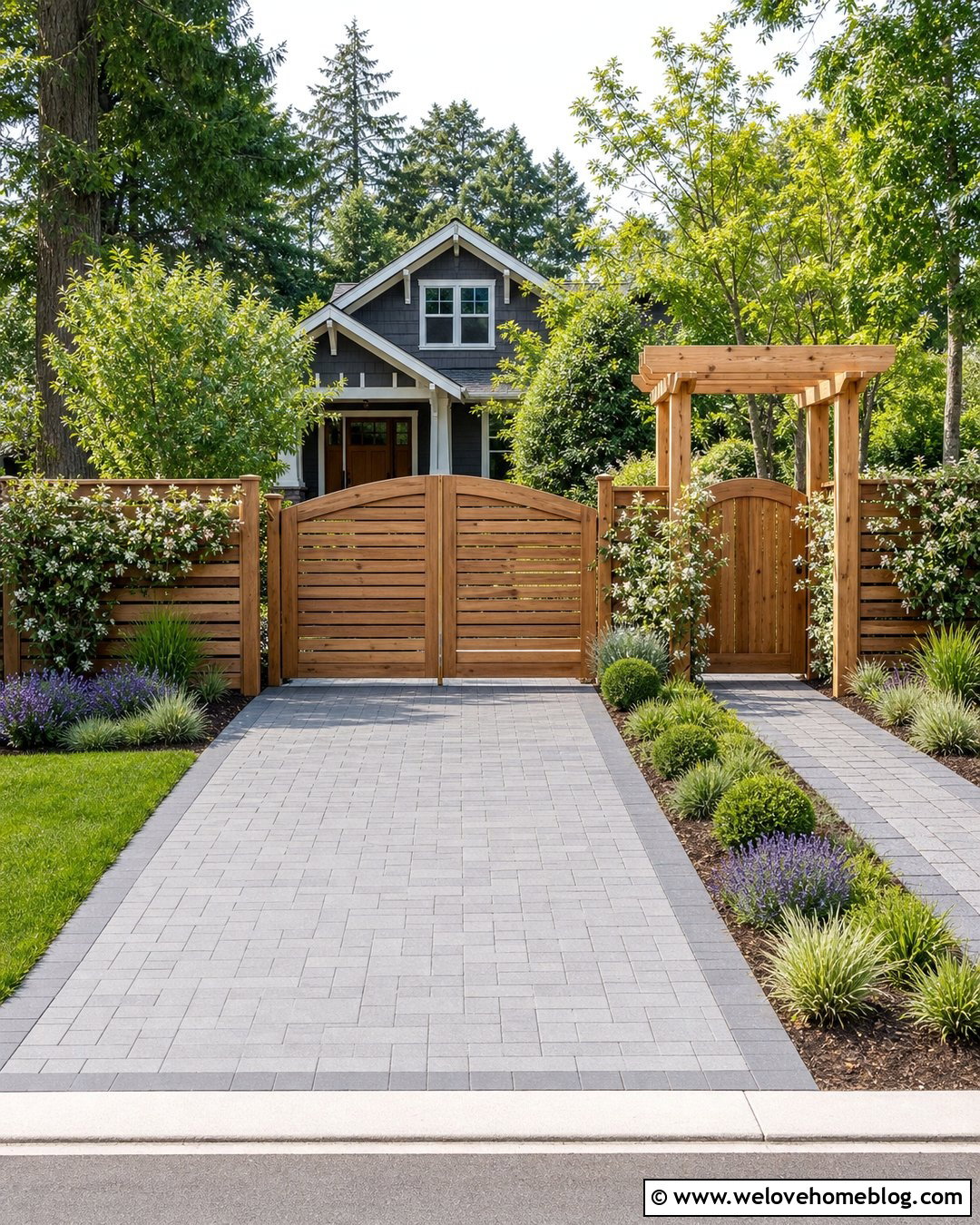
A separate pedestrian gate makes a fenced entrance feel more convenient and thoughtfully planned. Combine a low cedar fence with a straight gray concrete paver driveway and a matching vehicle gate. Position the smaller gate beside the driveway, aligned with a dedicated front walkway. A simple arbor can mark the pedestrian entrance, while climbing jasmine or a restrained flowering vine softens the structure. Use a paver ribbon to connect the walkway and driveway without making them appear identical. Plant lavender, dwarf grasses, and evergreen mounds along the fence. This layout works well with craftsman and cottage homes where guests should have a clear path to the front door. Matching latches, post caps, and wood finishes will keep the two gates visually connected.
19. Low Driveway Fence
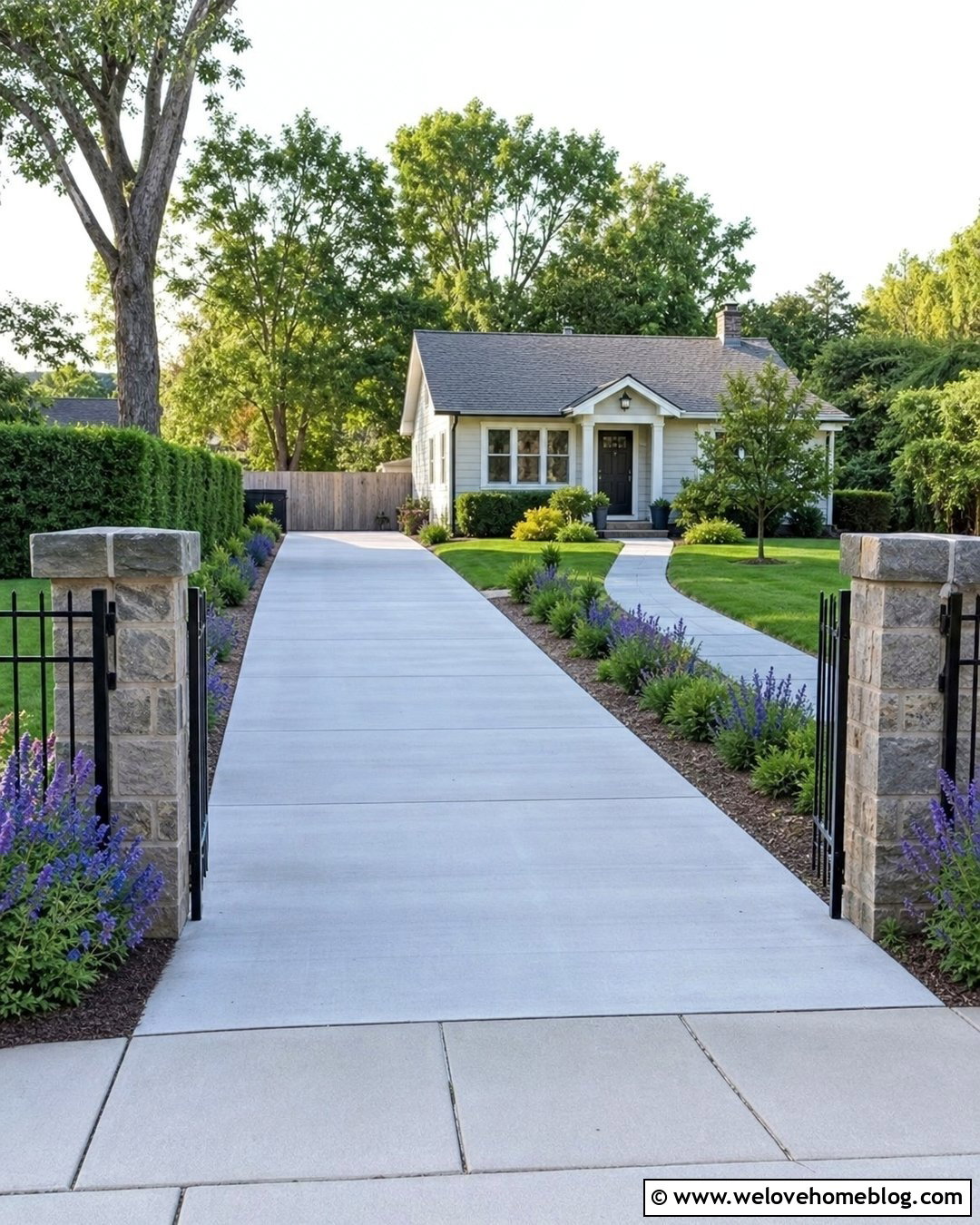
A low fence can define the driveway without making a modest front yard feel smaller. Pair a two-and-a-half-foot black metal fence with a pale broom-finished concrete driveway and a straight approach. The open design allows the lawn, house, and flower beds to remain visible from the street. Use brick or stone posts only at the entrance so the boundary retains a light appearance. Behind the fence, plant low-growing catmint, salvia, and compact shrubs that will not overwhelm the rails. A narrow stone mowing strip can create a neat transition to the lawn. This arrangement complements bungalow, ranch, and small colonial homes. It is especially useful when the main goal is guiding movement and framing landscaping rather than creating a tall privacy barrier.

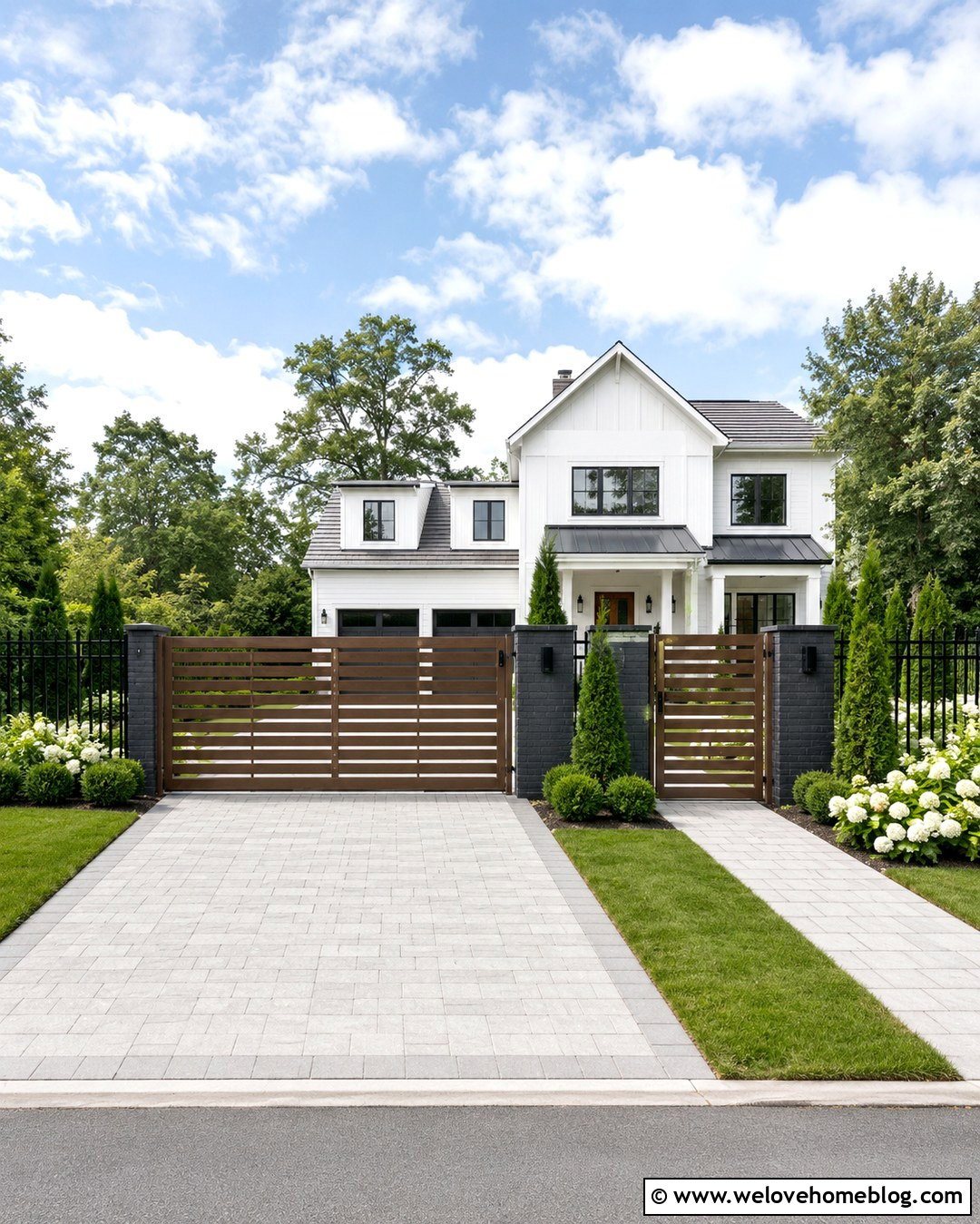
20. Tall Privacy Driveway Fence
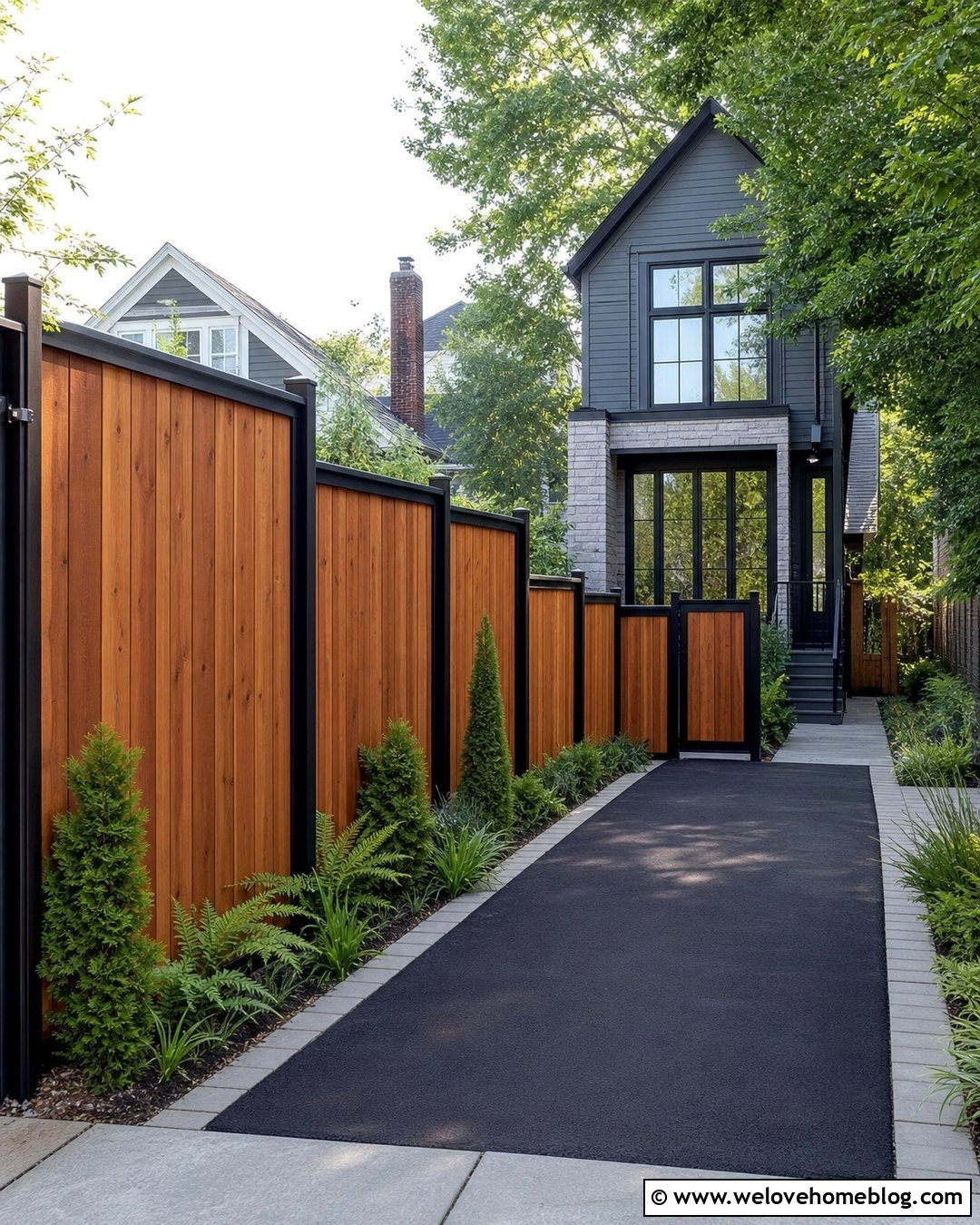
A tall fence can screen a side driveway from nearby homes while still allowing the street-facing entrance to feel welcoming. Use vertical redwood boards beside a dark asphalt driveway, then step the panels down as they approach the sidewalk. Black metal framing gives the fence a tailored structure and can support a matching gate near the house. Place a narrow bed between the pavement and boards, filled with ferns, sedges, and shade-friendly evergreen shrubs. A border of concrete pavers protects the planting area from vehicle tires. This setup works well for urban and narrow-lot homes where outdoor living spaces sit close to the driveway. Keeping the tallest sections farther from the street preserves a more open curb view and creates a gradual, attractive transition.
21. Driveway Fence With Hedge
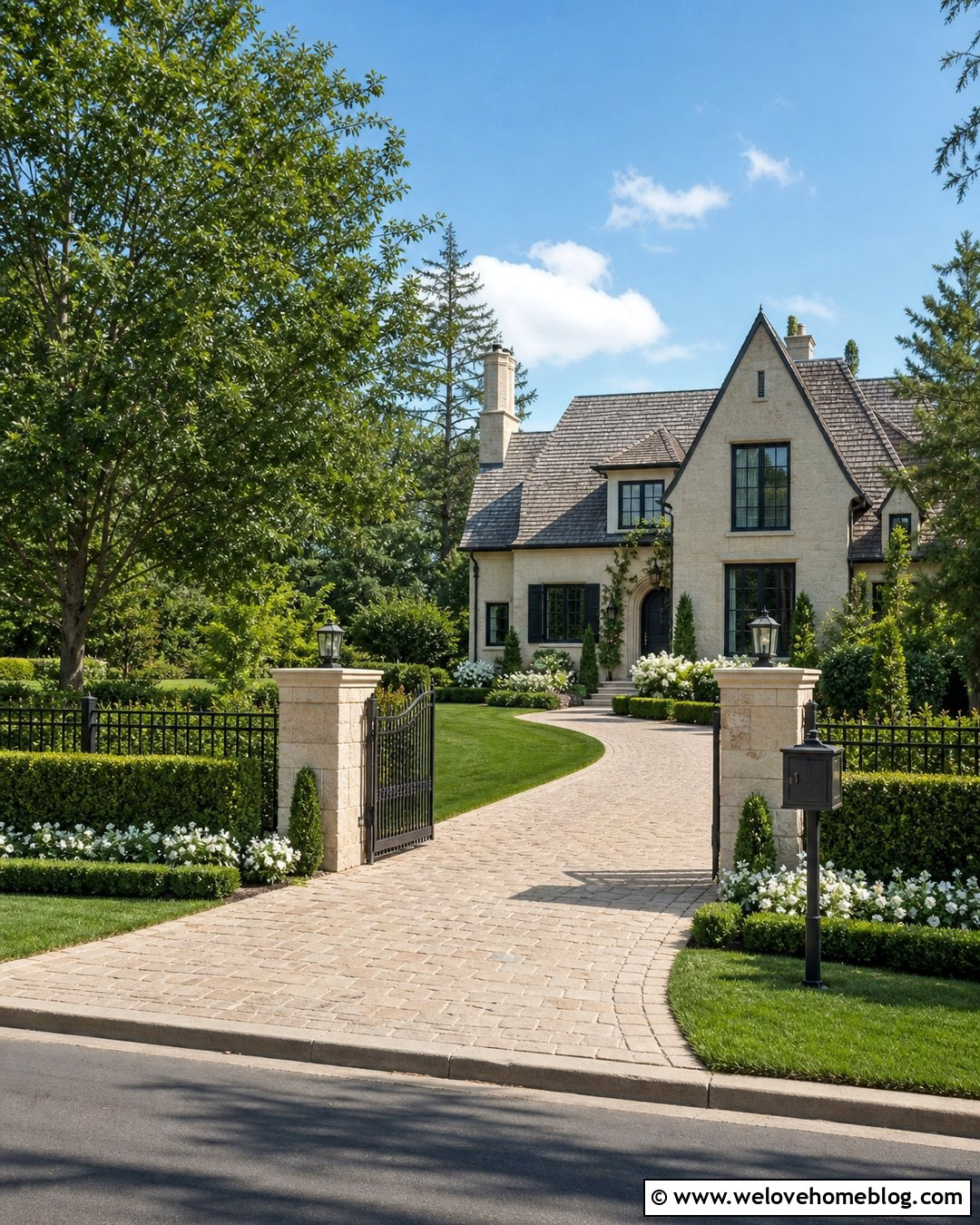
Combining a fence with a hedge produces a layered boundary that looks softer than solid panels alone. Install a low black aluminum fence beside a curved tan concrete paver driveway. Behind it, plant a continuous row of boxwood, inkberry, or another shrub suited to the site conditions. Keep the hedge slightly taller than the fence so the metal provides structure while foliage supplies texture. At the entrance, use stone pillars and an open metal gate to maintain the layered appearance. Flowering perennials can fill small gaps near the walkway and mailbox. This design suits traditional, transitional, and French country homes. Regular shaping creates a formal look, while a looser hedge can feel more relaxed. Leave enough planting space for the shrubs to mature without crowding the driveway.
22. Driveway Fence With Flower Beds
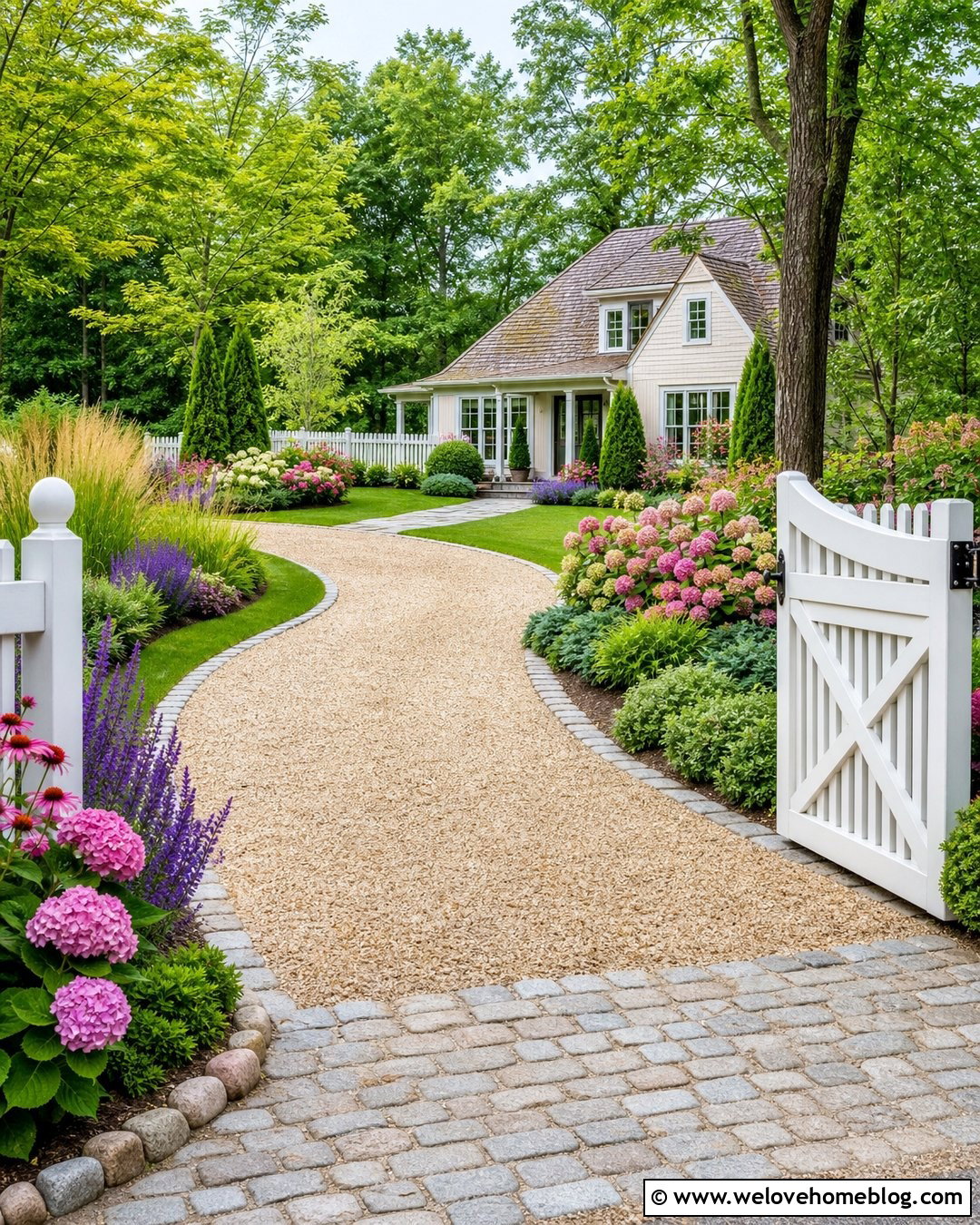
Colorful planting beds can transform a simple fence into a complete landscape feature. Pair a white wood picket fence with a curved pea gravel driveway leading to a cottage-style home. Create generous beds along the inside of the fence using hydrangeas, coneflowers, salvia, ornamental grasses, and low evergreen anchors. Cobblestone edging can contain the gravel and repeat the texture of a small entrance apron. A matching picket gate should be wide enough for vehicles but remain visually light. Arrange taller plants behind lower flowers so the fence stays partly visible. Repeating two or three flower colors across the beds creates a more organized look than using every available shade. The final result should feel abundant, cheerful, and easy to understand from the curb.
23. Driveway Fence With Stone Columns
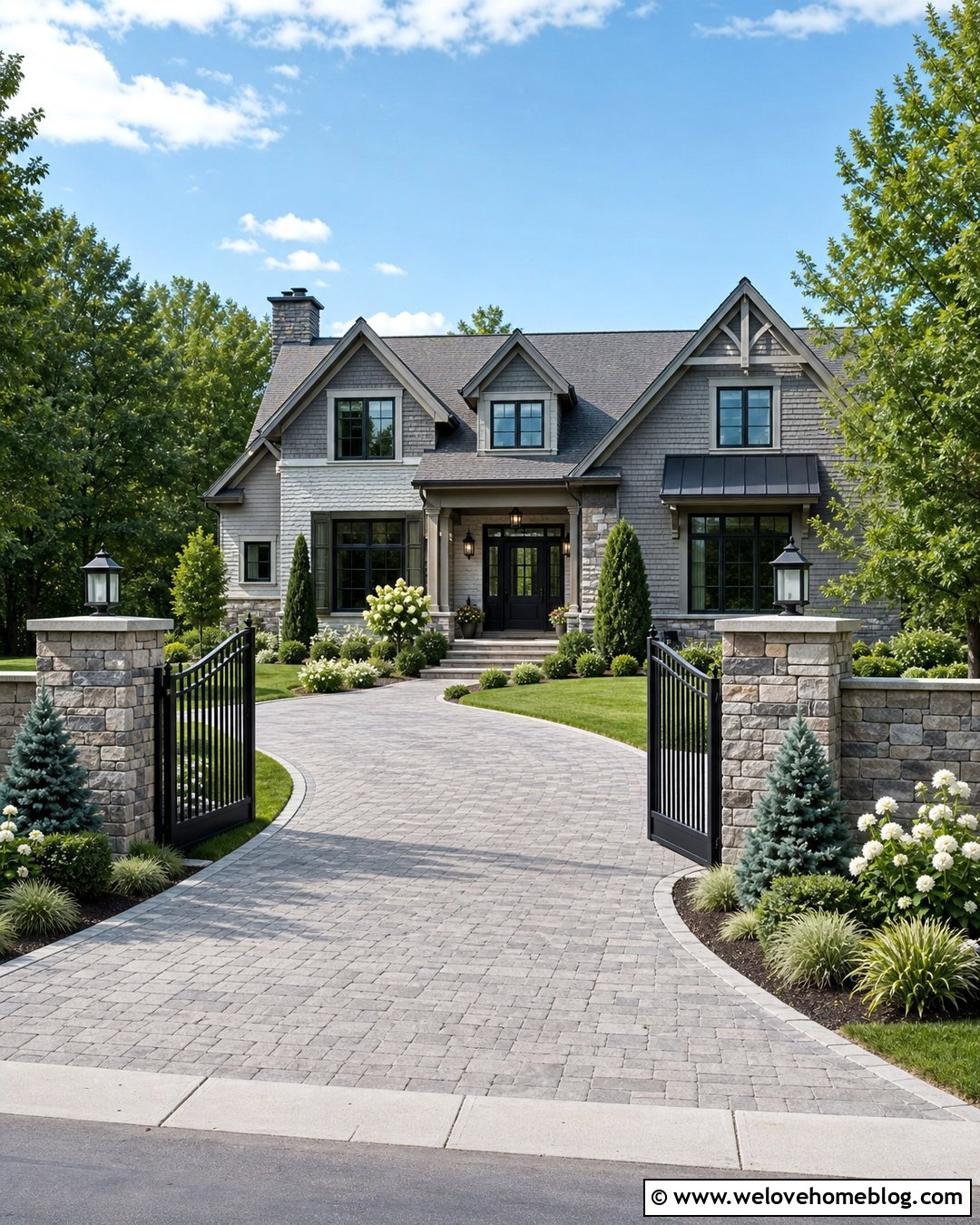
Stone columns can make a lightweight fence feel grounded and permanent. Combine warm ledgestone pillars with black metal fence panels and a medium-gray interlocking paver driveway. Position the largest columns at the vehicle entrance, then use smaller matching posts along the boundary. Add flat stone caps and understated lanterns that coordinate with the home’s exterior fixtures. A slightly curved driveway can make the entrance feel spacious while revealing the house gradually. Plant ornamental grasses, dwarf spruce, and white flowering shrubs around the masonry. This material mix works well with craftsman, lodge-inspired, and transitional homes containing stone facade details. Keep the number of finishes limited. The stone, metal, pavers, and planting should repeat existing exterior colors rather than creating an entirely separate palette at the curb.
24. Driveway Fence With Brick Columns
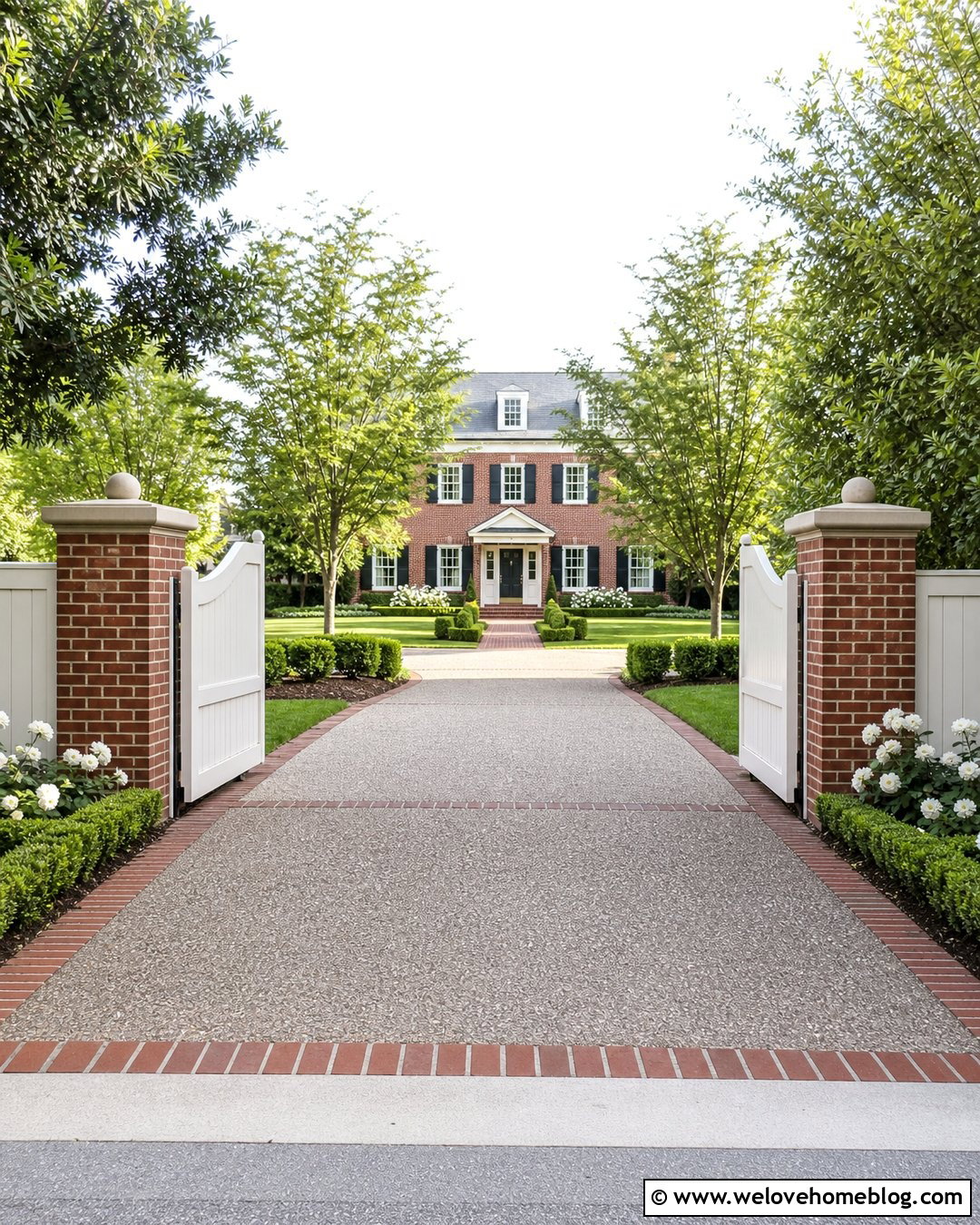
Brick columns offer a natural connection between the driveway boundary and a brick house. Use red-brown brick pillars with white painted wood fence panels beside a straight exposed aggregate driveway. At the entrance, a white double gate can sit between taller columns topped with simple cast-stone caps. Add a brick soldier-course border along the driveway to repeat the masonry in a subtle way. Boxwood, white roses, and compact ornamental trees create a classic landscape without hiding the fence. This combination suits colonial, Georgian, and traditional suburban homes. For a more relaxed version, replace solid fence panels with white rails or pickets. Keeping mortar color, brick undertones, and cap proportions consistent will make the complete driveway entrance look established, balanced, and connected to the architecture.
25. Driveway Fence With Lighting
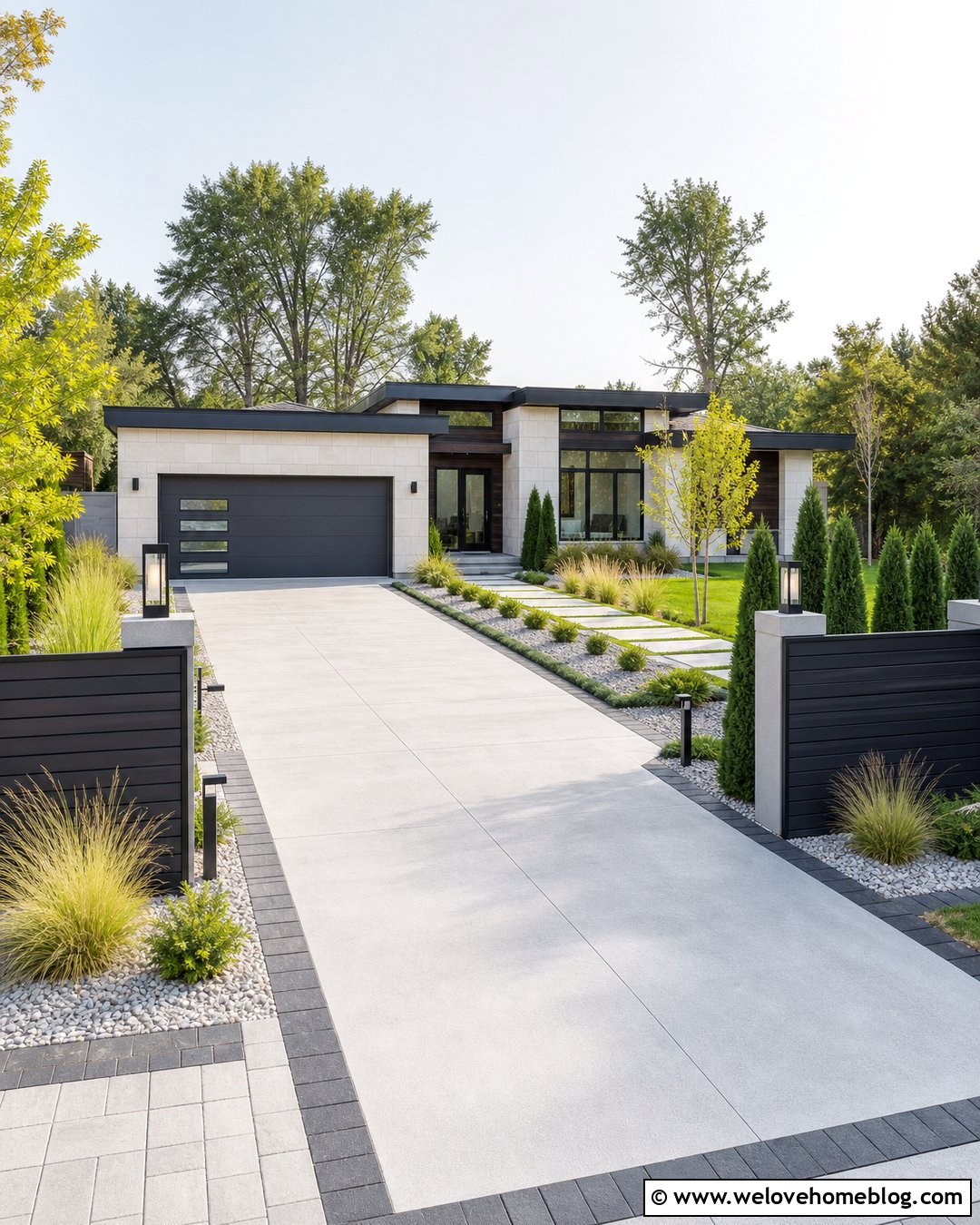
Integrated lighting can make a driveway fence easier to navigate while strengthening its daytime design. Pair a charcoal horizontal fence with a smooth light-gray concrete driveway leading to a contemporary home. Install small, evenly spaced downlights on fence posts, but keep the fixtures discreet and coordinated with the house. Taller pillar lights can mark the entrance without dominating it. During daylight, black fixture housings should blend into the posts and rails. Use linear planting beds containing ornamental grasses, compact evergreens, and pale stone mulch. A dark paver strip along the concrete edges can connect the lighting hardware with the fence color. Plan electrical routes before completing paving and masonry. The finished entrance should look clean and cohesive in bright daylight, not dependent on nighttime illumination for visual interest.
26. Driveway Fence With Address Sign
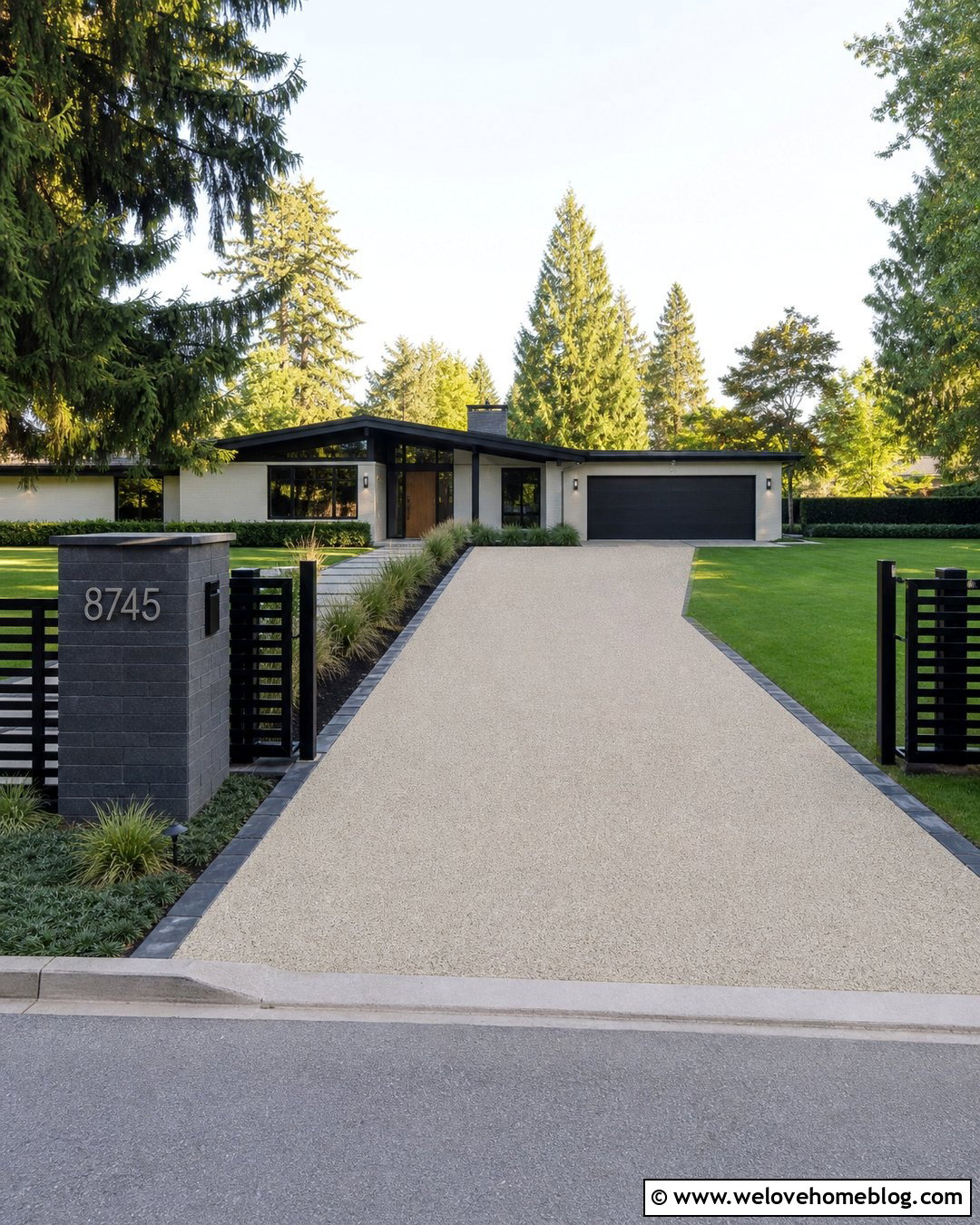
An address sign can become part of the fence instead of looking like an afterthought. Use a black aluminum fence along a light resin-bound gravel driveway, with a wider masonry pillar placed at the entrance. Mount large, simple address numbers on the pillar where they remain visible from the street. A matching metal gate, dark stone edging, and rectangular walkway create a modern, orderly layout. Surround the sign with low grasses and evergreen ground cover so plants do not block it as they mature. This approach works well with modern, midcentury, and transitional houses. Repeat the number finish on the mailbox, gate hardware, and exterior lights. Clear spacing around the sign keeps the entrance readable while allowing the fence, driveway, and landscaping to form one attractive curbside composition.
27. Driveway Fence For Small Front Yard
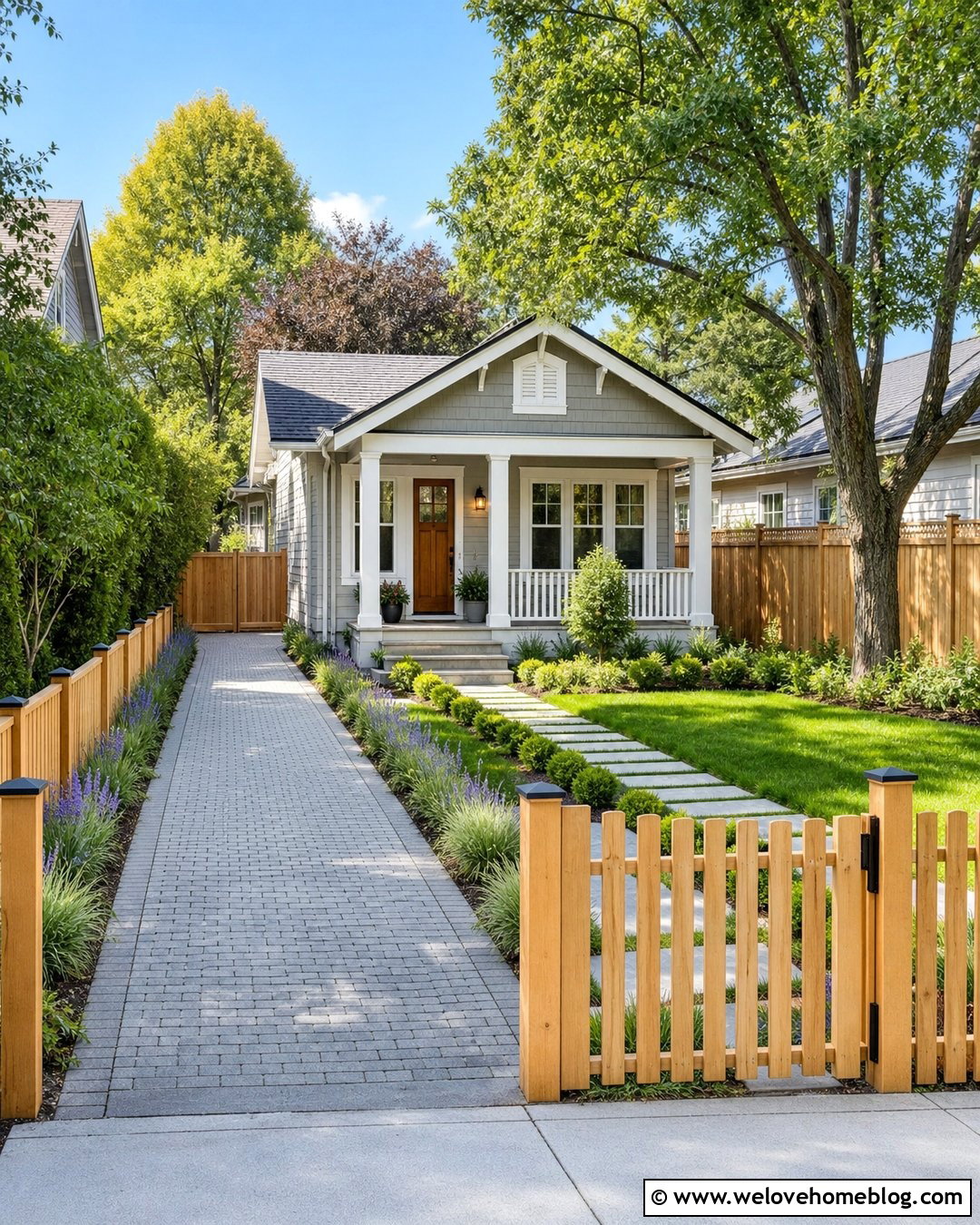
A compact front yard benefits from a fence that creates definition without consuming visual space. Pair a low cedar picket fence with a narrow straight driveway made from light-gray permeable pavers. Use slimmer posts and modest spacing so the fence does not overpower the house. A matching single swing vehicle gate can align with a small detached garage, while a separate stepping-stone path leads to the porch. Plant compact boxwood, lavender, and dwarf ornamental grasses in narrow beds. Avoid wide pillars and deep hedges that reduce the usable entrance. This complete look suits bungalow, cottage, and small craftsman homes. Light driveway colors and open fence gaps help the property feel brighter, while warm cedar introduces enough contrast to make the front boundary clearly visible.
28. Driveway Fence For Long Driveway
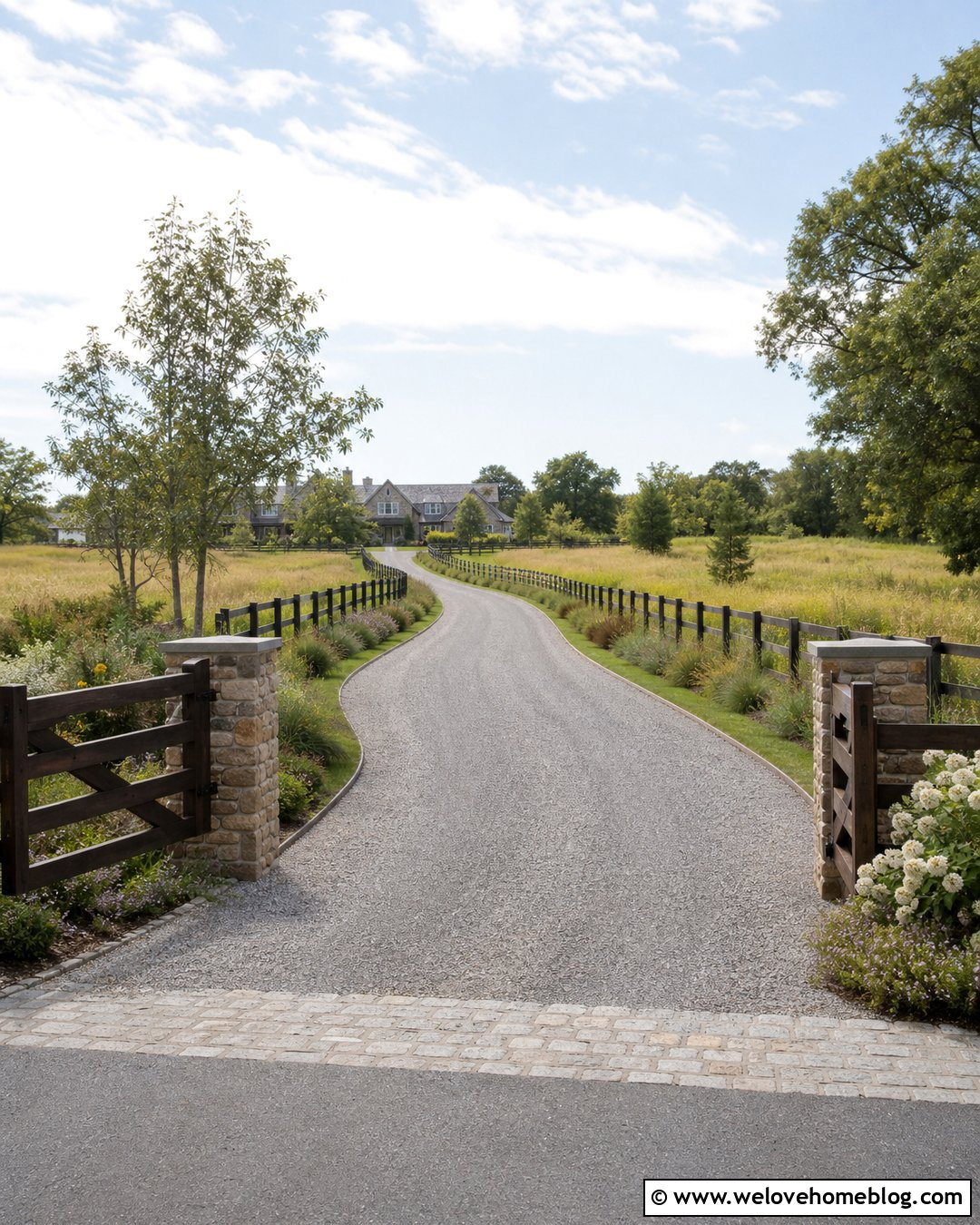
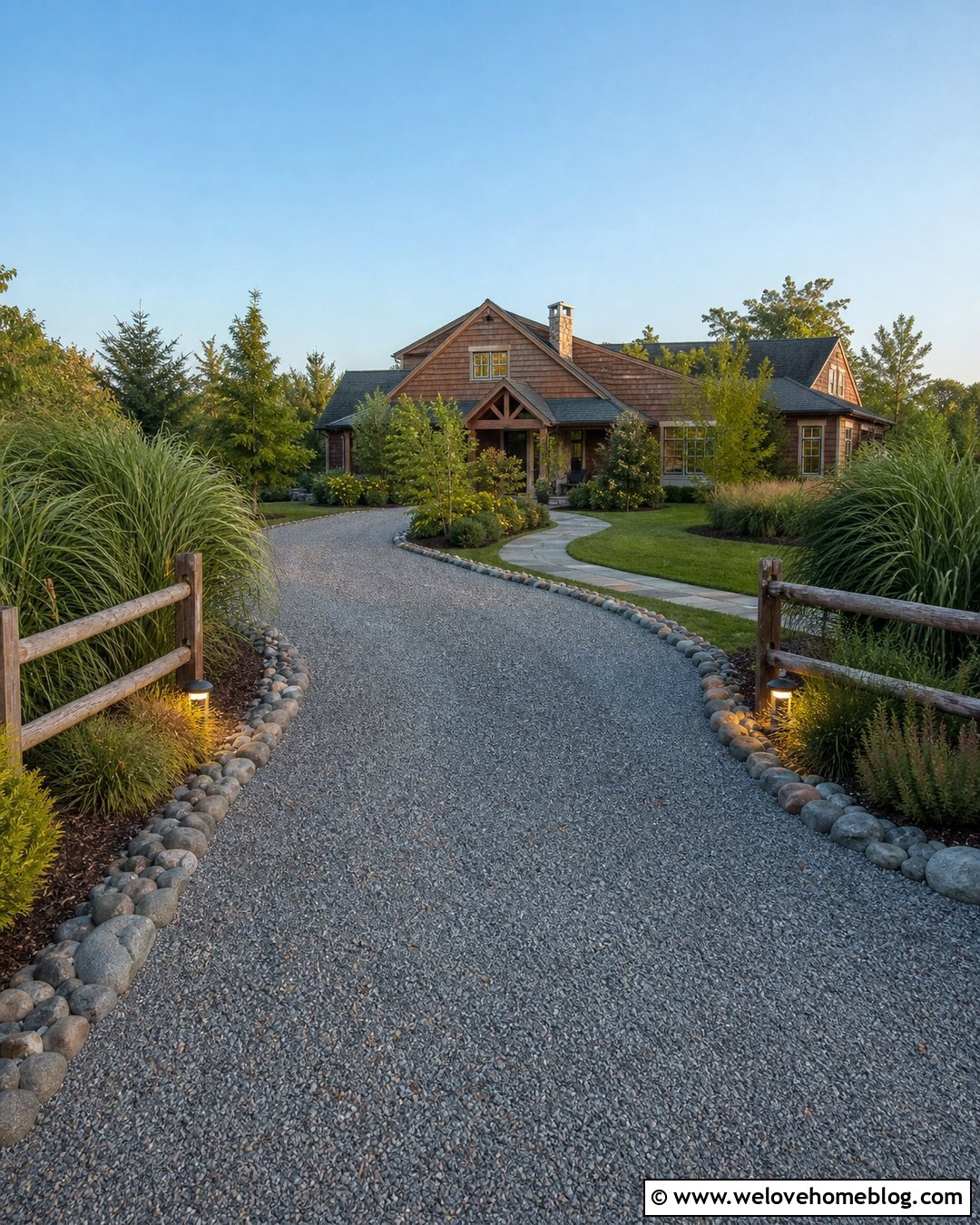
A long driveway needs a fence that guides the eye without becoming monotonous. Use a dark post-and-rail fence along a broad gray gravel driveway that curves through an open lawn. Break up the extended boundary with groups of native trees, flowering shrubs, and meadow-style grasses. At the road, mark the entrance with stone pillars and a simple timber gate. Cobblestone edging near the gate can transition into understated steel edging farther along the drive. This approach works well for country, farmhouse, and estate-style properties. Rather than lining every foot with dense planting, leave open sections that reveal the surrounding landscape. Repeating the fence material on both sides of key curves creates rhythm and makes the distant house feel connected to the entrance.
29. Driveway Fence For Sloped Yard
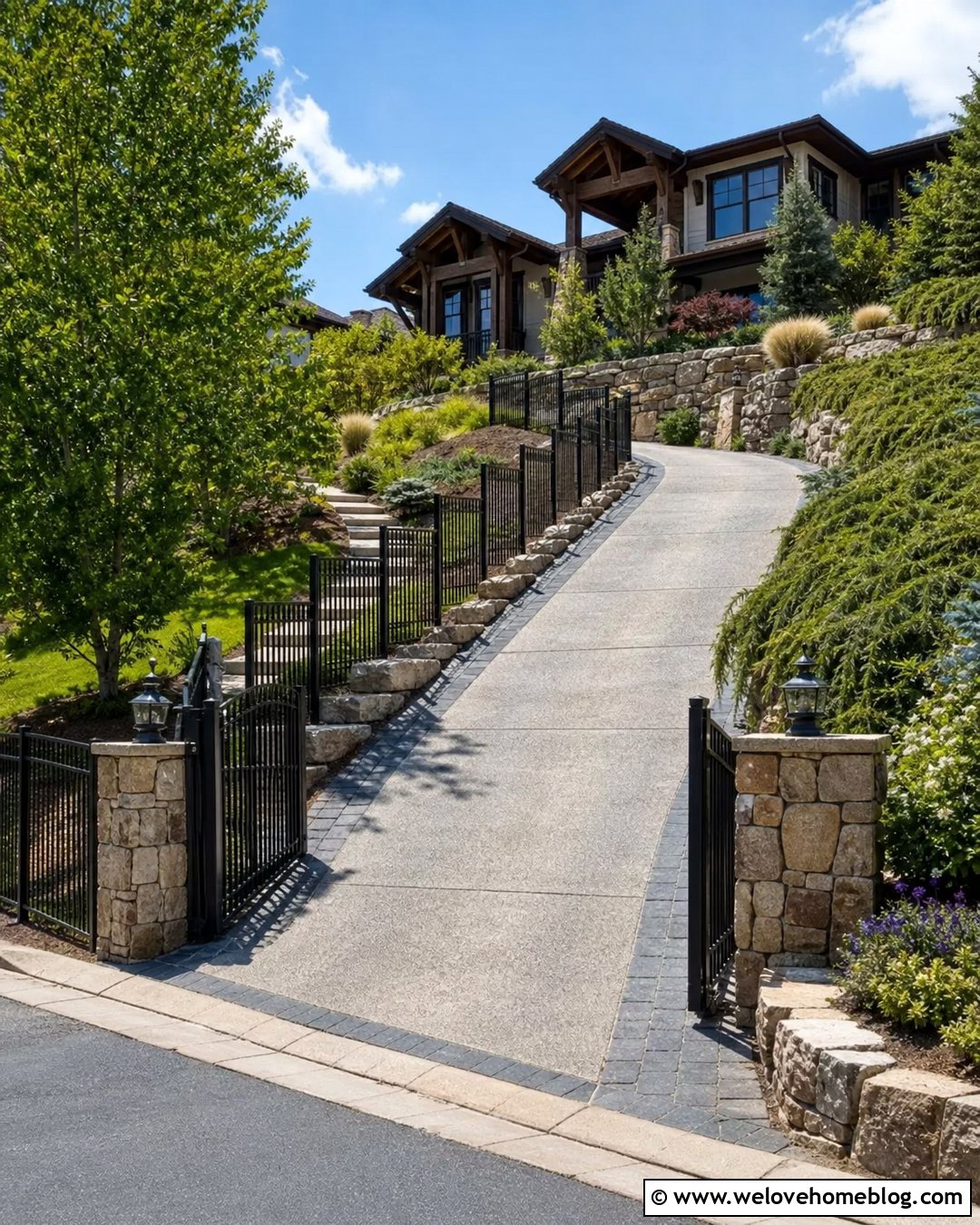
A stepped fence can follow a sloped yard while keeping the driveway edge organized. Pair black vertical metal panels with a textured concrete driveway that rises gently toward a hillside craftsman home. Step the fence sections at consistent intervals instead of forcing every rail to follow the ground angle. Use stone retaining walls where the grade changes sharply, repeating the same stone on entrance pillars. Plant creeping juniper, ornamental grasses, and low flowering ground cover to stabilize the visual transition between levels. A sliding or carefully positioned swing gate should suit the available clearance and driveway pitch. Dark paver borders can emphasize the driveway’s curve. The finished design should make the slope appear deliberate, with the fence, retaining structures, planting, and paving working as one system.
30. Budget Driveway Fence
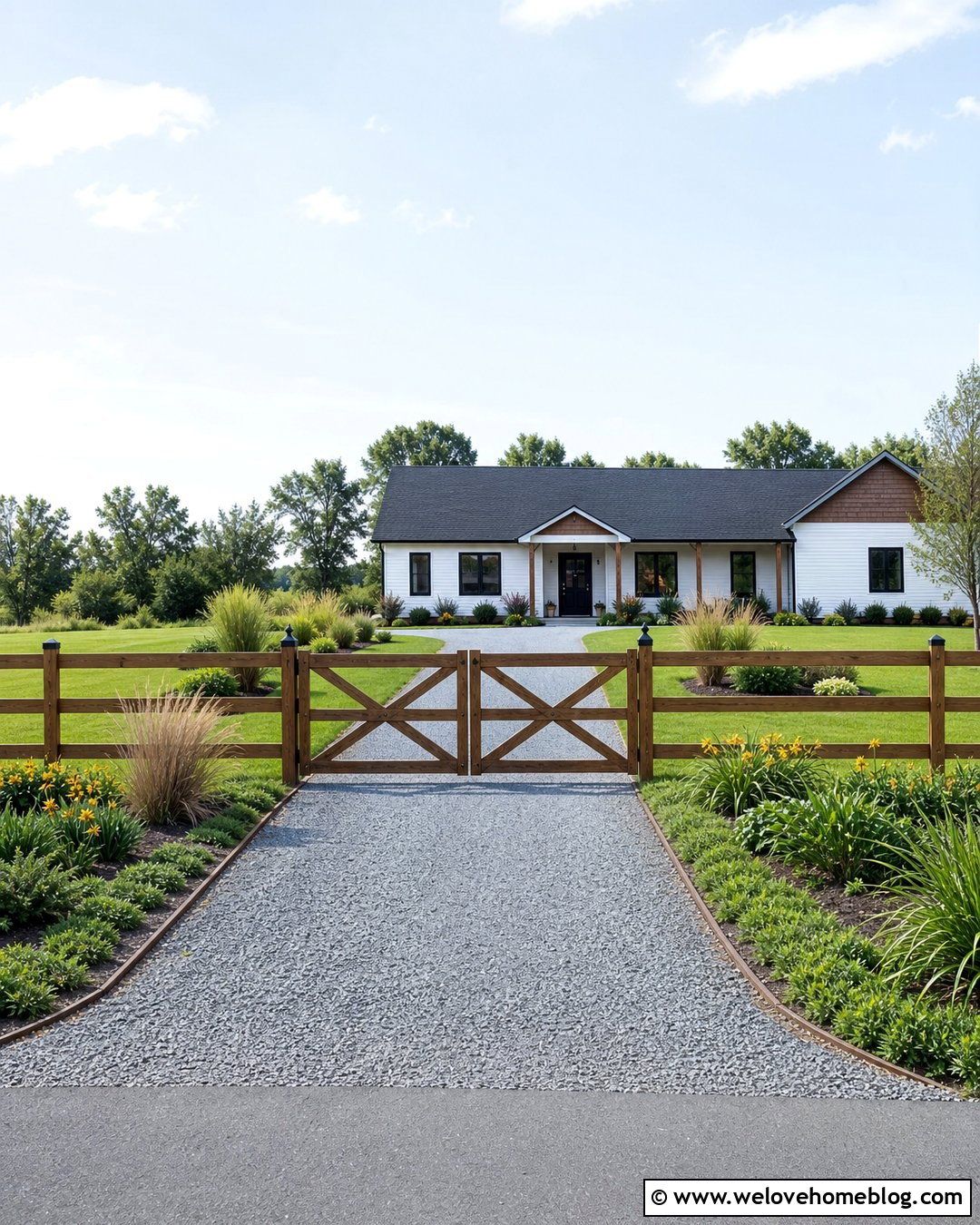
An attractive driveway boundary does not require elaborate masonry or custom metalwork. Use pressure-treated pine posts with simple horizontal rails alongside a compacted gray gravel driveway. Stain the wood medium brown for a finished appearance and add black post caps for subtle contrast. A basic double farm gate can define the entrance, while steel edging keeps the gravel contained. Fill narrow planting beds with affordable ornamental grasses, daylilies, and spreading ground cover. Repeating a small number of plants saves the design from looking scattered. This layout suits ranch, farmhouse, and casual suburban homes. Spend first on strong gate supports, a stable driveway edge, and consistent fence alignment. Decorative upgrades such as lighting, climbing plants, or address markers can be added gradually as the budget allows.
Conclusion:
The best driveway fence should support the way your entrance looks and functions every day. Consider the driveway material, available space, gate movement, visibility, maintenance, and architecture before selecting a fence. Wood adds warmth, metal preserves open views, vinyl creates a crisp boundary, and masonry offers substantial visual weight. Landscaping can then soften hard surfaces and connect the entrance to the front yard. Whether your property has a short concrete approach or a long curving gravel lane, treat every component as part of one design. Use these 30 Driveway Fence Ideas to create an entrance that feels secure, welcoming, practical, and naturally connected to your home.

Related posts:


Leave a Reply