
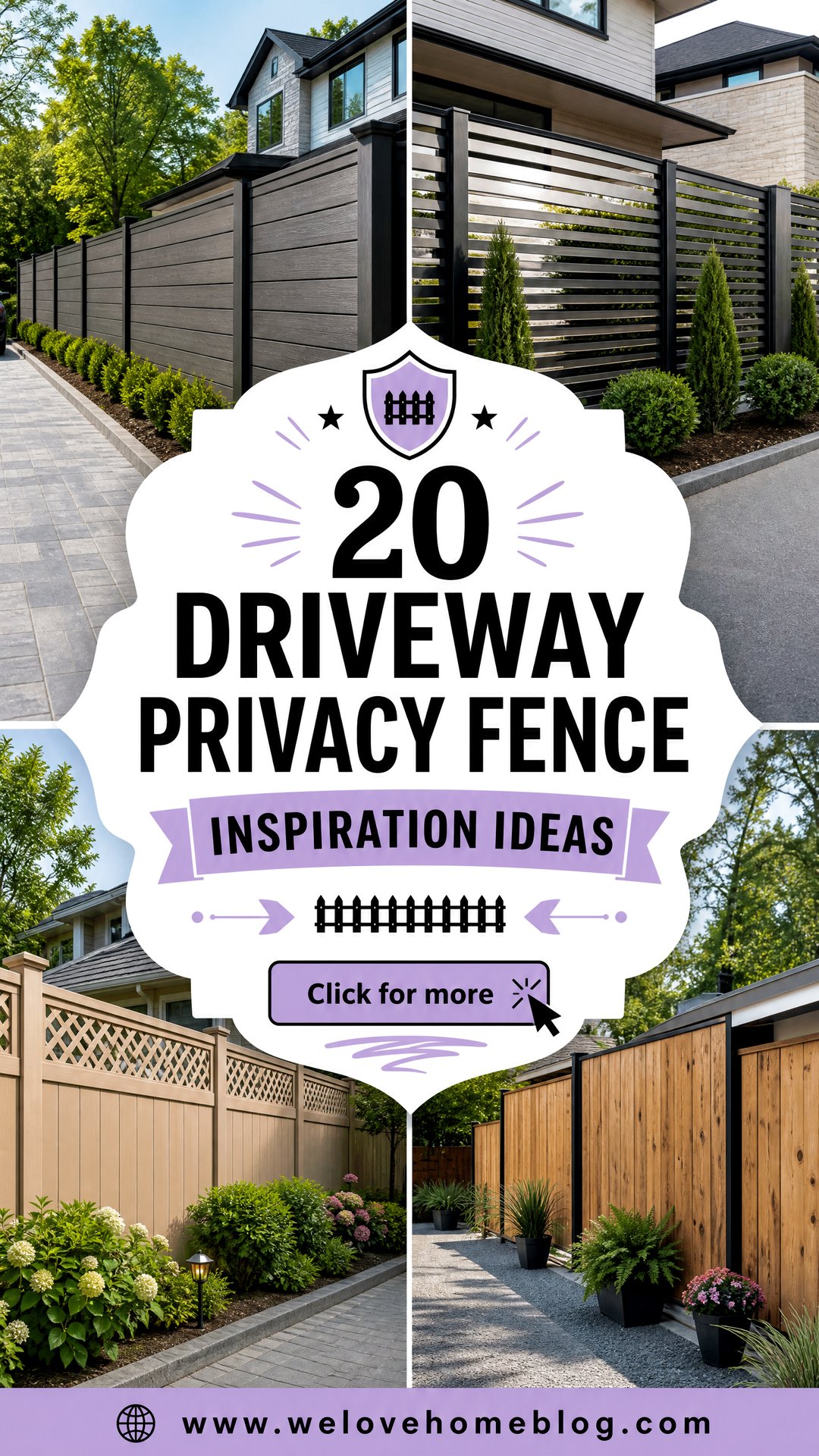
A well-planned driveway fence can make the front of your property feel more private without creating a harsh or closed-off entrance. The best designs connect the fence with the driveway surface, gate, planting beds, and architecture of the house. Current residential designs combine wood, metal, vinyl, composite materials, masonry, and layered landscaping to create attractive boundaries with practical screening. () You can also use slatted panels, stone pillars, hedges, or ornamental grasses to soften the structure and improve curb appeal. Before building, check local requirements for fence height, street setbacks, gate movement, and visibility near the sidewalk. The complete looks below offer different materials, budgets, and layouts through these **20 driveway privacy fence inspiration ideas**.
1. Horizontal Cedar Driveway Privacy Fence
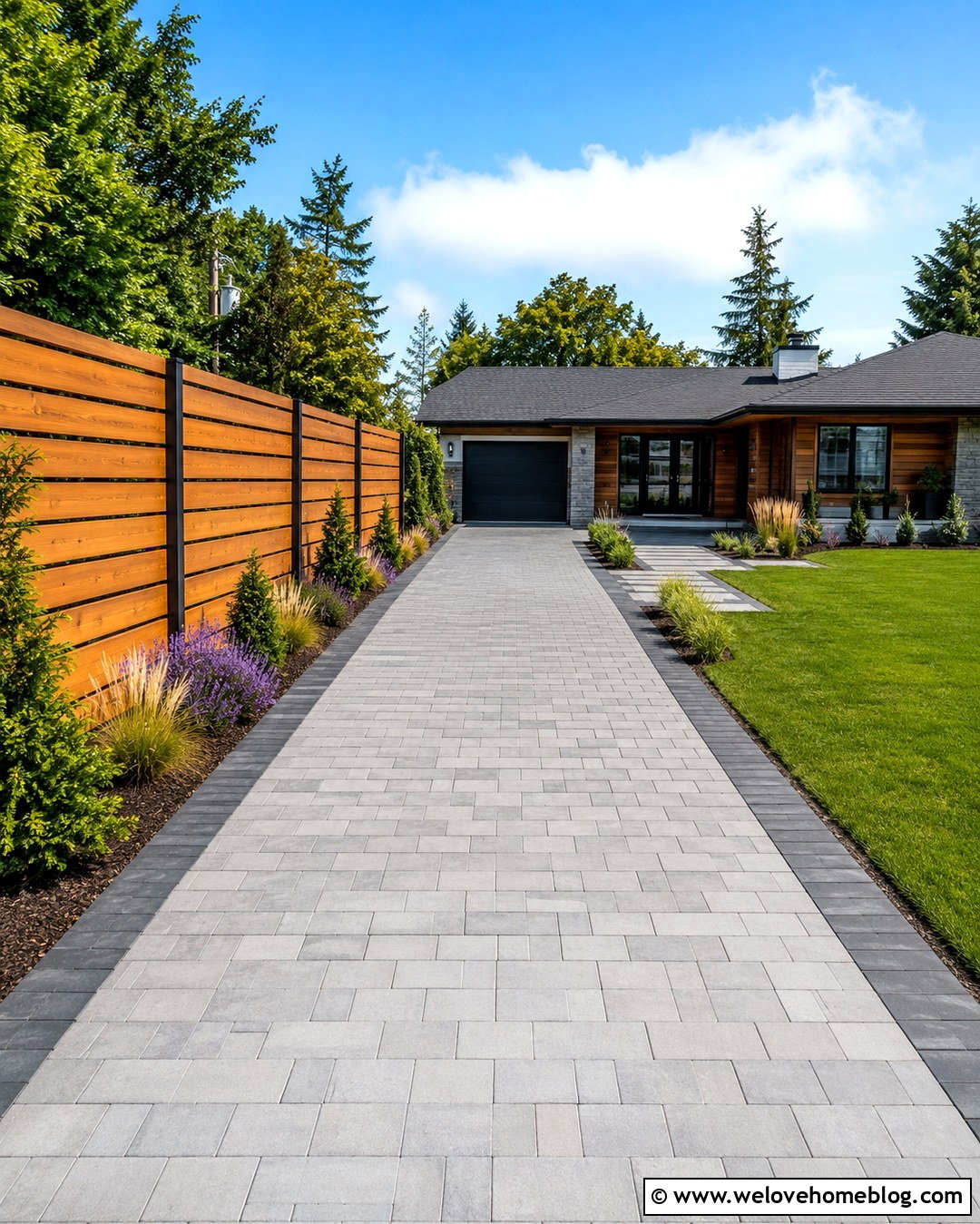
Warm horizontal cedar boards bring a clean, modern finish to an ordinary driveway. Pair the fence with light gray concrete pavers and a straight layout to emphasize the long lines of the wood. Narrow gaps between boards can reduce the boxed-in feeling while still screening the side yard from neighboring properties. Use black steel posts for contrast and better visual definition. A slim planting bed filled with low evergreen shrubs, lavender, or ornamental grasses will soften the base without taking away valuable parking space. Continue the cedar around the trash enclosure or side gate for a coordinated appearance. This complete look works especially well with contemporary homes, updated ranch houses, and modern farmhouses featuring natural wood accents.
2. Vertical Board-on-Board Driveway Privacy Fence
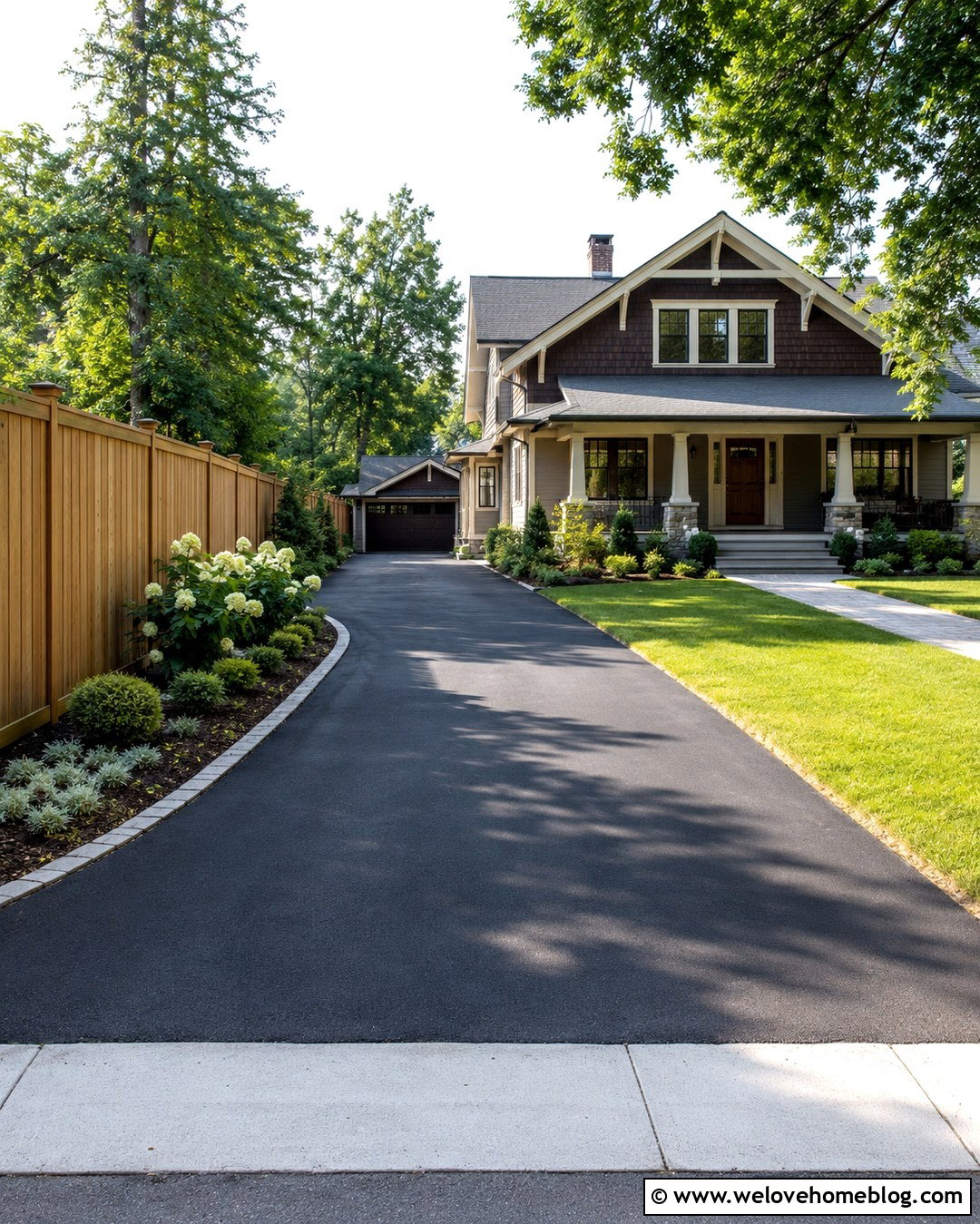
A vertical board-on-board fence creates substantial coverage while giving a traditional driveway a polished boundary. The overlapping boards prevent obvious sightlines, making this layout useful beside patios, windows, and backyard entrances. Pair stained cedar or pressure-treated pine with a smooth black asphalt driveway for an attractive balance of warm and dark tones. A simple cap rail provides a finished top edge, while sturdy posts placed inside the yard keep the street-facing side neat. Add a curved mulch bed along the fence with hydrangeas, dwarf hollies, and ground cover. Near the entrance, gradually lower the fence or transition into planting so drivers can see pedestrians and traffic. This combination complements Craftsman, colonial, and suburban brick homes.
3. Black Slat Driveway Privacy Fence
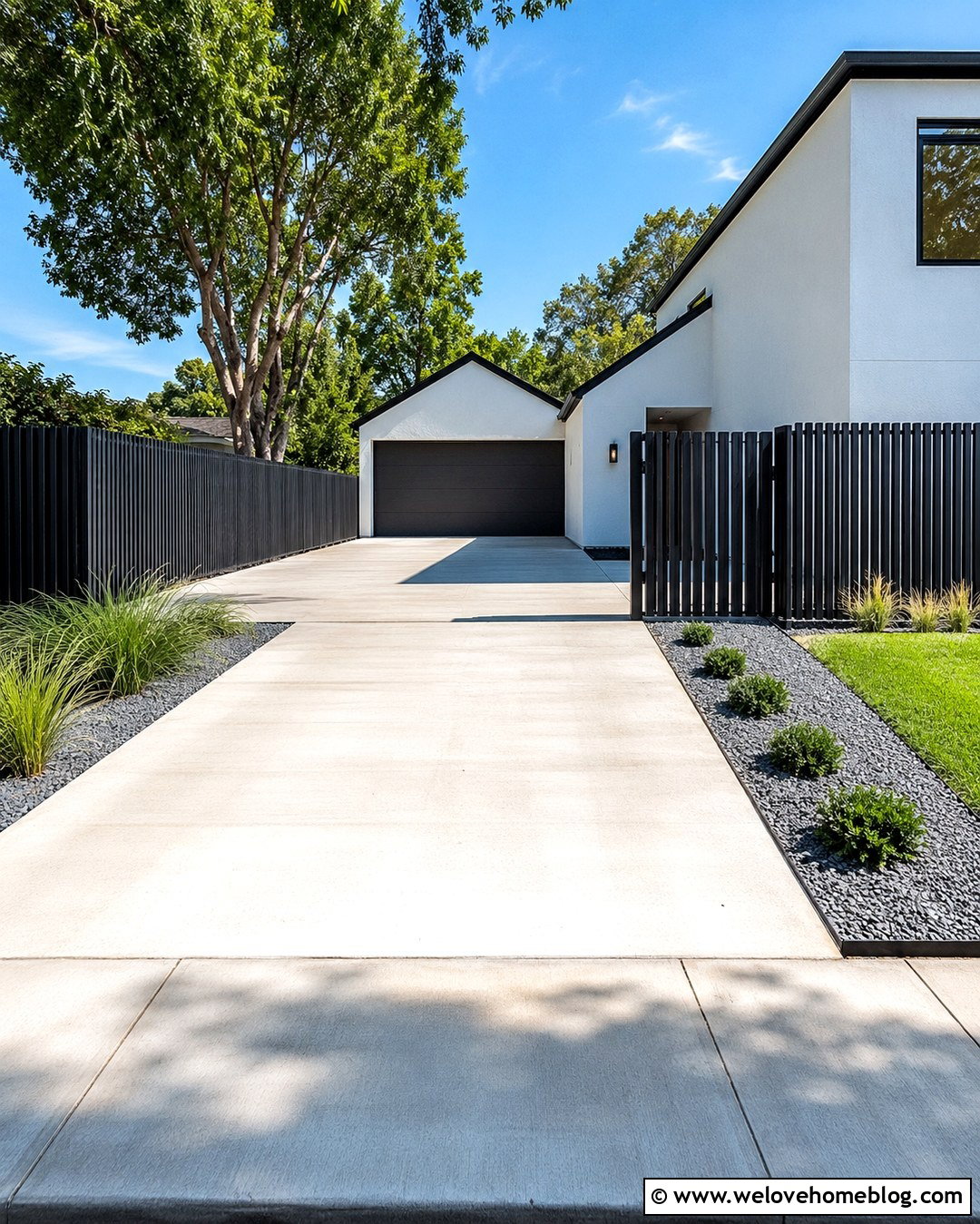
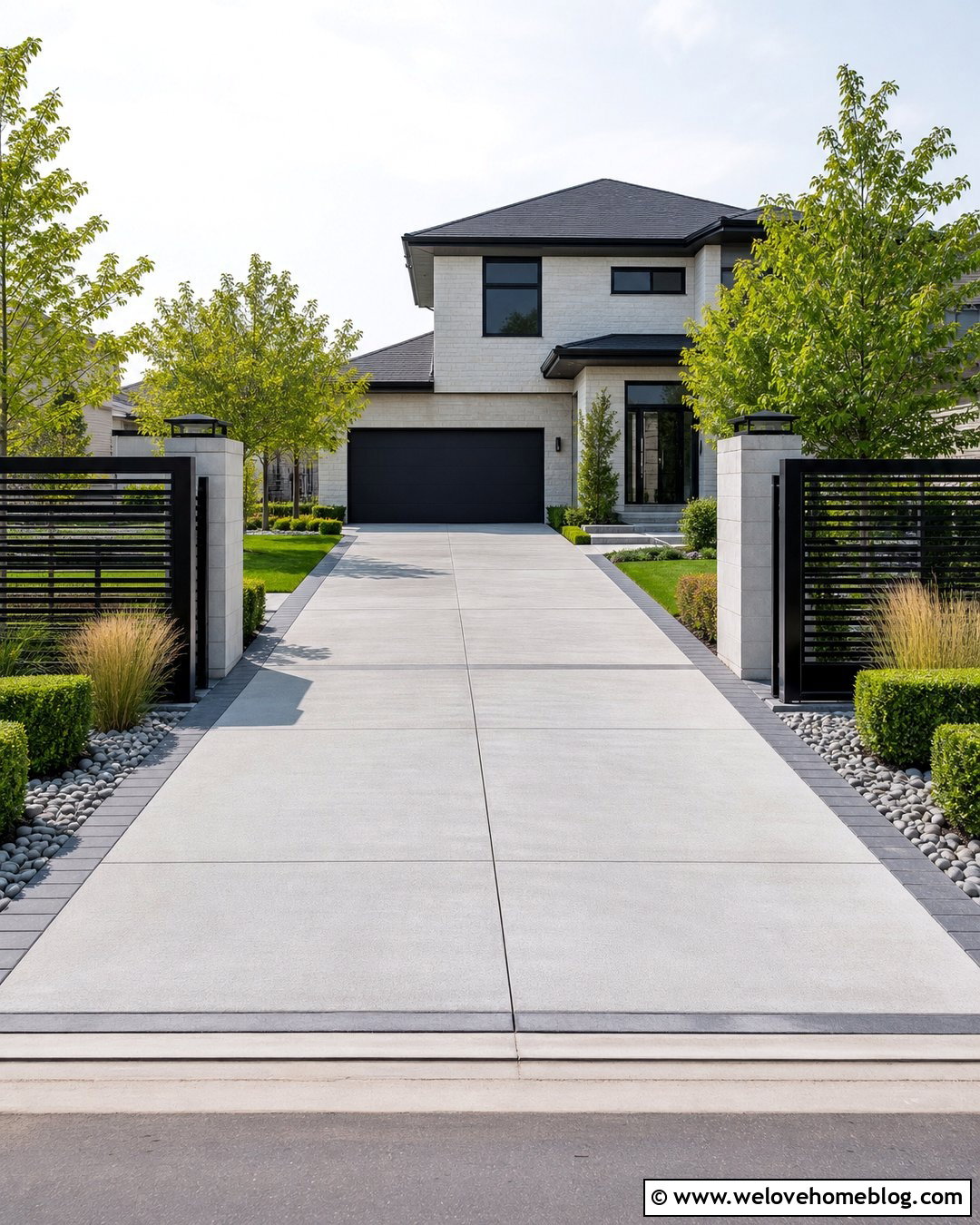
For a sharp contemporary entrance, combine a pale poured-concrete driveway with a black slatted privacy fence. Vertical aluminum or powder-coated steel slats create a defined property line without the heavy appearance of a completely solid wall. Small, consistent openings allow limited light and airflow while making views through the fence less noticeable from an angle. Coordinate the black finish with exterior window frames, garage doors, and address numbers. Along the fence base, use rectangular beds filled with green grasses, compact shrubs, and light decorative stone. A matching pedestrian gate can connect the driveway to a side walkway. This driveway privacy fence looks especially balanced beside a modern house with white stucco, charcoal siding, or natural wood cladding.
4. White Vinyl Driveway Privacy Fence
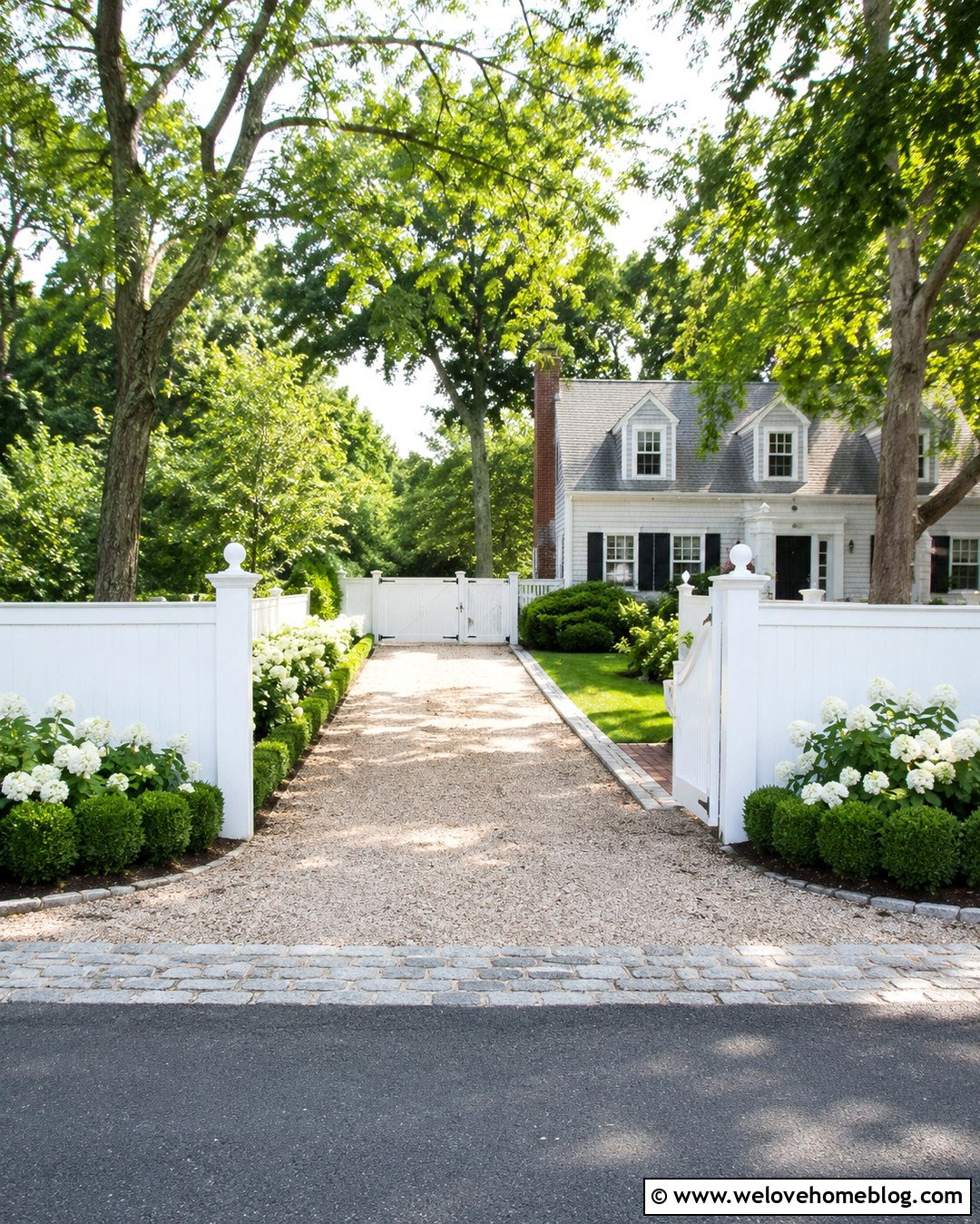
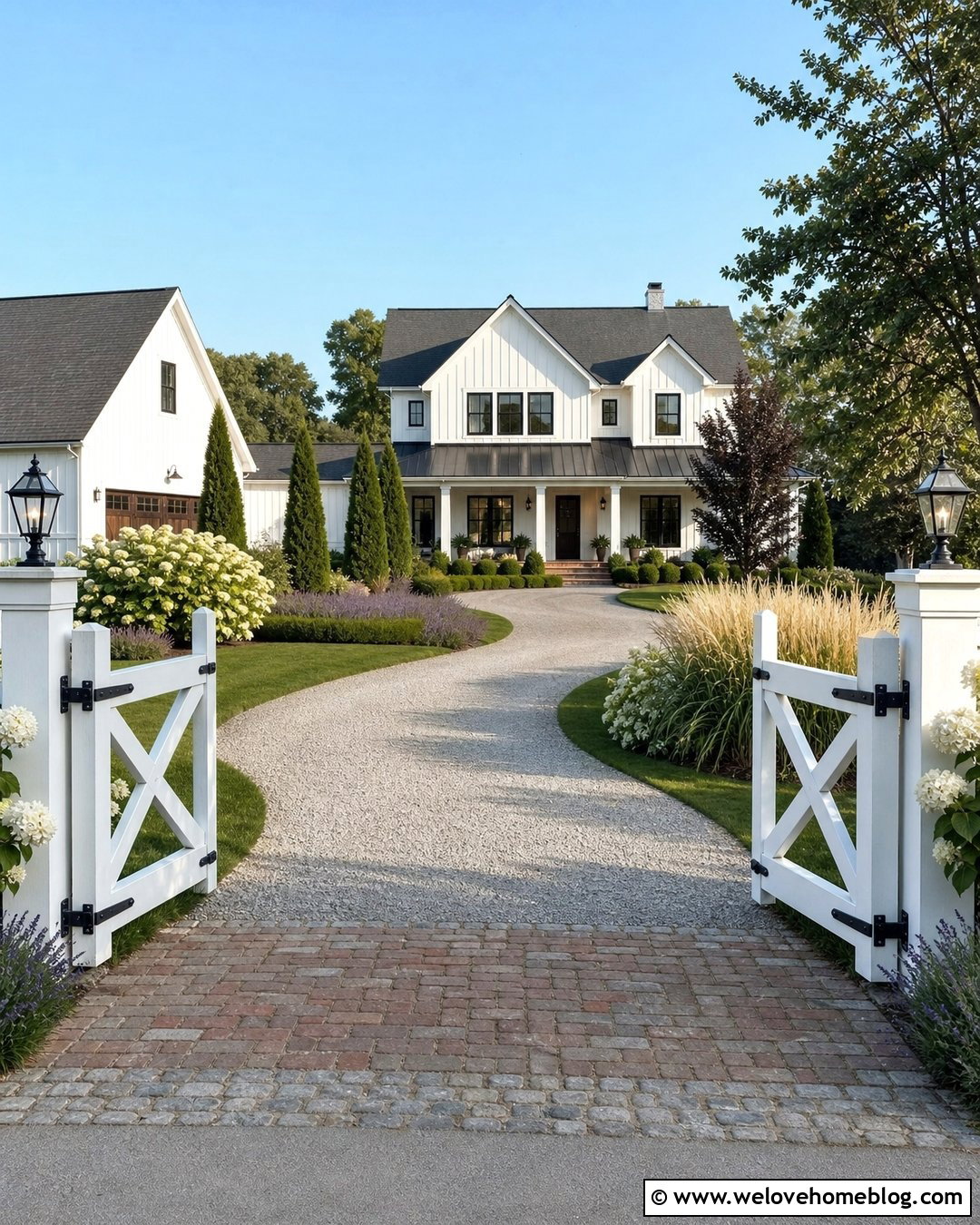
Bright white vinyl fencing can make a shaded or narrow driveway appear cleaner and more open. Pair full-height tongue-and-groove panels with a pale pea gravel driveway and a simple cobblestone edge. The solid panels screen neighboring yards, storage areas, and side patios, while decorative post caps add a traditional detail. Keep the base visually soft with clipped boxwood, white flowering shrubs, or a narrow strip of lawn. A matching vinyl gate near the garage can hide outdoor equipment without interrupting the consistent fence line. Because the white surface becomes a strong visual feature, repeat the color on the house trim, porch railing, or garage door. This complete arrangement suits Cape Cod, coastal, colonial, and classic suburban homes particularly well.
5. Composite Driveway Privacy Fence

A composite driveway privacy fence offers the rich appearance of stained wood with a crisp, uniform surface. Choose warm brown horizontal boards and charcoal posts, then pair them with a tan resin-bound gravel driveway. The smooth driveway finish keeps the overall design refined, while darker paver ribbons can define the parking area and garage approach. Place the fence slightly behind a narrow planting strip so foliage can break up the long panel run. Mounded grasses, dwarf evergreens, and low flowering perennials provide texture without spreading over the driveway. Carry the composite boards onto a matching sliding or pedestrian gate for continuity. This streamlined combination works with contemporary suburban homes and updated ranch properties where clean lines and restrained landscaping are the main priorities.
6. Stone and Wood Driveway Privacy Fence
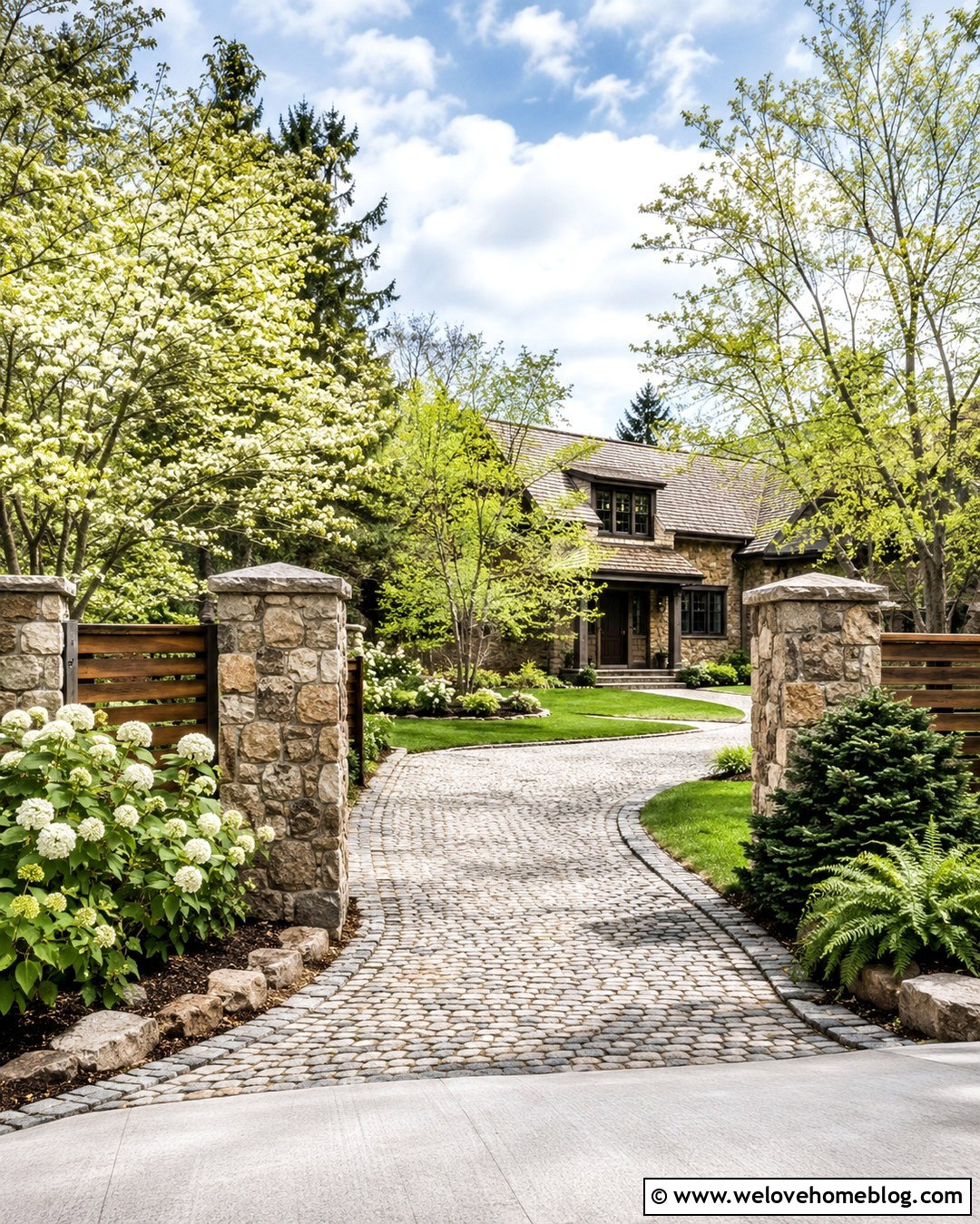
Natural stone and wood create a substantial privacy boundary that still feels connected to the landscape. Build low fieldstone sections or large stone pillars, then fill the spaces between them with horizontal cedar panels. A gently curved cobblestone driveway reinforces the traditional materials and gives the entrance a more established appearance. Plant broad beds of ferns, hydrangeas, evergreen shrubs, and small flowering trees along the interior side. At the street, use shorter stone walls and more open wood panels to preserve useful visibility. Warm column lights can be included for function, but they should remain simple and appropriately scaled. This driveway privacy fence is a strong match for Craftsman homes, country houses, wooded properties, and rustic residences with stone exterior details.
7. Brick Pillar Driveway Privacy Fence
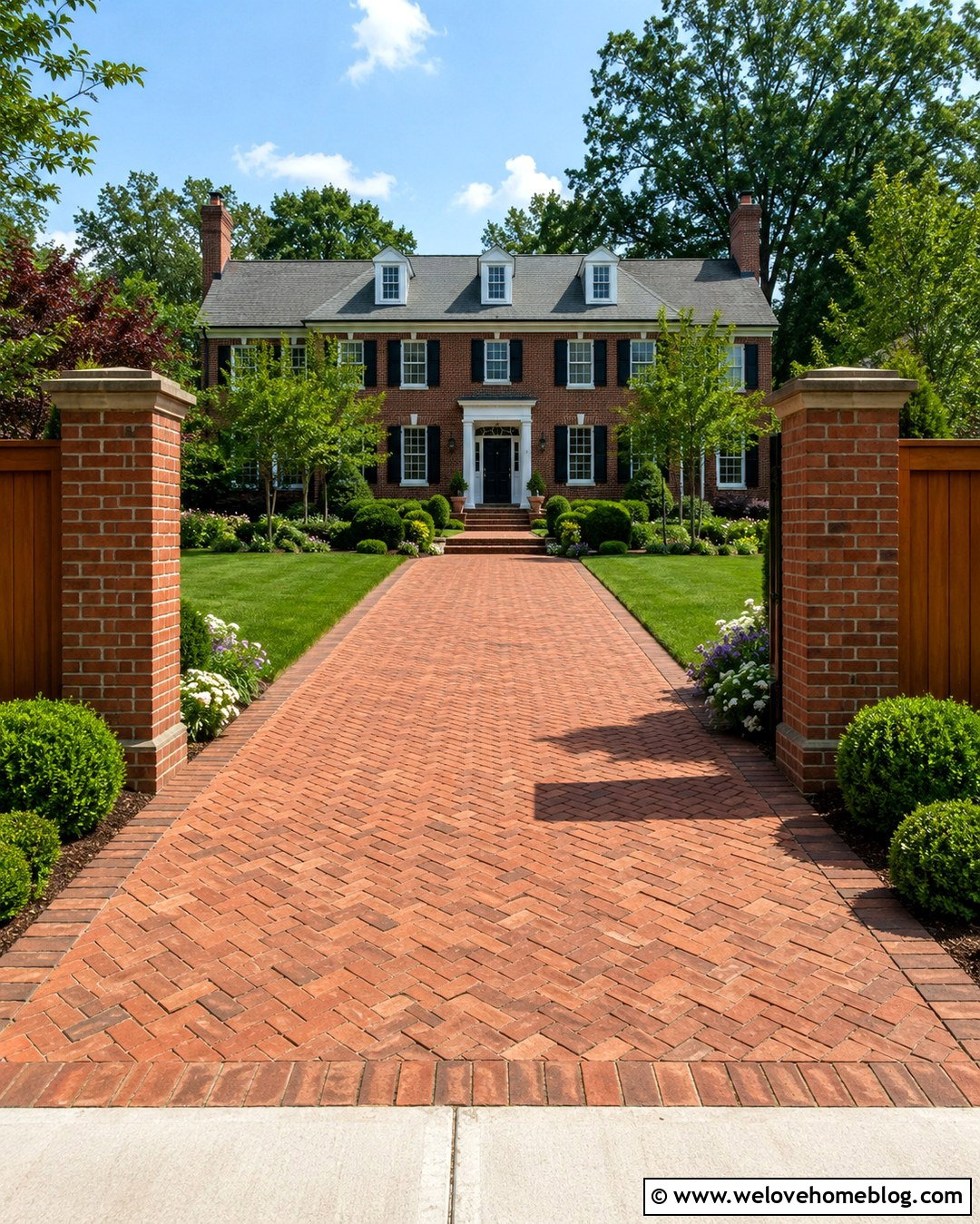
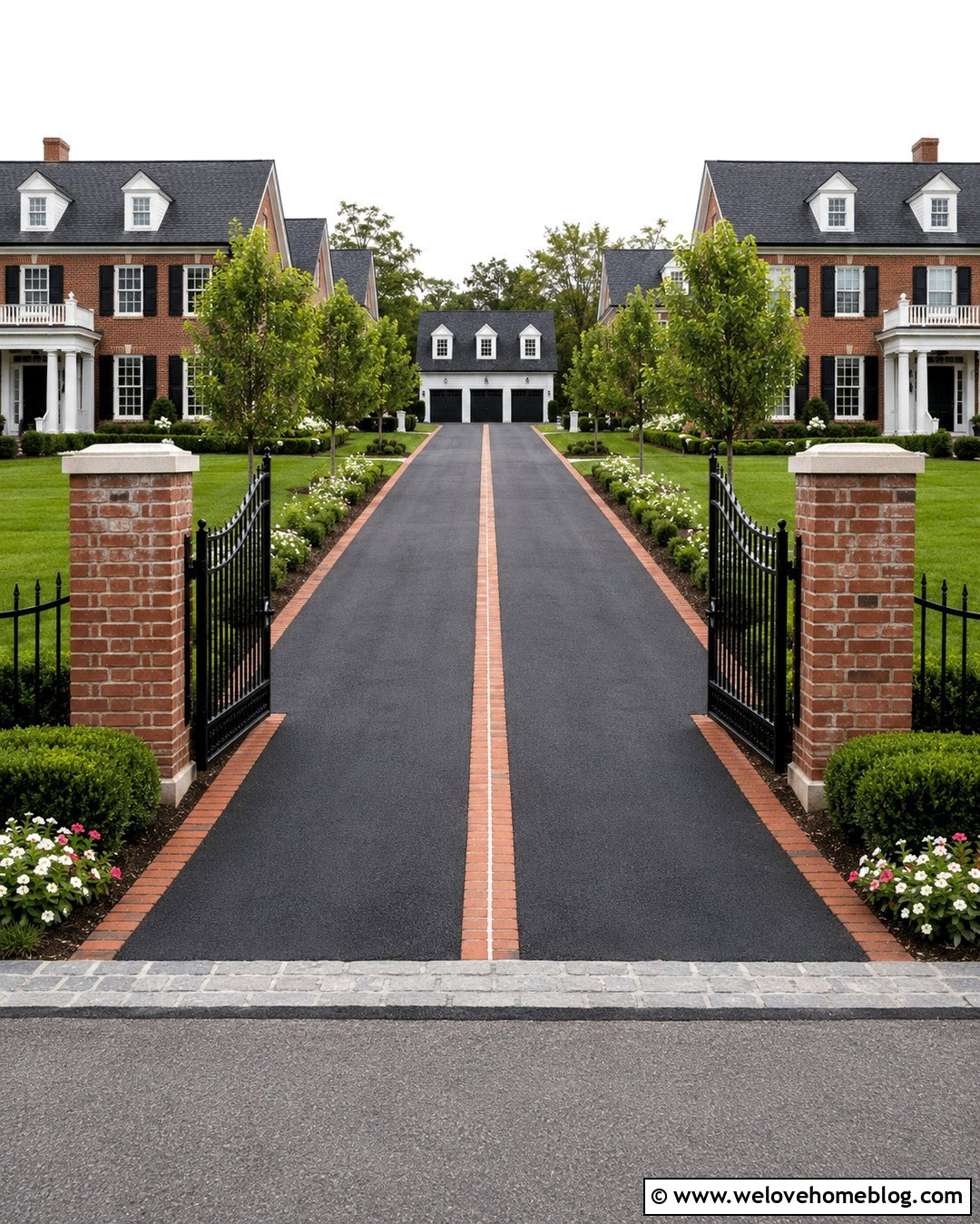
Brick pillars can visually connect a privacy fence to a brick house while creating a formal, well-defined driveway entrance. Install evenly spaced pillars with stained cedar panels between them, and use clay brick pavers in a herringbone pattern across the driveway. A soldier-course border can frame the surface and repeat the lines of the masonry. Keep the fence panels slightly recessed behind the pillars to create depth and shadow. Low boxwood hedges, flowering perennials, and neatly edged lawn will support the traditional look without hiding the brickwork. For a wider property, include matching pillars beside a driveway gate or walkway entrance. This coordinated approach feels especially appropriate for colonial, Georgian, Tudor, and traditional red-brick homes with symmetrical front elevations.
8. Corrugated Metal Driveway Privacy Fence
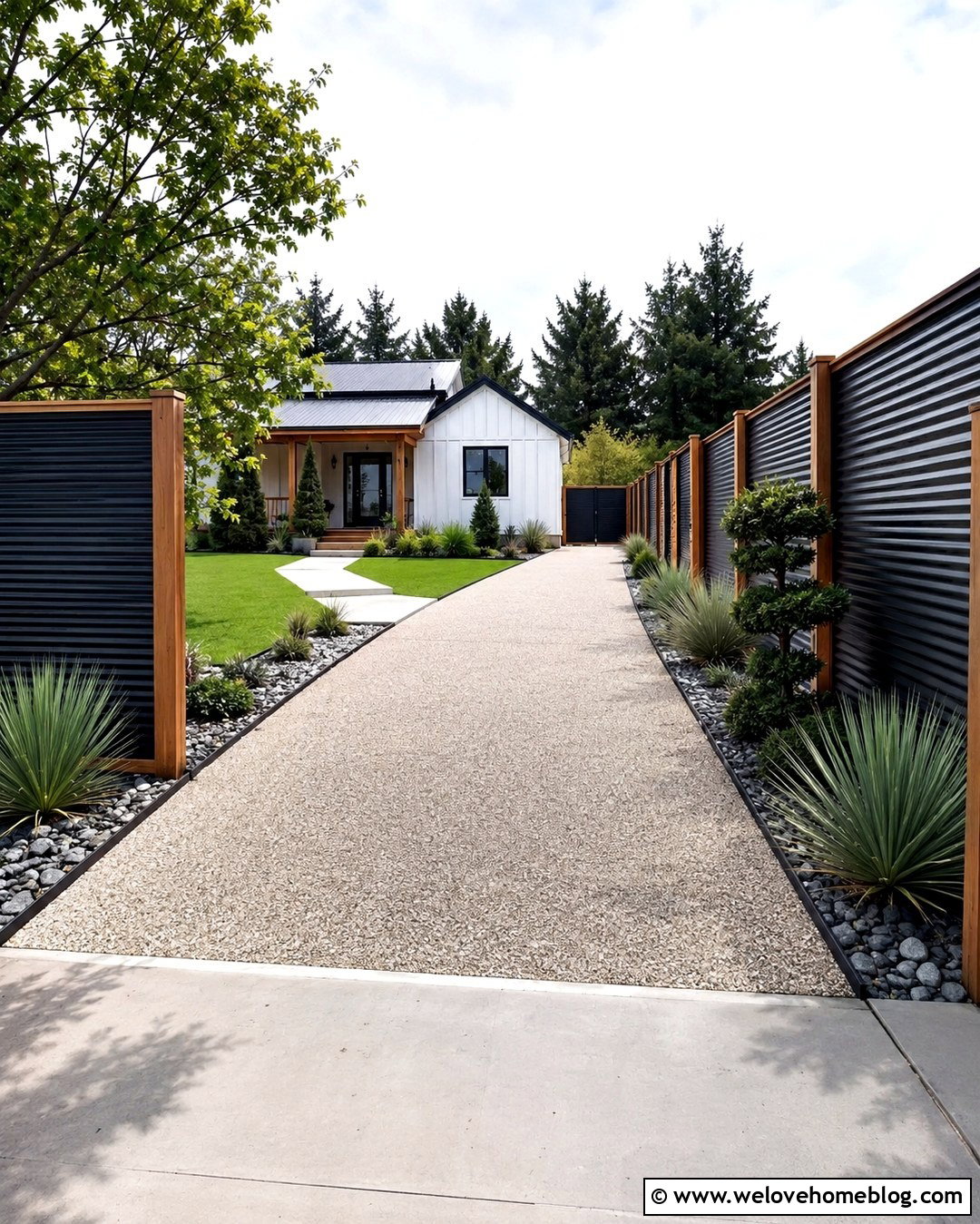
Corrugated metal offers a practical way to give an exposed driveway a distinctive contemporary or industrial character. Use charcoal-gray metal panels inside warm cedar frames so the surface feels intentional rather than utilitarian. An exposed-aggregate concrete driveway adds texture while maintaining a neutral color palette. Run the fence beside the driveway and continue it around a side parking pad, workshop, or backyard entrance. A narrow gravel bed with yucca, switchgrass, and sculptural evergreen shrubs helps soften the metal panels. Black steel edging will keep stones and soil away from the driving surface. This complete design works with modern farmhouses, converted industrial properties, desert-inspired homes, and simple contemporary houses featuring black trim, metal roofing, or stained wood siding.
9. Shadowbox Driveway Privacy Fence
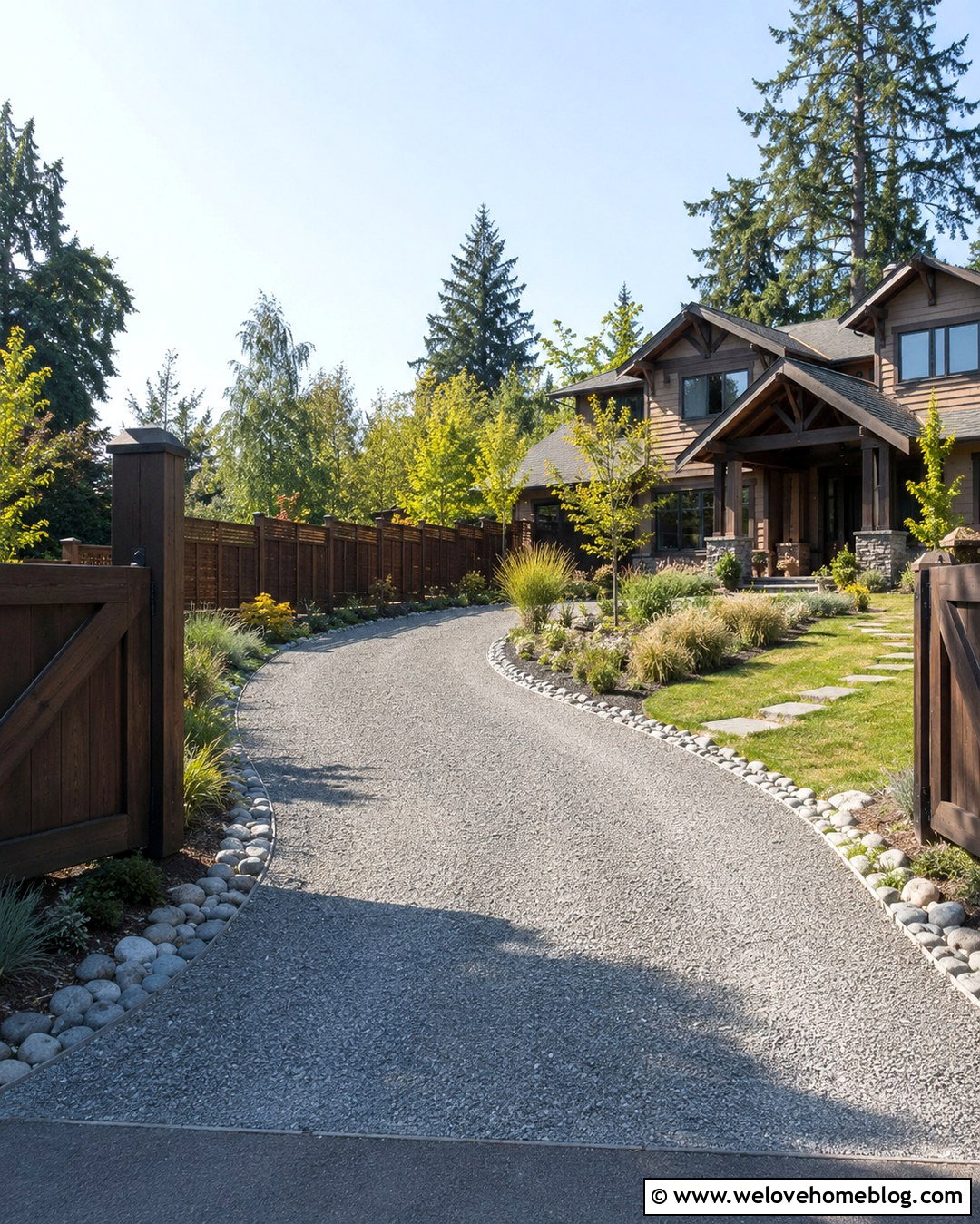
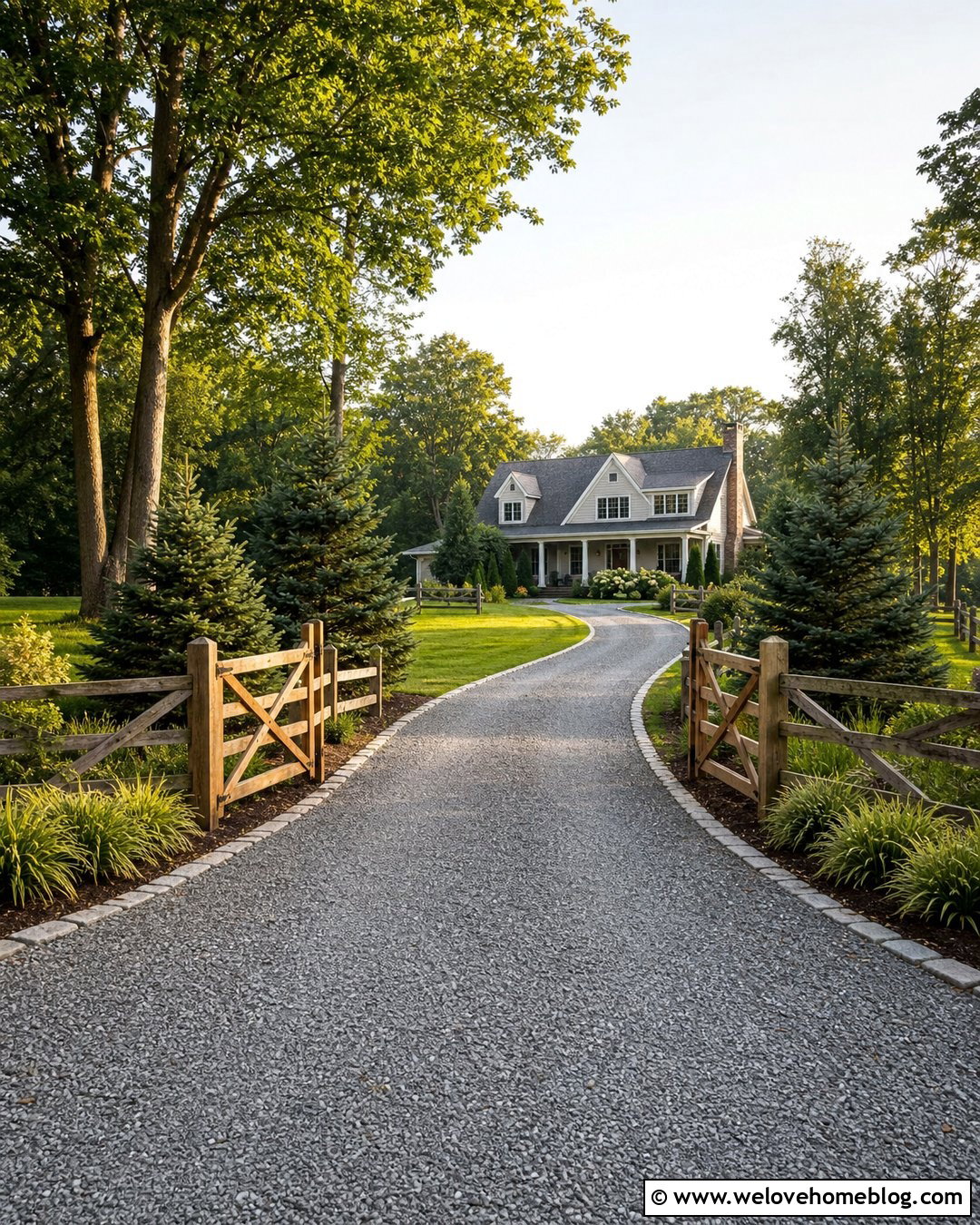
A shadowbox fence provides partial screening from direct angles while appearing finished on both sides. Alternating wood boards create depth, airflow, and subtle movement as you travel along the driveway. Pair a medium-brown stained shadowbox fence with a gray gravel driveway edged in natural stone. Use a gentle curve in the driveway to make the entrance feel softer and prevent the fence from resembling one long, rigid wall. Plant native grasses, flowering shrubs, and small ornamental trees at wider points along the boundary. A dark timber or steel driveway gate can repeat the fence rhythm without becoming overly decorative. This design is useful for shared boundaries and side driveways where both neighboring properties will regularly see the finished fence surface.
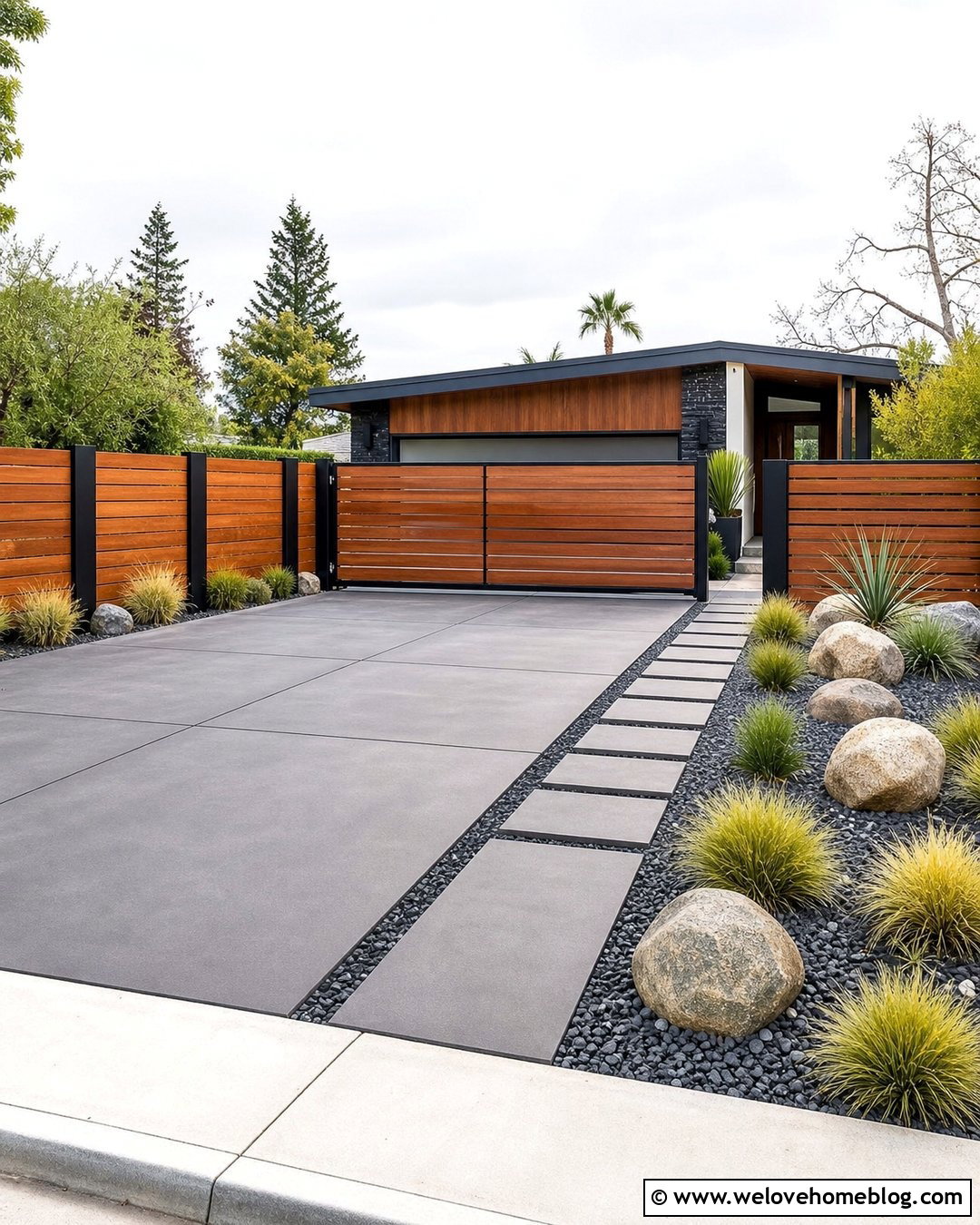
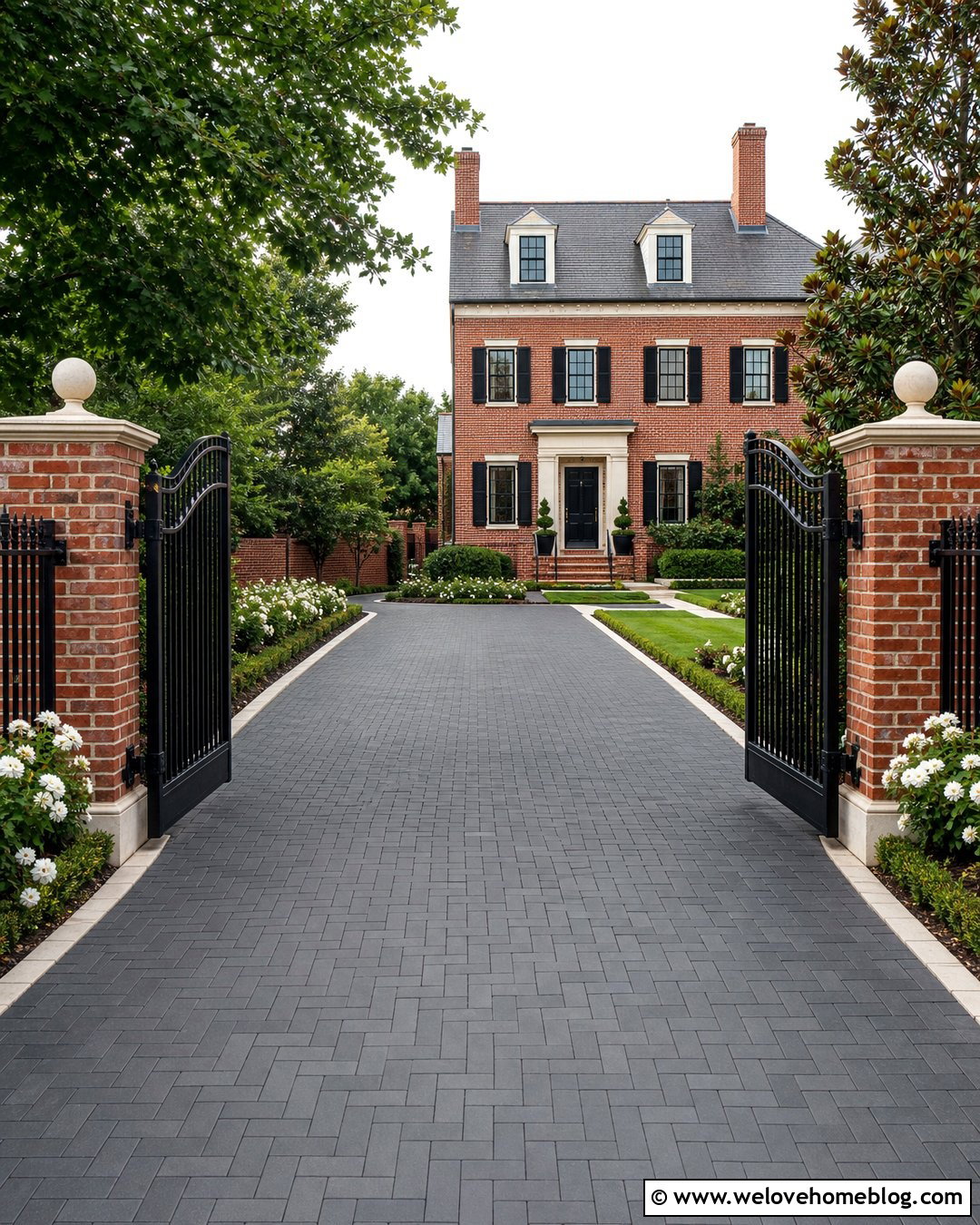
10. Louvered Driveway Privacy Fence
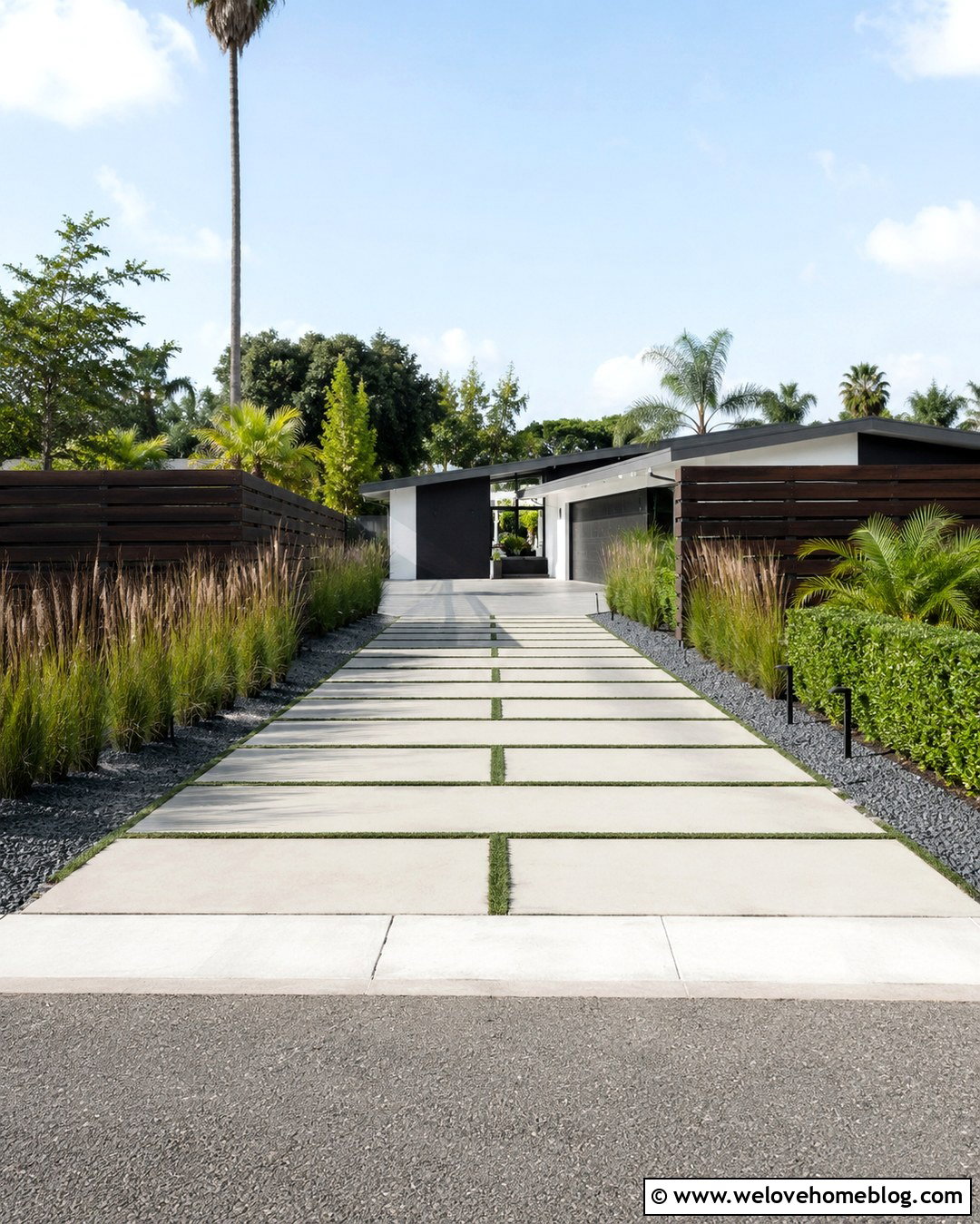
Angled louvers can block direct views while allowing filtered light and air to move through the fence. This makes a louvered driveway privacy fence a smart visual choice for warm climates or spaces beside windows and outdoor living areas. Pair dark-stained wood louvers with large-format concrete pavers arranged in a straight driveway. Narrow grass joints or charcoal gravel bands can divide the slabs and add a modern pattern. Keep the planting restrained with palms, upright grasses, or evergreen shrubs that echo the vertical posts. Adjust the louver direction according to the view you want to screen, especially around side patios or neighboring windows. The result feels architectural and private without looking completely solid, particularly beside midcentury modern or contemporary homes.
11. Driveway Privacy Fence With Sliding Gate
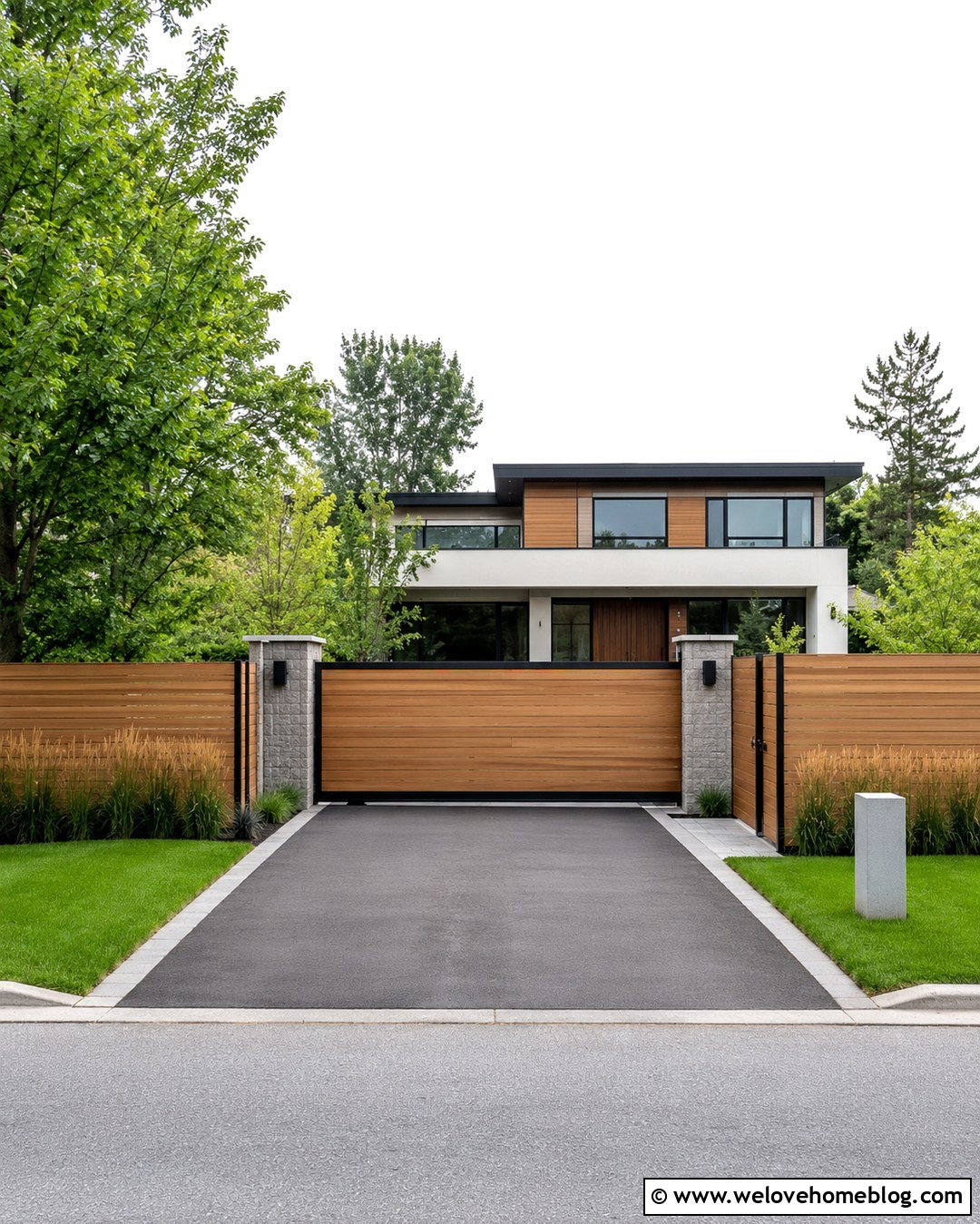
A sliding gate creates a secure, space-conscious entrance because it moves parallel to the fence rather than swinging across the driveway. Combine a horizontal cedar fence and matching gate with a smooth black asphalt surface for a strong modern contrast. The gate should appear as a continuous part of the fence when closed, with aligned boards and discreet hardware. Allow clear space along the interior fence line for the gate to travel without hitting shrubs, bins, or utility equipment. Stone entrance pillars can conceal some of the operating components while adding visual weight. Finish the design with low ornamental grasses, a paved pedestrian path, and a simple address marker. This layout suits straight urban driveways, narrow lots, and homes close to the street.
12. Driveway Privacy Fence With Swing Gate
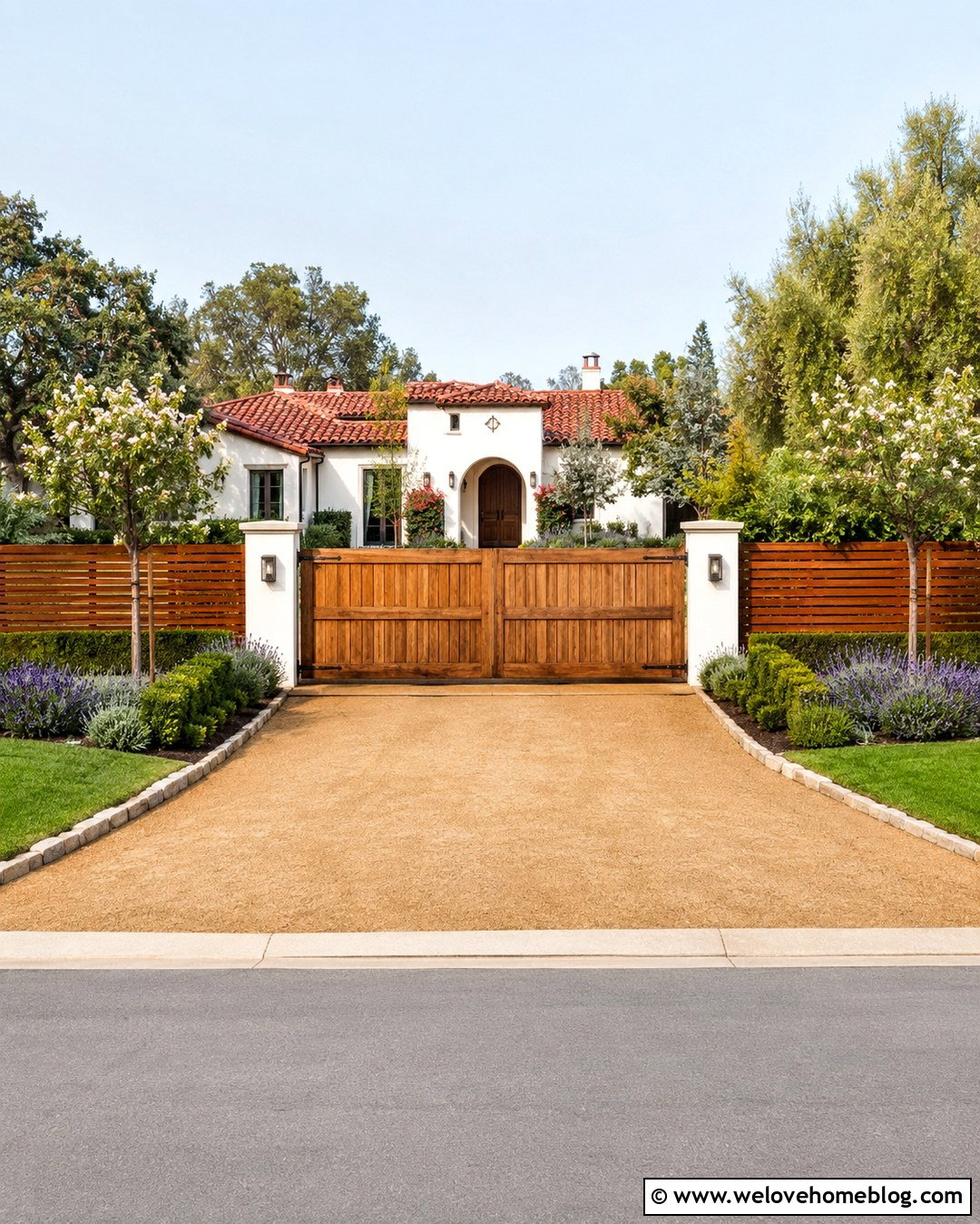
A double swing gate can turn a wide driveway into an inviting, symmetrical entrance. Pair a warm wood privacy fence with framed cedar gate leaves that open inward onto a decomposed-granite driveway. Substantial stone or stucco pillars will help anchor the opening and visually connect the gate to the house. Leave enough interior clearance so both leaves can move freely without interfering with parked vehicles or sloped ground. Use matching hinges and understated black hardware for a coordinated finish. On either side, plant clipped evergreens, lavender, or small flowering trees to soften the transition from fence to landscape. This complete driveway design fits country homes, Spanish-style houses, ranch properties, and larger suburban lots where there is room for a broad, balanced entrance.
13. Driveway Privacy Fence With Arborvitae
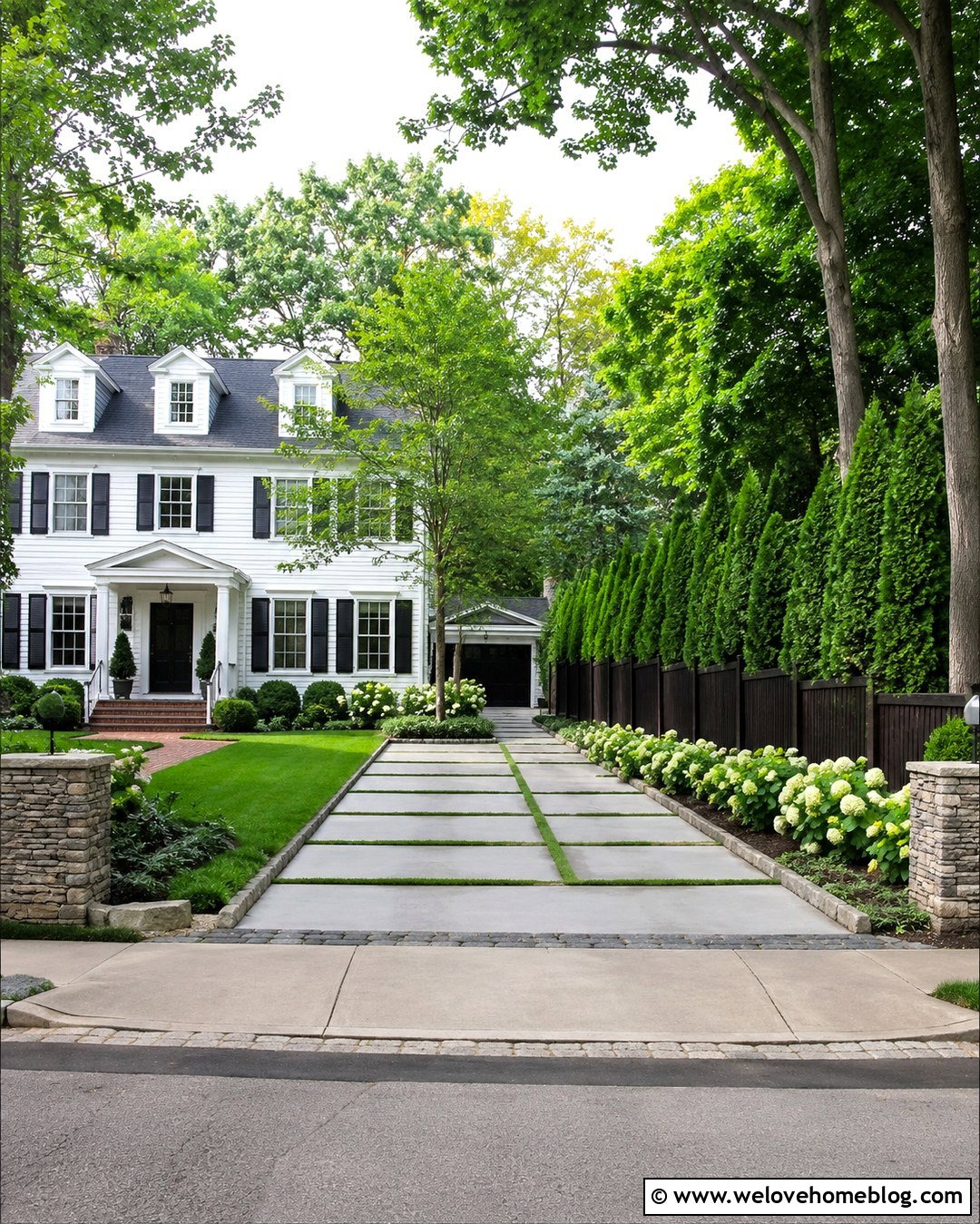
Layering arborvitae in front of a simple privacy fence creates a softer and greener boundary. The fence supplies immediate screening, while the evergreens visually break up the flat panel surface. Pair a dark cedar fence with a straight poured-concrete driveway featuring narrow grass strips between the wheel paths. Keep the trees in a dedicated planting bed so their mature growth does not crowd vehicles or spread across the pavement. A low stone curb can protect the soil while producing a neat transition. Mix the evergreens with shade-tolerant ground cover or small flowering shrubs to avoid a repetitive wall of identical plants. This driveway privacy fence combination looks natural beside colonial, Craftsman, and traditional suburban homes with established lawns and mature trees.
14. Driveway Privacy Fence With Ornamental Grasses
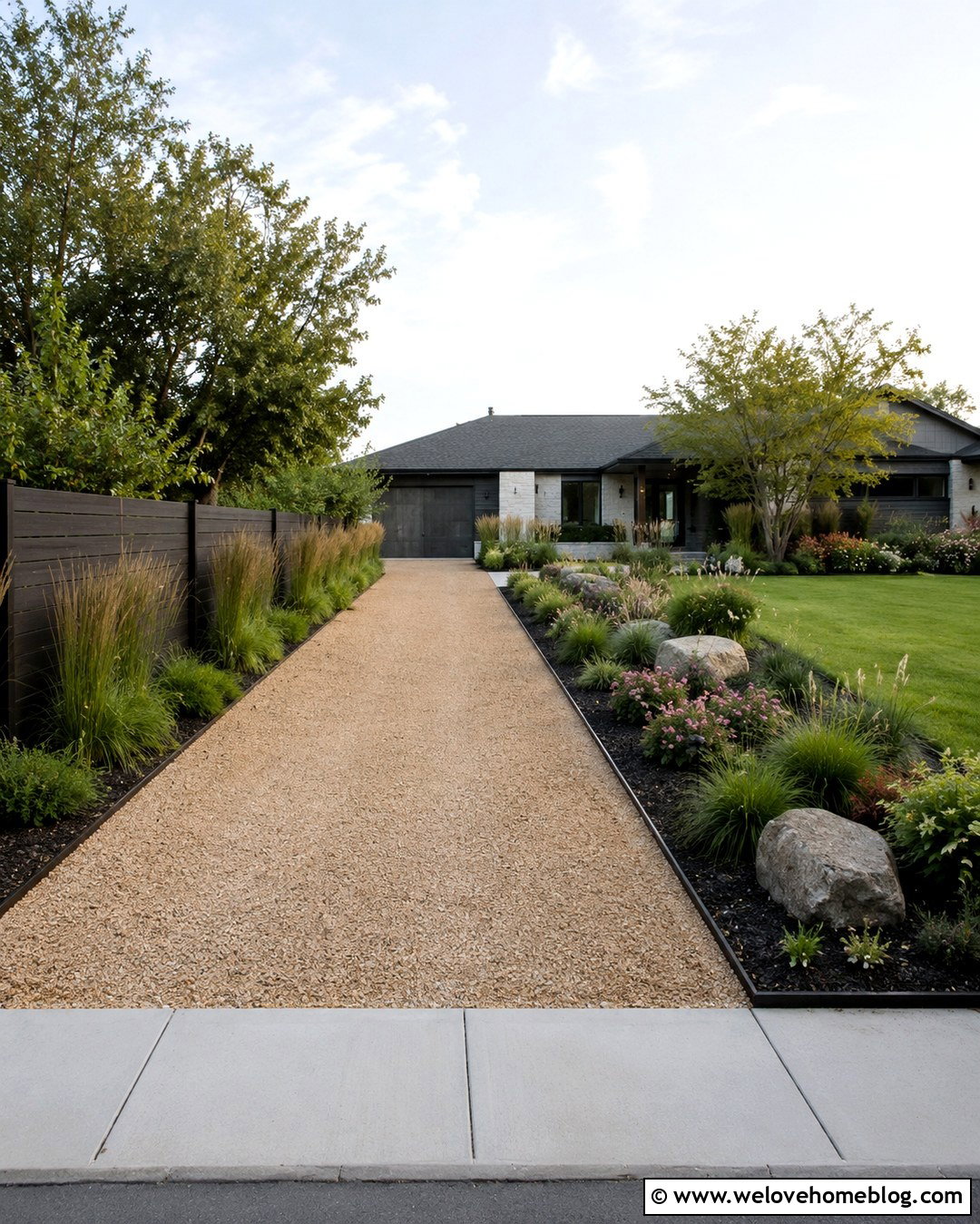
Tall ornamental grasses can make a solid fence feel lighter by adding movement, texture, and seasonal color. Pair a charcoal horizontal fence with a tan gravel driveway and black steel edging. Create a planting bed at least wide enough for the grasses to arch naturally without brushing against vehicles. Repeat a limited selection of upright grasses along the fence, then add low sedges, flowering perennials, and decorative stones near the entrance. The layered planting disguises the bottom of the panels and creates a gradual transition from the driveway to the fence. Keep taller varieties away from the street where they might reduce visibility. This relaxed, modern combination complements prairie-inspired landscapes, contemporary ranch houses, and suburban homes with naturalistic front-yard planting.

15. Driveway Privacy Fence With Lattice Top
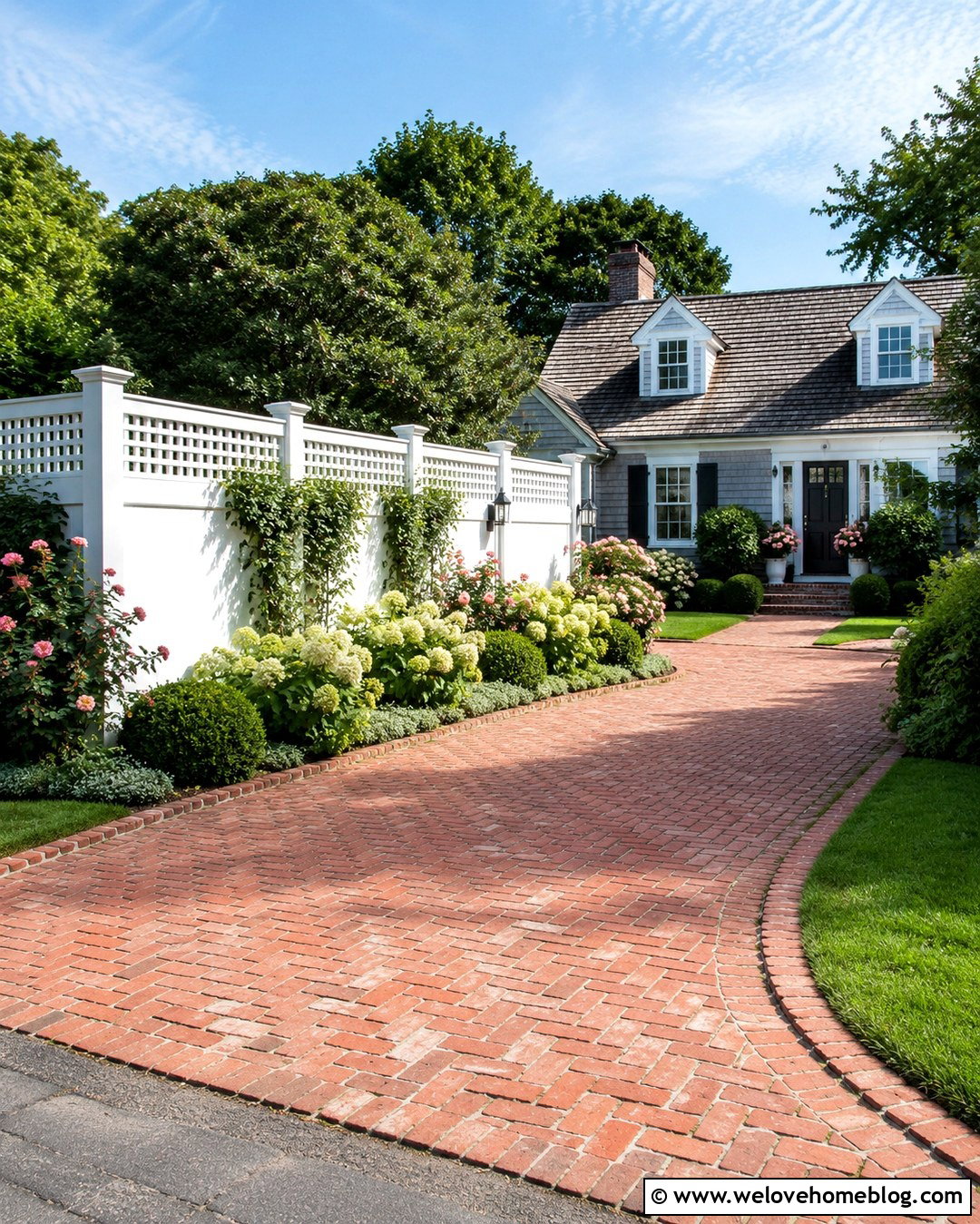
A lattice-top privacy fence offers solid screening at eye level while allowing additional light near the upper edge. Use painted white or softly stained wood panels beside a red brick paver driveway for a classic residential look. Square lattice provides a structured appearance, while diagonal lattice feels slightly more decorative. Train a restrained climbing plant on selected sections rather than covering the entire fence, which helps preserve its clean pattern. Add curved planting beds containing roses, hydrangeas, boxwood, and low ground cover along the base. A matching lattice detail above the pedestrian gate can tie the entrance together. This complete design works well with cottages, Cape Cod homes, colonial houses, and traditional neighborhoods where an imposing solid fence might feel too severe.
16. Low Wall Driveway Privacy Fence
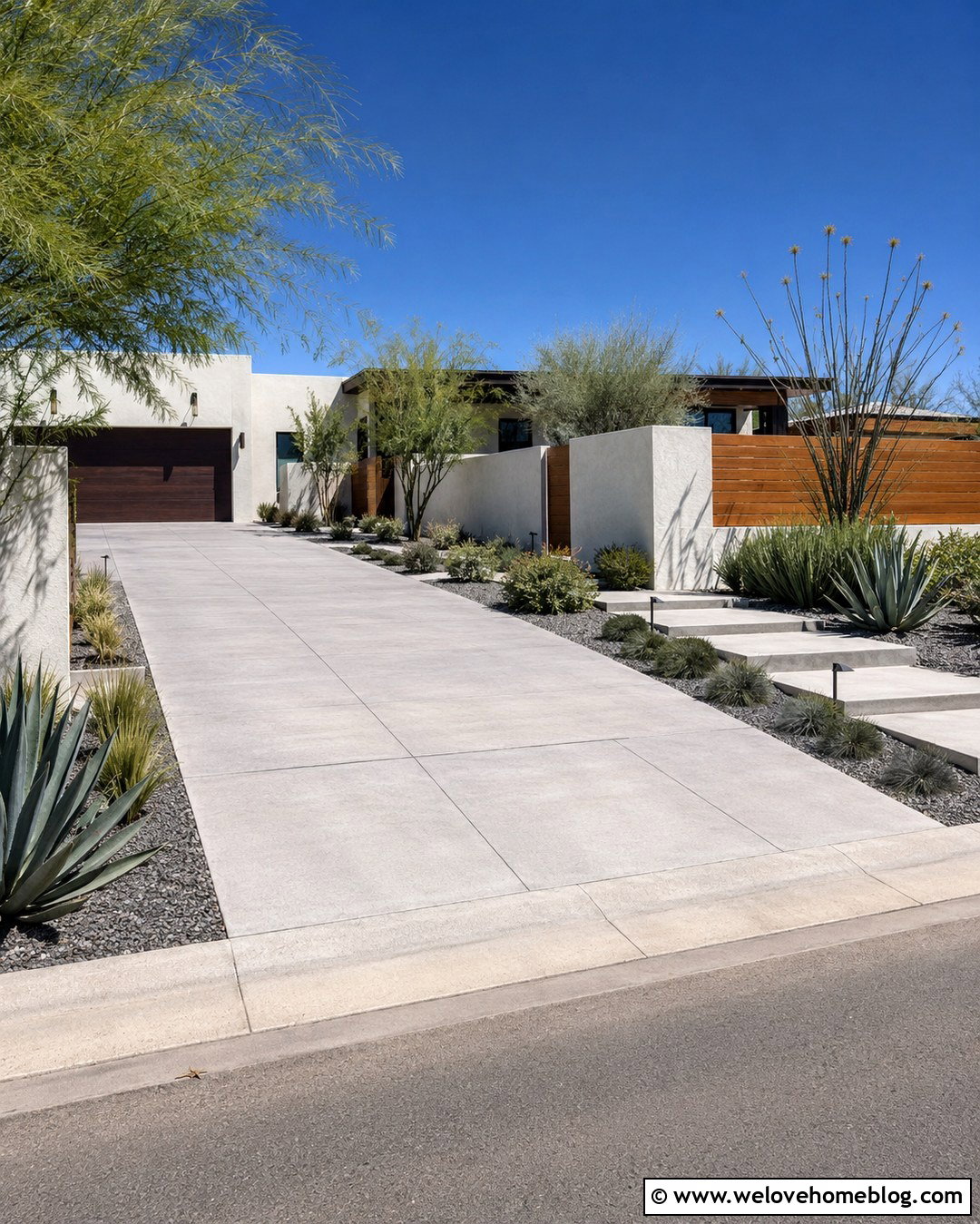
A low masonry wall topped with wood or metal screening creates privacy without making the entire boundary look oversized. Pair a smooth white stucco wall with warm horizontal cedar slats and a broom-finished concrete driveway. The masonry base protects the lower portion from splashed dirt while giving the fence a permanent, architectural appearance. Match the wall color to the house facade, then repeat the cedar tone on the front door or garage. Narrow planting pockets filled with agave, grasses, or clipped shrubs can soften the long wall. At the driveway entrance, reduce the wall height or angle it away from the pavement to support better visibility. This layered fence design works particularly well with modern, Southwestern, Mediterranean, and midcentury residential architecture.
17. Narrow Side Driveway Privacy Fence
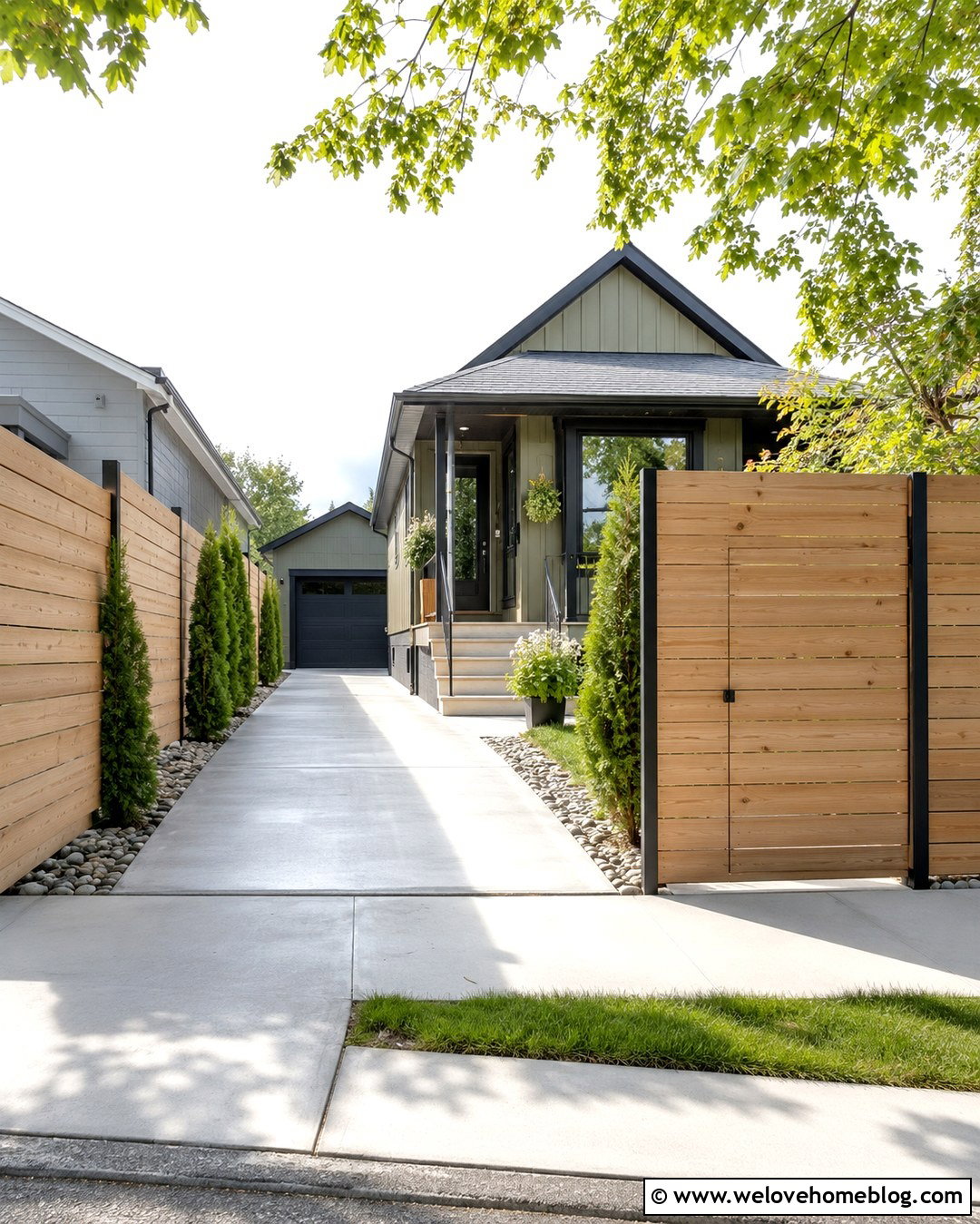
A narrow driveway needs privacy features that preserve as much usable width as possible. Choose slim vertical cedar boards attached to dark steel posts, and align the fence closely with the property boundary. A smooth poured-concrete driveway will feel less visually cluttered than several small paving patterns. Instead of deep planting beds, use wall-mounted greenery, column-shaped shrubs, or a narrow strip of river rock along the fence base. Adding a lighter stain can prevent the confined space from feeling dark. Near the garage, incorporate a flush pedestrian gate that blends into the panels. Good drainage is especially important because the fence and neighboring structure may limit where water can travel. This layout is suitable for urban homes, cottages, and compact suburban side yards.
18. Curved Driveway Privacy Fence
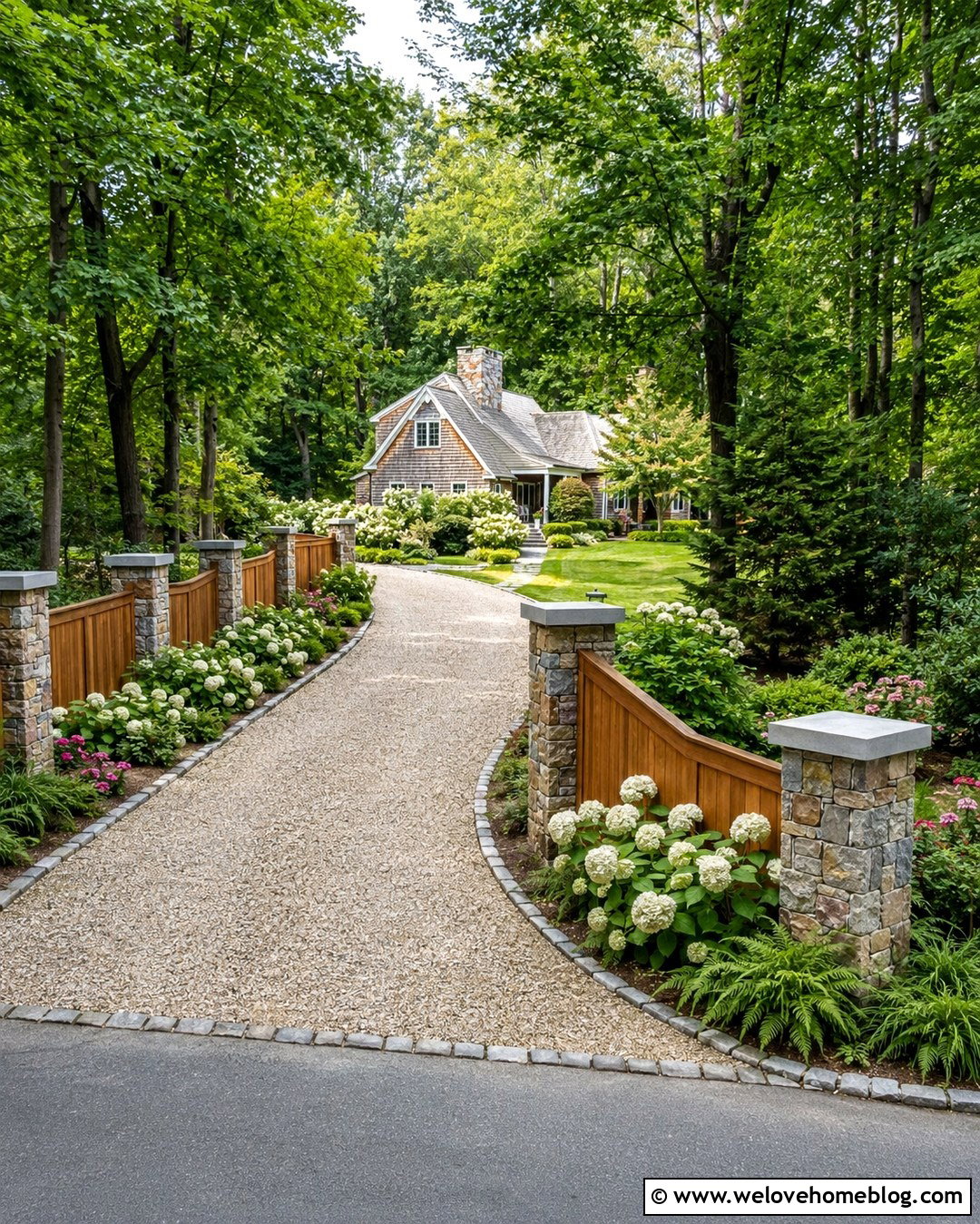
Following the curve of a driveway with segmented fence panels creates a natural, flowing property boundary. Use warm cedar boards between stone posts beside a curved pea gravel driveway. Rather than forcing long straight panels around the bend, install shorter sections that gently change direction. A cobblestone border will contain the gravel and provide a crisp line between the driveway and planting beds. Layer flowering shrubs, ferns, and small ornamental trees along the outside curve to blend the fence into the yard. Gradually lower the panels as they approach the road so the entrance remains open and welcoming. This driveway privacy fence works beautifully on wooded properties, cottage lots, and country homes where an informal curved approach feels more appropriate than a rigid straight entrance.
19. Farmhouse Driveway Privacy Fence
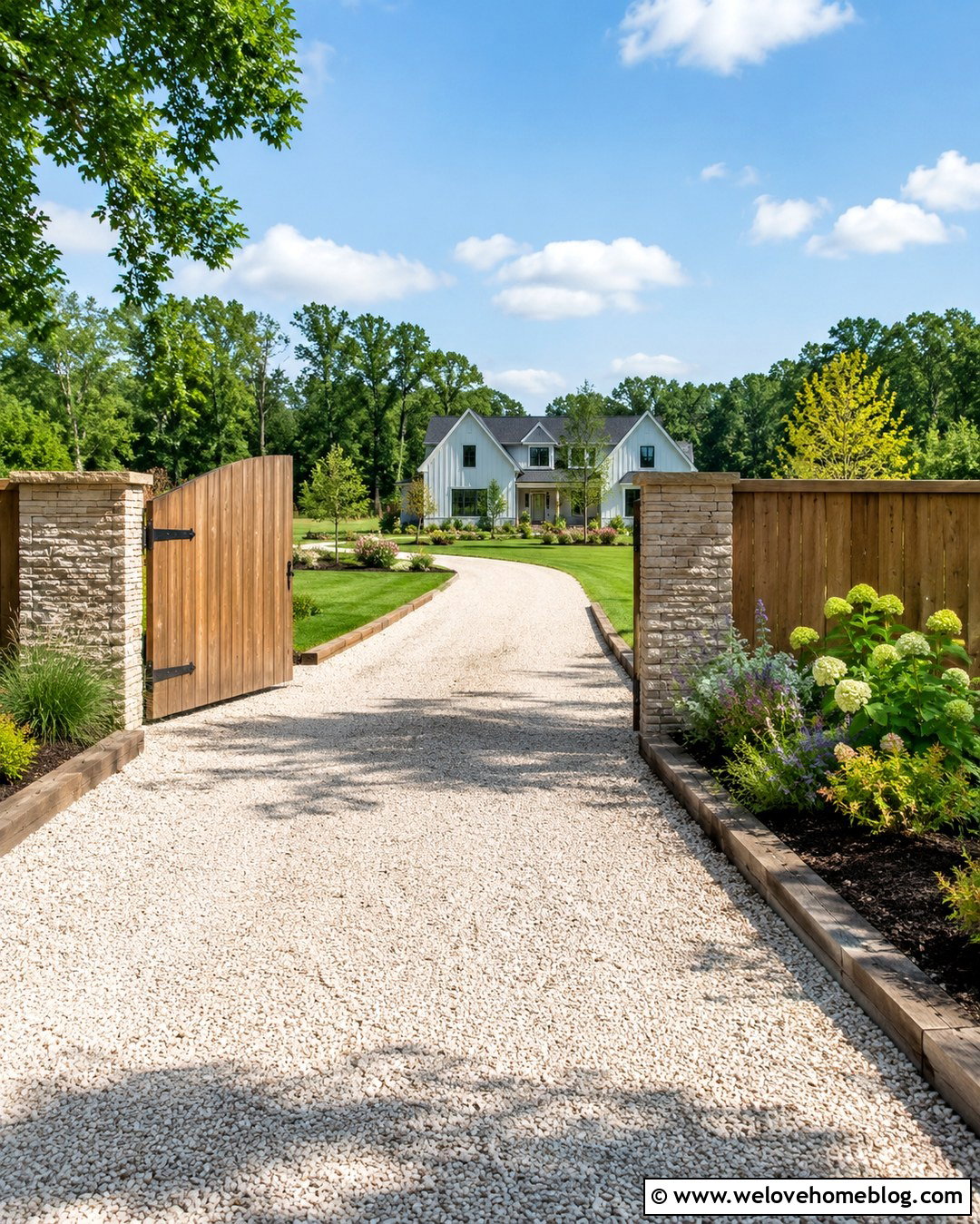
A farmhouse driveway fence should feel sturdy, straightforward, and connected to natural materials. Combine vertical board-and-batten cedar panels with stone pillars and a pale crushed-limestone driveway. A wide timber gate can mark the entrance, while black strap hinges add a simple agricultural detail. Instead of formal hedges, plant loosely arranged hydrangeas, ornamental grasses, small fruit trees, or native flowering shrubs along the fence. Use large stones or weathered timber to edge the driveway and keep loose material out of the planting beds. The privacy panels can transition into a lower post-and-rail fence closer to the road, creating a more open arrival. This complete look suits modern farmhouses, country ranches, barn-inspired homes, and larger residential properties with broad front yards.
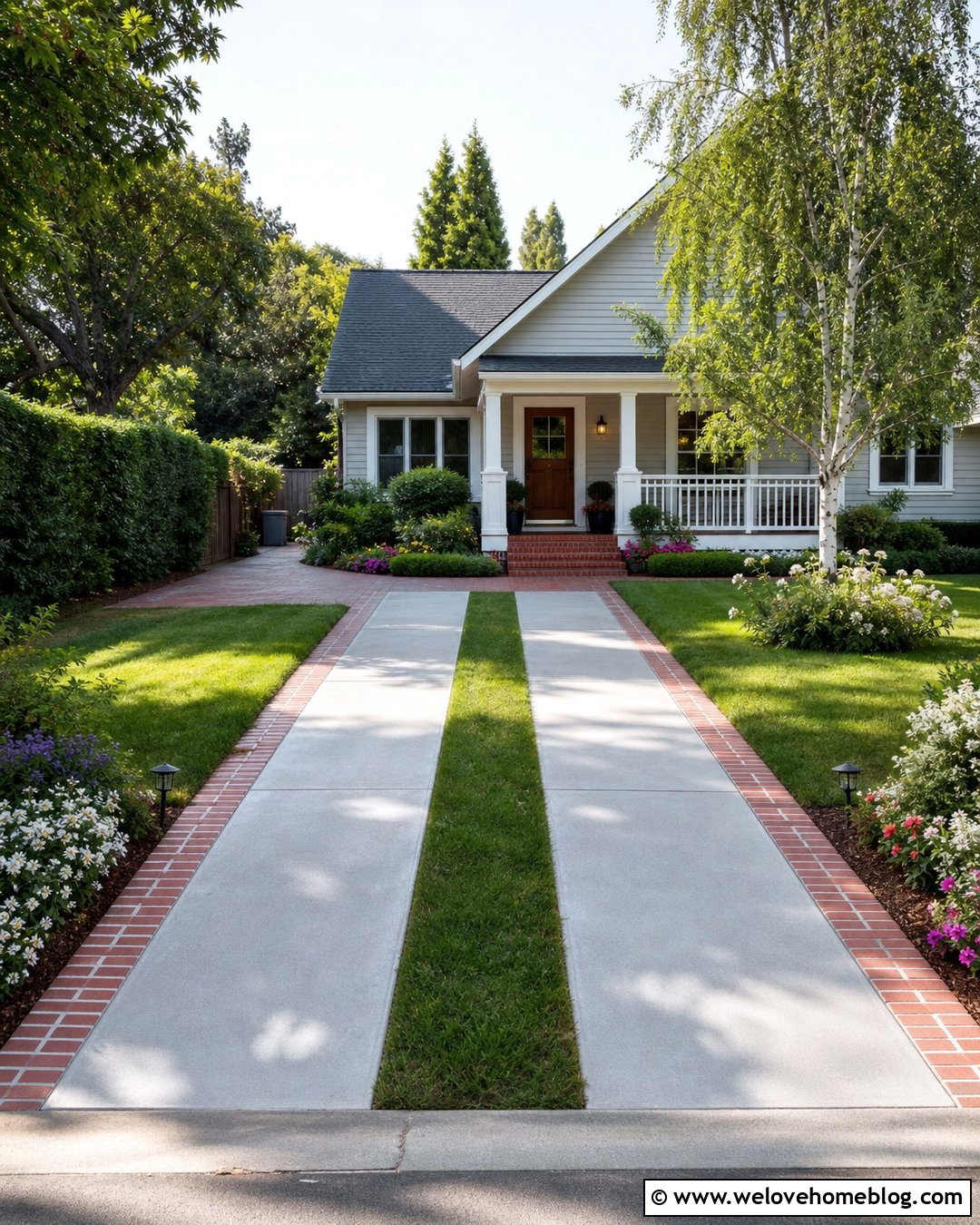
20. Budget Driveway Privacy Fence
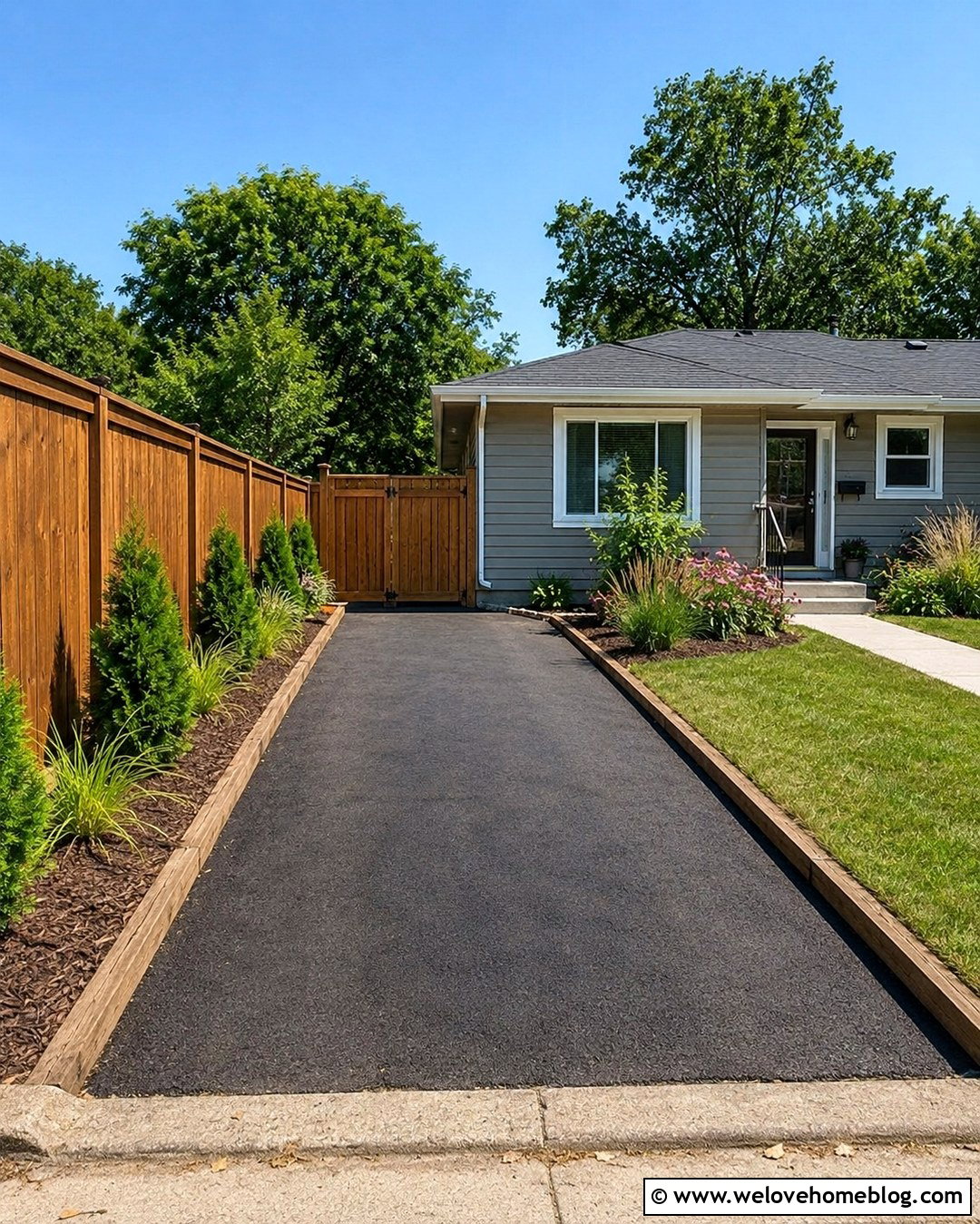
An attractive driveway privacy fence does not require premium materials across the entire boundary. Use pressure-treated pine panels with a medium-brown stain, then improve their appearance with a simple top cap and evenly spaced posts. Pair the fence with a compacted recycled-asphalt driveway edged by economical landscape timbers. A narrow mulch bed filled with affordable grasses, divided perennials, or young evergreen shrubs can make the fence feel more established. Concentrate decorative details near the street and front walkway, where they will have the greatest visual impact. A basic wood gate can match the fence without expensive custom hardware. Build the design in phases if needed, starting with the most exposed section and adding landscaping after the fence, drainage, and driveway edges are complete.
Conclusion:
The most effective driveway fence is not simply a row of panels. It should connect the driveway material, property entrance, landscaping, gate, and house into one cohesive view. Cedar creates natural warmth, while vinyl, composite boards, masonry, and metal offer different levels of formality and visual weight. Planting beds can soften solid surfaces and prevent a tall fence from feeling too severe. Always plan around vehicle clearance, drainage, utility access, visibility, and local requirements before installation. Whether your property has a narrow concrete drive, a sweeping gravel approach, or a formal paver entrance, these **20 driveway privacy fence inspiration ideas** provide practical starting points for achieving more privacy without sacrificing welcoming curb appeal.

Related posts:


Leave a Reply