
A well-designed sliding gate can make a driveway feel safer, more private, and far more polished without needing the opening space of a swing gate. These 35 sliding gate driveway ideas explore complete entrances rather than gates in isolation. Each look combines the gate with a suitable driveway surface, boundary treatment, lighting, planting, and house style. You will find warm wood slats, low-maintenance aluminum, traditional ironwork, space-saving telescopic systems, and trackless cantilever designs. Before choosing one, consider the available side clearance, driveway slope, drainage, automation, pedestrian access, and how much privacy you need. Use the following complete entrance designs to compare practical and attractive 35 sliding gate driveway ideas.
1. Modern Black Sliding Gate With Concrete Driveway
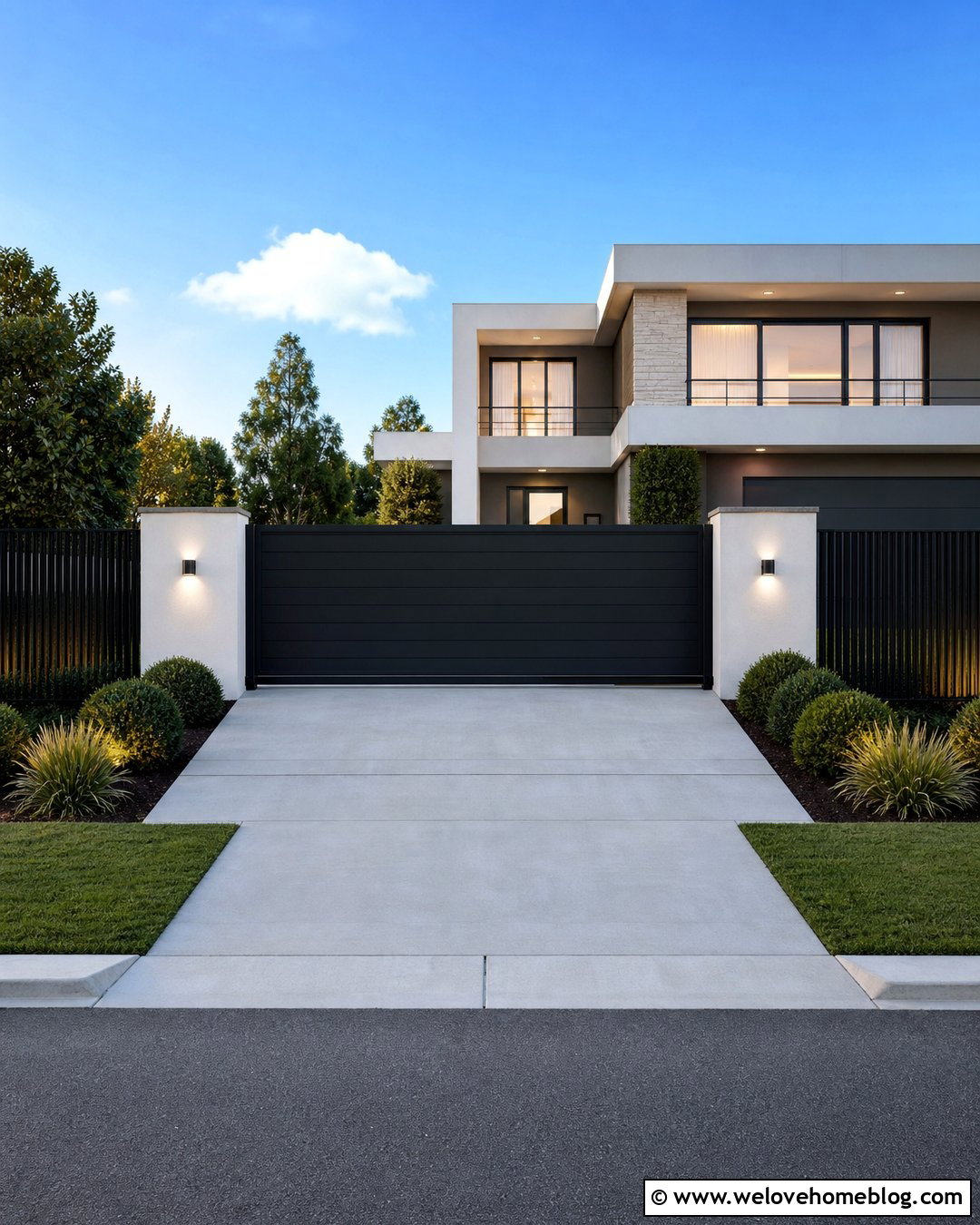
A matte black sliding gate gives a contemporary home a clean, secure entrance without adding visual clutter. Pair a solid aluminum gate with a smooth, light gray poured-concrete driveway to create strong contrast. Horizontal gate panels make a wide property appear even broader, while narrow gaps between the slats prevent the entrance from feeling too heavy. Continue the black finish across the fence, posts, mailbox, and house numbers for a unified result. Low ornamental grasses and clipped evergreen shrubs can soften the straight architectural lines. Install the gate beside a level concrete return area where it can open without crossing planting beds. Recessed lighting in the rendered pillars adds useful visibility while keeping the entrance streamlined.
2. Wood Slat Sliding Gate With Gravel Driveway
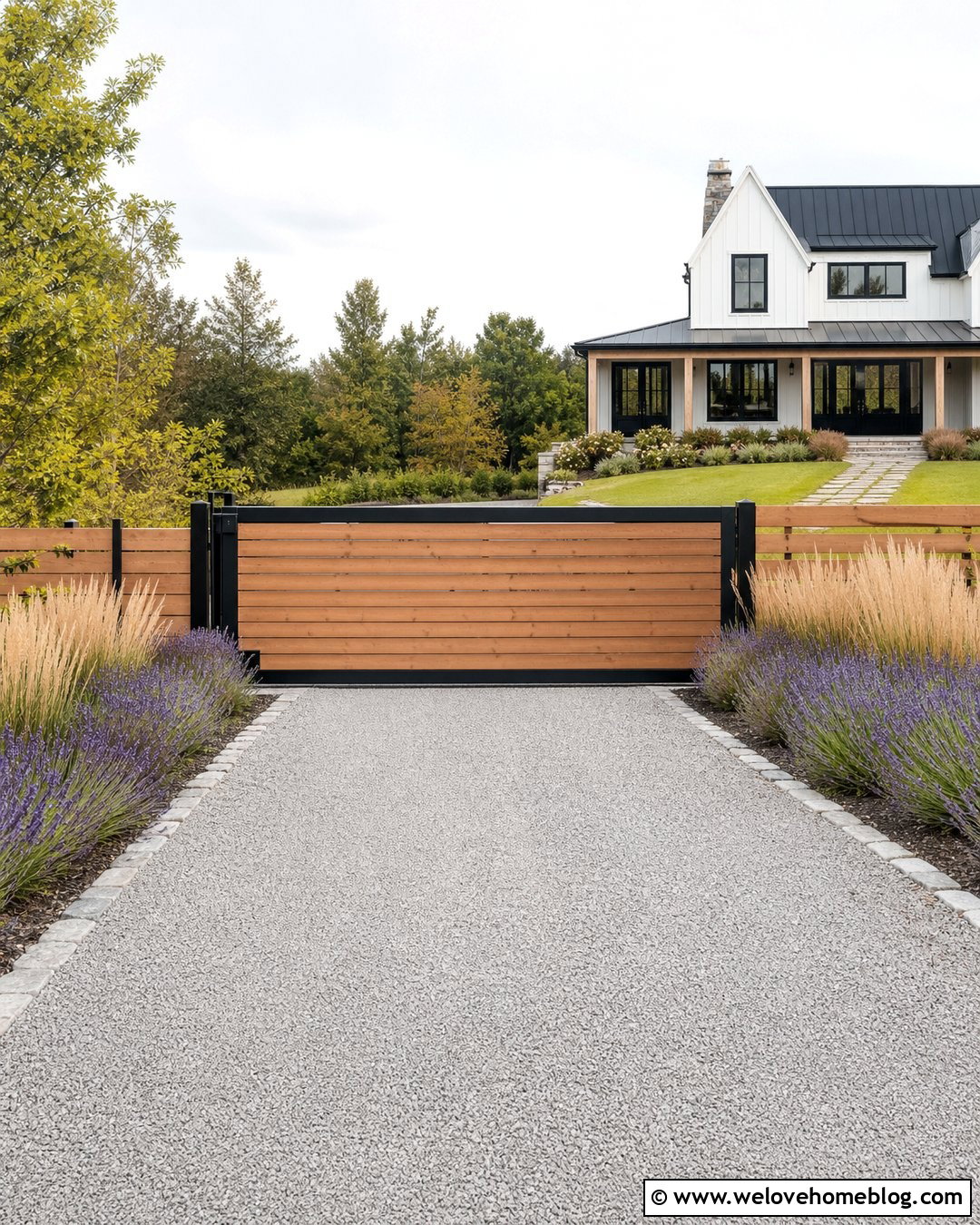
Natural wood brings warmth to a sliding gate, especially when the driveway has a relaxed gravel surface. Use horizontal cedar or redwood boards inside a powder-coated steel frame for strength and a crisp outline. A light gray crushed-stone driveway keeps the entrance bright and allows the wood grain to become the focal point. Define the gravel with cobblestone edging so loose stones remain away from the gate track and roadside. On both sides, plant lavender, feather reed grass, or compact evergreen shrubs in simple beds. Matching wood fencing can make the gate appear built into the landscape rather than added later. This combination works particularly well with modern farmhouses, ranch homes, and contemporary houses featuring warm exterior accents.
3. White Sliding Gate With Brick Driveway
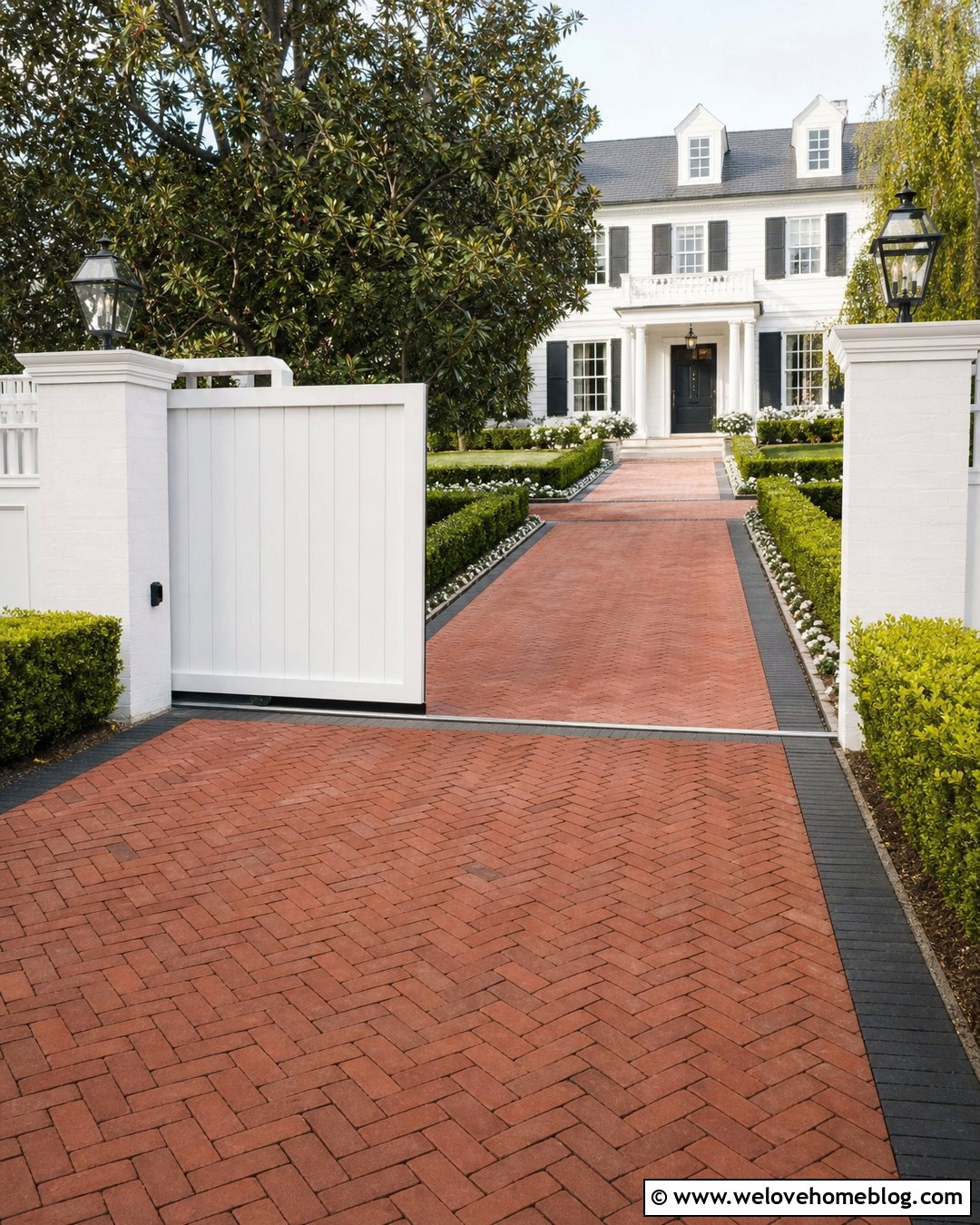
A white sliding gate can create a fresh entrance that suits a Colonial, Cape Cod, or coastal-style home. Choose a solid or semi-private aluminum gate with vertical boards and a simple framed border. A red or weathered clay brick driveway laid in herringbone introduces traditional color and texture beneath the clean gate. Use a contrasting charcoal brick ribbon along the edges to define the driving area and visually connect it with black lanterns. White masonry pillars can match the home’s trim, while boxwood hedges add structure without hiding the entrance. Because dirt shows easily on white surfaces, select a washable exterior finish and keep plants slightly separated from the gate’s travel path. The result feels classic but still practical.
4. Aluminum Sliding Gate With Paver Driveway
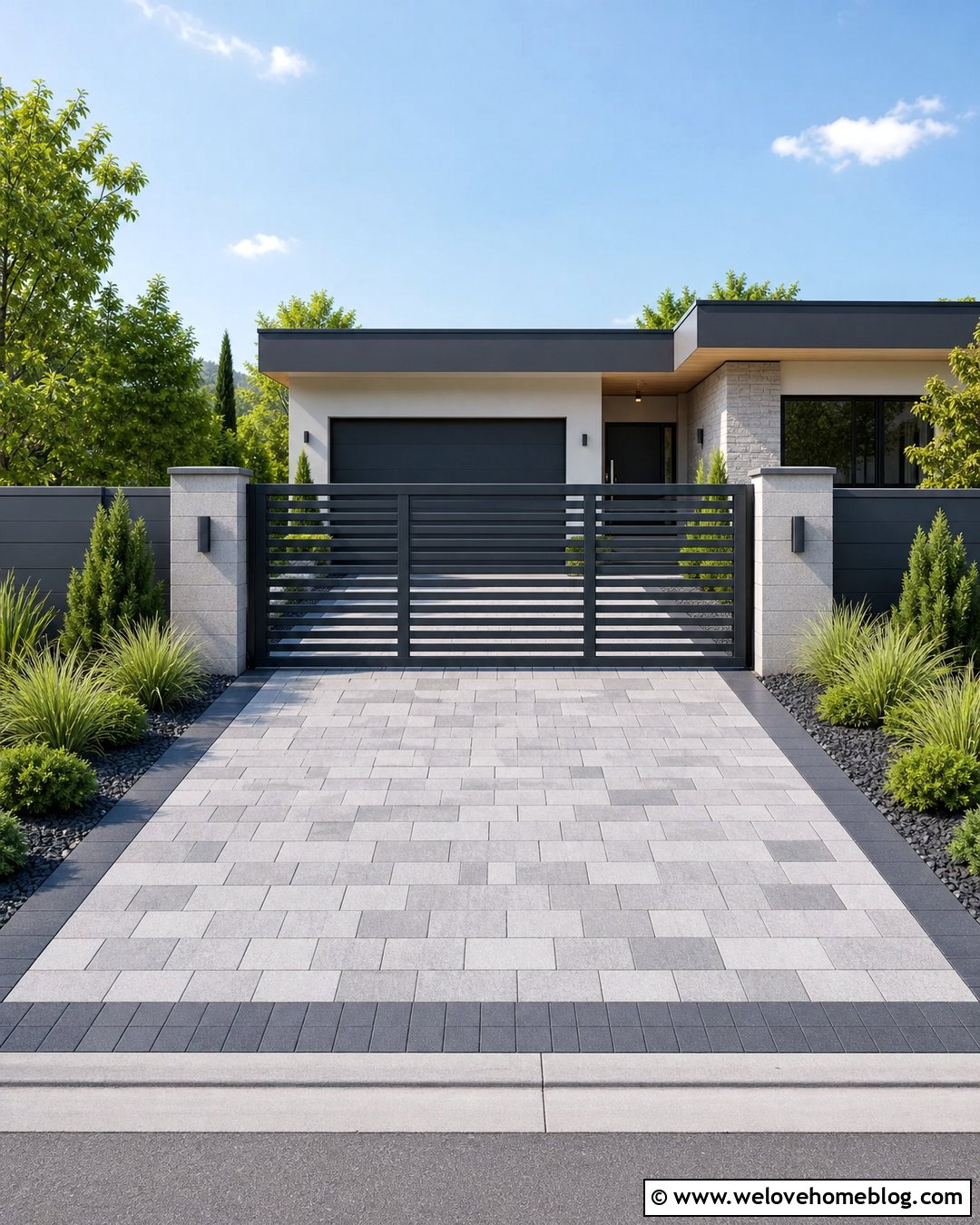
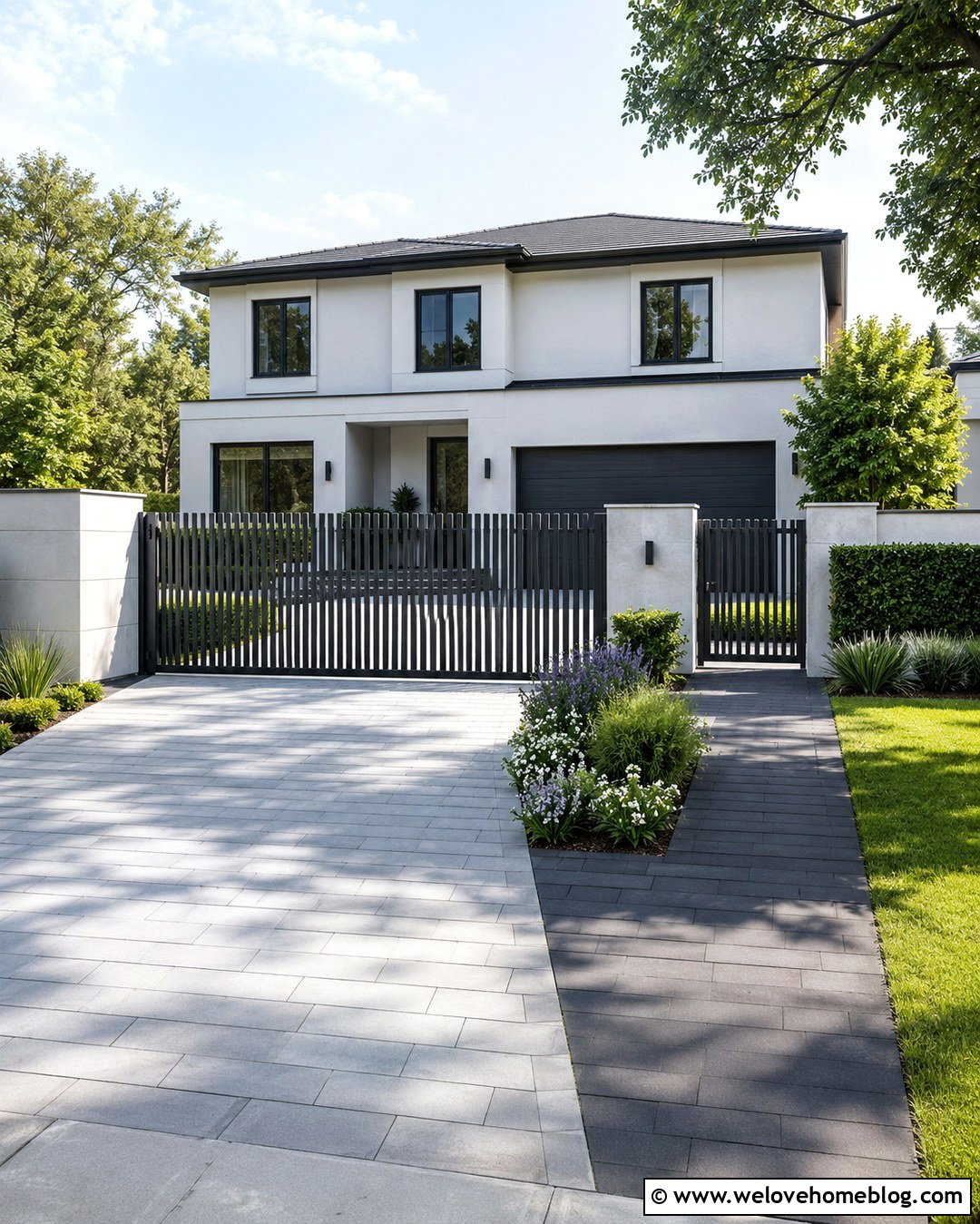
Powder-coated aluminum is a practical choice when you want crisp lines and a relatively lightweight gate. Combine a charcoal aluminum gate with large-format concrete pavers in mixed gray tones. A straight driveway emphasizes the gate’s geometric shape, while a darker paver border helps guide vehicles through the opening. For a softer transition, leave narrow planting strips between the driveway and boundary walls. Fill them with compact grasses, low junipers, and drought-tolerant perennials. Square concrete pillars and a flat-roof modern home complete the restrained appearance. Aluminum can imitate steel without creating the same visual weight, making it useful for broad gates. Coordinate the motor housing, guide posts, and hardware with the gate finish so functional components remain discreet.
5. Privacy Sliding Gate With Asphalt Driveway
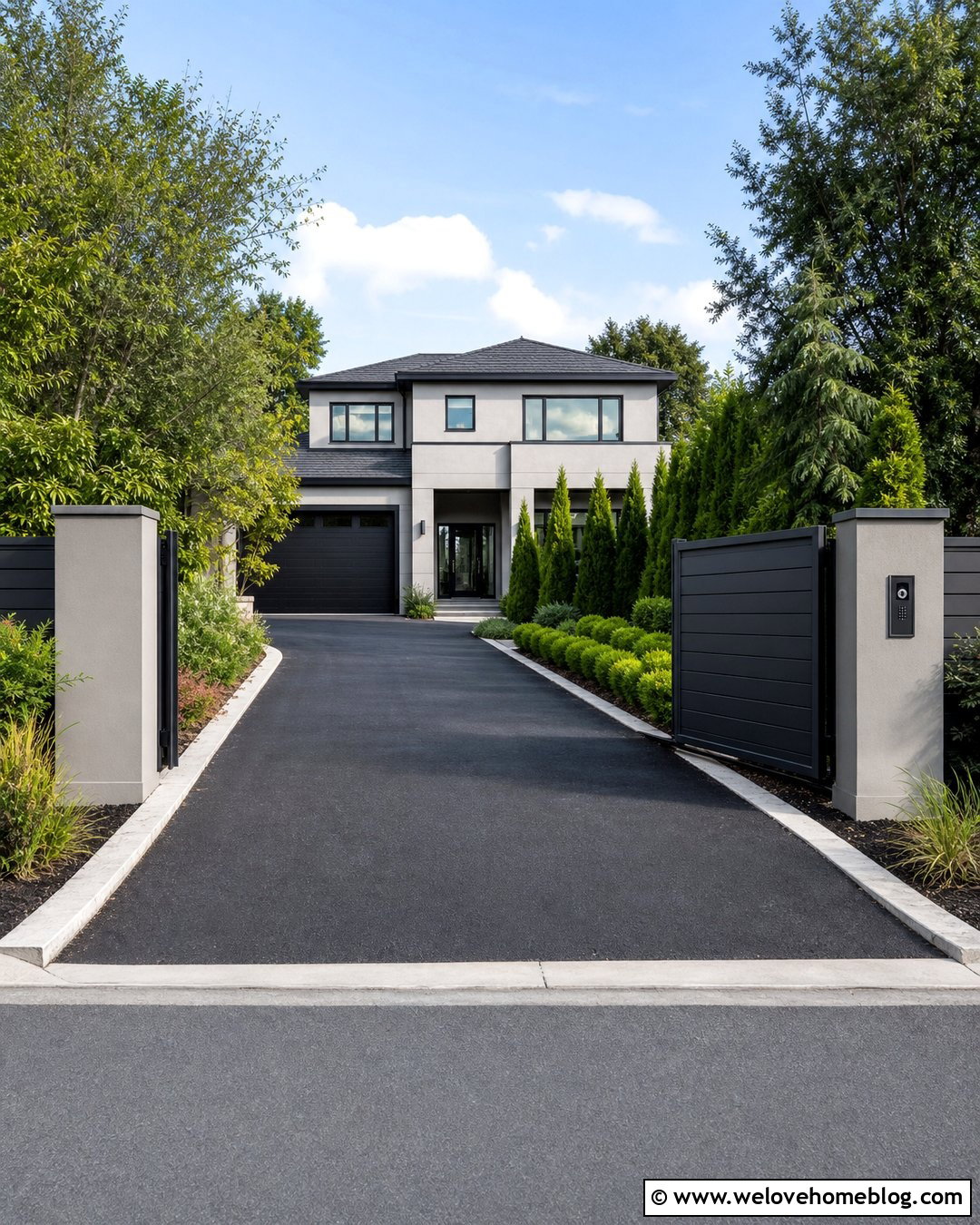
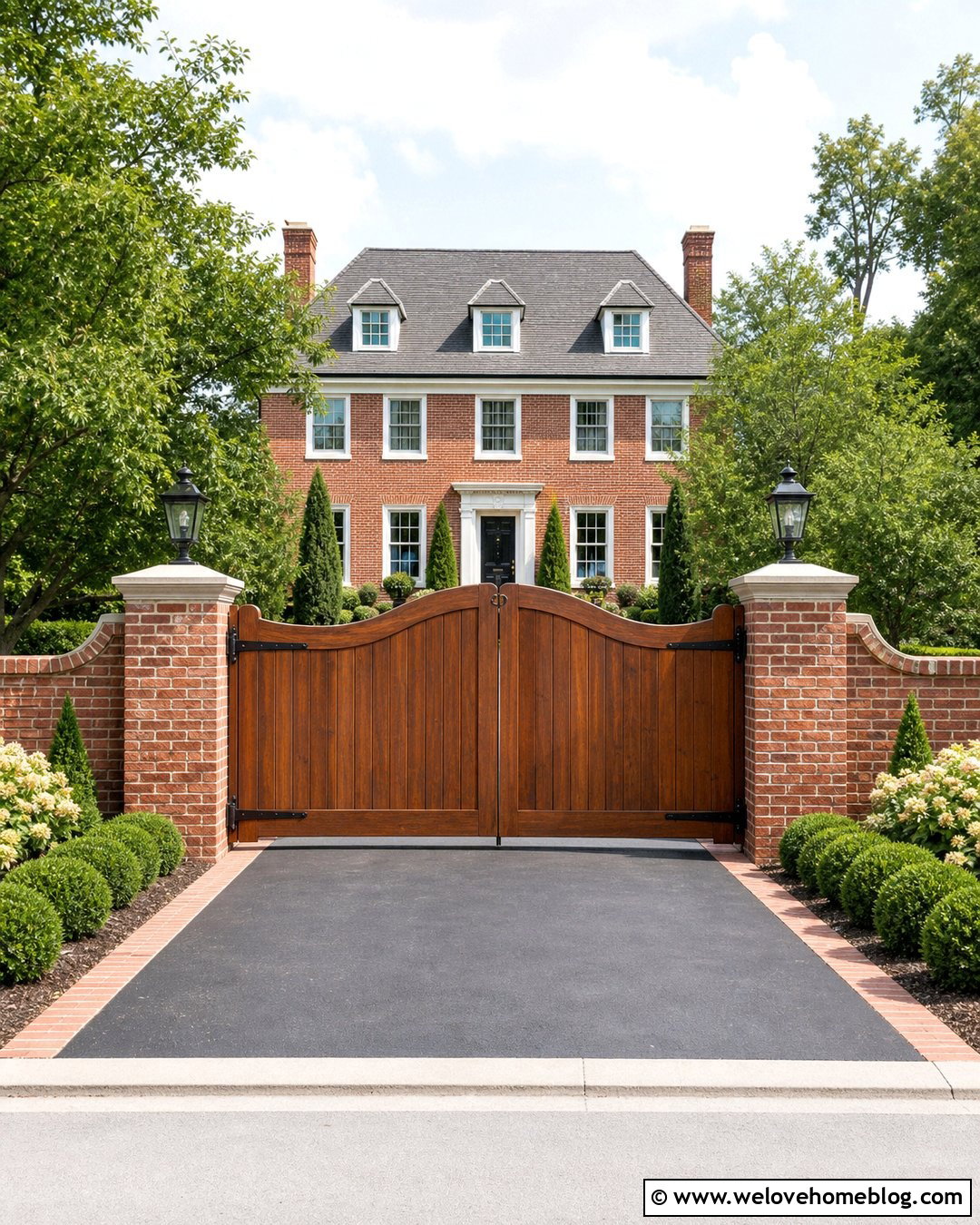
Busy streets often call for a solid sliding gate that limits direct views into the yard. A tall composite-panel gate in dark brown or graphite provides a substantial privacy screen while maintaining a modern appearance. Pair it with a smooth black asphalt driveway bordered by light concrete curbing. The pale border makes the entrance easier to read and prevents the dark surfaces from blending into one large area. Add layered landscaping outside the gate with low ground cover in front and taller evergreen shrubs behind. Keep vegetation away from the operator, sensors, and moving edge. Broad stucco pillars can contain lighting, access controls, and an address plaque. This complete setup offers privacy while still creating an orderly, welcoming curb view.
6. Horizontal Sliding Gate With Modern Landscaping
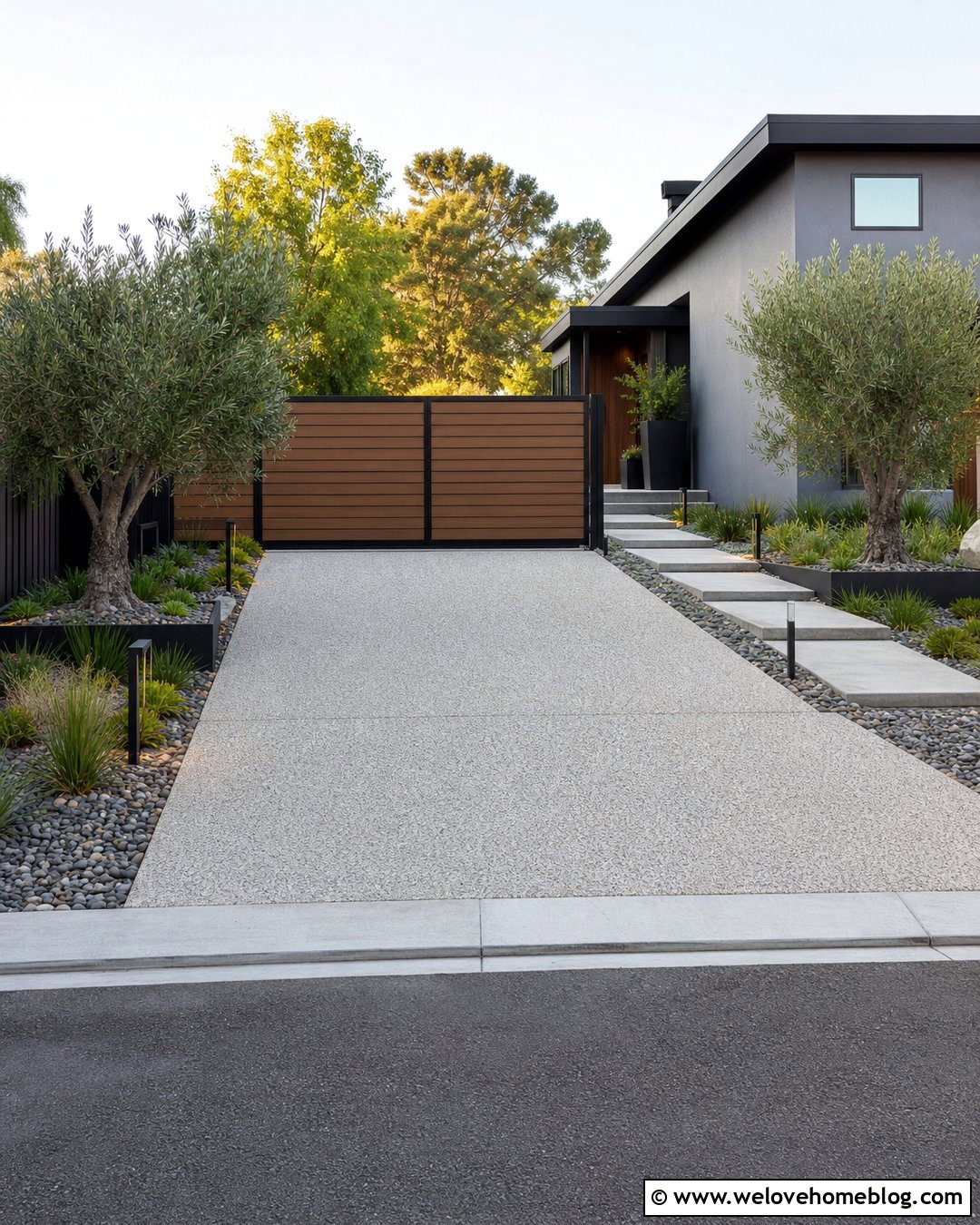
Horizontal slats naturally complement the long movement of a sliding gate. Use warm-toned composite boards within a slim black metal frame, then continue the horizontal pattern along the adjoining fence. A pale exposed-aggregate concrete driveway adds texture without competing with the gate. Create rectangular planting beds beside the entrance and fill them with sculptural grasses, dwarf olive trees, or upright evergreens. Black steel edging keeps the beds sharply defined. A staggered concrete walkway can run parallel to the driveway and lead guests toward a separate pedestrian entrance. This arrangement works best when the landscaping repeats the gate’s simple lines rather than covering them. Finish the entrance with low bollard lights that illuminate the driveway surface and gate opening without overwhelming the facade.
7. Vertical Wood Sliding Gate With Stone Pillars
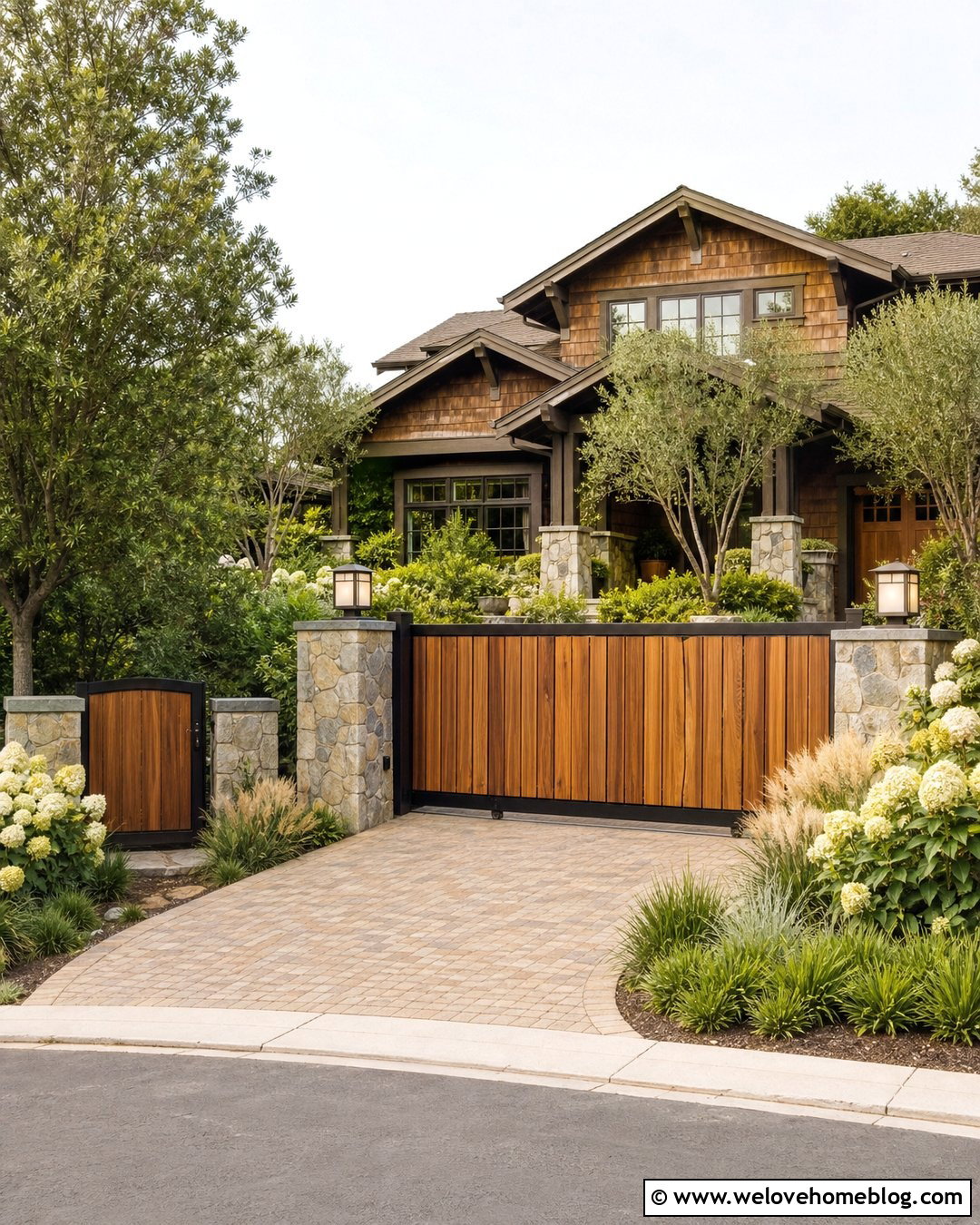
Vertical wood boards can make a sliding gate look taller and more substantial, which is useful for a wide estate entrance. Frame cedar, teak, or another exterior-grade wood in black steel to help the gate remain visually crisp. Position it between broad natural-stone pillars that match stonework on the house. A curved tan concrete-paver driveway creates a gentle approach and complements the warmer tones in the wood and masonry. Use large planting beds filled with hydrangeas, ornamental grasses, and compact trees to balance the weight of the pillars. Lantern-style fixtures can add a traditional touch without making the gate ornate. Repeat the vertical wood pattern on a nearby pedestrian gate so the entire entrance reads as one coordinated design.
8. Wrought Iron Sliding Gate With Cobblestone Driveway
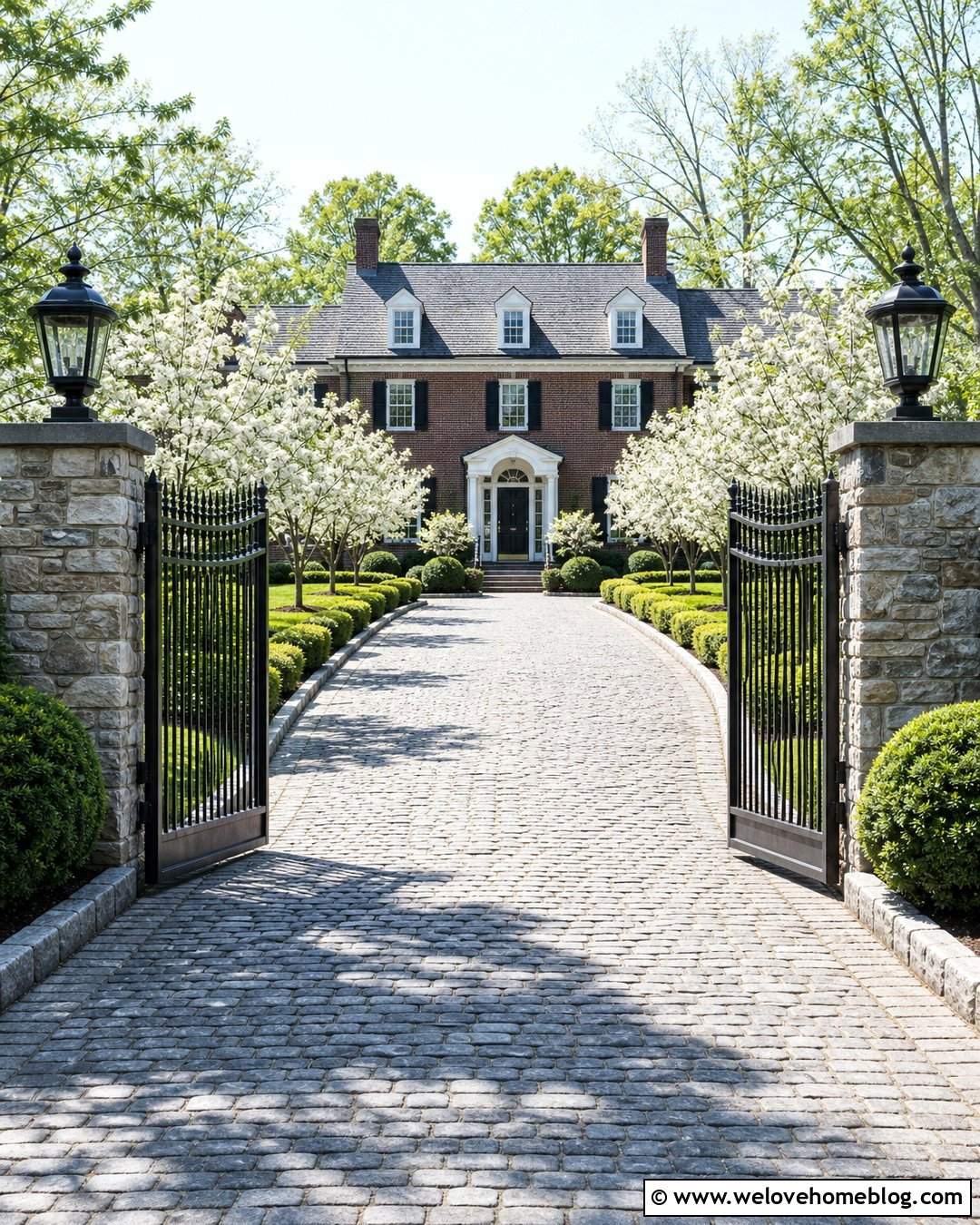
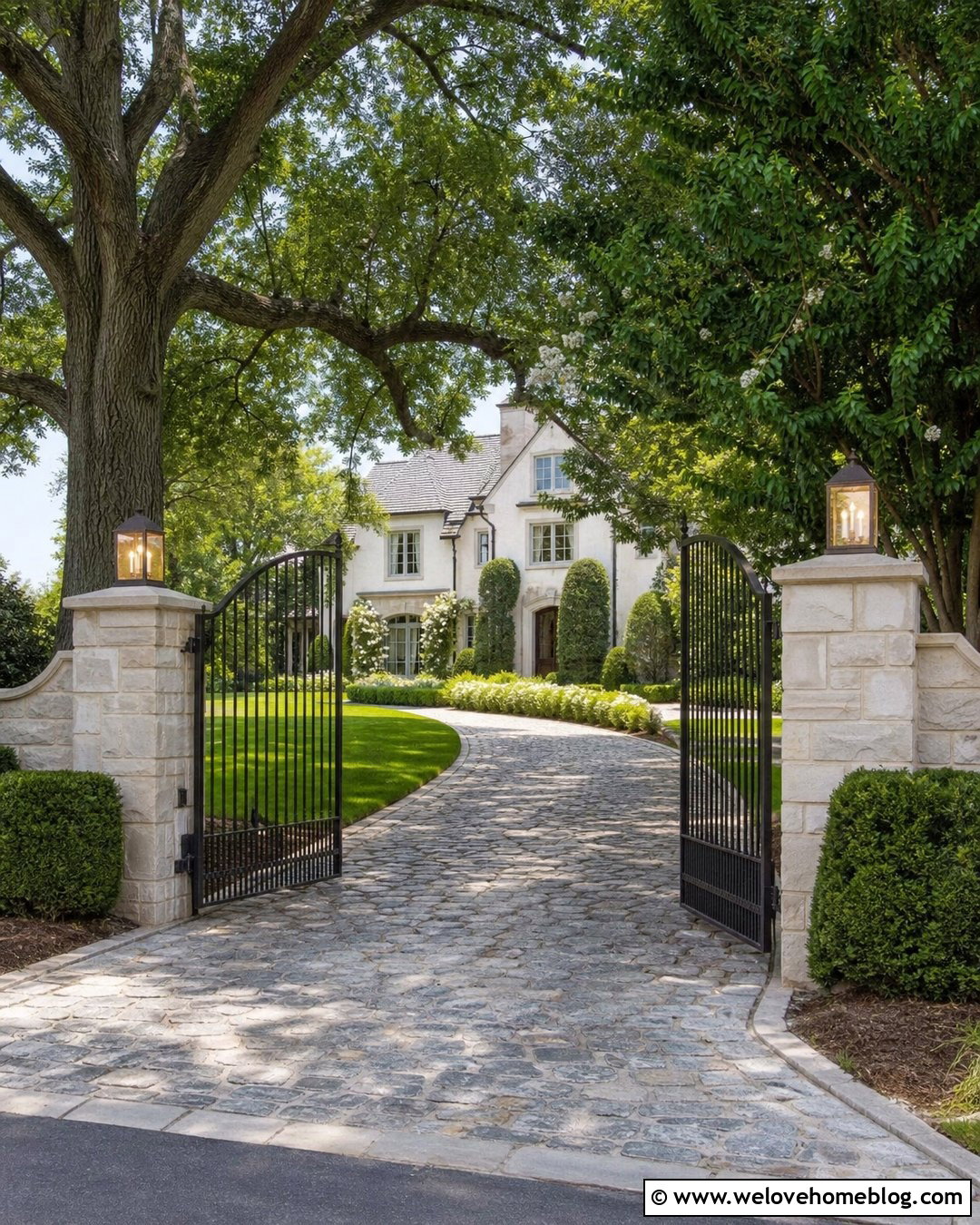
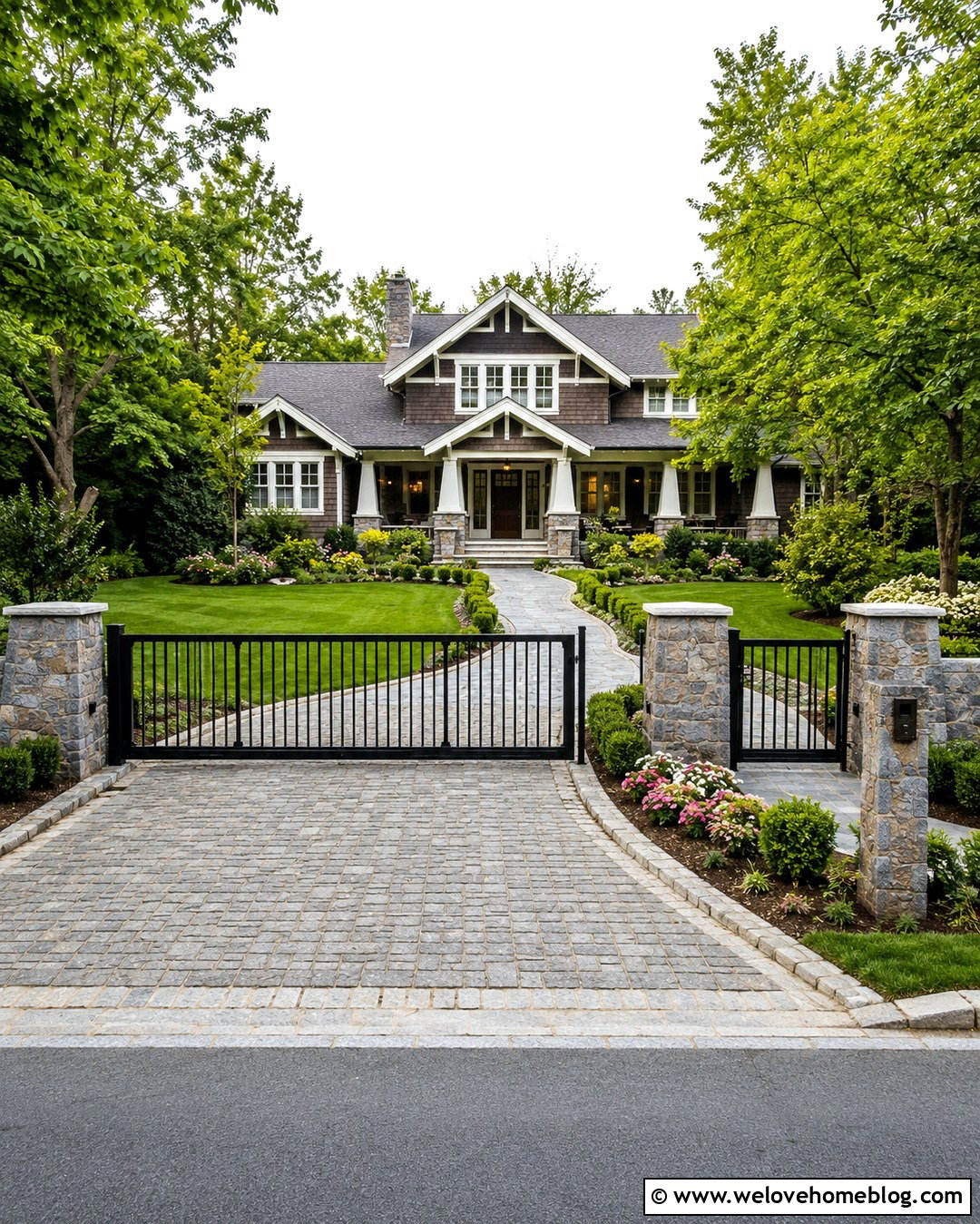
An open wrought iron sliding gate creates security while preserving views toward a traditional home. Choose simple spear-top pickets or restrained scrollwork rather than overly dense decoration. A gray cobblestone driveway reinforces the established character and creates a strong base beneath the dark metal. Edge the entrance with matching cobblestone curbs and use stone pillars to support lanterns and access controls. Behind the gate, allow the driveway to curve through clipped hedges or rows of small flowering trees. The open design keeps the landscape and house visible from the curb, so maintain a clear central view. This combination works especially well for brick Colonials, French-inspired homes, and formal residences. A black finish ties the gate to dark window frames and roof details.
9. Farmhouse Sliding Gate With Crushed Stone Driveway
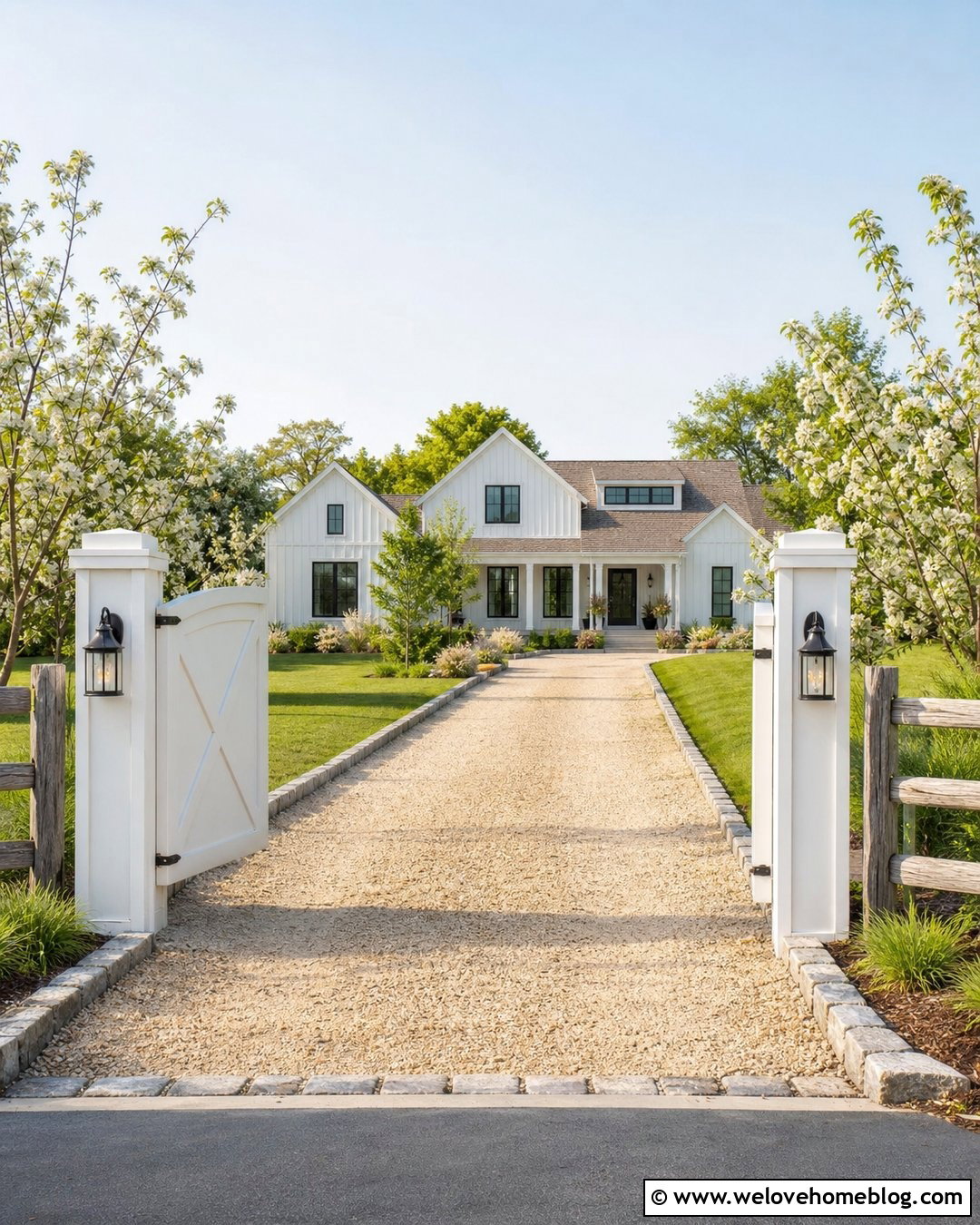
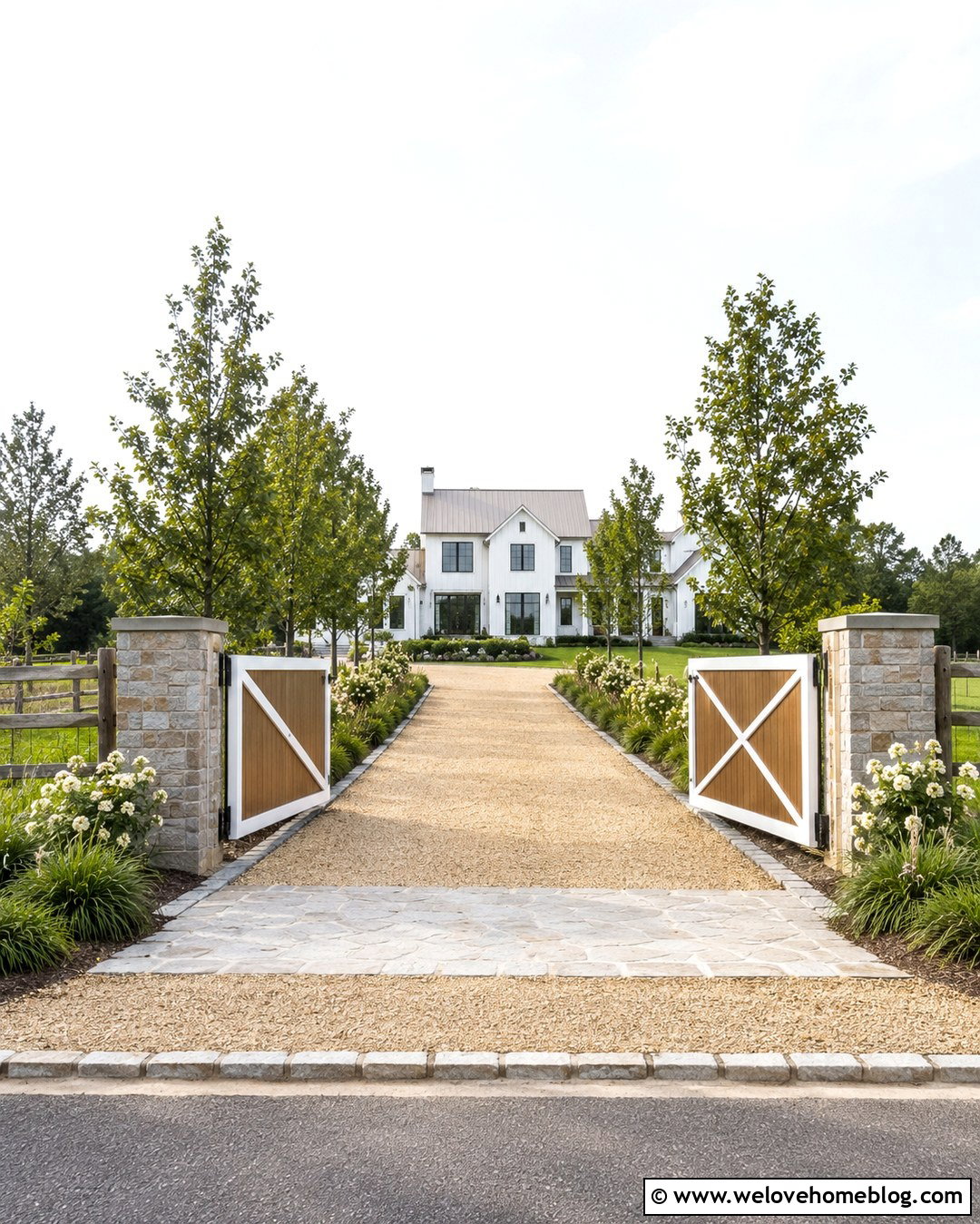
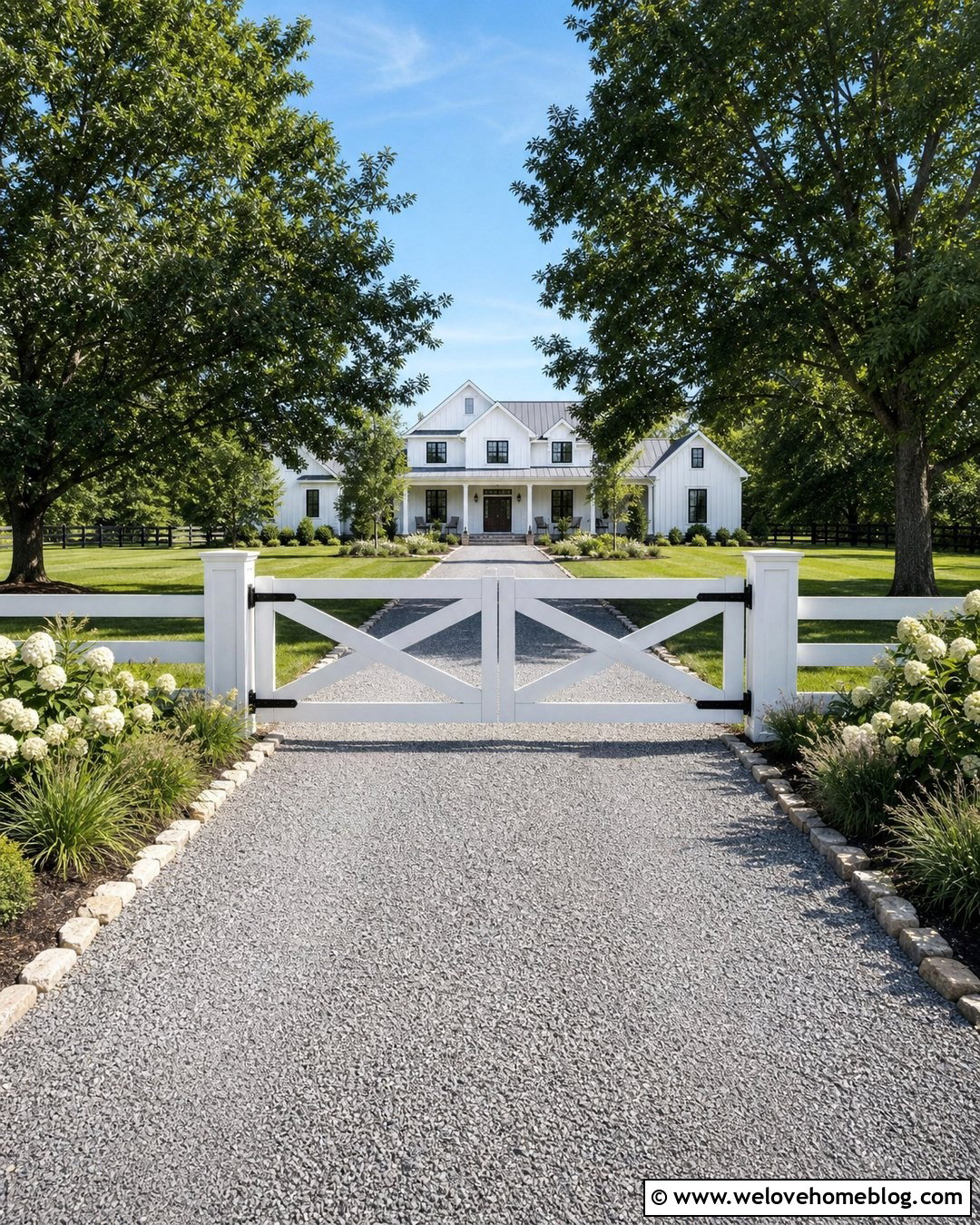
A farmhouse entrance can use sliding operation without losing its familiar rural character. Build the gate with white vertical boards and subtle diagonal cross-bracing, but mount the design within a concealed or color-matched metal frame. Pair it with a wide beige crushed-stone driveway edged by weathered granite setts. Split-rail fencing, native grasses, and small flowering trees can frame the entrance without making it formal. White posts topped with simple black lanterns repeat the home’s exterior palette. Keep the driveway surface well contained near the gate so stone does not collect around moving components. For a quieter variation, use stabilized gravel in the gate zone. The finished look suits modern farmhouses, converted barns, and country ranch homes with generous front yards.
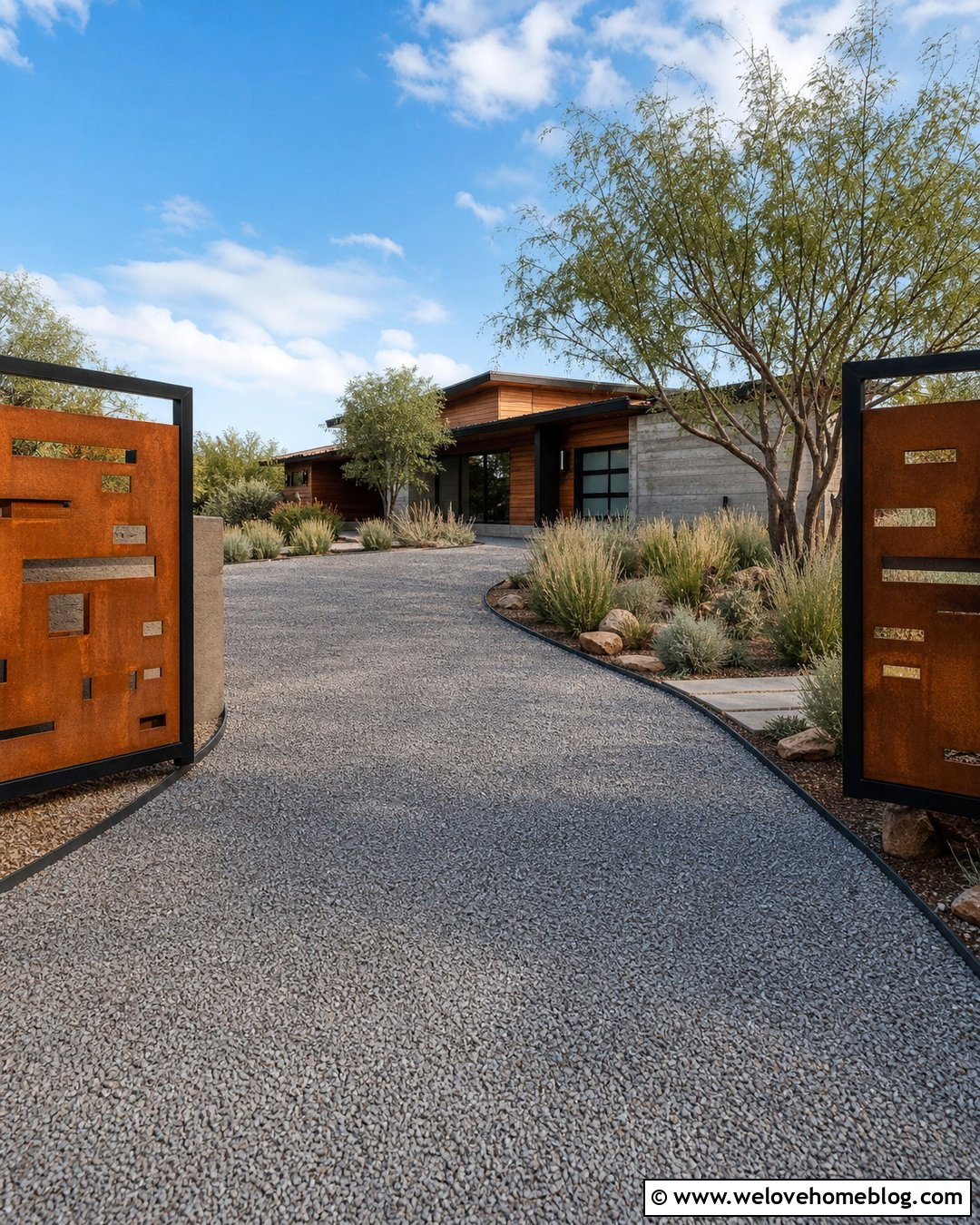
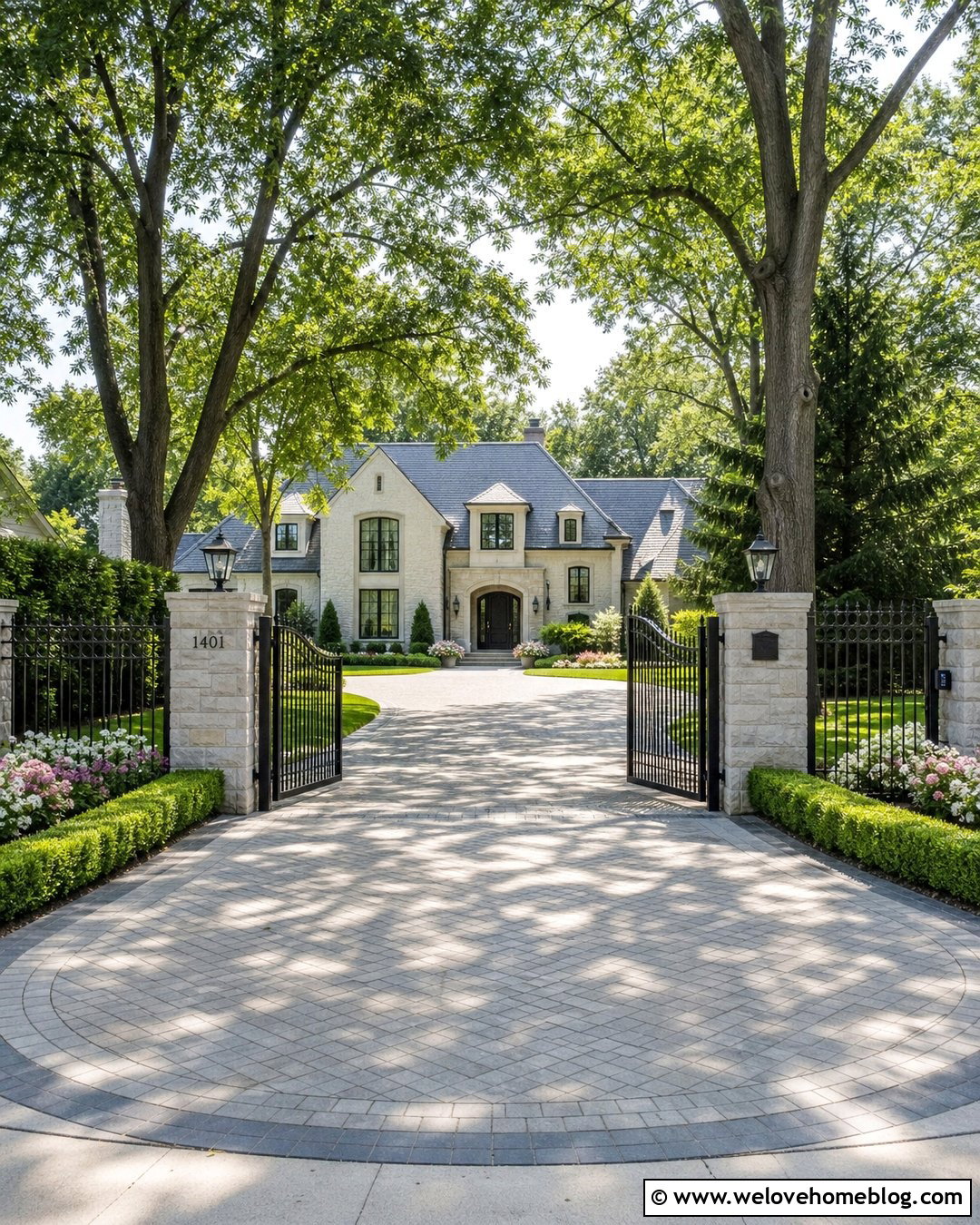
10. Cedar Sliding Gate With Brick Pillars
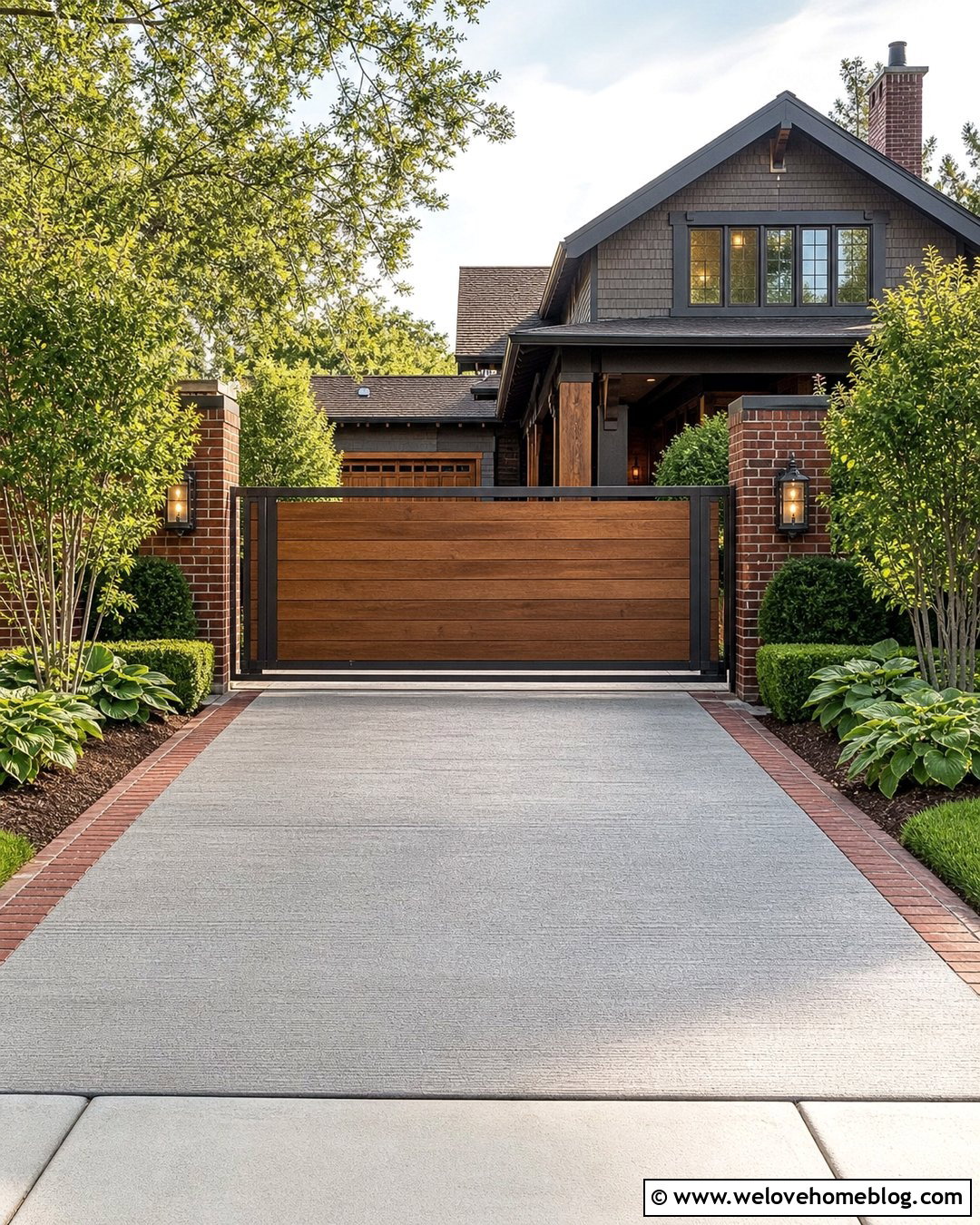
Warm cedar and traditional brick make an inviting combination for Craftsman and transitional homes. Use closely spaced horizontal cedar boards inside a dark bronze steel frame, allowing only small openings for light and airflow. Red brick pillars can echo the house facade, chimney, or driveway accents. Continue the material connection with a broom-finished concrete driveway bordered by a double row of matching bricks. Deep green shrubs, hostas, and compact ornamental trees will balance the strong red and orange tones. Copper-colored pillar lights can develop a mellow finish that complements the cedar. Because natural wood changes with weather exposure, choose a finish plan that allows it to age evenly. Matching cedar fence panels on each side will make the gate feel fully integrated.
11. Composite Sliding Gate With Concrete Pavers
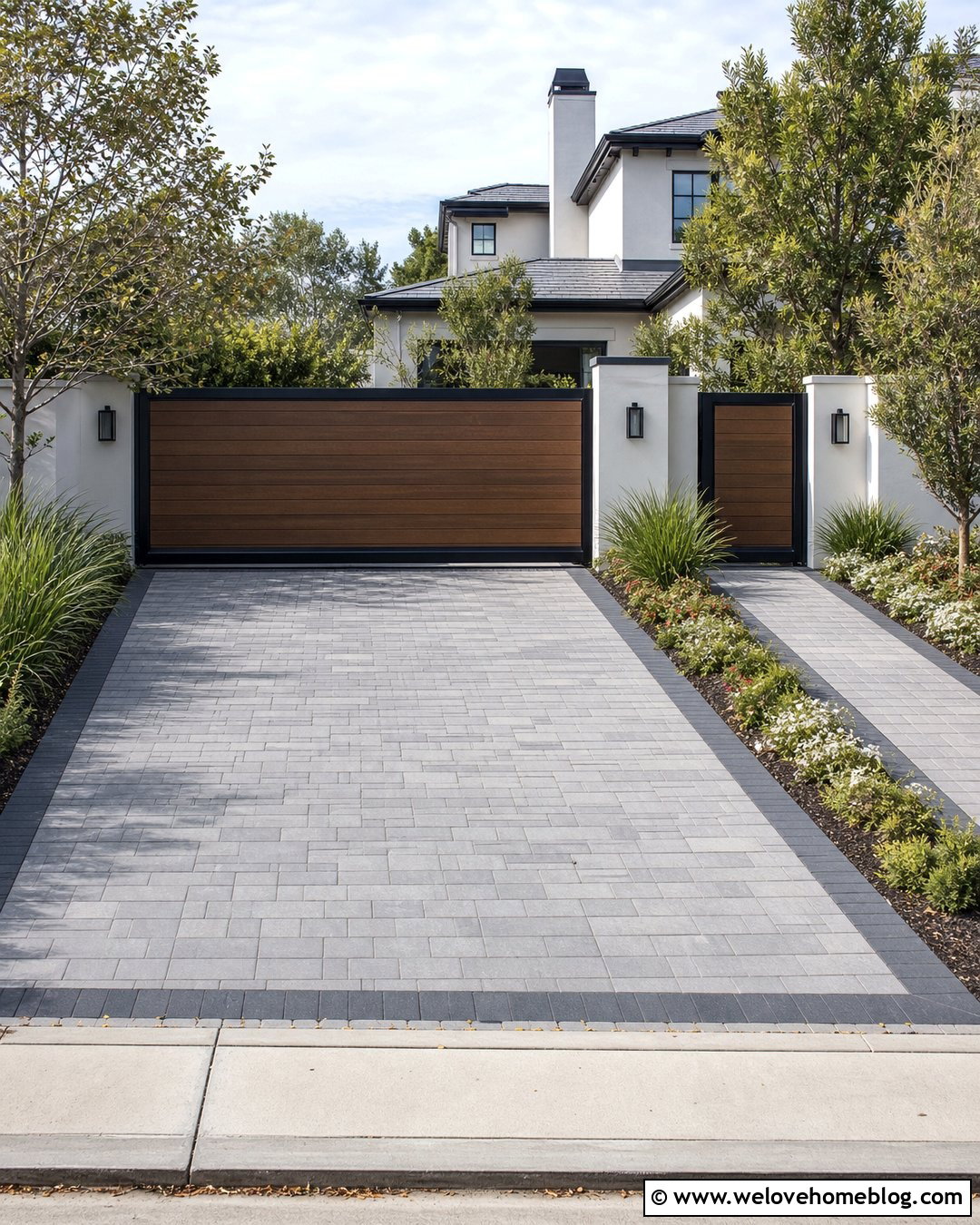
Composite boards provide the appearance of wood while supporting a clean, low-fuss entrance. Choose medium brown boards with subtle grain and arrange them horizontally inside a black aluminum frame. Pair the gate with rectangular concrete pavers in a running-bond pattern, using dark pavers around the perimeter to sharpen the driveway outline. Rendered white pillars and a matching privacy wall create contrast with the warm gate. Add narrow planting beds containing evergreen grasses and low flowering plants, keeping the arrangement simple enough for a contemporary house. A separate paver walkway should direct visitors toward the pedestrian gate instead of the vehicle opening. Carry the gate color into the garage door or front porch details. This makes the entrance feel connected to the entire property.
12. Laser Cut Sliding Gate With Resin Driveway
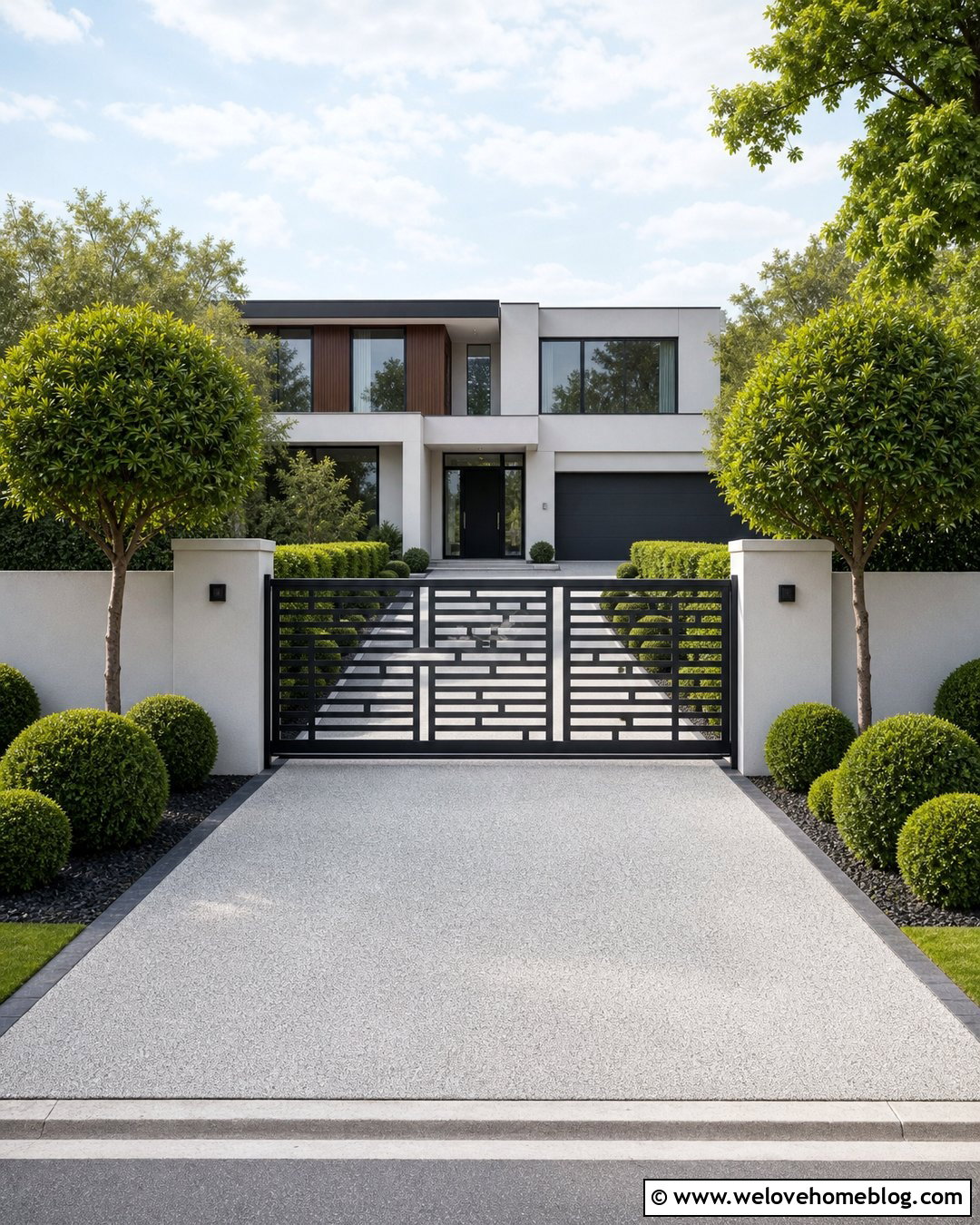
A laser-cut metal gate can turn a practical entrance into a controlled architectural feature. Choose a restrained geometric or botanical pattern cut into powder-coated aluminum or steel. A solid backing can increase privacy, while an open design filters views and daylight. Pair the gate with a pale gray resin-bound gravel driveway for a smooth, uniform approach. Dark granite edging will frame the surface and repeat the gate color. Keep nearby planting simple so it does not compete with the cut pattern; rounded shrubs and one small ornamental tree on each side are enough. Plain masonry pillars also help the detailed panel stand out. Integrate the house number into a stationary side panel rather than the moving gate, creating an easier-to-read and more cohesive entrance.
13. Dark Green Sliding Gate With Country Driveway
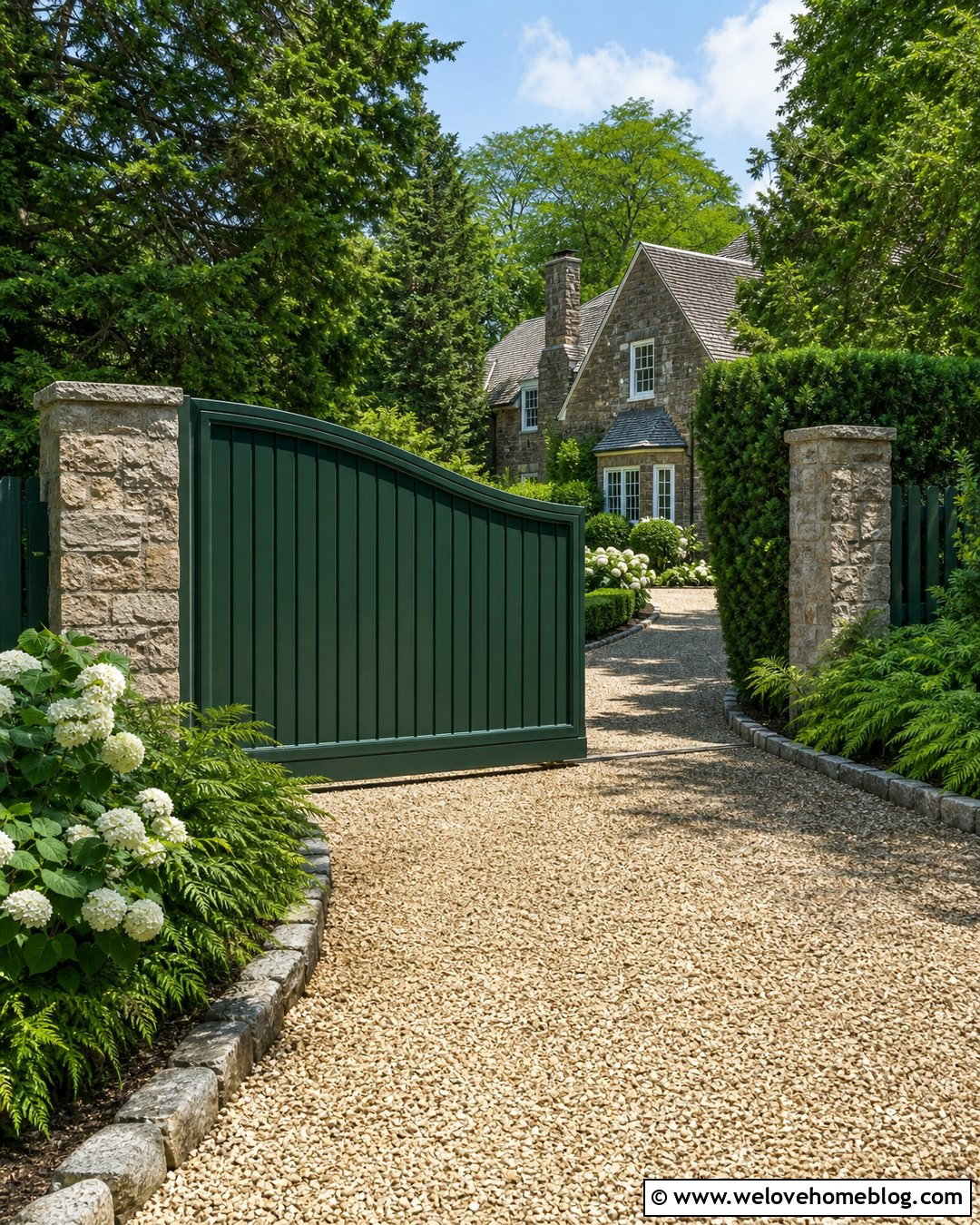
Dark green provides a softer alternative to black and blends naturally into a tree-filled property. Use a semi-private aluminum sliding gate with vertical panels and a gently curved upper edge. Set it across a buff gravel driveway edged with rough-cut stone. Dark green fencing can extend into mixed hedges, allowing the built boundary to disappear gradually into the landscape. Plant hydrangeas, ferns, and shade-tolerant ground covers around stone pillars for an established country look. A traditional brick or stone house in the background completes the palette. Position the gate far enough inside the property to create a safe waiting area where site conditions allow. Warm white pillar lanterns make the green finish visible while preserving the understated, natural character of the entrance.
14. Gray Sliding Gate With Stucco Walls
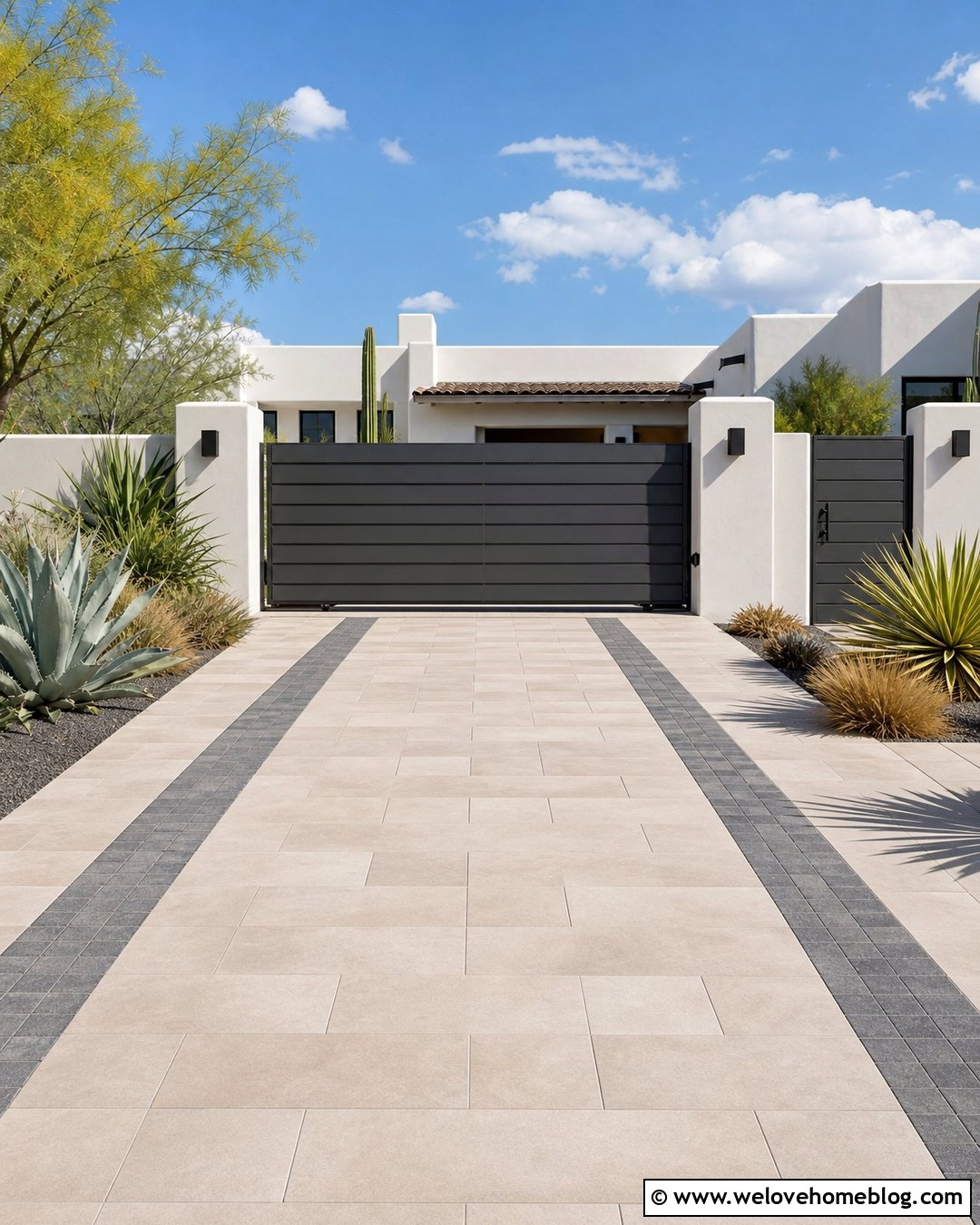
A medium gray sliding gate pairs neatly with white or cream stucco boundary walls. Select wide horizontal aluminum panels for privacy and finish them in a muted gray rather than a harsh black. A light beige porcelain-paver driveway will warm the entrance and prevent the overall scheme from feeling cold. Use narrow charcoal paver bands to mark the gate line and driveway edges. Large planters or structured beds with agaves, yuccas, and ornamental grasses suit a modern Southwestern home. Square stucco pillars can hold concealed wiring, intercom equipment, and flush-mounted lights. Continue the gate finish on a pedestrian door and mailbox panel. The resulting entrance is simple, private, and cohesive, with enough material contrast to remain visually interesting from the street.
15. Sliding Gate With Matching Pedestrian Gate
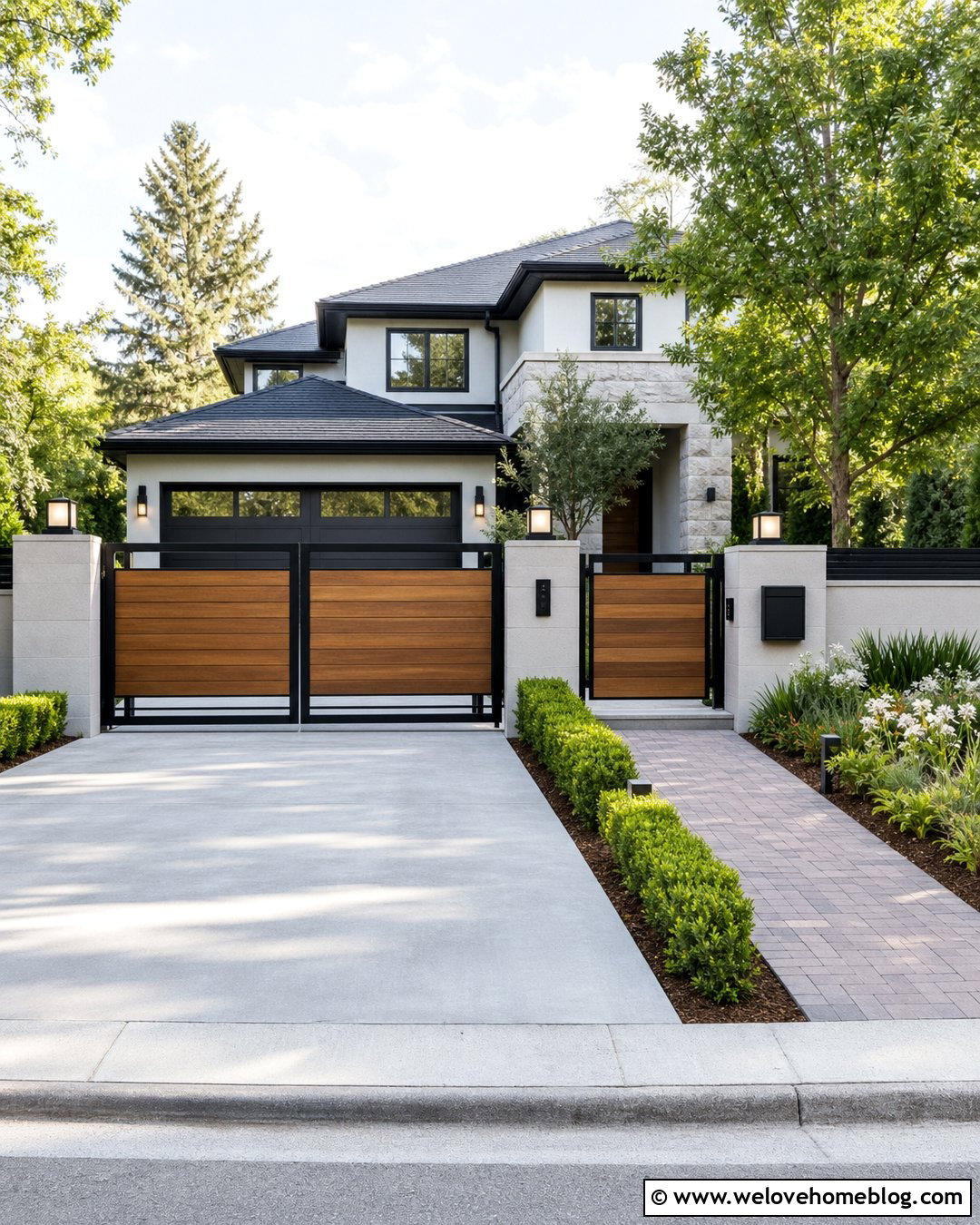
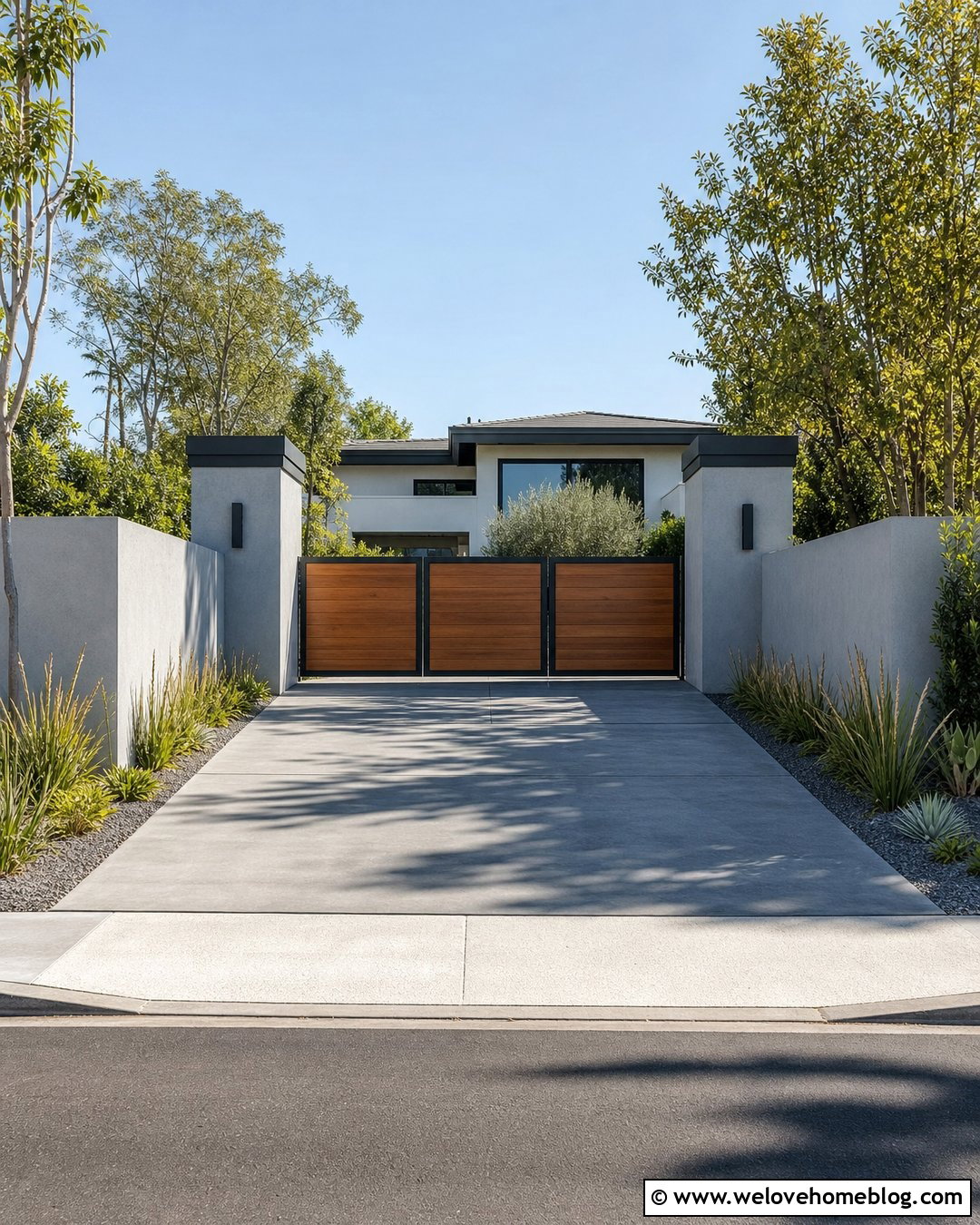
A separate pedestrian gate makes a gated entrance easier for visitors, deliveries, and everyday foot traffic. Use matching black steel frames with warm wood infill so the vehicle and walkway openings appear as a coordinated pair. A gray concrete driveway can lead straight to the garage, while a brick-paver path branches toward the front door. Place an address sign, intercom, and parcel box beside the pedestrian gate rather than on the moving panel. Low hedges can separate the walkway from the driveway without creating a hidden corner. Matching pillars and overhead-free openings maintain a clean residential scale. The pedestrian gate should be visually distinct enough to find quickly, perhaps through a narrower wood pattern, dedicated light, or contrasting path, while remaining part of the complete entrance.
16. Cantilever Sliding Gate With Gravel Driveway
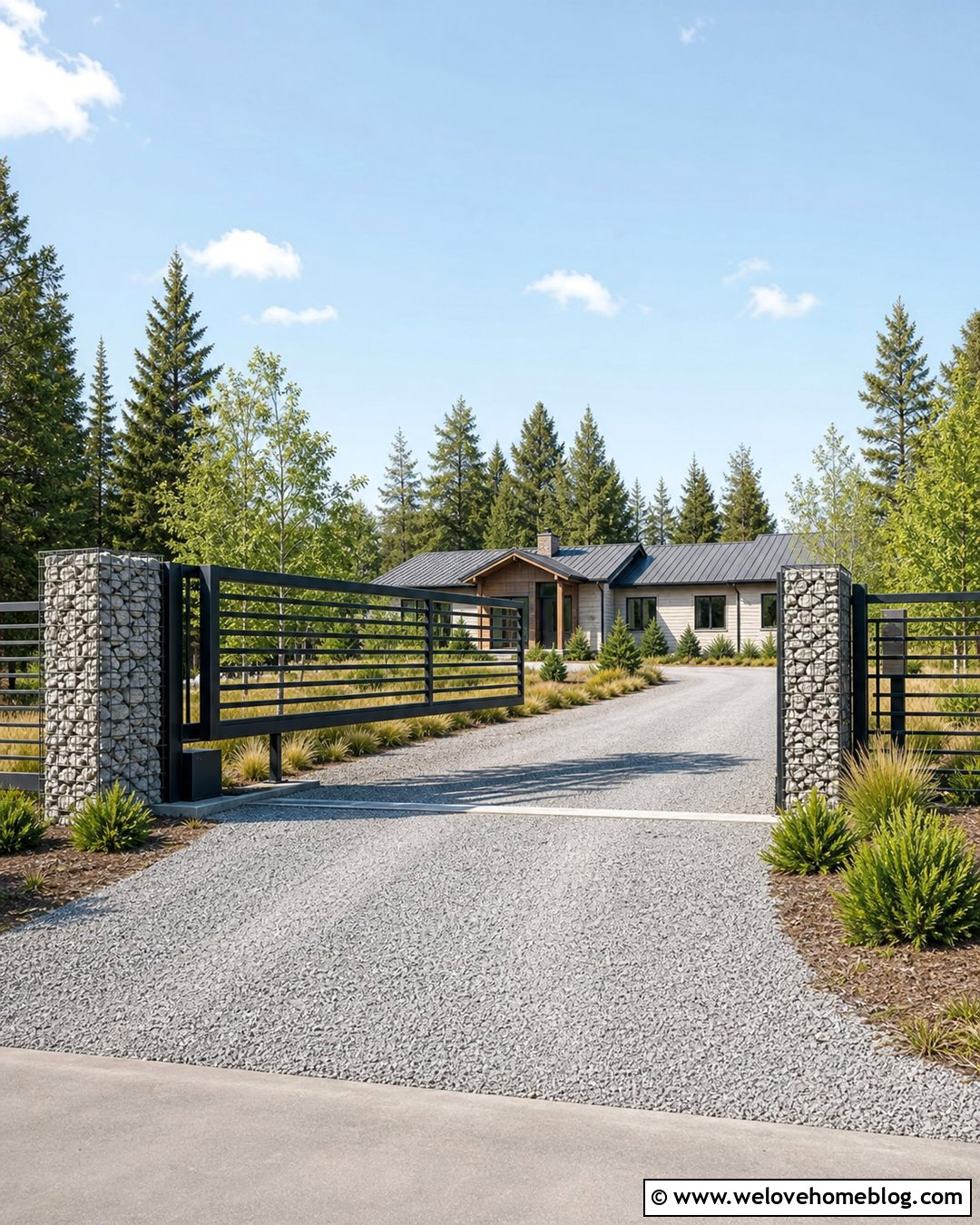
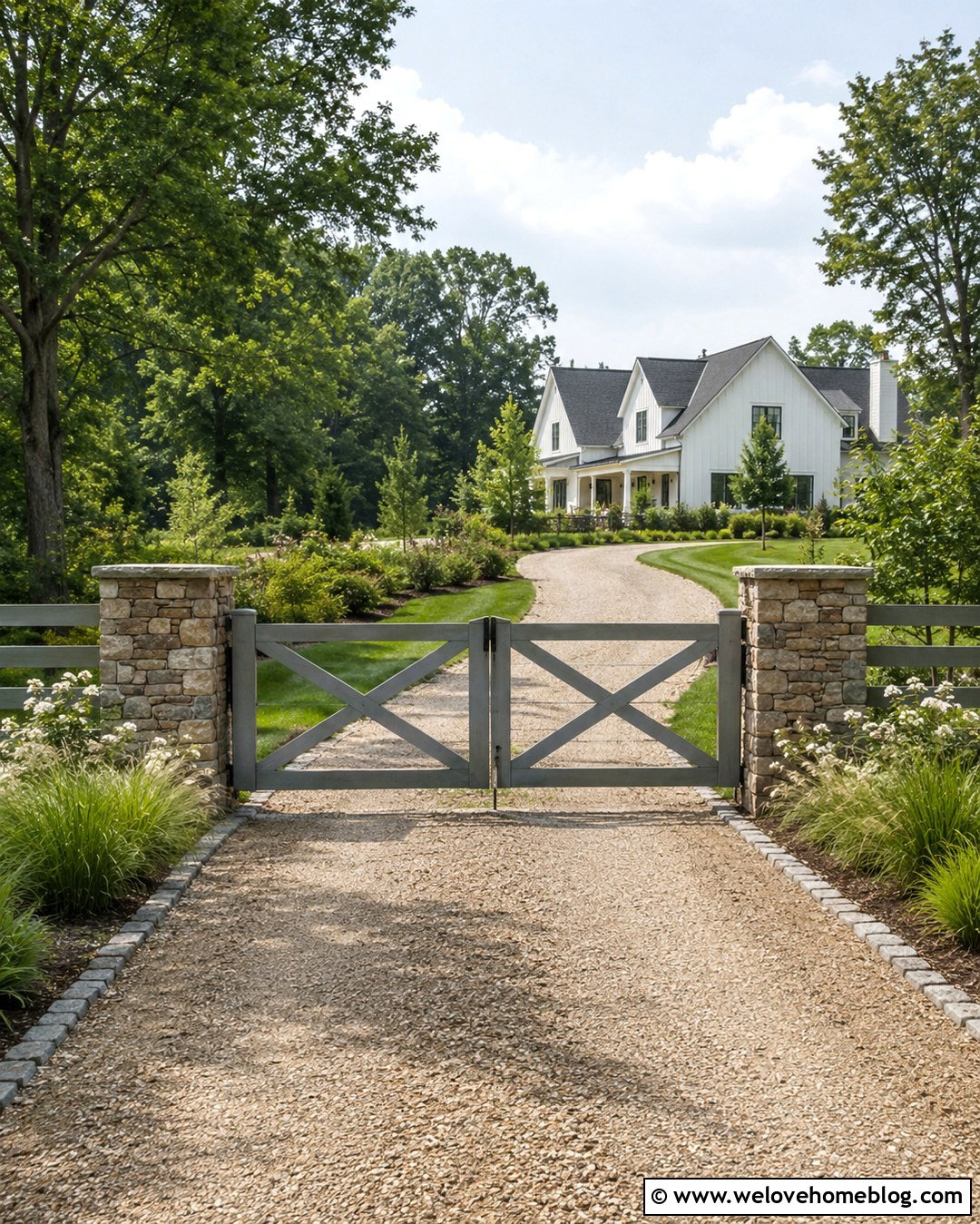
A cantilever gate moves above the driveway opening rather than rolling across a ground track, making it useful where debris, gravel, or uneven conditions could interfere with a track. () Choose a lightweight black aluminum gate with open horizontal bars and install it across a compacted gray gravel driveway. Stabilized gravel or a concrete threshold near the entrance can provide a tidier transition. The gate requires a substantial side section and support system, so incorporate that area into matching fencing or a planted screen. Stone-filled gabion pillars can give the technical structure an intentional modern setting. Native grasses and low evergreens soften the entrance, while a straight approach keeps the gate and opening easy to understand from the curb.
17. Telescopic Sliding Gate For Small Driveway
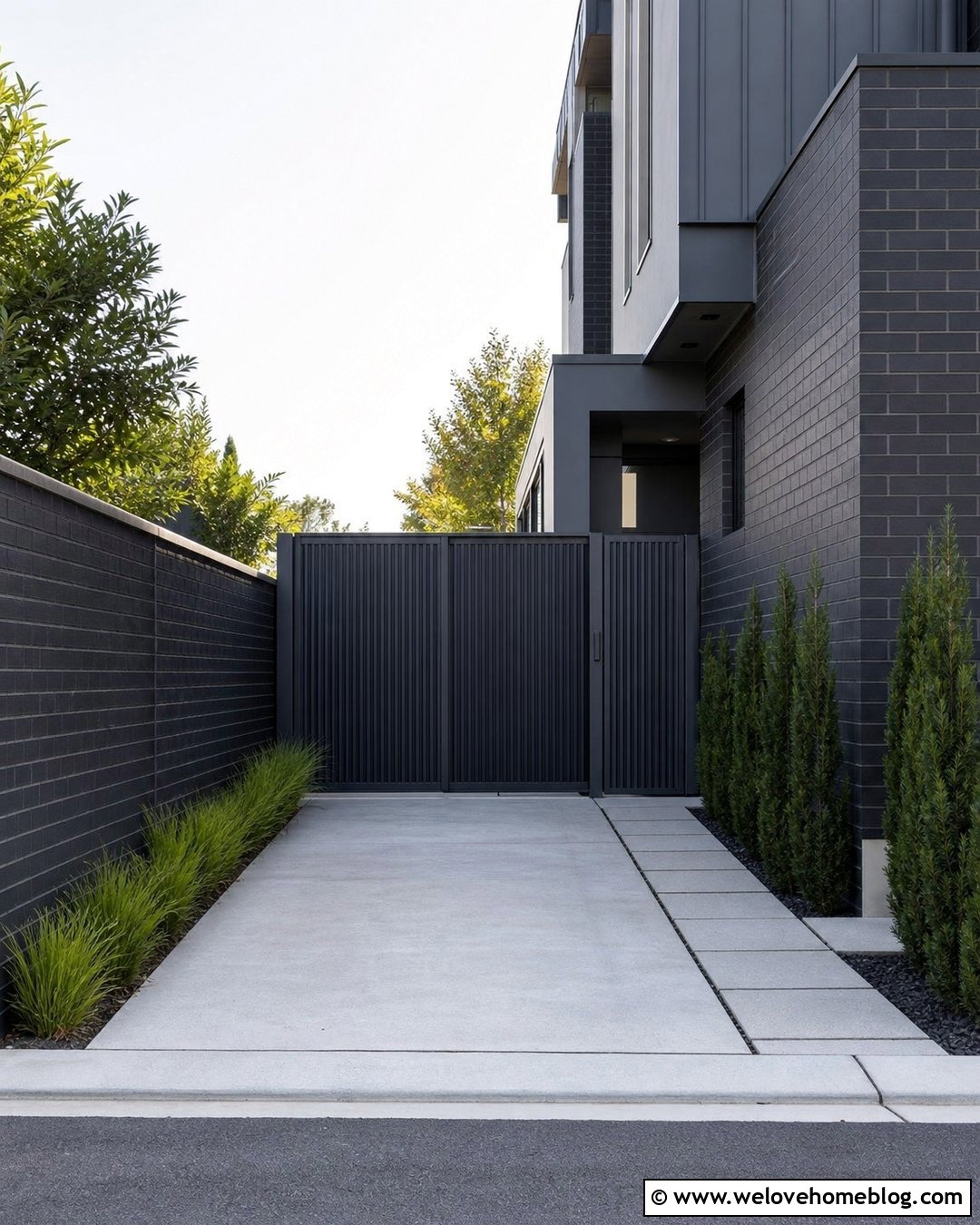
When full side clearance is limited, telescopic panels can stack as the gate opens instead of requiring one long panel to travel beside the driveway. Use two or three charcoal aluminum sections with narrow vertical slats for a compact, modern appearance. Pair them with a small light gray concrete driveway leading to a townhouse or narrow urban home. Dark brick boundary walls can conceal the stacked panels and operating hardware when the gate is open. Add a slim planting bed with upright grasses or columnar shrubs rather than wide plants that consume valuable space. A contrasting porcelain walkway can lead to a separate front gate. Keep patterns consistent across every sliding panel so the closed gate reads as one continuous, balanced surface rather than several disconnected pieces.
18. Sliding Gate For Sloped Driveway
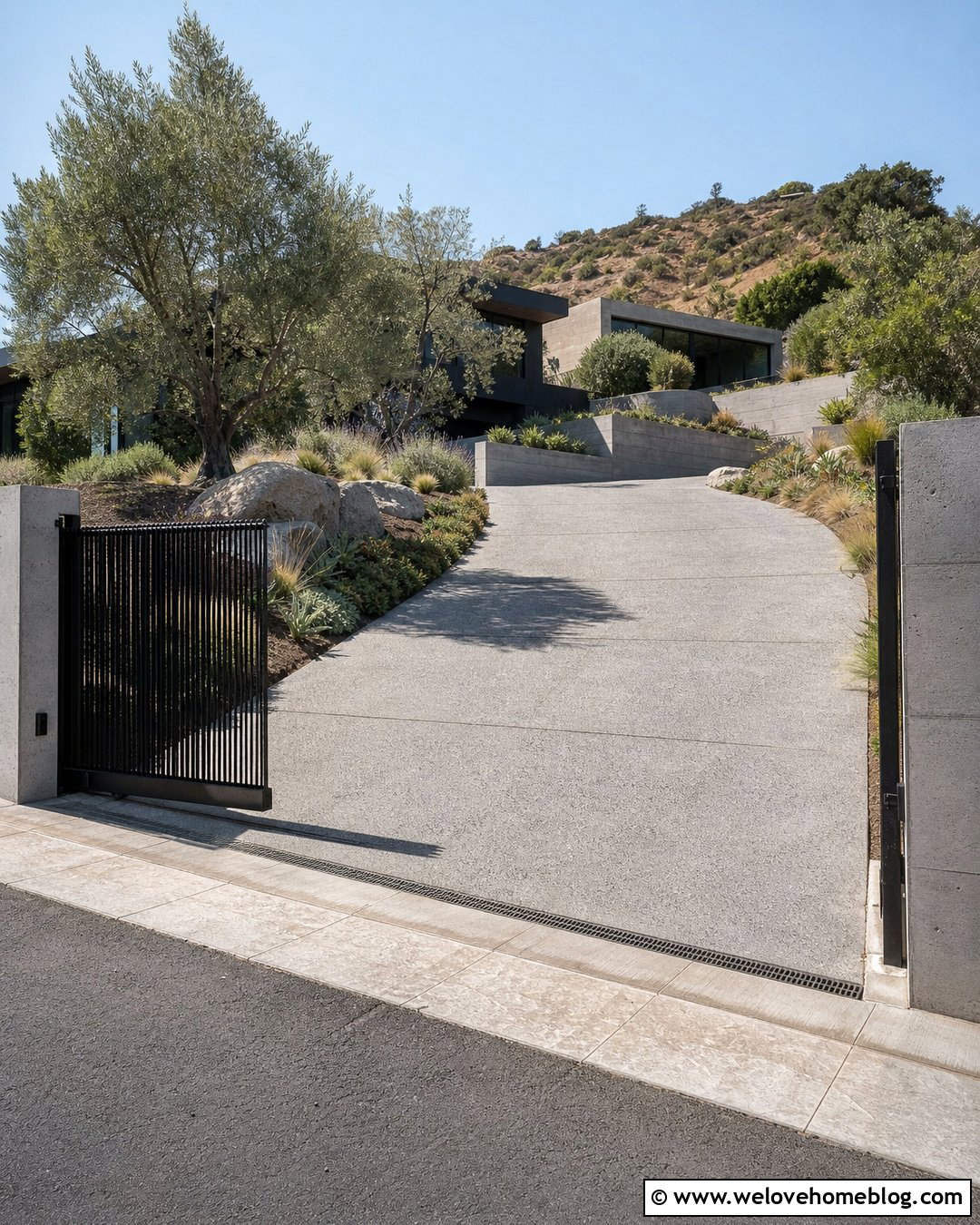
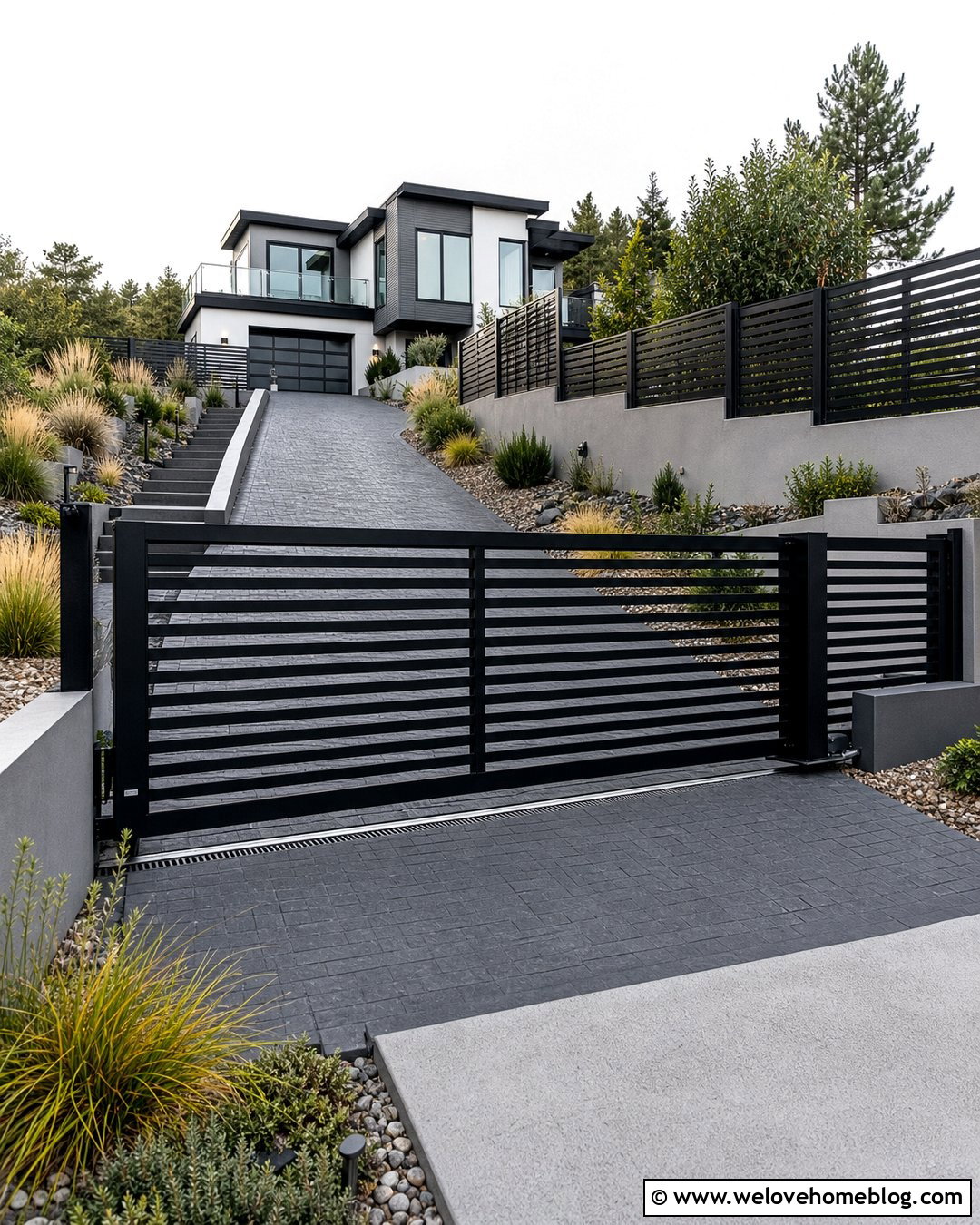
A sloped driveway needs an entrance designed around grade, drainage, clearance, and the gate’s level travel path. A cantilever system can create a clean solution when properly engineered for the site. Use an open black steel gate so the entrance does not look overly solid from the lower curb position. Pair it with a textured concrete driveway that rises toward a contemporary hillside house. Low retaining walls can support planted terraces filled with drought-tolerant shrubs and grasses. Continue one wall alongside the gate to visually conceal its open position. Linear drains and a contrasting stone threshold help manage the transition at the street. Integrated wall lights improve visibility along the incline. Have the gate layout, foundations, operator, and safety equipment specified for the actual slope.
19. Sliding Gate With Stone Driveway Entrance
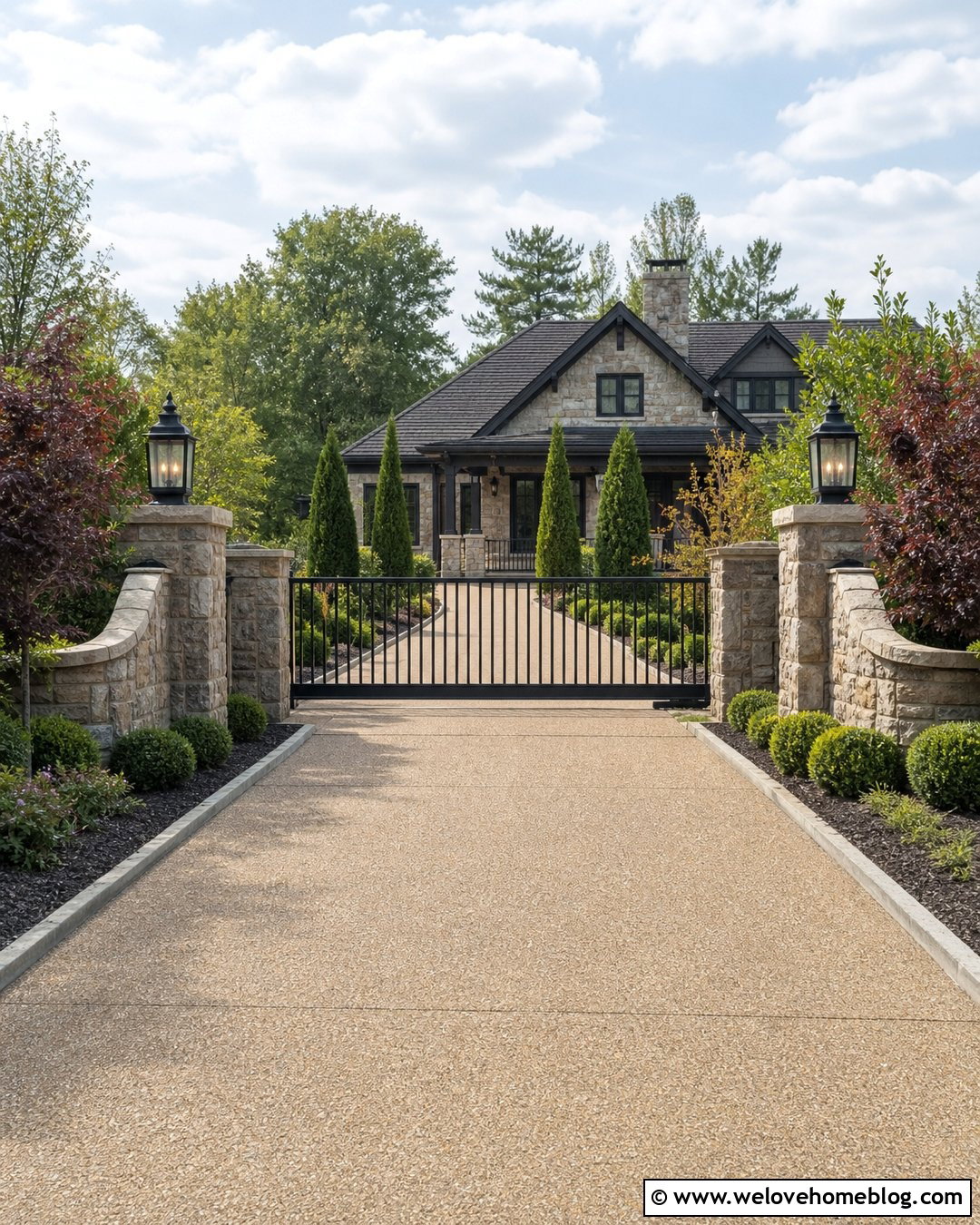
Stone pillars can give even a simple sliding gate a sense of permanence. Choose a black steel gate with widely spaced vertical bars, then place it between substantial limestone or fieldstone columns. Continue the stone into low entrance walls that curve outward toward the road. A tan exposed-aggregate driveway creates a durable-looking surface that complements the irregular masonry without imitating it. Inside the gate, frame the approach with clipped evergreens and small deciduous trees. Use cap lights or shielded lanterns to show the stone texture in a practical way. The gate should remain visually lighter than the pillars so the entrance does not feel closed off. This combination suits Craftsman, ranch, lodge-inspired, and traditional homes with existing stone exterior details.
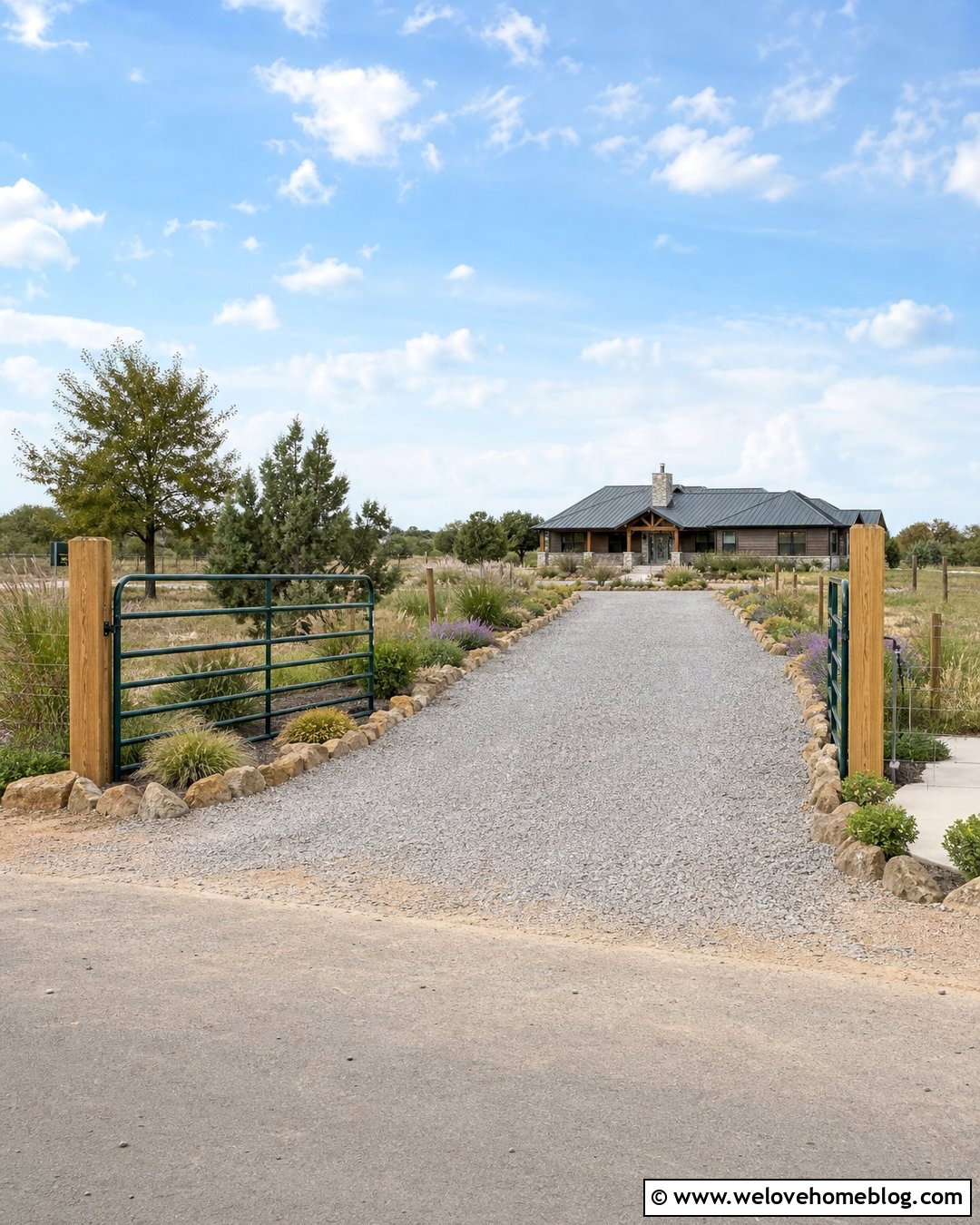
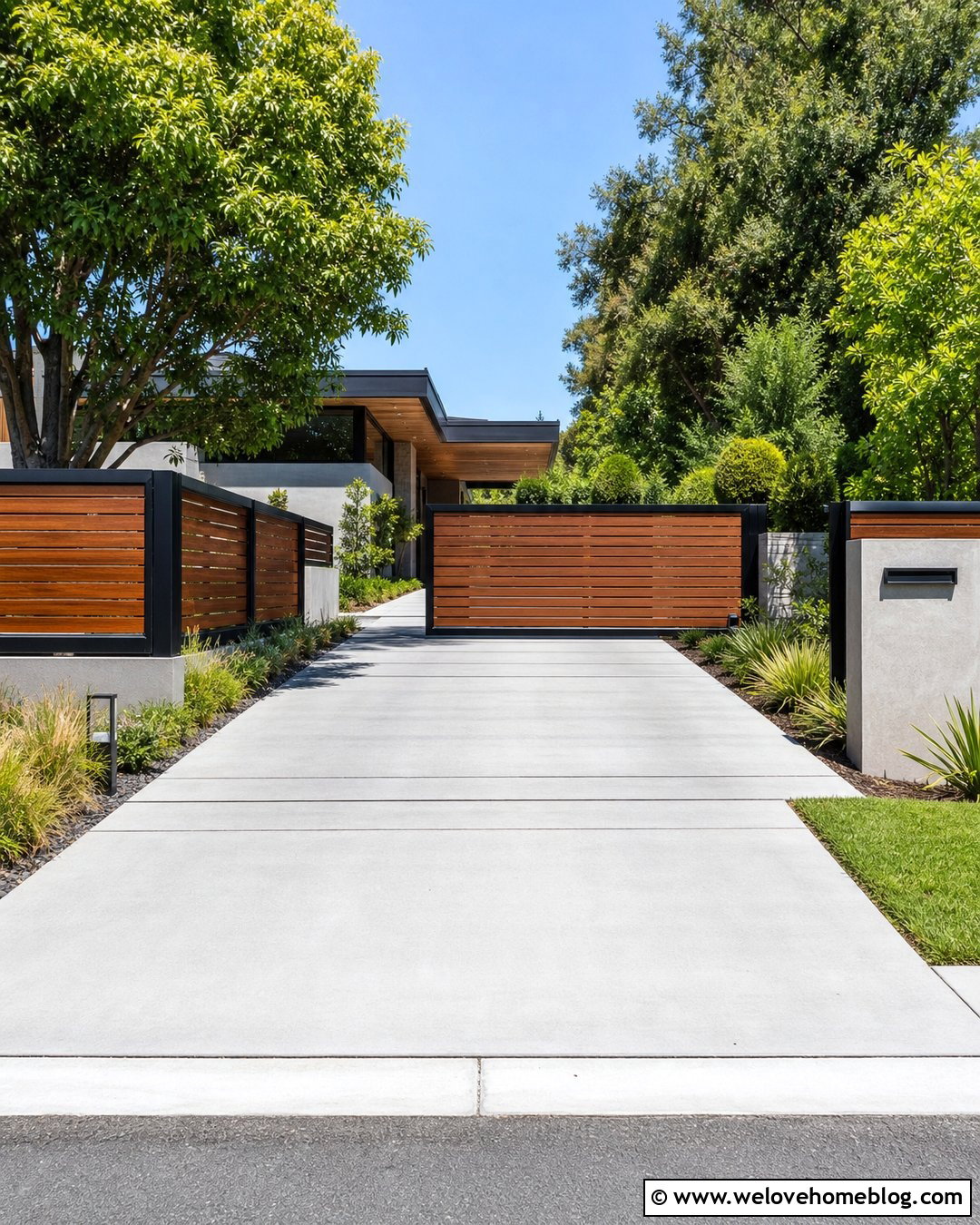
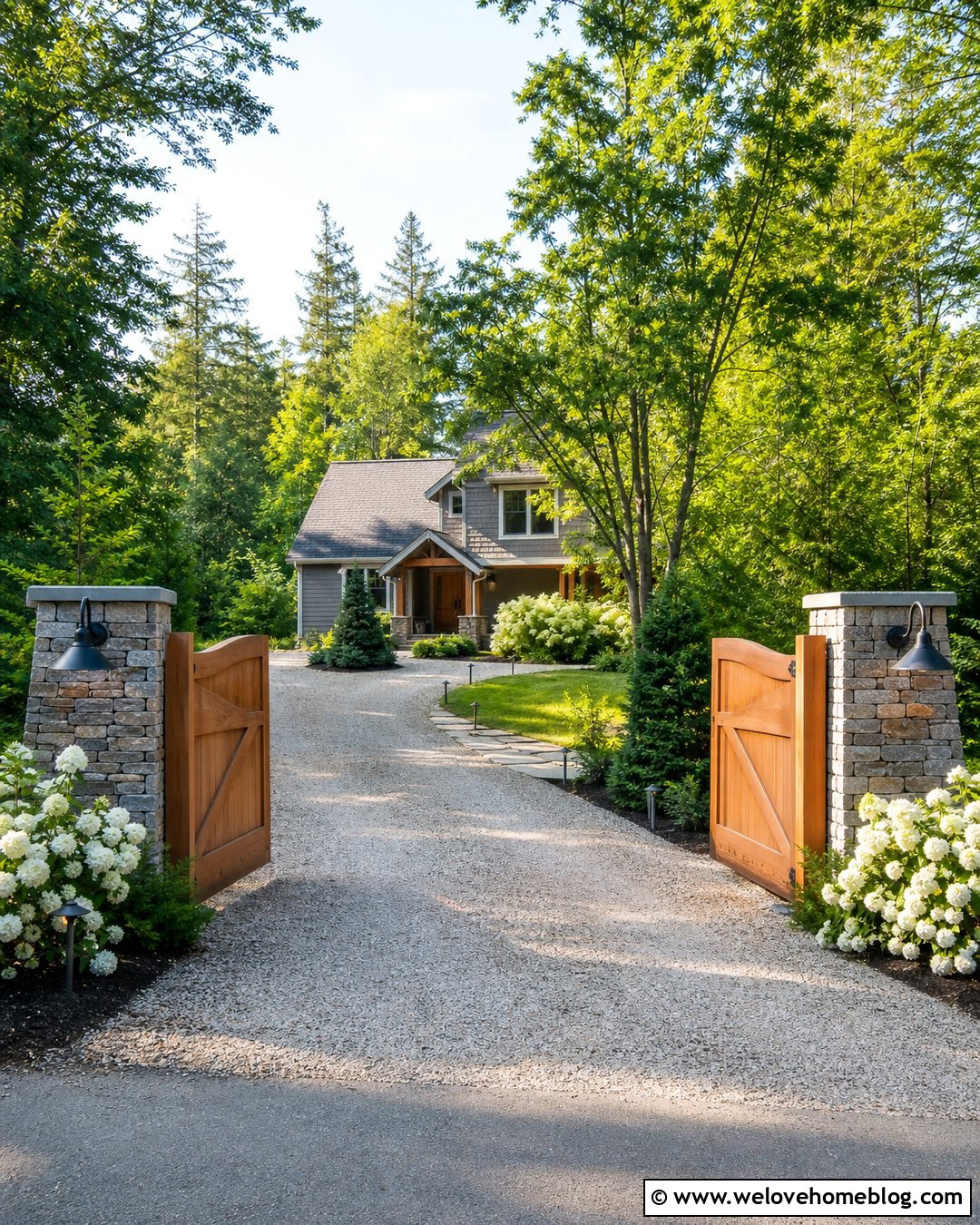
20. Sliding Gate With Brick Driveway Entrance
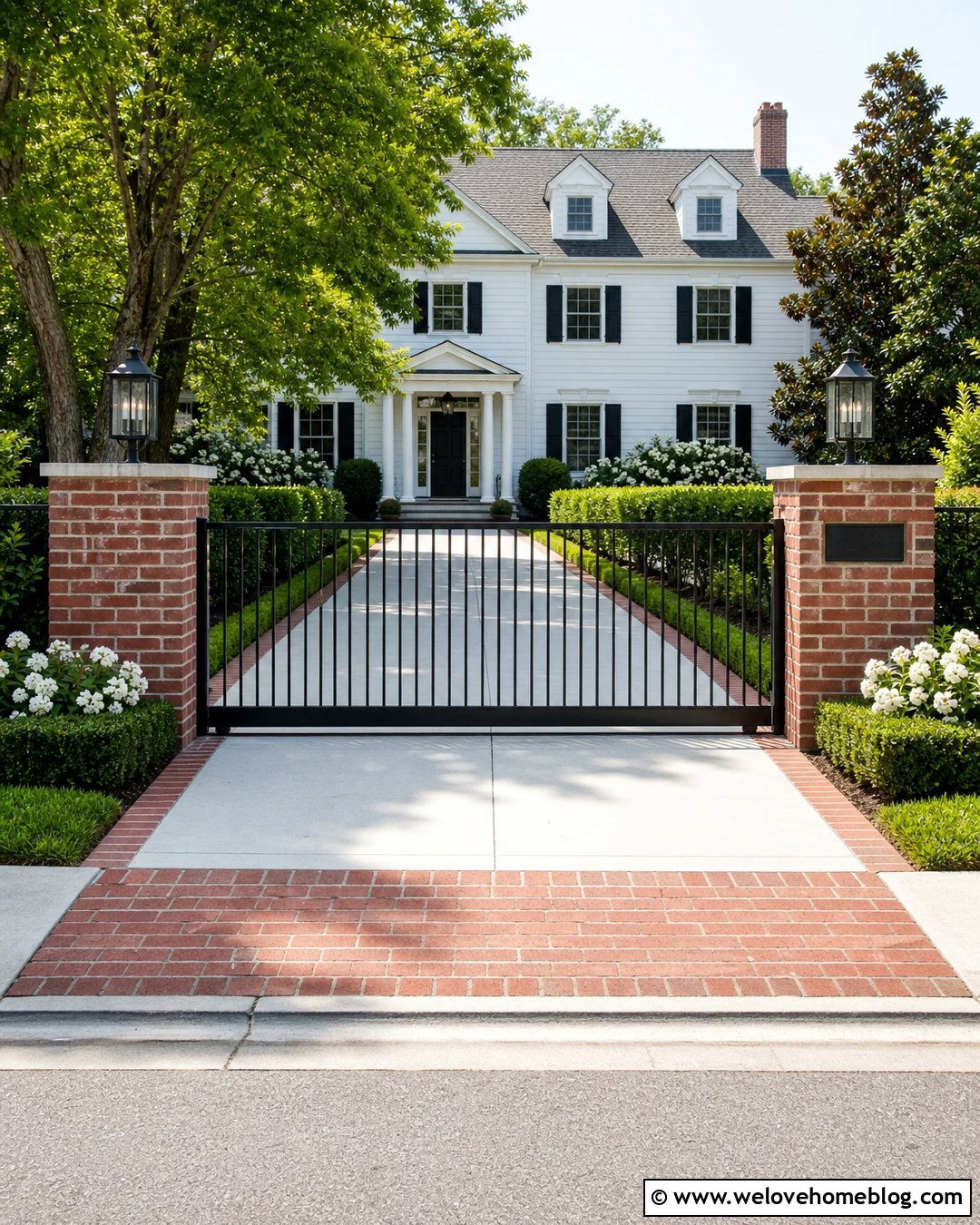
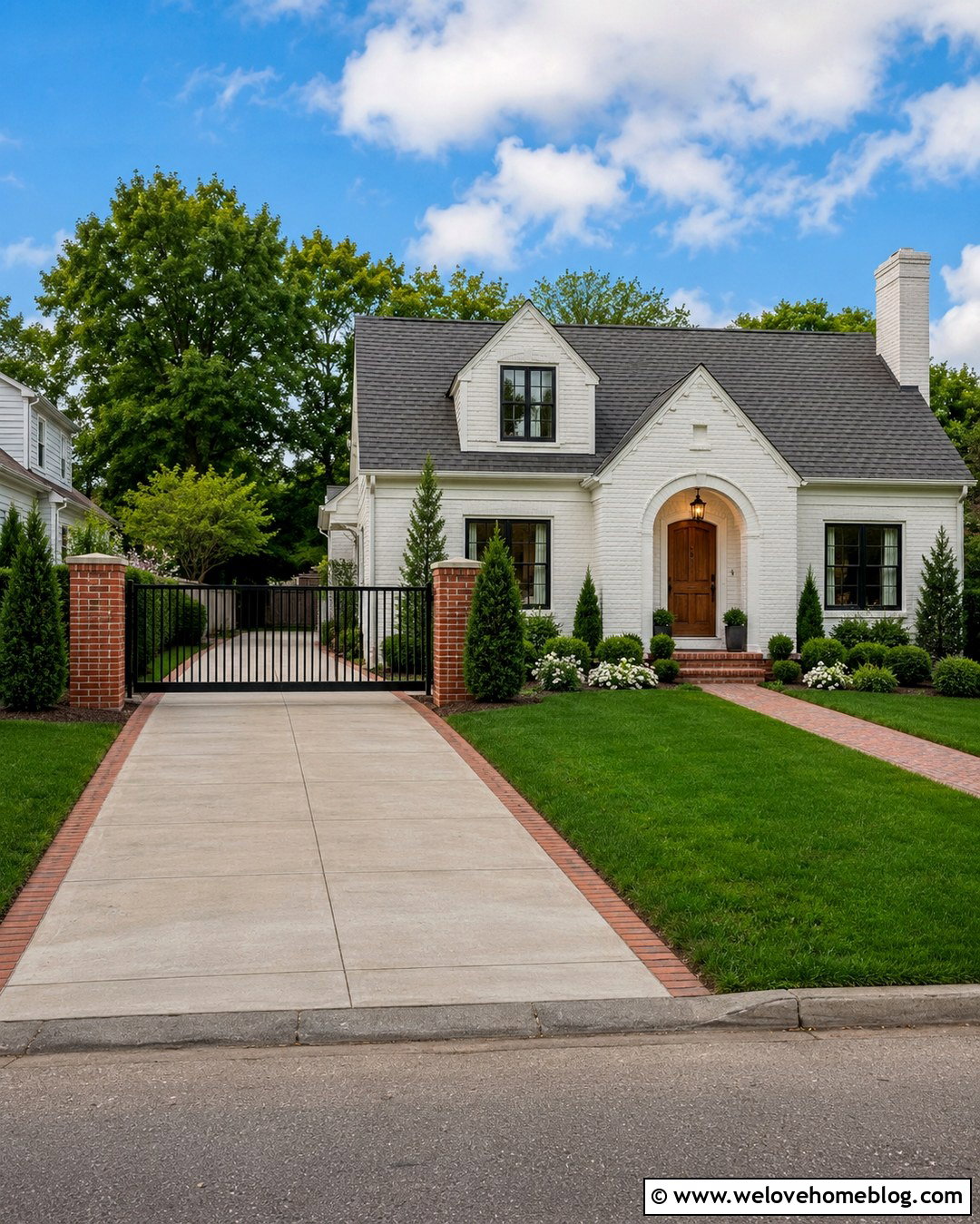
Brick pillars and a matching driveway border create a comfortable transition between a sliding gate and a traditional house. Install a simple black aluminum gate with narrow pickets or semi-private slats. Use light gray concrete for the main driveway and red clay brick for the entrance apron, border, and walkway. This controls the amount of brick while still making it a defining feature. Black lanterns, an inset address plaque, and a coordinated mailbox can be built into the masonry. Plant boxwoods, white flowering shrubs, and a pair of small trees to soften the formal structure. Keep the pillar width proportional to the driveway opening, especially on smaller lots. The complete look feels established and detailed without requiring elaborate metalwork or a fully brick-paved driveway.
21. Sliding Gate With Gabion Pillars
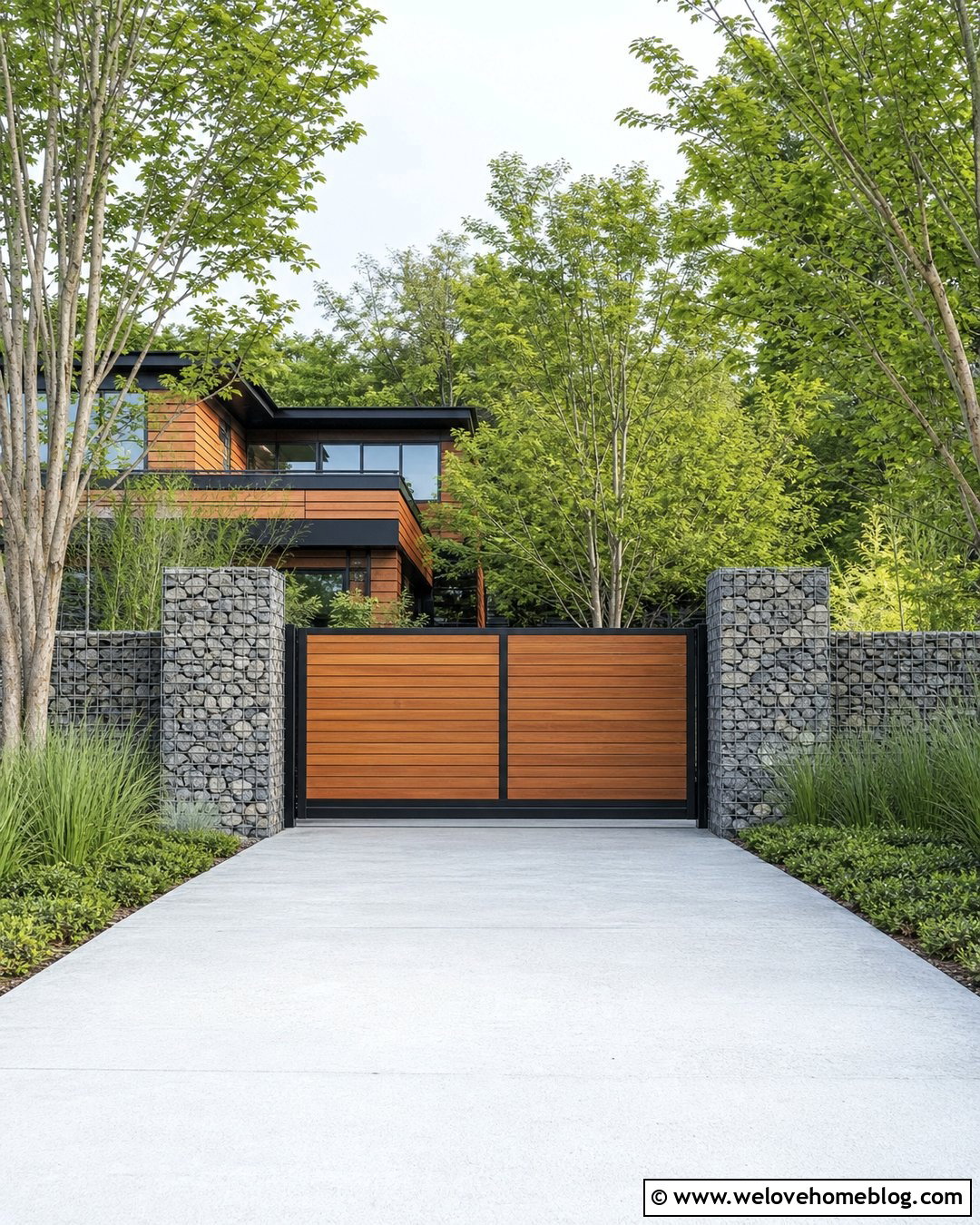
Gabion pillars introduce rough stone texture beside a smooth, modern sliding gate. Fill clean wire cages with angular gray stone, then pair them with a warm composite gate framed in black steel. A pale gray poured-concrete driveway keeps the foreground quiet and allows the stone and wood tones to stand out. Extend shorter gabion walls along each boundary, but cap them neatly for a finished residential appearance. Use broad grasses, ground-cover plants, and small multi-stem trees to soften the industrial materials. This design works well with modern homes that feature wood siding, dark windows, or board-formed concrete. Position lighting on simple black posts or within adjacent solid walls, since mounting equipment directly into stone-filled cages can make the entrance appear untidy.
22. Sliding Gate With Horizontal Fence
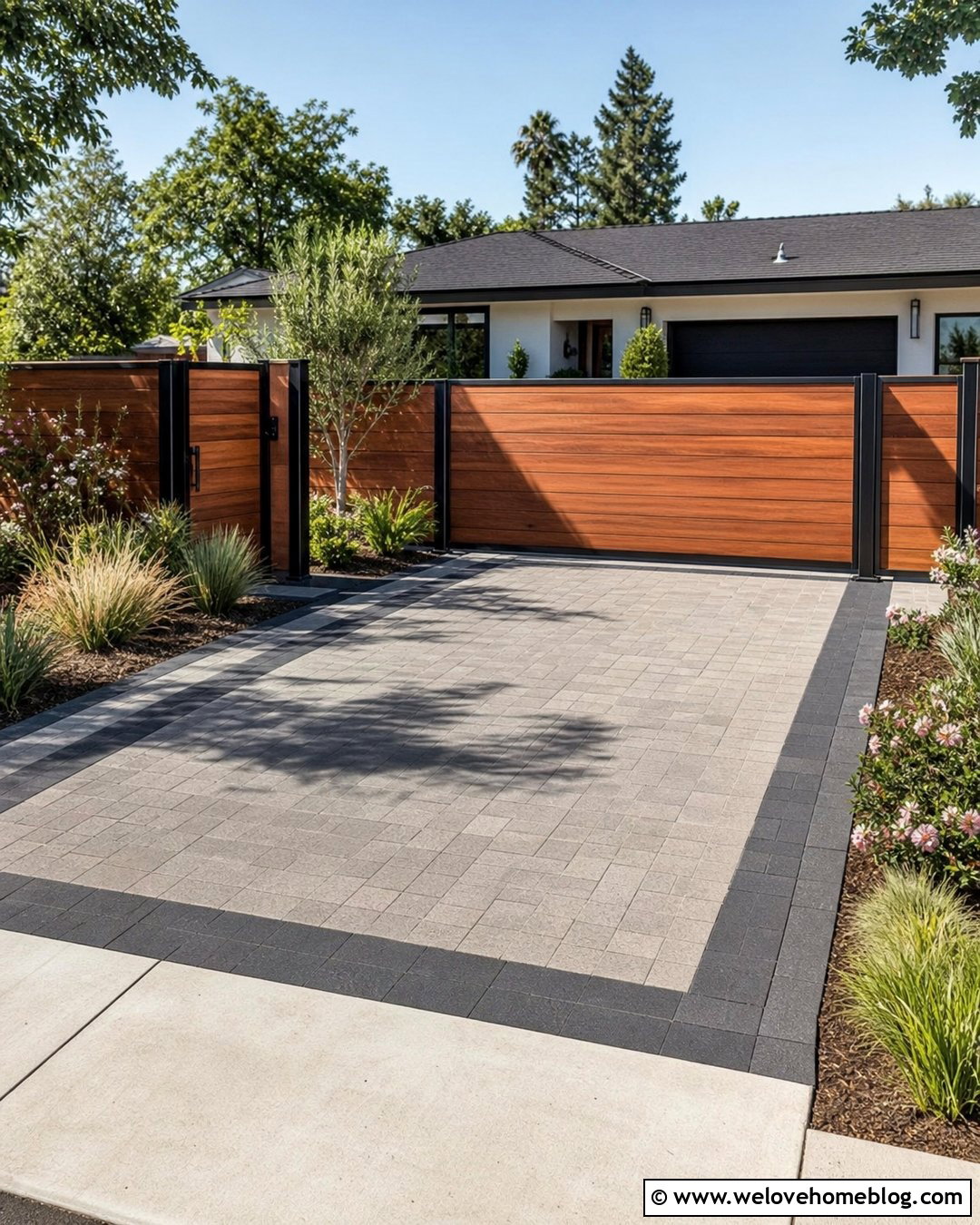
Matching the gate to the boundary fence produces one of the most unified driveway entrances. Use horizontal cedar boards across both surfaces, supported by concealed or black metal framing. A warm gray concrete-paver driveway can lead toward a modern ranch home with wood trim. Add a charcoal paver ribbon at the gate threshold and along the driveway edges. On the street side, use low planting beds with grasses and small flowering shrubs so the long fence does not look severe. Inside, a row of compact trees can increase privacy without adding height to the gate itself. Keep board spacing, stain color, and frame thickness consistent throughout. A pedestrian gate can blend into the fence, but a dedicated light and walkway should make its location clear to guests.
23. Sliding Gate With Vertical Fence
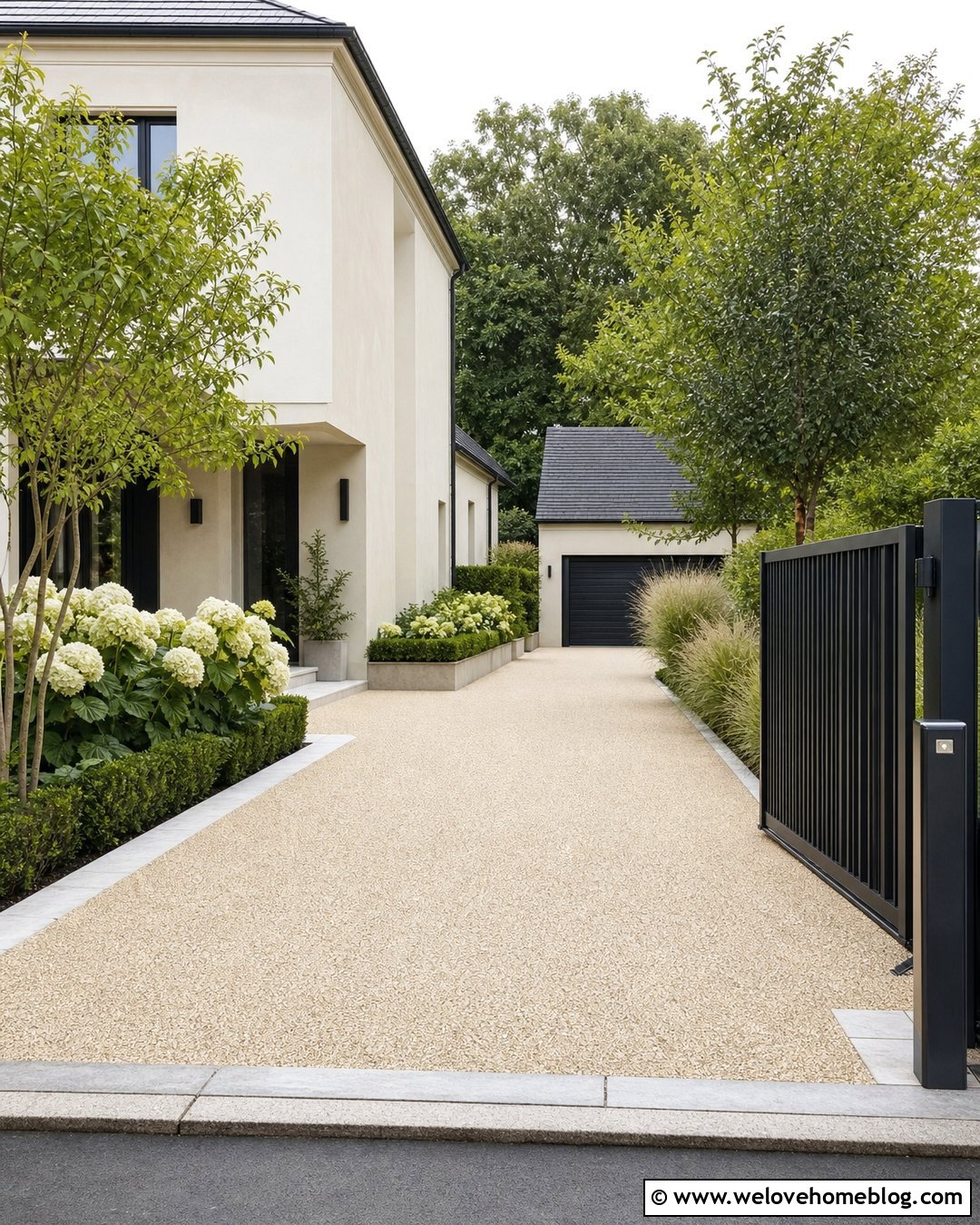
Vertical fencing can make a low entrance feel taller and can suit both contemporary and traditional properties. Select narrow black aluminum battens for the sliding gate and continue them along the side boundaries. A beige resin-bound gravel driveway softens the dark structure and provides a clean, even-looking approach. Use limestone edging to separate the driveway from lush planting beds containing hydrangeas, upright grasses, and dwarf trees. For privacy, vary the spacing carefully or add a dark backing panel behind the street-facing section. A pale stucco home creates a bright background that balances the black metal. Keep access controls on a solid matching post. Vertical repetition across the gate, fence, lighting posts, and planting creates a strong but orderly rhythm from the curb.
24. Sliding Gate With Metal And Wood Panels
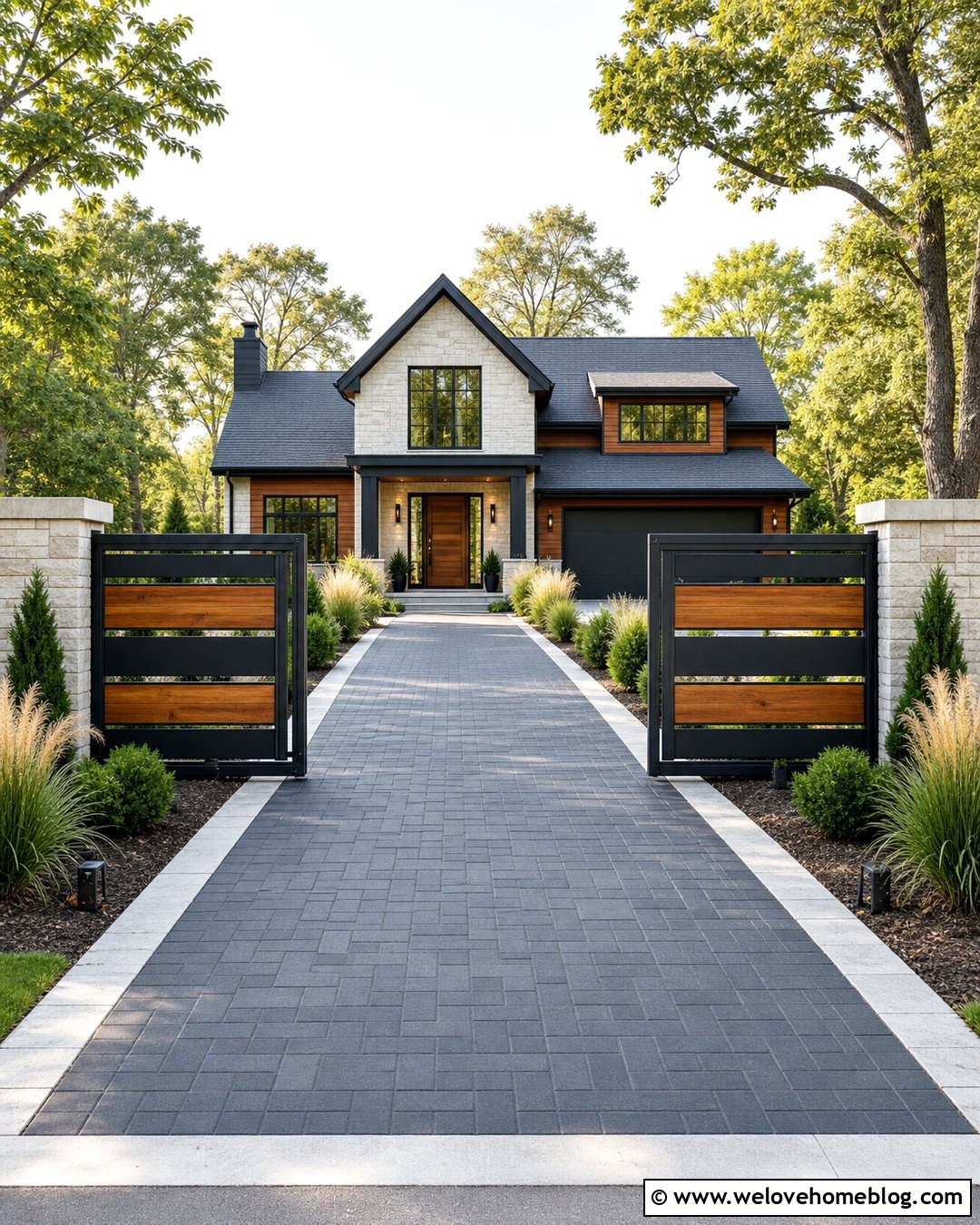
Combining metal and wood lets the entrance feel modern without becoming cold. Use a charcoal steel frame with alternating sections of horizontal cedar boards and solid metal panels. Pair the gate with a dark gray interlocking-paver driveway laid in a simple running pattern. Light concrete curbs and pale stone pillars prevent the deeper colors from overwhelming the frontage. Repeat cedar on the garage door, porch ceiling, or address panel so the wood does not appear isolated. Plant low evergreens and airy grasses around the entrance, leaving the mixed gate materials clearly visible. This design can also divide functional zones: wood panels increase privacy, while selected metal sections can provide filtered views. Keep the composition balanced rather than scattering small inserts across the gate.
25. Sliding Gate With Perforated Metal Panels
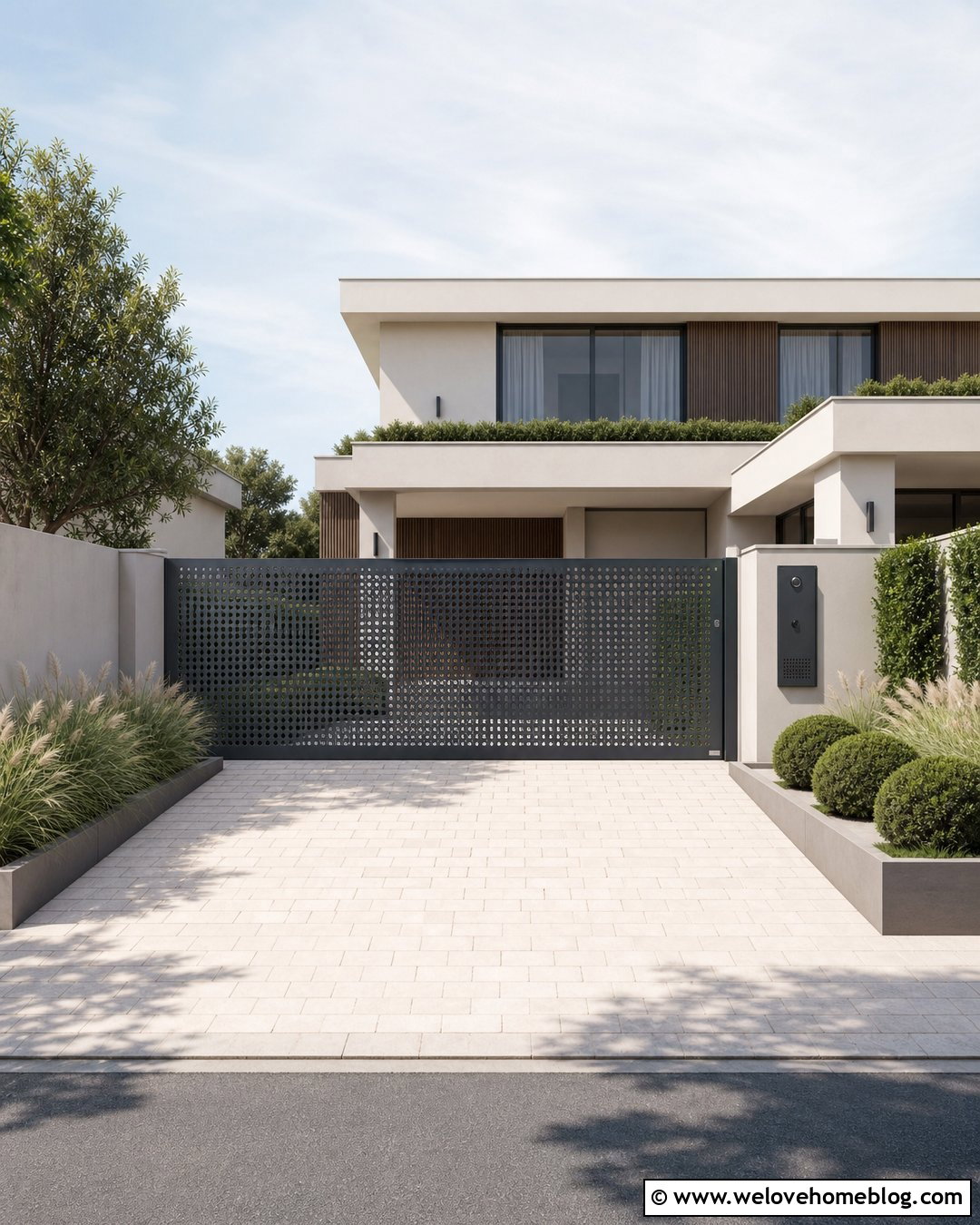
Perforated metal offers partial screening while allowing light and air to pass through the entrance. Choose powder-coated bronze or charcoal panels with a consistent round-hole pattern, mounted inside a slim metal frame. A cream-colored limestone-paver driveway provides a refined contrast and brightens the area in front of the gate. Use smooth rendered walls and rectangular planters for a crisp contemporary setting. Fine-textured grasses and clipped shrubs complement the perforations without introducing another busy pattern. During daylight, the gate appears solid from a distance but lighter at close range. Add a plain stationary panel for the house number and intercom. This material works especially well with minimalist homes, where a subtle surface texture can add interest without ornamental scrollwork or heavy framing.
26. Sliding Gate With Frosted Glass Inserts
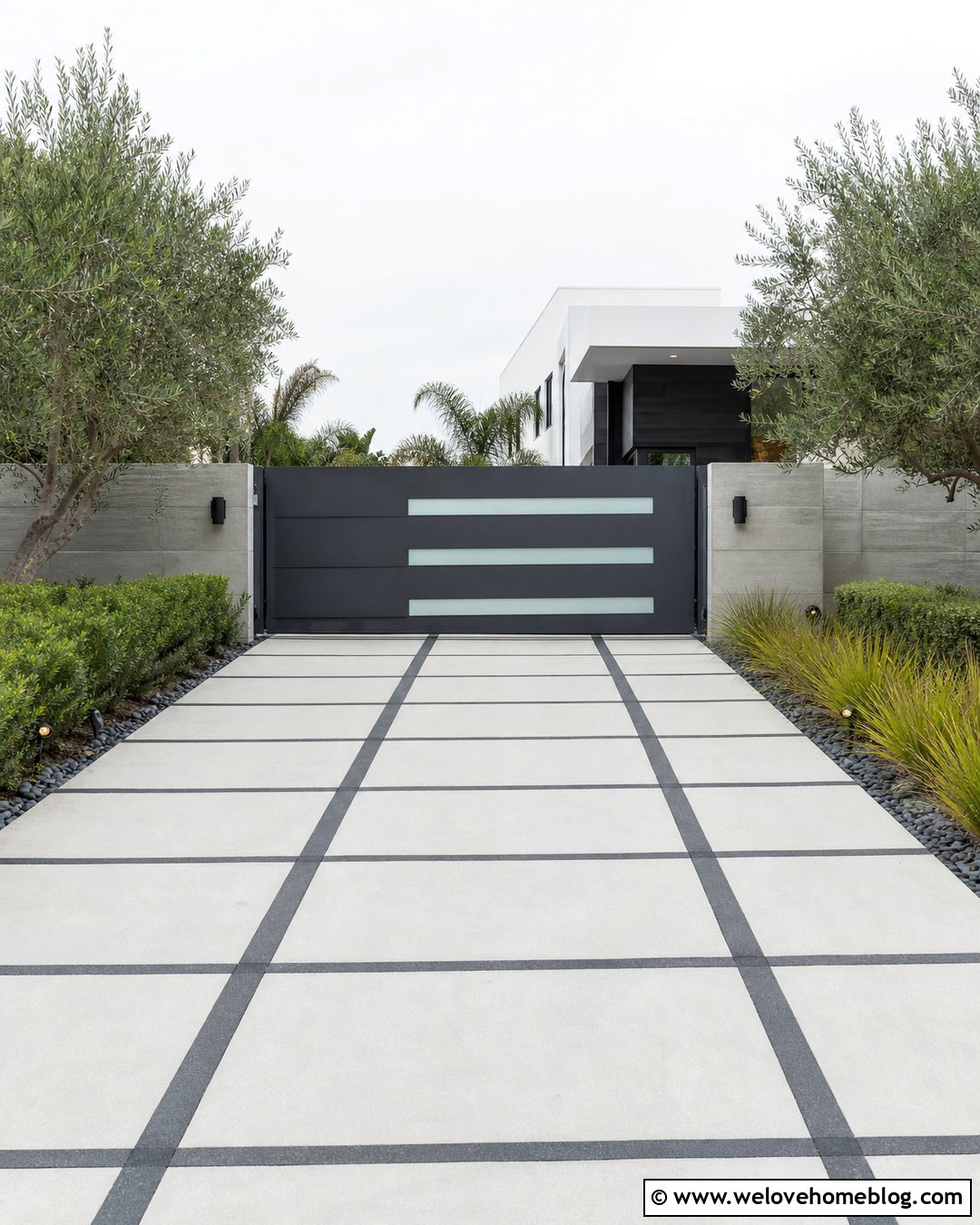
Frosted glass inserts can lighten a solid gate while still obscuring direct views into the property. Use narrow laminated-glass bands within a powder-coated aluminum gate rather than covering the entire panel. A smooth white concrete driveway with charcoal expansion-joint strips reinforces the modern geometry. Place the entrance between light gray masonry walls and add structured planting with compact olive trees, low hedges, and ornamental grasses. The glass bands can align with window proportions on the house, helping the gate relate to the architecture. Choose outdoor-rated materials and a design that protects panel edges from impact. Keep decorative lighting restrained so glare does not dominate the inserts. The completed entrance feels bright, private, and contemporary without relying on an entirely opaque wall of metal.
27. Sliding Gate With Decorative Metal Screen
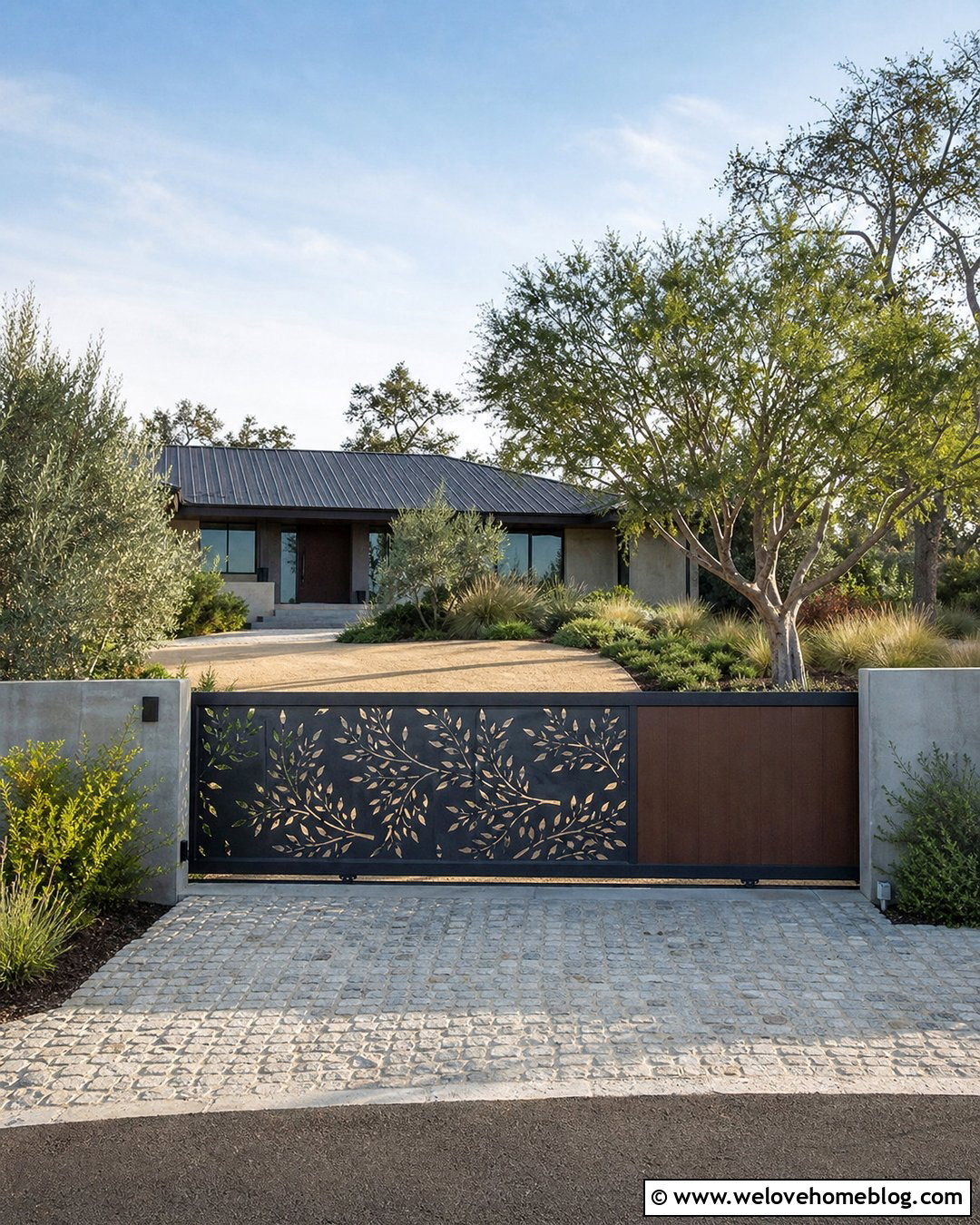
A decorative screen can add character to a sliding gate while maintaining a simple overall outline. Select a large-scale leaf, branch, or abstract geometric pattern cut into weather-resistant metal. Back the screen with a contrasting solid panel when more privacy is needed. Pair the gate with a warm beige gravel driveway framed by dark steel edging and a cobblestone entrance apron. Native shrubs, ornamental grasses, and one sculptural tree can echo the screen motif without making the landscape overly themed. Plain concrete pillars keep attention on the pattern. Use the decorative surface across one main gate panel rather than several small features. This creates a readable focal point from the street and helps the entrance look custom without requiring elaborate masonry, arches, or ornamental finials.
28. Sliding Gate With Built-In Address Sign
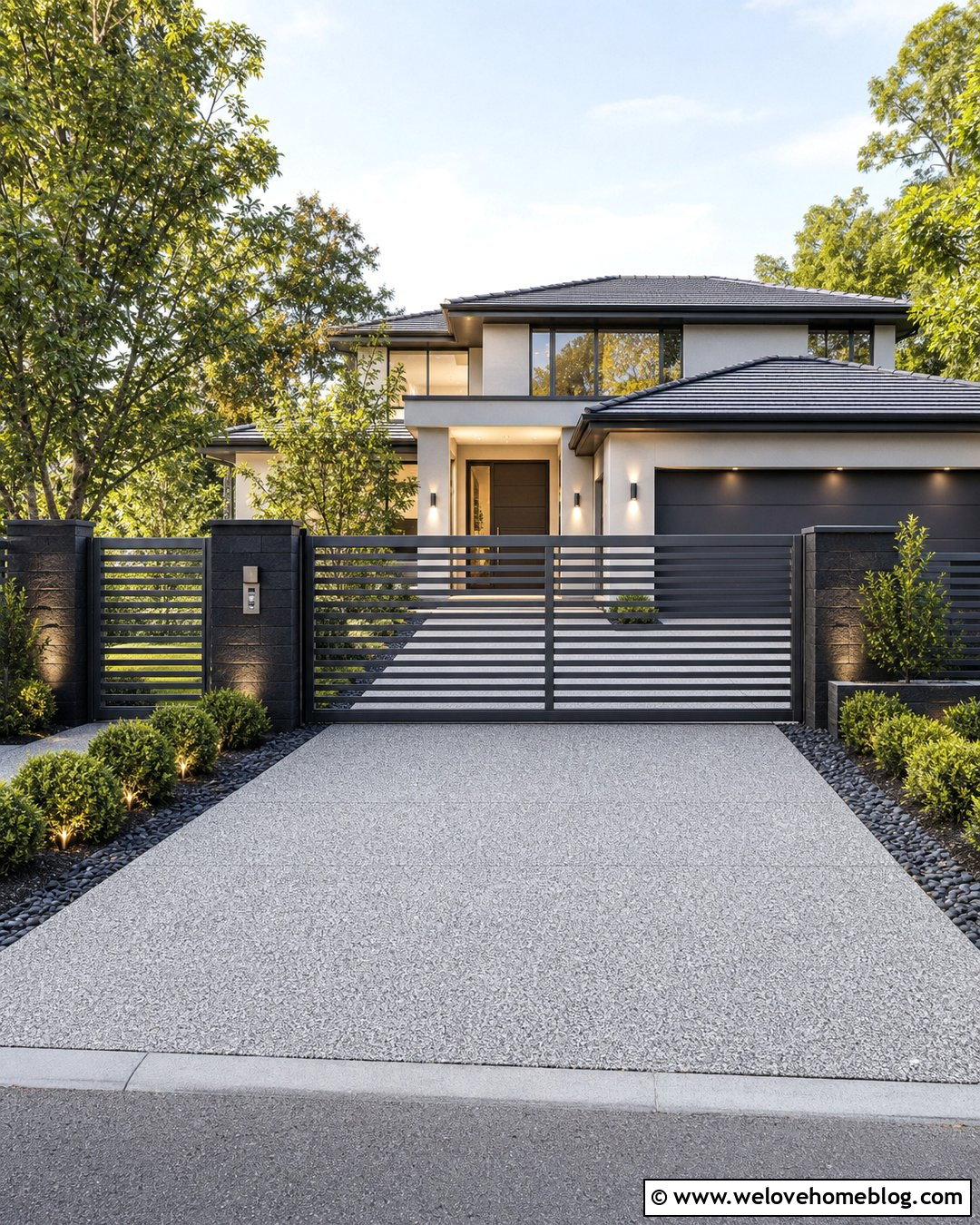
An address sign is most useful when it remains stationary, well lit, and easy to see from the road. Pair a dark gray horizontal aluminum gate with a matching masonry pier containing oversized metal house numbers. A straight exposed-aggregate concrete driveway provides texture and a slip-resistant-looking visual finish, while black stone edging defines the approach. Place a low address light above or beside the numbers and keep nearby plants trimmed below the sign. A separate intercom and delivery box can fit into the same pier for a cleaner entrance. Use silver or white numbers for strong contrast against charcoal. Continue the gate’s horizontal lines in the adjacent fence. The whole design suits contemporary suburban homes where practical entrance details need to feel intentionally integrated.
29. Sliding Gate With Planter Walls
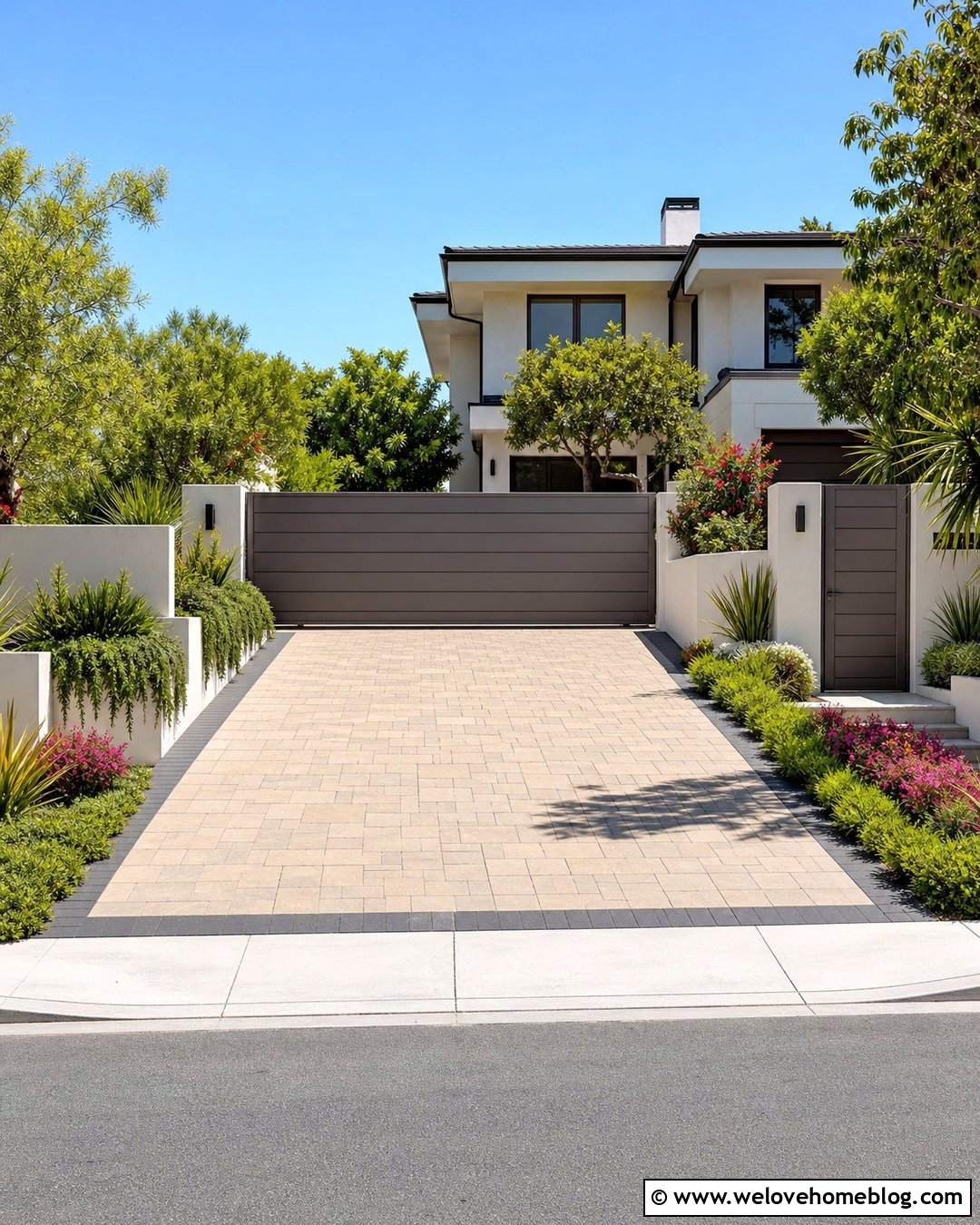
Built-in planter walls can soften the mechanical appearance of a sliding gate. Use a warm gray composite gate with horizontal boards and position it between smooth white rendered walls. Extend the walls outward as low planters filled with cascading ground covers, dwarf grasses, and compact flowering shrubs. A pale tan concrete-paver driveway helps the greenery and gate remain prominent. Dark paver borders can trace the entrance and connect with the gate frame. Ensure the planter structure does not interfere with the gate pocket, drainage, sensors, or maintenance access. A modern stucco house with wood accents completes the balanced palette. The horizontal planter lines visually widen the entrance, while layered planting makes a private solid gate feel more welcoming from the street.
30. Sliding Gate With Driveway Lighting
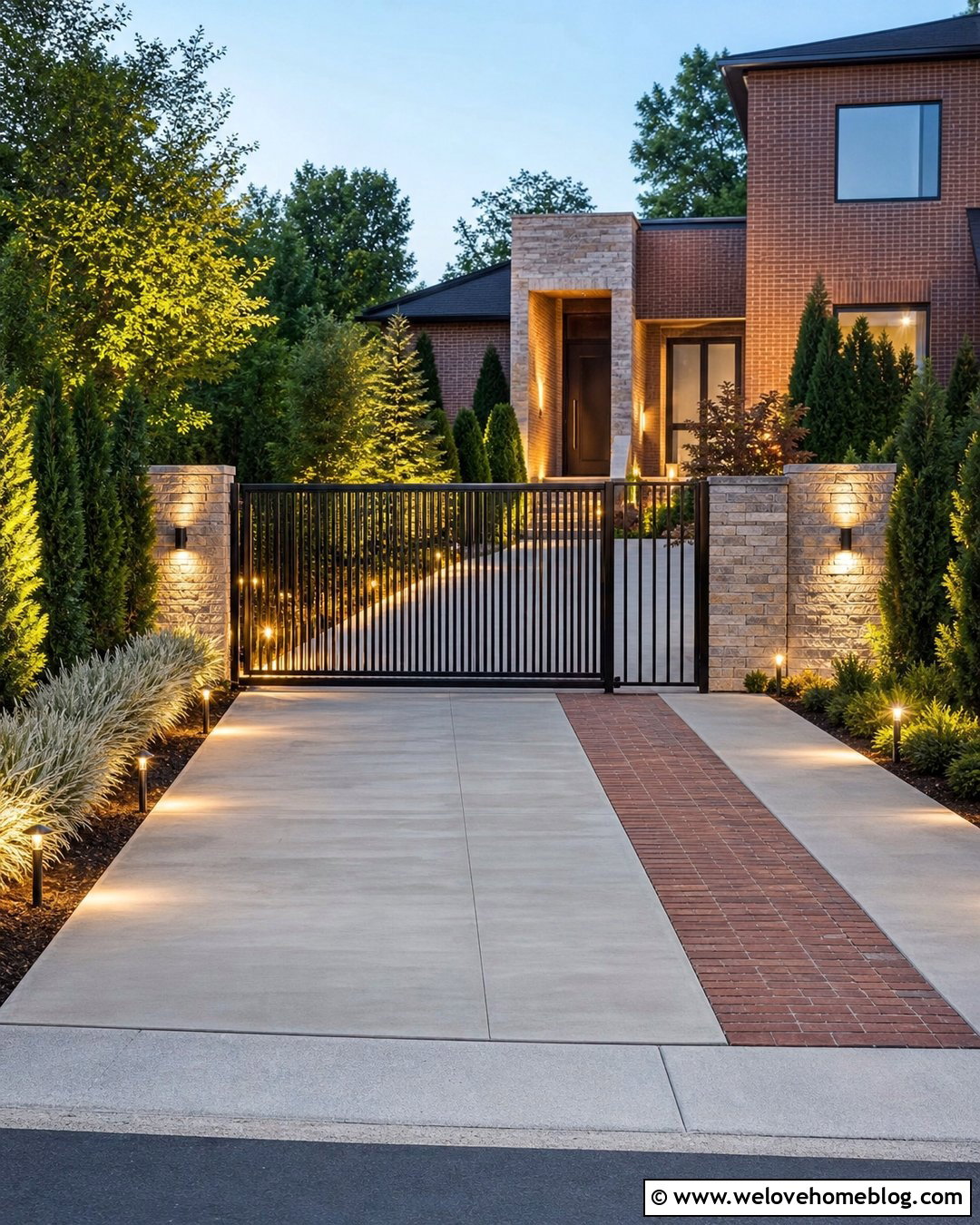
Good lighting should clarify the driveway entrance, gate opening, walkway, and access controls without creating harsh glare. Use a black vertical-slat aluminum gate across a medium gray concrete driveway. Install recessed fixtures in stone pillars, low path lights along the driveway border, and a dedicated light at the pedestrian entrance. Keep all fixtures consistent in shape and finish. During the day, structured beds of ornamental grasses and low evergreen shrubs will soften the lighting posts. A narrow brick ribbon along the concrete adds warmth and makes the approach easier to distinguish. Select a bright, balanced daytime design first, then layer lighting around real circulation needs. Avoid placing fixtures where the moving gate can strike them or where plants will quickly block their output.
31. Sliding Gate With Curved Driveway
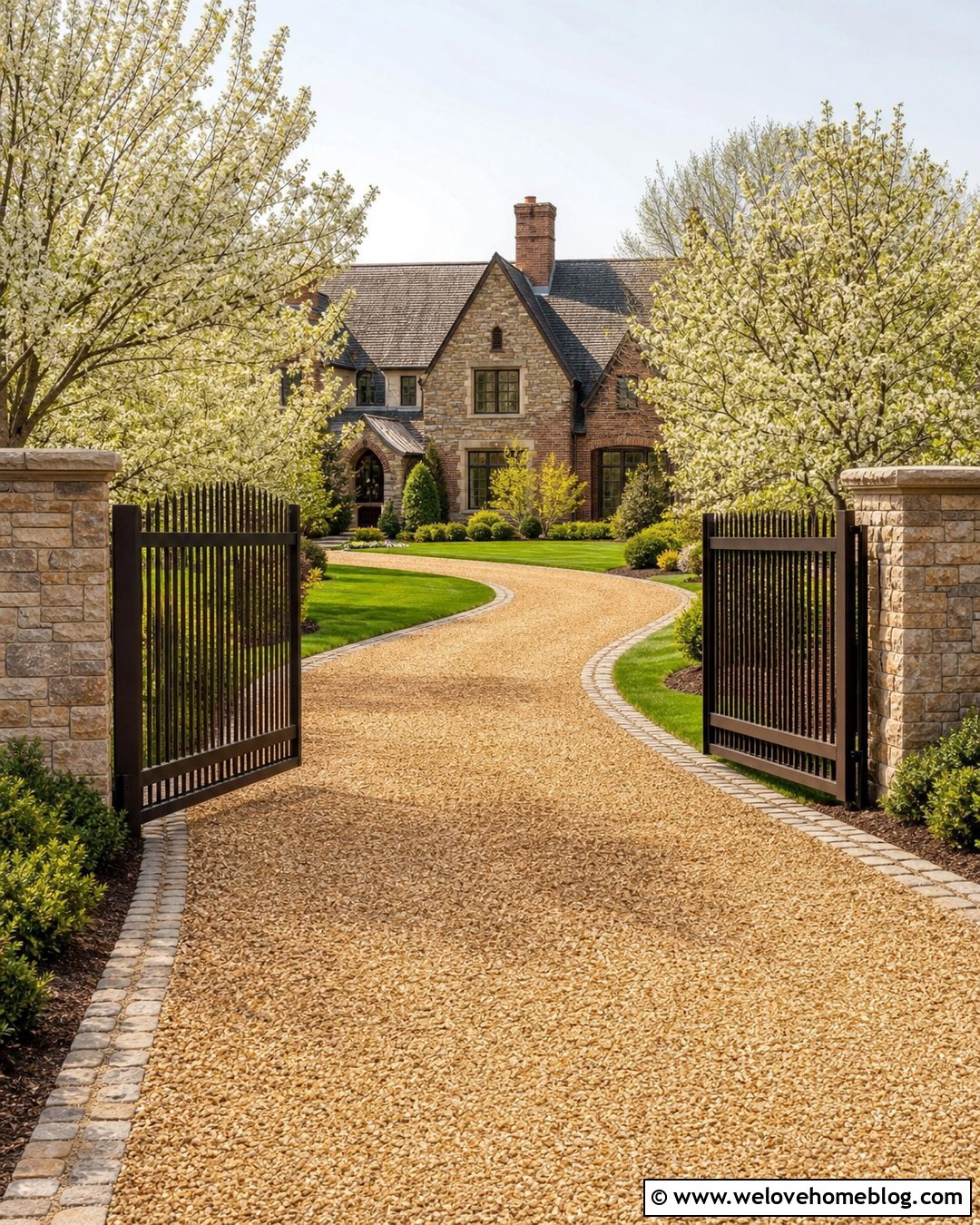
A curved driveway creates a gradual reveal of the house and gives the gate a strong visual role at the start of the approach. Use a dark bronze open-metal sliding gate with simple vertical pickets. Behind it, a curved golden gravel driveway can sweep through a broad lawn toward a brick or stone home. Cobblestone edging keeps the gravel contained and emphasizes the curve. Frame the entrance with natural-stone pillars, mixed evergreen shrubs, and two small flowering trees. Continue planting along the outer driveway edge while preserving open sightlines around the gate. Because the driveway turns after the entrance, use a generous, clearly defined opening. The warm gravel, dark metal, and layered landscaping create an inviting estate-like design without relying on elaborate ornament.
32. Sliding Gate With Circular Driveway
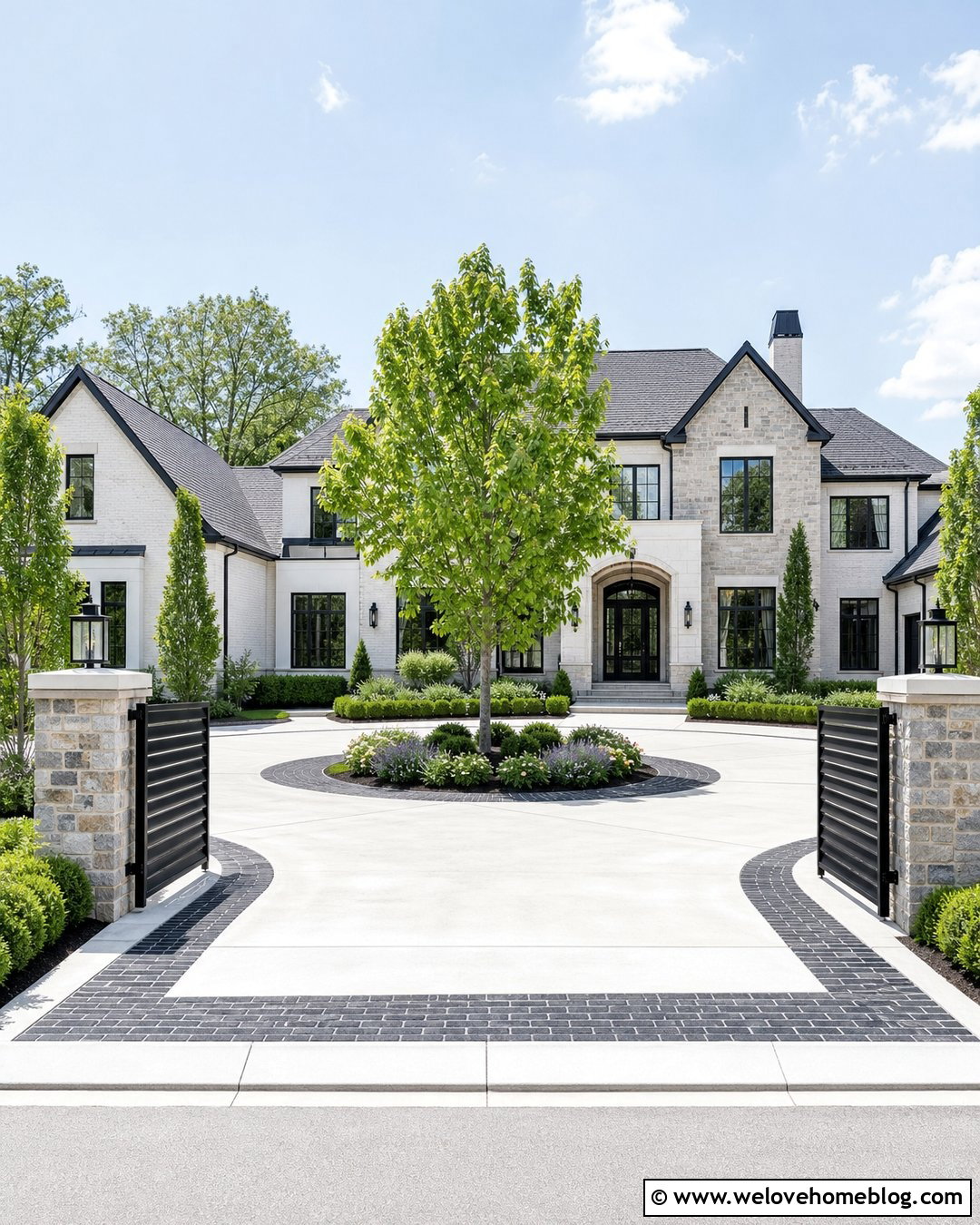
A circular driveway needs a gate placement that keeps arrival and departure routes easy to understand. Install a matching sliding gate at each opening or use one primary gated entrance with a clearly landscaped exit, depending on the property plan. Black aluminum gates with semi-private horizontal slats pair well with a pale concrete circular driveway. Use dark brick ribbons to mark both entrances and outline the central planting island. Fill the island with a specimen tree, low shrubs, and seasonal perennials that will not block visibility. Matching brick-and-stone pillars create continuity around the frontage. Keep access equipment and signs on stationary posts. The repeated gate, paving, and masonry details help the two openings feel like parts of one intentional residential entrance rather than separate driveways.
33. Sliding Gate With Modern Farmhouse Driveway
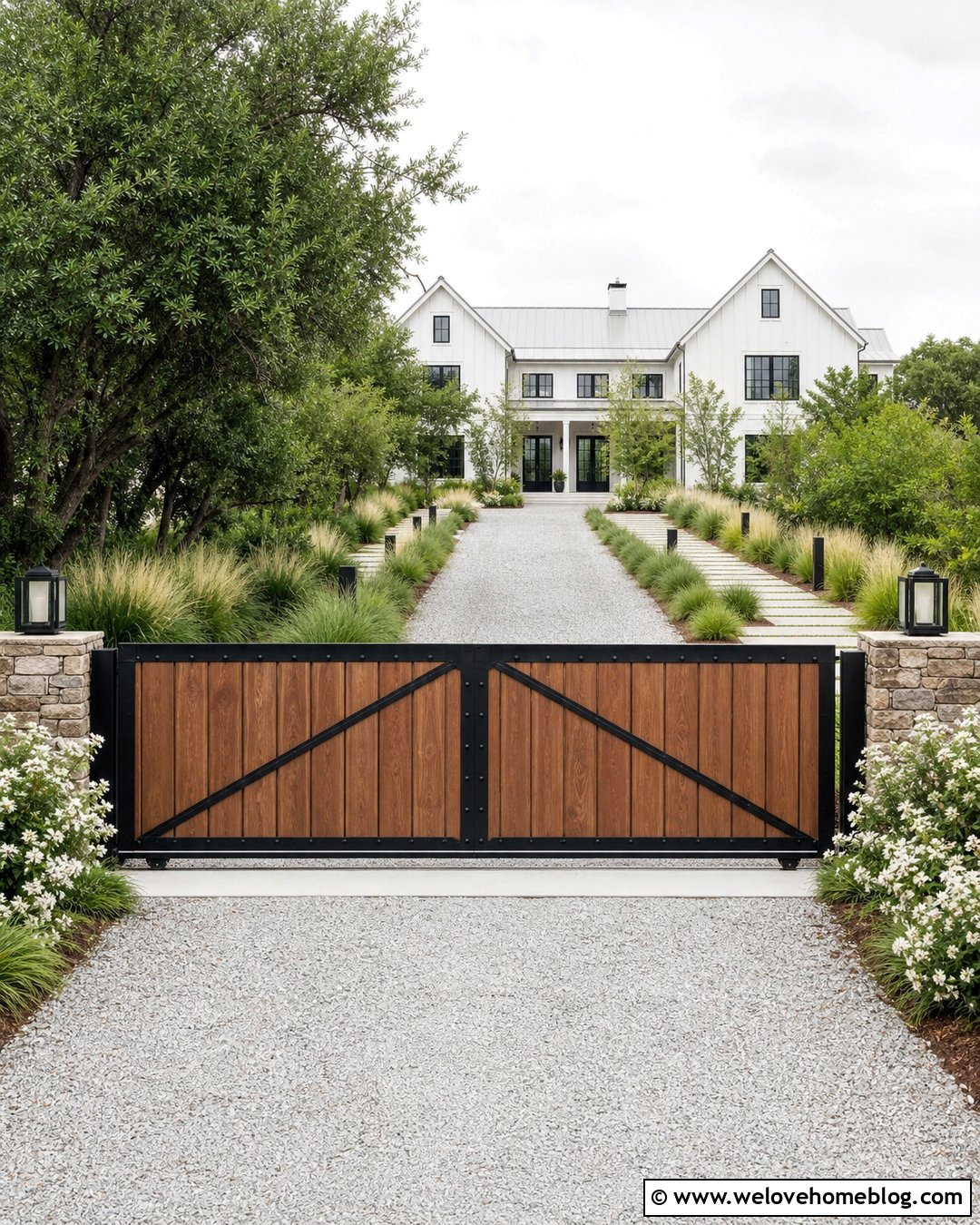
For a modern farmhouse, combine familiar materials with a cleaner sliding-gate profile. Use black steel framing filled with medium-stained vertical wood boards and restrained cross-brace detailing. A light gray gravel driveway can lead toward a white board-and-batten house with black windows. Add a stabilized concrete or paver strip across the gate opening to keep loose gravel away from moving components. Low stone walls, white flowering shrubs, and clumps of native grass create a relaxed but tidy landscape. Simple black pillar lights connect with the window frames and gate structure. A matching pedestrian gate can sit beside a stone path leading to the porch. The finished entrance feels rural and welcoming while offering the space-saving movement and orderly appearance of a sliding system.
34. Sliding Gate With Mediterranean Driveway
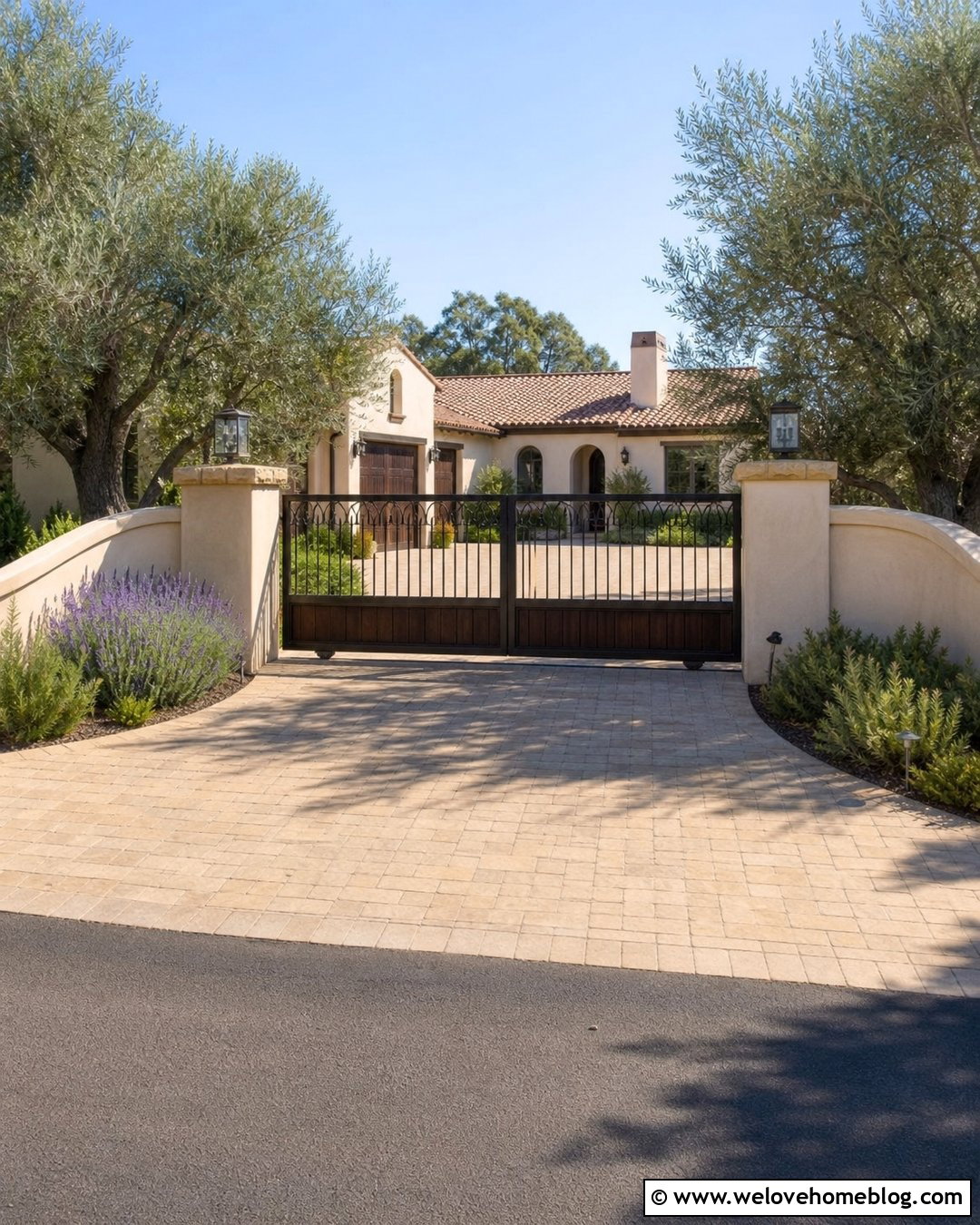
A Mediterranean entrance benefits from warm surfaces, textured walls, and carefully controlled metalwork. Choose a dark bronze sliding gate with an arched visual pattern contained within a rectangular moving frame. Add wood infill to the lower section for privacy and leave restrained iron details above. A sand-colored cobblestone or tumbled concrete-paver driveway complements cream stucco walls and a clay tile roof. Use stone-capped pillars with understated lanterns, then plant olive trees, rosemary, lavender, and low evergreen shrubs around the entrance. A curved stucco wall can conceal the gate when open. Repeat dark bronze on the pedestrian gate and house fixtures. This combination feels established and regionally appropriate without turning the gate into an overly ornate or visually crowded feature.
35. Sliding Gate With Minimalist Driveway Entrance
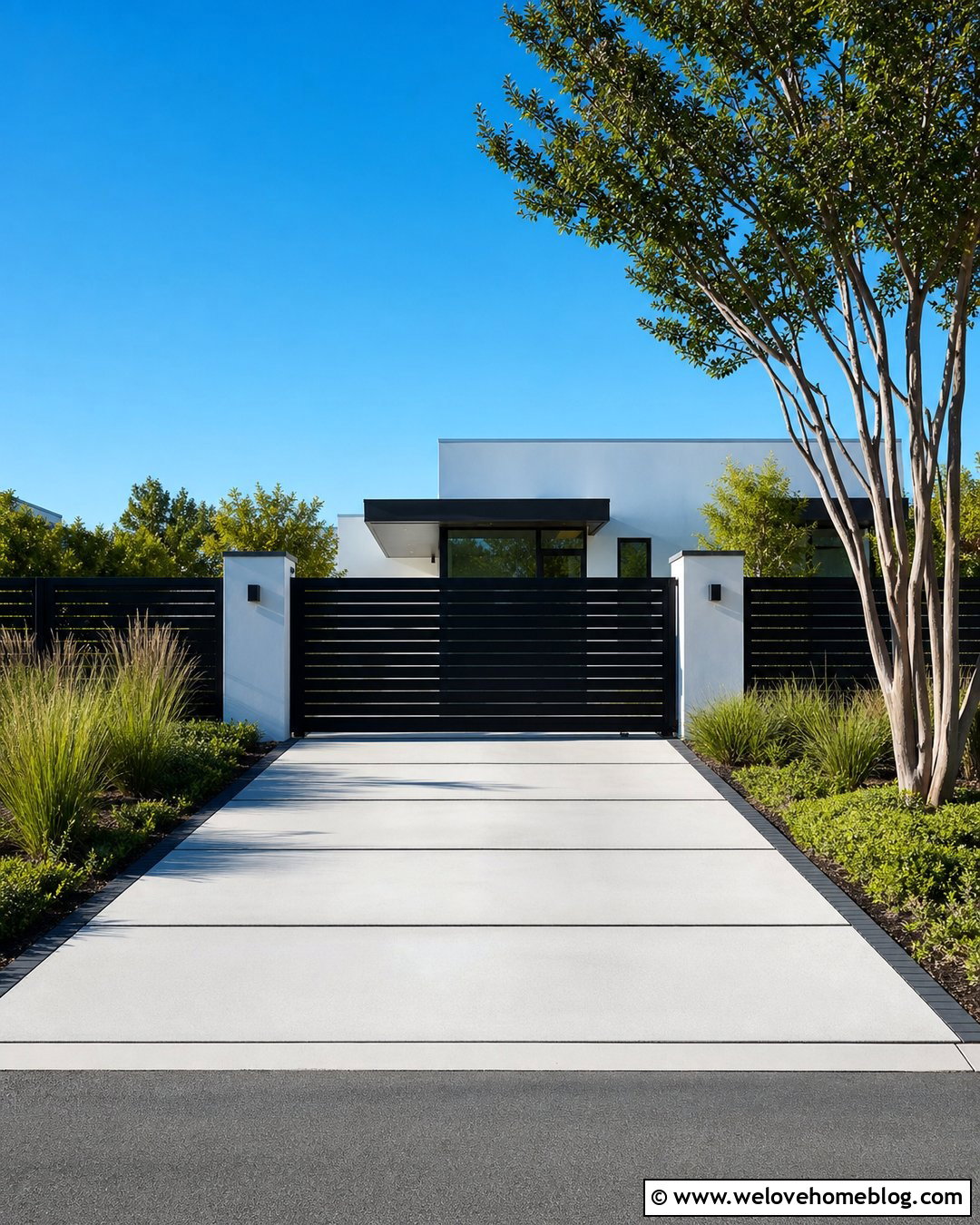
A minimalist sliding gate depends on precise proportions, consistent finishes, and carefully placed landscaping. Use a flush black aluminum panel with almost invisible framing across a pale gray large-format concrete-paver driveway. Continue the gate into a matching horizontal fence so the entire boundary reads as one uninterrupted plane. One white concrete pillar can hold the address, intercom, and parcel box, while a second pillar remains plain. Limit planting to a small number of sculptural choices, such as upright grasses, a multi-stem tree, and low ground cover. Thin black edging keeps every bed defined. A flat-roof modern house with white walls and natural wood accents completes the composition. Conceal as much operating hardware as practical while retaining safe access for inspection and maintenance.
Conclusion:
The best sliding gate should look like a natural extension of the driveway, fence, landscape, and house rather than a separate security feature. Compare materials based on maintenance, privacy, weight, local exposure, and architectural fit. Also evaluate side clearance, grade, drainage, track conditions, pedestrian access, automation, and safety before finalizing the design. Wood creates warmth, metal delivers crisp structure, and composite offers a practical middle ground. Pillars, borders, plants, lighting, and paving then turn the gate into a complete entrance. Whether your property is narrow, sloped, rural, or highly modern, these 35 sliding gate driveway ideas offer a useful starting point for planning an attractive, functional approach.

Related posts:
Leave a Reply