
A well-planned side driveway can improve parking, backyard access, drainage, and curb appeal without overpowering the front of your home. These 35 Side Driveway Ideas explore practical layouts for narrow lots, suburban yards, detached garages, and rear parking areas. You will find gravel, concrete, asphalt, brick, permeable pavers, and mixed-material designs paired with useful borders and thoughtful landscaping. Before choosing a look, measure vehicle clearance, locate utilities, confirm local setback rules, and plan how rainwater will move away from the foundation. The strongest designs treat the surface, entrance, edging, lighting, and planting as one connected space. Whether you want a low-cost update or a polished custom approach, the complete driveway looks below offer adaptable 35 Side Driveway Ideas.
1. Narrow Concrete Side Driveway With Grass Border
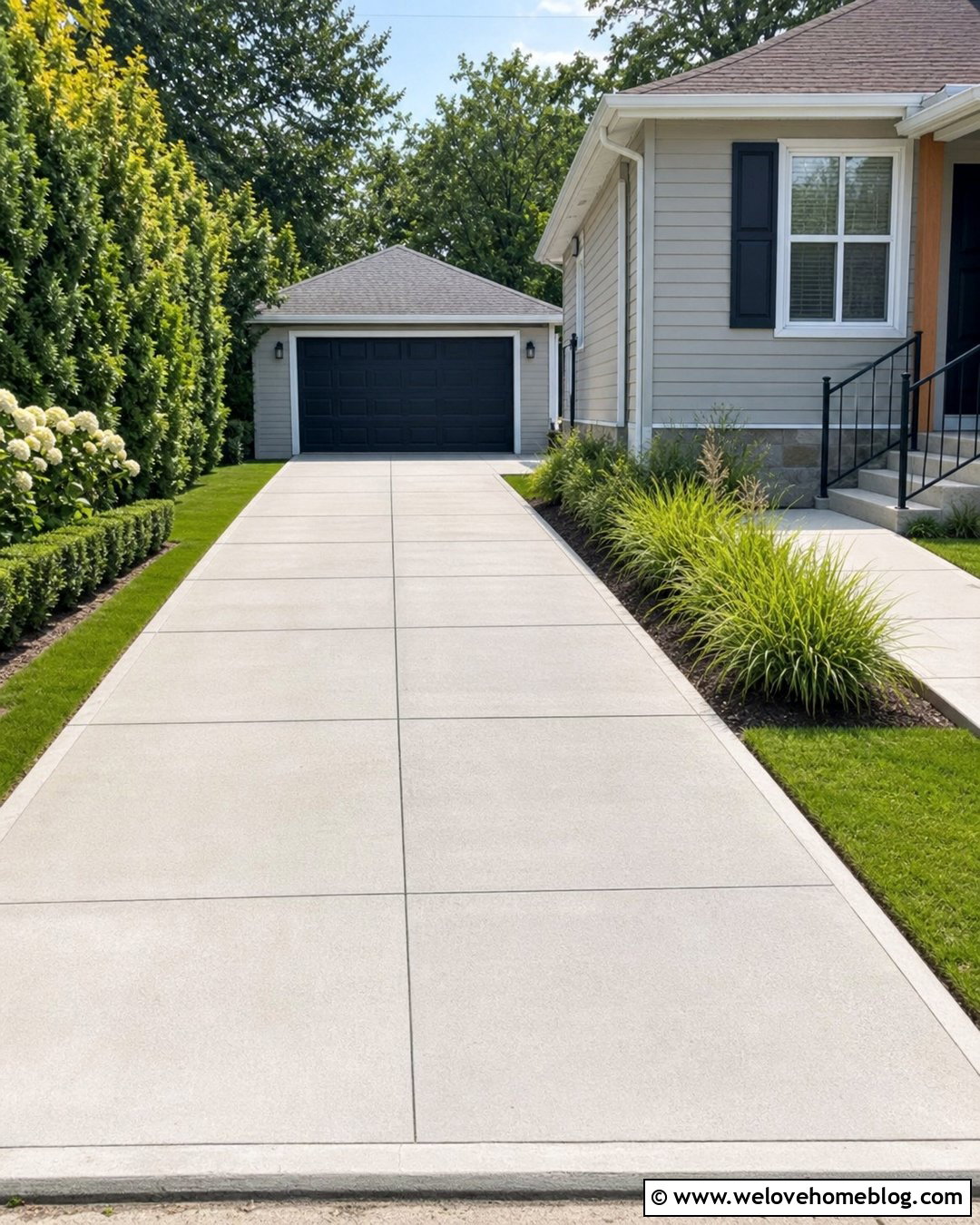
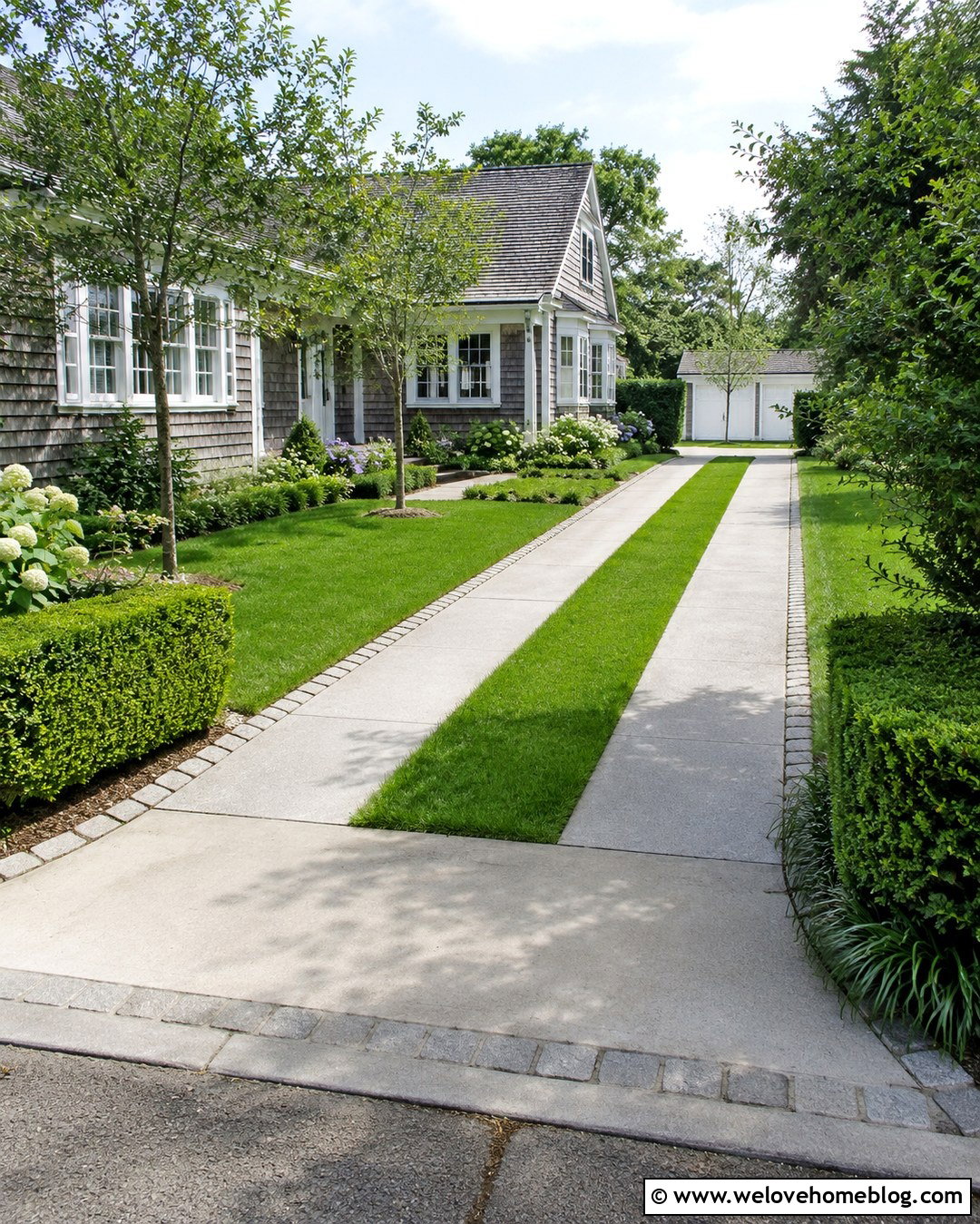
A narrow concrete side driveway creates a clean, dependable route to a detached garage while keeping the layout visually simple. Use light gray poured concrete with saw-cut joints placed at even intervals. A slim grass border beside the house softens the pavement and prevents the corridor from feeling completely covered in hardscape. On the property-line side, add a low planting bed with compact ornamental grasses or ground cover that will not scrape vehicles. A gentle flare near the street makes turning into the driveway easier. Match the front walkway to the concrete for a connected look. Where water collects, include a discreet channel drain or adjust the grading before installation. This practical combination suits ranch, Cape Cod, and traditional suburban homes.
2. Gravel Side Driveway With Brick Edging
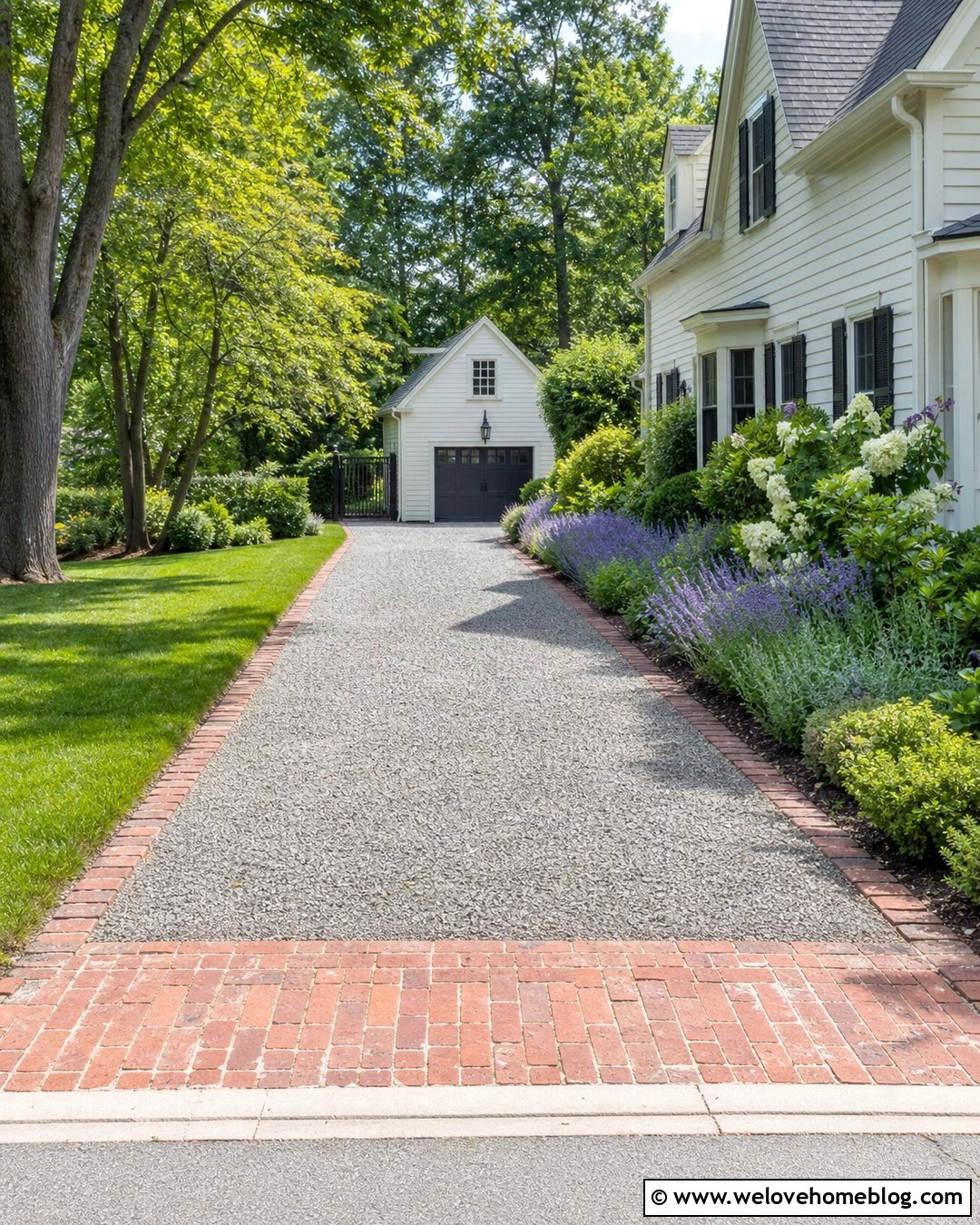
Gravel can make a long side driveway feel relaxed and established, especially beside a cottage or traditional brick home. Choose compact angular gravel rather than loose rounded stones, since the pieces lock together more effectively under tires. A red or weathered clay brick edge keeps the gravel contained and visually connects the driveway to brick steps, chimneys, or garden walls. Lay the bricks flush near parking areas so doors can open comfortably. Along the outer edge, use a narrow bed of lavender, catmint, or another locally suitable low plant. A wider gravel pad at the rear can provide space for parking and turning. Proper excavation, a compacted base, and carefully planned drainage help reduce rutting, shifting, and recurring maintenance.
3. Paver Side Driveway With Detached Garage
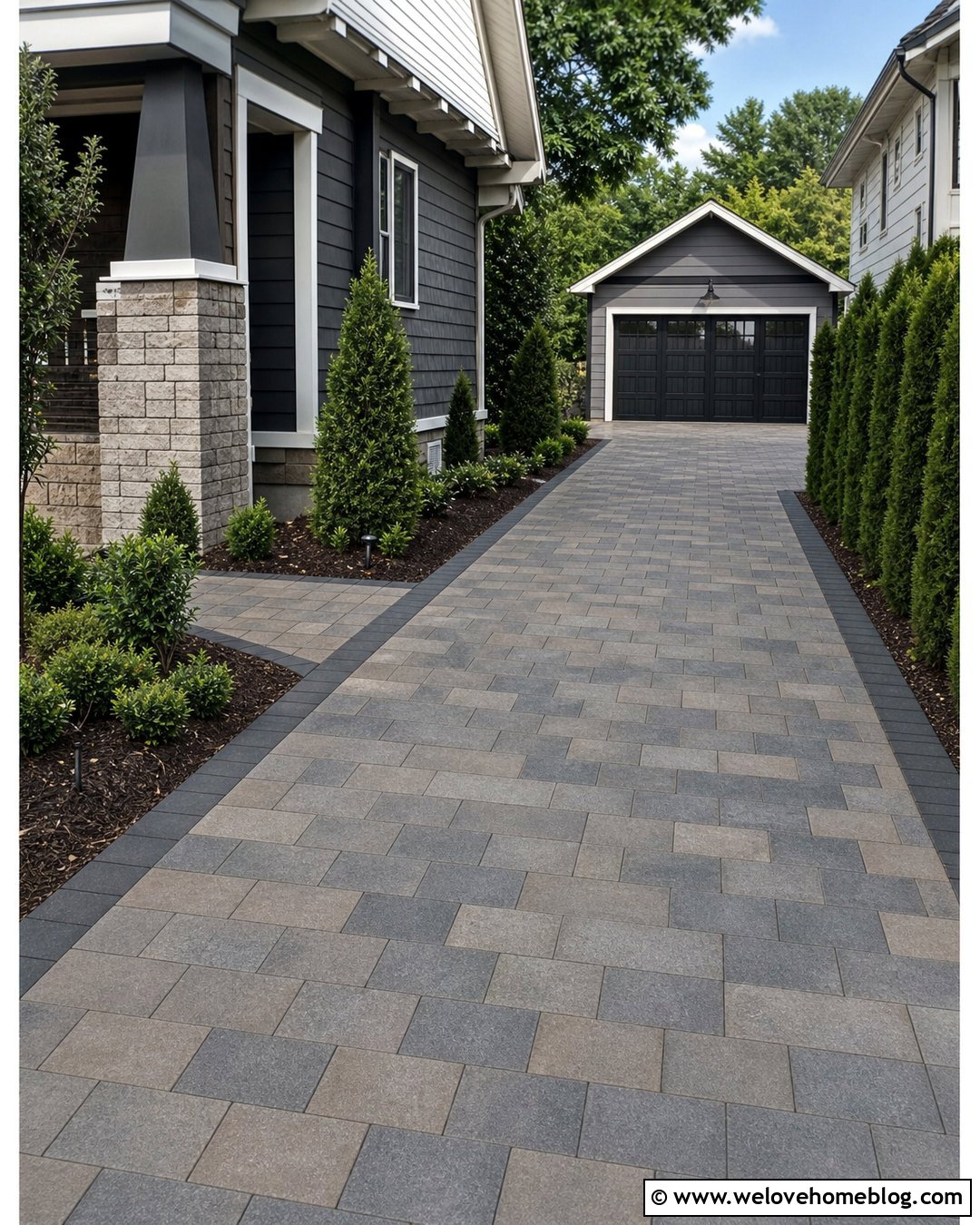
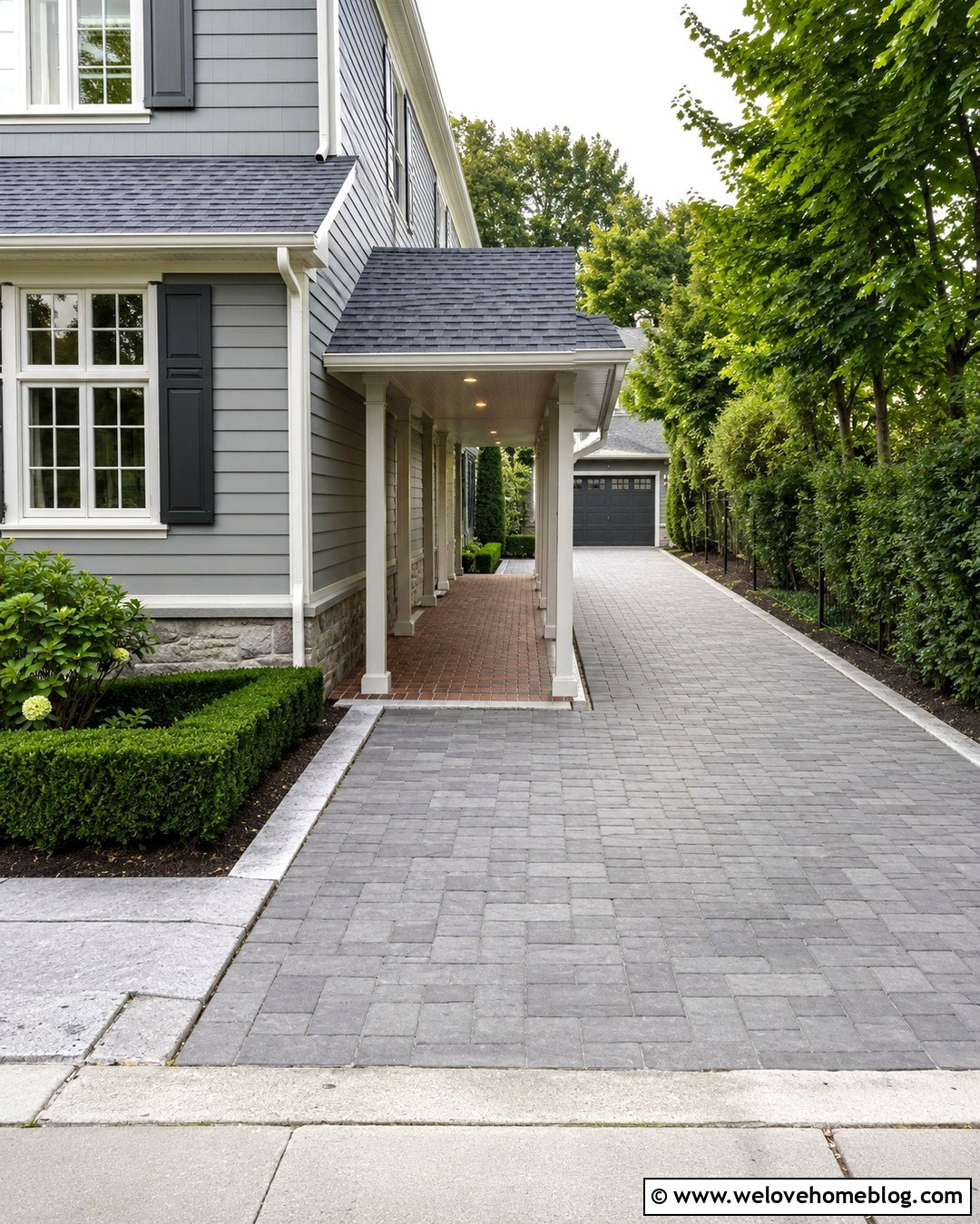
Brick-shaped concrete pavers bring pattern and definition to a driveway running beside the house. A running-bond pattern can visually lengthen the route, while a herringbone pattern adds movement and performs well in areas with frequent turning. Select charcoal, taupe, or blended gray pavers that coordinate with the roof and garage door. Frame the surface with a darker soldier-course border to prevent the edges from looking unfinished. A narrow walkway can branch from the driveway toward the side entrance without introducing another material. Keep landscaping restrained with upright evergreens, low grasses, and mulch beds. At the rear, widen the paved area into a practical parking court. This design makes a detached garage feel intentionally connected to the main home.
4. Asphalt Side Driveway With Stone Apron
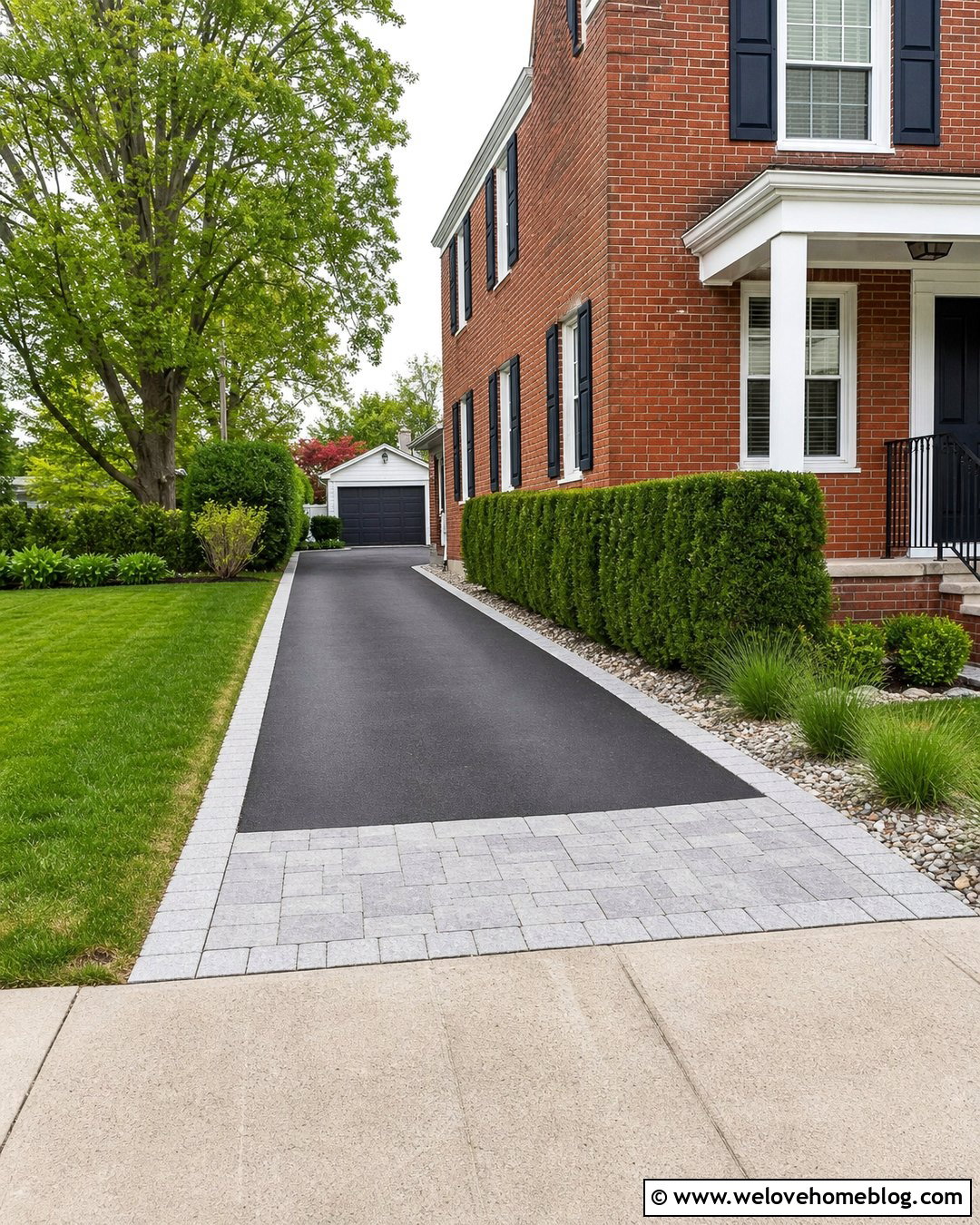
Black asphalt offers a smooth, straightforward surface for a frequently used side driveway. To make the entrance look more finished, add a stone or concrete paver apron where the driveway meets the street. The contrasting band creates a clear transition and protects the most visible part of the design from appearing overly plain. Continue a narrow row of matching pavers along each edge for better definition. Near the house, use a slim gravel drainage strip rather than planting directly against the foundation. A clipped hedge or repeated ornamental grasses can soften the property-line side without reducing driving clearance. This complete look works particularly well with colonial, split-level, and brick ranch homes. Periodic sealing can help maintain the asphalt’s dark, even appearance.
5. Modern Side Driveway With Concrete Pavers
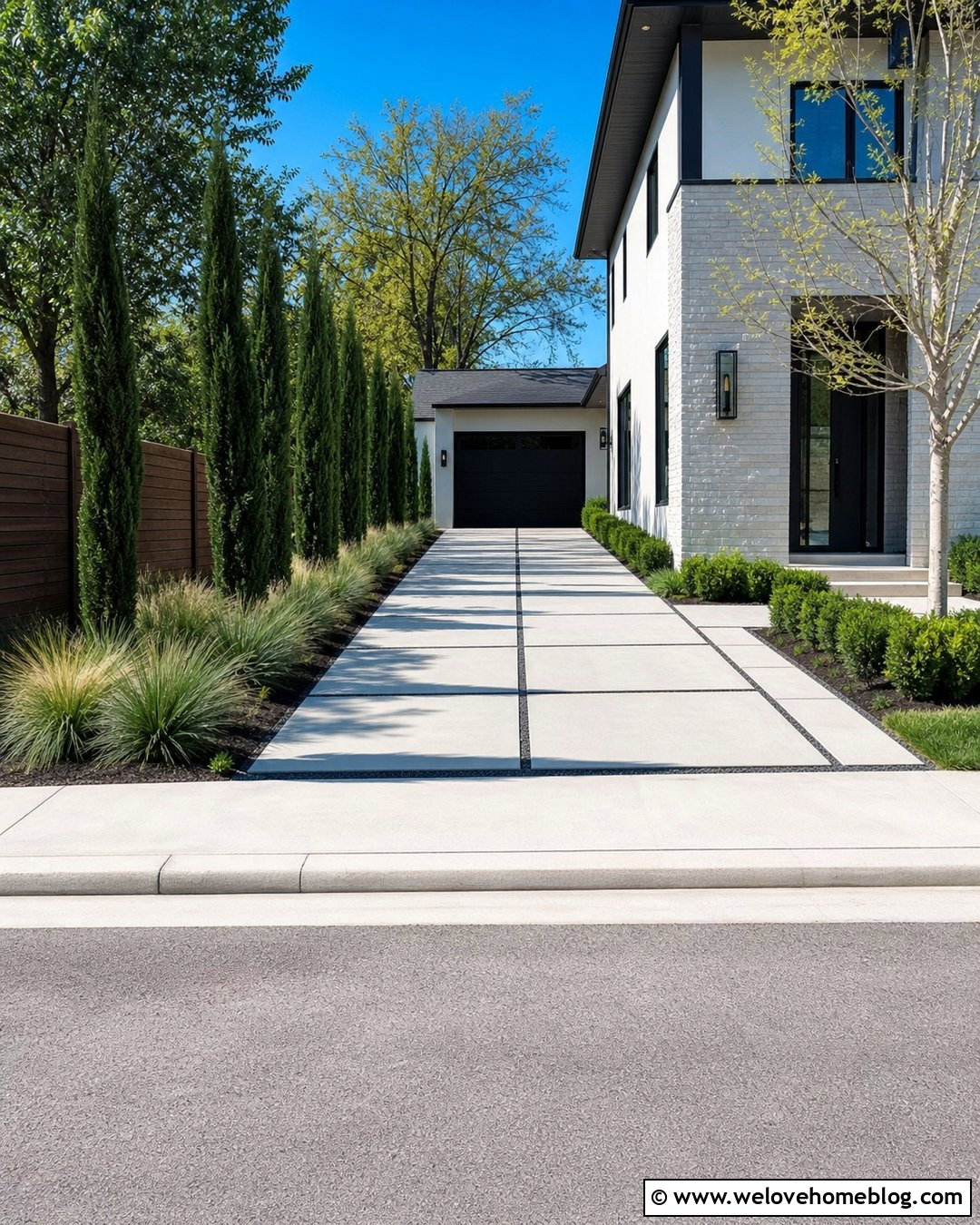
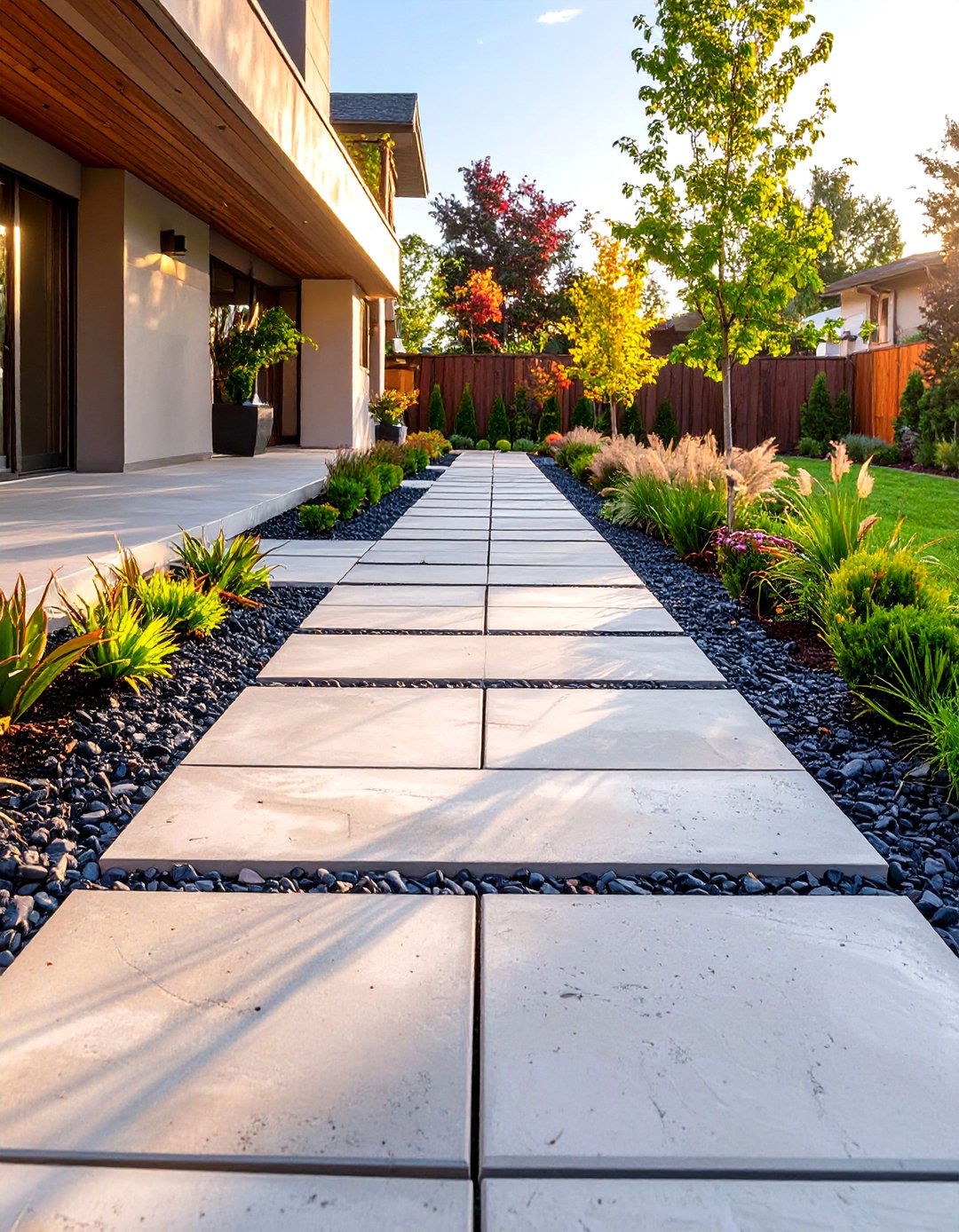
Large-format concrete pavers give a side driveway a modern appearance without relying on decorative details. Use rectangular charcoal or pale gray units in a straight grid, with narrow joints that emphasize the long approach to the garage. A flush black metal edge keeps the layout crisp. Add one slim planting strip containing repeated grasses, dwarf shrubs, or columnar evergreens rather than many unrelated plants. A smooth concrete walkway beside the pavers can lead to a side door while remaining visually connected. Finish the rear parking area with the same material so the design does not feel interrupted. This layout complements flat roofs, dark window frames, vertical siding, and minimalist architecture. Clean geometry makes even a confined side yard appear organized and deliberate.
6. Side Driveway With Grass Paver Strips
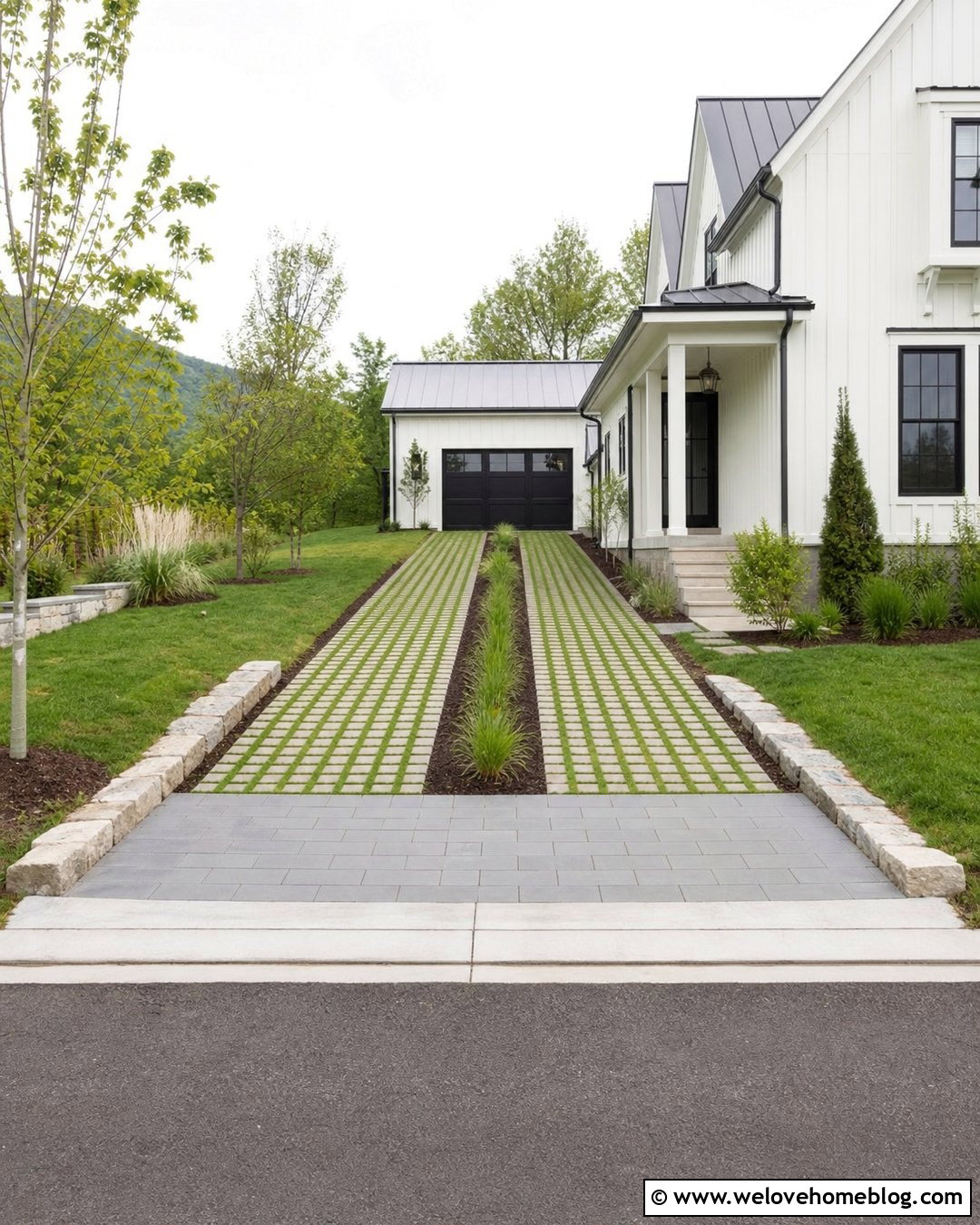
Grass paver strips reduce the visual weight of a side driveway and introduce greenery into a narrow parking route. Build two reinforced wheel tracks using concrete grid pavers filled with turf or a durable low-growing ground cover. Place a matching planted strip between them to create a linear pattern that leads toward the rear garage. Solid pavers at the entrance and parking pad provide stable areas for turning, walking, and opening vehicle doors. Keep the surrounding beds simple so the surface remains the main feature. A low stone edge can separate the tracks from the lawn without becoming a tire hazard. This approach suits mild climates and homes where a softer landscape is preferred, although the plants will need suitable sunlight, drainage, and routine care.
7. Side Driveway With Cobblestone Border
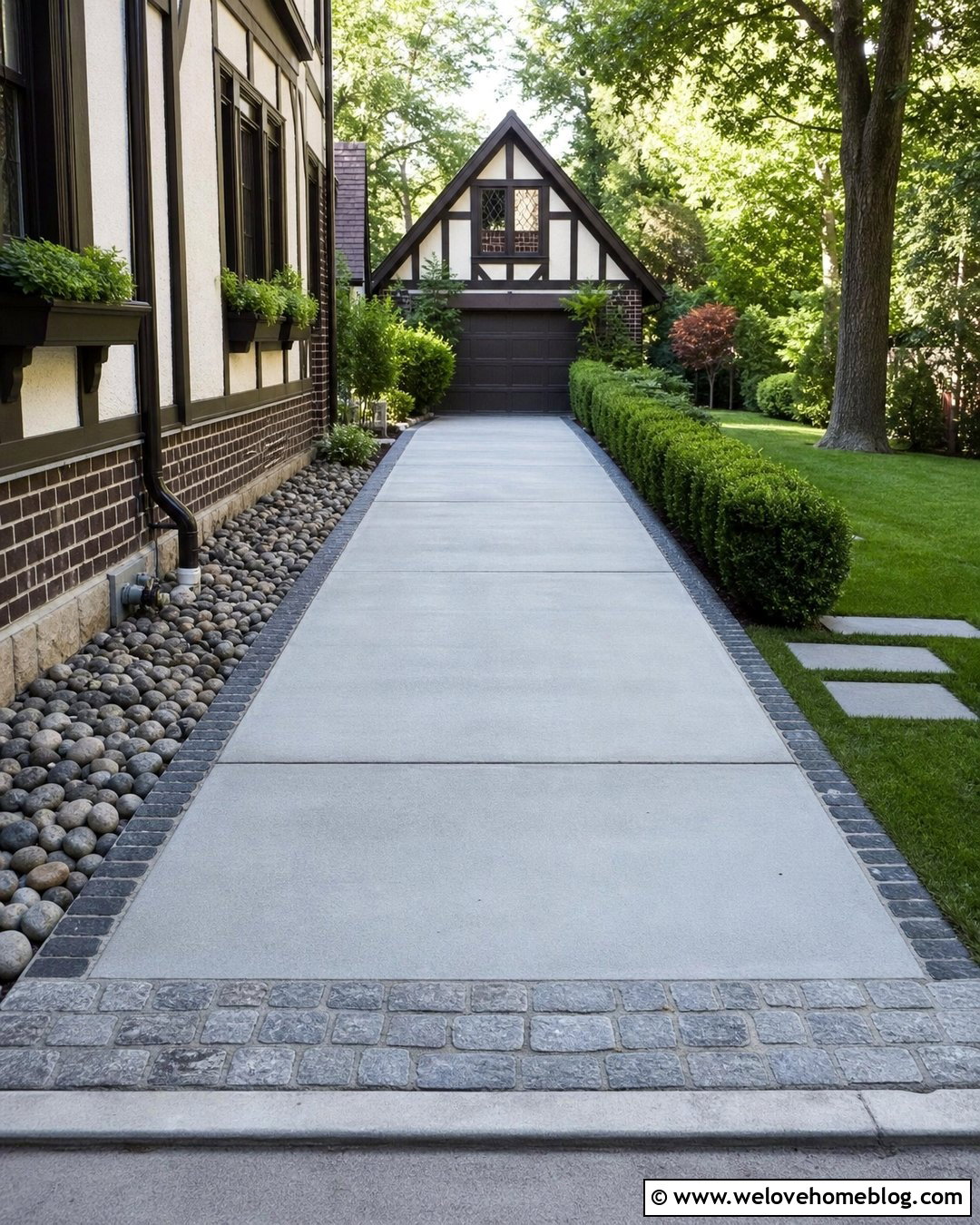
A cobblestone border can give an ordinary side driveway a more permanent, carefully built appearance. Pair charcoal granite cobbles with light poured concrete, pale gravel, or warm-toned asphalt. Use one or two rows along the edges and repeat the stone across the entrance as a simple threshold. The border should sit securely and remain low enough to avoid interfering with tires or doors. Between the driveway and house, install a narrow river-rock drainage bed with evenly spaced stepping stones leading to utility areas. On the opposite side, a clipped hedge can create privacy while maintaining a predictable width. This design works with Tudor, colonial, craftsman, and stone-front homes. Repeating the cobblestone around the rear parking pad completes the coordinated look.
8. Curved Side Driveway With Garden Border
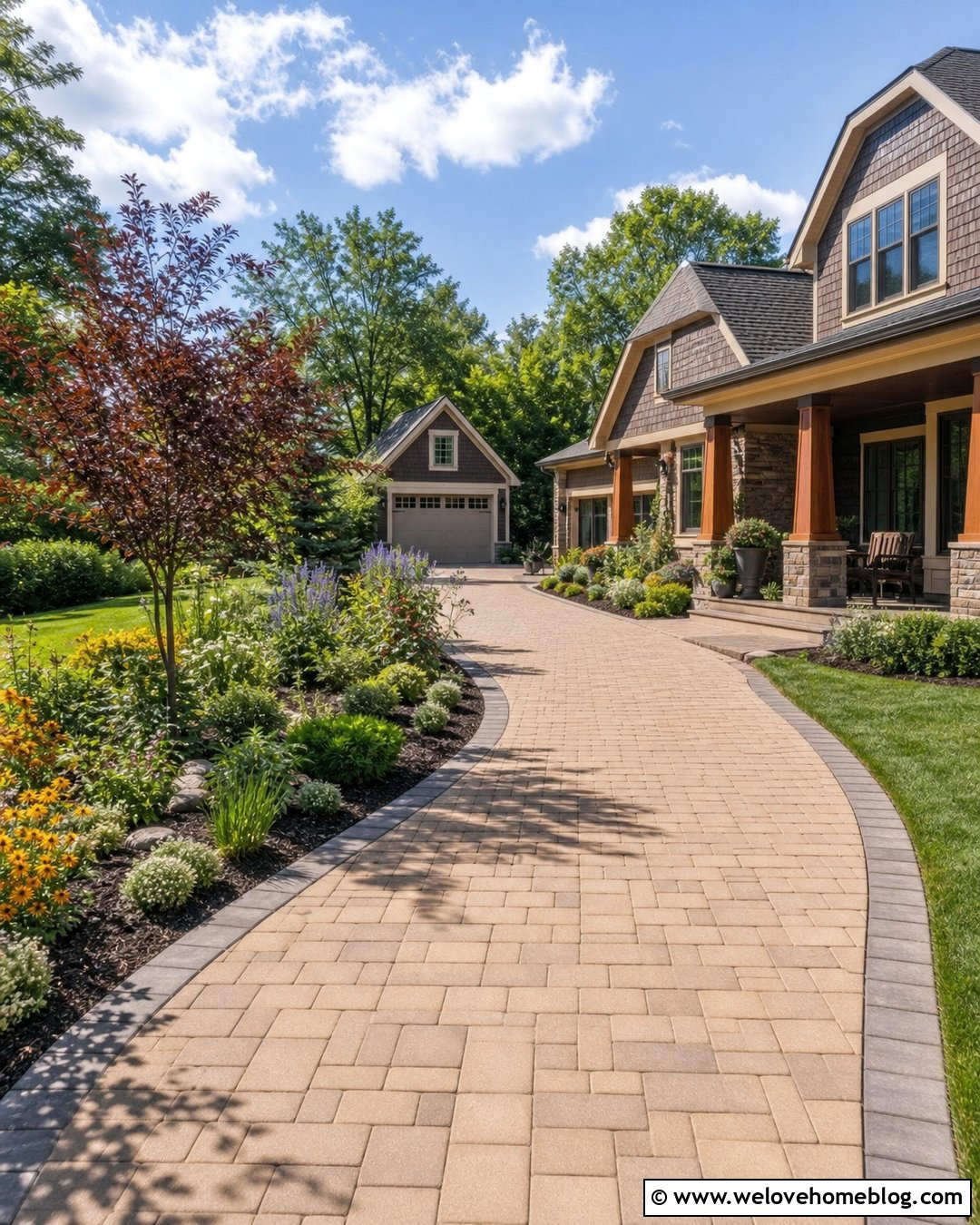
A gentle curve can help a side driveway follow the shape of the property while creating a softer view from the street. Use warm beige concrete pavers or light exposed aggregate to make the curve easy to read. Define the outside edge with a broad planting bed containing low shrubs, flowering perennials, and one small ornamental tree positioned away from vehicle sightlines. Keep the inside edge simpler with a flush stone border and narrow lawn strip. The curve should remain gradual enough for comfortable steering, especially near gates and garage corners. Repeating the same plants in small groups creates continuity along the route. This complete layout suits cottage, craftsman, and traditional homes where a perfectly straight driveway might appear too rigid or dominate the yard.
9. Side Driveway With Privacy Hedge
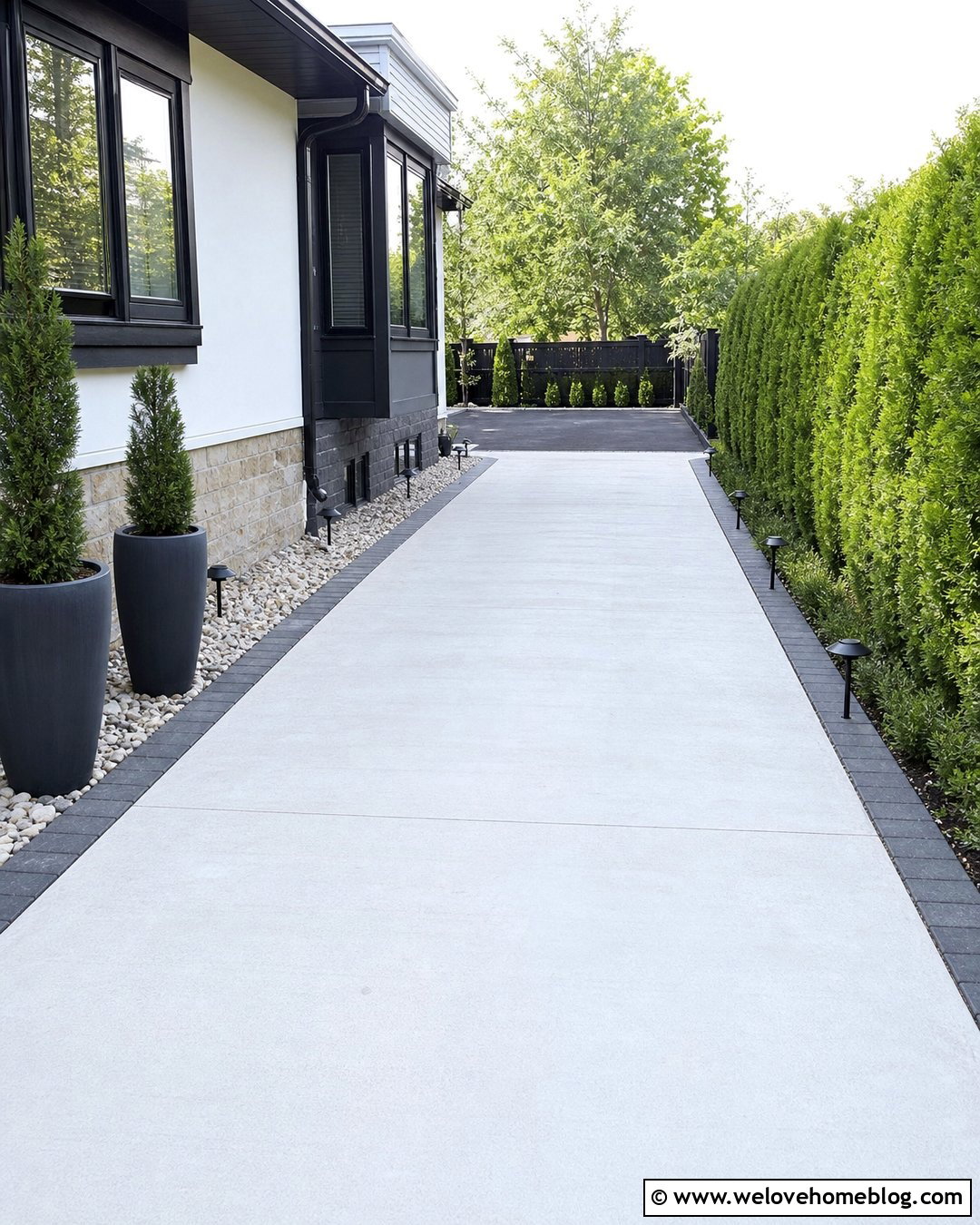
A side driveway can sit close to neighboring property, making privacy an important part of the overall design. Combine smooth gray concrete with a narrow, continuous hedge planted beyond a protective curb or paver edge. Choose shrubs based on mature width, local climate, light, and pruning needs rather than their small size at installation. On the house side, use pale decorative gravel and a few upright planters near the entrance. Low path lights can be placed along the hedge without narrowing the driving lane. Keep the hedge lower near the street to preserve a clear view of pedestrians and traffic. This structured treatment creates a green corridor while maintaining vehicle access. It works especially well beside suburban colonials, contemporary homes, and compact urban residences.
10. Side Driveway With Wood Fence
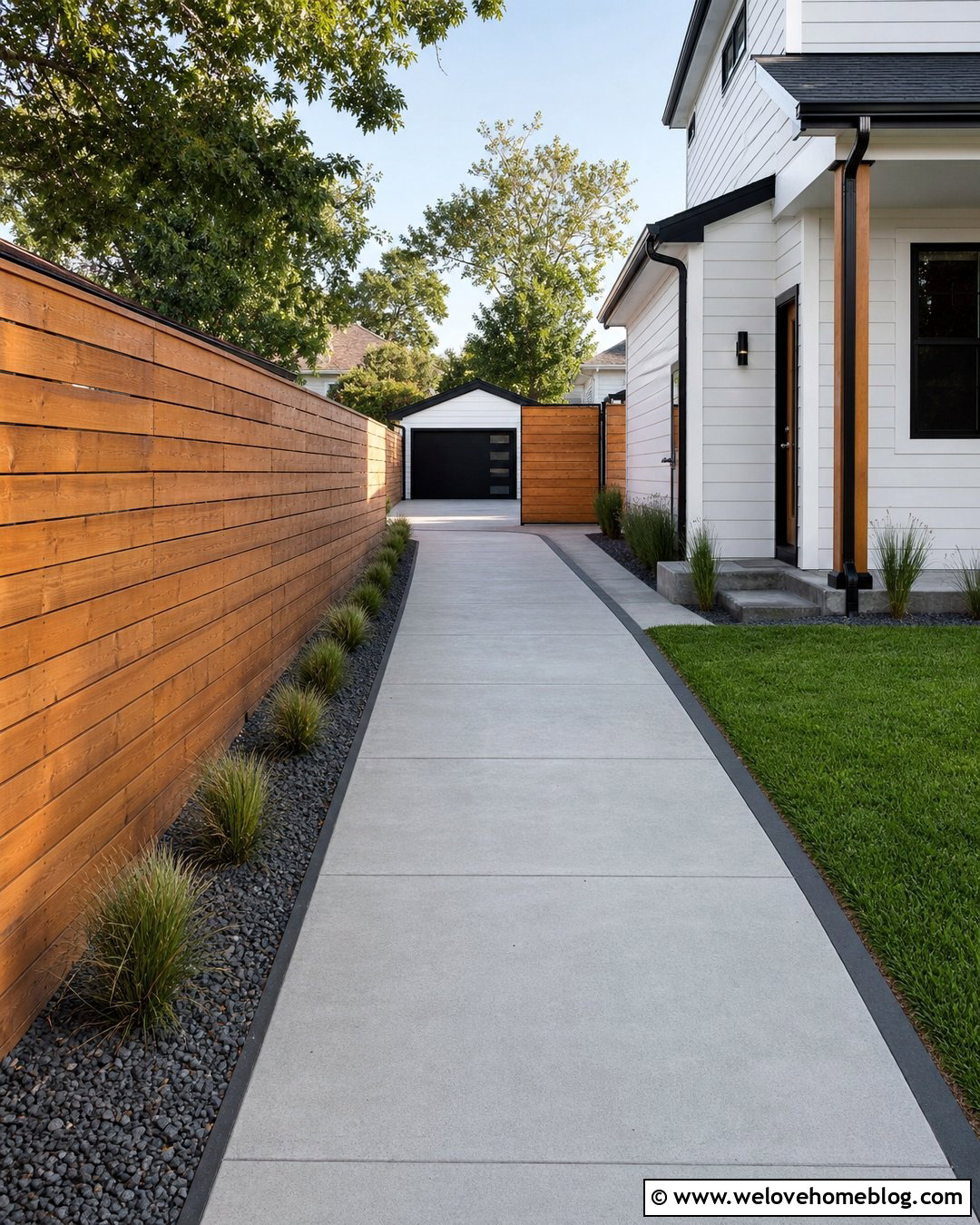
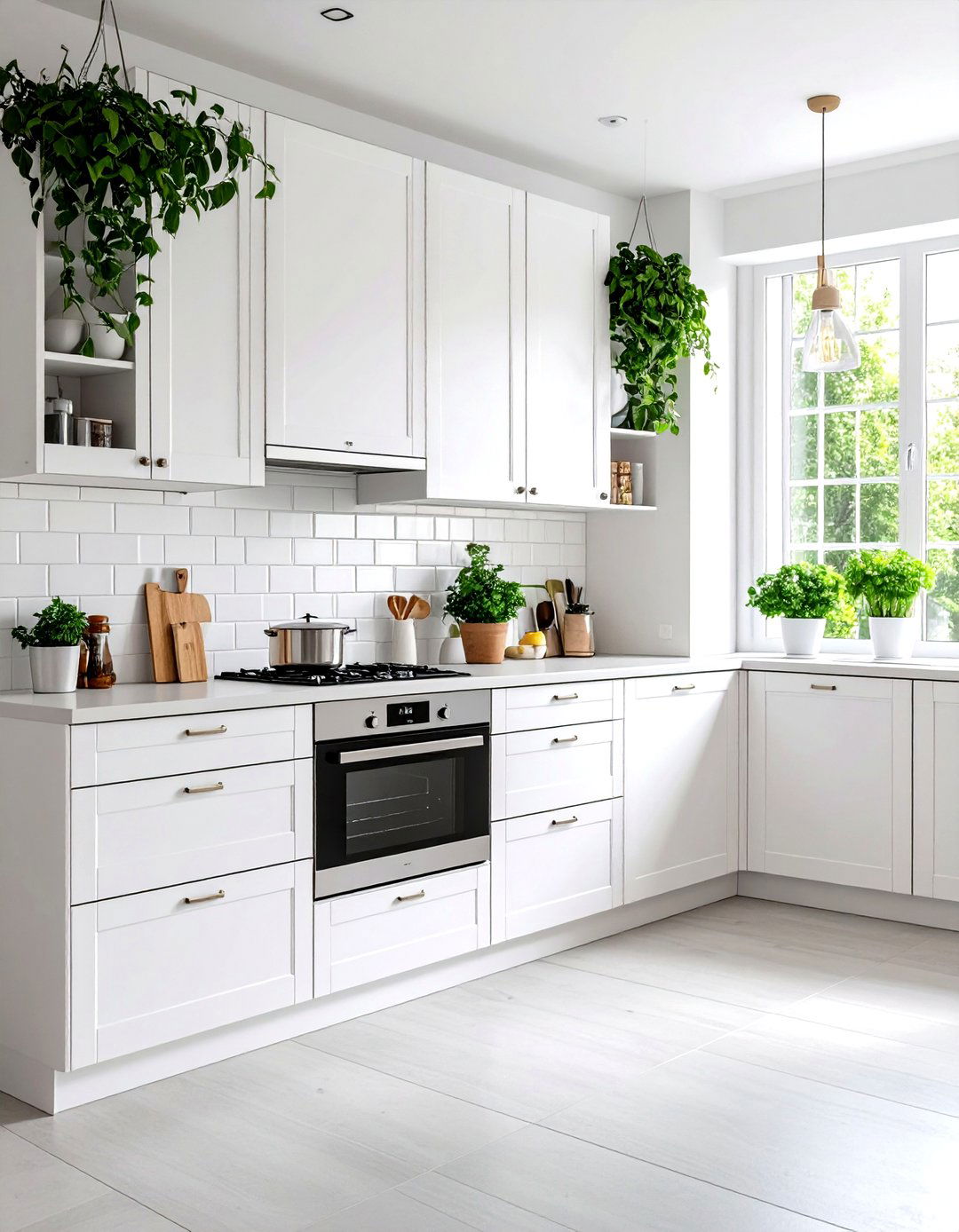
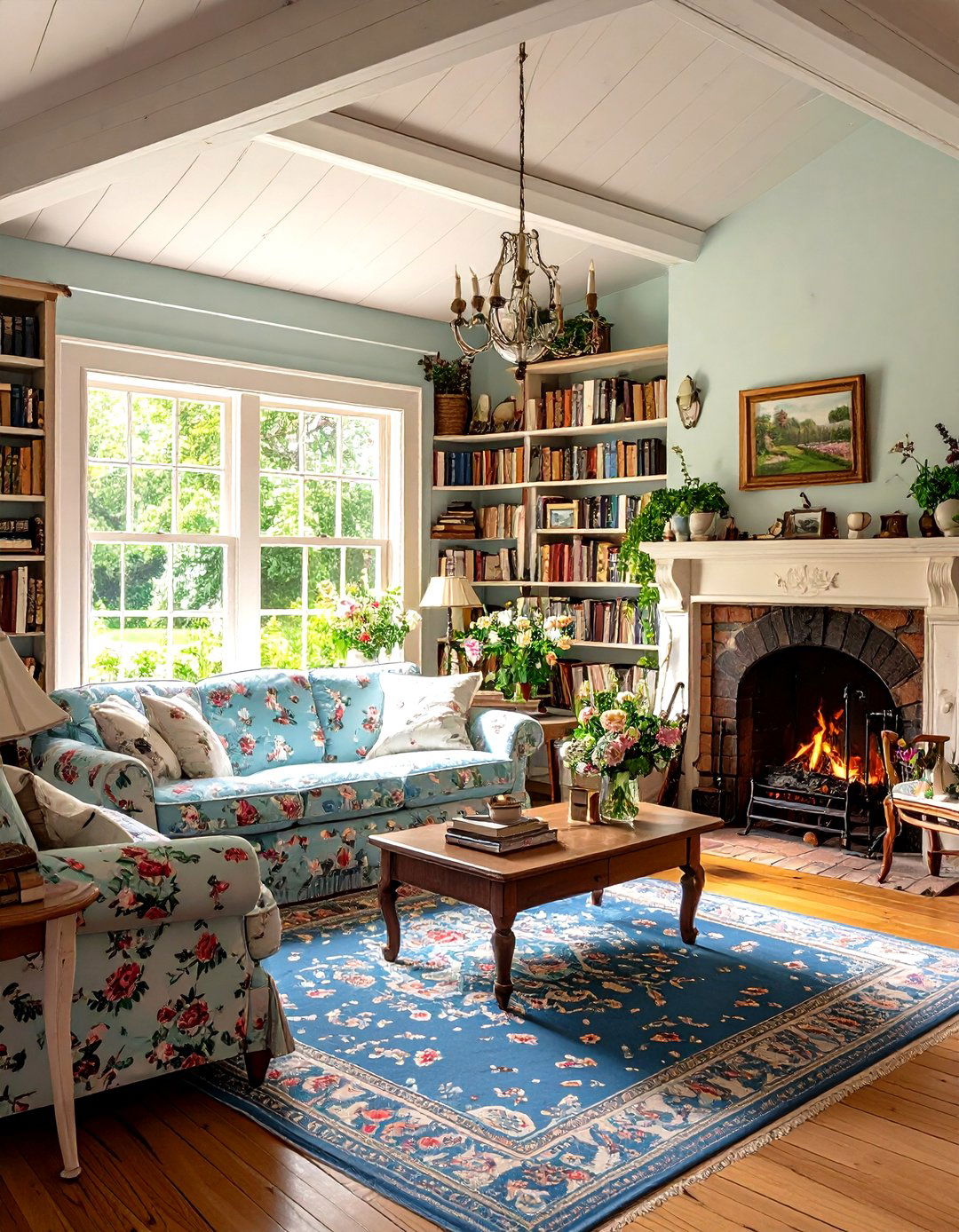
A wood fence can make a side driveway feel private and orderly when the neighboring yard is close. Pair a medium-gray concrete or asphalt surface with horizontal cedar boards for a contemporary look, or use a white vertical fence beside a cottage-style home. Set the fence beyond the required vehicle clearance and protect its base with a narrow gravel strip. Repeated grasses or compact shrubs can soften the fence without growing into the driveway. At the front, step the fence height down so the entrance feels open and visibility remains clear. A coordinating wood gate at the rear can screen trash storage or a backyard work area. Use simple downlights where permitted. The resulting driveway looks cohesive because the surface, boundary, planting, and gate share one organized layout.
11. Side Driveway With Black Metal Gate
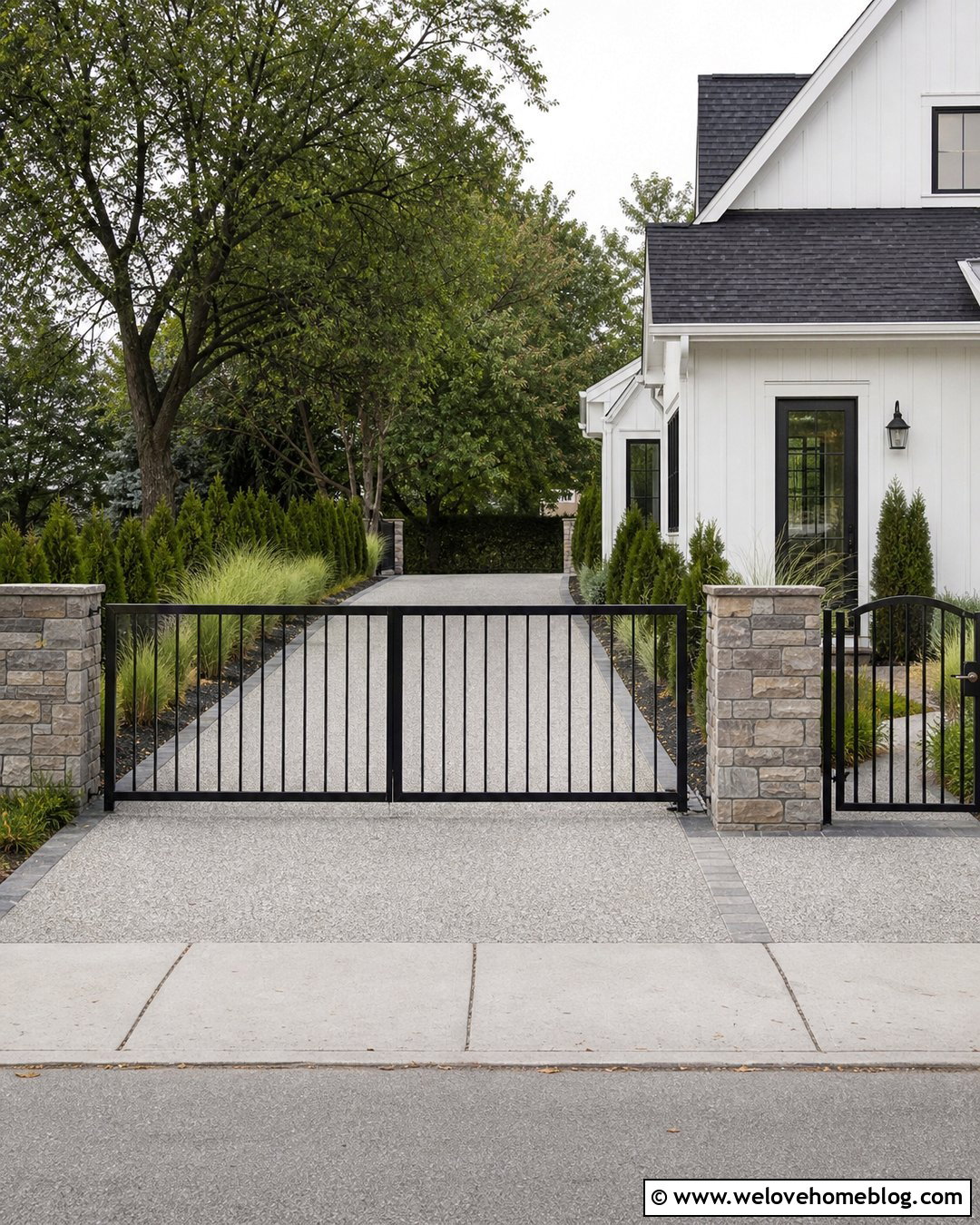
A black metal gate provides security while allowing light and views to pass through a side driveway. Install it where the drive begins to narrow beside the house, leaving enough level space for a vehicle to wait safely. Pair the gate with light gray concrete pavers or exposed aggregate so its dark frame stands out. Low brick or stone pillars can anchor the sides without making the entrance feel oversized. Continue matching edging from the gate toward the rear parking pad. Keep nearby planting low and controlled, using compact boxwood alternatives, grasses, or spreading ground cover suited to the site. Add a separate pedestrian gate if the side route is used frequently on foot. This refined combination complements modern farmhouse, colonial, and transitional homes.
12. Side Driveway With Brick Gate Pillars
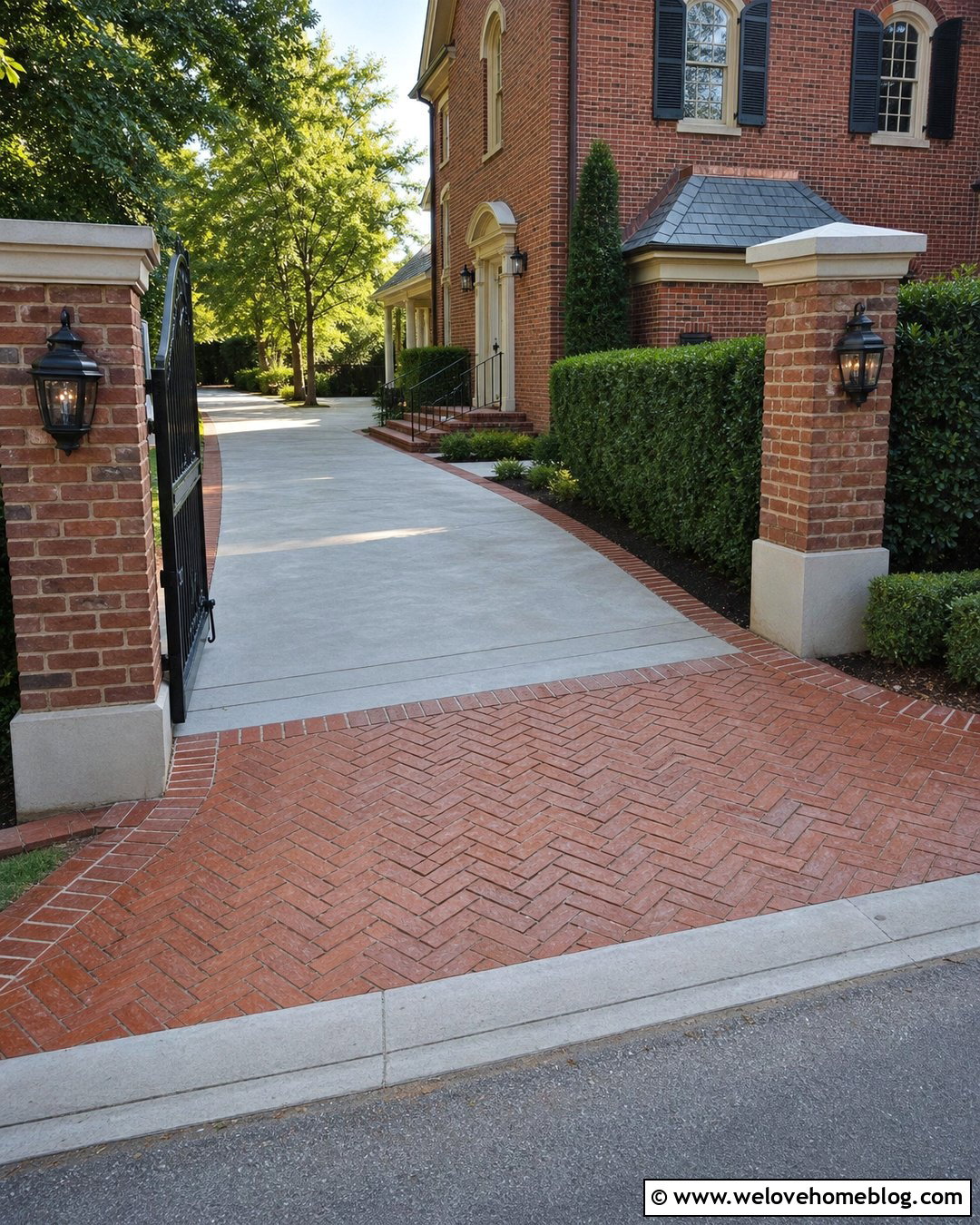
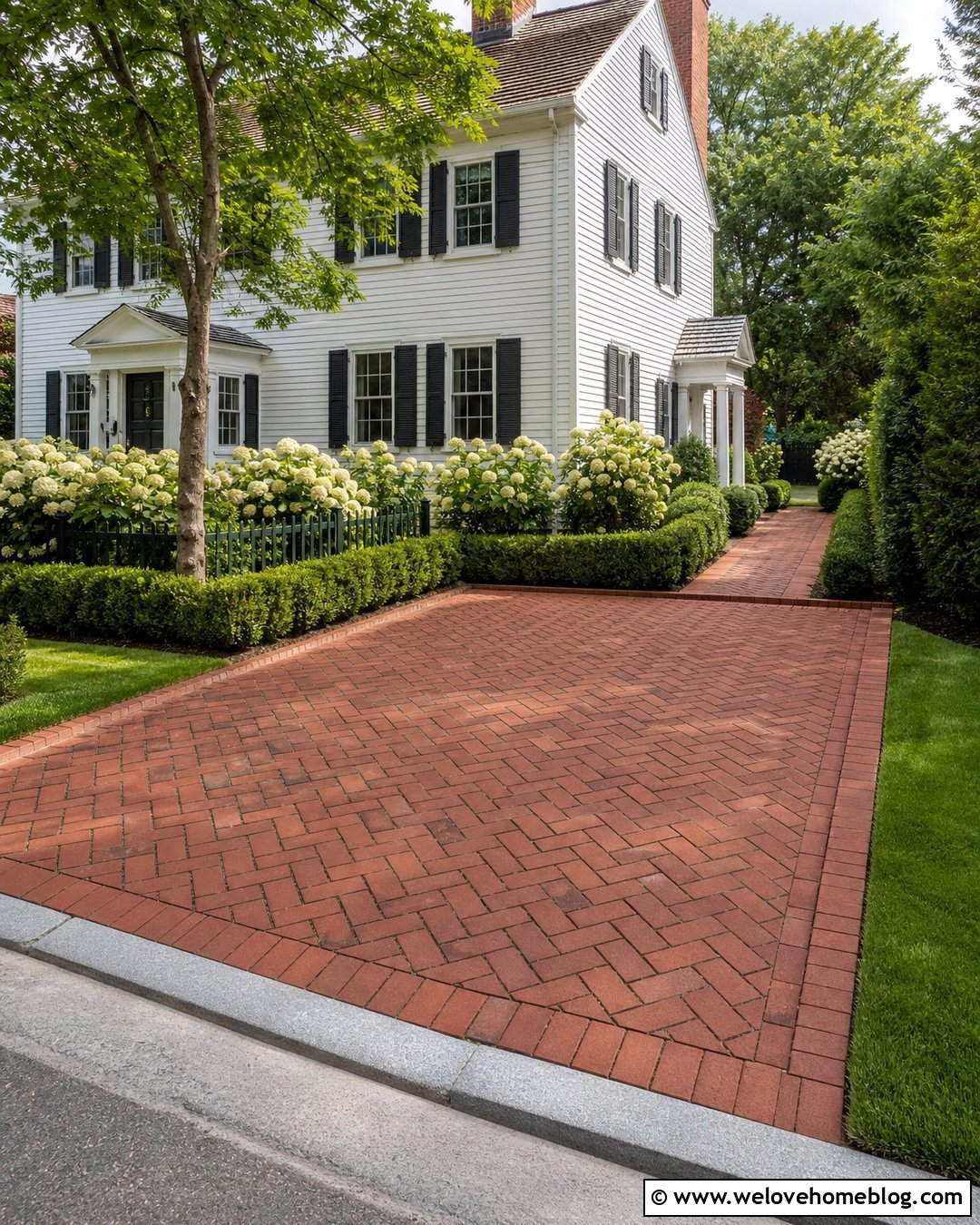
Brick gate pillars can connect a side driveway to a brick house and give the entrance a clear architectural presence. Use clay brick pavers in a herringbone pattern for the apron, then continue with asphalt or poured concrete farther down the drive to control costs. Cap the pillars with limestone or precast concrete and place simple lantern-style fixtures on top. A dark metal gate can sit between them, while low hedges frame the entrance without blocking visibility. Continue a brick ribbon along the driveway edges so the mixed surfaces still feel intentional. Near the side door, widen the border into a small landing. This design feels formal but practical, particularly for colonial, Georgian, and traditional suburban homes with rear garages or gated backyard parking.
13. Side Driveway With Pergola Gate
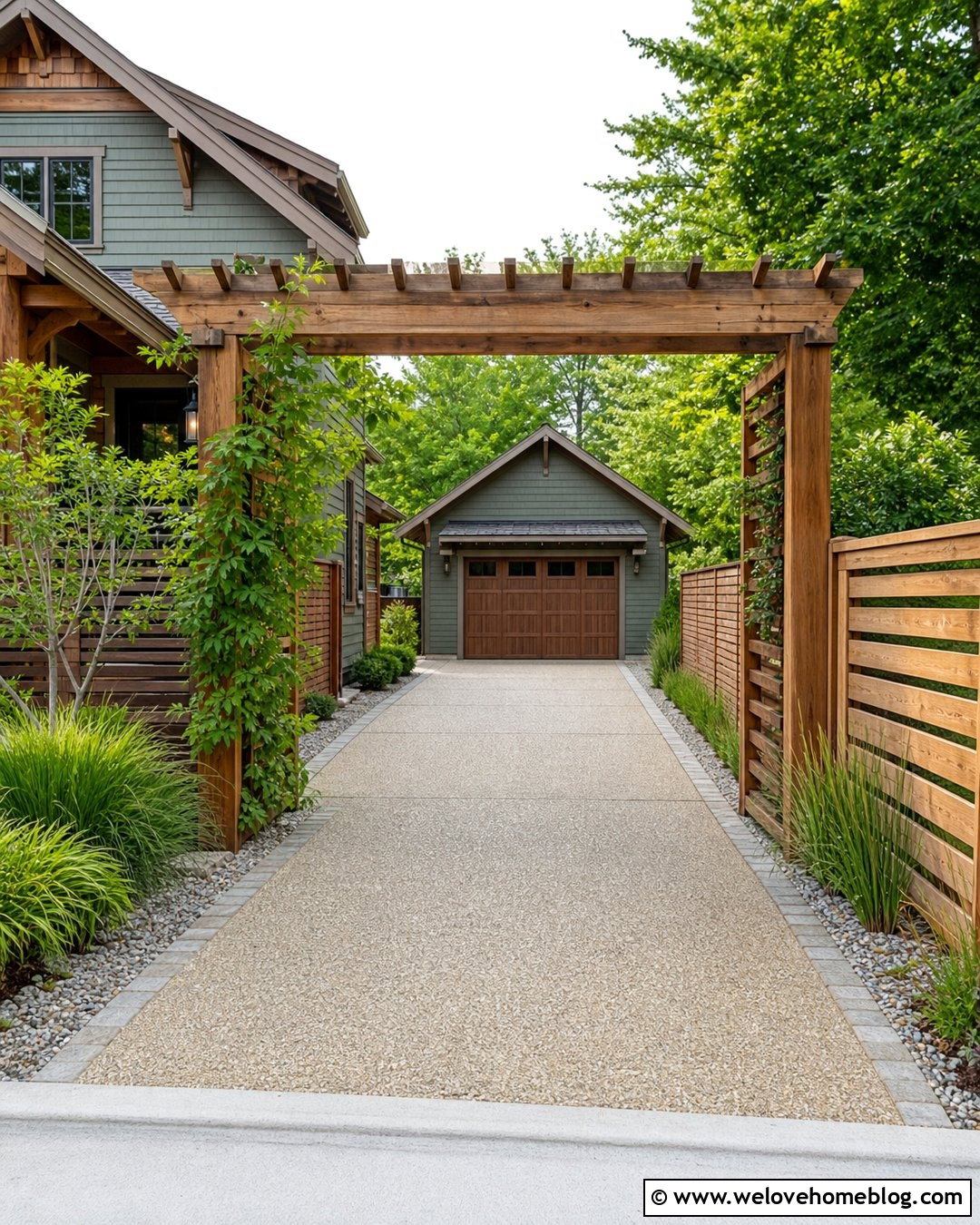
A pergola gate turns a functional side-drive entrance into an appealing transition between the front and back yards. Pair a natural cedar structure with warm-toned concrete pavers, stabilized gravel, or exposed aggregate. Keep the overhead beams high enough for all expected vehicles and confirm that the posts do not reduce necessary clearance. A slatted wood gate can provide screening below the pergola while leaving the upper area open. Plant a restrained vine only if it is appropriate for the climate and can be maintained away from vehicles. Add gravel beds and upright grasses along the drive rather than wide planting borders. This welcoming design suits craftsman homes, cottages, and modern farmhouses. Repeating cedar details on the garage or side entrance creates a coordinated finished result.
14. Side Driveway With Pea Gravel And Stepping Path
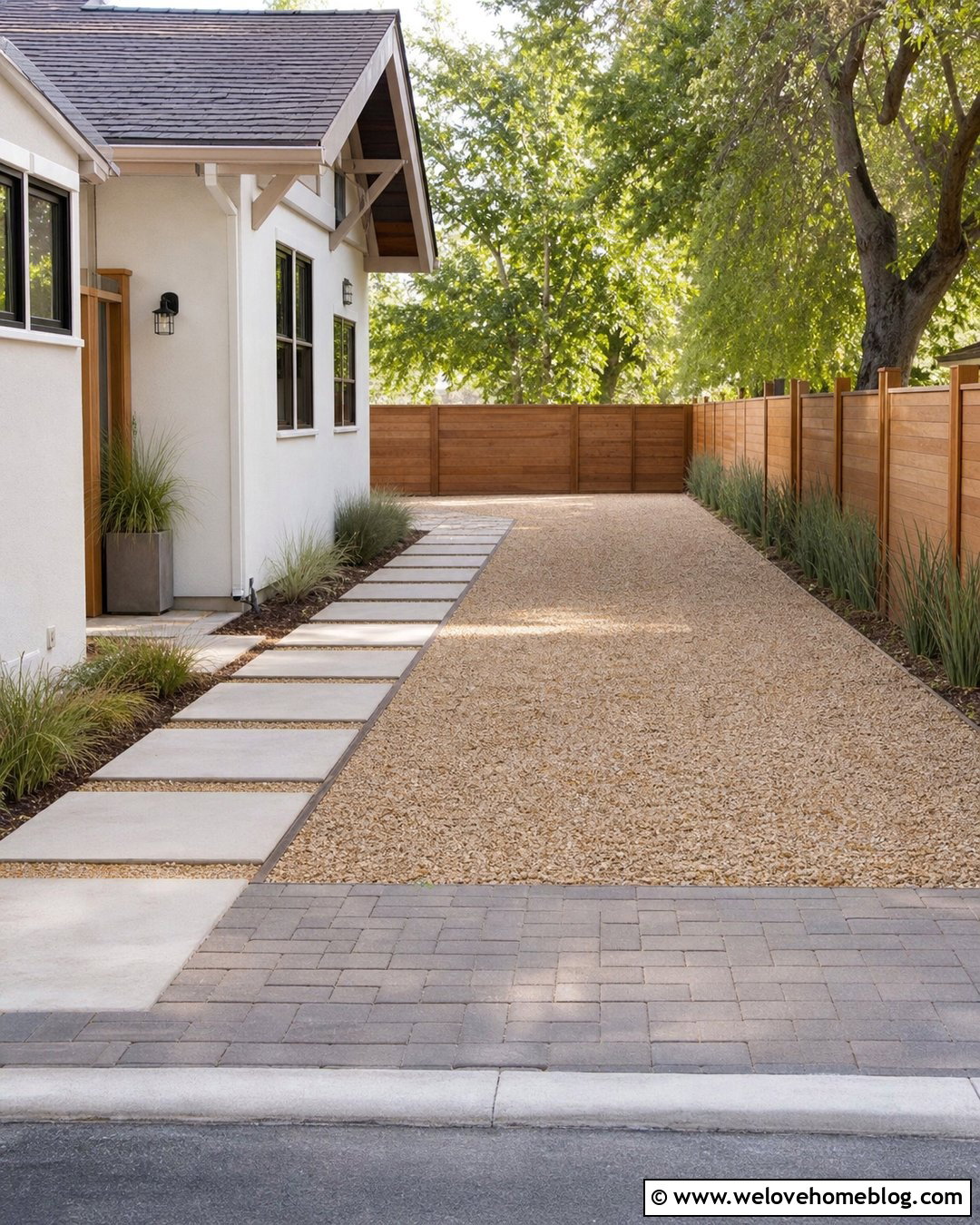
A pea gravel side driveway can share space with a pedestrian path when the layout is carefully defined. Use stabilized tan pea gravel across the driving surface, then add large rectangular concrete stepping slabs along the house side. A steel or stone divider keeps the walking line visually separate without creating a raised tripping edge. Frame the outer boundary with low grasses and a simple wood fence. Near the street, install a solid paver apron to reduce loose stone migration. The driveway can widen behind the house into a parking pad surfaced with the same gravel. Because rounded pea gravel shifts more than angular stone, a stabilizing grid can improve its performance. This casual combination fits cottages, bungalows, and relaxed modern farmhouse properties.


15. Side Driveway With Exposed Aggregate Concrete
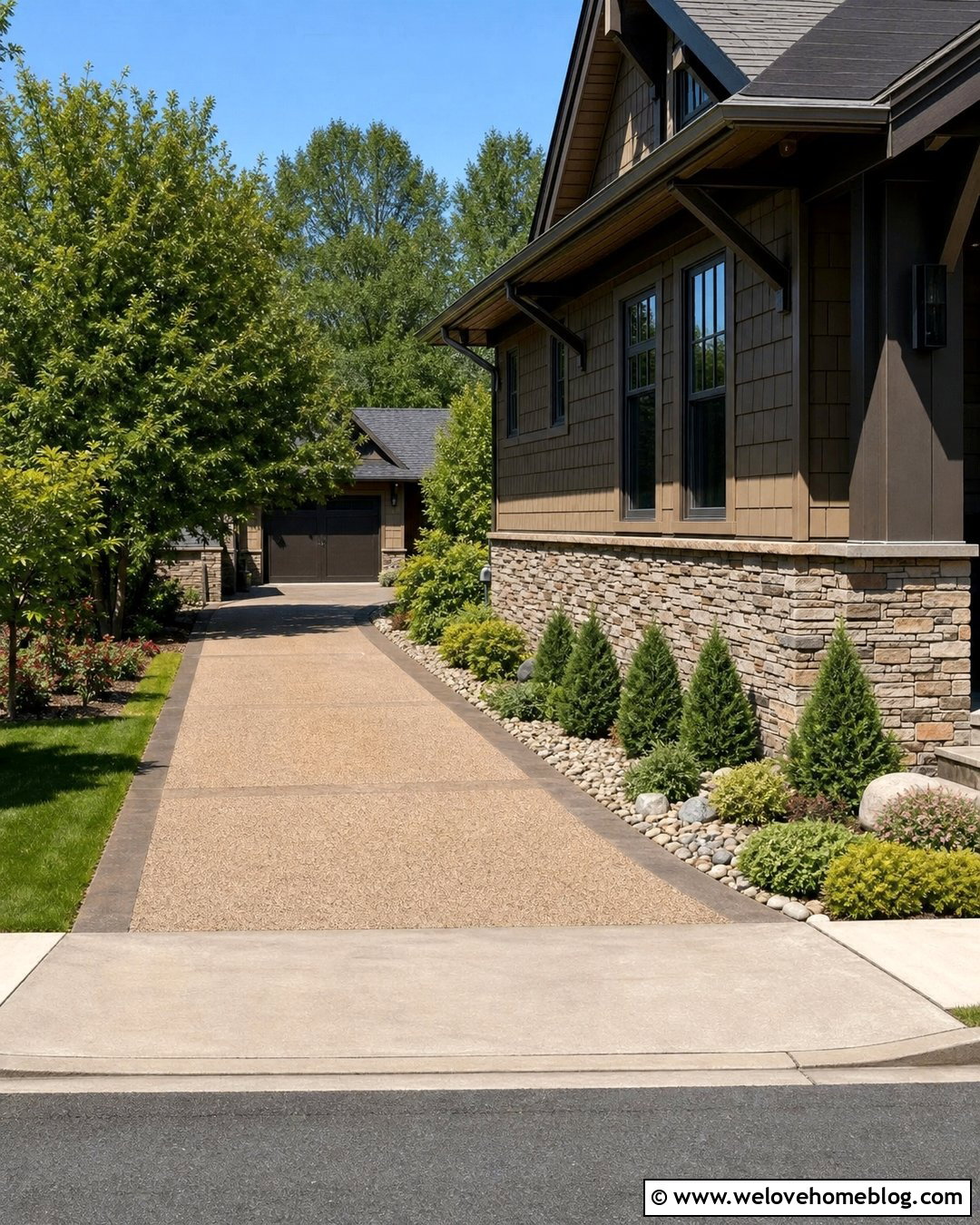
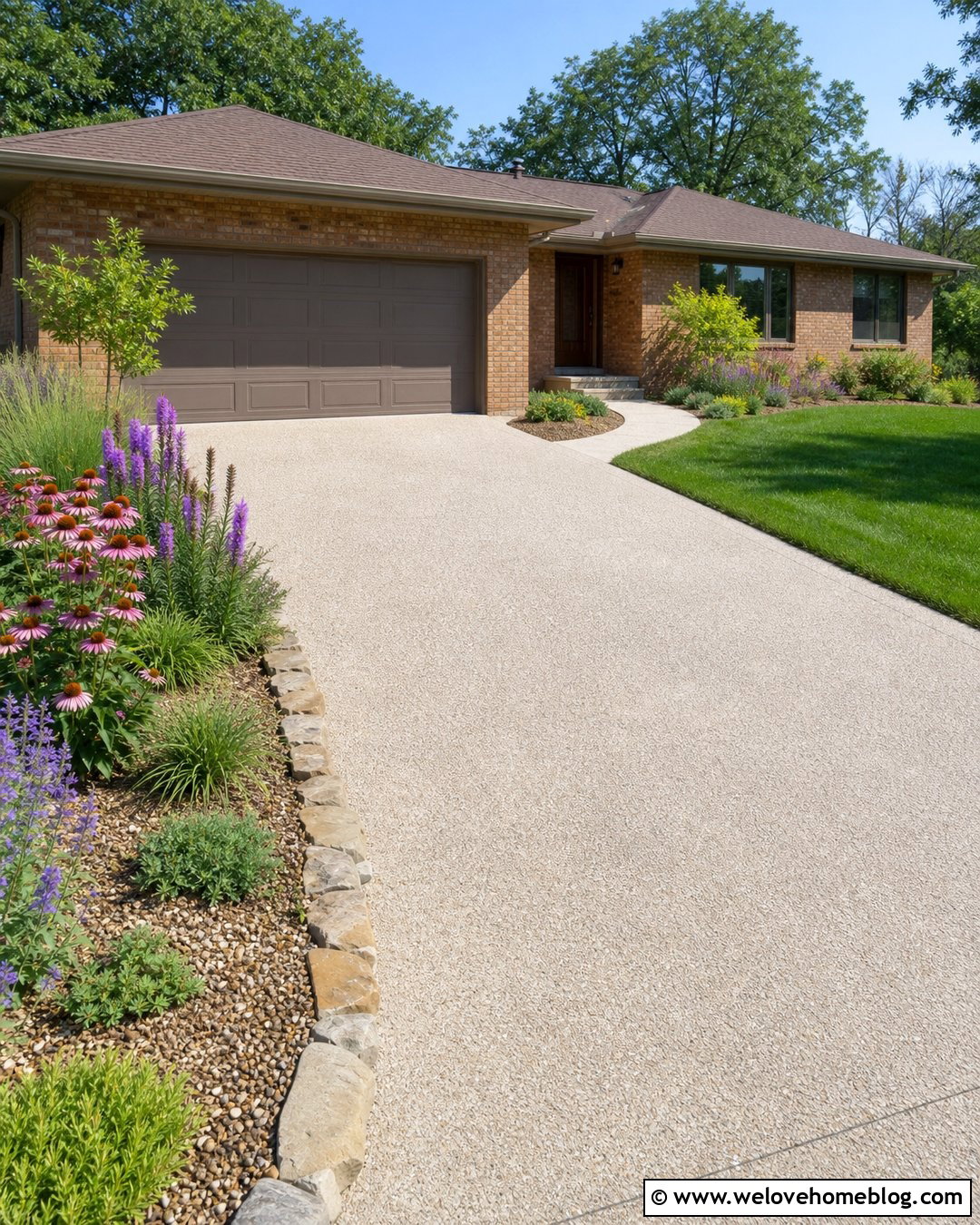
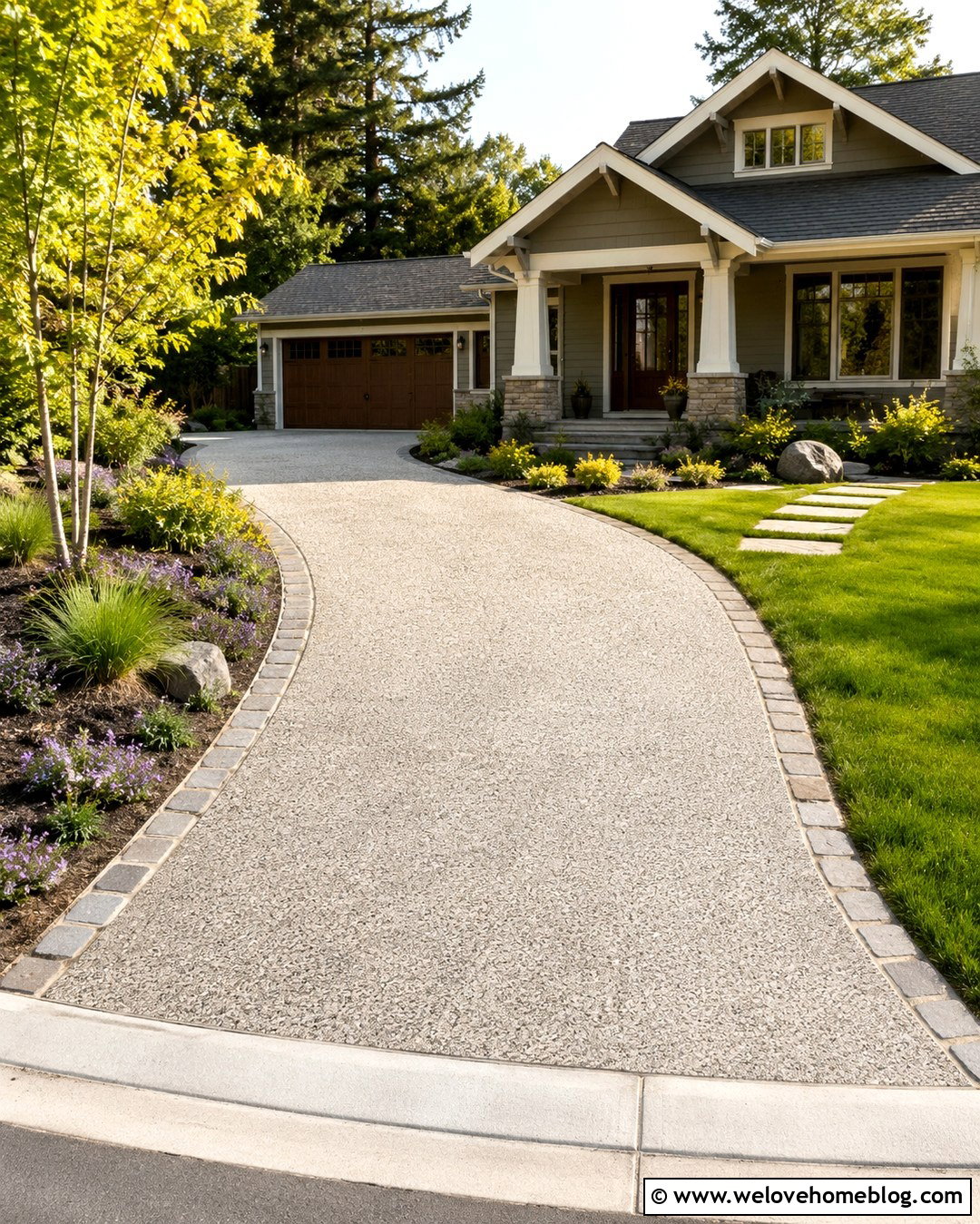
Exposed aggregate adds texture to a side driveway while maintaining the continuous surface many homeowners prefer. Select a mix containing warm tan stones for a craftsman house or cooler gray aggregate for contemporary architecture. Use straight control joints and a smooth concrete border to keep the texture visually balanced. Beside the house, create a narrow decorative stone strip that catches roof runoff and provides utility access. On the yard side, add a curved bed of dwarf evergreens and flowering ground cover. A smooth concrete apron at the street can simplify the transition to the curb. Carry the exposed aggregate into the rear parking court for continuity. Its detailed surface can disguise light dust and minor marks, making it useful for a hardworking driveway in a visible location.
16. Side Driveway With Stamped Concrete
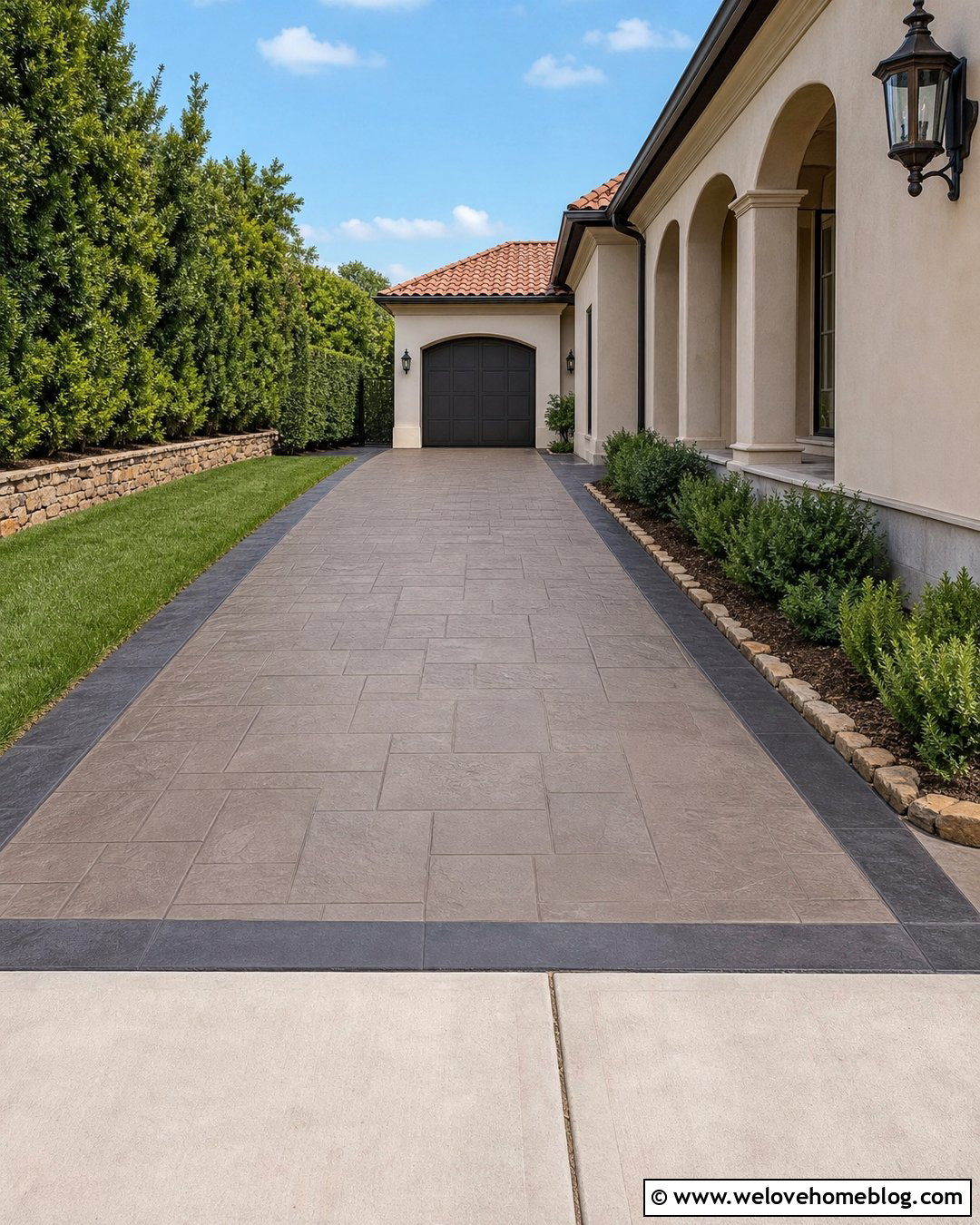
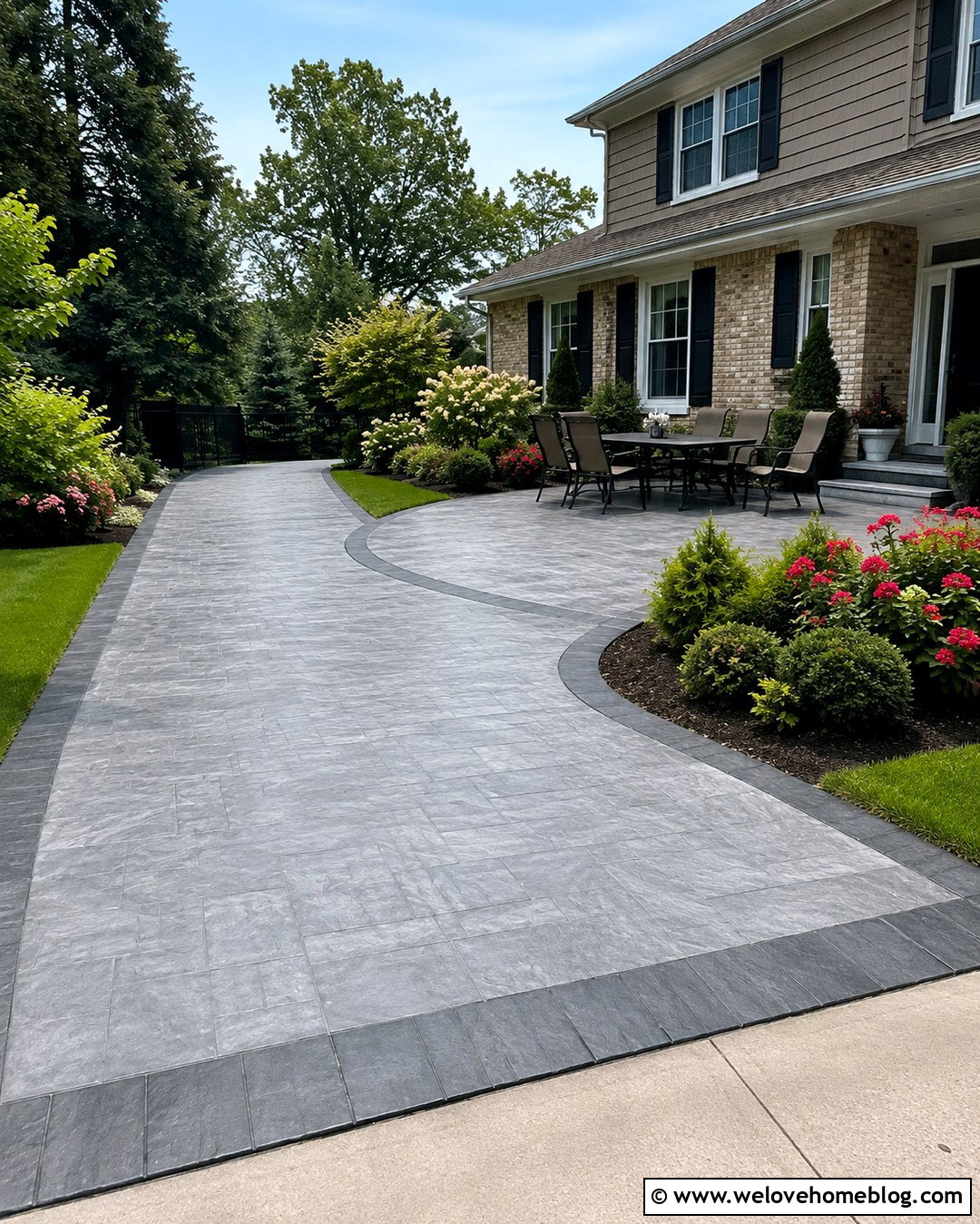
Stamped concrete can give a side driveway the appearance of individual stone units while providing one continuous paved surface. Choose a restrained ashlar slate or cobblestone pattern in muted gray, taupe, or sandstone tones. Avoid overly strong color contrasts, which can make a long narrow drive look busy. A smooth border in a slightly darker shade will frame the pattern and help define the route. Pair the driveway with simple foundation planting and a narrow lawn strip rather than elaborate flower beds. Use the same stamped finish on a small rear parking area, but switch to plain concrete for hidden utility zones if desired. This design works with Mediterranean, traditional, and suburban homes when the pattern and color coordinate naturally with the exterior materials.
17. Side Driveway With Brick Ribbon
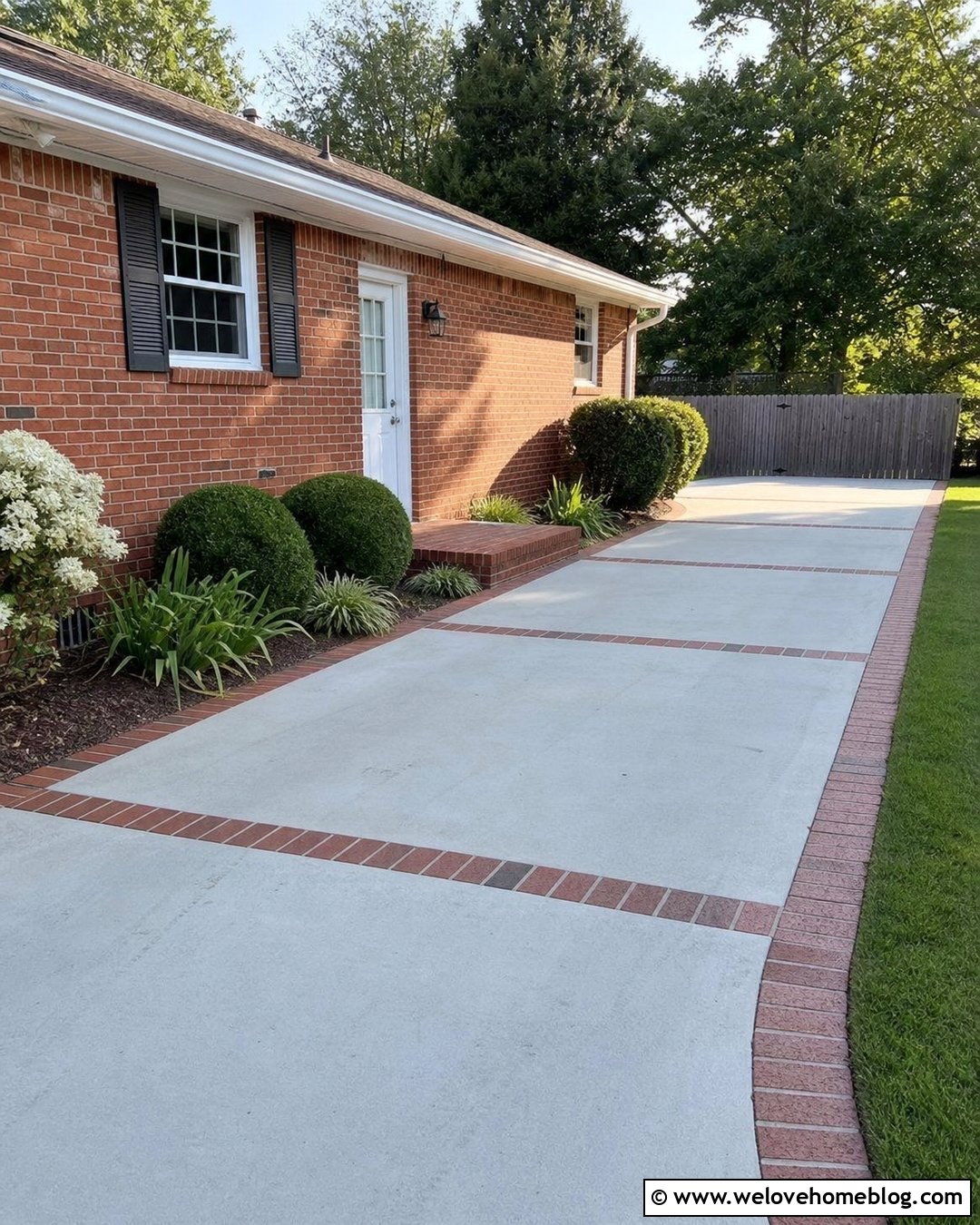
A brick ribbon adds warmth and direction to a plain concrete side driveway without requiring a fully paved brick surface. Run two clay brick bands along the tire paths, or place a single border around the perimeter. Another option is to cross the driveway with brick bands at regular intervals that align with the concrete joints. Choose brick colors already found on the house, chimney, or front steps. Beside the drive, install a narrow bed of clipped shrubs and seasonal perennials with enough setback for open car doors. Continue the brick into the side-entry landing and rear parking pad. The repeated accent makes each zone feel connected. This cost-conscious design gives ranch, colonial, and craftsman homes a more customized appearance while preserving the simplicity of poured concrete.
18. Side Driveway With Permeable Pavers
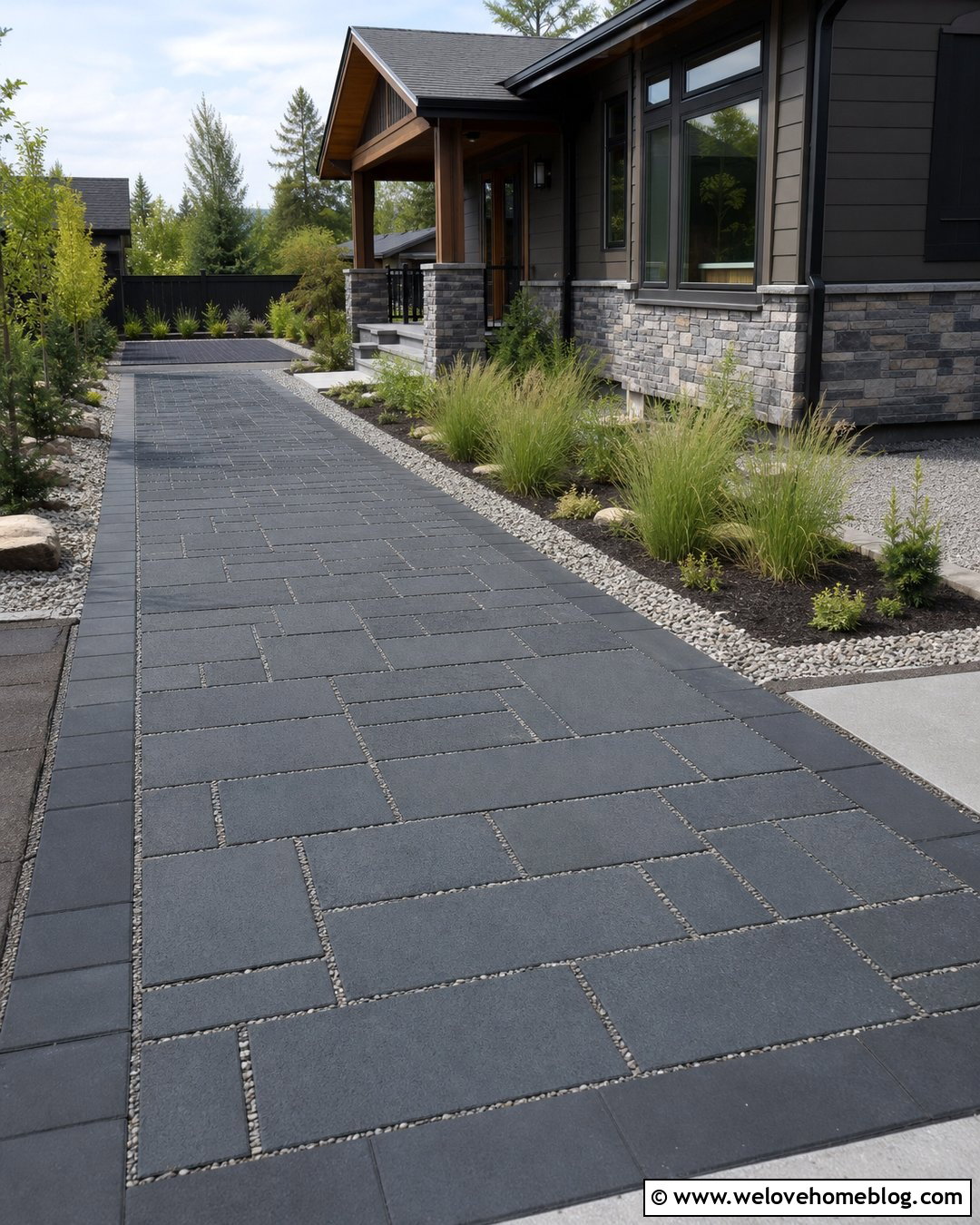
Permeable pavers create an attractive side driveway while allowing water to move through widened joints into a properly prepared stone base. Choose rectangular concrete units in charcoal, gray, or warm brown, and use contrasting aggregate between them. A darker paver border can contain the pattern and mark the driving edge. Pair the surface with a shallow rain garden or planted drainage area where site conditions allow. Near the house, maintain a clean gravel strip and direct water away from the foundation. Use low native grasses and compact shrubs that tolerate the local moisture pattern. The rear parking pad can repeat the same permeable system for a consistent appearance. This design fits contemporary, craftsman, and environmentally focused landscapes, provided the base and drainage plan are professionally matched to the site.
19. Side Driveway With Gravel Parking Pad
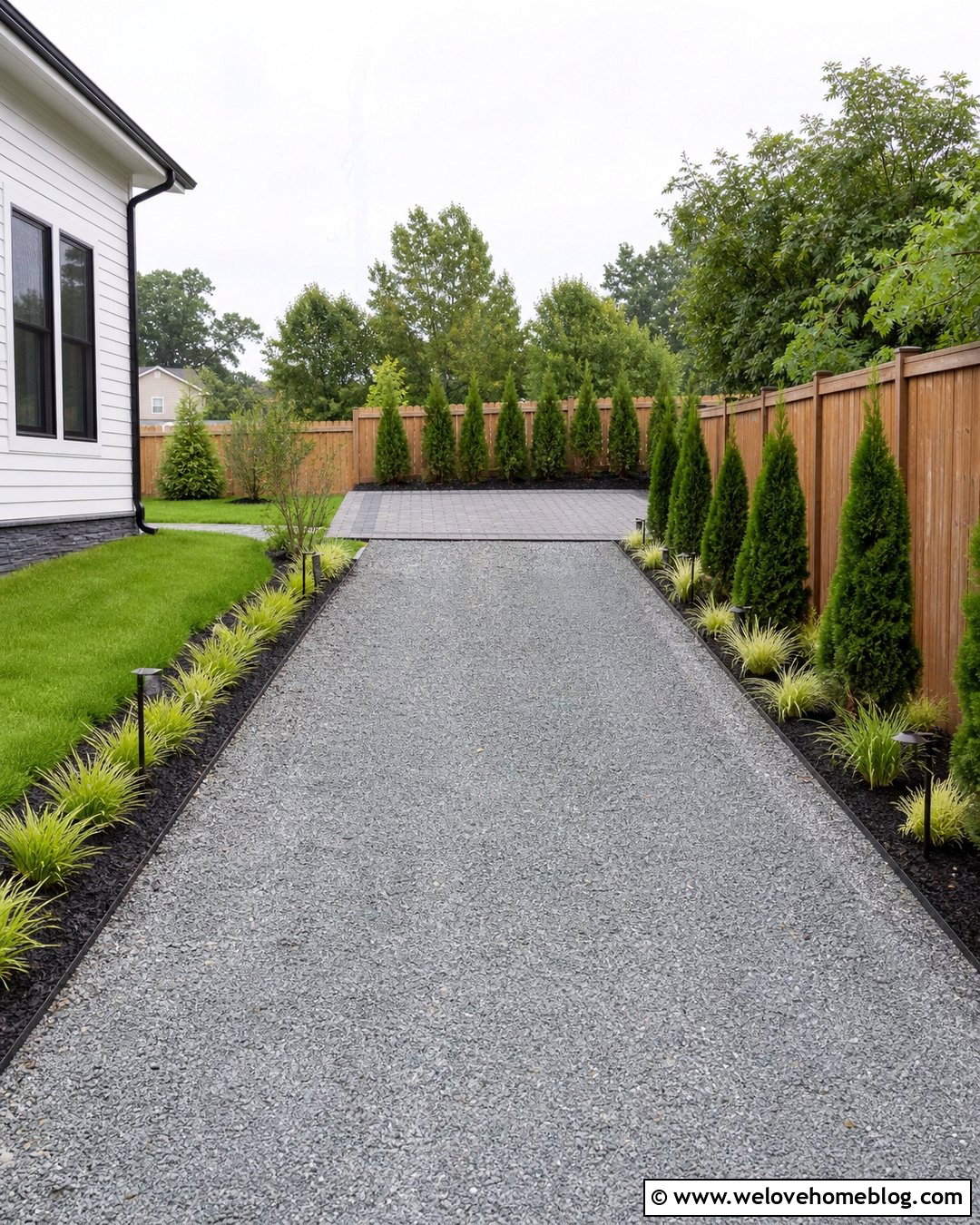
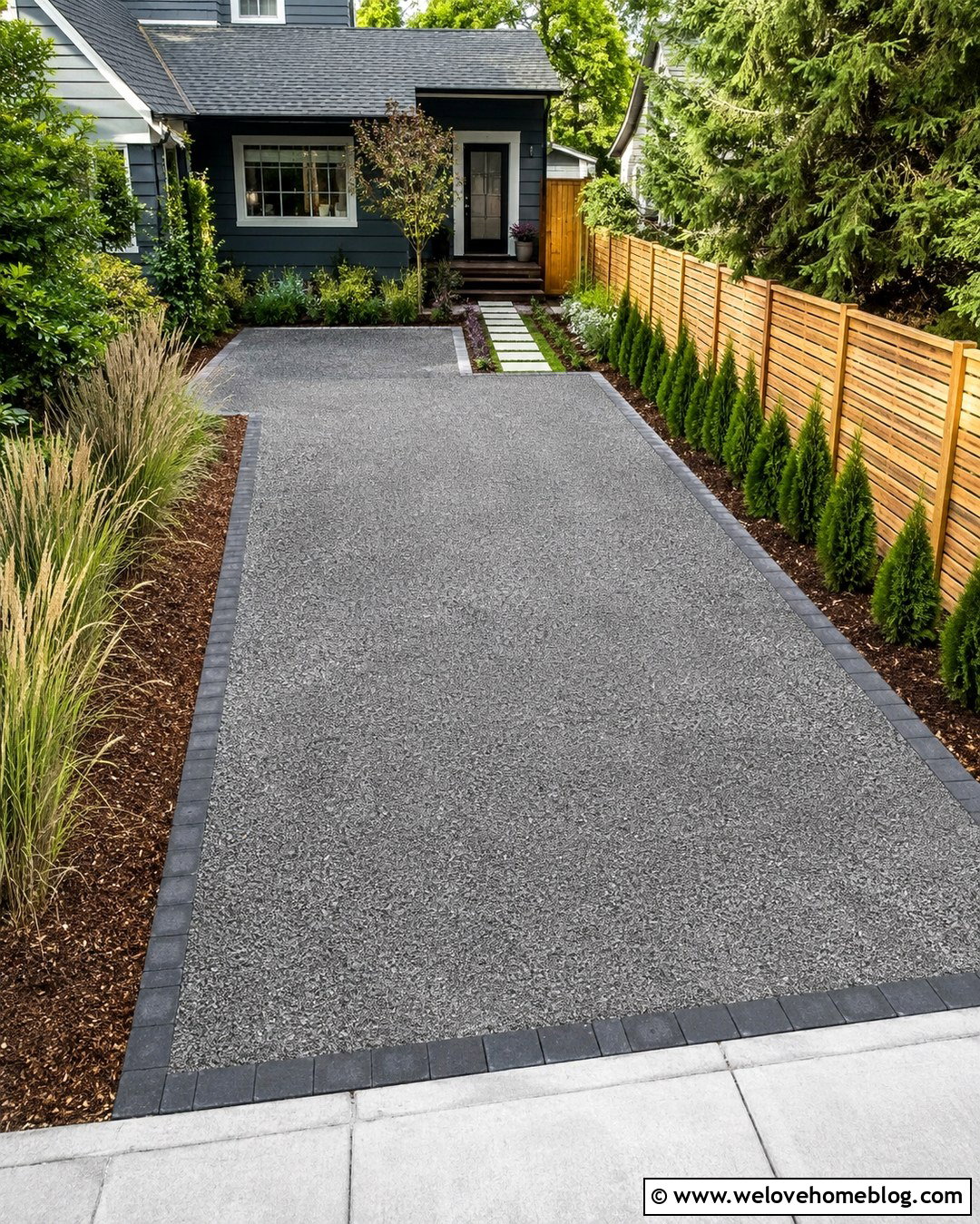
A long gravel side driveway becomes more functional when it opens into a clearly shaped parking pad behind the house. Use compacted gray crushed stone for the main route and define it with pressure-treated timber, steel, or concrete edging. At the rear, widen the surface enough for planned parking and comfortable door clearance. A darker paver border around the pad gives the destination more structure. Screen the parking area with a fence, hedge, or small group of upright trees while preserving safe maneuvering space. Along the narrow drive, keep landscaping low and repetitive. Solar or low-voltage markers can clarify the edge after dark without filling the corridor. This affordable arrangement works well for country homes, accessory dwelling units, workshops, and detached backyard garages.

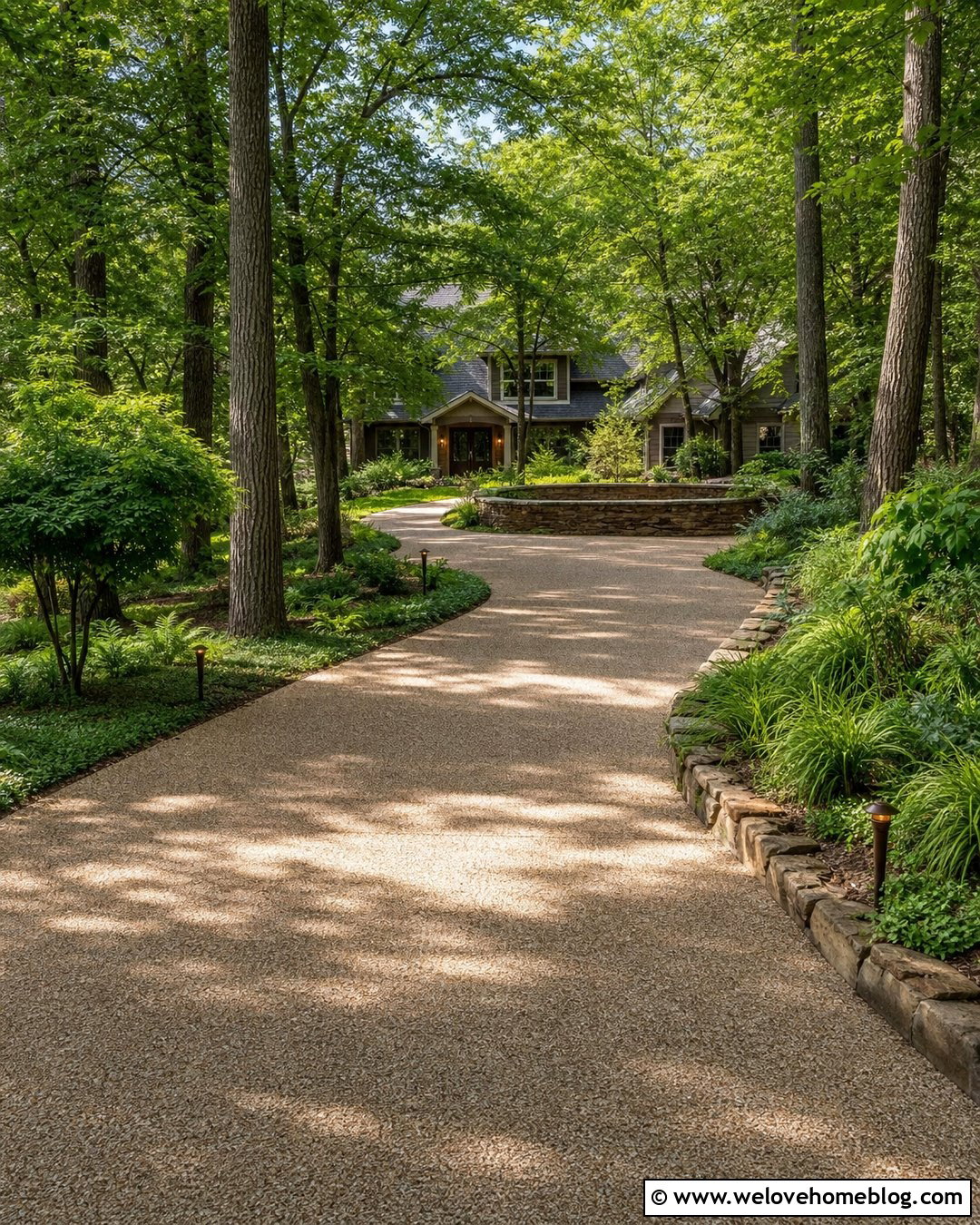
20. Side Driveway With Carport
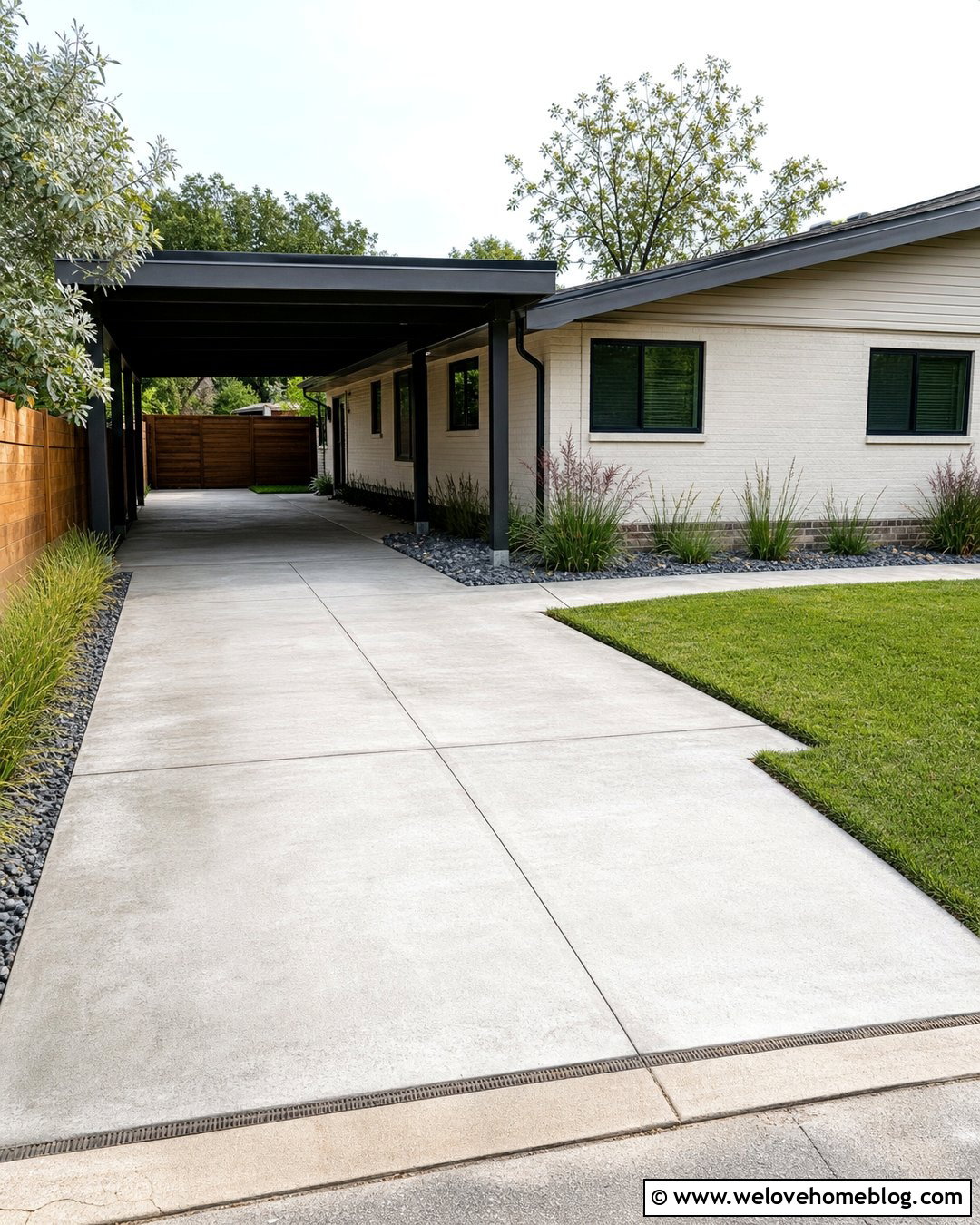
A side driveway leading to a carport should look like part of the house rather than an added strip of pavement. Use smooth poured concrete with joints aligned to the carport posts and roof structure. Match the post color to the home’s trim, then repeat that color in the driveway edging or side gate. A narrow landscaped strip with grasses and low shrubs can soften the open side of the route. Keep the wall side clear with a decorative gravel drainage band and a paved path to the door. The carport floor should continue the driveway material for a seamless transition. Integrating downspouts and drainage into the plan helps prevent runoff from spilling across the driving surface. This streamlined design suits ranch, midcentury, modern, and contemporary homes.
21. Side Driveway With Rear Garage
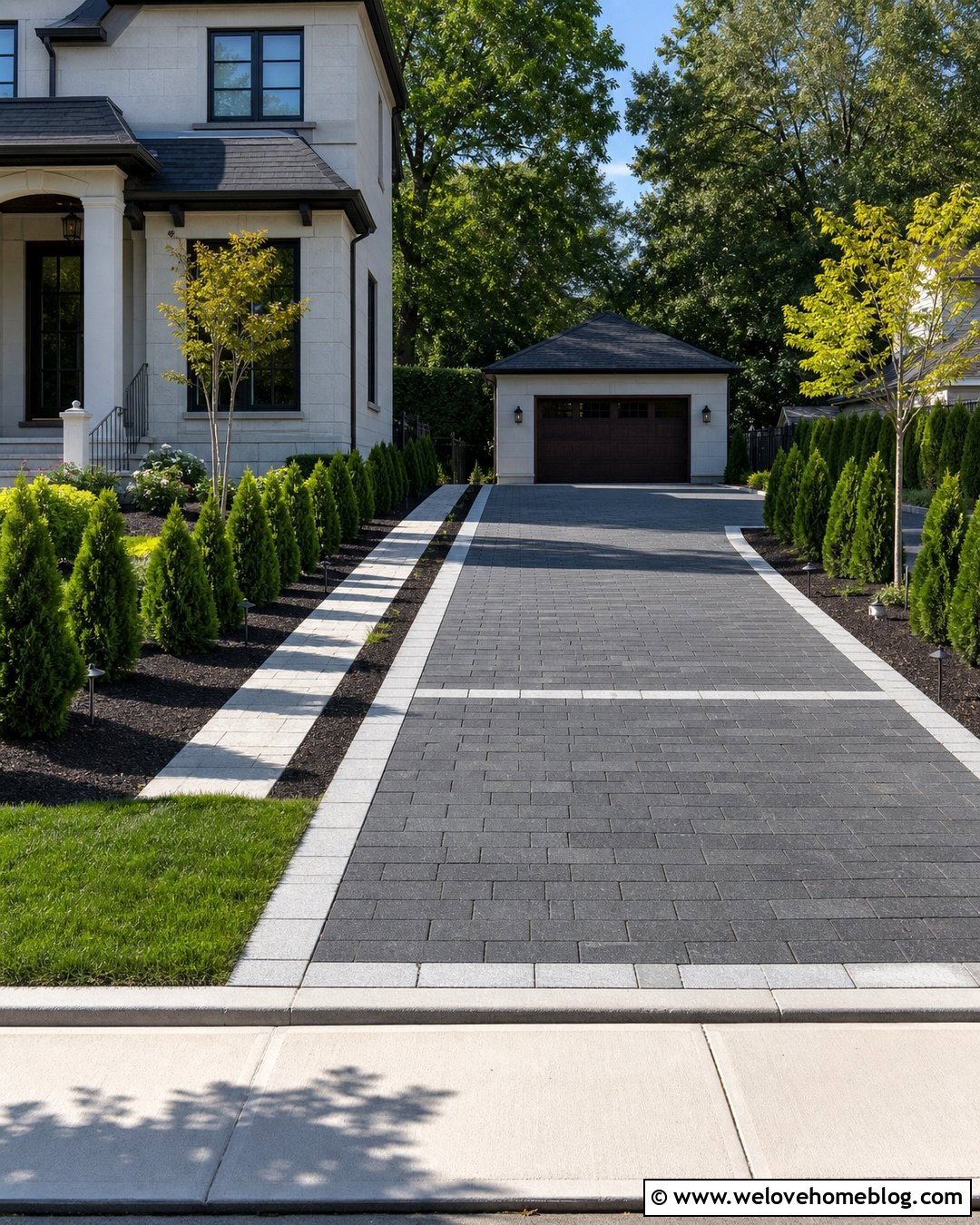
When a garage sits behind the house, the side driveway becomes a major visual and functional connection. Use charcoal concrete pavers in a running-bond pattern to draw the eye toward the garage doors. A contrasting border can follow the drive and widen around the rear parking court. Add a slim walkway on the house side using the same pavers in a smaller format. On the property-line side, plant repeated upright shrubs with enough clearance for vehicles. Match the garage door color, exterior lights, and trim to details on the main house. If turning space is limited, shape the parking court before choosing decorative planting. A consistent material palette makes the remote garage feel planned as part of the property rather than placed separately in the backyard.
22. Side Driveway With Turnaround Pad
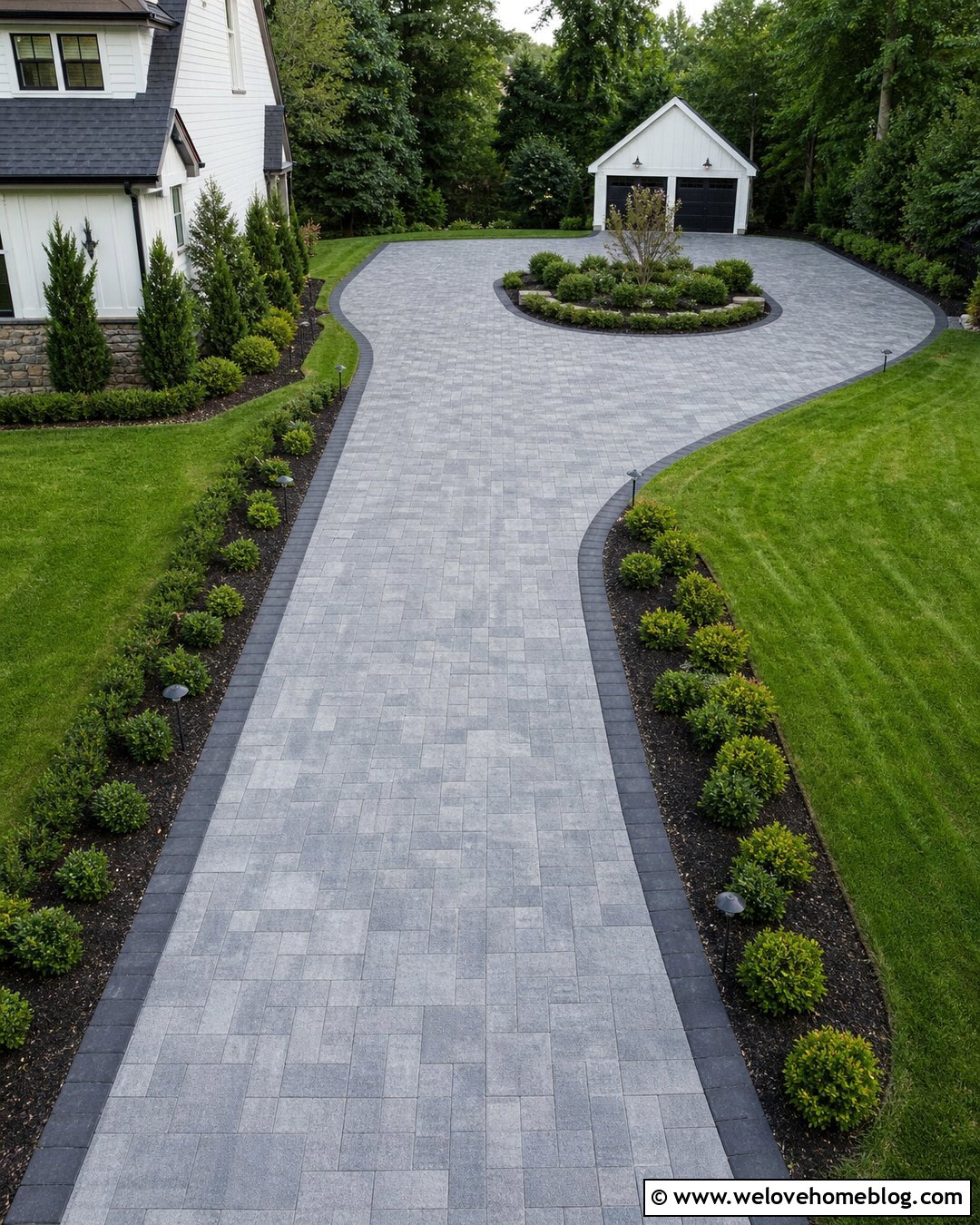
A turnaround pad can make a long side driveway safer and more convenient when backing toward the street is difficult. Create a hammerhead or widened rectangular area near the rear garage using gray concrete or interlocking pavers. Define the extension with a contrasting paver band so it reads as part of the layout rather than an accidental patch. Keep trees, walls, and large shrubs outside the required maneuvering zone. A planting bed at the far edge can soften the paved area and provide a clear visual stopping point. Continue low path lighting around the perimeter for guidance. The narrow approach should use the same surface and edging as the turnaround. This design is especially useful on deep suburban lots where a circular driveway would consume too much landscaped space.
23. Side Driveway With French Drain Border
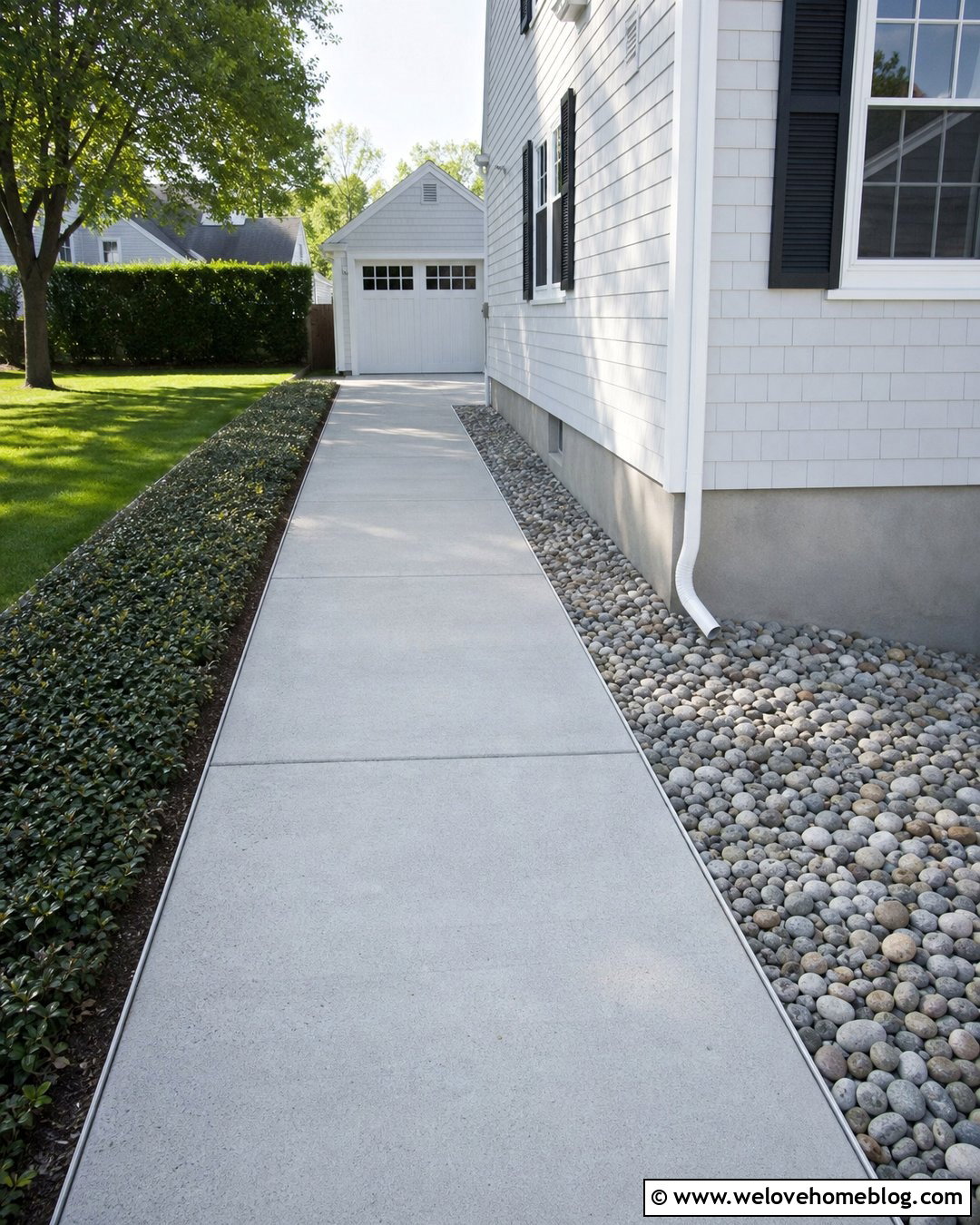
Water moving between a driveway and house foundation can turn a narrow side yard into a recurring maintenance problem. A French drain border can become part of the finished design instead of remaining a hidden afterthought. Pair light gray concrete with a recessed strip of washed river rock over a correctly designed drainage system. Separate the stone from the driveway with flush steel or concrete edging. Add occasional rectangular stepping slabs where access to meters, faucets, or side doors is needed. On the opposite edge, use lawn or a narrow ground-cover bed to soften the corridor. Keep the overall layout uncluttered so drainage access remains practical. This combination suits nearly any home style and is particularly useful where downspouts or roof valleys release water near the driveway.
24. Side Driveway With Channel Drain
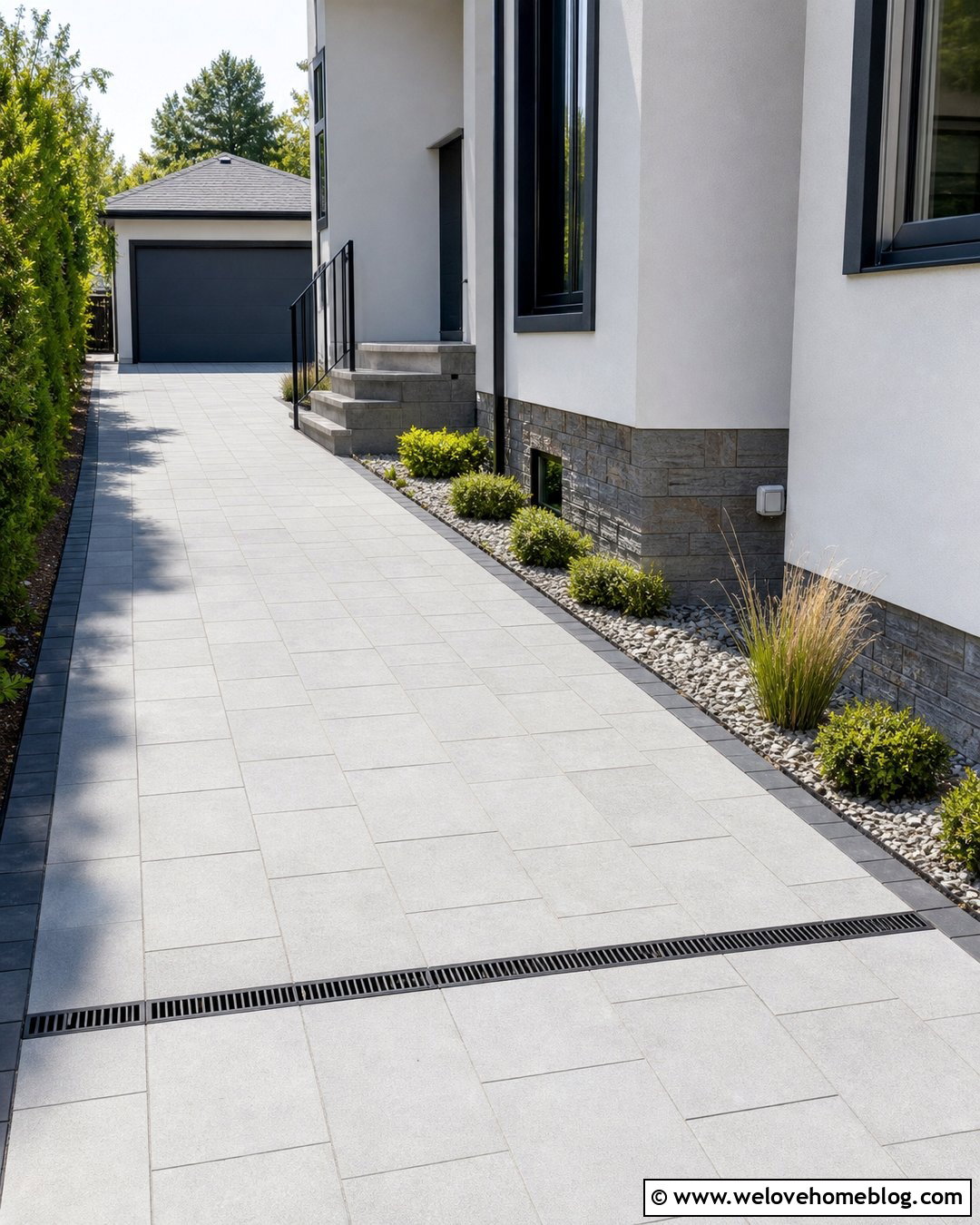
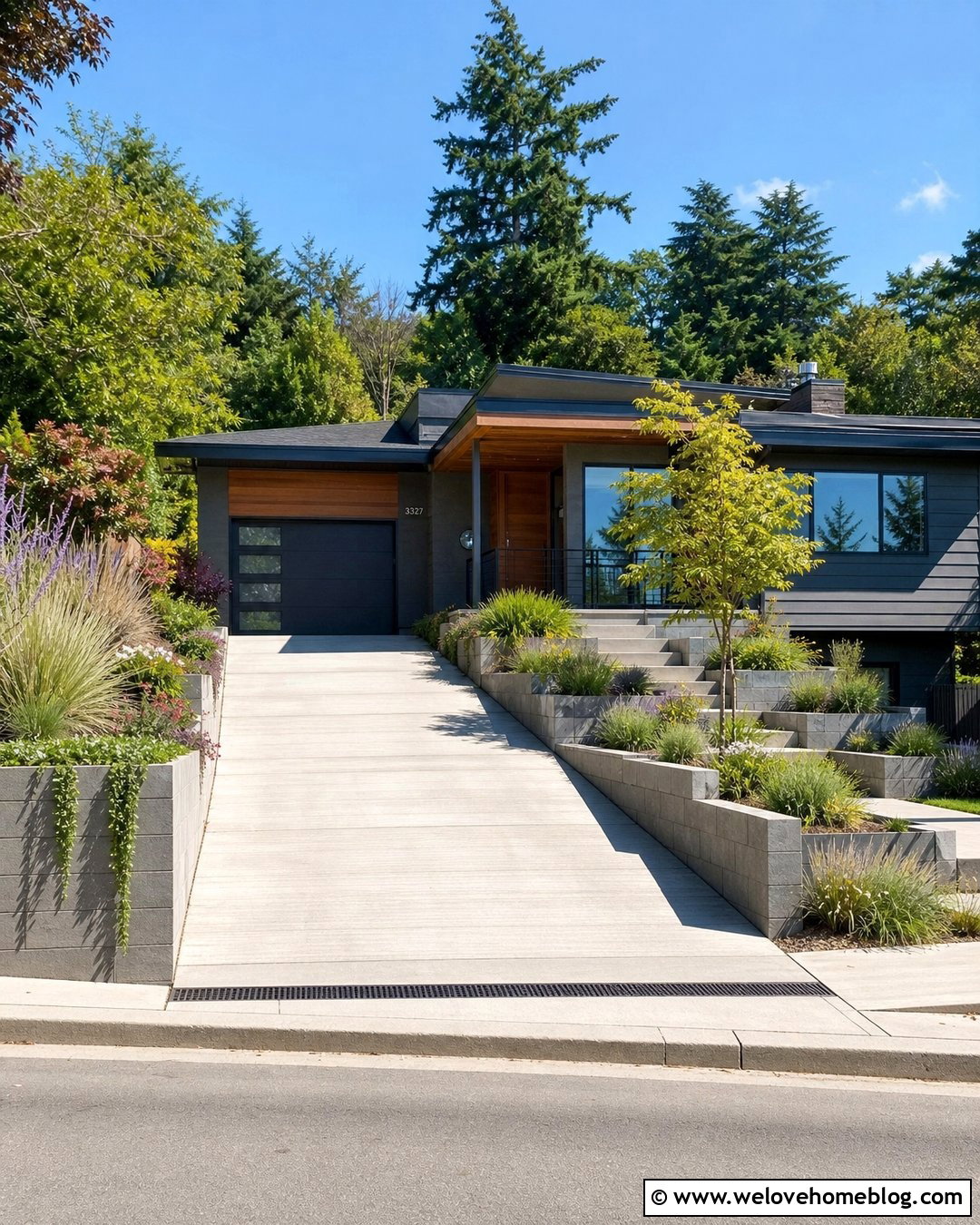
A flush channel drain is a practical addition where a side driveway slopes toward a garage, gate, or low parking area. Install the drain across the driveway at a suitable collection point, using a grate that coordinates with the surface color. Dark linear grates look especially neat against pale poured concrete or large gray pavers. Frame the driveway with a matching border and direct surrounding beds away from the drainage route. A row of compact shrubs can soften the property-line side, while decorative gravel protects the foundation edge. Keep the entry apron and drain clear of loose mulch that could wash into the system. The final design appears clean and intentional because the water-management element follows the same straight lines as the paving, edging, and nearby architecture.
25. Side Driveway With Raised Garden Bed
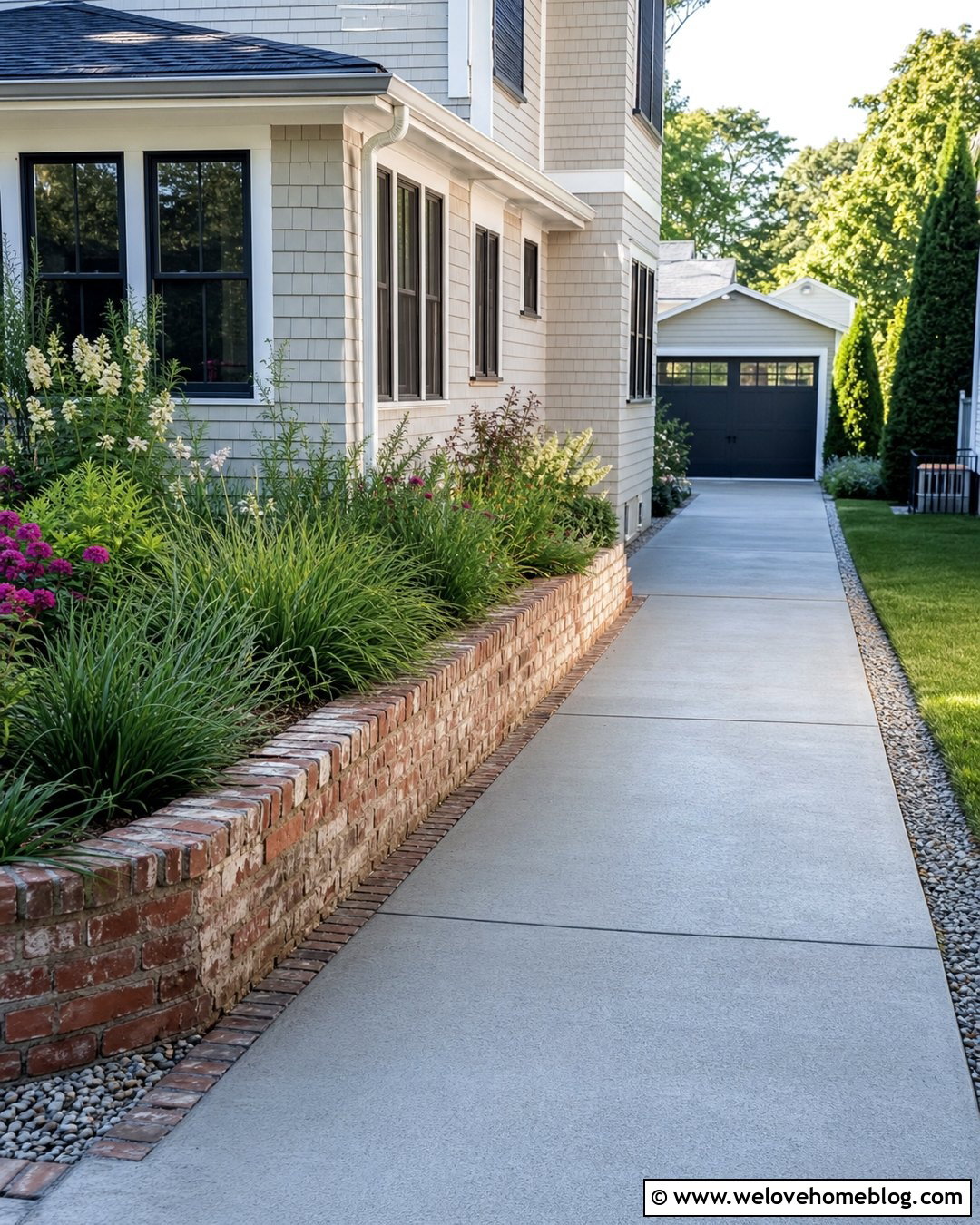
A raised garden bed can soften a side driveway without allowing soil or plants to spread into the driving lane. Pair a smooth concrete driveway with a low brick, stone, or rendered masonry planter on the outer edge. Keep the wall below vehicle sightlines and leave enough clearance for mirrors and open doors. Fill the bed with compact ornamental grasses, herbs, flowering perennials, or shrubs chosen for the available sunlight. Repeating one or two plant varieties creates a calmer appearance than mixing many small specimens. On the house side, use a narrow gravel strip and a clear path to utility areas. Match the planter material to the home’s foundation or front steps. This complete look works well for cottages, bungalows, and homes on compact city lots.
26. Side Driveway With Low-Maintenance Landscaping
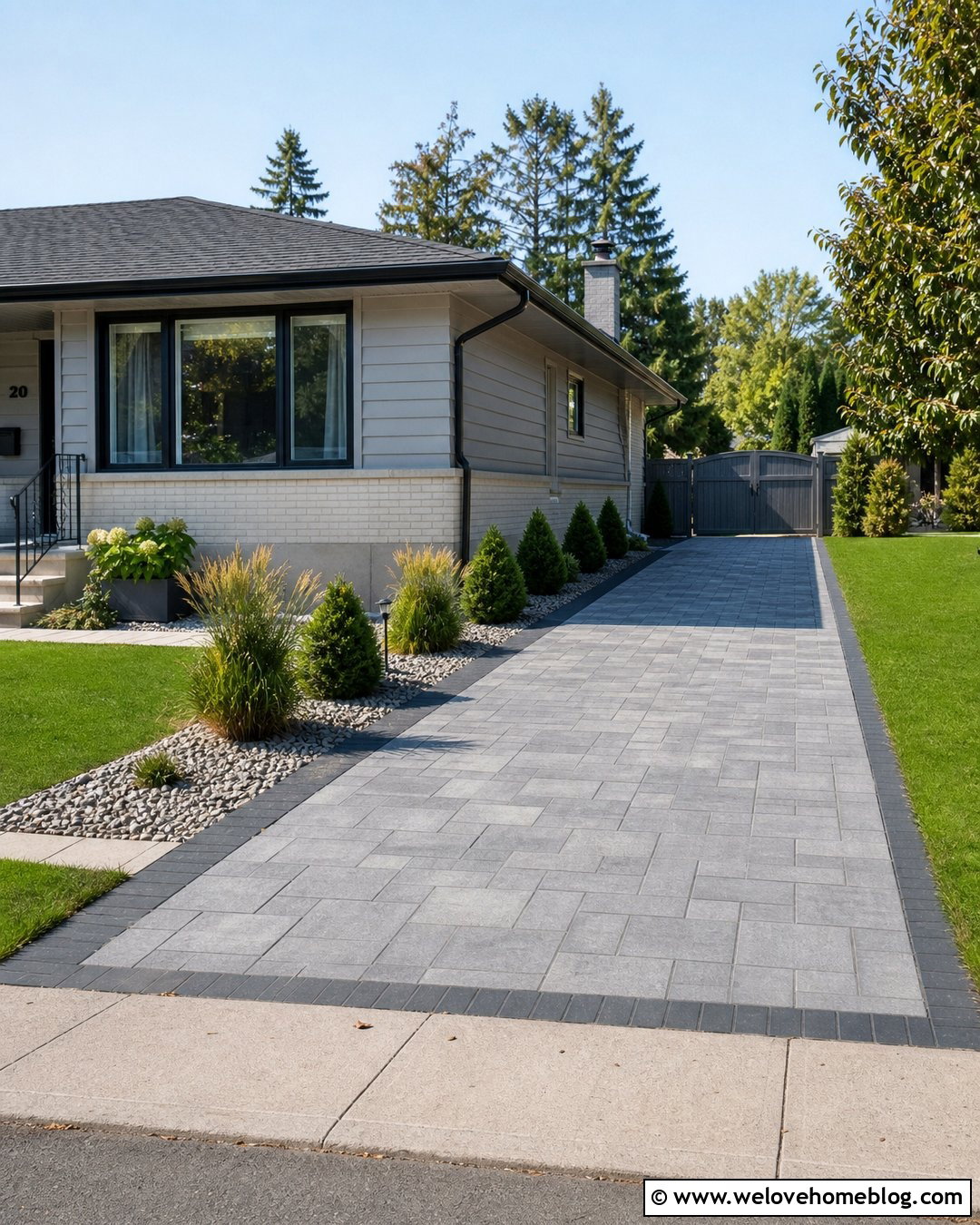
A low-maintenance side driveway works best when every material has a clear purpose. Start with dark asphalt or medium-gray concrete pavers, then use a flush border to prevent lawn and mulch from creeping onto the surface. Plant repeated groups of regionally appropriate dwarf evergreens, ornamental grasses, or durable ground covers rather than a crowded mixture. A gravel strip beside the house provides clean access to utilities and reduces trimming in a tight space. Keep irrigation heads away from the pavement and choose plants according to their mature size. At the rear, repeat the same border around the parking pad. The restrained palette makes the driveway look polished throughout the year while limiting edging, pruning, sweeping, and seasonal replacement tasks that can become frustrating in narrow areas.
27. Side Driveway With Drought-Tolerant Landscaping
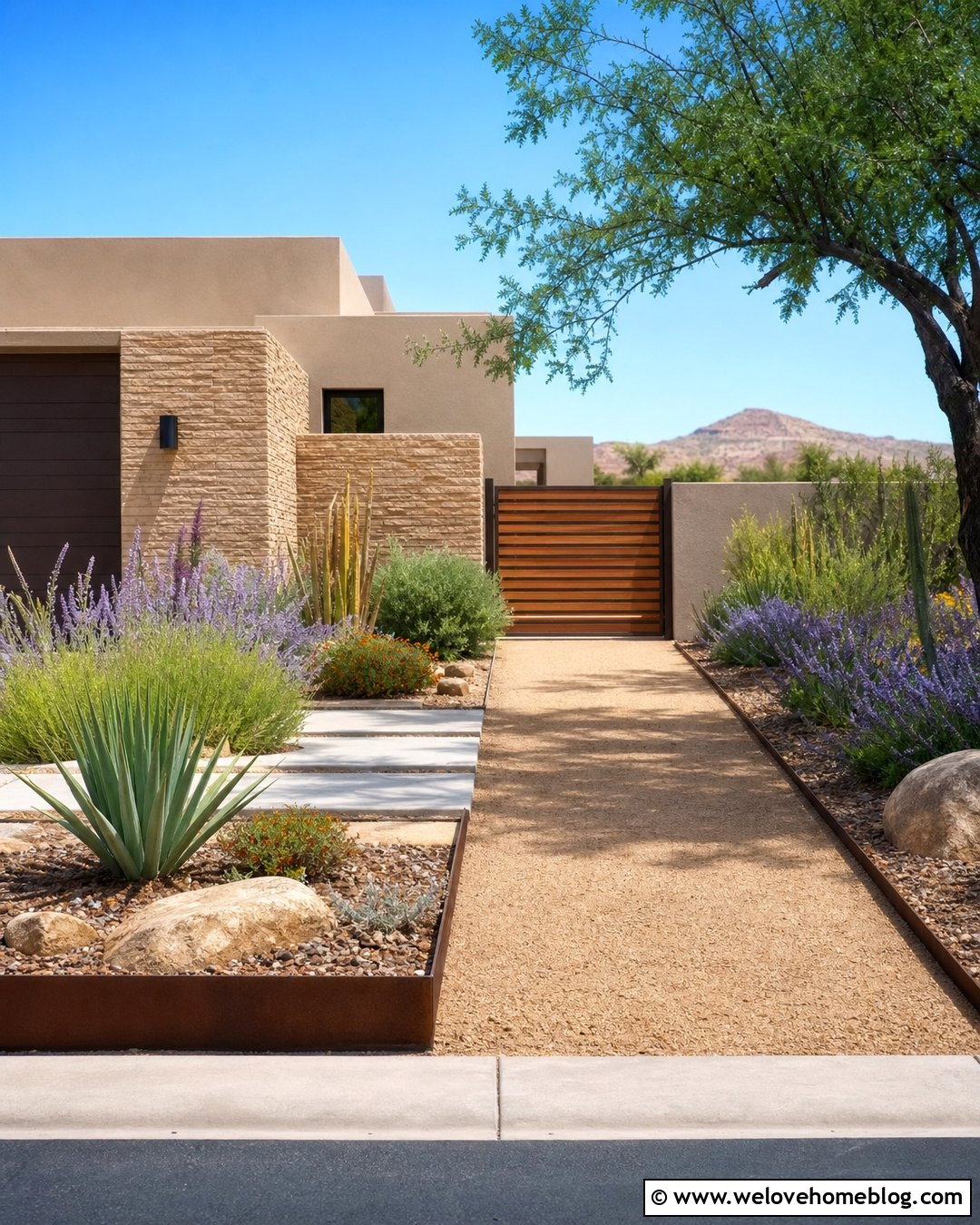
In a dry climate, a side driveway can feel inviting without relying on a continuous lawn. Use warm beige permeable pavers or stabilized decomposed granite for the driving surface. Define the edge with weathered steel, then create broad, repeated groups of agave, yucca, lavender, salvia, or local water-wise plants suited to the site. Decorative gravel mulch can connect the planting areas while keeping the palette controlled. Include one clear walkway made from large concrete slabs beside the house. A wood slat gate and simple address marker can complete the entrance. Avoid placing sharp or spreading plants where passengers step out. The mixture of warm paving, sculptural foliage, open spacing, and clean borders creates a practical side driveway for Southwestern, Spanish, and contemporary homes.
28. Side Driveway With Shade Plants
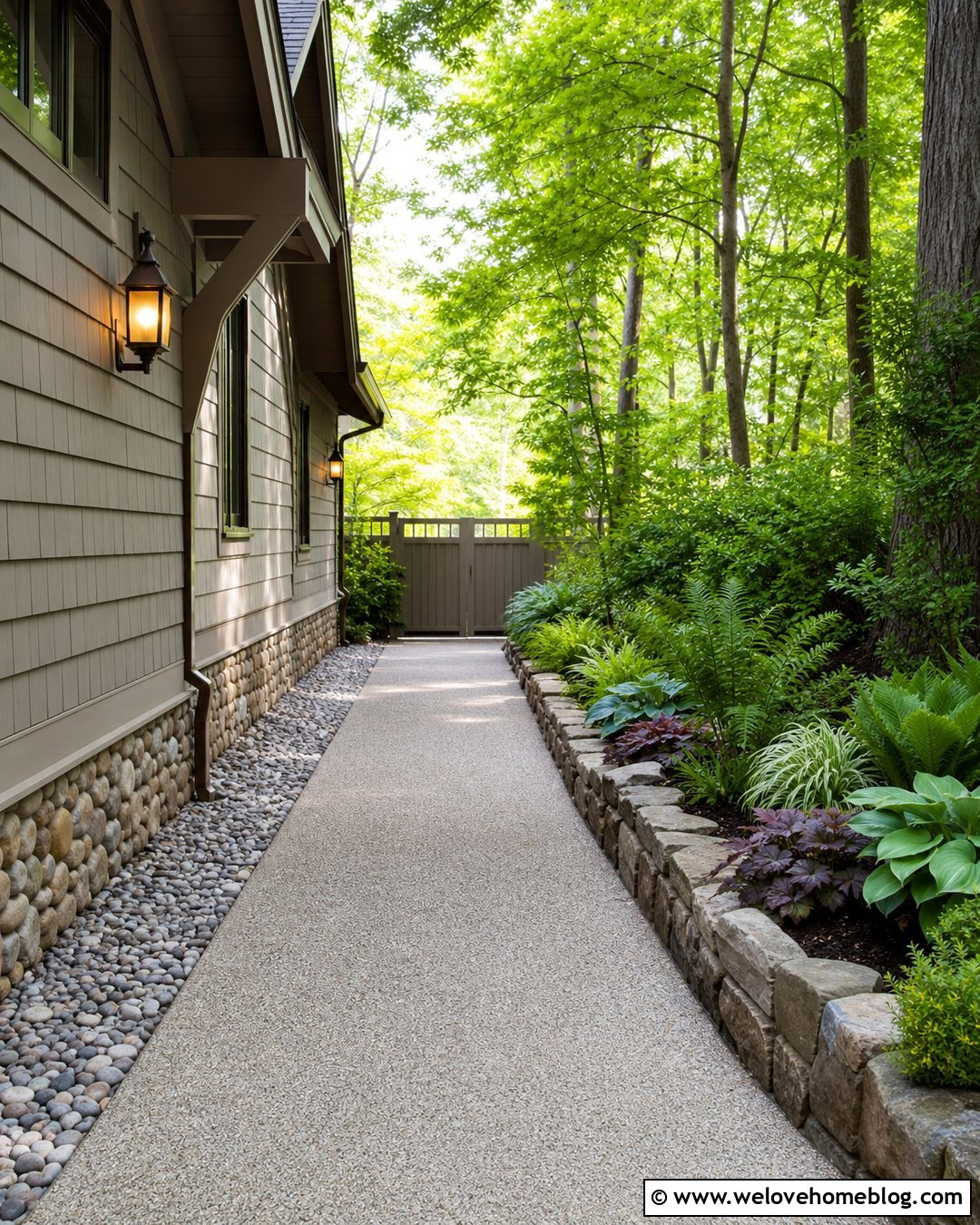
A driveway on the shaded side of a house can become a lush green passage instead of a dark service corridor. Use pale concrete pavers or light exposed aggregate to reflect available daylight. Along the outer edge, plant ferns, hostas, sedges, coral bells, or regionally suitable shade plants in repeated groups. Keep the plants behind a low stone or metal border so foliage does not lean into vehicle space. A narrow strip of smooth river rock beside the foundation can handle dripping water and provide access to utilities. Add simple wall-mounted lights to the house rather than filling the ground with fixtures. A painted wood gate at the rear gives the route a destination. This design works beautifully with craftsman, cottage, and woodland-style properties.
29. Side Driveway With Ornamental Grass Border
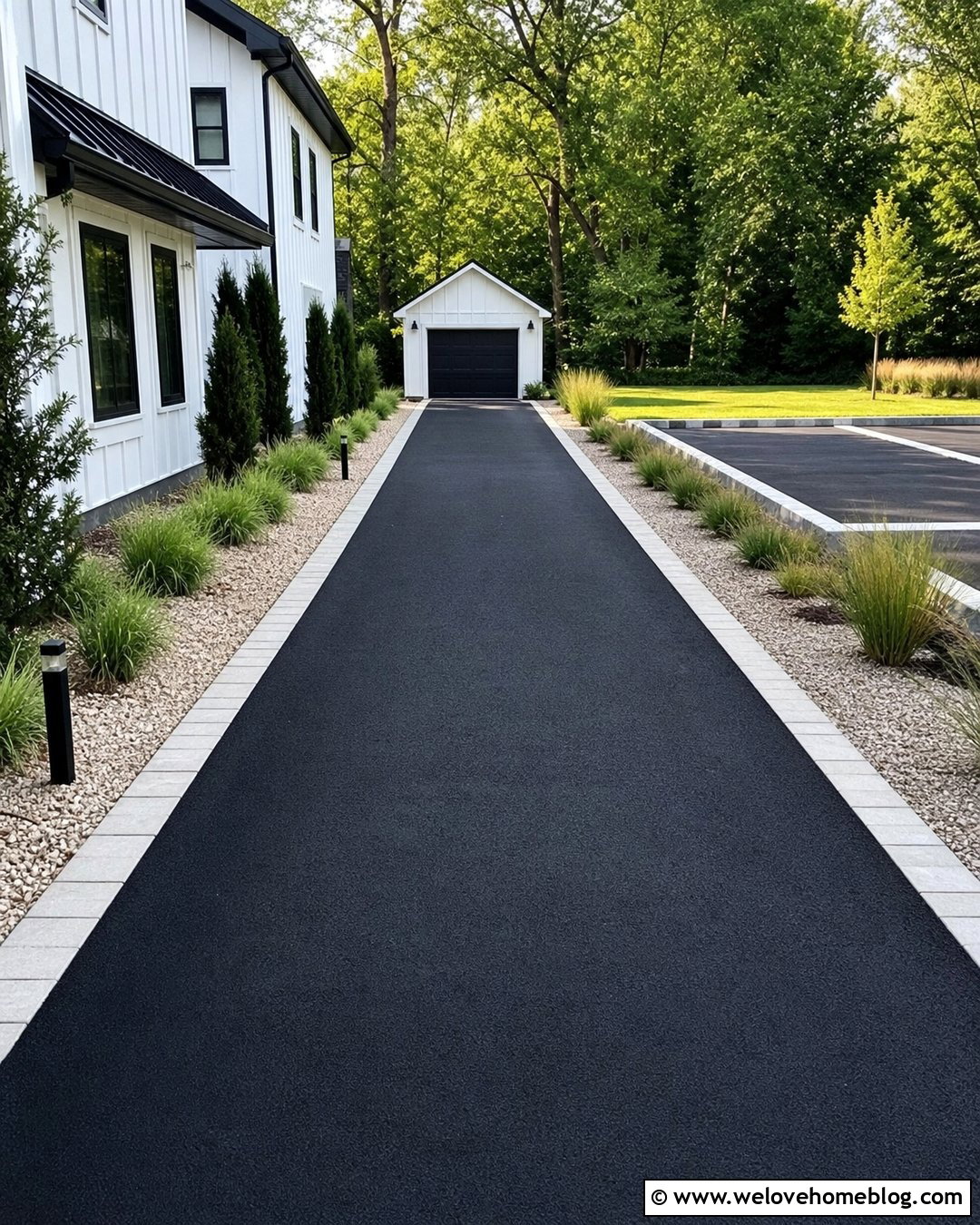
Ornamental grasses can bring movement and softness to a long side driveway, but the planting should remain controlled. Pair a charcoal asphalt surface with a pale concrete paver edge, then plant one compact grass variety in evenly spaced groups along the property-line side. Choose a plant whose mature width will not interfere with mirrors, doors, or visibility. Between the house and driveway, use a narrow band of smooth gravel for drainage and maintenance access. Continue the paver border around the rear parking pad and garage entrance. A few low bollard lights can repeat the planting rhythm. This simple combination complements modern farmhouse, prairie-inspired, contemporary, and ranch homes. The limited material palette keeps the corridor calm while the grasses prevent the driveway from looking harsh or purely utilitarian.
30. Side Driveway With Flowering Border
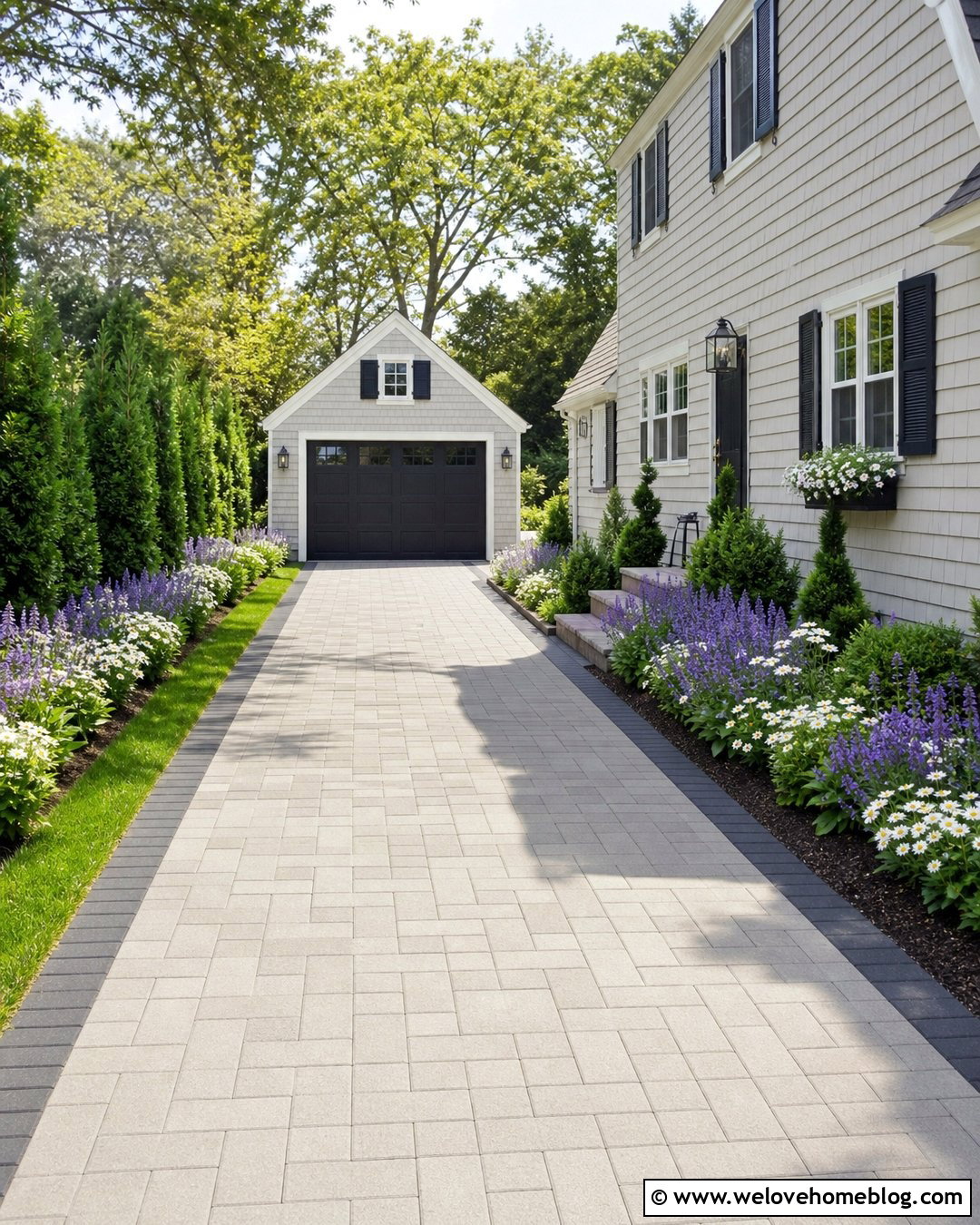
A flowering border can make a side driveway feel connected to the garden, especially when it is visible from indoor windows. Use warm gray concrete pavers with a darker outer edge, then create a narrow bed containing repeated drifts of long-blooming perennials and low shrubs. Choose plants according to local conditions and keep taller varieties away from the street, gate, and garage corners. A simple lawn strip or gravel band on the house side balances the colorful border. Repeat one flower color near the front entrance and side door to connect the landscape. The paved route should remain wide enough for comfortable driving even after plants mature. This welcoming complete look suits cottage, craftsman, Cape Cod, and traditional homes without making the side yard feel overdecorated.
31. Side Driveway With Wall-Mounted Lighting
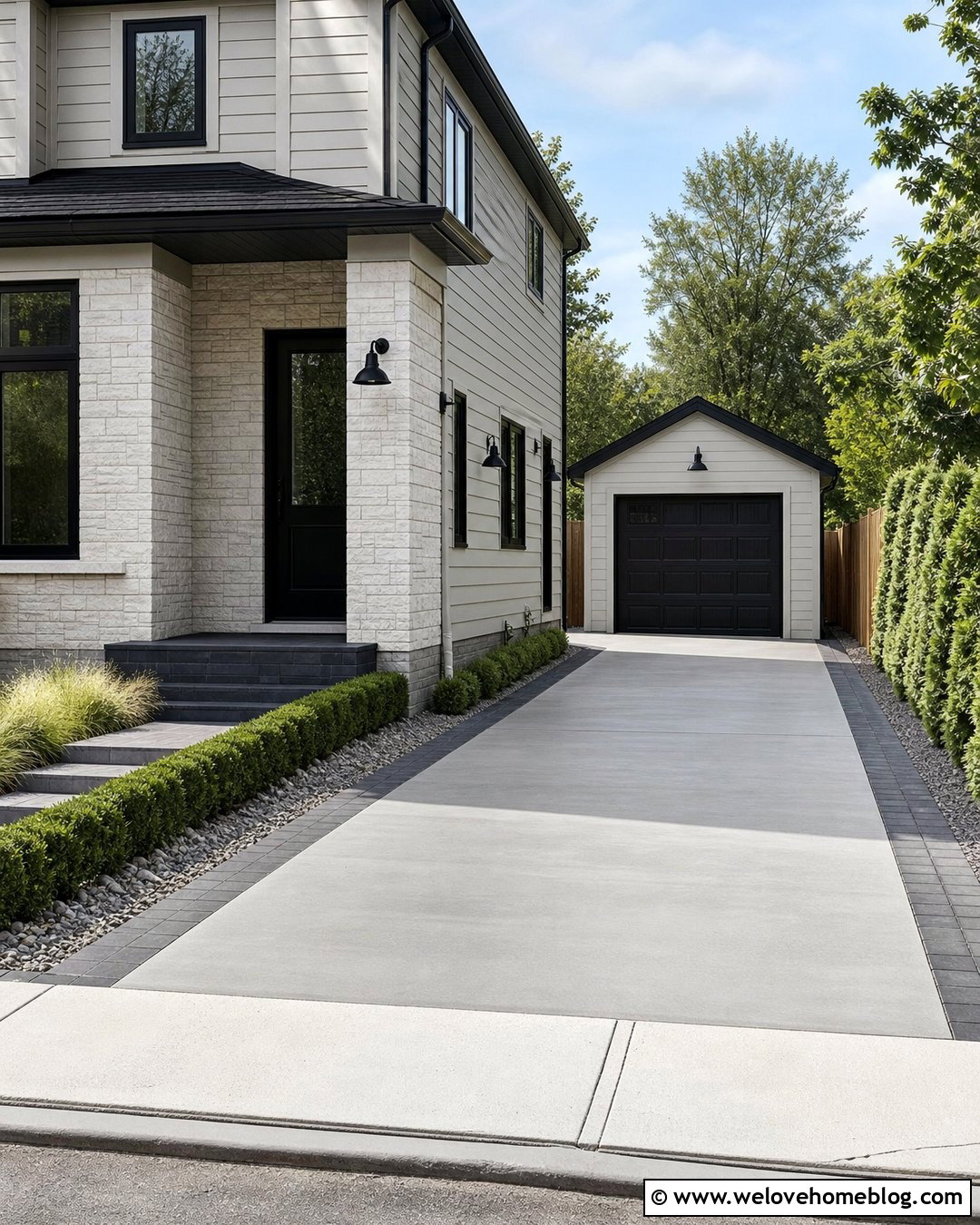
Wall-mounted lighting keeps a narrow side driveway clear while making the route easier to use after sunset. Pair smooth gray poured concrete with simple black, bronze, or brushed-metal fixtures spaced along the house wall. Aim the light downward to define the pavement without producing harsh glare toward neighboring windows. Use a dark paver ribbon along the driveway edges and repeat it around the side-door landing. On the opposite boundary, add a low hedge or narrow bed of ornamental grasses. A matching fixture above the rear garage helps visually connect the entire approach. During the day, the restrained lights act as architectural accents. This layout suits modern, transitional, ranch, and farmhouse homes because it combines an uncluttered driving surface with practical illumination and coordinated exterior details.
32. Side Driveway With Recessed Paver Lights
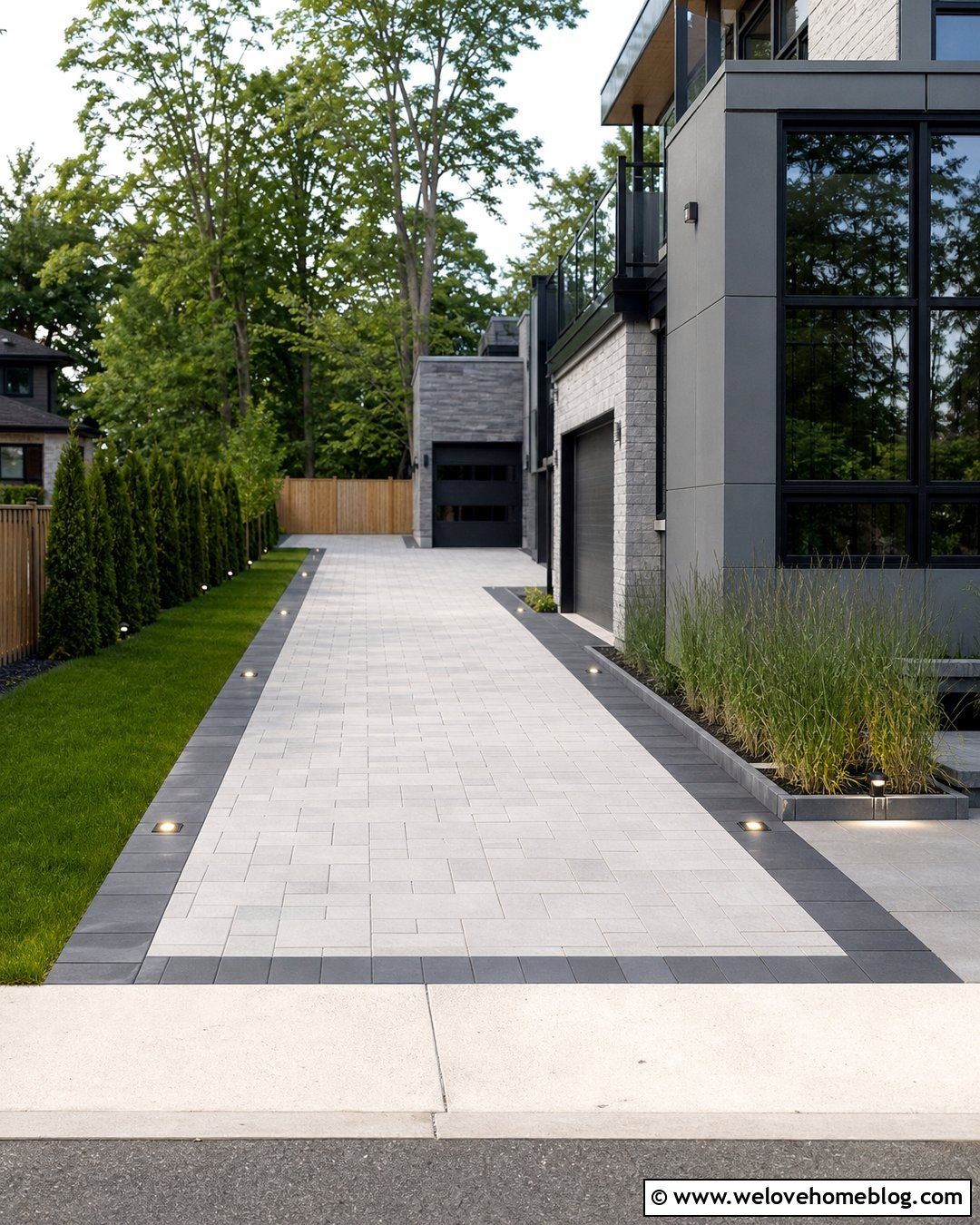
Recessed paver lights can clarify the edges of a side driveway without adding posts that reduce usable width. Install small, drive-rated fixtures within the border of charcoal concrete pavers surrounding a light gray paved surface. Space them consistently rather than placing too many along the route. A narrow planting strip with low grasses can run beside the outer edge, while decorative stone protects the foundation side. Continue the illuminated border around the rear parking pad and garage apron for visual consistency. Use warm-neutral, low-glare light rather than intense brightness. During daylight, the fixtures should sit nearly flush and blend with the pavers. This polished treatment works particularly well for contemporary homes, compact urban properties, and long driveways where clearly defined boundaries improve the overall sense of order.
33. Side Driveway With Address Sign
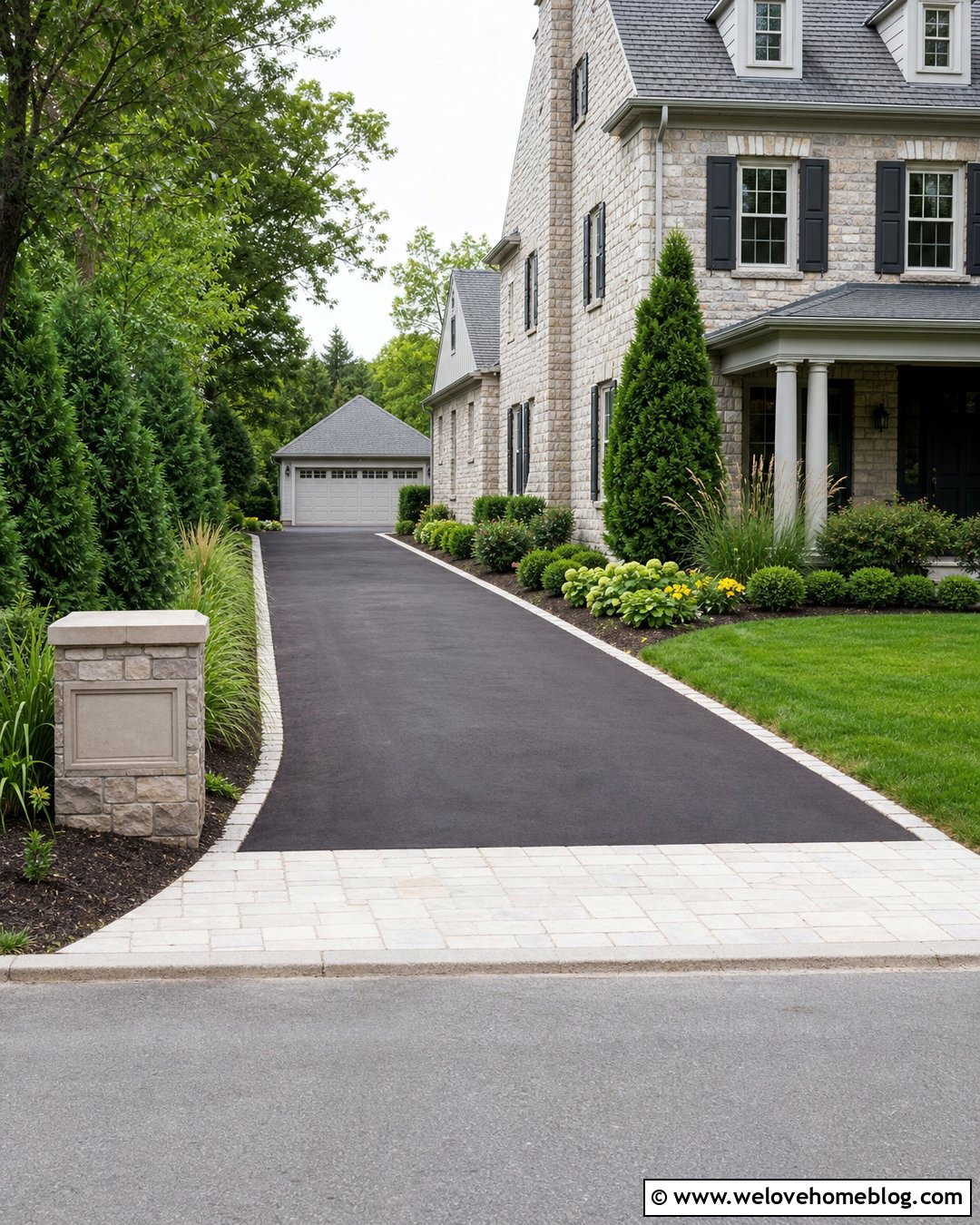
An address sign can turn the entrance of a side driveway into a useful curb appeal feature. Pair a black asphalt driveway with a light stone paver apron and matching edge bands. Place a low masonry address marker beside the entrance, set back from turning vehicles and public visibility zones. Use large, simple numbers that can be seen from the street, and coordinate the marker material with the house facade. Surround it with low grasses or compact evergreen planting that will not hide the sign as it matures. Continue the same stone along the driveway toward a detached garage. A small integrated light can improve nighttime visibility. The complete layout gives delivery drivers and guests a clear destination while making the side entrance look more intentional and finished.
34. Side Driveway With Side Entrance Walkway
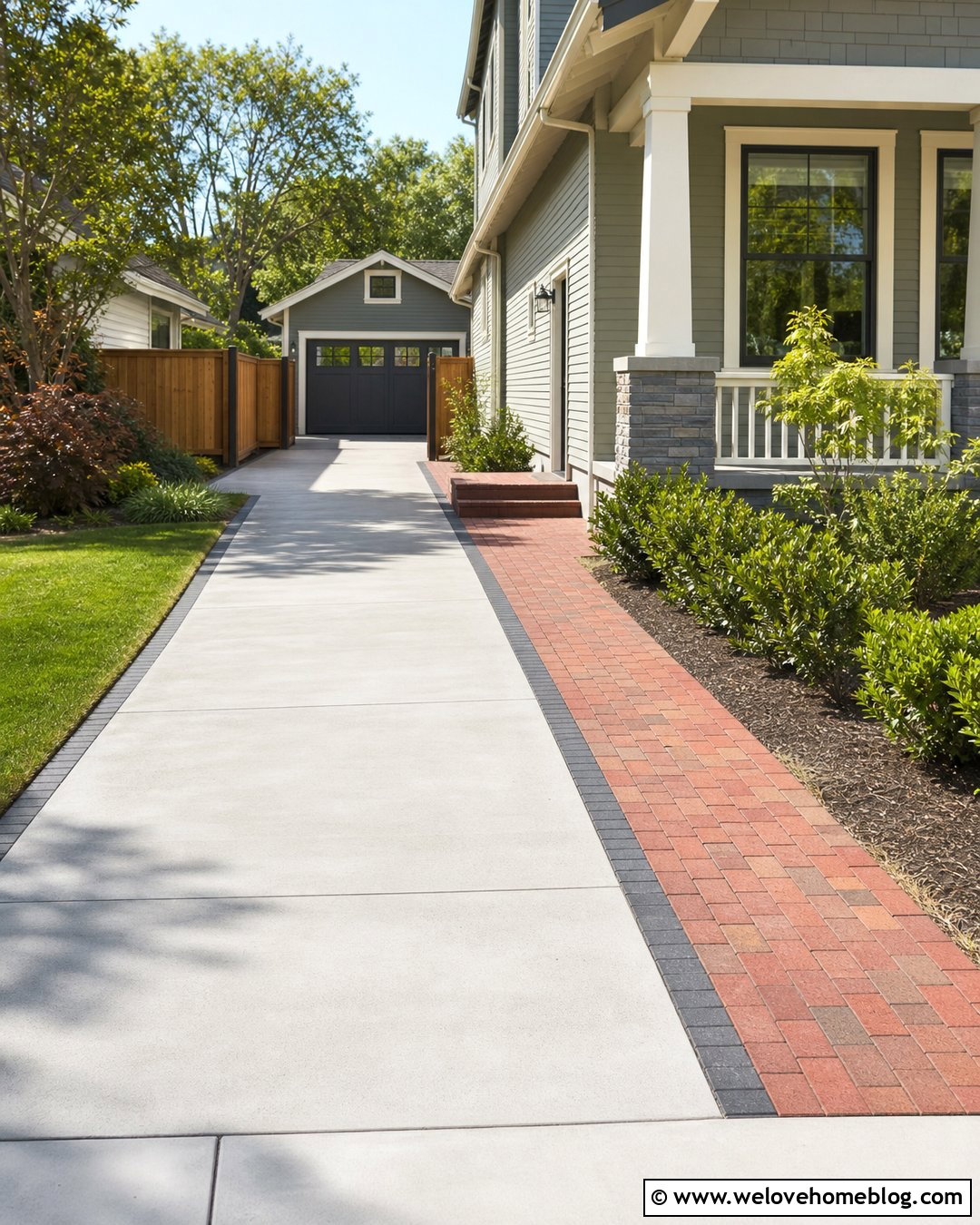
A dedicated walkway makes a side driveway safer and more comfortable for people moving between the street, side door, and backyard. Use light gray poured concrete for the driving lane and narrow brick pavers for the pedestrian route. Separate the two surfaces with a flush charcoal band rather than a raised curb. Widen the walkway near the side entrance to create a practical landing for packages and guests. Add low foundation planting or wall-mounted planters without reducing the clear walking zone. On the opposite side of the driveway, maintain a simple lawn strip or hedge. Continue the walkway past parked vehicles when possible. This organized arrangement works well for homes with frequently used side doors, accessory units, home offices, or detached garages behind the main residence.
35. Mixed Material Side Driveway
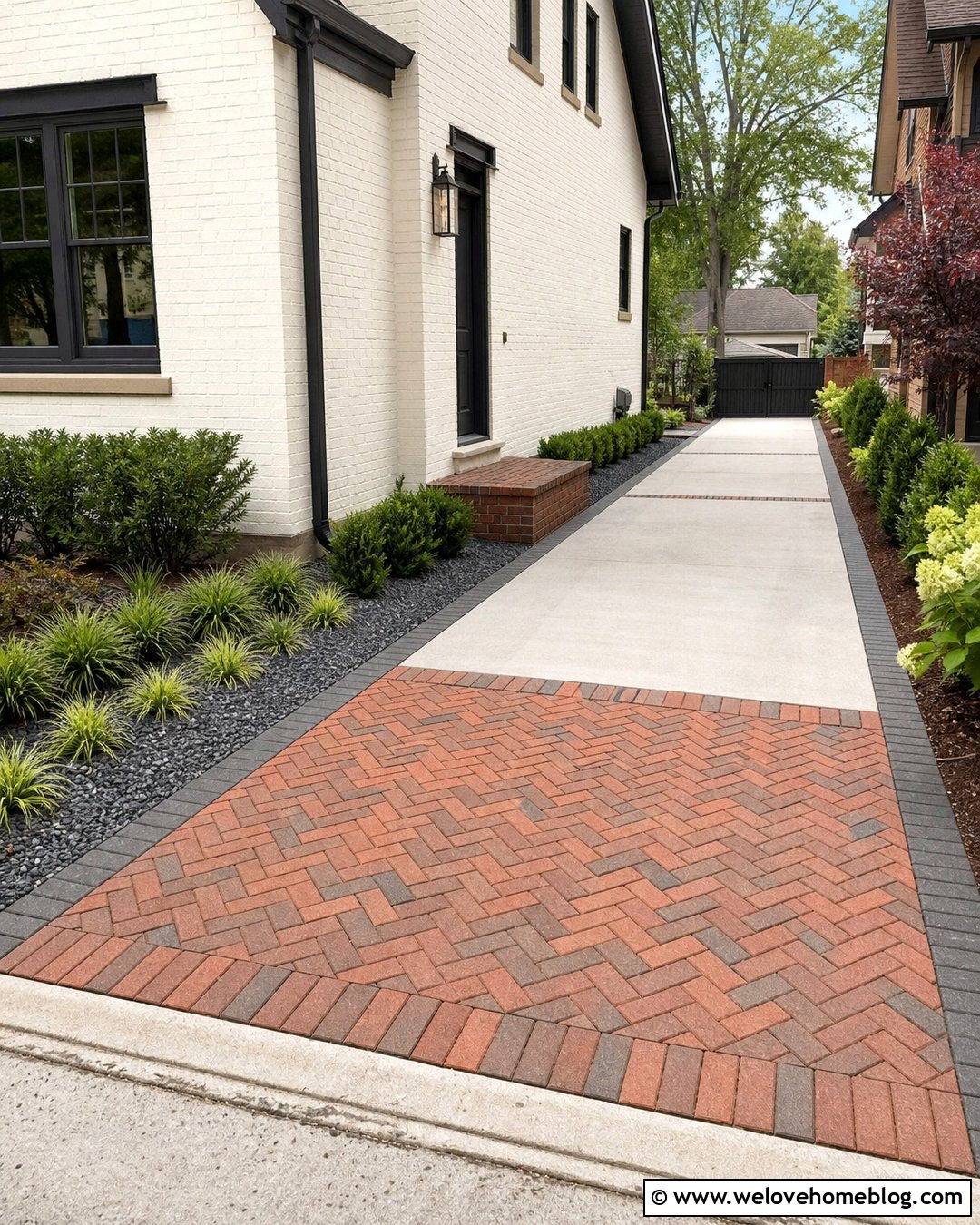
A mixed-material side driveway can combine durability, visual detail, and budget control when each material serves a specific zone. Use a clay brick paver apron at the street, smooth gray concrete along the narrow house passage, and matching brick bands around the rear parking pad. The brick adds warmth in highly visible areas, while concrete keeps the longest section straightforward. Tie everything together with a continuous dark edge and repeated low planting. A gravel drainage strip beside the foundation can introduce a third texture without competing with the main surfaces. Match the brick color to the home and use the same material at the side-door landing. This layered approach suits renovated homes where a single surface might not connect naturally with both the original architecture and newer garage.
Conclusion:
The best side driveway balances parking needs with the dimensions, drainage, architecture, and landscaping of the property. Begin by measuring the full route, including gates, roof overhangs, utility equipment, garage corners, and space needed for doors and mirrors. Then choose a surface that fits your climate, maintenance expectations, and budget. Borders, planting, lighting, and entrance details should support that surface rather than compete with it. Permeable paving, drainage strips, channel drains, and carefully graded bases can also improve long-term performance. Use these 35 Side Driveway Ideas as adaptable starting points, then refine your preferred look around local regulations and real site conditions for a driveway that remains attractive, accessible, and practical.

Related posts:



Leave a Reply