
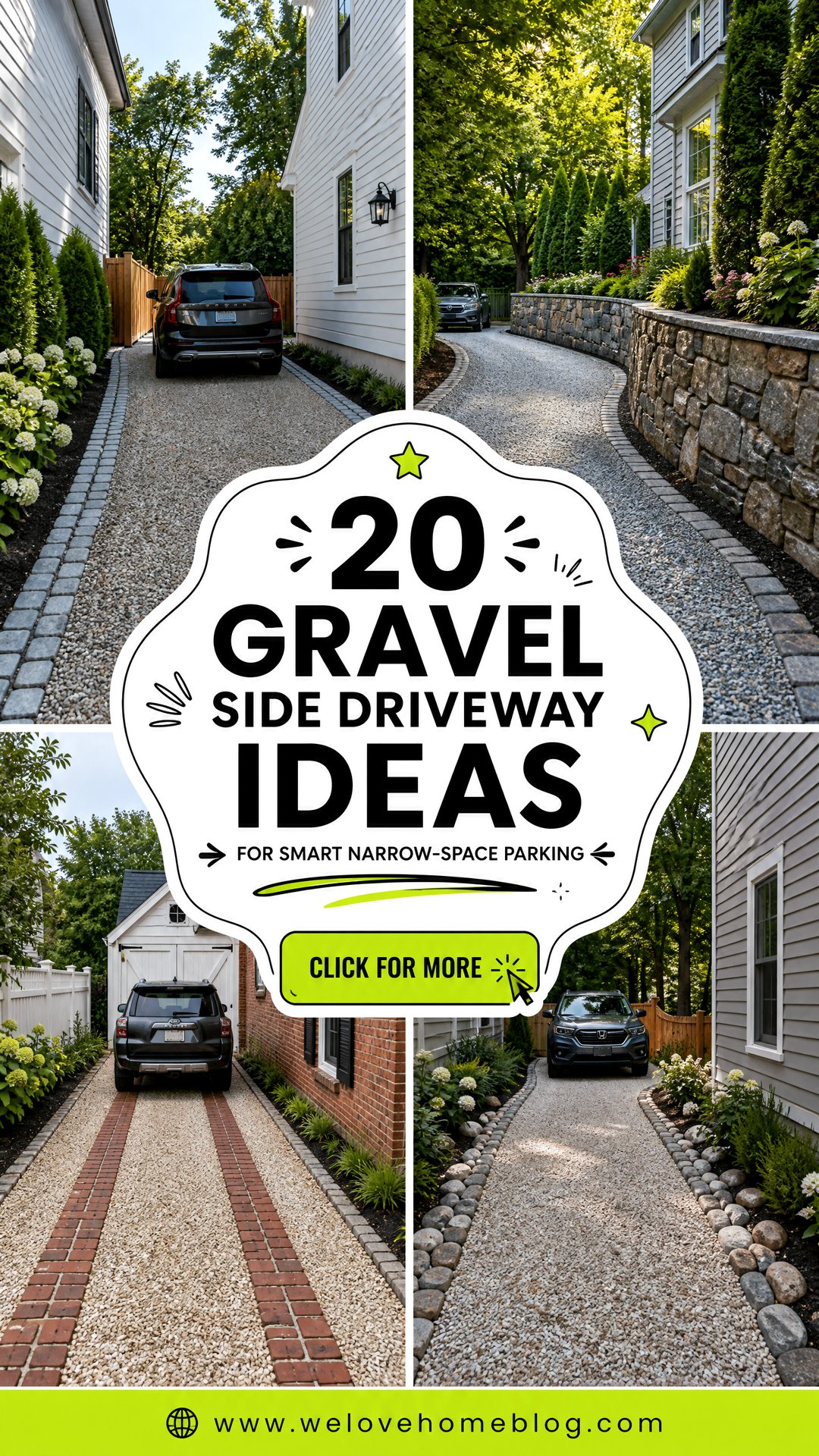
A gravel side driveway can turn a narrow, overlooked strip beside the house into attractive and useful parking. Gravel suits this layout because it drains well, works around irregular spaces, and pairs easily with brick, stone, timber, steel, or concrete edging. The best designs also consider vehicle clearance, foundation drainage, pedestrian access, lighting, and the transition to a garage or backyard. You can create a relaxed cottage look with pea gravel and flowers, or choose angular gray stone and crisp borders for a modern exterior. Stabilization grids can help reduce shifting where vehicles frequently turn or park. Below, you’ll find 20 Gravel Side Driveway Ideas that combine the surface, layout, borders, landscaping, and house exterior into one complete design. ()
1. Pea Gravel Side Driveway With Brick Edging
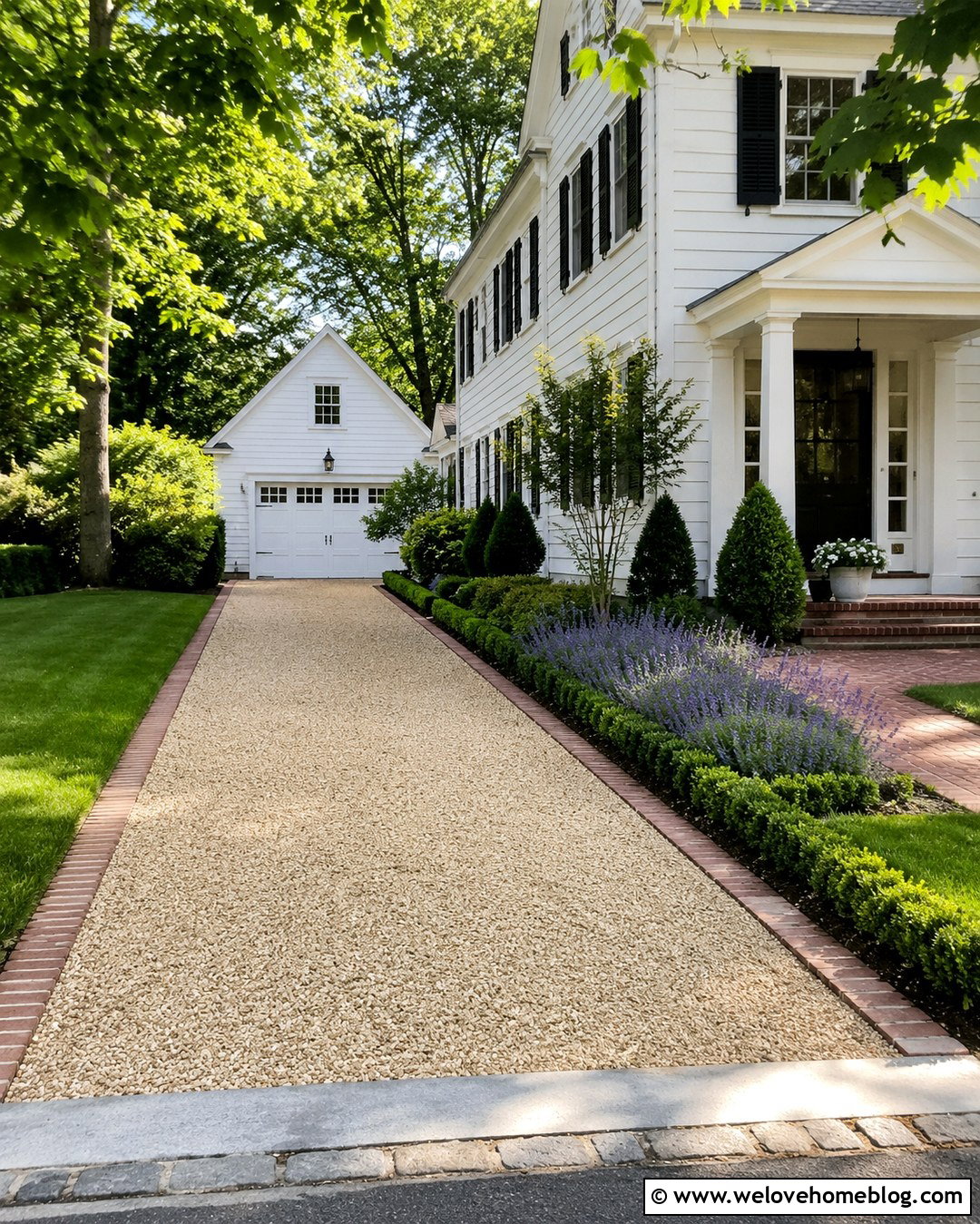
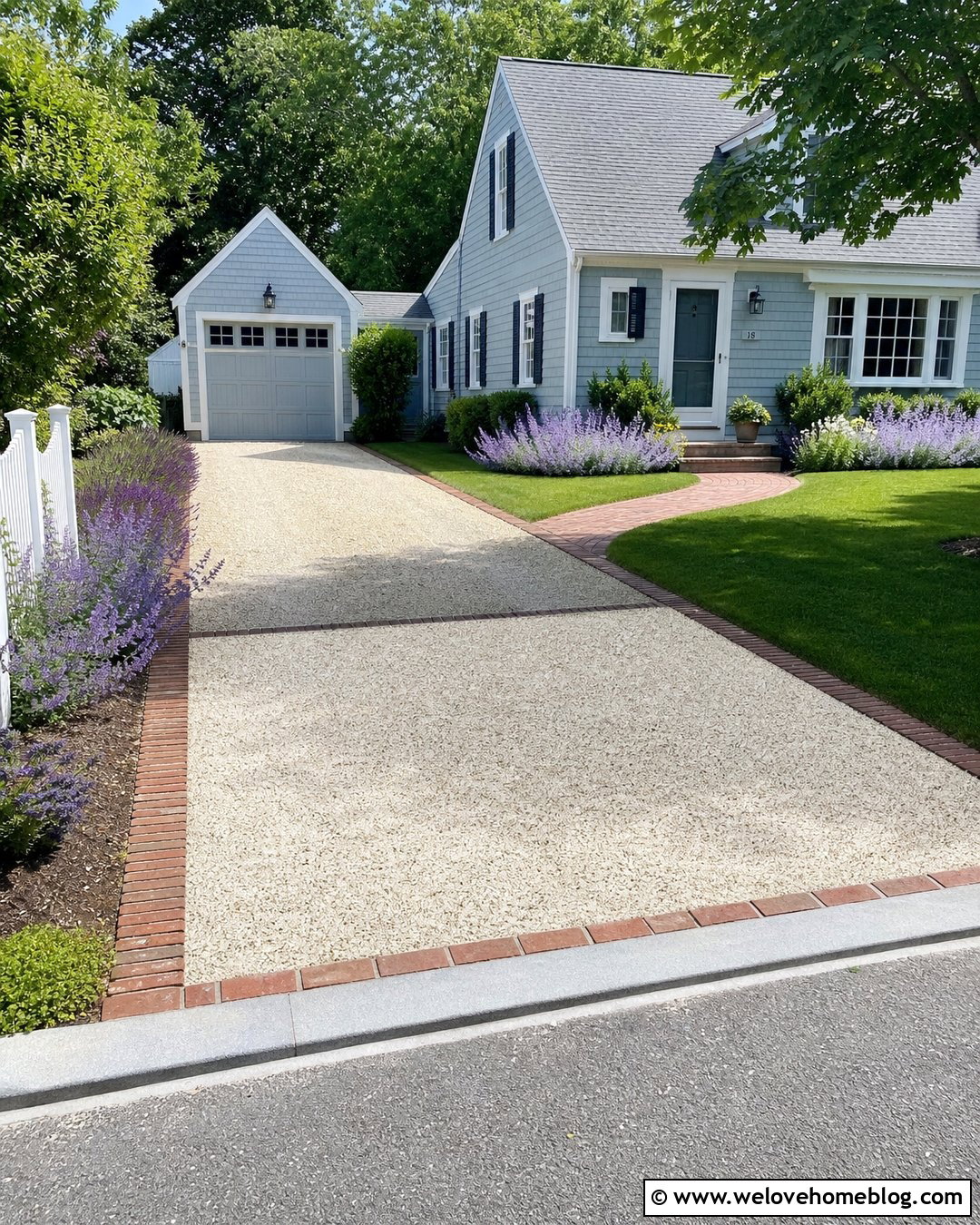
Warm pea gravel and traditional red brick create a welcoming side driveway that works especially well beside a colonial, Cape Cod, or cottage-style home. Use brick edging on both sides to contain the small rounded stones and establish a clean line from the curb to the garage. Set the bricks vertically for a stronger edge or lay them flat for a wider visual border. A narrow planting bed along the house can hold compact boxwoods, catmint, or ornamental grasses without interfering with car doors. On the lawn side, keep the edge straight and easy to mow. Because pea gravel tends to move under tires, install it over a properly compacted base and consider stabilization grids in parking and turning areas.
2. Gray Gravel Side Driveway With Concrete Borders
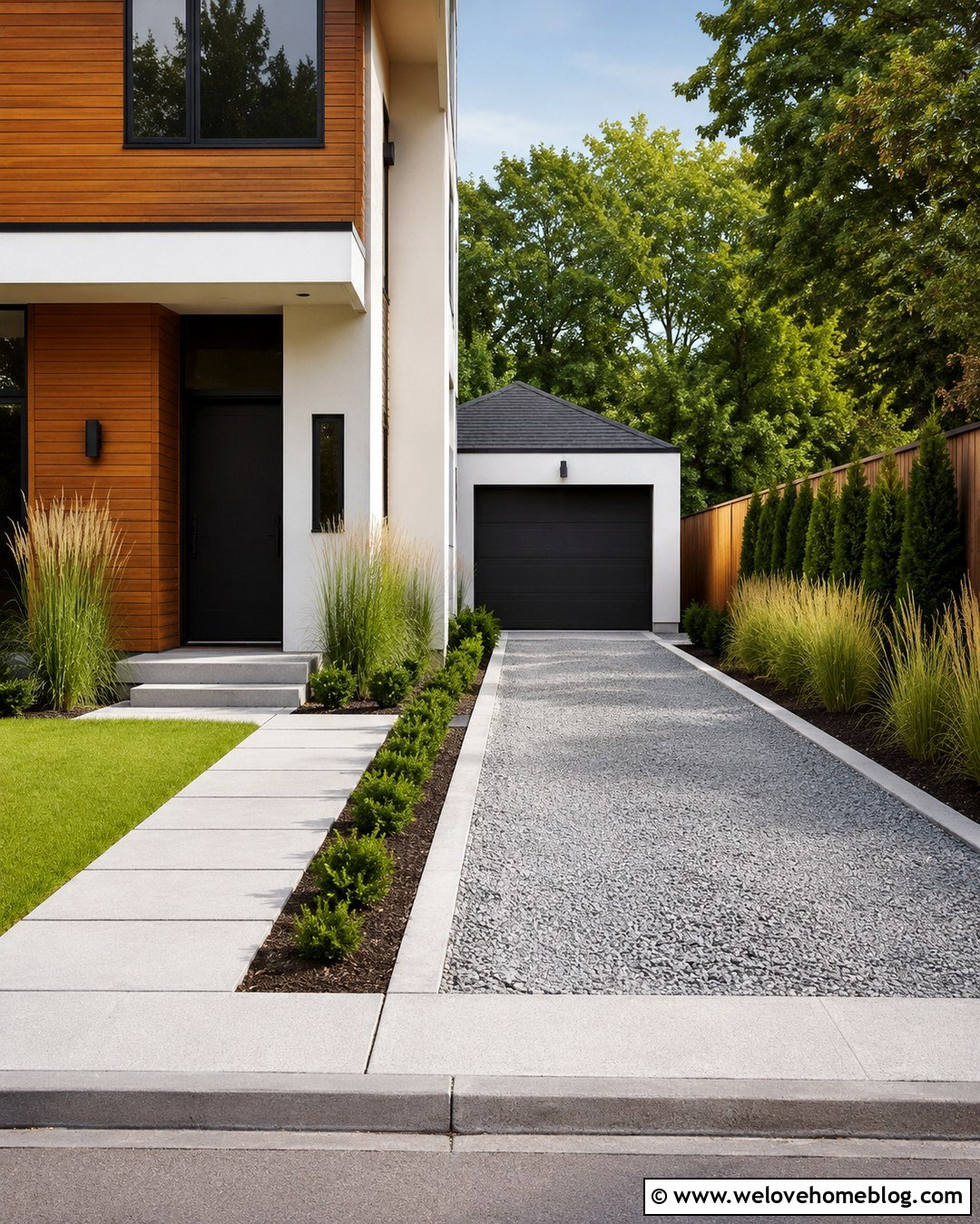
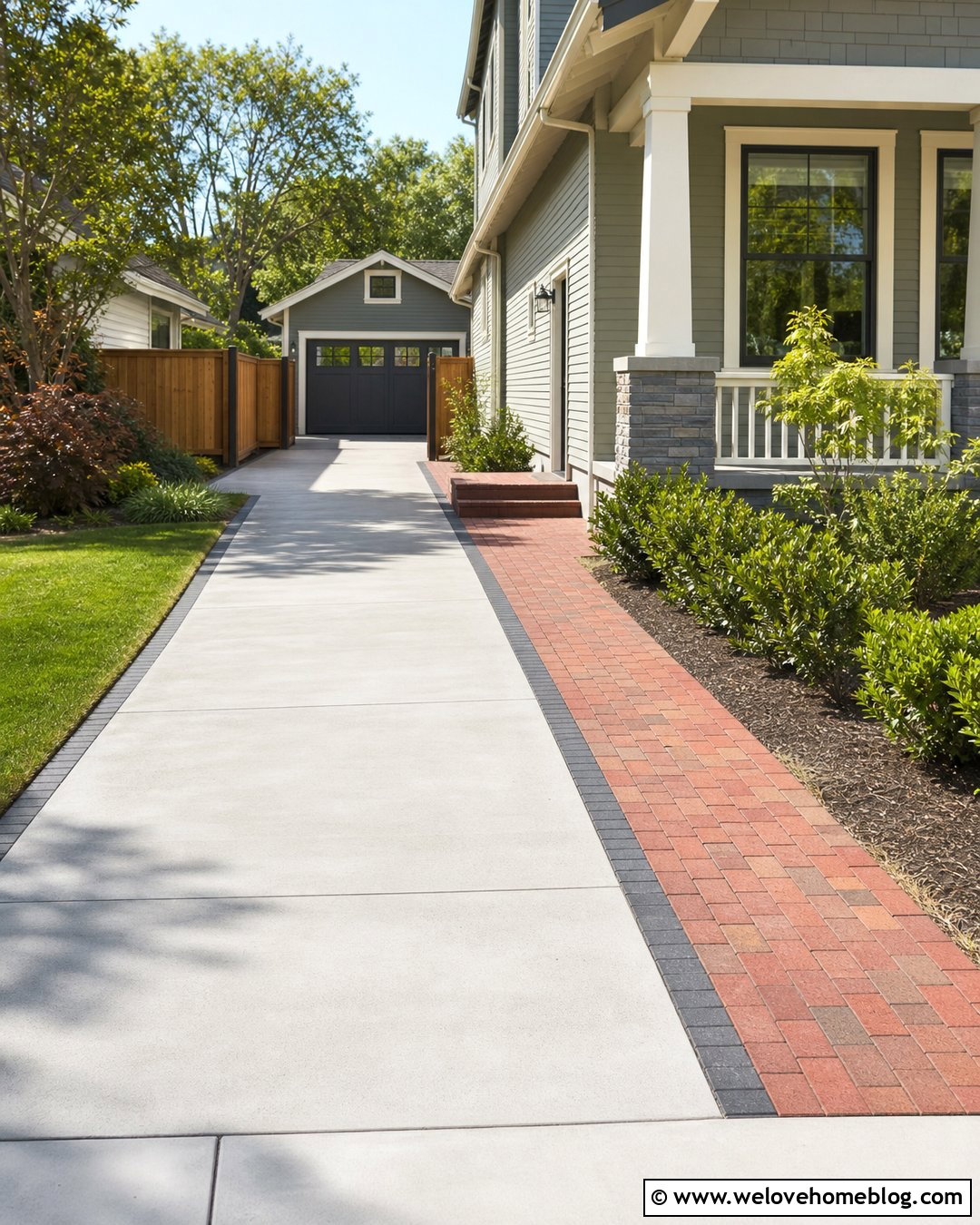
For a cleaner contemporary appearance, pair angular gray gravel with smooth poured concrete curbs. The crisp borders keep the driveway visually separate from the lawn and prevent loose stones from spreading into nearby planting beds. A straight layout makes the most of a narrow side yard and creates a direct route to a rear garage. Use low evergreen shrubs near the house, then add upright grasses where more height is needed. A matching concrete walkway can run beside the driveway, giving people a stable surface that stays separate from vehicle traffic. Choose gravel that complements the home’s siding, roofing, or masonry. Subtle gray tones work particularly well with white stucco, charcoal siding, natural cedar, and modern mixed-material facades.
3. Crushed Granite Side Driveway With Steel Edging
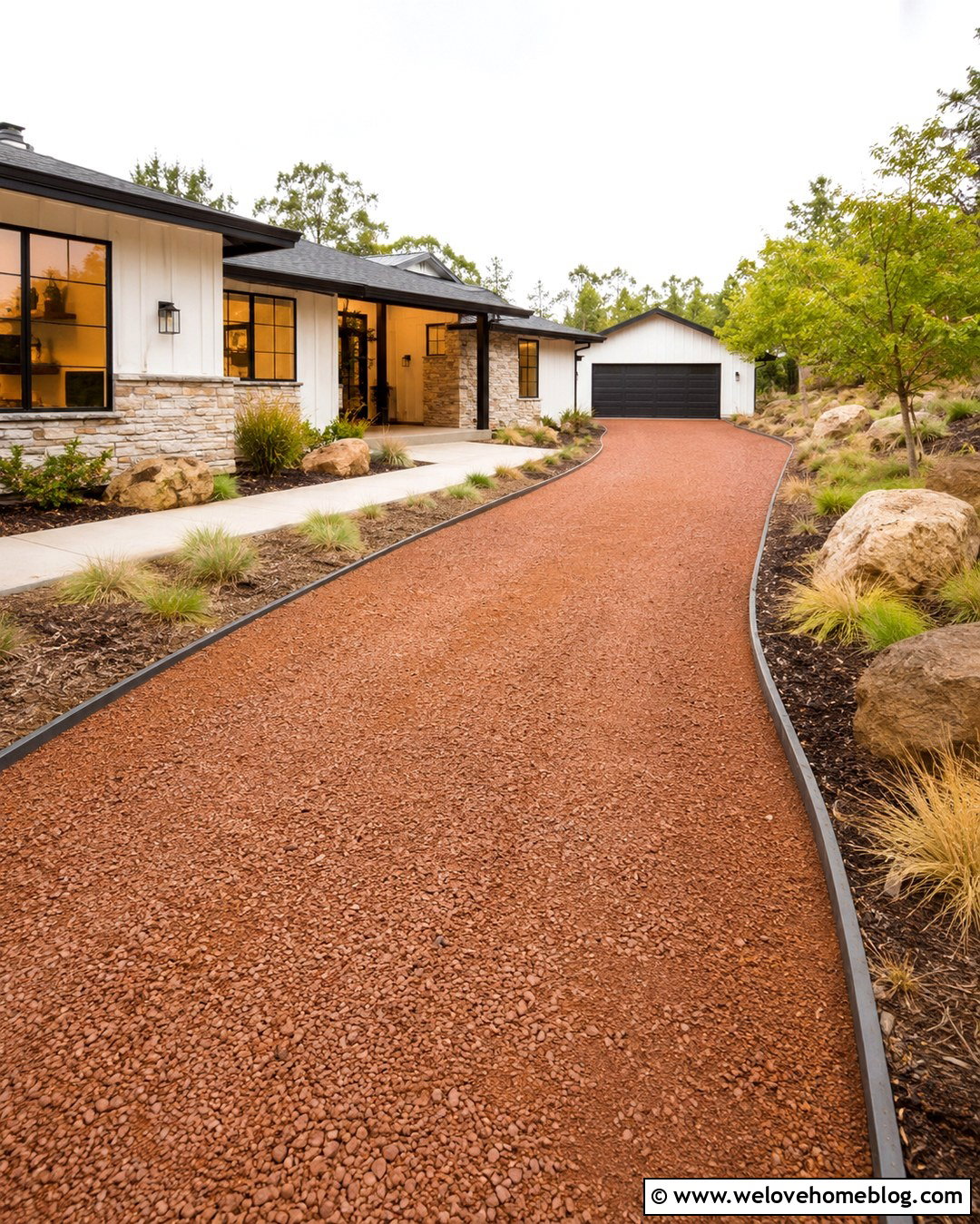
Crushed granite gives a side driveway a firm, textured surface with earthy color and strong definition. Pair it with dark steel edging for a simple border that takes up very little room. This is helpful when every inch of a narrow side yard matters. A gentle curve can direct the driveway around a bay window, mature tree, or projecting section of the house before reaching the garage. Repeat the steel finish in a gate, address marker, or exterior light fixture to connect the driveway with the architecture. Drought-tolerant grasses and compact shrubs soften the edges without creating bulky growth. Select angular crushed granite rather than rounded decorative stone so the surface locks together more effectively under regular vehicle traffic.
4. White Gravel Side Driveway With Black Paver Edging
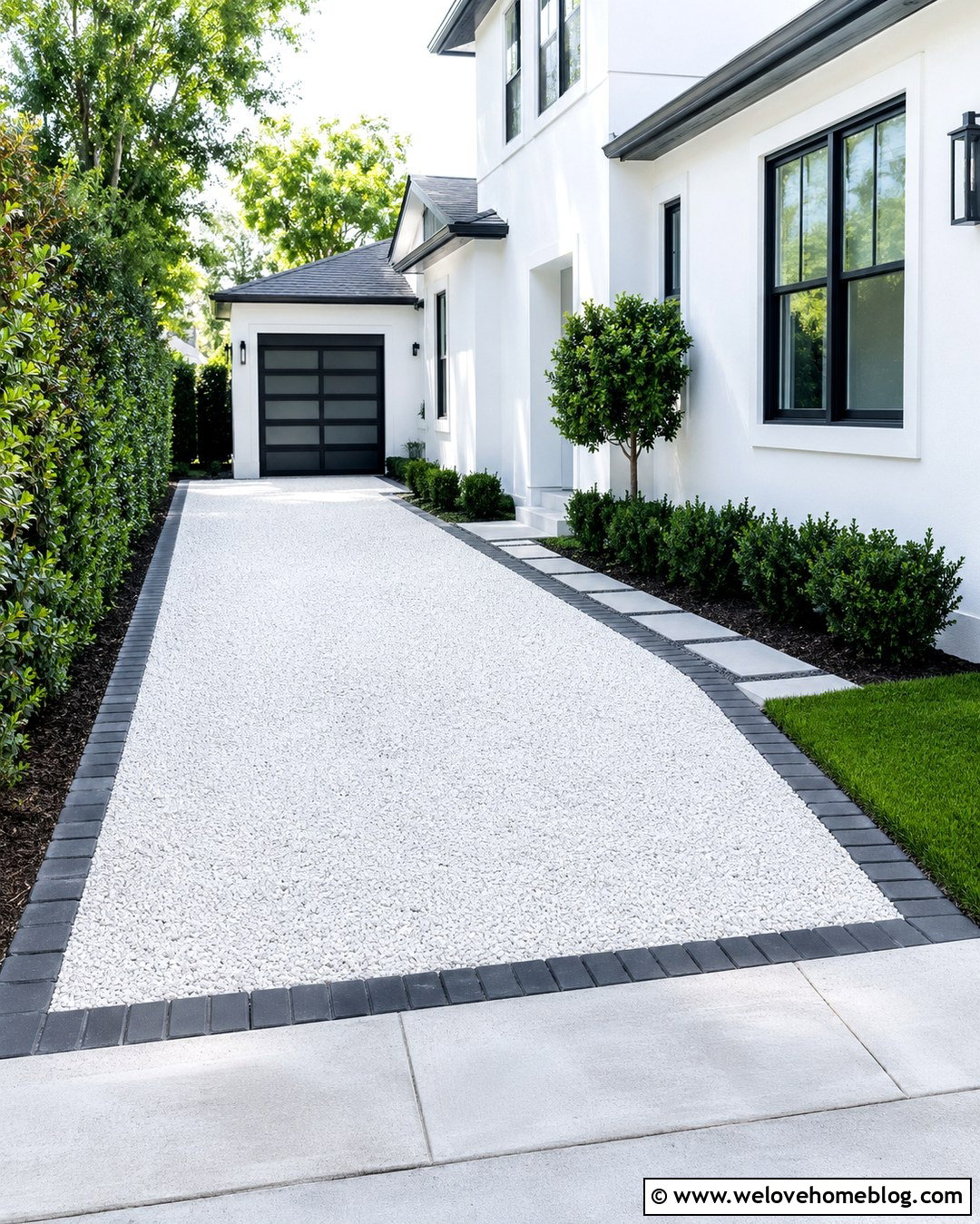
Bright white gravel can make a shaded side yard feel lighter and more spacious. Frame it with charcoal or black concrete pavers to create strong contrast and keep the pale stone neatly contained. This combination suits a modern white house, especially when the exterior includes black windows, gutters, or doors. Run the driveway in a straight line toward a side-facing garage, leaving enough space for a slim walkway near the house. Green hedges or clipped shrubs will stand out against the light gravel without making the design feel busy. White stone can show leaves, soil, and tire marks more quickly, so this look is most practical where surrounding trees are limited and routine raking is manageable.
5. Limestone Gravel Side Driveway With Timber Edging
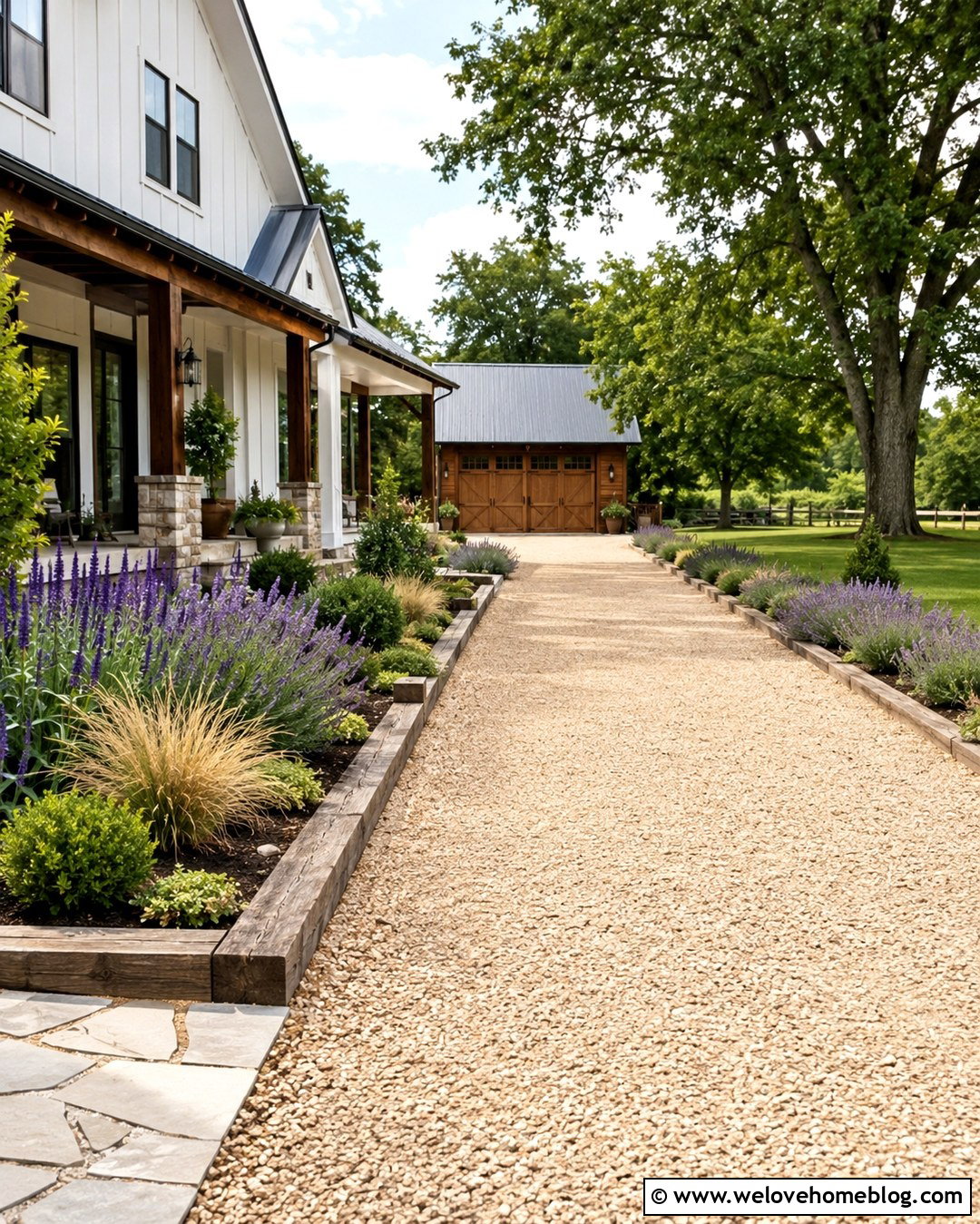
Buff limestone gravel and pressure-treated timber create a relaxed side driveway for a farmhouse, ranch, or country home. The warm stone color blends naturally with tan siding, reclaimed brick, and wood accents. Use substantial landscape timbers rather than thin garden boards so the border can handle pressure from vehicle tires and shifting gravel. A straight driveway can lead to a detached garage, workshop, or backyard parking pad. Between the driveway and house, add a narrow bed of lavender, salvia, or low ornamental grasses. On the opposite side, a simple lawn keeps the space open and easy to maintain. Install timber slightly above the finished gravel surface, but avoid creating a tall edge that could catch doors or tires.
6. Gravel Side Driveway With Grass Center Strip
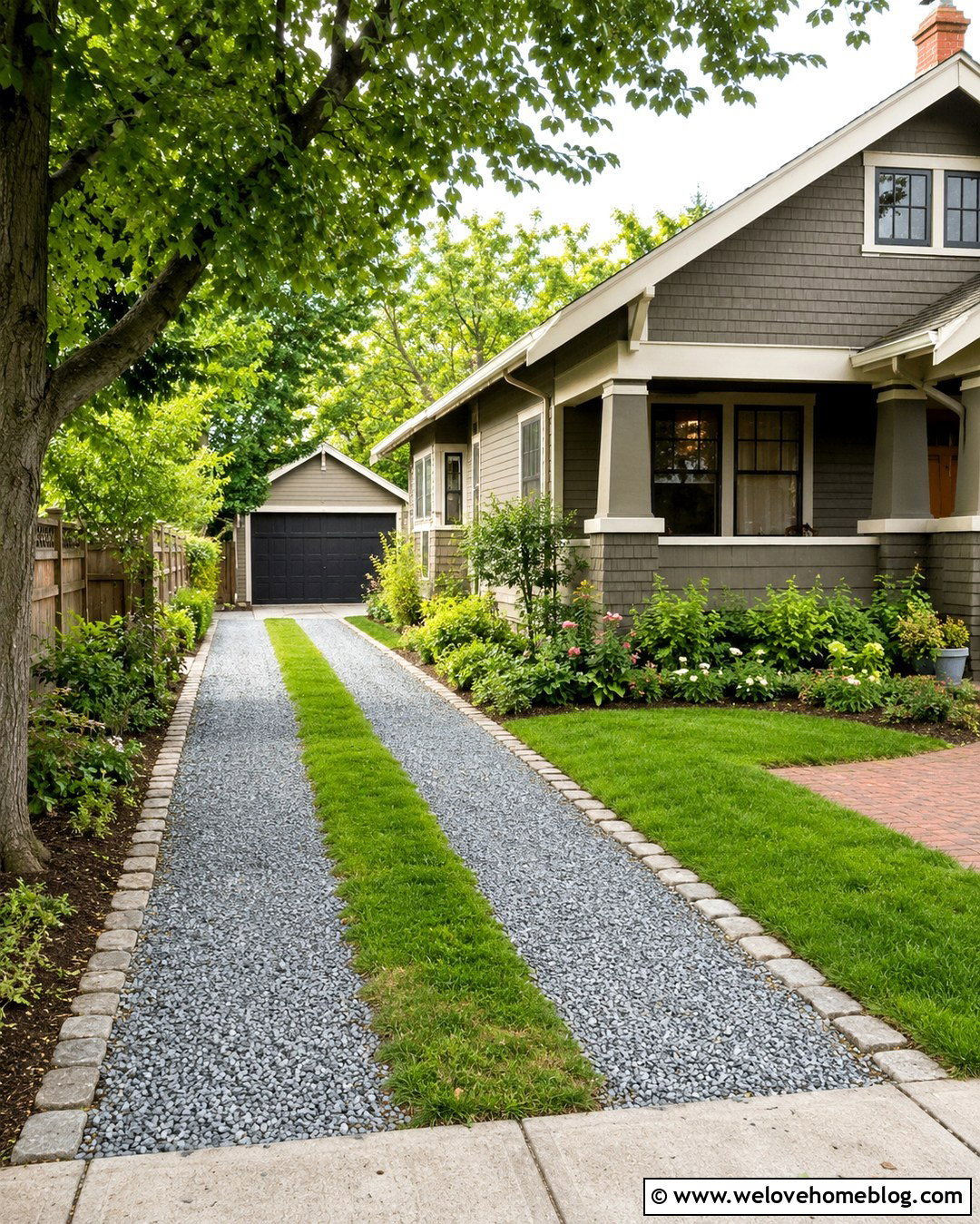
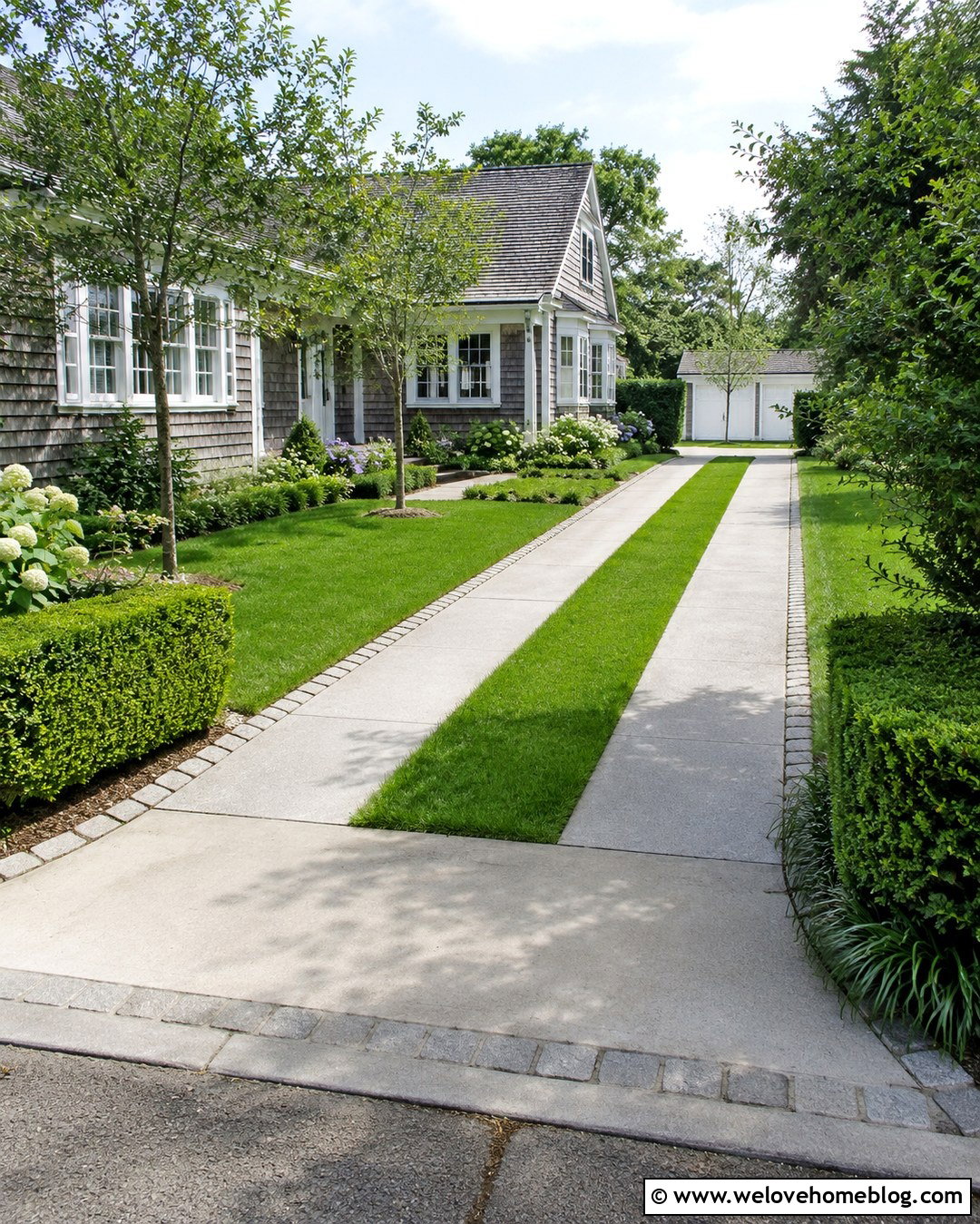
Two gravel tire tracks with a green center strip can reduce the amount of stone required while giving a long side driveway a softer appearance. This layout looks especially natural beside a craftsman bungalow, cottage, or rustic home. Use compacted angular gravel for each wheel path and maintain a level grass strip between them. Brick, cobblestone, or steel edging can define the outside boundaries and protect nearby garden beds. The center should be wide enough to look intentional but positioned so vehicle tires remain on gravel. Choose durable turf suited to local sunlight and rainfall conditions. Where grass struggles, replace it with low-growing, traffic-tolerant ground cover or reinforced turf cells that provide a similar green effect.
7. Stabilized Gravel Side Driveway With Paver Apron
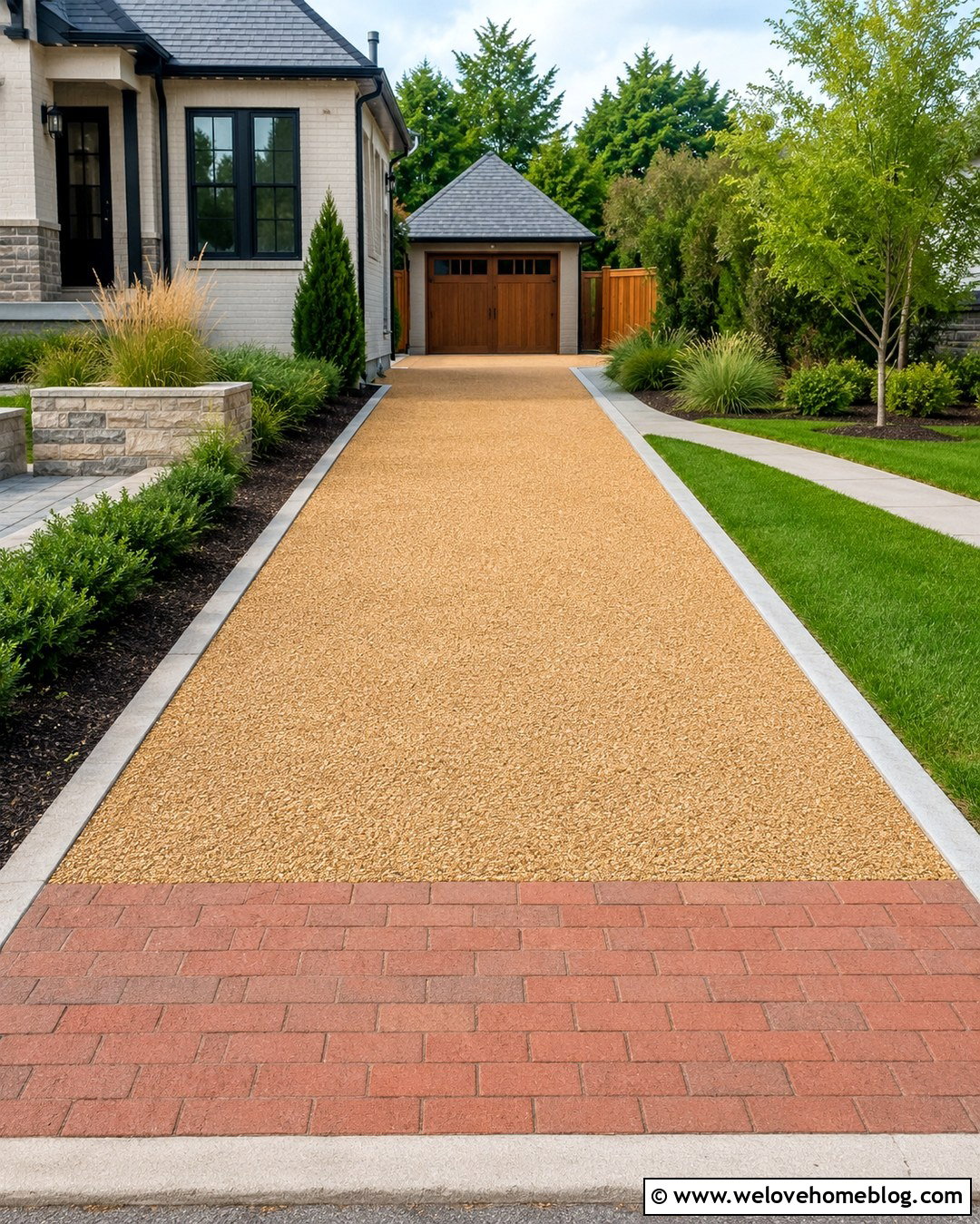
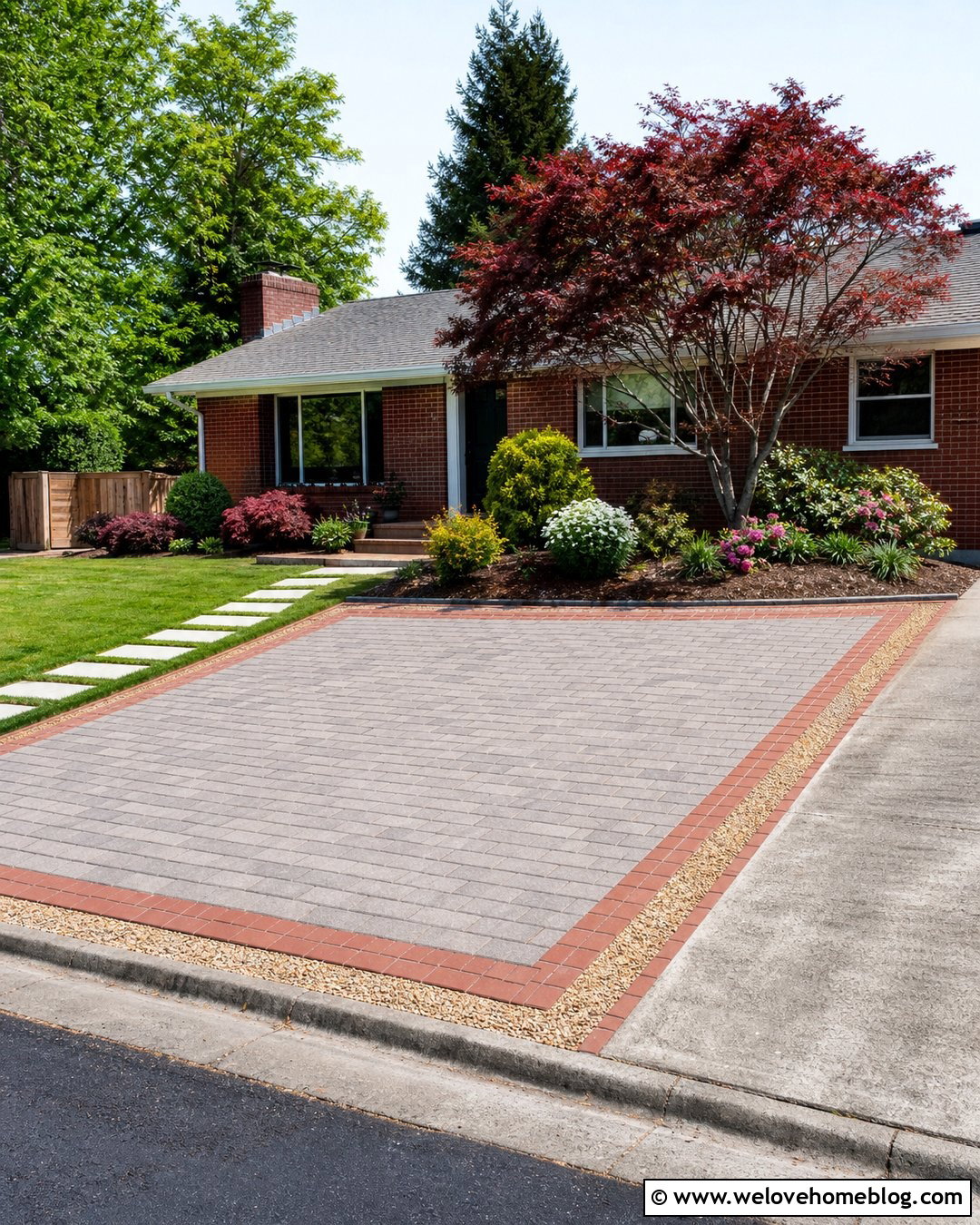
A gravel stabilization grid creates a tidier driving surface where loose stone would otherwise shift, rut, or scatter. Combine the stabilized gravel with a concrete or brick paver apron at the curb. This solid transition gives the entrance a finished appearance and helps keep gravel away from the sidewalk and street. Continue the narrow driveway beside the house toward a rear parking area or detached garage. Concrete edging can provide precise boundaries, while low planting beds add greenery without reducing usable width. Select pavers that repeat a color found on the home’s facade or front walkway. A stabilized design is particularly helpful in areas where vehicles brake, turn, or travel over the same wheel paths every day. ()
8. Gravel Side Driveway With Cobblestone Borders
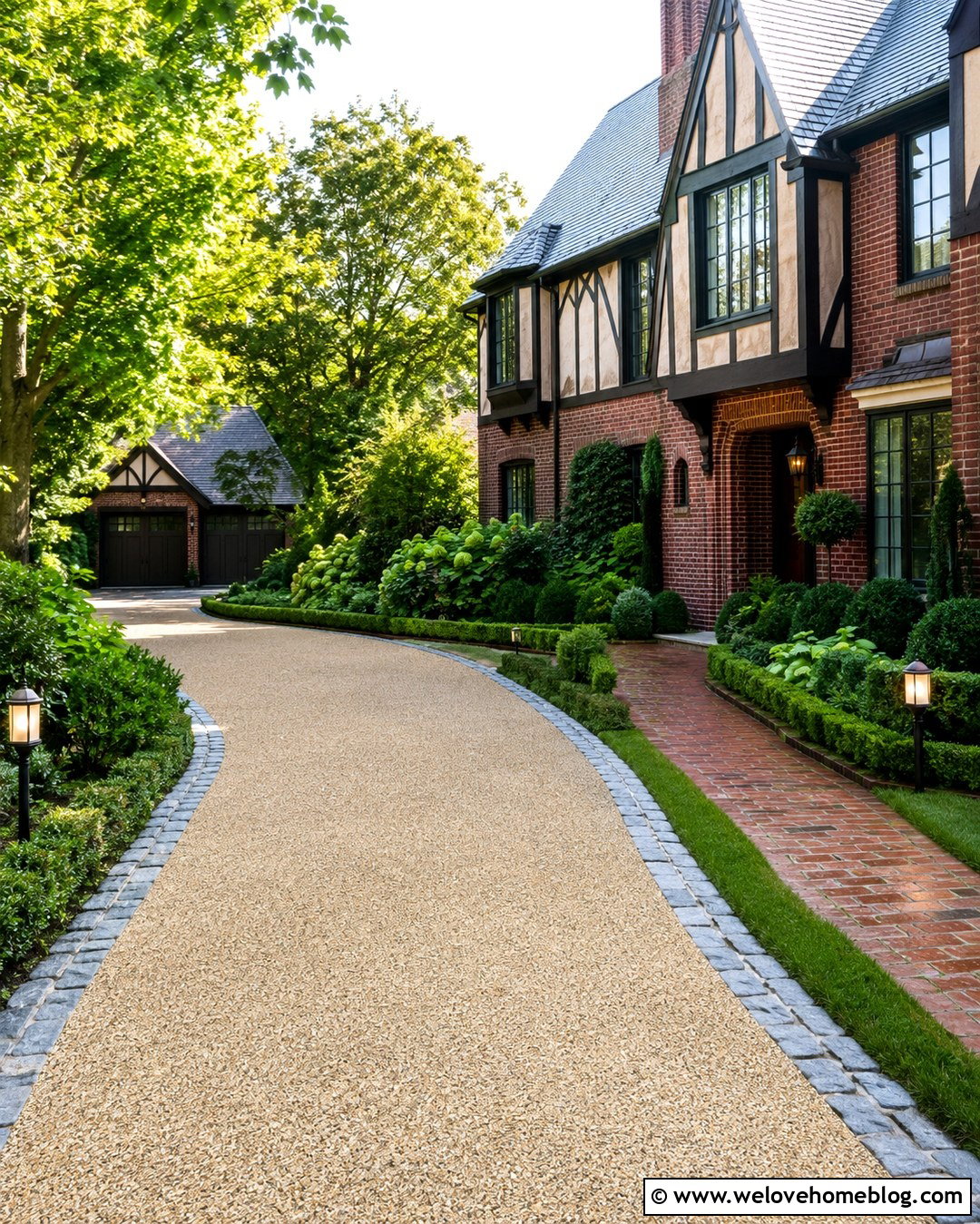
Cobblestone borders bring structure and traditional character to a gravel side driveway. Choose warm beige gravel for a softer European-inspired look or gray crushed stone for a more restrained palette. Set the cobblestones on a stable base so they remain aligned when tires approach the edge. A slightly curved layout can follow the house and open into a wider parking court near a carriage house or detached garage. Add clipped hedges along one side and a brick walkway along the other to reinforce the formal arrangement. Small column-style lights can mark the route without taking up much ground space. This combination works well with Tudor, colonial, stone cottage, and traditional brick homes, where natural materials already shape the exterior.
9. Gravel Side Driveway With Stepping Stone Walkway
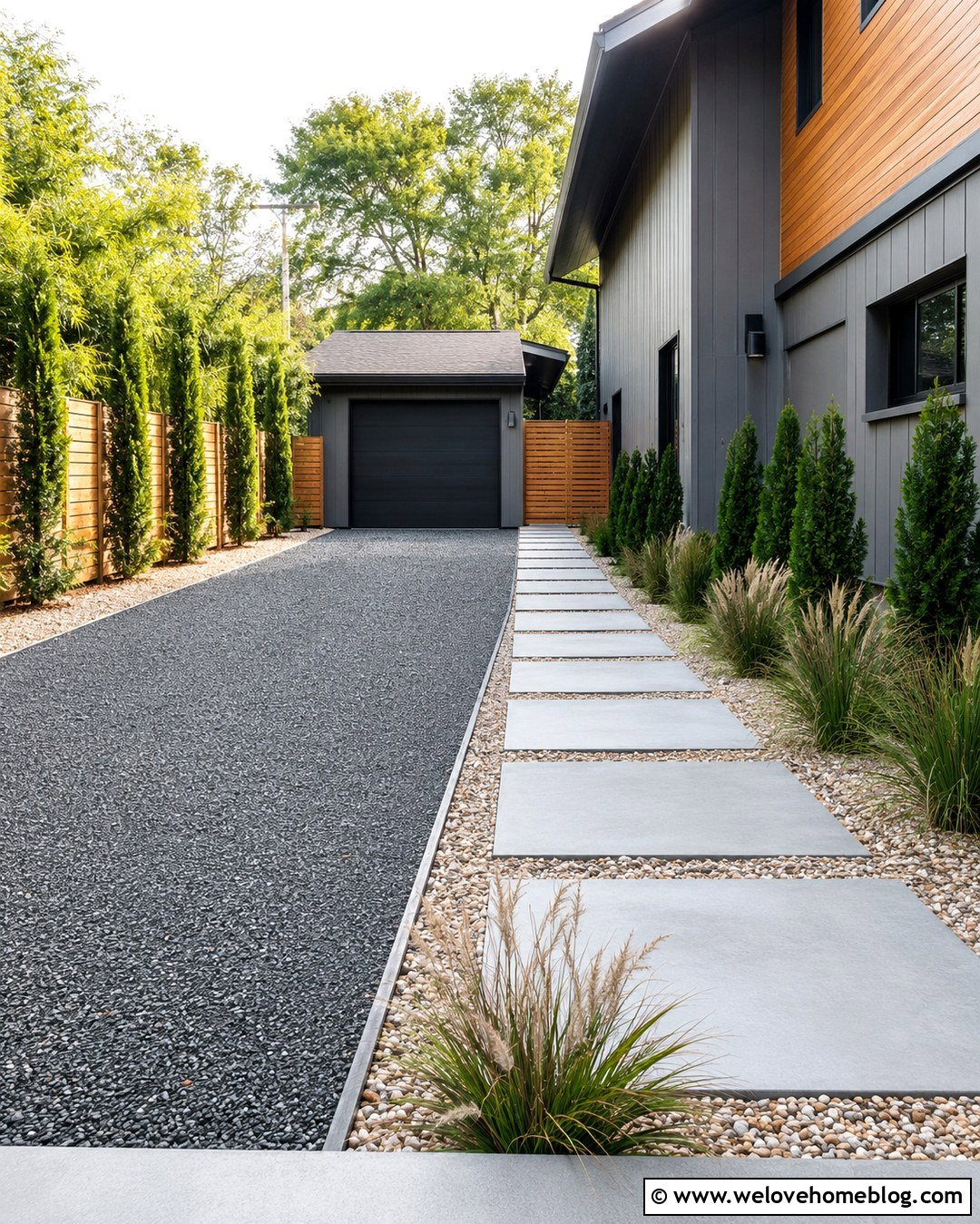
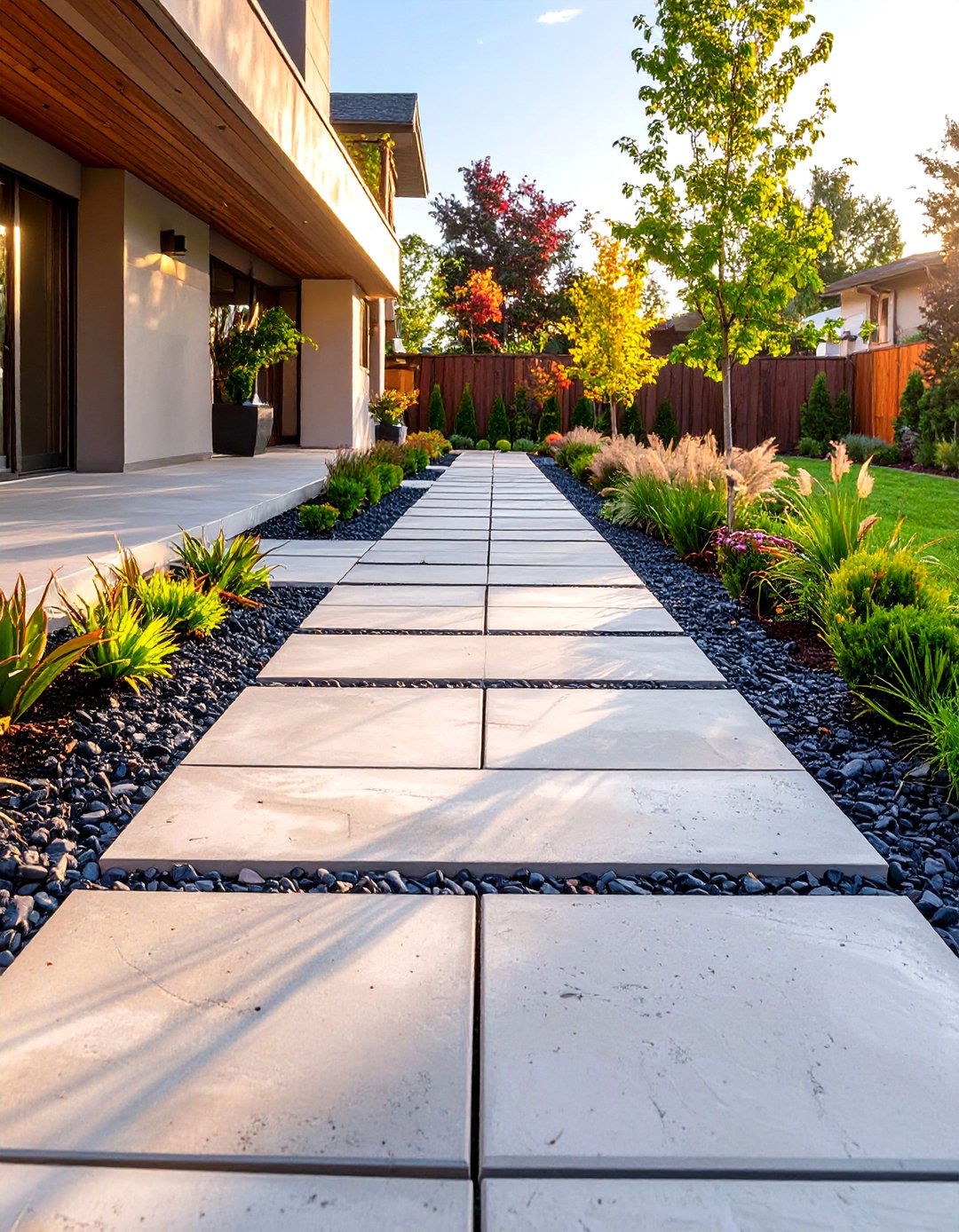
When a side driveway also serves as a route to the backyard, integrate a defined pedestrian walkway into the overall layout. Large rectangular concrete stepping stones can run through a strip of decorative gravel beside the main driving lane. Use angular gray gravel for the vehicle surface and a slightly lighter pea gravel around the steps to distinguish the two zones. Slim steel edging keeps both areas organized. Along the house, plant narrow upright evergreens or ornamental grasses that will not crowd the walkway. Add a simple gate near the backyard to create a clear destination. This arrangement provides a comfortable place to walk without forcing guests or family members to navigate loose driving gravel every time they use the side entrance.
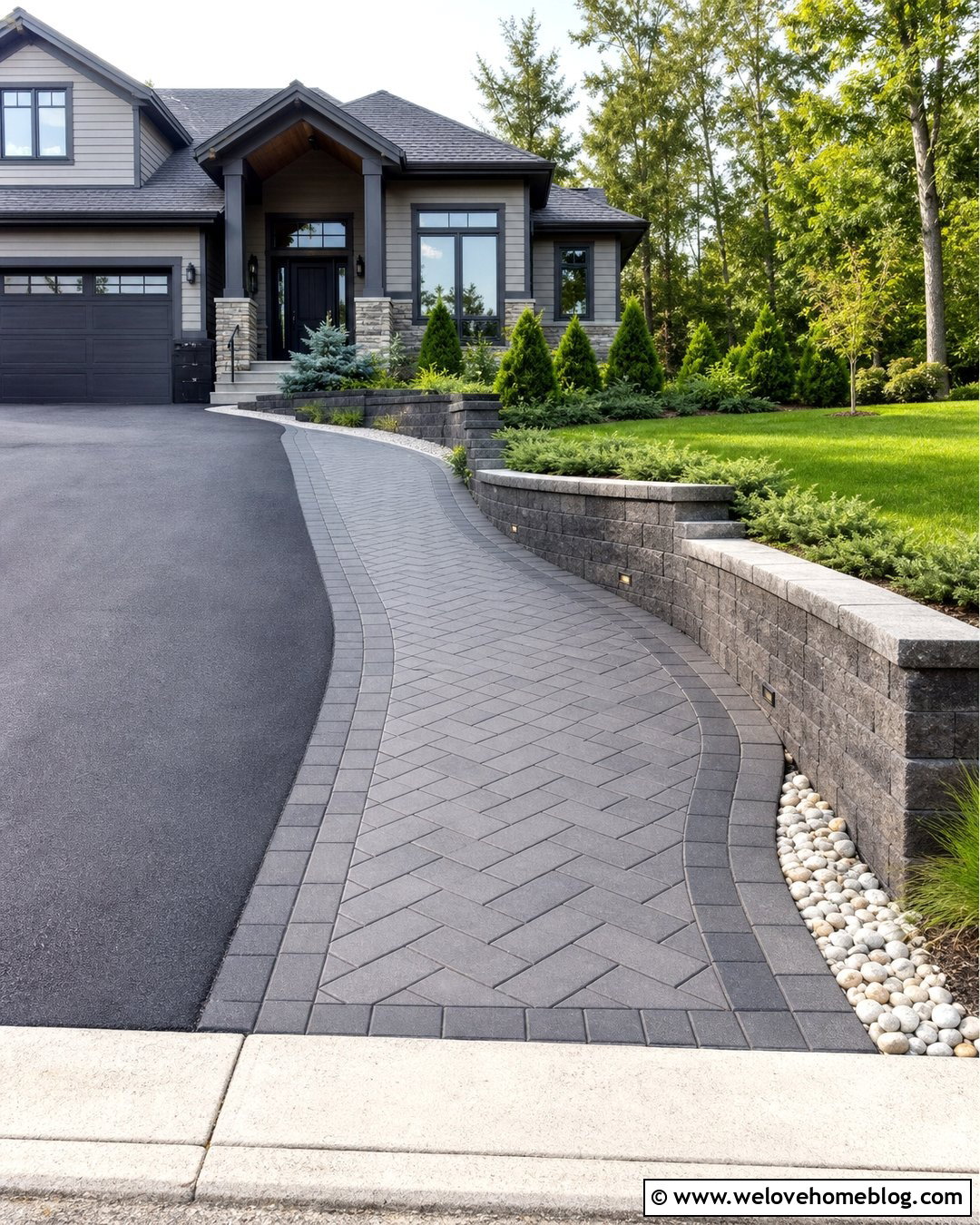
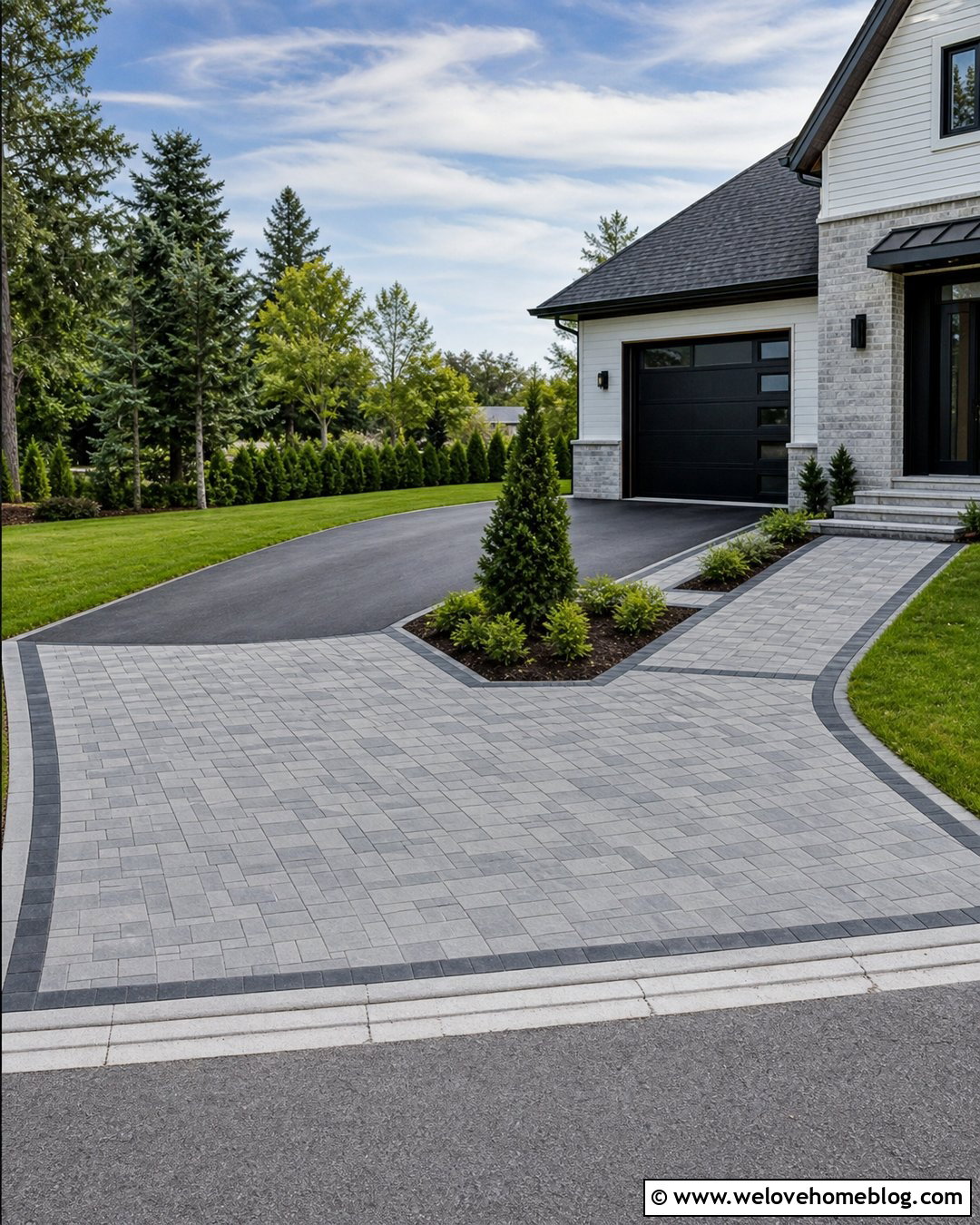
10. Curved Gravel Side Driveway With Stone Walls
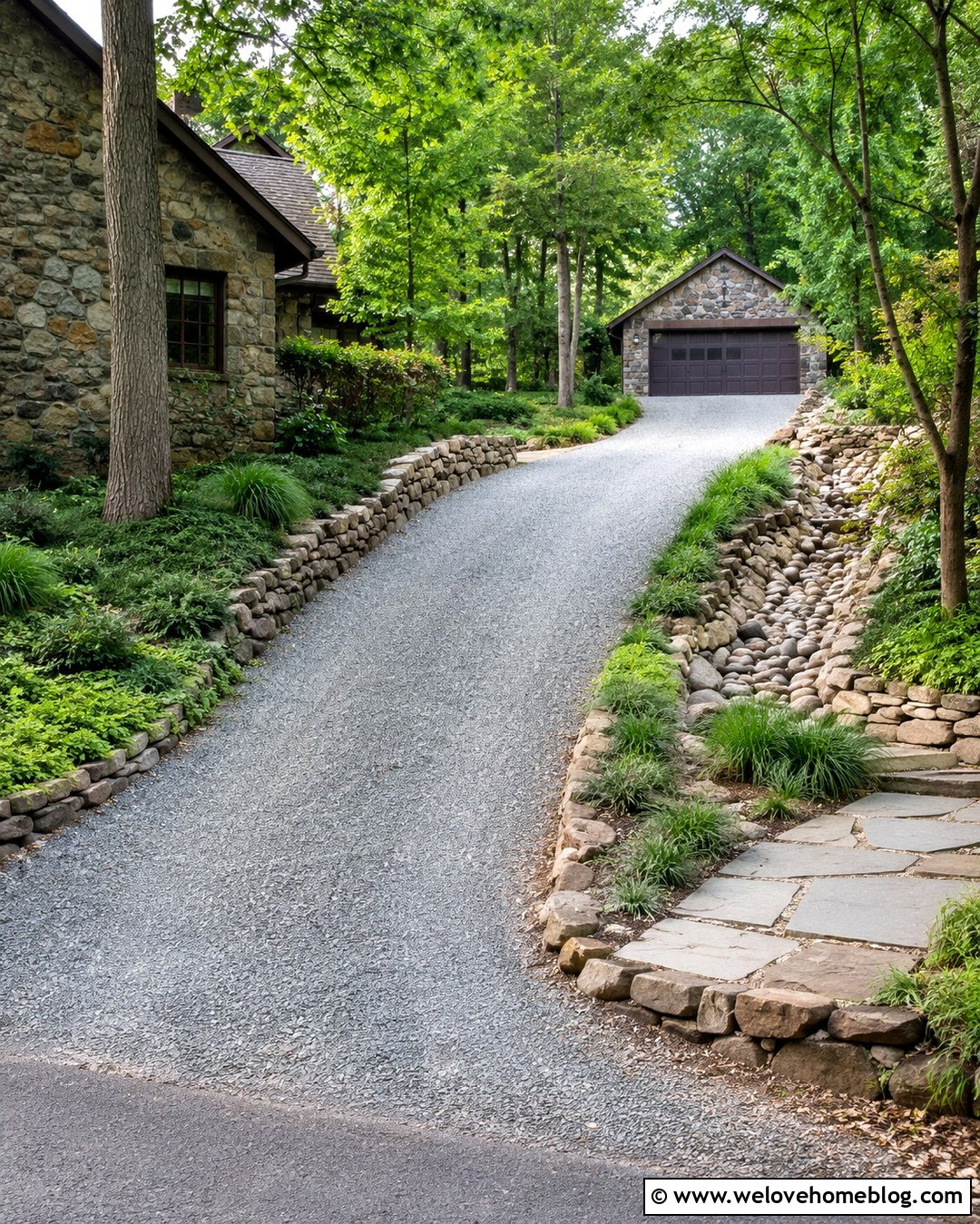
A gentle curve can make a side driveway feel more natural while helping it follow a sloping lot or irregular property line. Use compacted crushed stone for the surface and low natural-stone retaining walls where the surrounding ground changes elevation. The walls should frame the driveway without making the passage feel enclosed. Plant creeping ground cover above the stonework, then add small shrubs and grasses farther from vehicle doors. A wider turning area near the garage will make the curved route easier to use. Proper grading is important because water can collect along the inside of a bend. Incorporate a shallow planted swale or discreet channel drain where needed to move runoff away from the house and driveway base. ()
11. Gravel Side Driveway With Modern Horizontal Fence
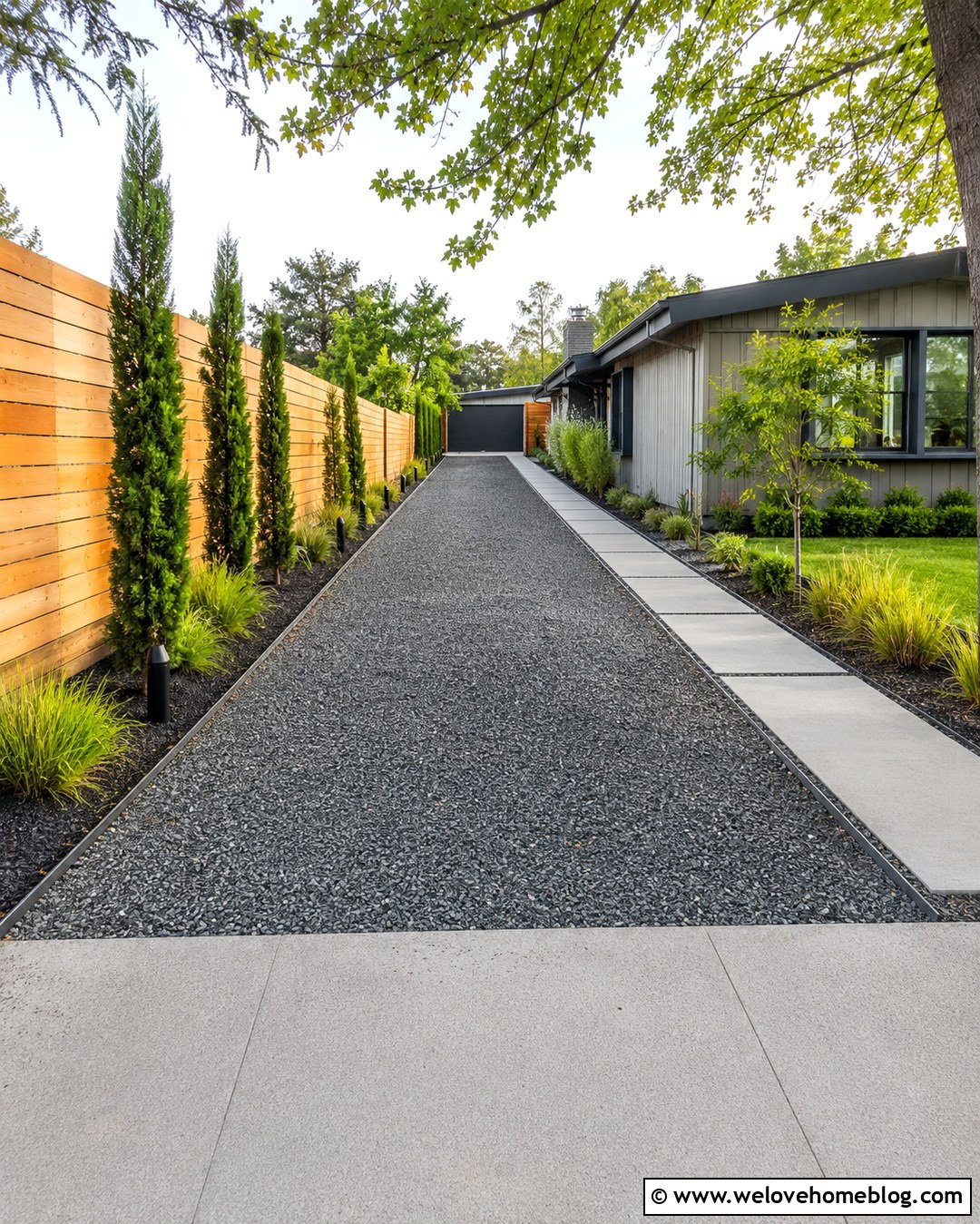
A horizontal wood fence can transform a basic gravel driveway into a private, well-defined route toward the backyard. Pair warm cedar boards with charcoal crushed gravel for a modern contrast, then use black metal edging to maintain clean boundaries. Position the fence on the property-line side while leaving a narrow planting strip beside the house. Clumping grasses, compact bamboo alternatives, or columnar evergreens can soften the walls without spreading across the driving surface. Black bollard lights placed at intervals will repeat the edging color and improve visibility. The fence should remain visually consistent from the curb to the rear gate. This complete look suits modern ranch houses, midcentury homes, and contemporary facades that already feature horizontal architectural lines.
12. Gravel Side Driveway With Cottage Flower Borders
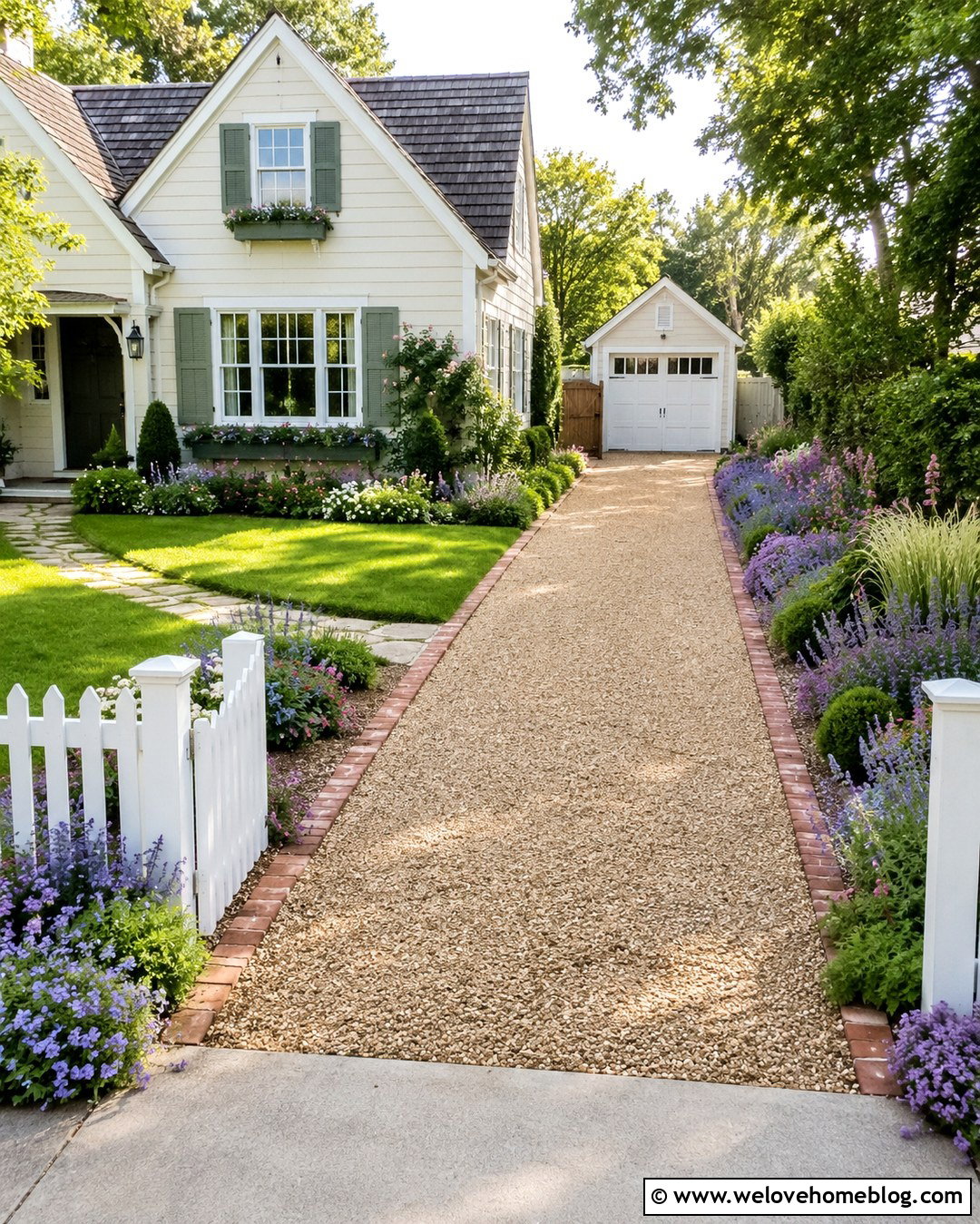
A flower-lined gravel side driveway can feel cheerful and established without losing its practical purpose. Choose cream or honey-colored gravel, then frame it with reclaimed brick edging that matches a cottage or painted craftsman home. Keep the planting closest to the driving lane low and flexible. Catmint, hardy geraniums, lavender, and compact ornamental grasses can soften the edge while leaving space for car doors. Place taller flowering shrubs toward the backyard, where the driveway widens near the garage. A narrow flagstone path beside the house gives pedestrians a stable route through the planting. Maintain a clear strip along the gravel border so flowers do not trap leaves or make regular raking more difficult.
13. Gravel Side Driveway With Evergreen Hedge
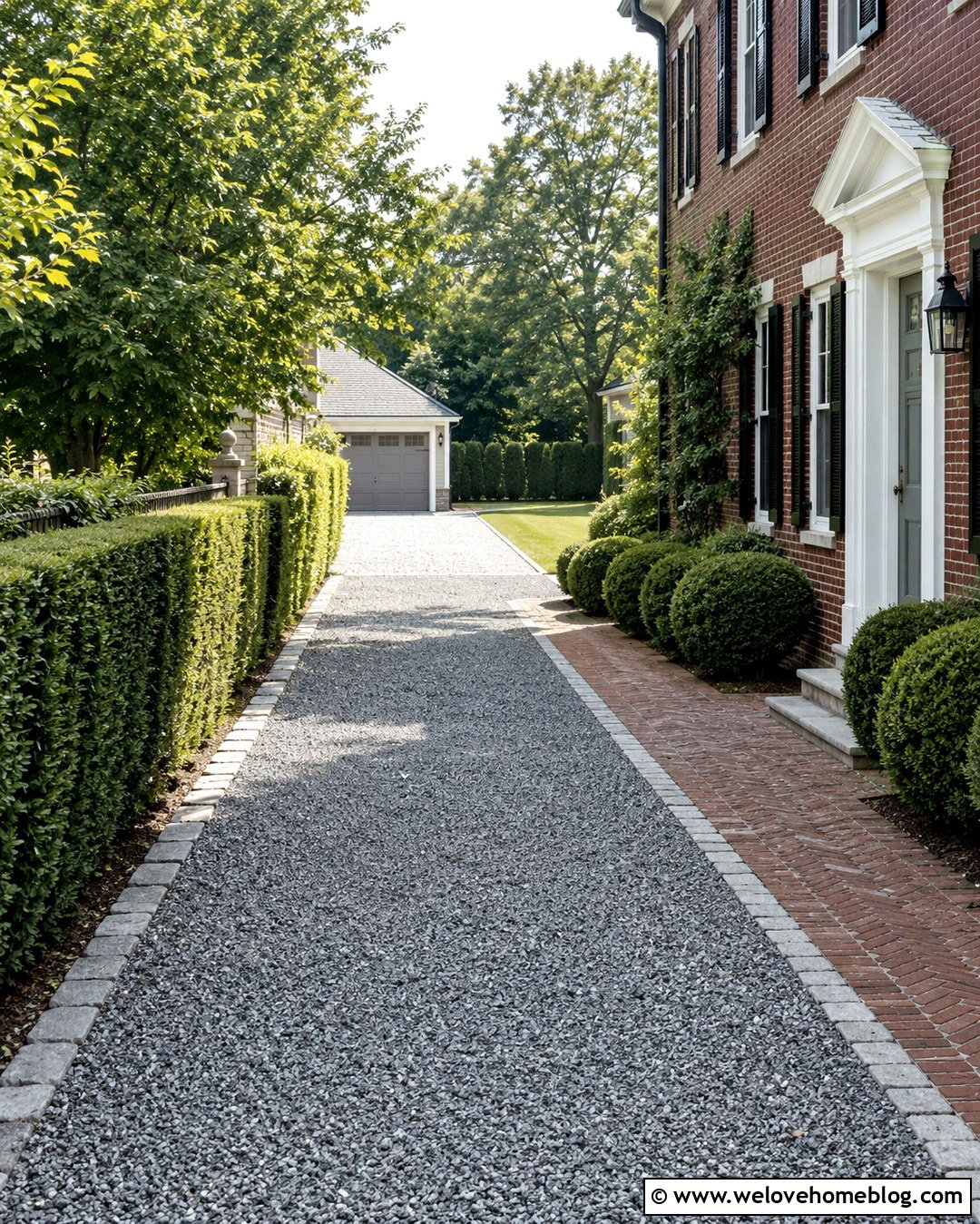
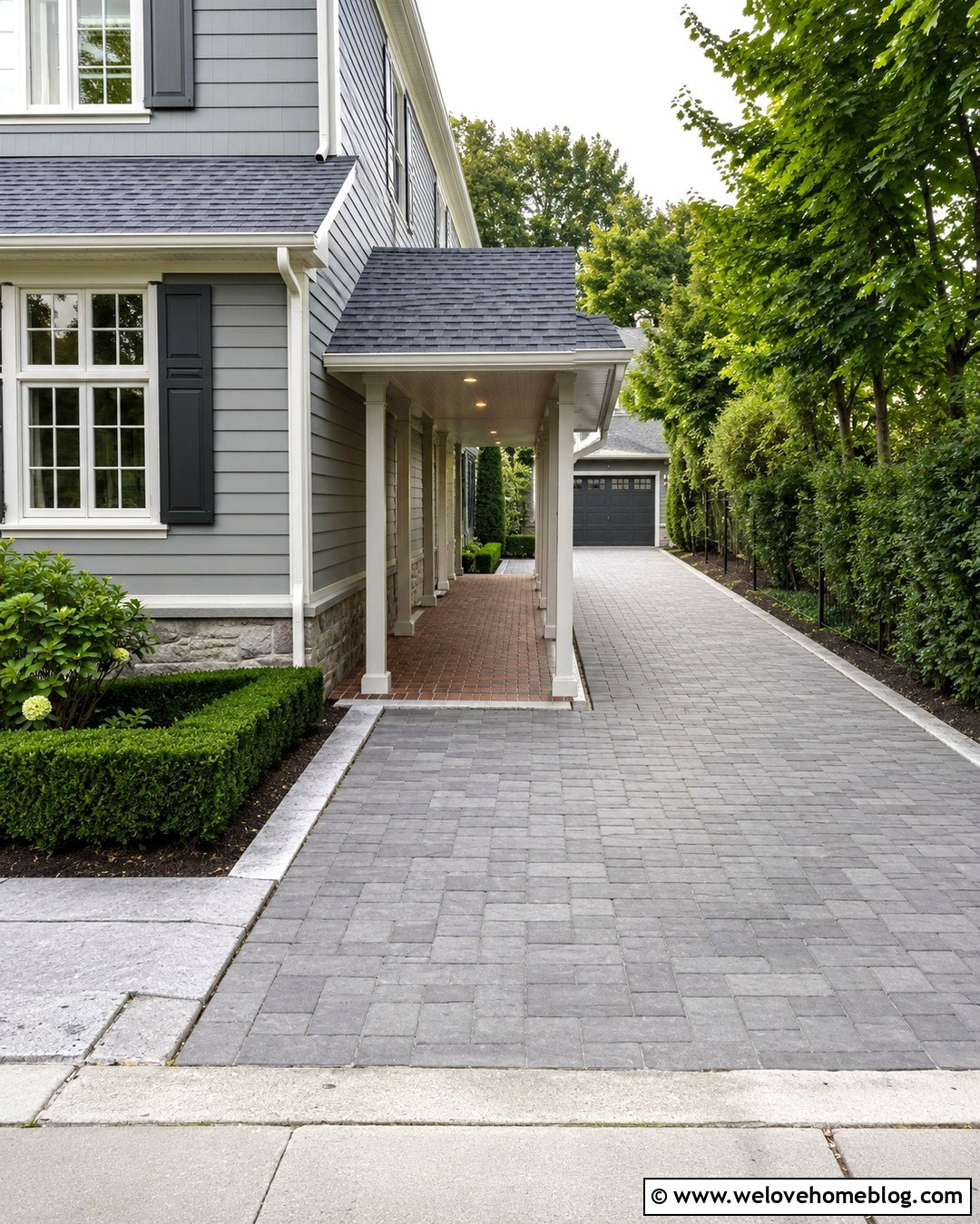
A neatly clipped evergreen hedge gives a gravel side driveway privacy and year-round structure. The best layout combines a straight lane of gray angular gravel with a narrow hedge on the property-line side and a paved walkway beside the house. Use granite setts or concrete pavers as edging to hold the gravel and create a durable mowing strip. Select a hedge that can remain narrow through regular pruning rather than a variety that naturally grows wide. At the rear, allow the driveway to open into a simple rectangular parking pad. This design looks polished beside Georgian, colonial, and transitional homes. Keep the hedge set back from the curb so drivers have a clear view of pedestrians and approaching street traffic.
14. Gravel Side Driveway With Drainage Swale
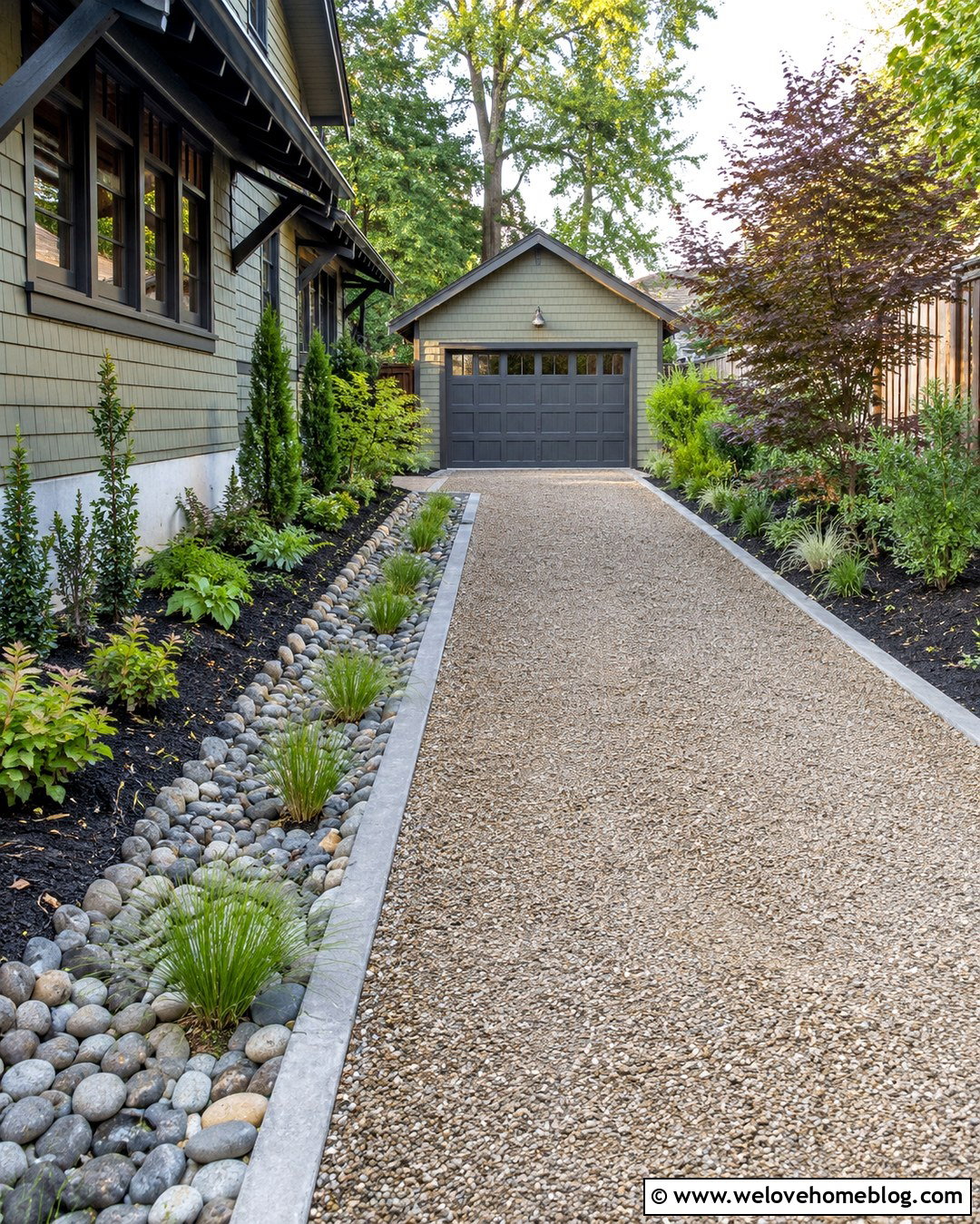
A planted drainage swale can become an attractive feature instead of looking like a utility ditch. Crown the compacted gravel driveway slightly so surface water moves toward a shallow stone-lined channel on the lawn side. Fill the swale with river rock, moisture-tolerant grasses, sedges, and other plants suited to local conditions. Along the house, use a firm concrete curb to keep runoff and loose gravel away from the foundation. The side driveway can remain straight or curve gently around the drainage planting before reaching a detached garage. Choose gravel and river stone in related gray, tan, or brown tones for a cohesive appearance. The result is a practical landscape that manages water while adding texture and greenery to the side yard.


15. Gravel Side Driveway With Brick Tire Tracks
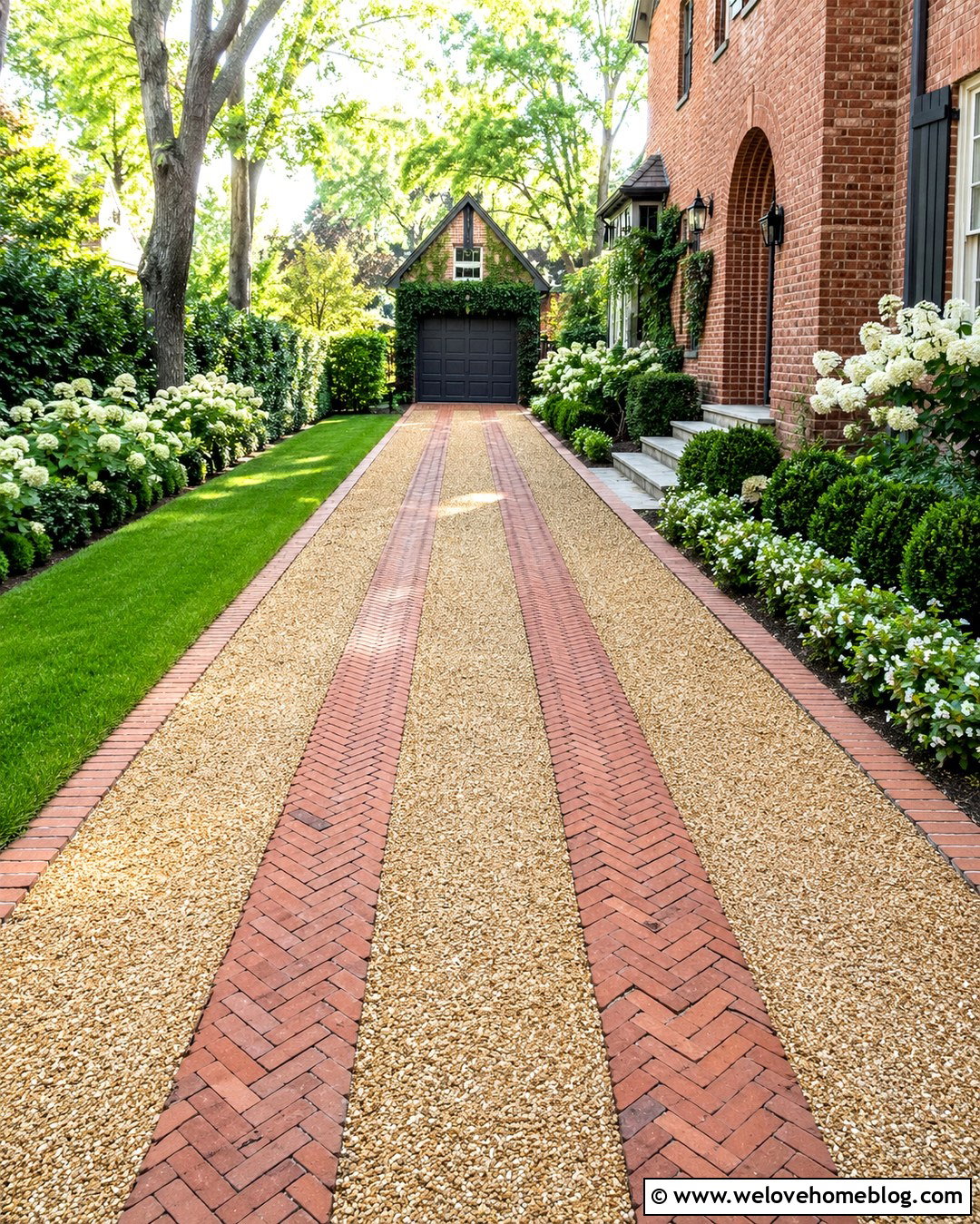
Brick tire tracks create a more stable driving line while allowing gravel to remain the dominant surface. Install two durable brick or clay-paver bands from the curb to the garage, then fill the space between and around them with compacted gravel. A herringbone pattern can handle the visual direction of vehicle movement and complement a traditional brick house. Use matching brick edging on both sides to create a unified frame. A narrow lawn strip and low shrubs will keep the side yard from feeling overly paved. Carefully plan the distance between the tracks based on expected vehicles, since poorly positioned bands will be difficult to use. This design combines the relaxed texture of gravel with the orderly appearance of masonry.
16. Gravel Side Driveway With Solar Path Lights
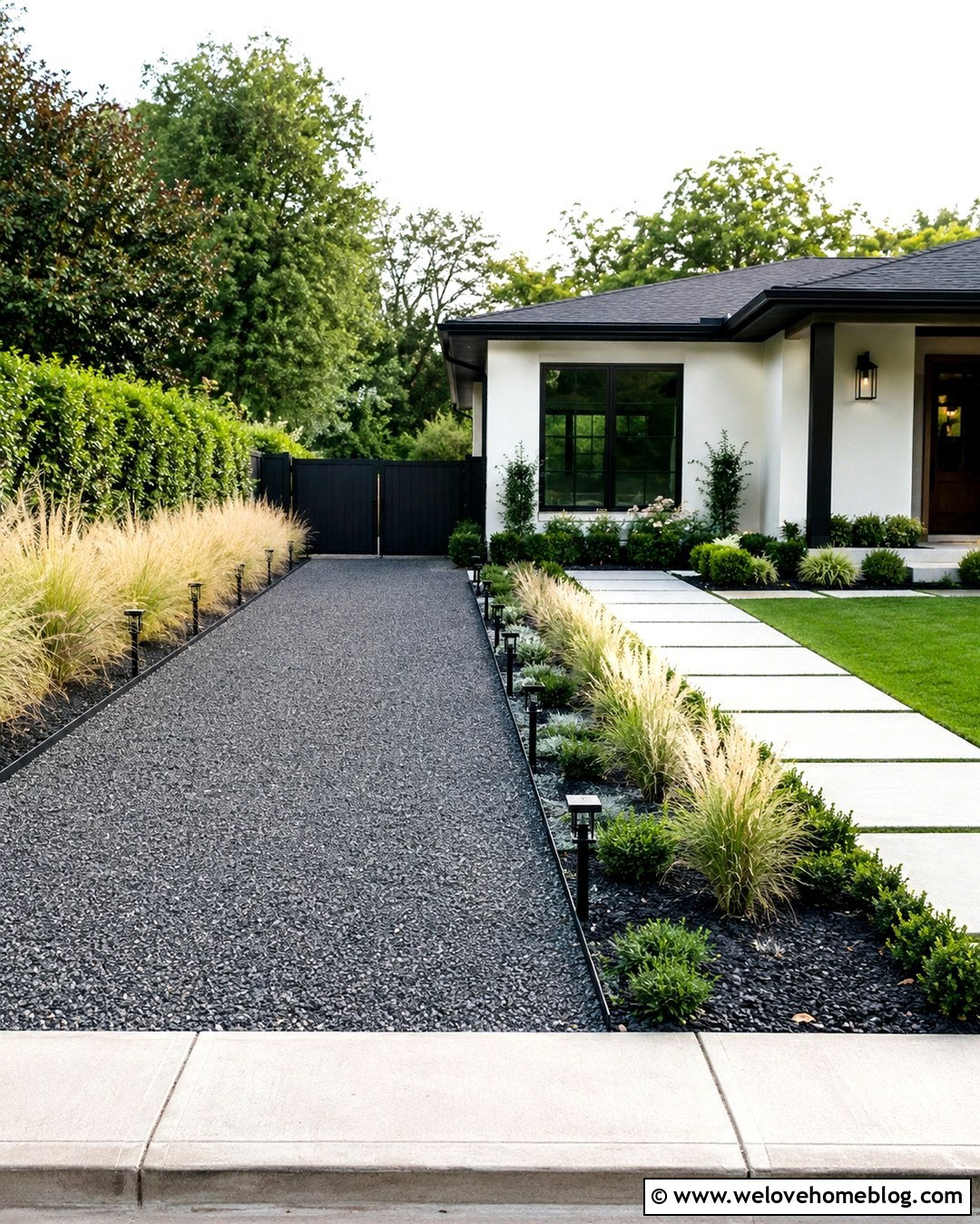
Low-profile solar or wired path lights can make a narrow gravel driveway easier to understand after dark while improving its daytime appearance. During daylight, the fixtures should form a clean rhythm along one border rather than crowding both sides. Pair dark gray gravel with black steel edging and simple black lights for a coordinated modern look. A row of ornamental grasses behind the fixtures will create a soft backdrop, while a paved walkway beside the house provides safe foot access. Keep lights far enough from the driving edge to avoid damage from tires or snow-removal equipment. Choose bright, practical illumination rather than decorative glare, and direct the light downward so the driveway boundaries remain visible without overwhelming neighboring windows.
17. Gravel Side Driveway With Pergola Gate
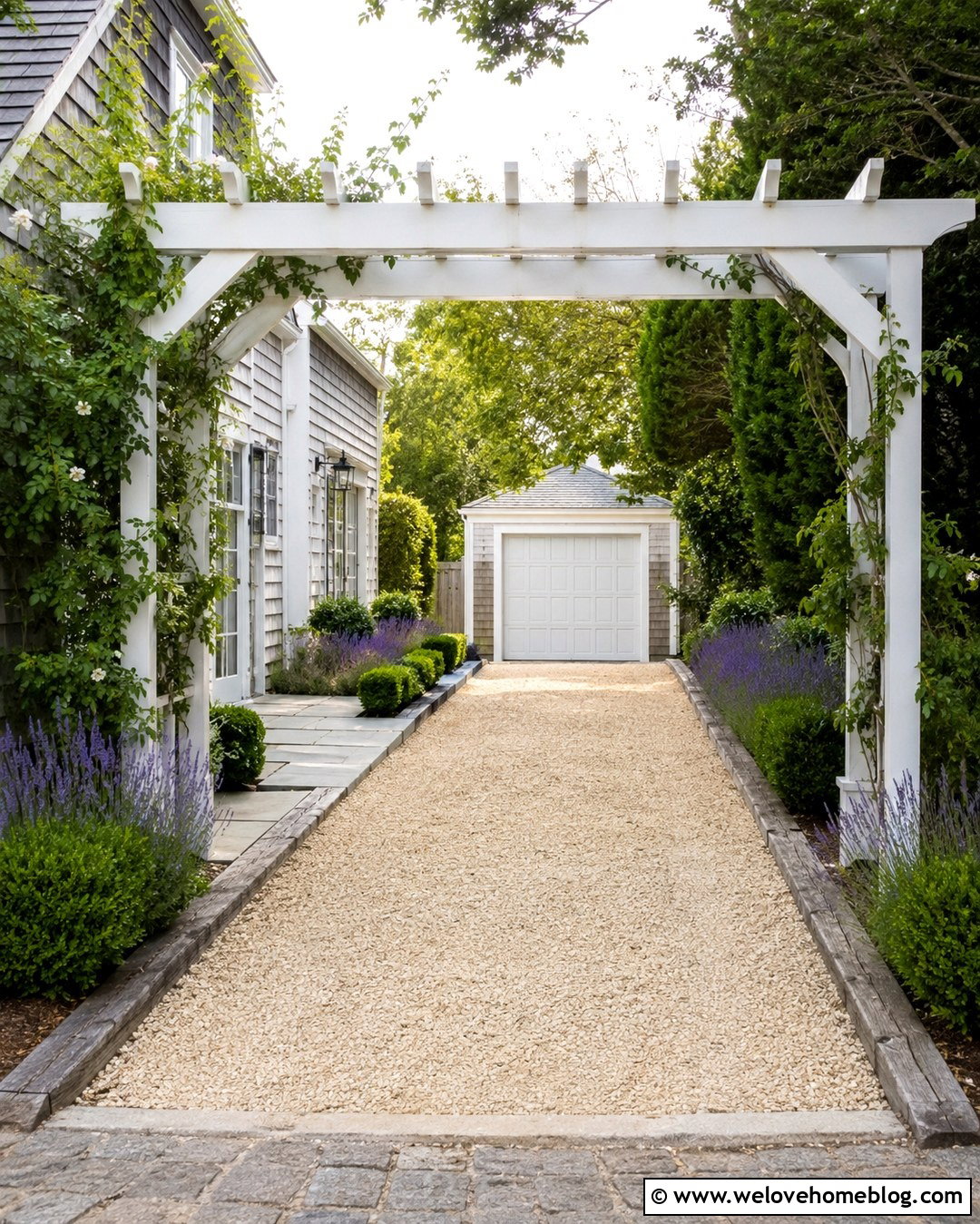
A pergola-style gate can mark the transition from the public front yard to a private rear driveway and parking area. Use warm crushed limestone or tan gravel beneath a painted wood structure, then repeat the gate material in substantial timber edging. Climbing vines may be trained over the pergola, but keep growth trimmed so it does not reduce vehicle clearance or drop excessive debris onto the gravel. Continue the driveway toward a cottage-style detached garage using a straight, uncluttered layout. Small planting beds at the outside corners can hold lavender, boxwood, or upright grasses. This arrangement works especially well when the side driveway doubles as a garden entrance, creating a clear visual threshold without requiring heavy masonry pillars.
18. Gravel Side Driveway With Detached Garage
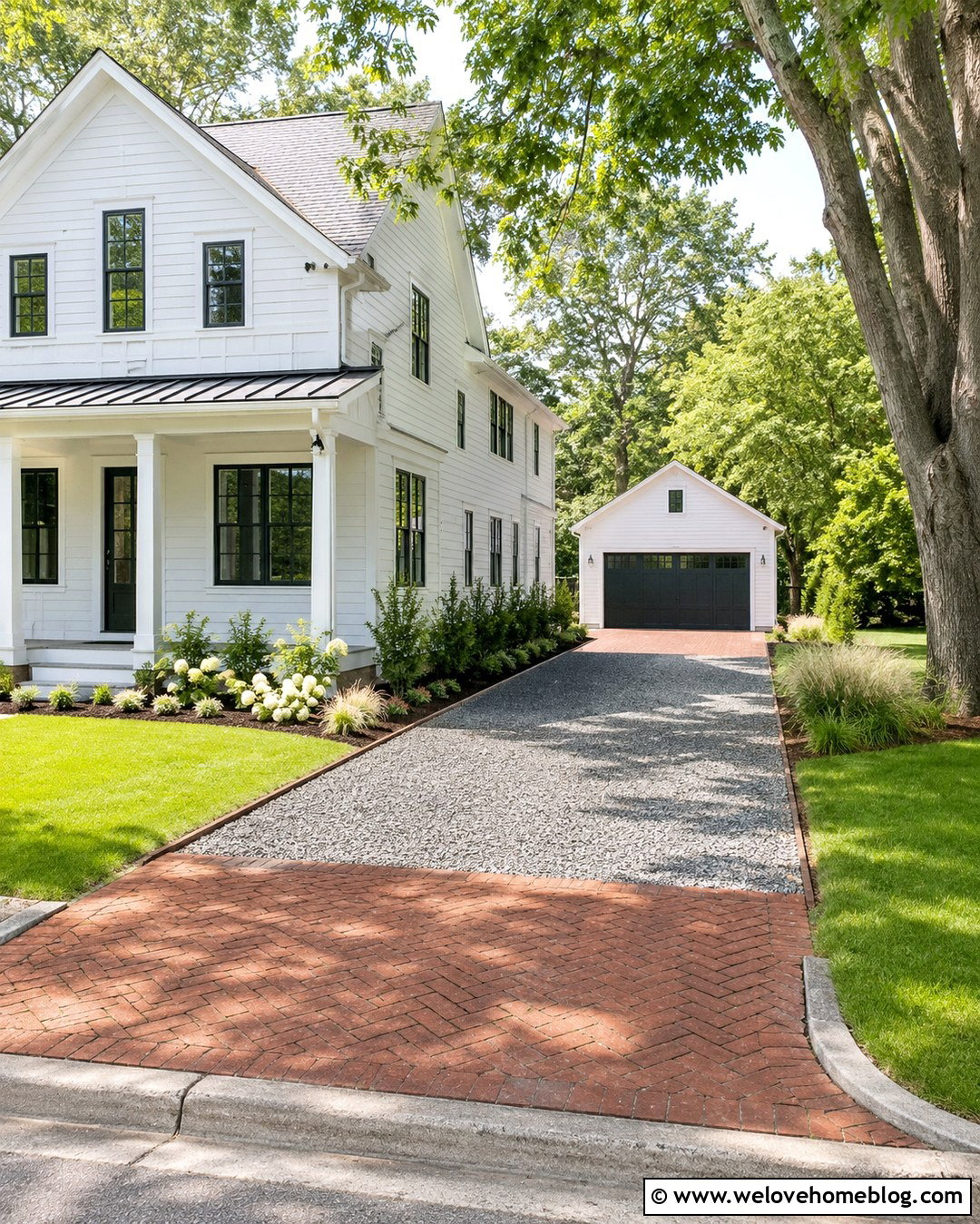
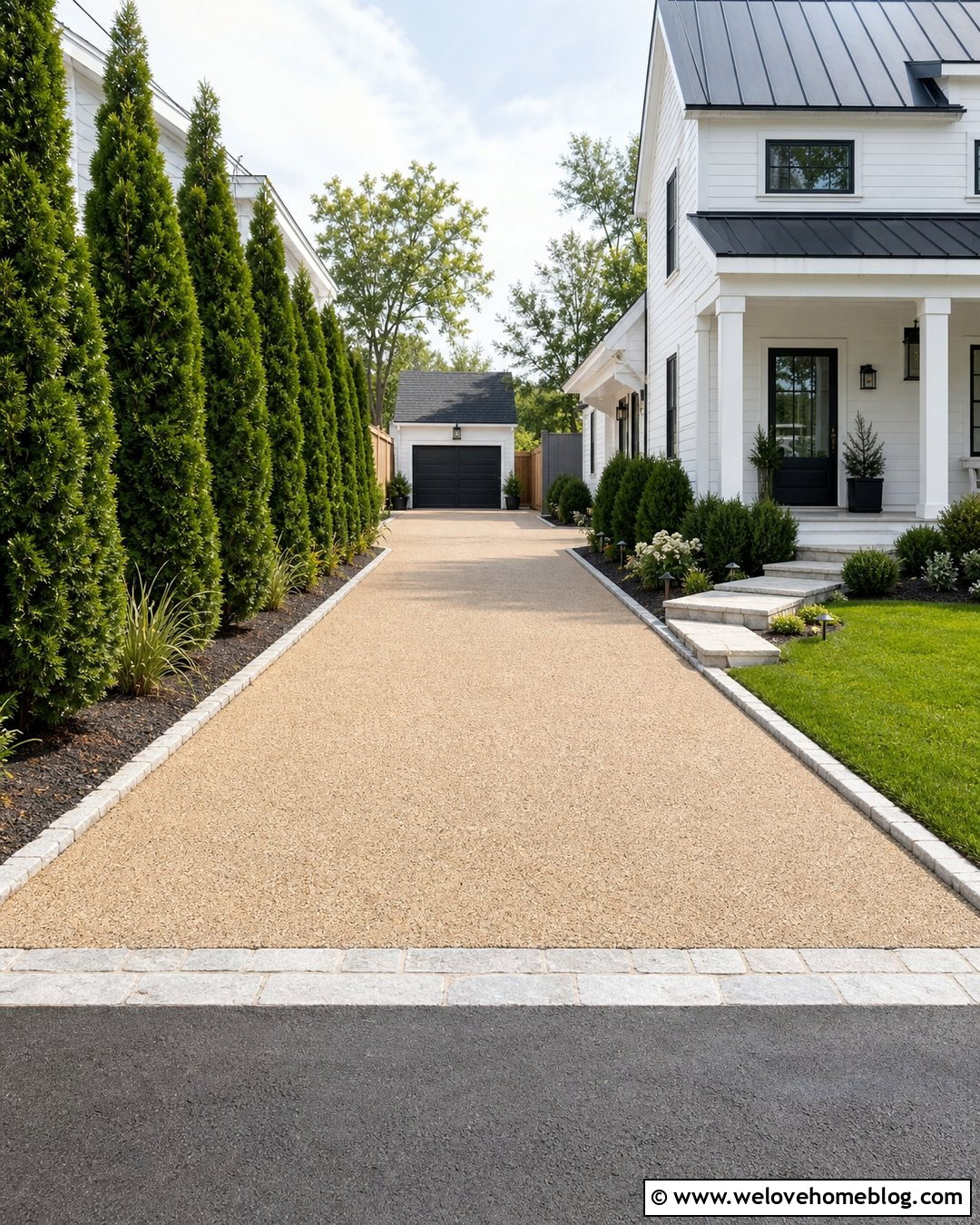
A long gravel side driveway should visually connect the street, house, and detached garage rather than appearing like an unfinished lane. Use one consistent crushed-stone color from the curb to the parking area, then repeat the home’s brick or paver material at the entrance and garage threshold. A straight driveway creates a strong sightline, while narrow planting beds prevent the route from feeling bare. Place shade-tolerant plants beside the house and sun-loving grasses along the open lawn edge. Near the garage, widen the gravel surface gradually to provide turning and parking space. A centered garage door, matching exterior lights, and neatly defined borders create a satisfying endpoint that makes the entire side-yard layout feel intentional.
19. Gravel Side Driveway With Backyard Parking Pad
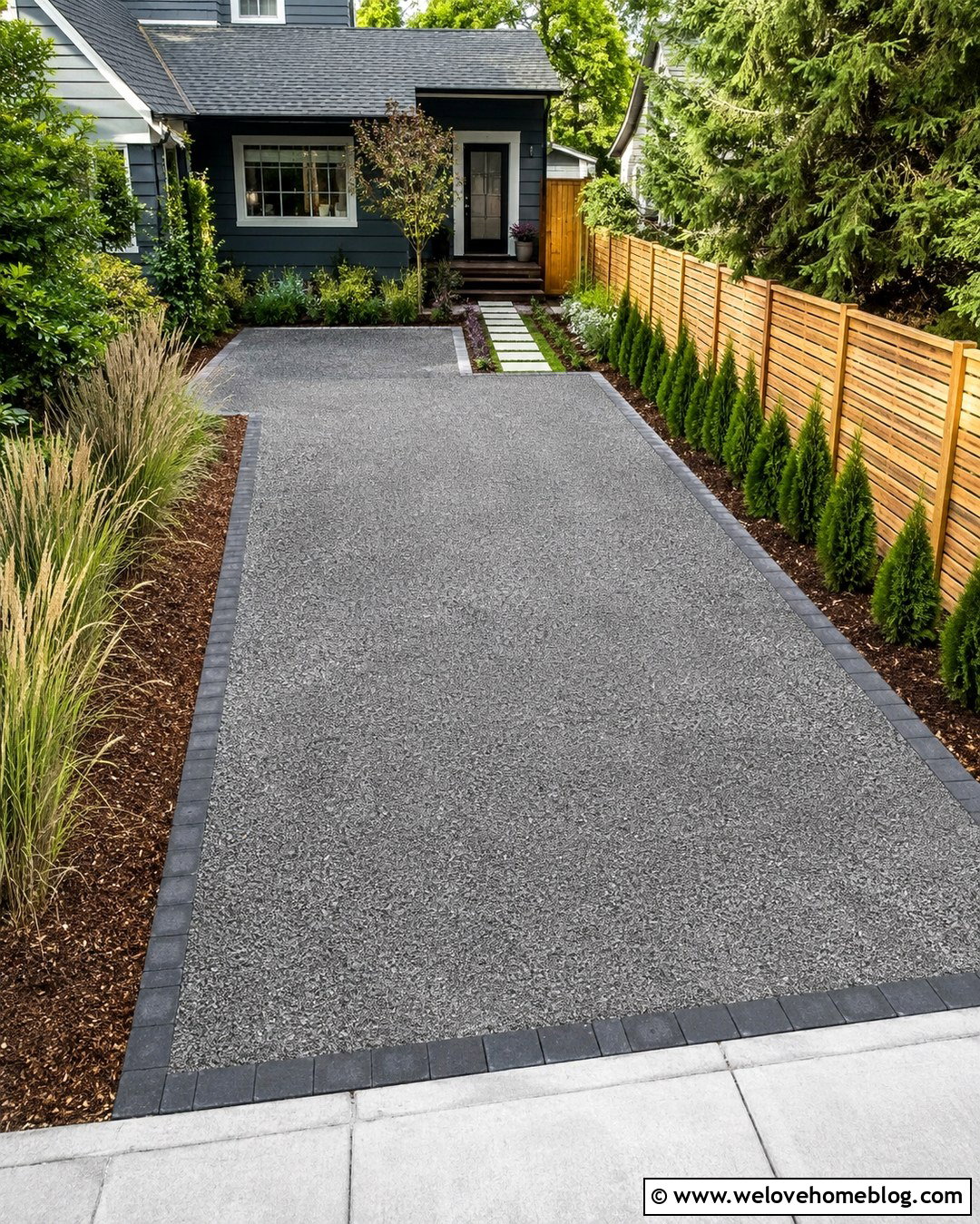
A side driveway can expand into a useful backyard parking pad without making the yard look like a large gravel lot. Keep the approach narrow and clearly edged, then widen it into a rectangular or gently rounded pad behind the house. Use stabilized gray gravel throughout for continuity, with a dark paver border defining the larger parking zone. Screen the pad using a slatted fence, tall ornamental grasses, or a mixed evergreen hedge. A stepping-stone path can connect the parking area to the back door or patio. Leave enough clear space for vehicles to enter and exit without driving over landscaping. This layout is helpful for guest parking, recreational equipment, or an additional household vehicle while preserving the front yard’s appearance.
20. Gravel Side Driveway With Mixed Stone Borders
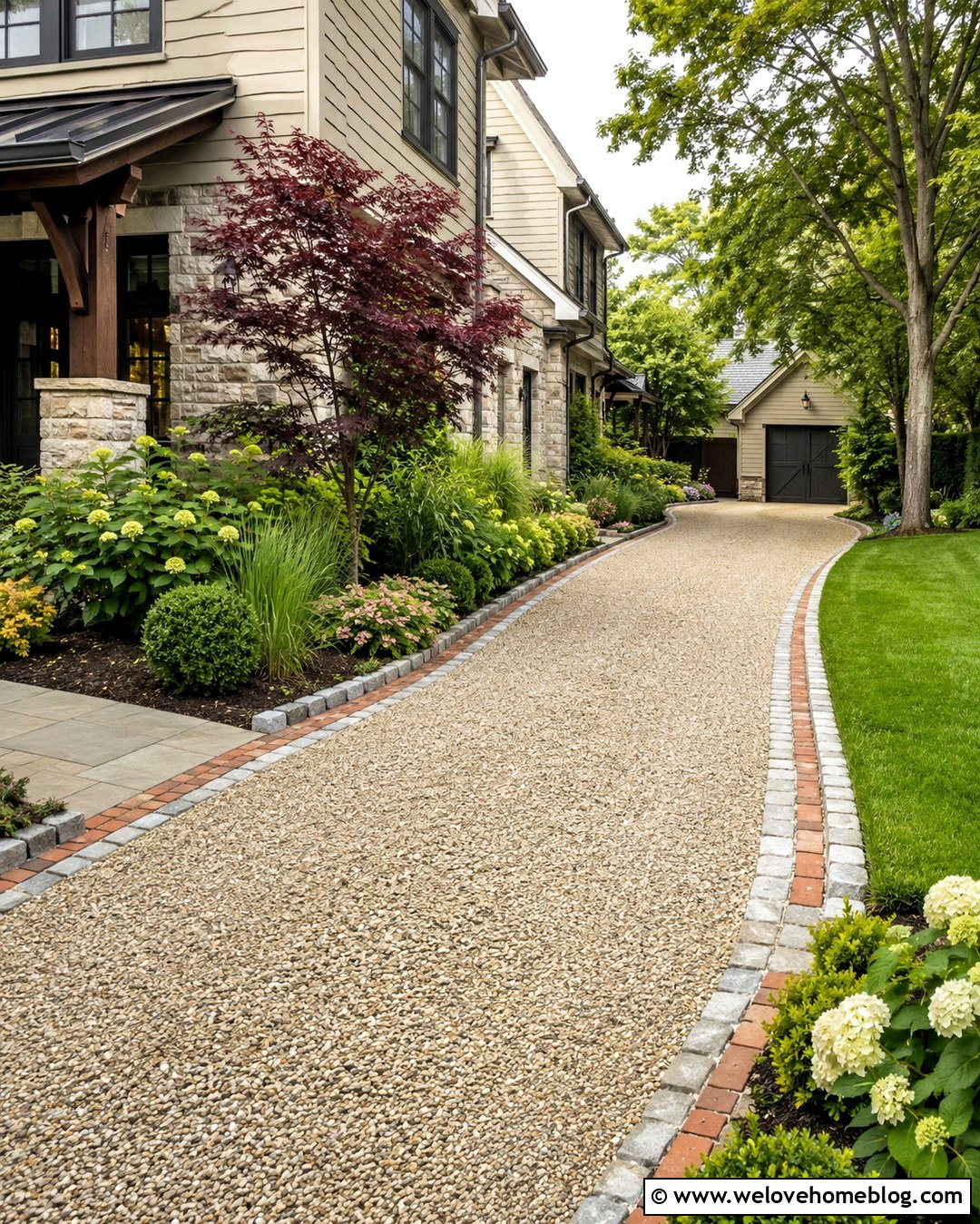
Mixed stone borders can connect a gravel driveway with several exterior materials already present around the house. Start with compacted beige or gray crushed gravel, then create a border using granite cobbles, fieldstone, or brick in a controlled repeating pattern. Avoid using too many colors, since a narrow side yard can quickly feel cluttered. A slightly curved line can soften the transition between the home and lawn while guiding vehicles toward a rear garage. Repeat one border material in the front walkway or planting-bed walls to make the design feel cohesive. Add simple shrubs, grasses, and a small ornamental tree where the driveway widens. The resulting look feels layered and custom without sacrificing the practical advantages of gravel.
Conclusion:
The most successful gravel side driveway balances appearance with everyday access, drainage, and maintenance. Begin with a compacted base and select angular driveway gravel that will settle more firmly beneath tires. Then use brick, stone, concrete, timber, or steel edging to define the lane and reduce spreading. Landscaping should frame the route without narrowing it, blocking sightlines, or crowding vehicle doors. You can also add a walkway, stabilization grid, drainage swale, lighting, or rear parking pad to make the space more useful. Whether your home is modern, traditional, rustic, or cottage-inspired, these 20 Gravel Side Driveway Ideas offer practical ways to turn a narrow side yard into an organized and attractive approach.

Related posts:
Leave a Reply