
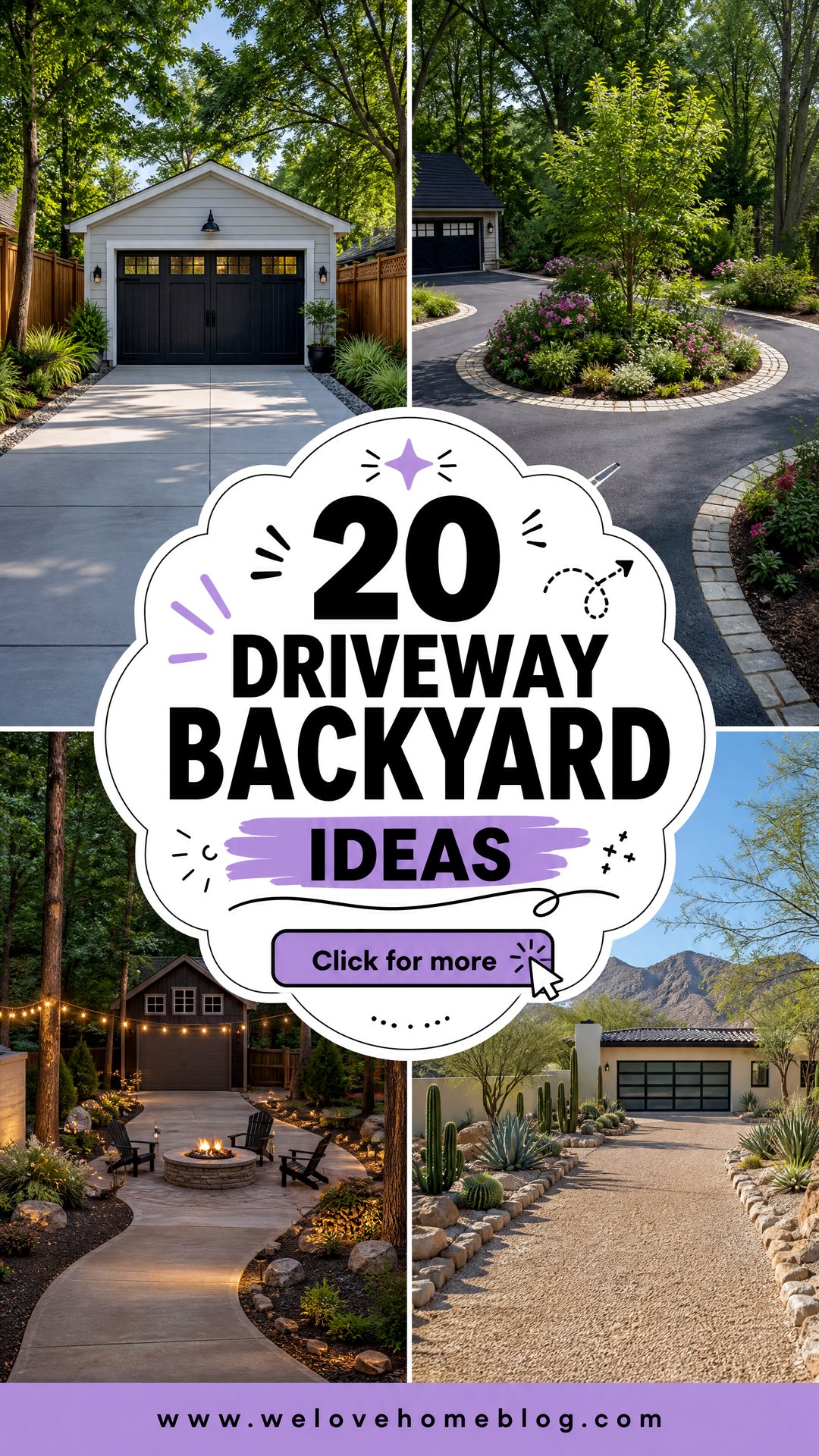
A driveway that reaches the backyard can do much more than provide vehicle access. With the right surface, shape, border, and landscaping, it can become an attractive part of your outdoor living space. These 20 Driveway Backyard Ideas include practical layouts for rear garages, guest parking, workshops, garden access, and entertaining areas. You will find affordable gravel options, polished paver designs, permeable surfaces, and simple concrete solutions. Each look also considers drainage, planting, walkways, and transitions so the driveway feels connected to the yard rather than placed on top of it. Whether your space is narrow, large, modern, rustic, or family-friendly, use these complete 20 Driveway Backyard Ideas to plan a functional and inviting layout.
1. Gravel Backyard Driveway With Paver Edging
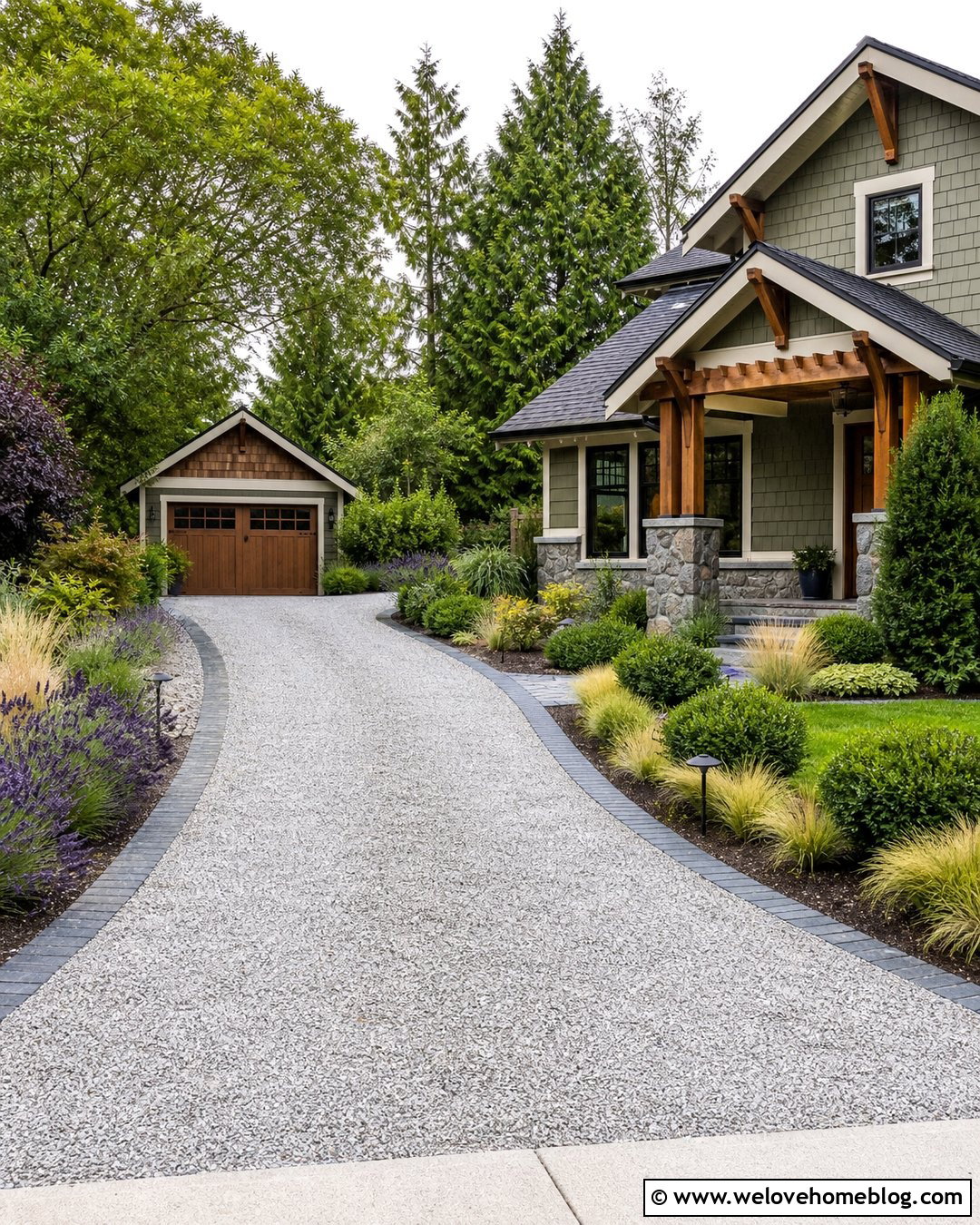
A light gravel driveway can create an informal route to a backyard garage without making the yard feel overly paved. Use compacted crushed stone for the main driving surface because angular pieces settle more firmly than smooth decorative pebbles. Add charcoal concrete pavers along both sides to contain loose material and produce a clean outline. A gently curved layout can soften the view from the street while directing vehicles around lawn or existing trees. Plant low ornamental grasses, lavender, and compact evergreen shrubs outside the edging. Continue one paver border toward the patio as a walking path. This complete design balances affordability, drainage, and attractive landscaping while keeping the rear of the property easy to access.
2. Concrete Backyard Driveway With Grass Strips
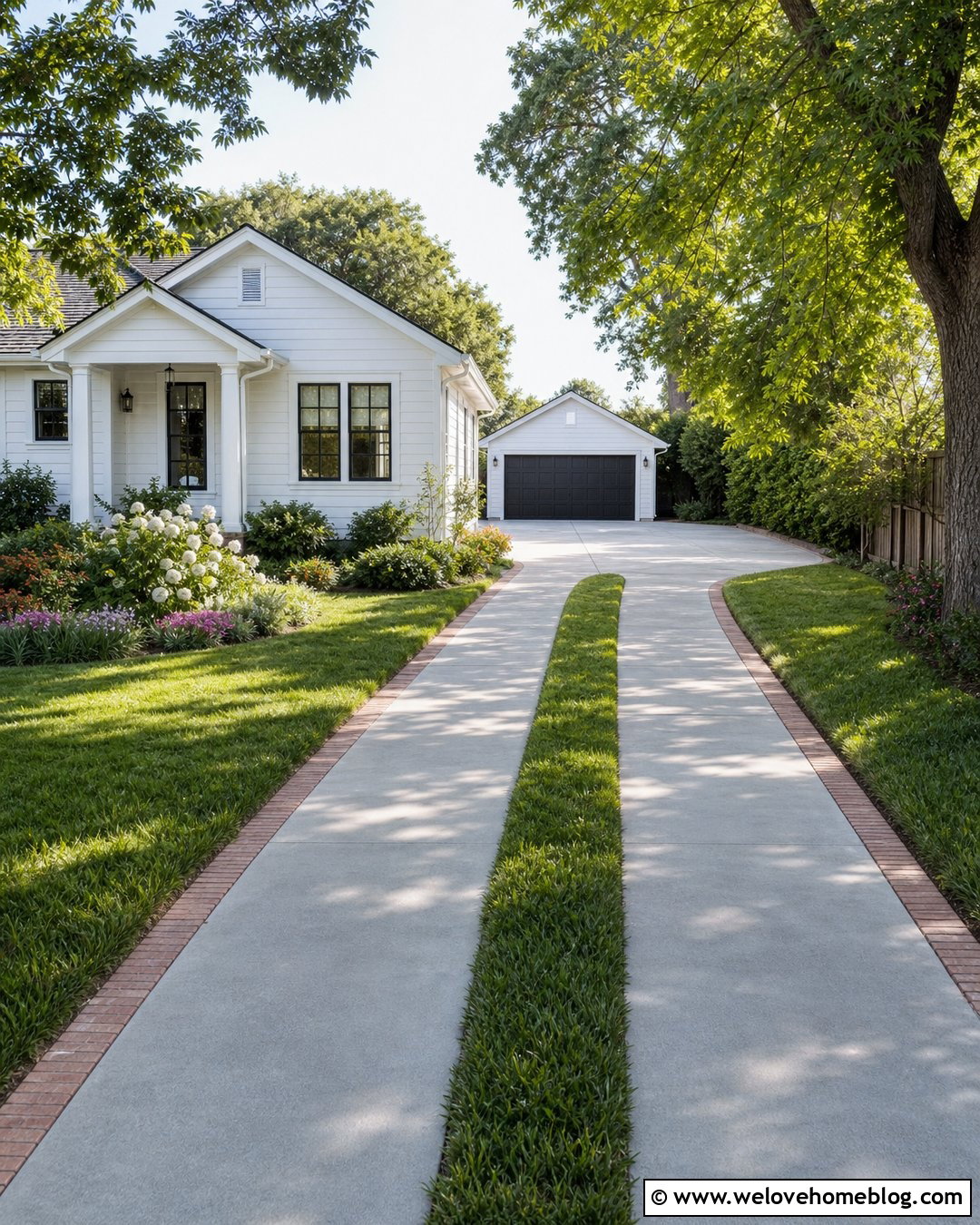
Warm gray concrete wheel tracks separated by a grass strip can make a backyard driveway look lighter and more natural. The two concrete lanes provide stable tire surfaces, while the planted center reduces the appearance of one broad slab. Keep the layout straight when space is narrow and align it with a detached garage, shed, or gated parking area. Match the grass between the tracks to the surrounding lawn for a seamless effect. Slim brick edging can protect planting beds and give each concrete strip a finished boundary. Near the house, widen the tracks into a small parking court. This design works especially well beside ranch and cottage homes where a full-width driveway could overwhelm the backyard landscape.
3. Paver Backyard Driveway And Patio
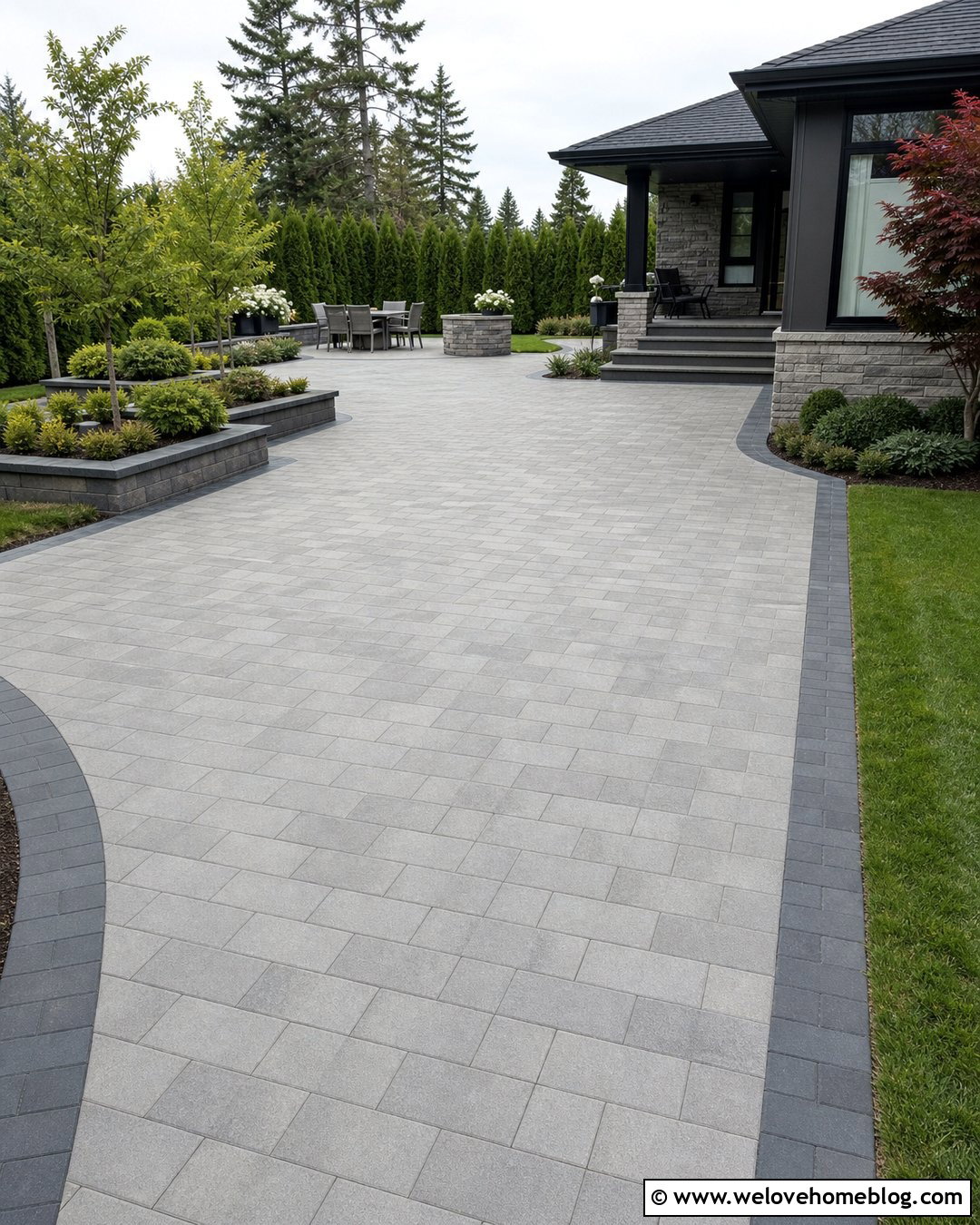
Could one paved area support both parking and outdoor gatherings? A backyard driveway built with concrete pavers can widen near the house to create a flexible parking court and patio. Choose medium-gray rectangular pavers in a running bond pattern, then add a darker border to define the driving route. When vehicles are moved, the expanded area can hold outdoor seating, planters, or a portable dining table. Frame the pavement with raised planting beds containing small trees, evergreen shrubs, and seasonal flowers. A matching paver walkway should connect the court to the back door. Good planning keeps frequently used seating away from vehicle paths while allowing the entire surface to feel like one coordinated backyard design.
4. Narrow Backyard Driveway With Vertical Landscaping
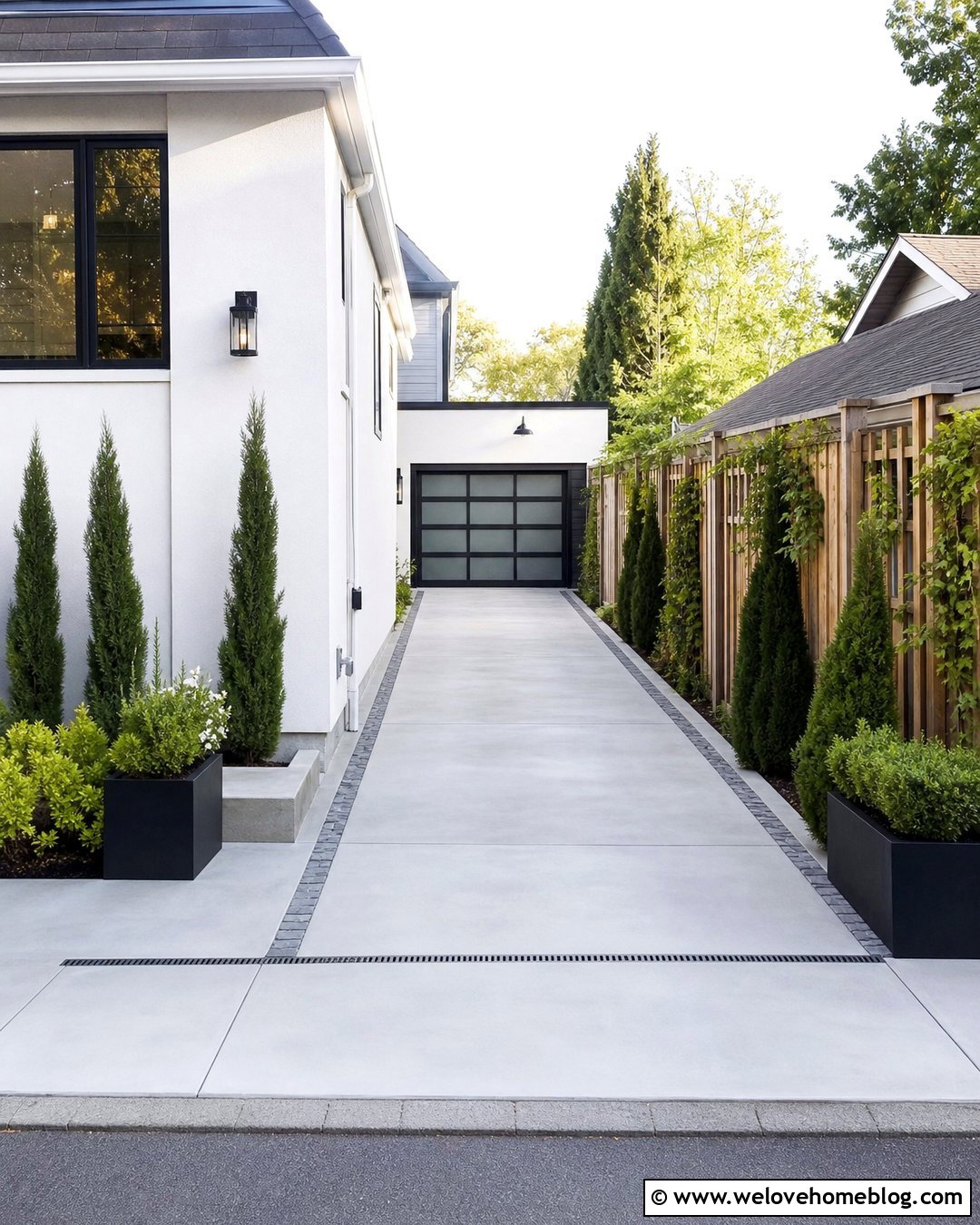
A narrow side-yard driveway can still feel welcoming when every inch is planned carefully. Use smooth light-gray concrete for a clean driving surface and install a slim cobblestone ribbon along each edge. The darker stone adds definition without taking up valuable width. Instead of wide planting beds, use upright evergreens, columnar trees, or climbing vines trained on sturdy fencing. These vertical elements soften walls while preserving clearance for vehicles. Low-profile drainage channels can be positioned where the driveway meets the house or garage. At the backyard entrance, widen the concrete slightly and add two large planters. This creates a visual arrival point and helps the long, narrow route transition naturally into the open yard.
5. Curved Backyard Driveway Around A Garden
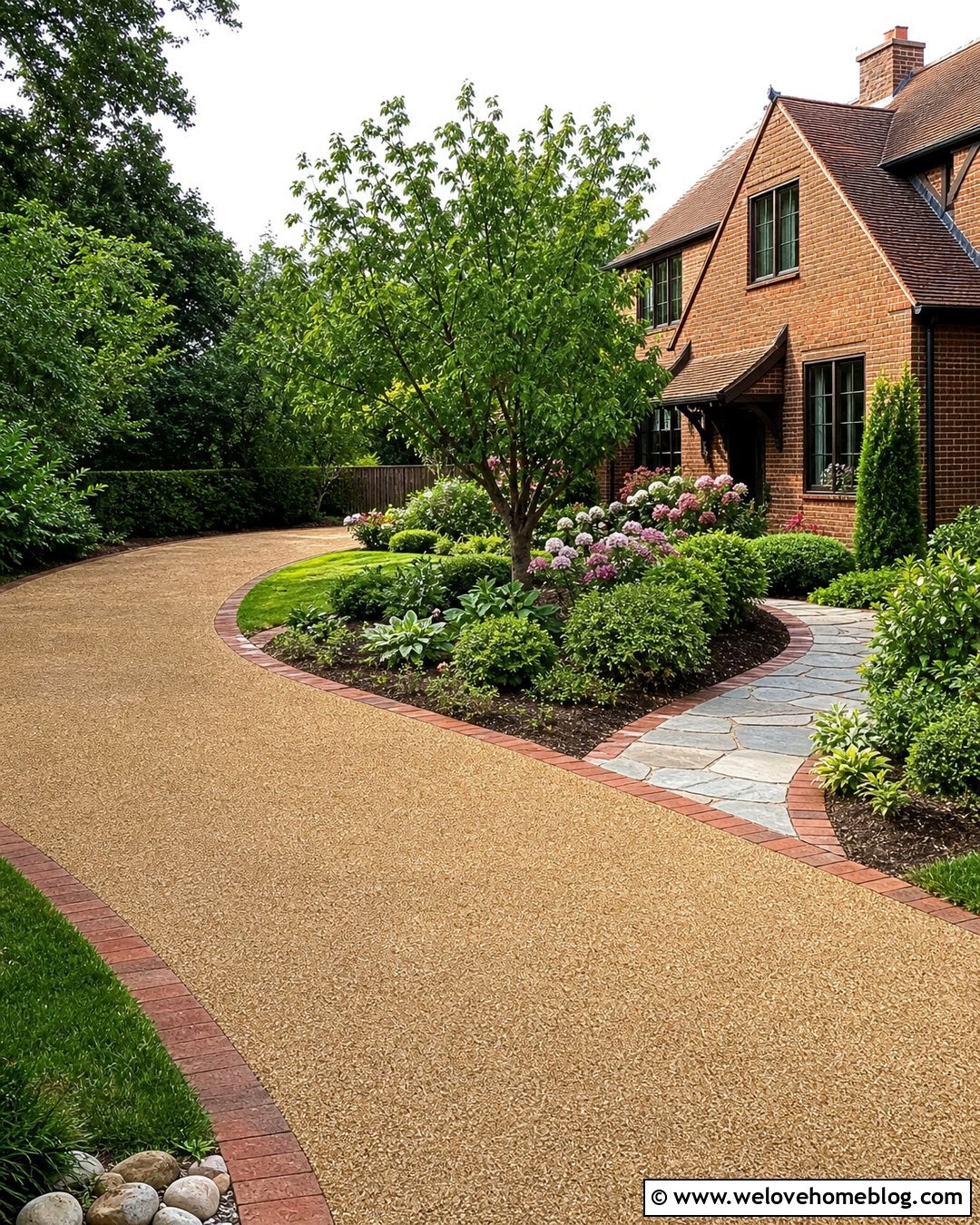
Gentle curves can turn a necessary vehicle route into a strong landscape feature. Build the backyard driveway with tan resin-bound gravel for a smooth, visually quiet surface. Outline the curve with weathered brick edging that separates the driveway from lawn and planting beds. Place a rounded garden island inside the bend with a small ornamental tree, flowering shrubs, and low ground cover. The planting should remain open enough to preserve clear views around the curve. A flagstone walkway can branch from the driveway and lead toward the patio or back door. By repeating warm tones in the resin, bricks, and house facade, the driveway becomes part of the garden rather than an unrelated strip of paving.
6. Backyard Driveway With A Detached Garage
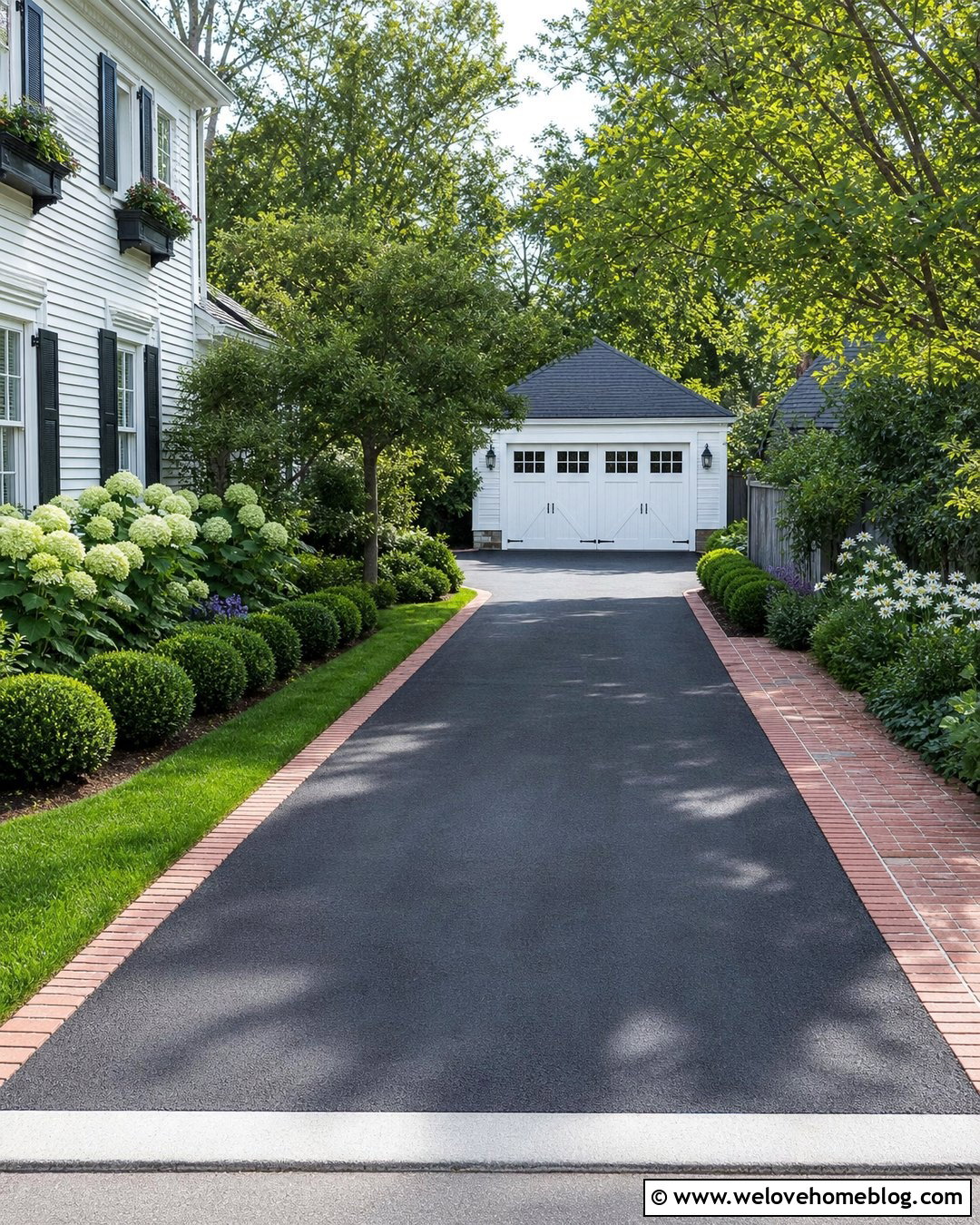
The route to a detached garage should create a clear connection between the street, backyard, and building. Black asphalt offers a practical surface, but thoughtful borders can keep it from looking plain. Use a straight driveway with a red clay brick ribbon along both sides and across the entrance to the garage apron. Plant hydrangeas, boxwood, or native flowering shrubs in deep beds beside the route. A separate brick walkway can run parallel to the driveway so people do not need to walk in the vehicle lane. Near the garage, widen the asphalt enough for comfortable turning. Matching the brick details to the garage foundation or home exterior will visually unite structures located across the property.
7. Permeable Paver Backyard Driveway
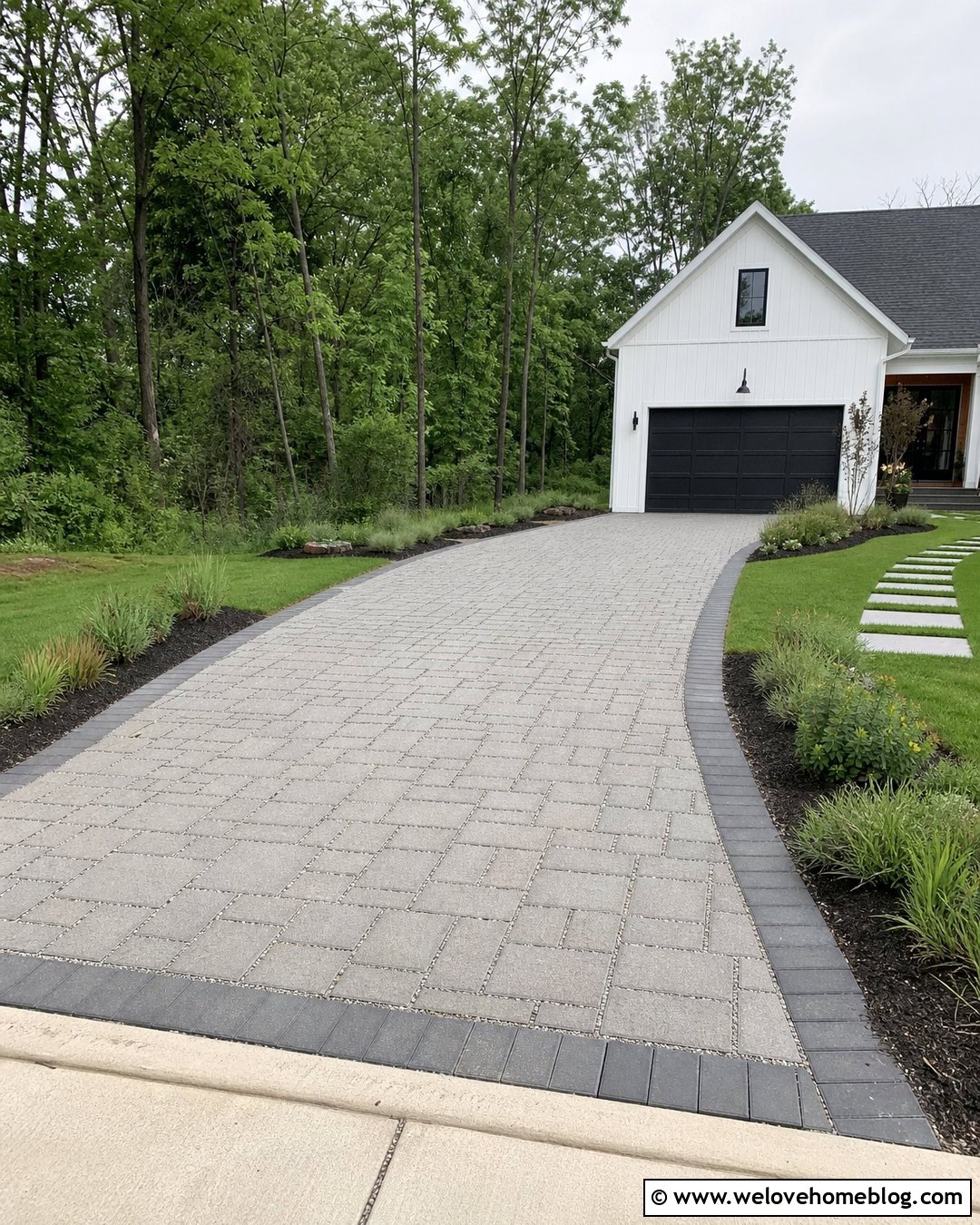
After rainfall, a backyard driveway should direct water thoughtfully instead of leaving puddles beside patios and planting beds. Permeable concrete pavers create a structured surface with wider joints that allow water to move into the prepared base below. Select soft gray pavers for a modern look and fill the joints with small, compatible aggregate. A straight or gently angled layout can lead to a rear parking pad without dominating the lawn. Border the driveway with darker pavers to strengthen the edges. Add rain-tolerant grasses and native perennials in shallow planting areas nearby. A stepping-stone path can connect the parking area to the house. The finished design feels polished while fitting naturally into a planted backyard.
8. Brick Backyard Driveway With Cottage Landscaping
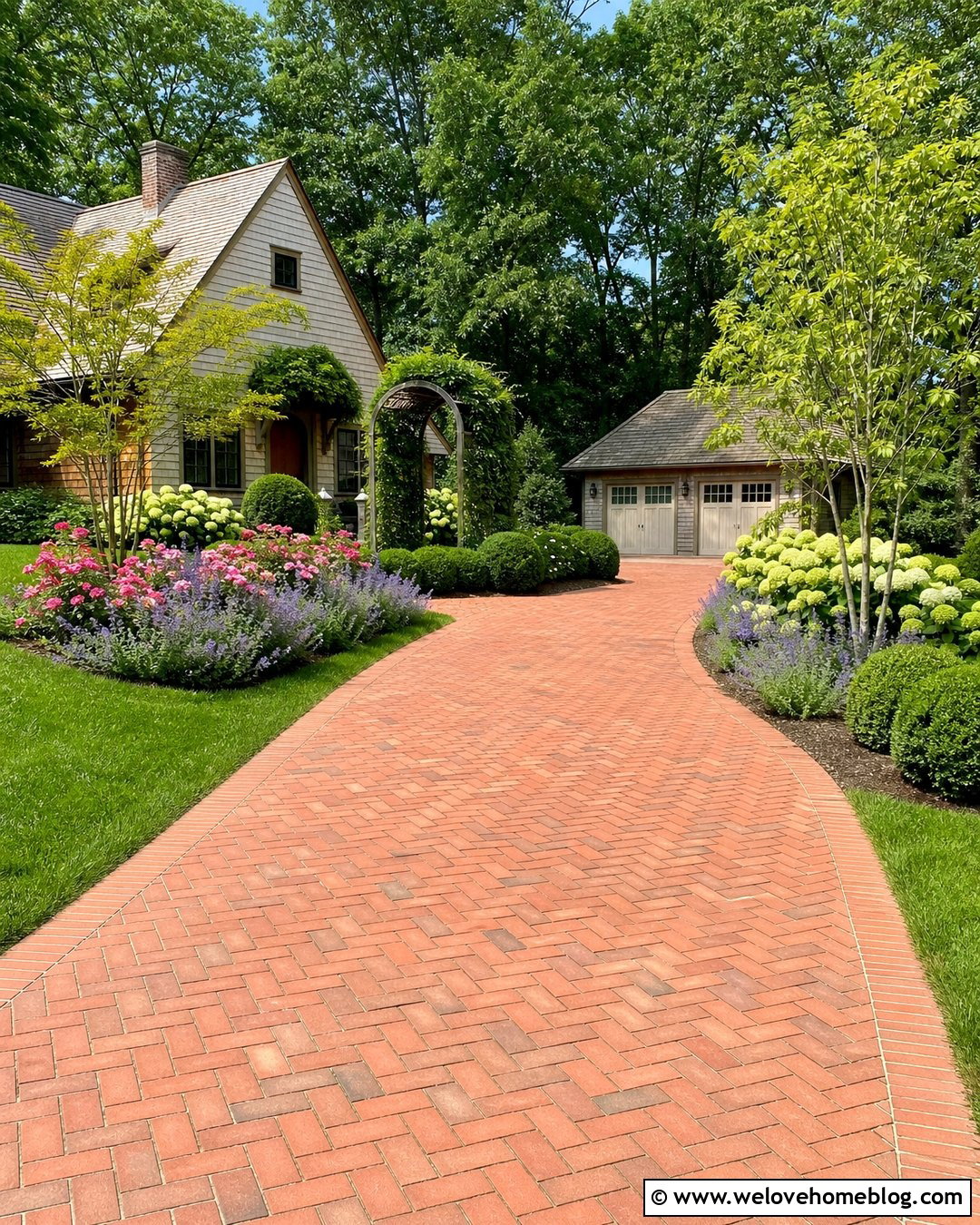
Rich clay brick brings warmth and traditional character to a cottage backyard. Install brick pavers in a herringbone pattern so the main driveway feels detailed from every viewing angle. A contrasting soldier-course border can hold the pattern together and form a defined transition at the lawn. Let the driveway curve slightly toward a carriage-style garage or backyard parking space. Layer the surrounding beds with roses, catmint, hydrangeas, and clipped evergreen shrubs. Keep taller plants behind low flowers so they do not crowd the driving area. A matching brick walkway can lead from the driveway to an arbor or back porch. The repeated materials and relaxed planting create a charming, complete setting rather than a purely functional vehicle route.
9. Modern Backyard Driveway With Concrete Pavers
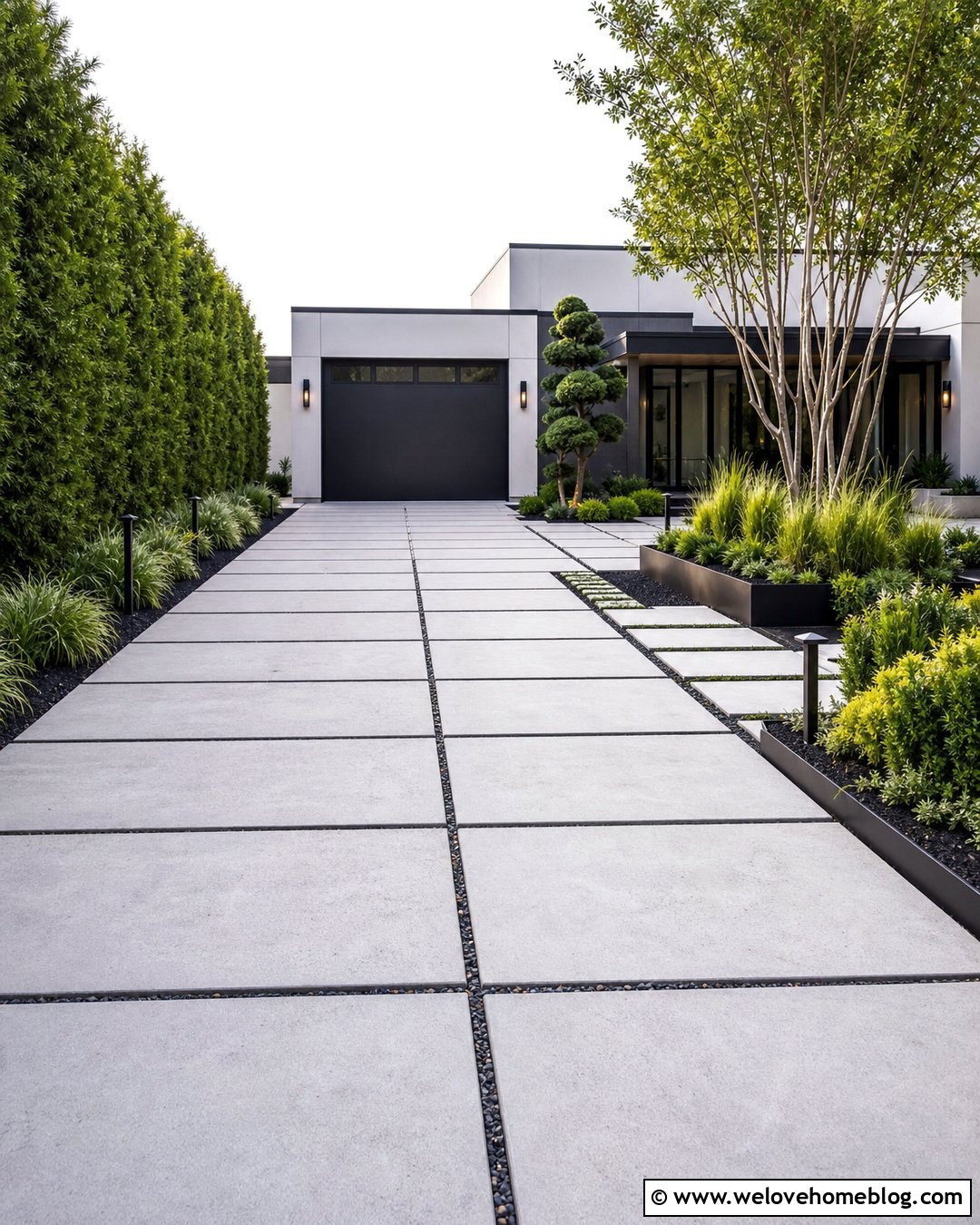
Large-format concrete pavers give a backyard driveway a crisp appearance that complements modern architecture. Choose pale gray rectangular slabs arranged in a staggered grid, with narrow dark gravel joints between them. Keep the driveway straight and wide enough to lead cleanly toward a flat-roof garage or minimalist parking court. Black steel edging can separate the surface from geometric planting beds. Use a restrained mix of ornamental grasses, sculptural evergreen shrubs, and one multi-stem tree. Continue the same pavers into a walkway leading to the rear entrance. Low bollard lights can follow the outside edge without interrupting the design. The result is simple but visually complete, with consistent lines connecting the driveway, house, garden, and backyard structures.
10. Backyard Driveway With A Parking Pad
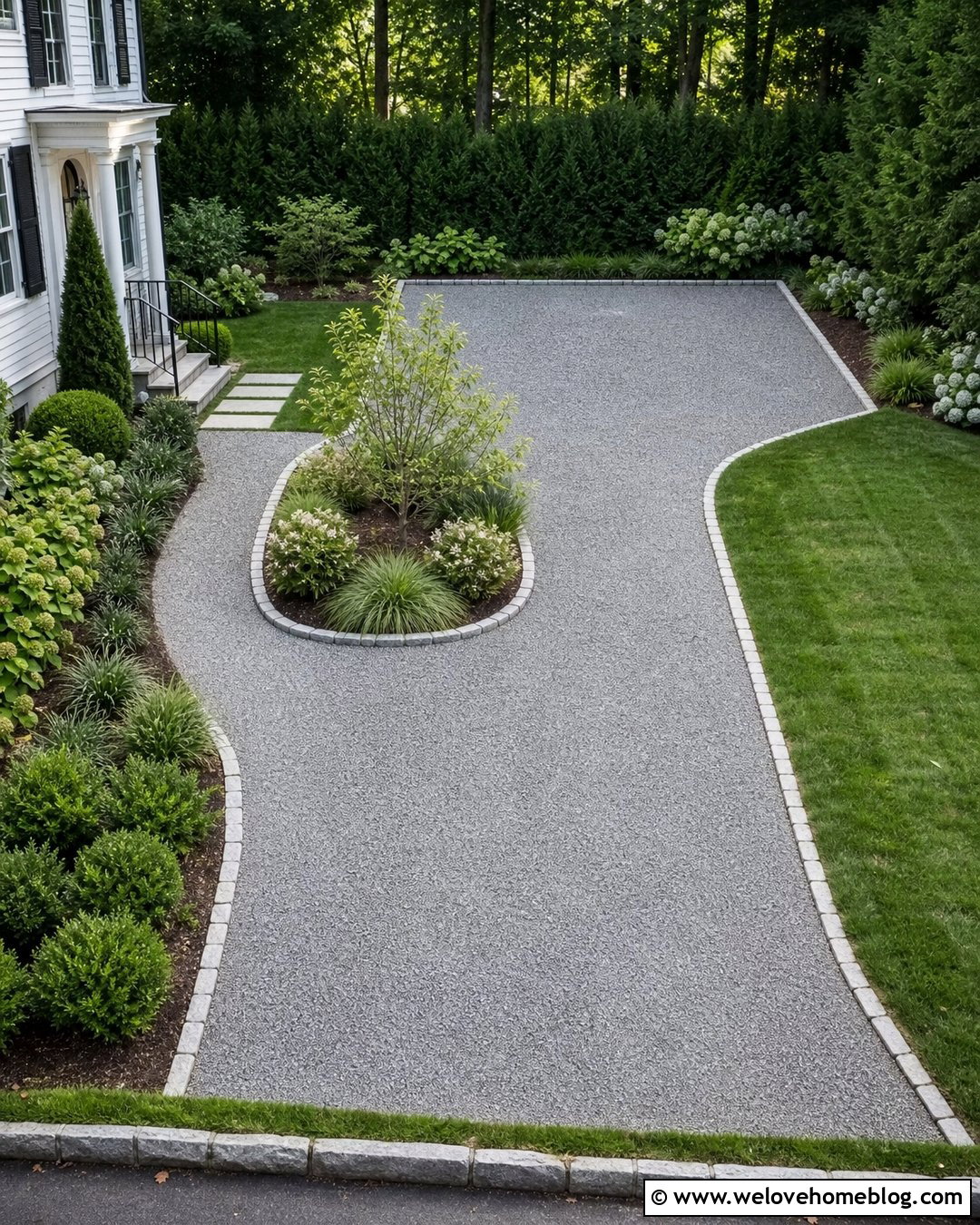
An extra backyard parking pad can be useful for guests, trailers, or occasional project vehicles, but it should not look like an unfinished extension. Begin with a compacted gray crushed-stone driveway and widen it into a rectangular parking bay near the rear fence. Frame both areas with thick granite cobbles to contain the aggregate. A narrow planted island can separate the parking pad from the main lawn, using evergreen shrubs and durable ornamental grasses. Add large stepping stones between the pad and back door for a comfortable pedestrian route. If the space is used only occasionally, place the bay near a hedge or garage where it remains visually discreet. This layout preserves an organized backyard while adding flexible parking capacity.
11. Backyard Driveway With A Sliding Gate
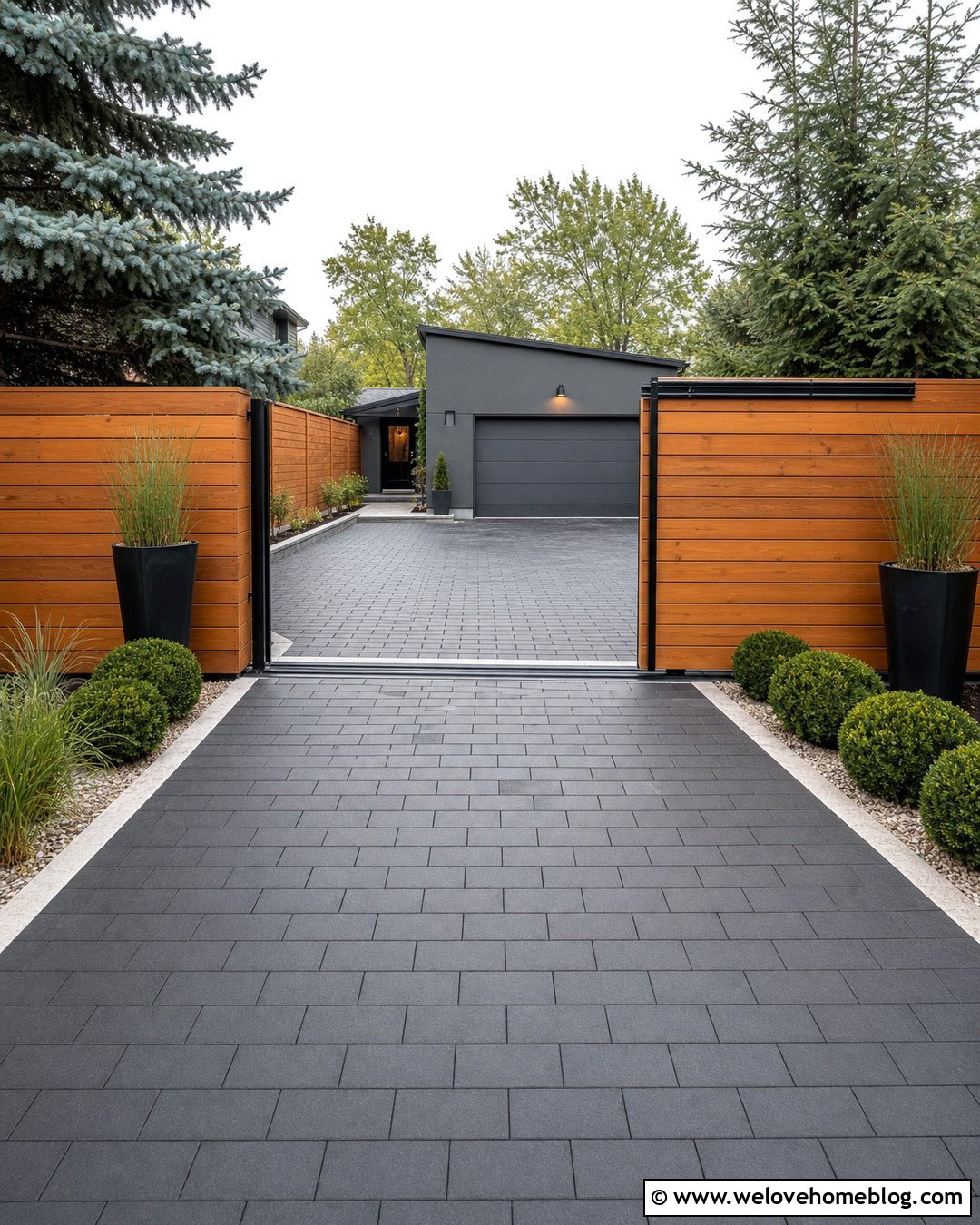
A sliding gate can secure backyard access without requiring the clearance needed by swinging doors. Pair a horizontal cedar gate with a charcoal concrete paver driveway for a warm, contemporary look. Arrange the pavers in a simple running bond and use a lighter stone border to outline the entrance. The driveway can remain straight through the gate before opening into a compact rear parking court. Repeat cedar details on privacy fencing, planters, or the garage door to make the entrance feel intentional. Soft ornamental grasses and rounded evergreen shrubs can balance the strong horizontal lines. Keep the gate track and surrounding ground clear of loose landscaping materials. The complete design combines controlled access, privacy, and polished backyard curb appeal.
12. Backyard Driveway With A Pergola Entrance
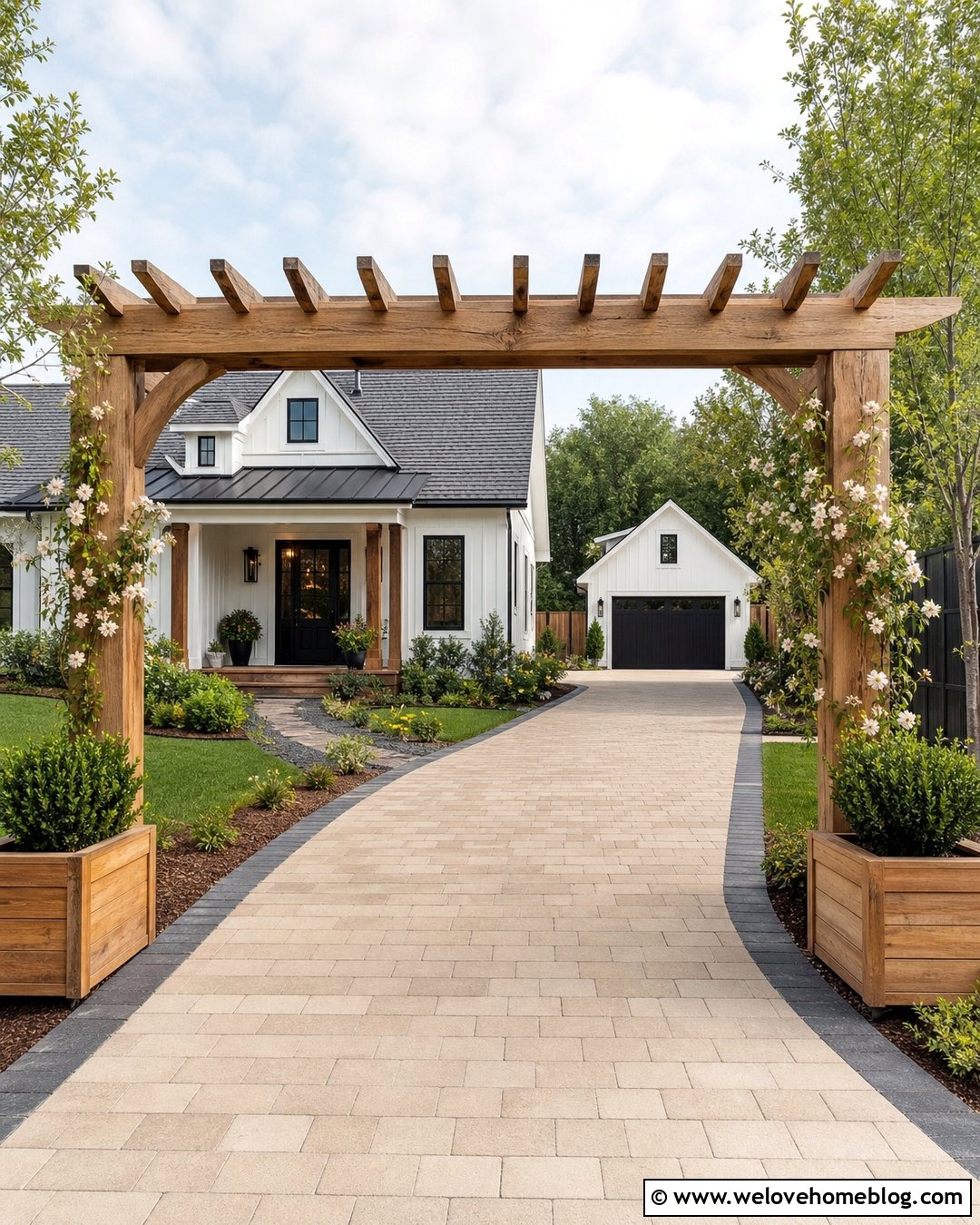
A pergola can mark the transition from a side driveway into the backyard while giving the route architectural presence. Use buff-colored concrete pavers beneath a wide cedar structure designed with suitable vehicle clearance. A curved paver driveway can approach the pergola, then straighten as it continues toward a detached garage or parking court. Border the paving with dark brick to highlight the change in direction. Train noninvasive flowering vines along selected sections of the structure without allowing growth to hang into the driving zone. Place matching timber planters outside the driveway edges. Beyond the pergola, repeat the pavers in a garden walkway. This arrangement makes the backyard entrance feel welcoming while clearly organizing driving, walking, and planted areas.
13. Rustic Backyard Driveway With Timber Edging
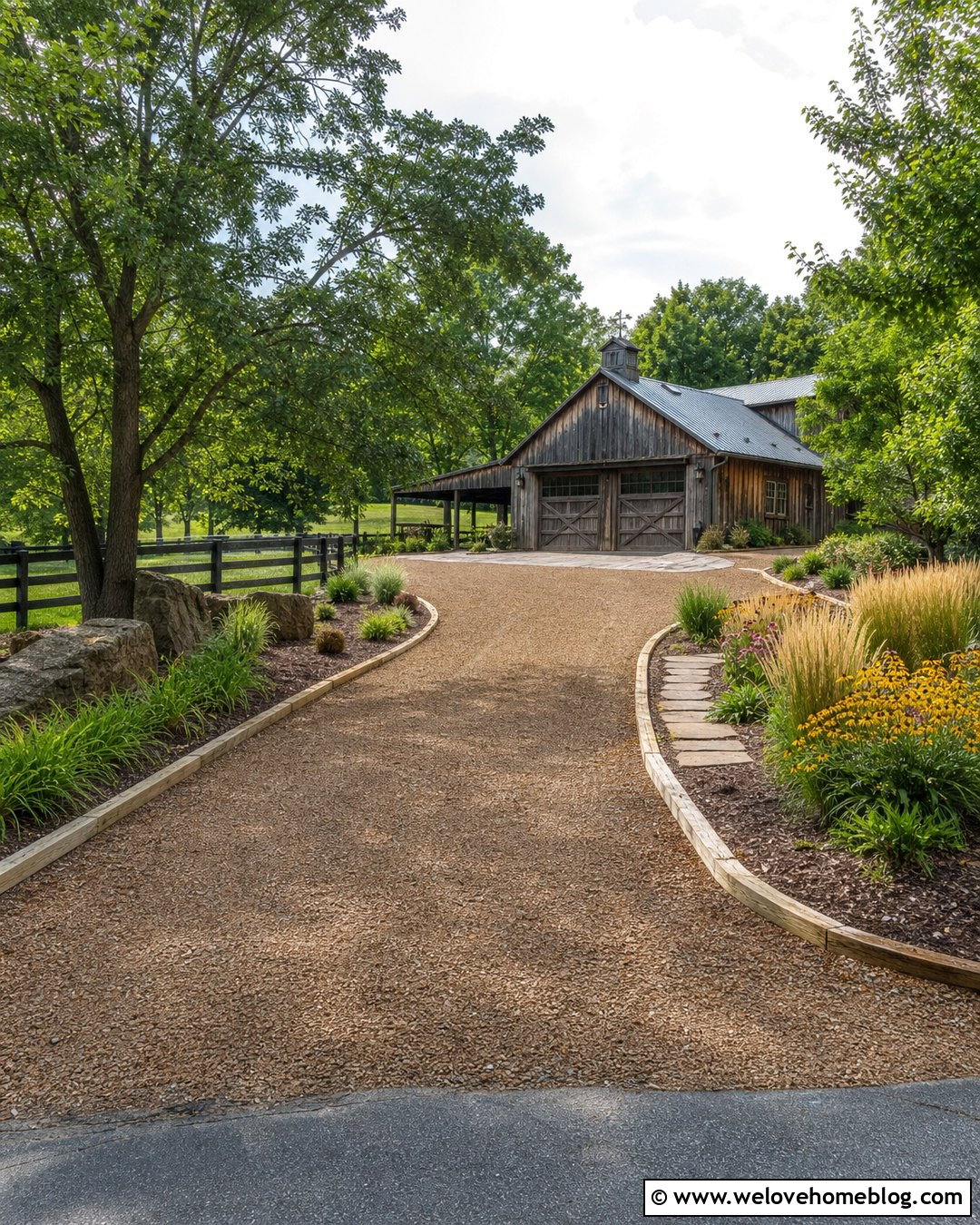
Crunching gravel and natural timber can give a country backyard an easy, relaxed character. Create the driveway with compacted brown crushed gravel and install pressure-treated timber edging along its gently curved sides. The edging should sit firmly in the ground so it contains the aggregate and separates it from planting beds. Lead the route toward a barn-style garage, workshop, or garden shed. Use native grasses, flowering perennials, and small deciduous trees to soften the outer edges. Near the building, add a wider gravel turning area with a stone apron at the door. A simple flagstone path can connect the driveway to the porch. Earthy colors and practical materials make this complete layout especially suitable for rural and wooded properties.
14. Backyard Driveway With A Garden Turnaround
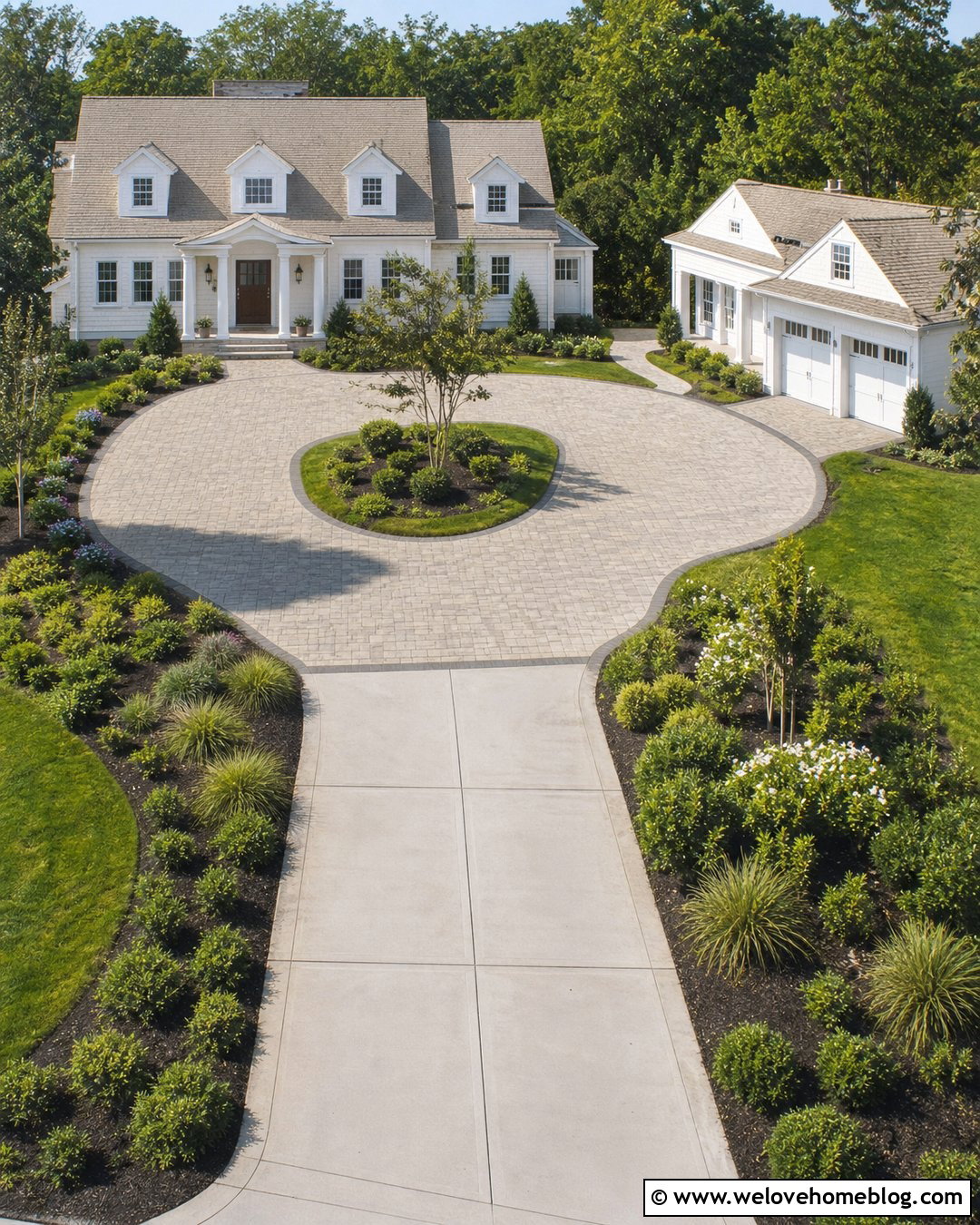
Backing through a long side yard can be difficult, so a well-designed turnaround adds useful maneuvering space. Build a small circular or hammerhead court with warm beige concrete pavers at the end of a straight poured-concrete driveway. Outline the expanded area with a dark paver border to make its shape easy to read. A planted center island can work in larger yards, while compact spaces may need an open paved surface. Surround the court with low shrubs, ornamental grasses, and one or two small trees that will not obstruct sightlines. Connect a separate walkway to the house or garage. This complete arrangement allows vehicles to change direction while giving the rear parking area a refined, landscaped appearance.

15. Backyard Driveway With Raised Garden Beds
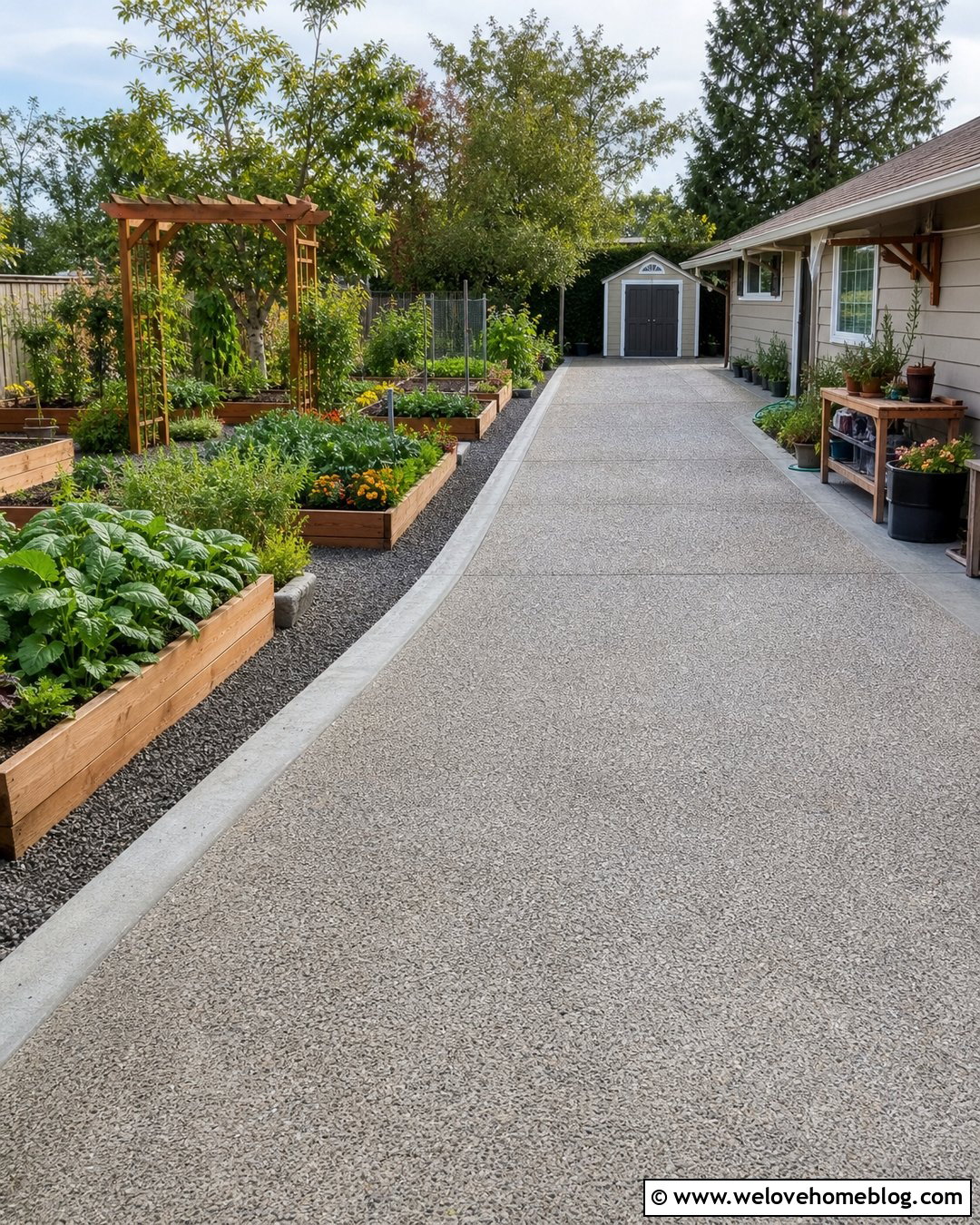
Raised beds can soften a paved backyard driveway while protecting vegetables and flowers from vehicle traffic. Use exposed aggregate concrete for the driveway, with its textured gray and tan surface complementing timber or stone planters. Keep the route straight and place the beds outside a sturdy concrete curb or paver border. Arrange them near the sunny end of the driveway rather than along tight turning points. Gravel walkways between the beds allow easy garden access without mixing soil into the driving area. Add an arbor or potting shed near the rear parking court to strengthen the garden theme. By coordinating the driveway finish, edging, paths, and raised beds, the space can support vehicles and productive gardening without appearing crowded or disorganized.
16. Backyard Driveway With A Fire Pit Patio
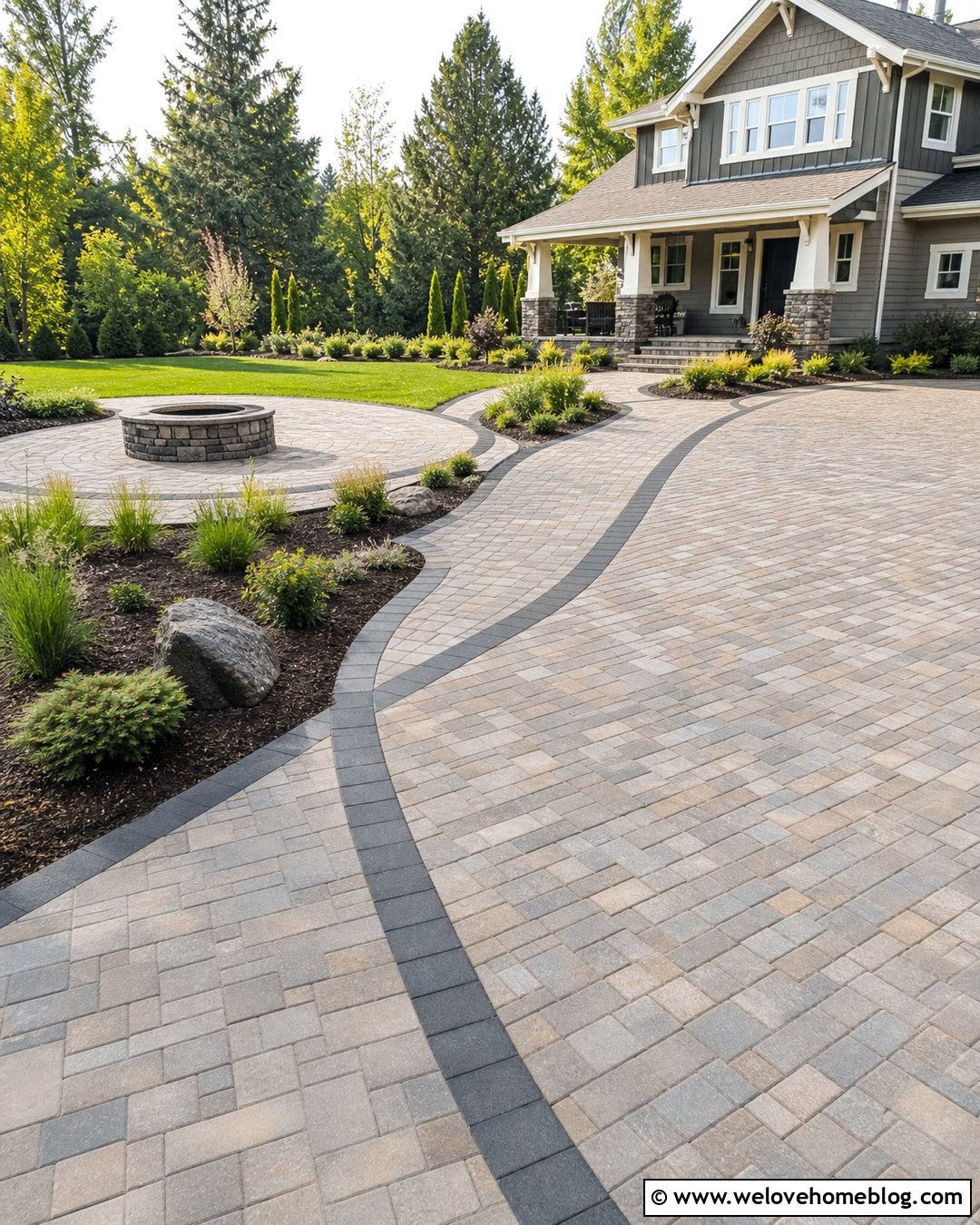
When parking is needed only at certain times, a well-built rear driveway can double as an entertaining surface. Use tumbled concrete pavers in blended gray and brown tones for a broad parking court beside the house. Define the actual driving lane with a darker paver ribbon. Place a circular fire pit patio outside that line so seating never blocks vehicle access. Curved planting beds filled with low shrubs and ornamental grasses can visually separate the two zones. Continue the same pavers around the fire pit for a cohesive finish. Add a direct walkway from the house and store movable furniture nearby. This flexible backyard design provides dependable access while creating a comfortable gathering area when the driveway is not occupied.
17. Backyard Driveway With A Carport
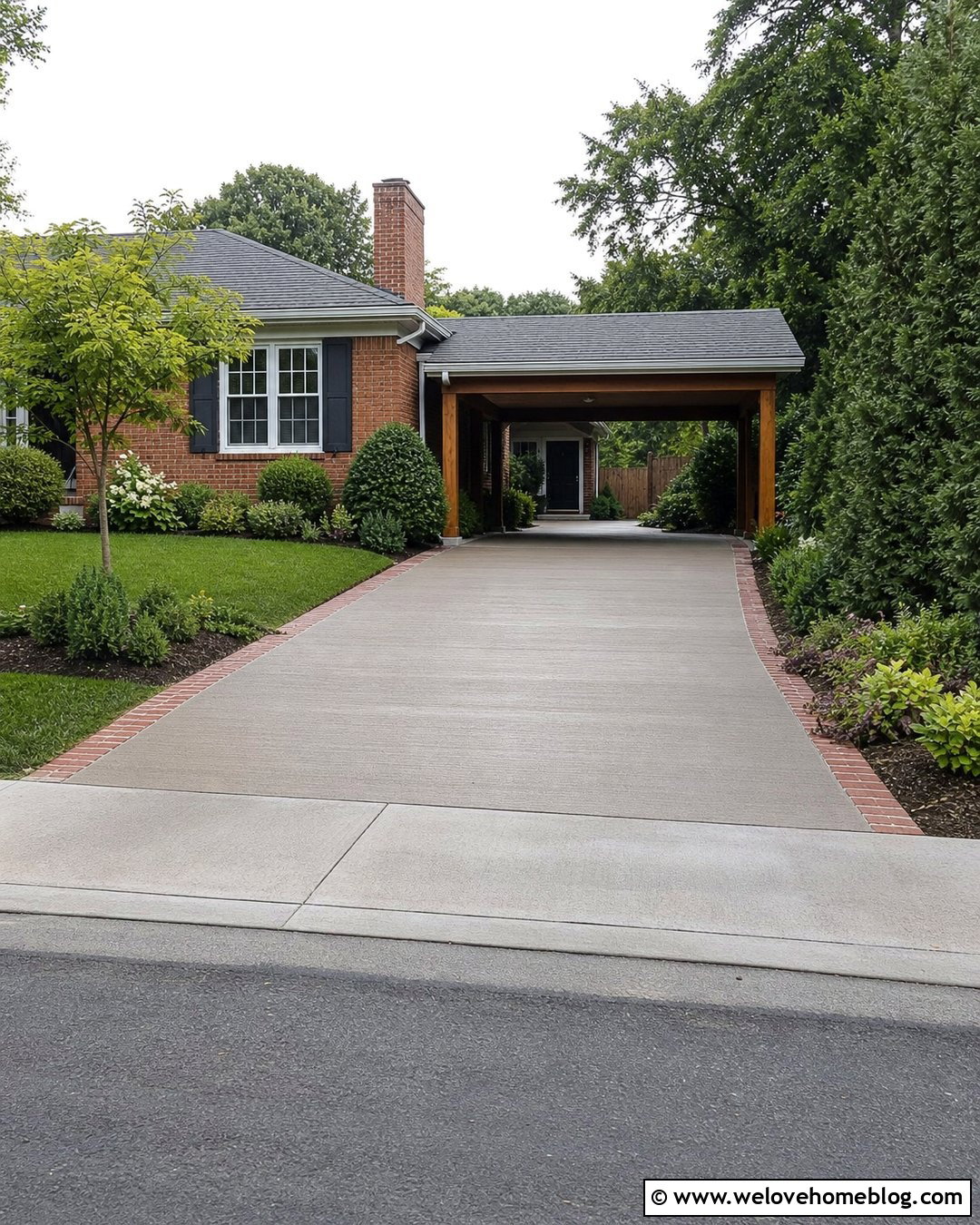
A backyard carport can look fully integrated when its surface and surroundings match the rest of the property. Choose broom-finished warm gray concrete for a straight driveway that continues beneath a wood-framed carport. Add a narrow brick border that reflects brick on the house, chimney, or garden walls. On the open side, create a layered planting bed with compact evergreens, flowering perennials, and a small shade tree. A covered walkway can connect the carport to the back entrance, keeping foot traffic separate from the main driving lane. Install a matching concrete apron at the structure to create a clean stopping point. Coordinated materials prevent the carport from feeling temporary and help the entire backyard access area appear deliberate.
18. Desert Backyard Driveway With Gravel Landscaping
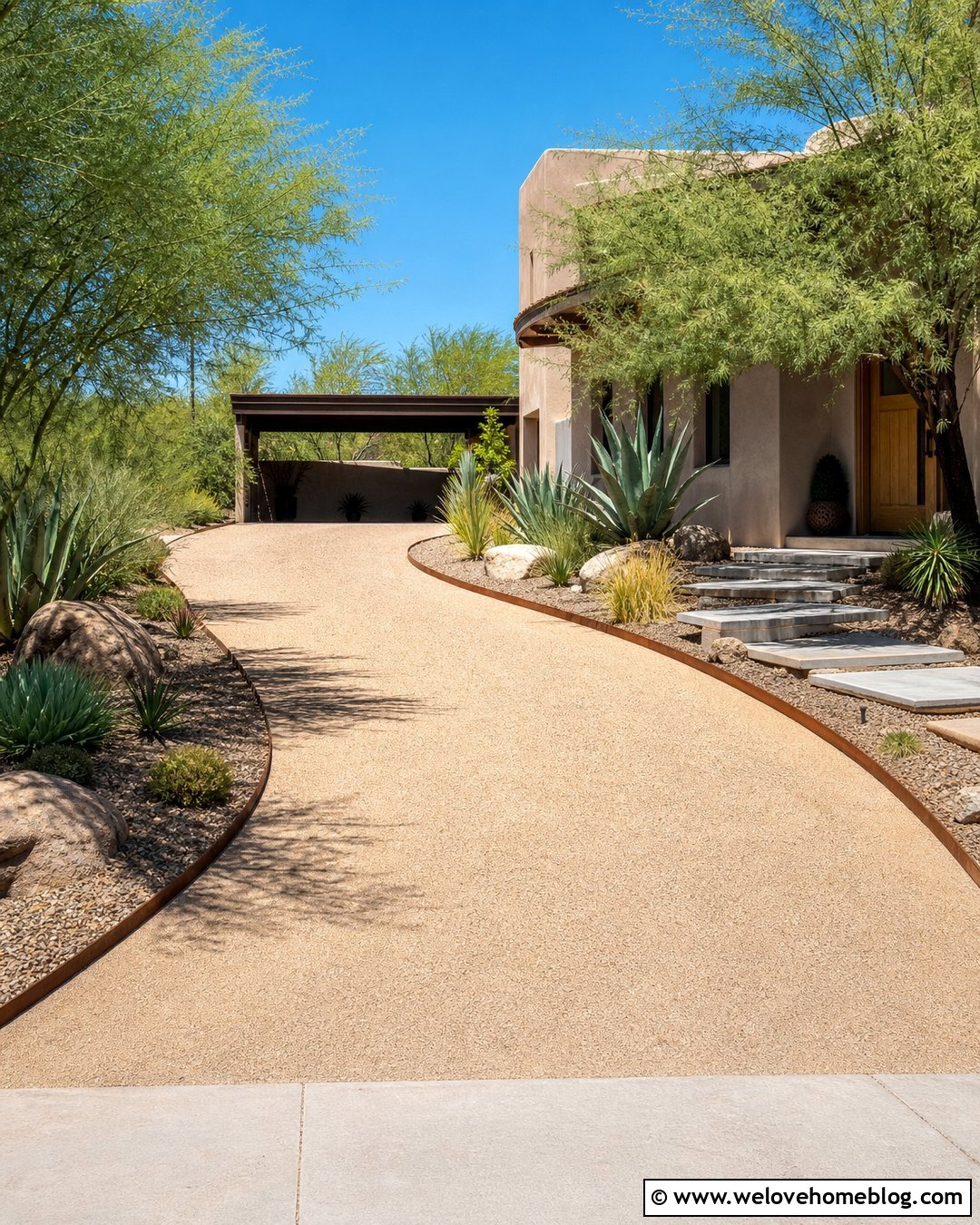
Sun-washed colors and drought-conscious planting can make a backyard driveway feel at home in a dry climate. Use stabilized decomposed granite in a warm gold tone for the main surface, contained by rust-colored steel edging. A softly curved layout can lead around the house toward a shaded rear parking structure. Frame the route with gravel mulch, sculptural agaves, yuccas, desert grasses, and carefully placed boulders. Keep thorny plants well away from vehicle doors and walking areas. Concrete stepping pads can create a clear path to the back entrance. Repeat the driveway’s golden color in stucco walls or stone accents. This complete landscape reduces visual clutter while giving the backyard access route a distinctive regional character.
19. Small Backyard Driveway With Mixed Materials
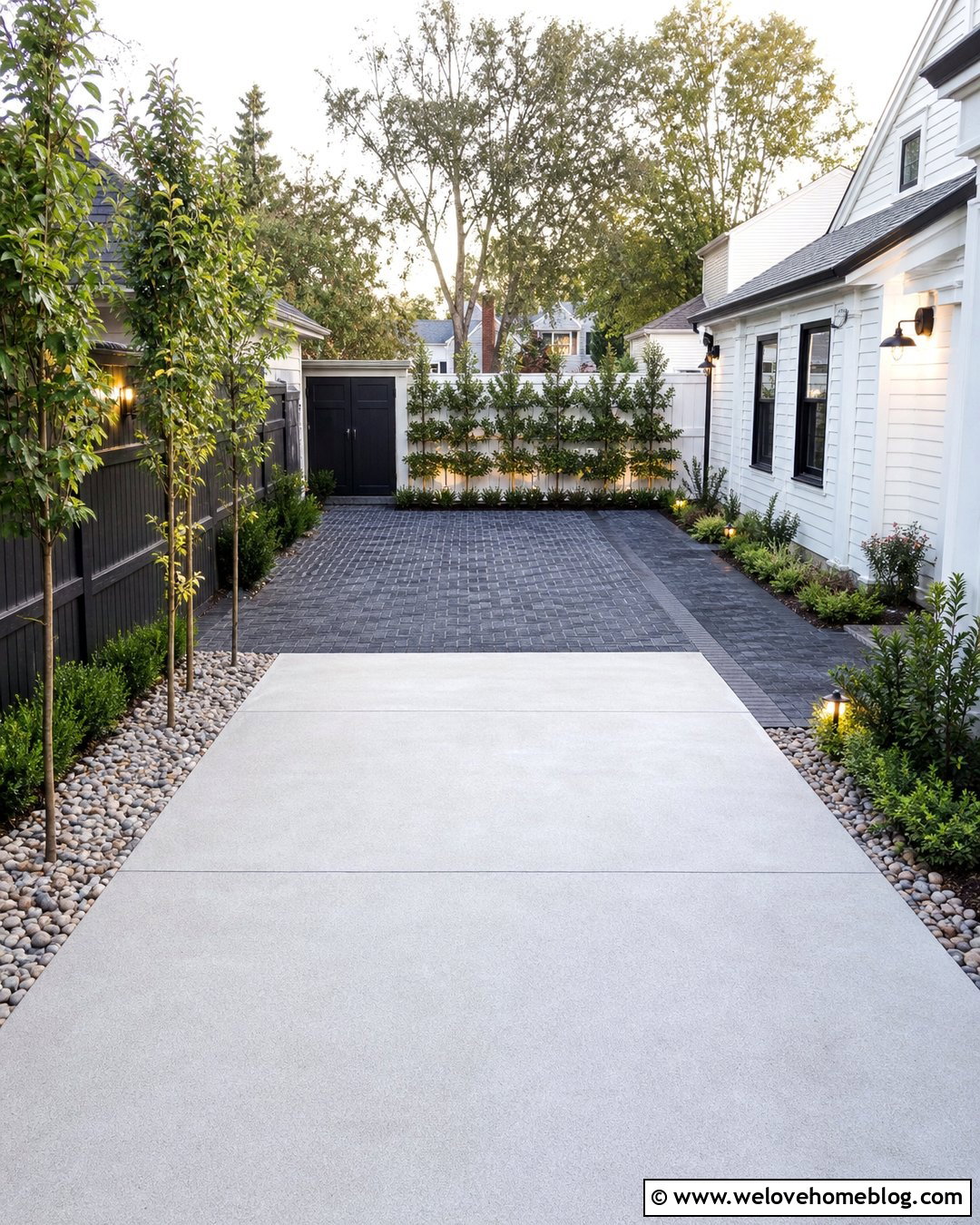
Limited space often benefits from more than one material because subtle changes can define separate functions. Use smooth poured concrete for the narrow driving lane and charcoal brick pavers for the compact parking area near the backyard. The contrast shows where vehicles should stop without adding signs or barriers. A thin strip of river rock can handle the transition between paving and planted beds. Choose compact shrubs, espaliered trees, and ground cover that will not spread into the route. Continue the dark pavers as a small walkway to the back door. A wall-mounted light and simple address plaque can complete the arrival point. This layered design makes a small backyard driveway feel organized, attractive, and connected to the house.


20. Backyard Driveway With Pool Access
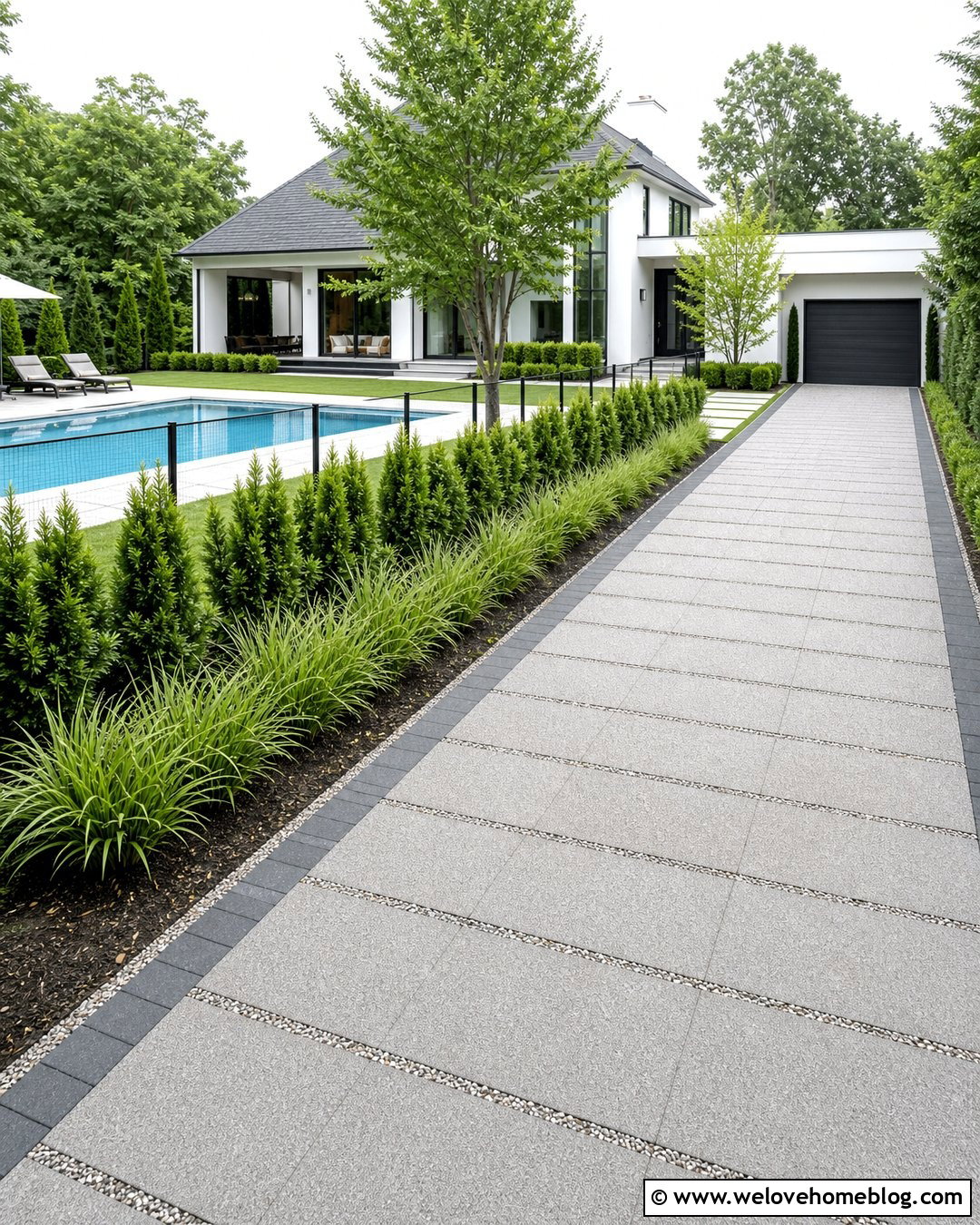
A driveway near a backyard pool needs a clear division between vehicles, swimmers, and gathering areas. Build the driving surface with light-gray permeable concrete pavers, then separate it from the pool deck with a wide planted buffer. Use a dark paver border to define the vehicle route and a different pale porcelain surface around the water. Evergreen shrubs, ornamental grasses, and a low fence can form an attractive safety boundary without making the yard feel enclosed. Position the rear parking pad near a garage or service gate rather than beside lounge seating. A dedicated walkway should connect the parking area to the house. Coordinated colors allow the driveway and pool landscape to feel related while keeping their functions clearly separated.
Conclusion:
The best backyard driveway combines reliable vehicle access with the comfort and beauty expected from an outdoor living space. Consider how the driveway will connect to garages, gates, patios, gardens, and back entrances before choosing a surface. Gravel provides an affordable, relaxed look, while concrete, brick, and pavers create more structured designs. Borders, planting beds, lighting, and walkways can make even a simple route feel intentional. Drainage, turning space, visibility, and pedestrian movement should also guide the final layout. These 20 Driveway Backyard Ideas show that practical access does not need to overwhelm the yard. With coordinated materials and thoughtful landscaping, your driveway can become an attractive part of the complete backyard.

Related posts:





Leave a Reply