
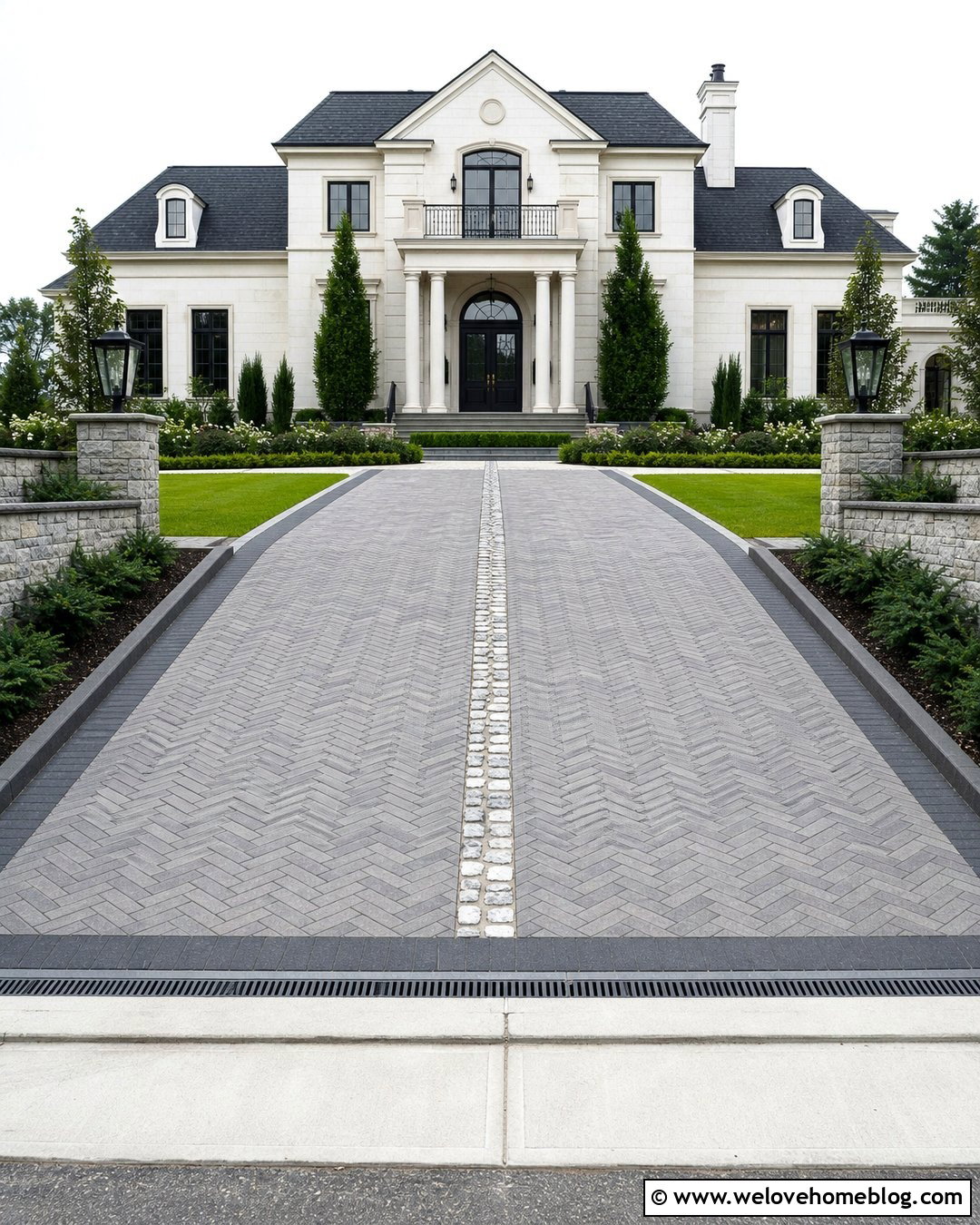
The best **20 Driveway Automation Inspiration Ideas** combine practical technology with a driveway design that complements the home. Automation can manage access, improve nighttime visibility, simplify parking, reduce winter maintenance, and create a smoother arrival experience. However, the driveway should still look attractive from the curb. Materials, borders, gates, lighting, landscaping, and control equipment must feel like parts of one coordinated plan. Hidden wiring conduits and carefully positioned sensors also produce a cleaner result. For automated gates, choose professionally installed equipment with appropriate entrapment protection and construction that follows applicable safety standards and local codes. () The complete designs below bring technology and curb appeal together in these **20 Driveway Automation Inspiration Ideas**.
1. Automatic Sliding Gate With Concrete Driveway
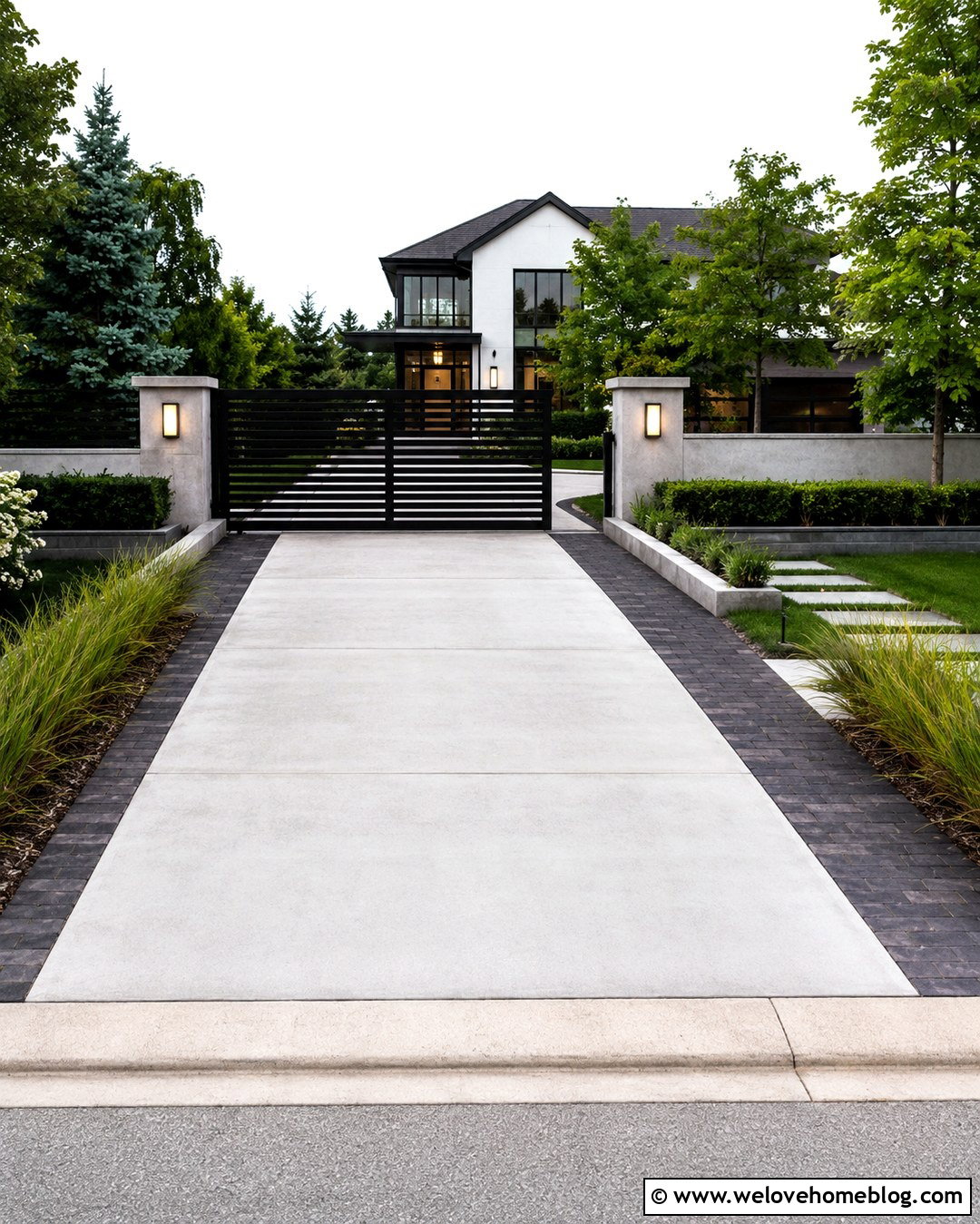
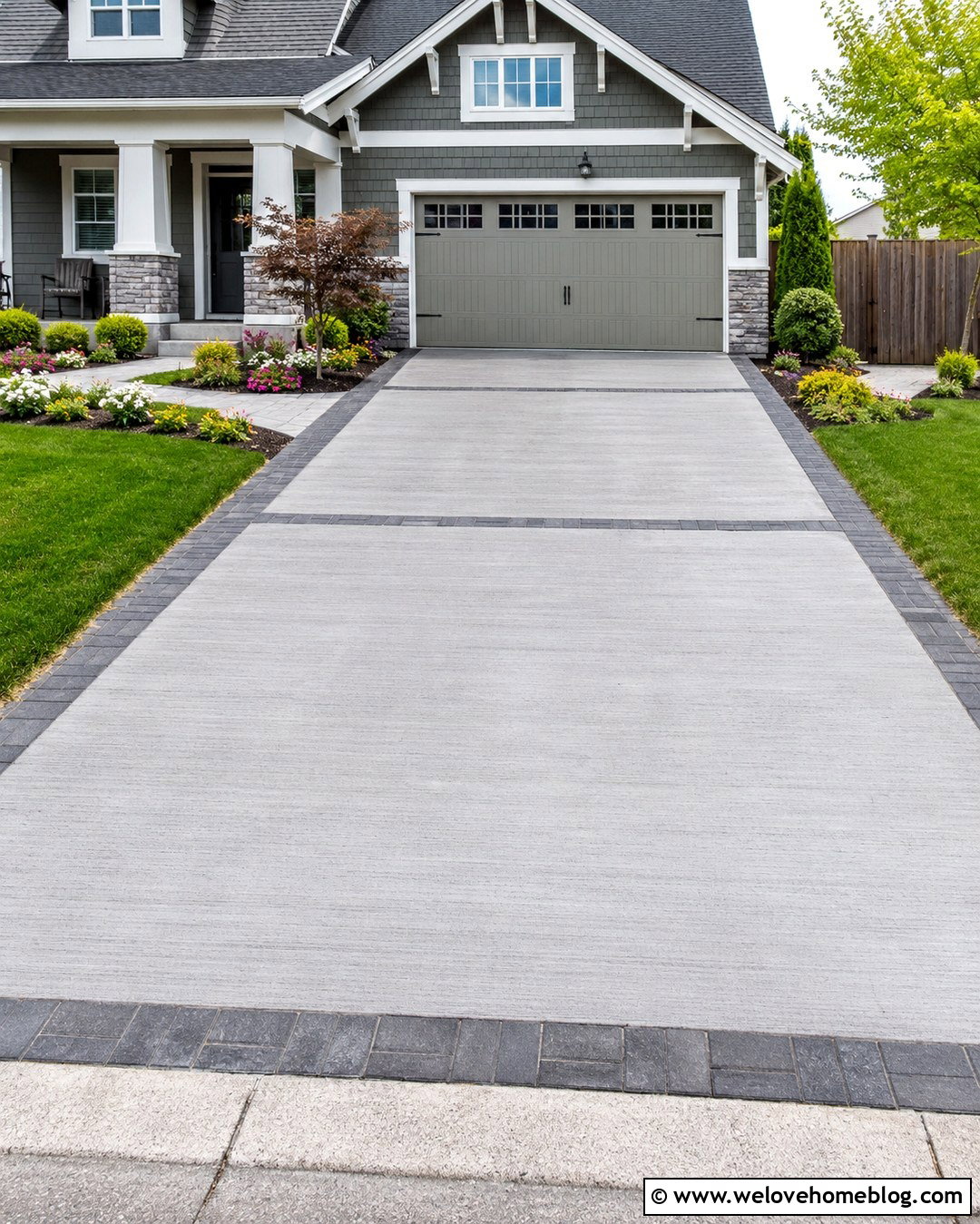
A horizontal sliding gate gives a modern concrete driveway a streamlined, space-saving entrance. Use smooth light-gray poured concrete in a straight layout, framed by charcoal paver ribbons that visually connect the gate to the house. A powder-coated aluminum gate with horizontal slats can slide behind a matching masonry wall rather than swinging into the driveway. This arrangement works especially well where the property is shallow or the driveway slopes near the street. Add low ornamental grasses, clipped shrubs, and recessed pillar lights for a neat suburban look. Conceal the motor, wiring, and access controls behind the entrance wall. Include properly positioned photoelectric sensors, reversing protection, and a manual release instead of treating safety equipment as an optional upgrade. ()
2. Automatic Swing Gate With Brick Paver Driveway
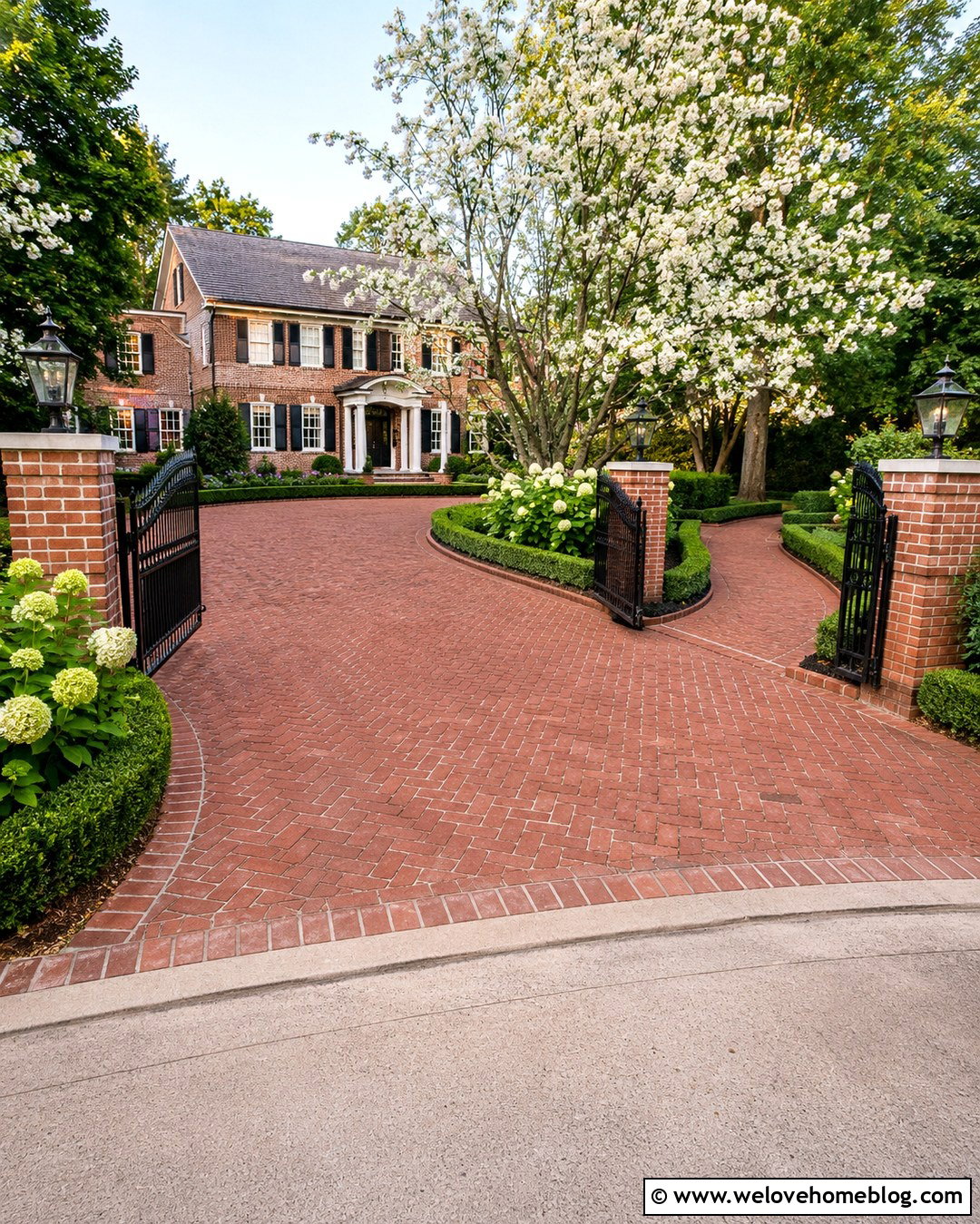
Picture a warm brick paver driveway approaching a traditional colonial home through symmetrical double swing gates. Clay brick pavers laid in herringbone create texture, while a soldier-course border gives the curved driveway a finished edge. Mount black steel gates between substantial brick pillars that repeat the colors of the house facade. Automated gate arms can sit discreetly behind the gate leaves, preserving the formal street view. Plant boxwood, hydrangeas, and small flowering trees in balanced beds around the entrance. Pillar lanterns can activate when the gates begin opening, making evening arrivals feel polished and welcoming. Allow adequate room for the gate leaves, vehicles, and safety zones. A separate pedestrian gate also keeps walkers away from moving vehicular gates.
3. Geofenced Gate With Gravel Driveway
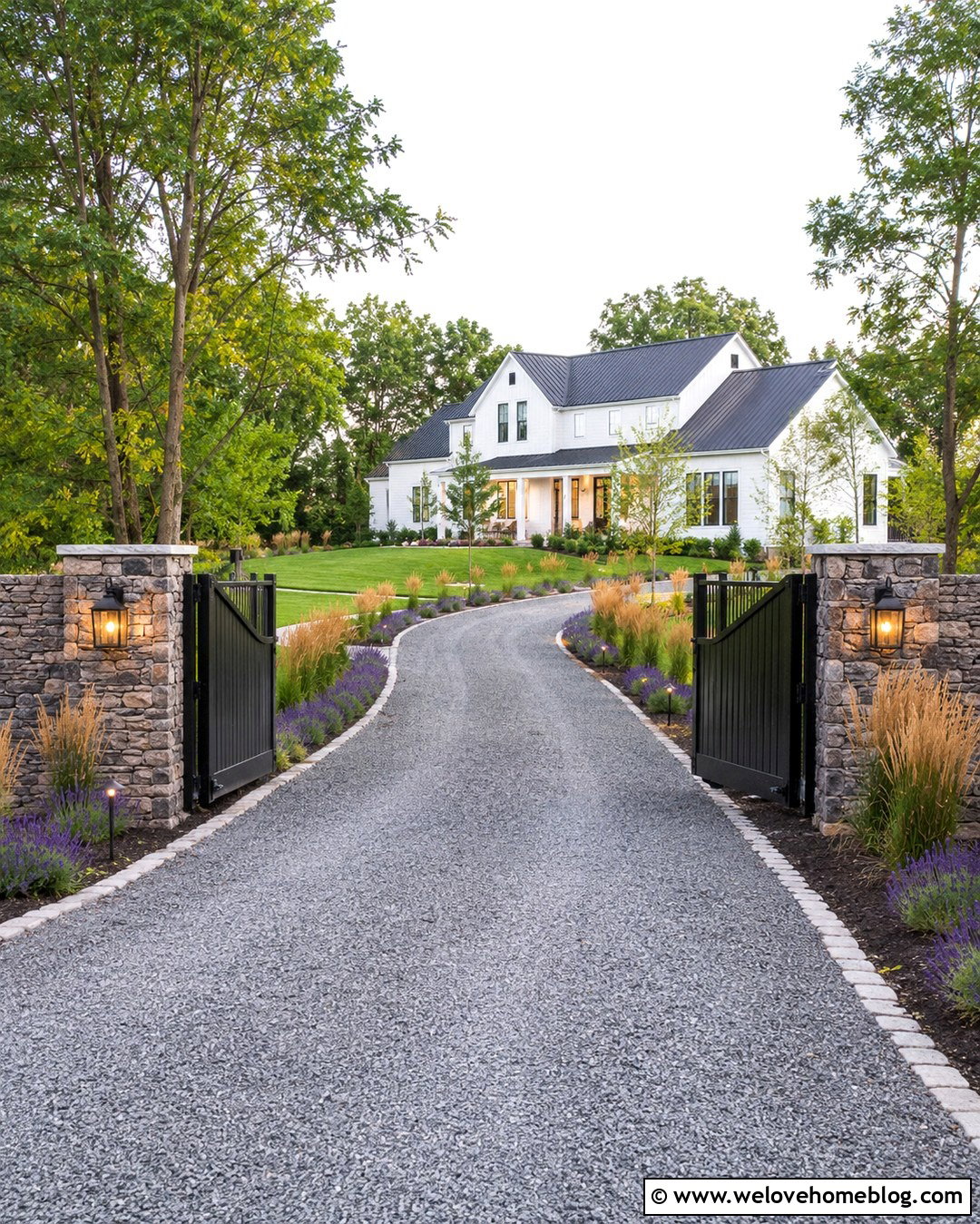
A geofenced entrance can make a relaxed gravel driveway feel surprisingly sophisticated. Use compacted gray crushed stone for a gently curved approach to a modern farmhouse, with Belgian block edging holding the loose material in place. A black board-and-batten gate between simple stone pillars suits the rural setting without looking overly formal. When an authorized resident approaches, location-based automation can prepare the gate to open and activate selected entrance lights. Add a confirmation step or vehicle-presence sensor to reduce unwanted openings when someone merely passes near the property. Lavender, fountain grass, and native shrubs can soften the stonework. Keep a keypad and manual control available for dependable backup access because phone location and wireless connections may occasionally respond slowly. ()
4. Video Intercom Gate With Cobblestone Driveway
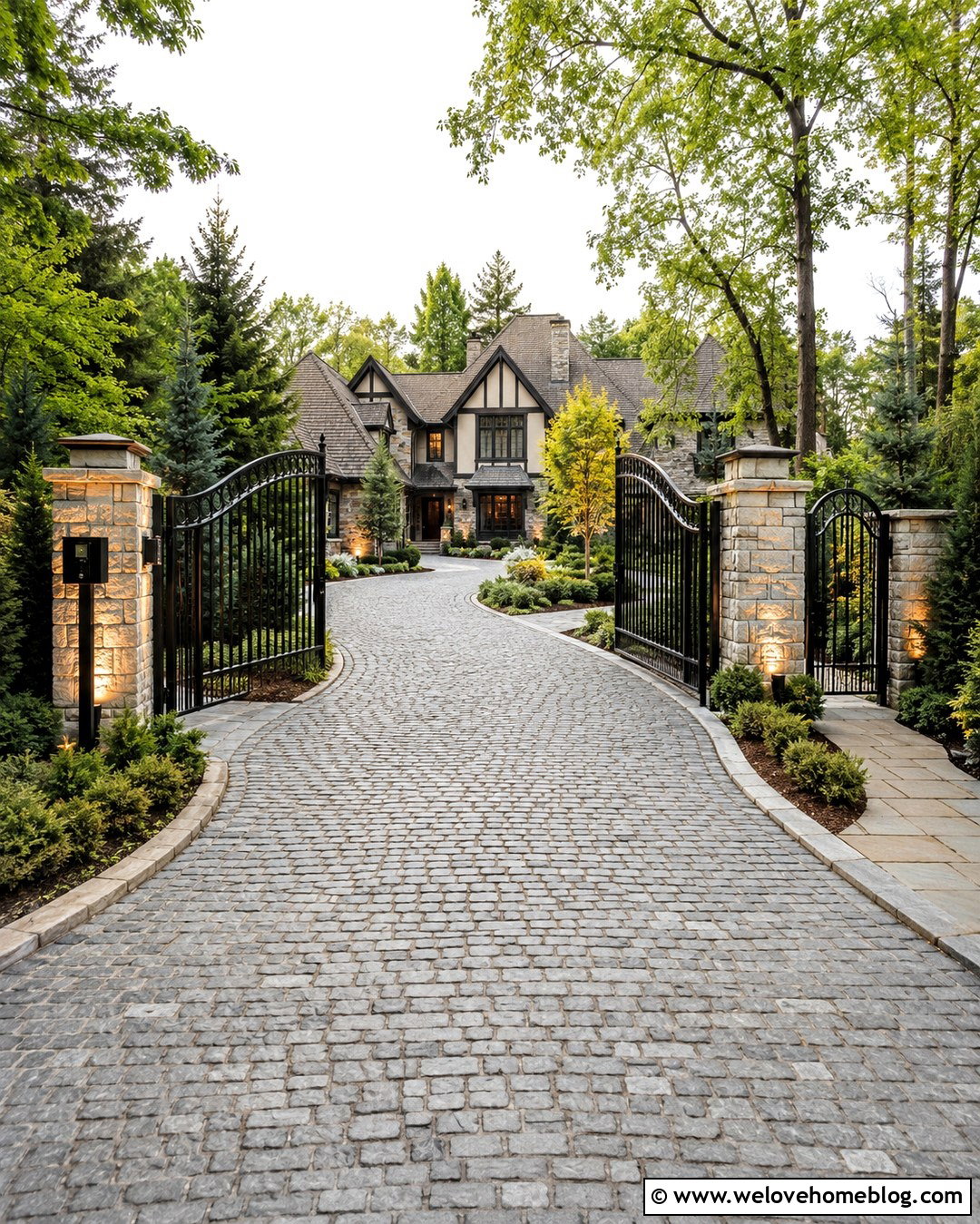
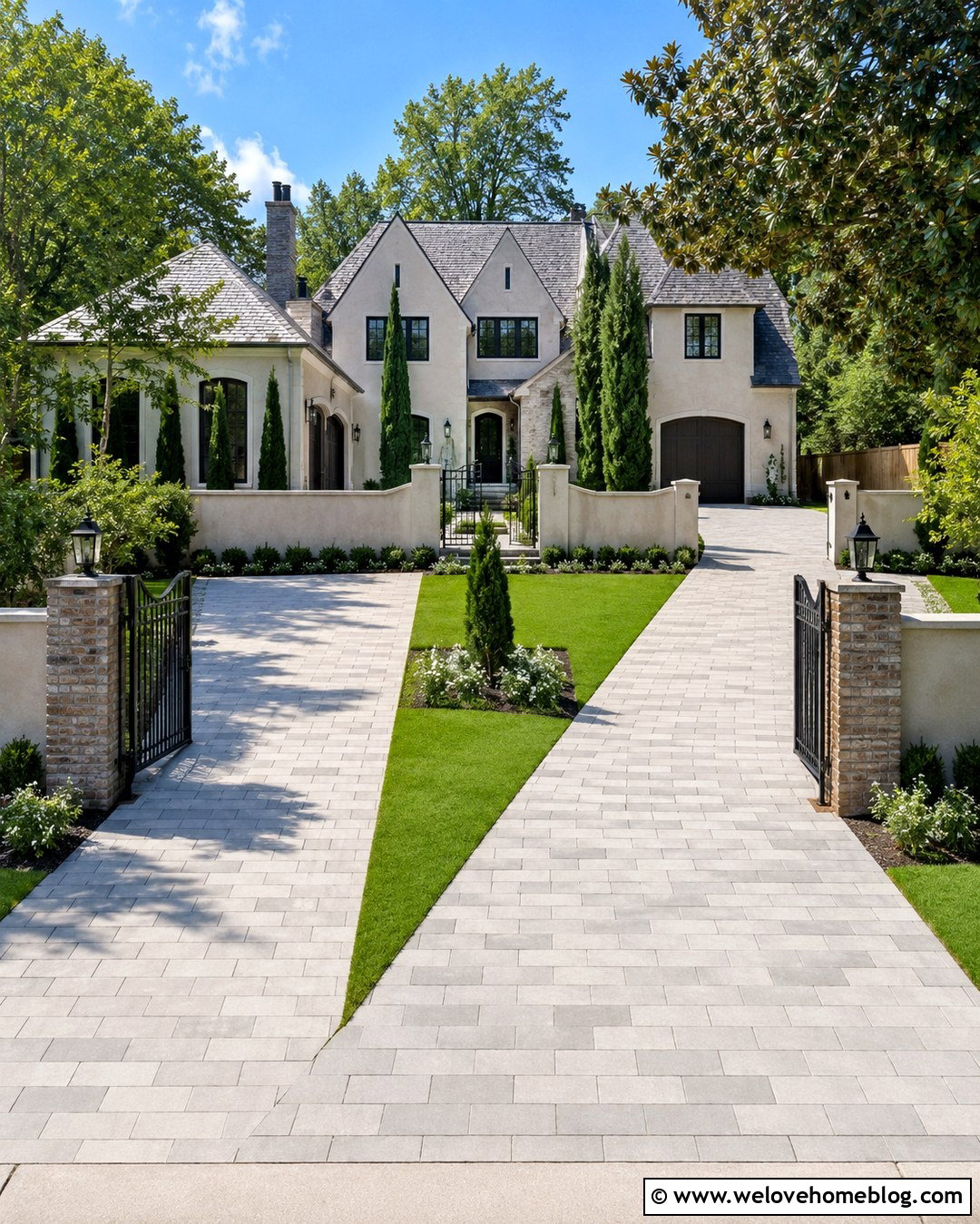
Guests can feel welcomed rather than confronted when video access equipment is integrated into a beautiful entrance. Start with a cobblestone driveway in a broad, gently curved layout leading to a Tudor or European-inspired house. Add arched steel gates between stone pillars, then place the smart video intercom on the driver’s side at a comfortable stopping point. A matching pedestrian walkway and smaller entry gate create a safer route for visitors on foot. Use uplighting on the pillars, soft evergreen planting, and groundcover around the cobblestone edges. The intercom can let homeowners see visitors, communicate with drivers, and remotely approve entry. Keep the camera clear of branches and harsh backlighting, while positioning the call station where drivers can reach it without leaving their vehicles. ()
5. License Plate Entry With Asphalt Driveway
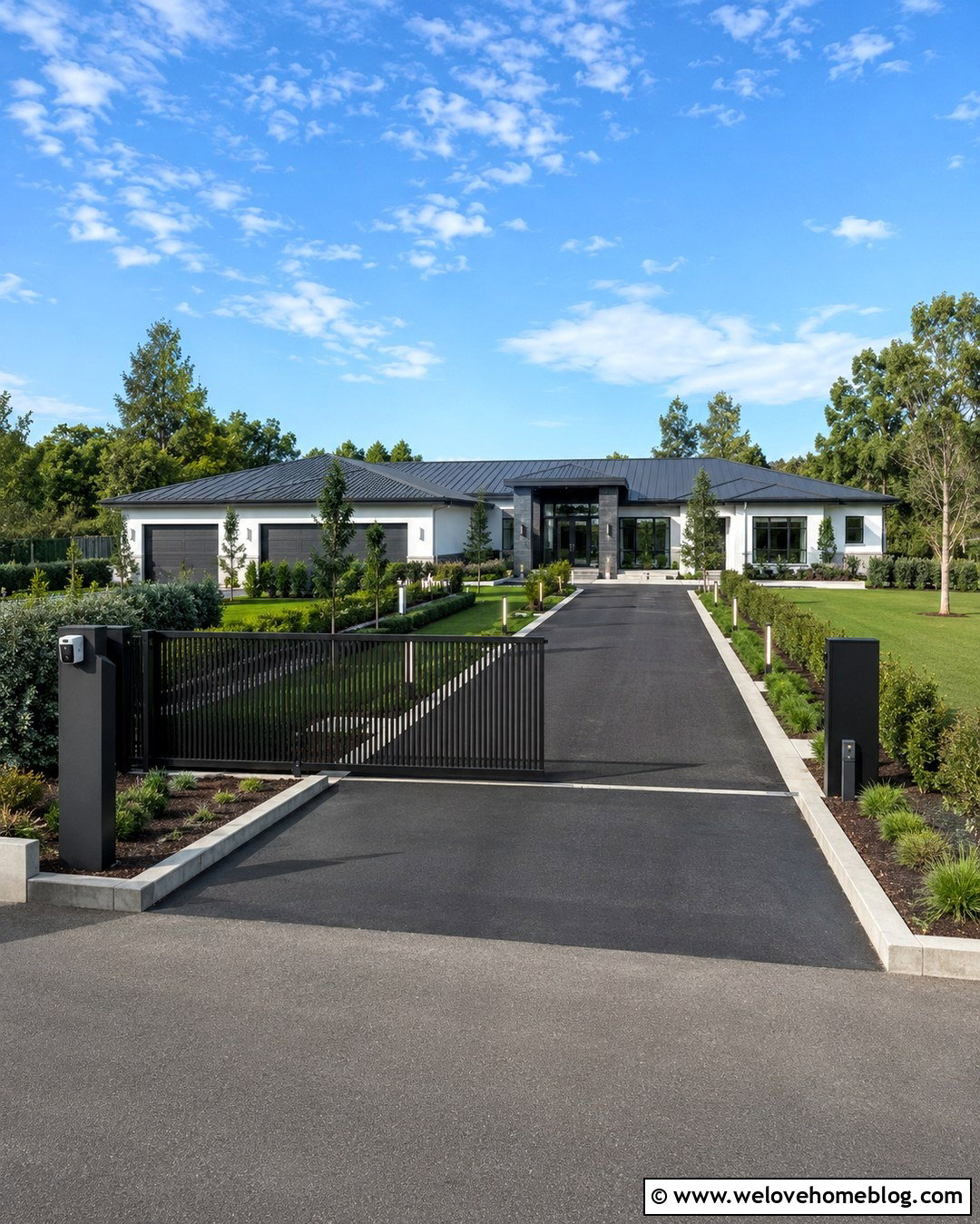
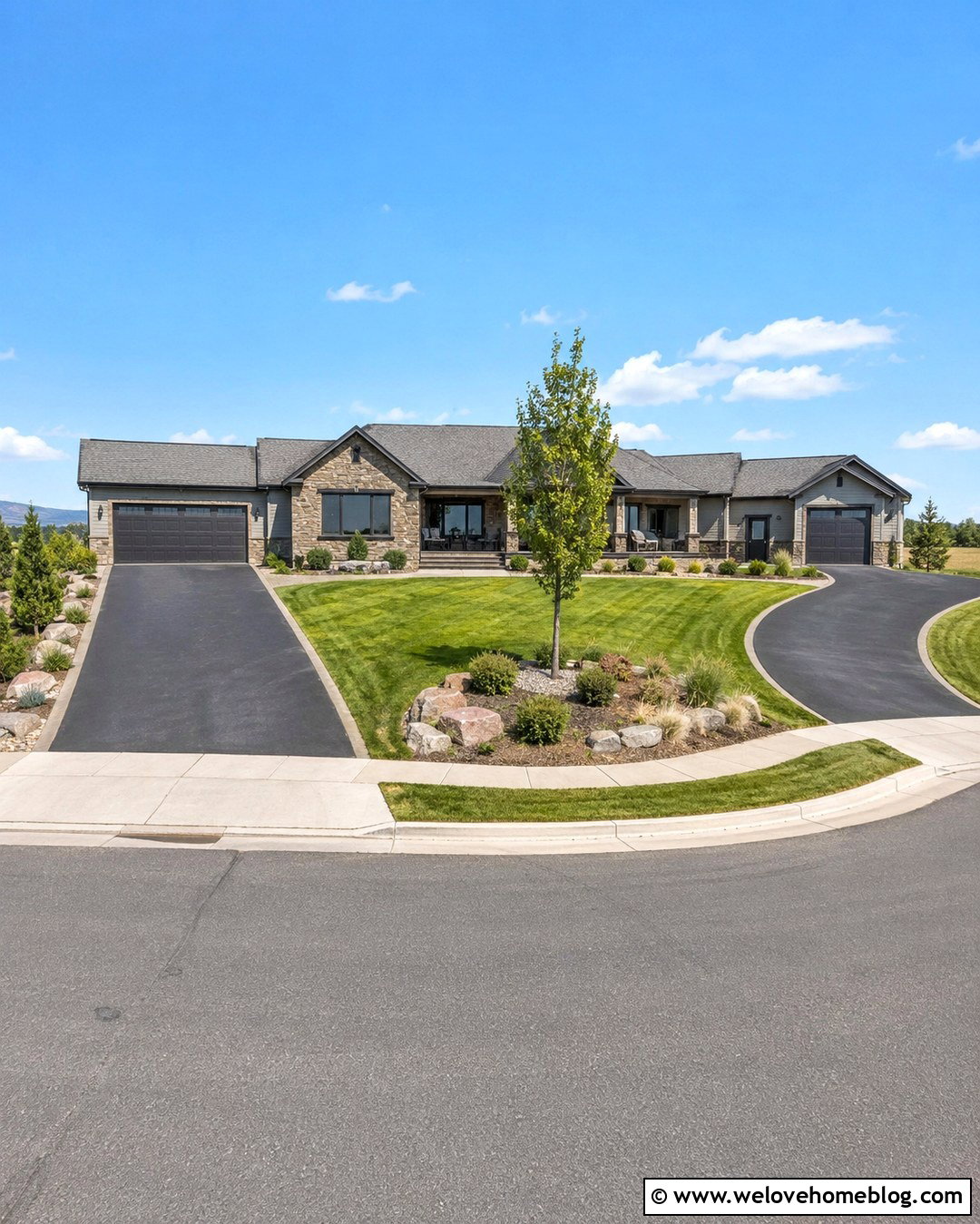
A clean black asphalt driveway can support advanced access control without looking commercial. Design a long, straight approach to a contemporary ranch house, using pale concrete curbs and rectangular planting beds to soften the dark surface. At the entrance, install a slim cantilever sliding gate with vertical metal slats. A carefully positioned camera can recognize approved vehicles and trigger the gate according to the system’s access rules. Pair this feature with an intercom and keypad so visitors and rental vehicles are not locked out. Narrow LED bollards can mark both driveway edges without overwhelming the simple architecture. Keep the plate-viewing area evenly illuminated and avoid placing tall plants directly beside the camera. Access logs and temporary permissions can provide useful control, but a qualified specialist should configure the system securely. ()
6. Motion Sensor Lighting With Paver Driveway
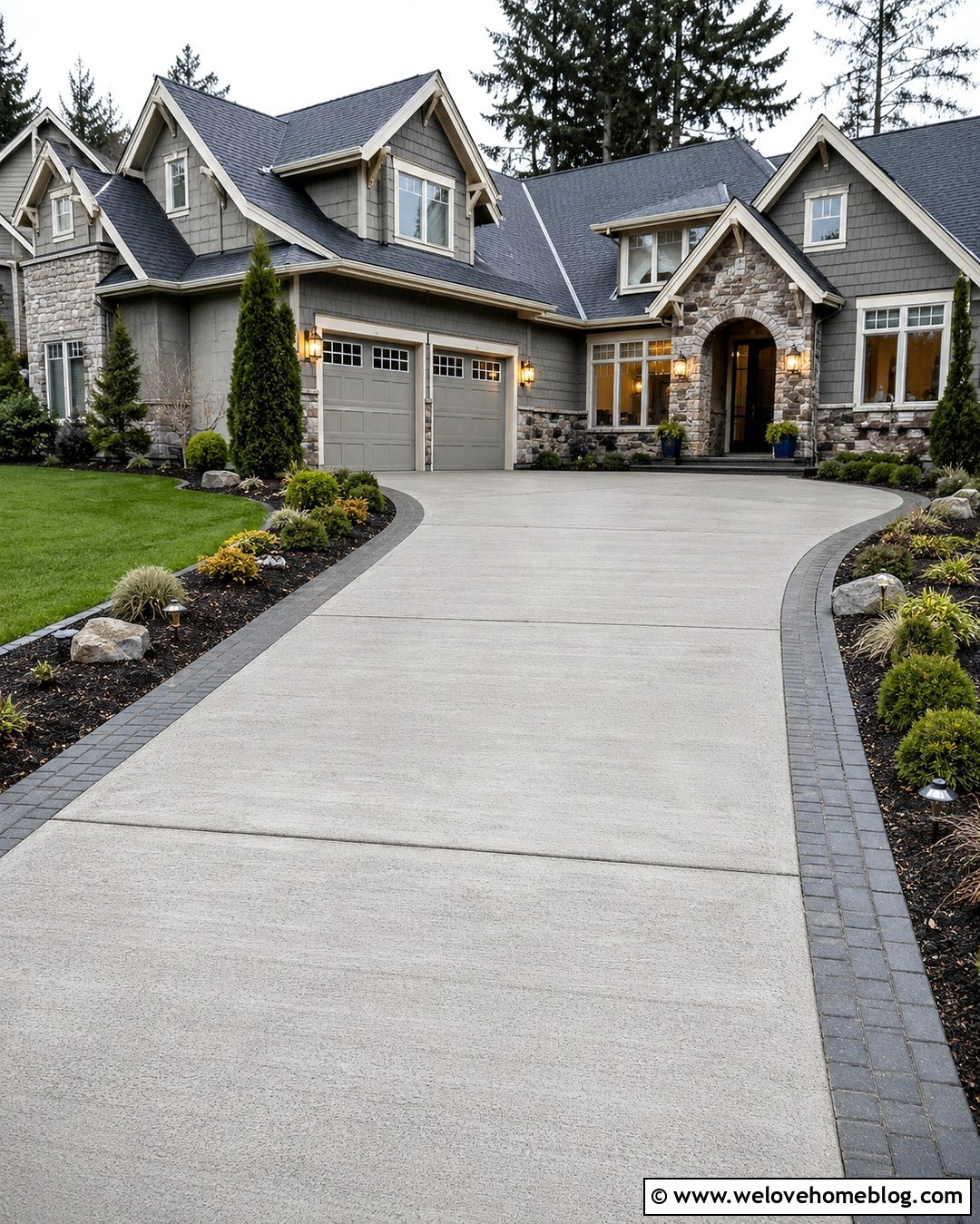
Wouldn’t it be helpful if the driveway brightened only when someone approached? Create a wide permeable paver driveway with a straight layout, charcoal borders, and grass-filled joints leading to a low modern home. Divide the lighting into practical zones at the street, parking area, walkway, and garage. Vehicle or motion detection can activate the entrance fixtures first, followed by low path lights closer to the house. This layered response gives drivers a clear route while avoiding an unnecessarily bright yard all evening. Use shielded fixtures that direct light onto the driving surface rather than neighboring windows. Evergreen grasses and structured shrubs can frame the pavers without covering sensors. Program a reasonable shutoff delay and maintain a lower everyday lighting level for guests who are already outside. ()
7. Sequential Lighting With Long Gravel Driveway
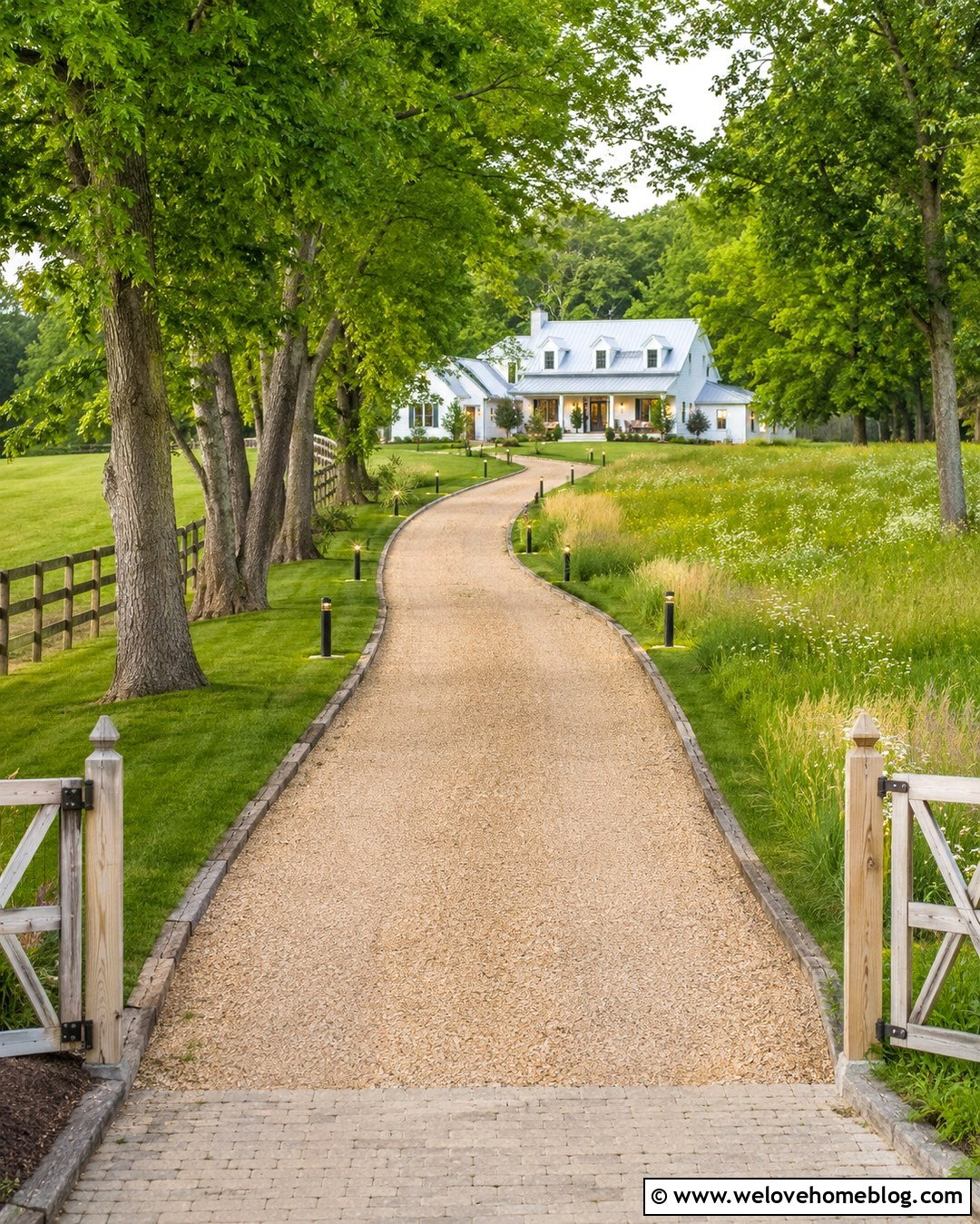
A long country driveway becomes more dramatic and practical when its lights activate in sequence. Use tan crushed gravel for a softly winding route through mature trees toward a white farmhouse. Timber edging can control the gravel, while native grasses and simple split-rail fencing maintain the rural character. Divide the driveway into several lighting zones and use gate, vehicle, or directional sensors to determine where movement begins. During an arrival, warm-white bollards can illuminate progressively from the entrance toward the house. During departure, the sequence can run in reverse. This approach provides guidance without lighting the entire property continuously. Install the fixtures outside common snowplow and tire paths, and plan buried conduits before building the driveway. Reliable wired power and communication may be preferable where the driveway is especially long. ()
8. Heated Concrete Driveway With Snow Sensors
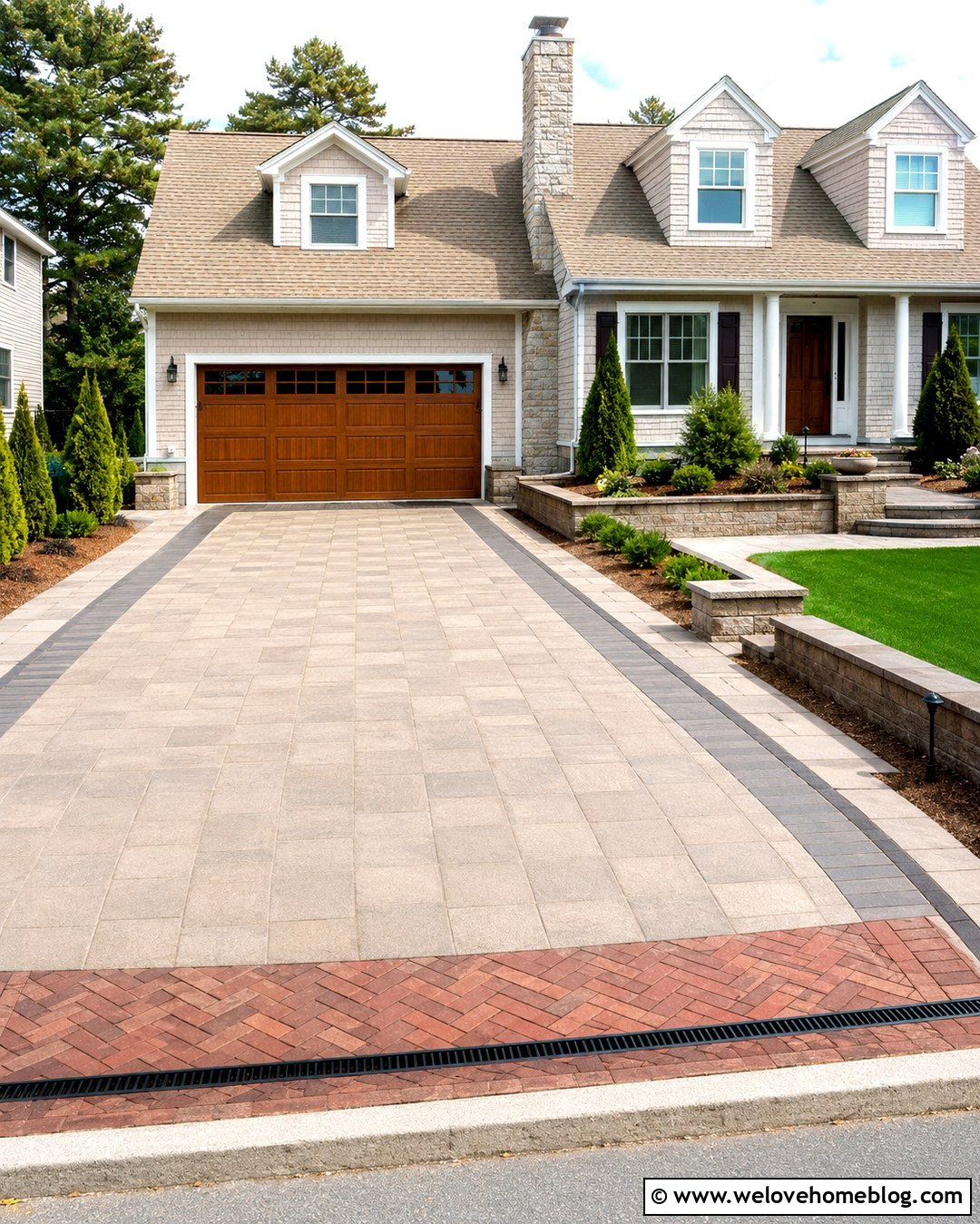
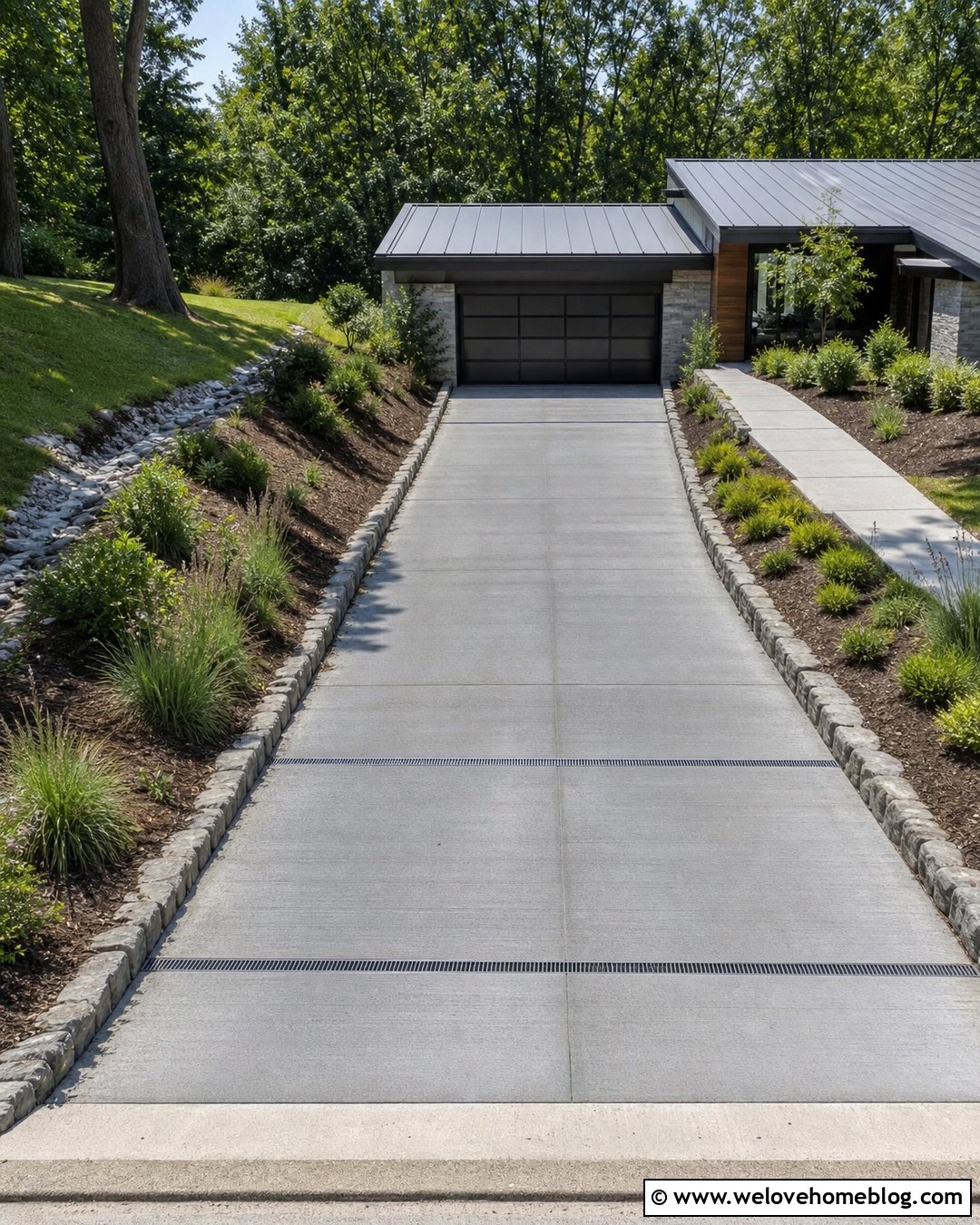
In a snowy climate, a heated driveway can become the most appreciated automation on the property. Choose broom-finished poured concrete for a sloped driveway leading to a craftsman home, with dark brick borders and evergreen planting beds. Heating cables or hydronic tubing can be installed beneath selected driving and walking zones. Moisture and temperature sensors allow the controls to respond when wintry conditions develop rather than relying entirely on manual activation. Prioritize the steepest section, garage apron, tire tracks, and adjoining walkway if heating the full driveway is beyond the budget. Proper drainage remains essential because melted snow needs somewhere safe to flow. Coordinate the heating design with the driveway installer, electrician, and drainage professional before construction begins, since later changes can require disruptive surface work. ()
9. Zoned Heated Paver Driveway With Smart Controls
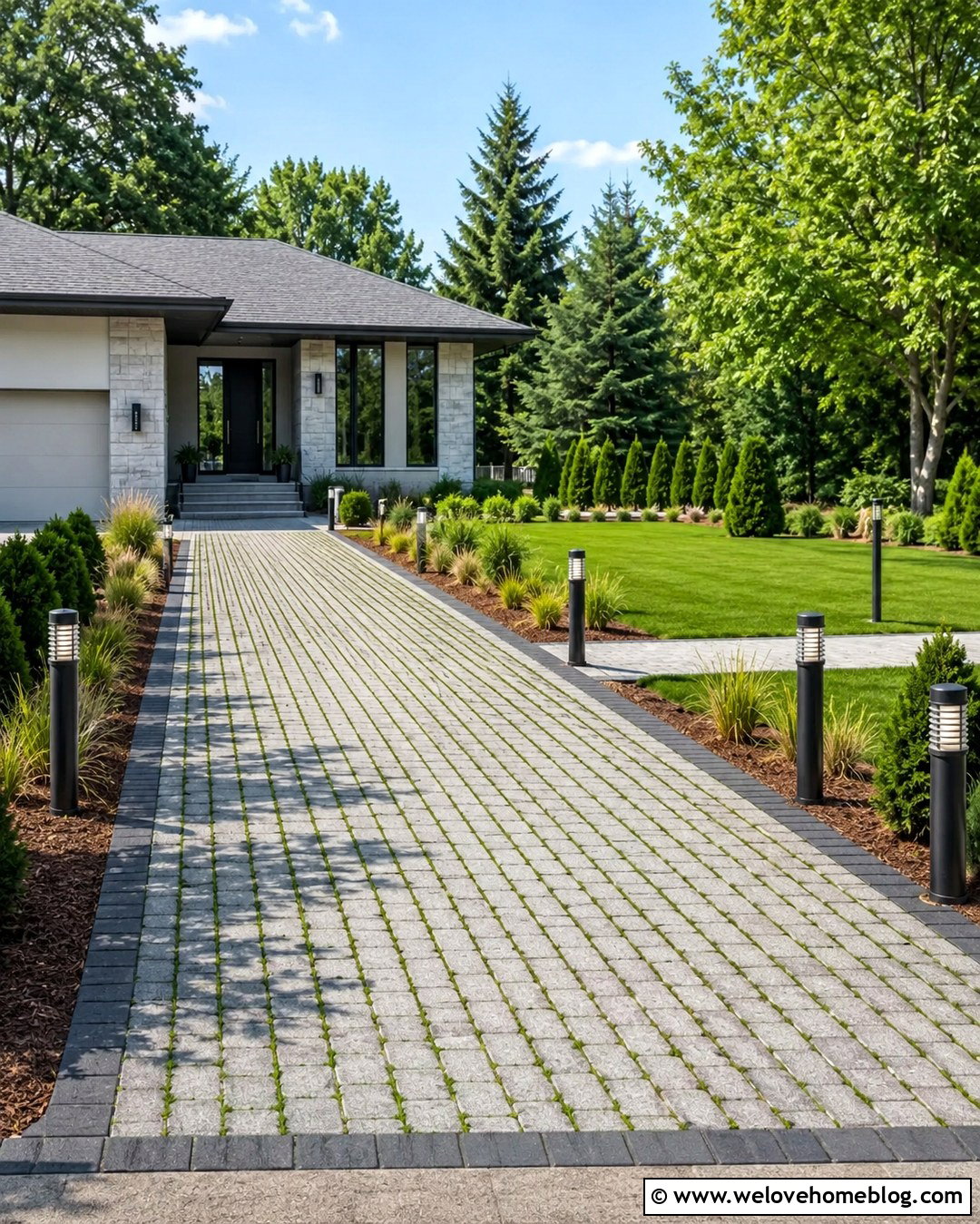
Brick and concrete pavers offer a more decorative setting for automated snow melting. Use large taupe concrete pavers in a straight driveway with a herringbone brick apron near a Cape Cod home. Instead of heating every square foot, create controlled zones beneath the garage approach, primary tire paths, front walkway, and gate threshold. The homeowner can prioritize essential areas or activate additional sections before heavy weather. Contrasting paver borders make the heated routes look intentional even when the system is off. Frame the driveway with compact evergreens, low retaining walls, and a clear drainage channel near the street. Because paver assemblies include several layers, the heating components, base, bedding material, sensors, and surface pattern should be designed together. Accessible controls and labeled electrical components will also make future maintenance easier.
10. Automatic Retractable Bollards With Resin Driveway
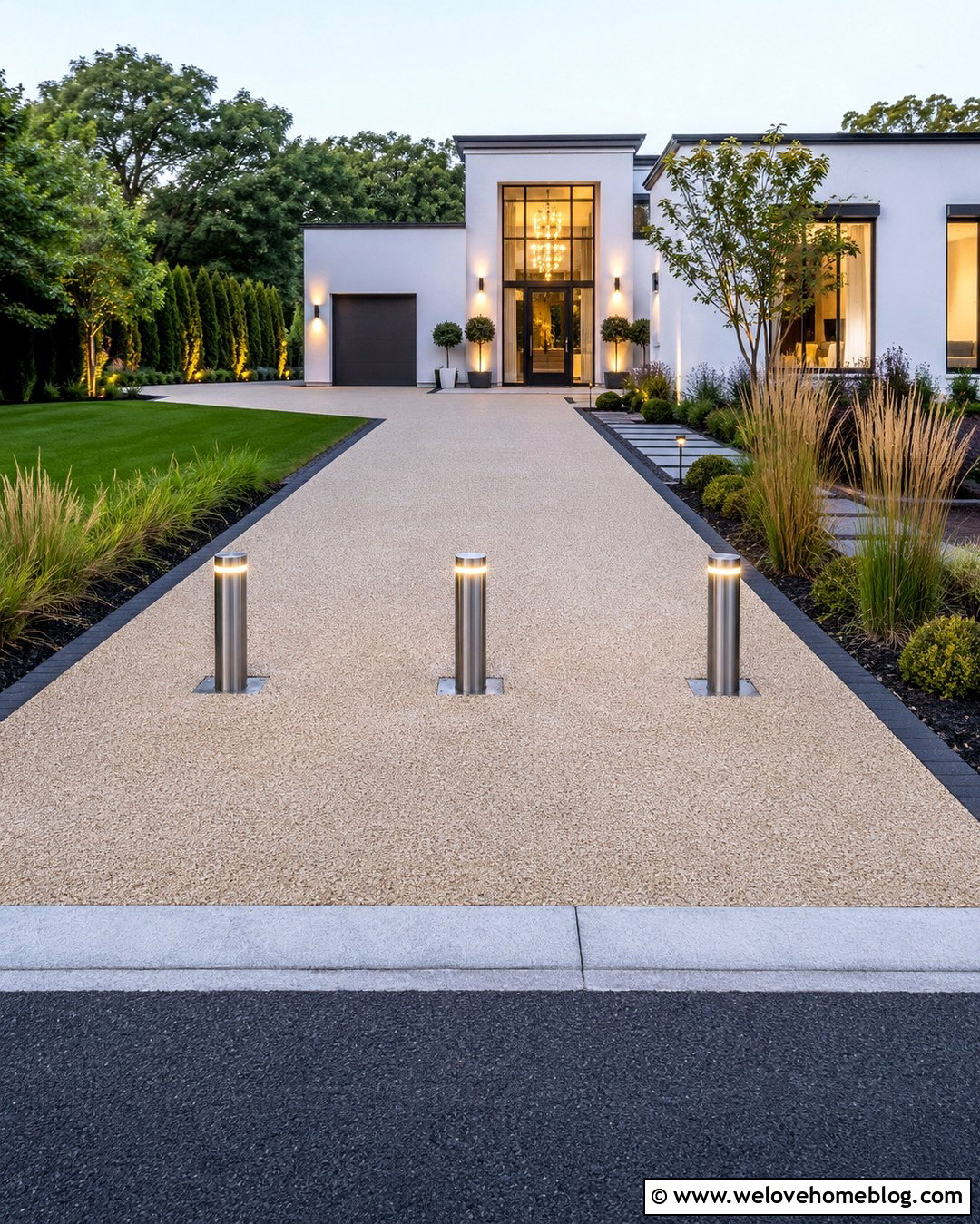
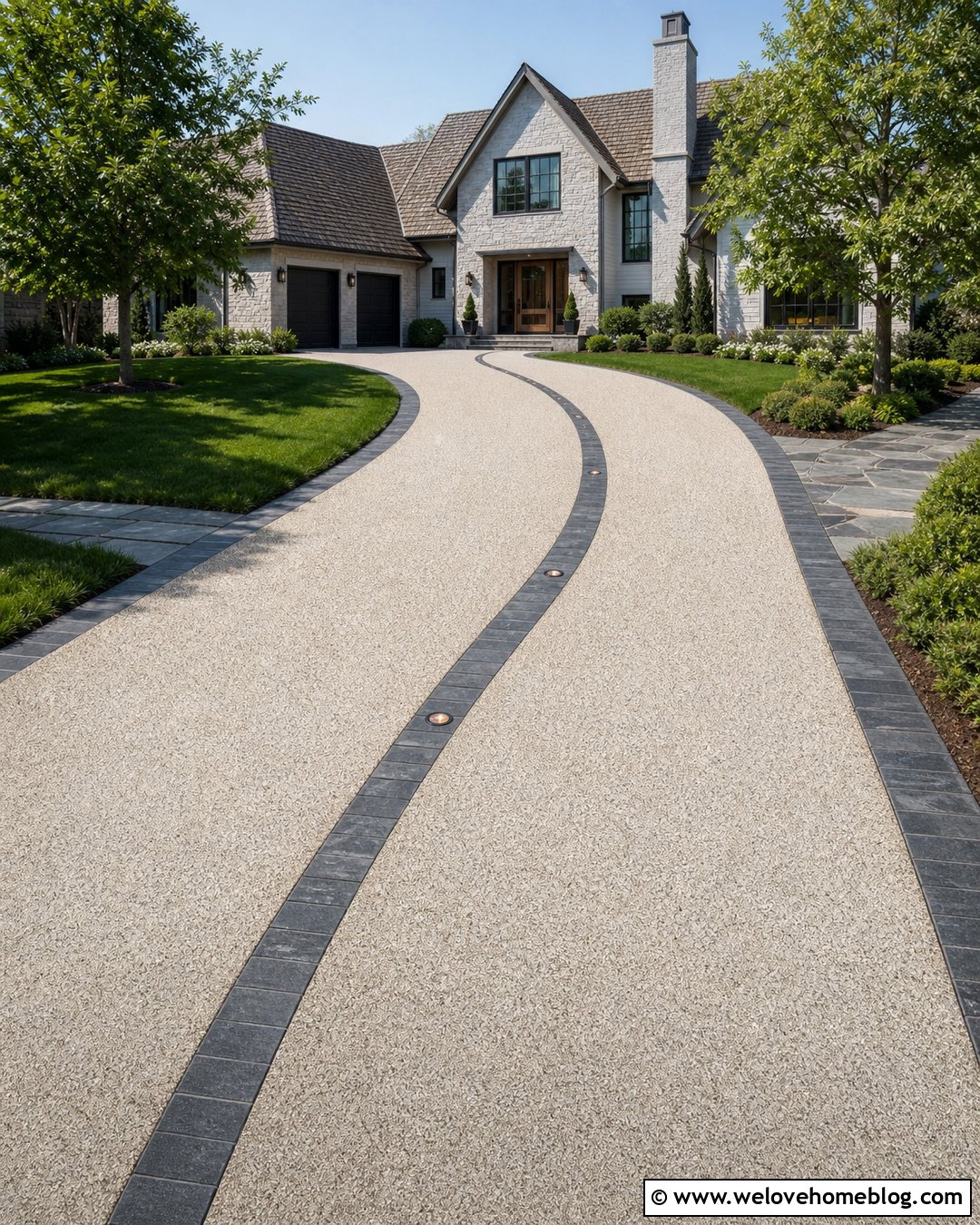
Retractable bollards can secure an open driveway while preserving an uncluttered curb view. A pale beige resin-bound gravel driveway works beautifully with this system because its smooth, uniform appearance keeps attention on the home. Use a broad straight layout leading to a modern stucco house, with dark granite edging and sculptural grasses along both sides. Install several automatic bollards across the entrance, spacing them according to the opening and equipment specifications. When lowered, the units should sit neatly within the driveway transition. When raised, illuminated collars can make them visible to approaching drivers. Connect operation to a remote, keypad, or approved vehicle credential, but include warning indicators and safe operating procedures. Drainage around below-grade housings deserves careful planning so water and debris do not collect around the mechanisms. ()
11. Smart Parking Guidance With Narrow Concrete Driveway
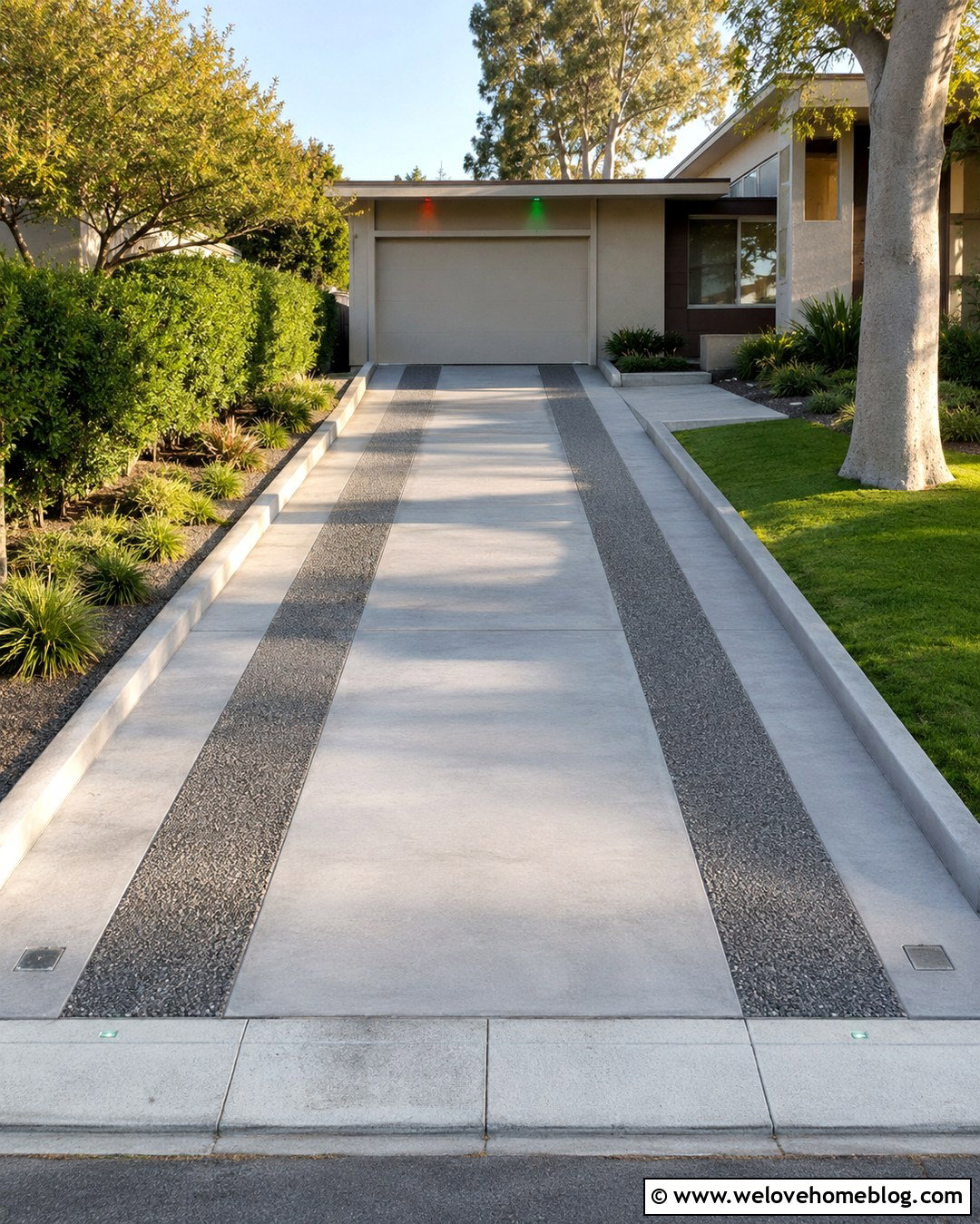
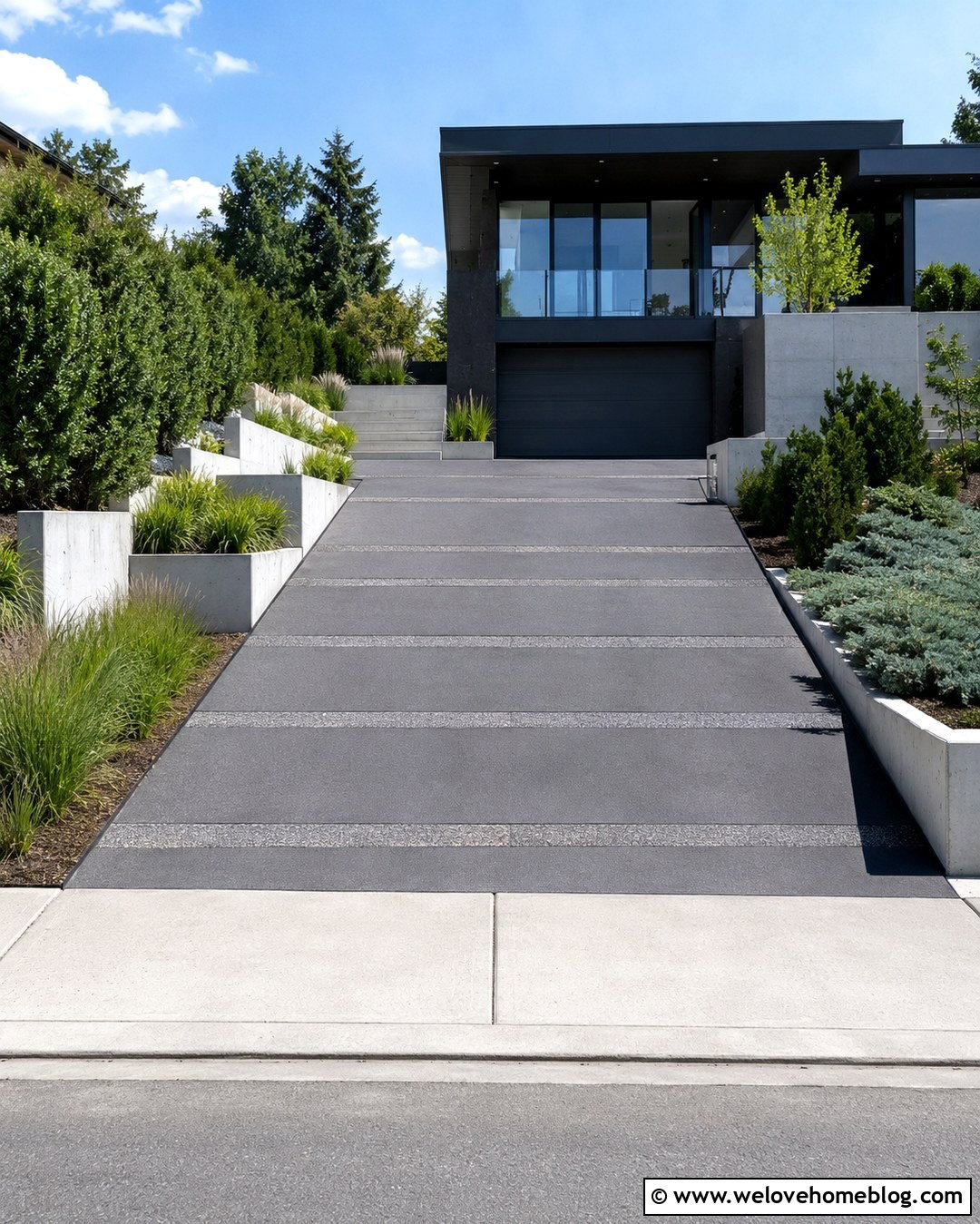
A narrow driveway can be stressful when walls, landscaping, or multiple vehicles leave little room for error. Use medium-gray concrete with two darker exposed-aggregate tire strips leading to a compact midcentury home. Low curbs and restrained planting beds keep the edges visible. Proximity sensors near the garage can activate a simple red, amber, and green parking indicator as the vehicle approaches its correct stopping point. A ceiling-mounted laser or wall light can provide another clear reference inside the garage. Link the guidance system to the gate or garage door so it operates only when needed. This complete look feels organized rather than overly technical because the sensors blend into the facade. Protect exposed equipment from weather and test the setup using every vehicle that regularly uses the driveway, since lengths and sensor positions differ.
12. Gate And Garage Arrival Automation With Paver Driveway
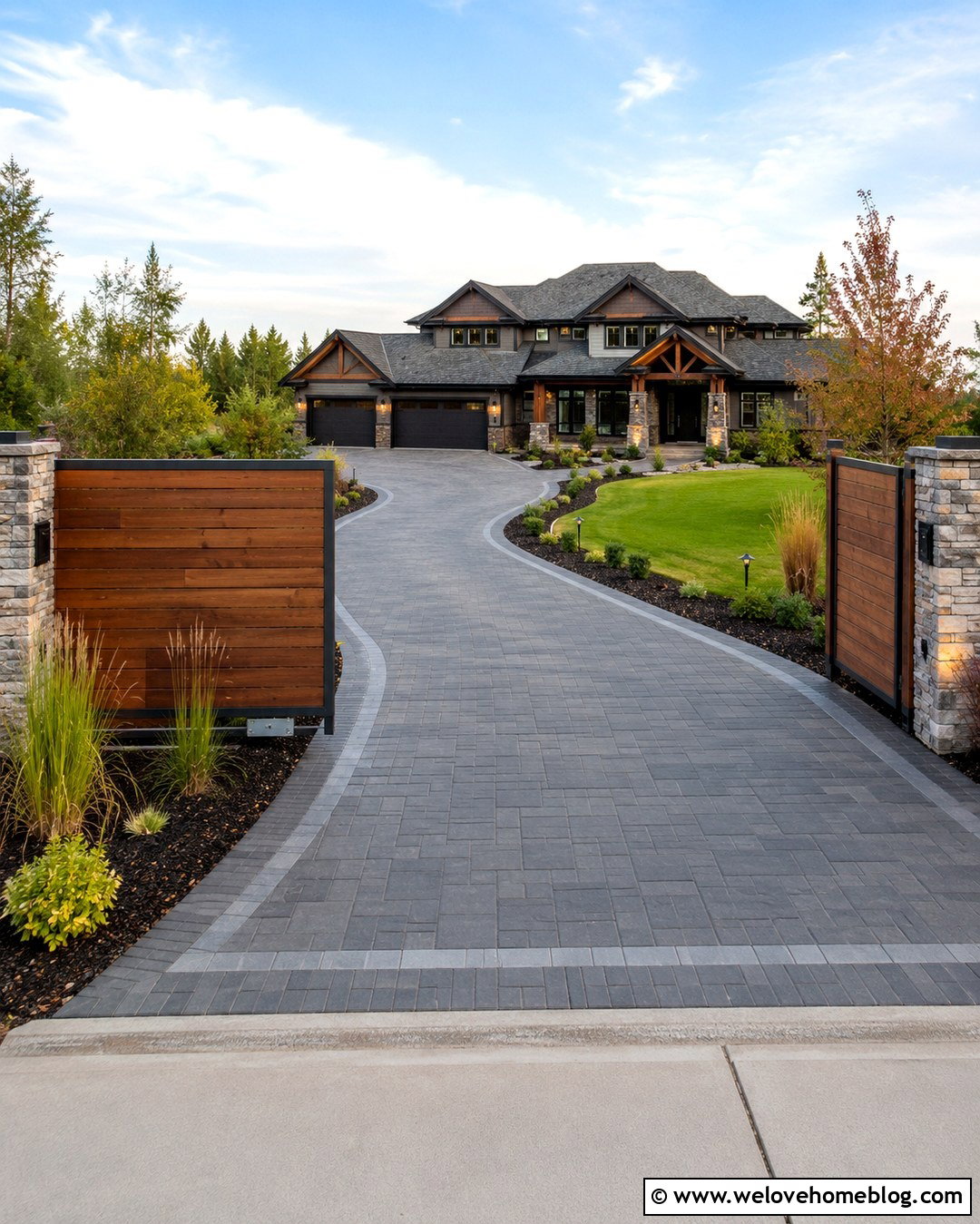
Coordinating the gate, driveway lights, and garage door creates a smooth arrival without requiring several separate commands. Choose charcoal concrete pavers in a wide curved layout leading to a contemporary craftsman home. Use a cedar sliding gate, warm stone pillars, and narrow planting beds filled with grasses and low shrubs. An approved arrival trigger can open the entrance, illuminate the driveway, and prepare the correct garage bay. The sequence should verify that the vehicle is actually approaching and that the gate path is clear before movement begins. Avoid automatically opening the garage merely because a phone is somewhere near the property. Add status notifications, a timeout for gates left open, and manual controls inside the house. The result should feel calm and convenient while retaining practical checks against accidental activation. ()
13. Solar Powered Gate With Country Gravel Driveway
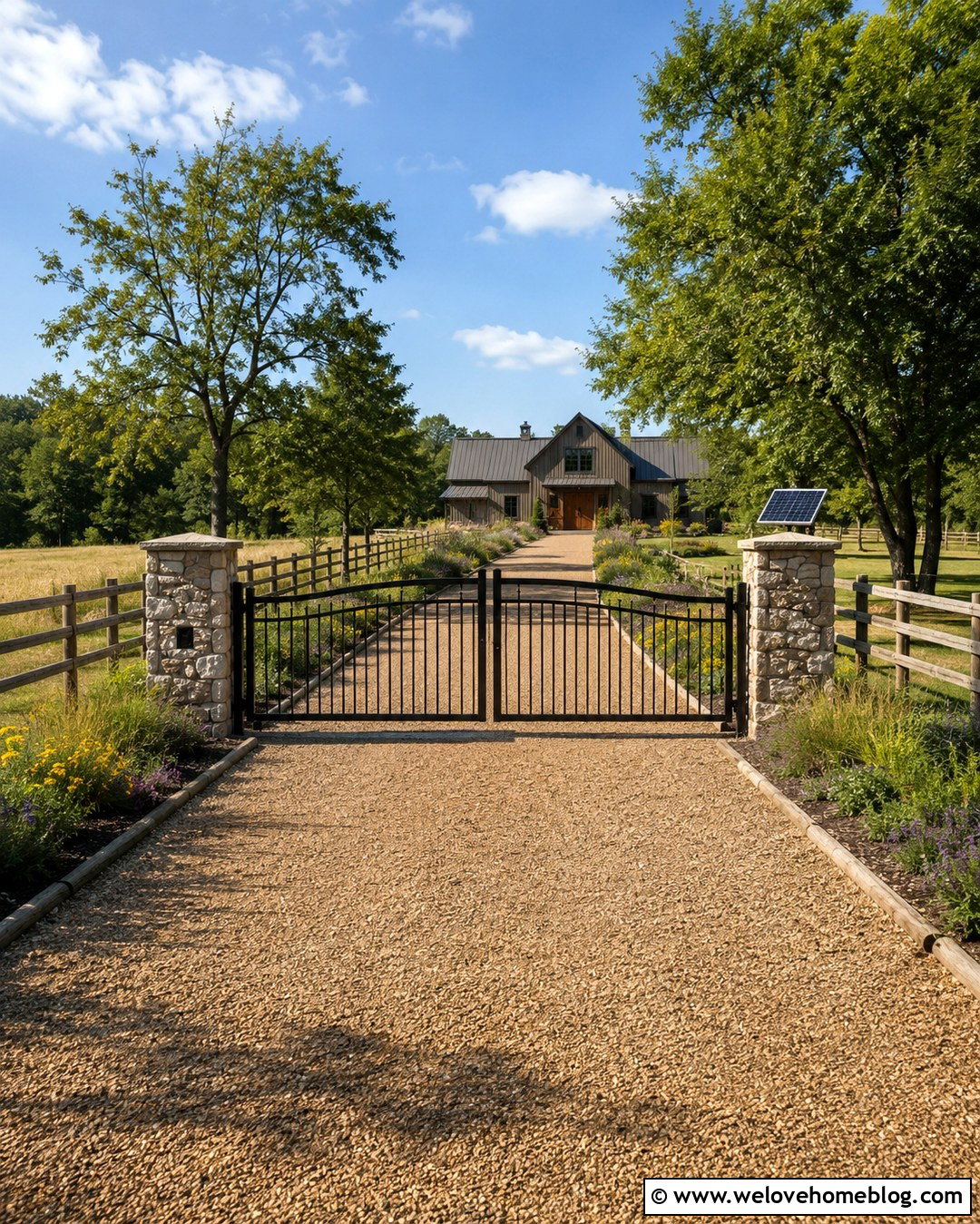
A solar-powered gate can suit a country entrance where extending electrical service would disrupt a long yard. Use warm brown gravel for a straight driveway approaching a barn-style farmhouse, with timber borders and meadow planting along the route. Install a simple black metal swing gate between fieldstone pillars and place the solar panel in an open location with dependable sun exposure. The panel, battery enclosure, operator, and control accessories should be sized as one system rather than selected separately. Add a wireless keypad, standard remote controls, and a clearly accessible manual release. Solar lanterns can provide decorative accents, while the gate’s safety equipment should use compatible, reliable power. Keep trees from shading the panel as they mature. In colder regions, discuss seasonal sunlight, battery performance, gate weight, and opening frequency with the installer.
14. Delivery Access Gate With Concrete Driveway
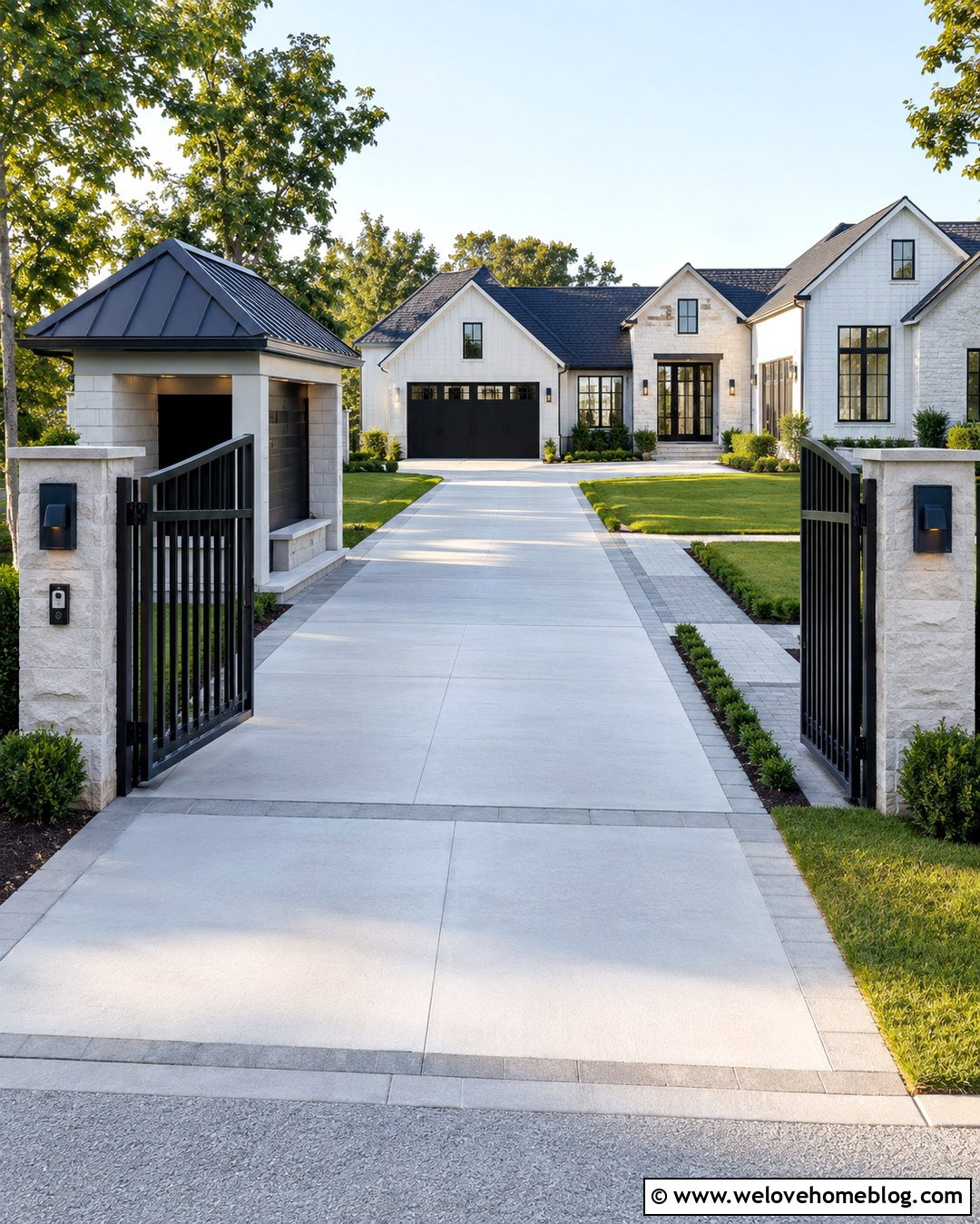
Smart delivery access works best when visitors have a clear place to stop without blocking the road. Design a light-gray concrete driveway with a short side pull-off just before a black automated gate. Concrete paver edging and a covered package enclosure can visually connect the delivery zone to a modern farmhouse. A video intercom allows the homeowner to verify a driver and grant temporary entry when appropriate. Alternatively, deliveries can be placed in the secure roadside enclosure without opening the main gate. Add bright, shielded lighting, an easy-to-find call button, and pavement markings created through contrasting materials rather than painted instructions. Keep the main driveway and pedestrian walkway visibly separate. Temporary codes should expire automatically, and access records can help homeowners review gate activity without giving permanent credentials to occasional service providers. ()
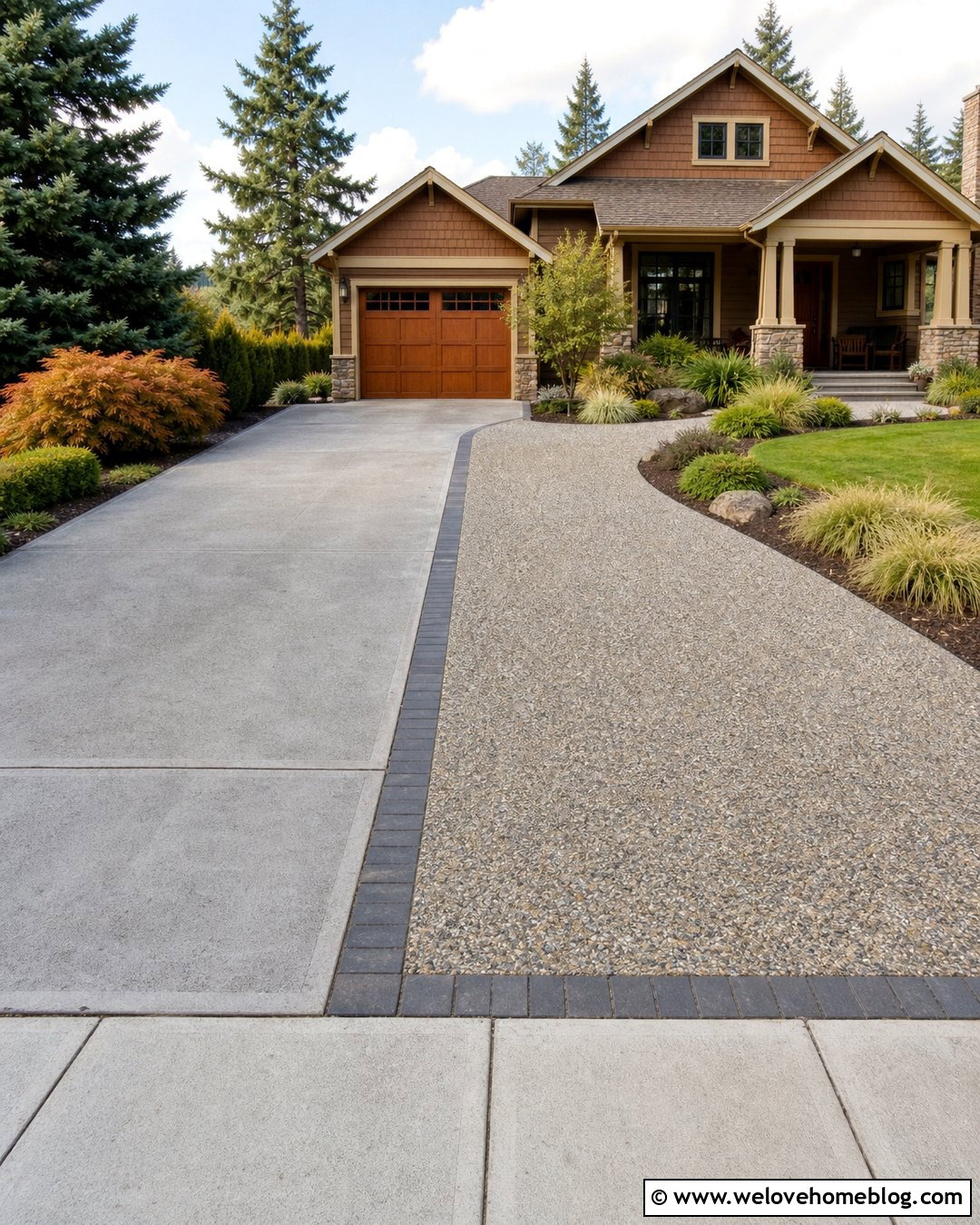
15. Smart Drainage With Permeable Paver Driveway
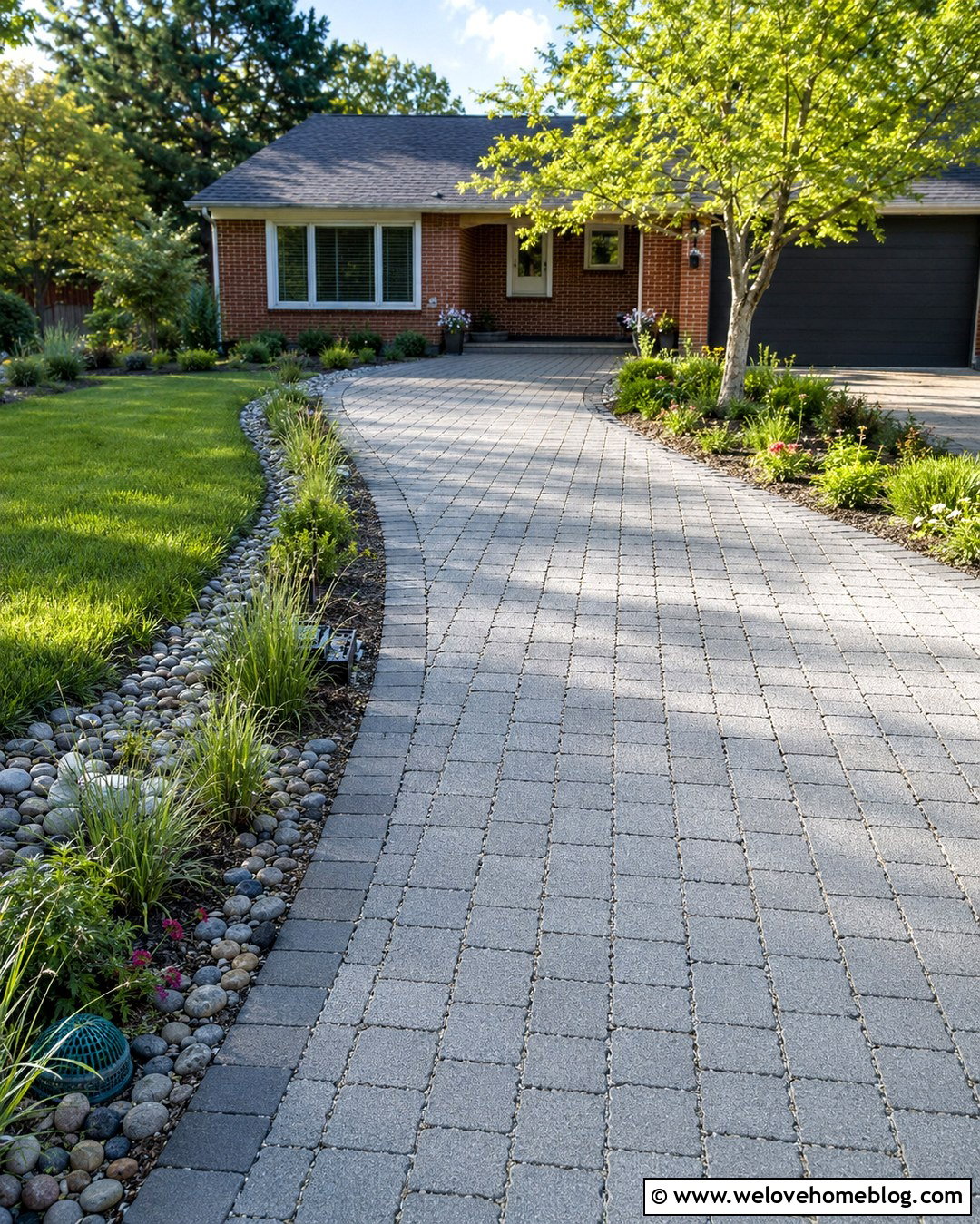
Automation can also help homeowners monitor how the driveway handles water. Use gray permeable concrete pavers for a gently sloped driveway leading to a brick ranch house. A darker paver border defines the edges, while a planted drainage swale runs alongside the lower portion. Water-level or moisture sensors near collection points can send an alert when a drain, basin, or channel is not clearing normally. The system should supplement good grading and drainage design, not replace them. Avoid placing delicate electronics directly where sediment and runoff gather. Native grasses, river stone, and moisture-tolerant plants can turn the drainage route into an attractive landscape feature. Provide accessible cleanouts and keep the paver joints maintained so the complete driveway continues to look neat and manage rainfall effectively. ()
16. Smart Security Cameras With Curved Asphalt Driveway
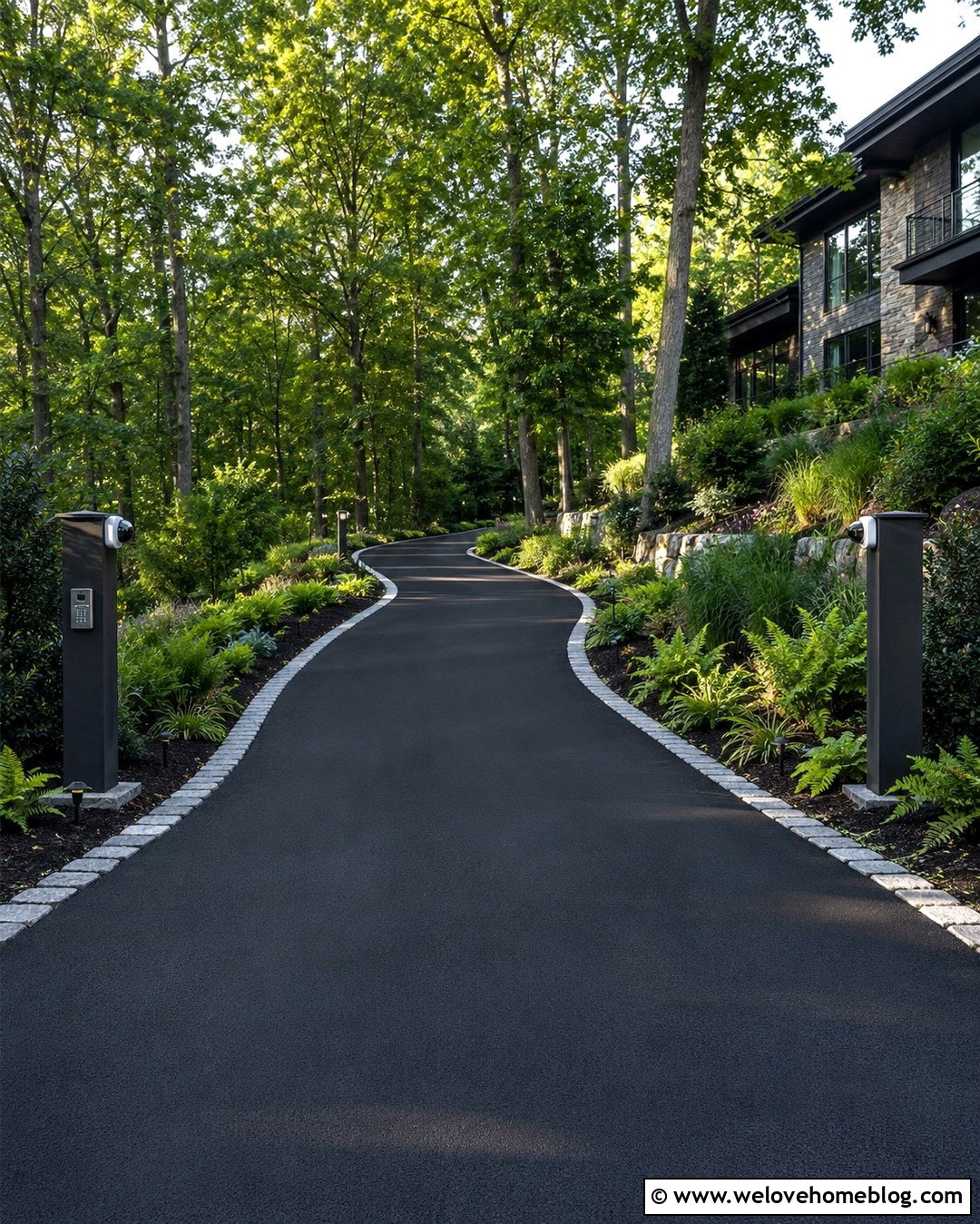
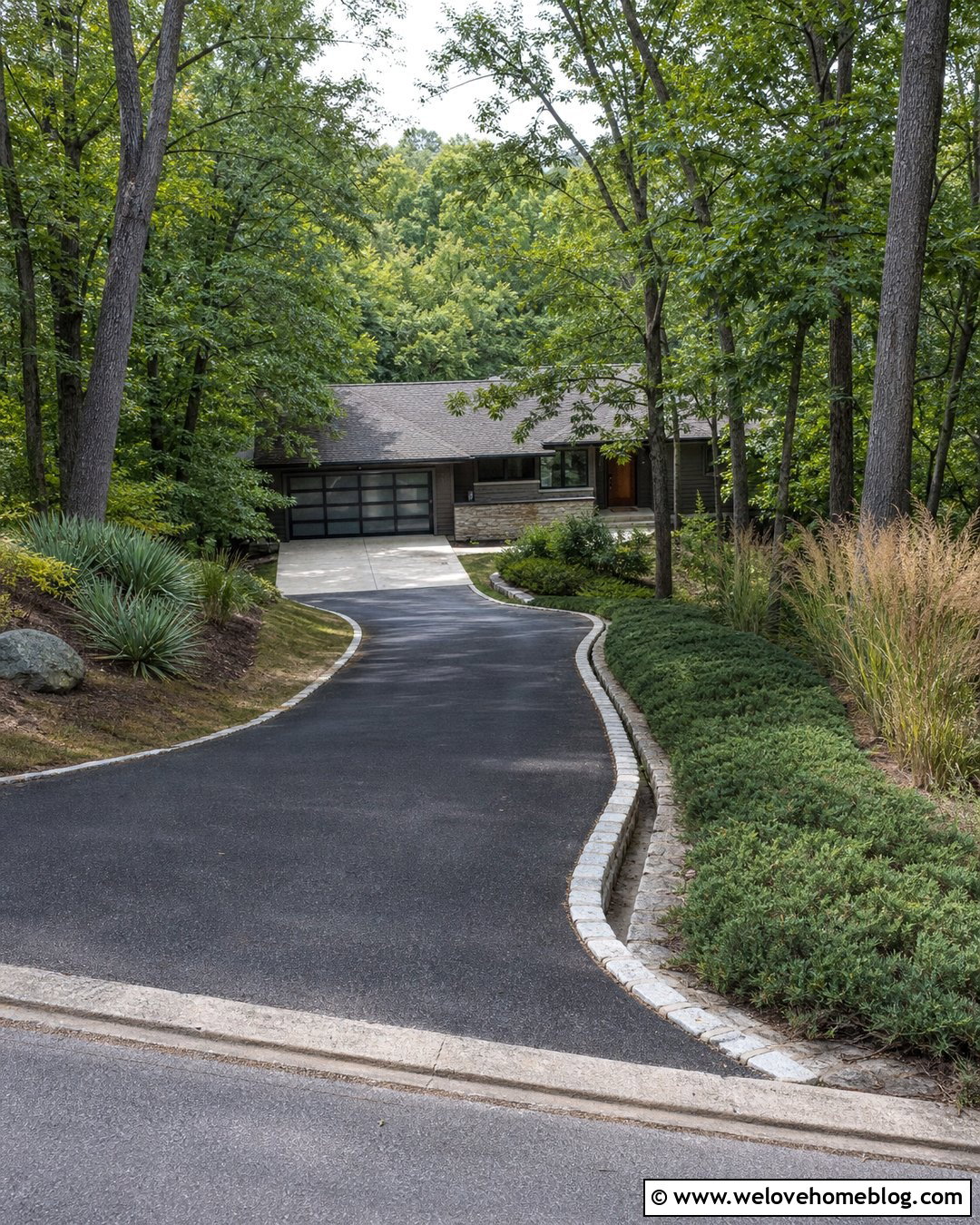
Curves and dense landscaping can create attractive privacy, but they may also hide arriving vehicles from the house. Use smooth black asphalt for a sweeping driveway leading to a wooded contemporary home. Granite cobblestone edging keeps the pavement crisp, while ferns, ornamental grasses, and layered shrubs soften the curve. Position smart cameras near the entrance and at the inside bend to provide complementary views rather than relying on one distant camera. Vehicle detection can trigger a phone notification and temporarily brighten nearby driveway lights. Aim cameras toward the property, limit unnecessary views beyond the boundary, and follow applicable privacy rules. Keep foliage pruned away from lenses and lighting fixtures. A visible intercom at the gate gives legitimate visitors an obvious way to request access instead of approaching the house unannounced.
17. Voice Controlled Gate With Modern Concrete Driveway
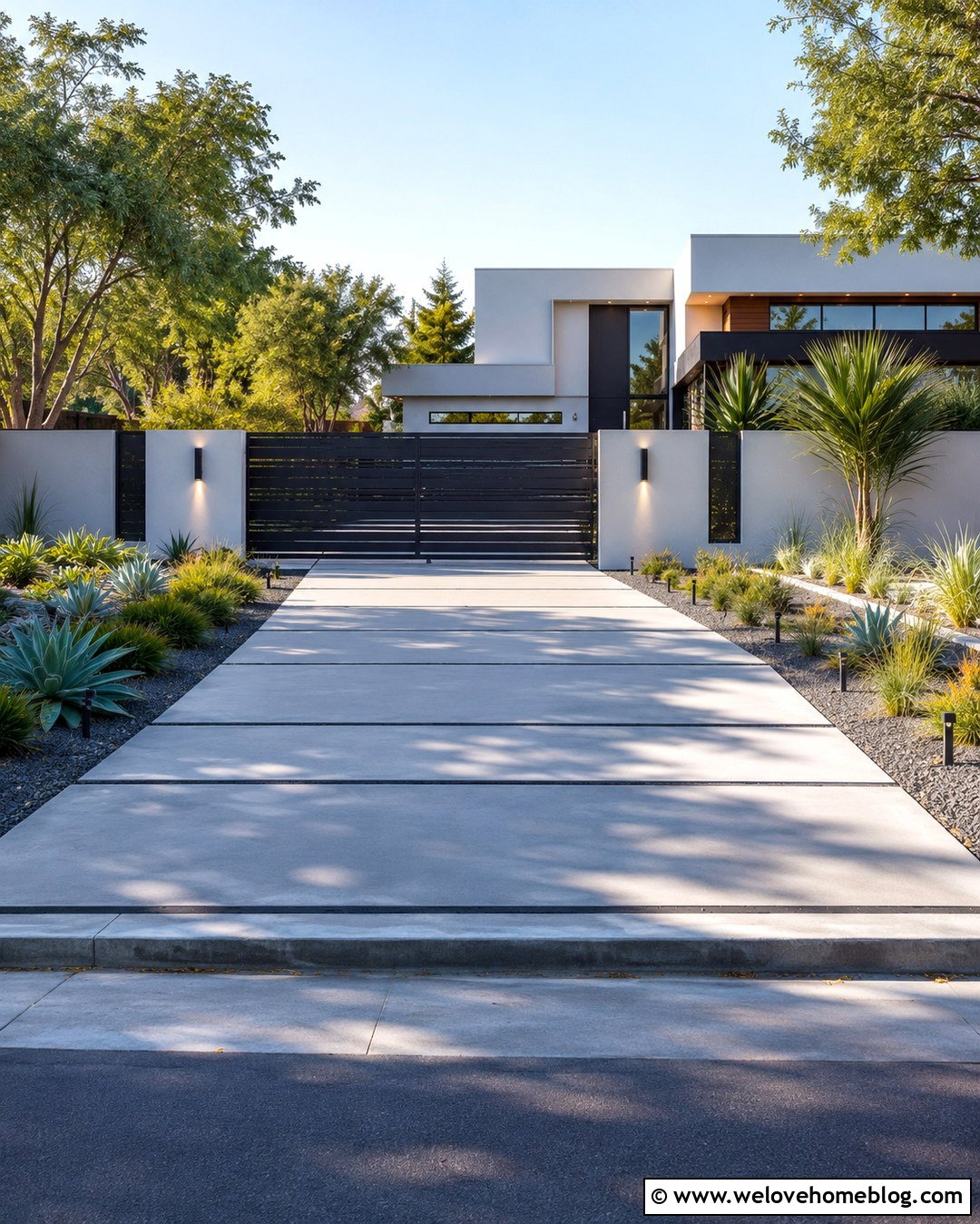
Voice control can be convenient, but it should act as one carefully protected control method rather than the gate’s only safeguard. Create a segmented concrete driveway with wide charcoal joints leading to a minimalist home. Pair it with a flush metal sliding gate, smooth stucco walls, and linear planting beds filled with agave, grasses, or regionally suitable architectural plants. Authorized residents could use a voice assistant inside the house to request gate operation, check whether it is closed, or activate entrance lighting. Sensitive commands should require suitable authentication or confirmation. The automation must never override obstruction detection, access rules, or normal safety equipment. Add a wall control with a clear view of the gate and a manual release for outages. Keep smart speakers away from open windows where commands could be heard or attempted from outside.
18. Timed Guest Access With Circular Paver Driveway
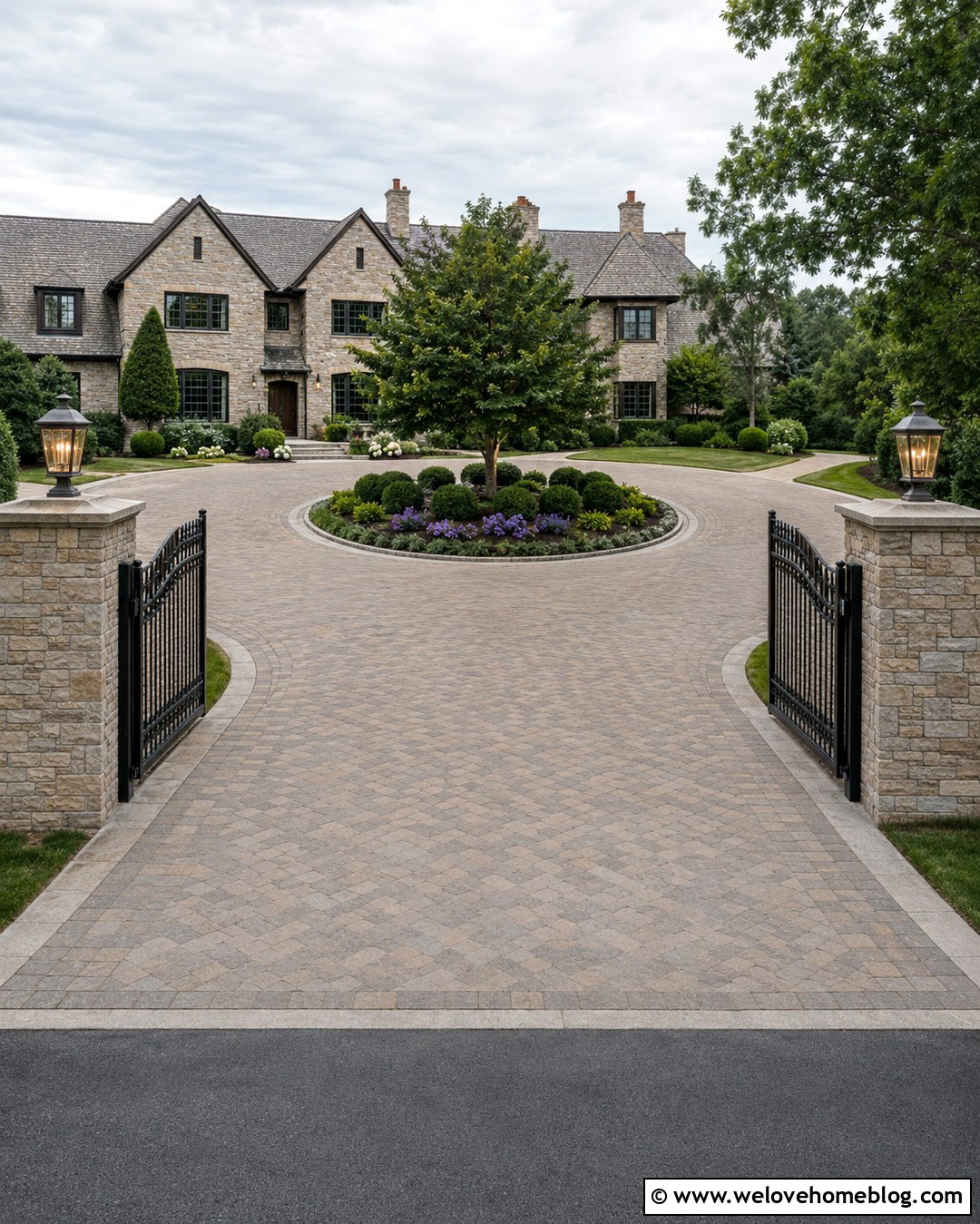
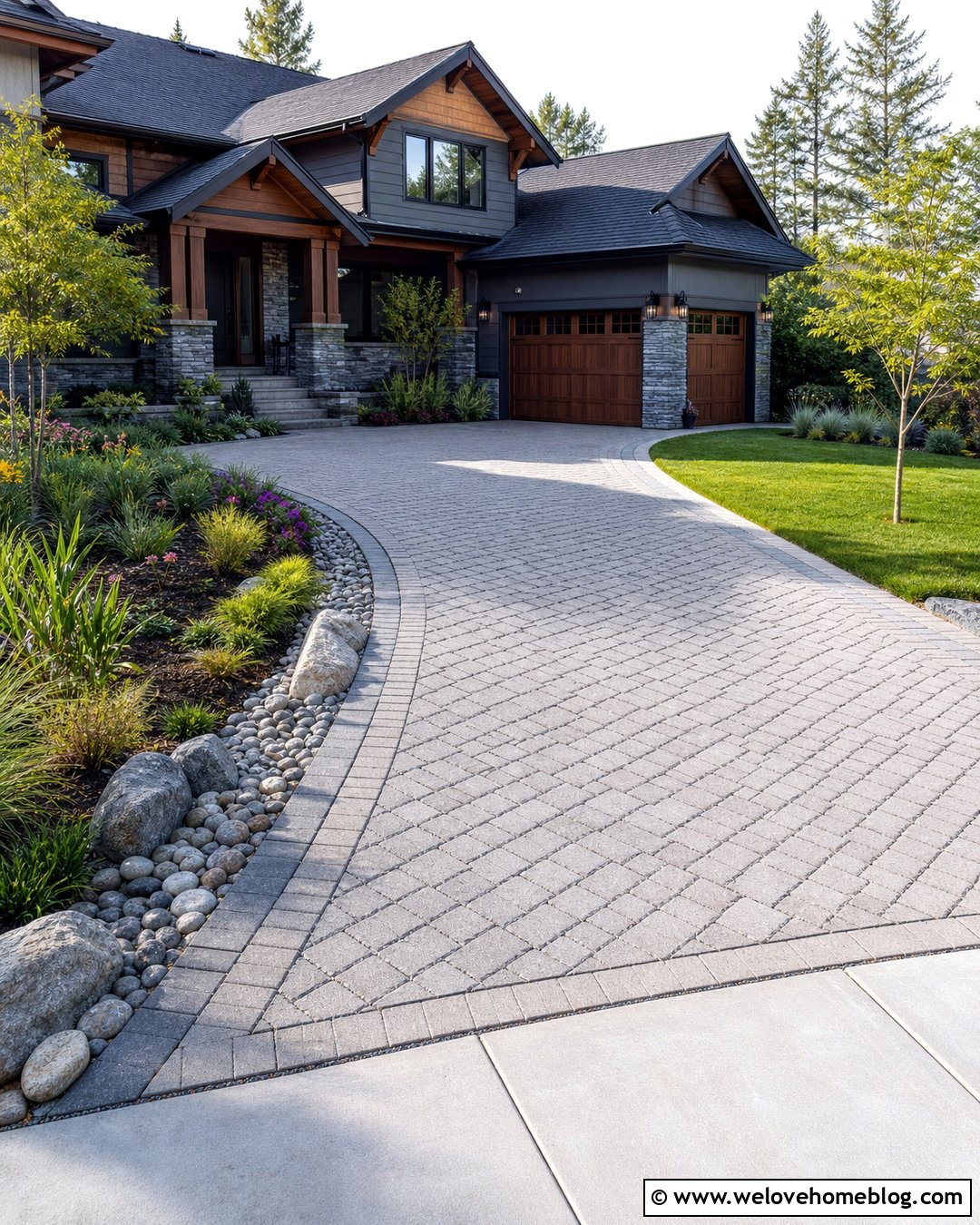
A circular driveway naturally supports guest arrivals because vehicles can enter, pause near the house, and leave without reversing. Use tumbled concrete pavers in warm gray, arranged around a landscaped center island at a classic two-story home. Automated swing gates at the entrance and exit can use temporary codes for scheduled visitors, maintenance workers, or family events. Codes should operate only during assigned time windows and expire without manual cleanup. Add a video intercom for unexpected guests and stone pillars with integrated lighting for clear nighttime navigation. The center island can feature a small ornamental tree, clipped shrubs, and seasonal perennials. Make the entrance and exit visually distinct through gate placement, paving bands, and landscaping so drivers understand the intended direction before reaching the house. ()
19. Battery Backup Gate With Asphalt Driveway
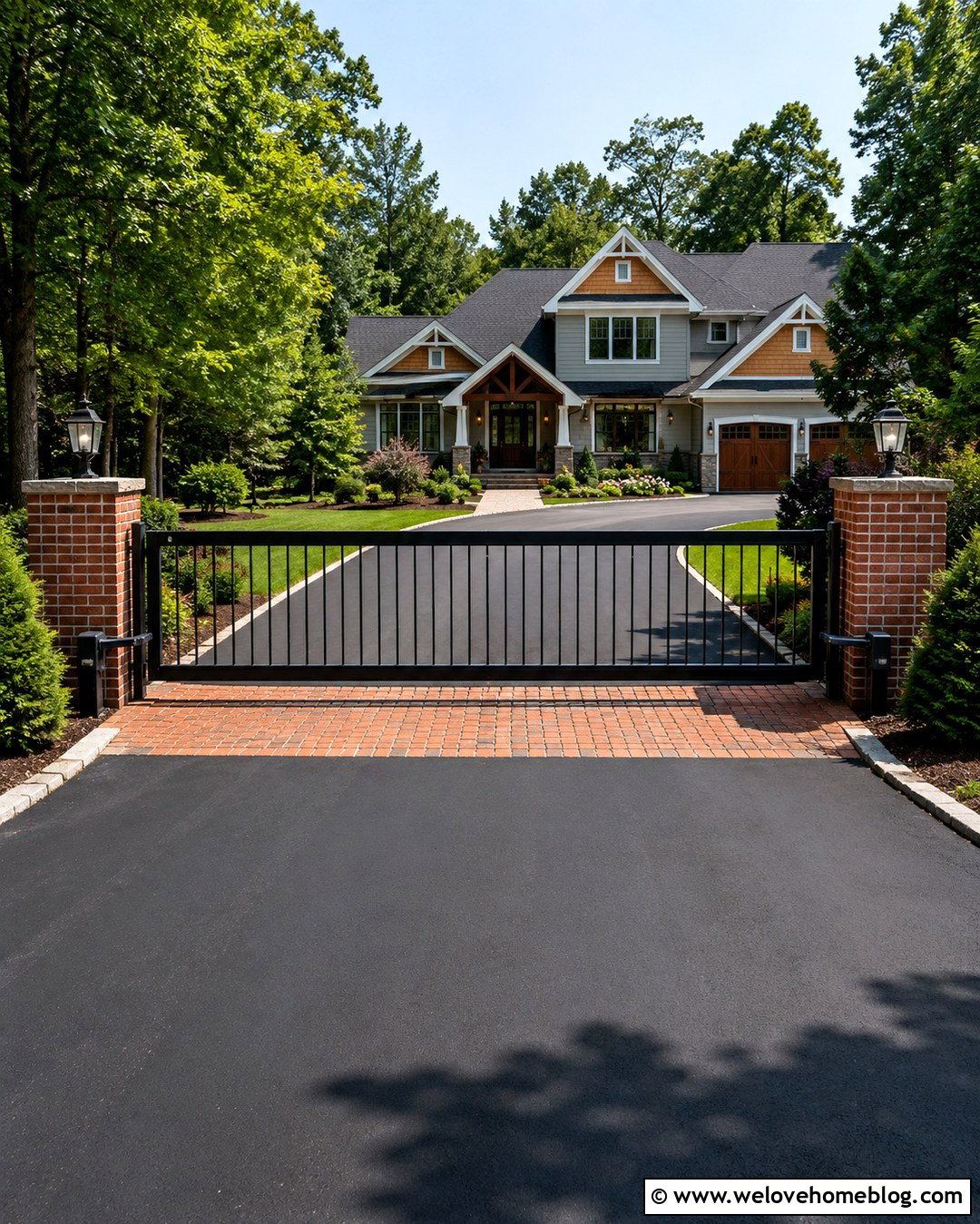
An automated entrance should remain manageable when utility power fails. Use a wide asphalt driveway leading to a suburban craftsman house, finished with a red brick apron and matching brick gate pillars. A black steel cantilever gate provides a clean opening without gate leaves swinging into the vehicle path. Select an operator with appropriately designed backup power, status monitoring, and an accessible manual release. The system can notify the homeowner when it switches to backup or when the battery needs attention. Add motion-activated pillar lights and reflective details that remain easy to see during poor weather. Keep emergency access requirements in mind when planning locks and controls. Backup equipment must be inspected and maintained according to manufacturer guidance rather than installed and forgotten. A qualified installer can also explain how often the gate can operate during an outage.
20. Full Driveway Automation With Smart Home Integration
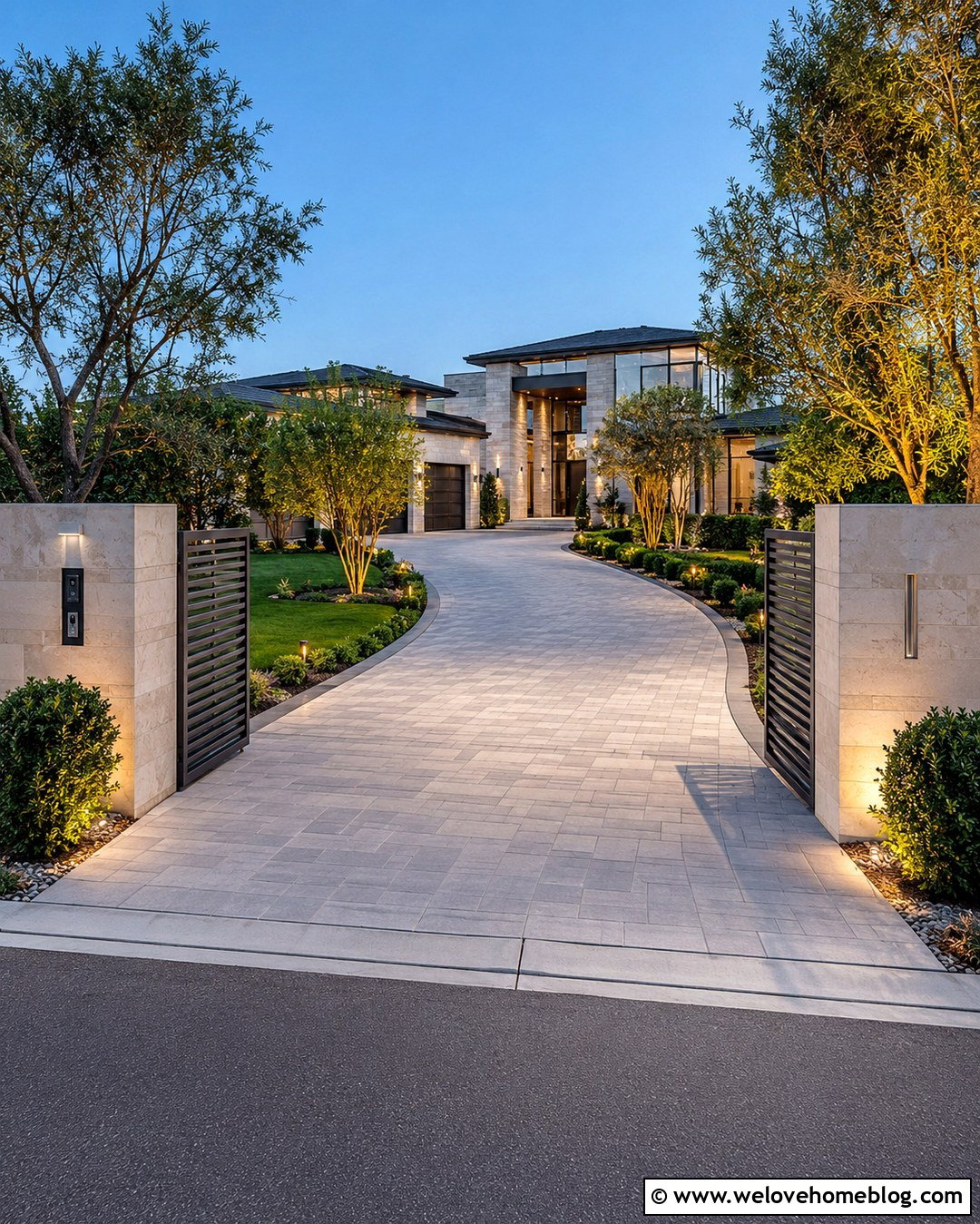
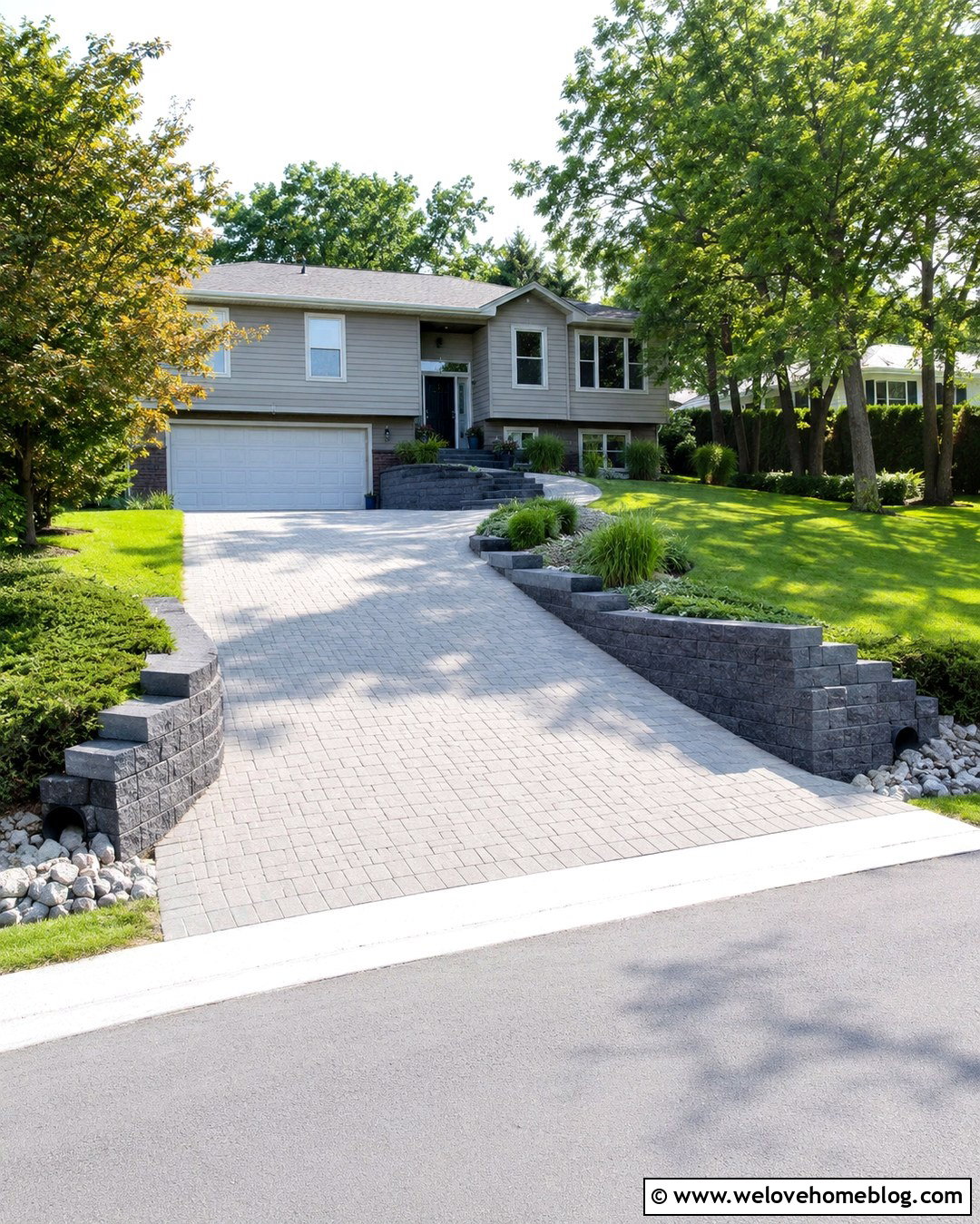
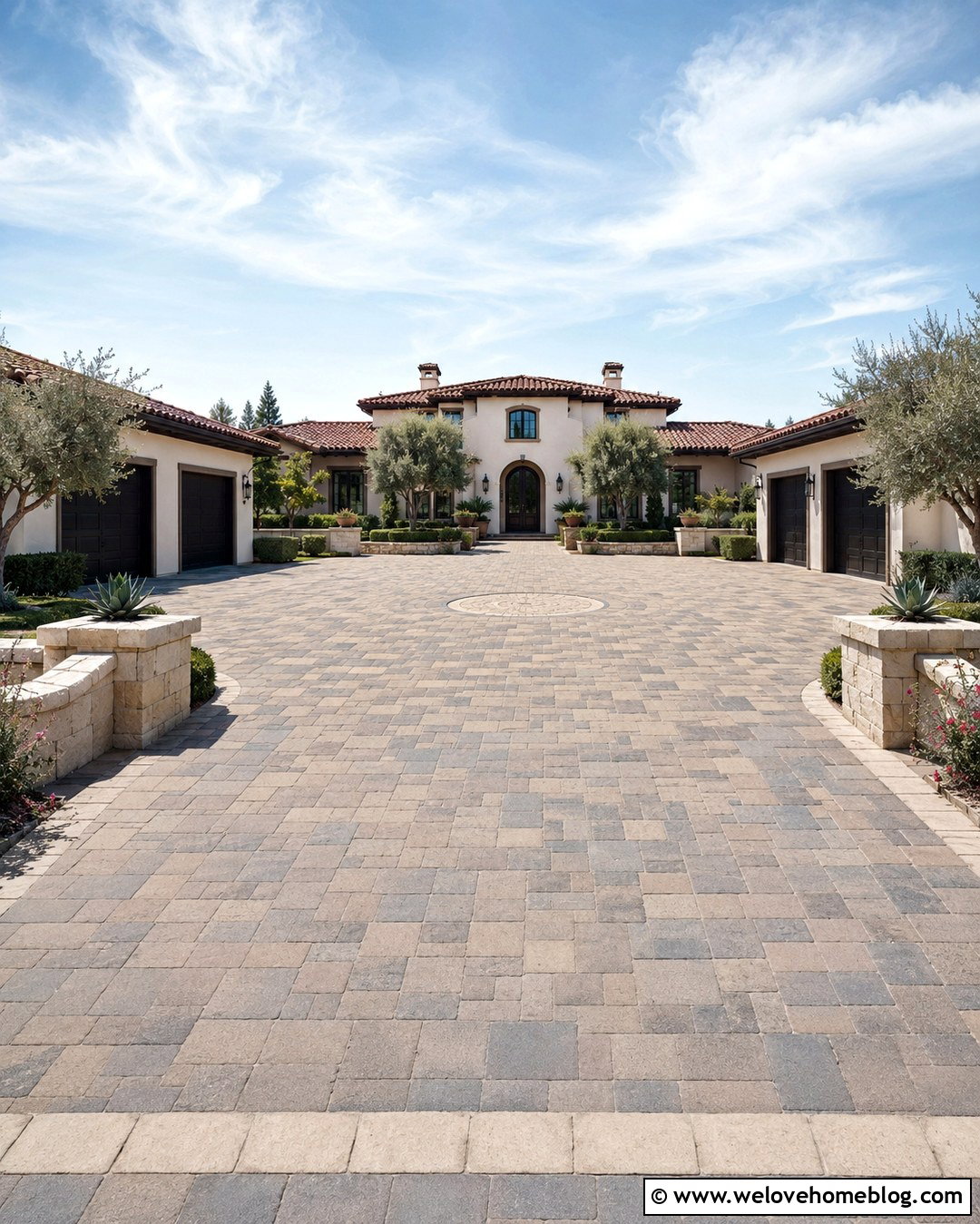
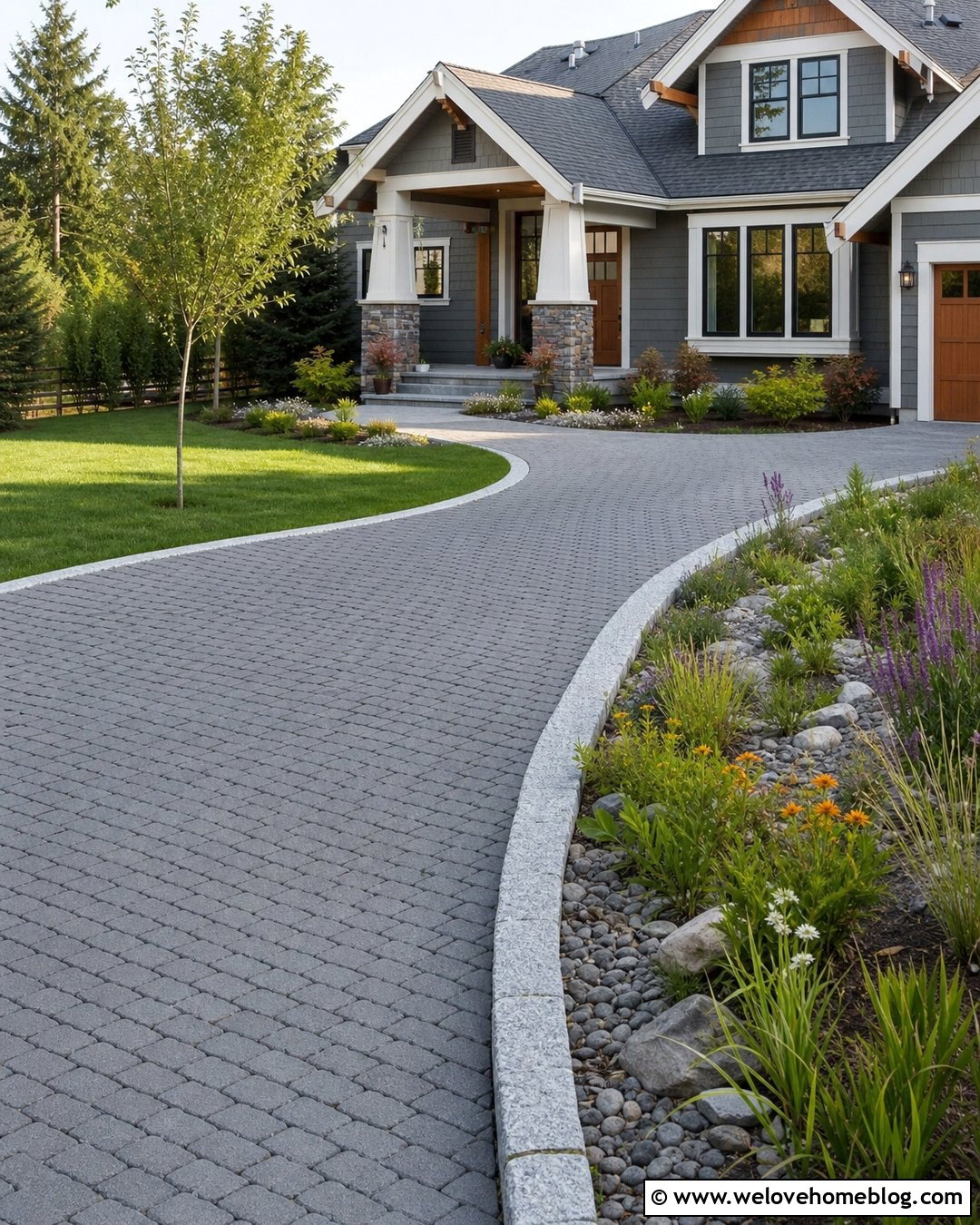
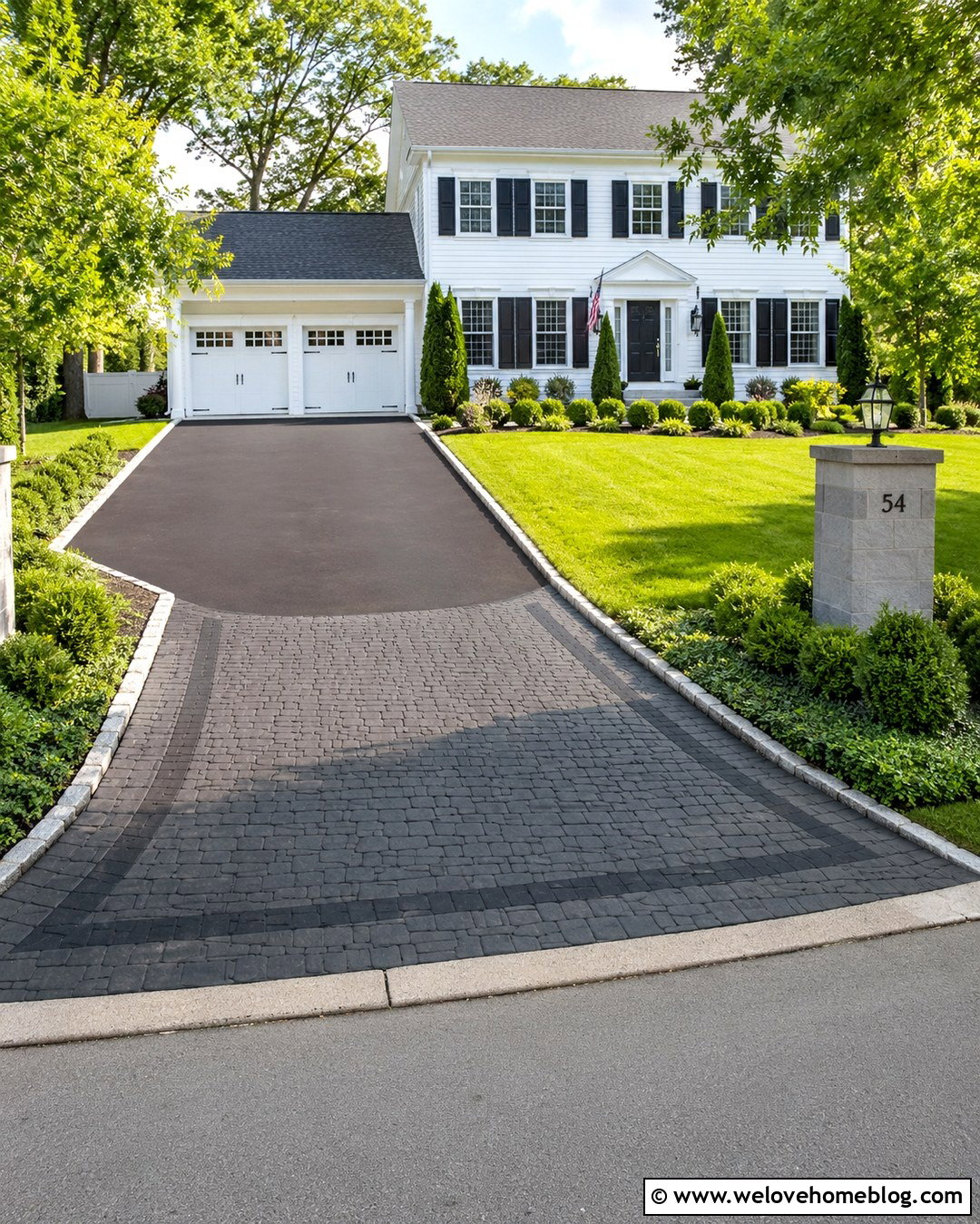
For the most complete setup, treat the driveway as a coordinated outdoor room rather than a collection of unrelated gadgets. Use warm-gray porcelain pavers for a broad curved driveway leading to a luxury contemporary home. A matching aluminum sliding gate, stone entrance walls, sculpted landscaping, and recessed lighting establish a unified look. Connect gate access, video intercom, driveway cameras, lighting zones, garage status, drainage alerts, and weather-based heating through a compatible control platform. Useful scenes might include arrival, departure, guest access, nighttime security, and severe weather. Each scene should have clear conditions, sensible timeouts, and manual overrides. Run spare conduit during construction to support later upgrades without cutting finished paving. Most importantly, keep access security and gate safety independent enough that a failed automation routine cannot bypass essential protection. ()
Conclusion:
These **20 Driveway Automation Inspiration Ideas** show that smart technology can improve a driveway without sacrificing curb appeal. The strongest designs coordinate the surface, layout, gate, borders, landscaping, lighting, and control equipment from the beginning. Start with one feature that solves a real problem, such as automatic access, parking guidance, snow melting, or motion lighting. Then plan conduits and compatible controls for future improvements. Automated gates require particular attention to certified equipment, obstruction detection, safe construction, professional installation, and local requirements. Choose durable materials and keep manual controls available for outages or technical problems. With thoughtful planning, driveway automation can create a safer, easier, and more welcoming approach to almost any American home.

Related posts:
Leave a Reply