
A secure driveway entrance should do more than look imposing. It needs to control access, close reliably, resist tampering, and operate safely every day. If you searched for **20 how to secure a driveway gate ideas**, the strongest approach is to layer physical strength, dependable locking, controlled entry, lighting, monitoring, and thoughtful landscaping. The right solution depends on your driveway shape, gate material, available power, climate, and household routine. Automatic systems also require properly installed entrapment protection, professional setup, and regular testing. A beautiful gate is not truly secure when weak posts, exposed hardware, unreliable controls, or gaps in the surrounding fence undermine it. () The complete entrance designs below offer practical inspiration from **20 how to secure a driveway gate ideas**.
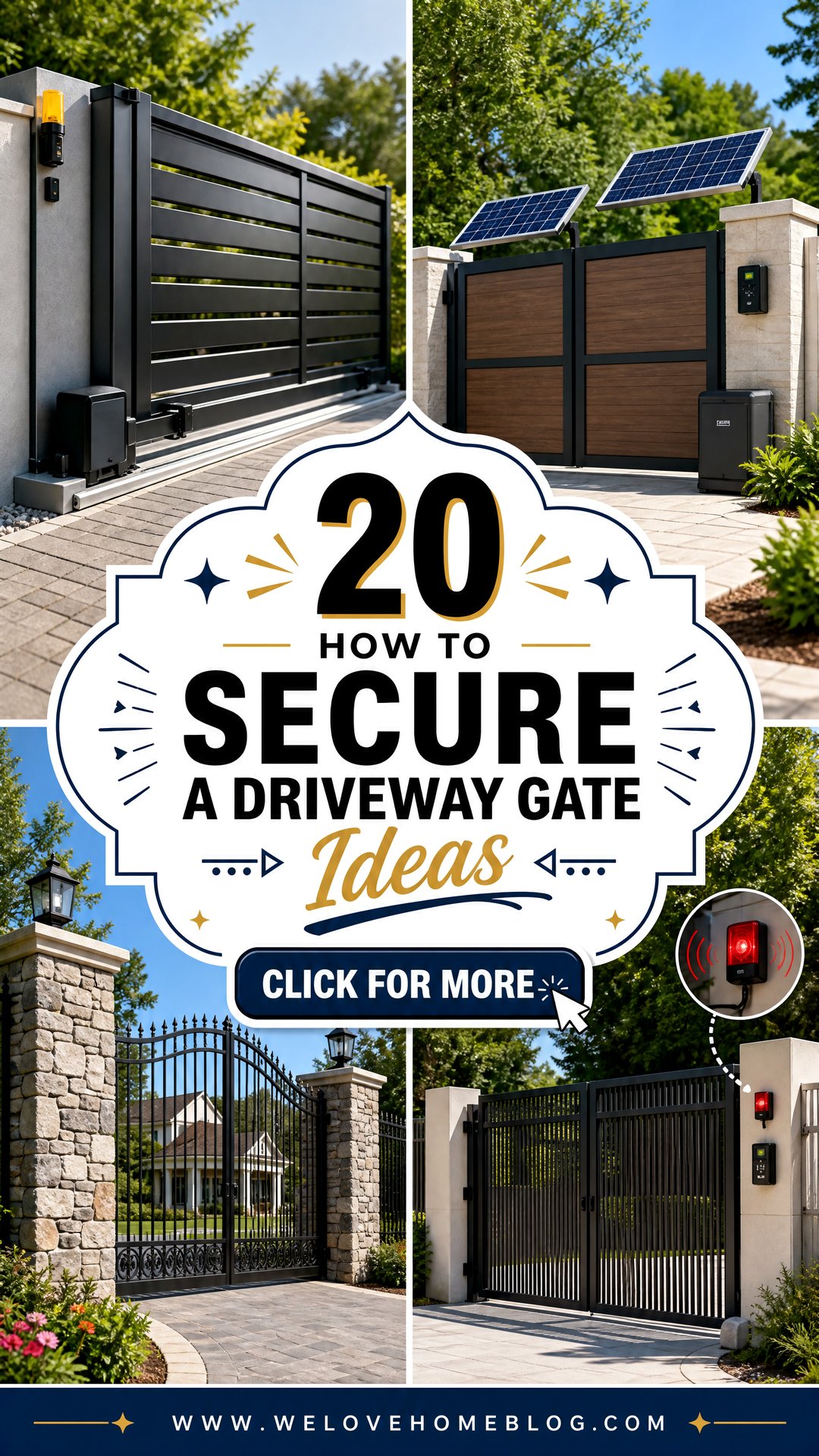
1. Steel Sliding Driveway Gate With Automatic Lock
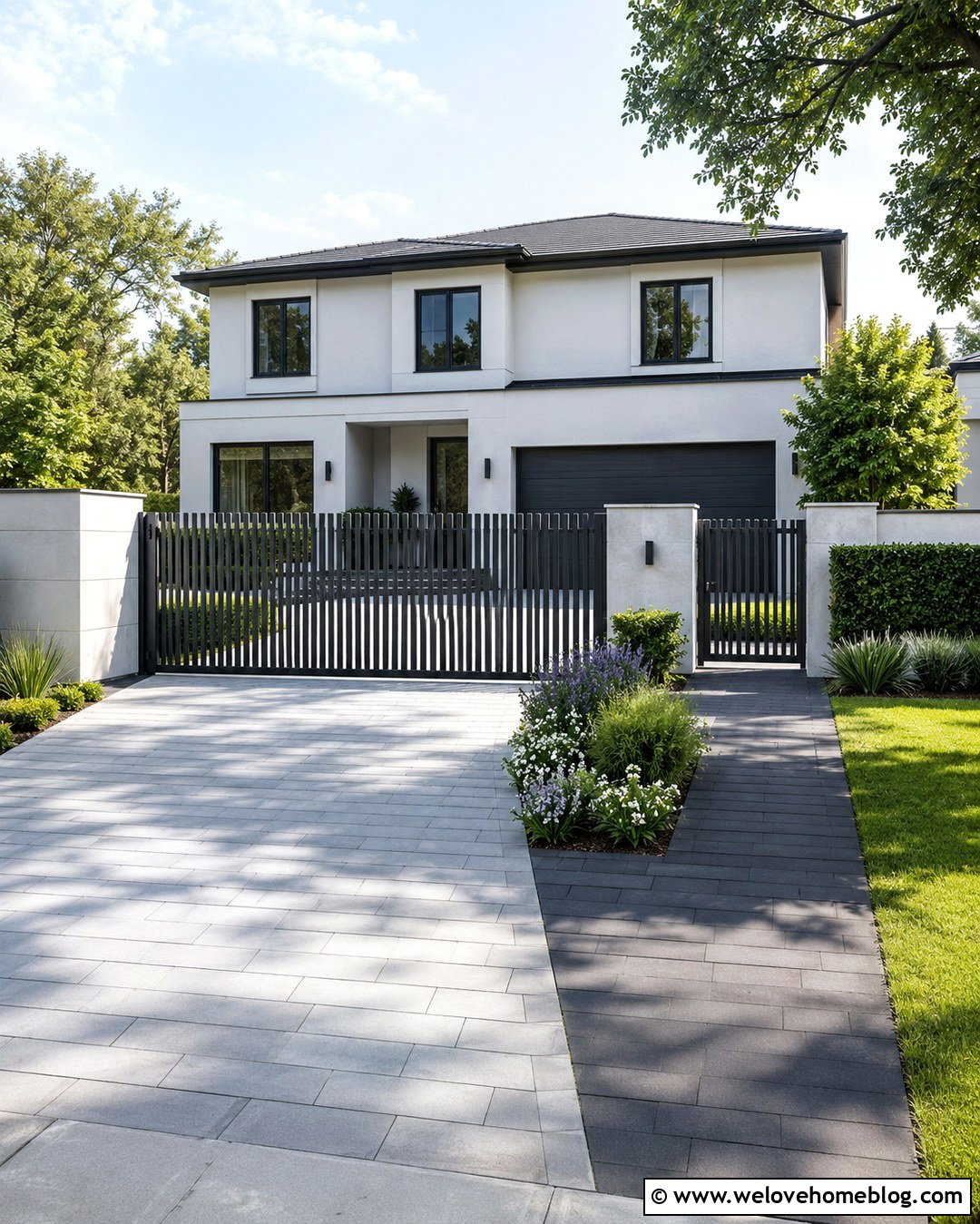
A powder-coated steel sliding gate creates a strong entrance for a straight asphalt or concrete driveway. Choose a solid frame with closely spaced vertical slats to limit climbing and visibility. Add a compatible automatic gate lock that engages whenever the gate reaches its fully closed position. The receiver post, rollers, track, and motor housing should be securely anchored and protected from easy roadside access. Use covered guide rollers and screened openings to reduce pinch points around the moving gate. Continue matching steel fencing toward dense planting beds so visitors cannot simply walk around the barrier. This complete setup suits modern and contemporary houses, especially where there is insufficient space for swing panels. Have the operator and all safety devices installed according to manufacturer instructions. ()
2. Double Swing Driveway Gate With Center Lock

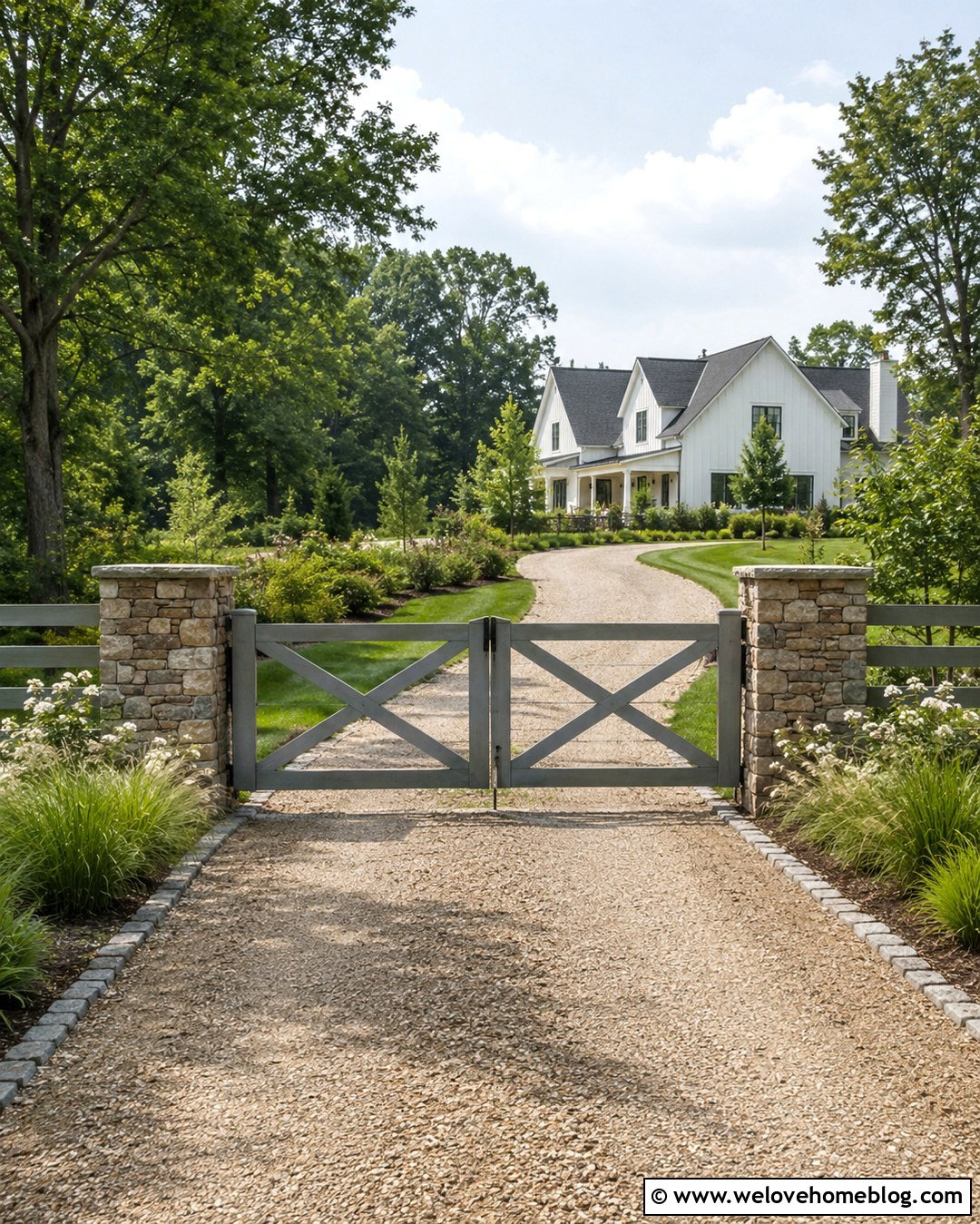
For a wide paver driveway, a double swing gate can create a balanced entrance while providing dependable access control. Use reinforced steel or aluminum panels mounted between substantial masonry pillars. A center-mounted electric lock keeps the two leaves aligned when closed, while internal gate stops prevent the panels from being forced beyond their normal travel. On a manual system, secure drop rods can stabilize each panel, but they should fit into well-drained ground sockets that will not fill with dirt or ice. Position hinges and fasteners on the protected side whenever the gate design allows. Frame the approach with low hedges and clear sightlines rather than overgrown shrubs. Swing gates require carefully planned movement zones, sensors, and sufficient space inside the property to open without contacting vehicles. ()
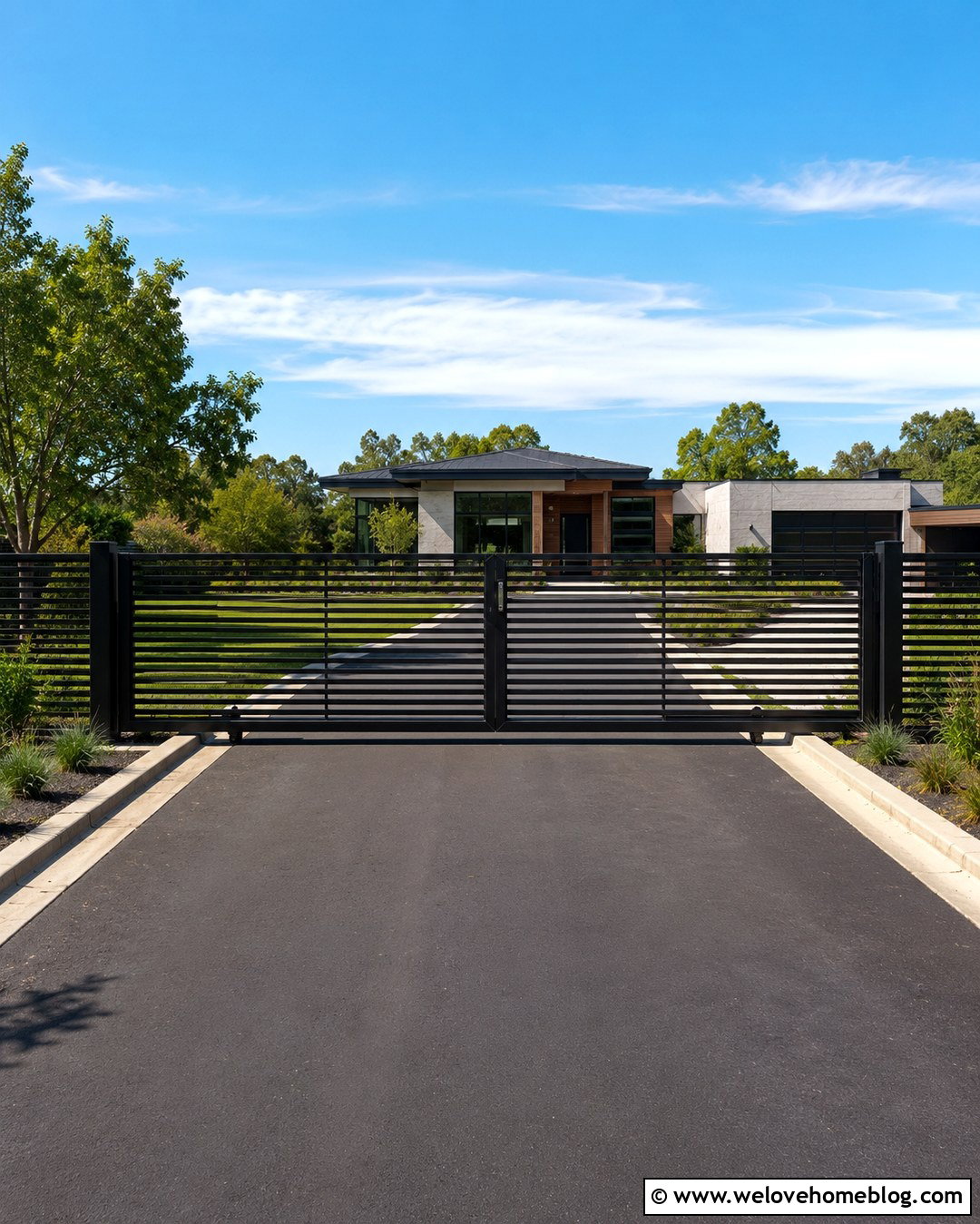
3. Aluminum Privacy Gate With Keypad Entry
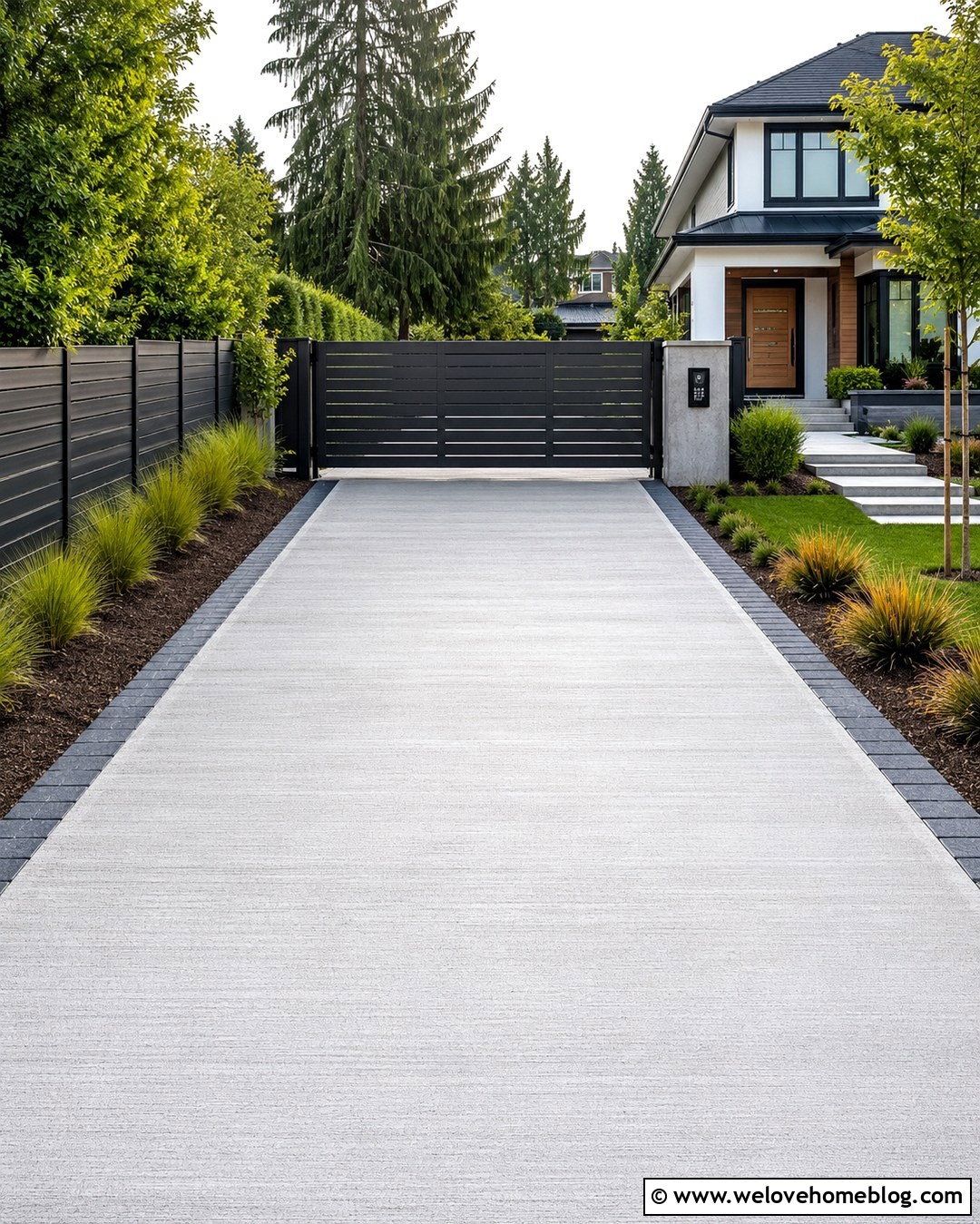
A solid aluminum privacy gate works well with a light-gray poured concrete driveway and a clean suburban facade. Horizontal slats reduce views into the property without adding the extreme weight of solid steel. Mount a weather-resistant keypad on a sturdy post far enough from the moving gate that users cannot touch the gate while entering a code. Create separate temporary codes for contractors, deliveries, or houseguests, then remove them when access is no longer needed. Avoid sharing one permanent household code with everyone. Pair the keypad with an automatic lock, closed-position sensor, and matching aluminum side fencing. Neatly trimmed ornamental grasses can soften the metal entrance without hiding visitors. Industry safety guidance recommends keeping gate controls out of reach of the gate, generally at least six feet away. ()
4. Wood Driveway Gate With Steel Frame
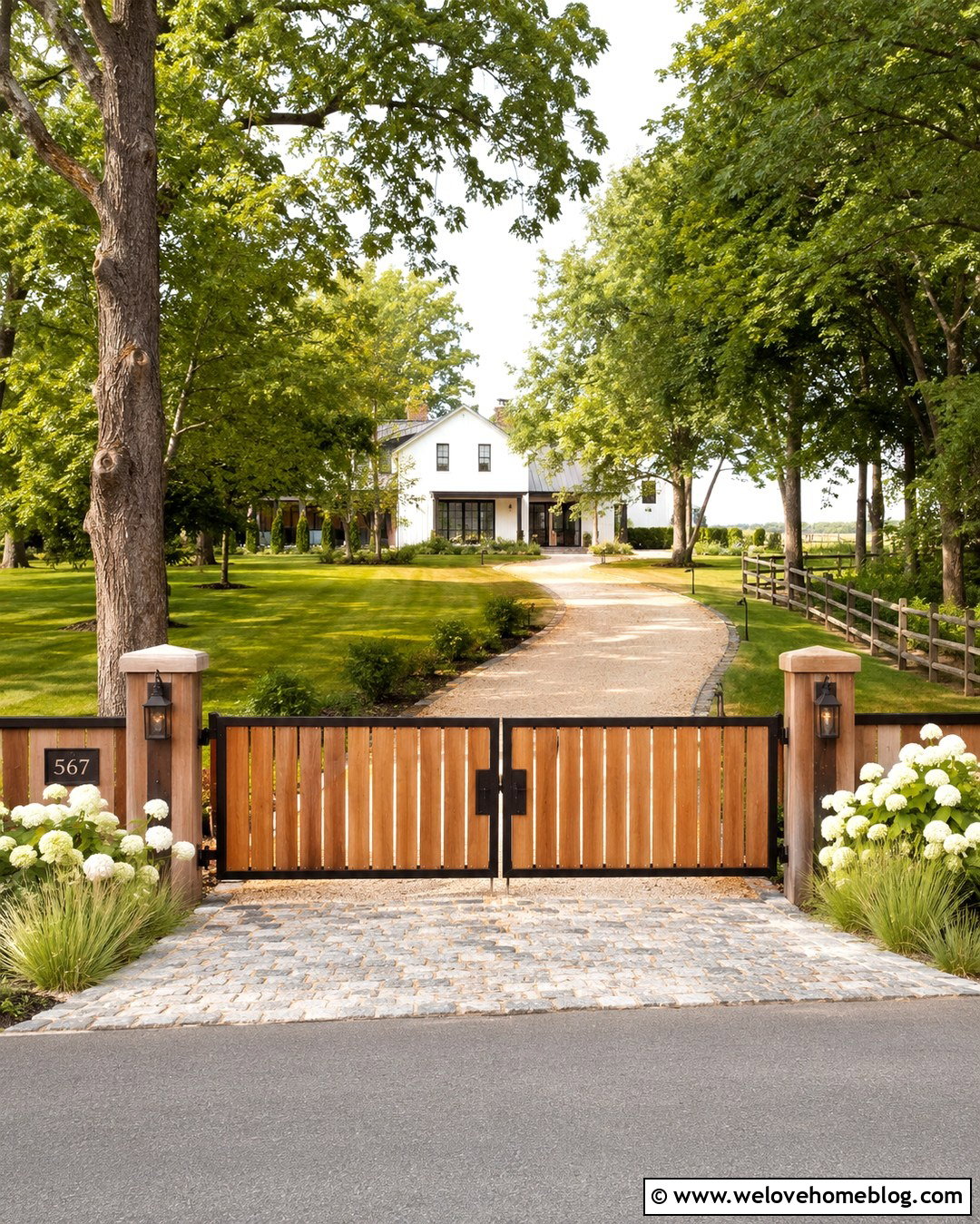
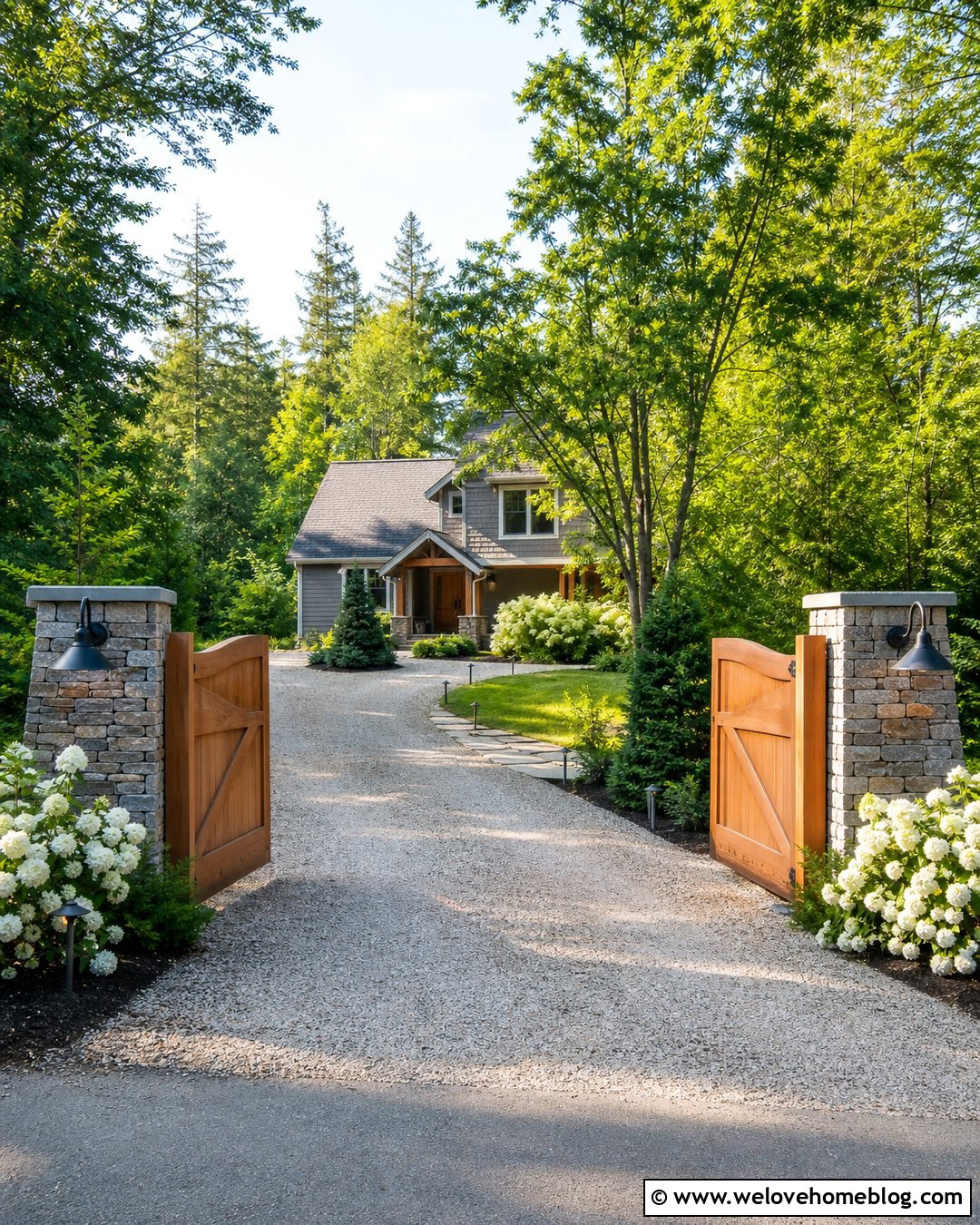
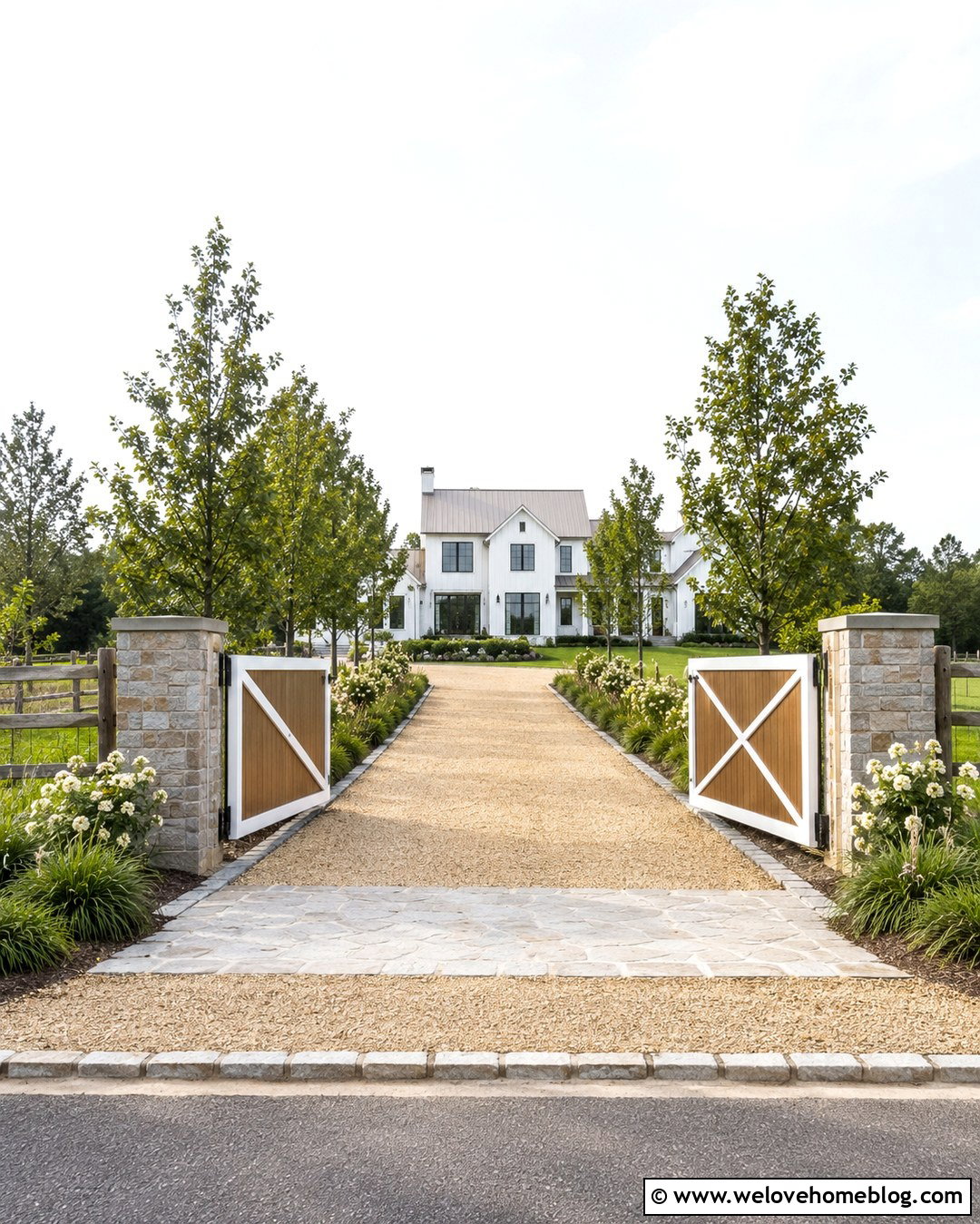
Warm wood can provide privacy without sacrificing strength when it is attached to a properly engineered steel frame. This combination complements a gravel driveway leading to a farmhouse, Craftsman, or country home. Use durable exterior boards with narrow gaps and fasten them from the secure side to make removal more difficult. The internal steel structure reduces sagging and gives the hinges, operator arms, and lock stronger attachment points. Install the gate between reinforced posts rather than relying on decorative timber columns alone. A cobblestone entrance apron can stabilize the gravel near the gate, while low planting beds maintain visibility around the hinges. Choose corrosion-resistant hardware suited to your local weather. Because heavy wood gates place considerable stress on operators and posts, ask an experienced installer to calculate the gate’s weight, wind exposure, and movement requirements.
5. Cantilever Driveway Gate With Anti-Lift Hardware
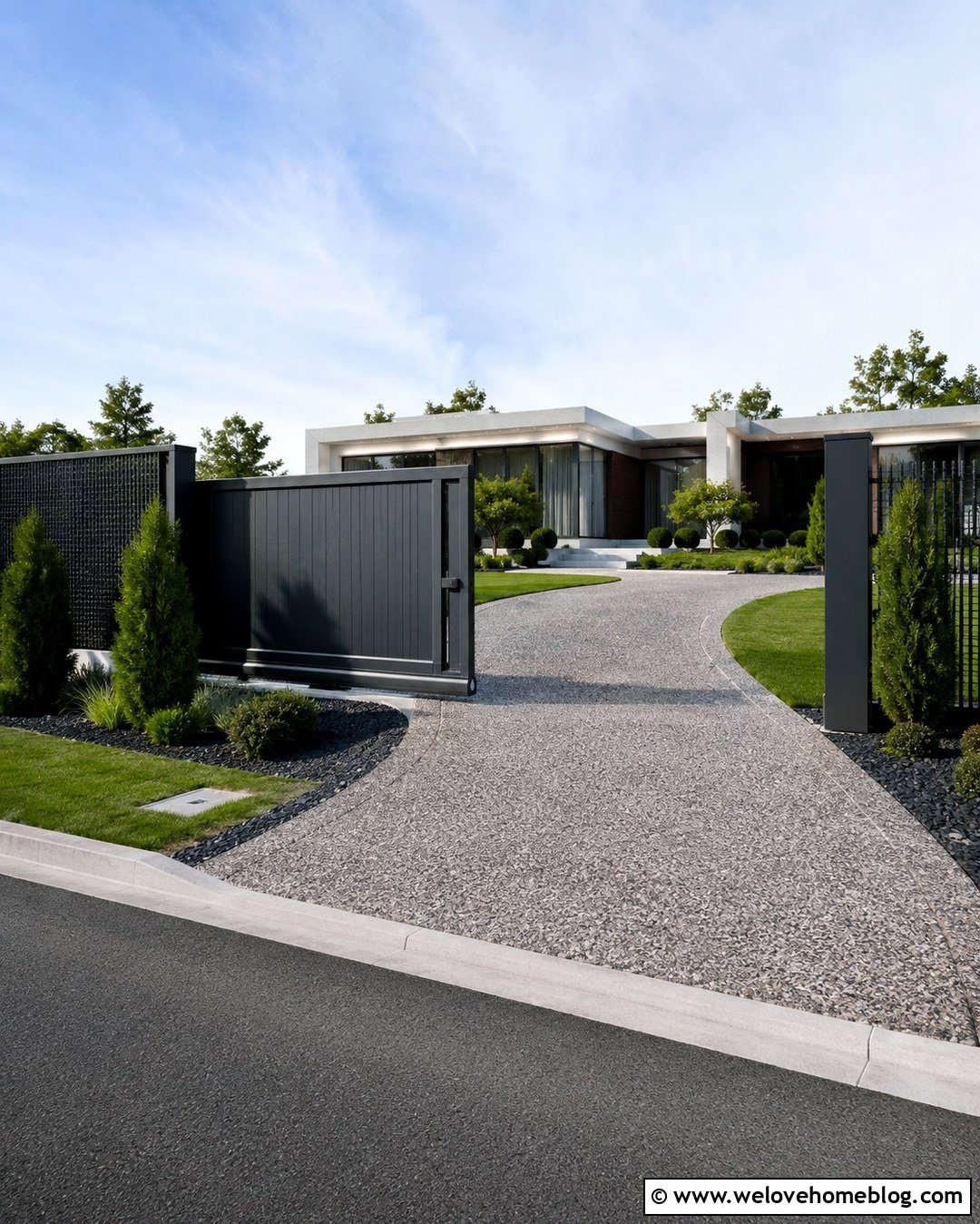
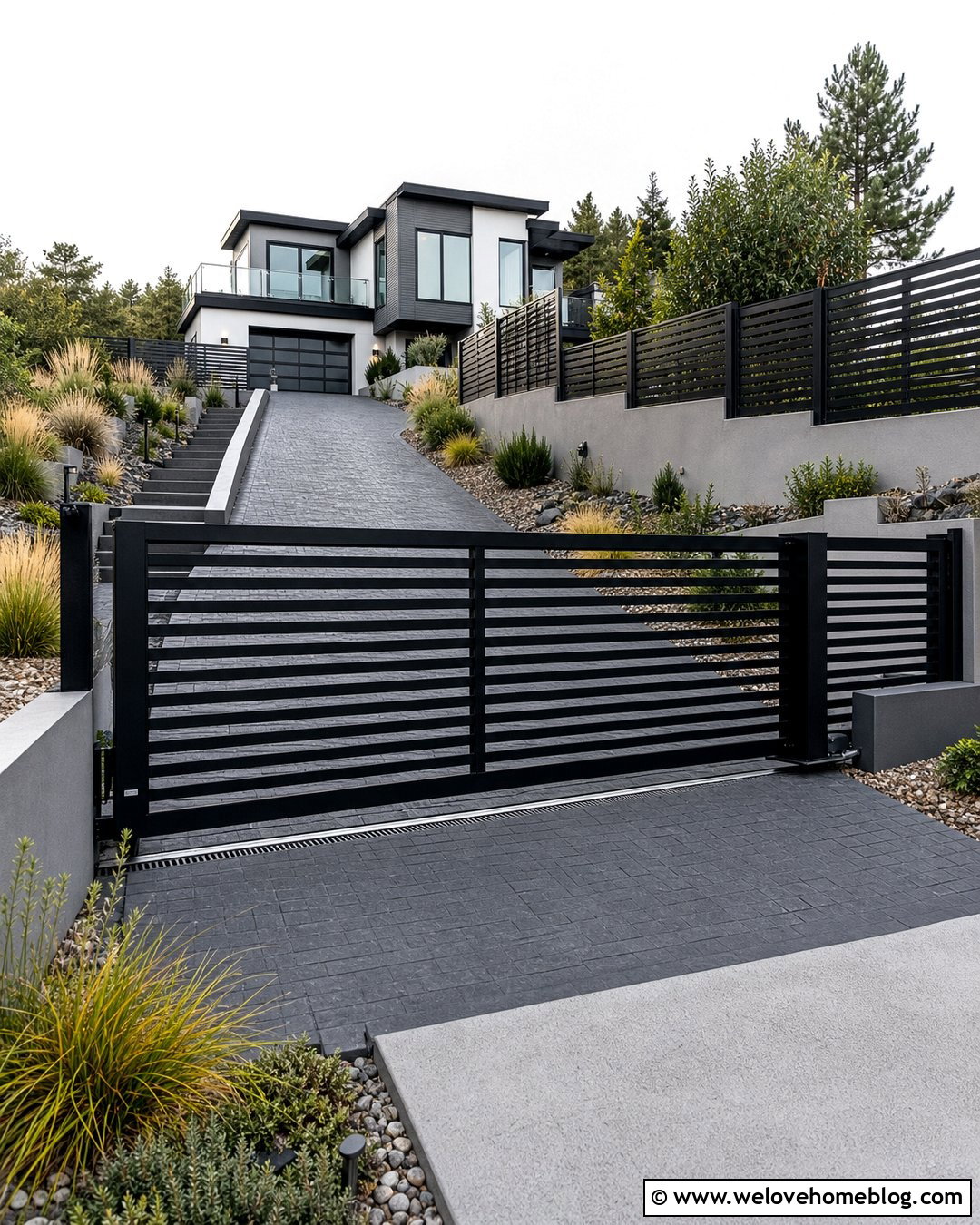
A cantilever sliding gate is useful where snow, gravel, drainage channels, or uneven ground make a surface track impractical. The gate travels above the driveway and is supported by rollers positioned along the inside fence line. For better security, choose a rigid steel frame, protected roller assemblies, physical travel stops, and anti-lift hardware designed for the complete system. A solid receiving post should hold the closed gate firmly and prevent excessive movement. Continue the adjacent fence across the area covered by the gate when open so the sliding path does not create an accessible gap. This layout pairs naturally with a curved exposed-aggregate driveway and modern landscaping. Keep plants away from the operating equipment for inspection access. Covered rollers, guarded openings, sensing edges, and correctly positioned photoelectric sensors are important safety components on automated sliding systems. ()
6. Solar Driveway Gate With Battery Backup
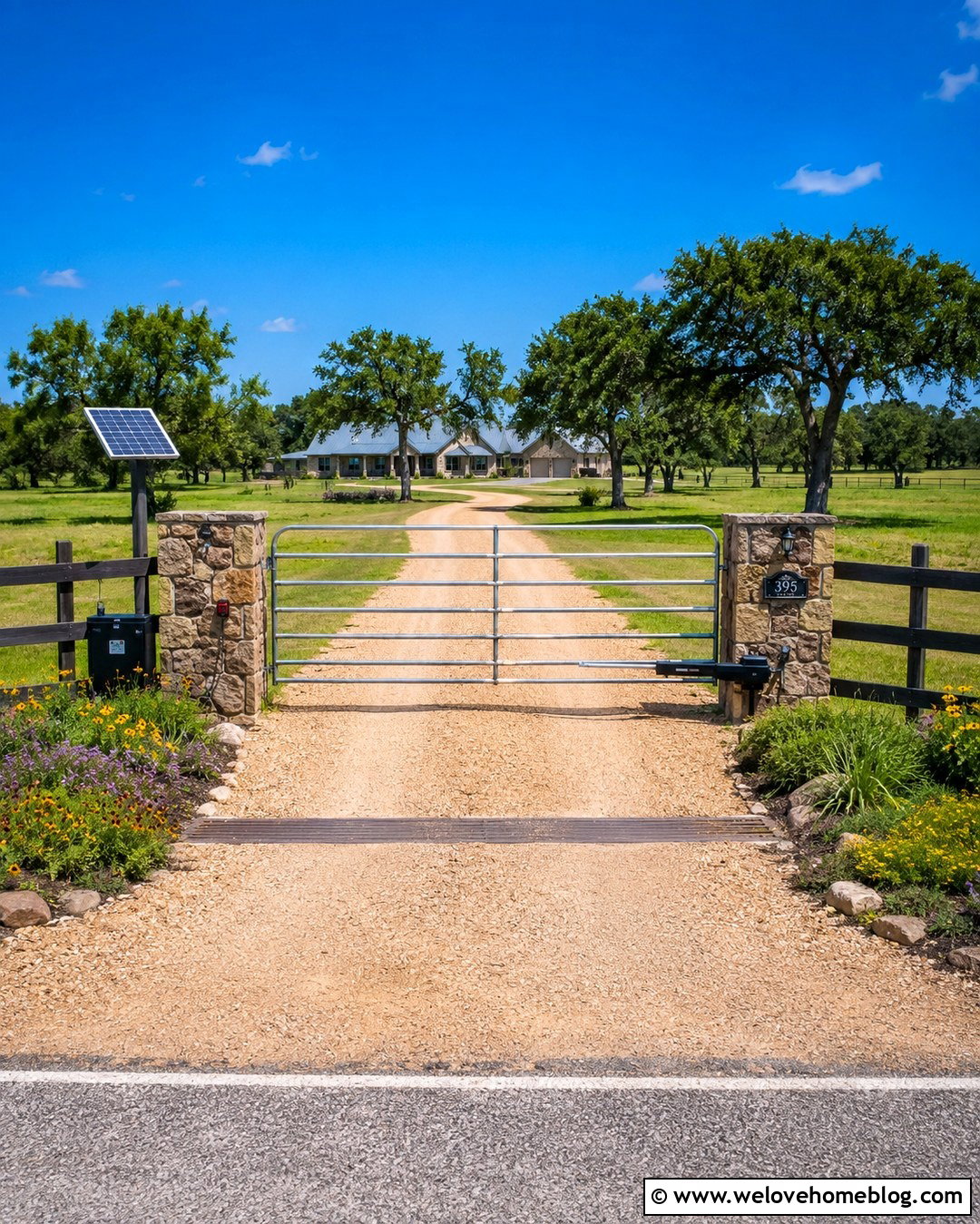
Long rural driveways often lack convenient utility power at the entrance, making a solar-powered gate an attractive solution. Pair a tubular steel or aluminum swing gate with a properly sized solar panel, charge controller, and manufacturer-approved battery backup. The system should have enough capacity for the gate’s weight, daily operating cycles, local temperatures, and periods of limited sunlight. Mount the solar equipment inside the secure boundary where it receives dependable exposure but remains difficult to tamper with. Add an automatic lock so the gate is not relying only on the operator arm for resistance. A compact gravel turnaround near the entrance gives visitors space to wait without blocking the road. Battery backup can preserve normal access during an outage, but owners should also understand the approved manual operation procedure and test it periodically. ()
7. Driveway Gate With Video Intercom
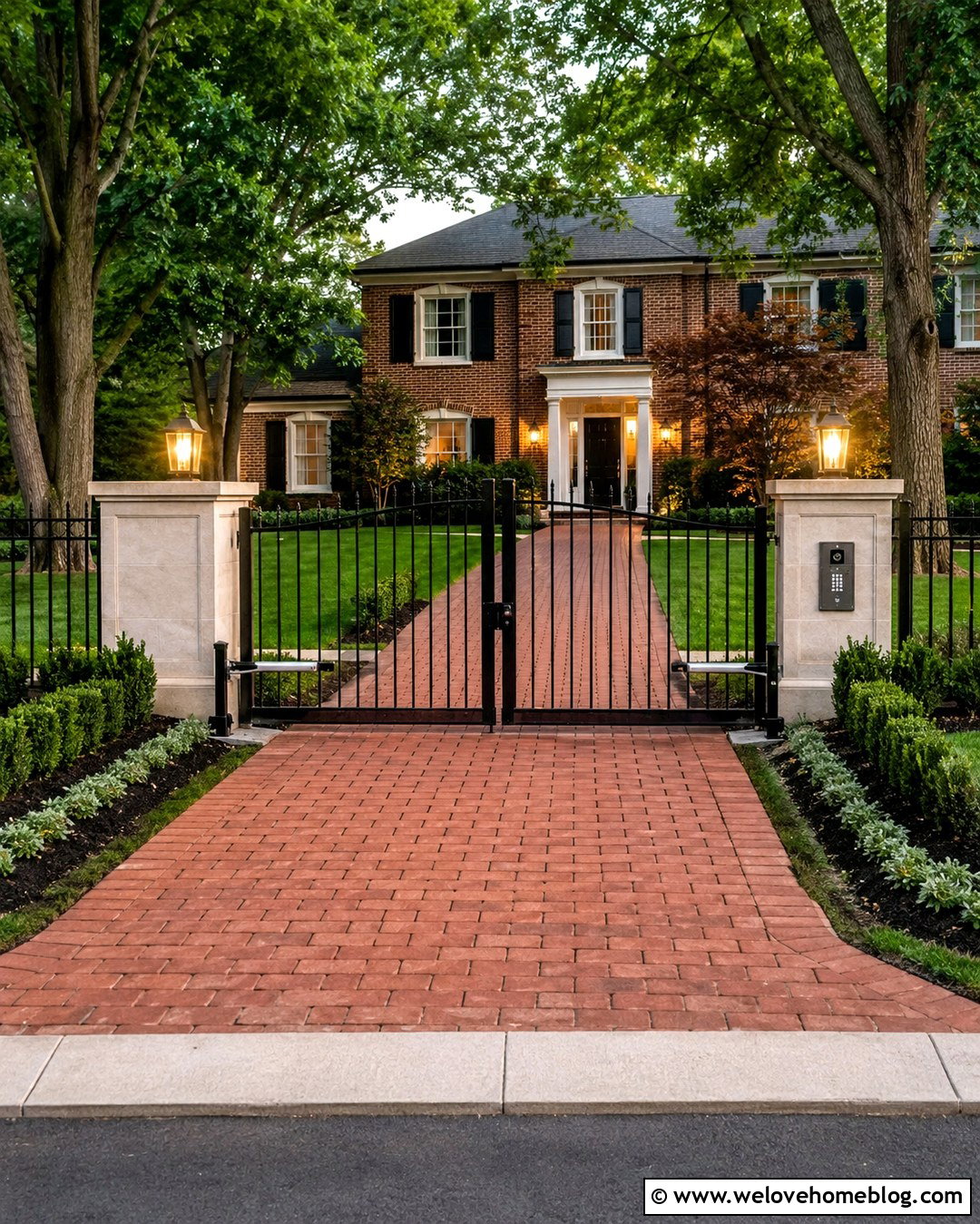
A video intercom lets homeowners evaluate visitors before opening the gate. Build the entrance around a steel swing gate, stone pillars, and a straight brick-paver driveway leading to a traditional house. Position the camera to capture the driver’s face and the general waiting area rather than pointing directly into glare. The call station should be mounted away from the gate’s travel path and protected by a strong housing. Connect it to an indoor monitor or secure mobile system so household members can communicate without walking to the entrance. An electric lock should remain engaged until access is approved. Add a clearly visible house number, bright overhead lighting, and low landscaping around the intercom pillar. Keep software, passwords, and authorized users updated, and avoid opening the gate remotely when the camera view is unclear.
8. Driveway Gate With Temporary Access Codes
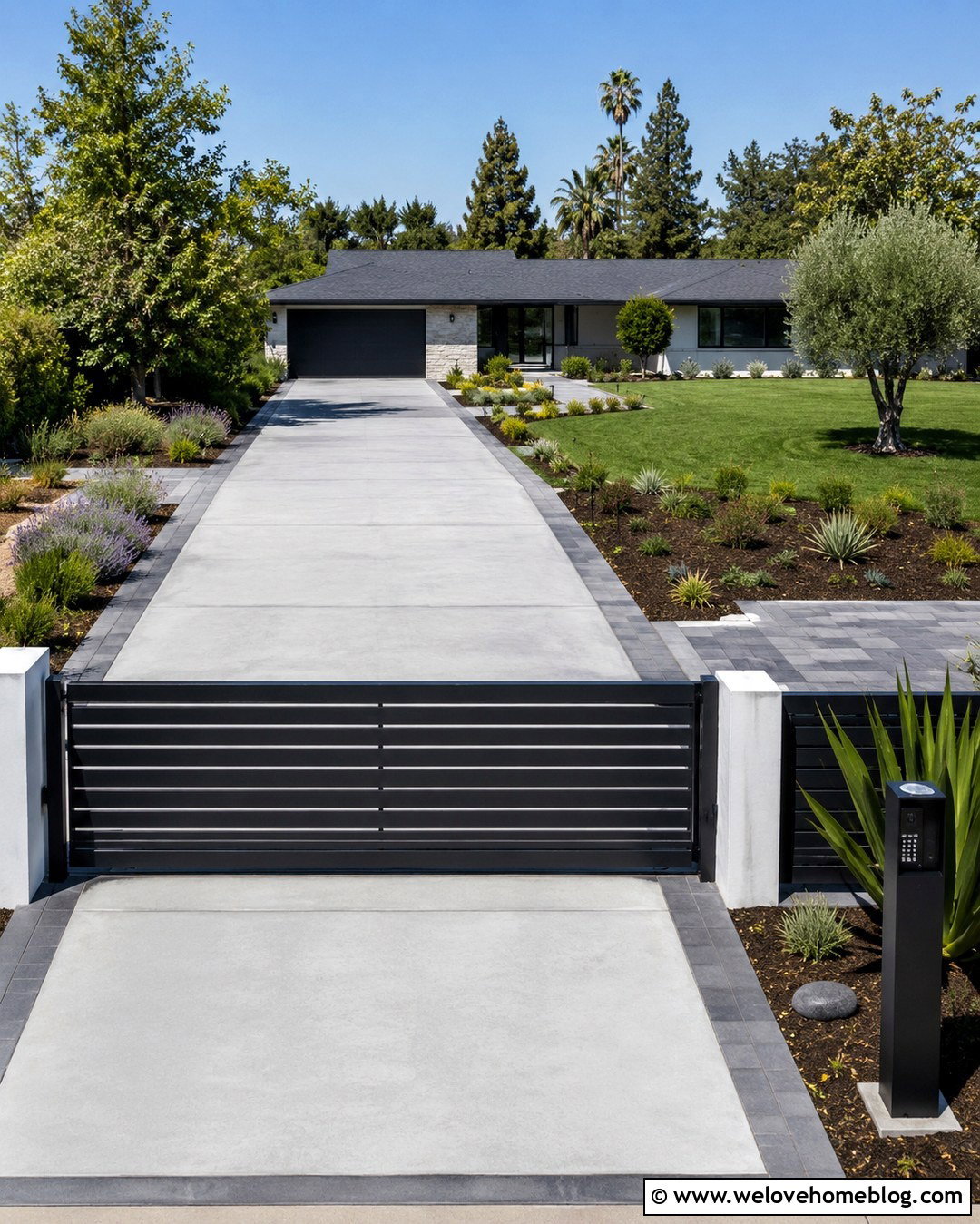
Temporary access codes make a keypad-controlled gate more practical for busy households. Use them with a black aluminum sliding gate across a wide concrete driveway serving a modern ranch home. Family members can have individual credentials, while cleaners, landscapers, and service providers receive codes that work only when needed. This reduces the need to distribute physical remotes that may be copied, lost, or retained. Review the active user list regularly and delete codes immediately when access ends. The entrance should also include an automatic lock, status sensor, and interior exit control. Place the keypad on a separate pedestal beyond the moving gate, with a small paver pull-off that allows visitors to stop safely. Personalized keypad credentials and connected controls can improve access management when they are configured carefully and supported by reliable physical gate hardware. ()
9. Driveway Gate With Cameras And Motion Lighting
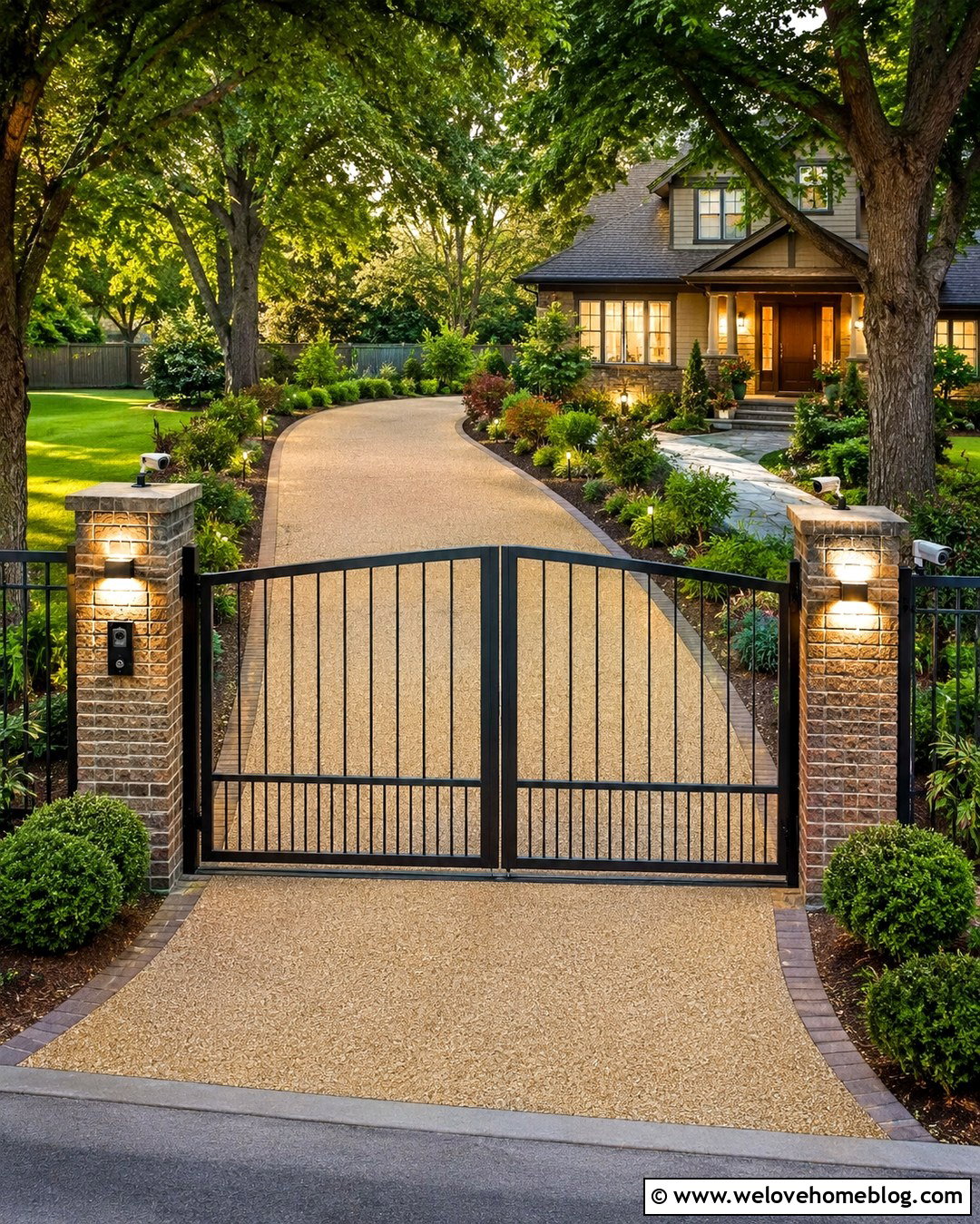
Bright, even lighting can make a driveway gate easier to monitor while discouraging hidden activity around the entrance. Combine a dark steel gate with a resin-bound gravel driveway, brick pillars, and downward-facing LED fixtures. Position one camera for a wide entrance view and another to record visitors near the call box. Avoid allowing trees, flags, or tall grasses to trigger constant motion alerts. Lighting should reveal the gate, pedestrian route, vehicle waiting area, and nearby fence without creating harsh glare toward the road. Keep cables and network equipment protected inside conduit or secure enclosures. Cameras work best as one layer within a complete system that also includes strong locks, access control, and continuous fencing. Use account protections offered by the equipment provider, review saved footage responsibly, and periodically confirm that camera angles have not shifted.
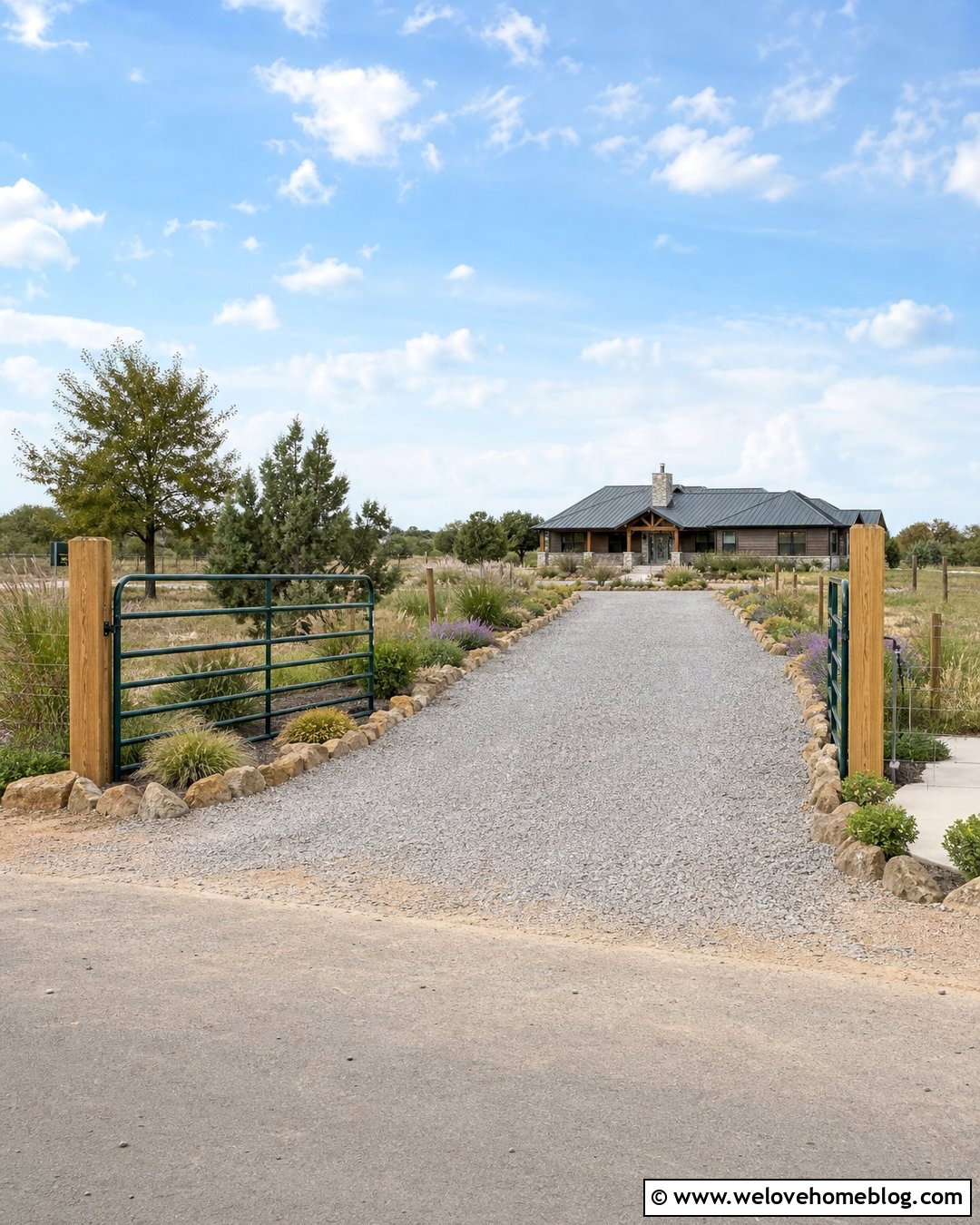
10. Driveway Gate With Matching Perimeter Fence
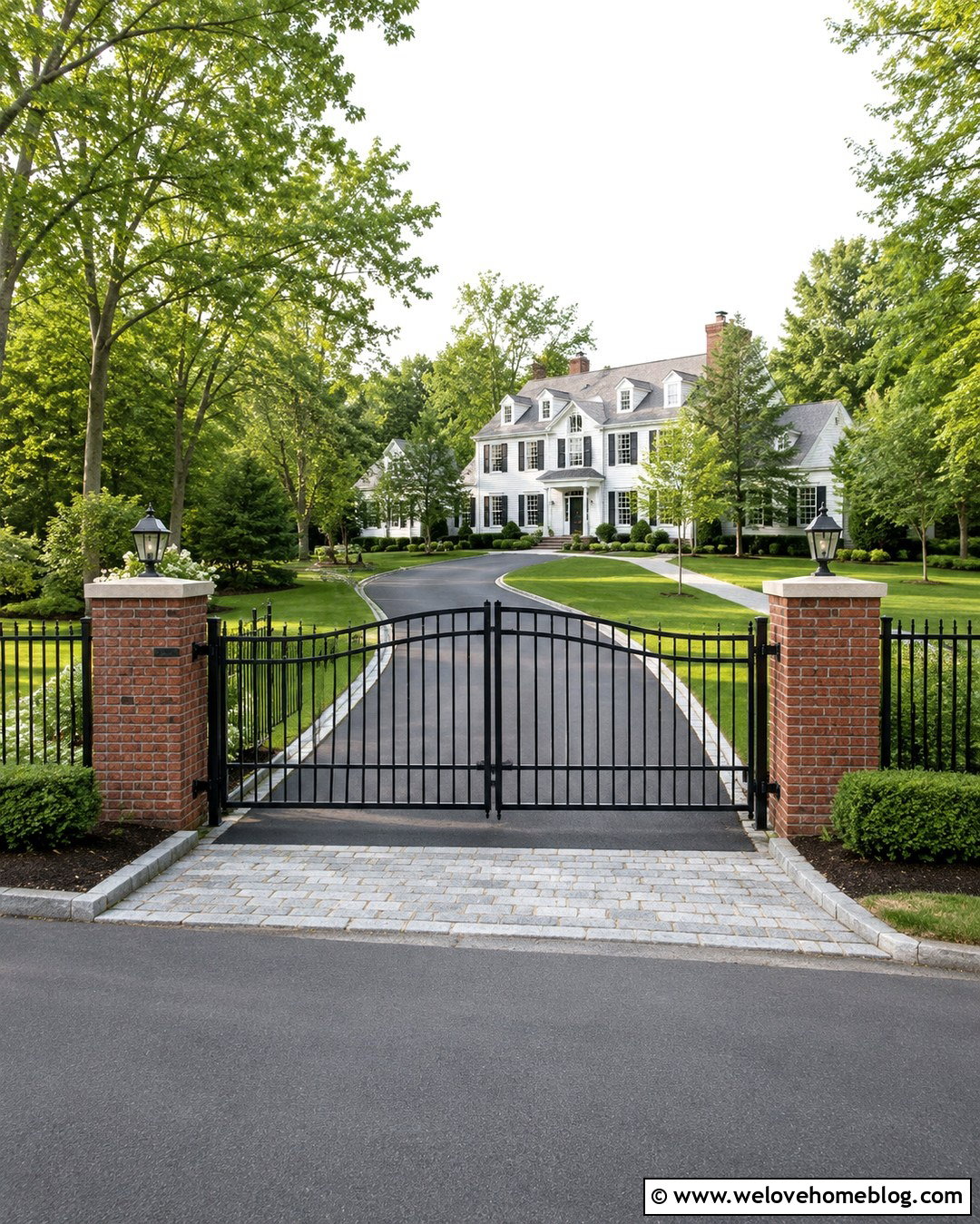
Even the strongest gate provides limited control when someone can walk around its end. Create a continuous boundary by connecting the driveway gate to fencing of similar height and strength. A steel picket gate with matching fence panels works well beside a curved asphalt driveway and a Colonial-style house. Close ground-level gaps where practical, reinforce terminal posts, and avoid leaving unsecured openings behind shrubs or utility structures. Use low thorny planting in selected border beds as a visual and physical discouragement, but keep branches away from hinges, sensors, locks, and pedestrian areas. The fence should follow the property layout without blocking safe roadway visibility. Include a controlled pedestrian entrance rather than expecting people to use the moving vehicle gate. A layered perimeter works because the gate, fence, planting, lighting, and access route function as one coordinated entrance.
11. Driveway Gate With Reinforced Stone Pillars
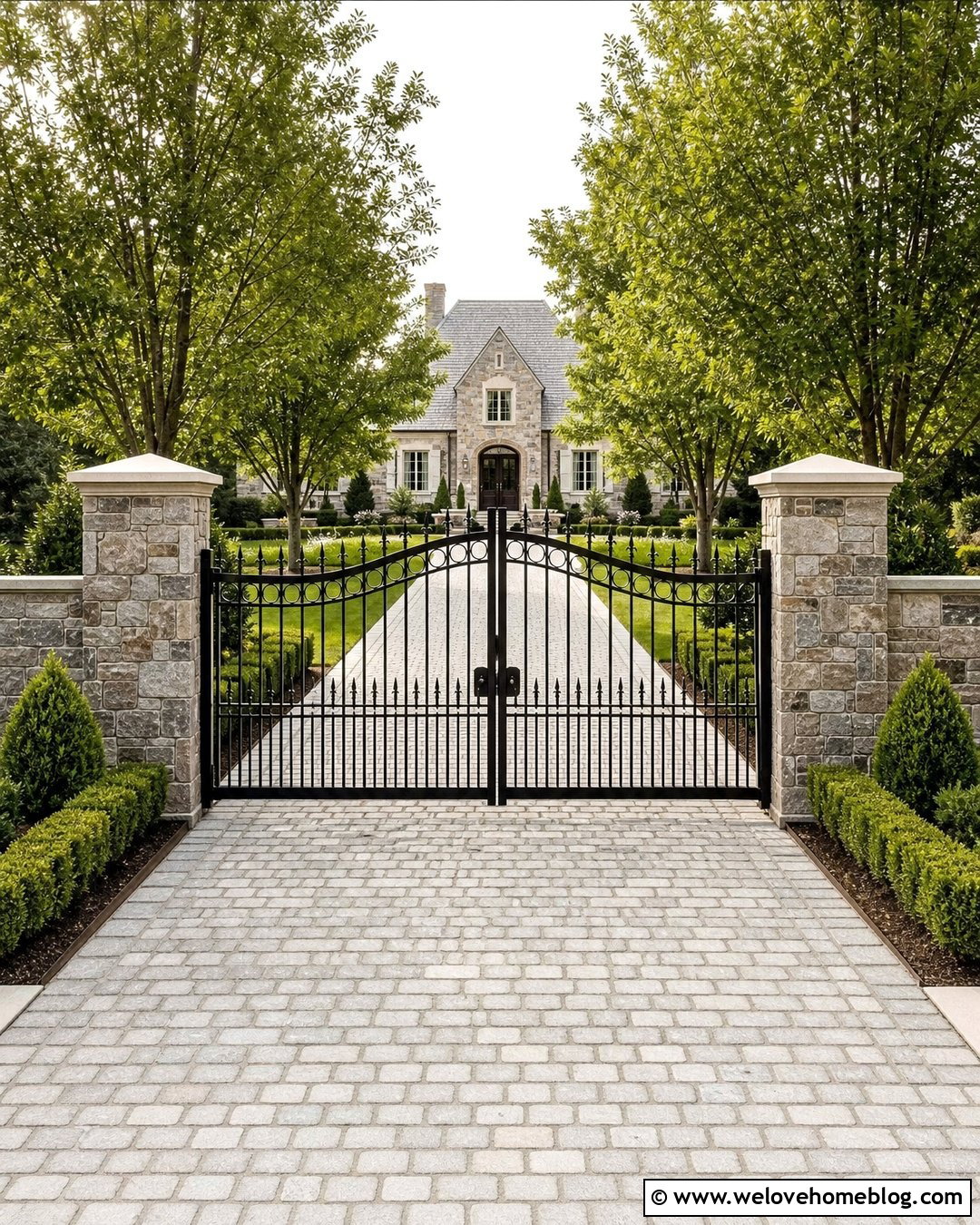
Heavy gates need more than attractive pillars. They require properly designed foundations, structural cores, and attachment points that can support repeated movement and wind loads. For an upscale cobblestone driveway, use a wrought-steel double gate mounted to reinforced masonry pillars with stone veneer. Place electrical conduit, intercom wiring, and operator connections inside protected pathways during construction instead of attaching loose cables afterward. The gate hinges and locking receiver should connect to structural components, not veneer alone. Add low boxwood beds and clear stone paving around the pillars so the hardware remains visible for inspections. Caps can protect masonry from water penetration while completing the entrance. Because soil, frost depth, drainage, and gate weight vary considerably, pillar foundations and mounting details should be designed for the specific site rather than copied from a decorative example.
12. Automatic Gate With Photo Eyes And Safety Edges
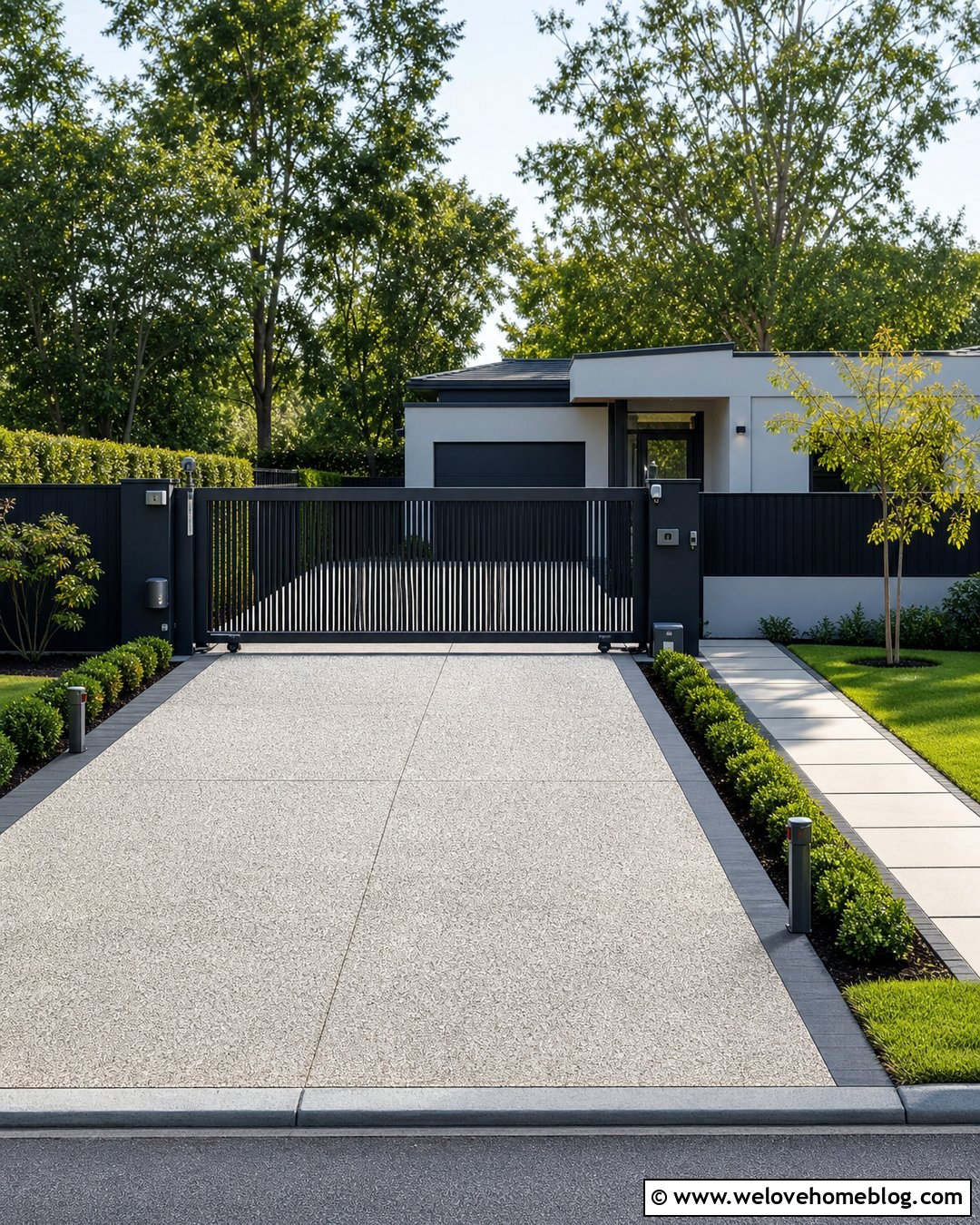
A secure gate must prevent unauthorized access without creating dangerous trapping points. Build an automatic sliding-gate entrance with powder-coated steel panels, a light exposed-aggregate driveway, and carefully planned sensor coverage. Photoelectric eyes can monitor selected areas around the gate, while compatible sensing edges can stop or reverse movement after contact. The number and placement of devices depend on the gate’s opening path, nearby walls, fence panels, posts, and other fixed objects. Sensors intended to protect pedestrians may not provide complete vehicle protection, so additional detection may be necessary for the roadway. Keep lenses clean and test the system according to the operator manufacturer’s instructions. UL-listed equipment, suitable external entrapment protection, and qualified installation are essential parts of a safer automatic vehicular gate system. ()
13. Driveway Gate With Separate Pedestrian Entrance
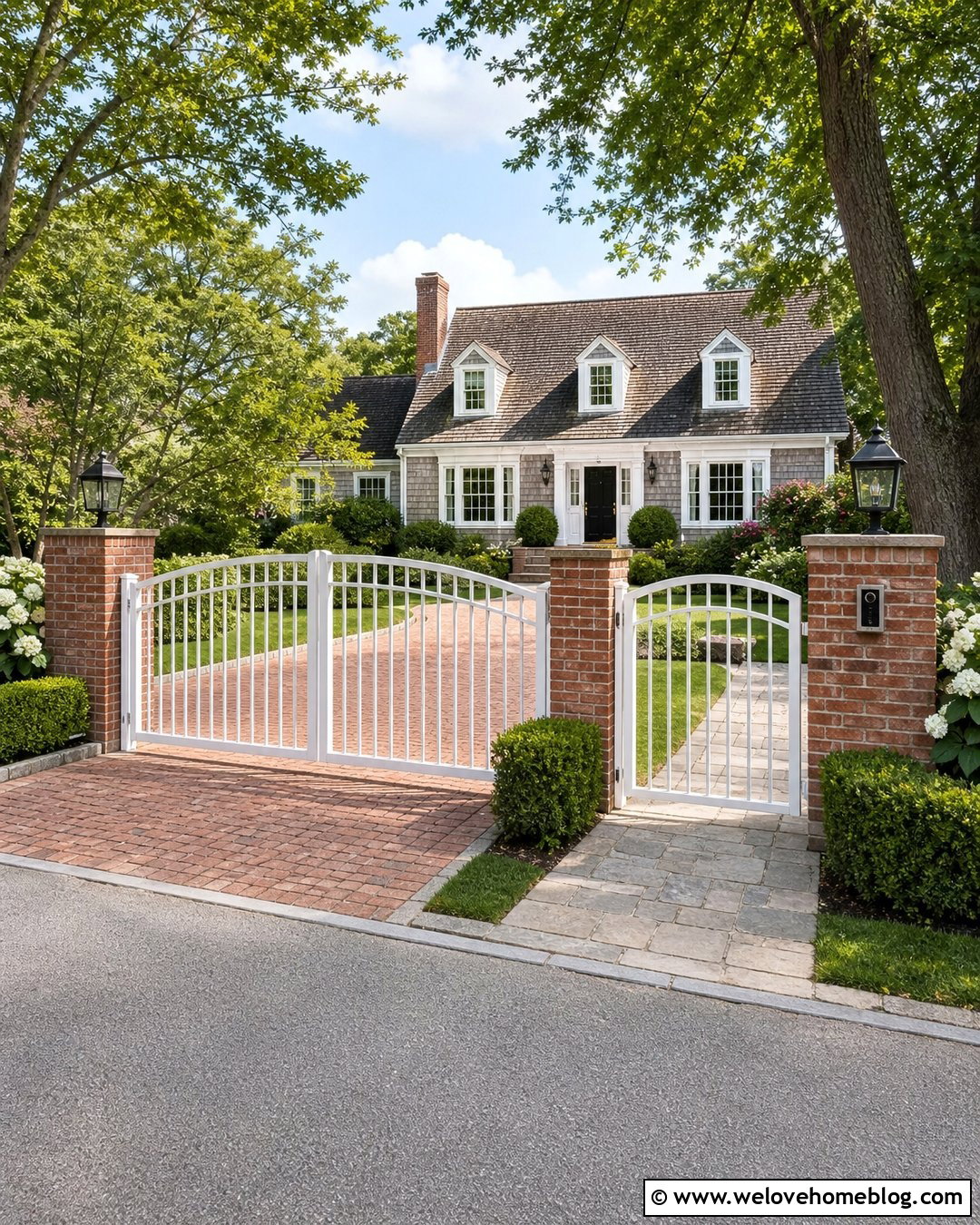
Visitors on foot should not have to squeeze beside or pass through a moving driveway gate. Add a separate walk-through gate beside the vehicle entrance, connected by a visible walkway to the house. This layout suits a clay brick driveway with a painted steel swing gate and matching pedestrian panel. Give the smaller gate its own latch, controlled release, lighting, and video doorbell or intercom. A short garden path can guide pedestrians away from the driveway operator and swing area. Keep planting low enough to maintain visibility between the house and entrance. The pedestrian gate should not open into the vehicle gate’s travel path. Professional gate-safety guidance recommends a clearly designated separate pedestrian route and warns against allowing people to make contact with an operating vehicular gate. ()
14. Manual Driveway Gate With Ground Anchors
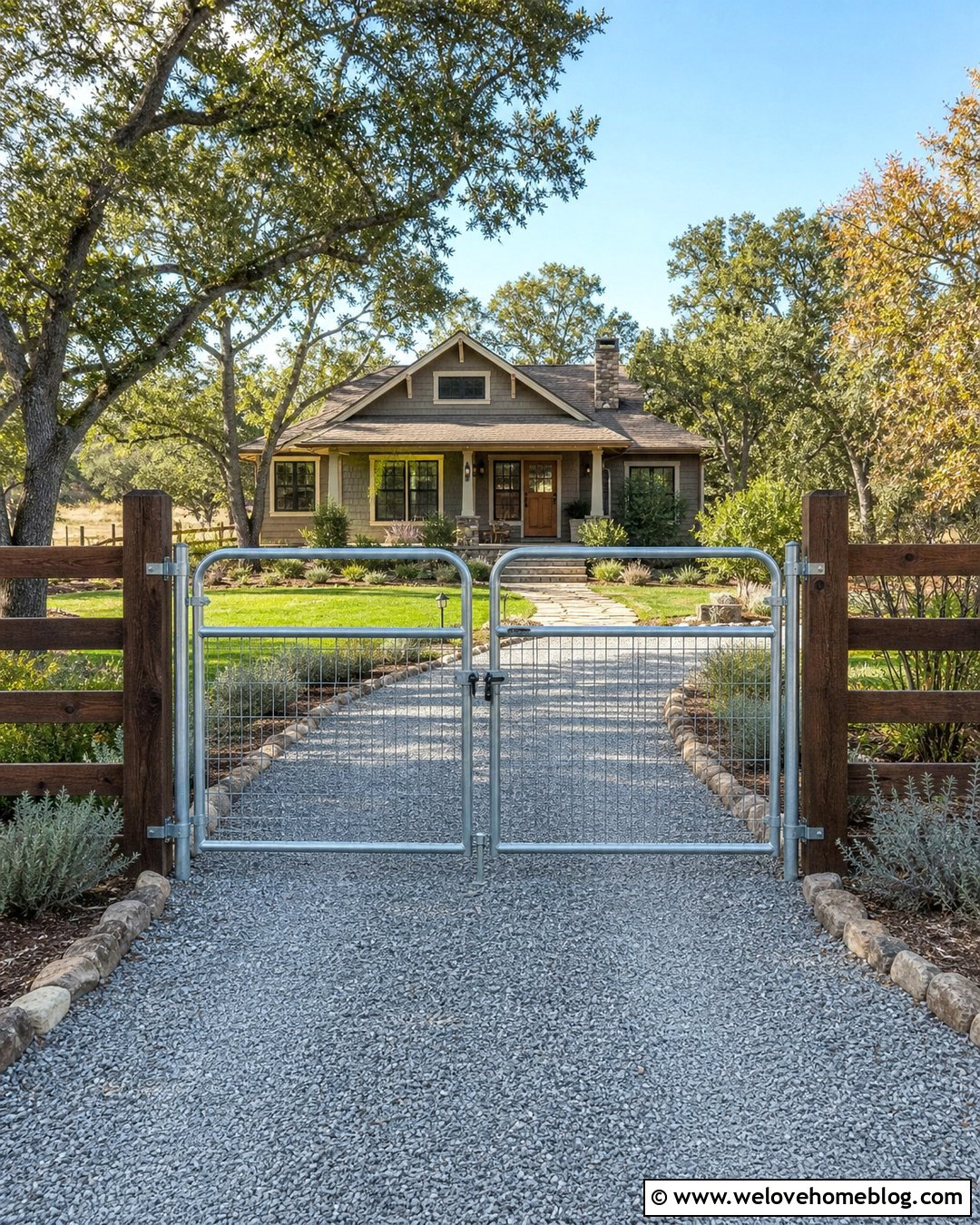
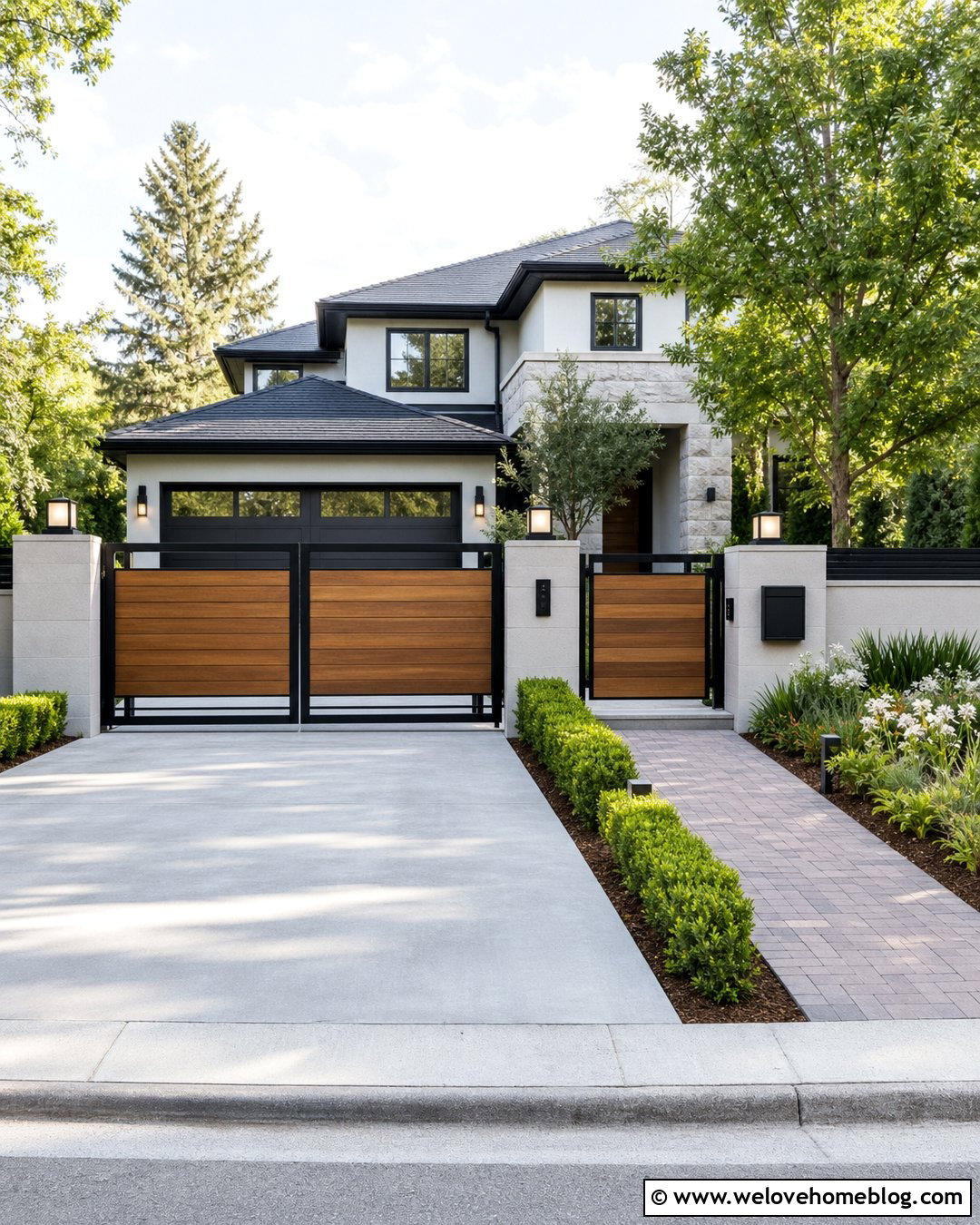
A manual gate can be secure when its posts, hinges, center stop, and locking points work together. Use a galvanized steel double gate across a crushed-stone driveway leading to a country property. Secure each leaf to a firm center position with heavy-duty drop rods fitted into properly drained ground sockets. Add a protected central latch that accepts an outdoor-rated lock without leaving excessive space for cutting tools. Welded or concealed hinge pins can make casual disassembly more difficult. A fixed gate stop prevents the leaves from being pushed in the wrong direction, while side catches hold them safely when open. Continue post-and-rail fencing toward dense native shrubs to close the surrounding boundary. Inspect alignment after frost movement or severe storms. If the gate becomes difficult to latch, correct the sagging or foundation problem rather than forcing the hardware.
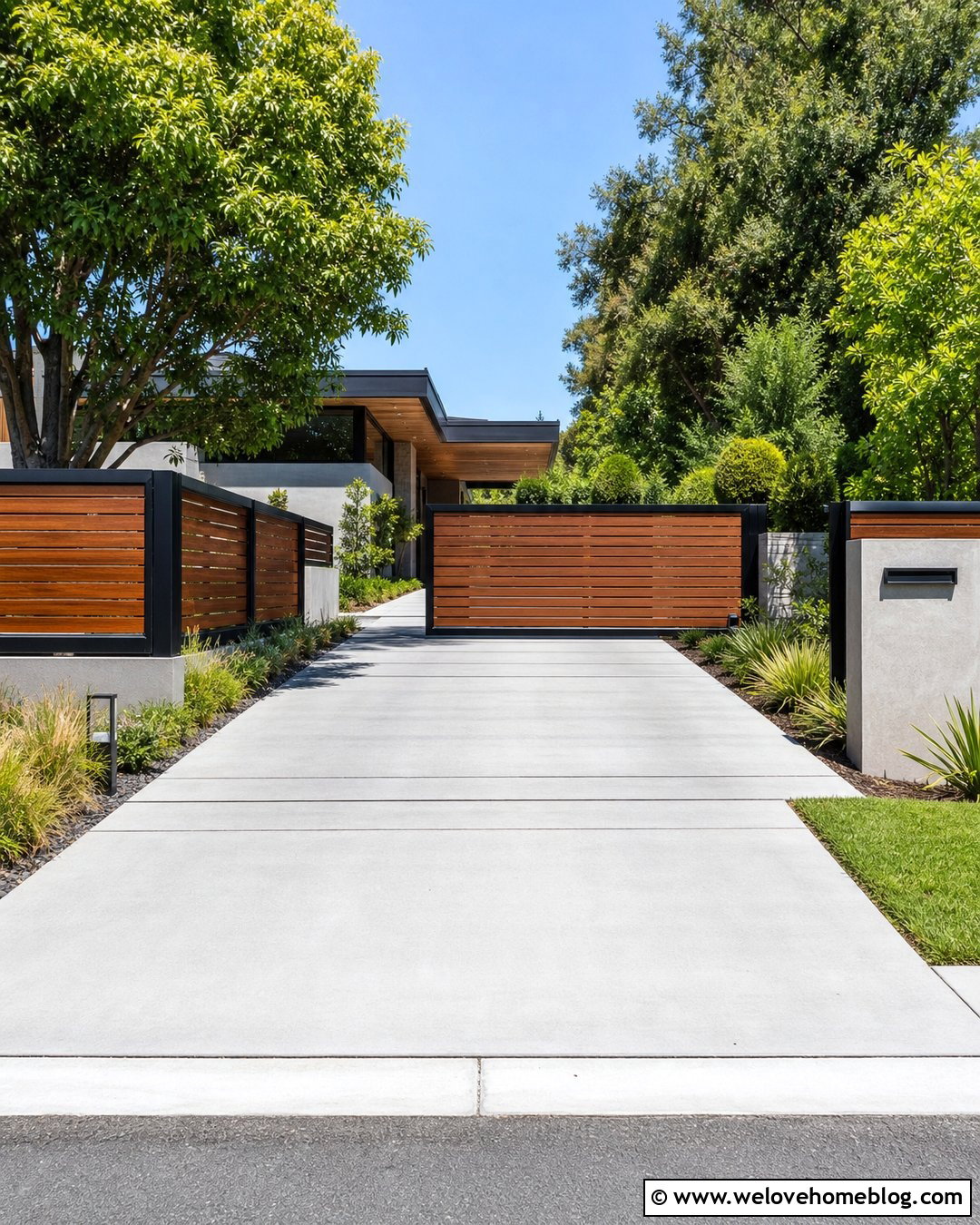
15. Rural Tube Gate With Protected Padlock
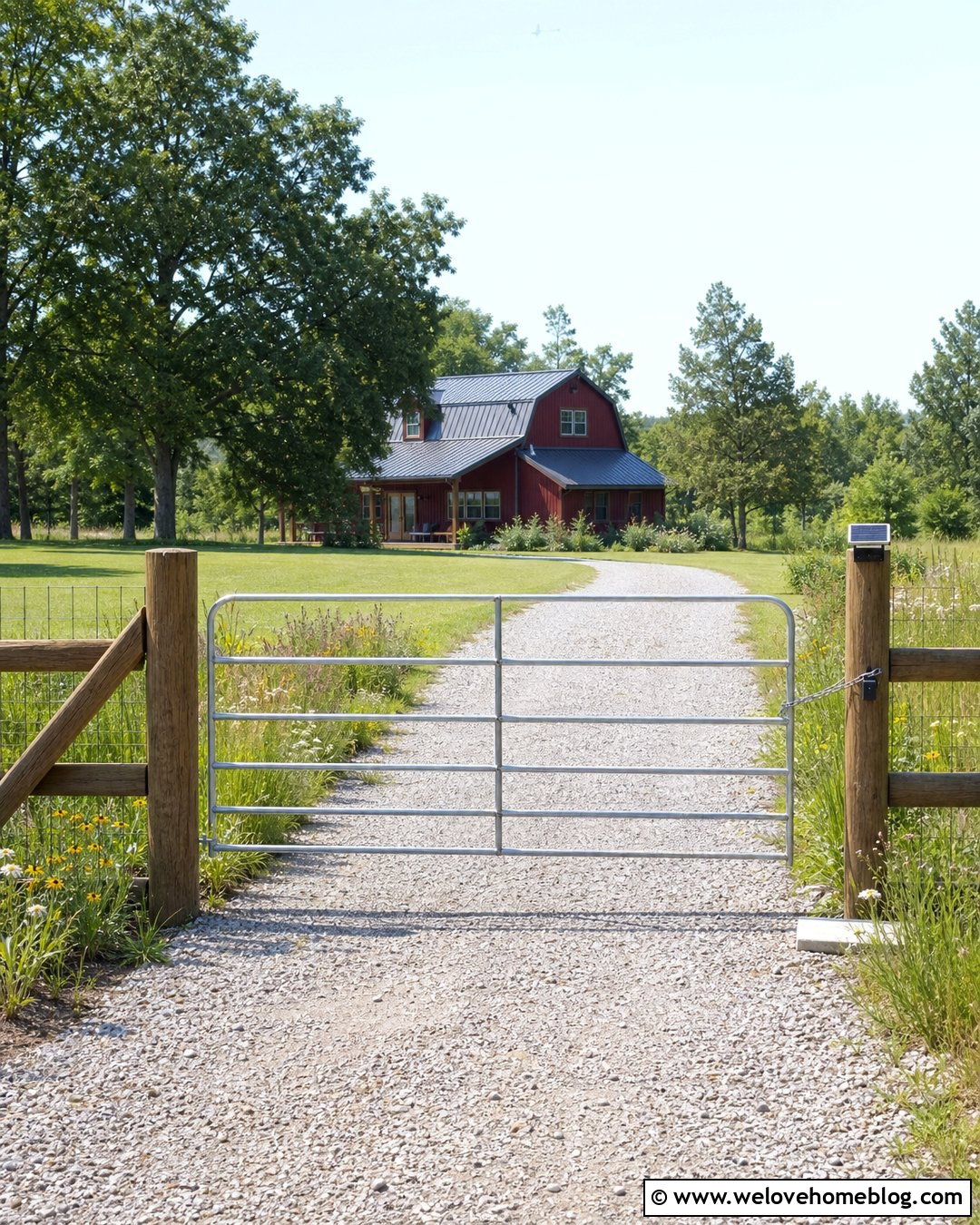
A tubular farm gate is affordable and practical, but an exposed chain and lightweight padlock provide weak access control. Improve the complete entrance with a galvanized steel tube gate, braced hinge post, rigid latch post, and a shrouded outdoor lock designed to reduce exposed locking surfaces. Keep the chain short so it cannot be pulled away from the gate, or use a purpose-built lockable farm-gate latch. A compacted gravel driveway and concrete pad around the latch help prevent mud from interfering with daily operation. Extend livestock fencing securely to both gateposts and remove objects that could be used as climbing steps. Solar motion lighting can improve nighttime visibility without changing the rural appearance. Because these gates vary in construction, confirm that the latch, hinges, and posts are compatible with the actual gate rather than adding oversized hardware to a weak frame.
16. Automatic Gate With Timed Closing
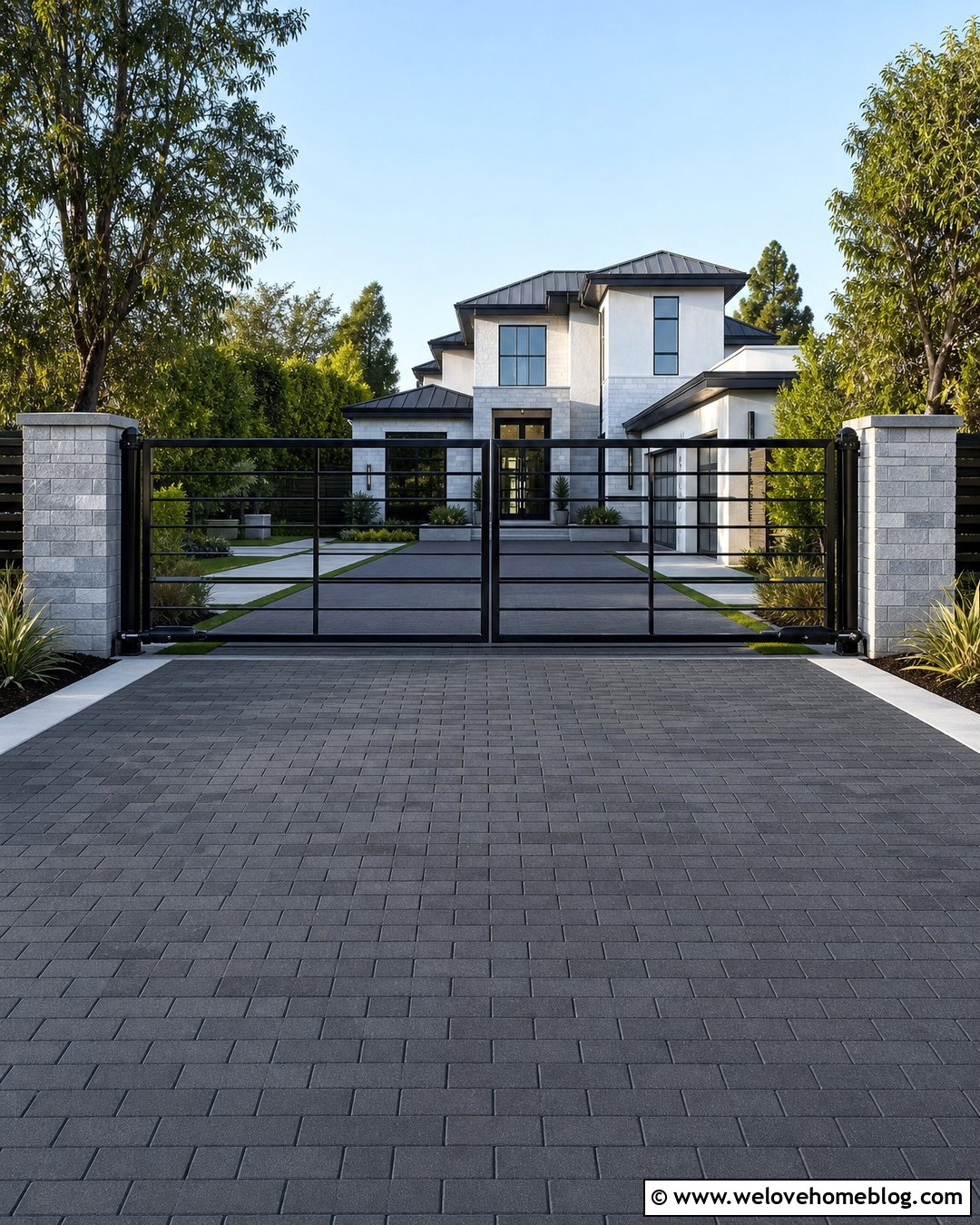
A gate that remains open after every arrival cannot provide dependable access control. Use a compatible automatic-closing feature with a black steel swing gate and a straight concrete-paver driveway. The delay should allow normal vehicle movement without leaving the entrance open unnecessarily. Pair the timer with correctly positioned vehicle detection, photo eyes, sensing edges, and a visible gate-status indicator. Avoid using a short closing delay as a substitute for proper safety equipment. A mobile notification or indoor panel can alert homeowners when the gate remains open beyond a chosen period. Keep the roadside waiting area clear so visitors are not pressured to follow another vehicle through the opening. Because automatic movement introduces entrapment risks, settings and detection devices should be configured by a qualified gate technician and tested under realistic operating conditions. ()
17. Driveway Gate With Emergency Access
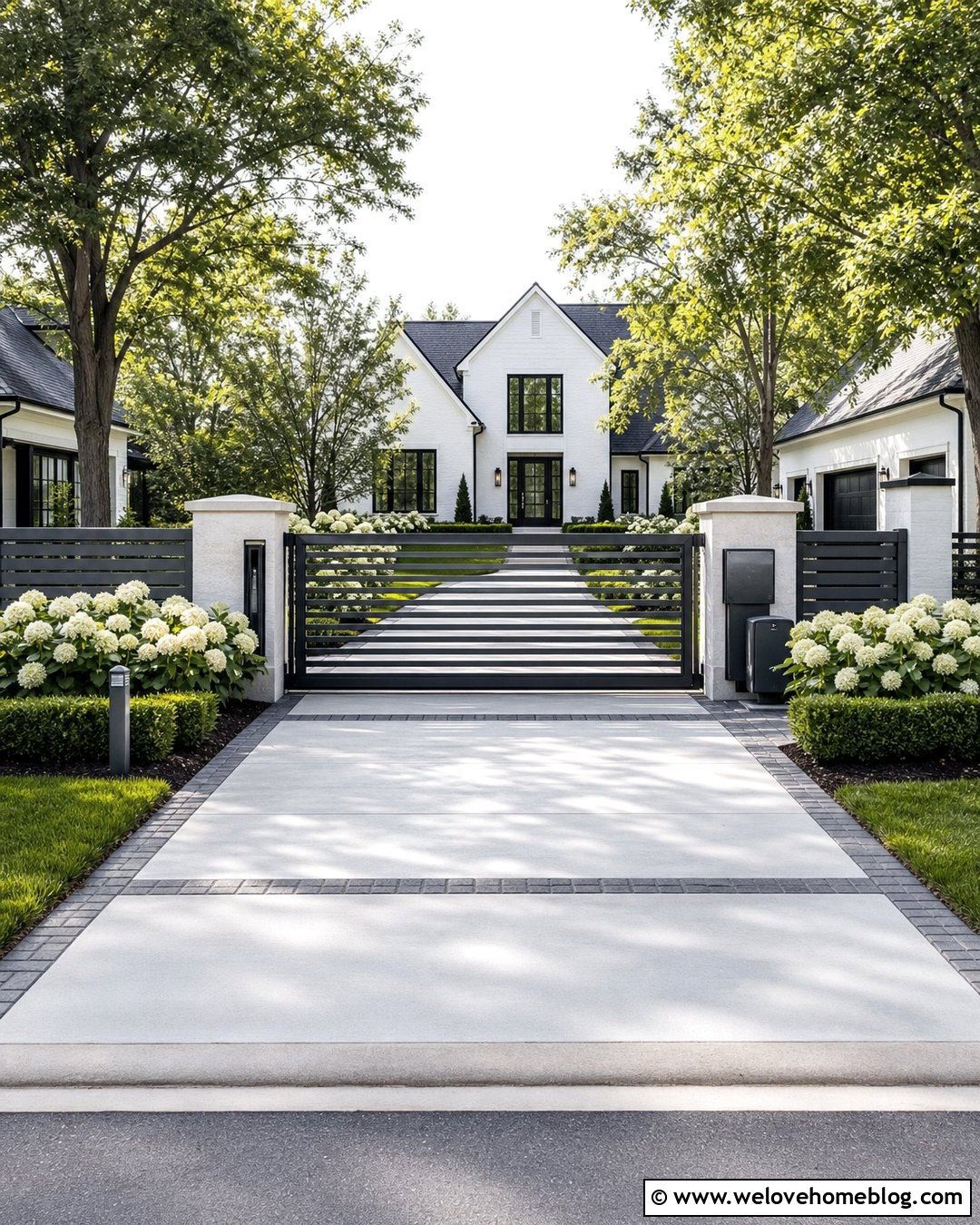
Security planning should account for firefighters, emergency medical services, power failures, and equipment malfunctions. Create a clearly organized entrance with an aluminum sliding gate, concrete driveway, masonry address pillar, and approved emergency-access arrangement. Requirements vary by local authority, so consult the fire department, permitting office, and gate installer before choosing a lockbox, emergency release, or responder access system. Keep the street number visible from both directions and prevent trees from covering it. Battery backup can maintain normal operation during shorter outages, while the manufacturer’s manual release provides a controlled alternative when necessary. Homeowners should know how the release works without leaving it openly accessible to passersby. CISA guidance emphasizes planning for emergency responders when perimeter barriers control entry, making local coordination an important part of the overall design. ()
18. Driveway Gate With Retractable Bollards

Decorative gates control routine access, but they should not automatically be assumed to stop a moving vehicle. Properties with a genuine vehicle-intrusion concern may require professionally engineered bollards or another tested barrier behind the gate. A suitable design could combine a steel sliding gate, wide granite-paver driveway, reinforced planting islands, and retractable bollards aligned across the entrance. When lowered, the bollards allow normal access; when raised, they provide a separate protective layer. Their foundations, drainage, controls, and emergency operation require specialist design. Keep the equipment visible to drivers and integrate it with lighting and clear pavement transitions. CISA distinguishes rated protective devices from unrated products whose stopping ability is unknown, so decorative posts should never be presented as impact protection unless the complete installed system has an appropriate tested rating. ()
19. Driveway Gate With Tamper Alarm
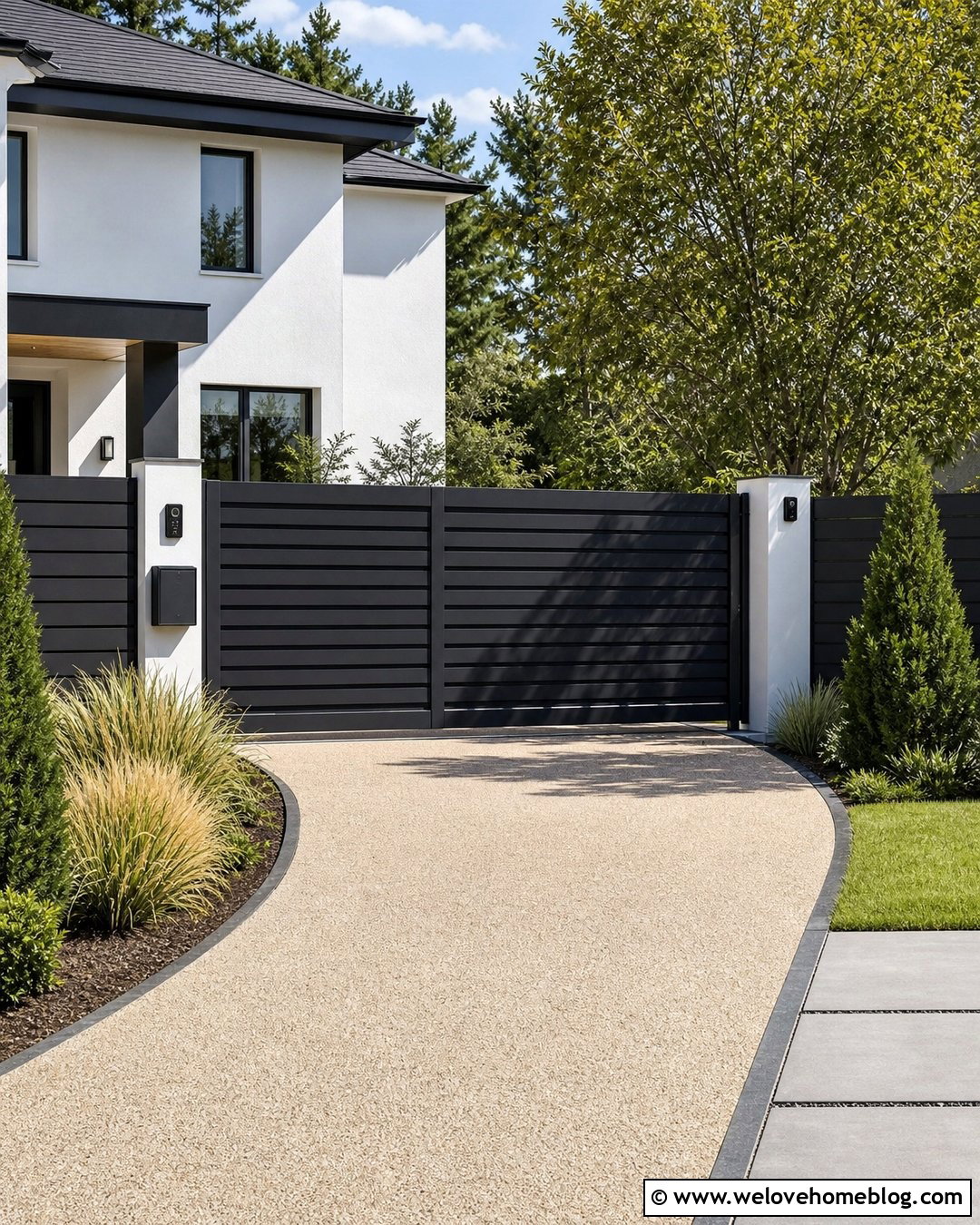
A tamper alert can provide early warning when someone interferes with a gate cabinet, intercom, lock, or control enclosure. Pair this feature with a solid aluminum privacy gate, pale resin-bound driveway, and contemporary stucco home. Sensors can report forced cabinet opening, unexpected gate movement, or a gate that fails to reach its closed position. Route alerts to a monitored security system or trusted household devices rather than relying only on a loud outdoor siren. Protect the controller and network equipment in weather-resistant enclosures positioned inside the property. The physical gate still needs reinforced posts, a compatible automatic lock, and continuous side fencing because electronic alerts cannot compensate for weak construction. Test notifications periodically and replace batteries before they fail. Thoughtful landscaping should conceal wiring from casual view without restricting technicians’ access to equipment.
20. Driveway Gate With Regular Security Maintenance
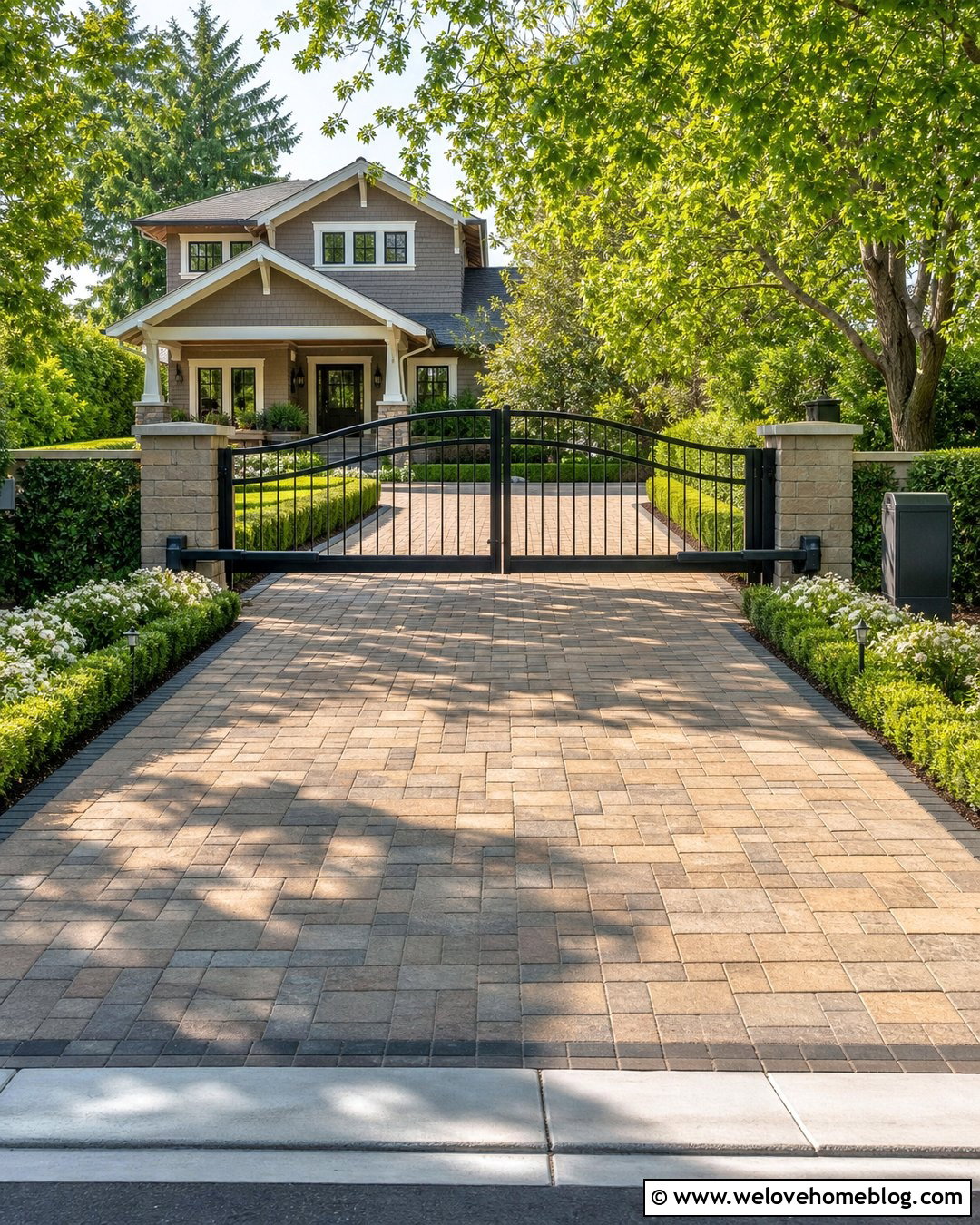
A well-designed gate gradually loses effectiveness when bolts loosen, hinges sag, batteries weaken, sensors move, or vegetation blocks the operating path. Finish the property with a durable steel gate, interlocking concrete-paver driveway, trimmed hedge borders, and an accessible equipment area. Create a recurring maintenance routine based on the manufacturer’s instructions. Check closing alignment, locking engagement, post movement, corrosion, wiring enclosures, warning signs, lighting, camera views, and backup power. Test photo eyes, sensing edges, manual operation, and other safety functions using the approved procedure. Review access codes, remotes, mobile users, and visitor permissions at the same time. Never continue operating a gate that moves unpredictably or has disconnected safety devices. Automated gate systems require periodic maintenance and testing, and qualified service is especially important when faults involve the operator, electrical components, or entrapment protection. ()
Conclusion:
The most effective driveway gate is not simply the tallest or heaviest option. It combines a suitable gate material, stable posts, reliable locking, controlled entry, safe automation, lighting, monitoring, and continuous perimeter fencing. Use these **20 how to secure a driveway gate ideas** to build a layered entrance that fits your driveway, home, climate, and daily routine. Automatic operators should be listed for their intended use and installed with compatible safety devices by a qualified professional. Always check local building, electrical, access, and emergency-response requirements before construction. Once installed, inspect the system regularly, remove outdated access credentials, test backup power, and repair small alignment or sensor problems before they become serious security and safety concerns.

Related posts:




Leave a Reply