
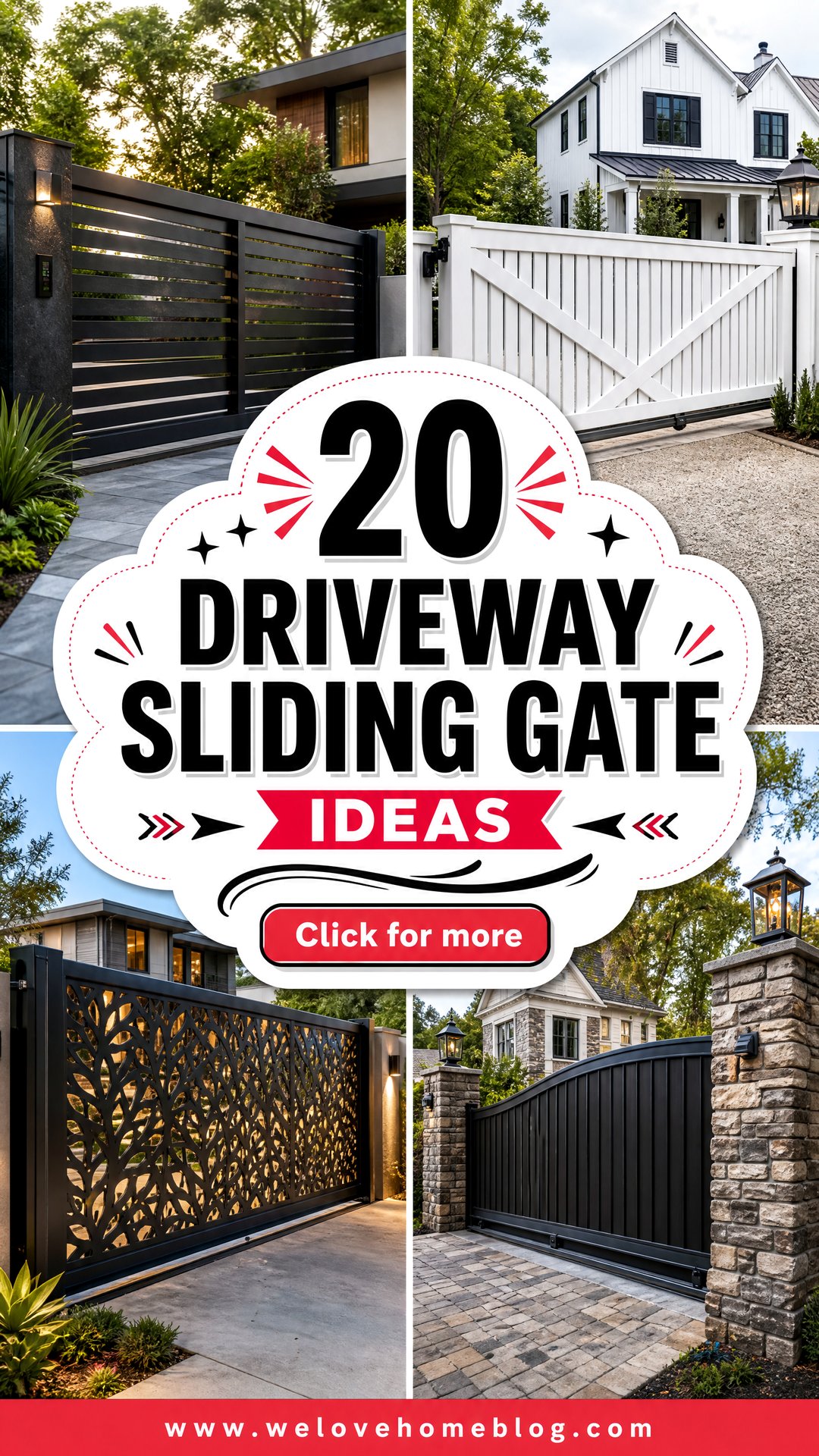
A well-designed sliding gate can make a driveway feel safer, more private, and far more polished without taking up valuable parking or turning space. The best gate does more than close an entrance. It complements the driveway material, follows the home’s architecture, and connects naturally with fencing, pillars, lighting, and landscaping. Options range from warm cedar and low-maintenance composite panels to sleek aluminum, decorative steel, and track-free cantilever systems. Before choosing one, consider the driveway slope, opening width, side clearance, wind exposure, and preferred access controls. The complete entrance should look balanced from the street and remain practical for everyday use. Explore these 20 driveway sliding gate ideas to find a complete design that suits your home, property, and privacy needs.
1. Modern Horizontal Slat Sliding Gate
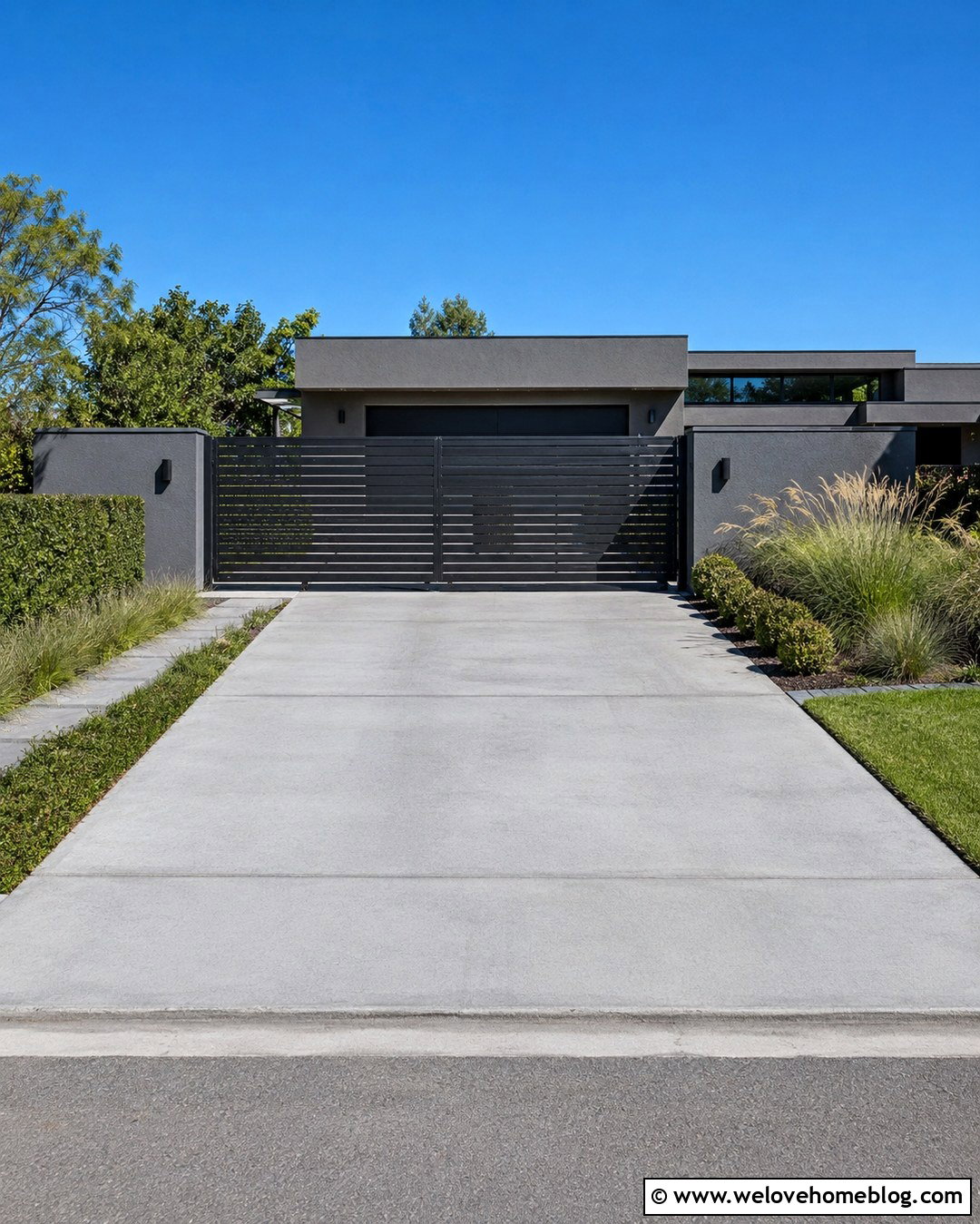
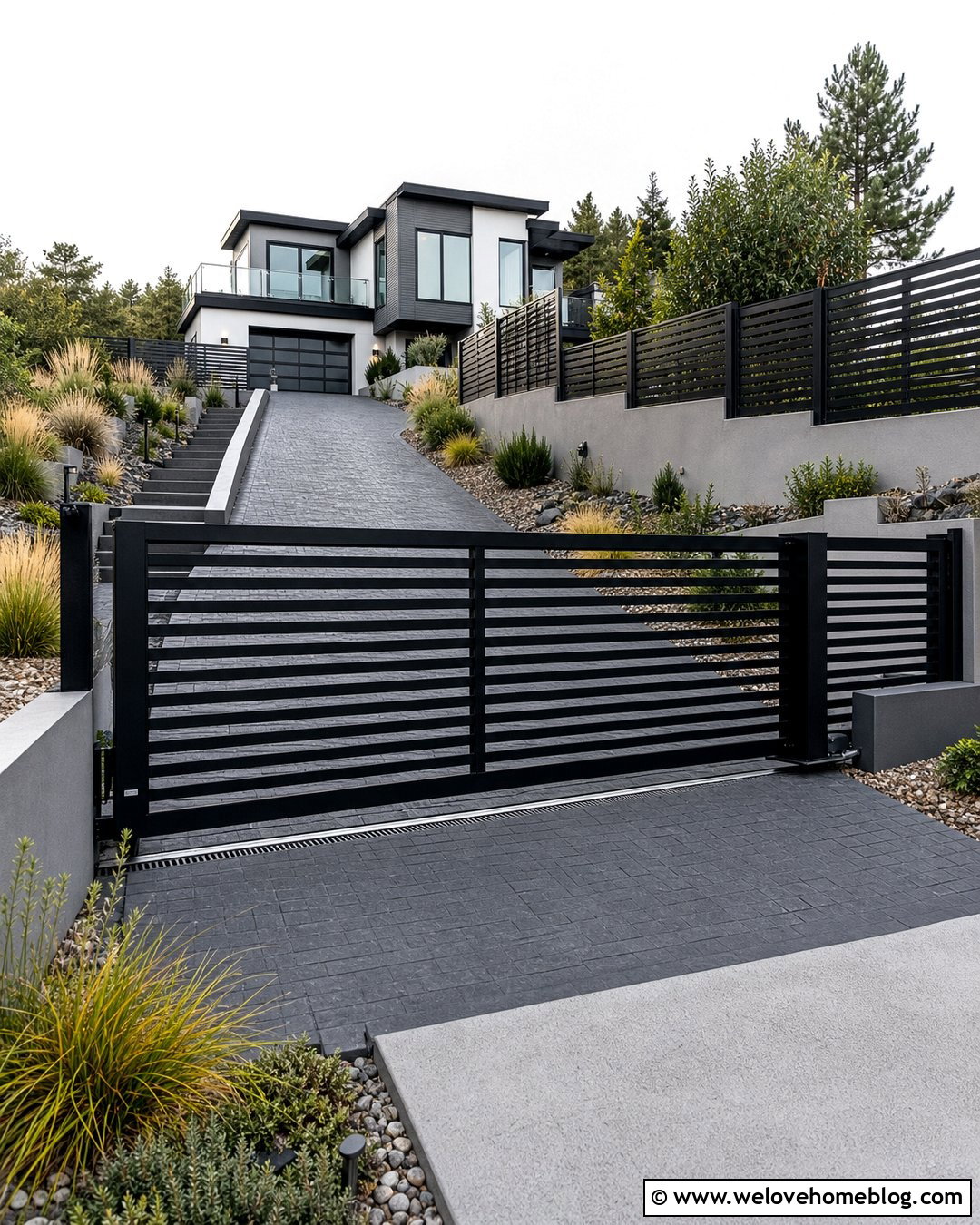
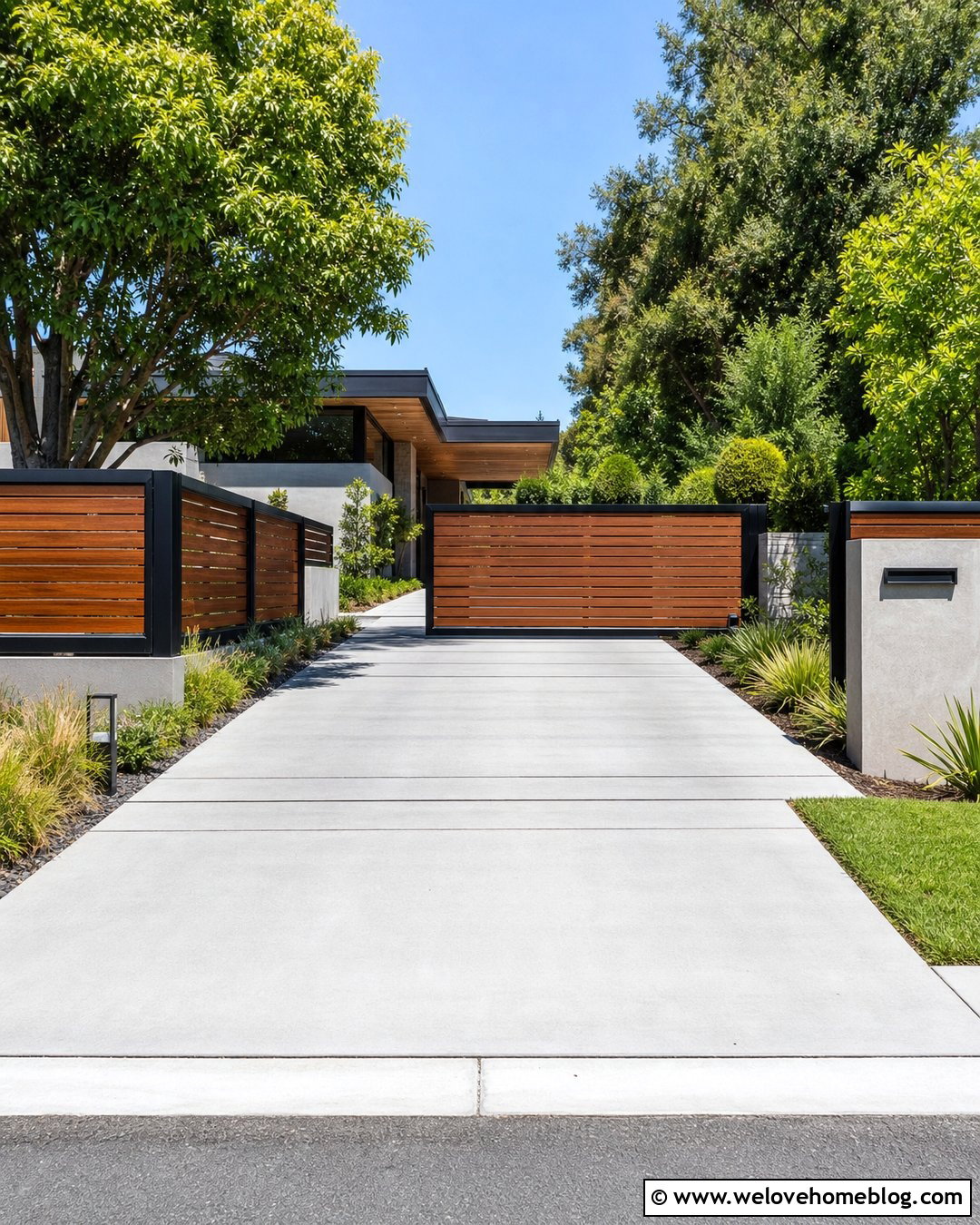
A horizontal slat gate gives a modern driveway a clean, wide appearance. Choose matte black aluminum slats with narrow spaces to balance privacy, airflow, and visibility. Pair the gate with a straight light-gray concrete driveway divided by slim control joints. Low charcoal walls can hide the operator and support posts, while ornamental grasses soften the hard lines. Continue the same slat pattern along the front fence so the entrance feels intentional rather than added later. This design works especially well with flat-roofed homes, geometric landscaping, and simple concrete walkways. Keep the gate height aligned with nearby walls, and use recessed pillar lights instead of decorative lanterns. The result is a streamlined entrance that looks secure without appearing overly heavy.
2. Wood And Black Steel Sliding Gate
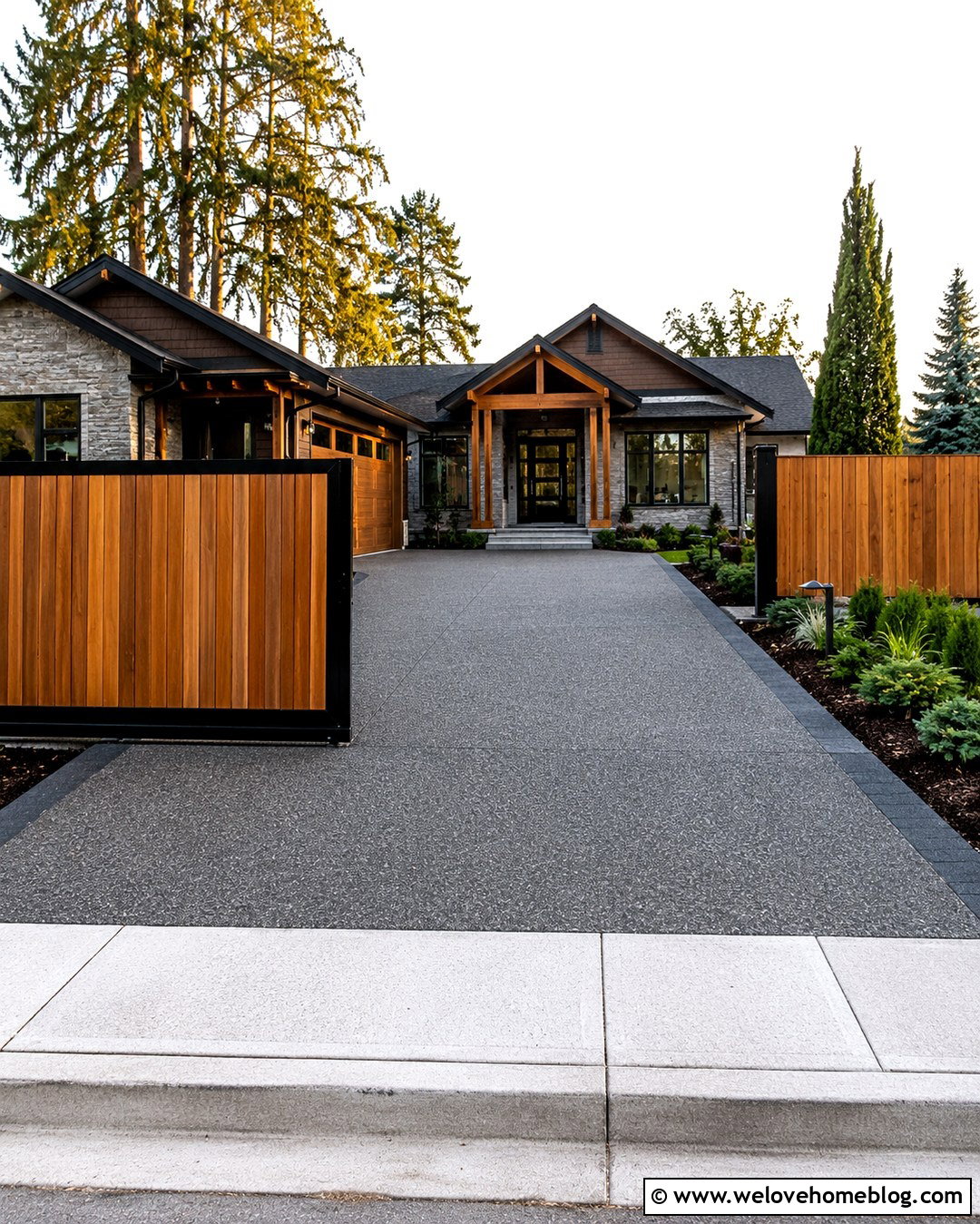
The warmth of wood can keep a large driveway gate from feeling industrial. Install vertical cedar or hardwood boards within a strong black steel frame, then repeat those materials on the pedestrian gate and nearby fencing. A dark exposed aggregate driveway provides a practical transition between the street and a contemporary craftsman home. Add black metal edging, layered evergreen shrubs, and a narrow paver walkway beside the vehicle entrance. Slight spaces between the boards can lighten the gate, while close-set boards provide stronger screening. Choose a stain that relates to the home’s front door or timber details. Because wood naturally changes in outdoor conditions, the frame, board spacing, drainage, and finish should be planned carefully to maintain a crisp, coordinated appearance.
3. Black Aluminum Privacy Sliding Gate
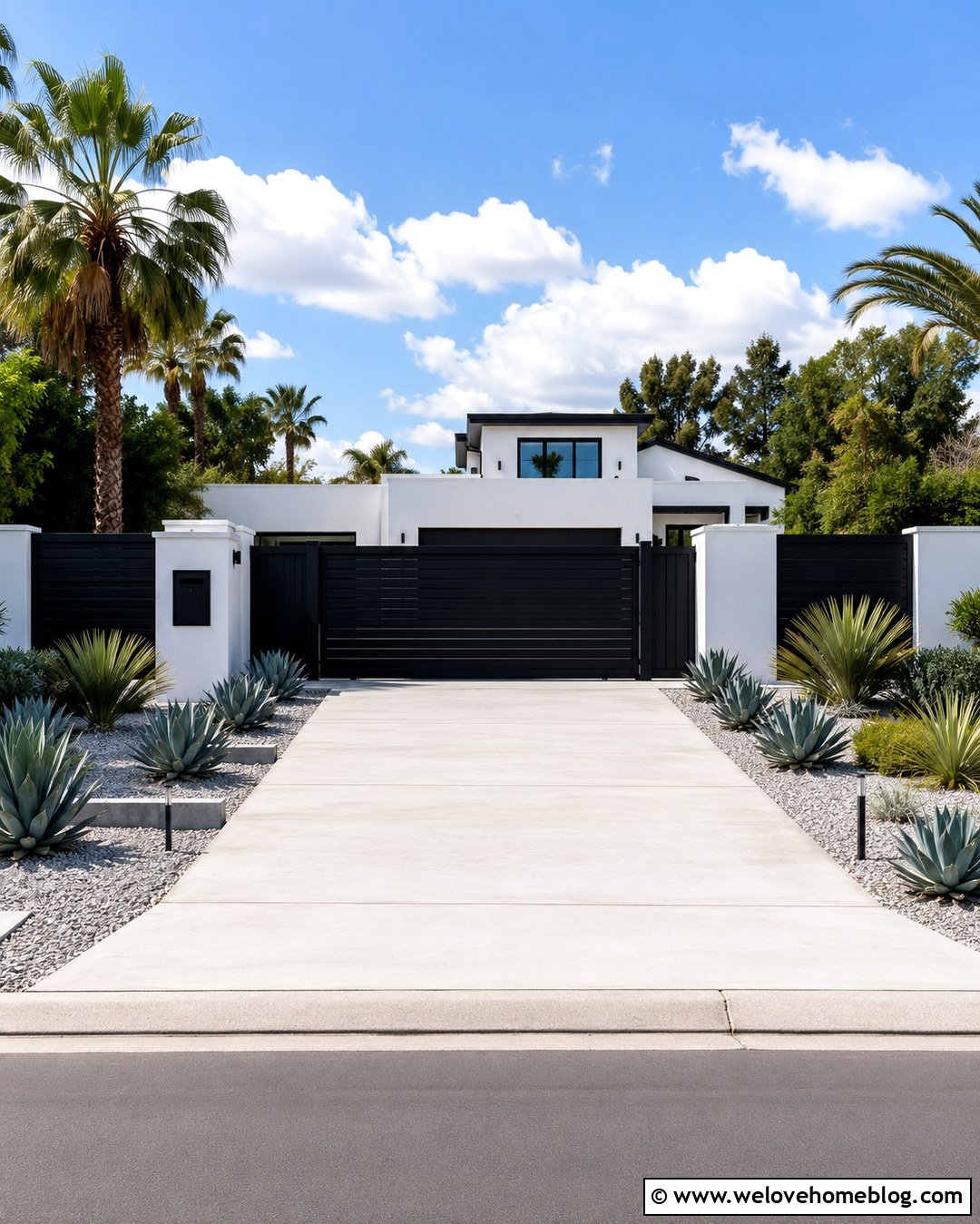
For a private entrance with minimal visual clutter, consider a solid black aluminum sliding gate. A smooth powder-coated finish creates a sharp contrast against a pale stucco home and light concrete driveway. Frame the entrance with matching aluminum fence panels and white rendered walls for a unified street view. Simple rectangular planting beds filled with agave, yucca, gravel mulch, and sculptural grasses can reinforce the modern look. A narrow horizontal reveal near the top of the gate adds detail without exposing the property. Keep the address sign, intercom, and keypad together on one streamlined pillar. Since a broad solid gate can be affected by wind, its size, structural frame, posts, and operator should be specified by an experienced gate professional.
4. Cantilever Sliding Gate For A Sloped Driveway
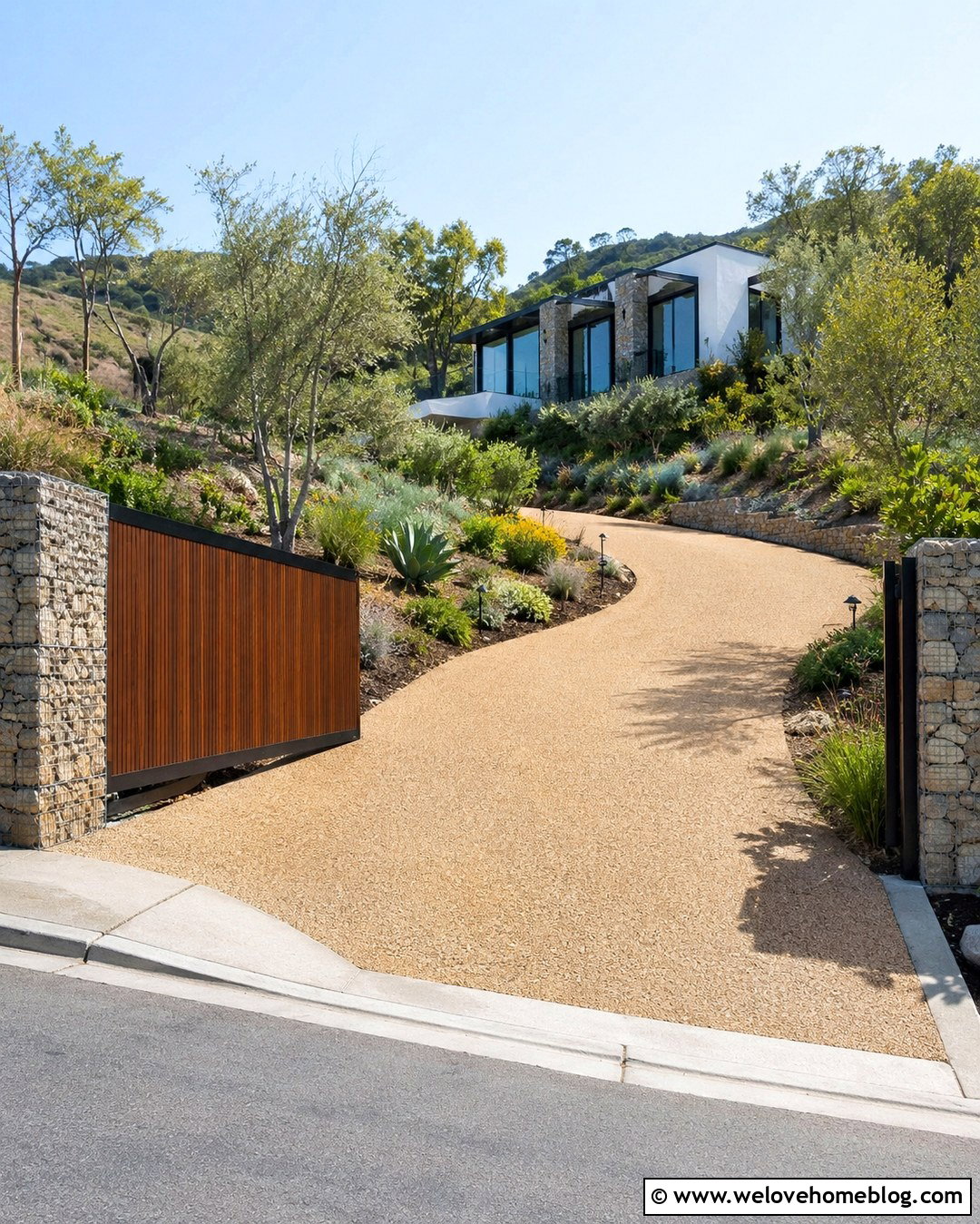
A cantilever gate is a useful solution when the driveway rises, contains gravel, or has an uneven entrance. The gate is supported from the side rather than traveling along a track across the driveway surface. Pair a dark steel cantilever frame with spaced vertical wood boards for a warm but secure hillside entrance. A curved resin-bound gravel driveway can climb toward the house without a visible rail interrupting its smooth finish. Anchor the entrance visually with rugged stone walls, drought-tolerant shrubs, and low path lighting. Remember that the gate requires additional room beside the driveway for its supporting tail and opening movement. Have the structure, footing, posts, wind load, operator, and safety devices professionally designed for the site. ()
5. Telescopic Sliding Gate For A Narrow Driveway
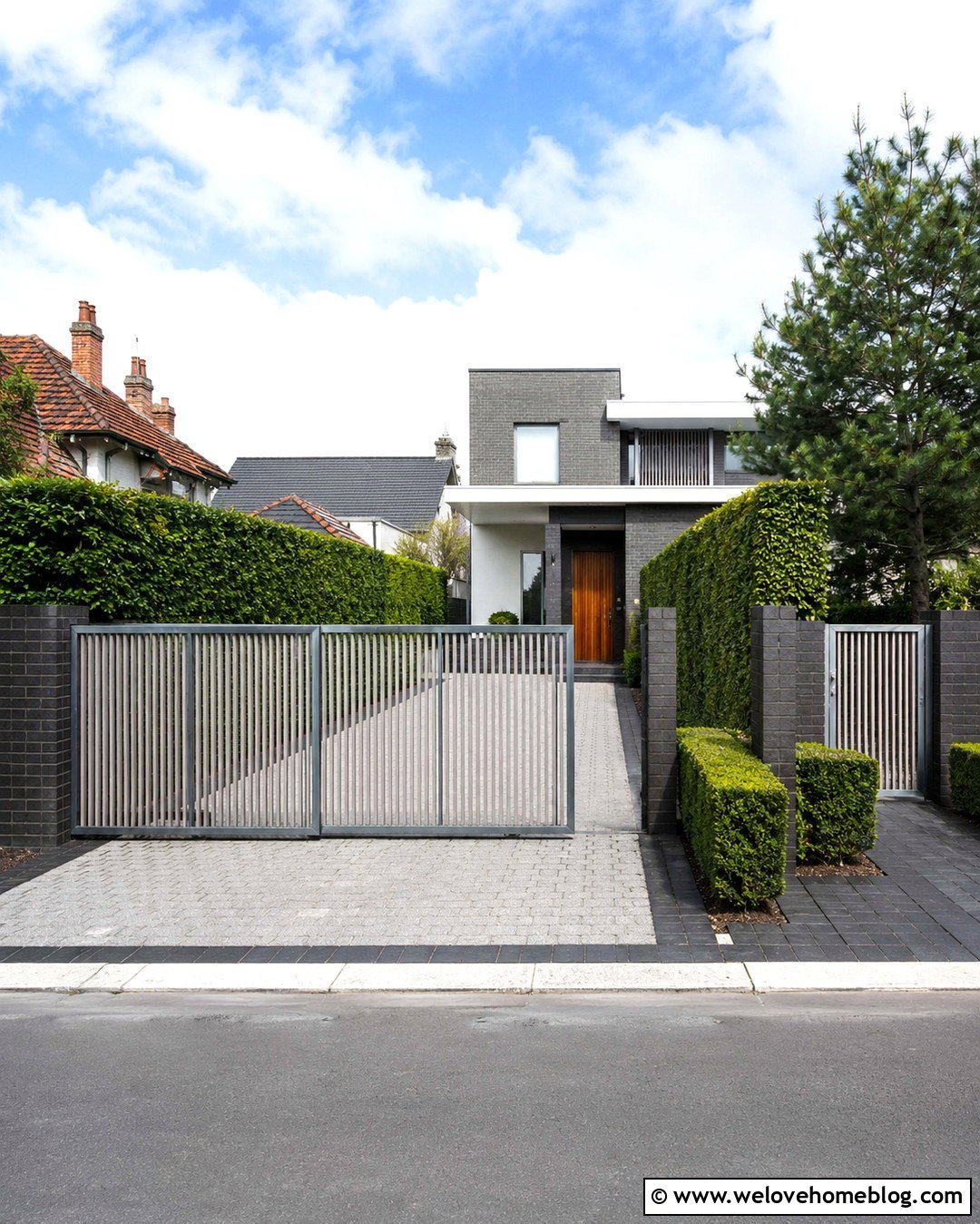
Limited side space does not always rule out a sliding entrance. A telescopic sliding gate uses overlapping panels that move together and stack into a shorter area beside the opening. Select two or three slim aluminum panels with vertical battens to keep the mechanism visually simple. Pair them with a narrow straight driveway made from medium-gray concrete pavers and bordered by dark brick. Neatly clipped hedges can screen the stacked panels when the gate is open, while a small pedestrian entrance preserves convenient foot access. This setup suits compact urban and suburban lots where parking space is tight. Because the moving panels must remain synchronized, accurate measurements and professional hardware selection are important. Keep planting, utility boxes, and walls clear of the panels’ complete travel path.
6. White Farmhouse Sliding Gate
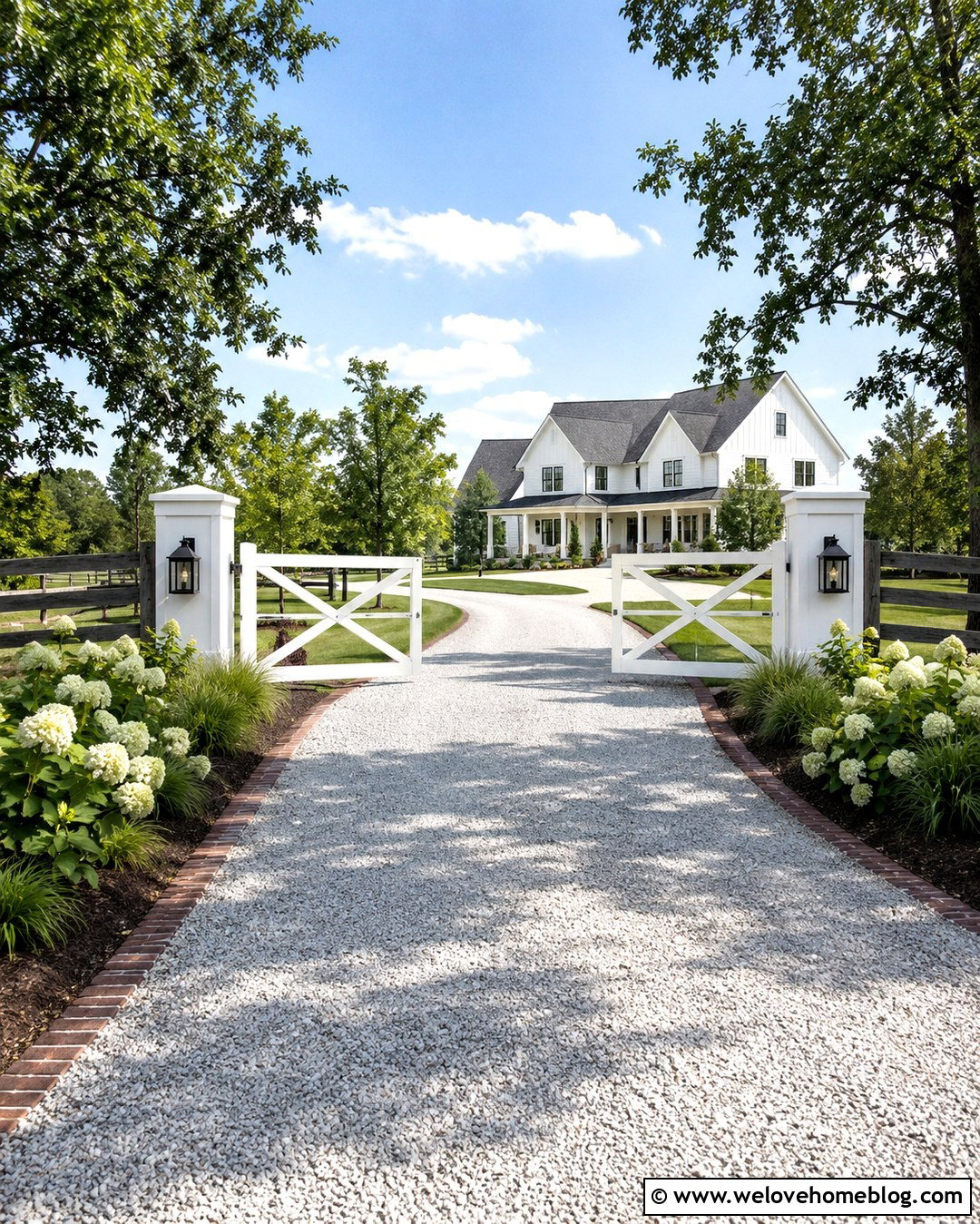
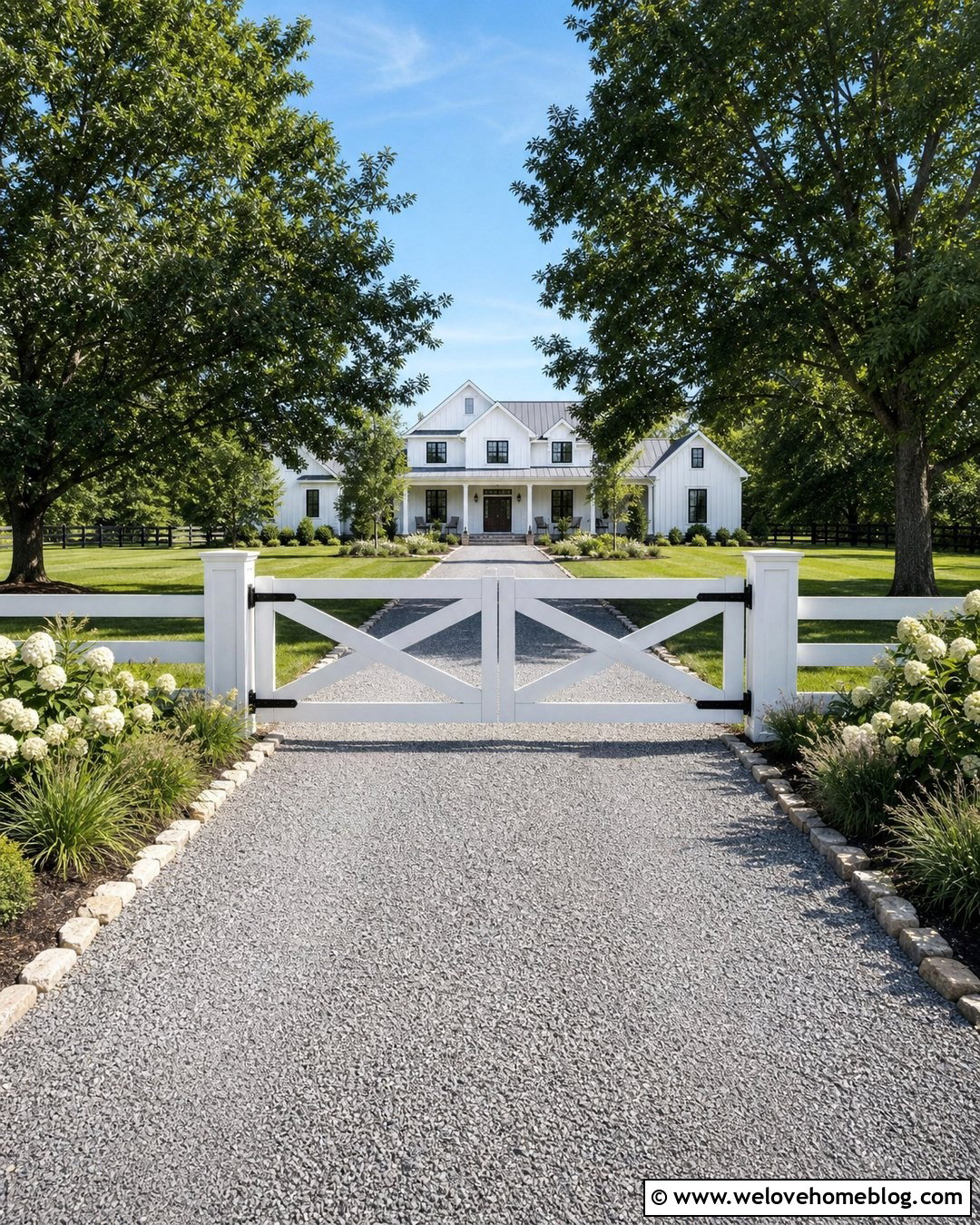
A sliding gate can suit farmhouse architecture without copying a traditional swinging barn door. Use white powder-coated aluminum arranged in a simple cross-brace pattern over a reinforced frame. Install it across a pale gravel driveway with brick edging and a gently curved approach to a modern farmhouse. Square white pillars, black lantern-style fixtures, and a matching mailbox create a familiar rural character. Add hydrangeas, panicle grasses, and a low split-rail fence to soften the entrance. The gate should slide behind fencing designed to conceal its frame when open. Black hardware can echo the windows and roof without making the design too busy. This combination delivers classic farmhouse curb appeal while preserving driveway space near parked vehicles, planting beds, and the front approach.
7. Wrought Iron Sliding Gate
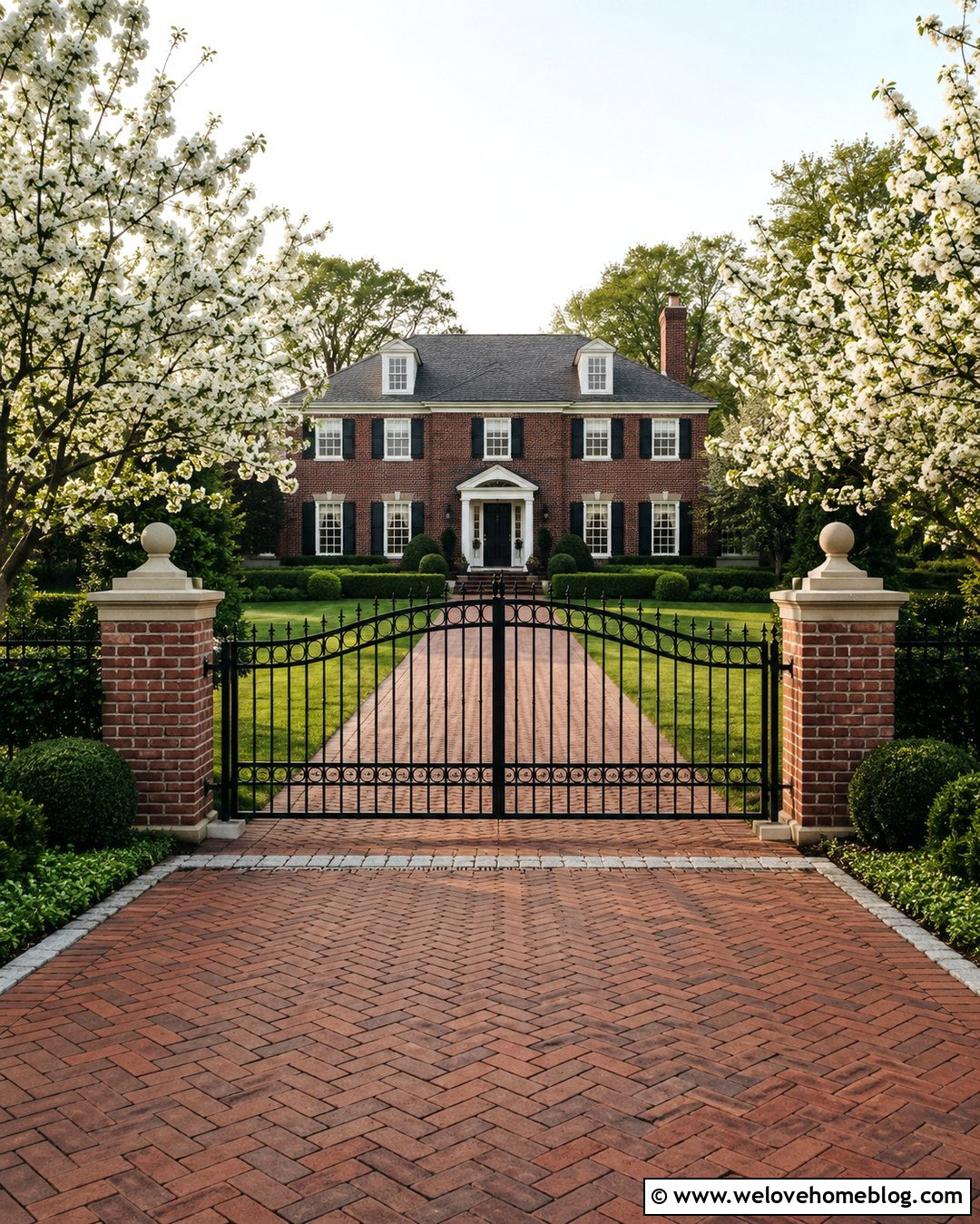
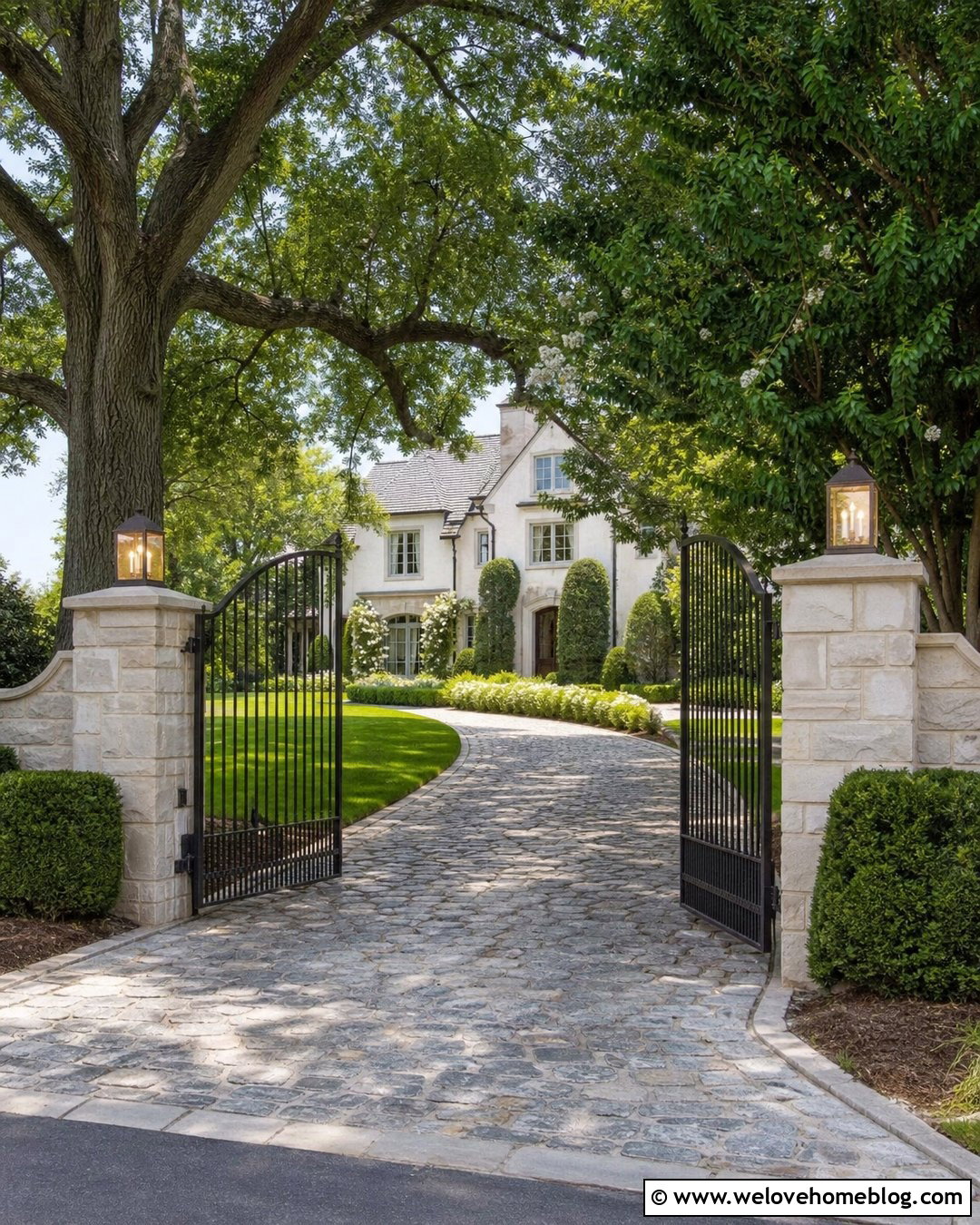
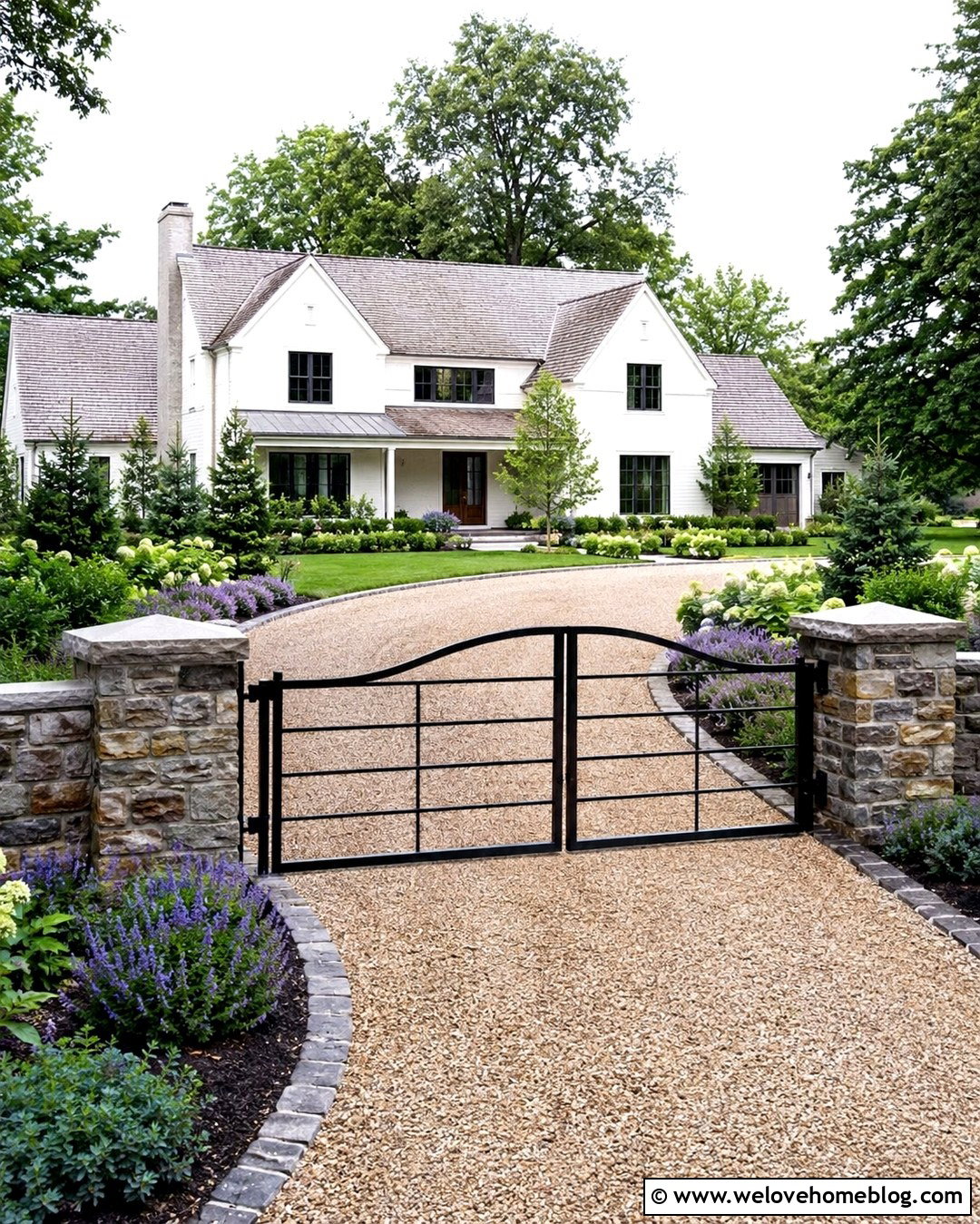
Traditional homes often look best with an open metal gate that preserves views of the driveway and front facade. Choose a black wrought iron or fabricated steel sliding gate with evenly spaced vertical pickets, a restrained arched top, and limited scrollwork. A clay brick driveway laid in herringbone can provide a rich foundation for the entrance. Use matching brick pillars with stone caps to connect the gate to a colonial or Georgian-style home. Boxwood borders, mature shade trees, and symmetrical walkway planting will complete the formal layout. Keep decorative details large and simple enough to read clearly from the curb. An open design also reduces the visual weight of a wide gate. Position the operator and guide hardware behind landscaping where possible without restricting access for maintenance.
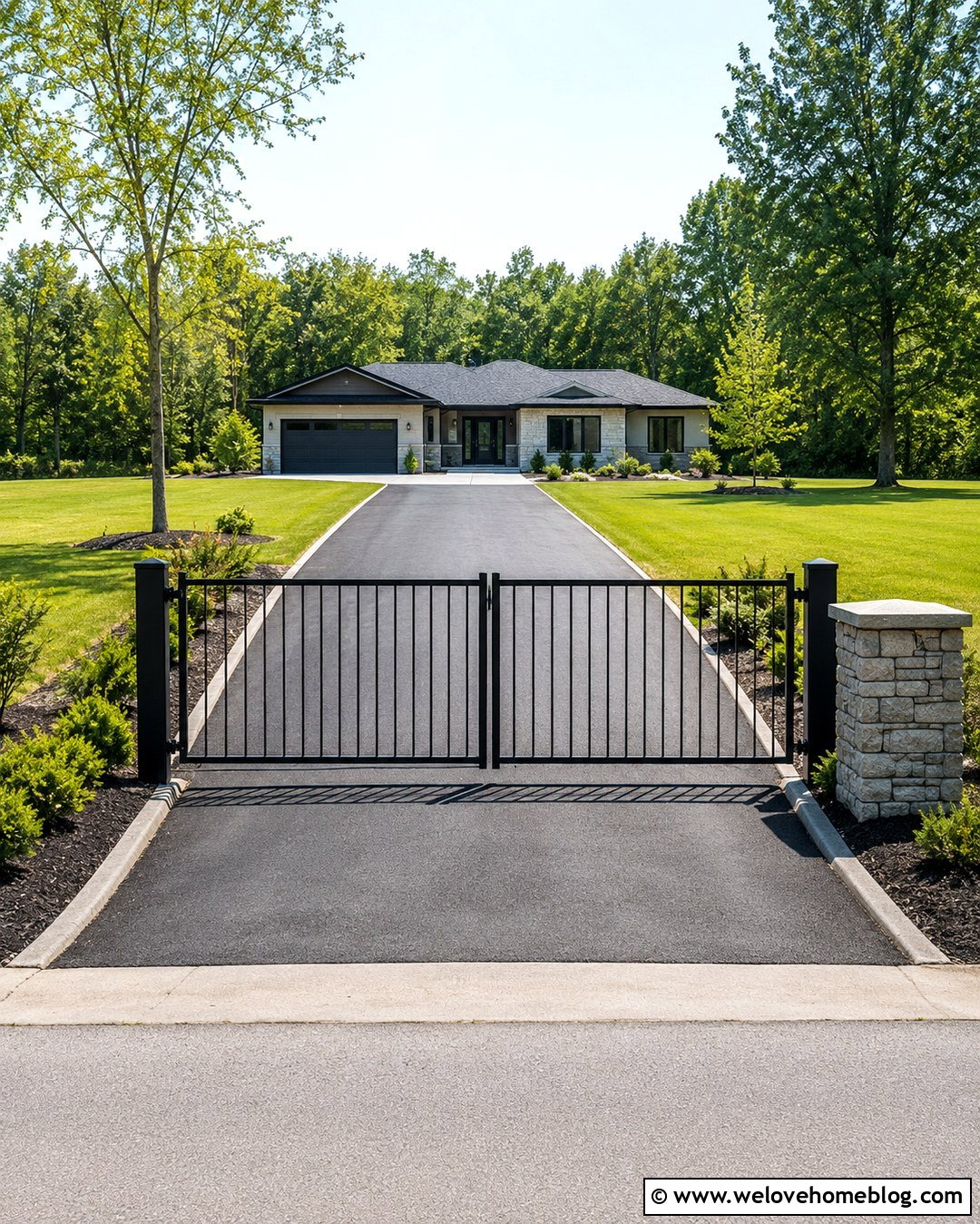
8. Laser Cut Metal Sliding Gate
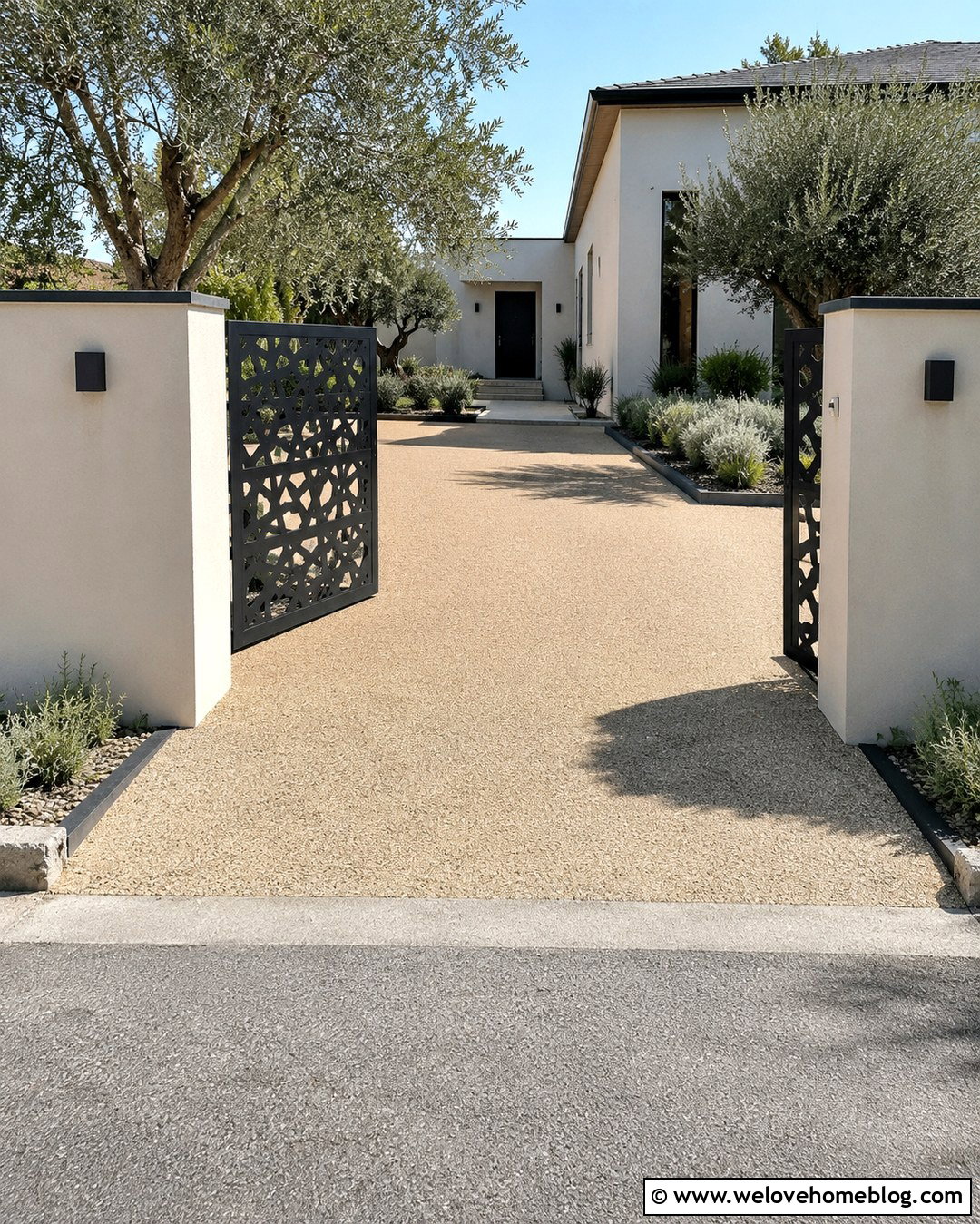
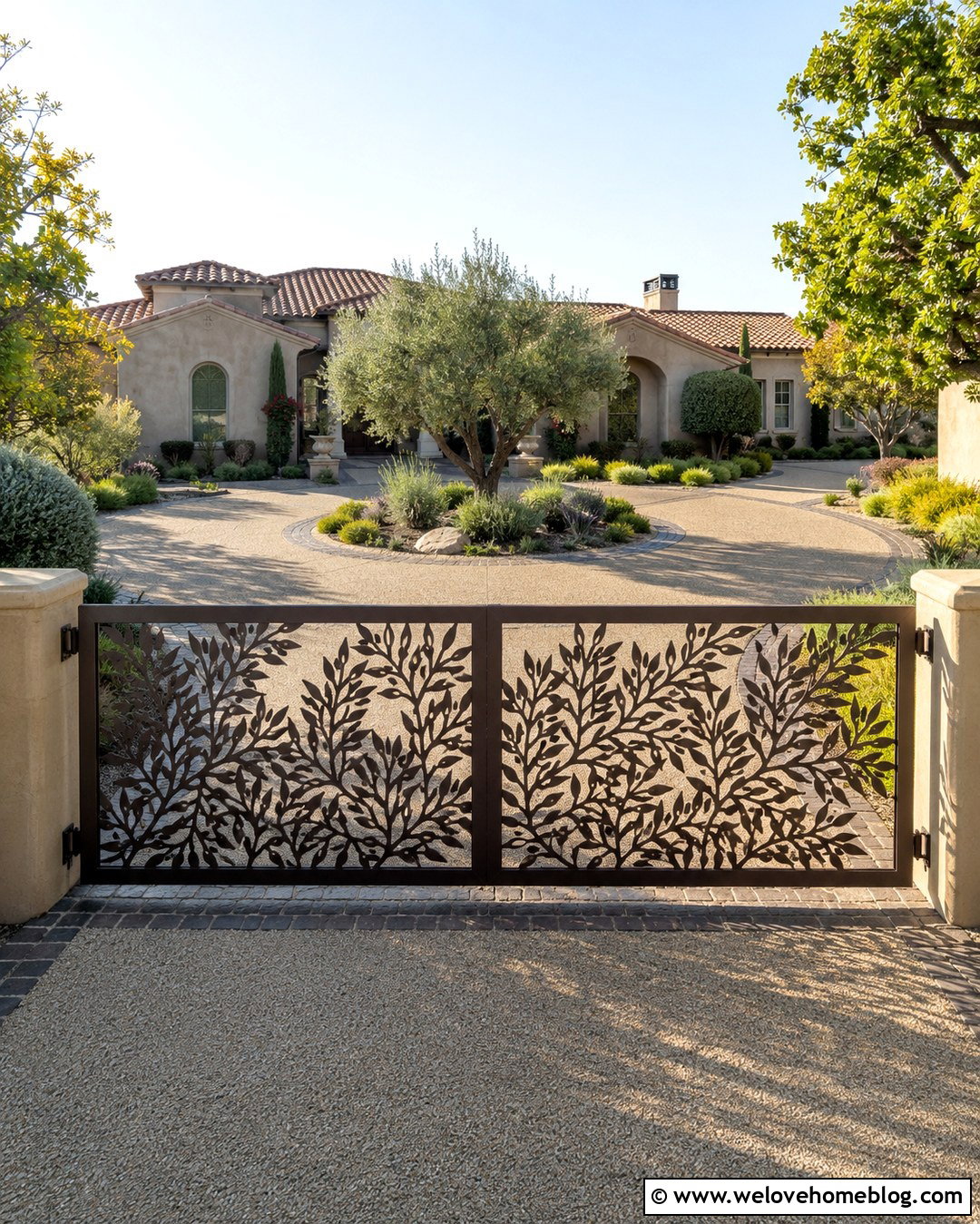
Laser-cut panels turn a functional gate into a strong architectural feature. For a contemporary home, select a powder-coated steel panel with a simple geometric perforation rather than a highly detailed picture. The openings can filter views and daylight while maintaining a useful degree of privacy. Pair the gate with a warm beige resin-bound driveway, charcoal steel edging, and rectangular beds filled with olive trees and silvery foliage. Smooth stucco pillars create clean mounting points and prevent the patterned panel from competing with too many materials. Repeat one shape from the cutout pattern in the address plaque or walkway layout. Use the decorative panel as an insert within a structural metal frame, and confirm that its open area, weight, wind exposure, and finish are appropriate for the installation.
9. Cedar Privacy Sliding Gate
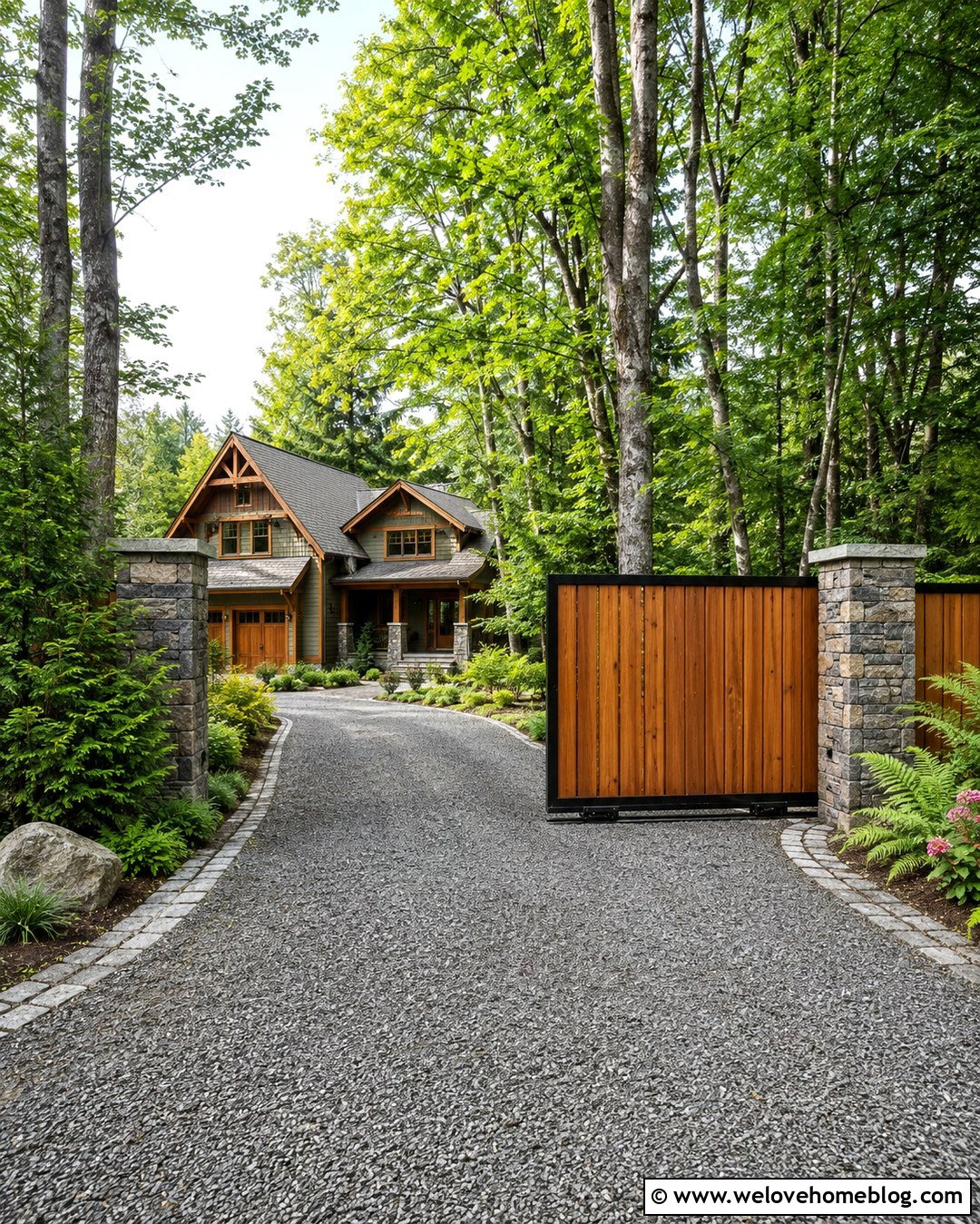
Cedar brings natural color and texture to a driveway entrance, especially when the surrounding home has stone, shingle, or timber details. Build the sliding gate with narrow vertical cedar boards attached to a concealed galvanized or powder-coated steel frame. A gray gravel driveway with cobblestone edging creates a relaxed surface that complements the wood. Continue the cedar into a matching fence, but break up the long frontage with stone posts and layered planting beds. Ferns, compact evergreens, and flowering shrubs suit a craftsman or woodland setting. A clear exterior finish can preserve more of the original color, while a semitransparent stain creates a deeper tone. Include enough drainage around the gate and avoid placing irrigation where it repeatedly soaks the boards, lower frame, or operating equipment.
10. Composite Panel Sliding Gate
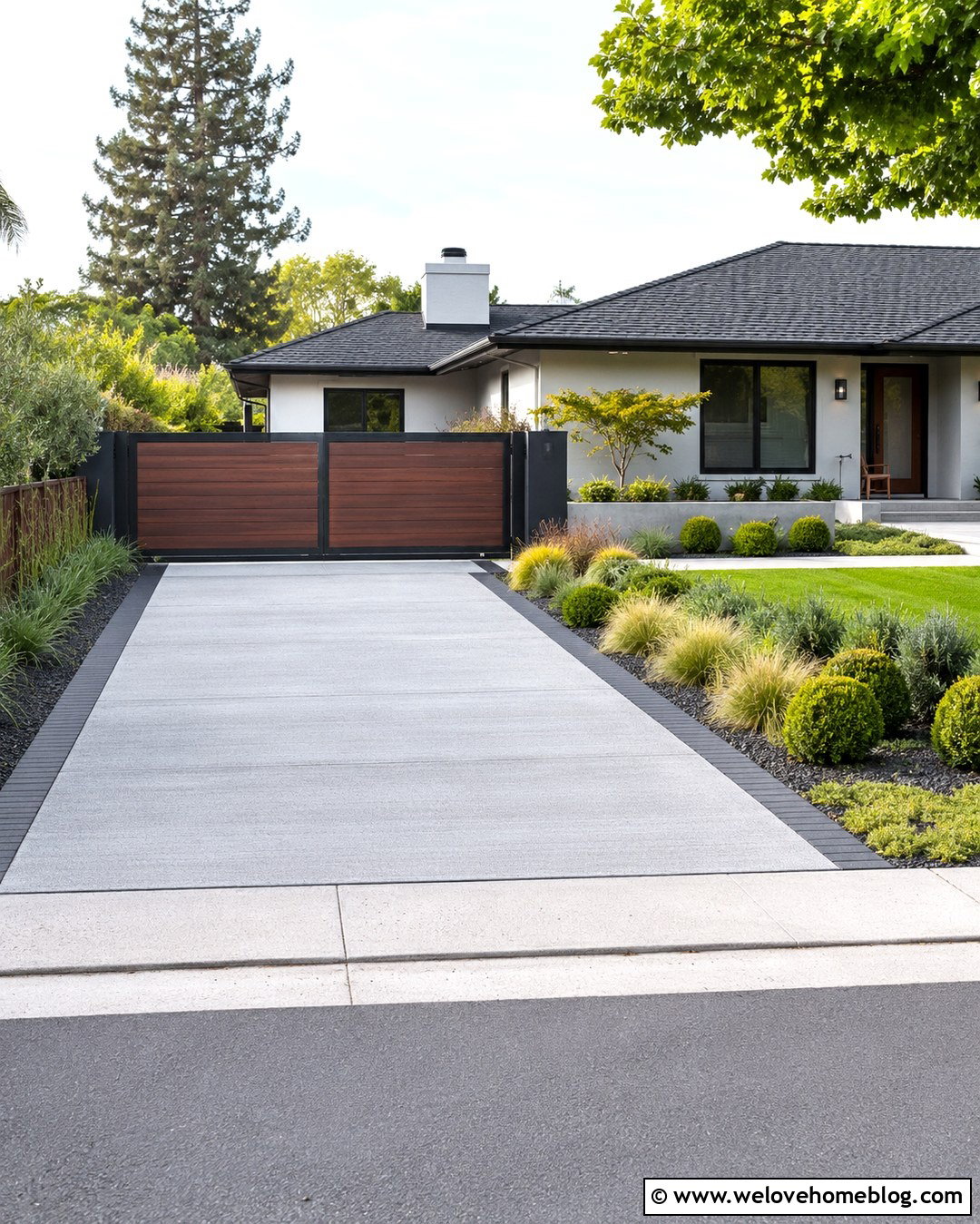
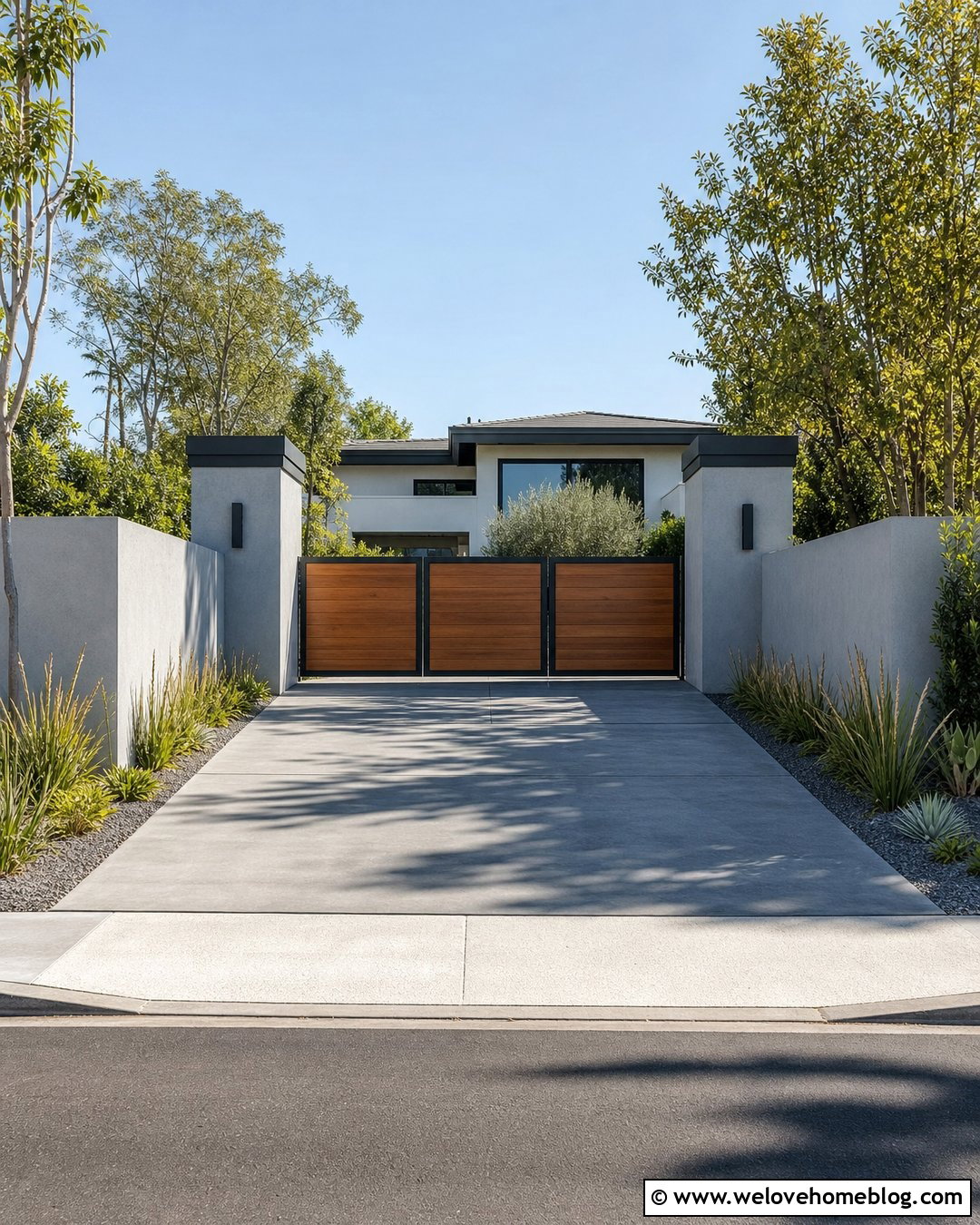
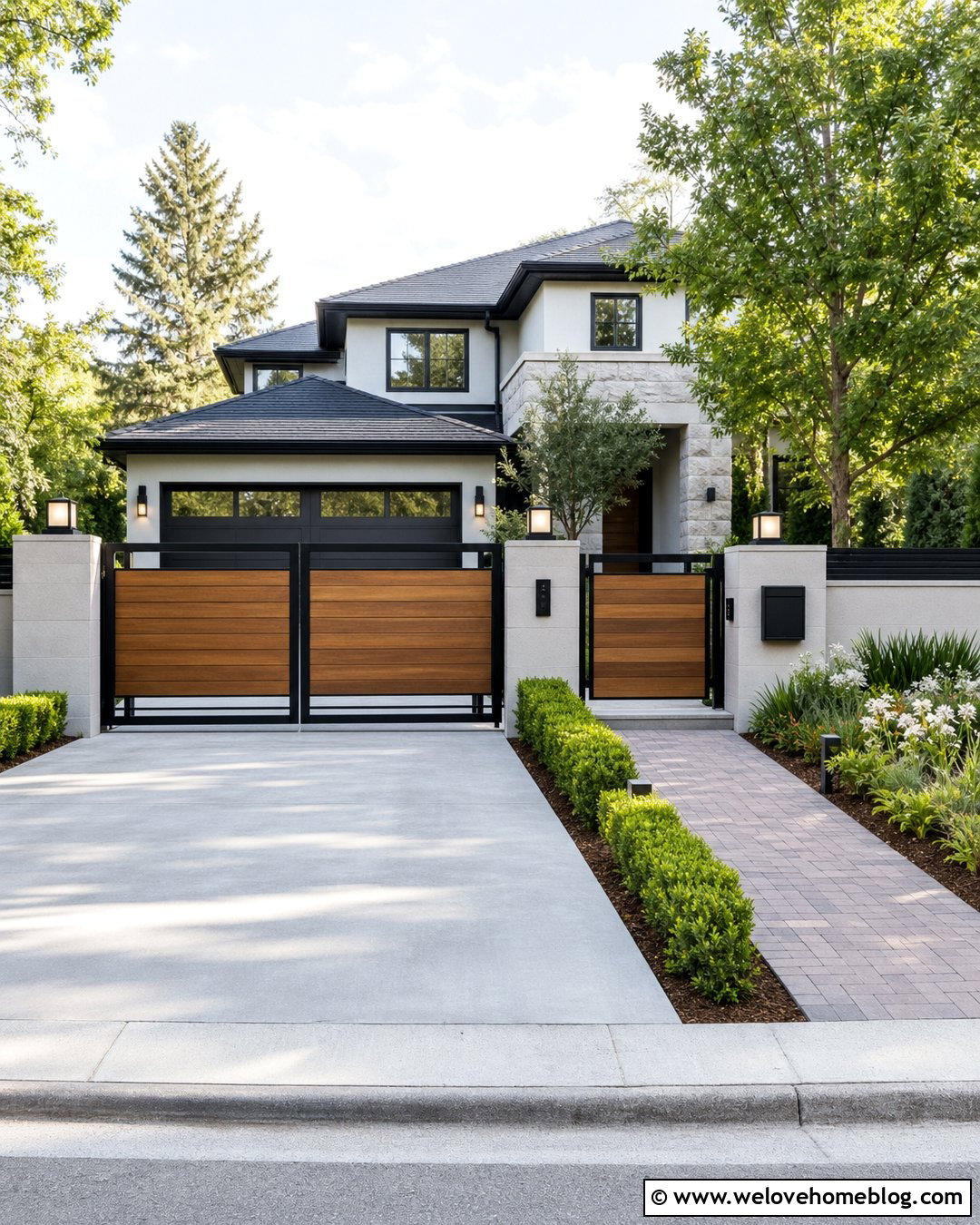
Composite infill is a practical choice for homeowners who like the appearance of boards but want a consistent finish. Choose warm walnut-tone composite panels fitted horizontally inside a dark aluminum frame. Combine the gate with a straight broom-finished concrete driveway bordered by matching charcoal pavers. A low-maintenance landscape of rounded shrubs, ground covers, and ornamental grasses can continue the clean theme around a suburban ranch home. Match the composite color to the front door or porch ceiling rather than trying to copy every wood tone on the facade. A slim top gap can make the broad panel feel lighter while retaining privacy below. Before ordering, compare panel expansion requirements, frame strength, warranties, and approved fastening methods. Conceal the motor behind the fence but keep it accessible for servicing.
11. Corten Steel Sliding Gate
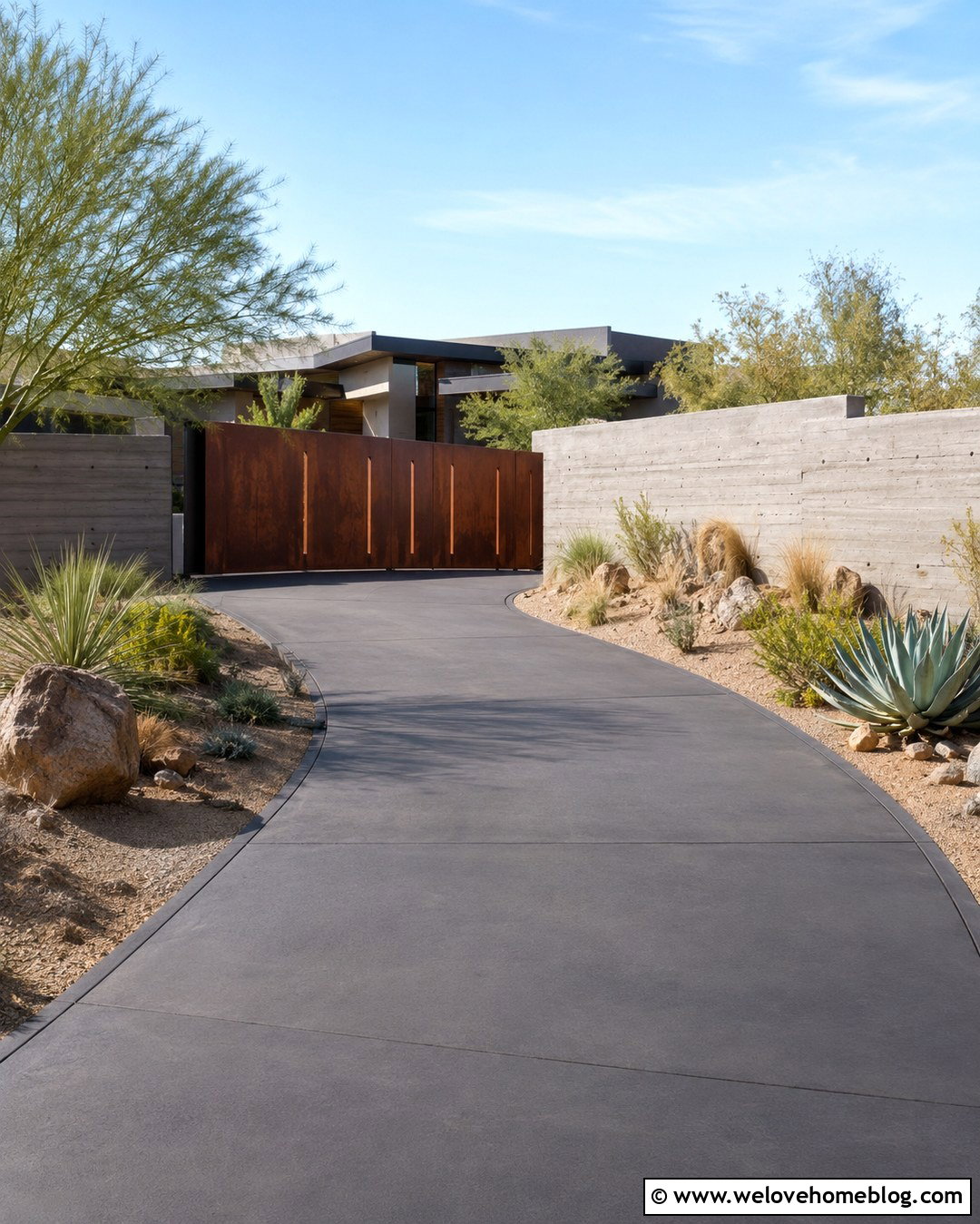
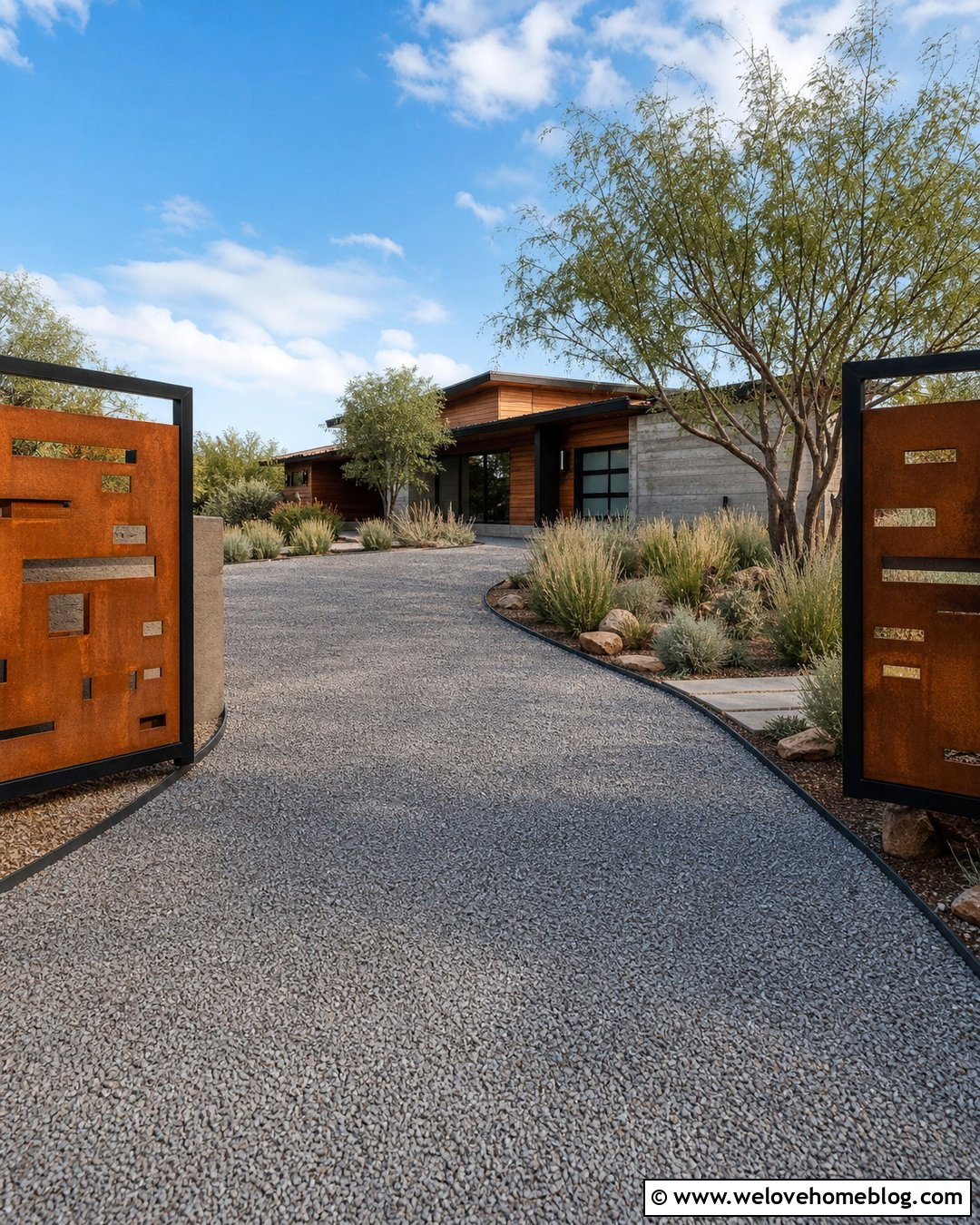
Weathering steel gives a driveway entrance a rich rust-colored surface that works beautifully with stone, concrete, and drought-tolerant landscaping. Use solid Corten steel panels within a dark structural frame, adding a few narrow vertical openings to reduce visual heaviness. A charcoal concrete driveway with a gentle curve can lead toward a desert-modern or midcentury home. Frame the gate with board-formed concrete walls, decomposed granite beds, boulders, agave, and soft grasses. Allow the warm gate color to become the main feature rather than repeating it everywhere. Plan drainage carefully because weathering runoff may stain pale paving or nearby walls during the surface-development period. Confirm that the selected steel, frame, fasteners, and local climate are suitable. A clear address marker can provide a crisp finishing detail.
12. Sliding Gate With Brick Pillars
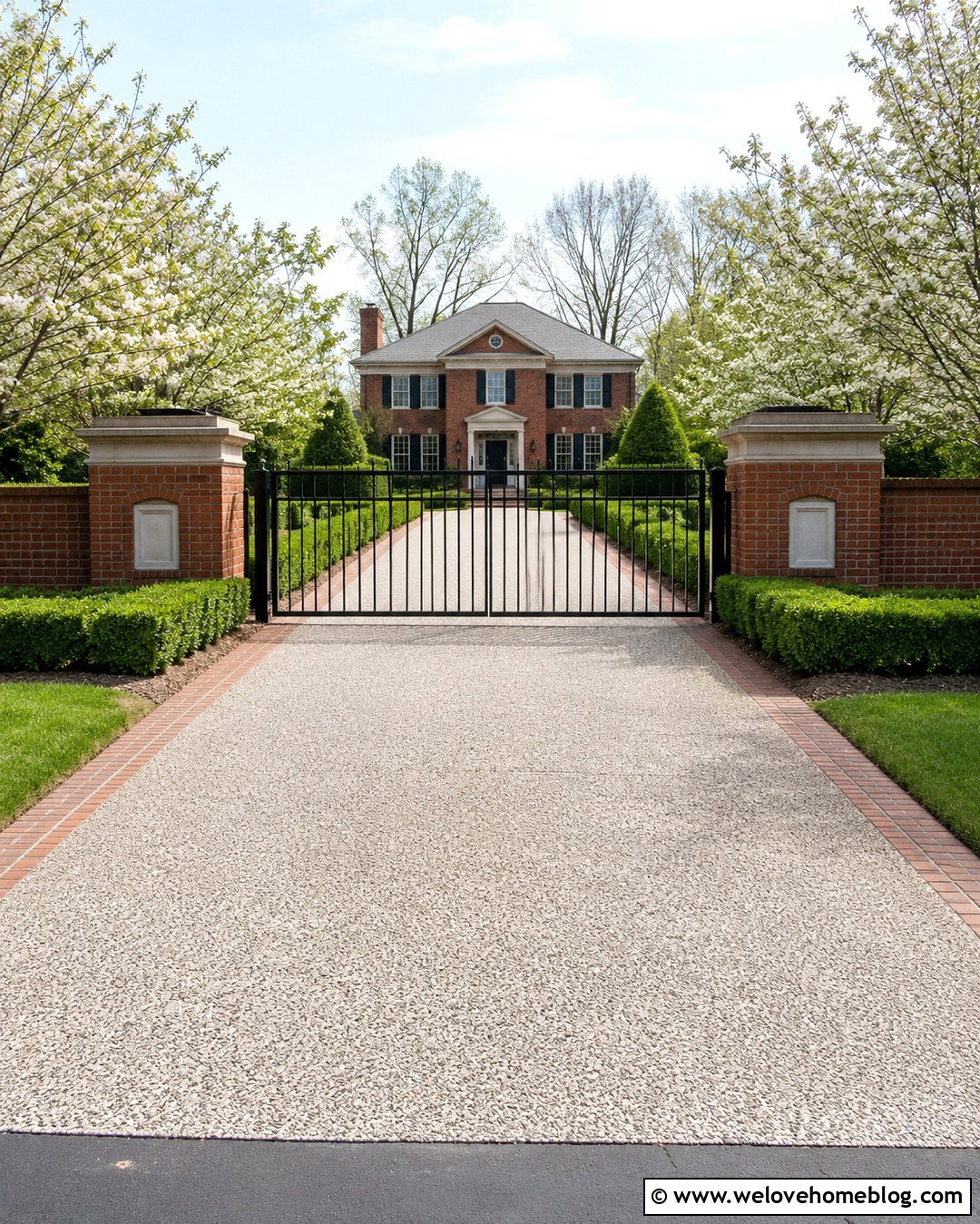
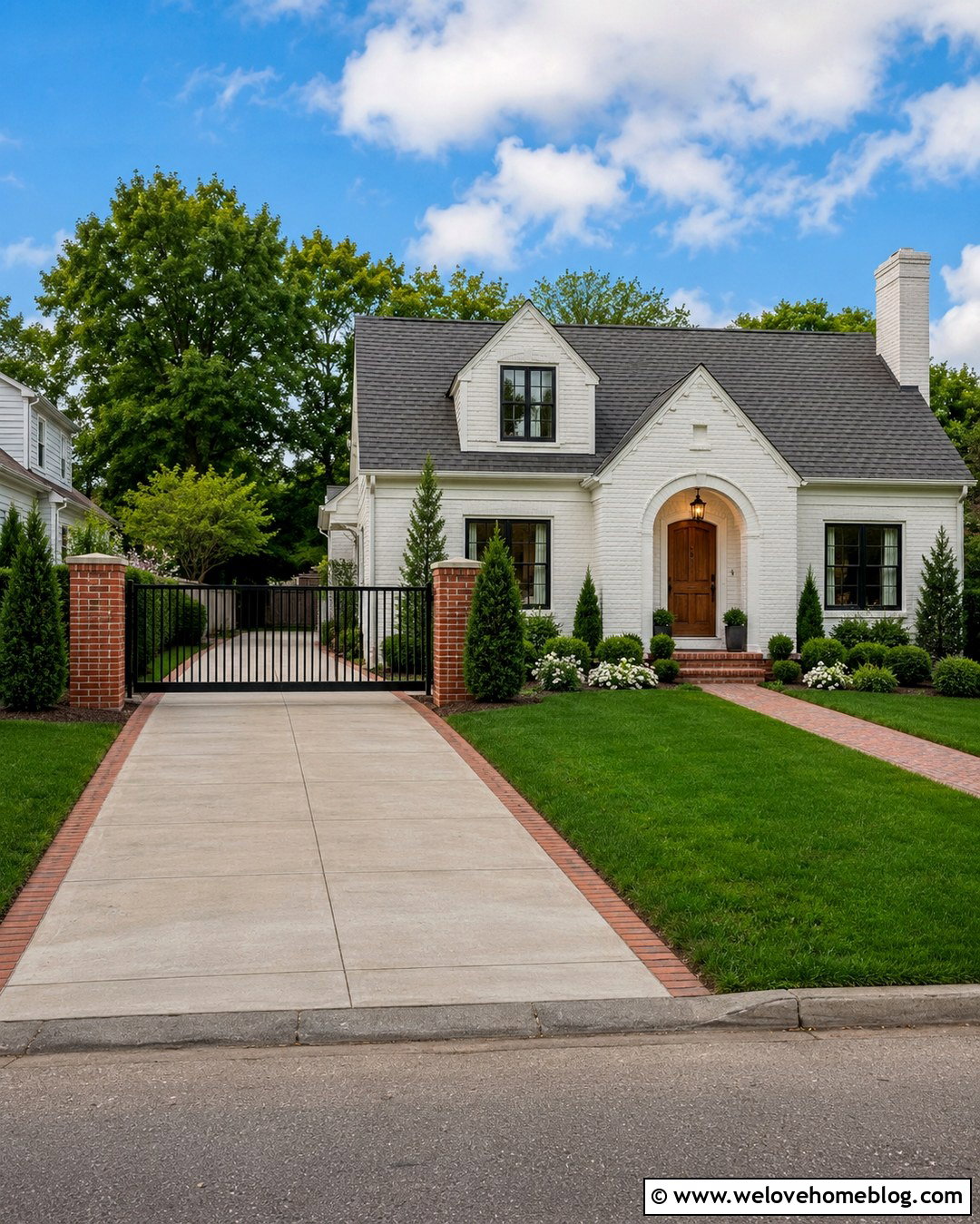
Brick pillars can make a sliding gate feel connected to an established traditional home. Select a simple black steel gate with vertical bars and a flat top, then mount the entrance hardware beside substantial red brick columns with limestone caps. Continue the brick into a border around a light exposed aggregate driveway. A straight layout with symmetrical lawn, clipped hedges, and flowering trees creates an orderly approach to a colonial or Cape Cod house. Install the keypad or intercom on a smaller coordinating brick pier so the main columns remain balanced. Pillar lights should reflect the scale and finish of the home’s exterior fixtures. Ensure the gate’s guide system, receiving post, and opening path are incorporated into the fence line. This prevents the mechanical components from appearing like visible afterthoughts.
13. Sliding Gate With Stone Pillars
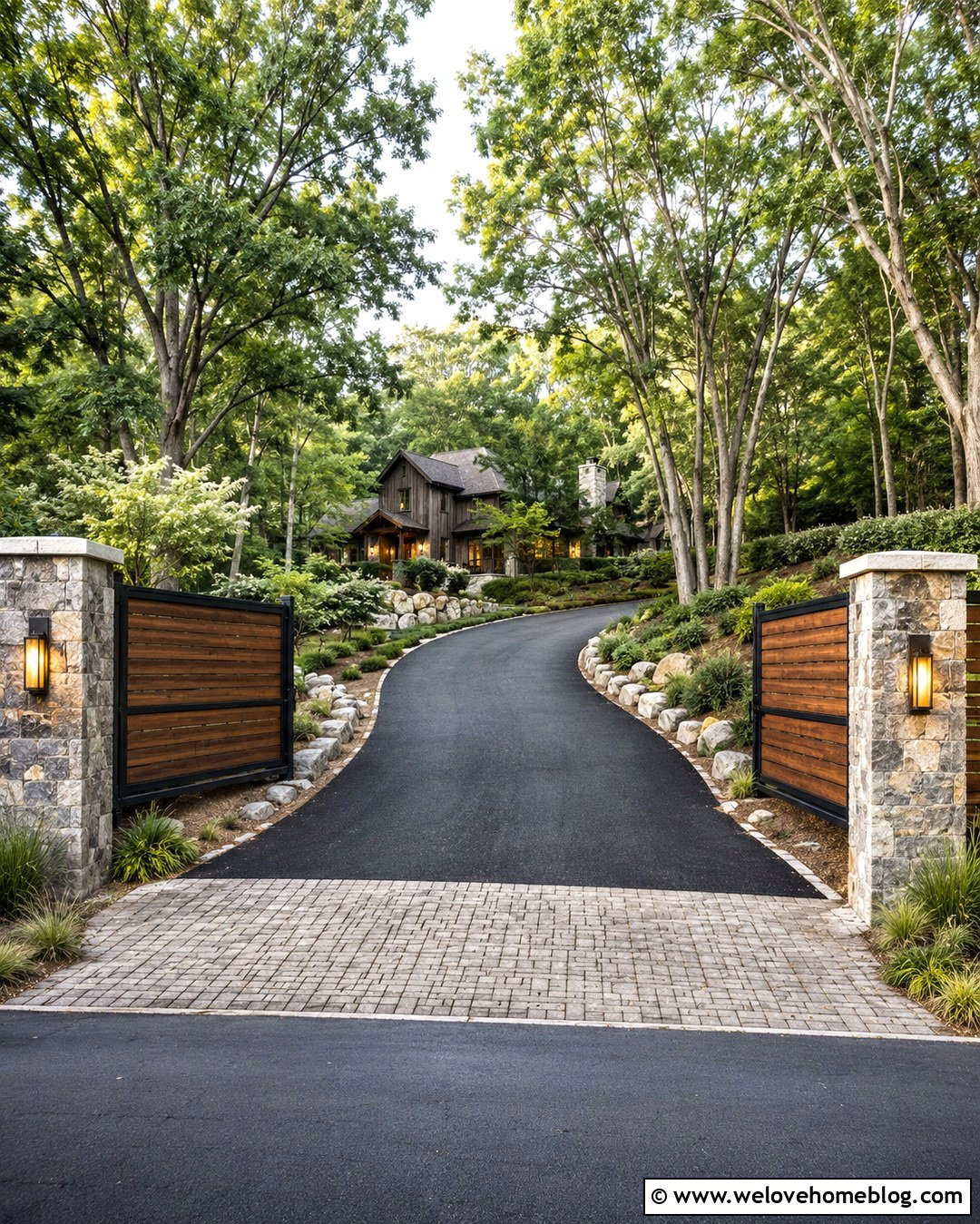
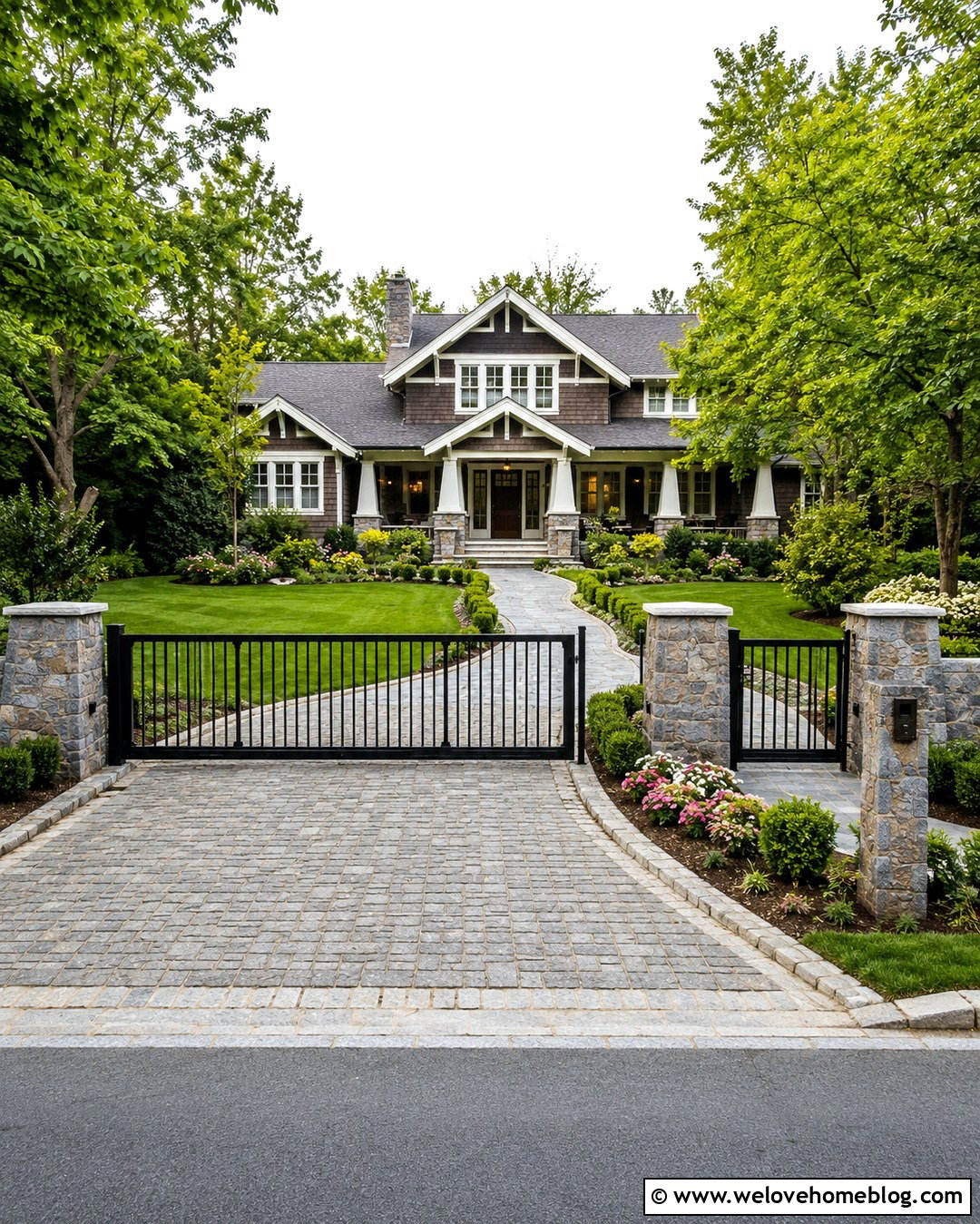
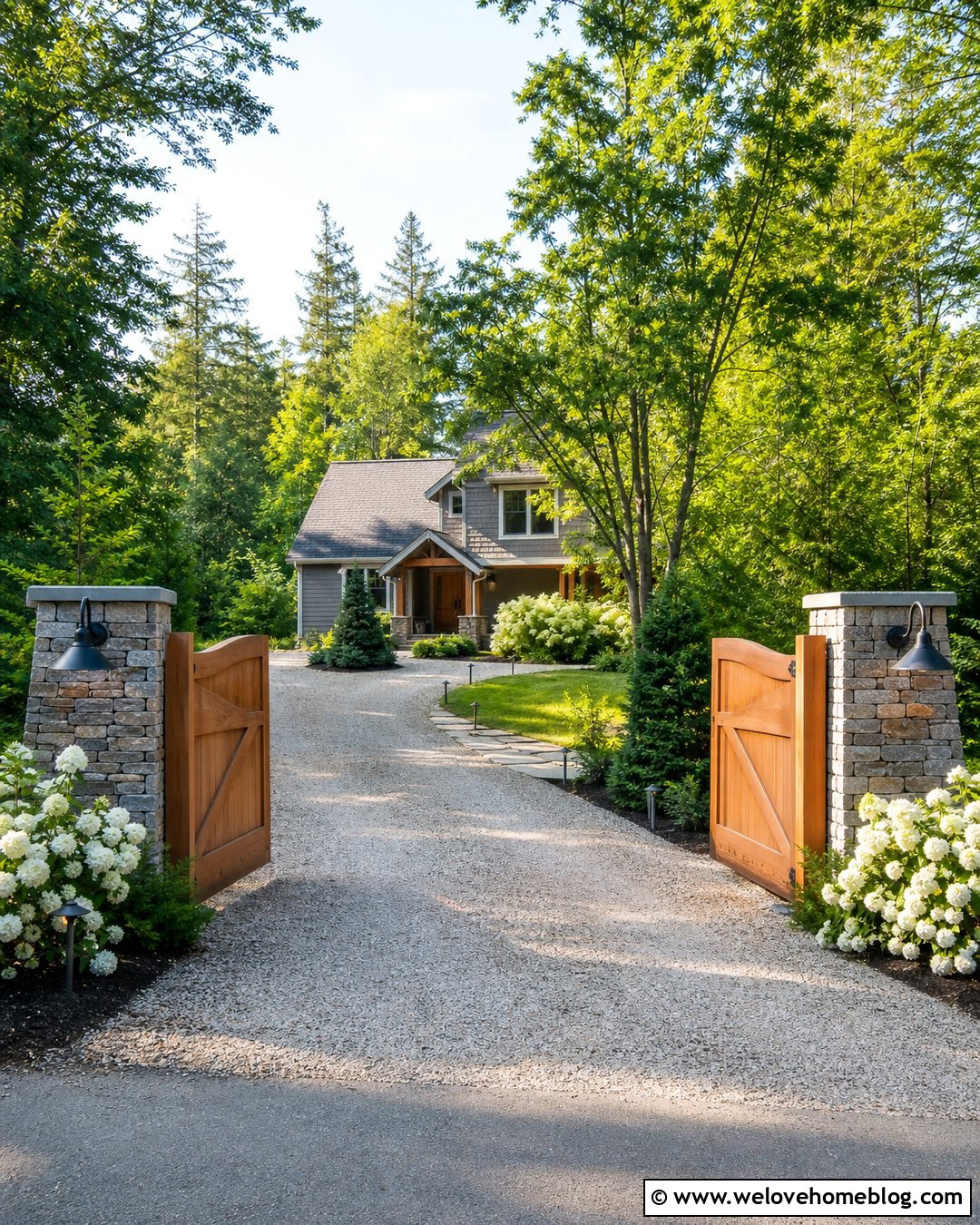
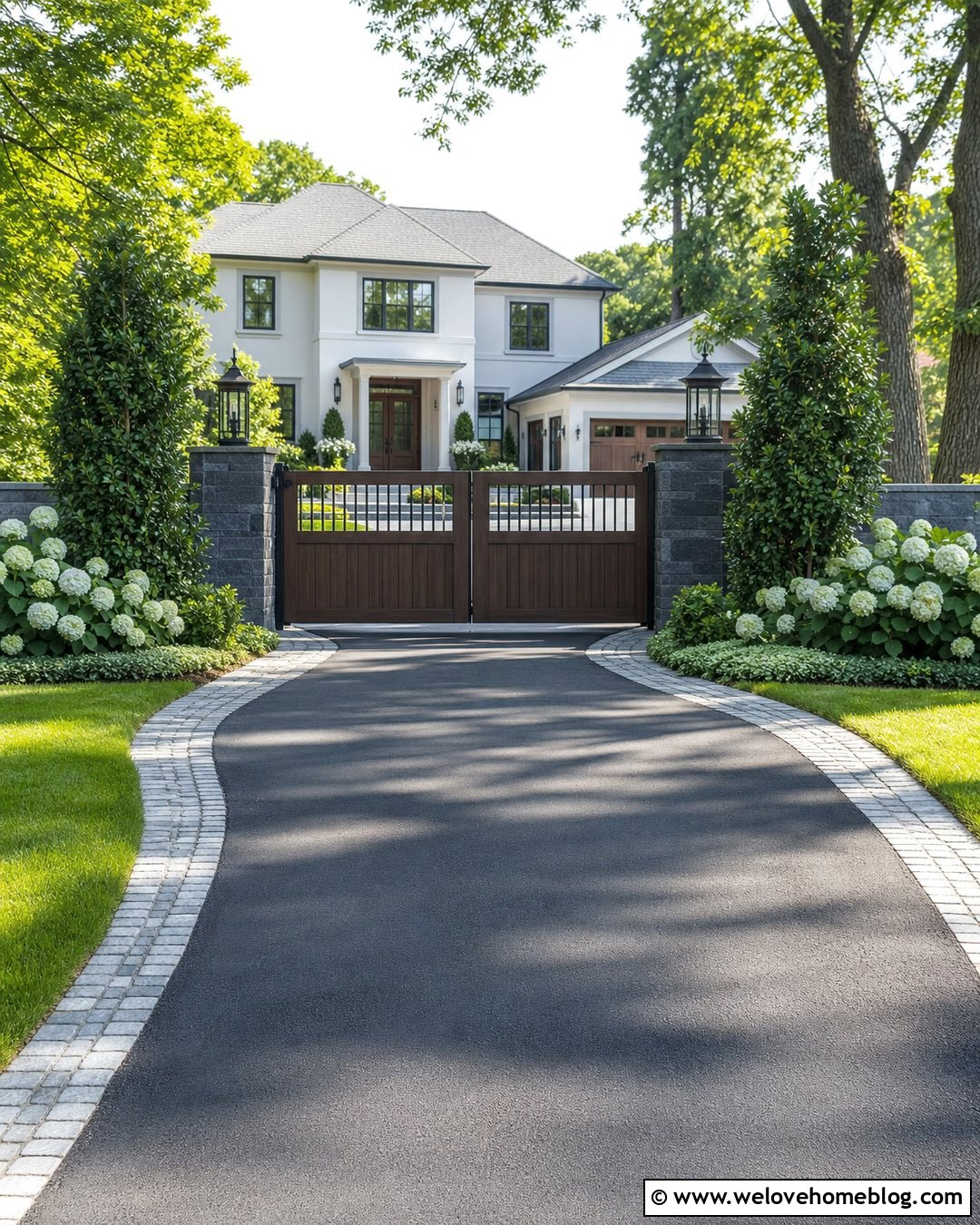
Natural stone pillars suit wide driveways, wooded properties, and homes with rustic or craftsman architecture. Pair rough-cut gray stone columns with a dark steel sliding gate filled with horizontal stained wood boards. A curved asphalt driveway can be upgraded with a cobblestone apron and stone edging at the entrance. Plant native grasses, low junipers, and multi-stem trees around the pillars without hiding their proportions. Integrate warm white fixtures into the stone caps or pillar faces for a tidy daytime appearance. The stone should relate to the house foundation, chimney, or garden walls so the entrance feels grounded in the property. Avoid making the pillars unnecessarily massive for the gate opening. Their foundations, internal supports, conduit, control wiring, and gate hardware should all be coordinated before masonry work begins.
14. Sliding Gate With A Pedestrian Gate
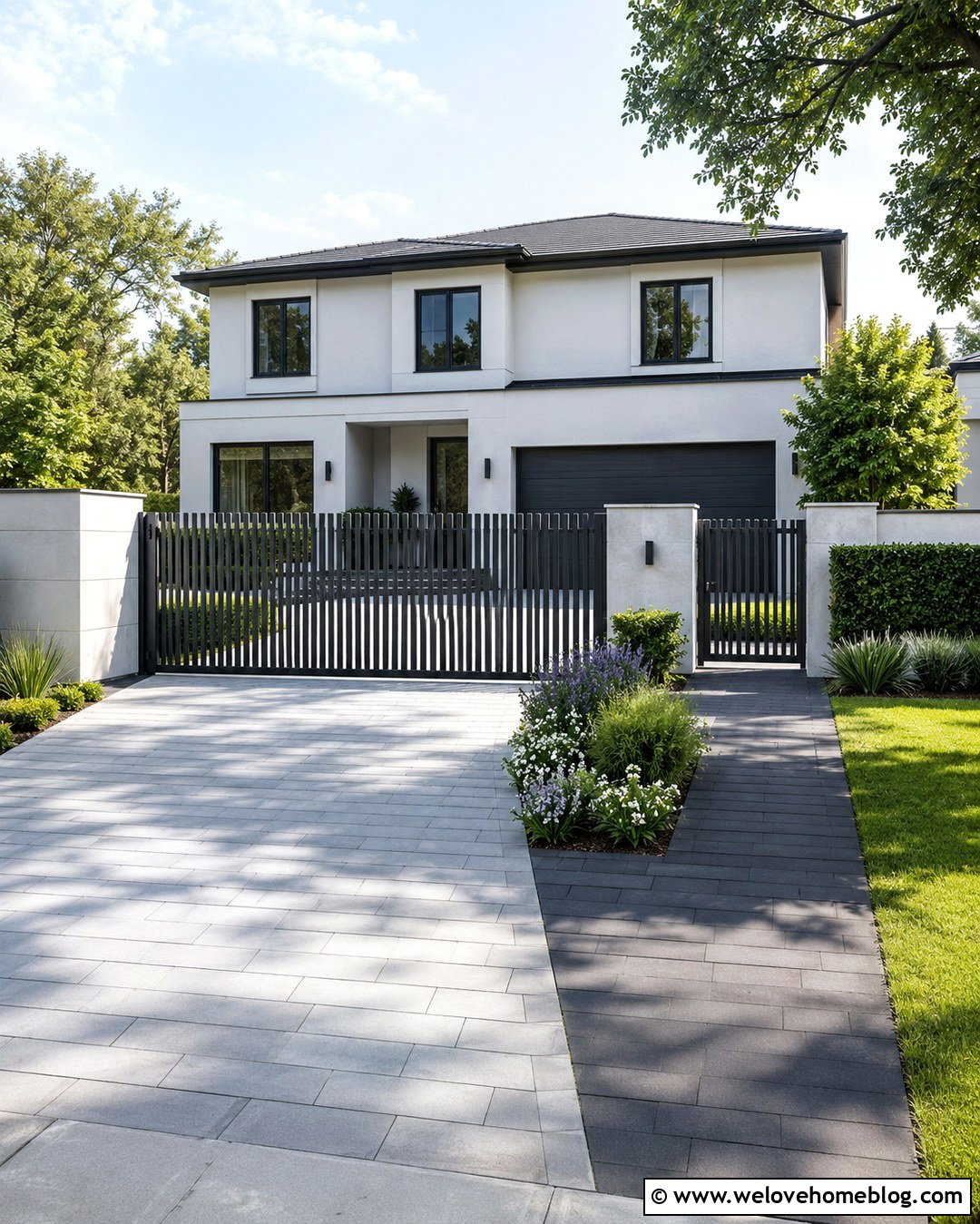
Combining vehicle and pedestrian access creates a more convenient entrance for households that frequently receive walkers, deliveries, or service visitors. Use matching vertical aluminum slats across both gates, but define the pedestrian opening with a slightly taller pillar and clear walkway. A light-gray concrete paver driveway can run beside a narrower path made from contrasting charcoal pavers. Low hedges and flowering perennials help separate the two routes without creating a visual barrier. This arrangement works well with a modern two-story suburban home and a coordinated front fence. Position the intercom where it can be reached from the pedestrian path without standing in the driveway. Keep both gates aligned in height, spacing, and finish. Separate access controls allow everyday foot traffic without opening the entire vehicle entrance.
15. Automatic Sliding Gate With Keypad Entry
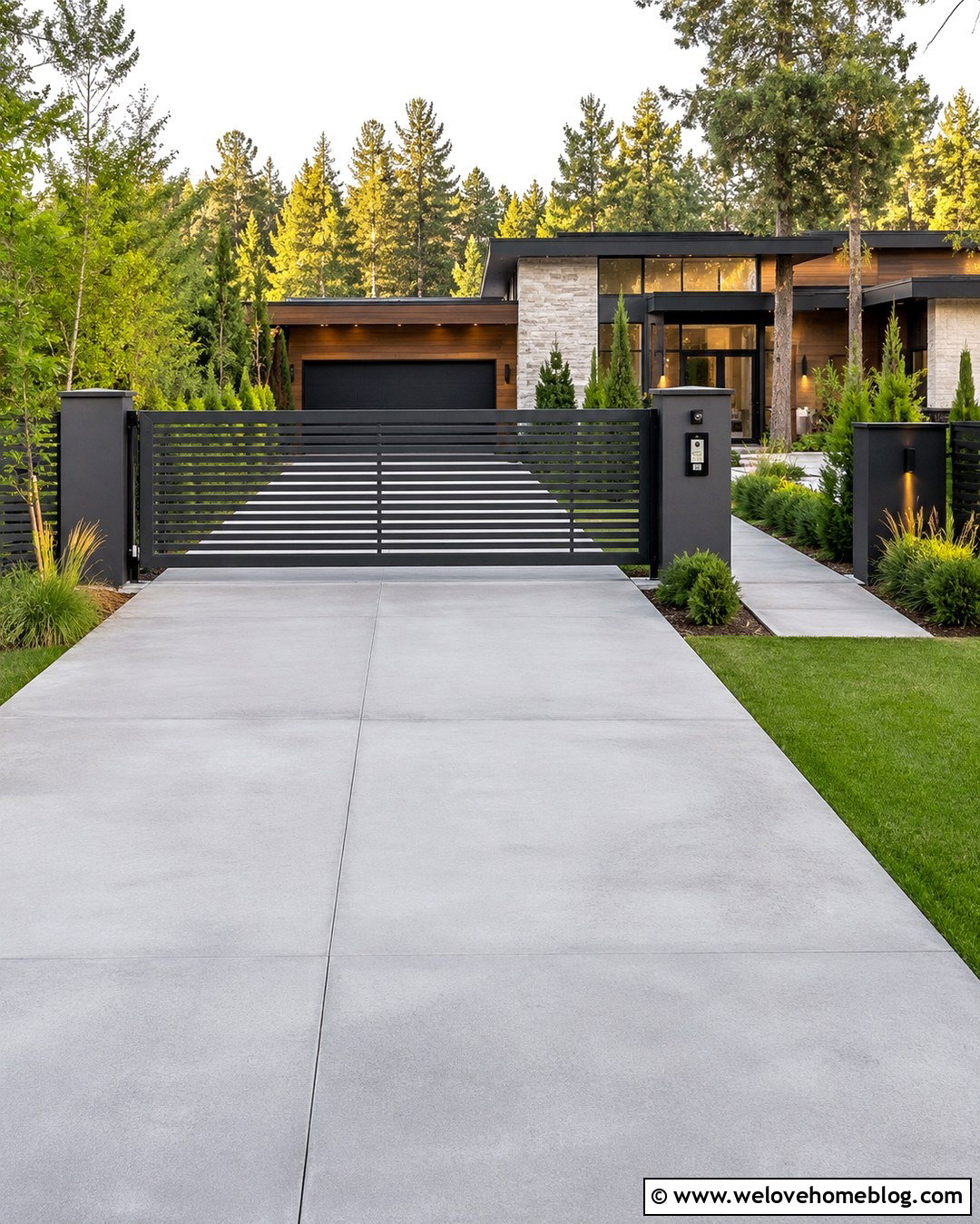
An automatic gate should make arrival feel simple rather than overly technical. Choose a matte charcoal aluminum sliding gate with horizontal boards and pair it with a smooth gray poured-concrete driveway. Place the keypad, video intercom, address numbers, and parcel box on one clean masonry pillar outside the gate’s movement zone. A matching pedestrian path can lead visitors safely toward the front door of a contemporary home. Use layered shrubs around the control pillar, but maintain clear visibility and comfortable reach from the driveway. Automation planning should include monitored safety devices, suitable controls, manual release access, and an operator sized for the gate and expected use. A professional installer can also evaluate vehicle detection, obstruction zones, emergency access, and local requirements before construction begins. ()
16. Open Bar Sliding Gate
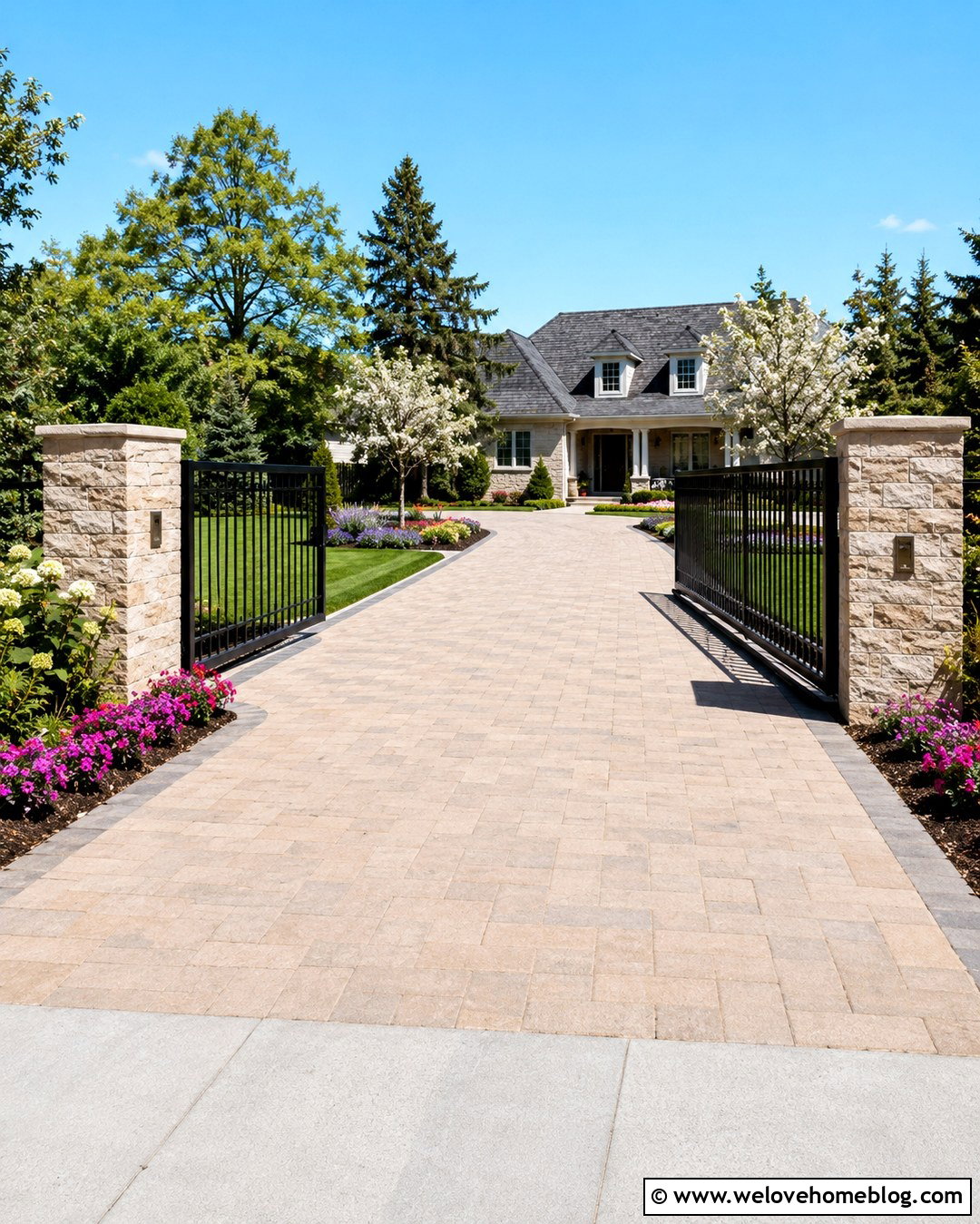
Sometimes the goal is to define the property without hiding the house. A low-profile steel sliding gate with widely spaced vertical bars keeps the entrance open, bright, and welcoming. Pair it with a broad buff-colored concrete paver driveway arranged in a running bond pattern. Limestone pillars, neatly edged lawn, and informal perennial beds can soften the metal around a traditional suburban home. Keep the gate’s top line straight and use square bars rather than decorative scrolls for an updated appearance. Matching open fencing allows the moving panel to blend into the boundary when fully retracted. This design is especially attractive when the home and garden are major parts of the curb appeal. Use thoughtful spacing, secure latching, and appropriate safety systems while maintaining the desired level of visibility.
17. Curved Top Sliding Gate
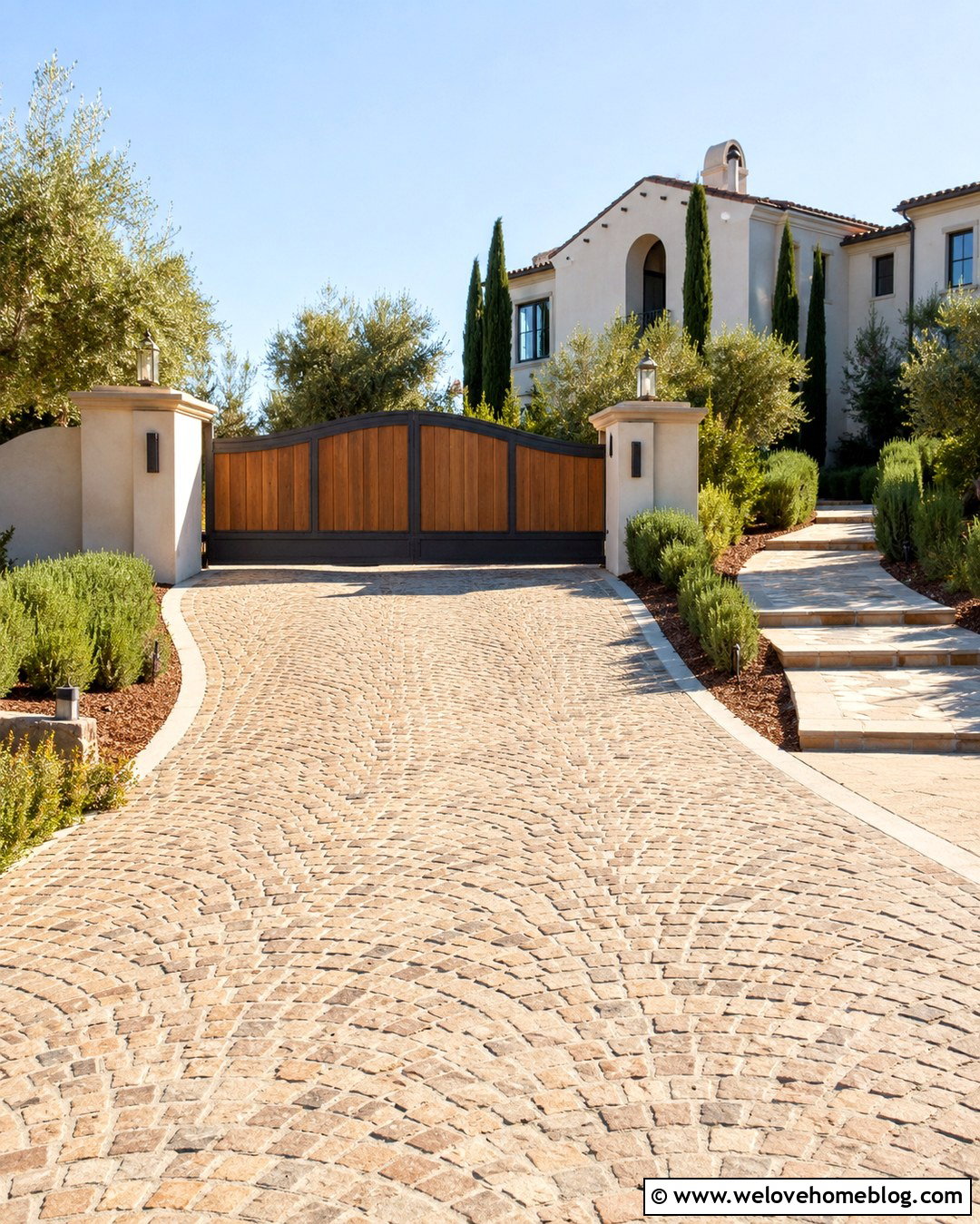
A gently curved gate can add traditional character while still using a space-saving sliding mechanism. Choose a dark bronze steel frame with a shallow arched top and vertical wood infill boards. A tan cobblestone driveway laid in a fan pattern provides a textured approach to a Mediterranean or Spanish-style home. Stucco pillars with stone caps, rosemary hedges, olive trees, and terracotta-toned planting beds can connect the entire entrance. Keep the arch subtle because an exaggerated curve may look awkward when the gate slides behind a level fence. Repeat the bronze finish on the pedestrian gate, lanterns, and address plaque. The supporting frame should maintain the gate’s geometry without visually overpowering the wood. Carefully coordinate the guide height and receiving post with the gate’s curved upper edge.
18. Ranch Sliding Gate
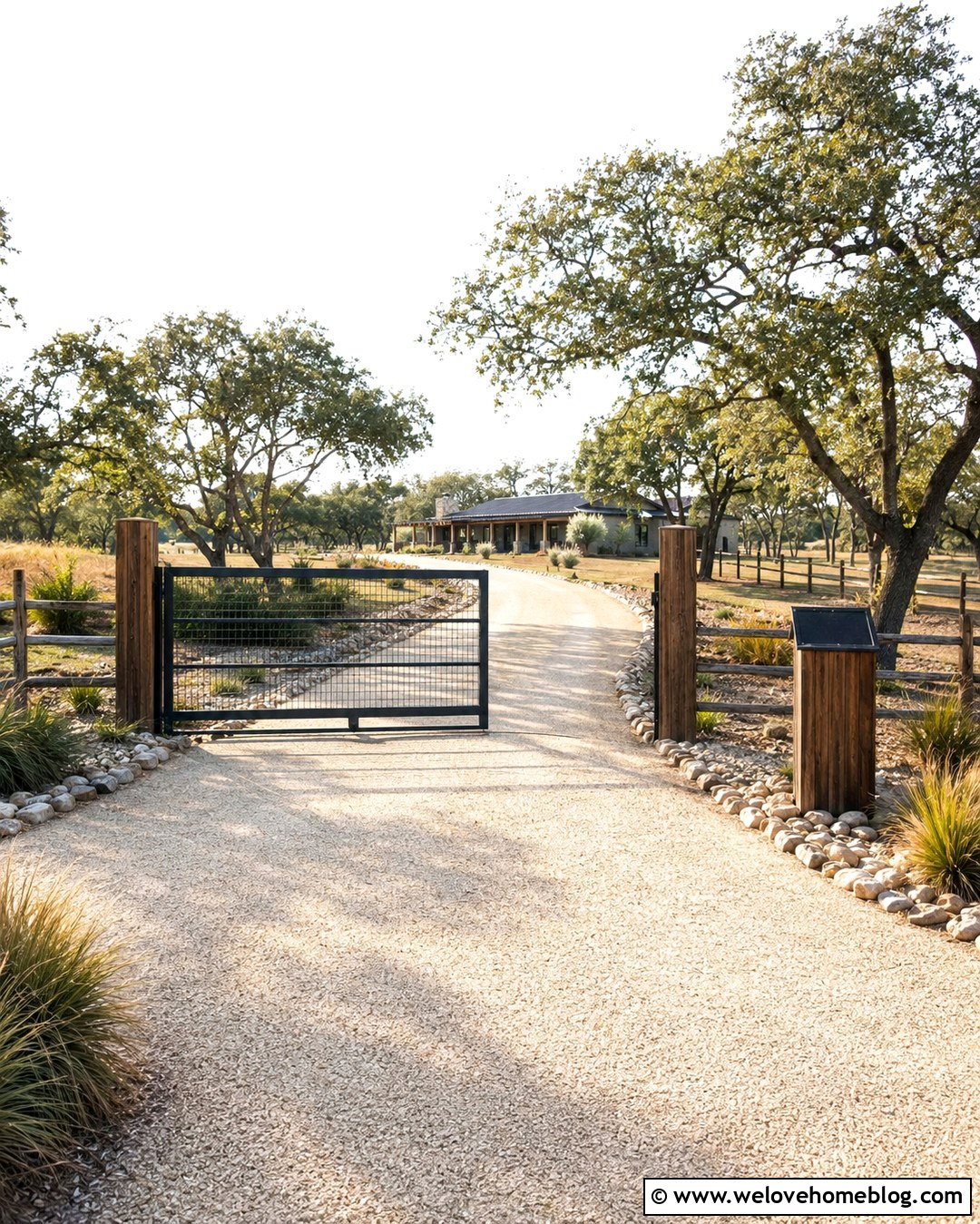
A ranch entrance can be practical and attractive without becoming excessively decorative. Use a galvanized steel sliding gate with a dark powder-coated frame, horizontal rails, and welded wire mesh. Pair it with a wide compacted gravel driveway edged by timber or local fieldstone. Simple wood posts, native grasses, oak trees, and a ranch-style address sign create an informal rural setting. The open mesh preserves long views toward the house, pasture, or outbuildings while clearly marking the property entrance. For additional warmth, add a cedar board along the top rail or use timber-faced columns at each side. A cantilever configuration can keep operating components above loose driveway gravel. Select the frame, support posts, operator, and foundation according to the gate span, site conditions, and daily traffic.
19. Coastal Aluminum Sliding Gate
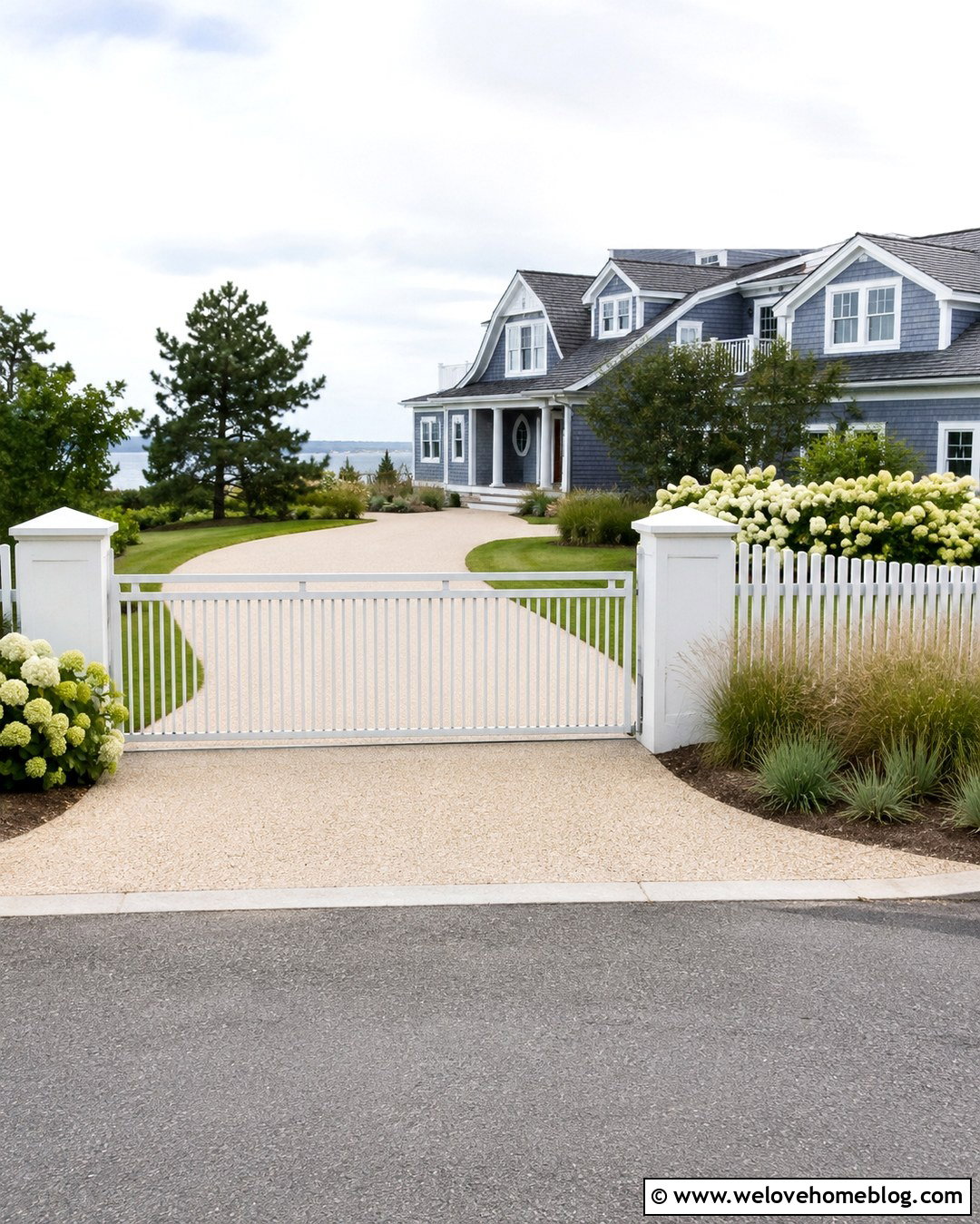
A coastal entrance benefits from light colors, simple forms, and materials selected for exposed outdoor conditions. Choose a white powder-coated aluminum sliding gate with spaced vertical battens and a sturdy internal frame. Pair it with a pale shell-tone resin-bound gravel driveway that curves gently toward a coastal cottage. White masonry pillars, blue-gray accents, ornamental grasses, hydrangeas, and salt-tolerant shrubs can create a fresh street view. Keep the landscaping low near the gate so foliage does not enter the operating path. Stainless-look address numbers and a compact intercom provide useful detail without disrupting the relaxed design. Discuss the site’s moisture, wind, finish requirements, hardware, and maintenance needs with the fabricator. A matching side fence will help the gate disappear neatly when it slides open.
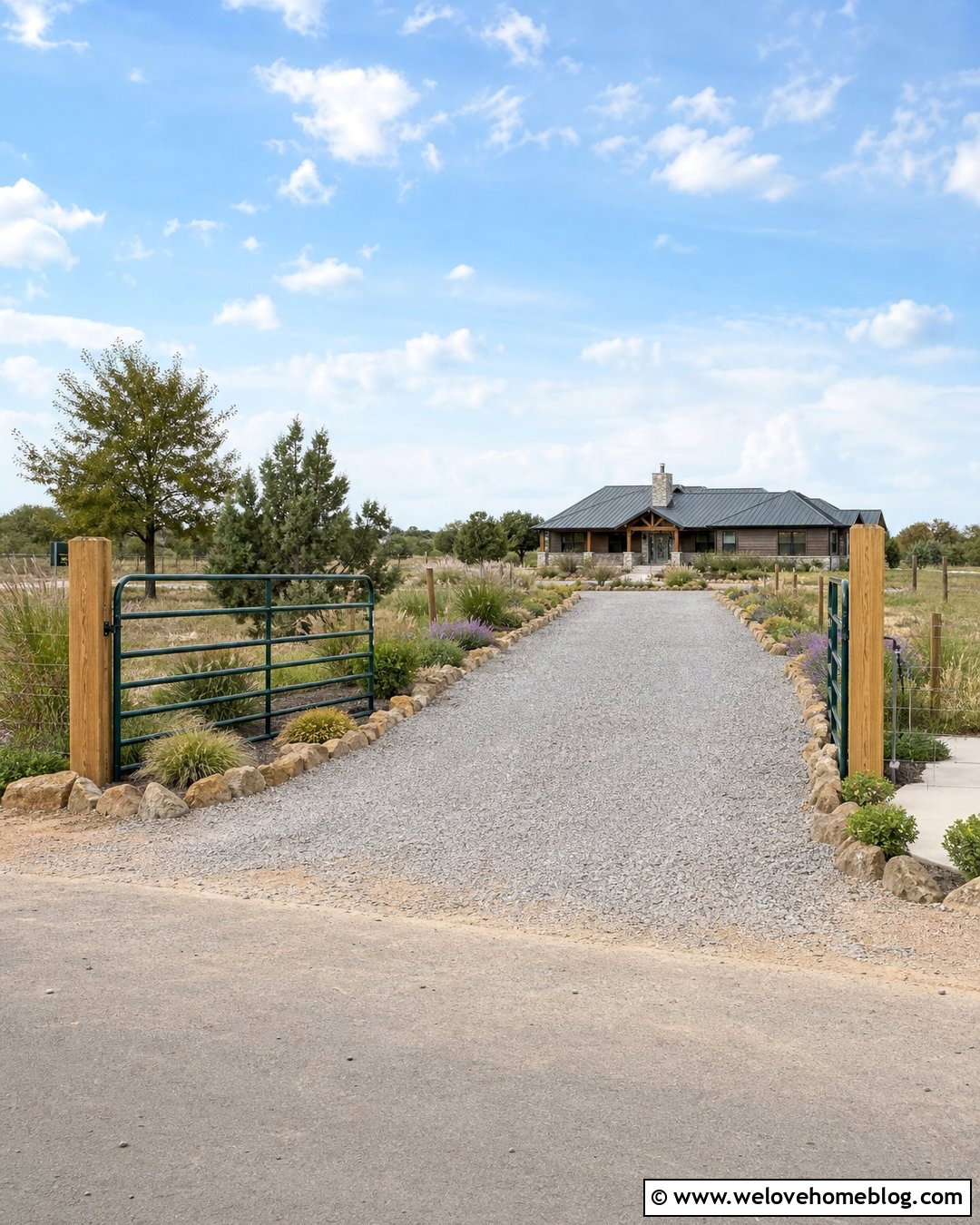
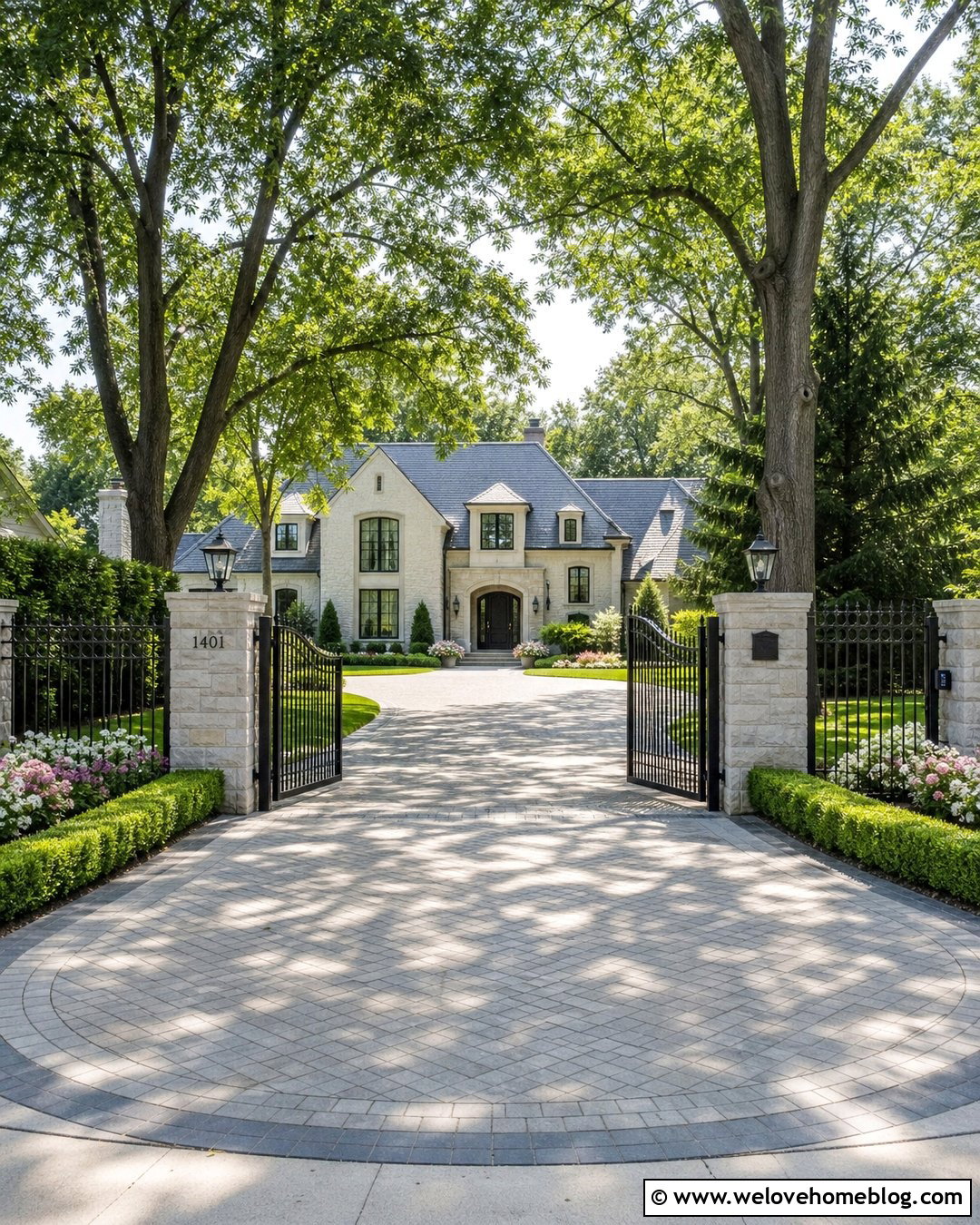
20. Bi-Parting Sliding Gate
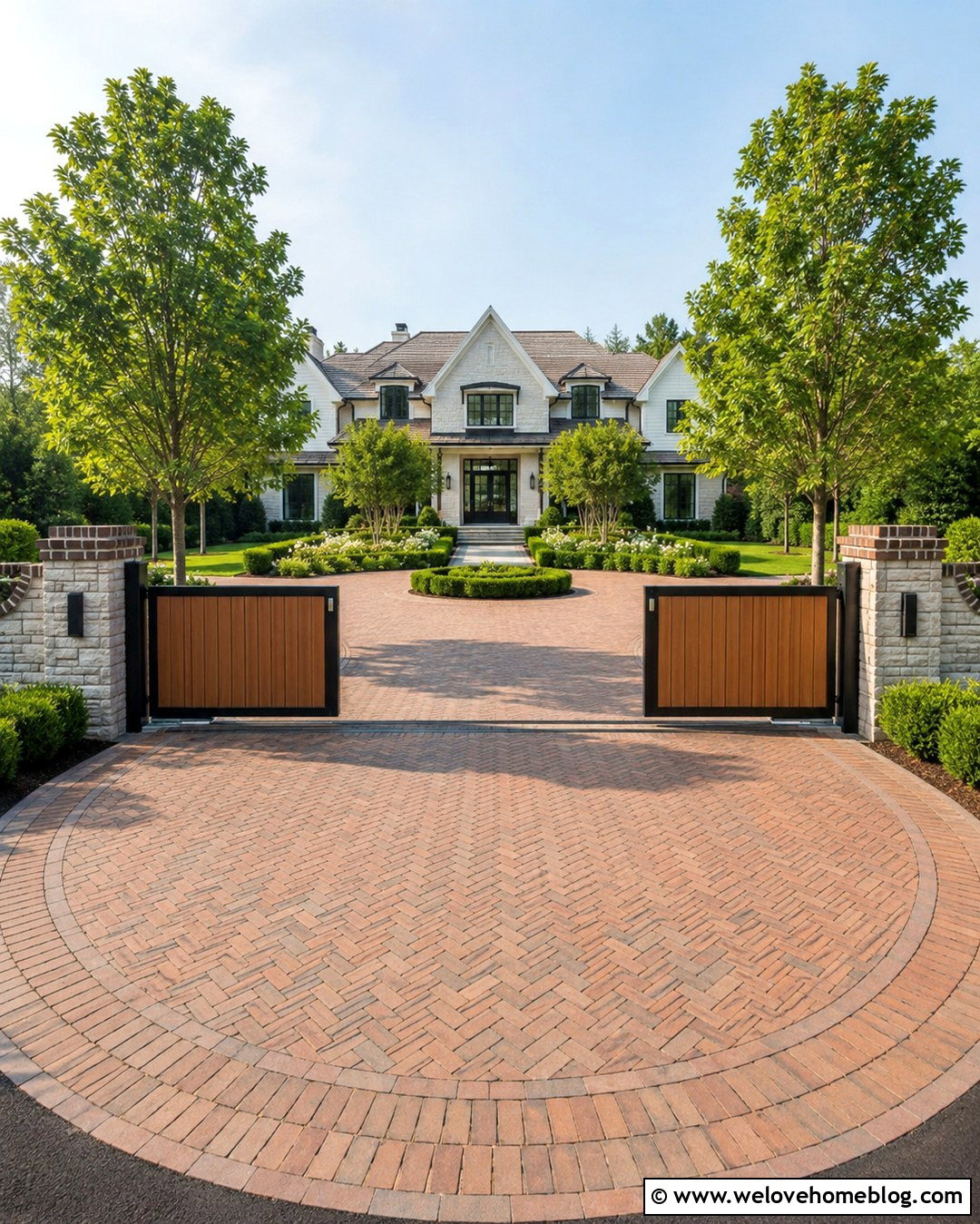
A bi-parting sliding gate uses two panels that separate at the center and move toward opposite sides of the driveway. This balanced arrangement can create an impressive entrance where adequate retraction space exists on both sides. Use dark gray aluminum frames with narrow natural wood infill boards. Pair them with a circular clay brick paver driveway and matching brick ribbons that guide vehicles toward a large transitional-style home. Stone-and-brick pillars, symmetrical trees, evergreen hedges, and broad planting beds reinforce the centered composition. Align the middle joint precisely with the driveway axis and front door for a formal appearance. Both leaves must operate together reliably, so professional planning is important. Coordinate the operators, controls, safety devices, drainage, foundations, and receiving points as one complete system rather than two unrelated gates.
Conclusion:
The most successful driveway gate combines good looks with a layout that works for the property every day. Match the gate material to the home, driveway surface, fencing, and surrounding landscape. Then evaluate the entrance width, slope, side clearance, privacy level, wind exposure, and access needs before selecting a system. Modern aluminum, warm wood, decorative steel, composite infill, and weathering metal can all create distinctive results when used thoughtfully. Pillars, lighting, walkways, keypads, and planting should support the design without obstructing movement. Use these 20 driveway sliding gate ideas as inspiration, then work with qualified gate and landscape professionals to develop a safe, durable, and cohesive entrance for your specific site.

Related posts:
Leave a Reply