
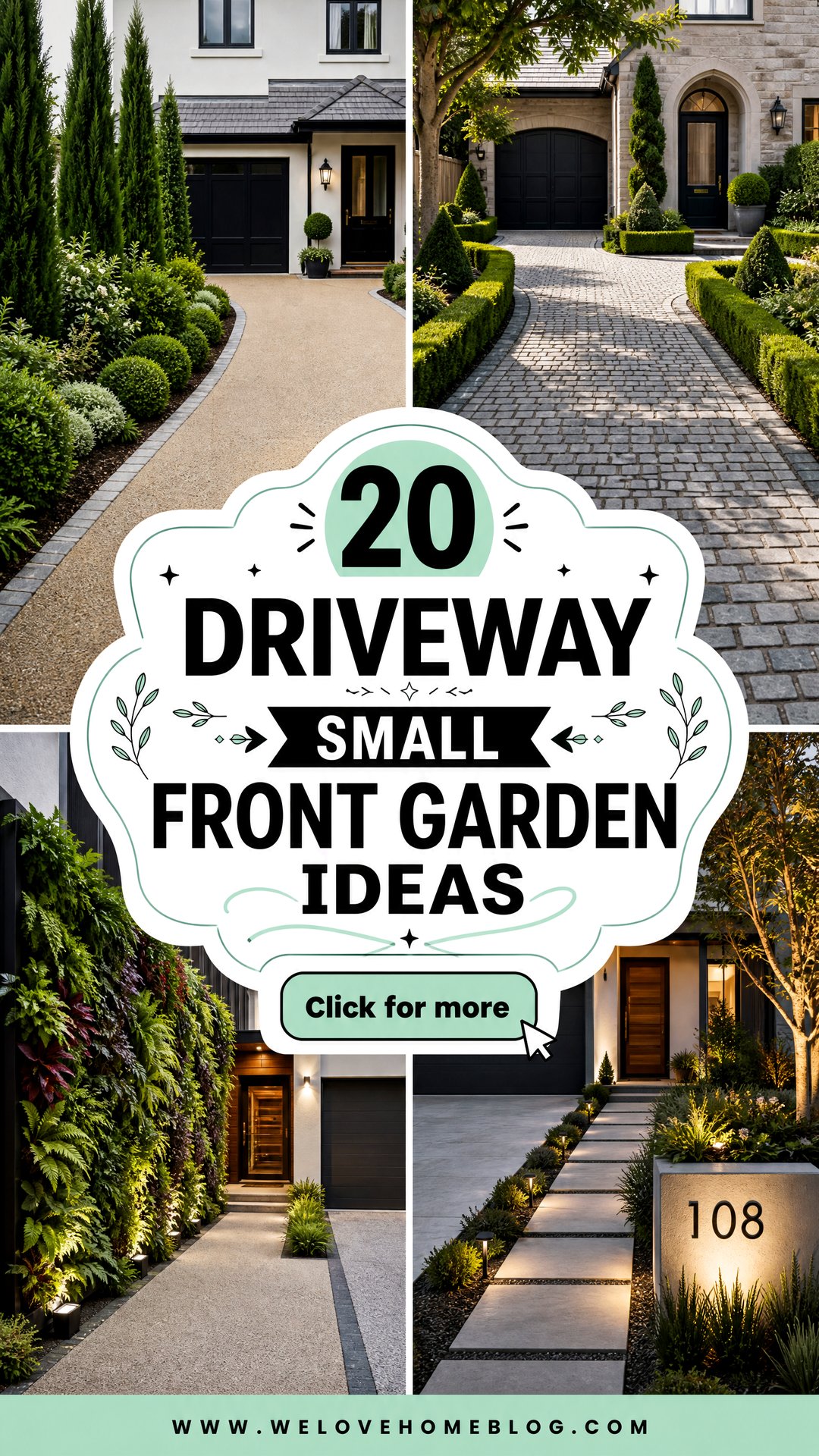
A compact front yard can still deliver practical parking, welcoming greenery, and strong curb appeal. The best **20 driveway small front garden ideas** treat paving, planting, borders, drainage, and the route to the front door as one coordinated design. Low shrubs, ornamental grasses, permeable surfaces, and vertical planting can add color without consuming valuable parking space. () A clear layout also makes a narrow property feel calmer and more spacious. Choose materials that complement your home, then repeat their colors in edging, containers, or pathways. Whether you prefer modern concrete, traditional brick, affordable gravel, or low-maintenance asphalt, the following complete looks provide useful inspiration. Explore these **20 driveway small front garden ideas** to find a layout suited to your home, climate, and available space.
1. Gravel Driveway With Narrow Flower Borders
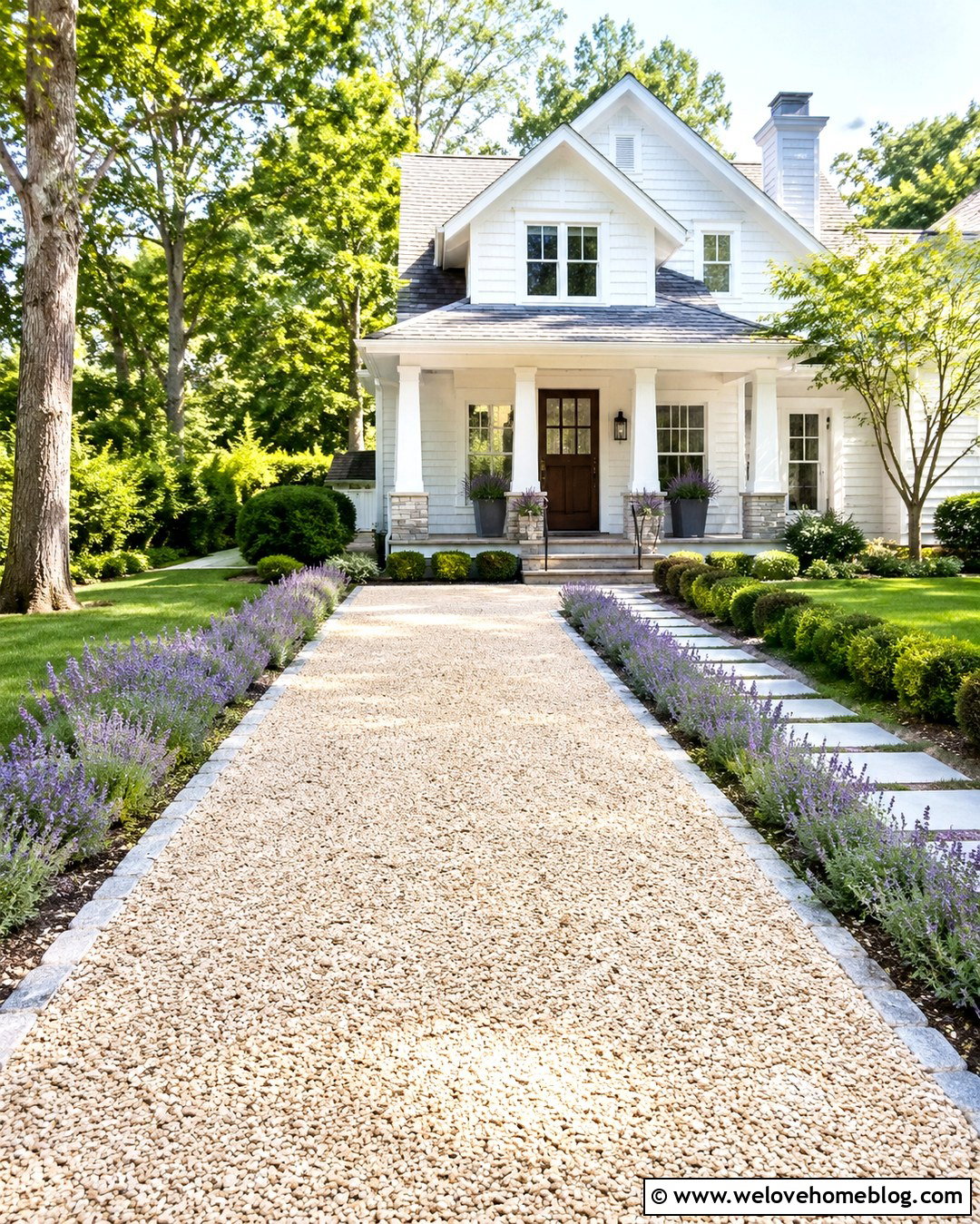
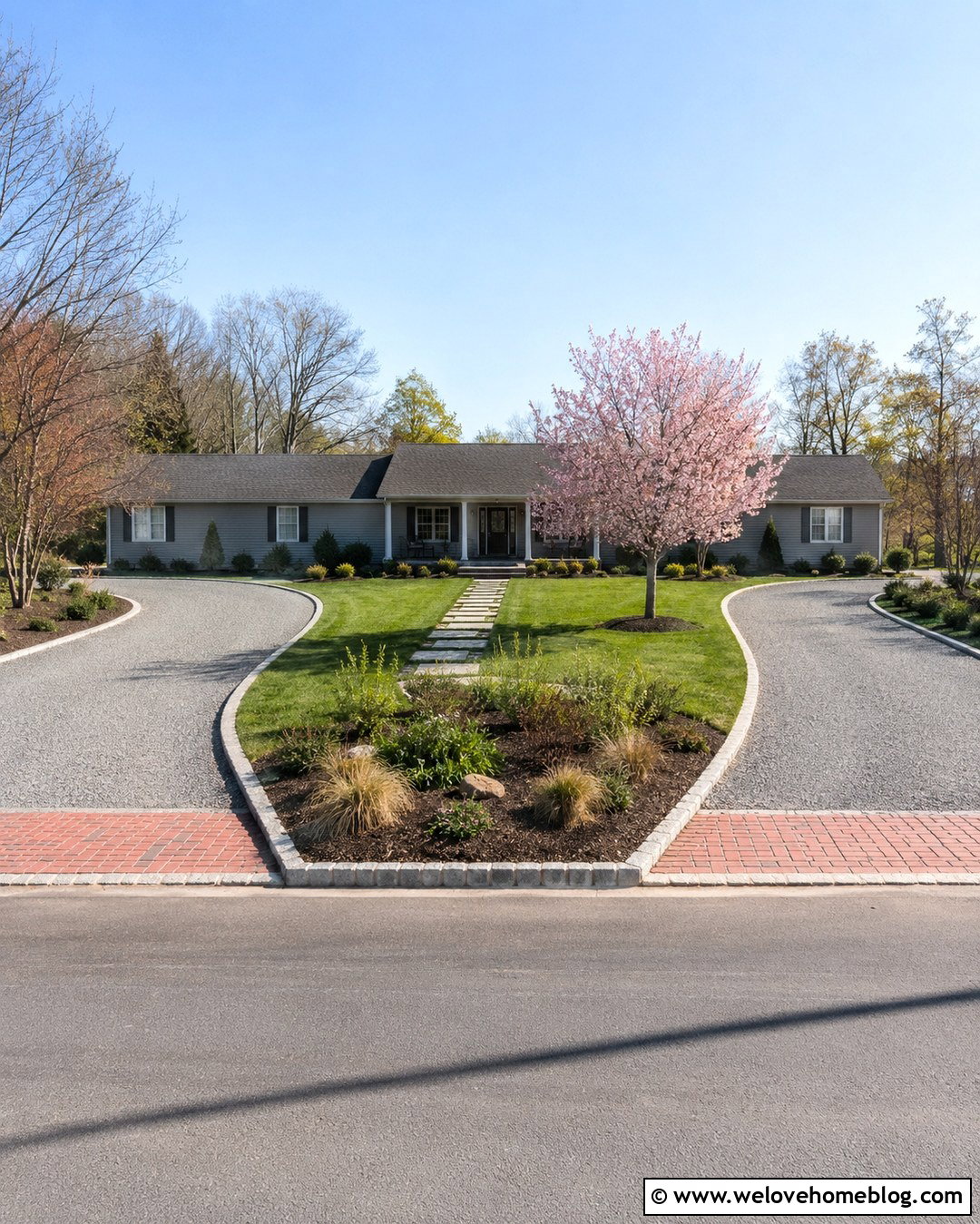
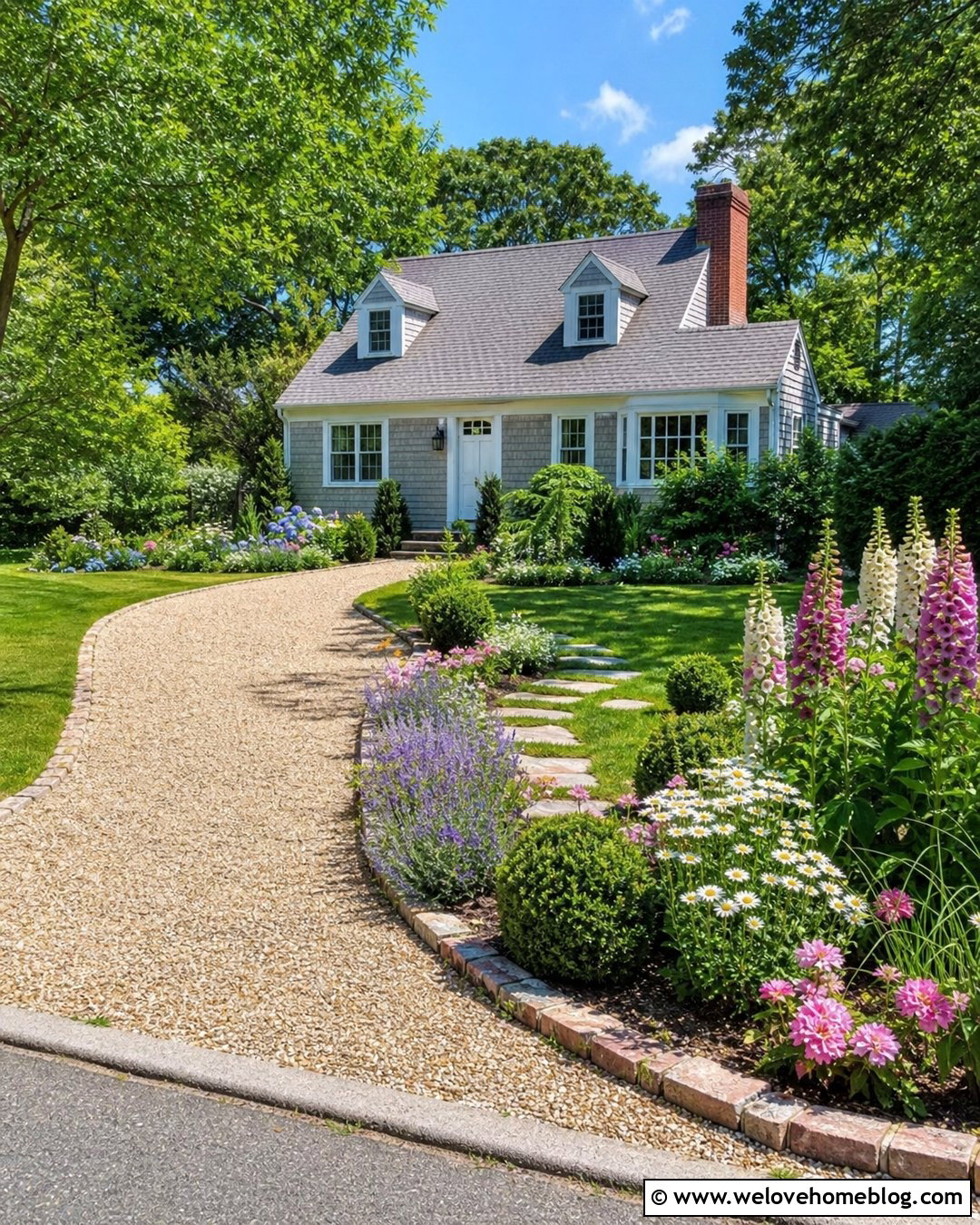
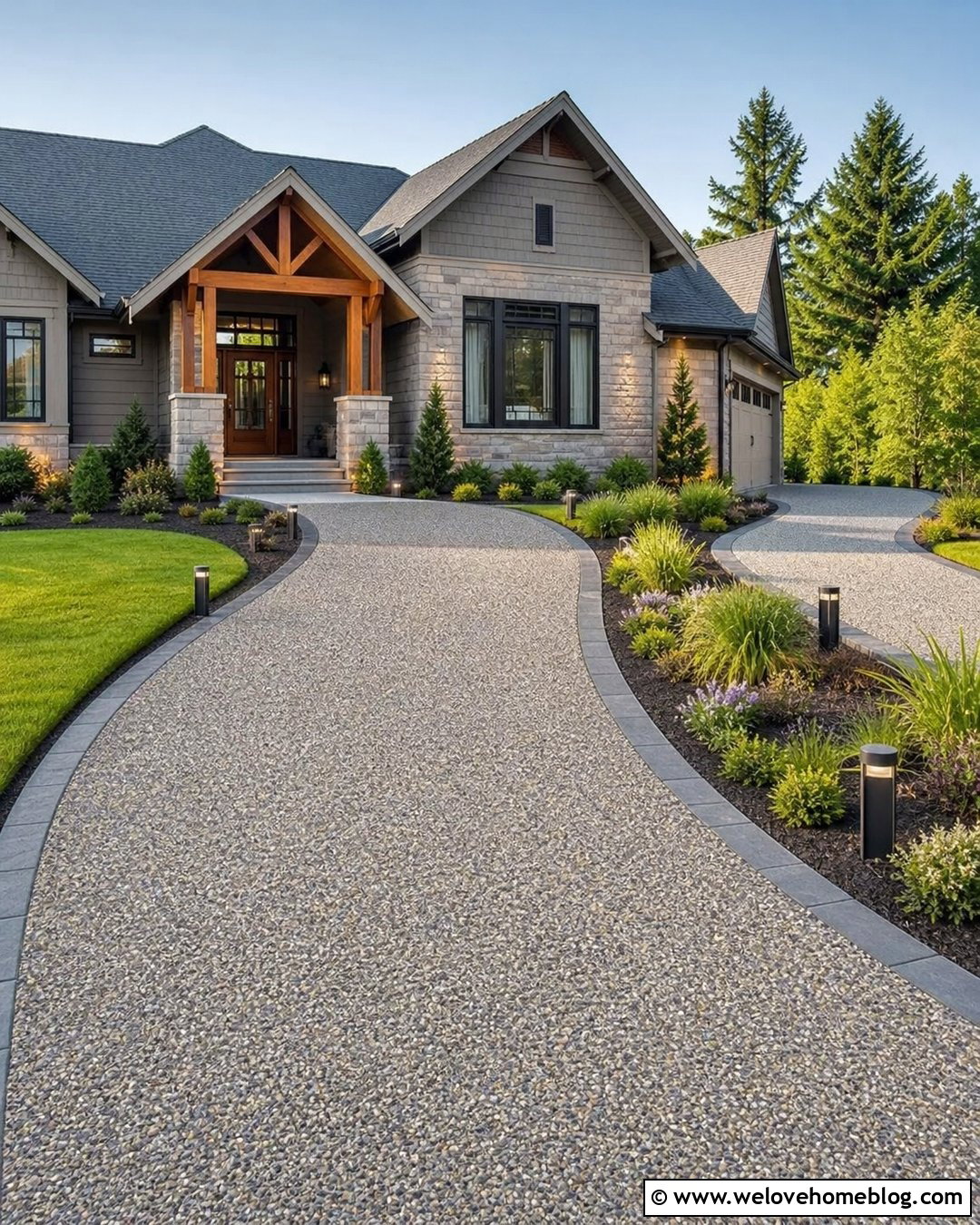
A pale gravel driveway can brighten a small front garden while giving it a softer appearance than solid paving. Keep the layout straight so every inch remains useful for parking. Install metal or cobblestone edging to stop loose gravel from spreading into the planting beds. Narrow borders on both sides can hold lavender, catmint, dwarf grasses, or other compact plants suited to your local conditions. Repeat one or two varieties rather than mixing too many colors, which can make a tight area look cluttered. A stepping-stone path beside the driveway creates a safer route to the entrance. Complete the look with a small evergreen near the porch and matching planters beside the front door. Properly prepared gravel also allows water to move through the surface rather than collecting in shallow puddles.
2. Concrete Driveway With Grass Strips
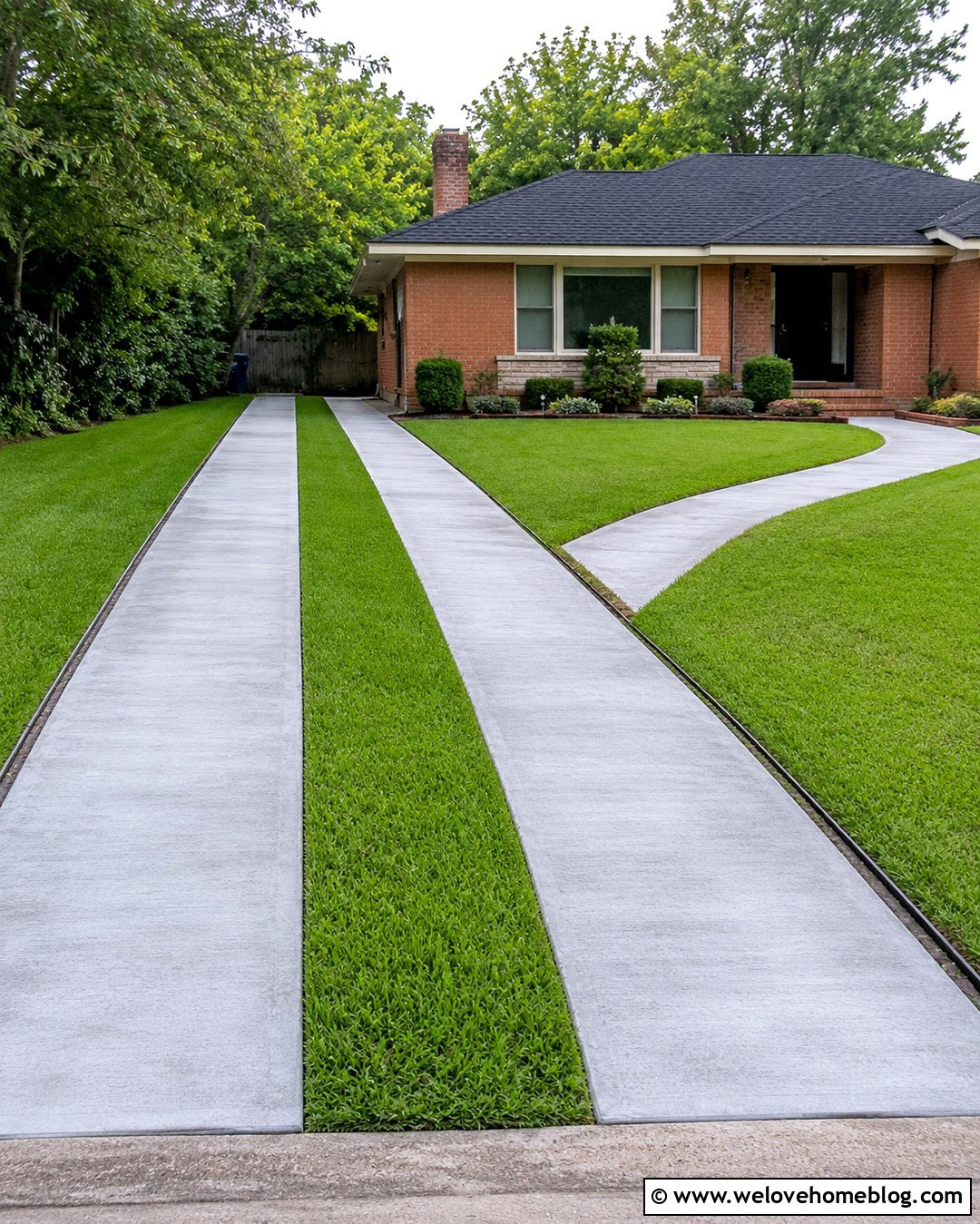
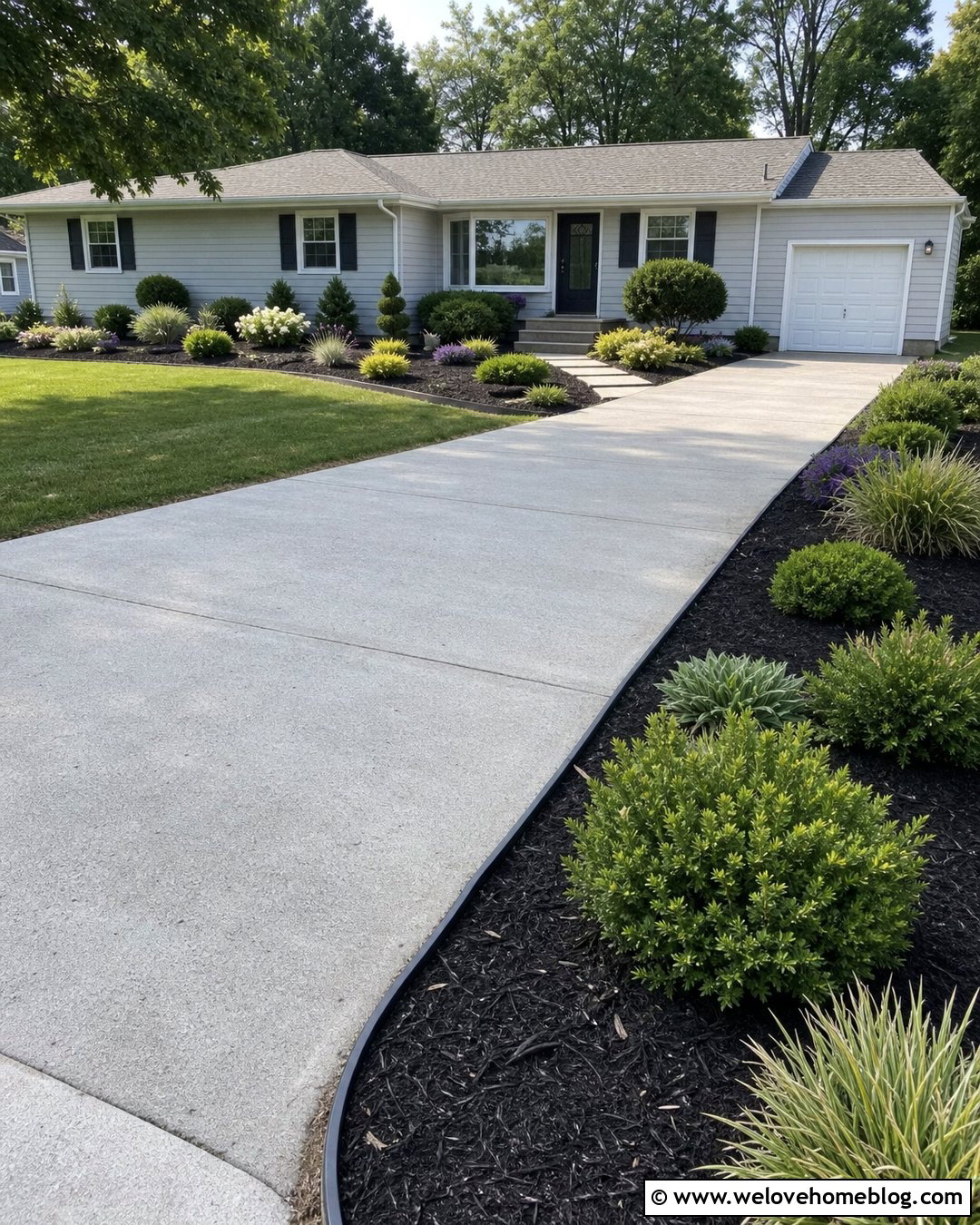
Long grass strips can break up a concrete driveway and help a compact front garden feel greener. Use two parallel bands of smooth gray poured concrete where vehicle tires travel, leaving a narrow planted strip between them. This ribbon driveway layout reduces the amount of hard surface while maintaining a clear parking route. Choose durable, low-growing turf or a climate-appropriate ground cover that tolerates occasional traffic. Straight steel edging keeps the lines crisp and prevents soil from washing onto the concrete. Continue the central greenery toward a small lawn or foundation bed near the house. A simple concrete walkway can branch toward the front door without interrupting the design. This complete look works particularly well with ranch homes, mid-century properties, and modest contemporary houses where clean horizontal lines already shape the exterior.
3. Brick Driveway With Cottage Planting
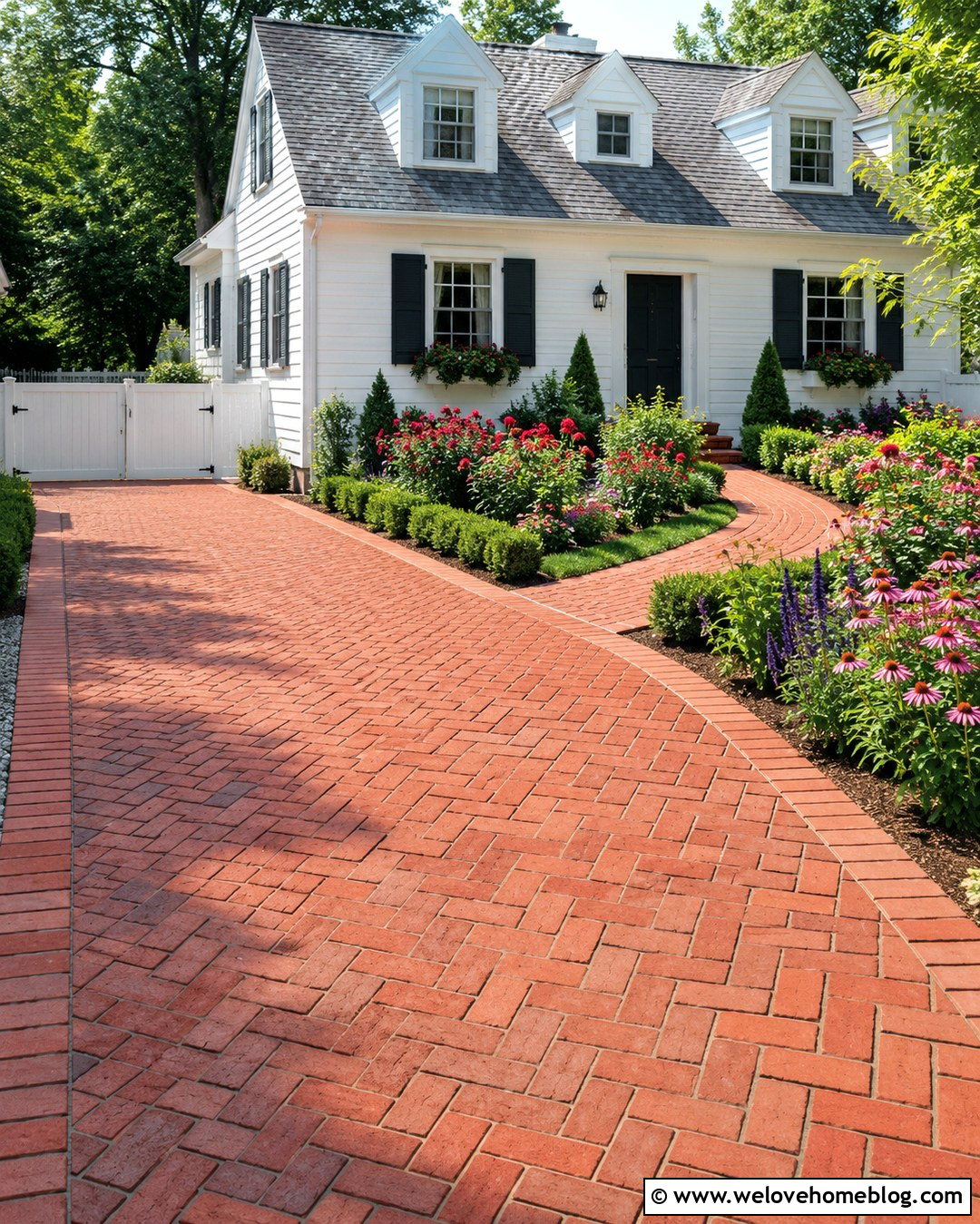
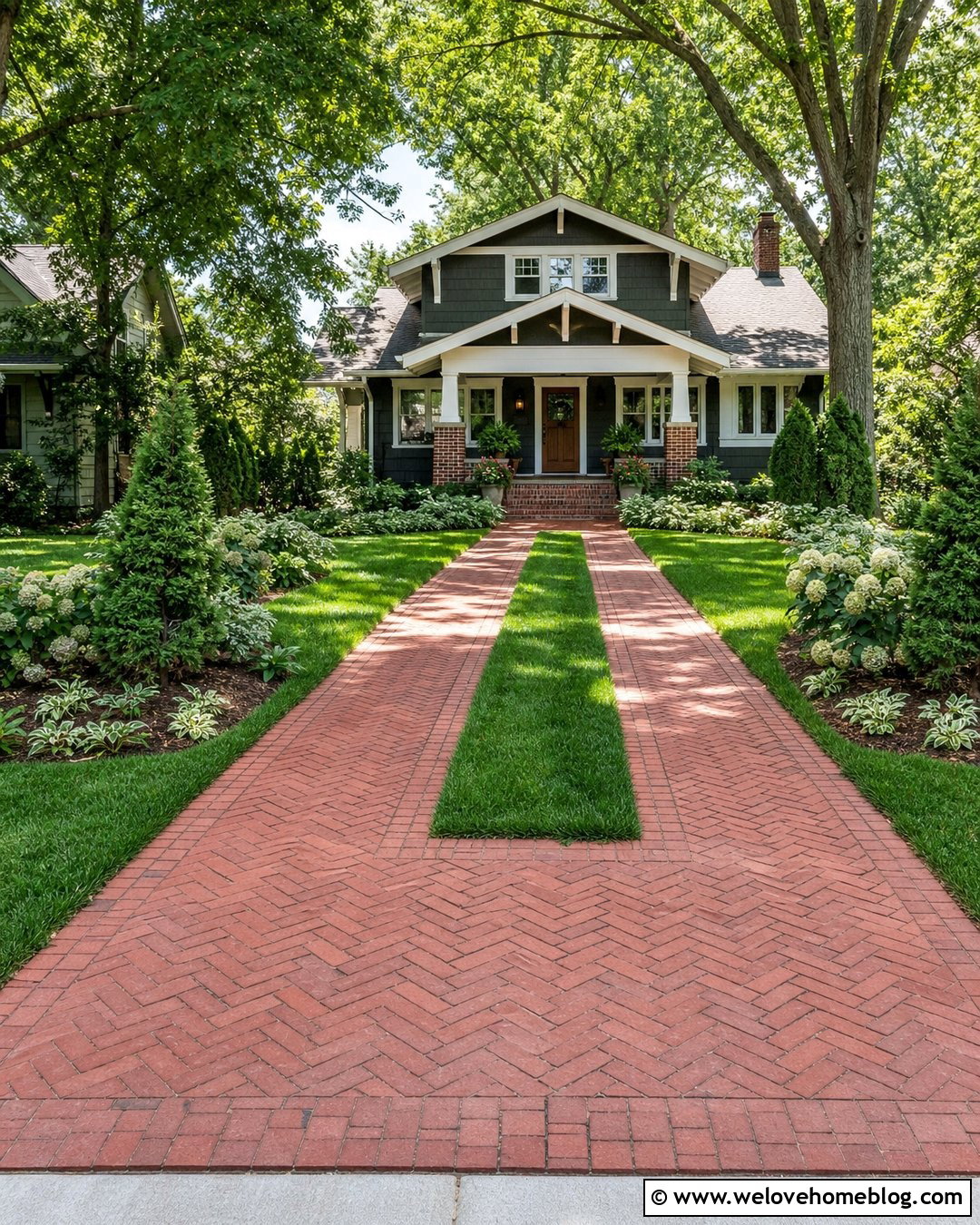
Warm brick pavers bring character to a small driveway and pair naturally with a colorful cottage garden. A herringbone pattern makes the parking area feel detailed without requiring extra decorative features. Frame it with a straight soldier-course border in the same clay brick to produce a tidy edge. Plant narrow beds with compact roses, salvia, coneflowers, and evergreen shrubs, selecting varieties that suit the available sunlight and climate. Keep plants lower near the sidewalk so drivers have an unobstructed view when leaving the property. A gently curved brick path can connect the driveway to the porch while repeating the paving material. White window boxes and a painted front door finish the welcoming composition. Matching the landscape to the architecture helps the small space appear intentional rather than crowded. ()
4. Paver Driveway With Raised Garden Beds
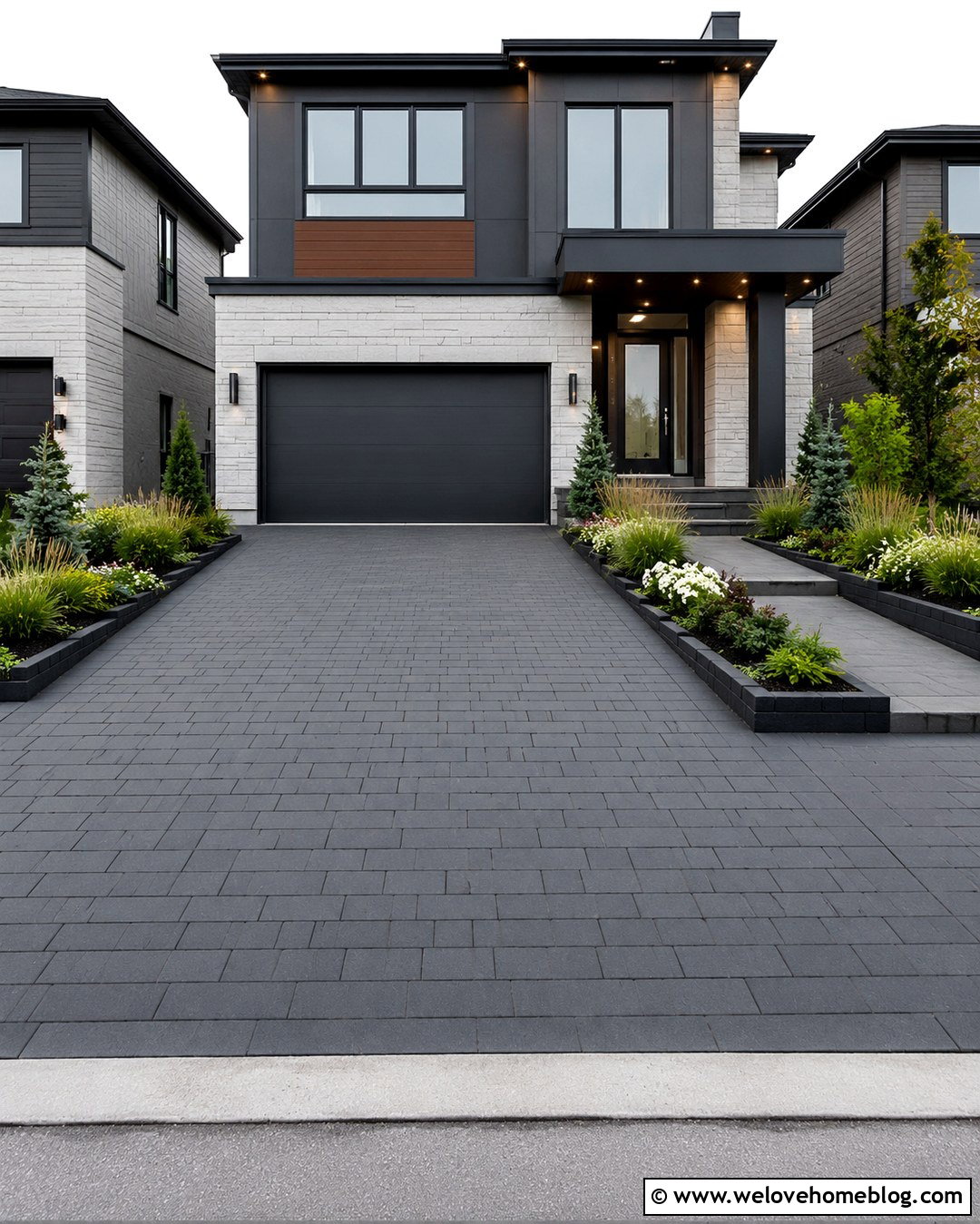
Raised beds provide a defined place for plants when a driveway occupies most of the front yard. Choose charcoal concrete pavers in a simple running-bond pattern and install one slim raised bed along the property boundary. A low wall built from matching blocks keeps the design cohesive and prevents soil from spilling across the parking area. Fill the bed with dwarf evergreens, ornamental grasses, and long-blooming perennials arranged from shortest to tallest. This layering creates depth without hiding the house. Leave enough clearance around vehicle doors and avoid plants with thorns or branches that spread widely. A second, smaller bed near the entrance can repeat the same planting palette. Add a narrow paver walkway from the driveway to the porch, giving visitors an obvious route that does not pass behind a parked vehicle.
5. Asphalt Driveway With Curved Garden Borders
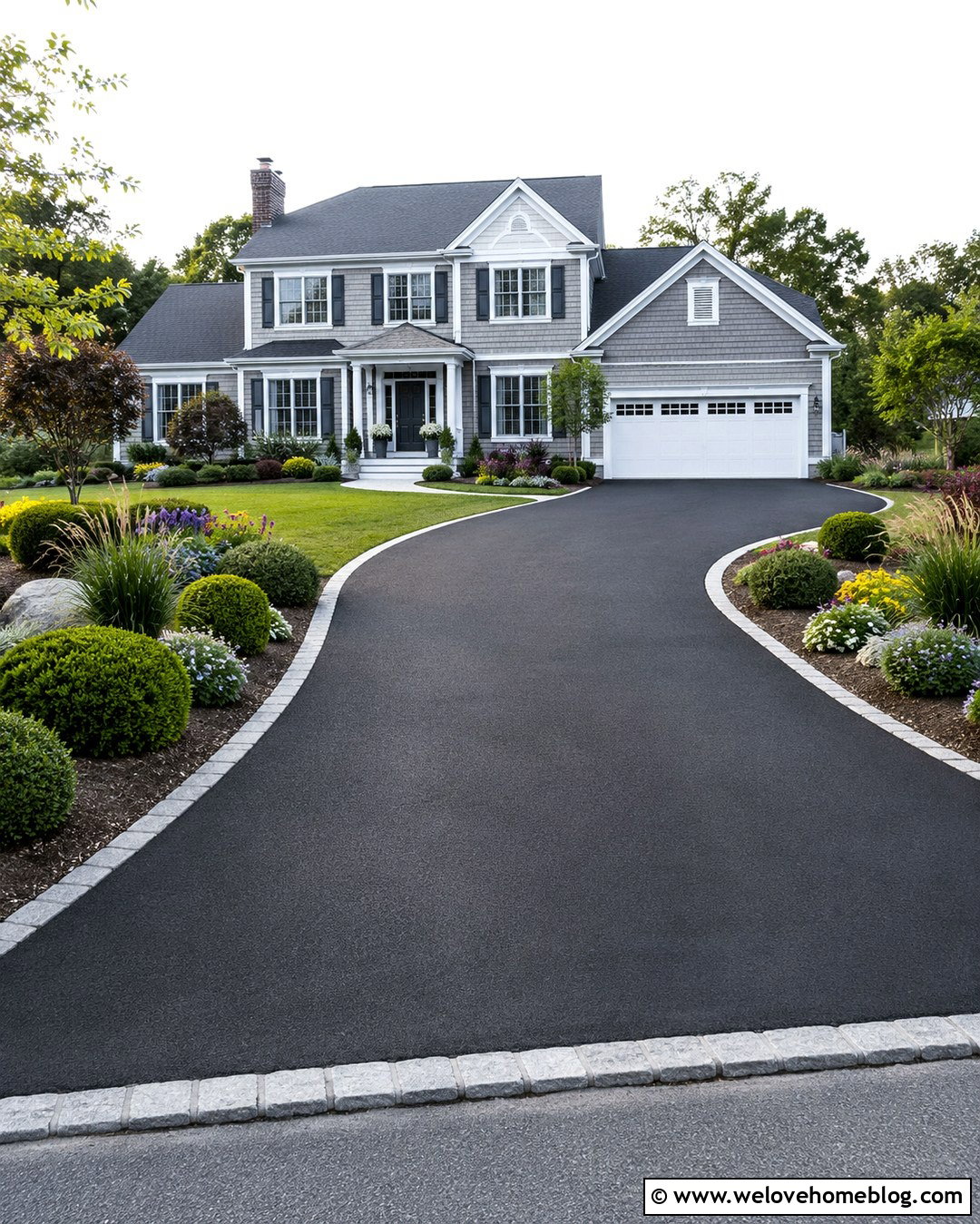
Black asphalt is practical, but thoughtful landscaping can keep it from dominating a compact front yard. Instead of running straight planting beds beside the pavement, create shallow curves that soften the driveway’s dark surface. Edge the asphalt with a single row of light concrete pavers or natural stone set flush with the ground. The contrasting border produces a clean finish and makes mowing easier. Inside the beds, combine rounded evergreen shrubs with airy grasses and seasonal flowers. Keep the widest curve near the house, where it will not reduce the usable parking area. A small ornamental tree can anchor one corner if its mature canopy and roots suit the available space. Light-colored mulch, a coordinated walkway, and simple porch planters help balance the asphalt and connect the driveway to the home.
6. Permeable Paver Driveway With Native Plants
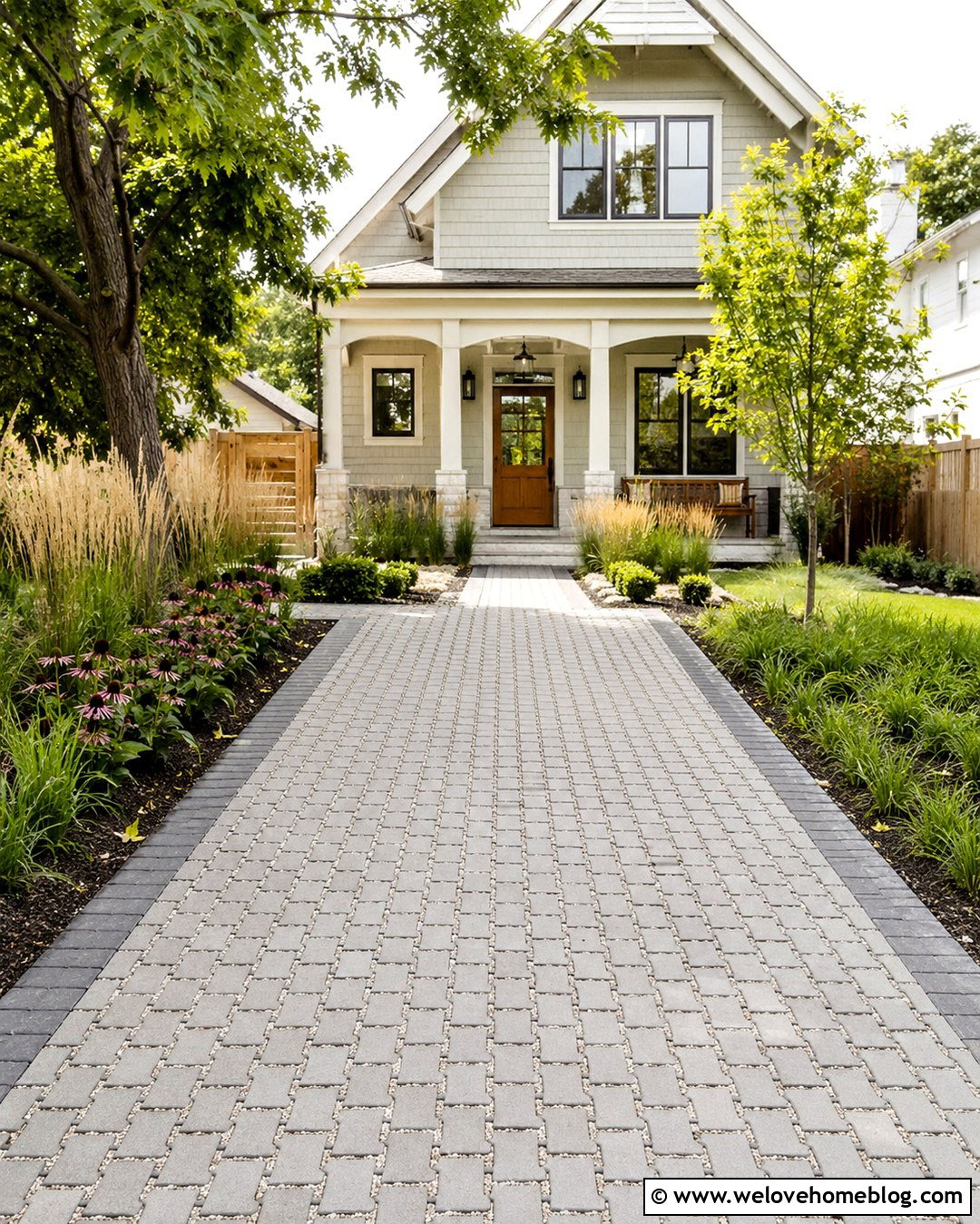
A permeable paver driveway offers a clean, structured surface while allowing water to pass through the joints when the entire base is installed correctly. Choose medium-gray interlocking pavers with small gravel-filled gaps. Use a straight layout to maximize parking, then create narrow planting pockets beside the driveway and near the front steps. Fill them with regionally appropriate native grasses, flowering perennials, and a compact shrub for year-round structure. Native selections can support a garden designed around local growing conditions, while permeable hardscaping can reduce the visual impact of extensive paving. A darker paver border will define the parking space without taking up extra room. Before construction, confirm soil conditions, drainage needs, utility locations, and municipal requirements. This balanced look suits contemporary homes and environmentally conscious front garden renovations.
7. Resin-Bound Driveway With Evergreen Borders
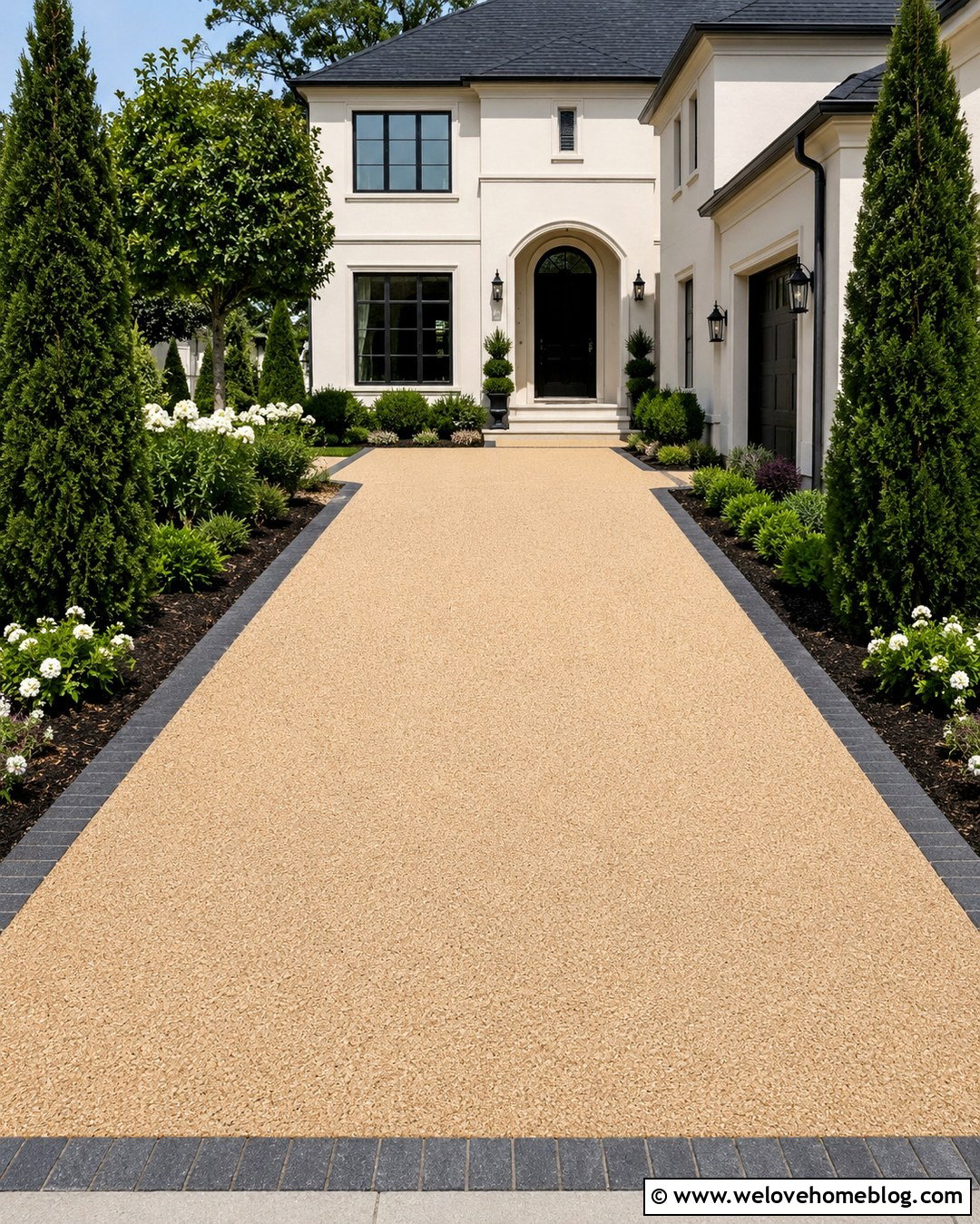
A resin-bound gravel driveway creates a smooth, uniform appearance that can make a small front garden look wider. Select a warm beige or light gray aggregate that complements the home’s siding, stonework, or brick. Keep the driveway rectangular and frame it with a slim charcoal paver border for contrast. Along one side, use a narrow evergreen bed planted with dwarf boxwood alternatives, compact junipers, or other shrubs appropriate for your region. Their consistent foliage keeps the entrance looking finished outside the flowering season. Add one repeated perennial between the shrubs for controlled color. A flush walkway in the same resin-bound finish can lead directly to the porch without introducing another material. Because resin systems require careful base preparation and drainage planning, professional installation may produce a cleaner and longer-lasting result than an improvised surface treatment.
8. Concrete Driveway With Modern Gravel Beds
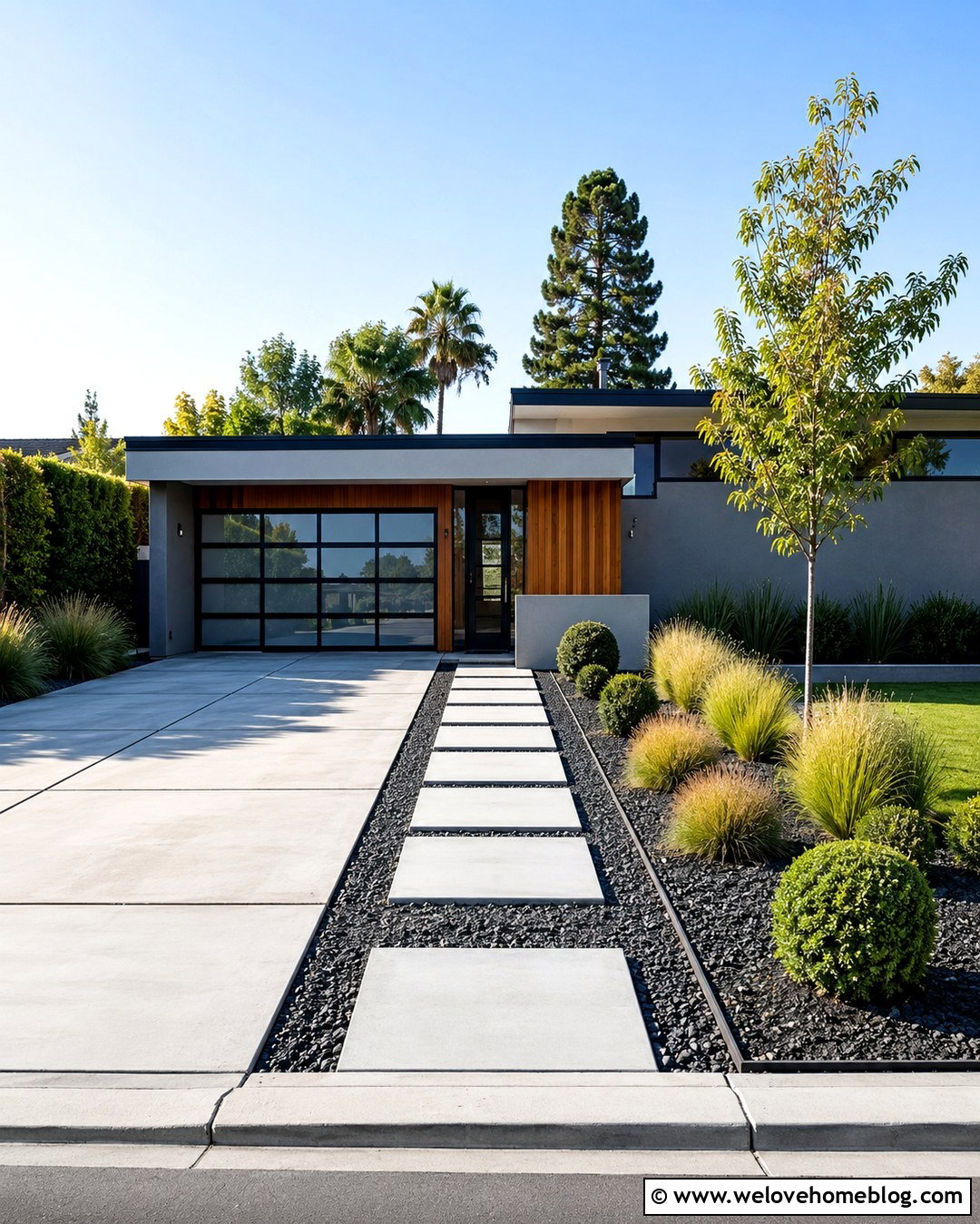
Clean geometry can bring order to a front garden with limited space. Pair a light gray poured-concrete driveway with rectangular beds filled with dark decorative gravel. Steel edging should separate the materials and maintain sharp lines. Within the gravel, place a restrained mix of upright ornamental grasses, sculptural succulents where climate permits, and two or three rounded evergreen shrubs. Space each plant generously so the arrangement feels deliberate rather than crowded. Large concrete stepping pads can continue from the driveway to the front door, creating a direct visual connection. Use one slim tree near the outer corner to add height without blocking windows. The contrast between smooth concrete, textured stone, and architectural foliage suits a modern or mid-century home. It also minimizes lawn care while retaining enough planting to soften the hard surfaces.
9. Cobblestone Driveway With Formal Hedges
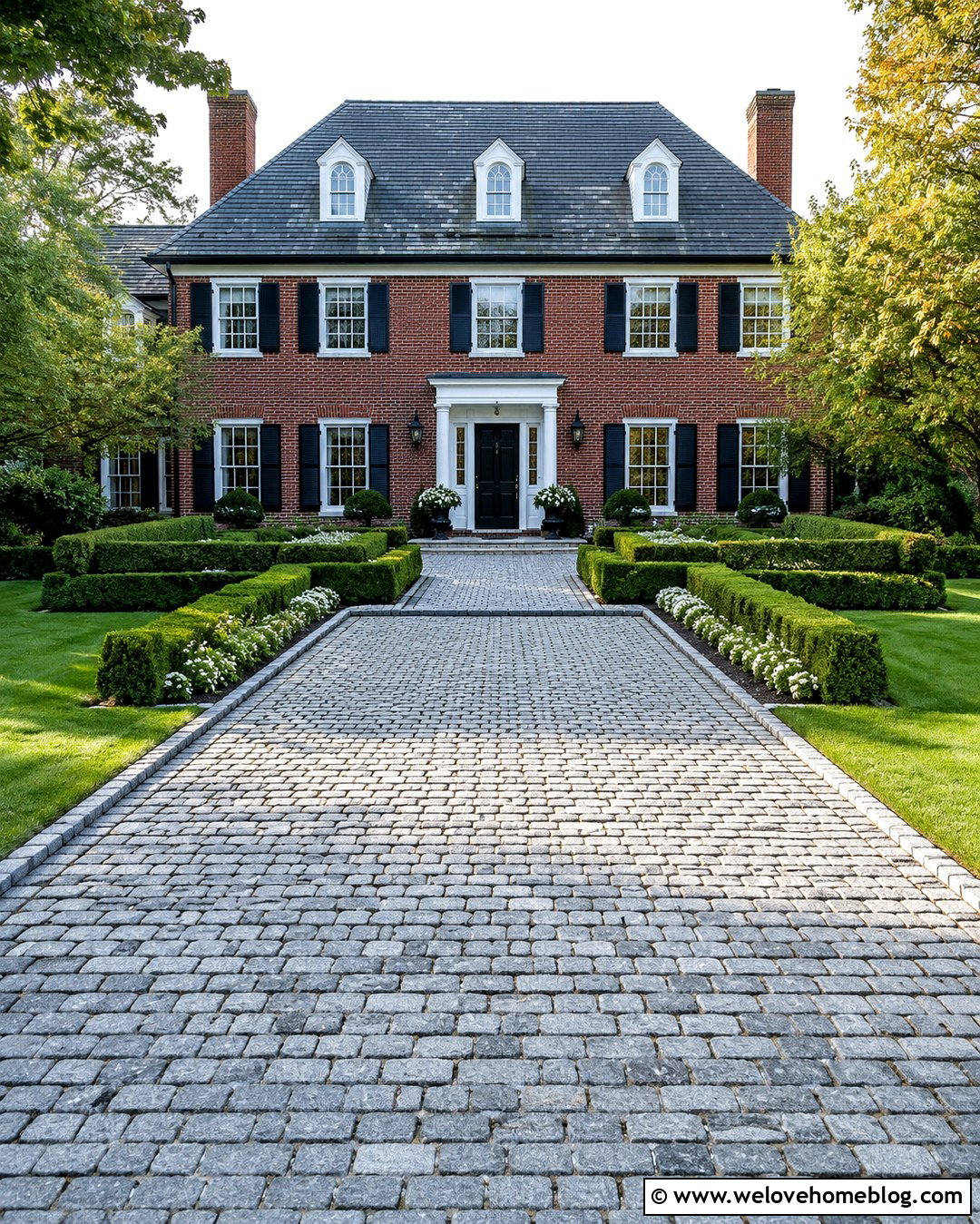
A cobblestone driveway can give a small front garden a traditional, established appearance. Choose reclaimed-looking gray cobbles or tumbled concrete setts in a fan or running pattern. Keep the driveway straight and compact so the detailed surface does not make the yard feel busy. Low clipped hedges along both sides establish symmetry and guide the eye toward the entrance. Select a hedge species that remains manageable in your climate and does not grow wide enough to interfere with vehicles. Small flowering beds can sit behind the hedges near the house, adding seasonal color without disrupting the formal structure. Match the front walkway to the driveway or use simple stone slabs in a coordinating tone. Two understated porch containers and a centered front door complete this orderly design for a colonial, Tudor, or traditional brick home.
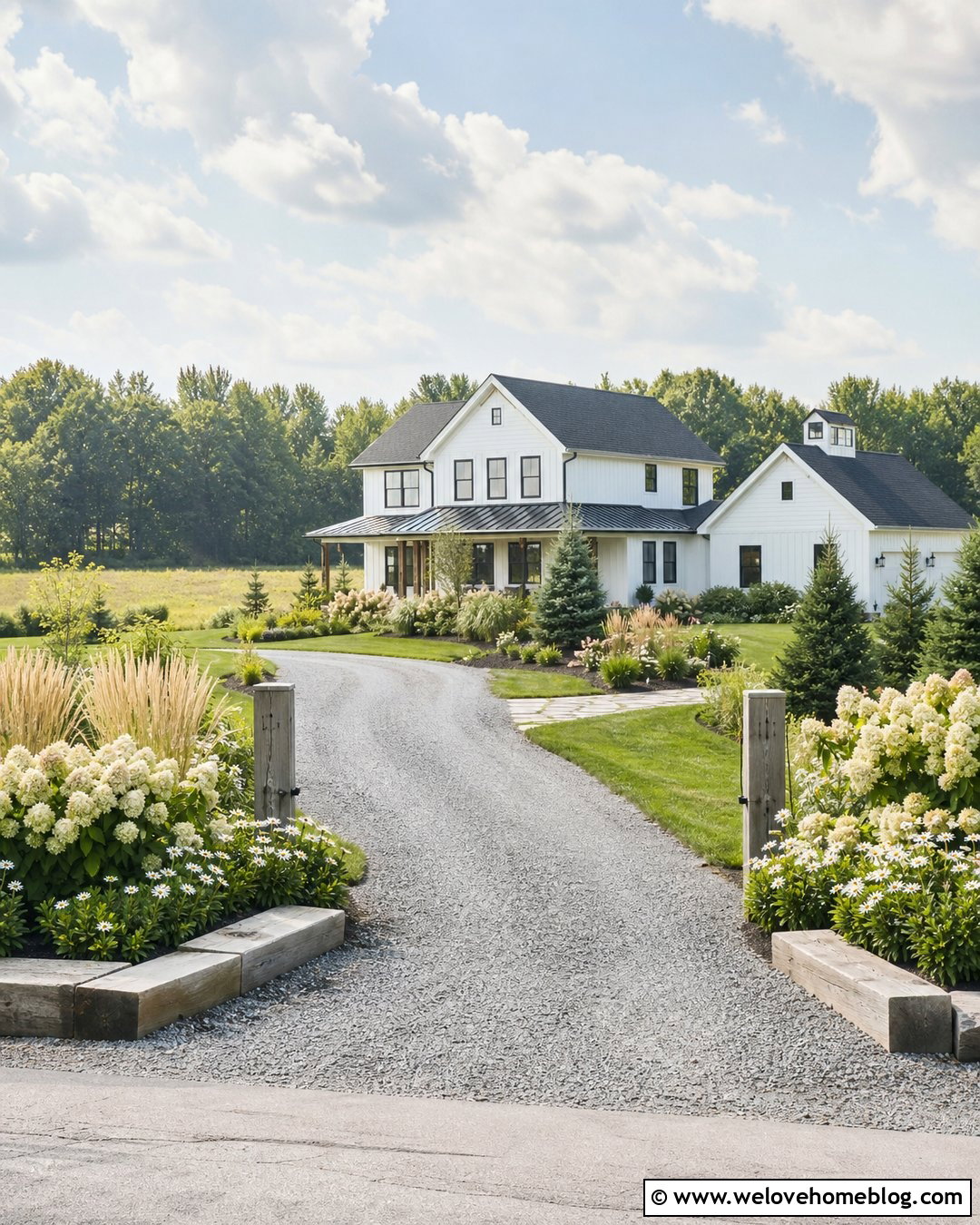
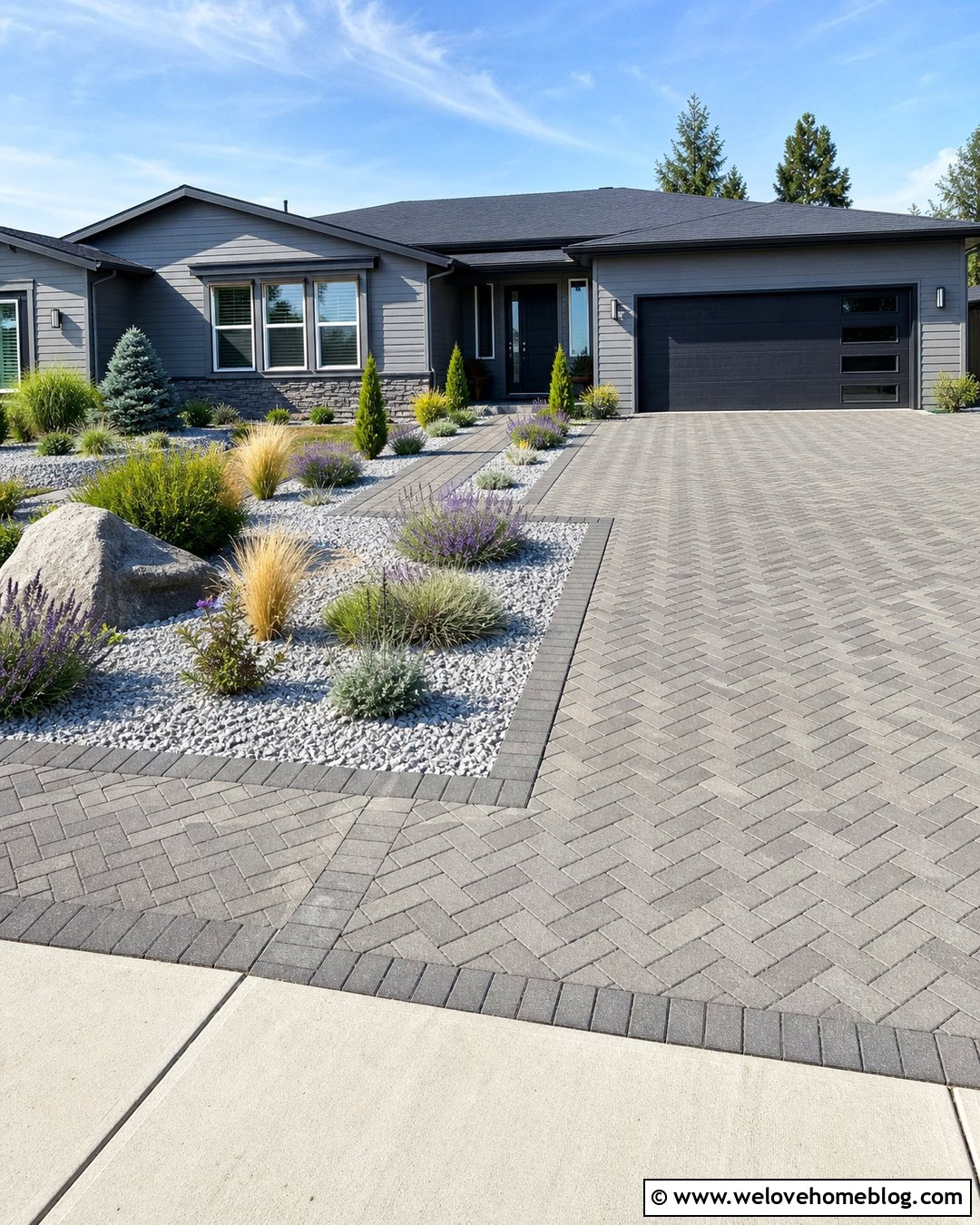
10. Driveway With A Small Rain Garden
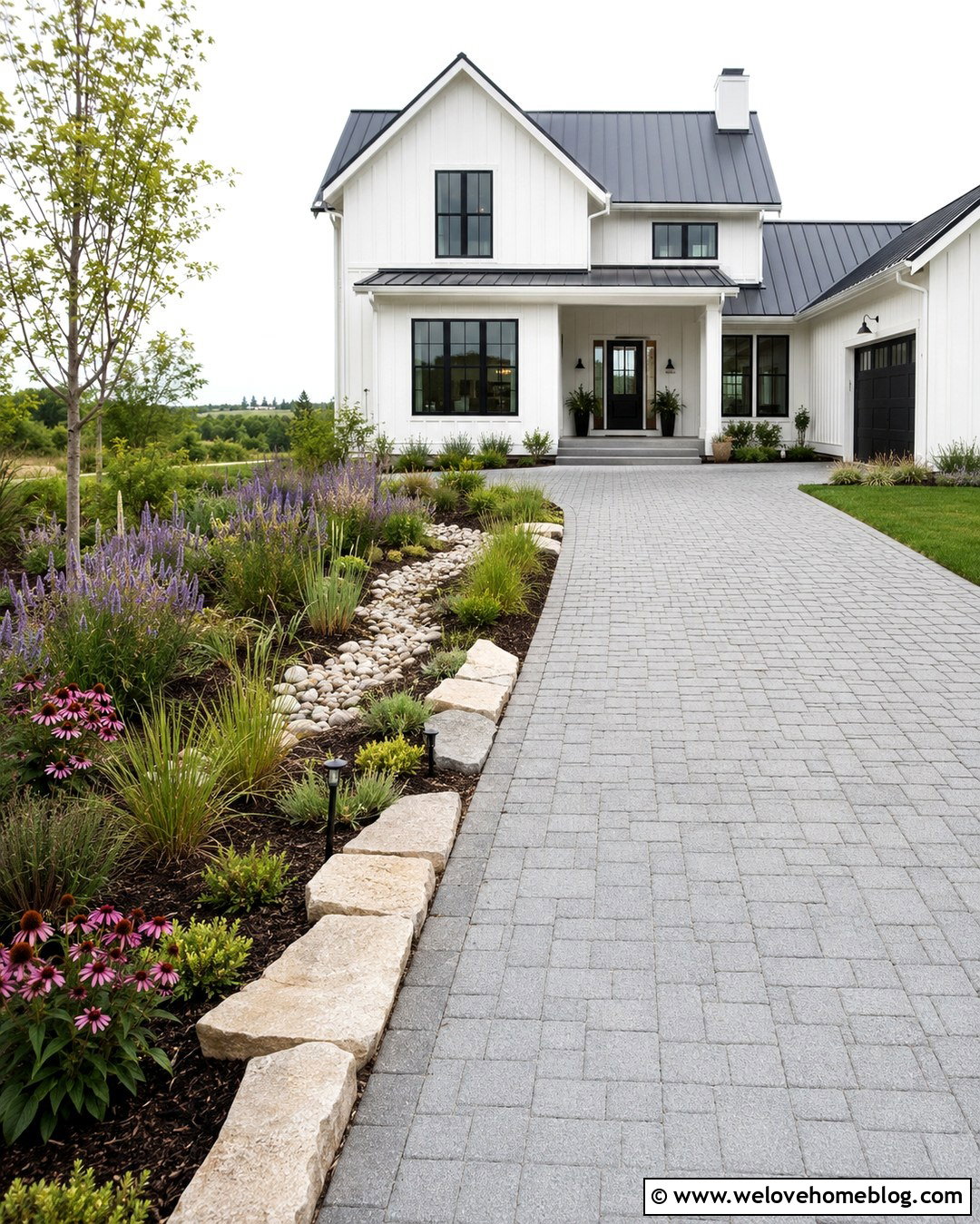
A shallow rain garden can turn a low corner beside the driveway into an attractive landscape feature. Pair a permeable gray paver driveway with a gently curved planted basin positioned where runoff can be directed safely. The garden should not interfere with parking, foundations, sidewalks, or underground utilities. Fill it with moisture-tolerant native grasses, sedges, flowering perennials, and a compact shrub selected for local soil and rainfall. A river-rock channel can visually connect the driveway edge to the basin while slowing the movement of water. Use a neat stone border so the feature looks intentional during dry weather. Continue a few of the same plants in a narrow bed near the porch for unity. Consult local guidance or a drainage professional before altering runoff, particularly on sloped properties or lots with heavy soil.
11. Driveway With Low-Maintenance Ornamental Grasses
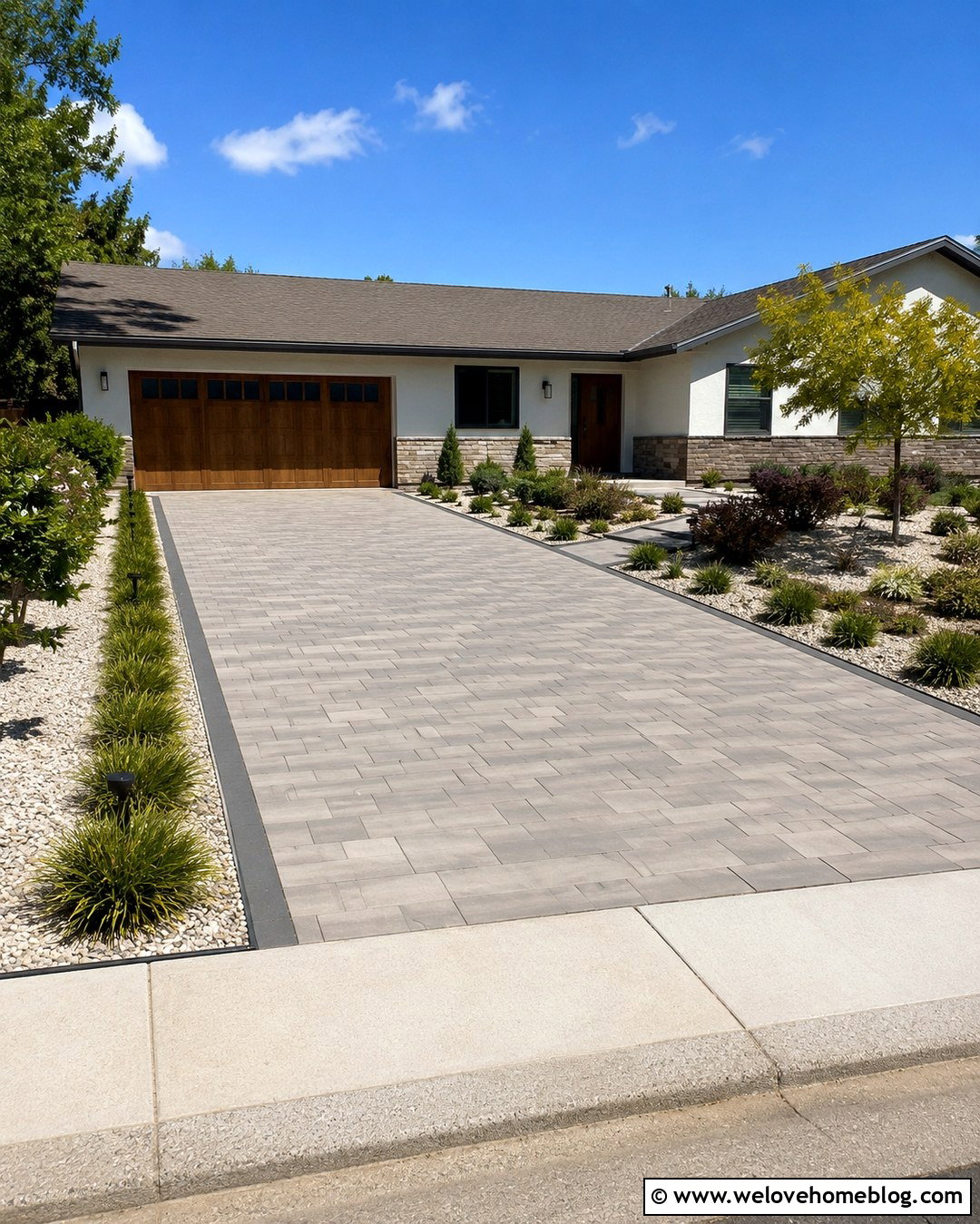
Ornamental grasses bring movement and texture to a small front garden without requiring a complicated planting scheme. Start with a warm gray concrete paver driveway arranged in a simple linear pattern. Install narrow beds on both sides and fill them with compact grass varieties that remain below window height. Mix in a few low evergreen shrubs to provide structure when the grasses are cut back or dormant. Gravel mulch can reinforce the modern appearance, although plant choice and maintenance should reflect the local climate. Keep vegetation far enough from the driveway to prevent foliage from brushing parked vehicles. Low concrete curbs or steel edging will hold the planting beds in place. A matching paved walkway, one small specimen tree, and streamlined porch lighting create a complete landscape suited to modern farmhouse, ranch, and contemporary exteriors.
12. Driveway With A Stepping-Stone Walkway
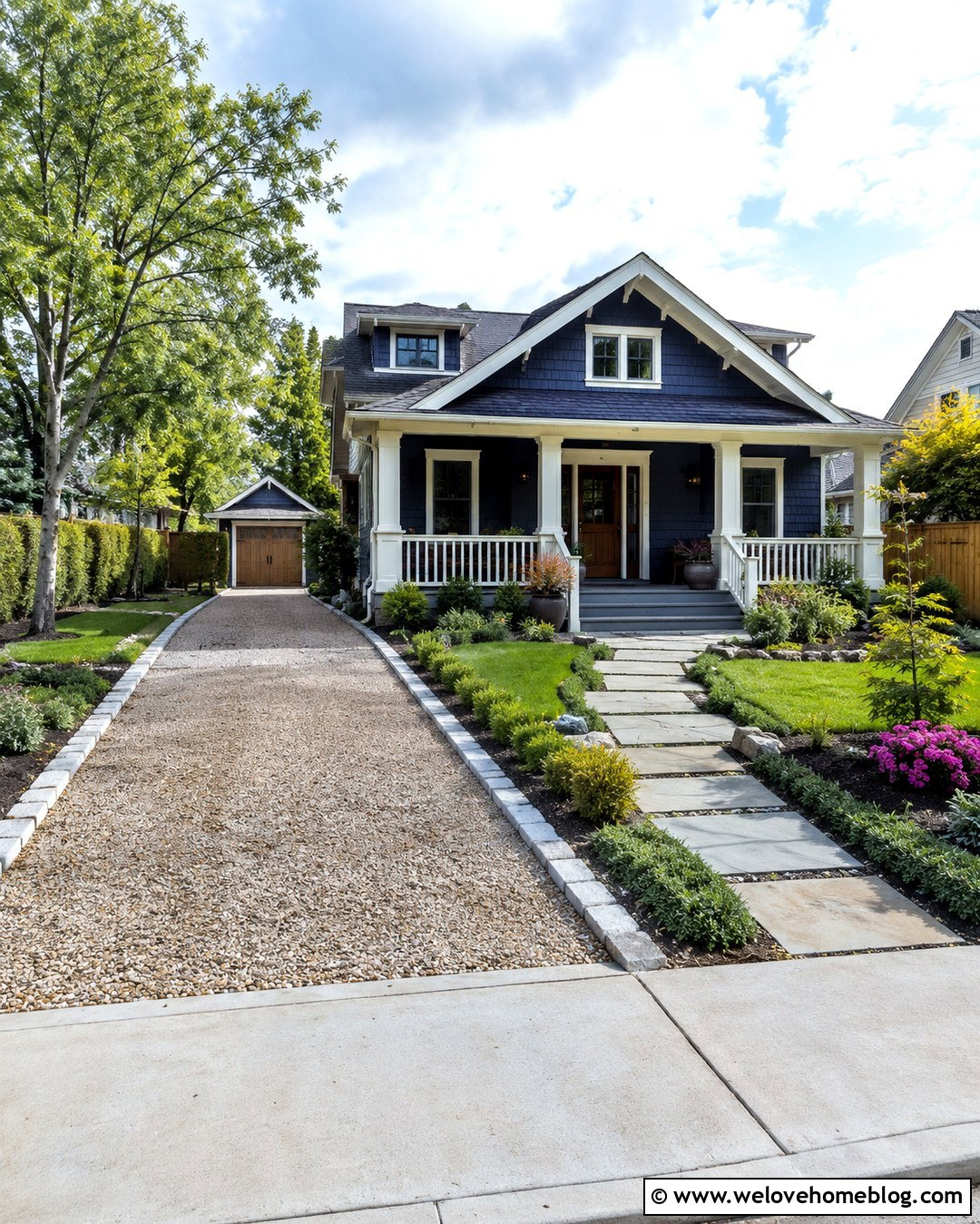
When visitors must share the driveway with vehicles, a separate walkway can make the entrance feel clearer and more welcoming. Use a compact pea gravel driveway edged with rectangular stone blocks. Beside it, position large flagstone stepping pads within a strip of low ground cover or fine gravel. The path should run directly from the sidewalk or driveway entrance to the porch, avoiding unnecessary curves in a tight space. Add a narrow planting bed between the path and house with compact shrubs and seasonal flowers. Keep ground-cover plants away from the vehicle area unless they tolerate occasional foot traffic. Repeating the driveway’s stone edging around the bed ties everything together. This relaxed combination works especially well with cottage, Craftsman, and Cape Cod homes, where natural textures complement porches, painted siding, and traditional architectural details.
13. Driveway With Vertical Garden Planting
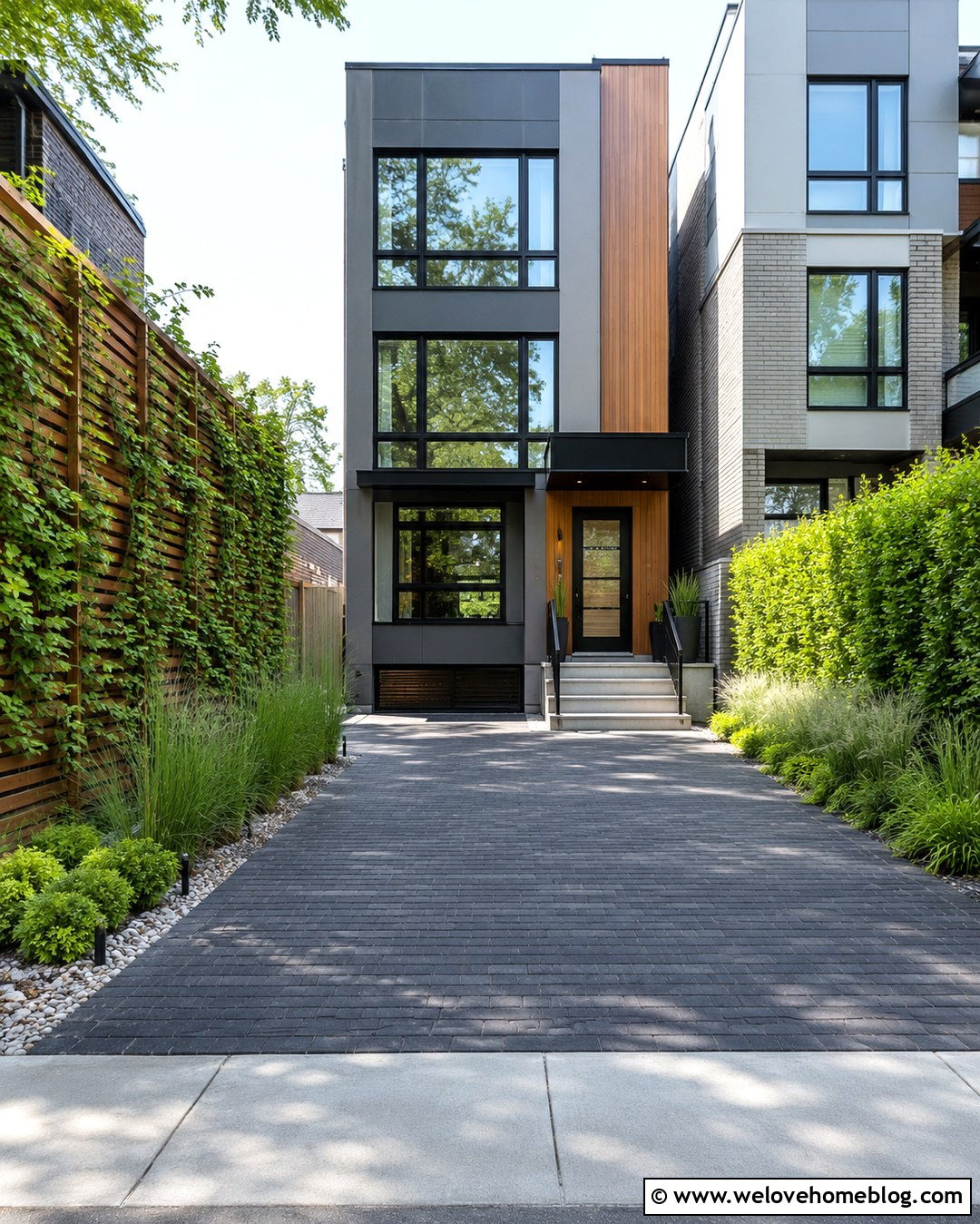
Vertical planting adds greenery when there is almost no room beside the driveway. Begin with a narrow charcoal paver driveway that fits the home’s modern or urban setting. Along a blank garage wall or boundary fence, install a sturdy trellis with climbing plants selected for the site’s sunlight and climate. Leave enough space between vegetation and vehicles for airflow, maintenance, and opening doors. At ground level, create a slim bed of evergreen ground cover, compact grasses, or gravel-set containers. A light-colored stone border will prevent soil from spreading across the pavers. Continue the vertical theme with tall, narrow porch planters rather than wide pots. This design draws the eye upward, softens hard walls, and preserves valuable parking space. Select vines carefully so they will not damage siding, masonry joints, gutters, or nearby structures.
14. Driveway With A Small Pollinator Garden
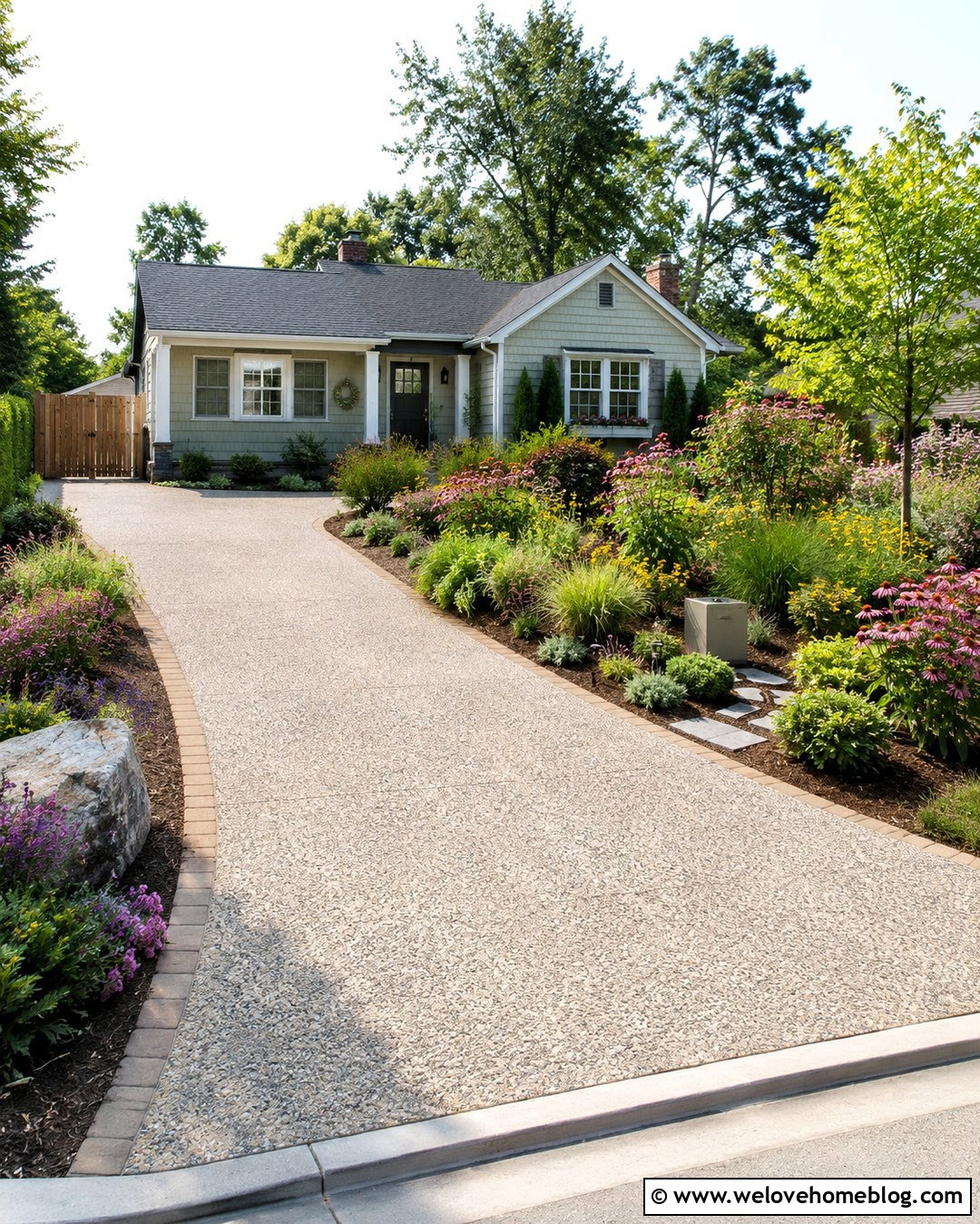
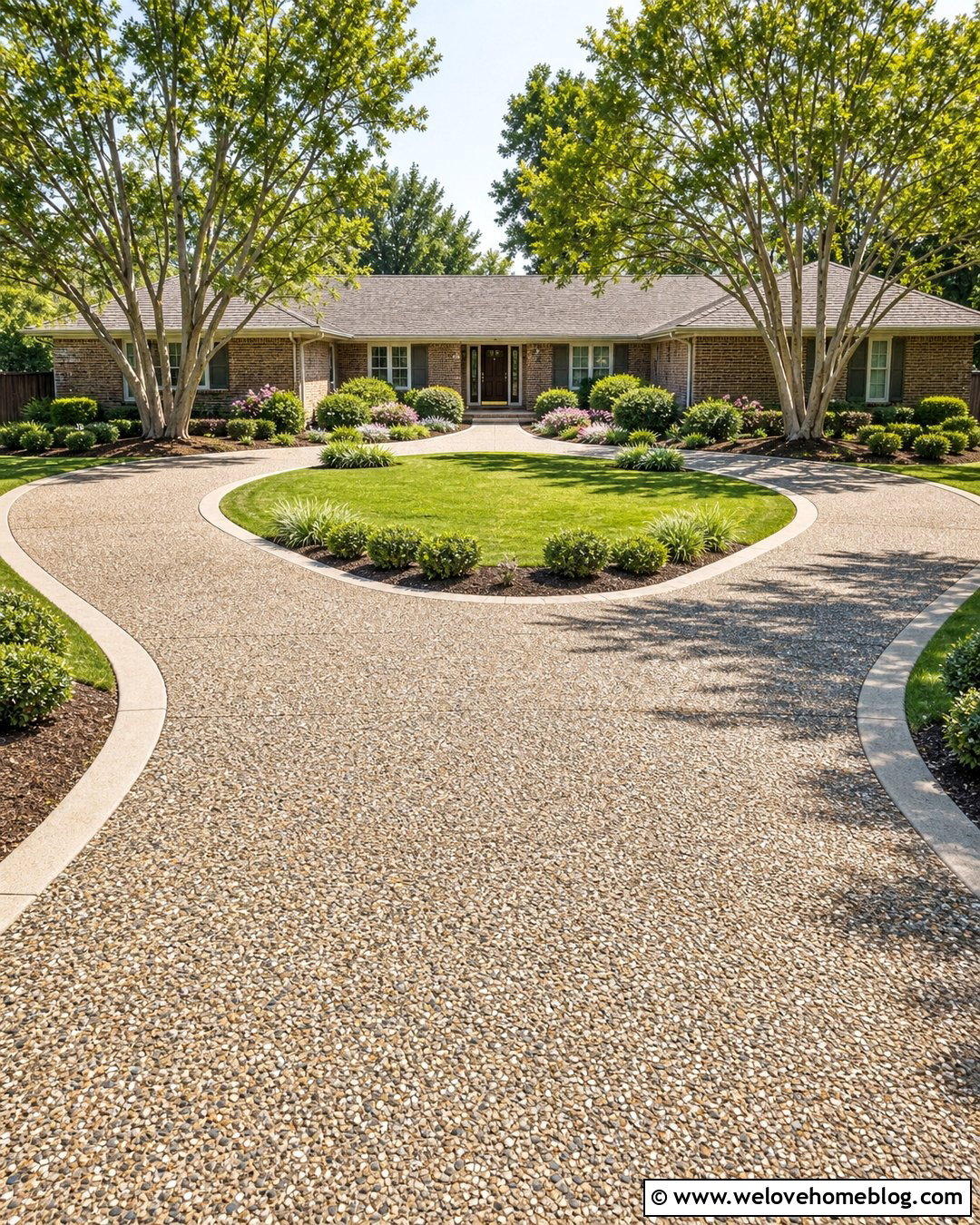
A pollinator-friendly border can bring color to a compact driveway without turning the front garden into an unstructured meadow. Choose a light exposed-aggregate driveway with a curved brick edge. Reserve one sunny corner for a densely planted bed containing regionally suitable flowering perennials, compact native grasses, and one small shrub. Group plants in repeated clusters so the display reads clearly from the street. Use varieties with different flowering periods to extend seasonal interest, but limit the overall color palette to keep the small space cohesive. Place taller plants toward the house or fence and low growers near the driveway for visibility. A narrow mulch strip prevents stems from leaning directly onto parked vehicles. Repeat one flowering plant beside the porch, then add a simple walkway and understated address marker to connect the garden with the entrance.

15. Driveway With A Dwarf Tree And Ground Cover
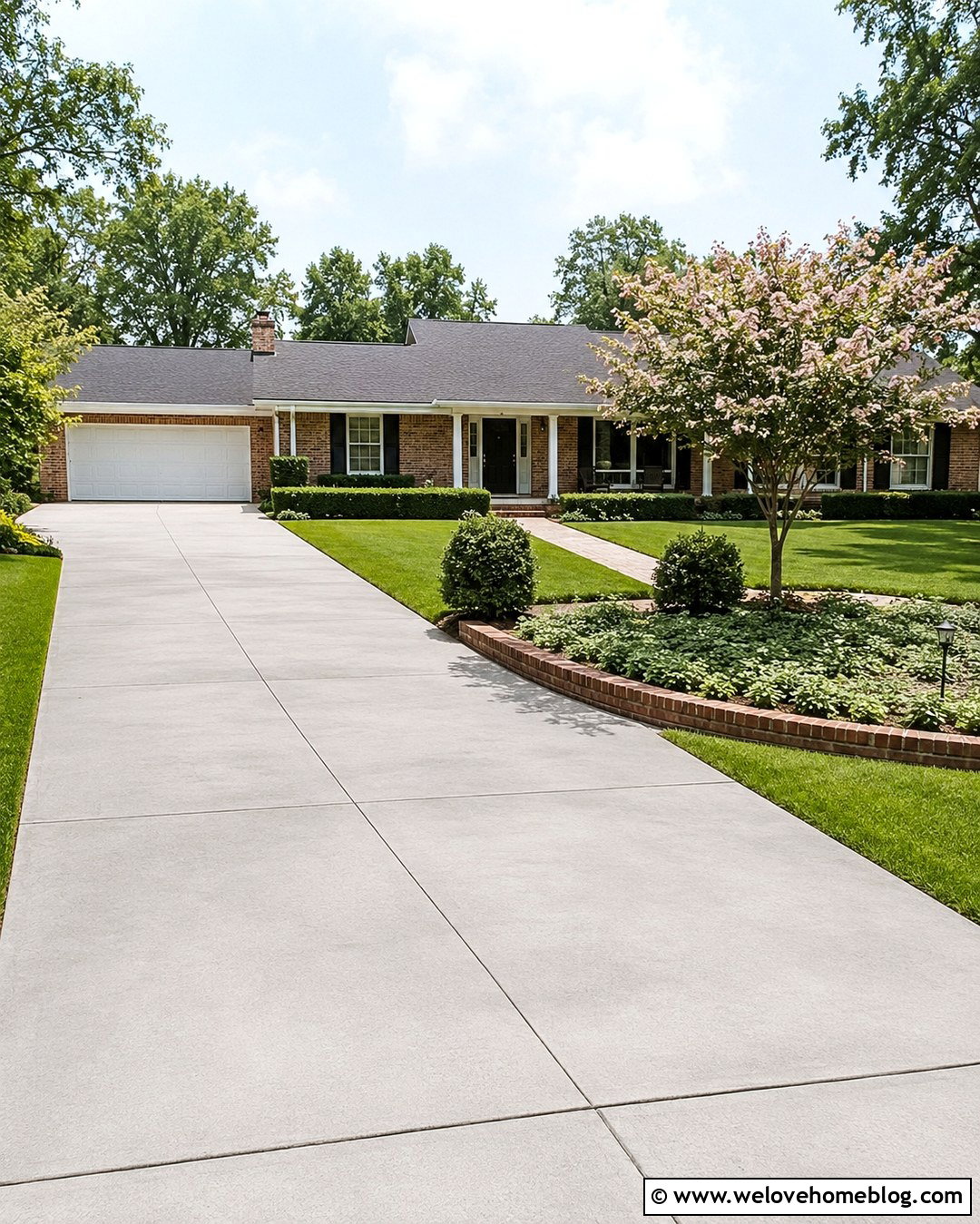
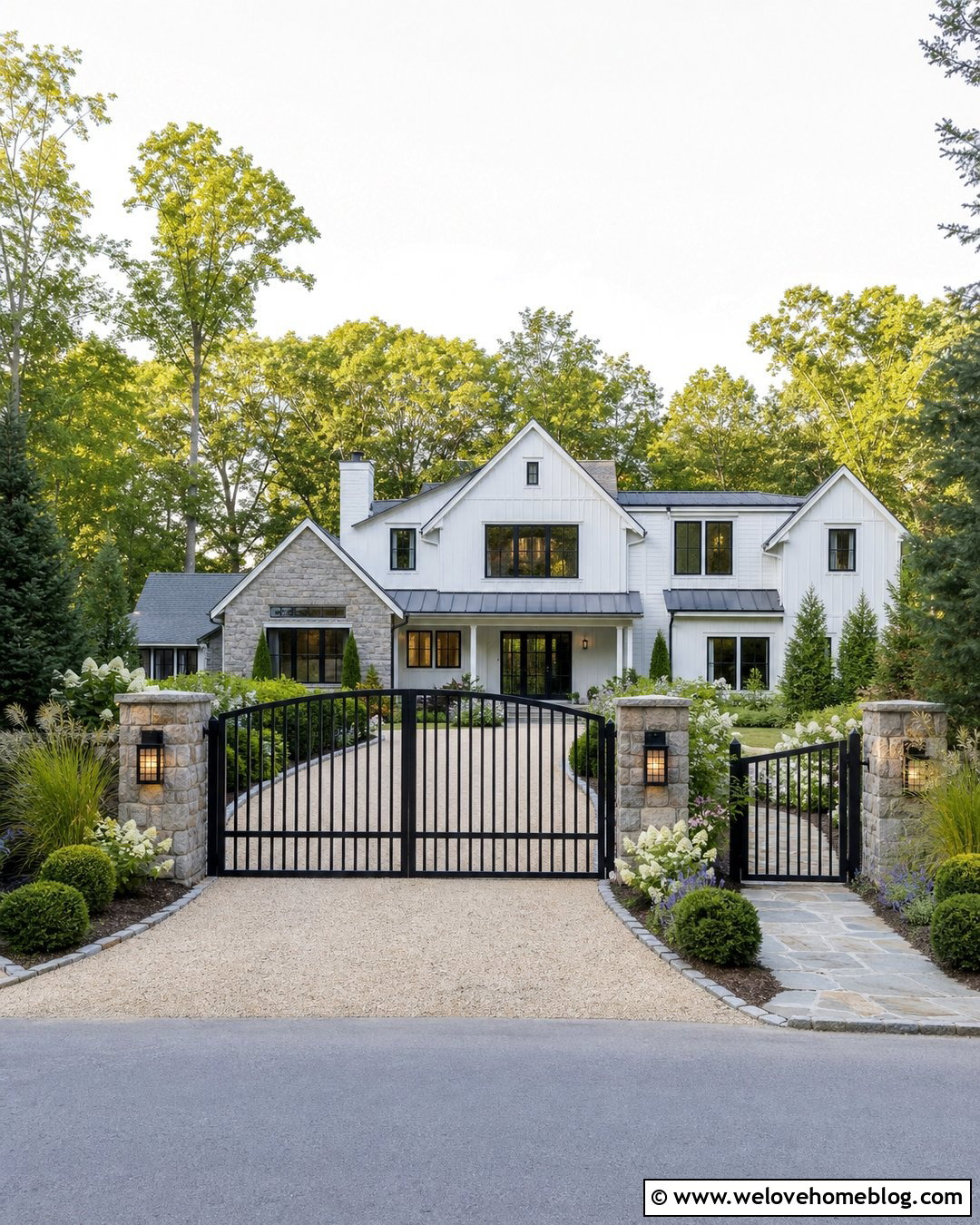
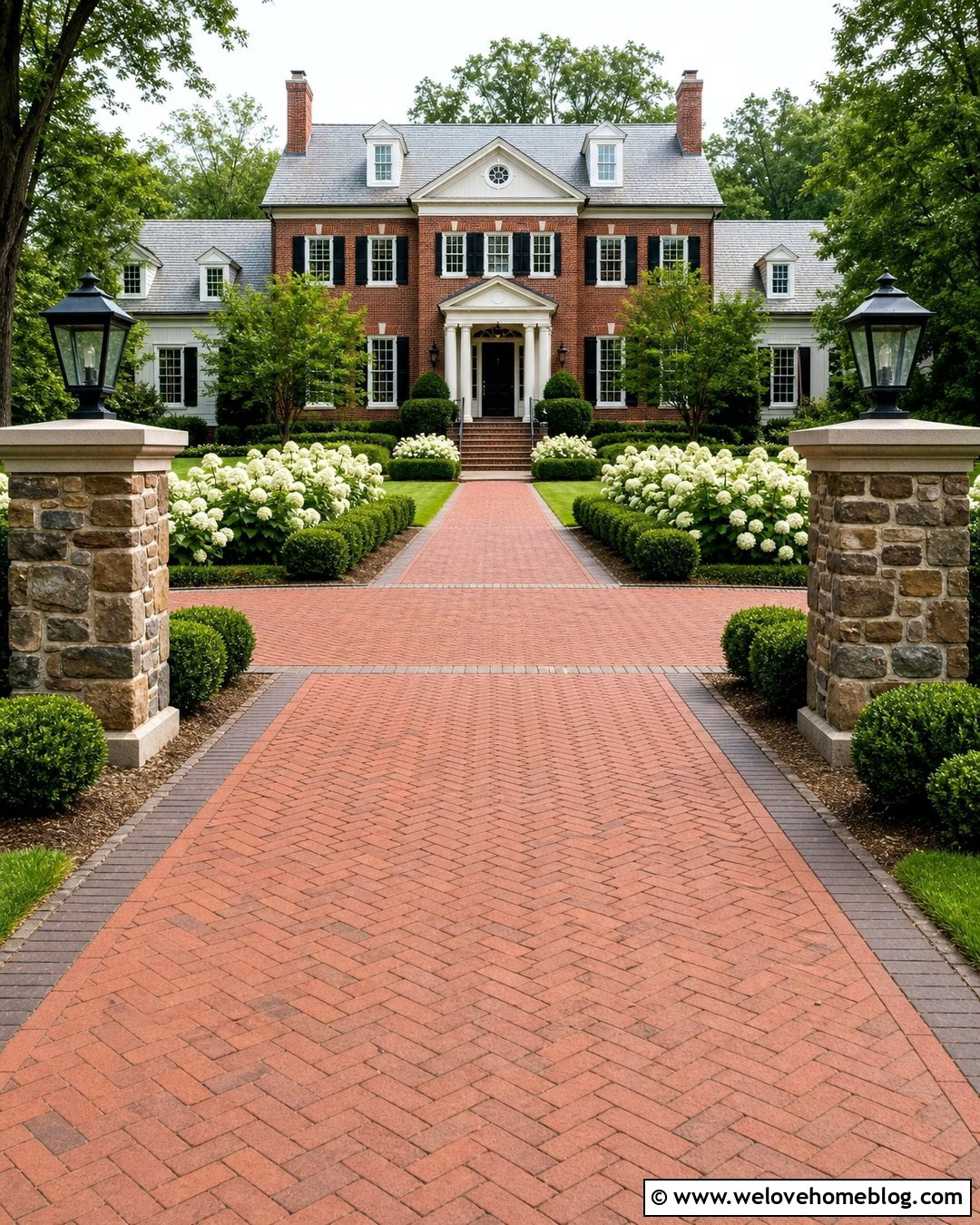
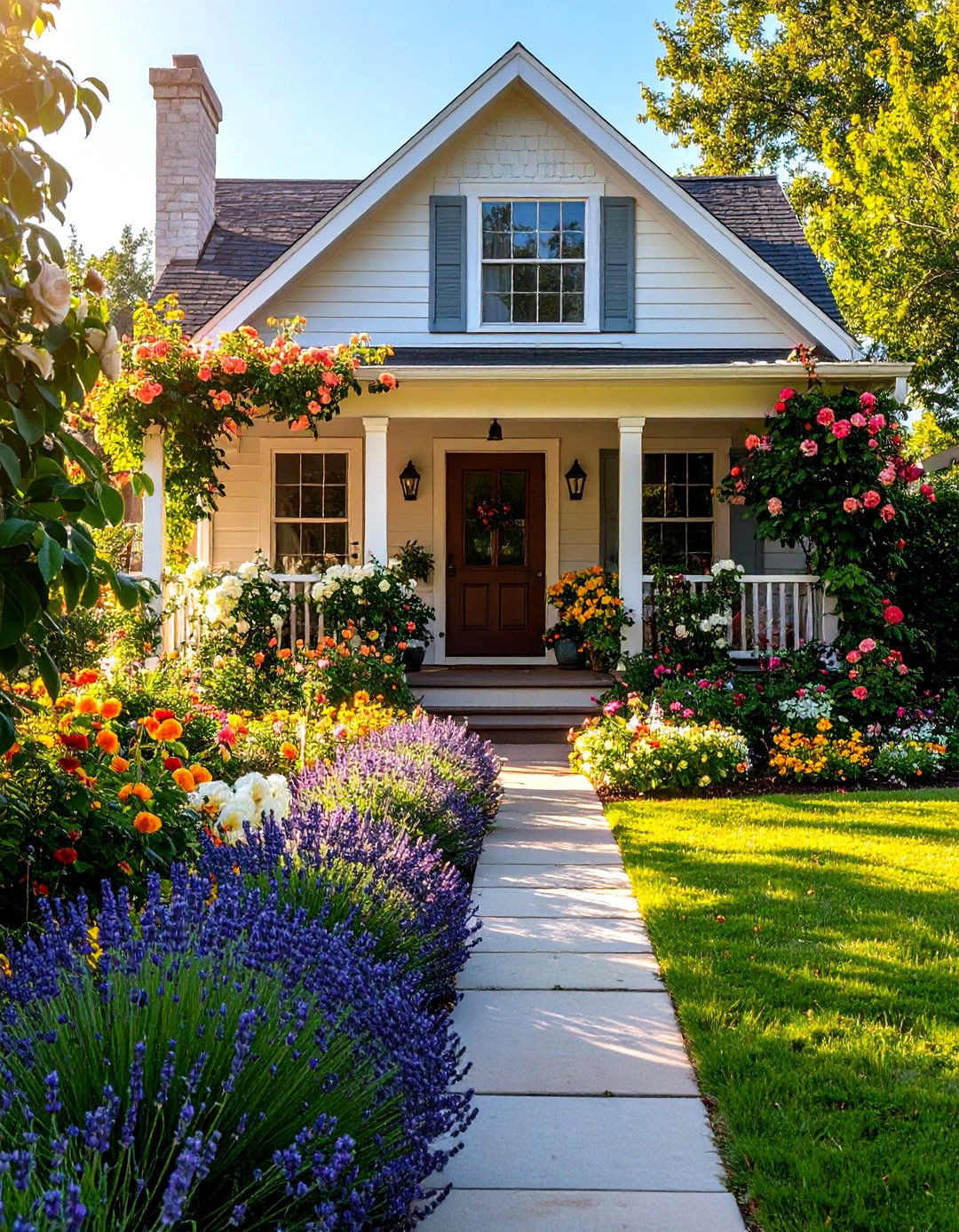
One carefully positioned dwarf tree can make a stronger statement than many small, unrelated plants. Pair a smooth concrete driveway with a narrow lawn-free bed near the front corner of the house. Plant a compact flowering or evergreen tree whose mature size fits safely below power lines and away from paving, foundations, and sightlines. Surround it with a continuous carpet of shade- or sun-tolerant ground cover, depending on the exposure. A low brick border can echo the home’s facade and prevent plants from spreading onto the driveway. Keep the remaining landscape simple with two matching shrubs near the entrance and a direct paved walkway. This arrangement introduces height, shade, and seasonal character without consuming the parking area. Confirm mature root spread and maintenance needs before choosing the tree, rather than buying solely for its nursery size.
16. Driveway With Container Garden Borders
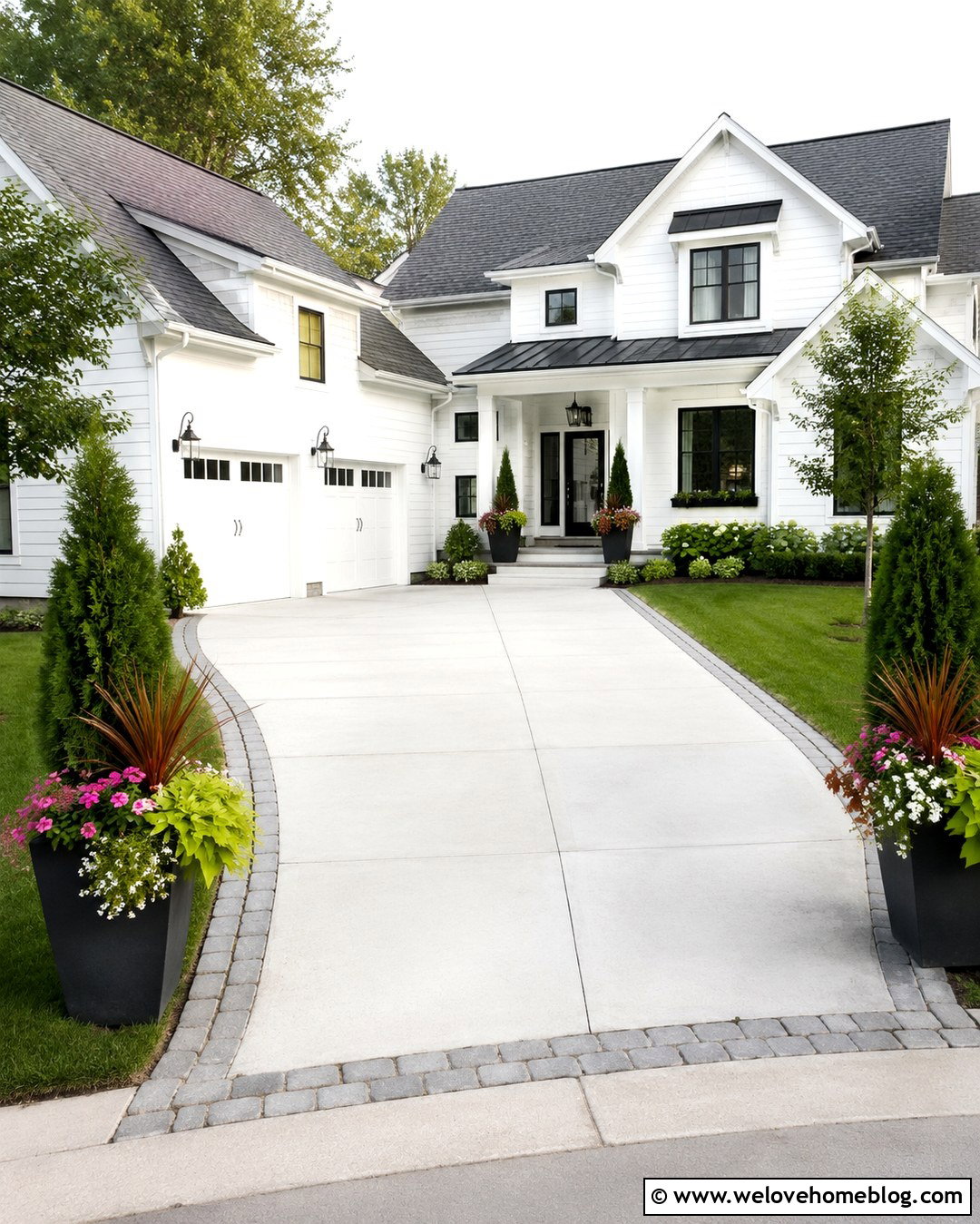
Containers offer flexible planting when permanent beds are too narrow or existing paving cannot be removed. A light gray concrete driveway can be softened with a coordinated row of slim planters placed along the house or porch, safely outside the vehicle path. Choose containers in one material and two related sizes to avoid visual clutter. Fill them with upright evergreens, trailing foliage, ornamental grasses, or seasonal flowers suited to the amount of sun and available watering. Larger pots should anchor the entrance, while smaller containers repeat the palette along the walkway. Add a thin cobblestone border around the driveway to give the hardscape a finished edge. Because pots dry faster than in-ground beds, consider drip irrigation or self-watering containers. This adaptable design suits renters, beginners, and homeowners who enjoy changing their front garden display throughout the year.
17. Driveway With A Privacy Screen Garden
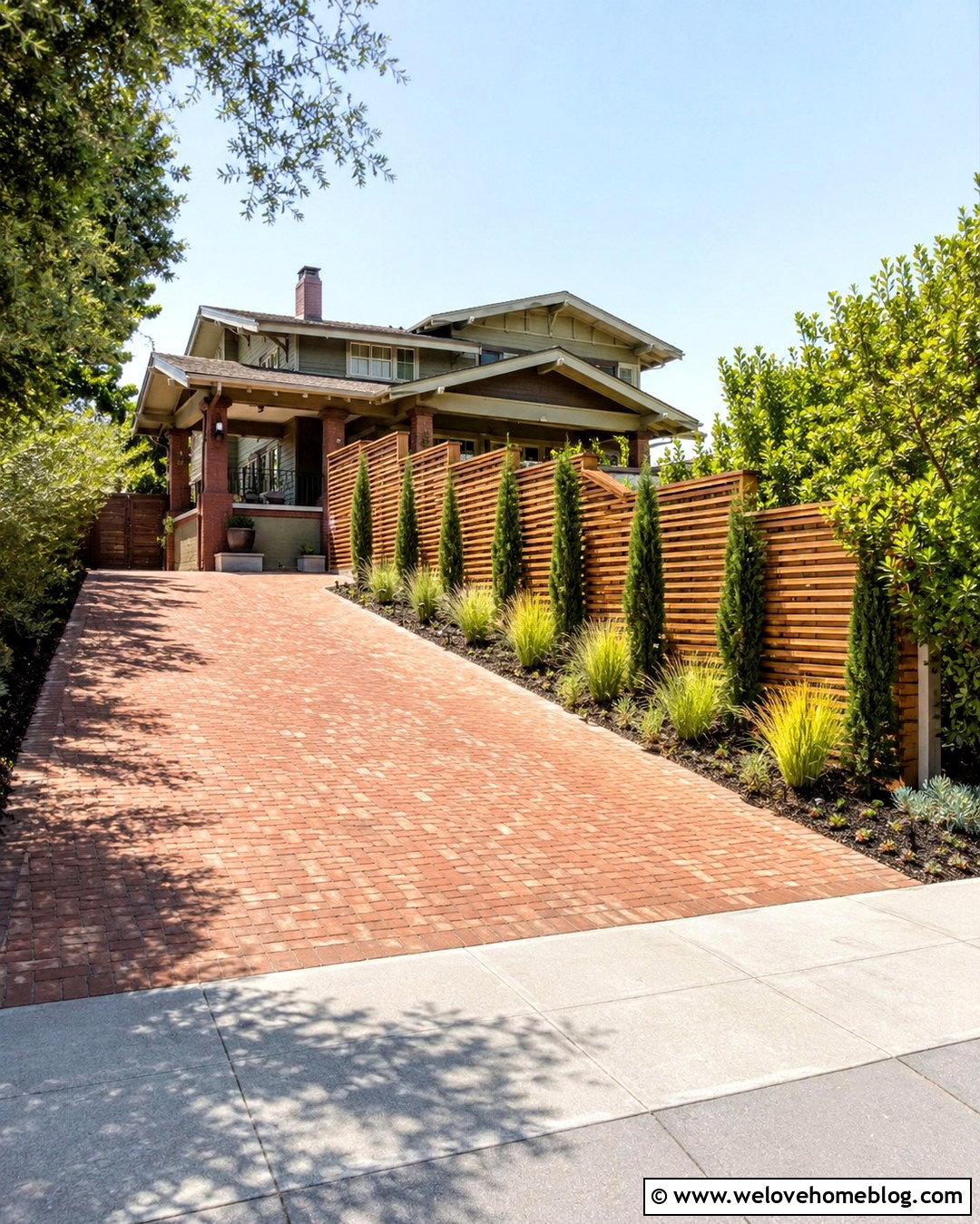
A narrow privacy screen can separate a small driveway from a neighboring property without making the front garden feel enclosed. Use warm-toned brick pavers for the driveway and install a slatted wood screen along one side. Keep the screen low near the street, then increase its height gradually toward the house to preserve visibility. A slim planting bed at its base can contain columnar evergreens, clumping grasses, or a restrained climbing plant. Repeat the wood tone in the front door or porch railing for a connected appearance. On the opposite side, use simple lawn or low ground cover so the layout remains balanced. Low path lights and a brick walkway guide visitors to the entrance. Before building, verify property lines, neighborhood requirements, and local rules regarding fence placement, height, and driveway sight distances.
18. Driveway With Rock Garden Landscaping
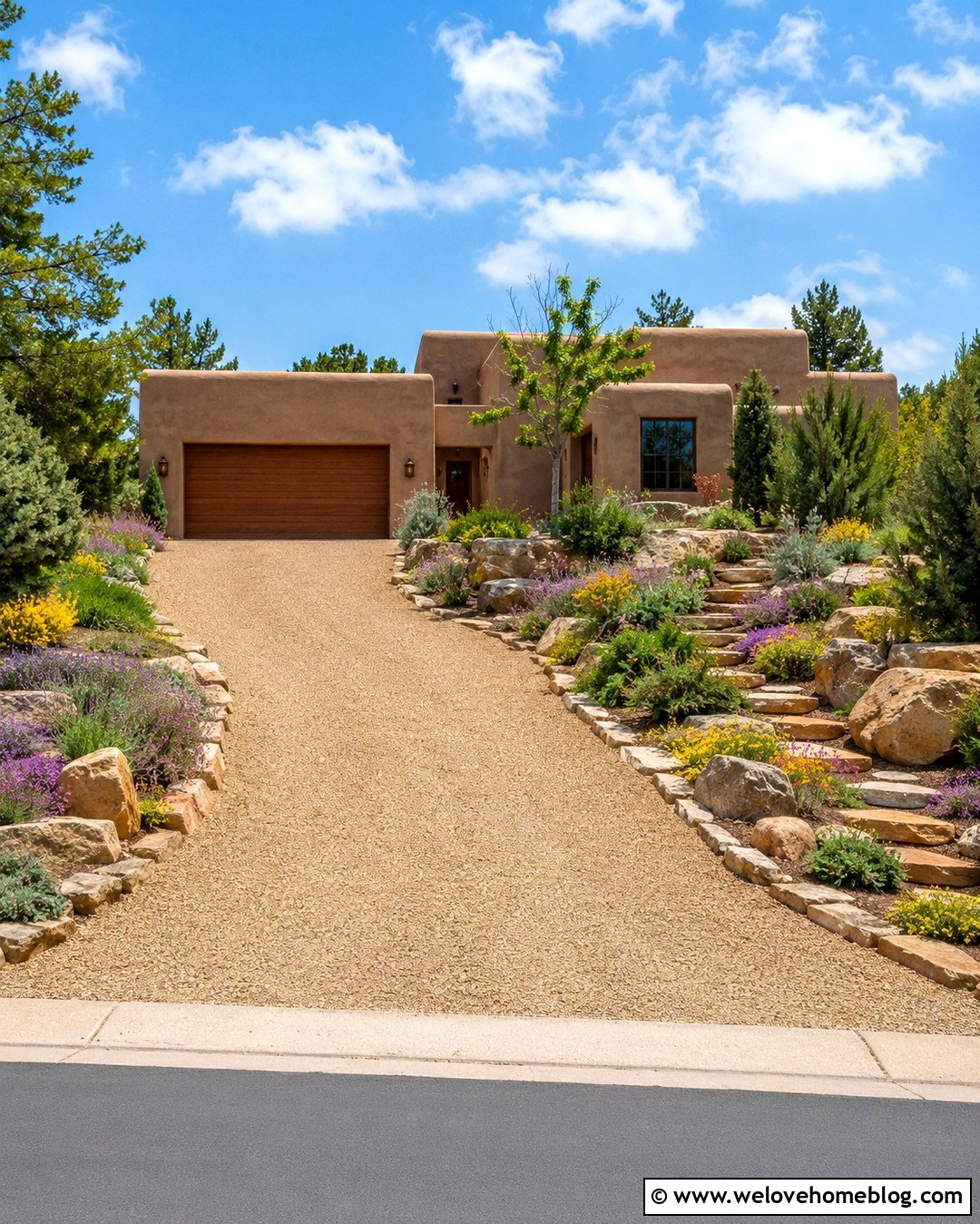
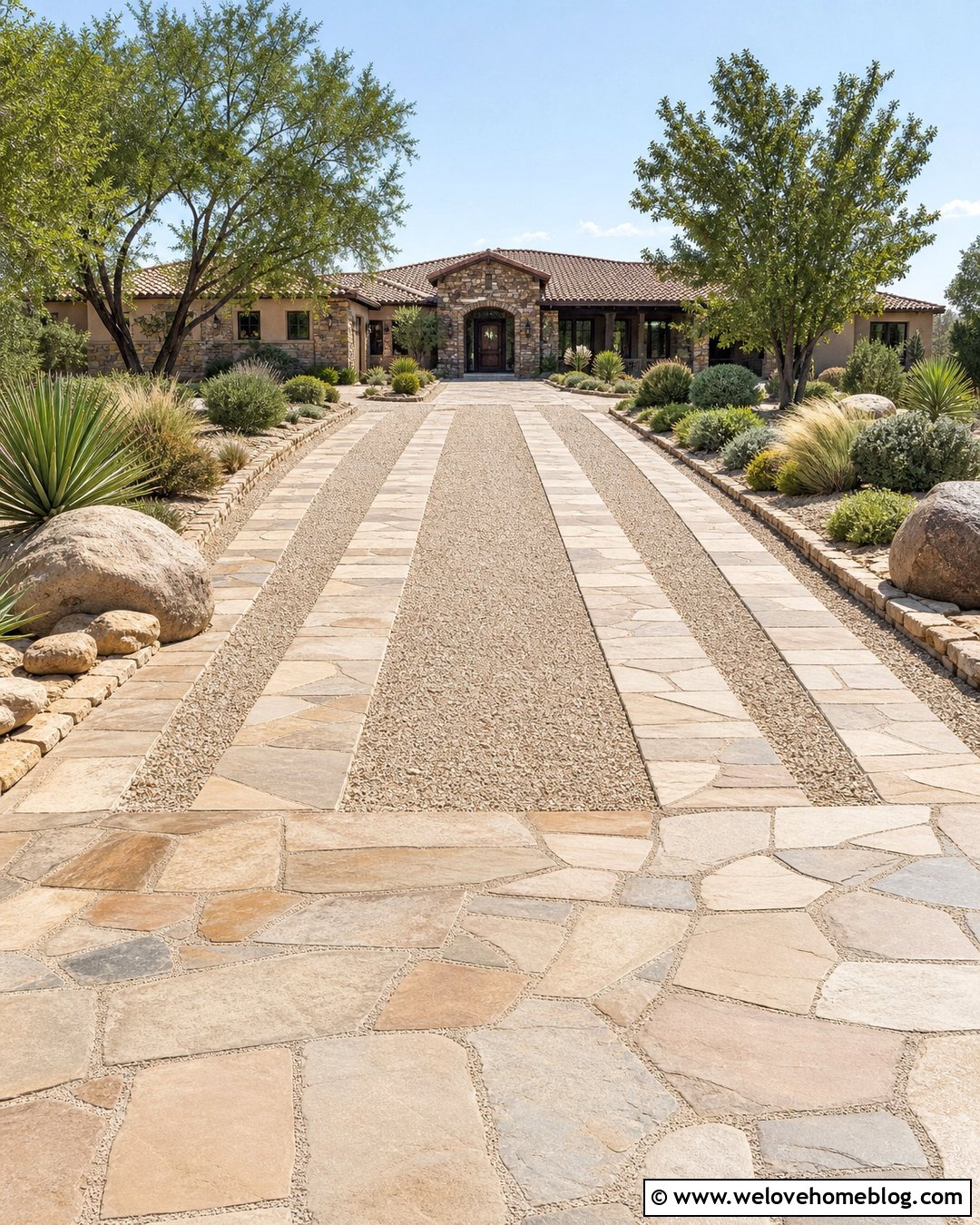
A rock garden is useful for a sunny, dry front yard where a large lawn would be difficult to maintain. Combine a pale tan gravel driveway with irregular natural-stone edging and a raised rockery near the house. Arrange several larger stones first, then add smaller gravel and drought-tolerant plants chosen for local conditions. Compact grasses, creeping ground covers, flowering perennials, and small evergreen forms provide contrasting heights and textures. Avoid scattering many tiny rocks, which can make the garden appear unfinished. The driveway should remain simple and straight, allowing the layered planting to become the focal point. Continue the same stone into a stepping path leading to the porch. A warm stucco, Southwestern, contemporary, or rustic home provides a natural backdrop, while one sculptural container beside the door completes the low-water composition.
19. Driveway With Hydrangea And Evergreen Borders
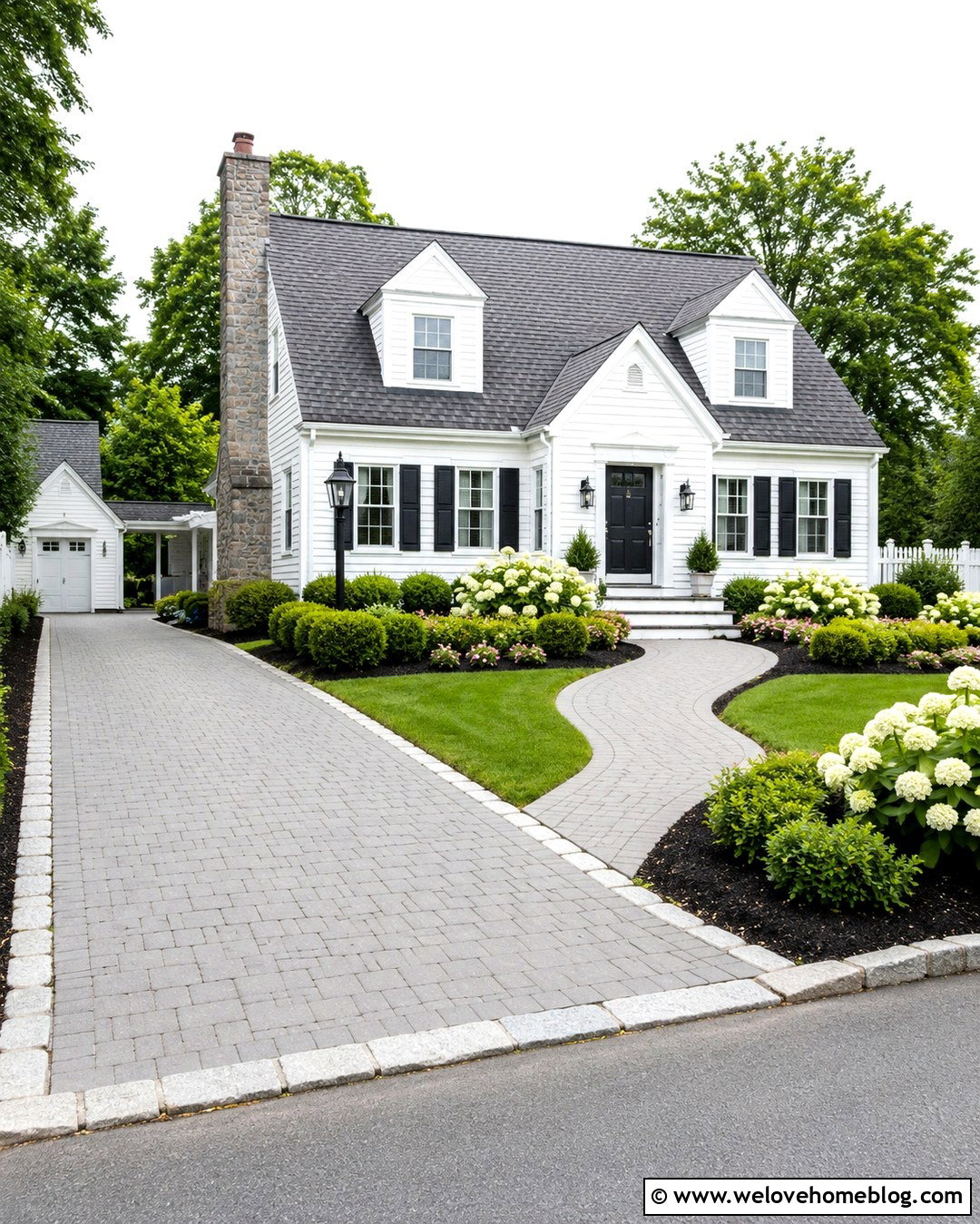
Hydrangeas and compact evergreens can create a lush driveway border, especially where the site provides suitable moisture, soil, and light. Begin with a medium-gray paver driveway bordered by light stone setts. Create one generous bed near the house rather than two cramped strips along the full driveway. Place dwarf or compact hydrangeas behind low evergreen shrubs, allowing enough room for their mature spread. Add mulch and a simple edging material to keep the bed neat. In colder climates, the evergreens maintain structure when the flowering shrubs are bare. A matching paver walkway should curve gently through the planting toward the porch. Keep flowers away from vehicle doors and maintain clear views at the sidewalk. White siding, brick facades, and Cape Cod or colonial architecture all work well with this soft but organized front garden design.
20. Driveway With Lighting And An Address Sign
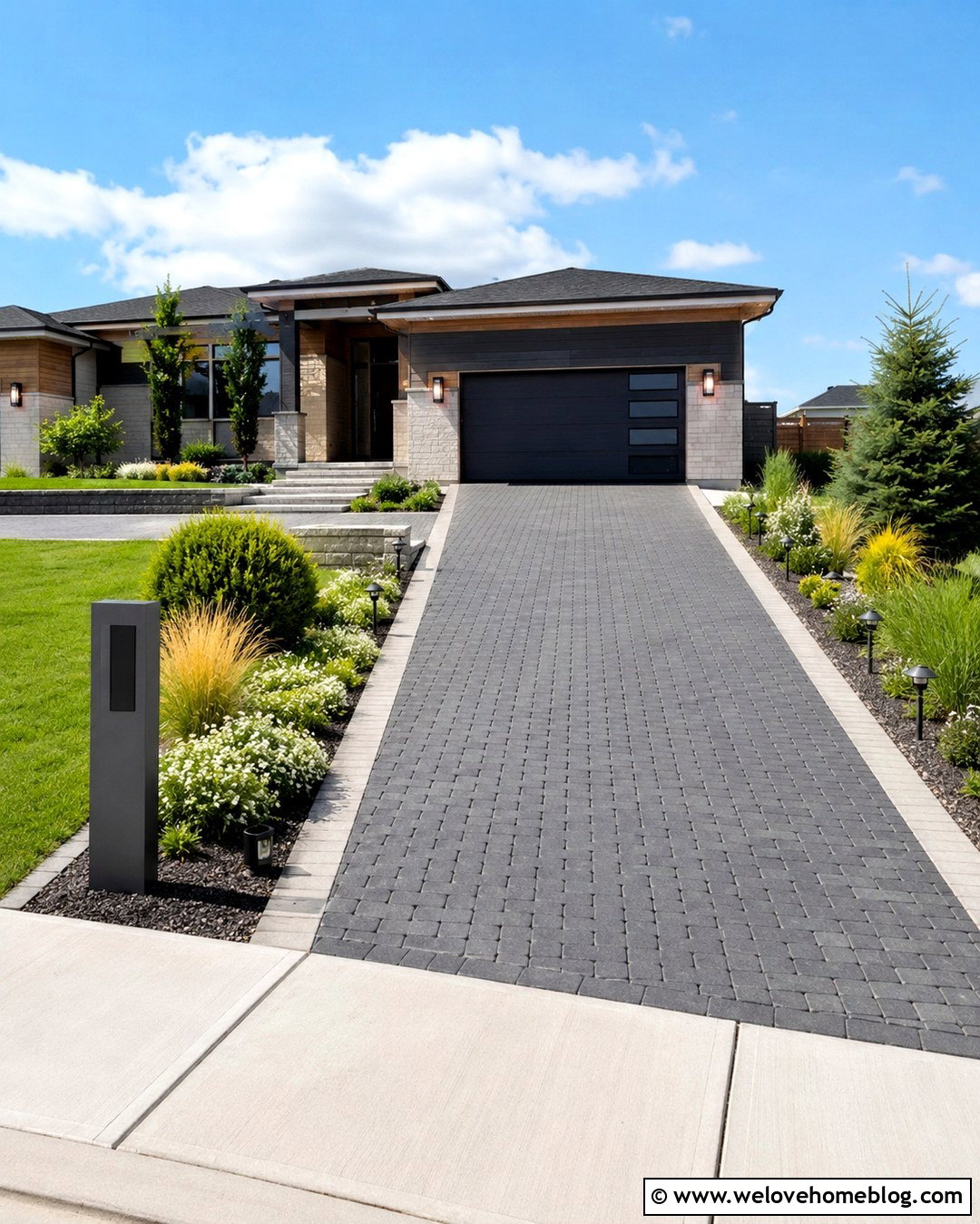
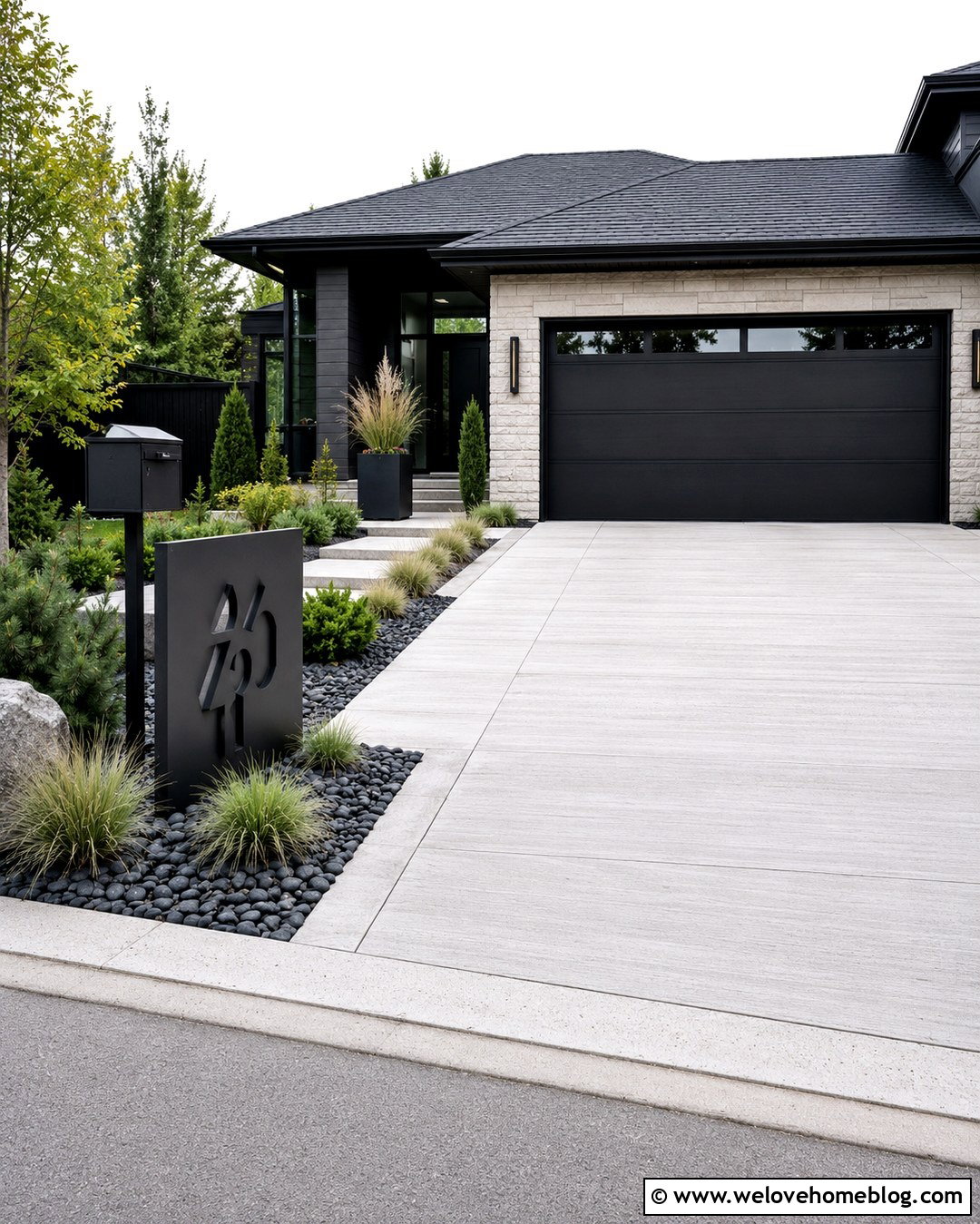
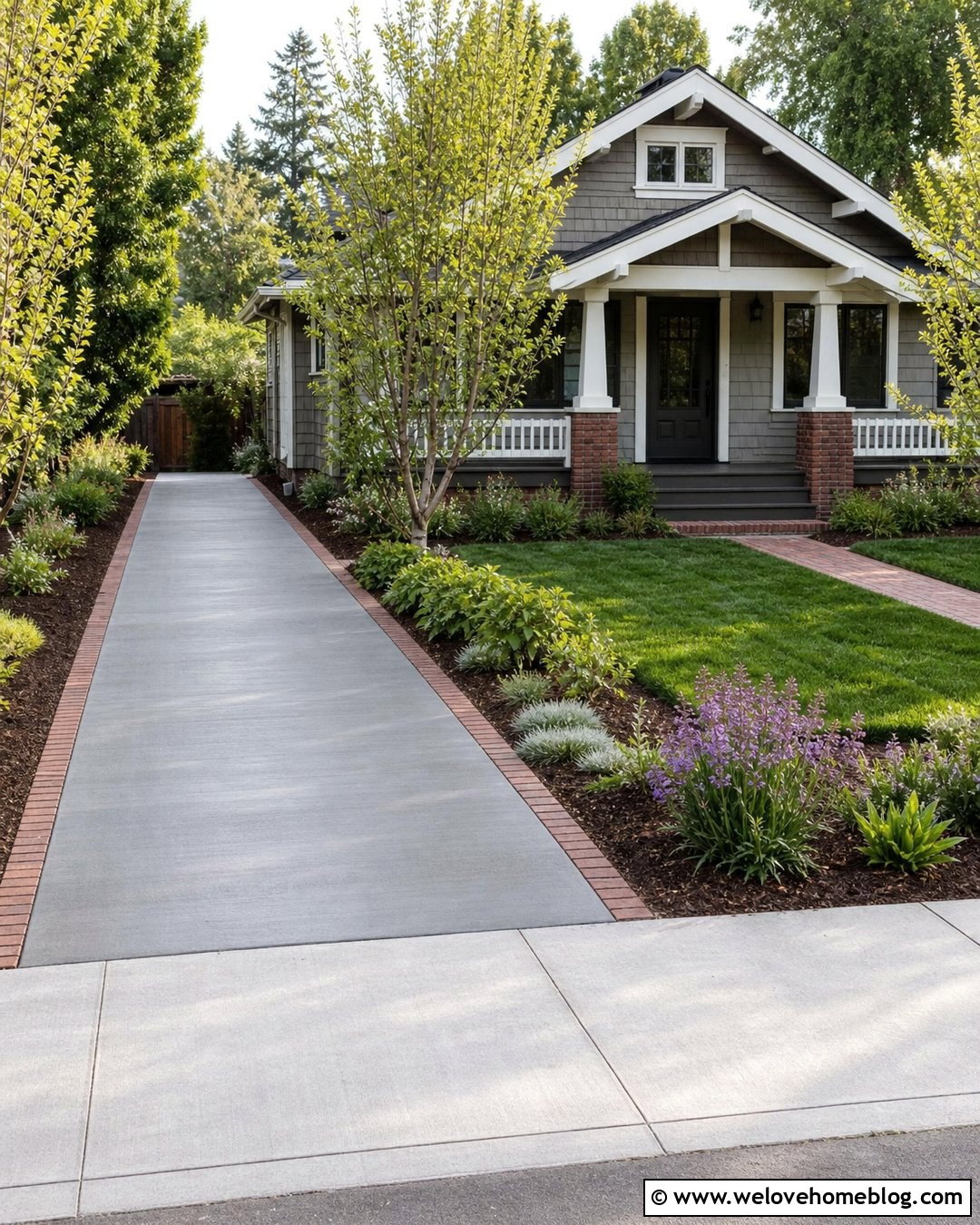
Carefully positioned lighting and a visible address sign can make a compact driveway feel finished without taking up valuable planting space. Use dark gray permeable pavers in a straight layout with a contrasting light paver border. Place a slim address marker within a small entrance bed containing low grasses, flowering ground cover, and one rounded evergreen. During installation, ensure the sign remains readable from the street and does not restrict visibility. Low path lights can follow the walkway rather than lining every edge of the driveway, which avoids a runway effect. Add warm wall sconces near the garage and front door for a coordinated appearance. Keep daytime curb appeal strong with clean paving, repeated plant shapes, and an uncluttered lawn or gravel bed. Use fixtures rated for outdoor conditions and plan wiring before completing the hardscape.
Conclusion:
Successful **20 driveway small front garden ideas** balance parking needs with greenery, drainage, safe movement, and a clear connection to the home. Start by measuring the usable space and identifying where vehicle doors, pathways, utilities, and sightlines must remain open. Then choose one main driveway material, one border treatment, and a limited planting palette. Gravel, concrete, brick, pavers, asphalt, and permeable surfaces can all look attractive when they coordinate with the house. Compact shrubs, native perennials, grasses, containers, and vertical planting provide interest without overwhelming the yard. Before changing drainage, installing structures, or widening an entrance, check local requirements. A simple, well-planned layout will usually make a small front garden look larger, tidier, and more welcoming.

Related posts:

Leave a Reply