
Landscaping can turn a plain driveway into a polished entrance that feels connected to your home. The strongest designs treat the pavement, borders, planting beds, walkway, and house as one complete composition. You might soften concrete with layered evergreens, frame gravel with lavender, or manage runoff beside pavers with a planted rain garden. Shape, sunlight, drainage, snow removal, and available width should guide every choice. Plants also need enough clearance from vehicle doors, pavement heat, and sightlines near the street. Whether your property is small, sloped, wooded, modern, or traditional, thoughtful planting can add color without making daily maintenance difficult. The complete looks below offer practical inspiration through 25 landscaping around driveway ideas.

1. Concrete Driveway With Evergreen Borders
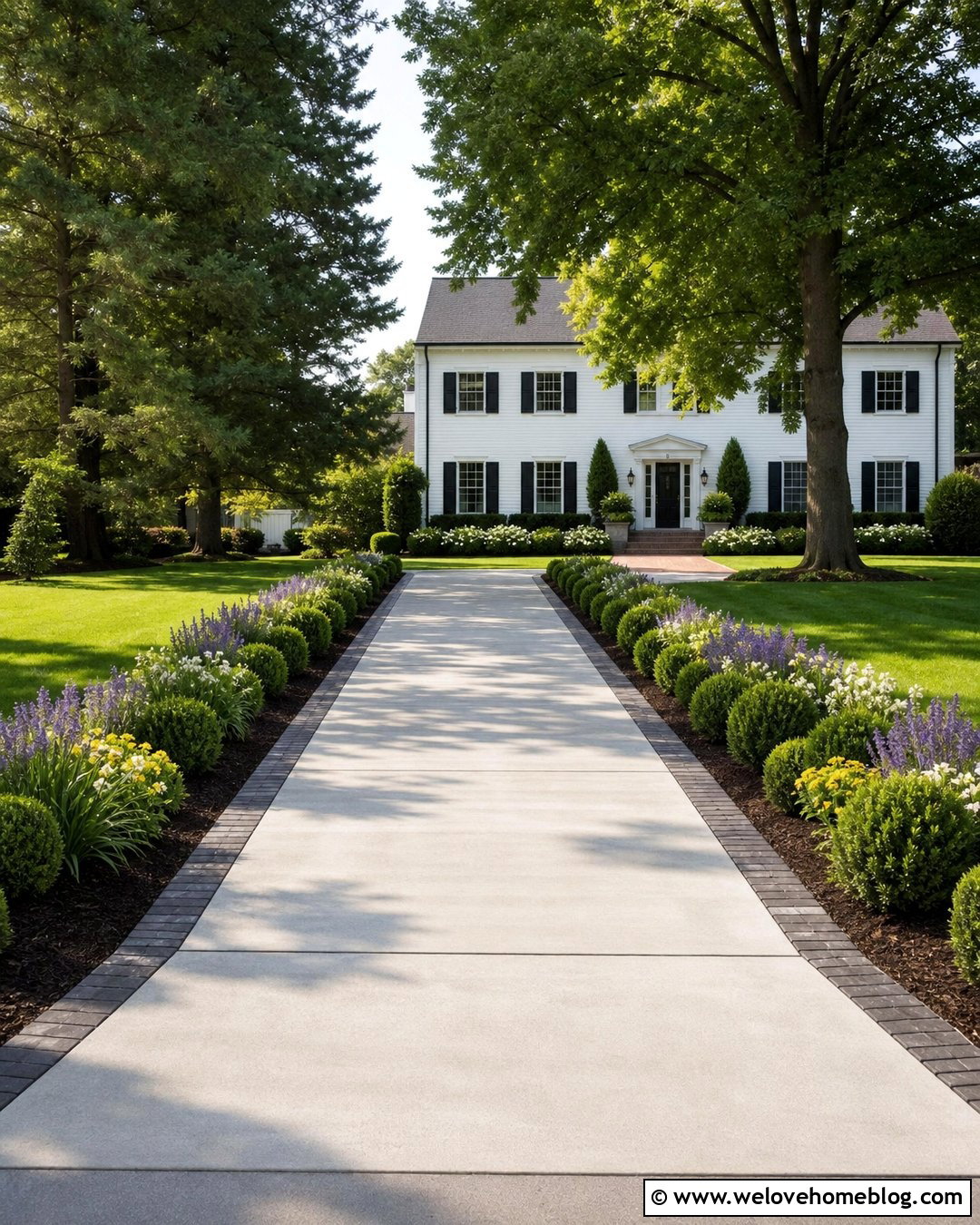
A straight, light gray concrete driveway looks more inviting when low evergreen borders soften both sides. Use compact boxwood alternatives, dwarf inkberry, or small junipers that will not crowd parked vehicles as they mature. Set the shrubs back from the pavement and repeat them at consistent intervals for a clean, orderly appearance. Behind them, add a second layer of flowering perennials or ornamental grasses to provide seasonal color and movement. A narrow brick or dark paver ribbon can separate the concrete from the planting beds and make maintenance easier. Continue the same plants toward the front walkway so the driveway and entrance feel connected. This complete arrangement works especially well with Colonial, Cape Cod, and traditional brick homes.
2. Curved Gravel Driveway With Native Plants
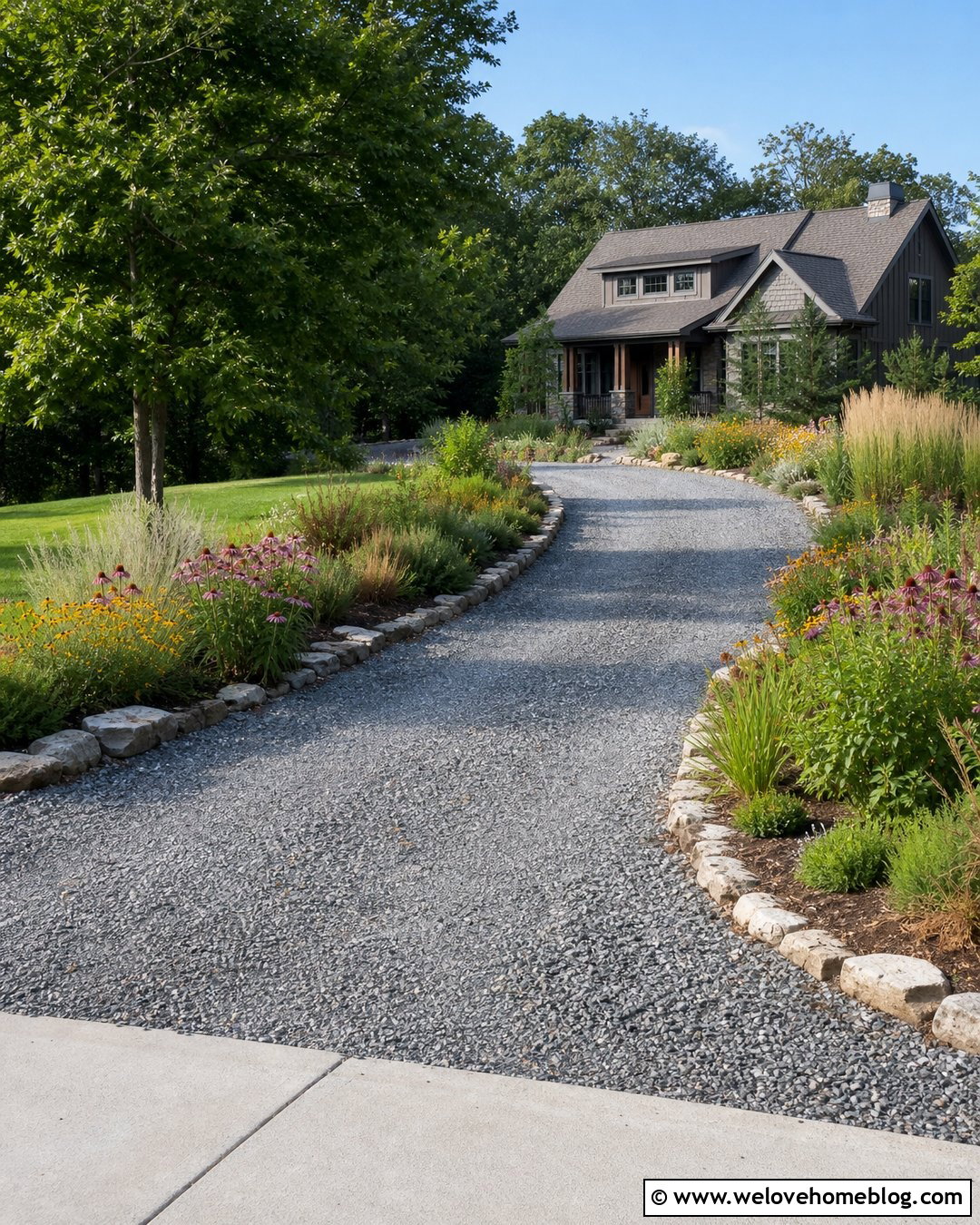
The relaxed texture of gravel naturally complements an informal border filled with native plants. A gently curved driveway made from warm gray crushed stone can be contained with steel edging or locally sourced fieldstone. Plant sweeping groups of native grasses, coneflowers, black-eyed Susans, and compact shrubs beyond the edge. Repeating a few species creates a calmer appearance than using many unrelated plants. Keep vegetation short near the street so drivers can see pedestrians and approaching traffic. Taller grasses and flowering shrubs can gradually appear closer to the house. This design suits Craftsman homes, wooded properties, and casual country settings. Choose locally appropriate plants for easier care, and install a stable gravel base so loose material does not migrate into the beds.
3. Asphalt Driveway With Brick Edging And Hydrangeas
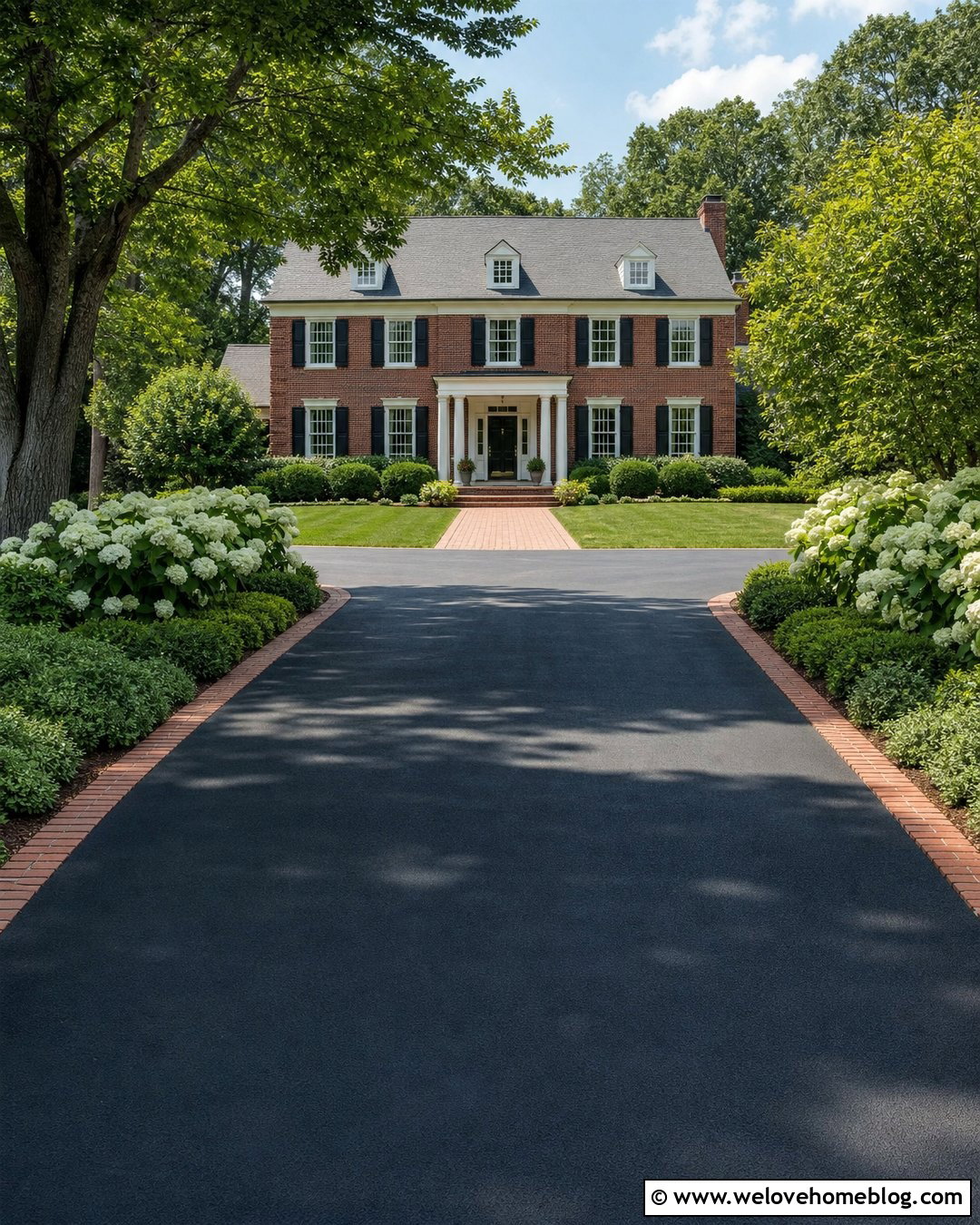
Black asphalt gains warmth and definition from a red or brown brick border. Install the bricks flush with the pavement so tires, shovels, and lawn equipment can pass over them safely. Along one side, create a generous planting bed with compact hydrangeas, evergreen foundation shrubs, and low ground covers. The hydrangeas add large summer flowers, while evergreens prevent the border from looking empty during winter. Allow enough room for mature growth so branches do not scrape vehicles. On the opposite side, use lawn or a narrower bed to keep the design from feeling crowded. A brick walkway leading toward the porch can repeat the border material. This coordinated driveway landscape is particularly attractive beside traditional siding, red brick, or Colonial-style architecture.
4. Circular Paver Driveway With A Center Island
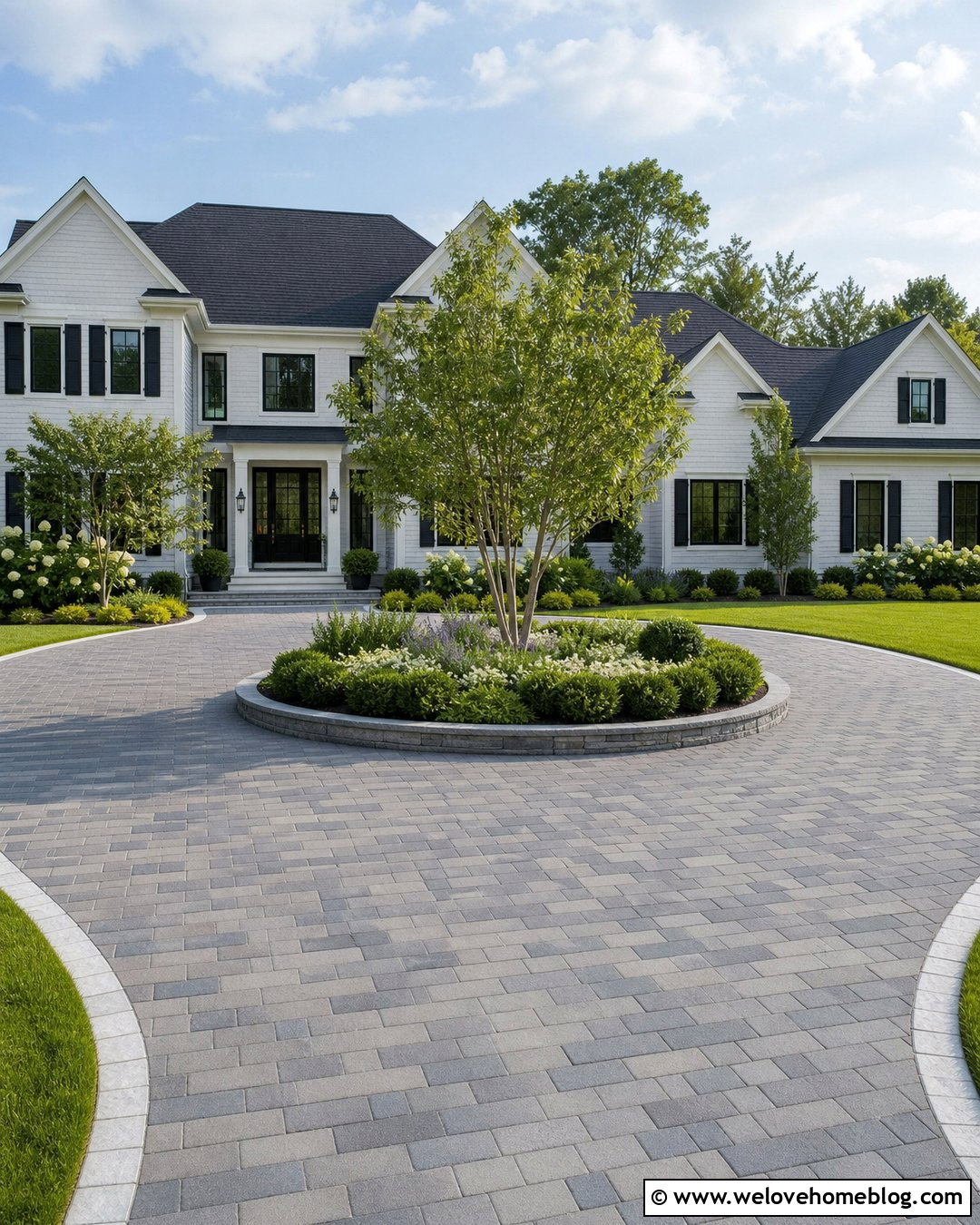
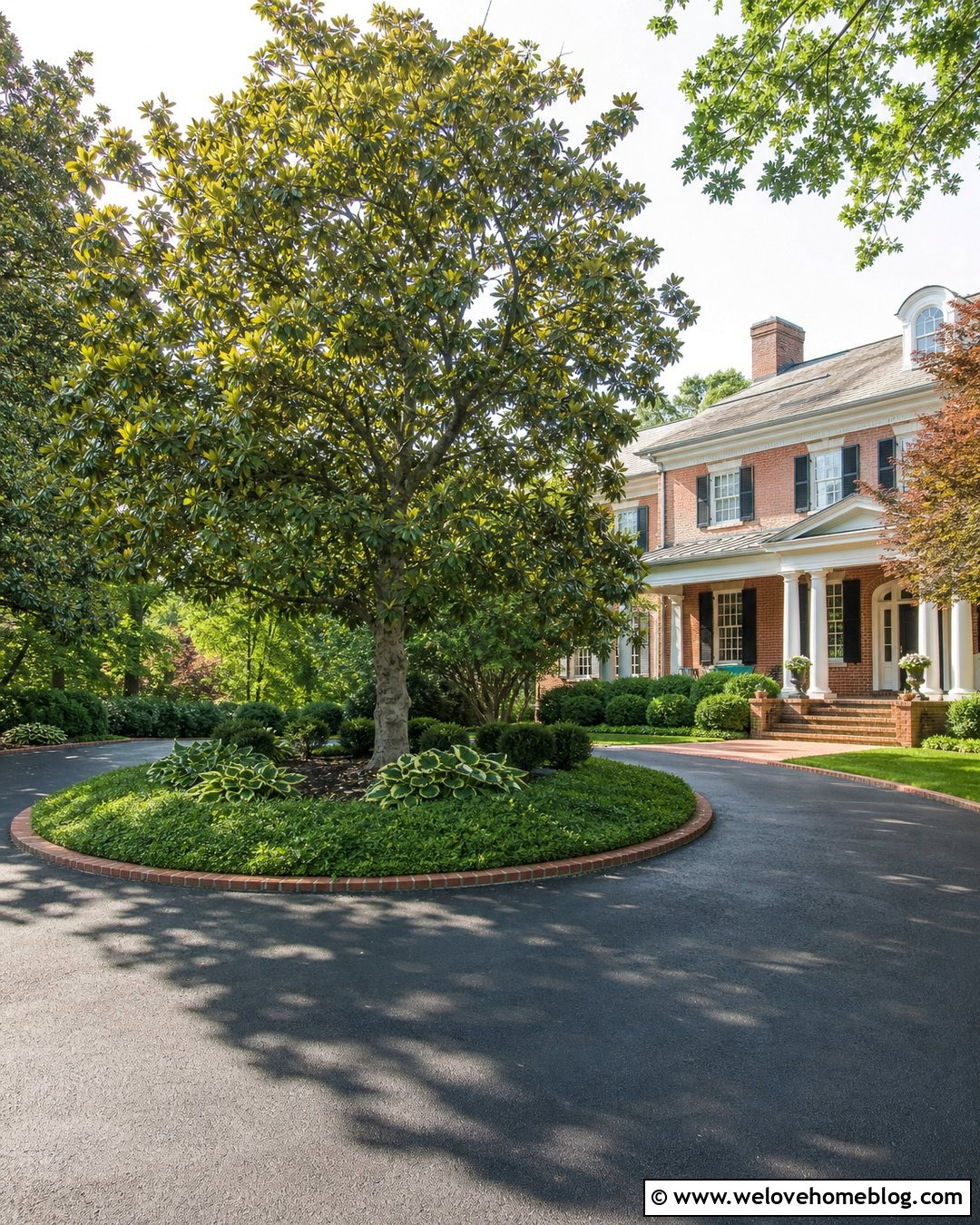
A circular driveway provides a natural location for a landscaped center island. Use charcoal and warm gray concrete pavers in a subtle running-bond pattern, then define the island with a matching raised curb. A small ornamental tree can form the centerpiece, surrounded by low evergreen shrubs, flowering perennials, and neat ground cover. Maintain open space beneath the tree canopy so the house remains visible from the street. The island should be large enough to support healthy planting without making the driving lane uncomfortable. Add a simple path across the island only if it creates a useful route to the front door. Repeating the same plants near the porch connects the composition. This polished layout complements upscale suburban homes, contemporary Colonials, and larger ranch houses.
5. Long Gravel Driveway With Trees And Grass
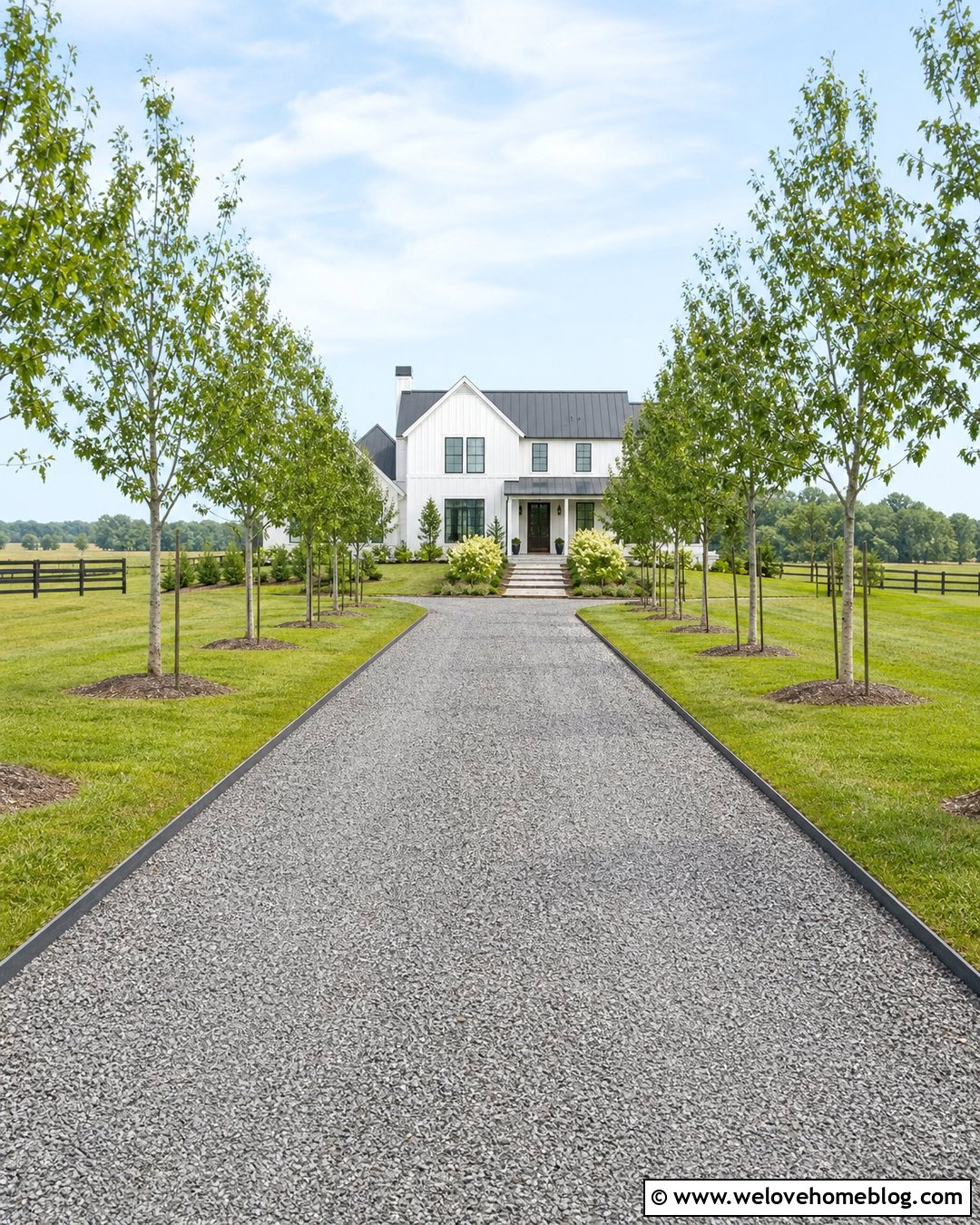
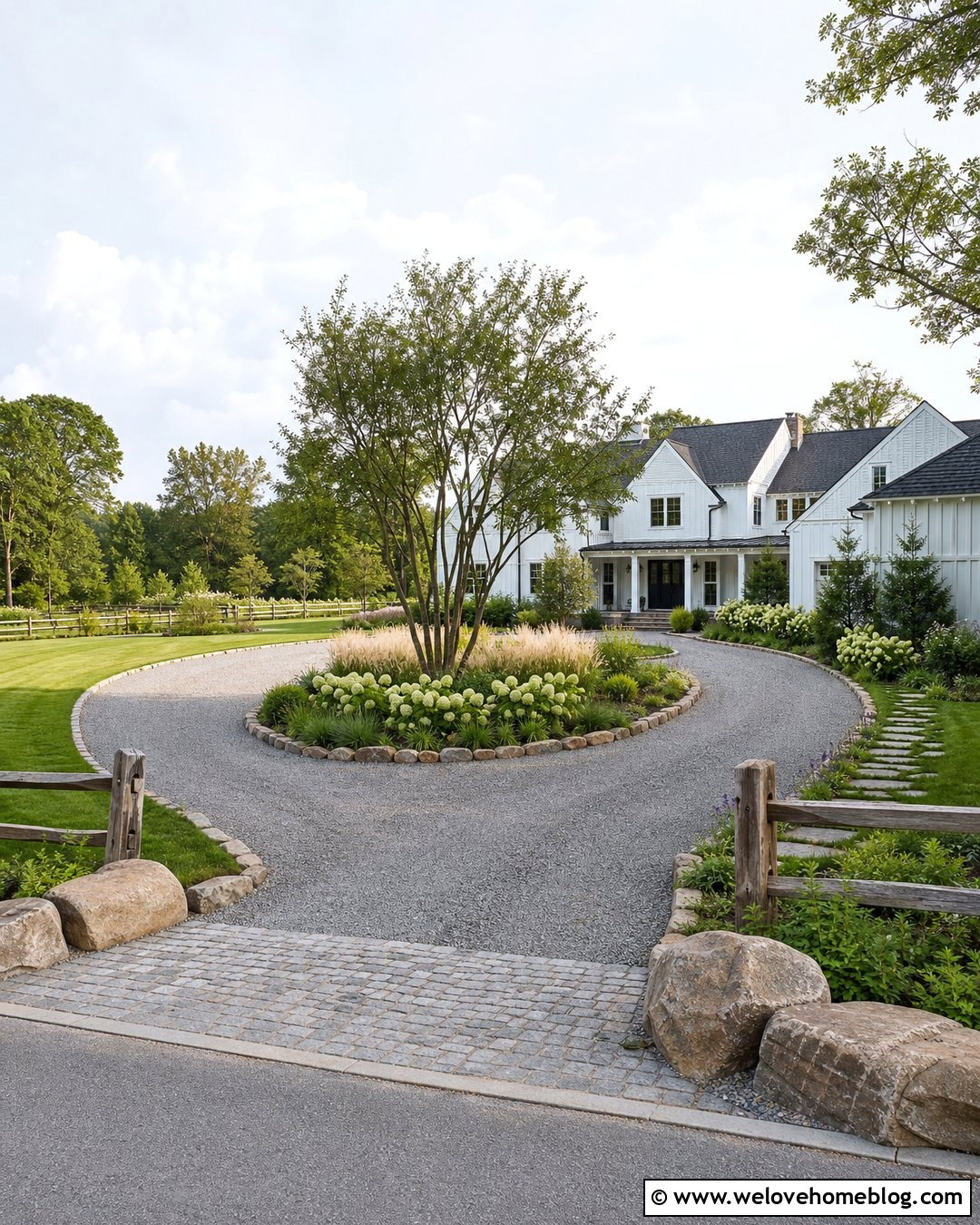
Nothing gives a long driveway greater structure than a rhythm of evenly spaced trees. Begin with a compacted gray gravel surface bordered by cobblestone or heavy-duty metal edging. Plant medium-size deciduous trees far enough from the pavement to protect the driving area from roots and low branches. Use one tree species for a formal effect, or alternate compatible varieties for greater seasonal interest. Beneath them, maintain a simple strip of lawn or low meadow grass rather than complicated flower beds. The uncluttered ground plane keeps the approach open and makes fallen leaves easier to manage. Near the house, transition into fuller shrubs and perennial beds. This tree-lined layout can make a farmhouse, country home, or estate property feel established and intentionally planned.
6. Narrow Driveway With Vertical Landscaping
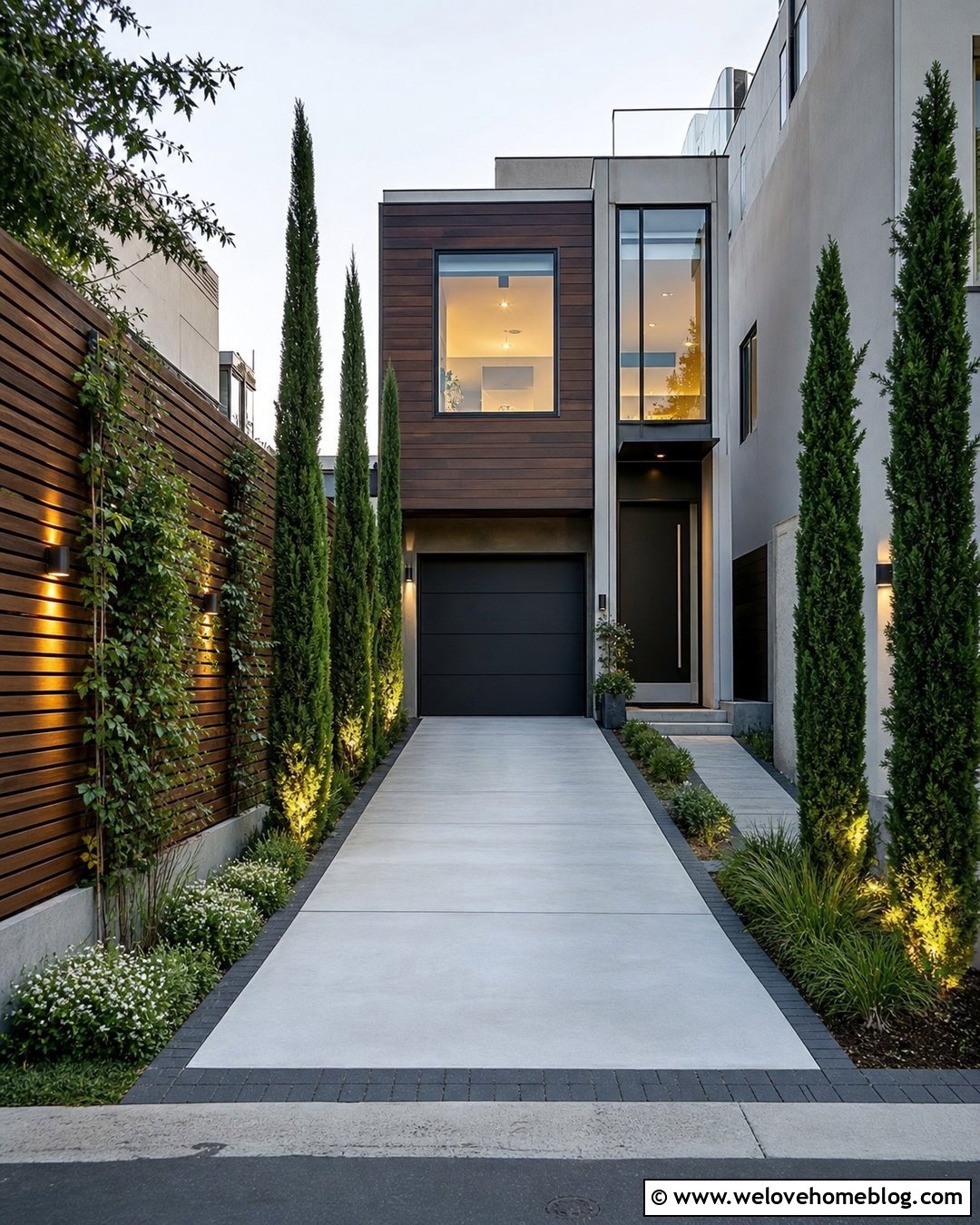
Limited side space does not mean a narrow driveway must remain bare. Pair a smooth poured-concrete surface with slim planting beds, columnar evergreens, and a vine-covered fence or trellis. Upright plants provide greenery without spreading into the path of vehicle doors. Where the bed is especially tight, use tough ground covers, decorative gravel, or compact ornamental grasses instead of wide shrubs. A flush charcoal paver border can visually separate the driveway from the planted strip. Keep vines supported and pruned so they do not hang over the pavement. Recessed wall lights or low path lights can illuminate the edge without adding physical obstacles. This streamlined solution works well beside urban homes, townhouses, and compact modern properties where every inch of usable driveway matters.
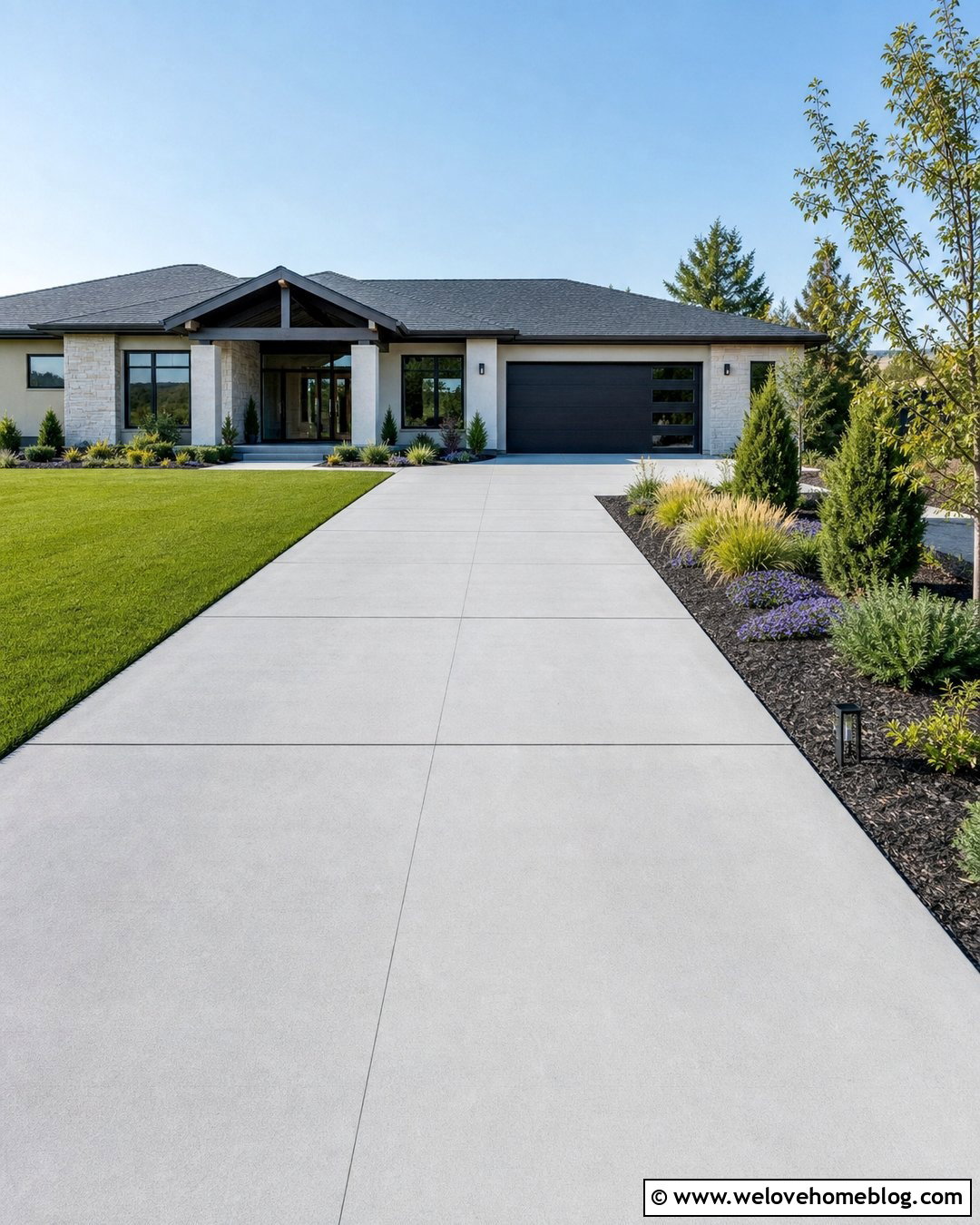
7. Modern Concrete Driveway With Ornamental Grasses
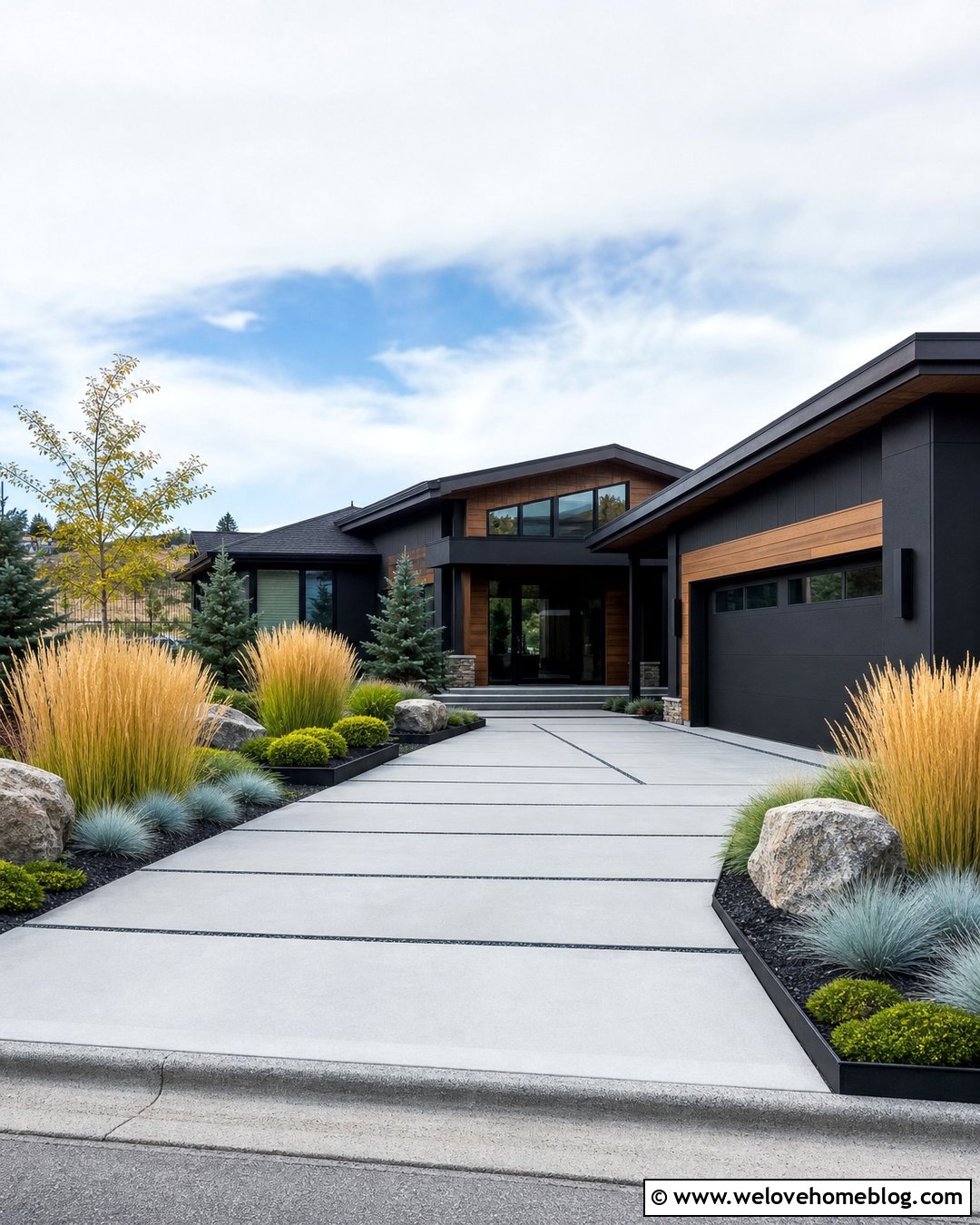
Large sections of pale gray concrete create a strong modern foundation for simple, architectural planting. Separate the slabs with narrow dark gravel joints, then frame the driveway with broad beds of feather reed grass, blue fescue, and compact evergreen mounds. Use plants in repeated blocks rather than mixing many colors and varieties. A few sculptural boulders can add contrast, but leave generous open space around them to preserve the minimalist appearance. Black steel edging creates a crisp transition between planting beds, lawn, and pavement. Near the front entrance, repeat the grasses beside rectangular stepping stones. Select varieties that remain upright and avoid placing floppy plants where they could cover driveway edges. The result suits contemporary homes with clean lines, dark siding, wood accents, or flat roof forms.
8. Farmhouse Gravel Driveway With Lavender Borders
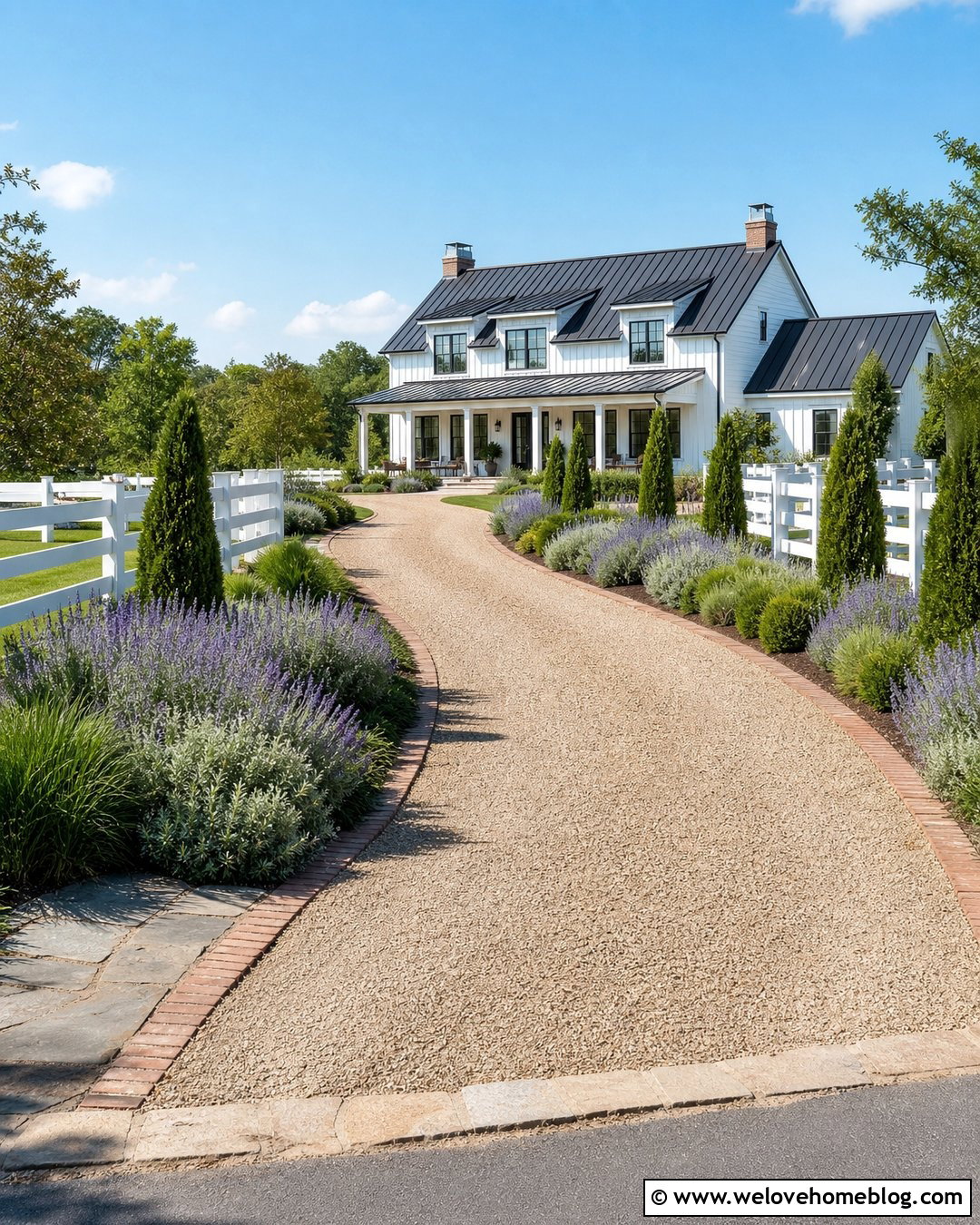
A warm beige gravel driveway bordered by lavender creates an easygoing farmhouse entrance. Use reclaimed brick or weathered cobblestone to contain the gravel and give the edge a finished appearance. Plant lavender in repeated drifts where the site receives strong sun and drains well. Mix in low-growing catmint, compact ornamental grasses, and a few evergreen shrubs for a longer season of interest. Keep plants slightly back from the edge so flowers do not interfere with vehicle doors or routine gravel maintenance. Near the house, widen the beds and connect them to a stone walkway leading to the porch. White fencing or simple timber posts can strengthen the rural character. This complete look pairs beautifully with white siding, dark metal roofing, natural wood, and classic farmhouse architecture.
9. Brick Driveway With Cottage Garden Borders
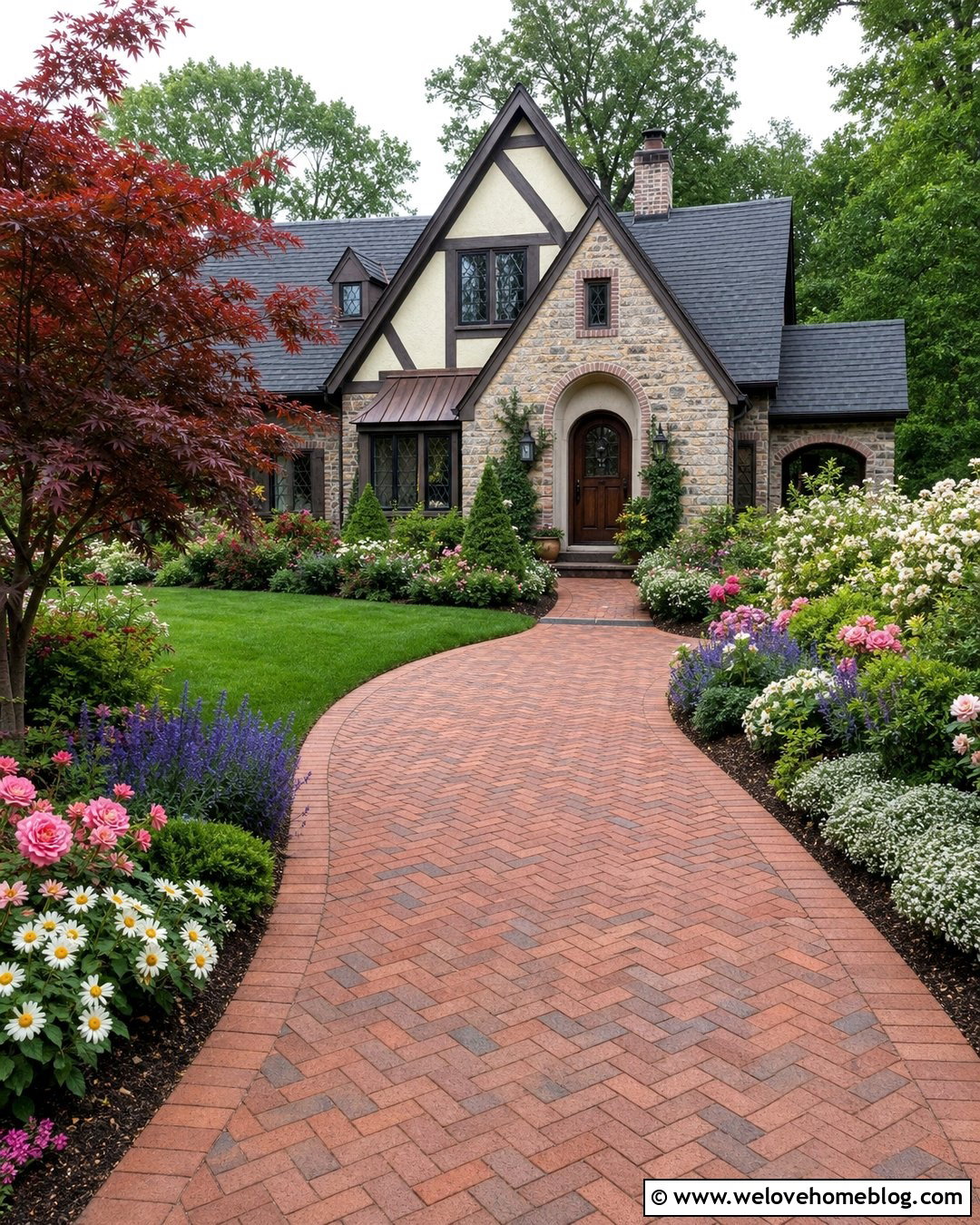
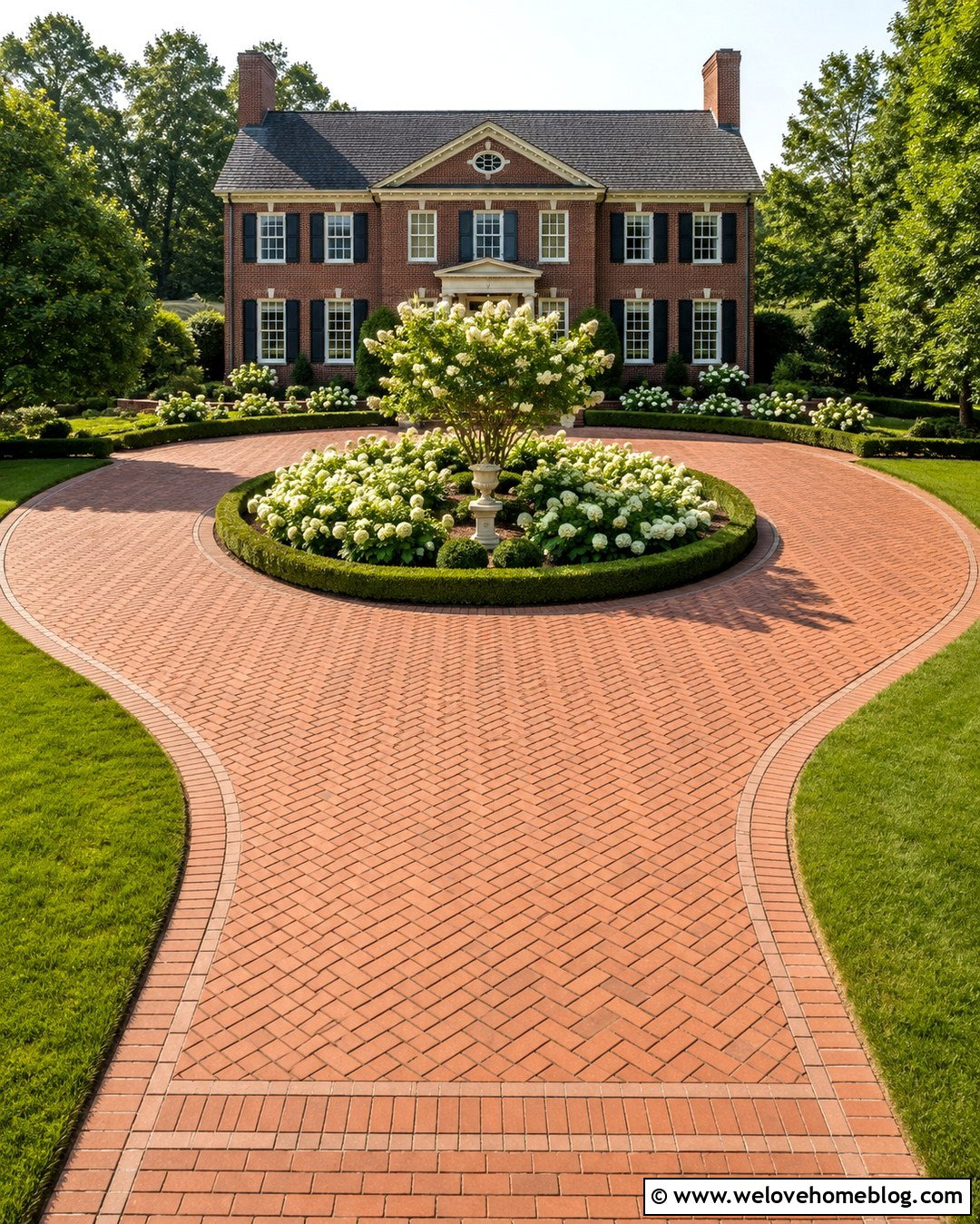
Clay brick pavers laid in a herringbone pattern create a rich backdrop for loose cottage planting. Frame the driveway with a simple soldier-course brick edge, then arrange roses, salvia, daisies, catmint, and compact flowering shrubs in layered beds. Taller plants should sit toward the rear, while neat ground covers soften the hard edge without spilling too far onto the pavers. Repeat flower colors on both sides to keep the abundance from becoming visually chaotic. A small flowering tree near the house can provide height and draw attention toward the entrance. Leave clear areas beside regular parking spaces for passengers to step out. This romantic yet practical layout works with cottages, Tudor-inspired houses, and older homes featuring painted siding, stone walls, or traditional front porches.
10. Ranch Driveway With Drought-Tolerant Landscaping
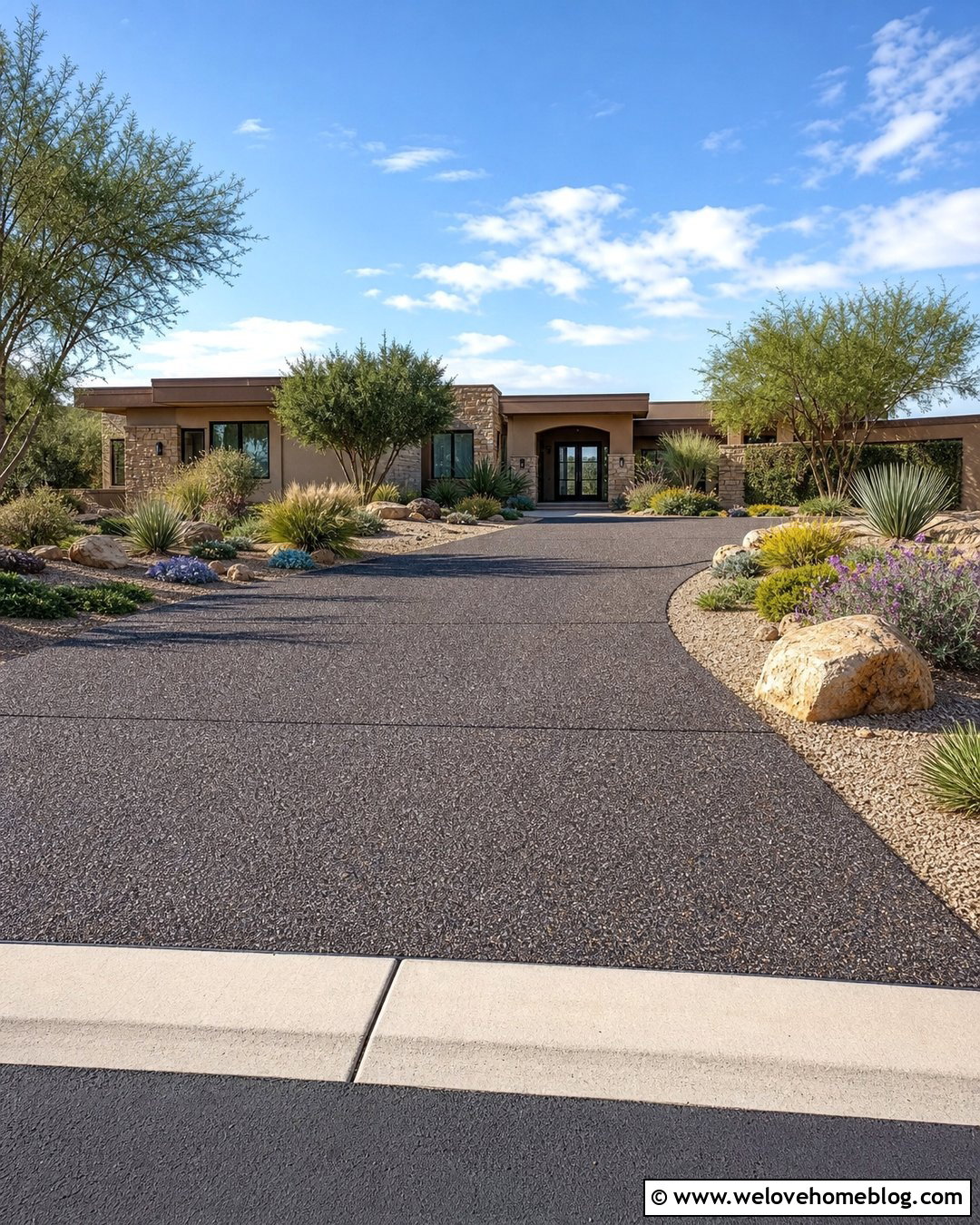
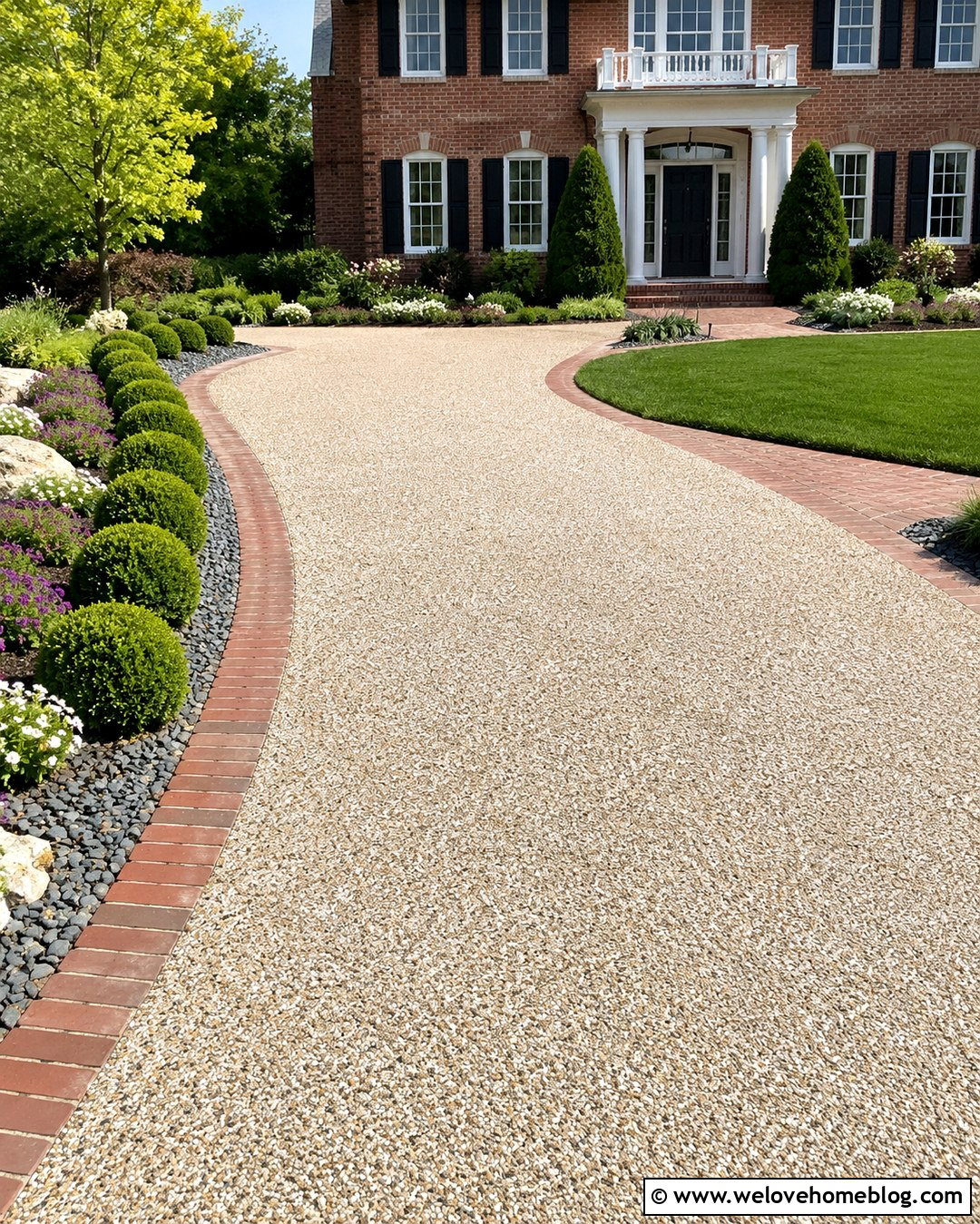
A broad ranch-style home benefits from low, horizontal landscaping that reflects its architecture. Surround a dark asphalt or exposed-aggregate driveway with decomposed granite beds, ornamental grasses, flowering sage, yucca, and rounded evergreen shrubs. Arrange plants in wide groups rather than narrow lines to balance the scale of the house. Large natural stones can anchor corners and protect vulnerable bed edges, but they should remain outside vehicle turning areas. Use a flush concrete curb to prevent decorative gravel from spreading onto the driveway. A few small desert-adapted or drought-tolerant trees can add height near the lawn without blocking the facade. This water-conscious design is especially useful in sunny, dry climates and brings texture, color, and curb appeal without relying on thirsty turf or high-maintenance flowers.
11. Shaded Driveway With Woodland Landscaping
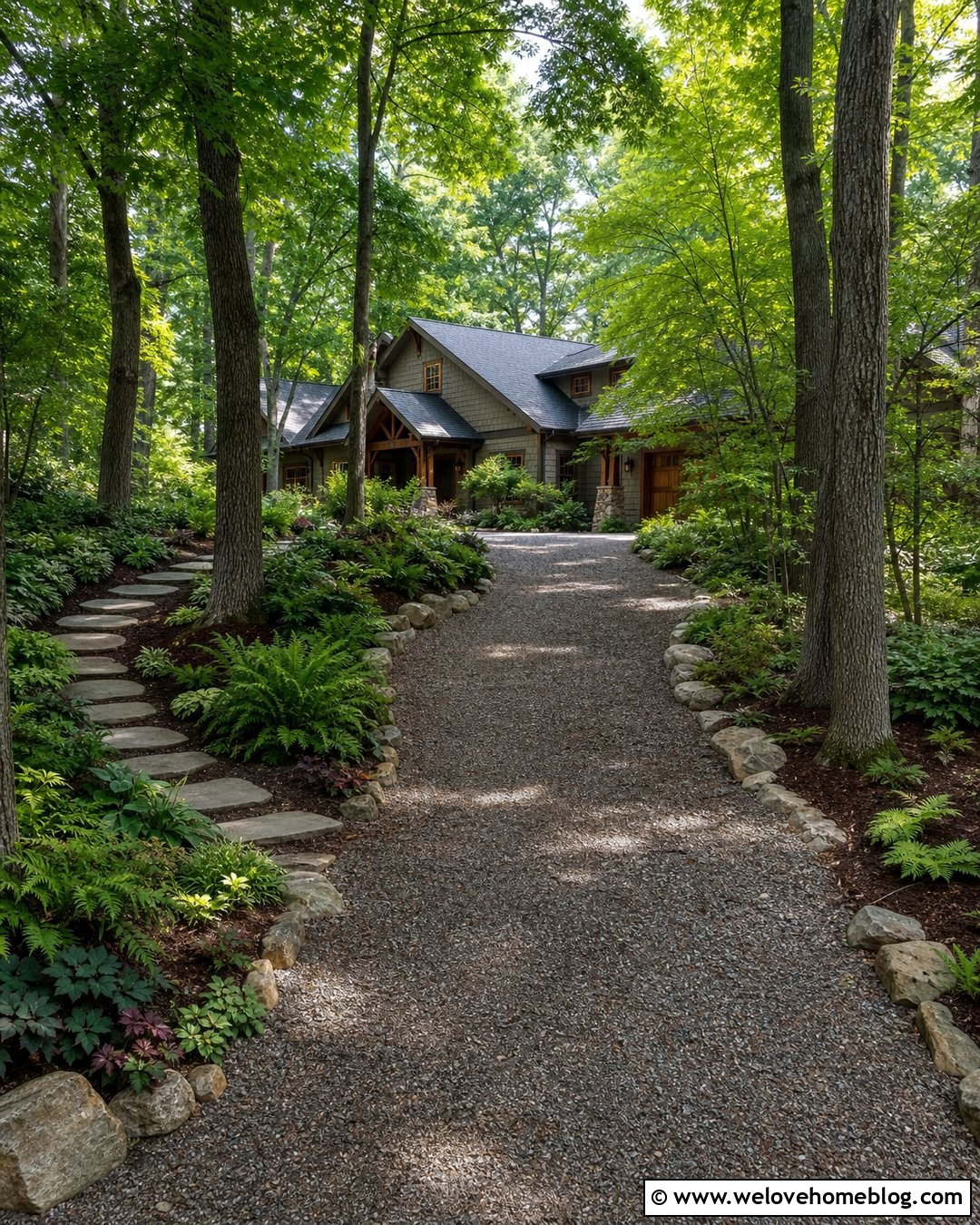
A driveway beneath mature trees can become a graceful woodland approach instead of a difficult strip of thin grass. Choose a brown-gray permeable gravel surface and define it with natural fieldstone edging. In the surrounding beds, combine shade-tolerant ferns, coral bells, sedges, hostas, and compact native shrubs suited to local conditions. Layer plants by height while preserving airflow around existing tree trunks. Never pile soil or mulch deeply against bark, since this can stress mature trees. A winding stepping-stone walkway can connect the driveway to the front door without disturbing the informal character. Use light-colored gravel and foliage with varied greens to brighten the shade. This complete look feels at home beside cabins, Craftsman houses, rustic contemporary homes, and properties surrounded by established woodland.
12. Sloped Driveway With Stone Retaining Walls
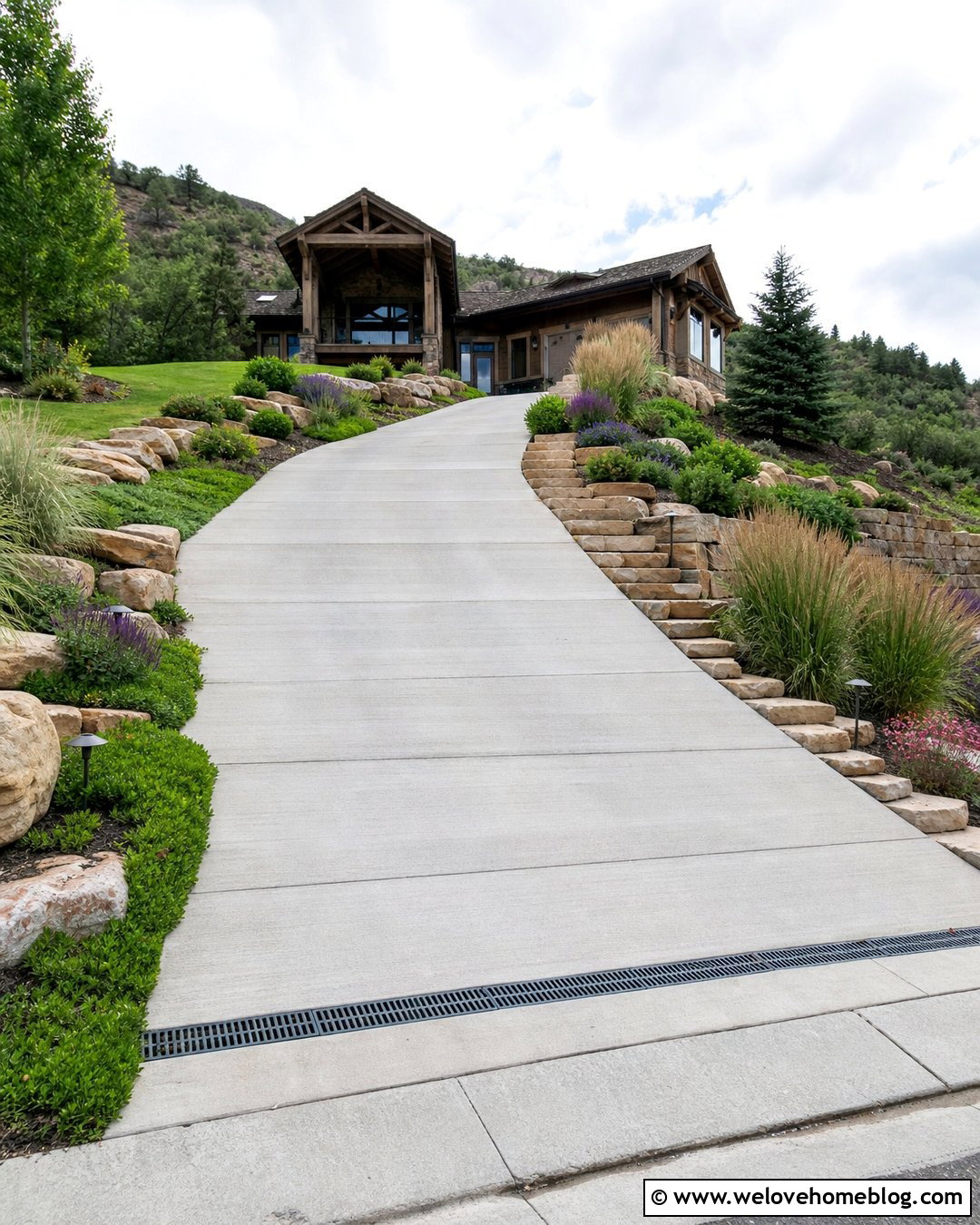
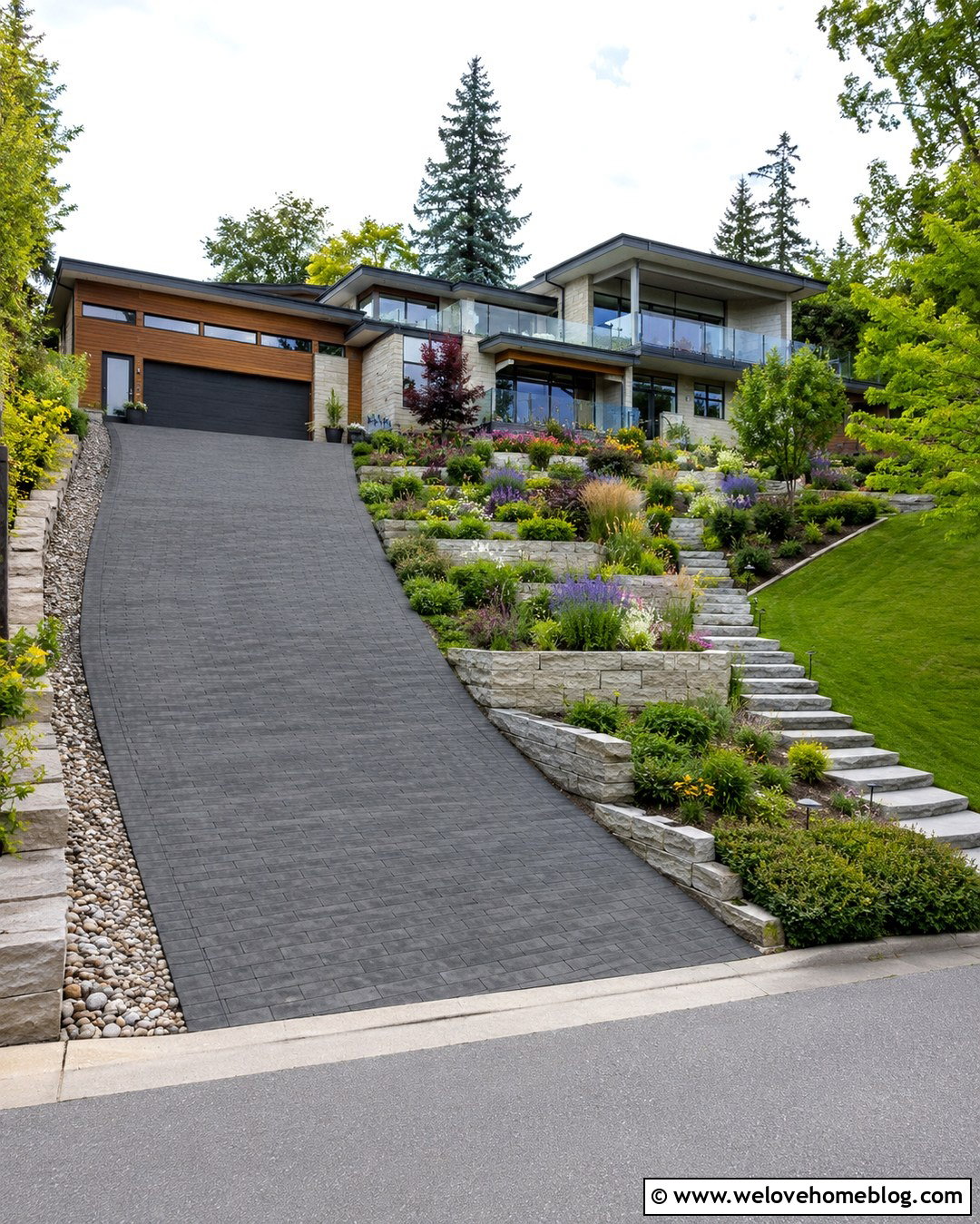
Sloping driveway beds need structure that controls soil while complementing the pavement. Pair a broom-finished concrete driveway with low retaining walls made from natural stone or textured concrete blocks. Step the walls gradually down the slope instead of forcing one tall, imposing barrier. Plant cascading ground covers near the wall edges, then add deep-rooted grasses, compact shrubs, and hardy perennials farther back. Group plants densely enough to cover exposed soil as they mature. Include drainage behind retaining walls and direct water toward an approved outlet rather than across the driving surface. Simple stone steps can connect the driveway to the upper yard when needed. This layered composition suits hillside ranch homes, mountain houses, and suburban properties where erosion, runoff, and elevation changes must be addressed together.
13. Small Driveway With Low Flower Borders
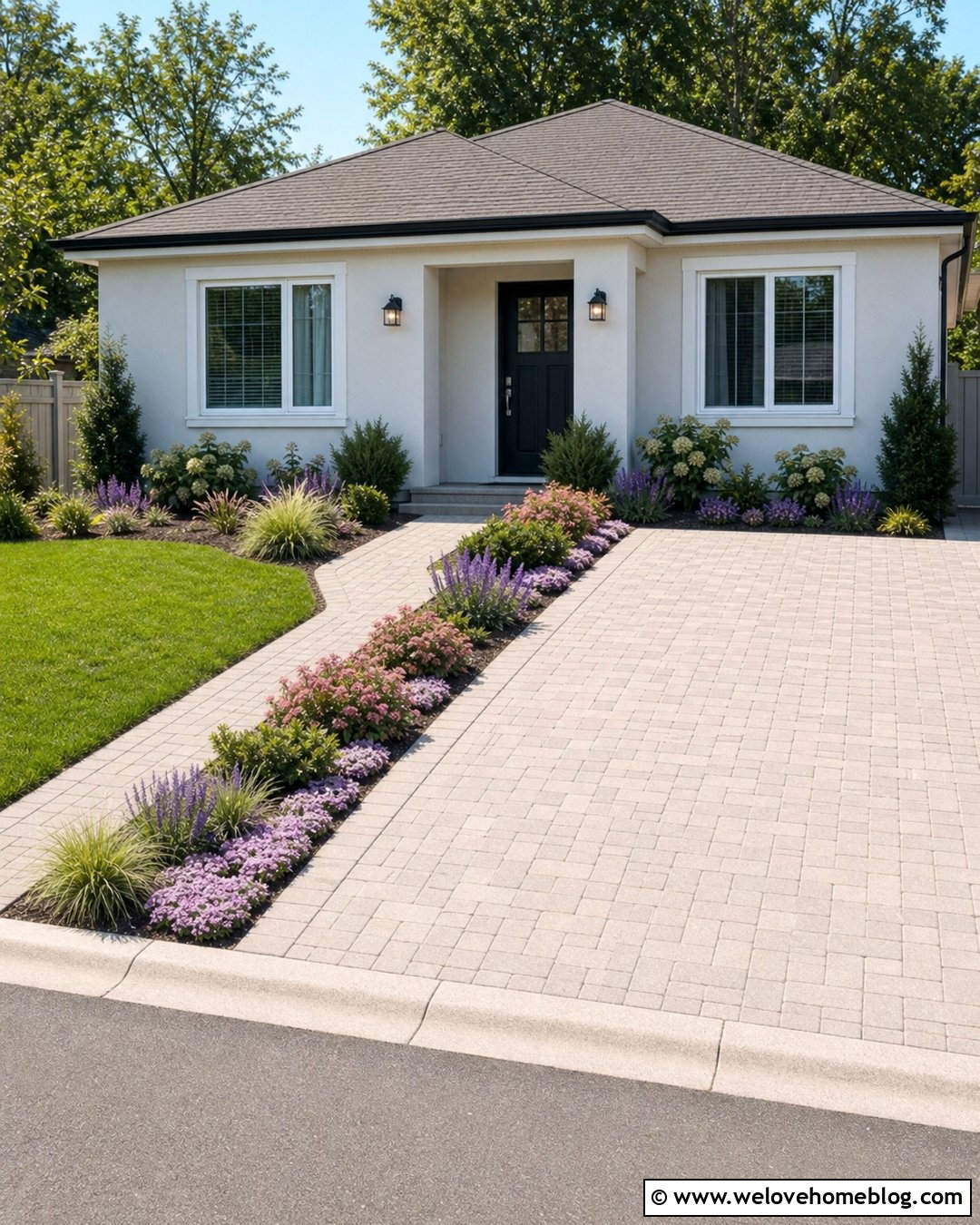
A compact driveway can feel larger when its planting remains low and visually open. Use pale concrete pavers in a simple linear pattern, bordered by narrow beds of creeping thyme, dwarf spirea, compact salvia, and small ornamental grasses. Limit the color palette to two or three shades so the space looks organized rather than busy. Set plants away from car doors and choose varieties with soft foliage instead of thorny branches. A flush stone edge makes the boundary easy to see while preserving every usable inch. Connect one planting bed to a matching front walkway for a continuous route to the house. Wall-mounted lighting can provide visibility without consuming ground space. This tidy design works well for bungalows, duplexes, cottages, and homes on smaller suburban lots.
14. Wide Driveway With A Landscaped Walkway Divider
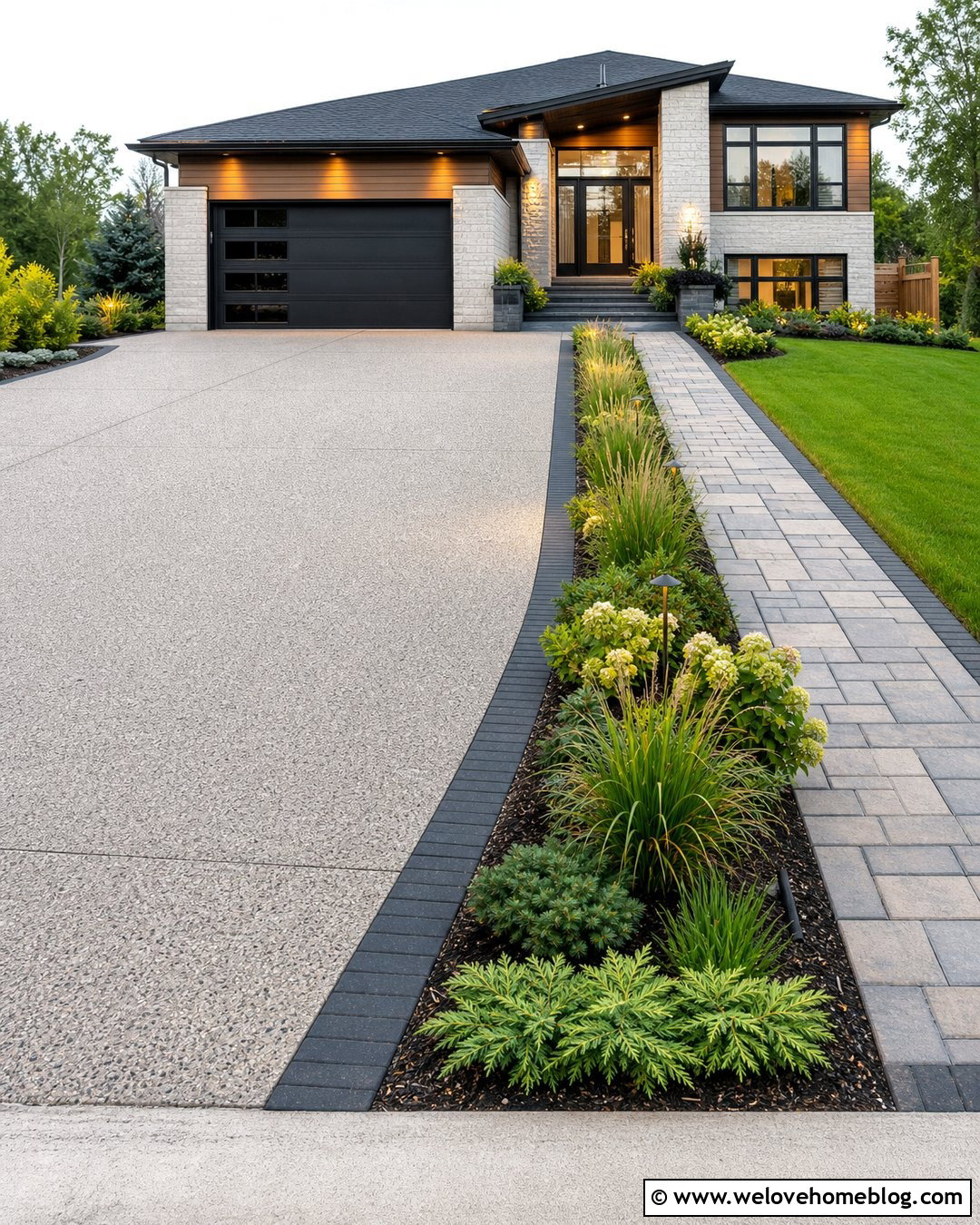
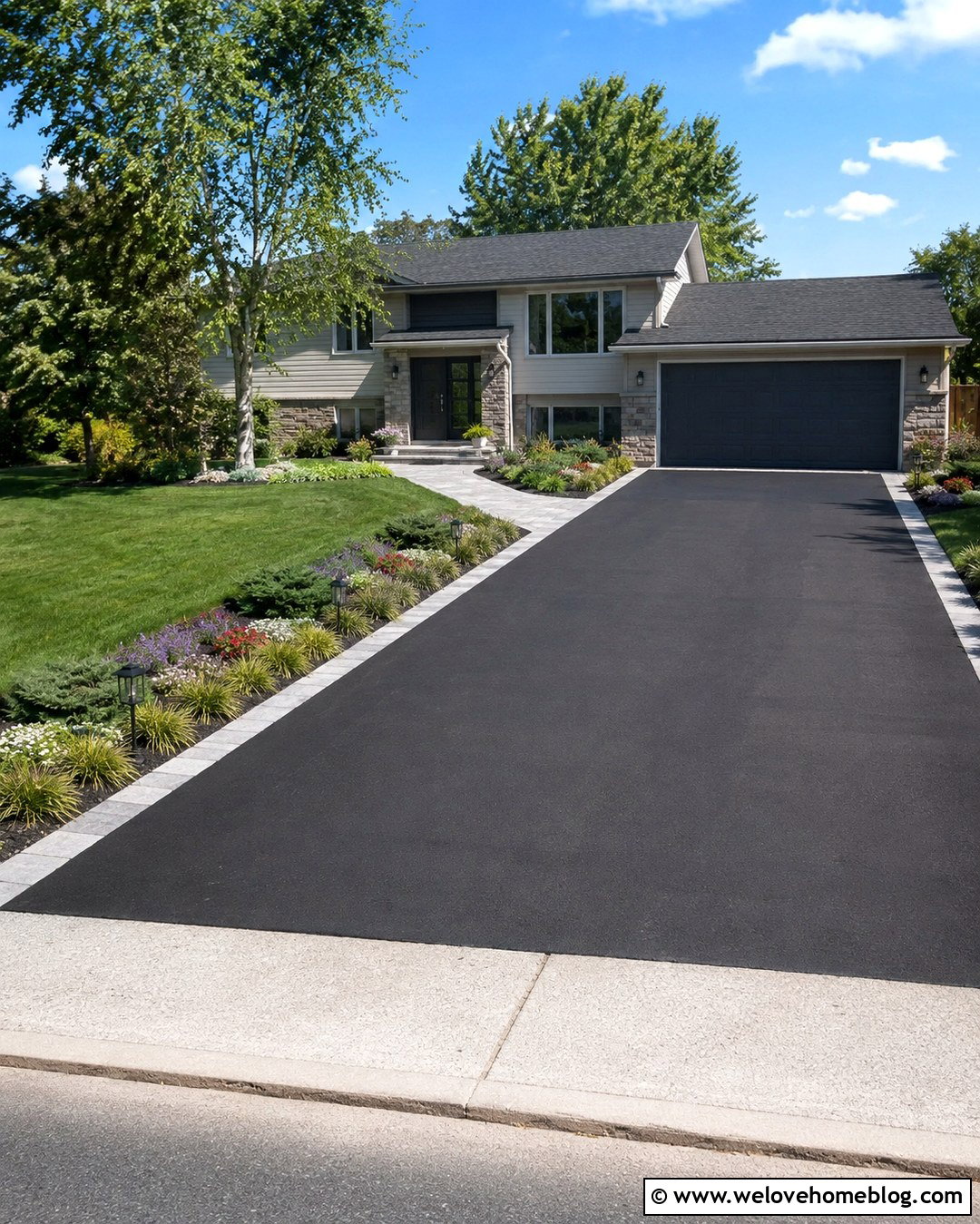
When a wide driveway meets the front walk, a narrow planted divider can make both routes easier to understand. Start with an exposed-aggregate concrete driveway and a contrasting walkway of warm gray pavers. Between them, create a linear bed filled with upright grasses, compact flowering shrubs, and low evergreen ground cover. The planting strip should remain wide enough for healthy growth but narrow enough to preserve comfortable parking and pedestrian access. Repeat the paver color in a driveway border to tie the surfaces together. Near the garage, keep plants particularly low so doors and bins remain accessible. Add subtle path lights within the bed to guide visitors toward the porch. This organized solution suits modern ranches, split-level houses, and larger suburban homes with broad garage-facing front elevations.
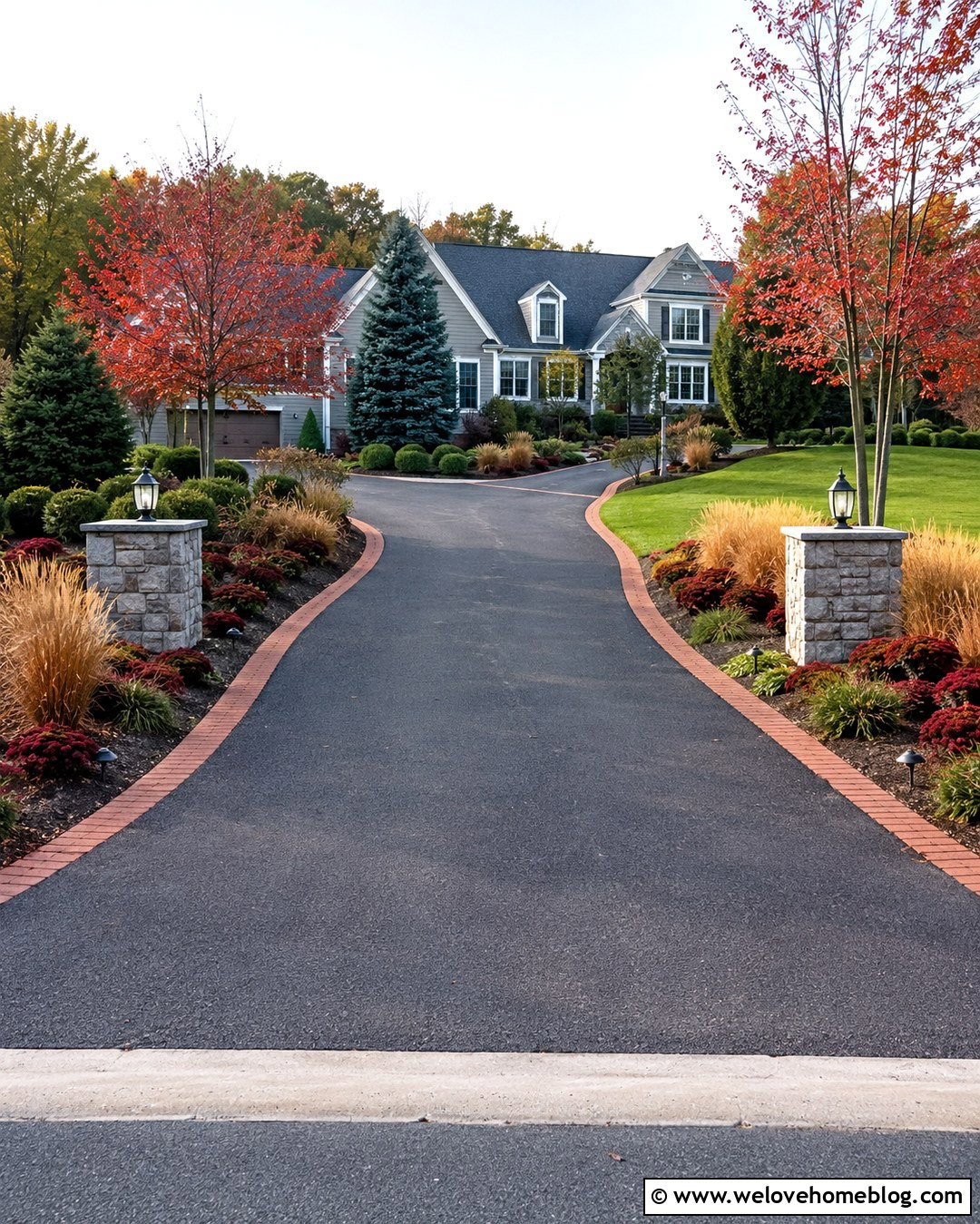
15. Driveway Entrance With Stone Pillars And Planting Beds
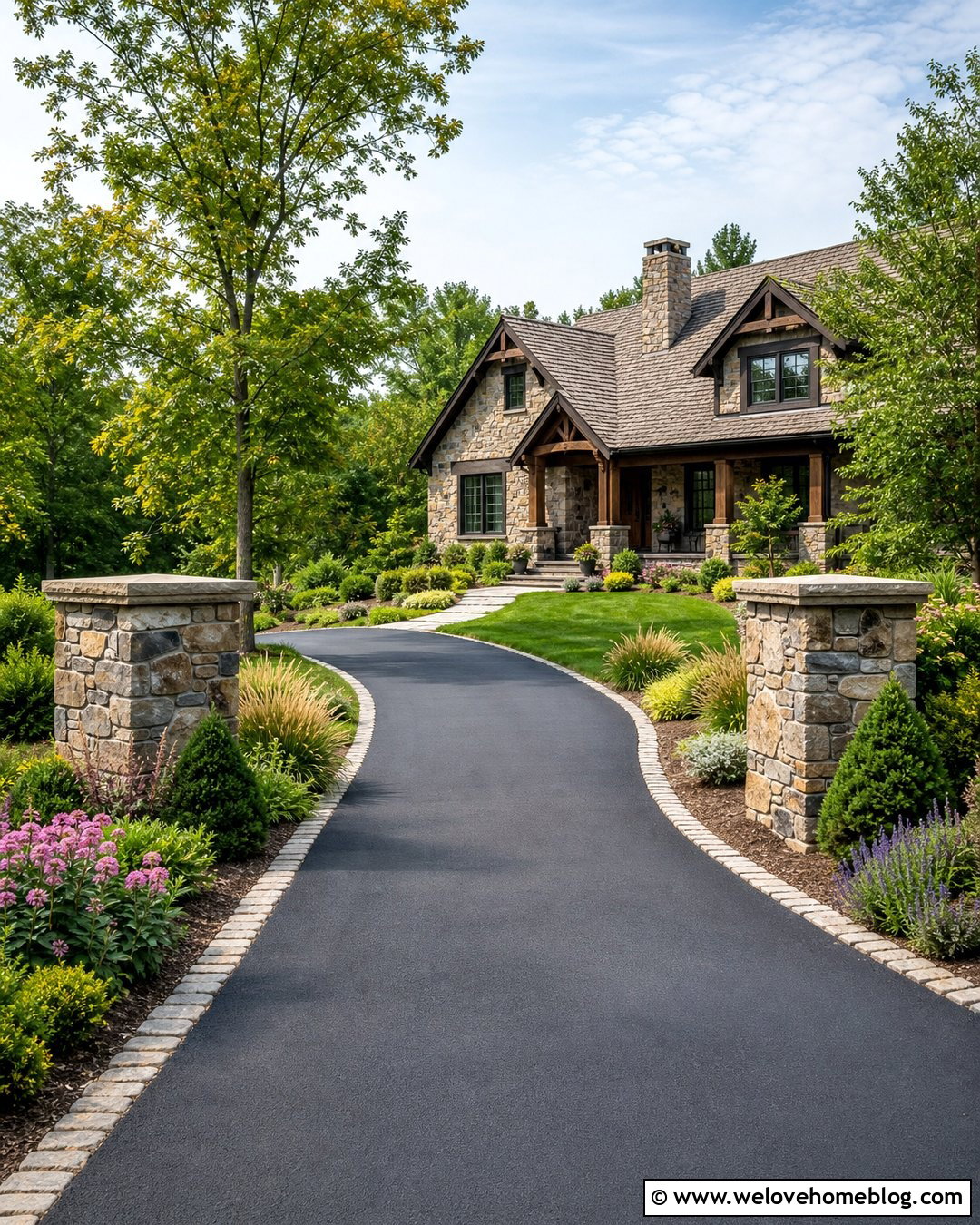
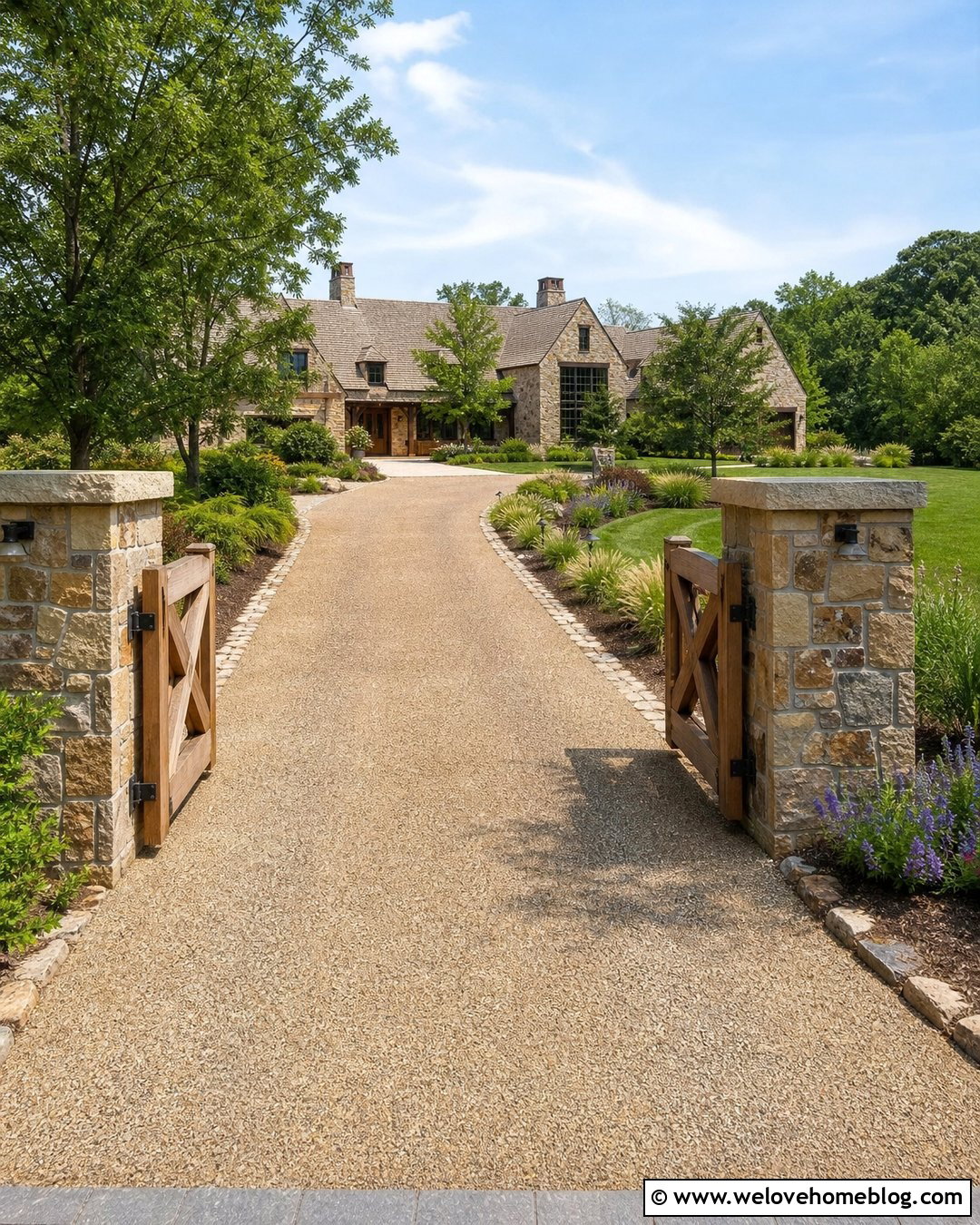
Stone entrance pillars feel more connected to a property when planting beds extend naturally from their bases. Pair the entrance with a gently curved black asphalt driveway edged in matching cobblestone. Arrange low evergreen shrubs around each pillar, then add flowering perennials and ornamental grasses that frame the opening without narrowing it. Keep plants and walls outside required visibility areas near the road. The pillar stone should relate to the house facade, retaining walls, or front steps so it does not look like a separate feature. Continue smaller groups of the same plants along the first section of the driveway, gradually reducing them toward the lawn. This balanced entrance works especially well for Craftsman, country, stone, and traditional homes while creating a clear sense of arrival.
16. Coastal Driveway With Shell Gravel And Grasses
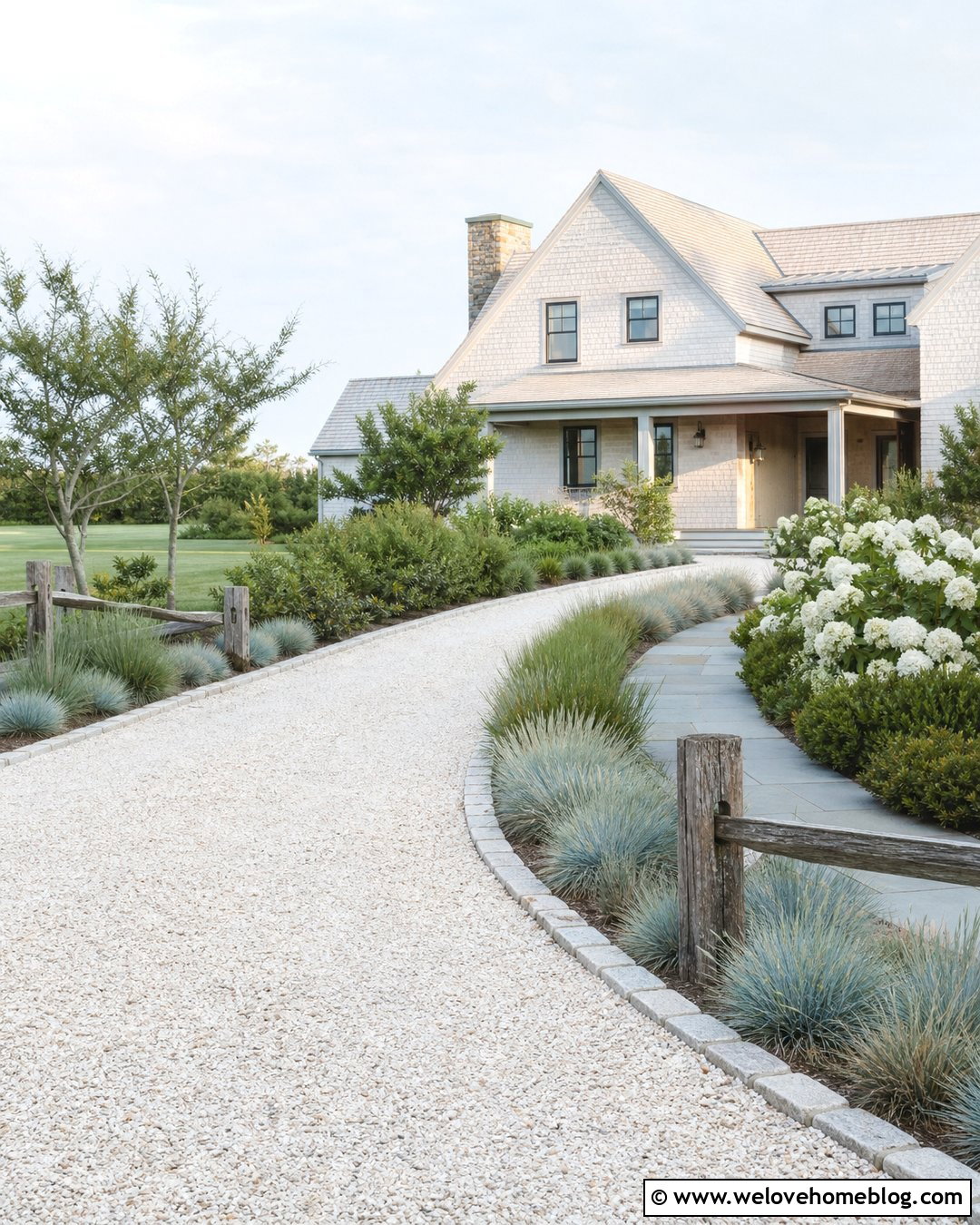
Crushed shell gravel gives a coastal driveway a light, textured surface that pairs naturally with wind-tolerant planting. Shape the driveway in a relaxed curve and contain the material with pale cobblestone or sturdy steel edging. Fill the surrounding beds with beach grass, blue fescue, low juniper, hydrangeas, and other plants suited to the local soil and salt exposure. Allow grasses to move naturally while keeping them trimmed away from the driving edge. Weathered timber posts or a simple horizontal fence can reinforce the coastal character without overwhelming the landscape. Near the house, add a bluestone walkway and larger flowering shrubs. The resulting design feels bright and casual beside shingle-style homes, coastal cottages, and light-colored Cape Cod houses with simple architectural details.
17. Desert Driveway With Agave And Decorative Rock
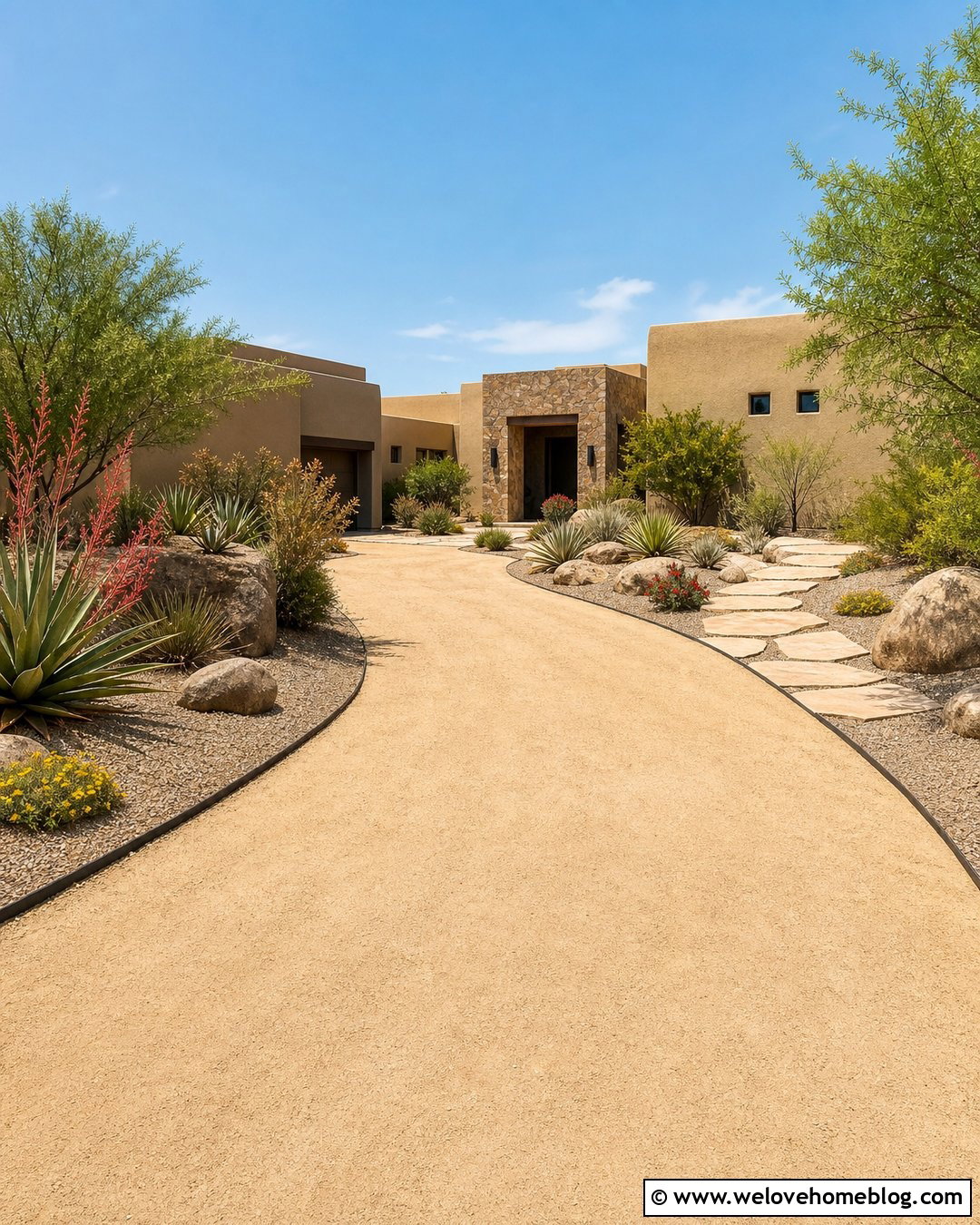
A desert landscape can frame a driveway with bold shapes while using relatively few plant varieties. Surround a warm-toned concrete or stabilized decomposed-granite driveway with beds of tan gravel, agave, red yucca, desert spoon, and compact flowering shrubs. Arrange plants in asymmetrical groups with visible space between them, allowing each form to stand out. Place sharp or spiny plants well beyond passenger areas and pedestrian routes. Larger boulders can direct tires away from vulnerable corners, provided they remain clearly visible and outside the driving lane. A steel edge keeps decorative rock separated from the driveway surface. Repeat the same stone near the front walkway and foundation. This strong, low-water composition suits Southwestern, Spanish, adobe, and modern desert homes in hot, sunny regions.
18. Permeable Paver Driveway With A Rain Garden
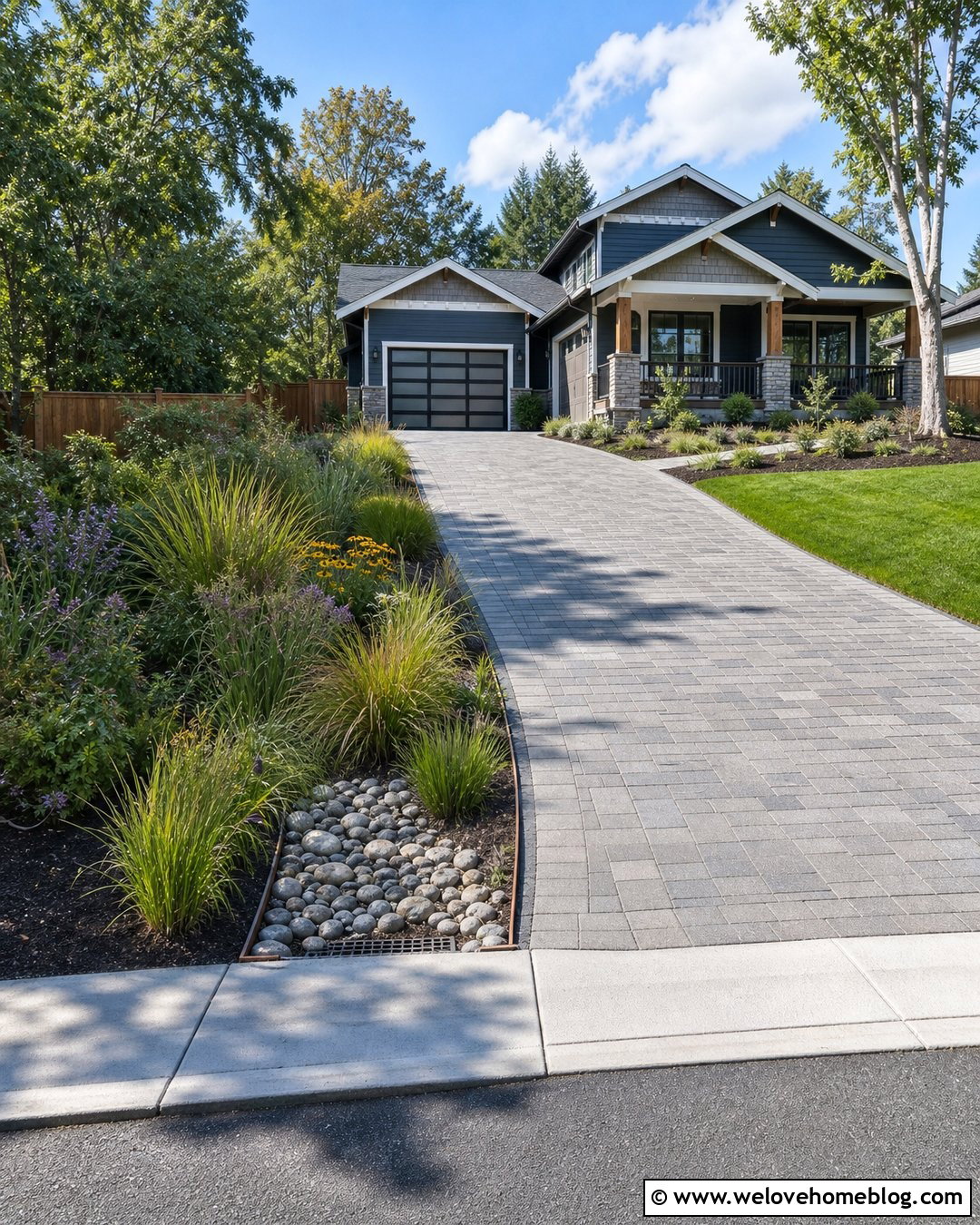
A rain garden can transform driveway runoff into a useful landscape feature when the site and local requirements allow it. Install permeable concrete pavers in a straight or gently curved layout, then direct surface water toward a shallow planted basin beside the driveway. Fill the basin with moisture-tolerant native grasses, sedges, flowering perennials, and shrubs chosen for alternating wet and dry conditions. Use river rock at the inlet to slow moving water and reduce soil disturbance. The garden should sit away from the foundation and should not interfere with underground utilities. A stone or metal edge keeps the driveway transition neat. This eco-conscious layout complements contemporary, Craftsman, and naturalistic homes while combining drainage, habitat, texture, and curb appeal in one coherent design.
19. Cobblestone Driveway With Formal Hedges
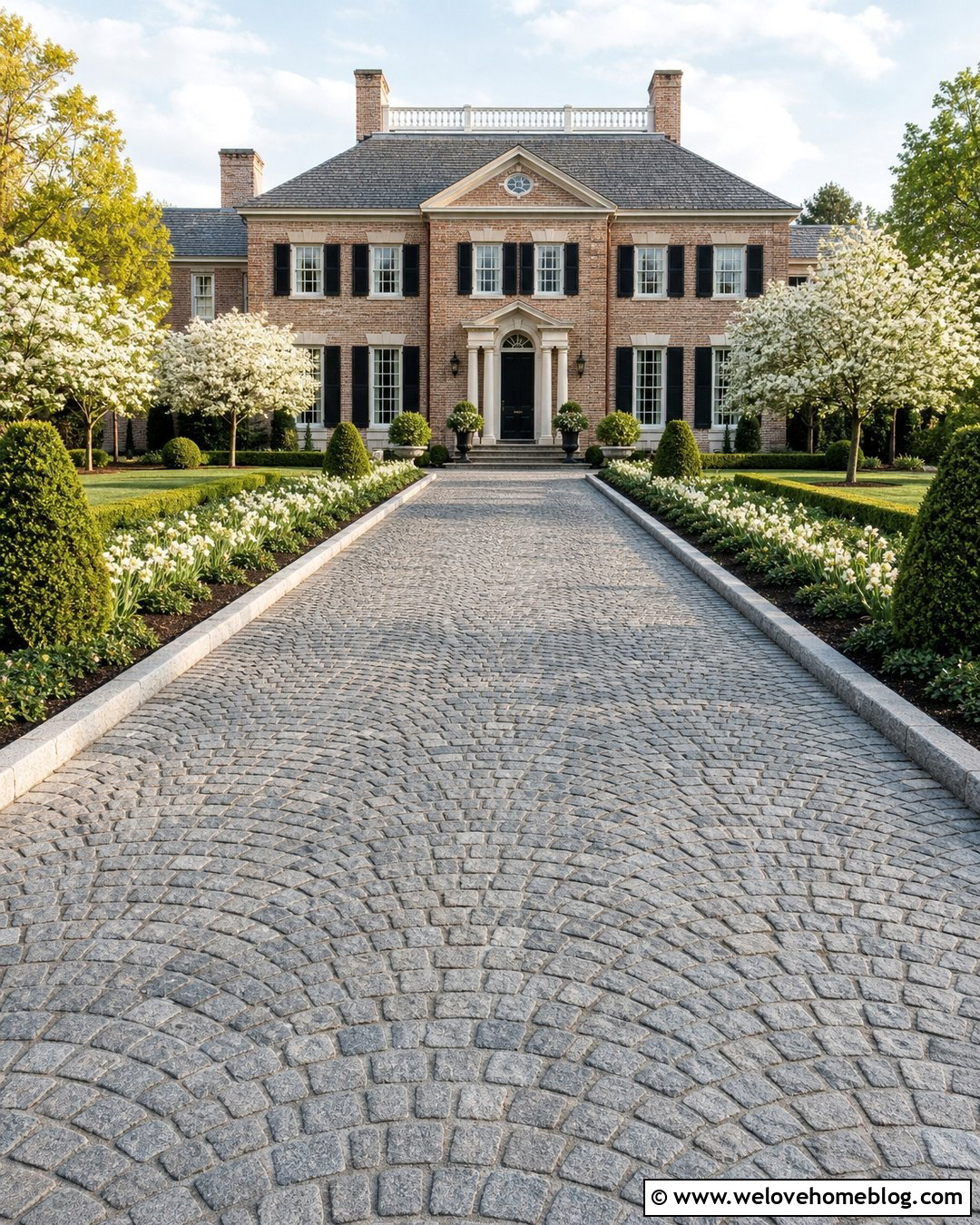
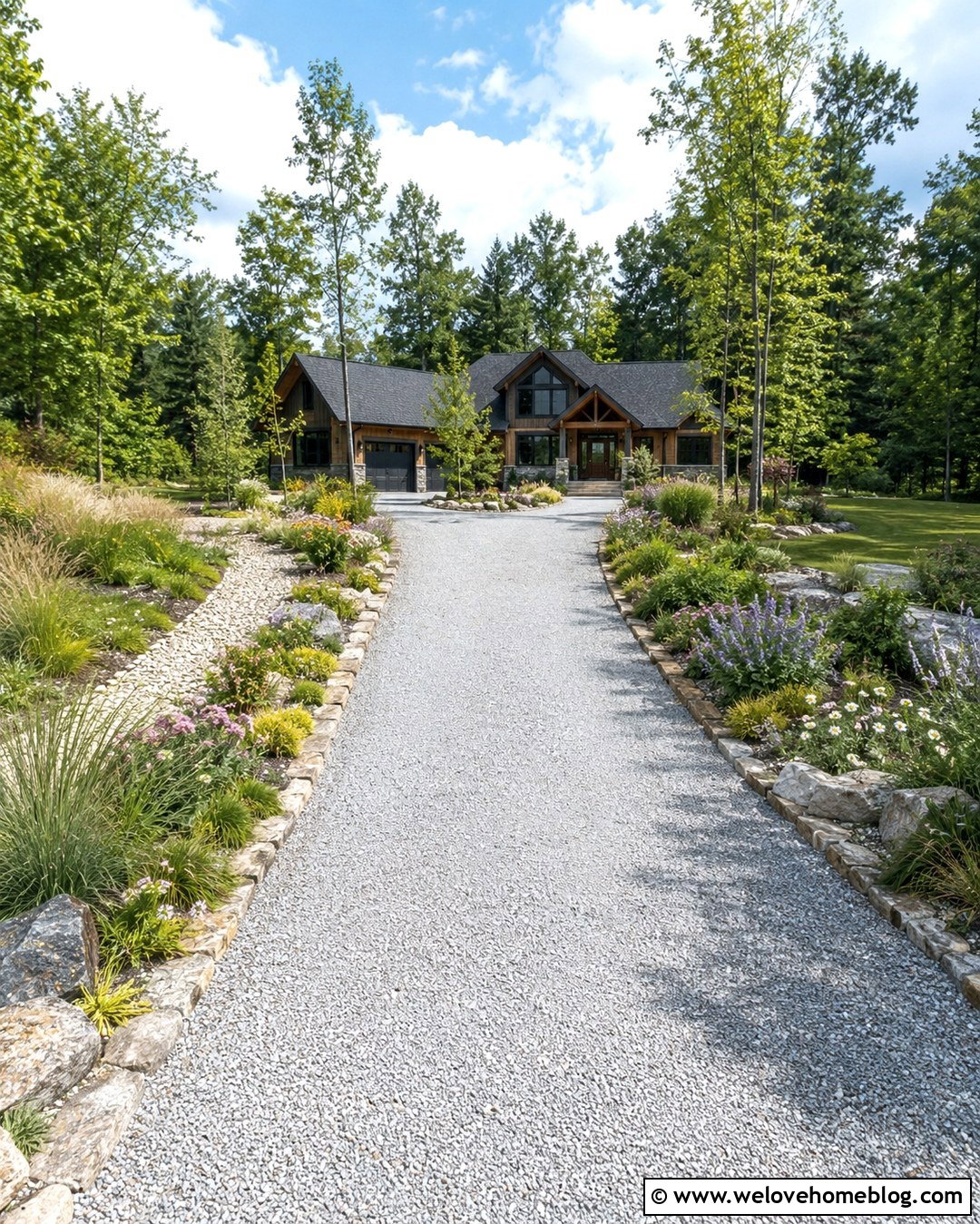
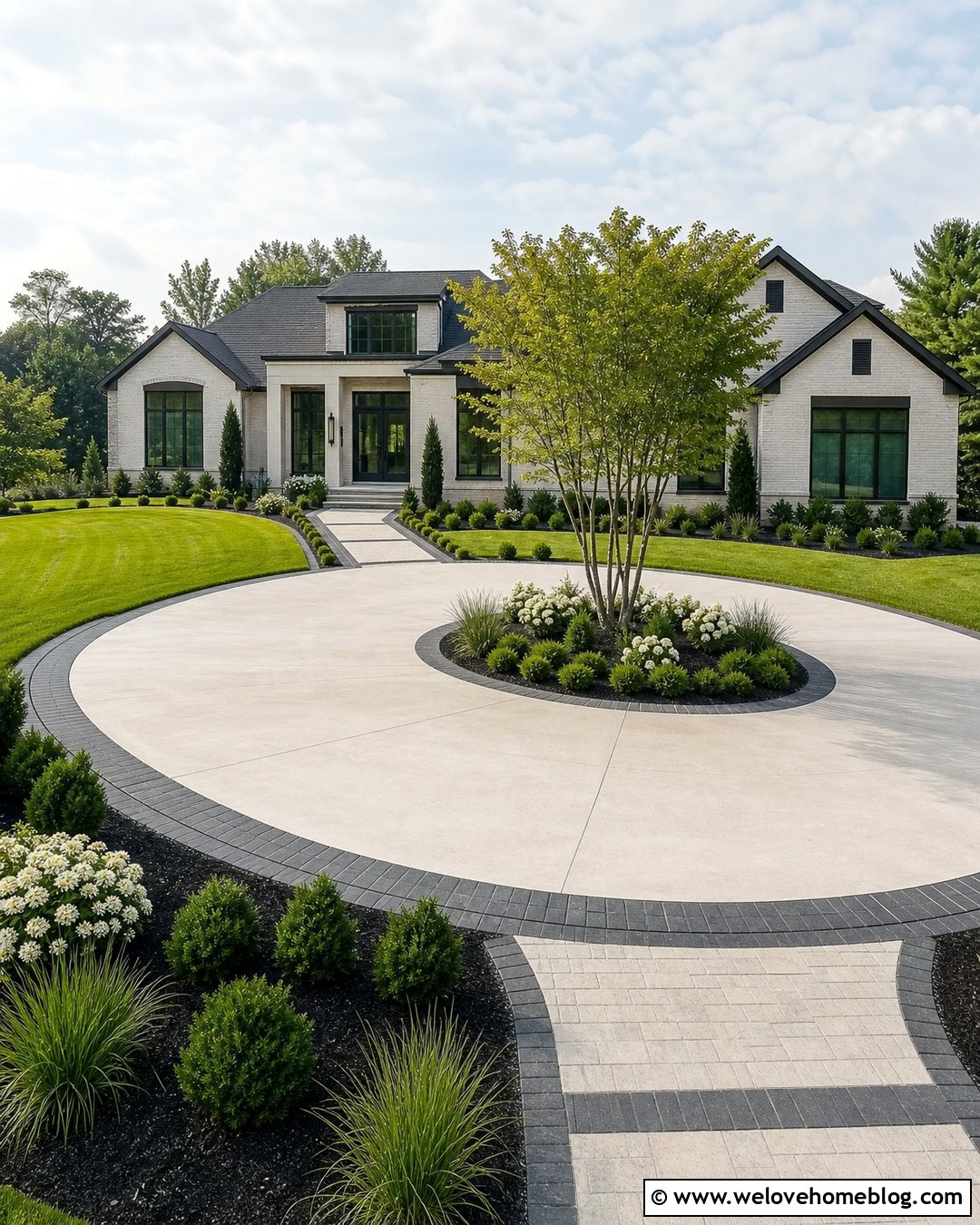
A cobblestone driveway creates a traditional setting for clipped hedges and symmetrical planting. Lay gray granite cobbles in a fan or running pattern, then frame both sides with low evergreen hedges set behind a narrow stone curb. Add matching topiary forms or small ornamental trees near the garage and front walkway to reinforce the balanced layout. Inside the beds, use a restrained mix of white flowers, evergreen ground cover, and seasonal bulbs. Keep hedge height low near the street and driveway turns to maintain clear sightlines. Regular pruning is essential, so leave enough access between the plants and pavement. This formal treatment complements Georgian, Colonial Revival, French-inspired, and stately brick homes. The repeated stone and greenery make the full entrance feel unified, established, and carefully maintained.
20. Resin-Bound Driveway With Pollinator Borders
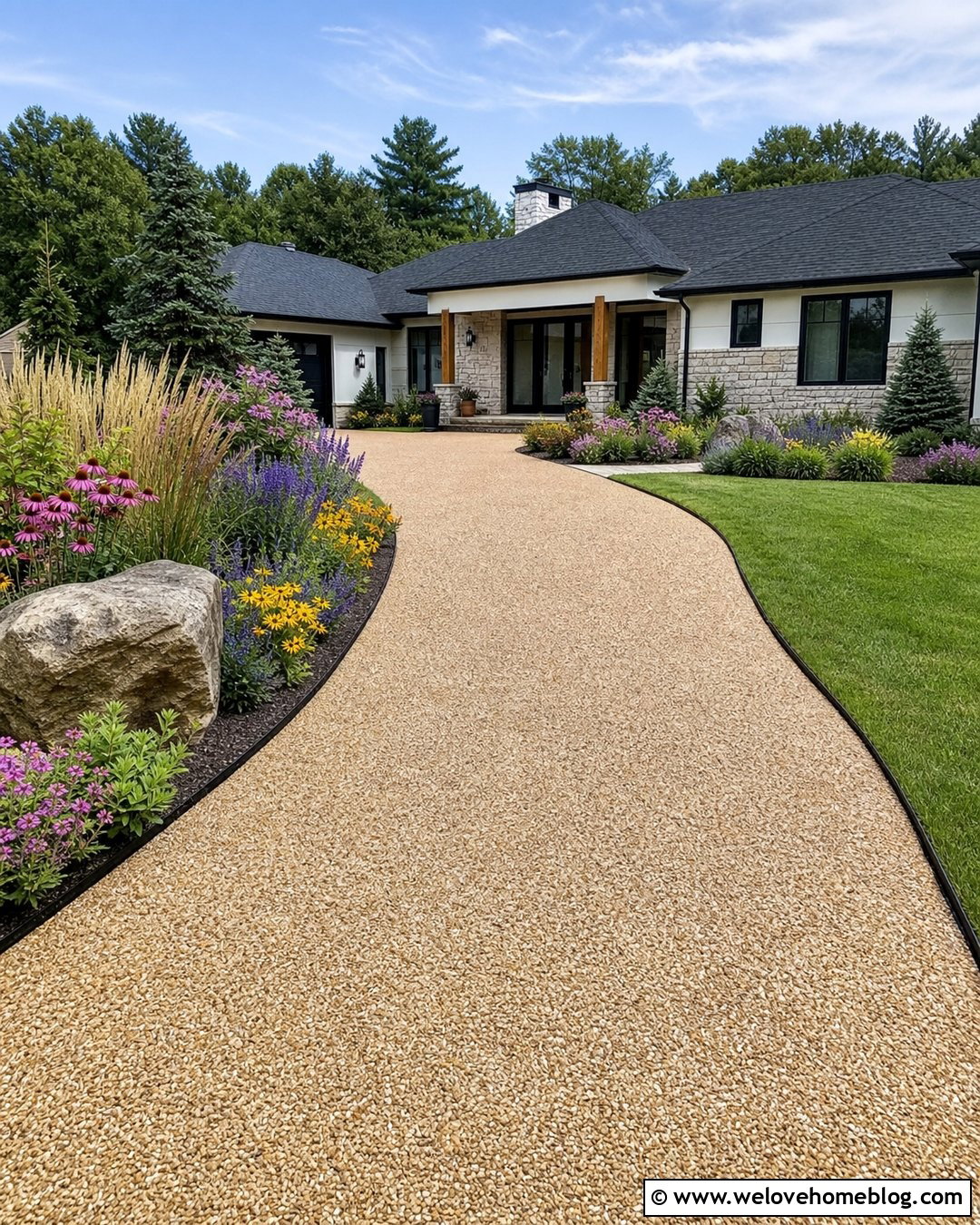
A smooth resin-bound gravel driveway can support a colorful, contemporary pollinator landscape. Choose a warm beige aggregate finish and create softly curved beds along one or both sides. Plant repeated groups of coneflower, bee balm, coreopsis, salvia, asters, and ornamental grasses, adjusting the selection for local growing conditions. Low steel edging keeps the flowing bed shapes crisp against the uniform driveway surface. Include compact evergreen shrubs to provide year-round structure after perennial stems are cut back. A shallow birdbath or decorative boulder may add a focal point, but it should remain away from vehicle movement. Continue a few flowering plants beside the front walk. This lively composition suits modern cottages, updated ranches, and contemporary suburban homes seeking color, habitat value, and an approachable garden character.
21. Budget Driveway With Mulch And Simple Shrubs
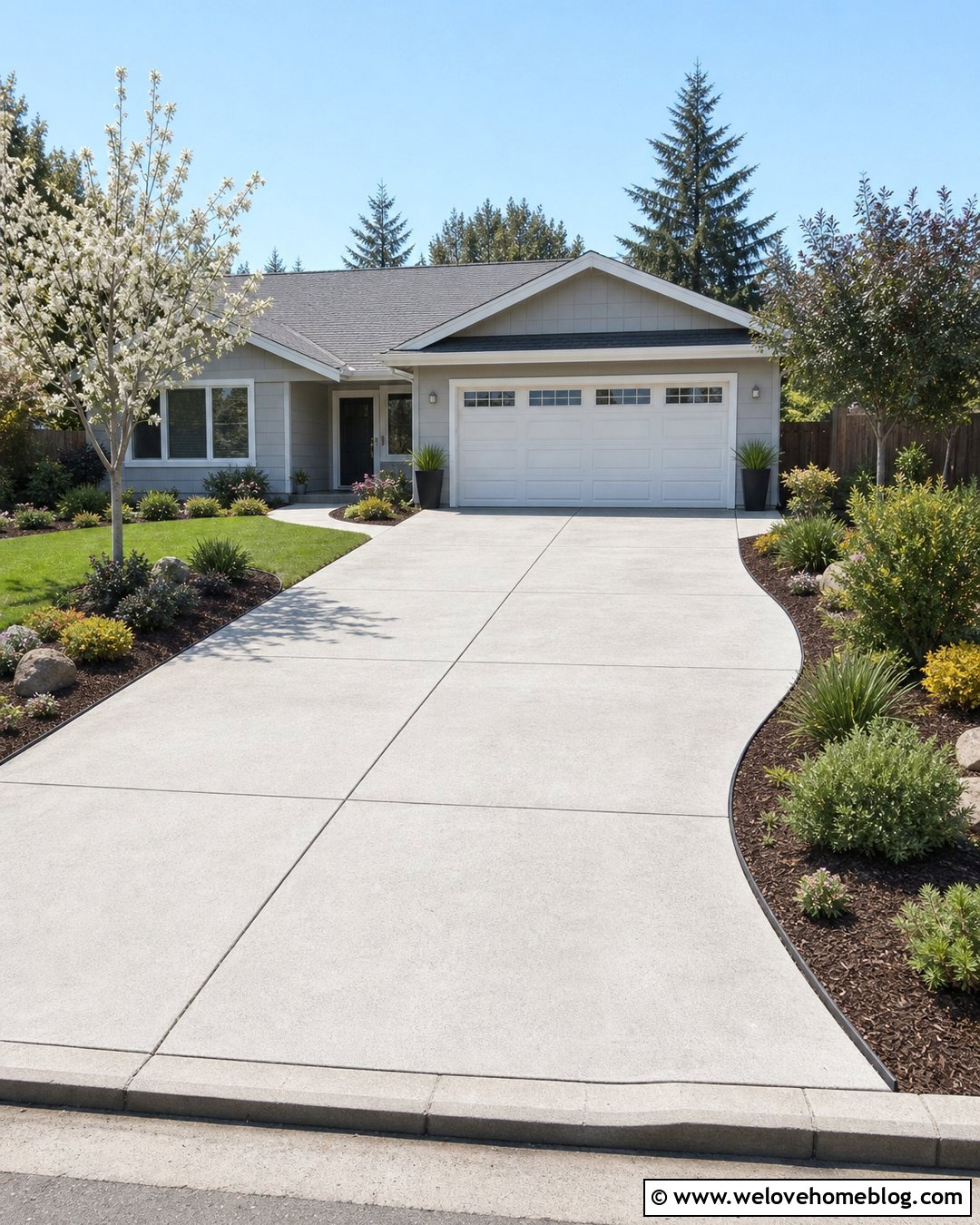
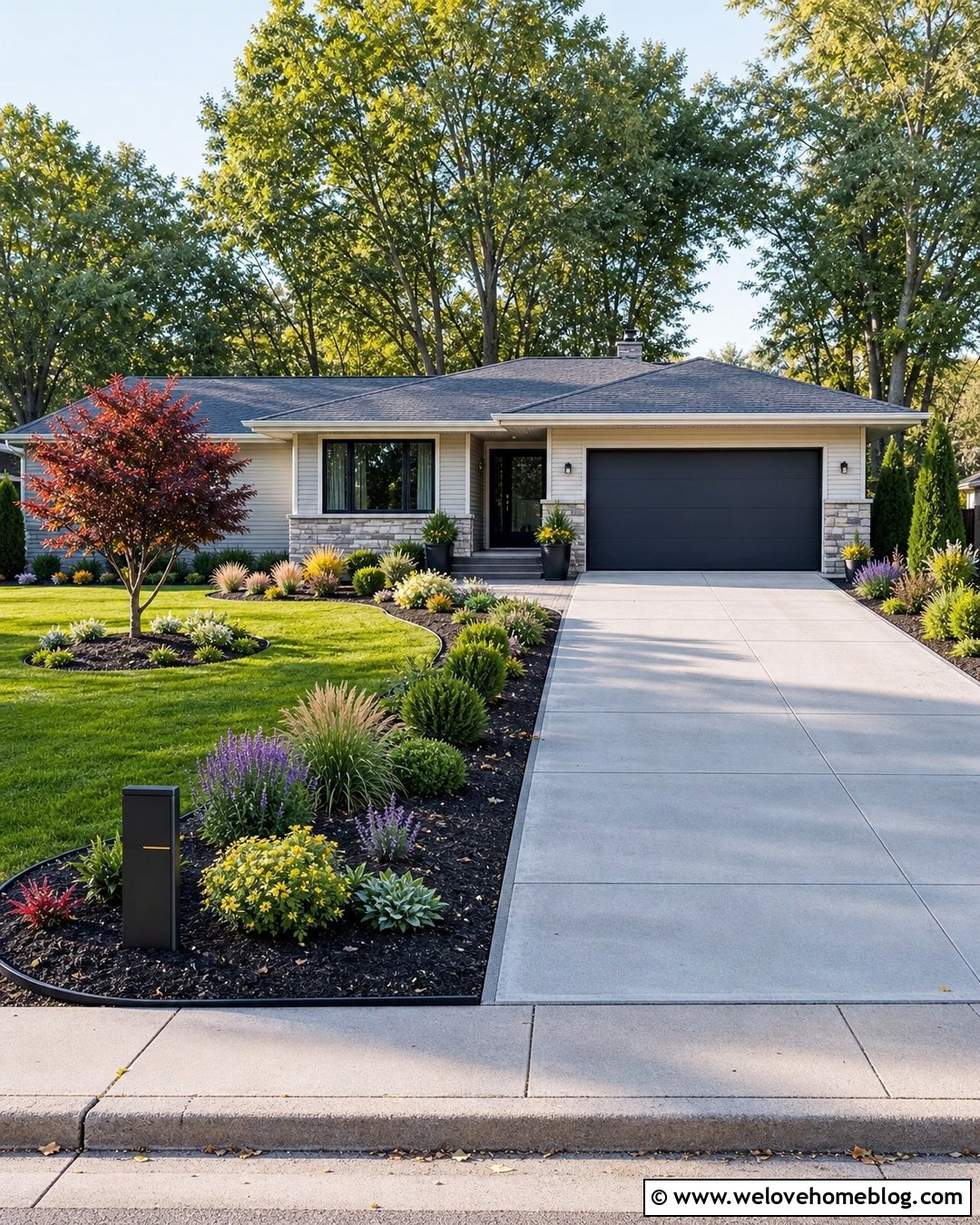
Fresh edging, mulch, and a limited plant palette can improve a driveway without requiring major hardscape work. Keep an existing concrete driveway and cut broad, gently curved beds along its most visible side. Install durable edging, cover the soil with an appropriate layer of shredded bark mulch, and plant repeated groups of compact shrubs and dependable perennials. Divide larger plants already growing elsewhere in the yard when suitable, or complete the border in stages. A small flowering tree near the front corner can provide a focal point without filling the entire bed. Leave open mulch around new plants so they have space to mature. Matching planters near the garage can complete the composition. This affordable approach works with nearly any modest ranch, bungalow, split-level, or suburban home.
22. Low-Maintenance Driveway With Evergreen Planting
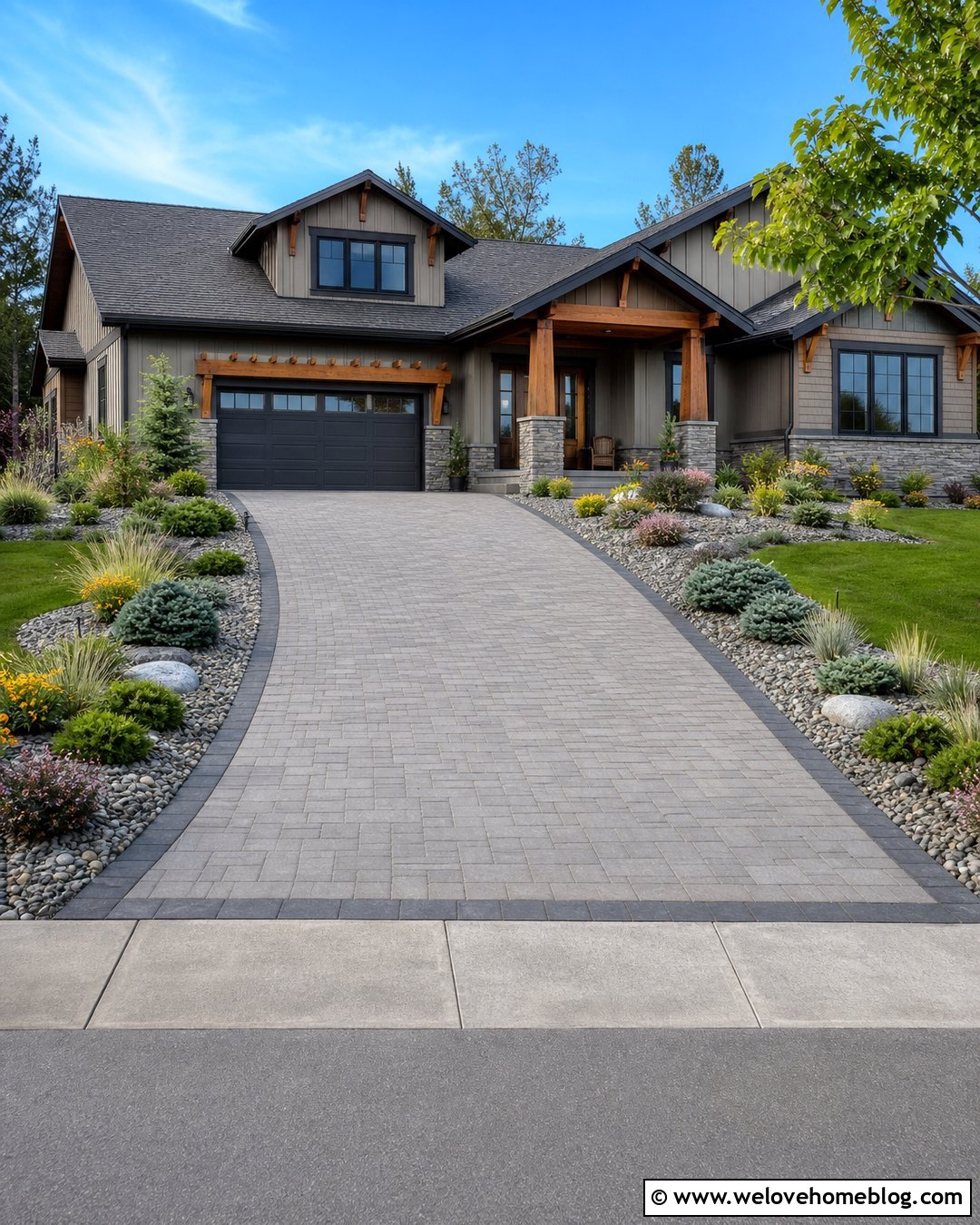
For a tidy landscape with limited seasonal work, combine durable hardscaping with a simple backbone of evergreens. A medium-gray concrete paver driveway can be bordered with river rock beds containing dwarf junipers, compact inkberry, mounded conifers, and sturdy ornamental grasses. Use broad groups of each plant rather than alternating individual specimens. This makes the border feel intentional and simplifies trimming. Add only a few long-blooming perennials where extra color is wanted. Install drip irrigation beneath the rock if supplemental water is necessary, and prevent landscape fabric from interfering with future plant growth. A flush charcoal curb keeps stones off the driveway. This practical design provides year-round structure around contemporary, ranch, Craftsman, and traditional homes without demanding constant deadheading, replanting, or complicated seasonal displays.
23. Driveway With Privacy Hedge And Layered Planting
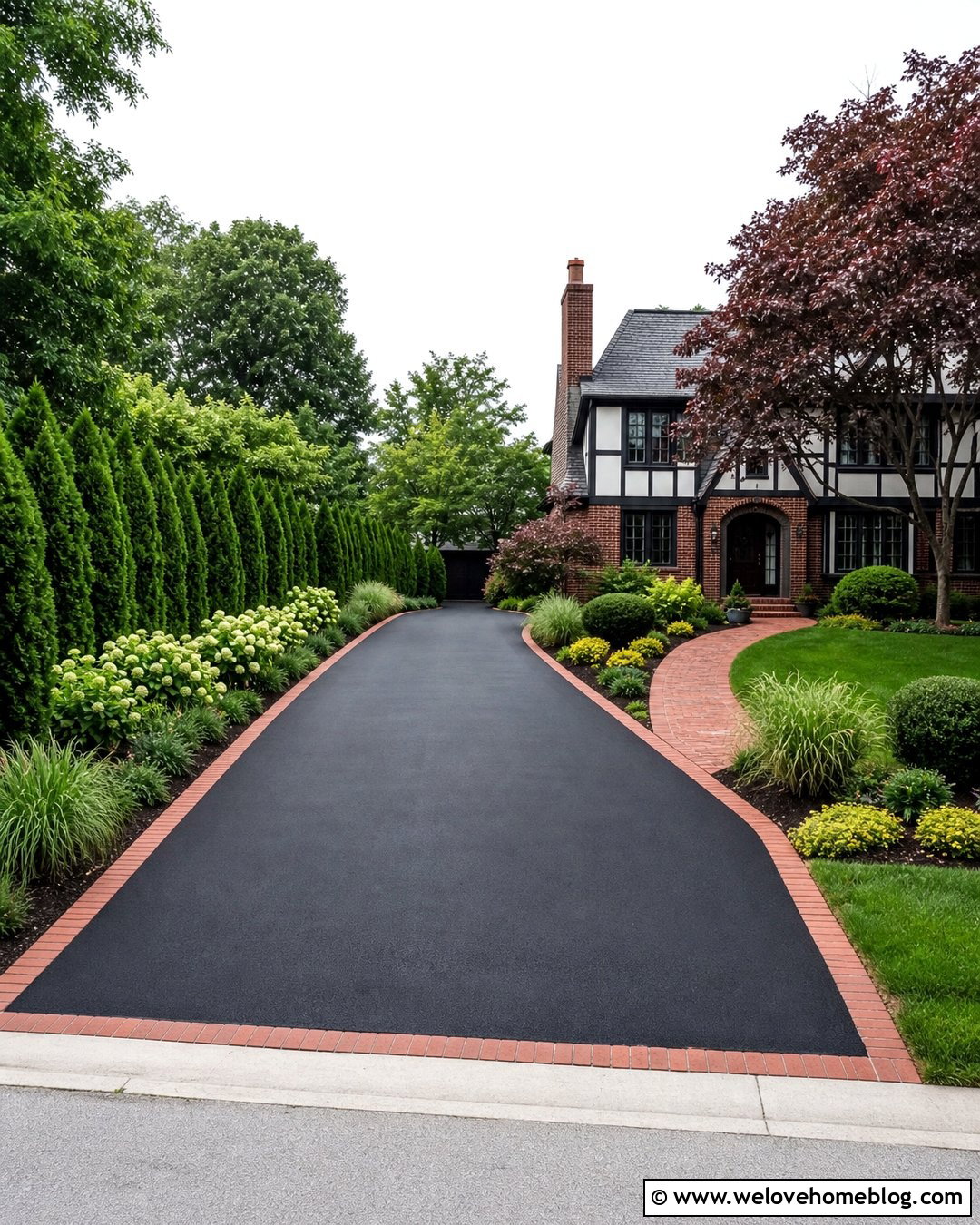
A tall hedge can screen a driveway from neighboring properties, but layering prevents it from feeling like a solid green wall. Pair a straight black asphalt driveway with a brick edge and an evergreen hedge planted far enough back to reach its mature width. In front of the hedge, add smaller flowering shrubs, grasses, and ground covers to create depth. Vary their heights gradually while maintaining clear access around parking spaces. If the driveway is long, interrupt the planting with a small ornamental tree or wider pocket bed. Avoid placing tall vegetation where it could conceal pedestrians or traffic near the street. The brick border may continue into the front walk for visual continuity. This private, polished treatment works well with suburban Colonial, Tudor, ranch, and craftsman-style homes.
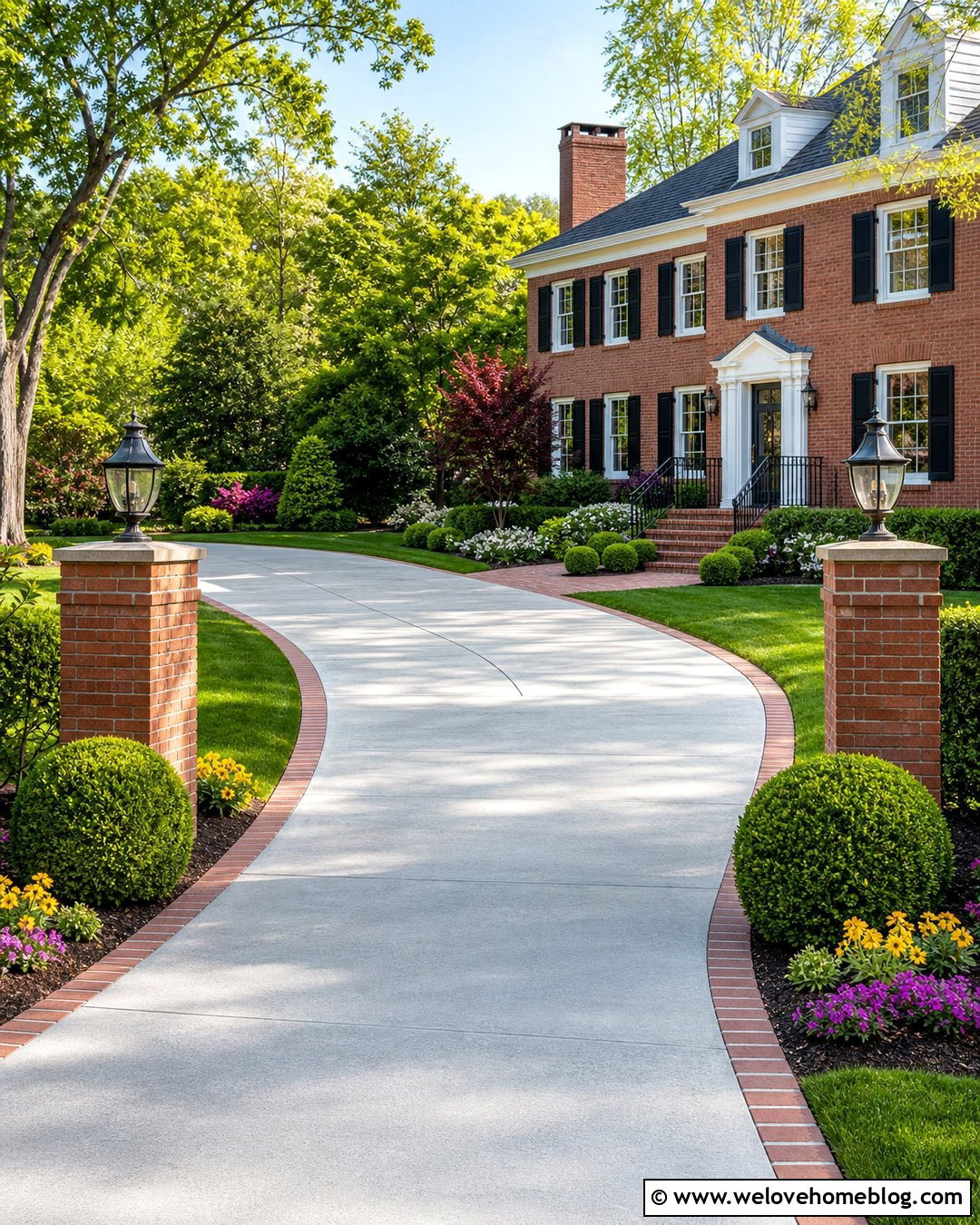
24. Driveway With Four-Season Perennial Borders
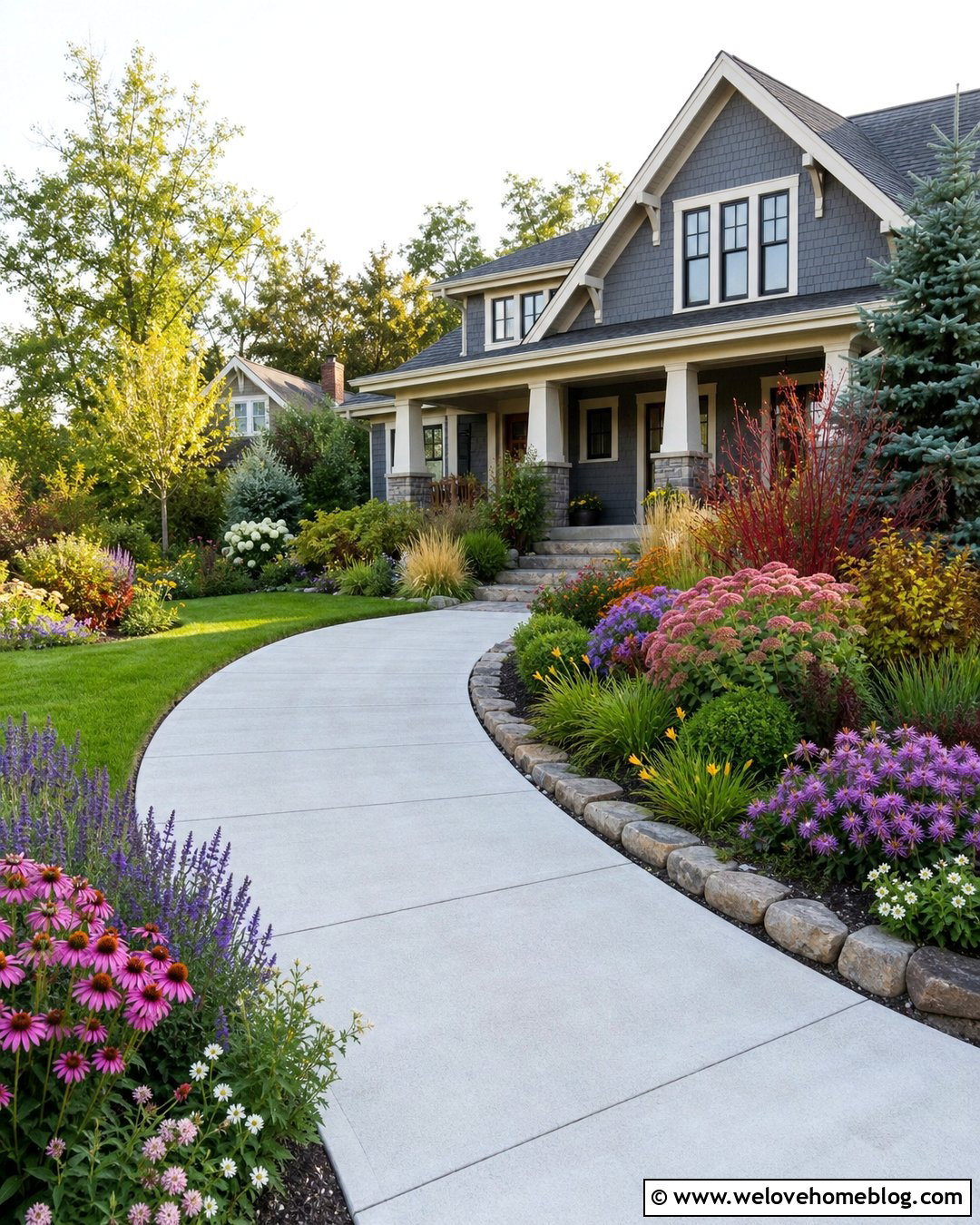
A successful perennial border should offer more than a short burst of summer flowers. Frame a curved concrete driveway with natural stone edging and beds designed around seasonal succession. Spring bulbs and flowering shrubs begin the display, followed by summer salvia, coneflowers, and daylilies. Asters, sedum, and ornamental grasses add fall color, while evergreen shrubs, colored stems, and persistent seed heads support winter structure. Repeat major plants in groups along the curve to guide the eye toward the house. Keep the tallest varieties in wider sections of the bed and use compact ground covers near the pavement. Leave room for snow storage where necessary. This richly layered approach complements cottages, Craftsman houses, traditional homes, and properties where changing seasonal color is a major landscaping priority.
25. Driveway With Landscape Lighting And Boulder Borders
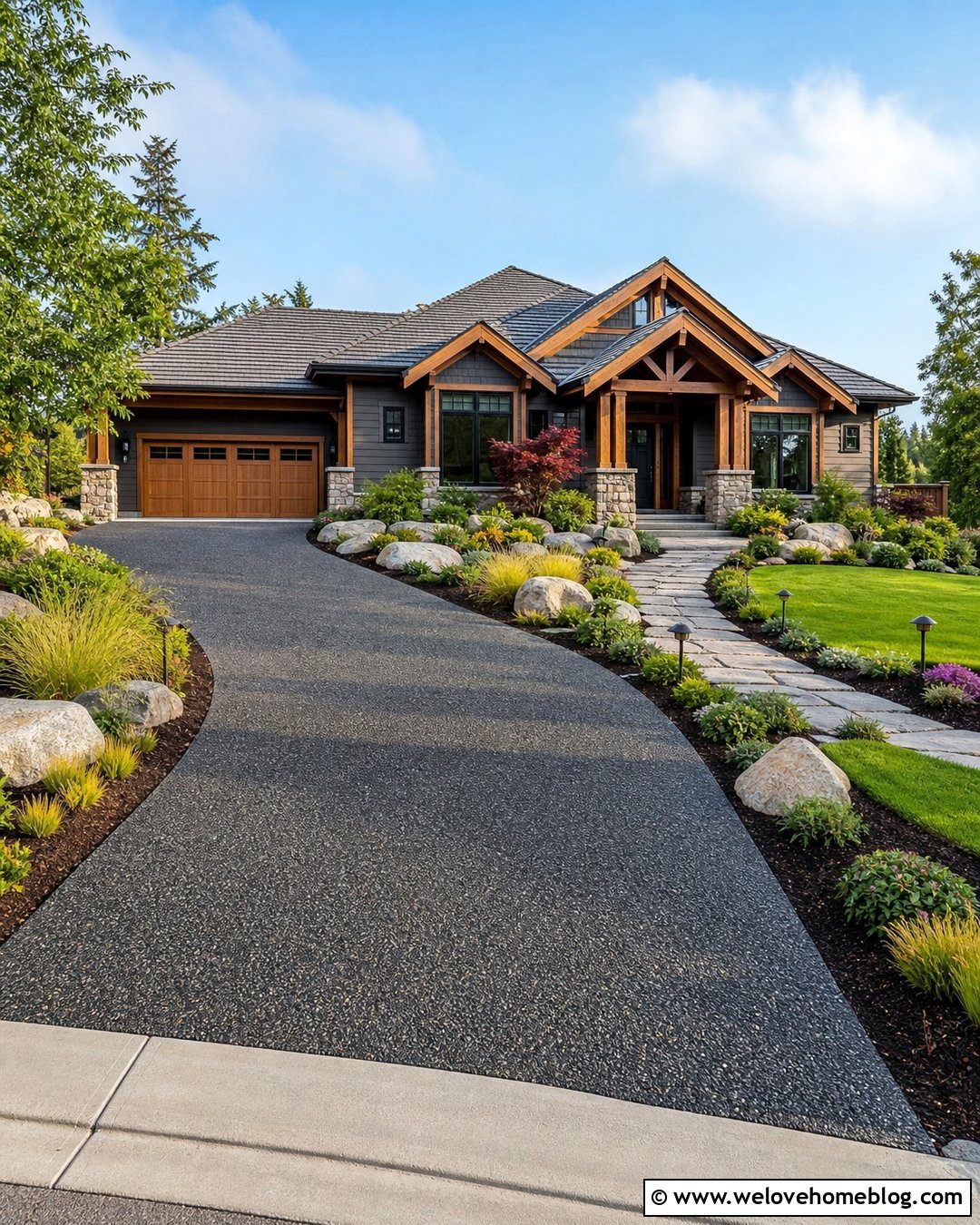
Lighting and natural stone can give a driveway definition without creating a continuous hedge. Use a dark gray exposed-aggregate driveway with a gentle curve leading to a modern Craftsman home. Place groups of large, locally appropriate boulders beyond the pavement edge, then connect them with sweeping beds of low grasses, evergreen shrubs, and flowering ground covers. Install shielded low-voltage lights near selected rocks and plants, keeping fixtures out of mowing and snow-removal paths. During the day, the boulders establish a strong visual boundary. After dark, the lights reveal the curve and entrance without producing harsh glare. Repeat the same rock near the walkway or porch steps. Proper spacing is important so every boulder remains visible and does not create a collision hazard beside the driving lane.
Conclusion:
The best landscaping around a driveway makes the entire front yard feel planned, welcoming, and easy to use. Start with the driveway’s material and shape, then select borders, plants, lighting, and walkways that complement both the surface and the house. Account for mature plant sizes, drainage, visibility, pavement heat, passenger access, and local maintenance needs before planting. A simple repeated palette usually creates a stronger result than a crowded collection of unrelated features. Even an existing driveway can gain character through fresh edging, layered shrubs, flowering borders, or a well-positioned tree. Use these 25 landscaping around driveway ideas to create an entrance that improves curb appeal while supporting comfortable everyday use.

Related posts:
Leave a Reply