
The best **25 landscaping by driveway ideas** treat the driveway and front yard as one connected design. Instead of adding a few random flowers beside the pavement, consider how the driveway material, layout, edging, planting beds, lighting, and house exterior work together. Curved borders can soften a wide concrete surface, while structured hedges bring order to gravel, brick, or paver driveways. Native plants, ornamental grasses, rain gardens, and permeable surfaces are also becoming popular because they combine attractive curb appeal with practical maintenance and drainage benefits. () Whether your home has a narrow approach, a circular drive, or a large country entrance, the complete looks below offer adaptable **25 landscaping by driveway ideas**.

1. Curved Concrete Driveway With Layered Garden Beds
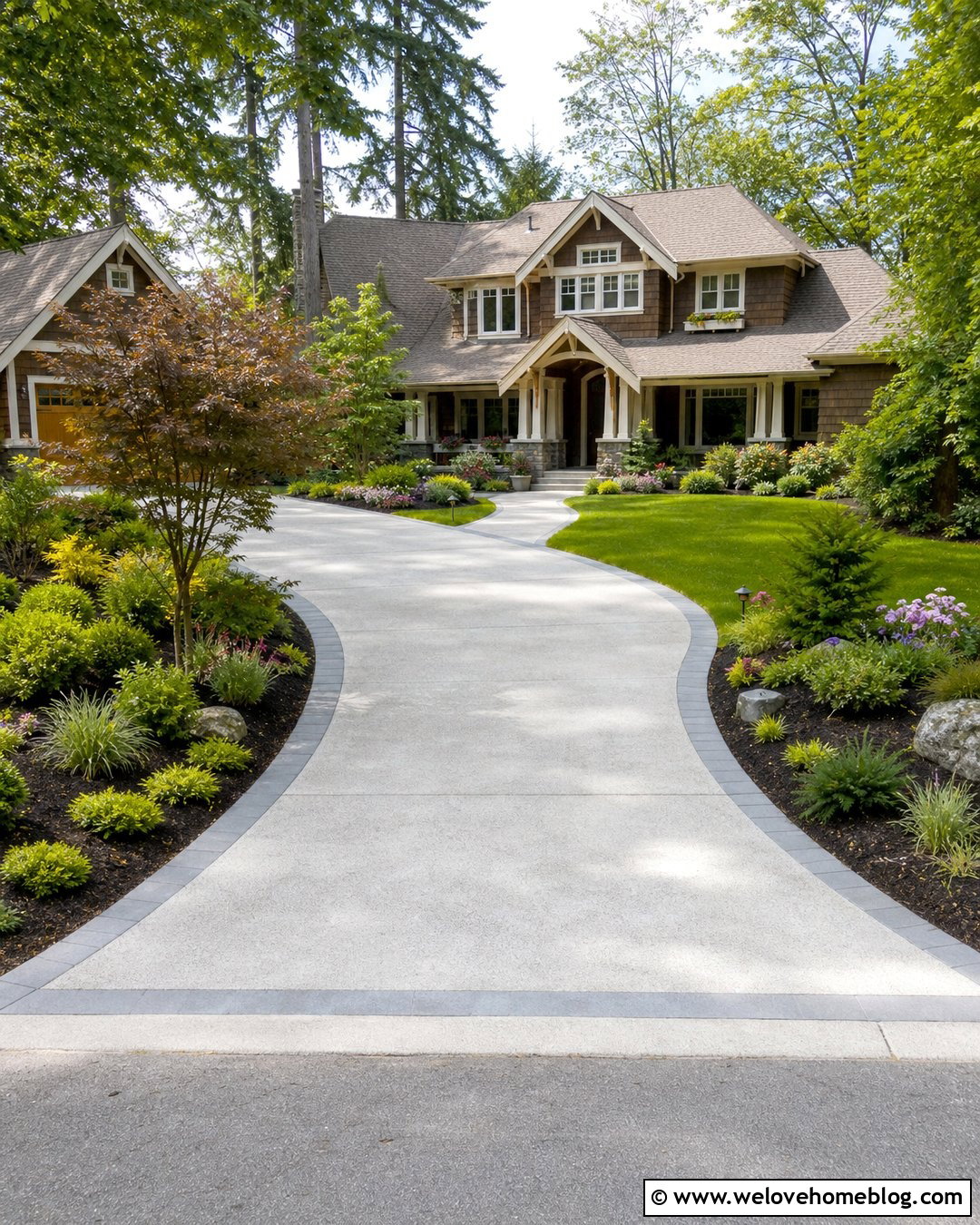
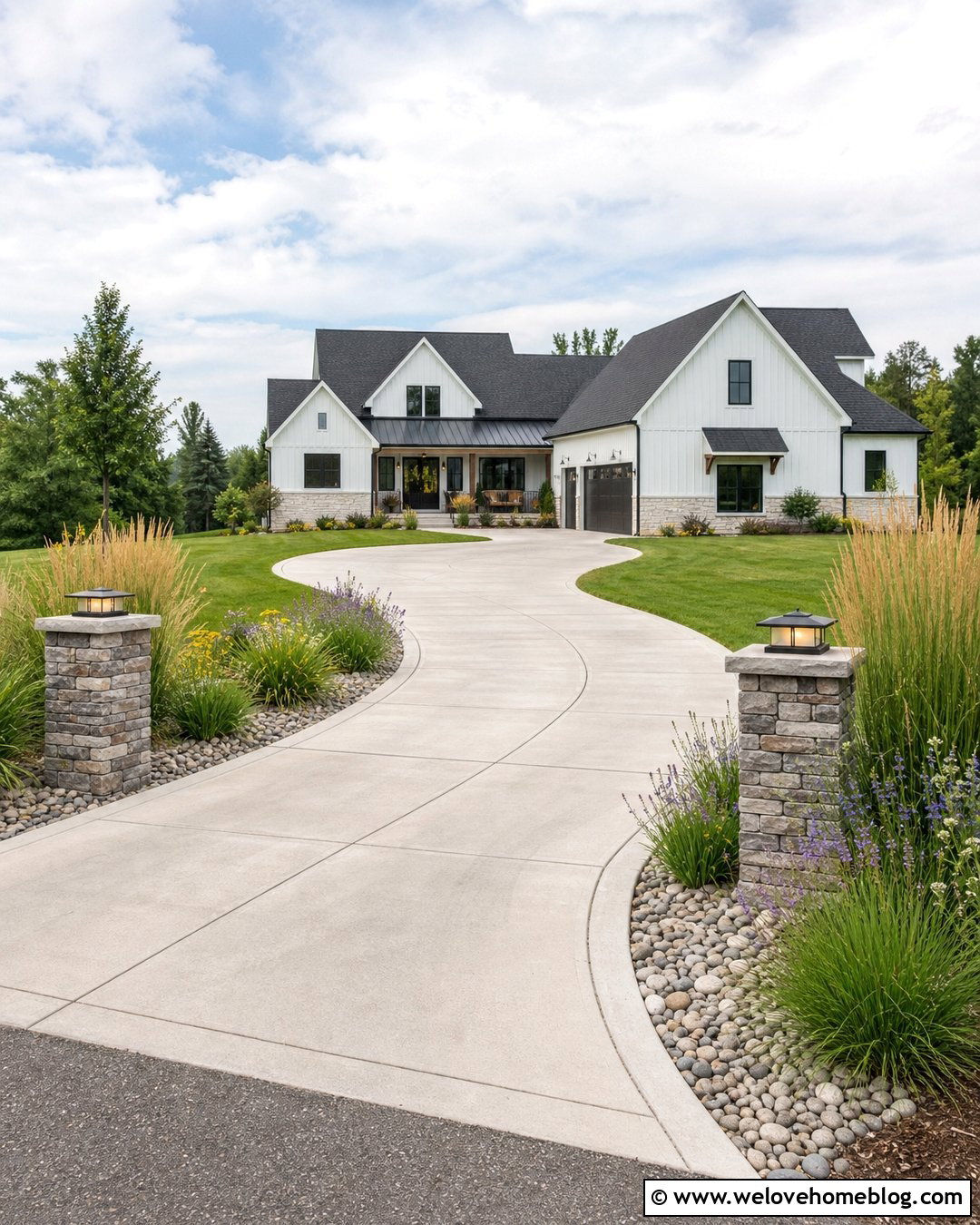
A curved gray poured concrete driveway feels less imposing when broad planting beds follow both sides of the pavement. Begin with a clean border of charcoal concrete pavers or natural granite set flush with the surface. Behind it, arrange plants in layers. Use low ground cover near the driveway, medium flowering perennials through the center, and compact evergreen shrubs toward the house. A small ornamental tree placed near the outside curve can guide attention toward the front door without blocking the view. Repeat a limited selection of plants instead of filling the beds with unrelated varieties. Dark mulch creates useful contrast against pale concrete. Finish the complete look with a curved walkway that connects the driveway to a traditional Craftsman porch.
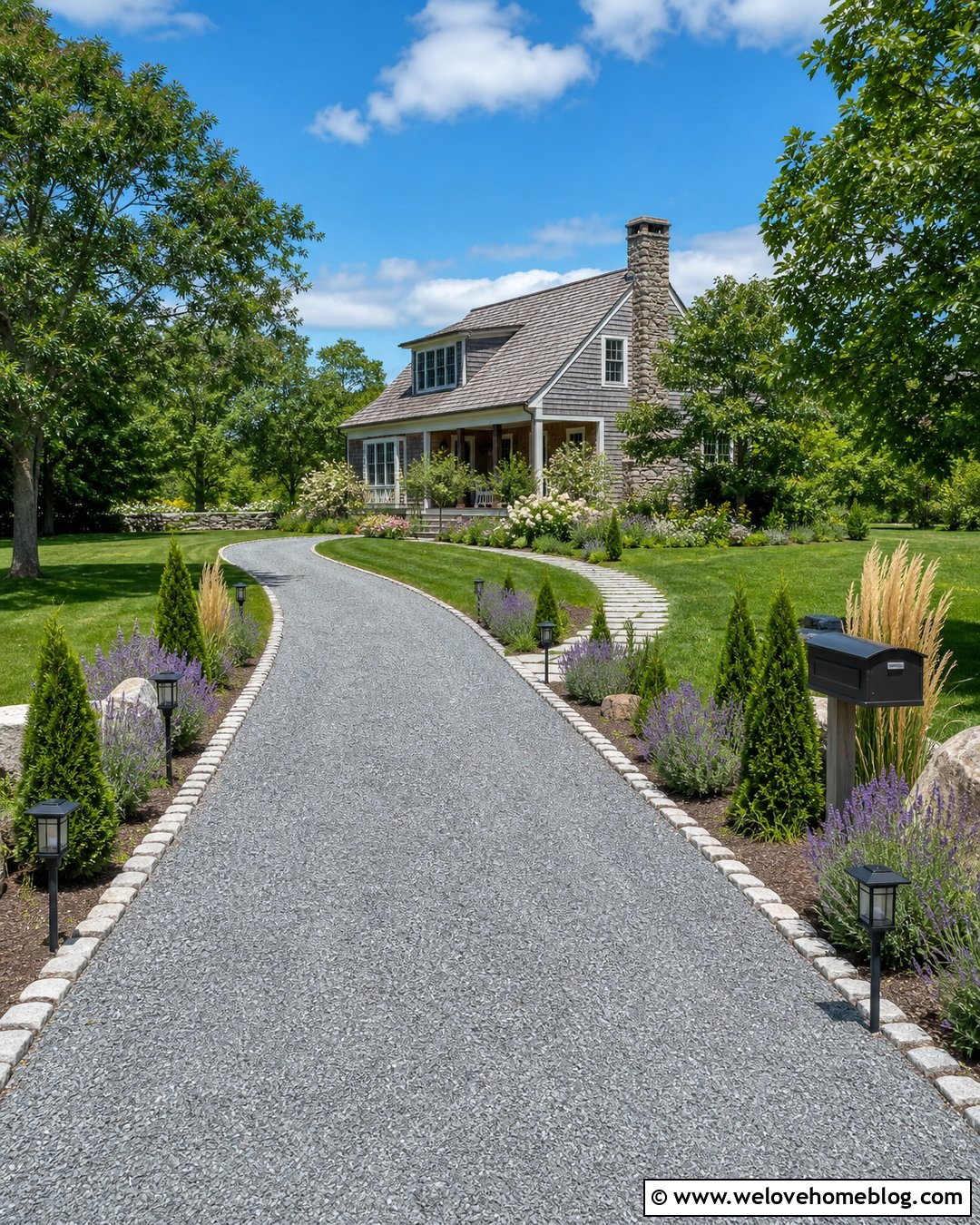
2. Pea Gravel Driveway With Lavender Borders
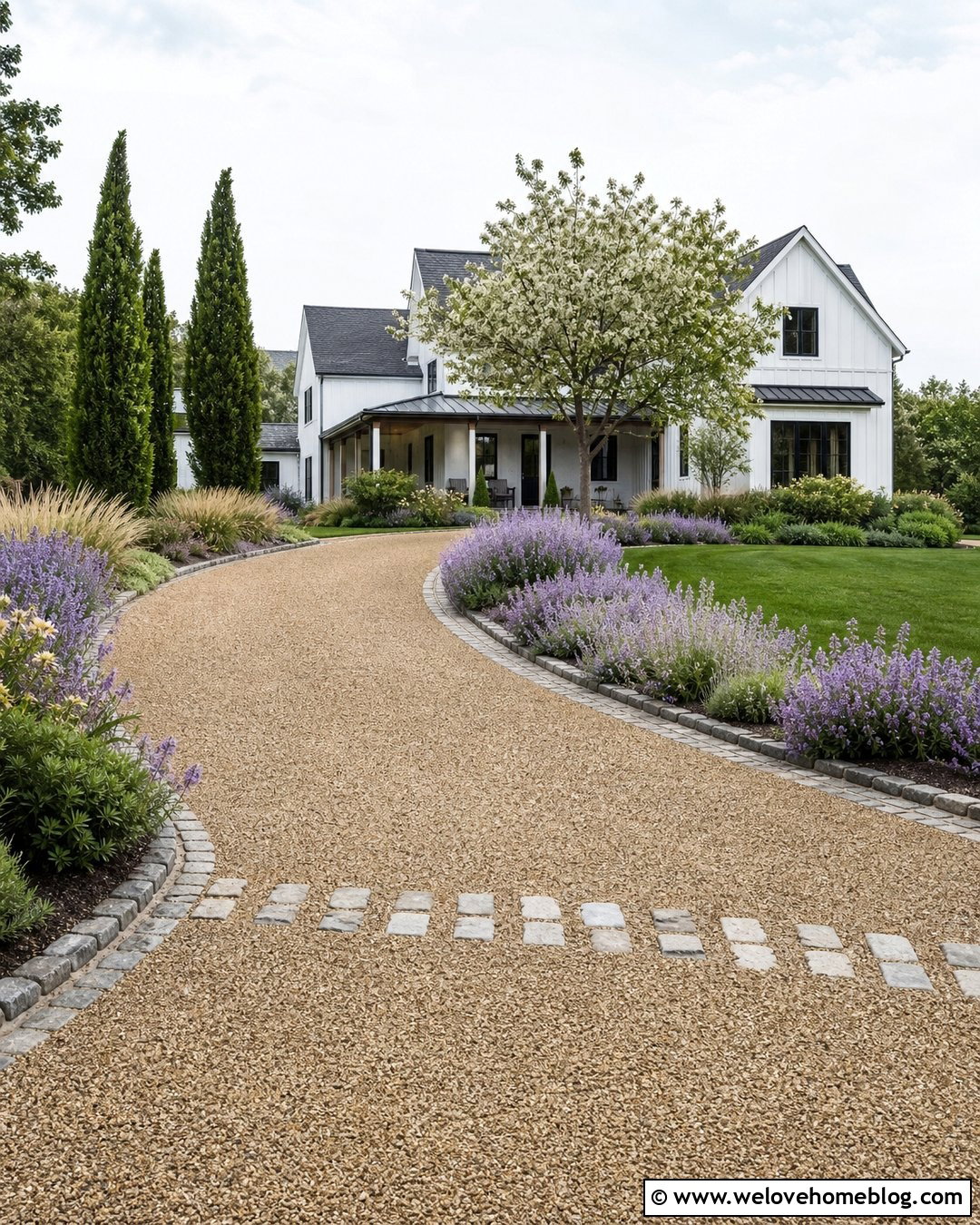
The soft texture of a tan pea gravel driveway pairs naturally with lavender, catmint, and compact ornamental grasses. Shape the driveway into a relaxed curve leading toward a light-colored farmhouse. Install cobblestone edging on both sides to keep loose gravel contained and create a strong mowing boundary. Plant lavender in generous repeating groups rather than a thin, uneven row. Position the flowers slightly behind the cobblestones so mature stems do not lean into the driving area. Add upright evergreens near the garage and one flowering tree near the entrance for height. A stepping-stone walkway can cross the gravel and continue through the border. This combination produces a welcoming country landscape with color, fragrance, movement, and a clearly defined driveway.
3. Asphalt Driveway With Native Grass Landscaping
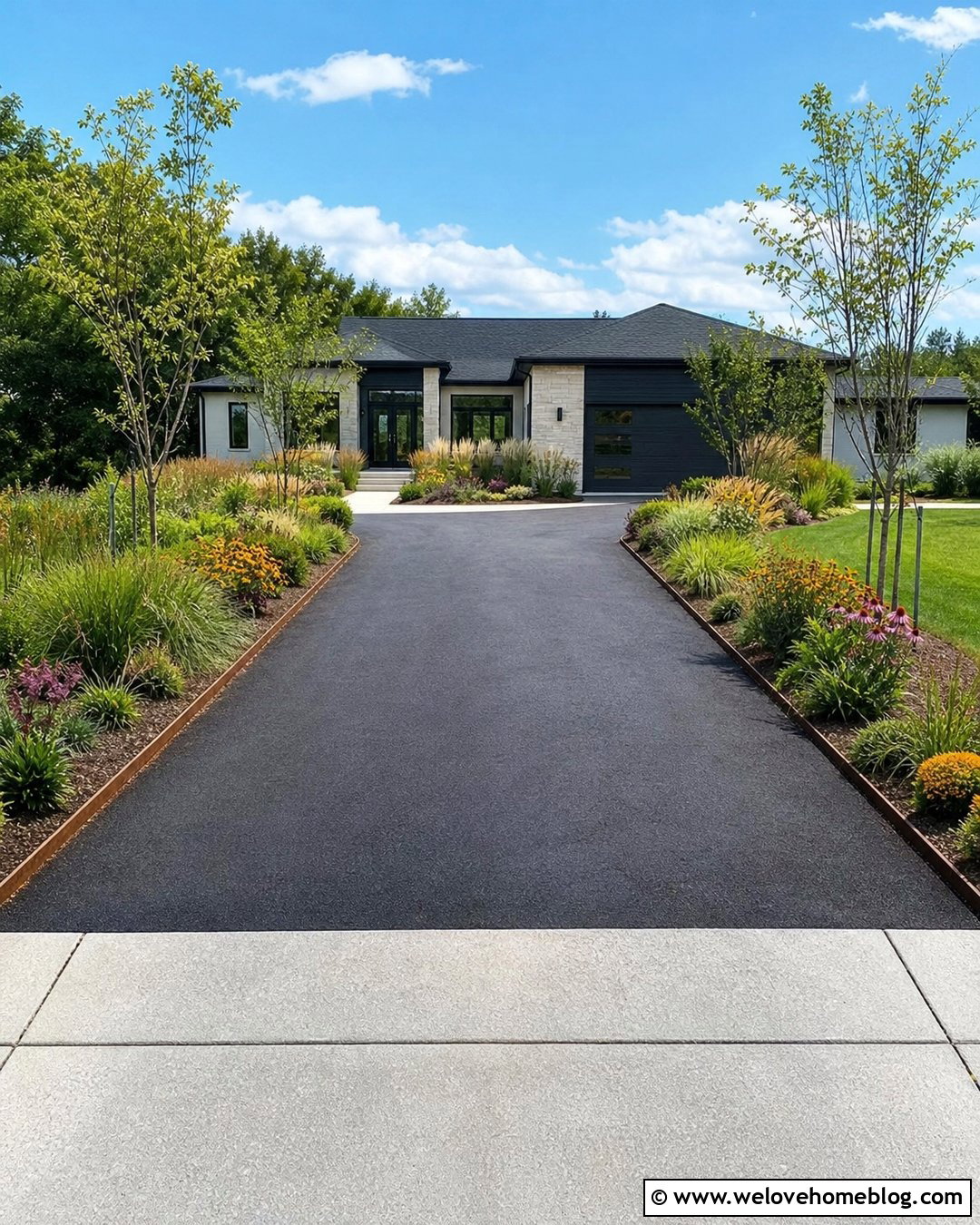
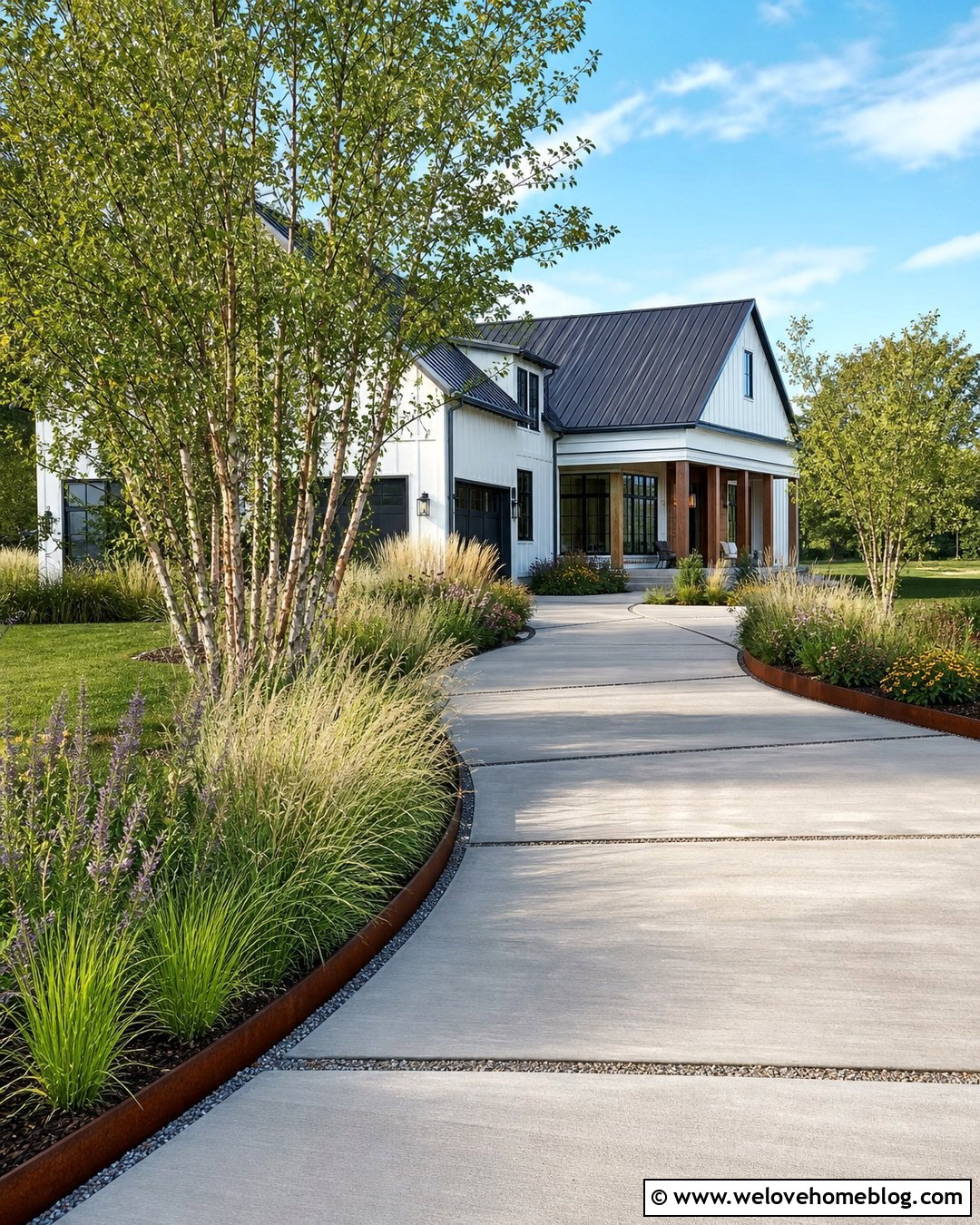
Black asphalt becomes an attractive design feature when surrounded by soft, natural planting. Use weathered steel edging to separate the pavement from wide beds filled with native ornamental grasses, coneflowers, black-eyed Susans, and compact shrubs suited to your region. The rusty edging warms the dark driveway while keeping soil and mulch away from the asphalt. Arrange grasses in repeating drifts along a gently curved approach rather than placing single plants at equal intervals. Add two multi-stem native trees farther from the driving edge to create height without forming a rigid tunnel. Near the garage, connect the driveway to a simple concrete walkway. The finished landscape feels informal and lively, yet the limited plant palette keeps the overall appearance organized.
4. Circular Brick Driveway With Center Island Landscaping
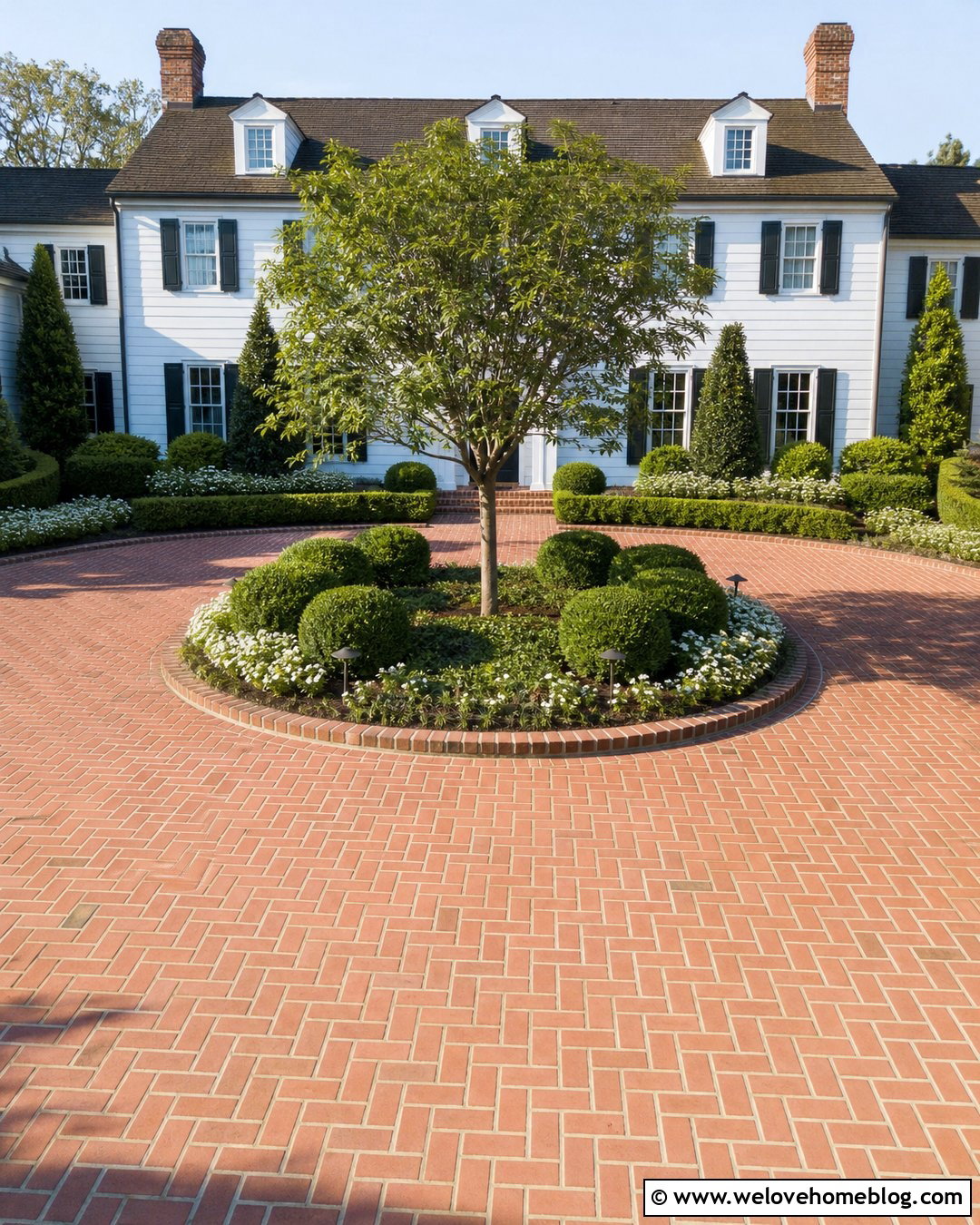
A circular driveway offers a natural location for a landscaped centerpiece. Use warm clay brick pavers in a herringbone pattern, then build a round center island edged with matching soldier-course bricks. Choose one appropriately sized ornamental tree as the focal point and surround it with low evergreen shrubs, seasonal flowers, and a tidy ground cover. Keeping plants low around the outside of the island preserves visibility for drivers. Echo the same flowers in smaller beds near the house so the island does not feel disconnected. Two brick walkways can lead from the circular drive to a Colonial-style entrance. Low landscape lights placed inside the planting beds will define the curve while leaving the brick surface visually clean during the day.
5. Paver Driveway With Boxwood And White Flowers
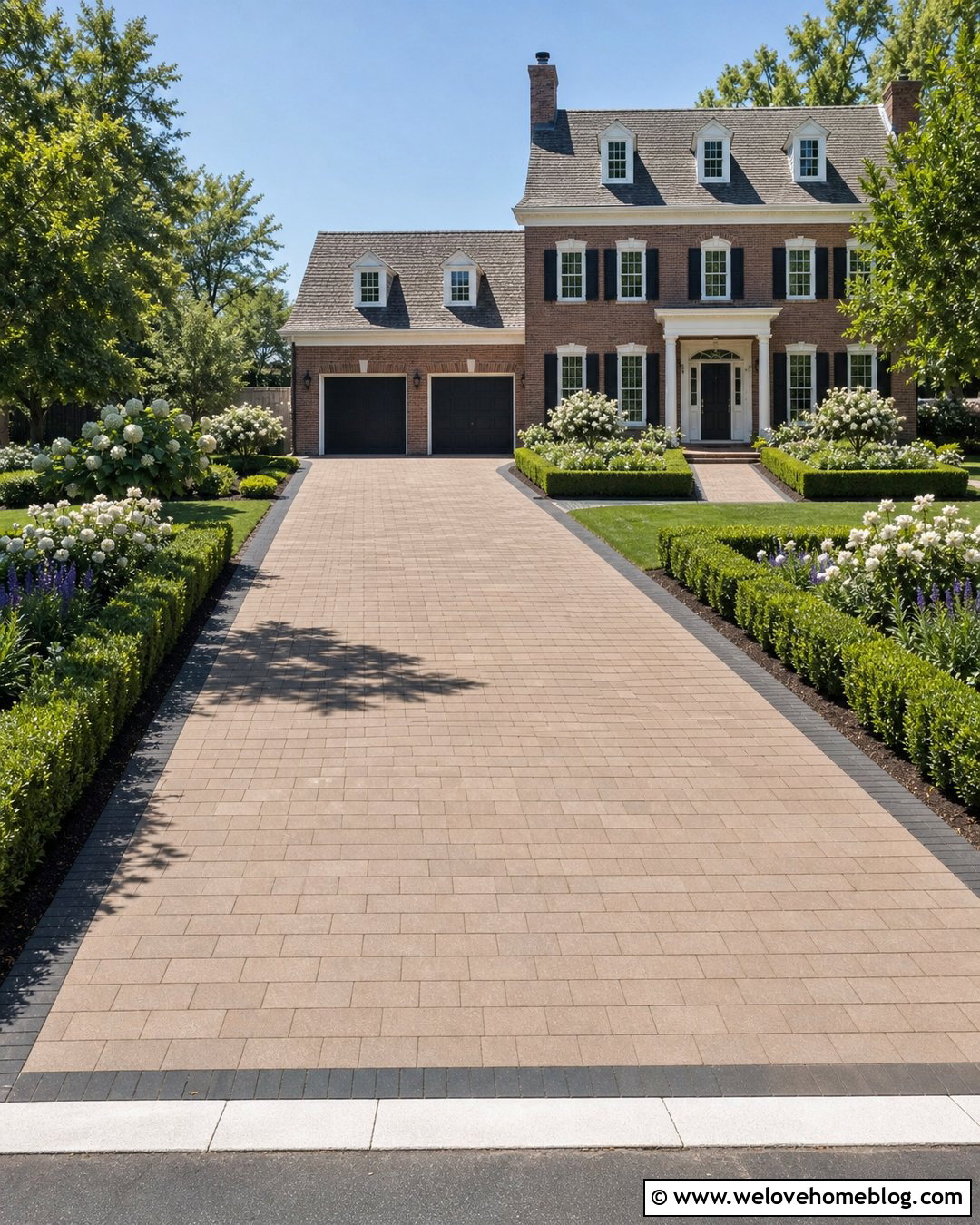
For a polished front yard, combine taupe concrete pavers with clipped boxwood, white flowering perennials, and restrained green foliage. Lay the pavers in a running-bond pattern and add a darker border around the driveway for definition. Create symmetrical beds on each side, but leave enough open pavement near the garage for comfortable parking and car doors. Rounded boxwood shrubs can provide year-round structure, while white roses, salvia, or hydrangeas add seasonal interest farther from reflected pavement heat. Repeat the dark driveway border around the walkway leading to the front door. This creates a consistent visual line throughout the landscape. The controlled palette works especially well with brick Colonial, Georgian, and formal suburban homes without making the entrance feel overly elaborate.
6. Modern Concrete Driveway With Drought-Tolerant Landscaping
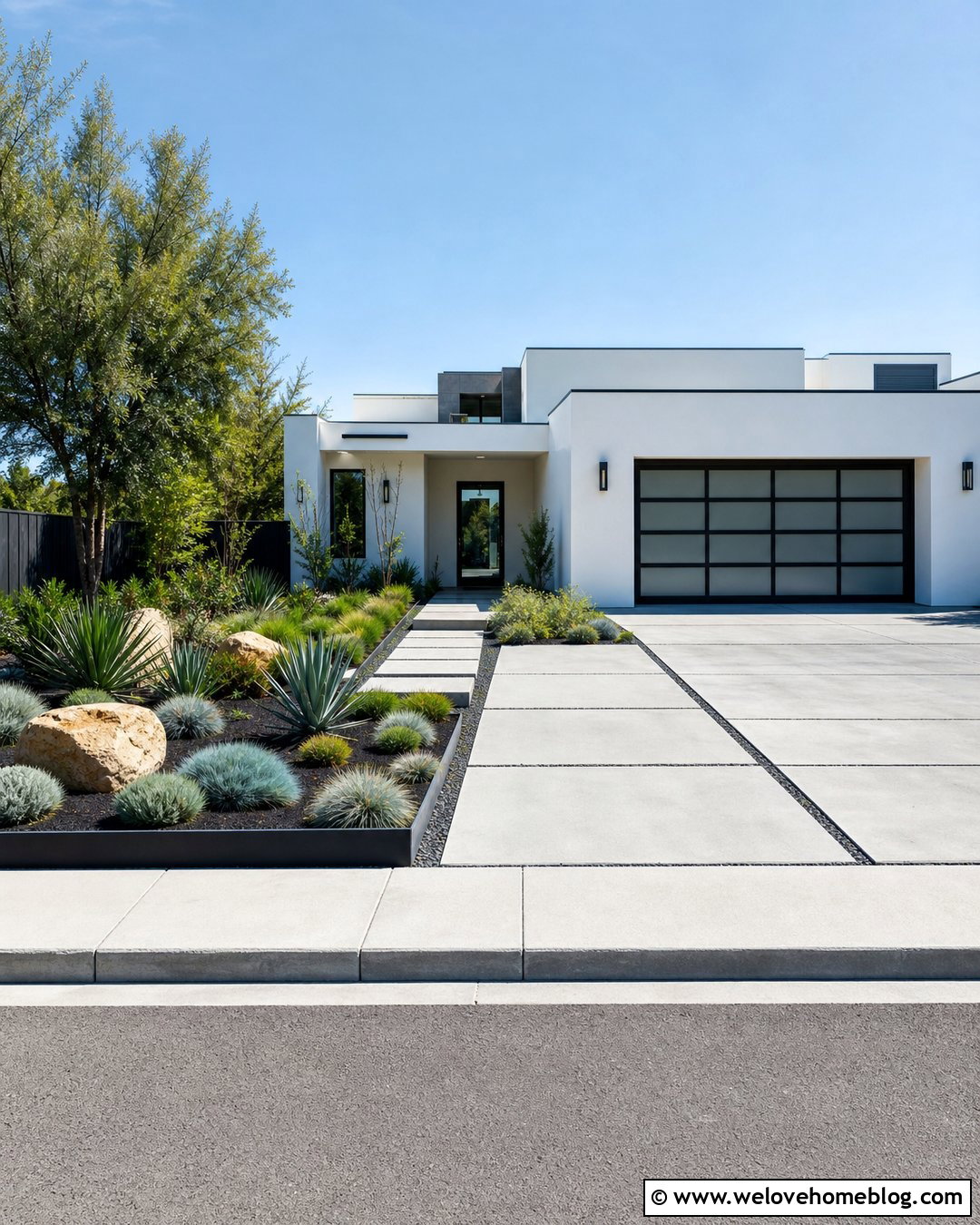
Wide rectangular slabs of light gray poured concrete create a clean foundation for a modern landscape. Separate the slabs with narrow strips of dark gravel instead of grass, which reduces trimming and strengthens the geometric layout. Along the driveway, build linear beds with blue fescue, agave, yucca, sedges, and compact evergreen shrubs selected for the local climate. Use black steel edging to produce a crisp transition between the planting and hardscape. A few sculptural boulders can introduce natural texture without cluttering the minimalist arrangement. Continue the same gravel into the front walkway and around the house foundation. The complete design should use repetition and open space, allowing the driveway, plants, and contemporary home facade to read as one calm composition.
7. Long Gravel Driveway With Tree-Lined Landscaping
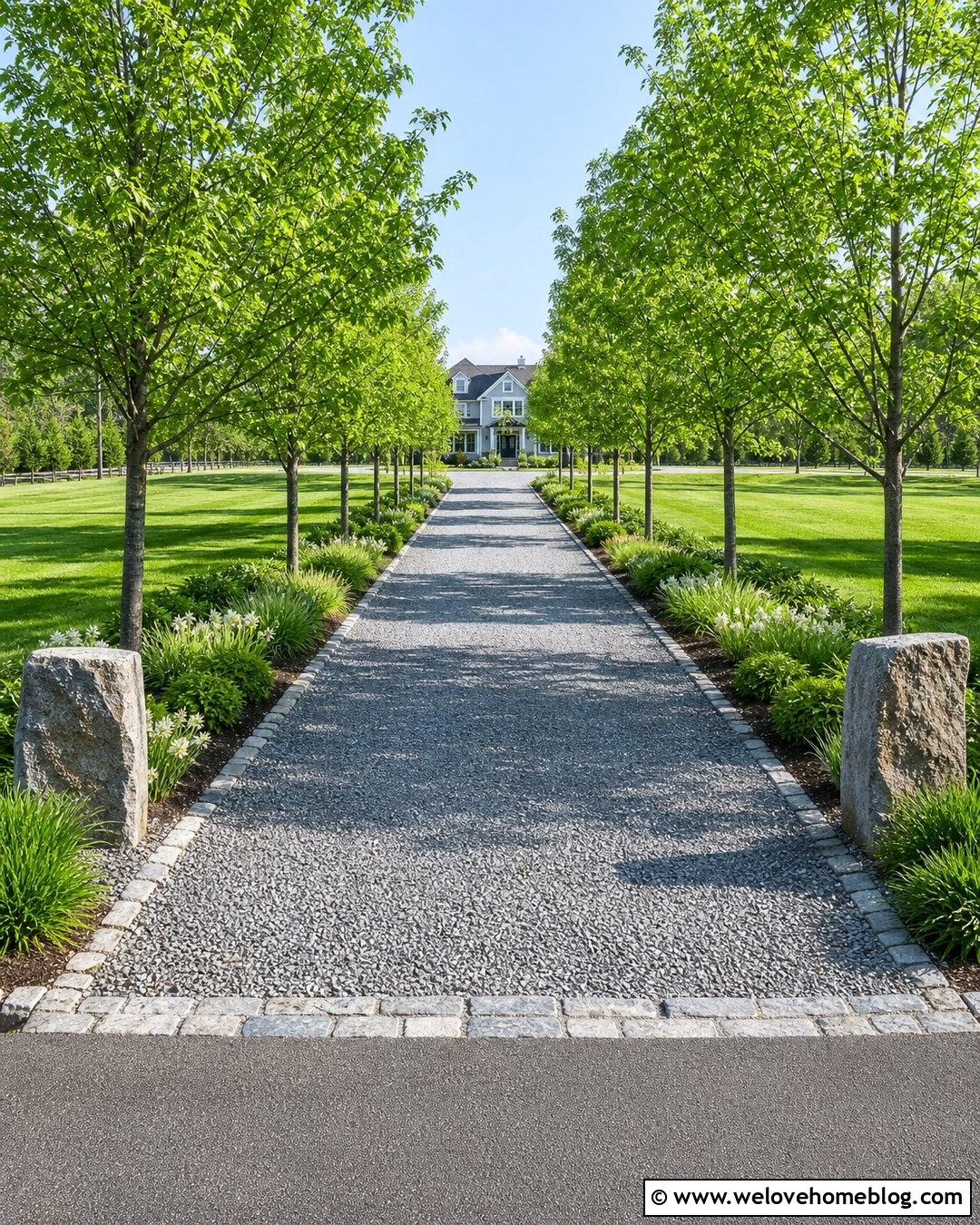
A long country driveway can feel purposeful when trees and ground-level planting establish a steady rhythm. Start with compacted gray crushed gravel bordered by granite cobbles or heavy timber. Plant deciduous shade trees in evenly spaced groups along both sides, placing them far enough away for mature trunks, branches, and roots. Underplant the trees with sweeps of daffodils, low grasses, or shade-tolerant ground cover. Maintain a clear lawn strip between the planting and driveway where extra visibility or snow storage is needed. At the road, widen the landscape with matching stone entrance markers and low shrubs. The tree line should direct attention toward a farmhouse or country home, while the restrained lower planting prevents the lengthy approach from appearing busy or difficult to maintain.
8. Narrow Driveway With Vertical Garden Landscaping
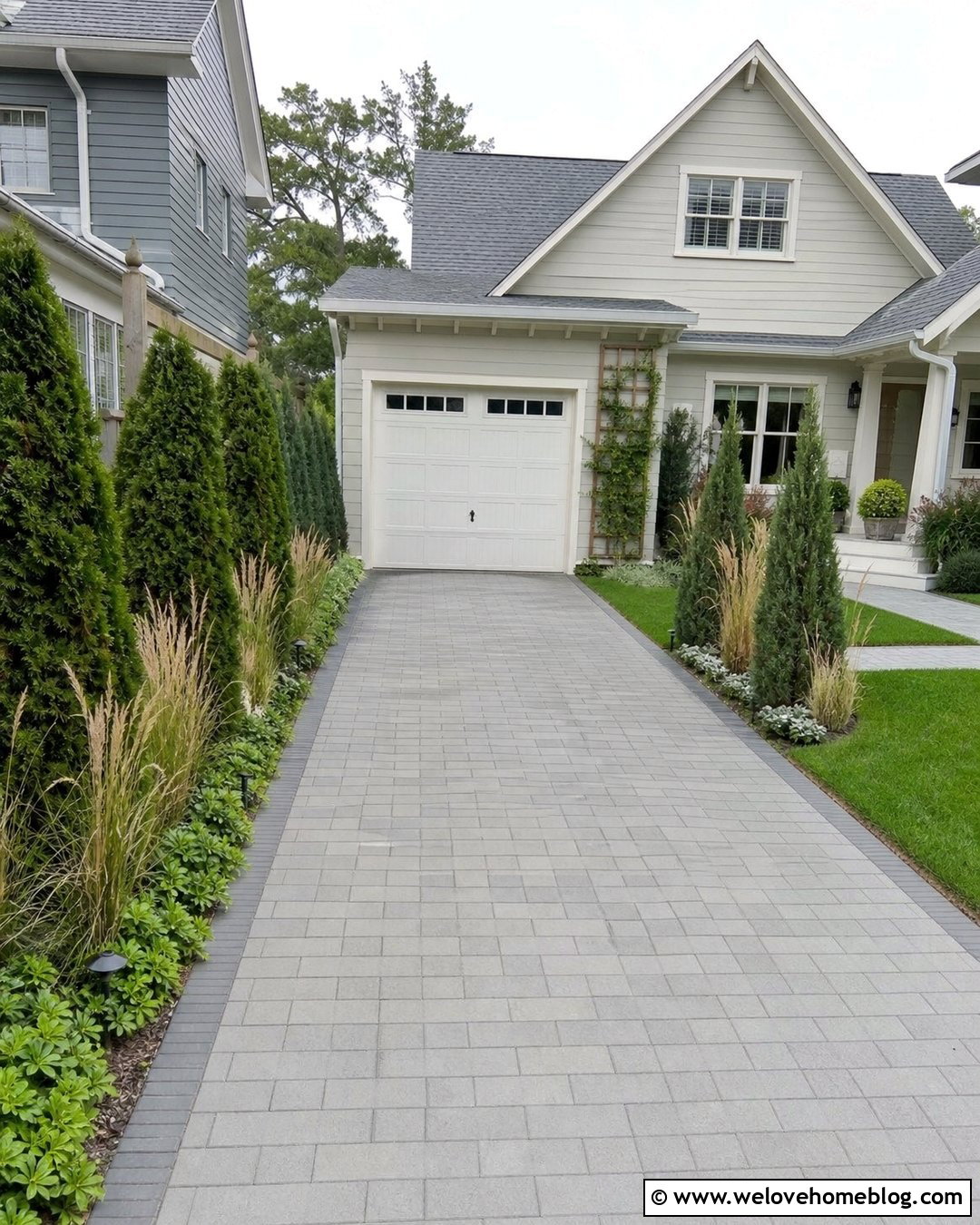
When space is limited, landscaping can move upward instead of spreading across the yard. A narrow concrete paver driveway can be bordered with slim beds containing upright juniper, columnar holly, feather reed grass, or another narrow-growing plant suitable for the local conditions. Against a blank garage wall, add a simple trellis with a controlled climbing vine. Use flush brick edging so tires and doors are not obstructed by raised borders. A narrow strip of low ground cover can soften the opposite side where room allows. Continue the driveway pavers into a compact walkway leading to the entrance. This layered but space-conscious arrangement brings greenery to a small suburban property without reducing usable parking width or making routine access to the garage more difficult.
9. Permeable Driveway With Rain Garden Landscaping
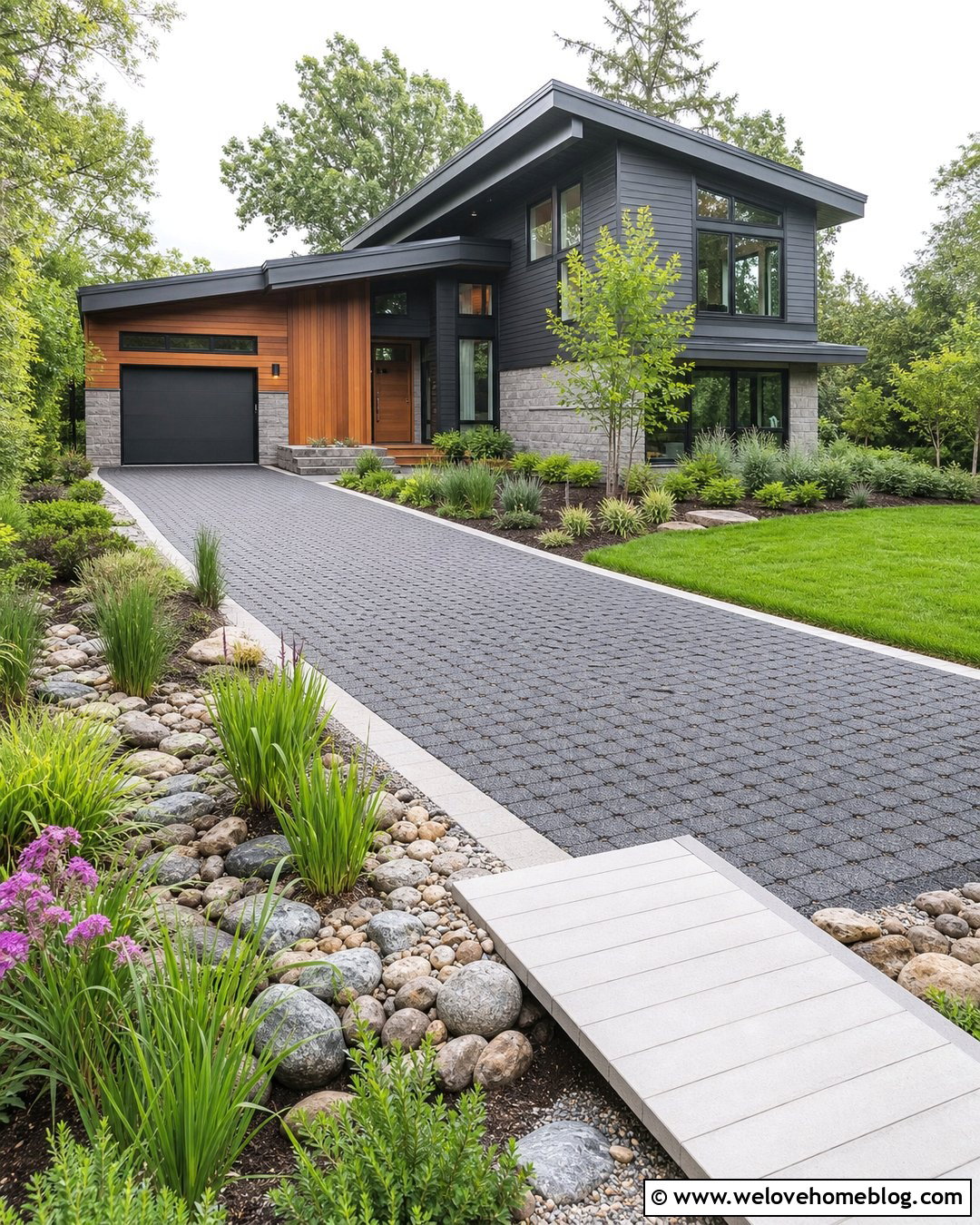
A permeable driveway and rain garden can turn water management into an attractive front-yard feature. Install permeable concrete pavers in a charcoal and gray blend, using open joints filled with fine aggregate. Shape a shallow planted basin along the lower side of the driveway where runoff can be directed safely. Fill the rain garden with moisture-tolerant native sedges, iris, swamp milkweed, and compact shrubs appropriate for the site. A band of river rock can create a neat transition between the pavement and plants. Add a small bridge-style walkway where the route to the front door crosses the basin. Rain gardens must be positioned and graded correctly, so local drainage conditions should guide the final plan. ()

10. Sloped Driveway With Terraced Landscaping
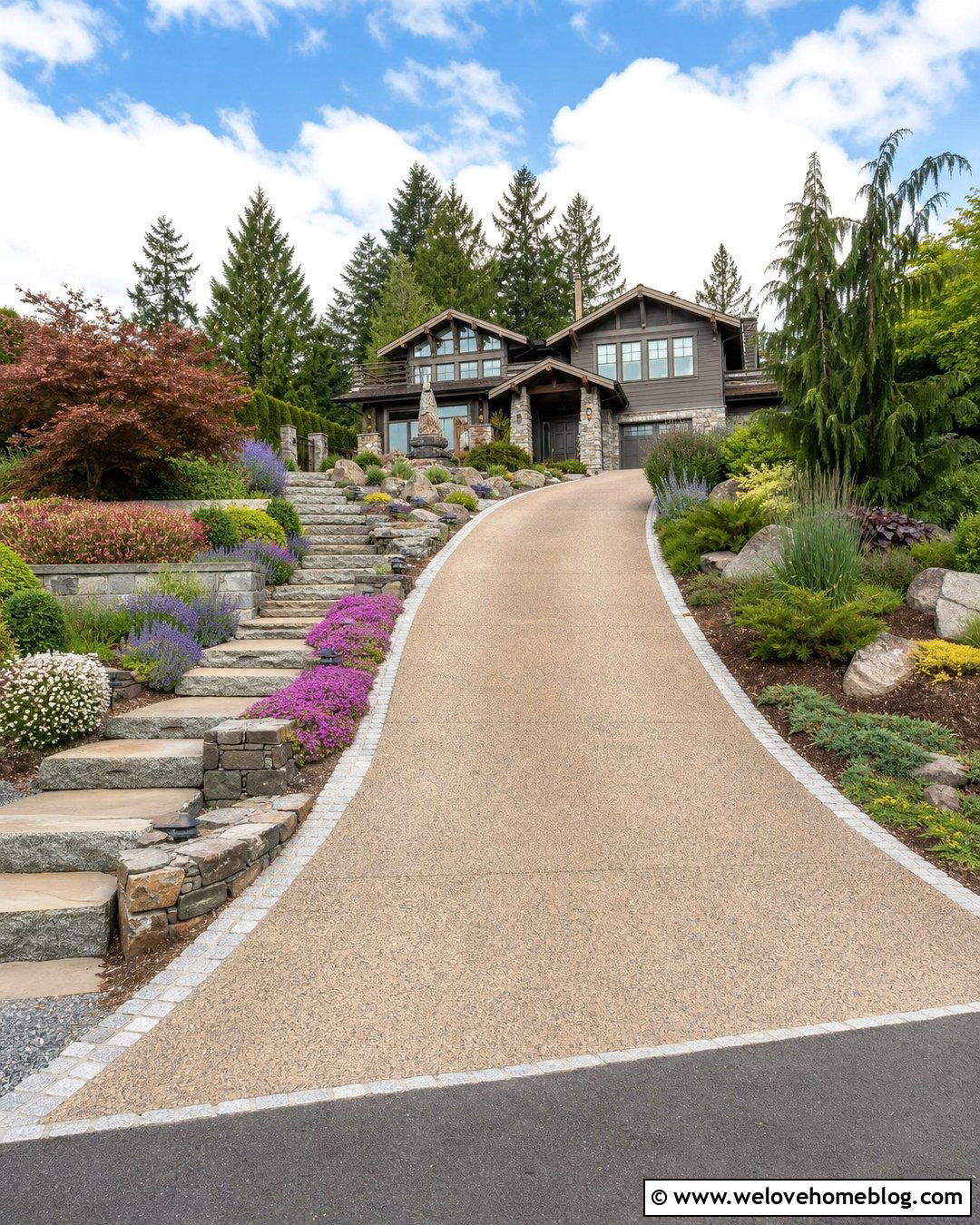
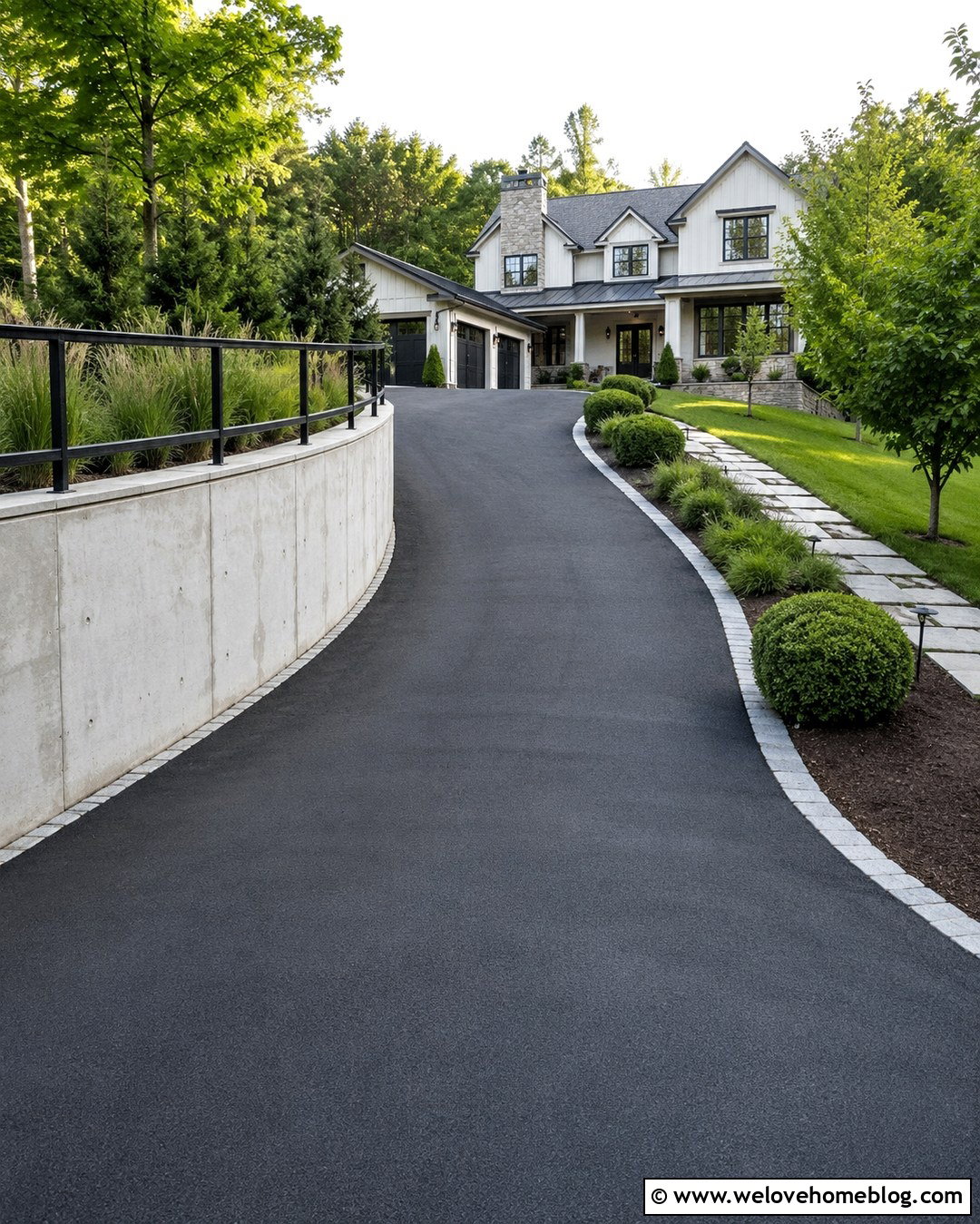
A sloped exposed aggregate driveway benefits from terraced beds that hold the landscape visually against the incline. Build low retaining walls from natural stone or textured concrete blocks, stepping them gradually up the hill rather than installing one tall wall. Fill each terrace with deep-rooted shrubs, ornamental grasses, spreading ground covers, and flowering perennials. Place lower plants near driveway curves to preserve sightlines. A contrasting brick or granite border can emphasize the exposed aggregate finish while stopping mulch from washing onto the pavement. Integrate broad stone steps into the upper terrace if a walkway is needed between the parking area and front door. Repeating the wall material near the house foundation helps connect the driveway landscaping with the home instead of treating the slope as a separate project.
11. Woodland Driveway With Fern And Stone Landscaping
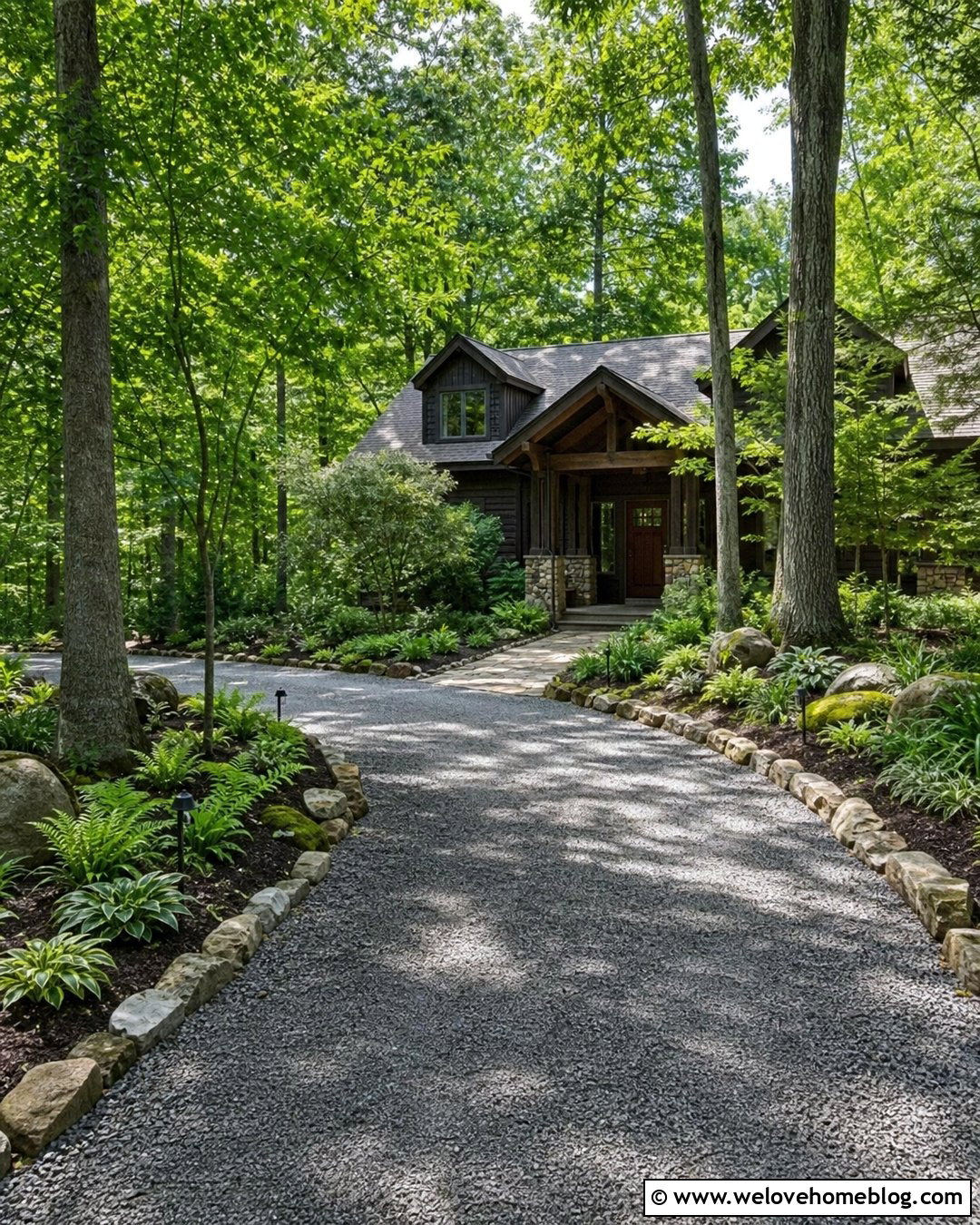
A shaded driveway surrounded by mature trees calls for a softer woodland approach. Use fine gray gravel or permeable cobblestones for the surface, then border the route with irregular fieldstone set close to grade. Create naturalistic beds containing ferns, coral bells, hostas, sedges, and low woodland shrubs chosen for local shade and moisture levels. Arrange plants in broad clusters instead of straight rows to complement the informal setting. Preserve visible tree roots and avoid piling soil or mulch against trunks. Mossy boulders can mark gentle bends, while simple dark path lights provide guidance without dominating the daytime view. Near the house, repeat the fieldstone in the walkway or porch steps. This creates a seamless transition from the wooded approach to a rustic home or cabin-inspired exterior.
12. Cottage Brick Driveway With Mixed Flower Borders
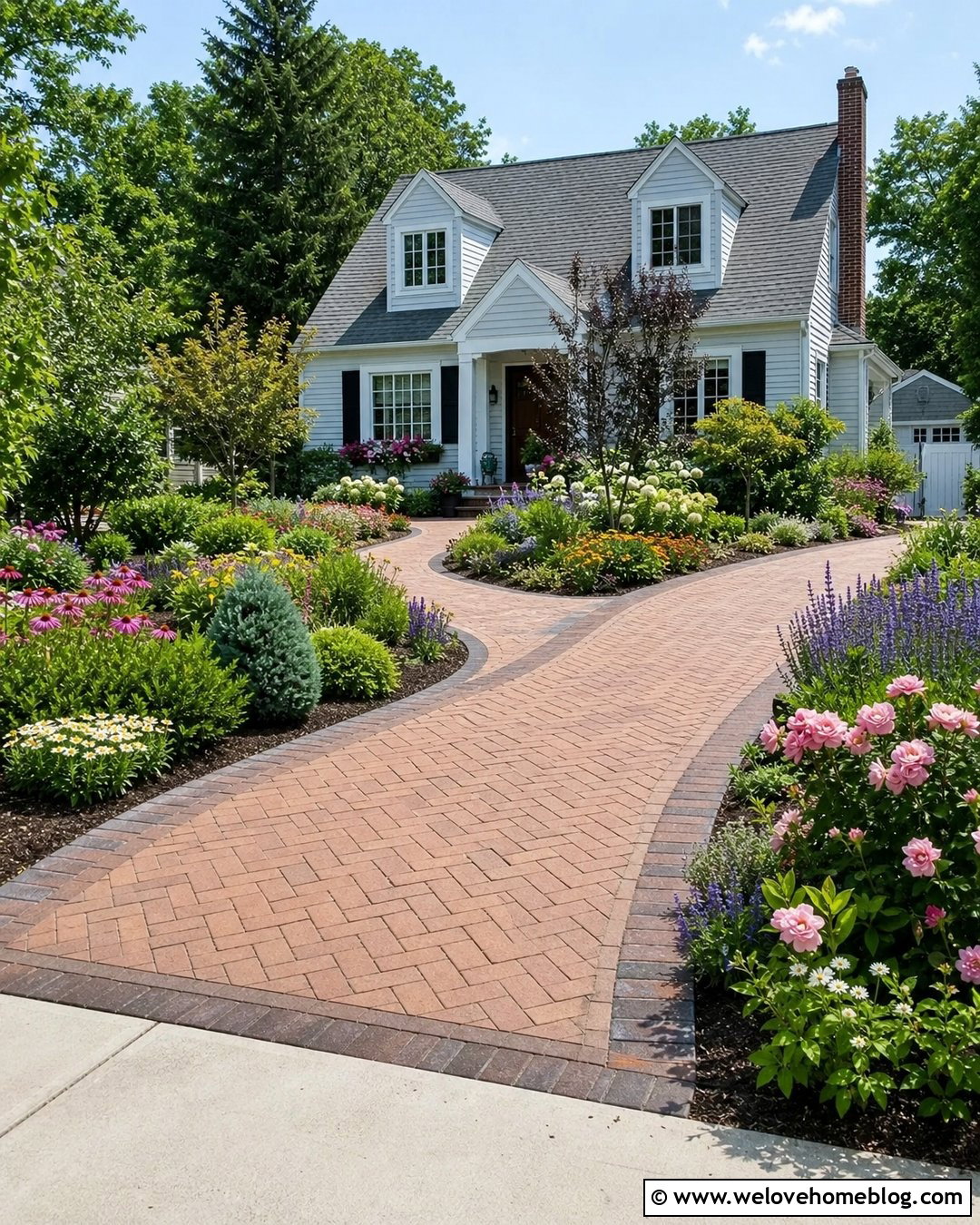
Warm brick and abundant flowers create a friendly cottage driveway that changes through the seasons. Choose reclaimed-look clay brick pavers in a basketweave or herringbone pattern and edge them with a darker brick course. Shape generous curved beds along the driveway, leaving a small buffer between mature plants and vehicle doors. Combine roses, salvia, catmint, coneflowers, daisies, and spring bulbs with compact evergreen shrubs for winter structure. Let a few soft plants lean toward the brick, but keep thorny or rigid growth away from parking areas. A matching brick walkway should branch gently toward the porch rather than cutting through the flowers abruptly. Repeating several key plants on both sides will keep the colorful landscape cohesive around a cottage, Cape Cod, or traditional bungalow.
13. Desert Driveway With Rock And Succulent Landscaping
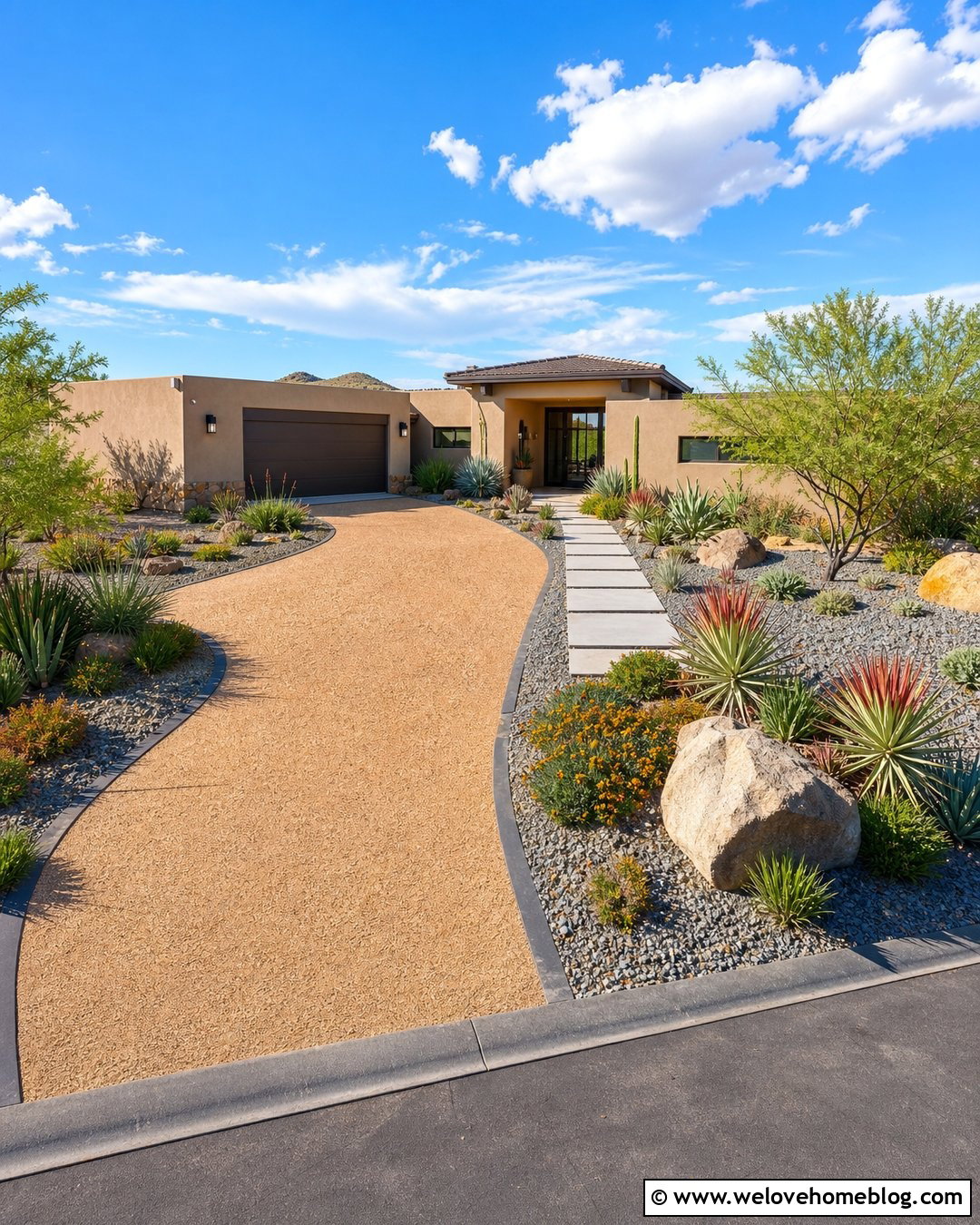
A desert-inspired driveway can look colorful and layered without relying on a lawn. Use stabilized decomposed granite in a warm beige tone, framed by darker concrete curbing that contains the surface. Create broad beds with angular gravel, sculptural boulders, agave, yucca, red yucca, desert spoon, and drought-tolerant flowering perennials suited to the region. Avoid placing sharp plants where passengers step out. Instead, position them on outer curves or against the front-yard boundary. Use low, rounded ground covers beside the parking zone. A straight concrete slab walkway can lead through the rock landscape to a stucco ranch or Southwestern home. Repeat the driveway’s warm aggregate around plants to form a unified, low-water composition with strong shape, texture, and year-round curb appeal.
14. Ranch Driveway With Curved Mulch Beds
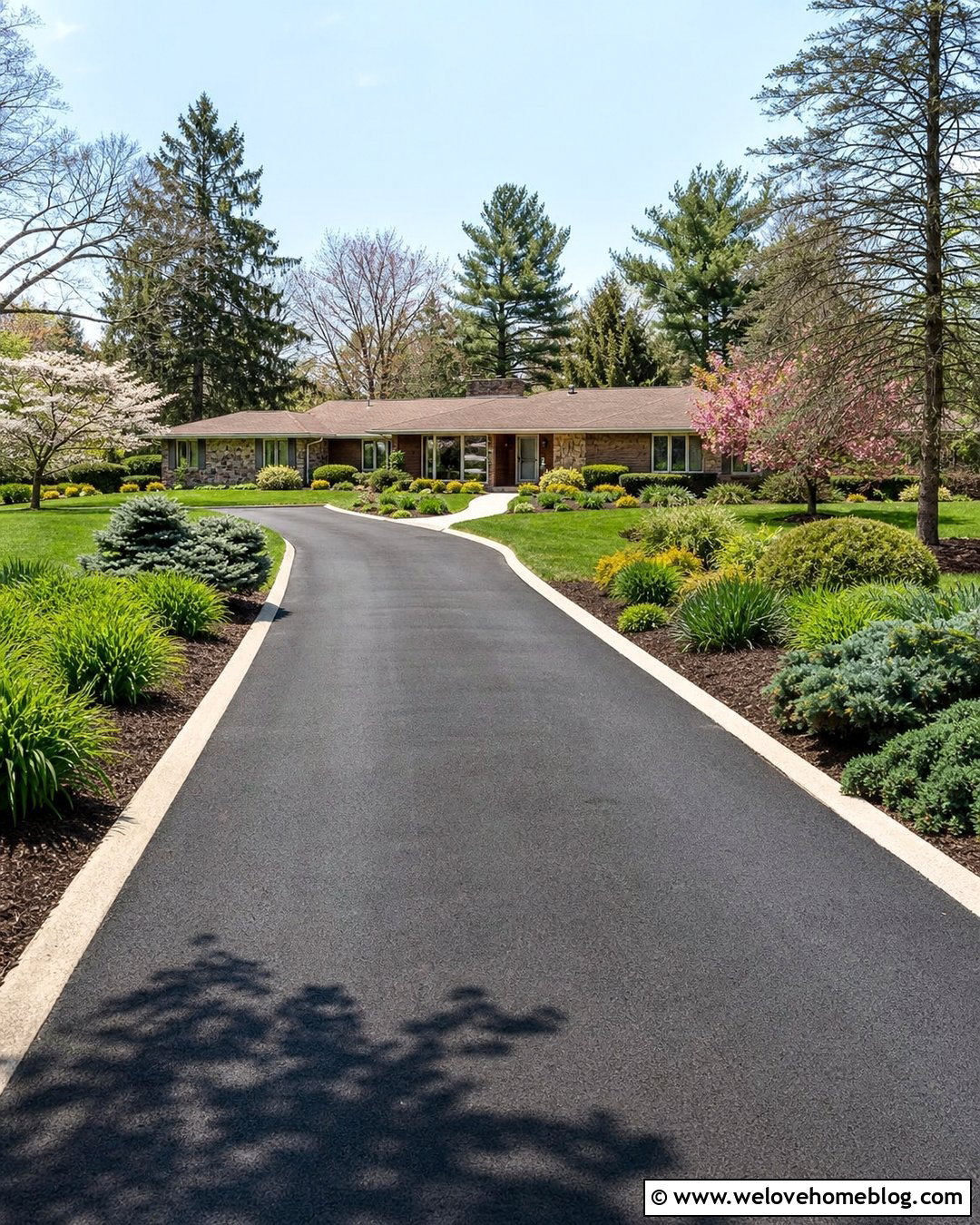
A broad ranch-style home often needs horizontal landscaping that balances its long facade. Pair a simple black asphalt driveway with wide, curved mulch beds extending from the garage toward the front lawn. Edge the beds with tan concrete curbing or natural stone to separate dark mulch from the pavement. Use low spreading junipers, rounded shrubs, daylilies, ornamental grasses, and one or two small flowering trees. Keep the tallest plants near the house corners rather than directly beside the driveway. This opens the view and prevents the single-story exterior from feeling hidden. Let a curved walkway leave the driveway and pass through the main bed toward the porch. Repeating the same edging and plant groups across the yard makes the affordable asphalt surface feel fully incorporated into the landscape.


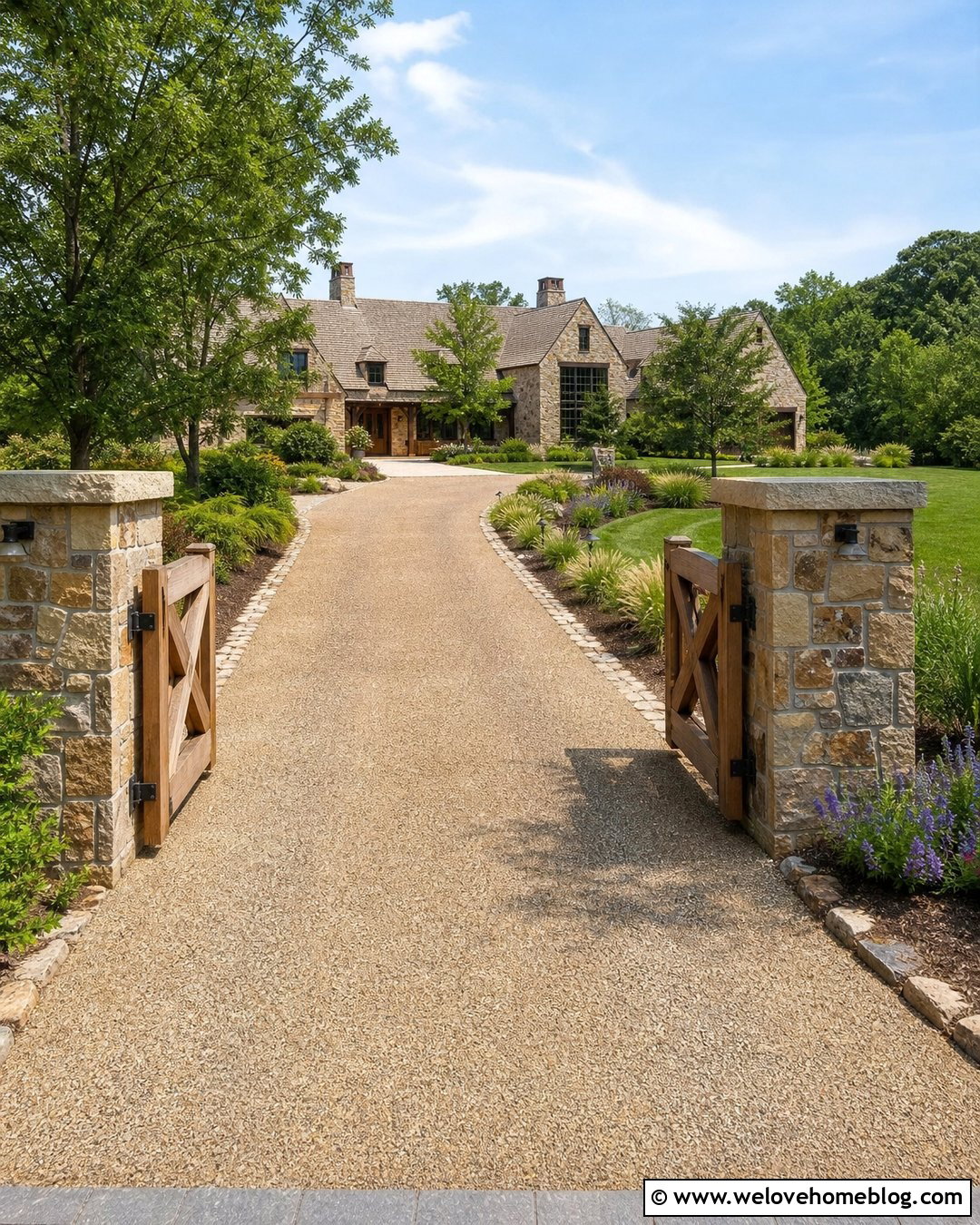
15. Cobblestone Driveway With Formal Hedge Landscaping
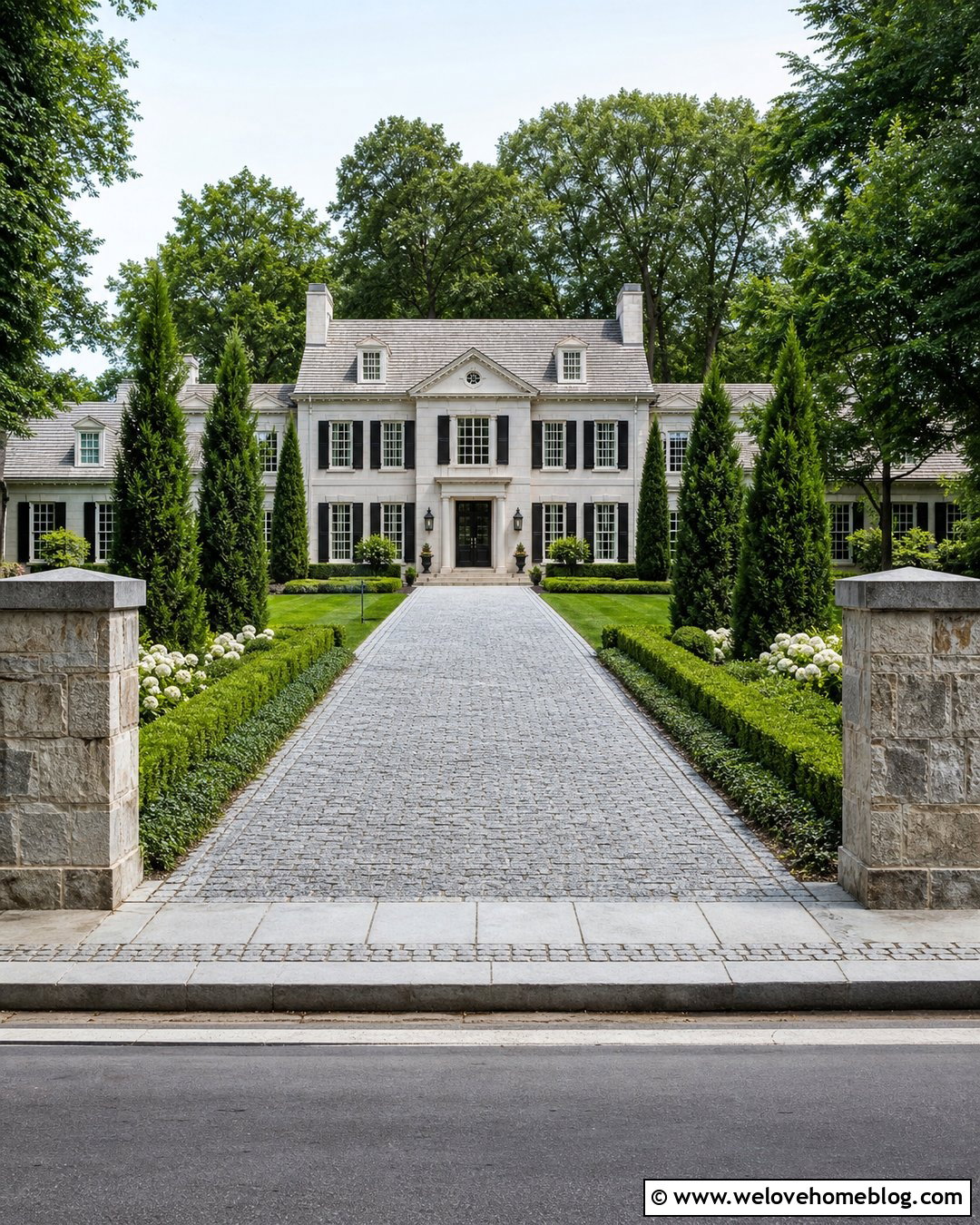
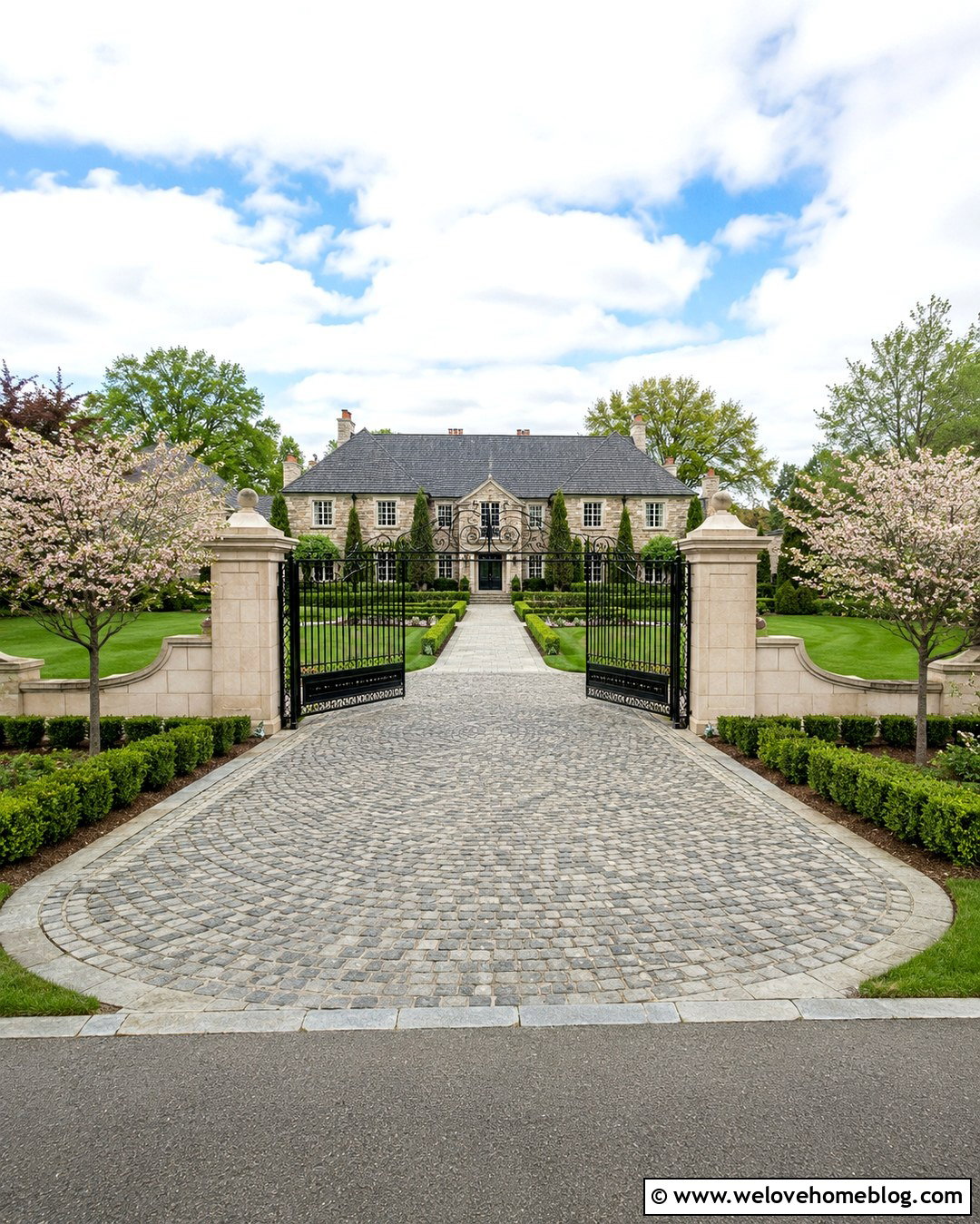
A granite cobblestone driveway creates a substantial base for formal landscaping. Frame a straight approach with low clipped hedges, then place taller columnar evergreens near the house rather than directly at the street. Inside the hedges, use a restrained mix of white flowers, evergreen ground cover, and neatly mulched soil. A narrow stone mowing strip between the hedge and lawn makes maintenance easier and strengthens the crisp layout. At the driveway entrance, low masonry pillars can repeat stone used on the house while remaining proportionate to the property. Carry the cobblestones into the front walkway or use them as an accent border around larger stone slabs. The symmetry works especially well with Colonial and Georgian homes, producing an orderly entrance without filling every open area with plants.
16. Resin-Bound Driveway With Ornamental Grass Landscaping
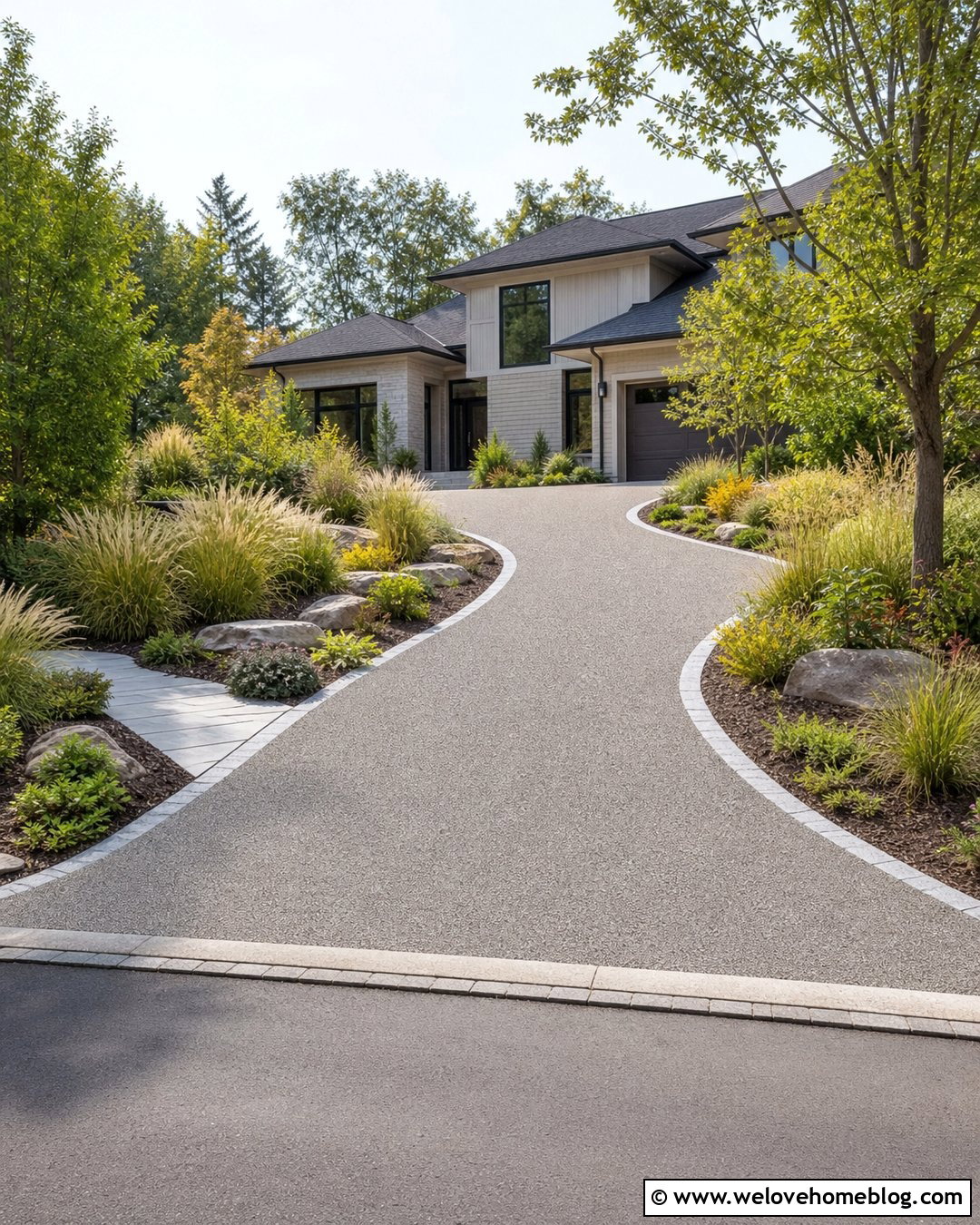
Smooth resin-bound gravel offers a clean, seamless appearance that works beautifully with flowing ornamental grasses. Choose a warm gray or natural tan aggregate and shape the driveway with a broad, gentle curve. Install slim aluminum or granite edging for a precise boundary. Along the outside curve, plant switchgrass, fountain grass, sedges, and compact flowering shrubs in repeating groups. Keep shorter grasses beside parking spaces and reserve taller varieties for the outer landscape. Add several flat boulders among the plants to echo the driveway’s natural aggregate. A concrete or porcelain walkway can cross the bed and continue toward a modern home. The contrast between the smooth driveway and moving foliage creates an inviting design that feels contemporary without depending on rigid hedges or overly formal symmetry.
17. Concrete Driveway With Budget Mulch Landscaping
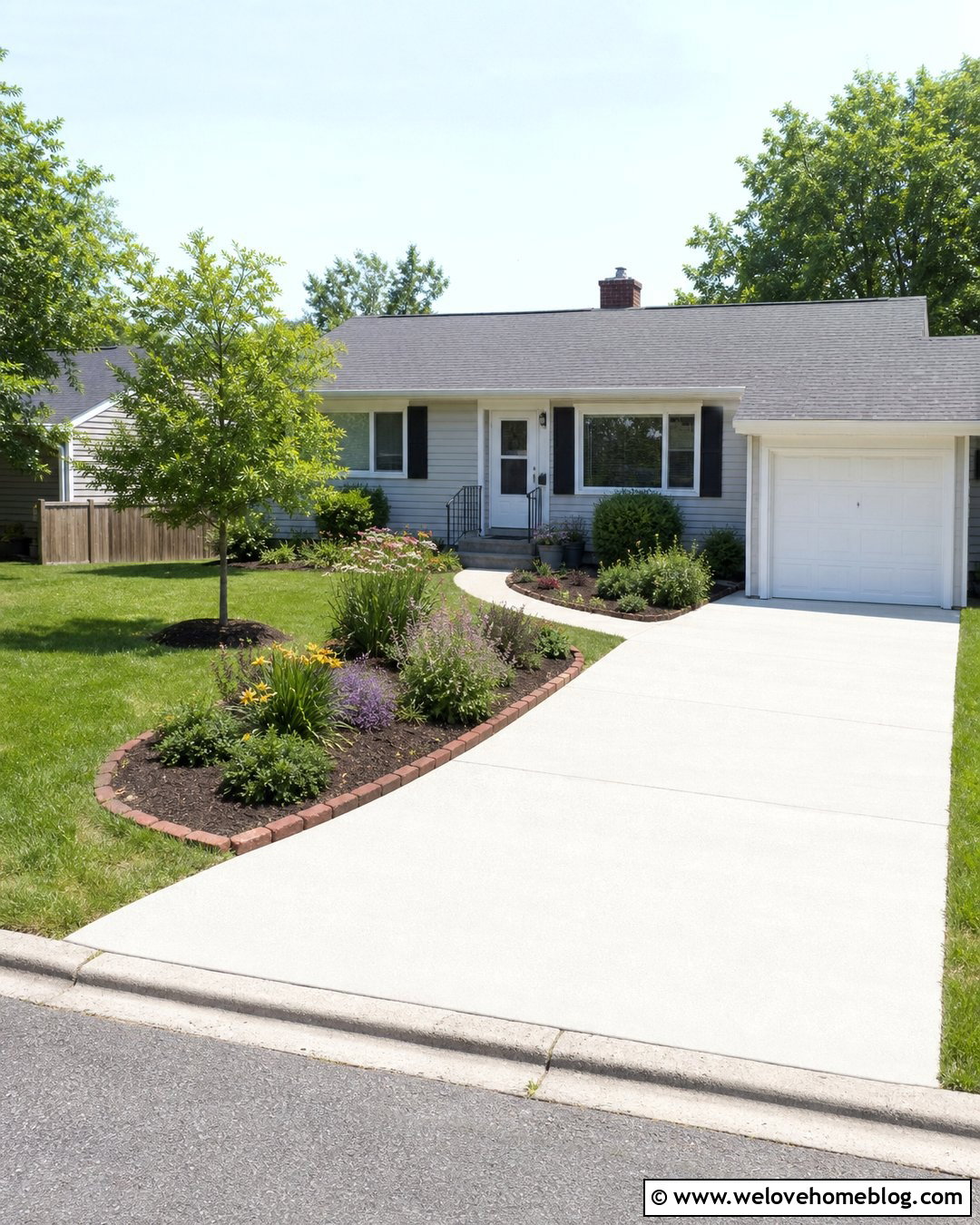
A plain concrete driveway can gain curb appeal without replacing the existing surface. Cut broad curved beds into the lawn along one side and around the walkway connection. Define them with an affordable spade-cut edge, recycled brick, or basic concrete edging blocks. Cover exposed soil with shredded bark mulch, then plant in repeating groups rather than purchasing many individual varieties. Compact evergreen shrubs can form the background, with daylilies, catmint, or native perennials adding color near the front. Use one small ornamental tree to anchor the widest bed. Pressure washing the driveway and repairing obvious cracks will help the refreshed landscape look intentional. This practical combination directs the budget toward visible planting, clean boundaries, and a stronger connection between the driveway and house.
18. White Gravel Driveway With Hydrangea Landscaping
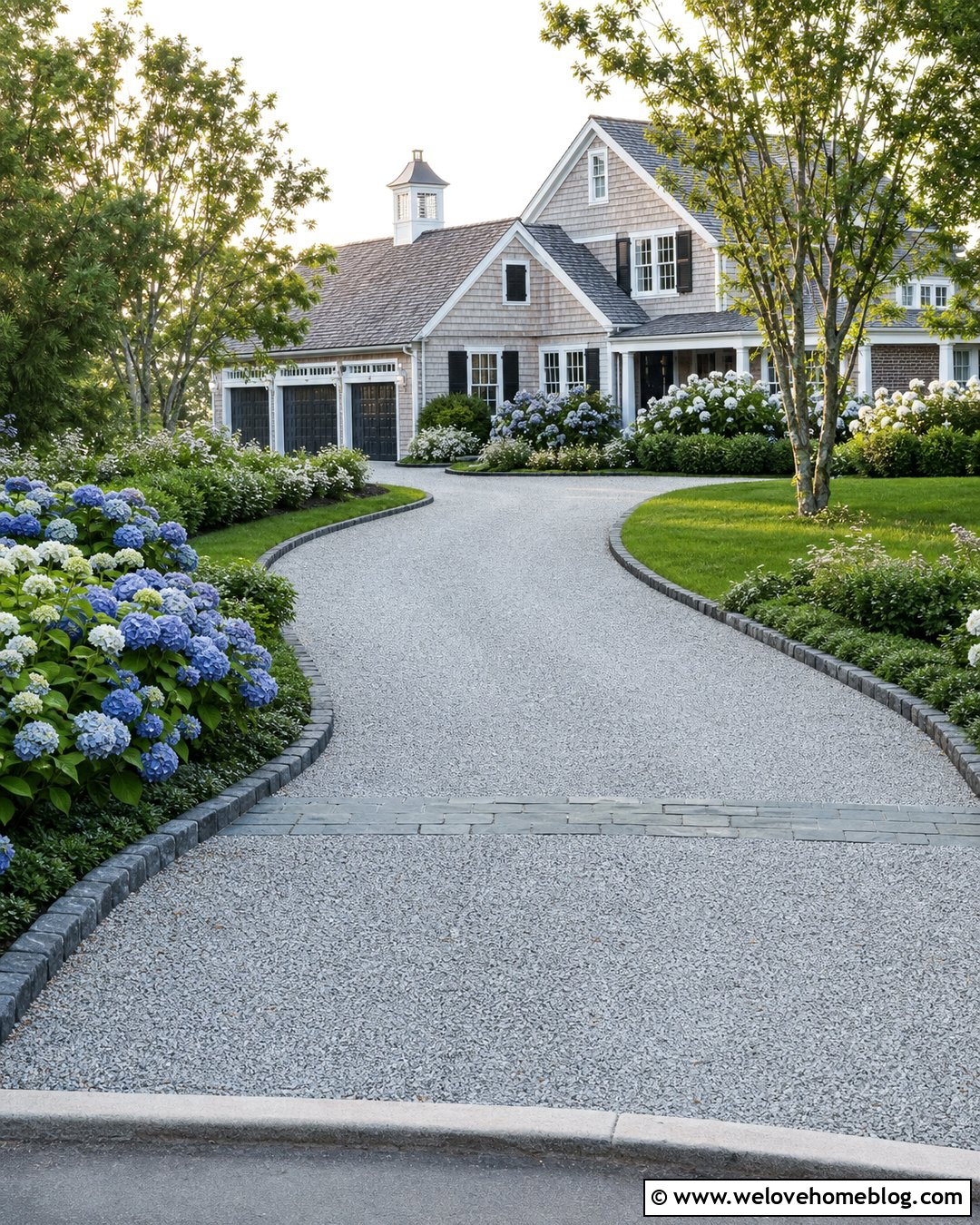
Bright gravel creates a fresh coastal appearance when balanced with generous green planting. Use compacted white or pale gray crushed stone for the driveway, contained by charcoal cobblestones that provide contrast. Plant hydrangeas in deep beds set back from the hottest pavement edge, then add evergreen shrubs and low ground covers closer to the border. Blue, white, or soft pink flowers can complement a shingled Cape Cod or coastal cottage facade. Place one multi-stem tree near the driveway curve for light shade and vertical interest. A bluestone walkway crossing the gravel will create a stable path to the entrance. Keep the gravel regularly raked and the flower palette limited. These details prevent the pale surface and large flowering shrubs from making the front landscape feel visually crowded.
19. Horseshoe Driveway With Central Meadow Landscaping
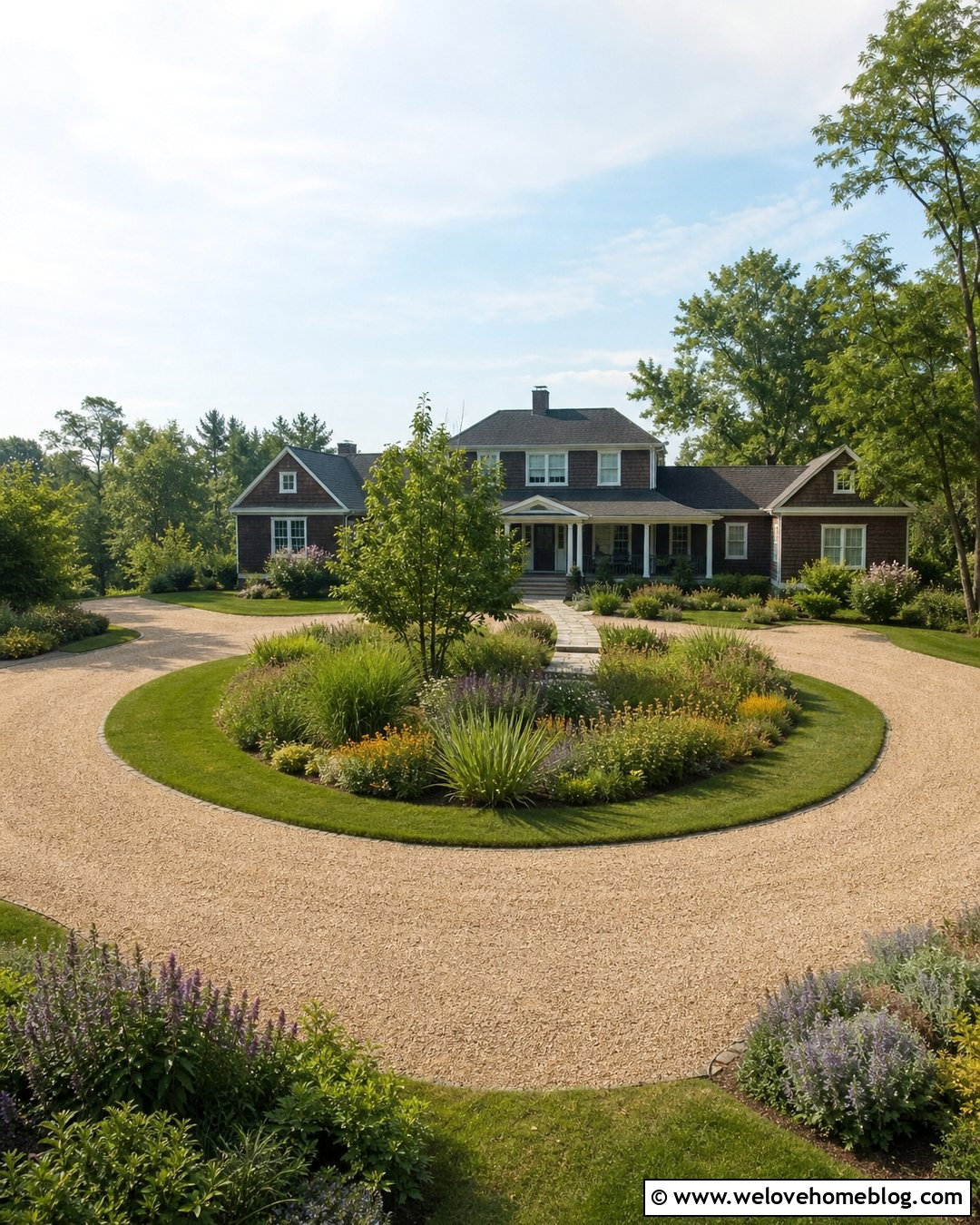
A horseshoe driveway creates a large central area that can become more than a standard lawn. Surface the drive with tan gravel, brick-edged asphalt, or permeable pavers, then develop the center as a simplified meadow. Use a mown grass edge around the island and plant the interior with native grasses, long-blooming perennials, and a carefully positioned ornamental tree. The clean outer edge gives the meadow a deliberate shape, while the looser planting adds movement and seasonal color. Keep vegetation low near both driveway entrances so drivers can see approaching traffic. Add a direct walkway from the inner curve to the front porch. Repeating a few meadow plants in smaller beds beside the house ties the center island into the broader landscape and avoids an isolated appearance.

20. Asphalt Driveway With Flowering Tree Landscaping
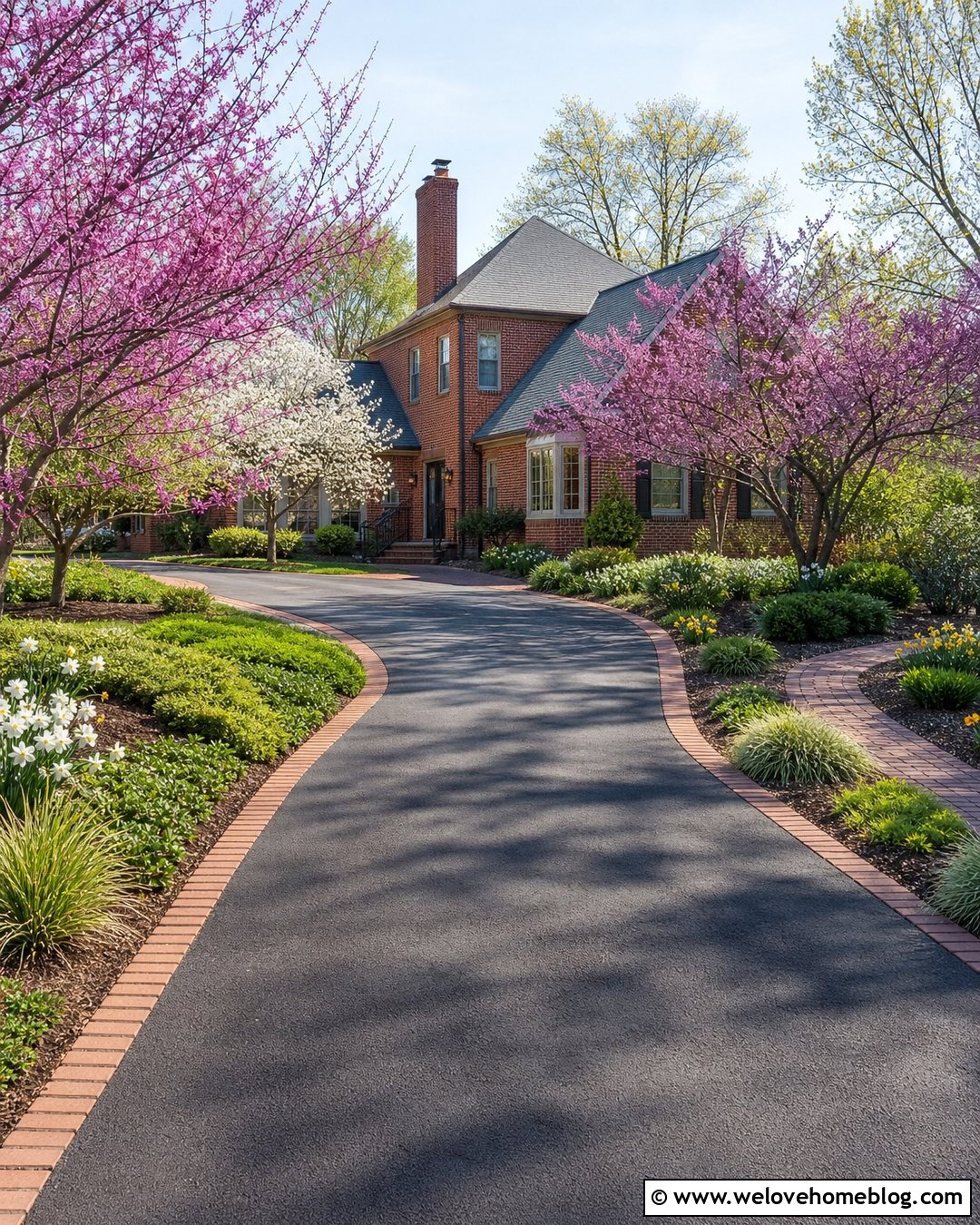
Flowering trees can transform a basic asphalt driveway into a memorable approach when they are spaced with mature size in mind. Choose redbuds, serviceberries, dogwoods, or another regionally appropriate small tree, then position them in broad planting beds outside the driving and parking zones. Underplant with low grasses, spring bulbs, and compact evergreen ground cover. A warm brick border will soften the transition between black asphalt and green planting while connecting visually with a brick house. Avoid creating a dense row that blocks views or drops branches over vehicles. Instead, use staggered groups that frame key sections of the driveway. Continue the brick into a front walkway and add subtle lights beneath the trees. The finished design offers spring color, summer shade, and a layered entrance throughout the year.
21. Exposed Aggregate Driveway With Boulder Landscaping
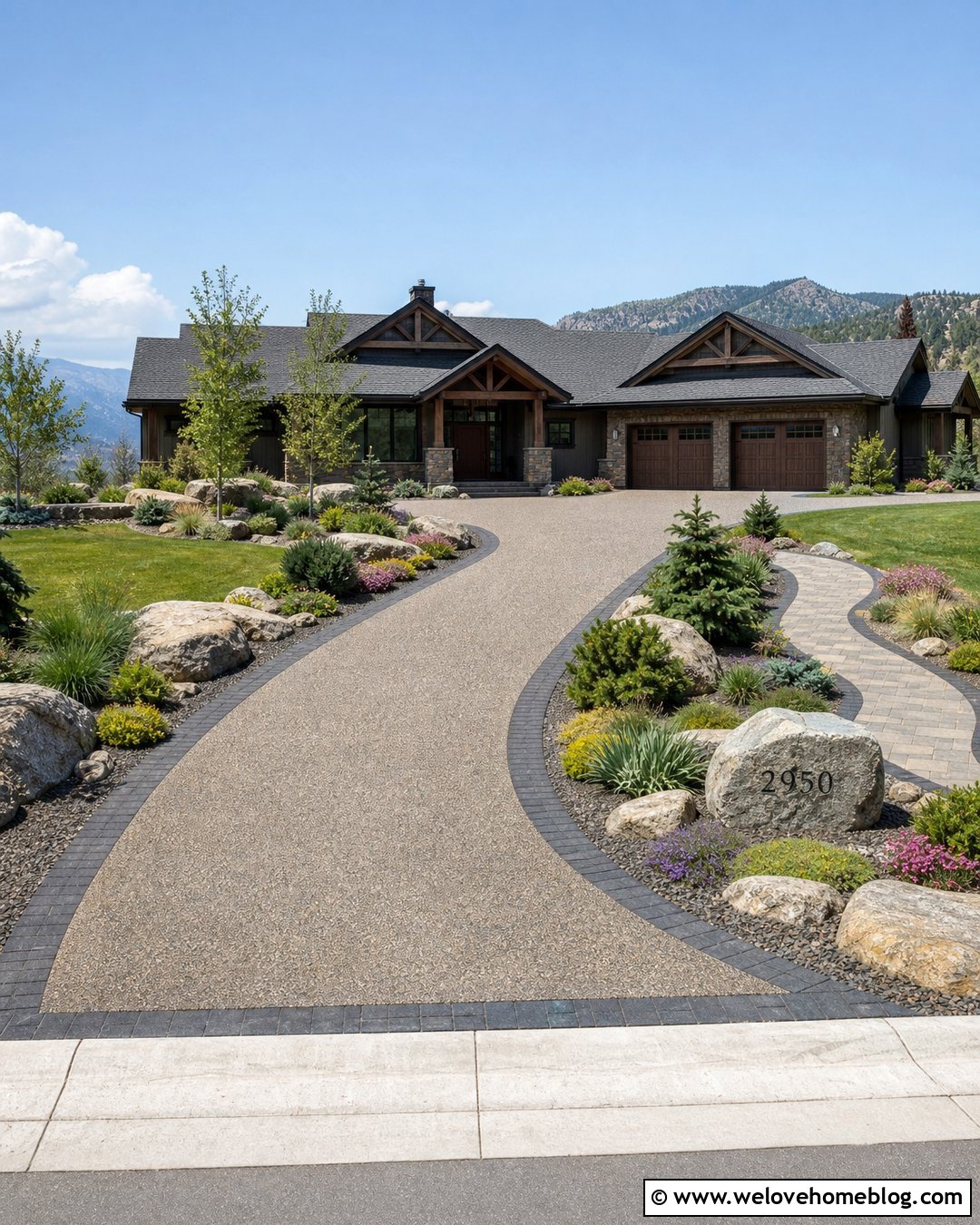
Exposed aggregate concrete has a textured, natural appearance that coordinates well with boulders and evergreen planting. Form the driveway into a gentle curve and border it with a smooth charcoal paver ribbon. Place several large boulders within wide side beds, partially setting them into the soil so they appear stable and established. Surround them with dwarf pines, junipers, ornamental grasses, and low flowering ground cover. Vary plant heights while keeping the area nearest the pavement open. Use the same stone around a mailbox, address marker, or walkway landing to carry the theme across the front yard. The combination suits Craftsman, mountain-inspired, and contemporary rustic homes. Good spacing is essential because each rock and plant should contribute to the composition without producing a cluttered roadside display.
22. Small Driveway With Raised Planter Landscaping
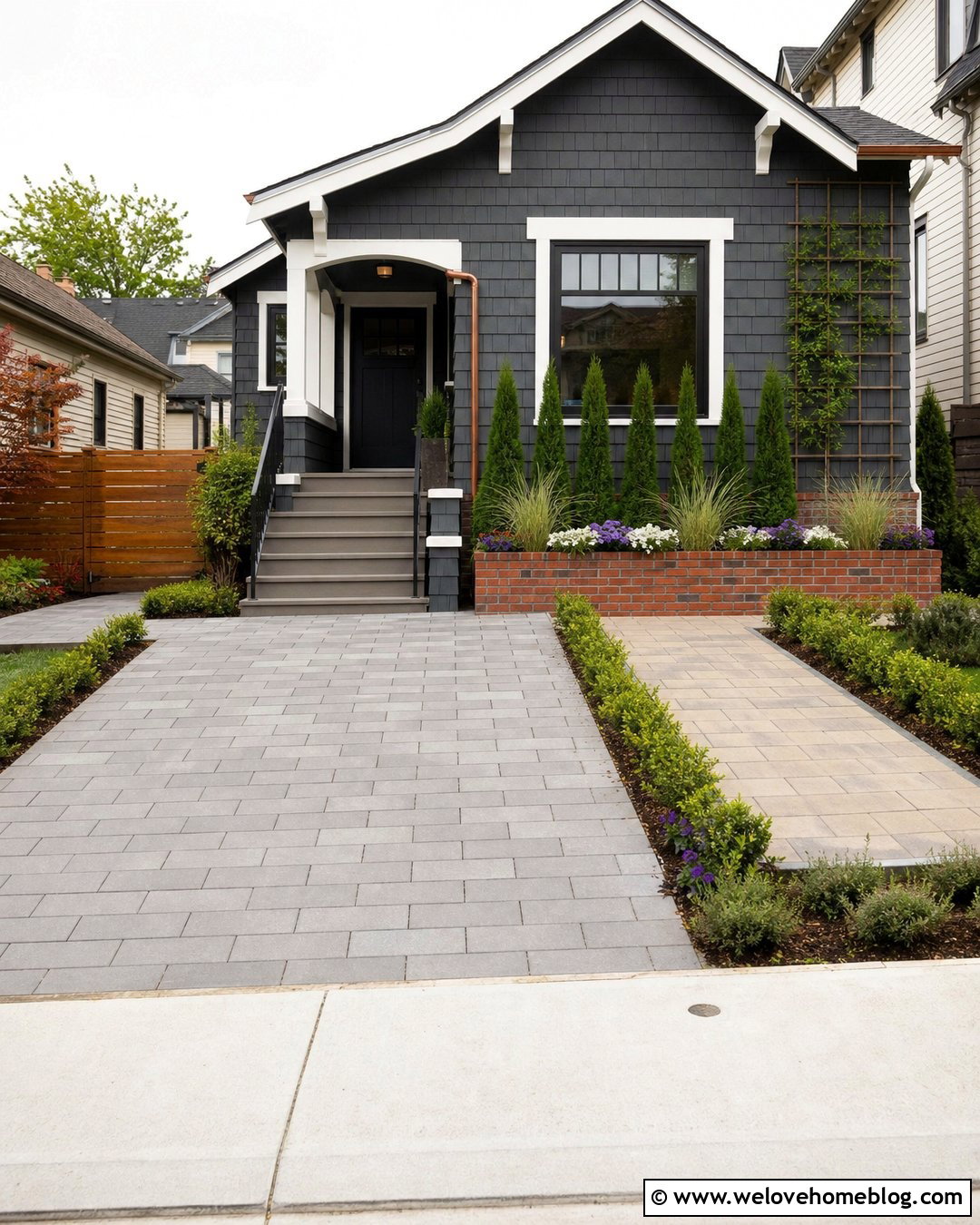
A compact urban or suburban driveway can include planting without sacrificing every inch of useful parking. Start with medium-gray concrete pavers laid in a simple running bond. Build one slim raised planter against the property boundary or house wall, using brick or stone that matches the facade. Fill it with upright evergreens, compact grasses, and seasonal flowers that remain within the bed. On the opposite side, use a flush paver border and a narrow strip of ground cover. Connect the driveway to the entrance with a clearly defined walkway in a contrasting paver pattern. Keep planters away from turning points and vehicle doors. A wall-mounted light and climbing plant can add vertical interest where ground space is unavailable, making the small frontage feel green, organized, and complete.
23. Driveway Entrance With Pillars And Low Landscaping
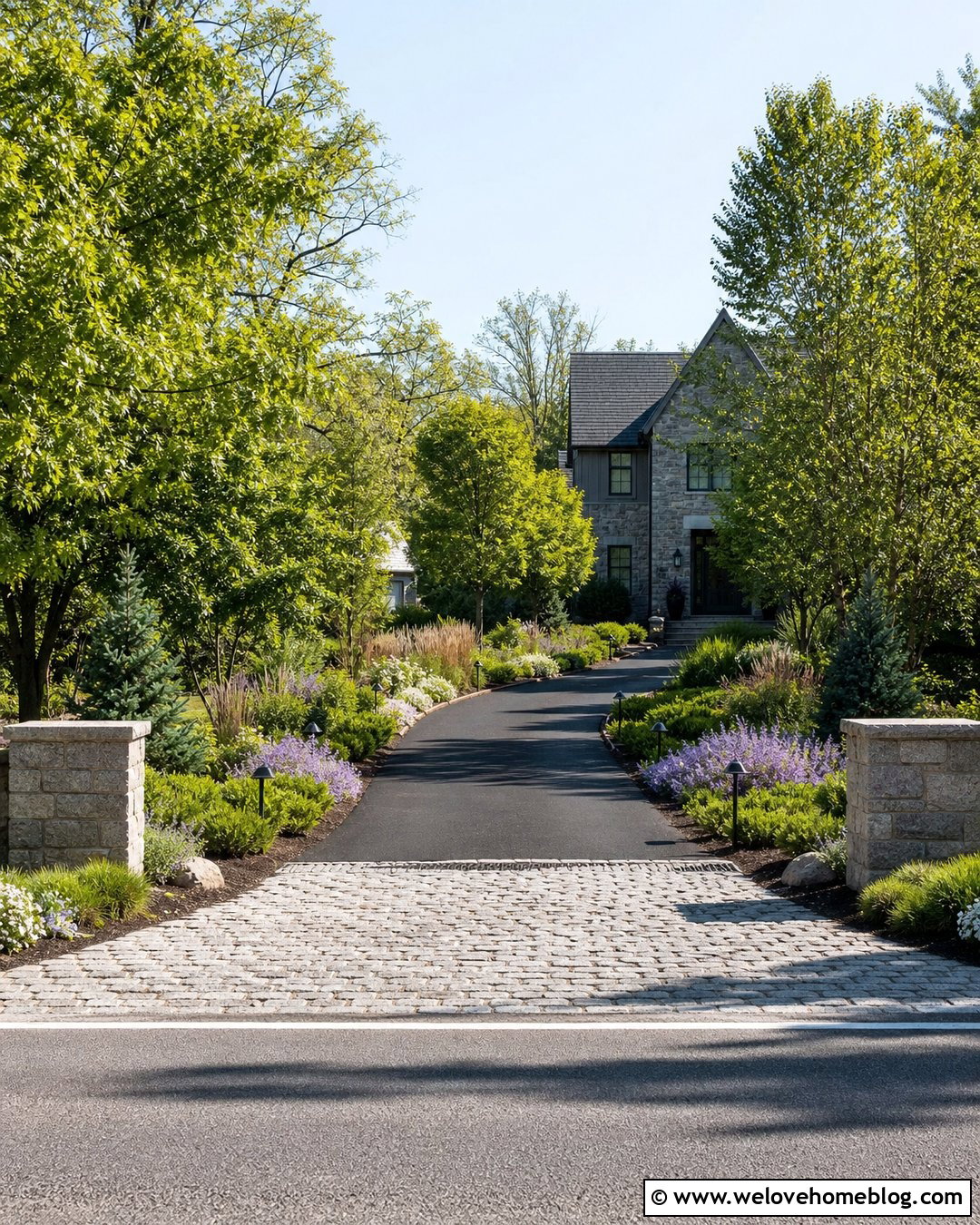
A well-planned driveway entrance should establish character without reducing visibility from the road. Use dark asphalt with a granite cobblestone apron, then add two low stone pillars that match the house foundation. Build sweeping beds behind the pillars rather than placing tall shrubs directly beside the street. Low junipers, ornamental grasses, flowering ground cover, and seasonal bulbs can frame the entrance while leaving sightlines open. Continue the planting in smaller groups along the driveway so the entrance does not look disconnected from the home. Simple address numbers can be mounted on one pillar, with low-voltage lights positioned inside the beds. Keeping entrance planting low is especially important near curves, intersections, and compact roads where drivers need a clear view before pulling out. ()
24. Circular Concrete Driveway With Fountain Garden
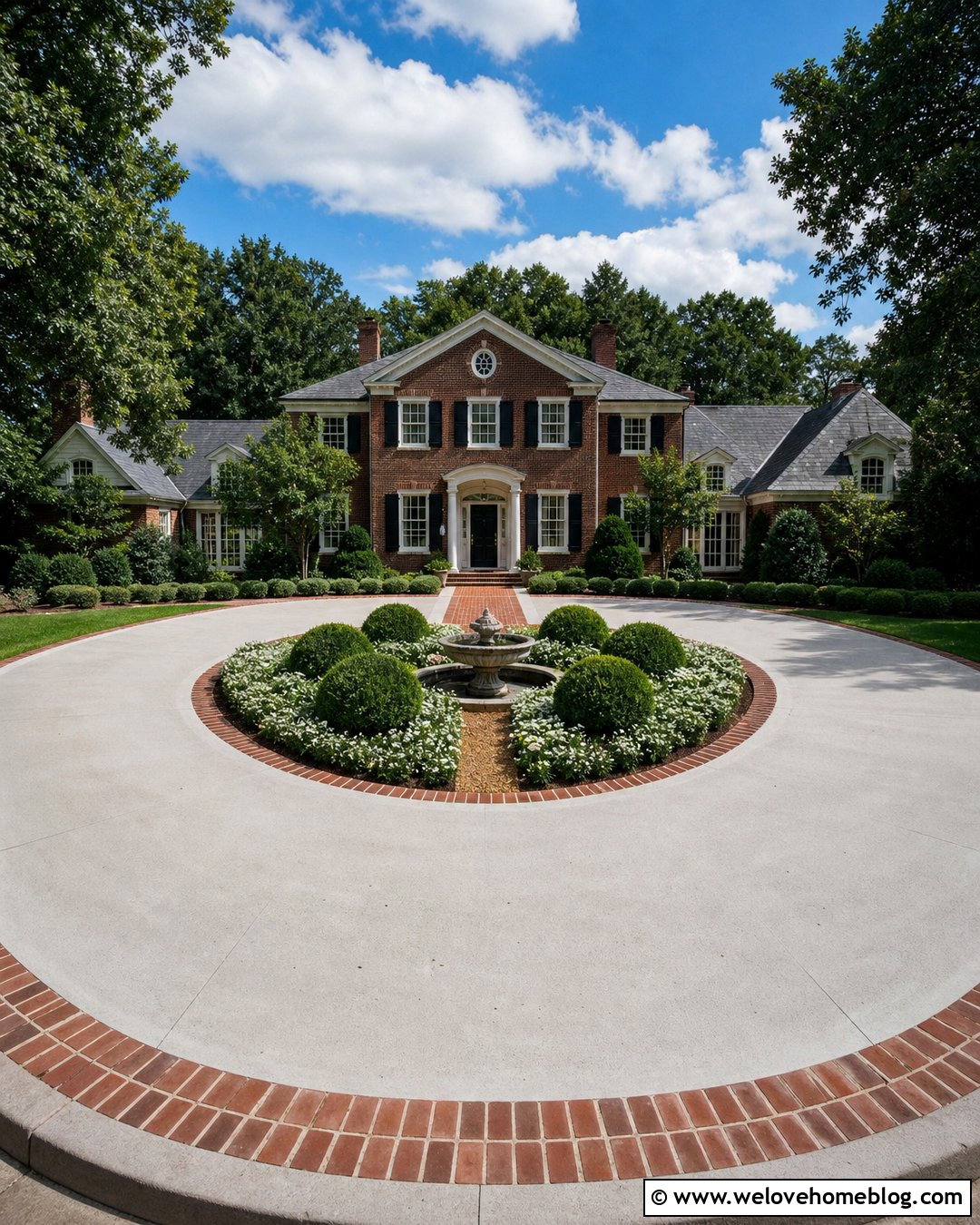
For a spacious traditional property, a circular concrete driveway can surround a formal but manageable fountain garden. Use light gray poured concrete with a brick ribbon defining both edges of the circle. In the center, position a low stone fountain surrounded by clipped evergreen shrubs, white flowering perennials, and a narrow gravel maintenance path. Keep the planting heights graduated so the fountain remains visible from the street and house. Match the brick ribbon to the home facade and repeat the same white flowers near the porch. A direct walkway from the circle to the entrance makes the route obvious for visitors. The fountain should fit the scale of the island; an undersized feature can look lost, while an oversized one may obstruct visibility and overwhelm the front yard.
25. Low-Maintenance Driveway With River Rock Landscaping
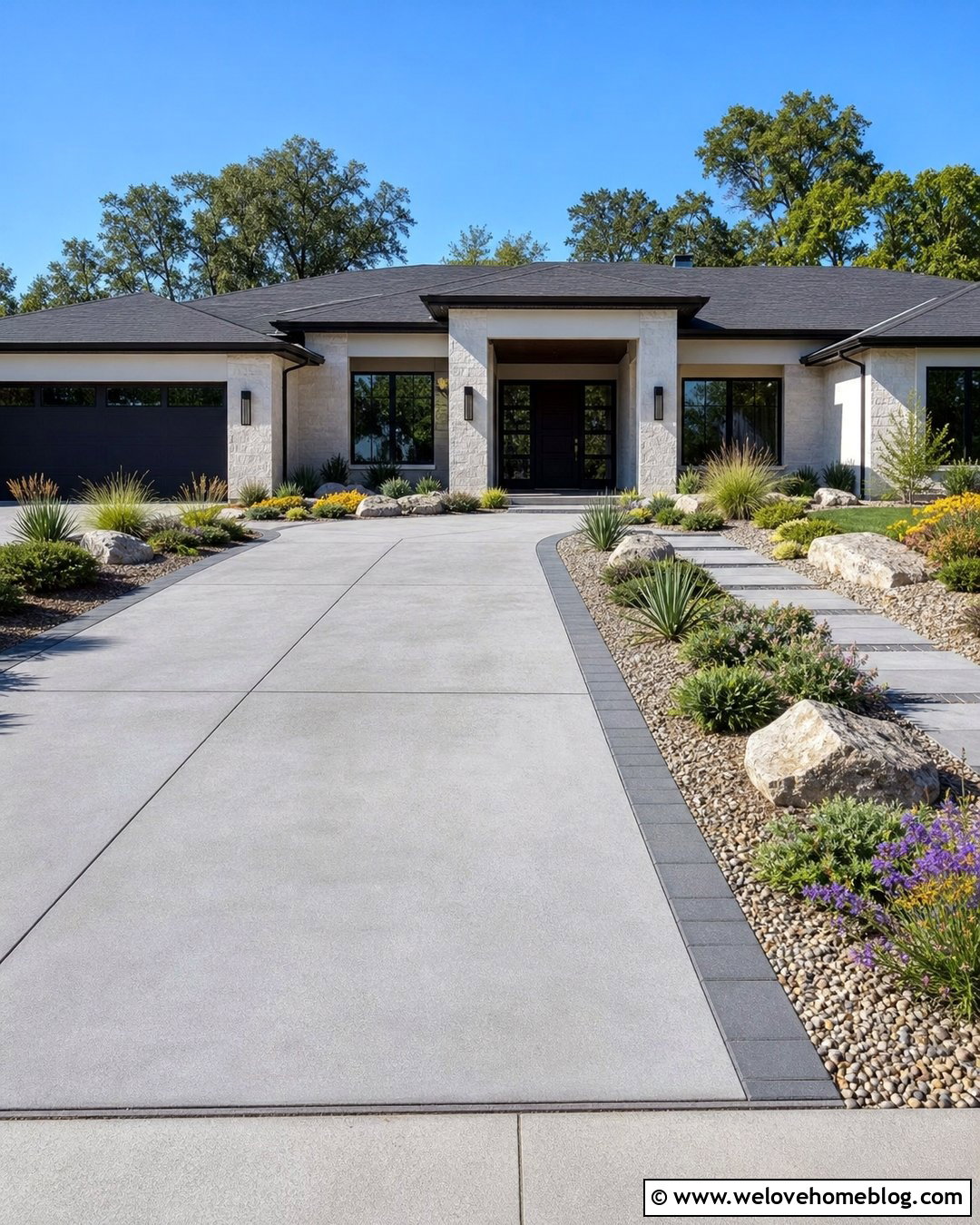
Low-maintenance landscaping works best when durable materials and slow-growing plants form a complete system. Pair a medium-gray poured concrete driveway with a dark paver border and wide beds covered in mixed river rock. Plant compact junipers, dwarf ornamental grasses, yucca, sedges, and tough flowering perennials suited to the local climate. Leave open rock around each plant so future growth does not crowd the pavement. Use larger boulders sparingly to anchor corners and disguise grade changes. A matching paver walkway can lead from the driveway to a modern ranch or Craftsman entrance. Install a solid separator beneath the border to keep the rock contained. This finished look reduces loose mulch near the pavement while maintaining greenery, texture, seasonal variation, and a clean driveway edge.
Conclusion:
Successful **25 landscaping by driveway ideas** begin with the entire front approach, not a collection of unrelated plants. Match the driveway surface to borders that contain it, beds that soften it, and a walkway that leads visitors naturally toward the entrance. Plant heights should preserve visibility and vehicle access, while repeated colors and materials connect the driveway with the house. You can create a formal design with brick and hedges, a relaxed setting with gravel and flowers, or a low-maintenance landscape with concrete, river rock, and evergreens. Before planting, consider drainage, mature plant size, sunlight, snow storage, and local growing conditions. A practical plan will remain attractive long after the first installation.

Related posts:

Leave a Reply