
A sloped approach can become one of the most memorable parts of a front yard when the driveway, drainage, plants, and retaining features are planned together. These 20 hill driveway landscaping ideas combine attractive materials with practical ways to manage runoff, erosion, steep grades, and difficult mowing areas. You will find complete looks for gravel, asphalt, concrete, pavers, and permeable surfaces, along with planting schemes for sunny, shaded, narrow, and spacious properties. Before changing a steep slope, confirm drainage routes, underground utilities, visibility, and local retaining-wall requirements. Structural work may also require professional design. Whether your goal is a polished entrance or a relaxed country approach, use these 20 hill driveway landscaping ideas to find a layout that suits your home.

1. Terraced Hill Driveway With Stone Retaining Walls
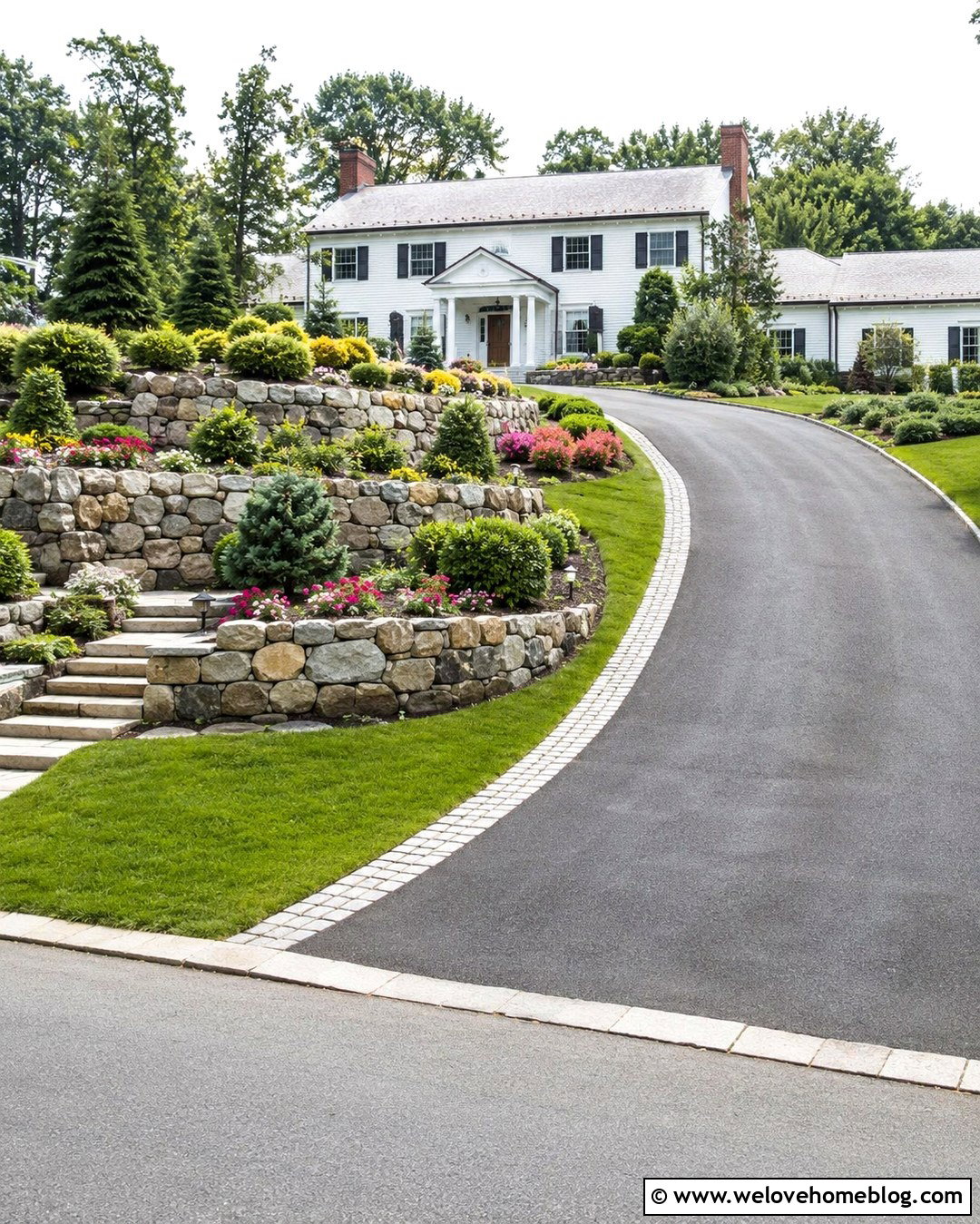
A terraced design can turn a tall, difficult bank into an organized landscape that feels connected to the driveway. Pair a curved asphalt driveway with two or three low natural-stone retaining walls rather than one imposing wall. The stepped beds create room for compact evergreens, flowering perennials, and spreading ground covers. Repeat the same stone along the driveway edge to make every level feel intentional. Add stone stairs between the terraces if you need pedestrian access from the driveway to the lawn. Drainage must be included behind structural walls so water does not build pressure against them. Because wall engineering and permit rules vary, consult a qualified local professional before cutting into a steep or unstable hillside. ()
2. Curved Hill Driveway With Native Planting
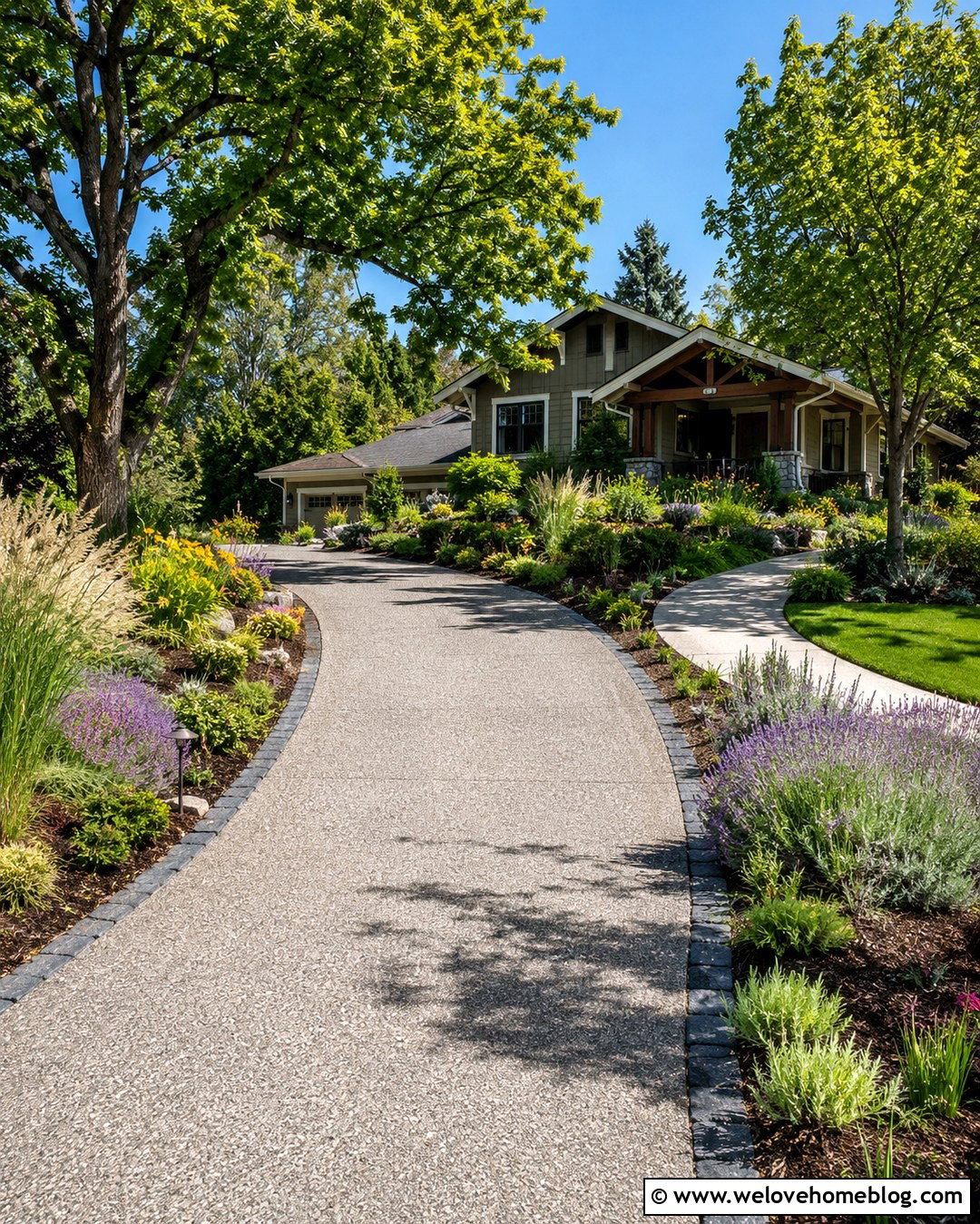
Imagine a driveway gently following the land instead of fighting its natural contours. A curved exposed-aggregate driveway can soften the climb while creating broad planting pockets on the inside and outside bends. Fill those spaces with regionally appropriate native grasses, flowering perennials, and low shrubs suited to the site’s sun, soil, and moisture. Arrange plants in generous groups rather than scattered singles for a cleaner view from the street. A dark stone border can contain the beds and provide a clear transition beside the pale driveway. Keep taller plants away from the entrance and sharp curves so drivers retain good visibility. Native choices still need to match the exact growing conditions, especially on slopes that may dry quickly after rainfall. ()
3. Steep Hill Driveway With Ground Cover
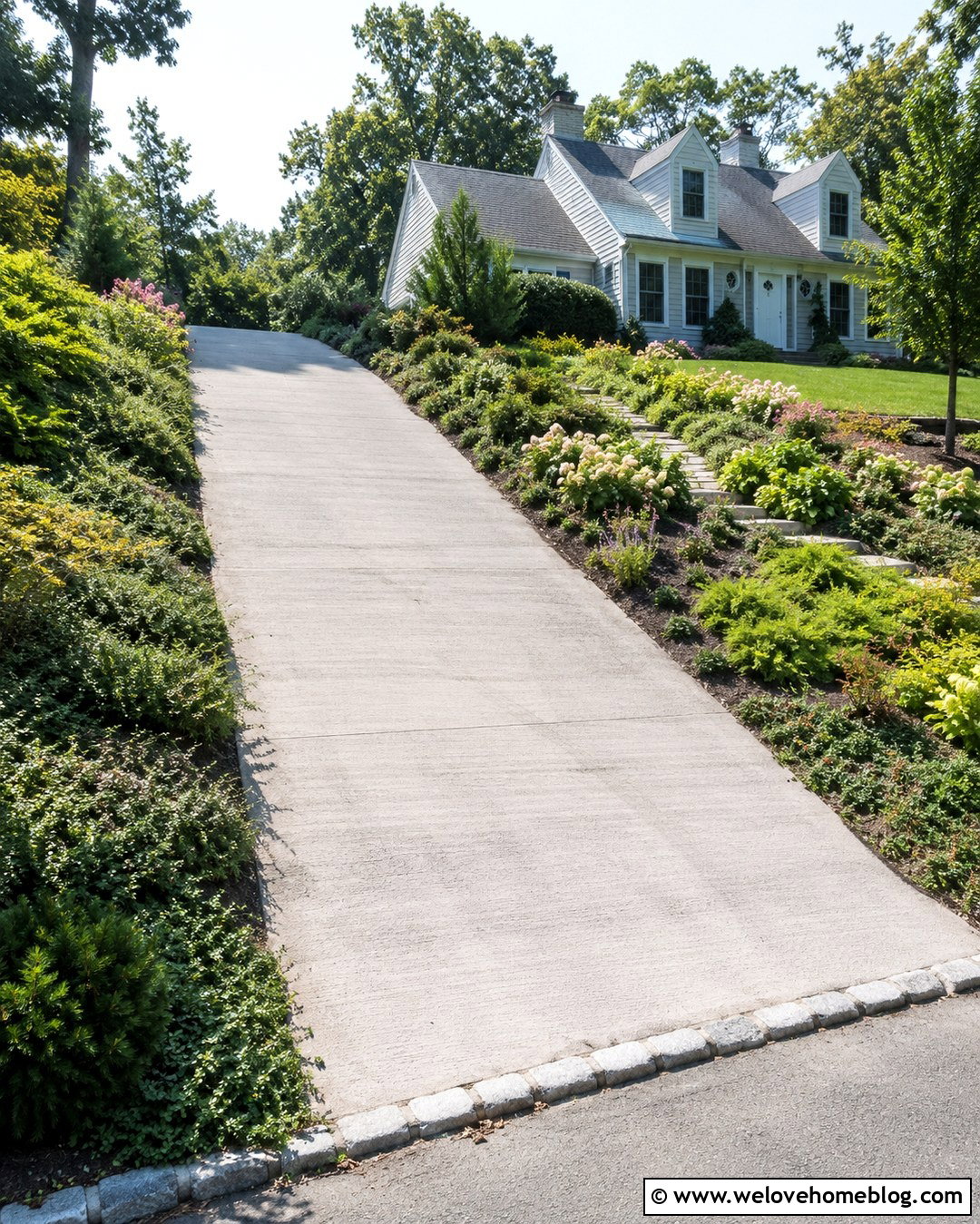
Does the bank beside your driveway feel too steep to mow safely? Replace struggling turf with a dense ground-cover planting that visually wraps around a straight concrete driveway. Choose several compatible plants instead of relying on one variety across the entire hill. Low evergreen ground cover can form the base, while small shrubs and seasonal flowers add height near the top. Plant in staggered sweeps across the slope to slow the visual movement downhill and create a fuller appearance. A cobblestone curb along the concrete helps keep soil and mulch away from the driving surface. On newly planted banks, biodegradable erosion-control material may be useful while roots establish. Plant selection should reflect local climate, exposure, drainage, and maintenance needs. ()
4. Hill Driveway With Dry Creek Drainage
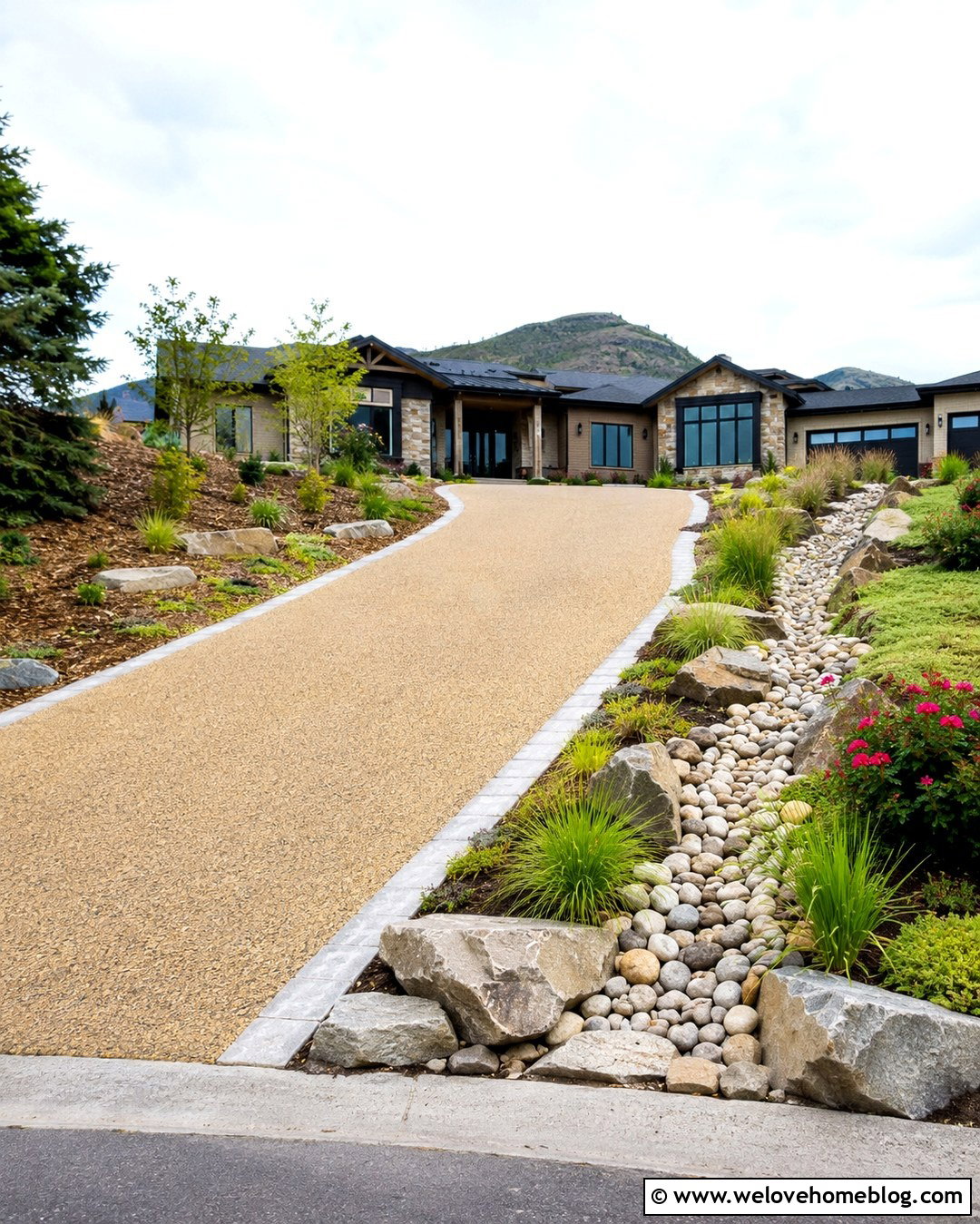
After heavy rain, runoff can become an attractive landscape feature rather than an ugly channel. Place a stone-lined dry creek beside a sloping resin-bound gravel driveway, following the natural direction water already travels. Use larger rocks along curves and potential washout points, then fill the center with mixed river stones. Widen the channel near the bottom to create a planted collection area or connect it to an approved drainage outlet. Moisture-tolerant grasses and shrubs can soften the edges without hiding the creek’s shape. A narrow band of matching stone between the driveway and channel visually links the two surfaces. The system must send water to a suitable destination without affecting neighboring properties, foundations, or public areas, so drainage planning should come before decorative planting. ()
5. Hill Driveway With Boulder Landscaping
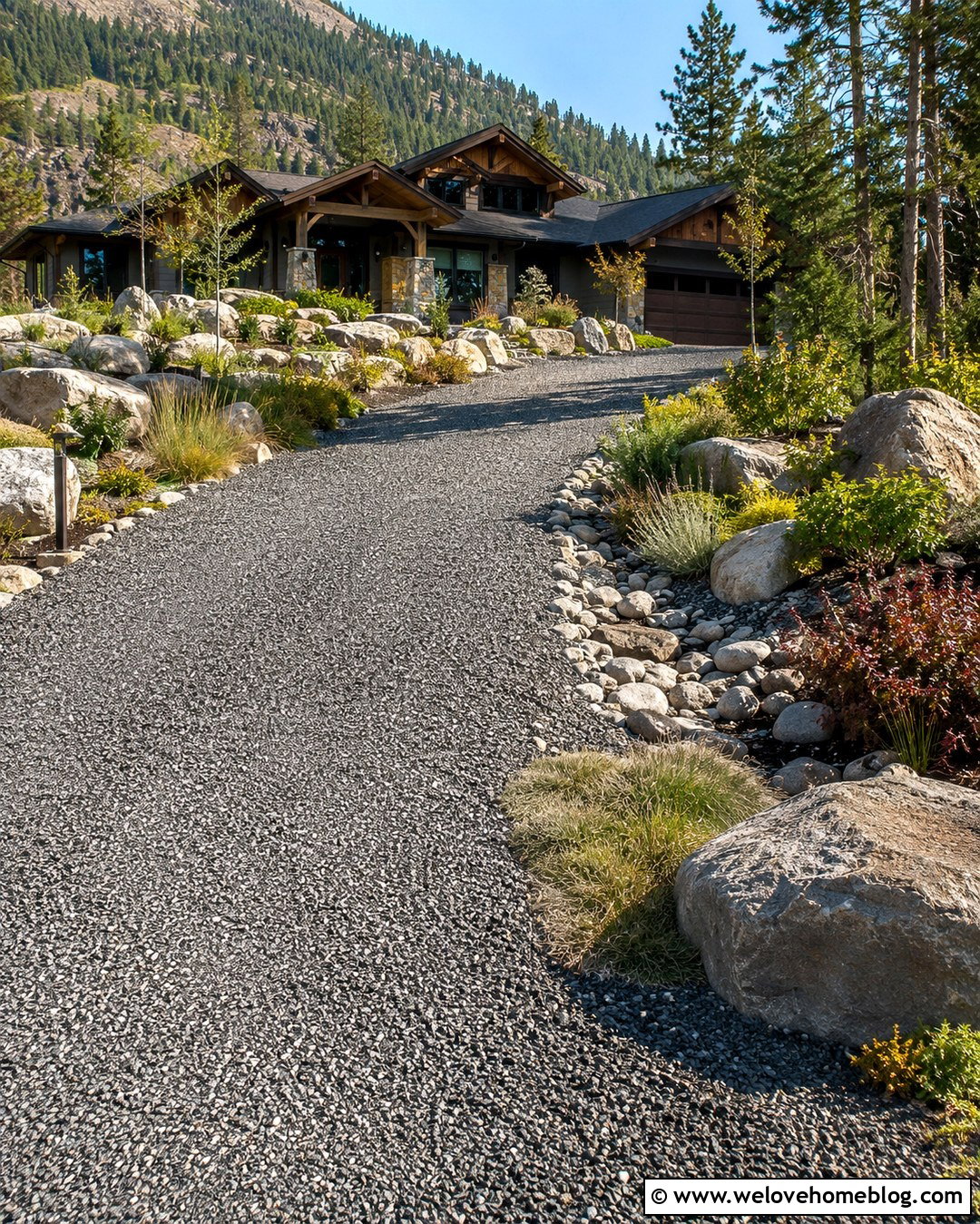
Large boulders give a steep driveway landscape weight, texture, and a natural sense of permanence. Along a gray gravel driveway, partially embed irregular local stone into the hillside so it appears connected to the terrain. Space the boulders in uneven groups and weave drought-tolerant shrubs, grasses, and ground covers between them. The largest stones should sit toward the lower part of the bank, where they visually anchor the composition. Continue smaller rocks into the gravel border for a smooth transition between the driveway and planted slope. Boulders can support a broader erosion-management plan, but casually placing rocks on unstable soil is not a substitute for engineered retention. A professional should evaluate steep grades, heavy runoff, and any stones that could shift toward vehicles or buildings. ()
6. Hill Driveway With Tiered Flower Beds
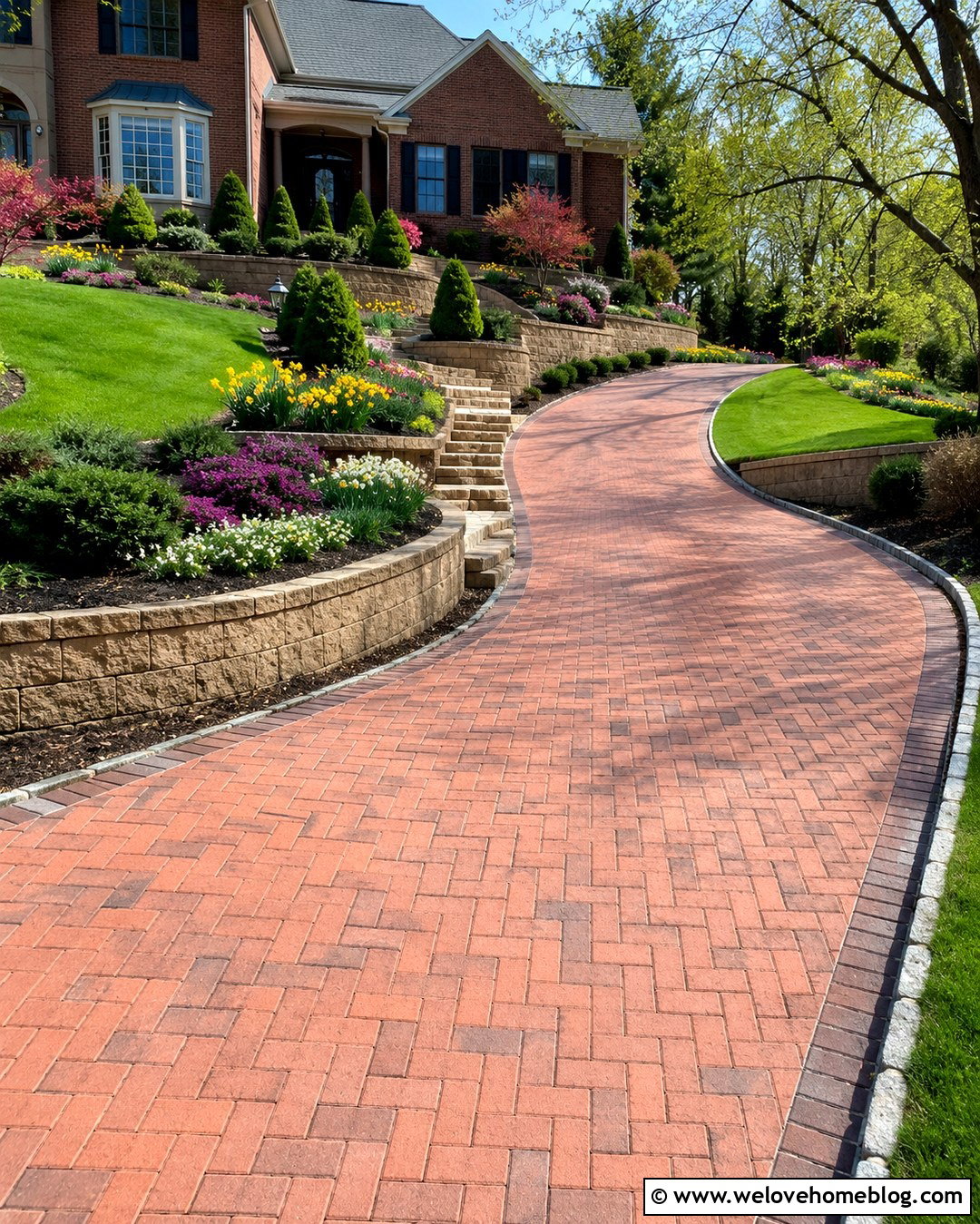
Colorful terraces can make a sloping front yard feel like a series of welcoming gardens. Frame a brick paver driveway with low, gently curved block walls that create several level planting beds. Use compact shrubs for year-round structure, then layer long-blooming perennials and spring bulbs through the open spaces. Repeating three or four plant varieties across each tier produces a calmer look than filling every bed with something different. Match the wall caps to a brick ribbon at the driveway edge for a cohesive finish. Drip irrigation can deliver water near plant roots without spraying the driving surface or encouraging runoff. Leave practical access points for weeding and pruning, and verify that each wall includes an appropriate base and drainage method. ()
7. Long Hill Driveway With Trees

A long uphill approach becomes more inviting when trees create rhythm without forming a dark tunnel. Pair a black asphalt driveway with staggered rows of small ornamental or medium canopy trees set well beyond the pavement edge. Their spacing should account for mature trunks, branches, roots, utilities, and sightlines. Underplant the trees with broad sweeps of low grasses or ground cover to reduce difficult mowing along the slope. A pale granite curb can brighten the asphalt and prevent loose soil from spilling onto the surface. Add simple planting beds near the entrance and house rather than decorating every foot of the route. Select trees for local conditions and avoid species likely to drop large fruit, brittle branches, or aggressive surface roots beside the driveway.
8. Modern Hill Driveway With Concrete Walls
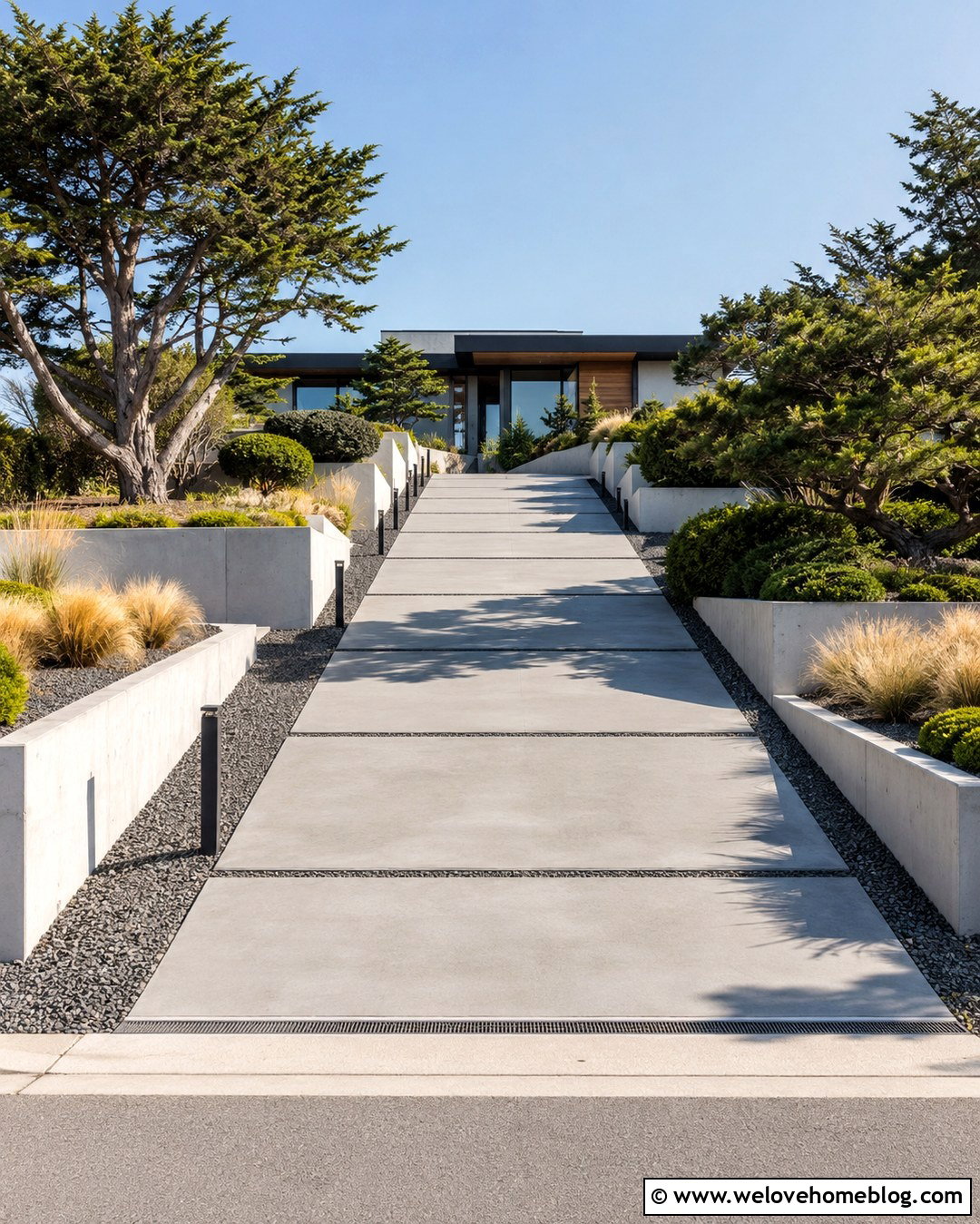
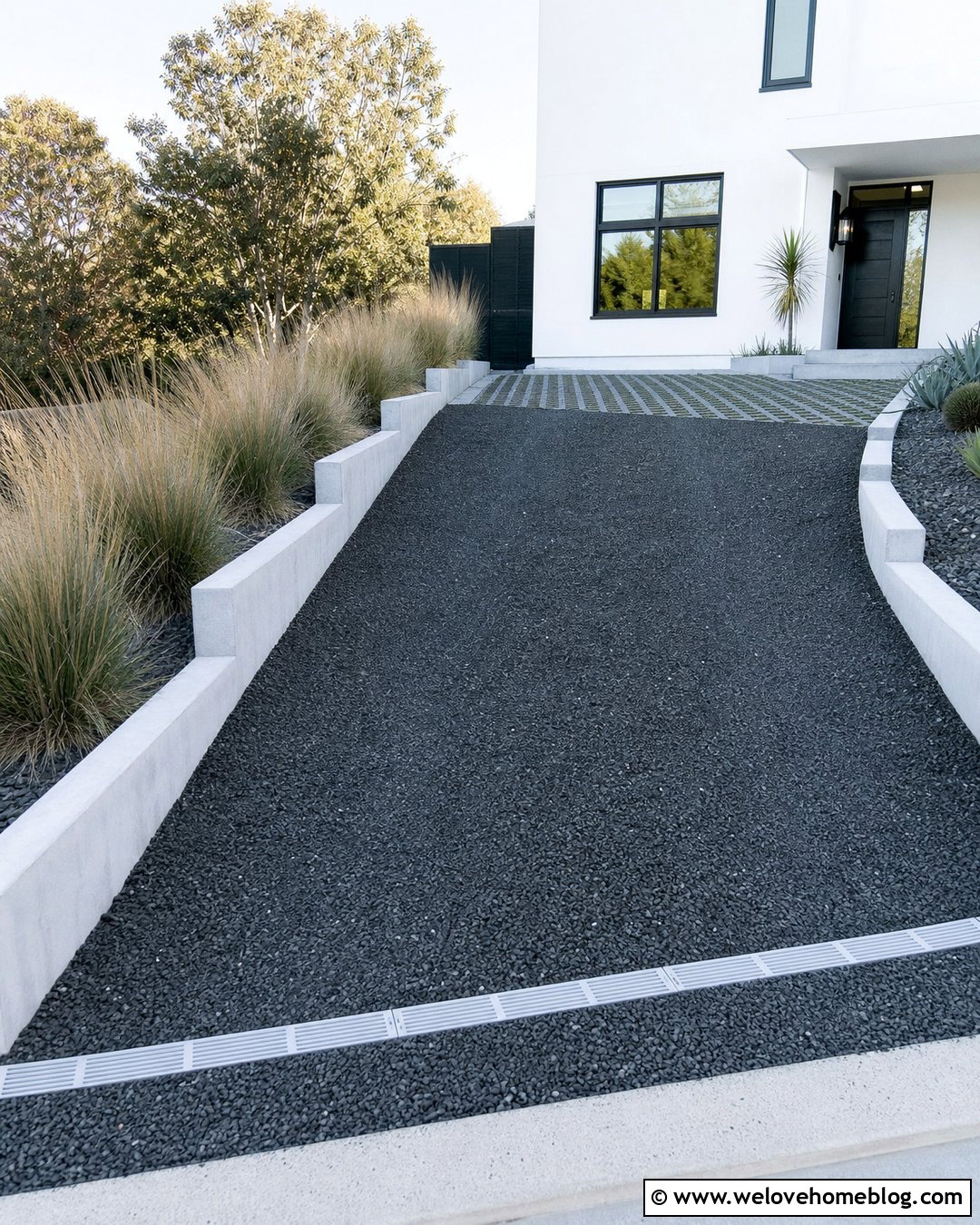
Clean lines can bring order to a sharply sloped contemporary property. Use a straight driveway made from large gray concrete panels, with narrow gravel joints that emphasize the uphill direction. Smooth poured-concrete retaining walls can step down beside the drive, creating level beds for architectural grasses, spreading evergreens, and neatly clipped shrubs. Limit the planting palette to a few repeated species so the retaining structure remains visually calm. Slim bollard lights positioned safely behind the curb can define the route without cluttering the pavement. Include a channel drain where runoff crosses or reaches the bottom of the driveway. Tall walls and major grade changes require careful structural and drainage design because retained soil and water place considerable force on the installation. ()
9. Gravel Hill Driveway With Timber Borders
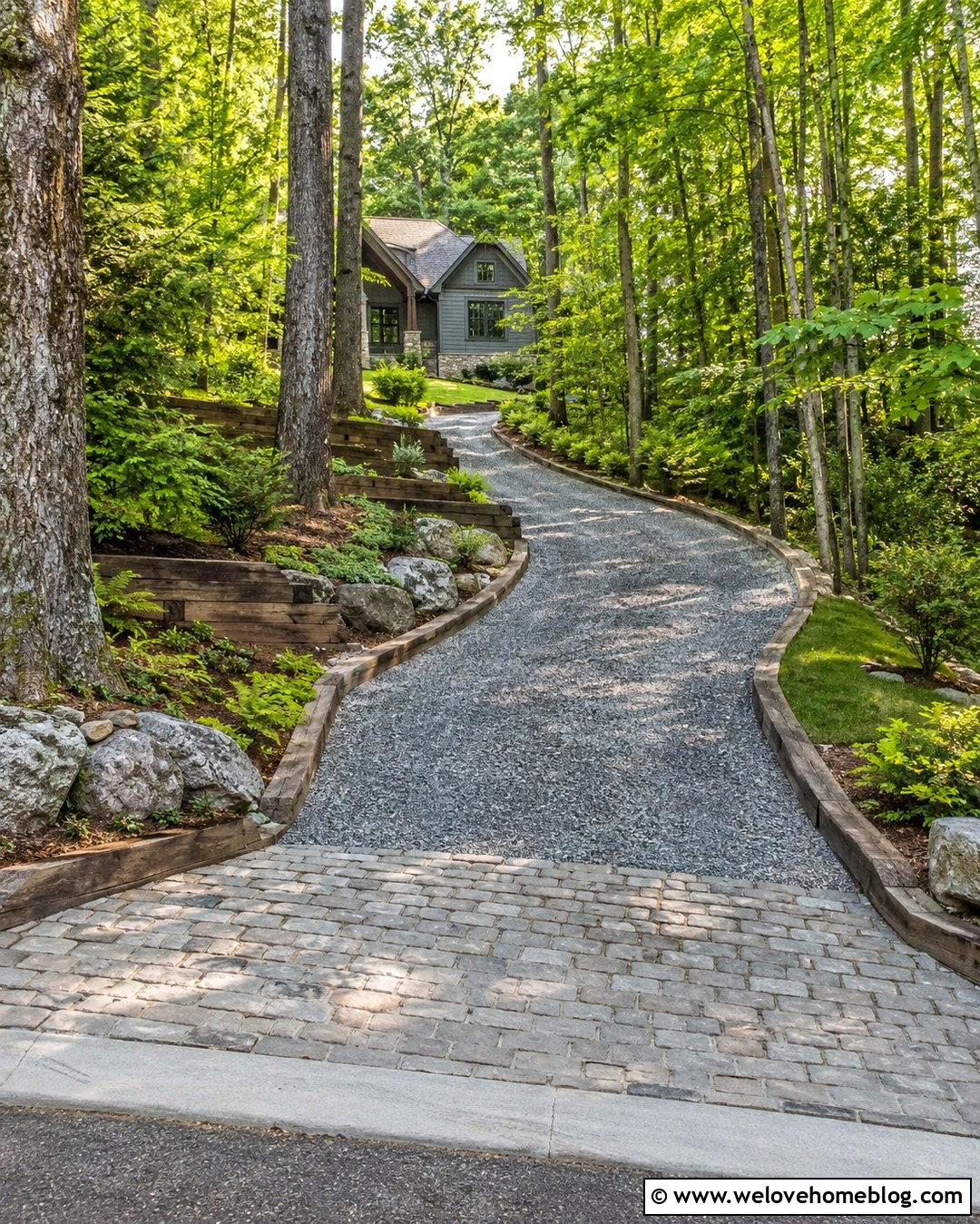
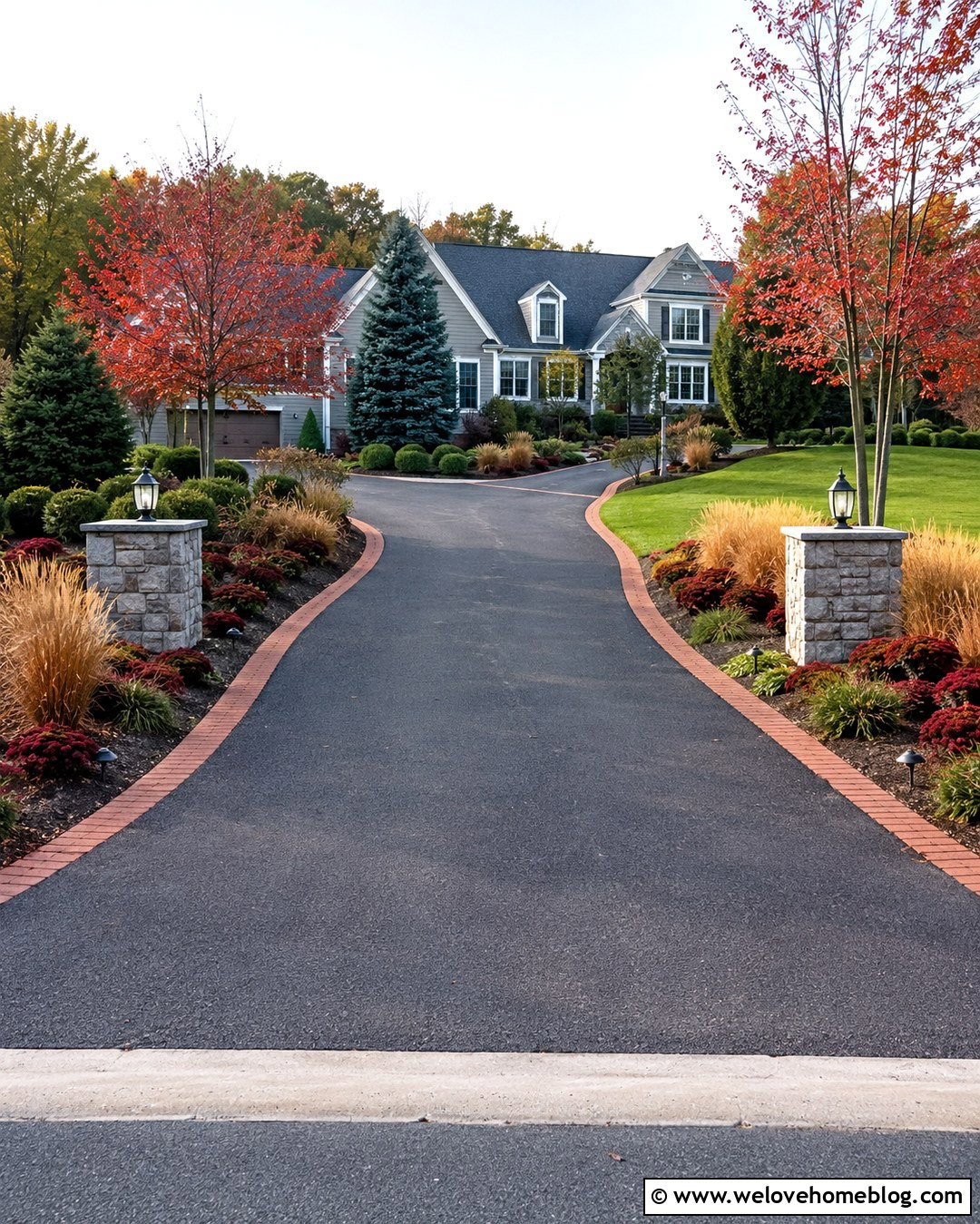
For a relaxed woodland or country home, gravel and timber can create a warm, budget-conscious combination. Shape a gently curving driveway from compacted angular gray gravel, which offers a more stable visual surface than loose rounded decorative stones. Install substantial timber edging where the slope is mild, then use properly designed retaining solutions wherever soil pressure becomes significant. Ferns, low woodland shrubs, and spreading ground covers can fill the uphill bank, while a narrow grass verge softens the downhill side. Place larger stones at drainage outlets to reduce visible scouring. Timber naturally weathers, so the design should allow damaged sections to be replaced. Keep gravel contained at the entrance with a firm paved apron and maintain the surface whenever traffic or storms create ruts.
10. Hill Driveway With Rain Garden

The bottom of a hill driveway often offers an opportunity to integrate stormwater management with planting. Beside a permeable paver driveway, form a shallow rain garden in a suitable low area that receives runoff without threatening the house or pavement base. Use moisture-tolerant plants in the center and species that accept drier conditions around the upper edge. A river-rock inlet can slow incoming water and create an attractive transition from a swale or drain. Repeat the driveway pavers as a small border around nearby planting beds. The garden should have a safe overflow route for larger storms and must be positioned around local soil, drainage, and utility conditions. Treat it as part of a complete water plan rather than a decorative depression that collects standing water. ()
11. Narrow Hill Driveway With Low Shrubs
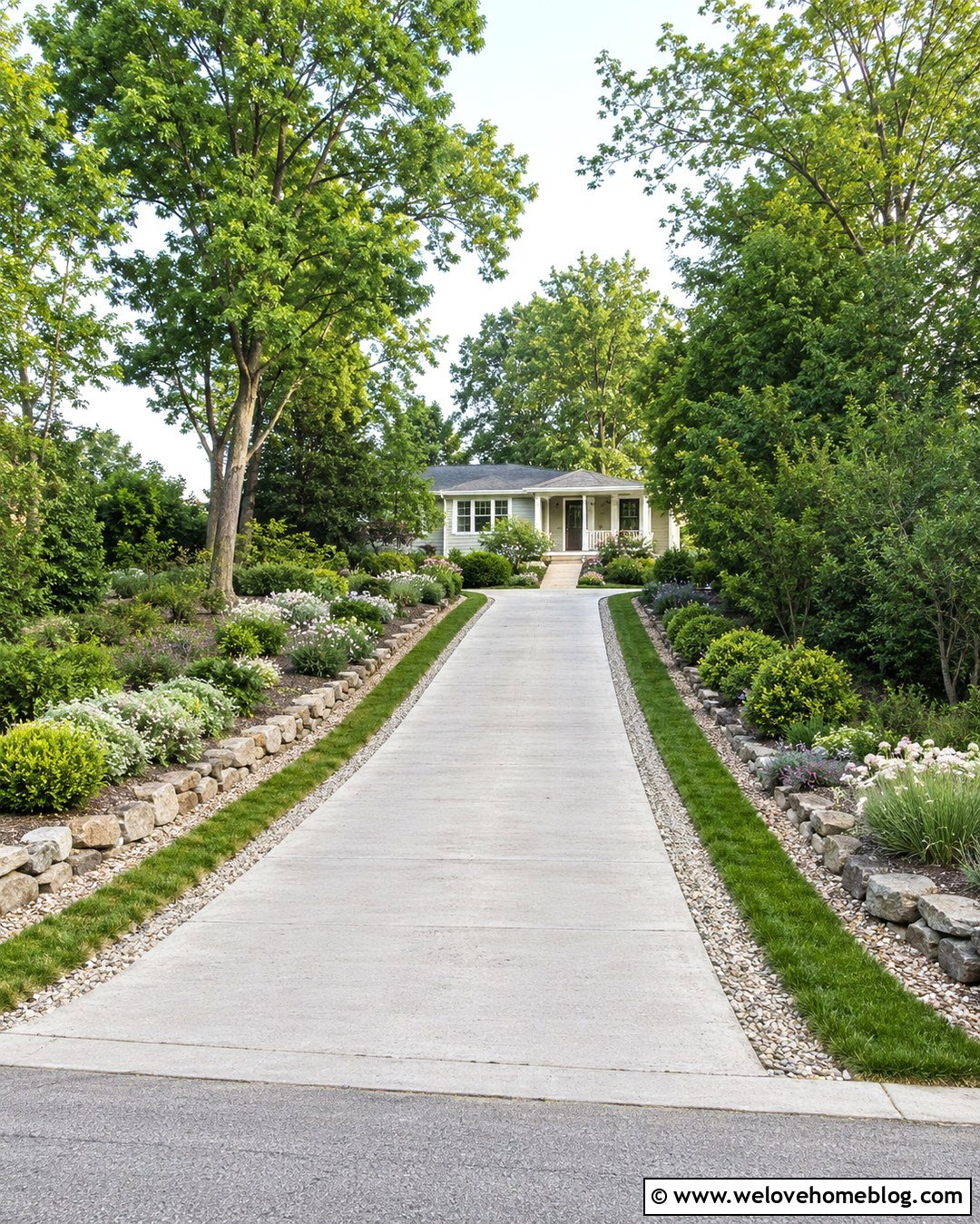
Limited width does not mean the driveway has to feel bare or squeezed between tall walls. Border a narrow brushed-concrete driveway with slim beds of low, mounded shrubs and spreading perennials. Keep mature plant height below the driver’s sightline, especially near the road, walkway crossings, and tight curves. On the uphill side, a low stone retaining curb can hold the soil while maintaining an open appearance. On the downhill side, use a reinforced grass strip or gravel shoulder as a visual buffer. Repeat one evergreen shrub with two seasonal plants to keep maintenance manageable. Avoid thorny growth, floppy stems, and branches that extend into the driving space. The final layout should preserve door clearance, snow storage where relevant, and comfortable access for maintenance or emergency vehicles.
12. Hill Driveway With Rock Garden
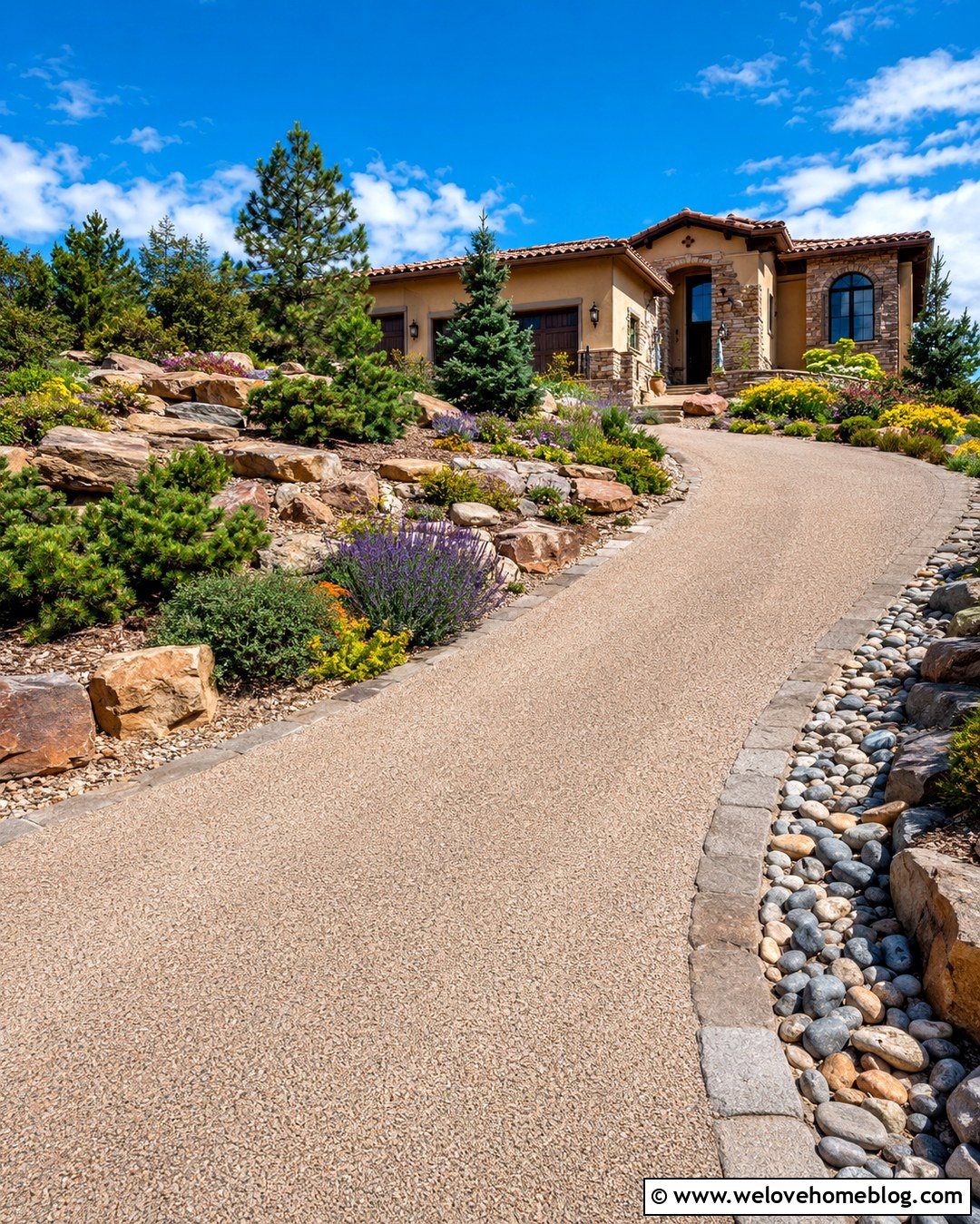
A sunny, fast-draining bank is well suited to a rock garden that looks intentional in every season. Combine a warm-toned exposed-aggregate driveway with weathered stone arranged in layered clusters along the slope. Plant compact conifers, sedums, ornamental grasses, and low flowering perennials in the pockets between rocks, choosing varieties suited to the local climate. Leave some gravel mulch visible to emphasize the shapes and reduce the look of a crowded flower bed. A row of larger stone at the driveway edge can catch loose soil, while a defined drainage route handles concentrated water. Avoid piling heavy rocks on loose fill or creating barriers that redirect runoff unpredictably. The strongest design balances open stone, repeated plants, and clear views of the driveway’s full uphill curve.
13. Circular Hill Driveway With Planted Island
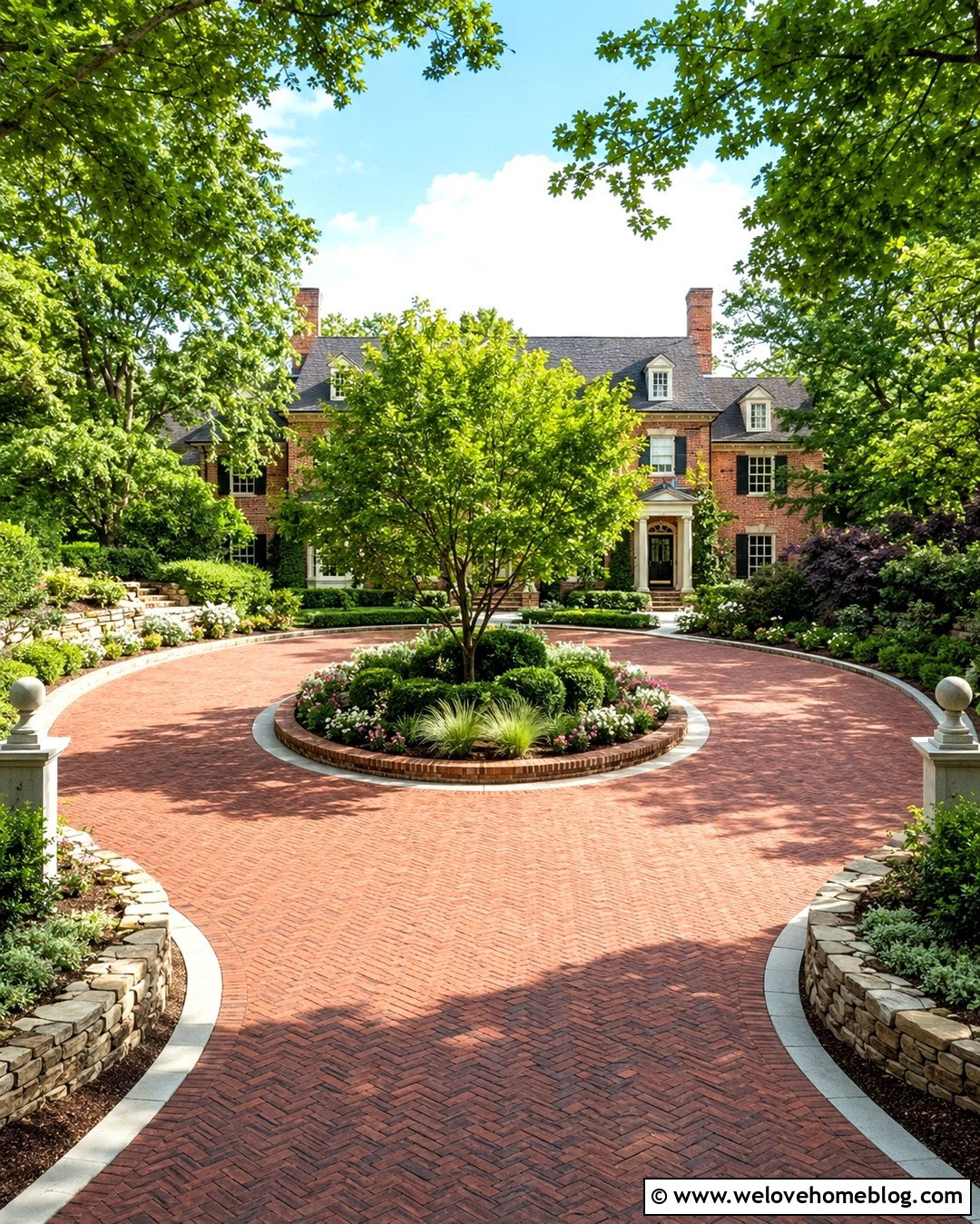
A circular layout can make an elevated entrance feel spacious while giving the landscape a strong central feature. Build the driveway from warm clay brick pavers laid in a herringbone pattern, then use the same brick as a raised edge around the island. Plant a small ornamental tree at the center, surrounded by low evergreen shrubs, grasses, and seasonal flowers. Keep the island’s outer planting short so drivers can see across the circle and navigate comfortably. Where the outer edge meets a rising bank, use broad ground-cover beds or low stone terraces instead of steep lawn. Include drainage inlets at appropriate low points to prevent water from collecting inside the curve. The island, driveway width, and turning radius should be planned together before installation begins.
14. Hill Driveway With Landscape Steps
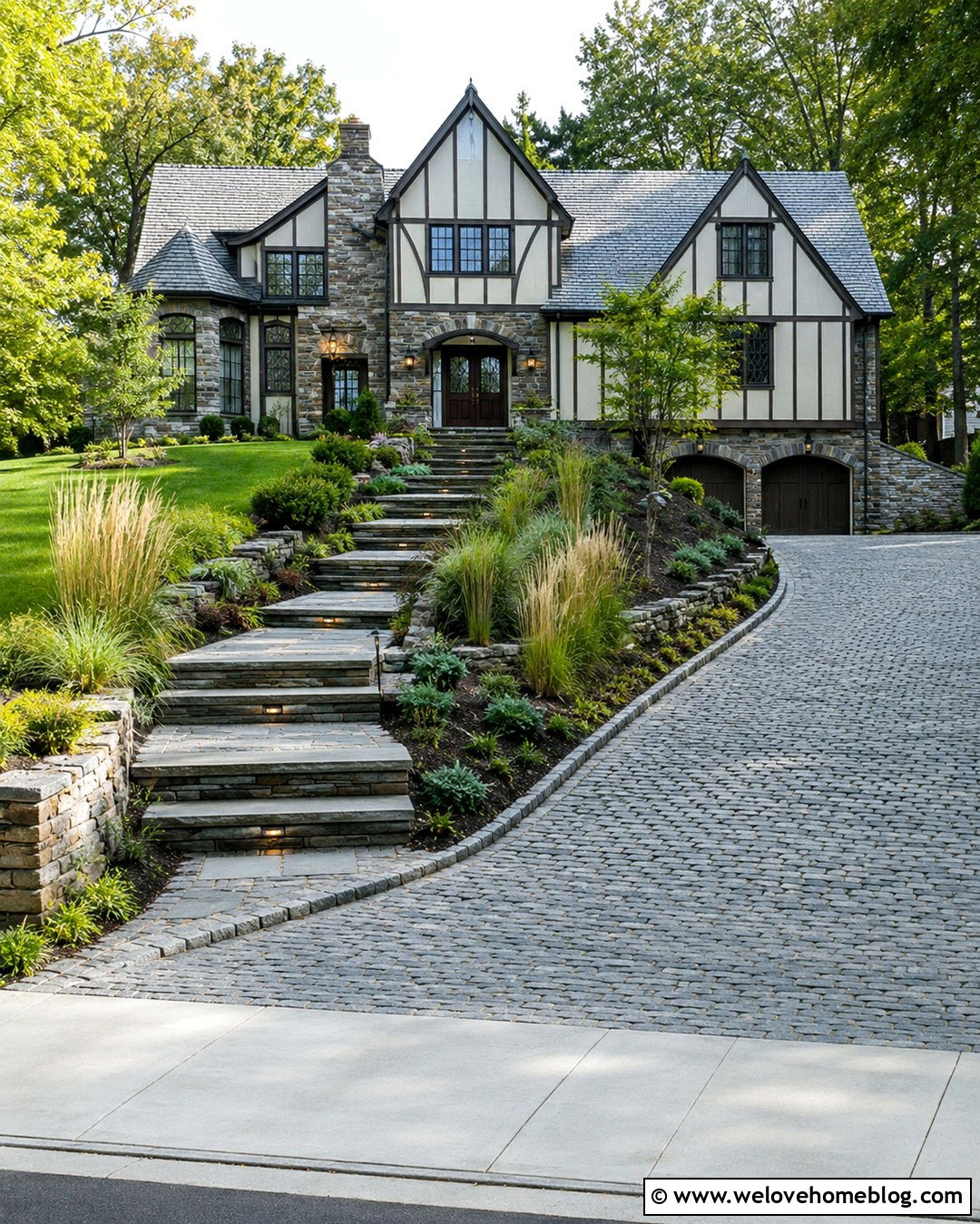
When the house sits above the parking area, a separate stairway can provide safer pedestrian access and protect planted slopes from informal footpaths. Run broad stone steps beside a sloping cobblestone driveway, with a low retaining wall separating people from vehicles. Add landings where the grade changes or where the walkway turns toward the front door. Plant compact shrubs, ground covers, and ornamental grasses in the spaces beside each landing. Low-voltage step lights can improve visibility without overwhelming the landscape during the day. Match the stair stone to the driveway border so both routes feel like one design. Consistent risers, stable handrails where needed, good drainage, and local construction requirements are especially important on long or steep outdoor stairways. ()
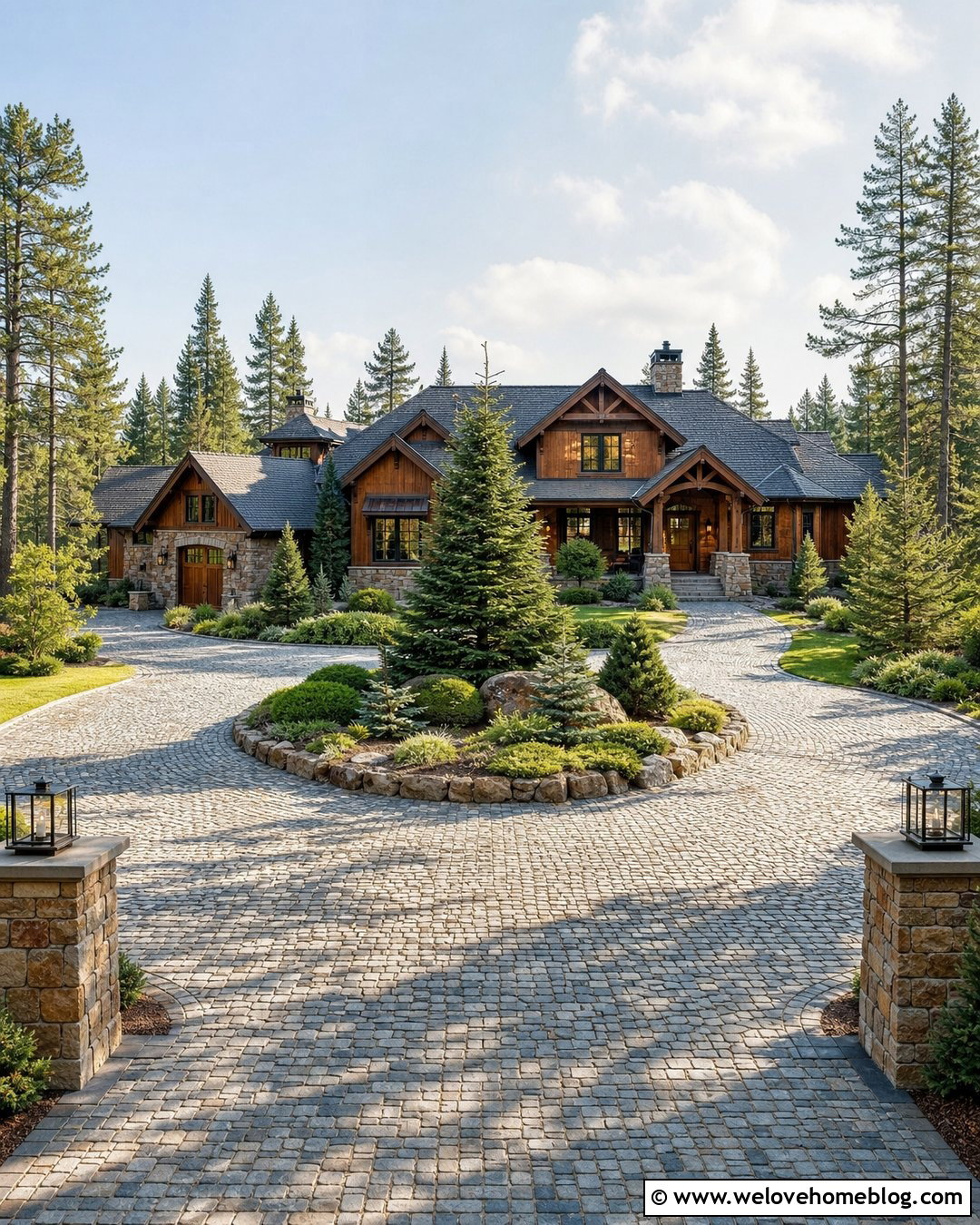
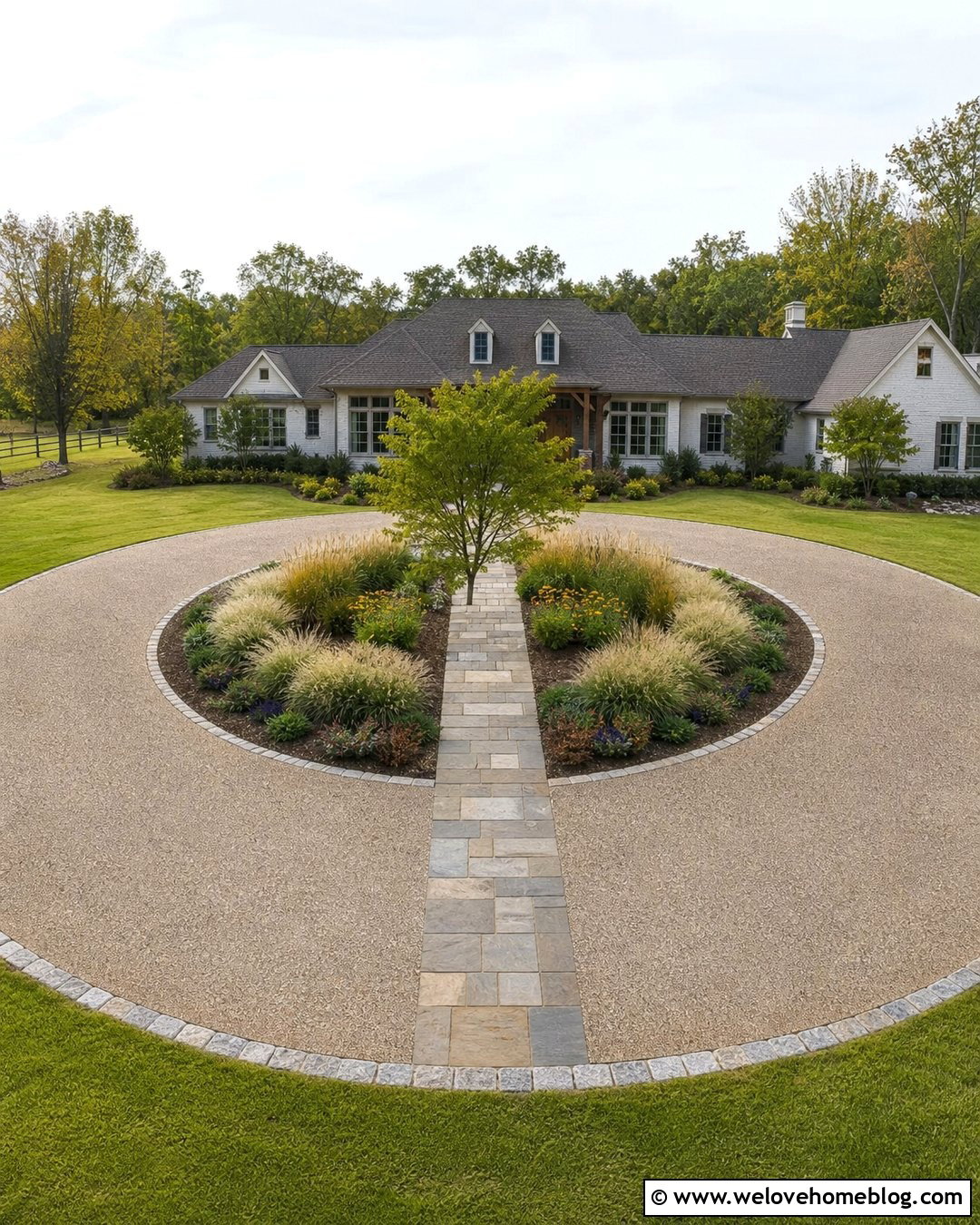
15. Shaded Hill Driveway With Ferns
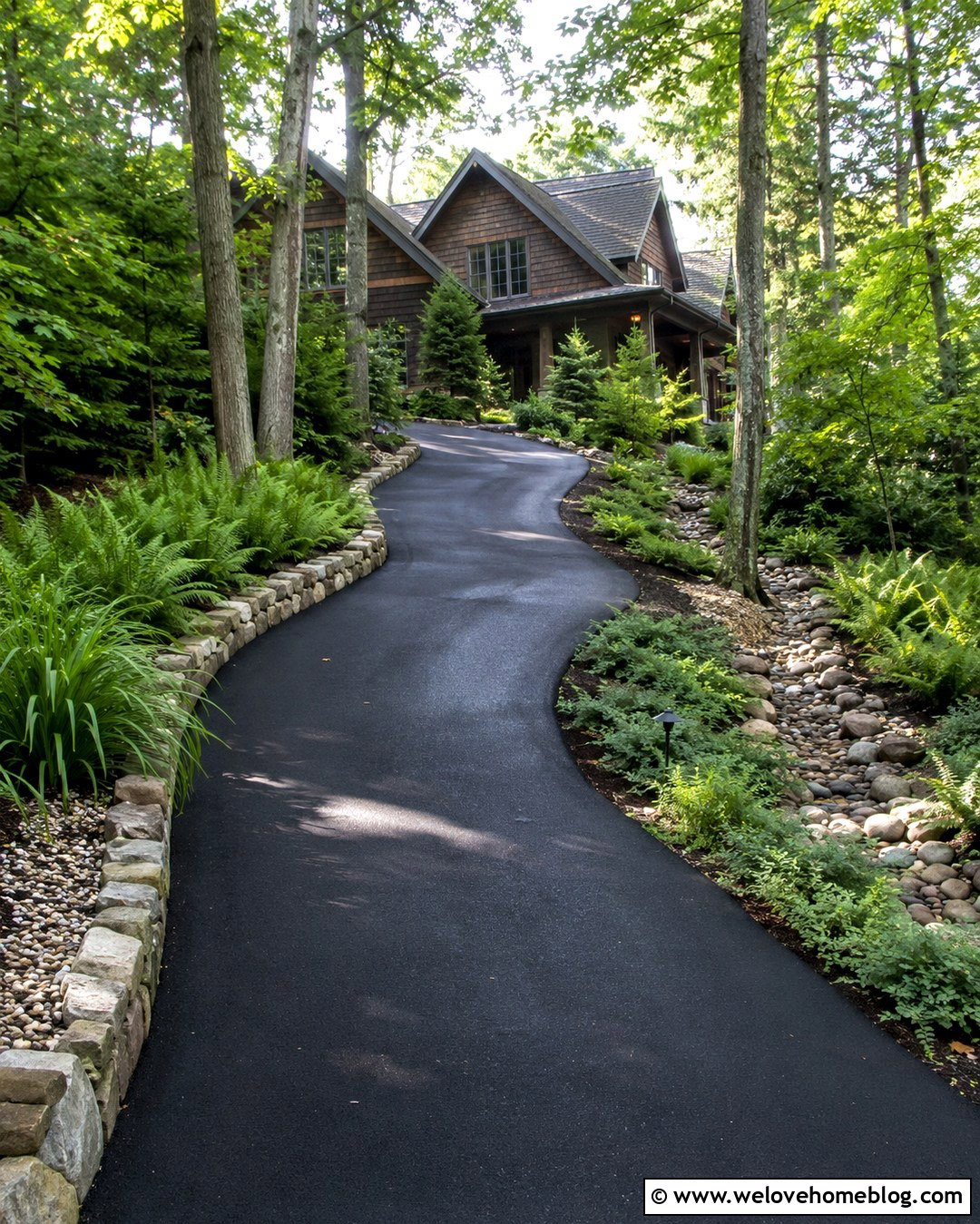
Cool shade can produce a lush driveway landscape when plants are selected for the actual moisture and light conditions. Edge a curved dark asphalt driveway with a natural fieldstone curb, then fill the uphill bank with layered ferns, woodland sedges, low evergreen shrubs, and shade-tolerant ground covers. Repeat the plants in broad drifts to create a calm, established appearance beneath mature trees. A light gravel mulch can brighten deep shade and make leaves easier to see from the driveway. Do not raise soil around existing tree trunks or damage major roots during construction. Add a shallow stone swale where water descends from the woodland slope. In regions with winter weather, leave enough open shoulder space for snow management and fallen-leaf cleanup.
16. Sunny Hill Driveway With Ornamental Grasses
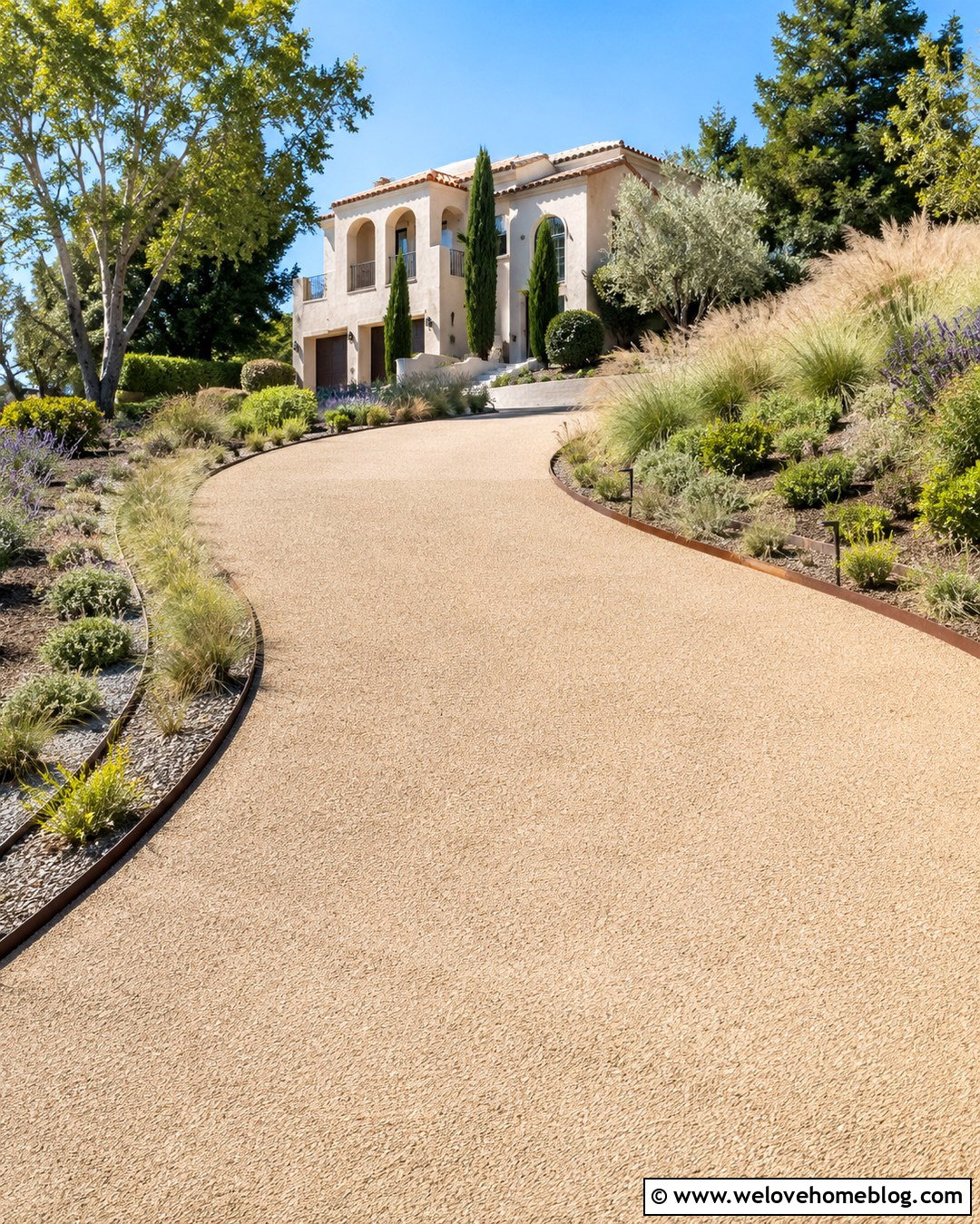
Sunlight moving through ornamental grasses can soften a hard driveway without hiding its structure. Pair a pale tan resin-bound gravel driveway with broad, curved beds of grasses, low flowering perennials, and compact evergreen shrubs. Use shorter grasses near the entrance and driveway edge, then place taller varieties farther up the bank. Repetition keeps the slope cohesive and gives roots time to form a connected planting pattern. A weathered steel edge can create a crisp line between the smooth driveway and gravel-mulched beds. Choose noninvasive grasses suited to local rainfall and winter conditions. Drip irrigation is often easier to control on a slope than overhead spray, but the watering plan should avoid saturating the driveway base or sending excess water downhill. ()
17. Hill Driveway With Gabion Walls
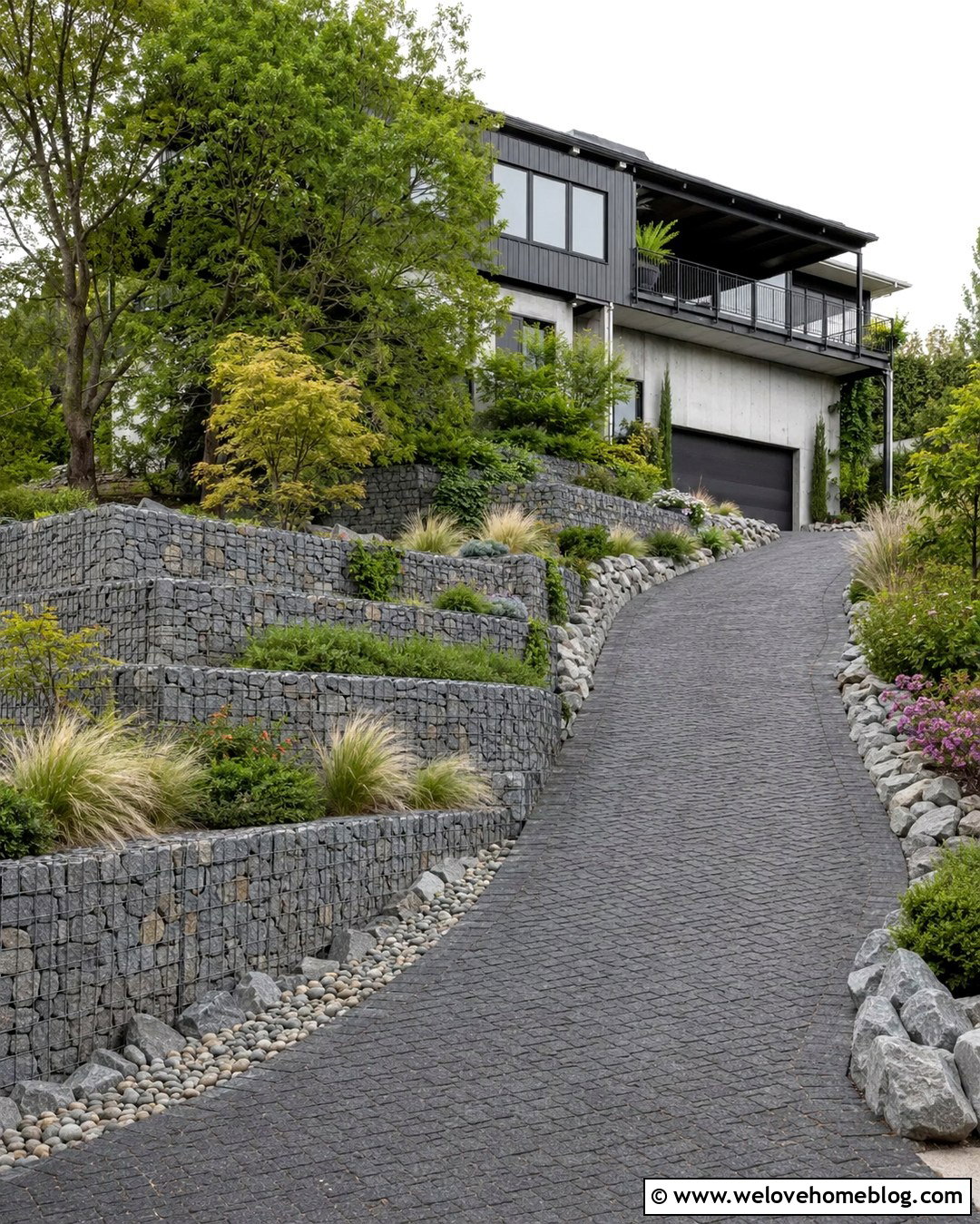
Gabion walls offer a bold way to connect modern architecture with a rugged hillside. Beside a charcoal permeable-paver driveway, use stepped wire baskets filled with durable local stone to create low planting terraces. Repeat the stone as a narrow driveway border and in a drainage swale near the bottom of the hill. Soft grasses, trailing ground covers, and small flowering shrubs can spill gently over the upper edges, balancing the industrial grid of the baskets. Keep the wall line several inches back from vehicle clearance areas and protect exposed corners near turns. Gabions still require a stable foundation, correct dimensions, appropriate stone fill, and thoughtful drainage. For tall walls or sites supporting roads, buildings, or heavy soil loads, obtain professional structural guidance.
18. Hill Driveway With Culvert Entrance
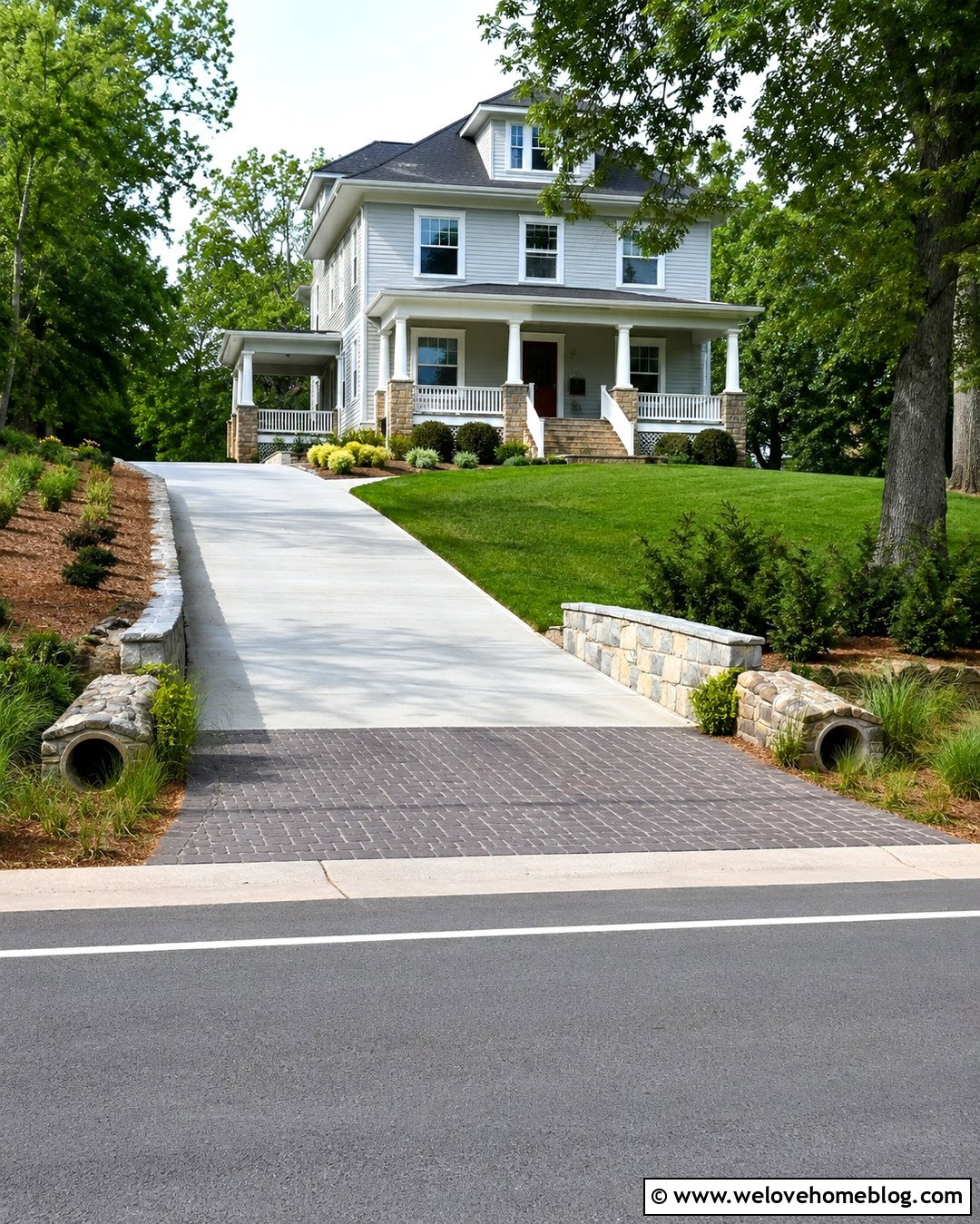
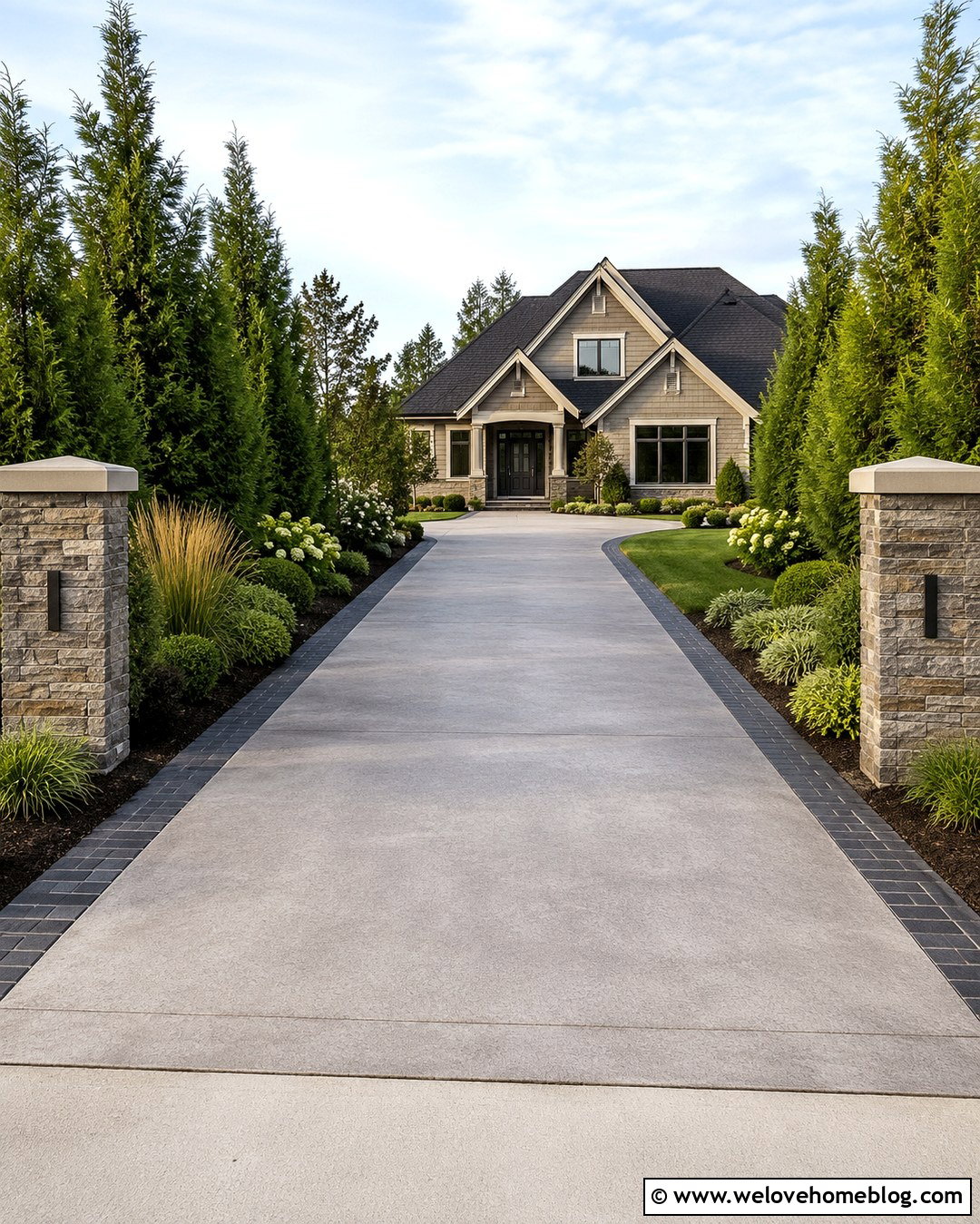
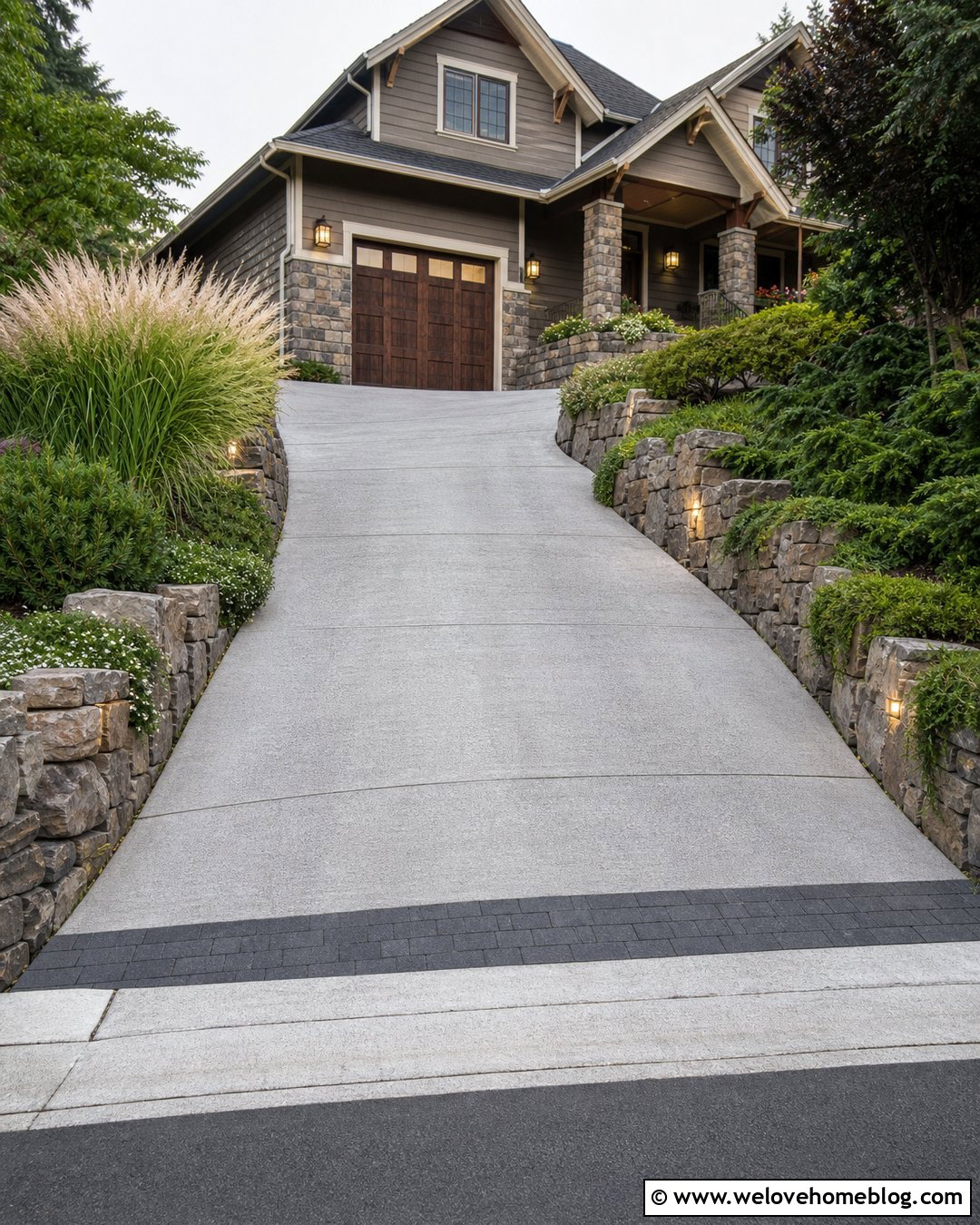
A well-designed culvert entrance can look polished while carrying roadside water beneath the driveway. Use light gray concrete for the sloping drive and finish the street connection with a darker paver apron. Frame the culvert ends with natural stone headwalls that coordinate with low retaining borders farther uphill. Plant low grasses and spreading shrubs around the stone, leaving the pipe opening fully accessible for inspection and debris removal. Continue a shallow planted swale along the property frontage so water has a visible route toward the culvert. Avoid tall plants that block traffic views or hide drainage problems. Culvert size, placement, outlet protection, and road-right-of-way work commonly depend on site conditions and local requirements, making this an important area for professional planning.
19. Low Maintenance Hill Driveway Landscaping
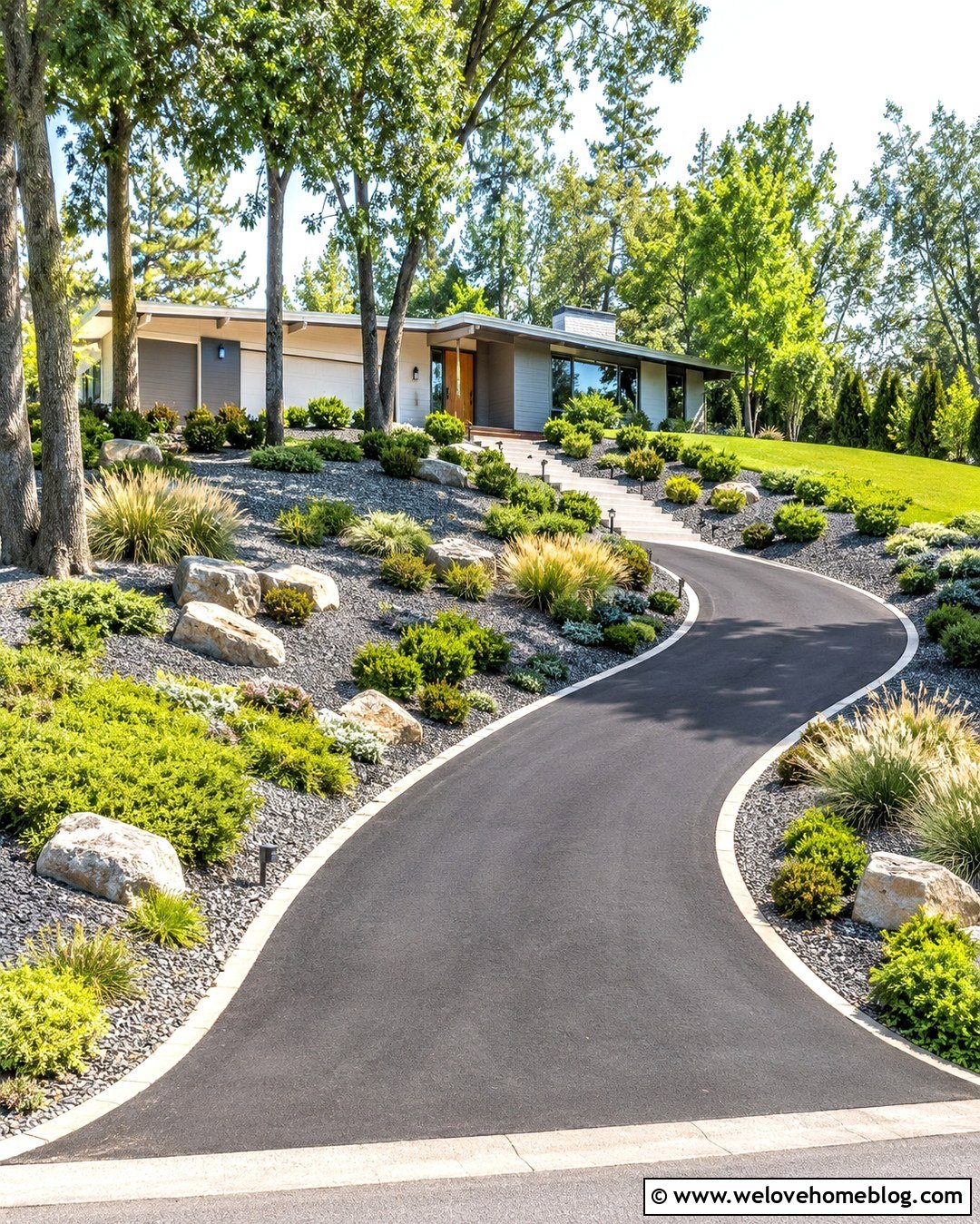
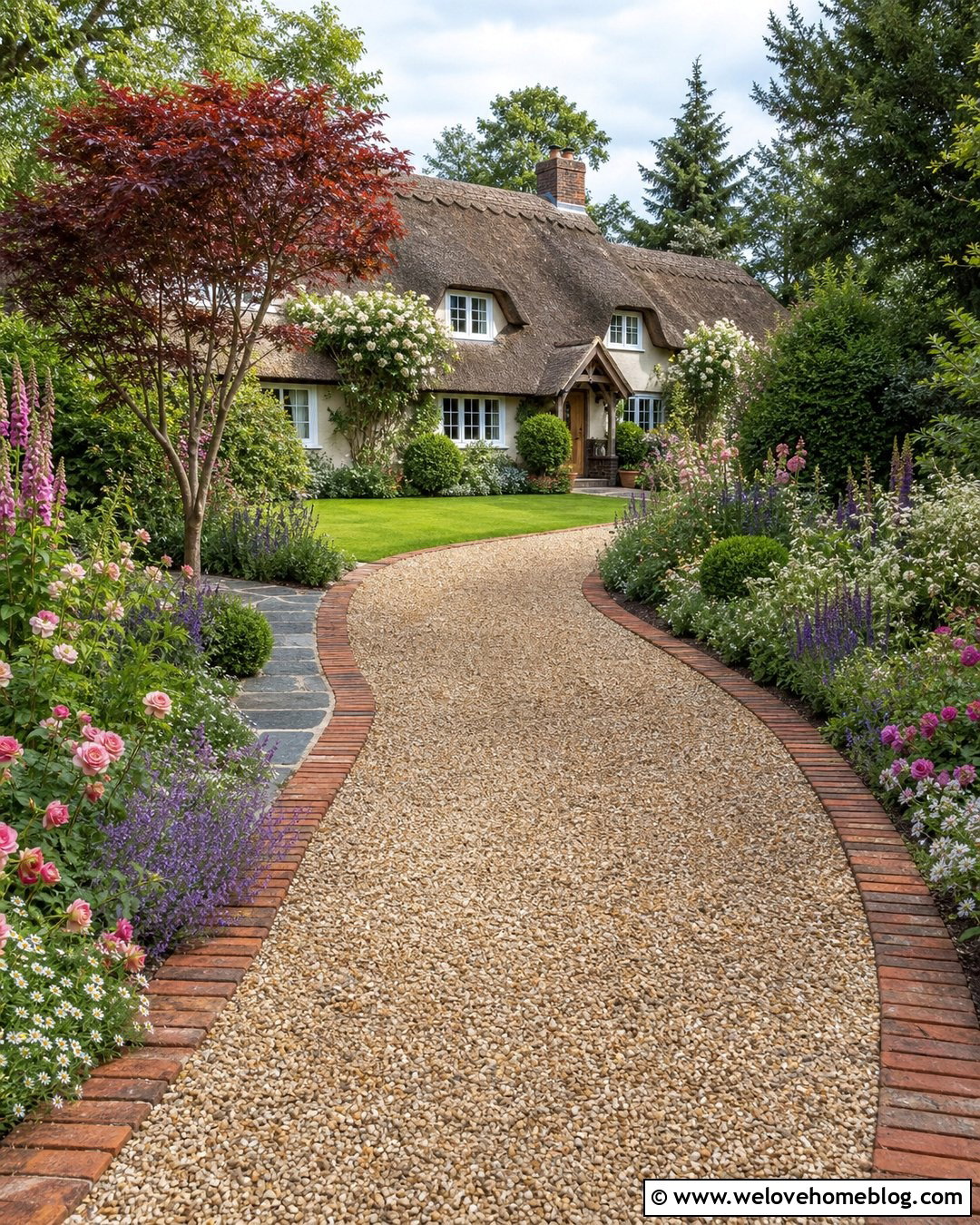
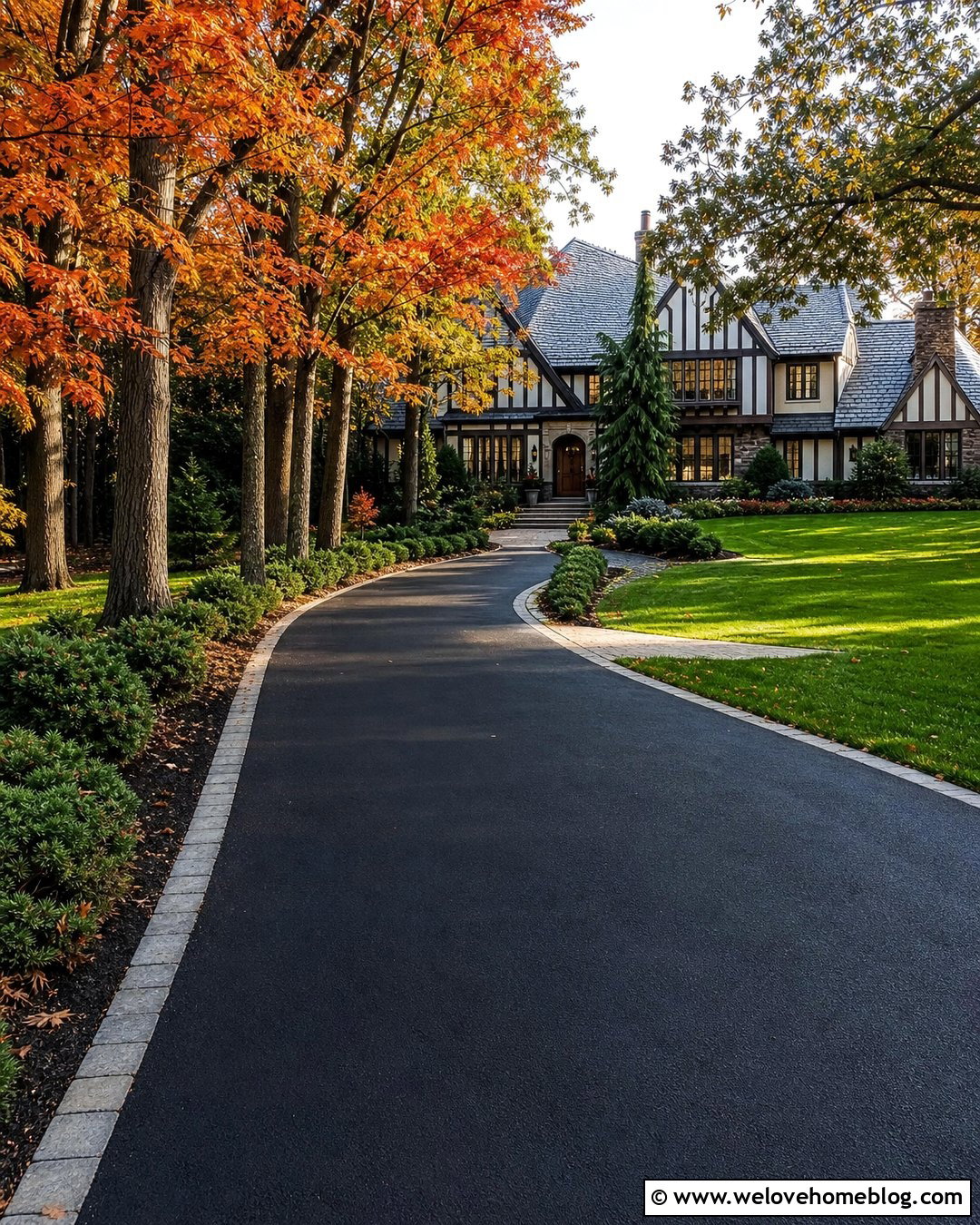
A simple landscape can still feel layered and finished without demanding weekly attention. Surround a gently curved asphalt driveway with wide beds of locally adapted evergreen ground cover, compact shrubs, ornamental grasses, and a few specimen boulders. Limit the palette and repeat each plant in large groups for easier pruning and replacement. Use crushed stone mulch immediately beside the pavement, then transition to planted areas farther up the slope. A concrete curb keeps the materials separated and provides a clean edge after storms. Install irrigation only where plants need it, and provide safe access for occasional maintenance. Low maintenance does not mean no maintenance, so account for leaf removal, drain cleaning, weed control, and the mature size of every shrub before filling the beds.

20. Farmhouse Hill Driveway With Meadow Planting
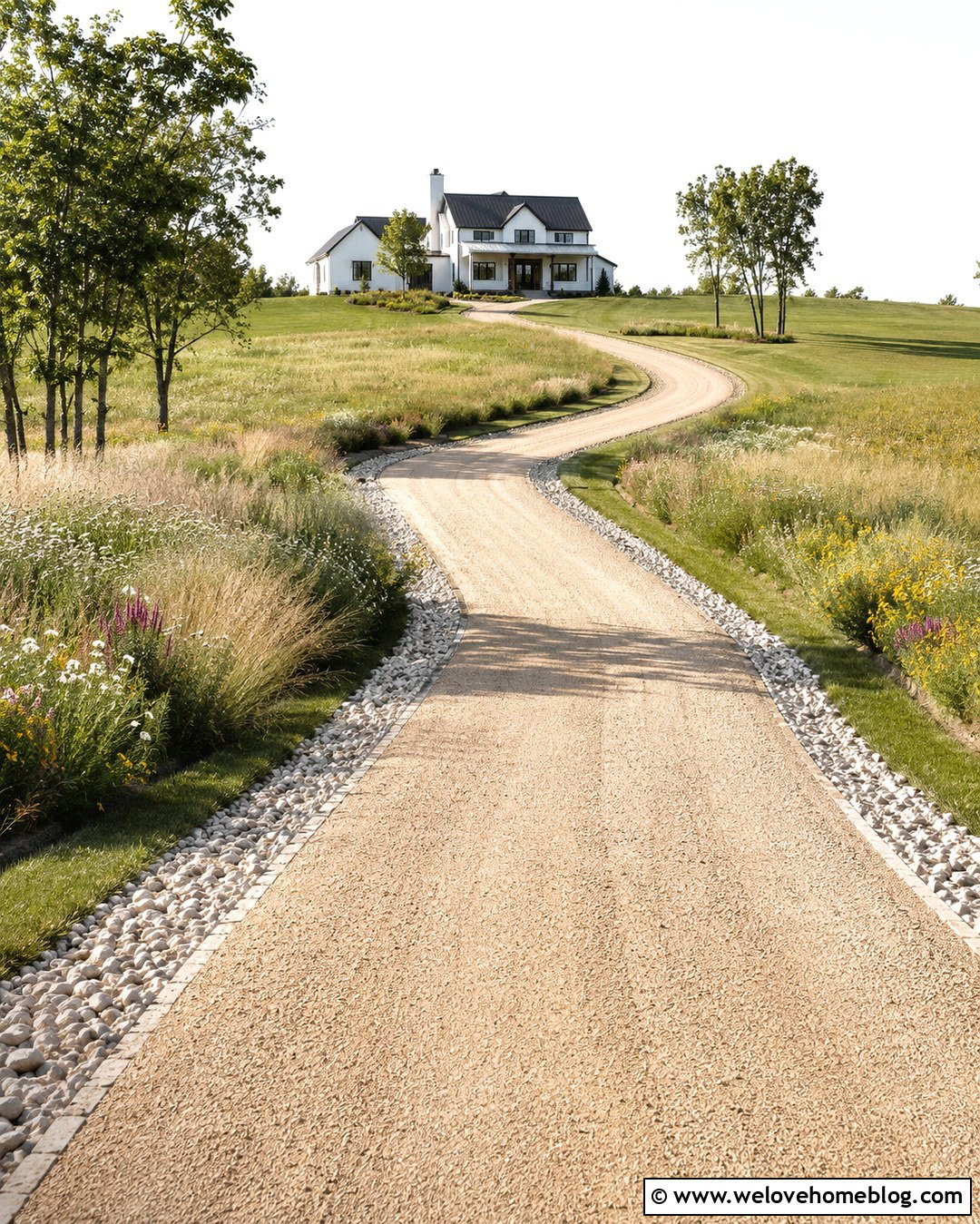
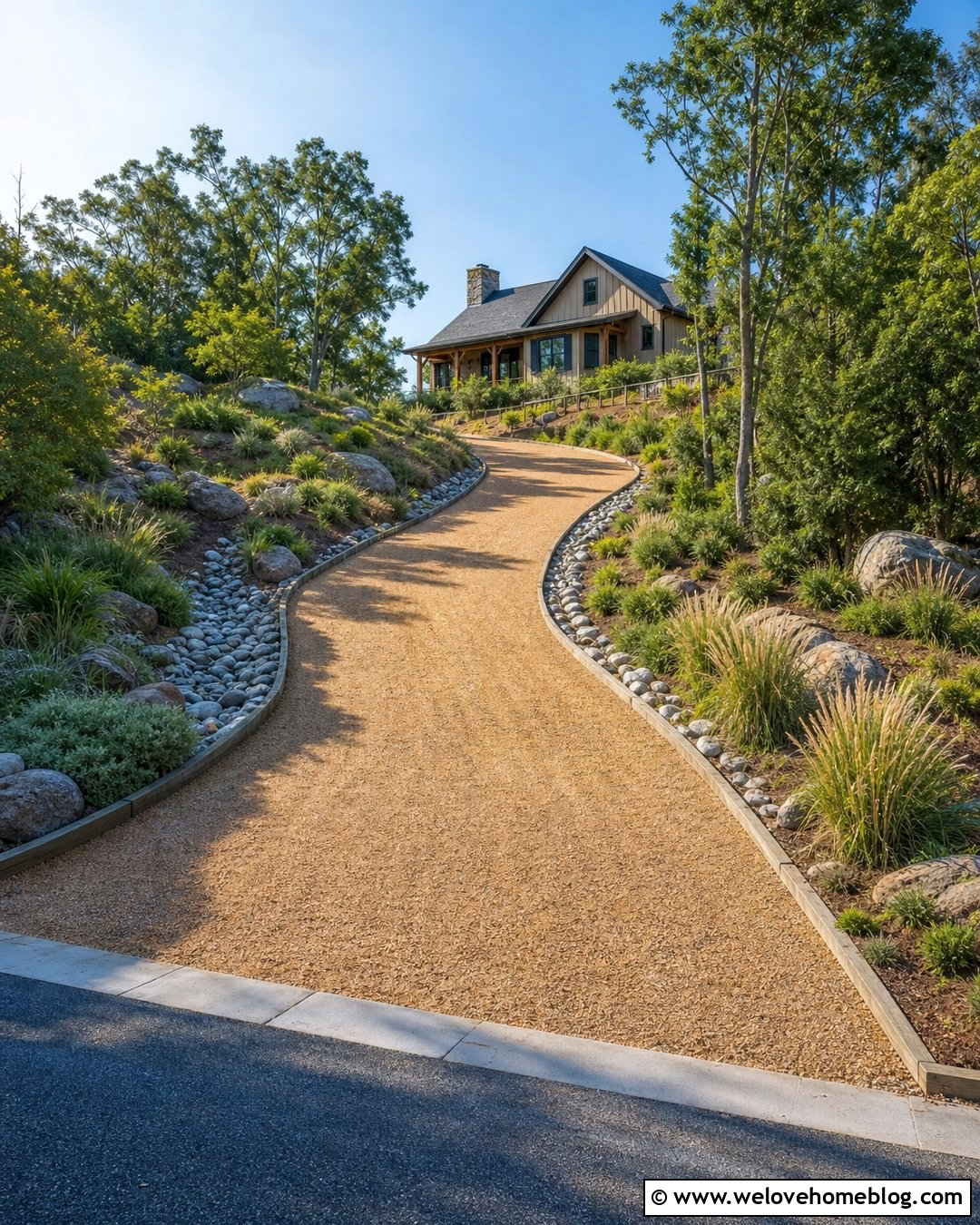
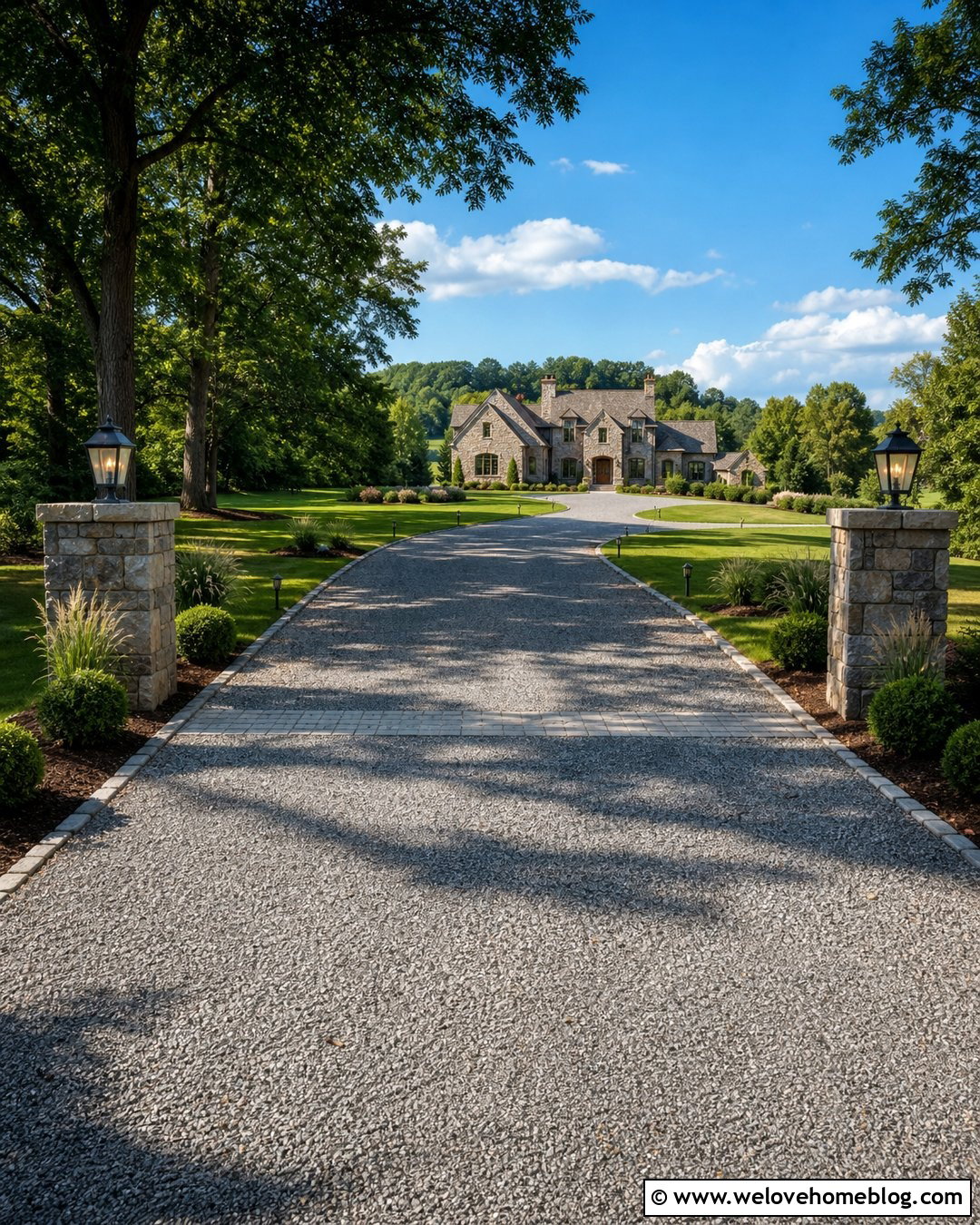
A country approach feels especially natural when loose meadow planting follows the shape of the hill. Create a long driveway from warm beige compacted gravel with a gently winding layout leading to a modern farmhouse. Border the drive with a narrow strip of larger crushed stone, then plant drifts of regionally suitable grasses and wildflowers beyond it. Keep vegetation low and tidy near the road, mailbox, curves, and drainage crossings. Groups of small native trees can mark the transition toward the house without creating a rigid avenue. Mow a clean edge once or twice during the growing season to distinguish the meadow from neglected growth. Because seed mixes vary greatly by region, choose species based on local climate, soil, sunlight, and invasive-plant guidance.
Conclusion:
The best 20 hill driveway landscaping ideas treat the slope, driving surface, drainage, borders, and planting as one connected system. Terraces and retaining walls can organize difficult grades, while ground covers, native plants, rock gardens, and meadows soften the land. Dry creeks, swales, rain gardens, and drainage channels can also become attractive parts of the entrance when they are planned correctly. Start by observing where water moves and identifying areas that are hard to mow, walk across, or maintain. Then choose materials that complement the house and repeat them throughout the design. For steep grades, major walls, or complicated runoff, professional guidance can protect both the landscape and driveway.

Related posts:

Leave a Reply