
A well-designed driveway entrance does more than mark where vehicles enter. It frames the property, guides attention toward the house, and creates a polished first impression from the street. These 40 Driveway Entrance Curb Appeal Ideas explore complete looks that combine practical driveway materials with gates, pillars, lighting, borders, signs, and layered landscaping. Current entrance designs often coordinate these features with the home’s architecture while using lighting and greenery to soften large areas of pavement. () Whether you have a narrow suburban lot, a long country lane, or a wide circular drive, there is an approach that can fit your space and budget. Use the following 40 Driveway Entrance Curb Appeal Ideas to plan an entrance that feels attractive, useful, and connected to your home.

1. Stone Pillar Gravel Driveway Entrance
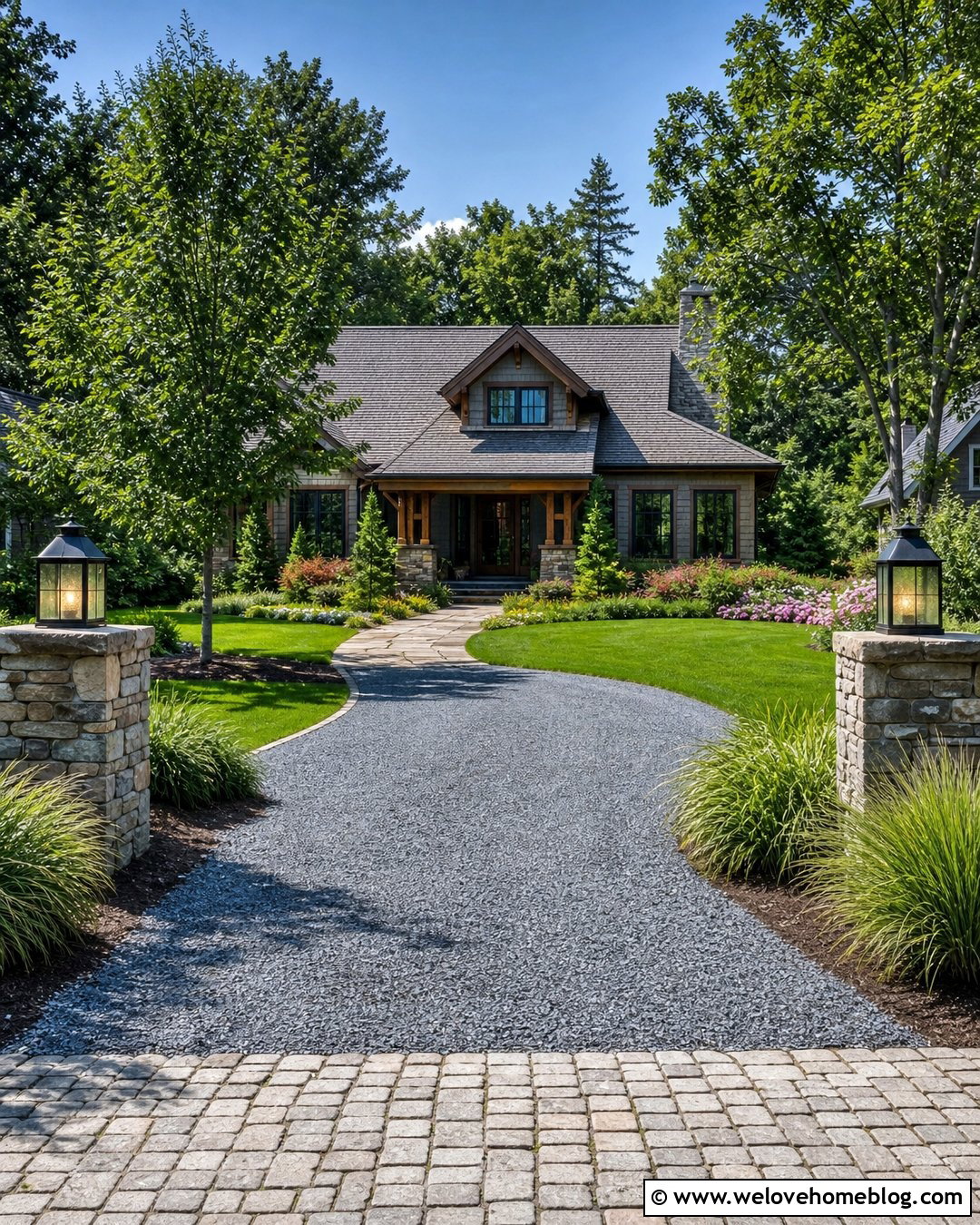
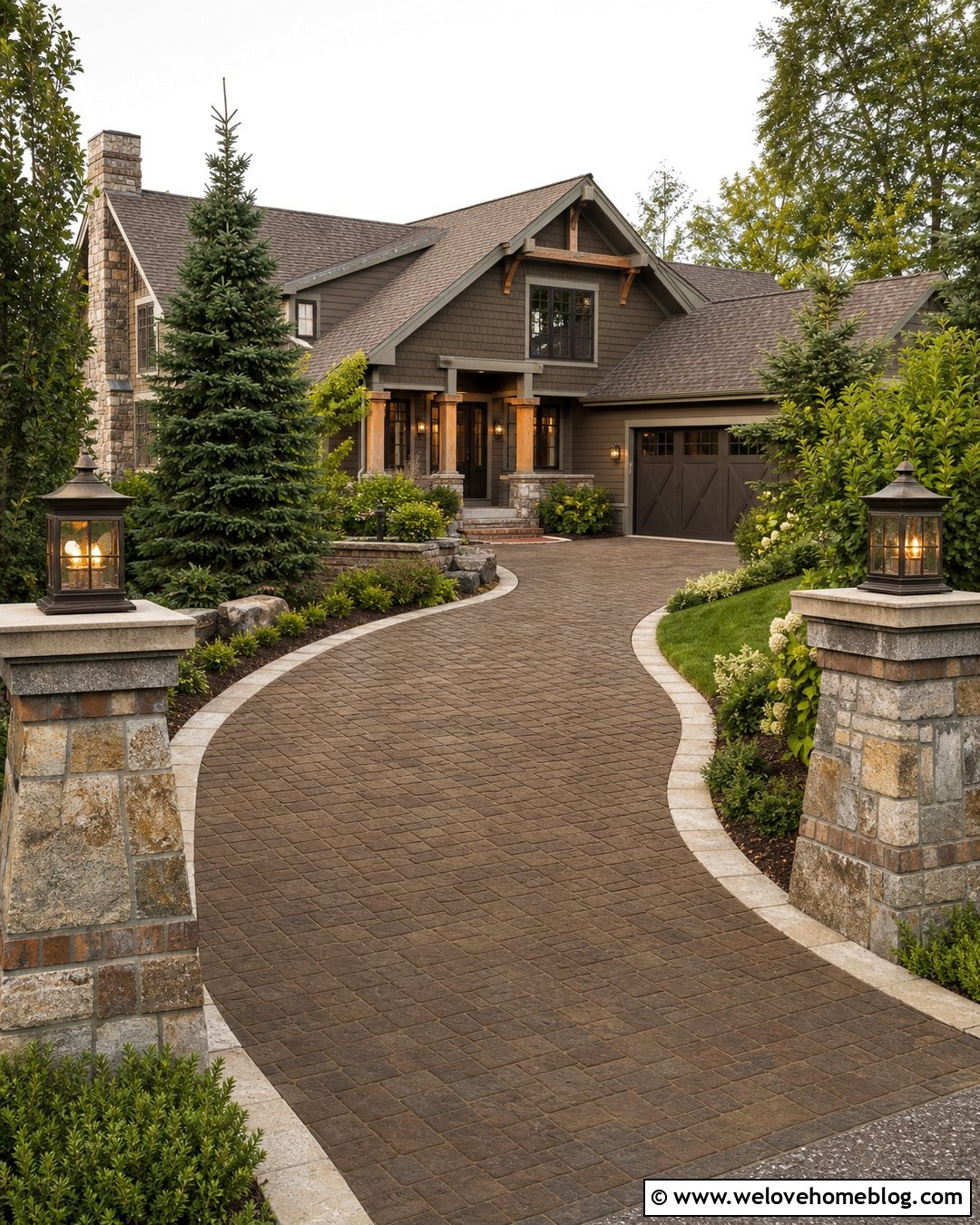
A curved gravel driveway framed by stone pillars creates a substantial entrance without feeling overly formal. Choose compacted gray crushed gravel for a stable surface, then repeat stone from the home’s foundation on two low entrance pillars. Wide planting beds can soften the masonry with ornamental grasses, evergreen shrubs, and seasonal flowers. Use dark metal lanterns on the pillars to make the opening easier to identify after sunset. A cobblestone apron at the road helps contain loose gravel and creates a clean transition from pavement. Keep the pillars outside the vehicle clearance zone and make the opening comfortably wide. This complete driveway entrance works especially well with Craftsman homes, country properties, and houses surrounded by mature trees.
2. Brick Pillar Asphalt Driveway Entrance
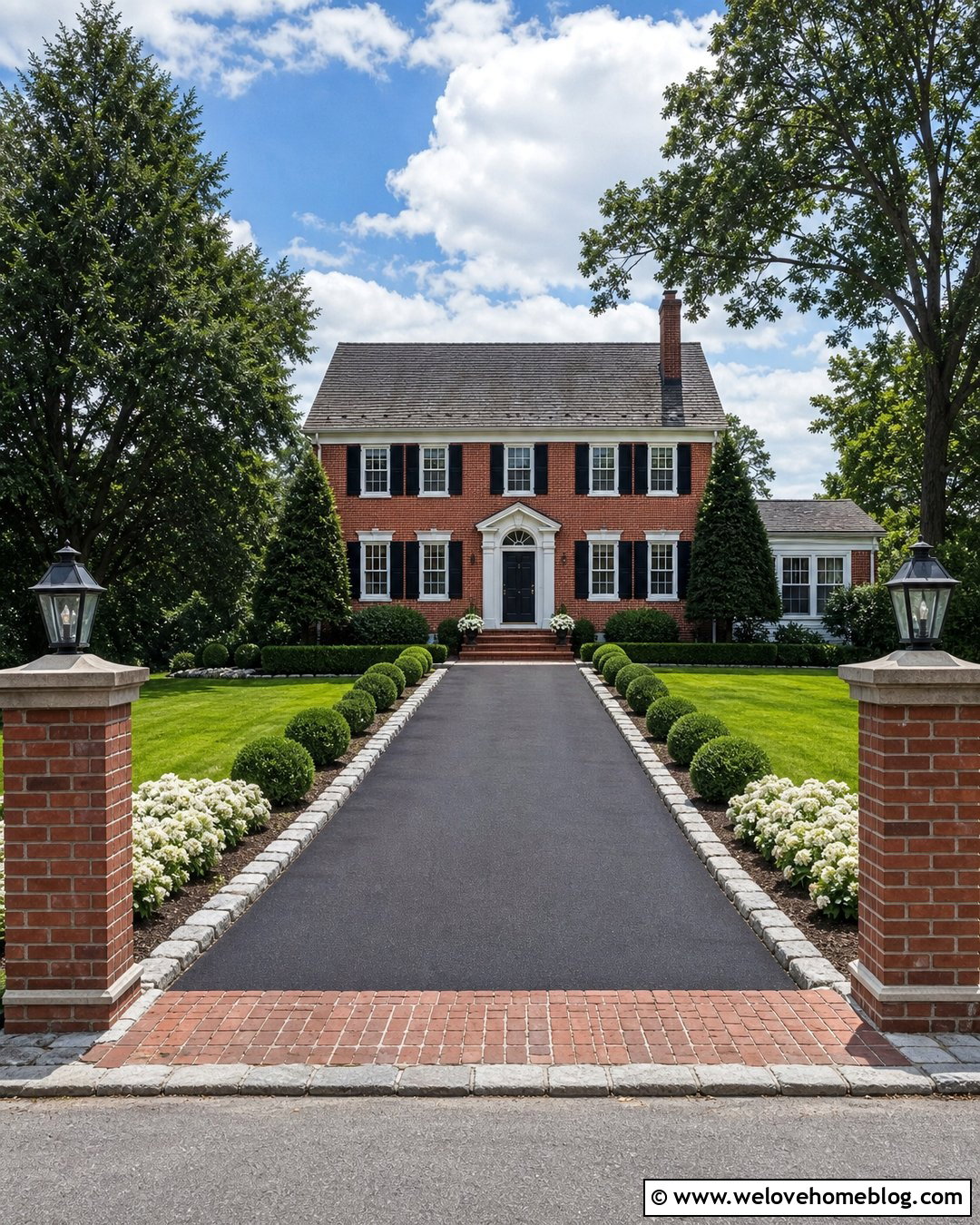
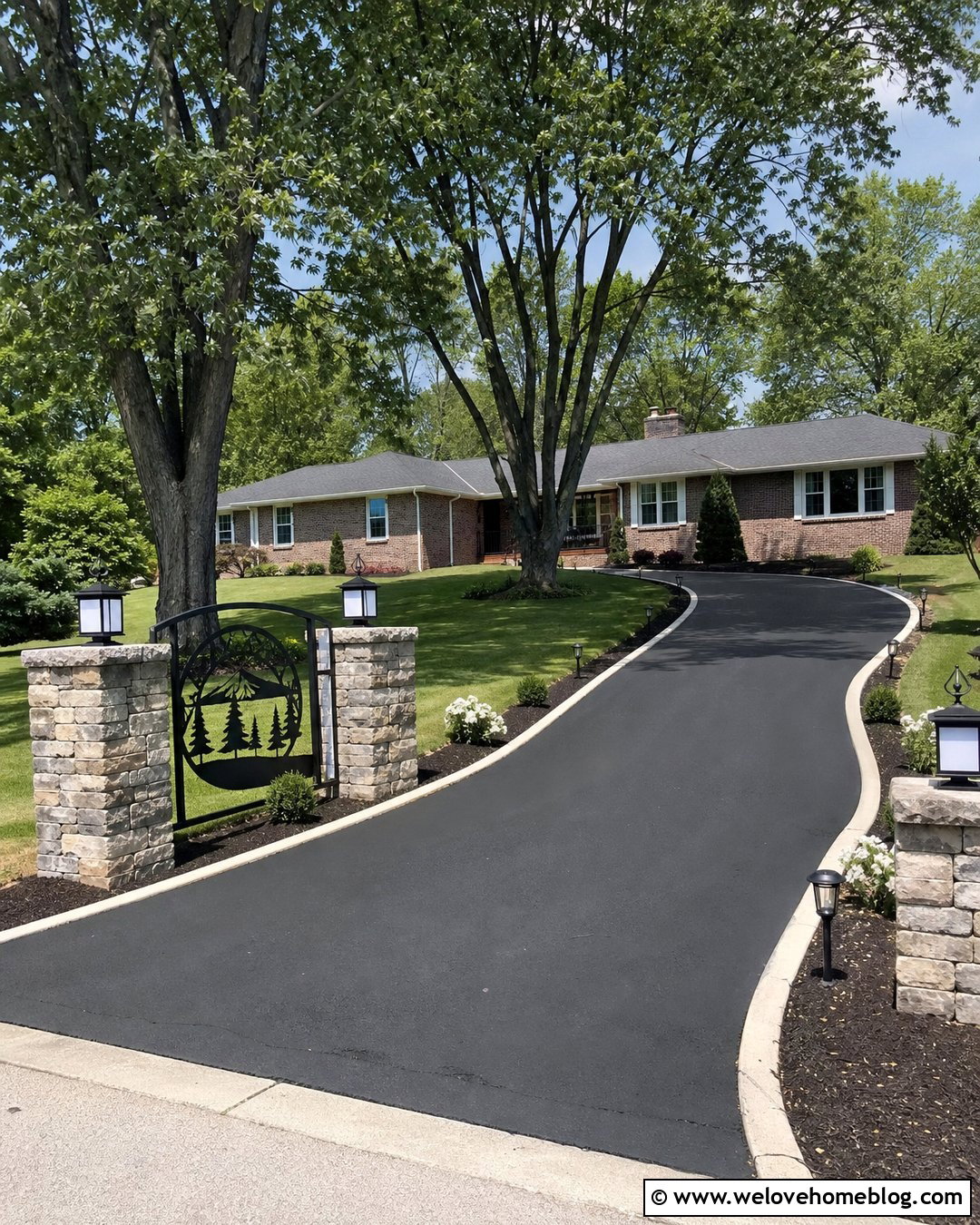
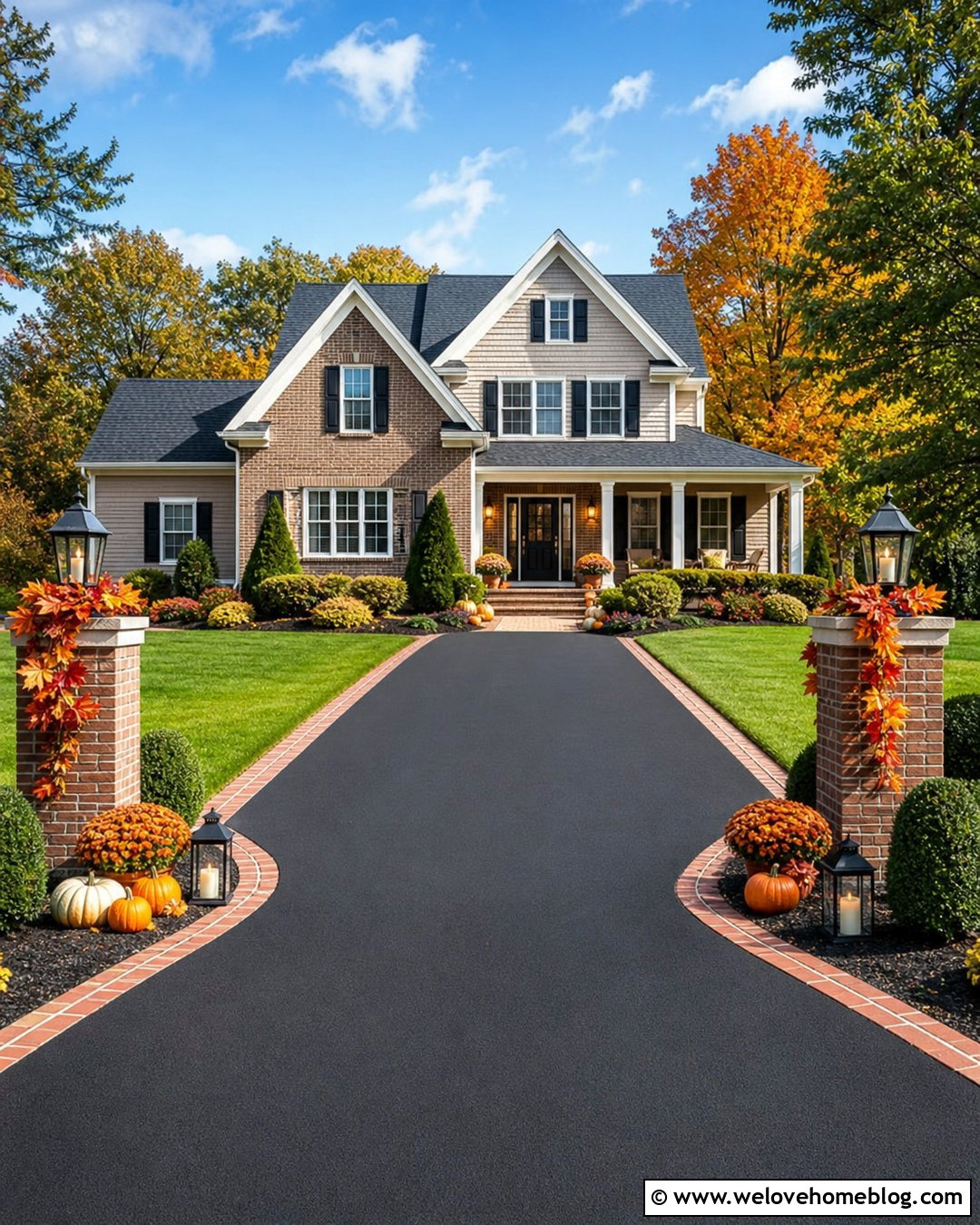
Fresh black asphalt looks more refined when the entrance is anchored by traditional brick pillars. Match the brick to the house exterior or select a slightly darker tone that complements it. A soldier-course brick apron can carry the masonry detail across the driveway and visually connect both sides. Finish the edges with Belgian block or a narrow brick border to prevent the asphalt from appearing unfinished. Low boxwood hedges, flowering perennials, and a tidy lawn create structure without reducing visibility near the road. Place simple lanterns or capped lights on the pillars for a welcoming detail. This driveway entrance is practical for a Colonial, Cape Cod, or red-brick ranch where classic materials already define the architecture.
3. Modern Concrete Driveway Entrance With Steel Gate
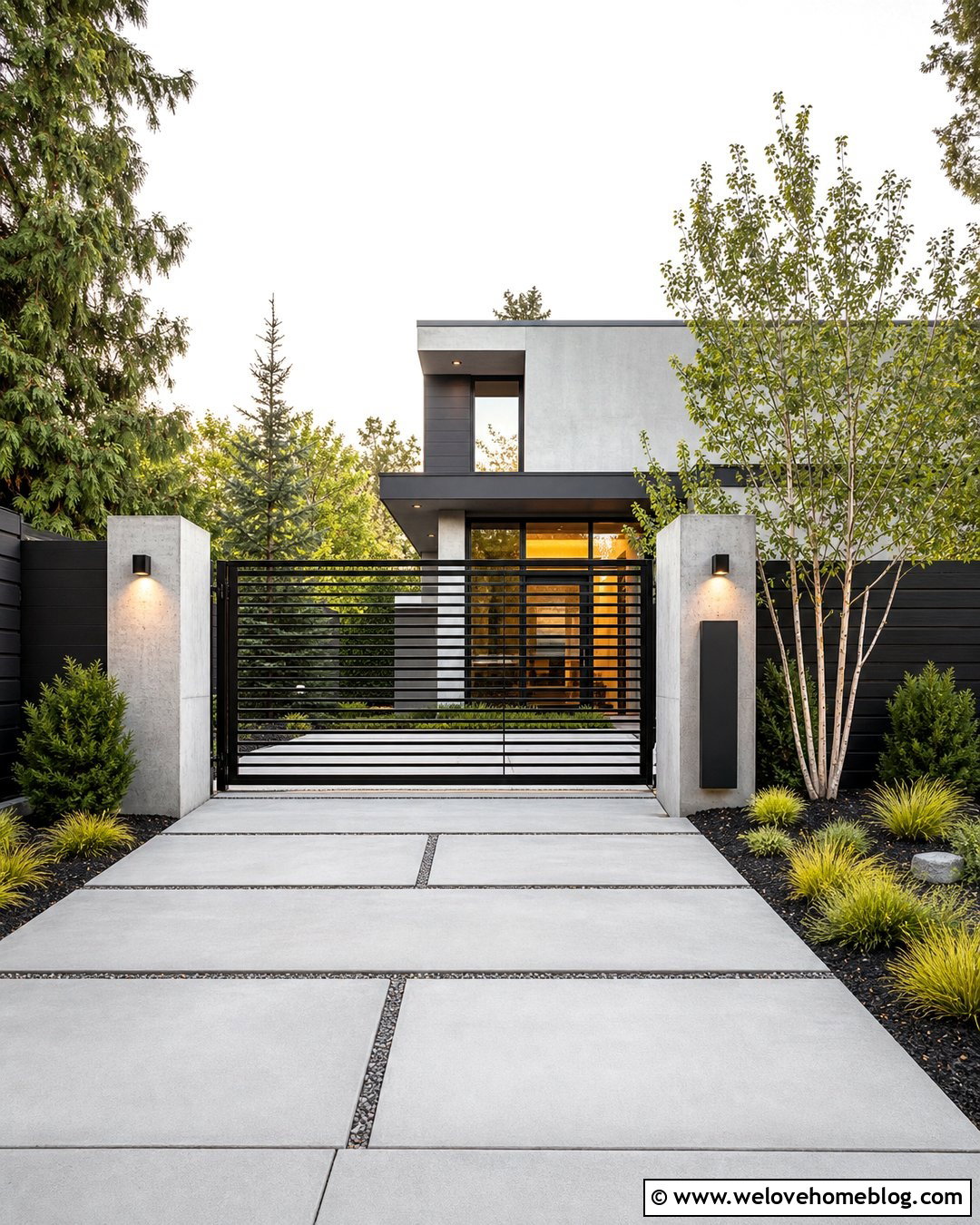
Clean lines make a modern driveway entrance feel organized and intentional. Use smooth light-gray poured concrete in broad rectangular sections, with narrow gravel or grass joints adding visual rhythm. A horizontal-slat steel gate in matte black creates privacy while complementing contemporary windows and rooflines. Support it with simple concrete pillars rather than ornate masonry. Restrained landscaping keeps the composition calm, so choose sculptural grasses, compact evergreens, and one multistem ornamental tree. Integrate the address into a slim metal monument beside the gate. Recessed lighting in the pillars provides guidance without introducing decorative clutter. The gate, hardscape, house, and planting palette should share the same straightforward geometry, allowing the whole entrance to read as one cohesive modern design.
4. Farmhouse Gravel Driveway Entrance With Wood Gate
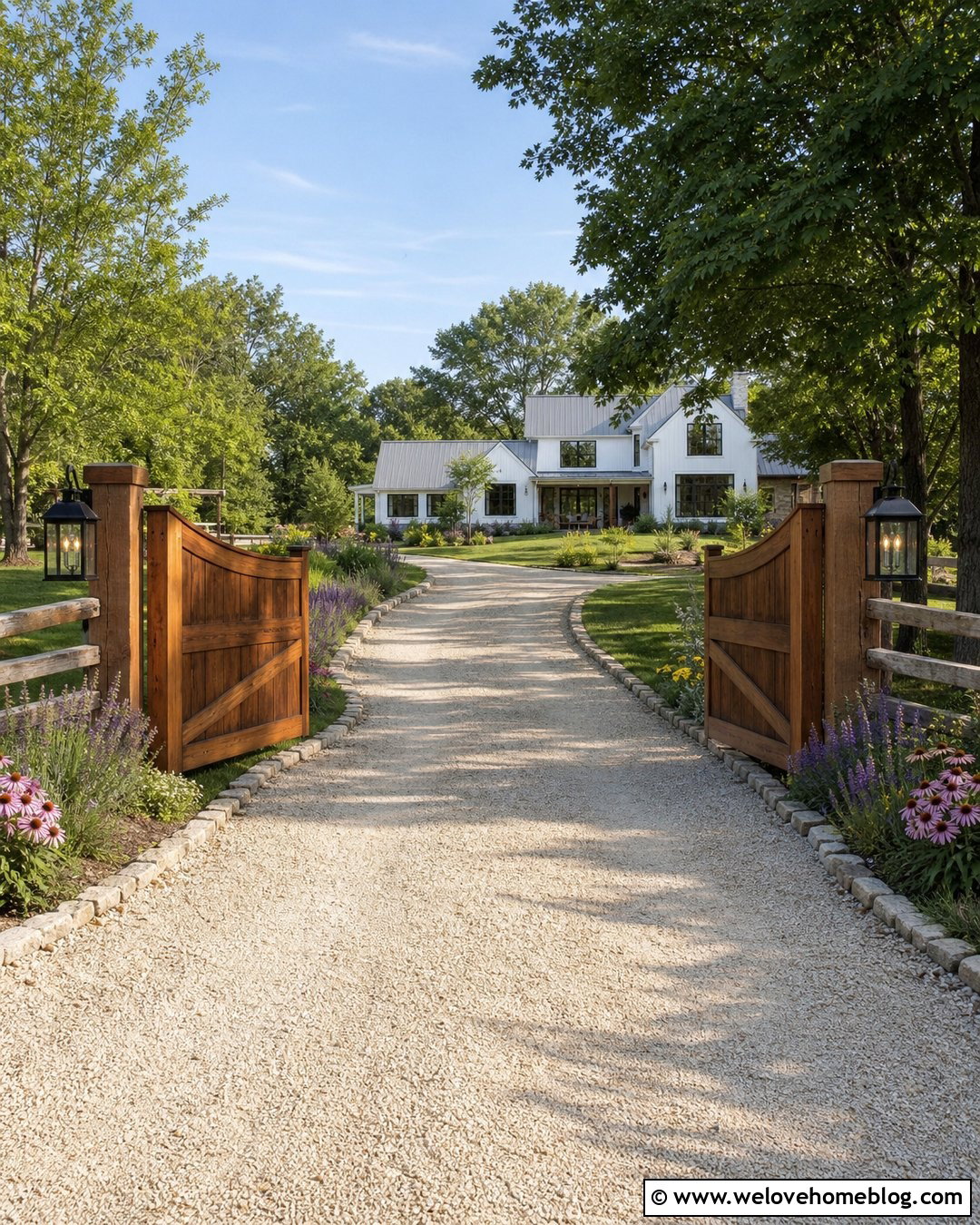
Nothing suits a rural farmhouse quite like a pale gravel driveway passing through a warm wooden gate. Use compacted limestone gravel for a bright, clean surface and edge the opening with fieldstone or heavy timber. A wide double gate made from cedar or stained oak can provide a welcoming country character while clearly defining the property. Add split-rail fencing on both sides so the gate does not look isolated. Loose beds of lavender, salvia, coneflowers, and native grasses soften the fence line. A simple black address plaque and barn-style lanterns complete the entrance. Keep tall plants away from sightlines near the road. The finished look should feel relaxed and natural, yet maintained enough to strengthen the home’s curb appeal.
5. Colonial Brick Paver Driveway Entrance
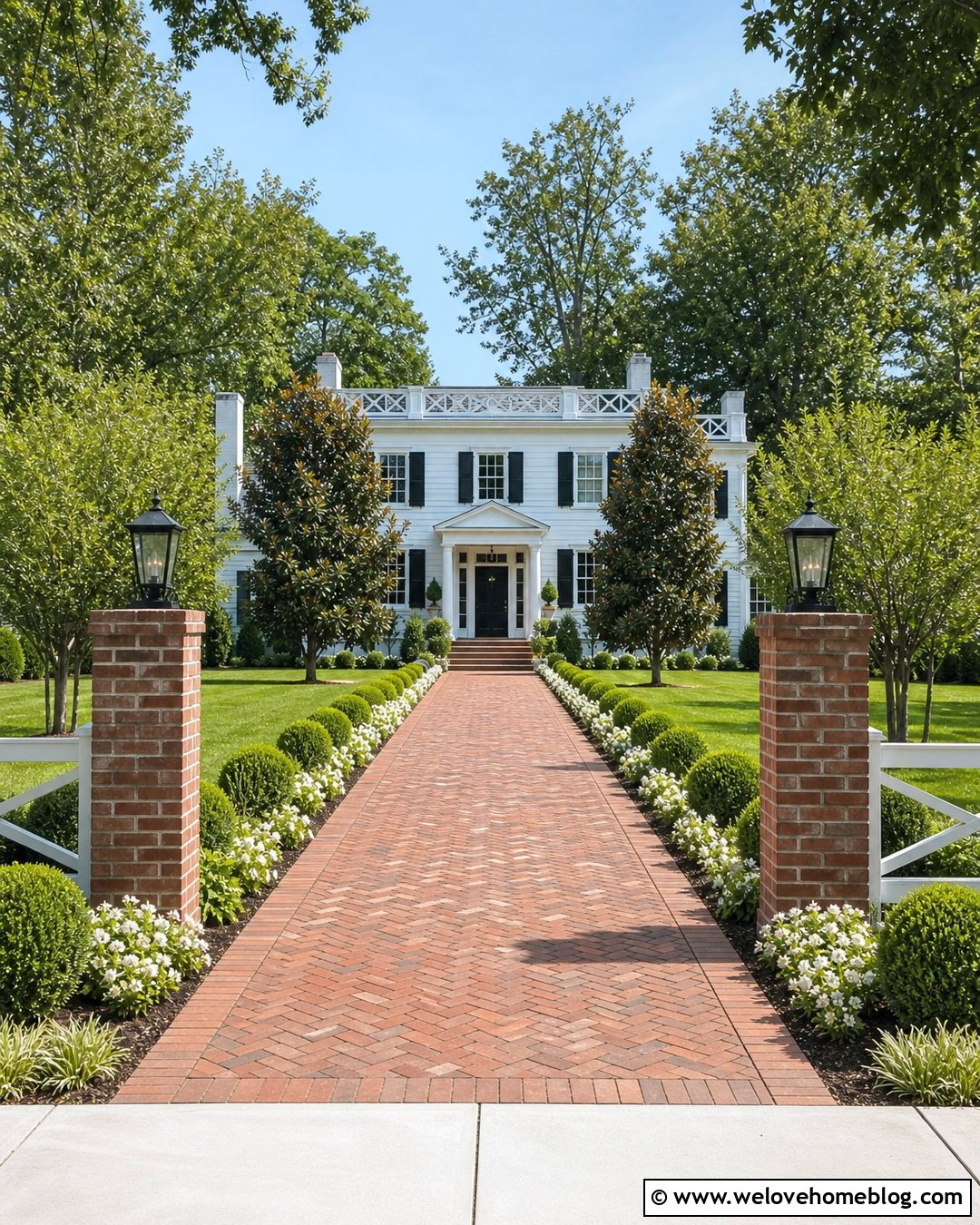
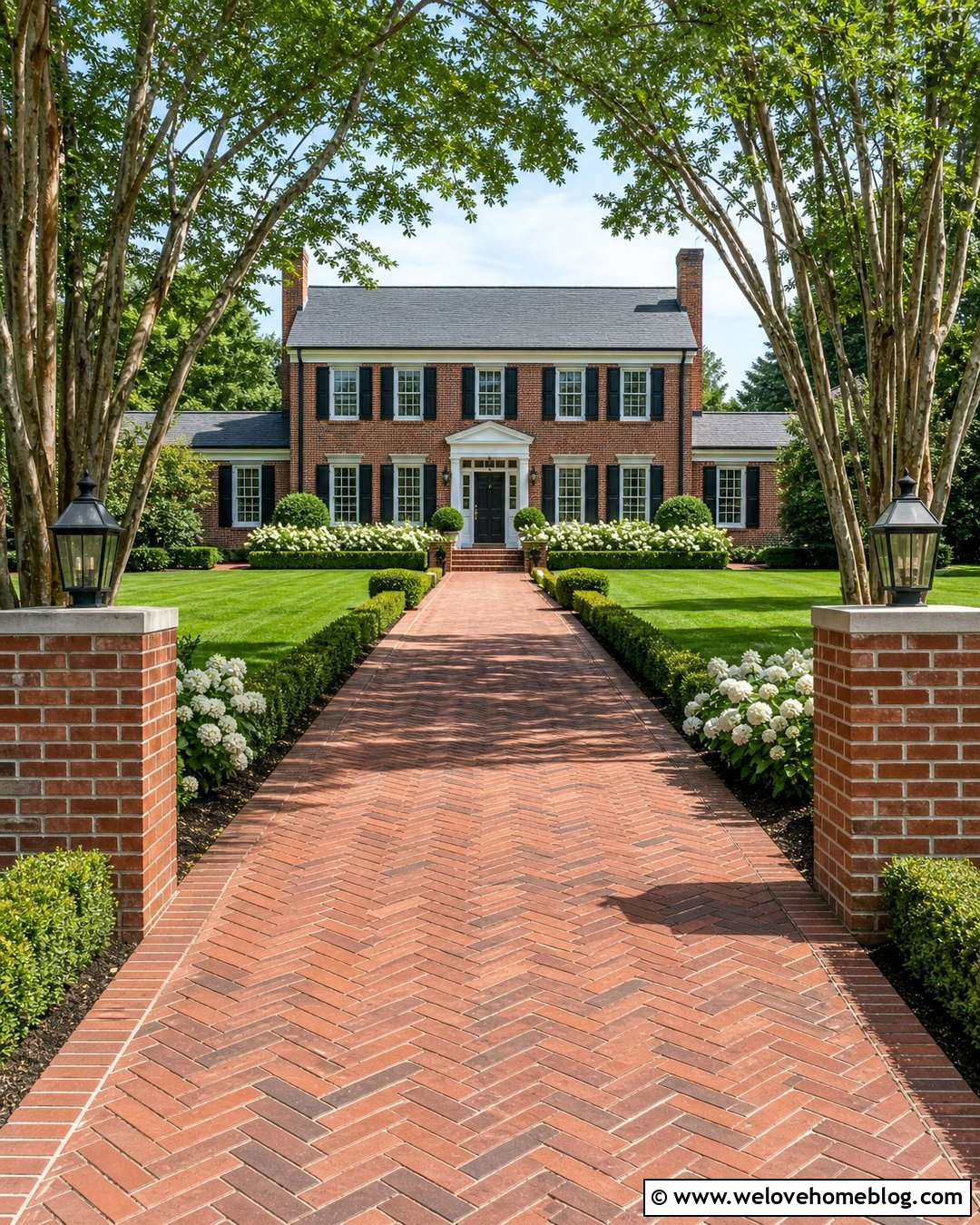
A red or brown brick paver driveway can give a Colonial home a fitting sense of order and permanence. Lay the entrance apron in a herringbone pattern, then use a straight running-bond border to create crisp edges. Brick pillars topped with traditional lanterns can frame the opening, while low painted fencing extends toward the lawn. Formal planting works best with this symmetrical layout. Consider matching evergreen shrubs, white flowering perennials, and two small ornamental trees placed at equal distances from the driveway. A straight approach reinforces the centered architecture of the house. Select pavers with subtle color variation so the surface has character without looking busy. This combination makes the driveway feel like a natural extension of the historic-inspired facade.
6. Craftsman Exposed Aggregate Driveway Entrance
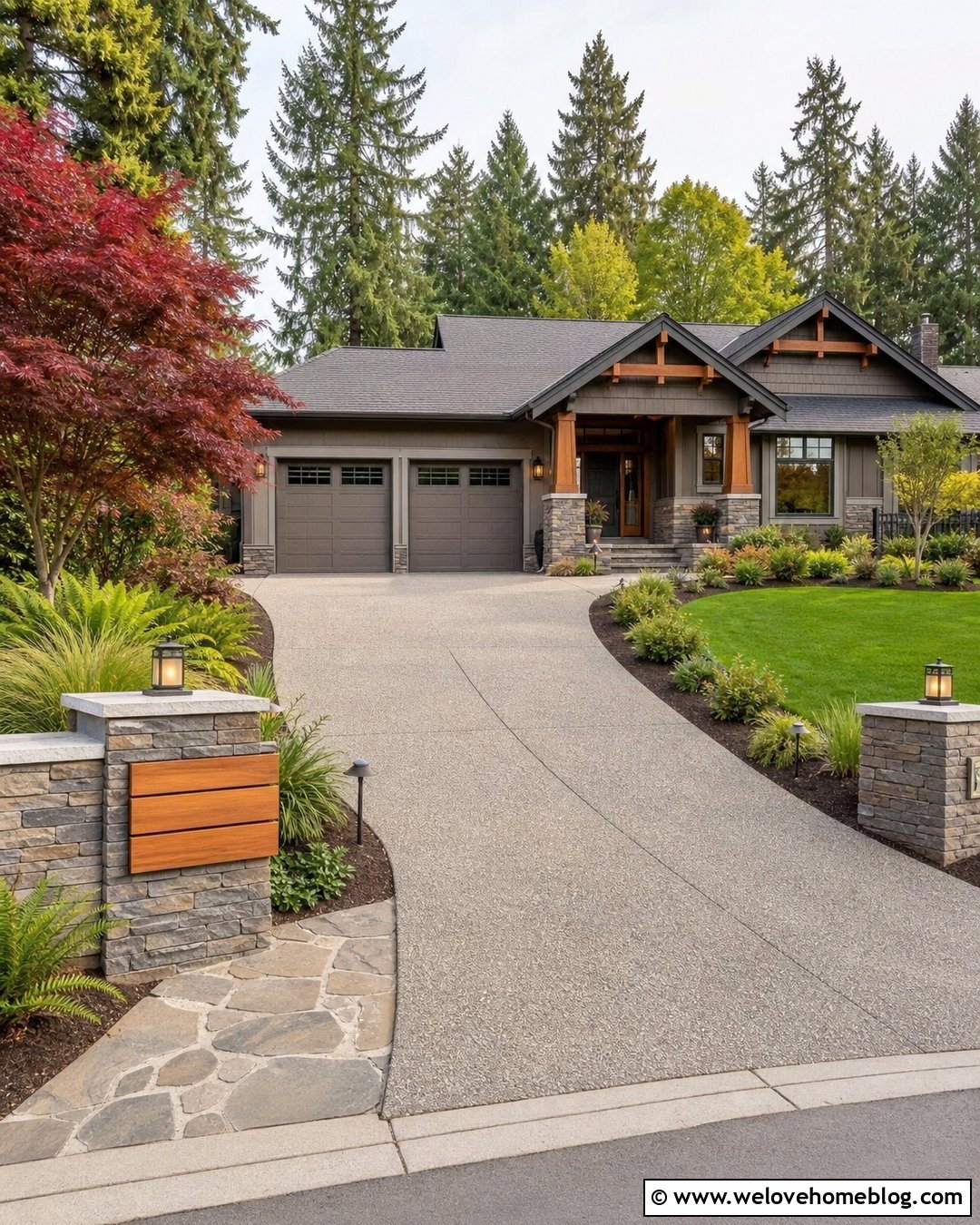
Exposed aggregate brings texture and earthy color to a Craftsman driveway entrance. Choose a warm gray or tan concrete mix containing small natural stones that coordinate with porch columns, foundation masonry, or roof tones. Define the entrance with low stacked-stone walls that gently curve into generous planting beds. Compact shrubs, ferns, ornamental grasses, and a small Japanese maple can provide the layered, handcrafted appearance associated with Craftsman landscapes. Add a flagstone walkway branching from the driveway toward the front porch. Low-voltage lights tucked into the beds highlight the walls while keeping fixtures visually discreet. A wood-and-metal address sign can finish the roadside view. Together, these materials create a durable entrance that feels detailed, welcoming, and closely connected to the house.
7. Circular Cobblestone Driveway Entrance
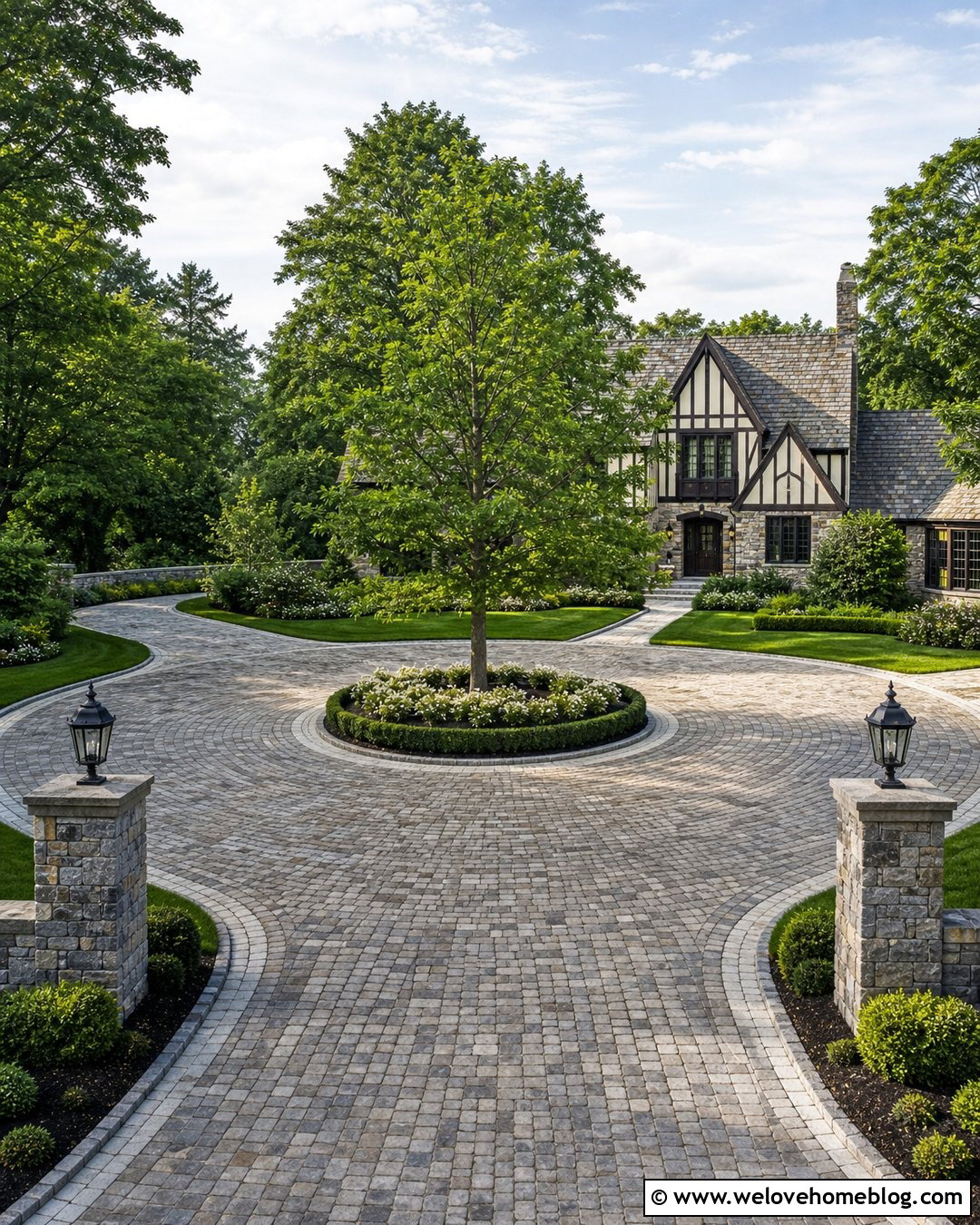
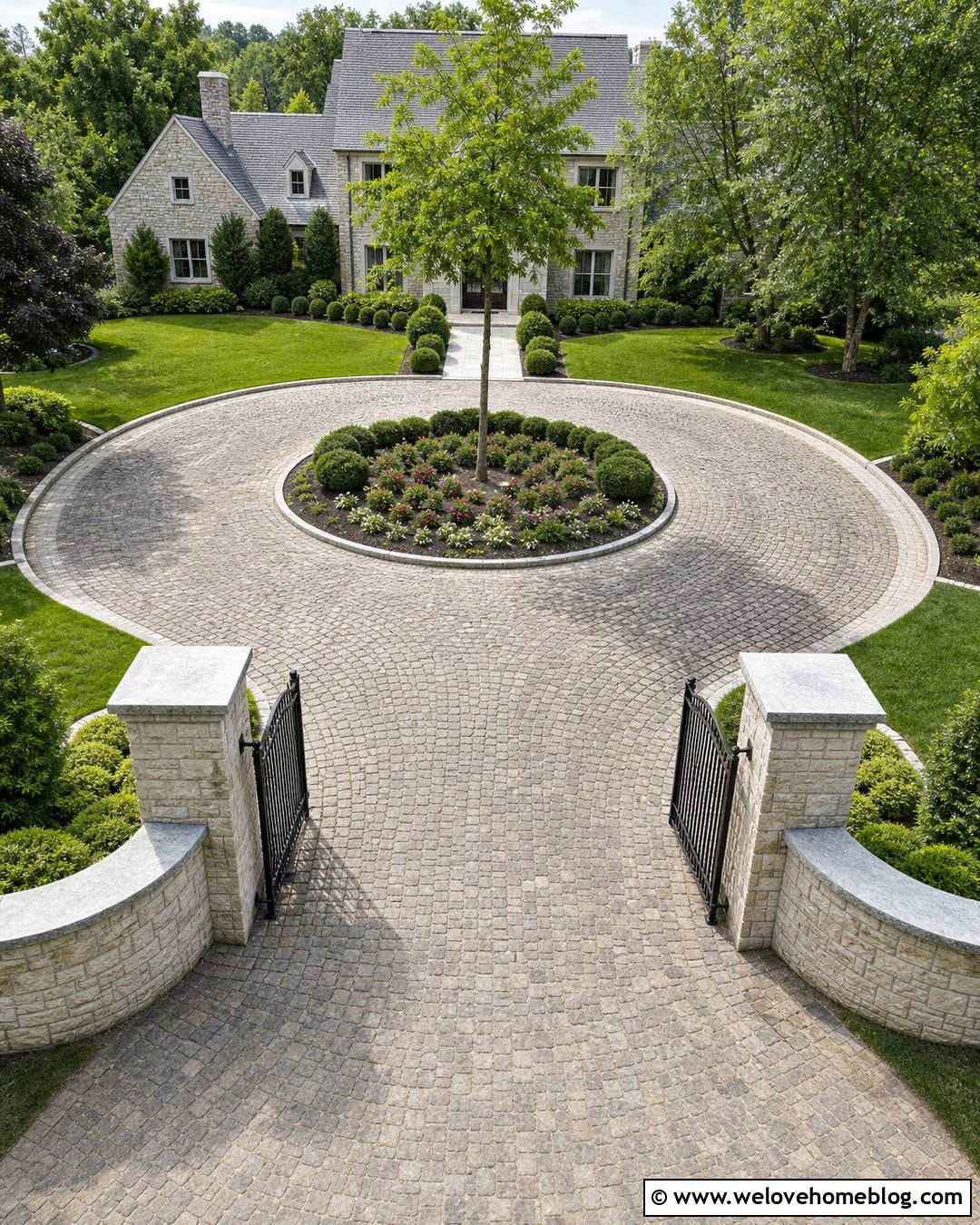
A circular cobblestone driveway makes the arrival experience feel graceful while giving vehicles a convenient path back toward the street. Use full cobblestones or cobblestone-style concrete pavers in mixed gray tones, with a clearly defined entrance and exit. Frame both openings with matching stone pillars so the layout looks balanced from the curb. The center island can feature a specimen tree surrounded by low evergreen shrubs and ground cover. Avoid oversized plants that block the house or reduce driver visibility around the curve. A narrow stone walkway can connect the circle to the front door. Traditional lanterns and neatly trimmed borders add polish. This complete entrance is especially suitable for Tudor, European-inspired, and substantial traditional homes on wider lots.
8. Small Concrete Driveway Entrance With Low Beds
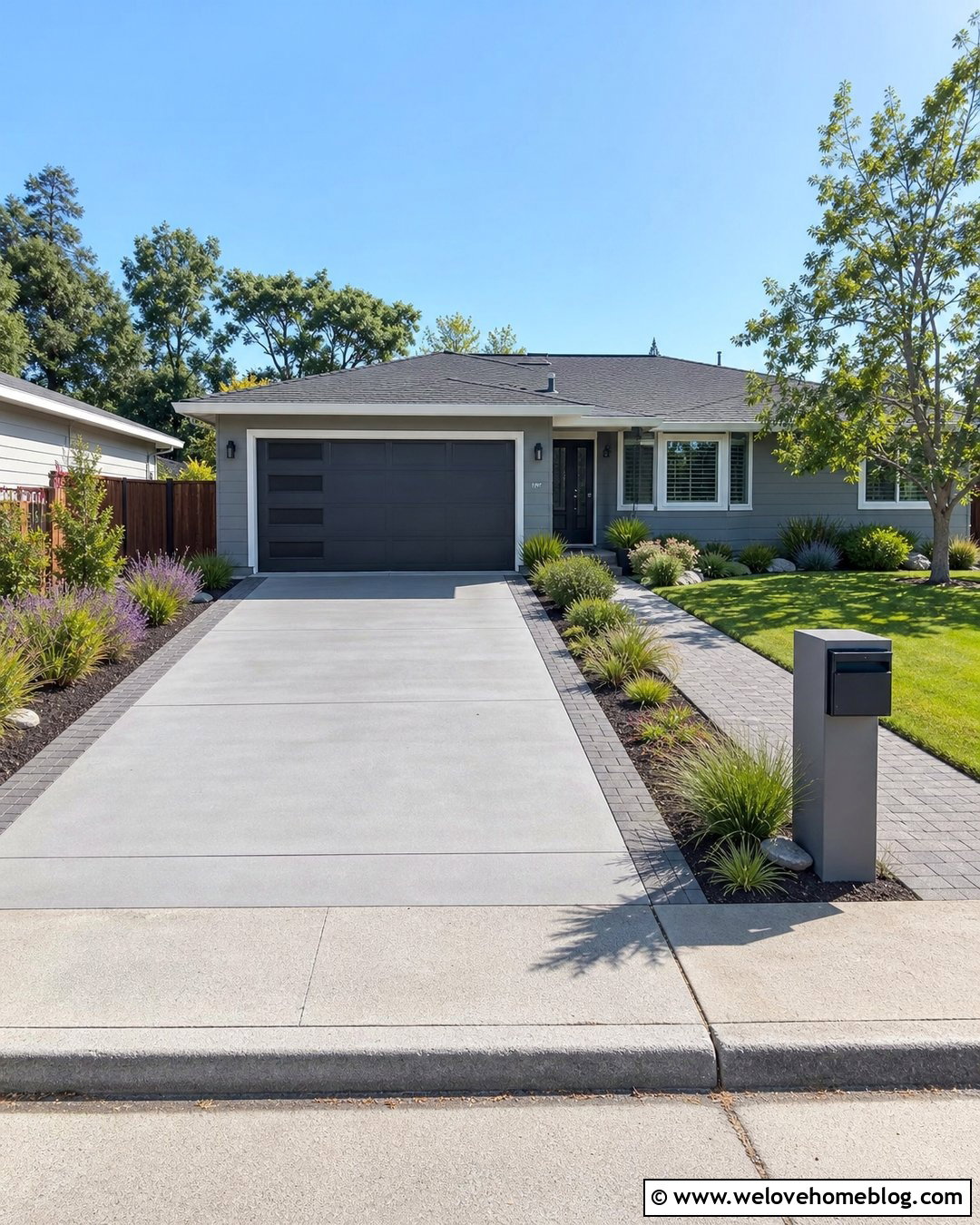
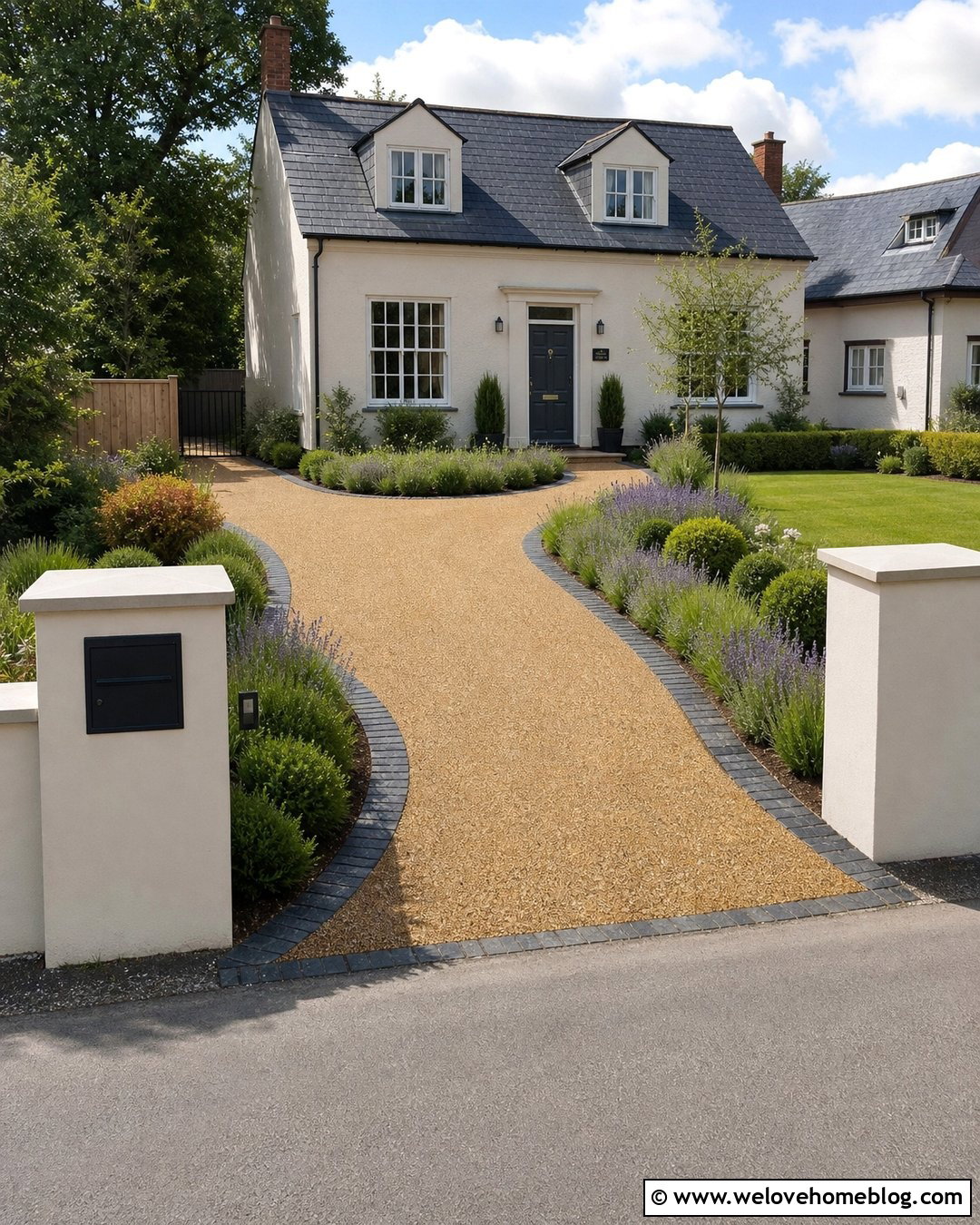
A small driveway entrance benefits from simple materials and low landscaping that preserve valuable visual space. Use smooth medium-gray concrete with a narrow charcoal paver border to make the surface look finished. Instead of bulky pillars, install a slim address marker on one side and a matching mailbox on the other. Shallow planting beds can frame the opening with creeping ground cover, dwarf ornamental grasses, and compact flowering shrubs. Keep everything below approximately knee height near the road so drivers can see pedestrians and traffic. A separate paver walkway should branch clearly toward the front door rather than disappearing into the parking area. This streamlined arrangement gives a modest suburban driveway definition, color, and character without making the front yard feel crowded or difficult to maintain.
9. Budget Asphalt Driveway Entrance With Mulch Beds
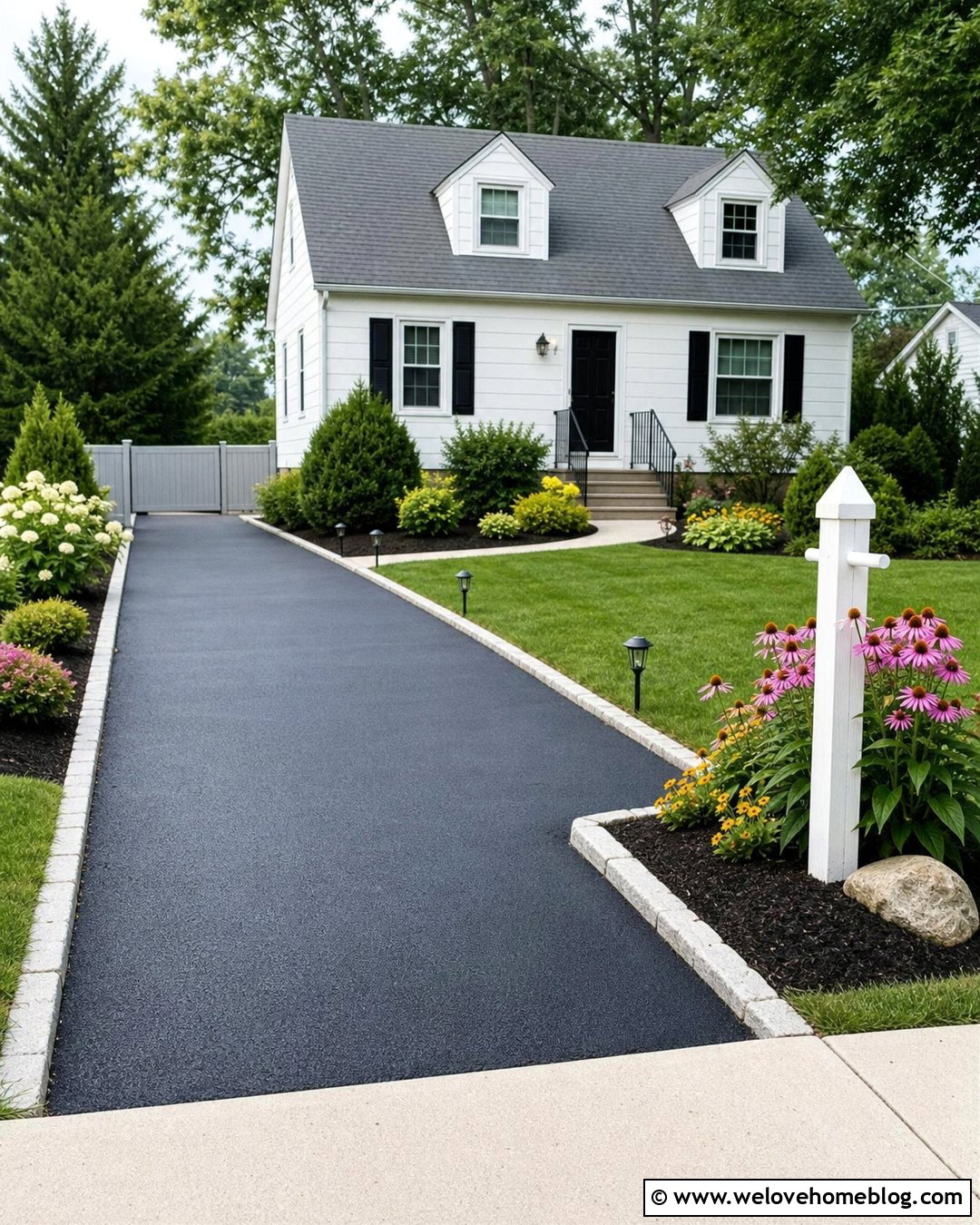
An affordable driveway entrance can still look carefully planned. Refresh an existing asphalt surface by sealing cracks, cleaning the edges, and applying a uniform blacktop coating when appropriate. Create matching curved beds on both sides of the entrance using inexpensive steel or concrete edging. Dark mulch, hardy shrubs, and groups of colorful perennials will provide contrast against the asphalt without requiring major construction. A simple painted wood address post can serve as the focal point, especially when its color matches the front door or shutters. Add two solar or low-voltage path lights near the opening for better definition. Avoid scattering many small decorations. Repeating a few plants and maintaining sharp lawn lines will produce a cleaner, more convincing transformation on a limited budget.
10. Rural Crushed Stone Driveway Entrance
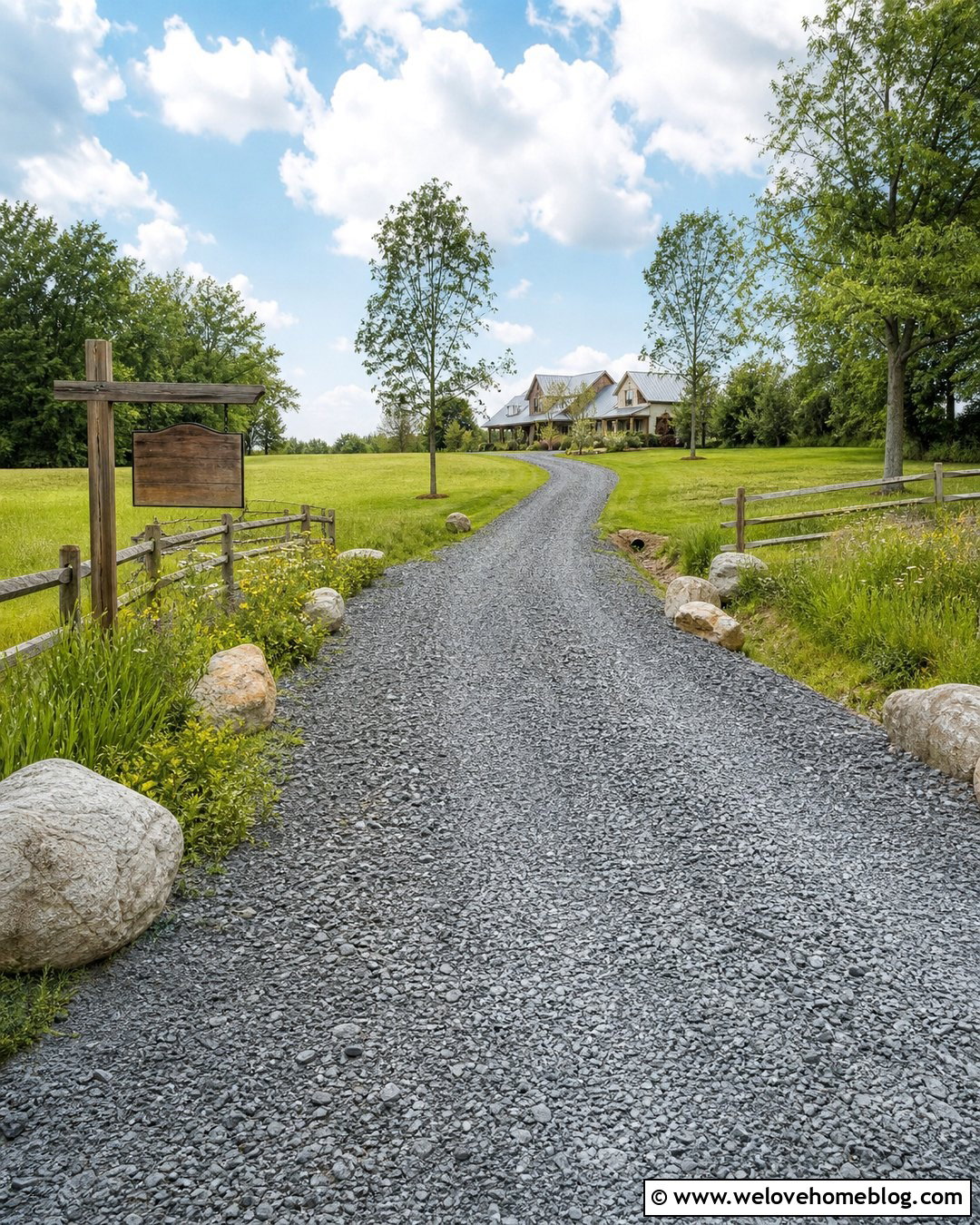
A rural entrance should feel at home within its open surroundings while remaining clearly visible from the road. Use angular crushed stone rather than rounded gravel because the pieces compact into a firmer driving surface. Shape the driveway with a gentle curve and contain the entrance using larger fieldstone edges. Split-rail fencing can extend from both sides, visually connecting the drive to fields, meadows, or a farmhouse yard. Plant native grasses and flowering perennials in broad, informal groups rather than narrow formal rows. A sturdy timber sign can display the property number without looking too suburban. Leave adequate space around drainage ditches and culverts. The resulting entrance feels natural and understated, but its strong edges and coordinated materials prevent it from appearing neglected.
11. Coastal Shell Driveway Entrance
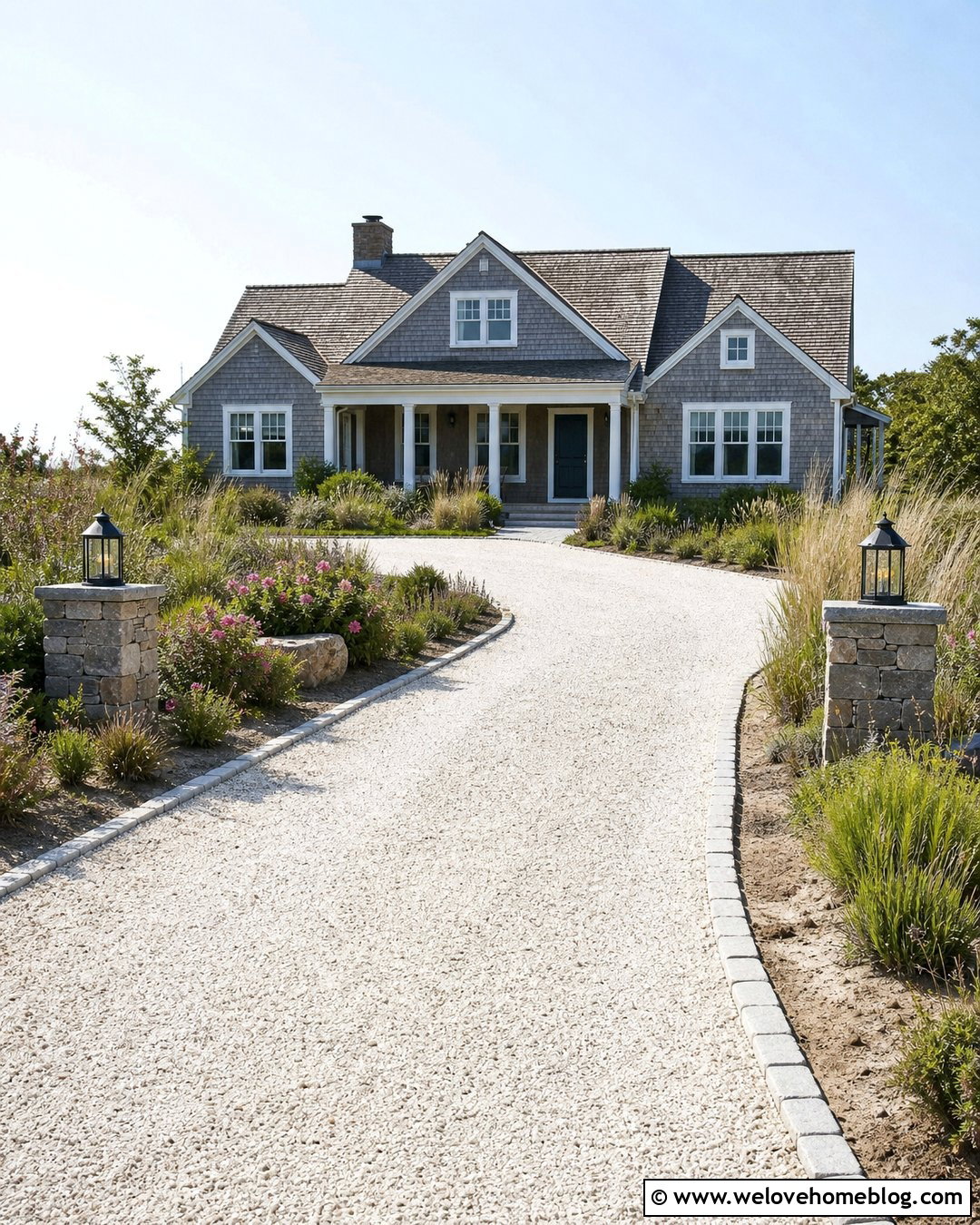
A crushed shell driveway creates a bright coastal entrance that pairs naturally with white siding, pale shingles, and blue-gray exterior accents. Use a properly prepared compacted base beneath the shell material so the entrance remains stable. Edge the driveway with light granite blocks or weathered timber for a crisp boundary. Low stone pillars can support simple nautical-style lanterns without turning the design into a theme. Fill surrounding beds with salt-tolerant ornamental grasses, low junipers, beach roses, and other plants appropriate for the local conditions. A curved layout creates a relaxed approach to a coastal cottage or shingle-style house. Keep the palette limited to soft gray, sandy beige, white, and natural green so the driveway and landscape feel airy, cohesive, and welcoming.
12. Desert Decomposed Granite Driveway Entrance
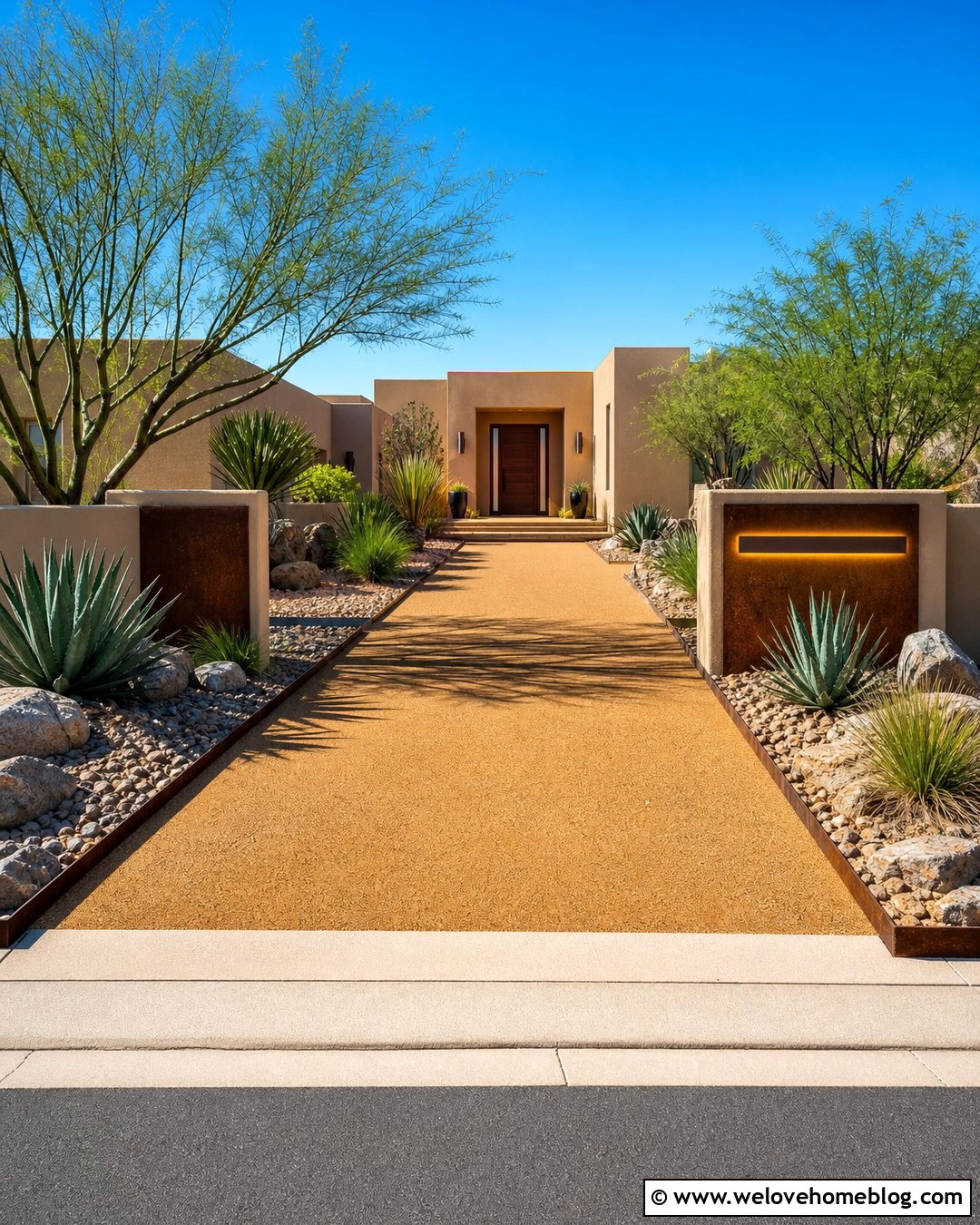
Warm decomposed granite fits beautifully into a dry-climate driveway entrance. Select a compacted gold, rust, or muted tan material that reflects colors already present in the surrounding soil and house facade. Corten steel edging can hold the surface in place while adding a crisp contemporary line. Frame the opening with low stucco walls, angular boulders, or smooth concrete pillars. Use drought-tolerant planting in carefully spaced groups, including agave, yucca, desert spoon, and ornamental grasses suited to the region. Gravel mulch keeps the beds visually connected to the driveway while reducing unnecessary lawn. An illuminated metal address panel provides a strong focal point. This entrance succeeds through texture and shape rather than dense planting, making it attractive and practical in an arid landscape.
13. Wooded Chip Seal Driveway Entrance
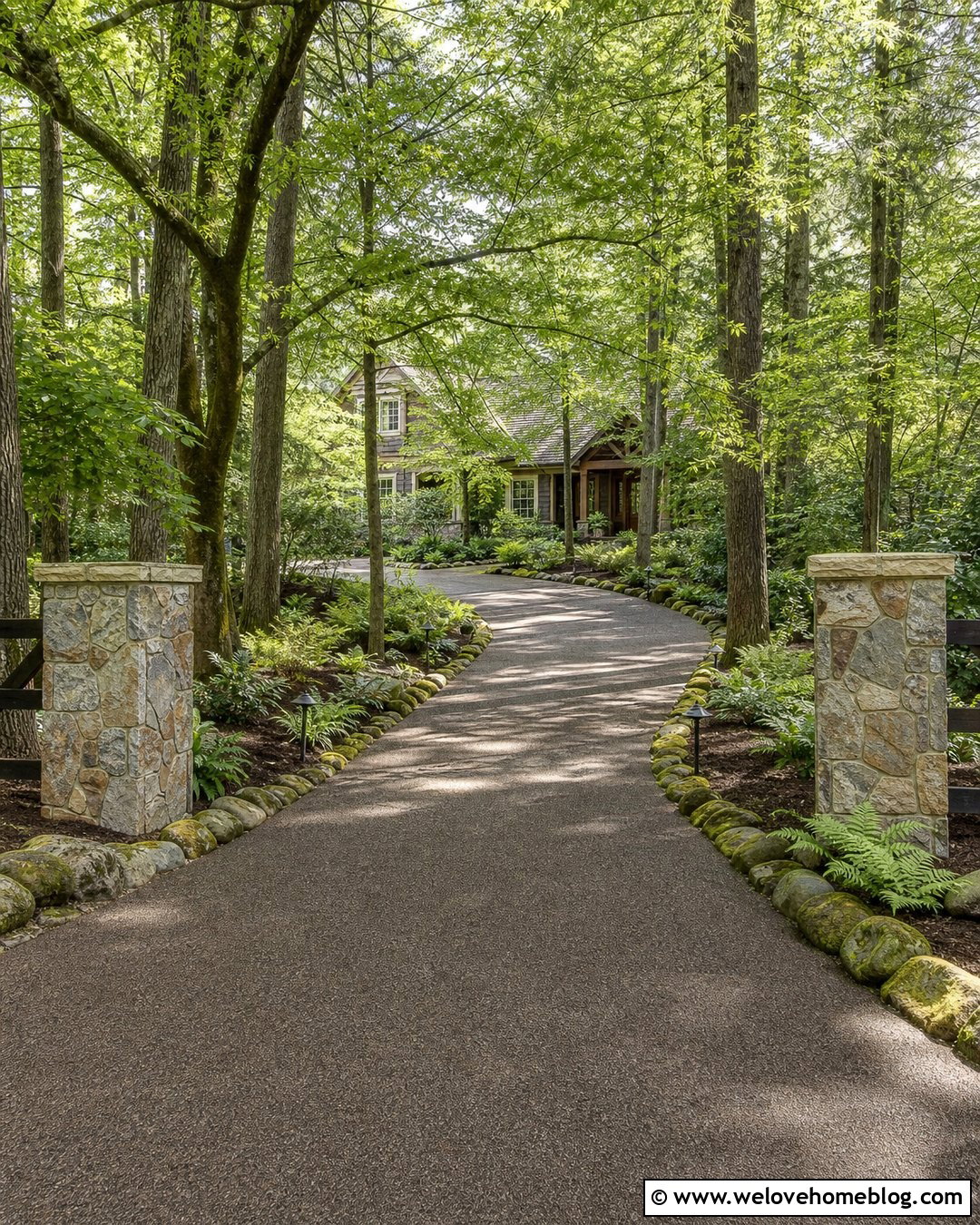
A chip seal driveway blends the smooth appearance of asphalt with the textured character of embedded stone. It is particularly attractive at a wooded property where a plain black surface might appear too harsh. Choose a brown-gray aggregate that relates to the tree trunks and natural stone in the landscape. Mark the entrance with broad fieldstone columns and short sections of dark wood fencing. Ferns, woodland ground covers, and shade-tolerant shrubs can fill the surrounding beds without competing with mature trees. Guide lights positioned low along the first curve help visitors understand the route. Protect major tree roots when planning excavation and drainage. The finished driveway should seem to pass naturally through the woods while still presenting a maintained, identifiable entrance from the road.
14. Resin-Bound Driveway Entrance With Metal Edging
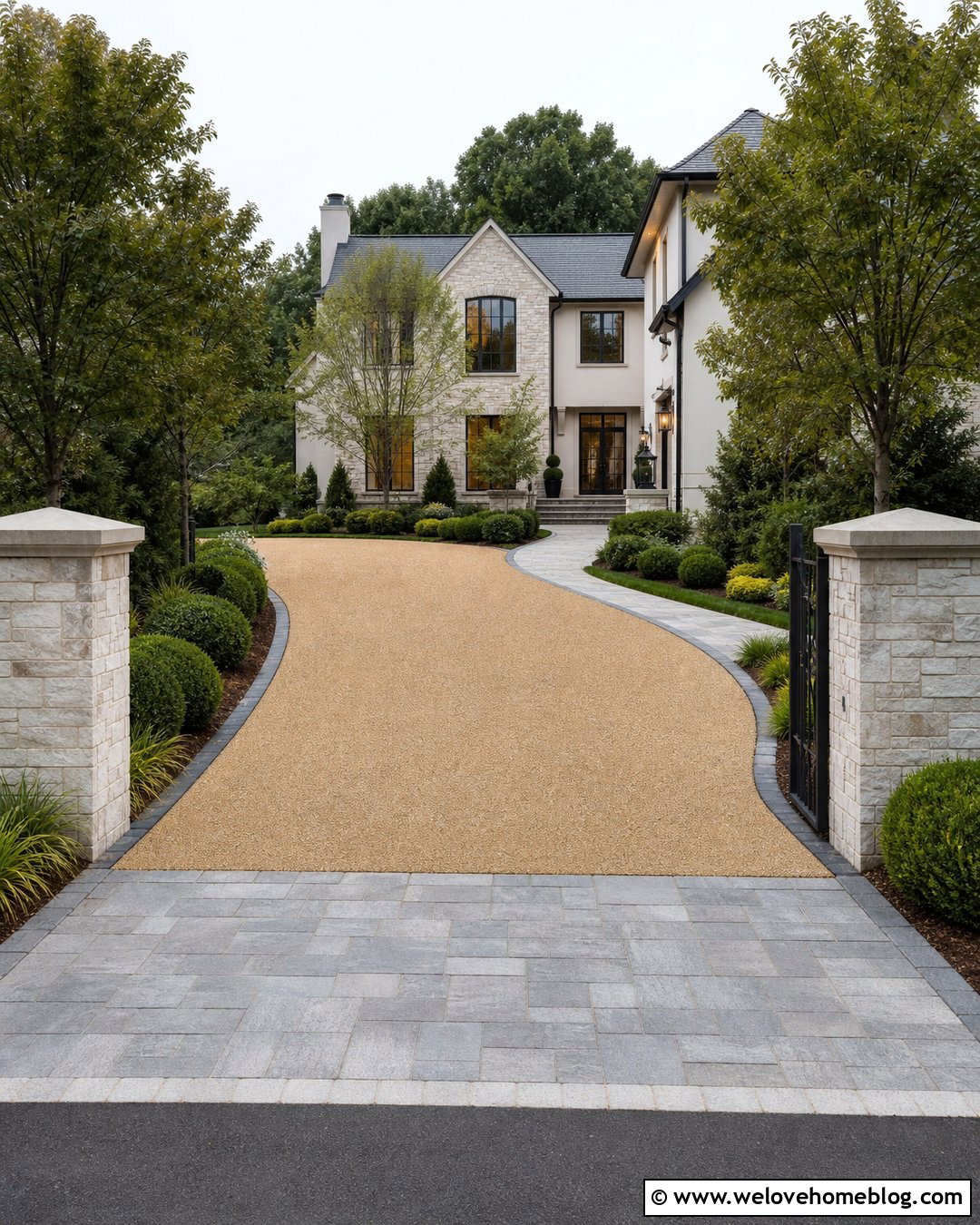
Resin-bound gravel creates a smooth, seamless-looking entrance with the visual texture of small stones. A warm buff mixture can soften a traditional home, while charcoal aggregate offers a sharper modern appearance. Use slim aluminum or steel edging to create precise boundaries and a contrasting paver apron at the road. Square masonry pillars can hold a streamlined gate or remain open for a more accessible entrance. Keep the landscaping equally neat with clipped shrubs, layered grasses, and one architectural tree on each side. Because the surface reads as one continuous plane, a gently curved layout can prevent the driveway from feeling overly rigid. Coordinate the aggregate color with the house, border, and walkway to create an entrance that feels polished rather than assembled from unrelated upgrades.
15. Permeable Paver Driveway Entrance With Rain Garden
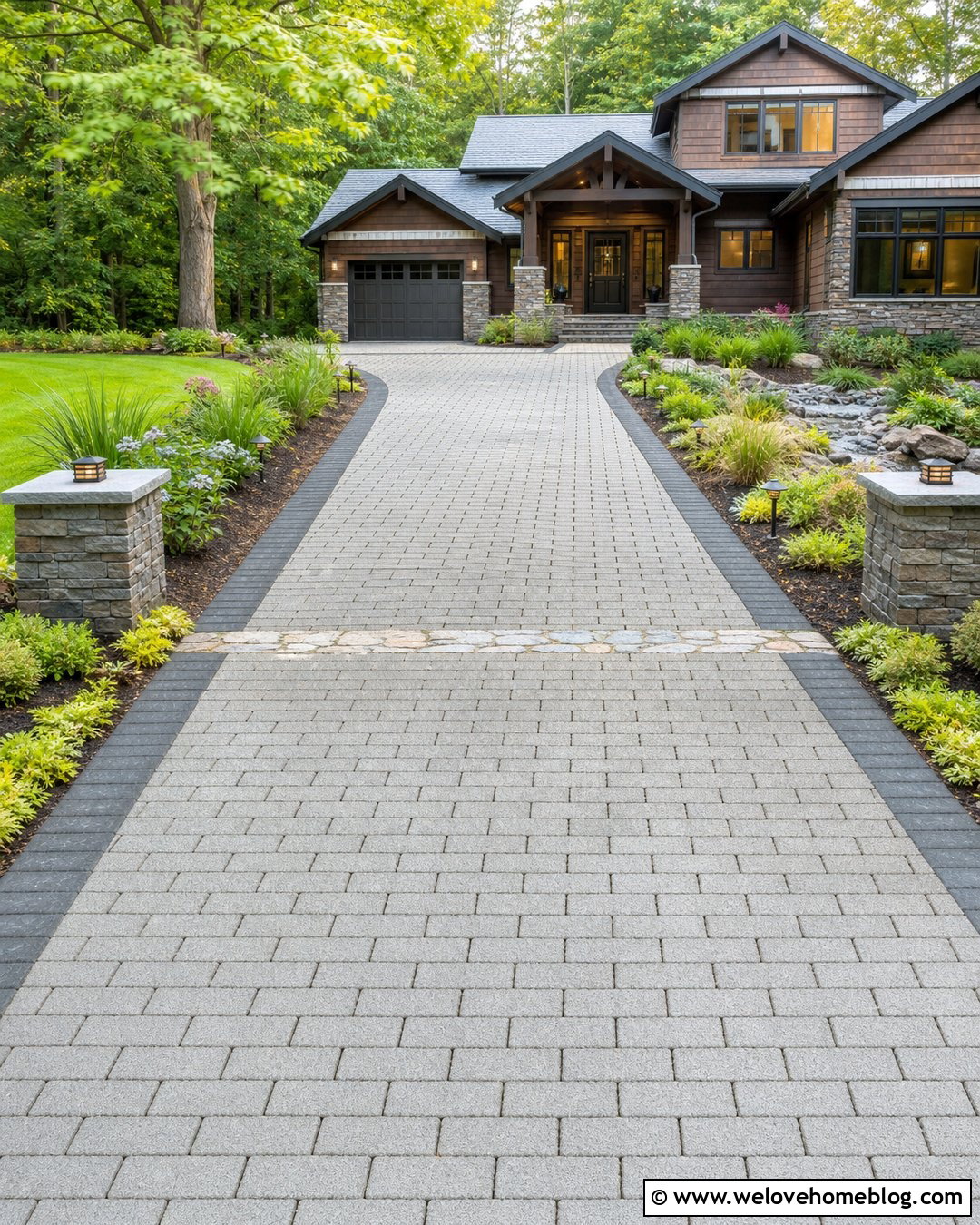
Permeable concrete pavers can create an attractive driveway entrance while allowing water to move through properly designed joints and base layers. Choose gray rectangular pavers with darker border courses to define the driving area. Along the lower side of the entrance, incorporate a shallow rain garden that receives runoff from the surrounding landscape where local conditions permit. Moisture-tolerant native grasses and flowering plants can transform this practical feature into a colorful focal point. Add a small stone bridge or paver walkway if the pedestrian route crosses the drainage area. Low entry pillars and understated lighting keep attention on the integrated landscape. The result is a complete entrance where paving, drainage, planting, and pedestrian circulation are planned together instead of treated as separate problems.
16. Belgian Block Driveway Entrance Apron
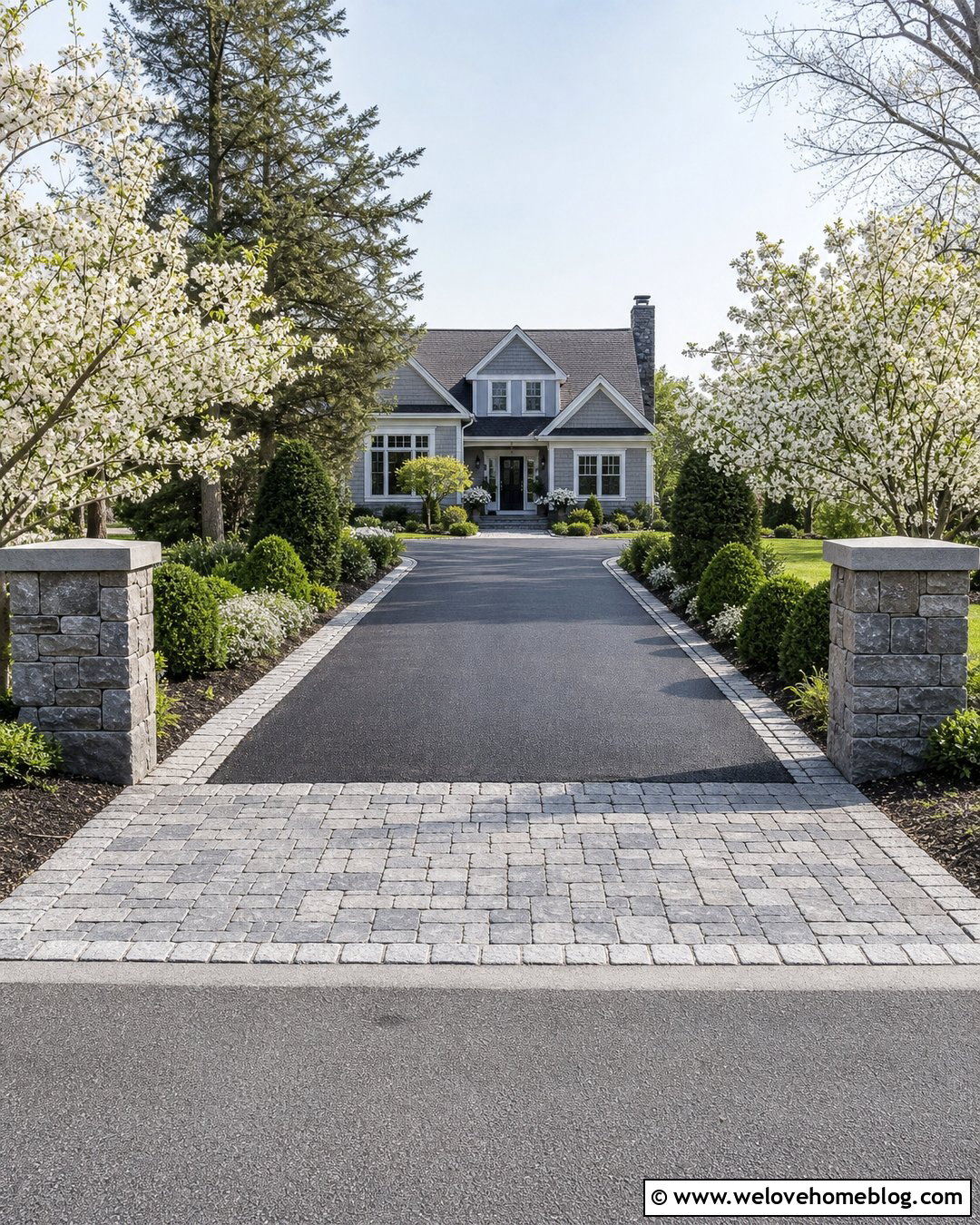
A Belgian block apron gives the street edge of a driveway more weight and definition. Install gray granite blocks across the full entrance, then continue them as borders beside a smooth asphalt or poured concrete driveway. The contrasting texture helps the opening stand out while connecting visually with stone used elsewhere on the property. Frame the apron with compact evergreen shrubs, small flowering trees, and low ground cover that will not spill into the driving area. Simple stone pillars can repeat the granite tone without becoming too large for the yard. Use matching block around a nearby walkway transition to unify the front landscape. This approach is especially effective when the main driveway is in good condition but needs a more distinctive and finished roadside presentation.
17. Concrete Driveway Entrance With Brick Ribbon
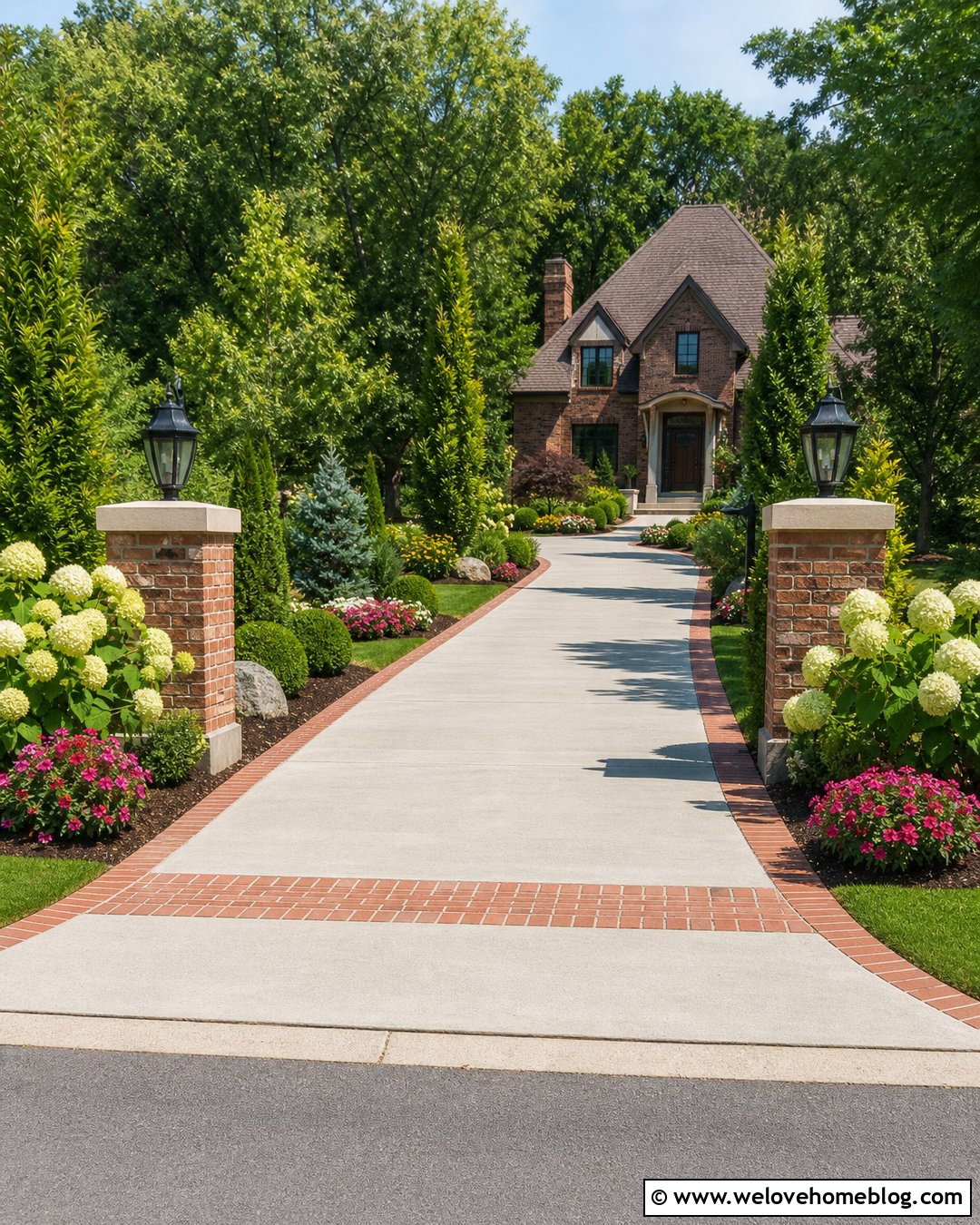
A brick ribbon can warm up an ordinary concrete driveway and connect it to a traditional brick house. Use light-gray broom-finished concrete for the main surface, then install clay brick pavers across the entrance and along both edges. A second brick band farther up the driveway can create visual rhythm on a long, straight approach. At the road, build modest brick pillars with stone caps and black lanterns. Plant rounded evergreen shrubs, hydrangeas, and low seasonal flowers in curved beds around the pillars. The brick should closely coordinate with the house rather than introduce a competing red or orange tone. With careful alignment and consistent joints, this entrance gains detail and character while retaining the simple maintenance and familiar appearance of a concrete driveway.
18. Limestone Column Driveway Entrance
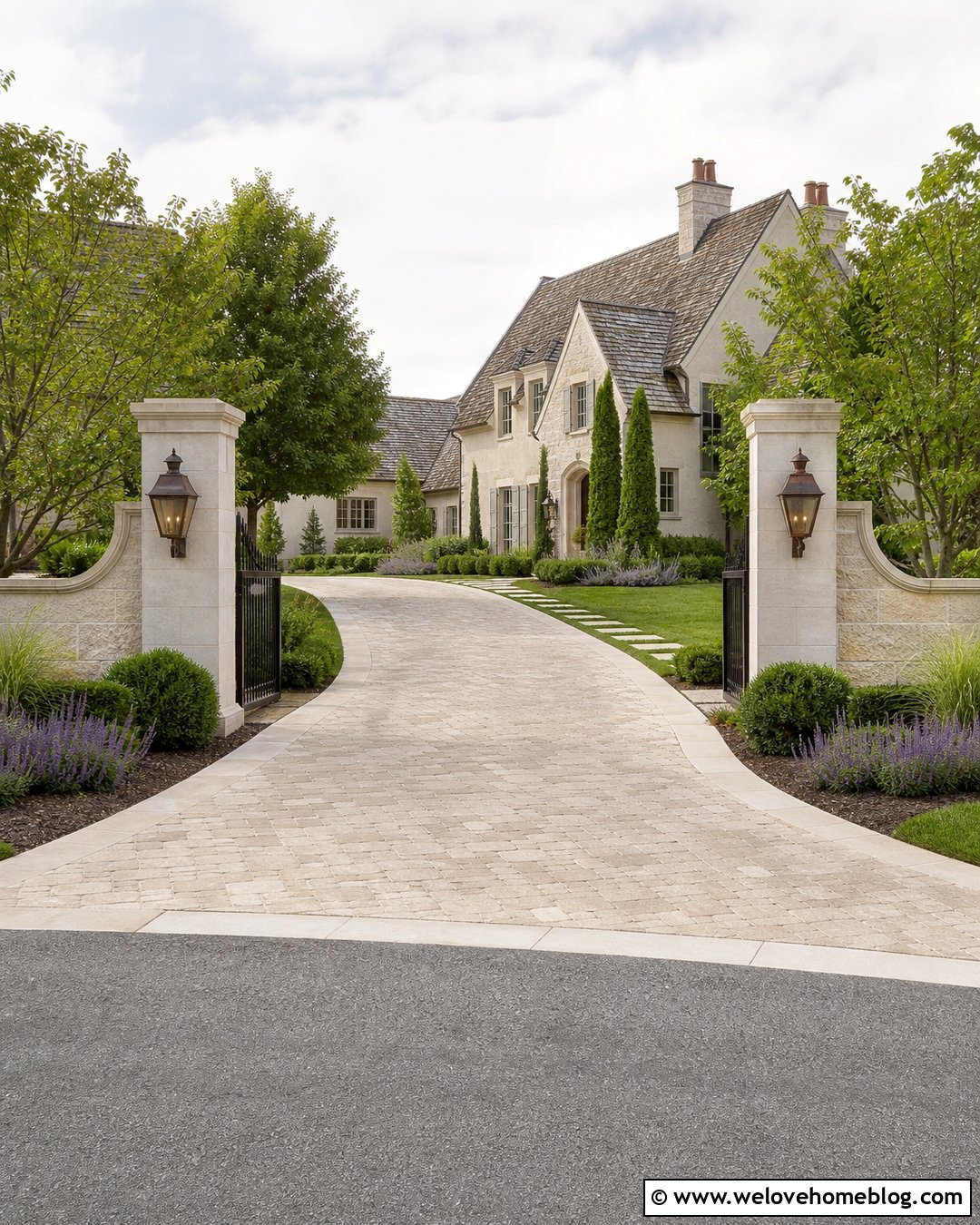
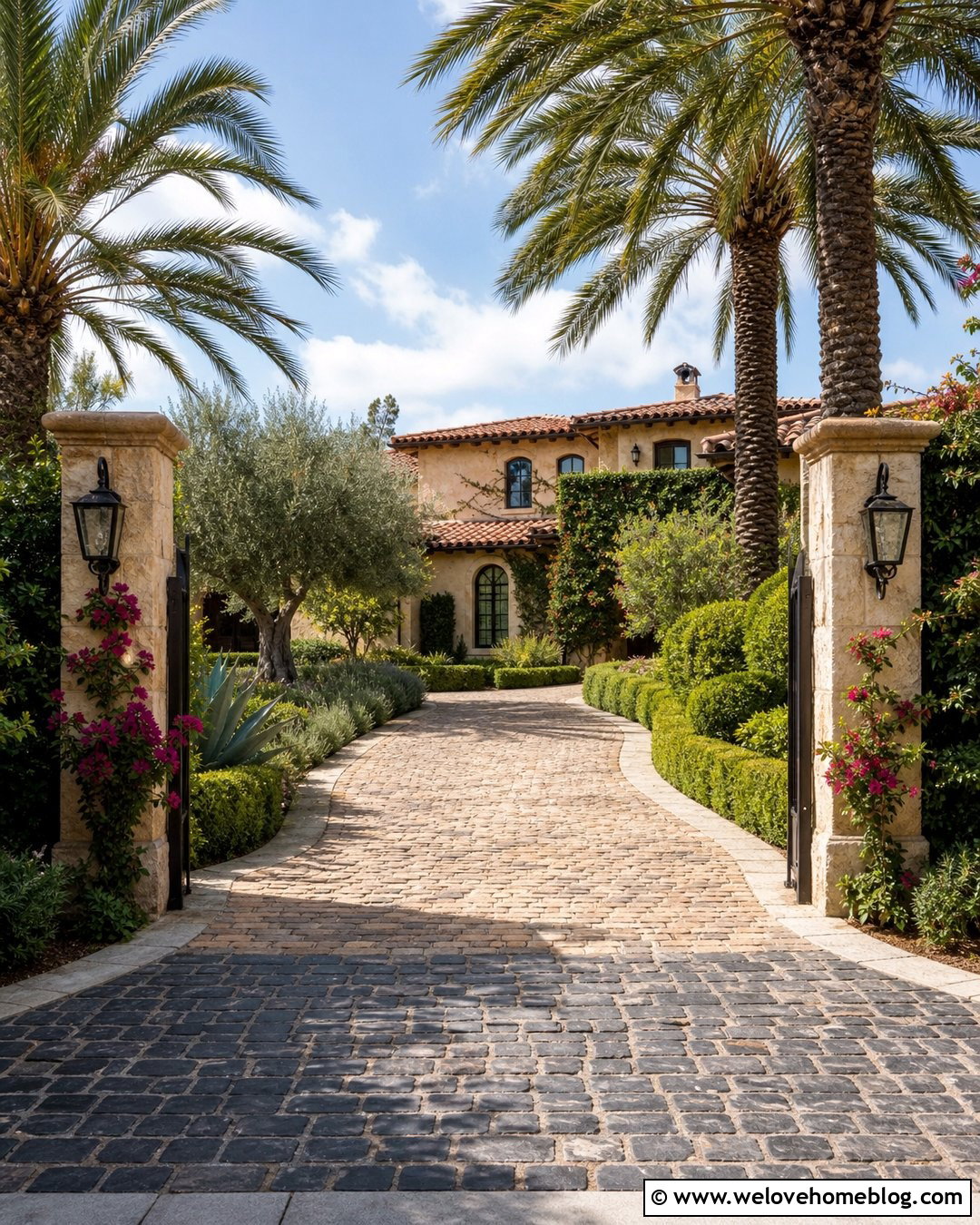
Pale limestone columns can give a driveway entrance a substantial yet welcoming presence. They look especially natural beside a beige paver driveway, light exposed aggregate, or warm gray concrete. Keep the columns broad enough to feel proportional to the property, but position them well beyond the turning path of vehicles. Low limestone walls can extend outward and curve into planting beds filled with boxwood, lavender, catmint, and ornamental grasses. Dark bronze lanterns offer a strong contrast against the light masonry. If a gate is included, a simple black metal design will keep the focus on the stonework. Repeat limestone in the walkway or house foundation for continuity. This complete look complements Mediterranean, French country, and light-colored traditional homes particularly well.
19. Stucco Pillar Driveway Entrance
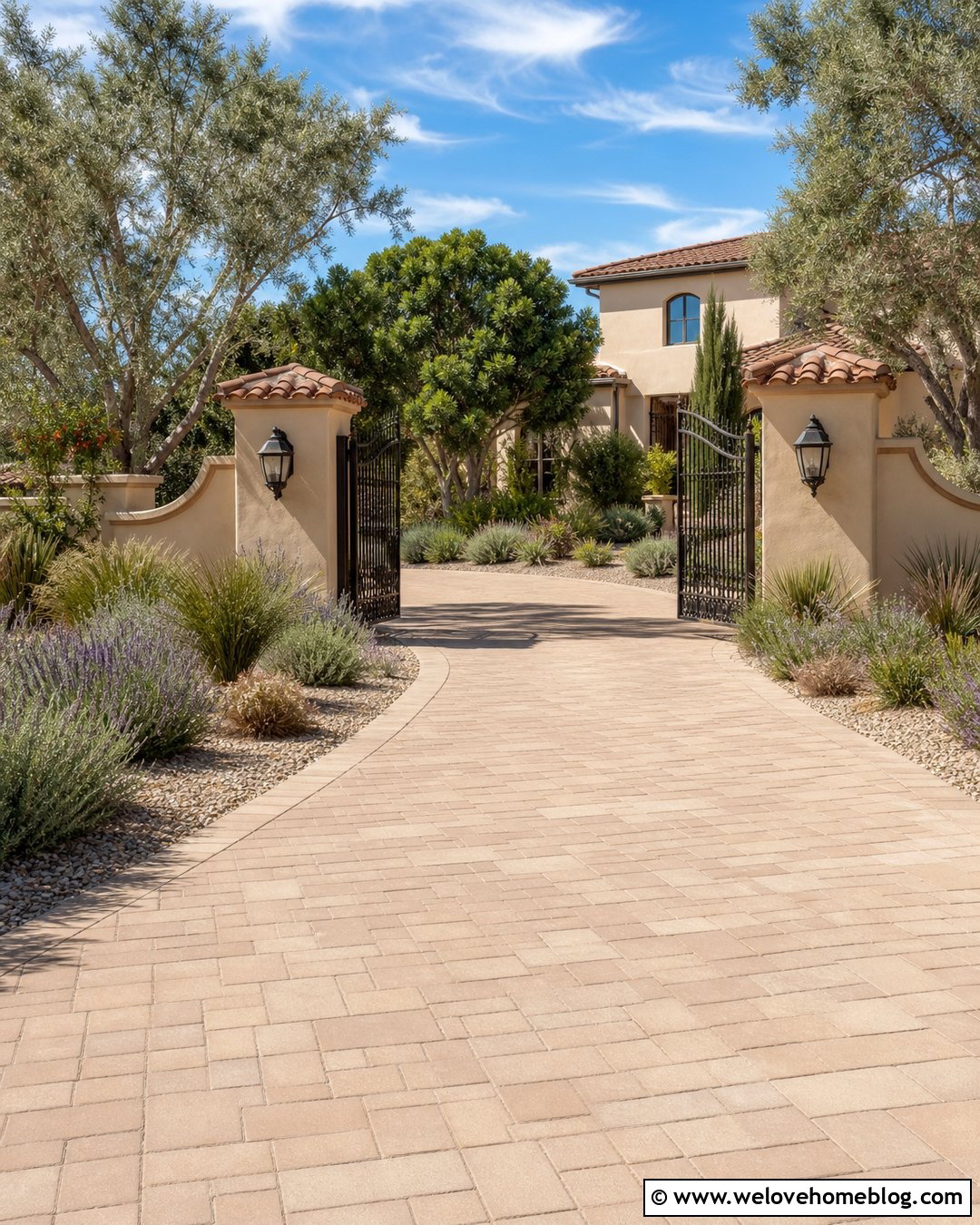
Stucco pillars provide a clean way to connect a driveway entrance with a Spanish, Southwestern, or Mediterranean-style home. Match the pillar color to the house walls and use terracotta or natural stone caps for contrast. A tan concrete paver driveway laid in a subtle running-bond pattern can create a warm approach through the entrance. Consider a dark iron gate with limited ornamentation, allowing the architecture and landscaping to remain the focus. Plant olive-like trees where climate permits, along with rosemary, lavender, ornamental grasses, and drought-tolerant flowering plants. Gravel mulch can reduce the visual gap between the paved surface and beds. Wall-mounted lanterns and a ceramic-inspired address plaque finish the scene, producing a driveway entrance that feels closely tied to the house rather than added later.
20. Driveway Entrance With Address Monument
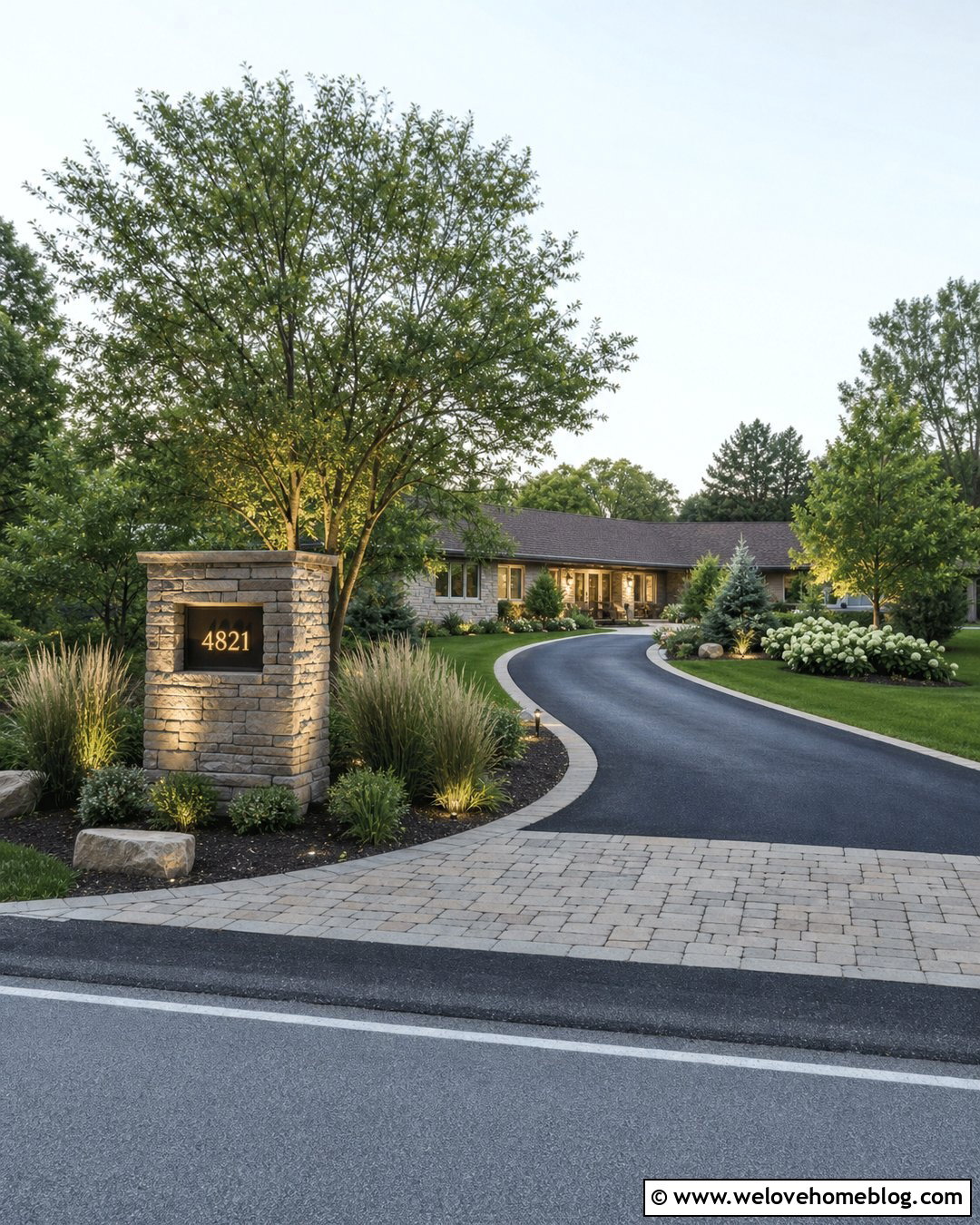
A well-scaled address monument can become the visual anchor of an open driveway entrance. Build it from brick, stacked stone, stucco, or concrete that repeats a material from the house. Set the monument within a broad planting bed instead of placing it alone in the lawn. A smooth asphalt driveway with a stone paver apron provides a practical backdrop, while low shrubs and ornamental grasses keep the address visible. Place the monument far enough from the pavement to avoid vehicle damage and follow local visibility requirements. Lighting should illuminate the number without shining toward drivers or neighboring homes. Balance the opposite side with a smaller bed or specimen tree. This asymmetrical arrangement creates curb appeal without requiring a gate or two expensive matching pillars.
21. Driveway Entrance With Matching Mailbox
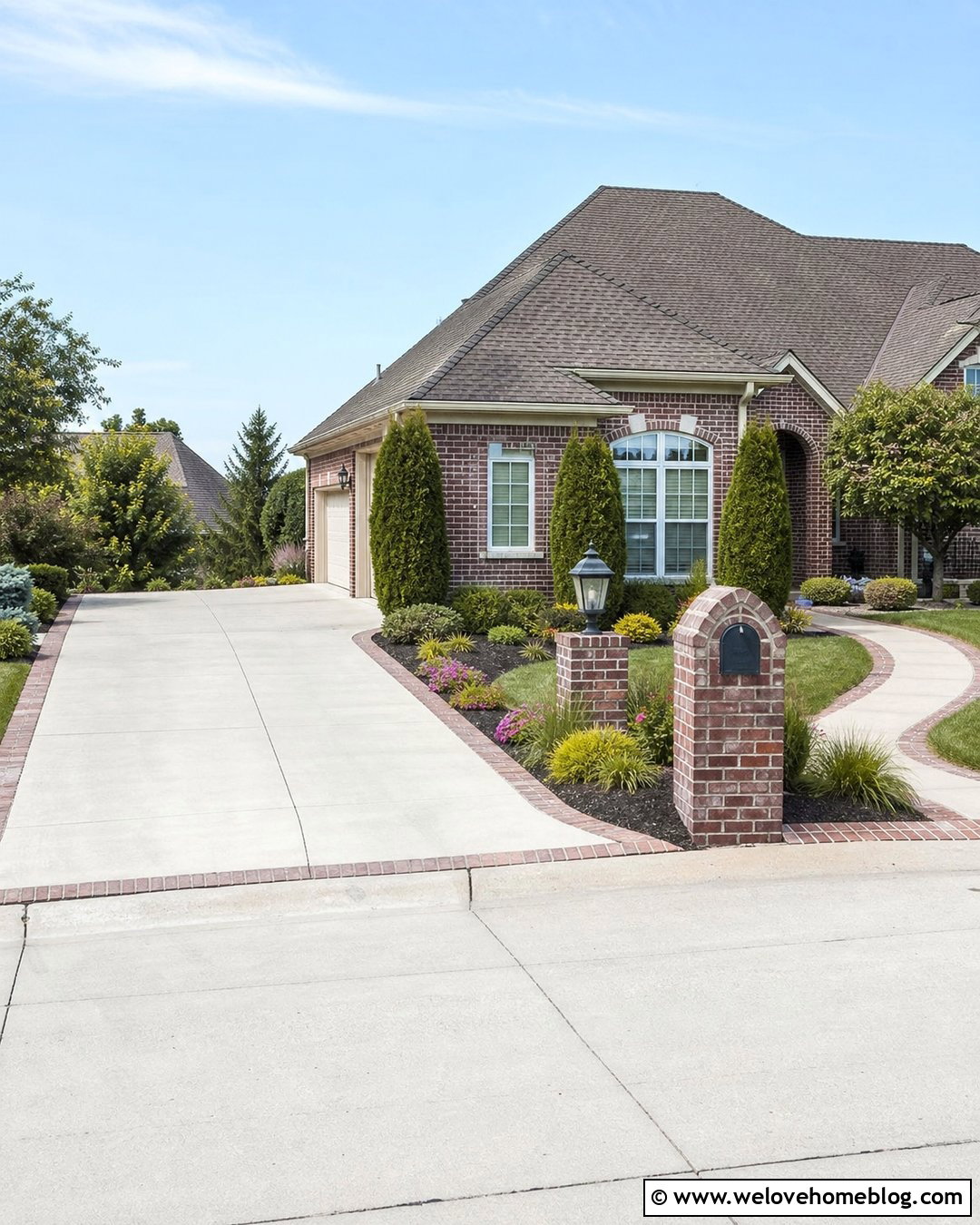
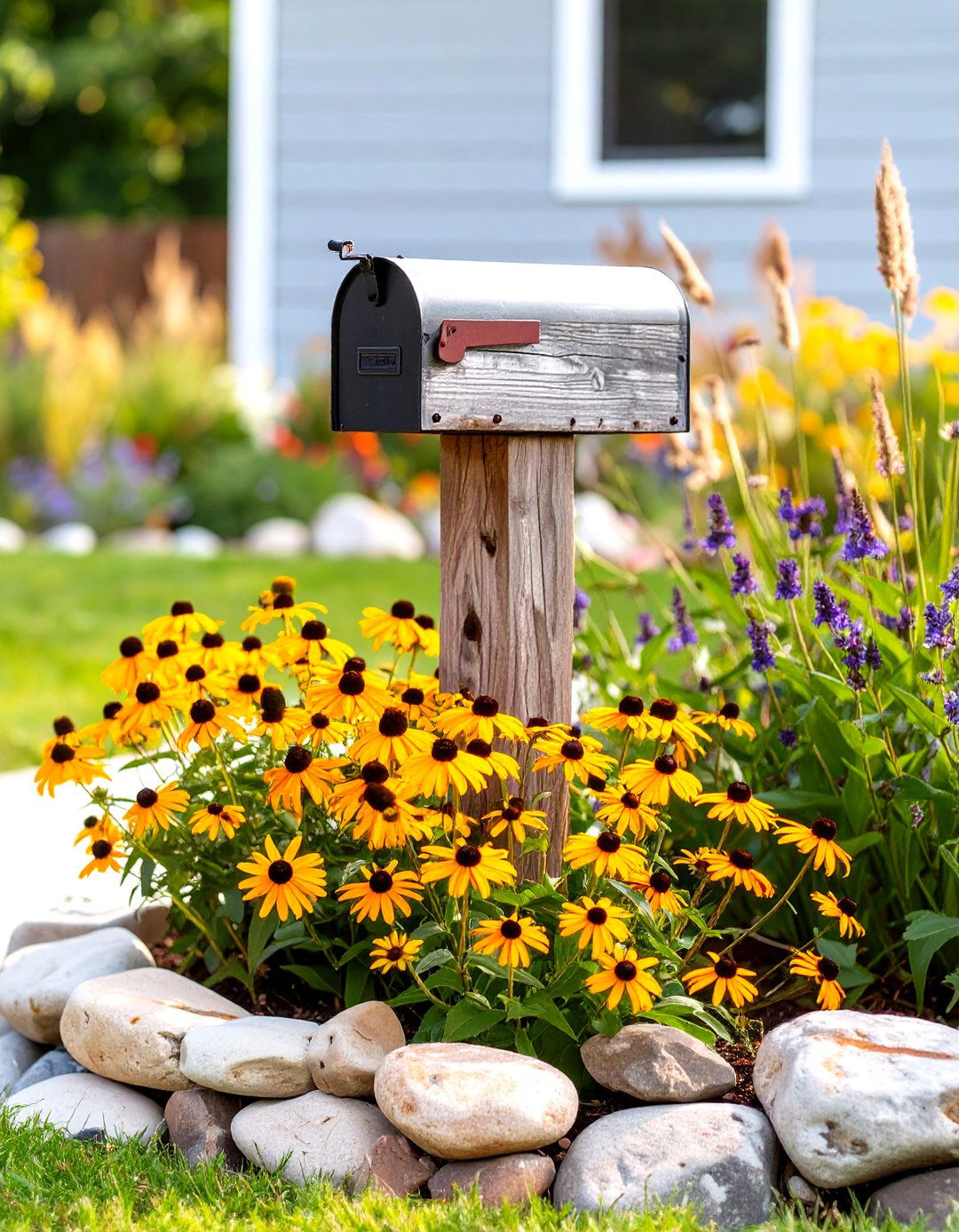
Coordinating the mailbox with the driveway entrance is a simple way to make the whole frontage look more intentional. Start with a clean concrete or asphalt driveway bordered by brick or natural stone. Build the mailbox surround from the same border material, then repeat its color in a small pillar or landscape wall on the opposite side. A neat bed of evergreen shrubs, flowering ground cover, and ornamental grass can anchor the mailbox without blocking access. Keep plants away from the road edge and leave enough clear space for regular maintenance. Match metal details, such as the mailbox door and entry lights, to the home’s exterior hardware. This complete approach turns a practical roadside object into a coordinated feature that supports the driveway rather than visually competing with it.
22. Driveway Entrance With Pillar Lighting
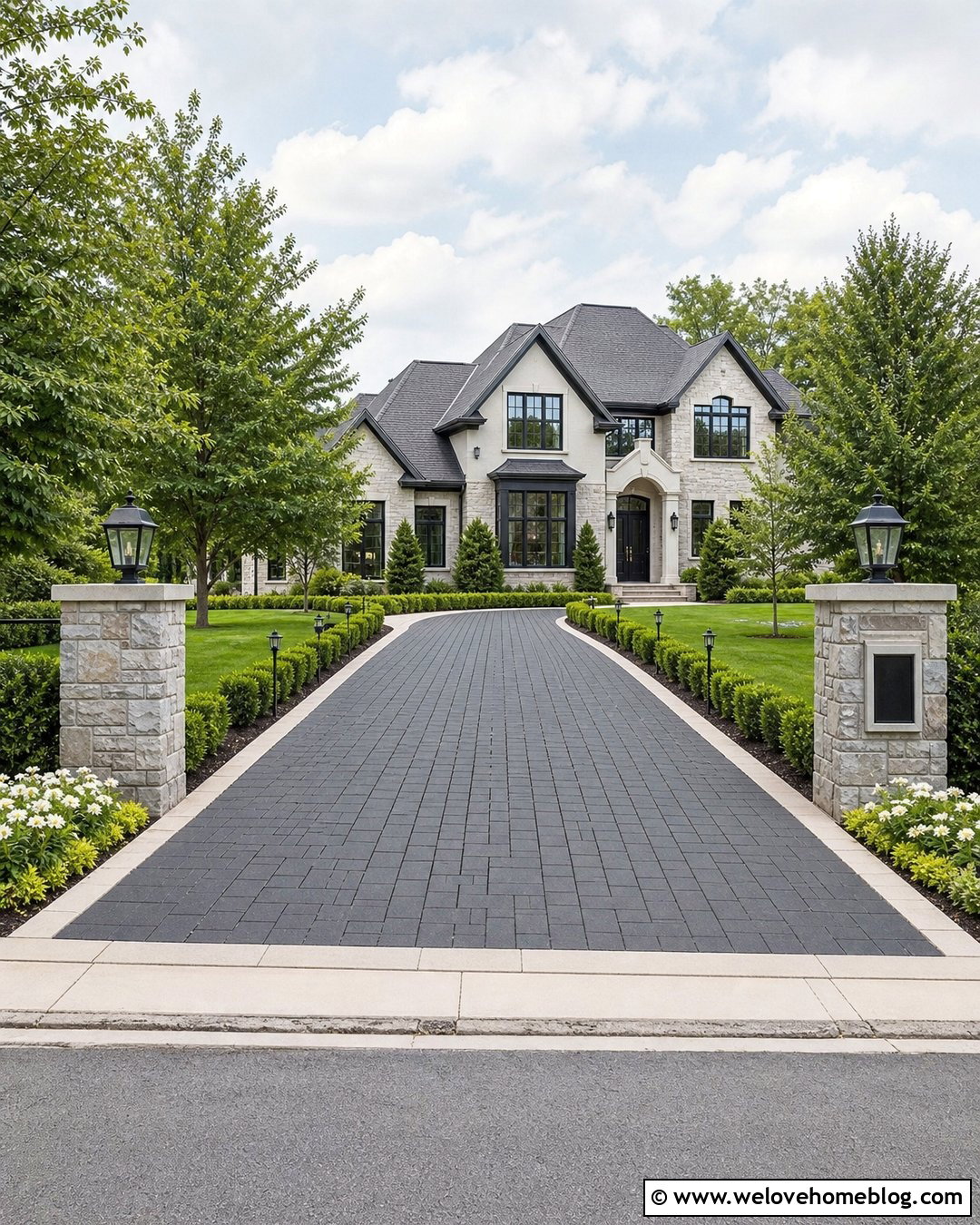
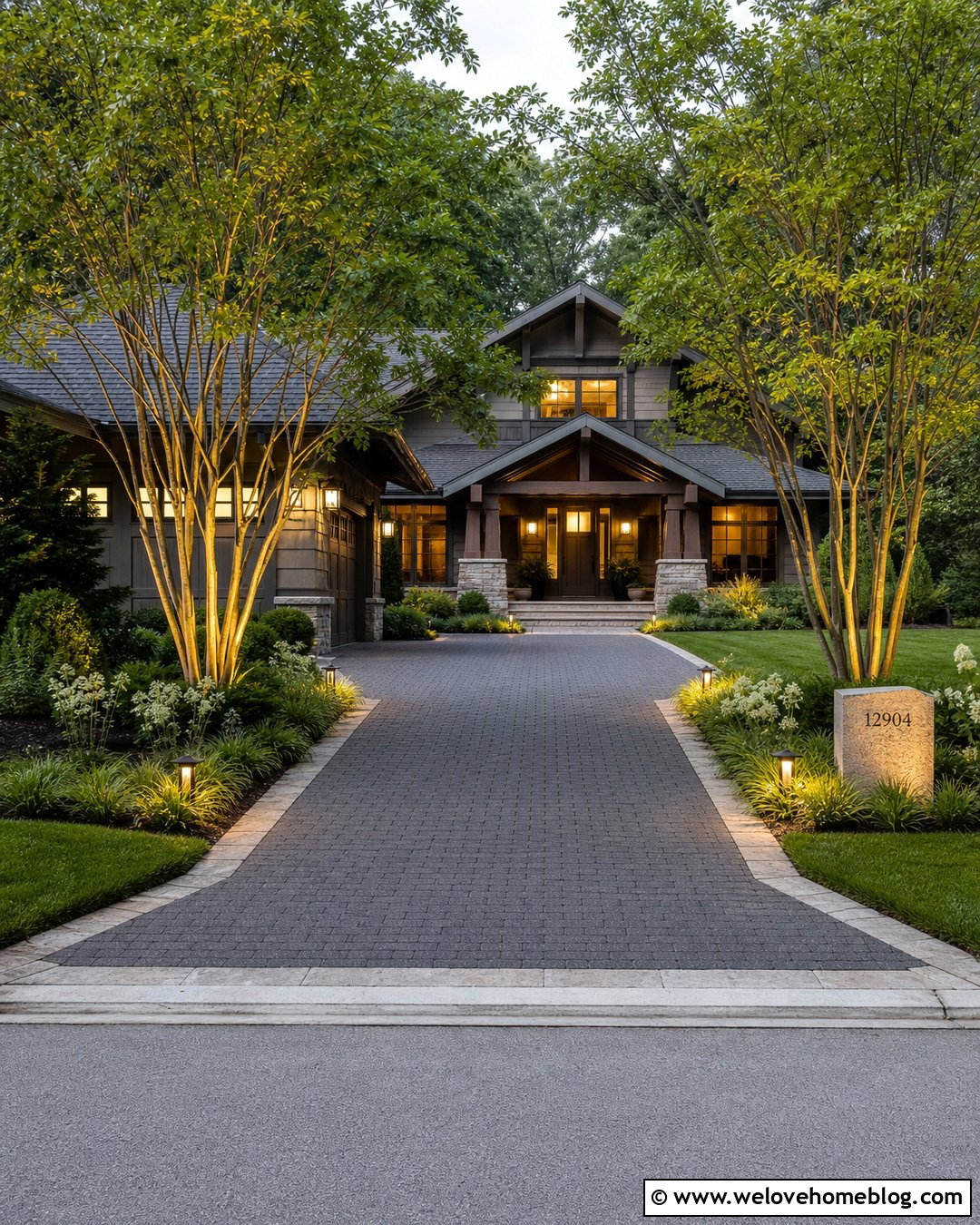
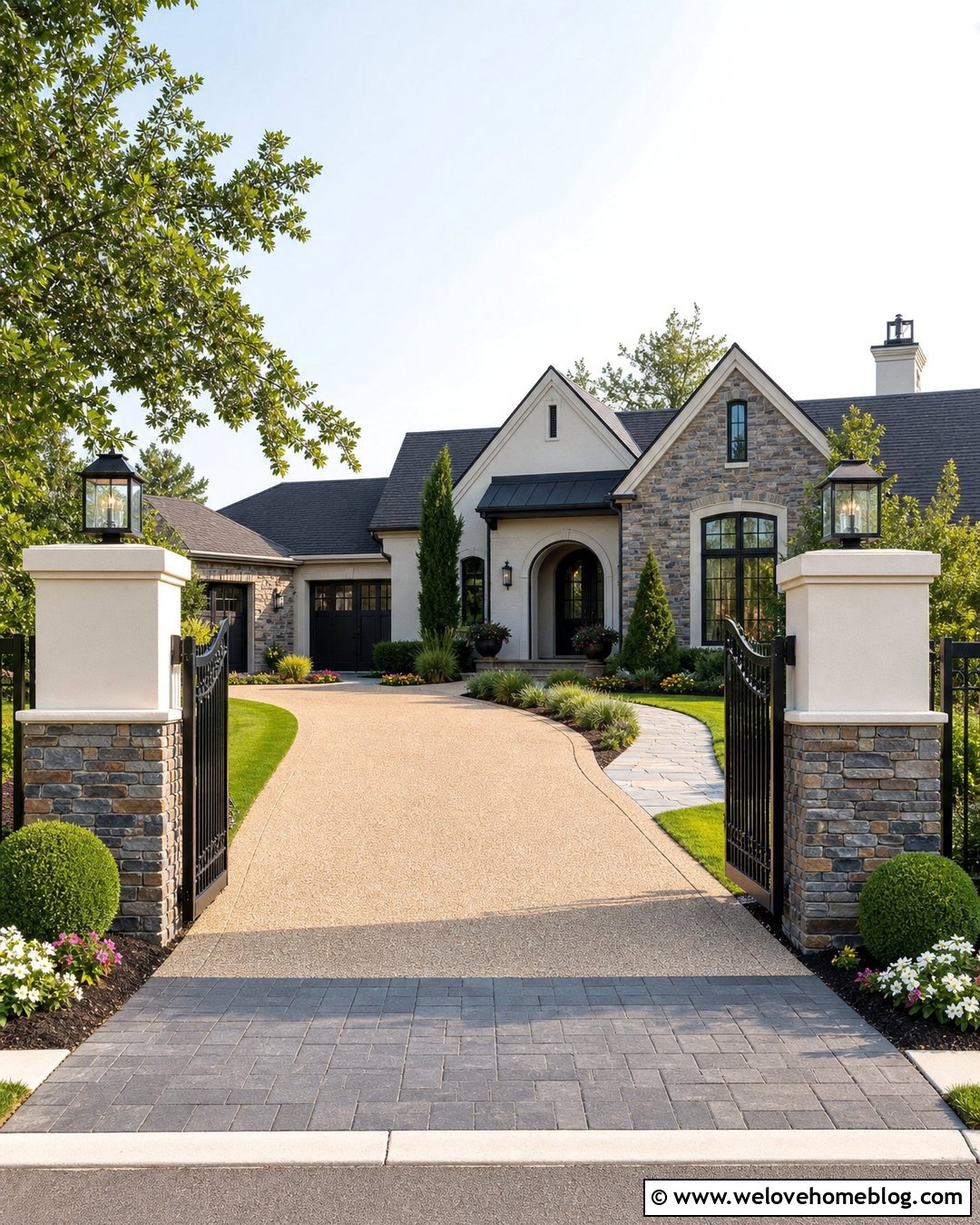
Pillar lighting makes a driveway entrance easier to recognize while emphasizing its architecture after dark. During the day, the entrance should still look complete, so pair stone or brick pillars with a coordinated driveway surface and balanced landscaping. A charcoal paver entrance with warm-gray stone pillars creates a versatile foundation. Choose shielded fixtures that direct useful light toward the opening rather than producing harsh glare. Low path lights can continue the visual route toward the house, but they should remain secondary to the entrance lanterns. Use symmetrical shrubs and low flowering plants to frame the masonry. Lighting works best as one part of a layered design that also considers gate clearance, nearby trees, address visibility, electrical access, and safe movement through the driveway. ()
23. Tree-Lined Gravel Driveway Entrance
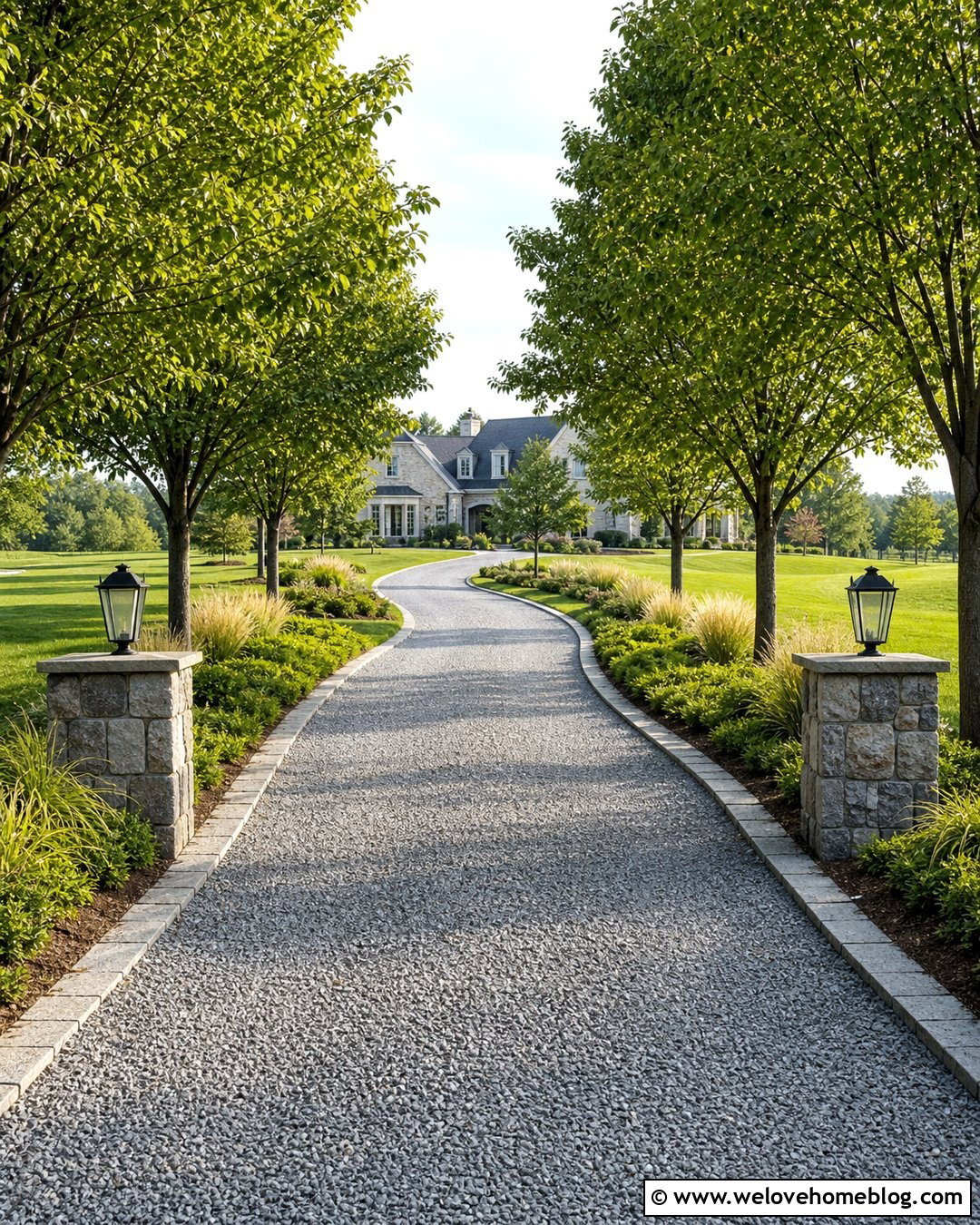
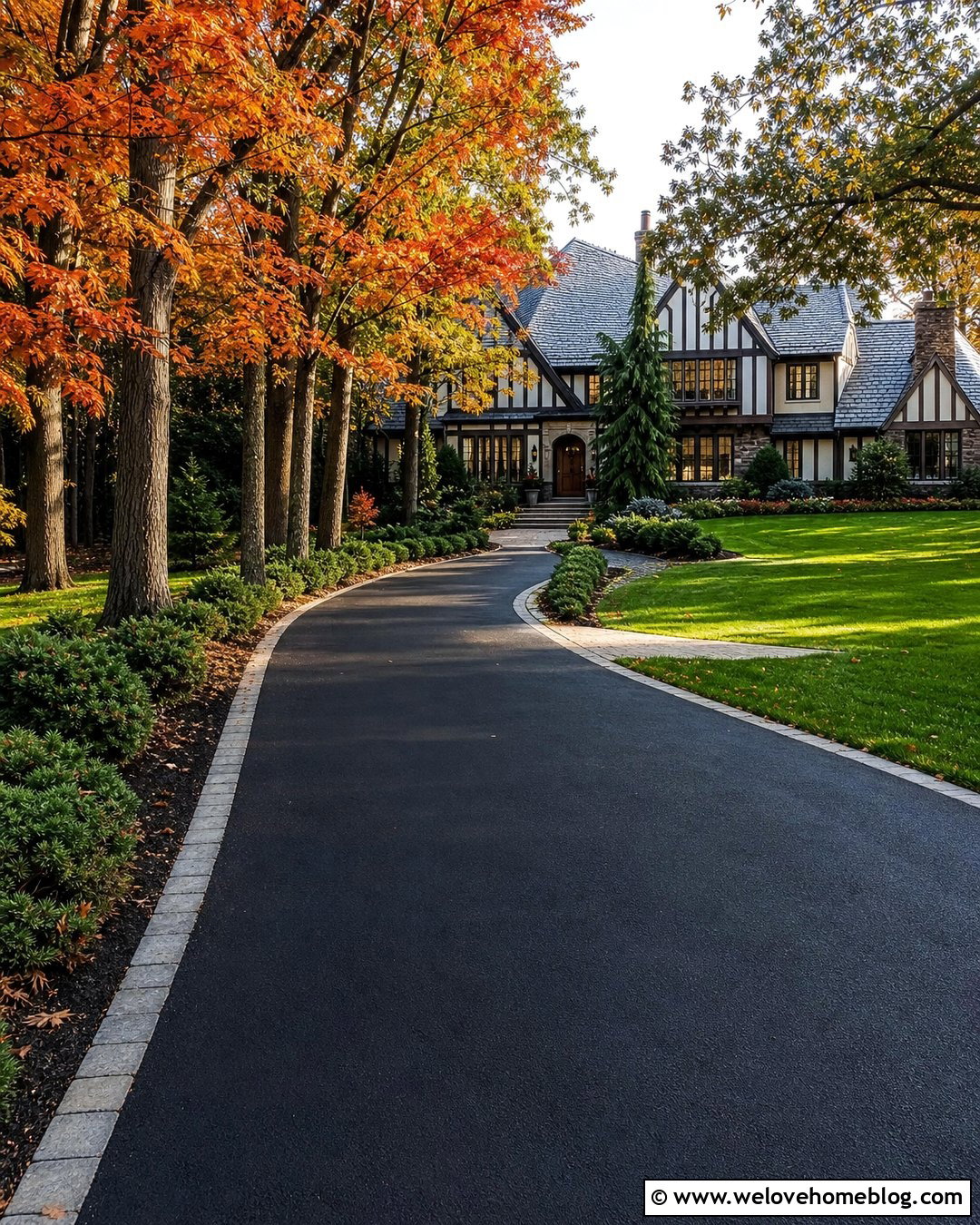
A tree-lined approach can transform a long gravel driveway into a strong landscape feature. Begin with a wide entrance surfaced in compacted gray crushed stone and edged with granite setts or steel restraints. Plant matching deciduous trees beyond the roadside sight triangle, spacing them consistently along both sides. Underplant with low grasses or a continuous ground cover to reduce a patchy appearance. Modest stone pillars at the entrance can mark the property without competing with the tree sequence. As the driveway curves gently toward the house, the repeated trunks create depth and naturally direct the eye forward. Choose species suited to the local climate, soil, mature width, and available overhead space. The completed design feels established, graceful, and especially appropriate for larger country or suburban properties.
24. Hedge-Lined Paver Driveway Entrance
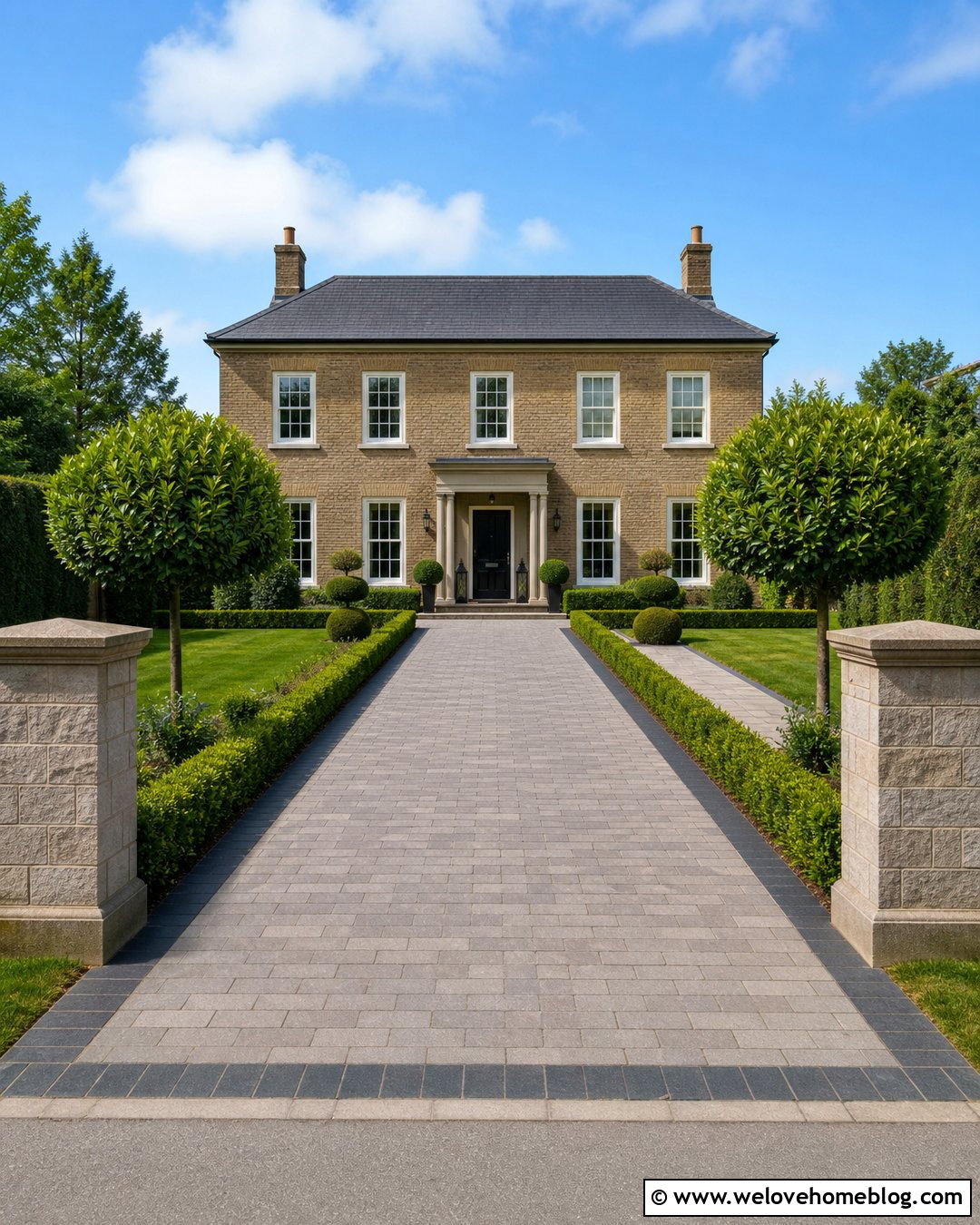
A clipped hedge gives a paver driveway entrance a formal boundary while softening the amount of hardscape visible from the street. Use warm gray concrete pavers in a straightforward pattern, with a darker soldier-course border defining the edges. Begin the hedge behind low masonry pillars and continue it along both sides of the driveway. Maintain a generous setback at the road to protect sightlines and create room for turning. Small flowering trees or matching topiary forms can add height farther inside the property. A separate paved walkway should remain visible beside the hedge so visitors know how to reach the front door. This orderly entrance works well with Georgian, Colonial, and symmetrical traditional homes where clean lines, repetition, and balanced planting reinforce the architecture.
25. Flower Bed Driveway Entrance
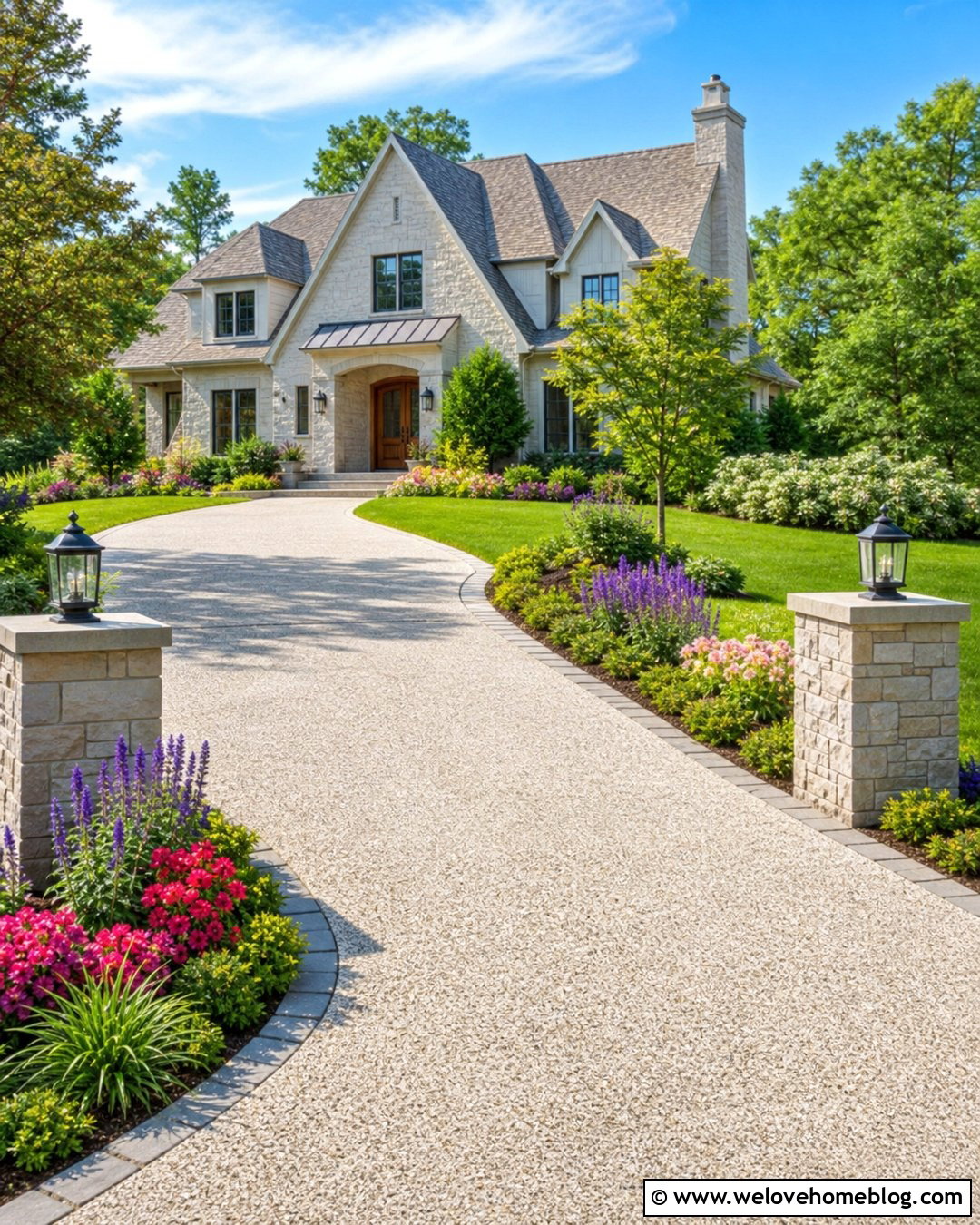
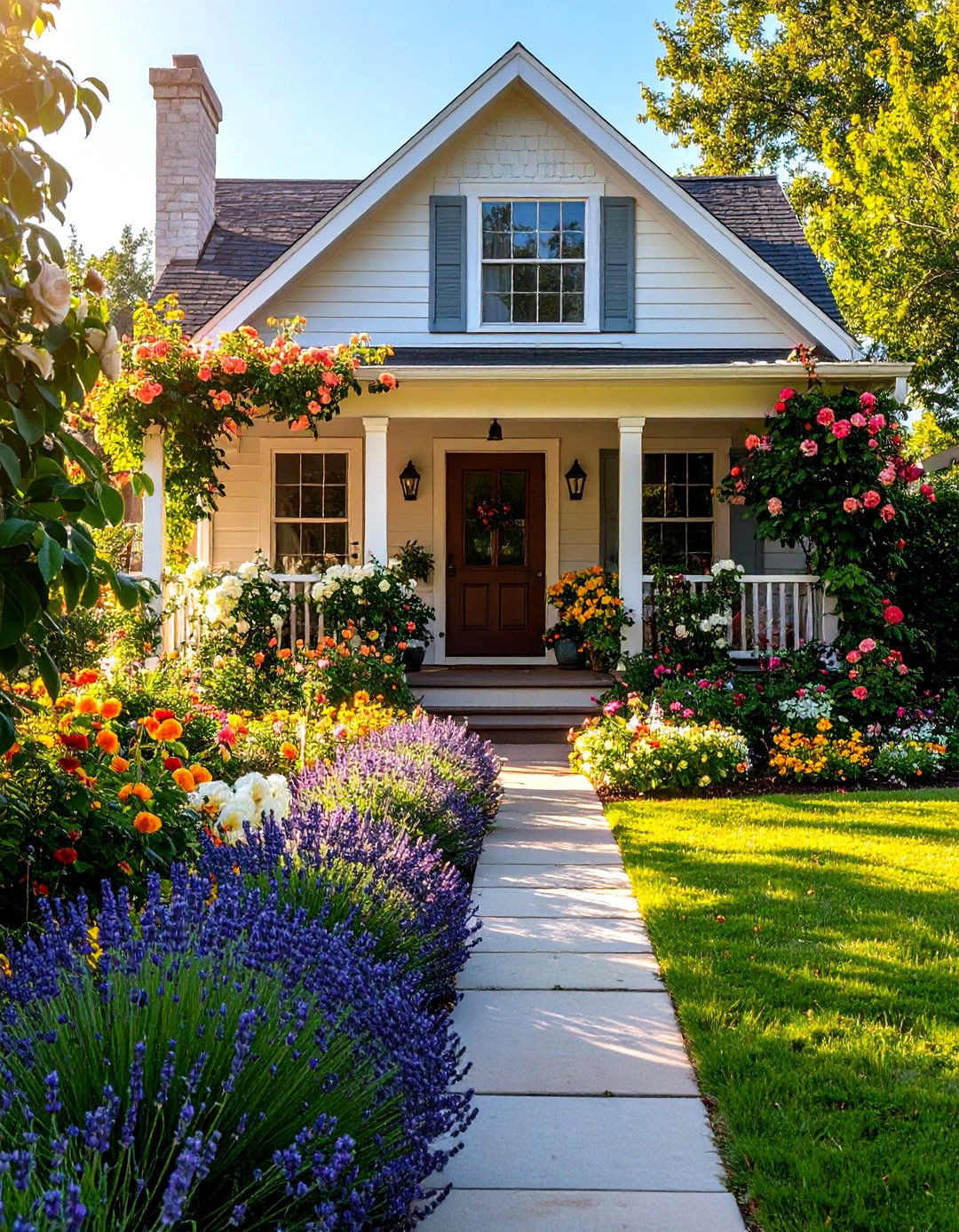
Colorful flower beds can create an inviting entrance when they are designed as part of the full driveway layout. Pair a light exposed-aggregate driveway with curved natural stone edging that sweeps outward near the street. Fill broad beds with repeating groups of flowering perennials, compact shrubs, and ornamental grasses rather than using many unrelated single plants. Place taller flowers toward the back and keep the lowest varieties closest to the pavement. Two small masonry pillars can frame the opening, with simple cap lights providing nighttime definition. A stepping-stone or paver walkway should connect the driveway to the front path without cutting awkwardly through the flowers. This layered look suits cottage, ranch, and Craftsman homes, adding seasonal interest while preserving an organized and functional arrival area.
26. Ornamental Grass Driveway Entrance
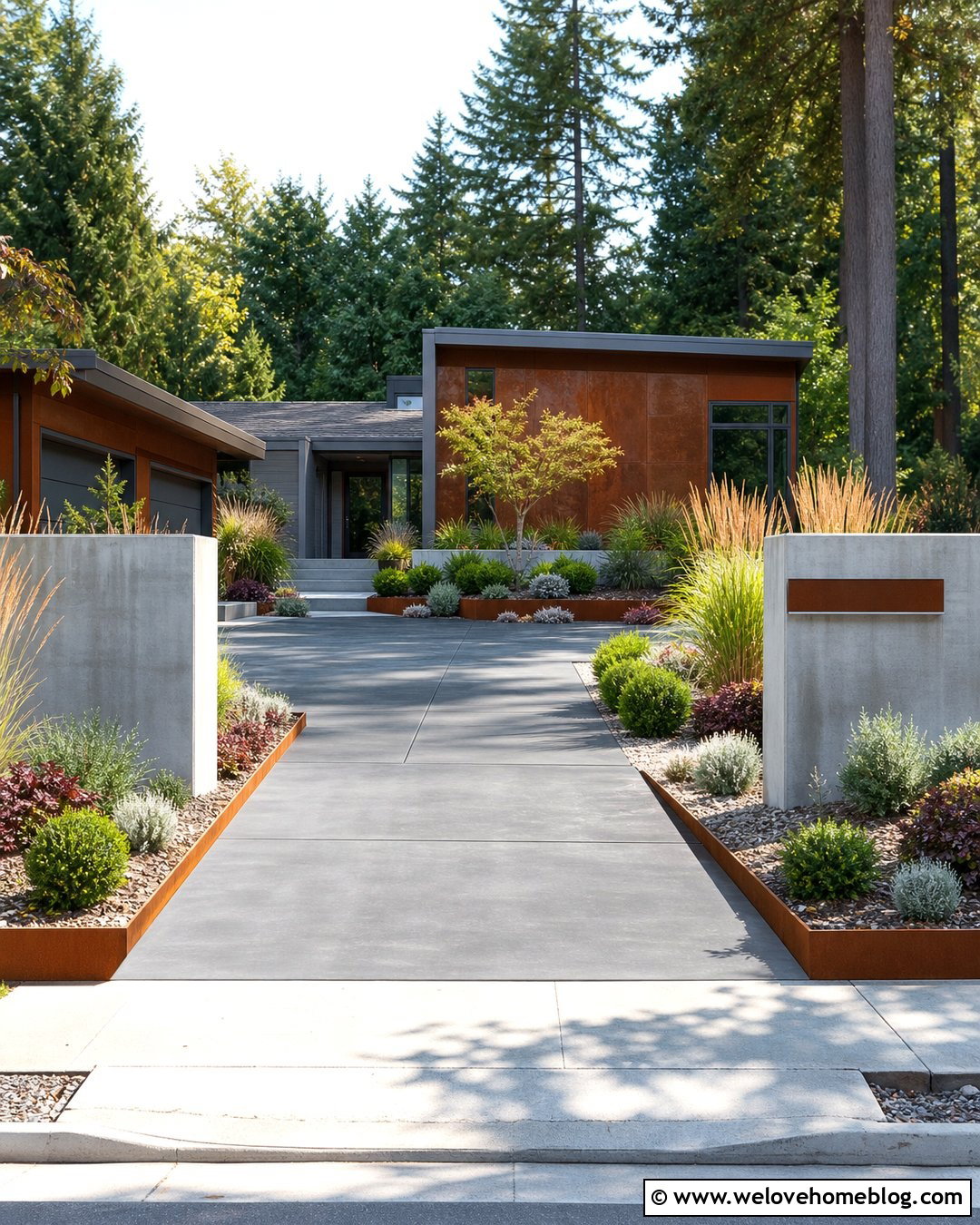
Ornamental grasses bring movement and texture to a contemporary driveway entrance without requiring formal hedges. Choose a smooth charcoal concrete driveway with a straight or gently angled layout. Corten steel edging can separate the pavement from wide gravel-mulched beds containing upright grasses, low evergreen mounds, and a few sculptural perennials. A horizontal metal address sign should sit within the planting rather than directly beside the road. Low concrete walls can frame the entrance and repeat the driveway’s clean geometry. Select grasses that remain appropriately sized and do not flop into the vehicle path. By limiting the palette and planting in generous groups, the entrance gains softness without losing its modern simplicity. The rust, gray, green, and neutral tones work together as a cohesive composition.
27. Native Plant Driveway Entrance
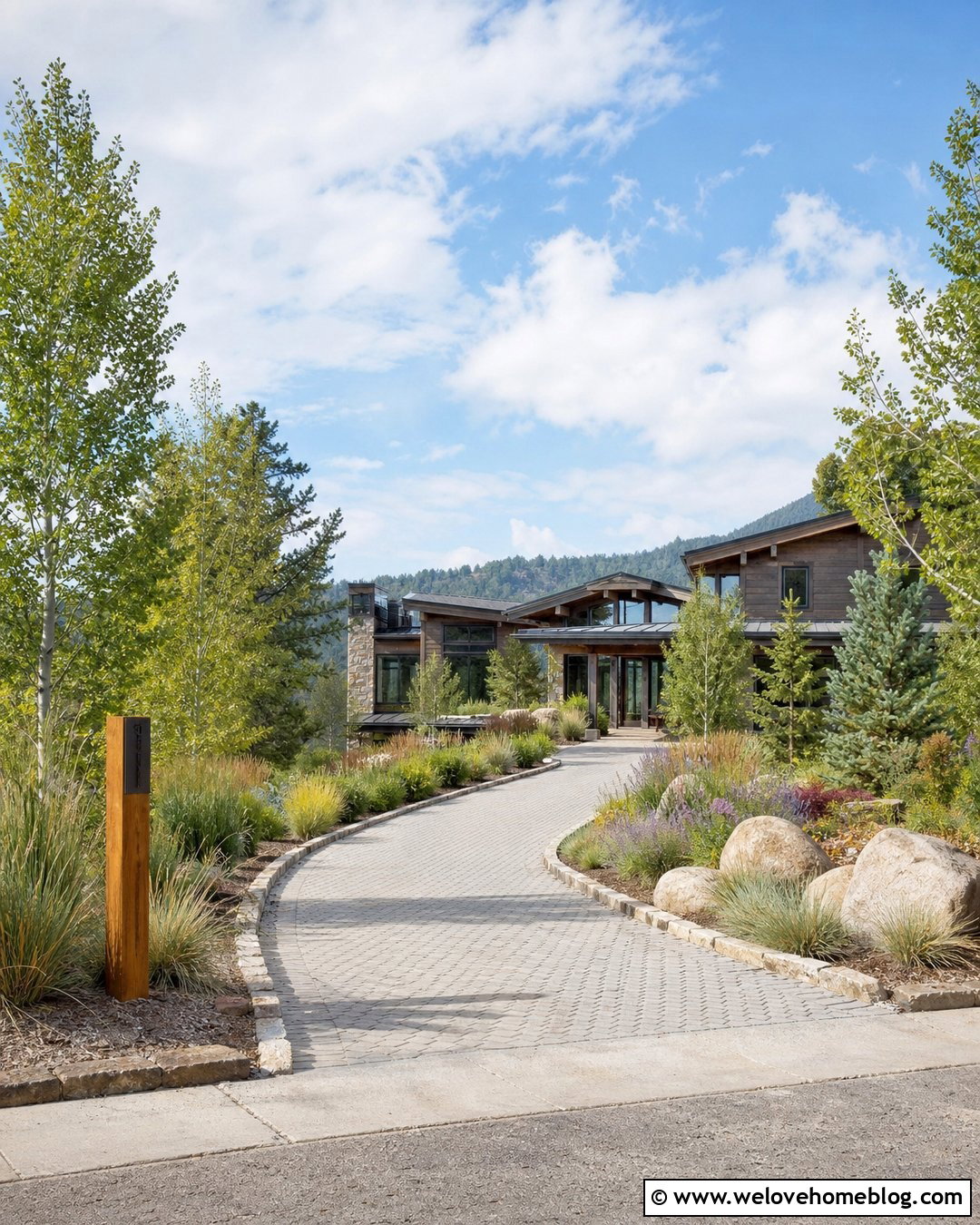
A native planting scheme can give a driveway entrance strong seasonal character while connecting it to the surrounding region. Combine a permeable paver or compacted gravel driveway with broad, informal beds on each side. Use locally appropriate flowering perennials, grasses, shrubs, and small trees in repeated masses, checking mature sizes before positioning them. A low fieldstone edge helps the naturalistic planting look deliberate and keeps soil away from the driving surface. Instead of imposing pillars, consider a simple timber address marker and understated boulder group. Preserve clear views near the road by keeping taller vegetation farther back. The mixture of textured paving, regional stone, and layered plants can produce a welcoming entrance that feels less manicured than a formal landscape but remains visually controlled and easy to understand.
28. Hydrangea-Lined Driveway Entrance
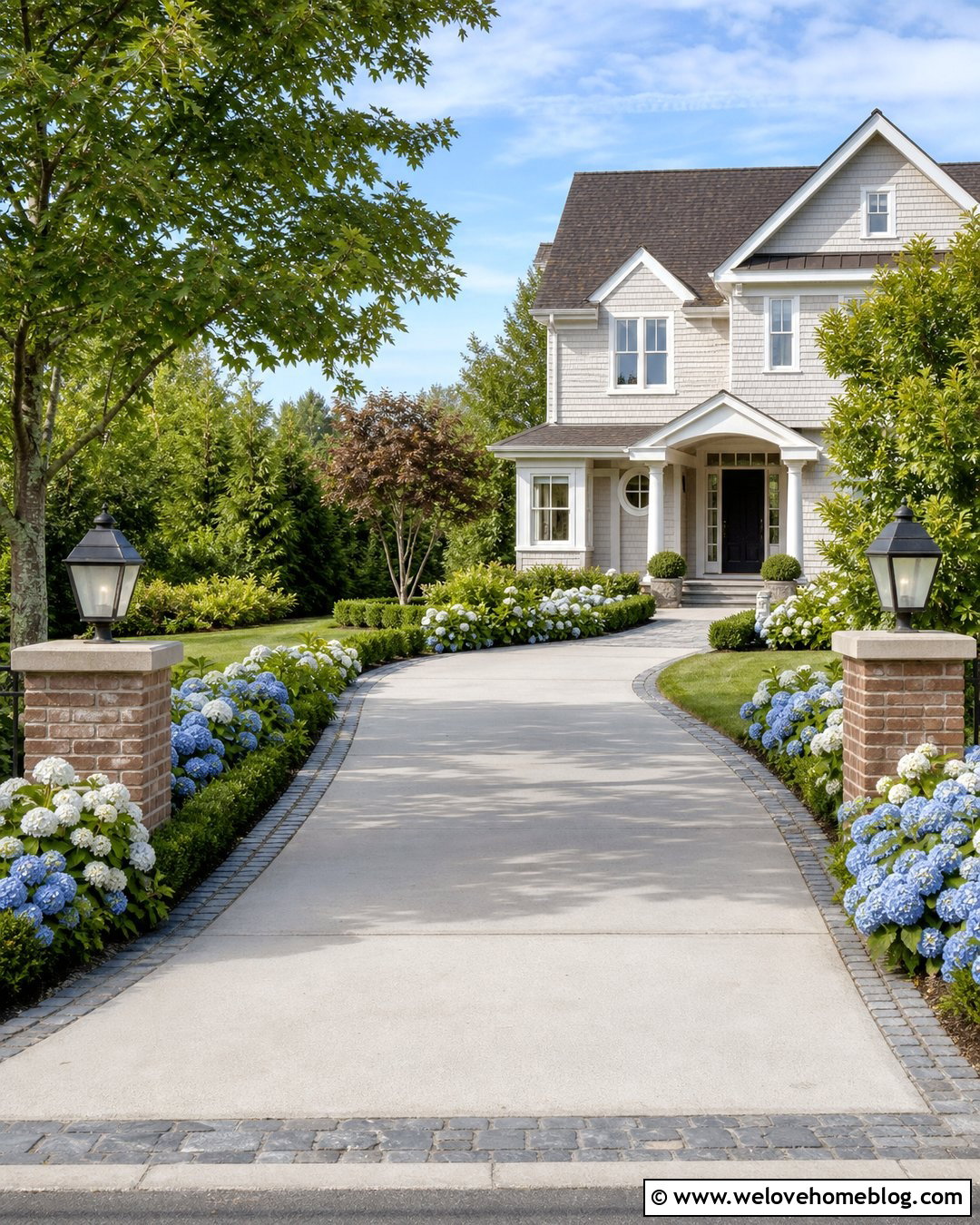
Full hydrangea borders can soften a wide driveway entrance and create a memorable display around a traditional home. Begin with a pale gray concrete or asphalt surface edged in charcoal cobblestones. Place the hydrangeas behind low evergreen shrubs so the beds retain structure when flowers are absent. Matching brick or painted masonry pillars can frame the opening, while classic lanterns echo the home’s exterior lighting. Allow generous planting space based on the mature width of the selected hydrangeas, and avoid positioning them where growth will narrow the driving lane. A gentle driveway curve makes the flowering border feel more natural than a rigid straight row. White, blue, or soft pink blooms can be coordinated with siding, shutters, and front-door colors for a polished overall composition.
29. Evergreen Driveway Entrance
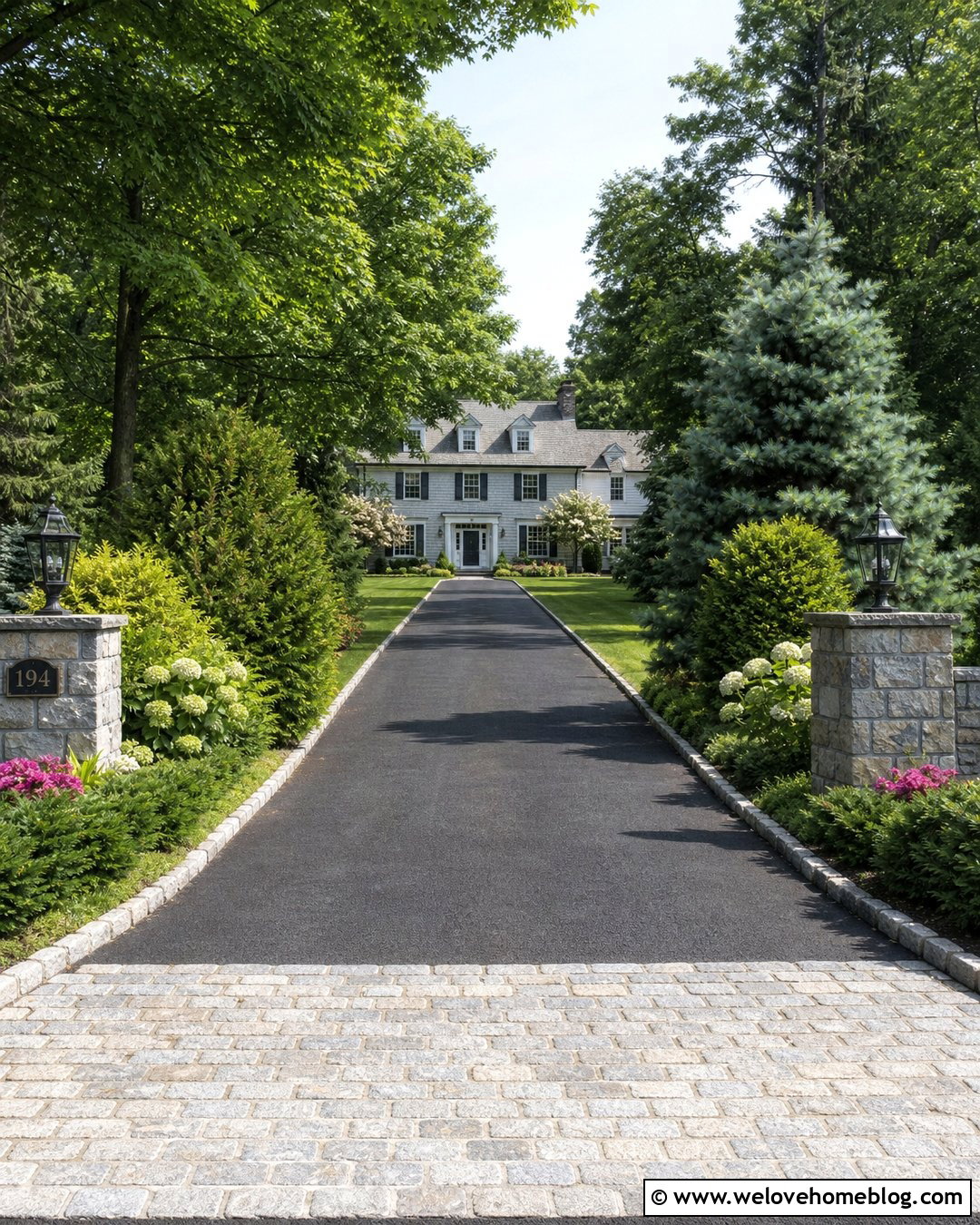
Evergreens give a driveway entrance dependable structure through every season. Pair a dark asphalt driveway with a light granite apron and low stone pillars for strong contrast. Use a balanced mix of compact conifers, broadleaf evergreen shrubs, and low ground covers rather than planting one continuous wall of identical greenery. Taller specimens can sit farther inside the property, while shorter plants preserve visibility near the road. Add one or two deciduous flowering shrubs for seasonal variation without weakening the evergreen framework. Dark metal lanterns, a clear address plaque, and neatly cut bed edges complete the entrance. This restrained palette works with many house styles, from ranch homes to classic Colonials. It is particularly effective where homeowners want a tidy, established look without relying on short-lived annual displays.
30. Sloped Driveway Entrance With Retaining Walls
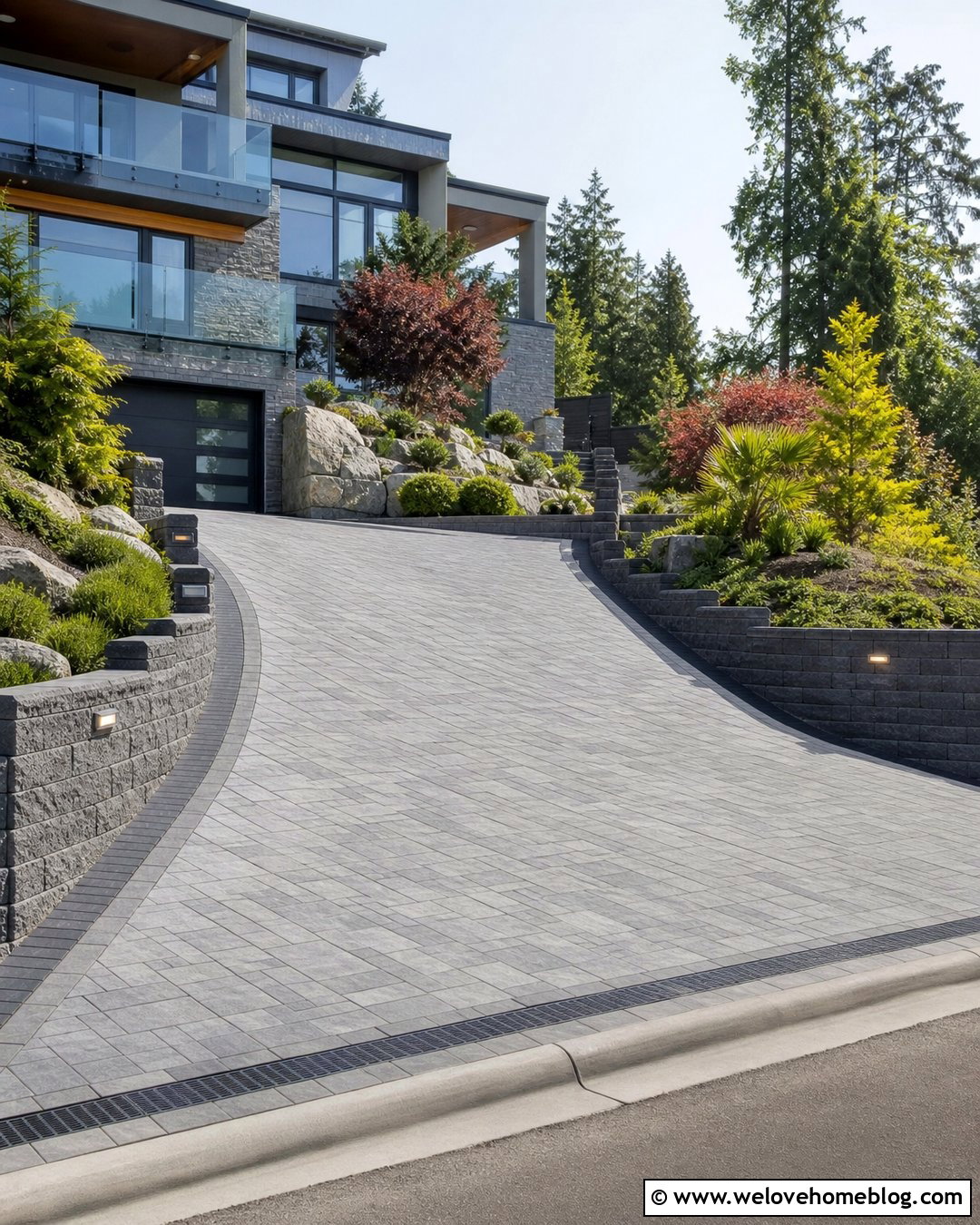
A sloped driveway entrance requires careful grading, drainage, and retaining features, but those necessities can also improve its curb appeal. Use textured concrete or interlocking pavers that visually divide the incline into manageable sections. Low segmental retaining walls can hold back raised planting beds on both sides, creating a more balanced transition from road level to the house. Choose wall colors that coordinate with the driveway border and facade. Plant trailing ground covers near the wall edges, with compact shrubs and ornamental trees farther back. Integrated wall lights can identify curves and elevation changes without cluttering the pavement. Keep runoff management central to the plan and consult qualified local professionals where required. The finished entrance should look stable, open, and deliberately integrated into the slope.
31. Driveway Entrance With Stone Culvert Walls
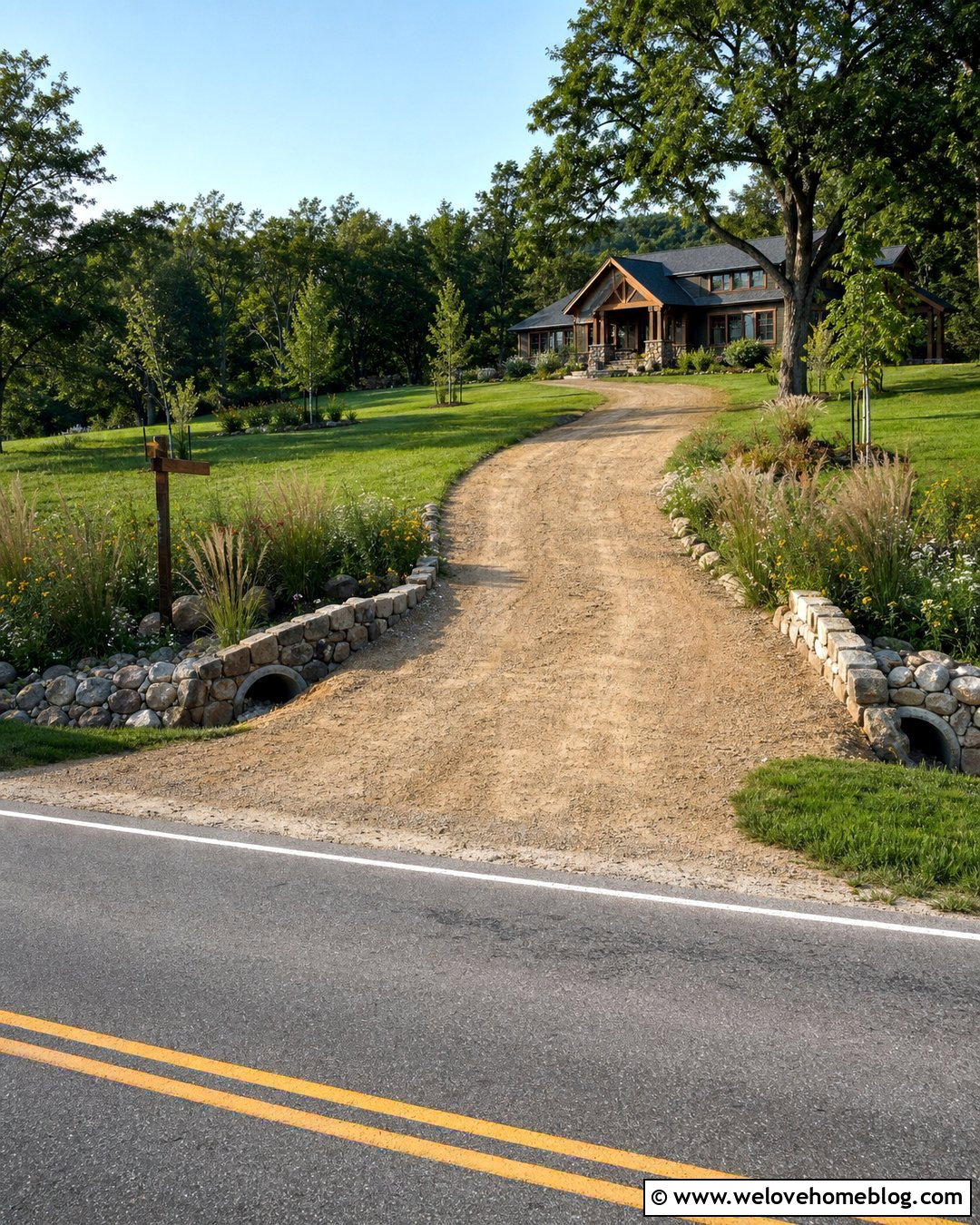
Where a driveway crosses a roadside drainage channel, stone culvert walls can turn a purely practical crossing into an attractive entrance. Surface the driveway with compacted gravel or chip seal and build low fieldstone headwalls around the culvert ends. Shape the walls to follow the ditch without restricting water movement or reducing safe road visibility. Extend the same stone as short entrance borders, then surround it with erosion-resistant grasses and low native plants. A timber address sign or small lantern post can sit beyond the drainage zone. Avoid placing loose mulch where flowing water can carry it into the culvert. Proper engineering and local approval may be needed, but visually coordinating the culvert, surface, edging, and planting creates a rural entrance that looks complete rather than improvised.
32. Driveway Entrance With Garden Arbor
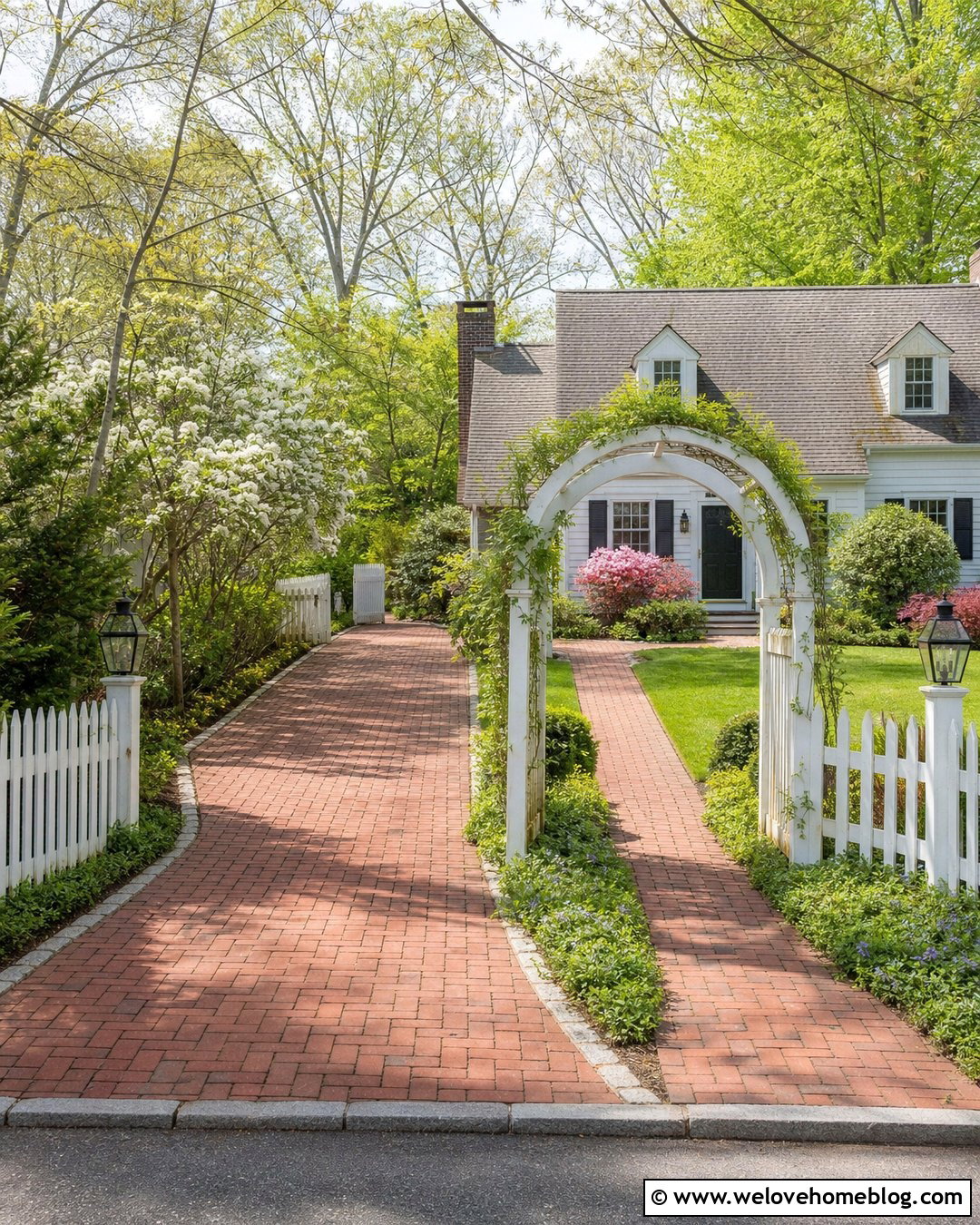
A garden arbor can mark the pedestrian side of a driveway entrance without limiting vehicle clearance. Pair a narrow brick paver driveway with a matching walkway that branches toward the front door. Position the arbor over the walkway, leaving the driving lane fully open. Painted wood suits a cottage or Cape Cod home, while dark metal works well with brick and traditional facades. Continue a low picket fence or hedge from the arbor to create a clear boundary between vehicles and pedestrians. Climbing plants, flowering shrubs, and neat ground cover can frame the structure, but growth should be pruned away from the path. Repeating the brick, fence color, and planting near the house helps the arbor feel connected to the wider property rather than appearing as an isolated decoration.
33. Black Metal Gate Driveway Entrance
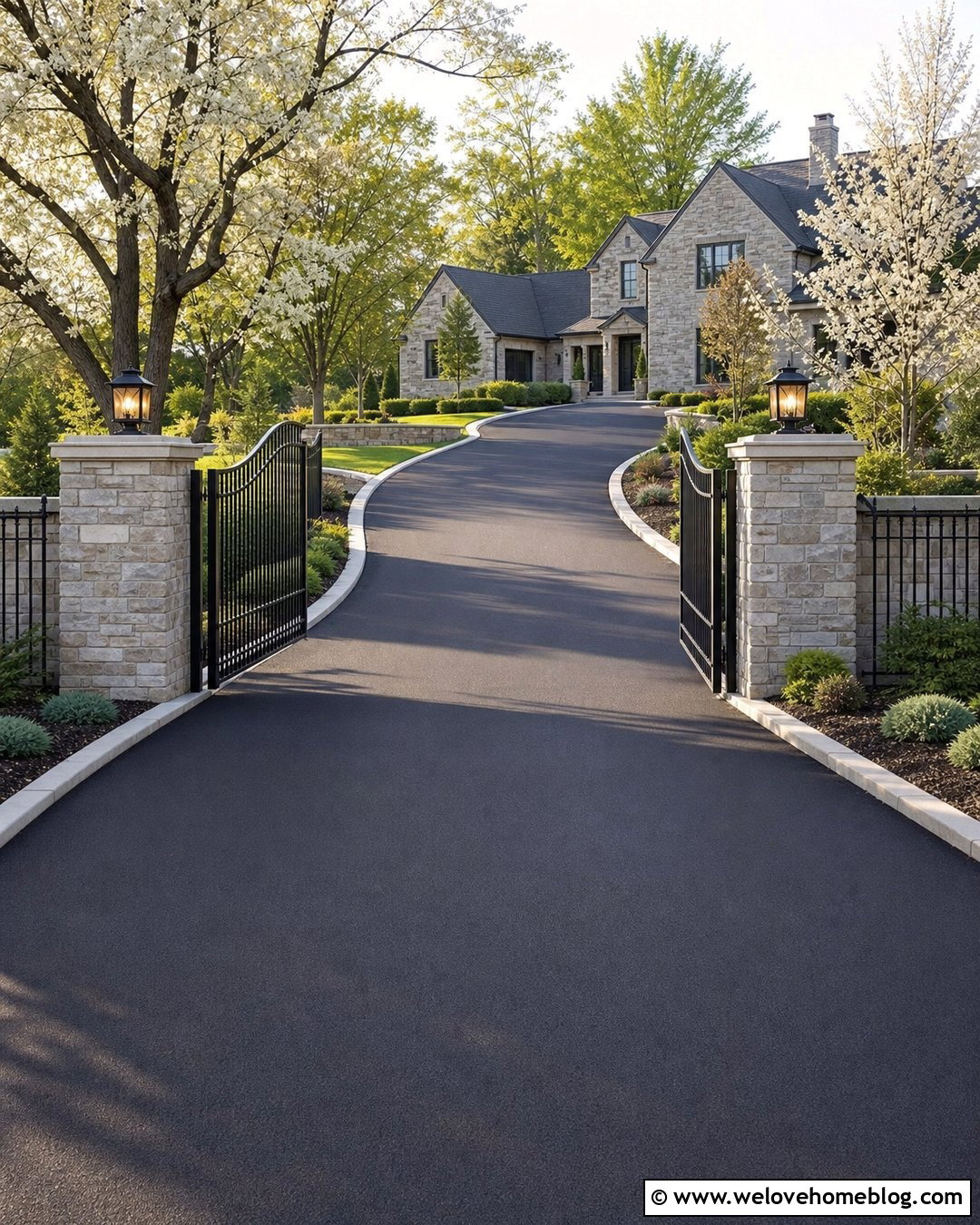
A black metal gate can suit both traditional and transitional homes when the surrounding materials are kept balanced. Install the gate between substantial stone or brick pillars and pair it with a smooth asphalt driveway or charcoal paver entrance. A gently curved approach gives vehicles room to align before reaching the opening. Continue short sections of coordinating fence into landscaped beds so the gate does not appear disconnected. Layer evergreen shrubs, ornamental grasses, and small flowering trees around the masonry while protecting gate movement and safety sensors. Lanterns on the pillars can repeat black hardware used on the house. Before installation, plan the opening width, setback, operating method, and emergency access. A successful gate should improve security and curb appeal without making daily arrivals unnecessarily difficult.
34. Wood Gate Gravel Driveway Entrance
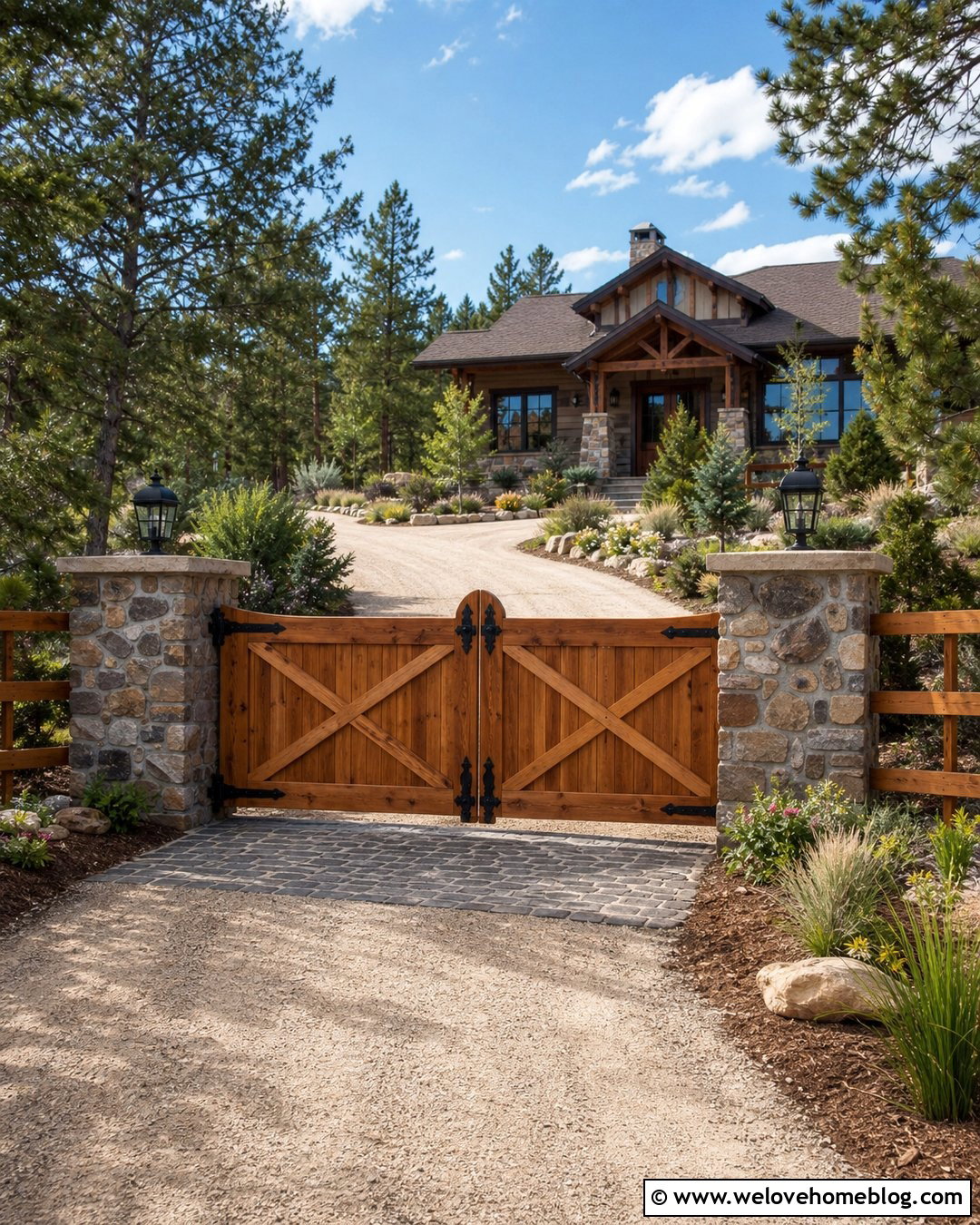
A wood gate brings warmth to a gravel driveway and works particularly well with farmhouse, ranch, and mountain-style homes. Choose a wide cedar or redwood double gate with simple horizontal or cross-braced construction. Support it with stone columns or heavy timber posts set beyond the driveway edges. Use tan crushed gravel for the driving surface and a darker cobblestone apron near the road to contain loose material. Native shrubs, flowering grasses, and broad mulch beds can blend the gate into the landscape. Continue a coordinating wood fence for a short distance on each side. Black hinges, lanterns, and an address plaque create useful contrast. The overall entrance should look sturdy and approachable, with enough open space for vehicles to wait safely before the gate operates.
35. Ranch Farm Gate Driveway Entrance
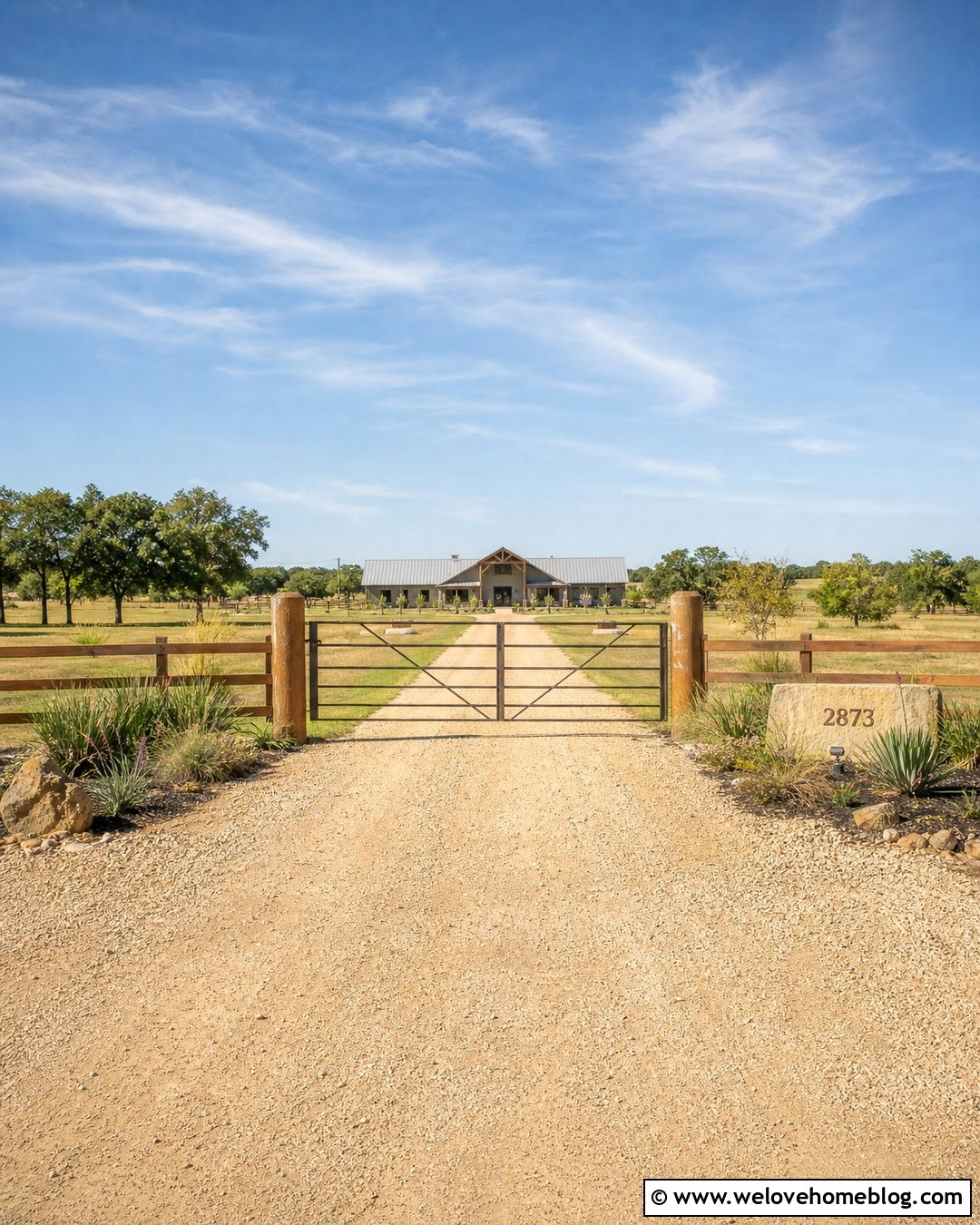
A practical farm gate can have strong curb appeal when its surroundings are thoughtfully finished. Use a simple galvanized or powder-coated metal gate across a wide crushed limestone driveway. Flank it with sturdy timber posts or low fieldstone pillars, then extend post-and-rail fencing along the property frontage. A gravel apron should provide a stable waiting area and reduce muddy edges at the road. Plant native grasses, tough flowering perennials, and a pair of shade trees beyond the gate, where they will not interfere with trailers or wide vehicles. A large, legible address sign can be mounted beside the entrance. Rather than overdecorating the scene, focus on good proportions, consistent fencing, maintained gravel, and healthy planting. The result feels authentic, useful, and well cared for.
36. Double Gate Paver Driveway Entrance
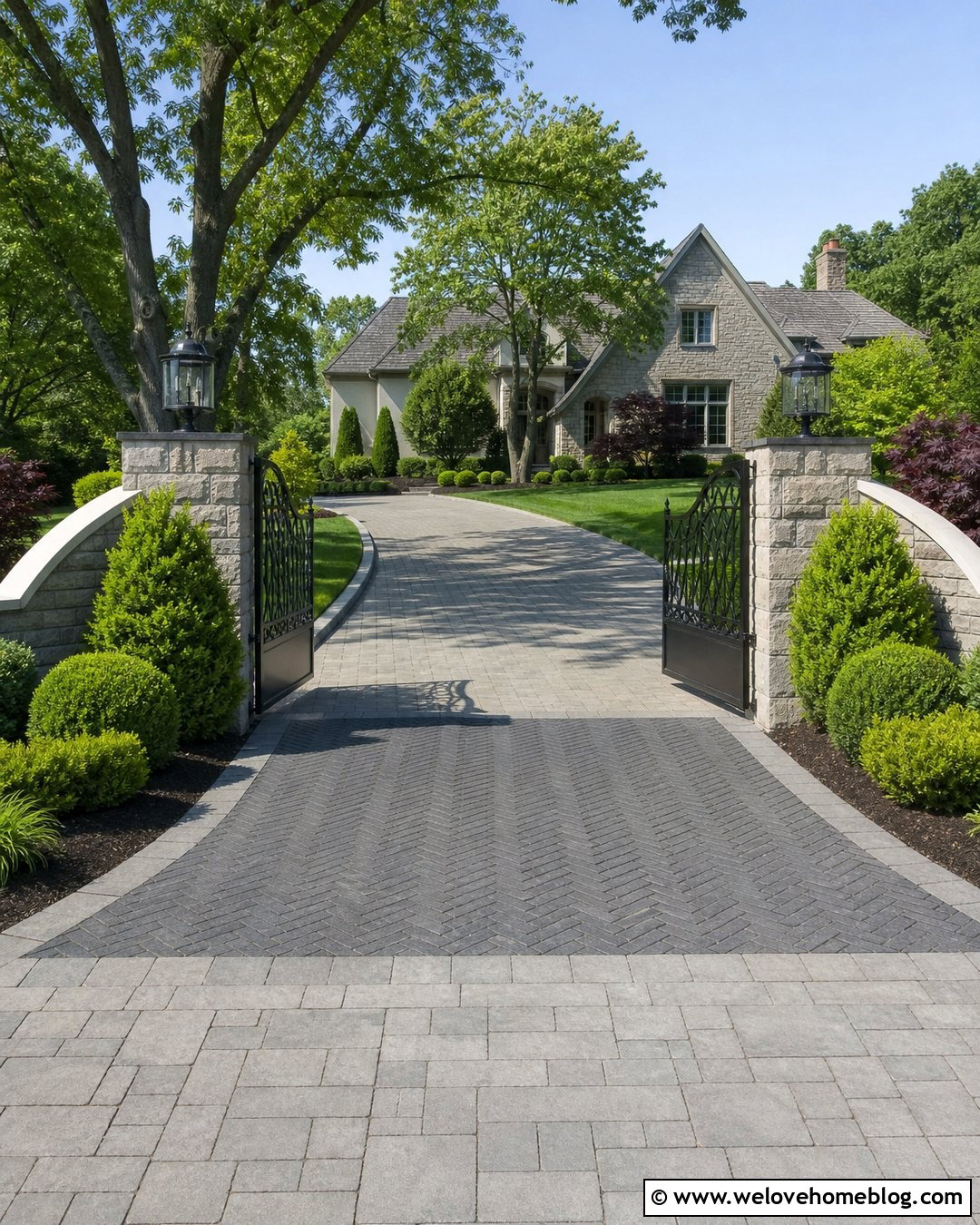
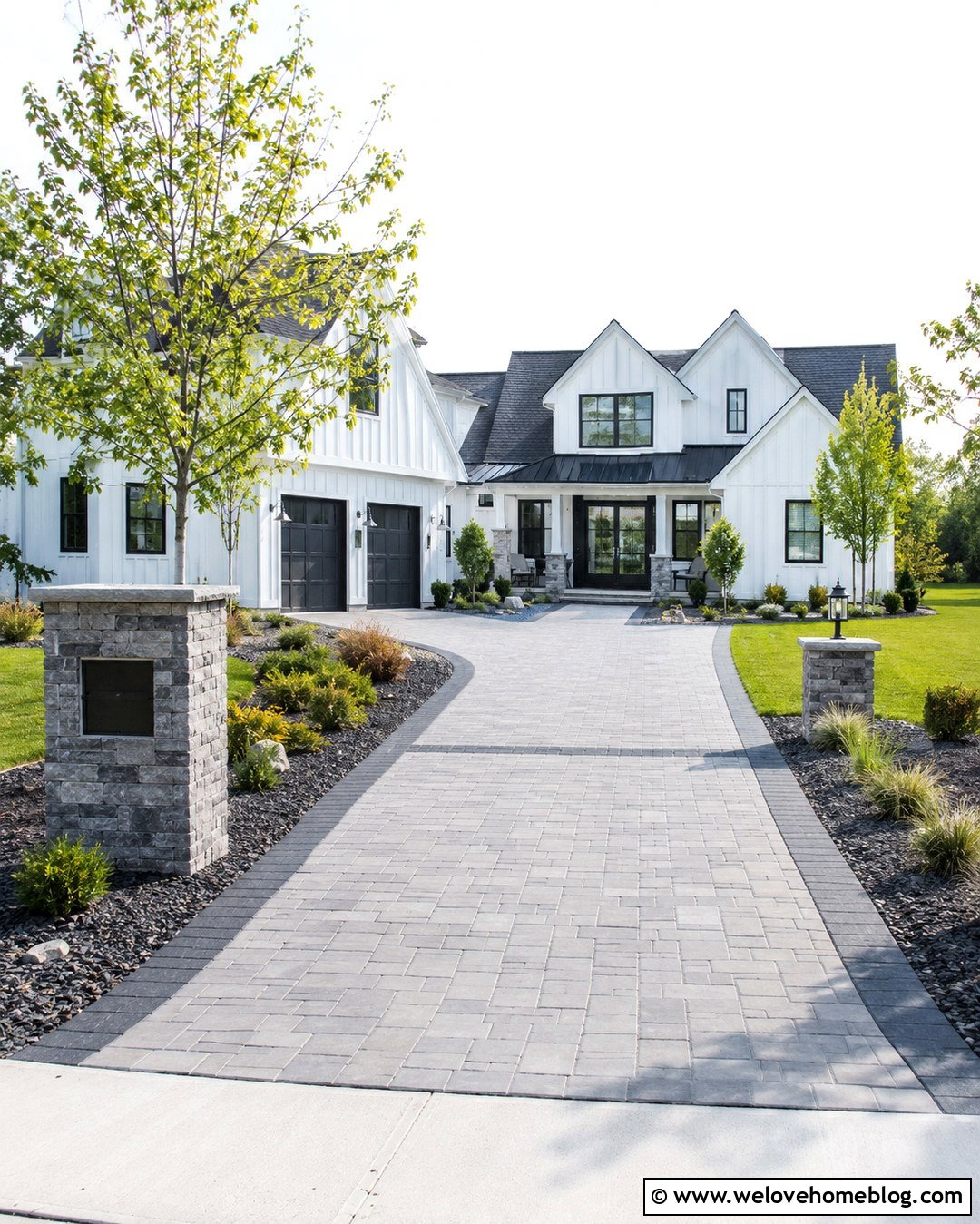
A double gate can create a balanced focal point across a broad paver driveway. Choose a pair of metal or wood gate leaves that open from substantial masonry pillars, making sure the full opening accommodates regular vehicles and service access. Use concrete pavers in a warm gray blend, with a darker fan-shaped or herringbone apron emphasizing the entrance. Low walls can curve outward from the pillars and finish inside symmetrical planting beds. Match shrubs, ornamental trees, and lighting on both sides to reinforce the centered composition. Leave a suitable vehicle waiting area between the road and gate where space and regulations permit. The driveway may continue straight toward the house or widen into a courtyard. Coordinated materials help the grander entrance feel appropriate rather than unnecessarily elaborate.
37. Open Driveway Entrance Without A Gate
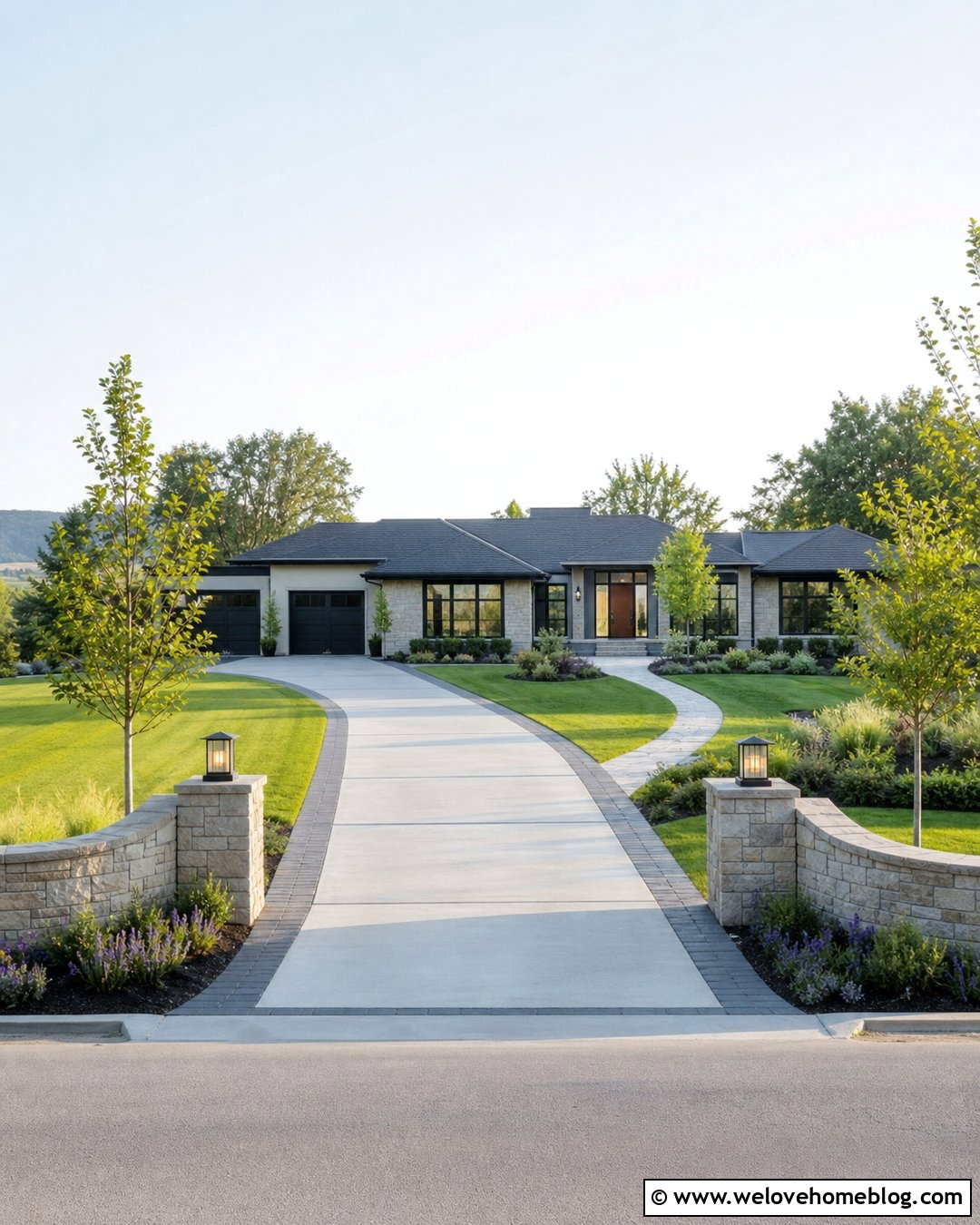
An open entrance can feel just as intentional as a gated one. Define a light-gray concrete driveway with a dark paver border and two low stone walls that curve away from the road. The walls create a welcoming gesture while leaving the driving area visually spacious. Set matching column lights or small ornamental trees at their inner ends, ensuring they do not obstruct sightlines. Layer the surrounding beds with compact shrubs, flowering perennials, and ground cover that echoes landscaping near the house. Add a clear address marker and a separate walkway connection for pedestrians. Without a gate, every feature needs to contribute to the composition. Consistent stone, clean pavement edges, balanced planting, and controlled lighting will make the entrance look complete while retaining easy everyday access.
38. Horseshoe Driveway Entrance With Center Lawn
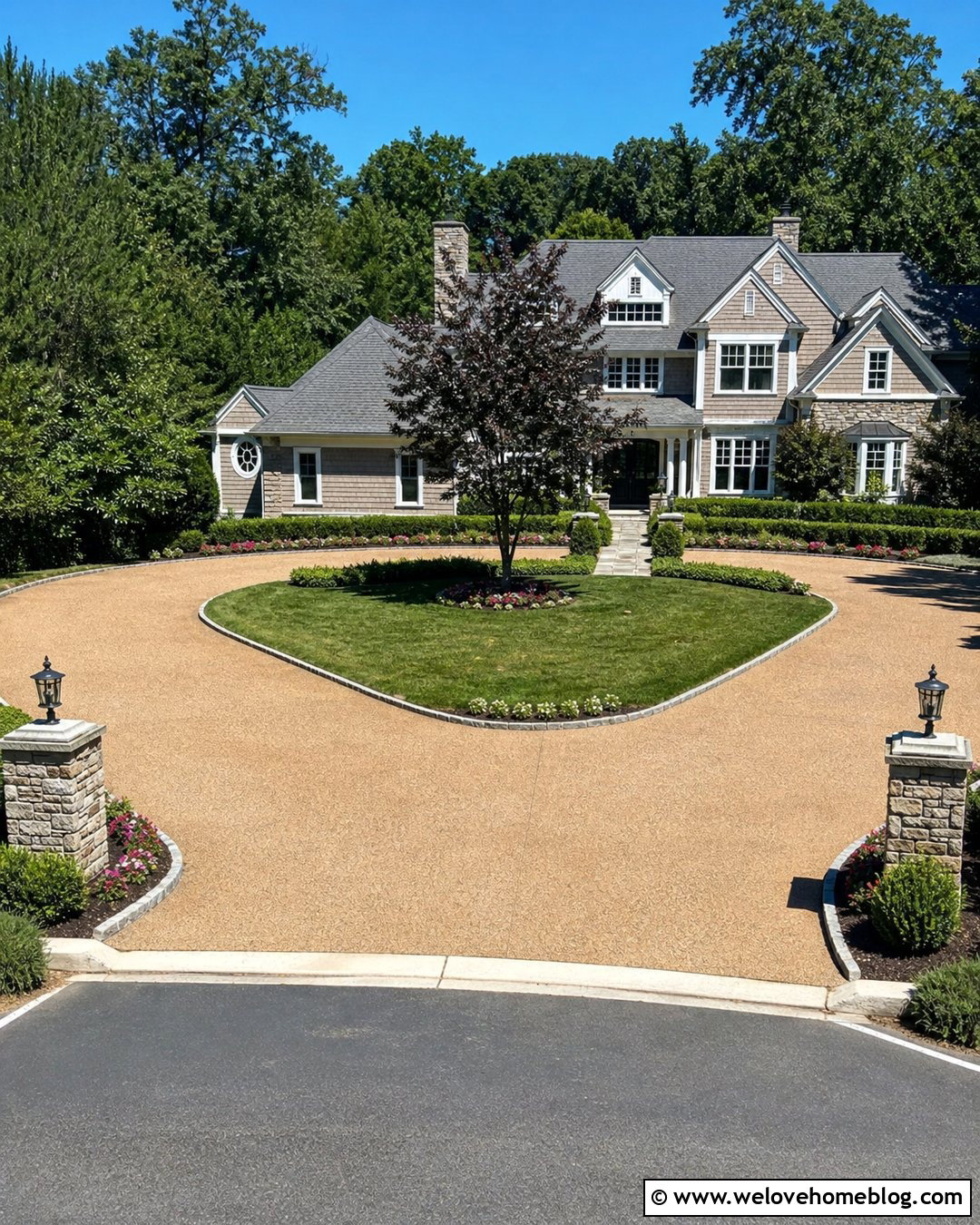
A horseshoe driveway provides separate entry and exit points while creating a landscaped area between them. Use tan gravel, light pavers, or exposed-aggregate concrete for the curved surface, with matching stone pillars marking both roadside openings. The center area can remain as a simple lawn framed by a low hedge, or it can feature one ornamental tree surrounded by restrained planting. Avoid filling the island with tall shrubs that hide the house or reduce visibility. Repeat the same driveway border and entrance lights at both openings for continuity. A walkway can cross the inner lawn toward the front door if it follows a clear, comfortable route. This layout creates a graceful arrival sequence and works best on properties with enough frontage to accommodate broad turning curves.
39. Shared Driveway Entrance With Clear Markers
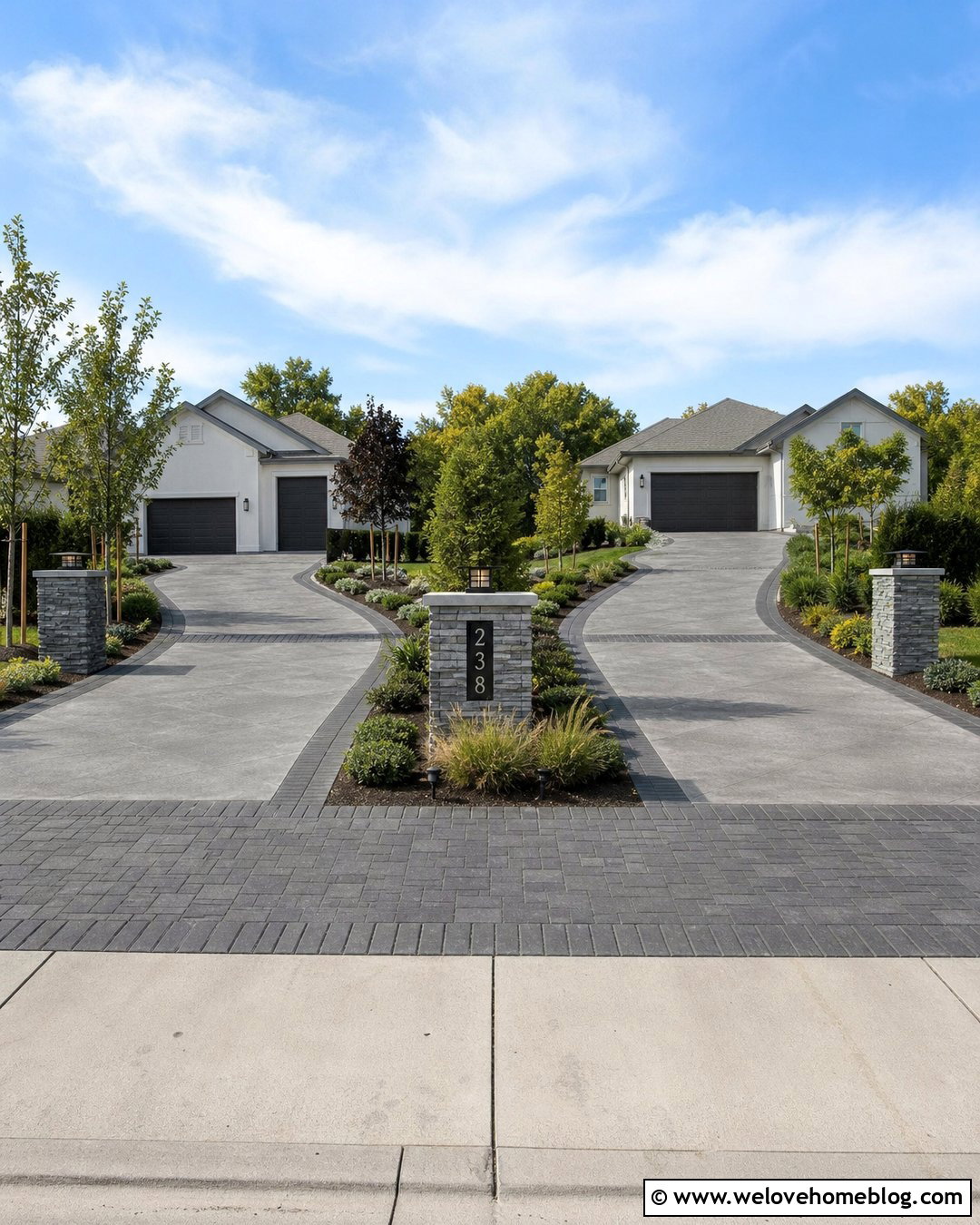
A shared driveway entrance needs visual clarity as well as curb appeal. Begin with a durable asphalt or concrete surface and use a broad paver apron to identify the opening from the street. A central stone monument can display separate property numbers with directional arrows, while matching low pillars define the outer edges. Farther inside, use a landscaped island or contrasting paver bands to show where the driveway divides. Keep trees, shrubs, and signs away from turning paths and preserve open sightlines for vehicles entering from either direction. Coordinated lighting can illuminate the address monument and split without flooding nearby homes. By combining clear navigation with repeated masonry, restrained planting, and consistent pavement details, the shared entrance can feel organized and attractive rather than confusing or overly commercial.
40. Long Curved Driveway Entrance
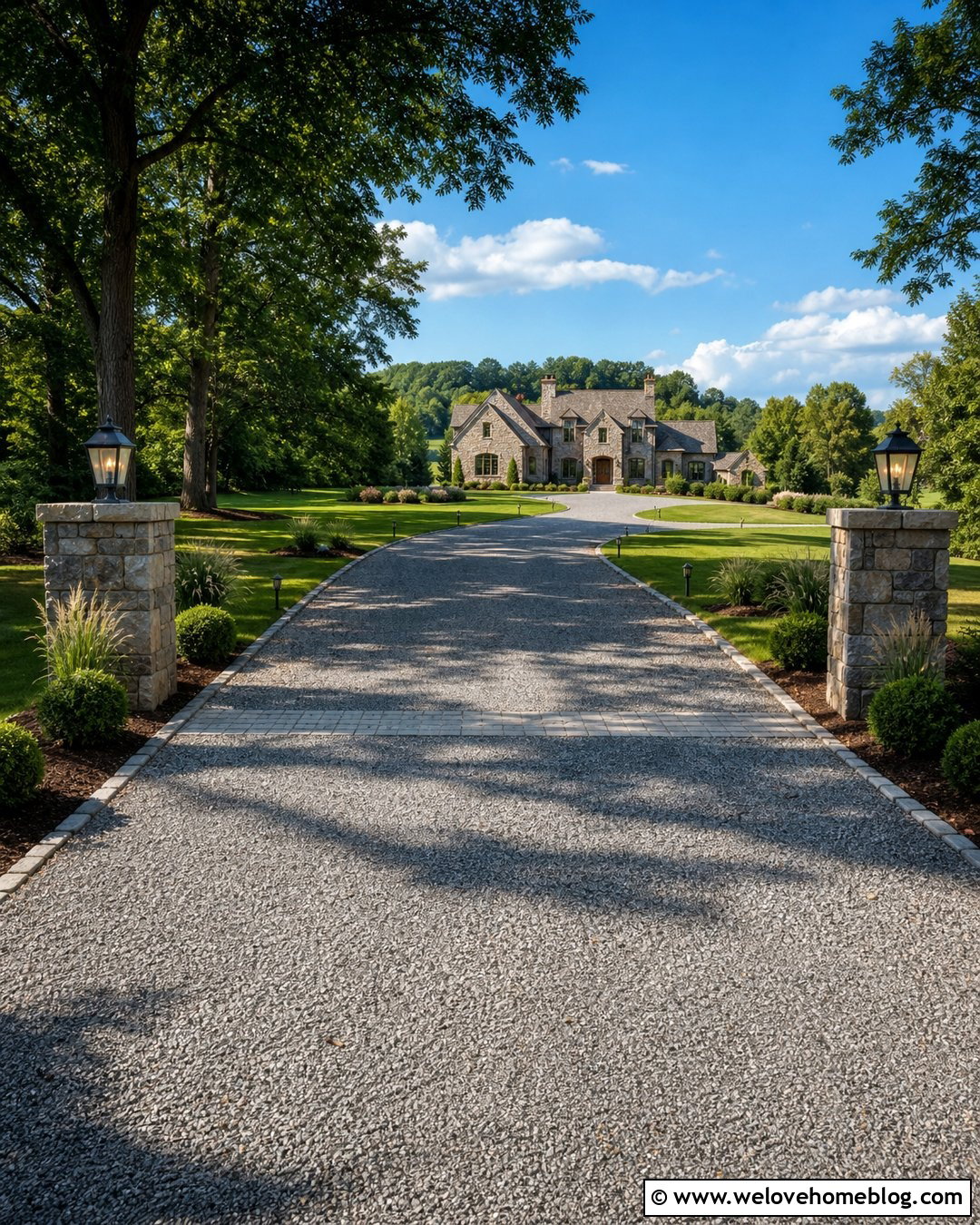
A long curved driveway should reveal the property gradually while remaining easy for first-time visitors to follow. Start with a broad entrance of compacted gravel, asphalt, or textured concrete, then use continuous stone edging to emphasize the curve. Two masonry pillars and an illuminated address sign establish the starting point. Continue low guide lights and repeated planting groups along the route, spacing them widely enough to avoid a runway effect. Trees can frame selected portions of the drive, while open lawn or meadow areas provide visual relief. Near the house, transition into a wider parking court using a contrasting paver band. The material, border, landscape, and lighting should guide attention naturally from the public road to the home, creating a polished arrival across the entire property.
Conclusion:
The best driveway entrance is not defined by one expensive gate, plant, or paving material. It comes from coordinating the surface, shape, borders, landscaping, lighting, and house architecture as one complete view. These 40 Driveway Entrance Curb Appeal Ideas offer options for compact suburban yards, rural properties, sloped sites, modern homes, and traditional facades. Start by correcting practical issues such as damaged pavement, unclear edges, poor drainage, or limited visibility. Then add a focal feature that fits your budget, whether that is a planted address marker, brick apron, simple gate, or pair of illuminated pillars. Repeating colors and materials from the house will help the finished entrance feel established, welcoming, and intentionally designed.

Related posts:

Leave a Reply