
The right driveway edge does more than create a neat line. It supports loose materials, protects vulnerable pavement edges, separates cars from planting beds, and gives the entire front yard a more intentional finish. These 40 driveway edges and borders ideas include practical options for gravel, asphalt, concrete, brick, resin, and paver surfaces. You will find affordable DIY treatments, polished masonry details, modern metal edging, natural stonework, and landscaped borders suited to different house styles. When choosing a design, consider drainage, vehicle clearance, maintenance, climate, and how the border connects with your walkway and entrance. Explore the complete driveway looks below to find the best approach among these 40 driveway edges and borders ideas.
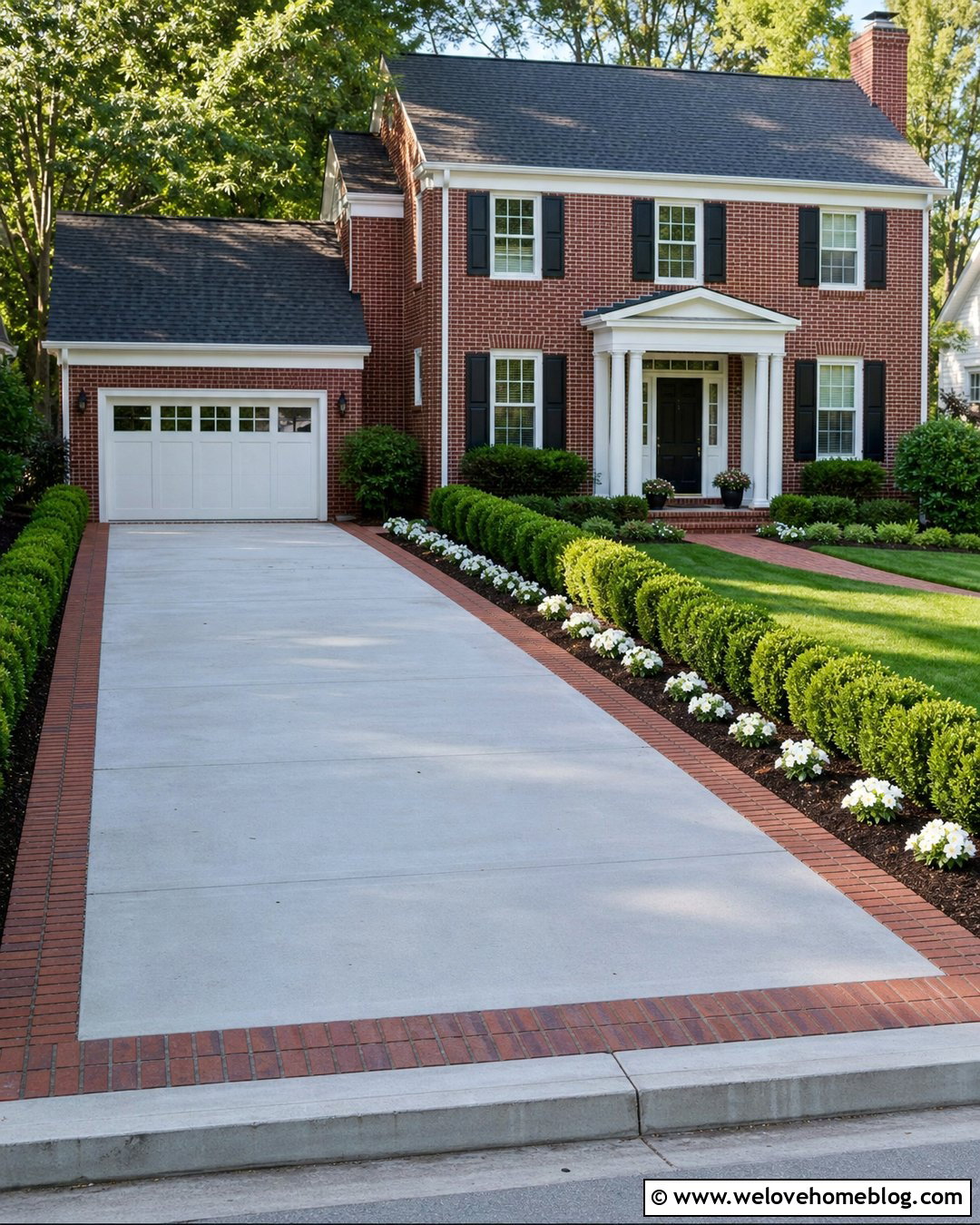
1. Brick Driveway Border
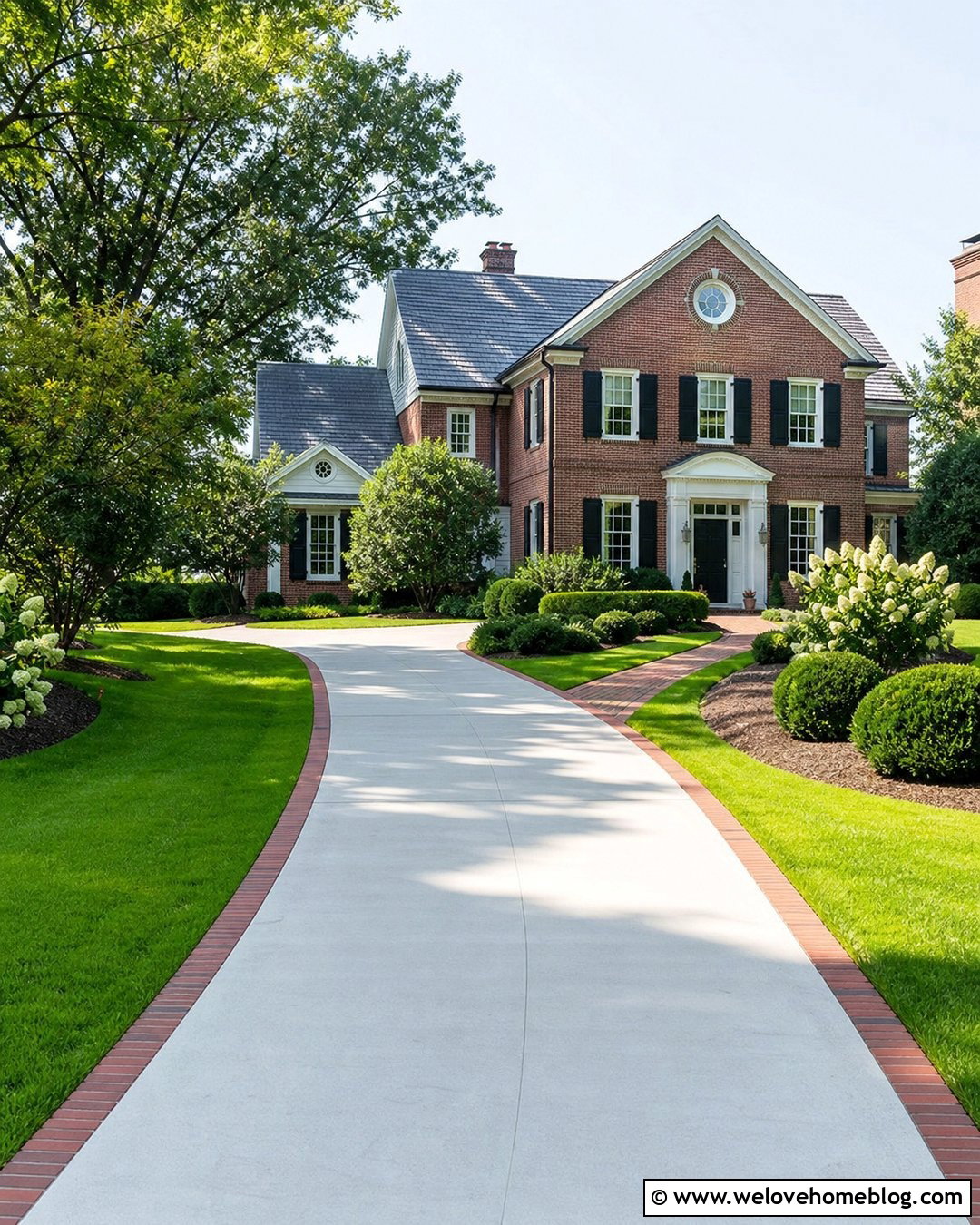
A red clay brick border gives a plain concrete driveway more warmth and definition. Install the bricks in a soldier course, with their narrow ends facing the driveway, for a crisp traditional line. A curved brick edge can also soften the transition between the pavement and front lawn. Match the border with a brick walkway or facade so it feels connected to the house. On the landscaping side, use a narrow mulch bed with boxwoods, dwarf hydrangeas, or seasonal flowers. The border should sit securely on a prepared base and remain low enough to avoid contact with doors and tires. This complete look works especially well with Colonial, Cape Cod, ranch, and traditional brick homes.
2. Belgian Block Driveway Edging
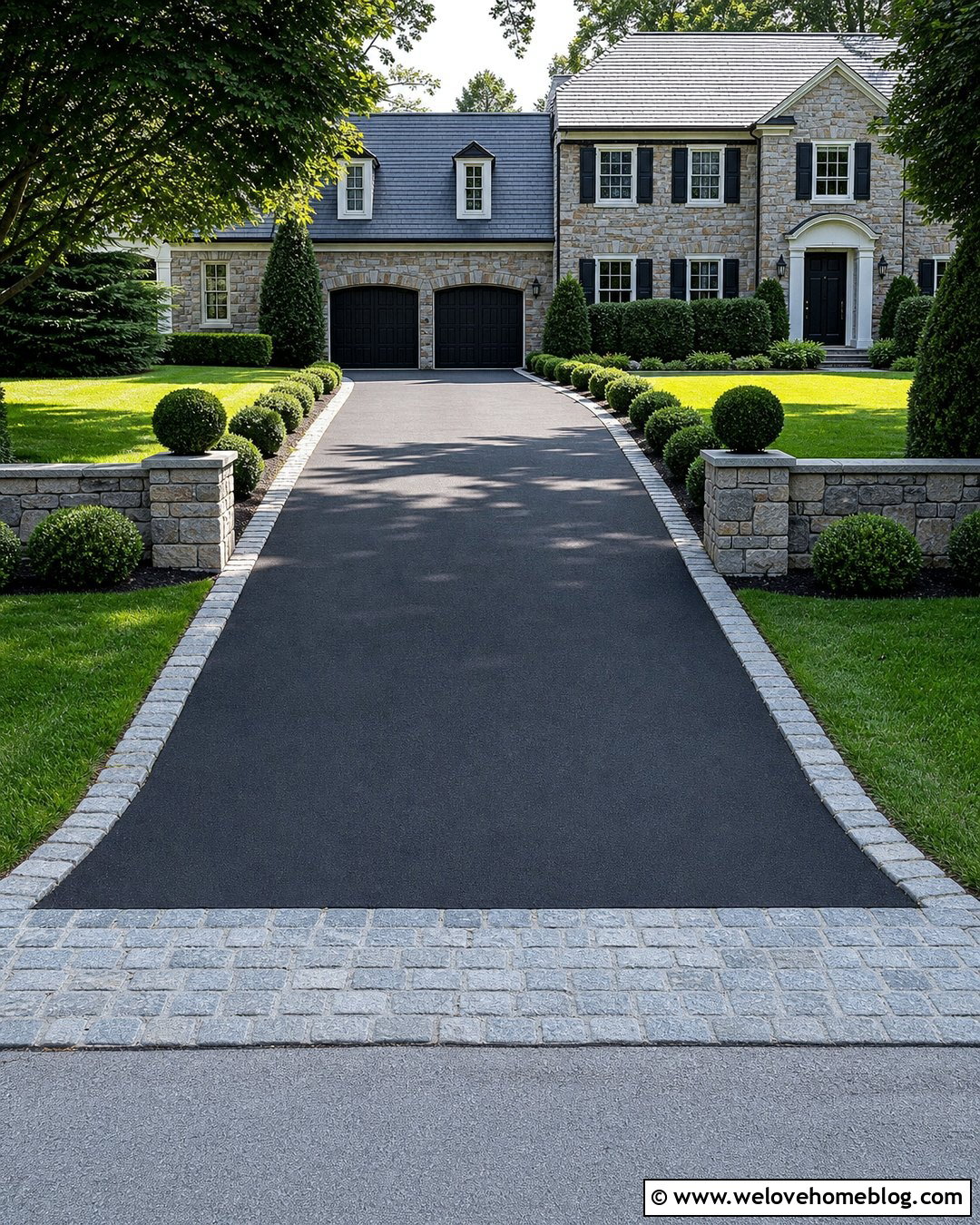
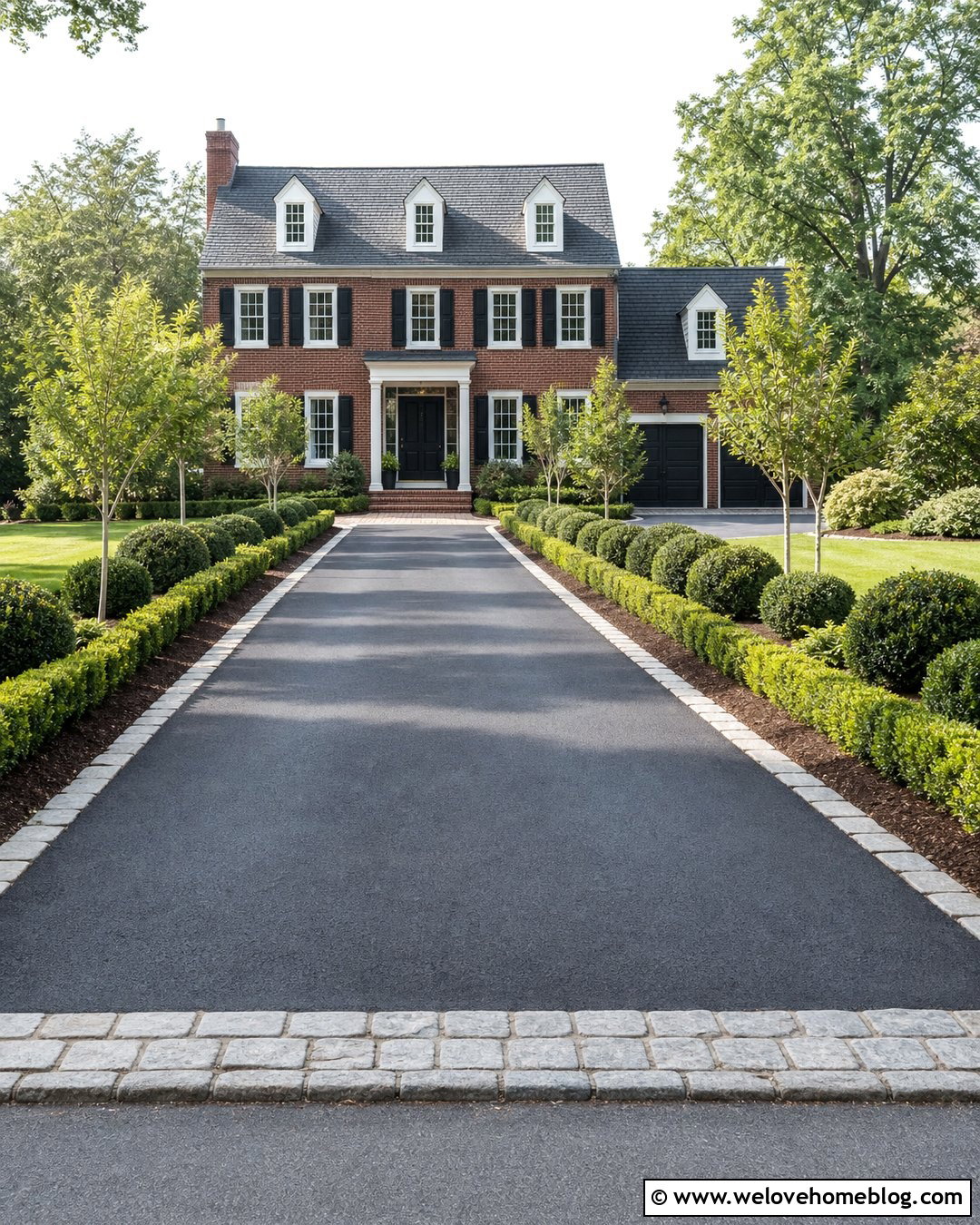
Belgian block edging brings weight and character to a black asphalt driveway. The chunky granite blocks create a strong visual frame while separating the pavement from lawn or planting beds. Gray blocks produce a subtle transition, while charcoal or pink-toned granite adds more contrast. For a formal look, use a straight soldier course along both sides and repeat the material at the driveway apron. A slightly raised installation helps guide tires, but the height should not interfere with car doors or snow removal. Complete the design with clipped evergreen shrubs, simple lawn panels, and a matching granite walkway border. This combination suits stone Colonials, Tudor homes, and established suburban properties with traditional architecture.
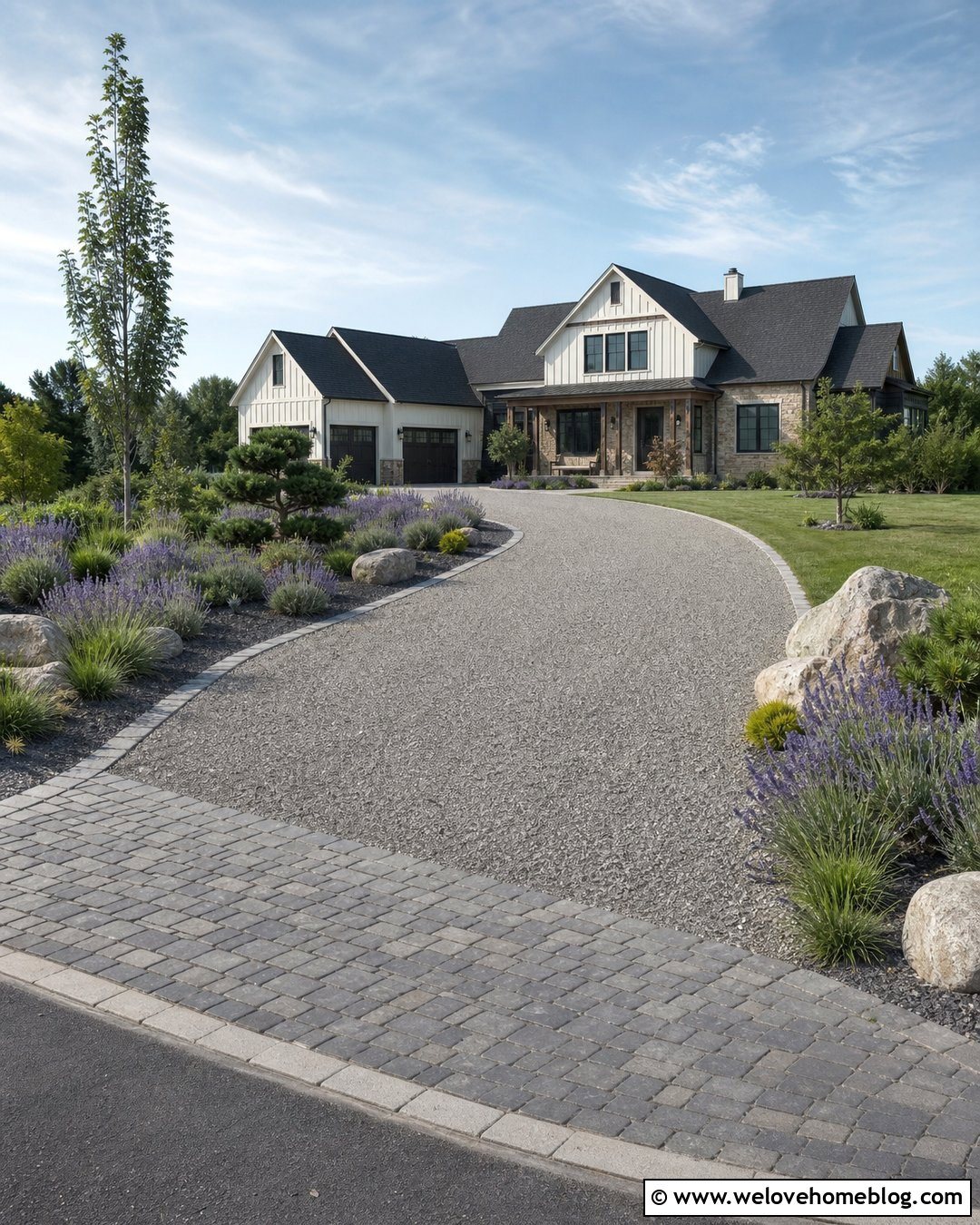
3. Cobblestone Driveway Border
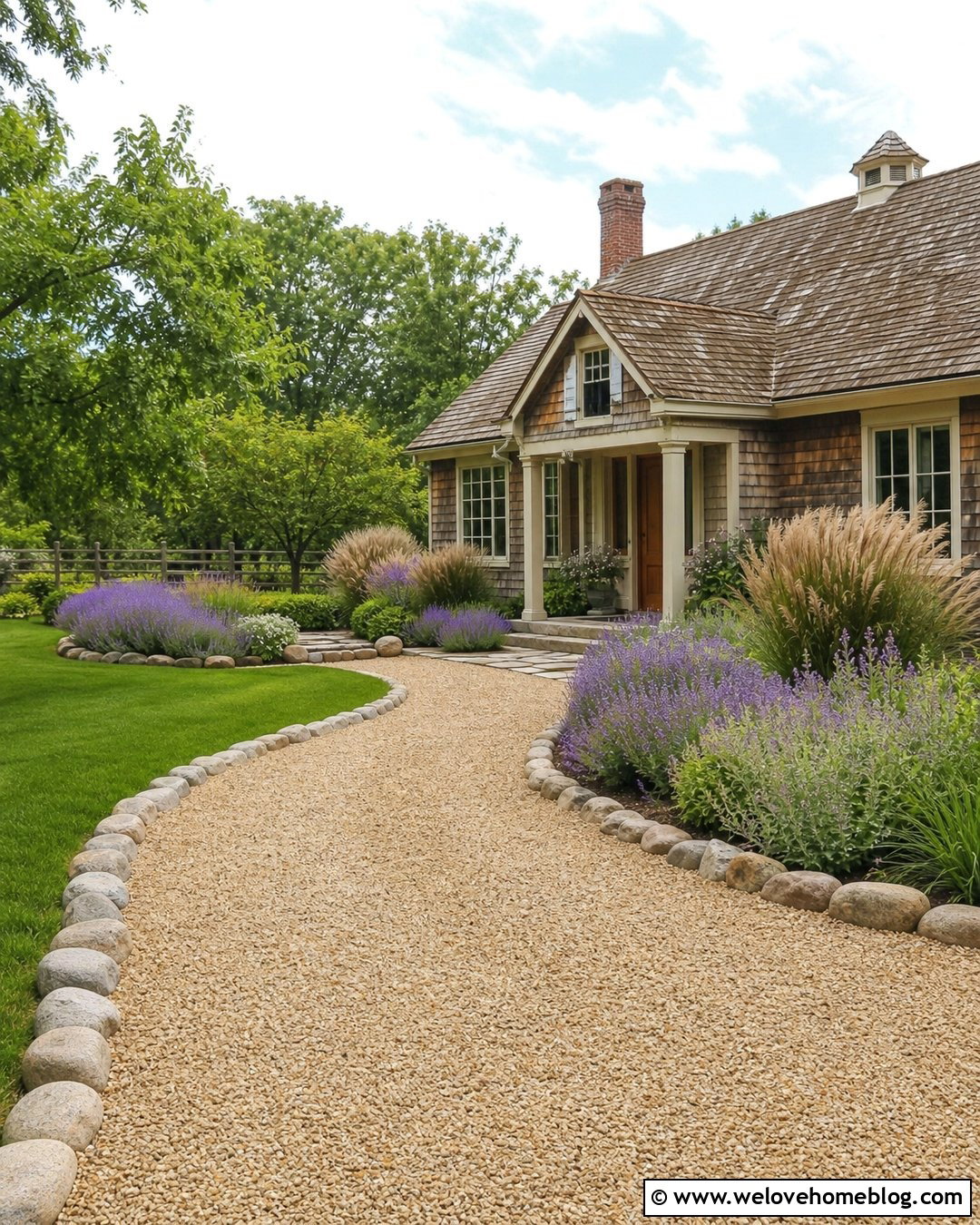
An irregular cobblestone border makes a gravel driveway feel established rather than unfinished. Choose rounded gray cobbles for an informal country setting or squared granite cobbles for a more tailored appearance. The stones can follow a long curve, frame a circular turnaround, and widen near the entrance to create a welcoming apron. Pair pale gravel with darker cobbles for noticeable contrast. Beyond the edge, plant lavender, catmint, compact ornamental grasses, or low evergreen mounds that will not obstruct visibility. The cobblestone should be properly restrained so individual pieces do not shift under tire pressure. This complete driveway look complements cottages, farmhouses, rustic ranch homes, and wooded properties where natural materials fit the surrounding landscape.
4. Concrete Curb Driveway Edge
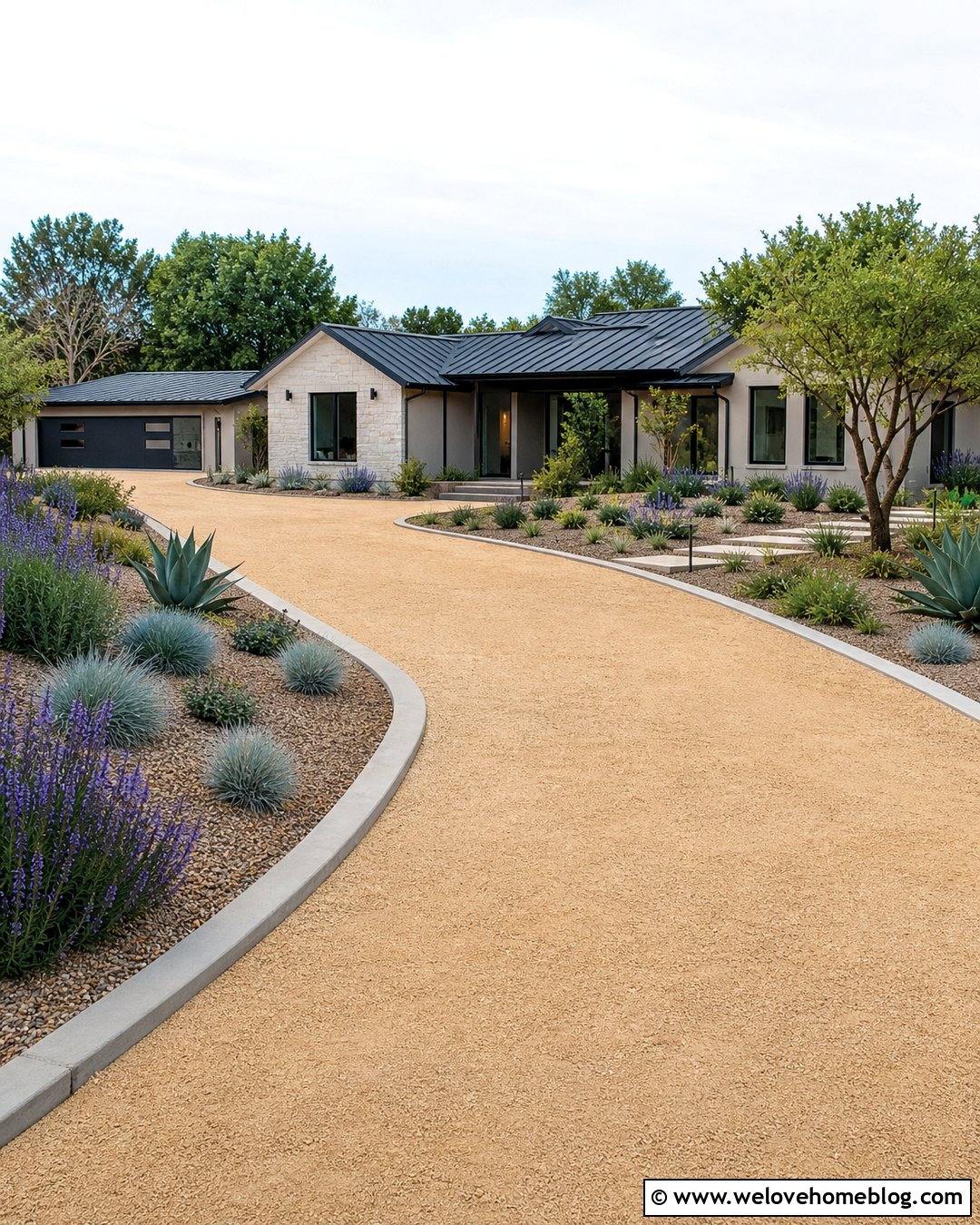
A poured concrete curb creates a durable, continuous edge around a loose gravel or decomposed granite driveway. It can be formed as a low flush strip for a subtle finish or raised slightly to contain surface material. A smooth gray curb looks clean beside contemporary homes, while a lightly textured finish works with casual suburban architecture. Follow the driveway’s shape carefully, including gentle curves near planting beds and a wider opening at the street. Add drought-tolerant landscaping such as blue fescue, salvia, agave, or compact shrubs outside the curb. Repeating the same concrete around the walkway ties everything together. This low-maintenance treatment is particularly helpful when you want a clear separation between gravel, mulch, lawn, and garden soil.
5. Paver Driveway Border
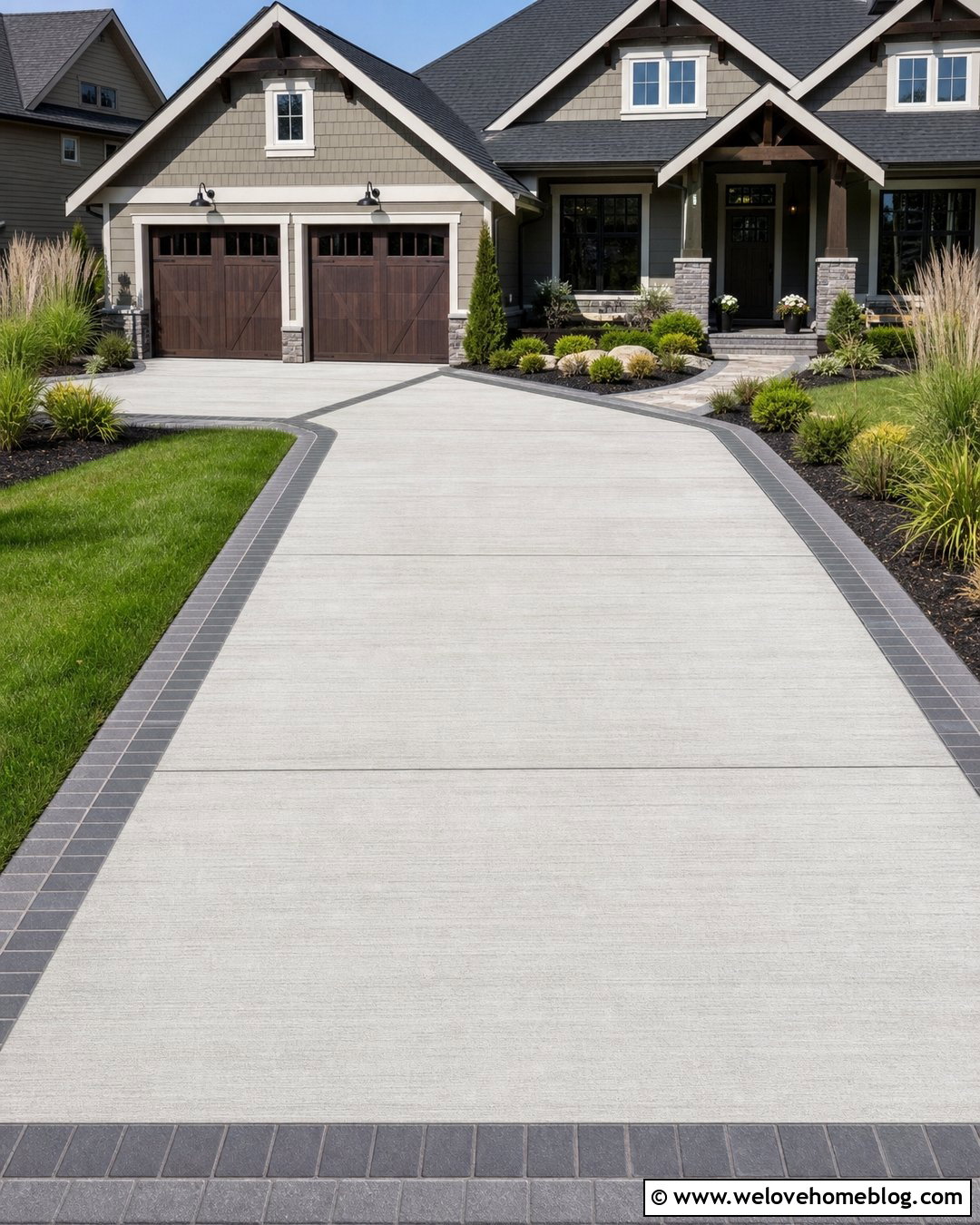
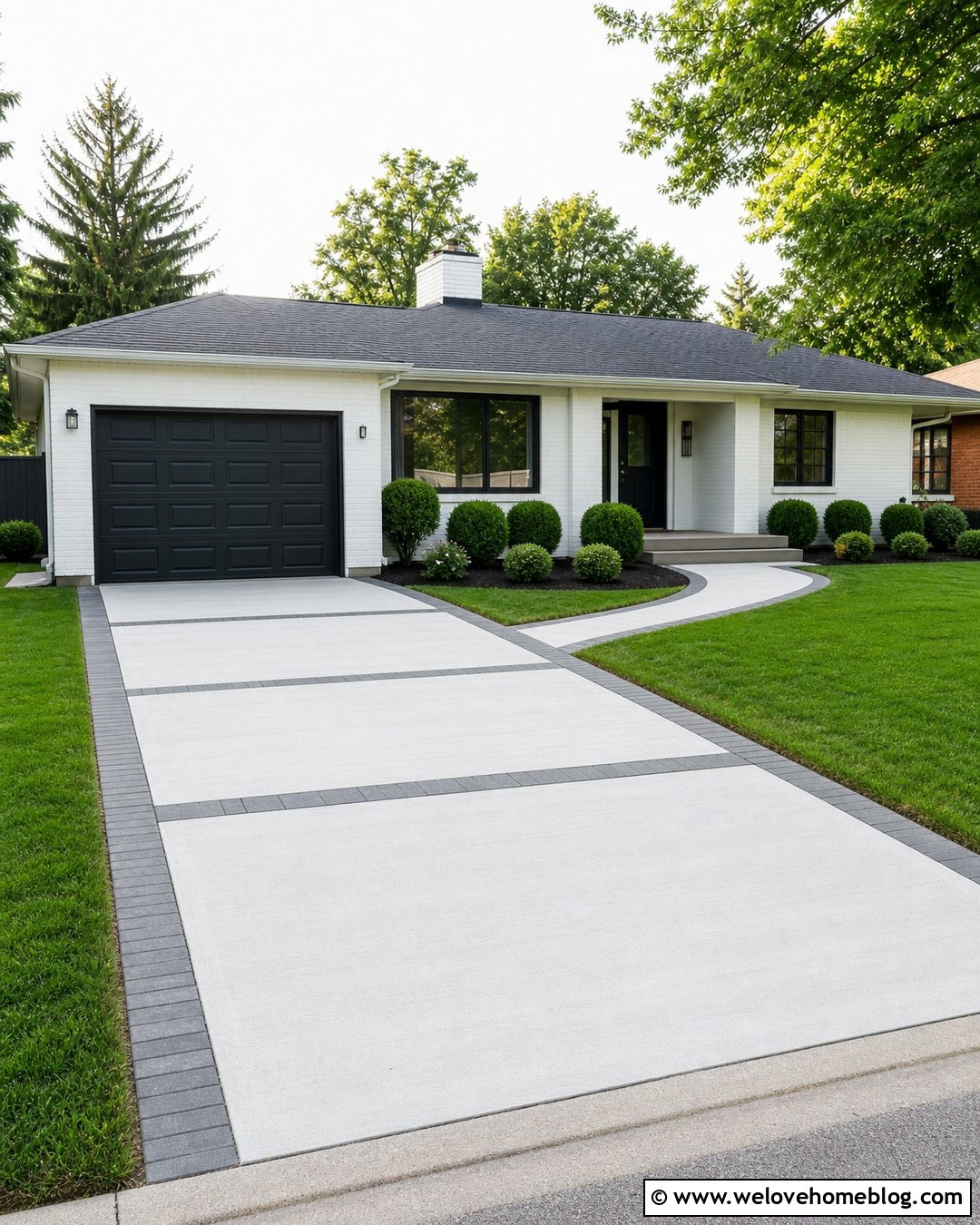
Contrasting pavers can turn a basic poured concrete driveway into a coordinated front-yard feature. Charcoal rectangular pavers create a sharp frame around light gray concrete, while tan or red pavers provide a softer traditional look. Continue the border around the driveway apron and connect it with the front walkway for visual flow. On a wide driveway, a double paver row has more presence than a narrow single course. Keep the pavers flush or nearly flush with the main surface to simplify sweeping and reduce tripping. Add symmetrical planting beds with compact shrubs and ornamental grasses beside the edge. This complete combination works with modern, transitional, craftsman, and ranch homes, depending on the selected paver color and pattern.
6. Timber Gravel Driveway Edge
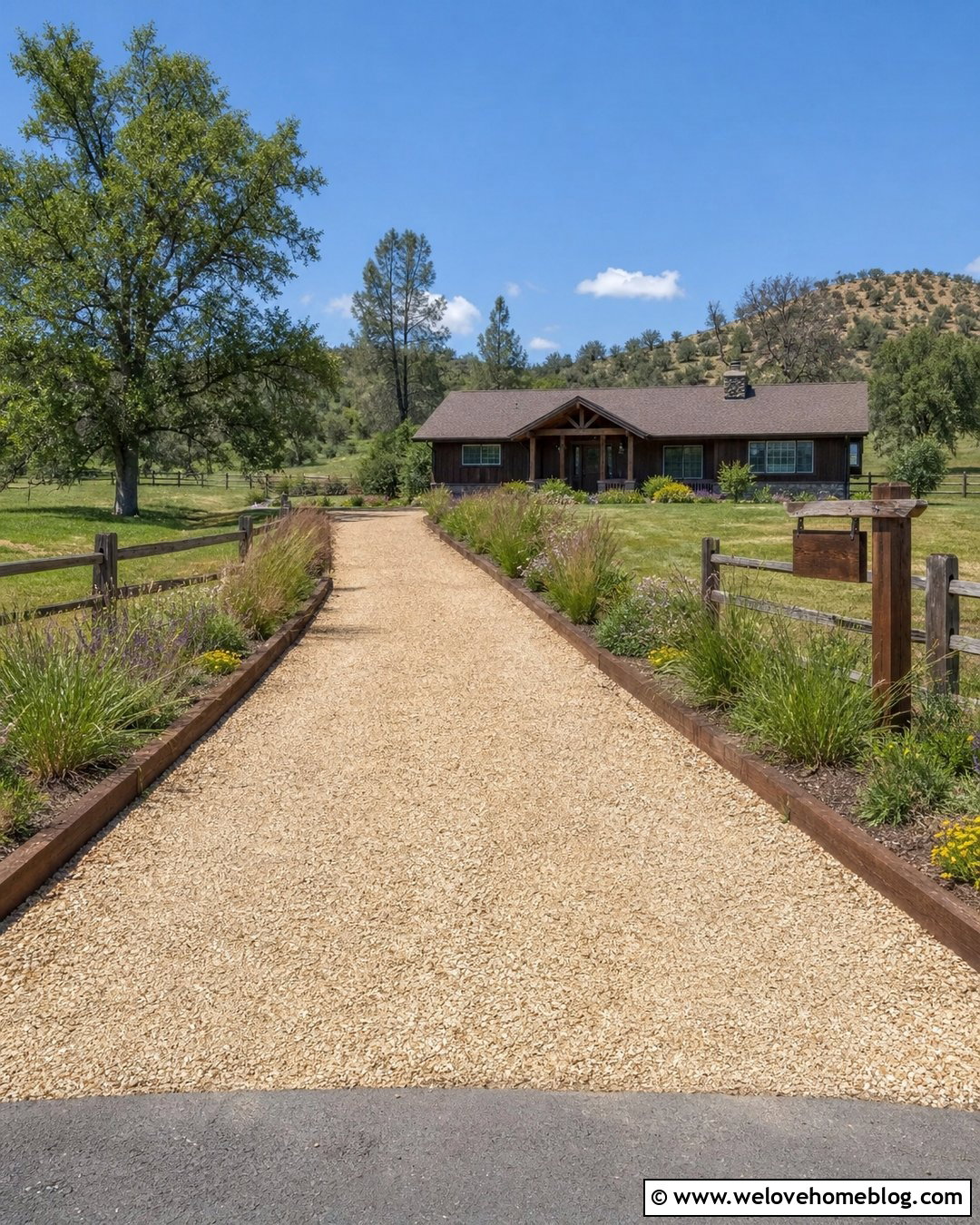
Pressure-treated landscape timbers offer an approachable way to contain a casual gravel driveway. Straight timbers suit simple rectangular layouts, while shorter sections can follow broad curves. Secure them carefully so the edge remains stable when gravel pushes outward or tires pass close by. A warm brown timber border looks natural beside buff gravel, native grasses, and informal flower beds. It also coordinates well with wood fencing, porch posts, and rustic address signs. Keep soil and mulch from constantly covering the timber, and select wood rated for ground contact. This design is best for country homes, cabins, modest ranch houses, and woodland properties. It creates a complete, relaxed driveway look without the formality or higher visual weight of masonry edging.
7. Steel Driveway Edging
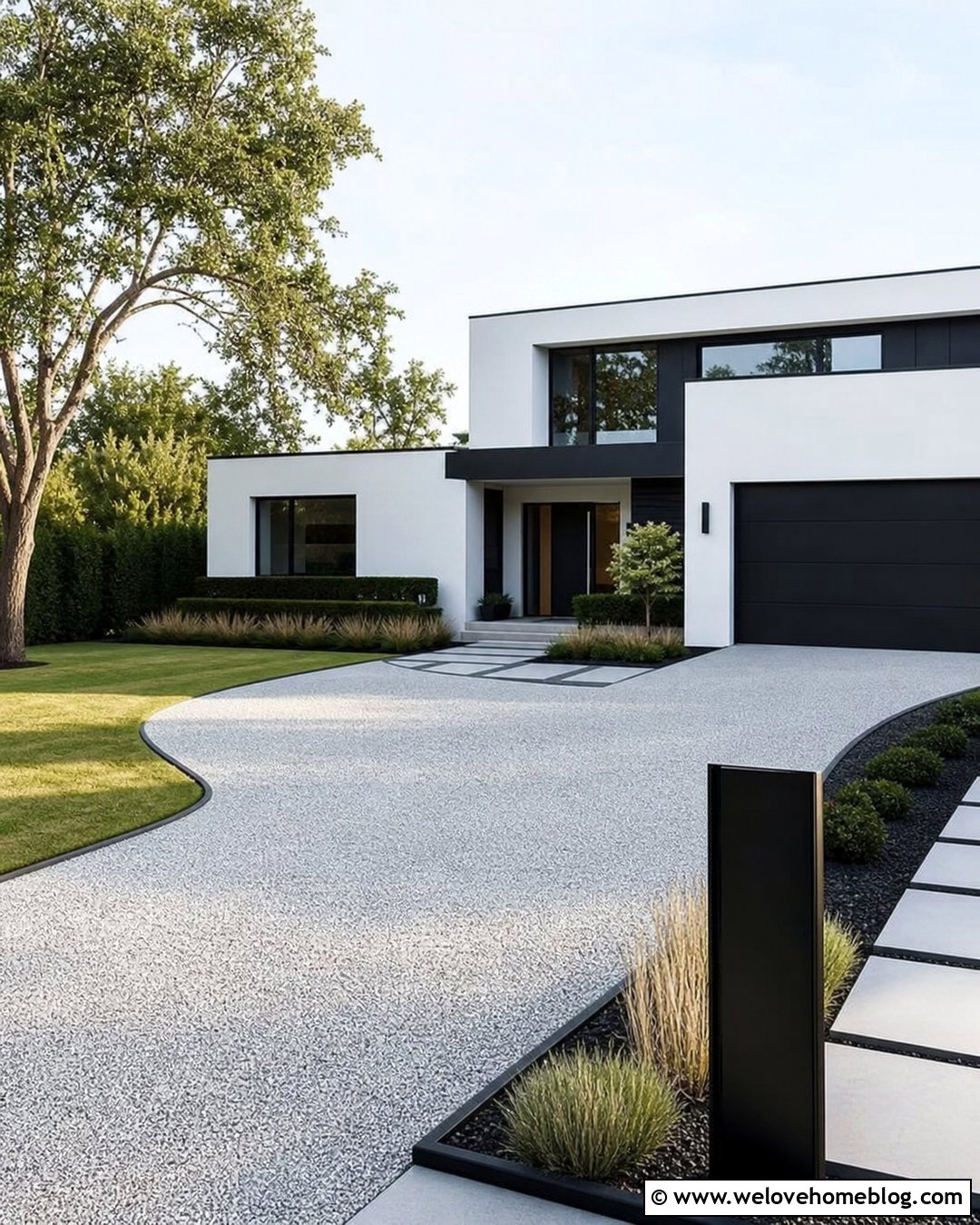
Slim steel edging creates a nearly invisible boundary around a modern gravel or resin-bound driveway. Black or weathered steel forms a sharp line without adding a bulky decorative frame. It is especially effective along sweeping curves, geometric planting beds, and narrow side yards where space is limited. Pair dark metal edging with pale gray gravel, architectural grasses, and rectangular concrete stepping stones. The top should be installed at a safe, consistent height, with no exposed sharp corners near walking routes. A matching steel address sign or planter can repeat the material at the entrance. This complete driveway look feels restrained and contemporary, making it suitable for modern homes, renovated ranch houses, and minimalist facades with dark windows or metal roof details.
8. Stone Driveway Border
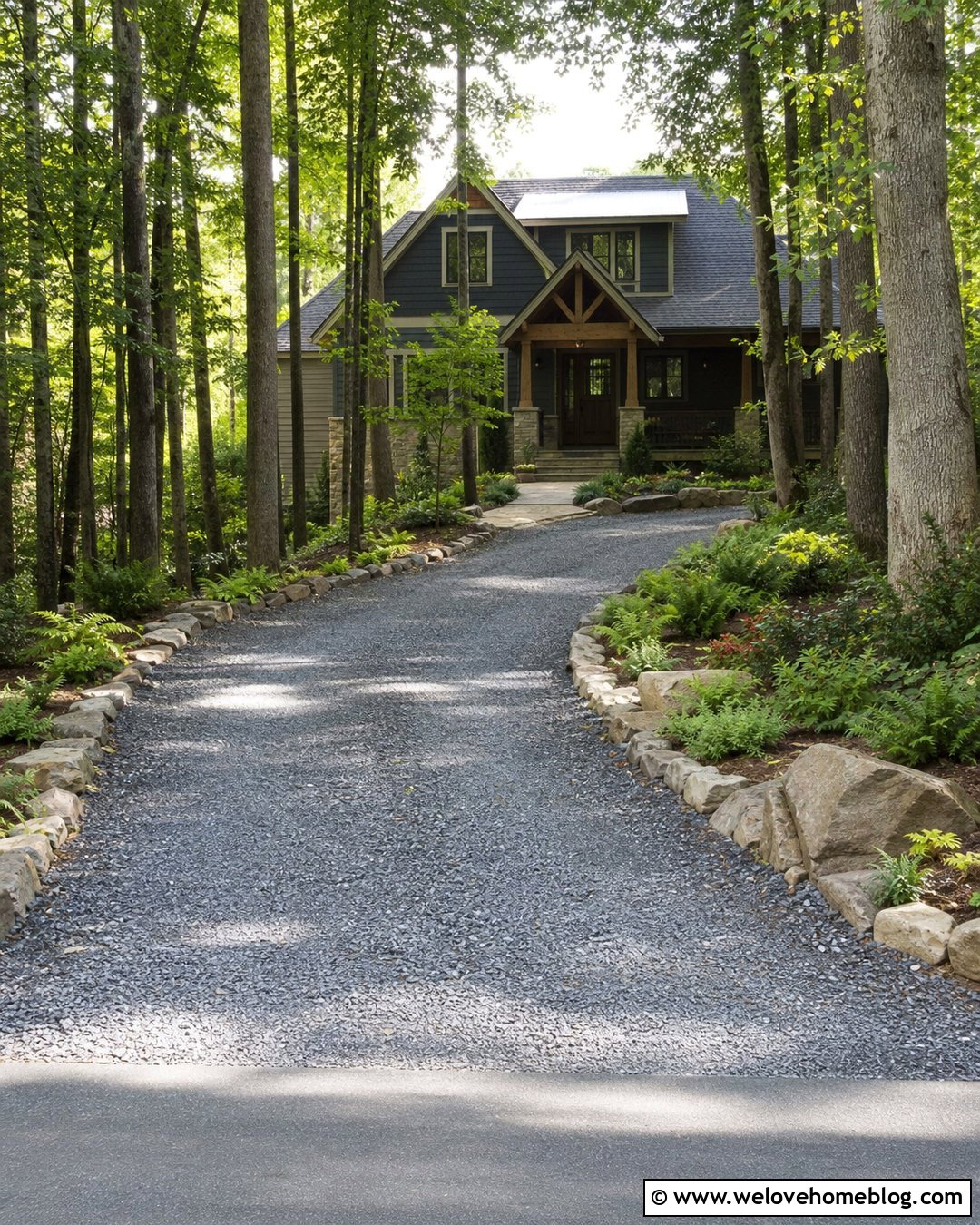
Natural stone edging helps a driveway settle comfortably into a wooded or rural landscape. Use locally compatible fieldstone in mixed gray, brown, and tan tones to border a compacted gravel surface. A low, irregular row creates an organic appearance, while cut stone pieces deliver a more controlled line. Allow the border to follow the land rather than forcing every section to remain perfectly straight. Ferns, native sedges, ground covers, and small flowering shrubs can soften the outside edge. Near the street, larger stones or matching stone pillars can strengthen the entrance. This complete treatment works beautifully with craftsman houses, mountain homes, cabins, and stone cottages. The result feels substantial without looking overly polished or disconnected from its natural setting.
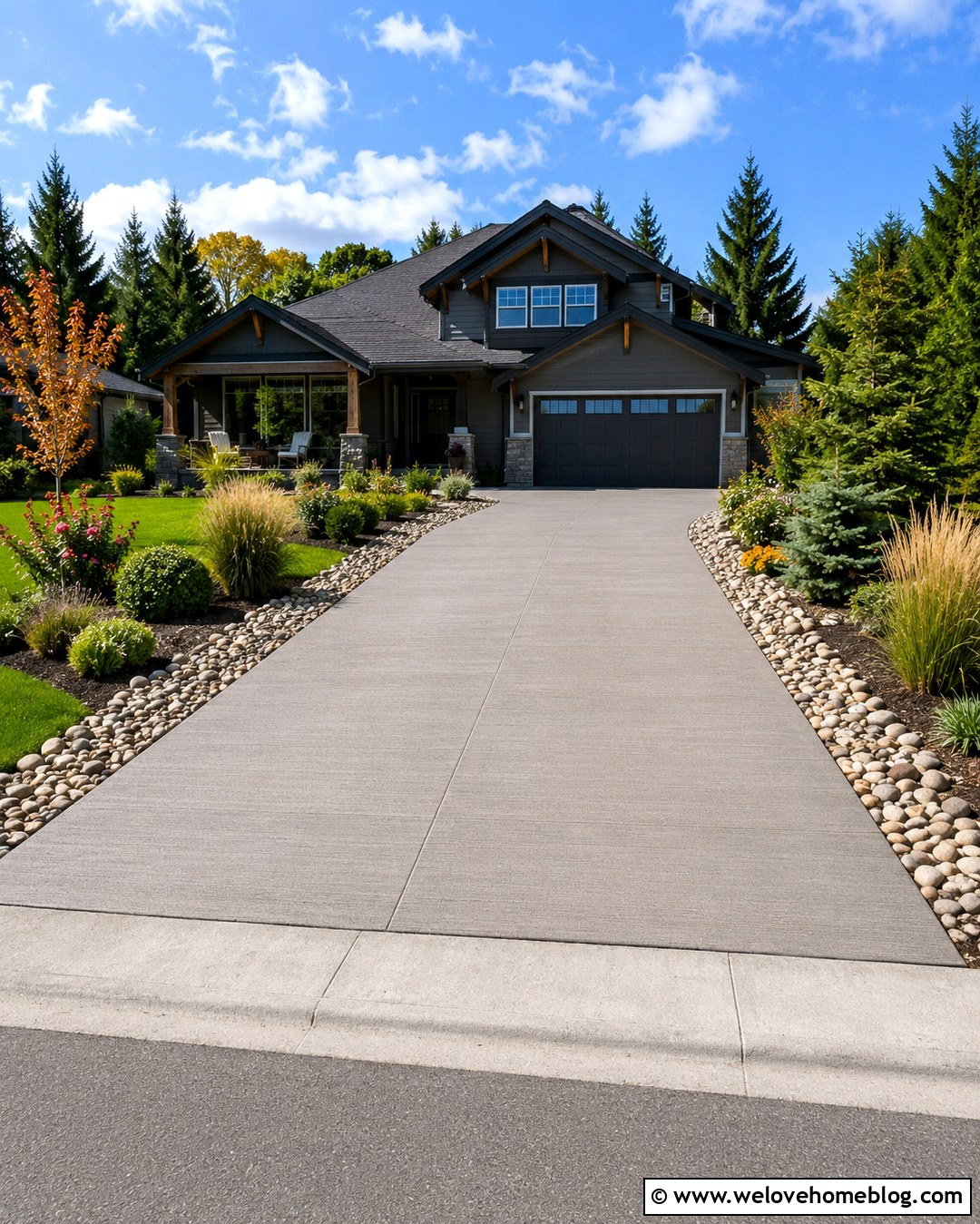
9. River Rock Driveway Border
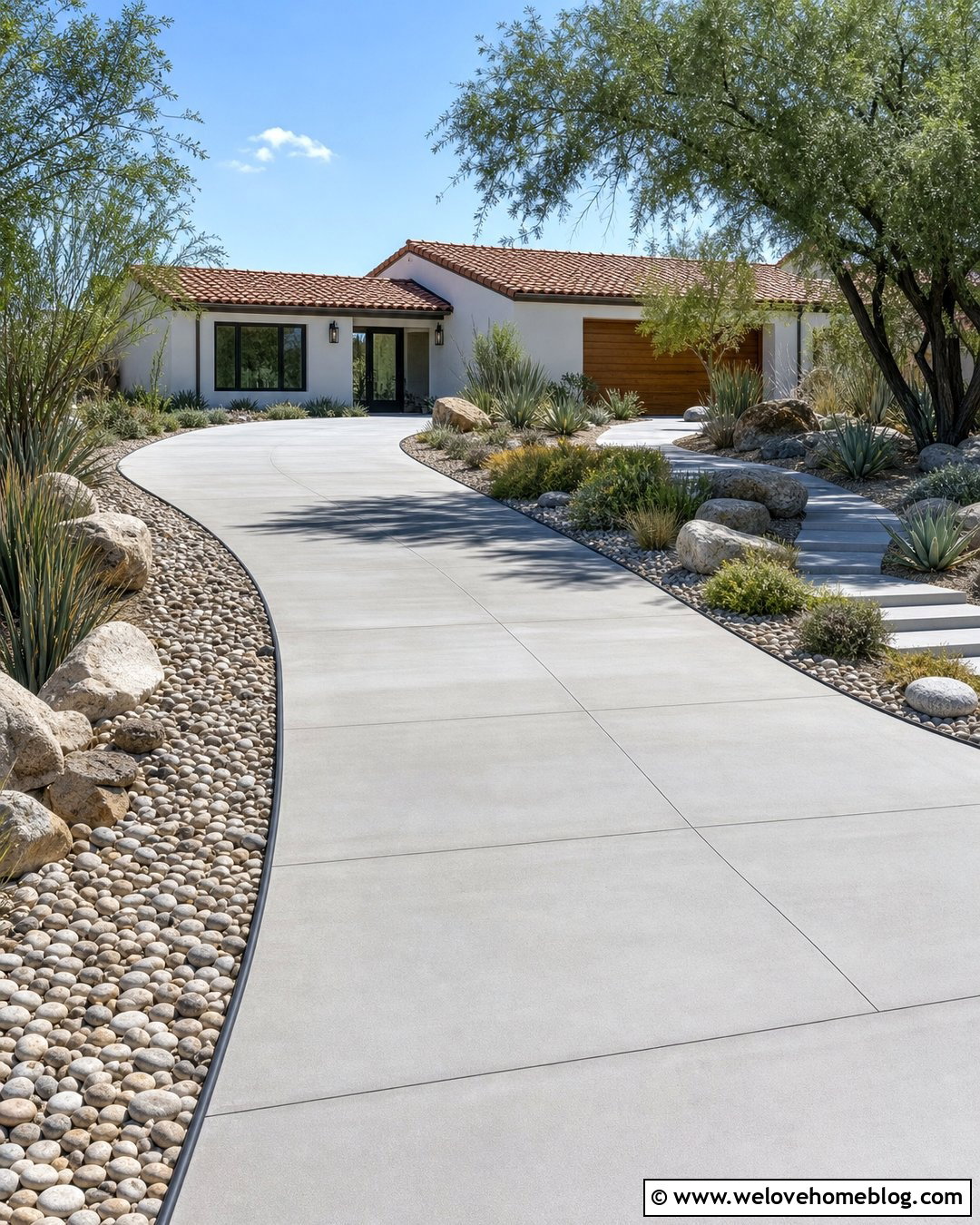
A river rock band introduces color and texture beside a smooth concrete driveway. Create a shallow strip between the pavement and a low metal or paver restraint, then fill it with rounded stones in coordinated gray, cream, or warm brown tones. The band can also collect and redirect light runoff when the underlying design is properly planned for drainage. Pair the rocks with upright ornamental grasses, boulders, and drought-tolerant shrubs for a natural but organized landscape. Avoid using loose rounded stones where tires frequently turn, since they may scatter. Instead, keep them outside a secure structural edge. This complete driveway design suits desert homes, modern ranches, craftsman houses, and properties with dry creek landscaping or stone accents on the facade.
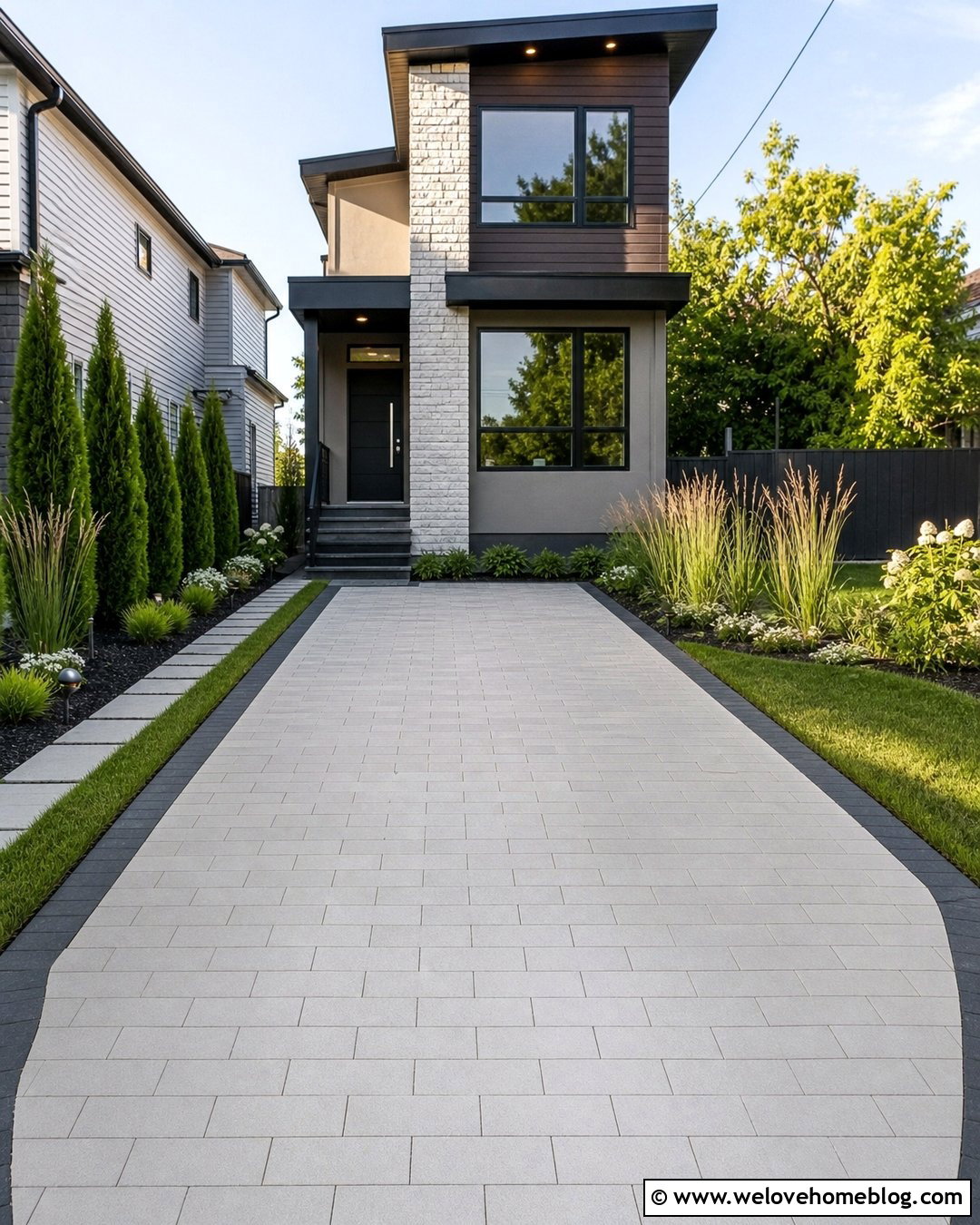
10. Flagstone Driveway Edge
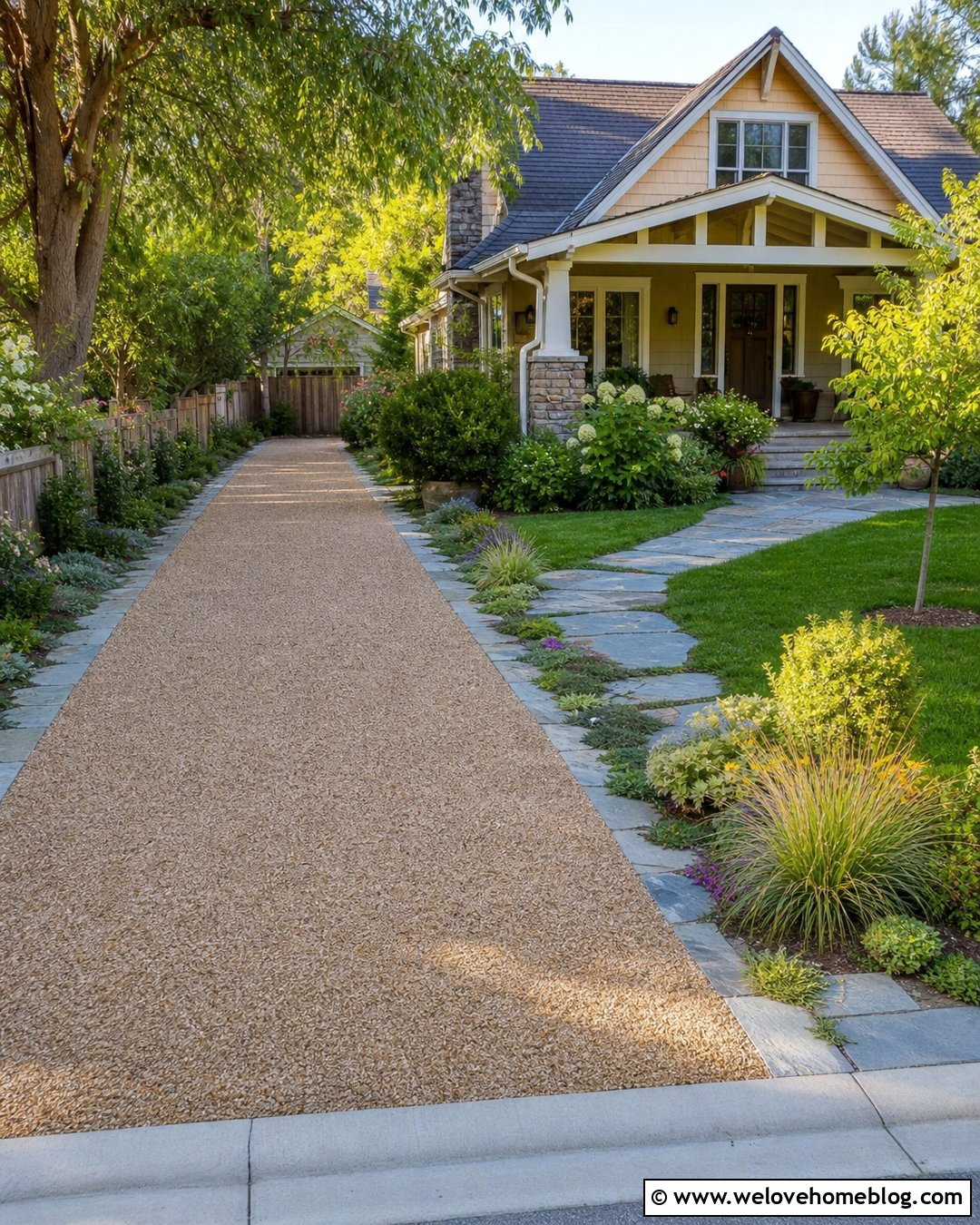
Large flagstone pieces can create a wide, walkable border beside a gravel or concrete driveway. Select flat stones with comfortable joints and set them securely to produce a stable path for passengers exiting vehicles. Irregular bluestone feels natural and relaxed, while rectangular sandstone creates a more structured border. A planting bed beyond the flagstone can include thyme, sedum, dwarf grasses, or low flowers that soften the stone without spilling into the parking area. Repeat the same flagstone at the front steps or porch landing. This complete approach combines edging with useful pedestrian space, making it suitable for narrow driveways or homes without a separate side walkway. It complements cottages, craftsman homes, ranch houses, and informal garden-centered properties.
11. Raised Paver Driveway Border
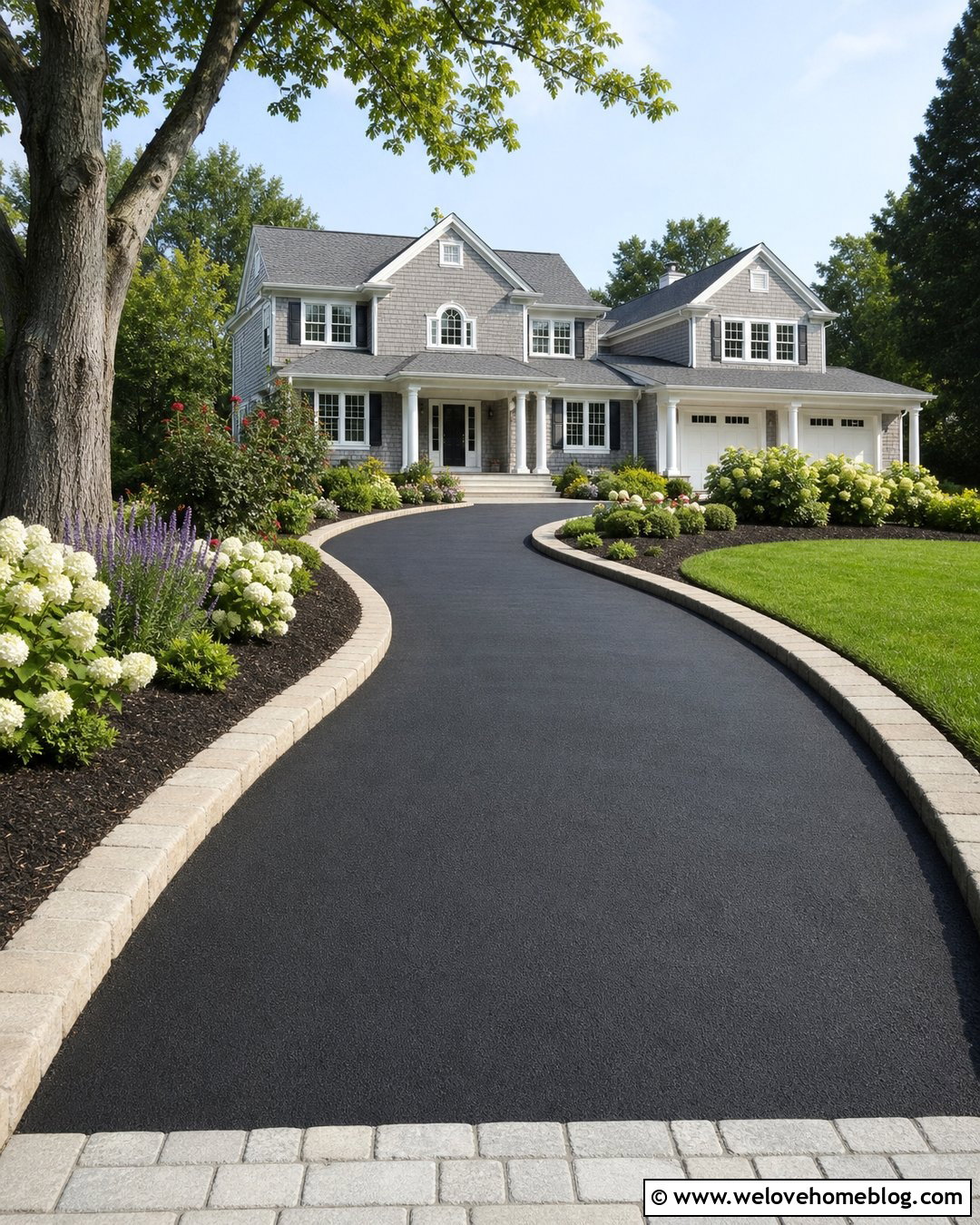
A slightly raised paver border can protect planting beds and clearly define a driveway’s usable width. Use tumbled concrete pavers beside light gravel or smooth asphalt for an attractive contrast. The border may rise a few inches along garden areas, then transition to a flush edge near walkways and passenger unloading zones. Curving the pavers around broad planting pockets creates space for compact hydrangeas, roses, salvia, or evergreen shrubs. Choose plants that will not scratch vehicles or block sightlines. Repeat the pavers around nearby beds so the raised edge looks planned rather than added later. This complete treatment works well with suburban homes that need stronger separation between parking areas, lawns, and landscaping while maintaining an inviting residential appearance.
12. Flush Paver Driveway Edge
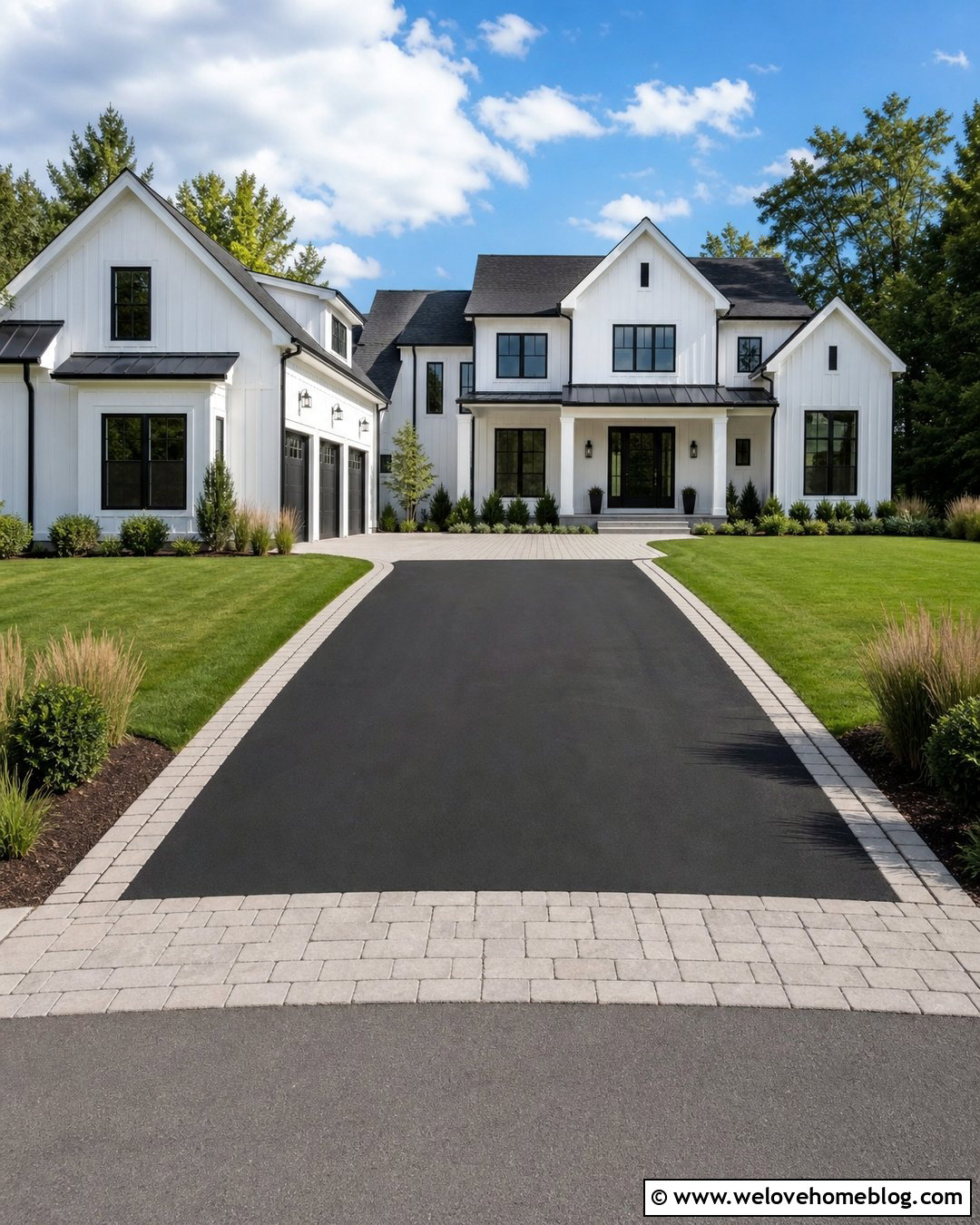
Flush paver edging creates a clean frame without introducing a raised obstacle. It is ideal for busy driveways, snowy climates, or households that frequently roll trash cans, bicycles, and lawn equipment across the edge. Frame black asphalt with light gray pavers for bold contrast, or use charcoal pavers beside gray concrete for a more understated result. A double row gives the border enough width to be visible from the street. Continue the pavers across the apron or use them to connect the driveway with the front walk. Keep adjacent lawn neatly trimmed and add simple foundation planting near the house. The completed design feels practical and polished, complementing modern farmhouse, transitional, ranch, and contemporary suburban homes.
13. Granite Driveway Setts
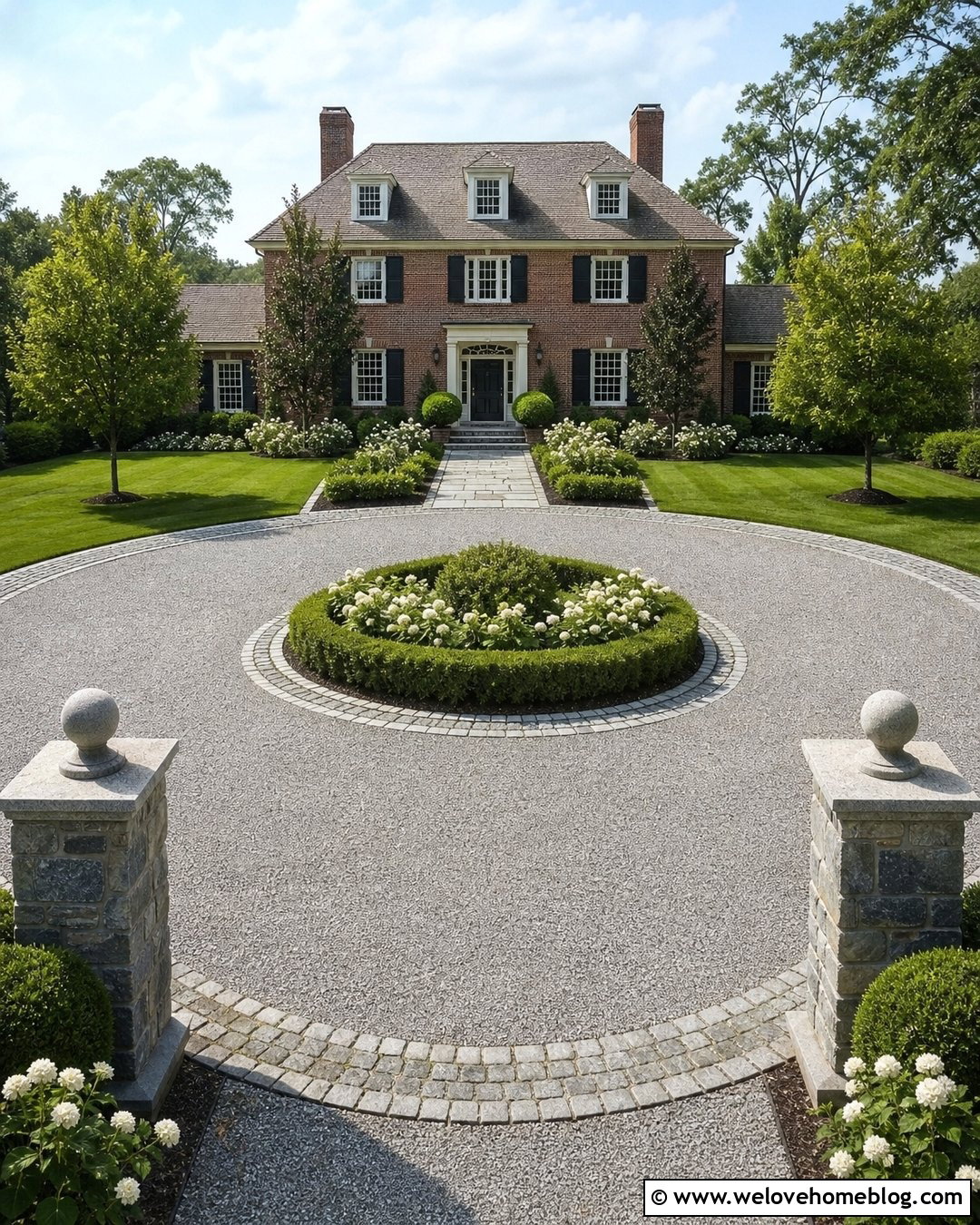
Granite setts provide a refined border around pea gravel, asphalt, or concrete. Their smaller size makes them suitable for curves, circular layouts, and detailed transitions near gates or walkways. Use medium-gray setts for a classic look, or mix charcoal and silver tones for subtle variation. A single row gives narrow driveways a clean outline, while a double row creates a stronger visual frame around larger entrances. Pair the granite with clipped boxwoods, white flowering shrubs, and neatly maintained lawn for a formal composition. Matching granite entrance pillars can make the entire approach feel cohesive. This complete driveway treatment suits Colonial, Georgian-inspired, Tudor, and high-end transitional homes while still offering enough texture to avoid an overly rigid appearance.
14. Limestone Driveway Border
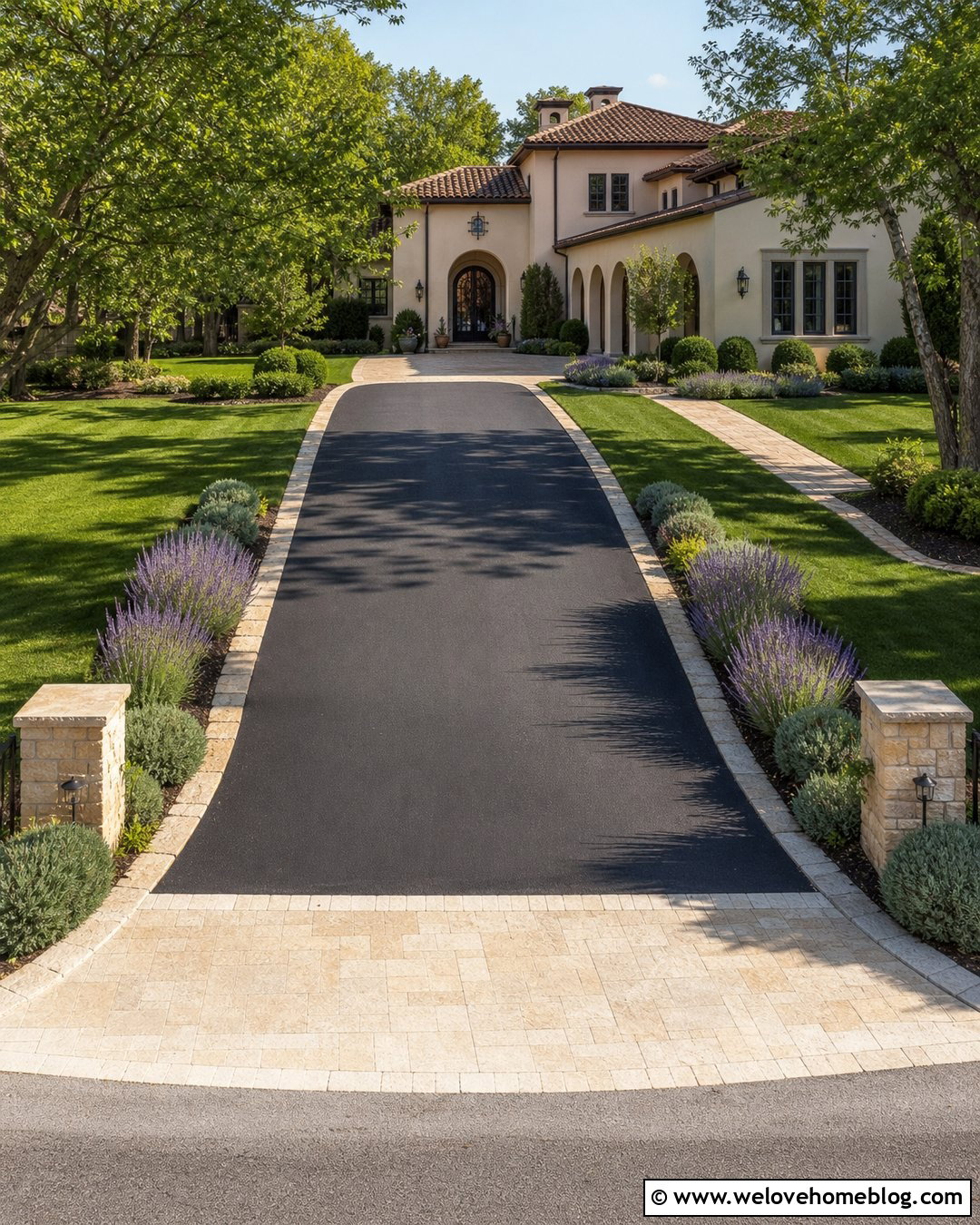
Cream or buff limestone edging brightens a dark asphalt driveway and complements warm-toned house exteriors. Cut limestone blocks can form a smooth, straight edge, while lightly tumbled pieces create a softer appearance around curved layouts. Pair the pale border with tan brick, stucco, natural wood, or warm white siding. Along the landscaping side, use blue-green foliage, lavender flowers, and dark mulch to emphasize the stone’s color. Limestone can also frame a matching walkway that leads from the driveway to the porch. Keep the border dimensions consistent and plan drainage so water does not collect along the masonry. This complete look feels welcoming and tailored, making it appropriate for Mediterranean-inspired, French country, traditional, and upscale suburban homes.
15. Sandstone Driveway Edging
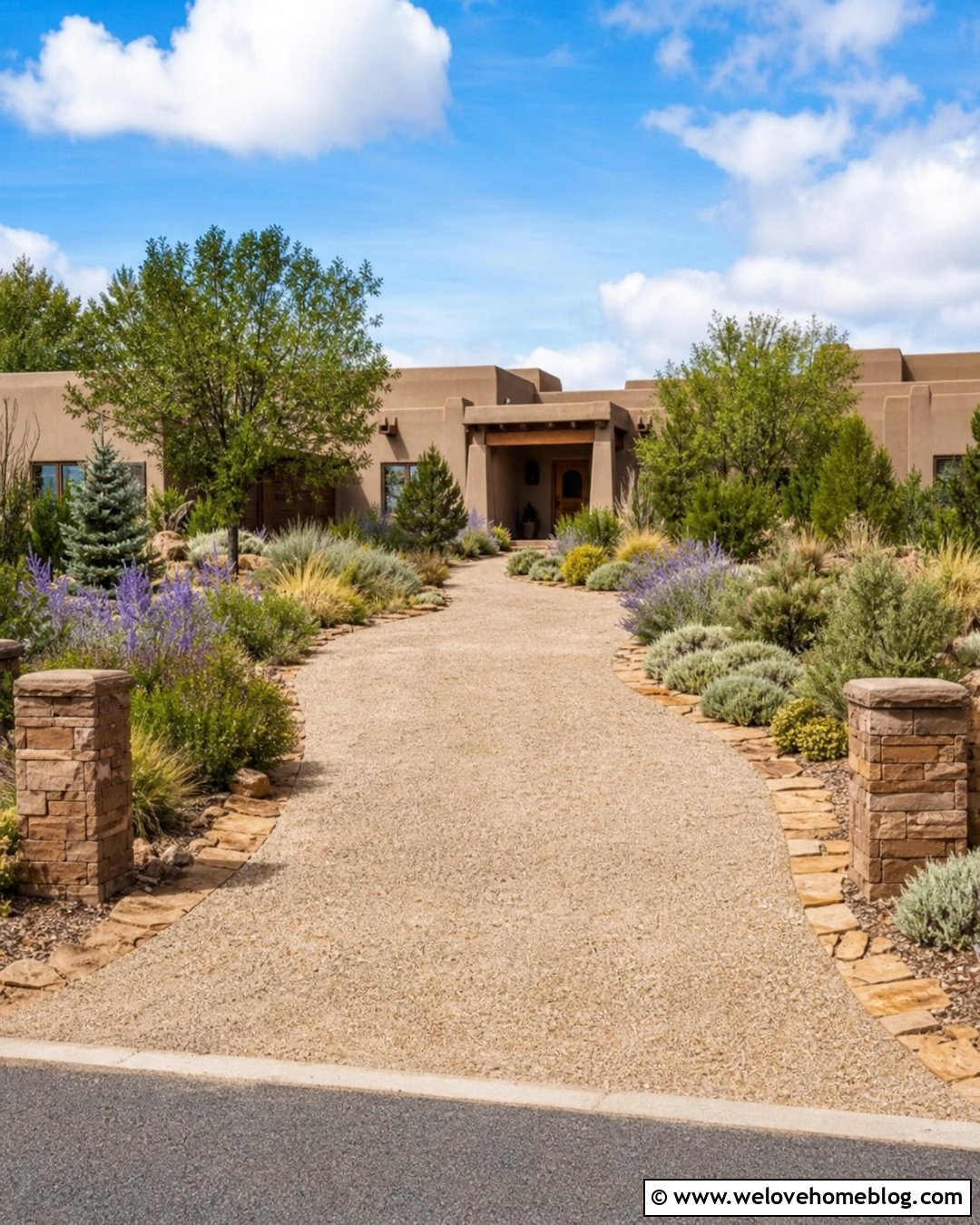
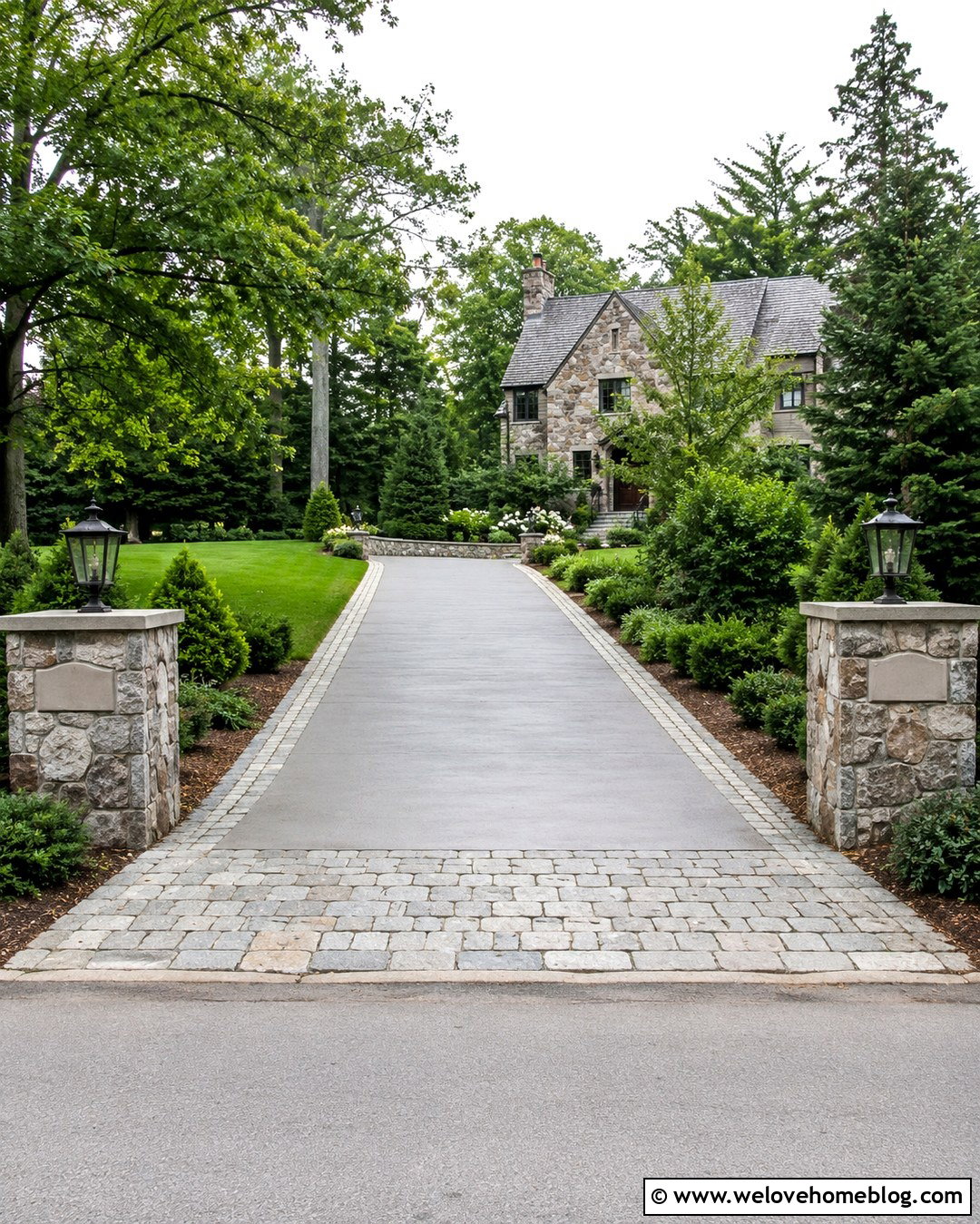
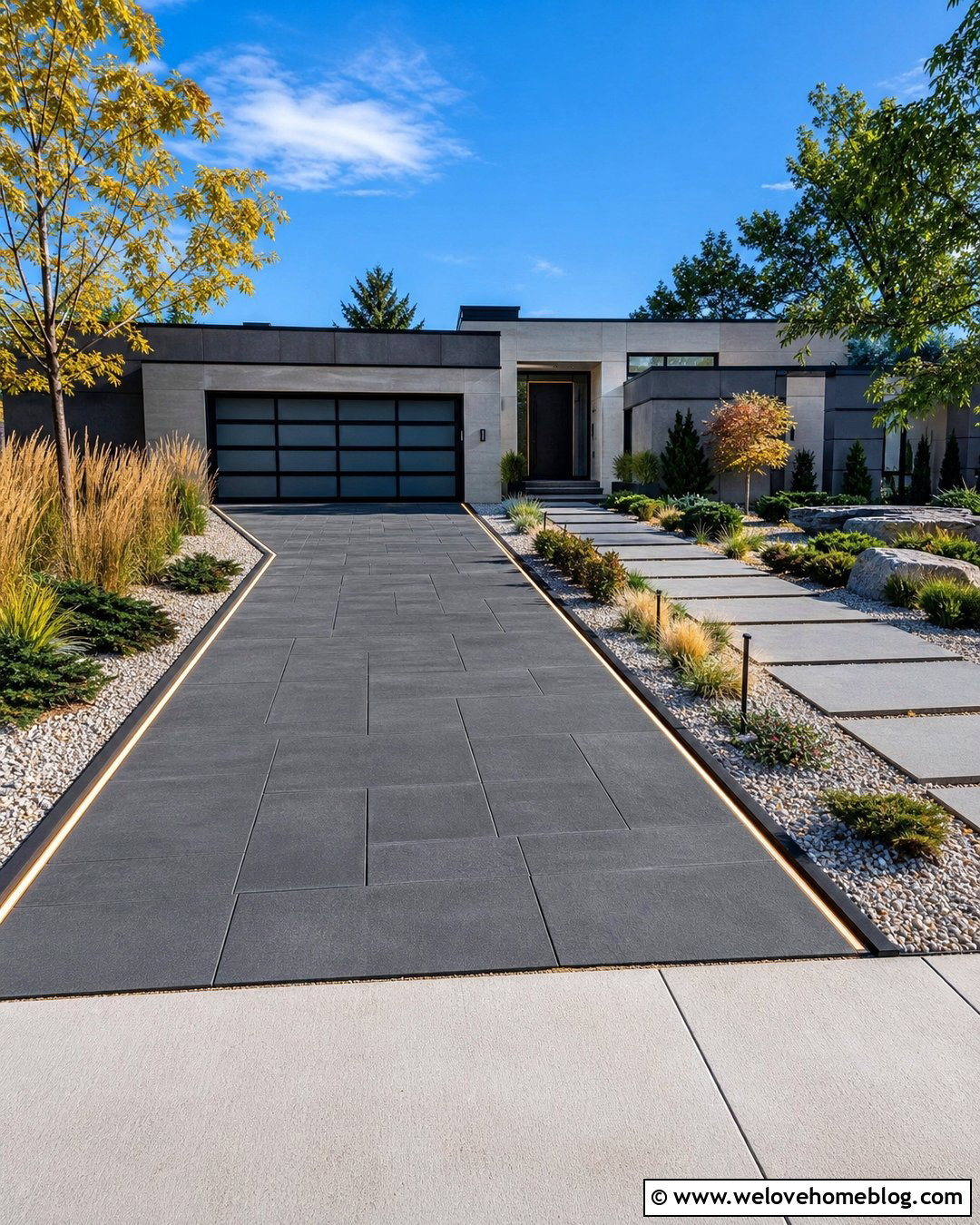
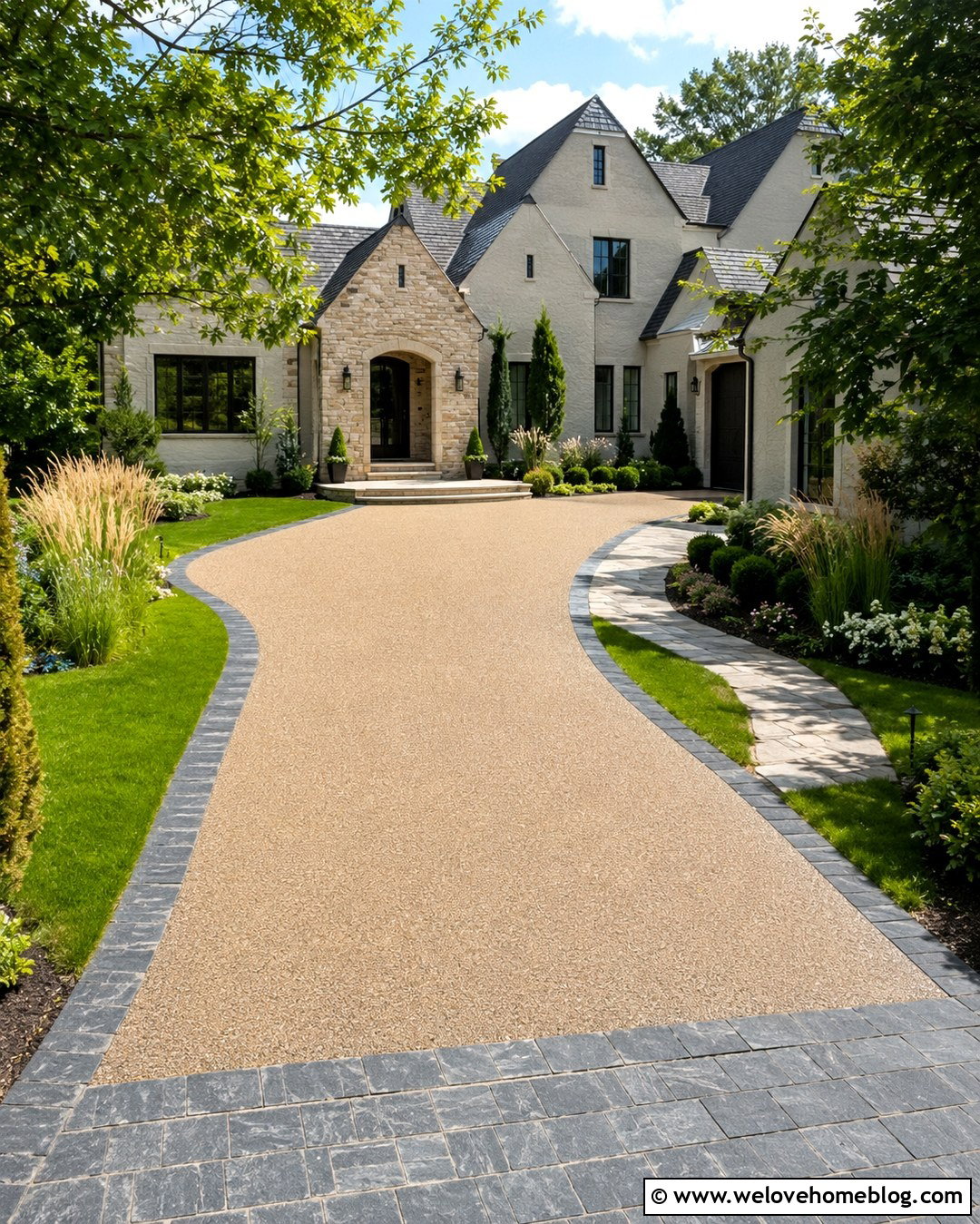
Sandstone adds a relaxed, earthy border to a pale gravel or concrete driveway. Its tan, rust, and soft brown tones blend naturally with warm brick, wood siding, and native landscapes. Use rectangular sandstone setts for an orderly edge or irregular pieces for a more rustic approach. A curved border can lead the eye toward the house while creating wider planting pockets at strategic points. Fill those beds with rosemary, ornamental grasses, flowering sage, or other plants suited to local conditions. Repeat sandstone at the front path or low entrance pillars to unify the property. This complete driveway look is especially effective for Southwestern, craftsman, ranch, and country homes where a cool gray border might feel too formal or visually disconnected.
16. Slate Driveway Border
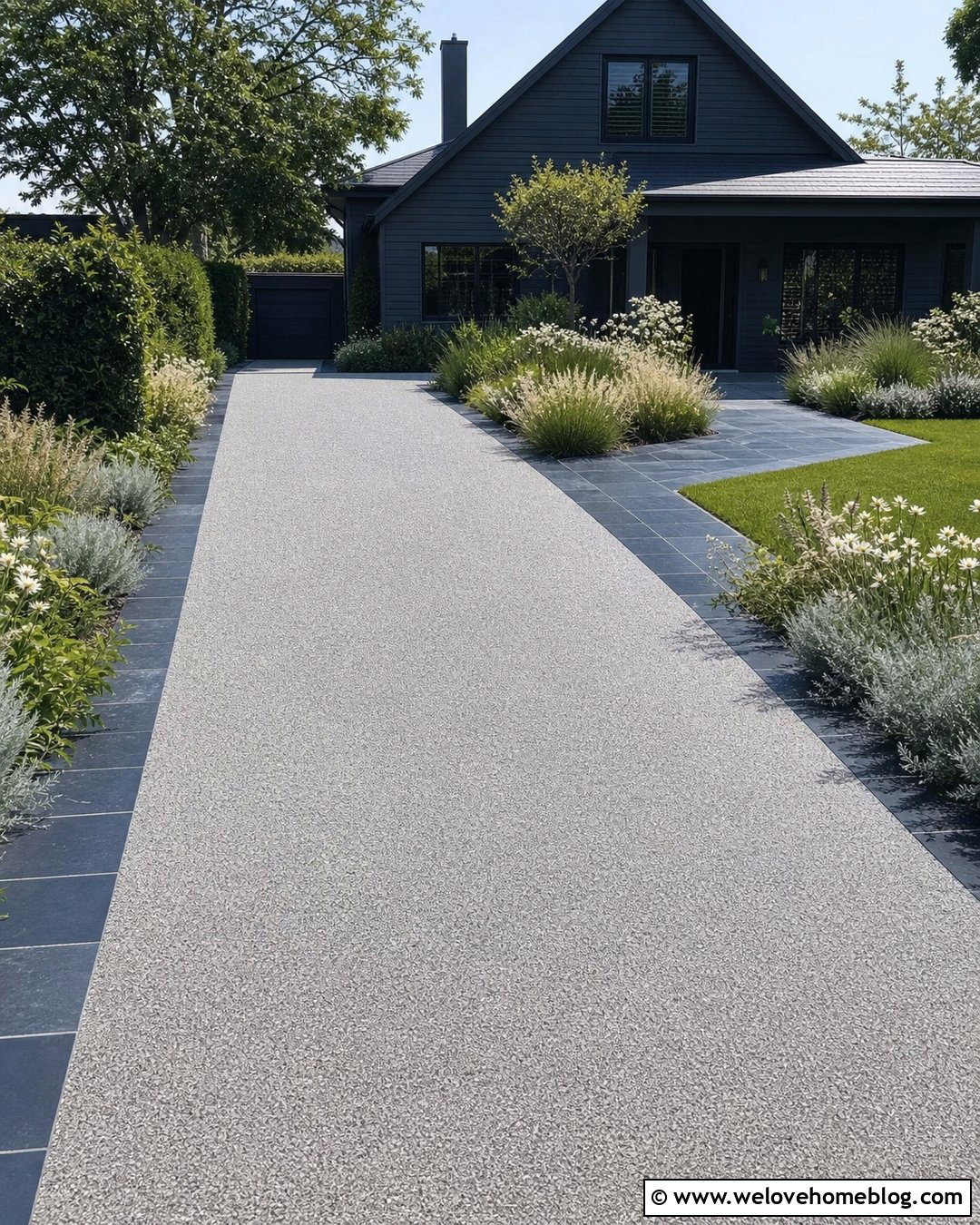
Dark slate creates an elegant outline around light gray concrete or resin-bound gravel. Its blue-black tone can coordinate with charcoal roofing, black window frames, and dark exterior fixtures. Use cut slate units in a straight border for a modern appearance, or select varied pieces for a more organic garden setting. Because the material creates strong contrast, a narrow border is often enough to make the driveway stand out. Add soft green grasses, white flowers, and silvery foliage outside the edge to balance the dark line. A slate walkway or porch detail can repeat the color near the house. This complete composition suits contemporary homes, updated cottages, and transitional properties that need a sophisticated border without excessive ornament or complicated patterns.
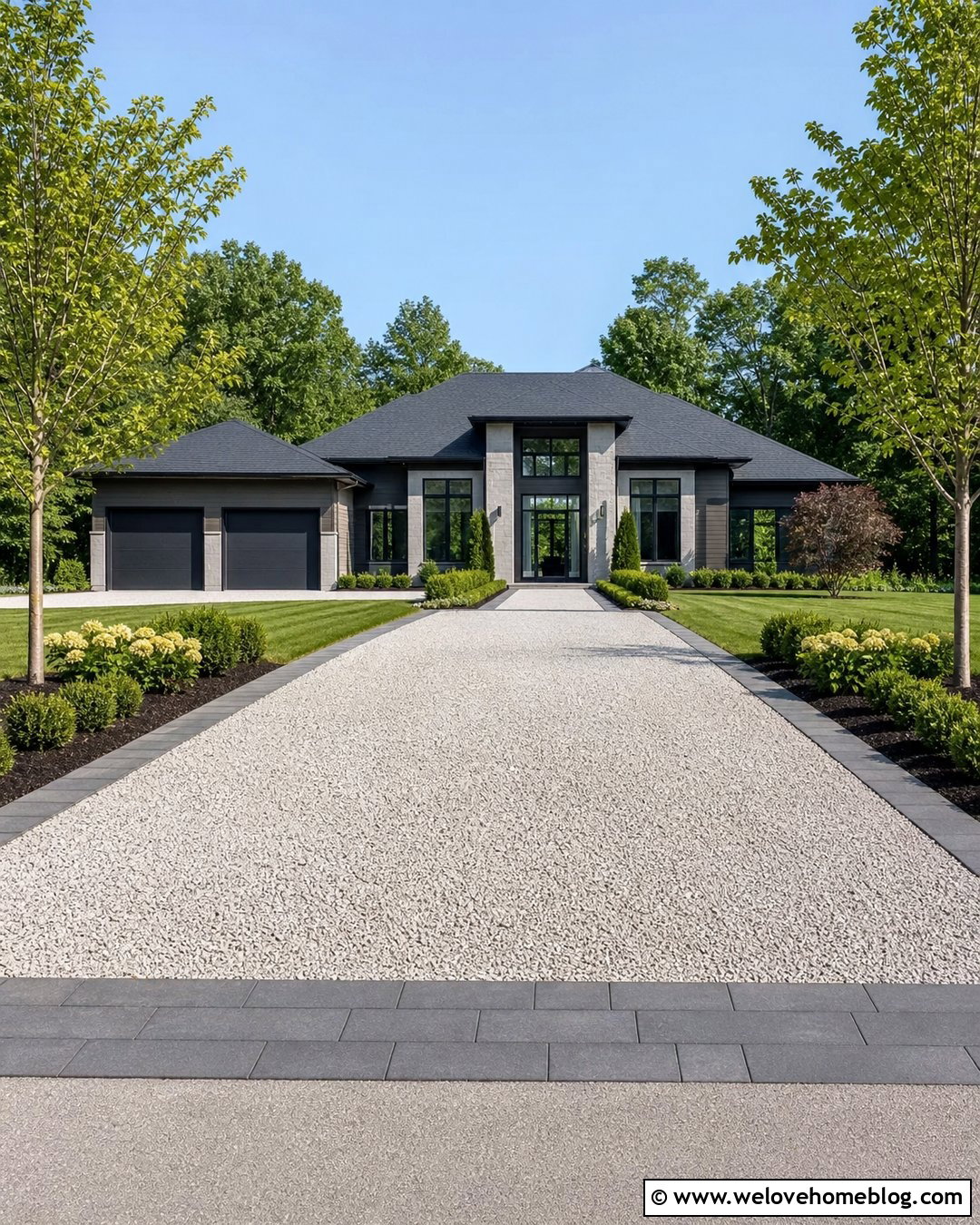
17. Basalt Driveway Border
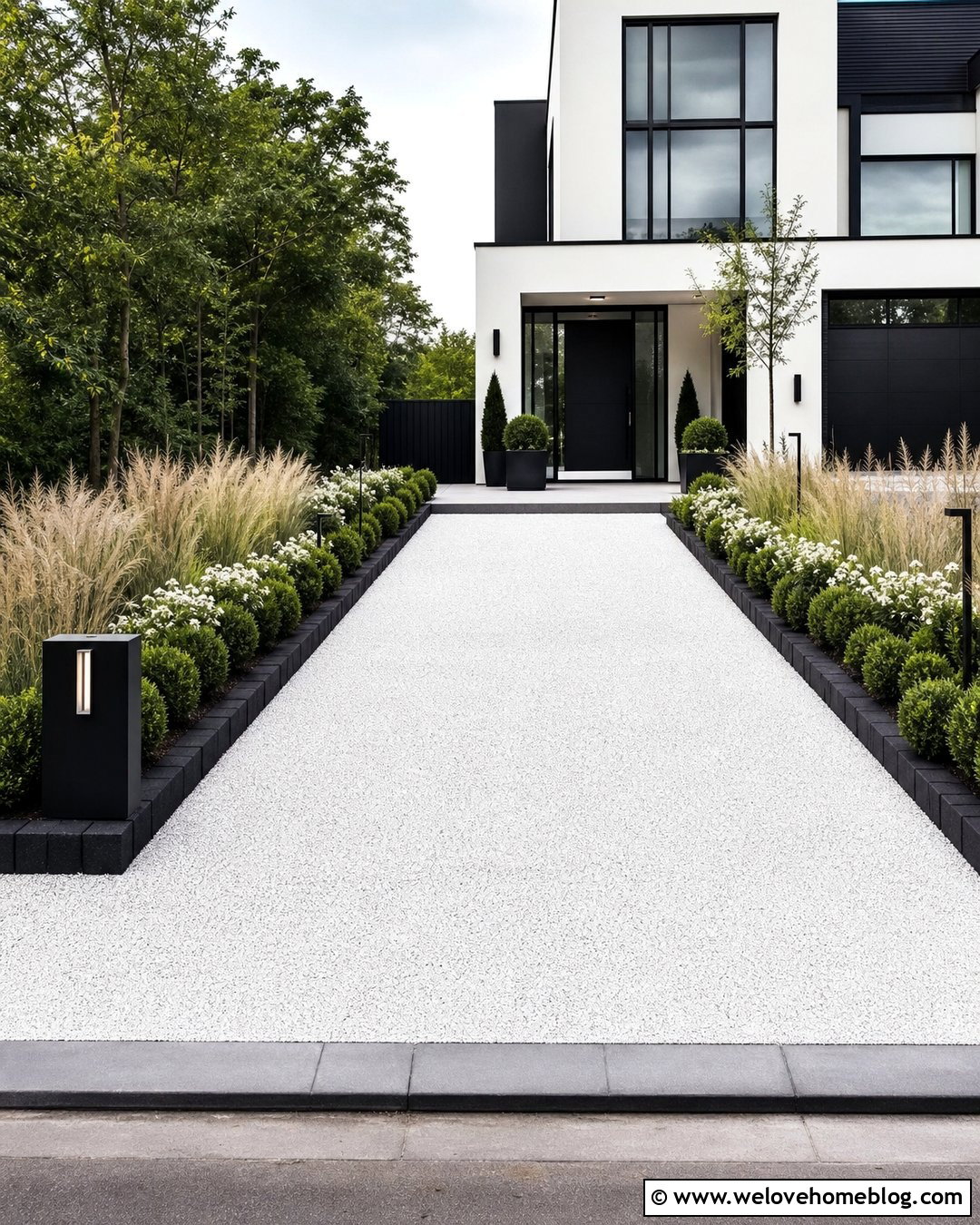
Black basalt edging gives a pale driveway a bold, architectural frame. Use smooth rectangular blocks beside white resin-bound gravel or light exposed aggregate concrete for maximum contrast. Keep the border straight around a geometric driveway, then align nearby planting beds with the same strong lines. Low boxwood forms, feather reed grass, and white flowering perennials prevent the landscaping from competing with the dark masonry. Black metal lighting and an understated address marker can reinforce the color scheme near the entrance. Set the basalt flush where people walk and slightly raised where it retains gravel or soil. This complete driveway design works especially well with modern, minimalist, and contemporary farmhouse homes featuring monochrome facades and simple, carefully repeated exterior materials.
18. Reclaimed Brick Driveway Edge
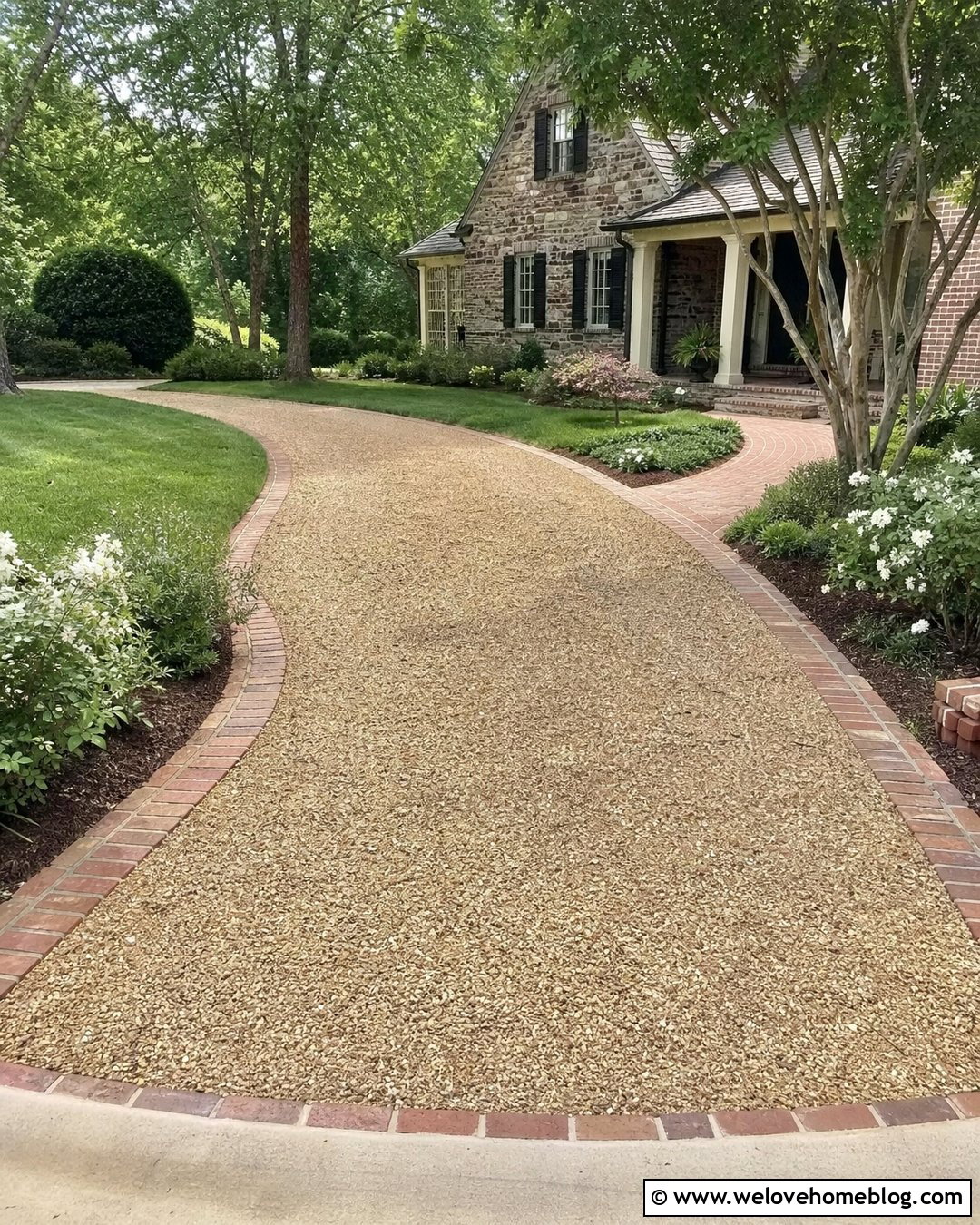
Reclaimed brick gives a new gravel or concrete driveway an older, more settled character. Slight variations in red, brown, charcoal, and faded orange create depth that factory-perfect units may not provide. Lay the bricks in a soldier course for a traditional edge or use a running bond for a wider, walkable strip. Pair them with warm pea gravel, informal cottage planting, and a curved path leading to the porch. Repeating the reclaimed brick around tree beds helps connect the driveway to the broader landscape. Select sound pieces and build a stable foundation rather than relying on loose soil. This complete design is a natural fit for historic homes, cottages, farmhouses, and brick houses where pristine modern edging could appear out of place.
19. Concrete Mow Strip Driveway Border
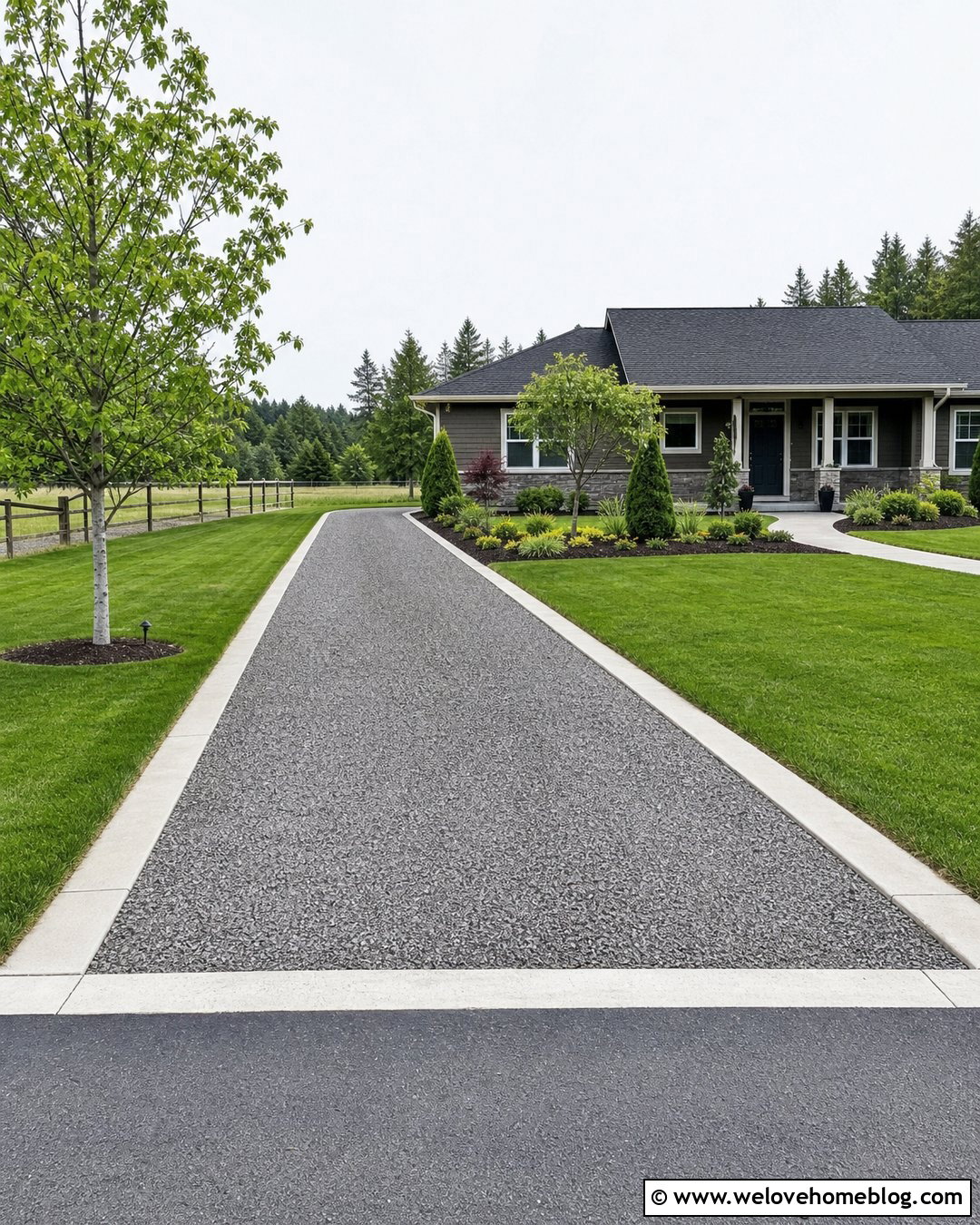
A flush concrete mow strip provides an efficient boundary between a driveway and lawn. The smooth strip creates a surface for mower wheels, reducing the need to trim grass by hand along the pavement. Use it beside asphalt, decomposed granite, or gravel, and tint the concrete if standard gray does not complement the house. A gently curved strip can follow planting beds while maintaining a practical, uncluttered appearance. Keep the lawn side level and avoid creating low spots where water collects. At the entrance, widen the strip or connect it to a concrete walkway for a finished transition. This complete solution works well for ranch homes, simple suburban houses, and low-maintenance landscapes where function and neatness matter more than decorative masonry.
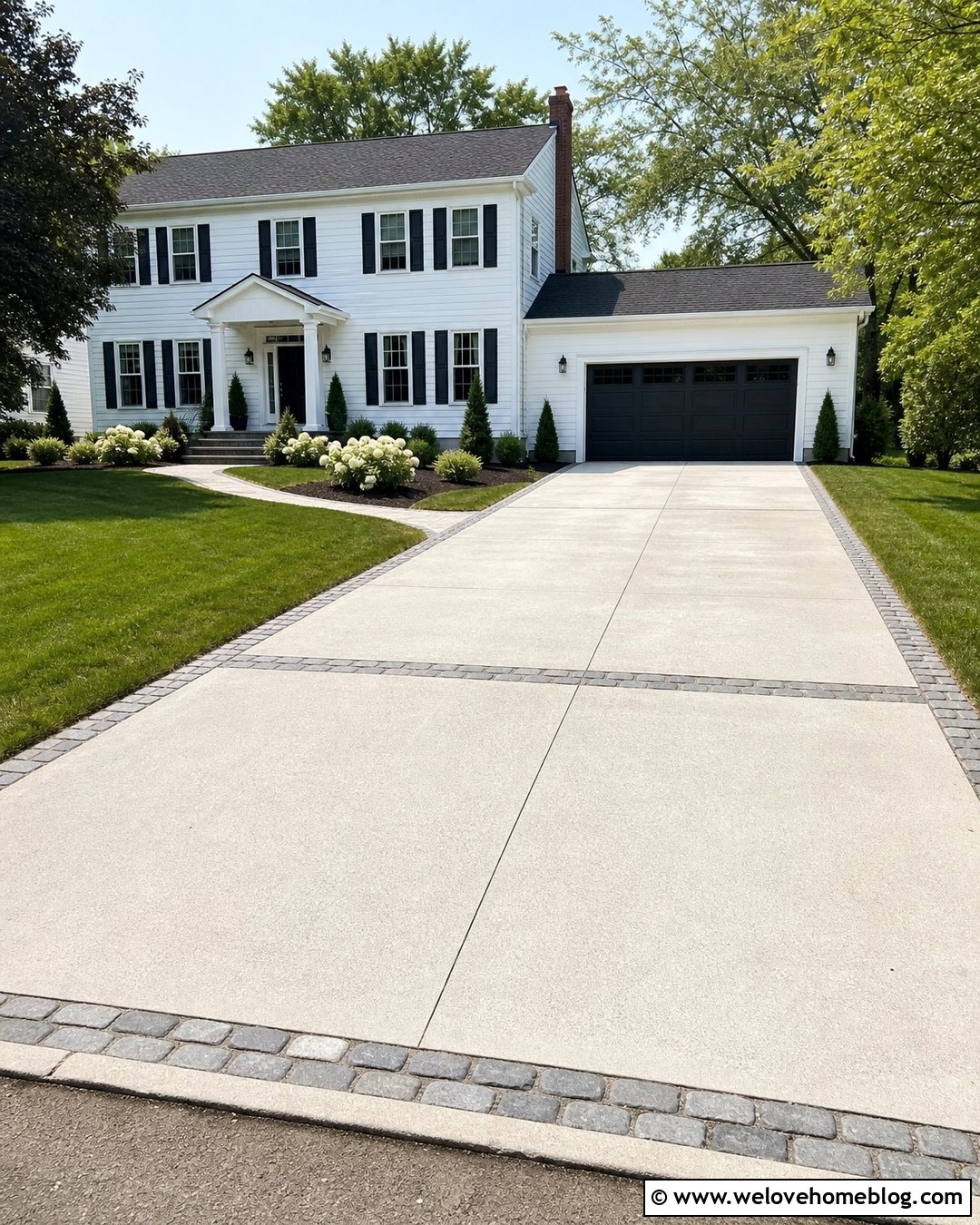
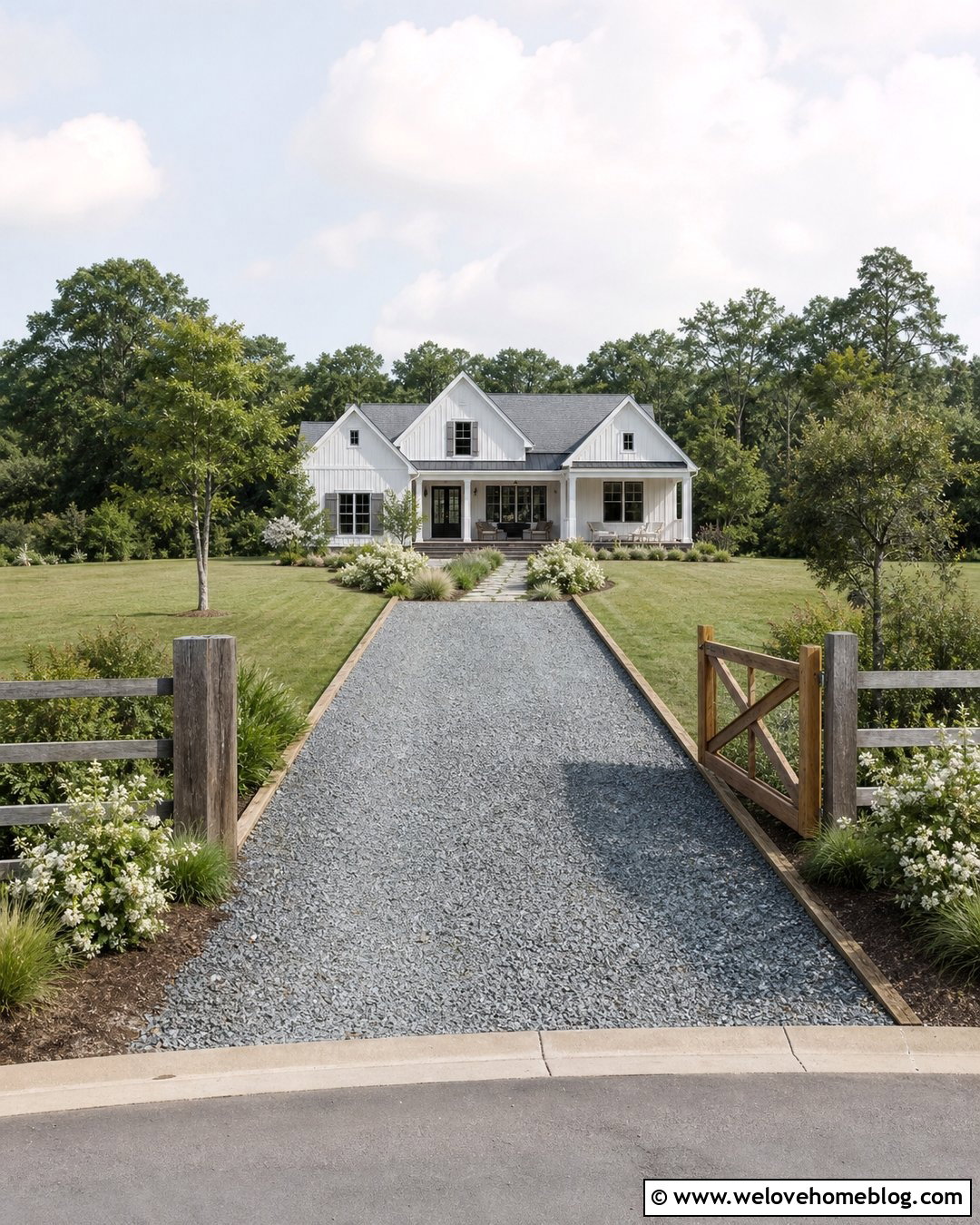

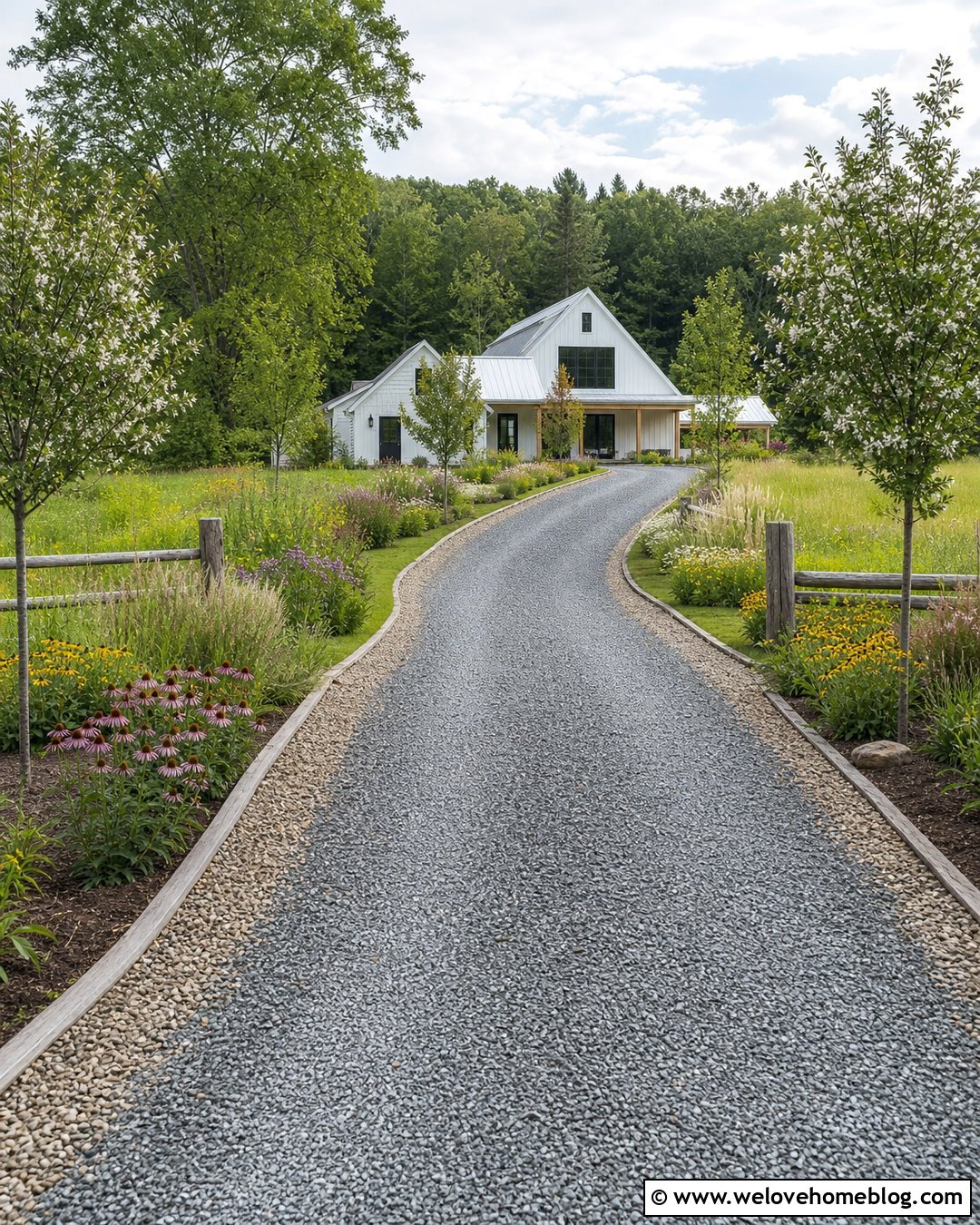
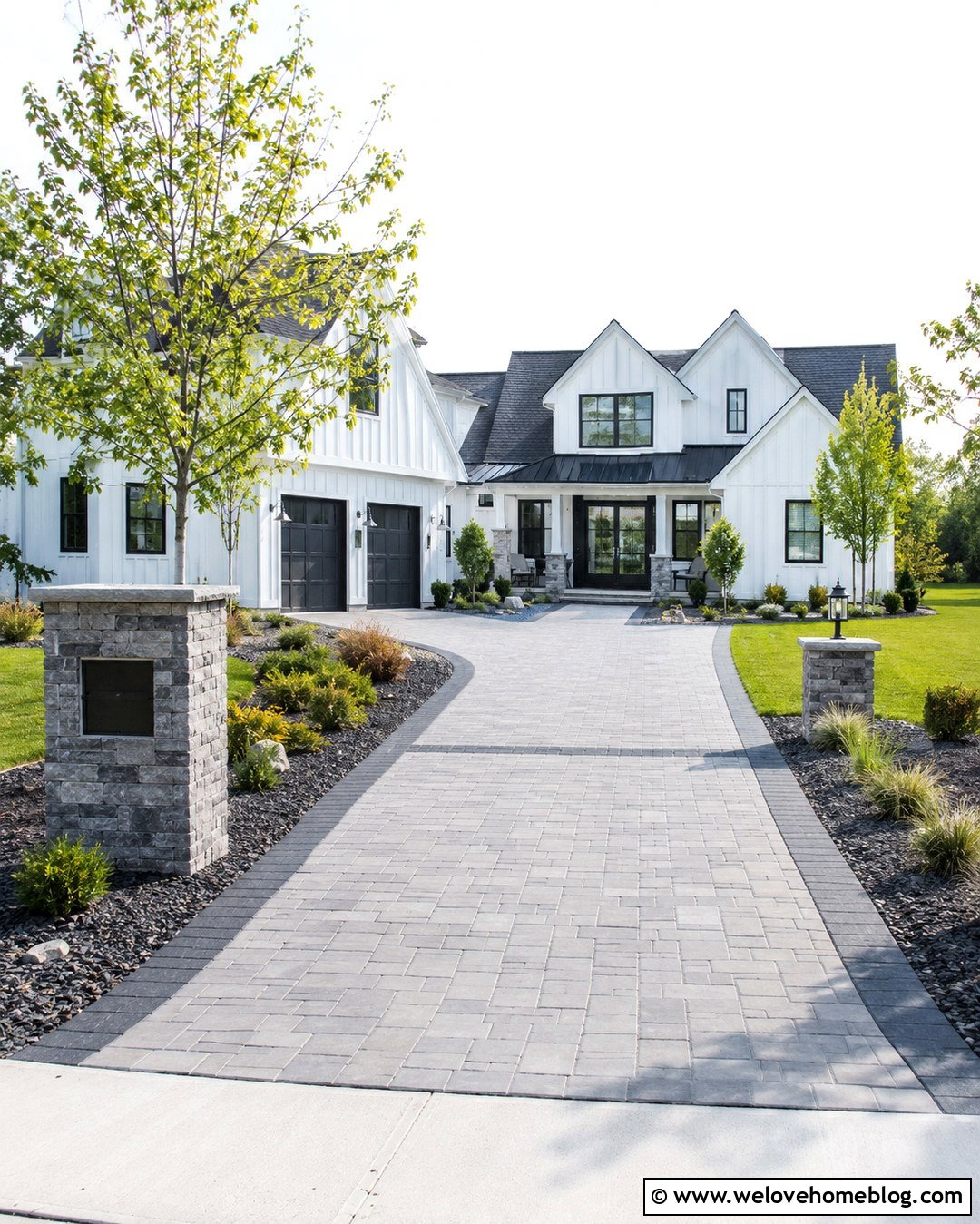
20. Stamped Concrete Driveway Border
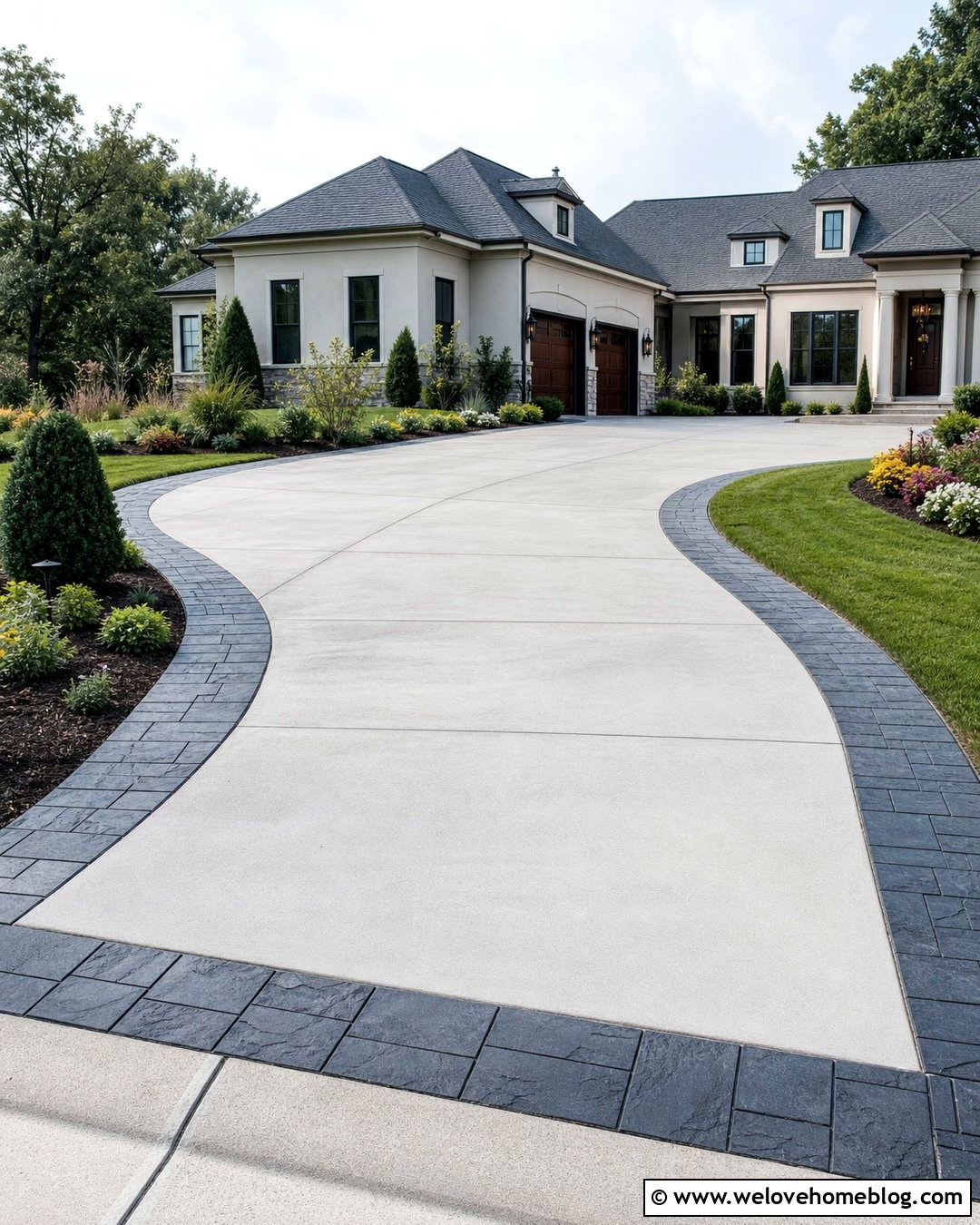
A stamped concrete border provides the look of individual stone units with a continuous poured installation. Choose a restrained slate, cobblestone, or ashlar pattern that complements rather than overwhelms the main driveway. A charcoal stamped border around light gray concrete adds definition, while warm brown tones coordinate with brick or beige siding. Continue the pattern across the driveway apron or around a curved turnaround for a complete frame. Use simple planting beds with evergreen shrubs and seasonal color outside the border. Careful coloring and a matte-looking finish generally create a more natural result than heavy contrast. This full driveway design suits transitional, Mediterranean-inspired, and suburban homes that need decorative detail while maintaining a consistent, easy-to-read layout.
21. Exposed Aggregate Driveway Border
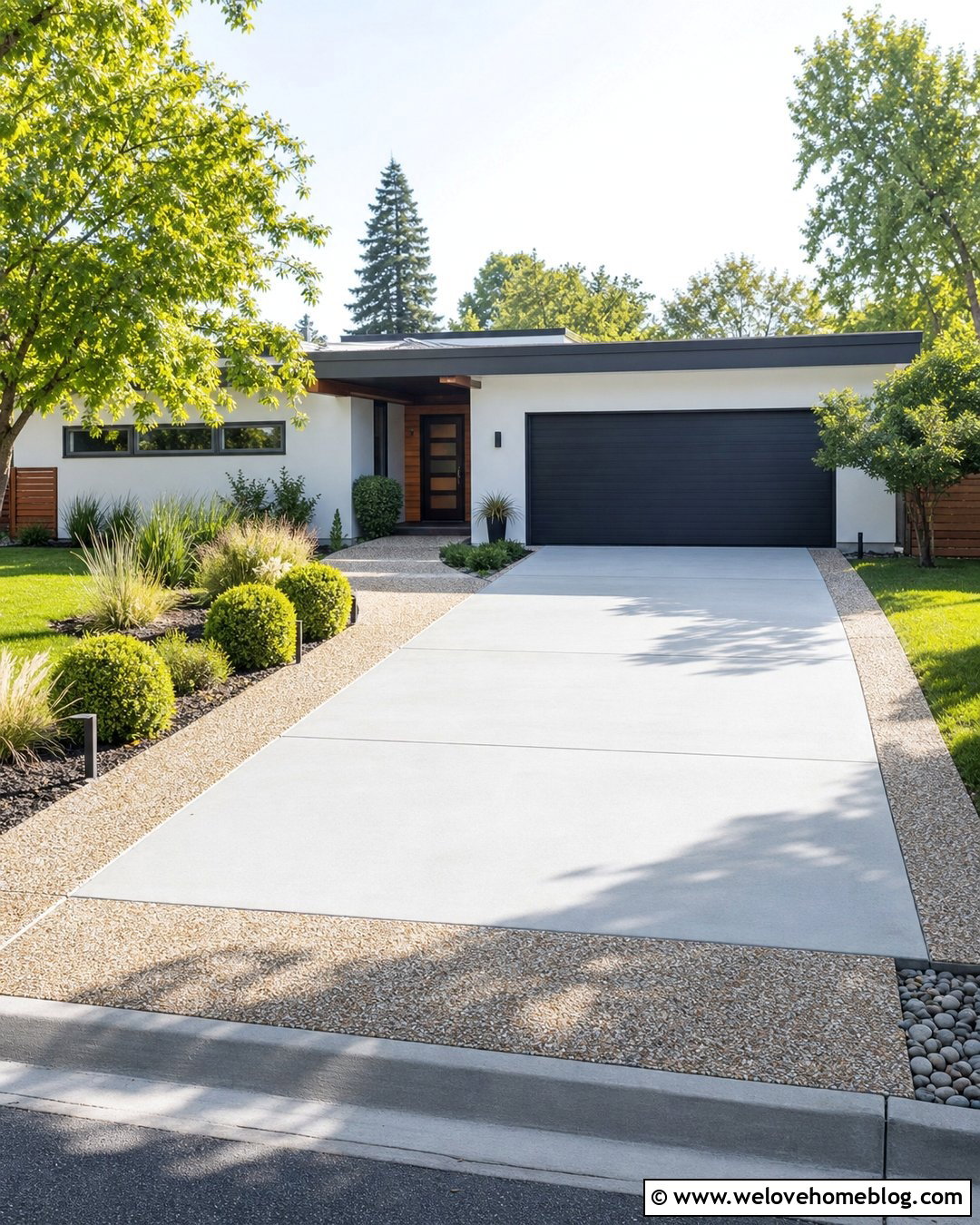
An exposed aggregate band gives smooth poured concrete a subtle textural edge. Select aggregate containing stones that coordinate with the house facade, nearby walkway, or landscape rock. A warm pebble blend looks inviting beside brick and tan siding, while gray aggregate complements modern exteriors. The border can follow both sides of a straight driveway and widen at the apron to create a deliberate entrance feature. Add clipped shrubs, lawn, and a few ornamental grasses to keep the overall look balanced. Because the contrast comes from texture rather than a different structural material, the driveway remains cohesive. This complete approach works well for mid-century ranch, contemporary, and updated suburban houses where elaborate brick or stone edging might feel too traditional.
22. Gravel Band Driveway Border
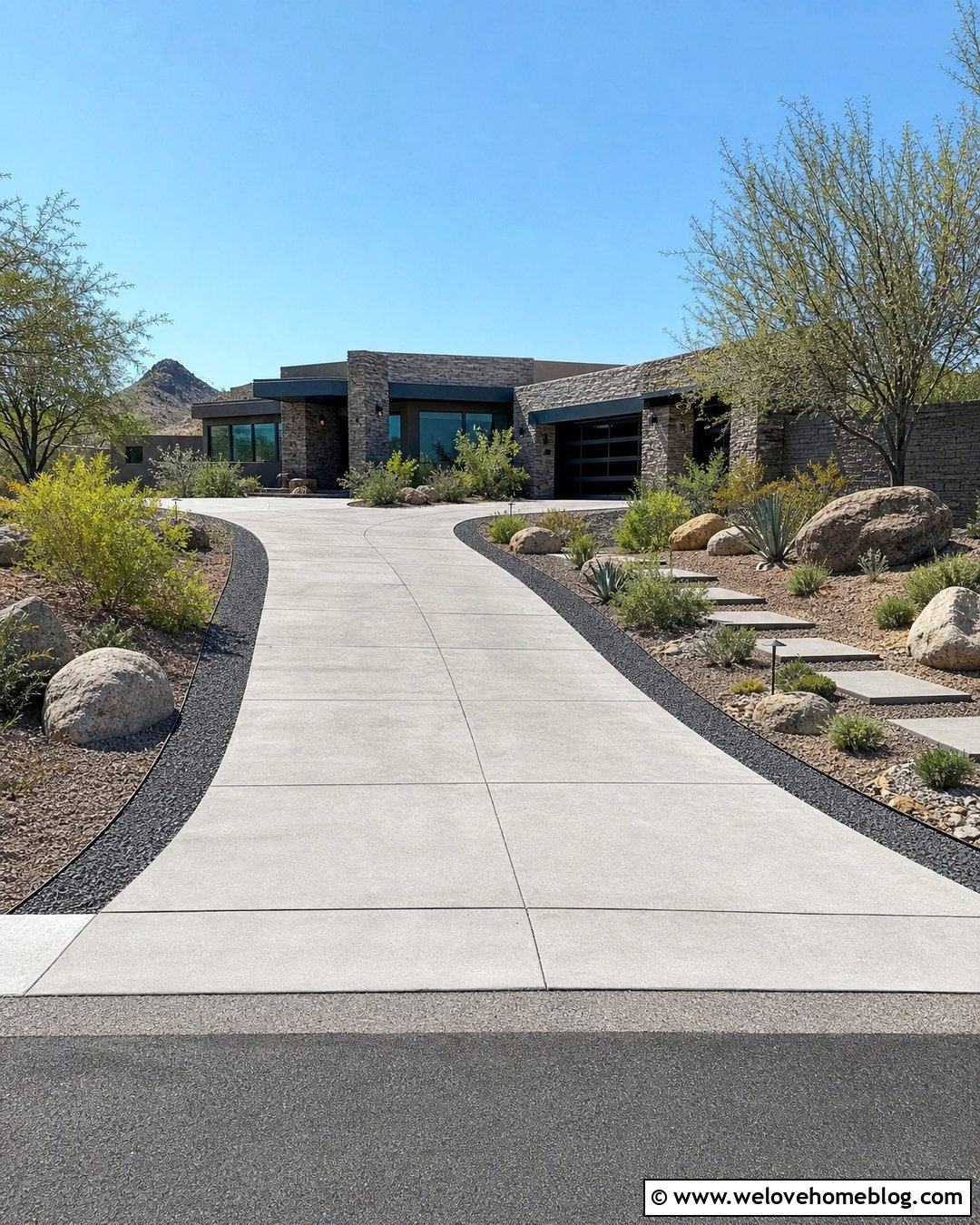
A decorative gravel band can soften the edge of a solid concrete or paver driveway. Use angular stone rather than loose rounded pebbles when you want the material to remain more stable. A narrow charcoal gravel strip creates contrast beside light concrete, while pale crushed stone brightens a dark paver surface. Contain the band between the driveway and a steel, concrete, or stone landscape edge. Add drought-tolerant plants at intervals, leaving clear areas where passengers step out. This border can continue into larger rock gardens near the house for a cohesive transition. The complete design fits contemporary, desert, coastal, and low-water landscapes, especially when the gravel color repeats tones already visible in the facade, roof, or walkway.
23. Pea Gravel Driveway Edge
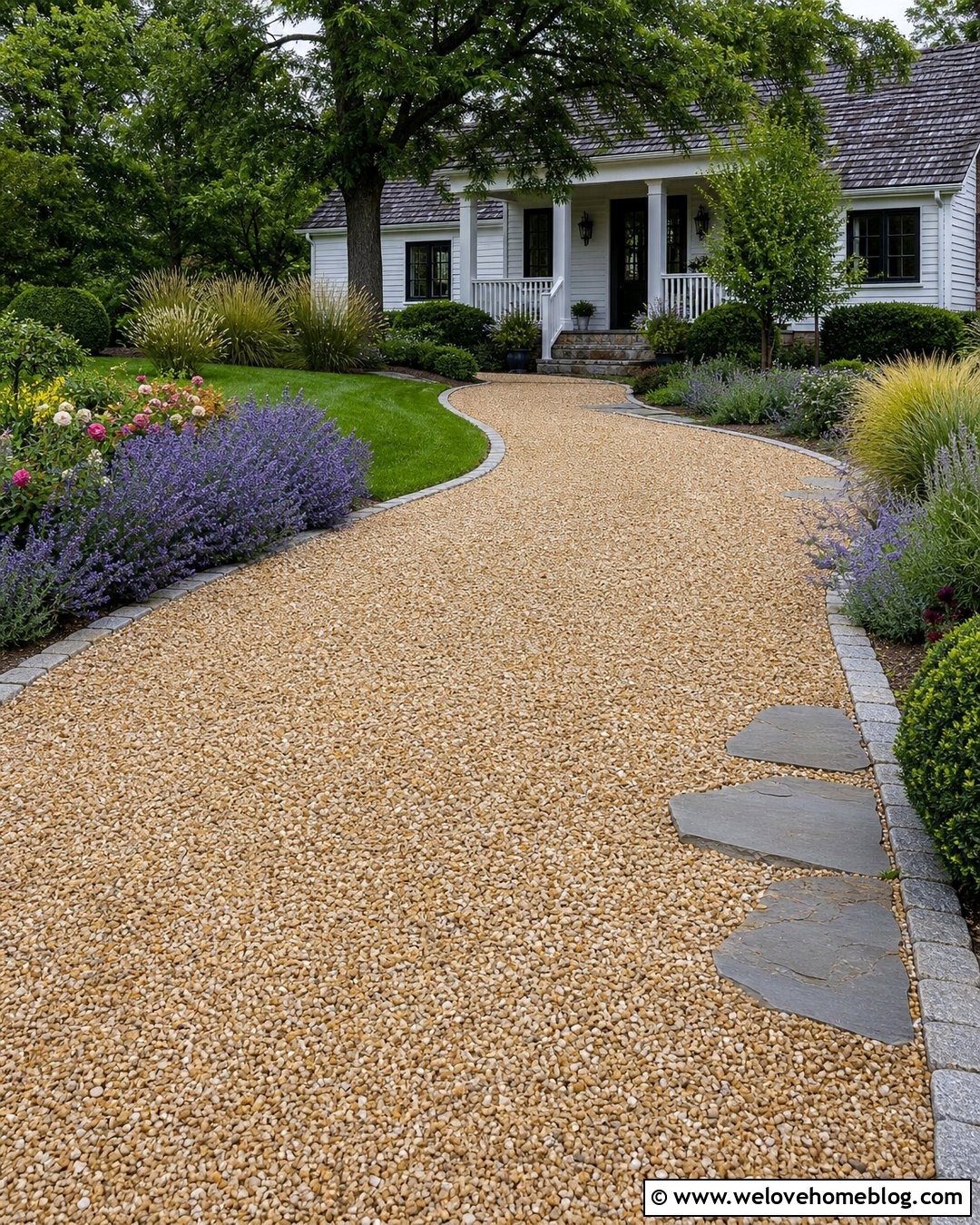
A warm pea gravel driveway becomes more orderly when framed with a substantial masonry edge. Use gray granite setts along both sides to contain the rounded gravel and create a clean boundary against lawn. Follow a gentle curved layout leading to a cottage or traditional home, and widen the border slightly where the driveway meets the street. Lavender, catmint, compact roses, and low grasses can fill planting beds beyond the stone. Include stepping stones near regular passenger exits so loose gravel does not become inconvenient. The combination of small rounded aggregate, structured granite, and soft planting creates a complete driveway rather than a basic gravel parking lane. It works particularly well in informal garden settings and established residential neighborhoods.
24. Decomposed Granite Driveway Border
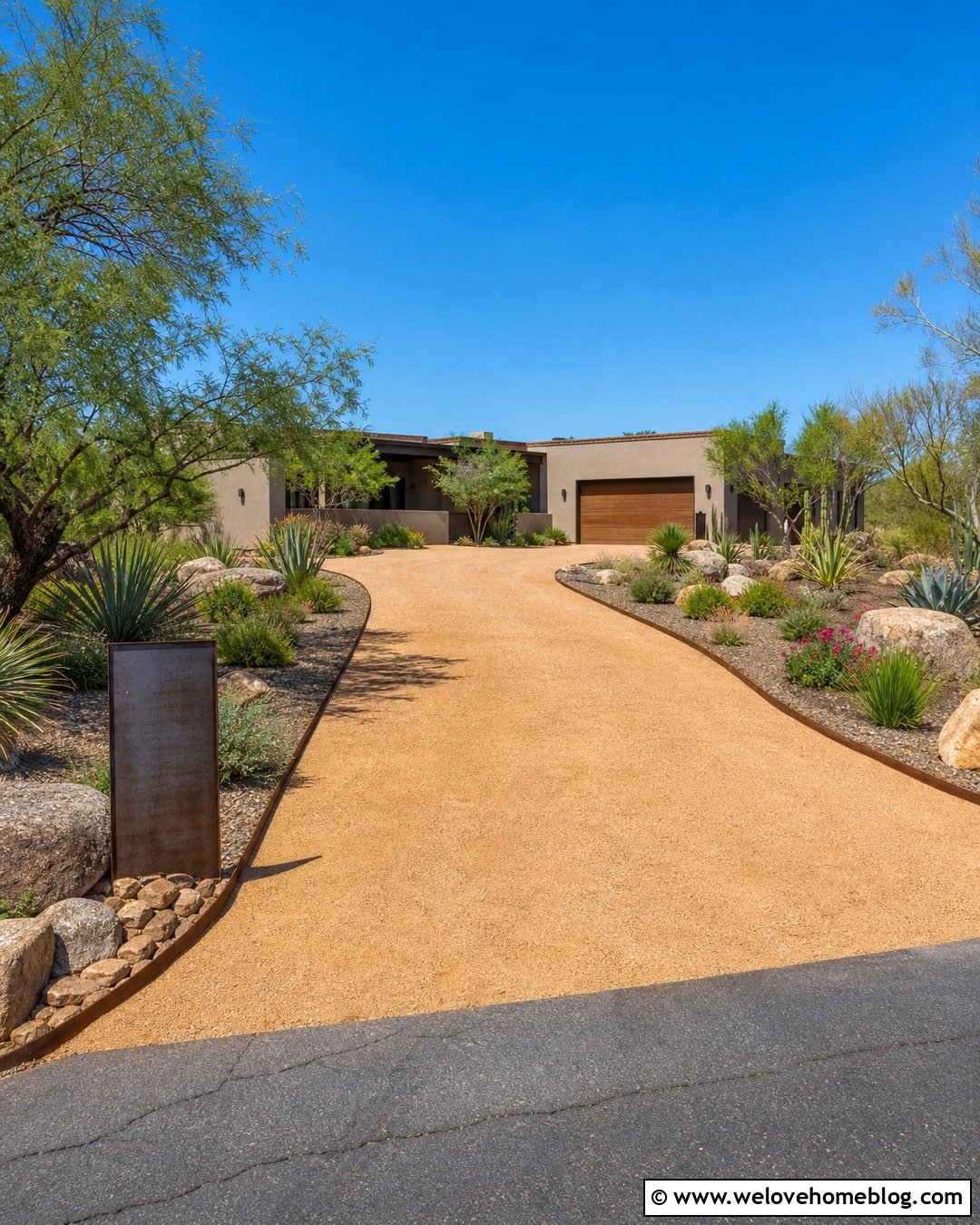
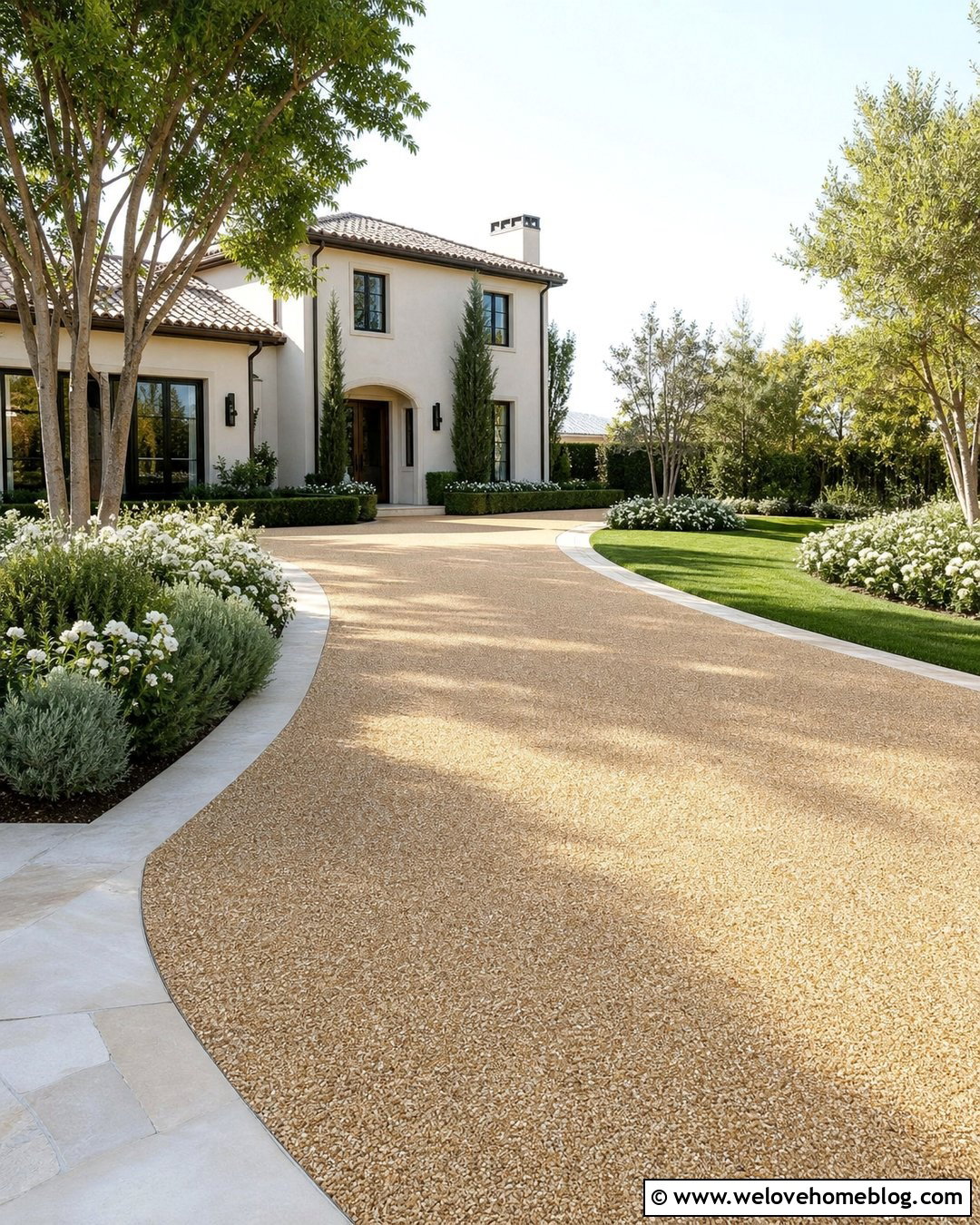
A decomposed granite driveway has a warm, natural appearance that pairs well with steel or stone edging. Use compacted golden-brown material within a clean weathered-steel frame for a contemporary Southwestern look. A broad curve can guide vehicles toward the garage while leaving room for boulders, agave, yucca, ornamental grasses, and low native shrubs. Near the street, add stone pillars or a matching steel address marker to strengthen the entrance. The border should hold the compacted surface in place without projecting dangerously above it. Coordinate the decomposed granite with the colors of the home’s stucco, wood, or stone facade. This complete driveway treatment suits dry climates, modern ranch houses, desert homes, and properties designed around water-conscious landscaping.
25. Asphalt Driveway With Brick Border
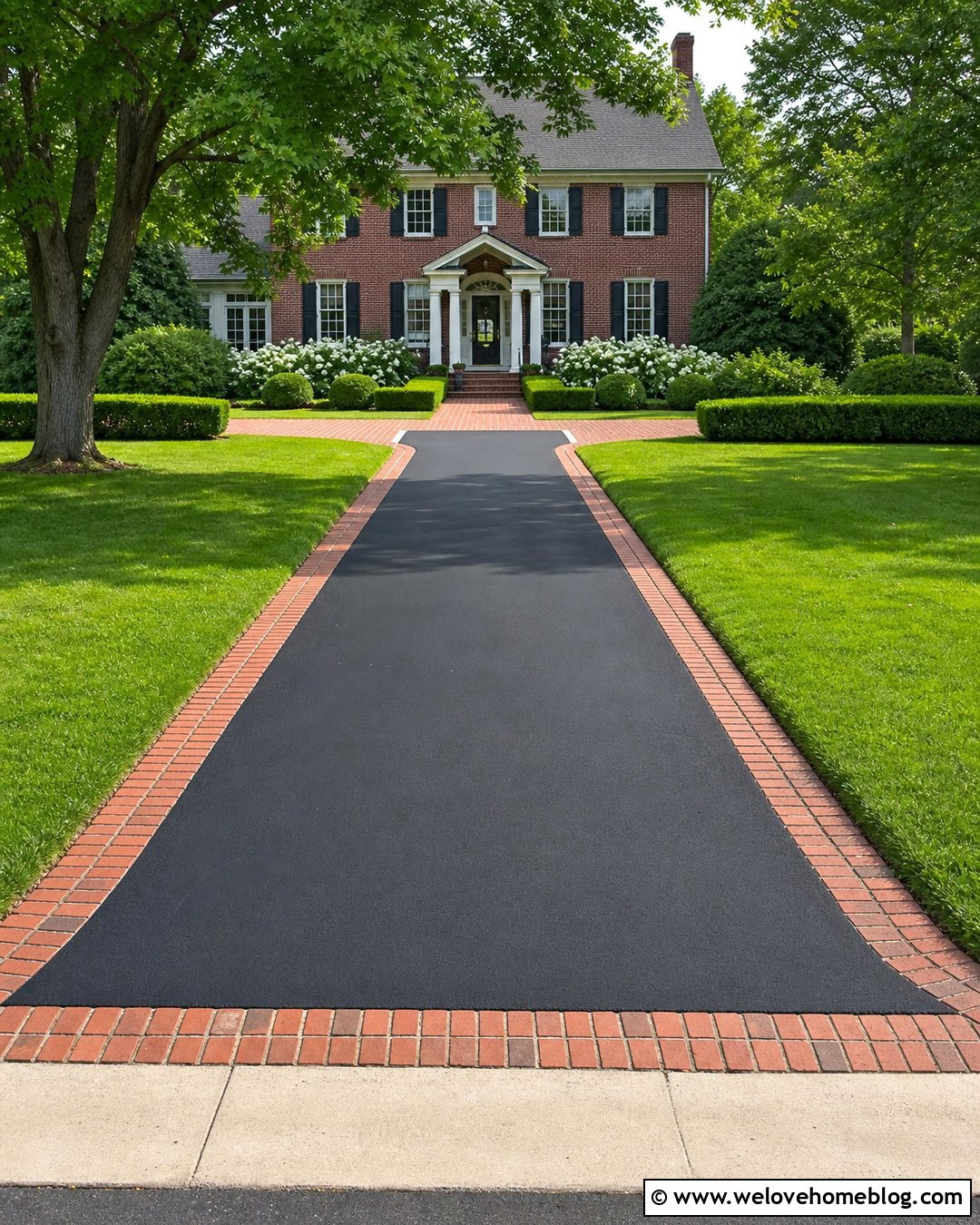
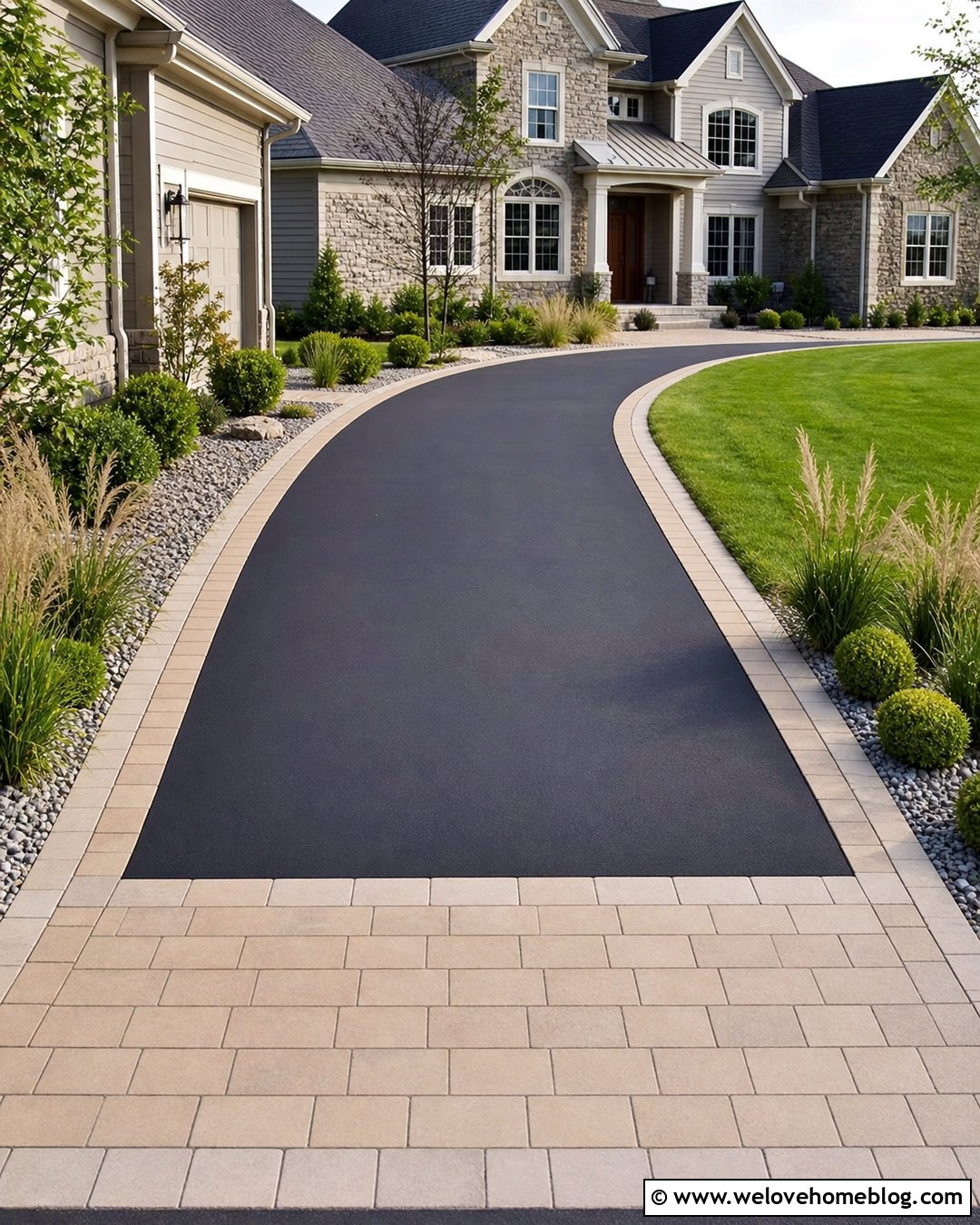
Black asphalt gains warmth and residential character when edged with red or brown brick. A double brick row has enough visual weight to balance a wide driveway, while a single soldier course works for smaller properties. Extend the brick across the apron and around the walkway entrance to create a connected frame. The deep asphalt color looks especially attractive beside green lawn, clipped hedges, and red brick architecture. Keep the border flush enough for easy snow clearing and smooth passenger access. Near the house, transition into a wider brick landing or pathway. This complete driveway design offers a practical mix of materials and suits Colonial, Georgian-inspired, craftsman, and traditional suburban homes that already feature brick chimneys, steps, or facade accents.
26. Asphalt Driveway With Stone Edge
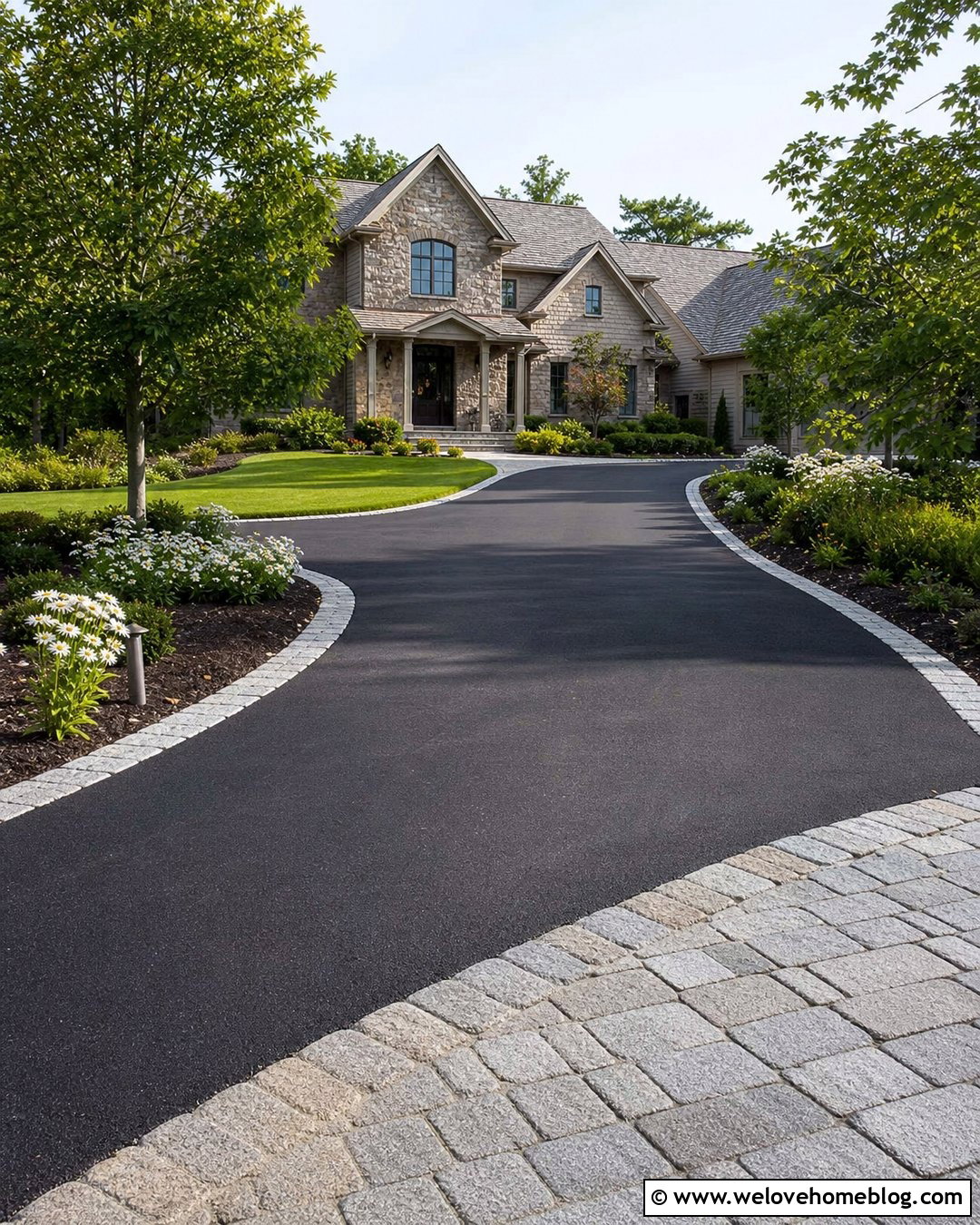
A stone edge can make a simple asphalt driveway feel more permanent and carefully constructed. Choose rectangular granite or limestone blocks based on the colors of the house. Gray granite creates a classic contrast, while buff limestone softens the appearance of the black surface. Run the edge continuously from the street to the garage, using broader planting areas near curves to break up long straight lines. Low shrubs, flowering perennials, and ornamental trees can frame the driveway without restricting visibility. At the apron, flare the stone border outward to make the entrance easier to see and navigate. This complete look works with traditional, craftsman, Tudor, and stone-faced homes, providing a strong connection between the driveway, landscaping, and architecture.
27. Concrete Driveway With Brick Edge
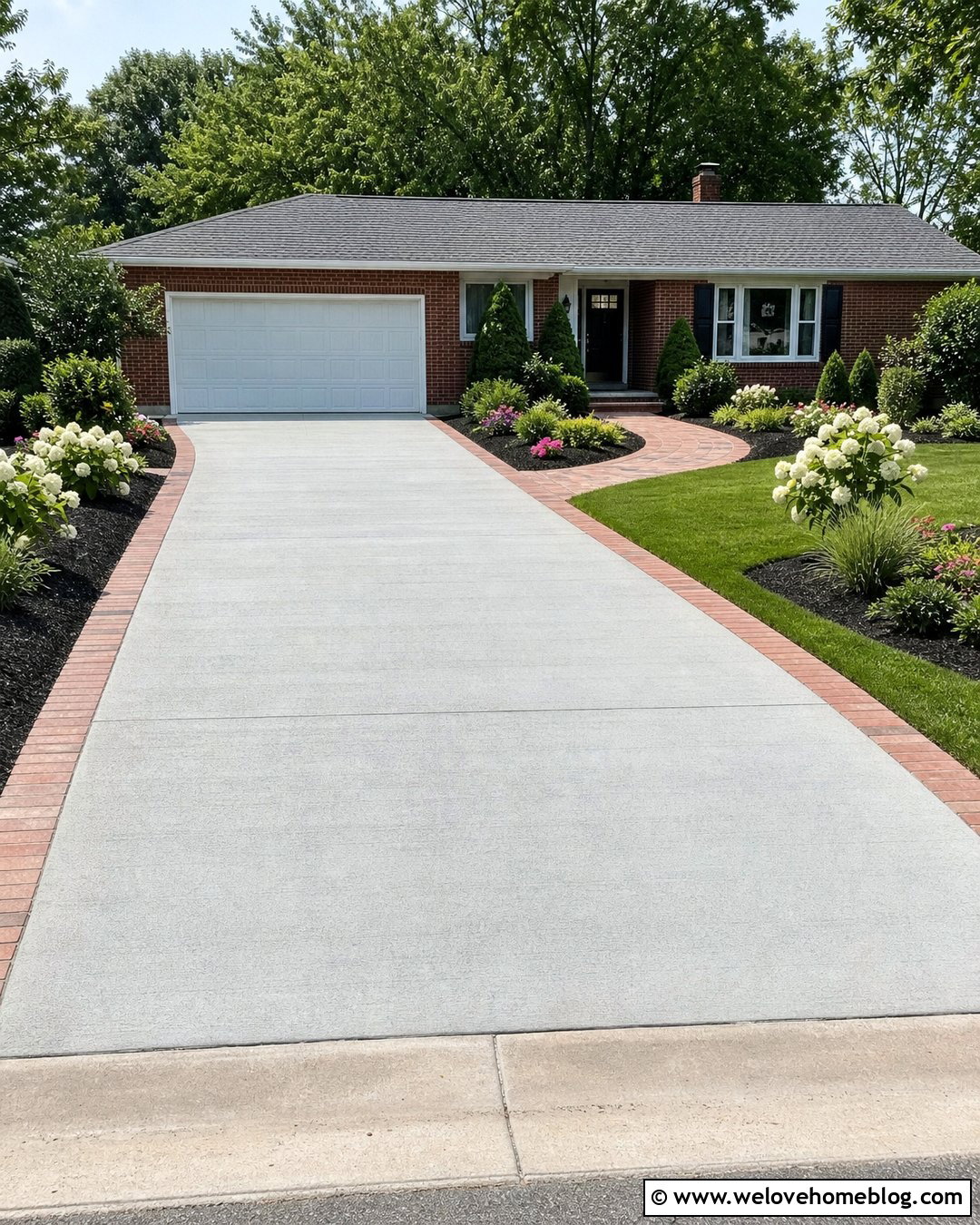
Light gray concrete and red brick create a familiar, balanced material combination. Frame a straight driveway with one or two brick rows, then repeat the brick in the walkway leading to the front door. A running-bond border feels broad and substantial, while a soldier course creates a narrower line. Use warm brick that relates to the facade, steps, or chimney rather than introducing an unrelated red tone. Mulched beds with evergreen shrubs, hydrangeas, and seasonal flowers can soften the transition to the lawn. Keep the brick surface close to the concrete height for comfortable walking and easier maintenance. The complete composition complements brick ranch homes, Colonials, craftsman houses, and traditional properties with symmetrical front-yard landscaping.
28. Concrete Driveway With Grass Border
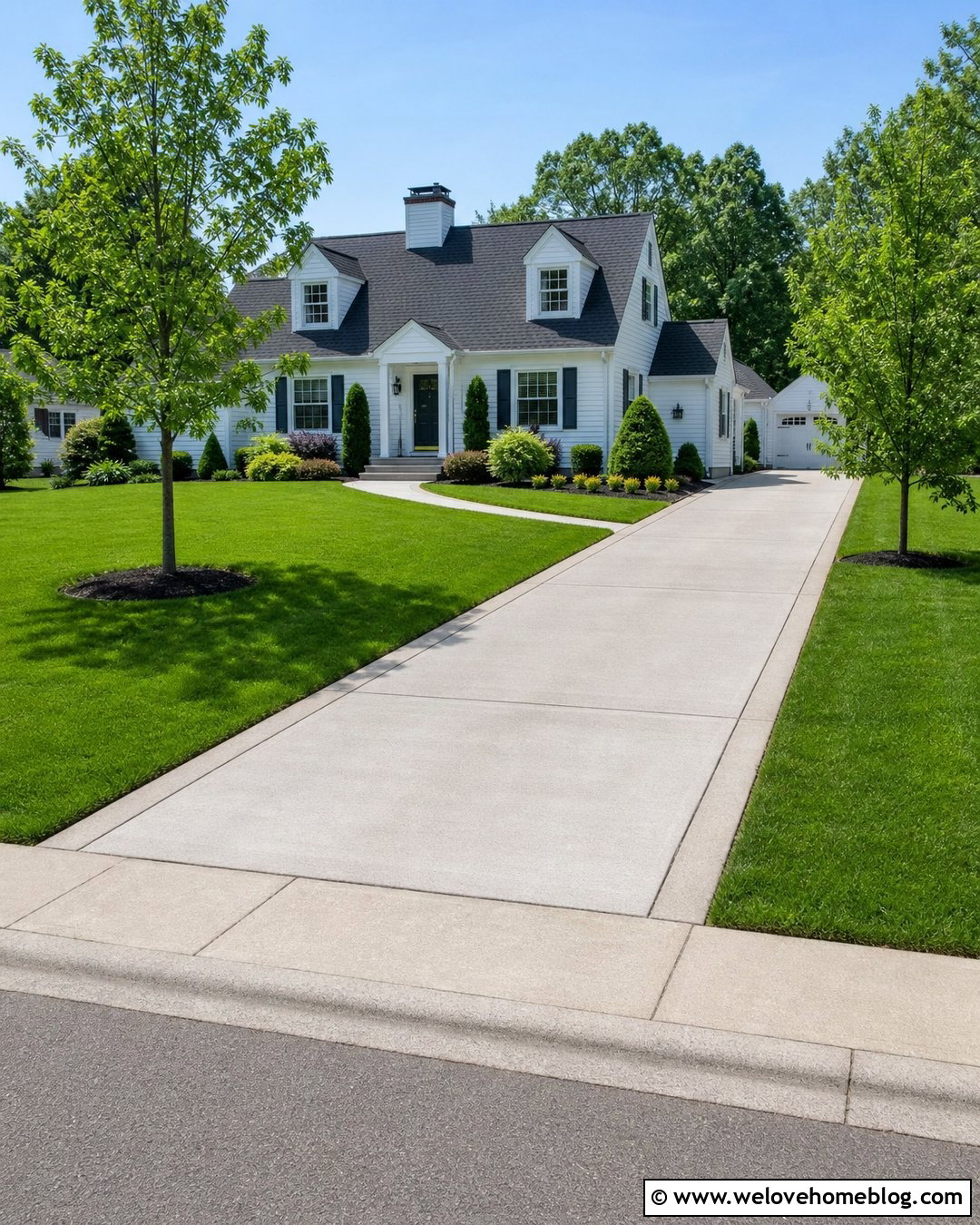
A sharply trimmed grass border gives a concrete driveway a simple, open appearance. This treatment works best when the pavement has a clean structural edge and the lawn is level with the surface. Add a flush concrete mow strip if you want to reduce trimming and protect the grass from tire wear. Instead of planting continuously along both sides, create a few curved beds near the entrance and house. Small ornamental trees, evergreen shrubs, and low flowers add interest without making the driveway feel narrow. The uninterrupted lawn visually expands compact front yards and keeps the home clearly visible from the street. This complete look suits ranch, Cape Cod, modern farmhouse, and modest suburban homes where uncomplicated landscaping supports a tidy, welcoming facade.
29. Paver Driveway With Contrasting Border
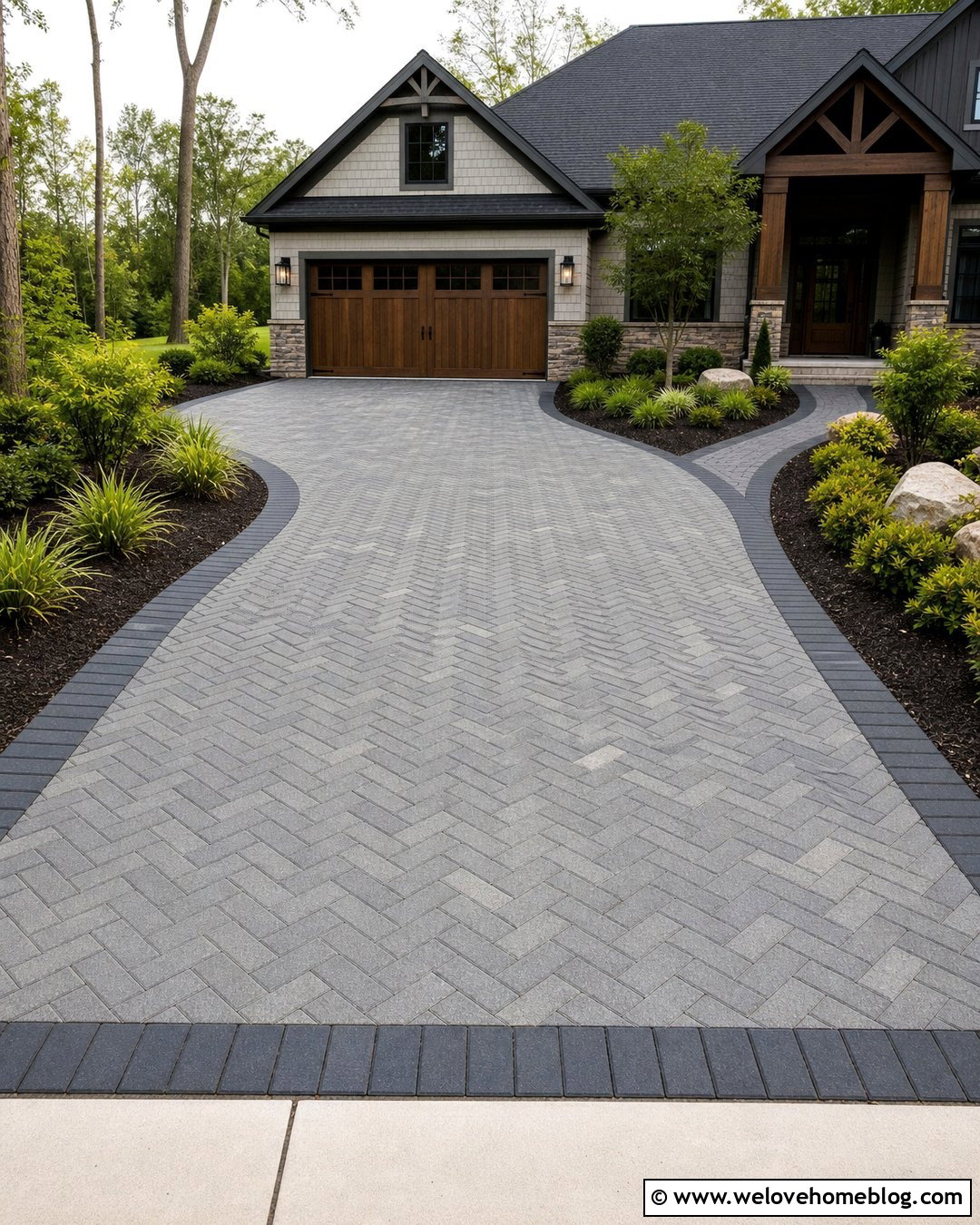
A paver driveway becomes more defined when its border uses a darker color and simpler pattern. For example, frame gray herringbone concrete pavers with charcoal rectangular units laid in a soldier course. The contrasting edge contains the field pattern visually and helps curves or parking boundaries read more clearly. Continue the dark pavers around the driveway apron and front walkway for consistency. Keep planting simple with low grasses, evergreen mounds, and clean mulch beds that echo the driveway’s geometry. If the house has black windows or dark roof details, the charcoal border creates a natural connection. This complete design works with modern, craftsman, transitional, and contemporary farmhouse homes, delivering texture without allowing the overall surface to look overly busy.
30. Gravel Driveway With Brick Edge
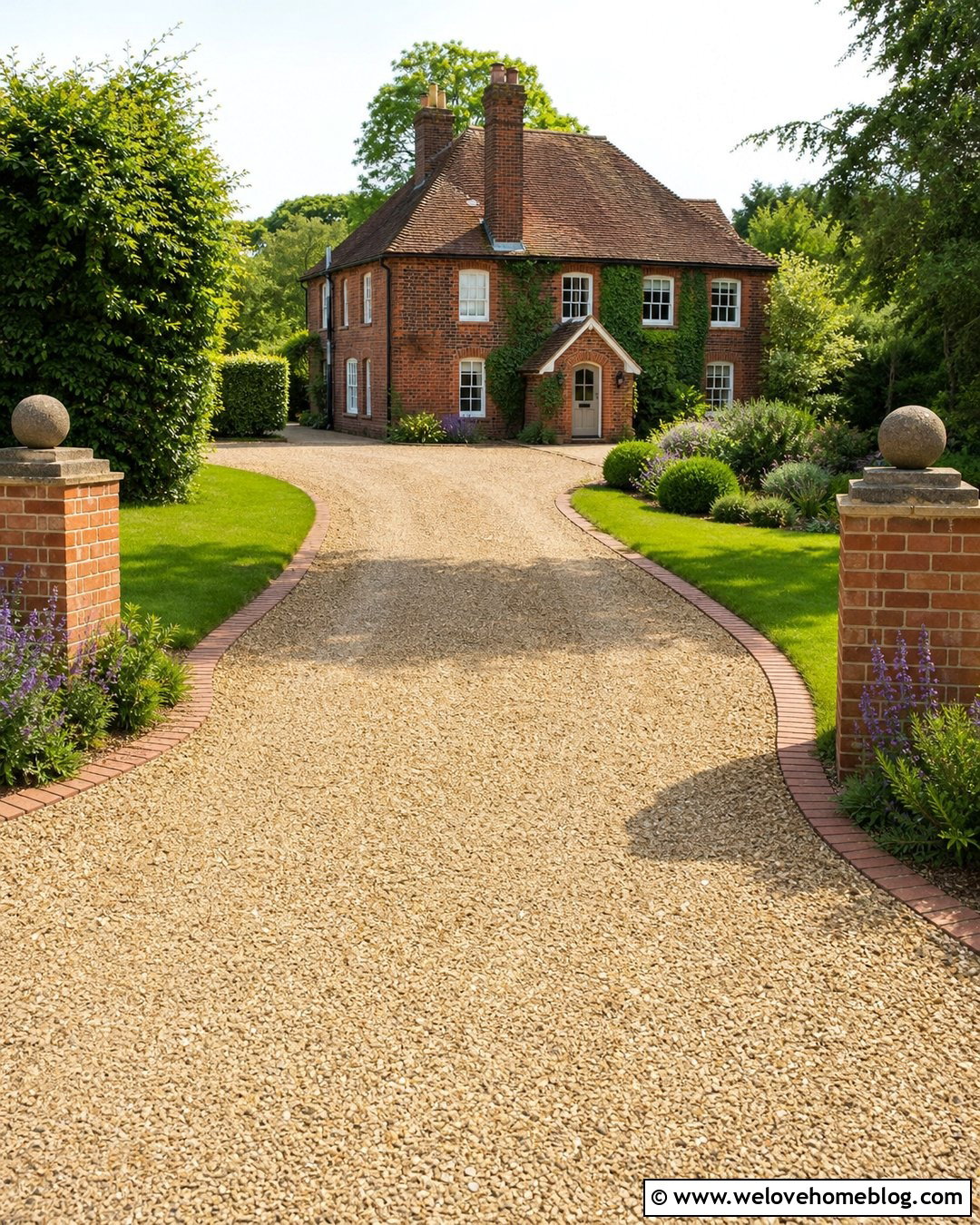
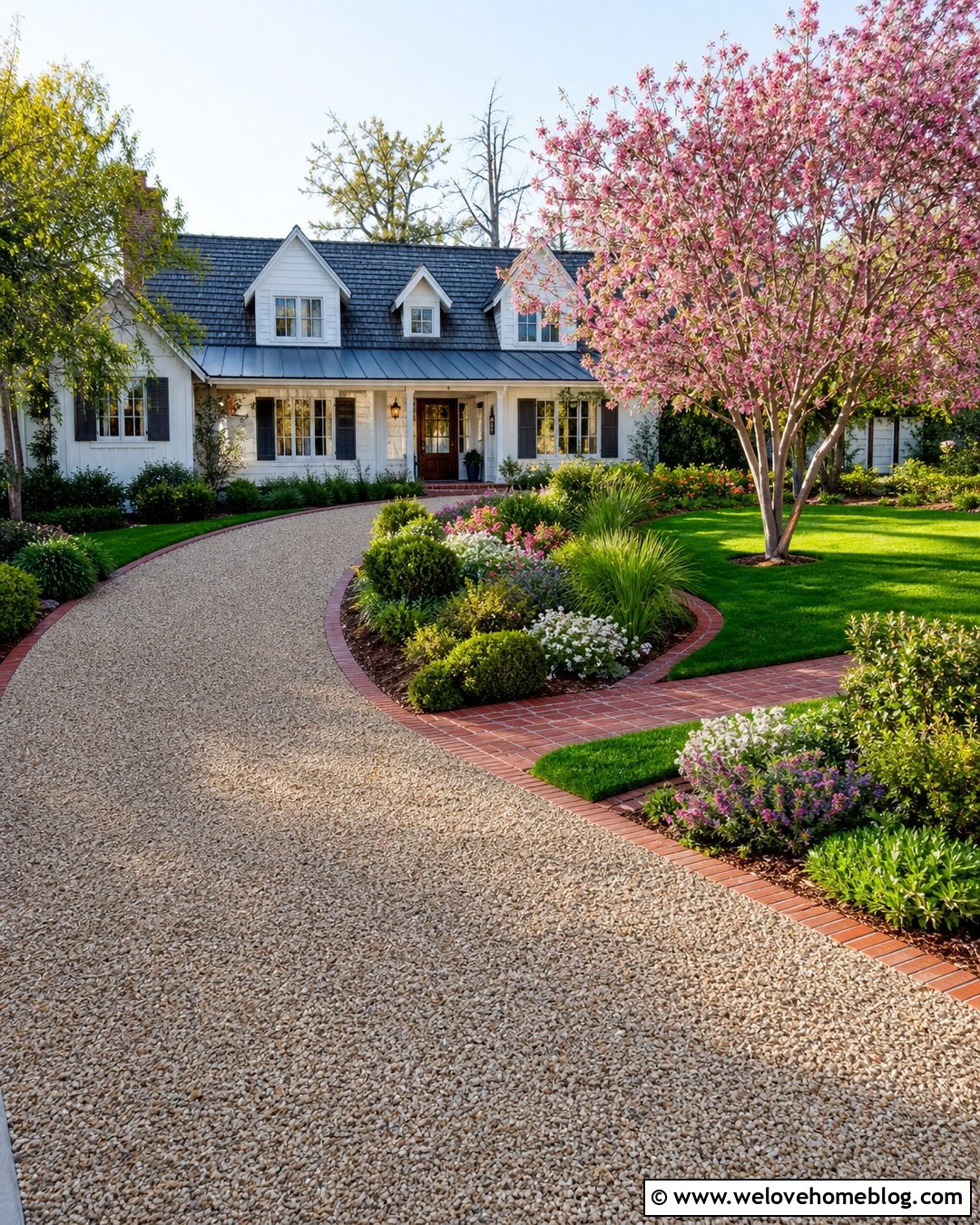
A gravel driveway framed by brick combines a relaxed surface with a clear, traditional border. Warm red clay bricks look attractive beside beige pea gravel or compacted tan crushed stone. Use a gently curved driveway to create an inviting approach, and lay the brick in a strong soldier course that contains the loose material. Beyond the edge, add clipped lawn on one side and a cottage-style planting bed on the other. Repeat the brick at the walkway and entrance pillars to connect the design to the house. Occasional sweeping or raking will keep scattered gravel away from the border. This complete treatment complements cottages, farmhouses, traditional brick homes, and older suburban properties with warm, layered exterior colors.
31. Gravel Driveway With Stone Border
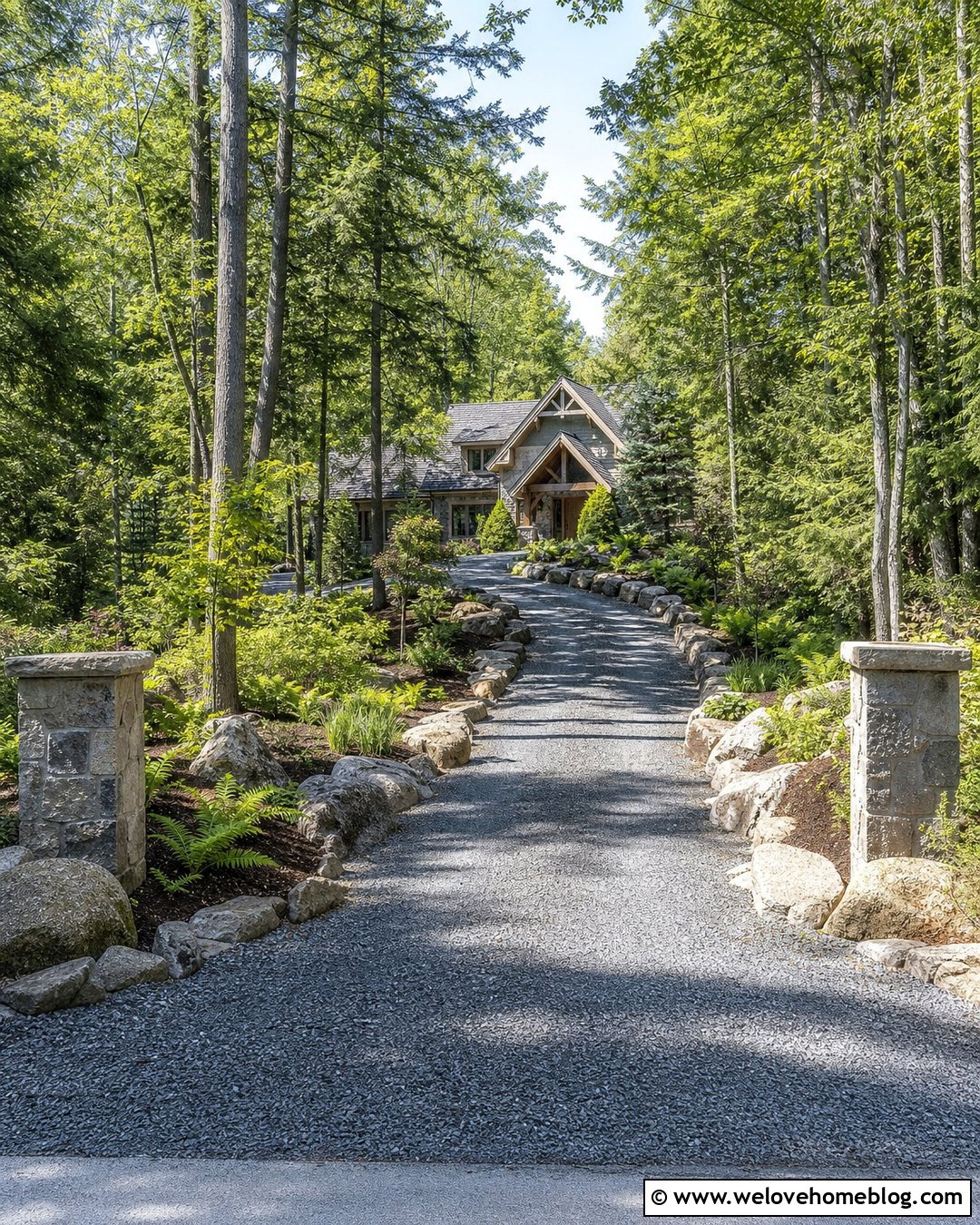
Large stone blocks provide the strength and visual weight needed to frame a broad gravel driveway. Pair medium-gray crushed gravel with rough-cut fieldstone or granite for a natural, durable appearance. The driveway can curve through a wooded yard, with the border following its shape toward a craftsman or country house. Use native ferns, sedges, woodland shrubs, and small trees outside the stone edge. Near the entrance, increase the size of the border stones or connect them to low pillars for greater presence. Keep planting back from tight turns and maintain adequate clearance for vehicles. This complete look blends practical gravel containment with natural landscaping, making it ideal for rural properties, mountain homes, cabins, and spacious wooded lots.
32. Resin Driveway With Paver Border
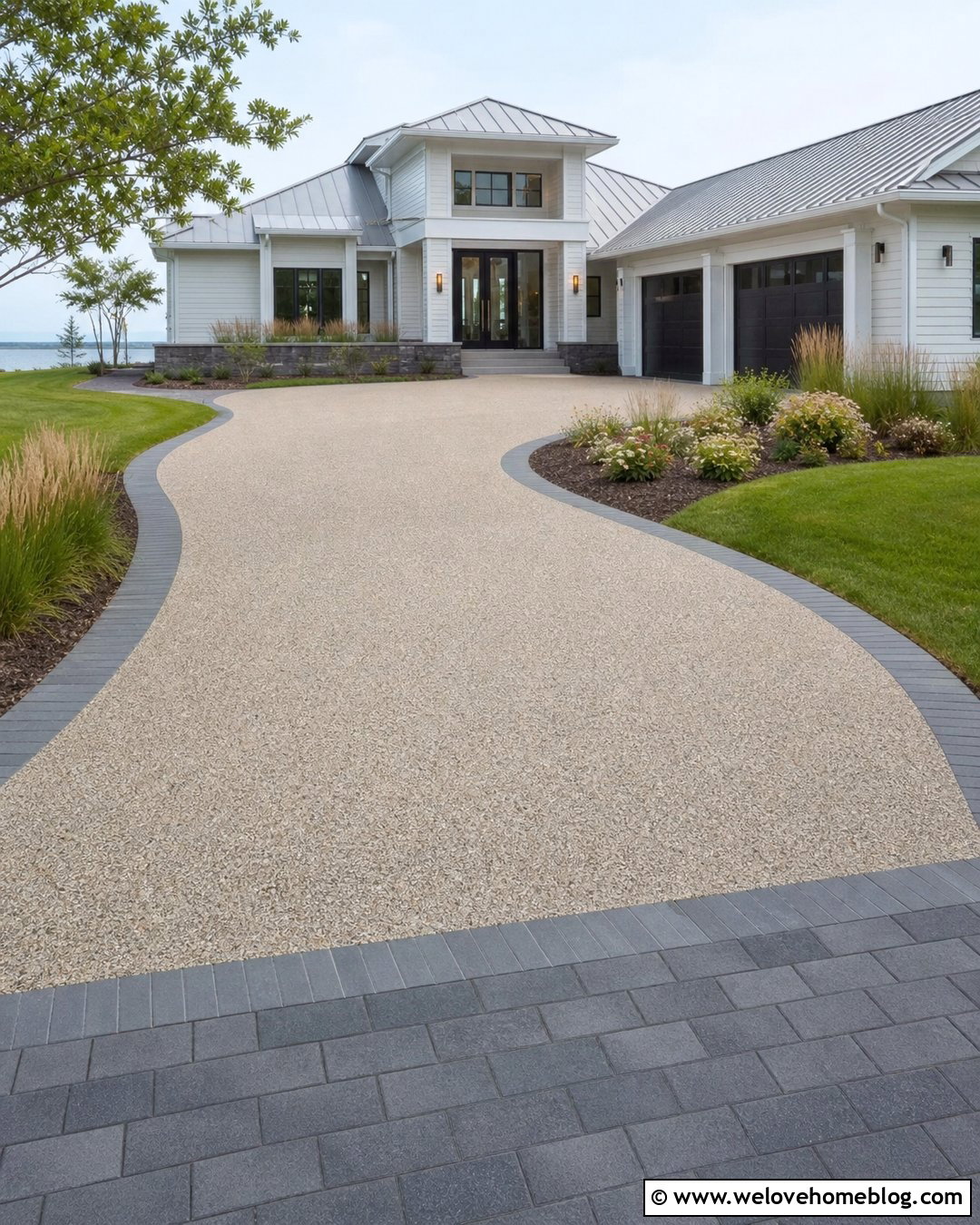
A resin-bound gravel driveway looks especially polished when framed with contrasting concrete or clay pavers. Pair a light beige resin surface with charcoal pavers for modern contrast, or choose warm brick edging for a more traditional home. A smooth curved layout can lead toward the garage while enclosing planted pockets filled with grasses and compact flowering shrubs. Continue the paver border around the apron and walkway so all paved surfaces feel connected. Because the main surface reads as seamless, the distinct border gives it clear structure from the curb. This complete treatment works with modern, coastal, transitional, and contemporary farmhouse homes. Select complementary aggregate and paver colors to prevent the border from appearing like an unrelated decorative strip.
33. Driveway Border With Boxwood Hedge
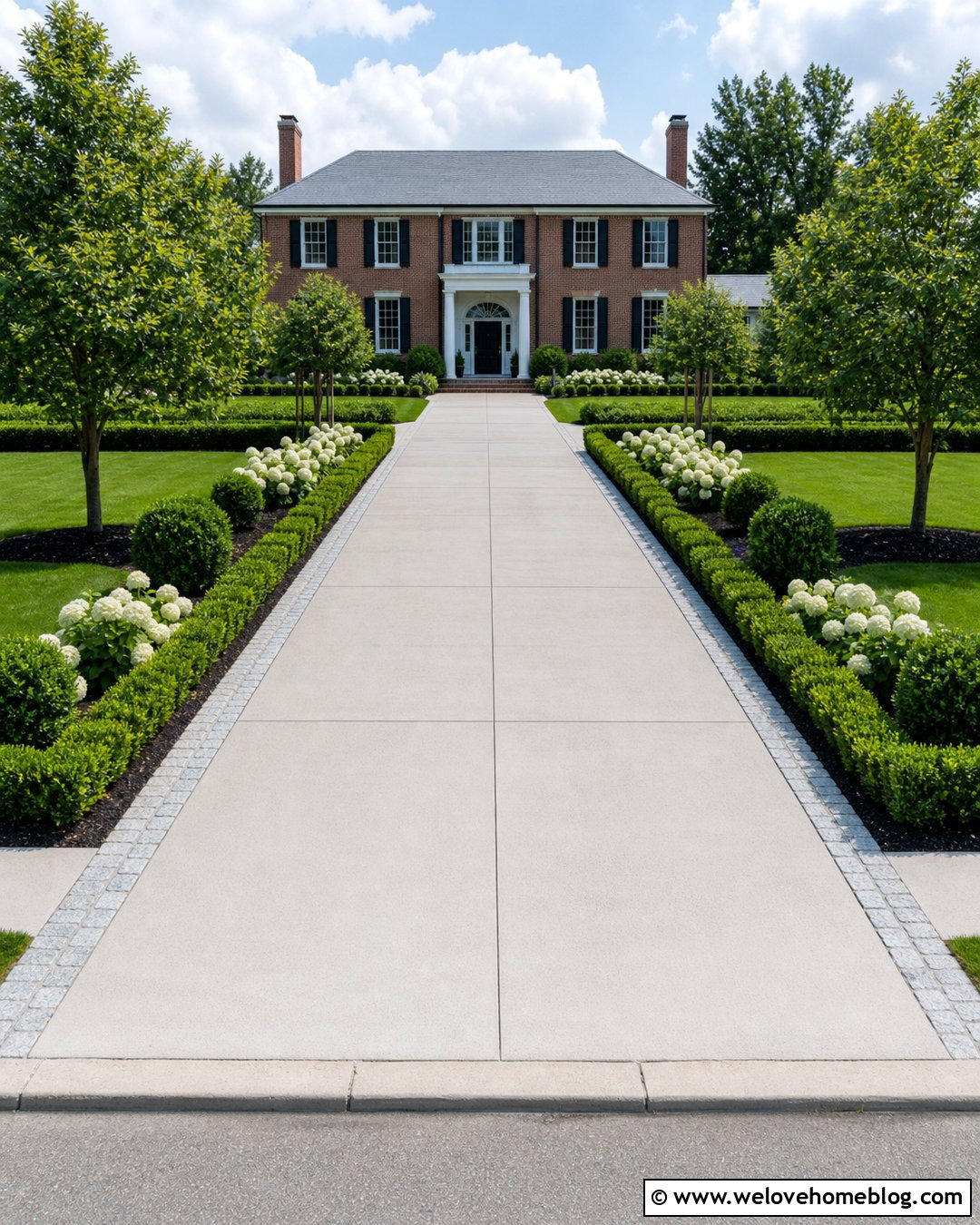
A low boxwood hedge adds formal greenery beyond a stone-edged gravel or concrete driveway. Keep the hedge compact so it defines the route without reducing visibility or brushing against vehicles. A straight layout leading toward a Colonial home creates strong symmetry, especially when both sides use matching granite borders and evenly spaced shrubs. Include openings beside the walkway and passenger unloading areas. White hydrangeas, small ornamental trees, or seasonal flowers can provide height behind the boxwood near the house. The masonry edge protects the plants from the driveway surface and creates a neat line beneath the foliage. This complete design suits formal Colonials, Georgian-inspired homes, brick residences, and traditional properties with centered entrances and balanced front-yard architecture.
34. Driveway Border With Ornamental Grasses
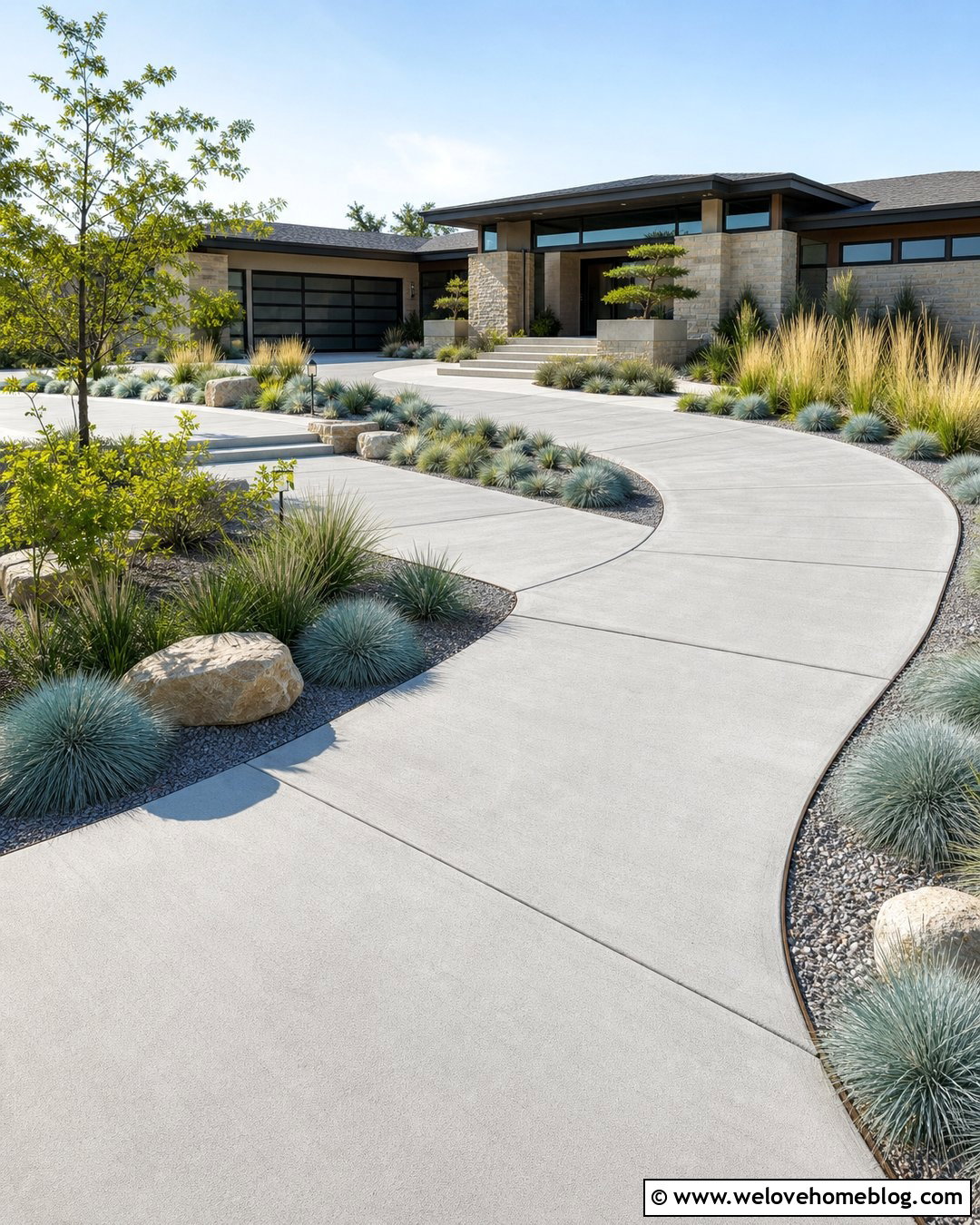
Ornamental grasses bring movement and softness to a sharply edged driveway. Frame a light poured-concrete surface with dark steel, then plant repeating groups of blue fescue, fountain grass, or another locally suitable compact variety beyond it. Avoid tall grasses near the street, curves, and driveway exits where clear views are important. Vary the planting bed width rather than creating a rigid strip from curb to garage. Gravel mulch and a few sculptural boulders can reinforce the contemporary look while simplifying upkeep. Match the grass color with other front-yard plantings for continuity. This complete driveway design works well with modern ranch, prairie-inspired, contemporary, and minimalist homes, balancing hard straight lines with natural texture and seasonal movement.
35. Driveway Border With Lavender
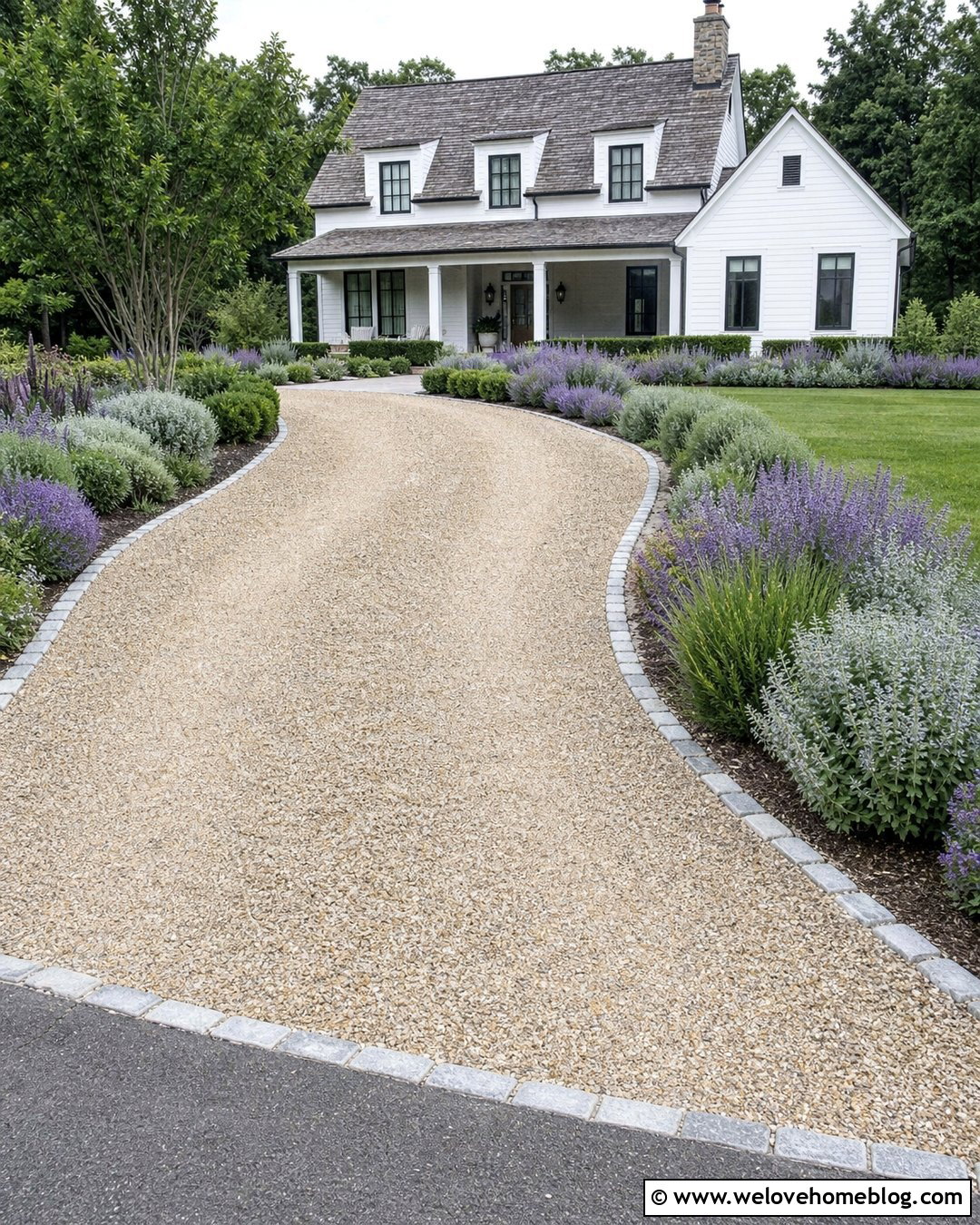
Lavender creates a fragrant, colorful border beside a pale gravel driveway in a sunny front yard. Use low granite or cobblestone edging between the gravel and planting bed so loose stones do not bury the plant crowns. Arrange lavender in generous repeating groups instead of one thin, crowded row. Add rosemary, catmint, or silvery foliage where conditions are suitable, and leave open spaces near parking and walking areas. A curved driveway leading to a cottage or light-colored farmhouse enhances the relaxed garden character. Repeat the border stone around the walkway for a finished composition. This complete look is best where lavender receives the drainage and sunlight it needs, producing an attractive connection between the driveway surface, border masonry, and surrounding garden.
36. Driveway Border With Hydrangeas
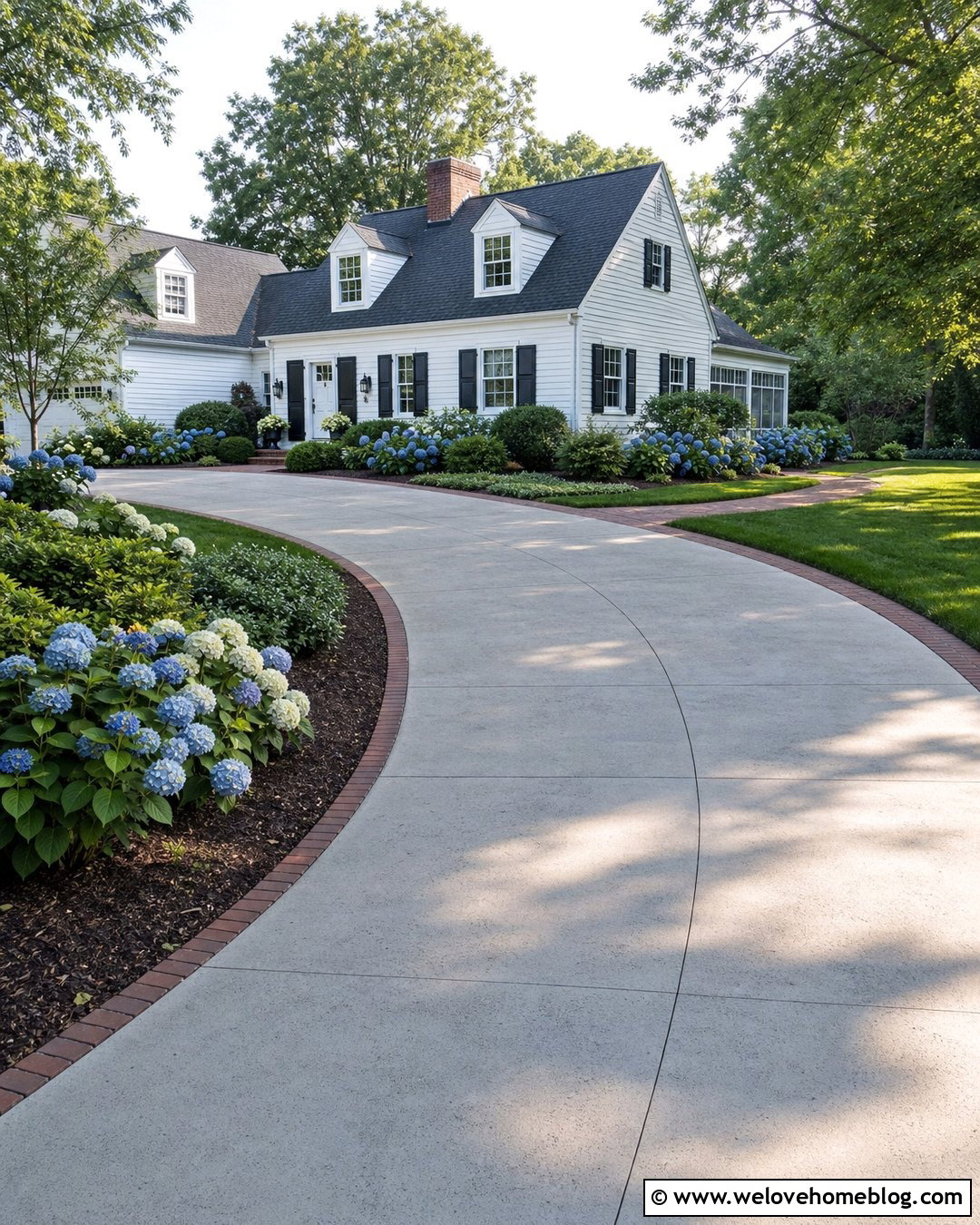
Hydrangeas can soften a broad concrete driveway when they are placed behind a practical brick or paver edge. Create a planting bed wide enough for the selected shrubs to mature without leaning into parked vehicles. Position compact varieties near the driveway and reserve larger forms for wider areas closer to the house. Dark mulch and evergreen ground cover create a clean base beneath the flowers. A curved bed line prevents the planting from feeling like a narrow hedge squeezed beside the pavement. Coordinate the brick border with the home’s steps, chimney, or facade. This complete driveway treatment works beautifully with Cape Cod, Colonial, craftsman, and traditional homes, where abundant flowering shrubs add welcoming color while the masonry edge maintains an orderly boundary.
37. Driveway Border With Native Plants
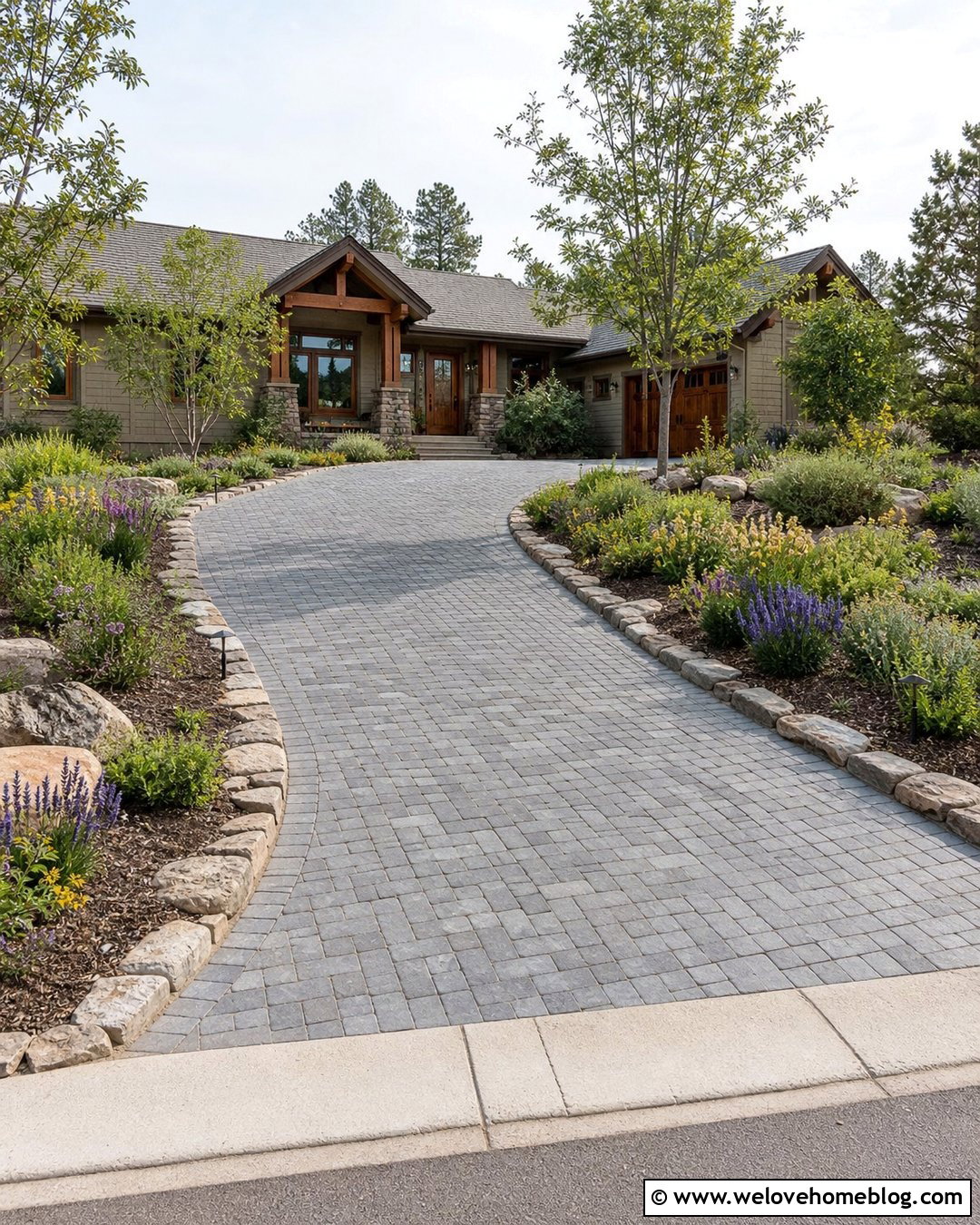
A native planting border can connect a driveway to the surrounding regional landscape. Start with a secure edge, such as flush concrete, steel, or local stone, beside a permeable paver or gravel driveway. Beyond it, layer low ground covers, flowering perennials, grasses, and compact shrubs suited to the site’s sunlight, soil, and moisture. Keep the shortest plants close to pavement and place taller species farther back. Use repeating groups to create an intentional design rather than a scattered wildflower appearance. Leave clear zones near the street and curves for safer visibility. This complete driveway look works with modern, craftsman, ranch, and country homes while giving the front yard a strong sense of place and a softer transition into the landscape.
38. Driveway Border With Landscape Lighting
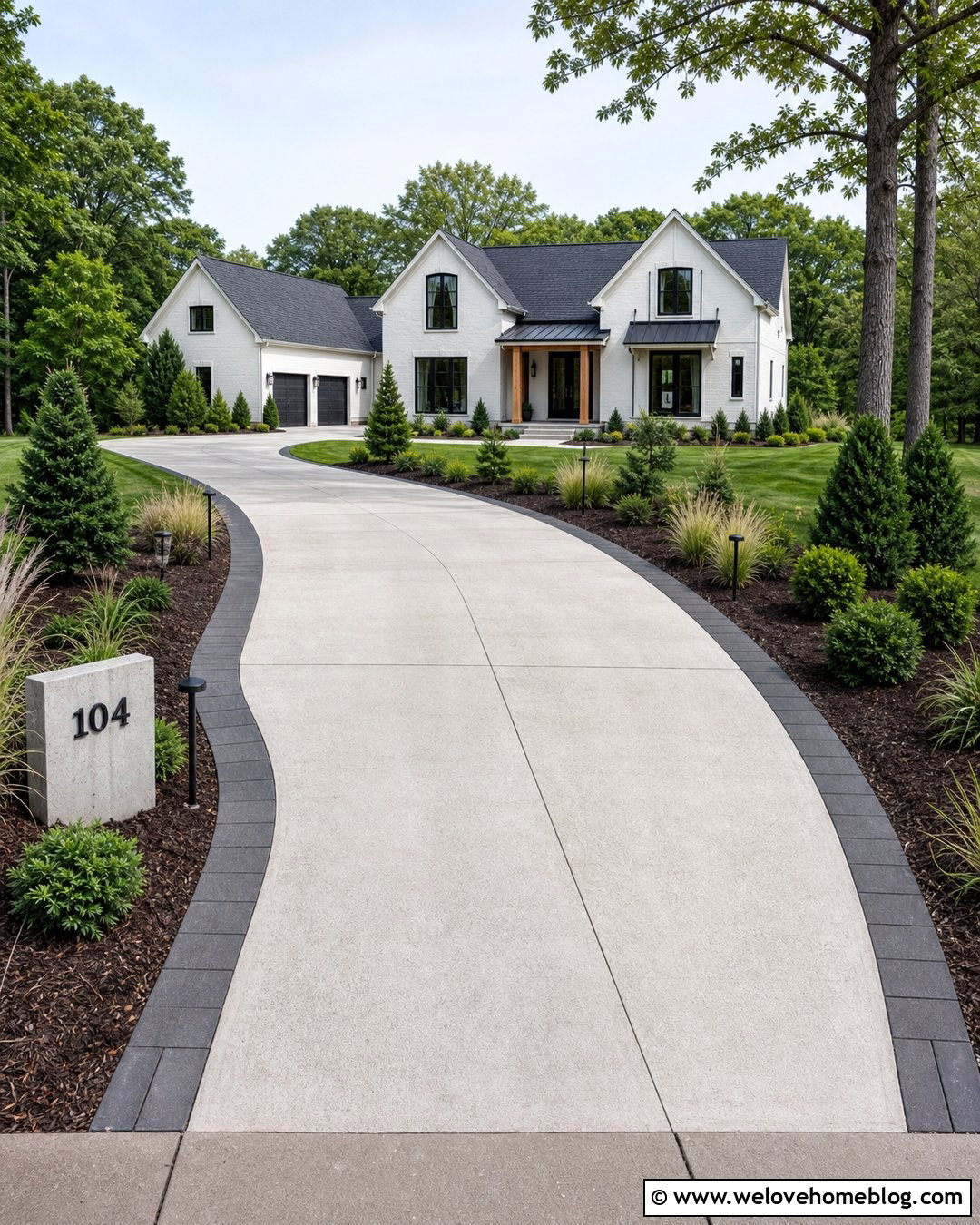
Integrated landscape lighting makes a defined driveway border easier to follow after sunset without dominating its daytime appearance. During the day, a charcoal paver edge can frame a light concrete driveway, while low black fixtures sit within planted beds beyond the pavement. Space lights at important points such as the entrance, curves, walkway crossing, and garage approach rather than forming an overly bright runway. Shielded fixtures can direct illumination toward the surface and border. Add low evergreen shrubs and ornamental grasses that will not block the light. Match the fixture finish with house hardware, address signs, or gate details. This complete driveway design suits modern, transitional, and contemporary farmhouse homes, combining a polished border with practical wayfinding and coordinated curb appeal.
39. Driveway Border With Retaining Wall

A sloped property may need a low retaining wall along one side of the driveway. Use natural stone, segmental concrete blocks, or brick that coordinates with the house and primary paving. A gray concrete driveway with a warm stone wall creates an attractive contrast while managing the change in grade. Step the wall down gradually toward the street and add a flush paver border on the open side for visual balance. Above the wall, plant trailing ground covers, compact shrubs, and grasses that will not interfere with vehicles. Include drainage as part of the complete wall and driveway plan. This integrated design suits hillside ranches, craftsman homes, mountain properties, and split-level houses where edging must provide both structure and a finished landscape transition.
40. Driveway Border With Entrance Pillars
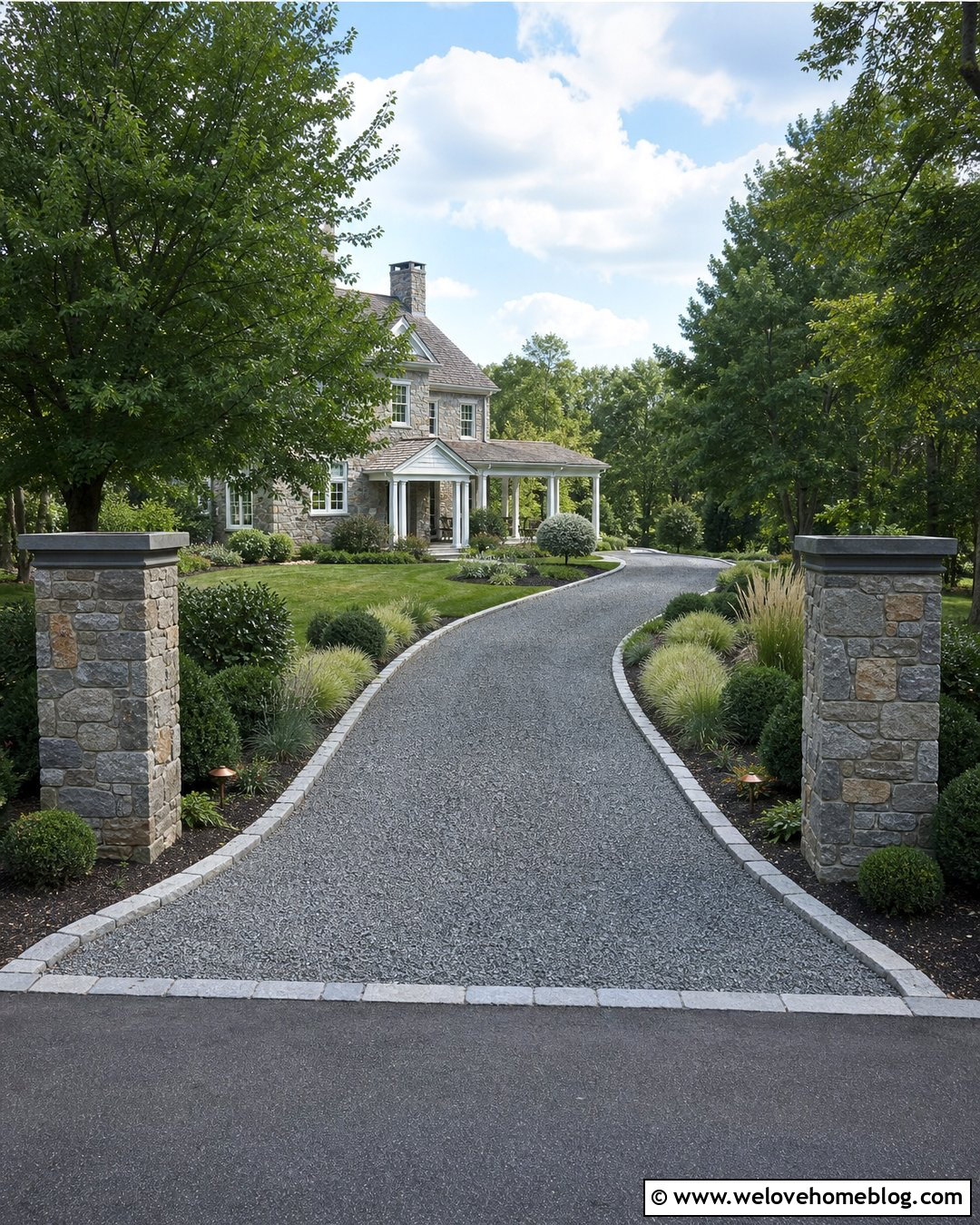
Entrance pillars can anchor the start of a long driveway and connect its borders to the home’s architecture. Build the pillars from brick, stone, or stucco that repeats a facade material, then continue a lower matching edge along the driveway. A crushed gray gravel surface framed with granite setts creates a classic approach to a country or traditional house. Keep the pillars far enough apart for comfortable vehicle movement and preserve clear views toward the road. Low shrubs, ornamental grasses, and ground-level lighting can soften their bases without hiding the masonry. Add a modest address plaque if desired. This complete driveway look feels coordinated from curb to house because the entrance, edging, surface, and landscaping share a consistent material and color palette.
Conclusion:
A successful border should look attractive from the street while solving practical problems along the pavement. It may contain gravel, support asphalt, protect planting beds, simplify mowing, guide vehicles, or manage a sloped yard. Before selecting a material, compare it with the house facade, driveway surface, walkway, and surrounding landscape. Plan safe passenger access, drainage, visibility, snow removal, and future plant growth as well. Brick and natural stone add character, while concrete, pavers, and metal deliver cleaner lines. Living borders can soften any hard surface when paired with proper structural edging. Use these 40 driveway edges and borders ideas to create a complete entrance that feels tidy, durable, and connected to your home.

Related posts:
Leave a Reply