
Rocks can turn a plain driveway edge into a polished part of the front yard. They add texture, define the driving surface, protect planting beds, and create a smoother transition between pavement and landscaping. This guide to **20 Rocks Lining Driveway Ideas** covers complete designs rather than isolated stone borders. You will find practical combinations for concrete, asphalt, gravel, brick, pavers, and resin-bound surfaces. Each look brings together the driveway material, layout, rock size, edging, plants, and house style. Before choosing one, consider drainage, snow removal, mowing access, and whether loose stones need hidden metal edging for containment. Whether your property is modern, rustic, coastal, or traditional, use these **20 Rocks Lining Driveway Ideas** to plan a cohesive entrance.

1. River Rock Lined Concrete Driveway
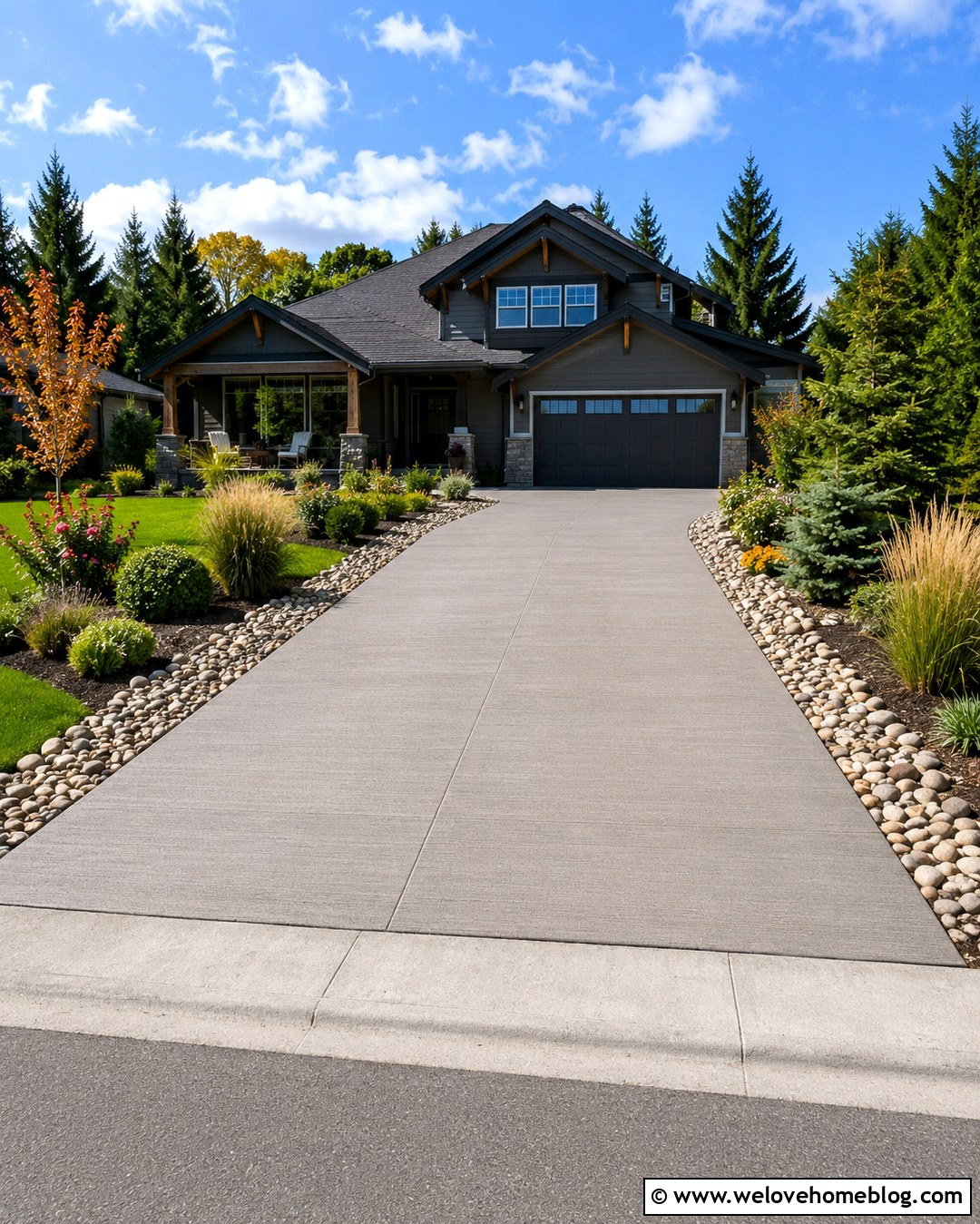
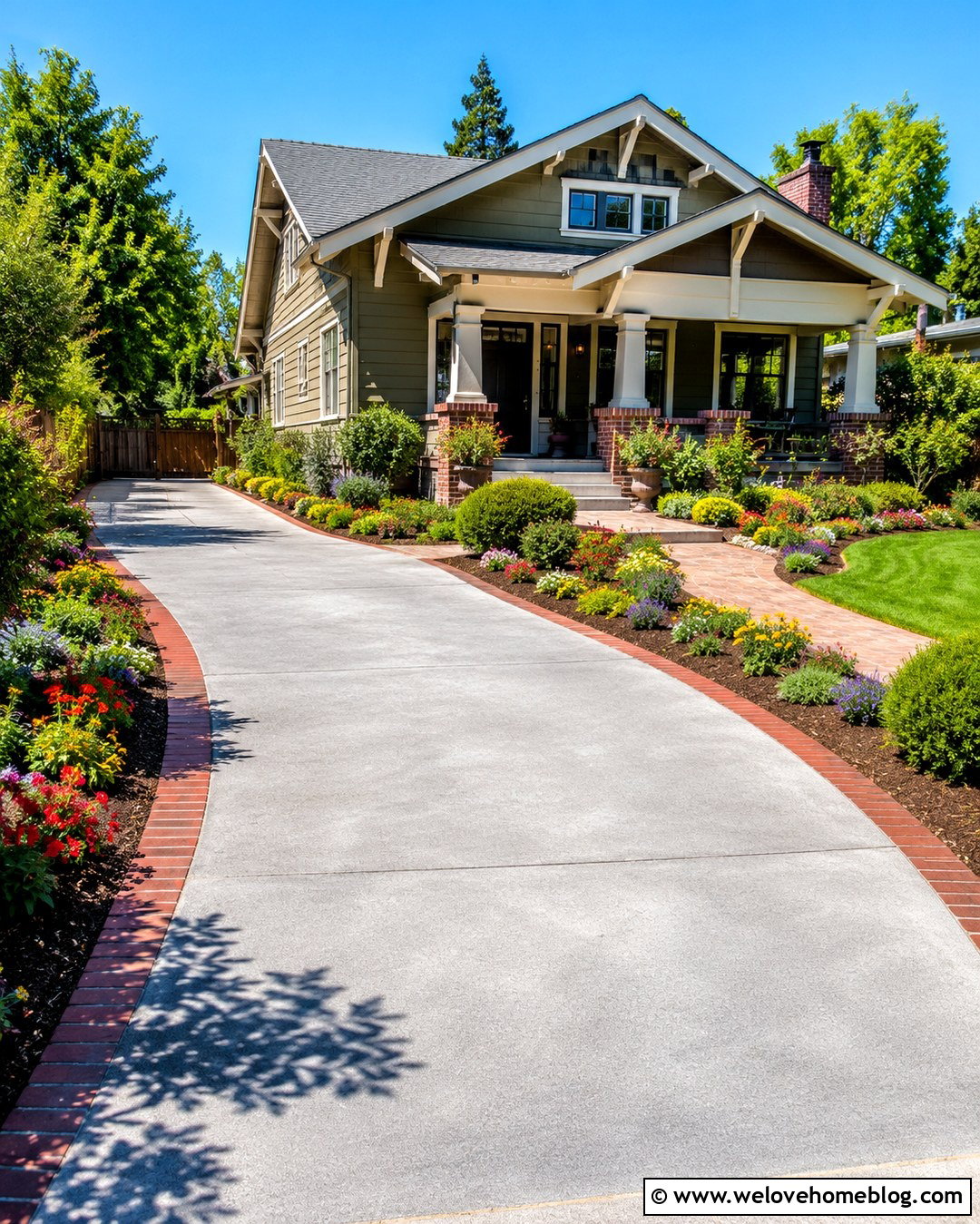
Smooth river rocks bring natural color and softness to a straight concrete driveway. Start with a gray broom-finished concrete surface that leads toward a Craftsman house. Create an 18- to 24-inch rock strip along both sides, using a mix of tan, gray, brown, and cream river stones. Dark steel edging between the stones and lawn helps contain the loose material and keeps the boundary crisp. Add compact ornamental grasses, low evergreen shrubs, and a few flowering perennials at wider points near the garage. The rounded stones contrast nicely with the concrete’s straight lines. For easier upkeep, keep the rock surface slightly below the pavement and avoid placing oversized stones where vehicle doors may open. This balanced design works especially well in medium-size suburban front yards.
2. Boulder Lined Gravel Driveway
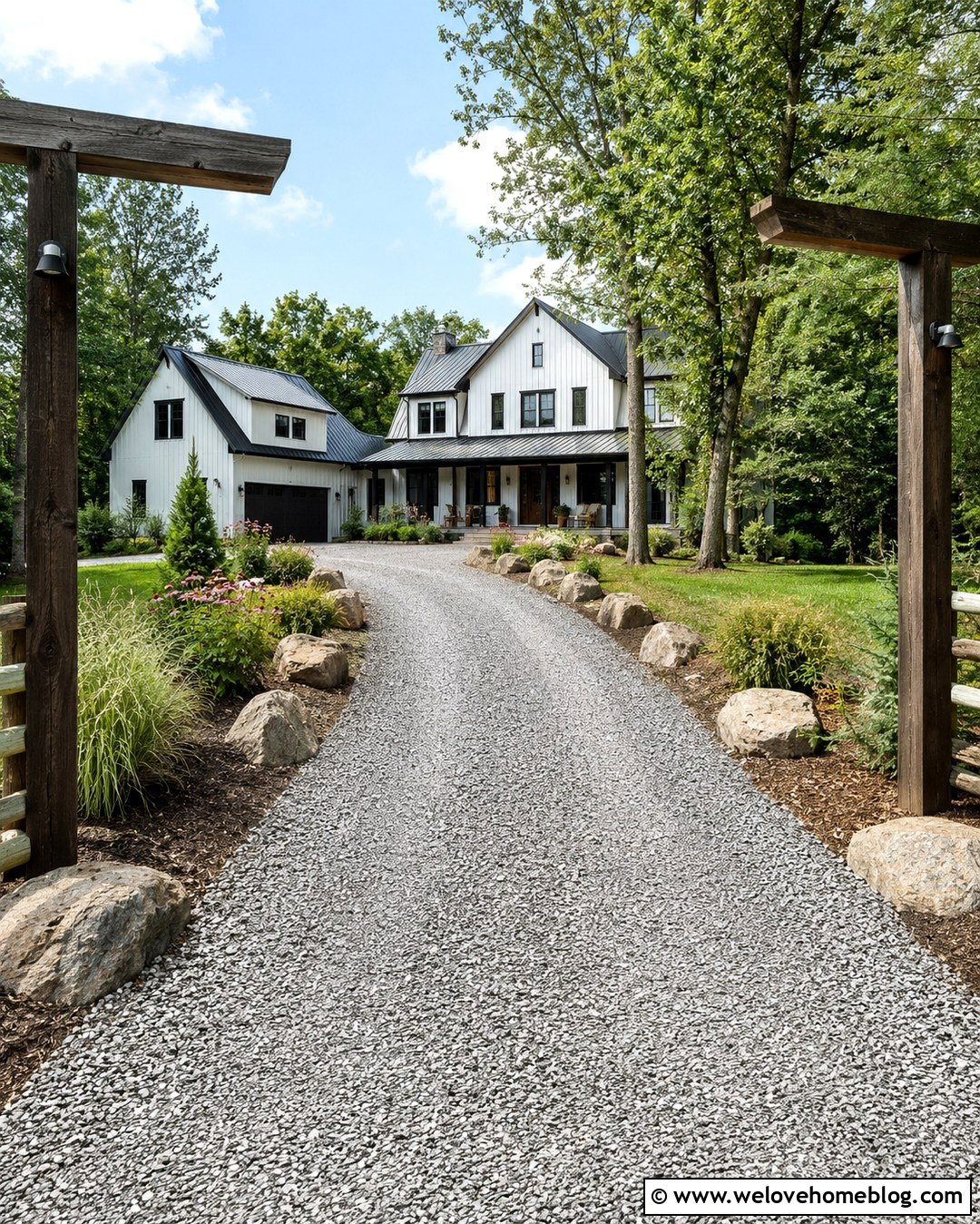
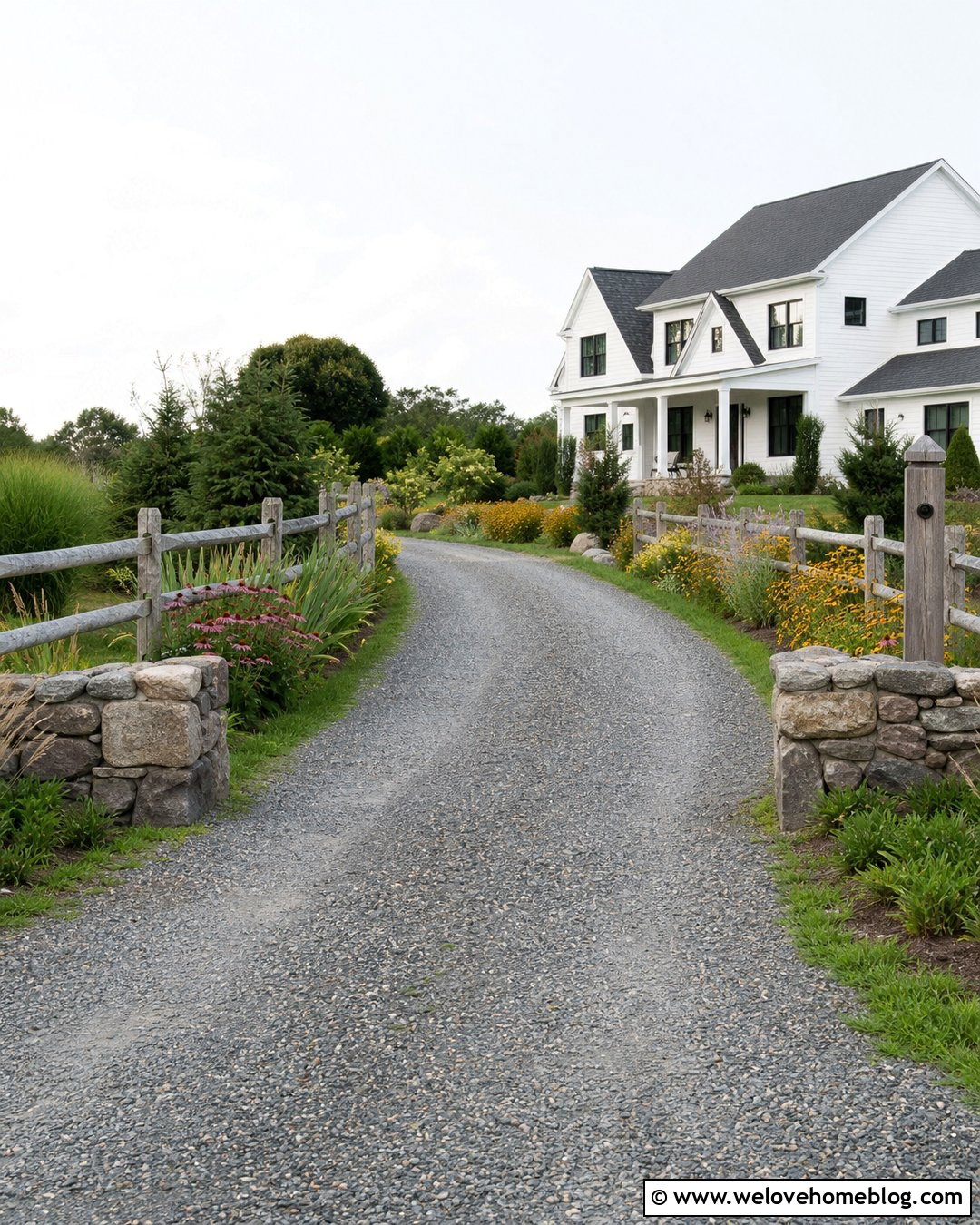
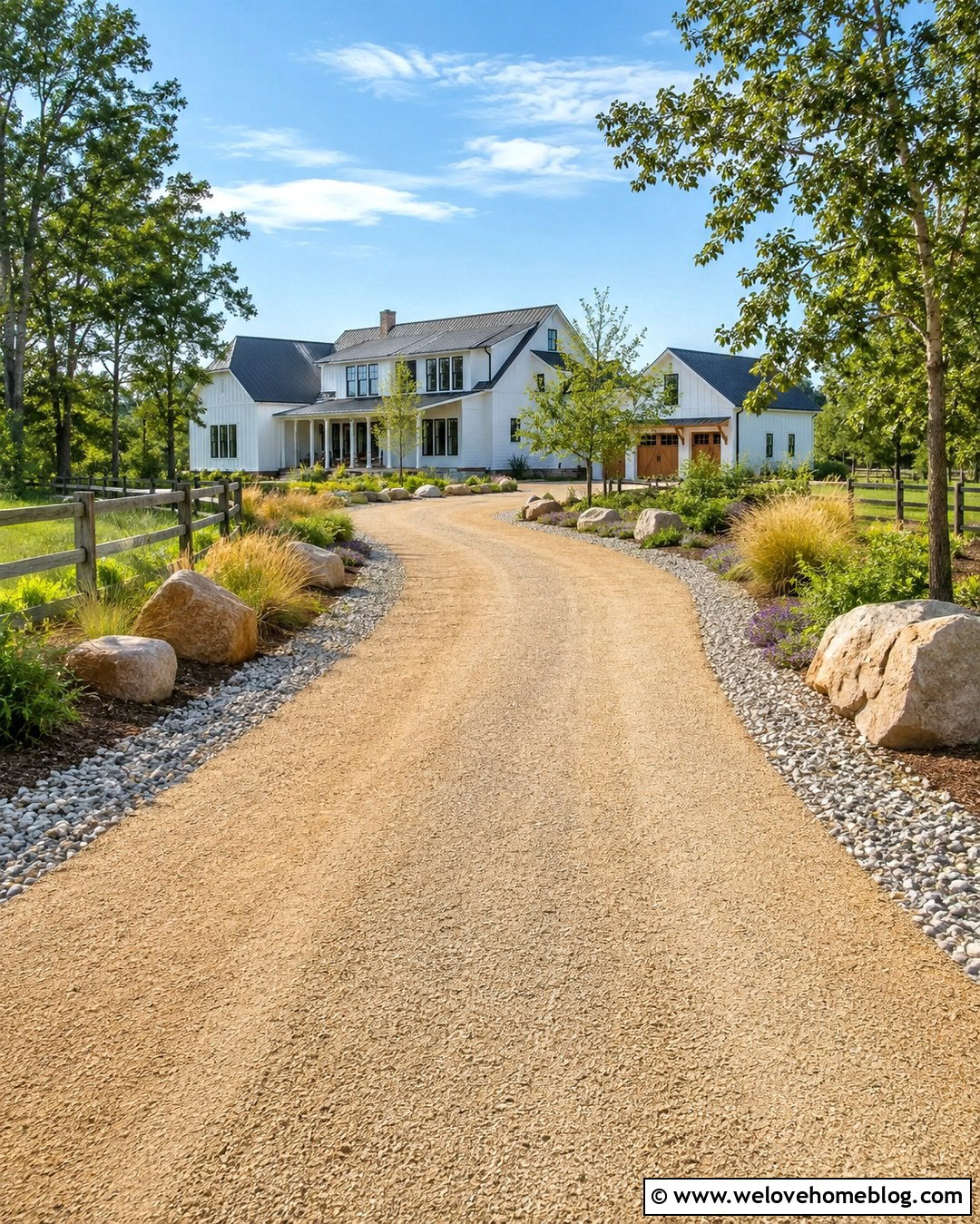
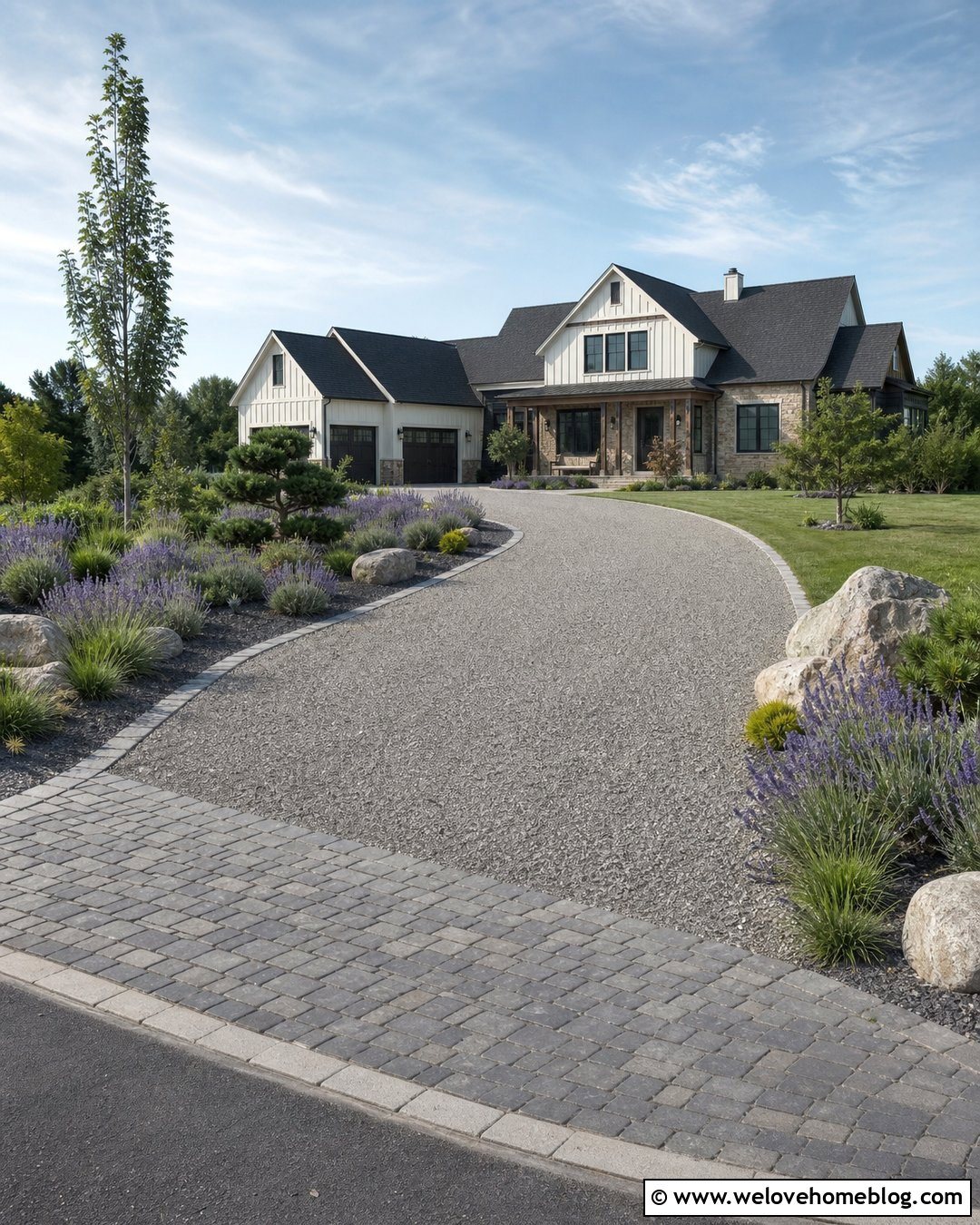
Large boulders can give a curved gravel driveway a strong, established appearance. Use compacted gray crushed gravel for the driving surface, then place weathered fieldstone boulders at generous intervals along the outer curve. Leave several feet between them so the border feels natural rather than crowded. Fill the spaces with pine bark mulch, native grasses, coneflowers, and low junipers. A mown lawn on the inside curve keeps the layout open and makes the driveway easier to navigate. Choose boulders with similar undertones, but vary their size and shape for an organic look. Partially bury each rock so it appears settled into the landscape. This complete driveway design complements country homes, cabins, and modern farmhouses with wooded or spacious front yards.
3. White Rock Lined Asphalt Driveway
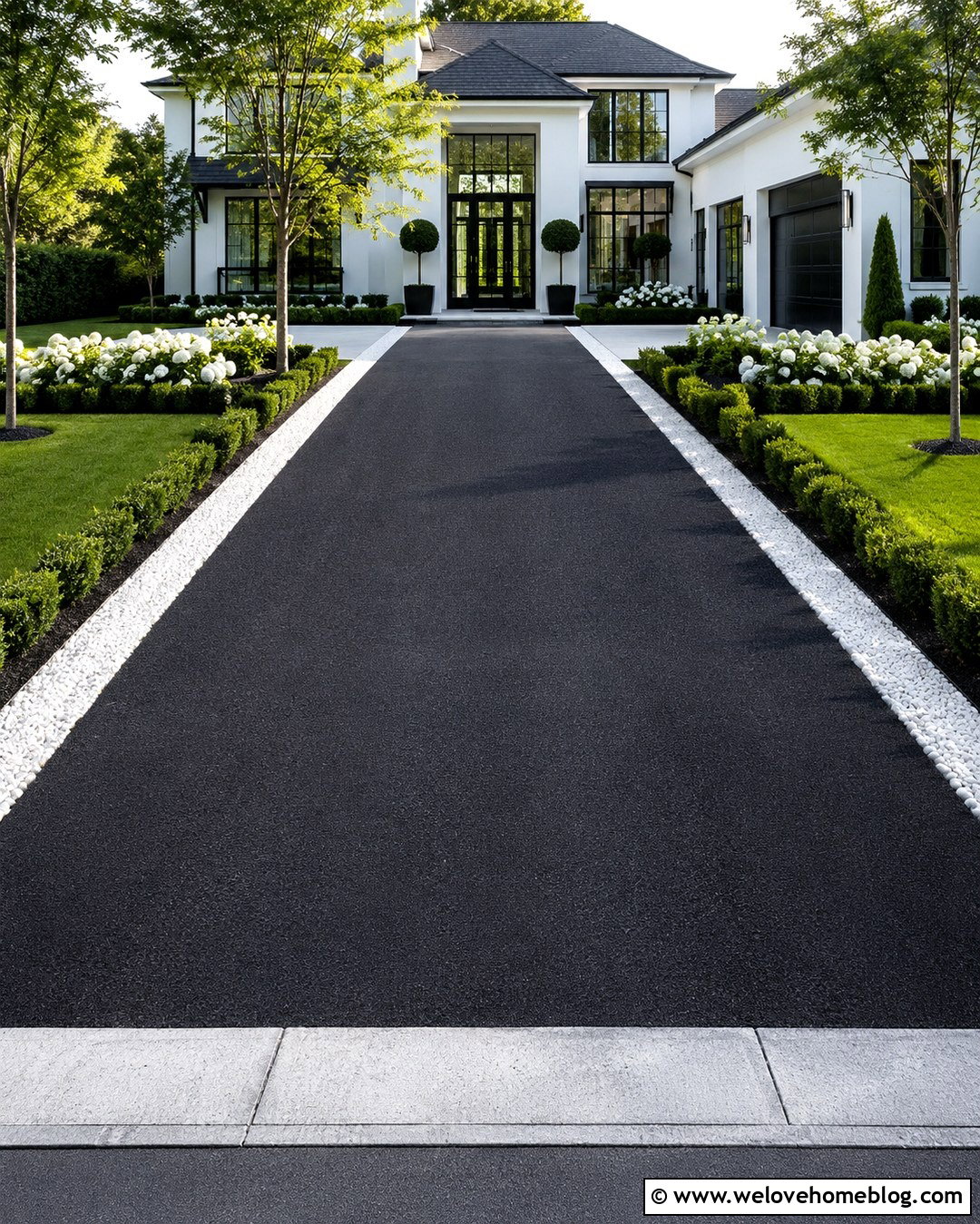
A black asphalt driveway becomes much sharper when lined with bright white landscaping rocks. This high-contrast combination suits a modern house with white siding, charcoal trim, and simple geometric planting beds. Install a narrow band of white marble chips or pale quartz rock on both sides of a straight driveway. Use nearly invisible aluminum or black steel edging to stop the loose stone from spreading into the lawn. Repeat the dark-and-light palette with black planters, clipped boxwoods, and white flowering shrubs near the entrance. Keep the rock strips consistent in width to reinforce the contemporary look. Because light stones can show leaves and soil, this treatment is most practical in open yards with limited tree litter. The result feels clean, structured, and noticeably more finished.
4. Cobblestone Lined Pea Gravel Driveway
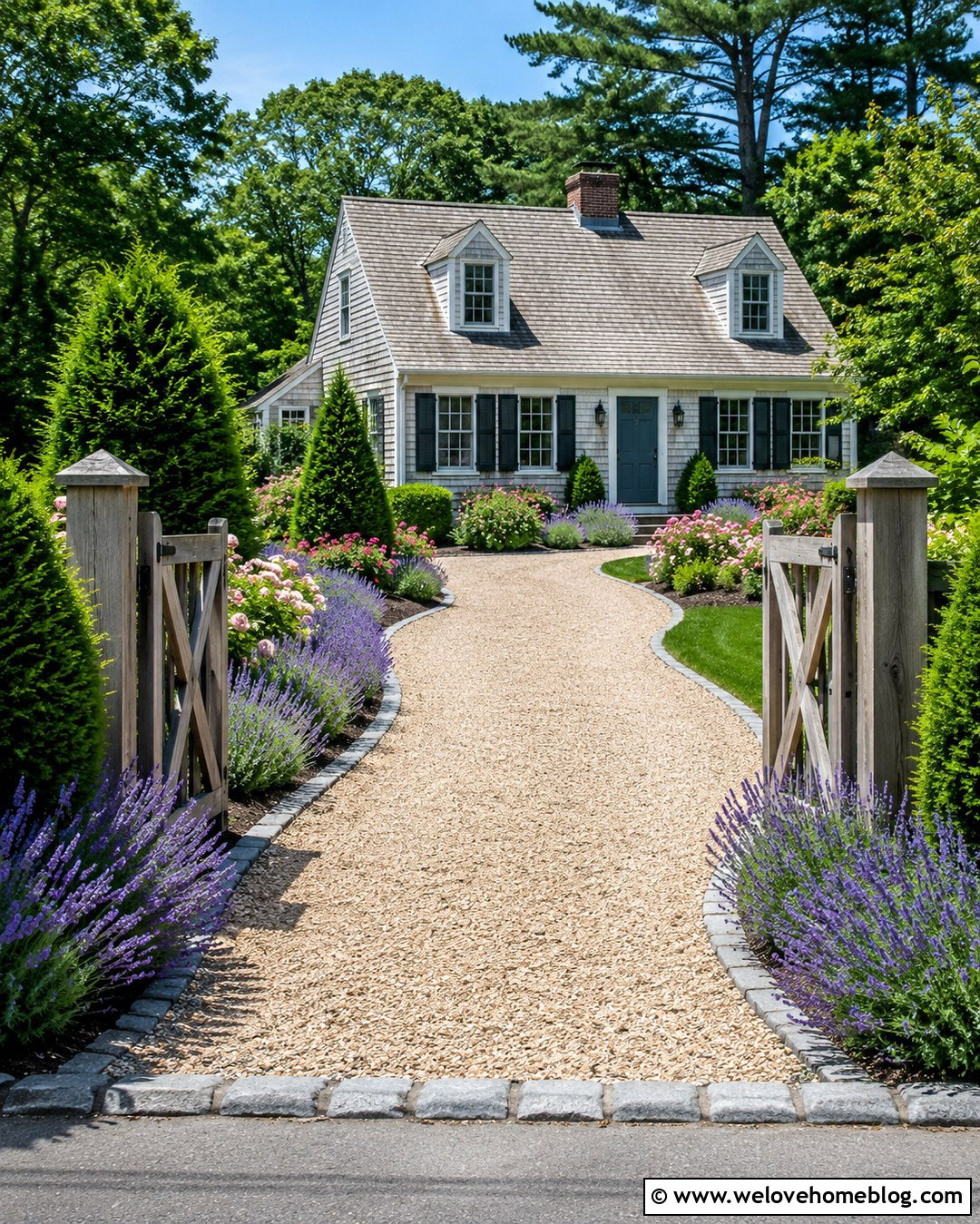
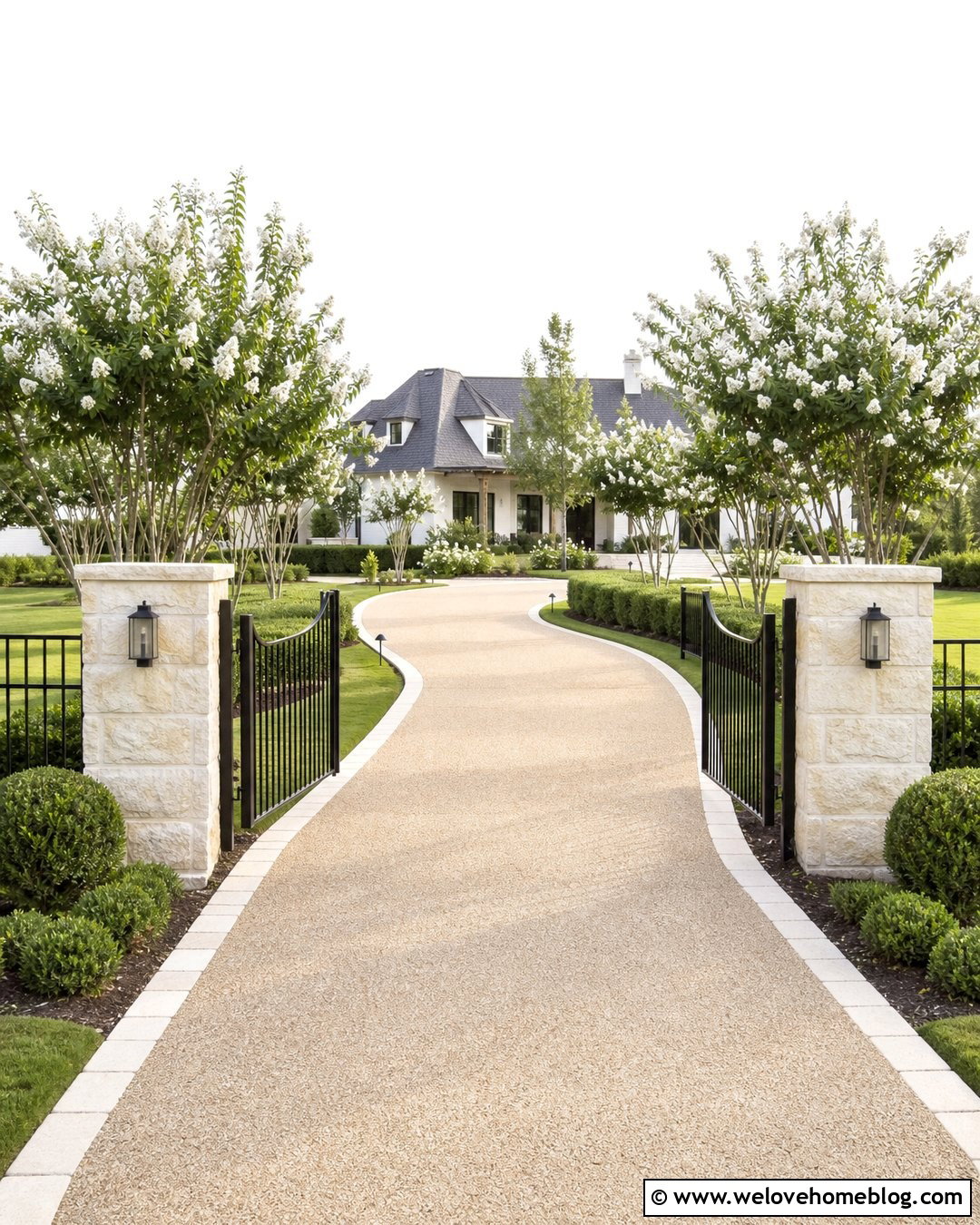
A pea gravel driveway framed with granite cobblestones creates a classic cottage entrance. Choose warm beige pea gravel for the main surface and set gray cobblestones in a single, continuous row along each edge. The cobbles should sit securely in a compacted base so they form a durable boundary between the gravel and surrounding garden beds. A softly curved layout makes the approach feel relaxed and inviting. Plant lavender, catmint, dwarf roses, and compact evergreens behind the stone border. Near the street, widen the beds and add matching cobblestone entrance posts or a simple wooden gate. The solid edge helps define loose driveway material, while the planting keeps the hardscape from feeling heavy. This complete look pairs naturally with Cape Cod, cottage, and English-inspired homes.
5. Fieldstone Lined Circular Driveway
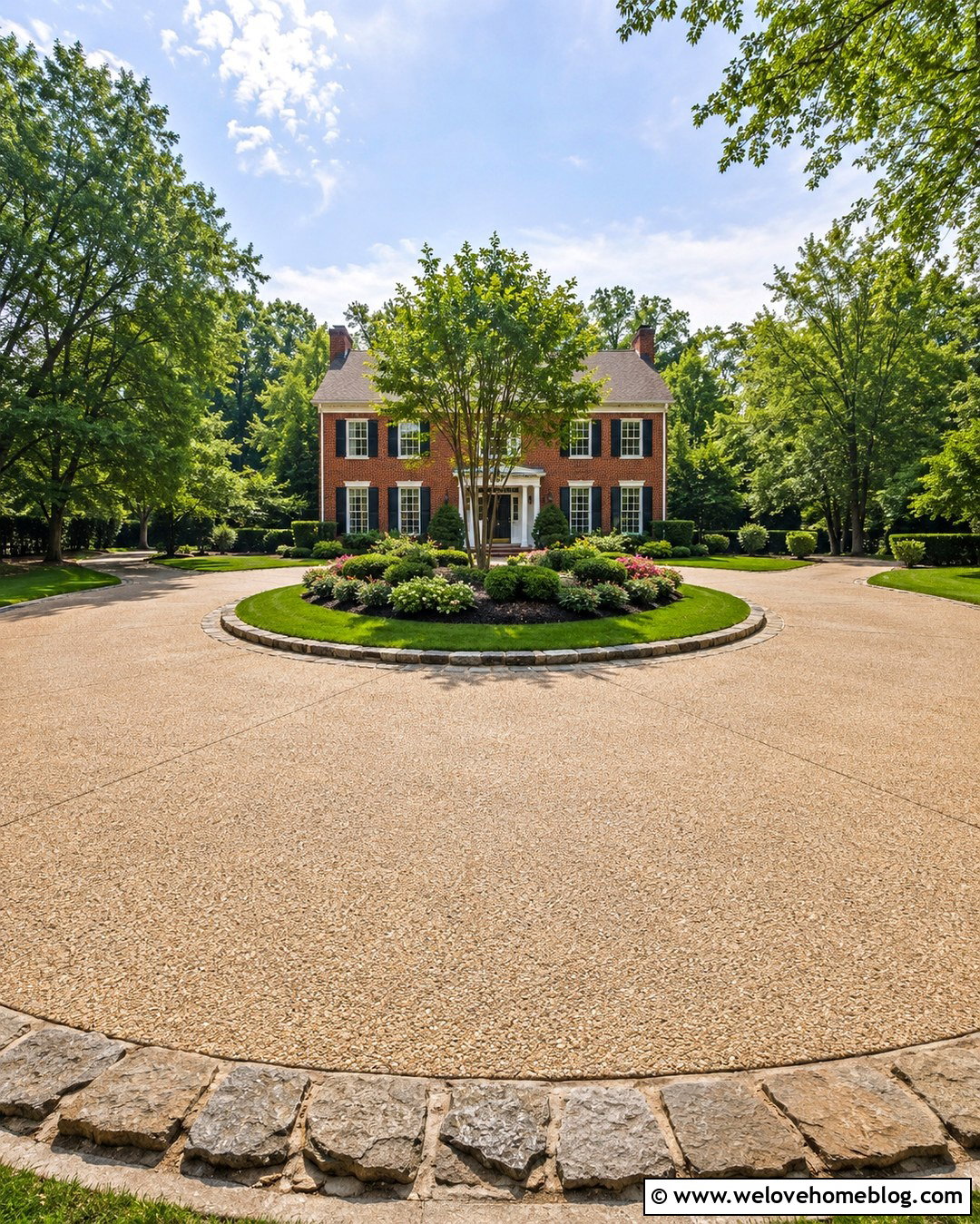
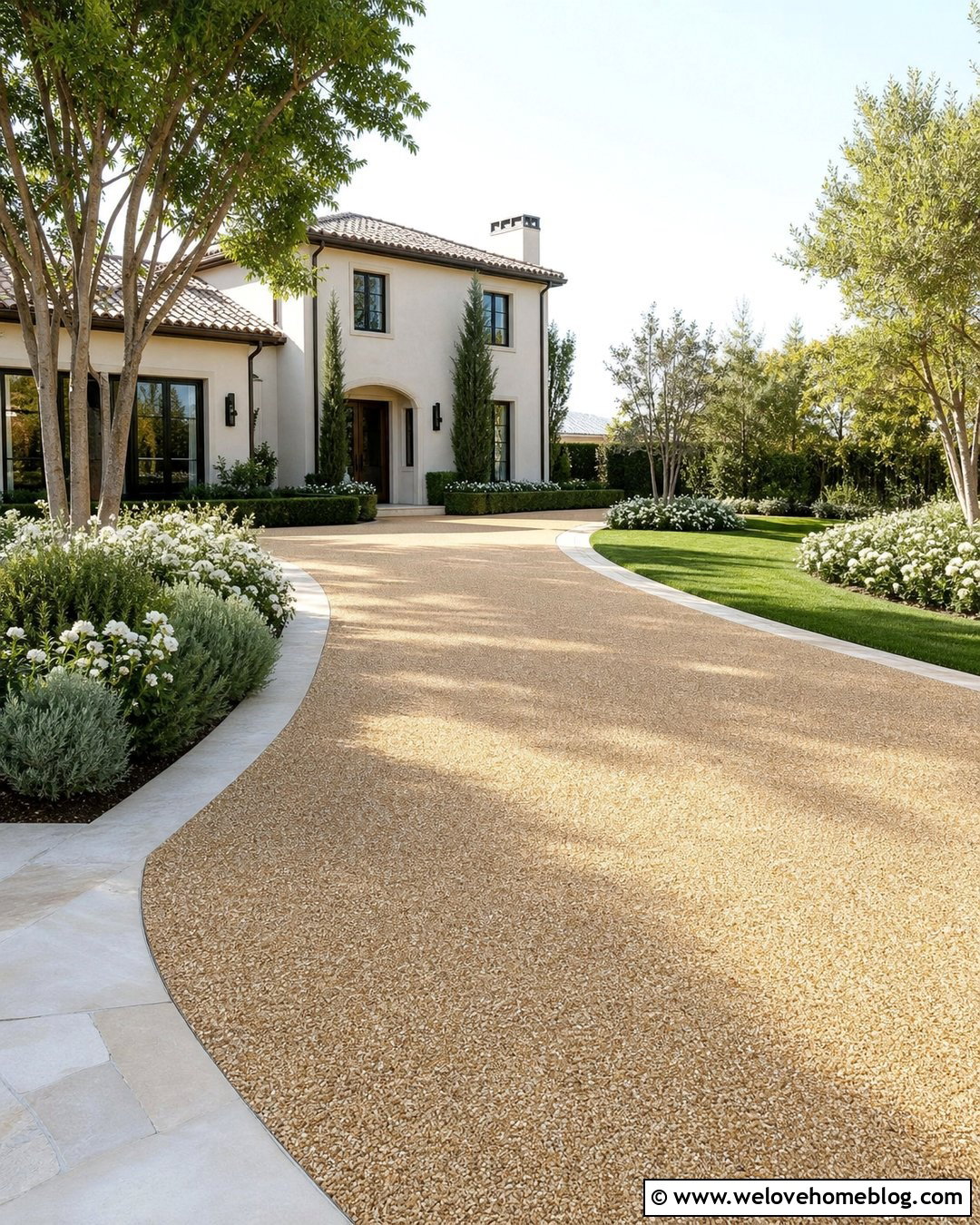
A circular driveway gains character when irregular fieldstones follow its sweeping shape. Use warm exposed-aggregate concrete for the driving lane and build a low fieldstone border around the central island. Repeat a looser line of matching stones along the outer perimeter to visually connect the entire design. The center can hold a small ornamental tree surrounded by flowering shrubs, ground cover, and dark mulch. Keep plants near the street entrance low enough to preserve clear views for drivers. Select fieldstones with brown, gray, and muted rust tones that coordinate with a brick or stone Colonial facade. A flat mowing strip behind the outer rocks can simplify lawn care. This arrangement makes the circular driveway feel intentional while giving the front yard an elegant, established focal point.
6. Black Lava Rock Lined Concrete Driveway
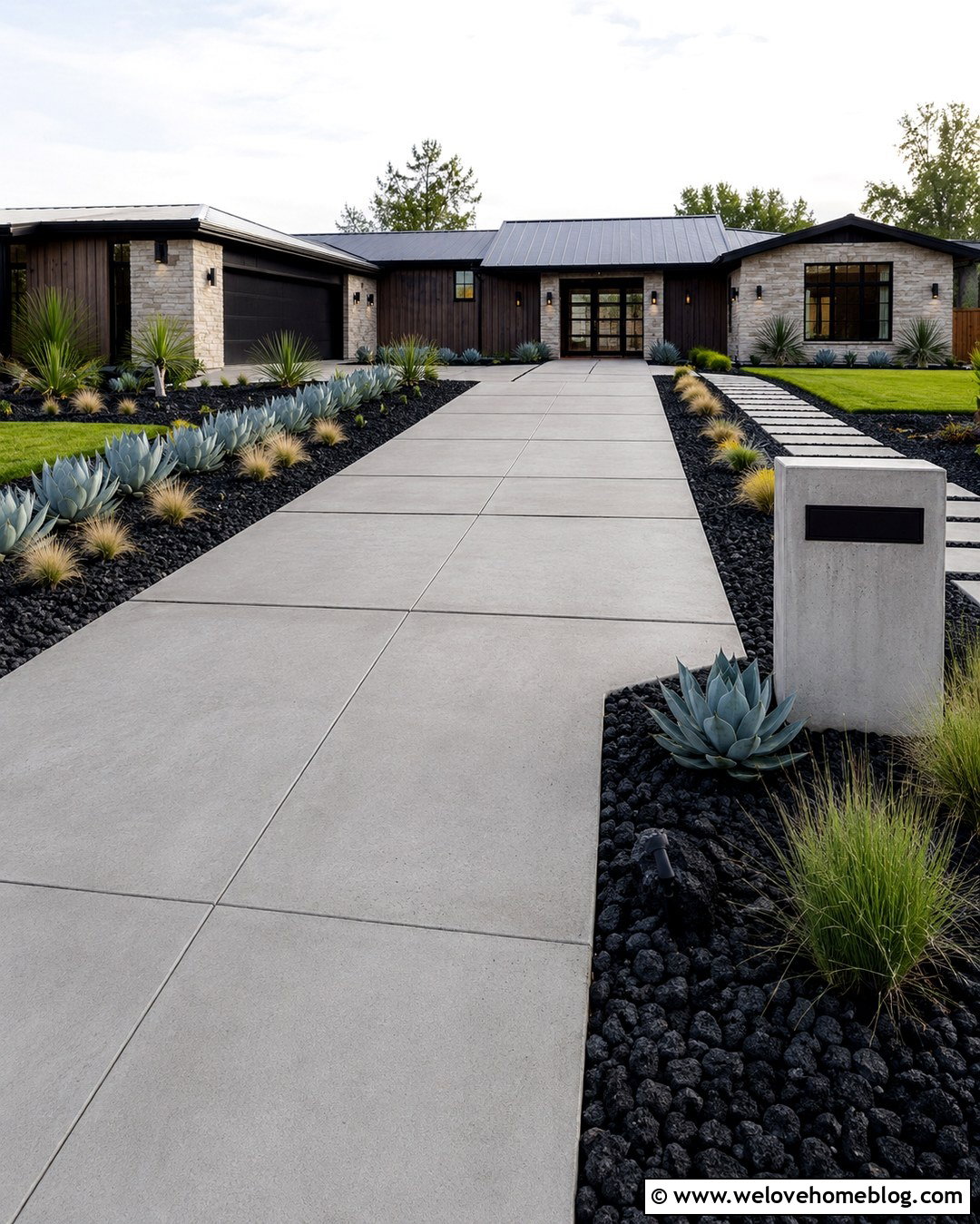
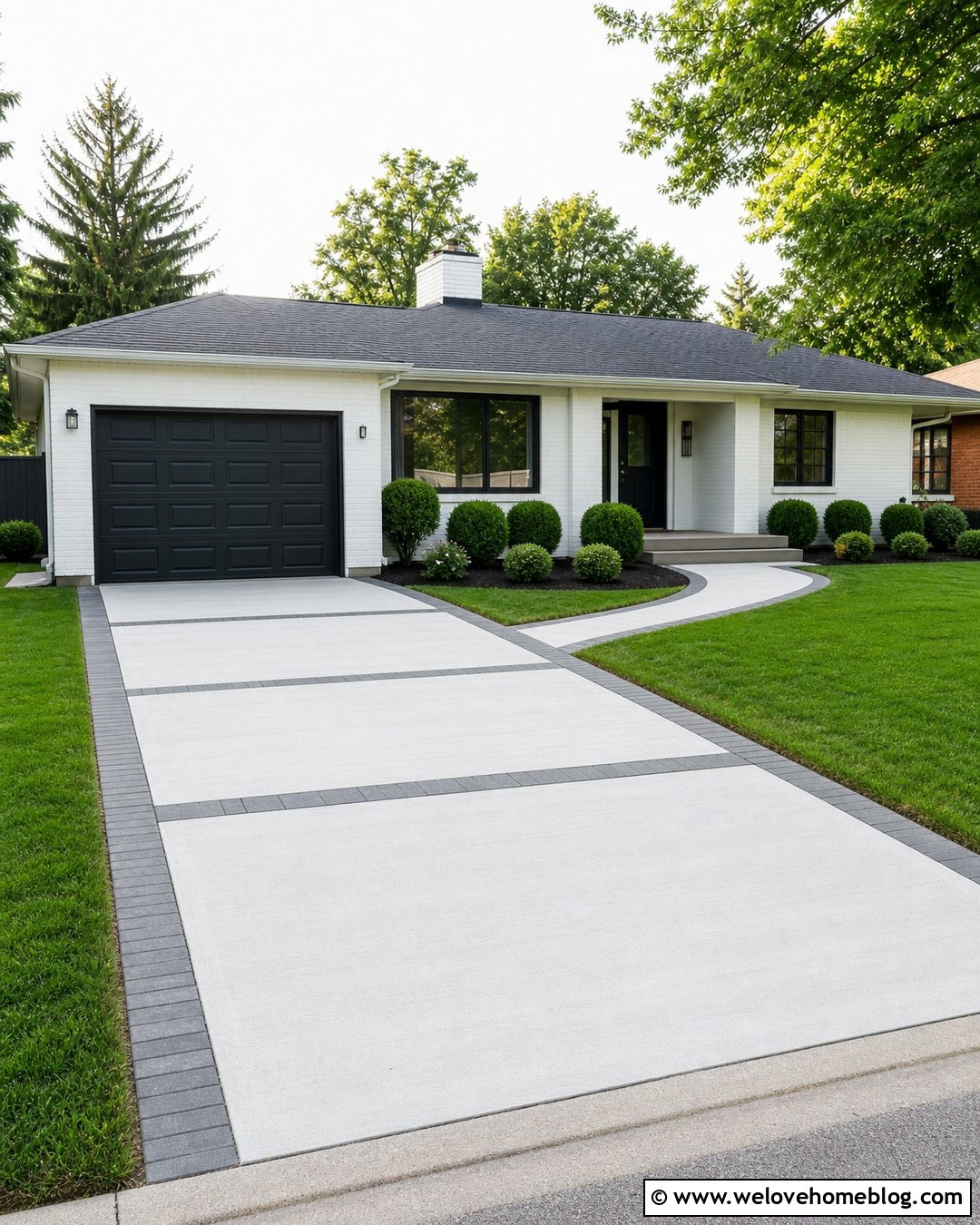
Black lava rock adds bold texture beside a pale concrete driveway without requiring a complicated planting plan. Pair large rectangular slabs of light gray poured concrete with wide joints or narrow grass strips for a modern ranch home. Along the outer edges, install beds filled with deep charcoal lava rock and restrained clusters of blue fescue, dwarf agave, or compact ornamental grasses suited to the local climate. Black metal edging keeps the porous rocks contained and reinforces the driveway’s clean geometry. Continue the same material around an address monument near the curb for visual repetition. Because lava rock has an irregular surface, it works best as a decorative border rather than a walking area. The dark border anchors the bright pavement and creates contemporary curb appeal with relatively simple landscaping.
7. Sandstone Rock Lined Decomposed Granite Driveway
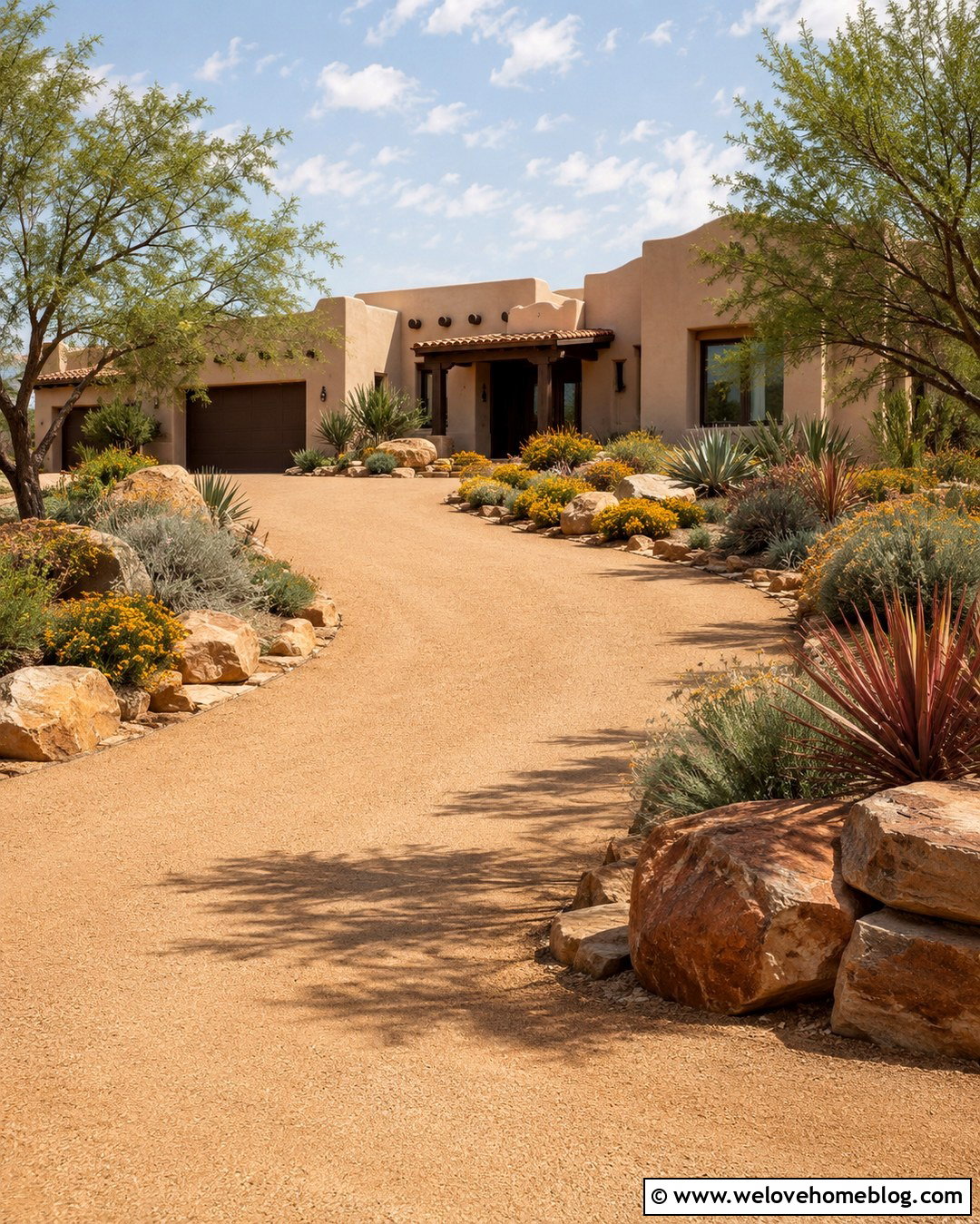
Warm sandstone edging fits naturally around a decomposed granite driveway in a Southwestern landscape. Shape the driveway with a gentle curve and use stabilized golden-tan decomposed granite for a firm, muted surface. Line both sides with chunky sandstone rocks in ocher, rust, and cream tones. Set them at varied angles, then soften the arrangement with desert marigold, red yucca, sage, and drought-tolerant ornamental grasses. A wider sandstone grouping near the curb can mark the entrance without requiring tall pillars. Use a hidden barrier behind smaller stones where additional containment is needed. The driveway, rocks, and planting palette should share similar earthy colors, while a stucco house provides a calm background. This design feels regional and cohesive rather than like decorative rocks were added as an afterthought.
8. Limestone Rock Lined Asphalt Driveway
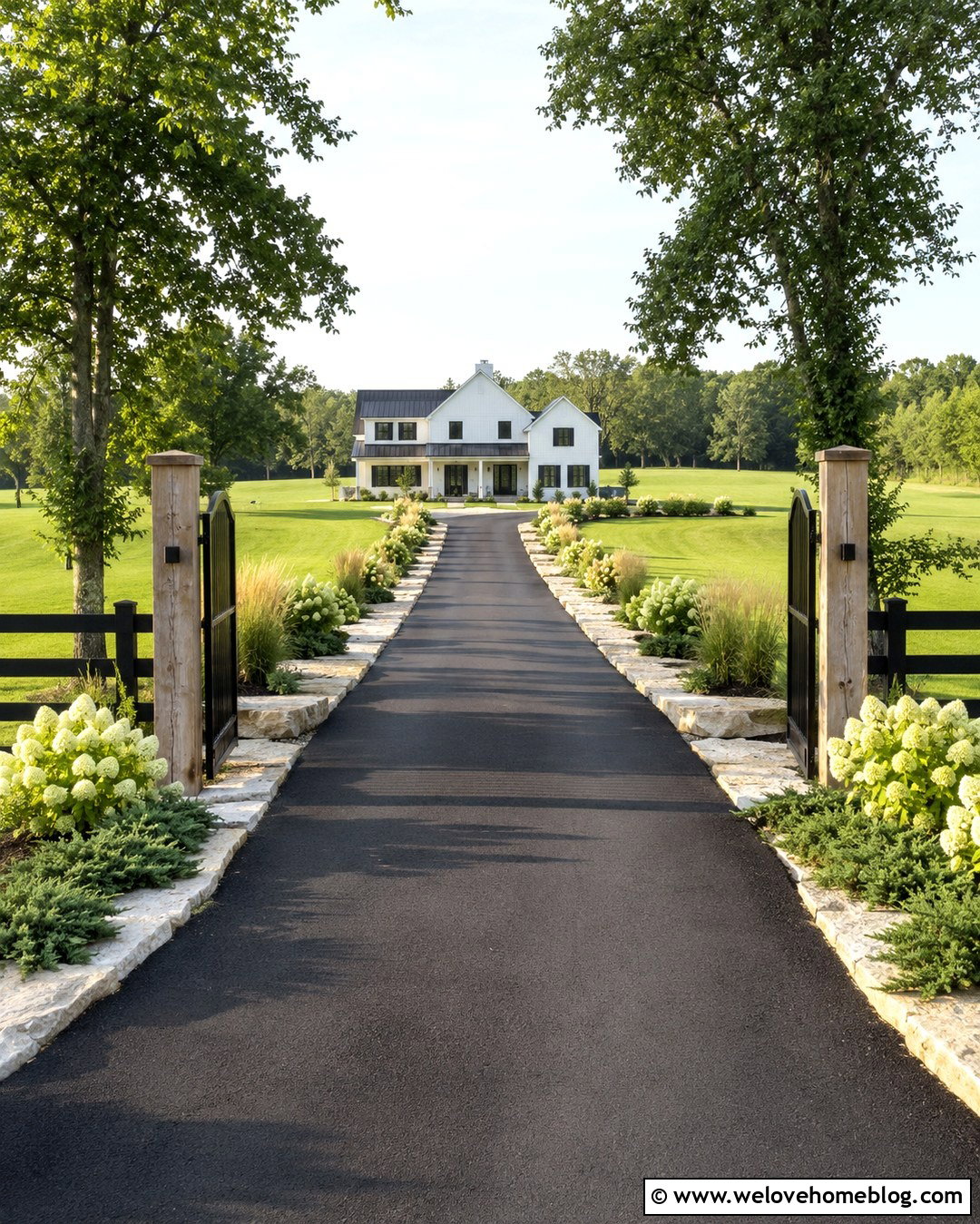
Pale limestone creates a fresh border for a long asphalt driveway leading to a modern farmhouse. Use medium-size limestone chunks rather than tiny chips, arranging them in a continuous but slightly irregular line. Behind the rocks, plant repeated groups of hydrangeas, feather reed grass, and low evergreen shrubs. The pale border visually separates the dark pavement from the green lawn while connecting with white siding and natural stone porch details. At the entrance, enlarge the rock beds around simple timber posts and a black metal gate. Keep limestone away from the vehicle path so tires do not scatter pieces onto the asphalt. On lengthy driveways, repeating the same limited plant palette provides rhythm without creating excessive maintenance. The finished approach feels bright, rural, and neatly organized.
9. Granite Rock Lined Paver Driveway
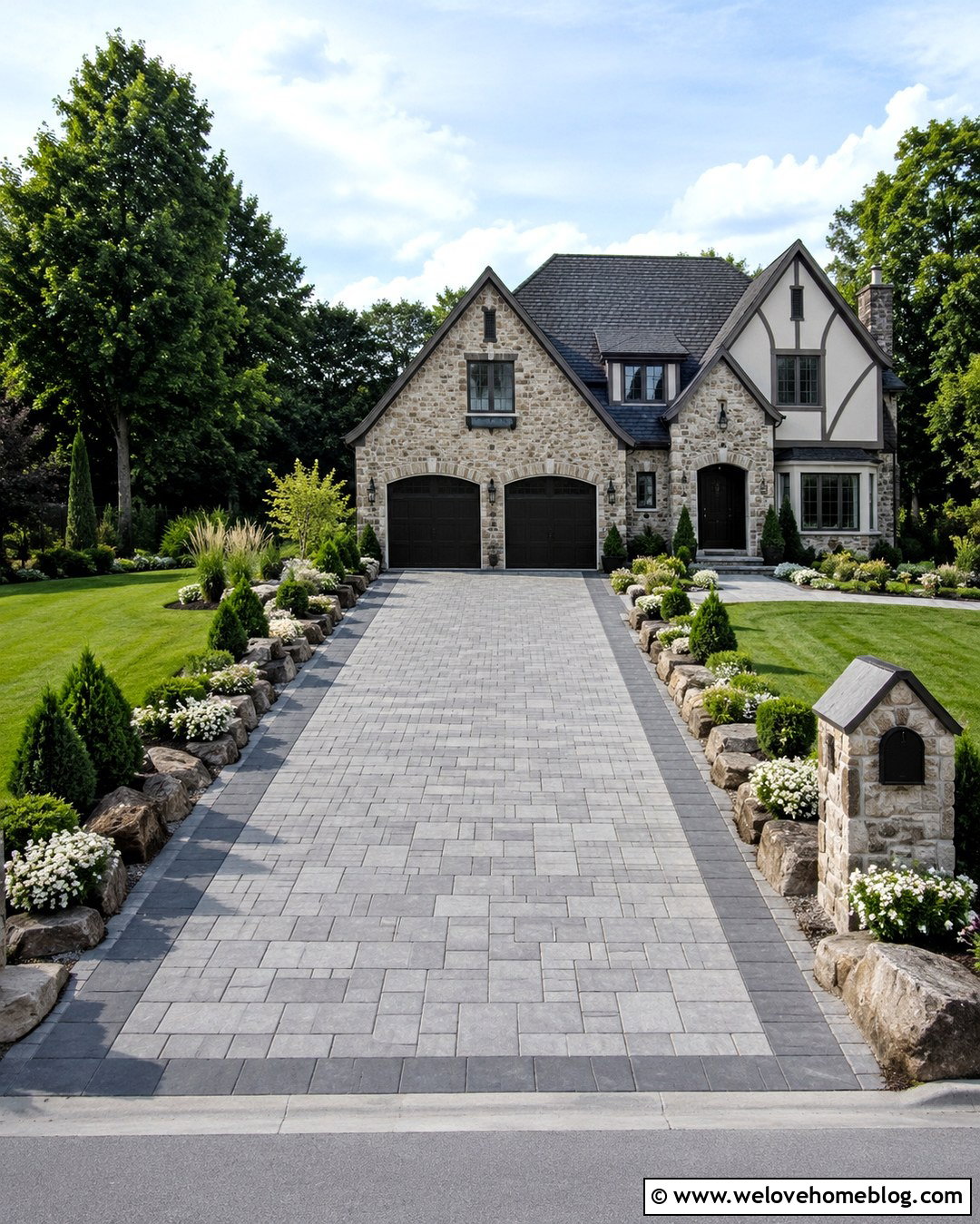
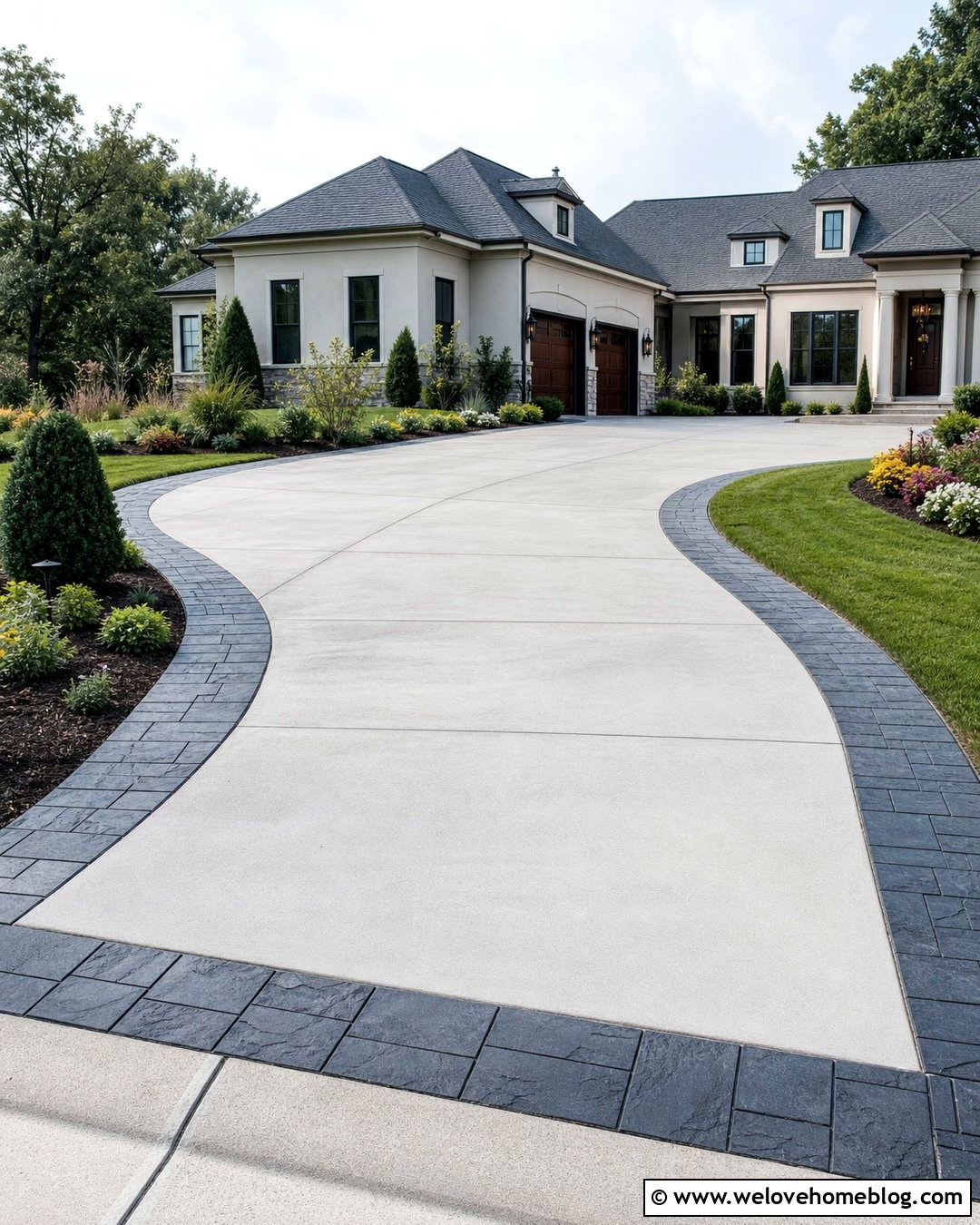
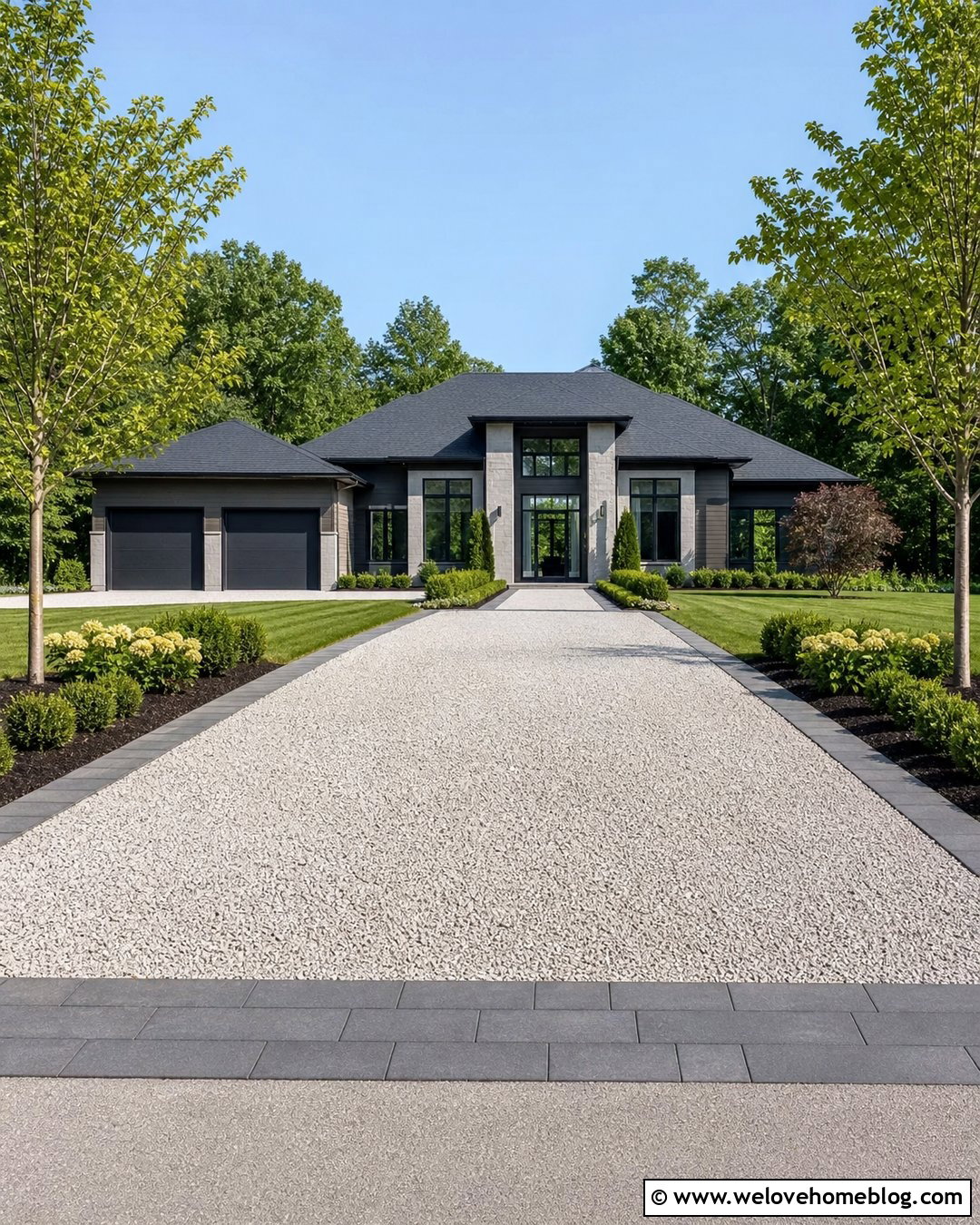
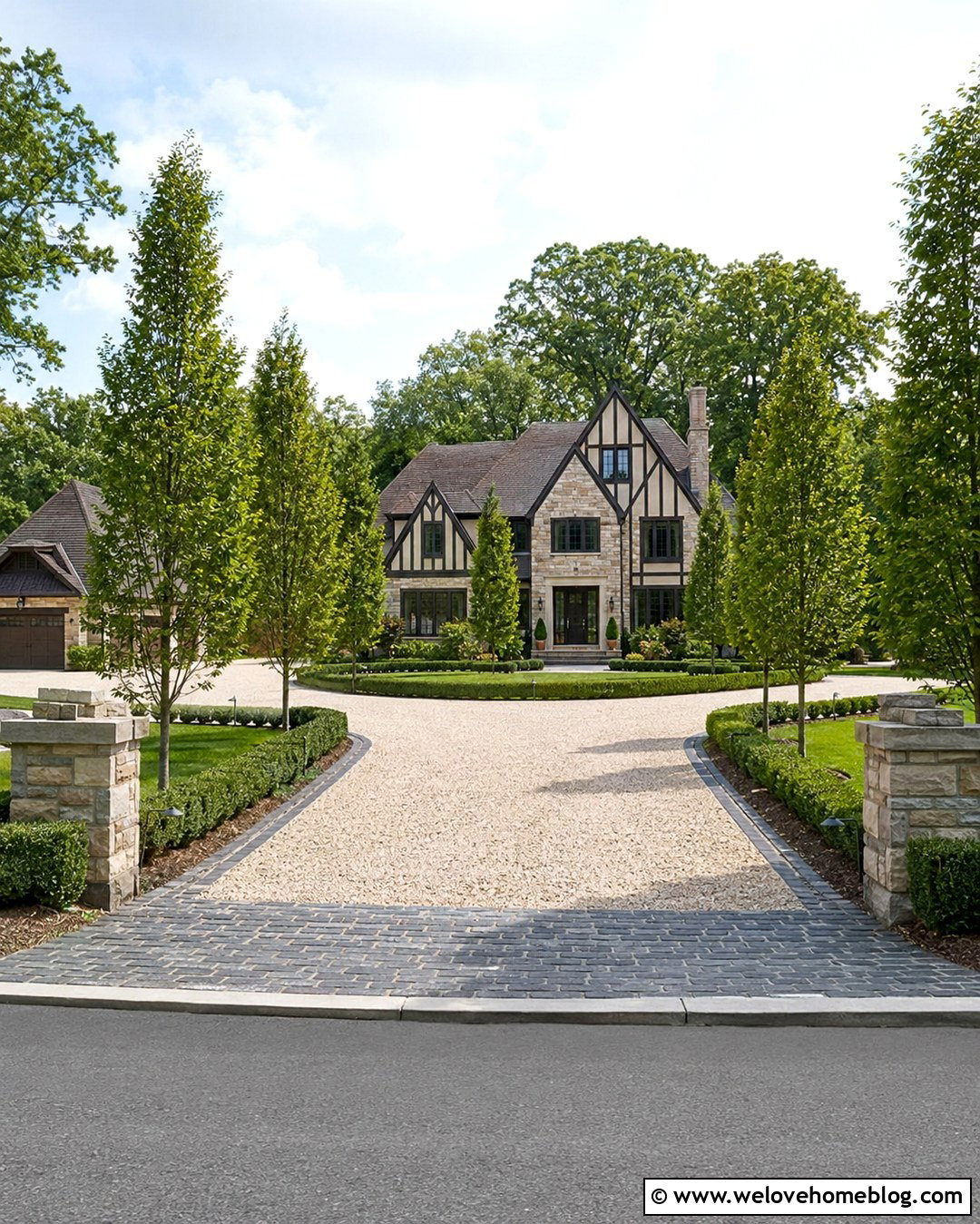
Granite cobbles make a durable-looking frame for a driveway built from concrete pavers. Choose medium-gray interlocking pavers in a running-bond pattern and add a darker charcoal paver ribbon inside the perimeter. Beyond that structured edge, place rough granite rocks in planted beds rather than lining them in a perfectly rigid row. Compact junipers, white flowering perennials, and ornamental grasses can weave between the stones. Carry the granite into matching mailbox landscaping and a short walkway leading to the front door. This layered approach combines a precise driving surface with a more natural outer border. It works particularly well beside Tudor, Craftsman, and stone-front homes. Keep the largest rocks away from narrow parking areas, where they could interfere with opening doors or stepping out of vehicles.
10. Dry Creek Rock Lined Sloped Driveway
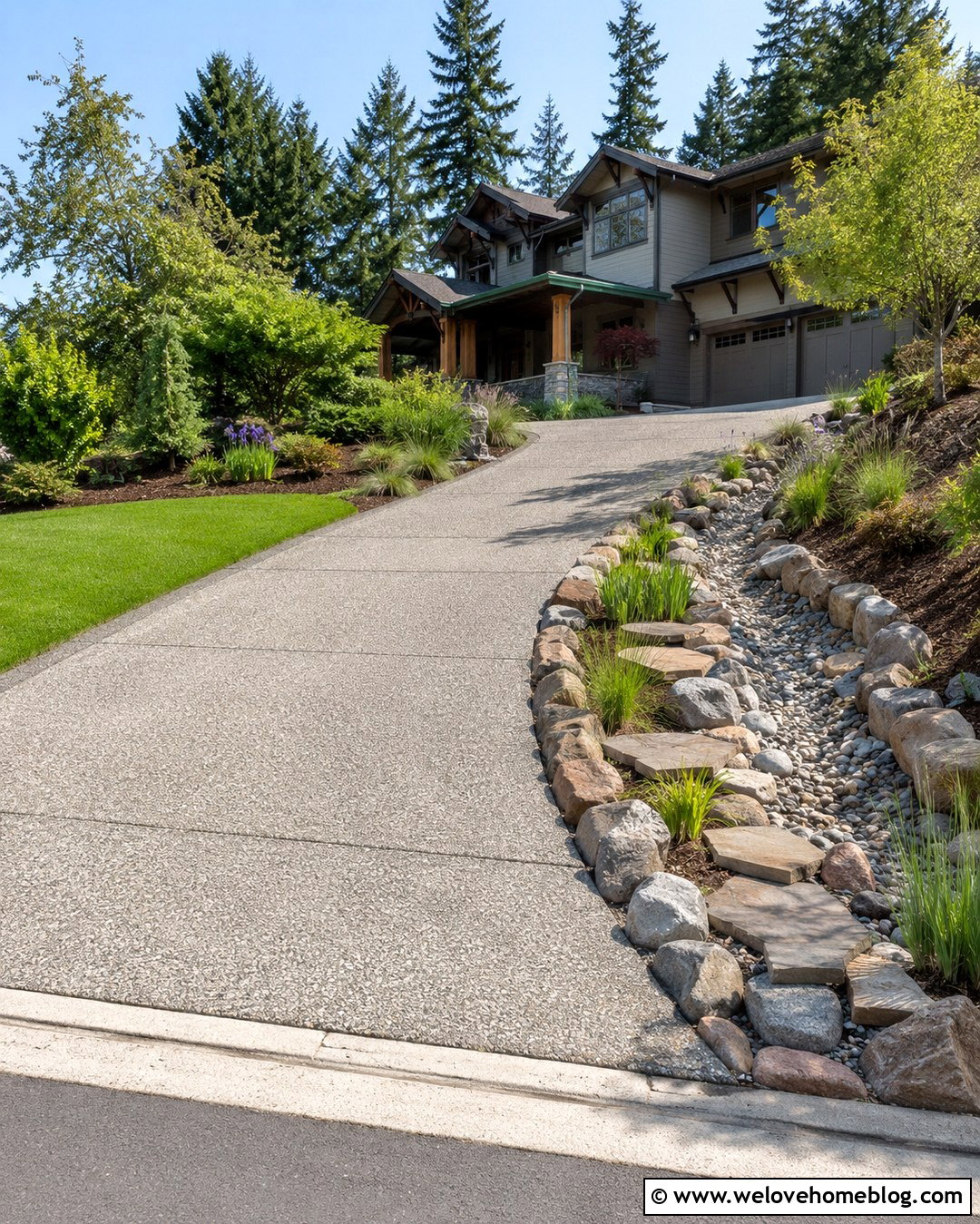
A rock-lined dry creek can make a sloped driveway edge both attractive and purposeful. Pair a light exposed-aggregate concrete driveway with a shallow channel filled with rounded river cobbles and smaller drainage gravel. Follow the natural downhill side of the driveway, allowing the channel to curve gently toward an appropriate drainage area. Flat stepping stones can cross the rock bed where a walkway connects to the lawn. Plant moisture-tolerant grasses, sedges, and irises along the channel, while keeping roots and foliage clear of the pavement. A defined edge and thoughtfully graded rock swale may help slow and guide runoff, but significant drainage problems should be evaluated professionally. Rock channels are also used to encourage infiltration and reduce erosion in suitable landscapes. ()
11. Stacked Stone Lined Hillside Driveway
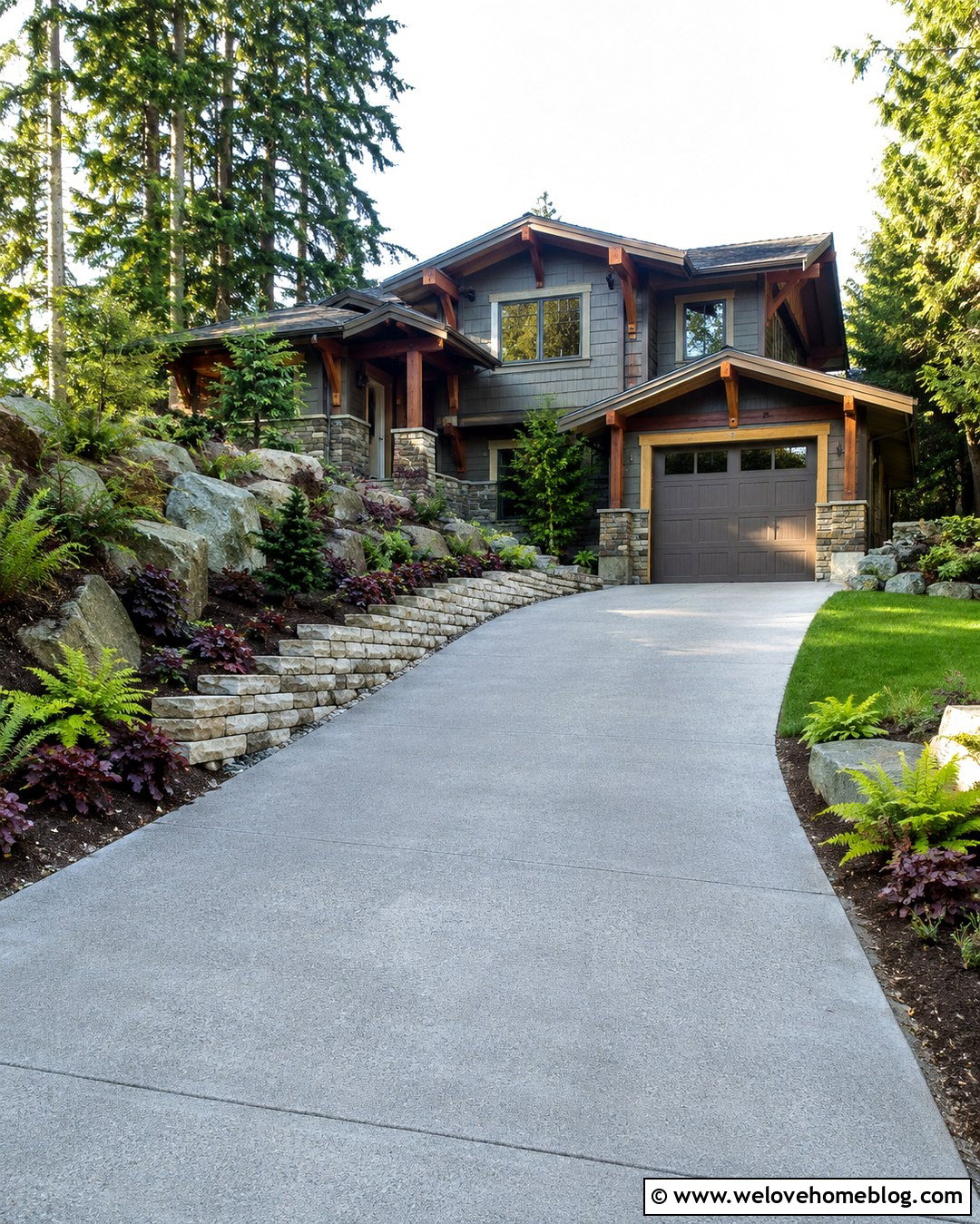
When a driveway cuts through a sloping yard, a low stacked-stone wall can provide a more substantial border than loose rocks. Use a straight, broom-finished concrete driveway leading to a hillside Craftsman or split-level home. Build a restrained wall from flat gray and tan stones along the higher side, following the grade without creating an unnecessarily tall structure. On the lower side, use matching rock clusters with ground-cover plants and lawn. Ferns, dwarf evergreens, heuchera, and shade-tolerant grasses can soften the wall where conditions allow. Include discreet drainage openings and avoid piling soil directly against unsuitable masonry. Because retaining structures may require engineering or permits, confirm local requirements before construction. The complete design turns an awkward slope into a framed, orderly approach that feels integrated with the house.
12. Flagstone Lined Woodland Gravel Driveway
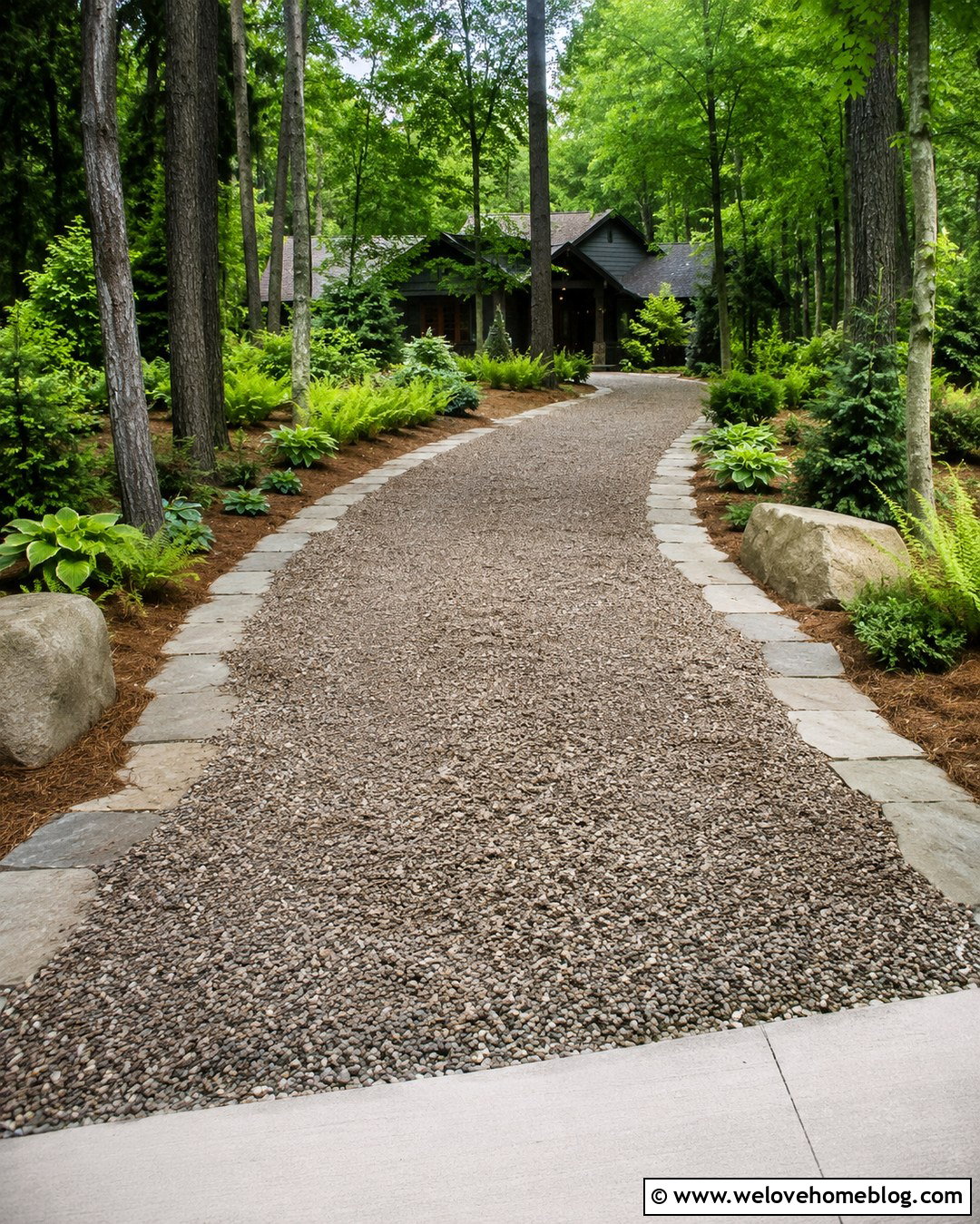
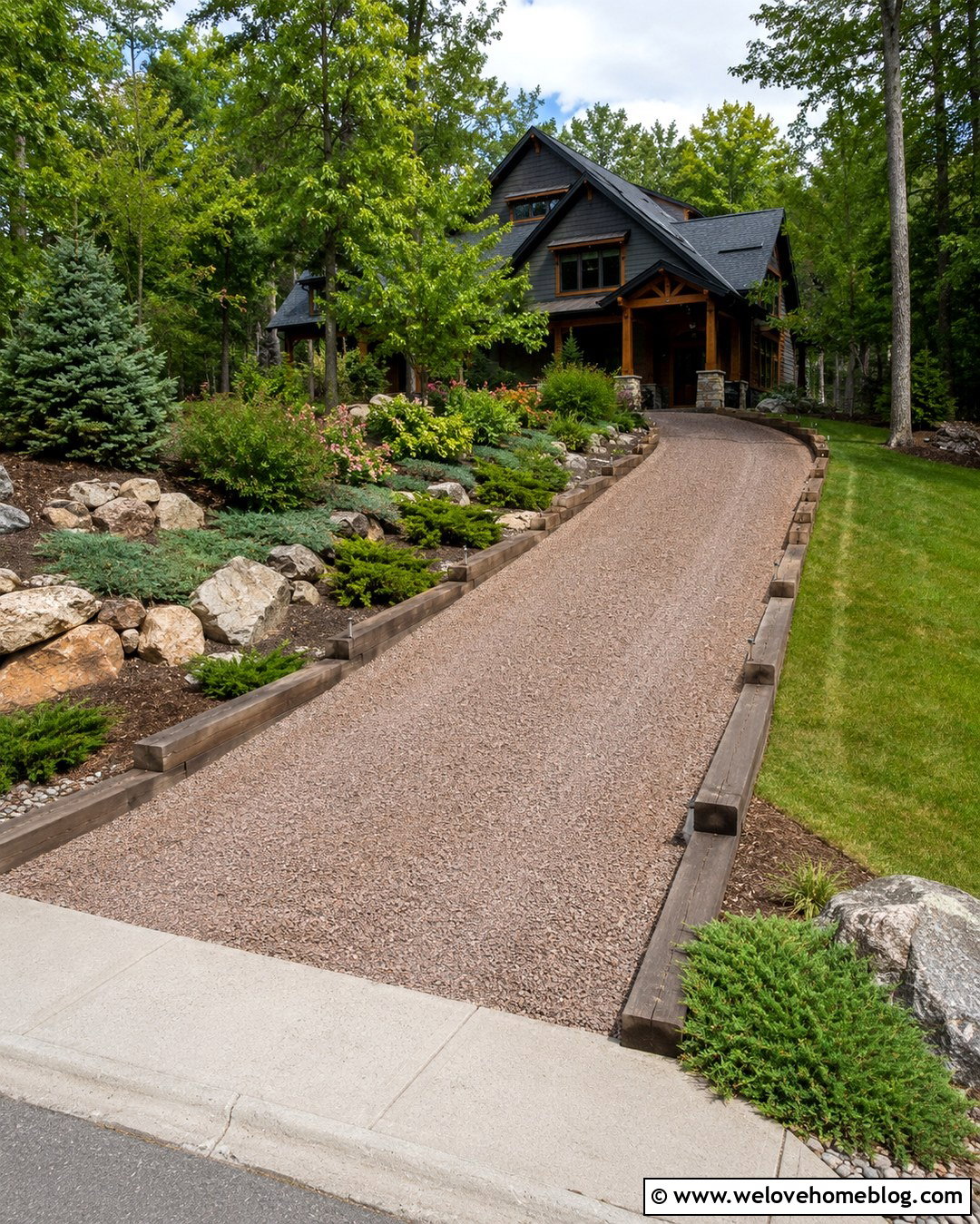
Irregular flagstone works beautifully beside a gravel driveway surrounded by mature trees. Choose compacted brown-gray crushed stone for the driving lane and line its edges with broad, flat flagstone pieces set close to grade. A slightly curved layout will fit the informal woodland setting better than a rigid straight line. Behind the stones, use pine straw or shredded bark with ferns, hostas, woodland sedges, and evergreen ground cover. Add several larger accent rocks near the driveway entrance to make the border visible from the street. Keep the planting simple so fallen leaves can be removed without damaging delicate flowers. Flat stones also create a gentler visual transition than upright boulders. This natural combination complements cabins, rustic ranch houses, and contemporary homes with dark siding and wooded lots.
13. Pea Stone Lined Concrete Driveway
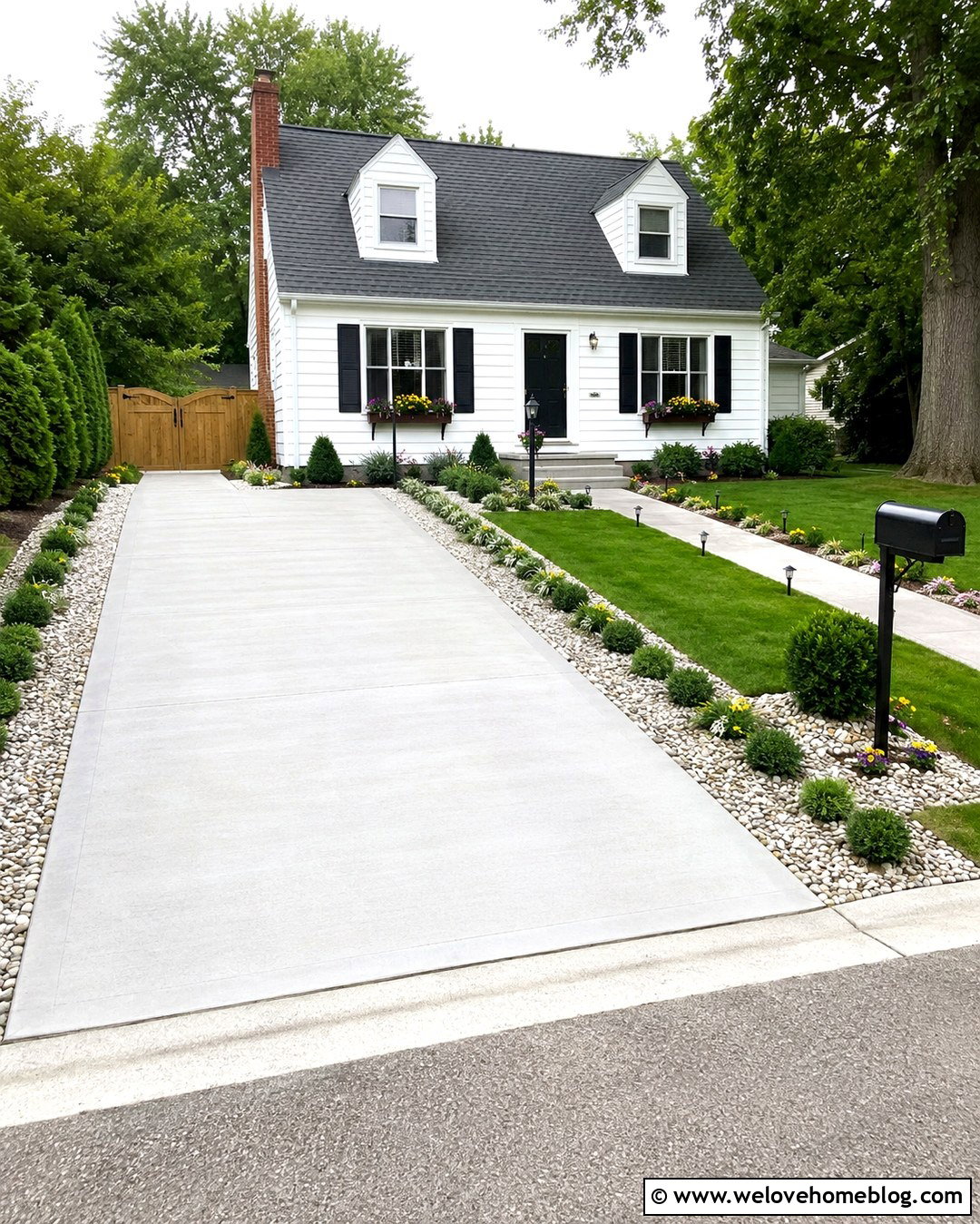
A narrow pea stone strip can refresh a basic concrete driveway without overwhelming a small front yard. Use light gray poured concrete in a straight layout, then create a 12- to 18-inch recessed border filled with smooth beige and gray pea stones. Install metal edging along the lawn side so the small rocks remain separate from grass and soil. At intervals, widen the strip into compact planting pockets for dwarf boxwoods, liriope, or seasonal flowers. Connect the border to a matching pea stone bed around the mailbox or front walkway. The repetition makes the small landscape feel planned and spacious. Loose rocks generally stay tidier when the fill sits slightly below its retaining edge rather than level with the top. () This look suits Cape Cod and modest suburban homes.
14. Riprap Lined Country Driveway
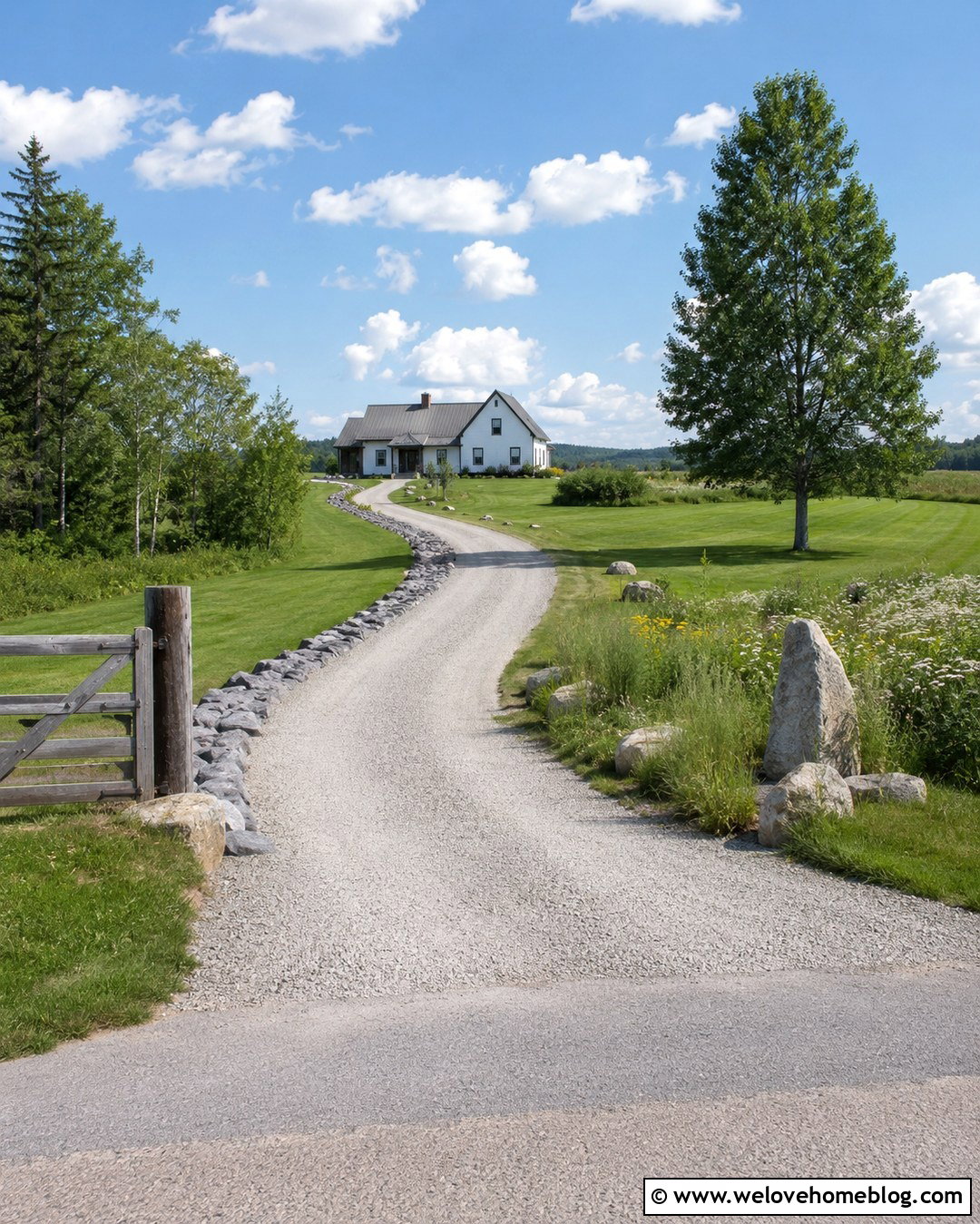
Riprap can form a rugged edge along a wide country driveway where the landscape needs stronger visual definition. Start with a compacted crushed-limestone driveway in a long, gently curving layout. Place angular gray riprap along drainage-prone sections, using smaller stone to fill distracting gaps. On the opposite side, balance the heavier border with native grass, meadow flowers, and occasional groups of matching rocks. Near the house, transition from large riprap to cleaner limestone edging so the arrival area feels more refined. A timber gate and simple stone address marker can complete the roadside entrance. Avoid placing jagged rocks close to the normal tire path or pedestrian route. This practical, rural design is best for spacious properties where bold stones match the scale of the driveway and surrounding land.
15. Mixed River Stone Lined Brick Driveway
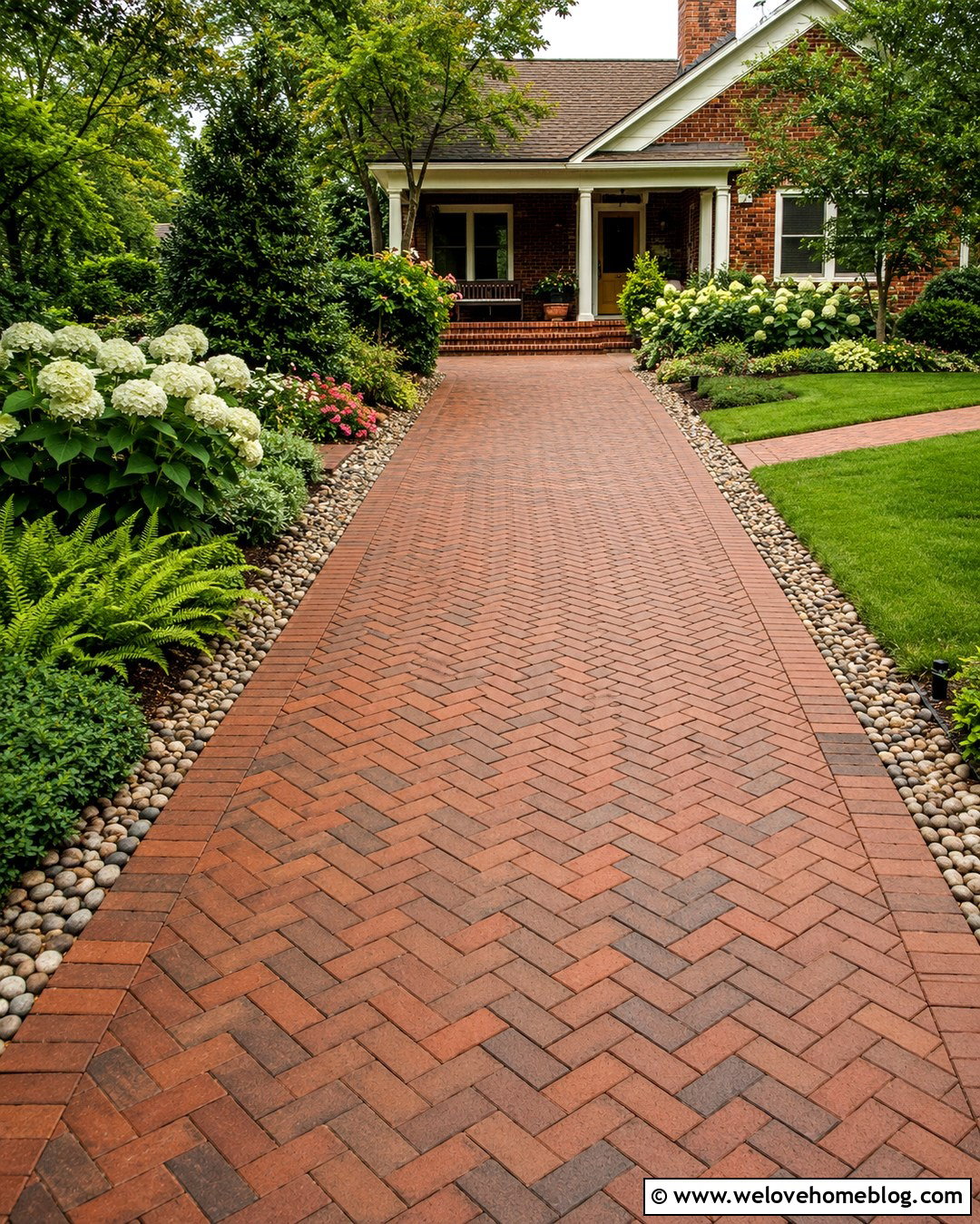
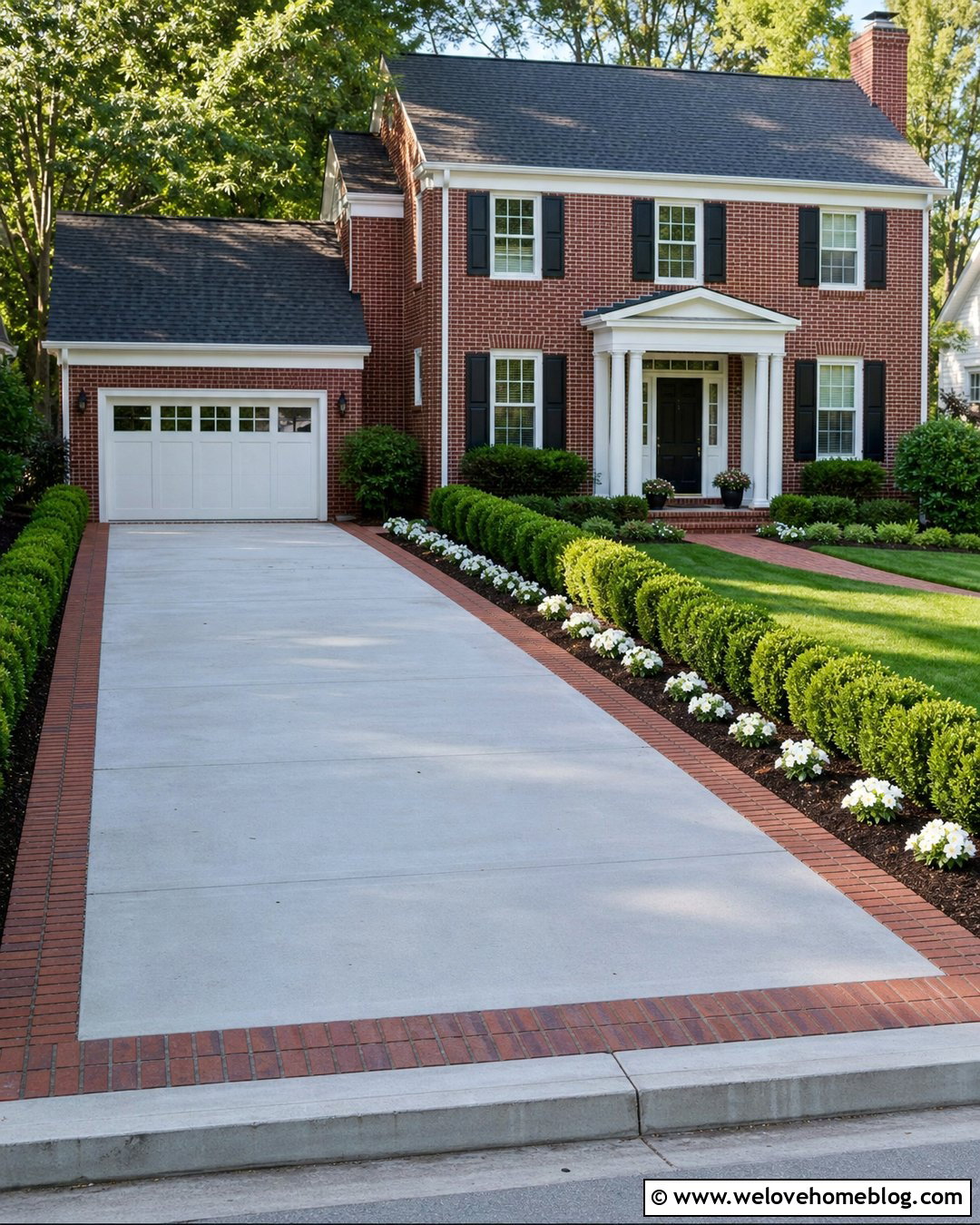
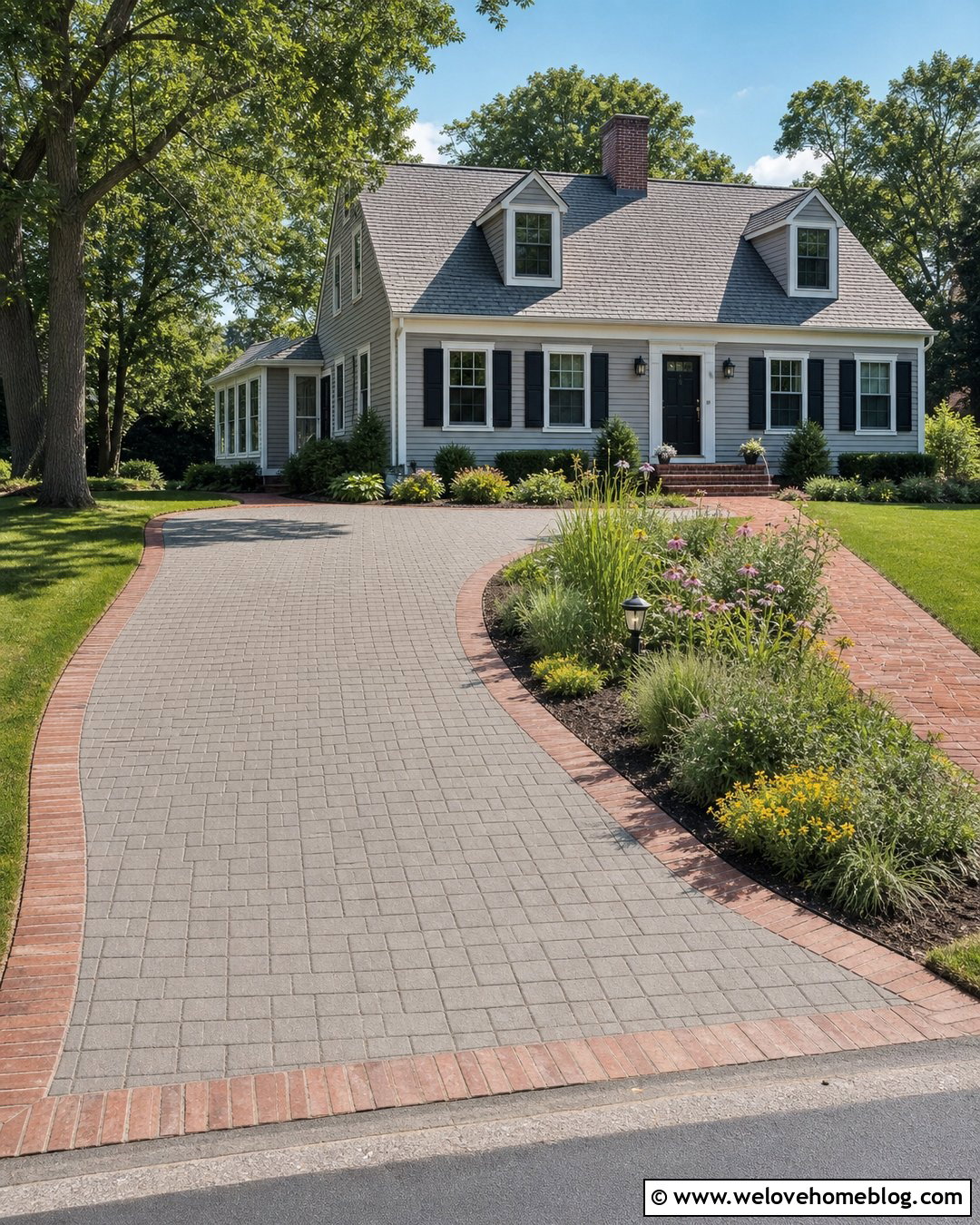
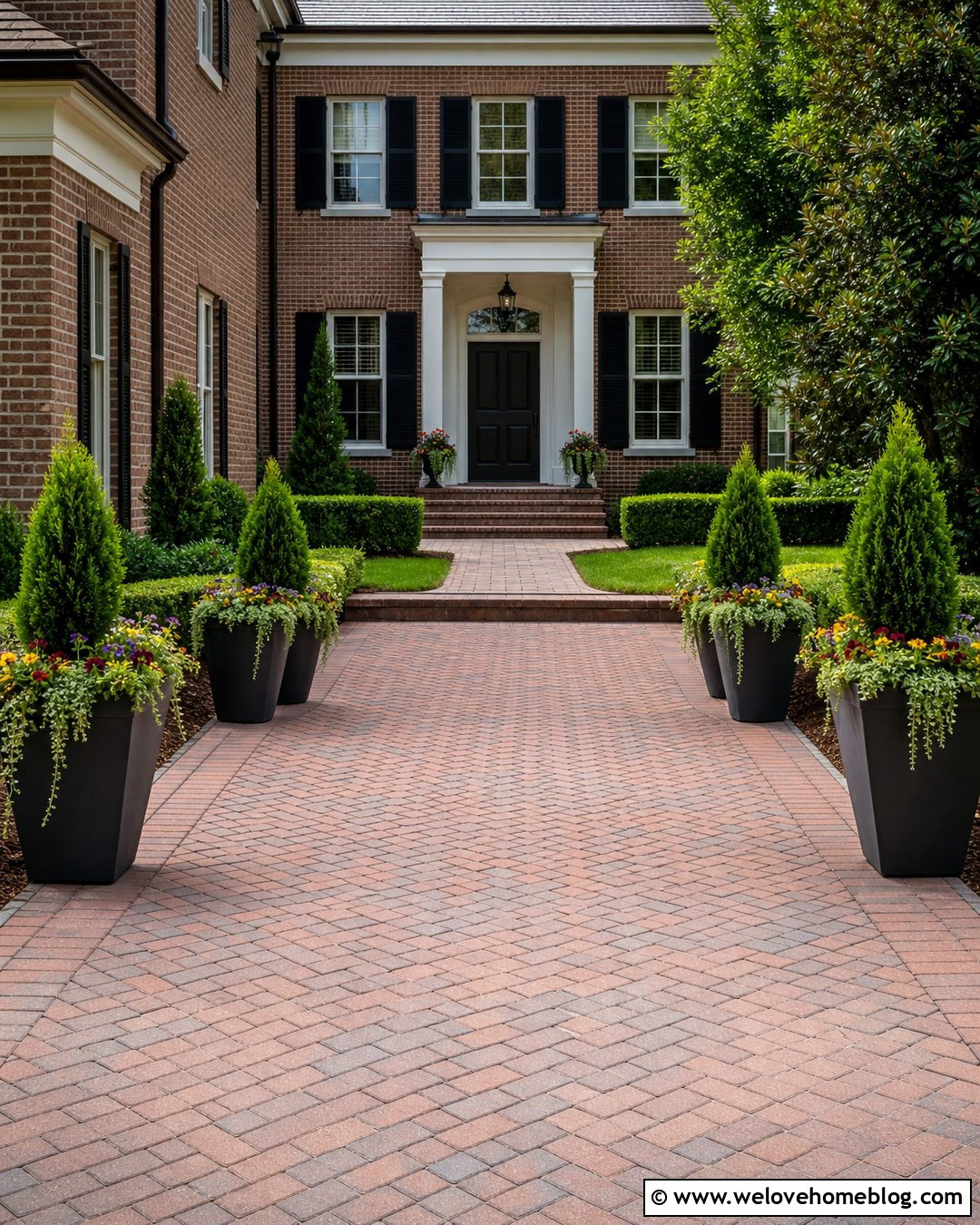
A brick driveway can feel less formal when edged with mixed river stone and relaxed planting. Use clay brick pavers in a herringbone pattern, framed by a straight soldier-course border. Beyond the bricks, add a shallow bed of rounded river stones in gray, cream, rust, and brown. Sweep the rock edge into wider planting areas near the sidewalk and garage rather than maintaining one uniform strip everywhere. Ferns, dwarf hydrangeas, creeping ground cover, and small flowering shrubs soften the transition. Choose river stones that repeat colors found in the brick and house facade. The solid paver border should contain the driving surface, while concealed edging holds the decorative rocks in place. This layered design works well with traditional brick homes, bungalows, and updated Colonial properties.
16. Gabion Rock Lined Modern Driveway
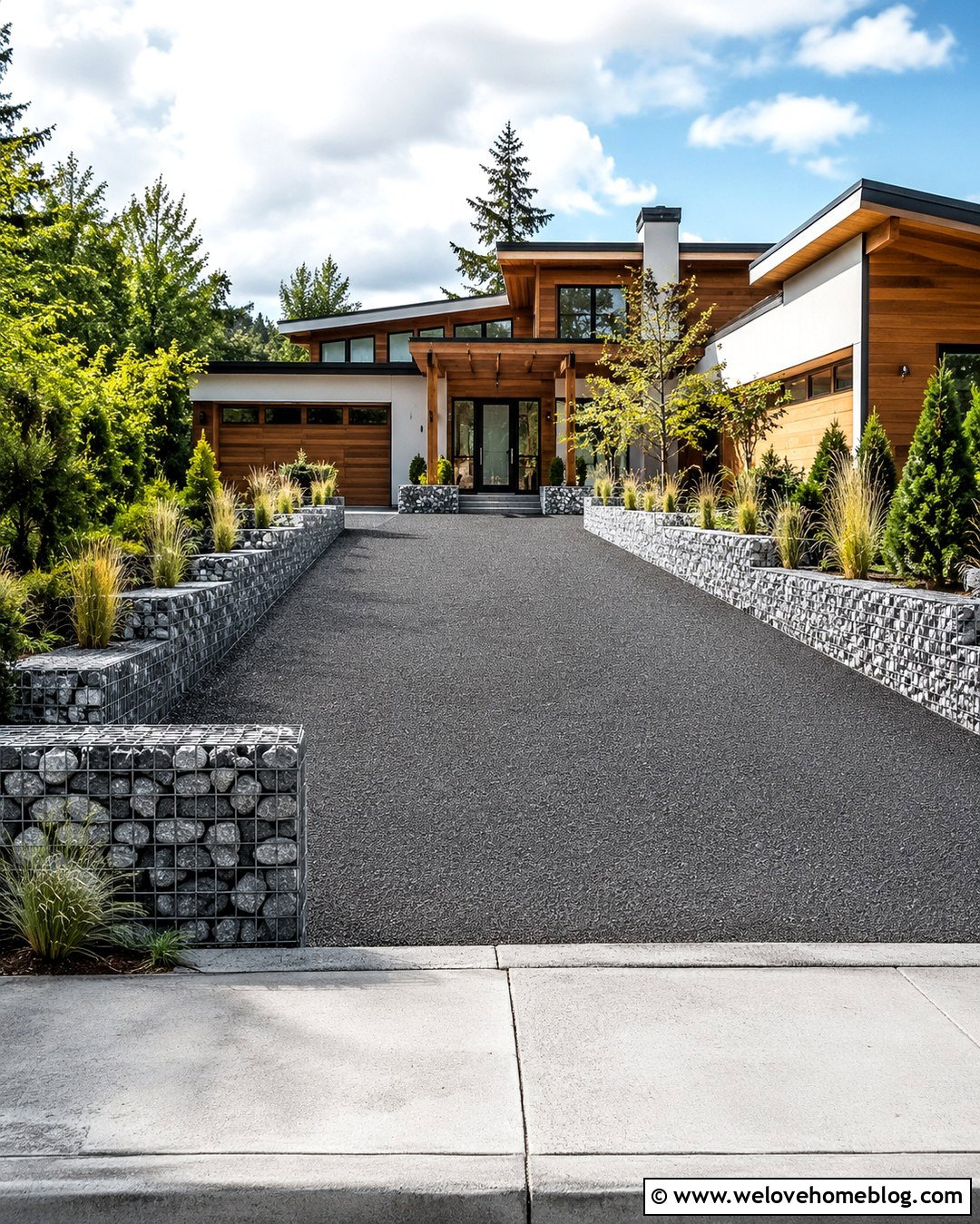
Low gabion borders create an architectural rock feature beside a modern driveway. Fill galvanized steel mesh baskets with angular gray granite or locally sourced stone, keeping the wall low enough to preserve an open curb view. Pair the gabions with a charcoal resin-bound gravel driveway in a straight or subtly angled layout. Add linear beds of ornamental grasses, compact evergreens, and sculptural drought-tolerant plants behind selected sections. Leaving open gaps between gabion units prevents the edge from feeling like a continuous barrier. Repeat the mesh-and-rock detail around an address sign or entrance planter for consistency. Properly prepare the base so the baskets remain level, and soften exposed corners near walkways. This complete look suits contemporary homes with wood, glass, stucco, or dark metal exterior finishes.
17. Slate Rock Lined Resin Driveway
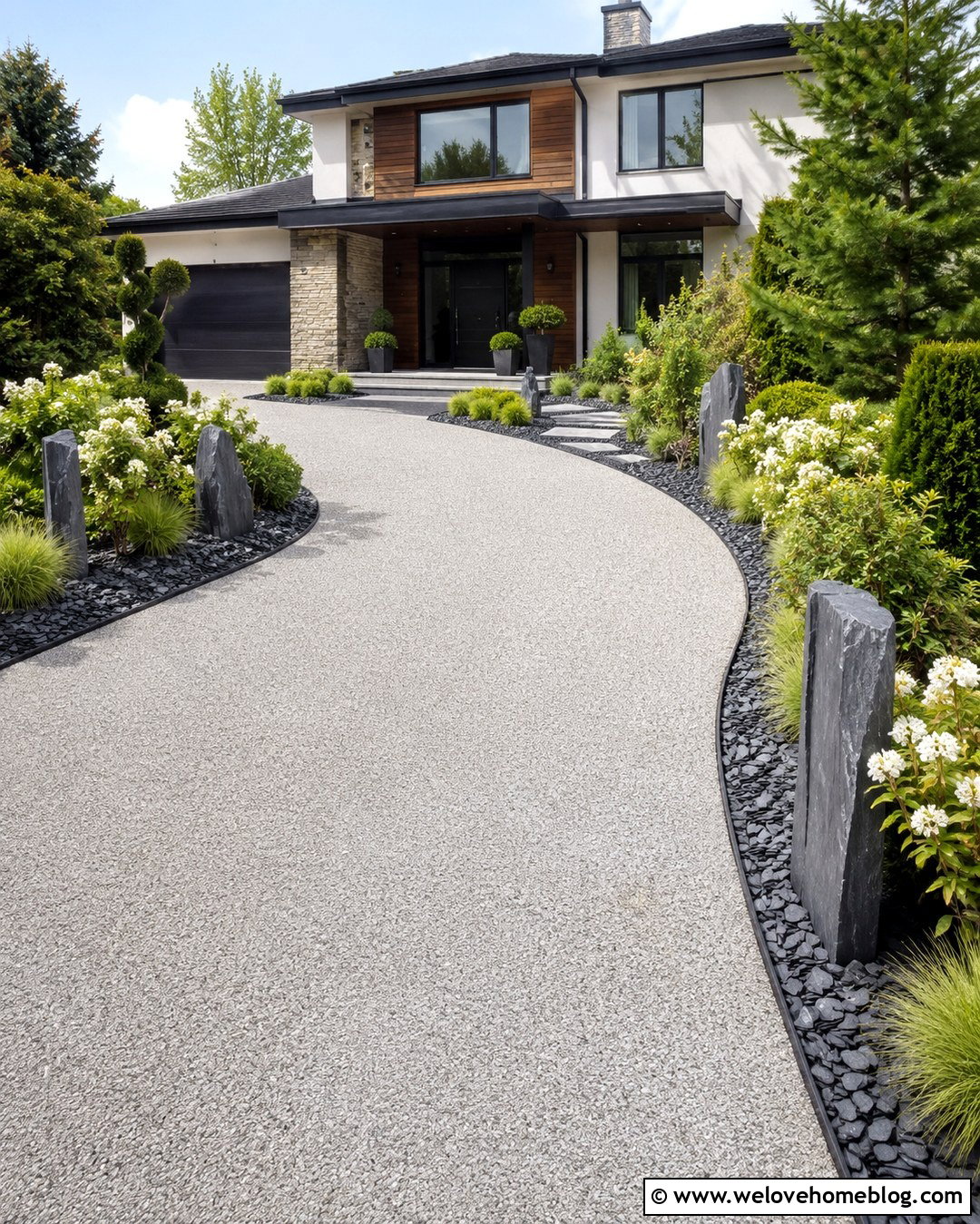
Dark slate chips can give a resin-bound driveway a crisp, sophisticated border. Choose a warm light-gray resin-bound gravel surface for contrast and shape it into a soft curve leading toward a contemporary two-story home. Install narrow slate-chip beds along both sides, contained by slim black steel edging. Place a few larger slate pieces upright within wider planting zones to create height without using bulky boulders. White flowering shrubs, blue-green grasses, and clipped evergreens will stand out against the charcoal stone. Continue the slate around the front walkway to connect the driveway with the entrance. Keep loose slate away from turning areas and garage thresholds. The combination of smooth paving, fractured rock texture, and simple planting produces a modern design that still feels welcoming and connected to the landscape.
18. Crushed Granite Lined Horseshoe Driveway
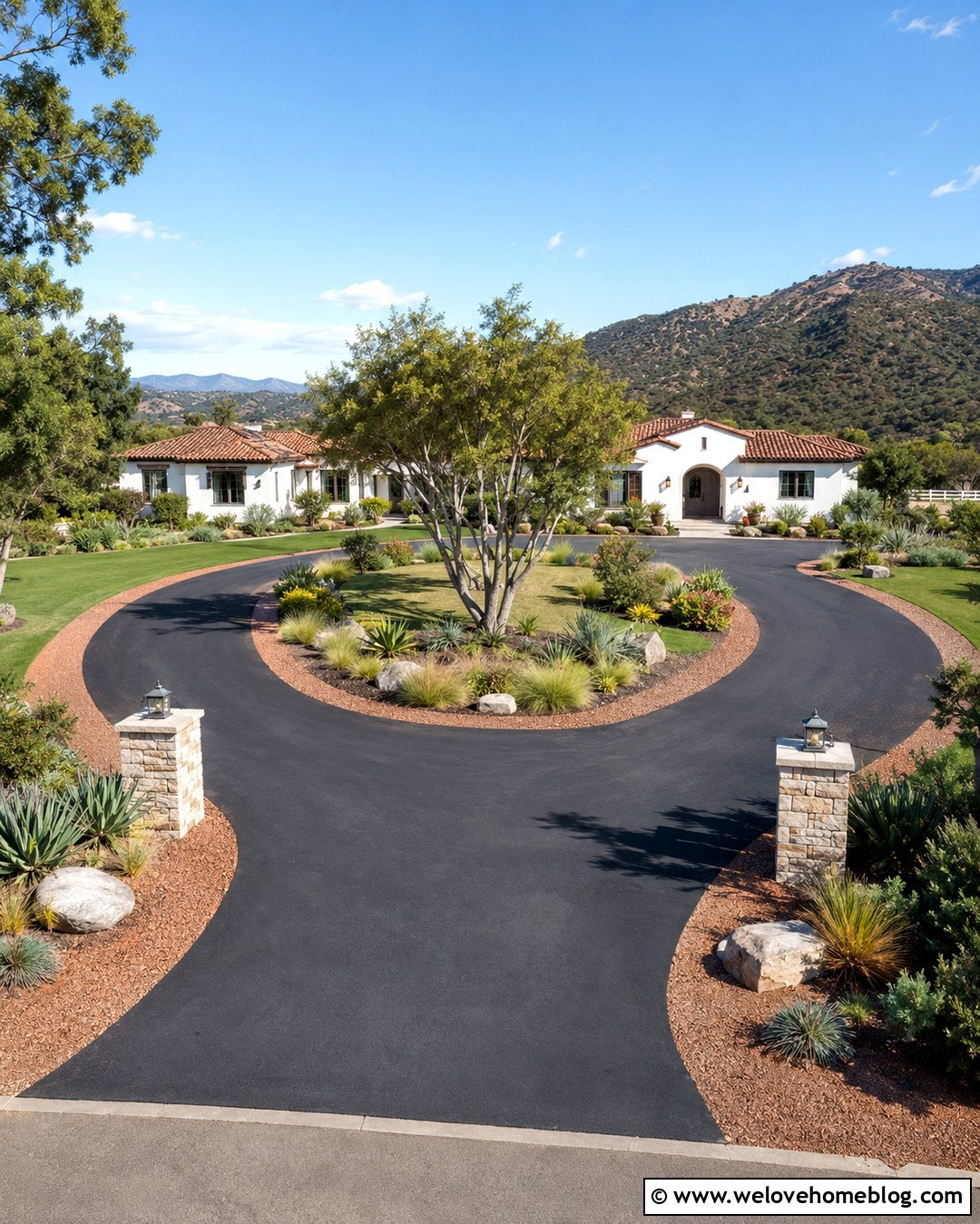
A horseshoe driveway can be clearly defined with bands of crushed granite and larger matching rocks. Use black asphalt for the main driving surface, then install wide borders of reddish-brown crushed granite along the inner and outer curves. Add medium granite boulders at turning points, spacing them far enough from the pavement for comfortable vehicle movement. In the central lawn, plant a multi-stem ornamental tree with low shrubs and grasses that do not block sightlines. Mark both entrances with matching rock clusters and simple masonry pillars. Steel edging can contain the smaller granite where it meets grass or planting beds, since loose landscaping rock benefits from a firm boundary. () This expansive layout pairs well with ranch homes, Spanish-inspired houses, and large suburban properties.
19. Glacial Boulder Lined Permeable Driveway
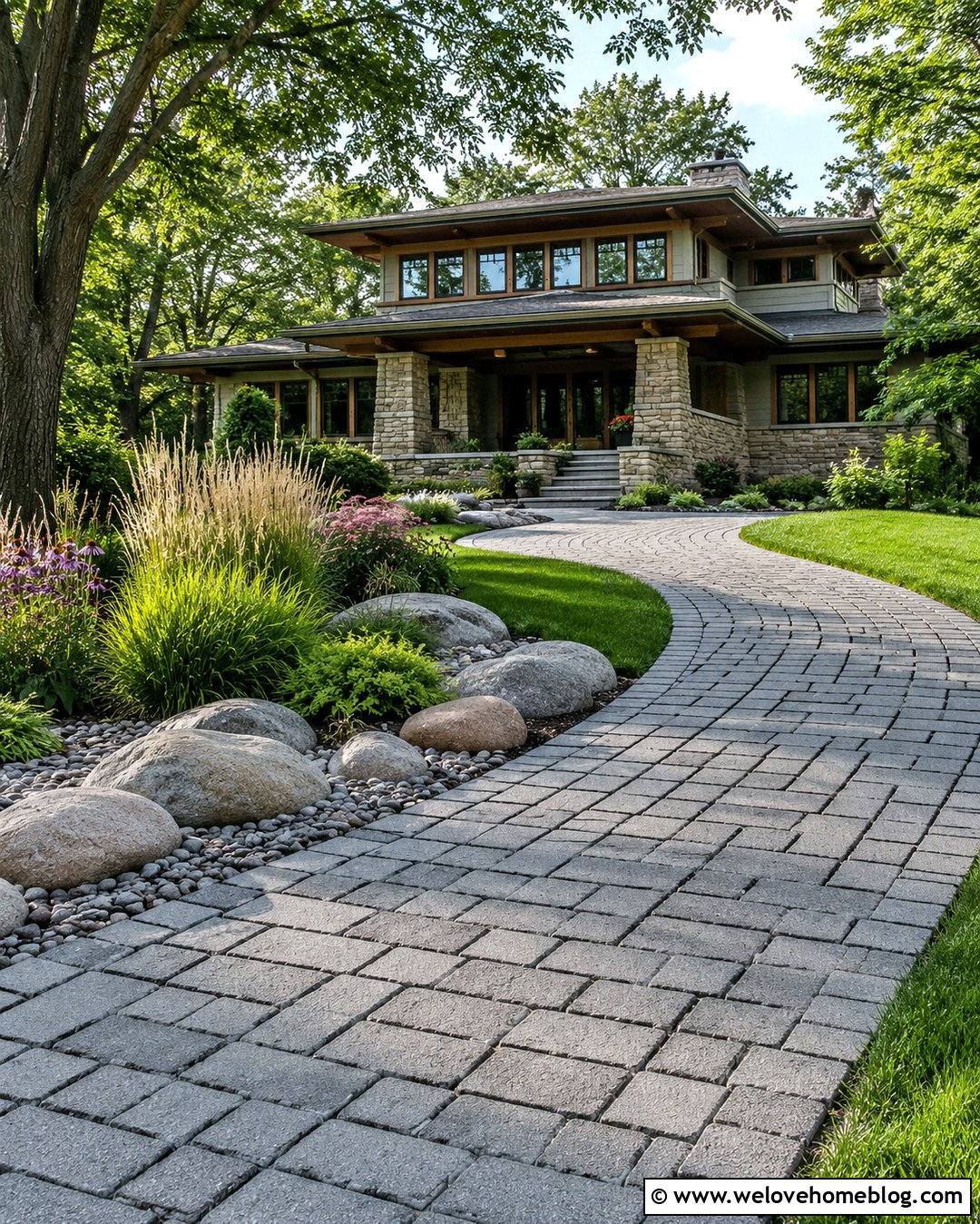
Rounded glacial boulders bring a regional, natural character to a permeable paver driveway. Use gray permeable concrete pavers with dark gravel-filled joints in a gently curved layout. Arrange smooth boulders in small groups along both sides instead of creating an unbroken line. Fill the spaces with native grasses, low shrubs, and flowering perennials chosen for local conditions. A rain garden near the lower end of the driveway can repeat smaller versions of the same stones. Keep boulders set back from the pavement edge, especially along curves and near parking spaces. Partially burying each one creates a settled appearance and improves visual stability. This complete driveway works particularly well with Prairie, Craftsman, and lake-house architecture, where natural materials help the built landscape blend into its surroundings.
20. Rock Lined Driveway With Landscape Lighting
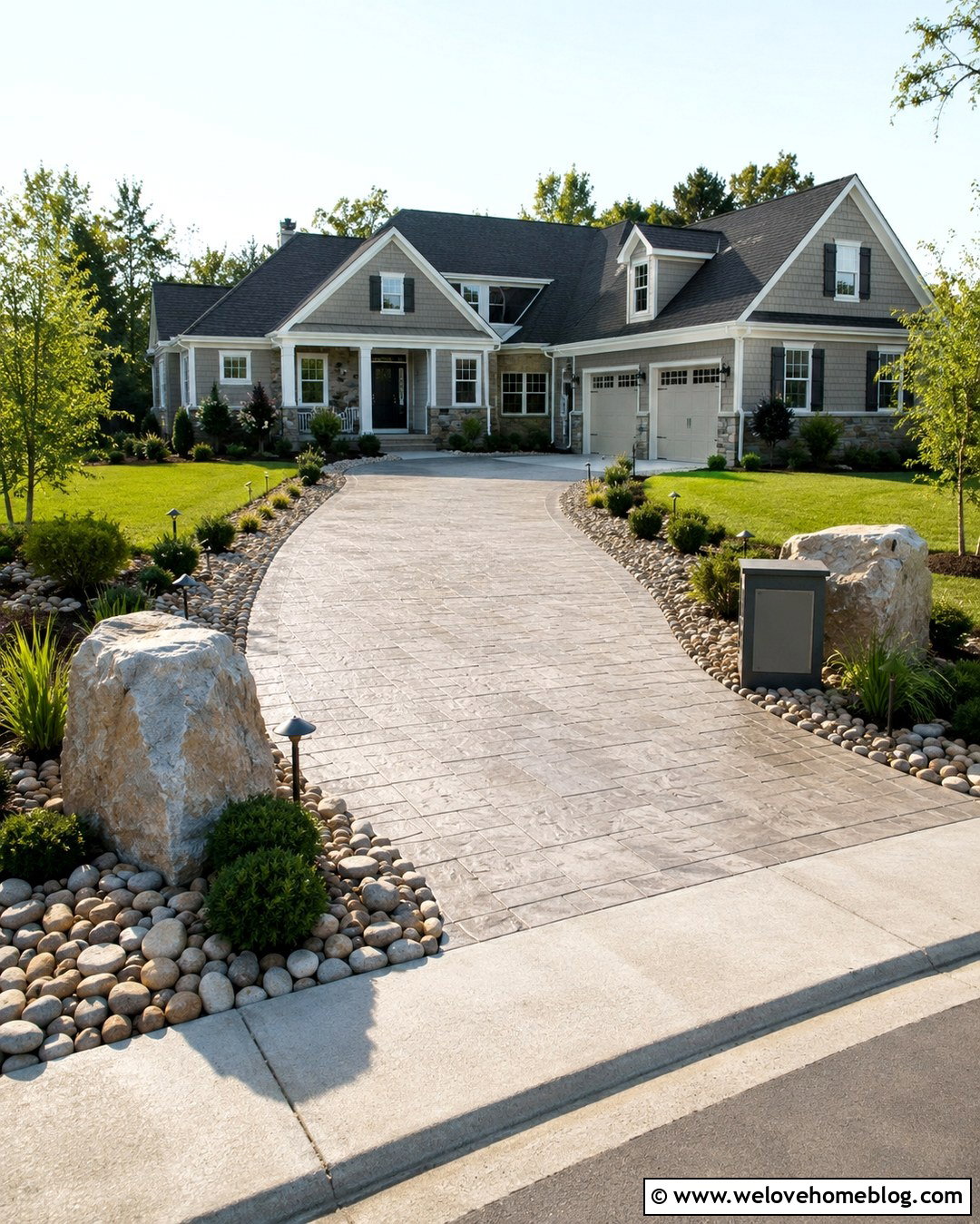
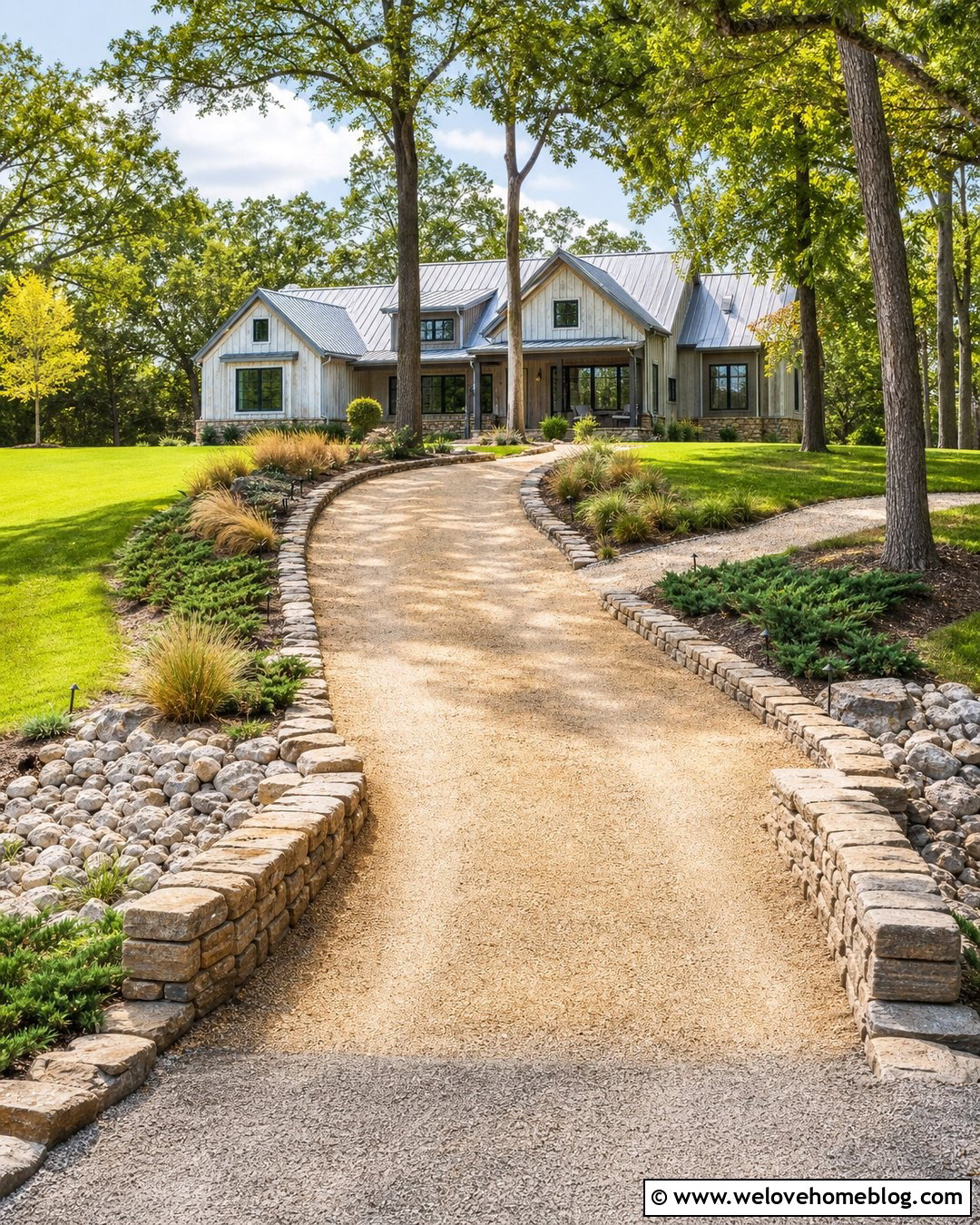
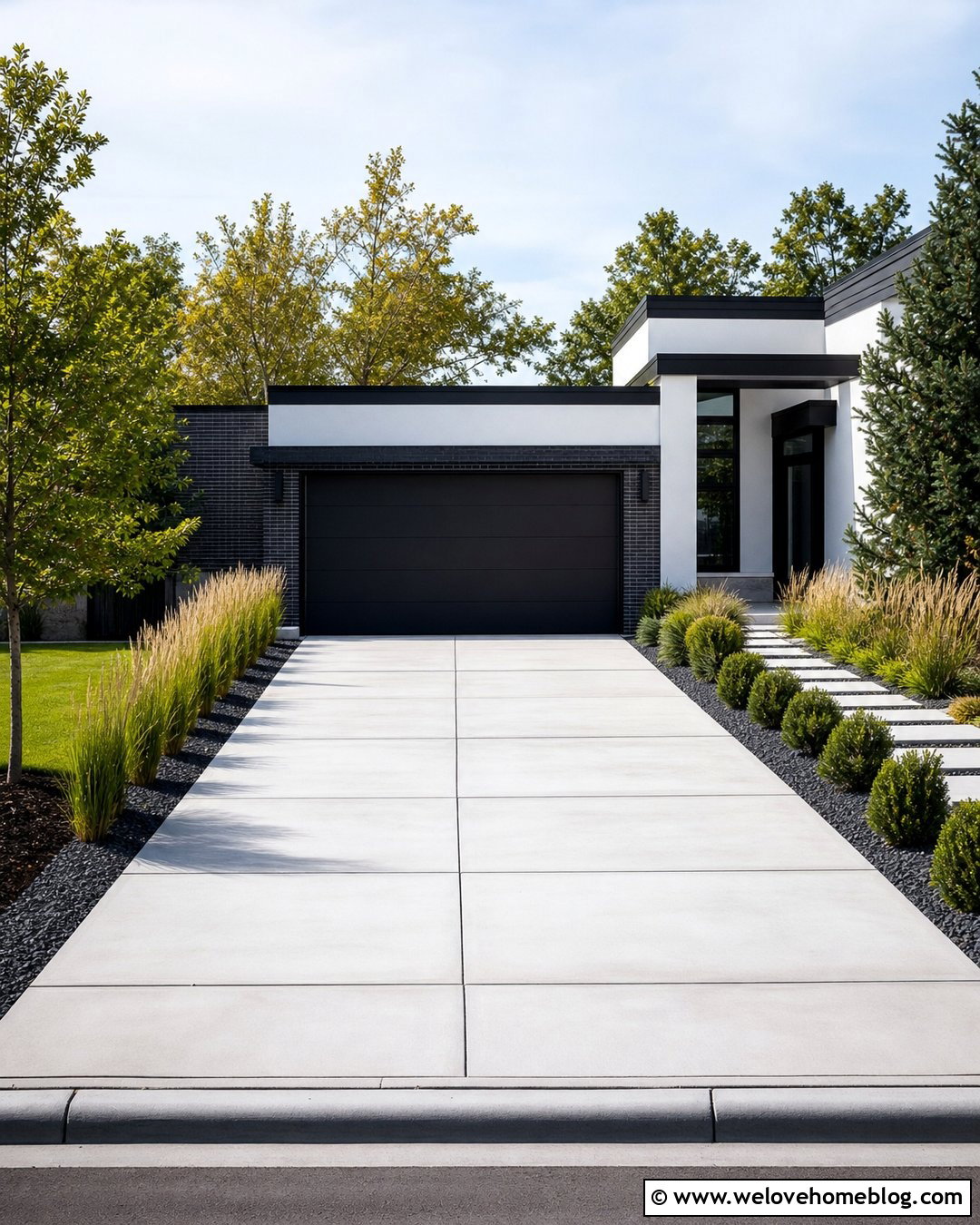
Landscape lighting can make rock-lined edges easier to recognize while giving the entire entrance a polished finish. Use a warm gray stamped concrete driveway with a curved approach to a traditional suburban home. Line both sides with broad beds of tan river rock, punctuated by compact evergreen shrubs and low ornamental grasses. Install simple downward-facing path lights behind the rocks rather than directly in the driving zone. During the day, black fixtures blend with the planting and create a clean rhythm toward the garage. At the curb, use two larger boulders beside a coordinated address marker to establish the entrance. Keep electrical components rated for outdoor use and position fixtures where snow removal or lawn equipment will not strike them. The result is practical, welcoming, and visually complete.
Conclusion:
The best rock-lined driveway feels connected to the entire property, not added as a separate decoration. Match the rock color and scale to your driveway surface, home exterior, and yard size. Rounded river stones create a softer transition, while granite, limestone, slate, and boulders provide stronger definition. Hidden edging can control loose material, and thoughtful planting helps hard rocks blend into the landscape. Always protect turning space, door clearance, visibility, drainage, and mowing access when placing stones. For walls, steep slopes, or major runoff concerns, consult an experienced local contractor. With careful planning, these **20 Rocks Lining Driveway Ideas** can improve structure, function, and curb appeal while giving your entrance a distinctive finished look.

Related posts:
Leave a Reply