
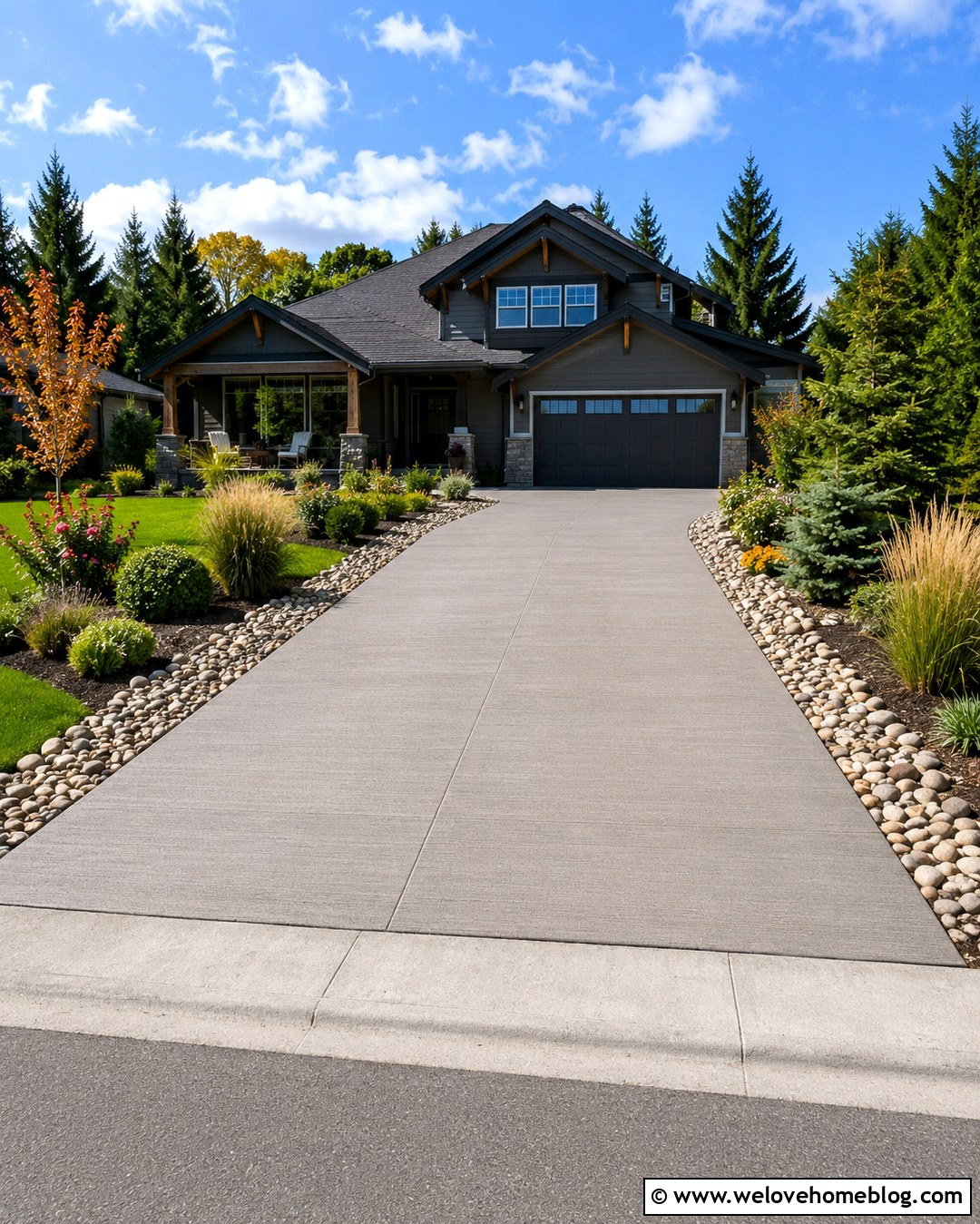
These 20 rocks around driveway culvert ideas turn a necessary drainage feature into a finished part of your curb appeal. The best designs do more than hide an exposed pipe. They coordinate the rock size, driveway surface, entrance shape, planting, and surrounding ditch while keeping water moving freely. Culvert end treatments can also support the driveway embankment and reduce erosion around the opening when they are properly designed. () From natural river rock aprons to structured fieldstone walls, each option below creates a complete entrance rather than an isolated pile of stones. Before building, confirm property lines, drainage requirements, and roadside right-of-way rules with your local authority. Use these practical 20 rocks around driveway culvert ideas to find a look suited to your home and landscape.

1. River Rock Driveway Culvert With Asphalt Driveway
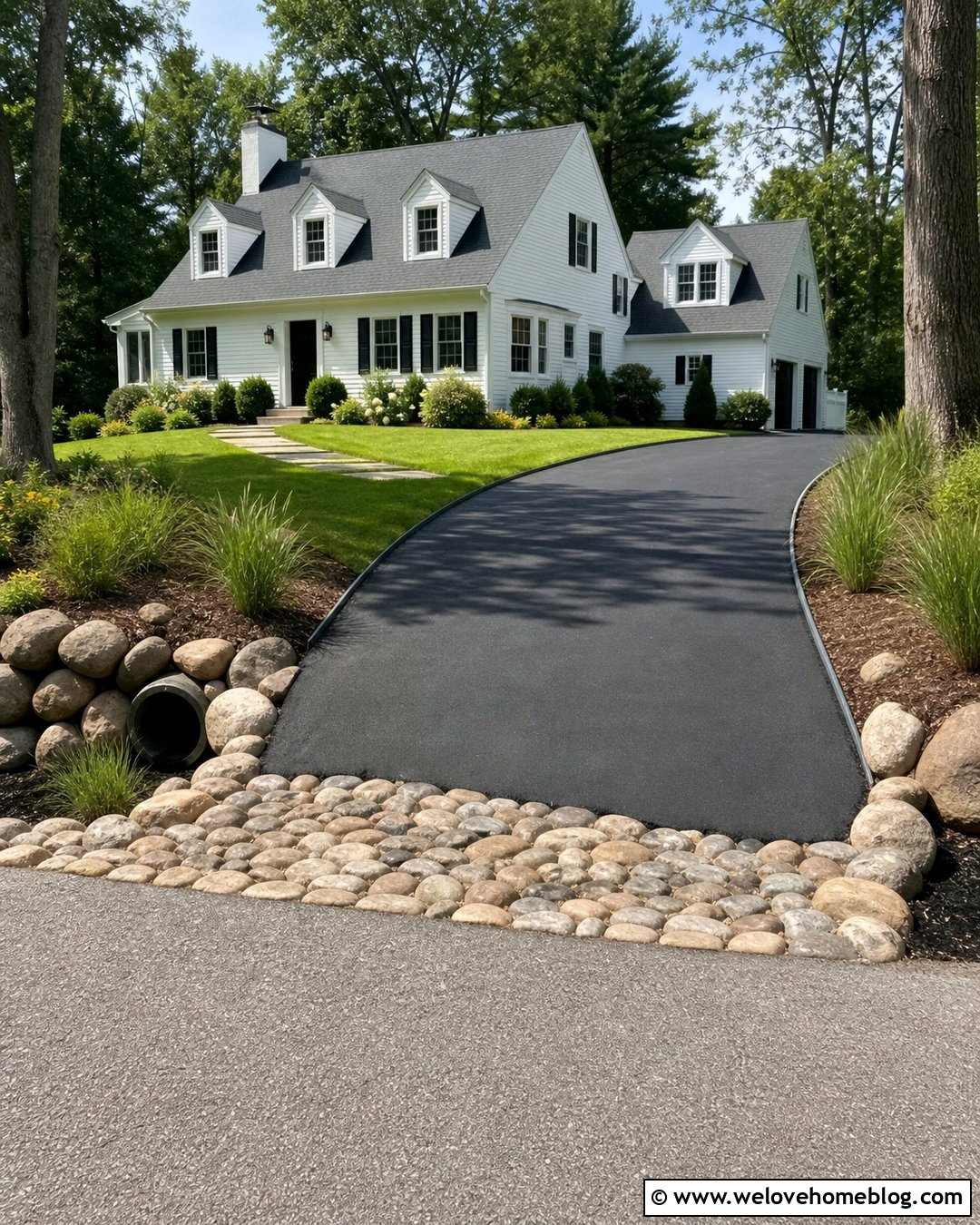
Smooth river rocks create a relaxed culvert entrance beside a clean black asphalt driveway. Use larger cobbles immediately around the pipe, where small decorative stones could shift during heavy runoff. Extend the rock into a shallow apron that follows the natural ditch rather than forming a raised mound. A curved bed line will make the installation look connected to the lawn. Add low native grasses above the normal water channel, leaving the culvert opening completely clear. A narrow concrete or steel edging strip can separate the rocks from turf and simplify mowing. This complete design works especially well with ranch homes, Cape Cod houses, and casual suburban yards where a natural-looking entrance feels more appropriate than a formal masonry wall.
2. Riprap Driveway Culvert With Concrete Driveway
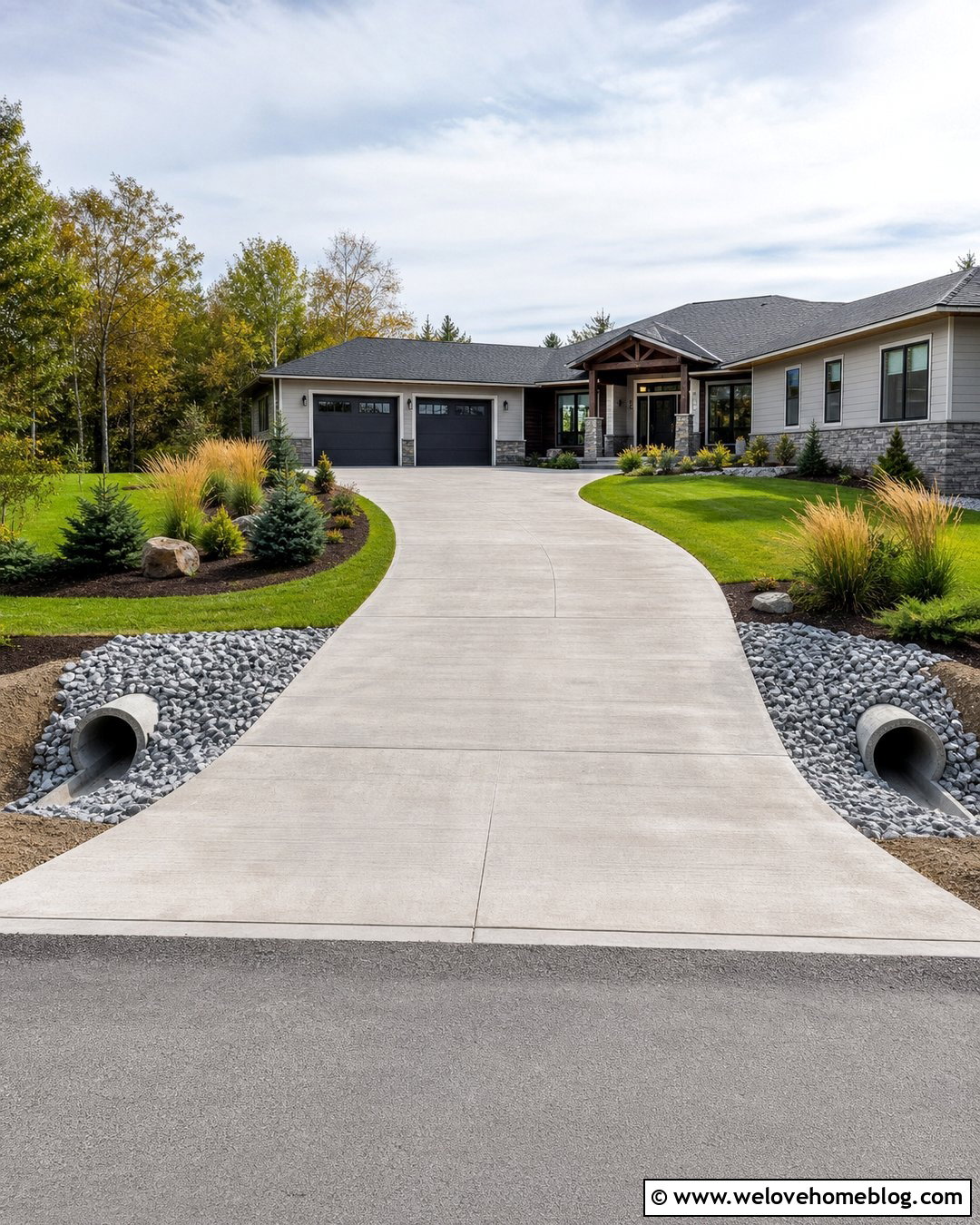
Angular riprap gives a wide poured-concrete driveway a durable, practical edge. Unlike smooth pebbles, irregular stones fit together and are less likely to roll when water moves quickly. Place appropriately sized rock over a prepared foundation around the outlet, extending it into the drainage channel as a broad apron. Geotextile or a gravel filter layer may be needed underneath to keep fine soil from washing through the gaps. () Keep the finished rock level aligned with the ditch bottom so it does not obstruct the pipe. On both driveway sides, repeat the same stone color for a balanced entrance. Compact evergreen shrubs positioned safely above the drainage area can soften the transition between rugged riprap, green lawn, and pale concrete.
3. Fieldstone Driveway Culvert With Gravel Driveway
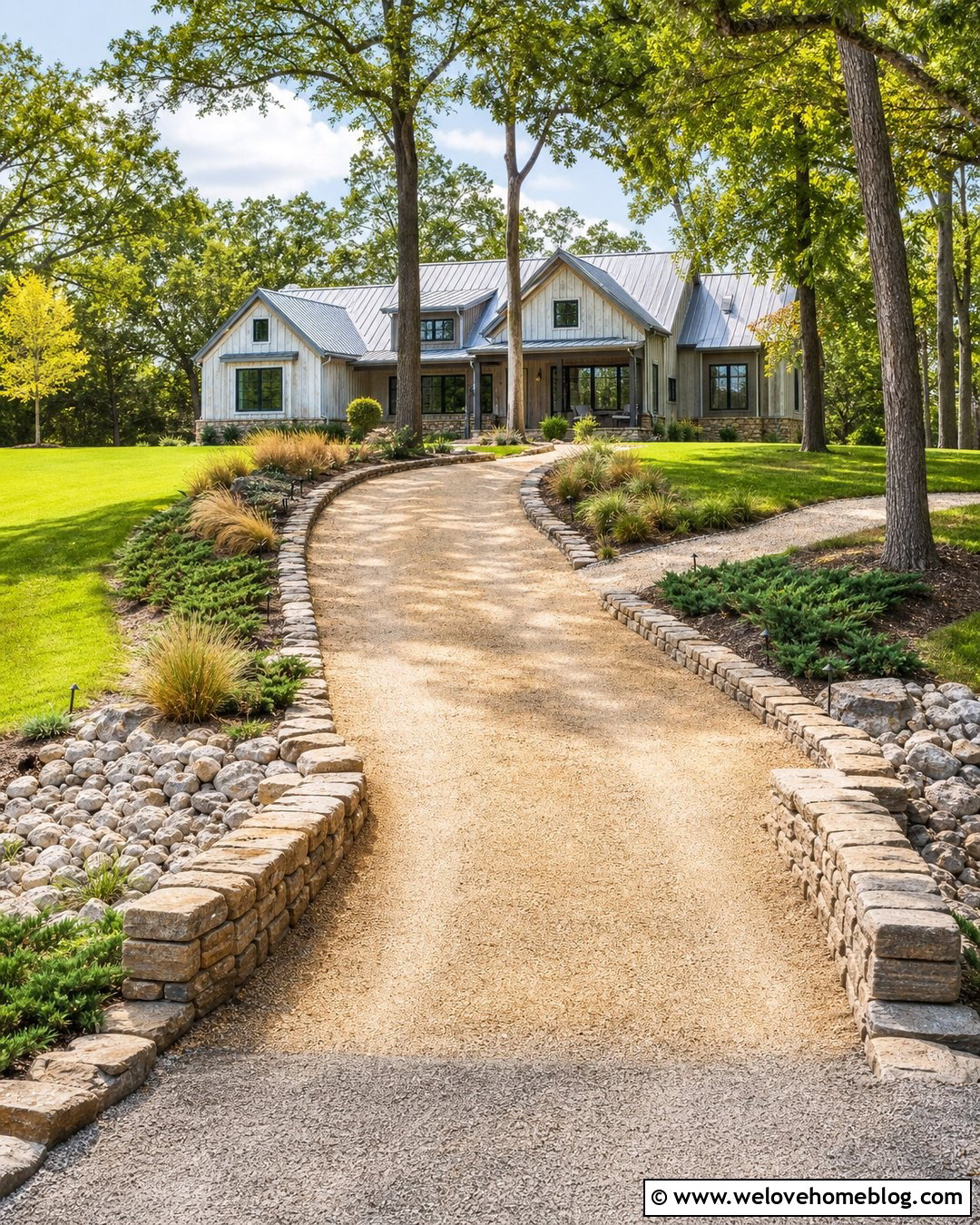
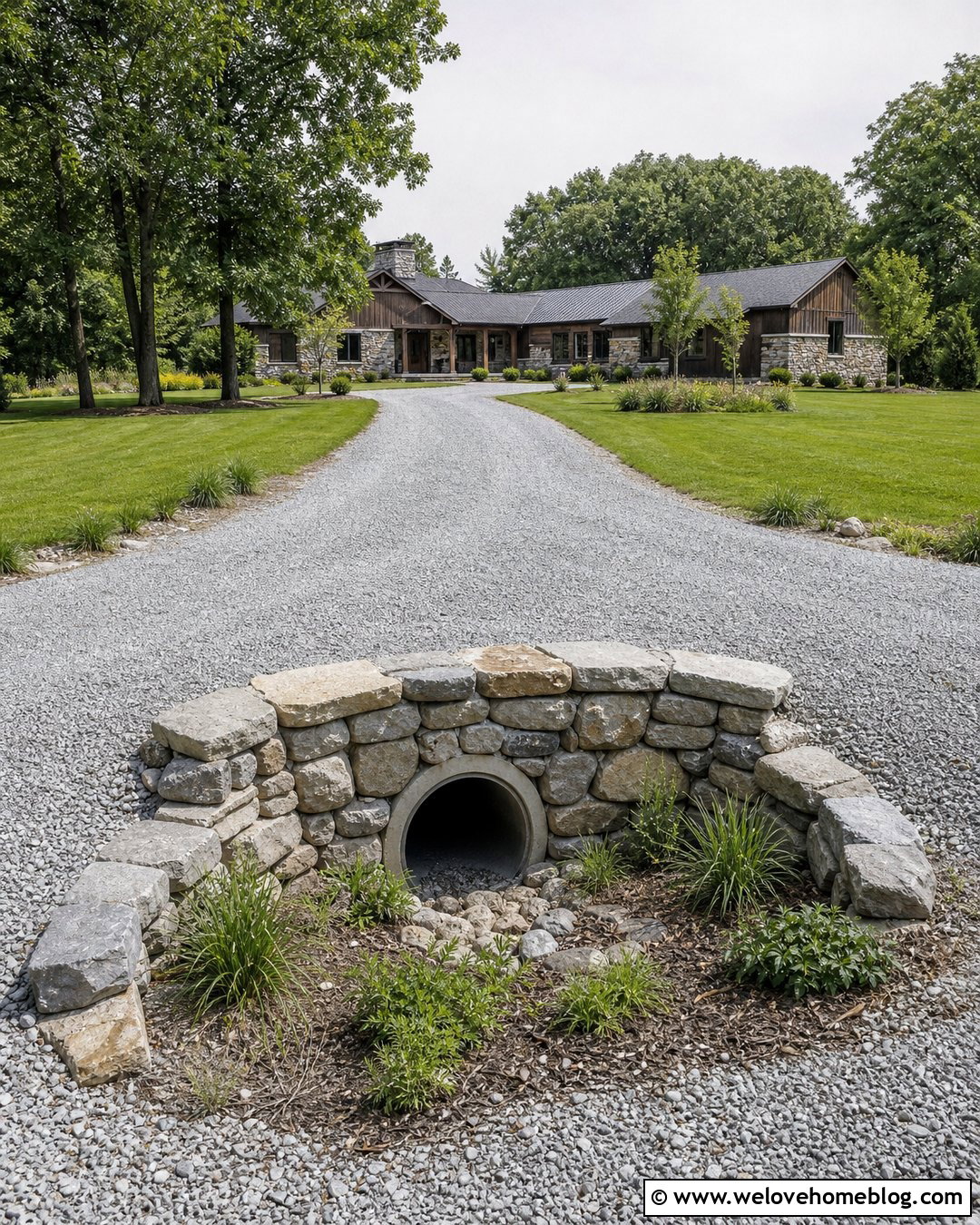
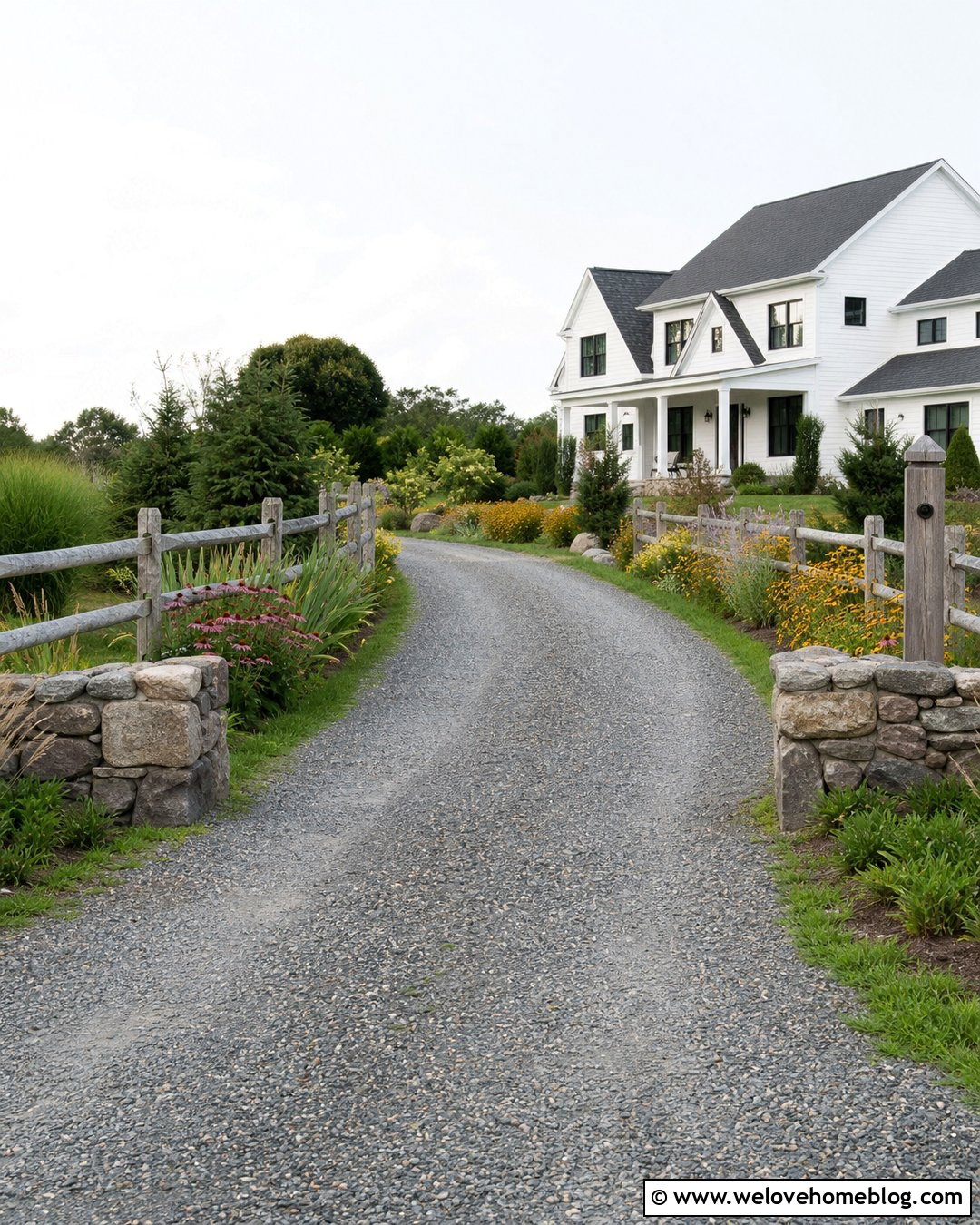
A stacked fieldstone treatment brings structure to a rustic gravel driveway without making the entrance feel overly formal. Build low stone wings that angle away from each side of the culvert opening and visually support the driveway embankment. Select broad, relatively flat stones for the visible wall, then use angular drainage rock near the channel. The wall should follow the slope rather than project sharply into the roadside area. Continue matching fieldstone along short sections of the driveway as edging, which connects the culvert to the complete approach. Behind the stones, plant creeping juniper, sedges, or compact native grasses where conditions permit. This combination is particularly attractive beside a country cottage, cabin, or modern farmhouse with natural wood and stone details.
4. Dry Creek Driveway Culvert With Paver Driveway
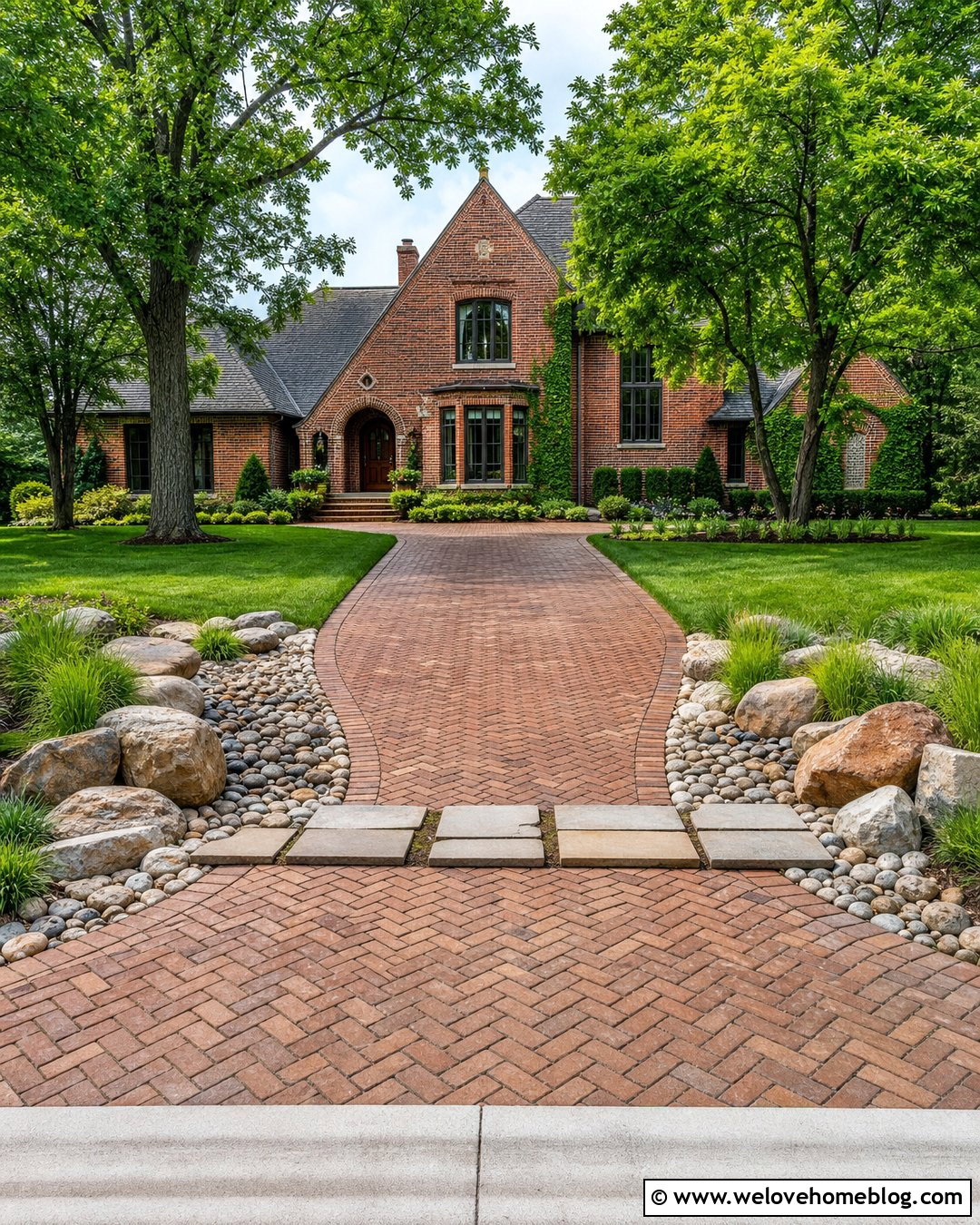
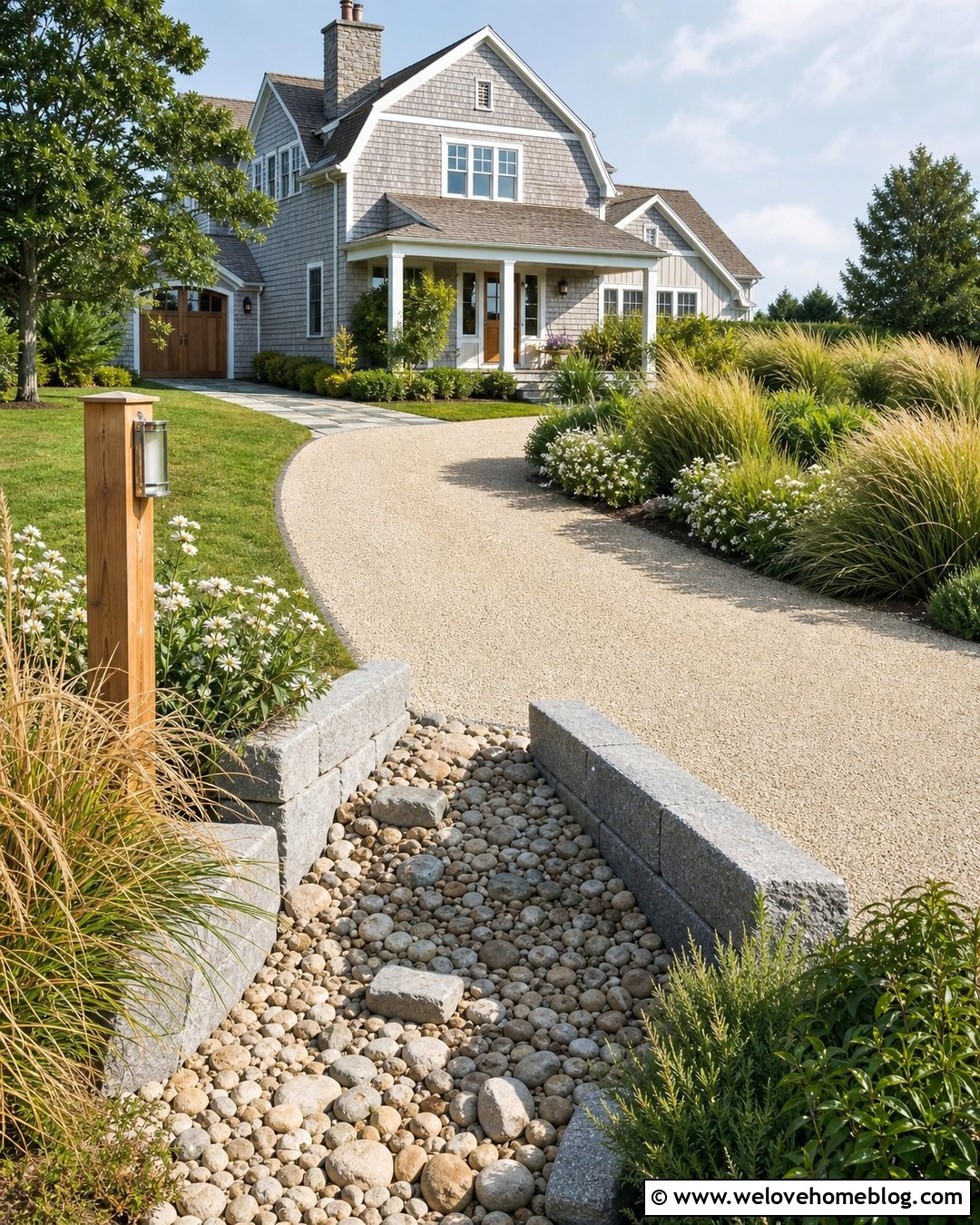
A dry creek bed can make a culvert look like an intentional landscape feature beside a paver driveway. Begin with larger boulders near the opening, then transition to medium river cobbles and smaller gravel farther along the swale. Curve the rock channel through the lawn so it resembles a natural stream instead of a straight drainage trench. The rock must remain at the proper ditch elevation because material placed too high can redirect water underneath or around the apron. () Edge the driveway with charcoal pavers that complement the deeper tones in the creek stone. Moisture-tolerant grasses can fill the upper banks, while a stepping-stone walkway crossing the dry creek creates a useful connection between the driveway and front yard.
5. Boulder Driveway Culvert With Curved Asphalt Driveway
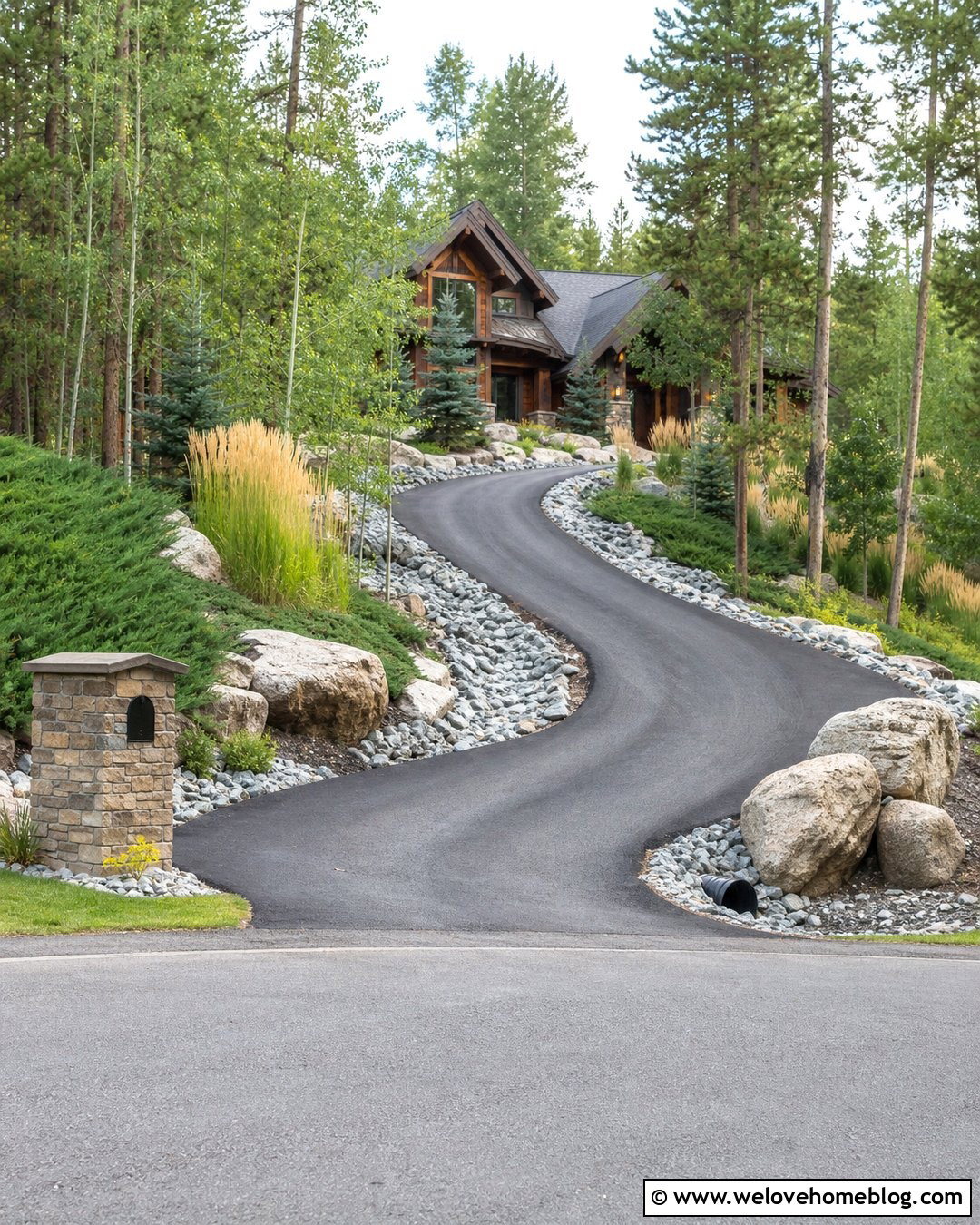
Large weathered boulders can anchor the entrance of a curved asphalt driveway and make a wide roadside ditch appear more natural. Position several substantial stones on the upper banks, safely away from the actual pipe opening and expected water path. Fill the spaces below them with smaller angular rocks that protect exposed soil. The boulders should look partially buried rather than placed loosely on top of the ground. Echo their colors in a stone mailbox base, walkway border, or front planting bed so the entrance relates to the house. Sweeps of ornamental grass and spreading ground cover can soften the outer edges without concealing the culvert. This bold treatment suits wooded properties, mountain-inspired homes, and larger yards where small stones could look visually insignificant.
6. Stone Headwall Driveway Culvert With Brick Driveway
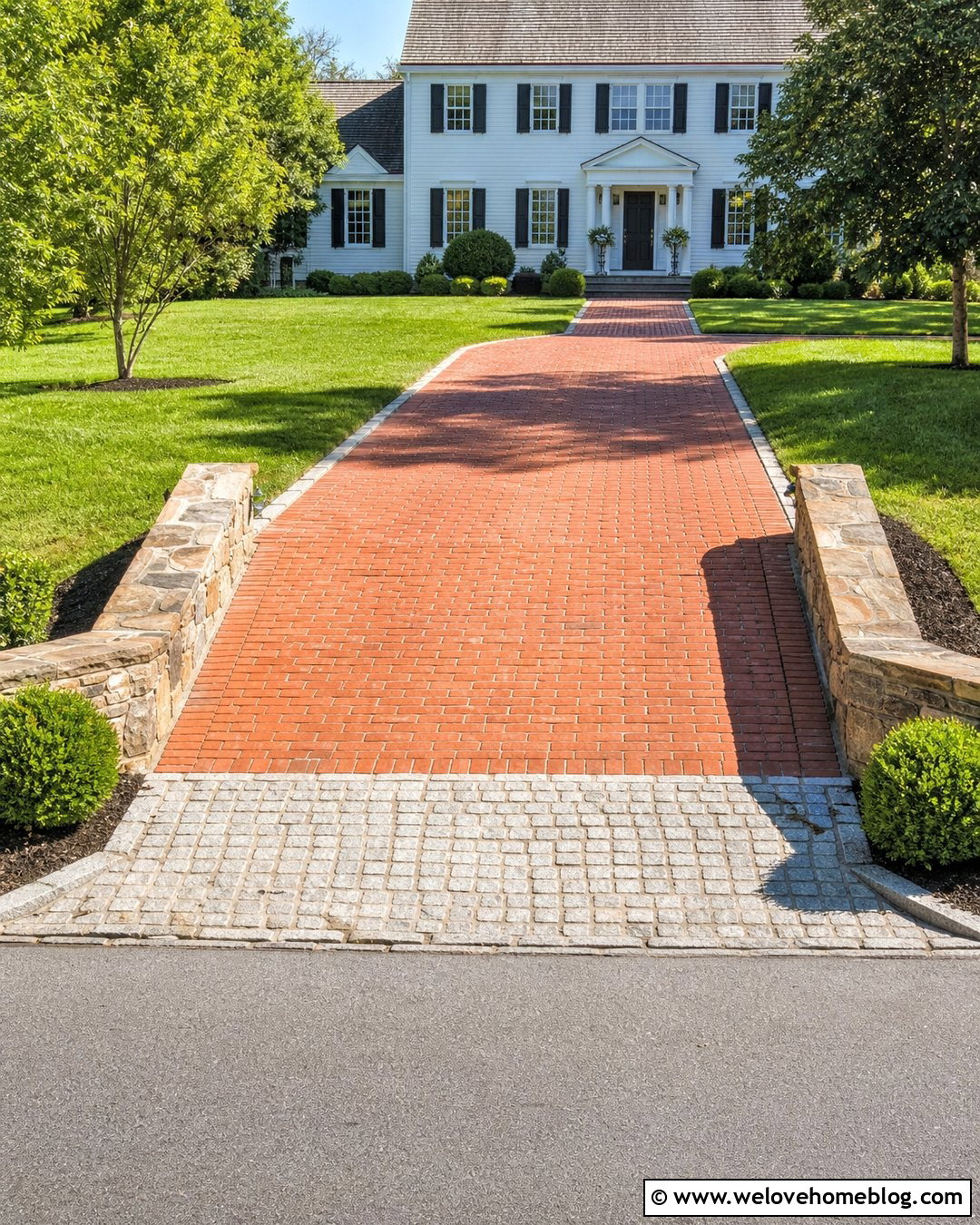
A stone-faced headwall gives a brick driveway a traditional and carefully finished entrance. Use professionally installed masonry to create a low wall around the pipe, with gently angled wings holding the driveway embankment in place. Headwalls and other end treatments can provide foundation support, manage flow at the opening, and help protect surrounding soil from erosion. () Choose stone containing warm brown, gray, or muted red tones that coordinate with the brick rather than compete with it. Add a small cobblestone apron along the ditch bottom for a smooth material transition. Neatly clipped shrubs can frame the upper ends of the wall, but they should remain outside the flow area. This combination complements Colonial, Georgian, and traditional two-story homes.
7. Limestone Driveway Culvert With Exposed Aggregate Driveway
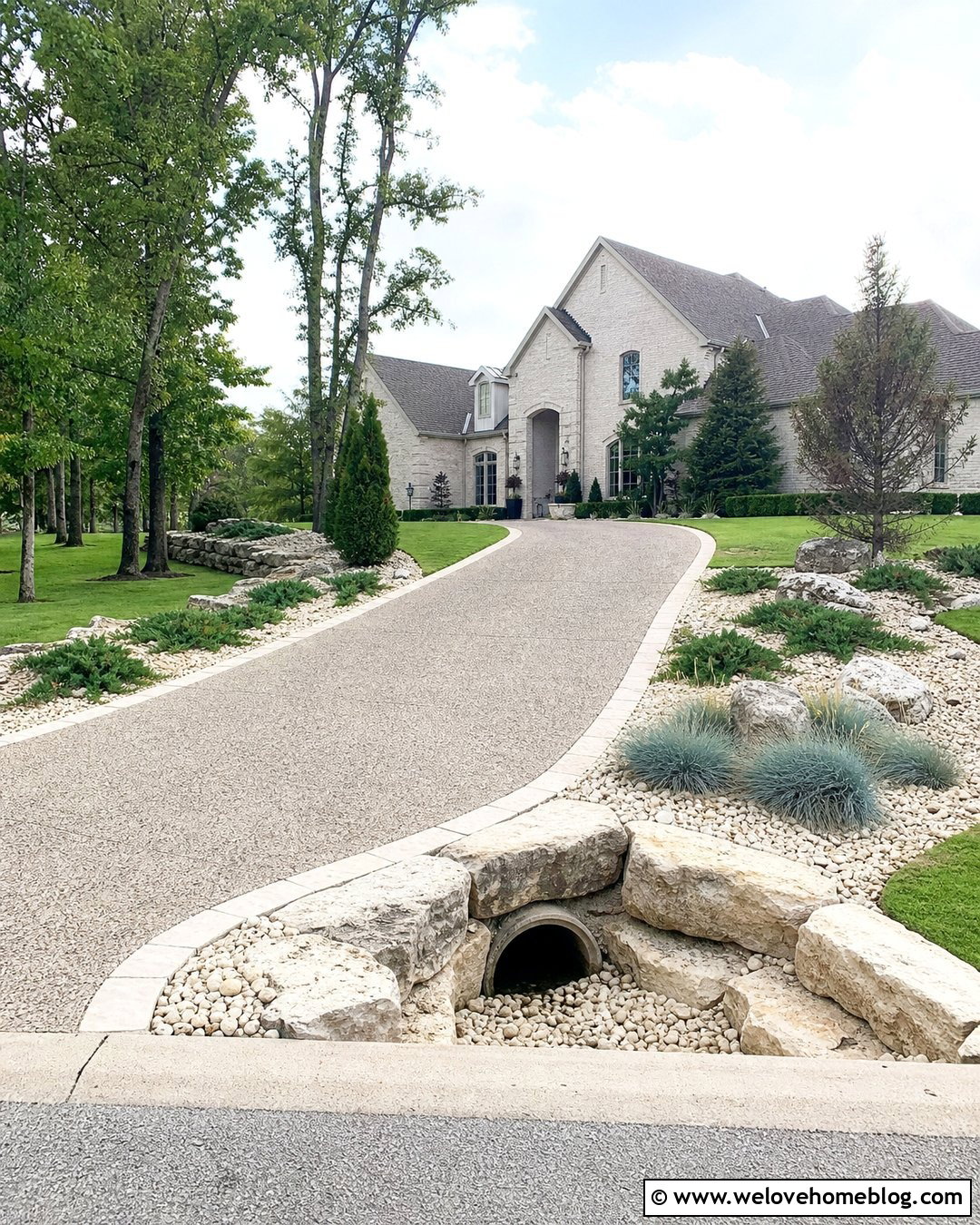
Pale limestone brings a crisp, upscale appearance to an exposed aggregate concrete driveway. Create low, symmetrical limestone banks on both sides of the culvert, using larger irregular pieces near the pipe and smaller crushed limestone on the upper slopes. A restrained planting palette keeps the light stone from becoming visually busy. Consider blue-green ornamental grasses, dwarf evergreens, and a simple lawn edge above the drainage channel. Continue a narrow limestone border along the driveway entrance so the rocks feel like part of the overall design. Because some limestone can weather or stain differently depending on local conditions, select dense landscape-grade material recommended for drainage applications. This bright, textured combination works beautifully with light brick homes, transitional architecture, and warm modern facades.
8. Granite Driveway Culvert With Gray Gravel Driveway
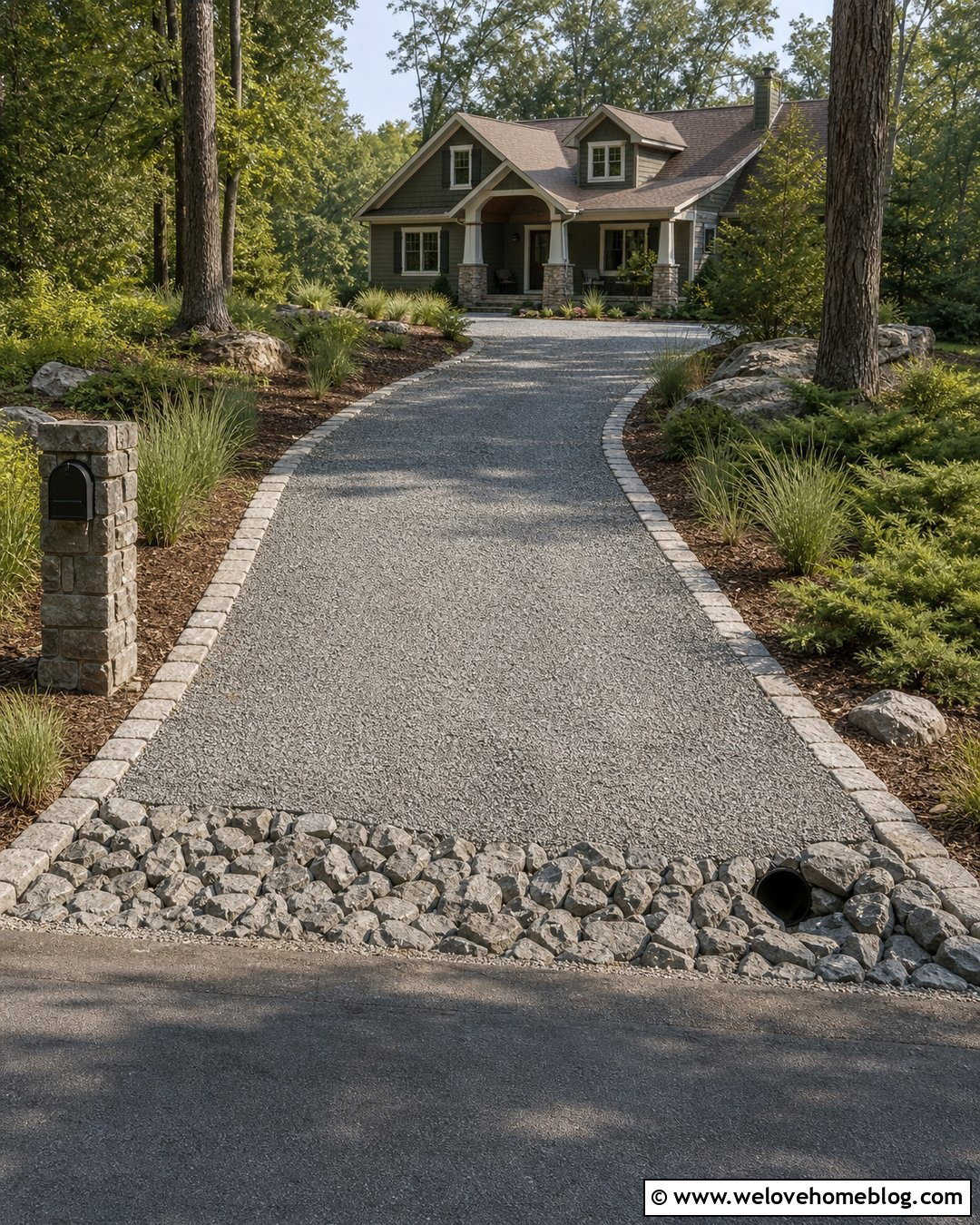
Granite rocks pair naturally with a gray gravel driveway because both materials offer varied tones and a rugged texture. Use chunky angular granite around the culvert mouth, then spread smaller matching stone into a tapered apron. The driveway can be edged with granite setts to prevent loose aggregate from spilling toward the ditch. On the upper banks, masses of low-growing juniper and switchgrass can add greenery without creating a fussy garden. Keep enough open space to see and maintain the pipe entrance. Repeating granite at the mailbox or walkway entrance gives the property a consistent material palette. This design feels especially appropriate for Craftsman homes, wooded suburban properties, and northern landscapes where durable gray stone blends easily with mature trees and natural surroundings.
9. Cobblestone Driveway Culvert With Herringbone Pavers
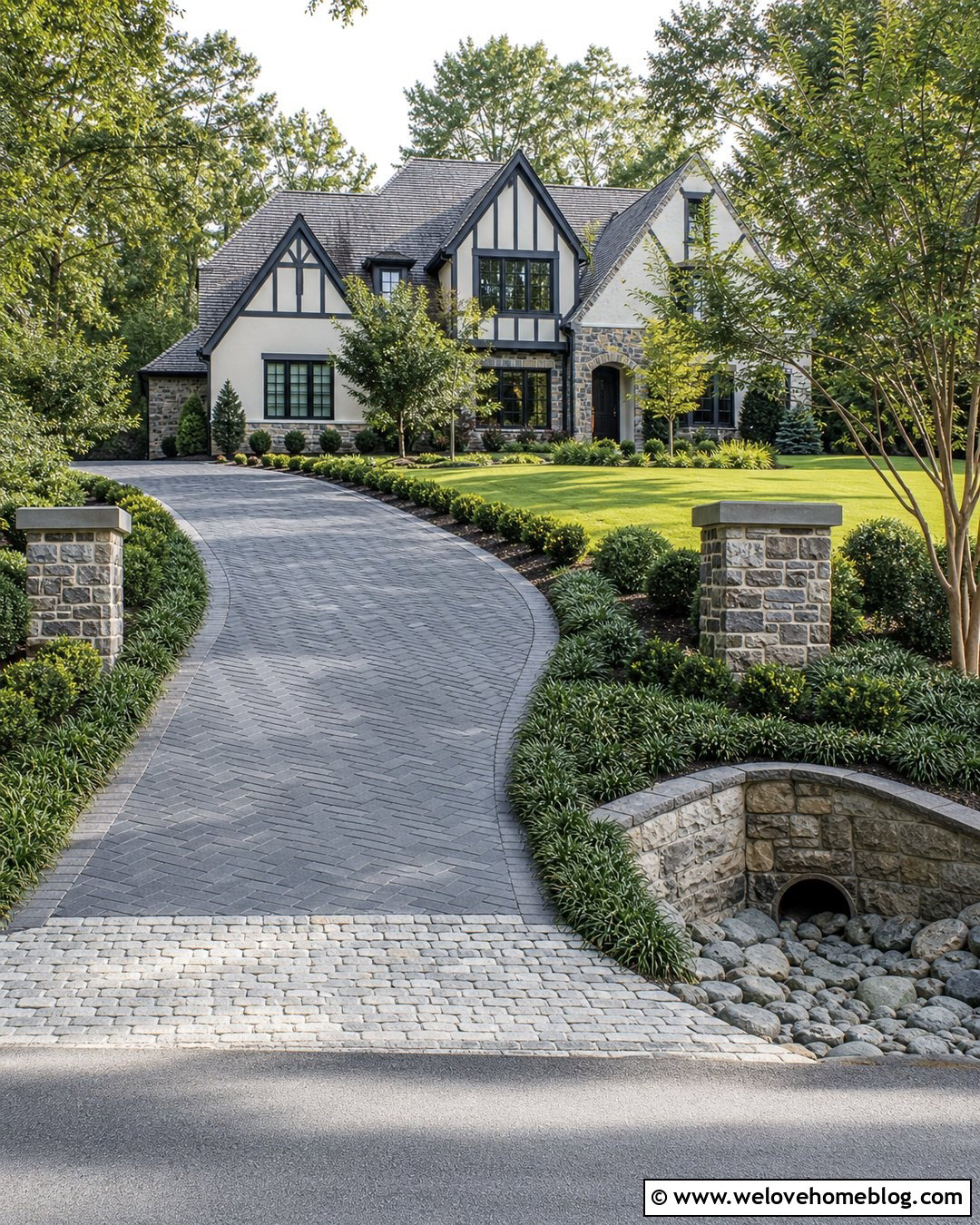
Cobblestone can transform a visible culvert into a refined feature beside a herringbone paver driveway. Use a professional masonry headwall or neatly arranged stone facing around the pipe rather than placing loose rounded cobbles on a steep slope. A short cobblestone ribbon across the driveway entrance can visually link the drainage feature with the paving pattern. Along the ditch, transition to larger, stable drainage stones that can better handle moving water. Keep formal planting simple with compact boxwood alternatives, liriope, or clipped native shrubs above the channel. Matching stone pillars may mark the entrance, provided their location follows local roadside safety and setback requirements. The finished look works particularly well with Tudor, European-inspired, and traditional brick homes.


10. Creek Rock Driveway Culvert With Rain Garden
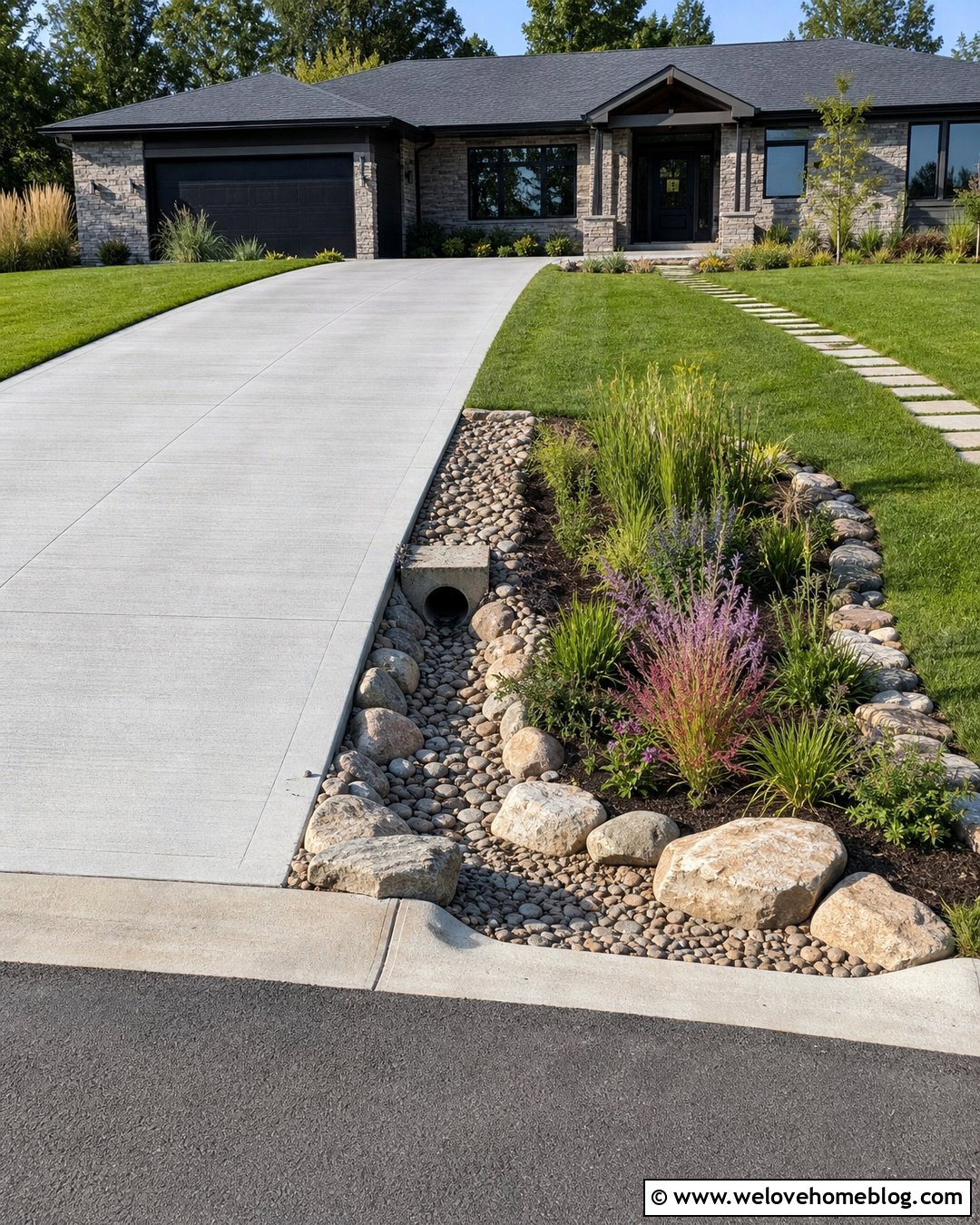
A creek rock culvert flowing into a small rain garden creates a softer landscape around a straight concrete driveway. Shape a defined stone channel from the outlet toward a shallow planted basin, using larger rocks where water arrives and smaller cobbles around the garden margins. The basin should be designed for the property’s soil, runoff volume, and drainage conditions rather than simply excavated beside the road. Plant moisture-tolerant native sedges and flowering perennials along the upper edges while preserving a clear flow route. Vegetation around drainage areas can help stabilize soil when it is suited to fluctuating moisture. () Repeat a few creek stones along the driveway walkway to connect the natural basin with the home’s front entrance.
11. Flat Rock Driveway Culvert With Farmhouse Gravel Driveway
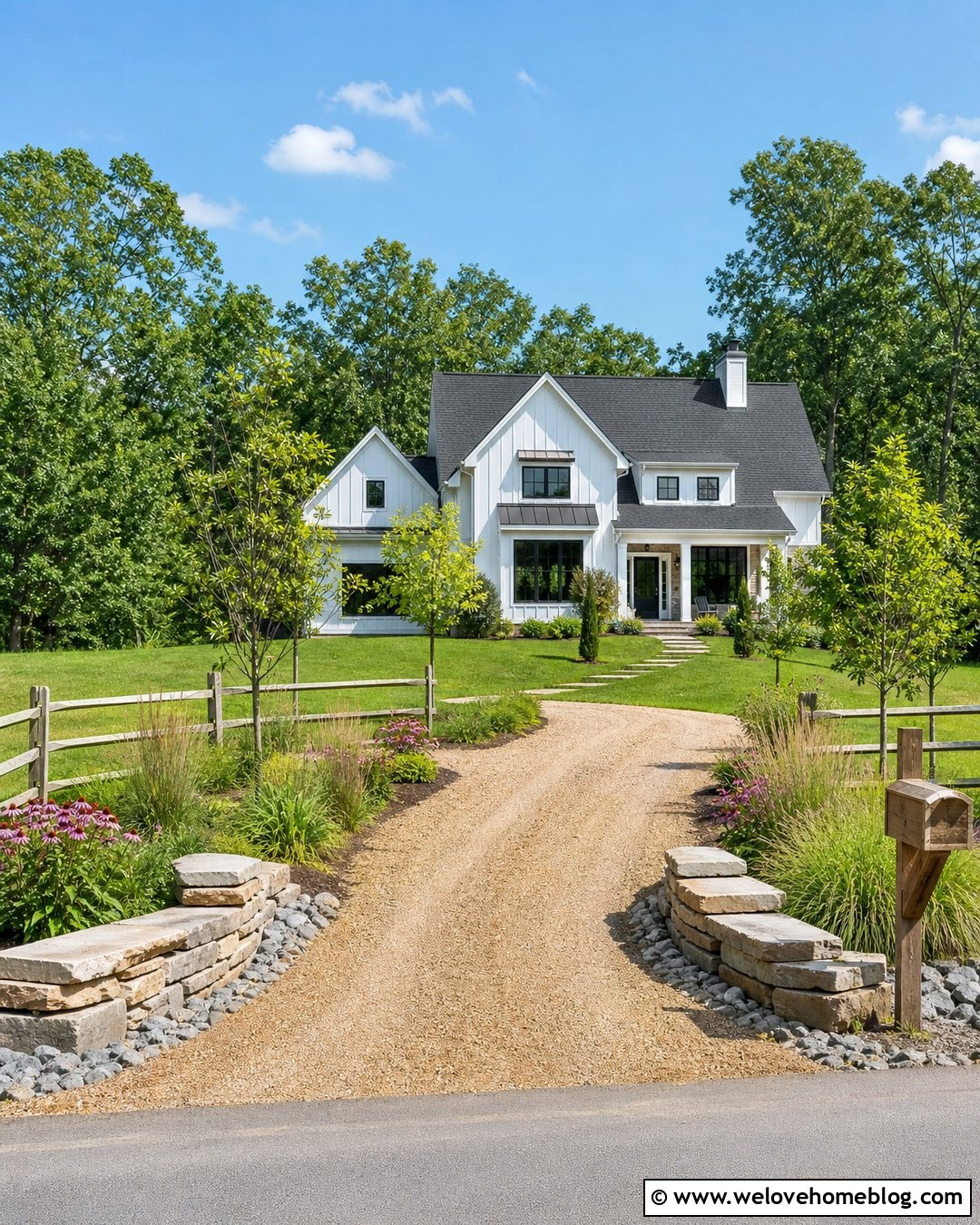
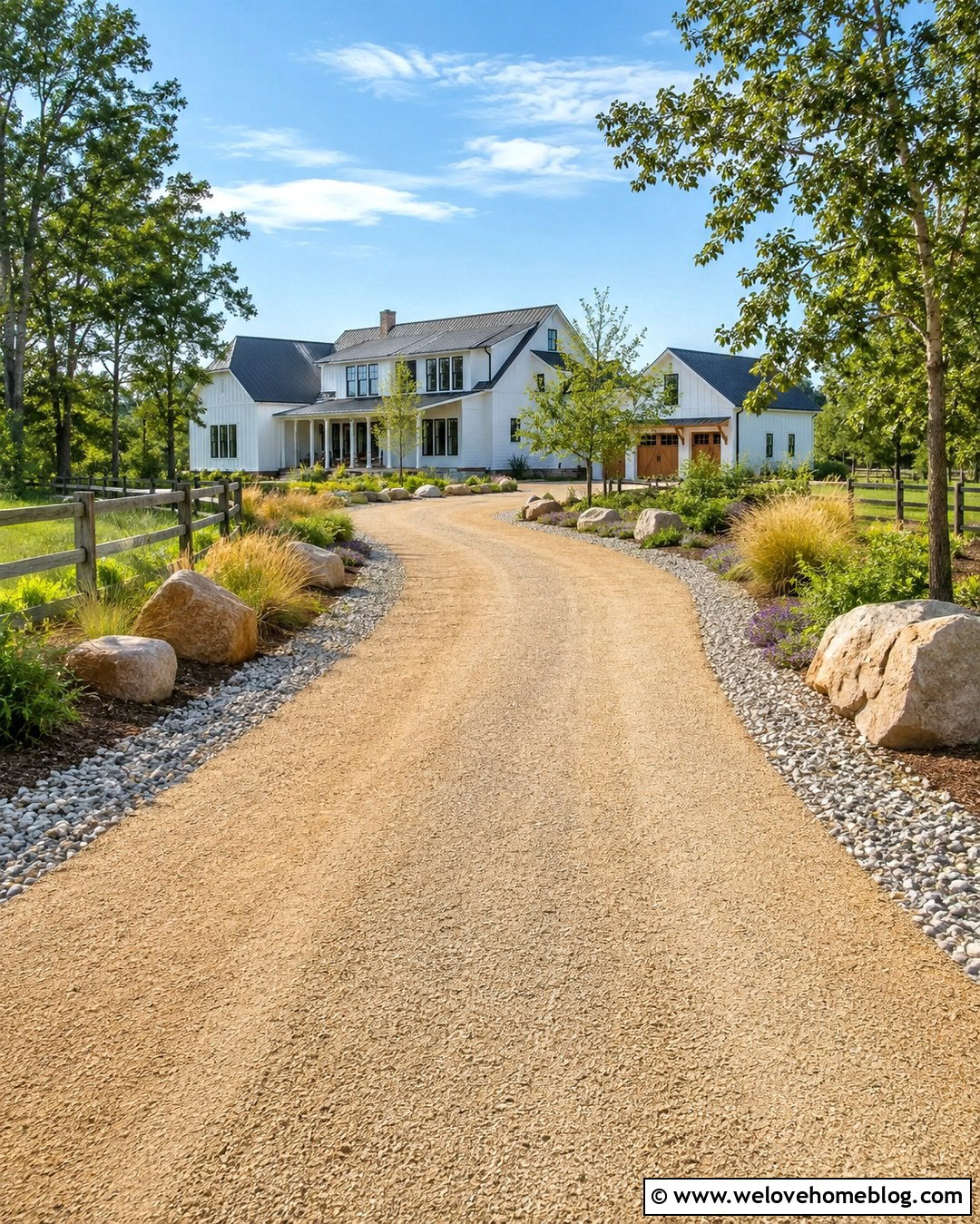
Wide, flat rocks create a sturdy, handcrafted look around the culvert of a farmhouse gravel driveway. Stack the stones in low, stepped courses that follow each sloped bank without forming an oversized vertical wall. Fill the ditch bottom with angular stone selected for drainage, since flat decorative pieces alone may not create a stable apron. The gravel driveway can feature a compacted tan surface with dark steel edging and a wider entrance for farm equipment or daily vehicles. Above the rockwork, plant little bluestem, coneflowers, and low shrubs in informal groups. A simple wood mailbox and split-rail fence can complete the rural setting. Keep fence posts, plants, and loose decorative objects away from the pipe opening and its maintenance access.
12. Slate Driveway Culvert With Dark Concrete Driveway
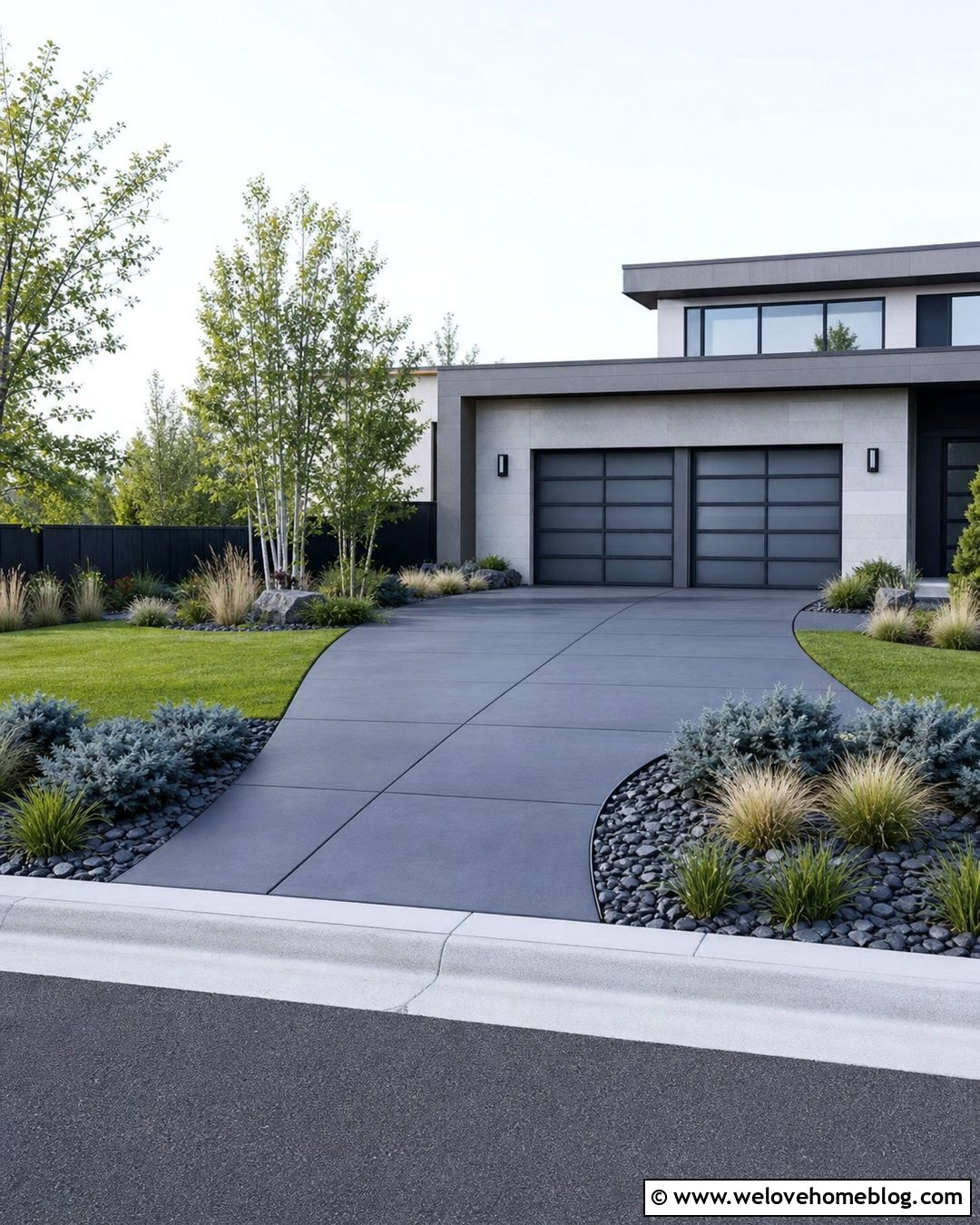
Charcoal slate creates a striking transition between a dark concrete driveway and fresh green lawn. Use thick slate chunks or locally approved angular stone on the drainage slopes, avoiding thin, loosely stacked pieces where runoff could dislodge them. The rock bed can form a shallow crescent around each culvert end, with crisp steel edging separating it from grass. Select blue-gray plants such as compact juniper, prairie dropseed, and low sedges to reinforce the cool color palette. A straight driveway with broad rectangular control joints maintains the modern appearance. At the house, repeat slate in the walkway or porch steps. The result is clean and contemporary, yet the varied stone texture keeps the culvert entrance from looking like a purely engineered installation.
13. Sandstone Driveway Culvert With Tan Gravel Driveway
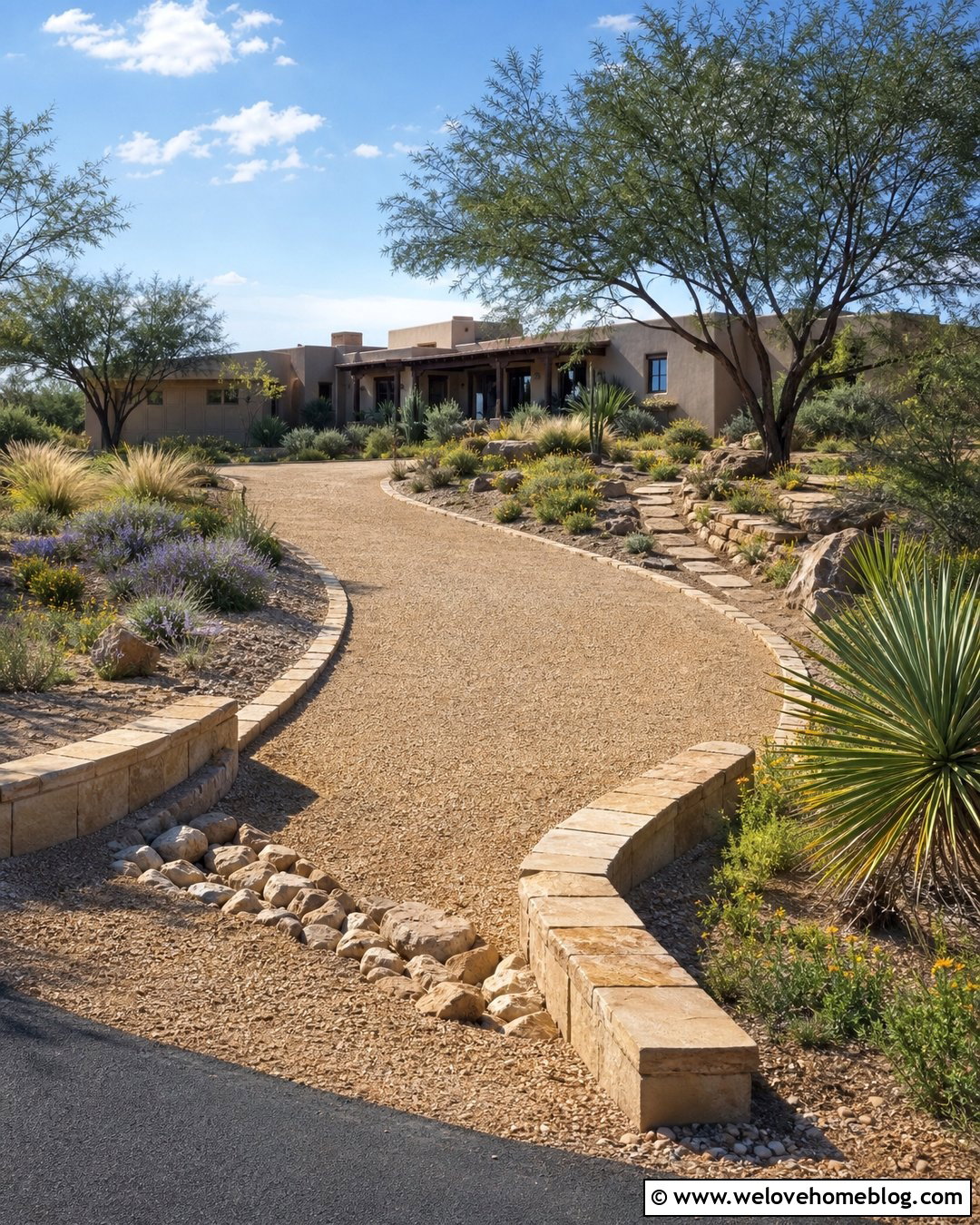
Warm sandstone blends almost seamlessly with a tan gravel driveway and a dry, sunny front yard. Build low sandstone wingwalls around the culvert, then use stable angular rock in complementary earth tones through the active water channel. Continue the sandstone as an edging material for the first several feet of driveway to create one complete entrance composition. Drought-tolerant native grasses, yucca, and low flowering perennials can occupy raised planting pockets outside the drainage path. Avoid loose mulch near the pipe because runoff may carry it into the opening. A broad driveway curve and natural stone walkway make the arrangement feel welcoming rather than rigid. This palette is well suited to Southwestern houses, tan stucco homes, and rustic ranch architecture.
14. Mixed Rock Driveway Culvert With Concrete Ribbon Driveway
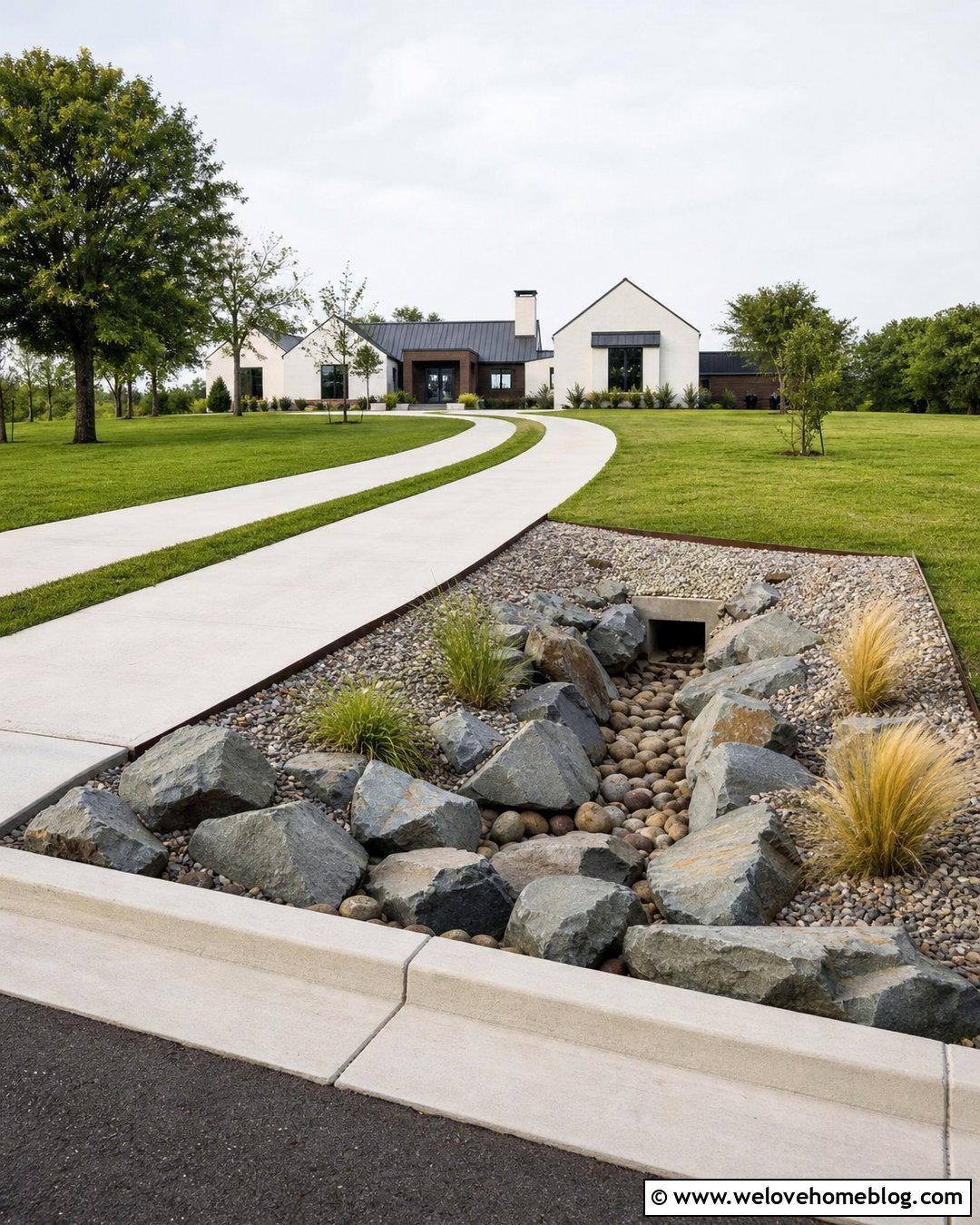
A controlled blend of rock sizes adds depth around a culvert beside a concrete ribbon driveway. Start with large angular stones at vulnerable slopes and around the outlet. Add medium cobbles through the visible channel, then use smaller gravel only in sheltered upper areas. Limit the palette to two or three related colors so the bed looks intentional instead of resembling leftover construction material. Grass strips between the concrete tire lanes soften the driveway, while matching lawn continues along the outer edges. Plant compact grasses in small groups above the high-water line and maintain open access to both pipe ends. A modern farmhouse or minimalist ranch house provides an ideal background for this practical design, which balances engineered drainage with a lighter residential appearance.


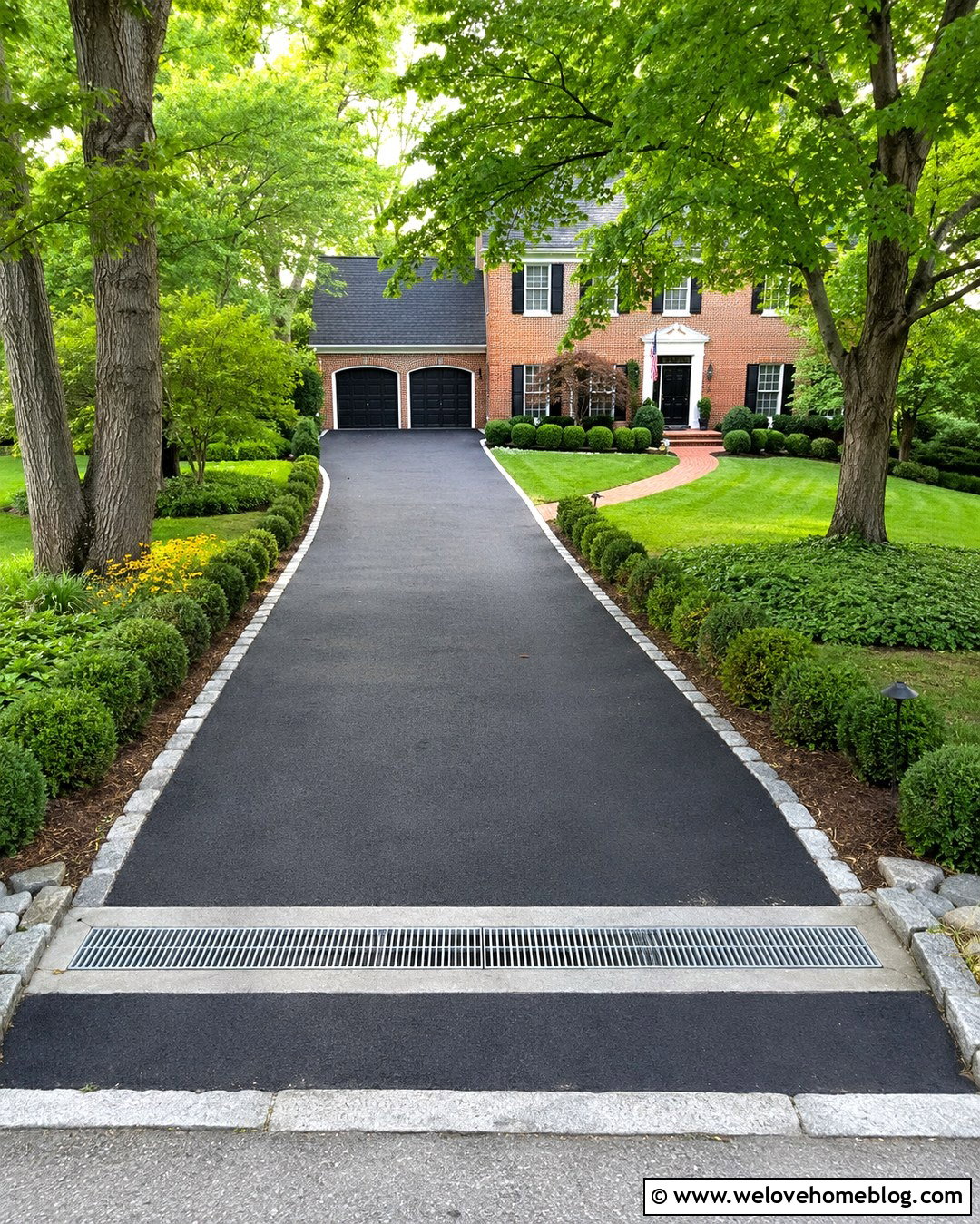
15. Mossy Rock Driveway Culvert With Woodland Driveway
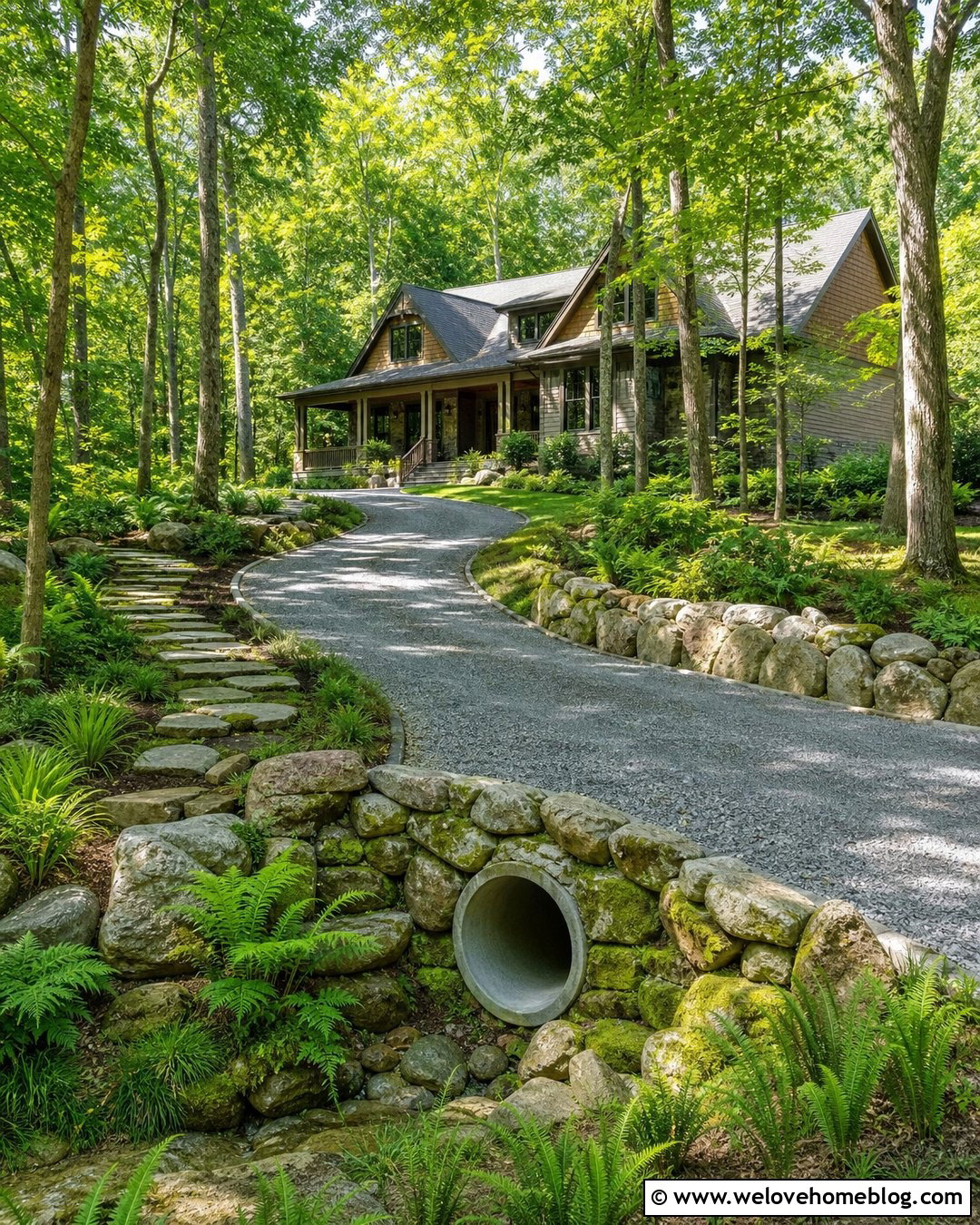
In a shaded yard, moss-toned rocks can help a culvert disappear into a woodland landscape. Frame a curved, compacted gravel driveway with locally sourced fieldstone in gray, brown, and muted green shades. Use larger stable rocks around the pipe and along the lower banks, then blend the installation into beds of ferns, sedges, and woodland ground covers placed outside the main water route. Allow the driveway border to remain slightly irregular so it follows existing trees and terrain. A simple stone walkway can branch from the drive toward a Craftsman or cabin-style home. Do not intentionally cover the culvert entrance with plants or encourage roots directly around the pipe. The most successful result feels natural while still providing clear maintenance access.
16. White Rock Driveway Culvert With Resin-Bound Driveway
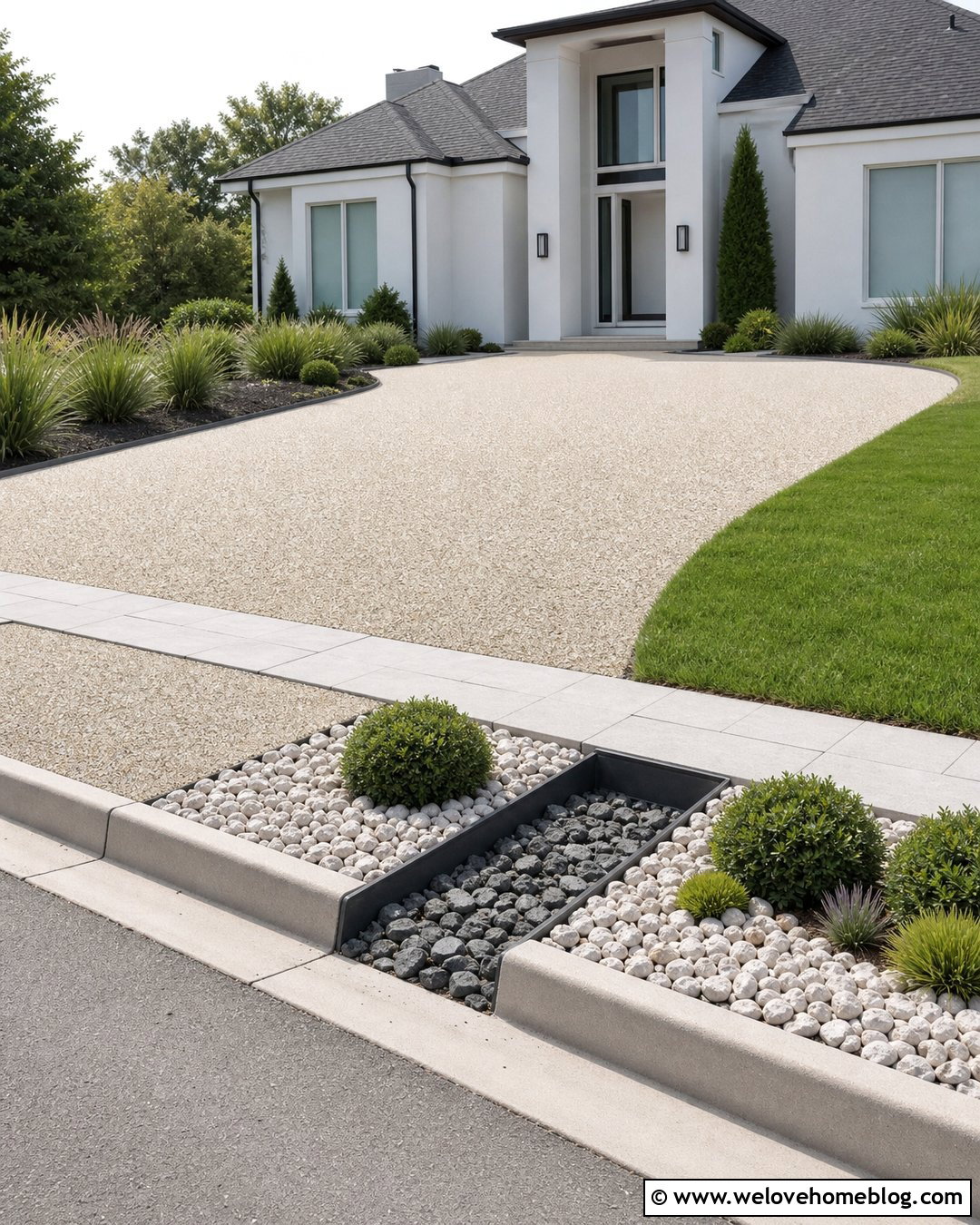
White and pale gray rocks can brighten the entrance to a light-colored resin-bound gravel driveway. Keep the decorative stone on upper, gently sloped banks and use heavier angular rock within the working drainage channel. This prevents the design from depending on small white pebbles that may migrate, collect sediment, or reveal weeds. Define the rock beds with charcoal metal edging for strong contrast against the lawn. Rounded evergreen shrubs and airy ornamental grasses can frame the culvert without blocking it. Carry the pale stone into narrow foundation beds near a white stucco or contemporary home. The coordinated driveway, dark edging, and restrained planting create a polished entrance while preserving a visible, unobstructed route for stormwater and routine pipe inspection.
17. Rock-Lined Swale Driveway Culvert With Brick Ribbon
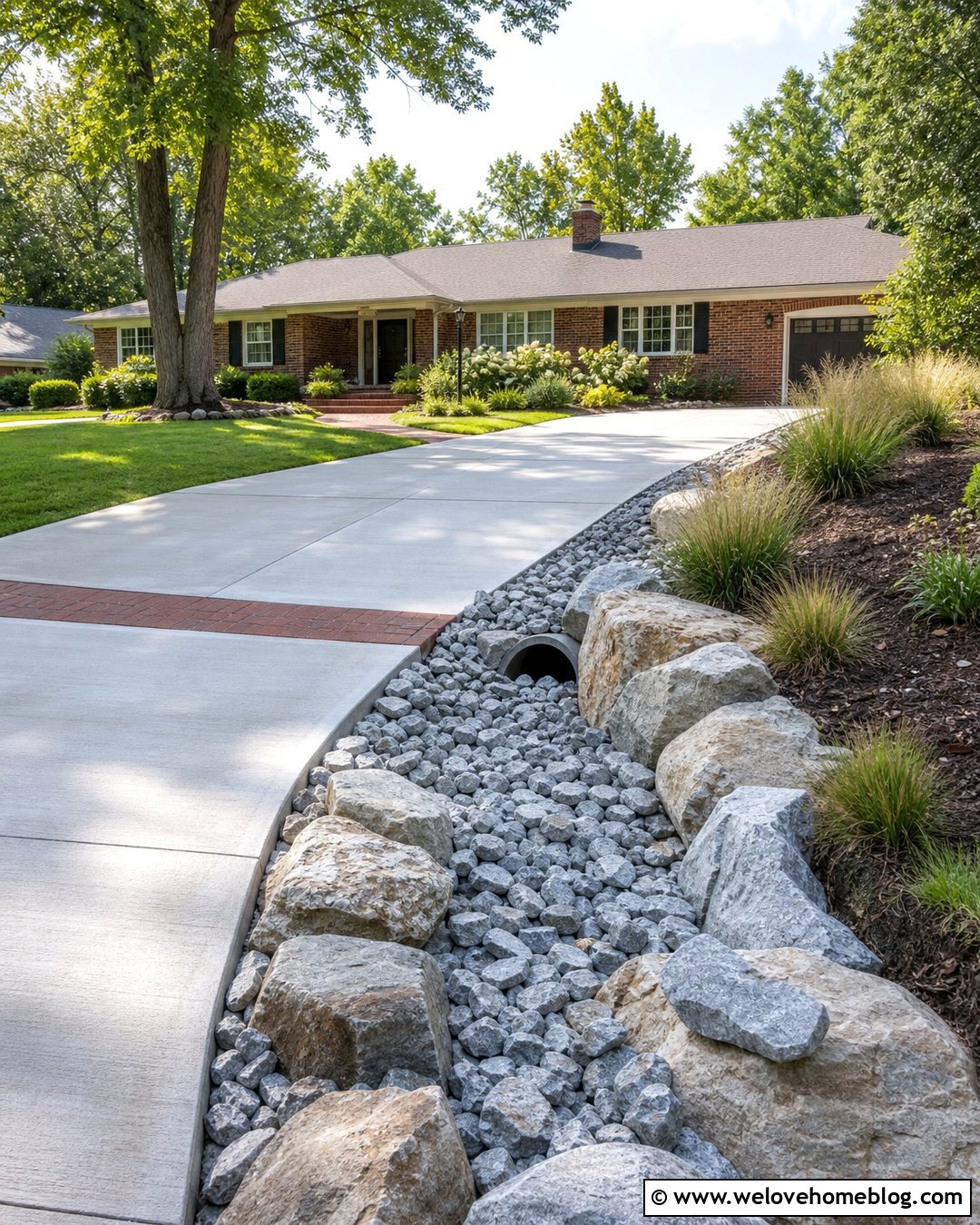
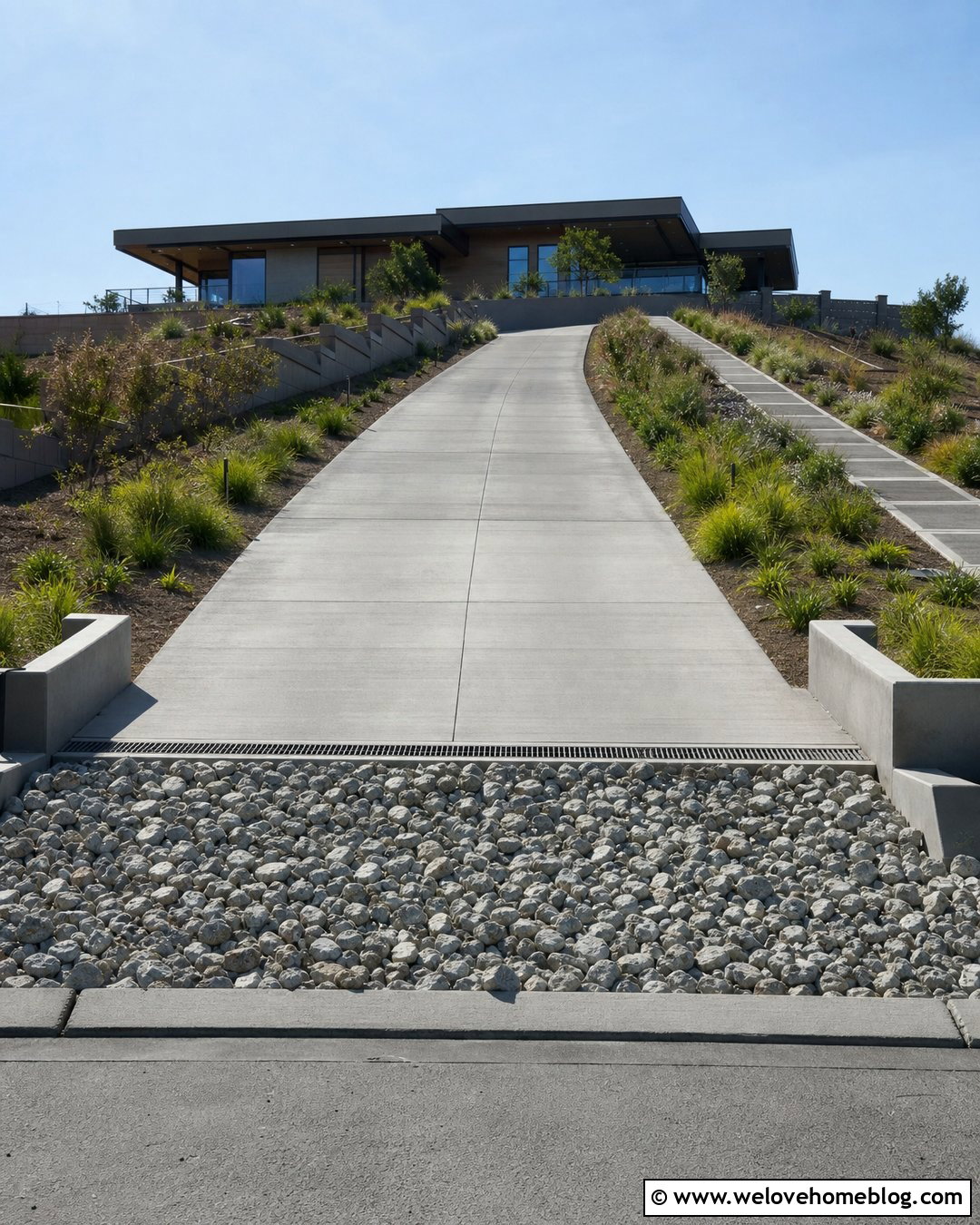
A rock-lined swale connects the culvert to the larger drainage pattern instead of treating the pipe as a separate object. Beside a light gray concrete driveway, shape a broad shallow channel and line its center with angular drainage stone. Add a narrow brick ribbon at the driveway entrance, repeating the home’s brick color and clearly marking the transition from the road. Medium boulders can stabilize the upper bends of the swale, while native grasses cover the gentler outer slopes. Keep the lowest channel open and avoid creating decorative dams across the water route. Rock armor at a culvert outlet can help dissipate concentrated flow and protect vulnerable soil when it is properly sized and installed. ()
18. Rock Terrace Driveway Culvert With Sloped Asphalt Driveway
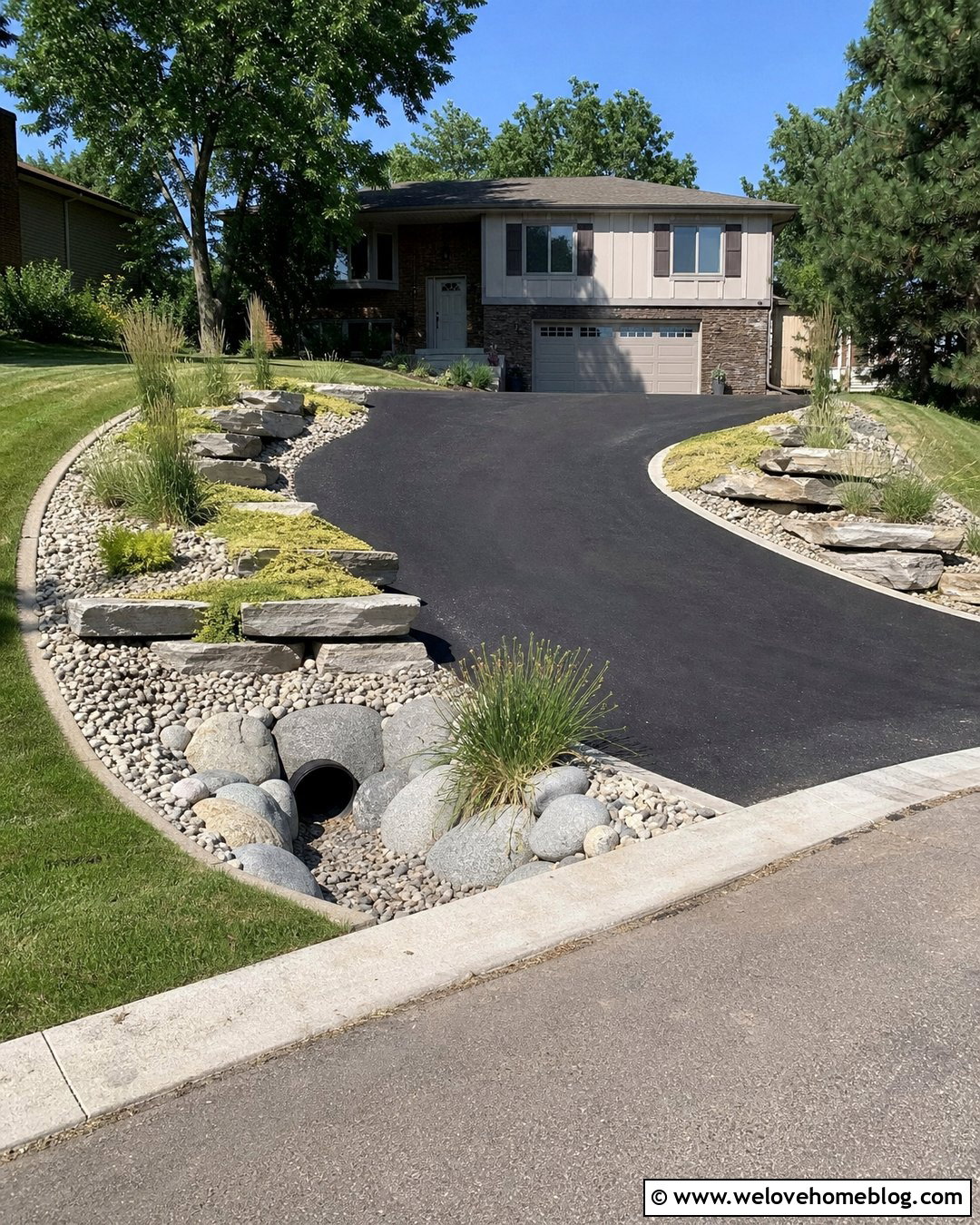
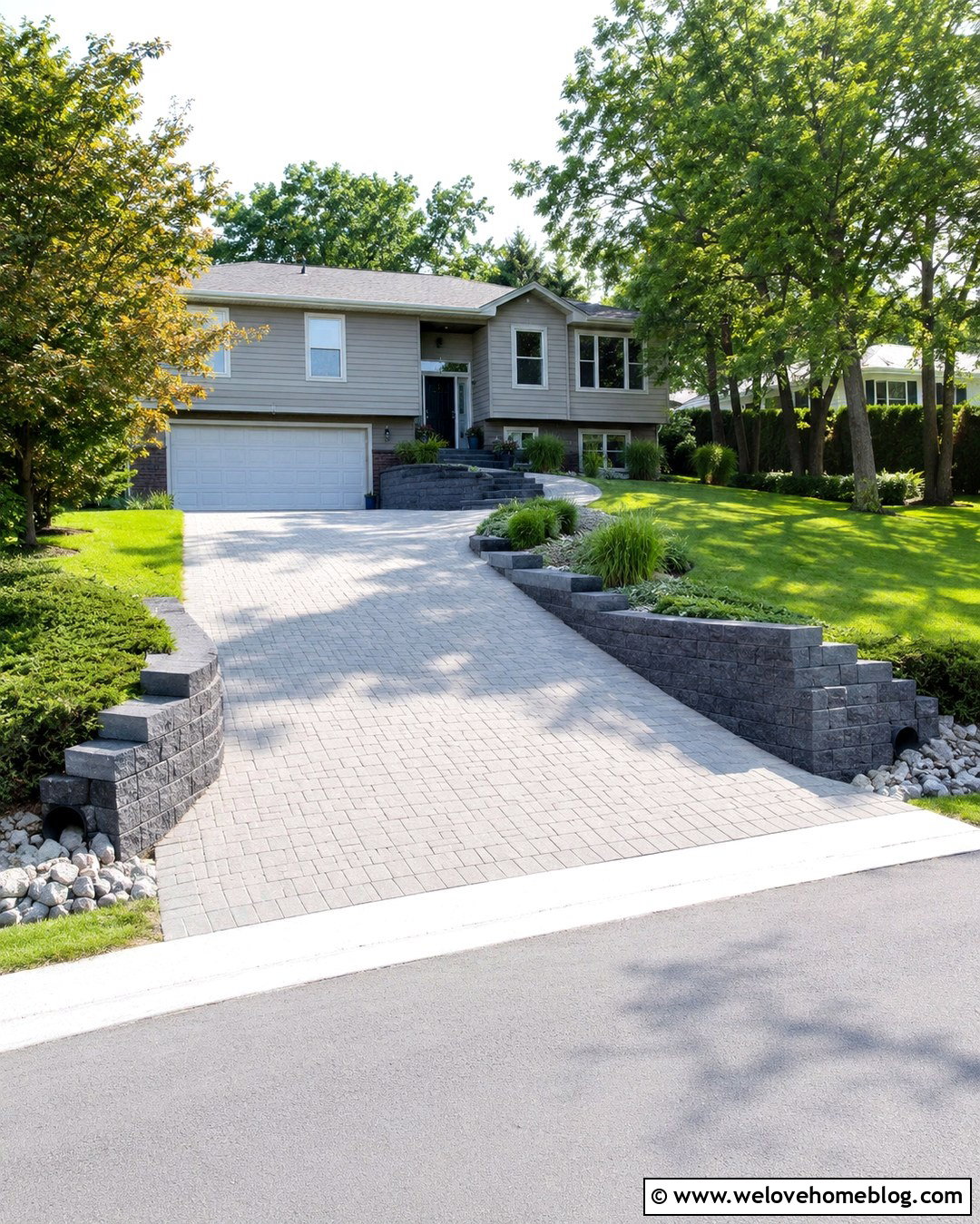
A sloped asphalt driveway often needs a culvert treatment that visually and physically follows the grade. Create two or three low rock terraces on the embankment beside the pipe, using large flat stones at the base and smaller pieces higher on the slope. Leave a broad, clear apron directly in front of the opening. Plant spreading ground covers and erosion-tolerant grasses between upper terraces, but avoid deep-rooted shrubs close to the pipe. A smooth concrete curb or flush metal edge between lawn and rock can make mowing easier and reduce loose material in the grass. Inspect the installation after major storms and remove leaves, branches, or displaced stones before they restrict flow. Easy access is an important part of any low-maintenance culvert landscape.
19. Natural Stone Driveway Culvert With Entrance Pillars
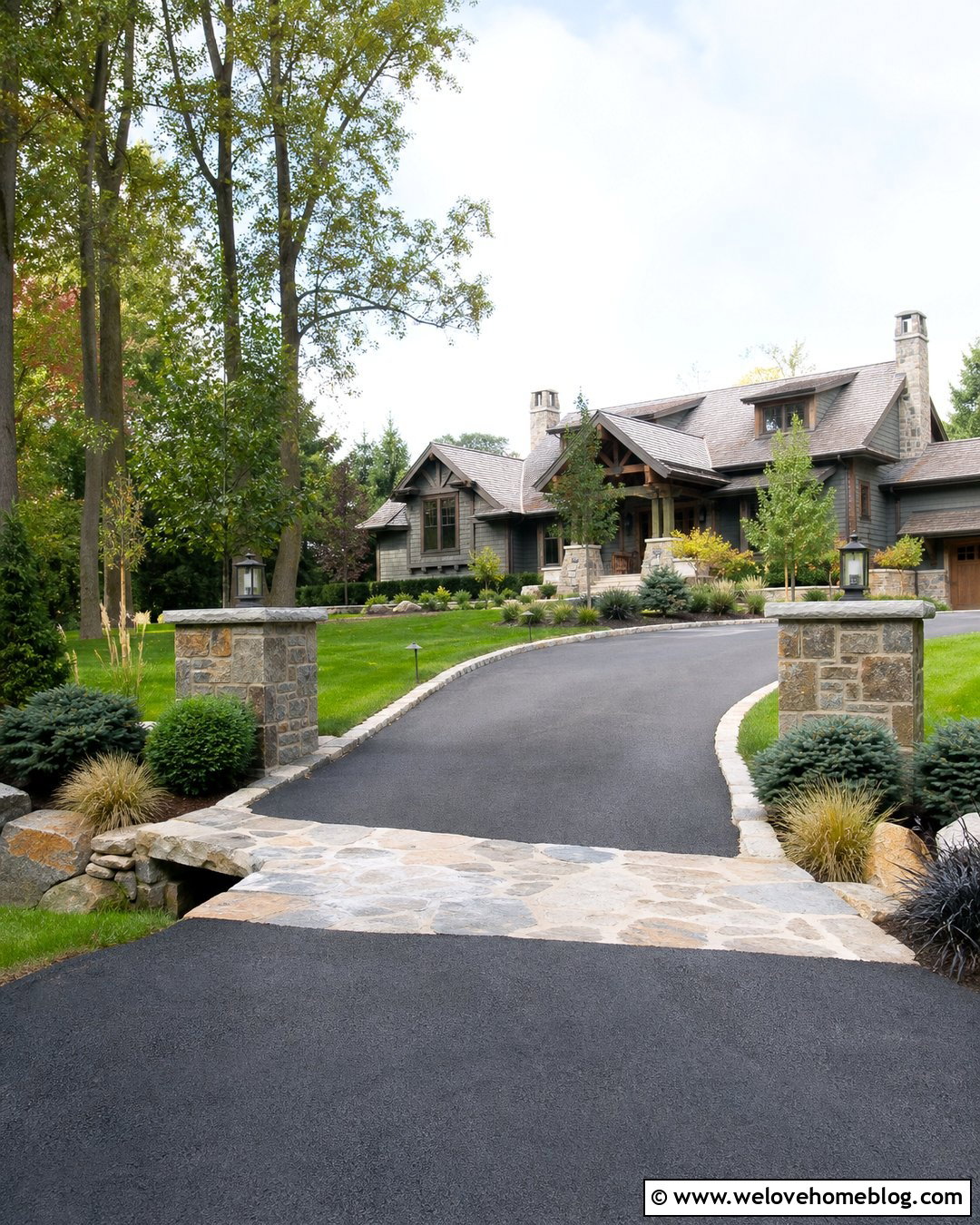
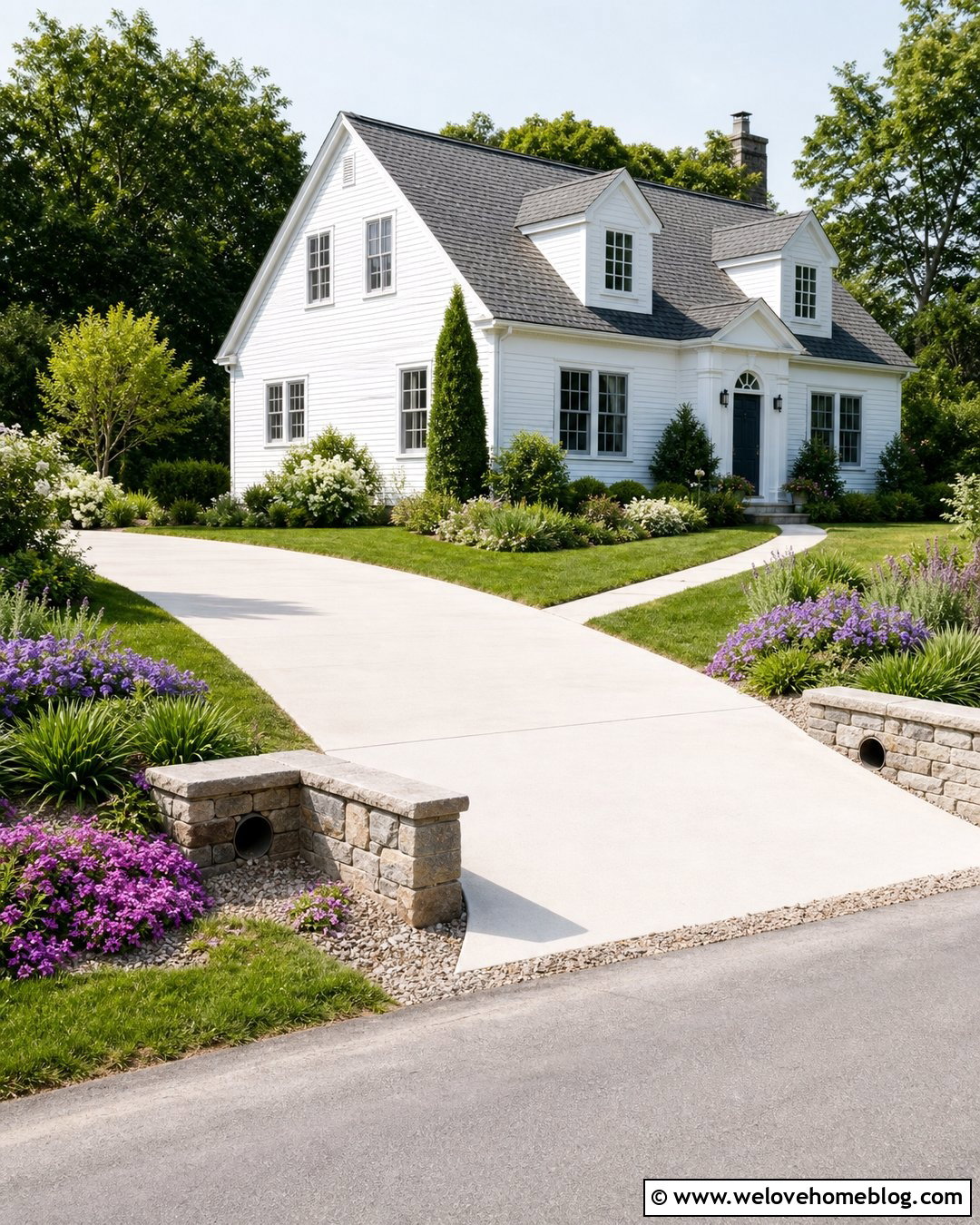
Natural stone entrance pillars can coordinate with a rock-lined culvert when both features use the same material palette. Pair a curved black asphalt driveway with low stone-faced pillars set well back from the ditch and roadside travel area. Around the culvert, use angular gray and brown rocks shaped into a wide, low apron rather than building tall ornamental piles. A matching stone border can follow the driveway curve and connect the drainage feature to the entrance. Plant dwarf evergreens and ornamental grasses behind the pillars, keeping the ditch itself open. Low-voltage fixtures may illuminate the pillars from the lawn without placing equipment in the water channel. This balanced arrangement creates a defined entrance for a Colonial, Craftsman, or large suburban home.
20. Low-Maintenance Rock Driveway Culvert With Gravel Driveway
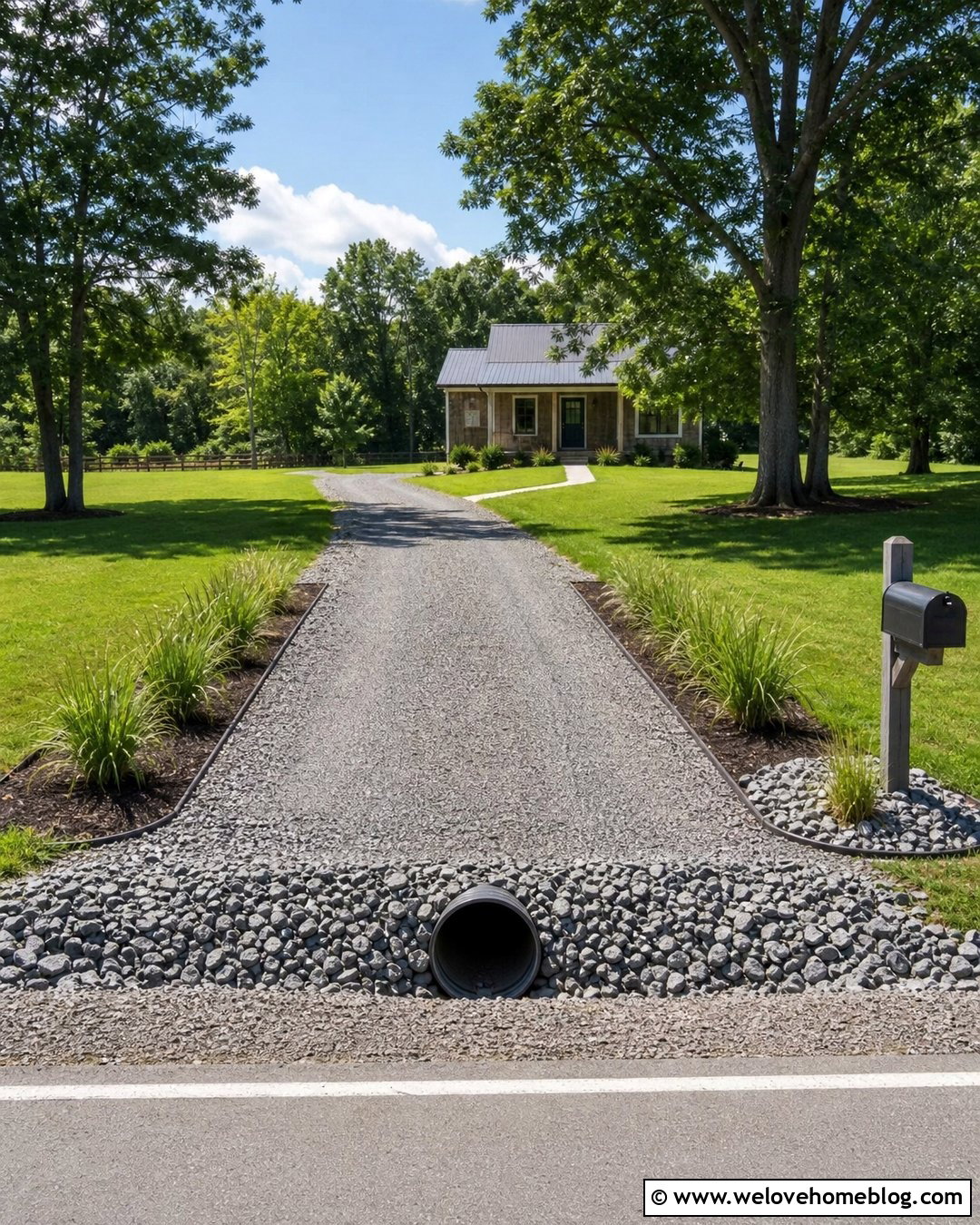
For a straightforward finish, combine a compacted gravel driveway with one durable type of angular landscape rock around the culvert. Shape a clean apron at each pipe end, cover vulnerable soil with properly prepared stone, and keep the opening visible from the road. Install a flush steel or concrete mowing edge where the rock meets lawn. This reduces trimming and prevents the bed from gradually spreading into the grass. Use only a few hardy plants on the upper banks, such as native sedges or low evergreen ground covers. Repeating the same rock beside the mailbox and driveway turnaround ties the property together without adding complicated maintenance. The finished entrance looks neat, handles seasonal weather gracefully, and suits nearly any modest ranch, cottage, or country home.
Conclusion:
The most effective 20 rocks around driveway culvert ideas combine attractive materials with a clear drainage plan. Choose rock that complements the driveway, house, and surrounding landscape, but do not sacrifice function for decoration. Keep both pipe ends open, preserve the ditch elevation, and use stable stone where concentrated runoff may cause erosion. Plants, borders, pillars, and lighting should remain outside the primary flow and maintenance areas. For significant erosion, unstable slopes, deep ditches, or fast-moving water, consult a qualified drainage professional. Local approval may also be required before altering a roadside ditch or culvert. With thoughtful grading and coordinated materials, an exposed pipe can become a polished, practical part of the property entrance.

Related posts:
Leave a Reply