
Poor driveway drainage can lead to puddles, erosion, slippery surfaces, damaged paving, and water collecting near the garage or foundation. The best solution depends on where the runoff begins, how the driveway slopes, the soil’s drainage rate, and where water can legally discharge. These 35 Driveway Drainage Solutions Ideas combine practical drainage systems with complete driveway designs, including permeable surfaces, channel drains, swales, rain gardens, catch basins, and attractive stone borders. Some work well for manageable surface runoff, while others need professional grading and underground pipes. Always locate utilities, test the soil, and check local stormwater rules before digging or directing runoff. Use the complete designs below to explore 35 Driveway Drainage Solutions Ideas.

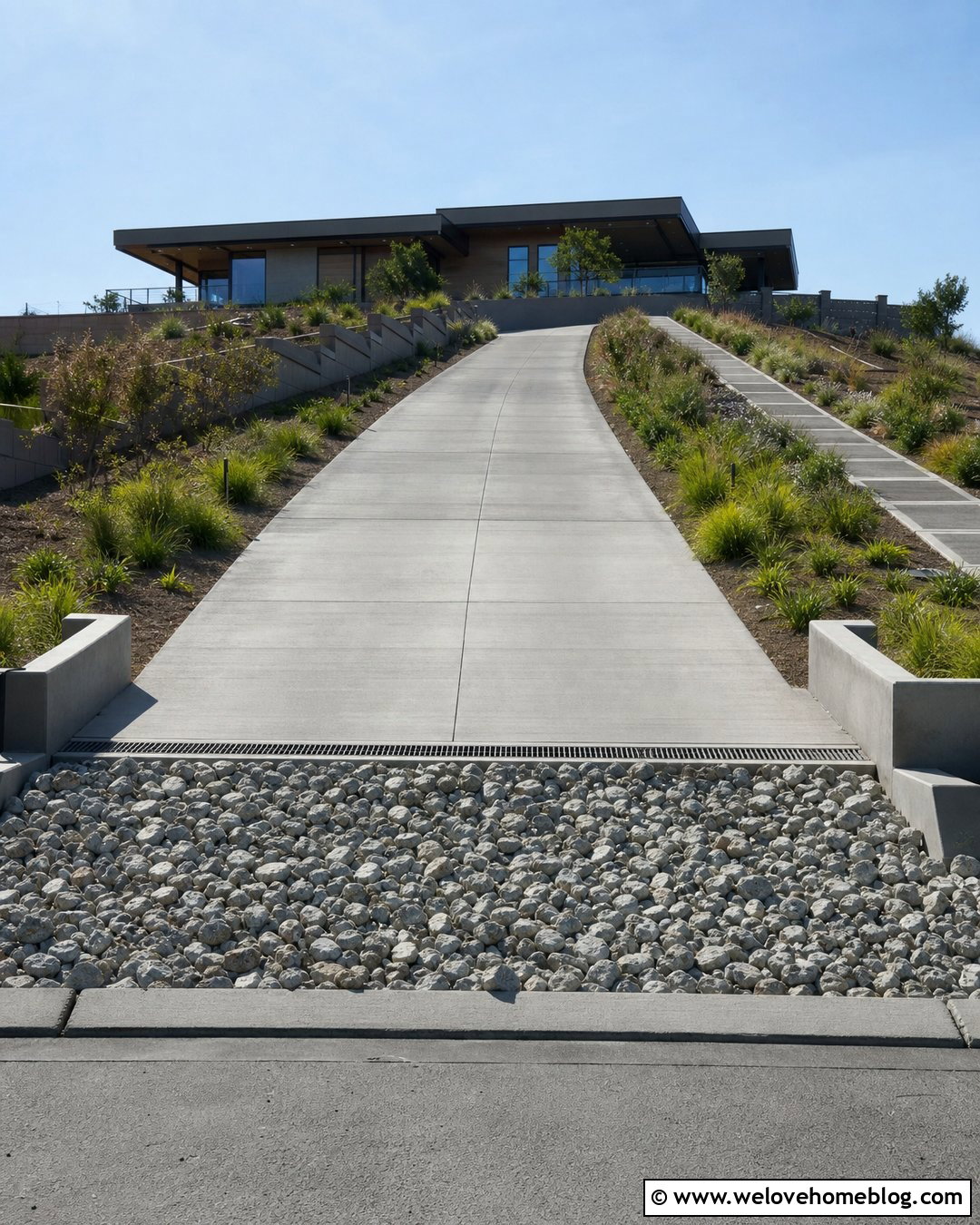
1. Driveway Channel Drain In Front Of Garage

A channel drain installed across the driveway can intercept runoff before it reaches the garage. This arrangement works especially well on a concrete driveway that slopes toward the house. Set the grate flush with the paving so tires pass over it smoothly, and connect the channel to a properly sized solid outlet pipe. A dark metal grate creates a clean transition between the driveway and garage apron. Add narrow planting beds beside the paving to soften the functional feature. The surrounding concrete must slope toward the drain rather than leaving low pockets nearby. Choose a load-rated channel designed for vehicle traffic, and include removable sections that make sediment and leaf cleanup easier throughout the year.
2. Driveway Channel Drain At The Street Entrance

When stormwater enters from the road, a channel drain near the driveway entrance can capture it before it travels toward the house. This design suits a gently descending asphalt driveway with a concrete or paver apron at the curb. Place the drain across the full paved width and direct the collected water to an approved outlet, infiltration area, or stormwater connection. Flared stone borders can guide runoff toward the grate while protecting the driveway edges from erosion. Keep the channel slightly below the surrounding surface without creating a harsh dip for vehicles. Because street runoff may carry leaves, gravel, and sediment, select a removable grate and provide an accessible cleanout point for routine maintenance.
3. Driveway French Drain Along The Edge
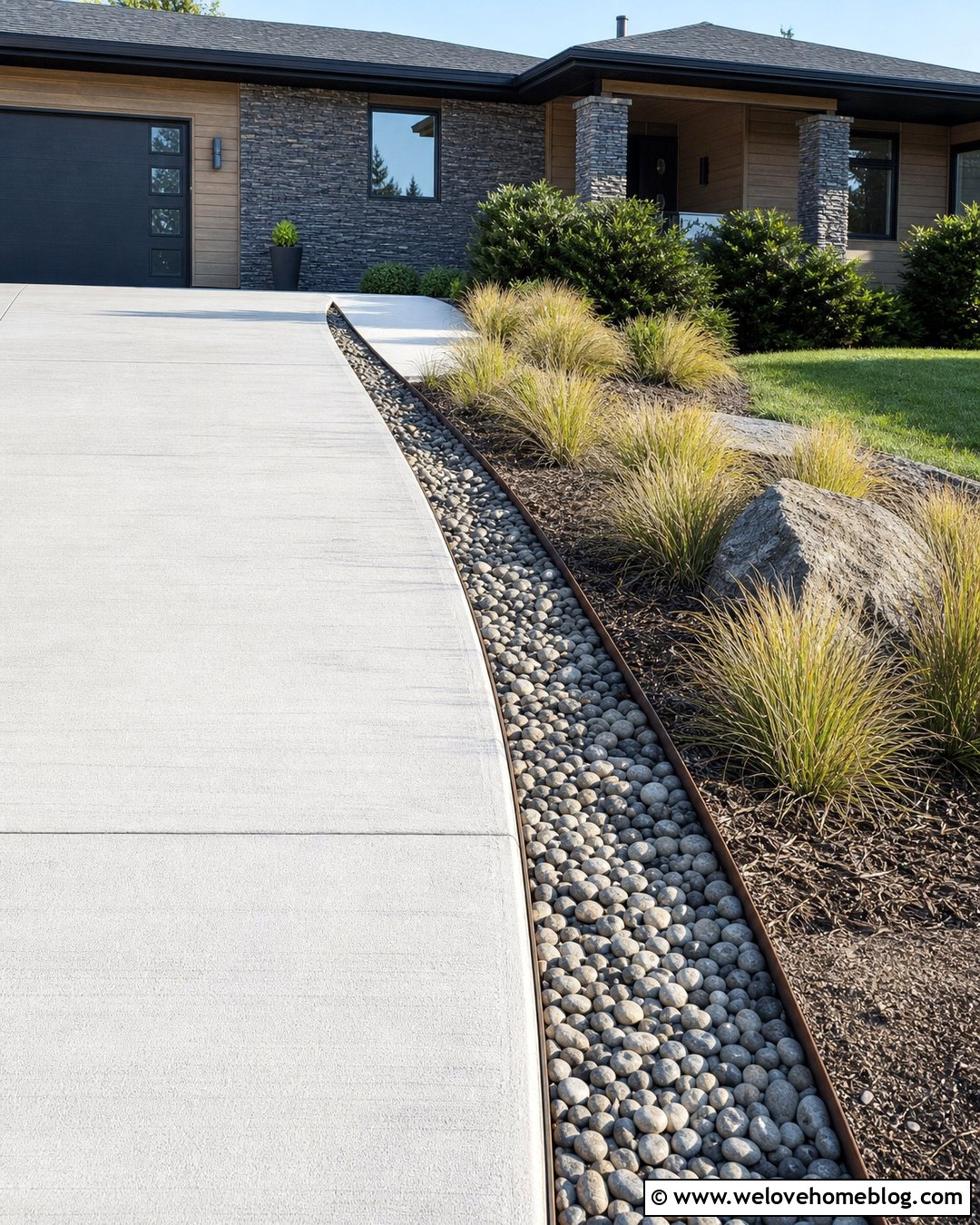
A French drain can manage water that collects beside a driveway or seeps from an adjacent slope. Pair a straight poured-concrete driveway with a gravel-filled trench running along its uphill edge. Beneath the decorative stone, a perforated pipe and suitable filter fabric collect subsurface moisture and move it toward a safe discharge point. A steel, stone, or concrete edge restraint keeps loose gravel away from the driving surface. Ornamental grasses and moisture-tolerant shrubs can make the trench feel integrated with the landscape. This solution is generally better for saturated soil than fast-moving sheets of surface water. Confirm the outlet first, because an underground drain cannot work effectively if the pipe has nowhere appropriate to empty.
4. Driveway Catch Basin At The Low Point

Does one deep puddle return after every heavy rain? A catch basin placed at the driveway’s lowest point can collect concentrated surface water before it spreads. This complete design works well with a brick-paver driveway pitched gently toward a square basin with a decorative metal grate. Connect the basin to a solid drainpipe that carries water to a permitted outlet. A sediment sump inside the box helps capture dirt before it enters the pipe. Frame the basin with carefully cut pavers so the surface remains smooth and visually balanced. Avoid placing it where turning tires repeatedly cross the grate. Regularly remove leaves, silt, and trash, especially after storms, to maintain dependable flow.
5. Permeable Paver Driveway With Stone Borders

Permeable pavers create an attractive driveway surface that allows rainwater to enter open joints instead of racing toward the street. A straight driveway made with charcoal concrete pavers can be framed by pale limestone borders and low evergreen planting beds. The system needs more than permeable blocks; it requires properly graded, open-graded aggregate layers below the surface to temporarily store and disperse water. Joint material must remain free-draining and should not be replaced with ordinary sand. In dense clay or high-water-table conditions, an underdrain or another outlet may still be necessary. Vacuuming accumulated sediment and replacing clogged joint aggregate helps preserve infiltration. Professional soil evaluation and base design are worthwhile for this installation.
6. Crowned Gravel Driveway With Drainage Ditches

The soft crunch of gravel can hide a hardworking drainage layout. Give a long crushed-stone driveway a subtle crown so water moves from the center toward both sides rather than flowing down the tire tracks. Shallow grassed ditches can then carry runoff toward stable outlets. Compact the base carefully and use angular gravel that locks together under vehicle traffic. Cobblestone edging near the house creates a finished transition and prevents stone from spreading into planting beds. On steeper sections, add check stones or erosion-resistant vegetation within the ditches to slow moving water. The crown and side drains will need occasional reshaping because traffic, snow removal, and intense storms can gradually flatten the surface.
7. Driveway Grass Swale With Native Planting

A broad grass swale beside the driveway can redirect runoff without making the front yard look heavily engineered. Pair a curved asphalt driveway with a shallow, gently sloped channel on the downhill side. Turf provides a simple appearance, while clusters of regionally appropriate sedges and native perennials can strengthen the soil and slow water. The swale should lead toward a safe infiltration area, rain garden, or approved discharge point rather than ending beside the foundation. Keep the sides gradual enough for mowing and safe foot traffic. This design is most suitable where the property has enough width and a workable slope. Protect the inlet and outlet with stone if fast runoff could cause erosion.
8. Driveway Dry Creek Bed Drainage

A dry creek bed can turn a visible runoff route into a strong landscape feature. Along a sloped concrete driveway, shape a shallow meandering channel with river rock, larger anchor stones, and gravel sized to resist movement. The bed can collect runoff from the driveway edge and direct it toward a rain garden or other approved destination. Plant ornamental grasses, low shrubs, and ground covers along the upper banks without crowding the flow path. Use a stable base and appropriate fabric or graded aggregate where needed to reduce erosion and prevent stones from sinking into soft soil. The creek should follow the actual grade rather than an arbitrary decorative curve. Keep leaves and sediment from blocking narrow sections.
9. Driveway Rain Garden At The Bottom

A rain garden can receive driveway runoff while adding color and habitat to the front yard. Combine an exposed-aggregate driveway with a shallow planted basin near the lower side of the property. A stone-lined inlet carries water into the garden and reduces erosion where the flow enters. Select plants suited to temporary wetness as well as dry periods, using species appropriate for the local climate and site conditions. The basin should drain within a reasonable period and remain safely away from the house, septic components, and buried utilities. An overflow route is essential for storms that exceed its storage capacity. Soil testing and careful sizing help prevent the garden from becoming a permanently soggy depression.


10. Driveway Dry Well With Gravel Apron

A dry well stores runoff underground and releases it gradually into suitable surrounding soil. This system can complement a pea-gravel driveway with a cobblestone entrance apron and a small catch basin near the lowest corner. A solid pipe carries collected surface water to the buried dry-well structure. The top can remain under lawn or a landscaped gravel bed, provided an inspection point stays accessible. Dry wells are not appropriate everywhere, particularly where soil drains poorly, groundwater is high, or local setback requirements cannot be met. Install pretreatment to reduce sediment entering the system, and include a safe overflow path. A percolation test and professional sizing are advisable before relying on a dry well for substantial driveway runoff.
11. Regraded Driveway Sloping Away From Garage
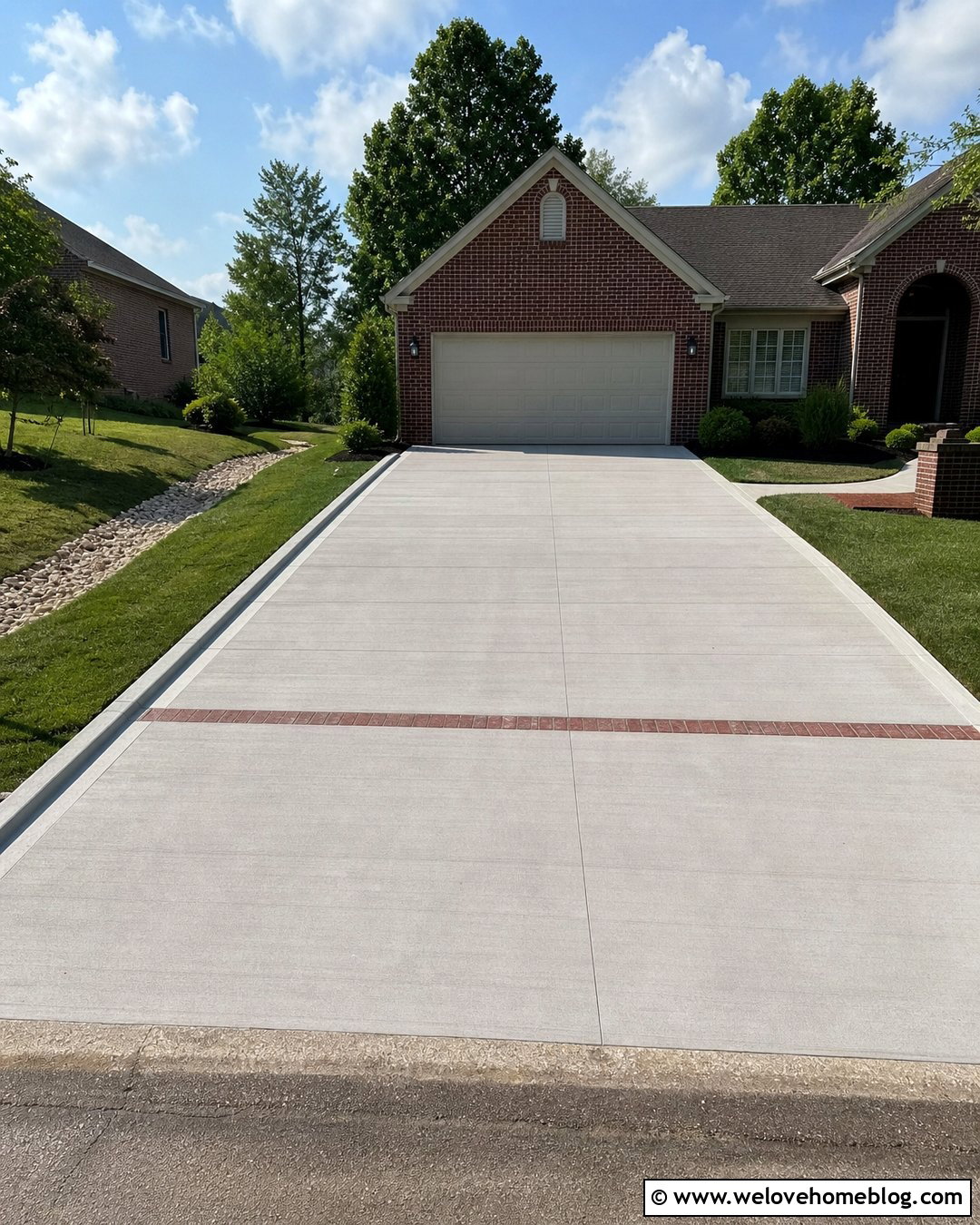
Sometimes the most effective drainage improvement is correcting the driveway surface itself. A poorly pitched concrete driveway can be removed or resurfaced so water travels away from the garage and toward a controlled collection area. A gentle cross-slope can direct runoff to a landscaped side swale without making the parking surface feel noticeably tilted. Add a contrasting brick ribbon near the garage and clean concrete borders along the lawn for a complete, polished appearance. Regrading requires precise elevation planning because moving water away from one structure should not send it toward a neighbor or another vulnerable area. Check garage thresholds, sidewalks, utility covers, and street elevations before construction. Confirm the finished flow pattern with water testing before final landscaping.
12. Crowned Asphalt Driveway With Stone Edging

A crowned asphalt driveway sheds water toward its edges rather than allowing runoff to follow the driveway downhill. This approach works well for a long country or suburban drive where open space is available on both sides. Frame the black asphalt with granite cobbles, then add shallow vegetated channels beyond the borders. The crown should be smooth and subtle so vehicles remain stable while water moves efficiently. At the bottom, connect the side channels to a broader swale, infiltration area, or approved culvert system. Reinforce curves and steep segments where concentrated flow could wash out the shoulder. Asphalt edges need strong base support because saturated soil can cause cracking and settlement. Inspect the crown after resurfacing and major storms.
13. Driveway Center Valley Drain

A center valley can collect water from both sides of a wide driveway and guide it toward a drain at the lower end. Use this arrangement on a split concrete driveway with two lightly sloped parking lanes separated by a narrow band of river pebbles. Beneath the decorative band, a linear drainage channel or carefully designed stone trench manages the concentrated runoff. Low planting beds along the outer edges keep the middle feature visually intentional. The valley must be wide and shallow enough to avoid becoming a tire hazard. It also needs a stable outlet that will not erode the lawn. Remove accumulated leaves regularly, since debris gathering in the center can quickly restrict water movement and create new puddles.
14. Modern Driveway Slot Drain

For a minimalist home, a slot drain offers drainage with a much narrower visible opening than a traditional grate. Pair it with large-format gray concrete slabs, straight lawn edges, and restrained evergreen planting. Position the drain across the driveway near the garage or along the lowest side, depending on the direction of runoff. The surrounding slabs must pitch precisely toward the slot for the system to collect water effectively. Select components rated for driveway loads and provide accessible cleaning points, even if the visible channel appears almost seamless. Fine openings may clog when nearby trees shed heavily, so regular maintenance matters. A black slot line can echo dark window frames and create a crisp architectural detail without dominating the driveway design.



15. Cobblestone Driveway Drainage Apron

A cobblestone drainage apron can provide a durable, textured collection zone where a driveway meets the street. Combine a light concrete driveway with a broad band of dark granite cobbles laid across the entrance. Grade the main surface toward the apron, then integrate a vehicle-rated channel drain between or directly behind the cobblestone band. Flared stone edges and low ground-cover beds help guide water into the collection area. The apron should remain even enough for comfortable vehicle entry while resisting wear from turning tires. Use a strong base and secure edge restraints to prevent settlement. Because the inlet sits close to street debris, clear leaves, grit, and winter material frequently. Route captured runoff only to an approved destination.
16. Brick Driveway Drainage Strip
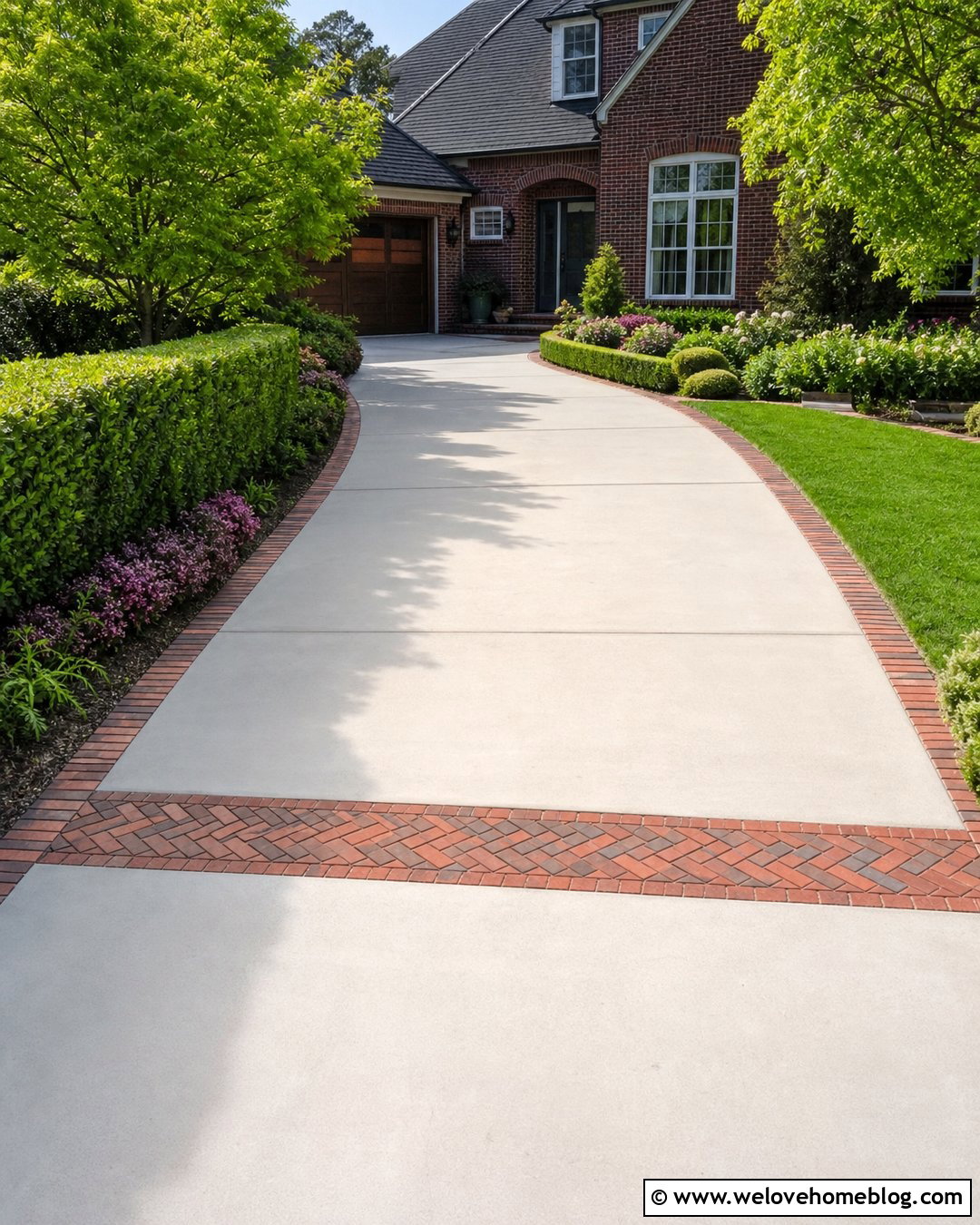
Warm brick can make a drainage feature look like a deliberate part of the paving pattern. Design a poured-concrete driveway with a herringbone clay-brick strip crossing the surface at its natural low point. A concealed or narrow grated channel within the band collects runoff, while matching brick borders connect the strip to the surrounding landscape. Plant clipped shrubs and drought-tolerant perennials along the edges for a traditional, orderly finish. Make sure the bricks and drain are supported by a vehicle-rated base rather than laid as a decorative surface treatment alone. The concrete on both sides must slope toward the strip. Removable drain access is still necessary, even when the design aims to disguise the functional components.
17. Driveway Gravel Infiltration Border

A gravel infiltration border can catch light runoff along the edge of a driveway while creating a clean transition into the yard. Pair a tan resin-bound gravel driveway with a wide strip of washed river stone separated by metal edging. Beneath the stone, use an engineered aggregate trench or perforated drain where soil and runoff conditions support it. Tufts of ornamental grass and small boulders can break up the border without blocking water movement. This approach is most successful for moderate flows and should not be treated as a substitute for a properly sized drain during severe runoff. Provide a stable overflow route and prevent soil or mulch from washing into the stone. Periodic cleaning keeps the border open and attractive.
18. Driveway Culvert With Stone Headwalls
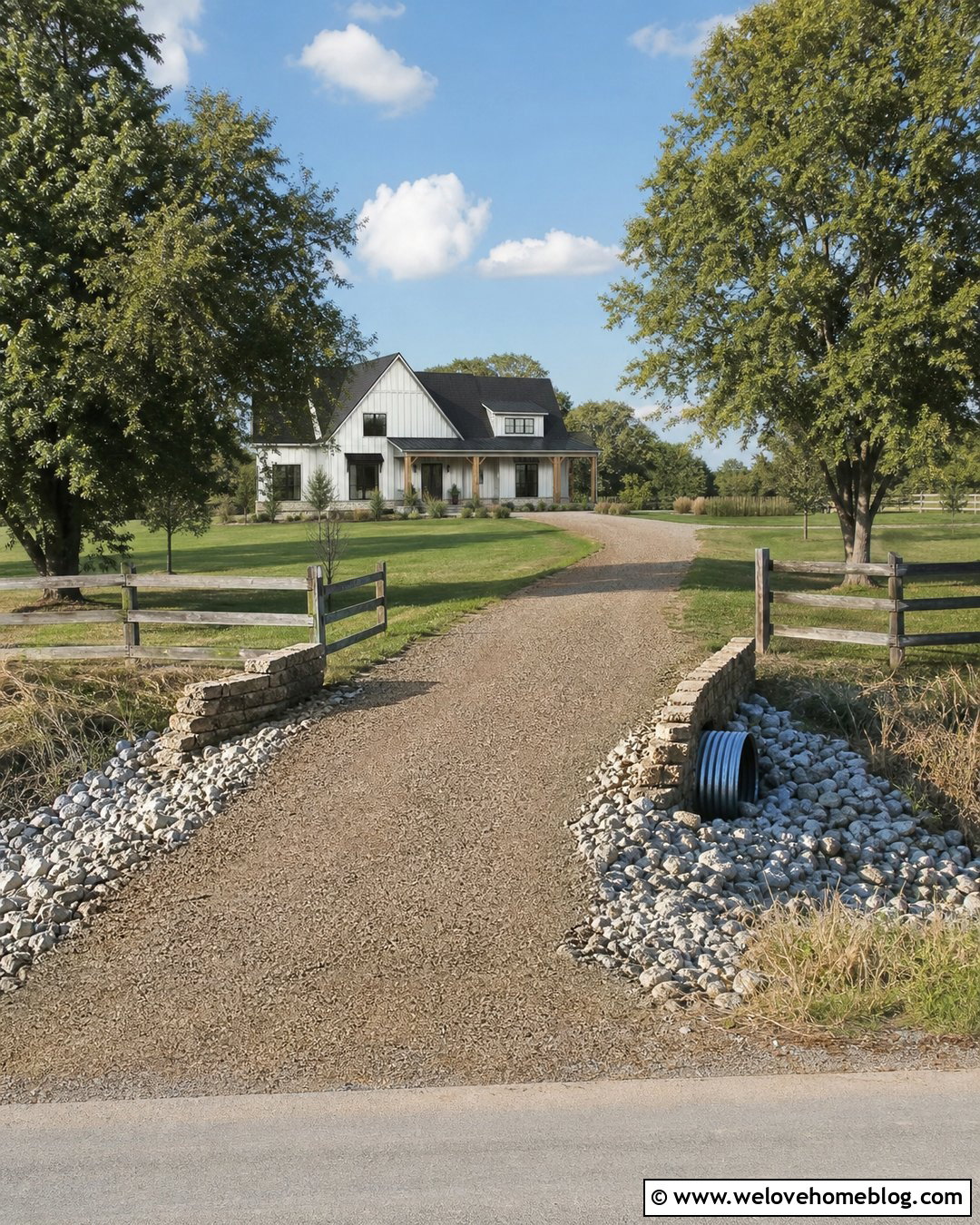
Where a driveway crosses a roadside ditch, a culvert maintains drainage beneath the entrance. A rural crushed-gravel driveway can feature a properly sized culvert with low stacked-stone headwalls on both sides. The entrance should flare gently, and the pipe should align with the existing ditch rather than forcing water through a sharp turn. Place erosion-resistant stone around the inlet and outlet to stabilize exposed soil. Native grasses can soften the banks while keeping the flow path visible. Culvert size, material, cover depth, and placement may be regulated by the local road or drainage authority. An undersized or blocked pipe can send water over the driveway, so inspection after major storms and seasonal debris removal are essential.
19. Driveway Downspout Diversion System

Roof runoff can overwhelm an otherwise well-drained driveway when downspouts discharge directly onto the paving. On a brick-paver driveway, connect the garage downspouts to solid underground pipes that carry water toward a rain garden, approved outlet, or infiltration system. Use small catch boxes or cleanouts near the downspout connections for maintenance. A narrow planting bed between the house and driveway hides the pipes while creating visual separation from the facade. Keep roof drainage separate from perforated French-drain pipes until the design specifically calls for a combined system. Confirm that every connection can handle expected flow and has a safe overflow path. Extending water away from the foundation may also reduce staining, winter icing, and joint washout.


20. Driveway Pop-Up Emitter Drainage
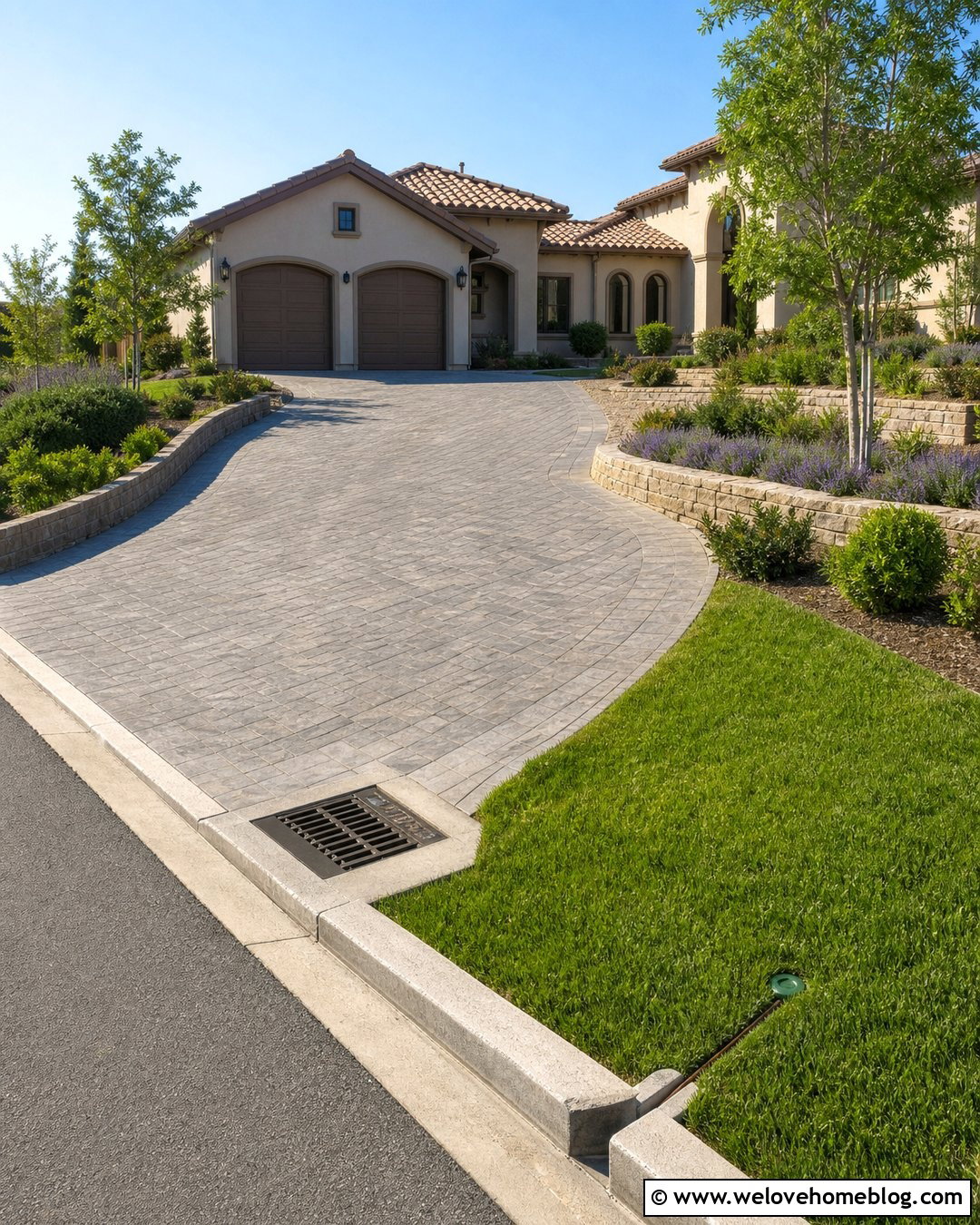
A pop-up emitter provides a discreet outlet for a solid underground drainpipe when gravity can carry water to a lower lawn area. Pair a stamped-concrete driveway with a catch basin at the low corner and route the pipe toward an emitter set within open turf. When water reaches the outlet, the cap rises and releases flow across the lawn. The discharge area must slope away from structures and resist erosion. Avoid placing the emitter in a heavily traveled walkway, dense planting bed, or location that remains constantly wet. Include cleanouts and ensure the pipe has enough fall to drain properly. Inspect the cap for grass growth, soil, and debris, since a stuck emitter can cause water to back up toward the driveway.
21. Steep Driveway With Multiple Channel Drains

Fast runoff gains force as it moves down a steep driveway, so one drain at the bottom may not be enough. Break up the flow on a grooved concrete driveway with several vehicle-rated channel drains crossing the slope at planned intervals. Connect them to a properly sized underground system rather than allowing each drain to empty onto the shoulder. Textured concrete improves visual definition, while stone retaining edges and deeply rooted shrubs help stabilize the banks. Each channel should follow the driveway width and sit flush with the surface. The outlet system must account for the combined flow from every drain. Professional hydraulic planning is especially valuable here because steep grades can produce erosion, overwhelmed pipes, and dangerous winter ice.
22. Driveway Retaining Wall Drainage

A retaining wall beside a driveway needs its own drainage strategy so trapped water does not build pressure behind it. Pair a curved asphalt driveway with a natural-stone retaining wall, a gravel backfill zone, and a properly designed perforated drain behind the wall. Provide planned outlets or weep openings where appropriate, and direct the discharged water away from the driveway base. A narrow channel drain along the wall can collect surface runoff before it enters pavement joints. Low shrubs above the wall soften the structure without hiding drainage access. Wall height, soil loads, and nearby vehicle traffic may require engineered construction. Waterproofing, base preparation, pipe placement, and outlet protection should be treated as parts of one coordinated driveway design.
23. Hillside Driveway Interceptor Drain

Water flowing from an uphill yard can saturate the driveway base before it ever appears on the pavement. An interceptor drain placed above a hillside driveway can capture this moisture early. Use a curved exposed-aggregate driveway bordered by a gravel trench, perforated pipe, and native slope planting on the uphill side. Where fast surface runoff is also present, combine the subsurface drain with a shallow swale or stone-lined channel. The route should carry water around the driveway and house toward a stable destination. Protect the downhill pavement edge with a strong curb or stone border. Because disturbing a slope can affect stability, consult a qualified drainage or geotechnical professional when the hill is steep, the soil moves, or retaining structures are involved.
24. Circular Driveway With Center Rain Garden

A circular driveway naturally wraps around a central landscape bed, making that space useful for stormwater management. Build the drive with permeable concrete pavers and pitch selected sections toward a recessed center rain garden. Stone curb openings can admit water while filtering larger debris. Fill the basin with plants that tolerate temporary inundation and dry weather, arranged low enough to preserve visibility across the circle. An elevated planting ring near the center can add structure without reducing storage near the edges. Provide an overflow route for intense storms and avoid sending water toward the house-side portion of the drive. Soil testing, setbacks, and careful grading are essential because the garden must absorb runoff without undermining the surrounding paver base.
25. Ribbon Driveway With Grass Center Drainage

A ribbon driveway reduces paved area by using two durable driving strips with a planted or gravel center. For a craftsman home, install permeable concrete paver tracks separated by a slightly recessed strip of reinforced turf. The middle can absorb light rainfall, while the outer edges slope toward shallow planted swales. Brick borders keep the pavers aligned and complement the warm facade. Choose grass that suits local sunlight, climate, and vehicle exposure, and provide a structural cellular grid if occasional tires may cross the center. In wet or clay-heavy soil, install an engineered drainage layer below rather than relying on turf alone. Keep the center graded smoothly so it does not become a narrow ditch that holds standing water.
26. Resin-Bound Driveway With Channel Drain

A resin-bound gravel surface offers a smooth, contemporary appearance and can be permeable when installed as part of a correctly designed system. Pair warm beige resin-bound aggregate with a curved layout, charcoal block edging, and a slim channel drain near the garage. The base, resin system, and installation method must support drainage; placing a permeable surface over an impermeable base will not provide the same result. Direct excess runoff toward landscaped infiltration beds or another approved outlet. Keep soil, mulch, and fine sediment from washing across the surface because they can reduce permeability over time. The contrasting drain grate can align with a side walkway, making it feel intentional. Follow the manufacturer’s requirements for base preparation, traffic loads, and maintenance.
27. Porous Asphalt Driveway With Grass Swales

Porous asphalt resembles conventional asphalt but is designed with connected voids that allow water to pass into a stone storage layer below. This material works well on a broad suburban driveway framed by grass swales and simple concrete curbs near the garage. The subsurface layers must be designed for the site’s soil, expected traffic, frost conditions, and rainfall. An underdrain may be needed where infiltration is limited. Keep conventional asphalt sealers off the porous surface because they can close the openings. Prevent muddy landscape runoff from crossing the driveway, and use vacuum-based cleaning when sediment begins to collect. With the right engineering and maintenance, the dark surface, green swales, and understated borders create a practical, cohesive front-yard design.
28. Pervious Concrete Driveway With Rain Garden

Pervious concrete can create a solid-looking driveway while allowing water to move through its open structure. Use a light gray pervious concrete surface on a straight modern-farmhouse driveway, framed with dark brick edging and a native rain garden at the lower side. The aggregate base temporarily stores runoff before it infiltrates or enters a designed underdrain. Installation requires specialized placement and curing, so an experienced contractor is important. Keep loose soil, construction dust, and mulch away from the finished surface. Periodic vacuum cleaning helps maintain open pores. The rain garden can receive overflow during larger storms, but it needs suitable soil, safe setbacks, and a protected inlet. Coordinate the driveway, base, garden, and overflow route as one complete drainage system.
29. Gravel Grid Driveway With French Drains

Gravel stabilization grids keep aggregate organized while preserving a permeable appearance. Create a long gray-gravel driveway with filled cellular grids, granite edge restraints, and French drains along the lower side. The grid reduces rutting and migration, while the underground drain handles moisture moving from the adjacent lawn or slope. Use angular, grid-compatible gravel rather than rounded stone that shifts easily. At the house, transition to a cobblestone parking apron for a more formal finish. The base must be prepared to support vehicles and manage water without settling. Keep nearby planting beds slightly lower or securely edged so soil does not wash across the gravel. Inspect the surface after snowplowing or heavy storms and replenish displaced aggregate when grid cells become exposed.
30. Driveway Bioswale With Native Plants

A bioswale combines controlled water movement with vegetation that slows and filters runoff. Pair a wide concrete paver driveway with a gently recessed planting channel along the street-facing edge. Use native sedges, rushes, flowering perennials, and low shrubs selected for local moisture and sunlight conditions. Curb cuts lined with durable stone allow driveway runoff to enter without eroding the soil. An engineered soil profile and underdrain may be needed where native ground drains slowly. Include a clearly defined overflow route so extreme rainfall does not spread across the driveway or sidewalk. Avoid tall plants near the entrance that could block sightlines. A well-planned bioswale can look like an intentional garden border while reducing the speed and volume of surface runoff.
31. Long Driveway With Multiple Catch Basins

A long driveway may contain several low points instead of one simple drainage path. On a sweeping black asphalt drive, place catch basins at the lowest curves and connect them with solid underground piping. Granite edging strengthens the pavement shoulders, while broad lawn panels and tree beds frame the route. Grade each section toward its nearest basin without creating abrupt dips. Sediment sumps and accessible cleanouts help keep dirt from filling the connecting pipes. The final outlet must be sized for the total contributing area and should not release concentrated water onto an unstable slope. Mark basin locations before snow removal or maintenance work. An elevation survey can prevent expensive mistakes by showing exactly where runoff travels across the full driveway.
32. Driveway Snowmelt Drainage System

In cold climates, drainage must manage snowmelt as well as rain. Design a broom-finished concrete driveway with a dark trench drain across the garage entrance and a second collection point near the lower edge. Grade the surface so meltwater reaches the drains instead of refreezing in shaded depressions. Evergreen borders, granite curbs, and a sunny lawn outlet create a complete northern landscape. Pipes, basins, and outlets need suitable frost-depth planning, and grates should tolerate snow-removal equipment. Avoid sending meltwater across public sidewalks where it can freeze again. Keep snow piles away from drain openings and foundation walls. Before winter, remove leaves and sediment so the system has capacity when daytime temperatures begin melting accumulated snow.
33. Driveway Garage Threshold And Trench Drain

A low garage threshold can remain vulnerable even after a driveway drain is added. Combine a vehicle-rated trench drain with a modest raised threshold or carefully formed concrete crest directly outside the garage. On a clay-brick driveway, use matching soldier-course bricks to make the raised transition look intentional. The surface farther out should slope toward the trench drain, while the short section behind it rises gently toward the garage floor. This layered defense helps intercept ordinary runoff and reduces the chance that overflowing water will cross the doorway. Do not create a bump that interferes with low vehicles or accessibility. Confirm garage-door clearance, pavement elevations, and drain capacity before construction, and route collected water to a lawful, dependable outlet.
34. Below-Grade Driveway With Sump Drainage
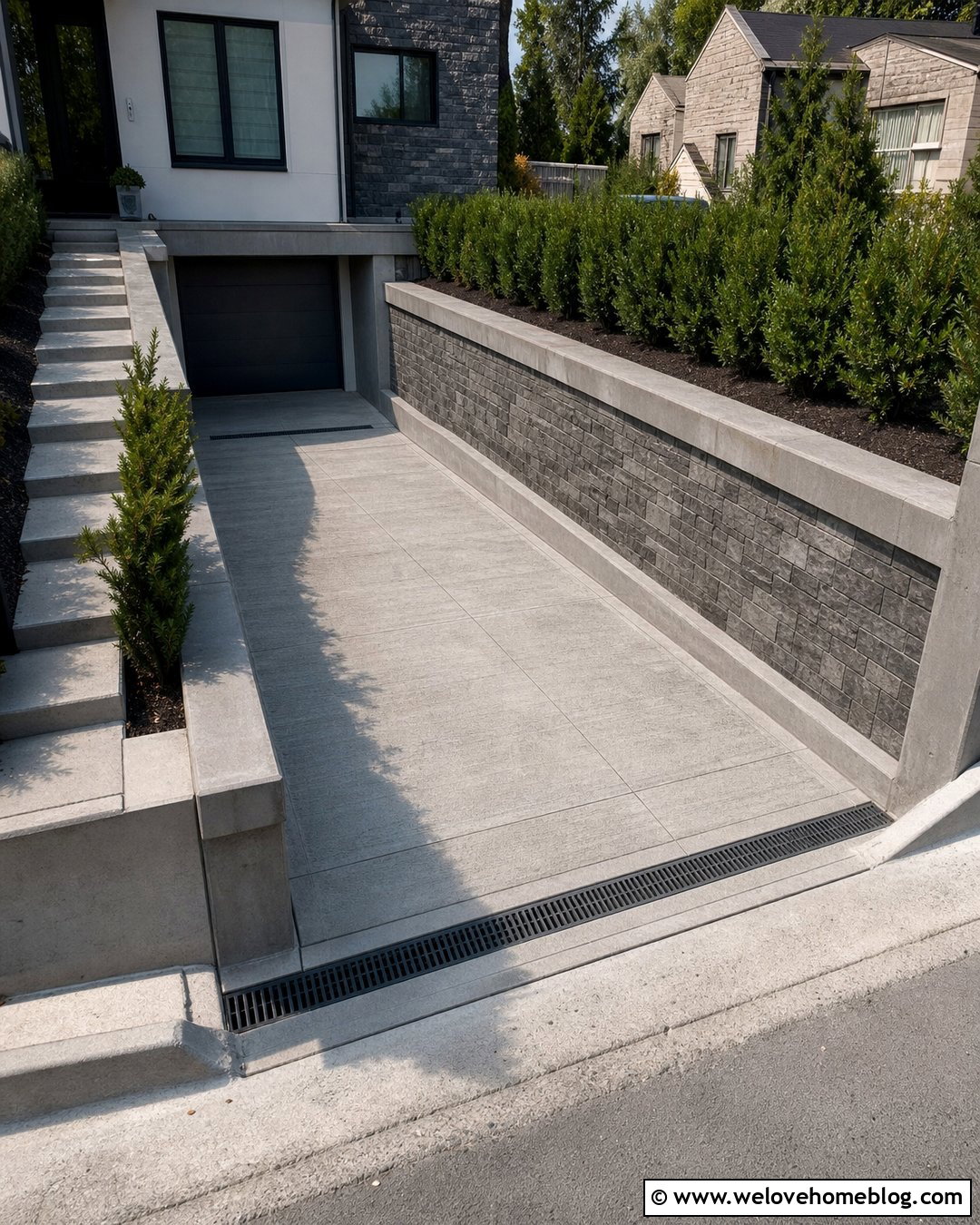
A driveway descending to a basement garage presents one of the most demanding residential drainage situations. Install a heavy-duty channel drain across the full driveway before the garage door, then connect it to a properly sized sump basin and pump system when gravity drainage is impossible. Textured concrete, high curbs, and retaining walls help contain runoff, while an additional drain near the top can reduce the amount of water reaching the bottom. Include pump alarms, accessible maintenance points, check valves, and backup power where appropriate. Roof downspouts and upslope landscape runoff should be diverted away from the driveway whenever possible. This system deserves professional engineering because pump failure, undersizing, or electrical loss during a storm can quickly lead to garage flooding.
35. Combined Driveway Drainage System

Properties with steep grades, heavy soil, or intense rainfall often need several drainage methods working together. A complete design might use a permeable paver driveway, a channel drain at the garage, an uphill French drain, catch basins at low corners, and a planted swale leading to a rain garden. Each component addresses a different type of water, from surface runoff to saturated soil. Coordinated grading ensures the systems support one another instead of competing or overflowing in the wrong direction. Use consistent stone borders and repeated planting to make the technical features feel visually connected. A drainage professional can calculate contributing areas, pipe capacity, infiltration potential, and emergency overflow routes. Maintain every inlet and outlet as one interconnected system.
Conclusion:
Effective drainage begins with understanding how water enters, crosses, and leaves the property. The most useful 35 Driveway Drainage Solutions Ideas do more than hide a drain beside the pavement. They coordinate the driveway material, finished grade, borders, underground pipes, landscaping, and final outlet. Small problems may respond to downspout diversion, a catch basin, or improved edging. Steep, below-grade, and chronically flooded driveways usually need professional evaluation. Never direct concentrated runoff toward neighboring property, a foundation, or an unstable slope. Check permits, utility locations, soil conditions, and maintenance access before construction. With thoughtful planning, drainage can protect the driveway while improving the home’s overall curb appeal.

Related posts:







Leave a Reply