
Standing water can stain paving, weaken driveway edges, wash out gravel, and send runoff toward the garage or foundation. The best drainage plan does more than add a grate. It coordinates the driveway surface, slope, borders, planting areas, and a safe discharge point. Options range from channel drains and catch basins to permeable pavers, swales, rain gardens, and dry creek beds. The right choice depends on where the water comes from, how quickly it collects, and where local rules allow it to go. Before digging, check underground utilities and confirm that runoff will not affect neighboring property. The complete driveway looks below combine practical water control with attractive curb appeal, giving you 20 Driveway Drain Ideas to consider. ()

1. Driveway Channel Drain In Front Of Garage
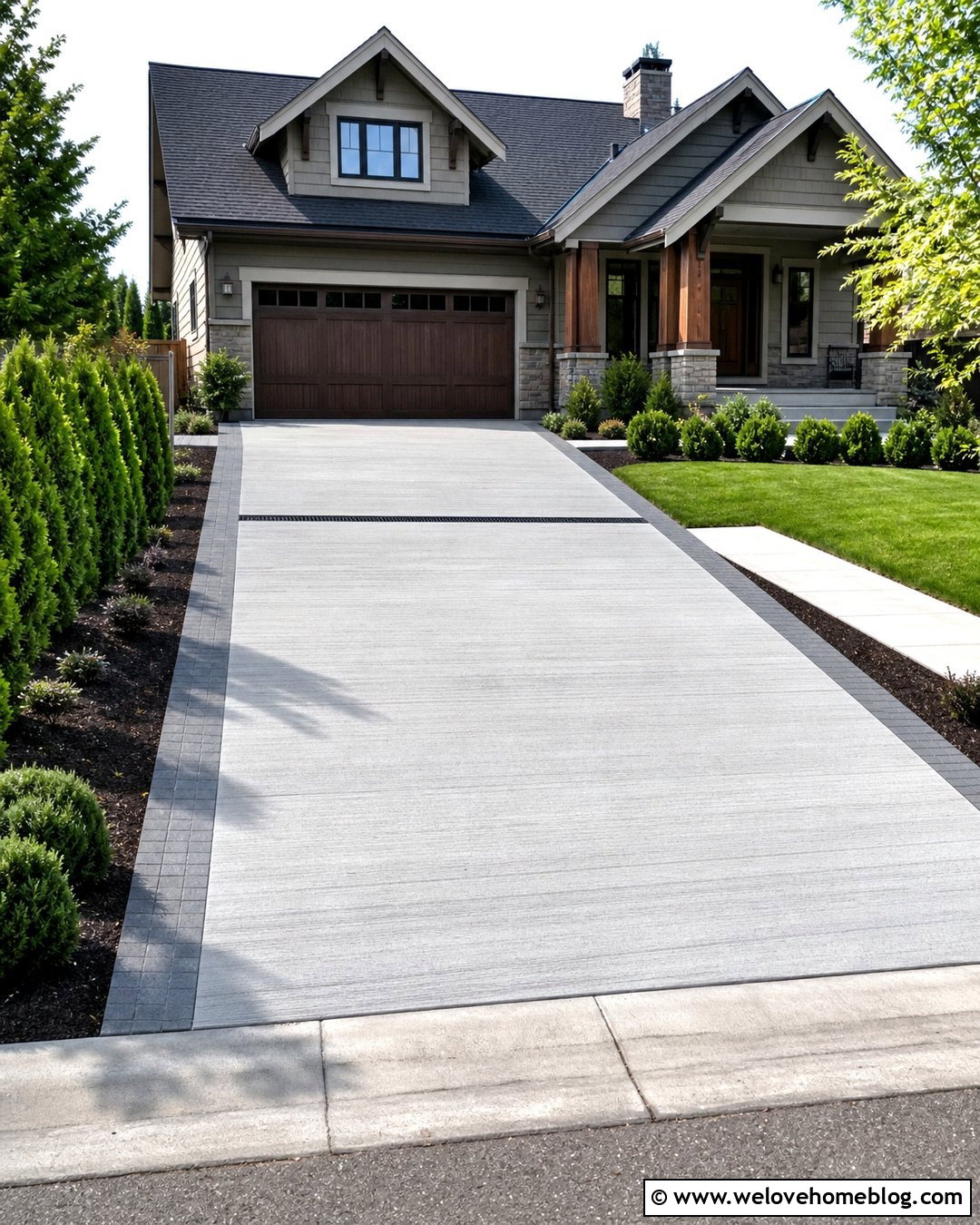
A channel drain across the garage entrance is one of the most direct ways to intercept water flowing down a sloped driveway. Set the grate flush with the pavement so vehicles pass over it smoothly. A black, galvanized, or stainless-steel grate can coordinate with garage hardware and exterior lighting. For a polished look, pair a light-gray concrete driveway with dark paver borders and simple foundation shrubs. The pavement must guide water toward the channel rather than leaving low pockets nearby. Choose a load-rated system designed for vehicle traffic, and provide access for removing leaves and sediment. The outlet should connect to an approved drainage location instead of releasing water beside the foundation. ()
2. Driveway Trench Drain Across A Steep Slope
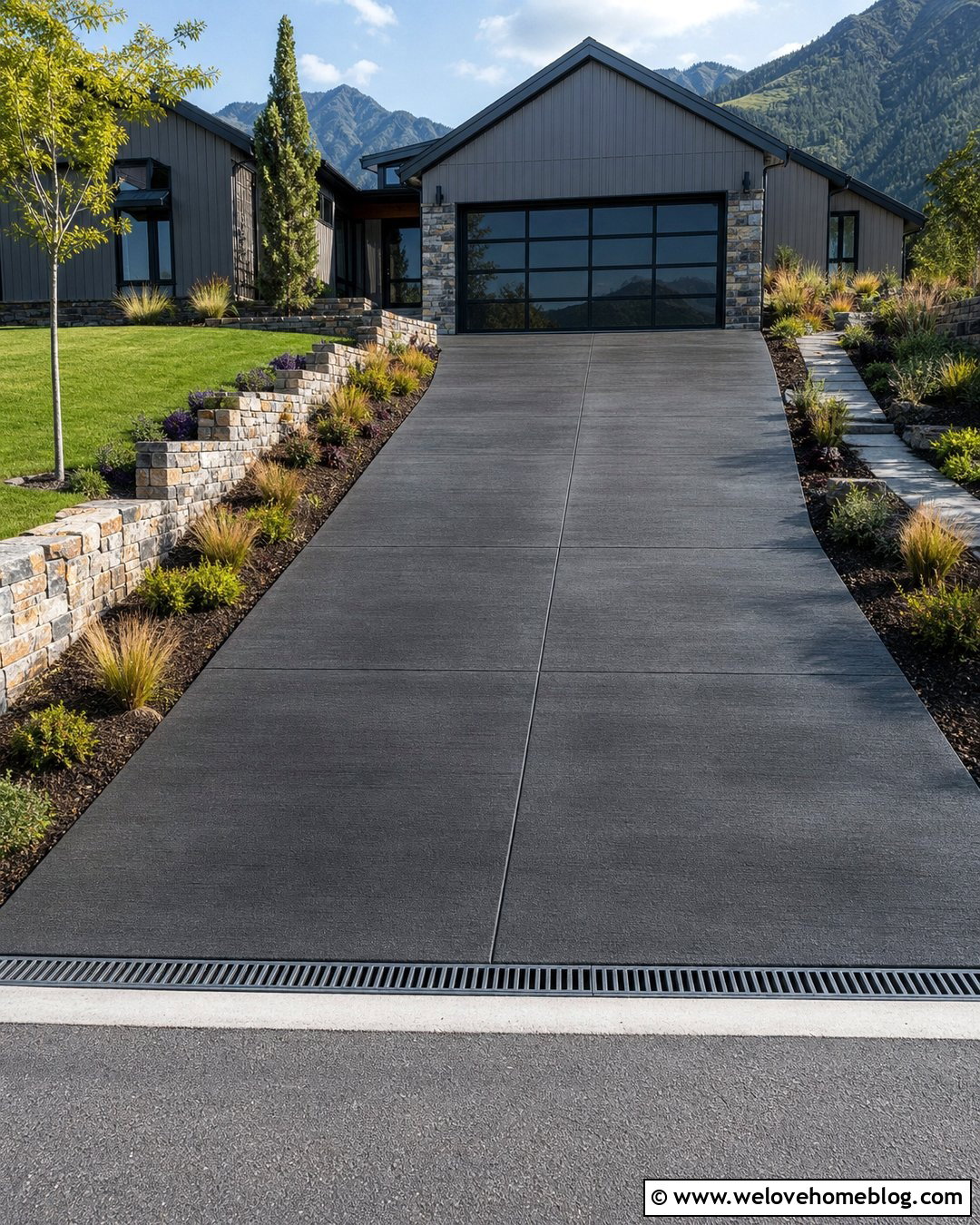
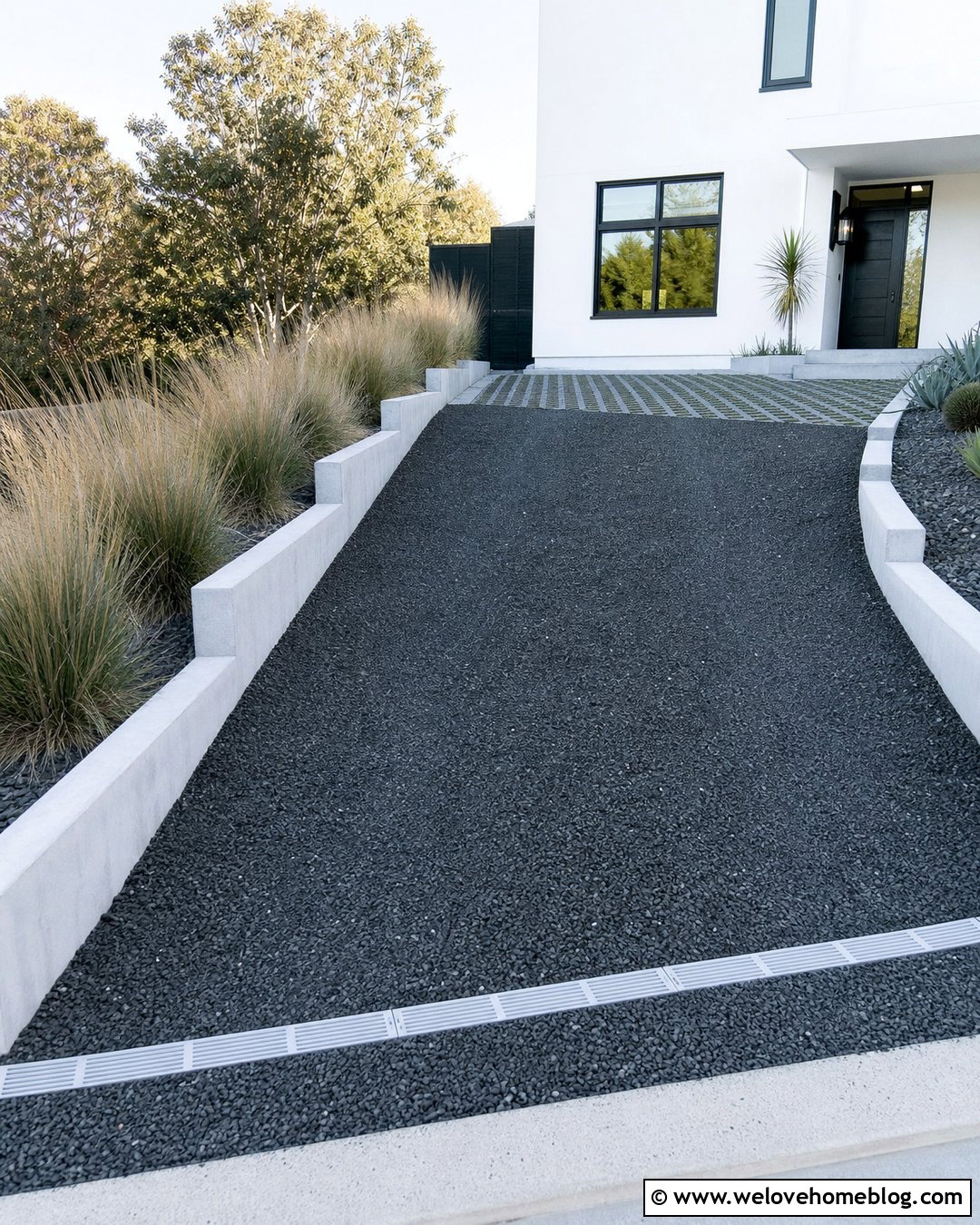
Heavy runoff moving down a steep driveway may require a wider trench drain installed across the full driving surface. This complete look works especially well with broom-finished concrete, sturdy stone borders, and terraced planting beds that slow water from the surrounding yard. Position the drain before the lowest vulnerable area, such as a garage apron or level parking pad. A strong metal grate gives the system a clean architectural line while standing up to regular vehicle loads. The trench should lead to a properly sized outlet pipe and legal discharge point. Because steep properties can concentrate large amounts of runoff, professional grading and drainage calculations are worthwhile. Keep mulch and loose gravel away from the grate to reduce clogging. ()
3. Driveway Slot Drain With Modern Pavers
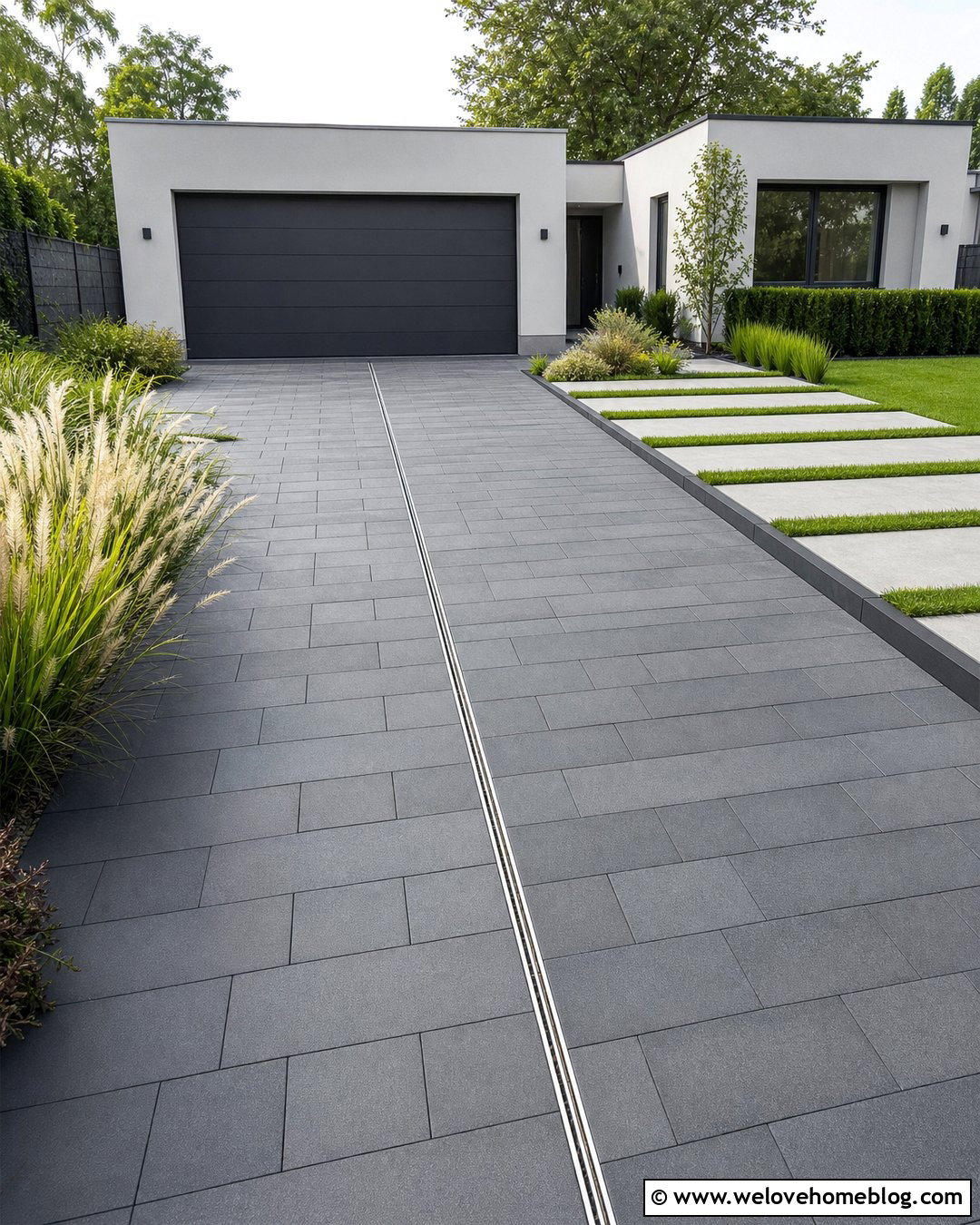
Prefer drainage that almost disappears into the design? A narrow slot drain creates a slim opening between modern concrete pavers without the visual weight of a wide grate. Use large charcoal pavers in a straight driveway, then align the slot drain with a paver joint near the garage or along the lower edge. Rectangular planting beds, ornamental grasses, and a flat concrete walkway reinforce the modern layout. Although the opening looks minimal, the channel below still needs enough capacity for the expected runoff. Removable access points make cleaning easier when grit enters the system. This approach is particularly attractive for streamlined homes, but correct installation matters because a poorly leveled slot can leave puddles on either side. ()
4. Driveway Drain With Brick Paver Border
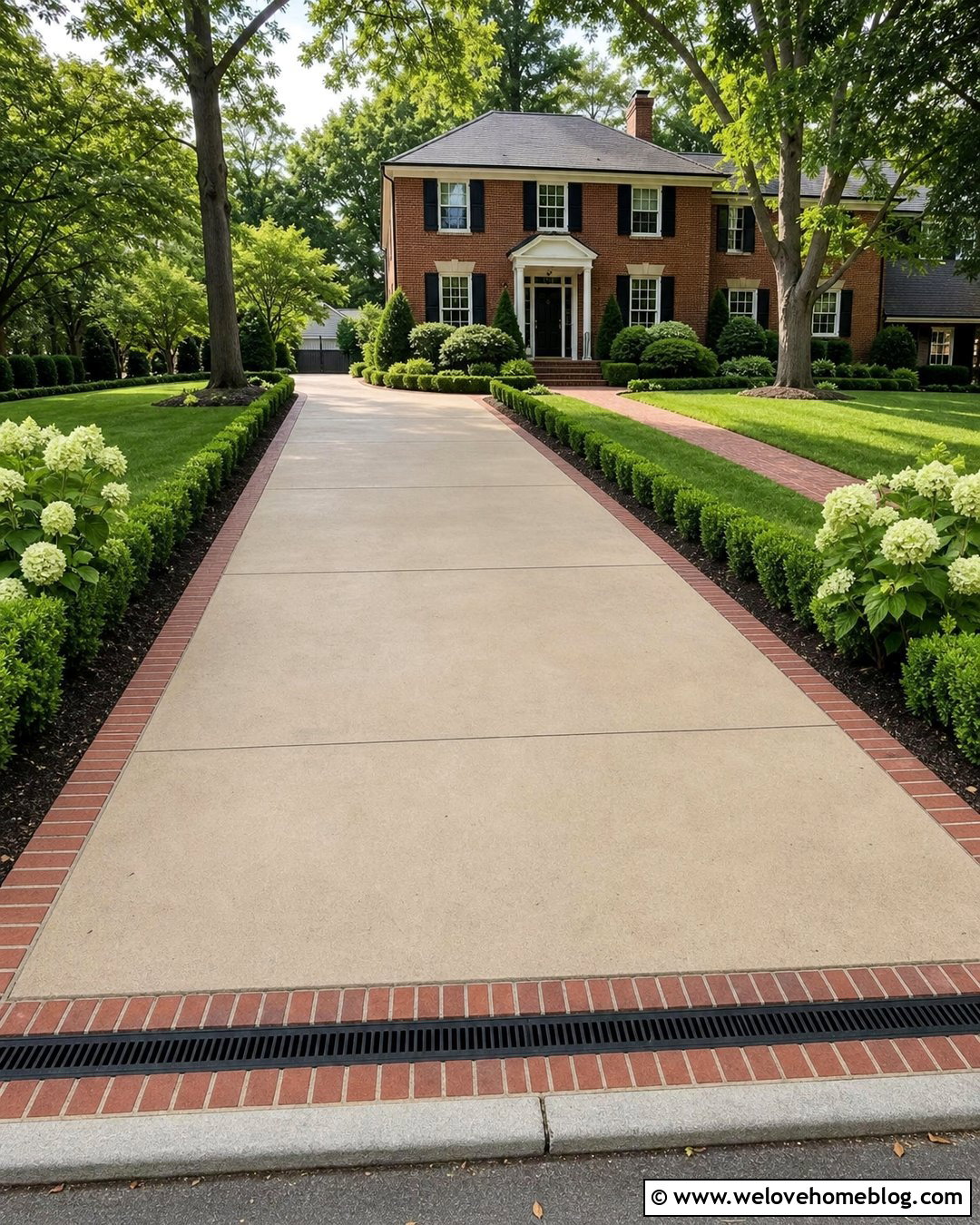
A drainage channel can feel like part of the paving rather than an added utility. Frame a tan poured-concrete driveway with red clay brick pavers, then place a dark grated drain within a matching brick ribbon across the lower end. The contrasting band visually breaks up a wide driveway while identifying the point where water is collected. Continue the brick around nearby planting beds for a unified colonial or traditional exterior. The surrounding pavement should pitch gently toward the channel from both sides. Select bricks and bedding materials suitable for driveways, and avoid creating uneven edges beside the grate. With regular sweeping and seasonal cleaning, this arrangement offers a decorative transition, clear water control, and classic curb appeal in one complete design.
5. French Drain Along A Gravel Driveway

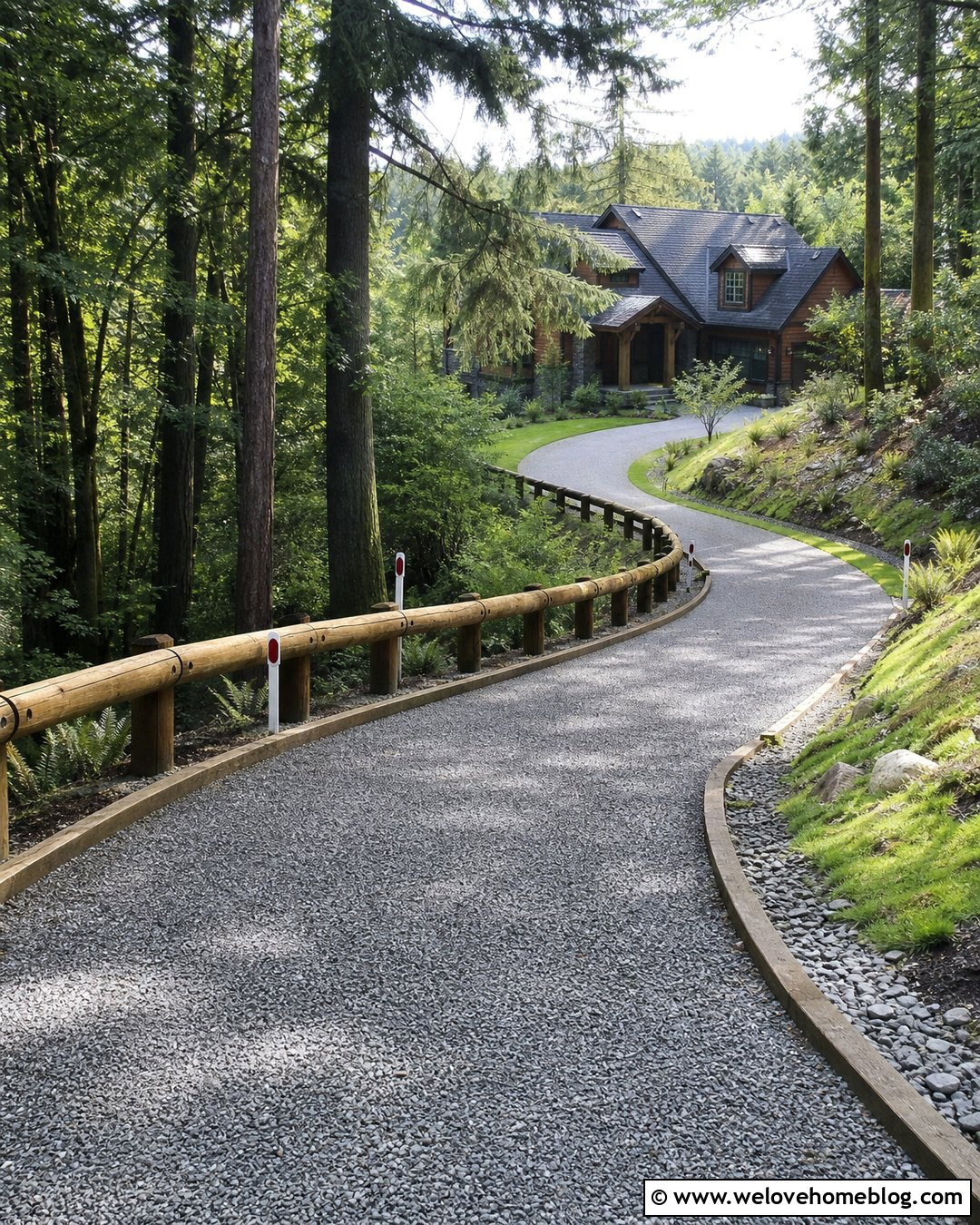
A French drain beside a gravel driveway can collect subsurface water and runoff that would otherwise soften the driveway base. Build the look around compacted gray crushed stone, a gently crowned driving surface, and a river-rock strip running along the lower side. Beneath that decorative stone, a fabric-lined trench and perforated pipe direct water toward a suitable outlet. Timber or granite edging can separate the driveway aggregate from lawn and planting beds. This solution is more discreet than an open ditch and suits farmhouse, cottage, and wooded properties. It should not replace proper surface grading, however. Water must first move off the driveway without cutting channels through the gravel. Include cleanout access where practical so sediment and roots can be managed. ()
6. Driveway Catch Basin At A Low Spot
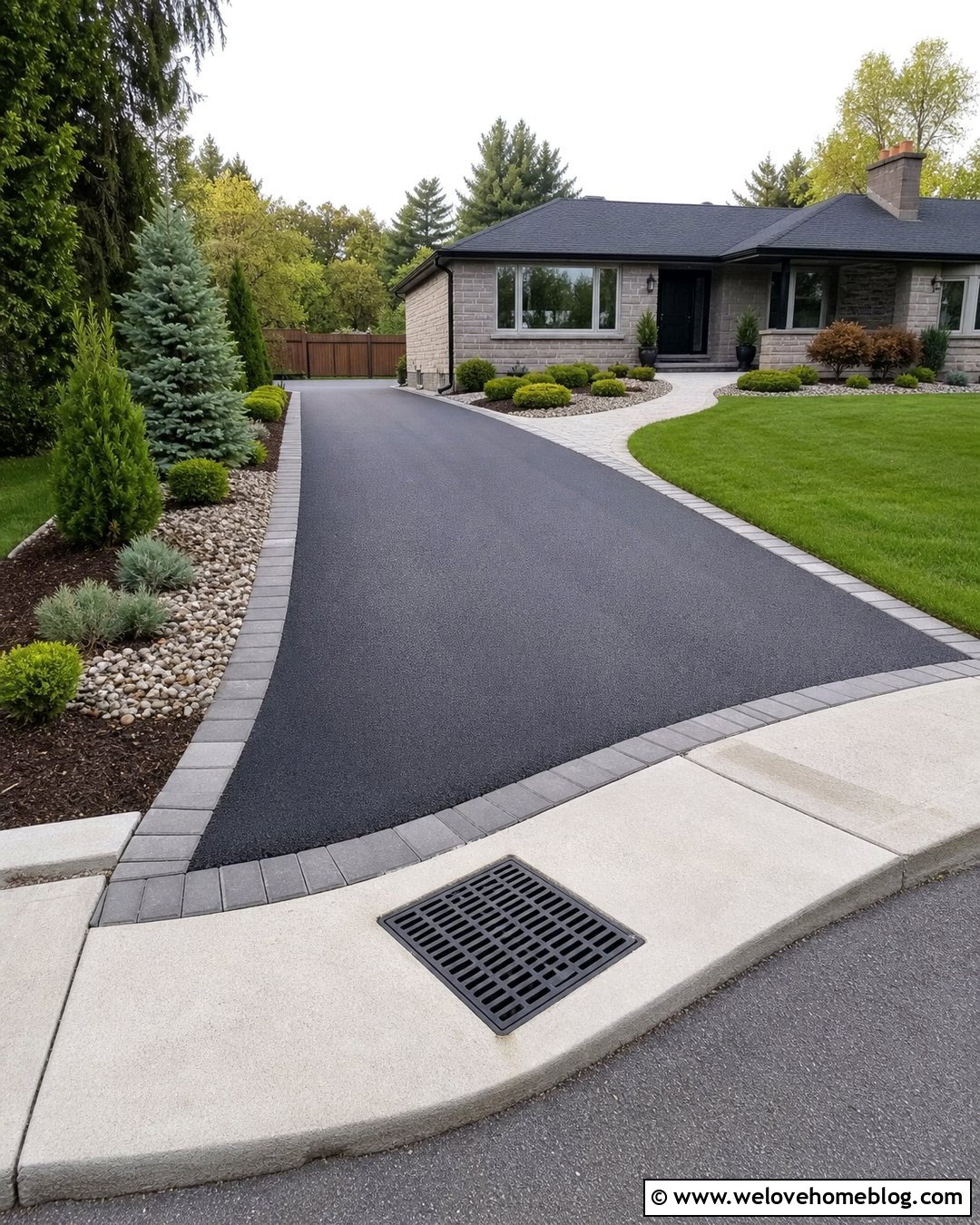
When water repeatedly gathers in one defined depression, a catch basin can create a focused collection point. Place a square or round grated basin at the low corner of a black asphalt driveway, then use a subtle cross-slope to guide runoff toward it. A concrete or paver apron around the grate provides a stable transition and helps prevent asphalt edges from breaking apart. Low evergreen shrubs and stone mulch can frame the area without dropping excessive debris onto the drain. The basin needs an outlet pipe, adequate capacity, and a removable grate for cleaning. Because leaves, soil, and sand settle inside, inspect it after major storms. Correcting the surrounding grade may also be necessary if the existing depression is extensive. ()
7. Permeable Paver Driveway With Drainage Base

Permeable pavers allow rainfall to enter open joints and move into a specially prepared stone base below. For a refined suburban look, use light-gray concrete permeable pavers in a herringbone pattern with charcoal edge restraints. Add narrow planting beds, clipped shrubs, and a straight walkway leading to a craftsman home. The driveway surface and underlying layers must be designed as a complete system; simply spacing ordinary pavers farther apart may not provide reliable drainage. The soil, expected traffic, driveway slope, and local stormwater requirements all affect the base design. Vacuuming or sweeping sediment from the joints helps preserve infiltration. An overflow drain may still be needed where storms are intense, soils drain slowly, or the driveway receives runoff from higher ground. ()
8. Gravel Grid Driveway With Drainage Borders
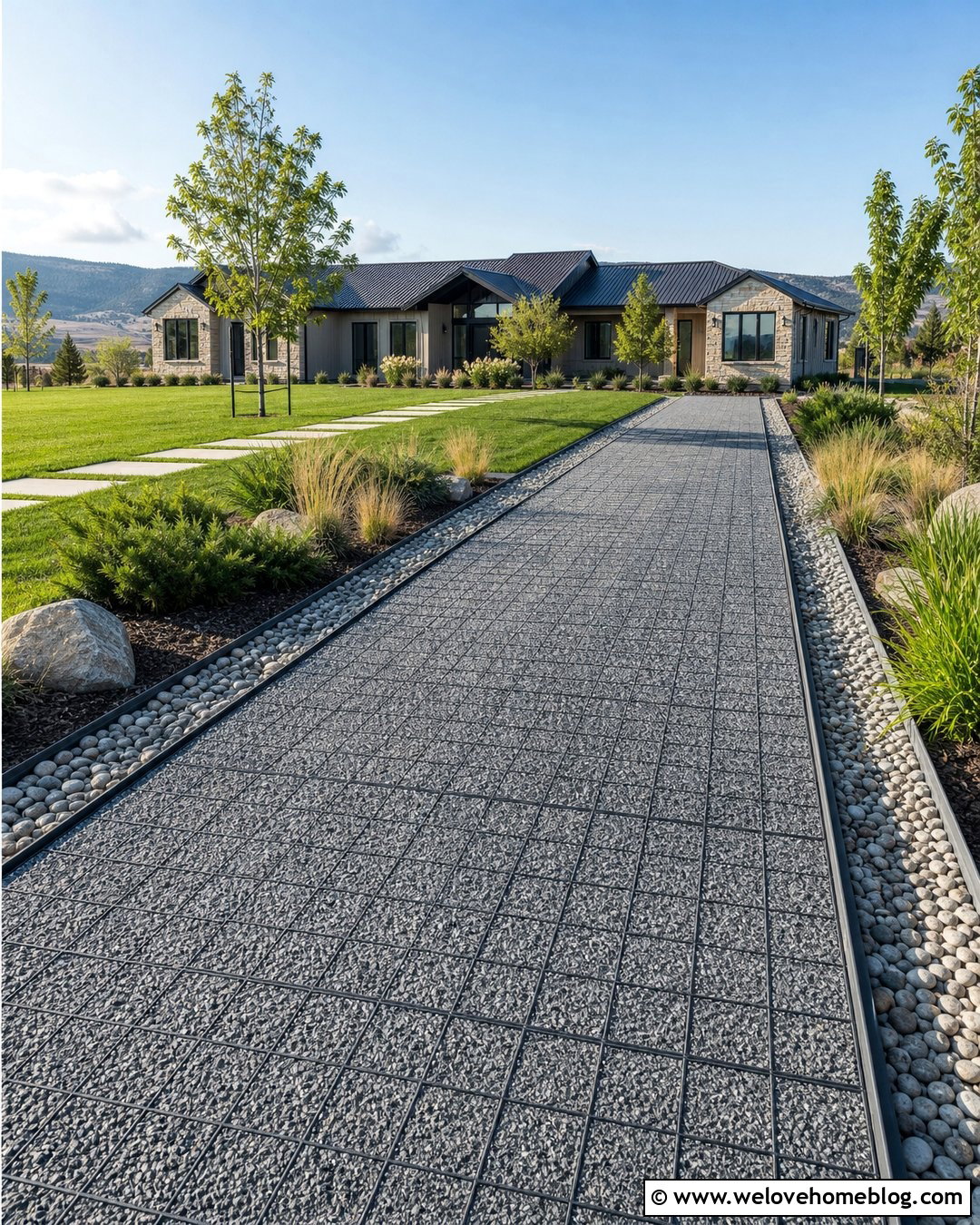
A gravel stabilization grid keeps loose aggregate organized while maintaining a naturally permeable appearance. Fill the grid with small angular gray gravel, shape the driveway with a slight crown, and install drainage-stone borders along both sides. These borders can lead runoff toward a swale, rain garden, or approved outlet while defining the driving area. Native grasses and low shrubs soften the edges without narrowing vehicle clearance. This complete design works well for ranch homes and modern farmhouses because it looks relaxed but remains structured. The sub-base still needs careful preparation and compaction to prevent settlement. Choose a grid rated for driveway traffic, use aggregate compatible with the cells, and keep soil from washing into the surface. Edging at the entrance helps contain gravel where the driveway meets the road.
9. Grass Swale Along A Curved Driveway

A shallow grass swale can follow the outer edge of a curved driveway and direct water through the landscape. Pair a warm exposed-aggregate surface with a broad lawn channel, natural stone edging, and groups of moisture-tolerant ornamental grasses. The gentle depression should look like part of the yard rather than a deep roadside ditch. Its shape, grade, soil, and outlet determine how effectively it carries water without eroding. This option is useful when runoff needs to be slowed and moved across a larger area. Keep the swale free from raised edging, dense debris, and landscaping that blocks flow. Where space allows, a low berm on the uphill side can help guide water into the channel before it reaches the driveway. ()


10. Dry Creek Bed Beside A Driveway

A dry creek bed turns a visible drainage route into an attractive landscape feature. Run it beside a curved tan concrete driveway using mixed river rock, larger anchor boulders, and native plants placed above the main flow path. A stone or steel border separates the creek bed from the driveway and prevents loose material from migrating onto the pavement. During storms, the channel carries runoff toward a rain garden, swale, or approved outlet. In dry weather, it adds texture and movement to the front yard. The creek should follow a planned slope rather than a random decorative curve. Use larger stones where water enters, and stabilize sharp bends to limit erosion. Avoid placing lightweight mulch where fast-moving water can carry it into the channel.
11. Rain Garden Next To A Driveway

A rain garden can receive driveway runoff while adding color and habitat to the front yard. Use permeable brick pavers for the driveway, then create a shallow planted basin along its lower edge. A small cobblestone spillway can carry water from the paving into the garden without washing away soil. Select plants suited to local conditions, including species that tolerate both temporary wetness and dry periods. Arrange shorter plants near the curb and taller grasses farther back so sightlines remain open. The basin should sit away from the foundation, utilities, and unsuitable slopes. Include an overflow route for large storms and protect the inlet with stone. Before construction, confirm that the native soil, groundwater conditions, and local regulations are appropriate for infiltration.
12. Cobblestone Drainage Strip Along A Driveway

A cobblestone drainage strip provides a durable visual border while directing runoff along the side of a driveway. Combine a light broom-finished concrete surface with a recessed band of dark granite cobbles set over a drainage base. The strip can follow a straight or gently curved layout toward a catch basin at the lower end. Boxwood, hydrangeas, and lawn create a formal frame for a colonial or Cape Cod home. Keep the cobblestones low enough to receive water but stable enough to resist movement from tires. Open joints may collect grit, so include a practical cleaning plan. This treatment is most effective when the driveway has a consistent cross-slope and the stone channel connects to a real outlet rather than ending in a low landscape pocket.
13. Driveway Culvert At The Road Entrance
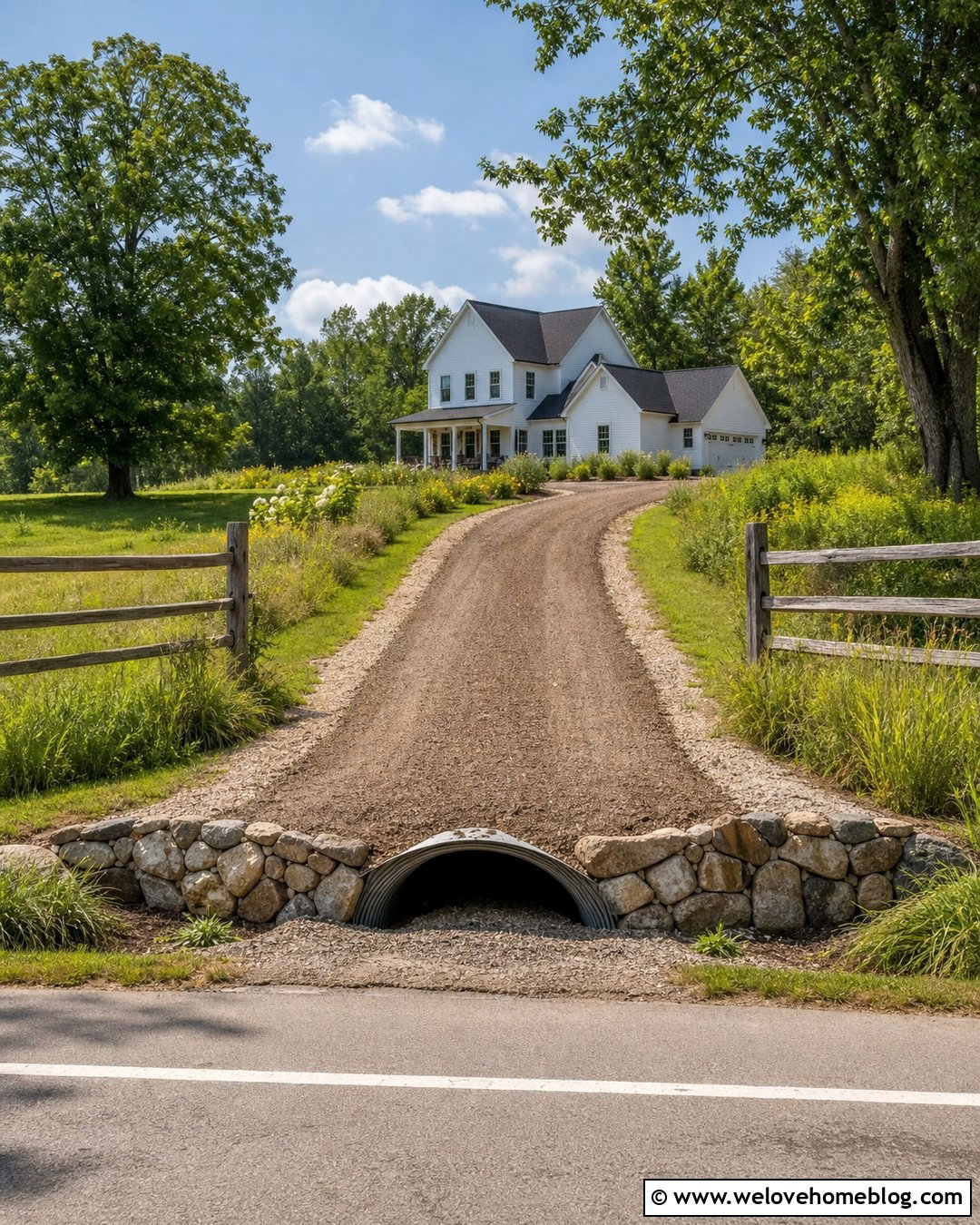
A culvert carries water beneath a driveway where the entrance crosses an existing roadside ditch or swale. This practical arrangement suits a long gravel driveway leading to a country, ranch, or farmhouse property. Use compacted brown crushed gravel, flared stone headwalls, and a clearly shaped ditch on both sides of the entrance. Native grasses can stabilize the banks while keeping the pipe openings visible. Culvert diameter, material, cover depth, and placement may be controlled by local road or drainage authorities, so approvals are often needed before installation. The pipe should follow the ditch flow rather than creating a dam. Add erosion-resistant rock at the outlet, and remove leaves or branches that could block the opening. A well-built entrance combines reliable access with a natural rural appearance.
14. Stone Drainage Ditch Along A Rural Driveway
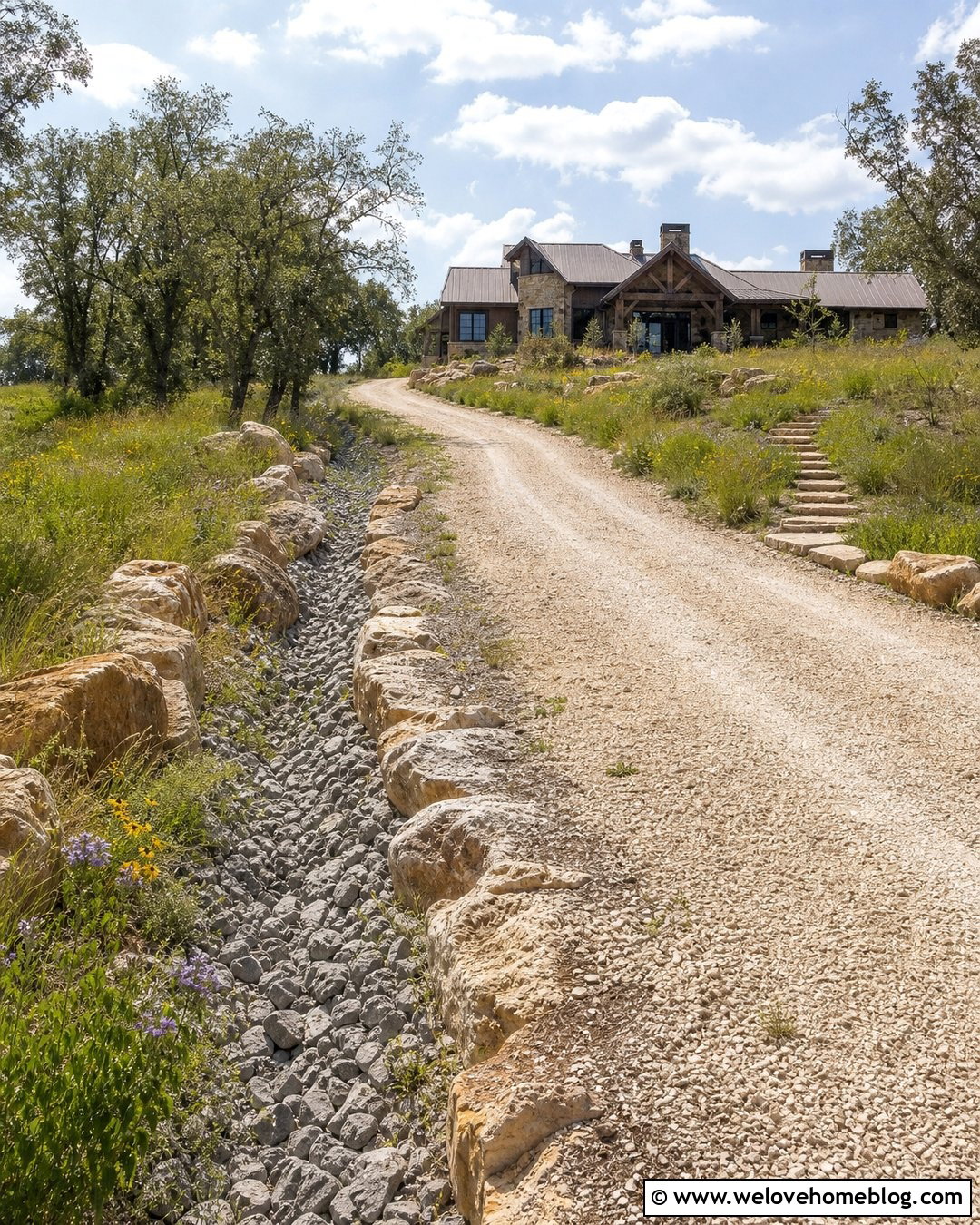
Long rural driveways often benefit from a shallow stone-lined ditch that intercepts runoff from adjacent slopes. Pair a compacted limestone driveway with an open channel of angular drainage rock, scattered fieldstone, and native meadow planting. The driveway should be crowned or cross-sloped so water leaves the surface before gaining enough speed to create ruts. Small check stones placed across the ditch may help slow flow on steeper ground, but they must not stop it completely. Keep the channel separated from the driveway base with stable edging and enough shoulder width for safe vehicle use. The outlet needs erosion protection and a lawful destination. This design is especially useful on wooded or sloping lots where a formal grated drain would look out of place or require frequent debris removal.
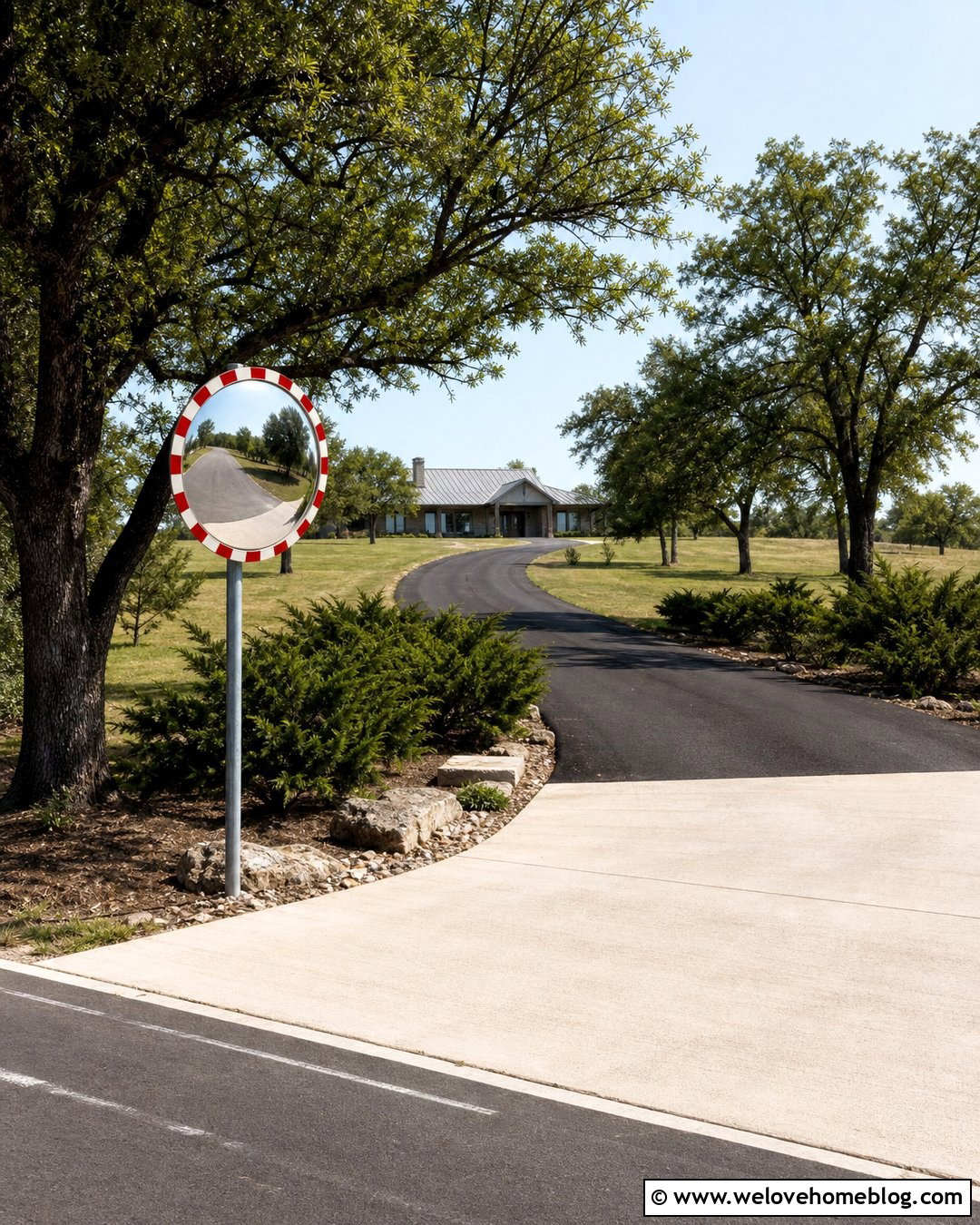



15. Crowned Gravel Driveway With Side Drains
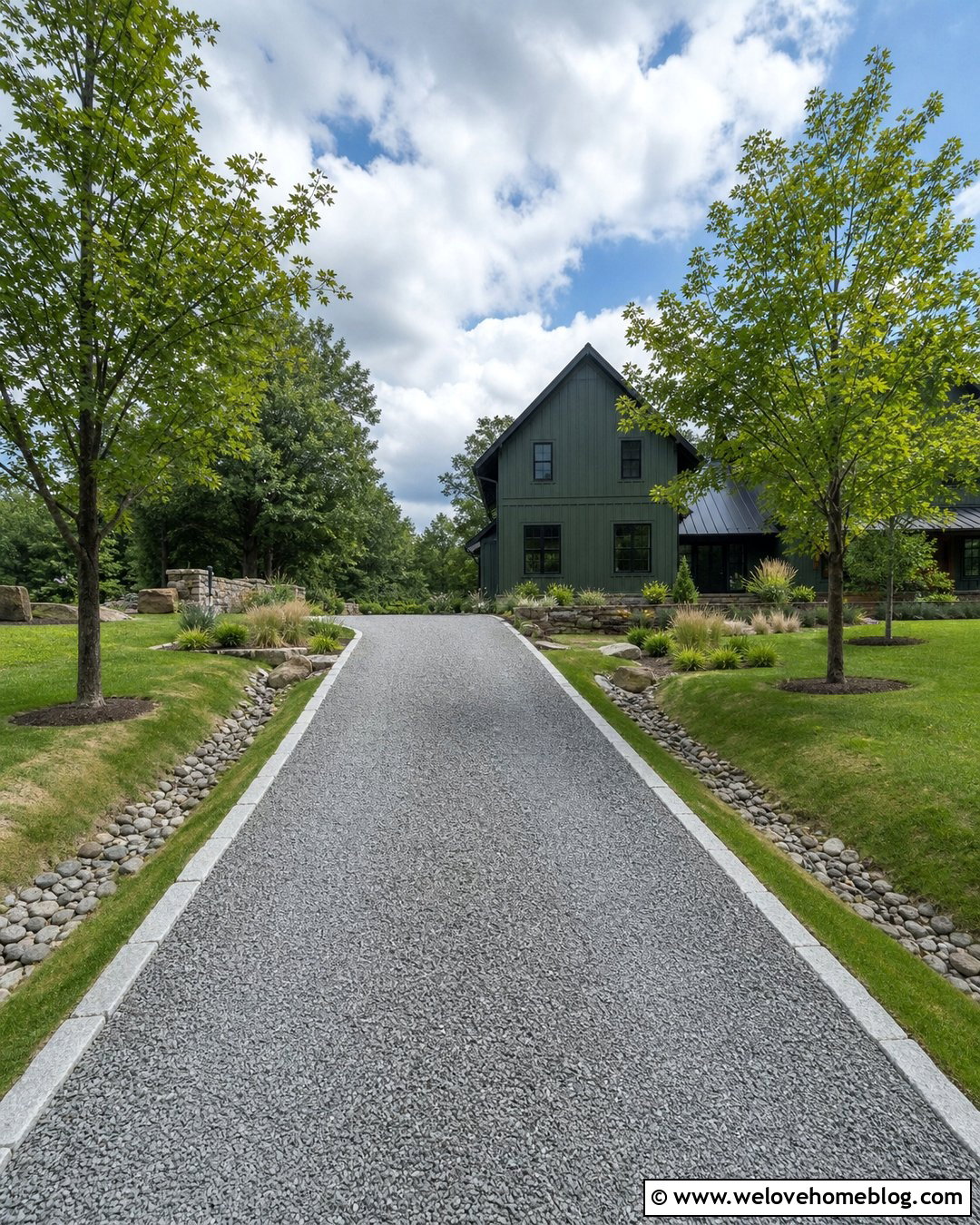
Hear gravel crunch under the tires without seeing washed-out channels after every storm. A crowned gravel driveway rises slightly through the center, encouraging water to move toward drainage routes on both sides. Use compacted angular gravel over a stable base, with shallow grass swales or stone-lined drains following the driveway edges. Granite blocks at planting beds can contain loose stone without trapping runoff. This complete layout is effective for long straight approaches because it sheds water in short distances rather than sending it down the full driveway. Regular maintenance is still important. Regrade low areas, refill displaced aggregate, and keep side drains clear. The crown must remain gentle enough for safe driving while being consistent enough to prevent water from collecting in wheel tracks.
16. Driveway Berm And Swale Drainage

Runoff coming from an uphill lawn can be redirected before it crosses the driveway. Create a low landscaped berm that guides water into a broad swale running parallel to a curved asphalt driveway. Cover the berm with sturdy ground covers and ornamental grasses, then line the swale’s fastest-flowing section with flat stone. A concrete paver border protects the asphalt edge and gives the design a finished appearance. This combination works best when the berm does not redirect water onto neighboring property or toward the house. Keep plants out of the main flow line and provide an overflow path for major storms. The result can look like ordinary layered landscaping while managing water at the source, reducing the volume and sediment that eventually reach the driveway surface.
17. Downspout Drainage Beside A Driveway

Roof runoff can overwhelm a driveway even when the pavement itself is graded correctly. Extend downspouts into solid underground drainpipes that carry water past the driveway and release it at an approved location. For a clean craftsman look, combine a charcoal asphalt driveway with red brick edging, mulched foundation beds, and discreet drain connections hidden beneath the landscaping. Do not connect perforated pipe immediately beside the foundation, where escaping water may create additional problems. Add accessible cleanouts and leaf protection so the line can be maintained. The outlet may lead to a rain garden, pop-up emitter, dry well, or other permitted system, depending on site conditions. Separating roof water from driveway runoff can reduce puddles and take pressure off surface drains during heavy rain.
18. Driveway Catch Basin Connected To A Dry Well
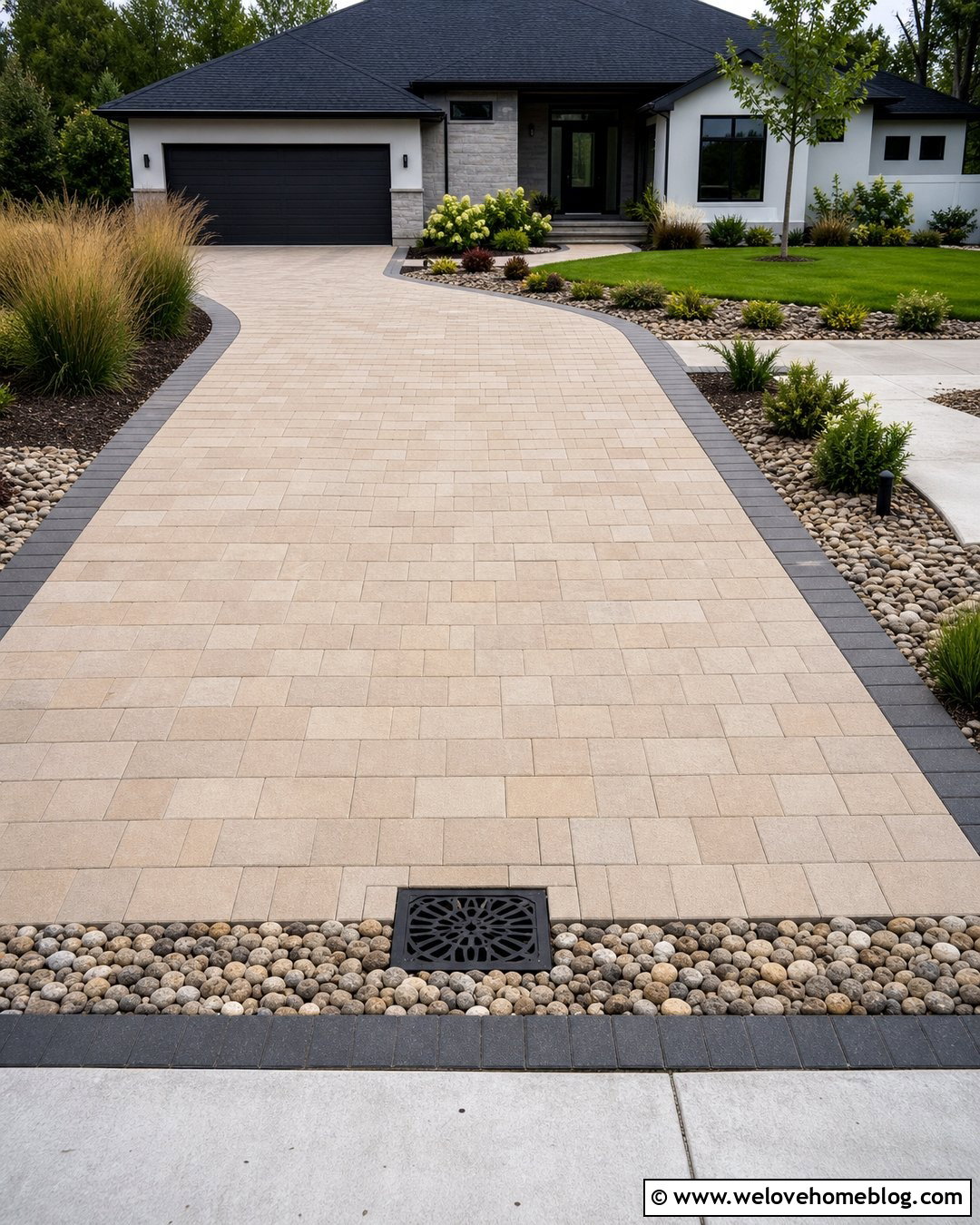
Where legal and suitable for the soil, a catch basin can direct collected runoff into an underground dry well. Design the driveway with beige interlocking concrete pavers, a gentle cross-slope, and a decorative metal basin grate near the lower landscape edge. Surround it with a river-rock transition and drought-tolerant shrubs so the collection point feels integrated. The catch basin traps some debris before water enters the buried system, but both components require inspection and cleaning. Dry wells depend on infiltration, making soil conditions, groundwater level, runoff volume, and setbacks important design factors. An overflow route may be necessary when the ground becomes saturated. This is not a universal solution, so consult local requirements and a drainage professional before placing concentrated runoff below ground.
19. Decorative Metal Driveway Drain

A visible grate does not have to make an elegant driveway look industrial. Choose a decorative cast-iron or galvanized-steel channel grate that complements black lanterns, gates, and house hardware. Set it across a clay brick paver driveway in a herringbone pattern, with a soldier-course border and symmetrical evergreen planting beds. The grate should remain flush, slip-resistant, removable, and rated for expected vehicle loads. Beneath the decorative surface, the channel and outlet still need practical capacity and correct slope. Avoid highly detailed openings that trap leaves faster than they can be cleaned. A straight installation aligned with the brick pattern creates the most polished finish. This approach works particularly well near a traditional garage, gated entrance, or formal circular driveway where every visible material contributes to the architecture.


20. Circular Driveway Drainage System

A circular driveway may need several coordinated drainage features because water travels in different directions around the loop. Use permeable gray concrete pavers for the main surface, a slightly raised landscaped center island, and a stone-lined swale around the outer downhill edge. Add small catch basins at unavoidable low points and a channel drain near the garage approach. The island should not shed concentrated water onto the paving, so grade its planting beds inward or provide controlled overflow points. Low shrubs, a specimen tree, and broad grass borders preserve visibility across the circle. Combining infiltration, surface grading, and collection drains creates a more resilient system than relying on one grate. A site-specific plan is valuable because circular layouts have multiple slopes, entrances, and turning areas.
Conclusion:
Good drainage begins with understanding how water enters, crosses, and leaves the property. A channel drain may protect a garage, while a swale, permeable surface, French drain, catch basin, or dry creek bed may work better elsewhere. In many yards, combining two or more methods produces the strongest result. Coordinate every drain with the driveway slope, surface material, borders, landscaping, and a safe outlet. Keep grates, pipes, swales, and basins accessible for routine cleaning. Before changing grades or directing runoff, check utility locations, permit requirements, and neighborhood drainage rules. These 20 Driveway Drain Ideas offer practical starting points, but a drainage professional can help size the final system for local rainfall and soil conditions. ()

Related posts:





Leave a Reply