

1. Natural Stone Retaining Wall Beside Driveway
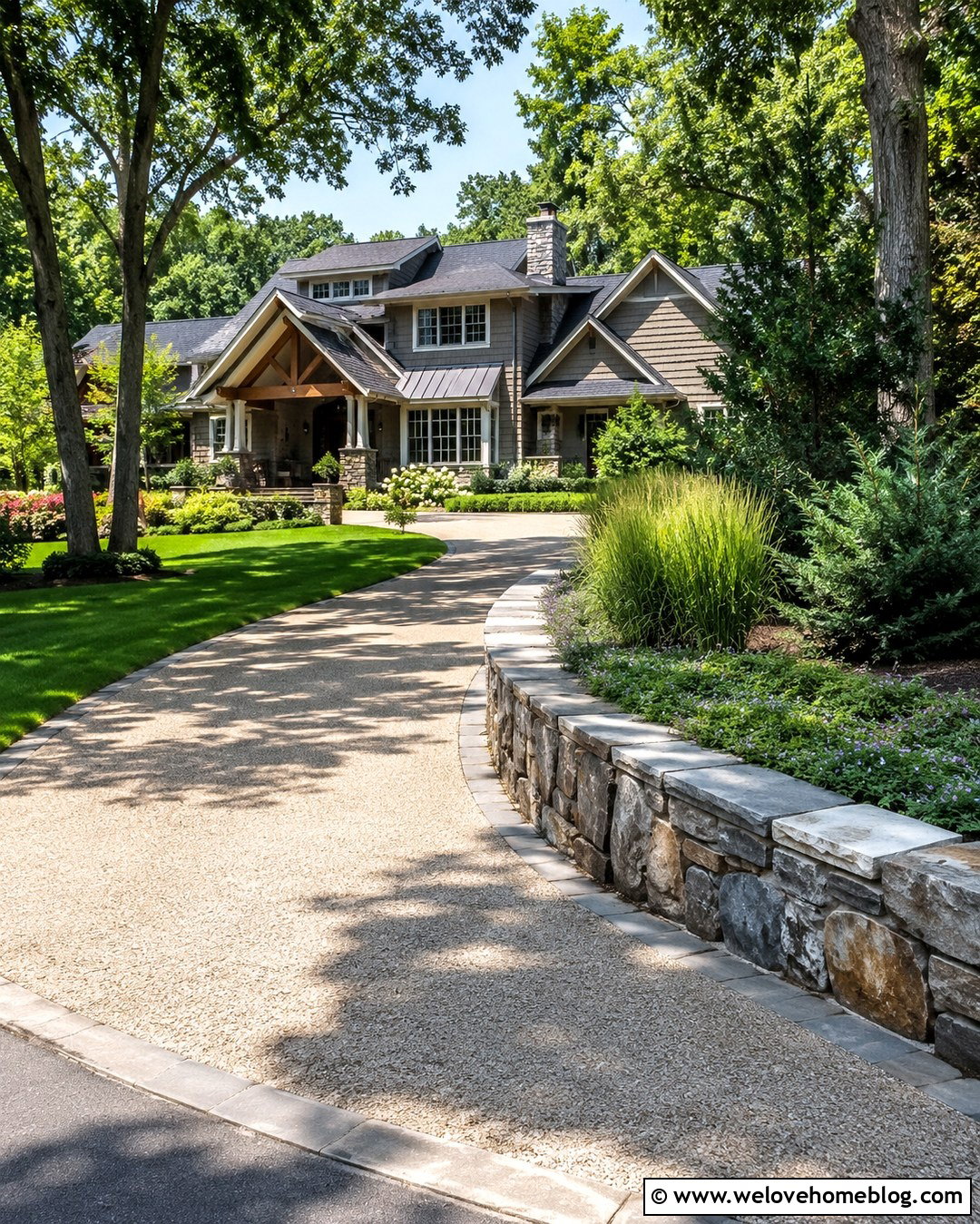
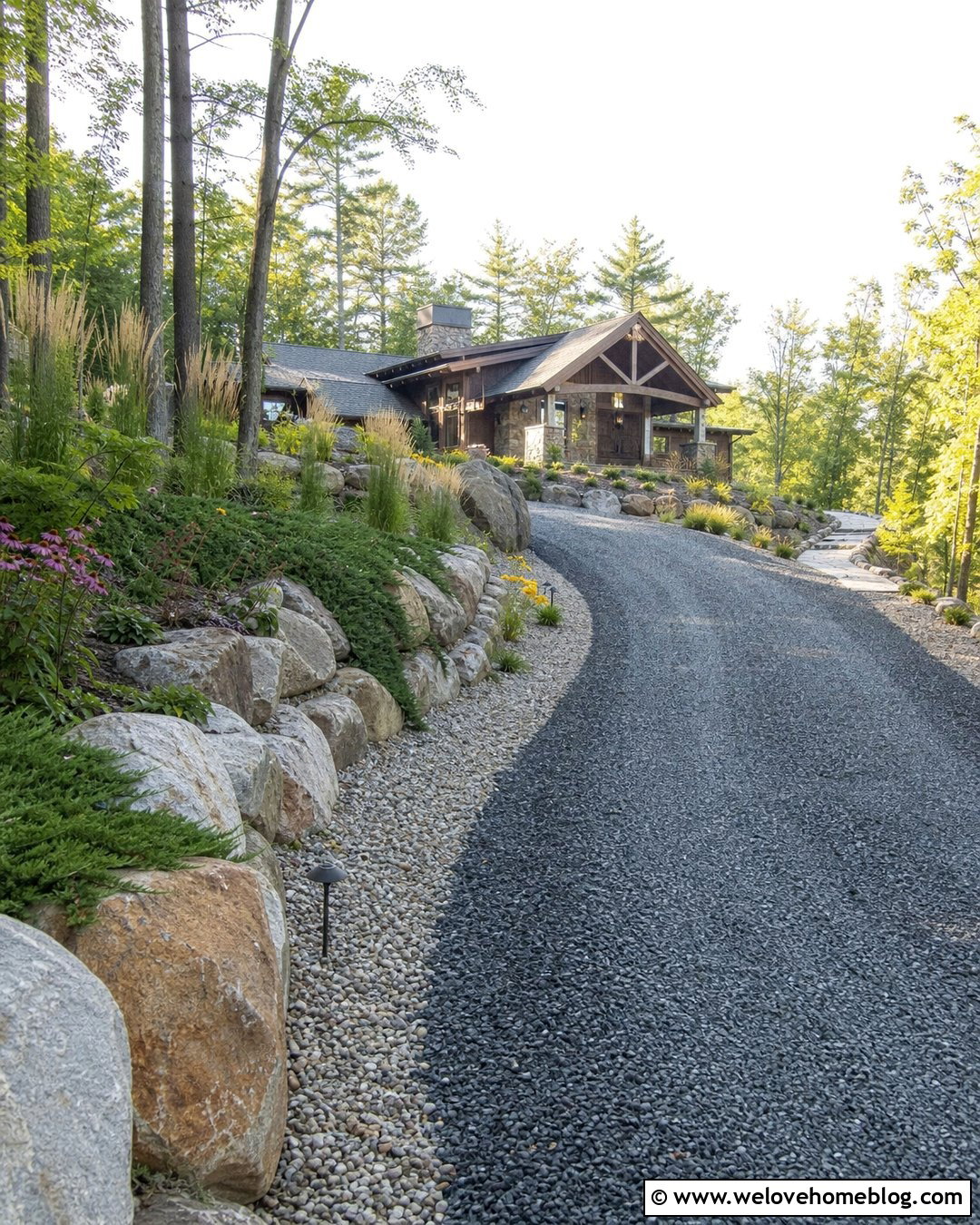
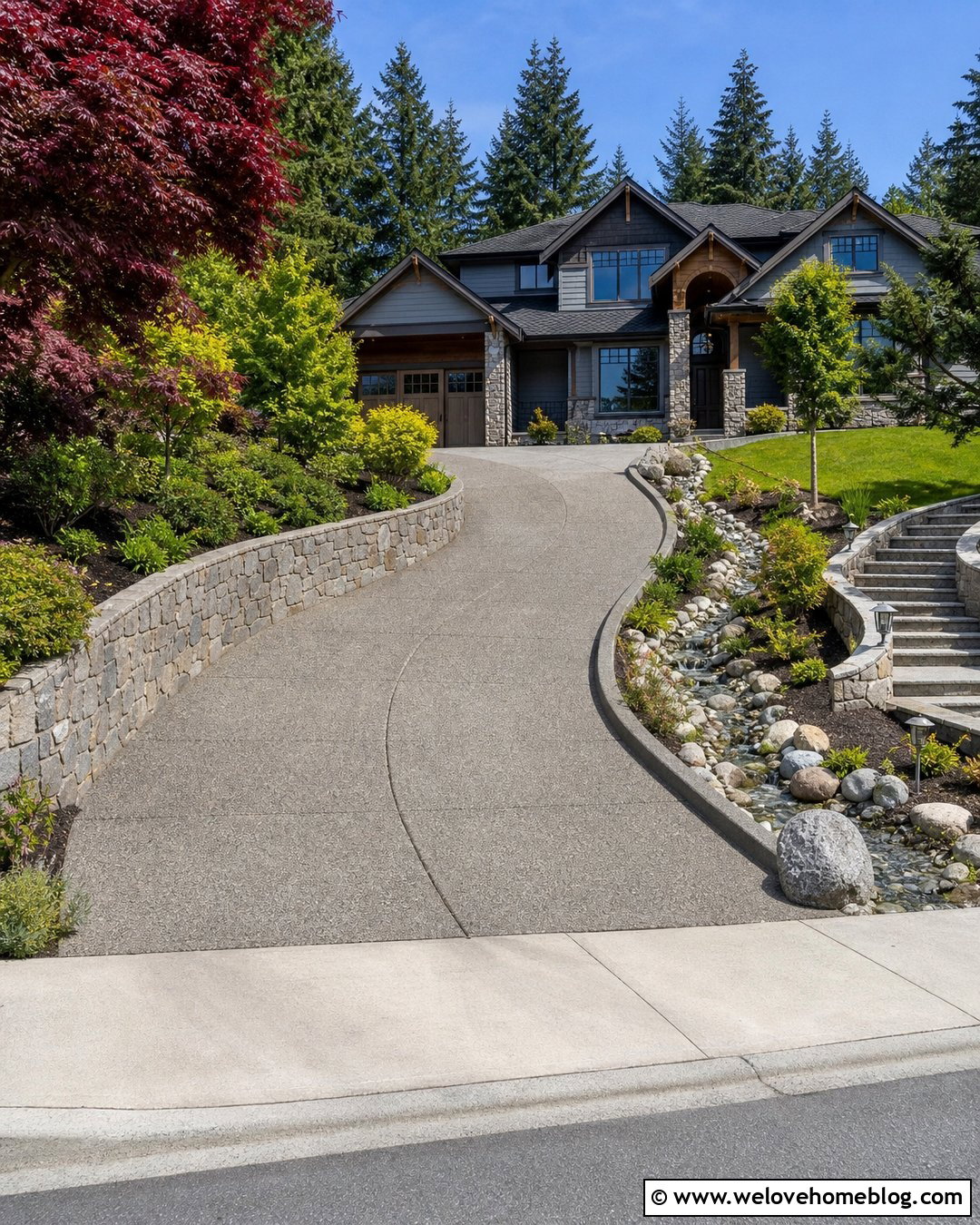
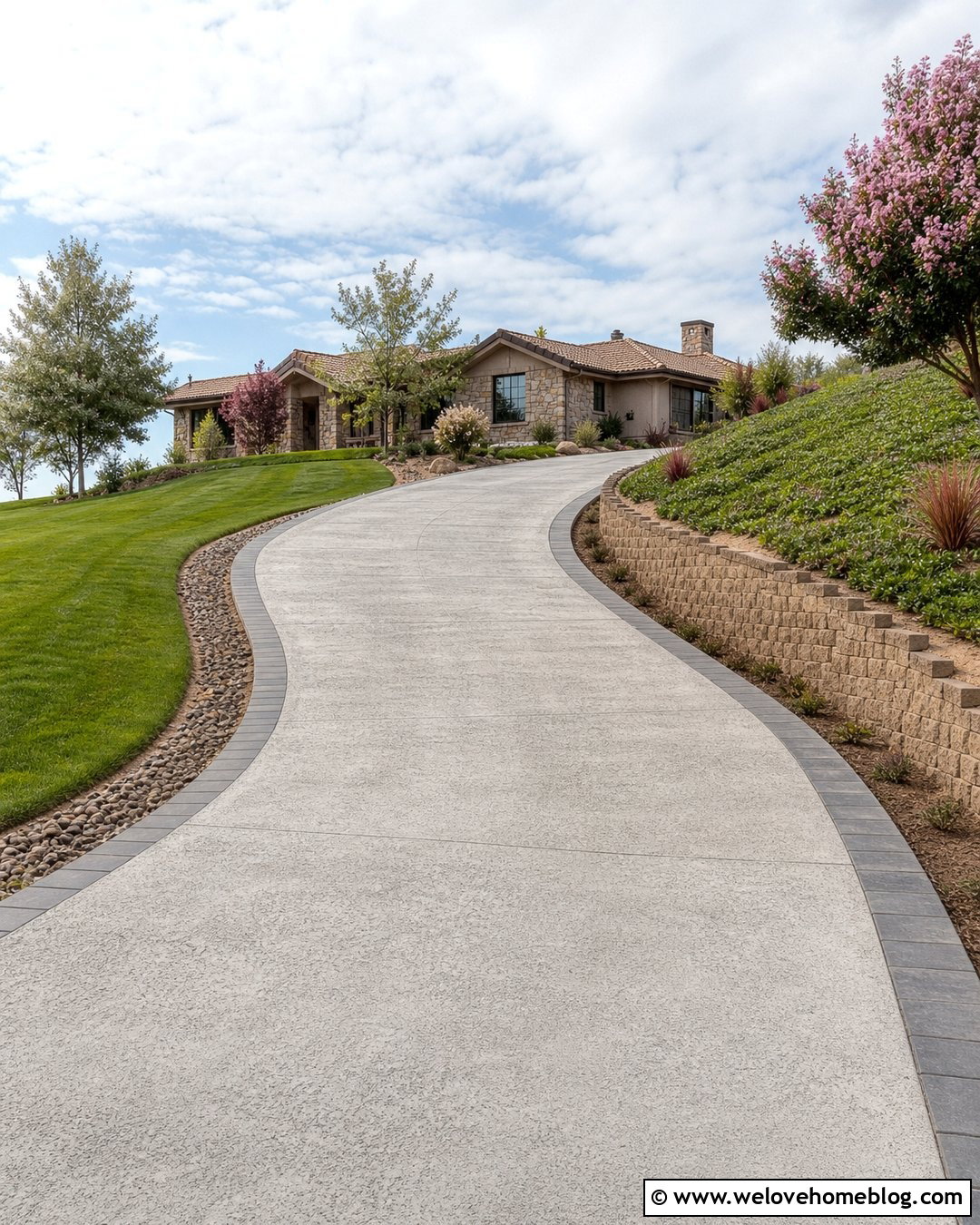
A natural stone retaining wall creates a relaxed, established look beside a curved driveway. Pair irregular gray and tan fieldstone with warm exposed aggregate so the hardscape feels connected rather than pieced together. Use wide capstones to create a finished upper edge, then soften the wall with ornamental grasses, creeping thyme, and compact evergreen shrubs. A gently curved layout works especially well for a craftsman, cottage, or country home because it follows the land naturally. Keep plants near the street low enough to preserve visibility when entering or leaving. On a taller slope, divide the stonework into staggered tiers instead of creating one imposing face. Repeating the stone around the mailbox or walkway can tie the entire front yard together.
2. Concrete Block Retaining Wall Beside Driveway
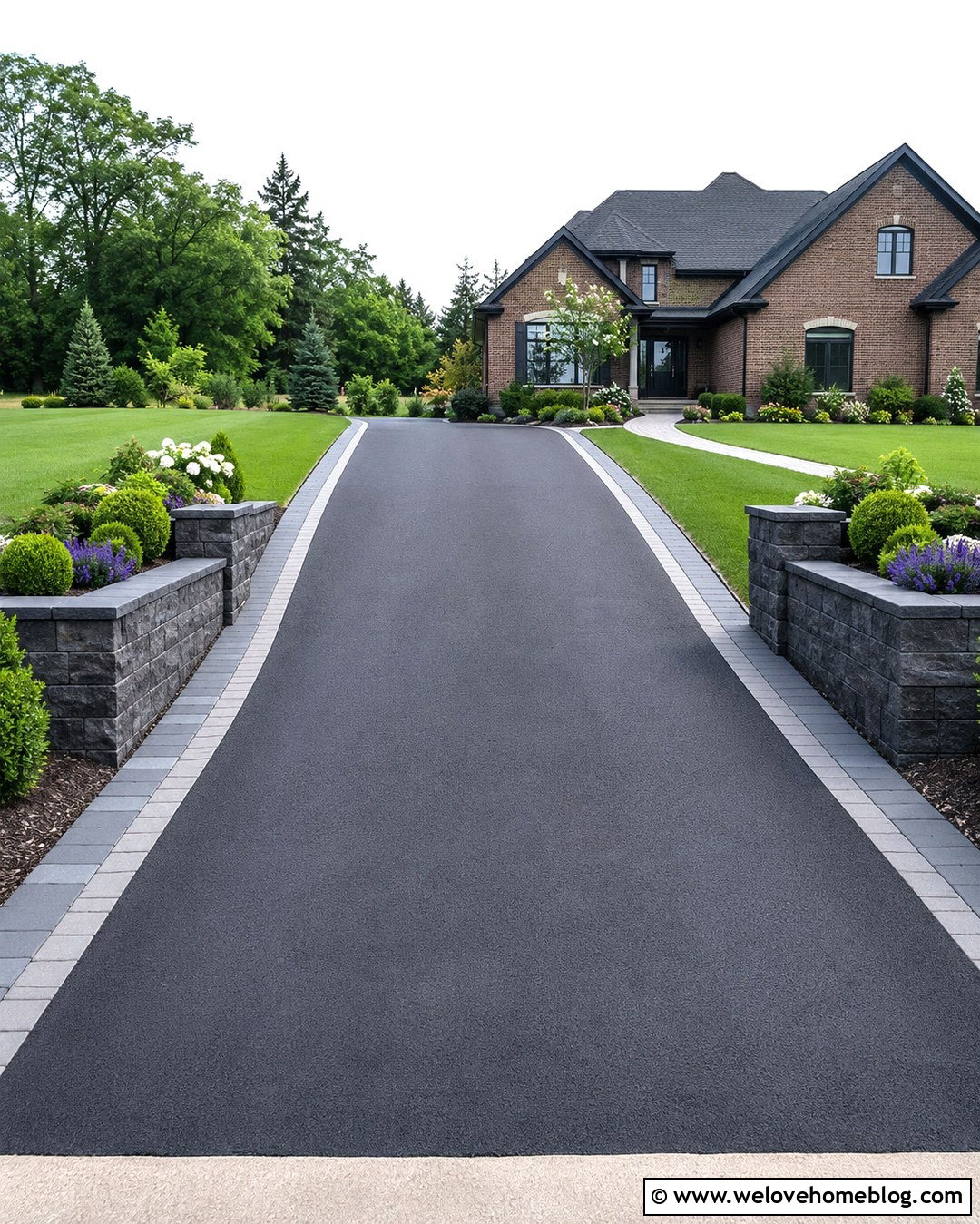
Interlocking concrete blocks offer clean lines and consistent proportions for a practical suburban driveway. Choose charcoal, buff, or blended gray blocks that coordinate with an asphalt or poured concrete surface. A straight wall can visually organize a narrow side yard, especially when the cap follows the driveway’s gradual rise. Add a slim planting bed above it with dwarf boxwood, catmint, and seasonal flowers for color without excessive spreading. A contrasting paver ribbon between the wall and driveway creates a neat transition and catches loose mulch. For a more customized appearance, select blocks with lightly textured faces rather than strongly artificial patterns. Continue the same block around nearby steps or raised beds so the retaining wall appears integrated with the home’s complete landscape plan.
3. Timber Retaining Wall Beside Gravel Driveway
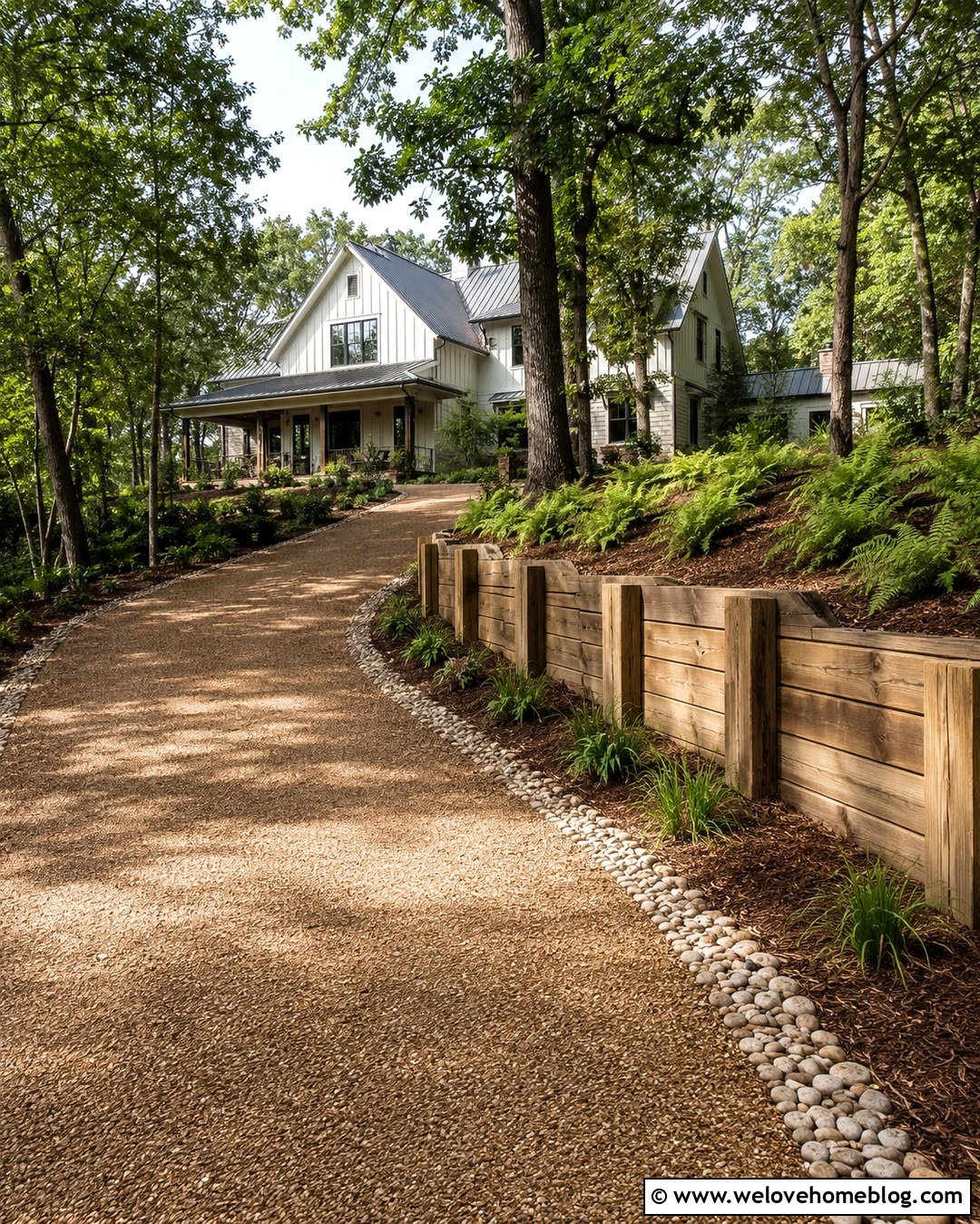
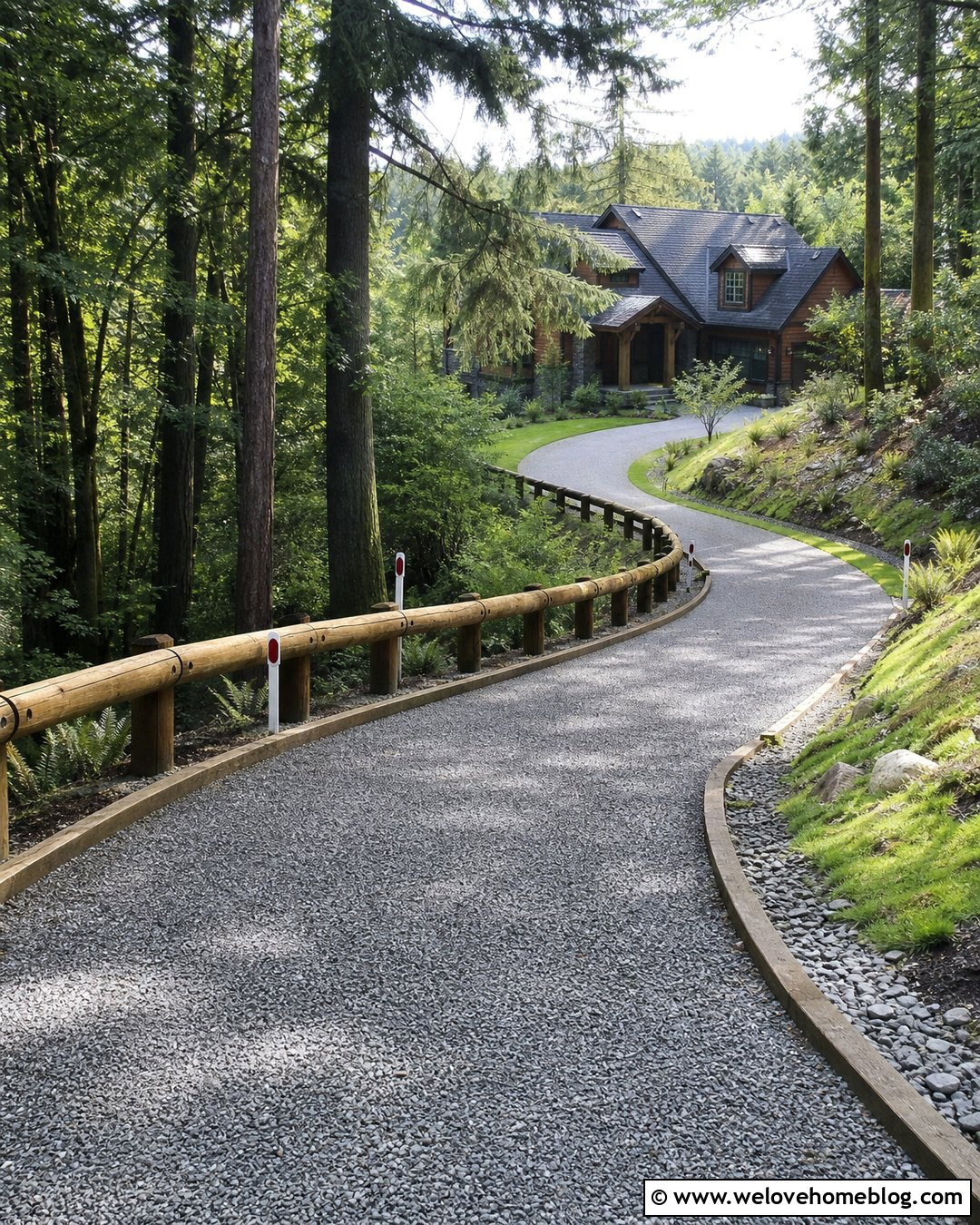
Timber brings warmth to a gravel driveway surrounded by trees or informal landscaping. Use substantial pressure-treated timbers arranged in long horizontal courses, with sturdy posts creating a simple rhythm along the slope. A driveway surfaced with warm brown crushed gravel complements the wood and reinforces the natural character. Finish the upper bed with pine bark mulch, ferns, shade-tolerant grasses, and broad-leaf shrubs. This complete look fits rustic ranch homes, cabins, and wooded modern farmhouses. Keep the driveway edge clearly defined with a compacted gravel shoulder or a narrow line of darker stone. Timber walls should look solid rather than decorative, particularly beside areas exposed to turning vehicles. For structural suitability, drainage, fastening, and required reinforcement, consult a qualified local installer before construction.
4. Poured Concrete Retaining Wall Beside Driveway
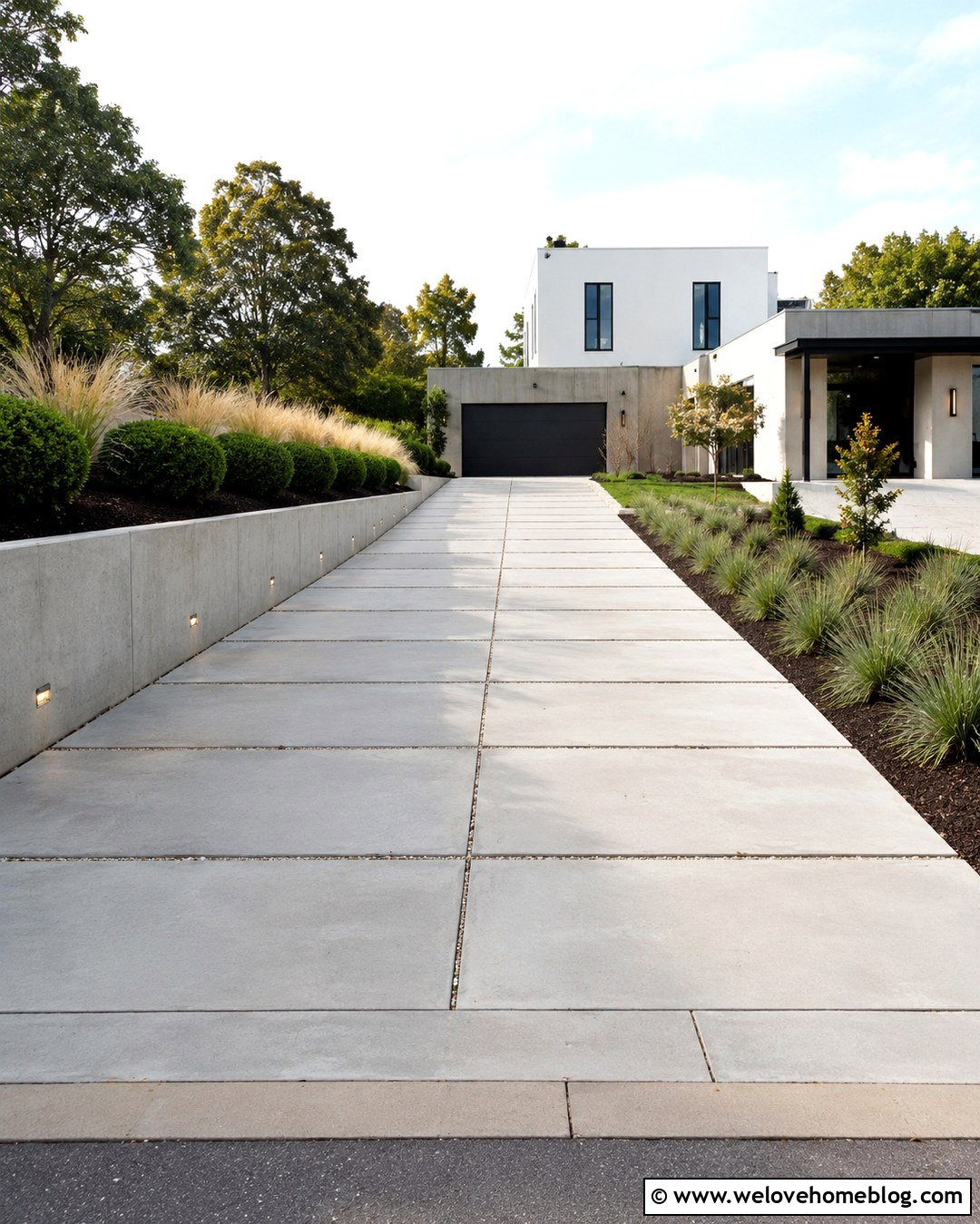
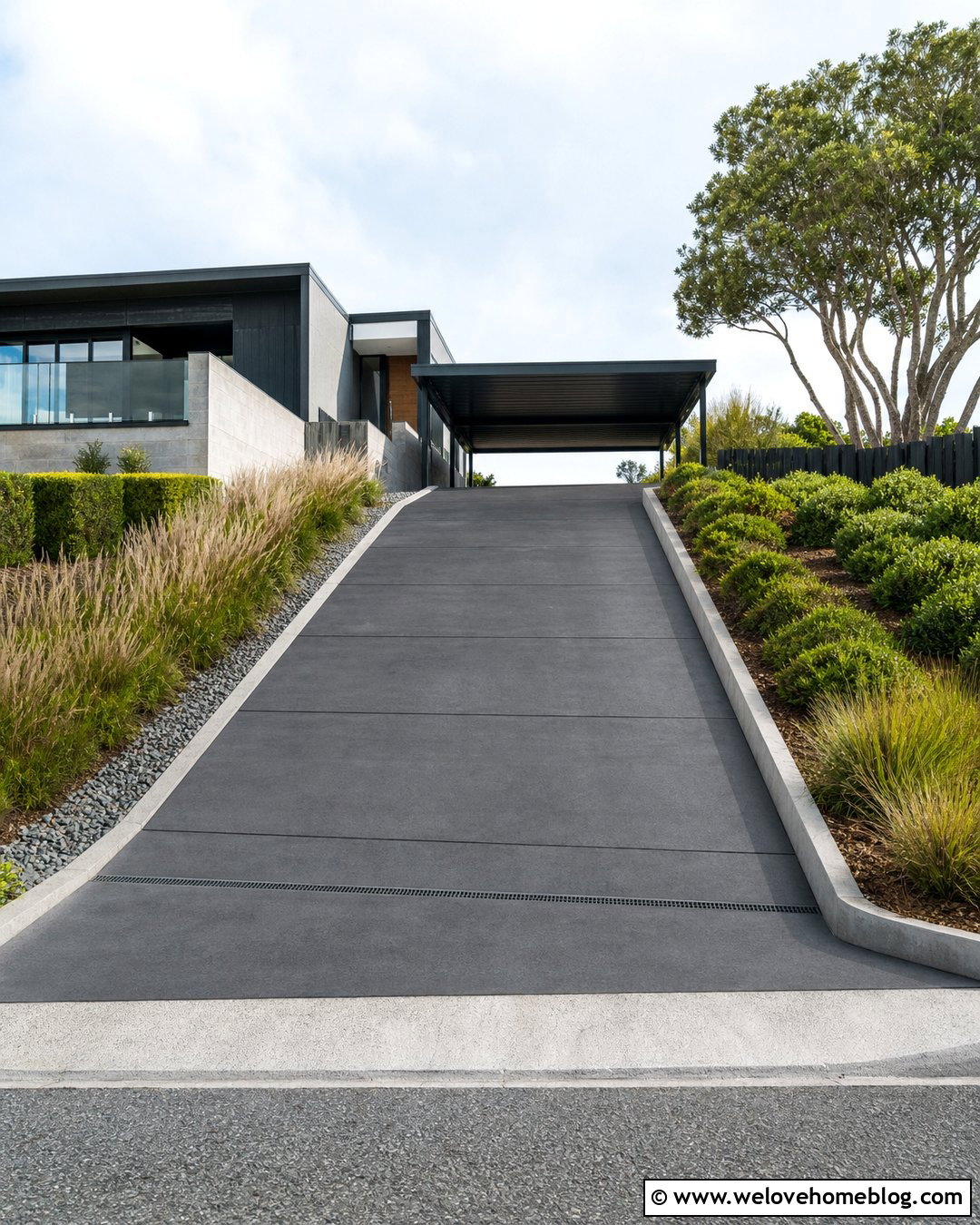
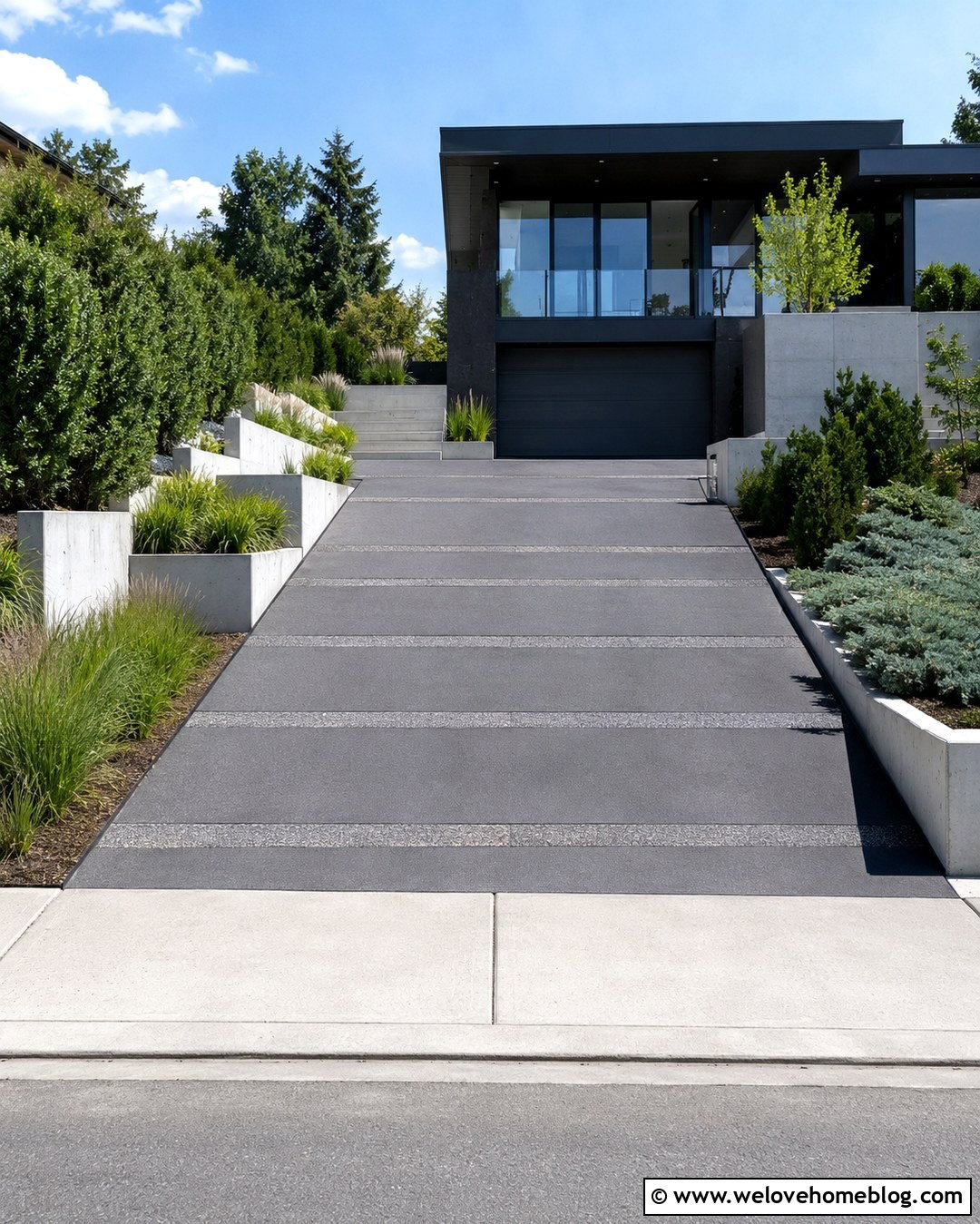
Smooth poured concrete creates a crisp retaining wall for a modern home and a straight driveway. Pair a pale gray wall with large-format concrete driveway panels separated by narrow gravel joints. The repeated linear pattern makes the approach look wider and more intentional. Use a flush cap or carefully formed top edge to preserve the minimalist appearance. Above the wall, plant sculptural grasses, compact agave where climate allows, or rounded evergreen shrubs in dark mulch. Recessed lighting can be incorporated into the wall face without introducing decorative clutter. If the elevation changes, use two offset wall sections with a broad planted gap between them. This reduces the visual weight of the concrete while creating space for greenery. Match the wall tone to the home’s stucco, siding, or foundation.
5. Brick Retaining Wall Beside Driveway
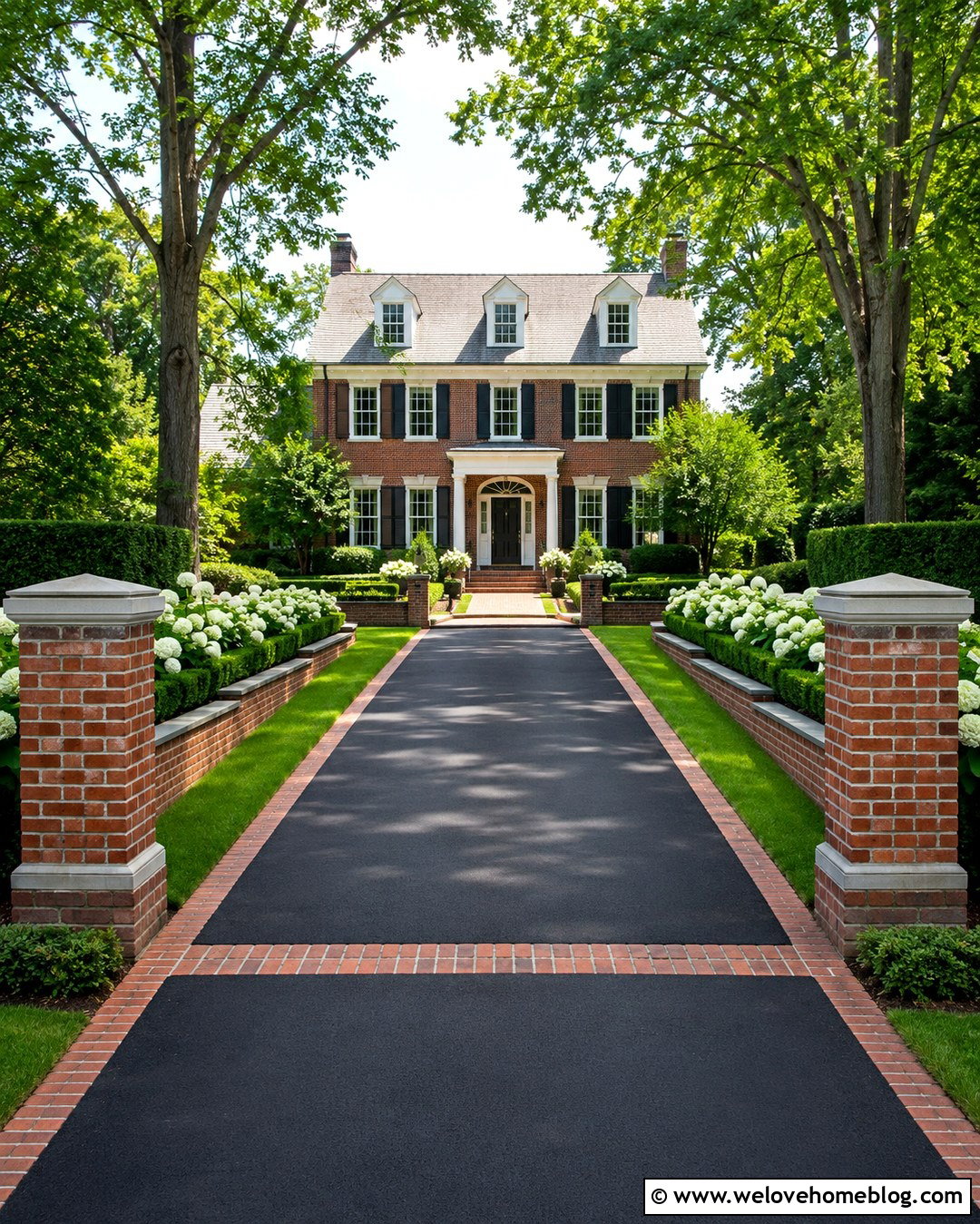
A red or brown brick retaining wall adds traditional character beside a colonial, Georgian, or Cape Cod home. Combine it with a black asphalt driveway and a brick soldier-course border for a coordinated approach. Select brick colors that relate to the home without requiring a perfect match, which can make the design feel overly uniform. A cast-stone or bluestone cap creates a durable-looking top line and introduces subtle contrast. Above the wall, use clipped hedges, hydrangeas, and a narrow lawn strip for a formal but welcoming landscape. Curving the wall slightly near the sidewalk can open the entrance visually. Brick pillars at the driveway opening may repeat the wall material, while simple lanterns or an address plaque provide a clear focal point without overwhelming the facade.
6. Gabion Retaining Wall Beside Driveway
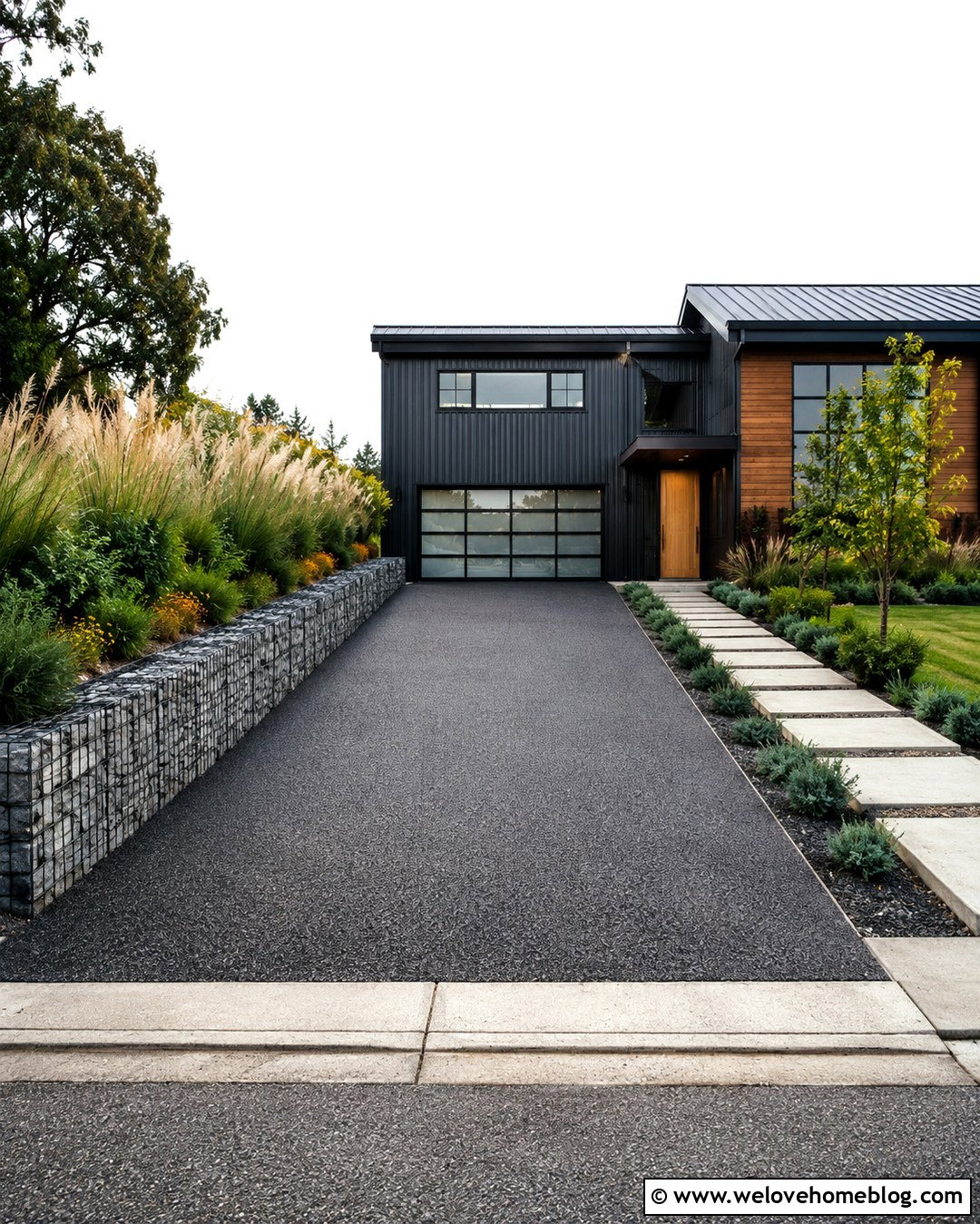
A gabion retaining wall provides bold texture beside a contemporary driveway. The wire baskets can be filled with angular gray stone, rounded river rock, or locally sourced material that complements the surrounding landscape. Pair the wall with dark resin-bound gravel or charcoal concrete for a strong modern contrast. Keep the layout straight and uncomplicated so the stone-filled cages remain the main visual feature. Above the wall, mass ornamental grasses, spreading junipers, and drought-tolerant perennials rather than using many unrelated plants. A narrow strip of decorative gravel between the wall and driveway makes maintenance easier and keeps the base visually clean. For a warmer effect, add a timber handrail, horizontal wood fence, or wood-toned garage door. This combination works particularly well with industrial-inspired and modern homes.
7. Boulder Retaining Wall Beside Driveway
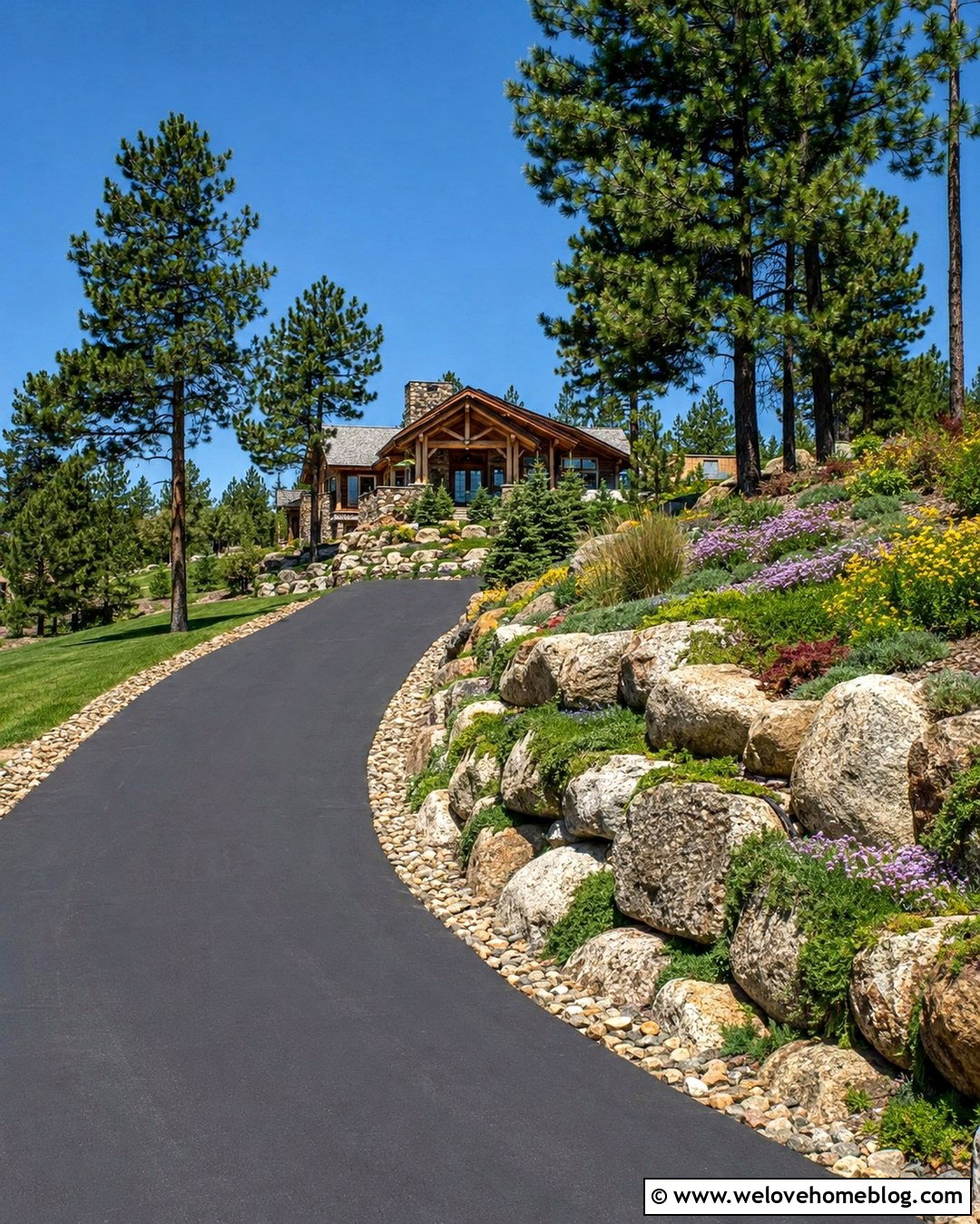
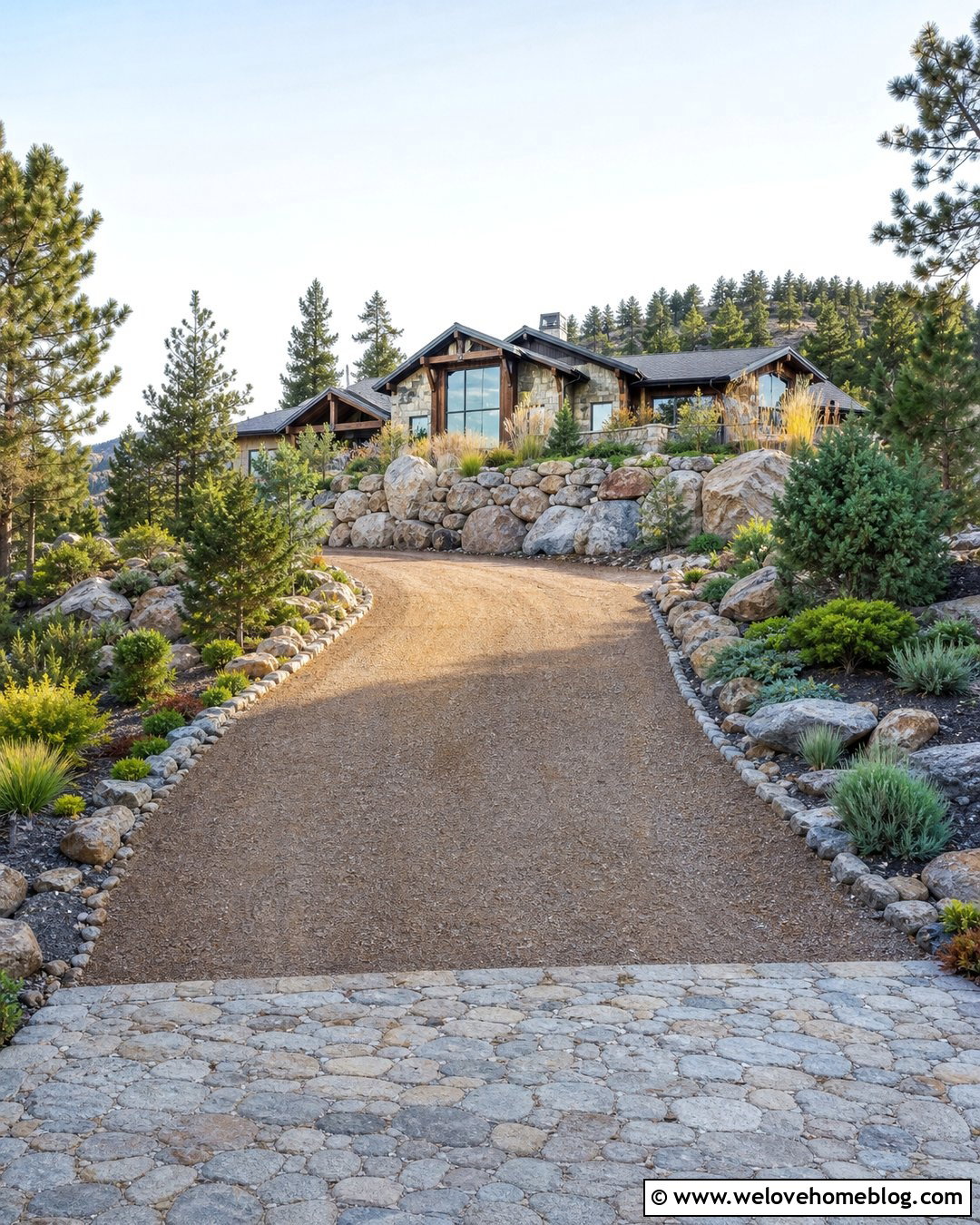
Large boulders can hold a sloped landscape while making the driveway feel like part of a natural setting. Arrange weathered granite or limestone boulders in staggered courses beside a gently curving asphalt driveway. Avoid creating an overly regular pattern; varied stone sizes and planted pockets give the wall a more convincing landscape character. Fill generous spaces above and between visible stones with creeping juniper, sedum, ornamental grasses, and flowering ground covers suited to the site. A crushed-stone driveway border can connect the boulder colors to the dark pavement. This rugged look suits mountain homes, ranch houses, and properties with mature trees. Because large rocks occupy considerable depth, plan enough space for safe driveway clearance, planting, and drainage without making the driving lane feel confined.
8. Tiered Retaining Wall Beside Steep Driveway
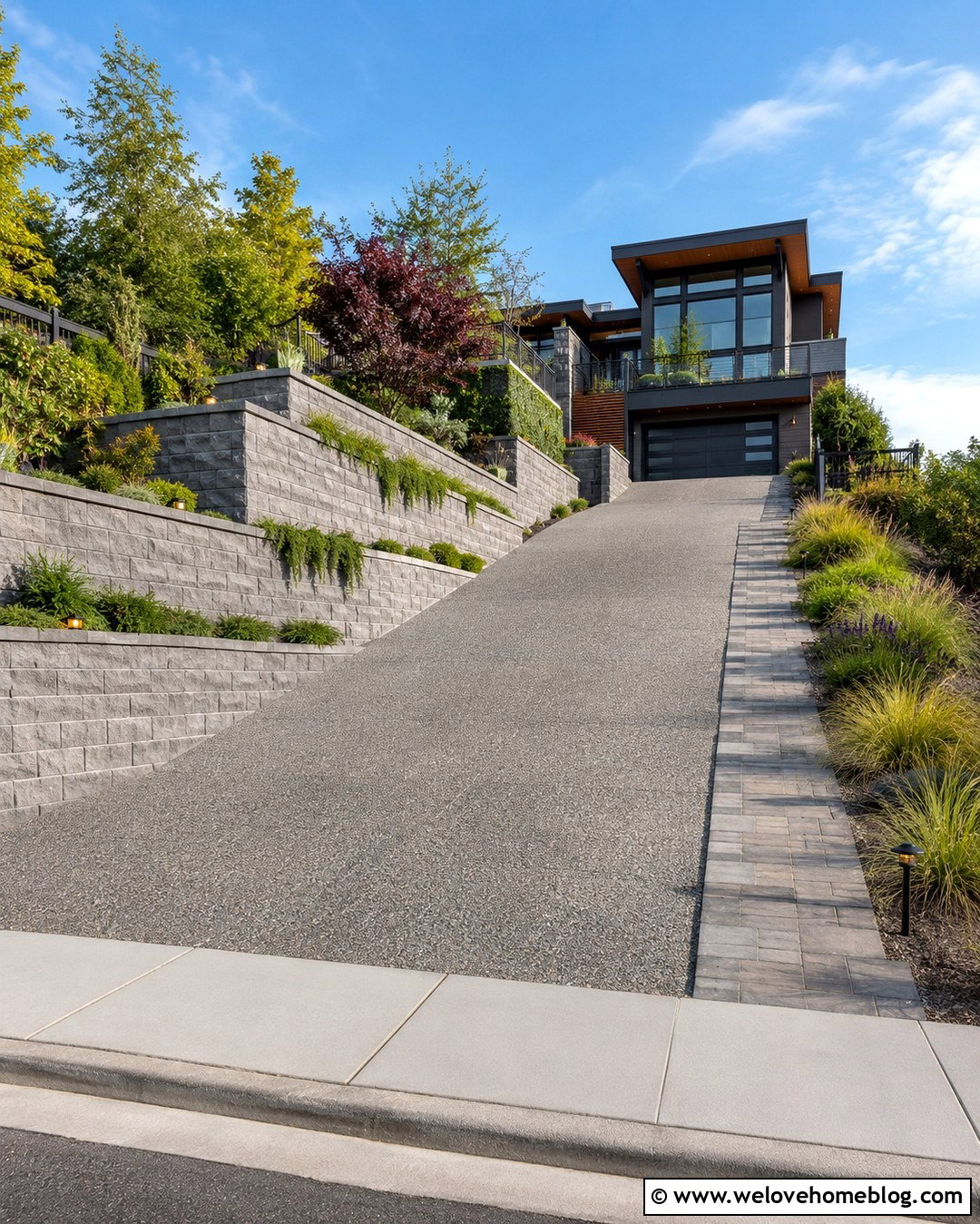
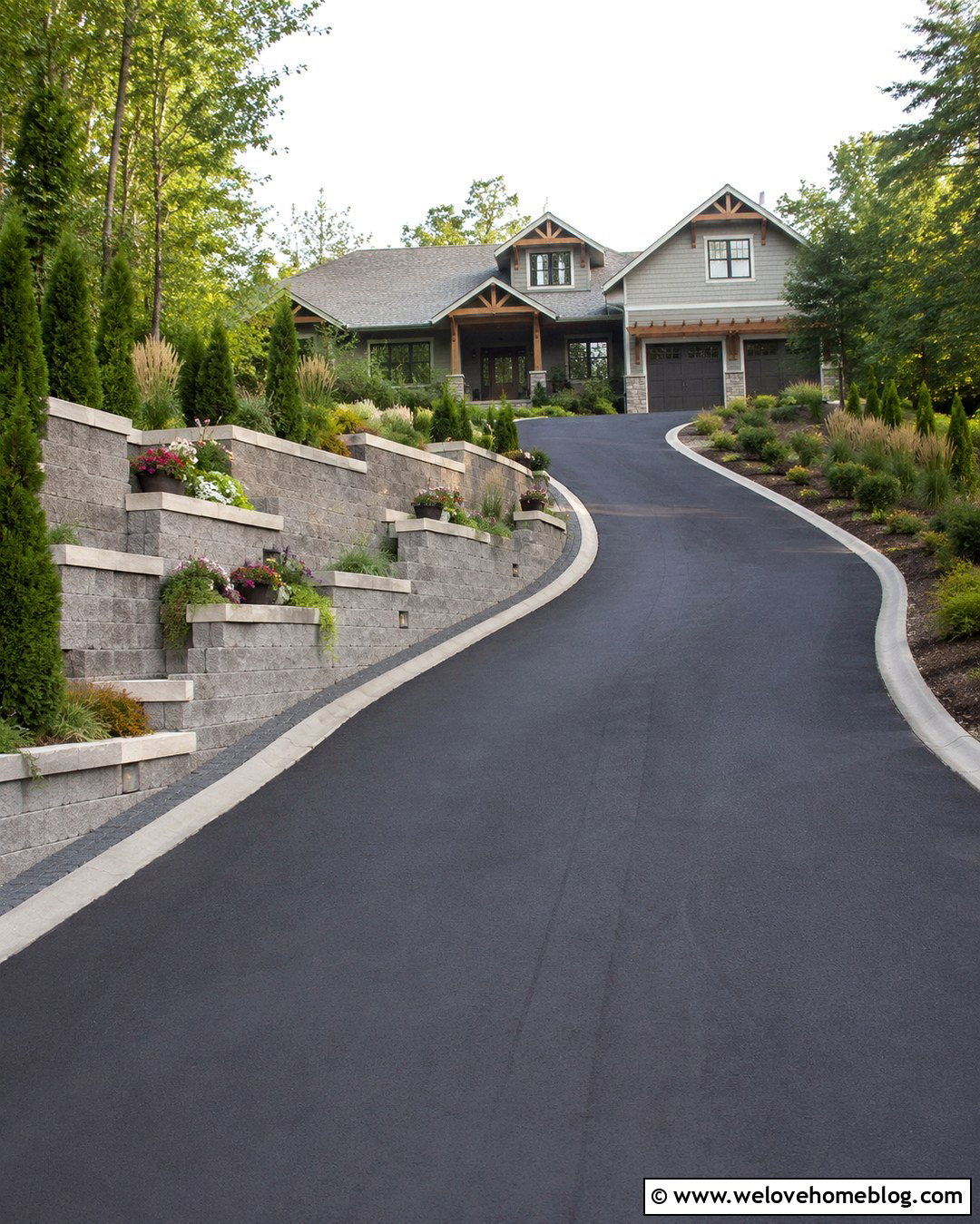
A tiered retaining wall can make a steep driveway feel less enclosed than one tall, uninterrupted structure. Use textured concrete blocks or natural stone to create two or three walls that step up the slope. Leave broad planting terraces between the levels, filling them with low shrubs, cascading ground covers, and small ornamental trees. An exposed aggregate driveway adds grip-like visual texture and complements both traditional and contemporary homes. Align the wall tiers with natural changes in grade rather than forcing identical heights throughout. Low-voltage lights beneath selected capstones can define the driveway edge after dark, but the daytime composition should remain the priority. Tiered walls involve multiple foundations, setbacks, and drainage paths, so the entire slope should be evaluated as one connected retaining system rather than separate decorative beds.
9. Curved Retaining Wall Beside Driveway
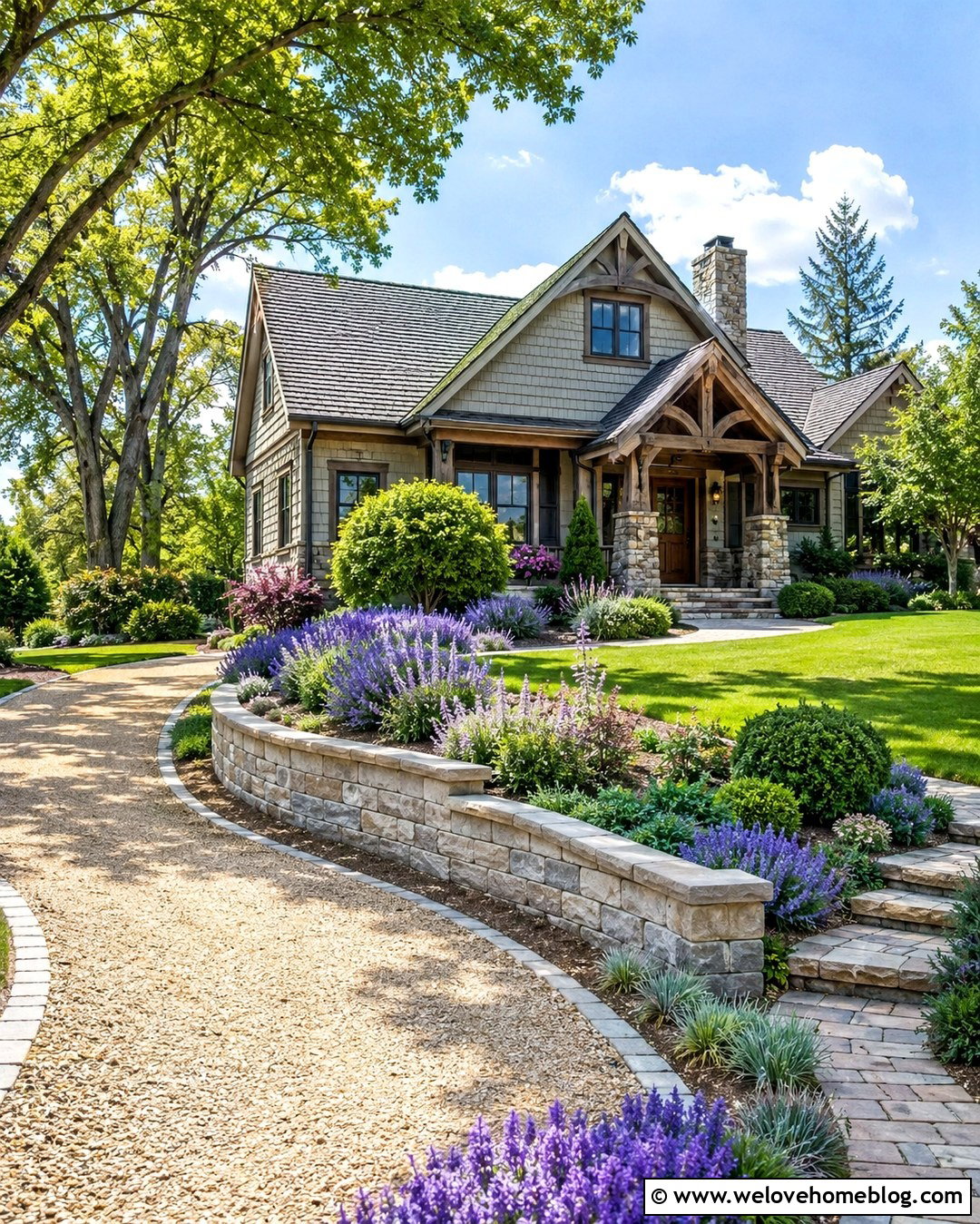
A curved retaining wall mirrors the flow of a winding driveway and creates a softer arrival. Use tumbled concrete blocks in a warm gray blend beside a light gravel or paved driveway. The wall can begin low near the street, gradually rise through the center of the slope, and taper again near the garage. This profile keeps the structure from looking abruptly cut off. Plant sweeping groups of lavender, salvia, dwarf grasses, and evergreen mounds above the wall, following the same curve rather than arranging them in isolated spots. A smooth capstone visually emphasizes the shape and offers a clean transition between masonry and planting. This complete design works well with craftsman, cottage, and Mediterranean-inspired homes, particularly when the wall color repeats stone details on the facade.
10. Low Retaining Wall Beside Driveway
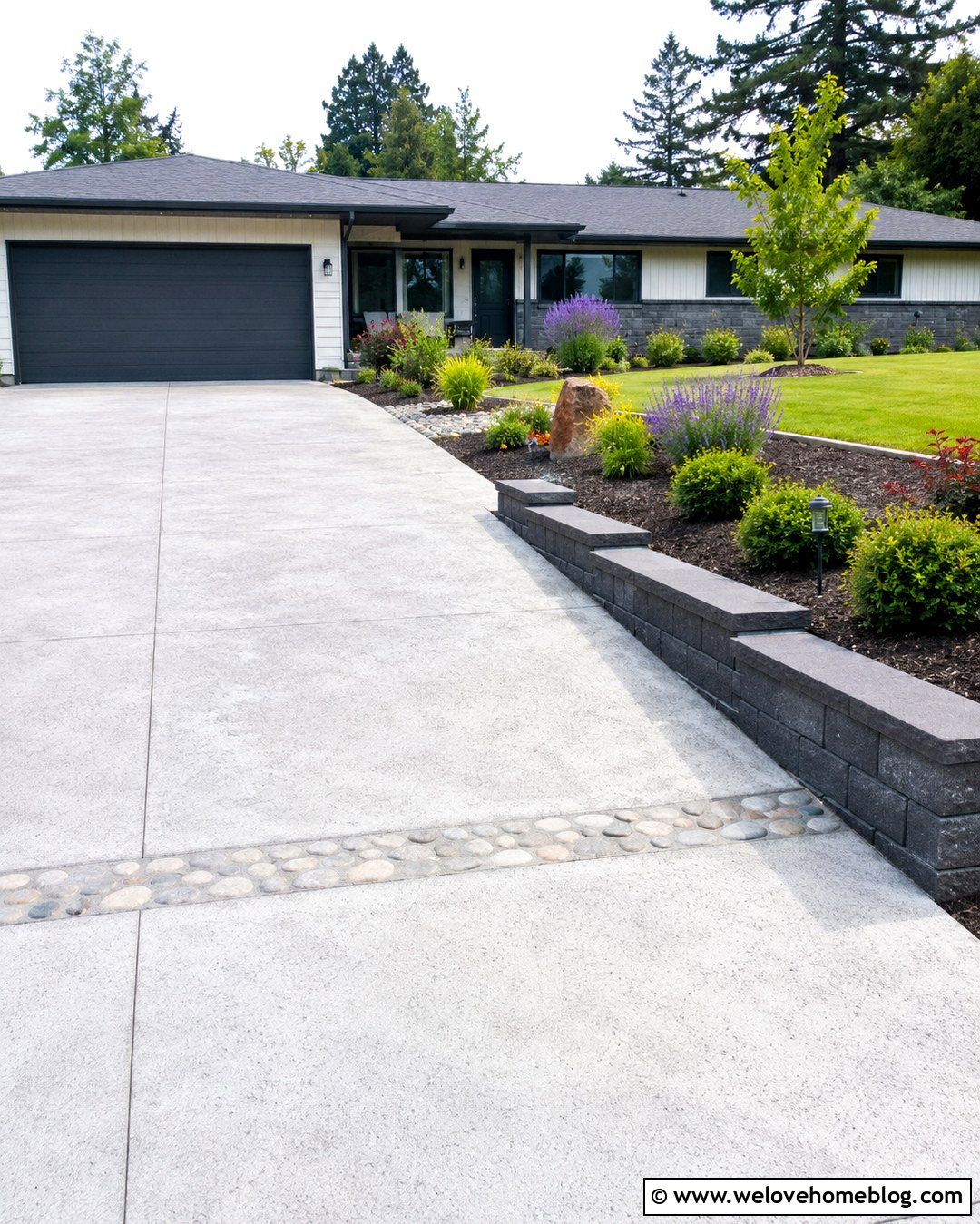
A low retaining wall is useful where a modest slope repeatedly spills soil or mulch toward the driveway. Pair a two- or three-course wall of charcoal concrete blocks with a straight light-gray concrete driveway. The dark edge clearly defines the driving surface without making the front yard feel divided. Finish the raised bed with compact shrubs, colorful perennials, and a continuous layer of decorative stone or mulch. A matching cap gives the small wall greater visual importance and creates a polished line from the sidewalk to the house. Near the garage, transition the wall into a wider planting bed or a short set of steps. Although the structure is low, its foundation and water management still need careful planning so runoff does not collect against the driveway edge or wall.
11. Retaining Wall With Steps Beside Driveway
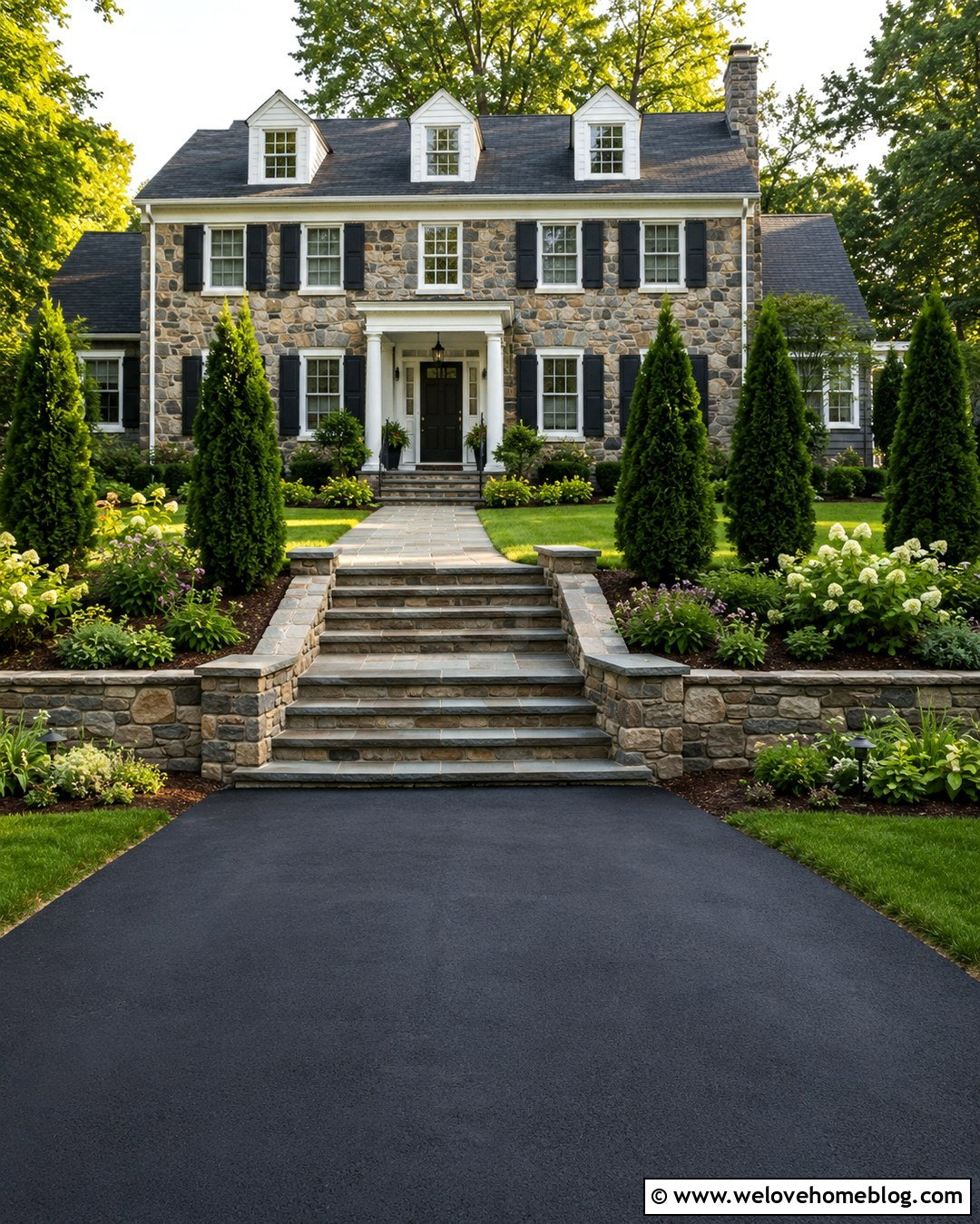
Integrating steps into a retaining wall creates a convenient route from the driveway to an elevated front yard. Use broad bluestone treads with a matching natural stone wall beside a dark asphalt driveway. Position the staircase where people naturally leave parked vehicles, then connect it to the home’s main walkway. Flared lower steps can make the entrance feel open, while low masonry sides visually anchor the transition. Plant upright evergreens near the top and softer perennials along the lower wall to frame the route without narrowing it. Step and wall materials should coordinate closely, but the treads can be slightly lighter for better visual definition. Include a code-appropriate handrail when required. The finished design should make movement between driveway, lawn, and front door feel direct and intentional.
12. Retaining Wall With Lighting Beside Driveway
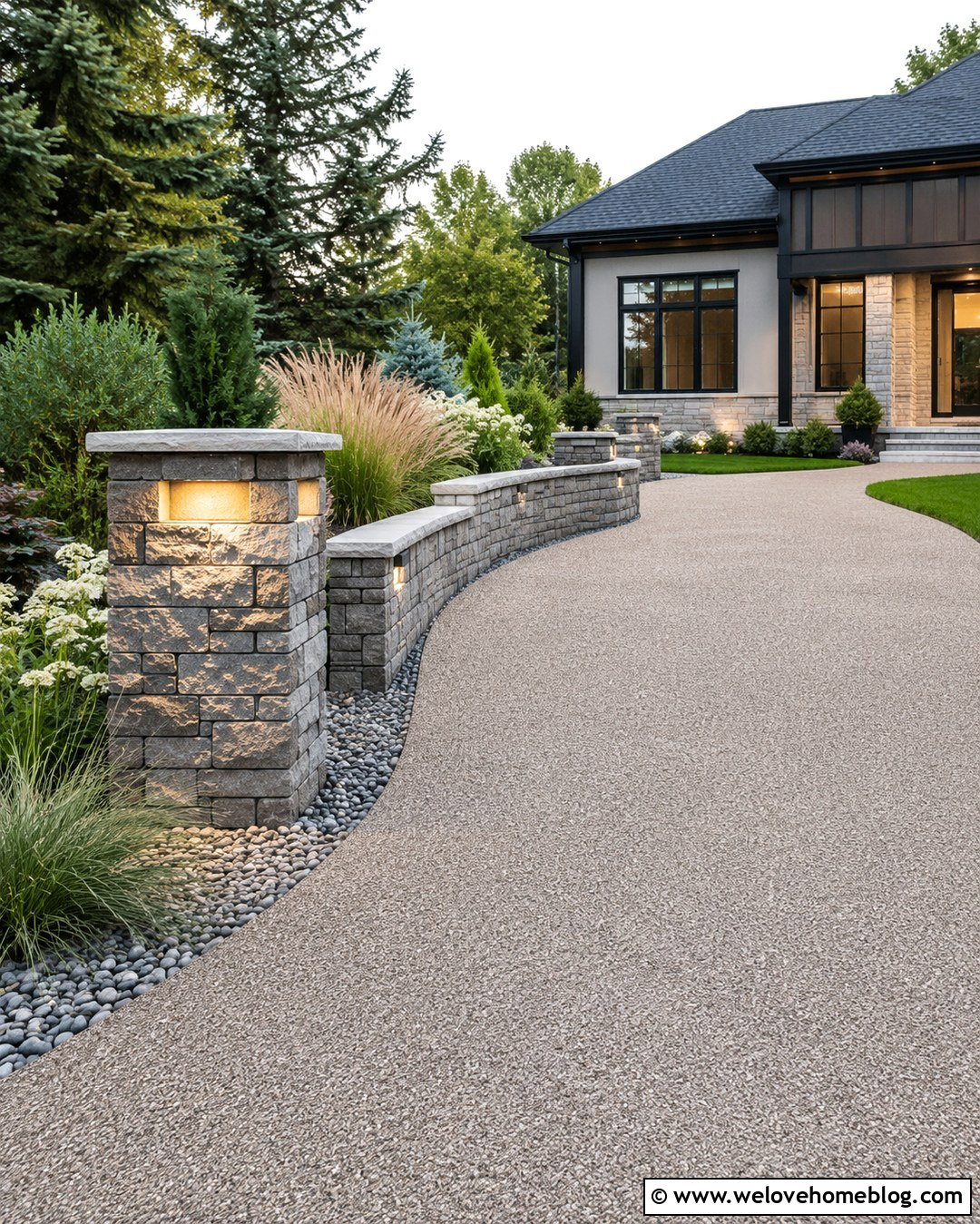
Built-in lighting helps a retaining wall contribute to both curb appeal and driveway navigation. Combine warm-gray segmental blocks with a curved resin-bound gravel driveway and install small recessed fixtures at measured intervals below the cap. During the day, the fixtures should remain discreet so the masonry and landscaping take visual priority. Above the wall, use layered evergreens, fountain grasses, and pale flowering perennials that stand out against the darker stone. Keep tall plants away from the lights and driveway entrance. A matching illuminated address pillar can complete the approach without adding unrelated materials. Plan wiring, drainage, and fixture access before the wall is constructed. Lighting should wash gently across the surface and identify the driveway boundary, rather than producing harsh glare toward drivers, neighboring homes, or the street.
13. Retaining Wall With Flower Bed Beside Driveway
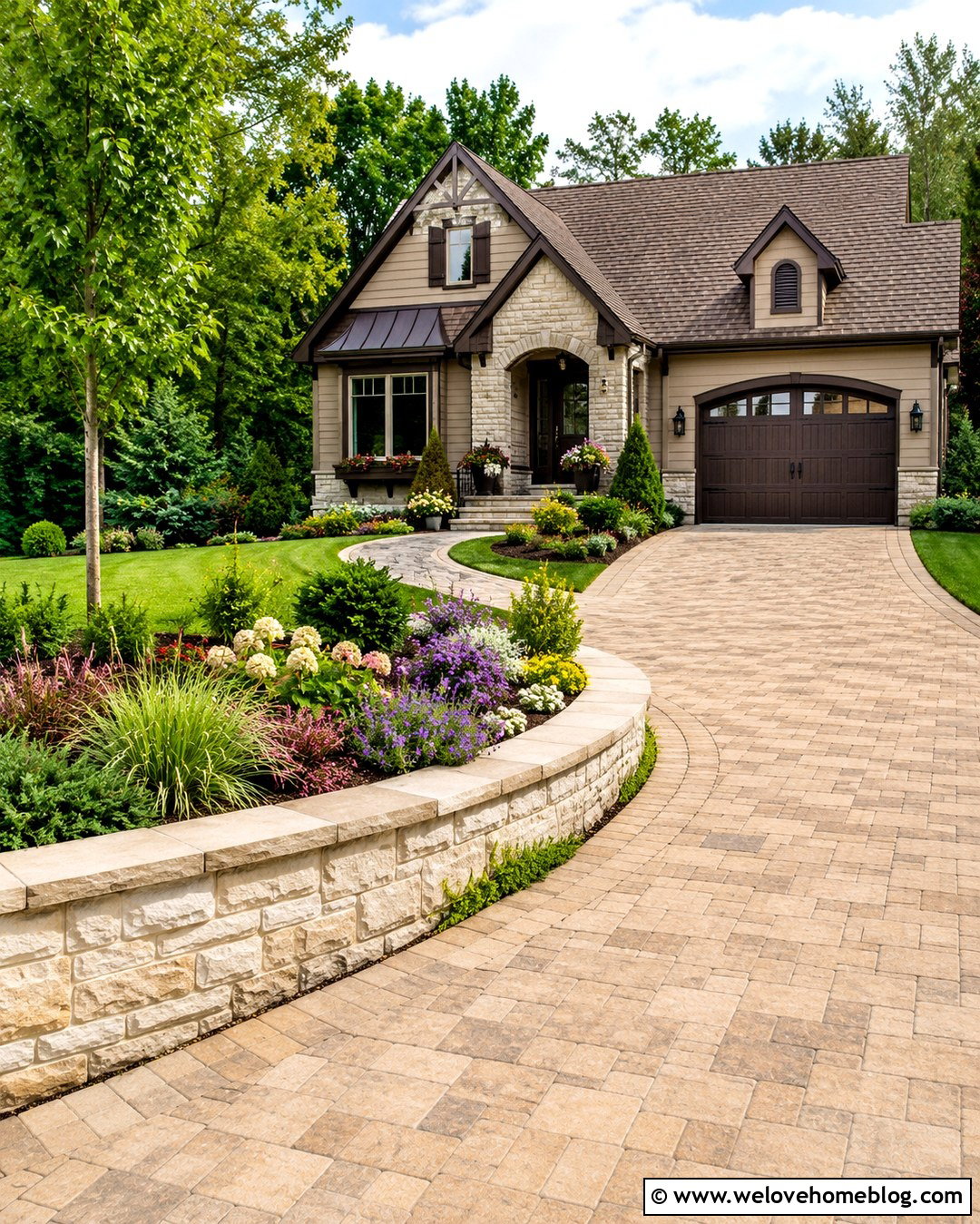
A wide flower bed above a retaining wall can transform a hard driveway edge into a colorful front-yard feature. Use cream limestone blocks beside a warm beige concrete paver driveway, then fill the raised bed with layered plants that provide structure across the seasons. Place compact evergreens at the back, medium-height flowering shrubs through the center, and trailing plants near the wall cap. Repeating a limited palette creates a calmer result than mixing every available color. Shape the wall with a gentle outward curve where the driveway meets the street, giving the entrance a more generous appearance. Include adequate planting depth and select roots that will not interfere with the wall system. A stone walkway using similar tones can connect the driveway to a traditional or cottage-style home.
14. Retaining Wall With Ornamental Grass Beside Driveway
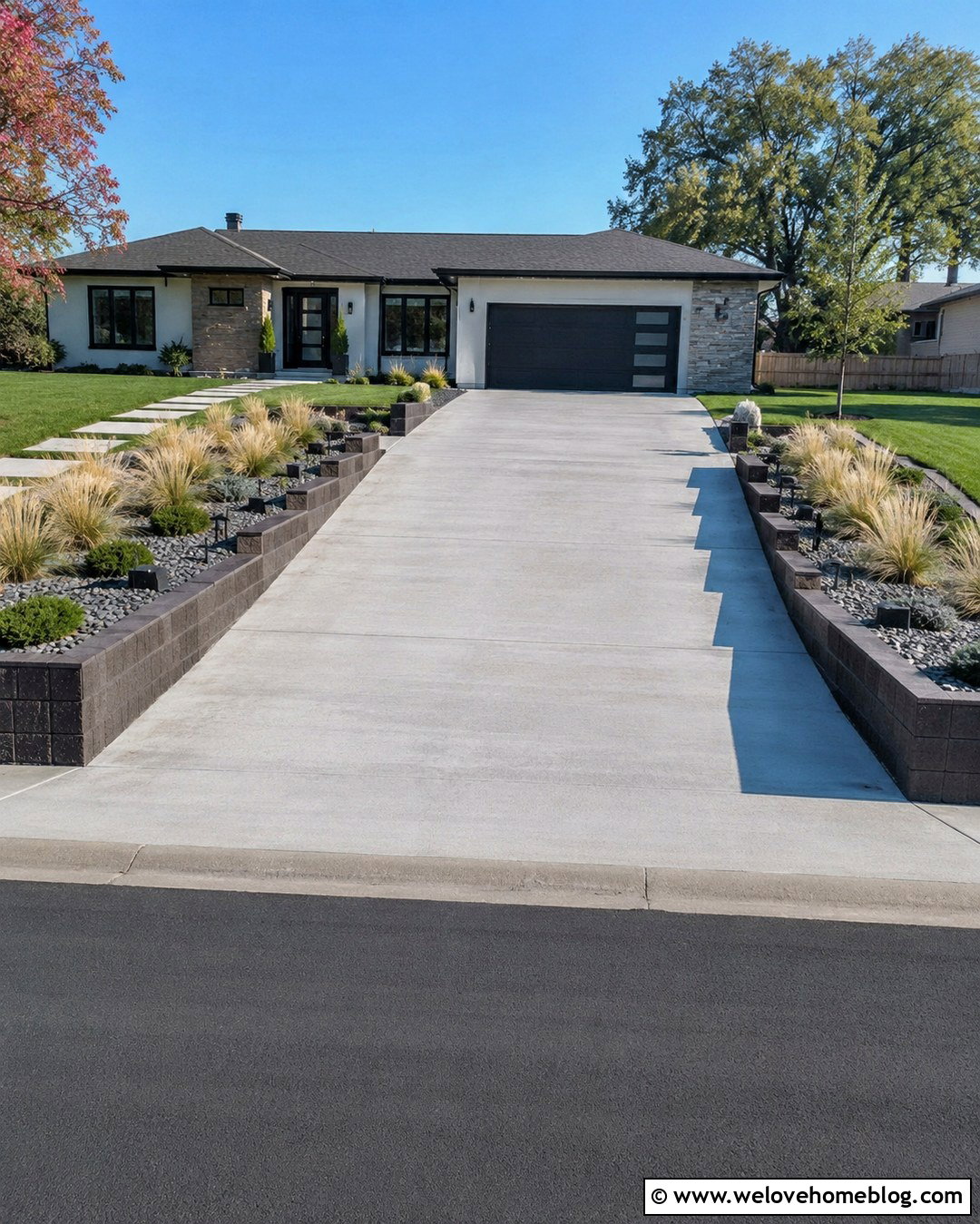
Ornamental grasses add movement and softness to a long retaining wall beside a driveway. Pair smooth charcoal blocks with a pale gray poured-concrete surface and plant repeated drifts of switchgrass, feather reed grass, or compact fountain grass above the wall. Choose varieties appropriate for the local climate and mature space so foliage does not lean into passing vehicles. Add low evergreen ground cover between grass groups to maintain structure outside the main growing season. A straight wall with a thin concrete cap suits a modern ranch or midcentury home, especially when the planting follows a simple rhythm. Decorative river rock at the base can create a clean transition and reduce loose mulch on the pavement. Keep the final several feet near the street lower to protect driver sightlines.

15. Retaining Wall With Fence Beside Driveway
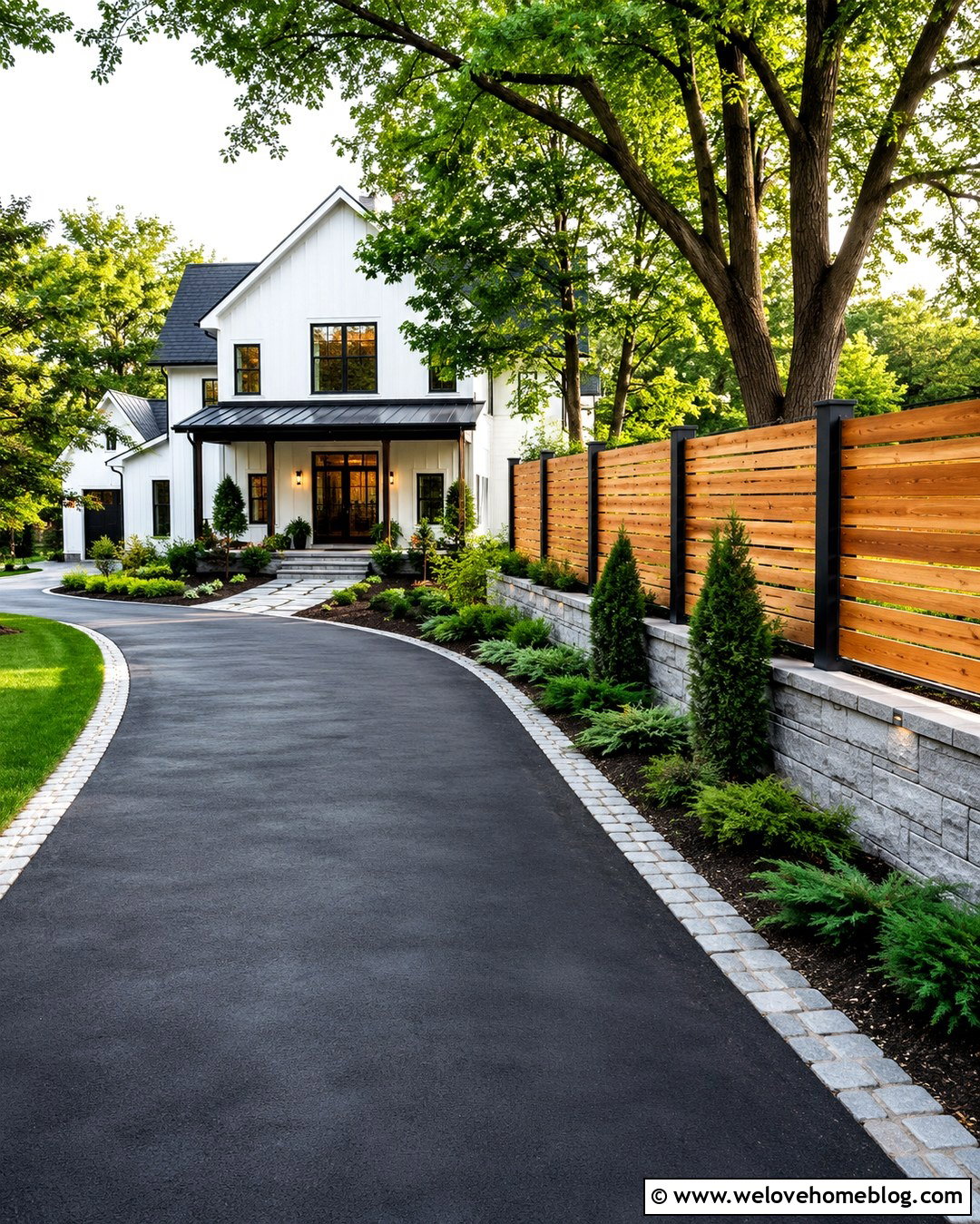
Combining a retaining wall with a fence provides separation without using a tall, heavy masonry face. Build a low wall from split-face concrete blocks, then install horizontal cedar slats along the upper grade. A black asphalt driveway with a cobblestone border creates an attractive contrast between modern, rustic, and traditional materials. Keep the fence visually light by leaving narrow spaces between boards and using dark metal posts. On the landscape side, plant upright shrubs and ground covers that will not push through the slats. The wall and fence should align with the driveway’s curve while maintaining comfortable clearance for doors, mirrors, and snow removal where applicable. Coordinate the cedar with the garage door or porch details, allowing the combined boundary to feel like an extension of the home.
16. Retaining Wall With Pillars Beside Driveway
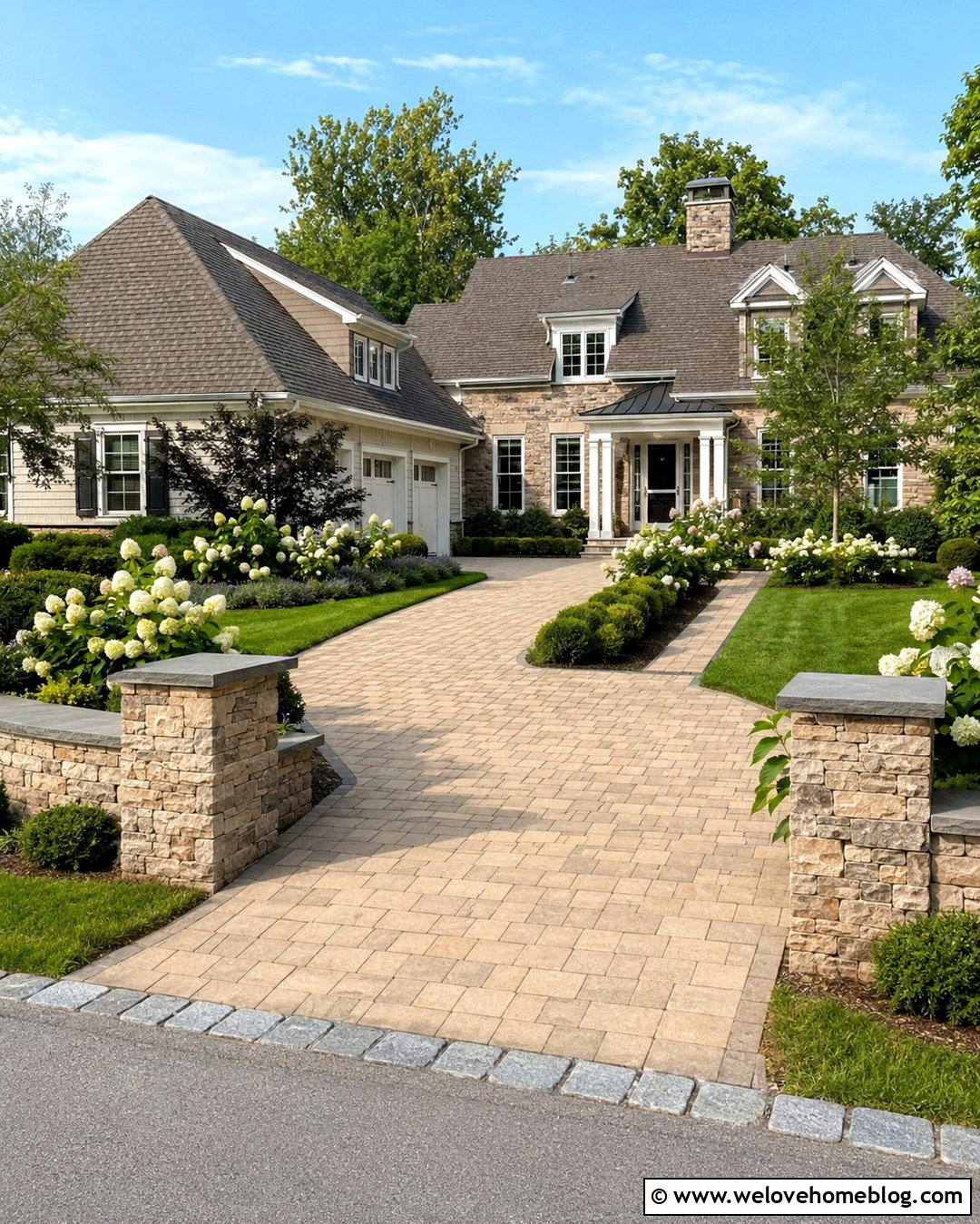
Pillars can turn the ends of a retaining wall into a clear and balanced driveway entrance. Use tan stone veneer for the wall and slightly taller square pillars, then pair them with a buff concrete paver driveway in a running-bond pattern. Bluestone caps create contrast and protect the composition from looking too monochromatic. One pillar can hold a tasteful address plaque, while the other balances the entrance with a matching lantern or simple cap. Continue the wall along the higher side of the driveway and gradually reduce its height toward the house. Plant compact hydrangeas, boxwood, and low ground cover behind it for a layered traditional landscape. Keep pillars outside the required driveway clearance and sight triangle so they frame the approach without obstructing vehicle movement or street visibility.
17. White Stucco Retaining Wall Beside Driveway
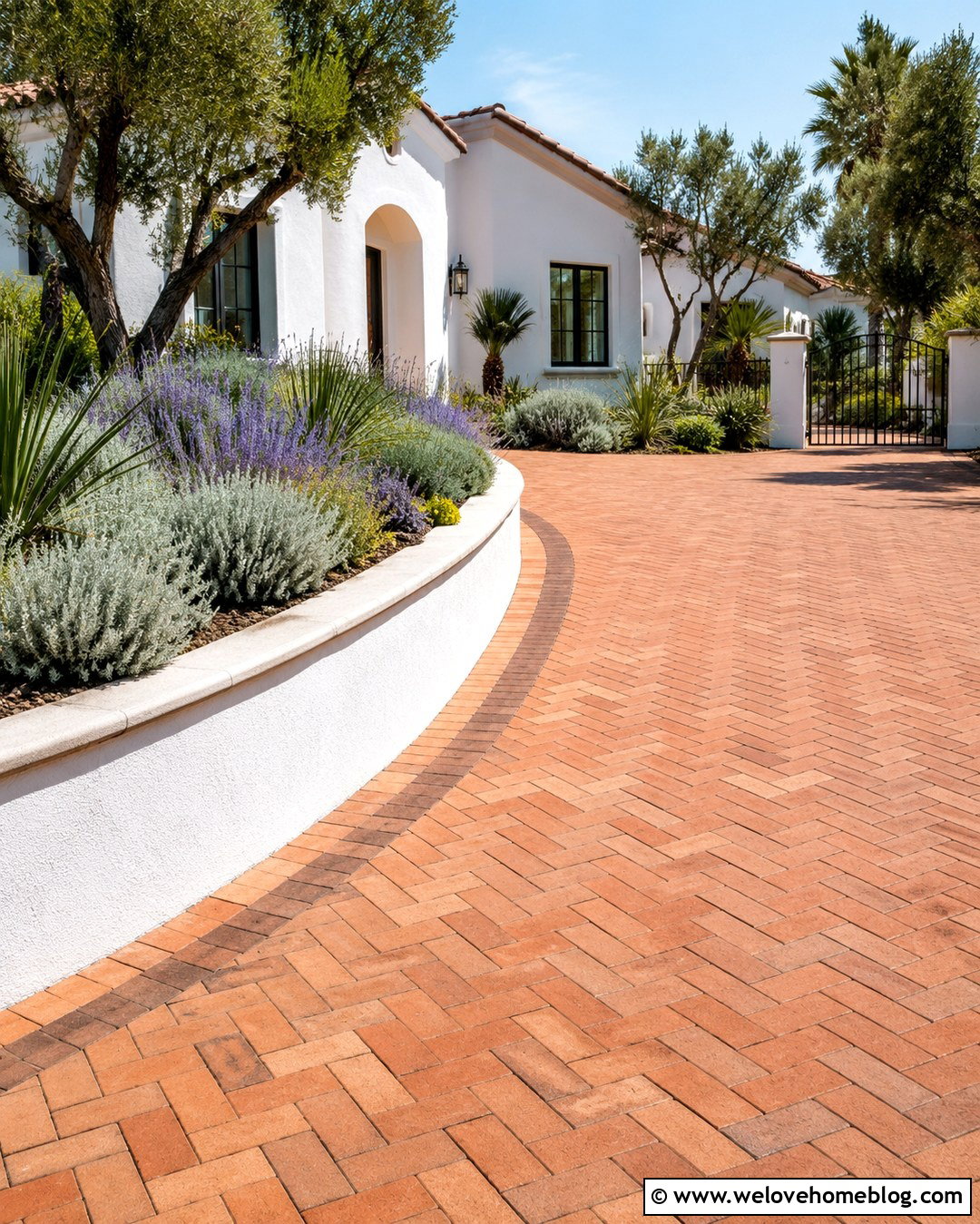
A white stucco retaining wall creates a bright, clean border for a Mediterranean, Spanish, or coastal home. Pair it with warm terra-cotta driveway pavers laid in a herringbone pattern, using a darker clay border to emphasize the curved approach. A smooth precast cap can protect the top while maintaining the simple profile. Above the wall, plant silvery foliage, rosemary, lavender, ornamental grasses, and compact olive-like trees suited to the climate. Introduce gravel mulch to reduce visual clutter and repeat the driveway’s warm tones. The wall can curve outward near the entrance, creating space for a house-number tile or a simple metal gate. Use stucco color and texture that coordinate with the house, but add enough planting and paving contrast to prevent the driveway and wall from appearing washed out.
18. Cobblestone Retaining Wall Beside Driveway
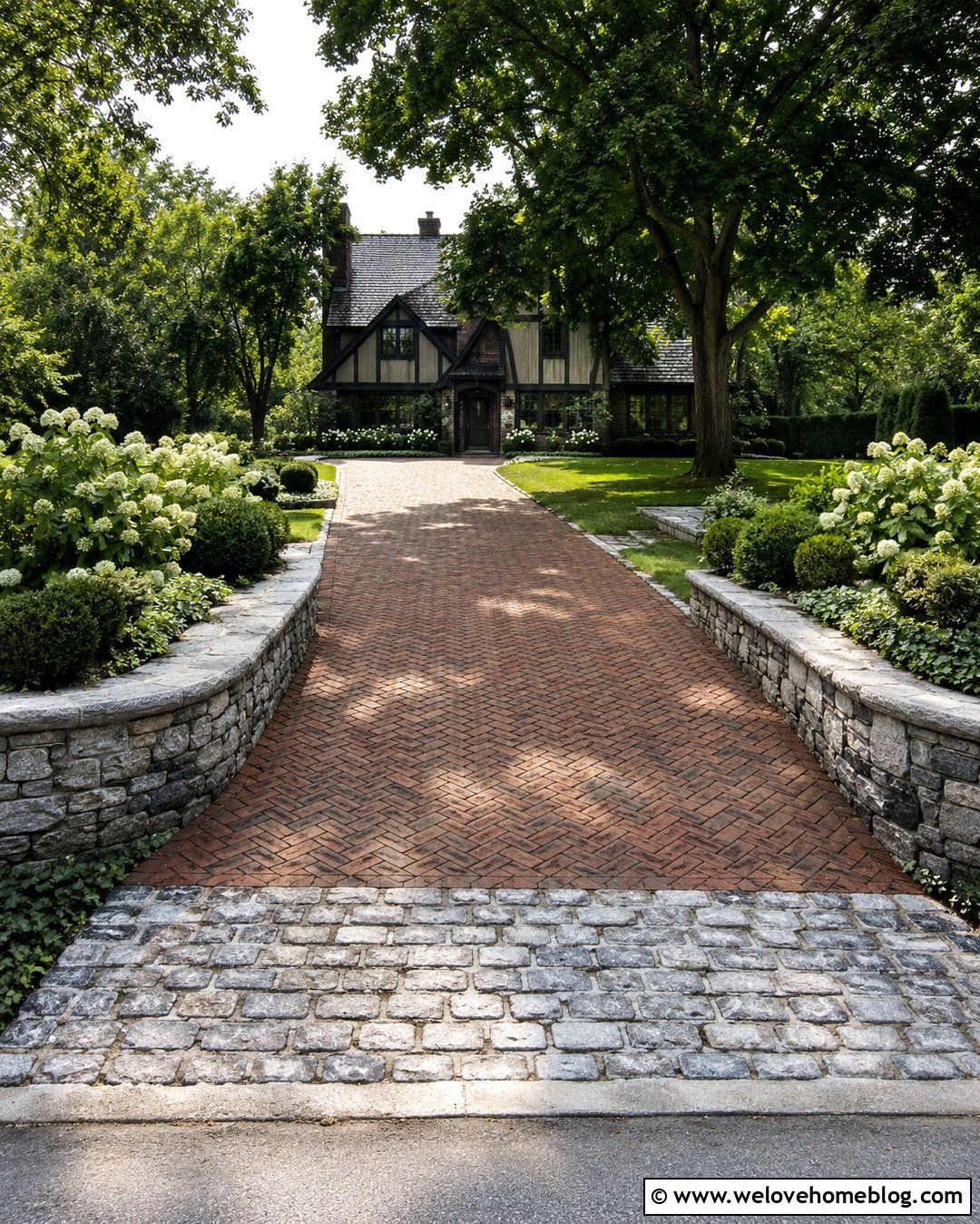
A cobblestone retaining wall offers rich texture beside a traditional home and can make a newer landscape feel more established. Combine rounded gray cobbles with a straight driveway made from clay brick pavers in a herringbone layout. Use larger, flatter stones for the wall cap to create a defined upper edge. A narrow planting bed filled with boxwood, white hydrangeas, and trailing ground cover softens the masonry while preserving a formal appearance. Repeat cobblestone in the driveway apron or walkway border so the wall does not feel isolated. Mortar color should remain subtle and allow the individual stones to stand out. This complete look works beautifully with Tudor, colonial, and European-inspired facades, especially when the home includes brick, slate, dark trim, or natural stone accents.
19. Retaining Wall Beside Circular Driveway
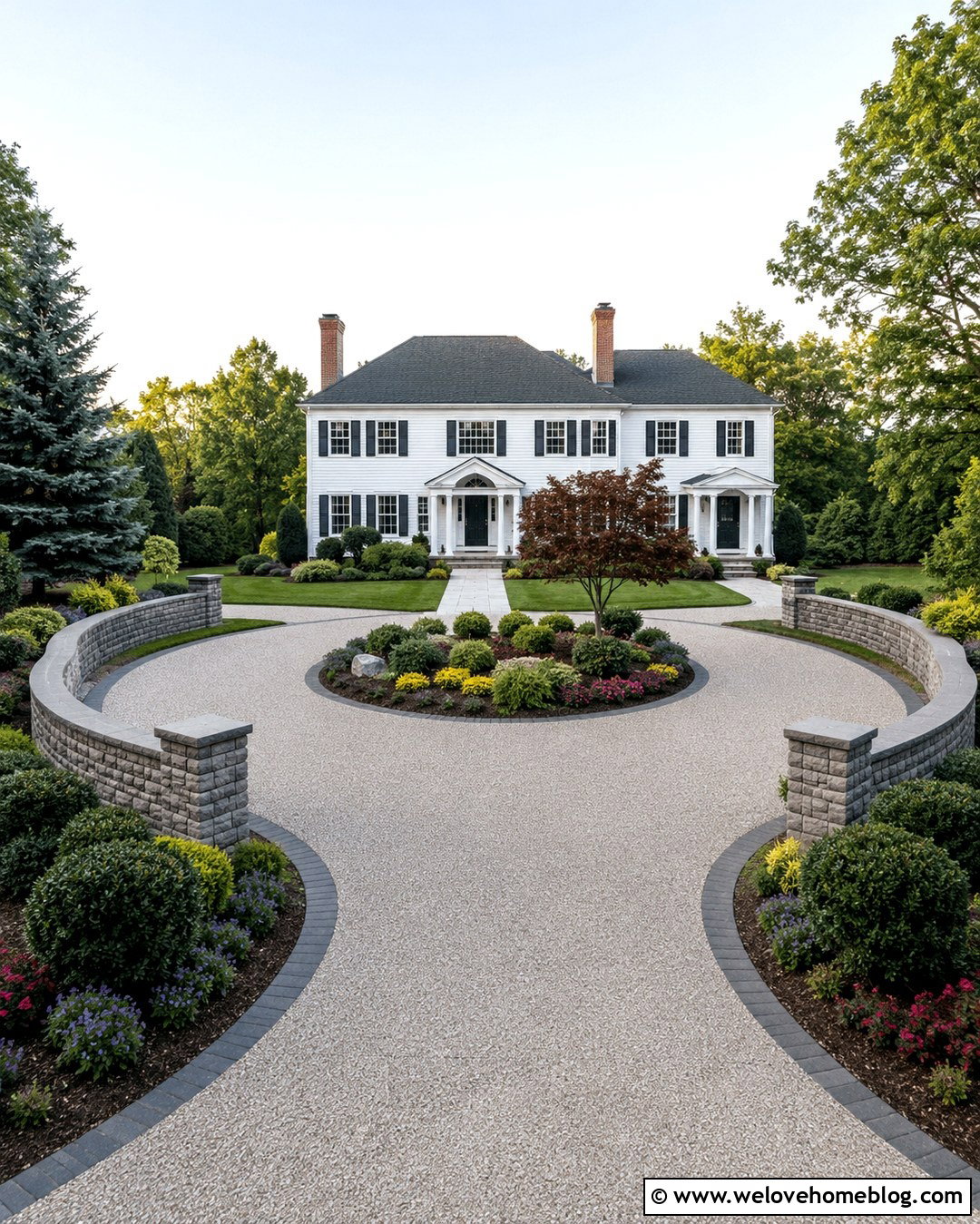
A retaining wall can follow the outer curve of a circular driveway while defining an elevated lawn or garden. Use warm gray interlocking blocks beside a light-colored exposed aggregate surface, maintaining a consistent setback around the bend. The wall should taper lower near both street entrances to keep the approach open and preserve visibility. Plant the raised area with broad sweeps of evergreen shrubs, flowering perennials, and one carefully positioned ornamental tree. A contrasting dark paver band can trace the driveway edge and emphasize its circular form. If the home has a centered entrance, align the main planting feature with the front door for a balanced view. Avoid crowding the drive with projecting capstones or shrubs, since circular layouts need generous maneuvering space throughout the complete loop.


20. Retaining Wall Beside Narrow Driveway
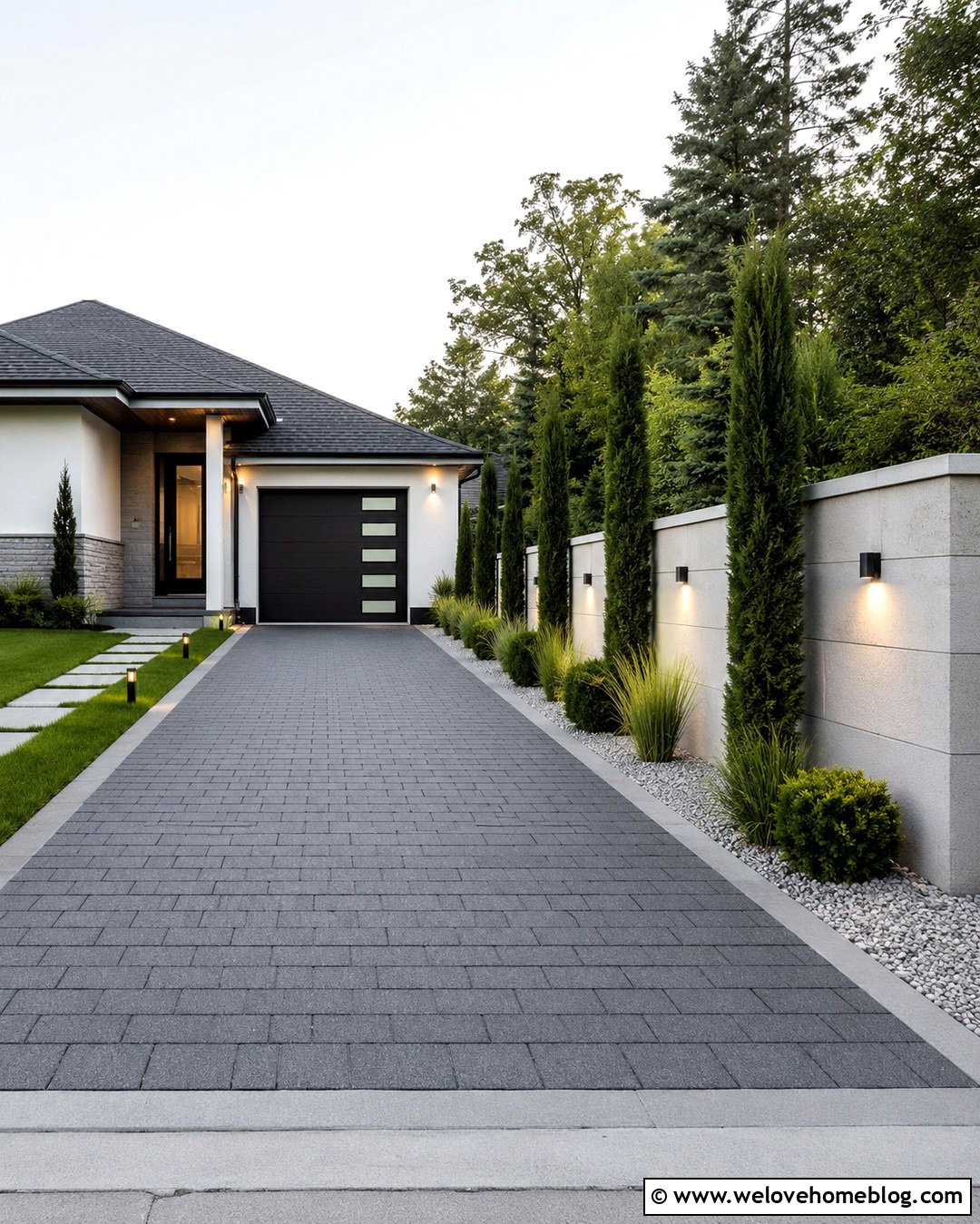
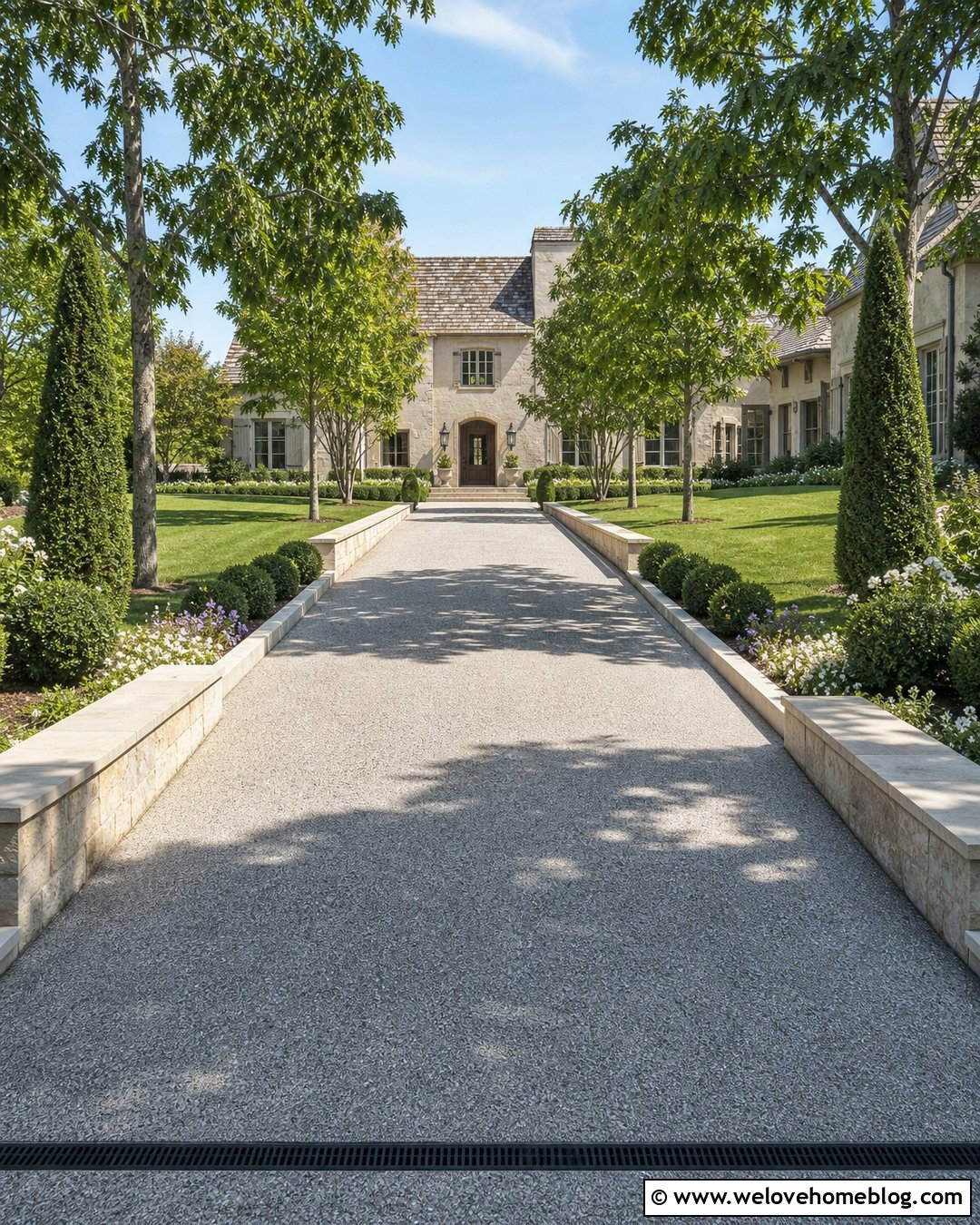
A narrow driveway benefits from a retaining wall that is streamlined, light in color, and carefully positioned. Choose smooth pale concrete blocks beside charcoal permeable pavers to create contrast without making the passage feel darker or smaller. Keep the wall face straight and use a slim cap that does not project into the driving area. Above it, select vertical but compact plants such as columnar evergreens, clumping grasses, and neatly pruned shrubs. A narrow gravel strip at the base provides a crisp transition and room for drainage details. Wall-mounted lights can reduce the need for freestanding fixtures along the tight edge. Confirm adequate clearance for vehicles, doors, trash bins, and maintenance equipment. Where the wall supports a driveway surcharge or significant slope, obtain appropriate professional design and local approvals. ()
Conclusion:
These 20 Retaining Wall Beside Driveway Ideas show how structure and landscaping can work as one coordinated design. Start by matching the wall material to the driveway, house facade, and overall character of the property. Then consider the slope, driveway width, sightlines, planting space, and the way people move between parking areas and entrances. Low stone walls can feel natural and informal, while smooth concrete, gabions, or tiered blocks create a stronger contemporary statement. Whatever appearance you prefer, do not treat the wall as decoration alone. A stable foundation, suitable reinforcement, and effective drainage are essential beside a driveway. With thoughtful professional planning, the finished wall can improve function, safety, and curb appeal for years.

Related posts:
Leave a Reply