
Enhancing your home's curb appeal begins the moment someone approaches your front door, and your porch steps play a starring role in this first impression. They are more than just a functional element for getting from the ground to your entryway; they are a key architectural feature that sets the tone for your entire home. From classic materials like brick and wood to modern designs incorporating lighting and unique shapes, the possibilities are vast. Exploring different ideas can help you create a welcoming, safe, and stylish transition that perfectly complements your home’s character and landscape.
1. Wide Concrete Porch Steps
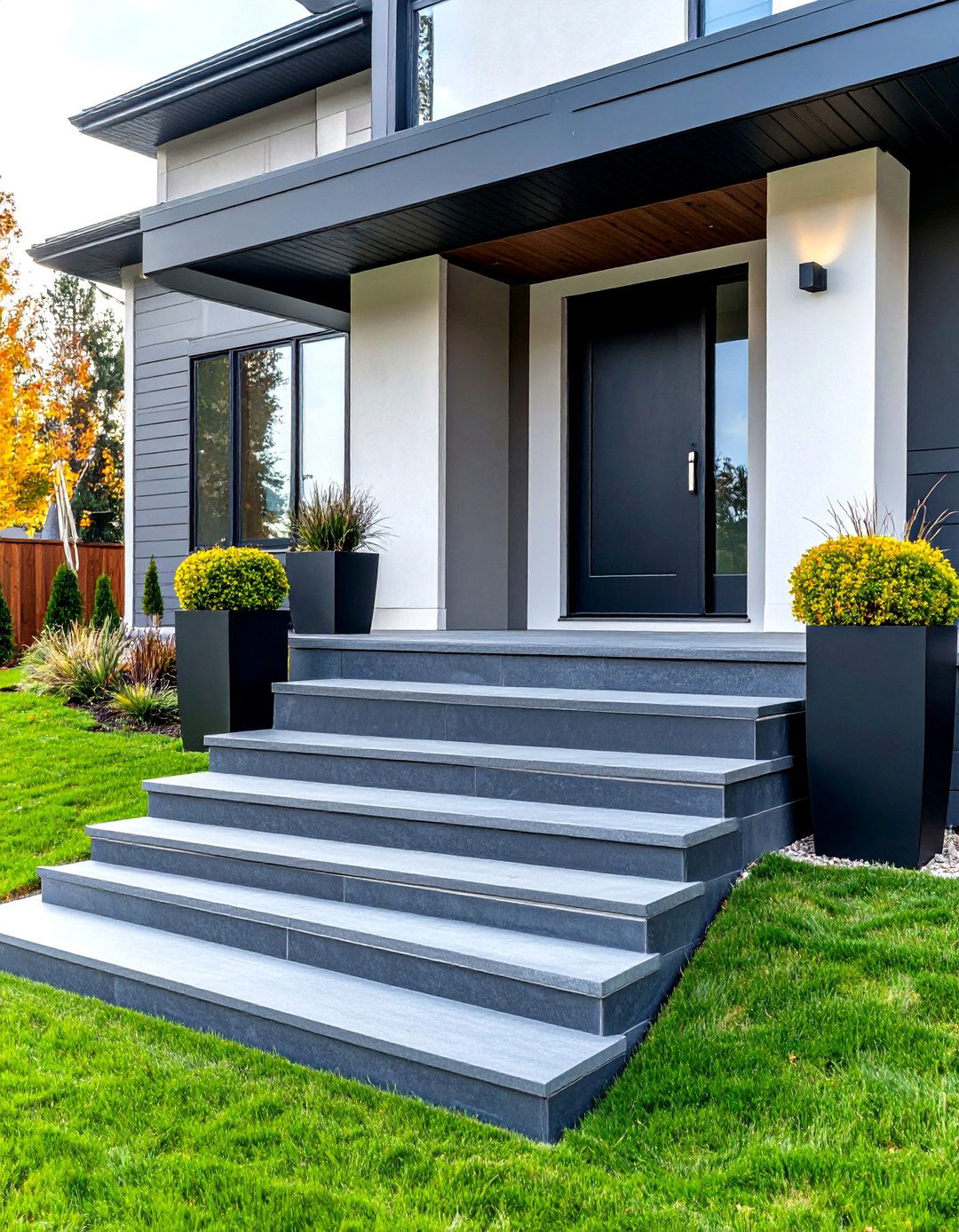
For a modern and commanding entrance, consider wide concrete porch steps. These steps create a grand, welcoming path to your front door, offering a sense of stability and permanence. Their generous width not only enhances safety but also provides space for decorative planters or seasonal decor. Concrete is exceptionally durable and low-maintenance, withstanding harsh weather conditions with ease. You can leave the concrete in its natural gray state for a minimalist look or have it stained or stamped to mimic more expensive materials like stone or tile, providing a high-end feel without the associated cost and upkeep.
2. Natural Flagstone Porch Steps
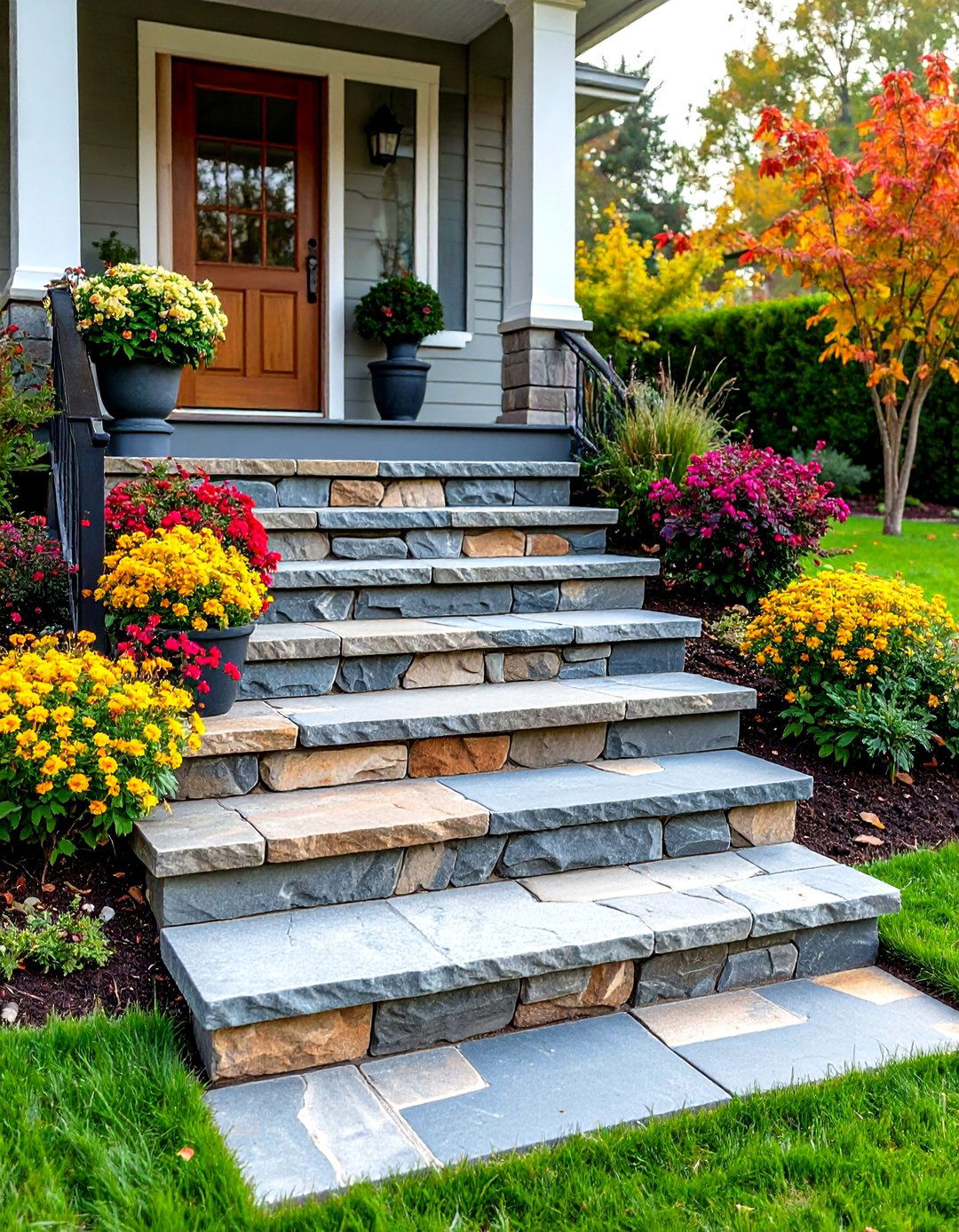
This design brings an organic, rustic charm to your home's entrance. Natural flagstone porch steps are crafted from large, flat pieces of sedimentary rock, with each stone possessing a unique shape, color, and texture. This irregularity ensures no two staircases are exactly alike, creating a custom and earthy feel. The stones are set into a mortar or gravel base, resulting in a sturdy and slip-resistant surface. These steps blend seamlessly with surrounding gardens and landscaping, making them an ideal choice for homes with a naturalistic, cottage, or craftsman aesthetic, connecting the structure to its environment.
3. Classic Red Brick Porch Steps
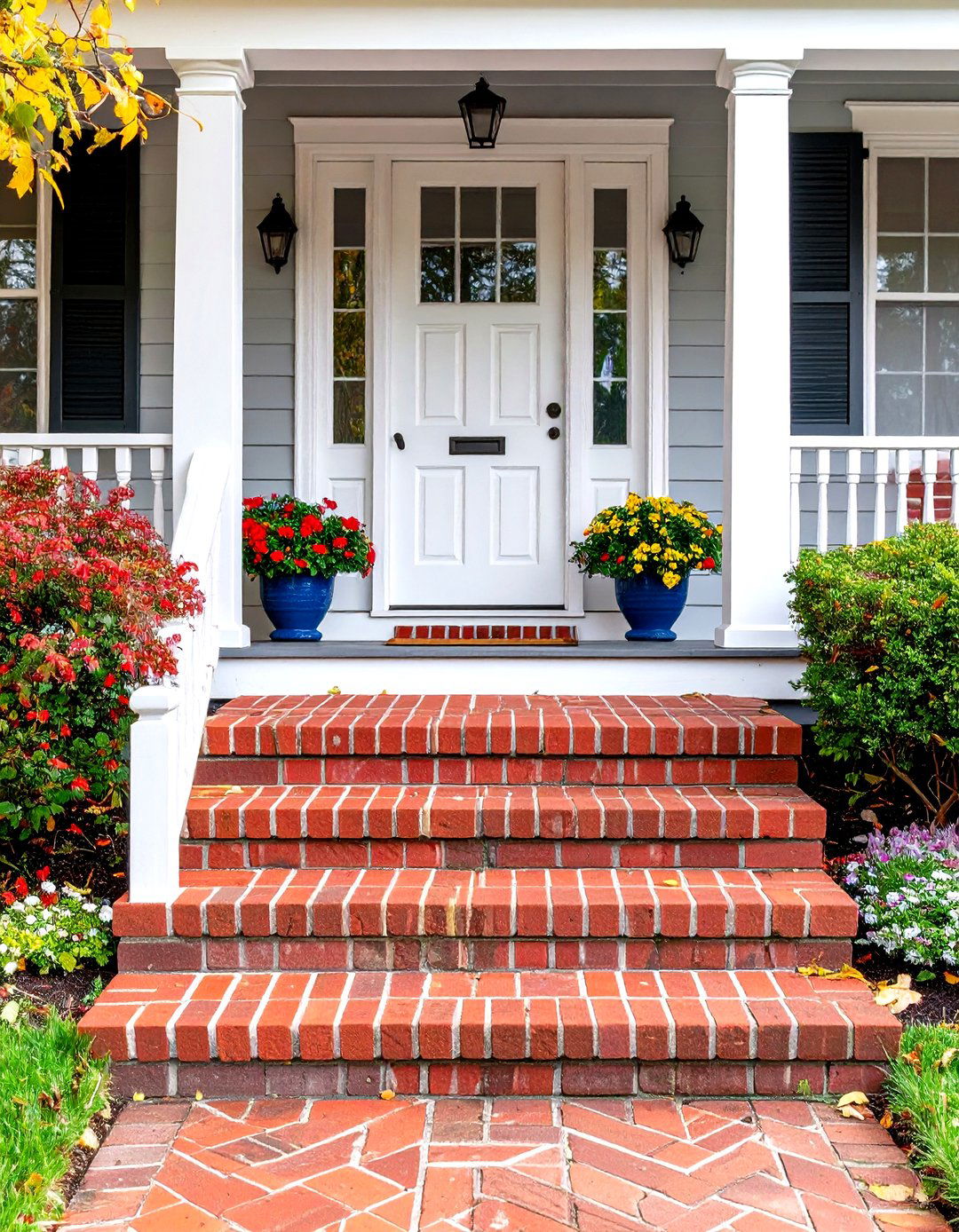
A timeless choice that exudes traditional elegance, classic red brick porch steps offer warmth and character to any home facade. The rich, earthy tones of the brick complement a wide range of architectural styles, from Colonial to Tudor. Bricks can be laid in various patterns, such as running bond or herringbone, to add visual interest and texture. They are incredibly durable and can last for generations with minimal maintenance. Pairing brick steps with a matching walkway creates a cohesive and polished look, enhancing your property's overall curb appeal with a sense of established, classic style.
4. Tiered Wood Porch Steps
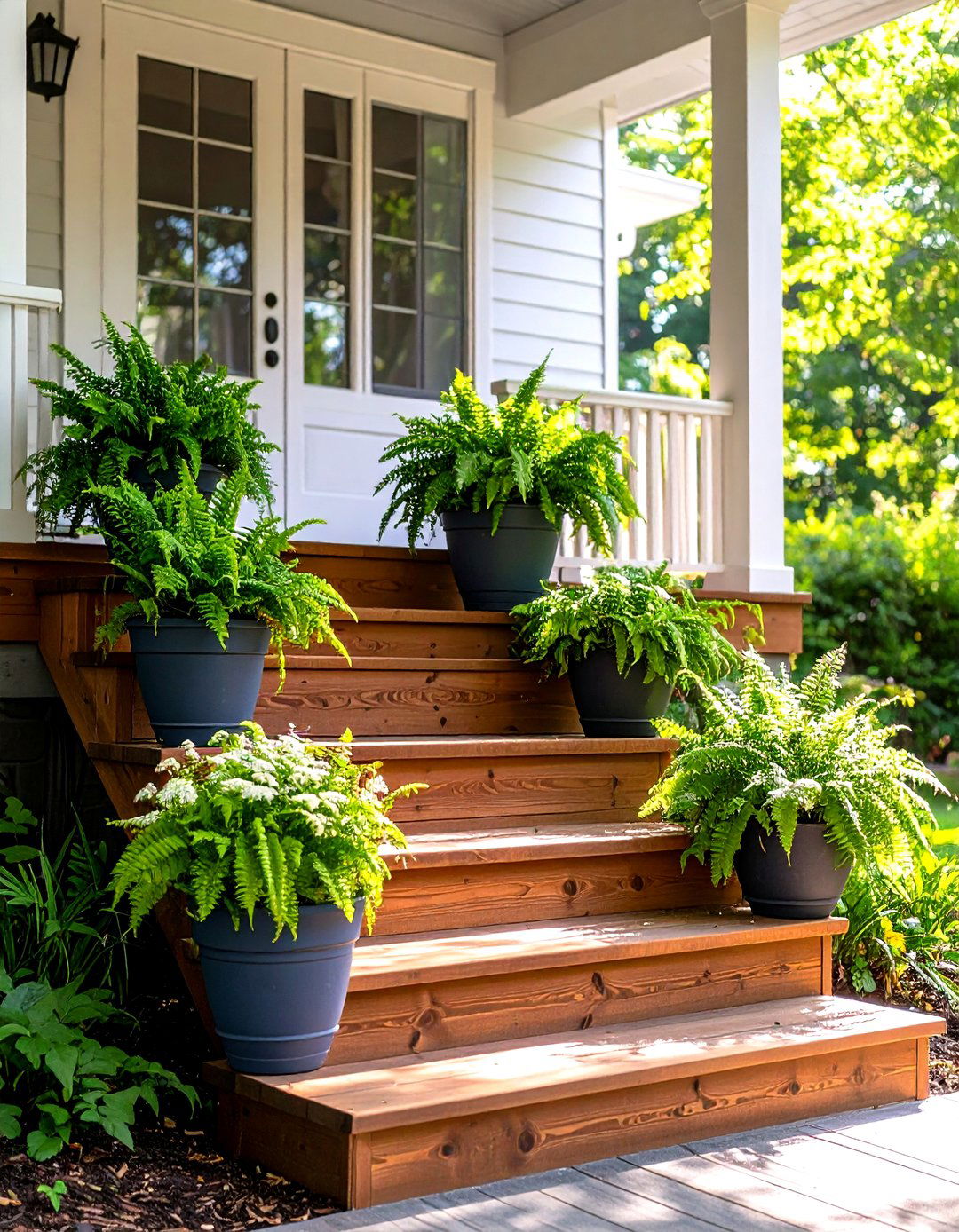
Tiered wood porch steps create a multi-level, flowing transition from your yard to your porch. This design breaks up a long or steep climb into smaller, more manageable sections, creating visual interest and depth. Each tier can serve as a miniature landing, providing a perfect spot for potted plants, lanterns, or other decorative elements. Using materials like cedar, redwood, or pressure-treated pine ensures longevity and resistance to the elements. This style works exceptionally well for homes on a slope or for those looking to add a dynamic, layered look to their entryway, making the approach feel more like a journey.
5. Curved Porch Steps
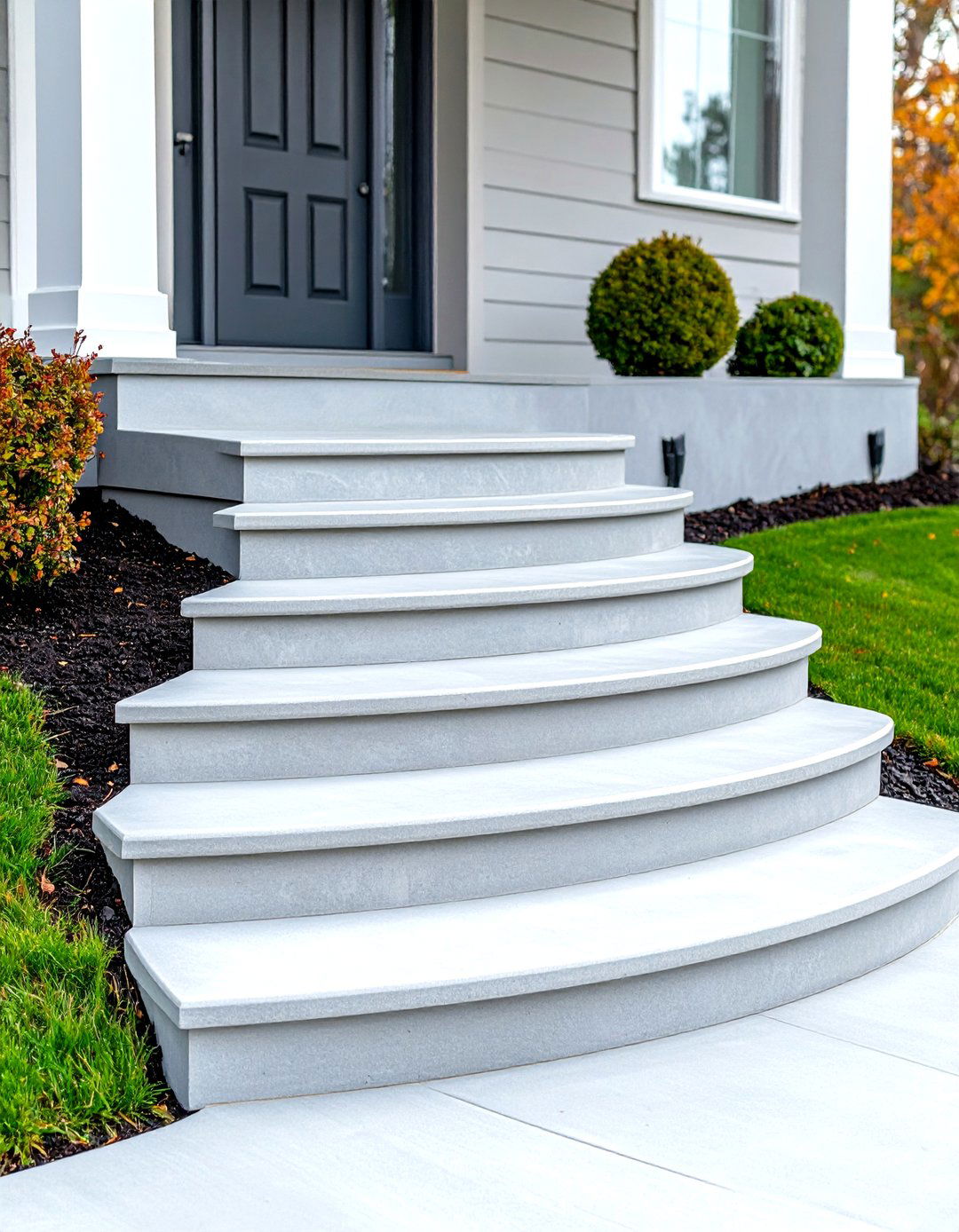
To introduce a sense of grace and softness to your entryway, curved porch steps are an excellent option. Moving away from rigid, straight lines, a gentle arc creates a more organic and inviting flow towards the front door. This design works beautifully with various materials, including poured concrete, custom-cut stone, or brick. A curved staircase can make a small porch appear larger and more distinguished. It’s a sophisticated choice that adds a touch of custom elegance, breaking the traditional rectangular mold and providing a unique architectural feature that significantly enhances your home's curb appeal with its fluid design.
6. Floating Porch Steps
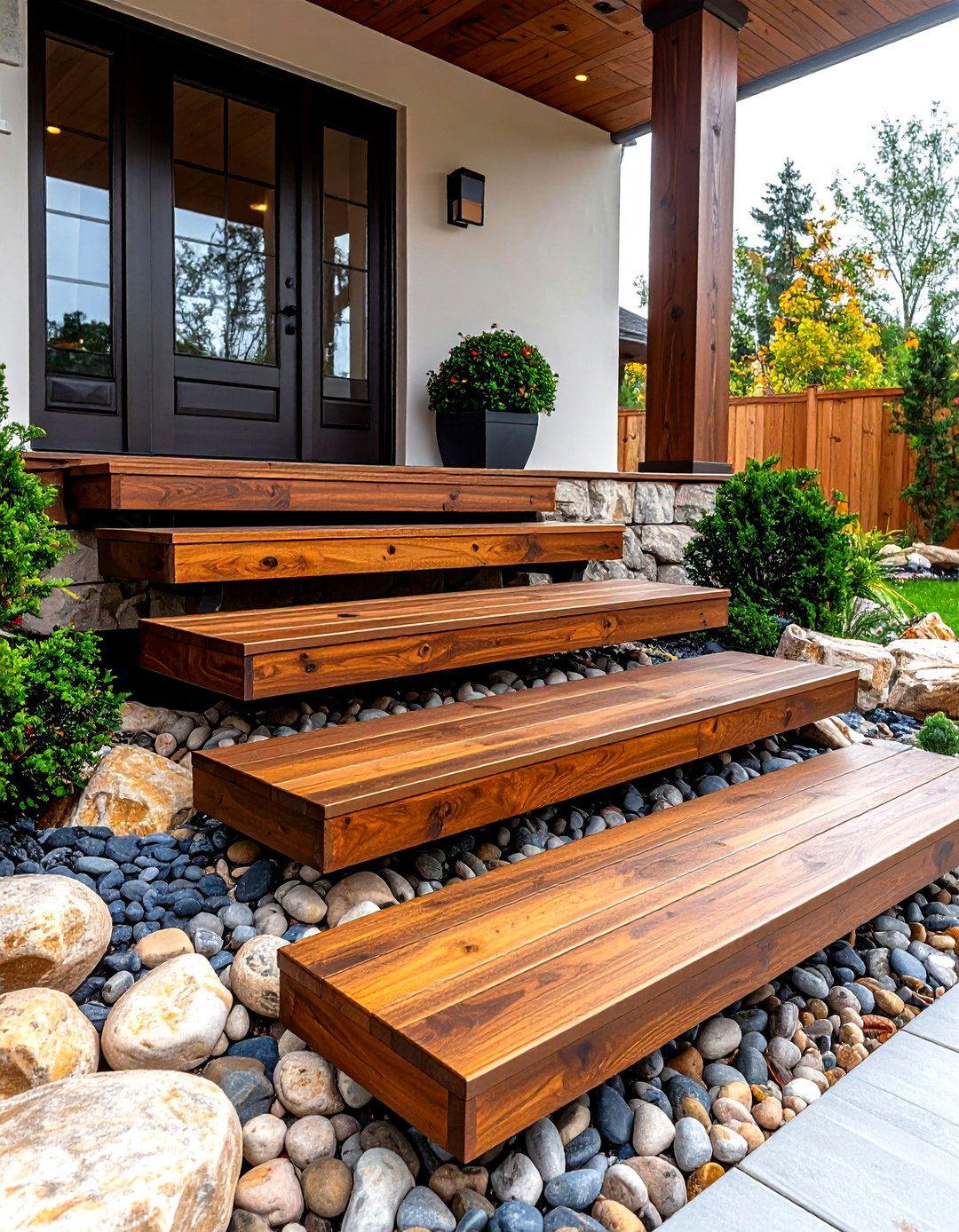
For a distinctly modern and minimalist aesthetic, floating porch steps create a stunning visual effect. These steps appear to hover without visible supports, lending a lightweight and airy feel to the entrance. Typically constructed from thick wood planks, poured concrete slabs, or steel, they are anchored to a hidden structural support system. The space underneath the treads can be filled with landscape lighting or decorative stones to enhance the illusion of weightlessness. This sleek, uncluttered design is perfect for contemporary or mid-century modern homes, making a bold architectural statement that is both clean and sophisticated.
7. Porch Steps with Mosaic Tile Risers

Adding mosaic tile to the risers of your porch steps is a fantastic way to inject personality, color, and intricate detail into your entryway. While the treads remain a durable material like wood or concrete for safety, the vertical risers become a canvas for creativity. You can use colorful ceramic, glass, or stone tiles to create beautiful patterns, scenes, or abstract designs. This approach adds an unexpected pop of artistry and can be customized to match your home's color scheme or your personal style, turning a functional element into a unique and eye-catching work of art.
8. Porch Steps with Integrated Planters
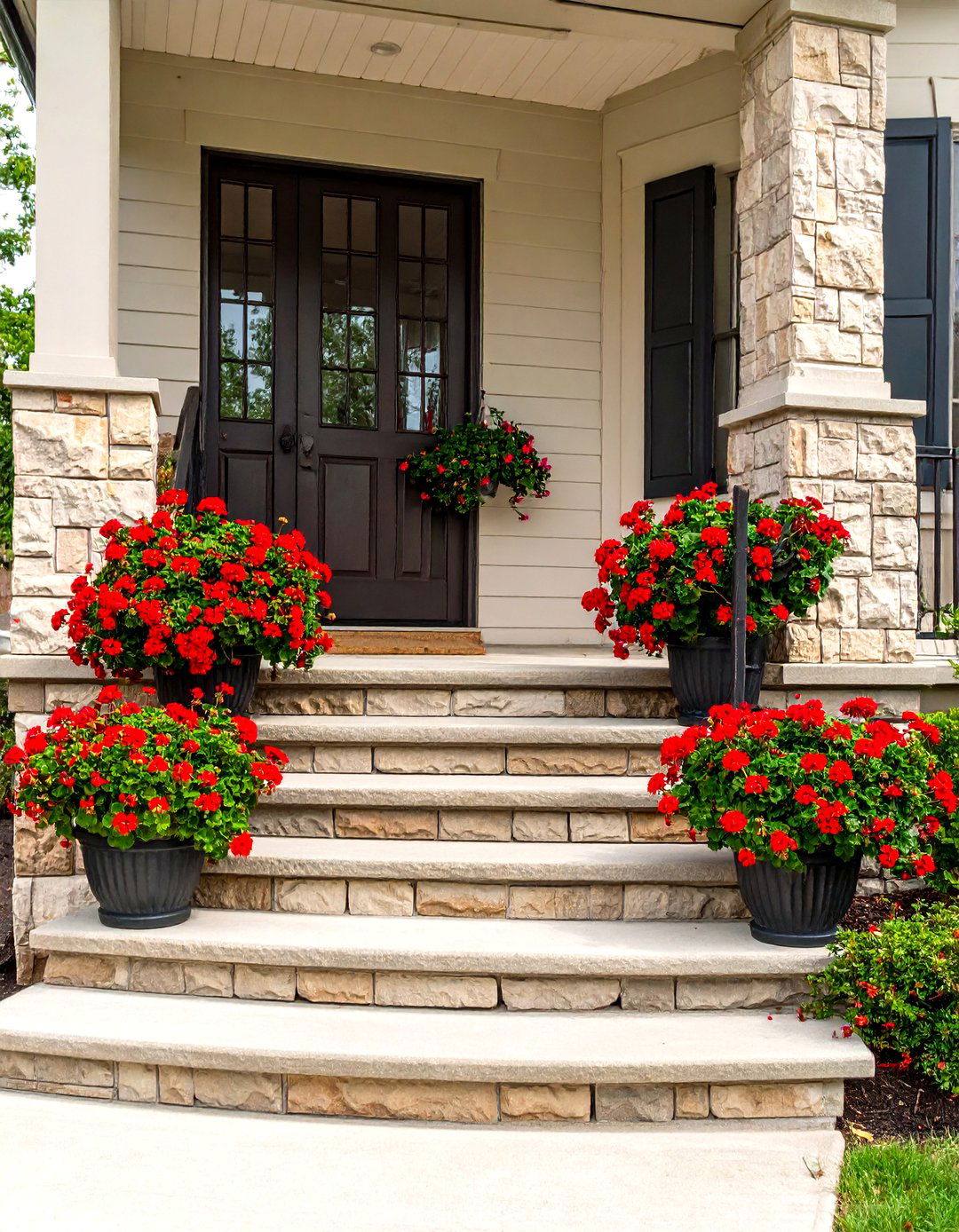
This idea seamlessly blends horticulture with architecture by building planters directly into the structure of your porch steps. These integrated boxes, typically positioned at the sides of the steps, can be filled with colorful flowers, lush greenery, or seasonal arrangements. The design creates a living, evolving frame for your entryway that softens the hard lines of materials like concrete or wood. It is a practical and beautiful way to add greenery without cluttering the walking path, ensuring your entrance is always vibrant and welcoming while making a strong connection between your home and its landscape.
9. Stamped Concrete Porch Steps
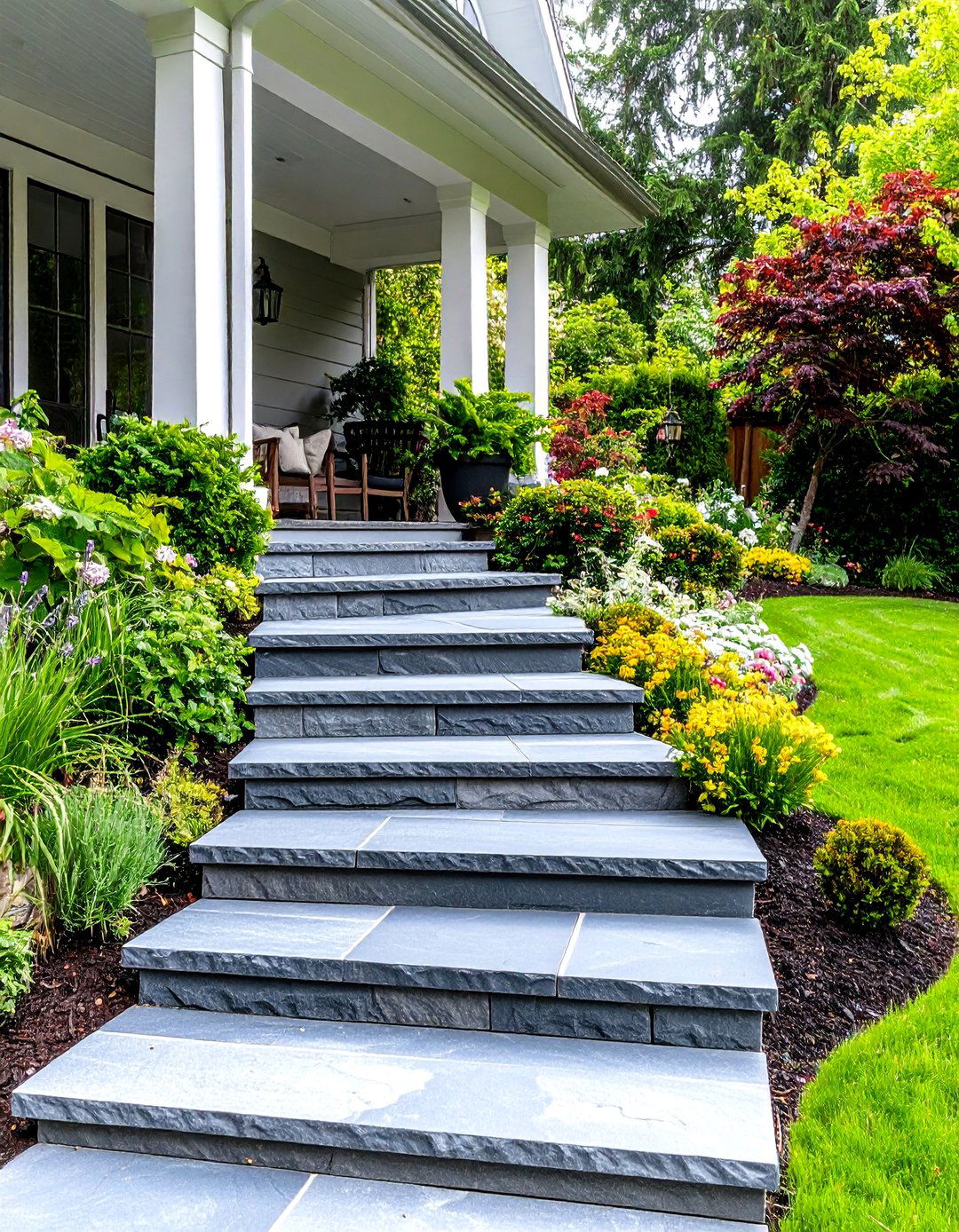
Stamped concrete porch steps offer the durability and affordability of concrete while mimicking the look of more luxurious materials. Using stamps and texturing mats, fresh concrete can be imprinted with patterns that replicate natural stone, brick, slate, or even wood grain. Color can also be added to enhance the realism. This technique provides a high-end, custom appearance at a fraction of the cost. It's a versatile and practical solution for homeowners who want a decorative, low-maintenance, and long-lasting entryway that combines aesthetic appeal with robust performance against the elements.
10. Rustic Log Slice Porch Steps
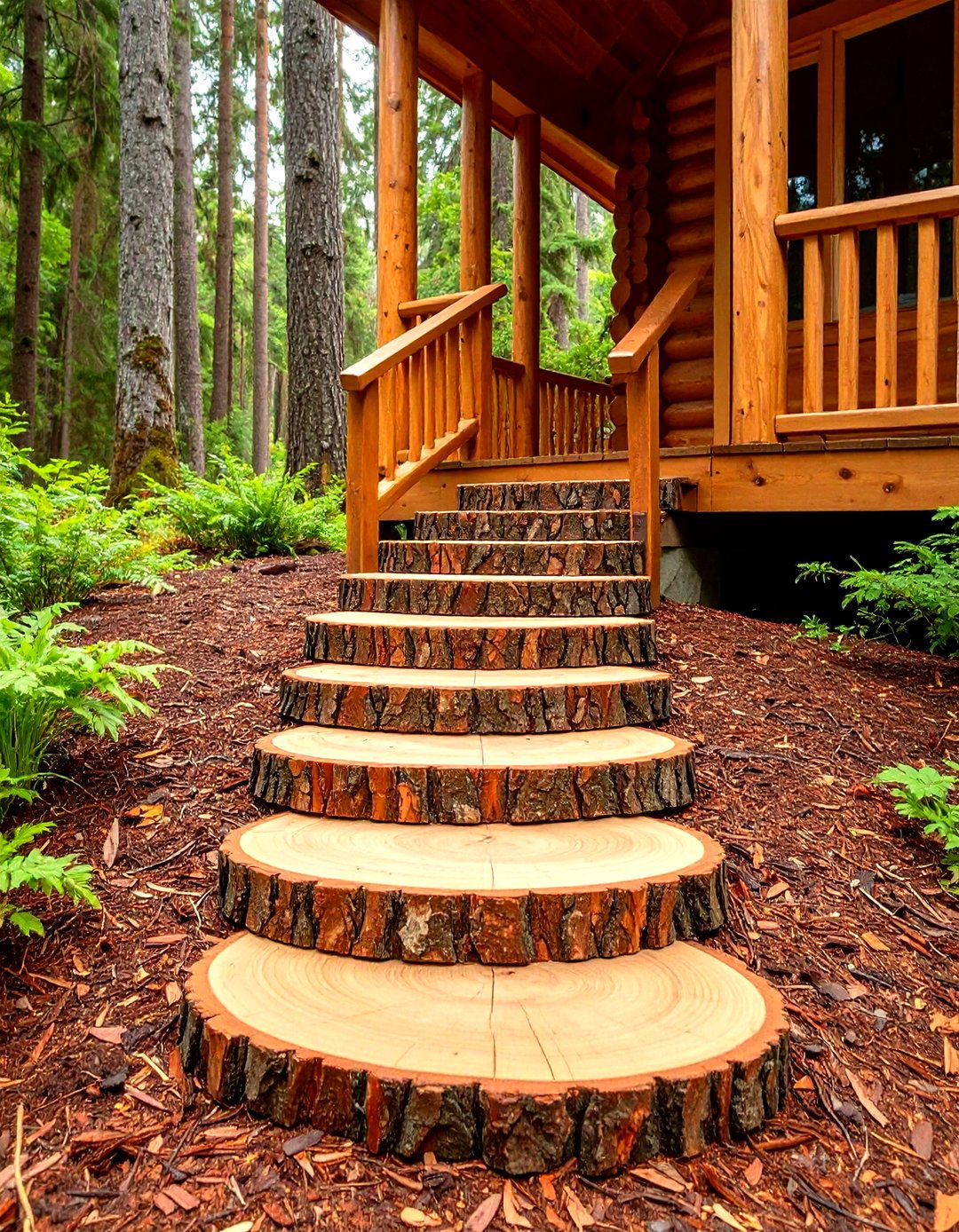
Embrace a truly natural and woodland-inspired look with rustic log slice porch steps. This charming idea involves using large, thick cross-sections of logs as individual stair treads, set into a gravel or dirt pathway leading to the porch. Each step retains the natural shape and texture of the wood, creating an organic and whimsical feel. This design is perfect for cabins, rustic retreats, or homes nestled in a wooded setting. It harmonizes perfectly with the natural environment, providing a functional and uniquely beautiful transition that feels as if it grew right out of the landscape.
11. Porch Steps with LED Riser Lighting
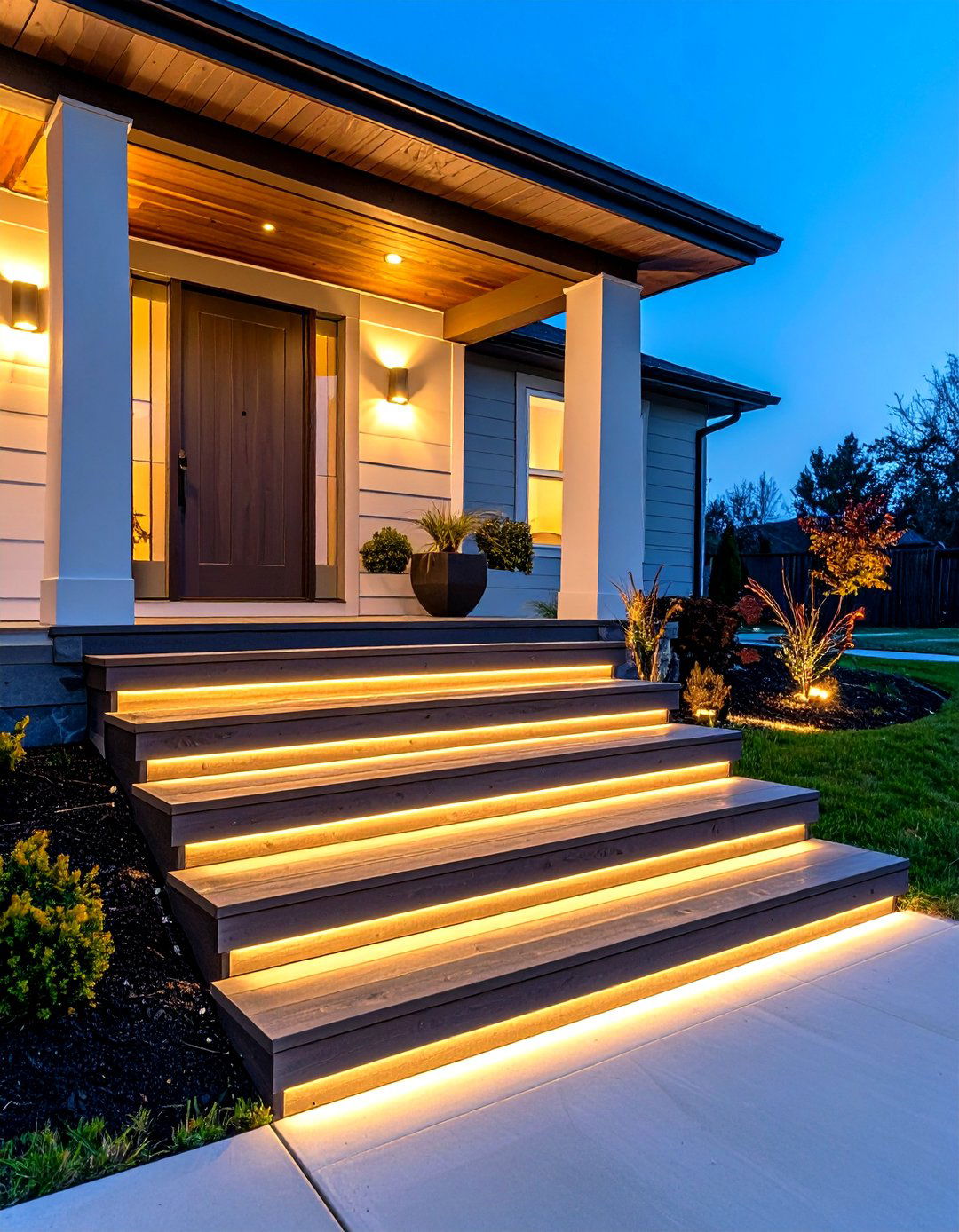
Incorporating LED riser lighting into your porch steps is a brilliant way to enhance both safety and ambiance. Thin strips of waterproof LED lights are installed discreetly under the lip of each tread, casting a gentle glow downwards onto the step below. This not only illuminates the path for secure footing after dark but also creates a dramatic and sophisticated visual effect. The lighting highlights the architecture of the stairs and adds a warm, welcoming atmosphere to your home's exterior. It is a modern, energy-efficient solution that combines practical function with high-end design flair.
12. Composite Decking Porch Steps
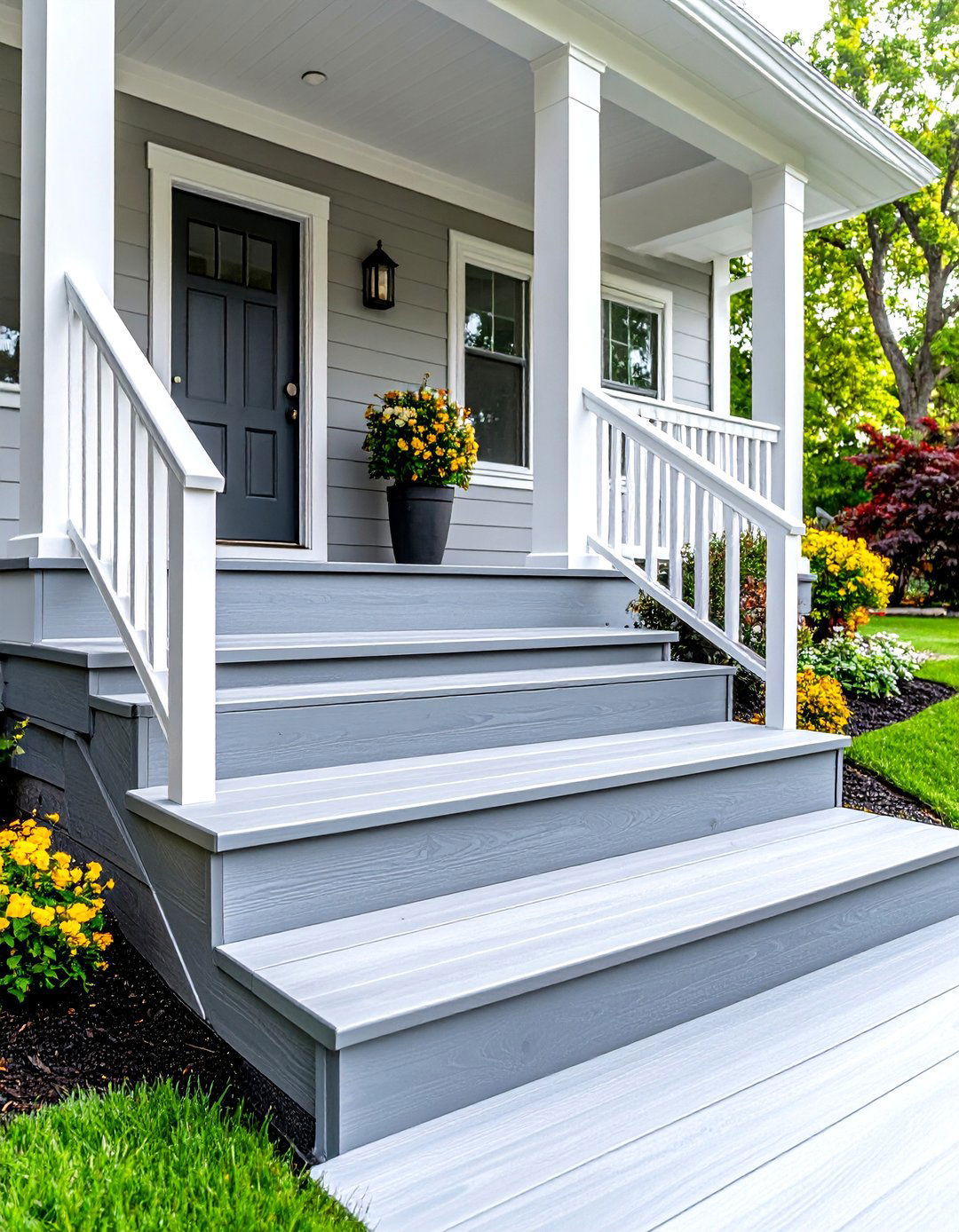
For a durable, low-maintenance, and modern option, composite decking porch steps are an excellent choice. Made from a blend of wood fibers and recycled plastics, composite materials are resistant to rot, insects, and fading, eliminating the need for regular staining or sealing. They come in a wide variety of colors and finishes, including those that realistically mimic natural wood grain. This allows you to achieve the look of wood without the upkeep. These steps are a practical and long-lasting solution that provides a clean, consistent appearance, perfect for a hassle-free and stylish entryway.
13. Flared Porch Steps
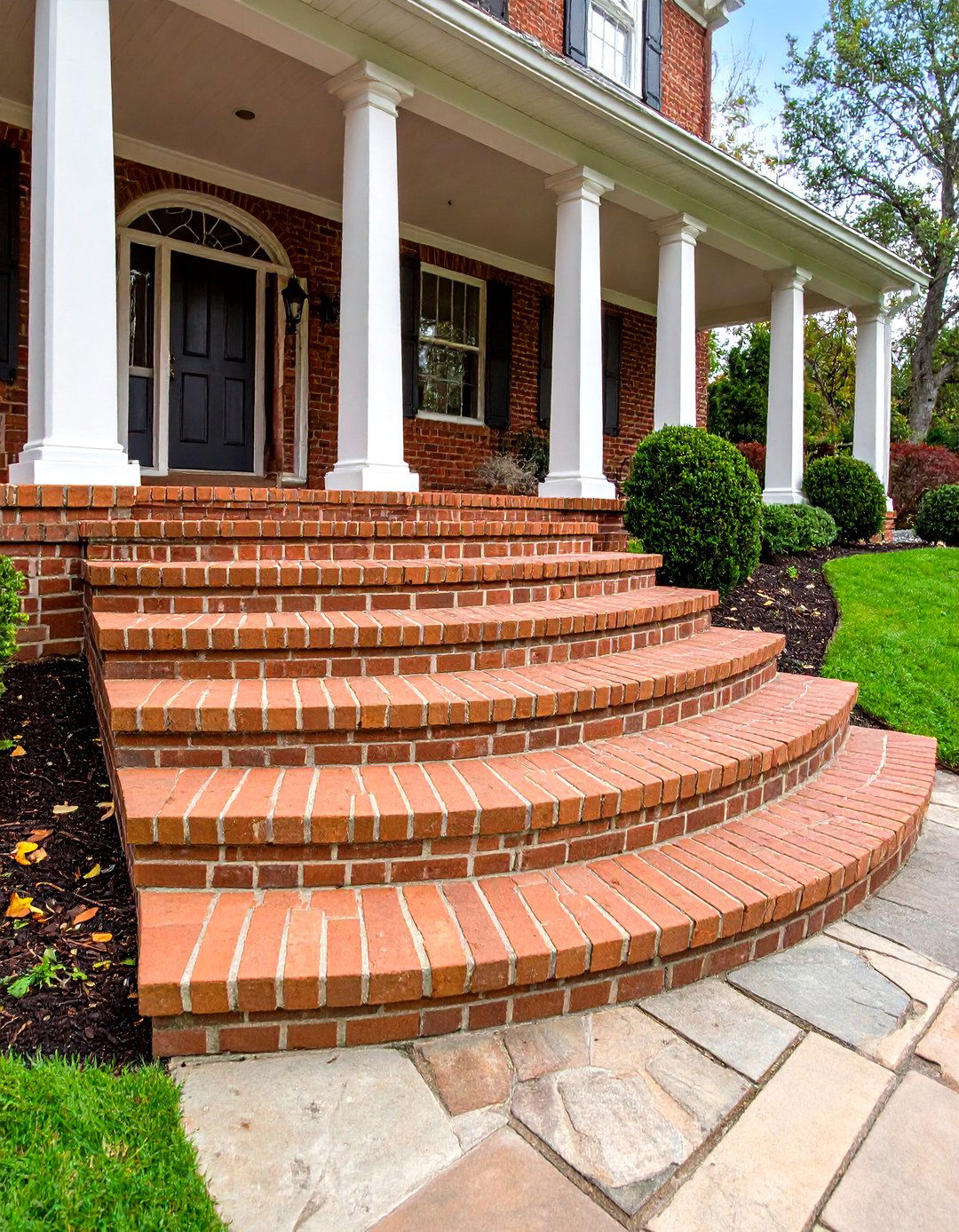
Flared porch steps create a grand and inviting entrance by widening as they descend from the porch to the ground. This fanned-out shape naturally draws the eye upward toward the front door and gives the entryway a more expansive and welcoming feel. The design works well with a variety of materials, including brick, concrete, and stone. Flared stairs add a touch of formality and architectural interest, transforming a simple staircase into a significant design feature. This style is especially effective for larger homes or those with a formal architectural style, providing a graceful and impressive transition.
14. Porch Steps with a Gravel Landing
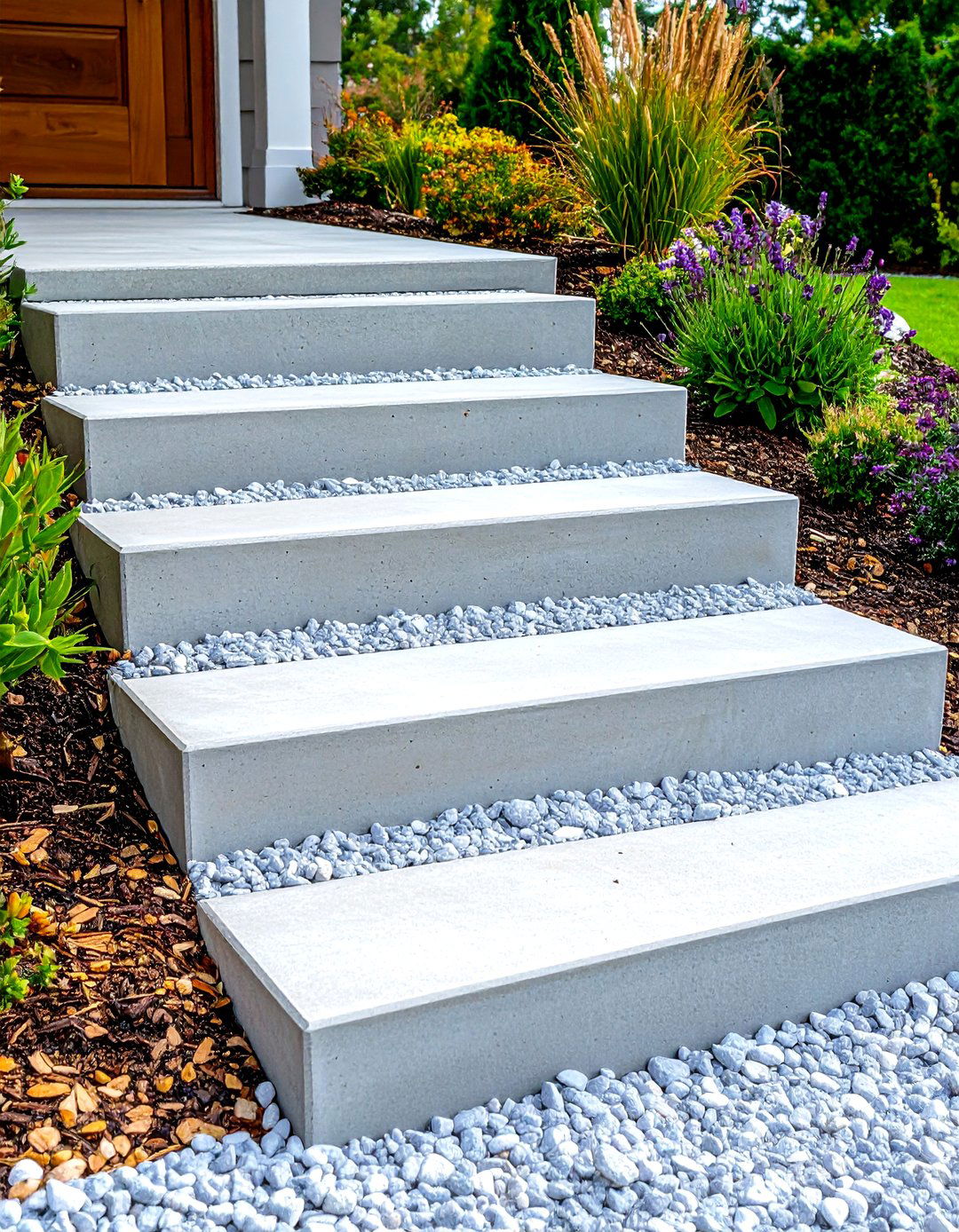
Combining solid steps with a gravel landing or pathway offers a textural and visually interesting approach to your porch. You can use concrete, wood, or stone for the steps themselves, leading down to a wide pad of decorative pea gravel or crushed stone. This contrast in materials adds a rustic yet refined touch. The gravel area provides excellent drainage and a satisfying crunch underfoot. Edging the gravel with brick or stone can create a clean, defined look. This design is a cost-effective way to create a larger, more functional landing area that blends beautifully into a landscaped yard.

15. Painted Wood Porch Steps
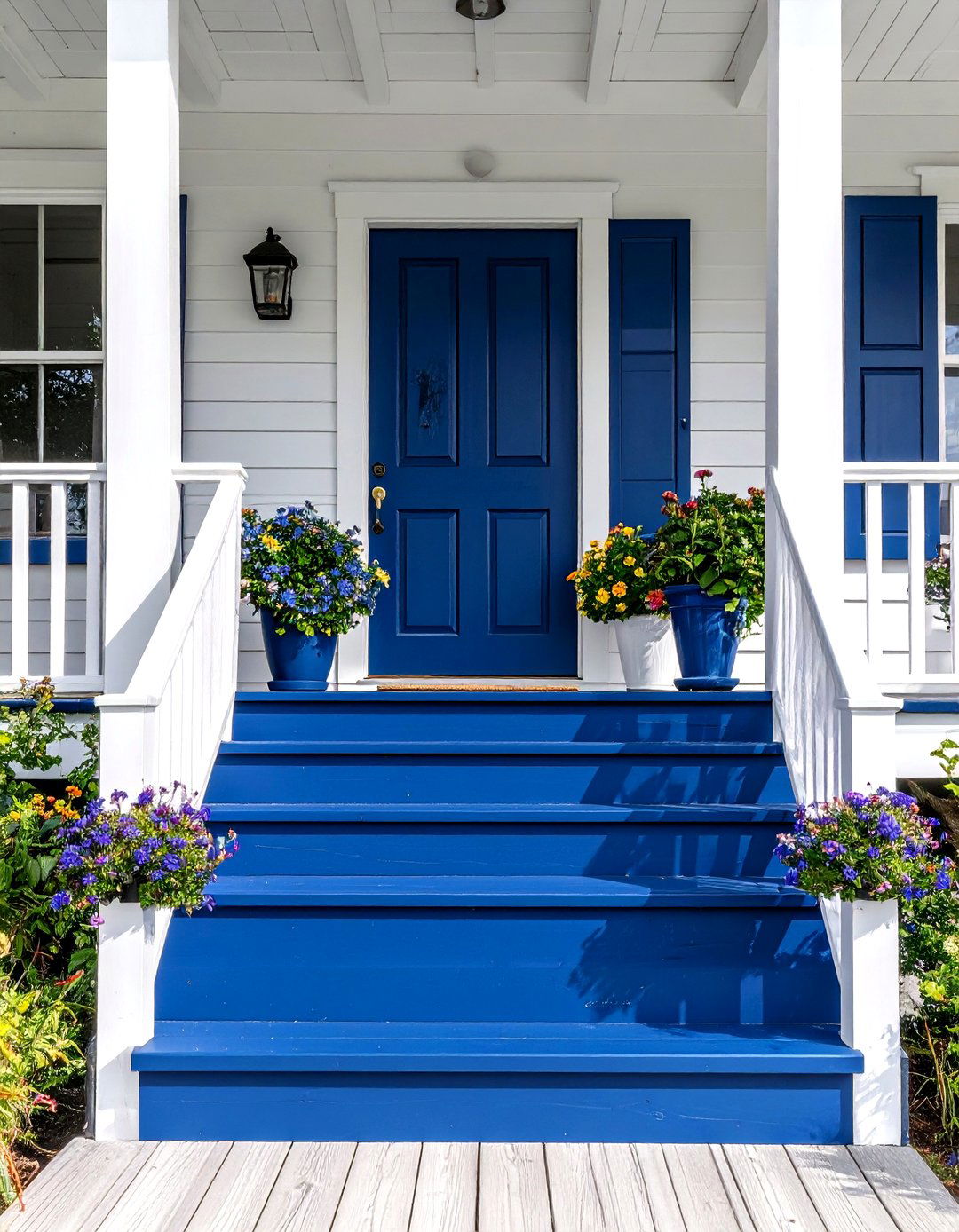
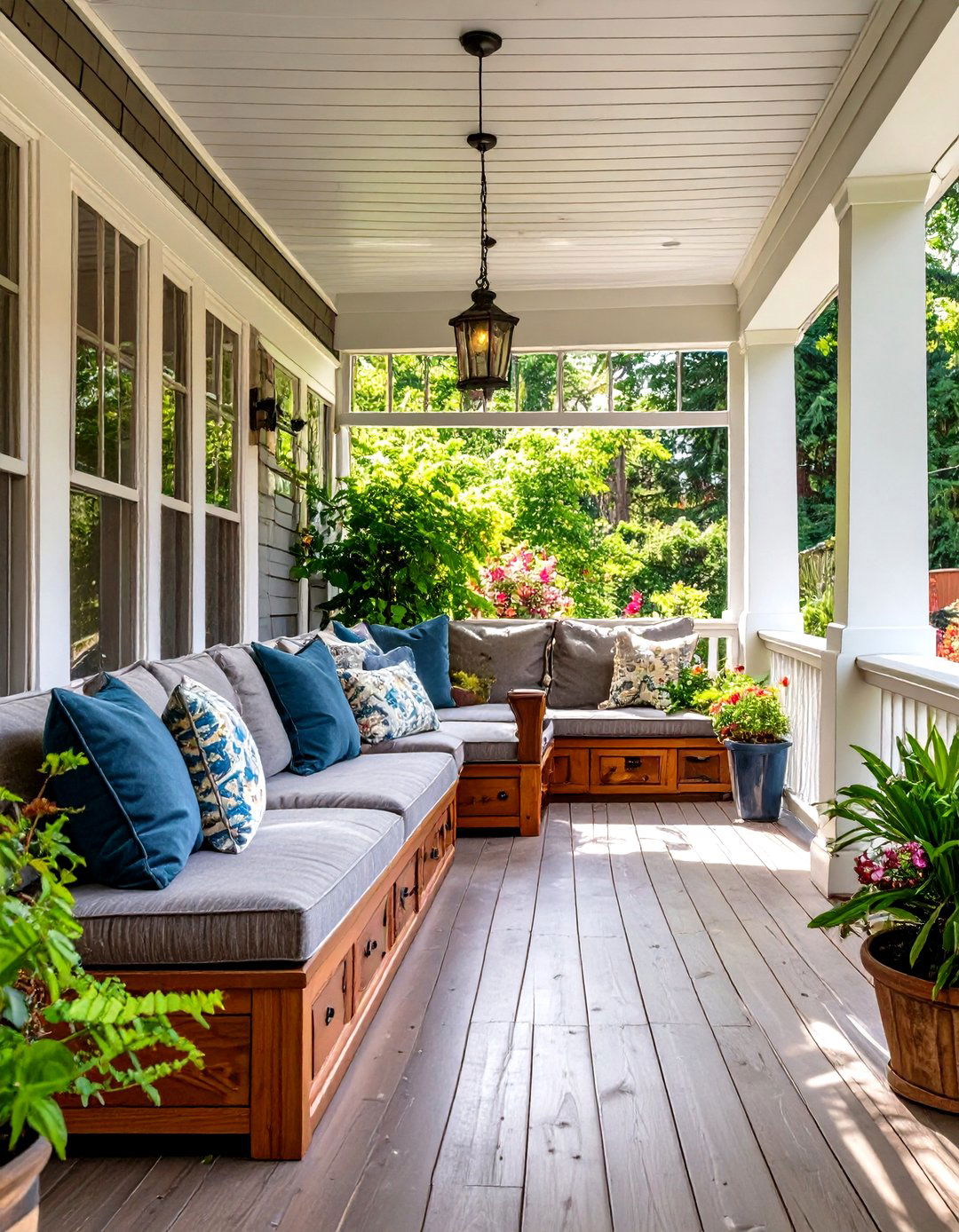
A simple yet highly effective way to customize your entryway is with painted wood porch steps. A fresh coat of paint can completely transform the look of your porch, allowing you to introduce color and personality. You can opt for a classic, crisp white, a dramatic dark hue like charcoal or navy, or a bold, unexpected color that complements your home's siding or front door. Using high-quality exterior porch and floor paint ensures durability against foot traffic and weather. This is an affordable and accessible DIY project that offers a major impact on your home's curb appeal.
16. Wraparound Porch Steps
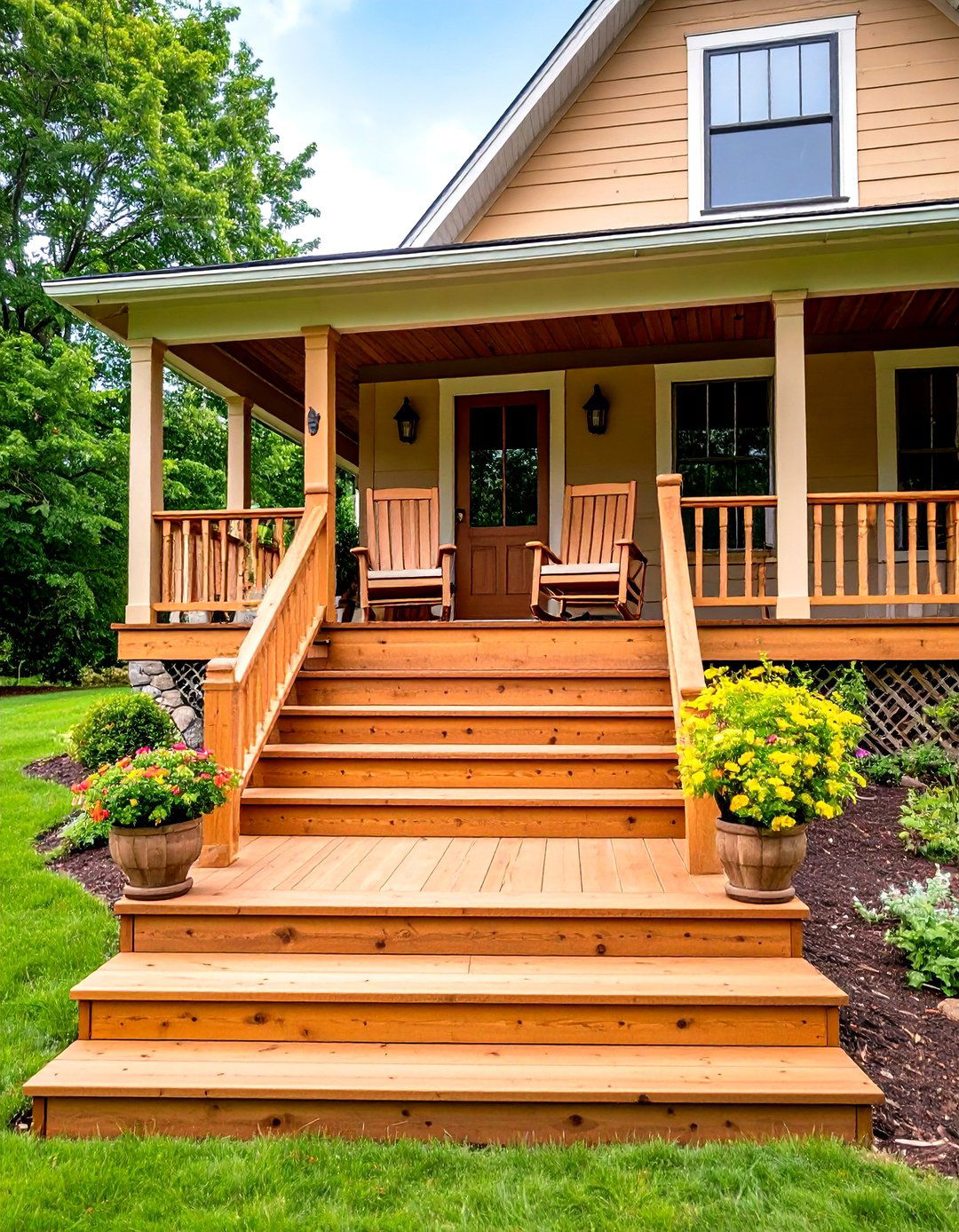
Wraparound porch steps extend across the entire front or multiple sides of a porch, providing access from various directions. This expansive design creates an open, welcoming atmosphere and seamlessly integrates the porch with the surrounding yard. It eliminates the single, narrow entry point, making the porch feel more like an accessible, open-air living space. This style is particularly well-suited for farmhouses, coastal homes, or any property with a large porch designed for socializing. It enhances both the functionality and the visual flow of your outdoor area, inviting guests to approach from any angle.
17. Porch Steps with Metal Railings
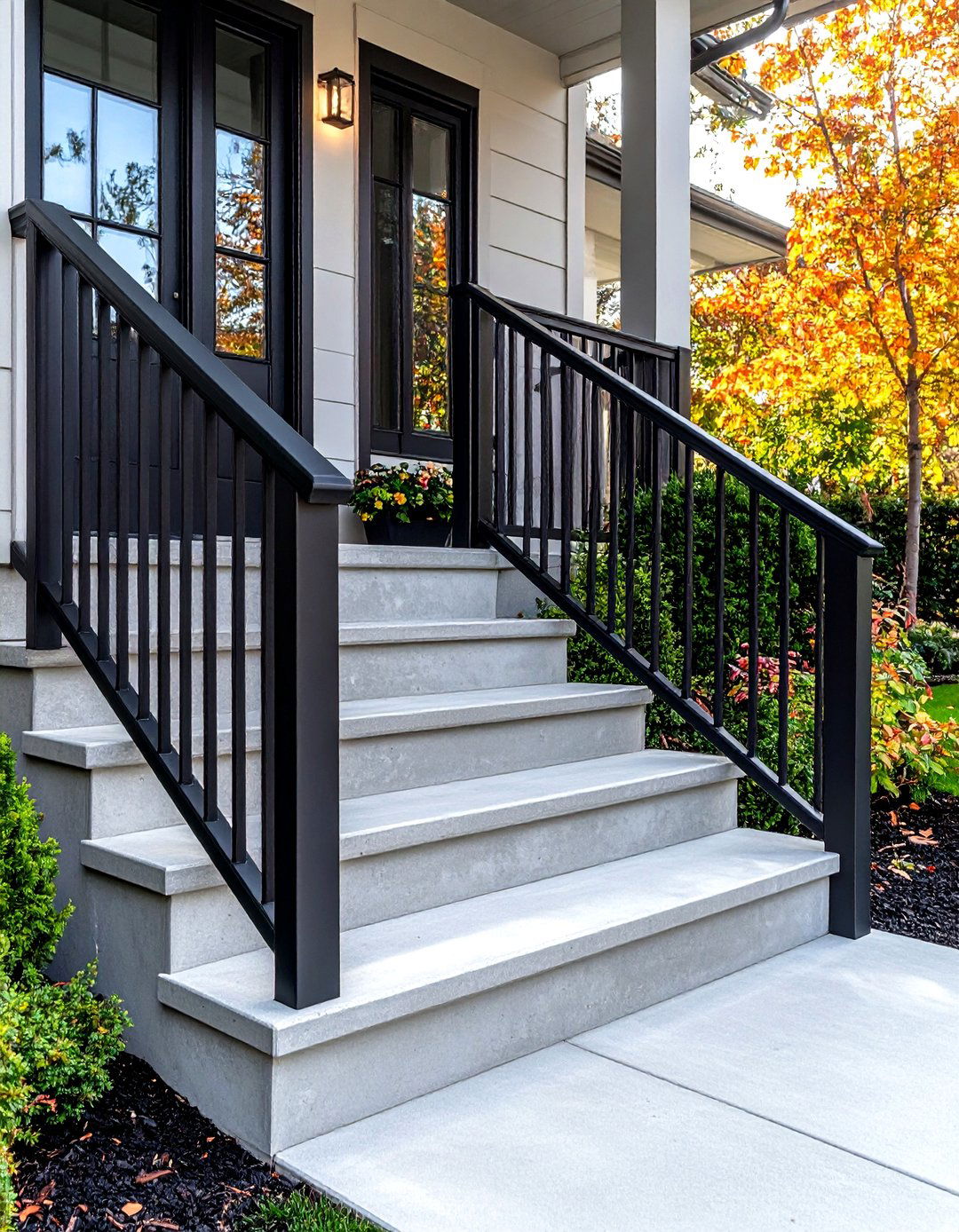
Pairing porch steps with sleek metal railings introduces a touch of modern sophistication and clean lines. Whether you choose powder-coated aluminum, wrought iron, or stainless steel, metal railings provide a durable and low-maintenance safety feature. The slim profile of metal balusters, whether vertical or horizontal, offers security without obstructing the view. This creates a more open and airy feel compared to bulky wood railings. The contrast between materials like wood or concrete steps and metal railings can create a sharp, contemporary look that updates and elevates the entire facade of your home.
18. Porch Steps with Cable Railings
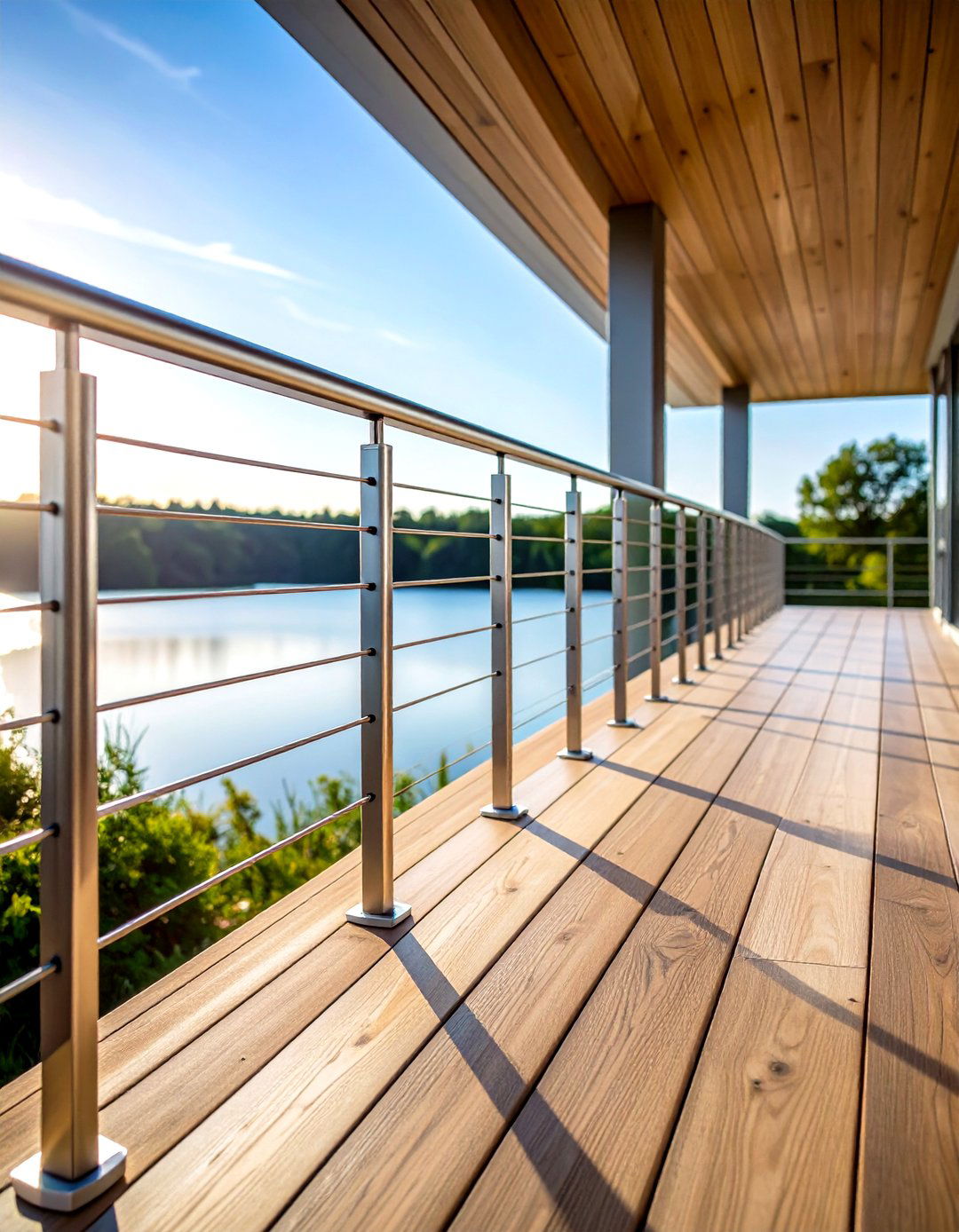
For an ultra-modern and minimalist look, porch steps with cable railings are an outstanding choice. This system uses high-tension stainless steel cables run horizontally between metal or wood posts. The result is a railing that is incredibly strong yet nearly invisible, providing an unobstructed view of your yard and surroundings. This design maximizes light and creates a feeling of openness, making it perfect for homes with a scenic view or a contemporary architectural style. It’s a sophisticated option that offers safety while maintaining a sleek, unobtrusive, and high-end aesthetic.
19. Multi-Level Deck Porch Steps
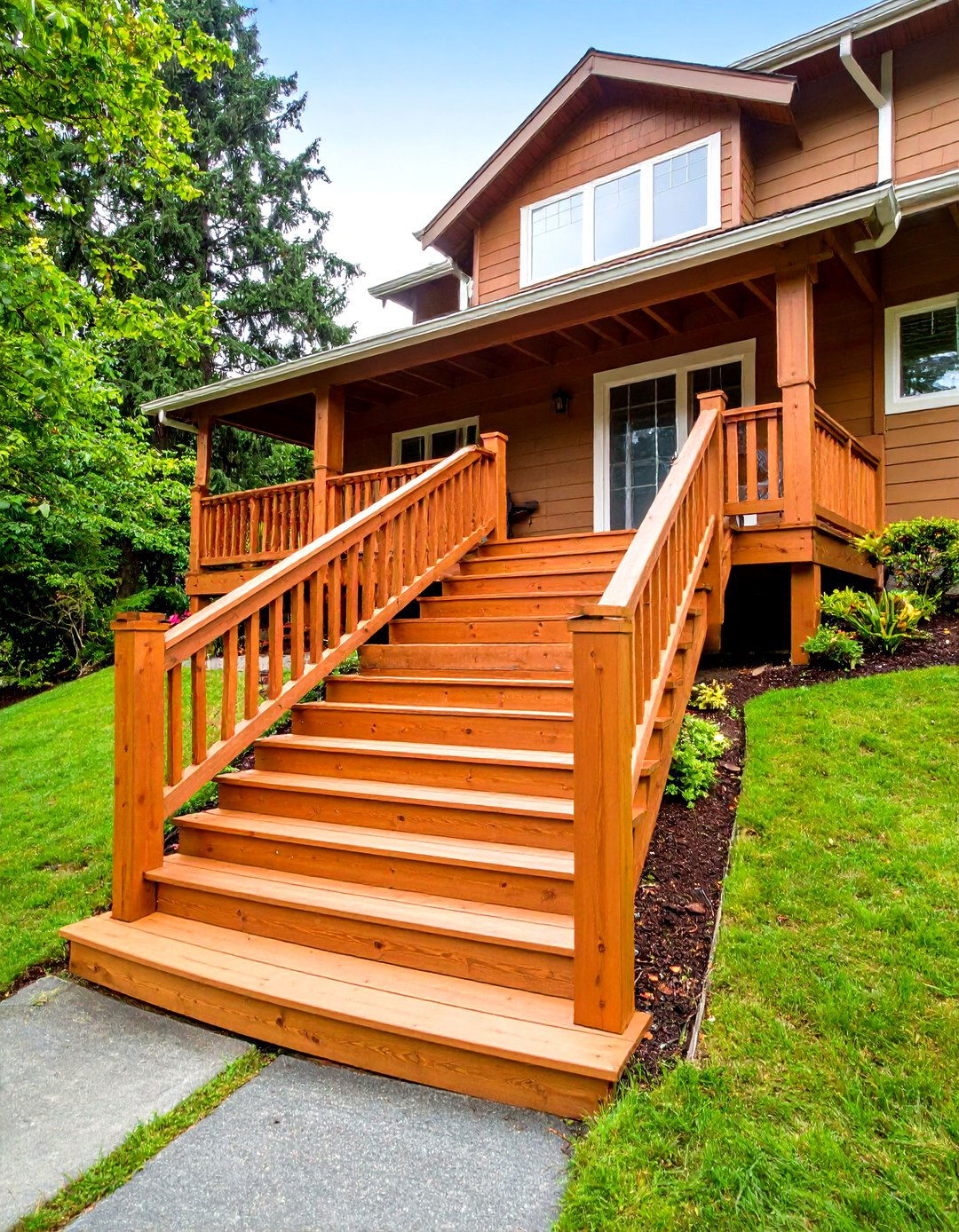
For homes with a significant elevation difference between the ground and the porch, multi-level deck porch steps offer a functional and visually appealing solution. Instead of one long, straight staircase, this design breaks the ascent into a series of shorter flights connected by small landings or platforms. This creates a more gradual and interesting journey to the door. The landings can be used for seating or planters, turning the stairway into a multi-functional space. This approach is ideal for sloped properties, adding architectural dimension and transforming a purely functional element into a deliberate design feature.
20. Fieldstone Riser Porch Steps

This design combines smooth, durable treads made of wood or concrete with risers faced with natural fieldstone. The result is a beautiful textural contrast that blends rustic charm with polished function. Fieldstones are rounded, weathered stones collected from fields, offering a variety of colors, shapes, and sizes that create a mosaic-like effect on the step risers. This approach adds character and a connection to nature without sacrificing the smooth, safe walking surface of the treads. It’s an excellent way to introduce the organic beauty of stone into your entryway in a subtle yet impactful way.
21. Open Riser Porch Steps

Open riser porch steps, also known as "see-through" steps, lack the solid vertical backing (the riser) between each tread. This design creates a lighter, more open feel, allowing light and air to pass through the staircase. It helps the steps appear less bulky and can make a small porch area feel more spacious. Typically built with wood or composite treads supported by stringers on each side, this style has a modern and somewhat casual appeal. It's an excellent choice for contemporary homes, beach houses, or any setting where maintaining an airy, unobstructed view is a priority.
22. Side-Accessed Porch Steps
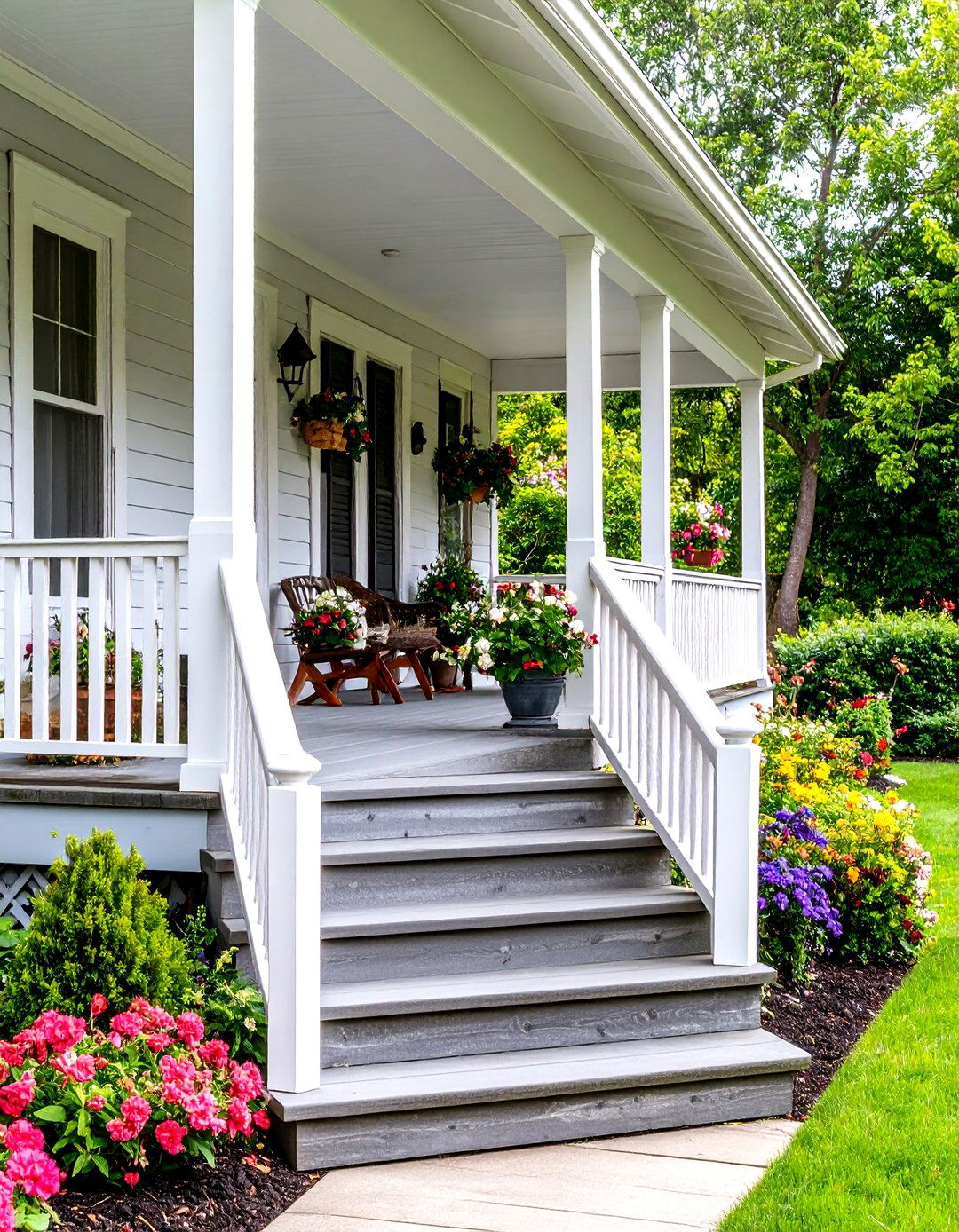
Instead of approaching the porch head-on, side-accessed porch steps run parallel to the front of the house. This design is often used for porches that are long and narrow or when the main walkway leads to the side of the porch rather than the center. It can help preserve the view from the porch and create a more private, enclosed seating area. This layout is a practical solution for specific lot configurations and can lend a unique, asymmetrical look to your home's entrance, guiding visitors along the facade before they ascend to the porch.
23. Porch Steps with Built-In Seating
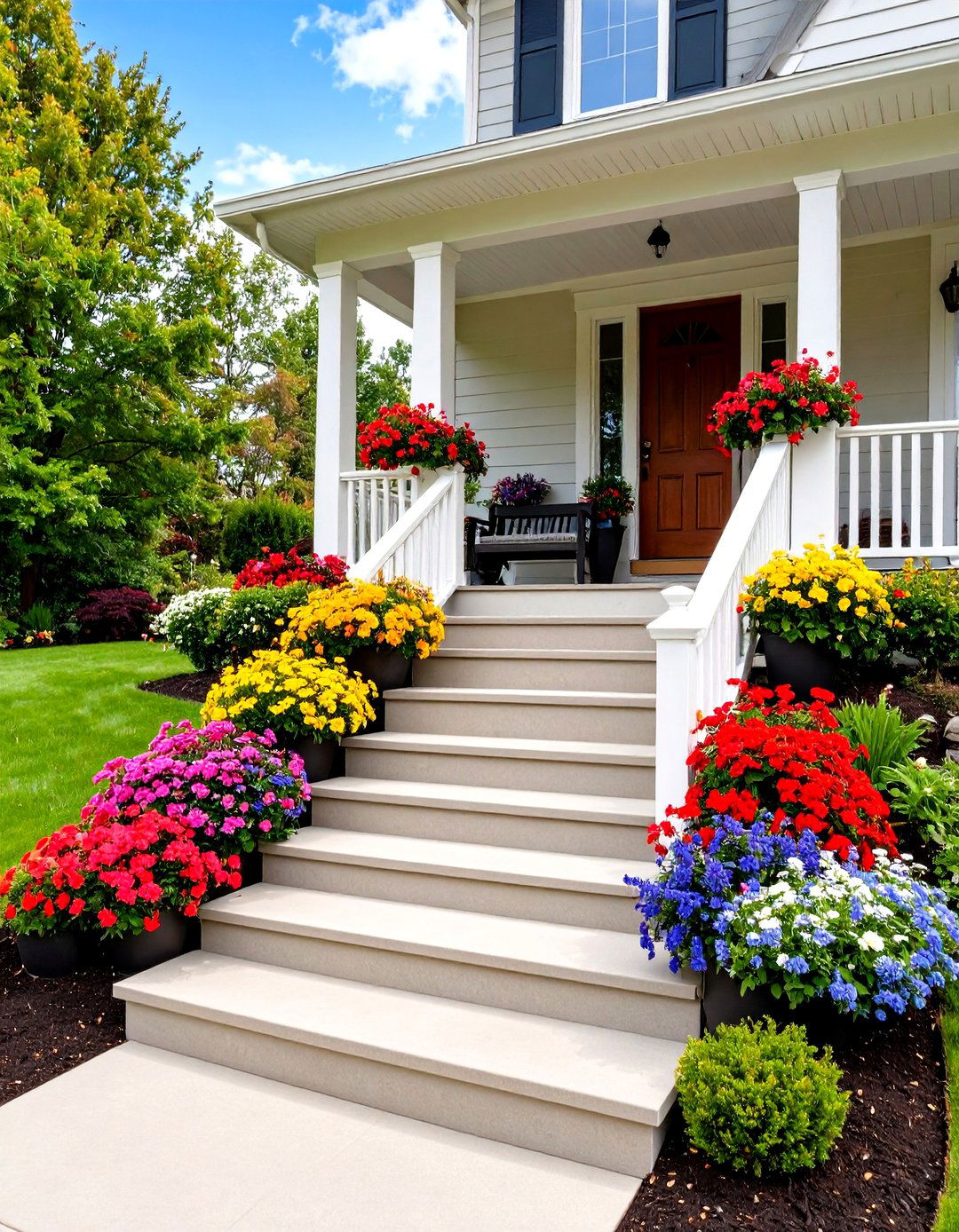
Maximize the functionality of your entryway by incorporating built-in seating into your porch steps. This clever design often involves extending one or more of the lower, wider steps to create a bench-like surface. It’s a perfect solution for homes without enough space for a full porch seating area. These integrated benches provide a convenient spot to wait for guests, take off muddy shoes, or simply enjoy a moment outdoors. Built from the same material as the steps, whether wood, composite, or concrete, the seating blends in seamlessly, offering a practical and space-saving feature.
24. Solar Cap Light Porch Steps
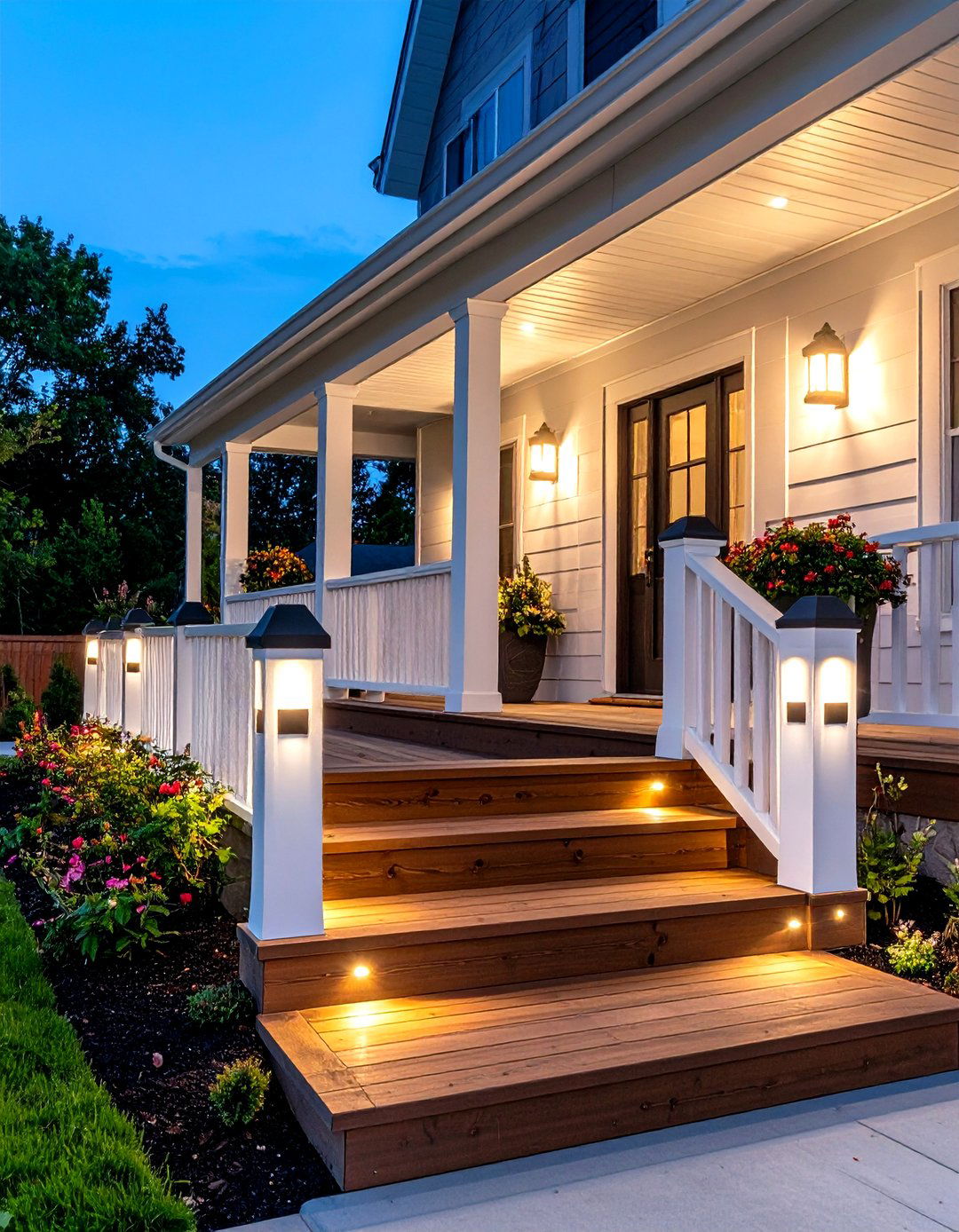
For an eco-friendly and easy-to-install lighting solution, consider porch steps with solar cap lights. These individual lights are designed to fit directly on top of your railing posts at the top and bottom of the stairs. They harness solar power during the day and automatically turn on at dusk, casting a gentle, downward glow to illuminate the steps. This wire-free solution enhances safety and adds a touch of ambiance without increasing your electricity bill. It’s a simple, effective, and sustainable way to ensure your entryway is both welcoming and well-lit every evening.
25. Reclaimed Wood Porch Steps
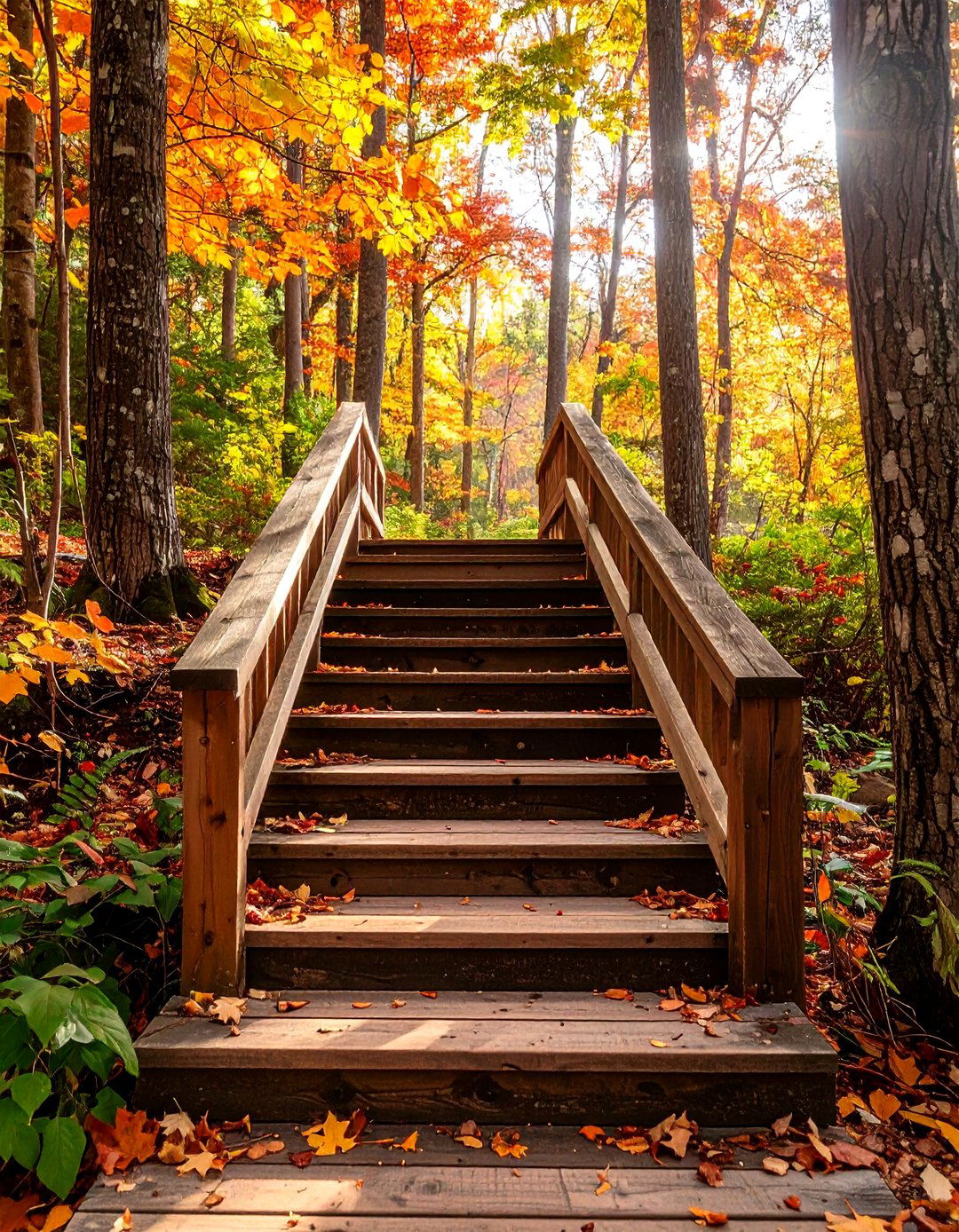
Using reclaimed wood for your porch steps brings a rich sense of history and character to your home's entrance. Sourced from old barns, factories, or other dismantled structures, this wood often features unique weathering, nail holes, and a patina that cannot be replicated with new materials. Each plank tells a story, adding a rustic, one-of-a-kind charm. Beyond its aesthetic appeal, using reclaimed wood is an environmentally friendly choice that gives old materials a new life. It's perfect for creating an entryway that feels authentic, warm, and full of personality.
26. Paver Porch Steps
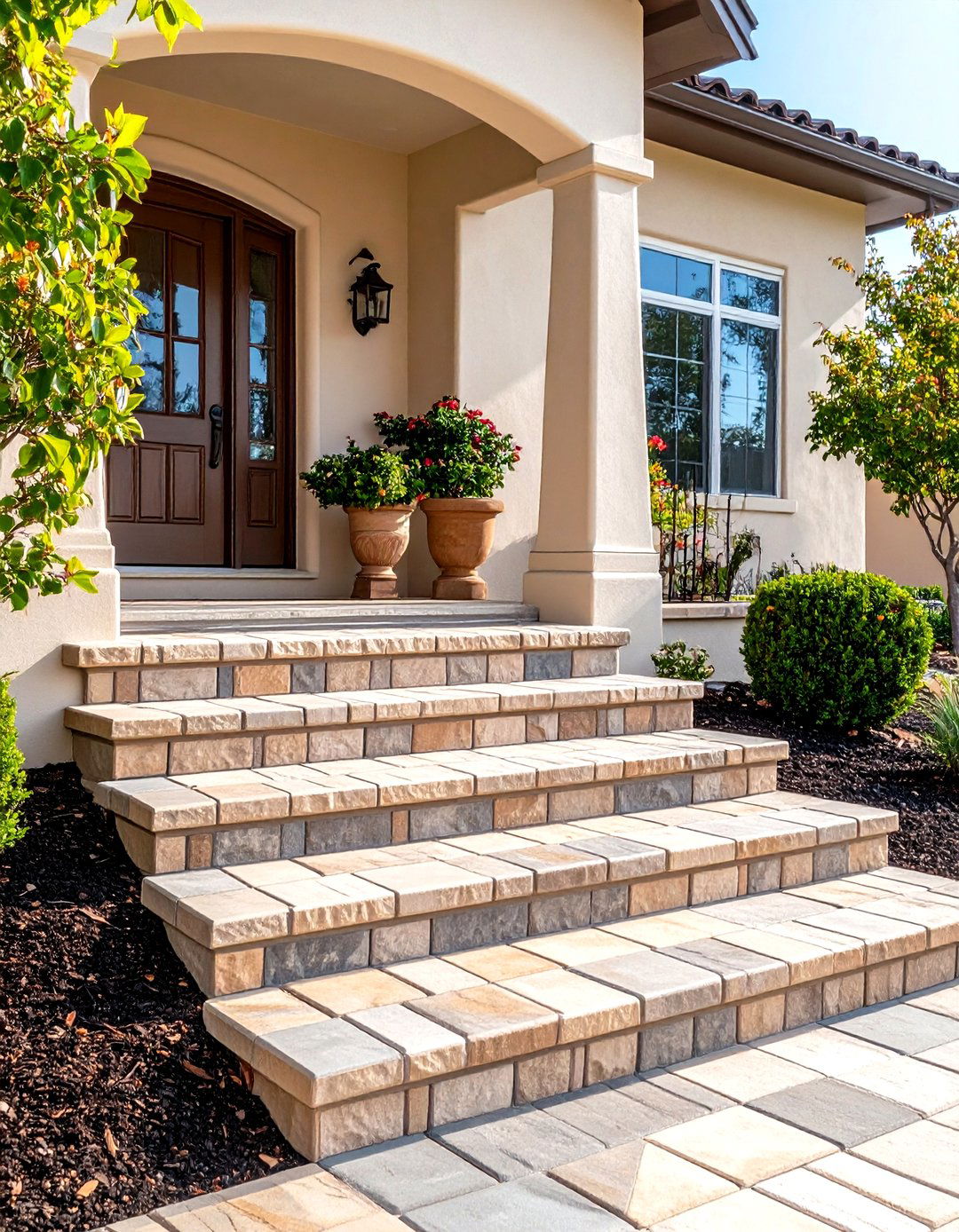
Paver porch steps, constructed from interlocking concrete or clay pavers, offer immense design flexibility and durability. Pavers come in a vast array of shapes, colors, and textures, allowing you to create custom patterns and looks, from classic cobblestone to modern geometric designs. Because they are individual units, they are less prone to large-scale cracking than a solid concrete slab and are easier to repair—you can simply replace a single damaged paver. This method results in a strong, stable, and visually appealing staircase that can be perfectly coordinated with matching walkways and patios.
27. Porch Steps with a Center Handrail
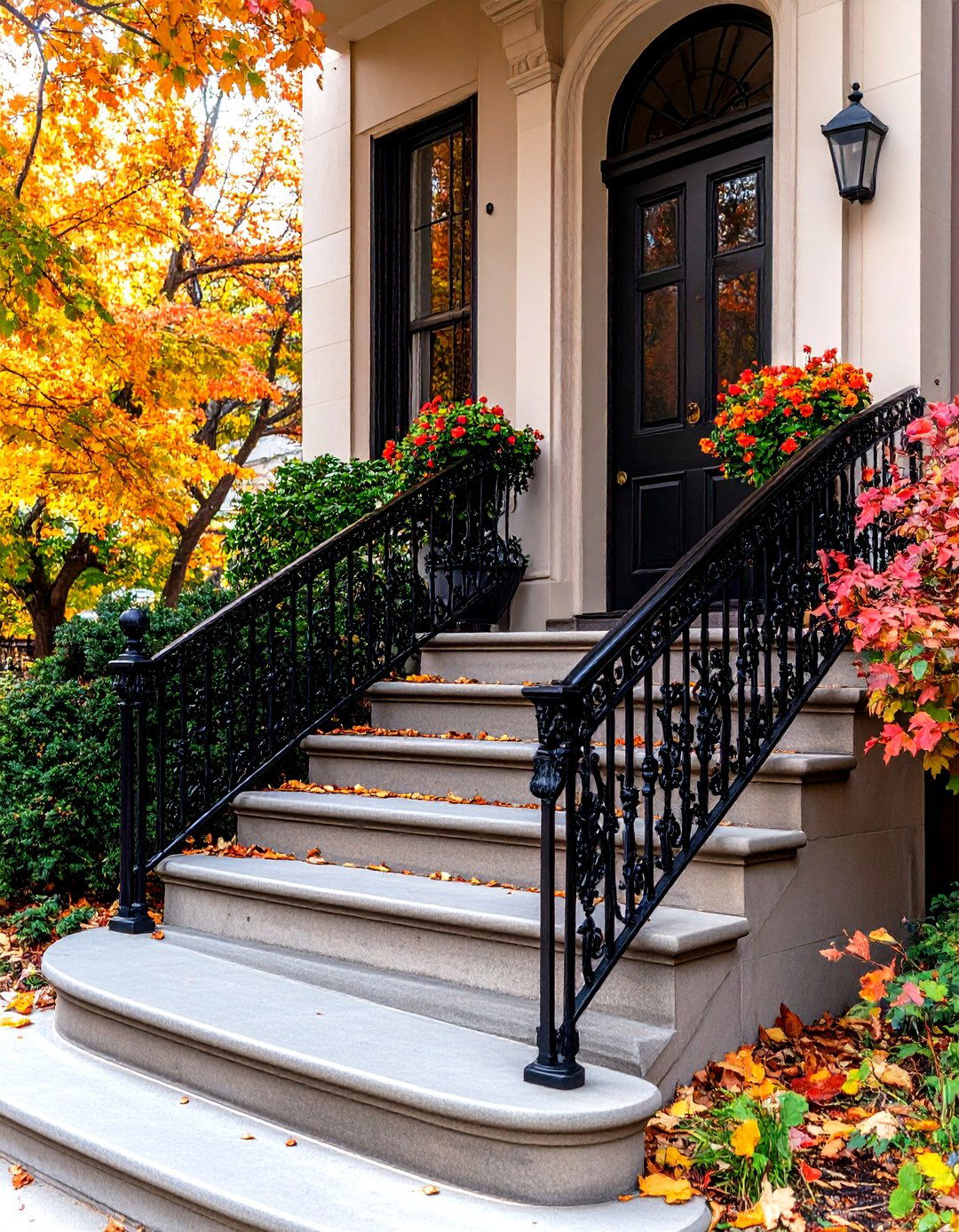
For exceptionally wide staircases, a center handrail provides an essential safety and design element. It divides the broad expanse of steps into two distinct lanes, offering support for people on both sides. This is particularly useful for public-facing buildings or homes that frequently host large groups of people, ensuring everyone has convenient access to a secure handhold. A central rail, whether made of wood, metal, or a combination, also adds a strong vertical line that can break up the visual width of the stairs, creating a more balanced and stately appearance.
28. Asymmetrical Porch Steps
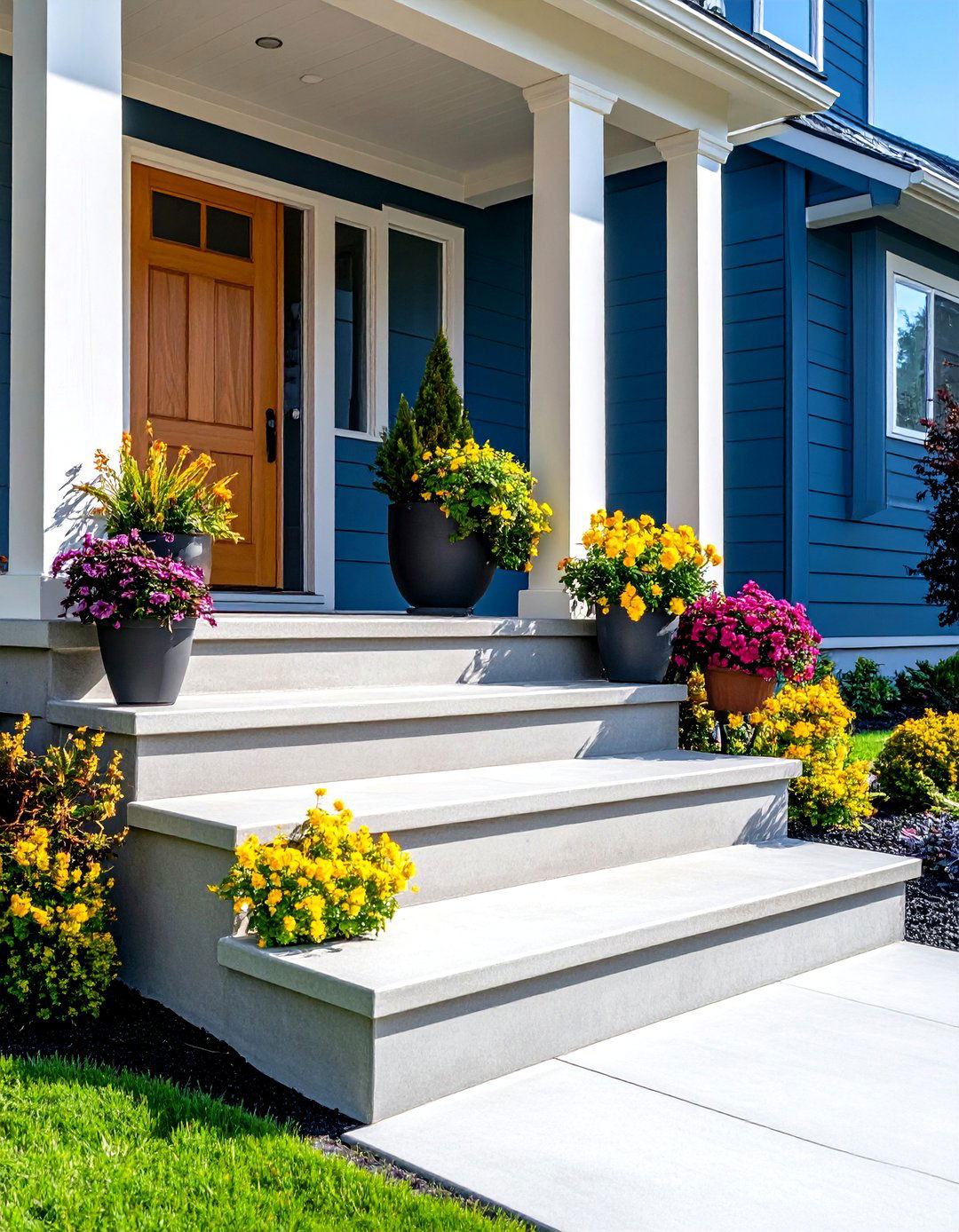
Moving away from perfect symmetry, asymmetrical porch steps can create a dynamic and modern entryway. This design might involve steps that are offset to one side of the porch, vary in width as they descend, or incorporate landings and planters on only one side. This intentional imbalance draws the eye and creates a unique visual flow that feels contemporary and artistic. It’s a bold choice that breaks from traditional design rules to make a strong architectural statement, perfectly suited for modern or custom-built homes that embrace unconventional forms and creative layouts.
29. Porch Steps with Contrasting Treads and Risers

A simple yet impactful design technique is to use contrasting materials or colors for the treads and risers of your porch steps. For example, pair dark-stained wood treads with crisp white painted risers for a classic, clean look. Alternatively, you could combine smooth concrete treads with risers faced in textured stone or colorful tile. This two-tone effect creates visual depth and highlights the individual components of the staircase, making it pop. It’s a versatile strategy that can be adapted to suit any style, from traditional to modern, adding a layer of custom detail.
30. Porch Steps Integrated with a Ramp
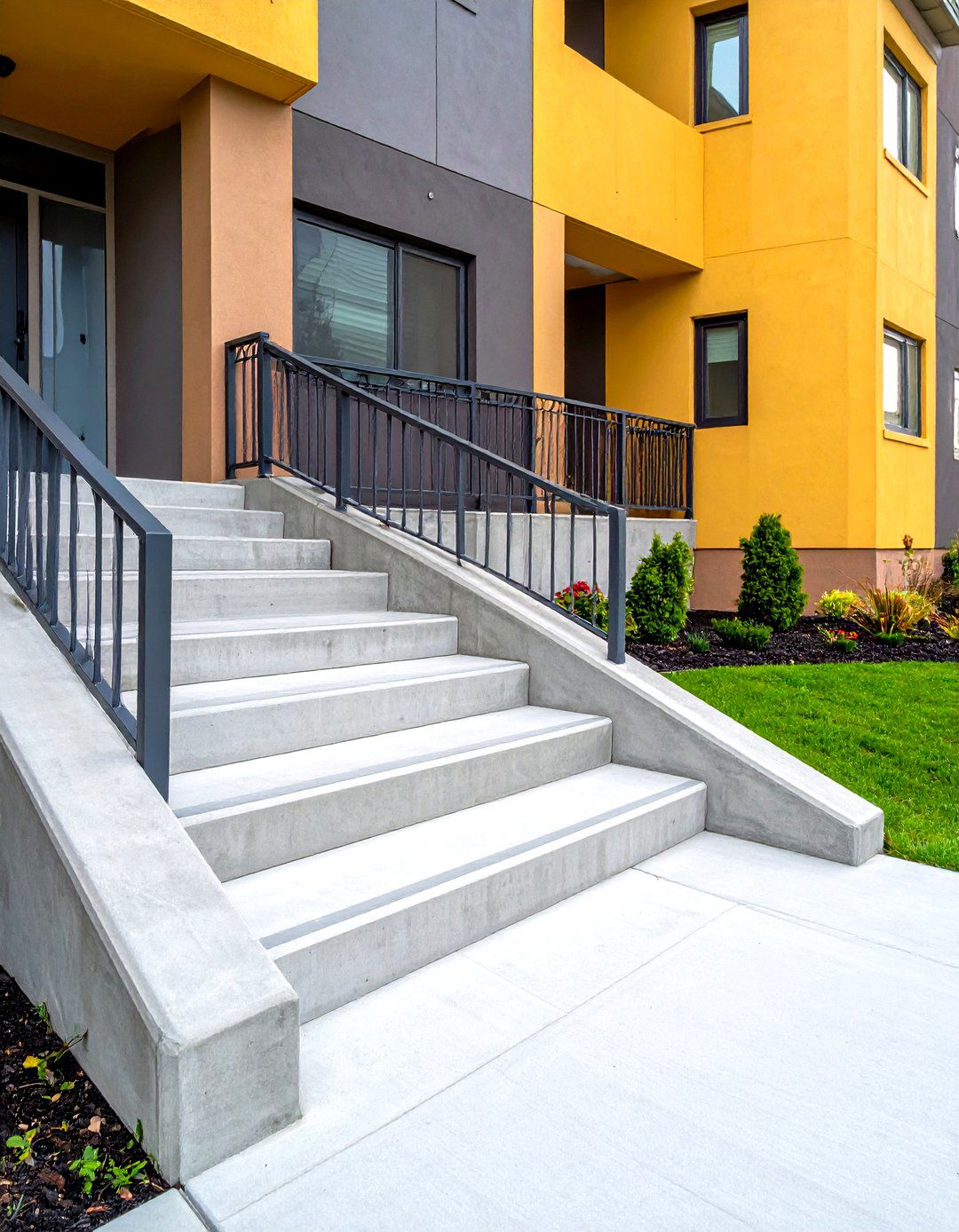
For a universally accessible and inclusive entrance, integrating a ramp with your porch steps is a thoughtful and functional solution. The ramp can run alongside the staircase or be designed as a separate, gently sloping path leading to the porch. Using the same materials for both the steps and the ramp, such as wood, composite, or concrete, ensures a cohesive and harmonious look. This design not only provides essential access for wheelchairs and strollers but also adds a modern, linear element to the overall composition, demonstrating a commitment to practical, people-first design.
Conclusion:
From the rustic charm of natural stone to the clean lines of floating concrete, the options for porch steps are incredibly diverse. Your choice can dramatically influence your home's curb appeal, blending function with personal style. Whether you prioritize low-maintenance materials like composite, artistic details like mosaic tile, or integrated features like planters and lighting, there is a design to fit every aesthetic and need. By thoughtfully selecting your porch steps, you create a welcoming and impressive entrance that sets a positive tone for your entire home.

Related posts:



Leave a Reply