
A wood front porch offers a timeless and welcoming entrance to any home, blending natural beauty with functional outdoor living space. From rustic charm to modern sophistication, the versatility of wood allows for endless design possibilities that can enhance curb appeal and create a perfect spot for relaxation. Whether you envision a cozy seating area for morning coffee or a grand entryway that makes a statement, incorporating wood elements can transform your porch into a true extension of your home. These ideas explore various ways to use wood, from flooring and ceilings to railings and decorative accents, providing inspiration to craft a beautiful and inviting facade.
1. Reclaimed Barn Wood Porch Flooring
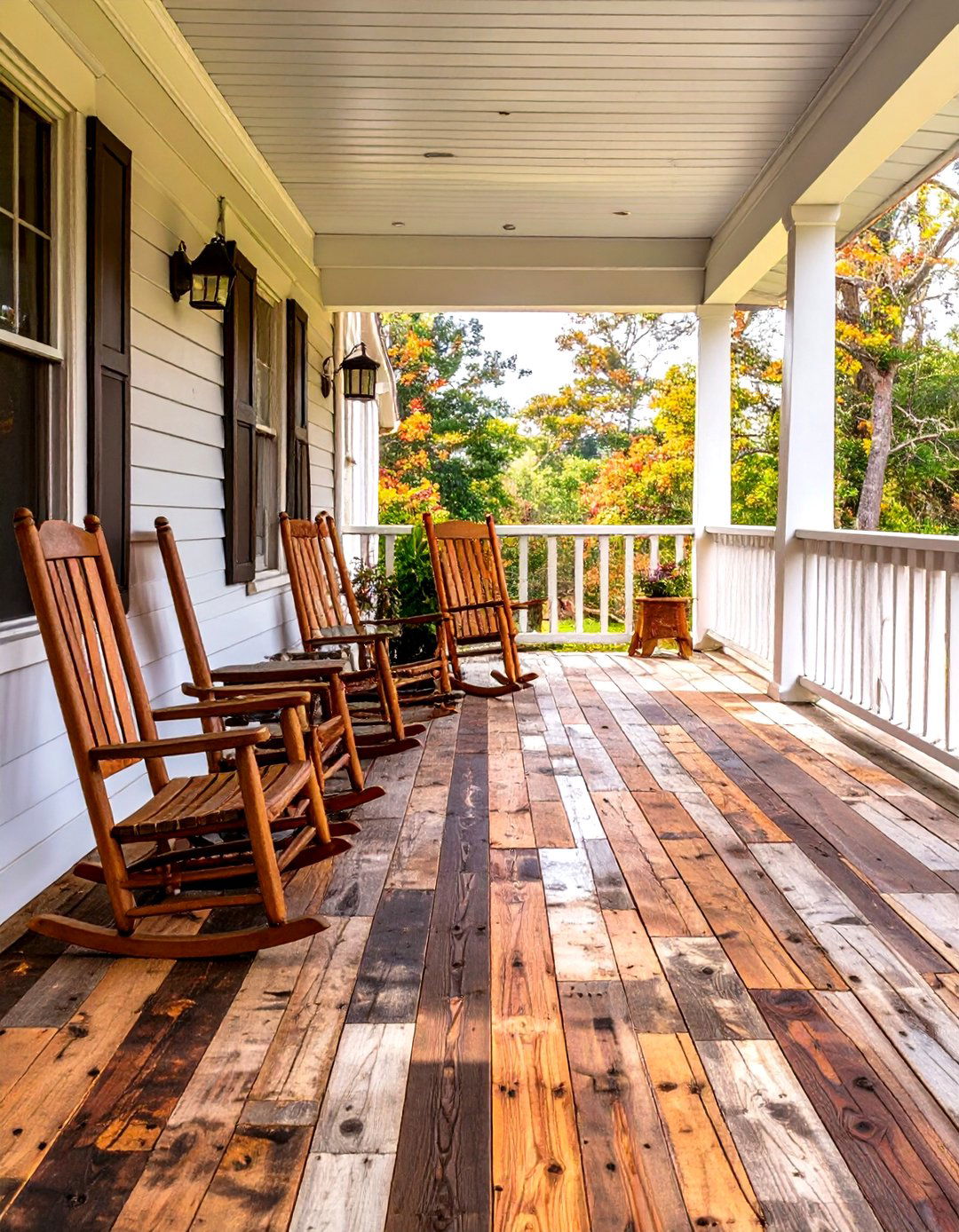
Using reclaimed barn wood for your porch flooring introduces a rich sense of history and character to your home's entrance. Each plank tells a story through its unique weathering, saw marks, and nail holes, creating a surface that is both beautiful and durable. This sustainable choice not only adds rustic appeal but also provides a sturdy foundation for furniture and foot traffic. The varied tones and textures of the aged wood create a visually interesting and warm welcome for guests. To maintain its integrity, seal the wood with a clear, weather-resistant finish that protects it from moisture and UV rays while highlighting its natural patina.
2. Cedar Plank Porch Ceiling
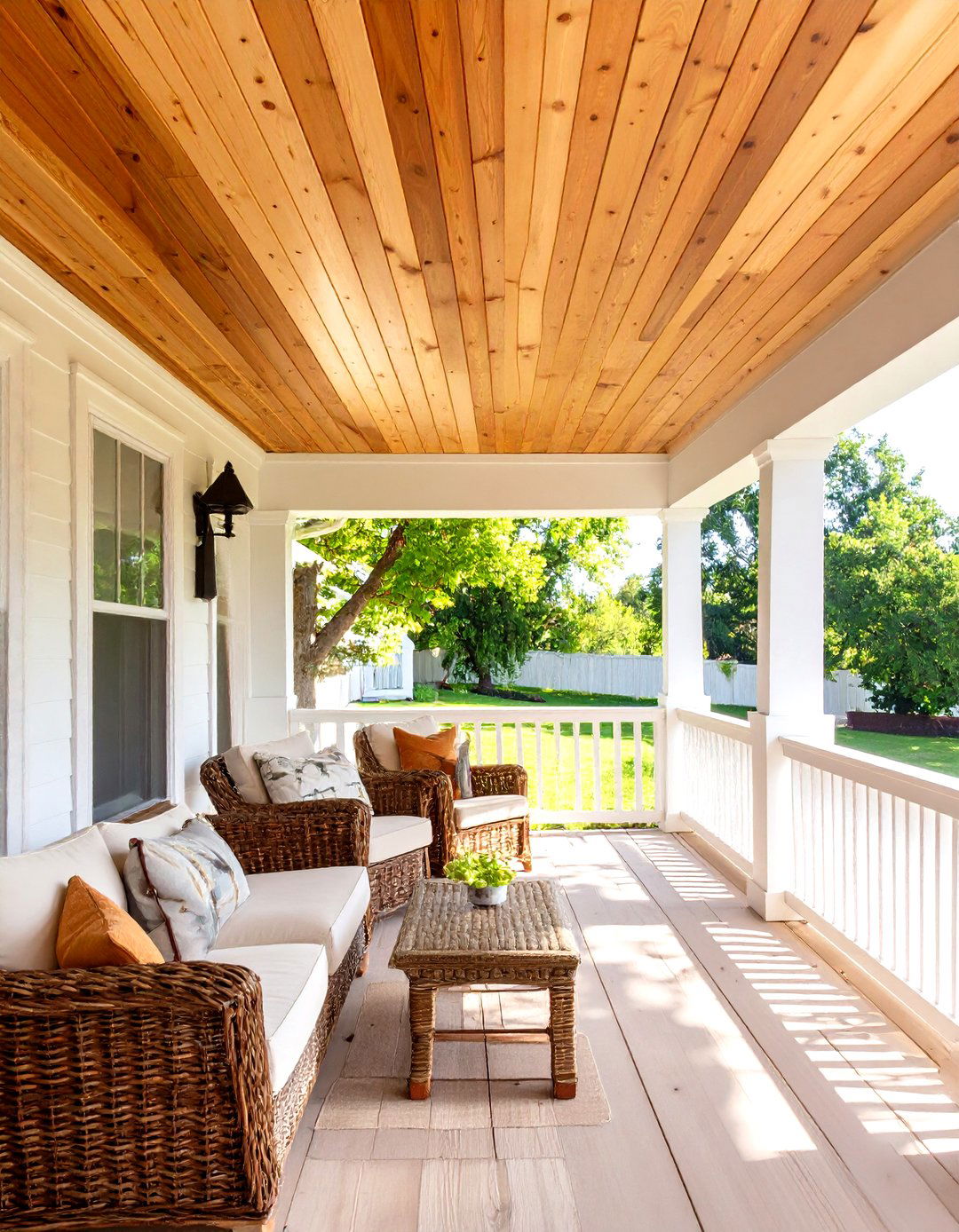
A cedar plank ceiling can elevate the look of your front porch from ordinary to extraordinary. The natural reddish-brown tones and distinct aroma of cedar add a touch of warmth and luxury to the overhead space. This type of wood is naturally resistant to rot, decay, and insects, making it an excellent and long-lasting choice for an outdoor environment. Installing the planks tongue-and-groove style creates a seamless, polished finish. You can leave the cedar in its natural state to age gracefully to a silvery gray or apply a clear sealant to preserve its rich, vibrant color for years to come.
3. Black Stained Wood Porch Deck
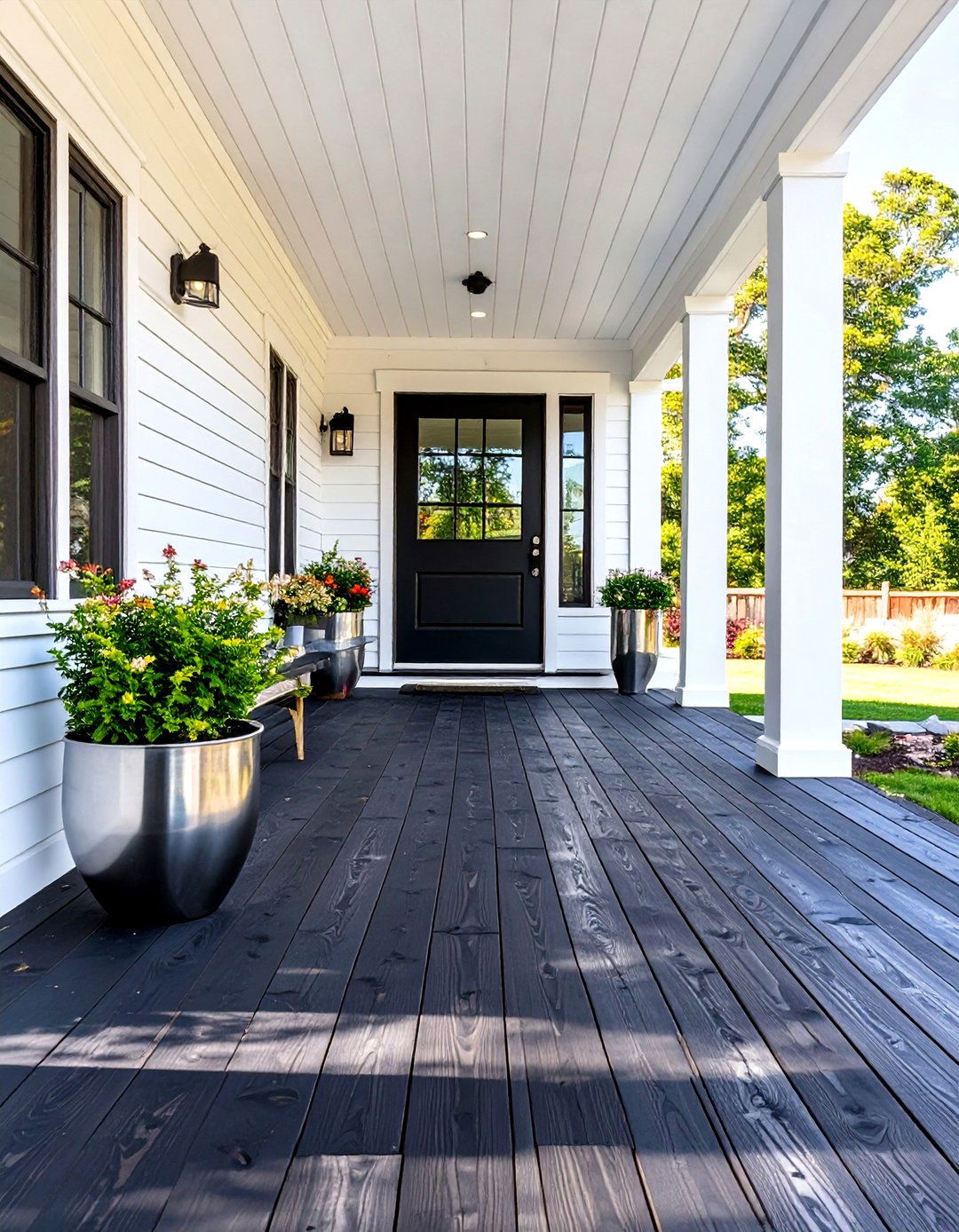
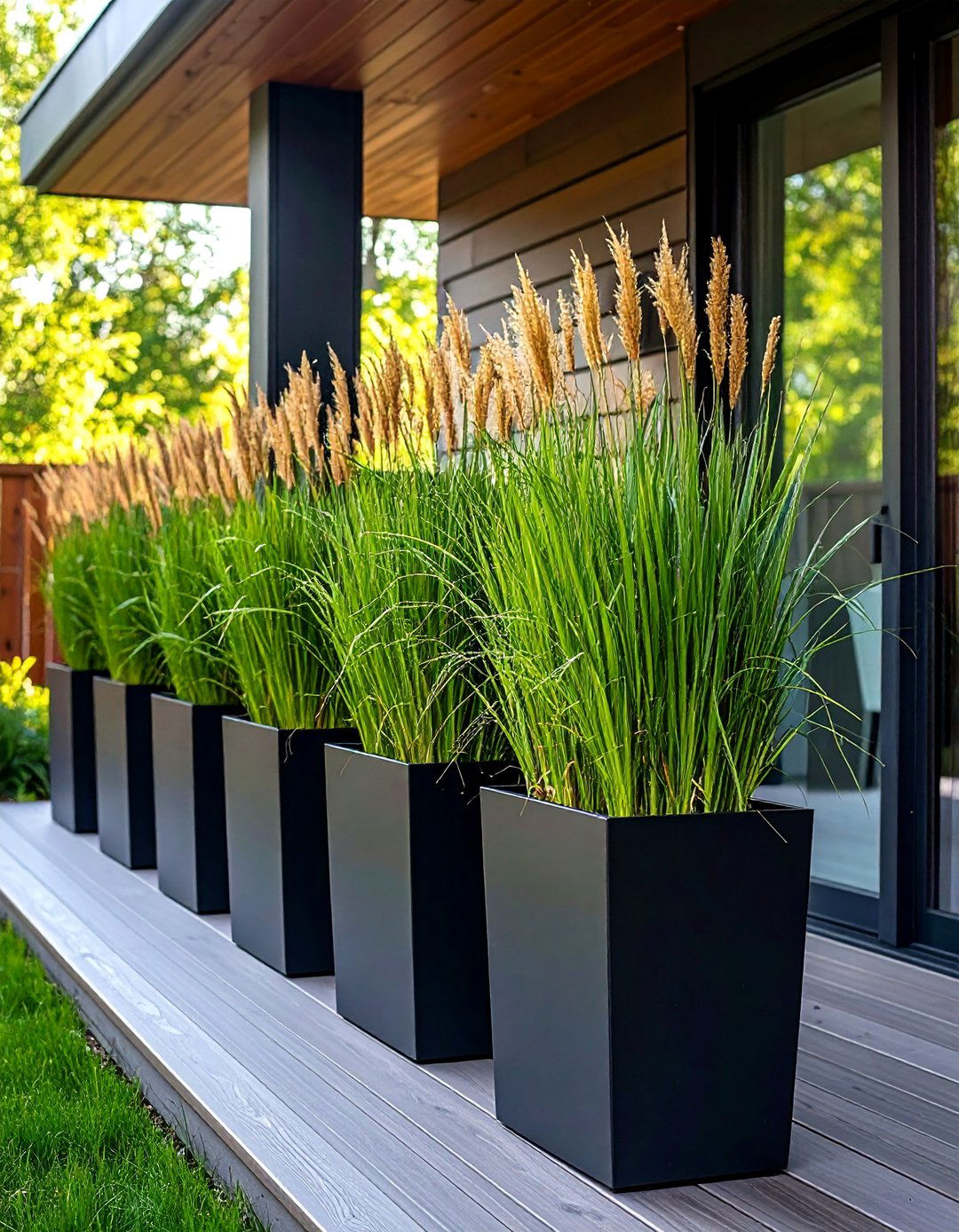
For a bold and contemporary statement, consider staining your wood porch deck black. This dramatic choice creates a striking contrast with lighter-colored home exteriors, such as white or gray siding, making your entrance pop. A black stain provides a sleek, uniform look that can modernize a traditional porch design. It also helps to hide imperfections in the wood and offers excellent UV protection, preventing the wood from fading over time. Pairing a black wood floor with neutral or metallic outdoor furniture completes the sophisticated aesthetic, creating an inviting yet modern outdoor space that stands out from the rest.
4. Natural Ipe Wood Decking
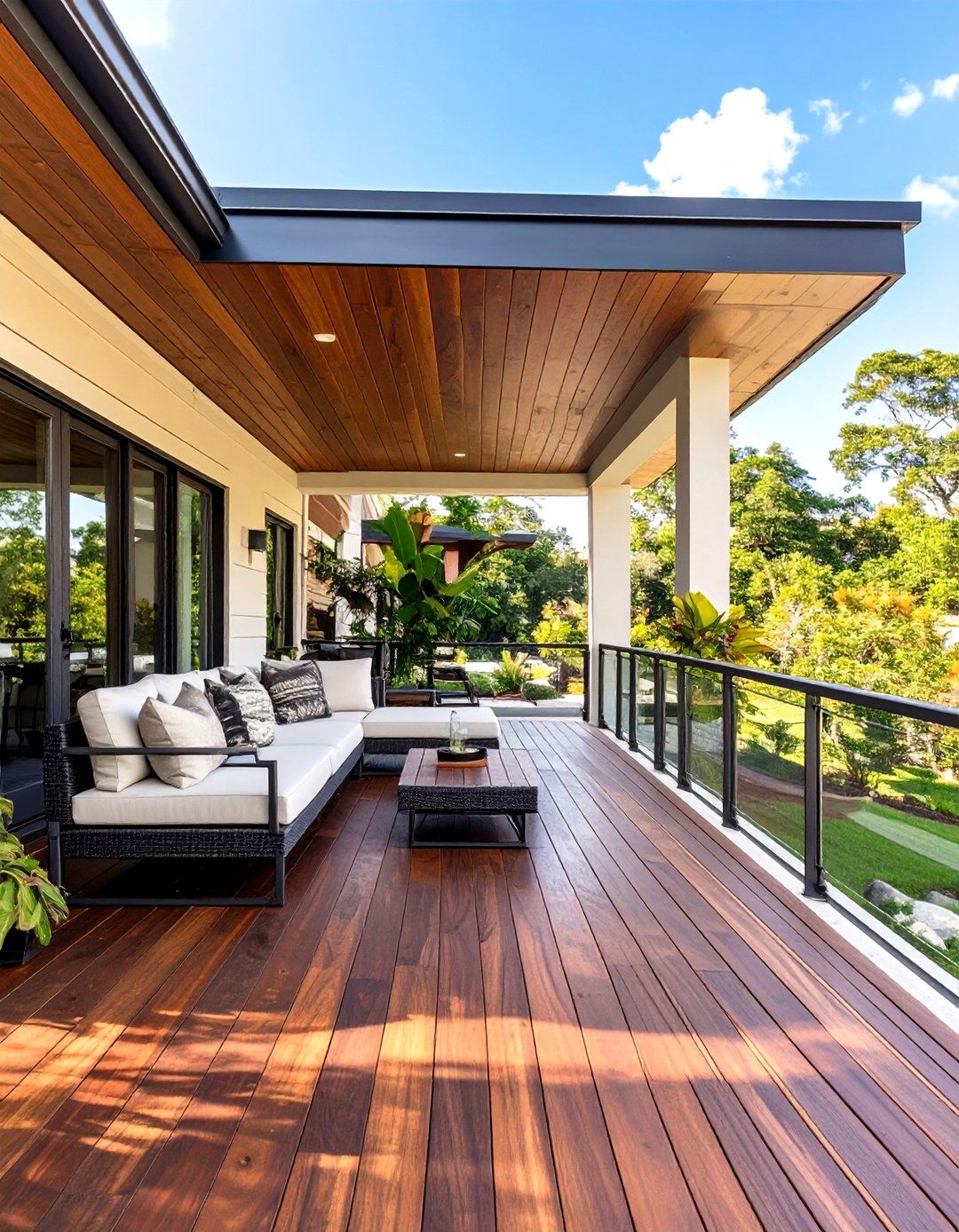
Ipe, a Brazilian hardwood, is a fantastic choice for a luxurious and incredibly durable front porch. Known for its remarkable density and strength, ipe wood is naturally resistant to rot, insects, and even fire, ensuring your porch will last for decades with minimal maintenance. Its rich, deep brown color adds an element of elegance and sophistication to any home's exterior. Over time, ipe will weather to a beautiful silver-gray patina if left untreated, or you can maintain its original dark hue with a yearly application of a specialized hardwood oil. The smooth, consistent grain of ipe provides a sleek and high-end finish.
5. Horizontal Wood Slat Railing
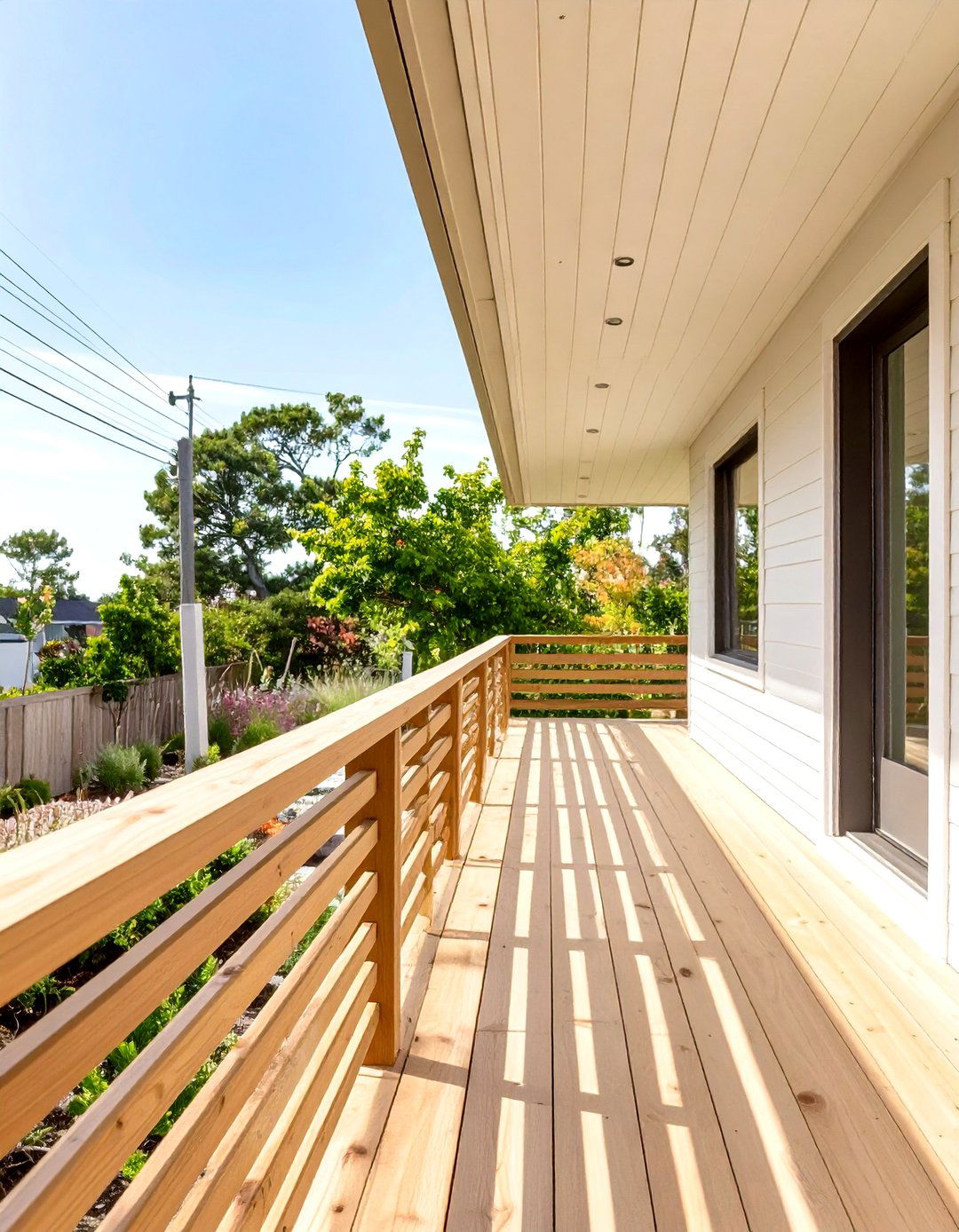
A horizontal wood slat railing offers a clean, modern alternative to traditional vertical balusters. This design features parallel wooden boards installed horizontally, creating long, uninterrupted lines that enhance the sense of space and openness on your porch. It's a versatile style that complements various architectural designs, from mid-century modern to contemporary coastal homes. You can use weather-resistant woods like cedar or redwood and choose to either stain them to match your porch floor or paint them a contrasting color. This minimalist railing design not only ensures safety but also adds a significant element of modern architectural style.
6. Painted Wood Porch Floorboards
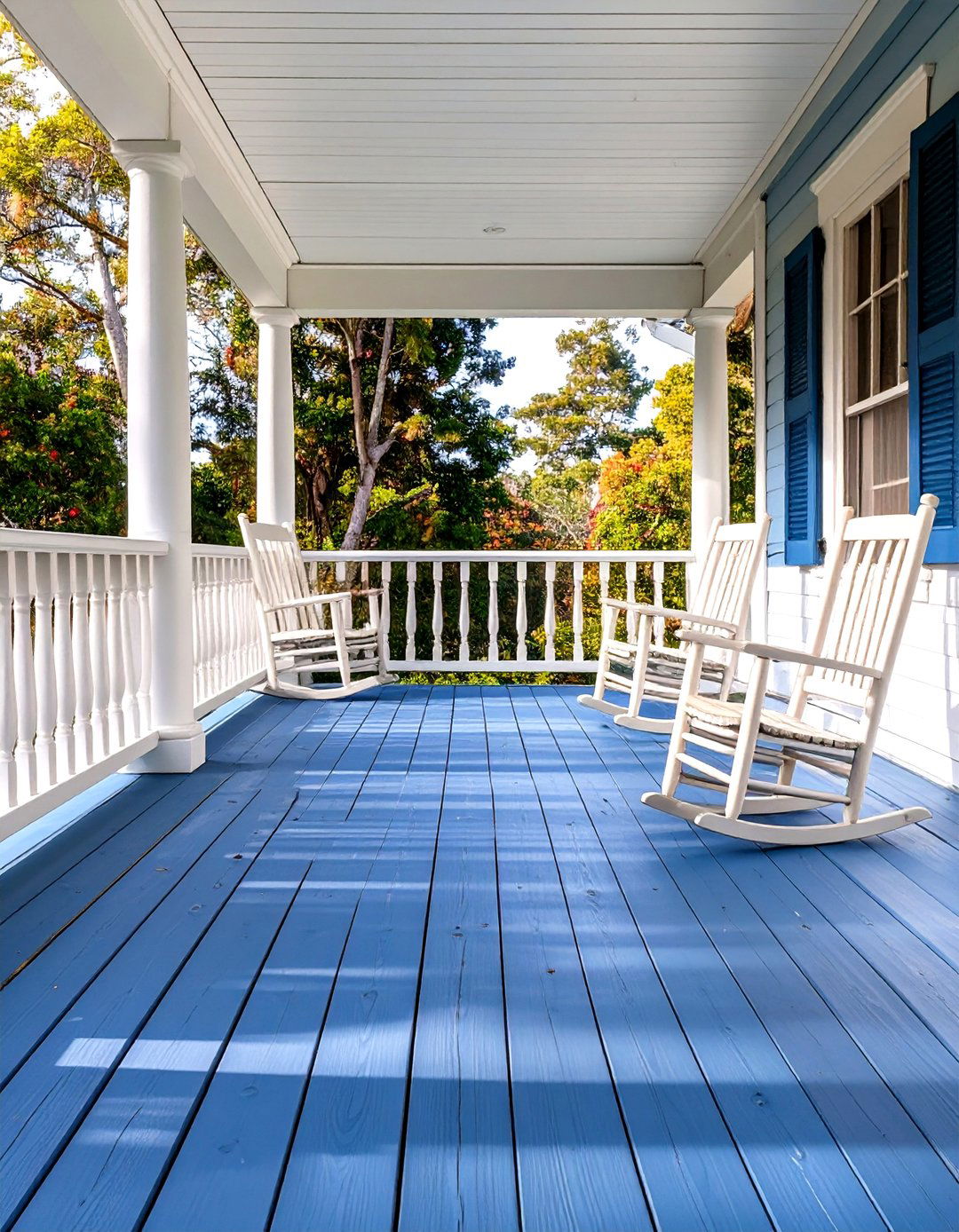
Painting your wood porch floorboards is a classic and cost-effective way to add personality and charm to your home’s entrance. A fresh coat of paint can instantly revive an old, weathered porch and provide a protective layer against the elements. Traditional colors like slate blue, light gray, or classic white can create a timeless, welcoming feel. For a more playful look, consider a checkered pattern or a bold, vibrant hue. Using high-quality porch and floor paint is essential to ensure durability and resistance to foot traffic, moisture, and temperature changes, keeping your porch looking beautiful season after season.
7. Chunky Timber Porch Columns
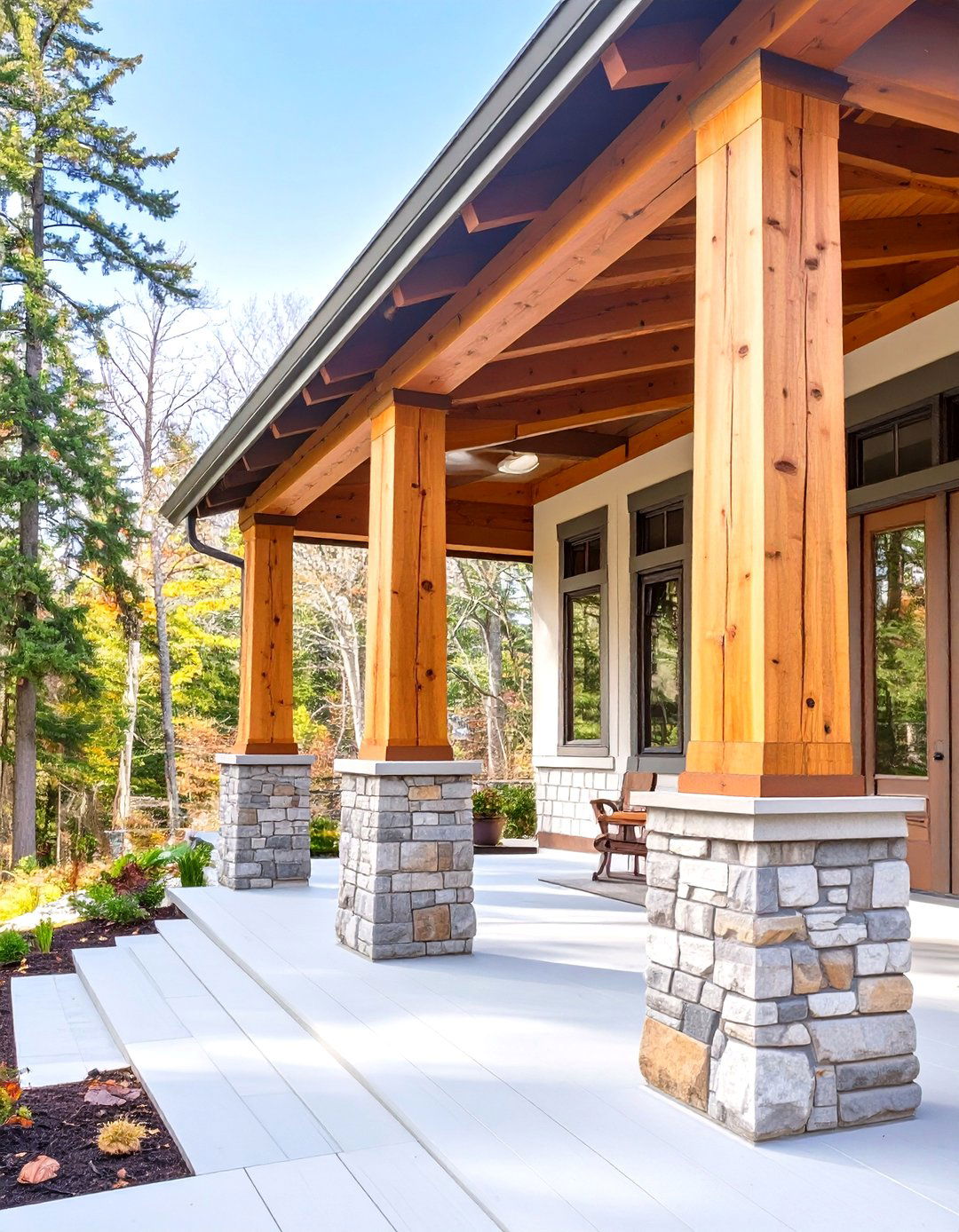
Swapping out standard posts for chunky timber columns can dramatically transform the look and feel of your front porch. These substantial wooden supports add a sense of strength, stability, and rustic grandeur. Whether you opt for rough-hewn logs for a cabin-like feel or smooth, squared-off beams for a more refined craftsman look, these columns make a powerful architectural statement. They can be left in their natural wood tone, stained to match other wooden elements, or painted to complement your home's exterior. These robust columns anchor the porch visually and contribute to a welcoming and impressive entryway.
8. Arched Wood Porch Beams
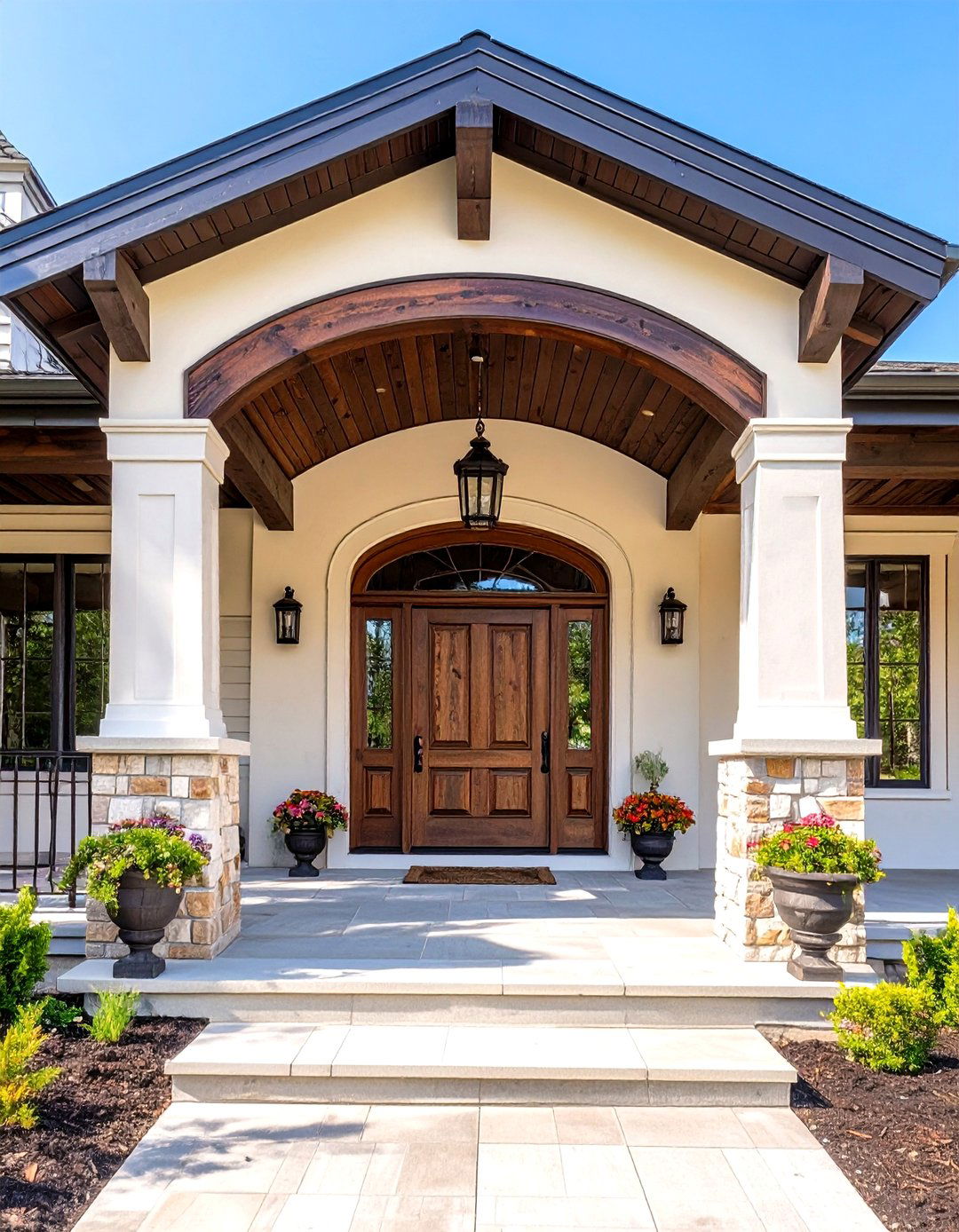
Incorporating arched wood beams into your porch design adds an element of grace and architectural elegance. The gentle curve of the arch softens the straight lines of the roof and posts, creating a more dynamic and visually interesting entrance. This feature works particularly well with traditional, Tudor, or European-style homes. Craftsman-style porches also benefit from the handcrafted appeal of curved beams. You can use solid timber or laminated wood to create the arch, staining it to highlight the natural grain or painting it to match your home's trim. This sophisticated detail elevates the overall design of your porch.
9. Wood Porch Swing with A-Frame
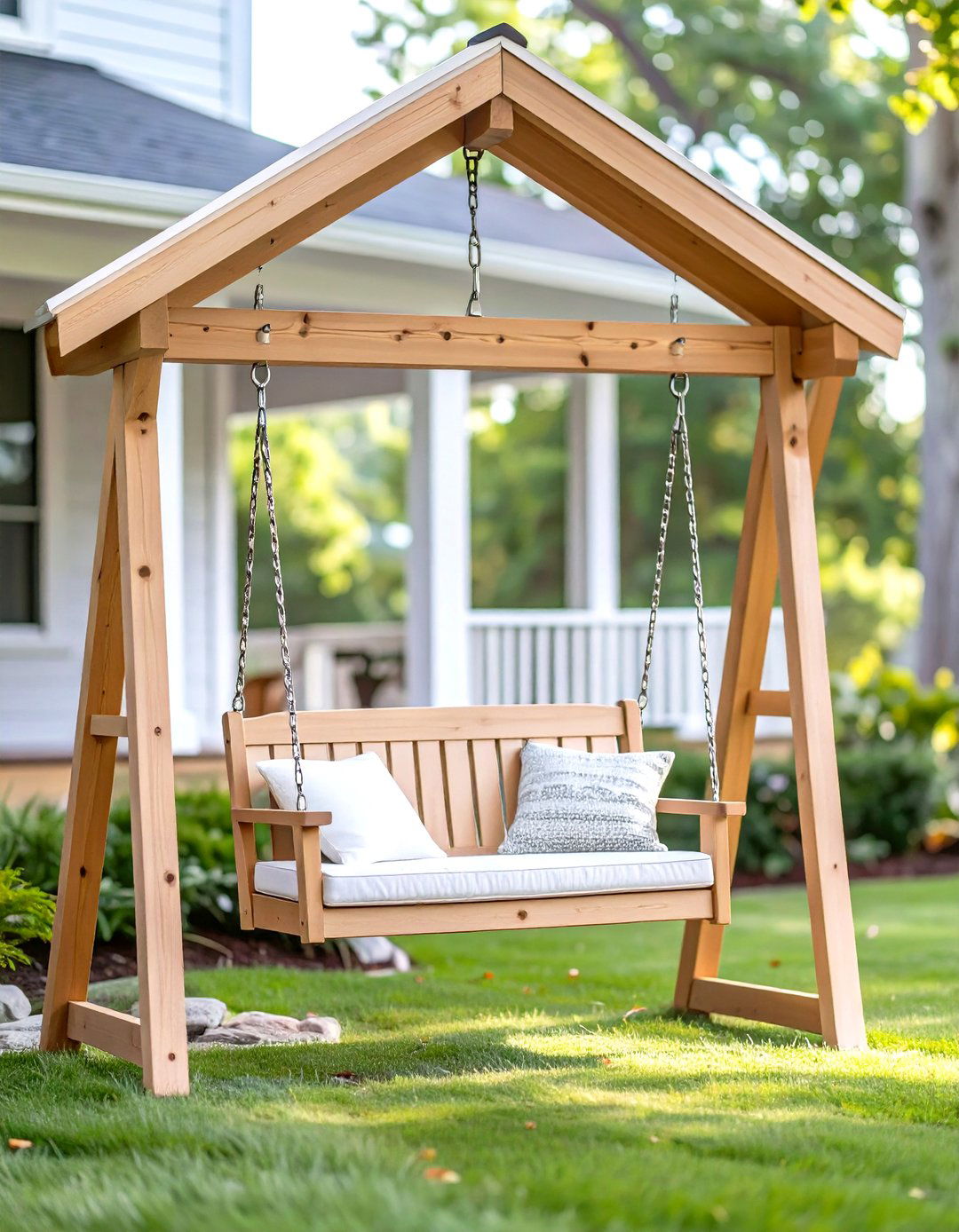
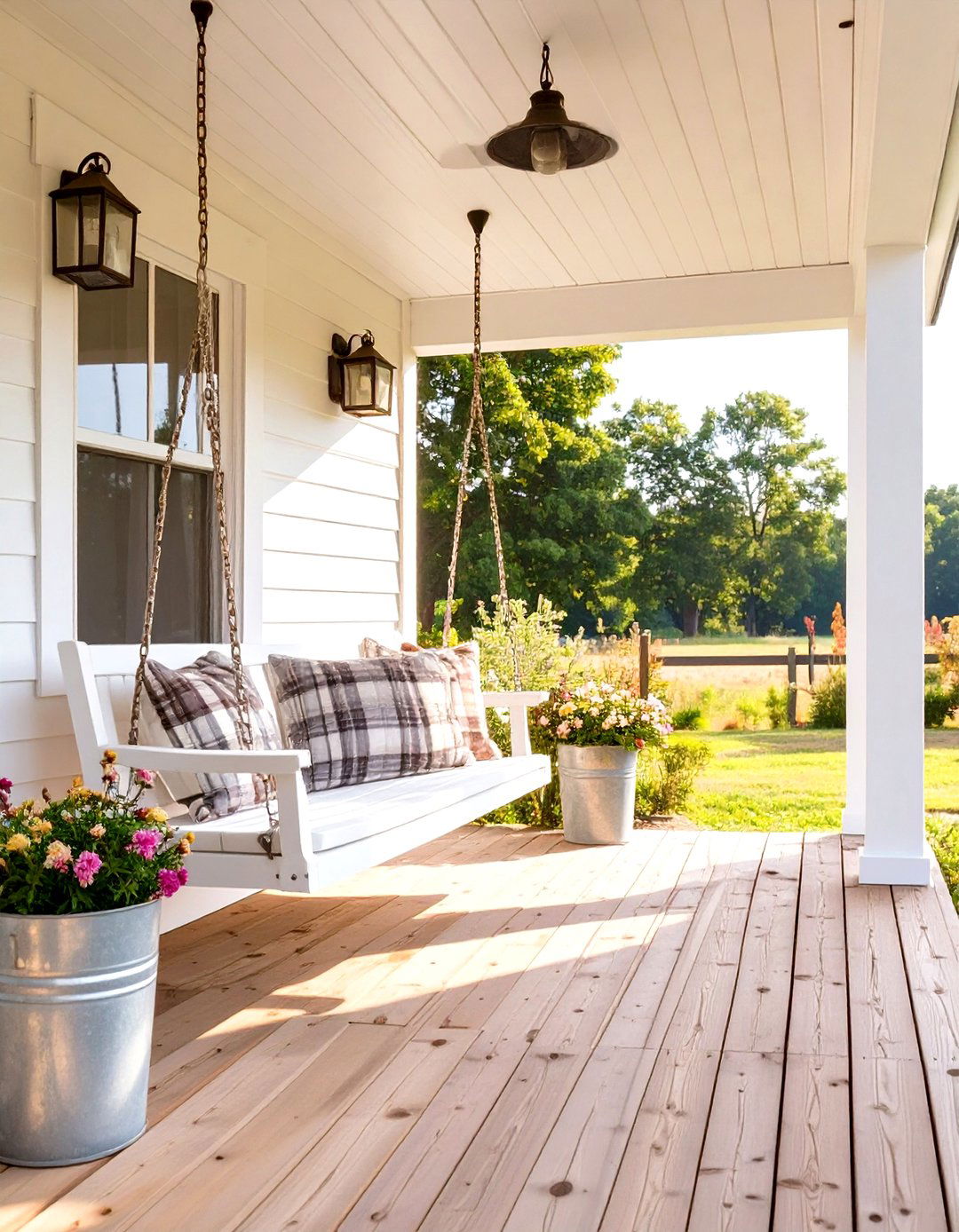
A classic wood porch swing suspended from a sturdy A-frame is the quintessential symbol of a welcoming and relaxed home. This standalone feature allows you to enjoy the gentle motion of a swing without needing to attach it to the porch ceiling, offering more flexibility in placement. The A-frame itself can be a beautiful wooden structure, crafted from cedar or pressure-treated pine for durability. Choose a swing design that complements your home's style, from a simple bench to a more ornate, high-backed model. This addition creates a perfect nook for reading, chatting, or simply enjoying the outdoors.
10. Built-In Wood Porch Benches
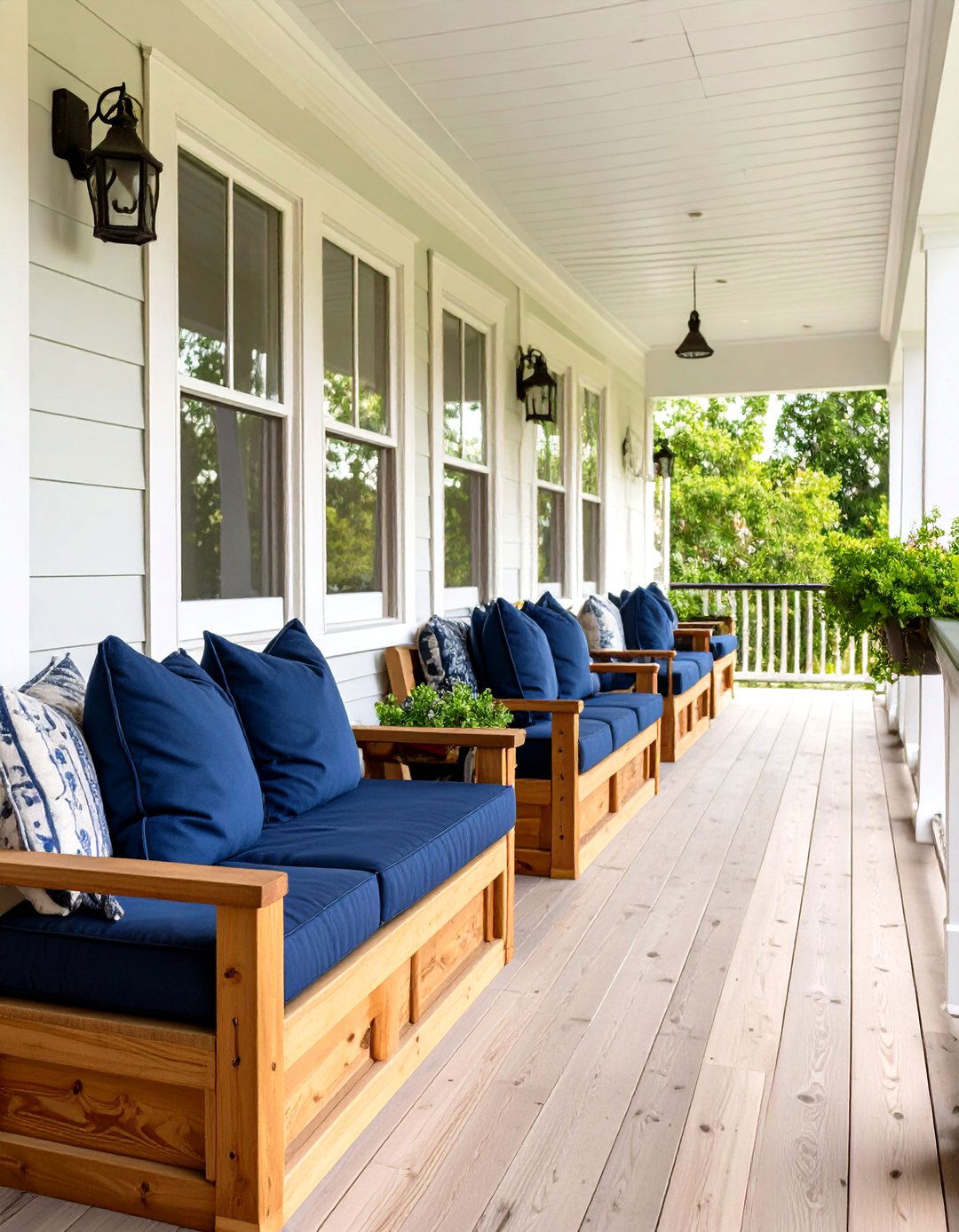
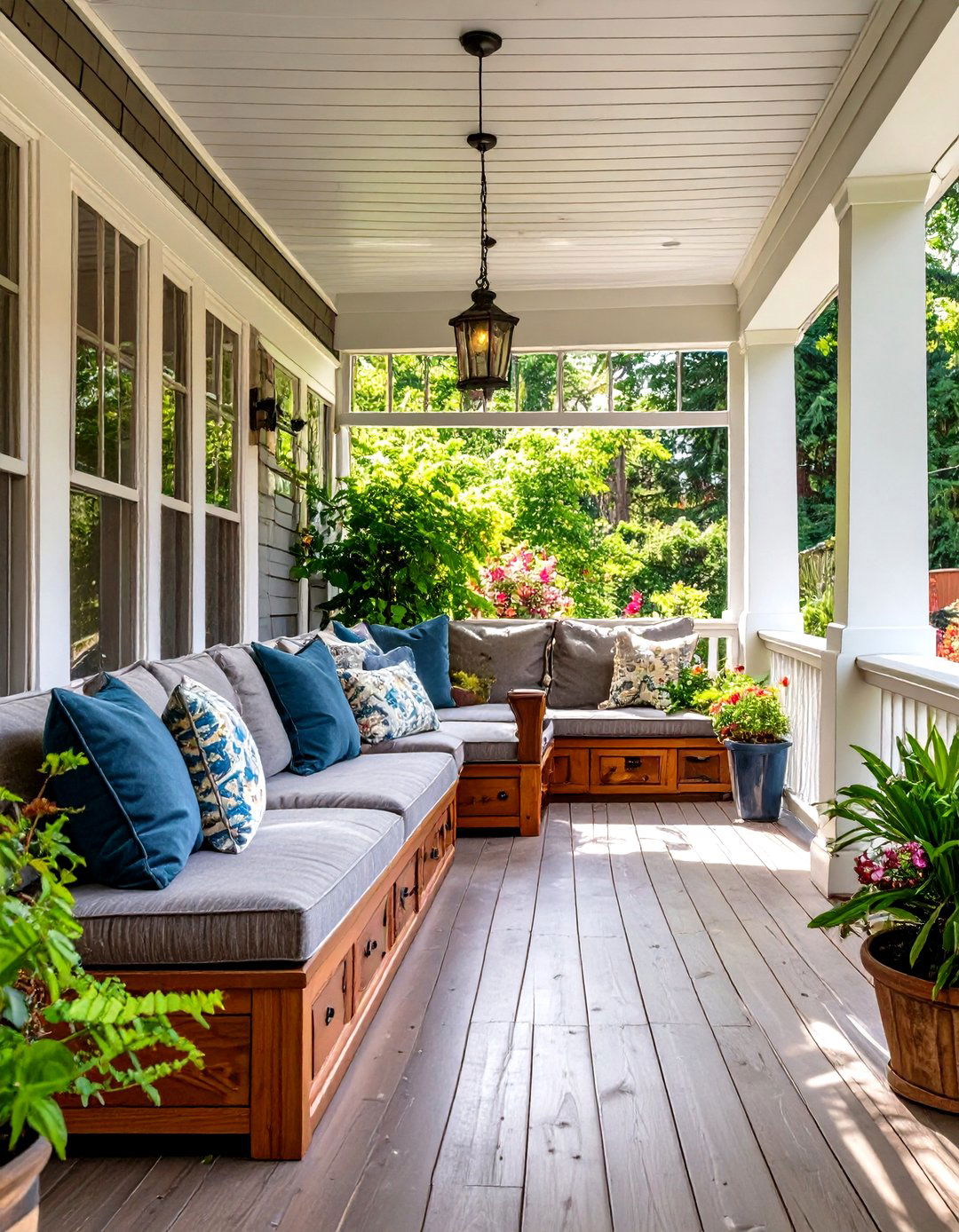
Maximize your seating and create a clean, integrated look with built-in wood benches on your front porch. This space-saving solution provides permanent seating without the clutter of individual chairs, making your porch feel more open and organized. Built-in benches can be constructed along the edge of the porch or tucked into a corner, often incorporating hidden storage underneath for cushions or outdoor supplies. Using the same wood and finish as your porch floor or railings ensures a cohesive design. Add some comfortable outdoor cushions to make these functional benches an inviting spot for neighbors and family to gather.
11. Tongue-and-Groove Wood Porch Ceiling
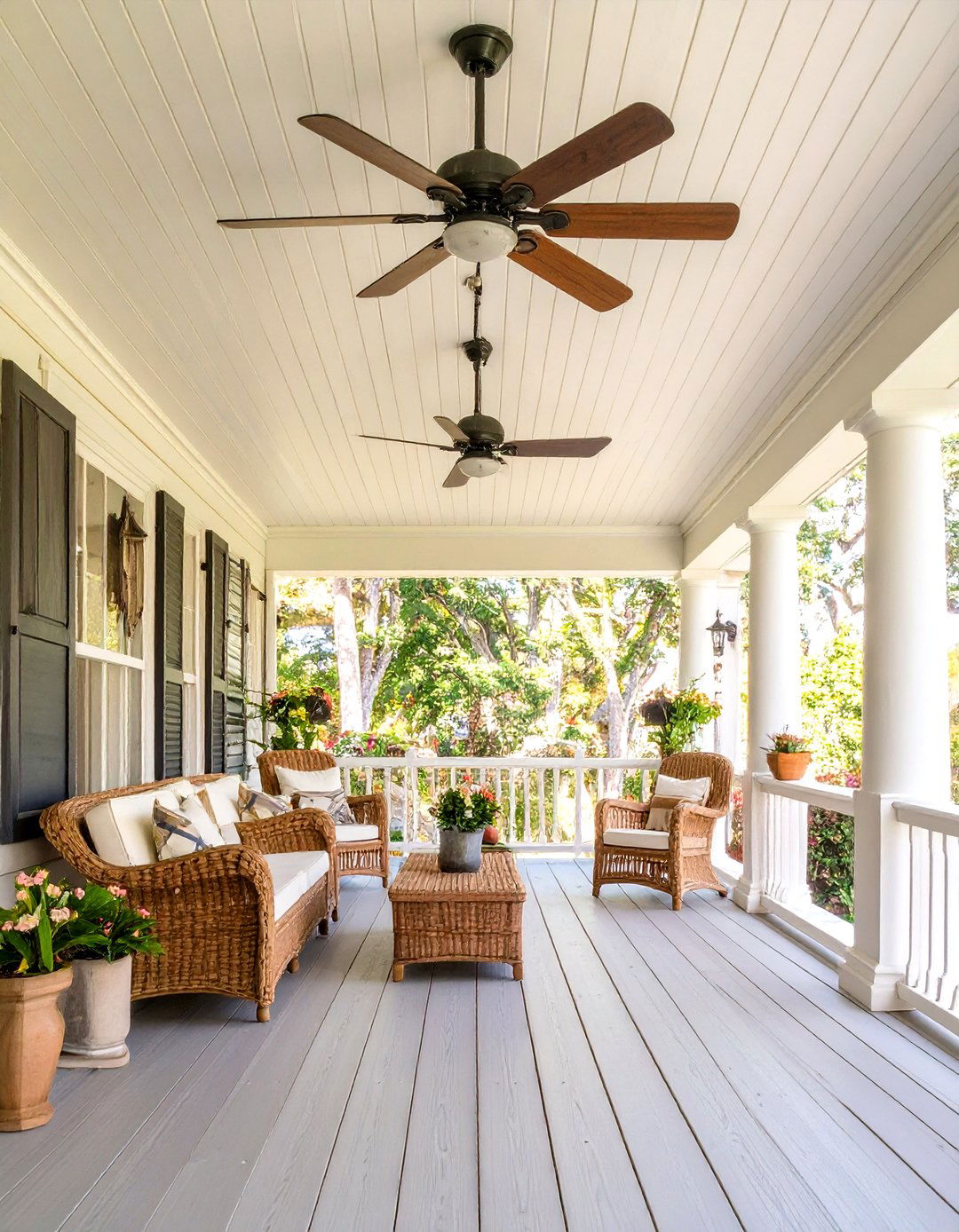
A tongue-and-groove wood ceiling brings a warm, finished look to the overhead space of your front porch. This style of paneling, where each board fits snugly into the next, creates a smooth and continuous surface that conceals the underlying roof structure. Often painted a light, airy color like "haint blue" in the Southern tradition to ward off spirits and insects, it can also be stained to showcase the natural beauty of woods like pine or fir. This classic ceiling treatment adds a layer of texture and craftsmanship, making the porch feel like a true outdoor room rather than just an entryway.
12. Diagonal Wood Decking Pattern
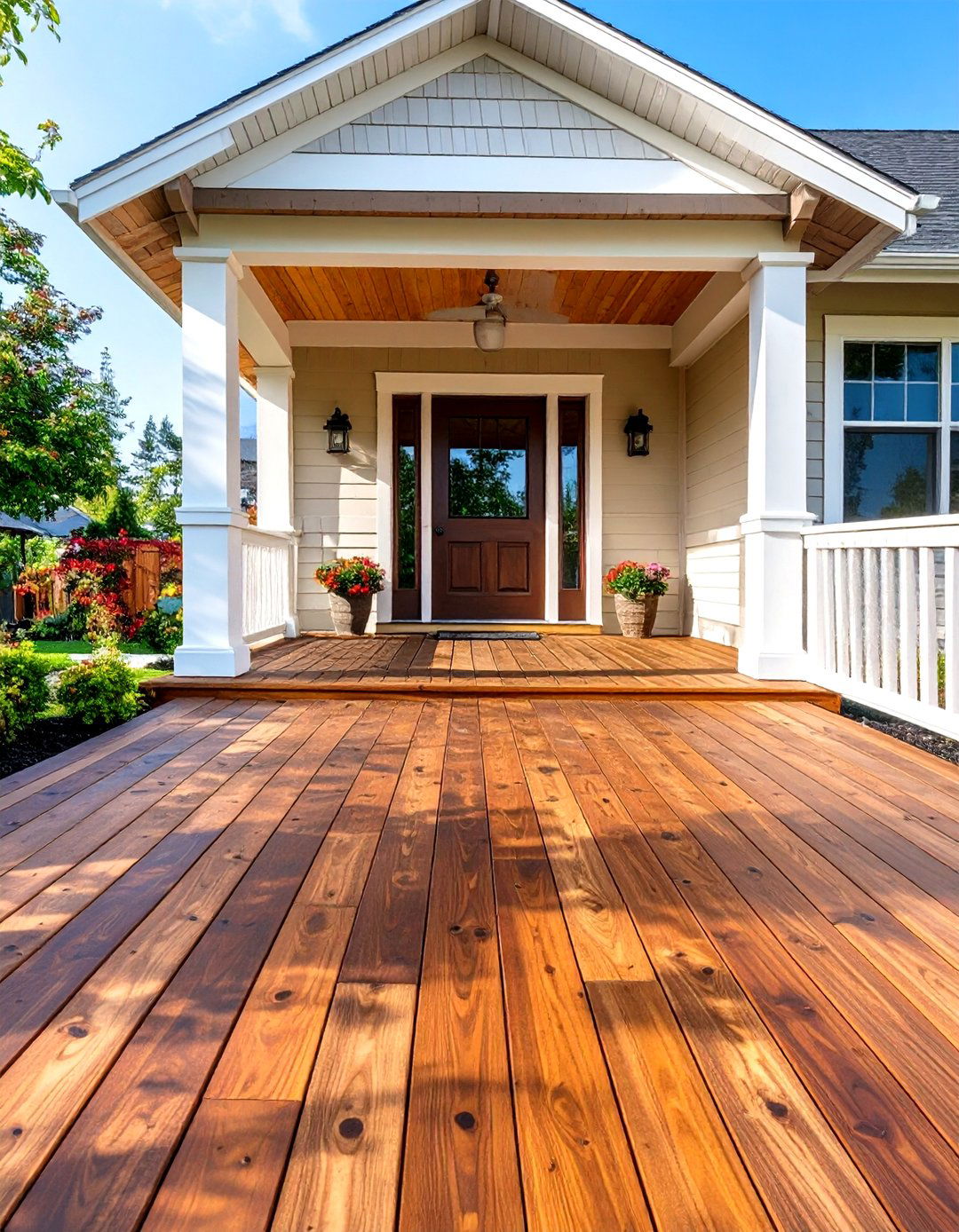
Laying your wood porch decking in a diagonal pattern is a simple yet effective way to add visual interest and a custom feel to your entrance. Instead of traditional horizontal or vertical planks, the boards are installed at a 45-degree angle to the house. This design technique can make a smaller porch appear wider and more dynamic. It creates leading lines that draw the eye toward the front door, enhancing the sense of welcome. While it requires more precise cuts and slightly more material, the result is a unique and sophisticated look that sets your porch apart from standard designs.
13. Wood Pergola Over the Porch
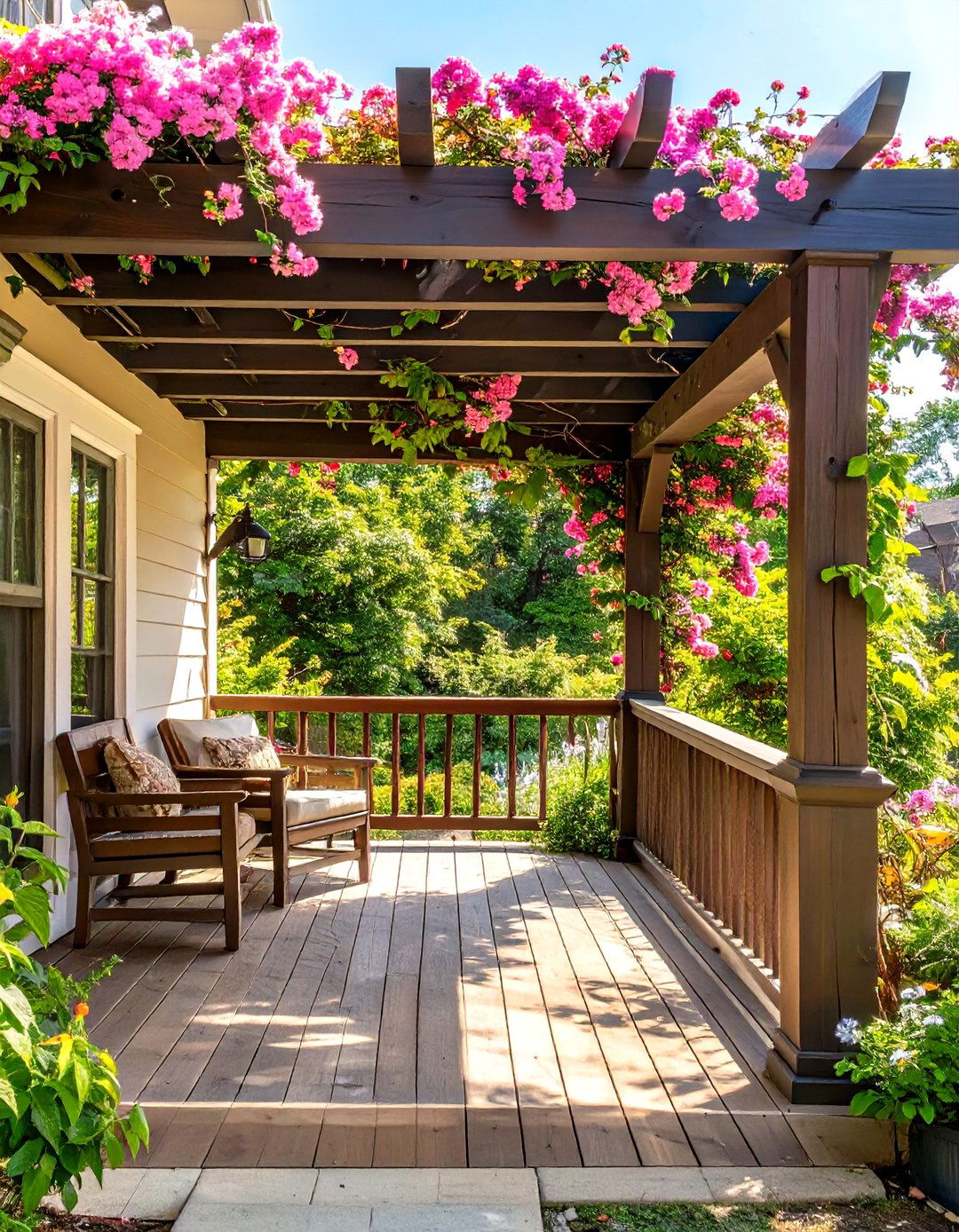
Adding a wood pergola over your front porch introduces an element of architectural definition and provides partial shade. A pergola can extend from the house to cover the entire porch or a specific seating area, creating the feeling of an outdoor room. Its open-rafter design allows sunlight to filter through while still offering protection from the harshest rays. You can grow climbing plants like wisteria or clematis up the posts and across the top for a touch of natural beauty and extra shade. A wood pergola, whether rustic or modern in style, adds dimension and character to your home's facade.
14. Wraparound Wood Porch Design
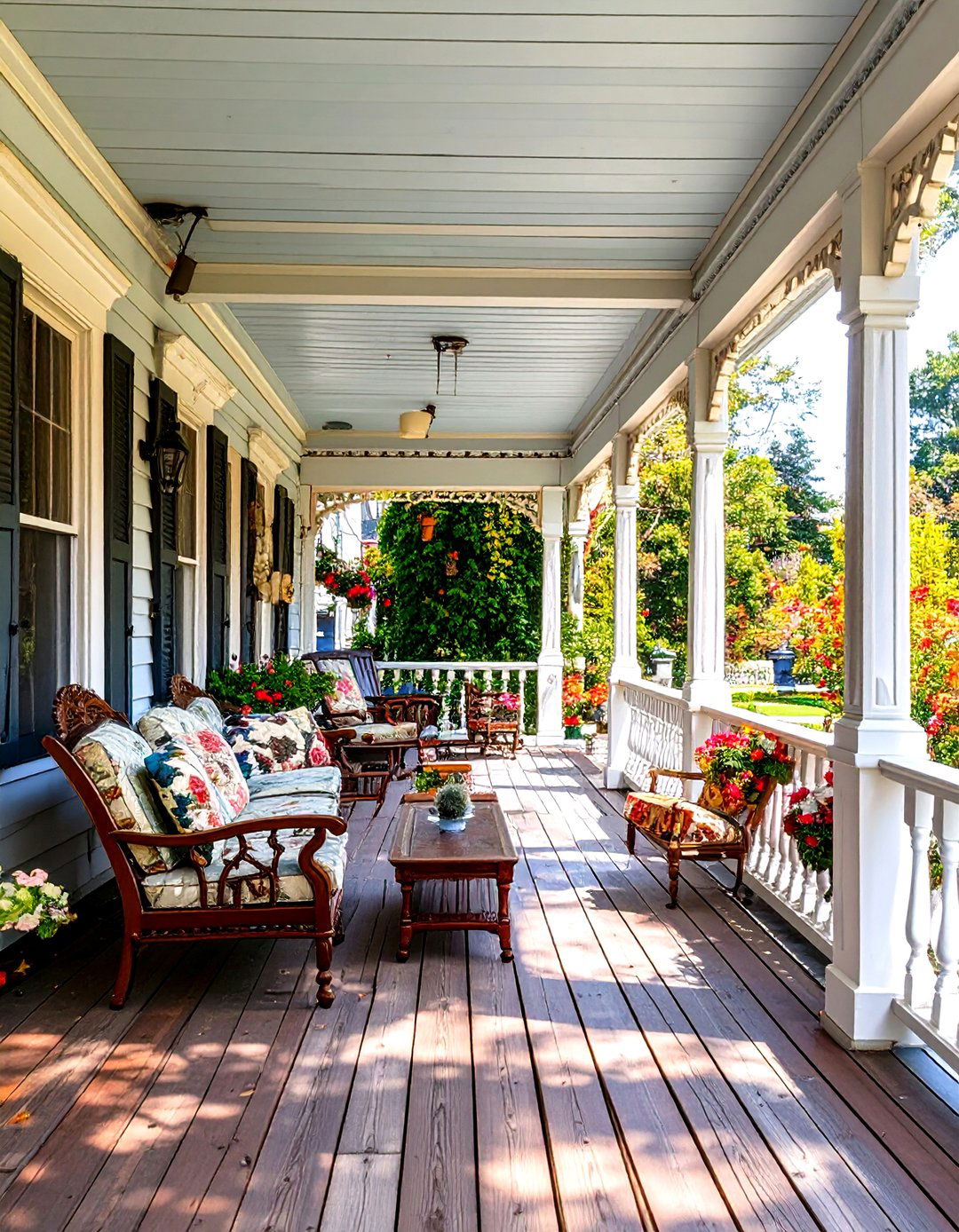
A wraparound wood porch is a classic feature that maximizes outdoor living space and adds immense charm to a home. Extending along at least two sides of the house, it offers multiple zones for seating, dining, and relaxation, with different views and levels of sun exposure throughout the day. The continuous flow of the wood decking and railing creates a grand, unified look that enhances the home's architectural lines. This expansive design is perfect for hosting gatherings or simply enjoying a quiet moment from various vantage points. It’s a timeless addition that embodies a welcoming, leisurely lifestyle.

15. Wood Lattice Privacy Screen
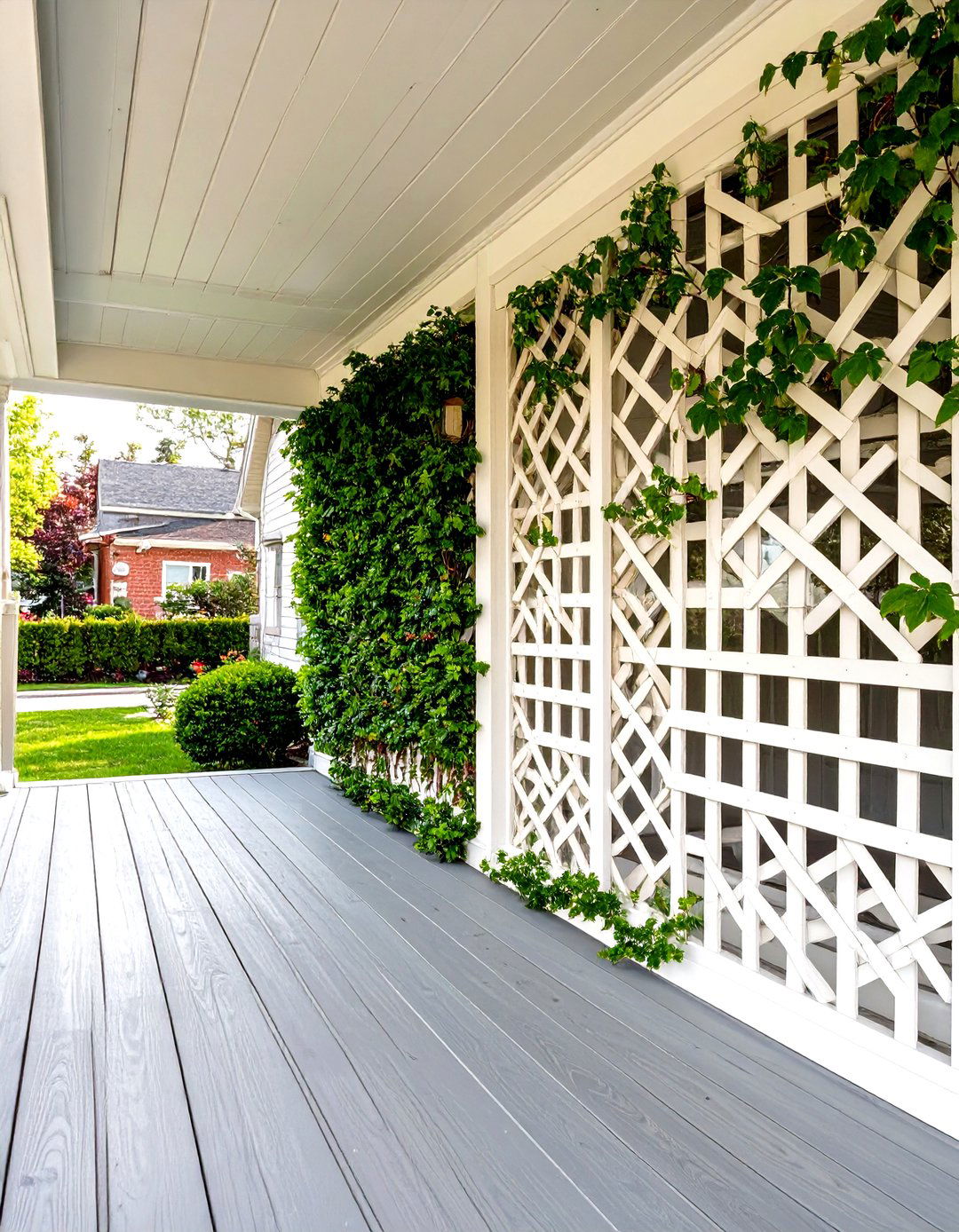
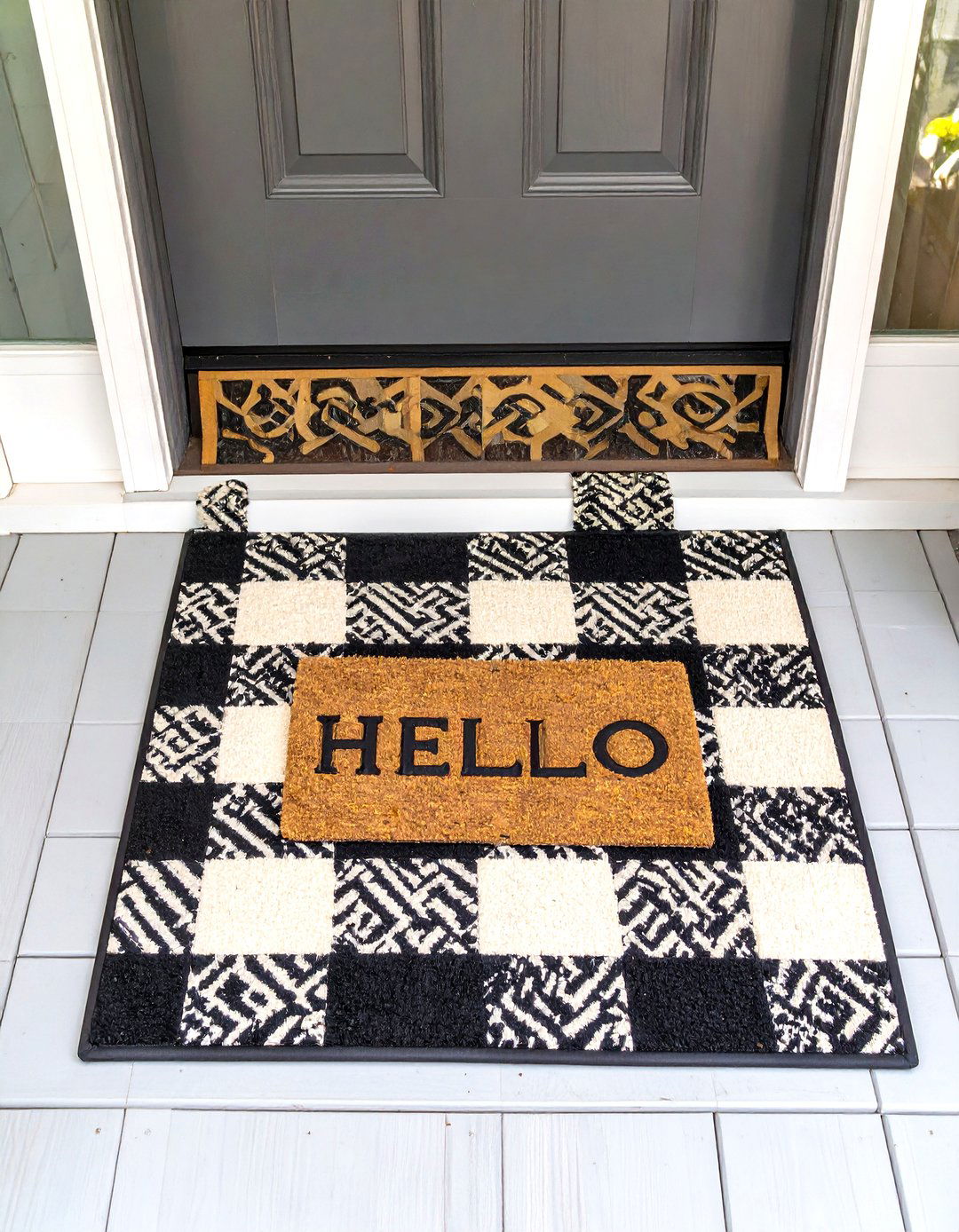
For porches that are close to neighbors or the street, a wood lattice privacy screen offers an elegant solution. This feature provides a sense of seclusion without completely blocking light or airflow. The crisscross pattern of the lattice adds a decorative, garden-like element to the porch. You can install it as a full wall on one side or as smaller panels integrated into the railing design. Grow climbing vines through the lattice to create a living wall of greenery for enhanced privacy and natural beauty. It's a functional and attractive way to make your porch feel like a more intimate retreat.
16. Contrasting Wood Stain on Steps and Deck
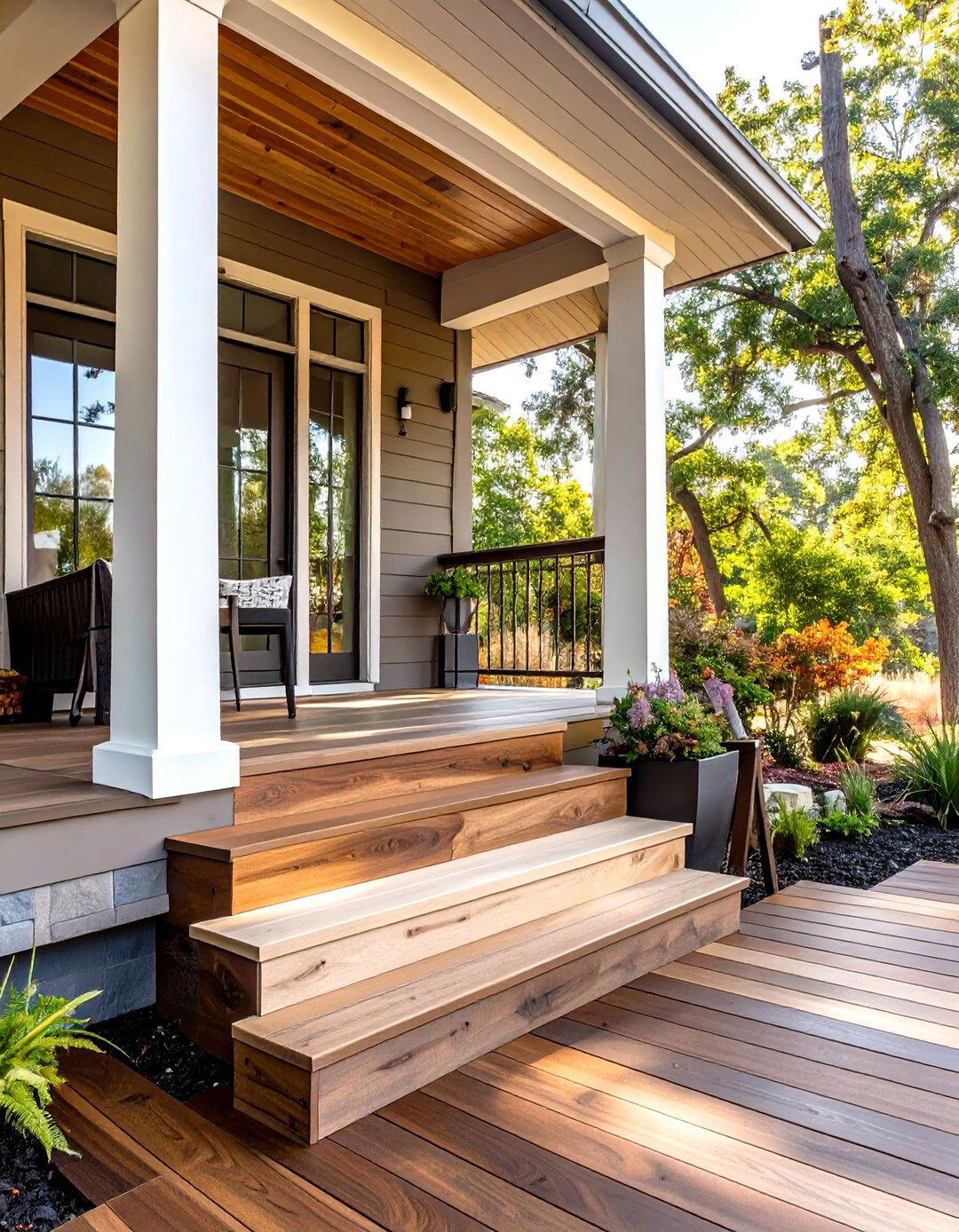
Creating a visual distinction between your porch steps and the main deck area using contrasting wood stains adds depth and a custom-designed feel. For instance, you could use a dark, rich stain for the decking and a lighter, natural tone for the stair treads and risers. This technique not only enhances safety by making the steps more visible but also breaks up the monotony of a single color. It's a subtle yet impactful way to highlight the different levels of your porch and add a layer of design sophistication without introducing new materials or complex construction.
17. Douglas Fir Beaded Porch Ceiling
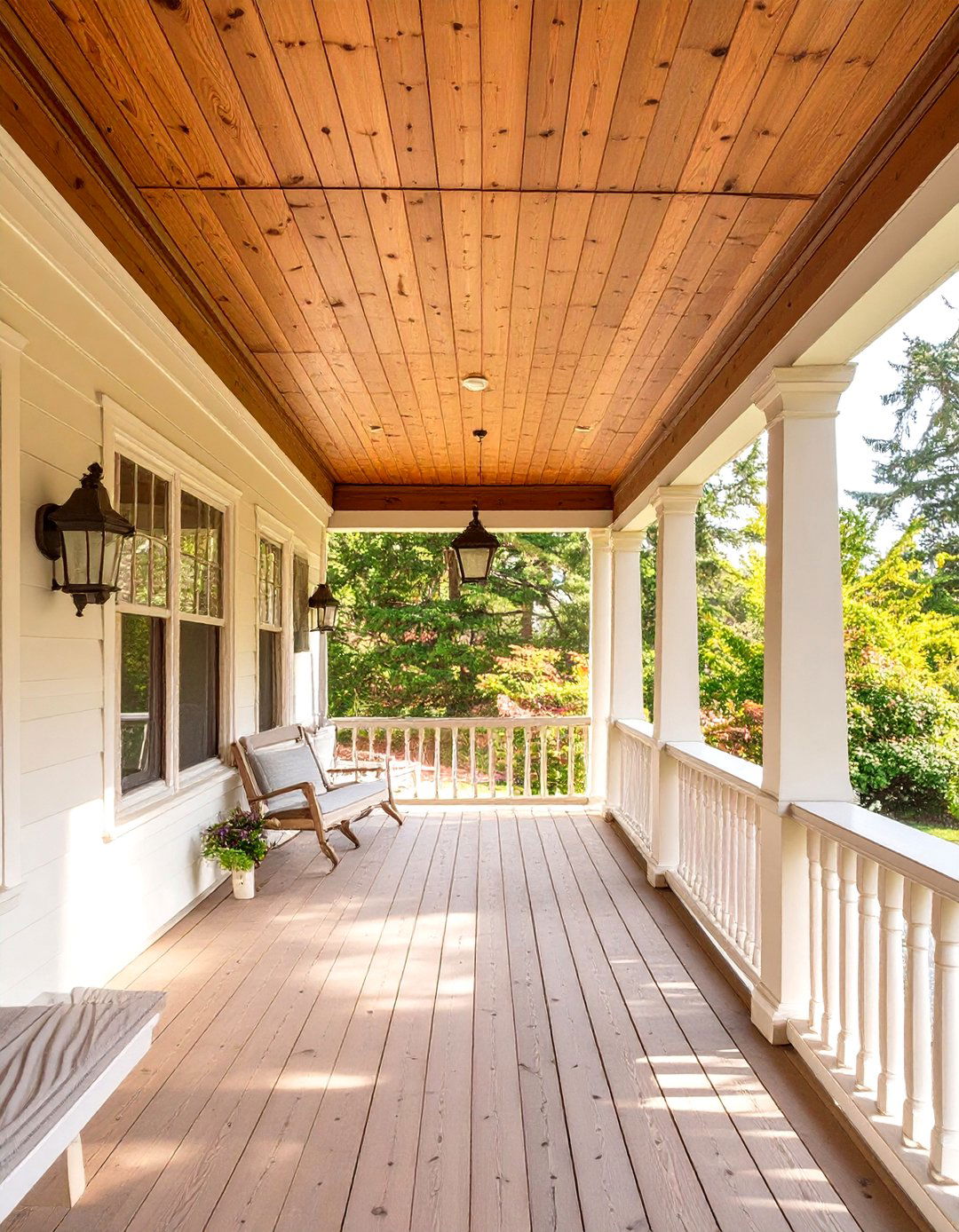
A beaded ceiling made from Douglas fir brings a touch of vintage charm and refined texture to your front porch. Beaded boards feature a small, rounded edge (the "bead") milled into one side, which creates delicate, decorative lines when the panels are joined together. Douglas fir is a strong and stable wood with a beautiful, straight grain and warm, reddish-brown tones that deepen over time. This classic ceiling style is reminiscent of historic homes and adds a layer of subtle elegance. Painting it a soft, traditional color or leaving it natural both result in a timeless and polished finish.
18. Wood Porch with a Gable Roof
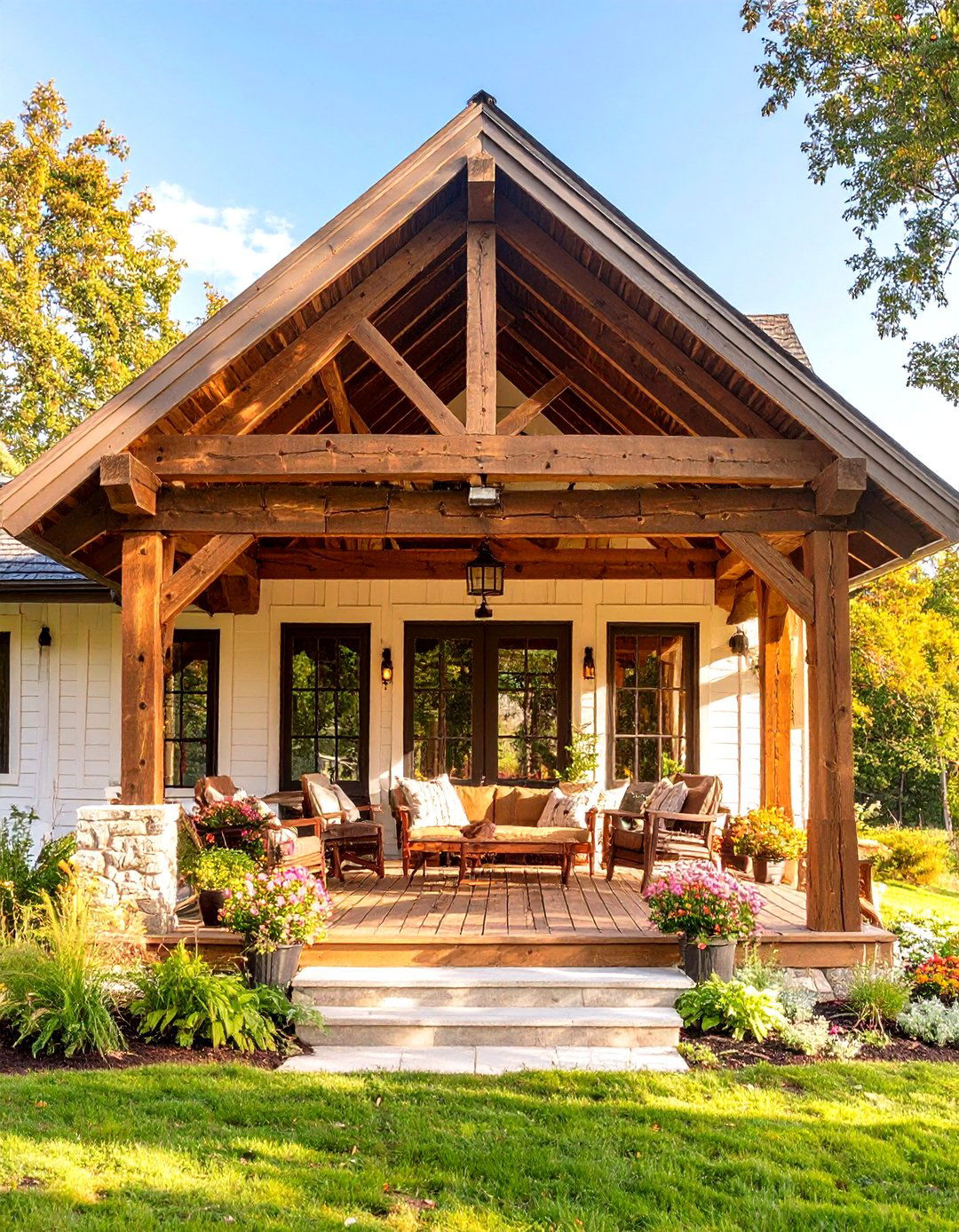
A front porch with a gable roof, supported by wood posts and beams, creates a prominent and stately entrance. The triangular shape of the gable draws the eye upward and adds a strong architectural focal point to your home's facade. The interior of the gable can feature exposed wood trusses or a tongue-and-groove wood ceiling, further enhancing the natural, rustic appeal. This design not only provides excellent protection from the elements but also adds a sense of grandeur. It works especially well for craftsman, farmhouse, or traditional style homes, defining the entryway with classic and enduring style.
19. Pressure-Treated Pine Decking
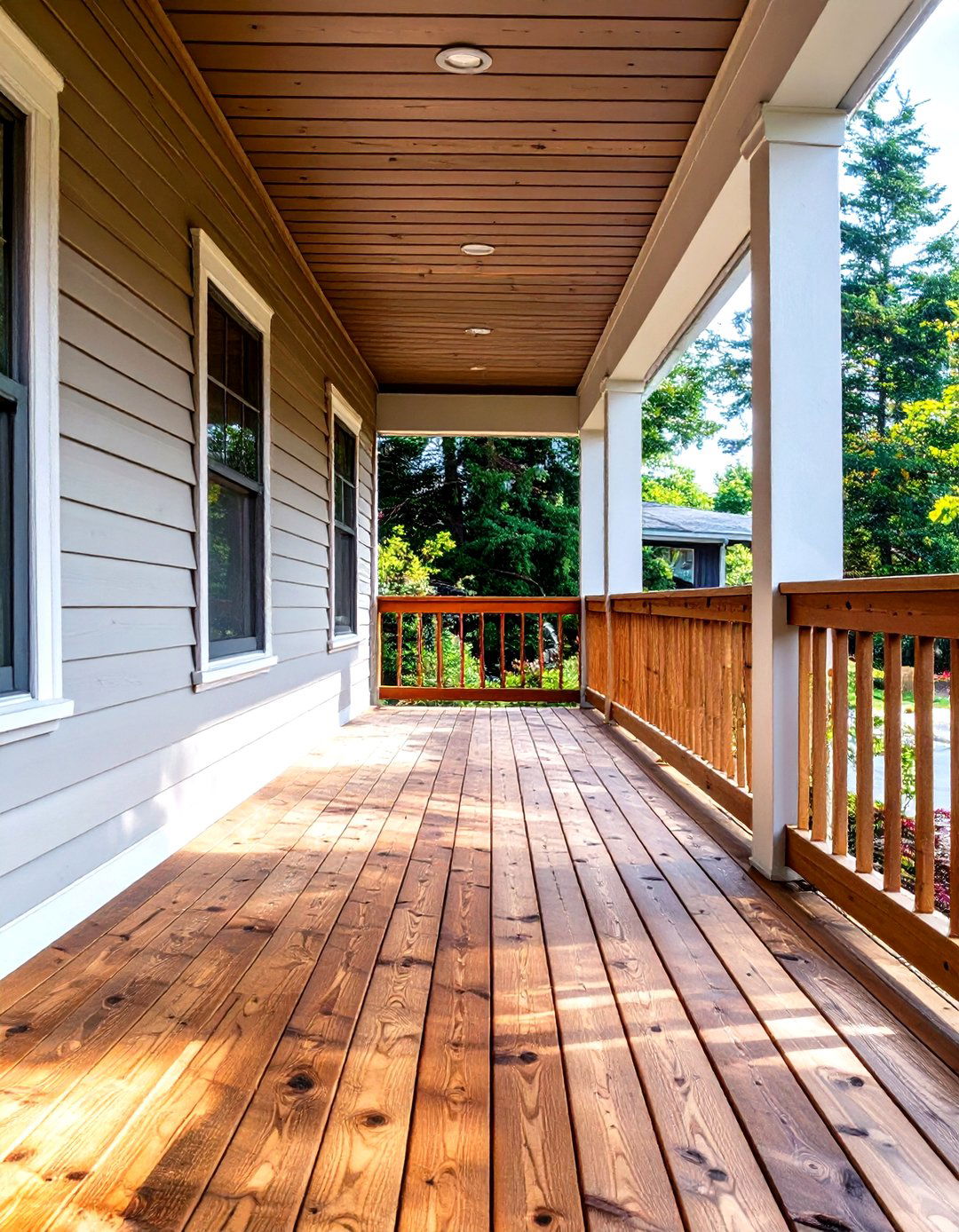
Pressure-treated pine is one of the most popular and budget-friendly choices for wood porch decking. This wood is chemically treated to resist rot, decay, and insect infestation, making it highly durable for outdoor use. It has a natural, light color that can be easily stained or painted to match any home exterior. While it doesn't have the exotic look of hardwoods, its affordability and longevity make it a practical and reliable option. Proper installation and regular maintenance, including cleaning and sealing every few years, will ensure your pressure-treated pine porch remains a beautiful and functional space for years.
20. Modern Cable Railing with Wood Top Rail
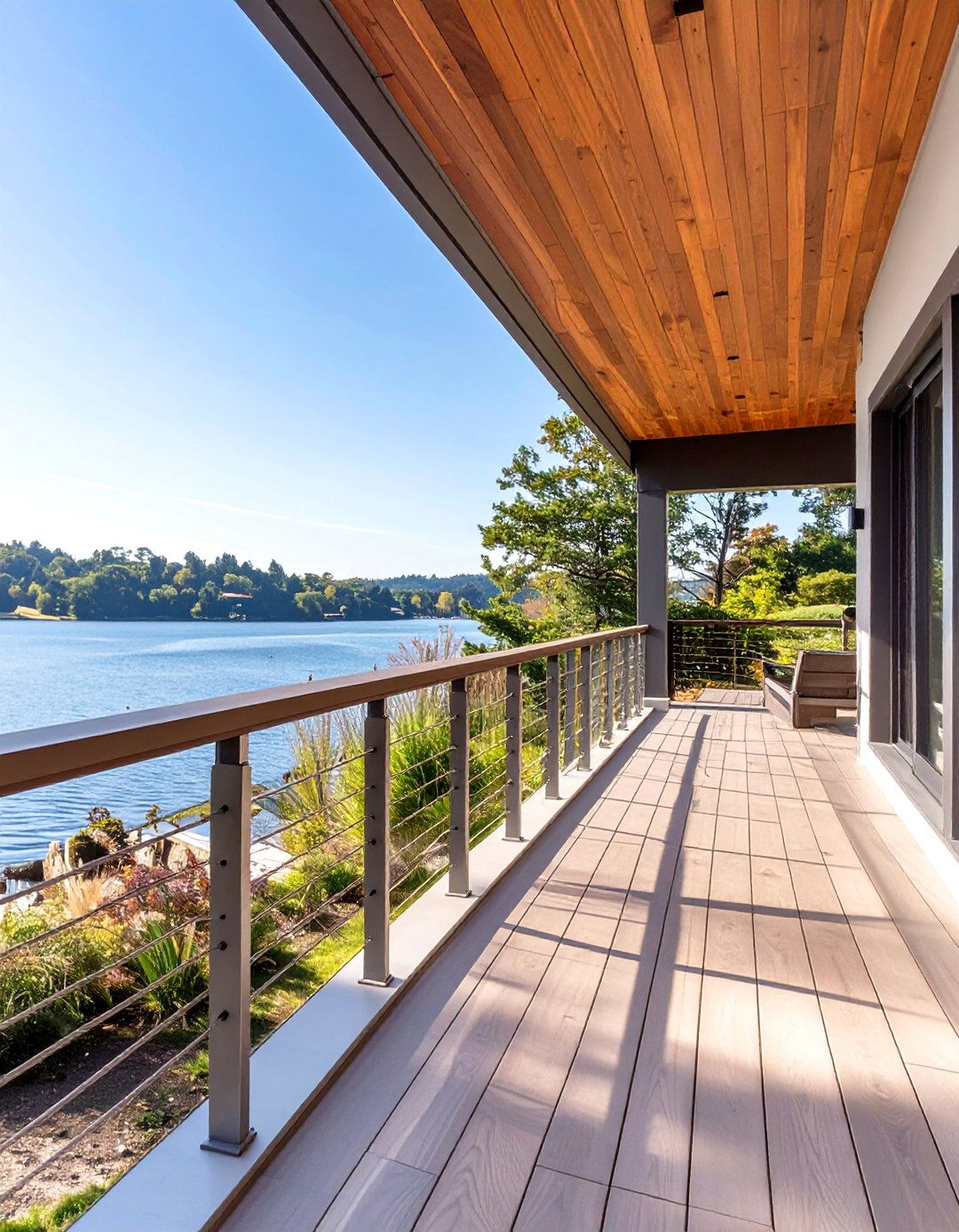
For a sleek, contemporary look that doesn't obstruct the view, combine a cable railing system with a wood top rail. The thin, stainless steel cables provide safety and a minimalist aesthetic, making the porch feel open and airy. Topping the metal posts with a beautiful wood rail, such as ipe, cedar, or teak, adds warmth and a natural touch to the modern design. This blend of materials creates a sophisticated contrast between industrial and organic elements. It's an ideal choice for homes with scenic views, as the transparent nature of the cable infill ensures your landscape remains the star of the show.
21. Rustic Log Porch Railing
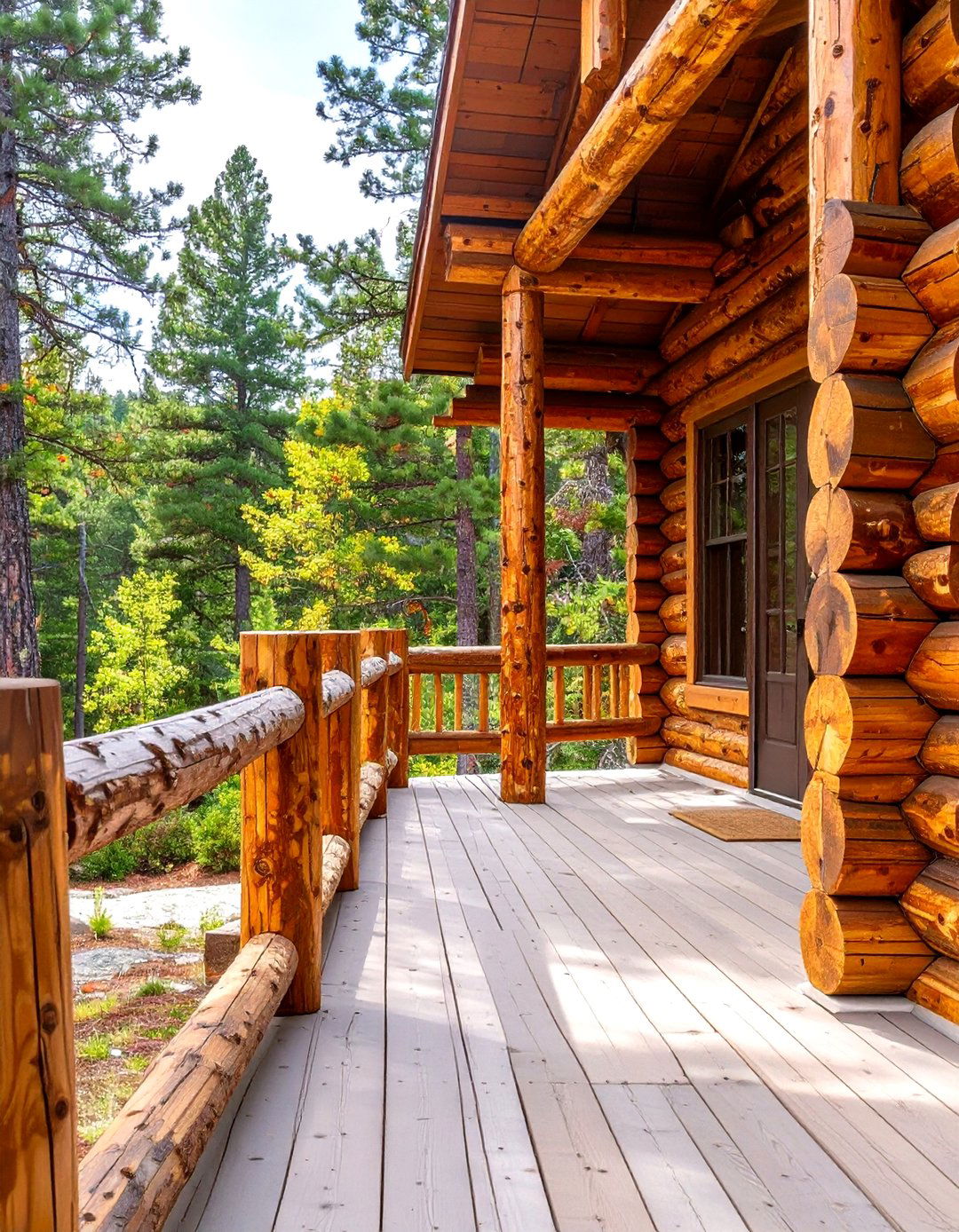
A rustic log porch railing is the perfect choice for a cabin, lodge, or country-style home. Made from whole or half logs, this type of railing brings an authentic, natural element to your porch design. The irregular shapes, knots, and textures of the wood create a rugged and organic look that blends seamlessly with a wooded or rural setting. Woods like cedar or pine are commonly used for their durability and characteristic rustic appearance. This style of railing is not just a safety feature; it's a defining decorative element that contributes to a cozy, back-to-nature atmosphere.
22. White Painted Wood Columns and Railings
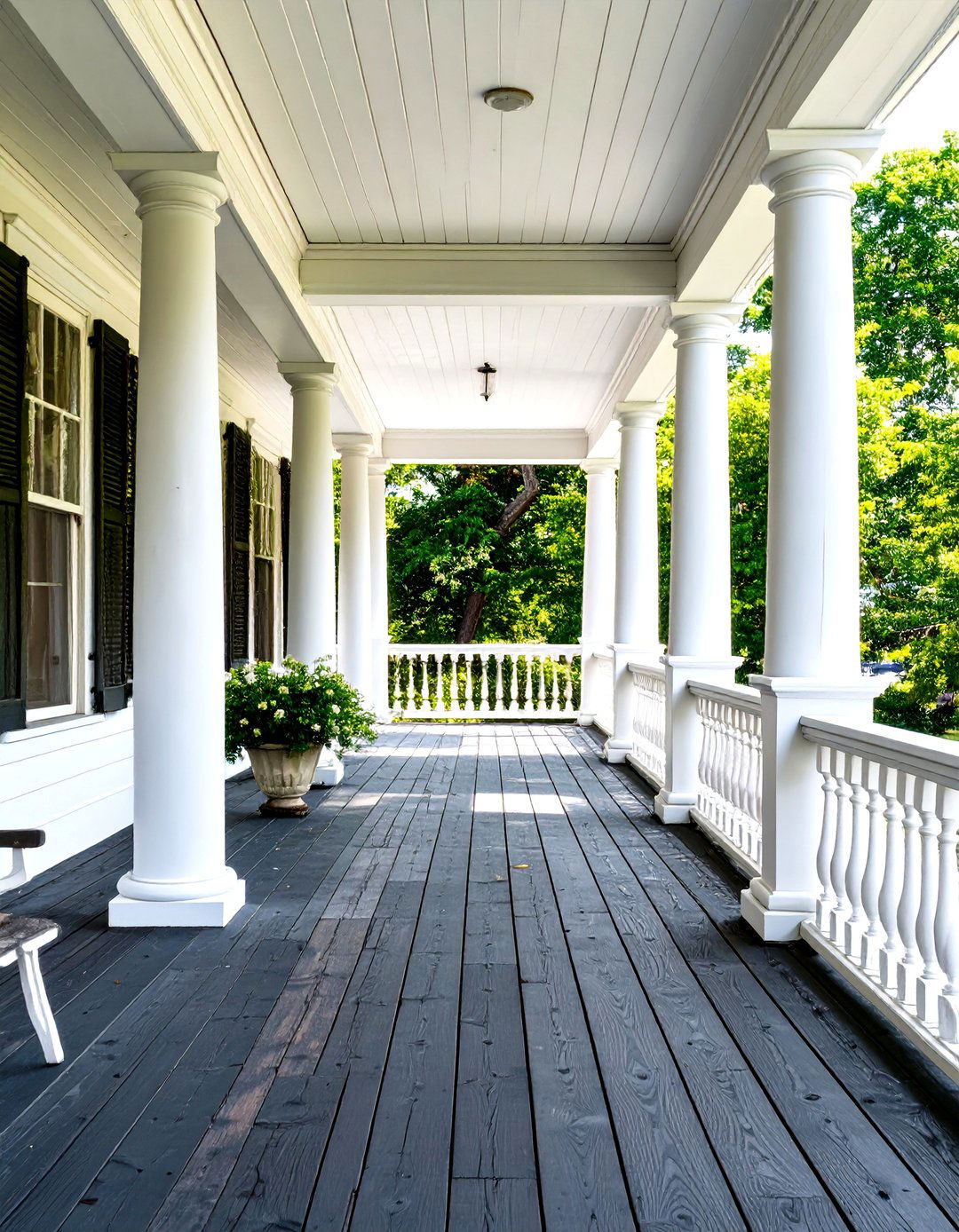
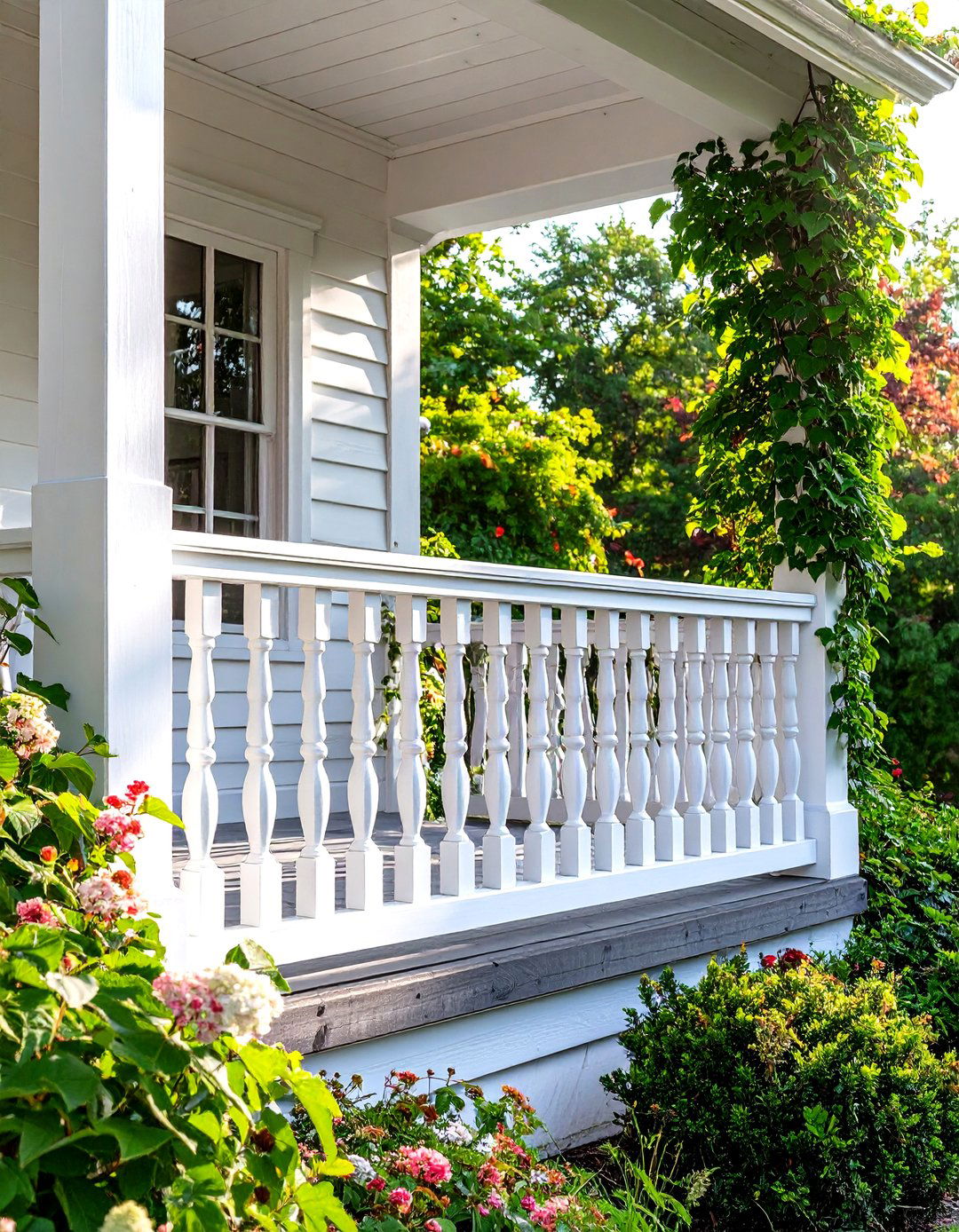
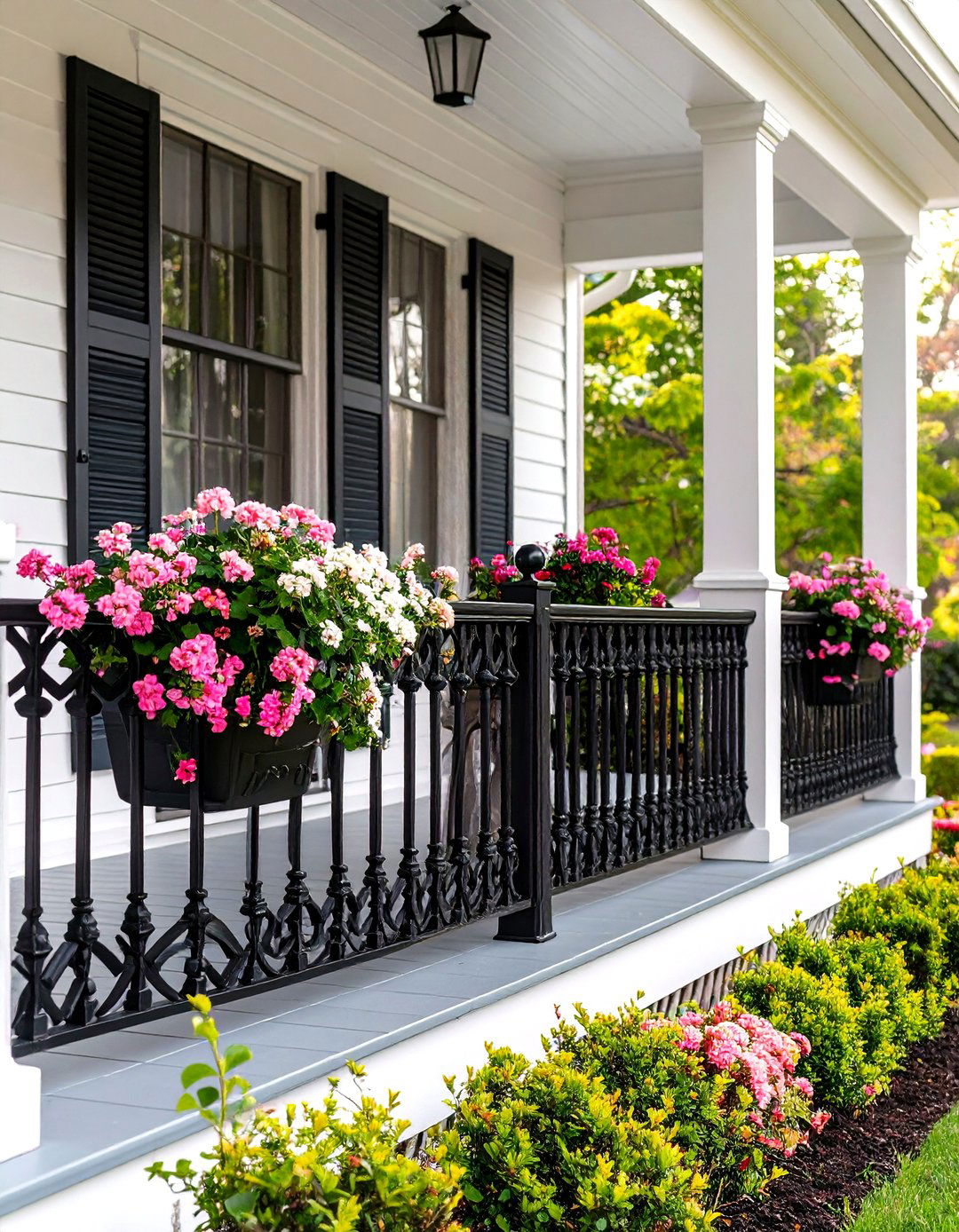
The combination of white painted wood columns and railings creates a crisp, classic, and timeless look for any front porch. This clean aesthetic brightens the entrance and provides a sharp contrast against brick or darker siding, making the architectural details stand out. White paint gives the porch a fresh, inviting feel that complements a wide range of home styles, from colonial to farmhouse and coastal. It also allows you to easily coordinate with window trims and other exterior details for a cohesive look. Regular cleaning and occasional touch-ups will keep your white wood porch looking pristine and elegant.
23. Porch Skirting with Vertical Wood Slats
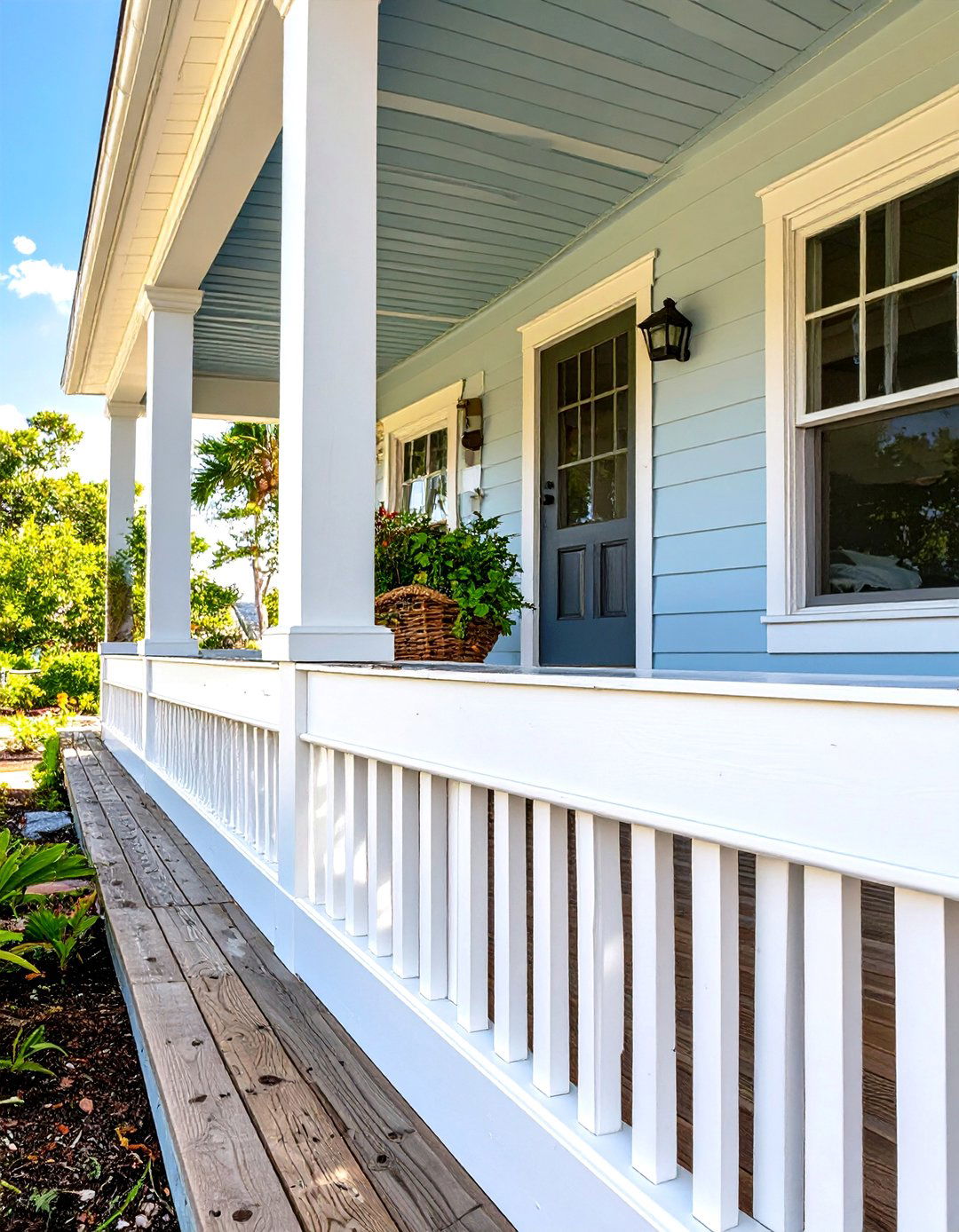
Porch skirting, the material used to enclose the space beneath the porch floor, is crucial for a finished look. Using vertical wood slats for your skirting is a classic and attractive option. This design conceals the foundation and prevents animals from getting underneath while allowing for necessary air circulation to keep the space dry and prevent rot. The clean, vertical lines create a sense of height and order. You can paint the slats to match the porch trim or stain them to coordinate with the decking, ensuring a polished and cohesive appearance from top to bottom.
24. Integrated Wood Planter Boxes
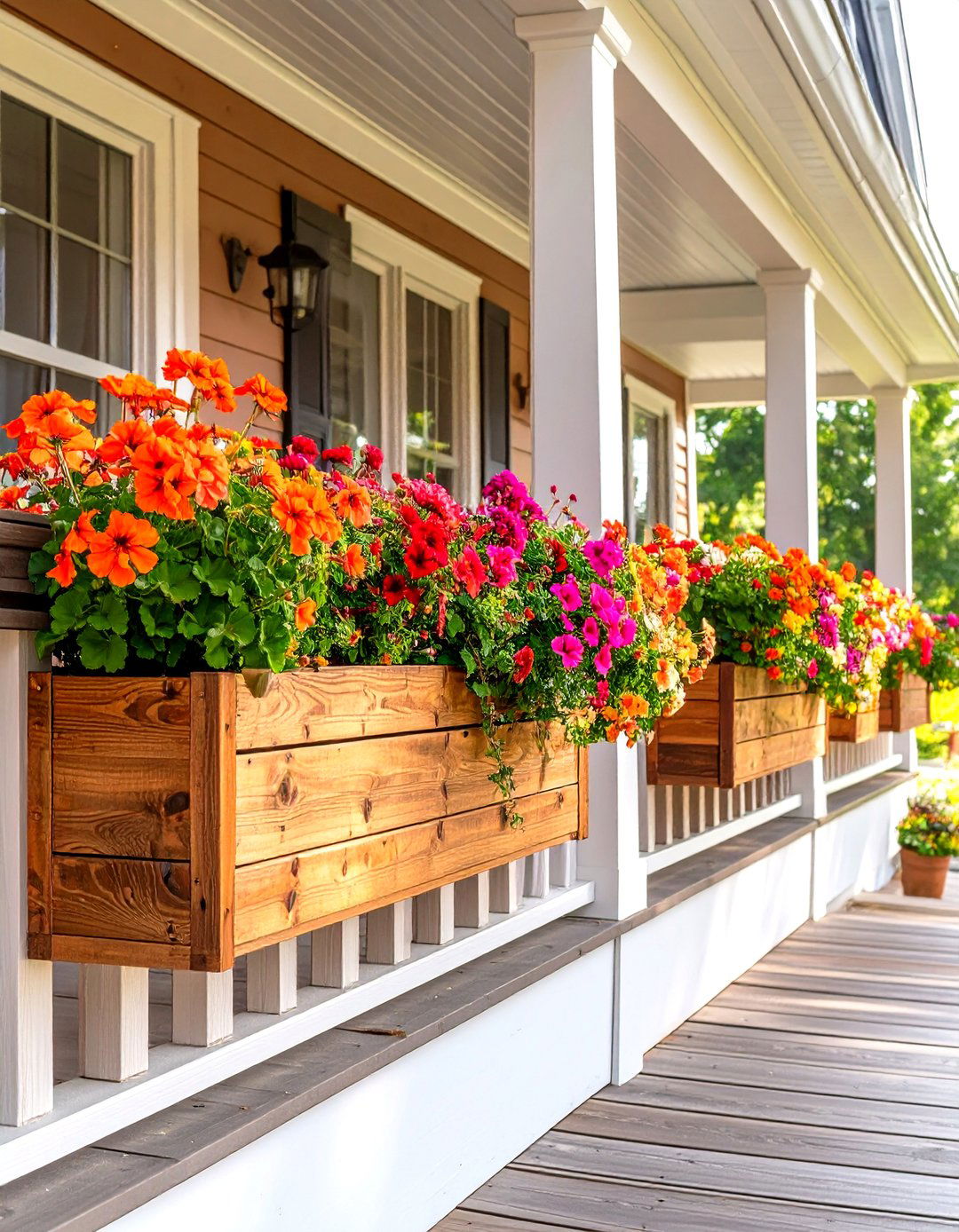
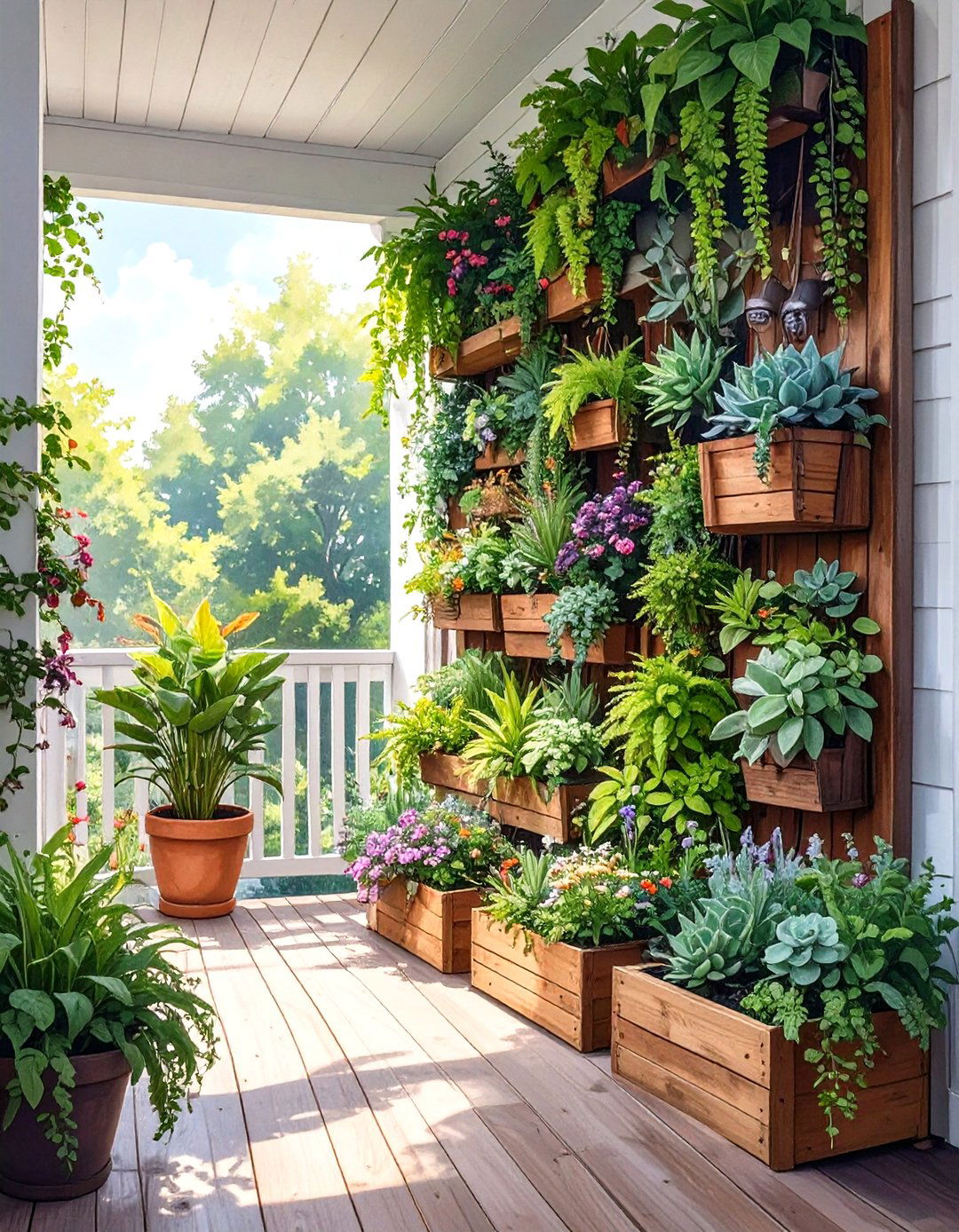
Incorporate greenery directly into your porch structure with integrated wood planter boxes. These can be built into the railing system, set at the base of columns, or designed as standalone features that match the porch decking. Built-in planters create a seamless look and save floor space, allowing you to enjoy flowers and foliage without cluttering the area with pots. They soften the hard lines of the porch and add color and life to the entrance. Using the same wood as the rest of your porch ensures a cohesive design, turning your porch into a beautiful, functional garden space.
25. Tigerwood Porch Decking
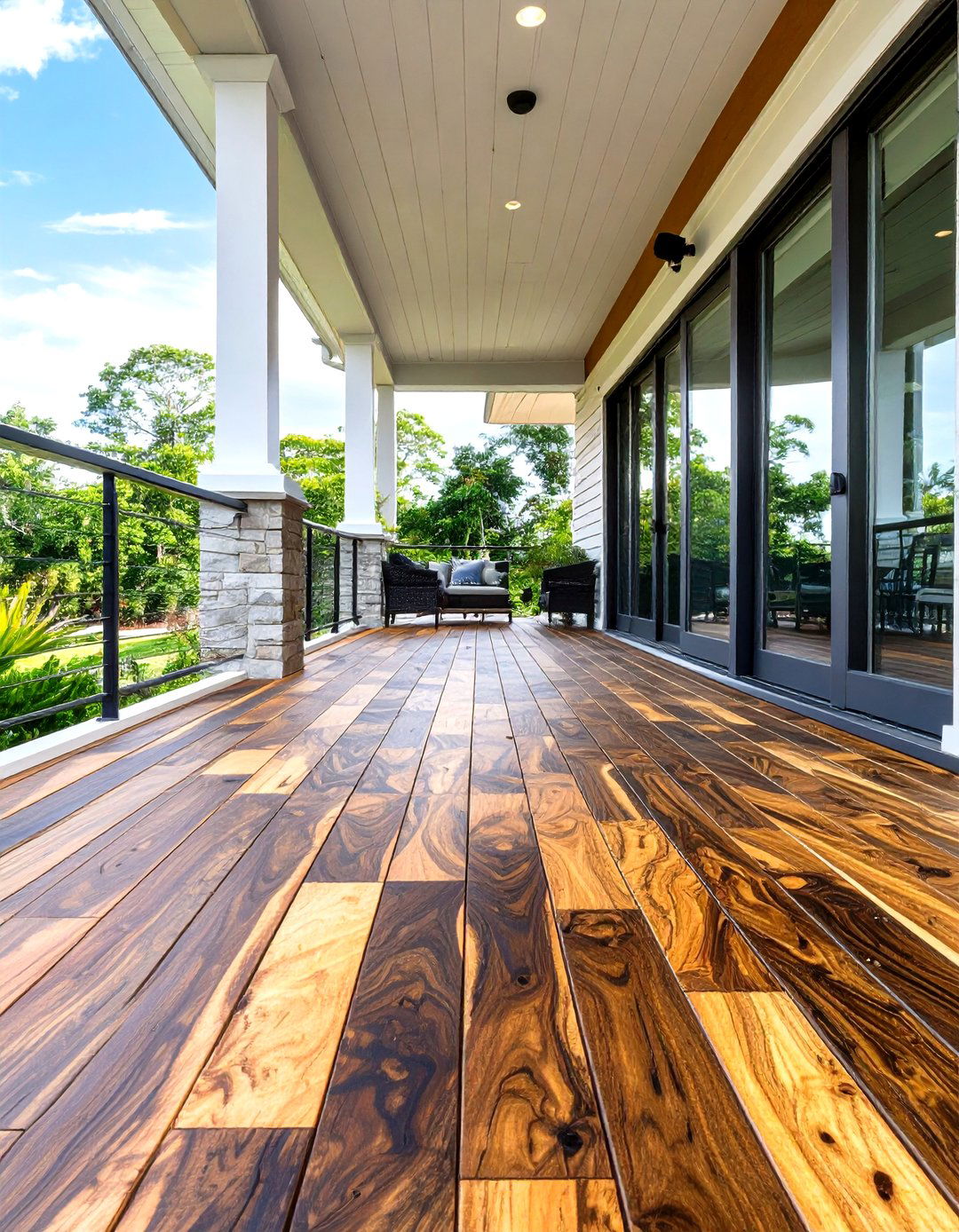
Tigerwood is an exotic hardwood known for its dramatic and beautiful grain pattern. It features a background of golden-brown to reddish-brown wood streaked with dark, irregular black lines, resembling tiger stripes. This striking appearance makes it a bold and luxurious choice for a front porch floor. Beyond its unique look, tigerwood is also very dense and durable, offering excellent resistance to rot and insects. A tigerwood deck instantly creates a high-end, custom feel and serves as a stunning focal point for your home's entrance, requiring only occasional oiling to maintain its vibrant, exotic coloring.
26. Screened-In Wood Porch
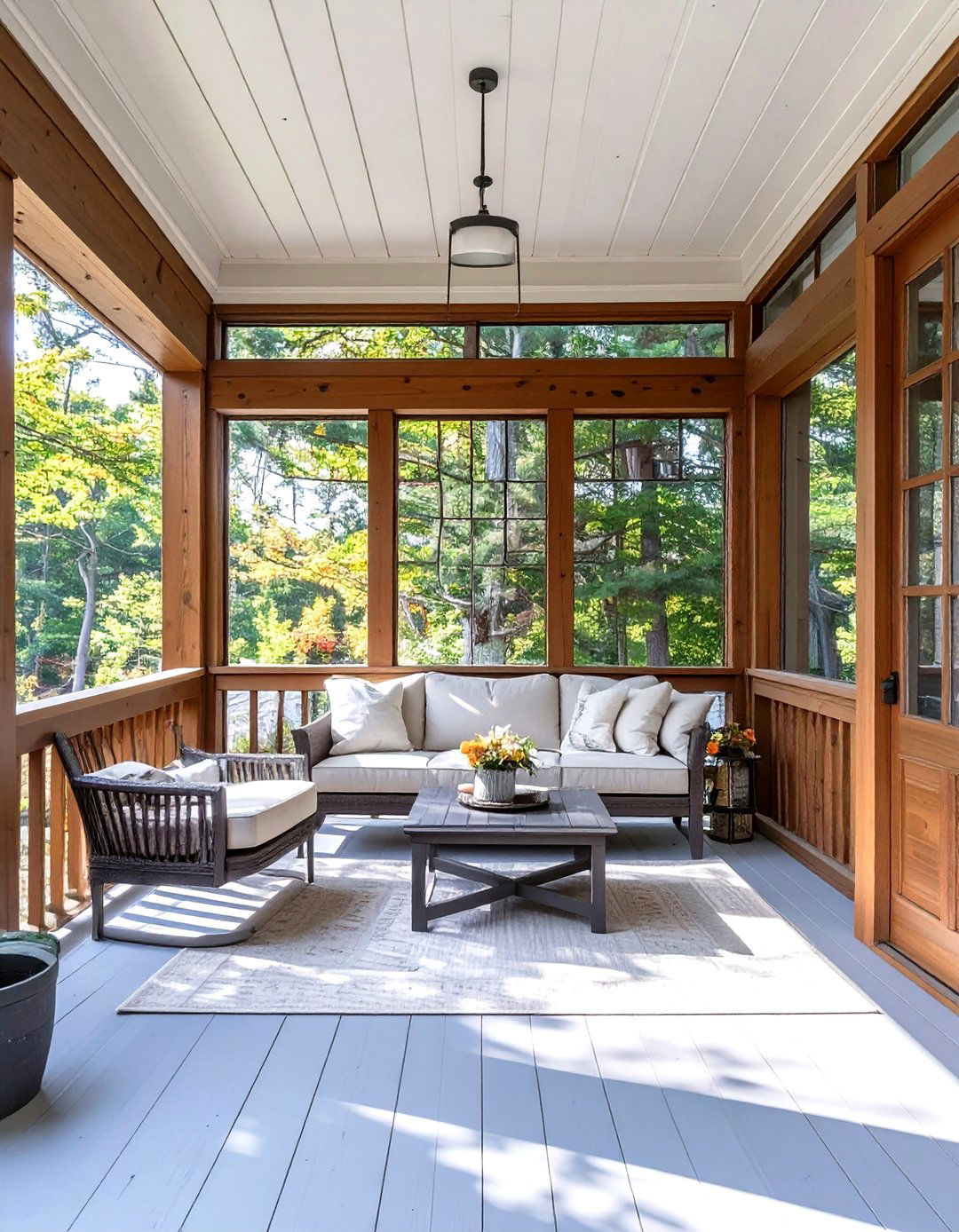
A screened-in wood porch offers the best of both worlds, allowing you to enjoy the fresh air and outdoor views while being protected from insects and pests. The structure can be framed entirely with wood, from the floor and ceiling to the posts holding the screens. This creates a cohesive and warm "outdoor room" that feels like a natural extension of your home. You can stain or paint the wood frame to match your exterior. A screened-in porch provides a versatile space for dining, lounging, or entertaining, extending the usability of your outdoor area through different seasons and times of day.
27. Porch Ceiling with Exposed Wood Rafters
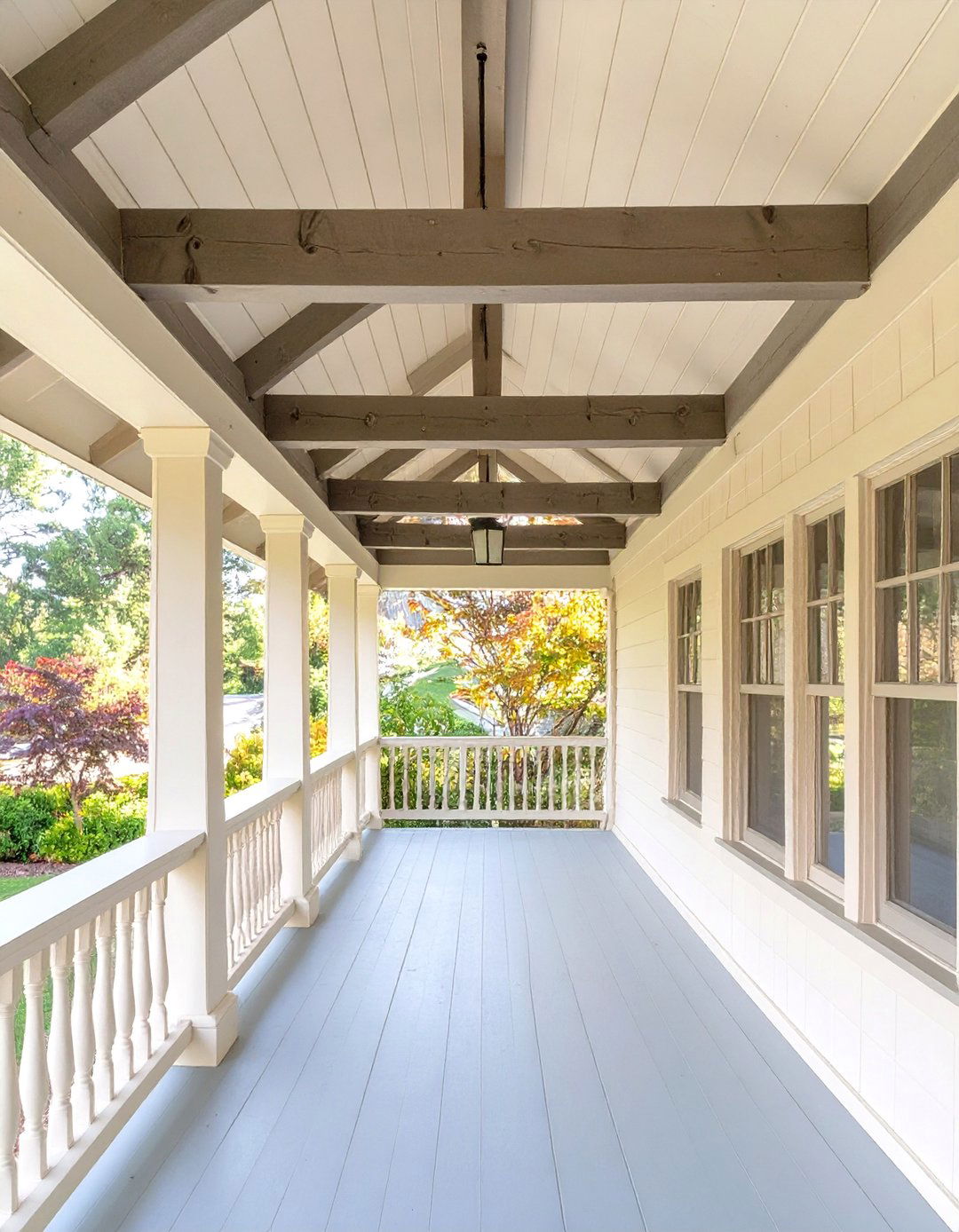
Leaving the wood rafters of your porch ceiling exposed creates a rustic, open, and airy feel. This design choice highlights the structural beauty of the porch, adding architectural interest and a sense of volume to the space. The natural texture and color of the wood beams provide a strong visual element that contrasts nicely with a smooth, painted ceiling between them. This style is characteristic of craftsman, farmhouse, and rustic designs. Staining the rafters a rich, dark color can create a dramatic look, while leaving them in a natural finish offers a lighter, more organic feel.
28. Redwood Decking and Railing
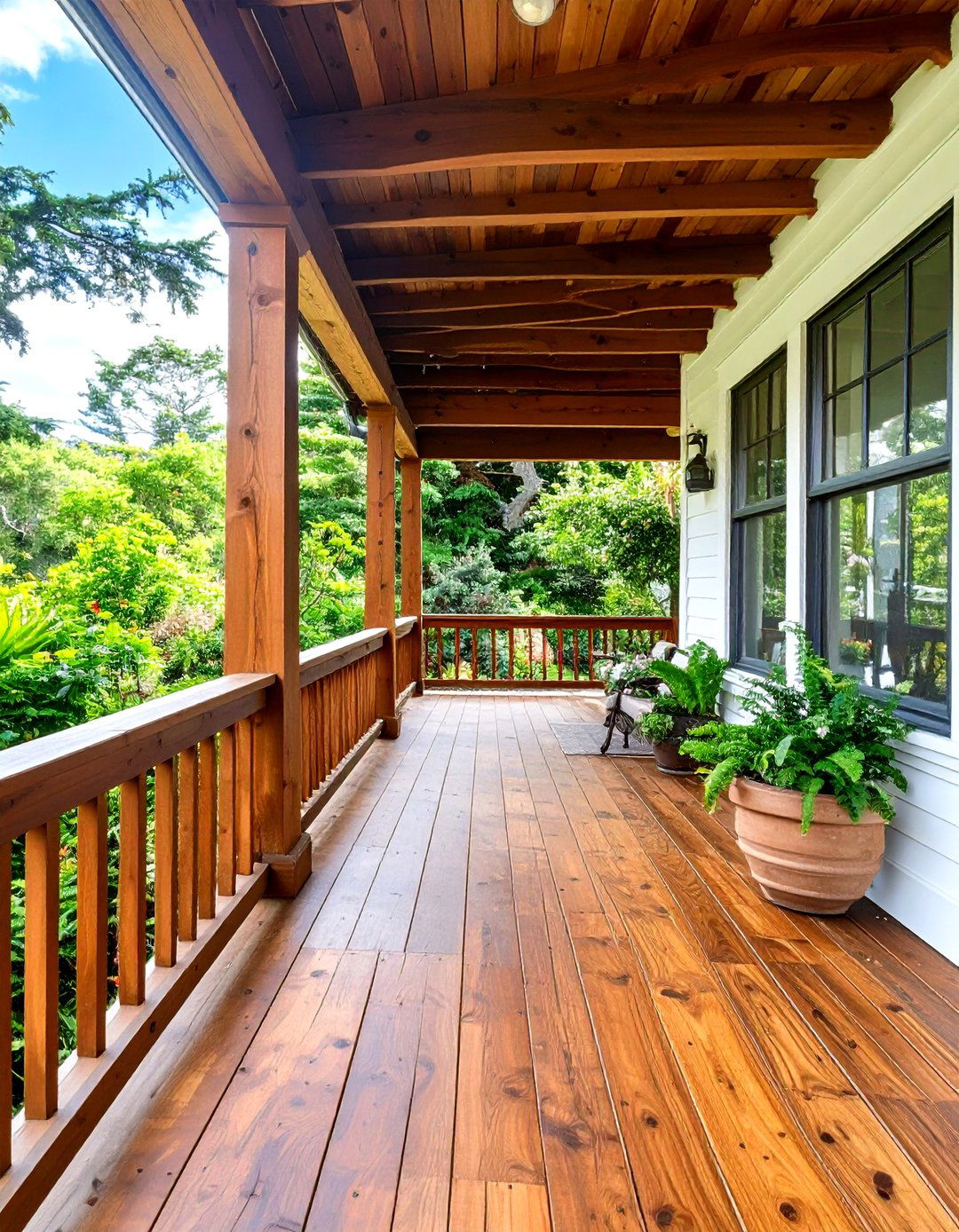
Redwood is a premium wood choice for porches, prized for its beautiful reddish hue and exceptional natural durability. It contains compounds that make it inherently resistant to decay and insects, ensuring a long lifespan for your porch. Its rich color adds warmth and elegance to any home exterior, and its straight, fine grain provides a clean, high-end look. Redwood can be left to weather naturally to a soft gray or sealed to preserve its vibrant color. Building both your decking and railing from redwood creates a stunningly cohesive and luxurious outdoor space that is built to last.
29. Wood Porch with a Tin Roof
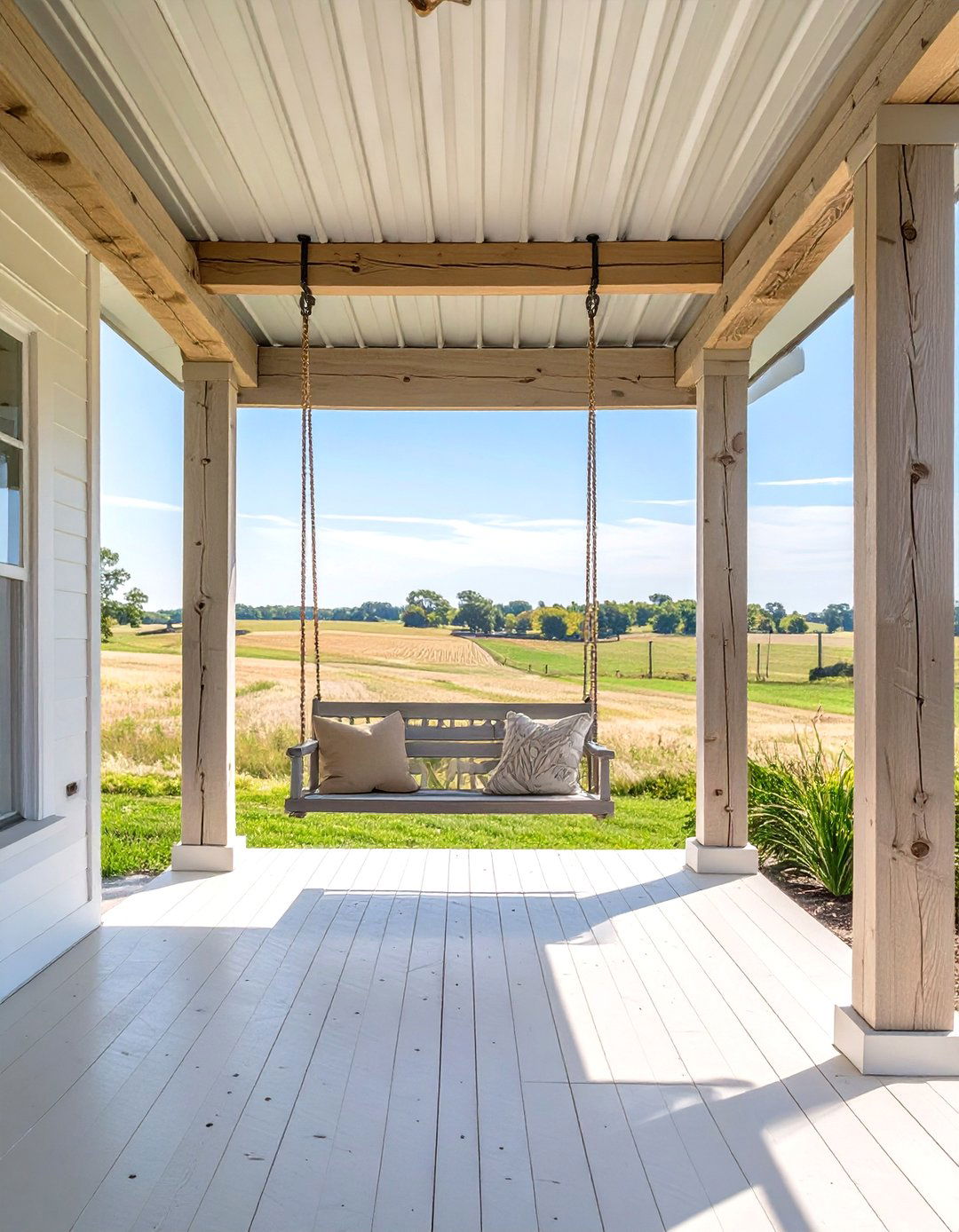
Combining a wood porch structure with a metal tin roof creates a charming, rustic aesthetic with practical benefits. The sound of rain on a tin roof is a beloved feature for many, adding a cozy and nostalgic ambiance to your outdoor space. Metal roofing is also incredibly durable, long-lasting, and low-maintenance. The visual contrast between the warm, natural wood posts and decking and the cool, industrial look of the galvanized or painted tin creates a unique farmhouse or coastal-inspired style. This combination is both a functional and stylish choice for a porch that stands out.
30. Herringbone Wood Deck Pattern
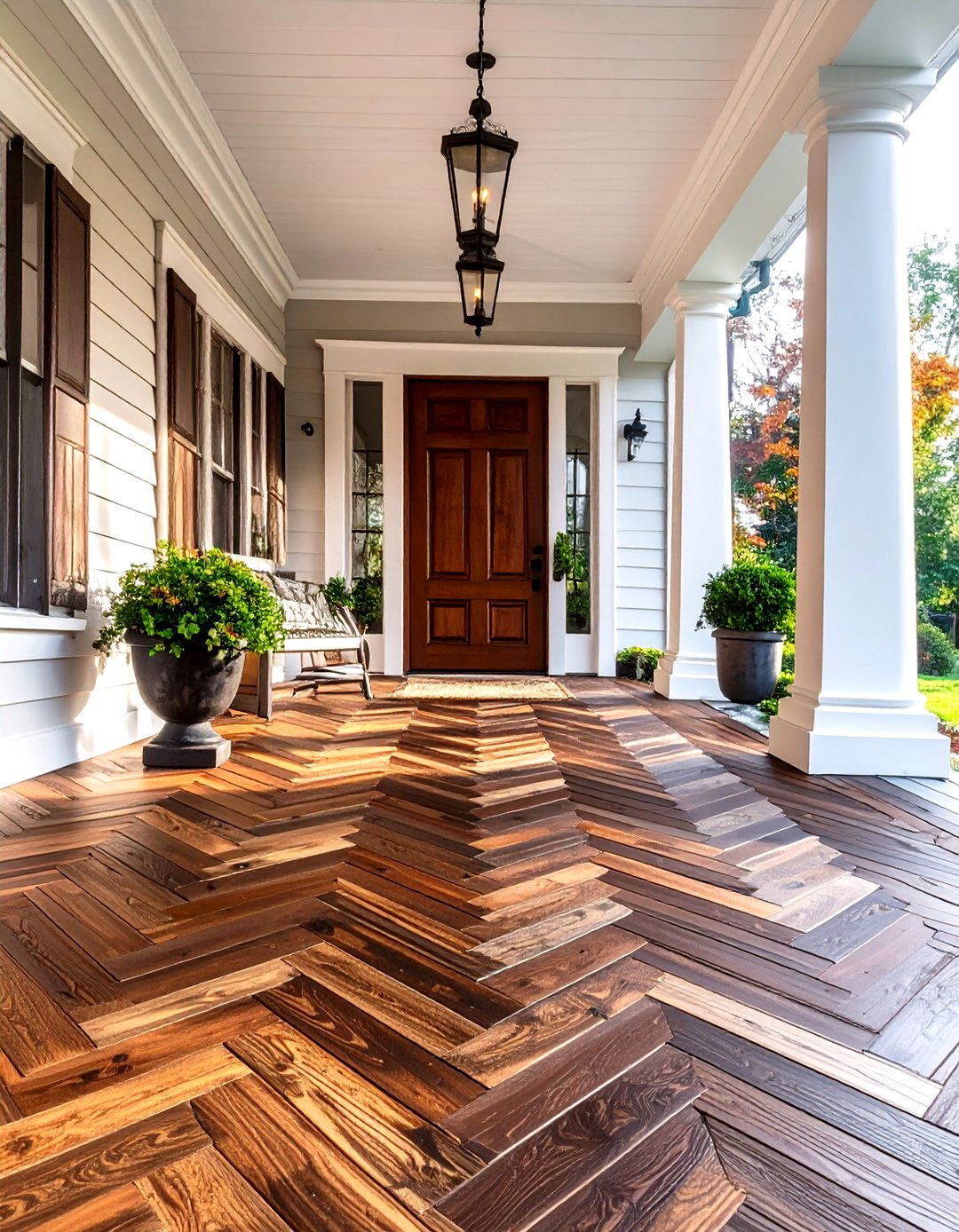
For a truly sophisticated and high-end design, consider a herringbone pattern for your wood porch decking. This intricate layout involves arranging short boards in a zigzag pattern, creating a sense of movement and elegance. The V-shaped pattern is a timeless design that adds a significant "wow" factor and makes the porch feel custom-built and luxurious. While the installation is more labor-intensive and requires precise cuts, the stunning result is well worth the effort. A herringbone wood deck transforms your porch from a simple entrance into a work of art, elevating your home's entire curb appeal.
Conclusion:
Ultimately, a wood front porch is a versatile investment that enhances both the beauty and functionality of your home. From the rustic appeal of reclaimed barn wood to the sleek lines of modern railings, the options are plentiful. Key considerations like material choice, design patterns, and structural elements such as ceilings and columns can define your home’s character. By thoughtfully selecting ideas that align with your architectural style and personal taste, you can create a welcoming and enduring outdoor space that adds significant curb appeal and becomes a cherished extension of your living area for years to come.

Related posts:



Leave a Reply