
Choosing patio stones for a driveway opens the door to far more color, texture, and pattern than a plain concrete slab. The key is to use driveway-rated pavers or natural stone with enough thickness and strength for vehicle traffic, not lightweight products made only for backyard patios. A properly prepared, compacted base is equally important for preventing movement, uneven joints, and sinking. () From clean modern grids to traditional cobblestone patterns, patio stone can complement nearly any home exterior. Borders, planting beds, lighting, and walkways make the finished space feel connected to the entire property. The complete driveway looks below combine practical layouts with attractive materials and landscaping. Explore these **20 Patio Stone Driveway Ideas** to find a design that fits your home, yard, and budget.

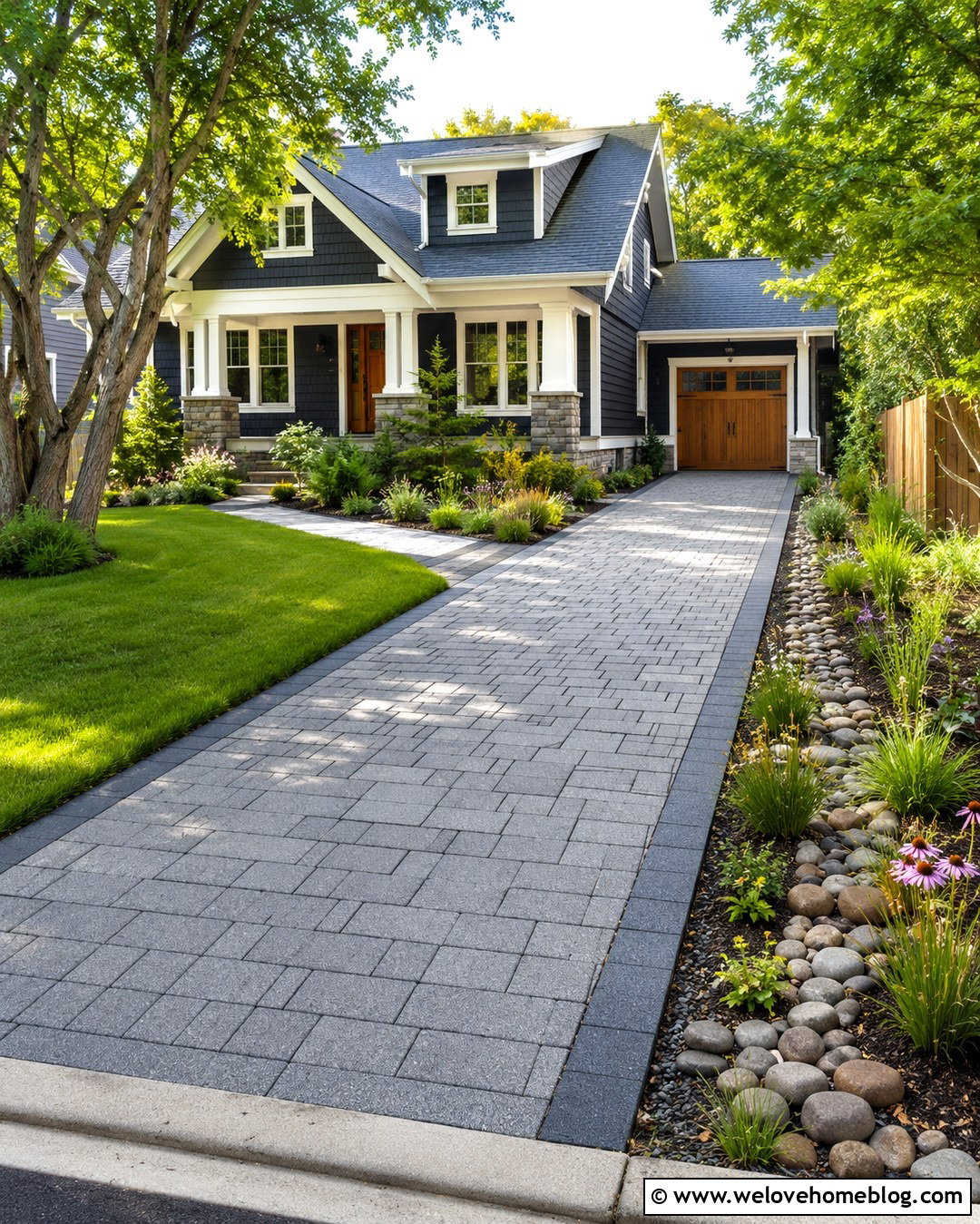
1. Gray Patio Stone Driveway With Charcoal Border
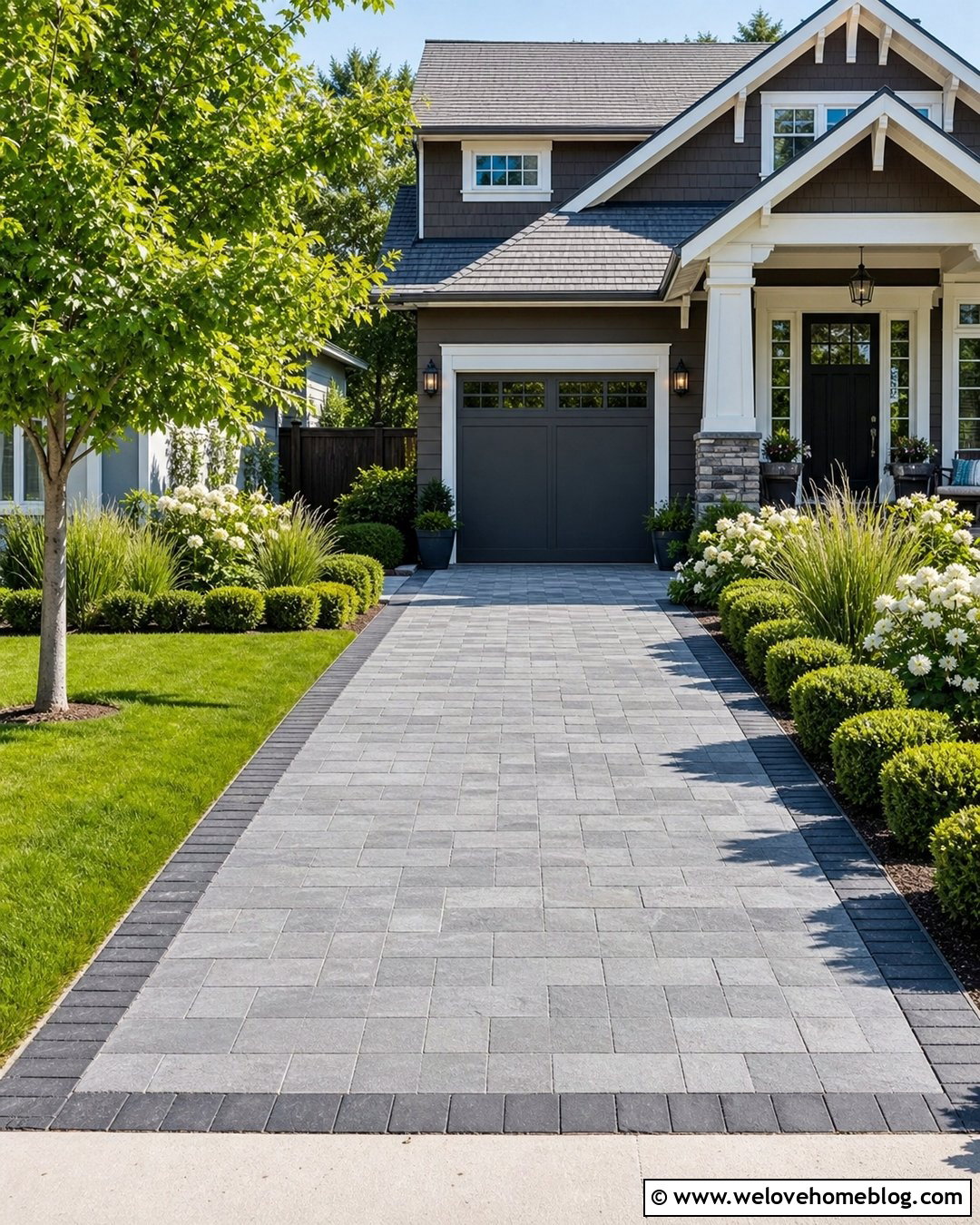
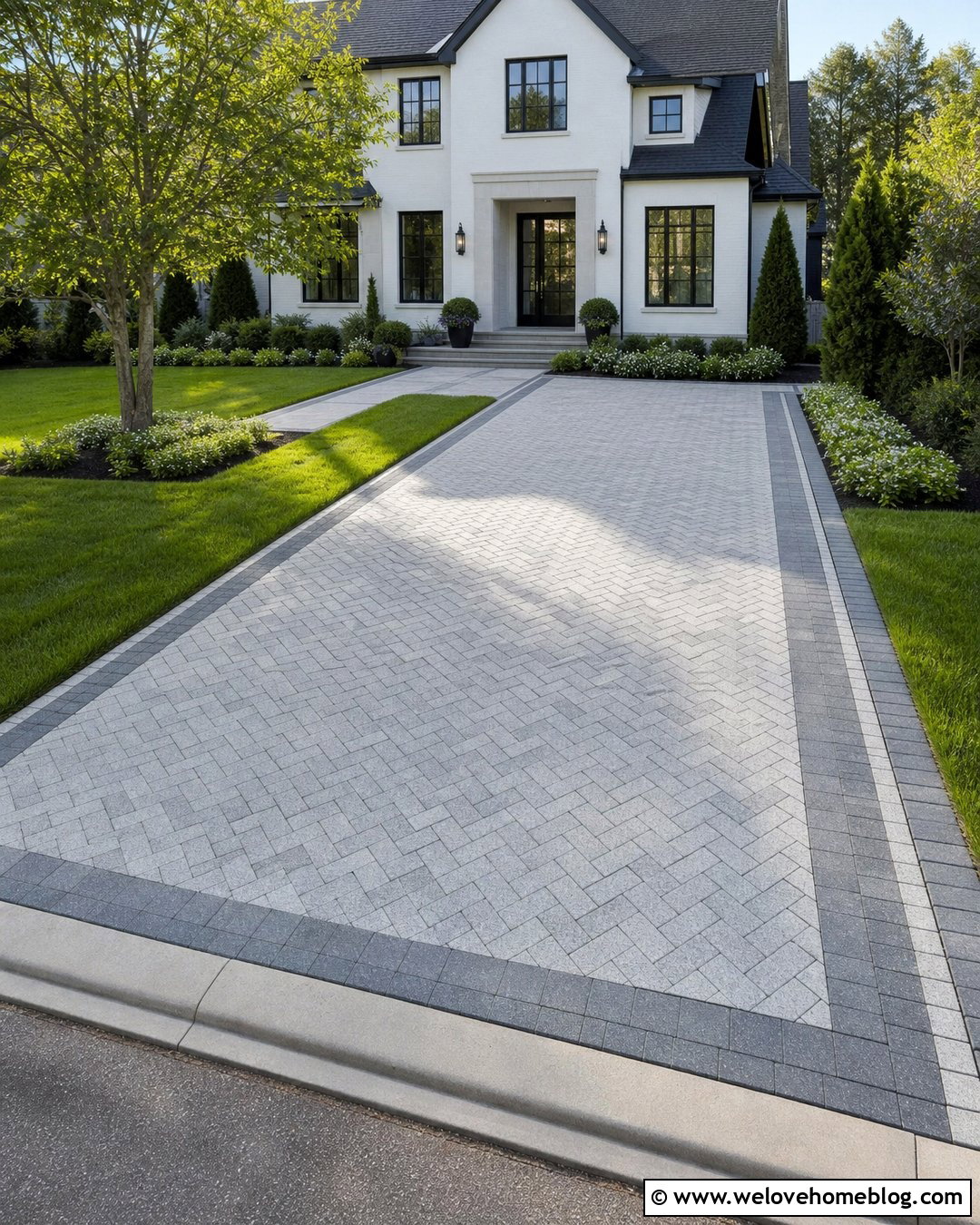
A medium-gray patio stone driveway offers a clean foundation that works with brick, siding, stucco, and stone facades. Choose rectangular concrete pavers with a lightly textured finish, then install them in a running bond pattern for a calm, orderly appearance. A charcoal paver border gives the driveway a defined edge and makes the lighter center stones stand out. Keep the layout straight and connect it to a matching walkway leading toward the front door. Low boxwoods, ornamental grasses, and white flowering plants soften the hard surface without crowding it. This complete look is especially effective for a suburban craftsman house. The restrained color palette feels polished, while the contrasting border helps visually separate the driveway from the surrounding lawn and planting beds.
2. Herringbone Patio Stone Driveway With Brick Edging
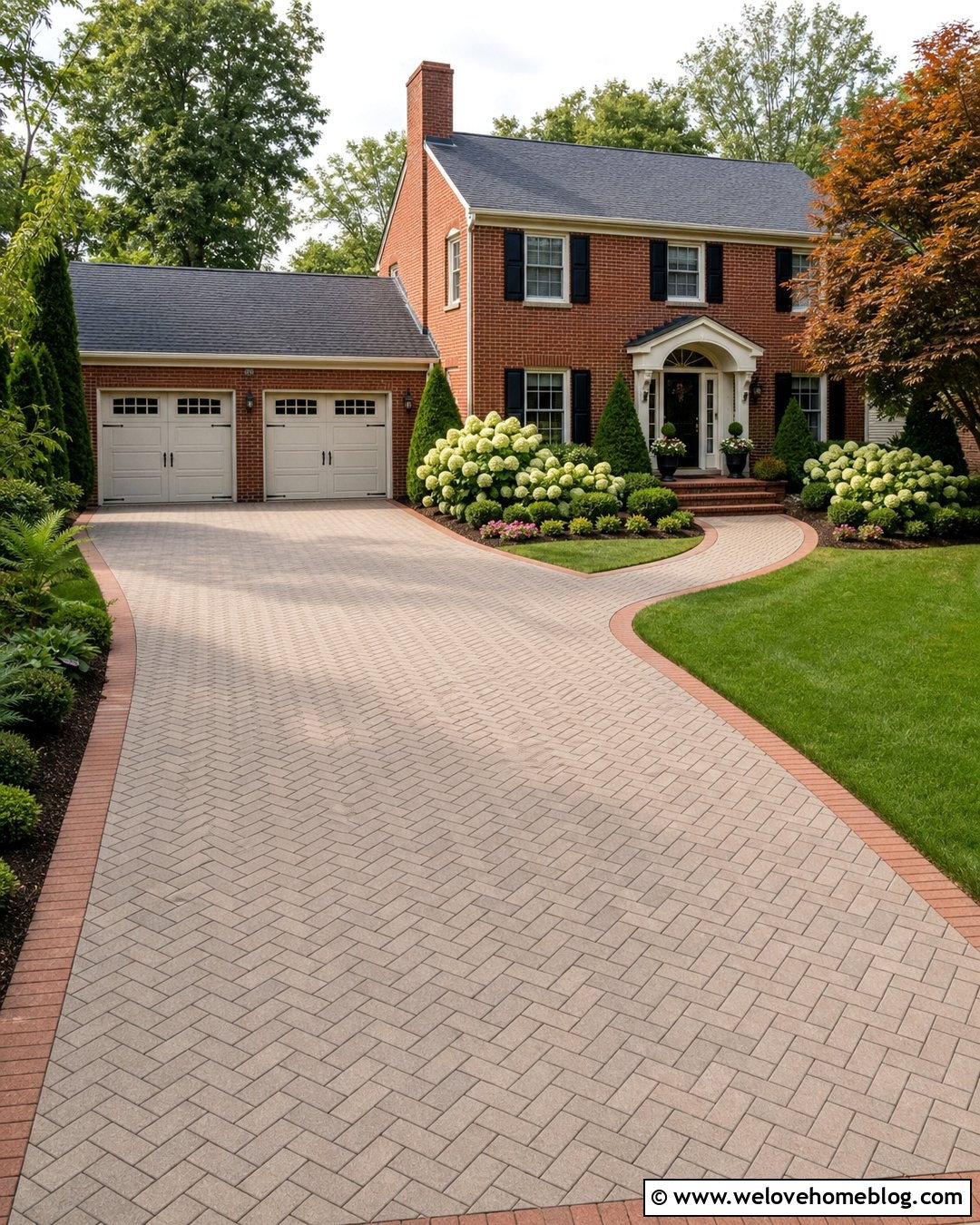
Herringbone patterns bring movement to a patio stone driveway while providing a traditional, tightly interlocked appearance. Select warm taupe or weathered gray concrete stones and position them at a 45-degree angle to the street. Frame the patterned surface with clay brick edging that coordinates with a brick house or chimney. A gently curved walkway can branch from the driveway and repeat the same brick border. Complete the setting with neatly clipped shrubs, hydrangeas, and a broad green lawn. Because the pattern already adds visual energy, keep the landscaping simple and balanced. This design suits colonial, Cape Cod, and traditional homes particularly well. The combination of angled stones, reddish brick, and structured planting creates an inviting entrance that appears established rather than overly new.
3. Large Patio Stone Driveway With Grass Joints
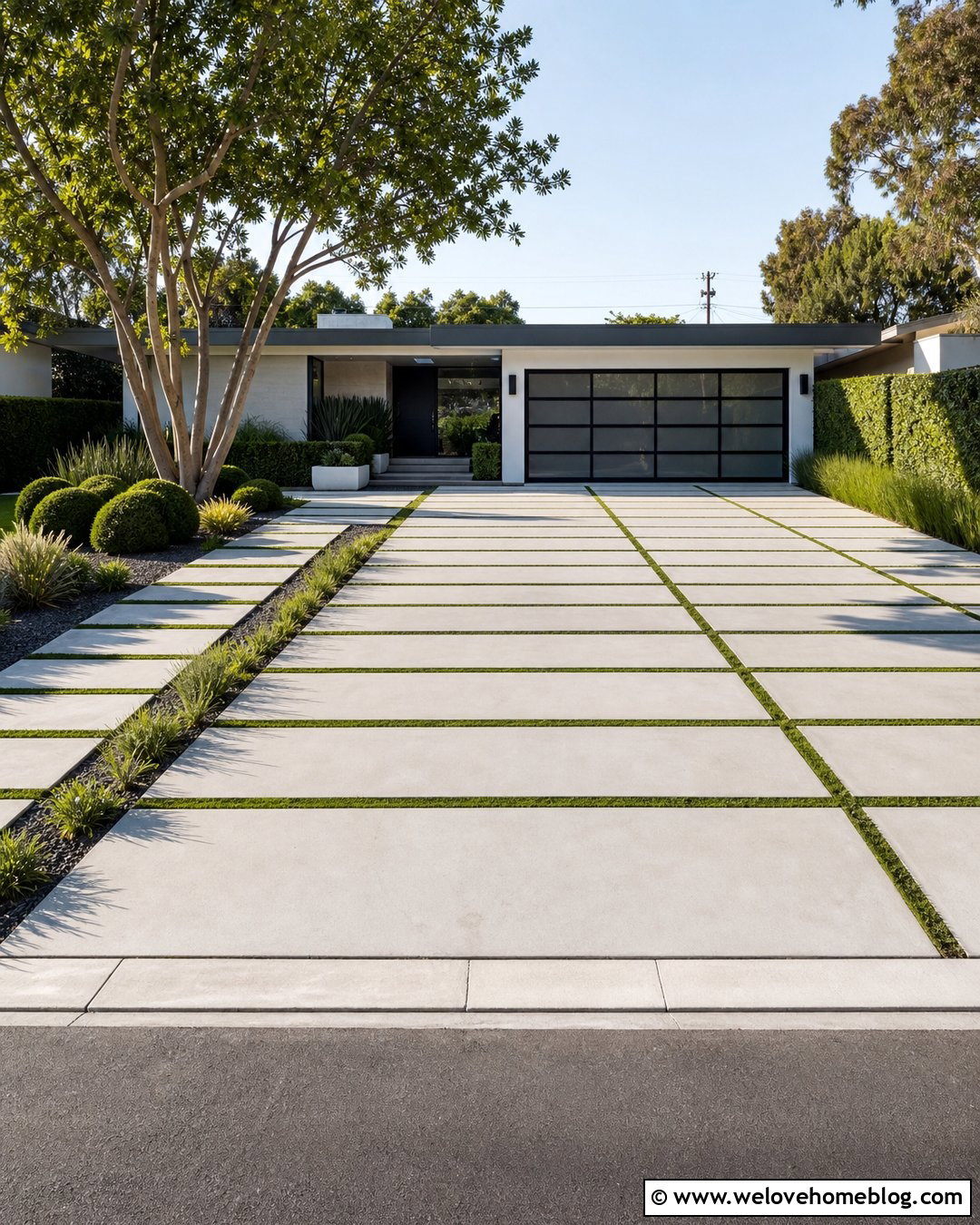
Large-format patio stones can make a driveway feel modern, spacious, and less visually busy. Use square or rectangular driveway-rated concrete slabs in a pale gray finish, arranging them in a straight grid with narrow green joints. Reinforced turf or low-growing ground cover between the stones softens the geometric layout. It also helps the driveway blend into the front lawn. Continue the same grid into a wide path leading to the entrance for a unified outdoor plan. Add sculptural evergreen shrubs, ornamental grasses, and a small multi-stem tree near the house. This look works best beside a modern or mid-century home with simple architecture. Precise spacing is essential, so professional installation may be worthwhile. The finished driveway should look crisp, open, and intentionally connected to the landscape.
4. Flagstone Patio Stone Driveway With Natural Edges
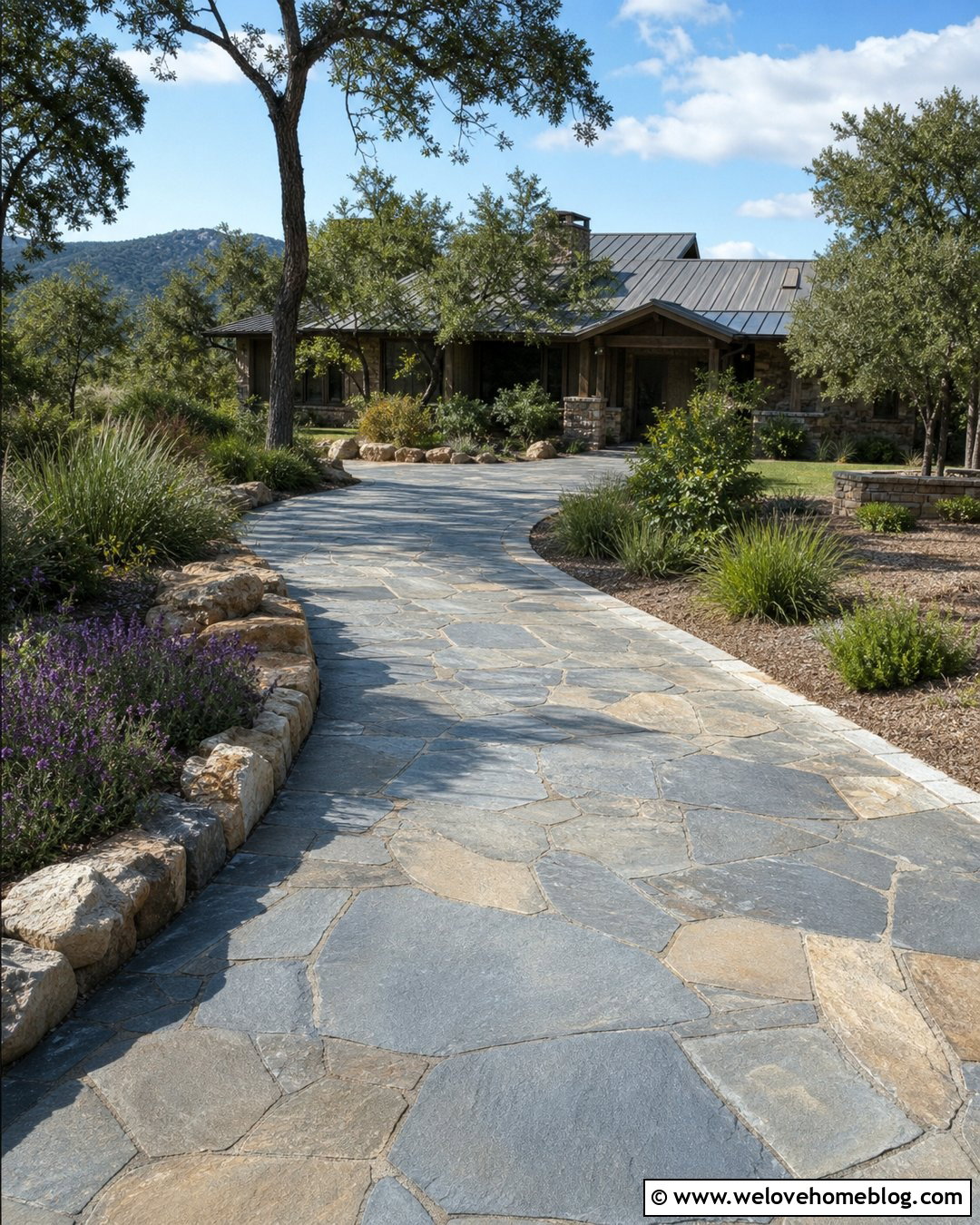
Irregular flagstone creates a relaxed driveway that feels connected to the surrounding land. Choose thick, driveway-rated sandstone or bluestone in varied shapes, then fit the pieces together with narrow, stable joints. Soft gray, brown, and tan tones work especially well with a country house, cottage, or rustic ranch exterior. Instead of adding a sharply contrasting border, use larger natural stones along the edges to maintain the organic appearance. Frame the driveway with native grasses, flowering perennials, and loosely shaped shrubs. A curved layout will enhance the informal character and reveal the house gradually. Since natural stone varies in thickness and strength, confirm that the selected product is suitable for vehicles. () The final look should feel rustic but carefully constructed, with landscaping that complements the stone’s natural variation.
5. Permeable Patio Stone Driveway With Gravel Joints
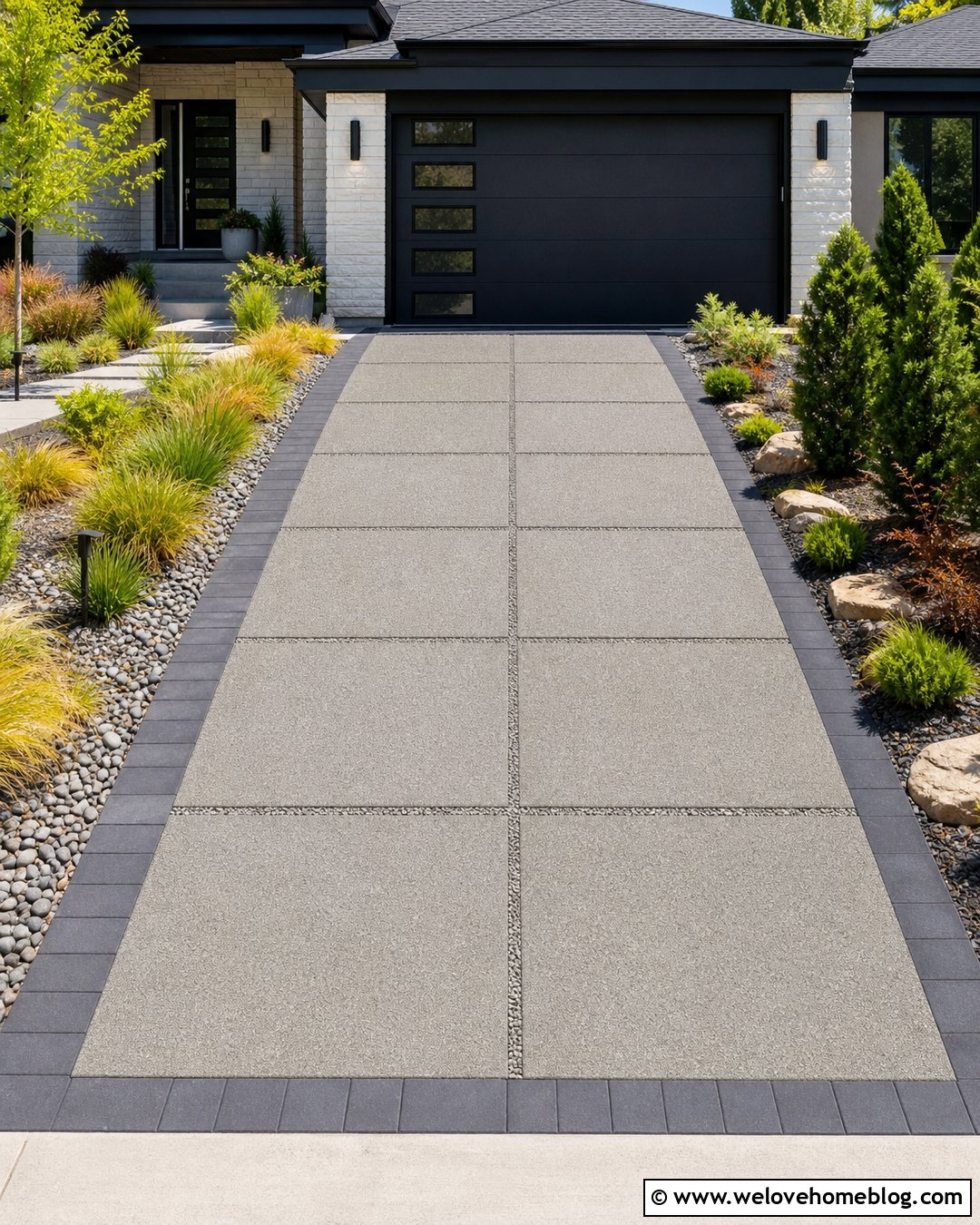
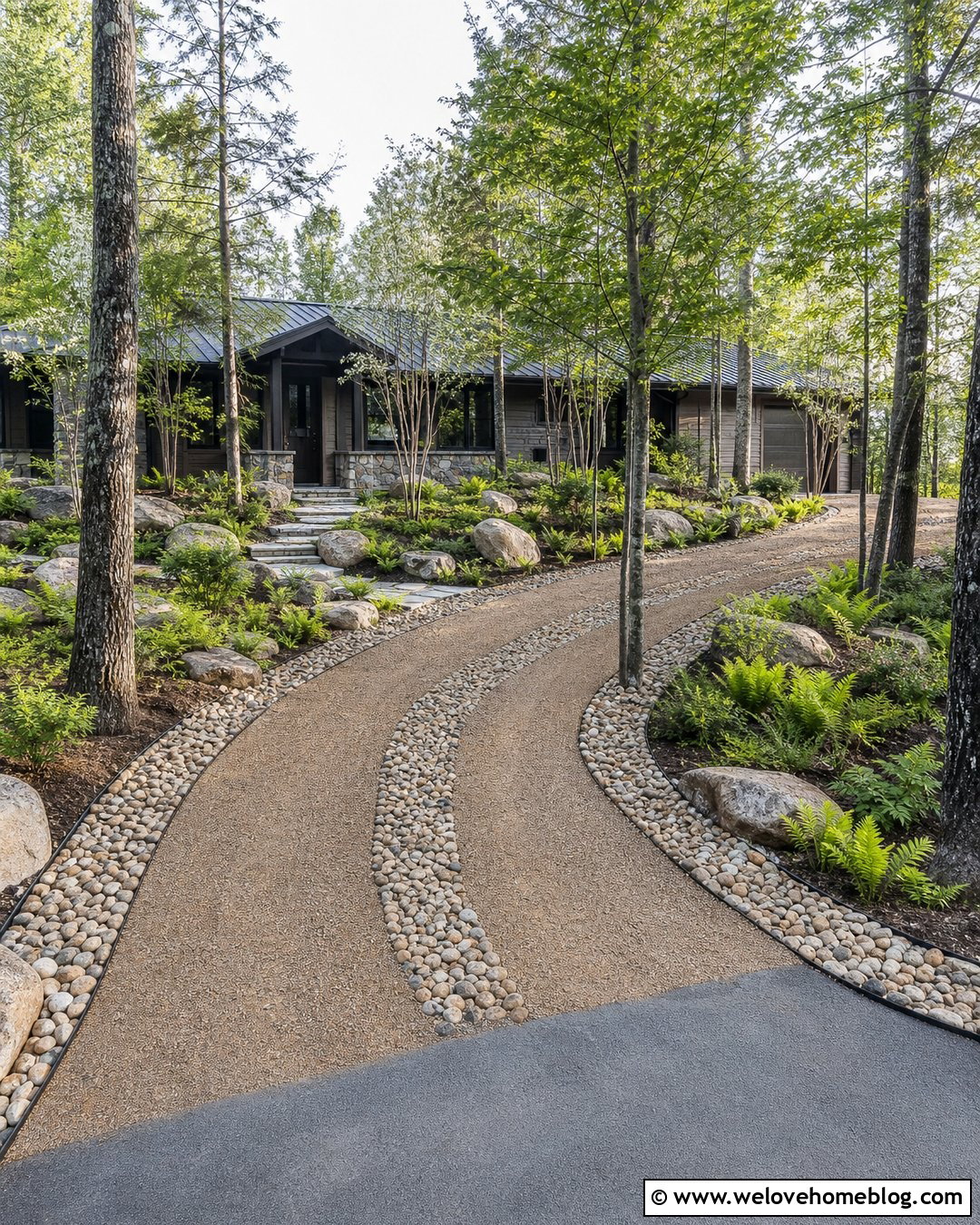
A permeable patio stone driveway combines structured paving with visible gravel-filled joints. Use rectangular concrete pavers designed for permeable installation, leaving consistent spaces between each unit. Fill those openings with clean angular aggregate rather than ordinary soil or loose decorative sand. Warm gray pavers paired with pale gravel create a subtle contrast that feels attractive without becoming distracting. Add a darker perimeter course to contain the layout and define the parking area. Drought-tolerant grasses, sedges, and low evergreen shrubs can continue the practical landscape theme. This complete design is a strong match for contemporary houses and properties with simple front yards. Permeable paving systems are among the current driveway approaches used to combine attractive patterns with functional outdoor planning. () Always coordinate the installation with local drainage requirements and site conditions.
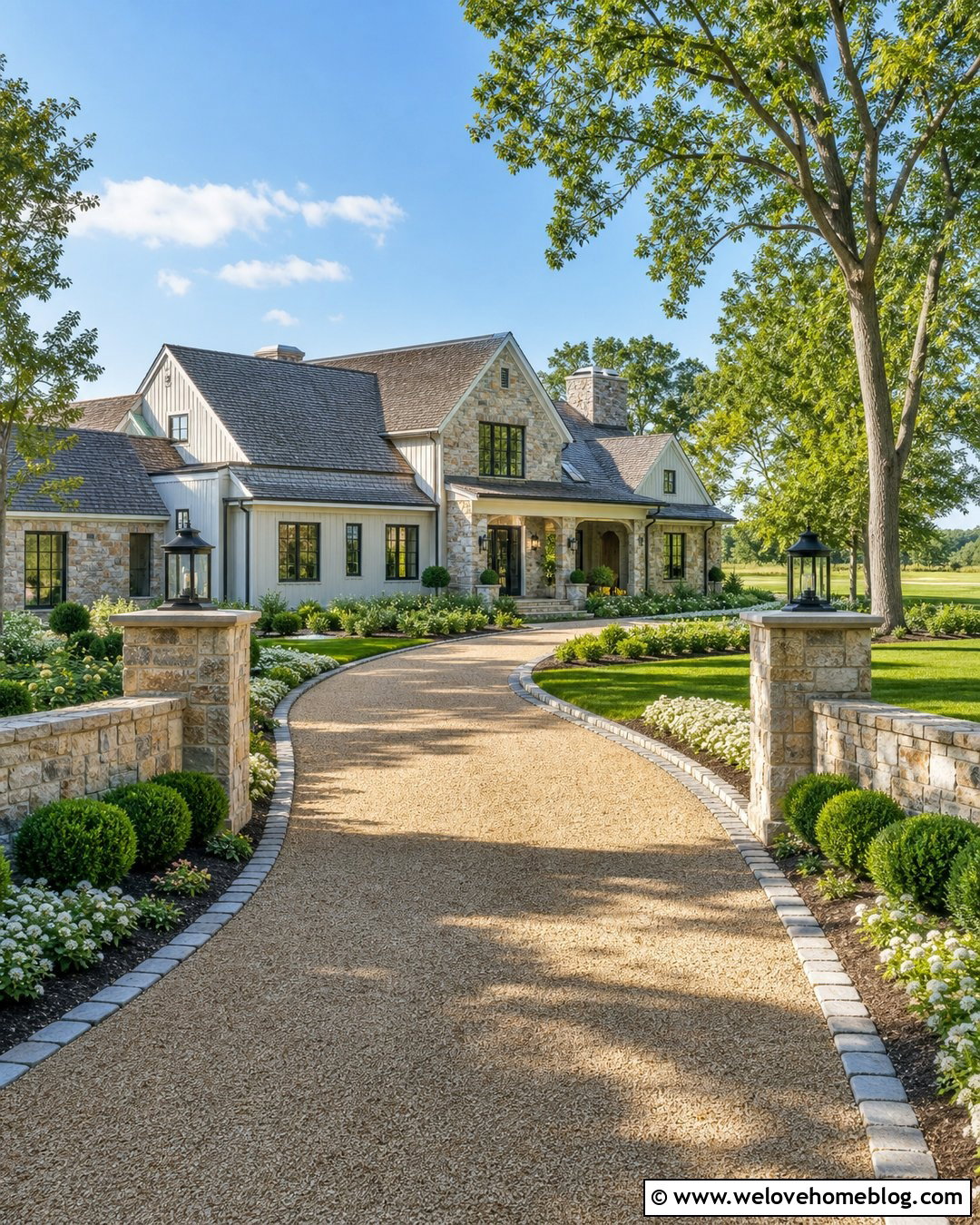
6. Curved Patio Stone Driveway With Stone Columns
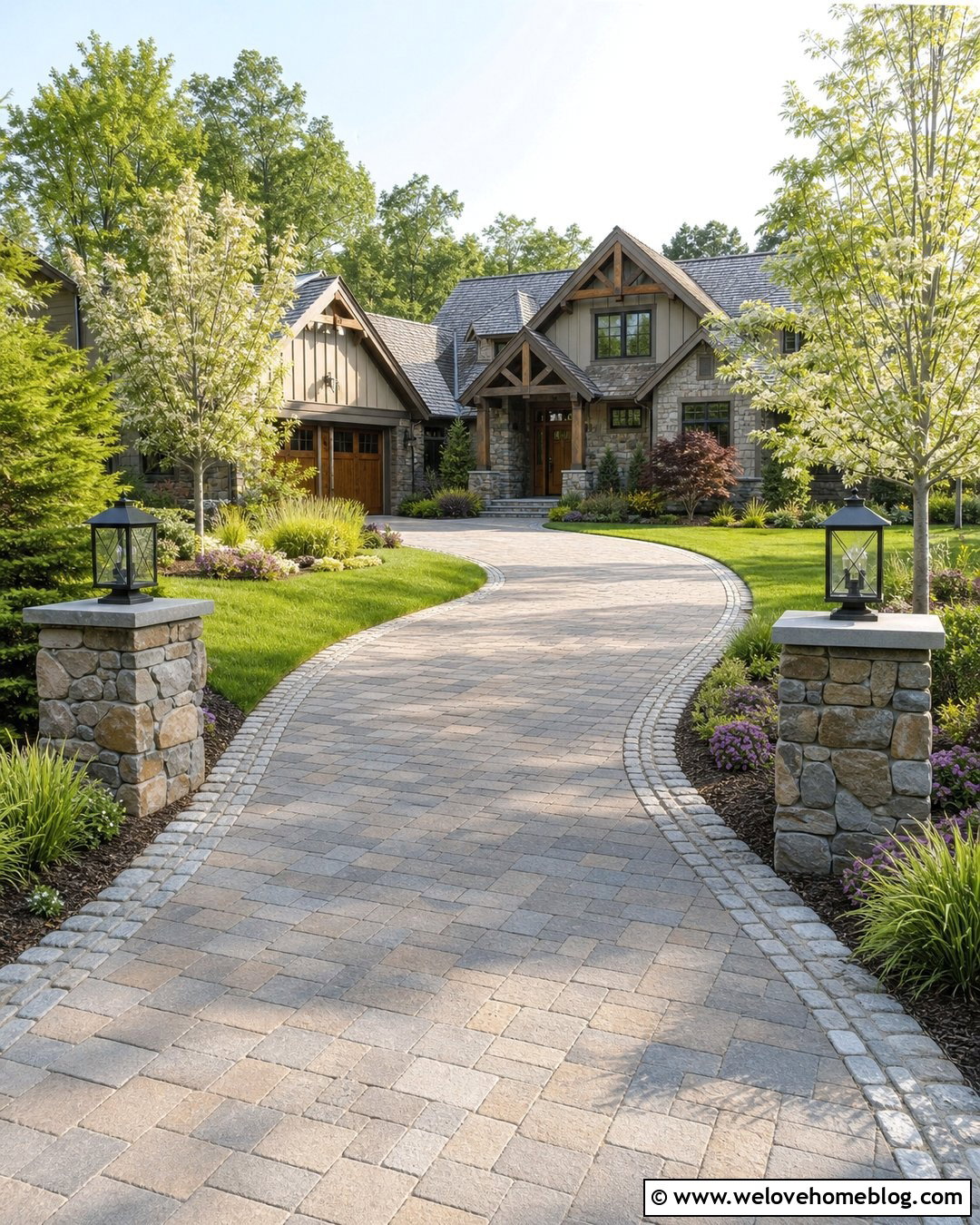
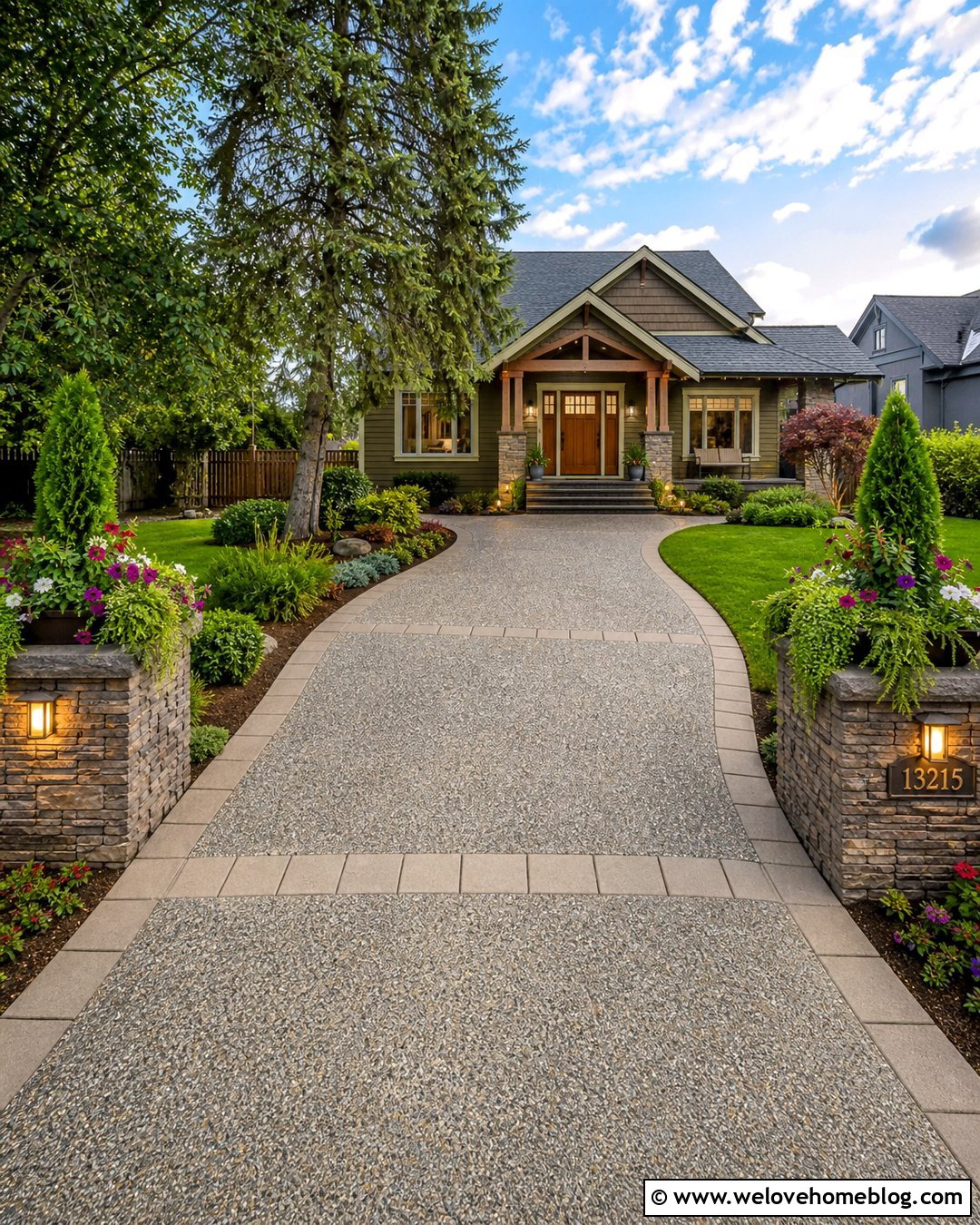
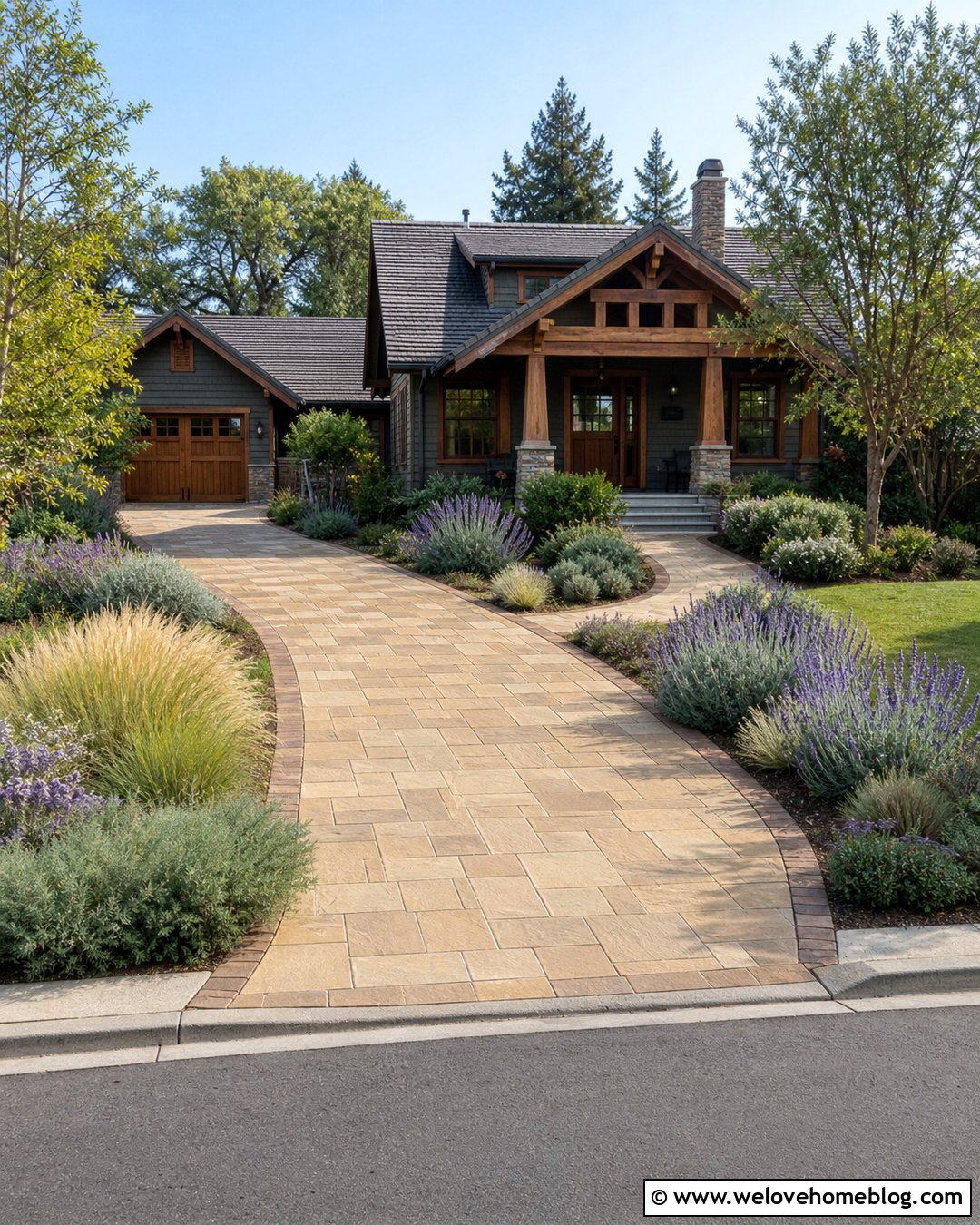
A sweeping curve can transform a standard patio stone driveway into a more welcoming approach. Lay blended beige and gray concrete pavers in a flexible random pattern that follows the bend naturally. At the street, install two low stone columns that match the home’s foundation or exterior masonry. Simple lanterns on top can mark the entrance without making it feel too formal. Continue the stonework along the driveway with a narrow cobblestone border. Layered landscaping should include low shrubs near the curb, taller ornamental grasses through the middle, and small trees closer to the house. This arrangement preserves visibility while adding depth. The finished design works beautifully with craftsman, Tudor, and traditional homes. Every component supports the curved layout, from the flowing border to the gradually changing plant heights.
7. Circular Patio Stone Driveway With Center Garden
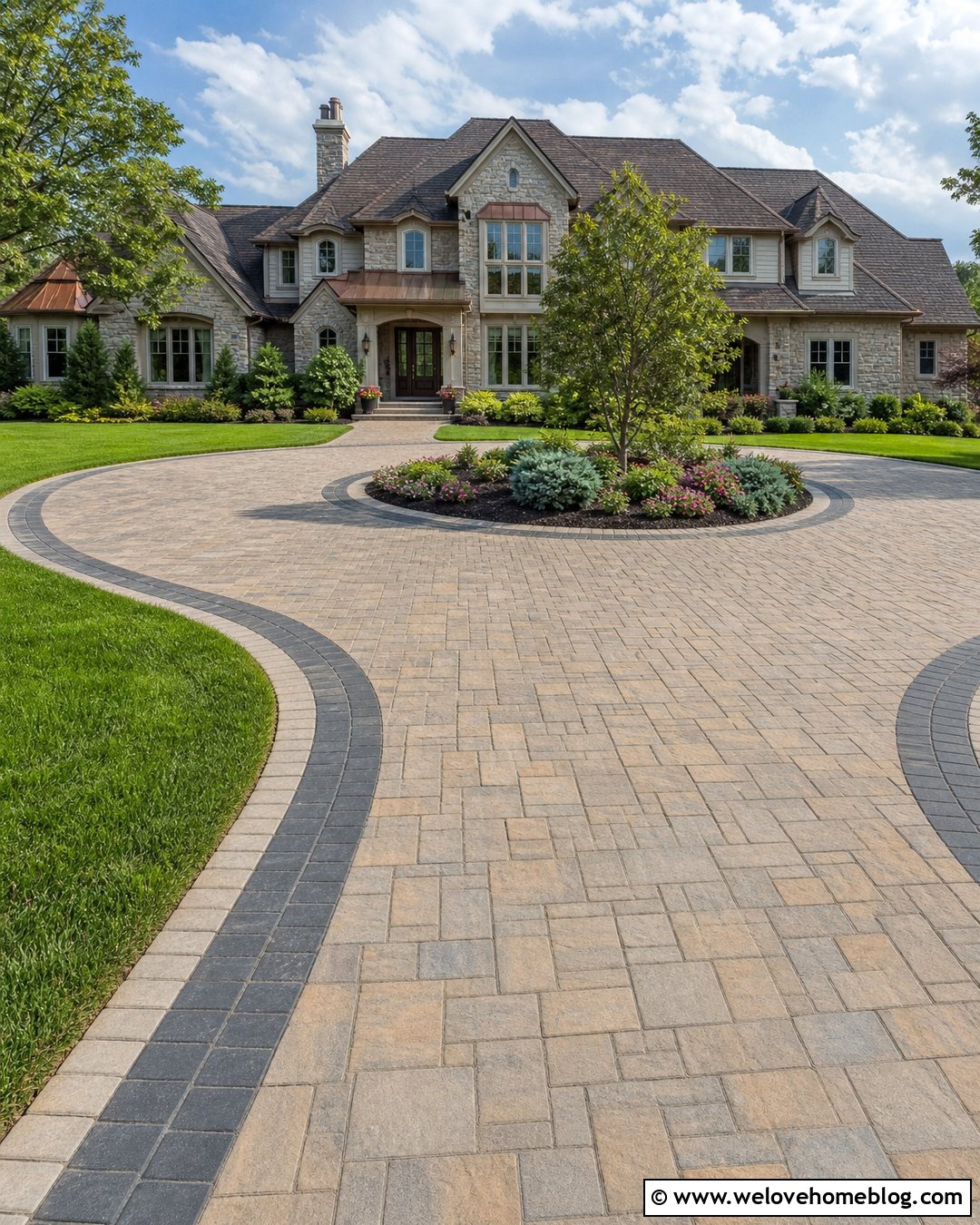
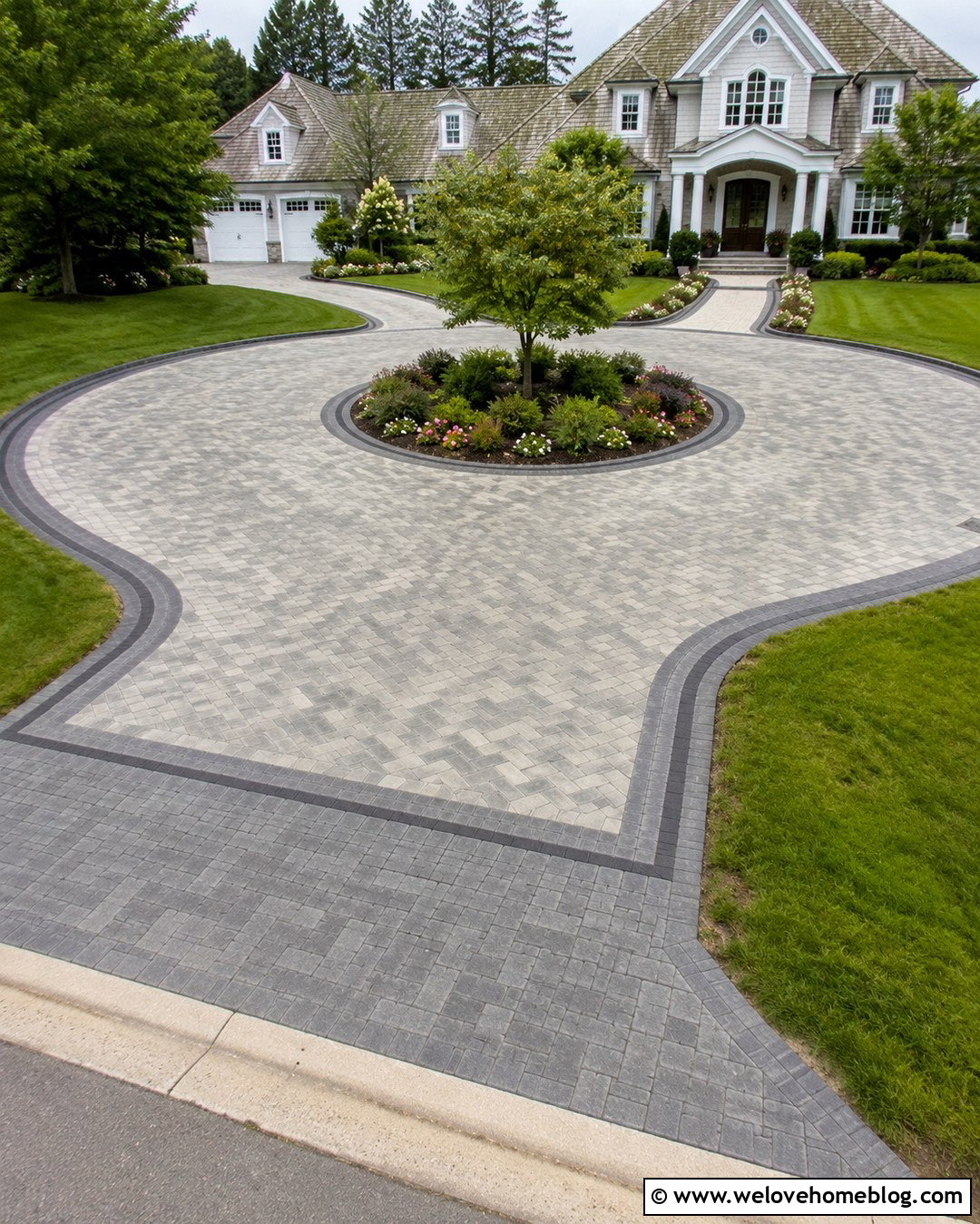
A circular patio stone driveway creates a graceful arrival area while placing landscaping at the center of the design. Choose weathered concrete pavers in mixed tan and charcoal tones, installing them in curved bands that follow the driveway’s shape. A dark soldier-course border can define both the outer edge and the center island. Fill the island with a small ornamental tree, evergreen shrubs, and seasonal flowers arranged in simple layers. Keep taller plants near the middle so drivers maintain clear views around the circle. A matching paver walkway should connect the driveway to the front entrance without interrupting the pattern. This layout is best suited to a wider front yard and a traditional, Mediterranean, or large farmhouse exterior. The center garden becomes the focal point while the paving provides visual structure.
8. Cobblestone Patio Stone Driveway With Cottage Landscaping
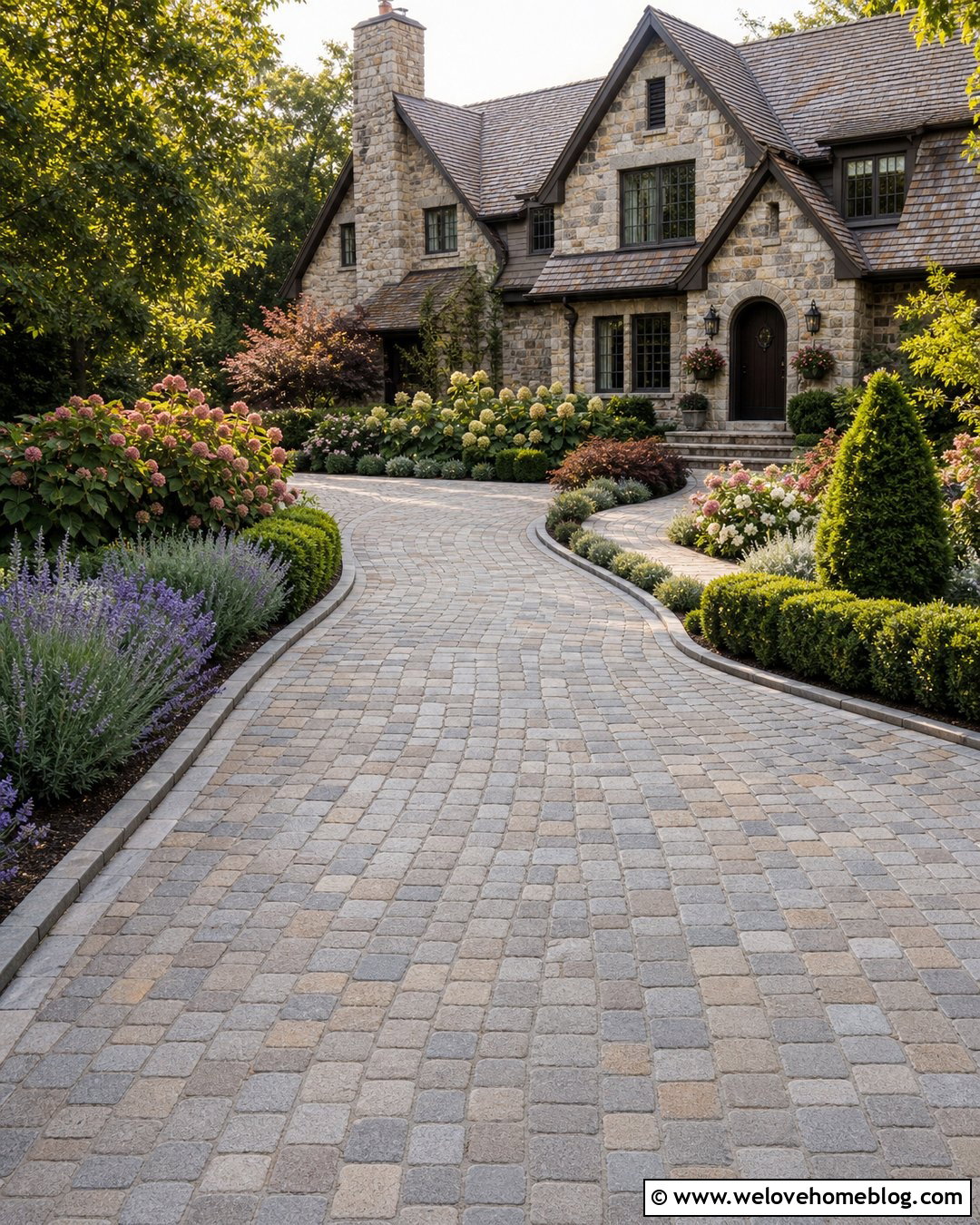
Rounded or tumbled patio stones can recreate the character of an old cobblestone drive without requiring a formal estate setting. Select compact concrete cobbles in mixed gray, brown, and muted charcoal tones. Install them in gently curving rows and contain the surface with a flush stone curb. Around the driveway, use cottage-inspired landscaping such as lavender, catmint, hydrangeas, roses, and softly shaped evergreen shrubs. A short stone walkway can continue toward the front porch using the same material. This driveway pairs naturally with a cottage, Tudor house, or painted brick home. Avoid adding too many competing colors because the varied paving already provides rich texture. The goal is a comfortable, established entrance where the small stones, curved approach, flowering borders, and house architecture feel as though they have aged together.
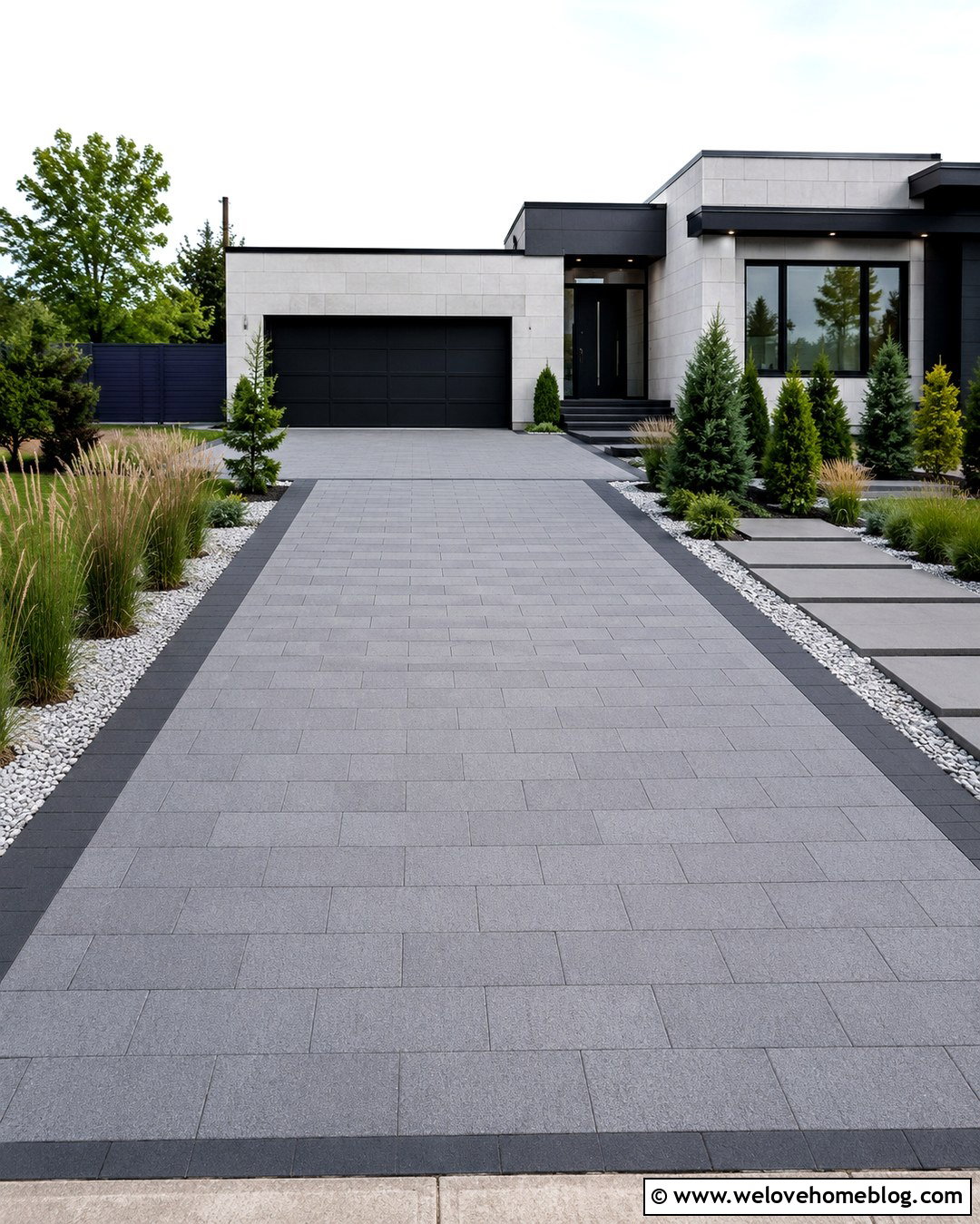
9. Modern Patio Stone Driveway With Linear Pavers
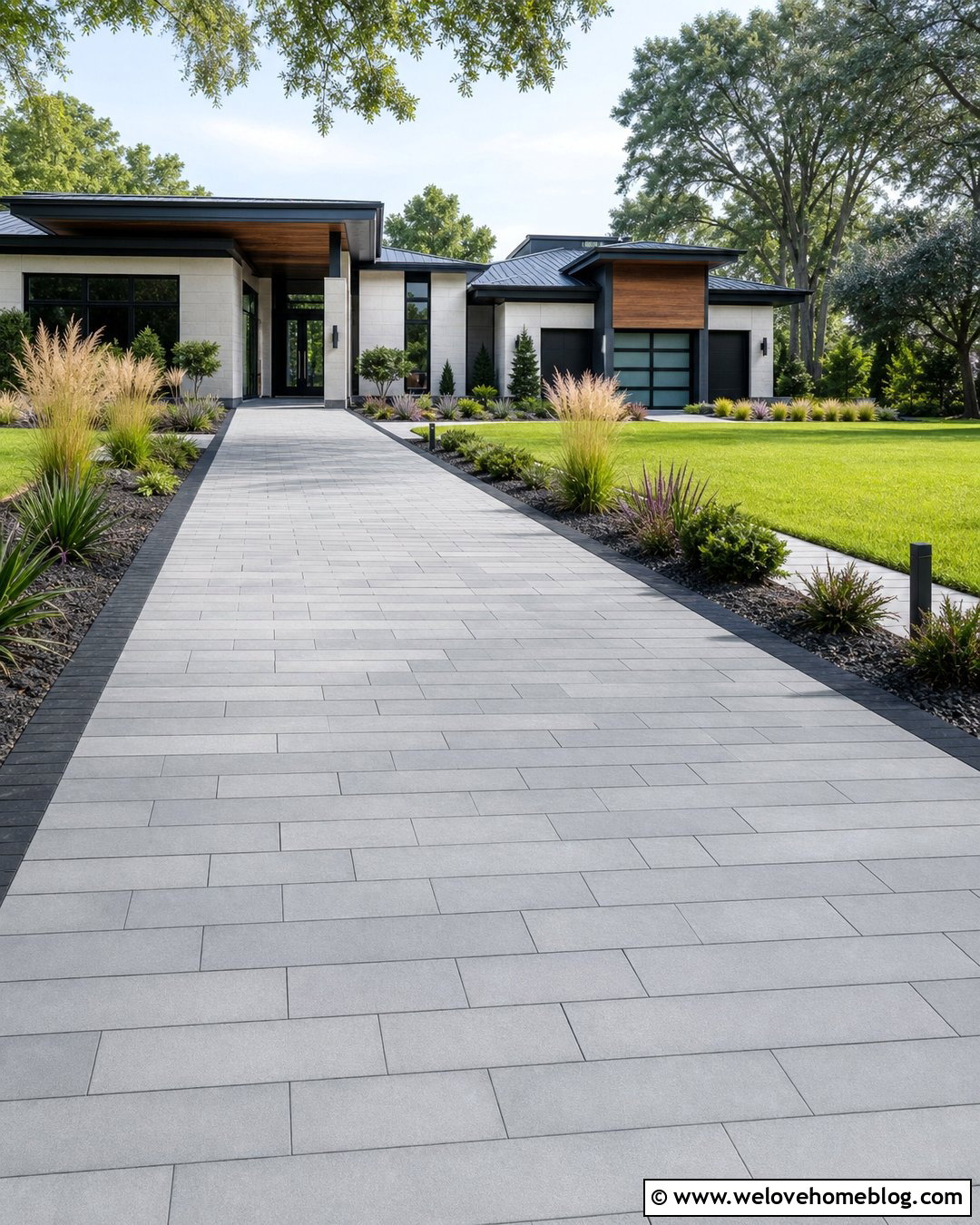
Long, narrow patio stones emphasize clean lines and can make a short driveway appear deeper. Choose smooth concrete pavers in cool gray or charcoal, then lay them lengthwise from the curb toward the garage. A thin black border reinforces the linear direction without adding unnecessary decoration. On one side, include a matching paved walkway separated from the driveway by a narrow planting strip. Use upright grasses, compact evergreens, and architectural plants in repeated groups. The opposite side can remain open lawn to prevent the space from feeling enclosed. This complete design complements a modern house with flat rooflines, large windows, and wood or metal accents. Precise alignment matters more than complex patterning here. The driveway, walkway, planting beds, and home facade should share the same simple geometry and limited color palette.
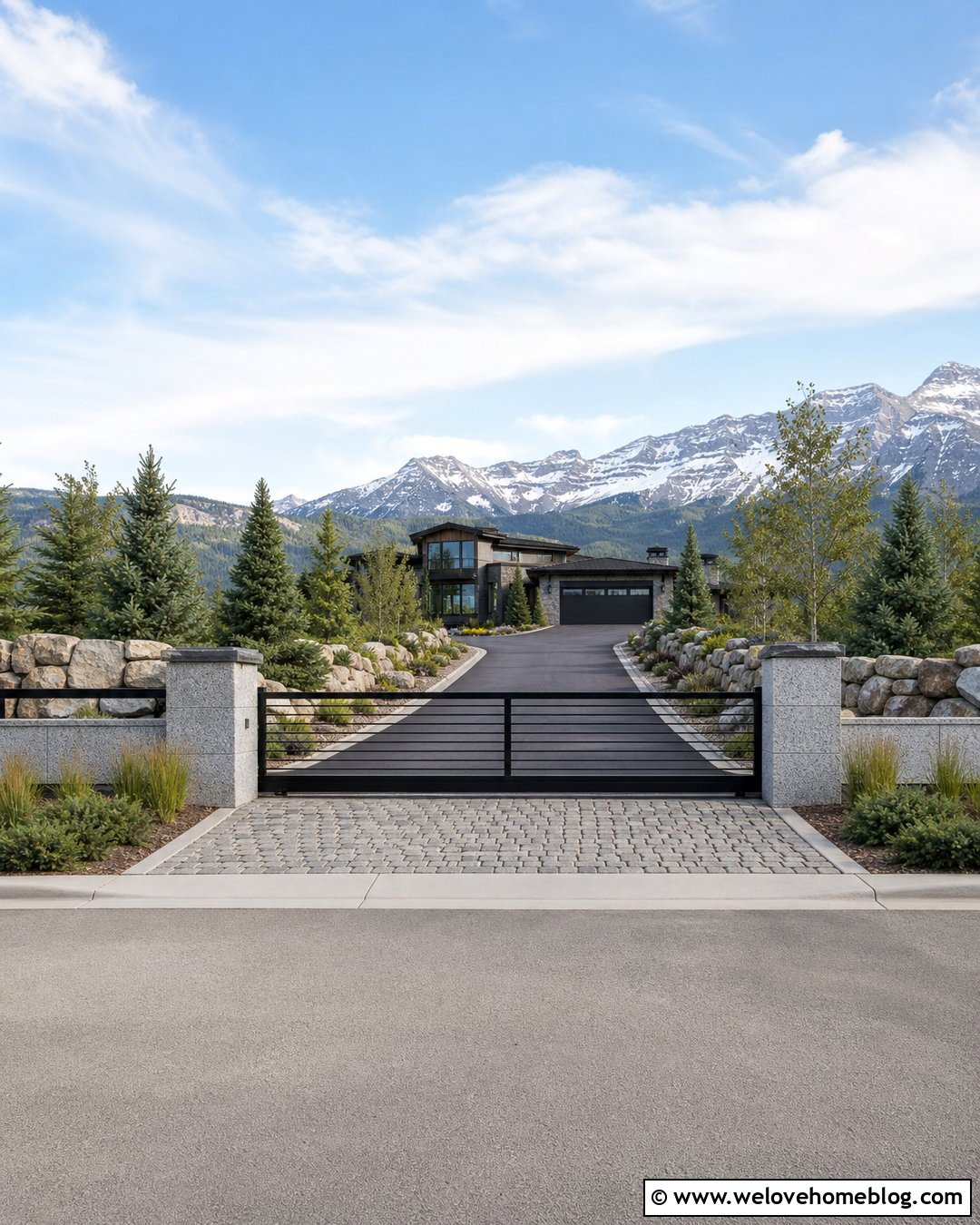
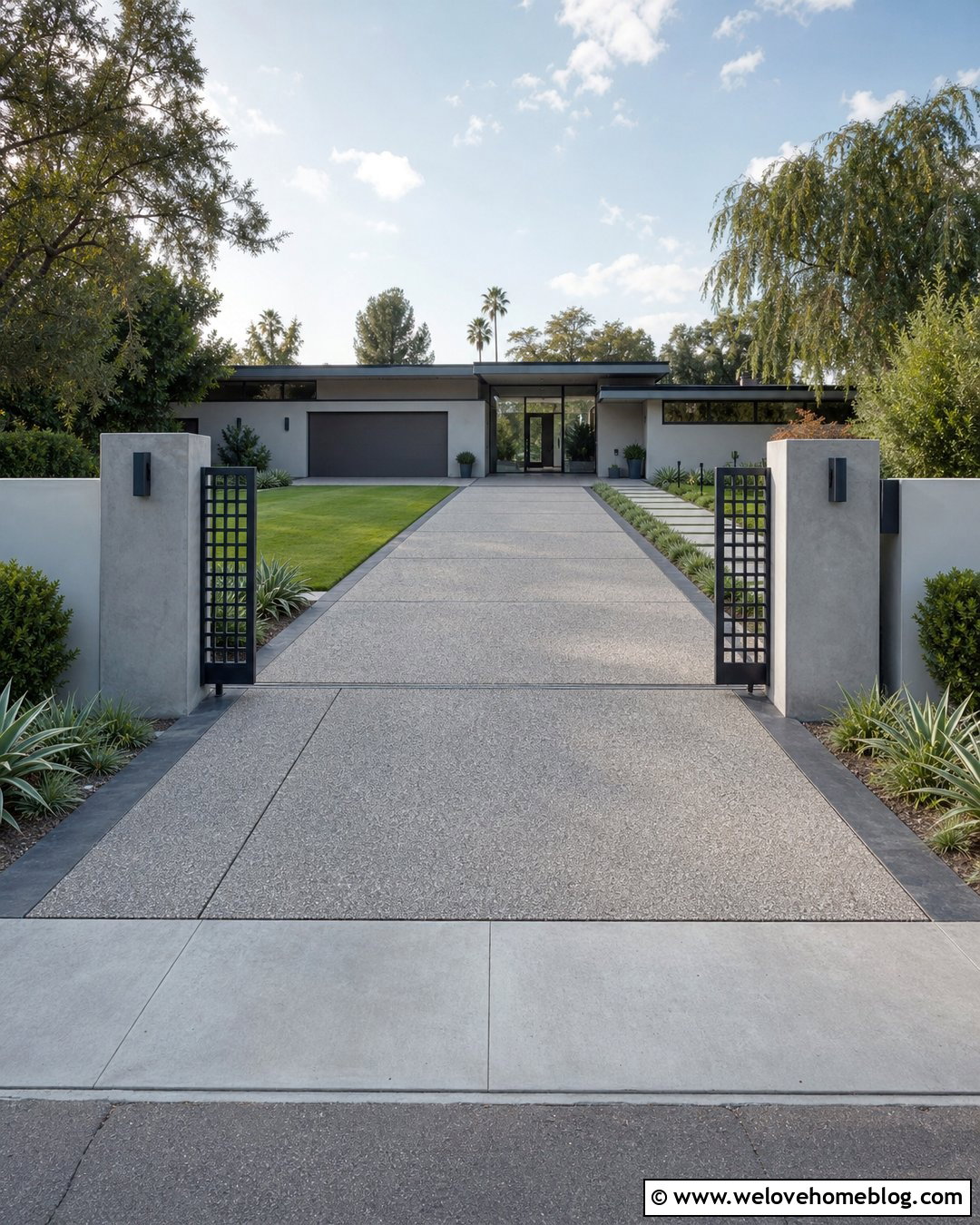
10. Tan Patio Stone Driveway With Limestone Border
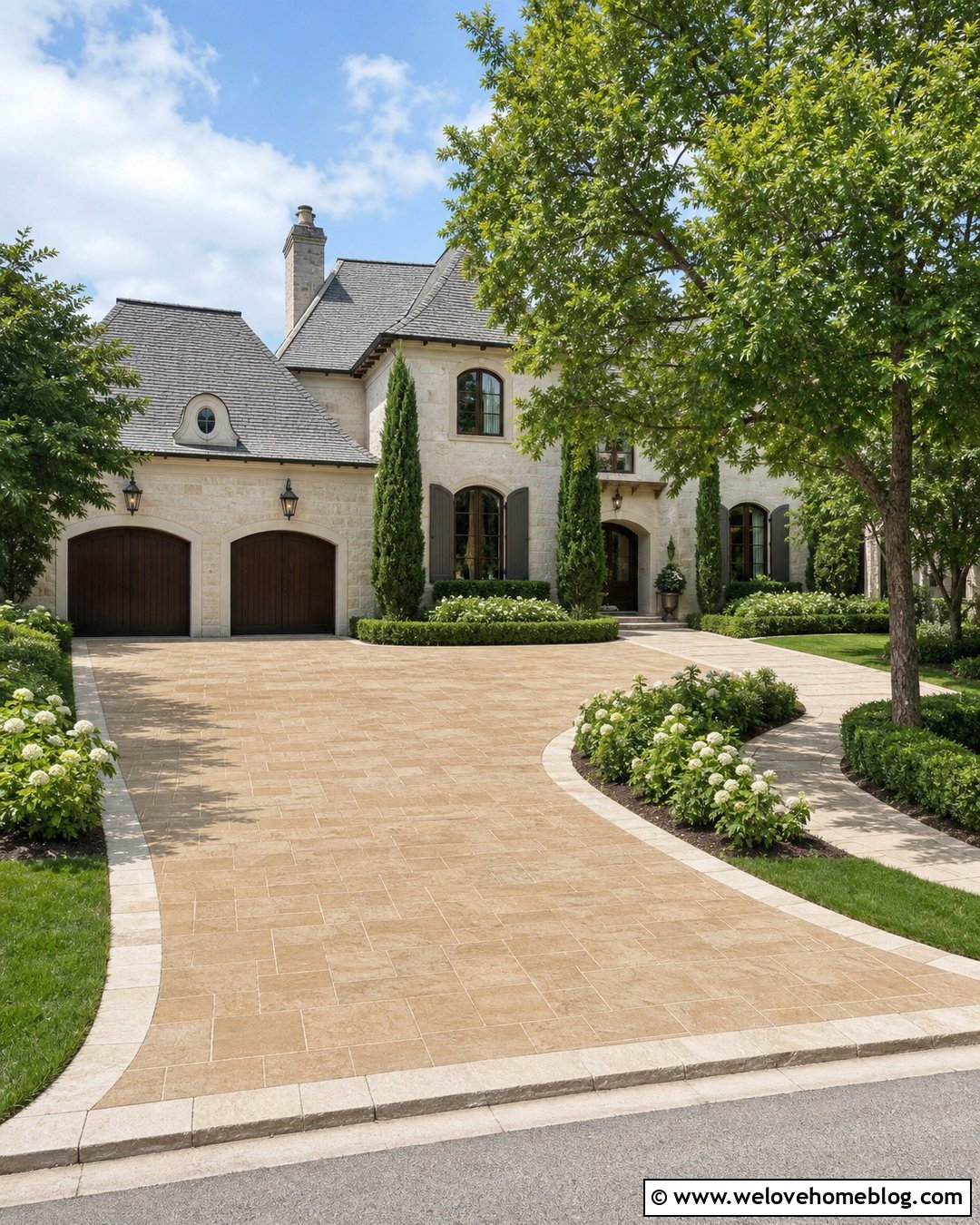
Warm tan patio stones can brighten a shaded front yard and complement cream, brown, or red exterior materials. Use mixed-size concrete pavers with a subtle limestone texture, arranging them in a modular pattern that avoids long, uninterrupted joints. Frame the surface with a pale limestone border for a refined transition into the lawn. Near the house, widen the driveway slightly to create a comfortable parking and turning area. Add curved beds filled with deep green shrubs, white hydrangeas, and a small shade tree. A matching limestone step or walkway helps connect the drive to the entrance. This palette works particularly well with French country, Mediterranean, and traditional suburban homes. The combination of warm paving, light edging, and green landscaping makes the entire approach feel bright, balanced, and welcoming.
11. Mixed Size Patio Stone Driveway With Dark Accents
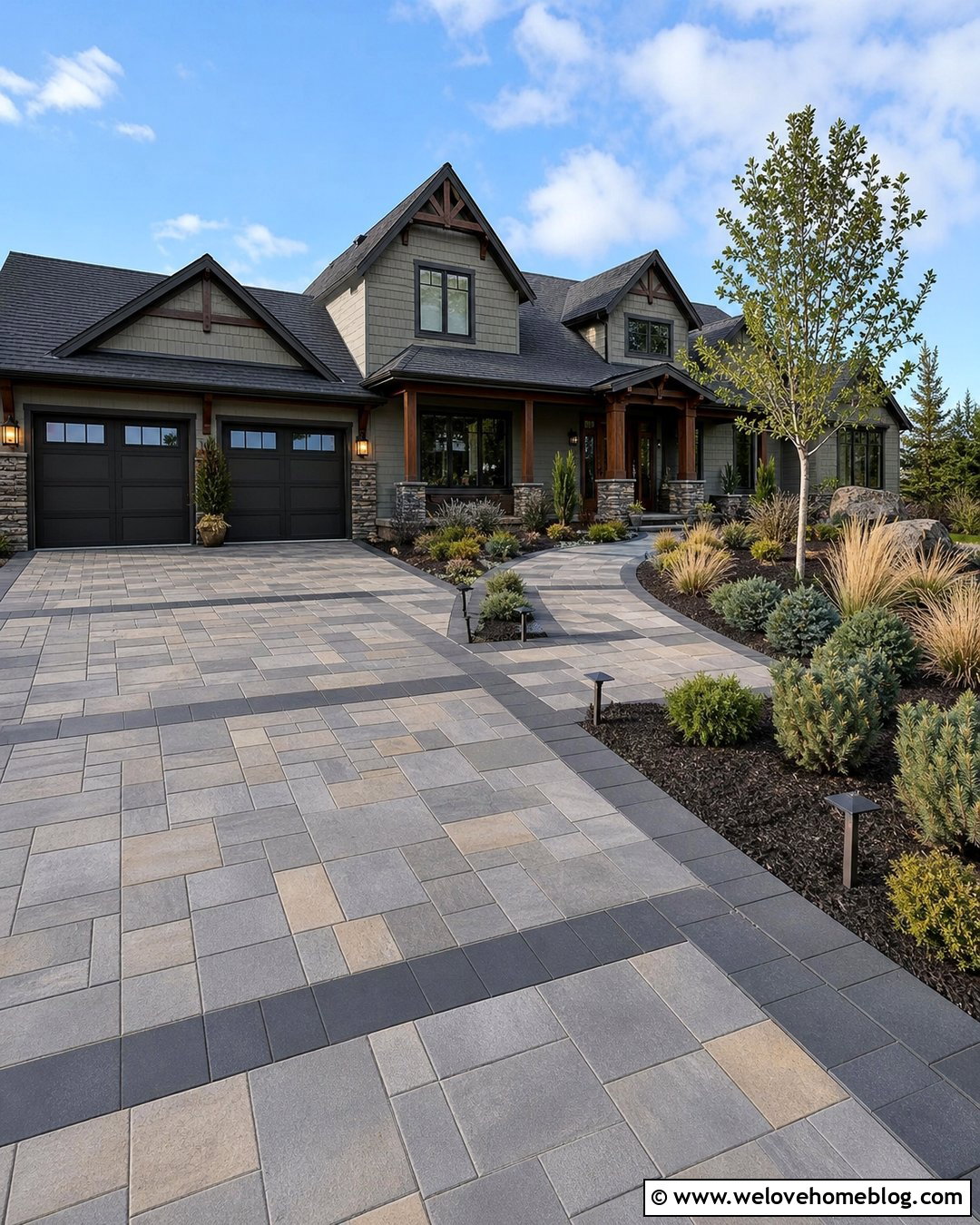
Mixing several patio stone sizes gives a large driveway more detail without relying on bold colors. Select square and rectangular concrete pavers in closely related shades of gray, taupe, and beige. Arrange them in a repeating modular pattern so the variation feels organized rather than random. Introduce charcoal pavers around the perimeter and across the driveway as occasional accent bands. These darker lines can divide a broad surface into smaller visual sections. Add structured planting beds near the garage, low lighting beside the walkway, and an ornamental tree close to the curb. This design suits a large craftsman or contemporary home with multiple exterior materials. Matching one paver color to the roof, stone veneer, or window trim helps connect the driveway to the architecture and creates a more intentional front-yard composition.
12. Red Patio Stone Driveway With Colonial Landscaping
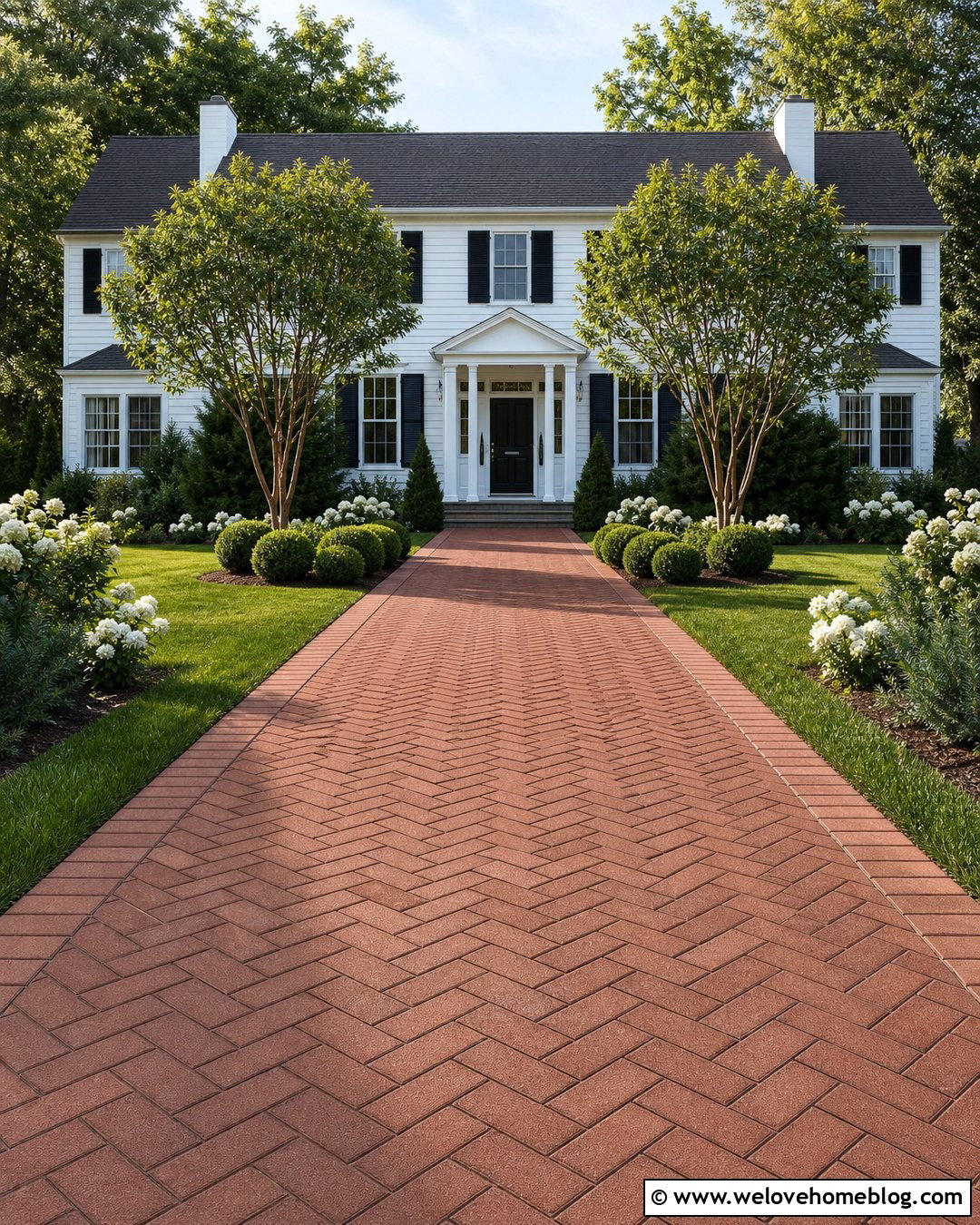
Red and brown patio stones bring classic warmth to a colonial home, especially when the facade includes brick or white siding. Choose tumbled concrete pavers that resemble aged clay brick but are manufactured and rated for driveway use. A herringbone center pattern provides visual strength, while a straight running border creates a neat outline. Keep the driveway symmetrical and pair it with a direct walkway leading to the centered front door. Formal landscaping completes the look. Use matched evergreen shrubs, rounded boxwoods, and two small ornamental trees placed on opposite sides of the entrance. White flowers can lighten the deep paving color during warmer months. This coordinated approach respects the home’s balanced architecture. The red surface, straight layout, traditional pattern, and orderly planting all contribute to a cohesive colonial-style entrance.
13. Patio Stone Driveway With Paver Apron
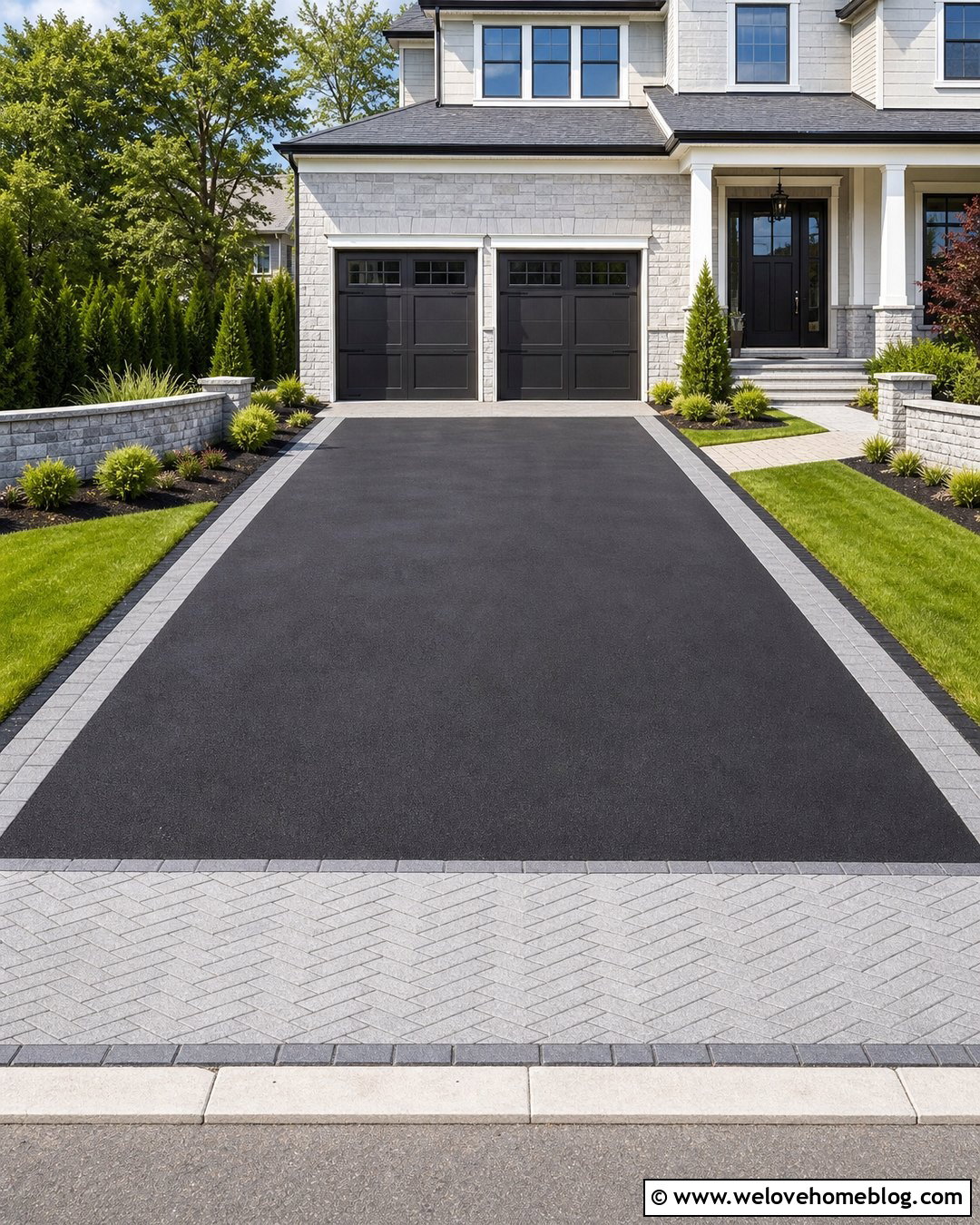
A decorative paver apron provides the look of a patio stone driveway without requiring patterned stone across the entire approach. Begin with a durable poured concrete or asphalt main surface, then add driveway-rated patio stones at the curb and in front of the garage. Use charcoal and gray cobble-style pavers in a fan, running bond, or herringbone pattern. Match the apron borders to a narrow paver ribbon running along both sides of the driveway. This repeated material makes the mixed surface feel connected. Frame the entrance with compact shrubs, decorative grasses, and low stone walls if space allows. The approach is practical for homeowners who want a detailed finish while controlling project scope. It works with nearly any house style because the stone color and pattern can be customized to the facade.
14. Patio Stone Driveway With Grass Center Strip
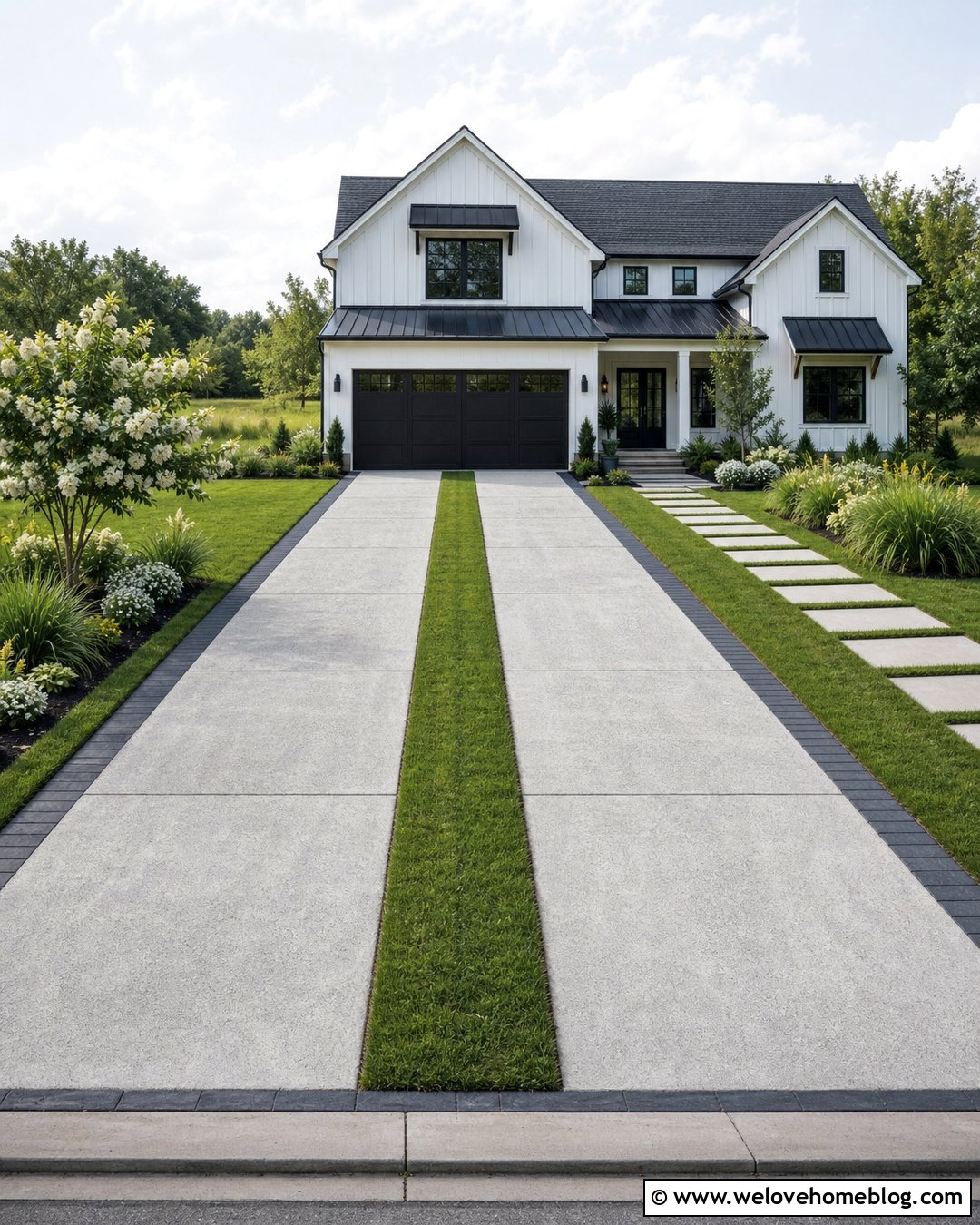
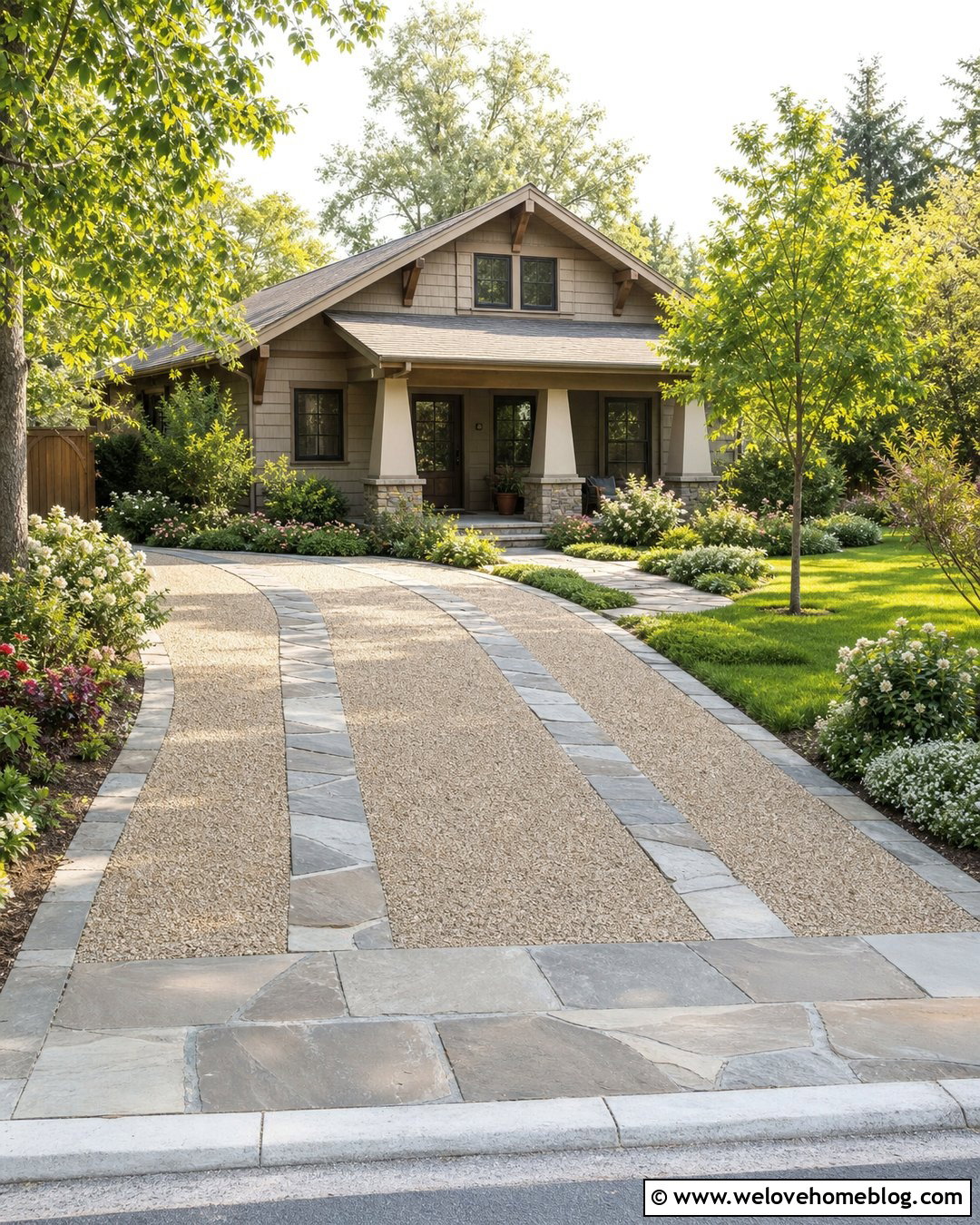
Two paved tire lanes separated by a green center strip can reduce the visual weight of a driveway. Construct the lanes with textured gray patio stones rated for vehicle loads, keeping them wide enough for comfortable daily use. Fill the middle with reinforced turf or another surface suited to the site’s expected traffic and climate. Add a dark paver edge along the outside of each lane to create crisp boundaries. Low ground cover, ornamental grasses, and small flowering shrubs can frame the approach without narrowing it. This layout feels particularly appropriate beside a modern farmhouse, cottage, or compact ranch home. Keep the route mostly straight so the wheel paths remain easy to follow. The combination of stone and greenery creates a softer entrance that appears integrated with the front lawn rather than laid over it.
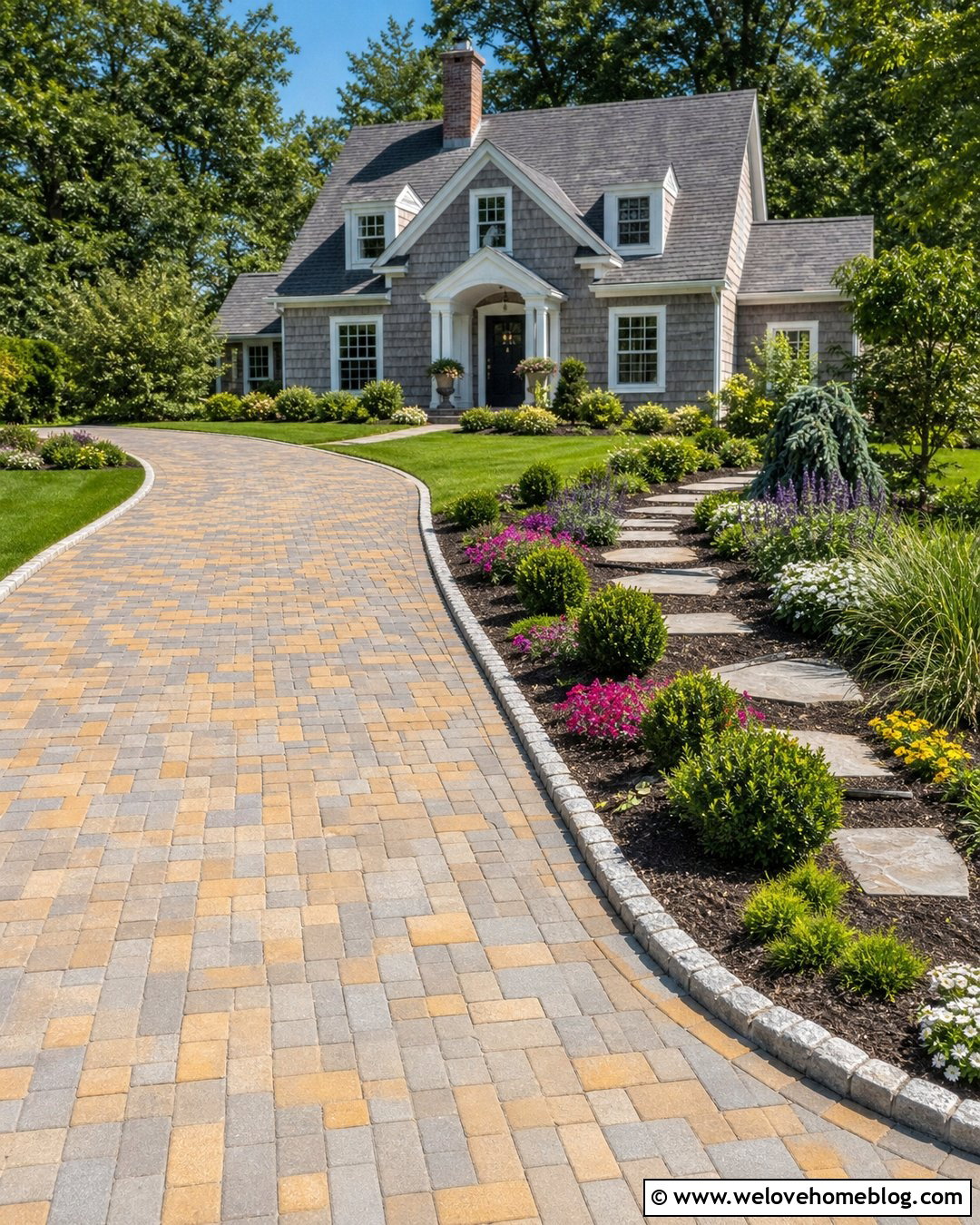
15. Sloped Patio Stone Driveway With Retaining Walls
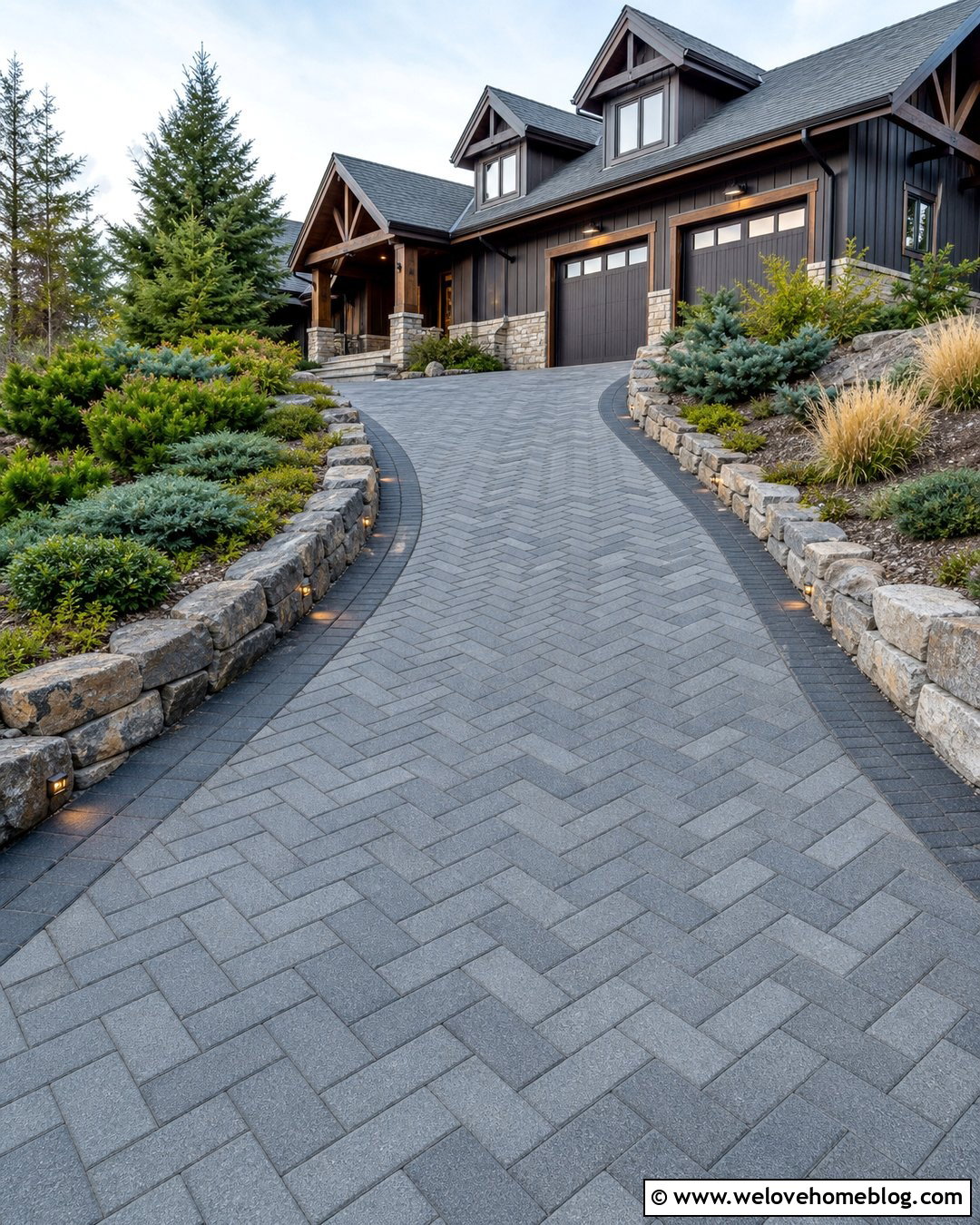
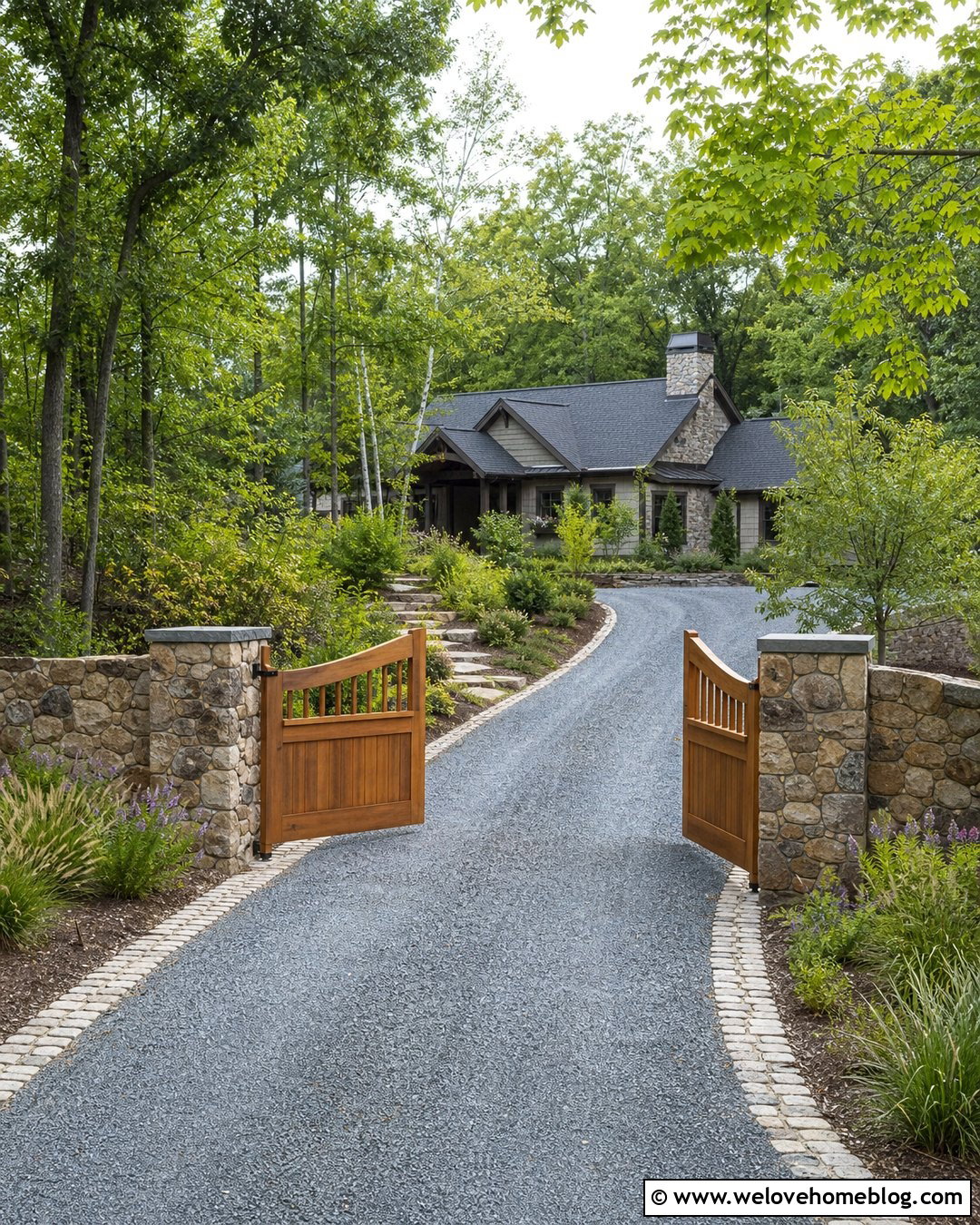
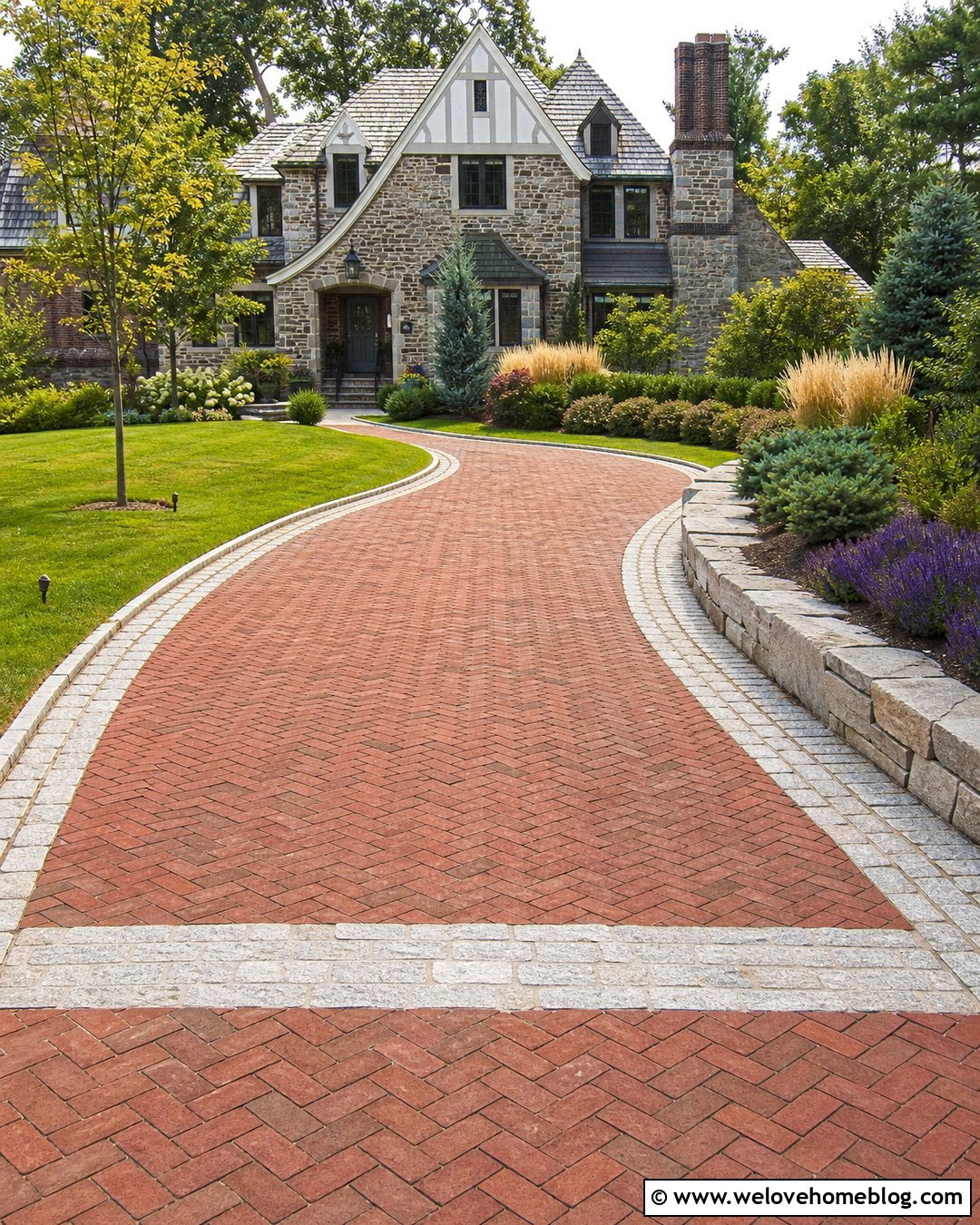
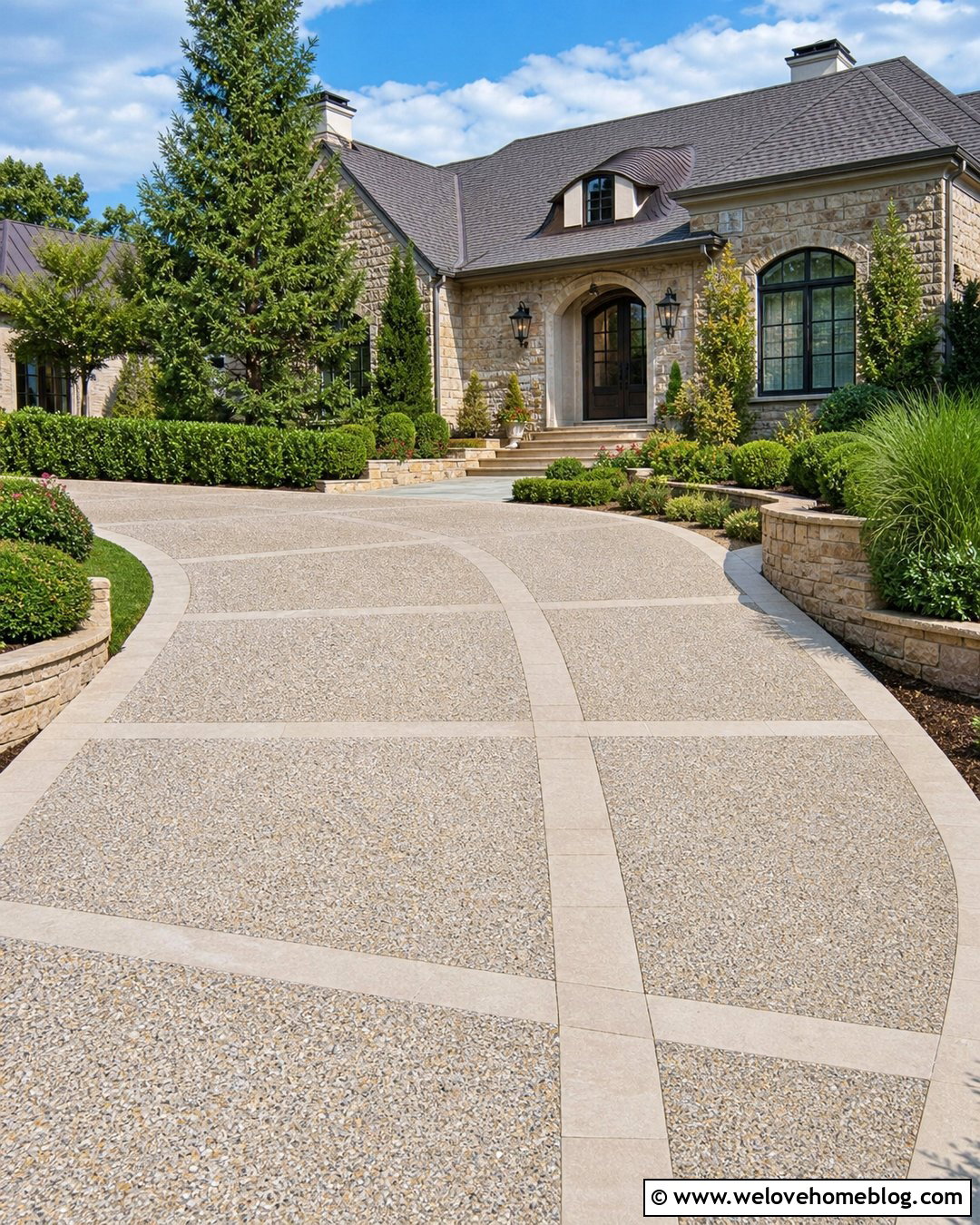
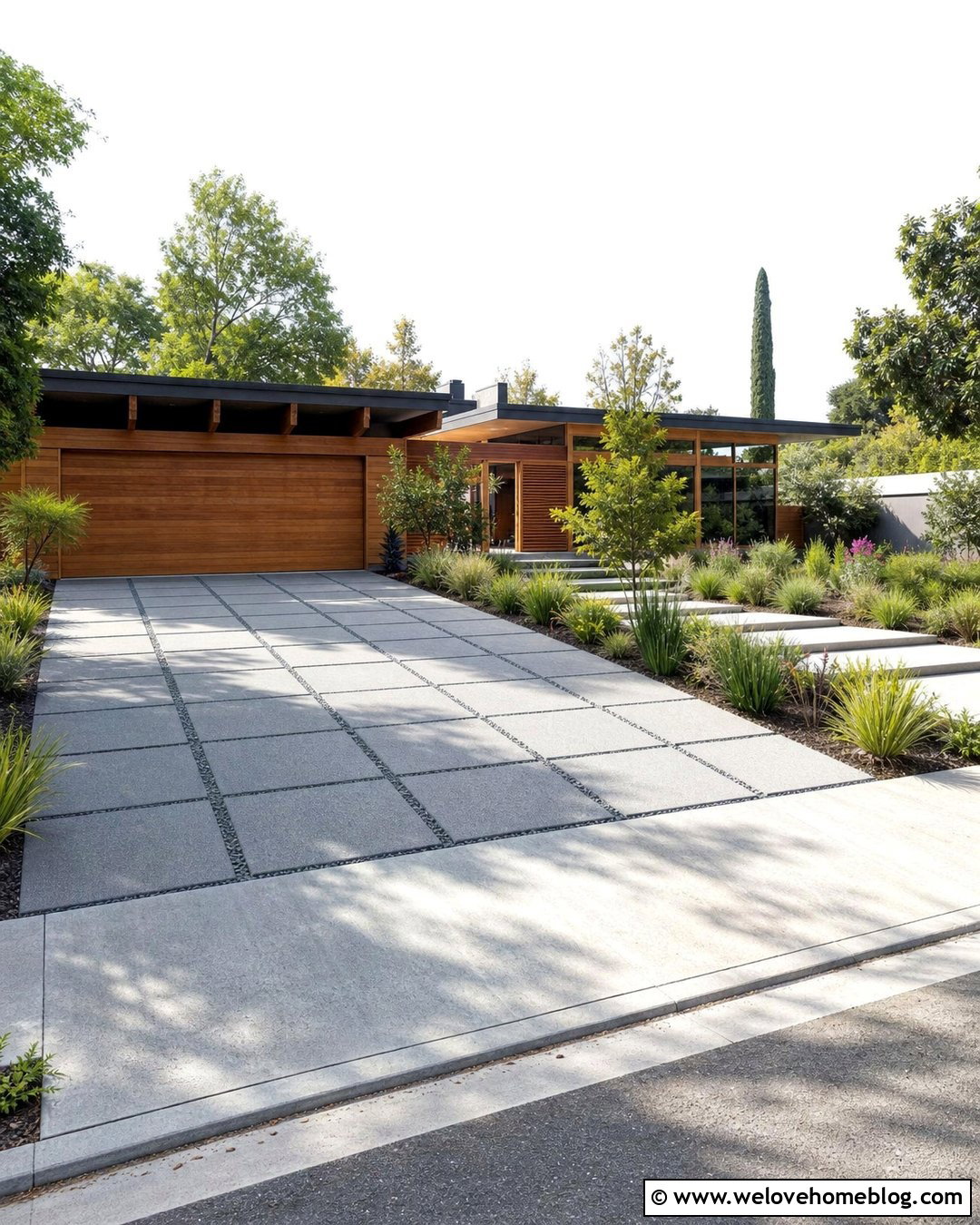
A sloped property needs a driveway design that addresses both appearance and grade changes. Use small or medium interlocking concrete patio stones with a textured surface and a strong driveway rating. A herringbone pattern can visually break up the incline, while dark border courses provide clear edges. Place low retaining walls along sections where the yard rises above the paving. Match the wall material to the house veneer or use complementary natural stone. Plant the upper beds with spreading evergreens, ornamental grasses, and erosion-conscious ground covers suited to local conditions. Step lights or low landscape fixtures can mark the transition between driveway and wall. Stone retaining walls and layered planting are commonly used to integrate noticeable grade changes into driveway landscapes. () Professional grading and base preparation are especially important for this design.
16. Farmhouse Patio Stone Driveway With Gravel Border
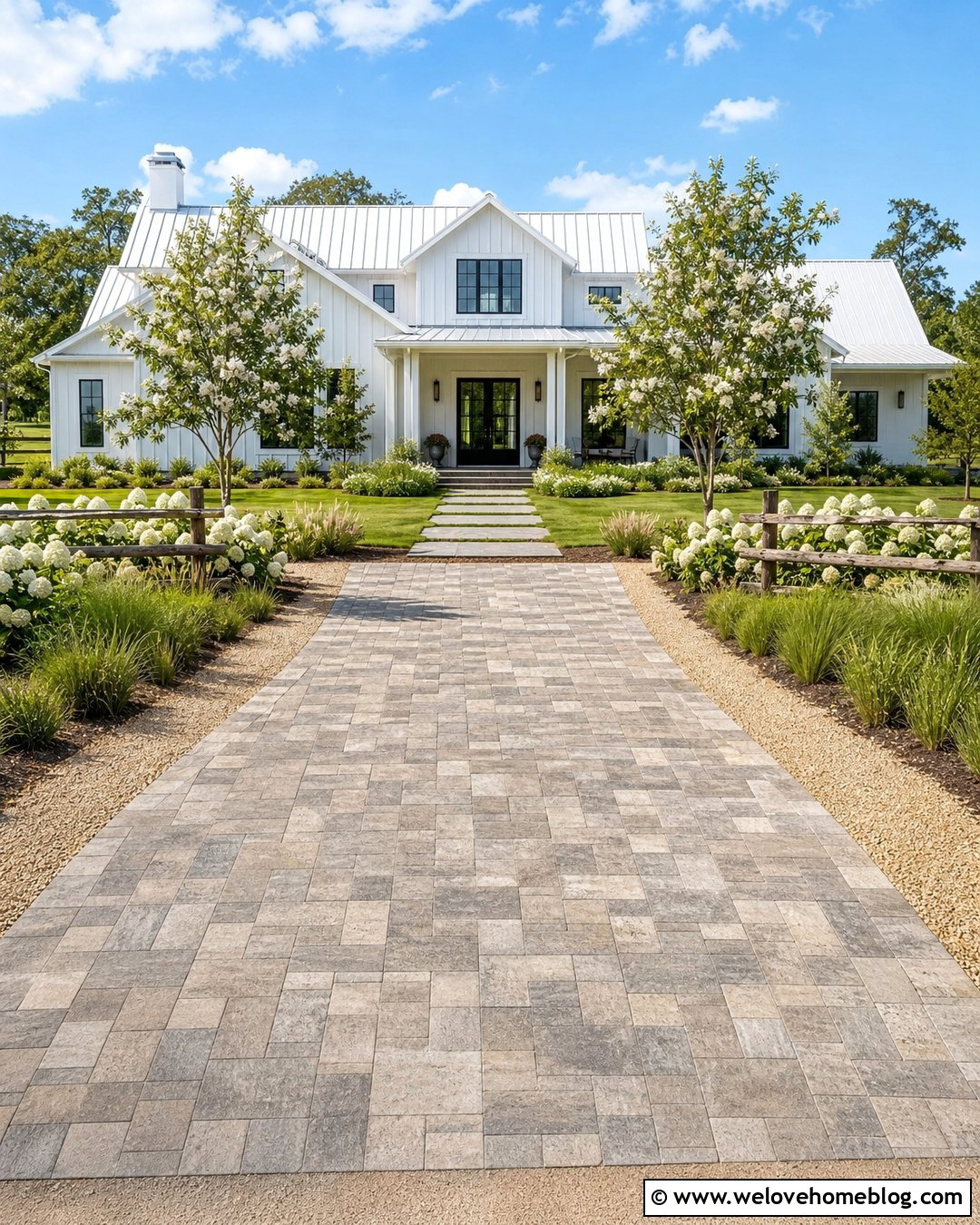
Can a patio stone driveway feel relaxed enough for a farmhouse? Start with tumbled concrete pavers in weathered gray and warm beige, then install them in a simple running bond pattern. Instead of a formal curb, use a wide strip of compacted decorative gravel along each side. A concealed restraint beneath the gravel helps keep the pavers stable while preserving the casual appearance. Frame the entrance with split-rail fencing, native grasses, hydrangeas, and a pair of small flowering trees. Near the porch, connect the driveway to a broad stepping-stone walkway. This design works with both classic white farmhouses and newer homes featuring black windows and natural wood accents. The pavers supply a dependable parking surface, while the gravel and loose planting prevent the front yard from appearing overly formal or urban.
17. Patio Stone Driveway With Geometric Bands
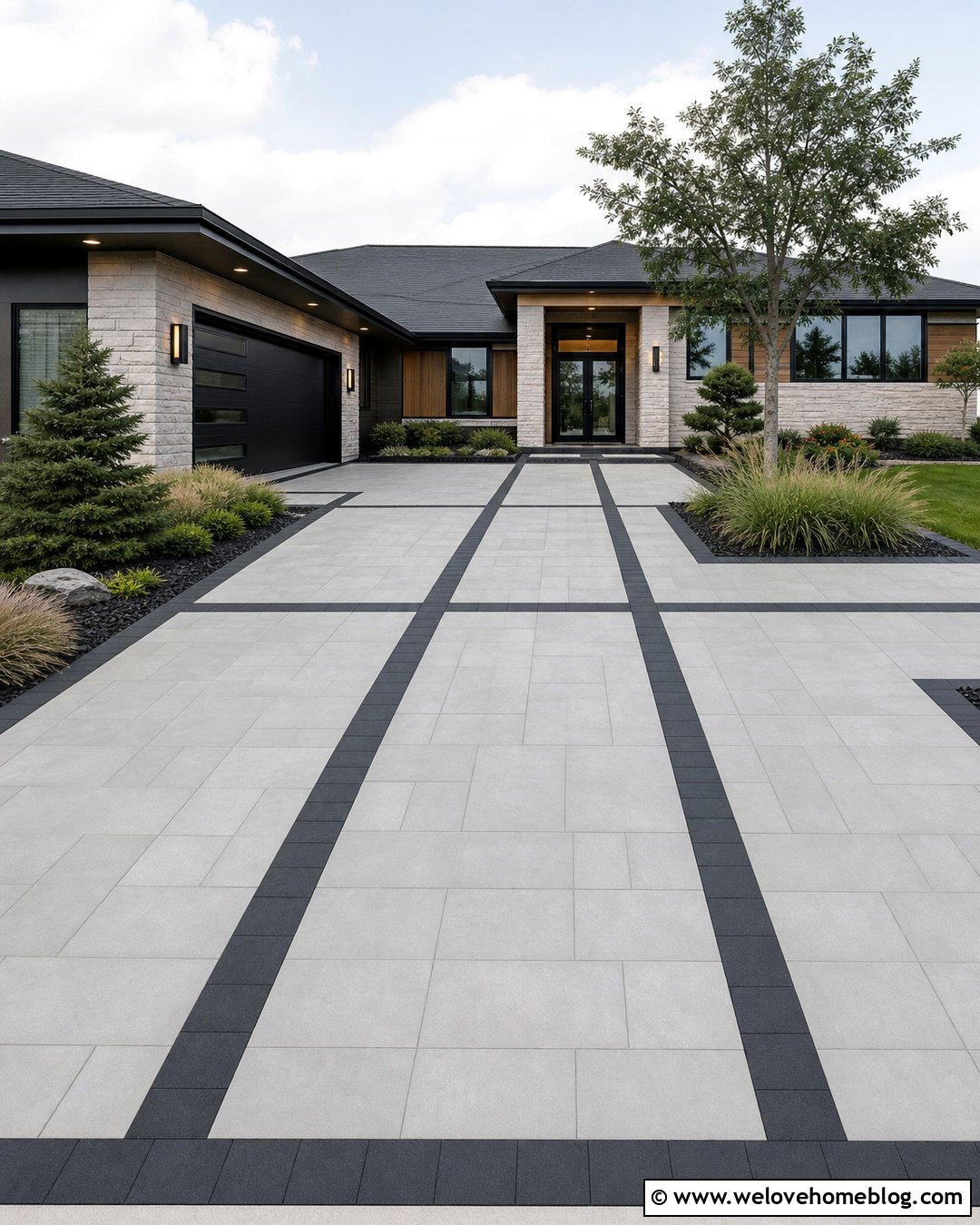
Geometric bands add definition to a wide patio stone driveway and help relate the surface to contemporary architecture. Use large rectangular pavers in a light gray finish for the main field. Insert slim charcoal bands across the width at measured intervals, aligning them with garage doors, walkways, or facade features. Continue one band outward to form the border of the front path. This creates a clear visual connection between parking and pedestrian areas. Surround the driveway with square planting beds containing compact grasses, low evergreen forms, and one sculptural tree. Avoid heavily curved borders because straight landscape lines reinforce the paving pattern. The finished design should appear balanced from the curb, with every dark stripe serving a clear purpose. This approach is particularly successful for modern, transitional, and updated ranch homes.
18. Small Patio Stone Driveway With Matching Walkway
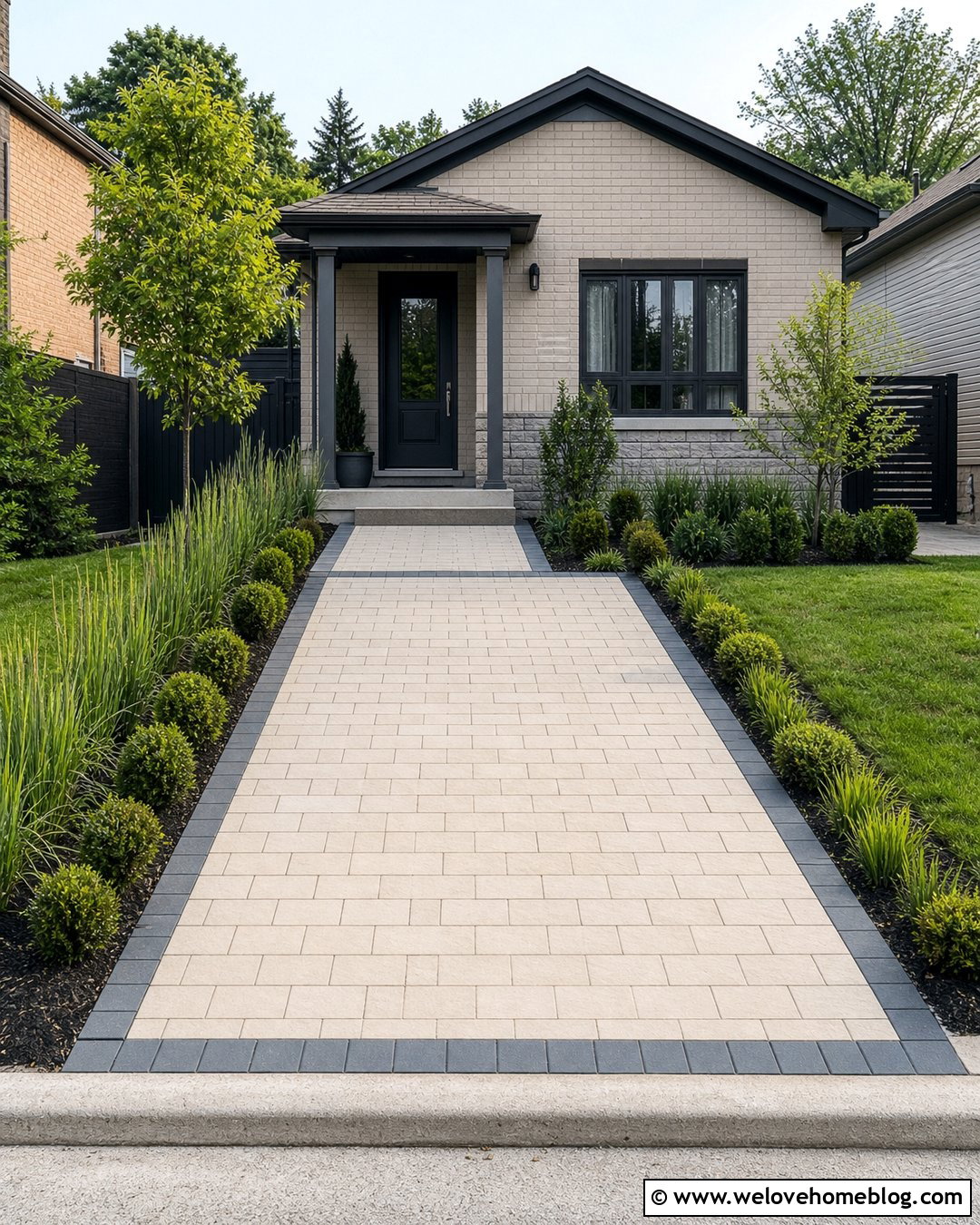
Limited frontage calls for a driveway that feels tidy, useful, and visually connected to the entrance. Choose small rectangular patio stones in a light neutral color, since a simple palette can keep a compact area from looking crowded. Install the stones in a running bond pattern across both the driveway and an adjoining walkway. Separate the two areas with a single charcoal border rather than switching materials. Narrow planting beds can hold upright grasses, compact boxwoods, and one small ornamental tree. Keep plants away from the vehicle door zones and preserve an unobstructed route to the porch. Large driveway spaces often accommodate elaborate patterns, but small layouts benefit from consistent materials and clearly organized edges. () This complete look is suitable for townhouses, bungalows, cottages, and narrow suburban lots.
19. Bluestone Patio Stone Driveway With Stone Walls
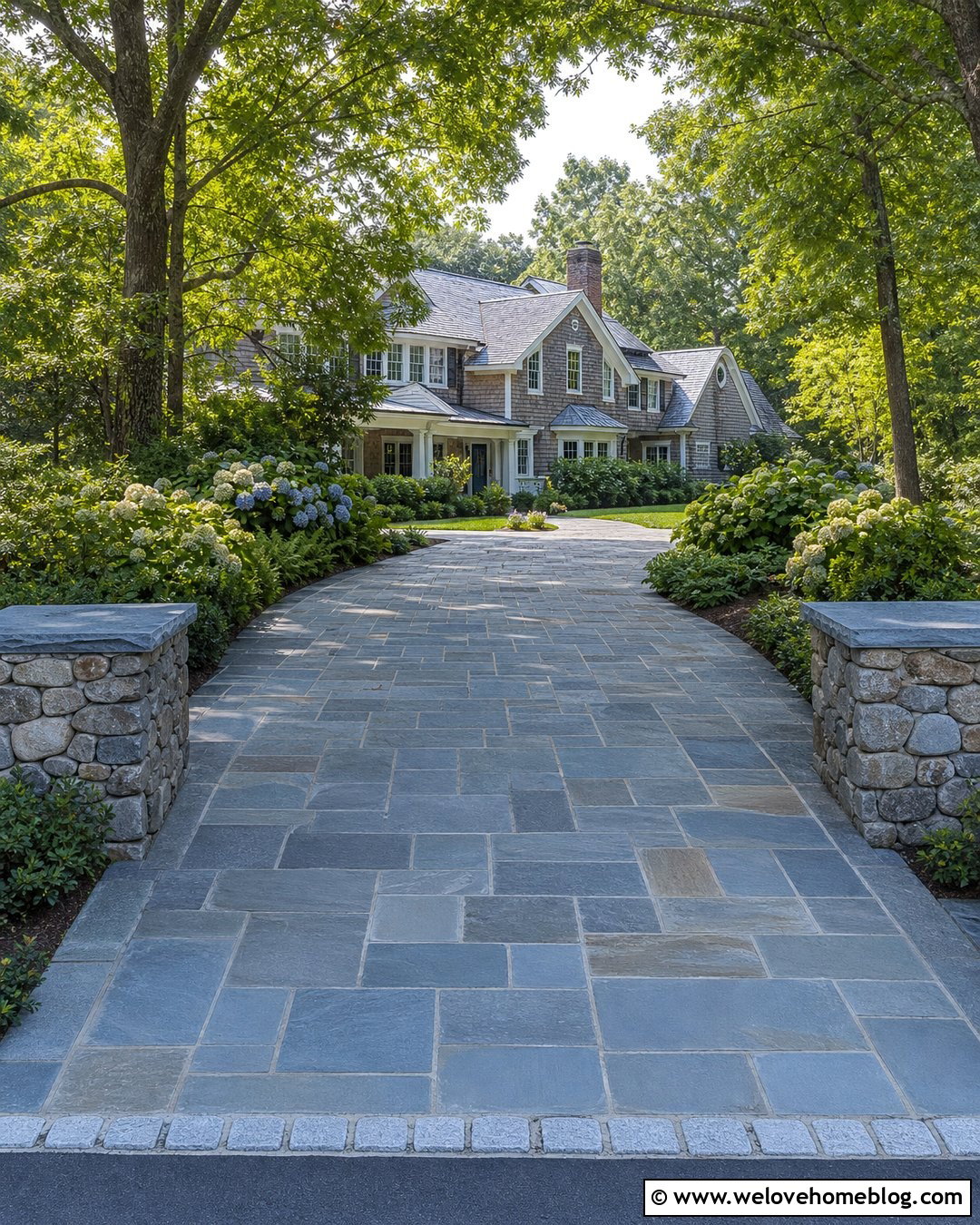
Bluestone creates a sophisticated driveway surface with natural shifts between blue-gray, charcoal, and muted green. Use thick, vehicle-rated bluestone pavers in rectangular cuts and arrange them in a random ashlar pattern. Low fieldstone walls along the entrance can echo the material’s natural texture while providing a clear boundary between the driveway and planting areas. Cap the walls with flat bluestone pieces for continuity. Add ferns, hydrangeas, inkberry, and shade-tolerant ground cover around the walls. A broad bluestone walkway should connect the parking area to the front steps. This combination is especially attractive beside a shingle-style, traditional stone, or New England-inspired home. Keep the joint widths controlled and the borders relatively simple. The stone’s natural color variation already supplies enough detail to make the entire approach feel distinctive.
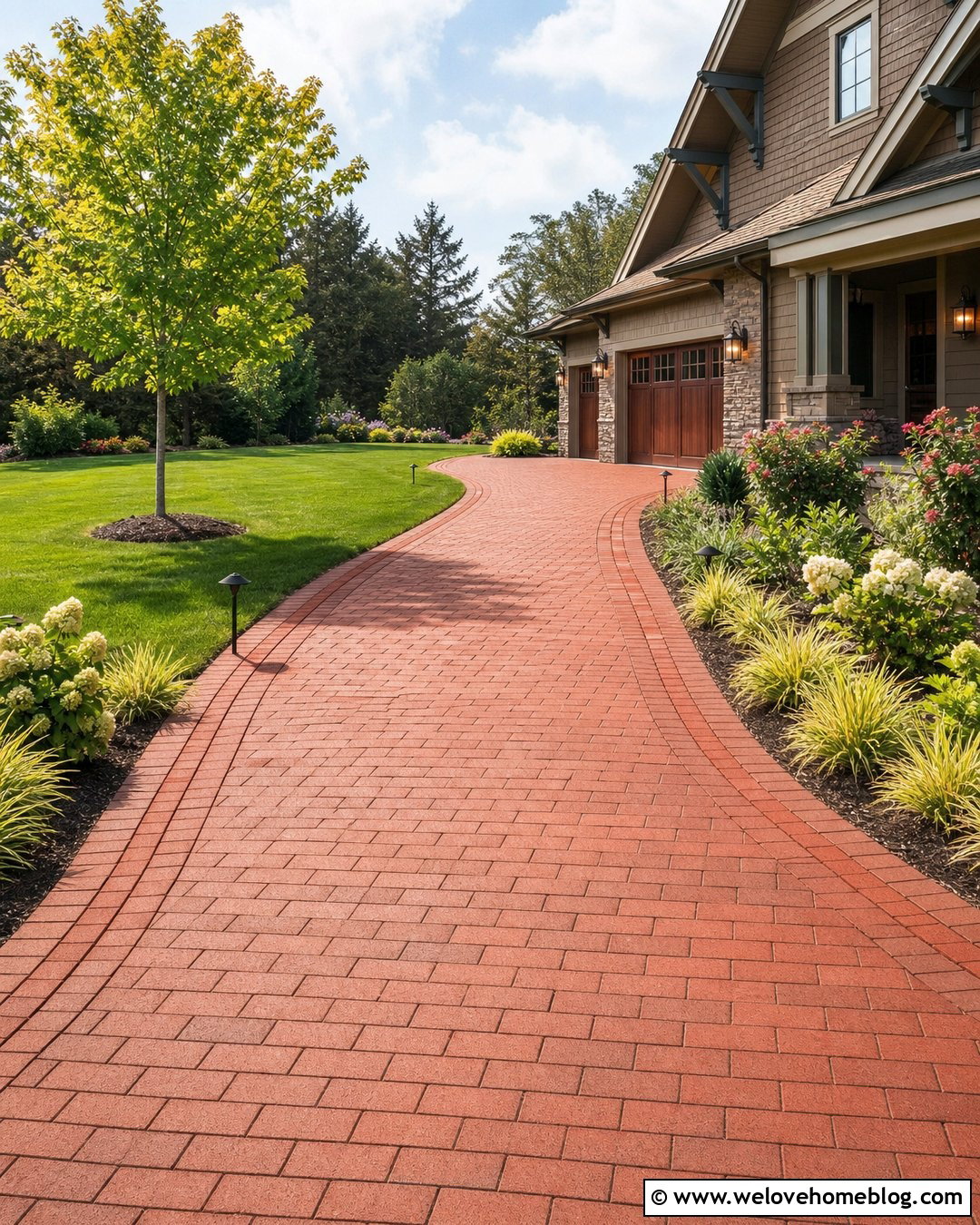
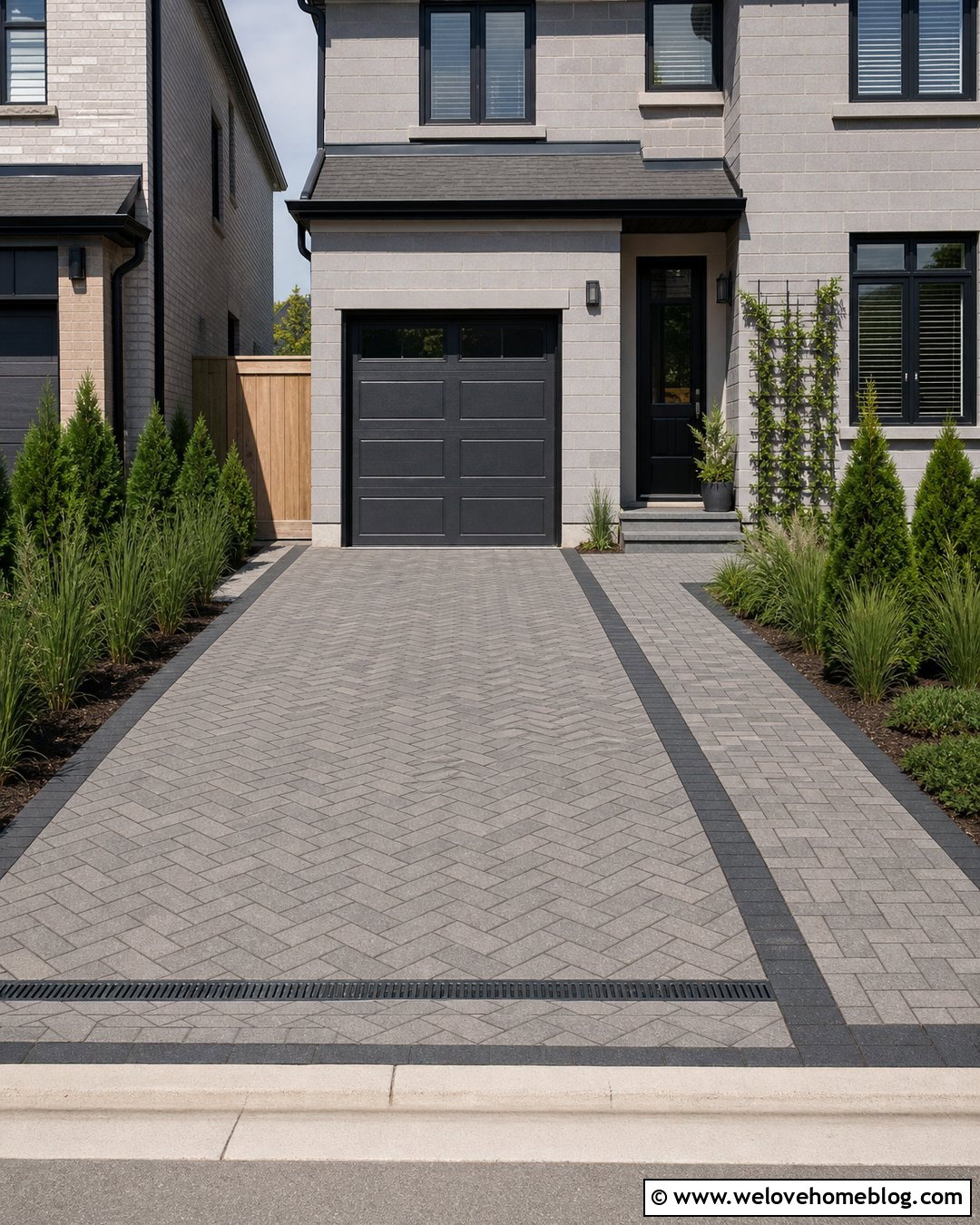
20. Patio Stone Driveway With Circular Medallion
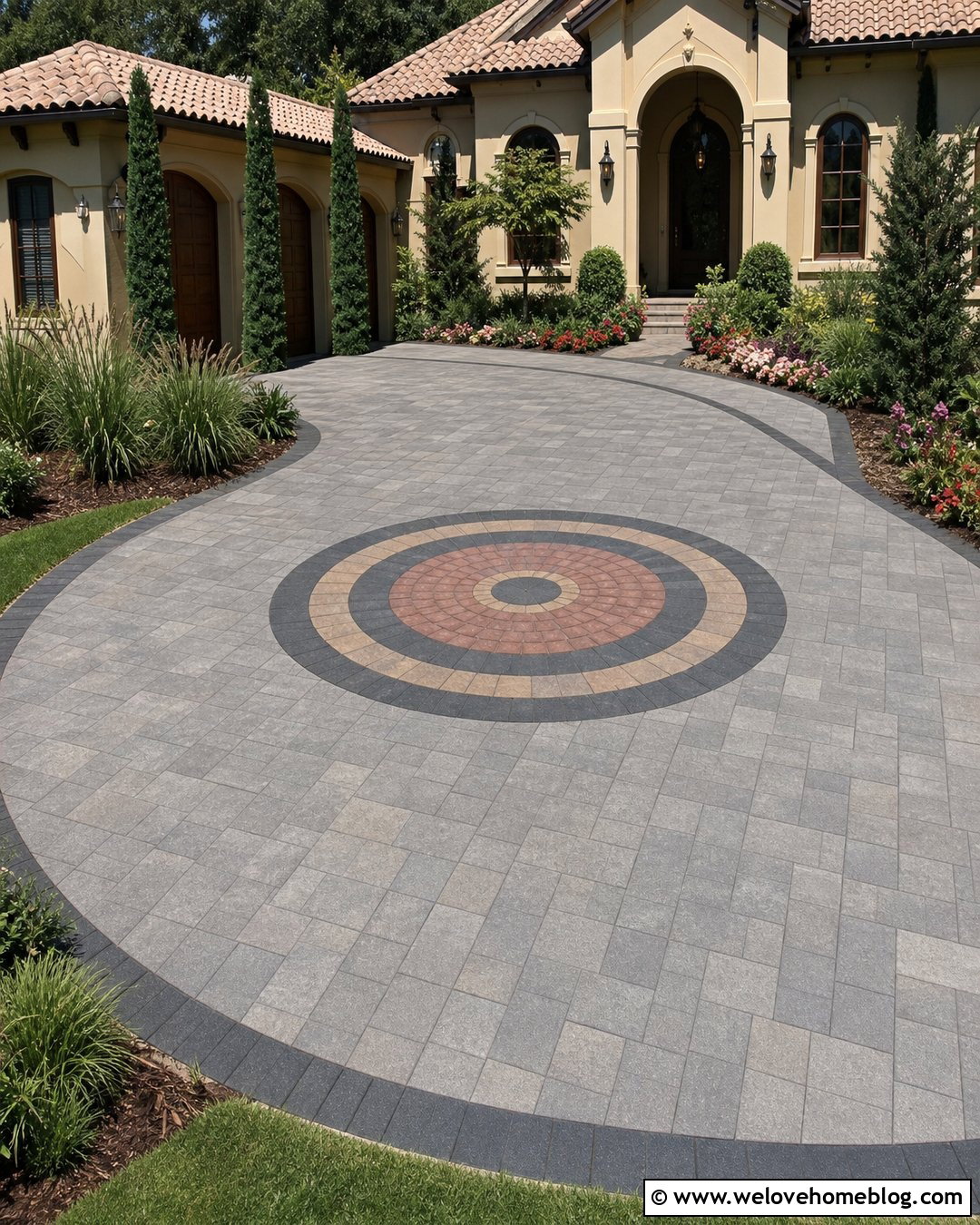
A circular medallion can give a broad patio stone driveway a defined focal point without changing the overall layout. Build the main surface with neutral rectangular concrete pavers in a running bond or modular pattern. At the center of the turning area, insert a round design using charcoal, tan, and soft red pavers laid in concentric rings. Repeat the darkest medallion color around the driveway perimeter so the feature feels integrated. Curved planting beds can follow the circle and include low shrubs, flowering perennials, and balanced groups of ornamental grasses. Use the same stones on the walkway or front landing for another subtle connection. This design works well in front of a large traditional, Mediterranean, or transitional house. The medallion adds detail while leaving enough open paving for easy vehicle movement.
Conclusion:
The best **20 Patio Stone Driveway Ideas** treat the driveway as part of the entire front-yard design. Material, pattern, borders, landscaping, and house architecture should support one another rather than compete for attention. Gray linear pavers create a modern look, while tumbled cobbles, bluestone, and warm brick-colored stones feel more traditional. Curves can soften a large yard, and matching walkways help smaller spaces appear organized. Before selecting any product, verify that the stone is rated for driveways and suitable for local weather conditions. Plan the base, drainage, edge restraints, and grading as carefully as the visible pattern. With thoughtful installation, patio stone can create an attractive, practical entrance that adds lasting character to your home.

Related posts:
Leave a Reply