
American driveways can be practical, welcoming, and strongly connected to the architecture of the home. The best designs treat the surface, layout, borders, walkway, drainage, and front-yard landscaping as one coordinated exterior. Current driveway inspiration ranges from classic asphalt and herringbone brick to permeable pavers, exposed aggregate, gravel, and mixed-material layouts. Straight designs make efficient use of compact lots, while circular and curved driveways create an impressive approach on larger properties. Material choice should also reflect local weather, terrain, maintenance needs, and neighborhood character. () Whether you own a suburban ranch, Craftsman bungalow, coastal cottage, or country farmhouse, the following complete looks offer adaptable **20 American Driveway Ideas**.

1. Black Asphalt Driveway With Brick Edging
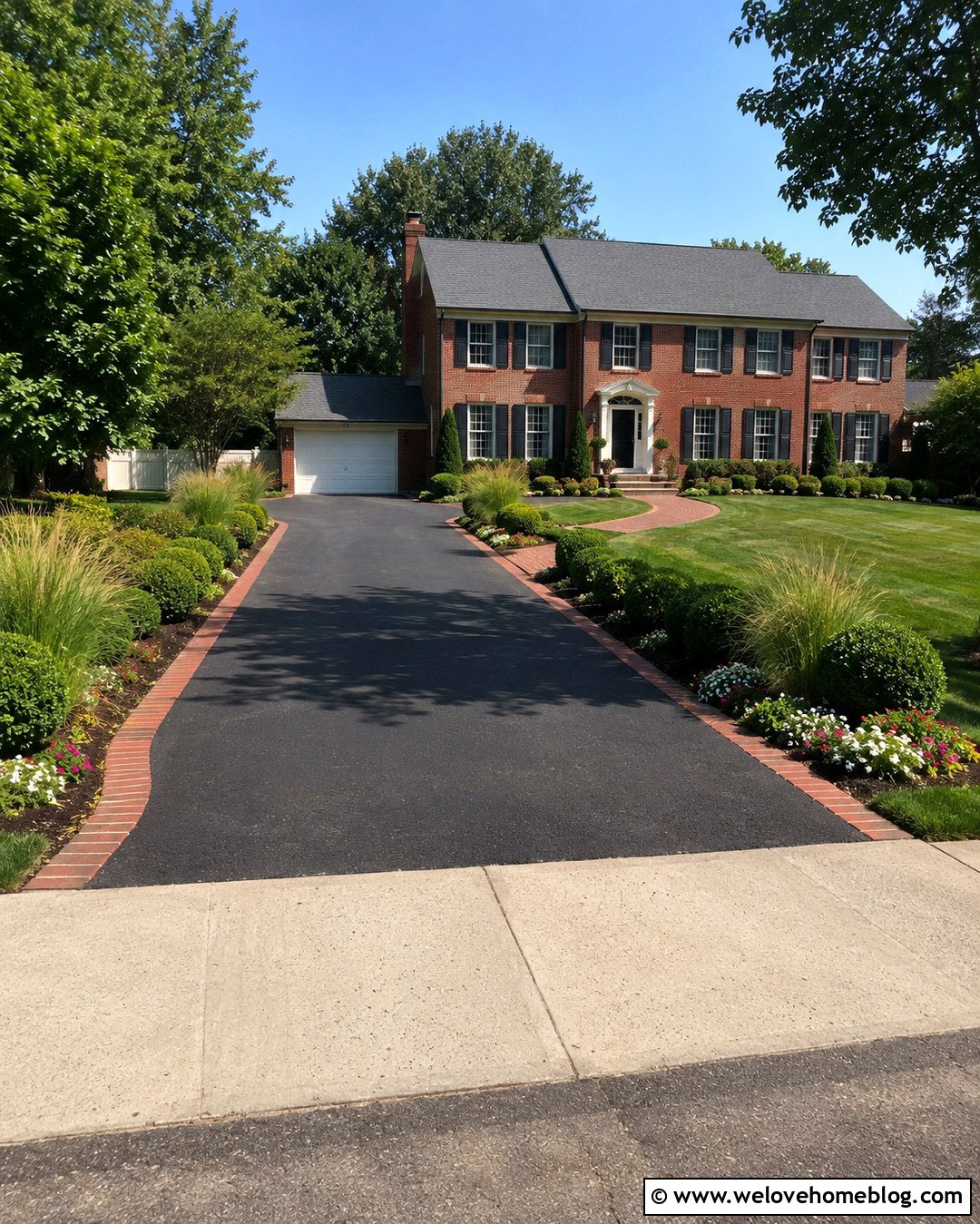
A fresh black asphalt driveway creates a crisp, familiar look that works especially well with red brick Colonials and traditional suburban homes. Keep the layout straight and wide enough to align naturally with the garage doors. Clay brick edging can frame both sides while connecting the dark surface to the home’s masonry. Use the same brick around a curved walkway or small mailbox bed for consistency. Low boxwoods, ornamental grasses, and seasonal flowers soften the long paved area without narrowing the driving space. A pale concrete apron at the street can provide a neat transition from the curb. This complete design feels polished but not overly formal, making it a practical choice for homeowners who want classic American curb appeal.
2. Concrete Driveway With Paver Borders
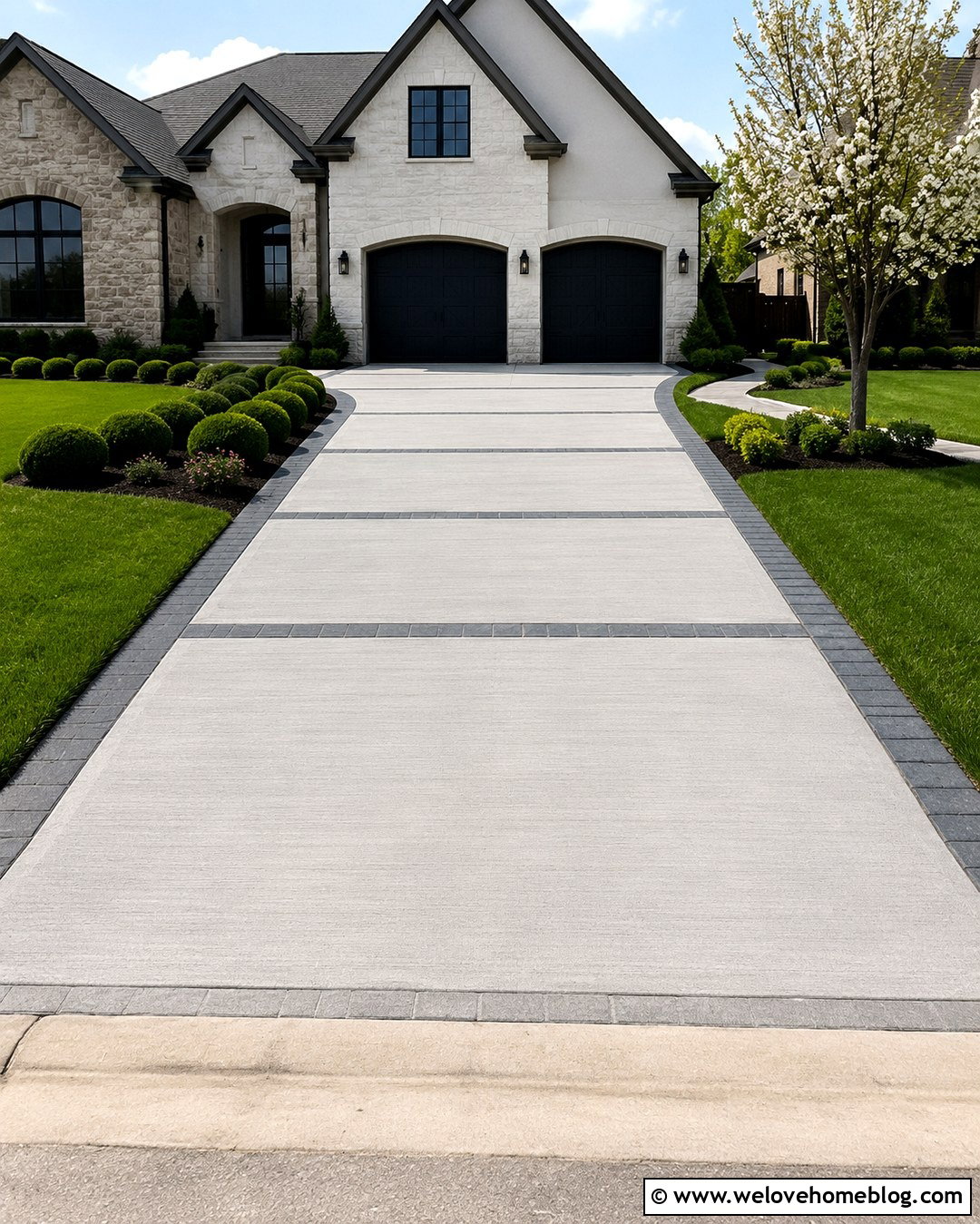
Clean poured concrete gains much more character when it is framed with contrasting paver borders. Choose light gray concrete with a subtle broom finish, then add charcoal or warm brown pavers along the sides and across selected joints. These decorative bands visually divide a wide driveway and help it complement a modern suburban home. A straight layout suits a compact lot, while gently flared edges make the entrance feel more generous. Repeat the border pavers in the front walkway for a connected appearance. Simple lawn panels, rounded shrubs, and one small flowering tree can frame the surface without creating clutter. The combination feels customized while preserving the straightforward construction and understated appearance many American homeowners appreciate.
3. Gravel Driveway With Stone Borders
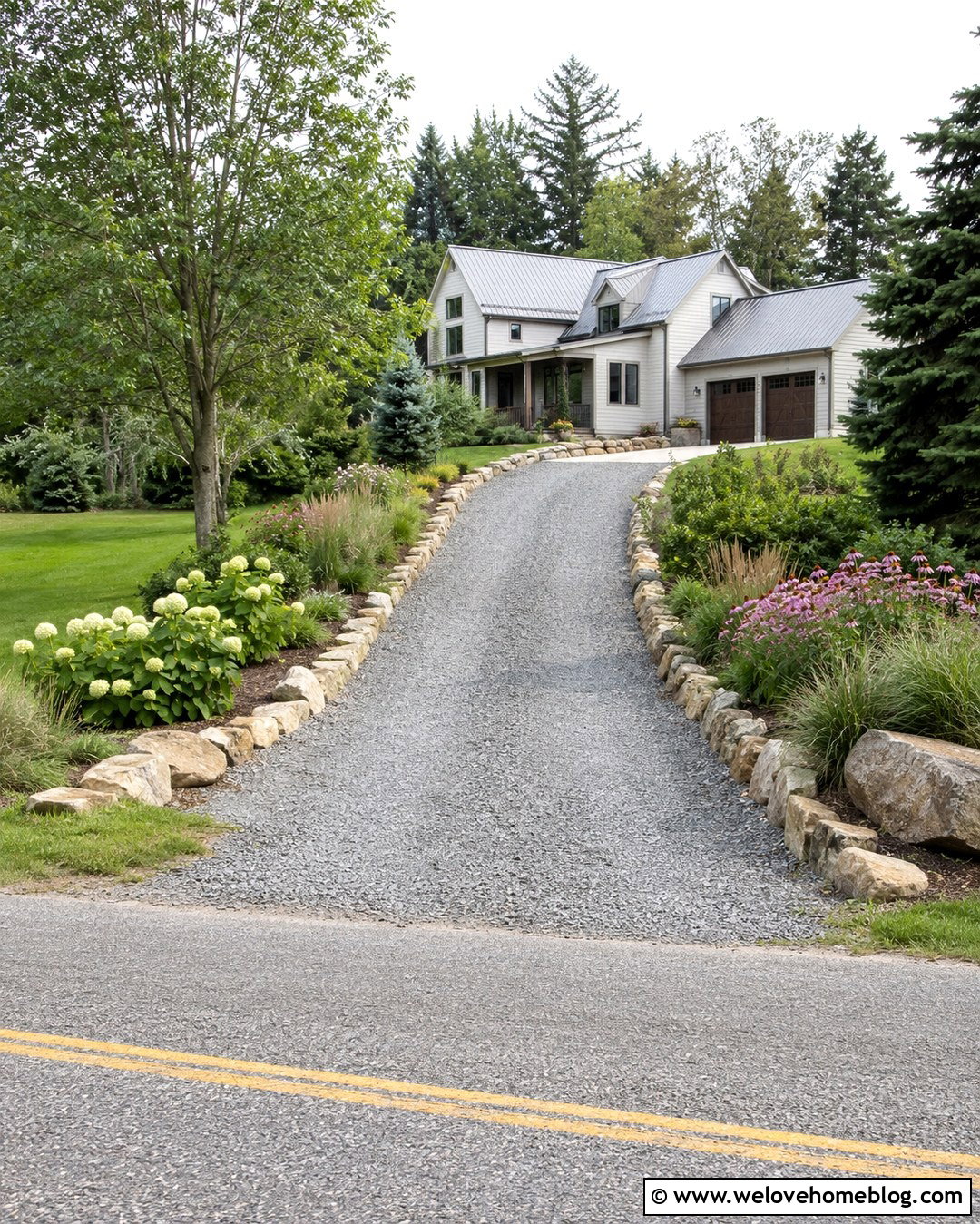
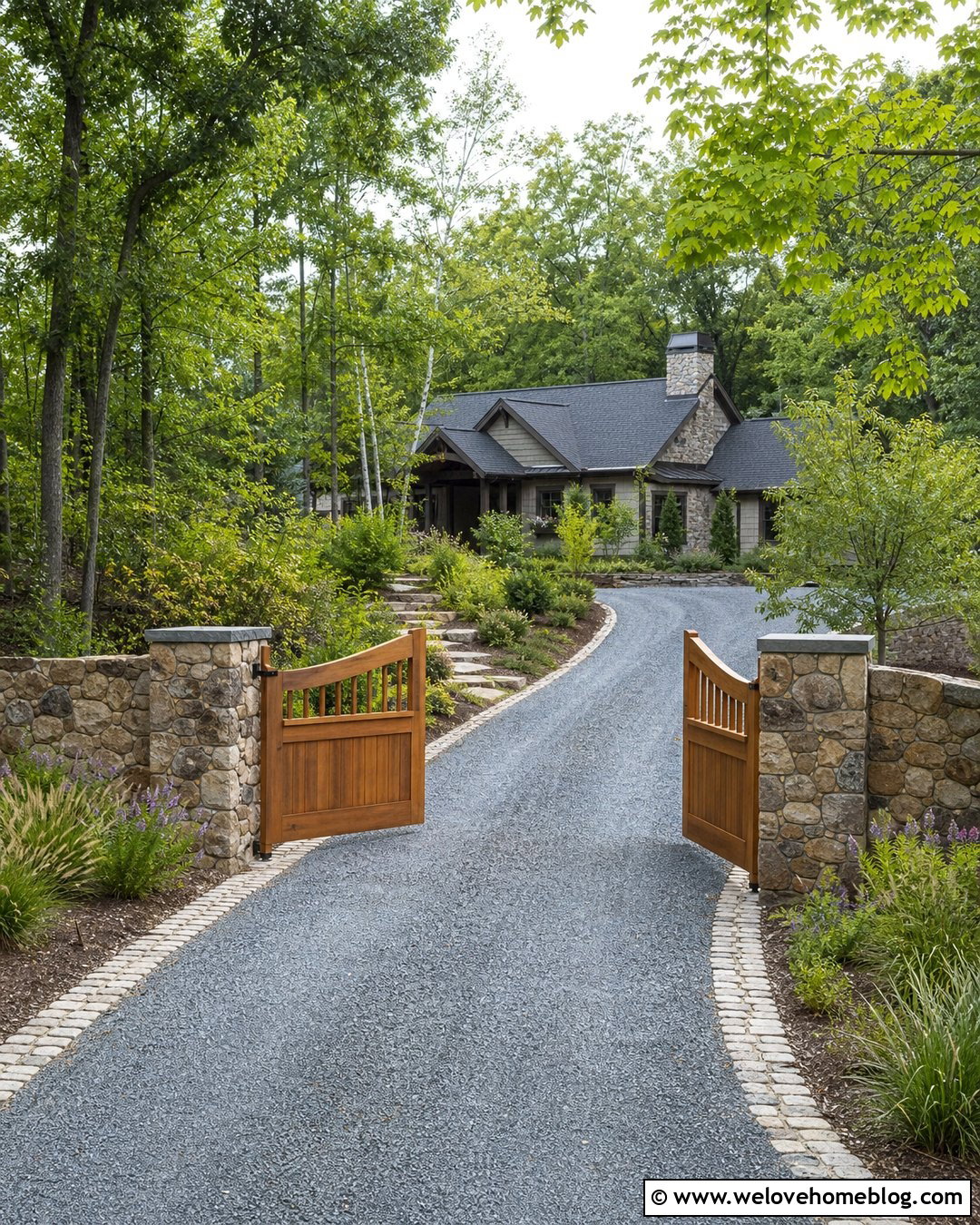
The soft crunch and natural texture of gravel make a country driveway feel relaxed and inviting. Use compacted gray crushed stone rather than loose decorative pebbles for the main driving surface, then contain it with sturdy fieldstone or granite block borders. A gently curved route looks especially appropriate when approaching a farmhouse, barn-style home, or wooded cabin. Wide planting beds can follow the curves with native grasses, hydrangeas, coneflowers, and low evergreen shrubs. At the garage, install a short concrete or paver landing to create a stable transition and reduce scattered gravel. Proper grading and a well-prepared base remain important because the finished driveway should direct water away from buildings. This complete look balances rural character with an orderly, maintained edge.
4. Herringbone Brick Driveway With Boxwood Landscaping
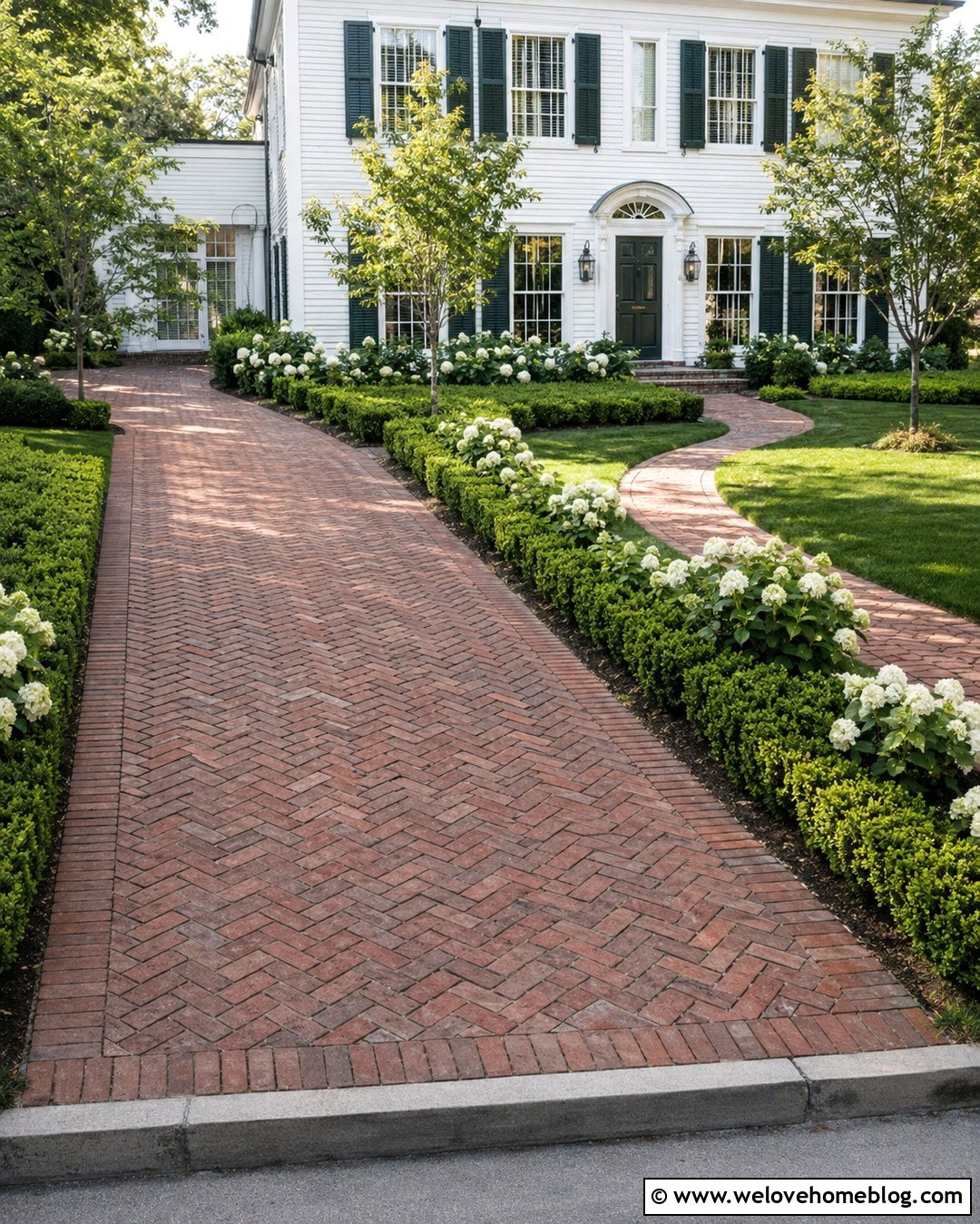
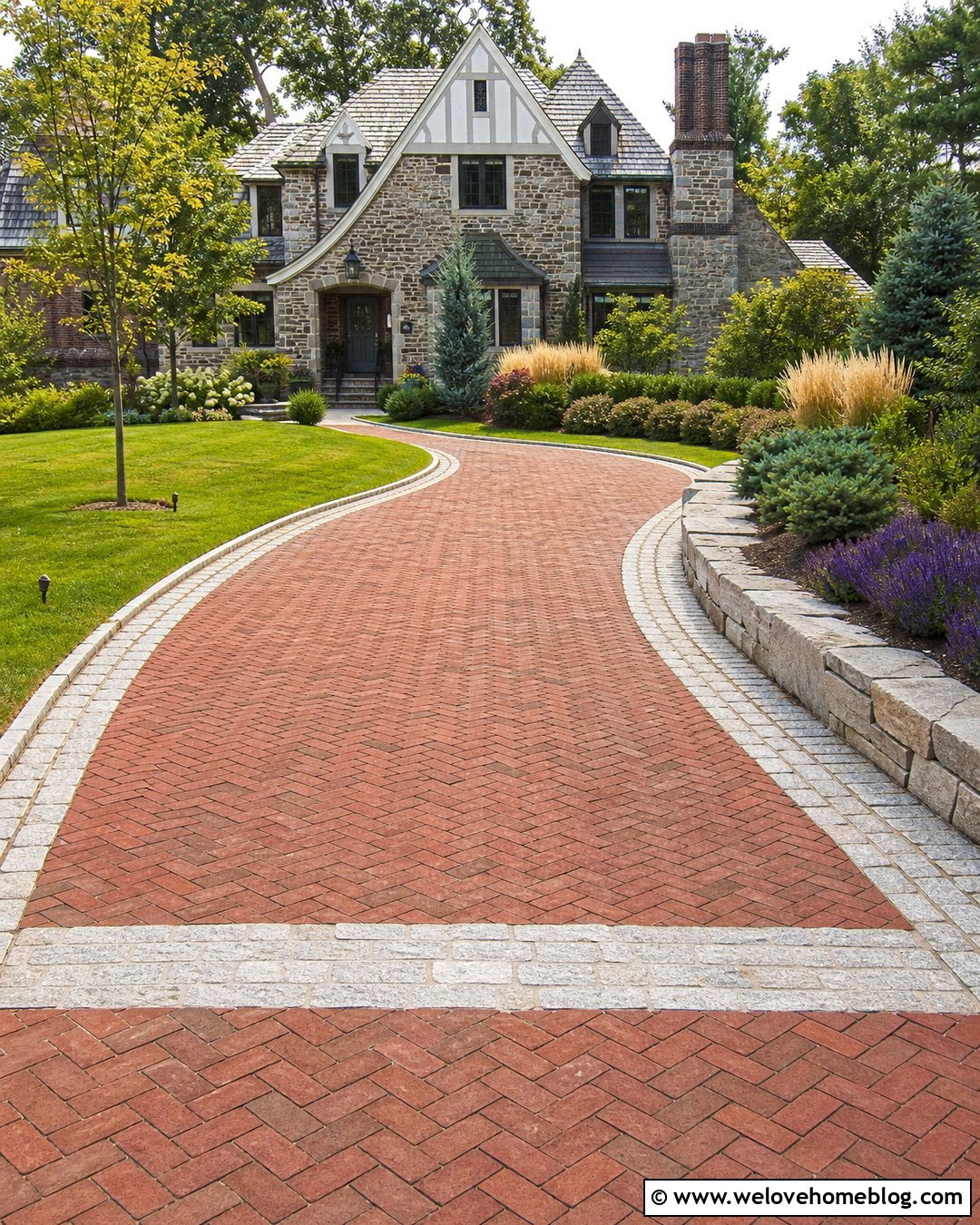
Warm clay brick pavers laid in a herringbone pattern give a Colonial or Georgian home a strong sense of tradition. The diagonal pattern creates visual movement across a straight or rectangular driveway, while a soldier-course brick border provides a clean finished edge. Select brick tones that relate to the home without matching the facade too closely. Slight color variation can keep the paved area from looking flat. Symmetrical boxwood hedges, white flowering shrubs, and two small ornamental trees reinforce the formal architecture. A matching brick walkway should branch toward the front entrance without interrupting the parking area. Because individual pavers can be replaced, localized repairs are more manageable than rebuilding an entire continuous surface. The overall driveway feels established, orderly, and distinctly residential.
5. Circular Driveway With a Central Garden
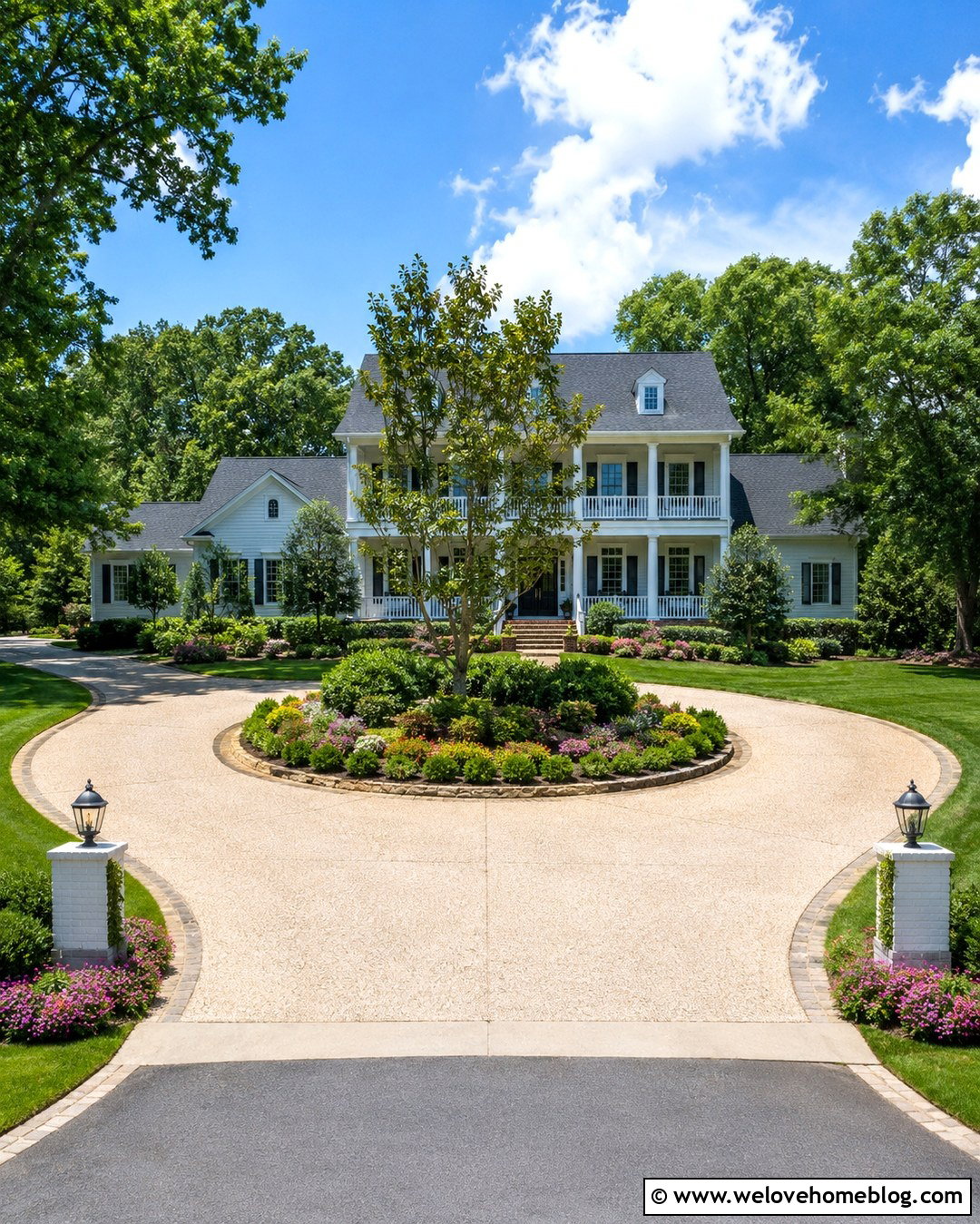
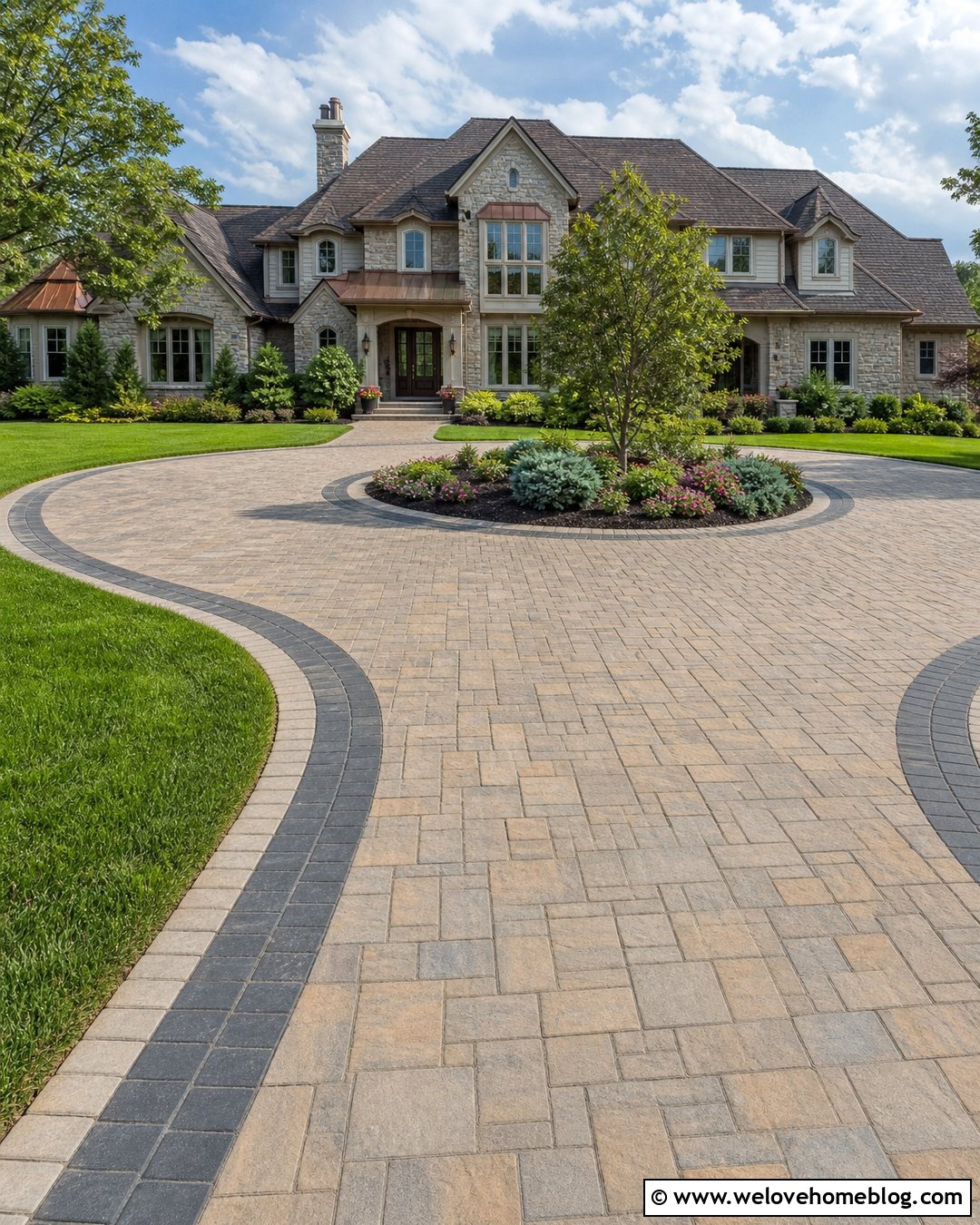
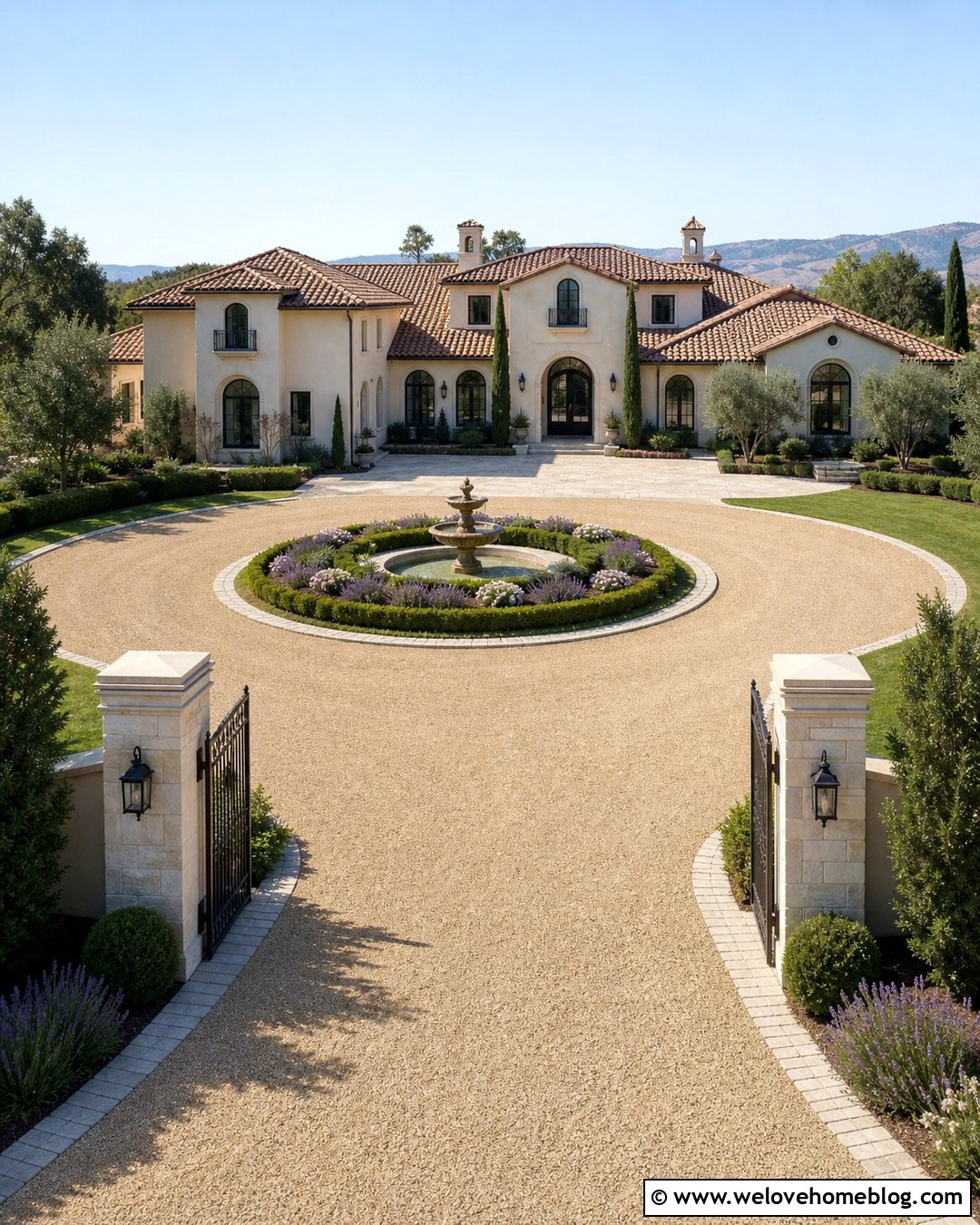
A circular driveway turns a spacious front yard into a convenient and impressive arrival area. Pale concrete pavers or exposed aggregate can form the loop, allowing vehicles to approach the entrance and return to the street without extensive reversing. Make the central island large enough to feel intentional rather than squeezed between driving lanes. A layered garden of one ornamental tree, evergreen shrubs, flowering perennials, and low groundcover creates year-round structure. Stone curbing keeps soil and mulch away from the driveway surface. On a Southern Colonial or large traditional home, align the center garden with the front door to strengthen the formal view from the street. Landscape lighting can highlight the tree and inner curve while preserving a bright, uncluttered daytime appearance.
6. Modern Concrete Driveway With Grass Strips
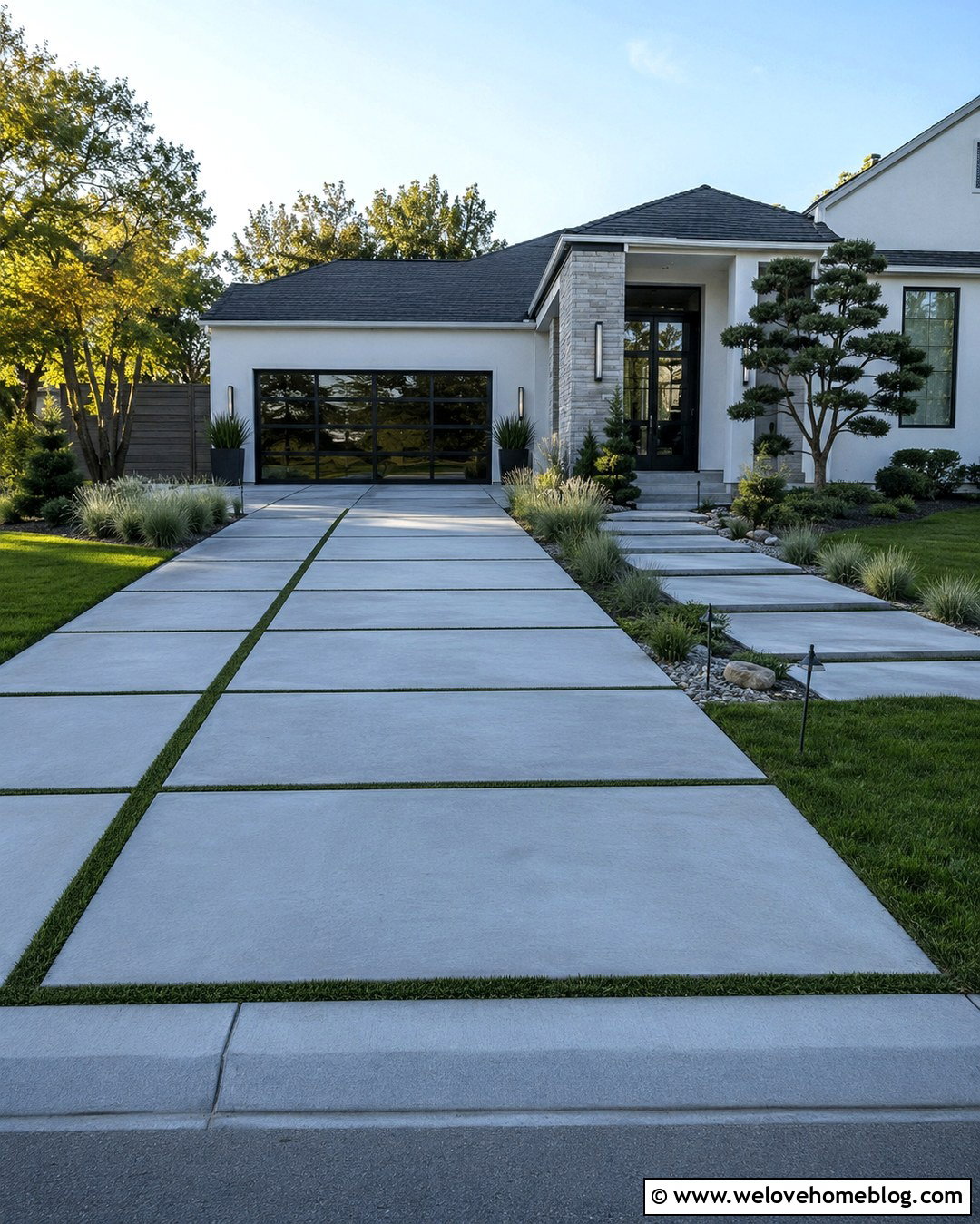
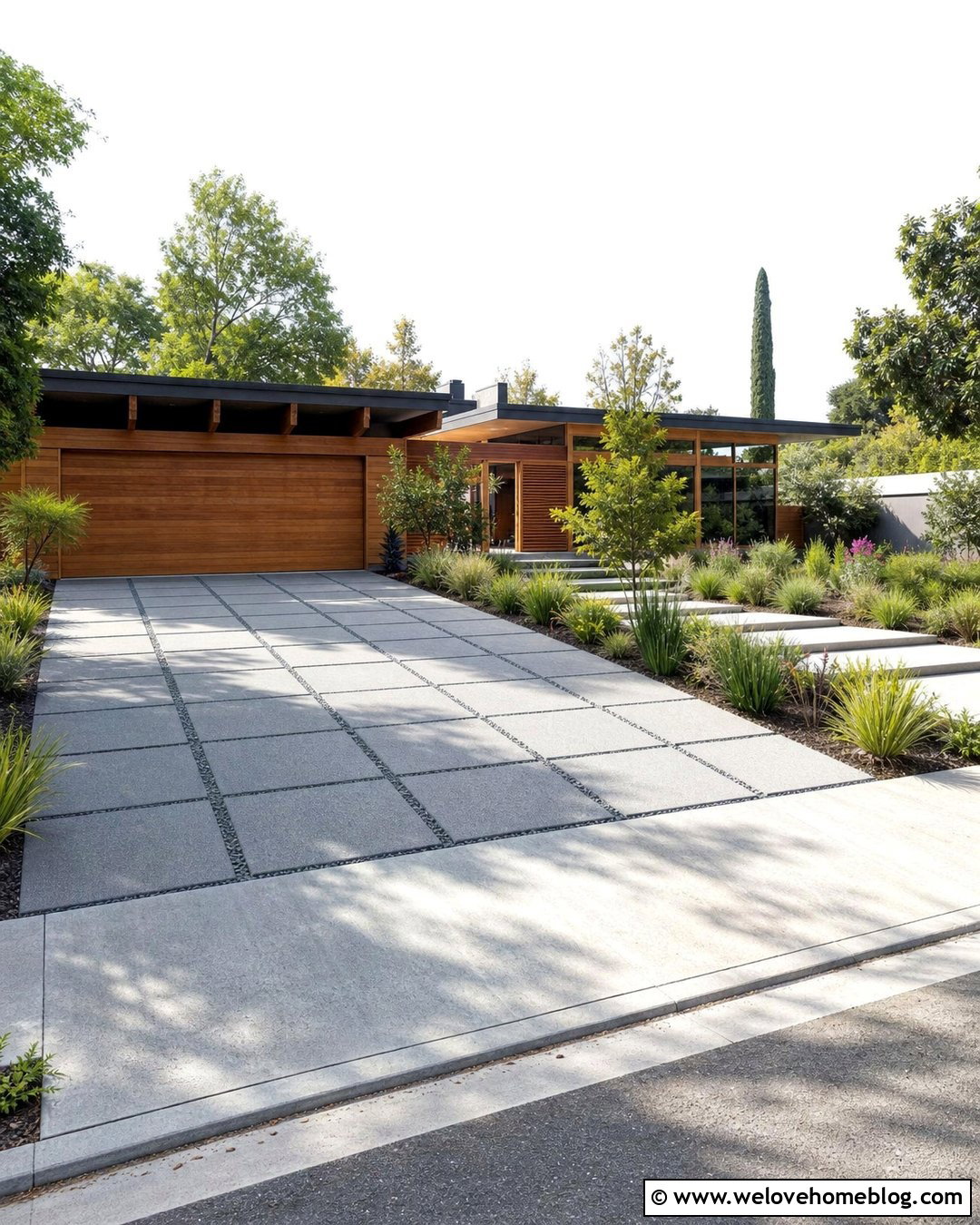
Large rectangular concrete pads separated by narrow grass strips create a light, geometric approach to a modern American home. Use smooth or lightly sandblasted gray poured concrete, keeping the joints straight and aligned with architectural features such as garage doors, windows, or rooflines. Grass between the slabs softens the hardscape, although durable low-growing groundcover may be easier to maintain in dry or shaded locations. A broad linear walkway can continue the same pattern toward the front door. Frame the driveway with ornamental grasses, compact evergreens, river rock, and one sculptural tree rather than crowded flower beds. The final layout should look simple but remain carefully measured. This design works best when crisp geometry, limited colors, and open planting areas are maintained throughout the front yard.
7. Cobblestone Driveway With Stone Pillars
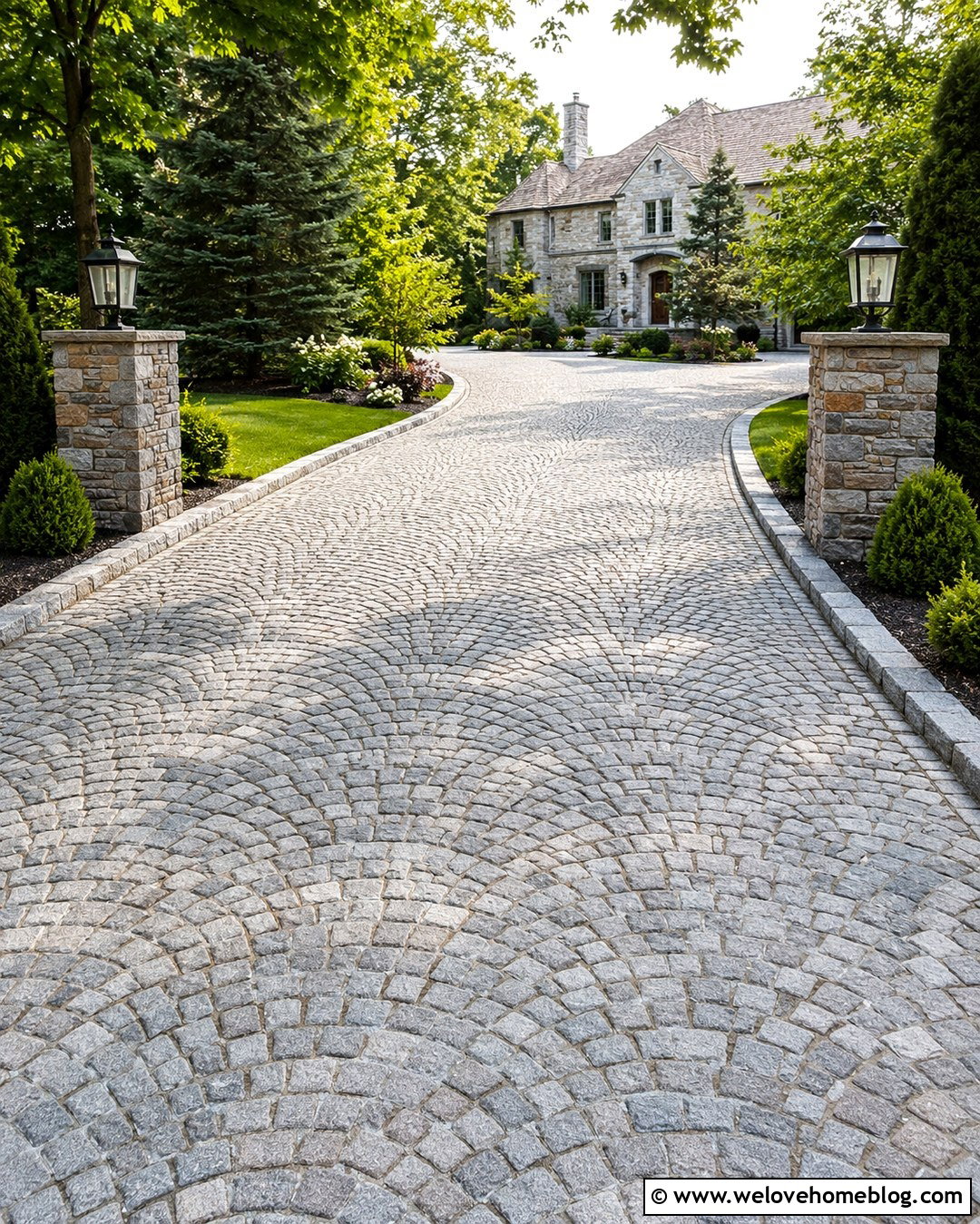
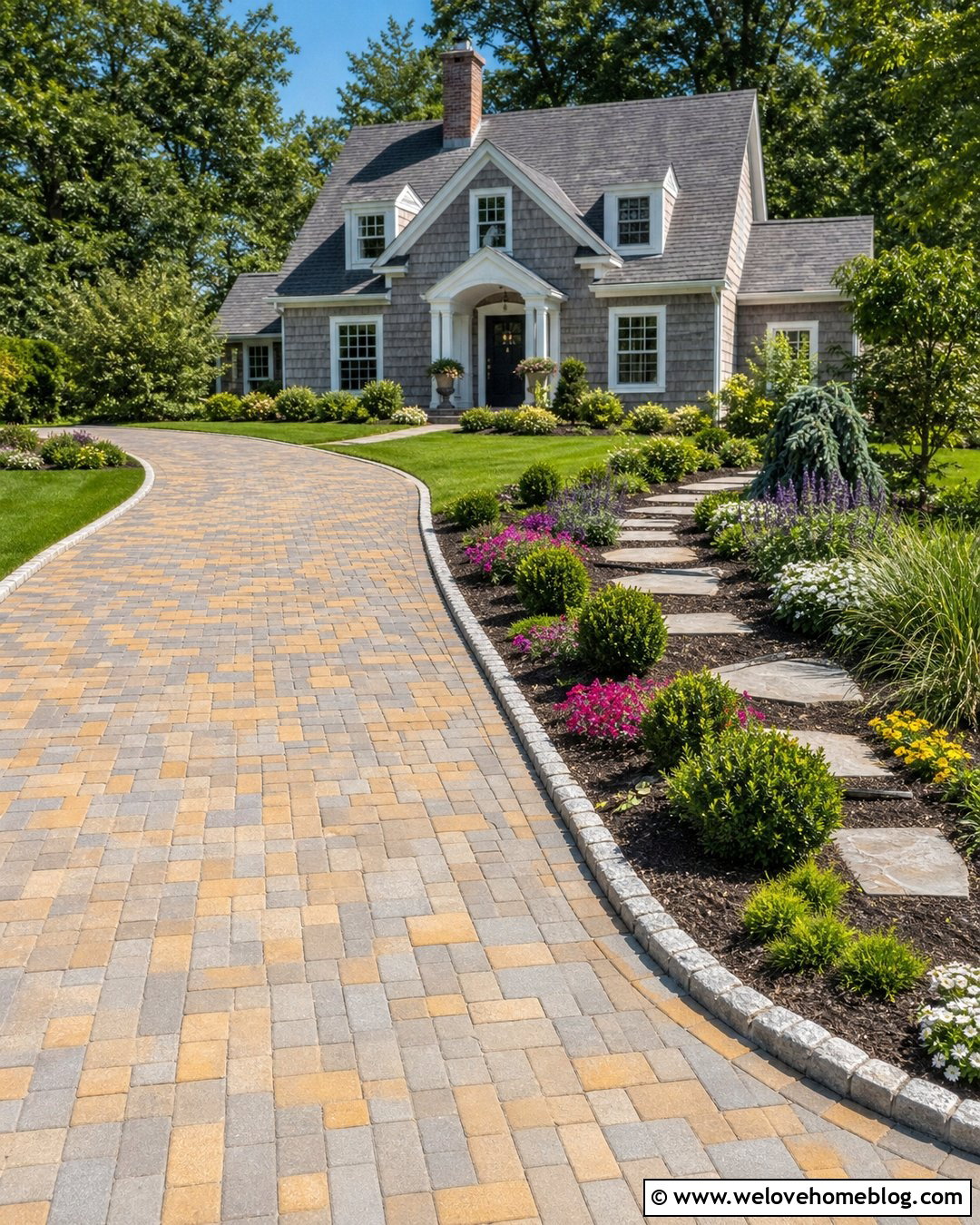
A cobblestone driveway gives a substantial home an old-world surface that still feels appropriate in an established American neighborhood. Use gray granite cobbles in a fan, running-bond, or gently arched pattern across a curved approach. Matching stone curbs will define the edges and protect nearby planting beds. At the street, substantial fieldstone pillars can mark the entrance without requiring an elaborate gate. Add traditional lanterns, a discreet address plaque, and low evergreen planting around each pillar. Mature shade trees and layered shrubs help the driveway settle naturally into the property. Near the house, widen the paving enough to create a comfortable turning or guest-parking area. The varied stone tones, curved route, and solid entrance details work together to create a dignified complete design.
8. Exposed Aggregate Driveway With Desert Landscaping
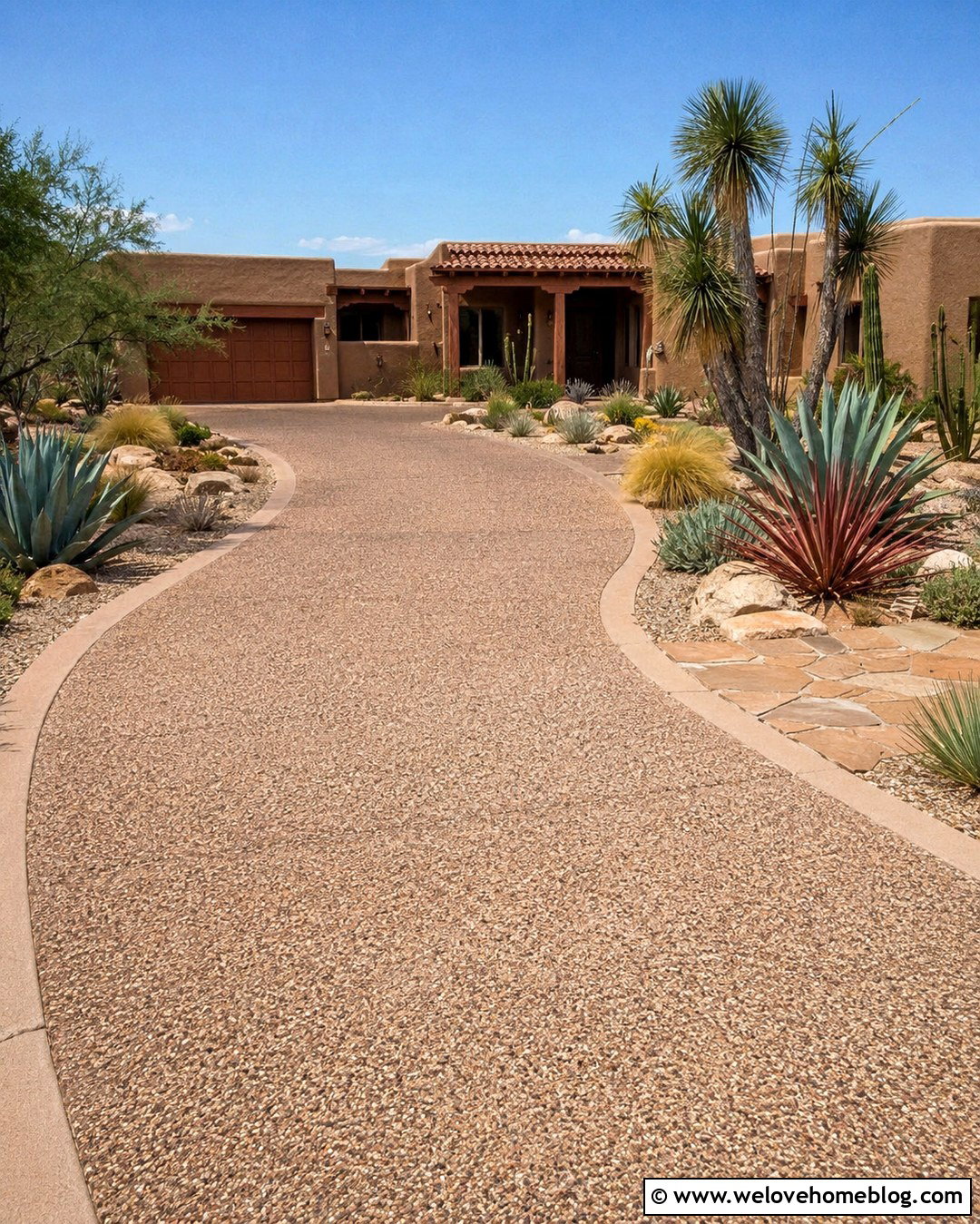
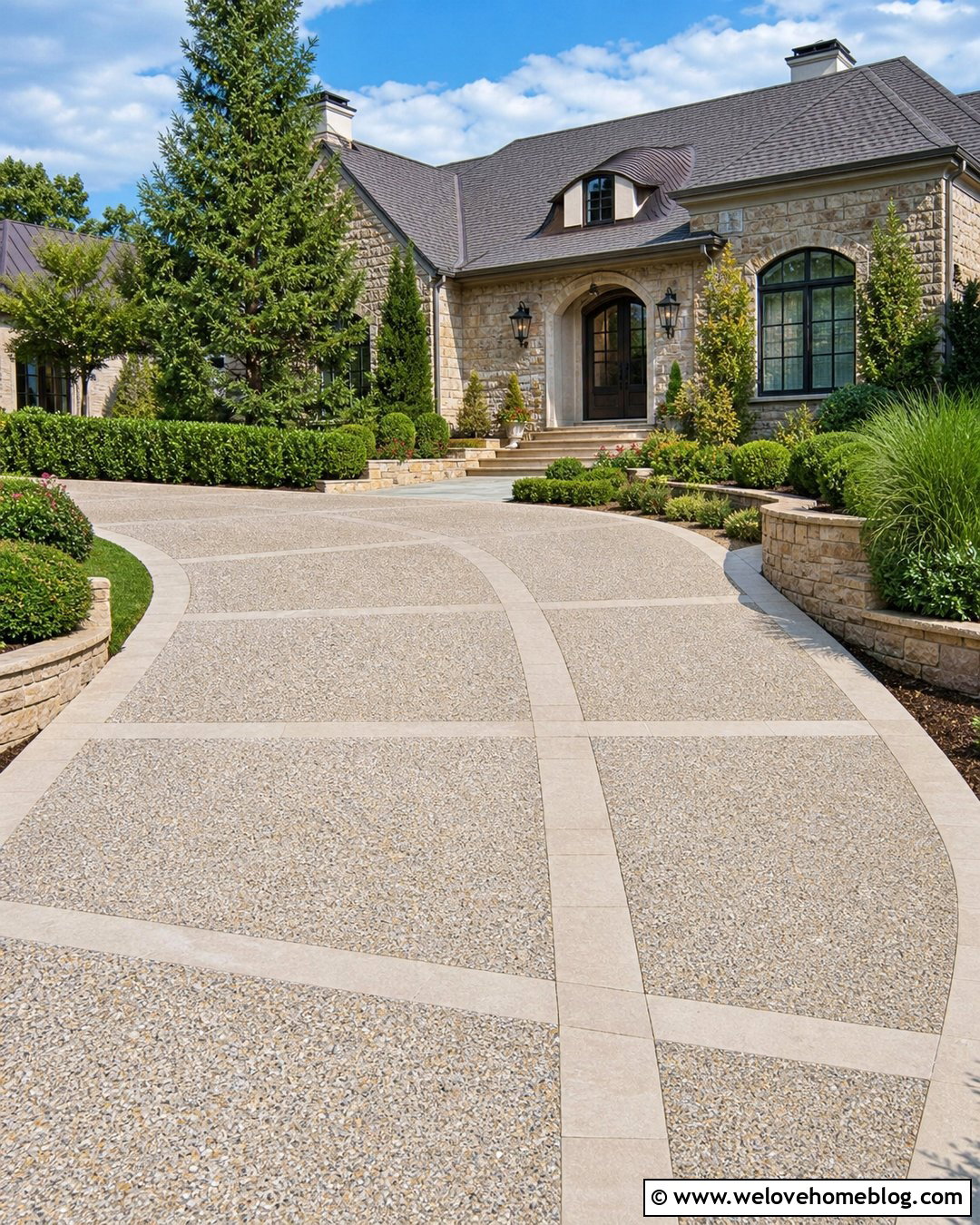
Exposed aggregate concrete is a practical visual match for Southwestern ranch homes and low-water front yards. Its pebbled finish introduces natural color and texture without competing with stucco walls, clay roof tiles, or stone accents. Shape the driveway with broad, gentle curves rather than sharp turns, and use steel or concrete edging to maintain a precise boundary. Beds of decorative gravel can surround agave, yucca, red yucca, desert spoon, and drought-tolerant ornamental grasses. A flagstone walkway offers a warmer transition between the driveway and front entrance. Select aggregate colors that echo the surrounding soil and exterior materials, such as tan, rust, cream, and muted gray. This coordinated palette produces a driveway that feels grounded in the regional landscape rather than placed on top of it.
9. Permeable Paver Driveway With Rain Garden
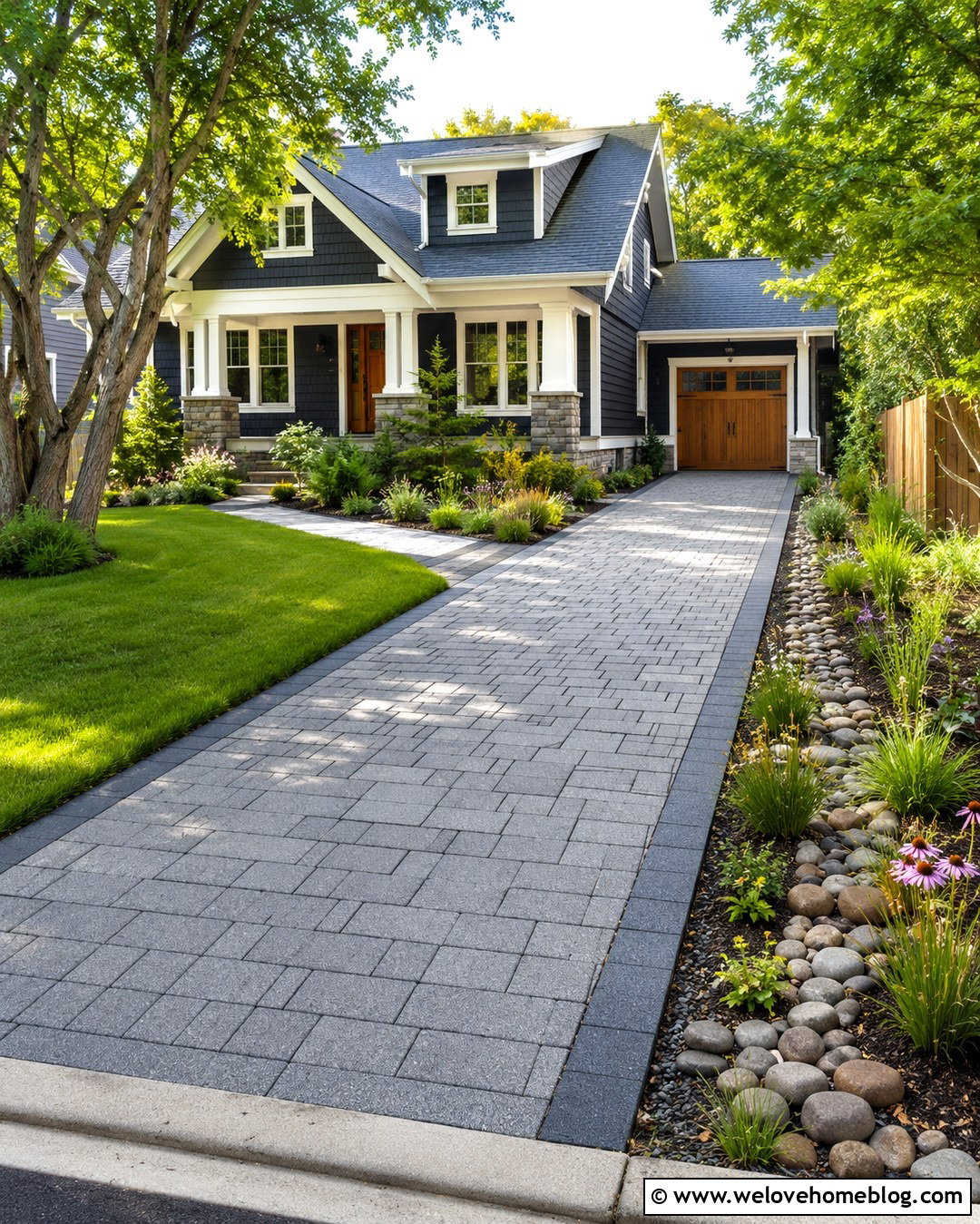
Permeable concrete pavers can turn a wide driveway into an attractive part of a stormwater-conscious landscape. Choose medium-gray pavers with visible stone-filled joints and arrange them in a simple running-bond or modular pattern. A gentle cross slope can guide excess runoff toward a planted rain garden instead of allowing water to collect beside the garage. The rain garden might include moisture-tolerant native grasses, sedges, flowering perennials, and a shallow stone channel. Dark paver borders will sharpen the edges and separate the drive from lawn areas. This complete look suits Craftsman, contemporary, and updated ranch homes. Permeable surfaces and landscape infiltration areas require proper base preparation and site-specific drainage planning, so local conditions and municipal requirements should be reviewed before installation. ()
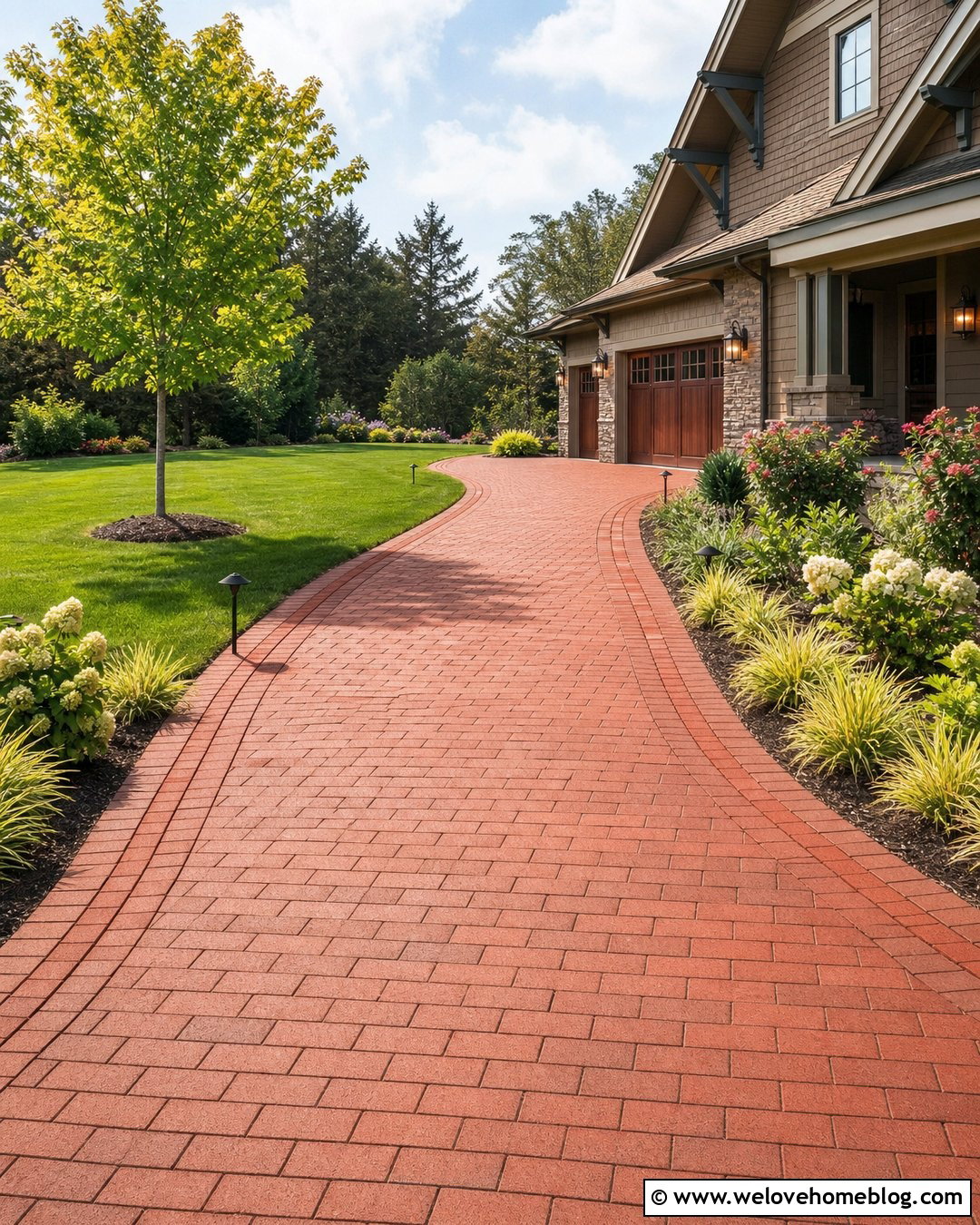
10. Stamped Concrete Driveway With Stone Accents
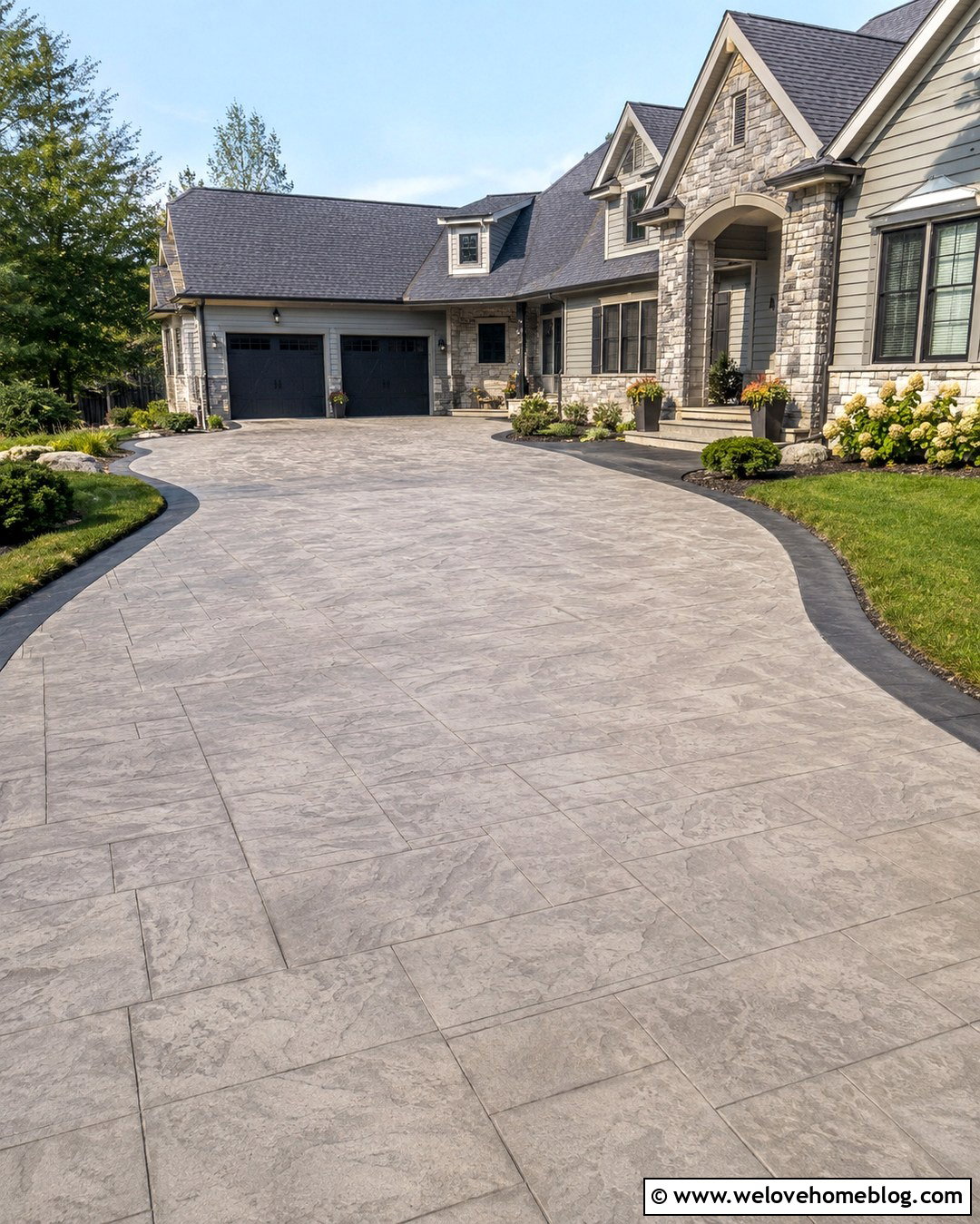
Stamped concrete can provide the appearance of stone paving while maintaining a continuous surface. A warm gray or sandy beige finish stamped with an ashlar slate pattern works well beside stone veneer, painted brick, or traditional siding. Use a curved driveway with a darker stamped border to emphasize the shape and define the parking area. Natural stone columns at the entrance can repeat colors found in the concrete release tones. Keep the surrounding landscaping balanced with clipped shrubs near the house and looser ornamental grasses along the outer curve. A coordinating walkway can use the same pattern at a smaller scale. Avoid excessive color contrast or overly complicated stamps. Restrained tones and clearly planned borders generally create a more convincing, cohesive driveway that supports the house rather than overpowering it.
11. Concrete Ribbon Driveway With a Planted Center
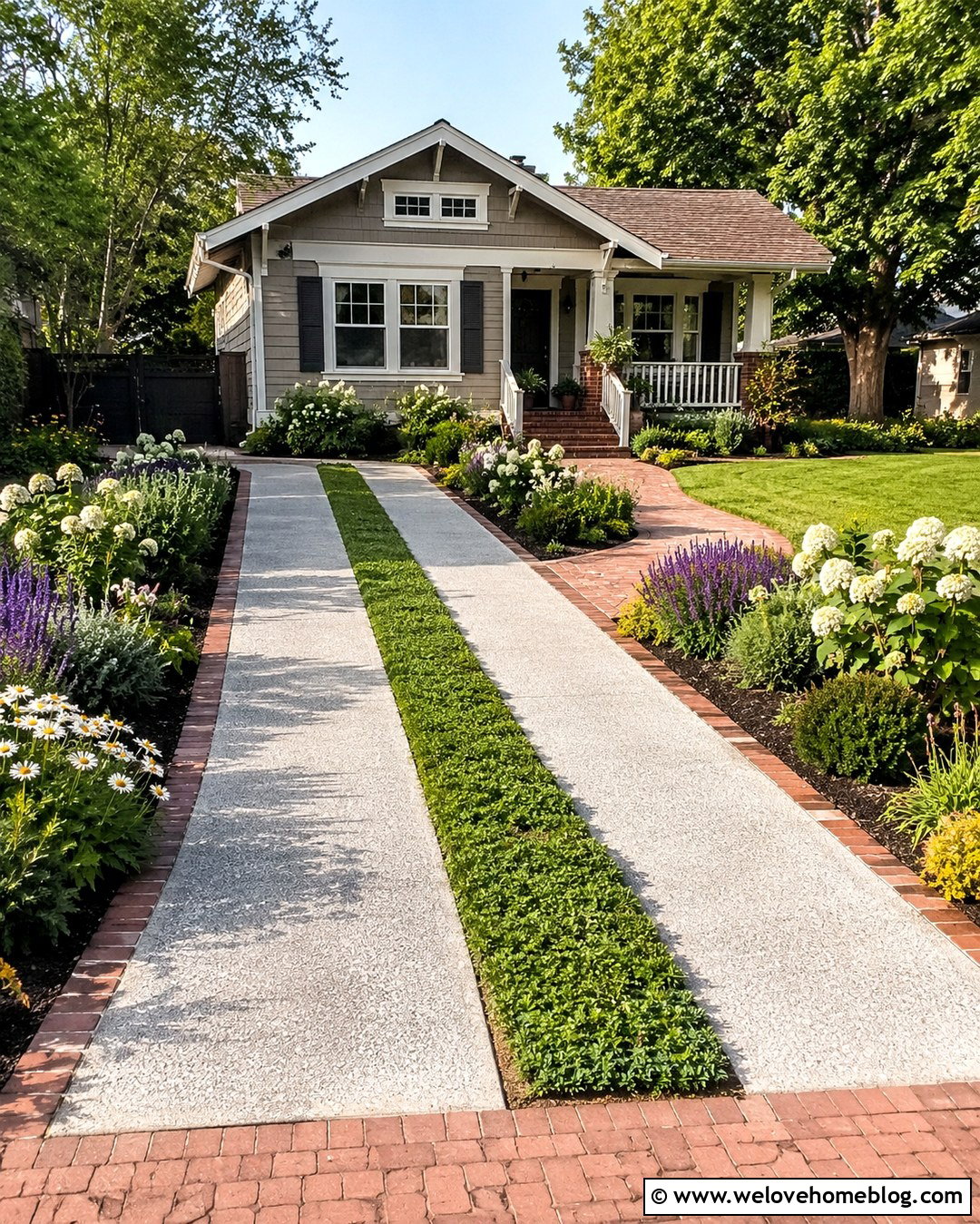
A concrete ribbon driveway uses two paved wheel tracks with a planted strip between them, reducing the visual weight of a fully paved approach. This layout is particularly attractive beside cottages, Craftsman bungalows, and smaller historic homes. Use lightly textured gray concrete ribbons bordered with clay brick or granite setts. Fill the center with turf where sunlight and regular irrigation are available, or use low-growing groundcover suited to the local climate. The ribbons should lead clearly to the garage without abrupt alignment changes. Cottage-style planting beds filled with hydrangeas, salvia, daisies, and compact shrubs can frame both sides. A brick walkway branching toward the porch completes the composition. Careful dimensions are essential so vehicle tires remain comfortably supported during everyday use.
12. White Gravel Driveway With Coastal Planting
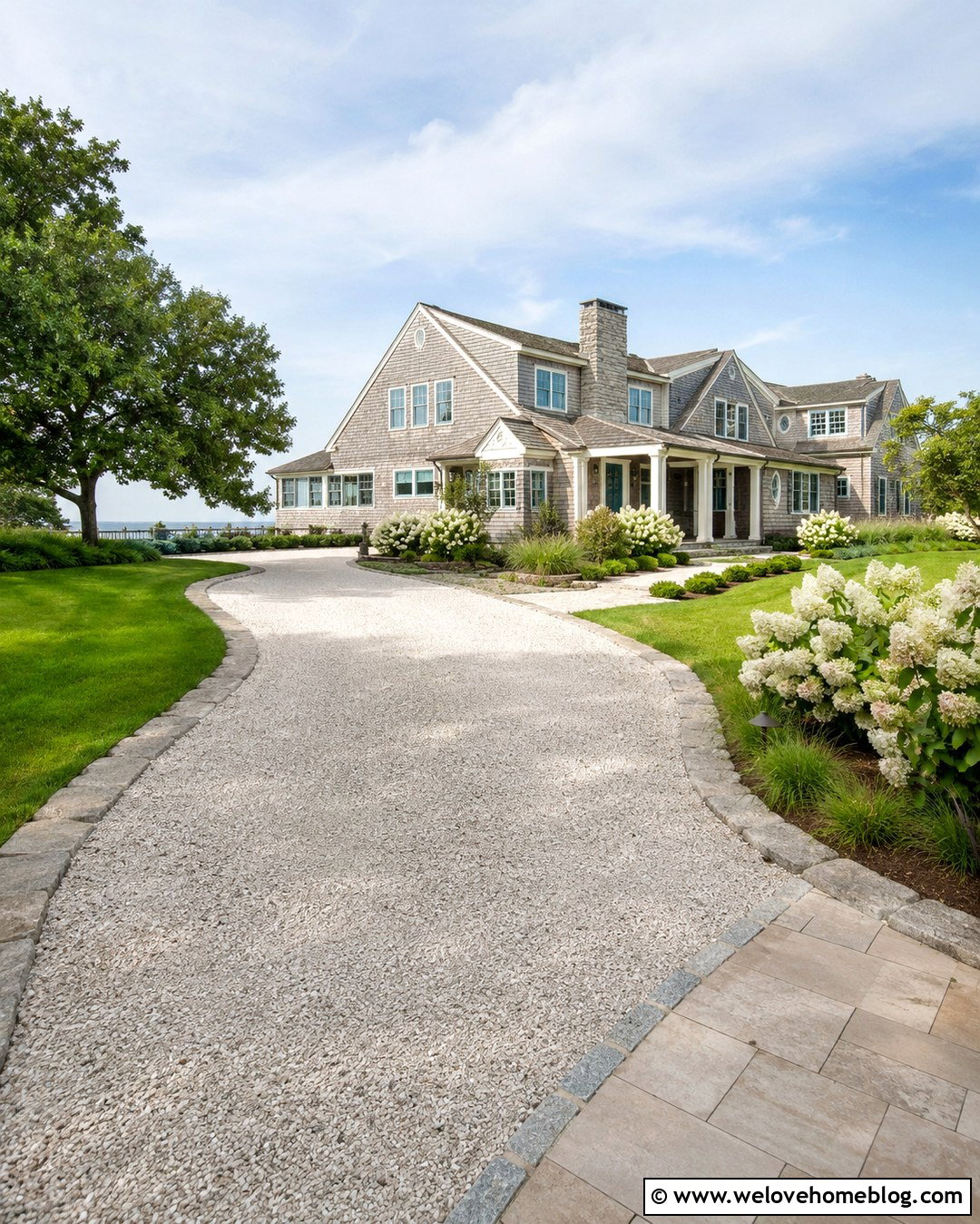
Pale gravel brightens the approach to a coastal cottage and creates an easy connection with white siding, light shingles, and blue-gray shutters. Use compacted oyster-colored crushed stone or light limestone gravel for the driving area, contained by weathered granite, concrete, or muted brick edging. A soft curved layout feels natural in a breezy front yard and allows planting beds to flow alongside the route. Salt-tolerant grasses, hydrangeas, bayberry, roses, and low junipers can provide texture without blocking sightlines. Add a short shell-toned paver apron near the garage for a clean transition. A matching gravel walkway can lead toward the porch, separated from the drive by a narrow planted island. The finished design should feel casual, bright, and carefully controlled rather than loose or unfinished.
13. Heated Paver Driveway With Evergreen Borders
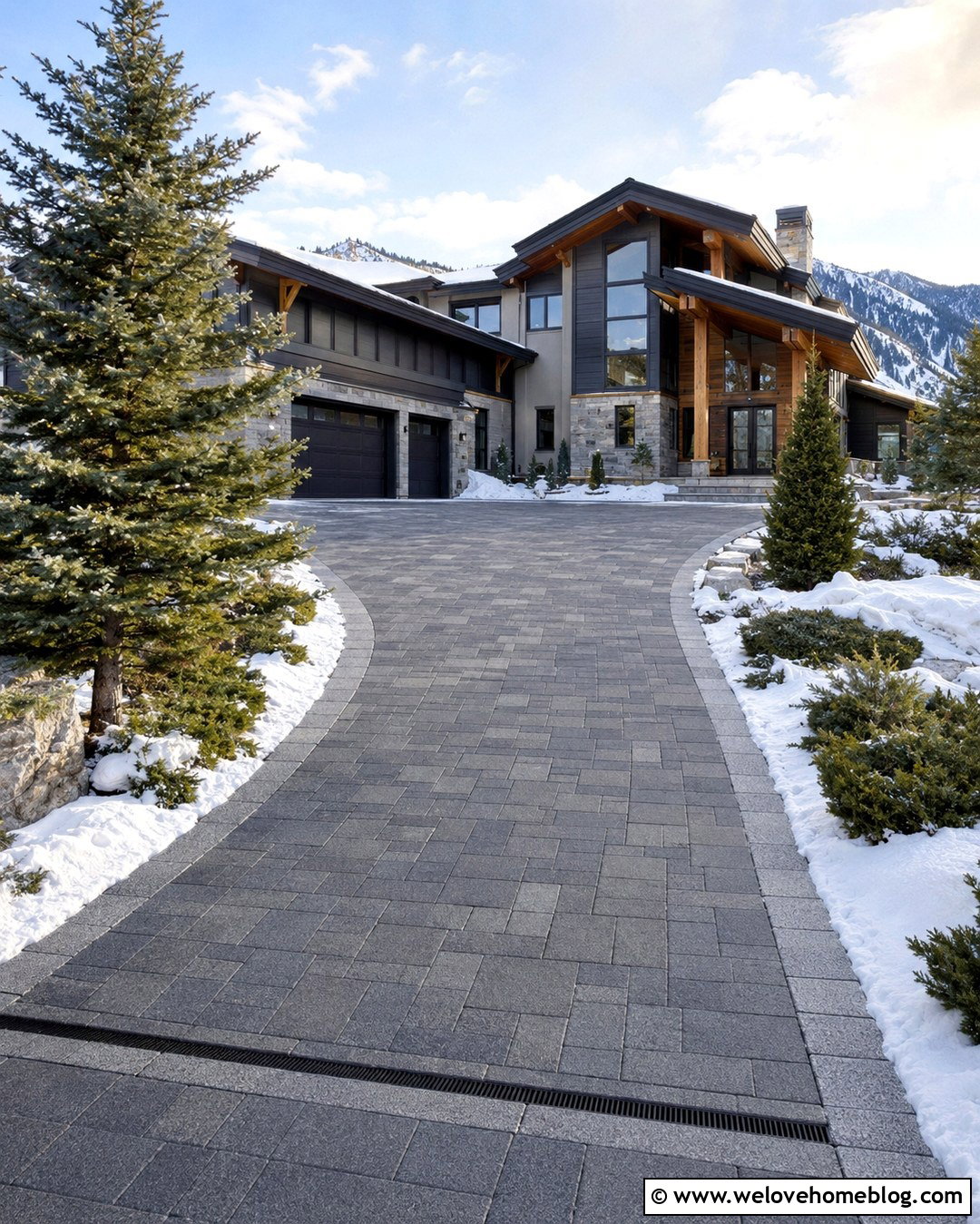
In a cold northern climate, a heated paver driveway can combine an upscale appearance with easier winter access. Choose dense concrete pavers in charcoal, slate gray, or blended granite tones, using a simple modular pattern that complements a contemporary mountain home or updated Colonial. A straight driveway with a generous garage apron keeps the layout efficient for snow management. Evergreen borders of spruce, juniper, and compact arborvitae provide structure after deciduous plants lose their leaves. Include open planting setbacks so snow can be placed without crushing shrubs or blocking visibility. Heating systems require careful planning around the base, controls, operating costs, and local weather conditions. Dark pavers, restrained landscaping, and integrated drainage can create a driveway that looks finished throughout the year, not only during winter.
14. Red Brick Driveway With a Colonial Entrance
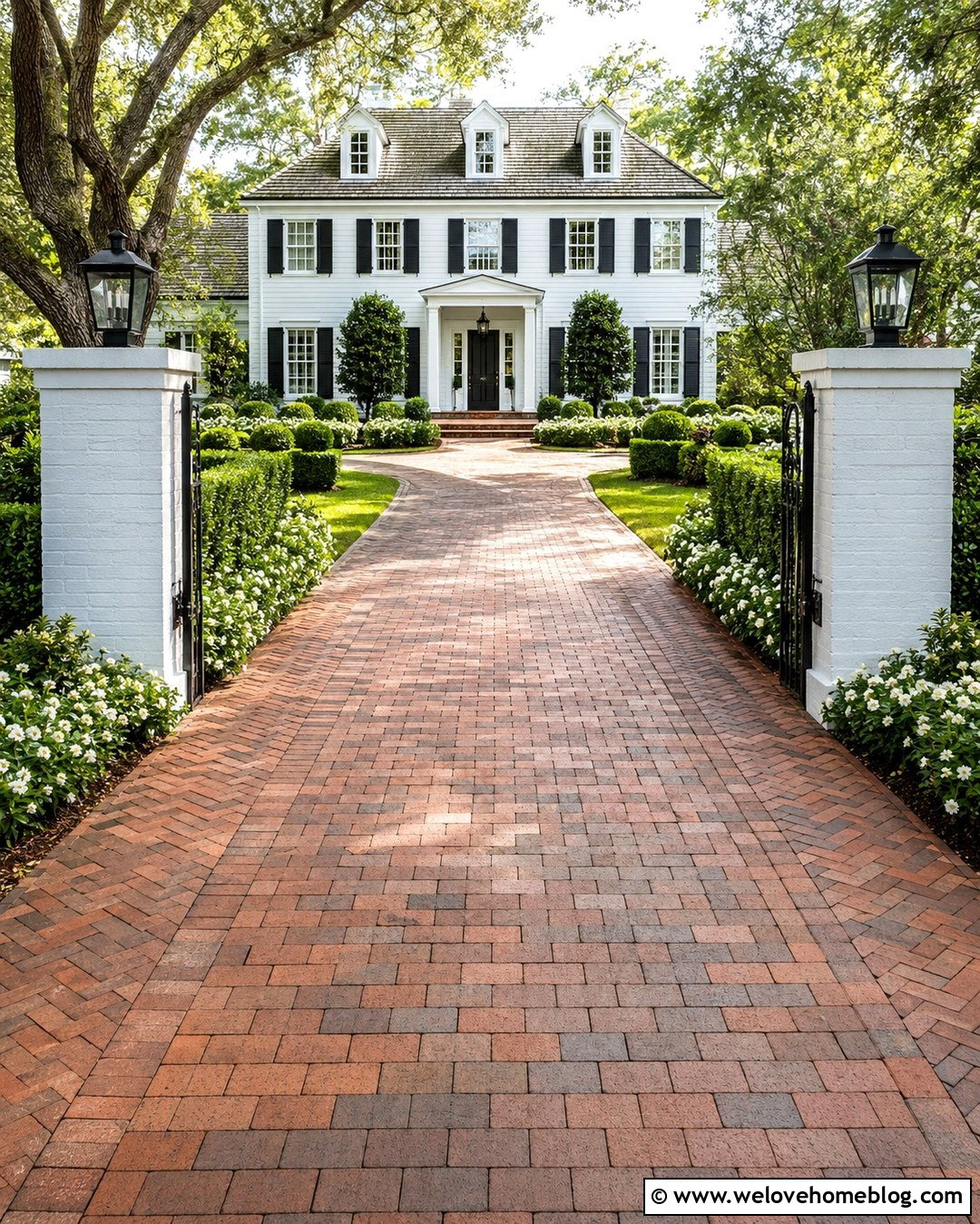
A red brick driveway can reinforce the balanced appearance of a classic American Colonial when its color and pattern are thoughtfully controlled. Choose weathered red and brown clay brick pavers in a running-bond pattern, then frame the surface with a contrasting herringbone or soldier-course border. A straight, symmetrical approach should line up with the garage or lead toward a side parking court. At the street, white painted pillars or brick columns can echo the house facade. Low boxwoods, American holly, and white flowering plants maintain the formal composition without hiding the entrance. Continue the brick into a curved front walkway for visual consistency. Black lantern-style fixtures and a simple address marker add definition. The finished driveway feels traditional, welcoming, and closely connected to the architecture.
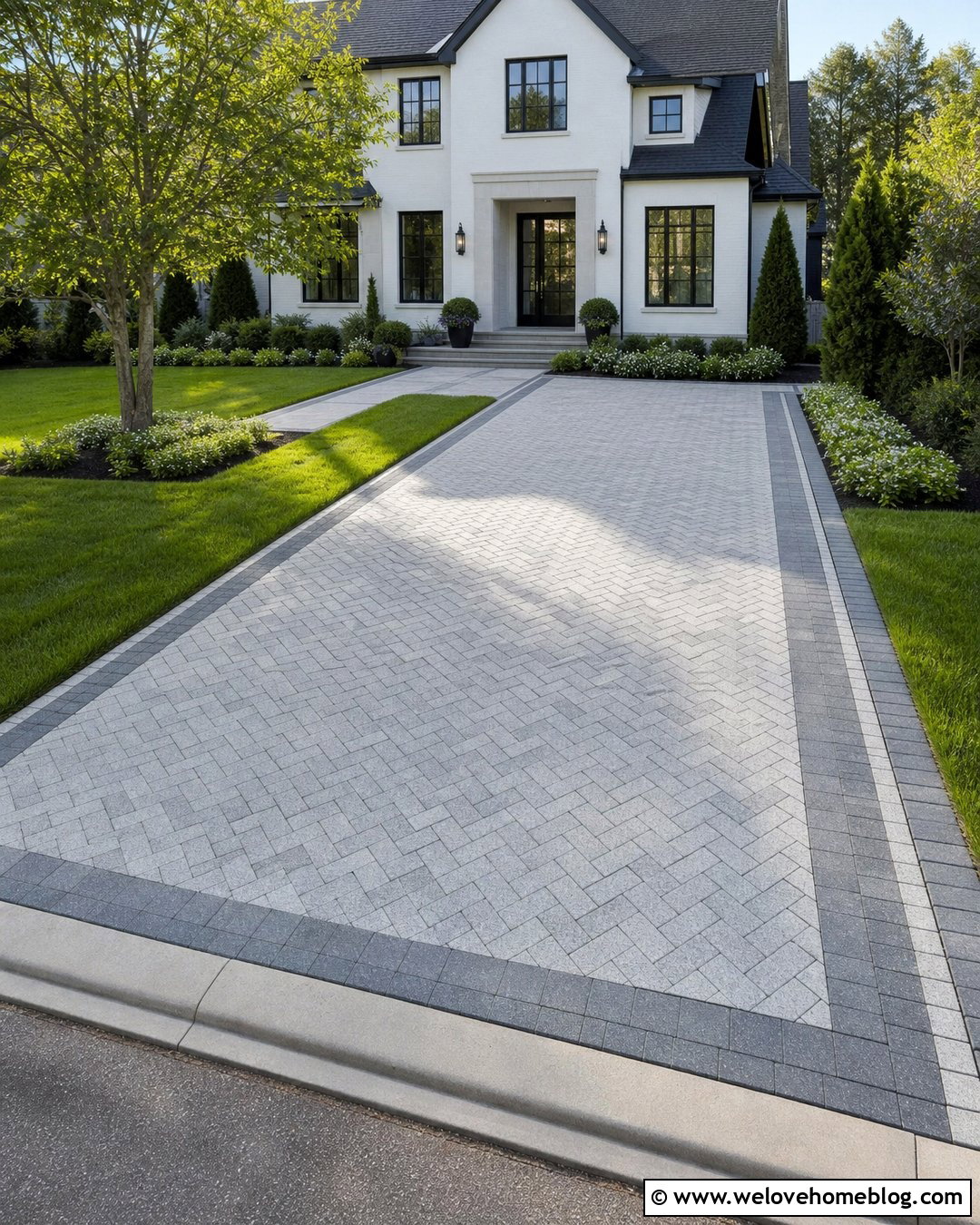
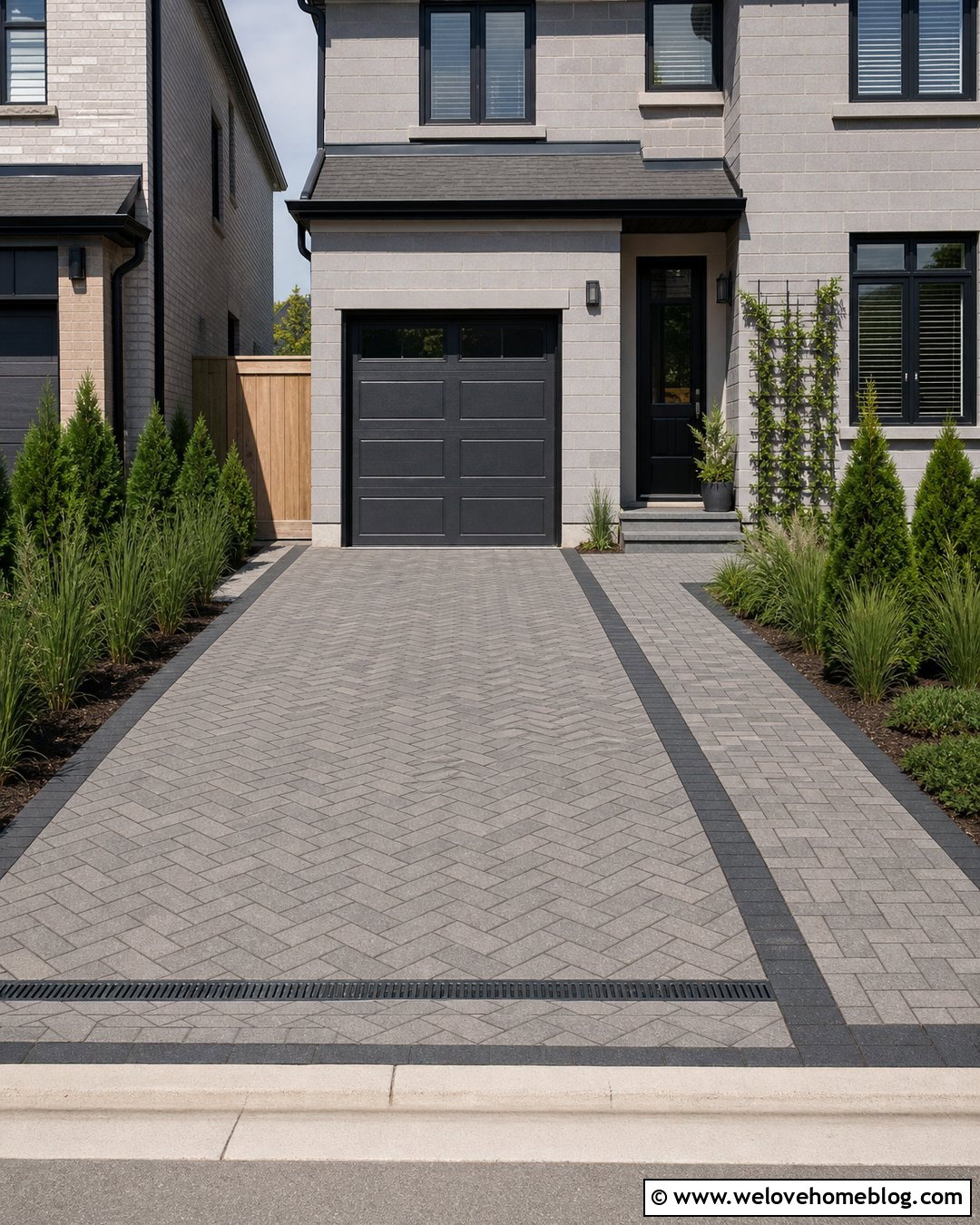
15. Curved Asphalt Driveway With Mature Trees
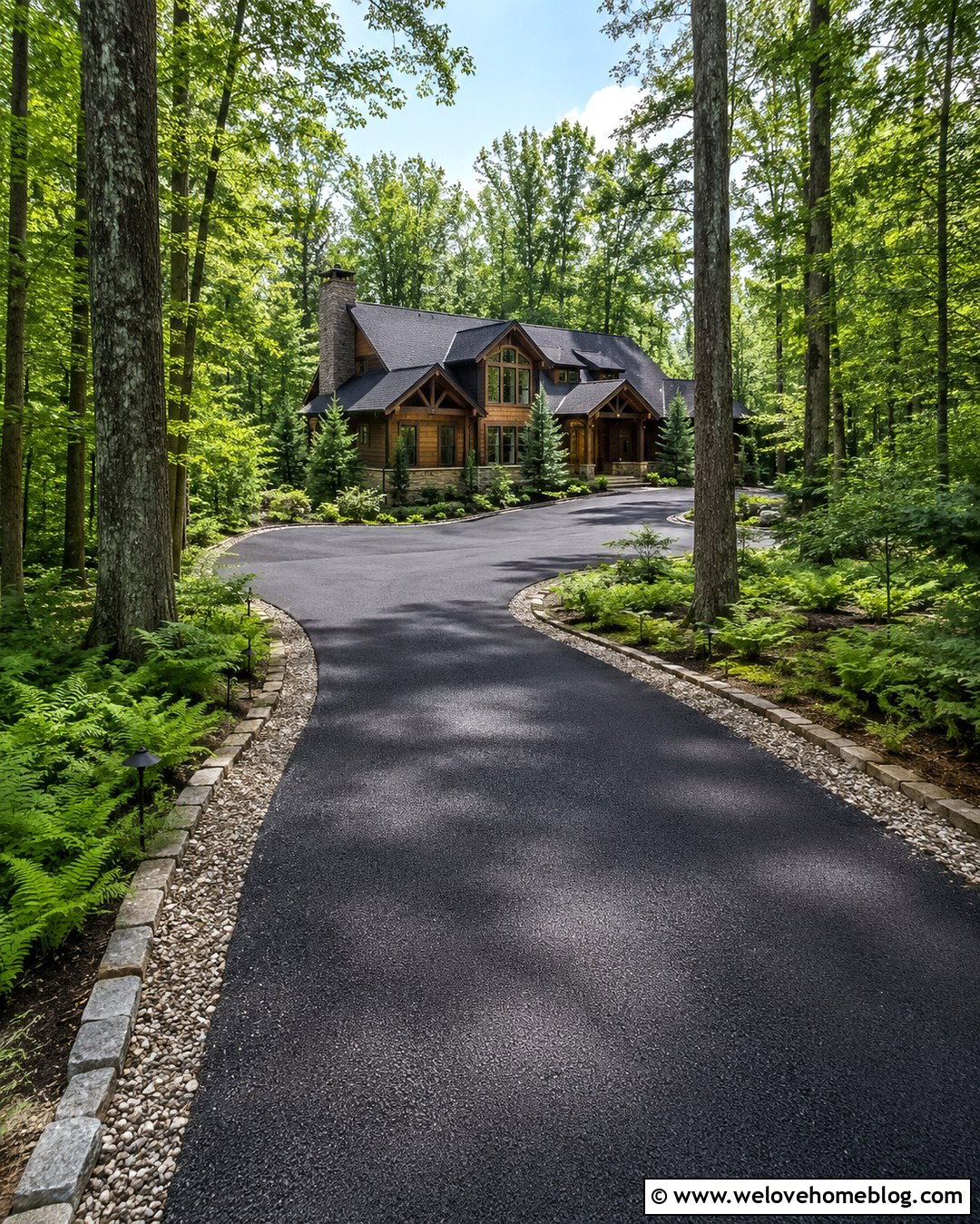
Long wooded properties often benefit from a curved asphalt driveway that follows existing landforms instead of cutting through them in a rigid line. Smooth black asphalt provides a dependable driving surface, while a border of granite cobbles or compacted gravel softens its edges. Allow the route to bend around mature trees with generous protection for trunks and root zones. Native ferns, woodland shrubs, and broad sweeps of groundcover can fill shaded areas beside the drive. Near the home, widen the asphalt into a clear parking and turning court. Low path lights can mark curves without making the landscape appear commercial. Because slopes, roots, runoff, and sightlines affect long driveways, professional grading and drainage planning can be especially valuable before construction begins. ()
16. Concrete Driveway With Brick Ribbon Accents
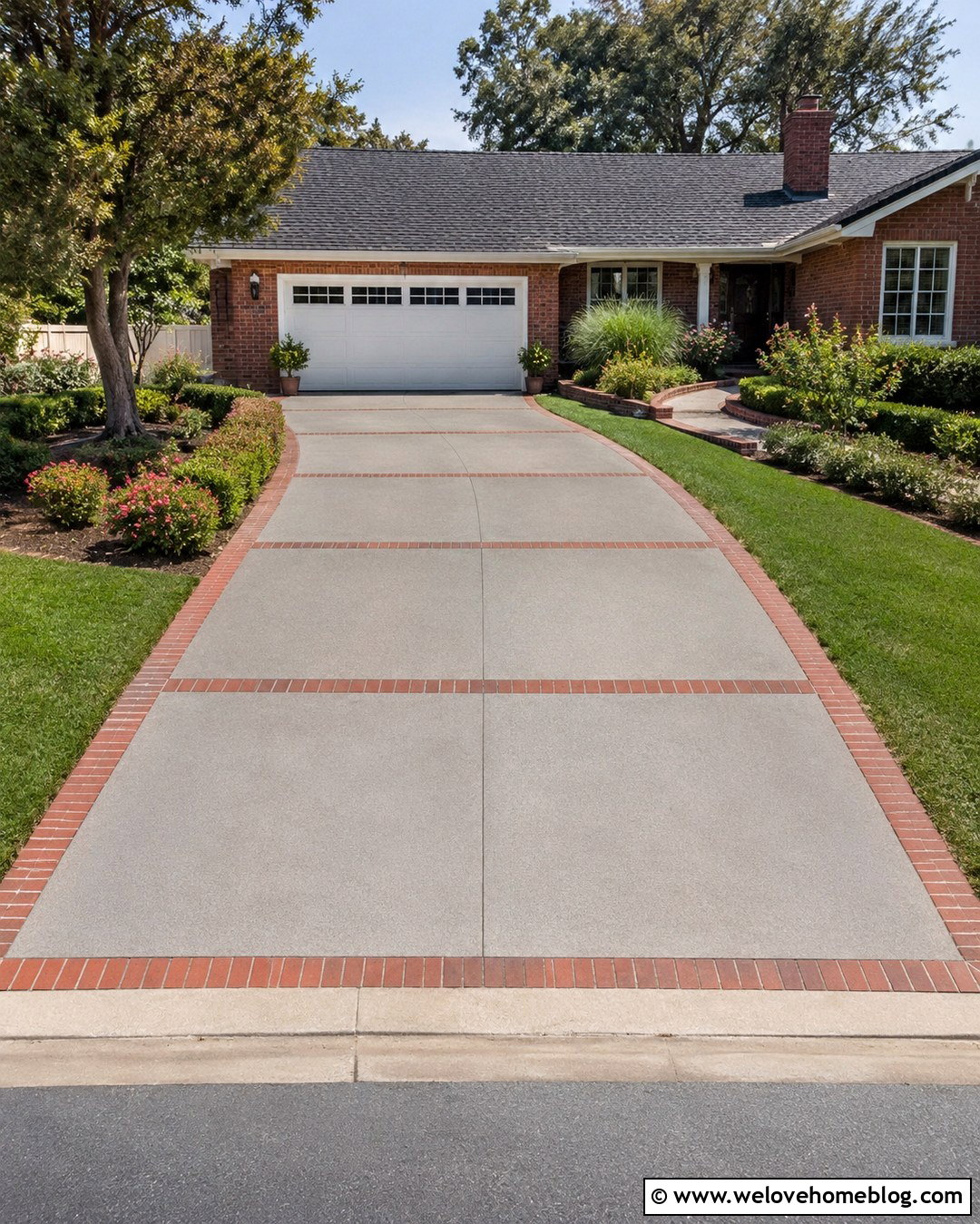
Brick ribbon accents can transform an ordinary concrete driveway without covering the entire area in masonry. Start with medium-gray broom-finished concrete and insert red or brown brick bands across expansion joints. Add matching brick borders along both sides to frame the surface. This treatment looks especially natural beside a suburban ranch home with brick veneer, shutters, or a traditional front porch. A gently flared entrance can make the driveway easier to recognize from the street while improving its proportions. Plant compact hollies, flowering shrubs, and ornamental grasses in curved beds along one side, leaving the other side more open for visibility. Repeat the brick in the front walkway or porch steps. The limited use of accent material creates a customized appearance while keeping the complete layout calm and practical.
17. Farmhouse Gravel Driveway With Timber Edging
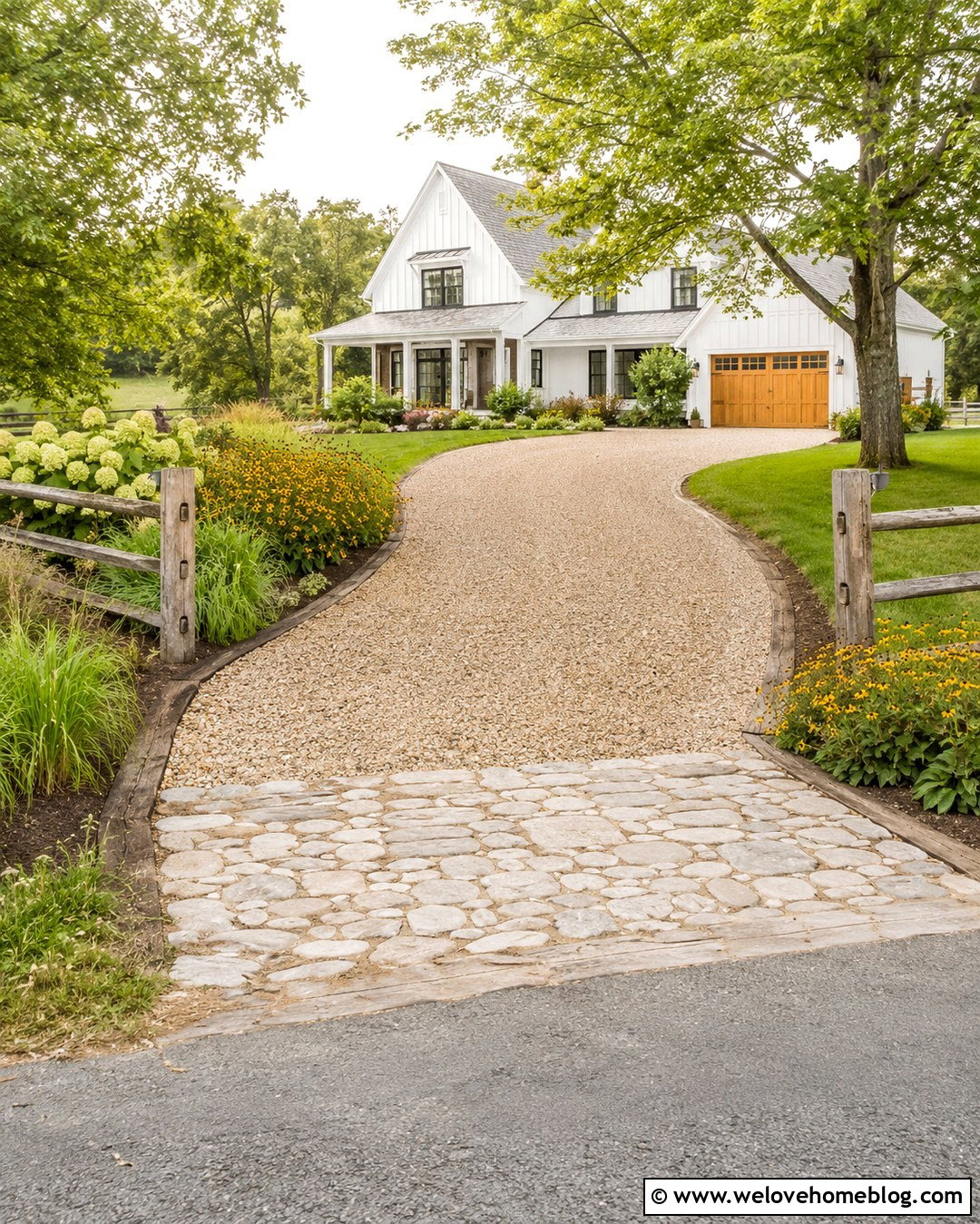
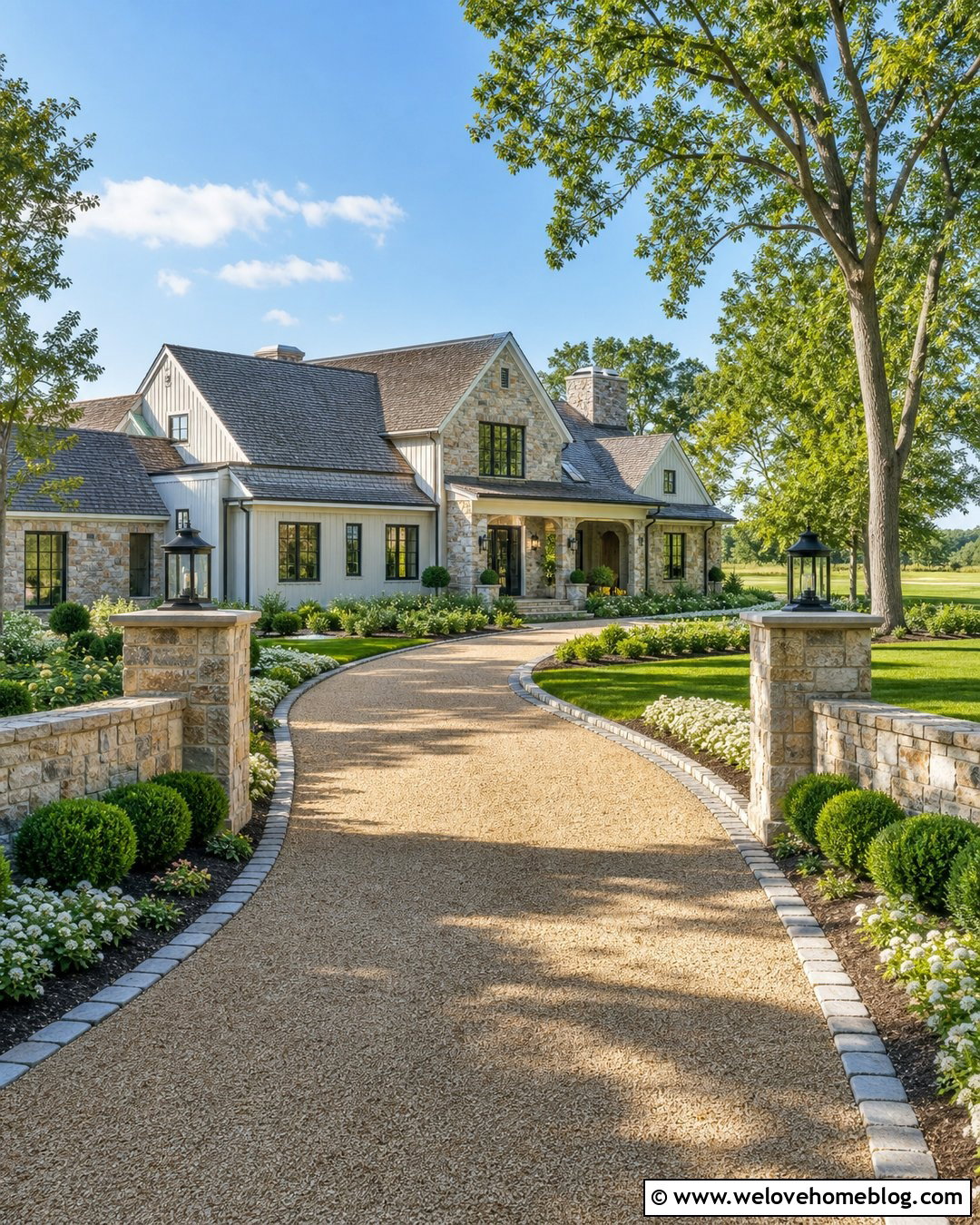
A tan gravel driveway bordered with timber creates a warm, informal entrance for a modern farmhouse or rural home. Use compacted crushed gravel in mixed beige and gray tones, shaping the drive into a broad curve that reveals the house gradually. Heavy landscape timbers can contain the loose material along garden areas, while a stone apron at the road gives the entrance a more durable edge. Frame the route with split-rail fencing, native grasses, black-eyed Susans, hydrangeas, and groups of deciduous trees. Near the house, transition to concrete or brick pavers around the garage and main walkway. Black barn lights and simple wooden address posts reinforce the farmhouse character. The result feels relaxed and rural, yet the defined borders prevent the design from appearing neglected.
18. Driveway Parking Court With Mixed Pavers
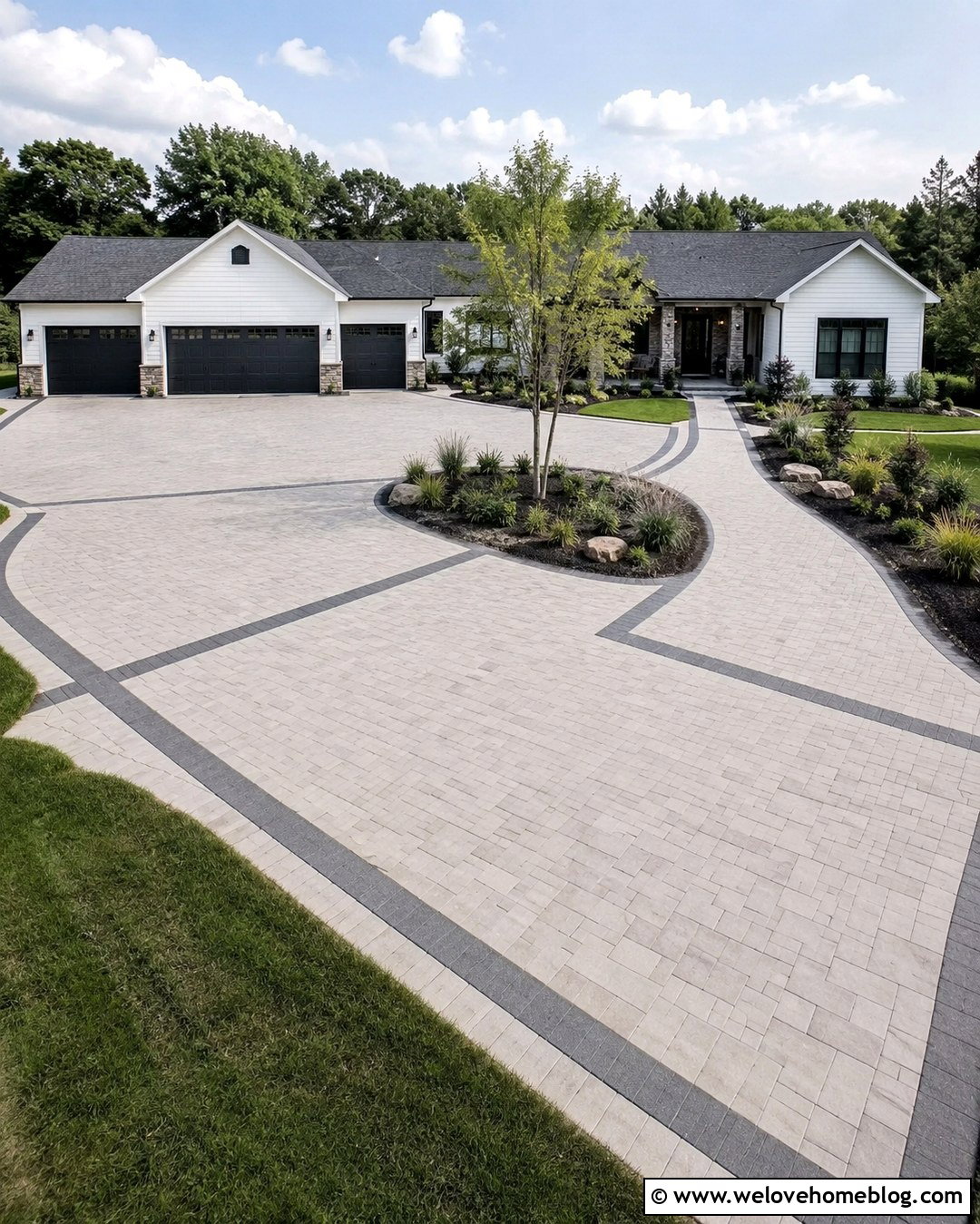
A front parking court can provide useful maneuvering space without looking like an oversized paved rectangle. Use light concrete pavers for the main surface and charcoal pavers to outline individual parking zones, the turning area, and the walkway connection. This mixed-paver approach works well in front of a large ranch, split-level home, or three-car garage. Break up the broad hardscape with a small planted island positioned outside essential vehicle paths. One multi-stem tree, low shrubs, and ornamental grasses can add height without creating dangerous blind spots. Curved planting beds around the perimeter soften the geometry. Keep trash storage and utility equipment screened near the side yard. When the paver colors match the roof, garage doors, or facade accents, the entire court appears integrated rather than purely functional.
19. Horseshoe Driveway With Brick Entry Columns
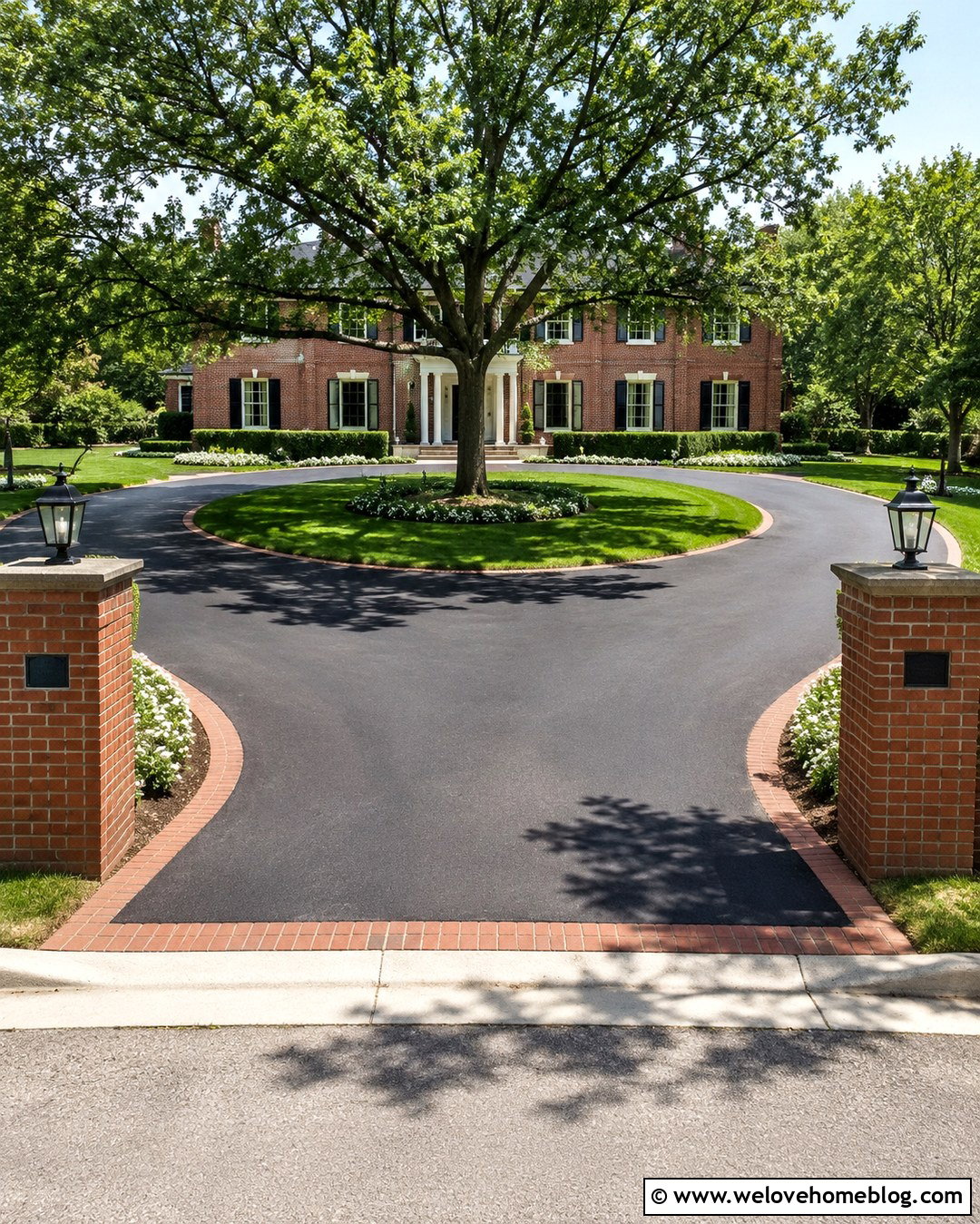
A horseshoe driveway creates separate entrance and exit points while giving a wide front yard a balanced layout. Black asphalt offers a smooth, understated base, allowing red brick entry columns and a central lawn to become the main visual features. Use brick edging along the inner curve to connect the columns to the house. The center lawn can contain a large shade tree surrounded by a simple circular planting bed, while the outer edge remains open for clear visibility. A concrete or brick walkway should cross from the drive to the front porch at a logical location. Traditional lanterns and matching address plaques can distinguish the two entry points. This design suits Colonial, Georgian, and large ranch homes, especially where the lot provides sufficient width for comfortable turning movements.
20. Resin-Bound Driveway With Modern Landscaping
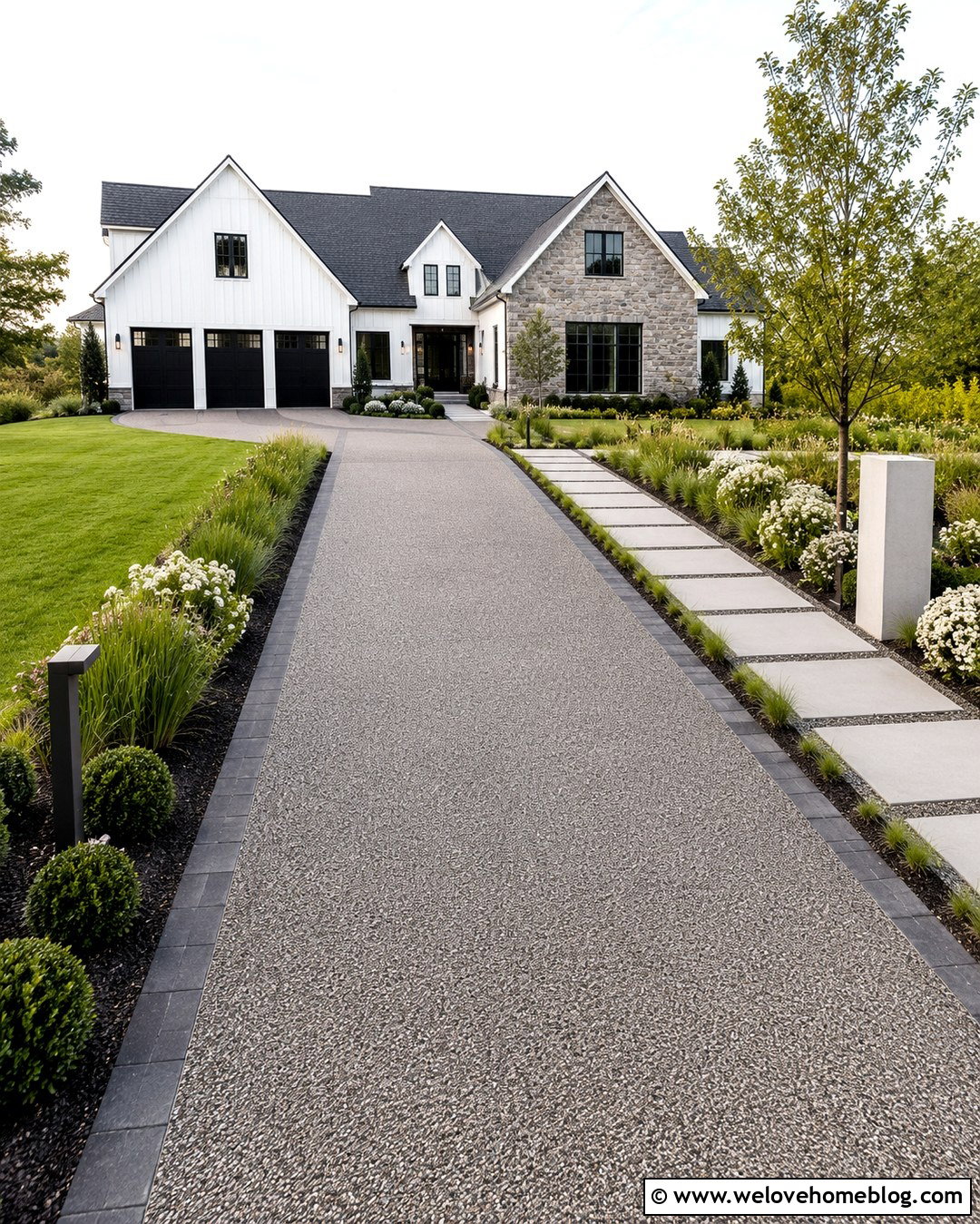
A resin-bound gravel driveway offers a smooth, contemporary appearance with the visual texture of small stone. Choose a warm gray or natural buff aggregate blend for a straight driveway leading to a modern farmhouse, transitional home, or minimalist suburban facade. Charcoal block edging can create a precise boundary and coordinate with dark windows or garage doors. Incorporate a wide walkway using large-format concrete slabs separated by narrow gravel joints. Linear beds of ornamental grasses, rounded evergreens, and white flowering perennials keep the landscape clean without making it feel sparse. A slim address monument and simple bollard lights can frame the entrance. Careful base preparation, drainage design, and installer experience are important for a consistent surface. The complete result feels bright, refined, and highly organized.
Conclusion:
The most successful **20 American Driveway Ideas** combine everyday vehicle access with materials, shapes, borders, and landscaping that suit the home. Asphalt becomes more polished with brick edging, while concrete gains warmth from paver ribbons or planted joints. Gravel supports relaxed farmhouse and coastal settings, and brick or cobblestone can strengthen a traditional entrance. Larger yards may accommodate circular, curved, or horseshoe layouts, while compact properties often benefit from simple straight driveways with thoughtful borders. Before choosing a final design, consider drainage, winter conditions, maintenance, turning space, and local regulations. A coordinated driveway does more than reach the garage. It frames the property, supports the landscape, and creates a welcoming first impression from the street.

Related posts:

Leave a Reply