
A cobblestone driveway can make an ordinary front yard feel established, inviting, and thoughtfully designed. Natural stone brings texture, color variation, and old-world character, while different laying patterns can suit everything from a traditional colonial to a streamlined modern home. The strongest designs consider more than the paving itself. Driveway shape, stone scale, joint material, edging, drainage, planting, lighting, and garage transitions should work as one complete composition. These 40 cobblestone driveway ideas cover straight, curved, circular, narrow, rustic, formal, and contemporary layouts. You will also find practical combinations for small yards, large properties, sloped approaches, and different architectural settings. Use the following complete driveway looks to explore the best 40 cobblestone driveway ideas.

1. Gray Cobblestone Driveway With Granite Edging
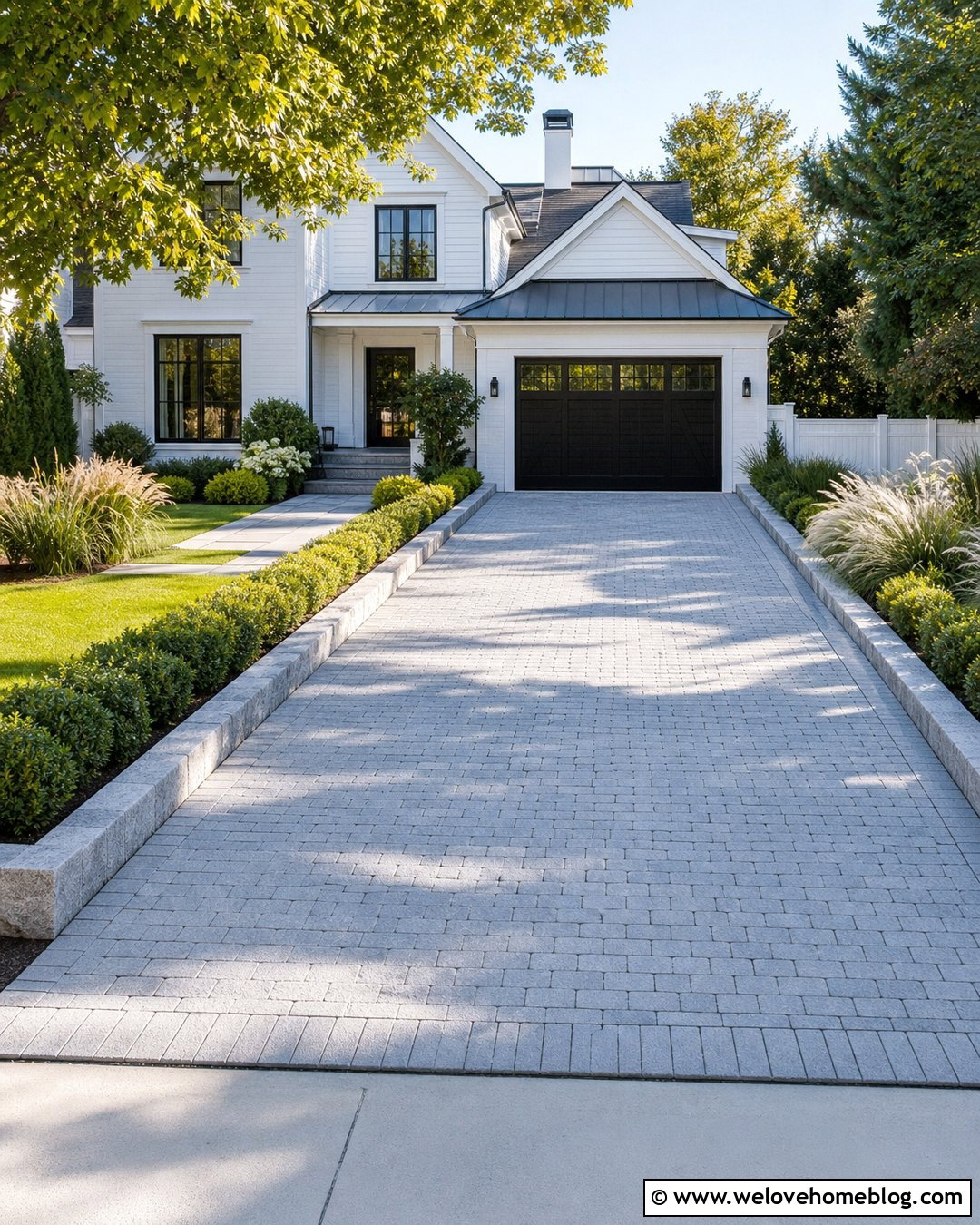
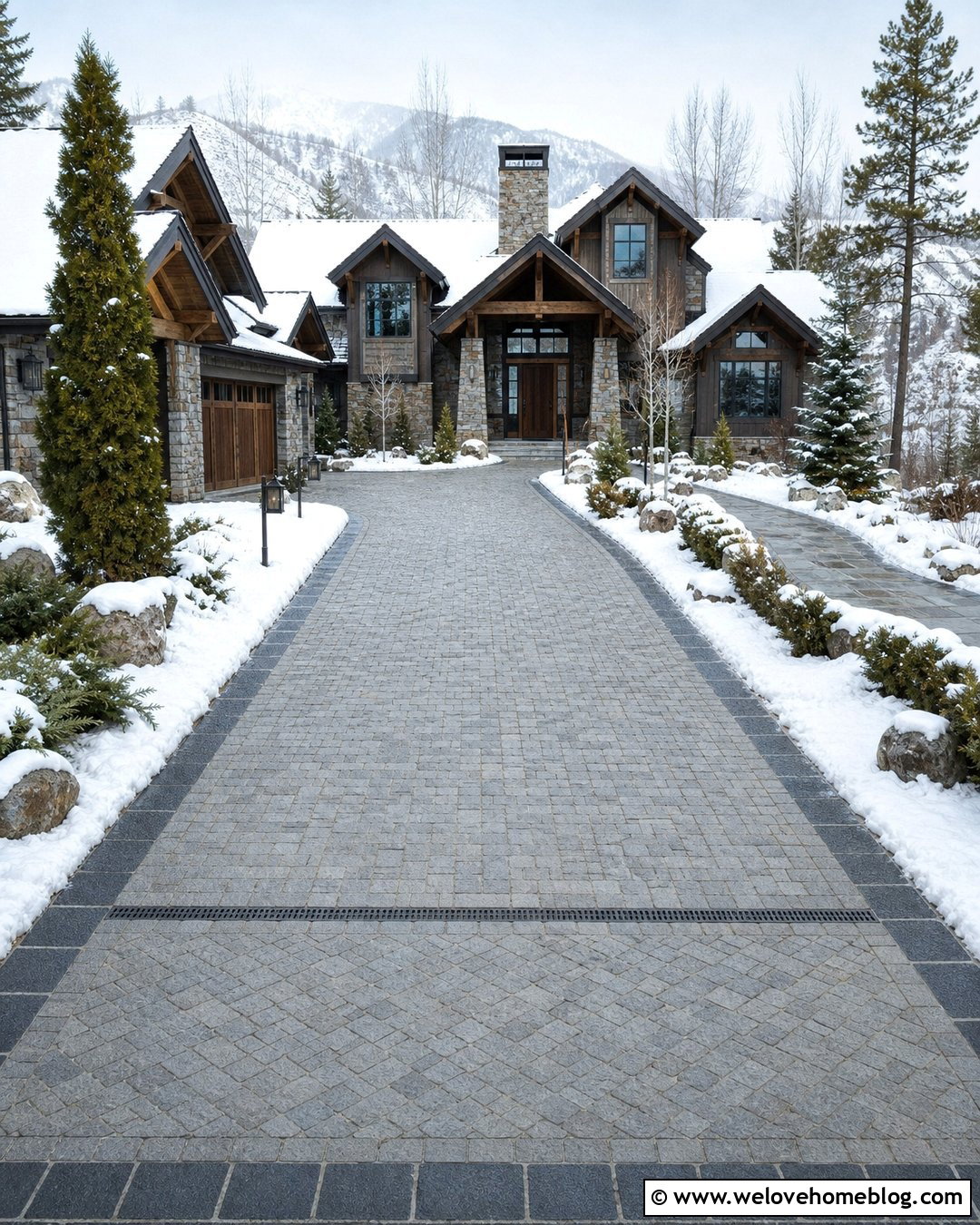
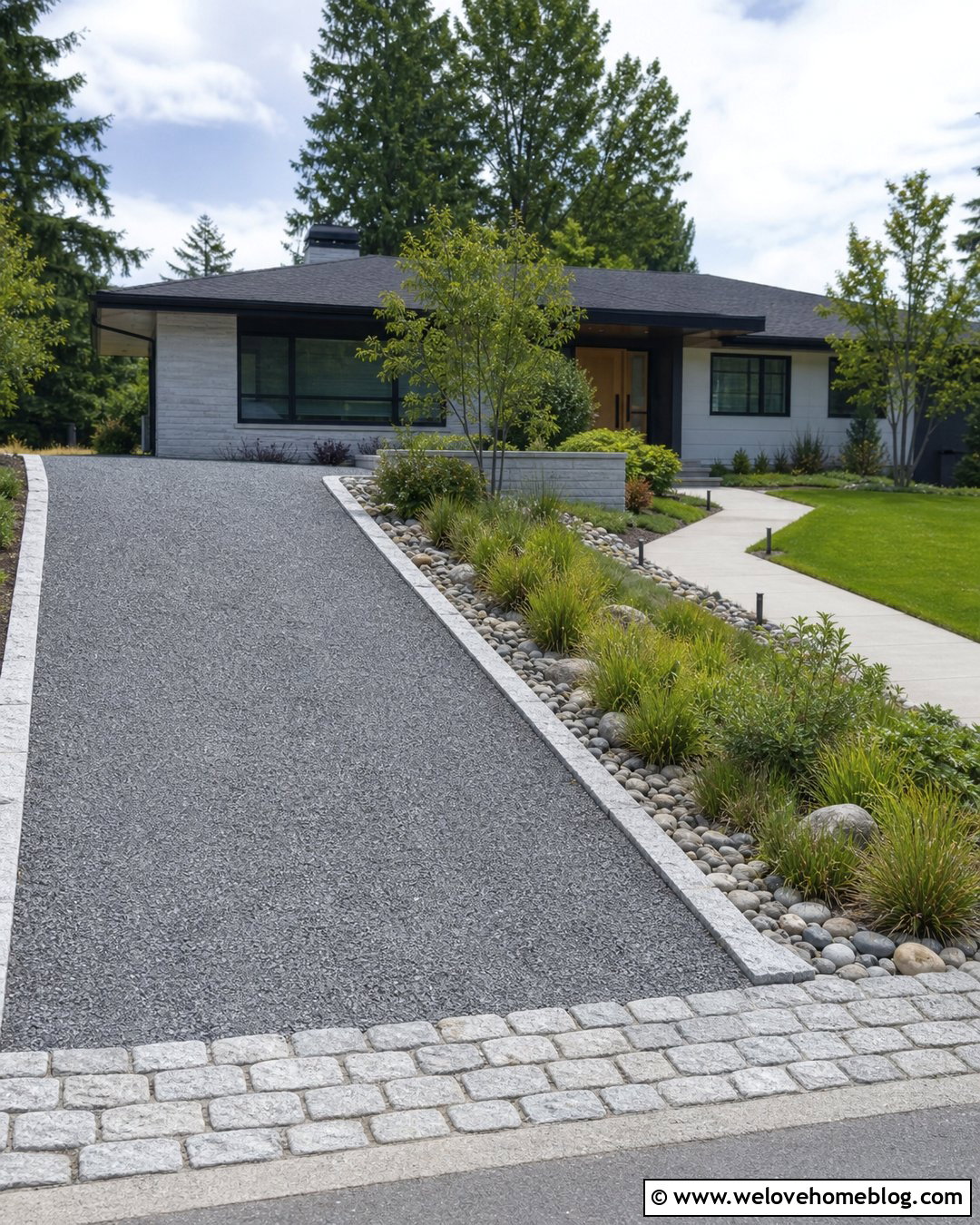
Cool gray cobblestones create a versatile driveway that works especially well with white, charcoal, blue, or natural stone exteriors. Choose stones with subtle tonal variation rather than a perfectly uniform finish. This gives the surface more depth while keeping the overall appearance refined. A straight layout can make a compact suburban lot appear longer and more organized. Frame both sides with larger granite blocks installed as a flush or slightly raised border. Low boxwood, ornamental grasses, and a clean lawn soften the stone without hiding its edges. Continue the same granite into the walkway or front steps for visual consistency. Near the garage, use a linear drainage channel so water does not collect against the foundation or doors.
2. Cobblestone Driveway With Herringbone Pattern
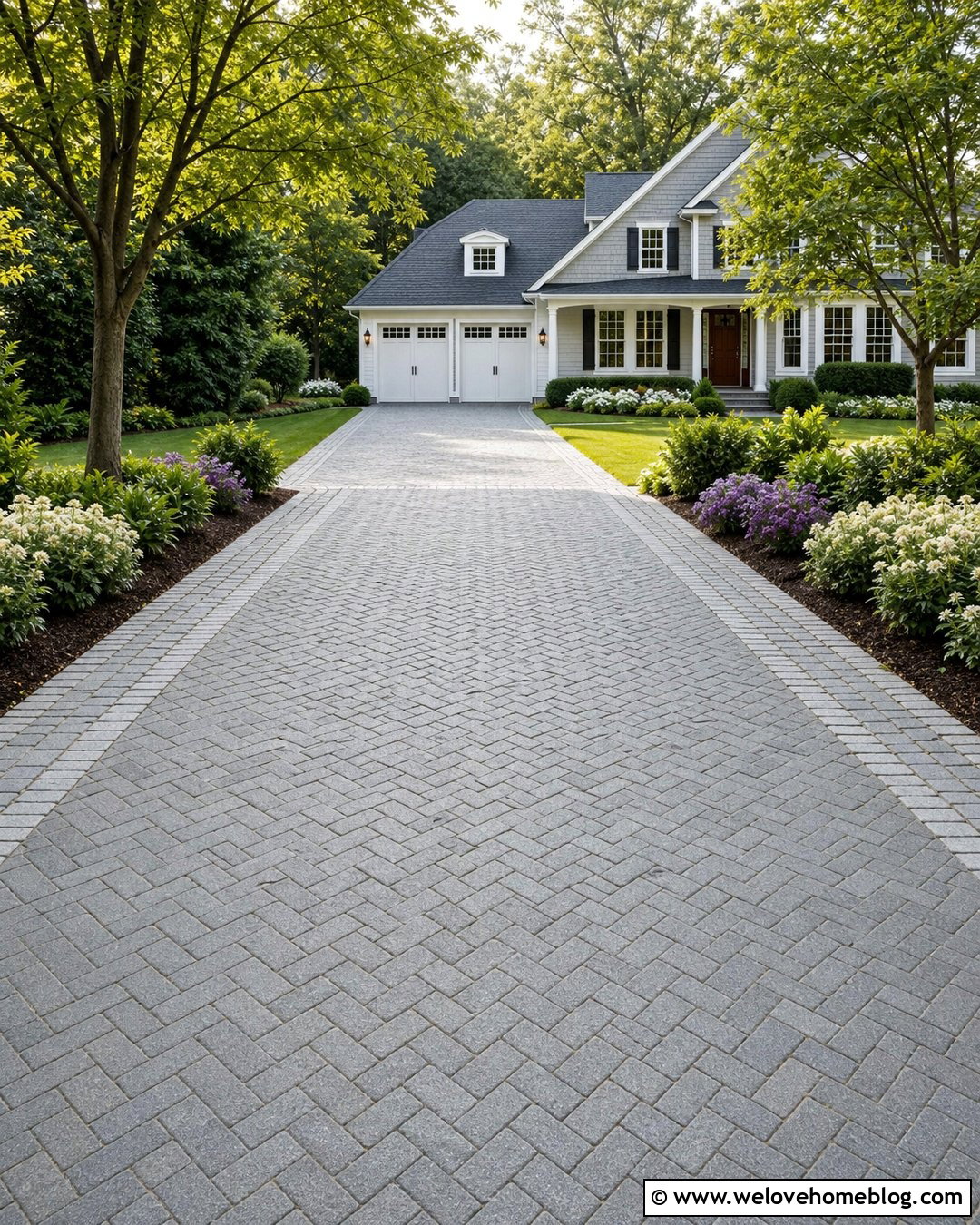
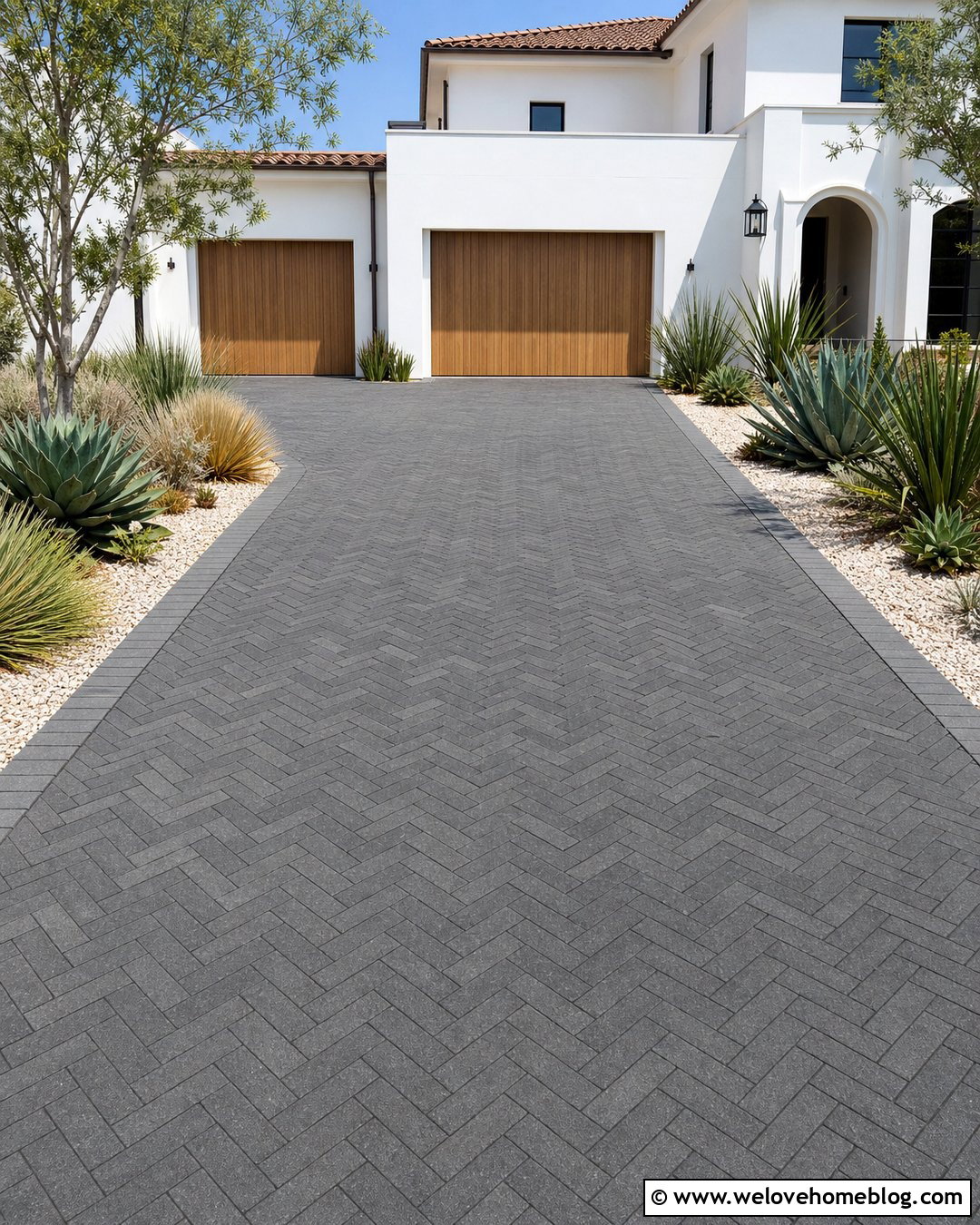
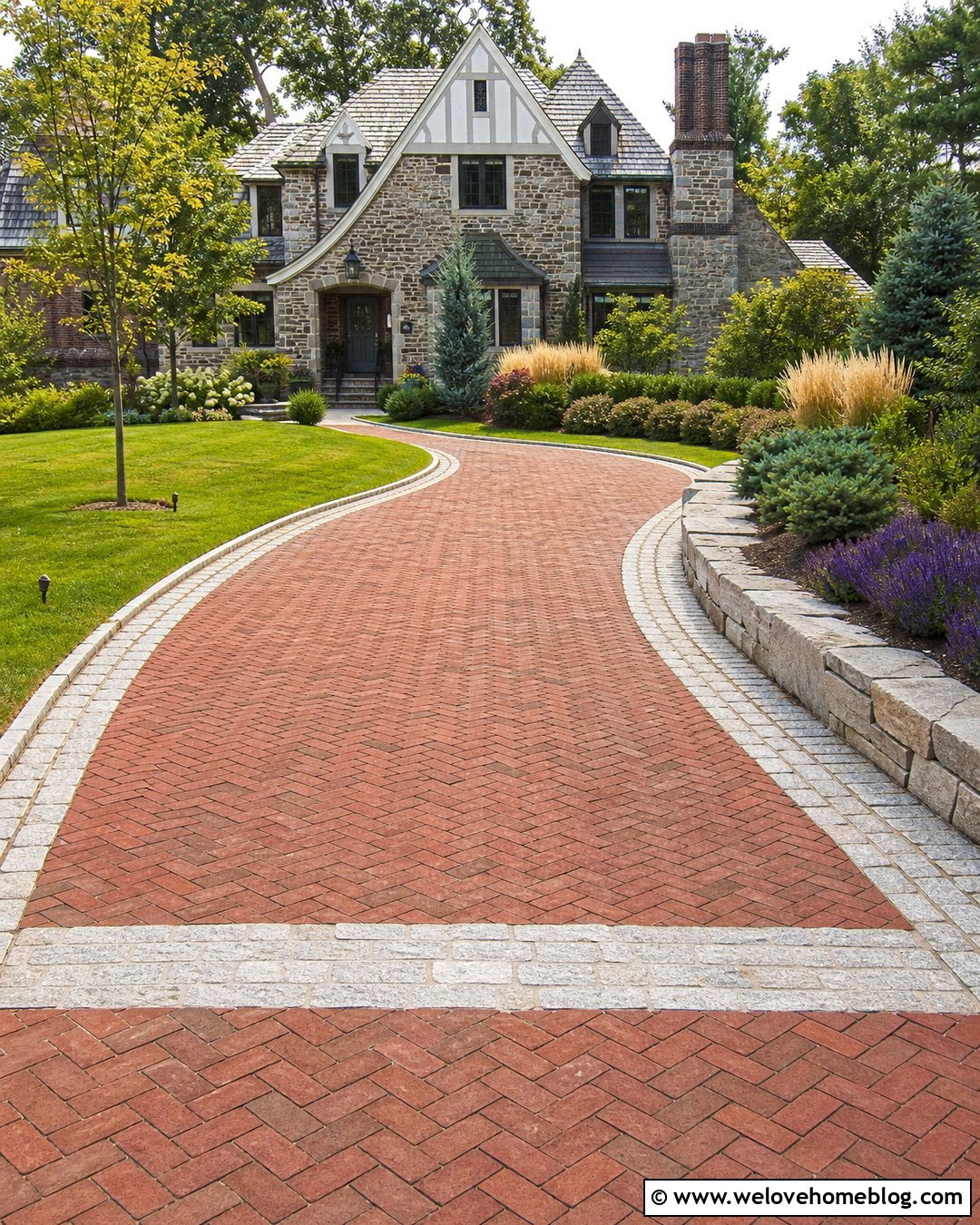
A herringbone pattern gives a cobblestone driveway strong visual movement and a tightly interlocked appearance. It is particularly effective on a straight driveway because the angled stones keep the long surface from looking flat or repetitive. Medium gray granite setts offer a traditional look, while charcoal stones create a sharper contemporary finish. Add a simple soldier-course border using rectangular cobbles in the same color family. This clearly defines the pattern without introducing too many competing materials. On either side, use symmetrical planting beds with evergreen shrubs, flowering perennials, and compact trees. Align the front walkway with one of the pattern’s angles for a connected design. The finished driveway feels detailed and decorative while remaining practical for daily residential use.
3. Curved Cobblestone Driveway With Flower Beds
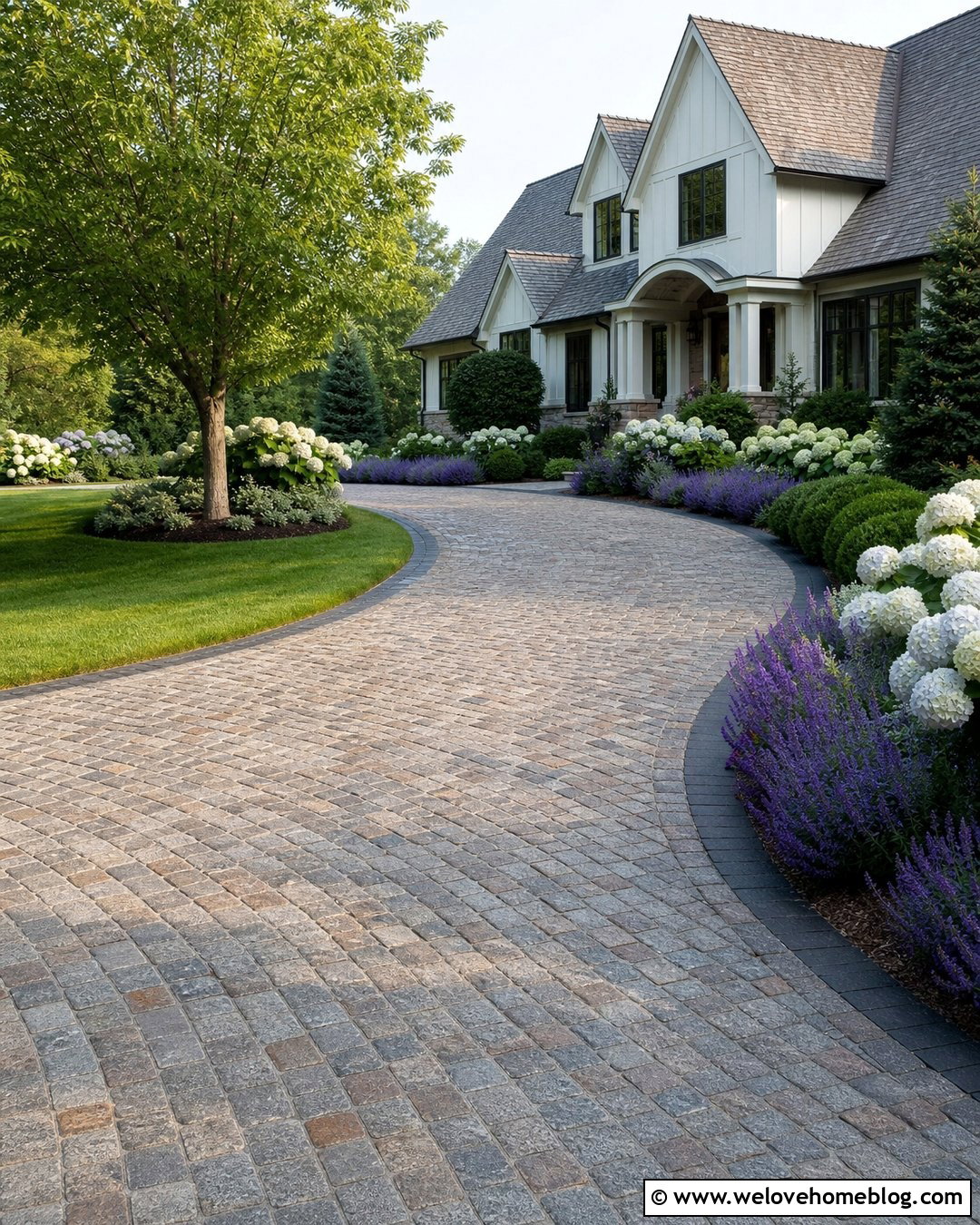
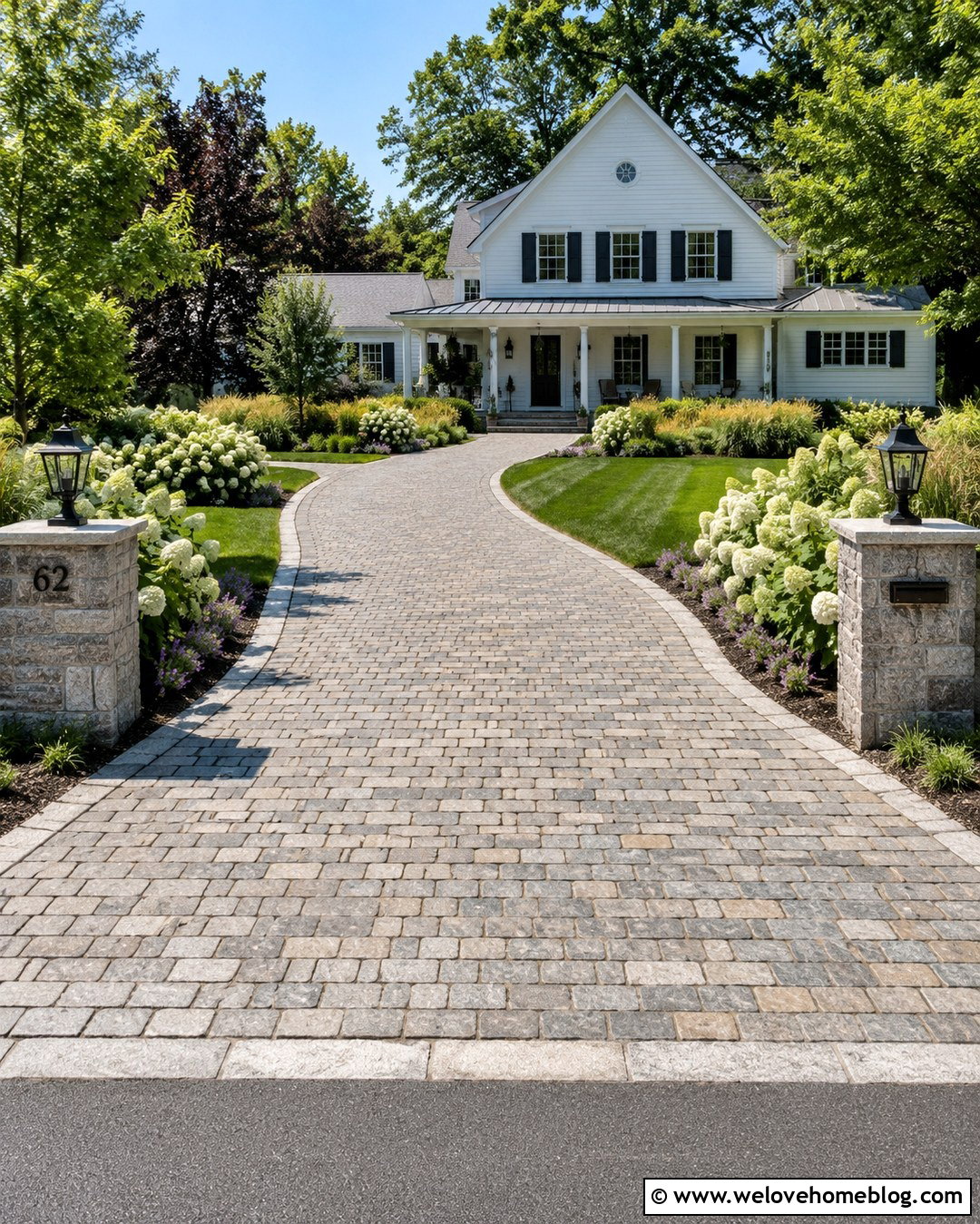
Soft curves help a cobblestone driveway follow the natural shape of a front yard. Instead of forcing a rigid route, create a gradual bend that reveals the house as visitors approach. Mixed gray and warm brown cobblestones reinforce the relaxed effect, especially when installed in a running bond that follows the curve. Use dark granite edging to keep every side crisp and prevent planting soil from spreading over the paving. Broad flower beds can fill the outside of the curve with hydrangeas, salvia, catmint, and evergreen structure. Keep plants lower near the street so sightlines remain open. One small ornamental tree can anchor the inside bend. Repeating the stone around a nearby walkway makes the curved layout feel intentional rather than simply shaped around existing obstacles.
4. Circular Cobblestone Driveway With Center Garden
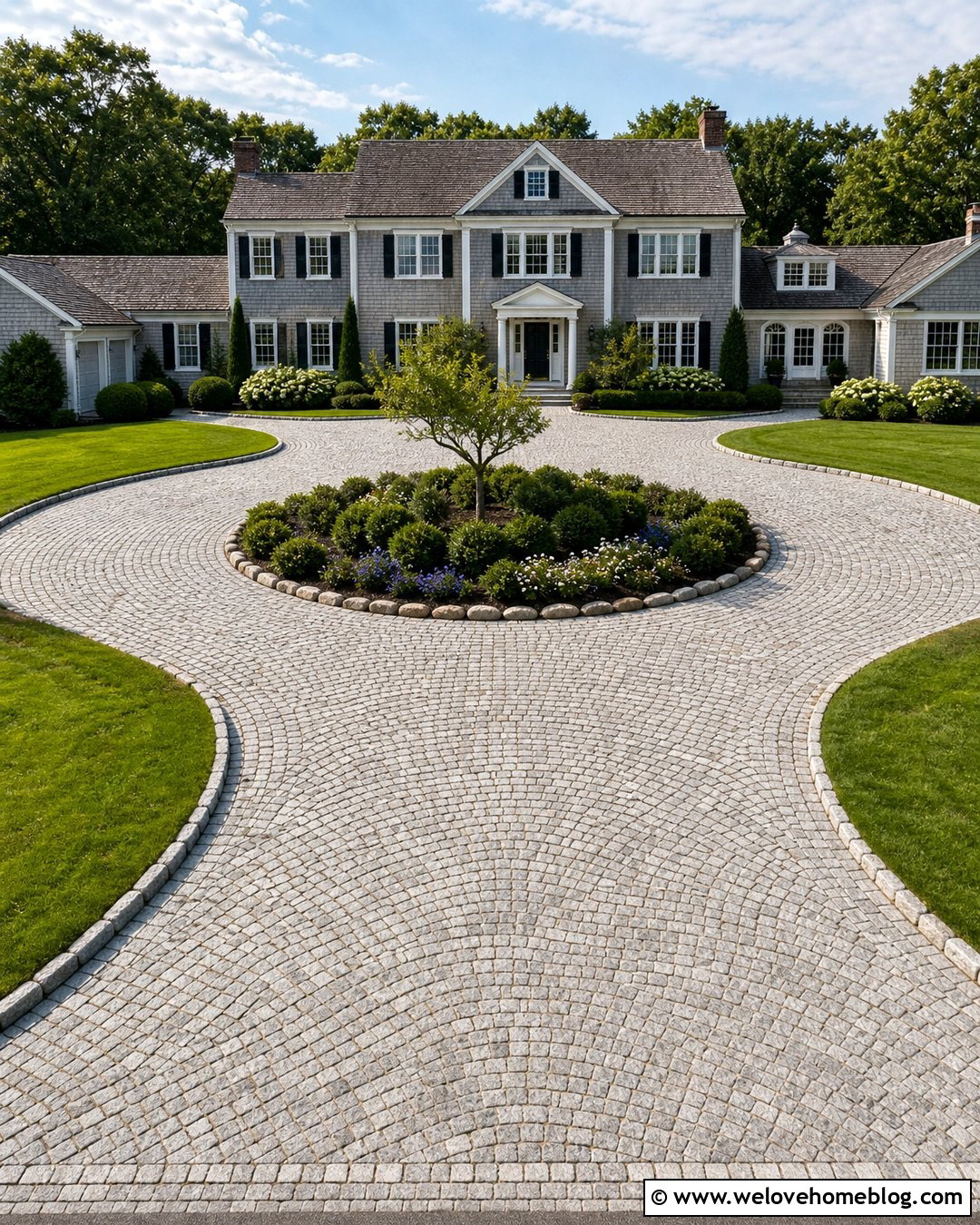
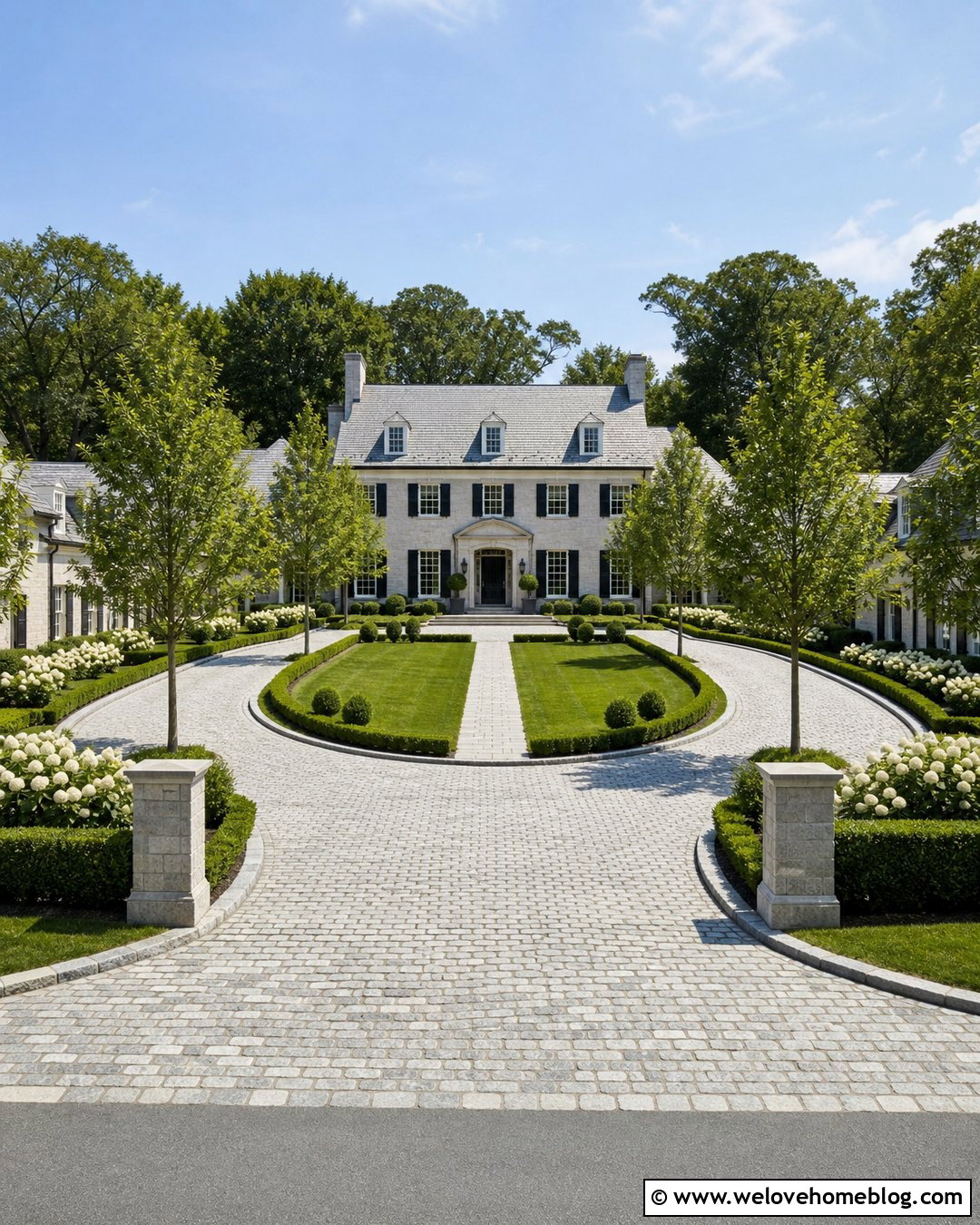
A circular cobblestone driveway creates an impressive arrival area while allowing vehicles to enter and leave without reversing. Lay rectangular granite cobbles in a radiating or fan pattern that naturally follows the circle. A round center garden strengthens the geometry and prevents the paved area from feeling oversized. Border the island with larger matching stones, then add one specimen tree surrounded by low shrubs, seasonal flowers, and ground cover. Keep the planting arrangement open enough to preserve visibility across the driveway. Two clearly defined entrances should connect smoothly to the street with wide cobblestone aprons. This layout is best suited to a broad front yard where the circle can remain proportional to the house. It looks especially natural with colonial, Georgian, and traditional brick architecture.
5. Cobblestone Driveway With Brick Border
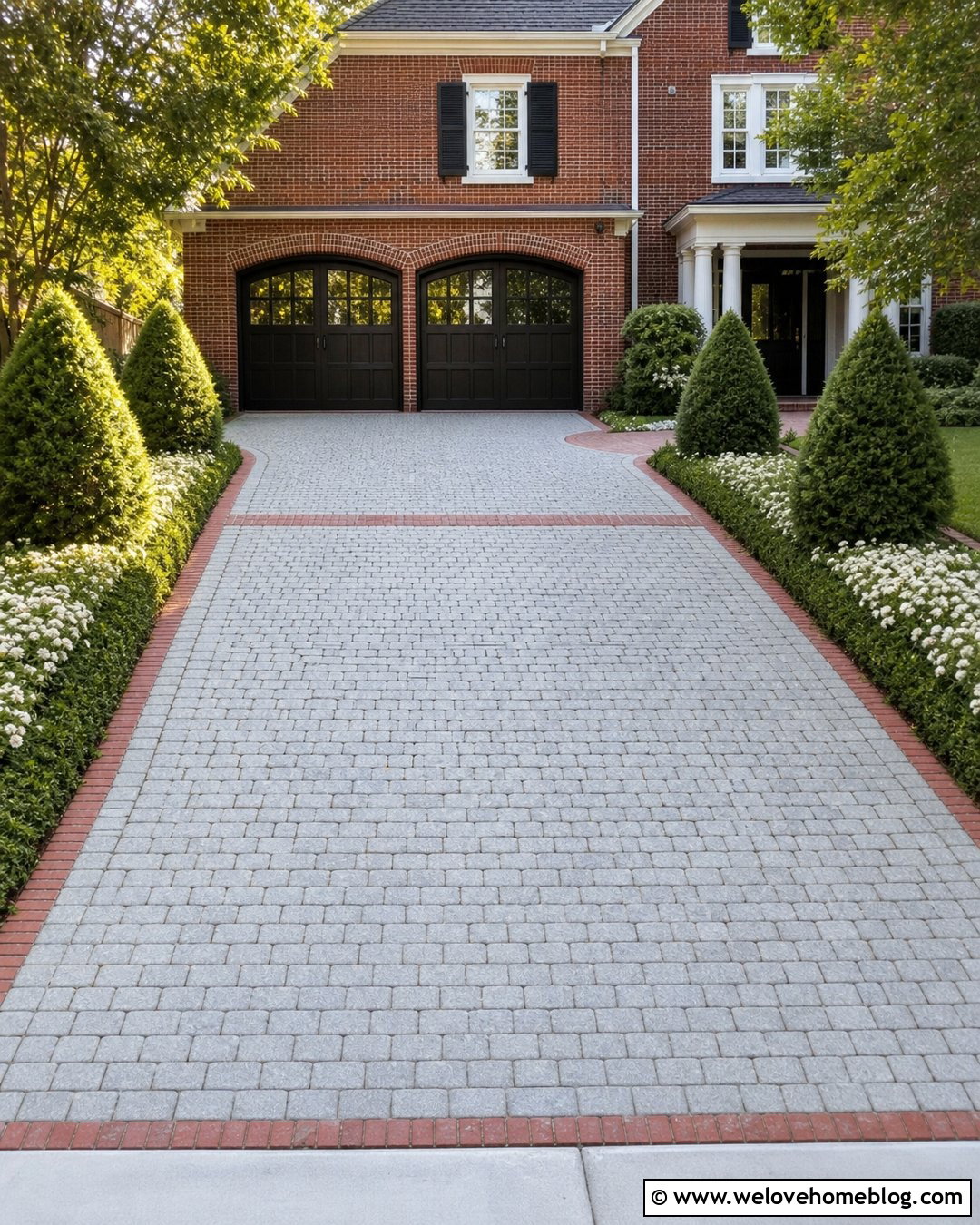
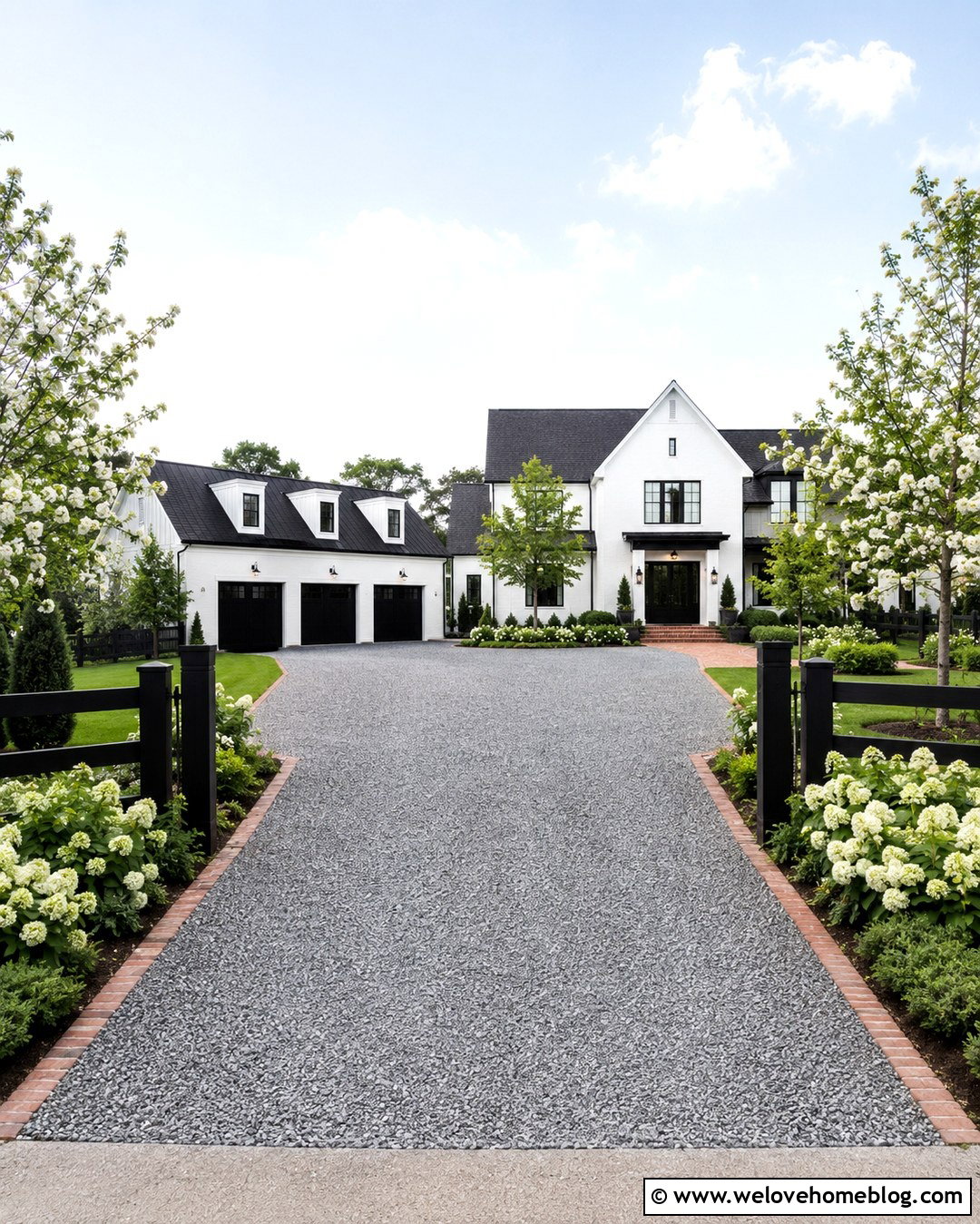
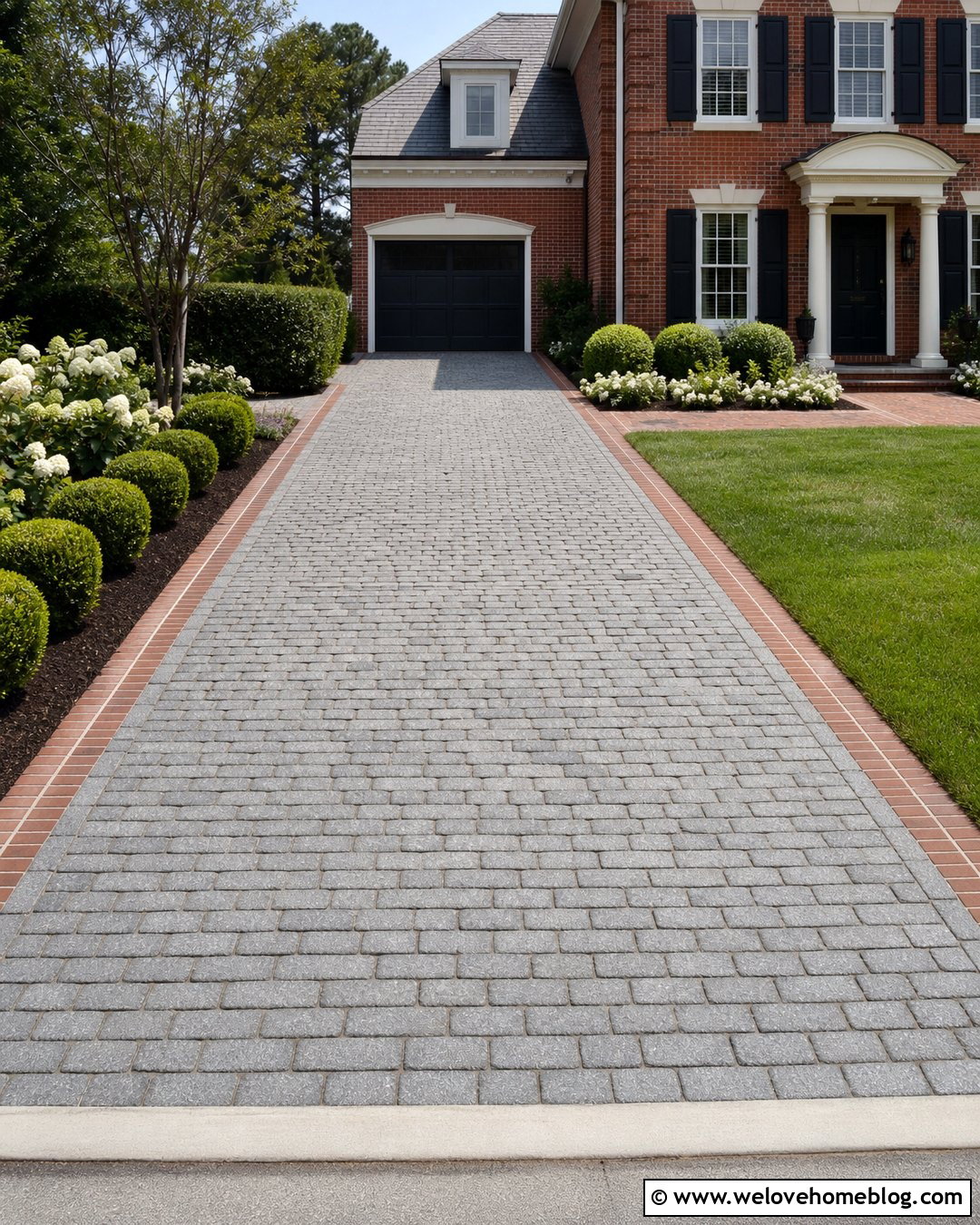
Pairing gray cobblestone with red or brown brick adds warmth and helps connect the driveway to a brick house. Use brick as a narrow perimeter ribbon rather than covering large sections. This keeps cobblestone as the main material while allowing the contrasting border to sharpen its shape. A straight or gently curved driveway works well with this combination. Choose brick colors already present in the facade, chimney, porch, or front walkway for a coordinated finish. Along the edges, plant clipped evergreen shrubs with white flowers and deep green ground cover. The restrained color palette allows the textured paving to remain the focal point. At the garage, repeat the brick ribbon across the driveway as a transition band, creating a clean visual stopping point before the cobblestone reaches the doors.
6. Cobblestone Driveway With Grass Joints
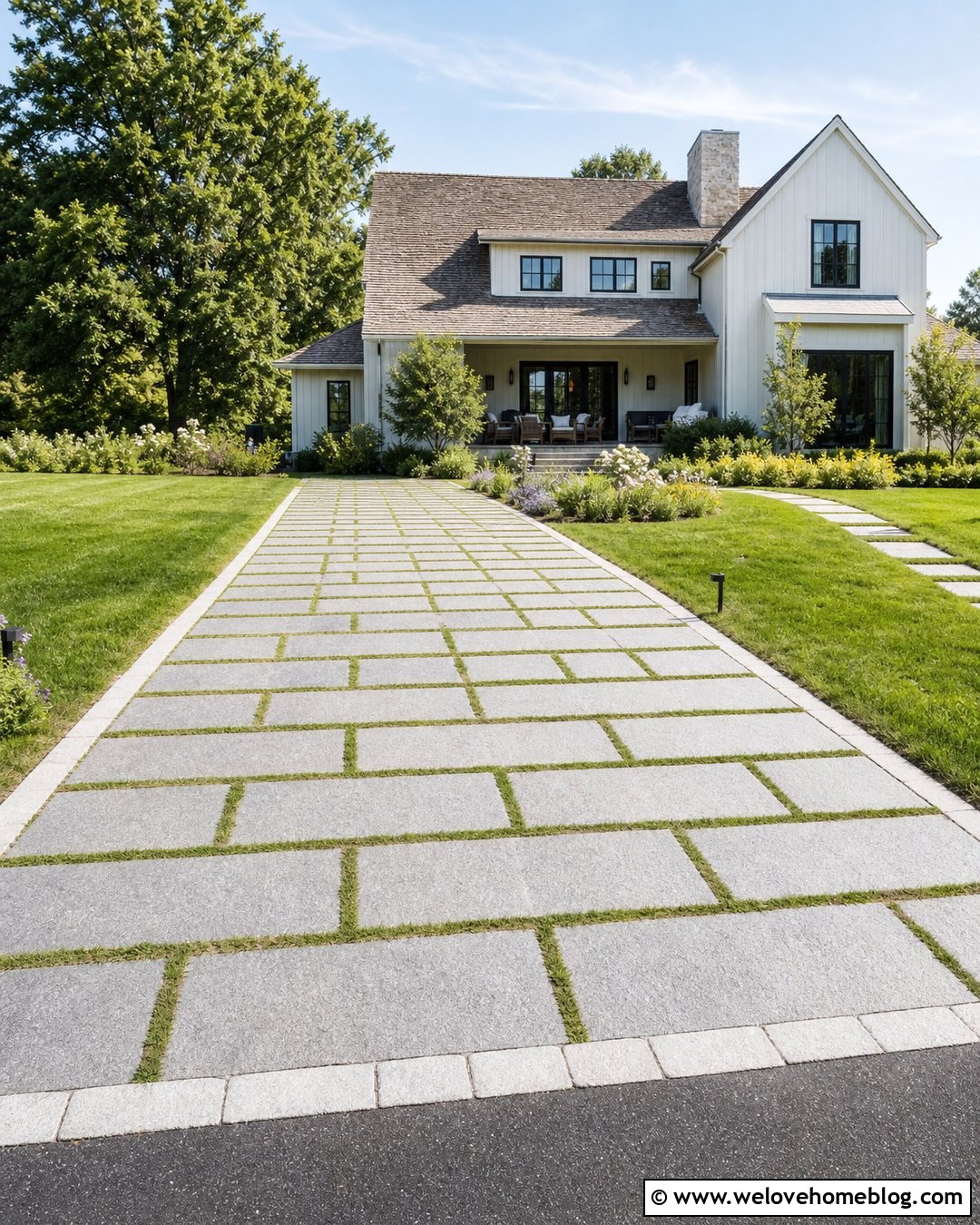
Grass joints introduce living greenery between rows of cobblestone and reduce the visual weight of a fully paved driveway. This design works best in low-traffic areas, secondary parking zones, or wheel-track layouts where plants are less likely to be damaged. Place large, flat gray cobbles in a consistent grid with slightly wider joints. Fill those joints with a durable, low-growing grass or ground cover appropriate for the local climate and available sunlight. A flush stone border keeps the perimeter neat and makes mowing easier. Surround the driveway with an open lawn, a few native shrubs, and simple planting beds. The green lines visually connect the hardscape to the yard. Proper base preparation and drainage remain essential because the stone must stay stable while supporting healthy joint growth.
7. Cobblestone Driveway With Gravel Center
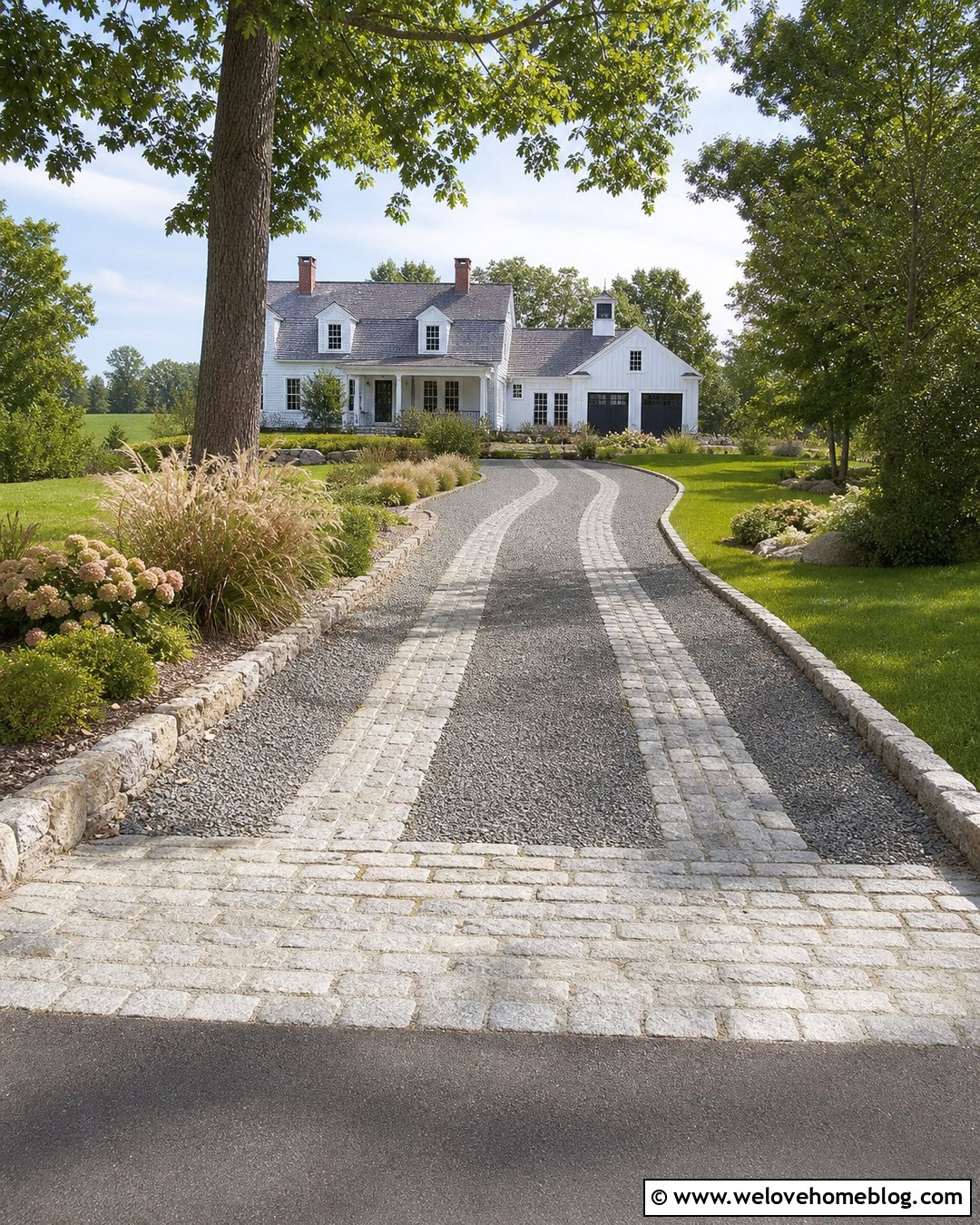
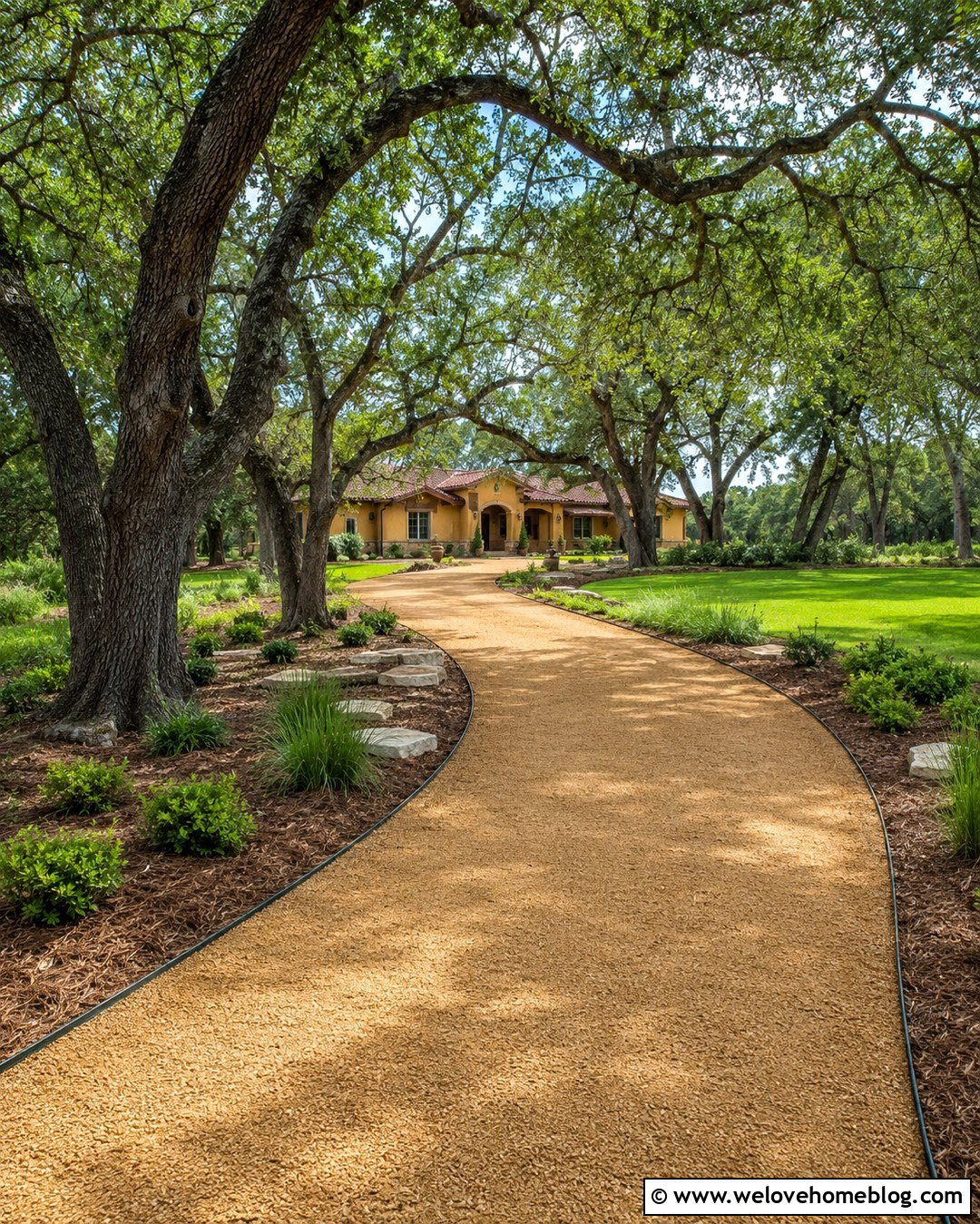
Combining cobblestone and gravel can lower the amount of full stone paving while maintaining a structured, upscale entrance. Use broad cobblestone wheel tracks or a solid cobbled perimeter with compacted gravel filling the center. Angular gray gravel provides better visual continuity than brightly colored decorative rock. Larger granite blocks should contain the loose material along every edge and transition. A curved layout makes this combination especially attractive for farmhouse, cottage, and country properties. Frame the route with meadow-inspired planting, ornamental grasses, and scattered flowering shrubs. Add a full-width cobblestone apron at the street and another near the garage to handle turning and braking areas. The result feels relaxed but organized, with the cobbles providing durable definition and the gravel introducing a softer, more informal texture.
8. Cobblestone Driveway With Stone Pillars
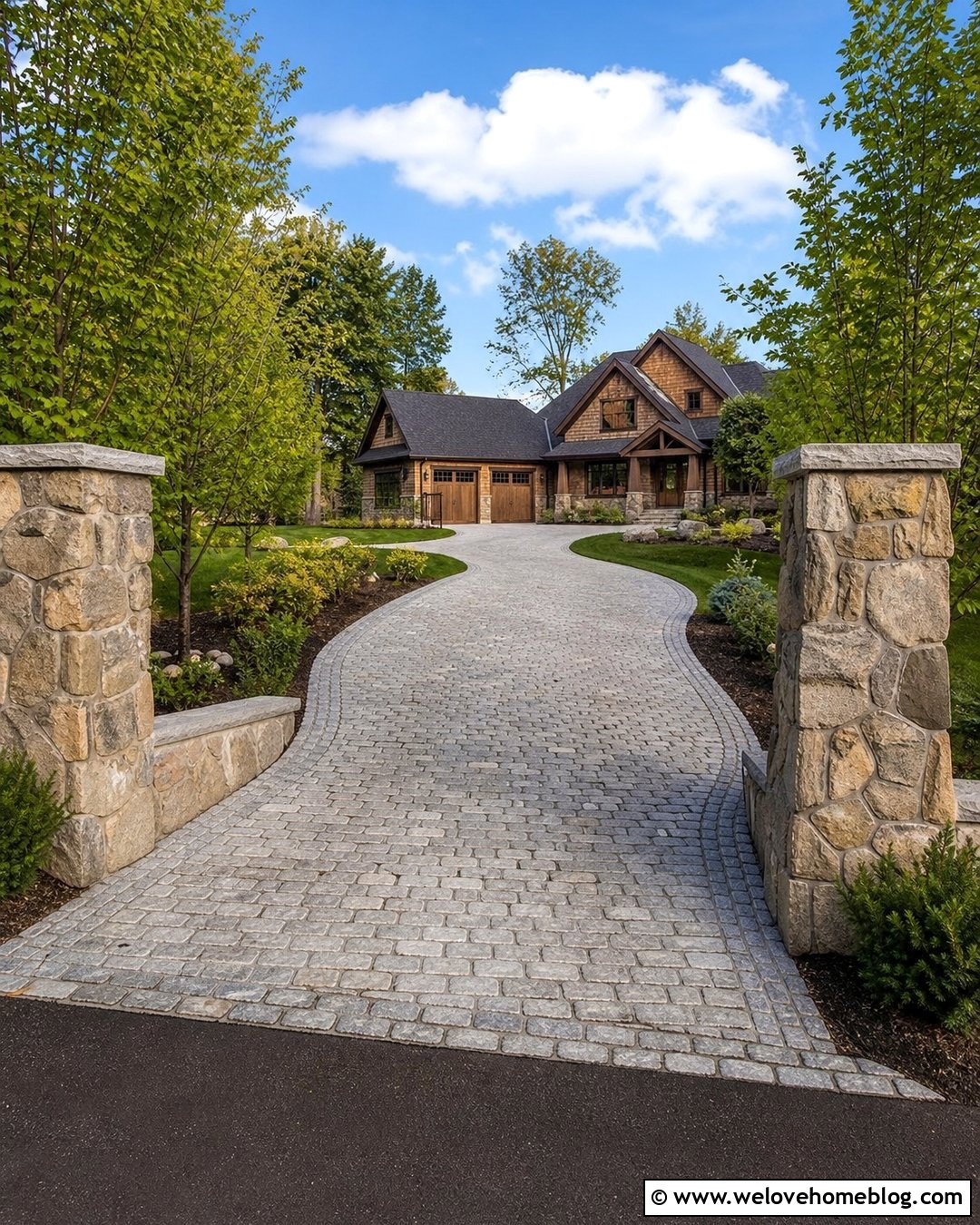
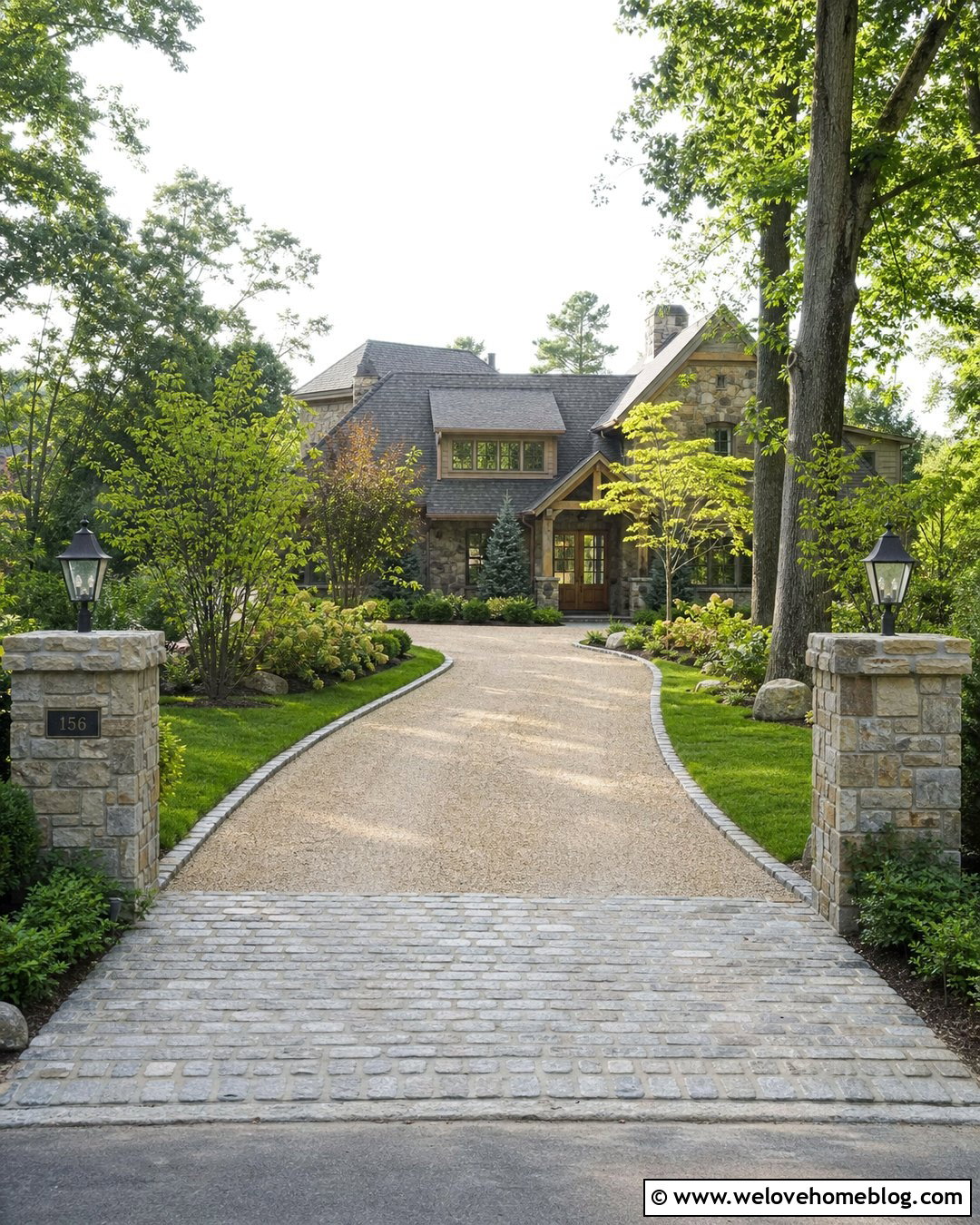
Stone entrance pillars give a cobblestone driveway a clear beginning and help the approach feel connected to the home’s architecture. Build the pillars from fieldstone, limestone, or granite that complements the cobbles without matching them too precisely. A gently curved gray cobblestone surface can pass between the pillars and continue toward a craftsman or country house. Keep the opening wide enough for comfortable vehicle movement, including service and delivery vehicles. Low walls may extend briefly from each pillar before transitioning into hedges or planting beds. Mount simple lanterns or understated address plaques where they remain visible from the road. Ground the entrance with low evergreen shrubs rather than tall plants that restrict sightlines. Repeating the pillar stone around the porch or front steps makes the entire property feel unified.
9. Cobblestone Driveway With Black Metal Gate
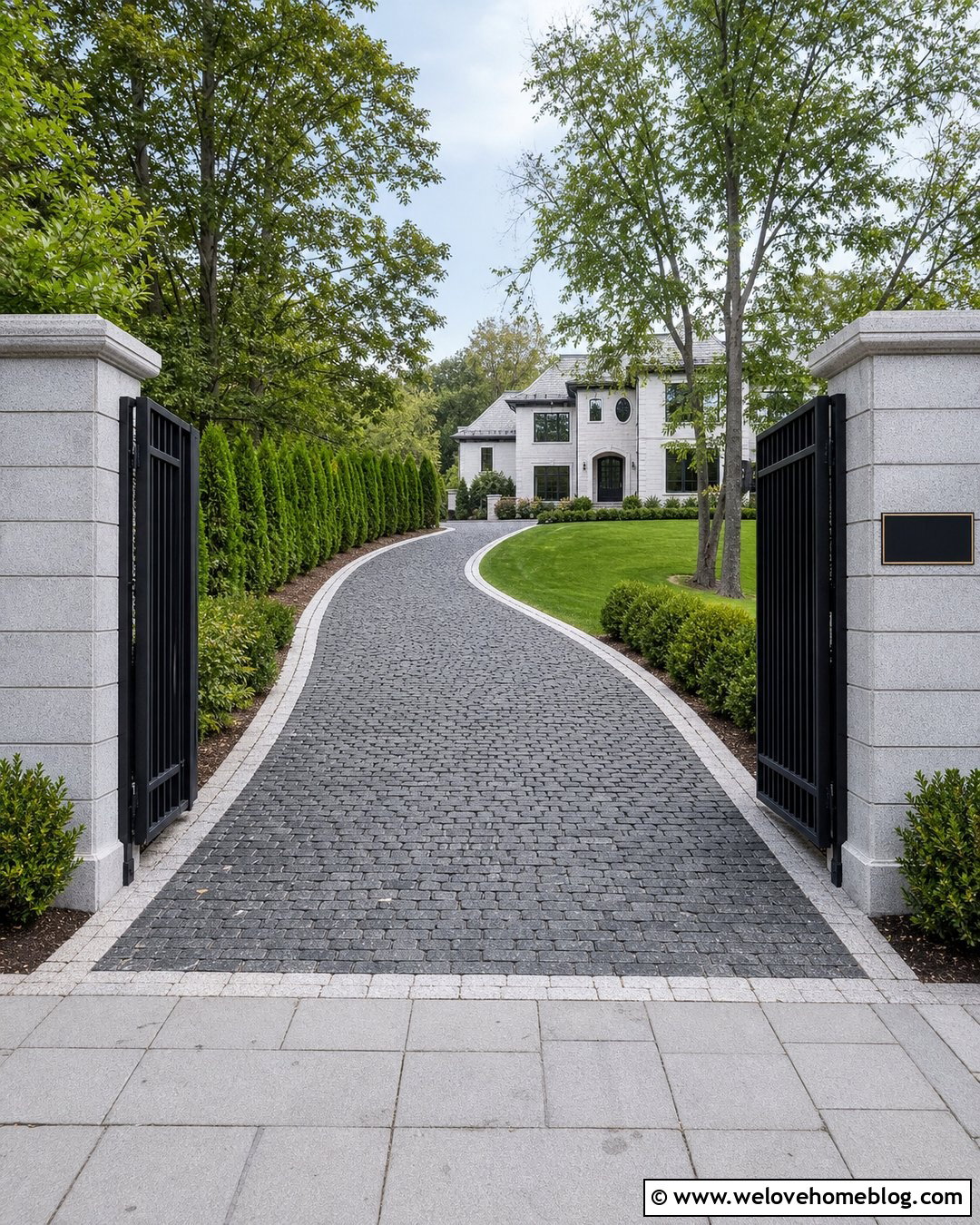
A black metal gate adds security and formal structure without hiding the texture of a cobblestone driveway. Choose an open, simple gate design that allows the house and landscaping to remain visible from the street. Dark charcoal cobbles can create a sophisticated monochromatic foundation, while a pale granite border prevents the surface from looking too heavy. Set the gate back far enough from the road to provide a safe waiting area for vehicles. Matching stone pillars can support the gate and hold discreet lighting or an address marker. Continue the cobblestone beyond the entrance in a straight or gently sweeping line. Trimmed hedges, upright trees, and restrained planting reinforce the organized appearance. Ensure the gate’s swing or sliding path remains clear of raised borders, drainage channels, and nearby planting beds.
10. Cobblestone Driveway With White Farmhouse
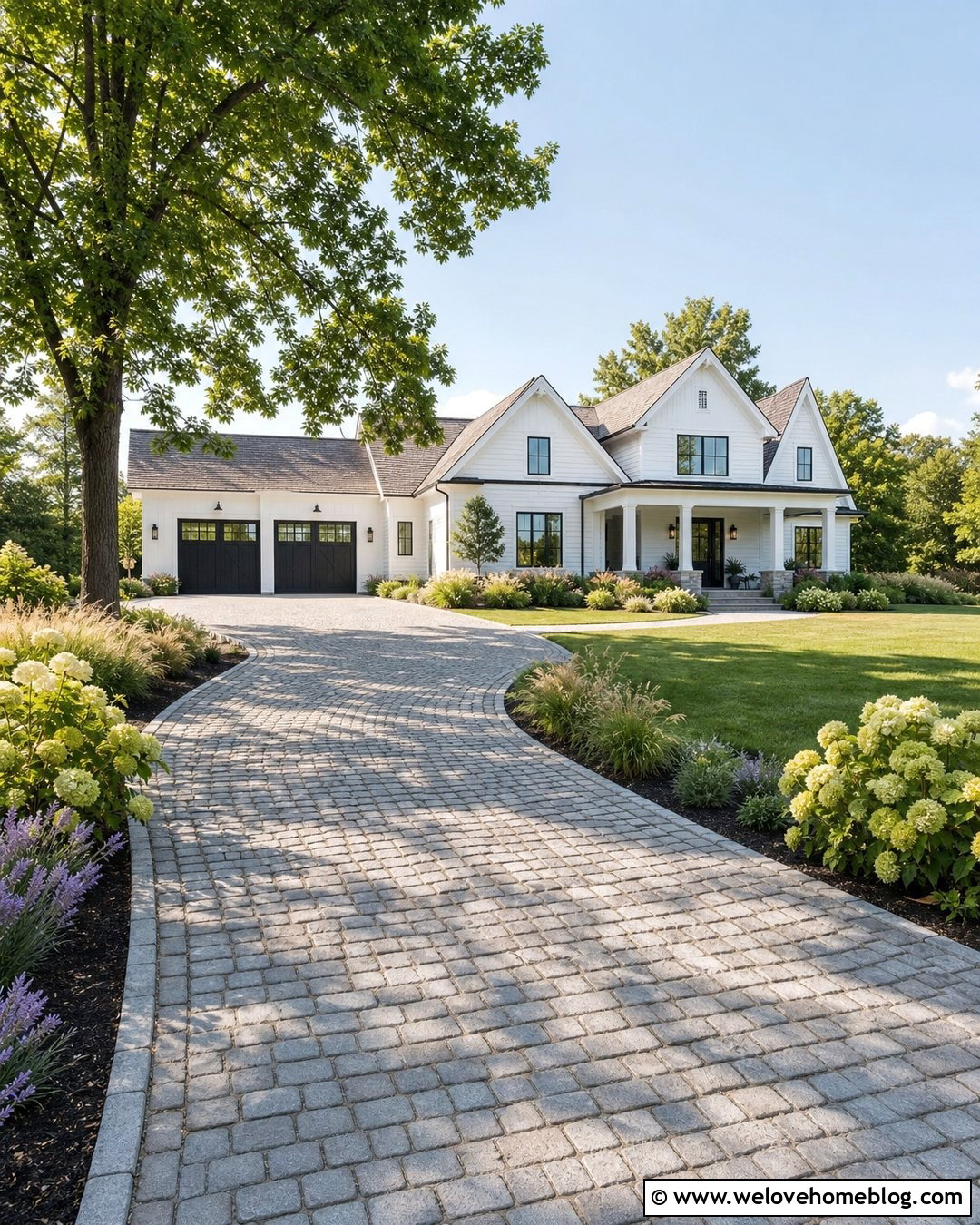
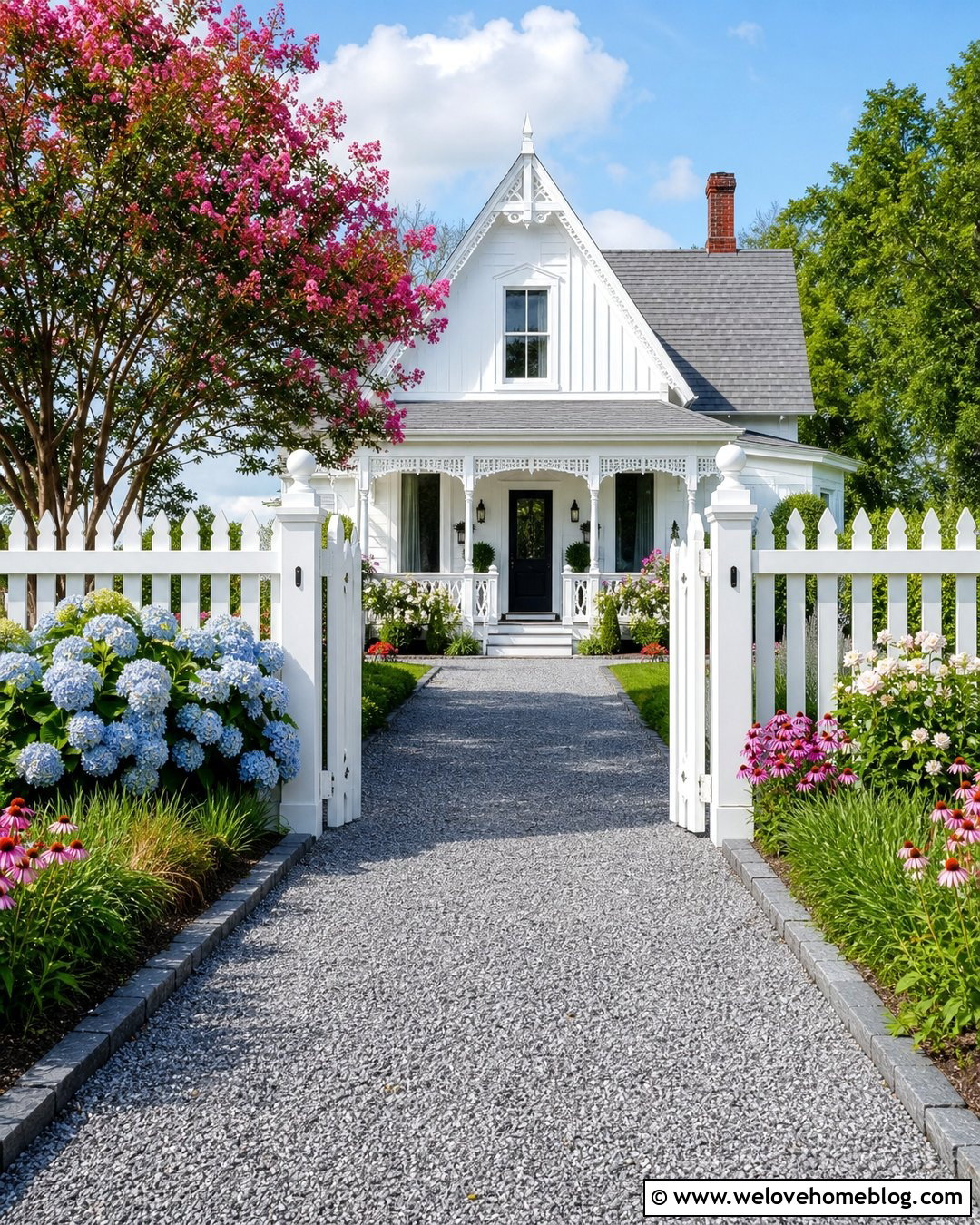
Weathered gray cobblestones pair naturally with the bright siding and simple lines of a white farmhouse. A broad, gently curved driveway feels more relaxed than a formal straight approach and helps the home settle comfortably into its landscape. Use warm gray stones with occasional beige and brown tones to complement wood porch posts, shutters, or natural stone accents. A flush granite edge can contain the paving without making it look overly polished. Frame the driveway with open lawn, hydrangeas, lavender, native grasses, and a few canopy trees. Near the garage, widen the cobblestone into a practical parking court. A matching path can lead from that area to the front porch. Simple black lighting and understated planting provide contrast while preserving the farmhouse’s clean, approachable character.
11. Dark Cobblestone Driveway With Modern House
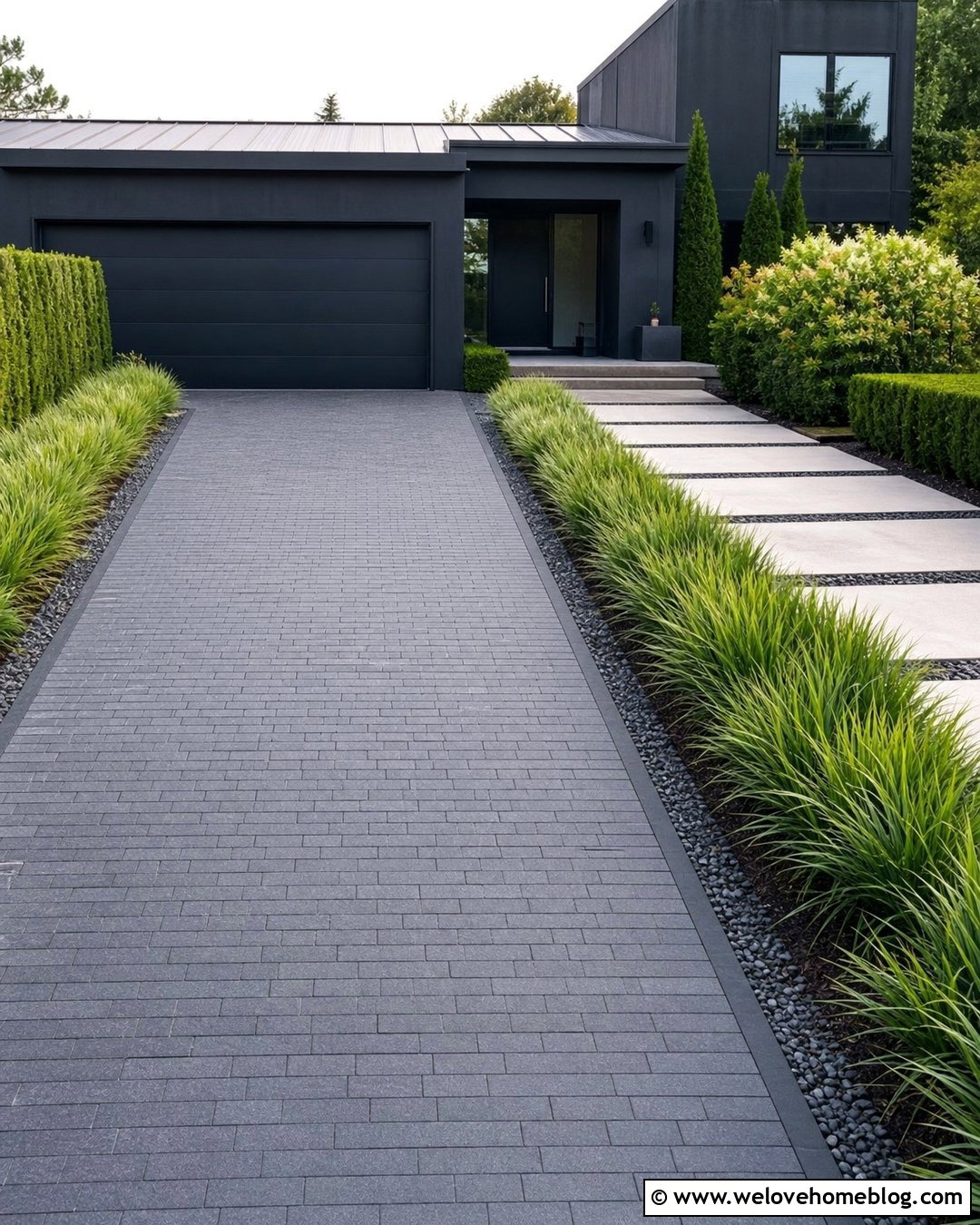
Dark cobblestone can suit contemporary architecture when the pattern, borders, and landscaping remain simple. Select charcoal granite setts with a sawn or lightly textured surface for a cleaner appearance than heavily weathered stones. Lay them in straight rows or a precise running bond that aligns with the garage and facade. A flush black stone border creates a seamless edge, while narrow gravel strips can separate the driveway from the building. Use linear beds filled with ornamental grasses, clipped evergreens, and architectural plants. Avoid complicated curves or multicolored patterns that compete with the home’s geometry. Large rectangular stepping stones can form a direct walkway to the entrance. The natural variation in the cobblestone softens glass, steel, concrete, and dark siding without weakening the modern design.
12. Light Cobblestone Driveway With Coastal House
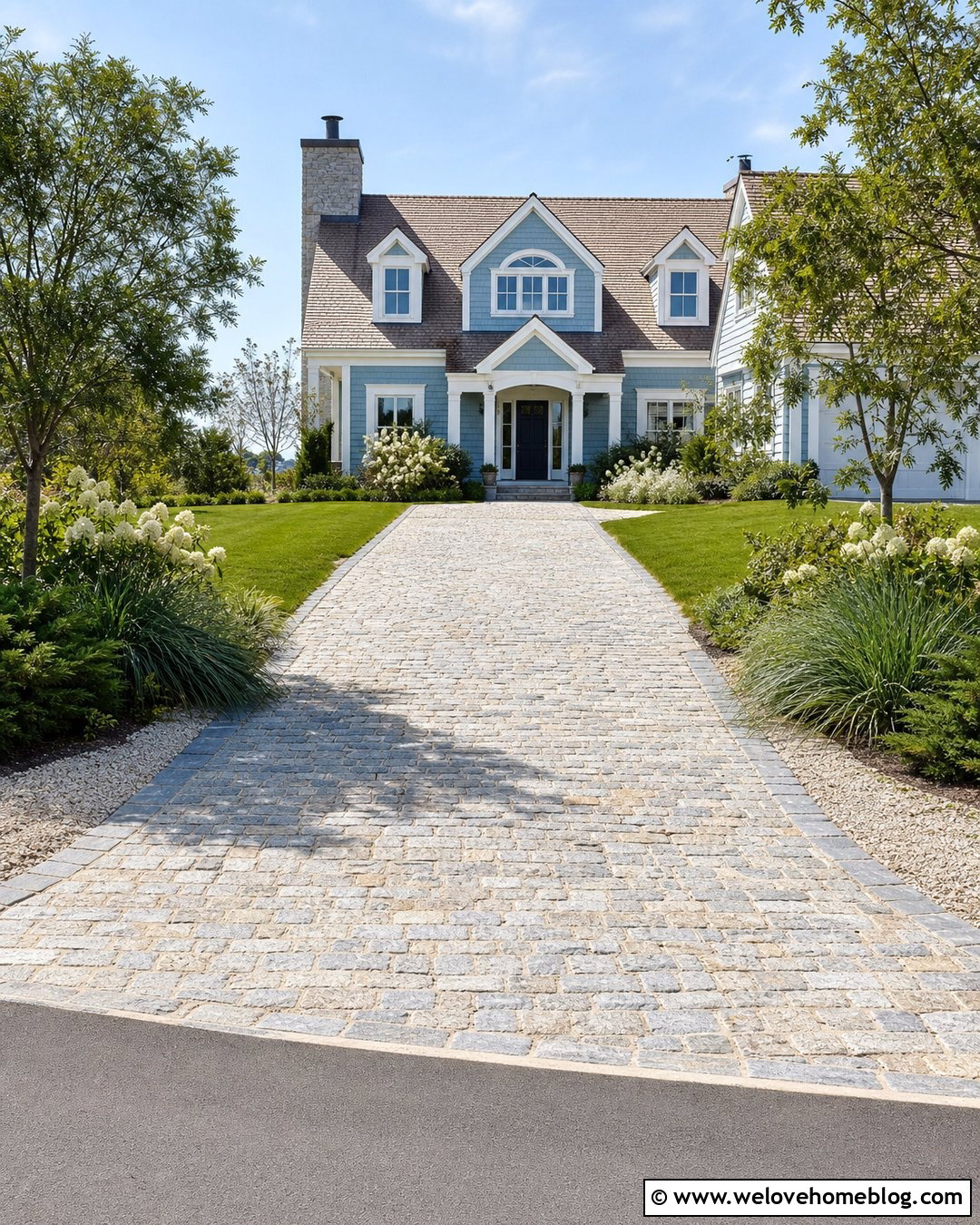
Pale cobblestones can brighten a driveway and complement coastal homes with white siding, light gray shingles, or soft blue accents. Choose granite, limestone, or sandstone cobbles in cream and silvery gray tones. A straight driveway with a slight flare at the street creates a welcoming entrance without requiring excessive paving. Edge the surface with medium-gray stones to define its shape and disguise minor staining along the perimeter. Salt-tolerant grasses, low junipers, hydrangeas, and airy perennials reinforce the coastal setting. Keep planting loose and wind-friendly rather than formal. A light gravel drainage strip can run beside the driveway where runoff needs somewhere to filter. Repeat the pale cobblestone around the front walkway or porch steps so the hardscape reads as one continuous, sunlit design.
13. Rustic Cobblestone Driveway With Fieldstone Border
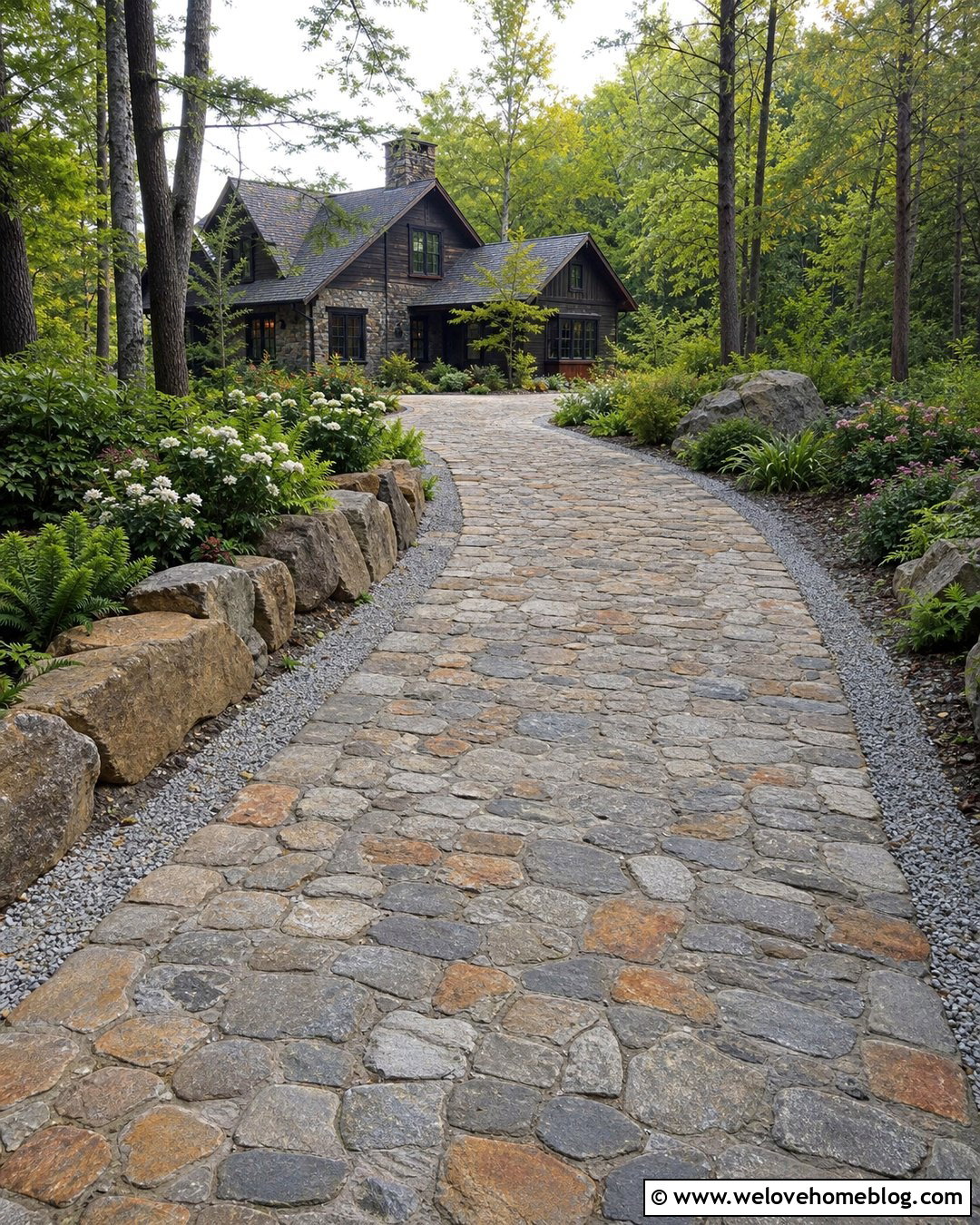
Irregular cobblestones create an aged, rustic surface that feels appropriate beside cabins, country homes, and renovated farmhouses. Use stones with varied shapes and earthy gray, brown, and muted rust tones. A fieldstone border can follow a gently winding driveway, blending the paving into an informal landscape. The border should still be securely installed so it supports the driveway edge and contains the base. Plant native grasses, flowering shrubs, ferns, and ground covers in broad natural-looking groups. Allow small pockets of greenery near the edge, but keep aggressive roots and heavy soil away from the joints. A compacted gravel shoulder can provide extra drainage in wet areas. The finished approach should look established and relaxed while still offering a smooth, clearly defined route to the house.
14. Cobblestone Driveway With Fan Pattern
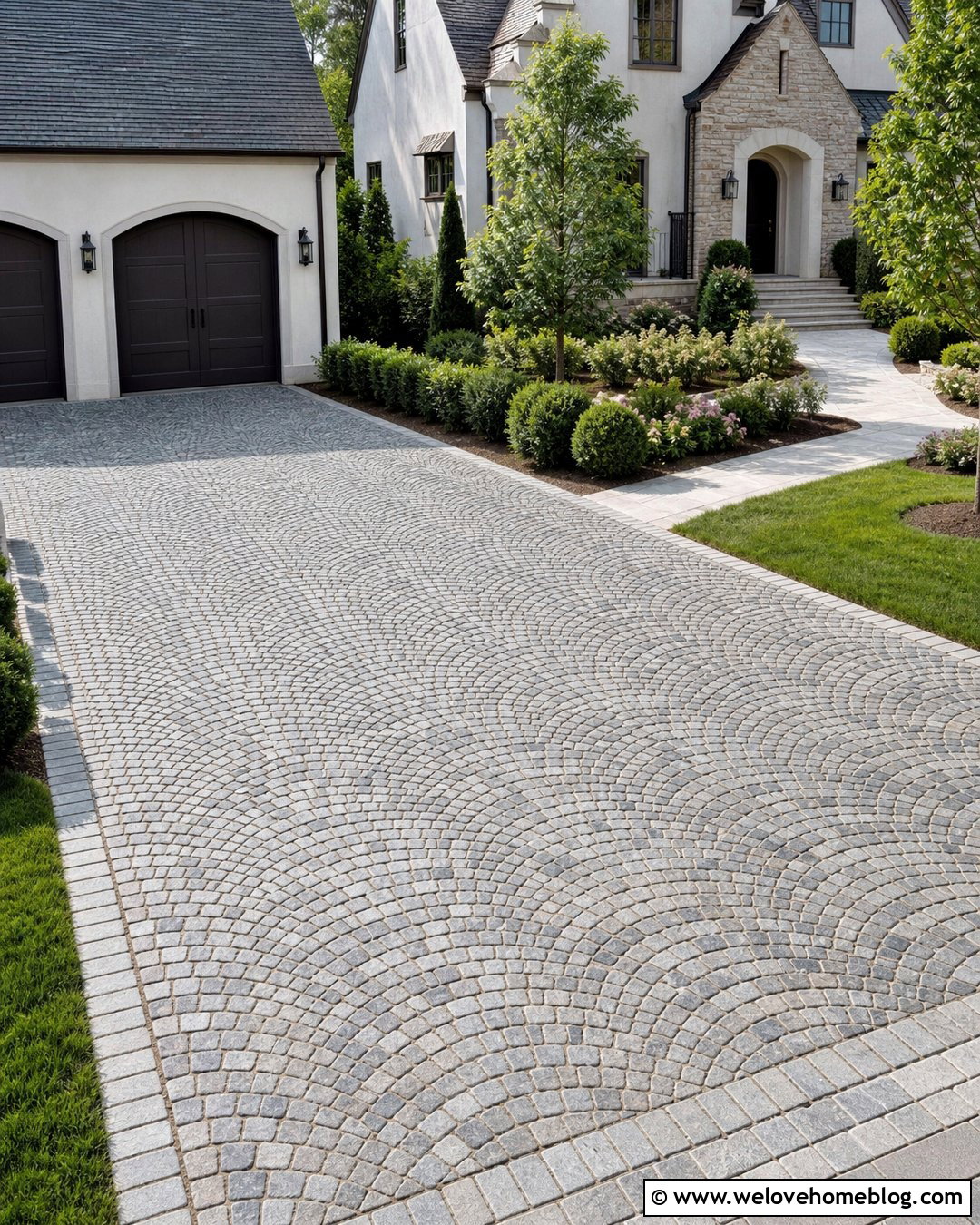
A fan pattern highlights the craftsmanship and flexibility of small cobblestone units. Curving rows spread outward in repeated arcs, producing a surface that looks especially attractive across wider driveways and parking courts. Use two or three closely related gray tones so the pattern remains visible without becoming overly busy. A simple rectangular cobblestone border provides a calm frame around the decorative field. Near a traditional stucco or European-inspired home, continue the fan layout toward the garage and use a matching stone walkway to connect the front entrance. Keep surrounding landscaping balanced with clipped shrubs, small trees, and low flowering borders. Because the arrangement contains many curves and cuts, careful planning is important around drains and edges. The complete surface should appear flowing, centered, and evenly proportioned.
15. Cobblestone Driveway With Running Bond Pattern
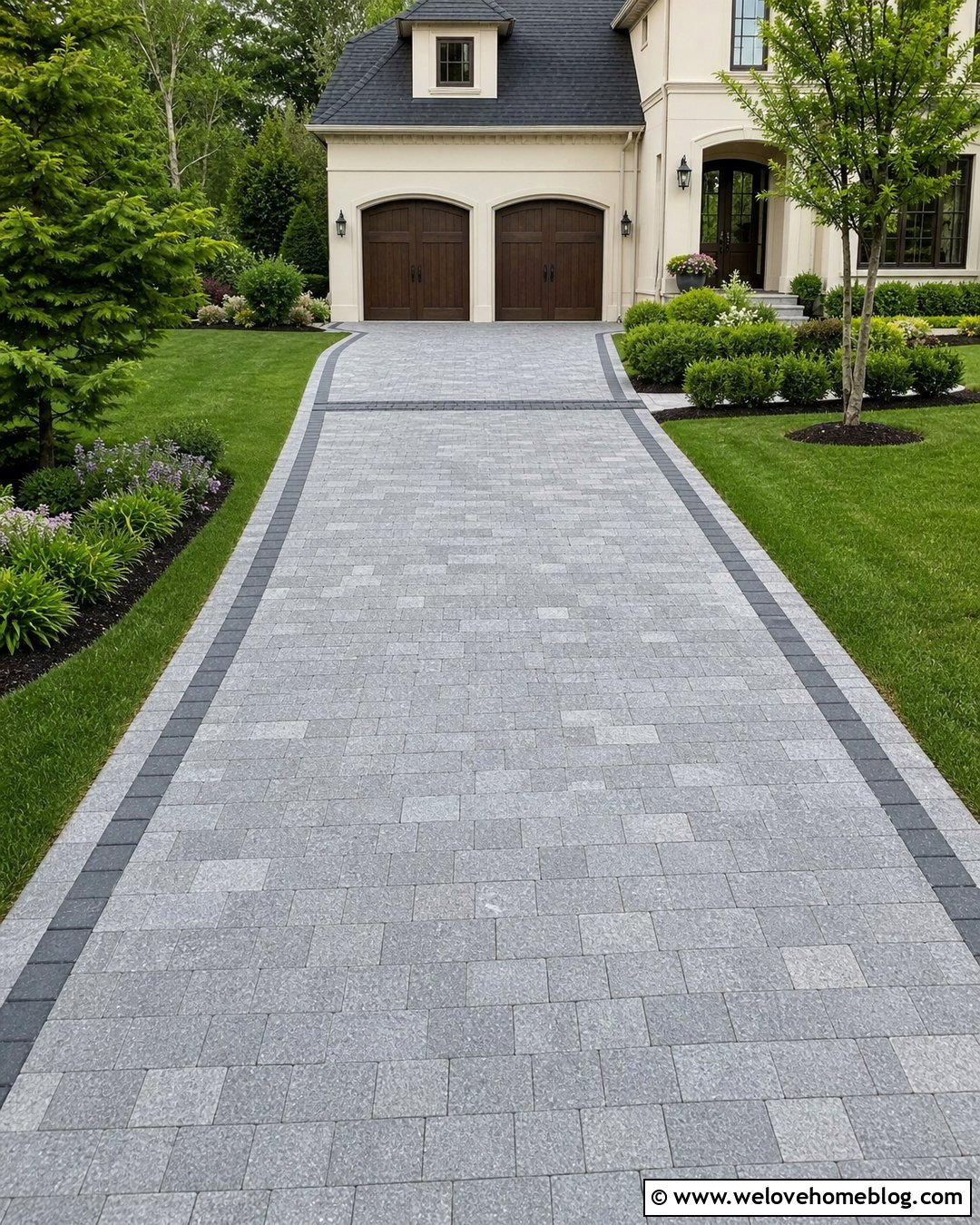
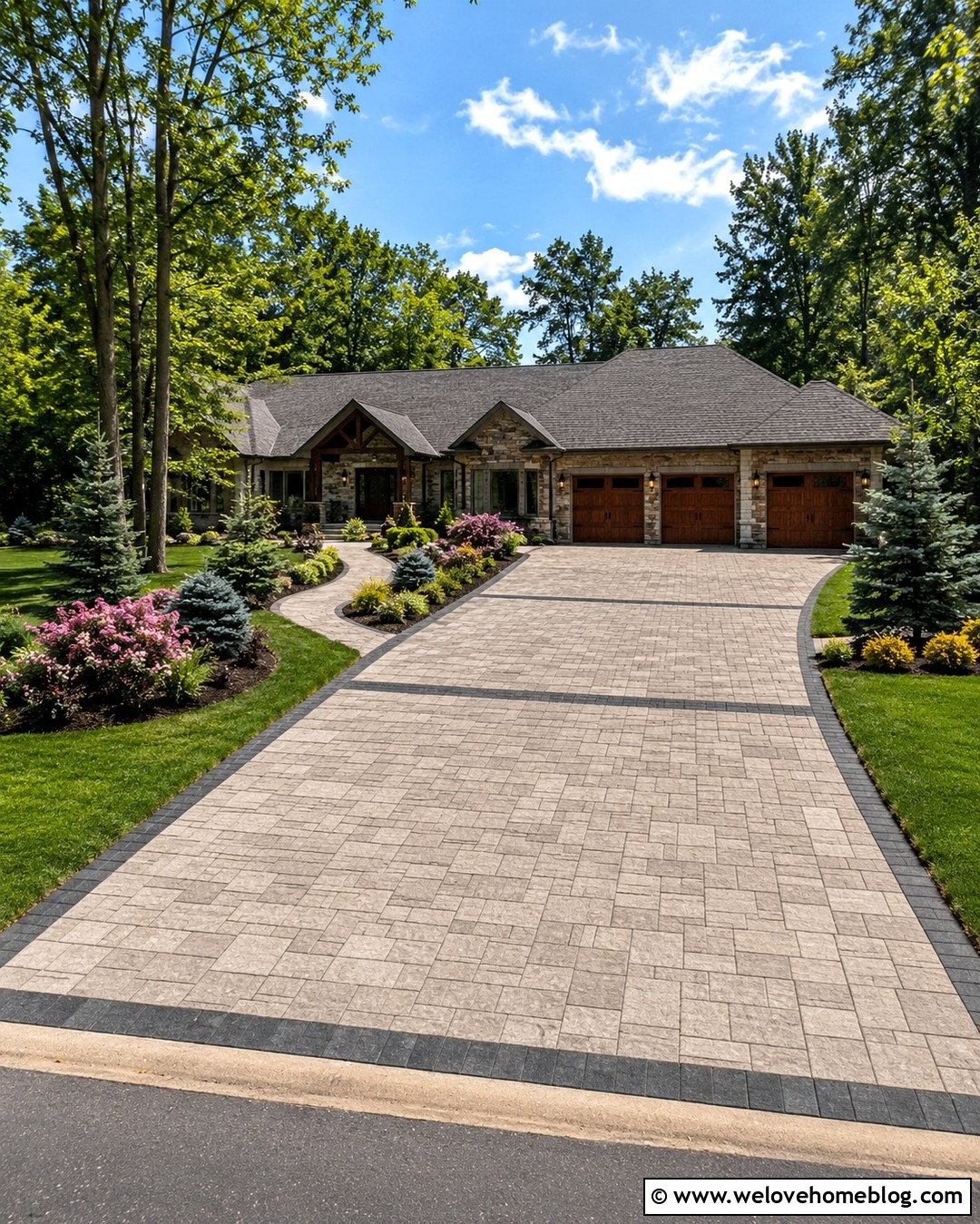
Running bond is a straightforward cobblestone pattern that creates clean direction and suits both classic and updated homes. Rectangular stones are laid in offset rows, producing a calm surface with less visual activity than herringbone or fan arrangements. Position the rows across a narrow driveway to make it appear wider, or run them lengthwise to emphasize a long approach. Medium-gray granite setts with tight joints offer a neat, durable finish. Add a darker double-row border to frame the layout and separate it from lawn or planting soil. Compact shrubs, perennial beds, and one or two ornamental trees can soften the long edges. At the garage threshold, install a contrasting cross band. This small detail ends the pattern cleanly and visually connects the paving to the home.
16. Cobblestone Driveway With Basketweave Pattern
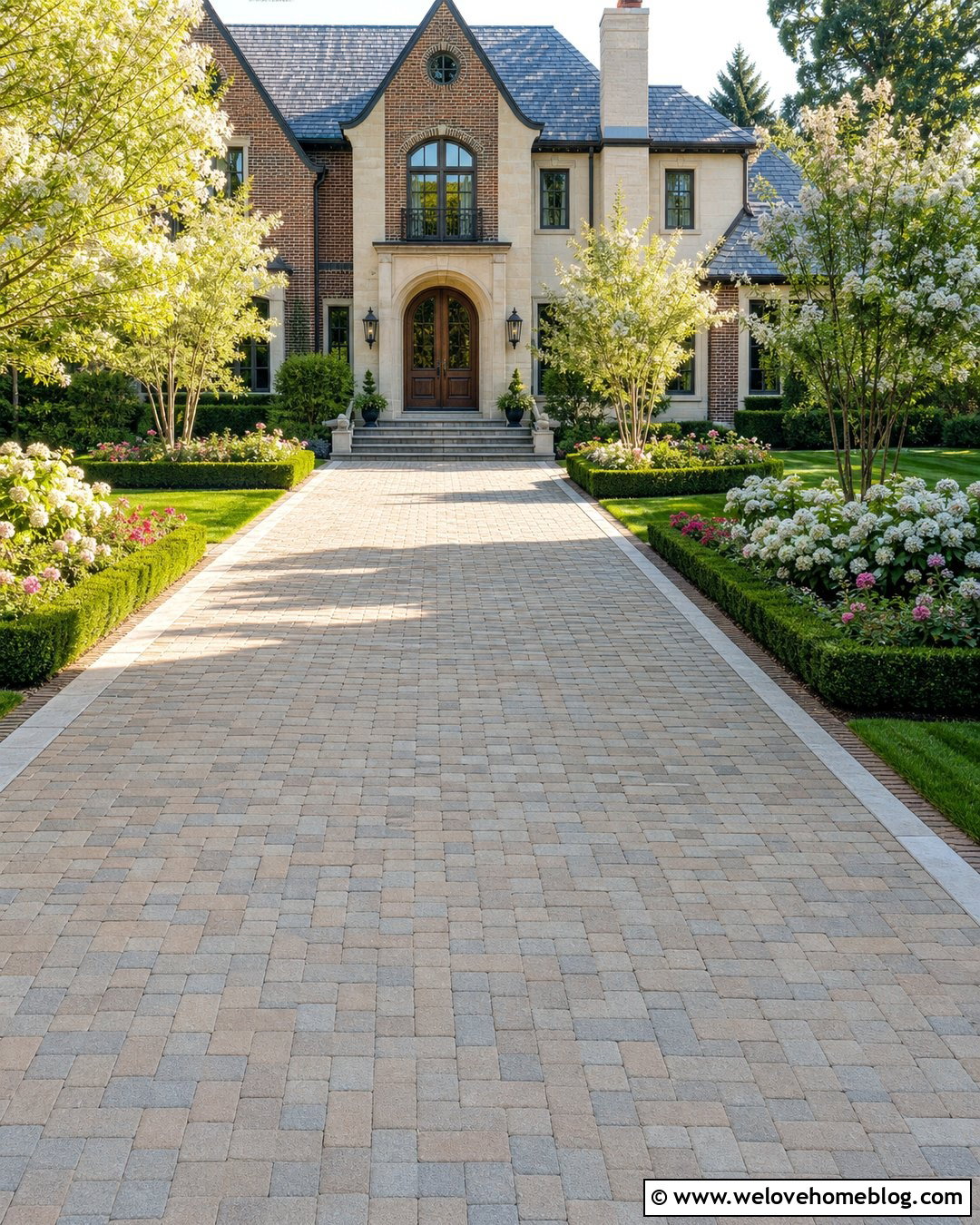
Basketweave cobblestone patterns bring subtle decorative detail to a traditional driveway. Rectangular stones are grouped in alternating directions, creating blocks that resemble woven material. The pattern is most readable on a wide, straight surface or compact parking court where it can be viewed from the street and house. Warm gray cobbles with soft tan variation complement brick, stucco, and cream-colored facades. Surround the patterned center with a plain soldier-course border to prevent the overall design from feeling cluttered. Formal planting beds can include boxwood, roses, hydrangeas, and small flowering trees. Keep the driveway shape relatively simple because the paving already provides visual movement. Repeat only a small amount of basketweave on the front walkway, allowing the driveway to remain the primary decorative hardscape feature.
17. Cobblestone Driveway With Contrasting Border
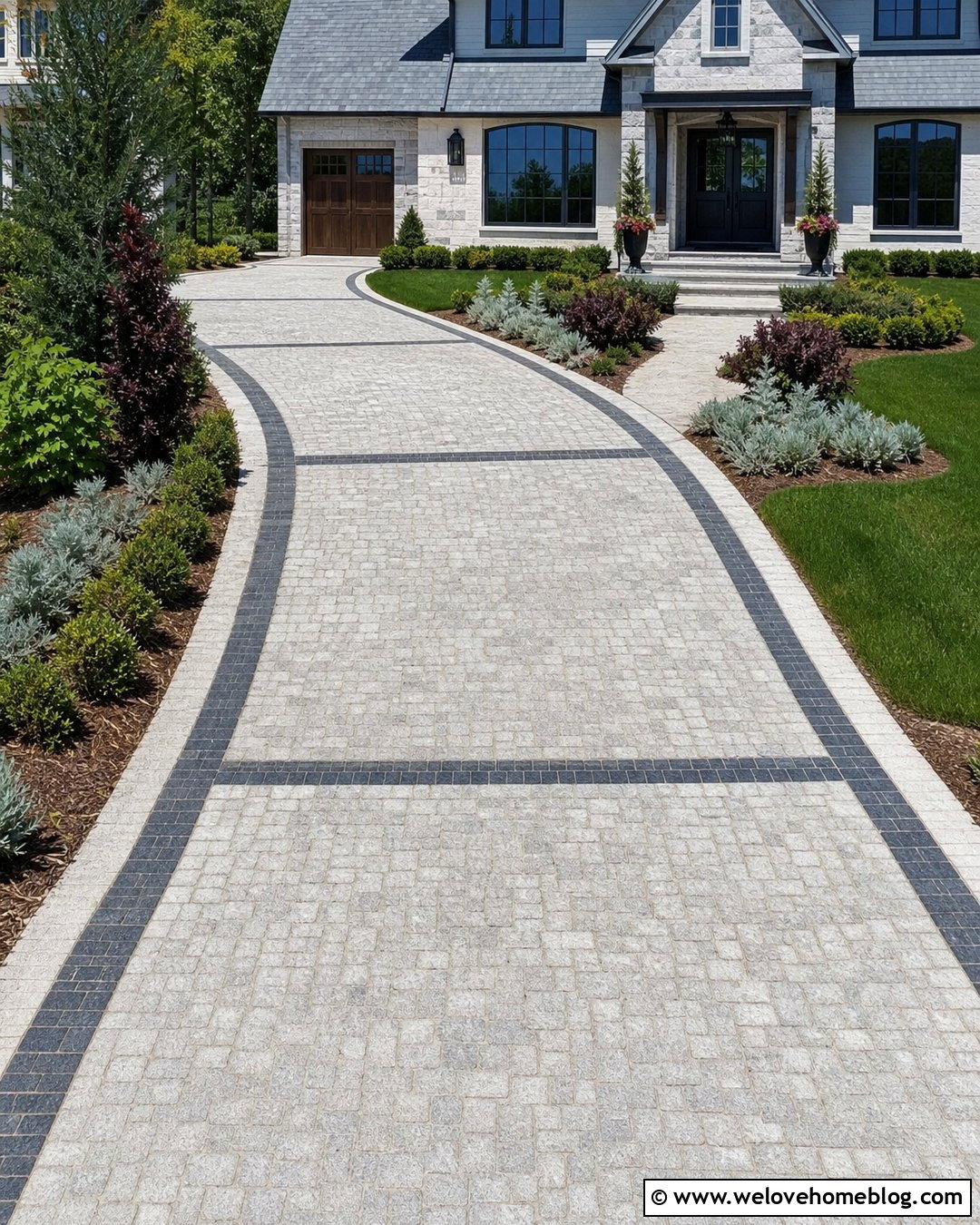
A contrasting border makes the shape of a cobblestone driveway easier to see and gives the installation a tailored finish. Pair a light gray field with charcoal edging, or surround warm brown cobbles with pale granite. Two border rows create a more substantial frame on wide driveways, while one row is usually enough for narrow spaces. The contrast can also mark turning areas, parking bays, and walkway connections. Keep the main laying pattern simple so the darker outline remains the dominant detail. Add low planting beds with colors drawn from the stone, such as silver foliage, deep green shrubs, or burgundy accents. For a balanced appearance, match the border tone to the roof, shutters, garage doors, or masonry. This creates an intentional relationship between the driveway and house.
18. Cobblestone Driveway With Limestone Bands
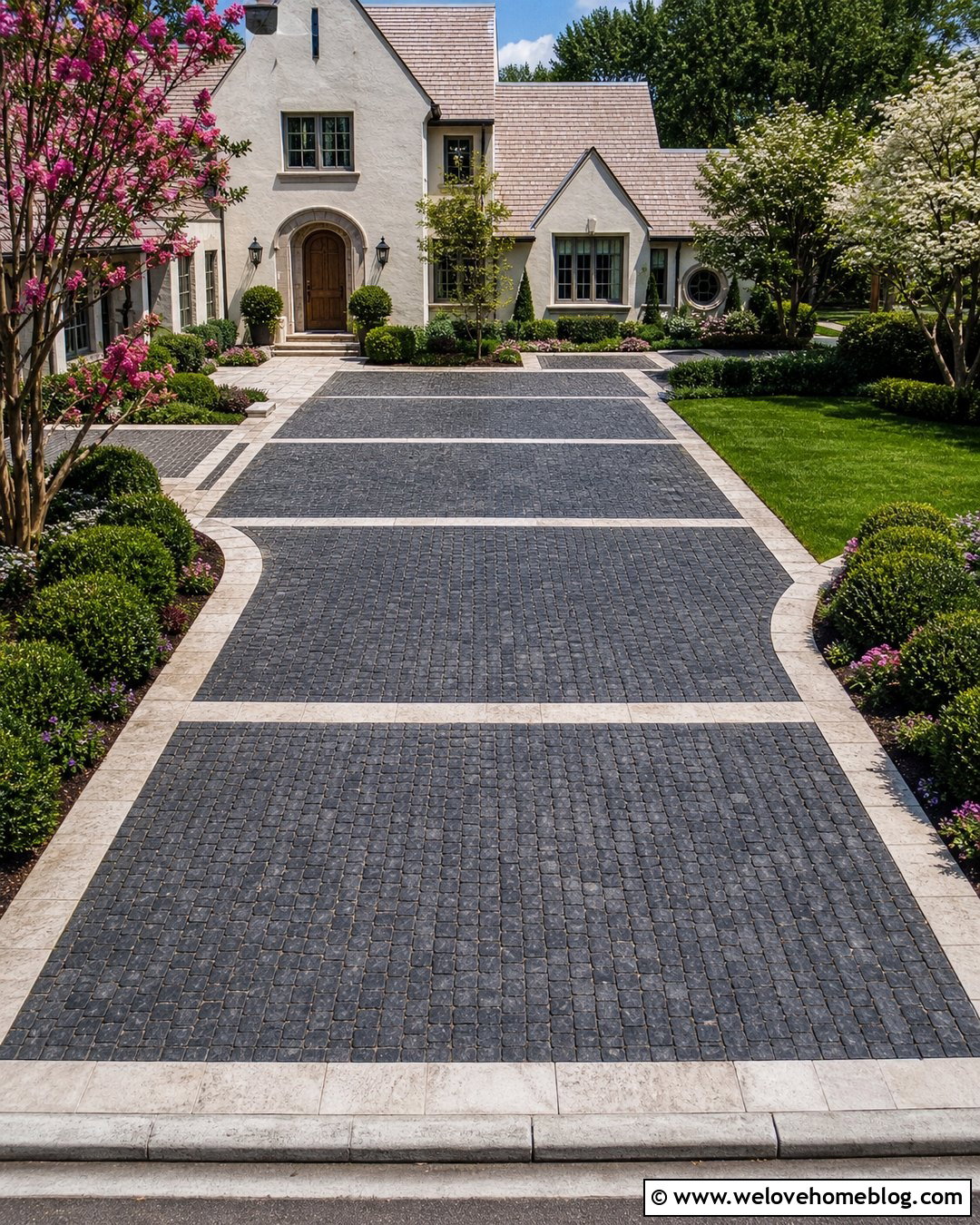
Pale limestone bands can divide a large cobblestone driveway into smaller, visually manageable sections. Install full-width strips at regular intervals across a gray or charcoal surface. These bands may mark the entrance, separate the parking area, or highlight the transition into a garage court. Use limestone with a suitable textured finish so it does not become overly slick when wet. A matching pale border can continue along the driveway’s sides, tying each cross band together. This combination looks especially effective near cream stucco, light brick, or limestone-clad houses. Keep landscaping architectural but soft, using clipped shrubs, flowering trees, and generous lawn panels. The light bands create rhythm, while the darker cobblestone provides depth. Together, they make a broad paved area feel carefully structured.
19. Cobblestone Driveway With Brick House
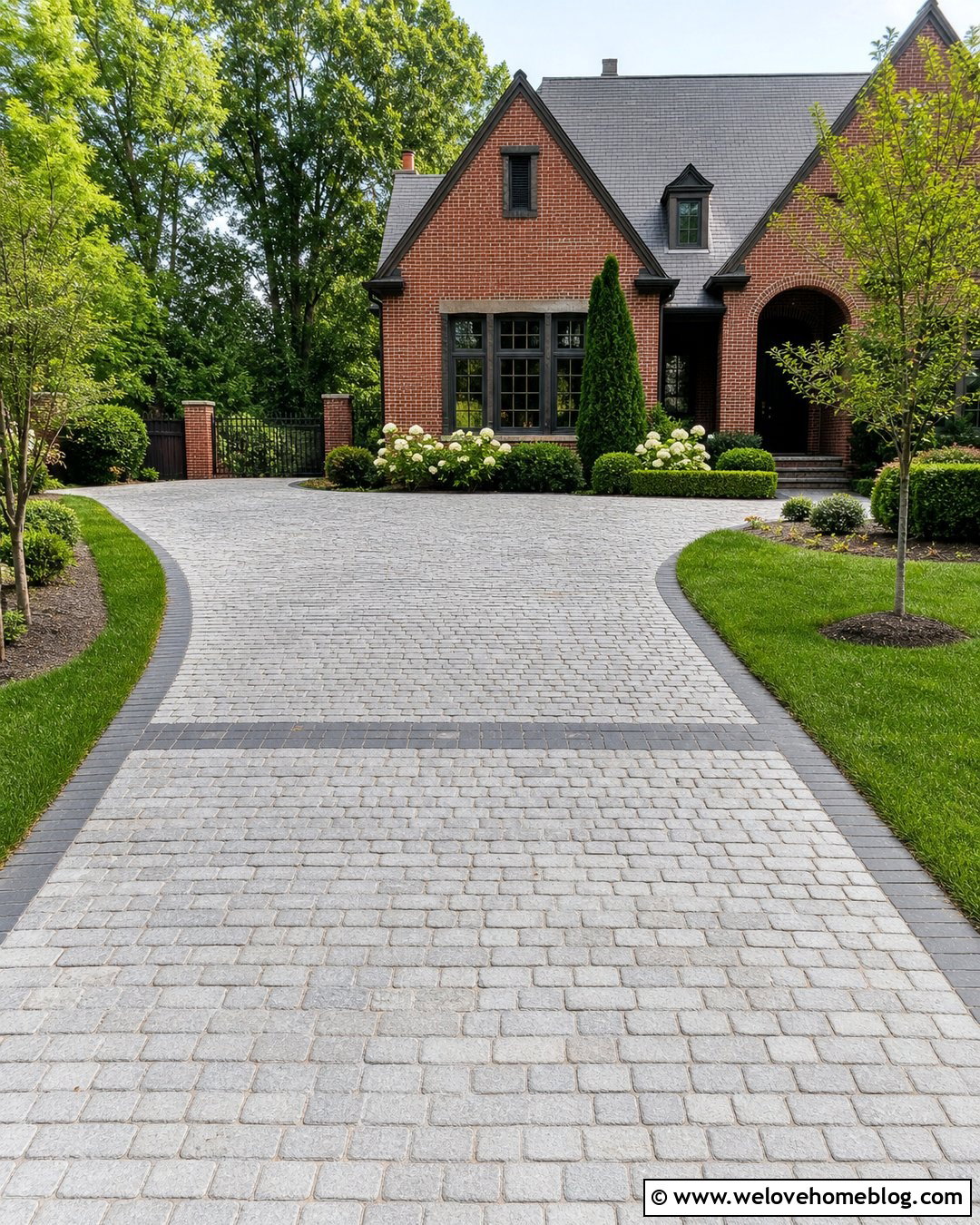
A brick house already has strong color and texture, so its cobblestone driveway should complement rather than compete with the facade. Gray granite cobbles offer an attractive neutral base beside red, brown, or painted brick. Include occasional warm stones to create a subtle connection without trying to match every masonry tone. A straight driveway with a gentle widening near the garage keeps the arrangement practical. Dark brick or charcoal cobblestone edging can outline the route and coordinate with shutters, roof materials, or window frames. Use green foundation shrubs, white flowering plants, and a clean lawn to separate the driveway visually from the building. If the front path crosses the driveway, define the intersection with a simple brick band. This creates continuity while preserving the cobblestone as the dominant surface.
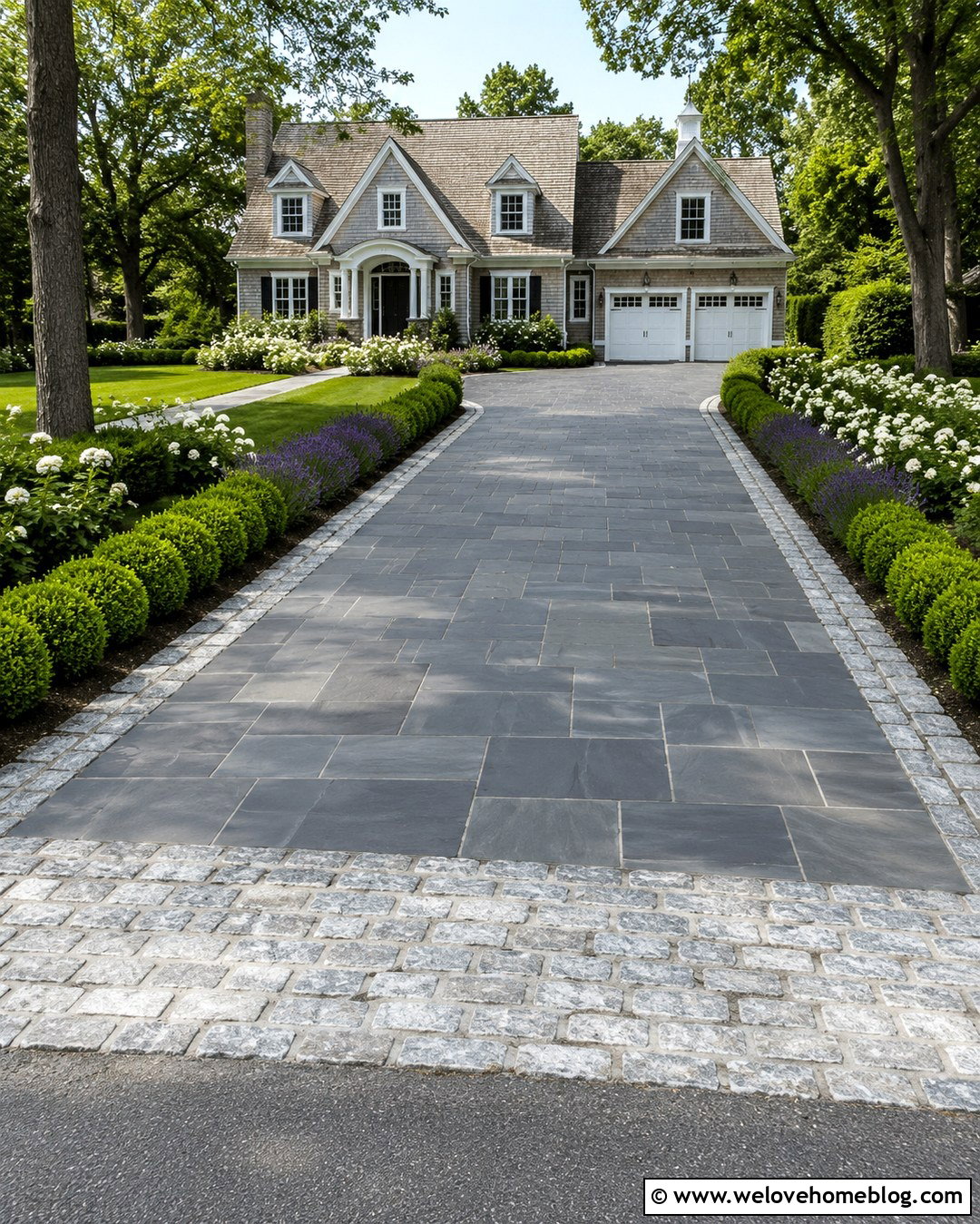
20. Cobblestone Driveway With Colonial House
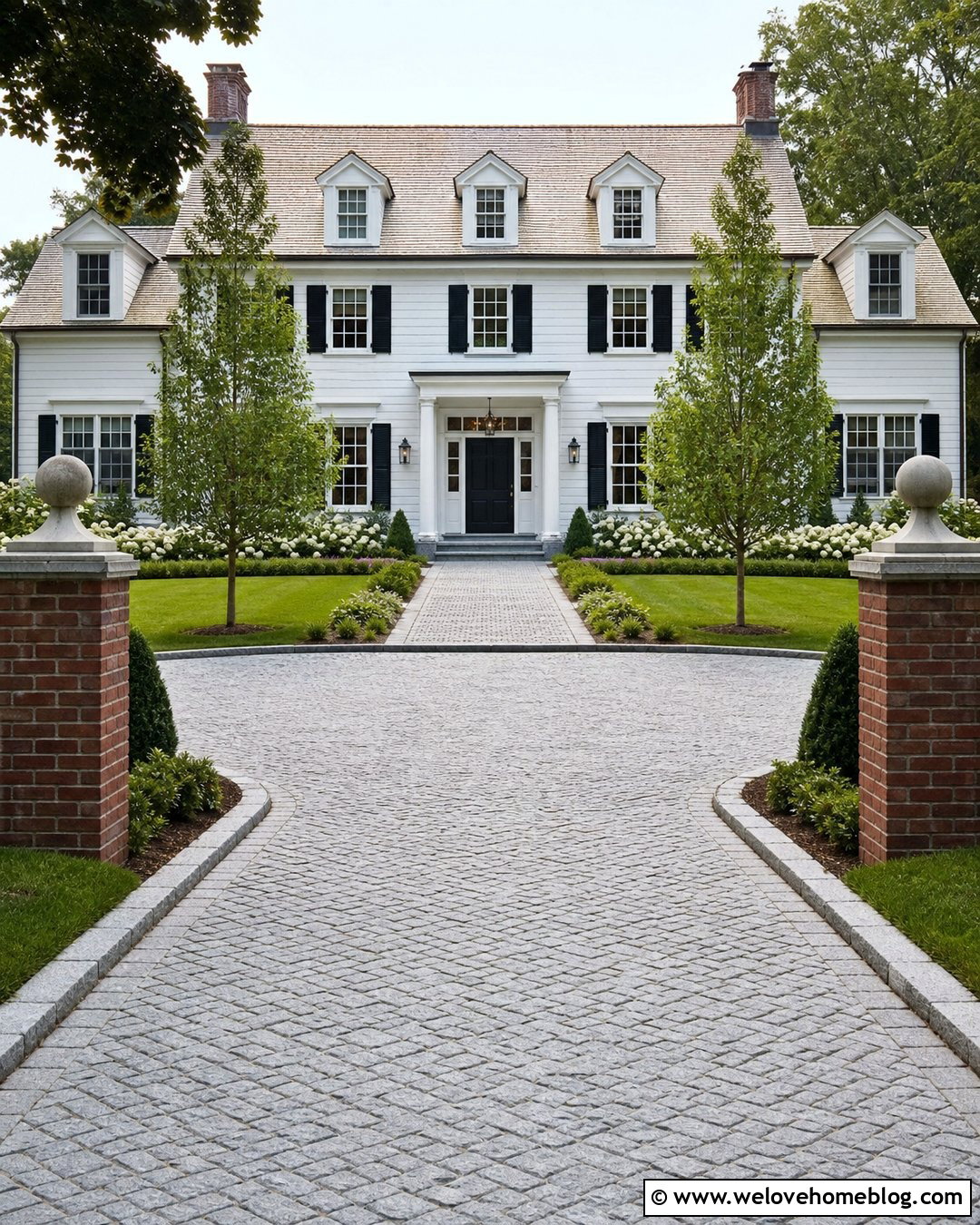
Symmetry makes cobblestone a natural choice for a colonial home. Center a straight gray driveway on the garage or create a circular layout aligned with the front entrance. Use evenly sized granite setts in a running bond or herringbone pattern for a formal, orderly appearance. Matching stone borders should follow clean lines and connect to a centered walkway leading toward the front door. On both sides, repeat the same evergreen shrubs, flowering plants, and small ornamental trees. Brick pillars or painted wood fencing can define the entrance without blocking the view of the house. Choose paving colors that relate to the roof, shutters, and foundation stone. The goal is not to make the driveway look new or decorative, but to make it feel like a permanent part of the property’s architecture.
21. Cobblestone Driveway With Craftsman House
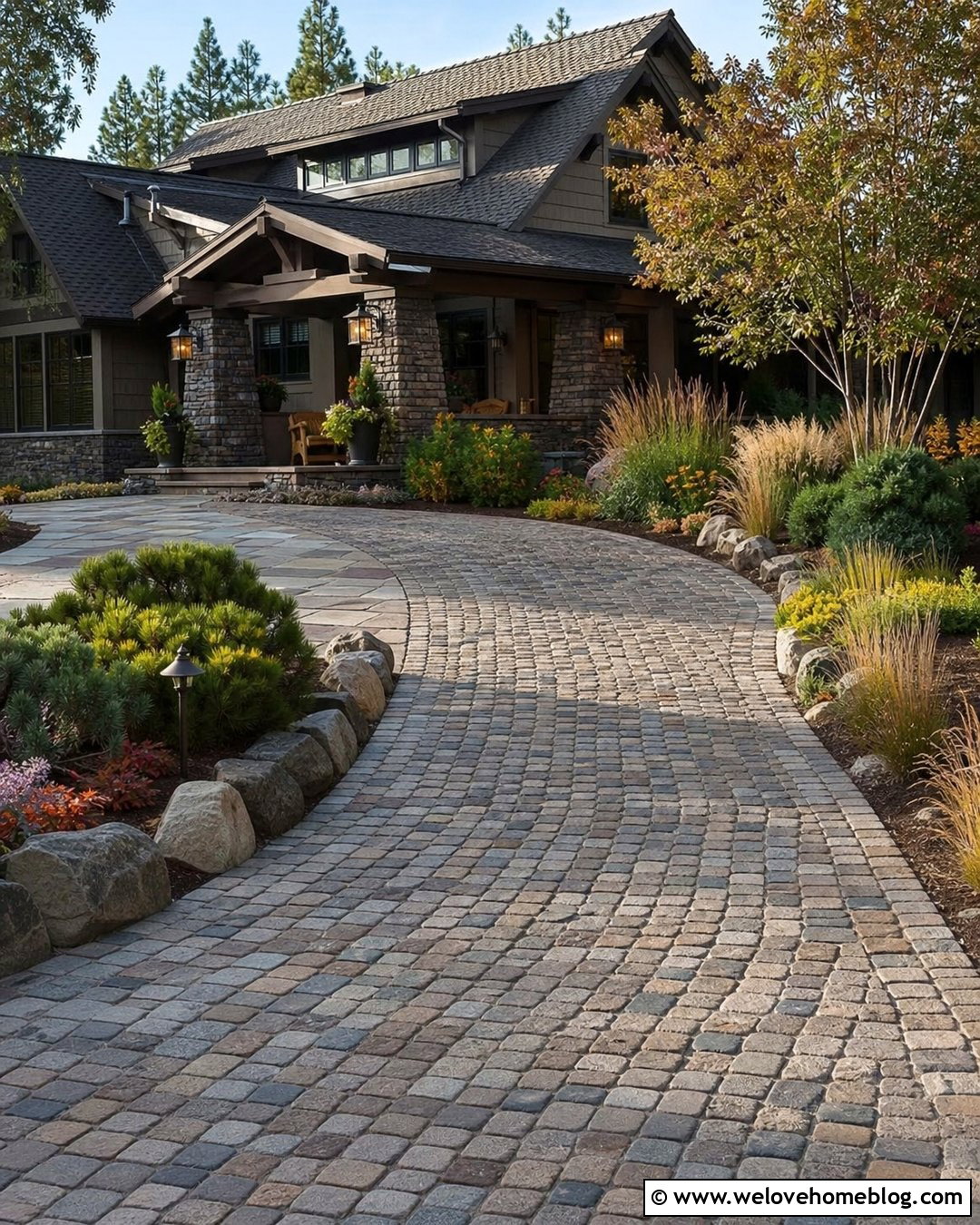
Craftsman homes benefit from natural materials, earthy colors, and strong horizontal details. A warm gray and brown cobblestone driveway can echo stone porch columns, exposed wood, and deep roof tones. Use a gently curved route or a broad straight layout with a practical turnaround near the garage. Border the driveway with chunky granite blocks or fieldstone that matches the home’s foundation. Layered planting beds should include evergreen shrubs, ornamental grasses, native flowers, and small trees with natural branching forms. A cobblestone walkway can branch from the driveway and lead toward the porch at a comfortable angle. Add simple low-voltage lights along the edge, keeping fixtures understated. The completed design should feel handcrafted and substantial, with the driveway, architecture, and garden sharing the same grounded material palette.
22. Cobblestone Driveway With Cape Cod House
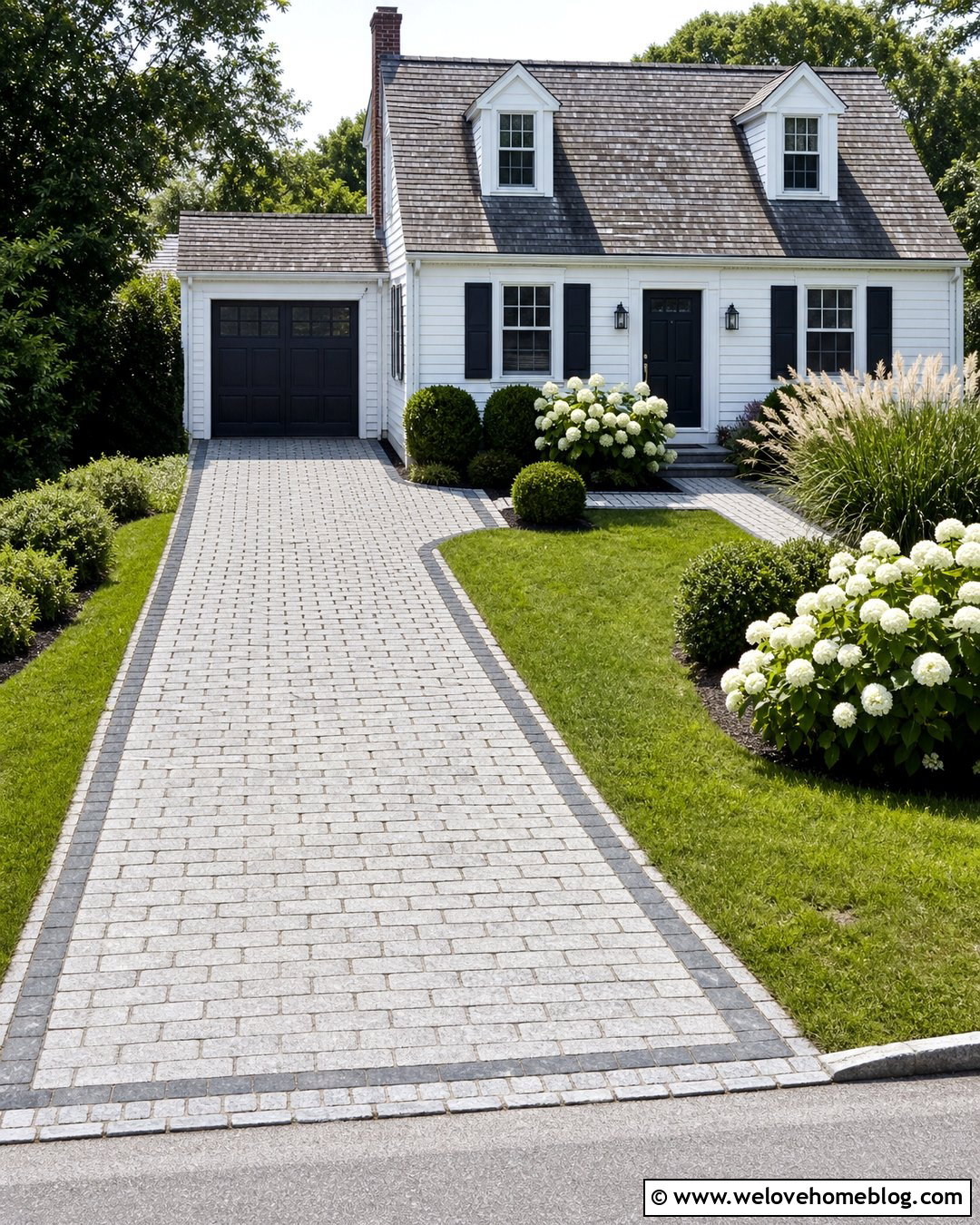
A compact cobblestone driveway can give a Cape Cod home classic character without overwhelming its smaller scale. Choose medium or light gray stones laid in a simple running bond. A narrow straight layout often works best, particularly when framed by a single row of darker granite cobbles. Allow the paving to widen slightly near the garage for easier access. White hydrangeas, clipped evergreens, ornamental grasses, and a neat lawn can soften the stone and complement light siding. Connect the driveway to the front door with a narrow matching path, or use brick if the house has a brick chimney or steps. Keep the number of colors and patterns limited. This restrained approach helps the textured cobblestone look established and charming rather than too formal for the modest architecture.
23. Cobblestone Driveway With Tudor House
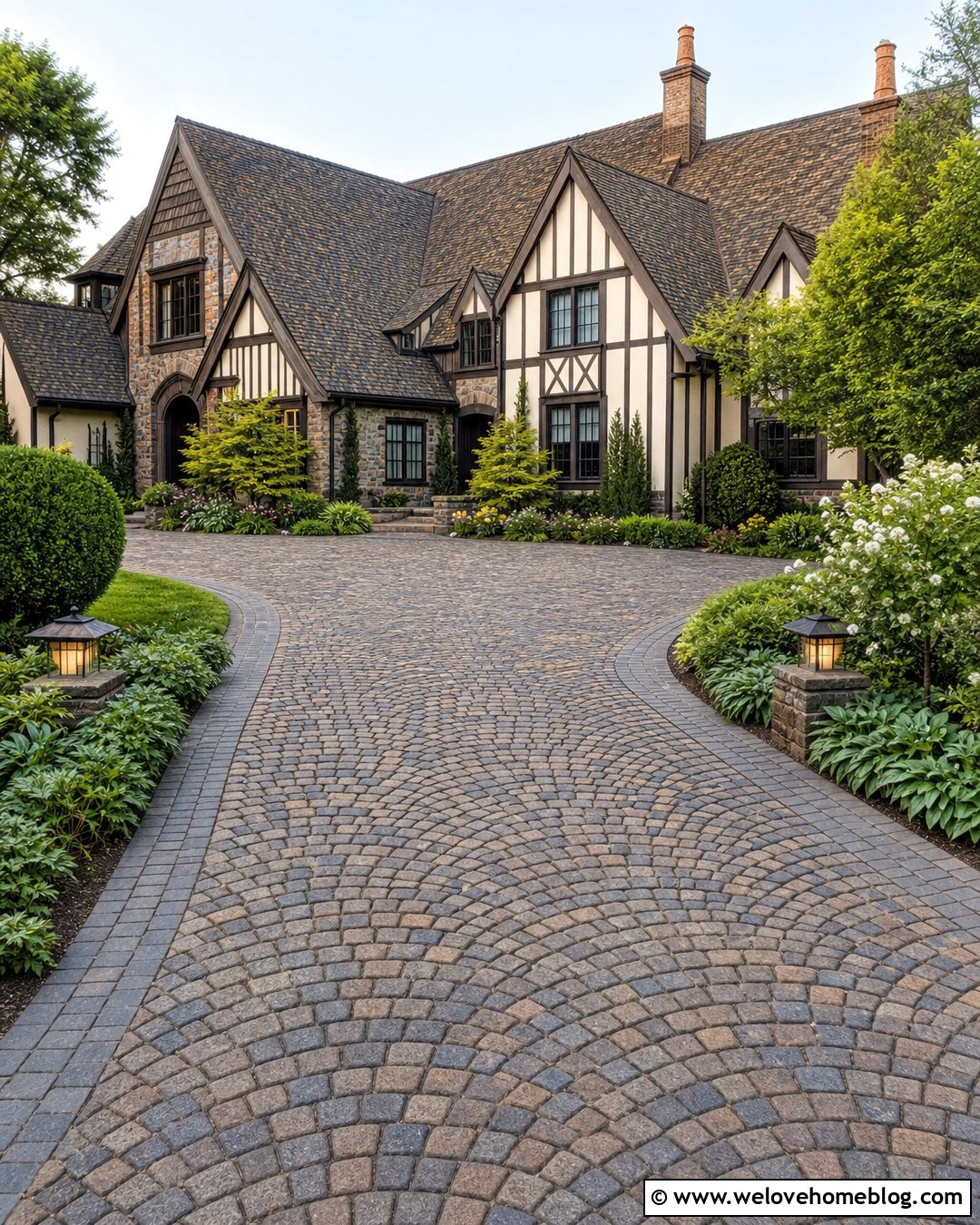
Dark, richly textured cobblestone fits naturally with Tudor architecture. Use charcoal and brown granite setts to complement timber trim, steep rooflines, brickwork, and stone details. A curved driveway can reinforce the home’s storybook character while providing a gradual view of the facade. Lay the stones in a fan or irregular running pattern, then frame them with a dark soldier-course border. Deep green hedges, flowering shrubs, and shade-tolerant ground covers create a lush setting without covering the stonework. Near the garage or porte cochere, widen the surface into a small arrival court. Traditional lantern-shaped fixtures can provide useful illumination, but their scale should remain appropriate for the house. Repeating cobblestone around the walkway and entrance steps creates a cohesive, historically sympathetic outdoor setting.
24. Cobblestone Driveway With Mediterranean House
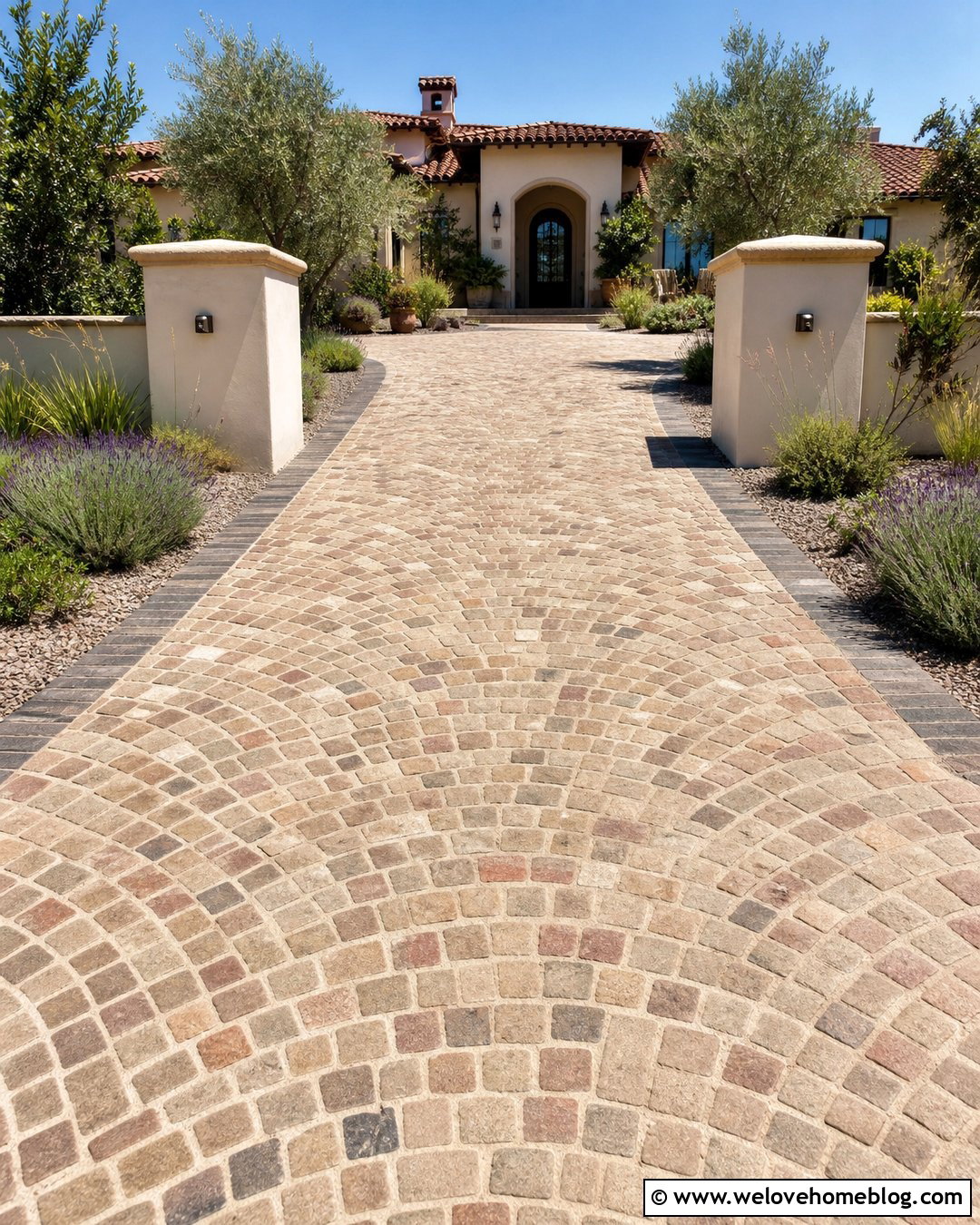
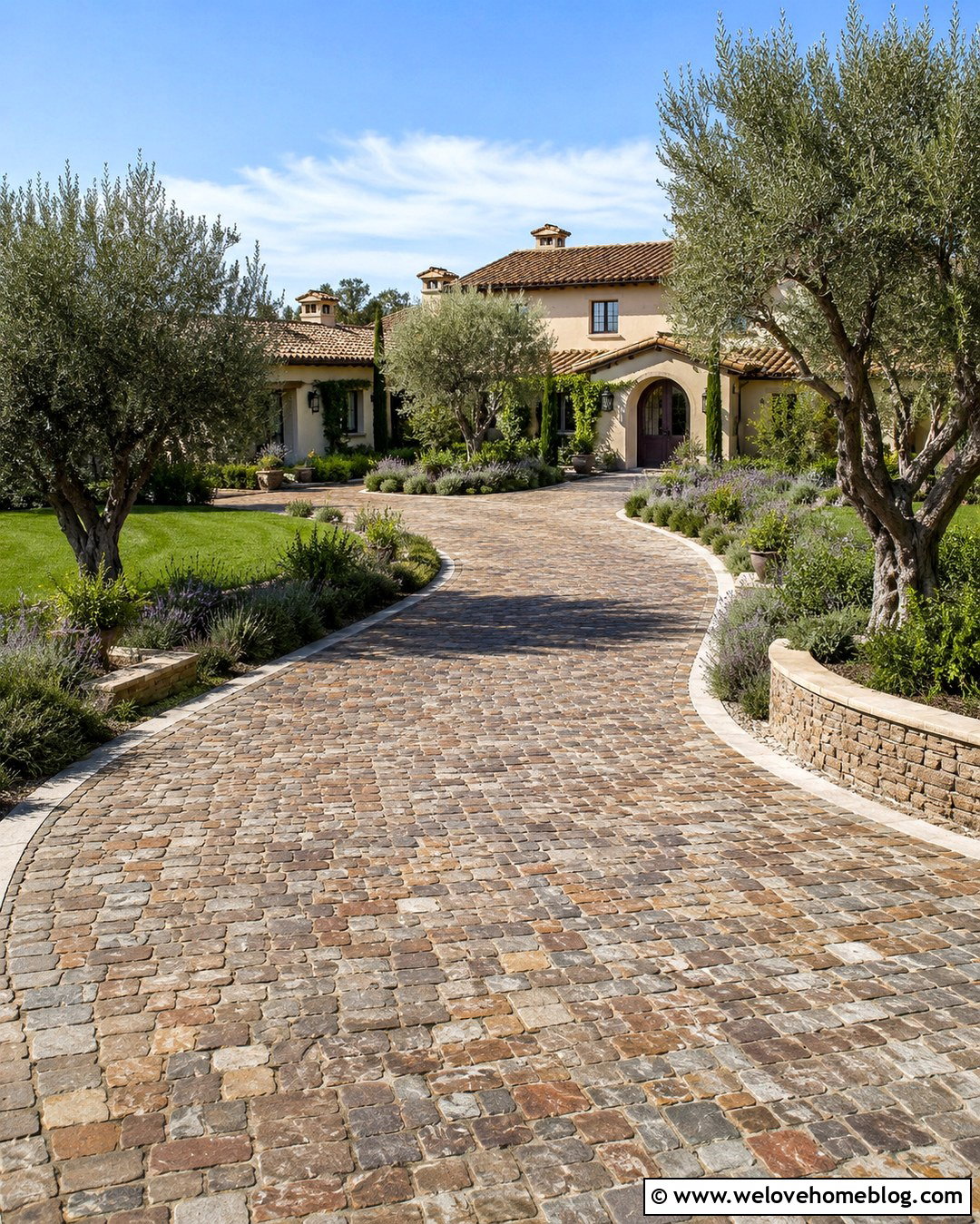
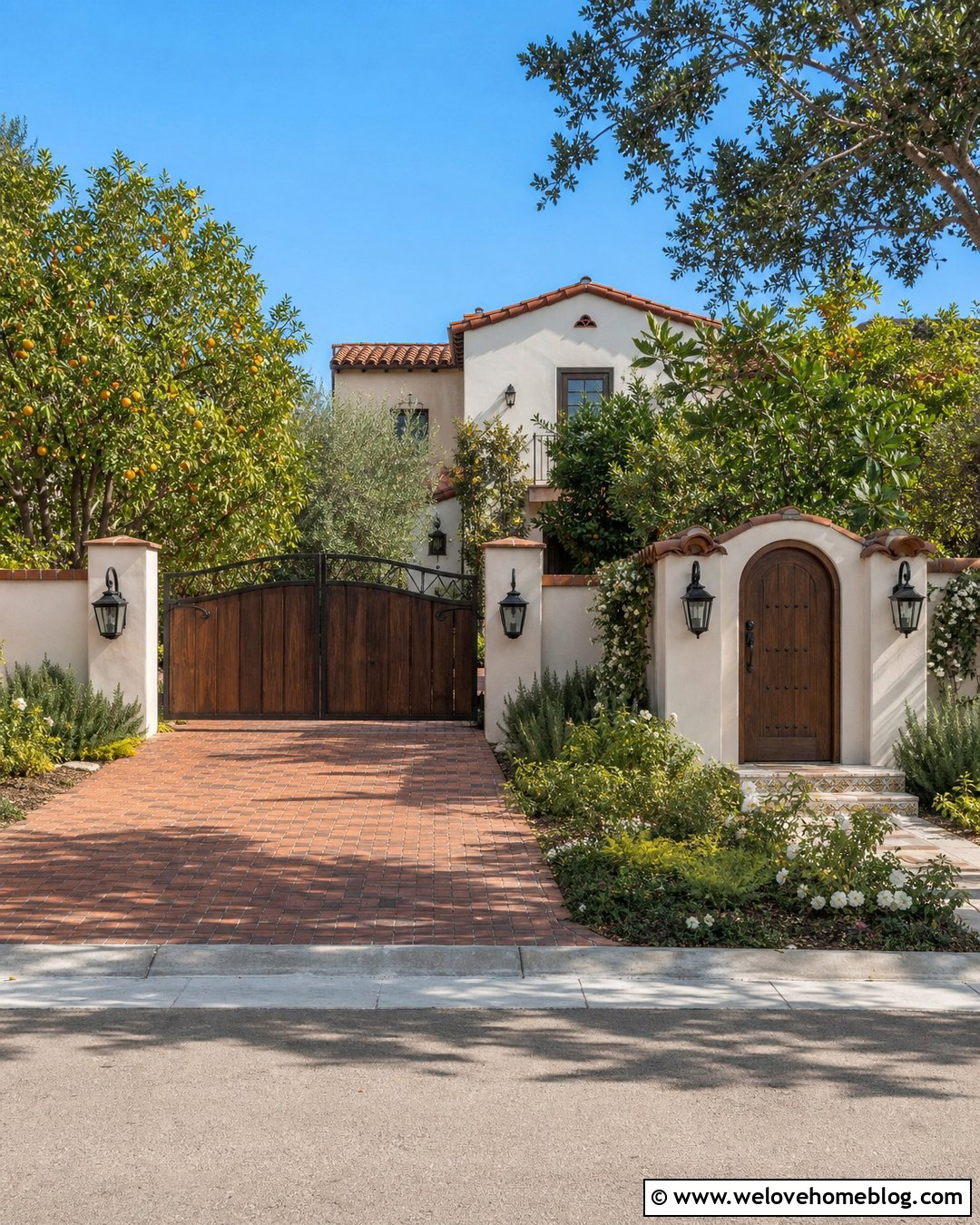
Warm-toned cobblestones can enhance the earthy colors and curved forms of Mediterranean architecture. Select stones in beige, sand, muted red, and weathered brown, then arrange them in a fan or running bond pattern. A curved driveway edged with darker stone feels natural beside stucco walls, clay roof tiles, and arched openings. Use drought-conscious landscaping with olive-like trees, lavender, rosemary, ornamental grasses, and compact evergreen shrubs suited to the local climate. Gravel mulch can separate planting beds from the cobblestone while supporting the warm color palette. At the entrance, low stucco pillars with simple metal lanterns can frame the approach. Continue the stone into a courtyard-style parking area near the house. The overall composition should feel sunlit, relaxed, and connected to the surrounding garden.
25. Narrow Cobblestone Driveway With Flush Edging
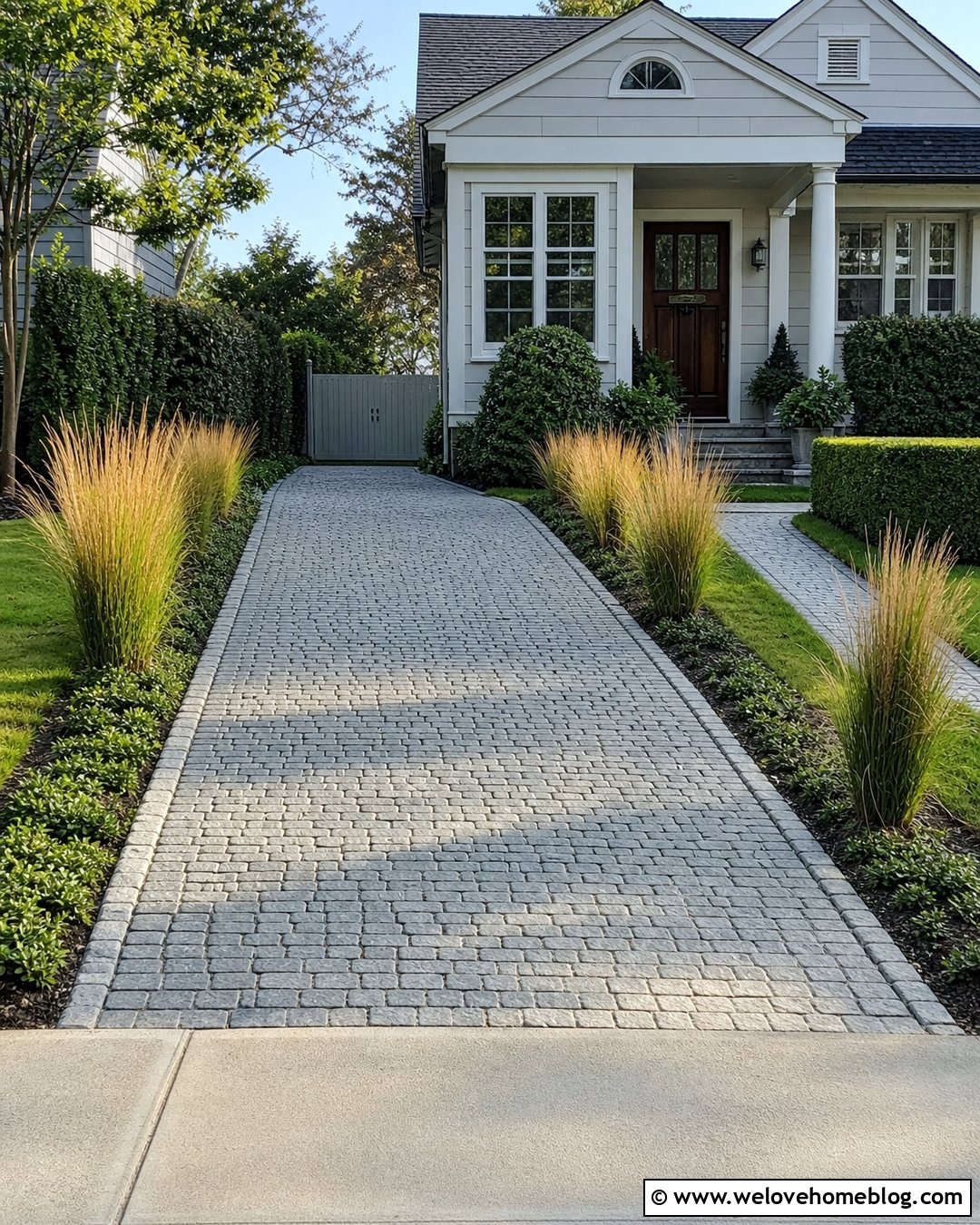
A narrow driveway needs clear boundaries without borders that reduce usable width. Install small rectangular cobblestones in straight lengthwise rows to draw the eye toward the garage. Flush granite edging supports the sides while allowing tires to pass over the edge when necessary. A medium-gray surface hides everyday dust and works with most exterior colors. Replace bulky planting beds with slim strips of ground cover, upright ornamental grasses, or neatly clipped shrubs. A narrow walkway can run beside the drive using the same cobblestone in a slightly different pattern. Near the street, flare the paving gently to simplify turns. Good drainage is especially important in a confined space, so direct water toward an appropriate channel or permeable area rather than allowing it to collect between the house and property line.
26. Small Cobblestone Driveway With Simple Pattern
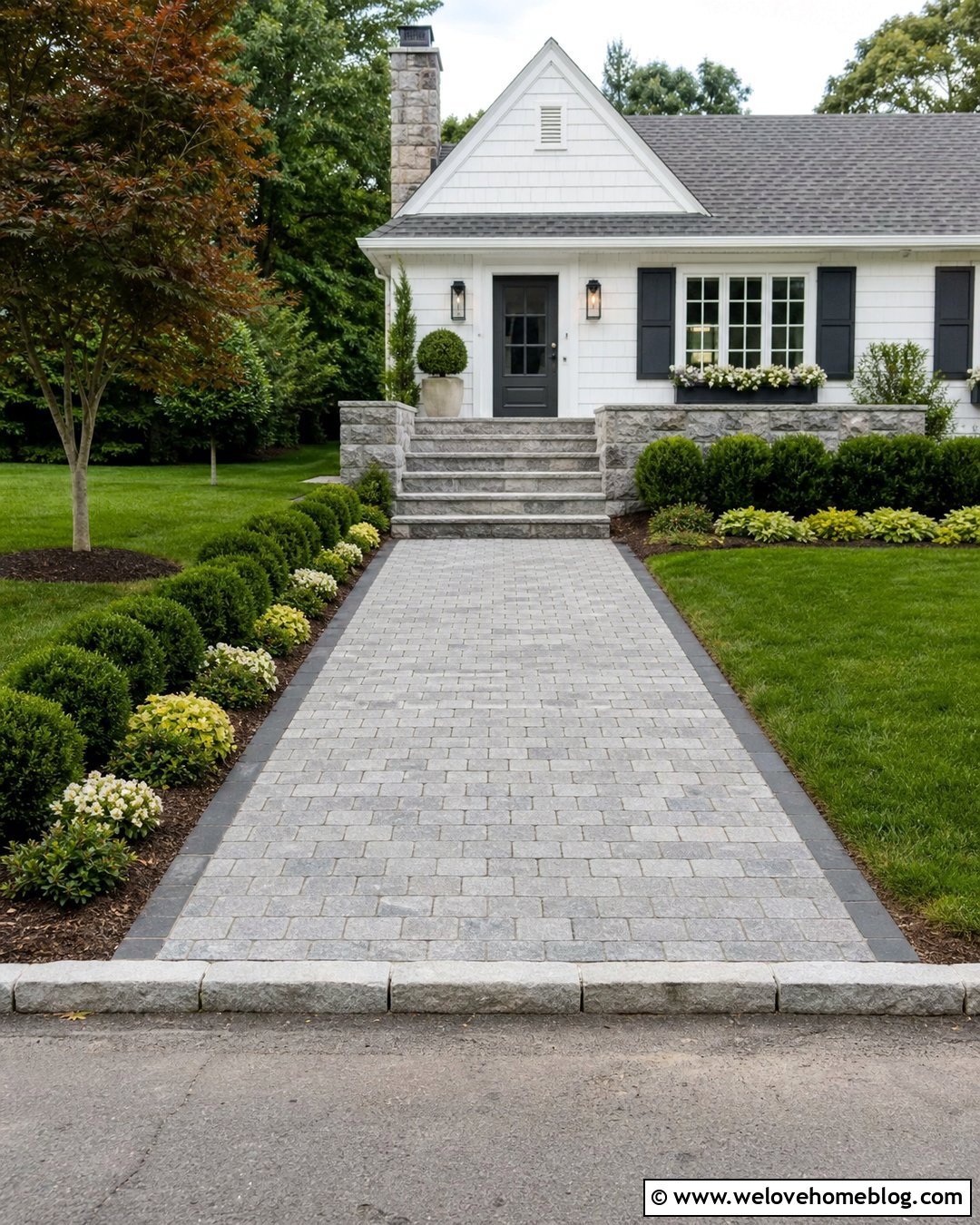
In a small front yard, a restrained cobblestone design can add texture without making the space feel crowded. Use uniformly sized gray granite setts in a basic running bond or grid pattern. Keep the driveway rectangular and limit decorative details to one narrow contrasting border. A flush edge maximizes parking space and creates a smooth transition into the surrounding lawn or walkway. Choose low shrubs and compact perennials that will not spill over the paving. One small ornamental tree can provide height without blocking the facade. If the garage sits close to the sidewalk, coordinate the cobblestone color with the front steps and foundation. A simple material palette makes the yard appear larger and more organized. It also allows the natural color variation within each stone to supply enough visual interest.
27. Long Cobblestone Driveway With Tree Lined Entrance
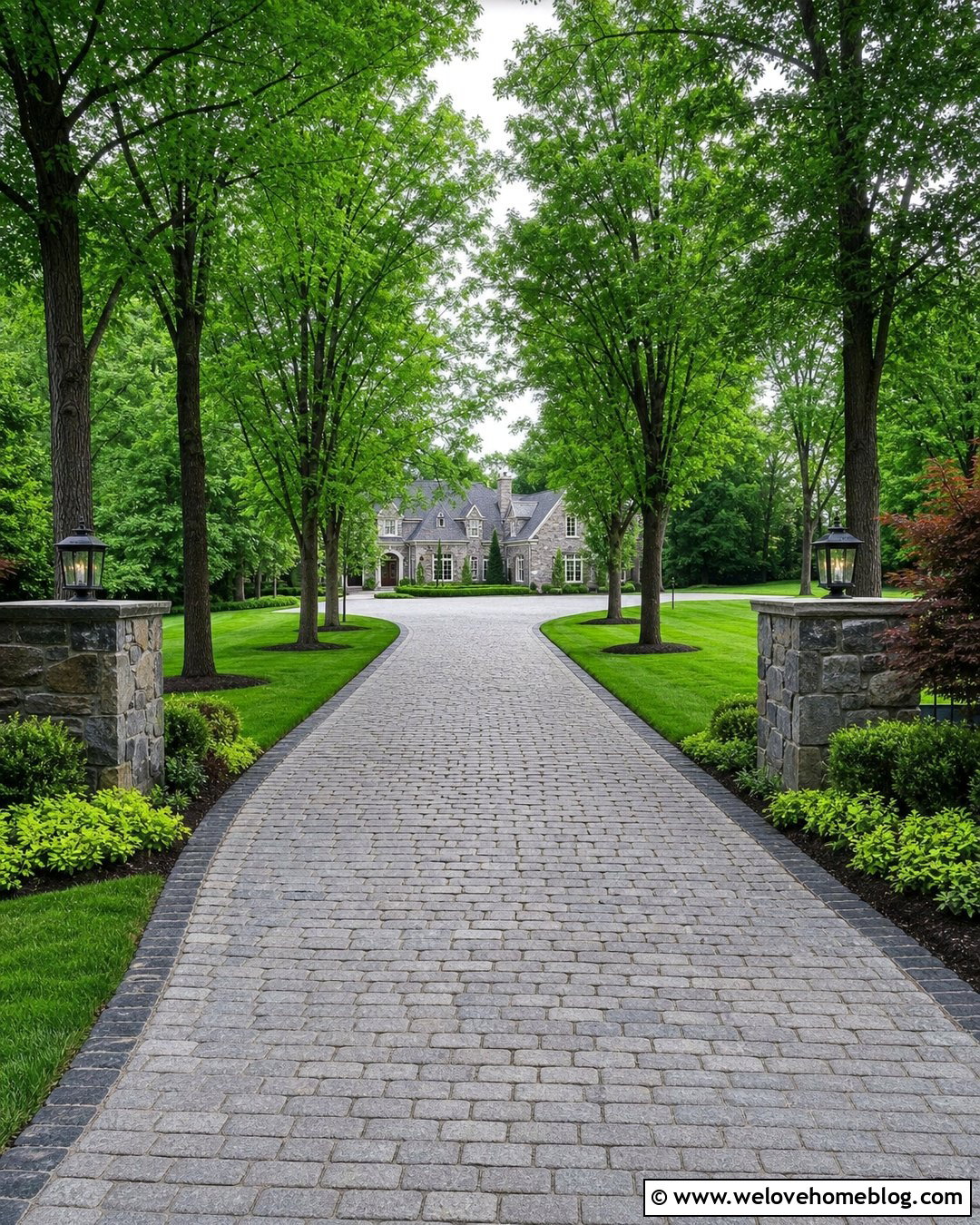
A long cobblestone driveway becomes more inviting when trees establish rhythm along the approach. Use durable gray granite setts in a running bond that visually directs movement toward the house. A gentle curve can make the route feel integrated with the property, while a dark cobblestone edge clearly defines it against lawn. Plant evenly spaced deciduous trees far enough from the paving to allow healthy root development and mature canopies. Beneath them, use simple grass or broad ground-cover beds instead of complicated flower combinations. Stone entrance pillars can mark the beginning without competing with the tree-lined view. Near the house, widen the driveway into a parking or turning court. Repeating cobblestone throughout the approach helps the entire landscape feel connected, even across a large residential property.
28. Sloped Cobblestone Driveway With Drainage Channel
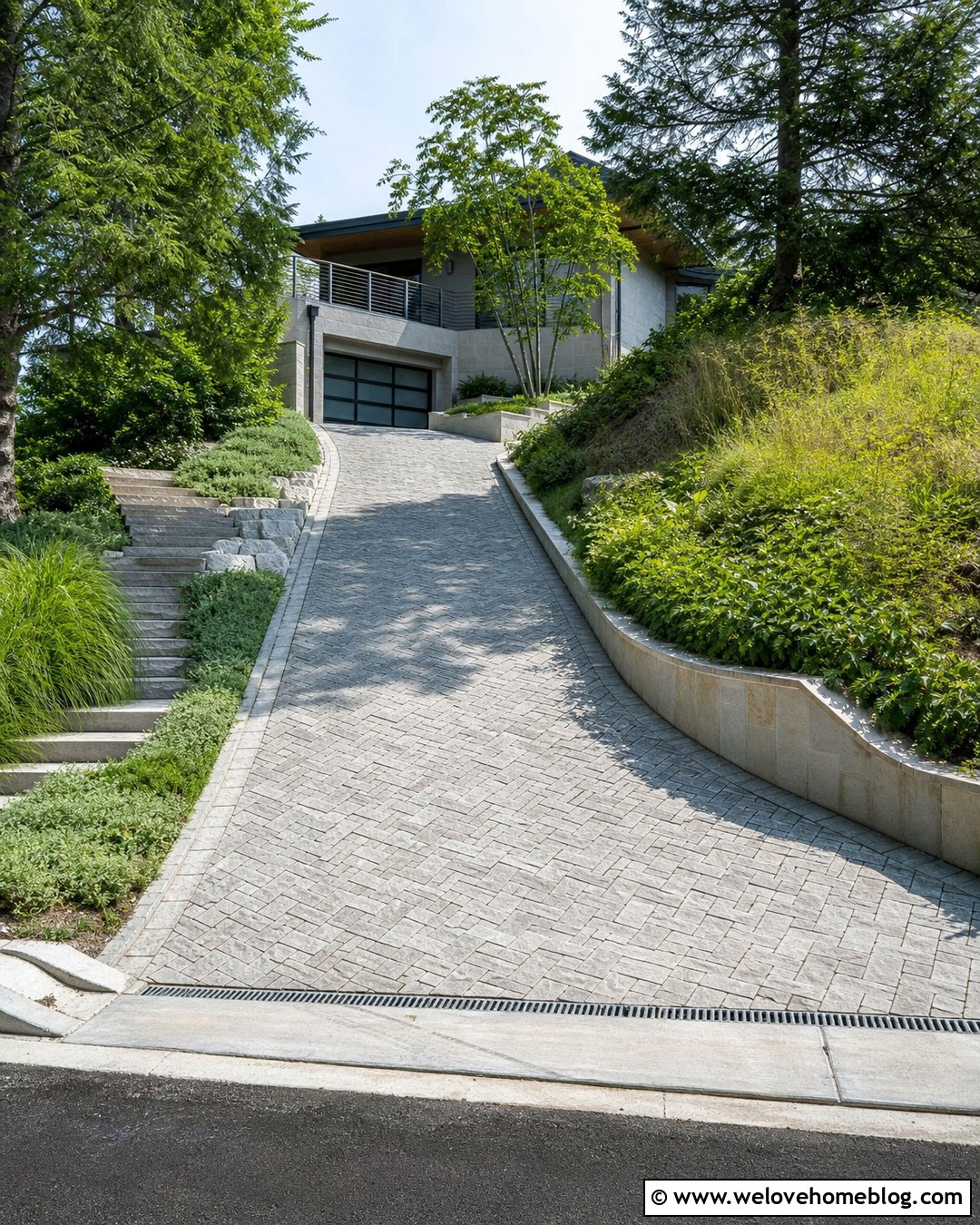
Cobblestone can add grip and visual structure to a sloped driveway, but the layout must manage water carefully. Use textured granite setts laid in a herringbone pattern, which creates strong diagonal movement across the incline. Install a secure border on both sides to stabilize the edges. A linear drainage channel near the garage can intercept runoff before it reaches the building, while additional drainage may be needed farther down the slope. Avoid large uneven stones that produce an uncomfortable driving surface. Low retaining walls can support raised planting beds where the grade changes beside the drive. Choose deep-rooted shrubs, ground covers, and ornamental grasses to help cover the slope. The completed driveway should follow the terrain smoothly, with visible drainage elements incorporated neatly into the paving and borders.
29. Cobblestone Driveway With Raised Garden Beds
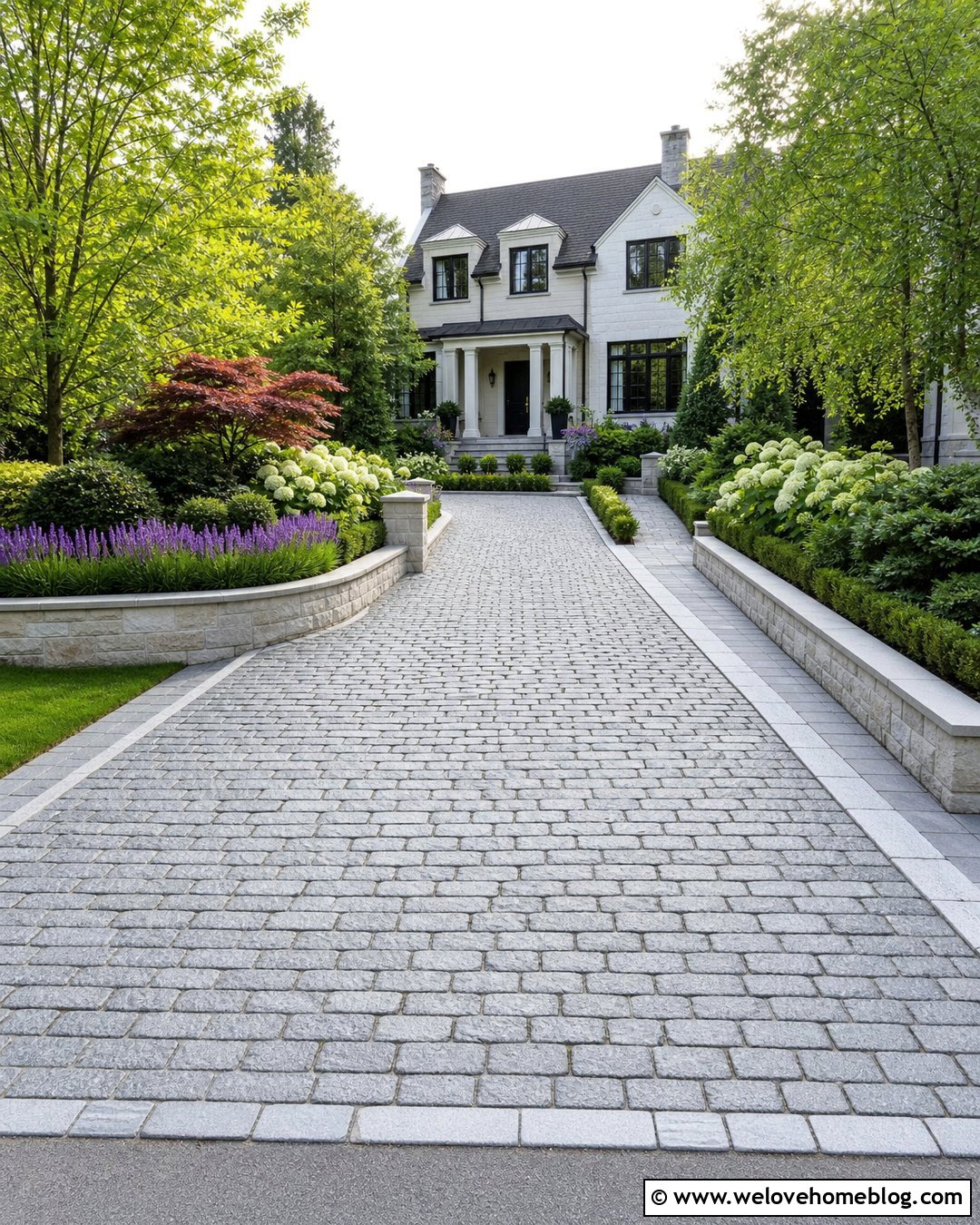
Raised beds can soften a broad cobblestone driveway while giving the approach clear structure. Build low walls from limestone, brick, or matching granite and position them along the outer edges without narrowing turning areas. Medium-gray cobblestones laid in a simple running bond provide a neutral surface beneath the more detailed landscaping. Fill the beds with layered evergreen shrubs, flowering perennials, and small ornamental trees. Keep plants lower near the street and driveway bends to preserve clear views. Cap the walls with smooth stone that coordinates with the cobblestone border. Where a walkway passes through the beds, use the same driveway material to create a seamless connection to the front door. The raised planting adds depth and seasonal color while the stone walls protect soil from washing onto the driveway.
30. Cobblestone Driveway With Low Hedges
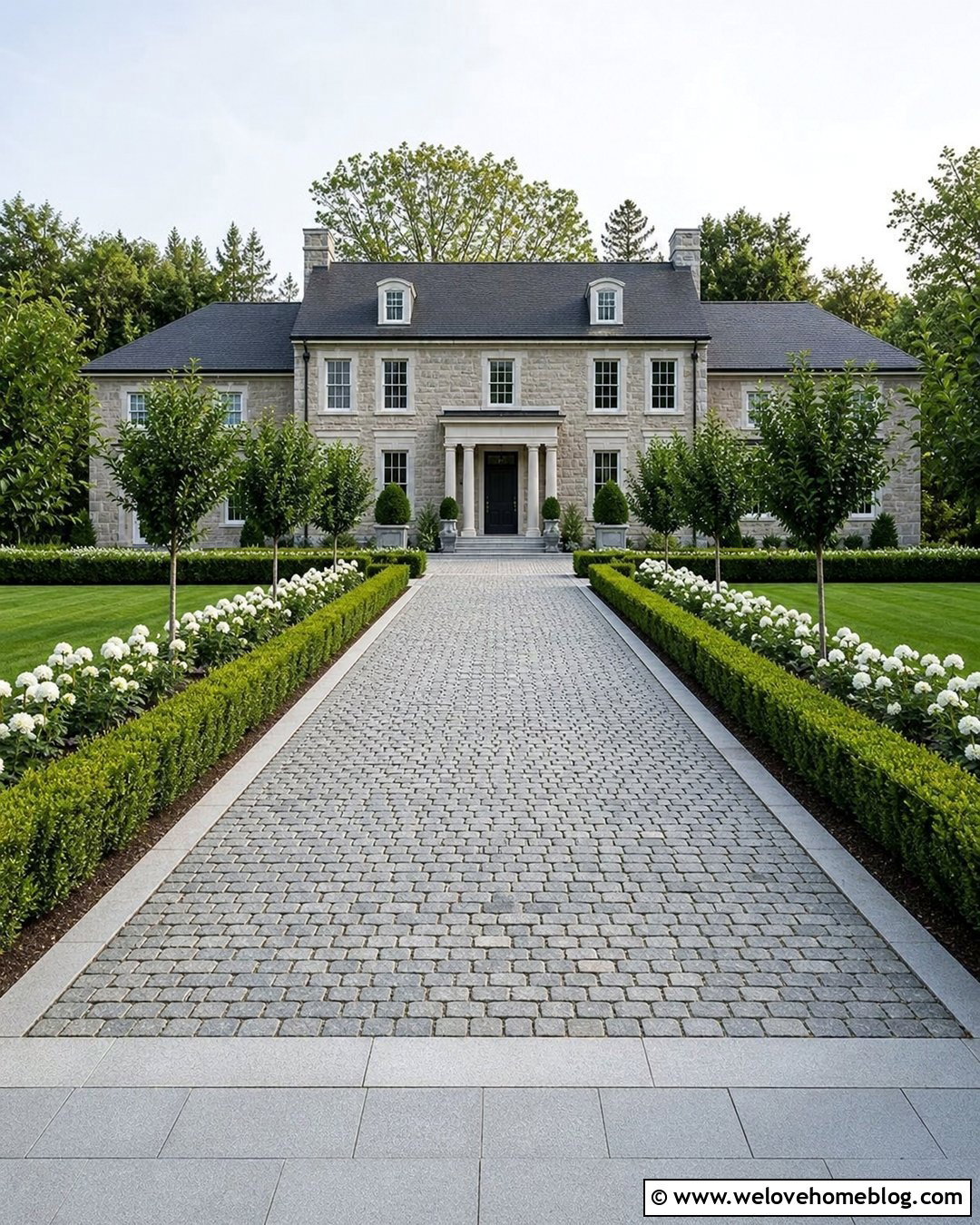
Low hedges can make a cobblestone driveway feel formal and finished without closing off the front yard. Use a straight gray stone surface with clean granite edging, then plant compact evergreen hedges just beyond the border. Maintain enough space between the plants and paving for mature growth and routine trimming. The hedge lines can continue toward the house, guiding attention to the garage or entrance. Add small flowering trees or seasonal plants at key points rather than filling every available area. For a colonial or Georgian home, symmetrical hedges reinforce the architecture. On a more casual property, gently curved hedge lines can soften the route. A matching cobblestone walkway should break through the planting at a clear crossing point. This arrangement combines year-round greenery with strong, easy-to-read driveway geometry.
31. Cobblestone Driveway With Ornamental Grasses
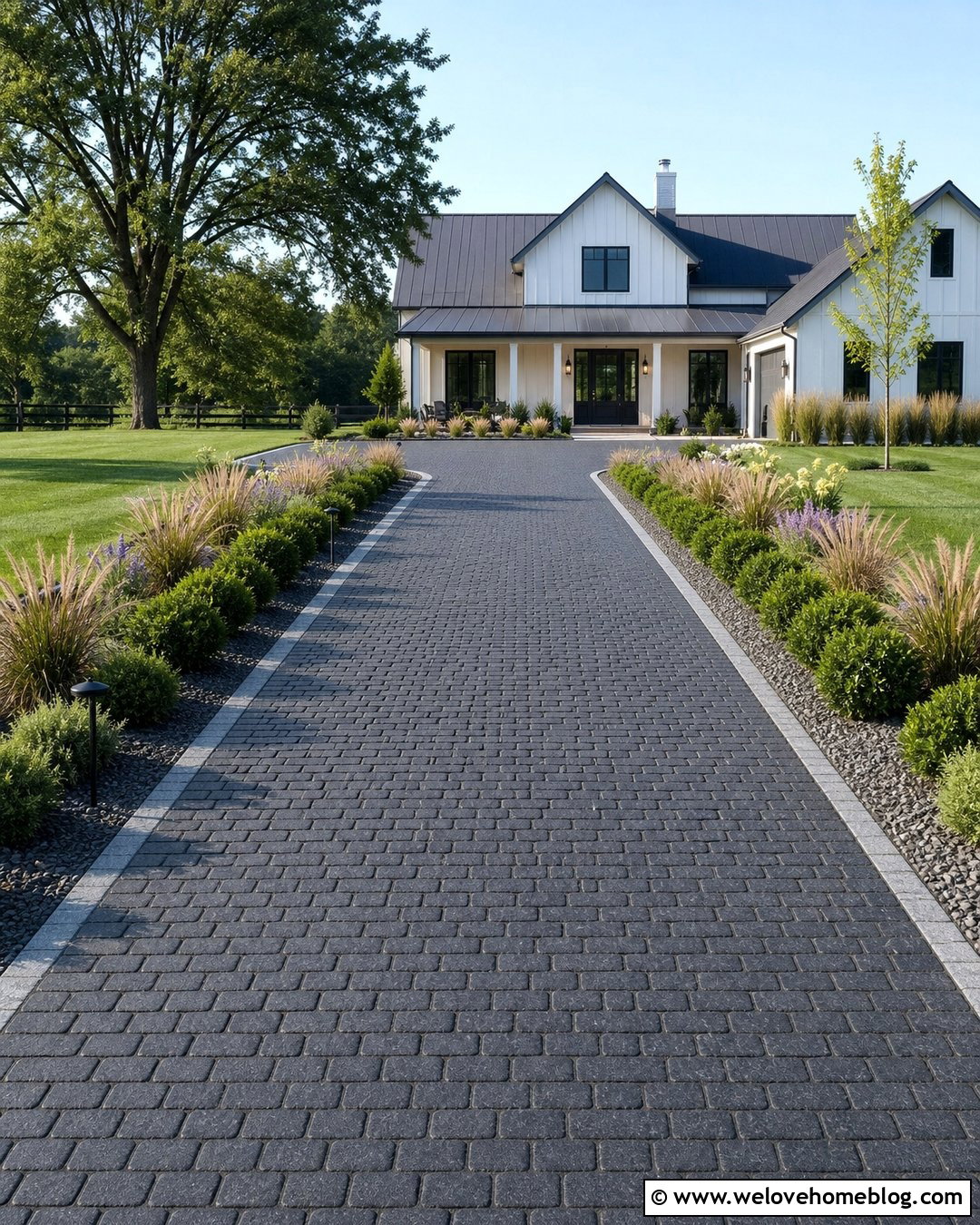
Ornamental grasses bring movement and softness to the heavy texture of a cobblestone driveway. They work particularly well beside contemporary, prairie-inspired, coastal, or modern farmhouse homes. Choose charcoal or medium-gray cobbles in a straight running bond, then frame them with a narrow flush border. Plant grasses in repeated groups rather than isolated clumps, mixing heights carefully so the driveway remains visible. Low varieties can occupy the street entrance, while taller grasses may sit farther back near the house. Add a few structural evergreens to keep the landscape attractive outside the main growing season. Gravel mulch can create a clean buffer between foliage and paving. The combination feels relaxed but modern, with the linear cobblestone surface balancing the grasses’ loose forms and changing seasonal texture.
32. Cobblestone Driveway With Lavender Borders
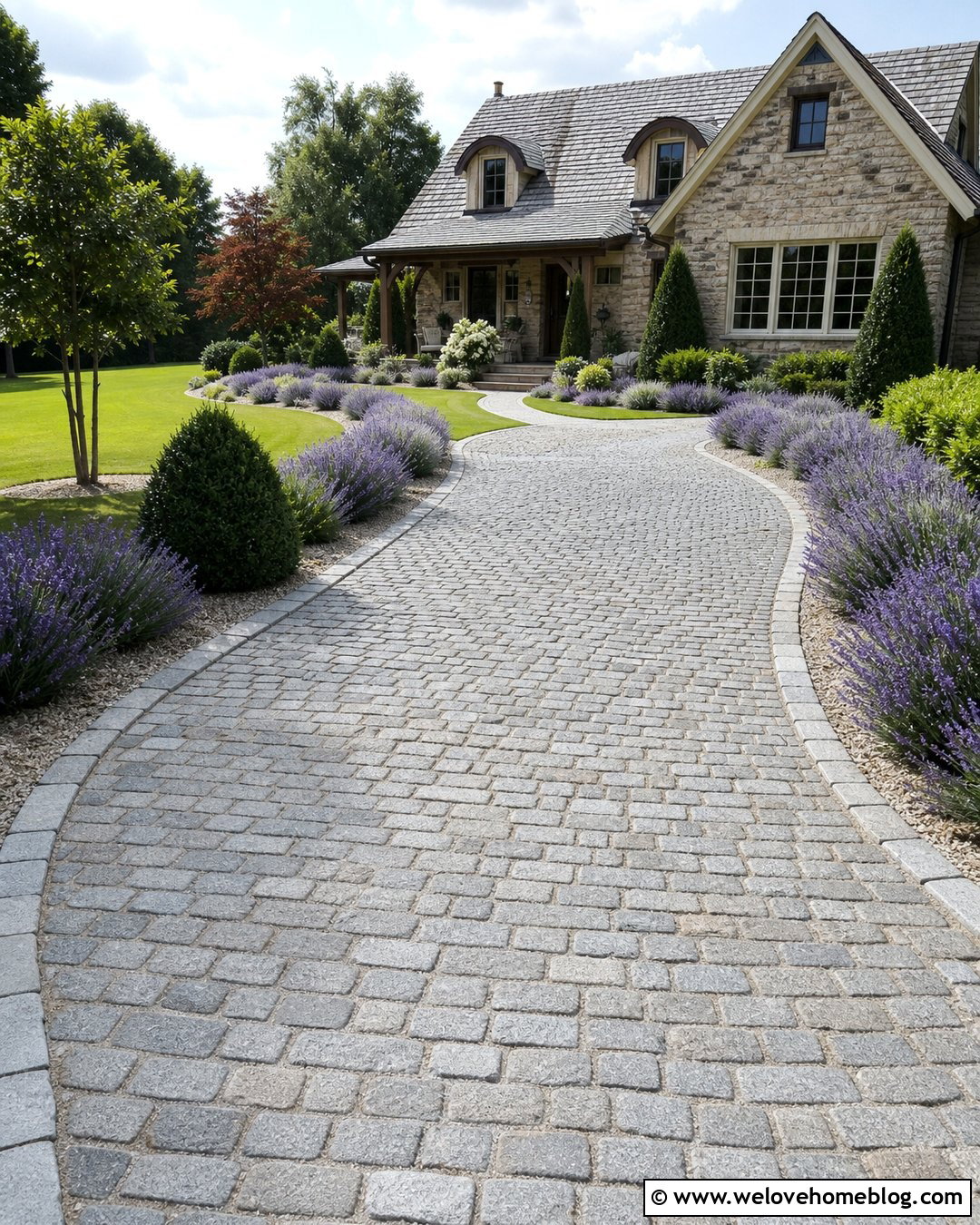
Lavender borders can add fragrance, color, and a soft garden character to a warm gray cobblestone driveway. A straight or gently curved route gives the repeated purple planting enough room to create a visible ribbon. Choose compact lavender varieties suited to the local climate, soil, and winter conditions. Install a flush granite border between the plants and driveway so foliage does not cover too much of the paving. Pale gravel mulch around the lavender can improve the clean, dry appearance and coordinate with lighter stones in the cobblestone. Add evergreen shrubs and a few small trees farther from the drive for year-round structure. This complete look complements cottages, farmhouses, stucco homes, and informal country properties. Keep the planting broad enough for impact but away from vehicle overhang and turning zones.
33. Cobblestone Driveway With Hydrangea Landscaping
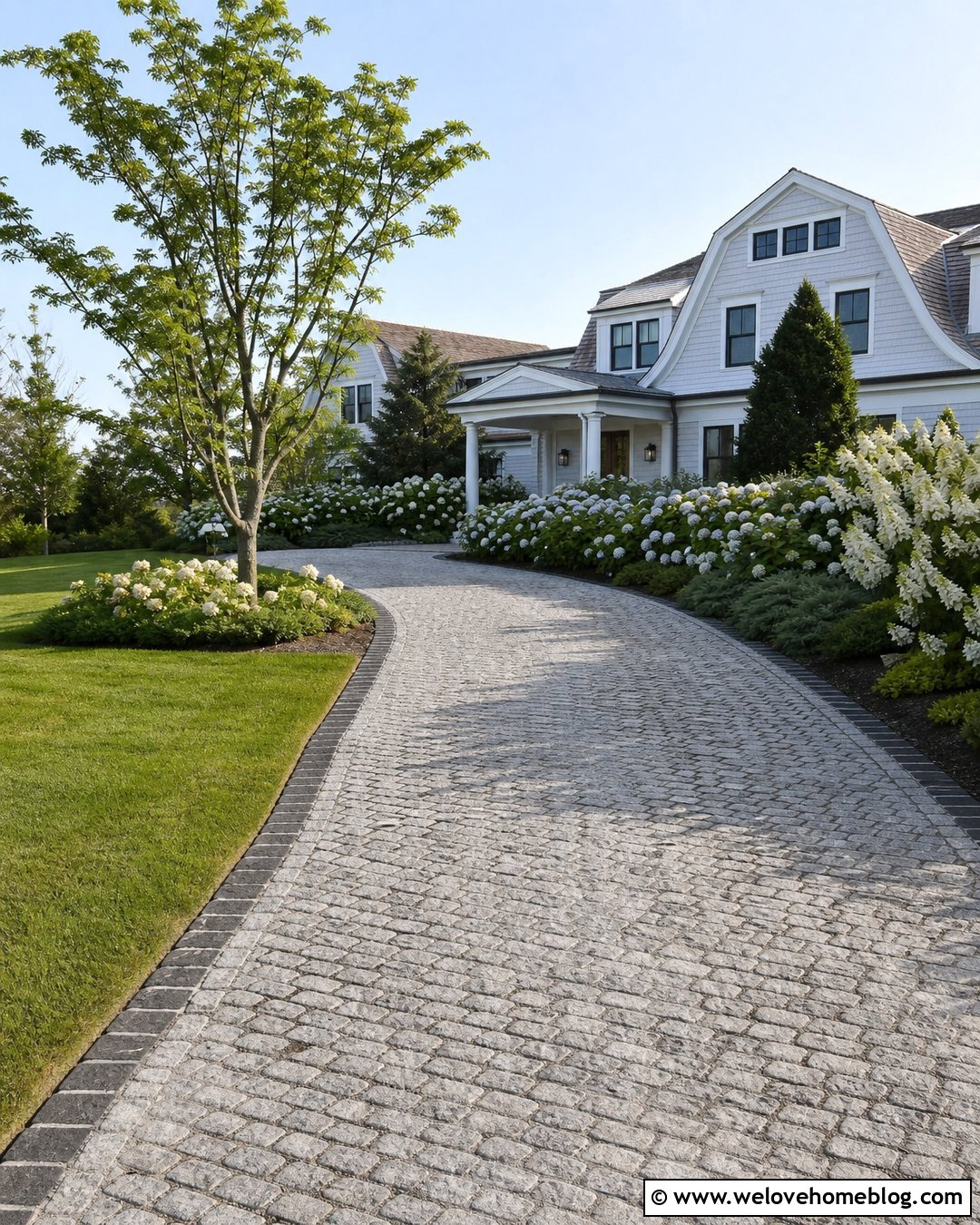
Large hydrangea blooms provide a lush contrast to the rough texture and muted tones of cobblestone. Use medium-gray granite setts on a curved driveway leading to a white, blue, or gray house. Define the edges with darker cobblestones, then position hydrangeas in generous beds beyond the border. Mix them with evergreens so the landscaping maintains structure when the flowers are not in bloom. Allow sufficient room for mature plant size rather than placing shrubs too close to vehicle paths. A small tree near the bend can create shade and strengthen the garden setting. Repeat the cobblestone in a walkway that passes through the hydrangea beds toward the front porch. The overall effect feels full and welcoming, while the strong stone borders prevent the abundant planting from making the driveway look untidy.
34. Cobblestone Driveway With Native Landscaping
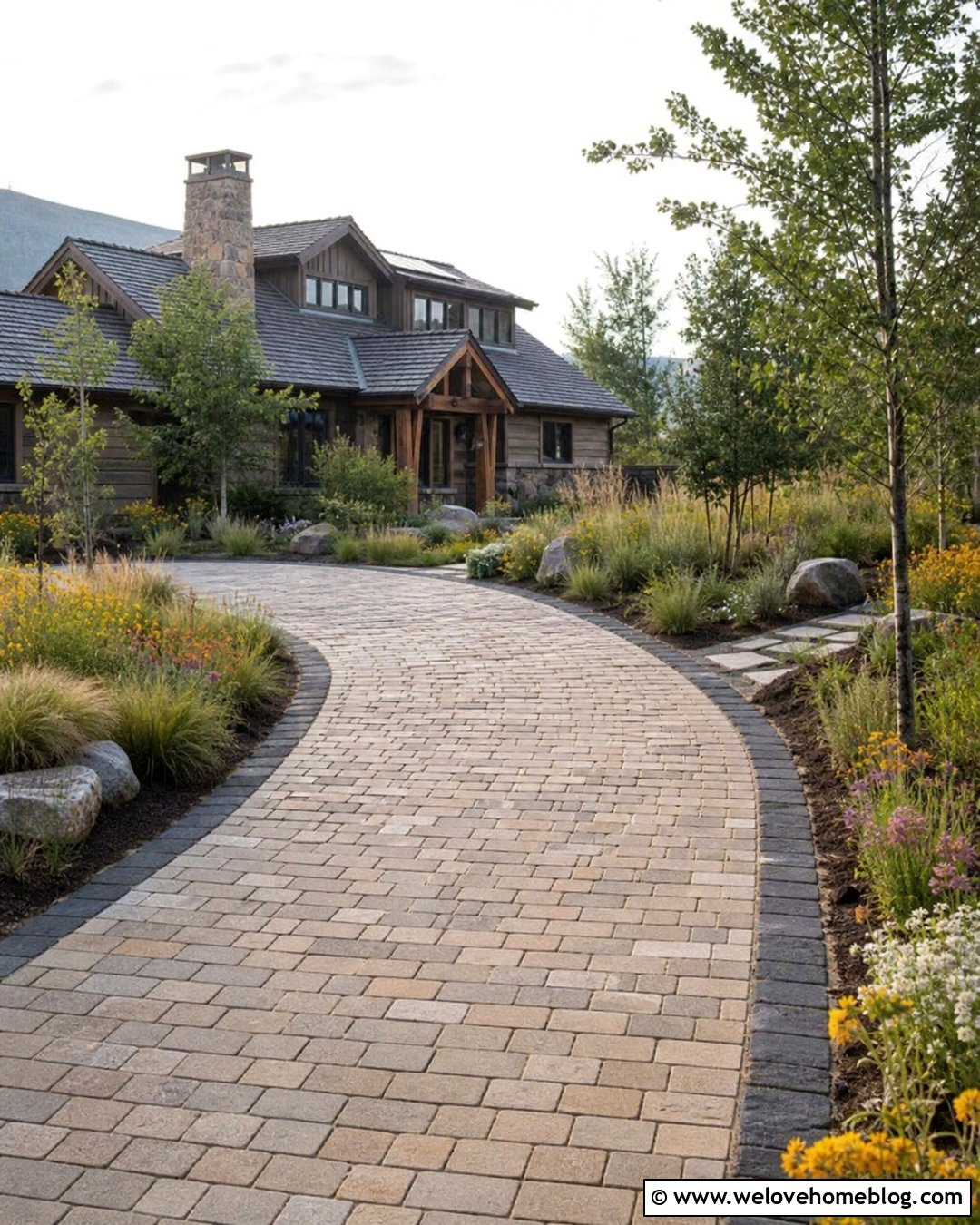
Native landscaping can help a cobblestone driveway settle naturally into its regional setting. Begin with gray or earth-toned cobbles arranged in a simple pattern that does not compete with varied plant textures. A curved driveway is particularly effective because it allows wider planting pockets along the route. Use locally appropriate grasses, flowering perennials, shrubs, and small trees in broad repeating groups. Keep vegetation short near the road and inside curves to maintain safe visibility. A fieldstone or dark granite edge gives the informal planting a necessary sense of order. Add a modest cobblestone walkway through the garden to connect the driveway and front entrance. This design can feel relaxed and colorful without appearing unplanned. The strongest result balances seasonal change with evergreen structure and a clearly defined paved surface.
35. Cobblestone Driveway With Ground Cover Edges
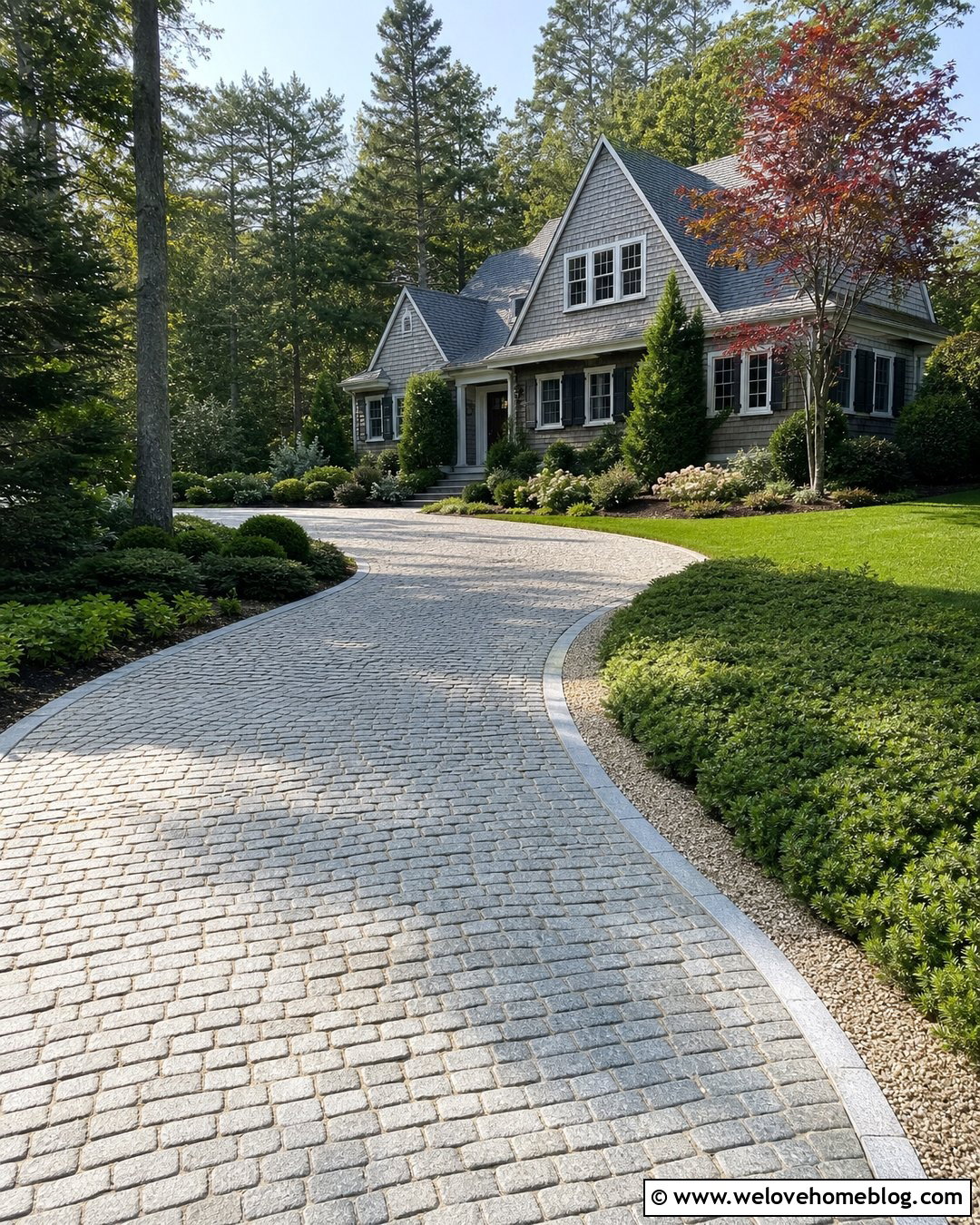
Low ground covers can create a soft transition between cobblestone and planting beds without obscuring the driveway’s shape. Use a stable gray cobblestone surface with flush granite edging, then plant spreading varieties that tolerate the site’s sun, moisture, and climate. Arrange them in broad, repeated drifts instead of mixing many small patches. A straight driveway gains softness from gently irregular planting lines, while a curved drive can be emphasized with more consistent borders. Include shrubs and ornamental trees behind the ground cover to provide height and year-round structure. Avoid plants that spread aggressively into stone joints or become slippery when crushed. Near parking and turning areas, replace soft foliage with a narrow gravel buffer. The completed edge should look green and relaxed while remaining easy to maintain.
36. Cobblestone Driveway With Recessed Lighting
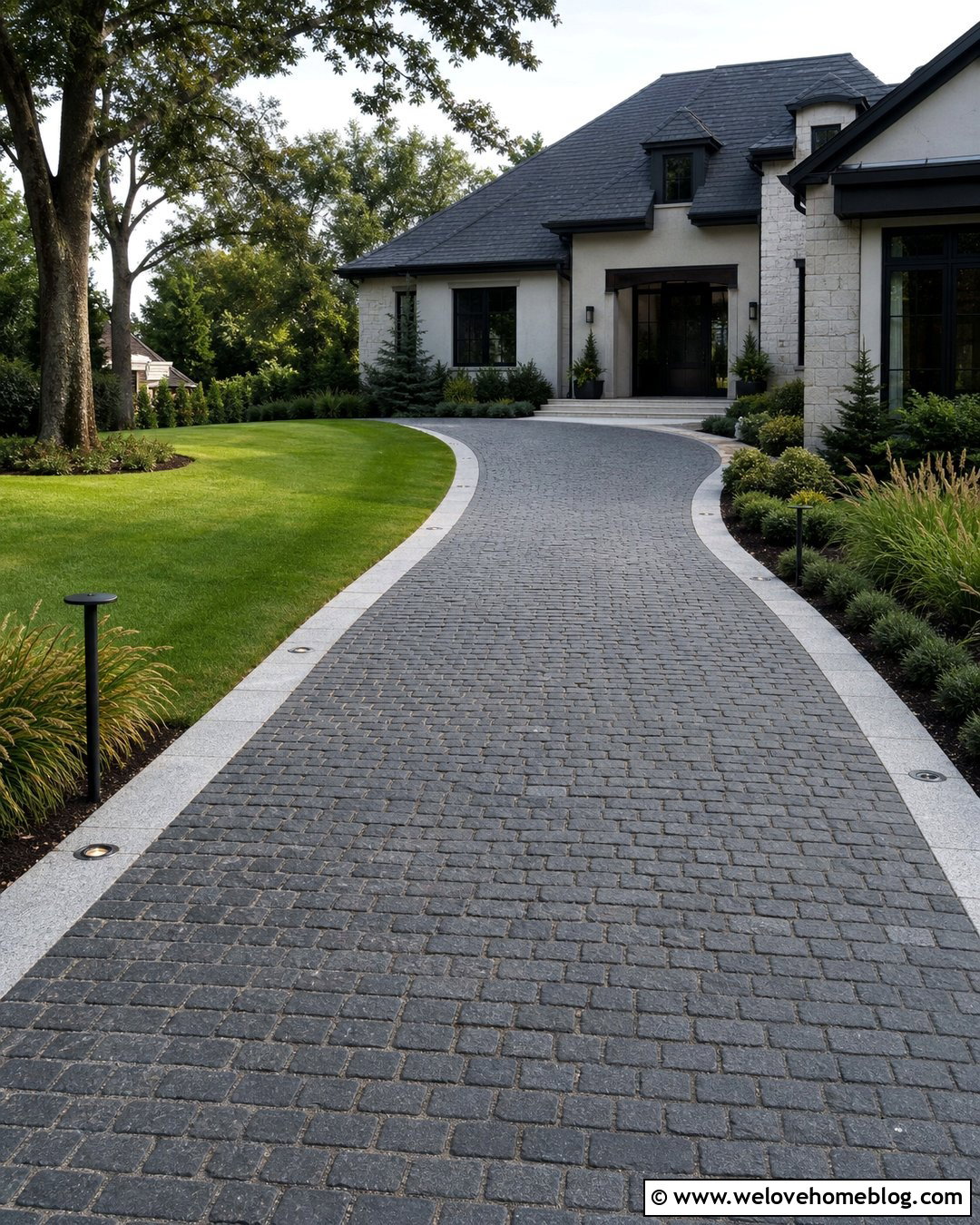
Recessed lighting can improve visibility while preserving the clean outline of a cobblestone driveway. Install low-profile fixtures within the border or immediately beside it, positioning them to reveal curves, entrance points, and changes in grade. During daylight, the fixtures should remain discreet so the stone pattern is still the primary feature. Dark gray cobblestones with a pale granite edge provide a refined setting for modern integrated lights. Use a straight or gently curved layout leading to a contemporary or transitional home. Surround it with low shrubs, grasses, and simple planting beds that will not block illumination. Coordinate the driveway lights with porch and walkway fixtures, but avoid excessive brightness. Careful spacing creates a consistent visual guide and makes the entire approach feel polished, organized, and thoughtfully planned.
37. Cobblestone Driveway With Address Pillar
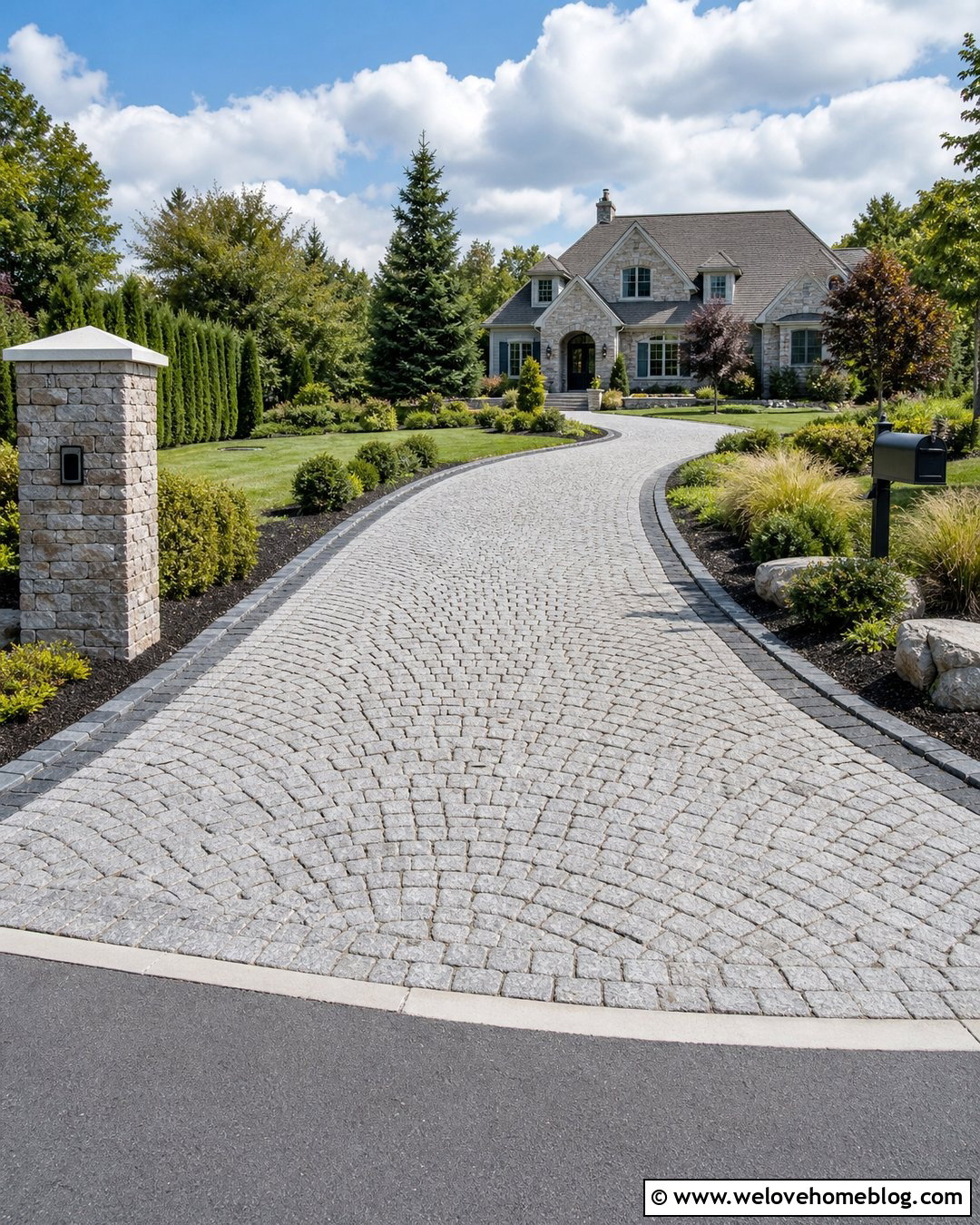
An address pillar provides a useful focal point at the beginning of a cobblestone driveway. Build it from stone, brick, or stucco that matches the house, then position it where the number can be seen clearly from the street. A full-width gray cobblestone apron can visually connect the pillar to the driveway and mark the entrance. Continue the surface in a gently curved layout toward the house, framed with a darker stone border. Plant low shrubs and ornamental grasses around the pillar without covering the address or restricting traffic views. If lighting is included, keep the fixture simple and direct it toward the number. A matching mailbox may be integrated where appropriate. The complete design improves wayfinding while giving the property a stronger and more intentional street presence.
38. Cobblestone Driveway With Entrance Apron
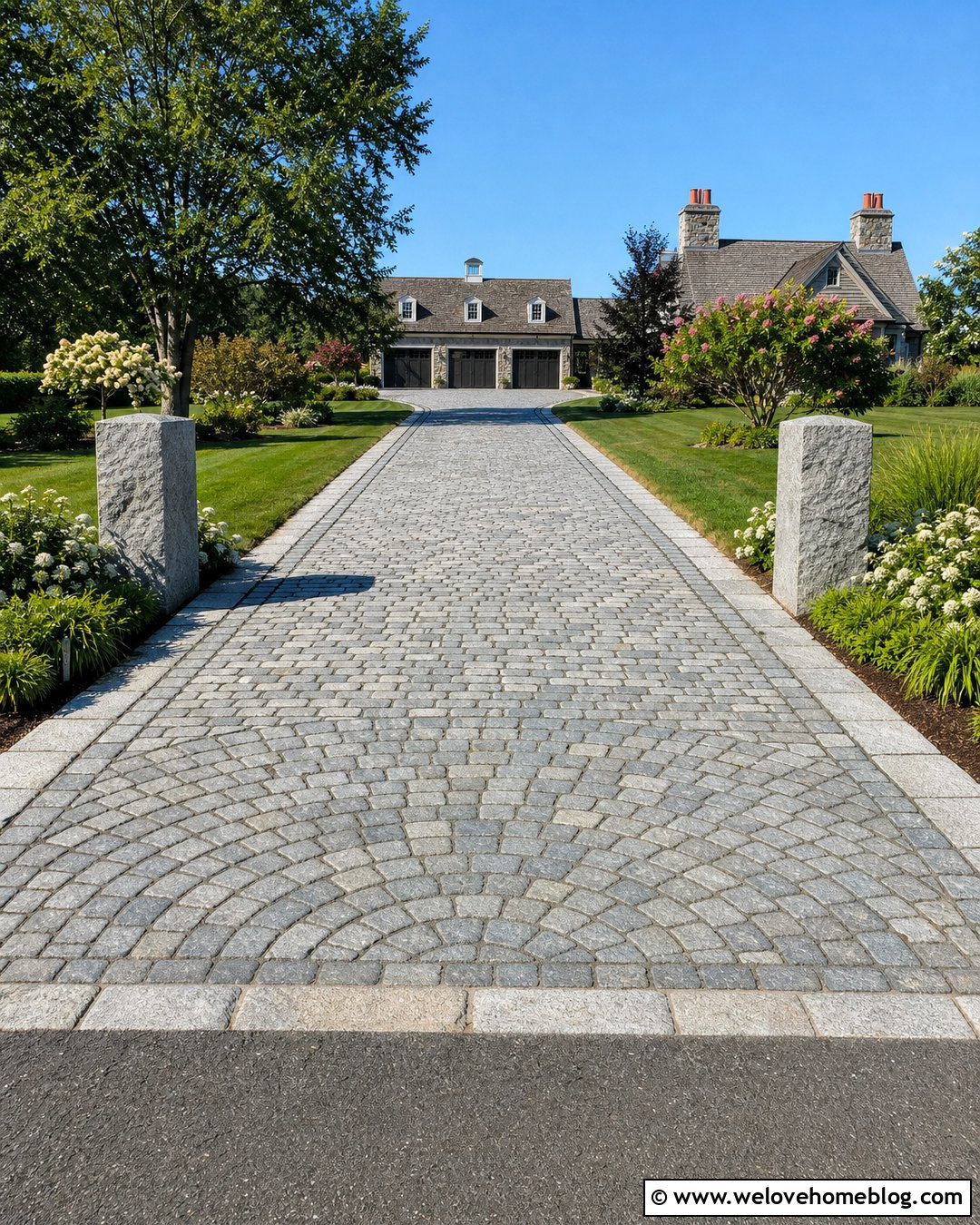
A cobblestone entrance apron creates a memorable first impression and can introduce natural stone without requiring a complicated layout. For a full cobblestone driveway, use a different pattern or stone tone across the first several feet. A fan pattern in mixed gray granite can transition into a simpler running bond along the main approach. Frame the apron with large rectangular cobbles that follow the road edge and driveway flare. Low plantings, matching stone markers, and open lawn should keep the entrance visible. Repeat the apron pattern near the garage or walkway for balance. Ensure the width allows comfortable turns from both directions. This detail gives the driveway a clear beginning, highlights the hand-laid surface, and helps a long approach feel connected to the public street.
39. Cobblestone Driveway With Parking Court
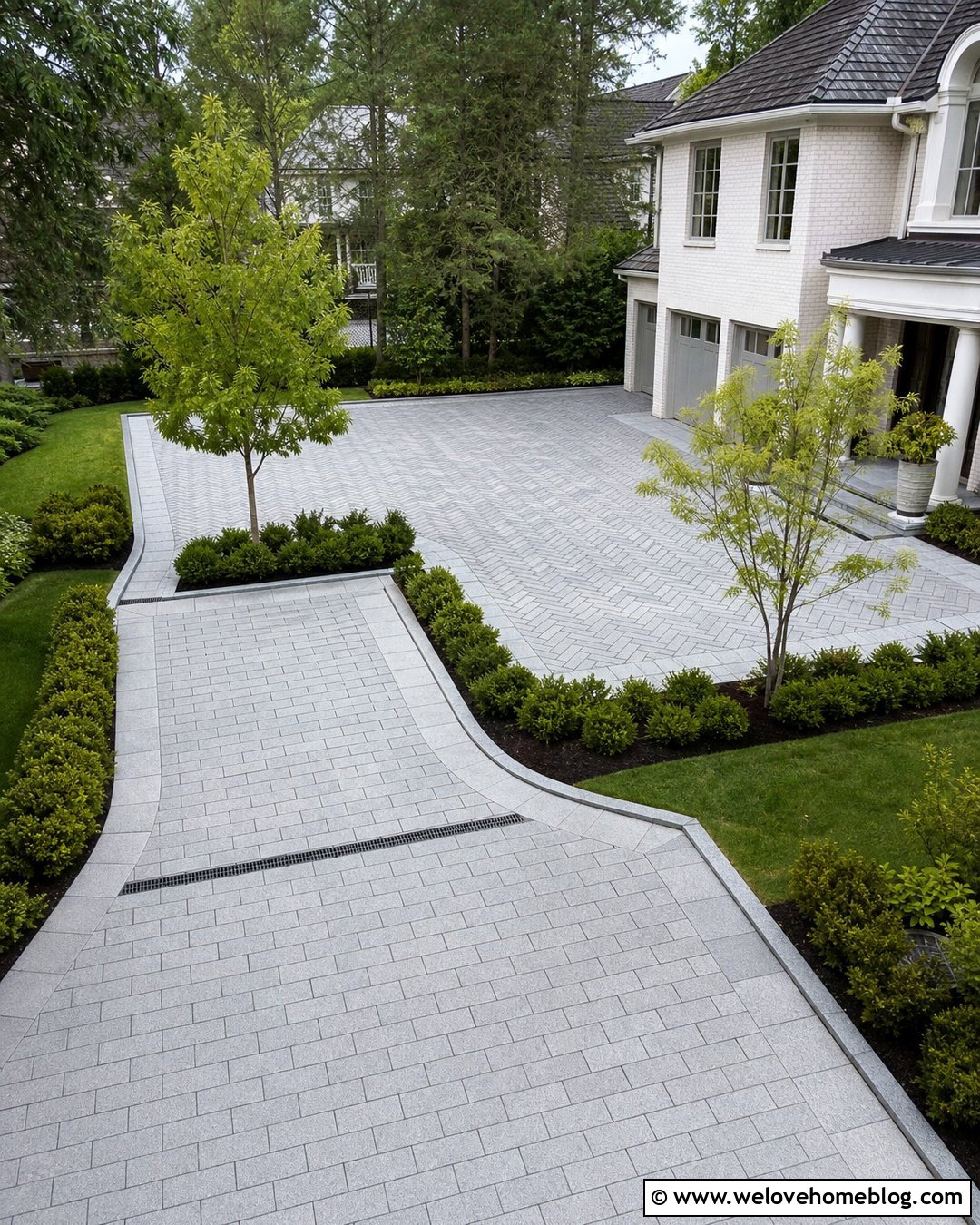
A cobblestone parking court provides extra maneuvering room while turning a practical paved area into part of the landscape design. Use a straight driveway that opens into a broad rectangle or gently rounded court near the house. Lay the approach in running bond and distinguish the parking area with a fan, herringbone, or radiating pattern. A contrasting granite band can mark the transition between the two zones. Surround the court with planting beds, low hedges, and small trees, but leave garage access and turning paths open. A central decorative medallion may work in a very large space, though restrained patterns are easier to coordinate with most homes. Direct runoff toward suitable drains or planted areas. This approach organizes guest parking without making the front yard resemble an unbroken paved lot.
40. Reclaimed Cobblestone Driveway With Cottage Garden
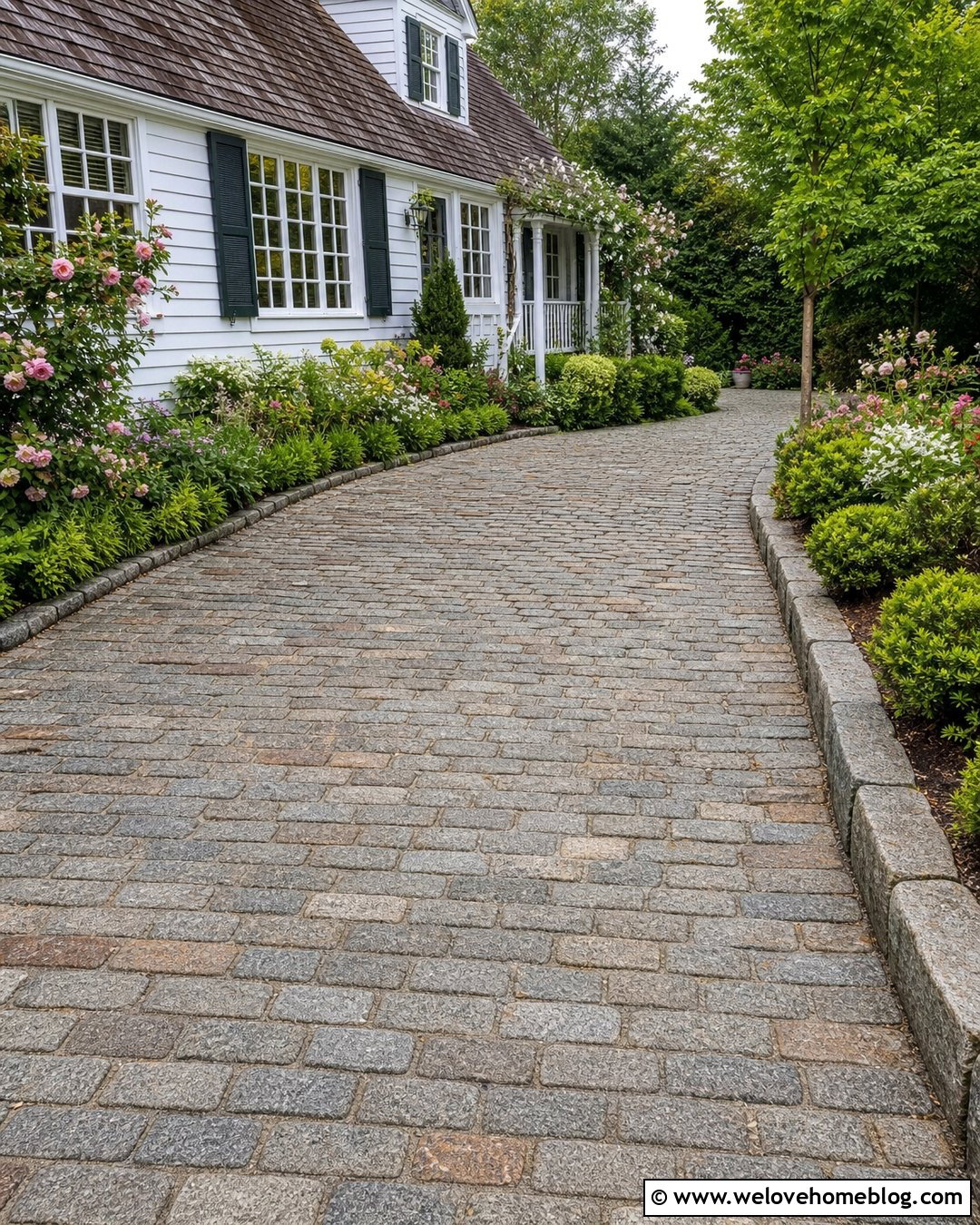
Reclaimed cobblestones give a driveway genuine variation, softened edges, and an established appearance. Their irregular tones work beautifully with cottage homes, older farmhouses, and traditional gardens. Arrange the stones in a simple running bond so their natural character remains more noticeable than the pattern. A gently curved layout can lead through layered beds of roses, flowering shrubs, perennials, ground covers, and small fruit or ornamental trees. Use sturdy reclaimed granite blocks or new stones in a coordinating color to secure the perimeter. Because reclaimed material may vary in thickness and shape, careful sorting and installation help create a comfortable driving surface. Continue a narrower cobbled path toward the porch. The finished driveway should feel aged and garden-focused while still offering practical edges, drainage, and vehicle access.
Conclusion:
The best cobblestone driveway combines lasting character with a layout that fits the house, yard, and daily parking needs. Stone color and pattern matter, but shape, edge support, drainage, planting, and garage transitions are equally important. A straight running-bond driveway can suit a compact suburban lot, while a curved or circular surface creates a more prominent approach on a larger property. Contrasting borders add definition, and thoughtful landscaping prevents the paving from feeling too heavy. Before installation, compare stone samples outdoors and plan every turning, walking, and water-management area. Whether you prefer modern charcoal setts or weathered reclaimed stone, these 40 cobblestone driveway ideas provide a practical starting point for creating distinctive curb appeal.

Related posts:
Leave a Reply