
A garden driveway should feel like part of the landscape, not a hard surface placed in the middle of it. These 20 Cobblestone Driveway In Garden Ideas show how stone color, laying pattern, driveway shape, borders, and planting can create one balanced entrance. Cobblestone works especially well around established gardens because its natural texture complements flowers, shrubs, trees, and traditional architecture. It can also suit contemporary homes when the layout is clean and the planting is restrained. Before choosing a look, consider the turning space, drainage, garden maintenance, and how the stone will connect with your walkway and garage. Explore the complete garden-focused designs below to find practical inspiration from these 20 Cobblestone Driveway In Garden Ideas.
1. Curved Cobblestone Driveway With Cottage Garden
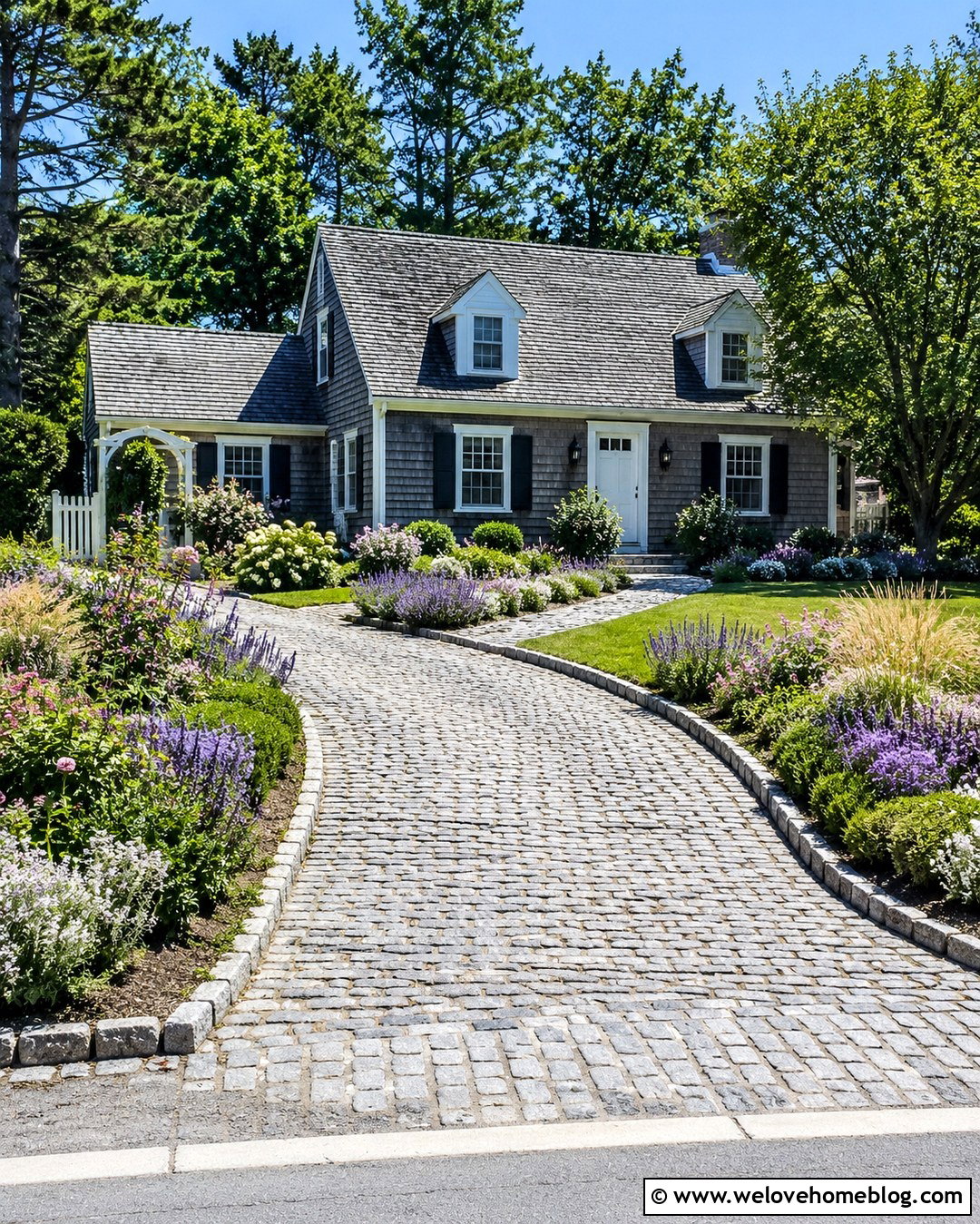
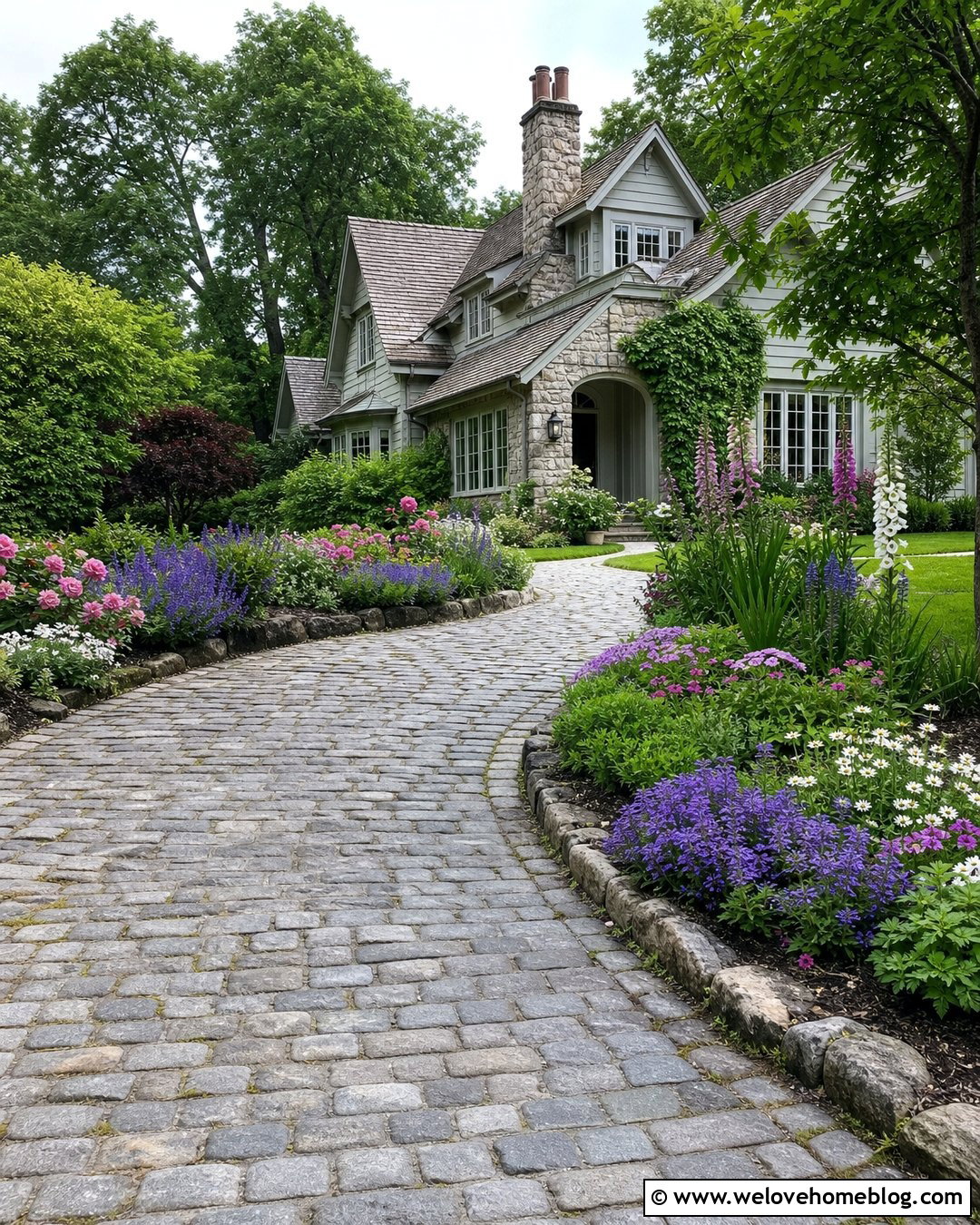
A gently curved cobblestone driveway creates a relaxed approach that feels natural beside a cottage garden. Use weathered gray cobblestones in a simple running pattern, then define the outer edge with larger granite setts. Wide planting beds can follow the same curve, making the driveway appear woven into the yard. Lavender, salvia, catmint, roses, and ornamental grasses provide layers of color without hiding the stonework. Keep taller shrubs near the house and shorter flowers beside the driving surface for better visibility. A matching cobblestone walkway can branch toward the front door. This complete design works beautifully with a cottage, Cape Cod, or small farmhouse because the informal planting softens the durable stone and makes the entrance feel established rather than overly formal.
2. Circular Cobblestone Driveway With Rose Garden
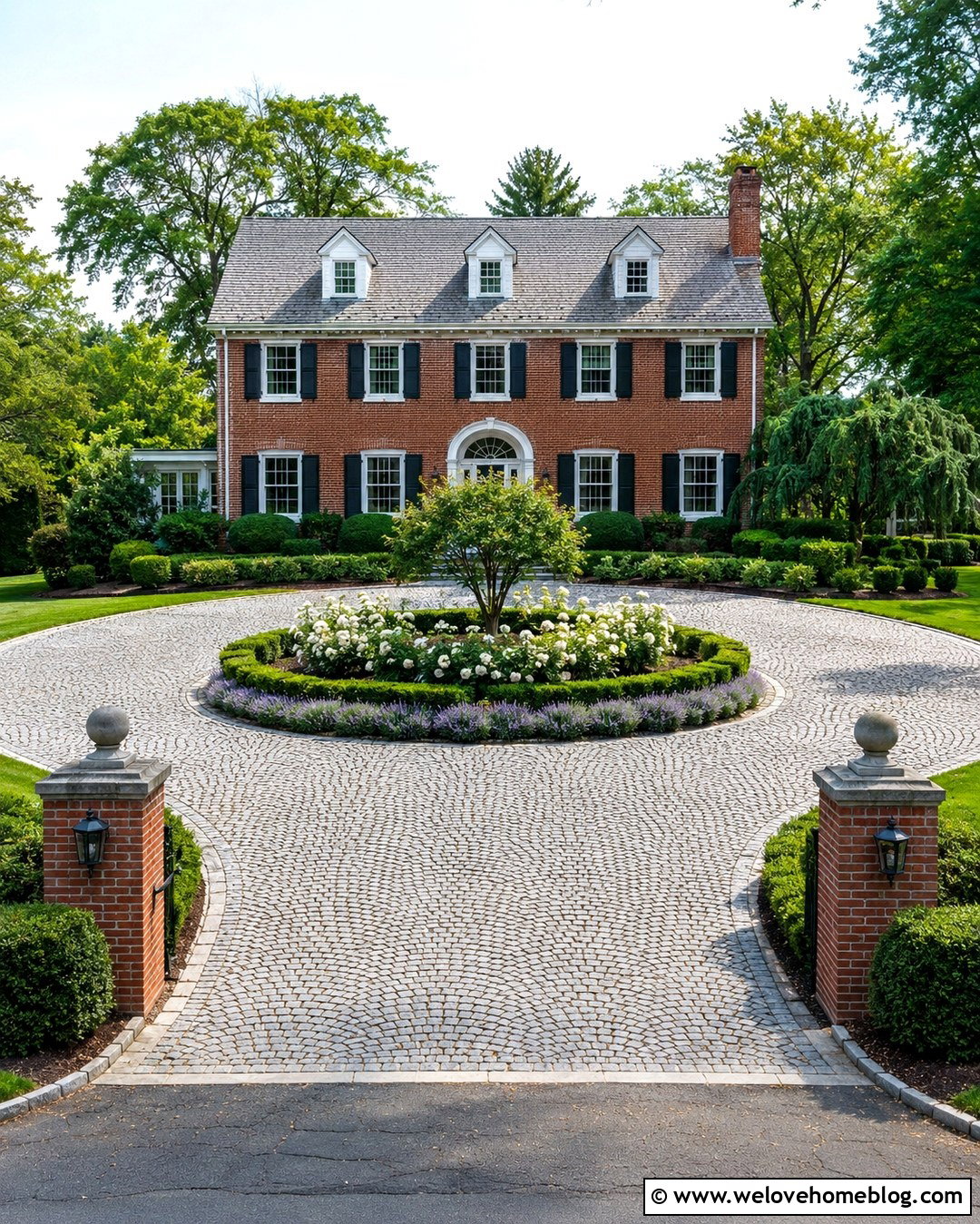
Do you have enough front-yard space for a circular layout? A circular cobblestone driveway wrapped around a central rose garden creates an impressive yet welcoming entrance. Lay medium-gray cobblestones in a radiating fan pattern to emphasize the curve. A low stone curb around the island keeps soil and mulch away from the driving surface. In the center, combine roses with boxwood, catmint, and a small ornamental tree for height. The outer driveway edge can meet a broad lawn with simple foundation planting near the house. Leave clear sightlines around the exit points and avoid oversized shrubs near the street. This arrangement is especially suitable for a symmetrical colonial or Georgian-style house, where the centered garden and curved stonework reinforce the architecture.
3. Straight Cobblestone Driveway With Boxwood Borders
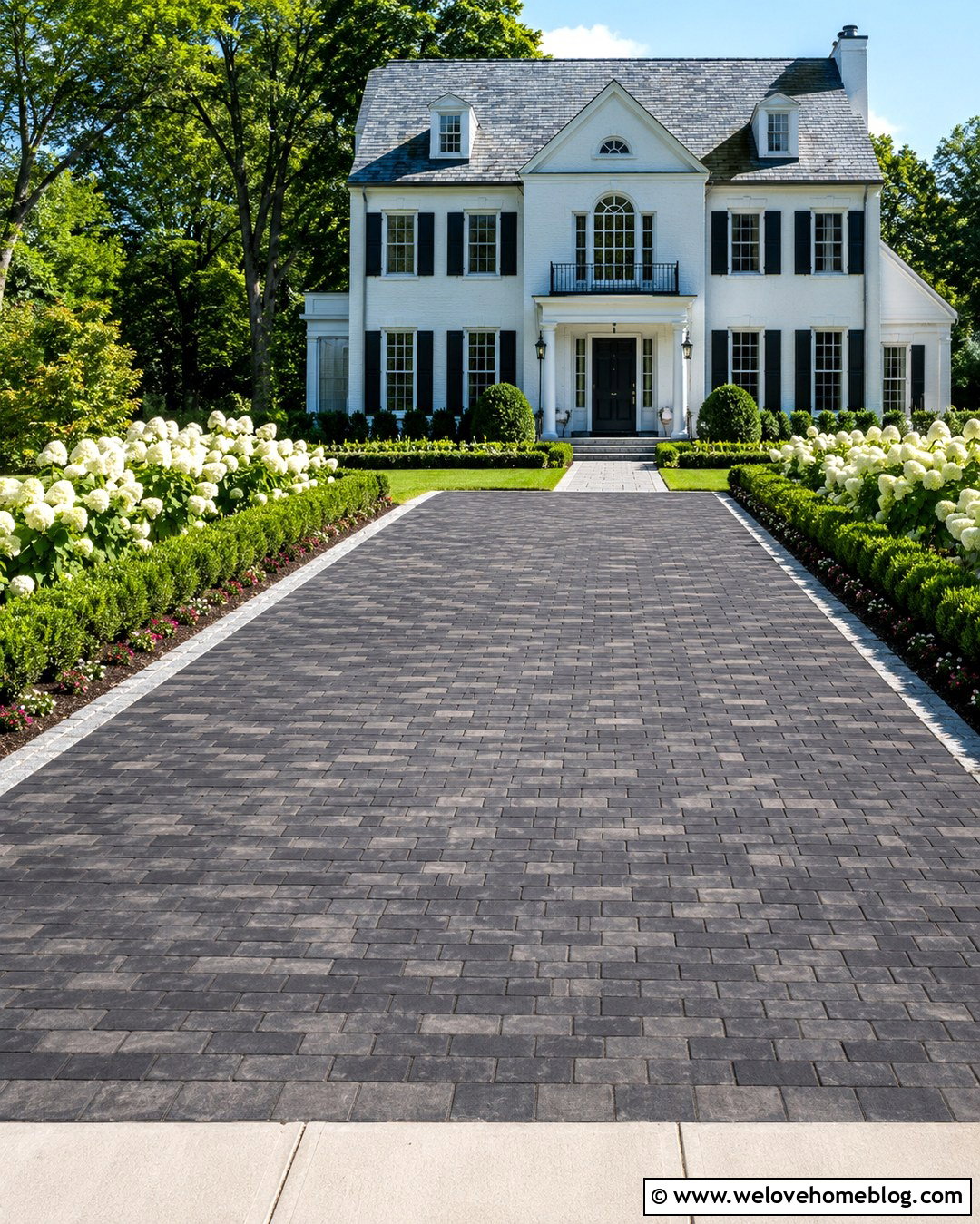
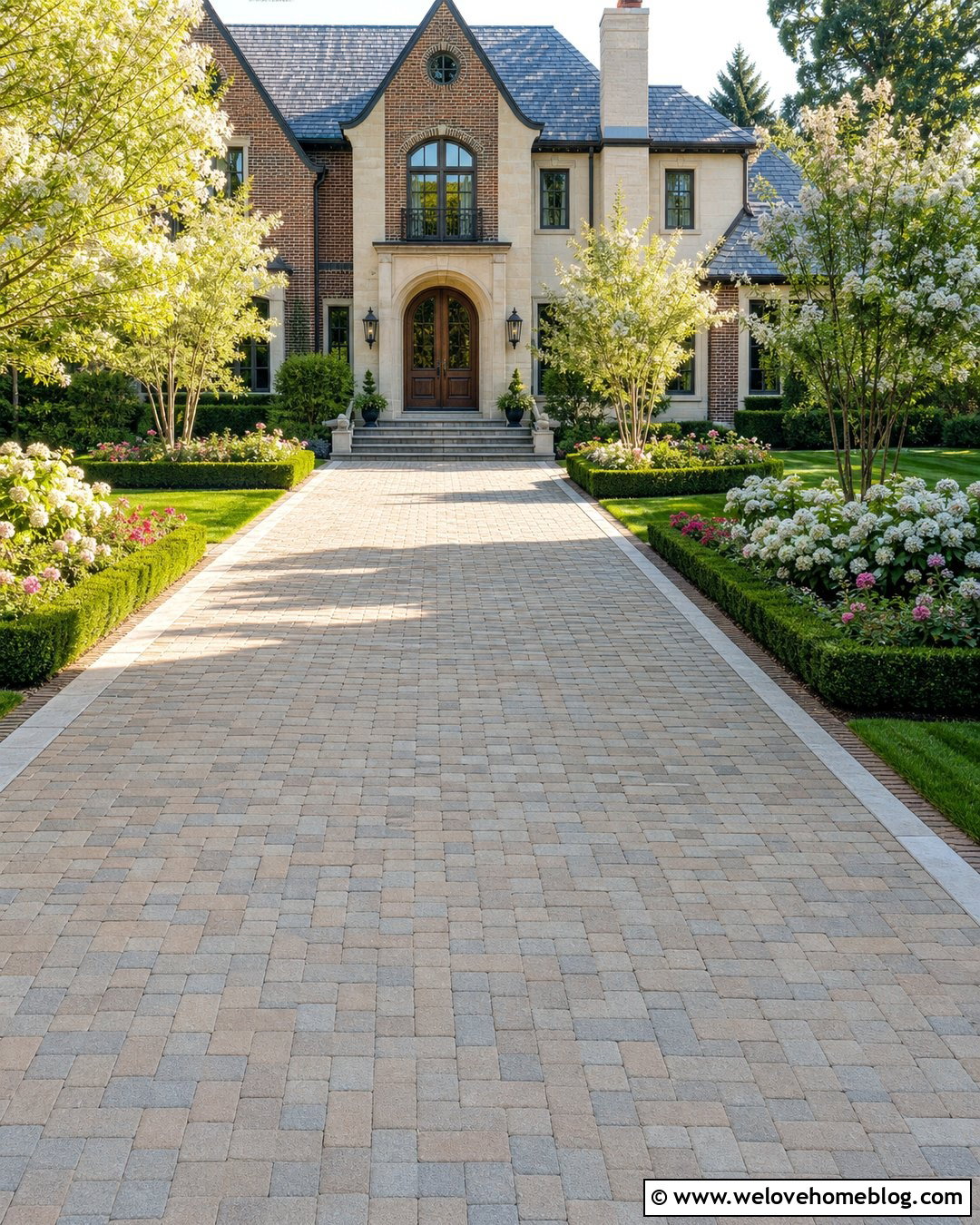
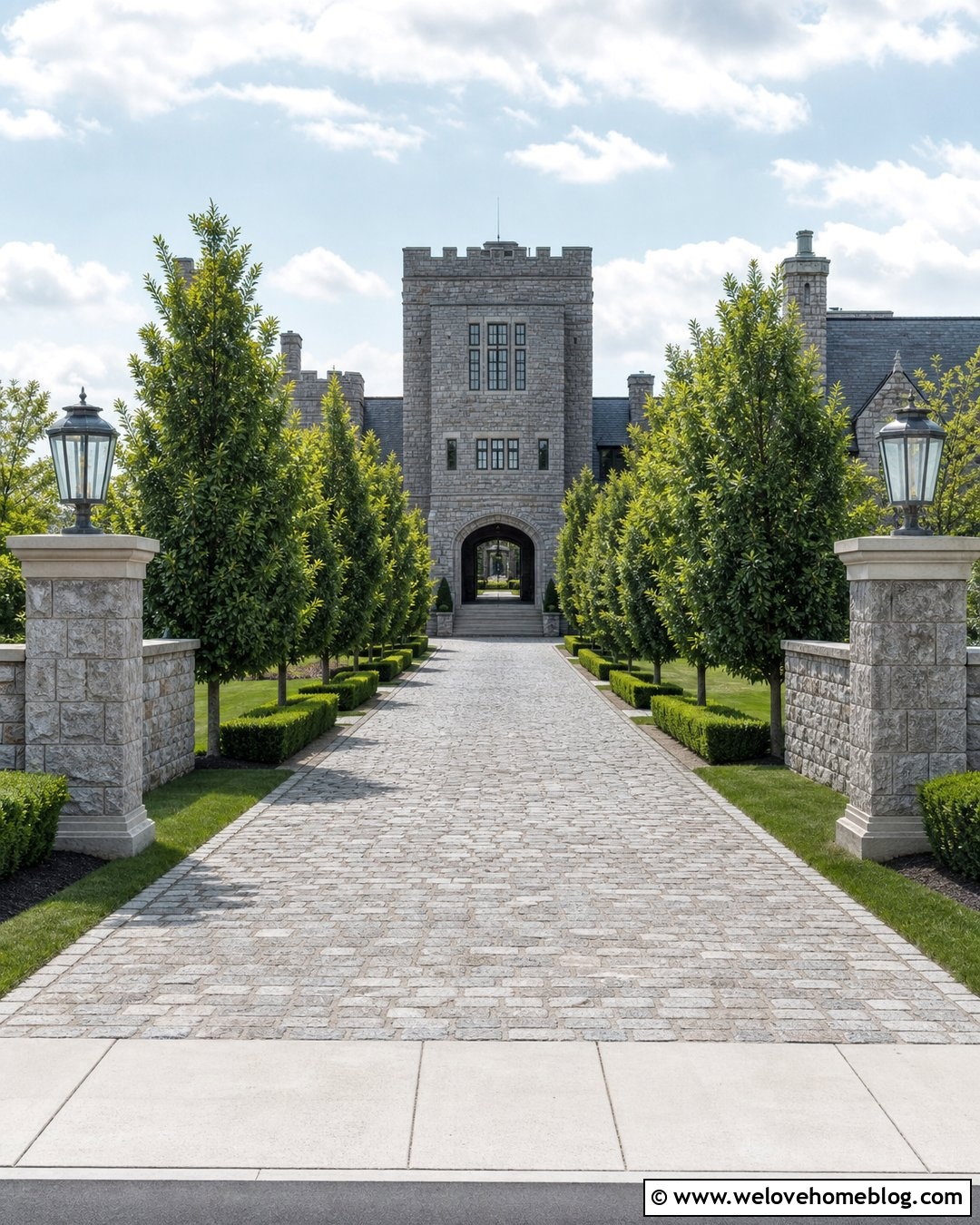
Crisp lines can make traditional cobblestone feel refined and orderly. Build a straight driveway from rectangular charcoal and gray cobblestones laid in a running bond pattern. Narrow granite borders on both sides create a firm visual frame and separate the stone from nearby soil. Beyond the edging, clipped boxwood hedges can run toward the house, with white hydrangeas or seasonal flowers added at selected points. Repeating the same shrubs on each side gives the approach a balanced appearance without making the garden complicated. A straight stone walkway leading from the driveway to the porch completes the layout. This cobblestone driveway suits a brick colonial or formal traditional home, especially when the front facade is symmetrical and the garden already uses structured beds and neatly maintained lawn.
4. Cobblestone Driveway With Woodland Garden
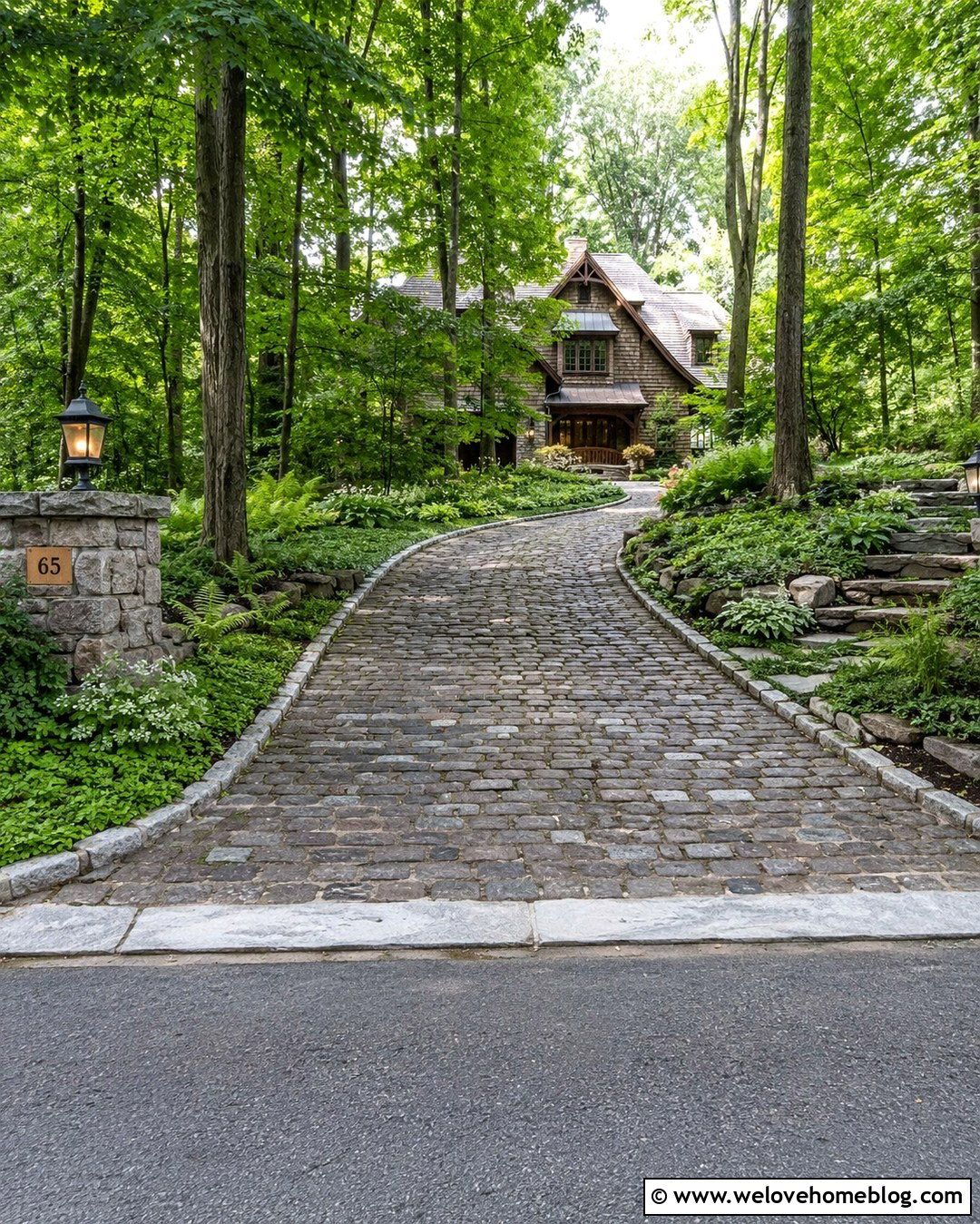
Beneath mature trees, irregular cobblestone can blend naturally with a shaded woodland garden. Choose mixed brown, charcoal, and moss-gray cobblestones with a lightly weathered finish. A subtle curved layout can move around existing trees instead of forcing the landscape into a straight line. Edge the driveway with rough granite blocks, then plant ferns, hostas, heuchera, sedges, and shade-tolerant ground cover beyond them. Small pockets of low greenery between selected border stones can soften the transition, although the main driving joints should remain stable and clear. Use a simple stepping-stone path to connect the driveway with the front entrance. This complete look feels especially appropriate around a craftsman, rustic ranch, or wooded contemporary home with natural siding and a deep green or earthy exterior.
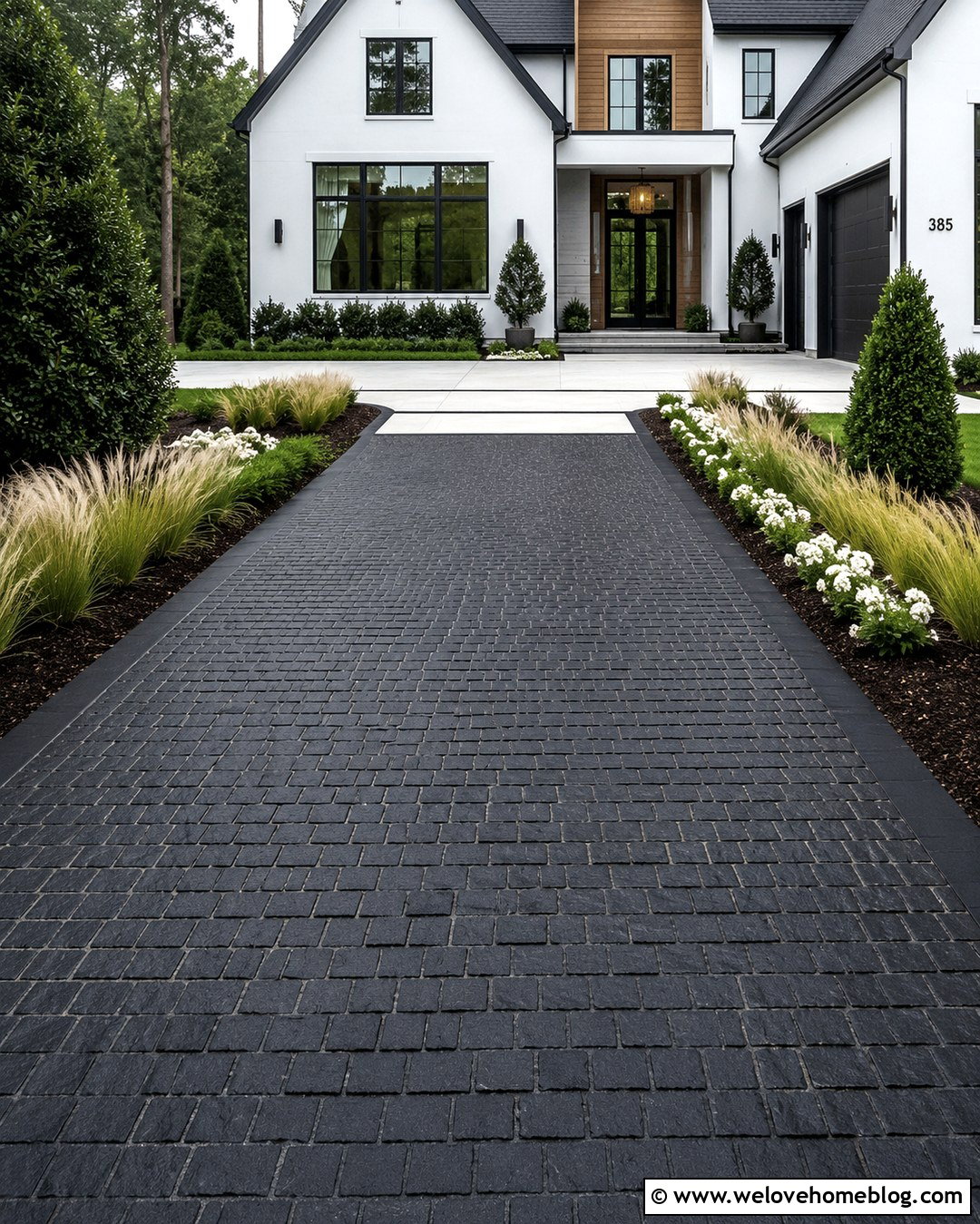
5. Dark Cobblestone Driveway With Modern Garden
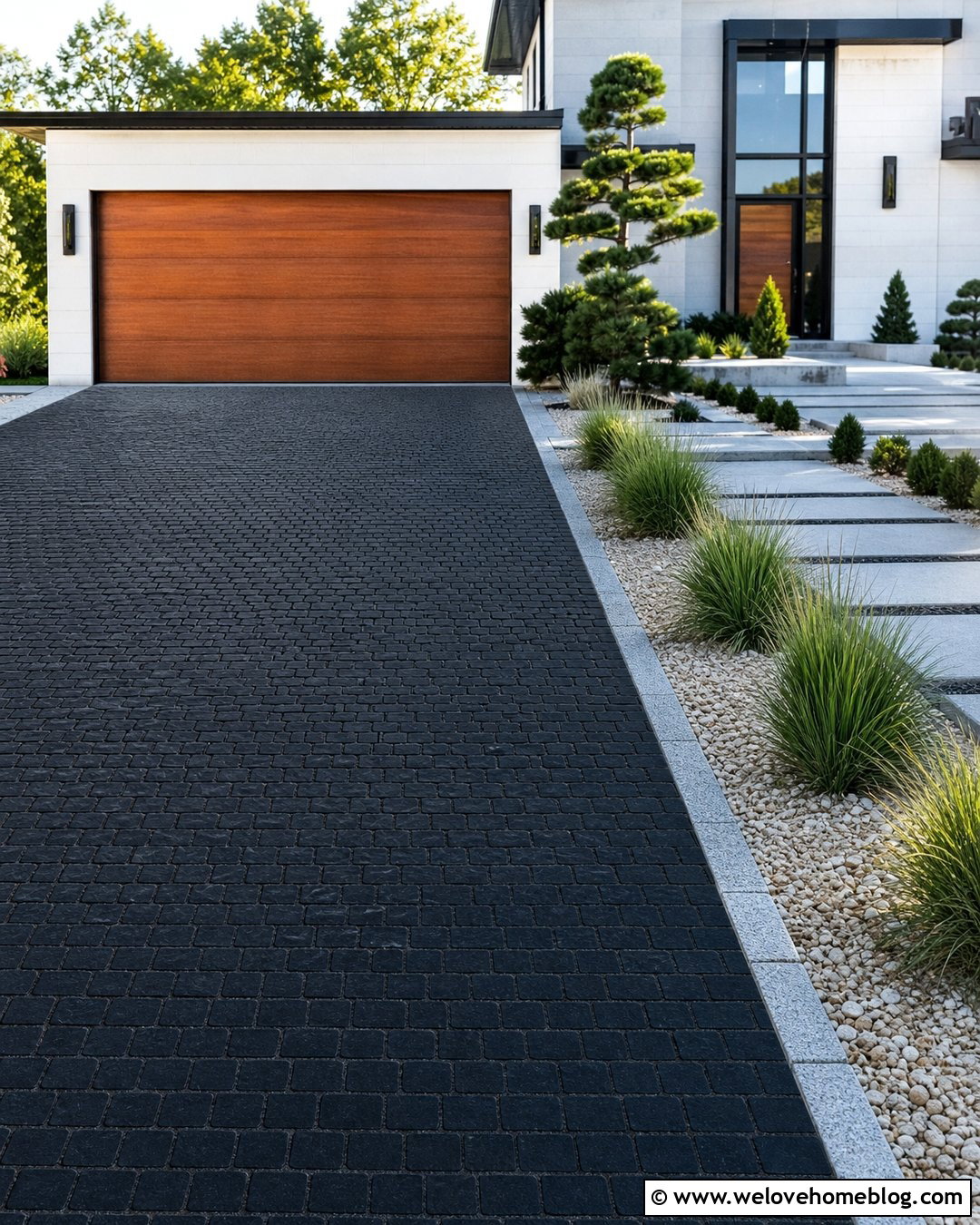
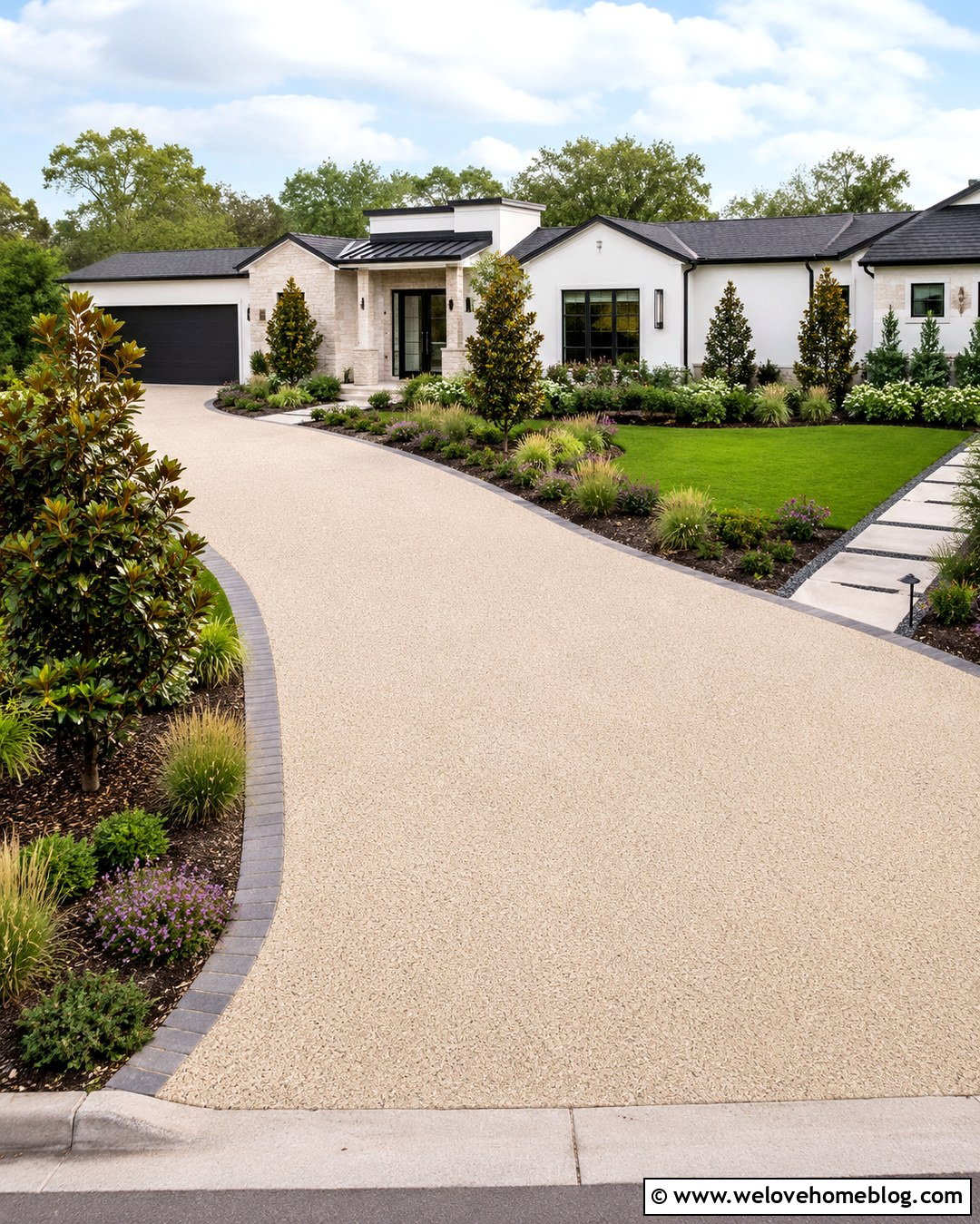
Dark stone and restrained planting can give a cobblestone driveway a surprisingly modern character. Select black granite cobblestones with sawn tops and tight, consistent joints. Install them in long straight rows or a clean stacked pattern on a wide rectangular driveway. A flush border in the same material keeps the surface visually simple. Along each side, use linear beds filled with feather reed grass, compact evergreens, white flowering perennials, and dark mulch. Large concrete stepping pads can form the walkway without competing with the driveway texture. Keep the lawn edges crisp and limit the planting palette to a few repeated varieties. Paired with a modern house featuring white stucco, dark trim, and warm wood accents, the rich cobblestone surface becomes a strong architectural feature while the garden provides controlled softness.
6. Cobblestone Driveway With Hydrangea Garden
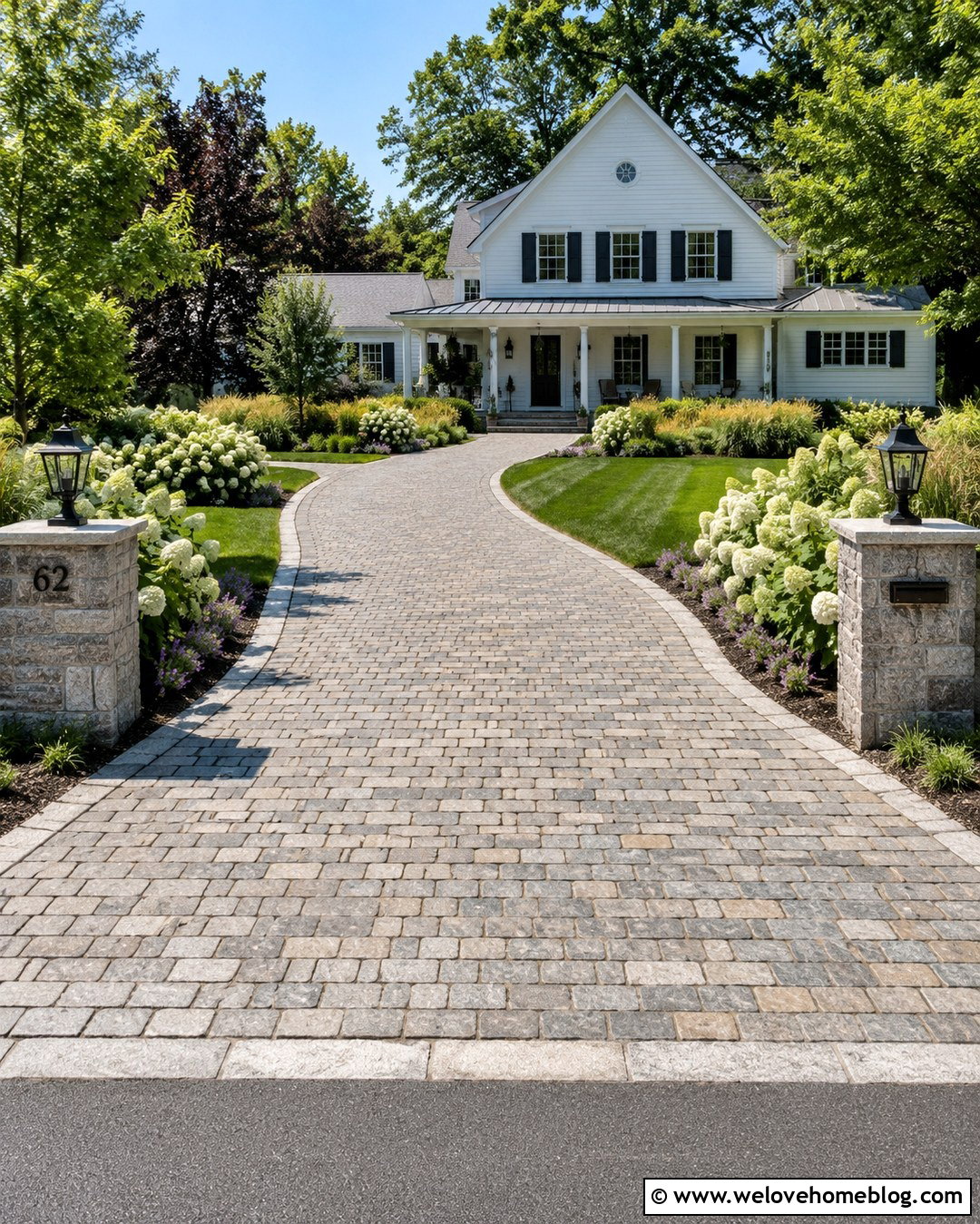
Imagine driving between full hydrangea borders during the summer flowering season. A gray and tan cobblestone driveway provides the neutral foundation needed for this colorful garden treatment. Use a shallow S-curve to create a softer approach, then line both edges with reclaimed granite curbing. Plant hydrangeas in broad groups behind lower layers of hostas, catmint, or compact ornamental grasses. Allow enough space between mature shrubs and the driveway so branches do not interfere with vehicles. Mulched beds will make the planting feel clean and intentional, while small lawn sections can prevent the borders from becoming visually heavy. Repeat the cobblestone around the front walkway or porch steps. This design pairs naturally with a white farmhouse, shingled Cape Cod, or traditional home with blue, cream, or gray siding.
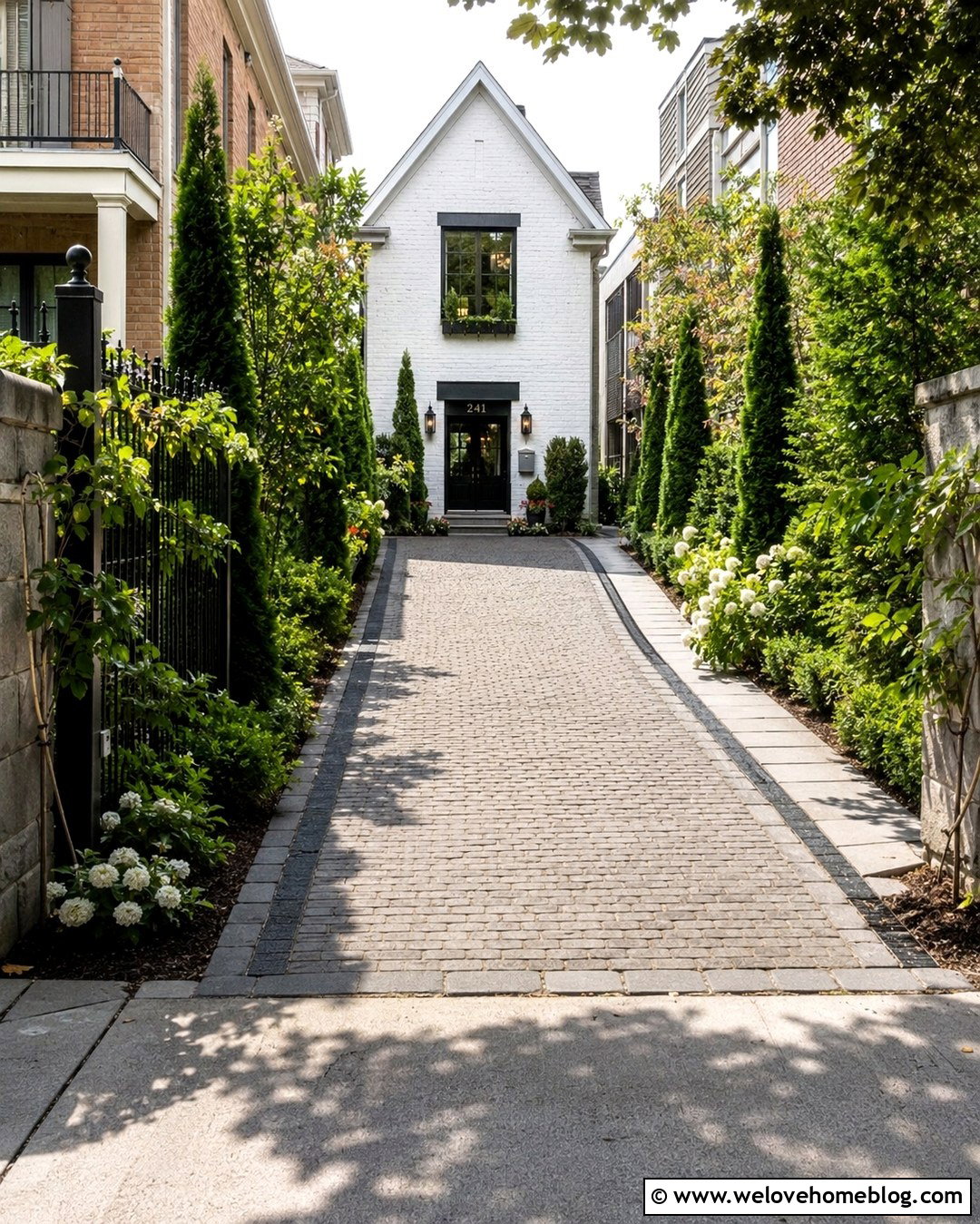
7. Narrow Cobblestone Driveway With Courtyard Garden
A narrow lot can still support a full garden atmosphere when every edge is planned carefully. Use small, warm-gray cobblestones laid lengthwise to make a straight driveway appear longer. A slim brick or darker cobblestone ribbon can define the sides without taking away valuable driving width. Add narrow planting beds with columnar evergreens, upright grasses, compact flowering shrubs, and climbing vines on fences or trellises. Near the house, let the driveway open into a small cobblestone parking court with pots placed safely outside the turning area. A narrow walkway can run alongside the planting rather than crossing the driveway. This layout works well for urban cottages, townhomes, and detached houses on compact lots because it combines parking, circulation, and greenery without making the front garden feel crowded.
8. Fan Pattern Cobblestone Driveway With Herb Garden
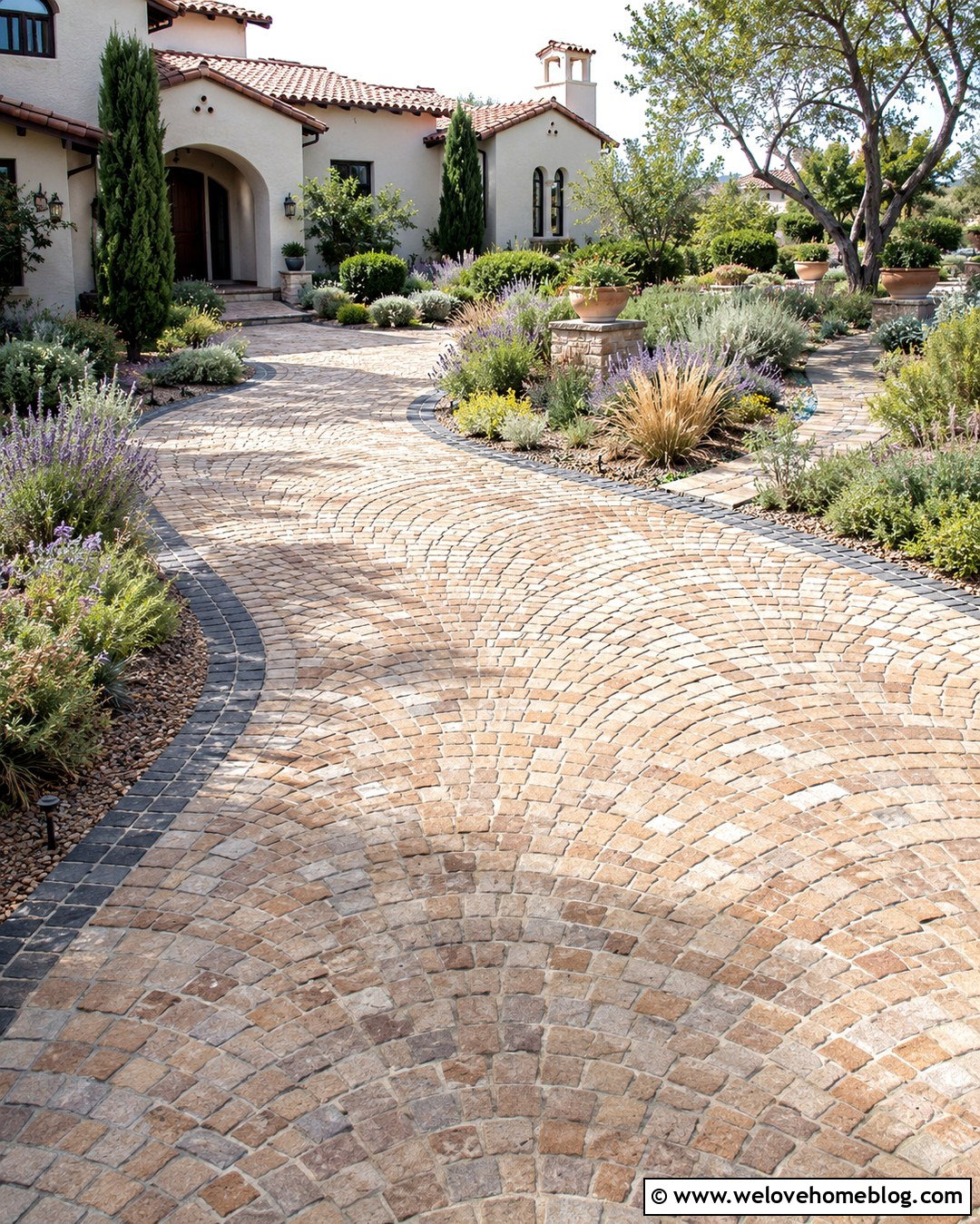
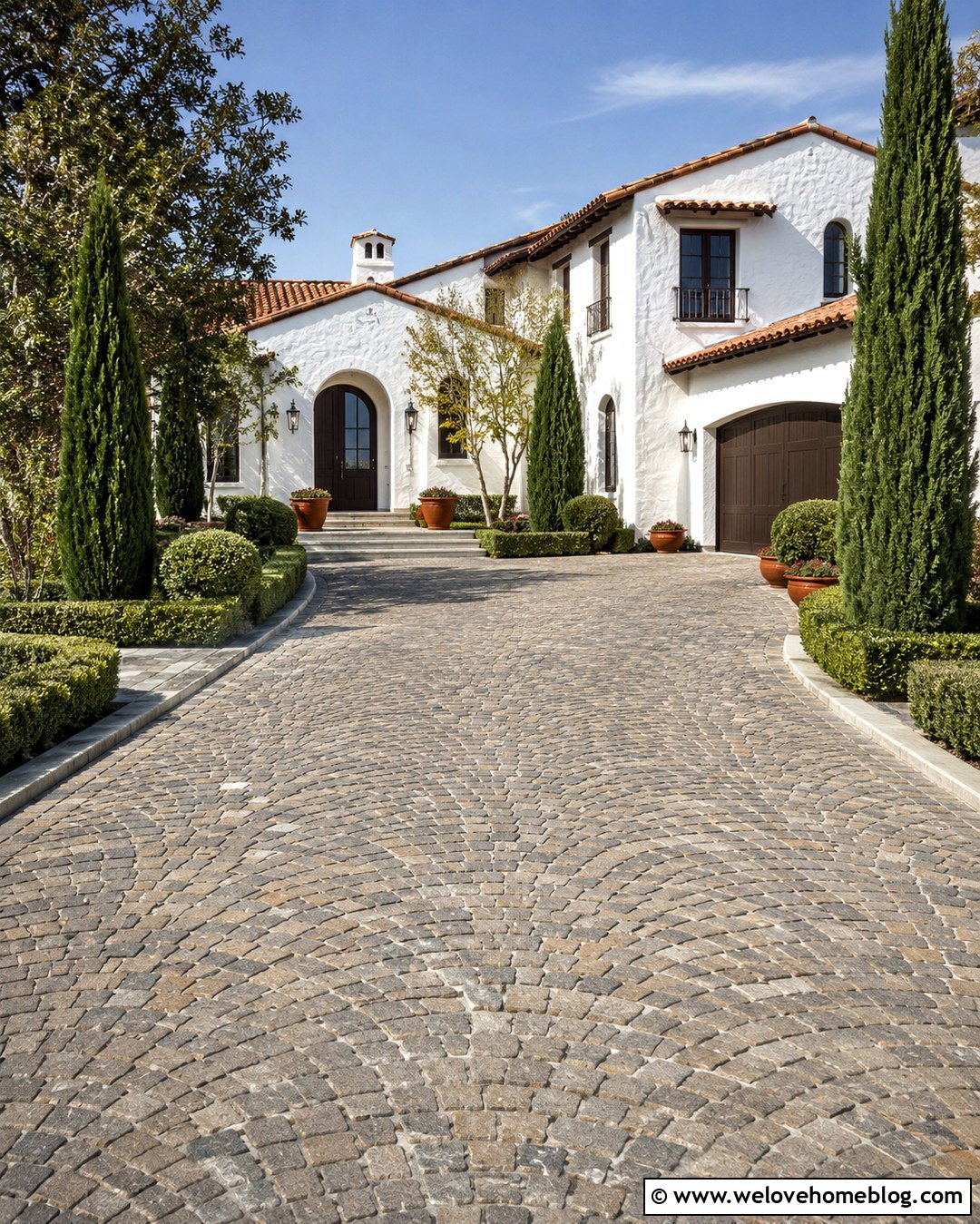
Warm-toned cobblestones arranged in overlapping fan patterns bring movement to a Mediterranean-inspired garden. Choose beige, sandstone, and muted brown stones that coordinate with a stucco facade and terracotta roof. Shape the driveway with a broad curve, then finish it with a darker cobblestone border for definition. Plant rosemary, lavender, thyme, sage, and ornamental grasses in gravel-mulched beds along the approach. Small olive-like ornamental trees or upright evergreens can mark the entrance without blocking views. Continue the same cobblestone into a curved front walkway to connect the hardscape visually. The herb garden adds fragrance and texture while keeping the palette consistent with the stone. Use simple clay planters near the porch, but leave the driveway itself open, bright, and easy to navigate.
9. Sloped Cobblestone Driveway With Retaining Walls
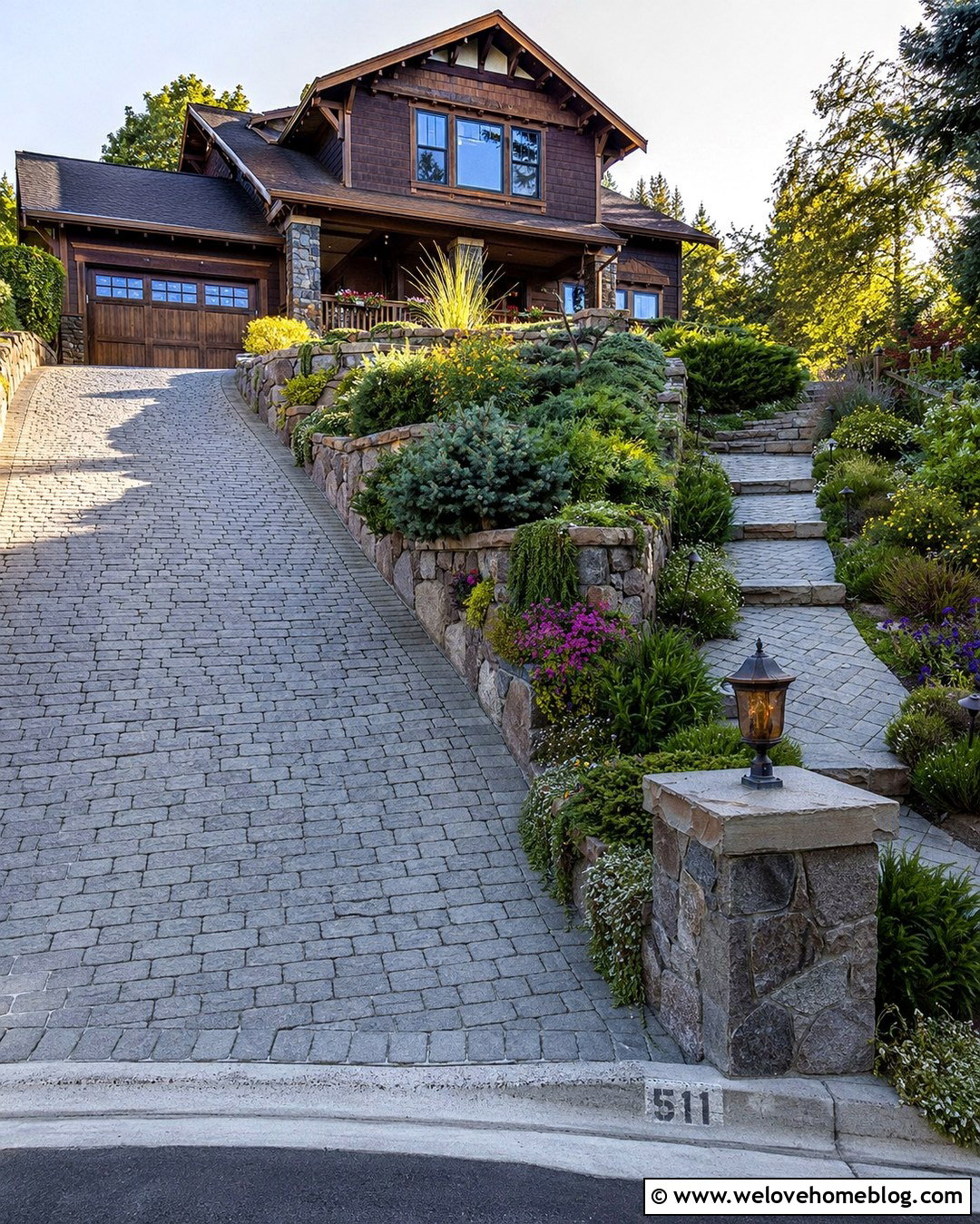
A sloped driveway looks more intentional when its surface and surrounding grade are treated as one design. Use rough-textured granite cobblestones in a structured running pattern, with rows positioned to emphasize the width rather than the steepness. Low natural-stone retaining walls can hold raised garden beds along both sides. Fill the beds with spreading juniper, dwarf shrubs, ornamental grasses, and cascading flowers that soften the wall edges. Add shallow stone steps and a separate walkway where pedestrians need a more comfortable route to the house. Drainage details should be incorporated by an experienced local installer so water does not collect against the walls or garage. This durable, layered layout complements hillside craftsman homes, stone cottages, and rustic contemporary houses while turning a difficult grade into an attractive garden entrance.
10. Horseshoe Cobblestone Driveway With Tree-Lined Garden
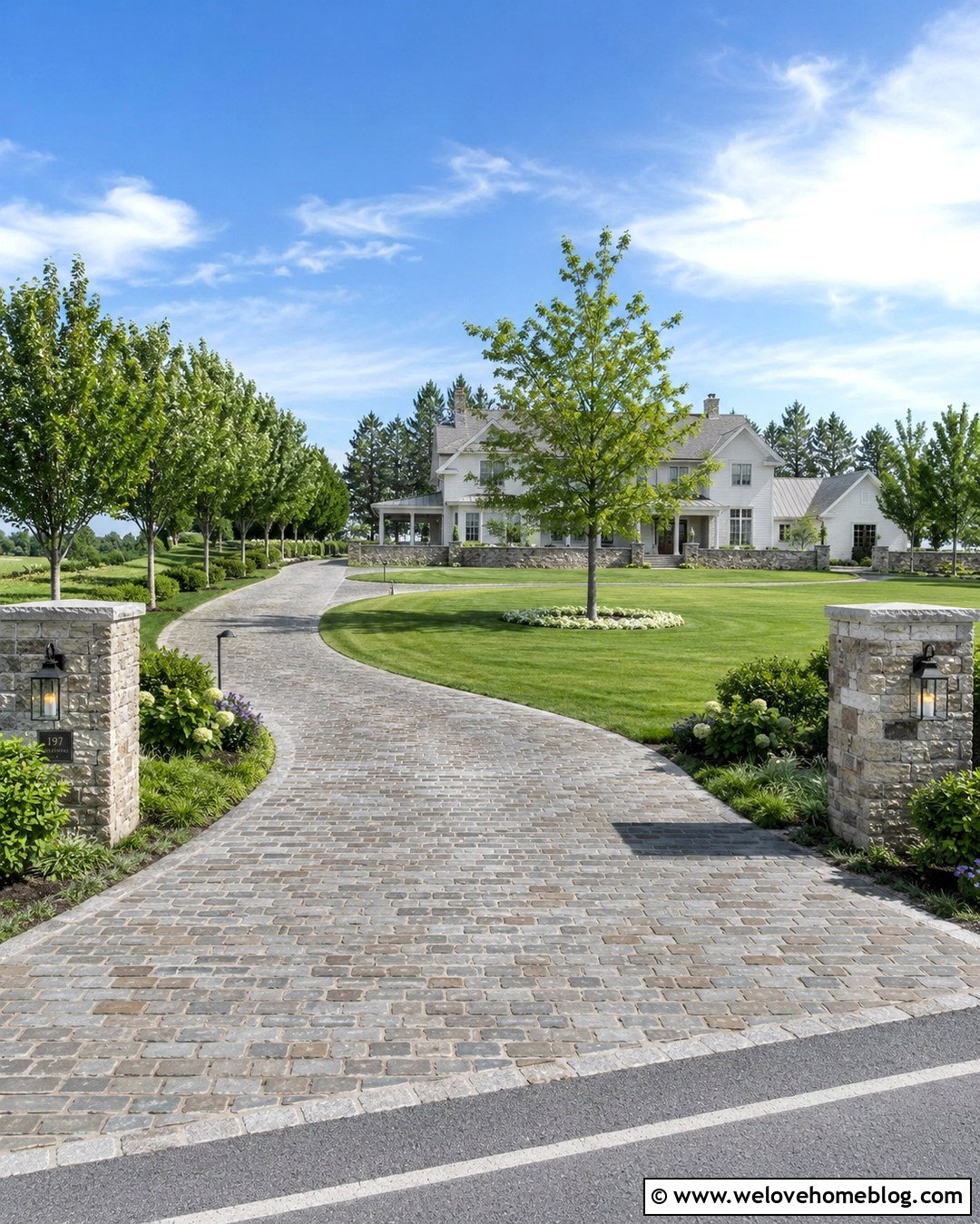
For a broad country property, a horseshoe cobblestone driveway creates an easy-looking arrival with garden views from every angle. Choose reclaimed gray and brown cobblestones laid in a flowing running bond that follows the curve. Mark both street entrances with low stone pillars and wide planting beds rather than heavy walls. Small ornamental trees can line the outer edges, while clipped shrubs and flowering perennials fill the lower layer. In the center, maintain an open lawn with one specimen tree or a simple oval garden bed. A cobblestone walkway can connect the central curve directly to the porch. This complete arrangement suits a country house, large farmhouse, or traditional estate, where the generous shape, mature landscaping, and naturally varied stones create a comfortable sense of permanence.
11. Small Cobblestone Driveway With Front Garden
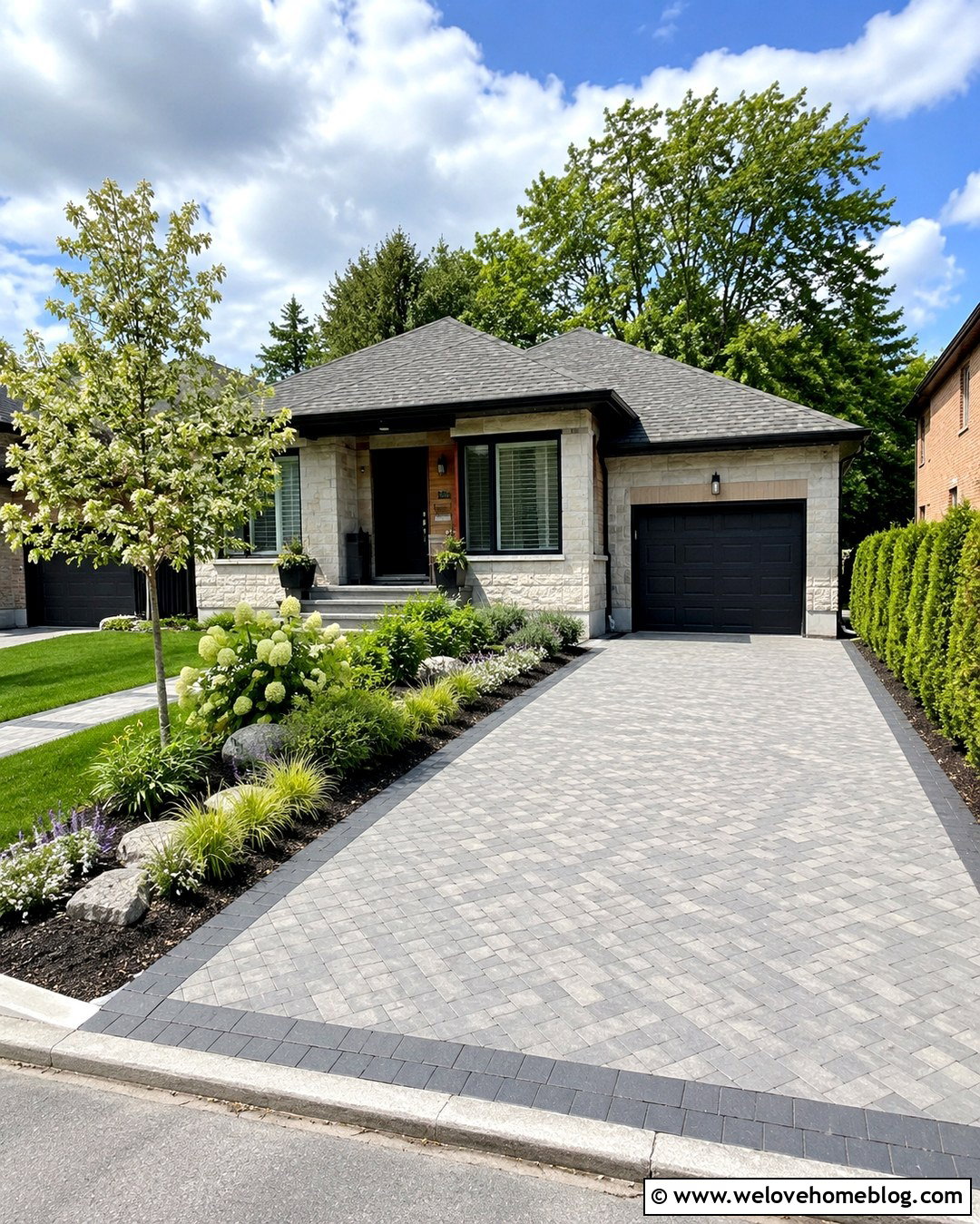
Limited frontage calls for a simple layout with carefully chosen planting. Cover a compact rectangular driveway with light-gray cobblestones laid diagonally, which gives the surface subtle visual movement. Use a single row of charcoal cobblestones as an edge and repeat that color around the adjoining walkway. Instead of filling both sides with large shrubs, create one deeper garden bed and one narrow lawn strip. The bed can include a small flowering tree, compact hydrangeas, low grasses, and seasonal perennials. Keep plants shorter near the sidewalk and driveway entrance to preserve an open curb view. A clean transition at the garage will make the limited space feel finished. This design gives a bungalow, ranch, or small suburban home a rich garden character without reducing useful parking space.
12. Cobblestone Driveway With Grass Center Strips
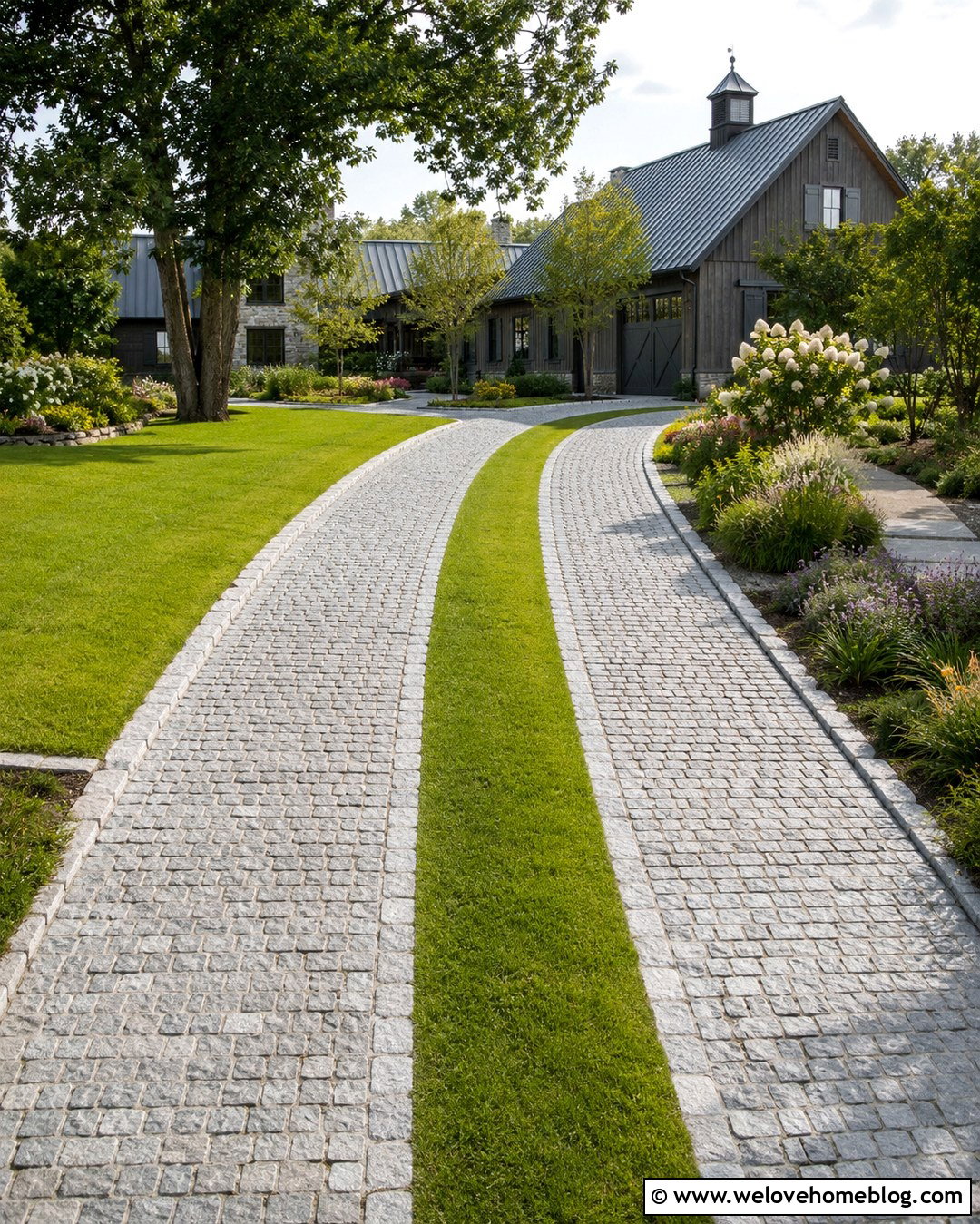
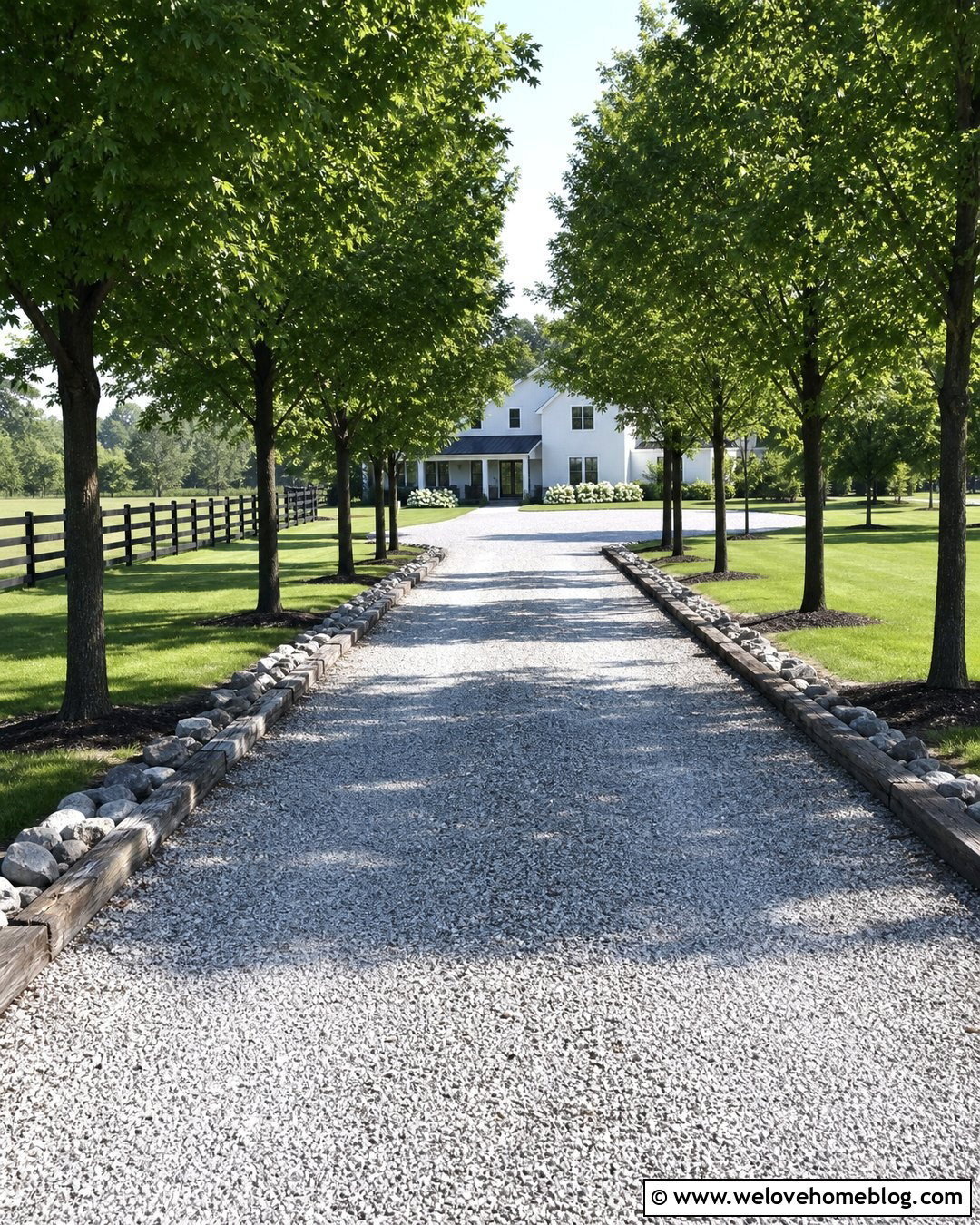
Grass strips can reduce the visual weight of a wide stone surface and help the driveway connect with the lawn. Create two cobblestone driving tracks using rectangular gray granite setts, leaving a broad planted strip through the center. The layout works best on a straight or gently curved approach where vehicle paths remain predictable. Define each grass edge with a flush cobblestone row for a clean transition and easier trimming. Along the outer sides, use informal beds with flowering shrubs, ornamental grasses, and low perennials. The center can contain durable turf or another low-growing ground cover suited to local conditions and regular maintenance. This garden-centered driveway looks at home beside a farmhouse, converted barn, or country cottage because it provides necessary access without creating one uninterrupted area of paving.
13. Reclaimed Cobblestone Driveway With English Garden
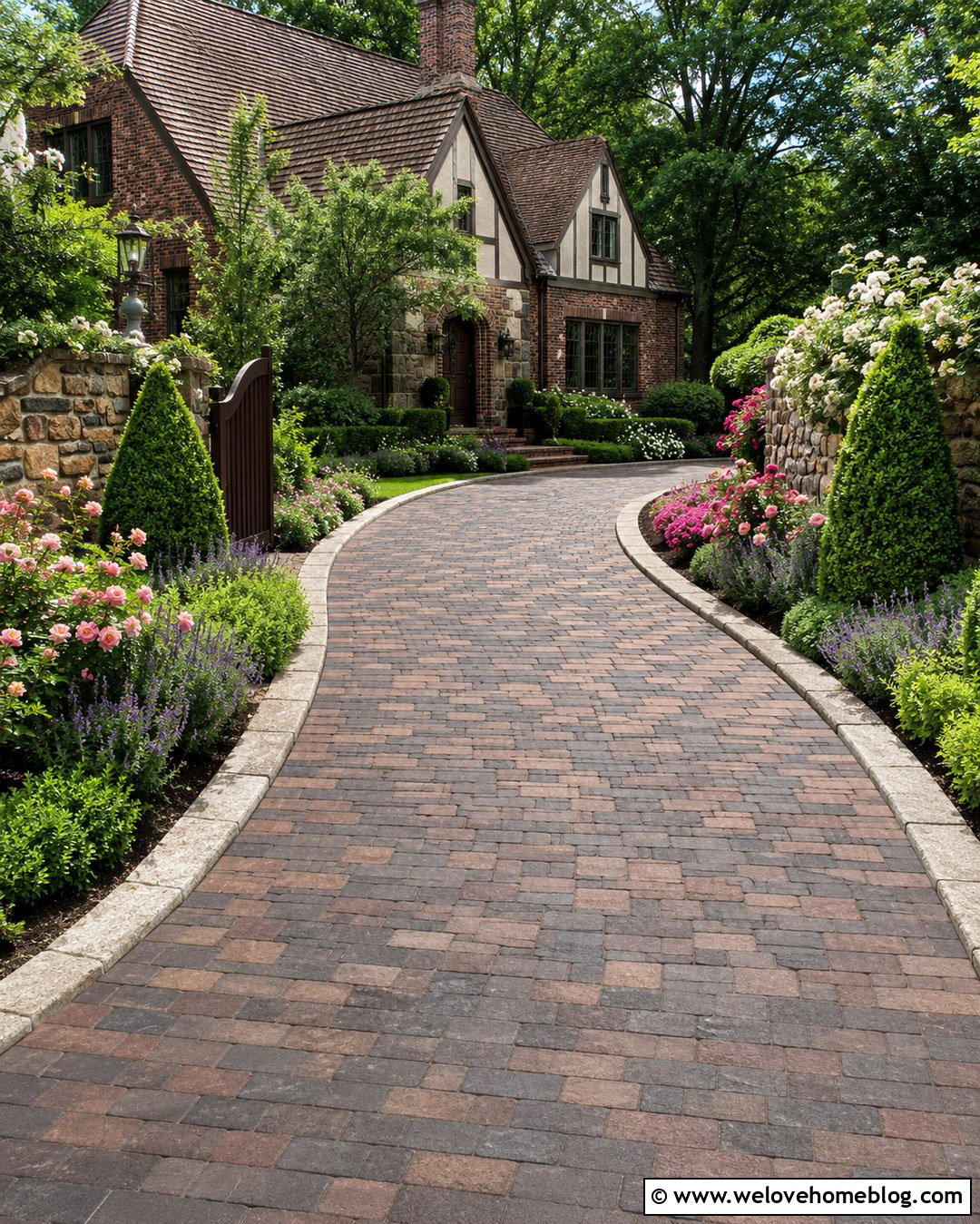
Reclaimed cobblestones bring varied color, softened edges, and an established appearance to an English-style front garden. Arrange mixed charcoal, brown, and muted red stones in a traditional running pattern along a gently curved driveway. Frame the surface with larger stone setts that can also border the surrounding beds. Layer roses, foxglove-like perennials, catmint, geraniums, and clipped evergreen shrubs on both sides. Planting should look abundant, but it should remain set back from vehicle doors and turning zones. A matching cobblestone path leading through a small garden gate can strengthen the old-world character. Against a Tudor-inspired house, brick cottage, or traditional home with steep gables, the weathered driveway and romantic planting feel naturally connected. The result should look mature and welcoming rather than overly polished.
14. Light Cobblestone Driveway With Coastal Garden
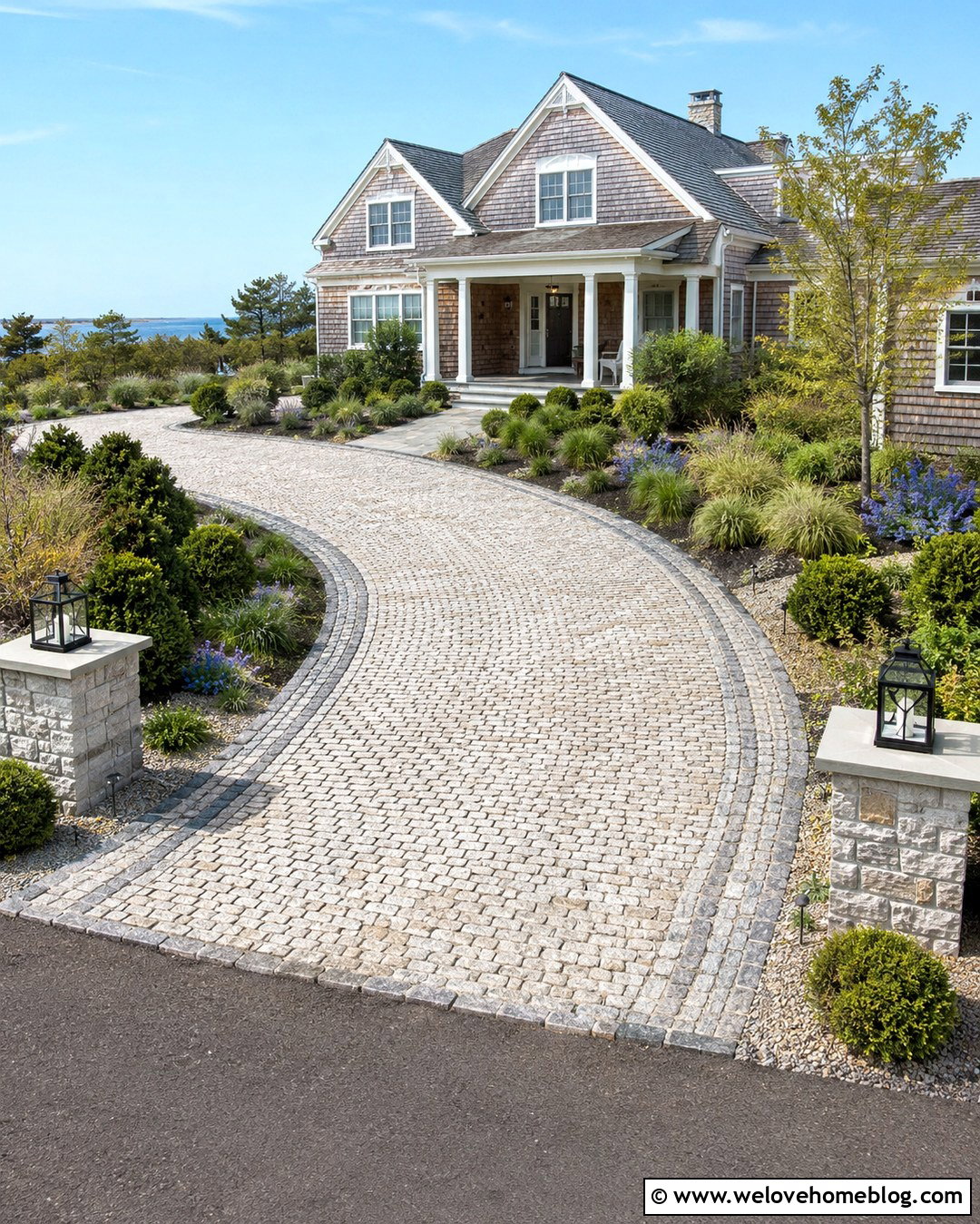
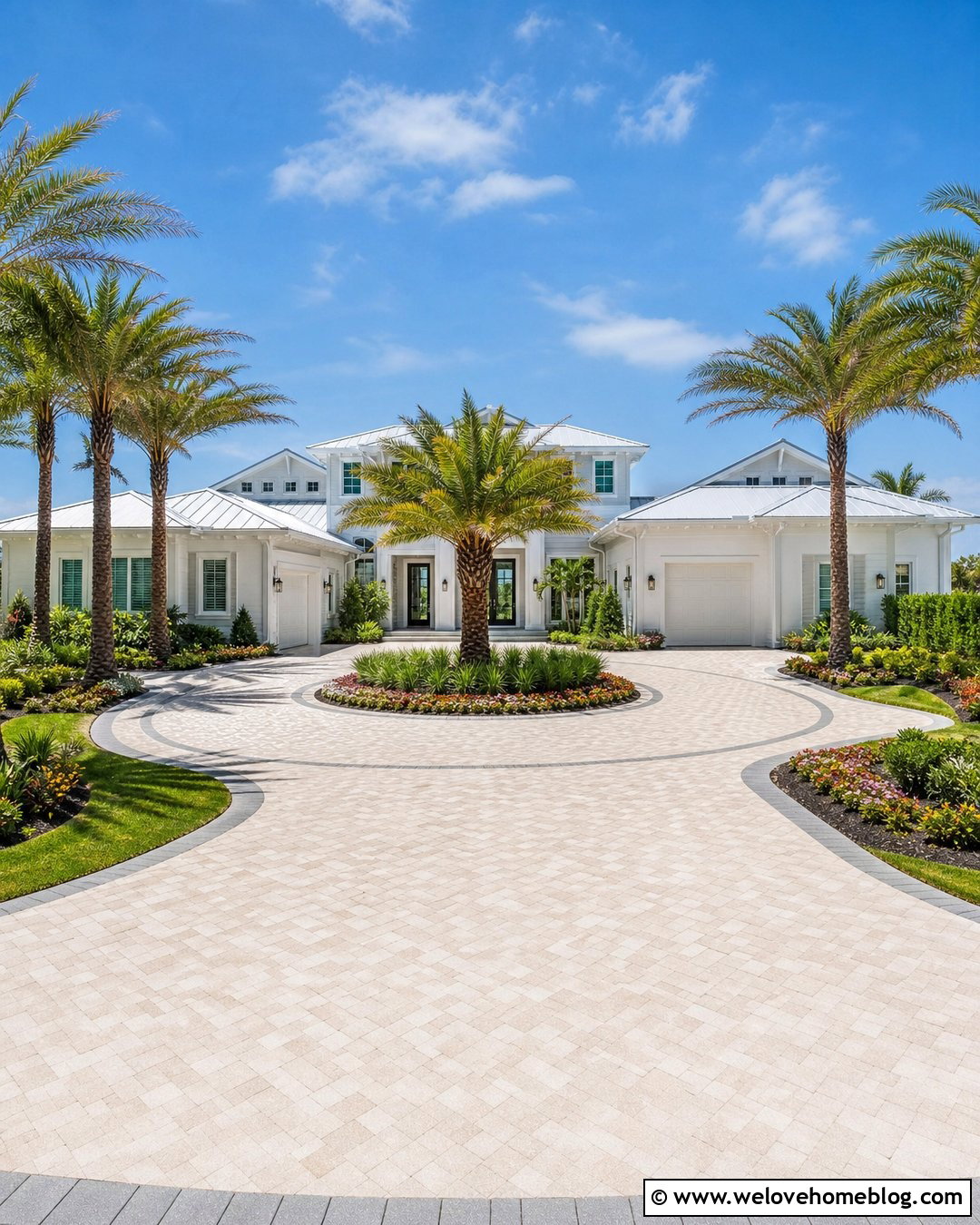
Pale cobblestone helps a coastal garden appear bright, open, and relaxed. Choose light-gray granite or beige natural-stone cobbles with subtle color variation. Install them in gentle arcs across a curved driveway, then add a crisp border of slightly darker gray stone. Use salt-tolerant-looking ornamental grasses, low evergreen shrubs, blue flowering perennials, and rounded planting beds to frame the approach. Areas of light gravel mulch can reduce visual clutter and echo the driveway tones. Add a simple paved walkway toward a shingled porch, keeping the hardscape palette limited to two or three coordinating materials. This complete cobblestone driveway works well with a coastal cottage, Nantucket-style house, or light-sided Cape Cod. The airy planting and pale surface keep the front garden casual while maintaining a finished entrance.

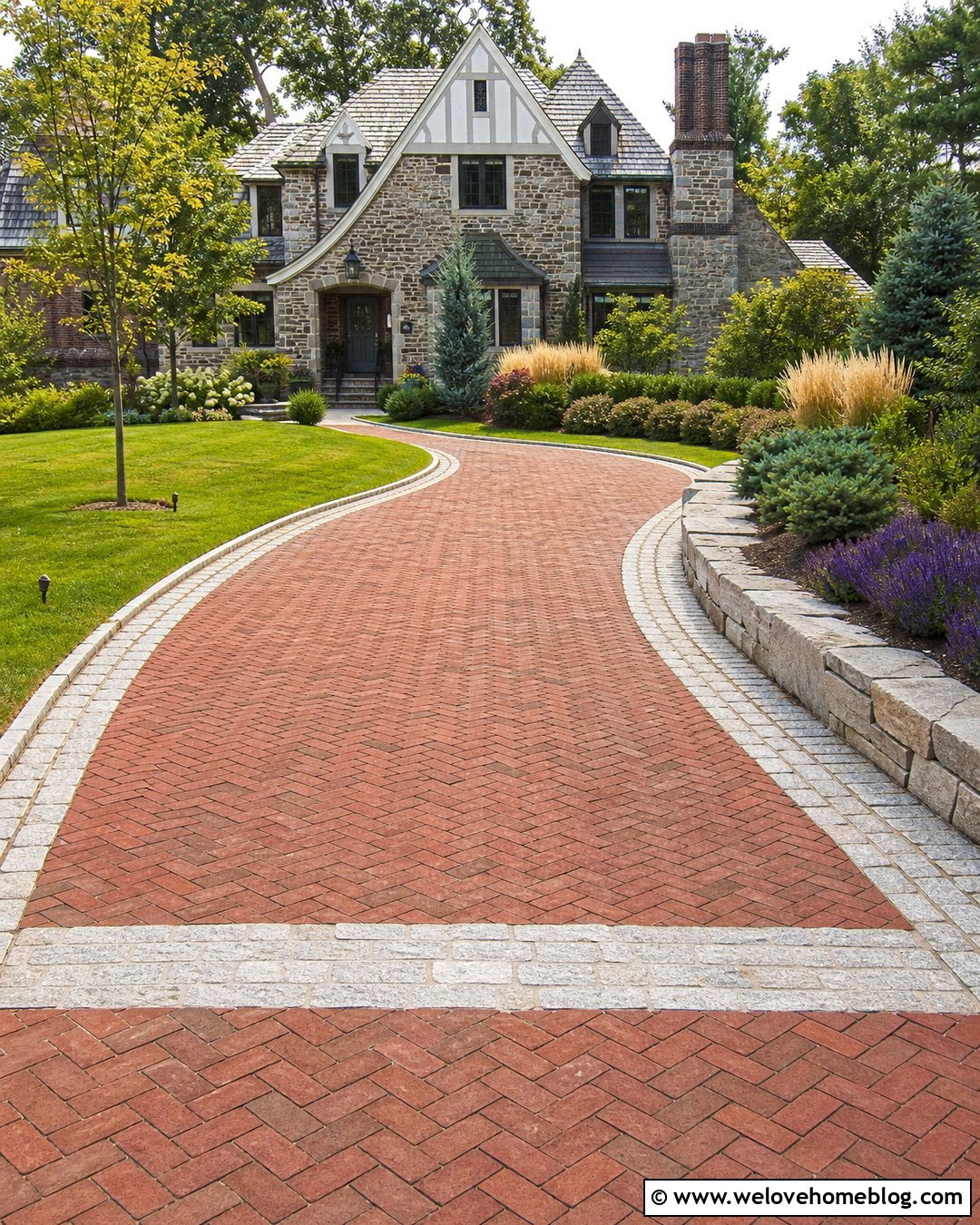
15. Brown Cobblestone Driveway With Native Garden
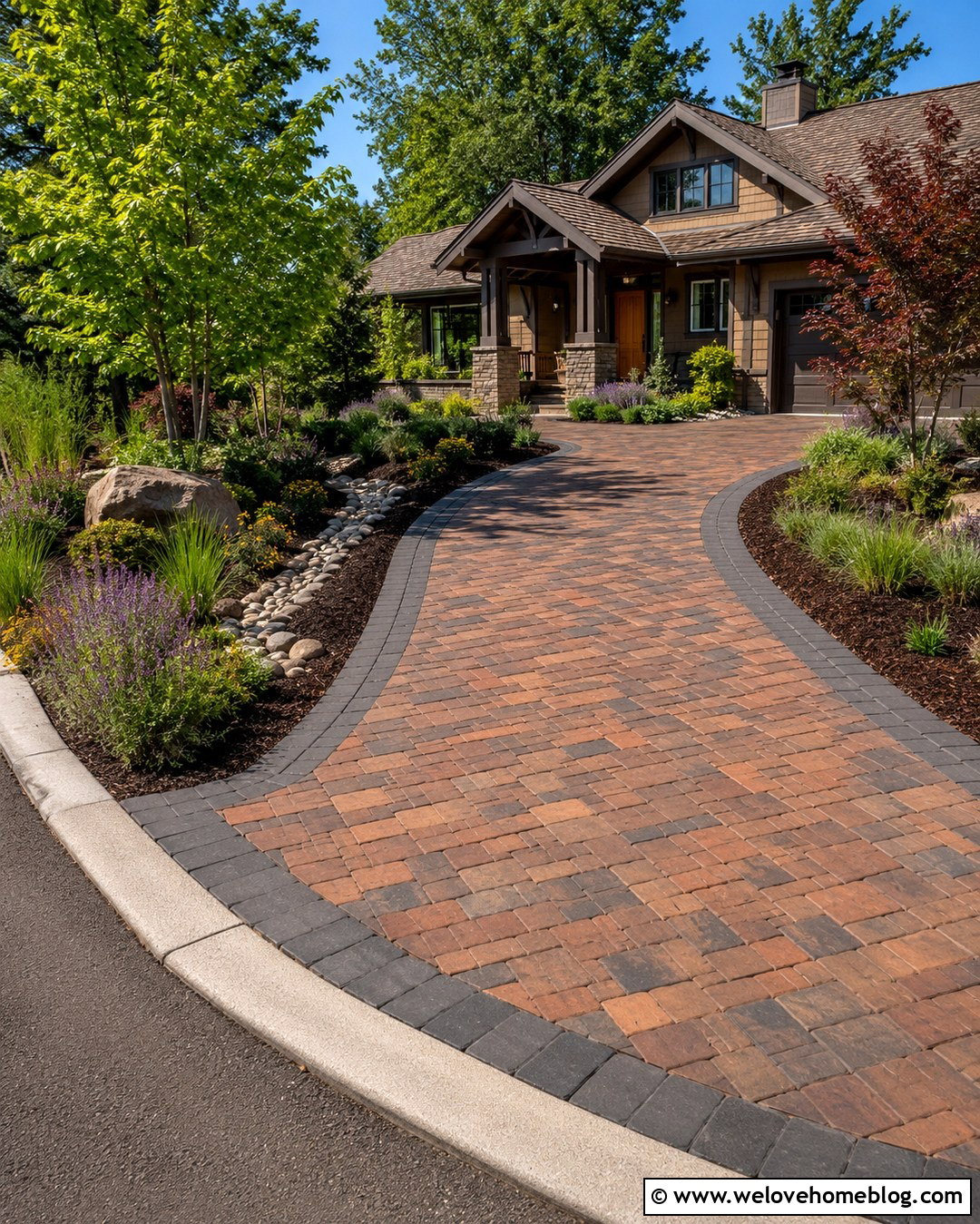
Earthy red and brown cobblestones can connect a driveway with brickwork, timber details, and colorful native planting. Use rectangular stones in a herringbone-inspired layout for the main surface, framed by a straight charcoal cobblestone border. Shape the driveway with a soft curve that reveals the house gradually. On both sides, group regionally appropriate grasses, flowering perennials, low shrubs, and one or two small canopy trees. Keep the garden organized in broad repeating masses so it looks intentional throughout the year. A mulched drainage swale can be incorporated into one outer bed where the property requires runoff management. This warm, textured driveway fits a craftsman bungalow or brick ranch particularly well. The natural planting provides movement while the darker border gives the colorful stone surface a clean outline.
16. Black Cobblestone Driveway With Rock Garden
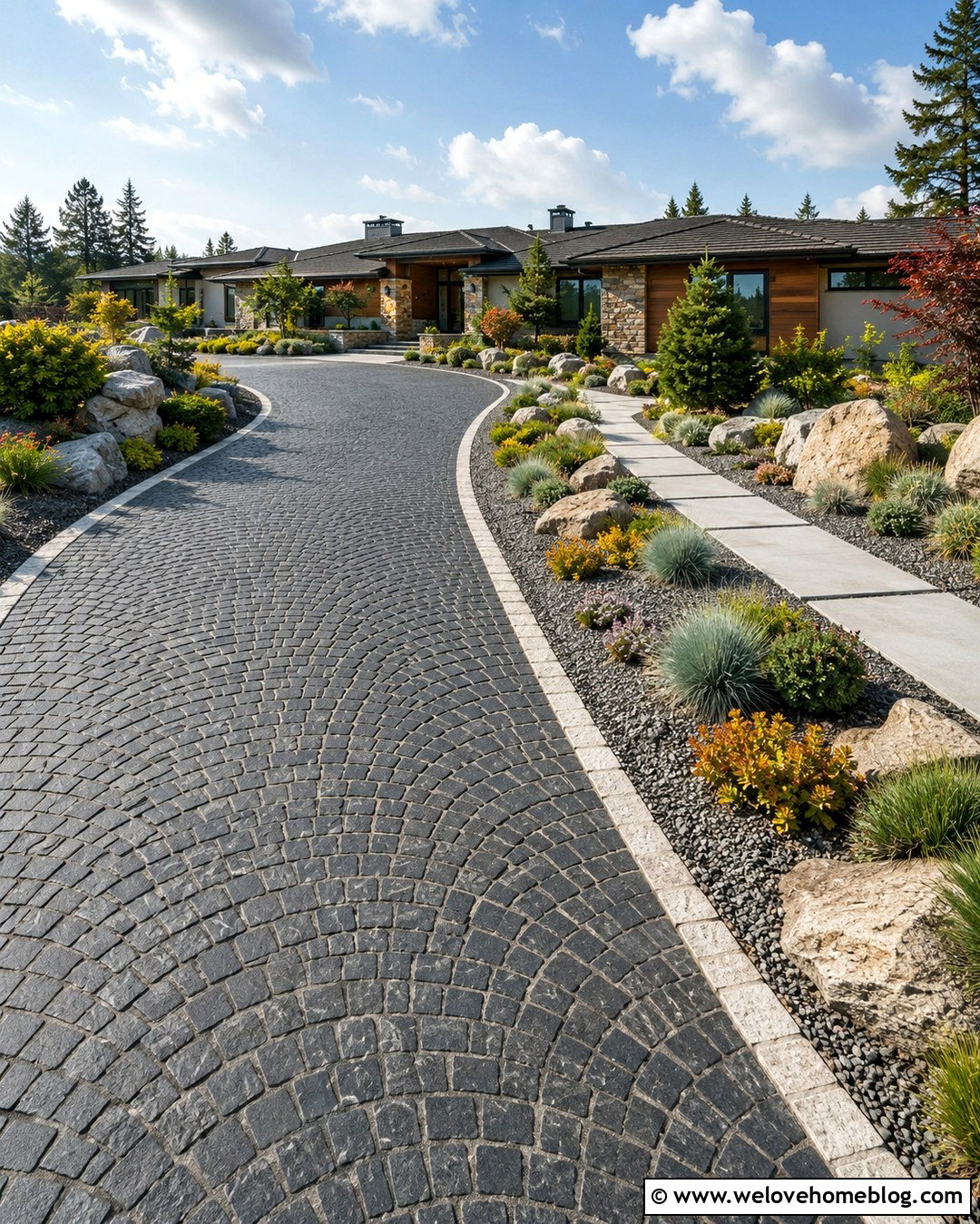
A black granite cobblestone driveway can form a dramatic base for a low-maintenance rock garden. Lay the dark stones in a curved fan pattern and use lighter granite blocks around the perimeter to keep the edges visible. Build broad gravel-mulched beds with boulders, dwarf evergreens, yucca-like architectural plants, blue fescue, sedum, and spreading ground cover. Vary the stone sizes in the garden while keeping their colors related to the driveway. A walkway made from large rectangular granite slabs can cut through the planting toward the entrance. This design is especially striking beside a modern ranch, desert contemporary home, or dark-stained woodland house. The paving and rock garden should feel like one composition, with strong texture, defined open spaces, and restrained planting instead of scattered decorative objects.
17. Cobblestone Driveway With Brick Garden Borders
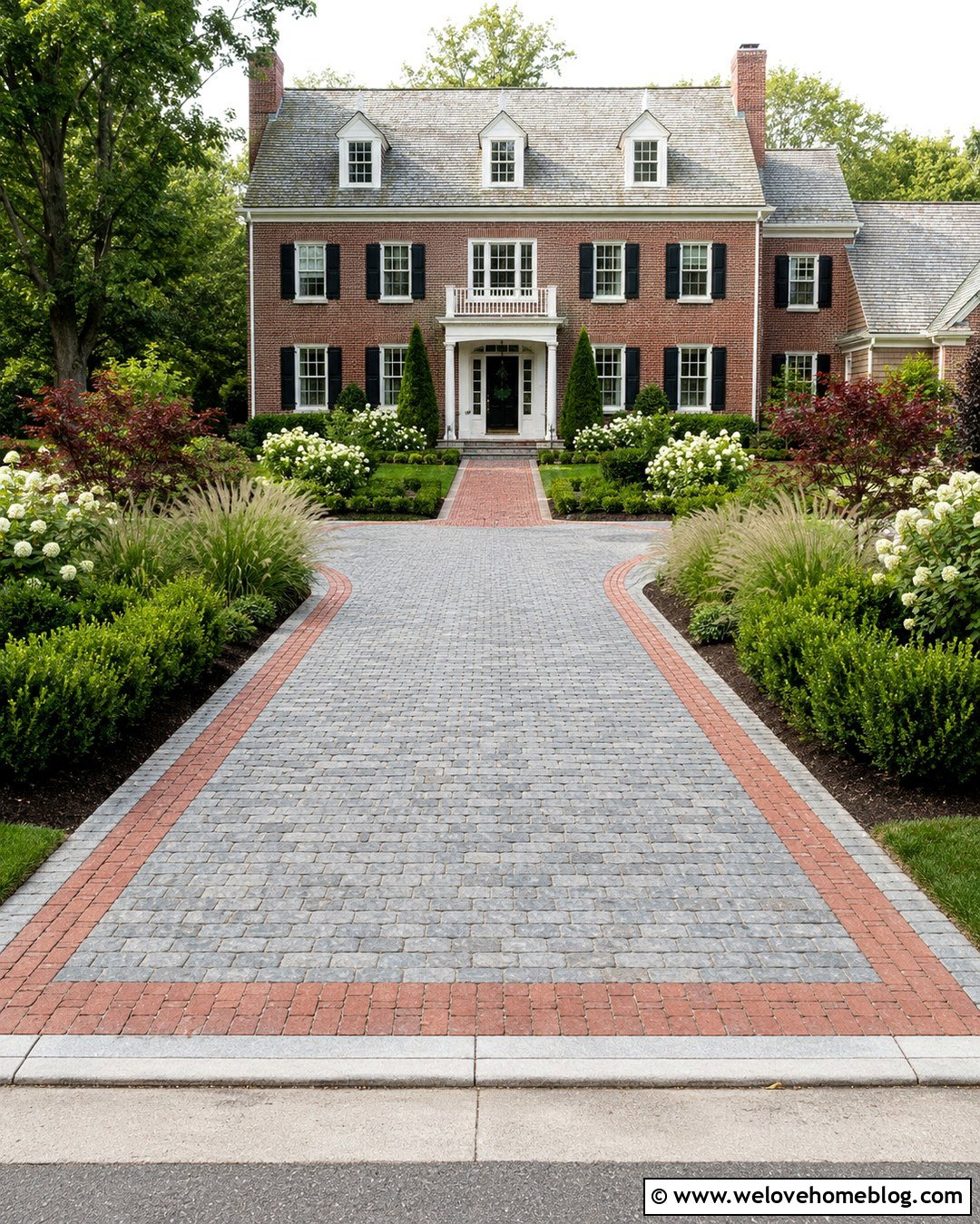
Combining cobblestone with brick introduces warmth while preserving the driveway’s natural texture. Cover the main surface with medium-gray cobblestones laid in a running bond, then add a double brick ribbon around the edges and across the entrance apron. Match the brick color to the house facade or chimney for a connected appearance. Beyond the border, create curved garden beds filled with boxwood, white flowering shrubs, ornamental grasses, and burgundy foliage. A brick walkway can branch from the driveway, while a small cobblestone landing near the porch repeats the main material. This mixed design works particularly well with a red-brick colonial, Georgian home, or traditional suburban property. Limiting the palette to gray stone, warm brick, and green planting keeps the detailed surface from looking too busy.
18. Cobblestone Driveway With Garden Gate
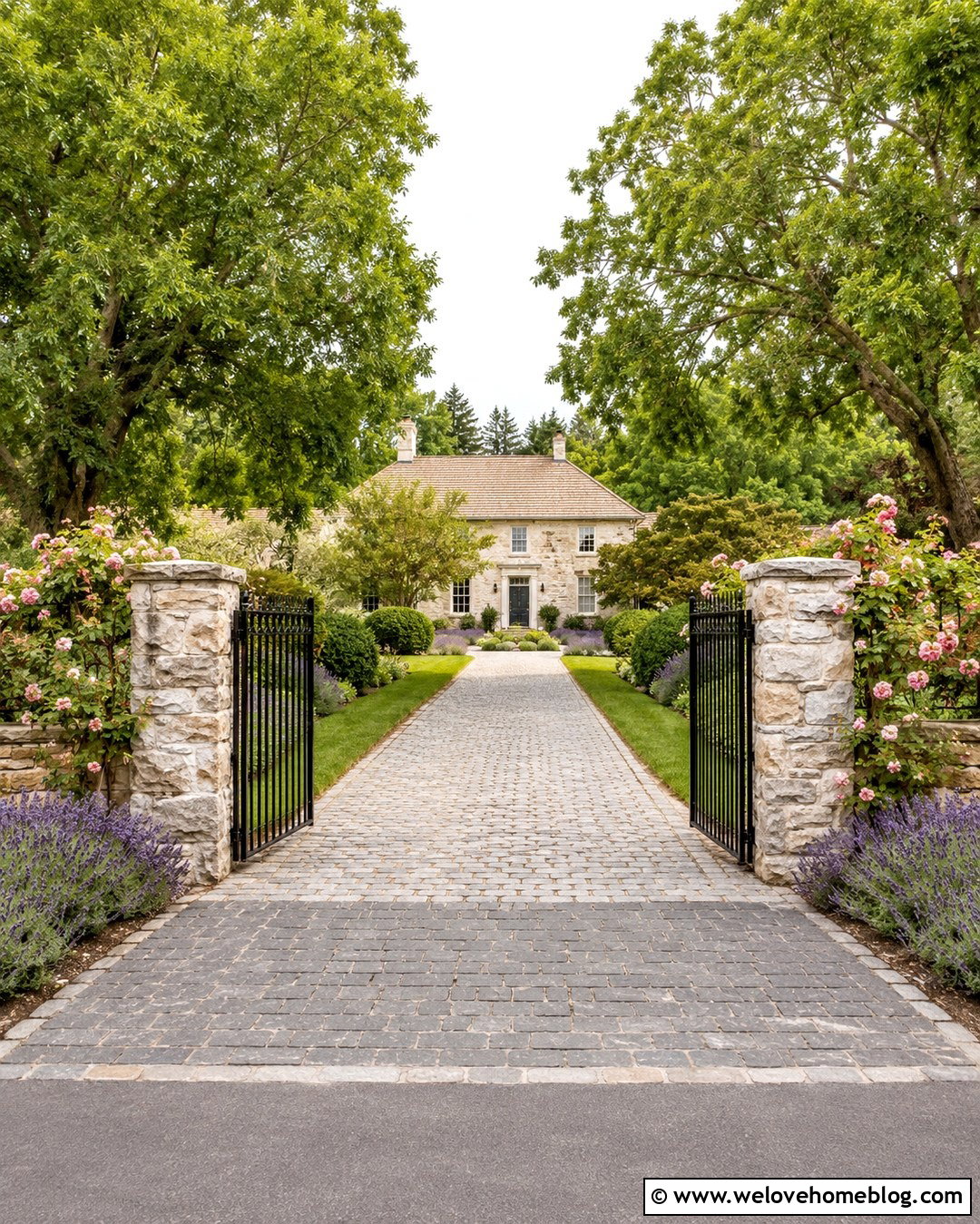
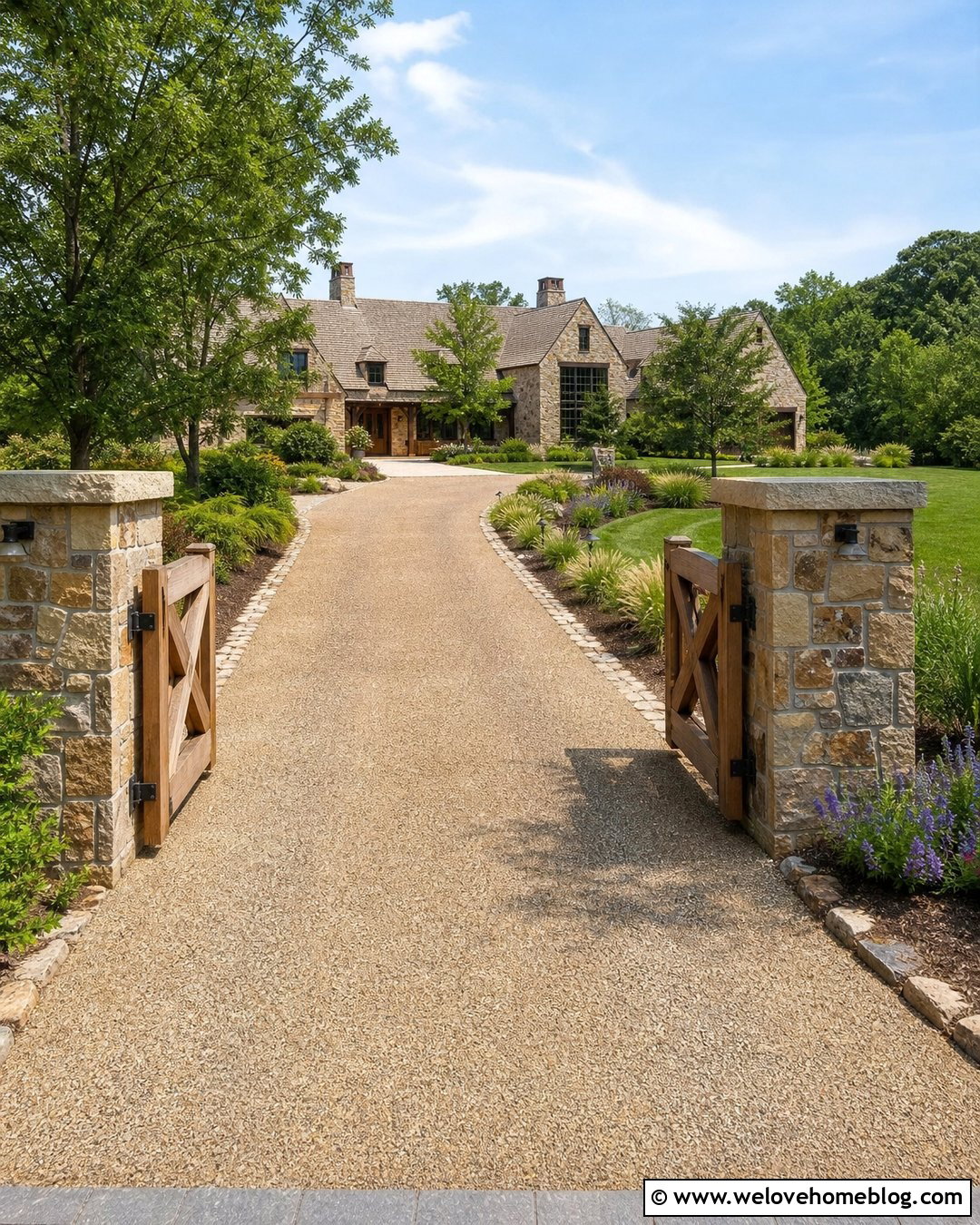
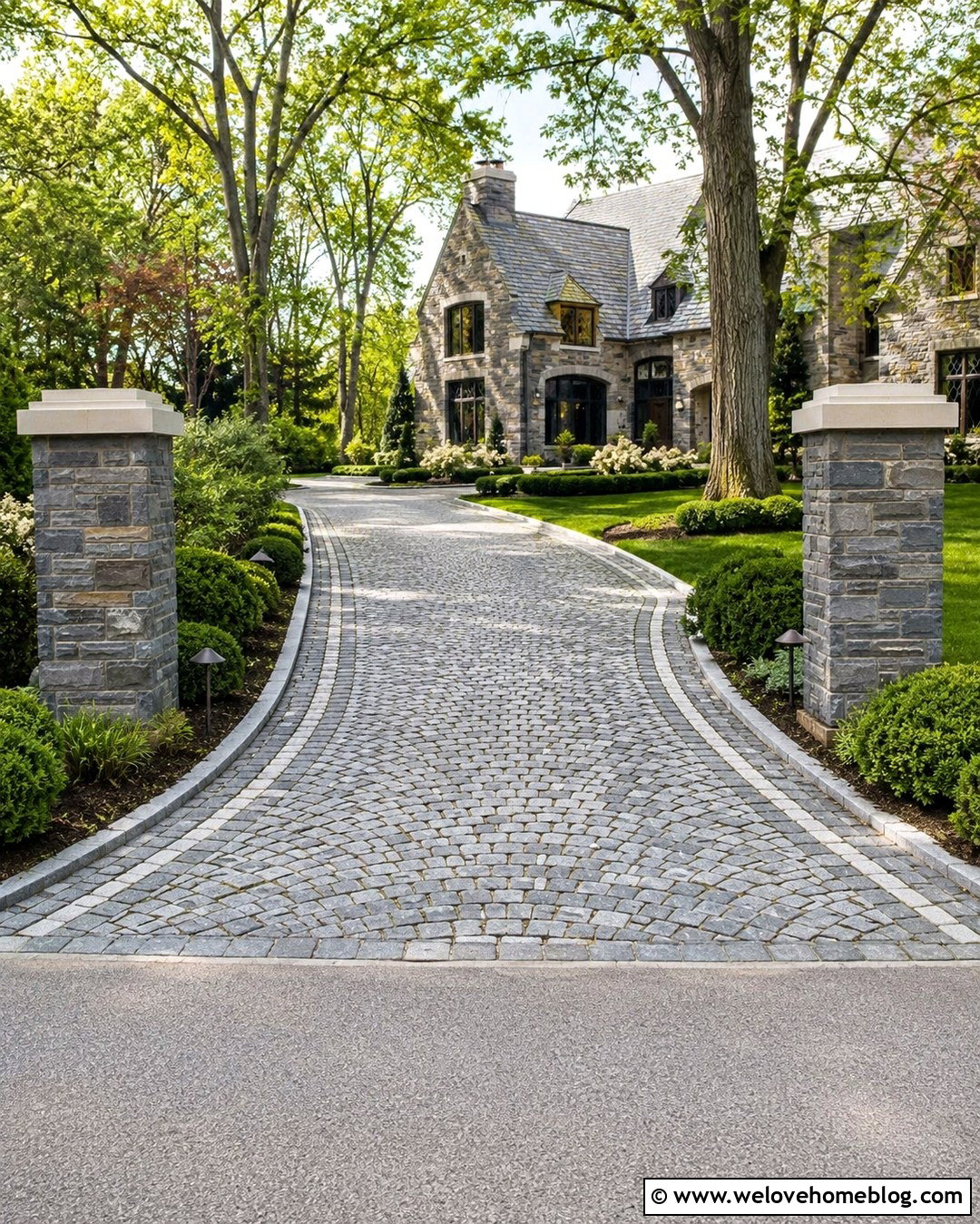
A garden gate can turn the beginning of a cobblestone driveway into a clear and welcoming entrance. Use weathered gray cobblestones on a straight approach that gently widens near the street. Low stone pillars can support a simple open metal or wood gate without making the property feel enclosed. Continue the pillars into short garden walls, then soften them with climbing roses, lavender, clipped shrubs, and layered perennials. A darker cobblestone apron across the entrance emphasizes the threshold and helps the gateway stand out. Place taller trees farther inside the property to frame the view of the house. This complete design suits a farmhouse, country cottage, or traditional residence. The gate, stonework, and planting should share similar proportions so no single feature overwhelms the driveway or garden.
19. Cobblestone Driveway With Garden Lighting
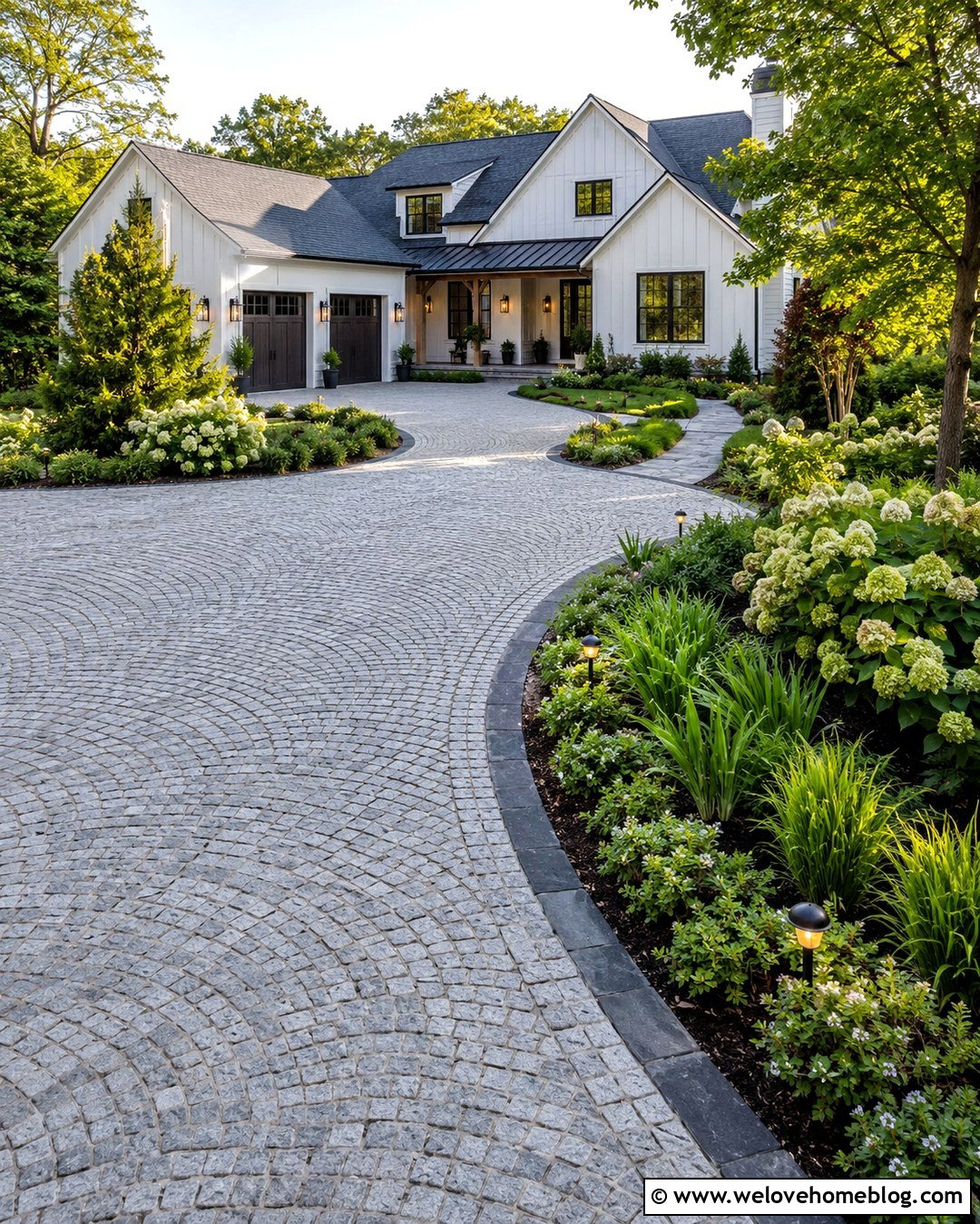
Good landscape lighting should support the entire driveway design without dominating it during the day. Start with silver-gray cobblestones in a sweeping curved layout edged by dark granite setts. Place low, simple path lights at comfortable intervals within the surrounding garden beds rather than directly on the driving surface. Uplights can highlight selected trees or stone pillars, while recessed fixtures may mark important walkway transitions. During daylight, layered hydrangeas, grasses, evergreen shrubs, and flowering ground cover should remain the main garden features. Use matching cobblestone for the front path to create a continuous route from the curb to the porch. This polished approach complements a transitional, craftsman, or modern farmhouse exterior, giving the driveway a clear structure and attractive curb presence in every season.
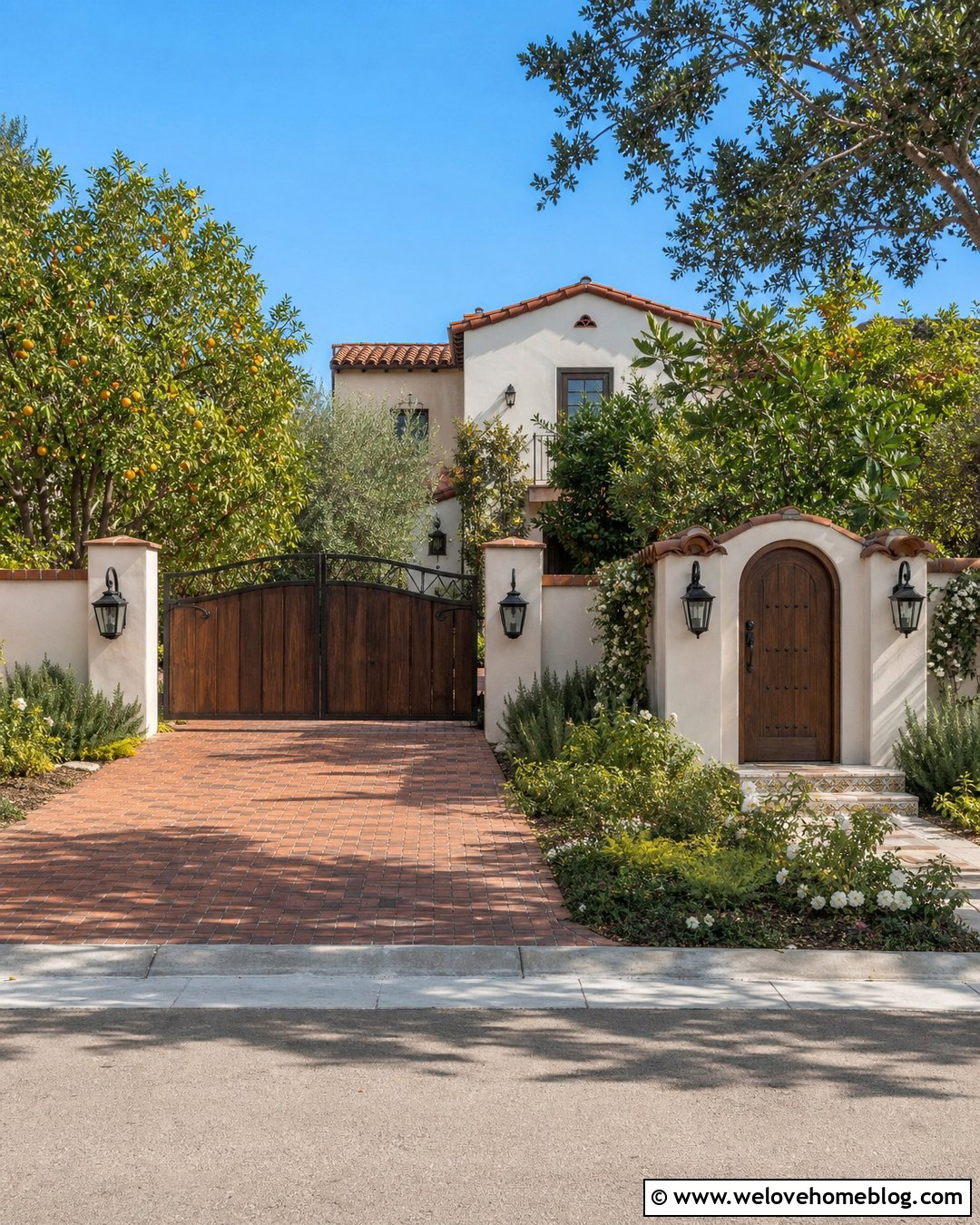
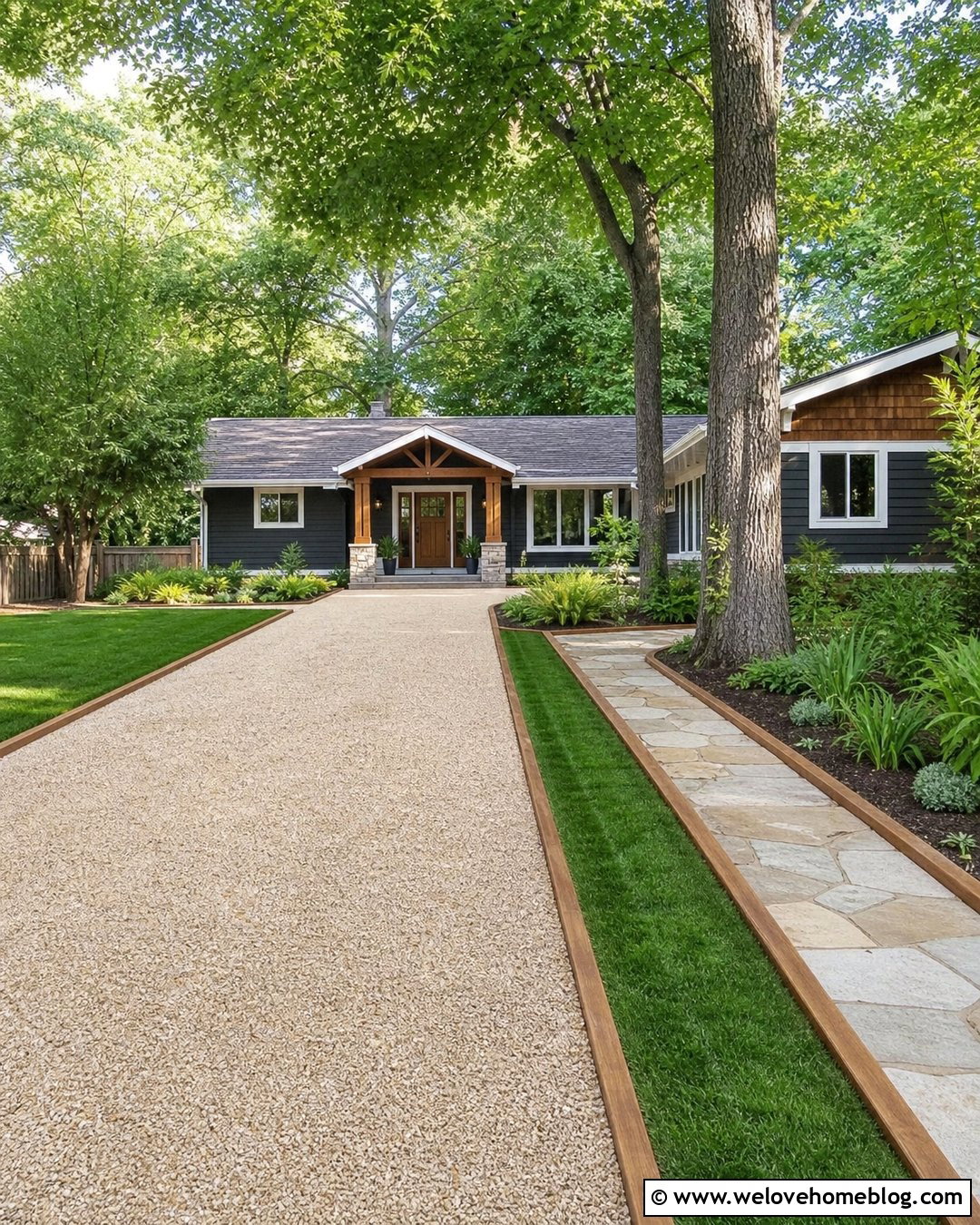
20. Permeable Cobblestone Driveway With Rain Garden
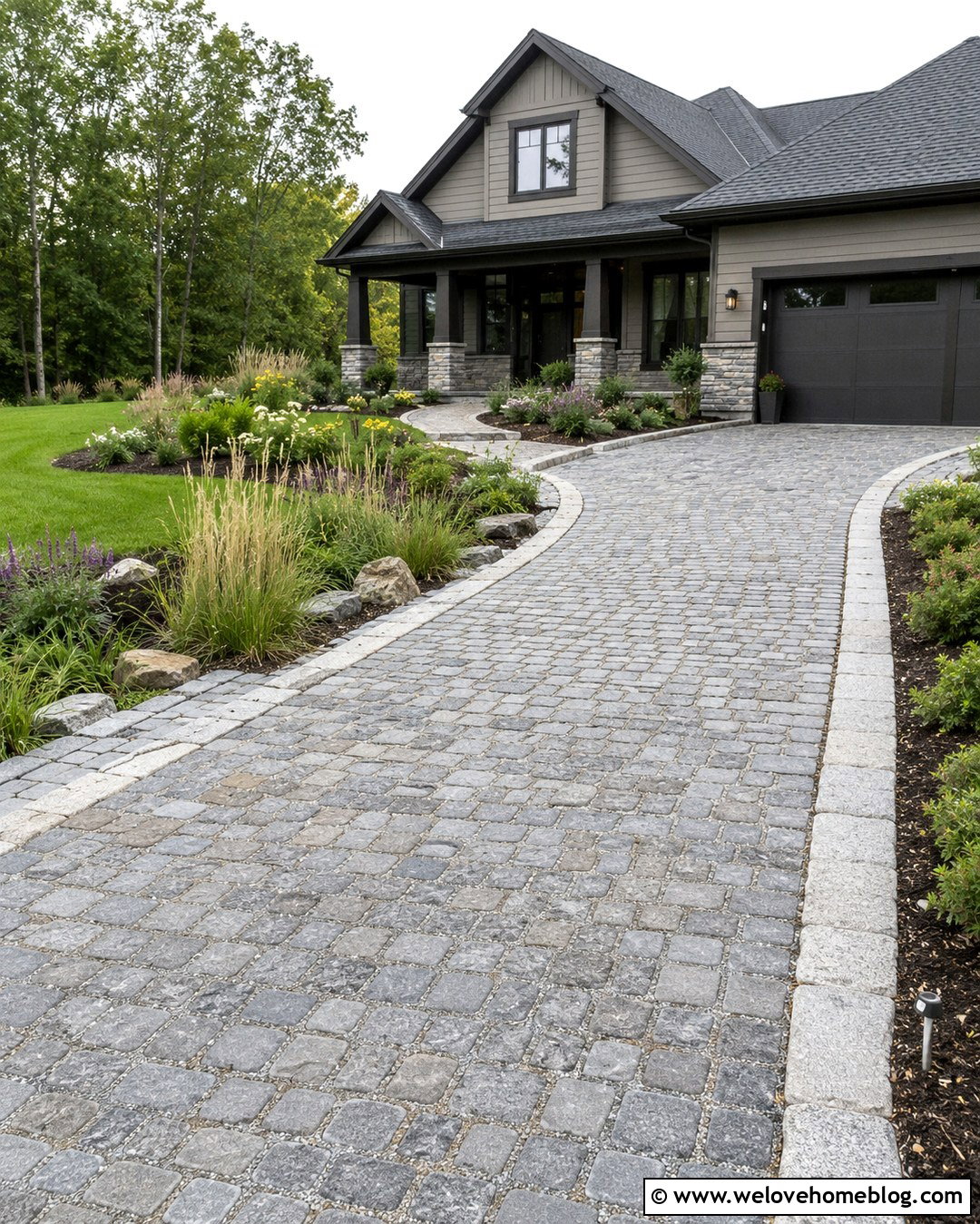
Where runoff is an important concern, the driveway and garden can be planned as a coordinated water-conscious landscape. Use tumbled gray cobblestones with wider permeable joints over a correctly specified base. Shape the driveway with a subtle cross slope that visually directs water toward a planted rain garden rather than the house. Border the low garden area with larger granite setts and fill it with moisture-tolerant grasses, flowering perennials, and compact shrubs suited to local growing conditions. Keep the main vehicle route open and use a raised cobblestone walkway for a clear path to the entrance. A lawn and additional foundation beds can balance the opposite side. This practical layout pairs well with contemporary homes, craftsman houses, and eco-conscious garden designs without sacrificing traditional cobblestone character.
Conclusion:
The most successful cobblestone driveway feels inseparable from the garden around it. Stone color, pattern, edging, driveway shape, and planting should support the architecture while meeting everyday parking and access needs. Formal homes often benefit from straight lines, symmetrical borders, and clipped shrubs. Cottage and country properties can handle softer curves, weathered stone, and abundant flowers. Contemporary houses look strongest with dark cobbles, simple patterns, and restrained planting. Whichever direction you choose, plan the base, drainage, turning space, and mature plant sizes before installation. Use these 20 Cobblestone Driveway In Garden Ideas to create an entrance that is practical, welcoming, and connected to the wider landscape.

Related posts:
Leave a Reply