
Cobblestone brings texture, strength, and timeless character to the first view of a home. The most successful entrance combines the stone surface with a practical driveway shape, defined borders, balanced landscaping, and architectural details that suit the house. Natural granite cobbles are especially valued for their durability, while patterns such as herringbone, running bond, and fan layouts can give the approach a distinctive finish. () You can create a formal arrival with iron gates and masonry pillars or keep things relaxed with wildflowers and a simple wooden gate. Scale, drainage, visibility, and turning space should guide every choice. Use the complete looks below to find the right fit among these 20 Cobblestone Driveway Entrance Ideas.

1. Cobblestone Driveway Entrance With Stone Pillars
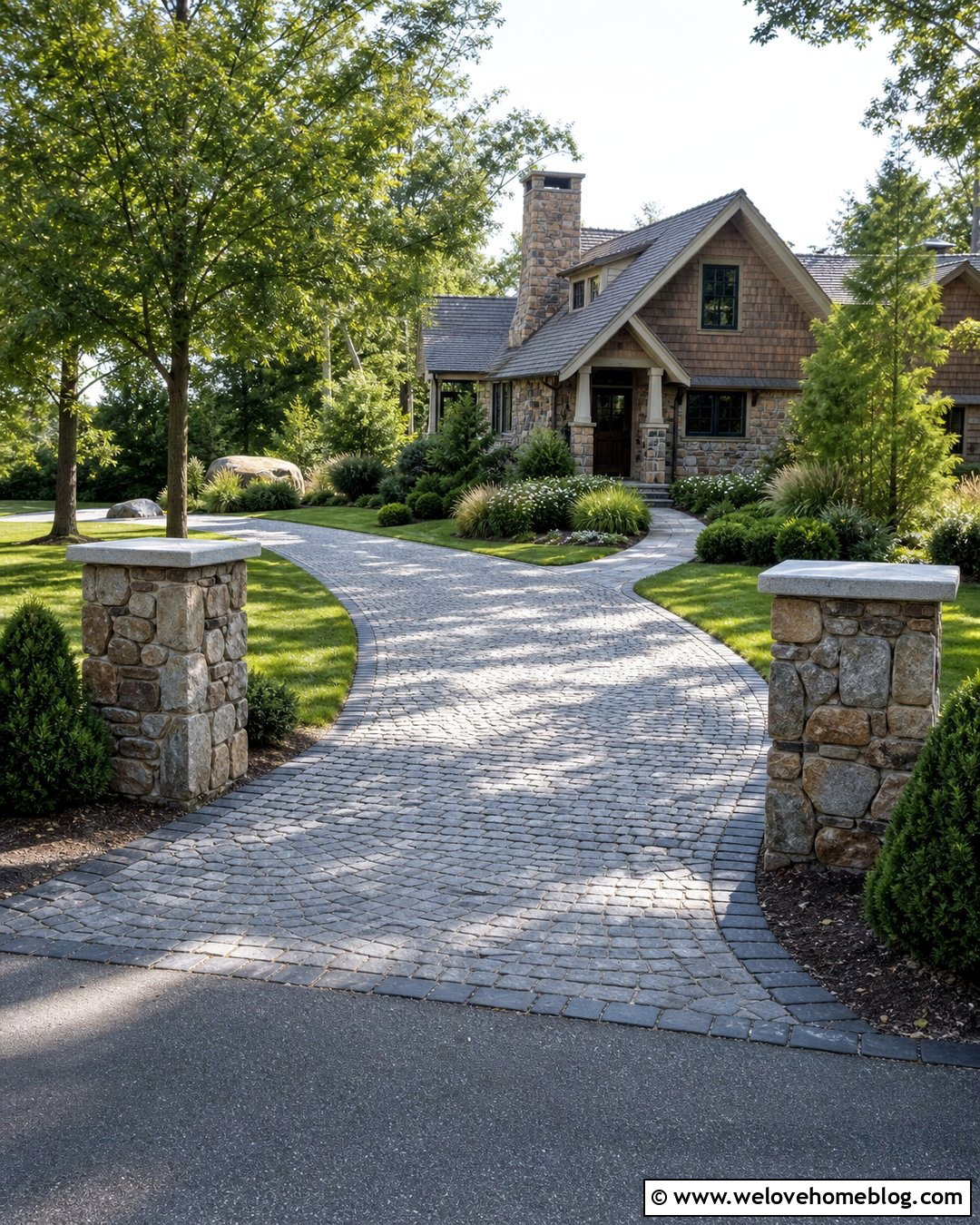
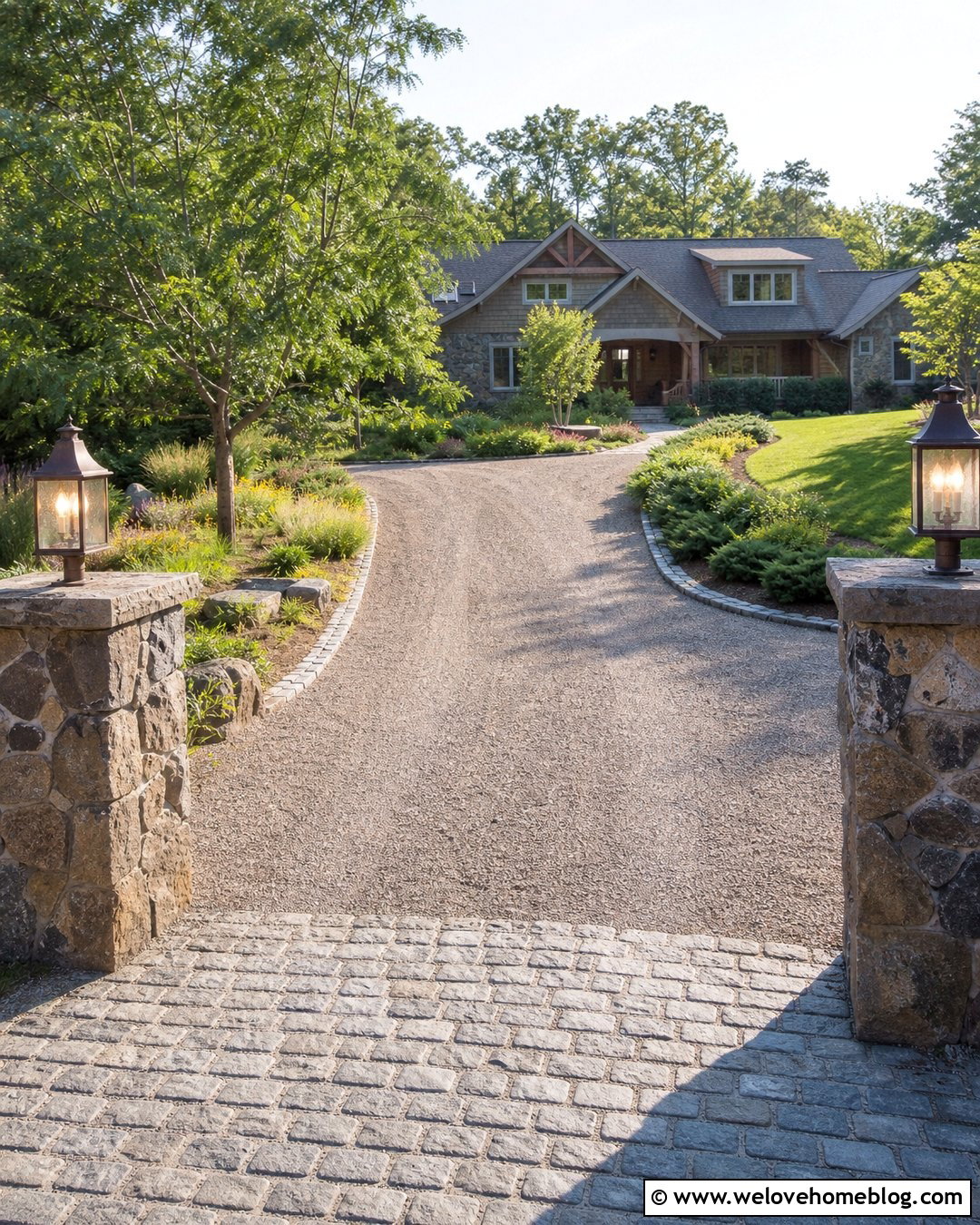
Substantial stone pillars give a cobblestone entrance a strong sense of structure without making it feel overly formal. Choose pillar stone that shares a color with the cobbles, such as cool granite, warm fieldstone, or sandy limestone. A gently curved driveway can begin between the pillars and continue toward a traditional or craftsman home. Use slightly larger cobbles as an outer border to keep the edges crisp. Low evergreen shrubs, ornamental grasses, and ground cover soften the masonry while preserving clear sightlines near the road. Finish each pillar with a simple stone cap rather than an ornate topper. The result feels established, balanced, and practical, especially when the pillars are sized generously enough to frame the entrance without restricting larger vehicles.
2. Cobblestone Driveway Entrance With Wrought Iron Gate
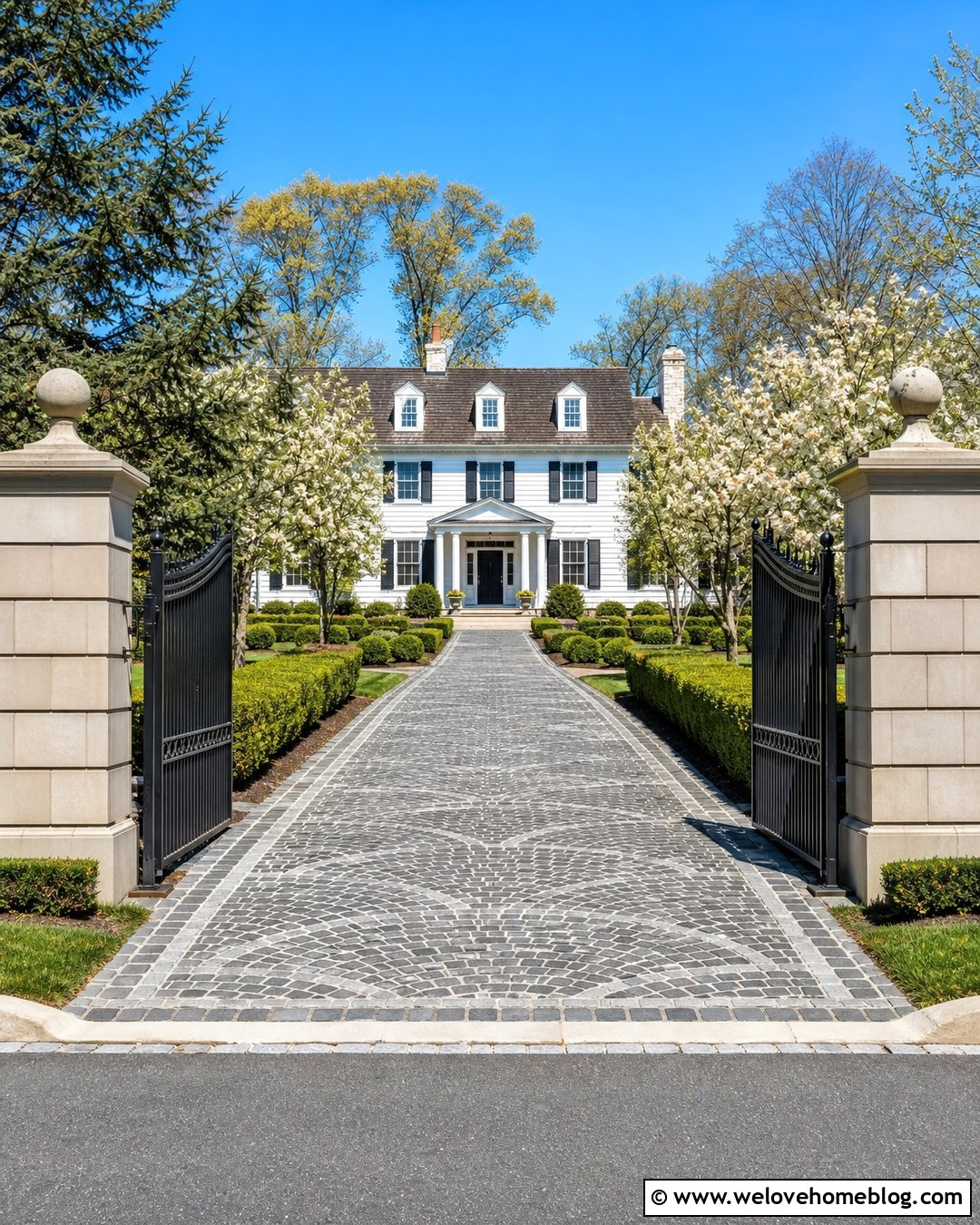
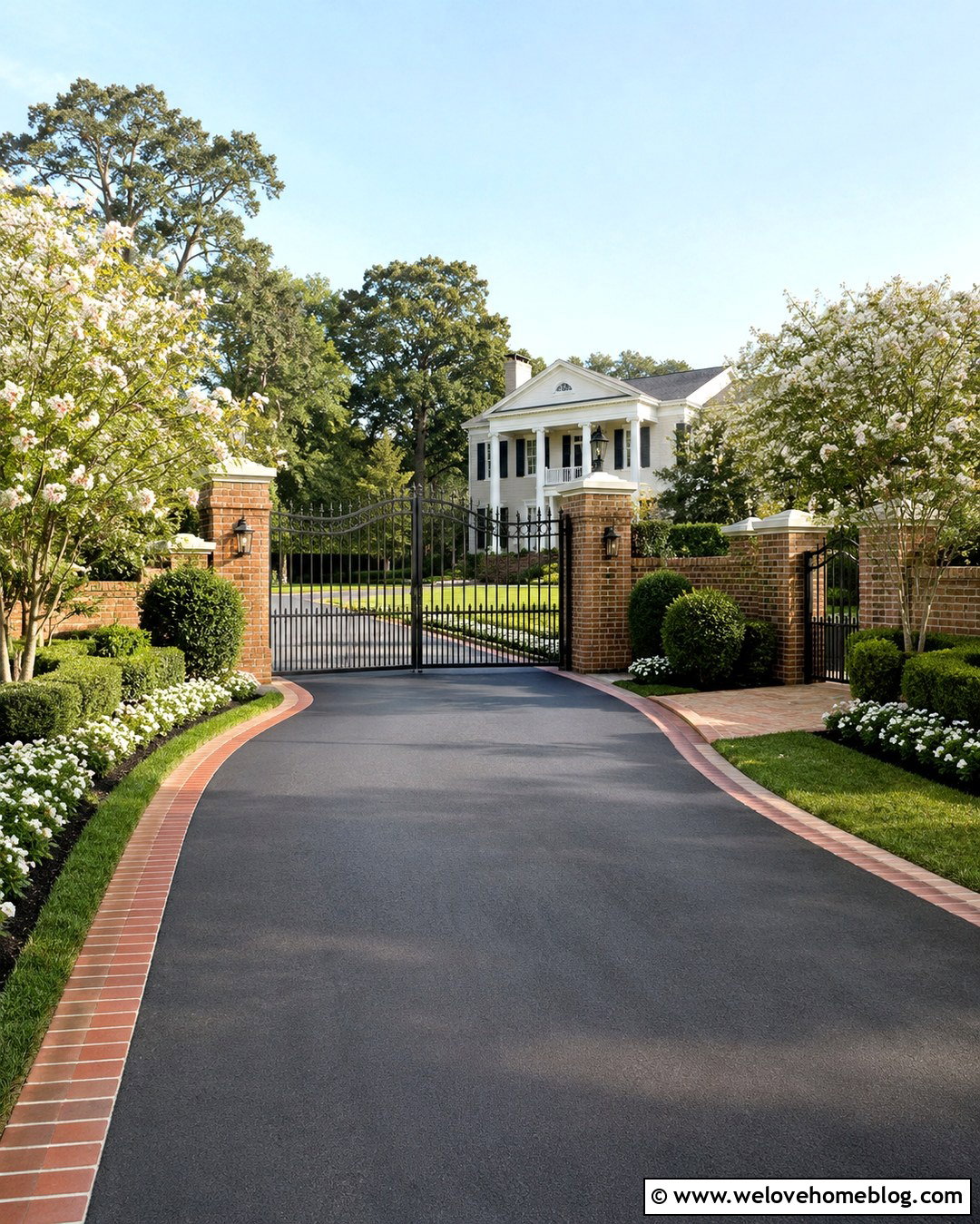
A black wrought iron gate creates a refined focal point against the varied tones of natural cobblestone. This combination works especially well with colonial, Tudor, Mediterranean, and traditional brick homes. Set the gate between matching stone pillars and use a shallow fan pattern in the cobbles directly beneath it. The pattern visually marks the threshold and helps the entrance feel intentional. Continue the driveway in a straight or softly curving layout beyond the gate. Neatly clipped hedges can frame both sides, while small flowering trees add height without hiding the architecture. Choose an open gate design that maintains visibility from the road. Automated hardware, drainage, gate clearance, and safe vehicle waiting space should all be planned before the cobblestone base is installed.
3. Cobblestone Driveway Entrance With Wooden Farm Gate
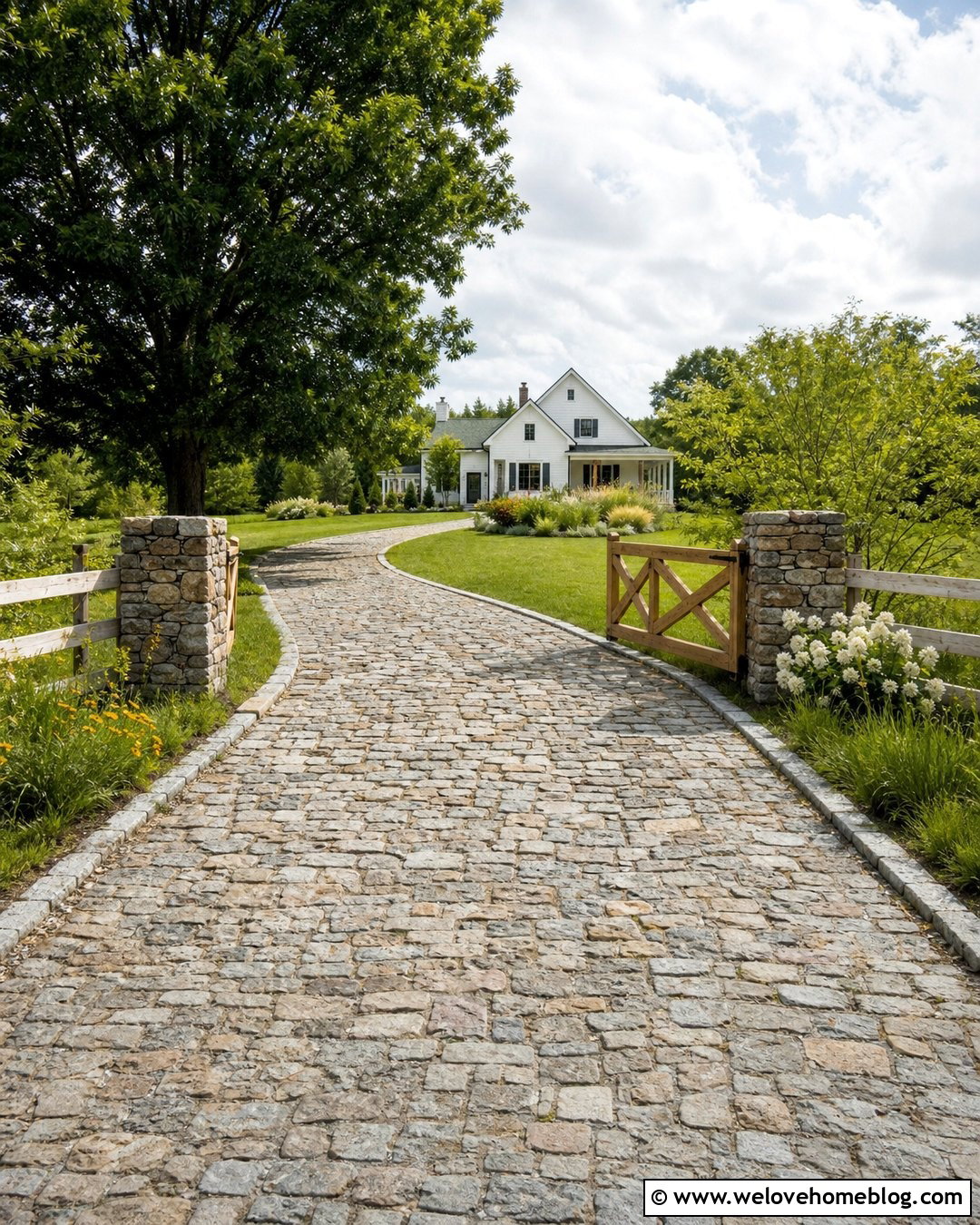
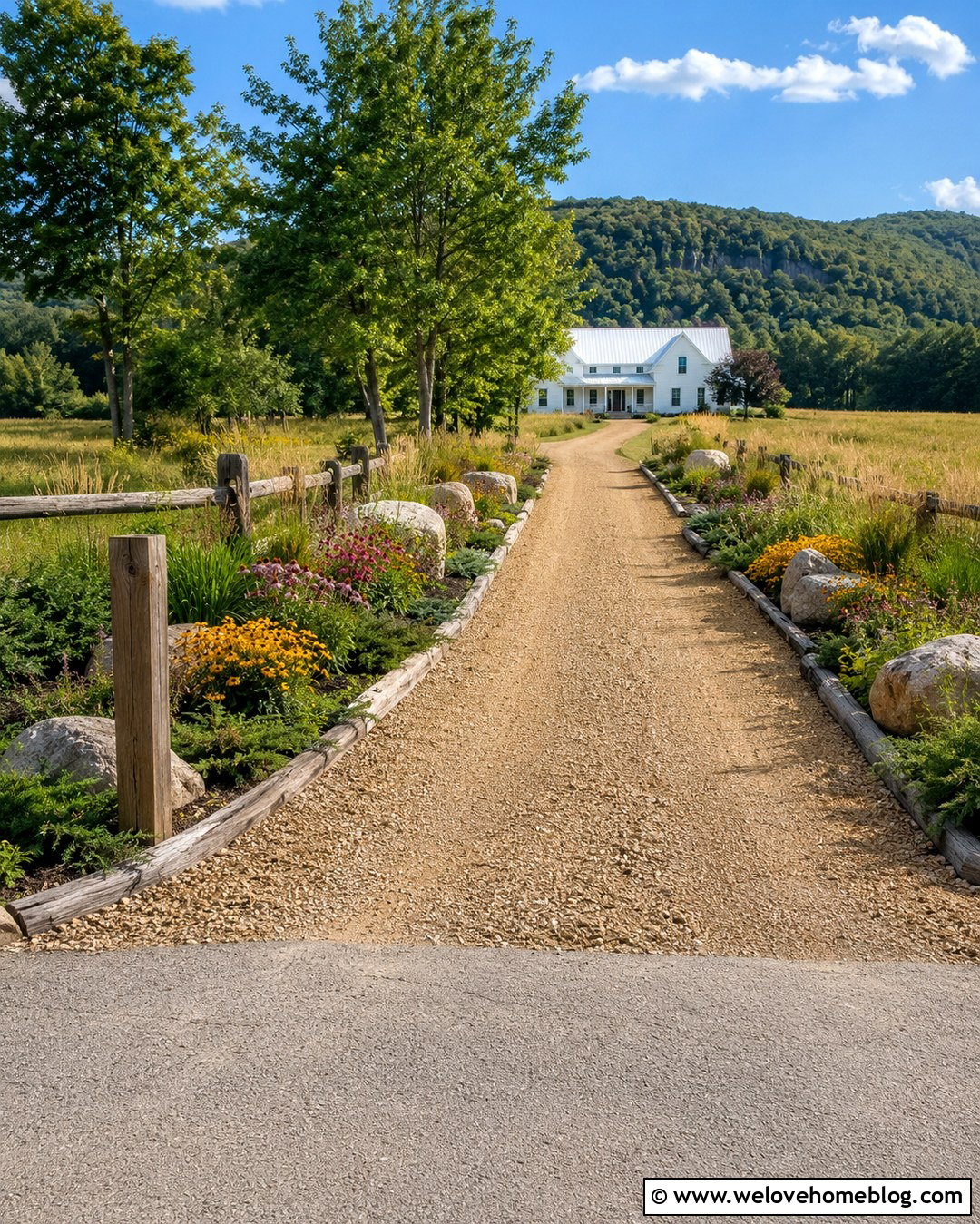
Warm wood makes rugged cobblestone feel relaxed and welcoming. A wide farm gate with simple horizontal or diagonal boards pairs naturally with an irregular reclaimed cobblestone surface. Use a straight entrance that transitions into a gently curving driveway toward a farmhouse, ranch home, or country cottage. Dry-stacked fieldstone pillars can anchor the gate, while broad gravel-filled joints reinforce the informal character. Along the sides, mix native grasses, white hydrangeas, and seasonal wildflowers rather than tightly clipped shrubs. A split-rail fence can continue from the pillars to define the property line. Keep the planting low where the driveway meets the road. This preserves visibility and allows the stone, wood, and surrounding landscape to read as one cohesive country entrance.
4. Cobblestone Driveway Entrance With Brick Columns
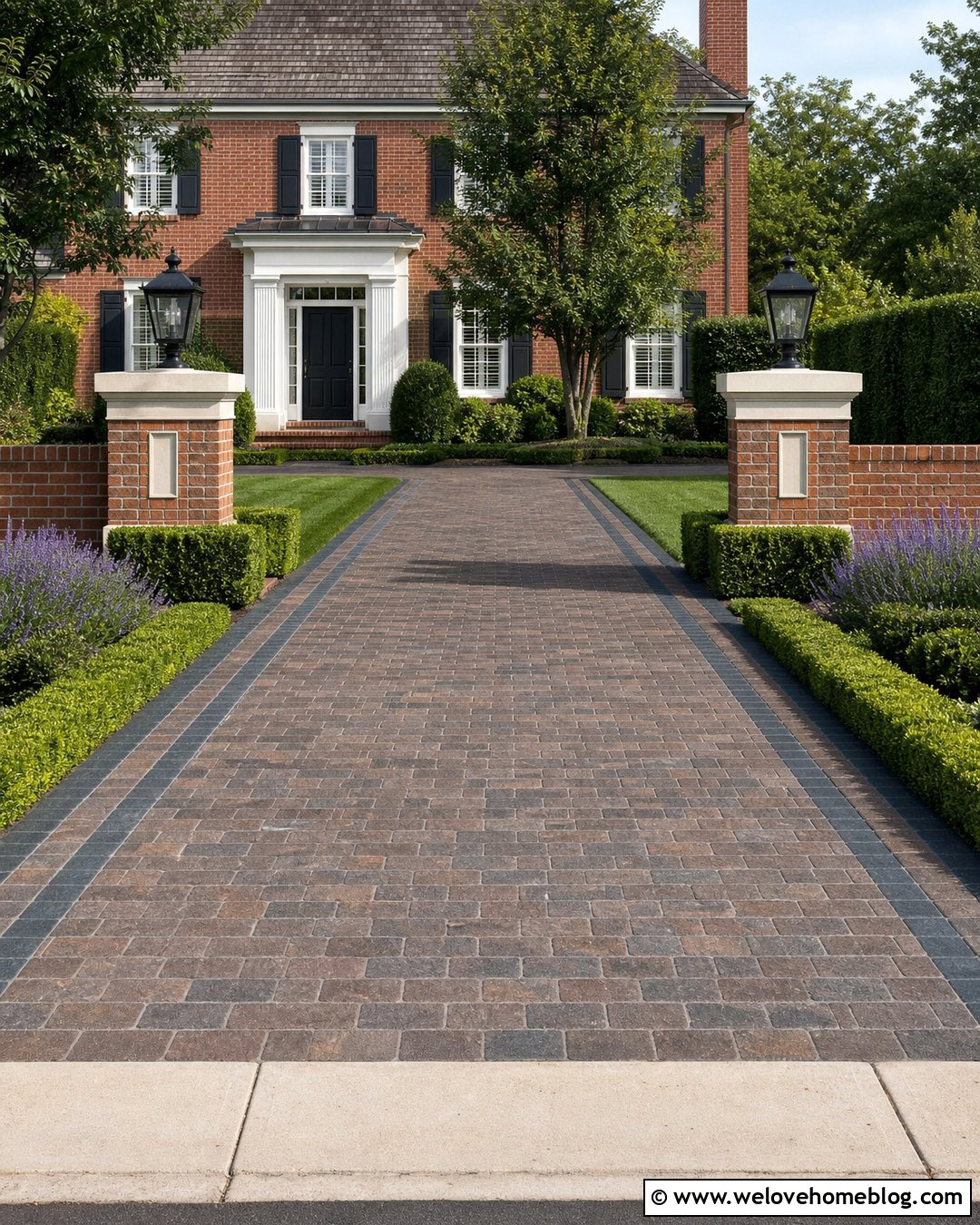
Brick columns can connect a cobblestone driveway to a red brick home without forcing both materials to match exactly. Select cobbles with charcoal, brown, and muted red undertones to create a natural transition. A running-bond cobblestone layout keeps the surface orderly, while a darker granite border defines the entrance apron. Top the brick columns with pale cast-stone caps for contrast. Simple black lanterns can provide a traditional finishing touch without overwhelming the masonry. Continue low brick walls outward from the columns, then soften them with boxwood, catmint, and compact flowering shrubs. A straight driveway usually looks best with this symmetrical arrangement. Matching brick columns at the walkway entrance can further connect the driveway, front path, and facade into one coordinated design.
5. Circular Cobblestone Driveway Entrance
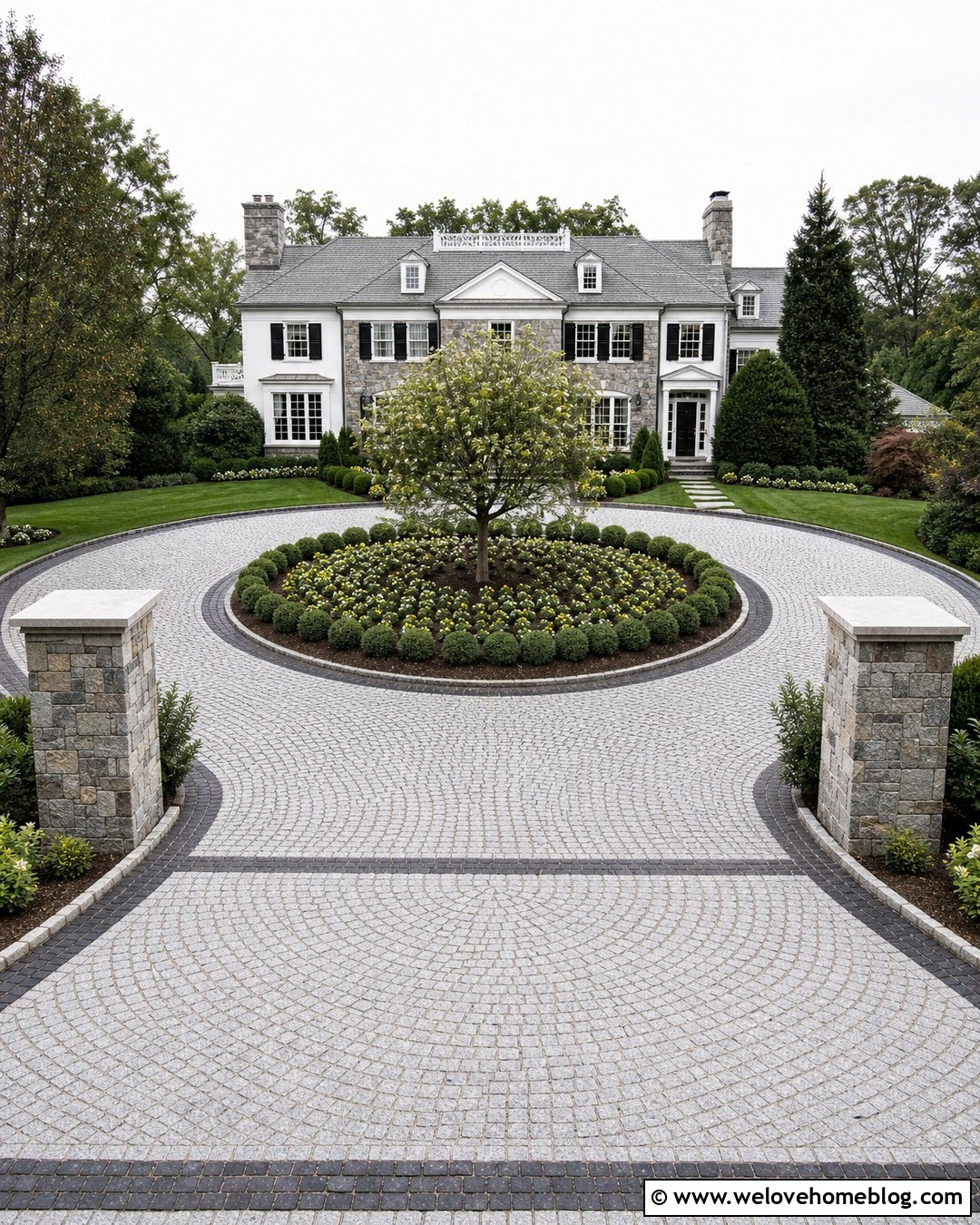
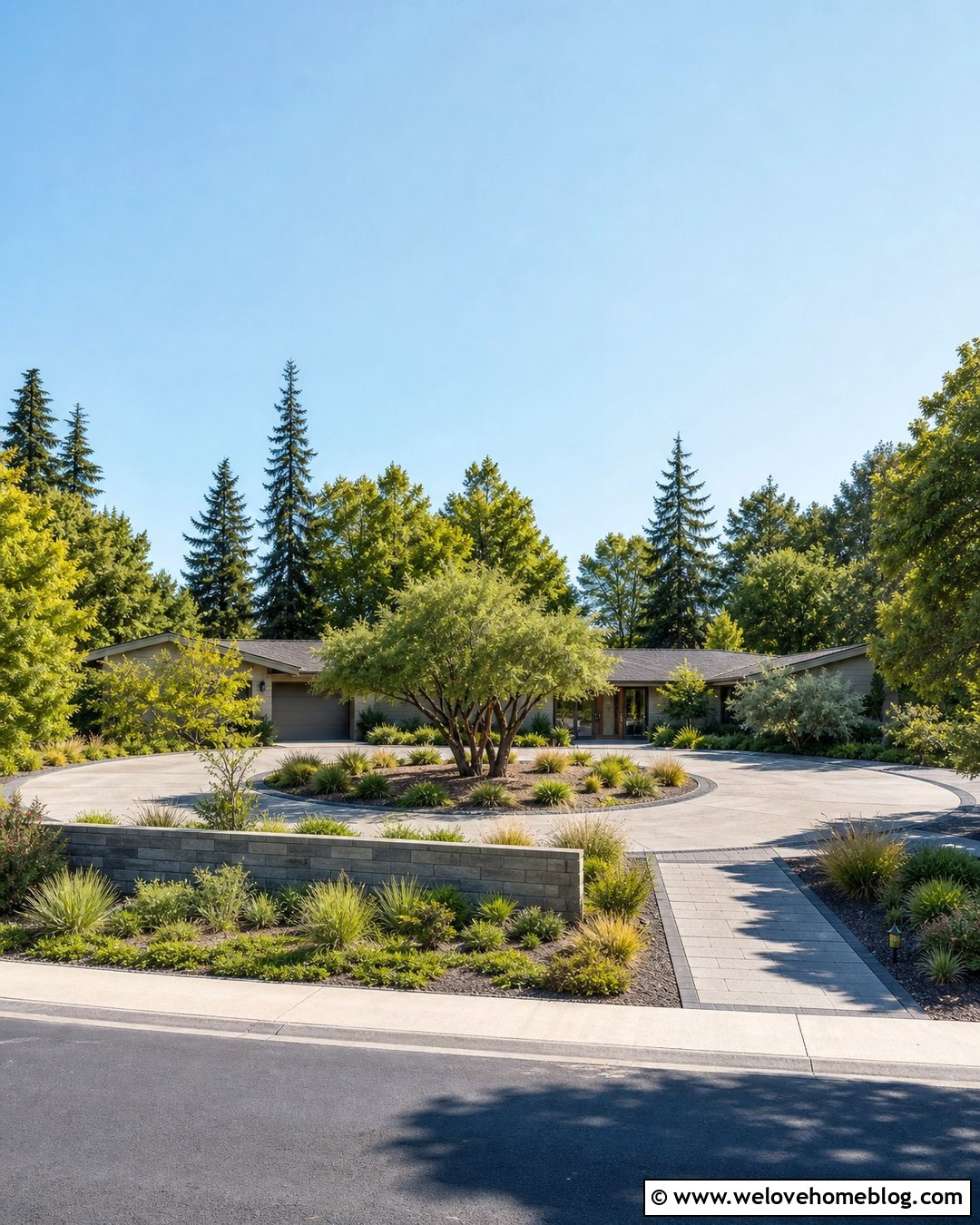
A circular cobblestone driveway creates an impressive arrival while allowing vehicles to enter and leave without backing toward the street. Use a broad entrance with two clearly defined openings and carry the same cobblestone finish around the entire loop. A radial or fan pattern can emphasize the curve and prevent the surface from looking rigid. Place a landscaped island in the center with a small ornamental tree, low evergreen shrubs, and seasonal flowers. Matching stone borders should follow both the outside edge and the central island. For a colonial or Georgian house, symmetrical pillars can mark each opening. The circle should remain large enough for comfortable turning, while plants near the entry points should stay low to protect sightlines and keep the full layout visually open.
6. Curved Cobblestone Driveway Entrance
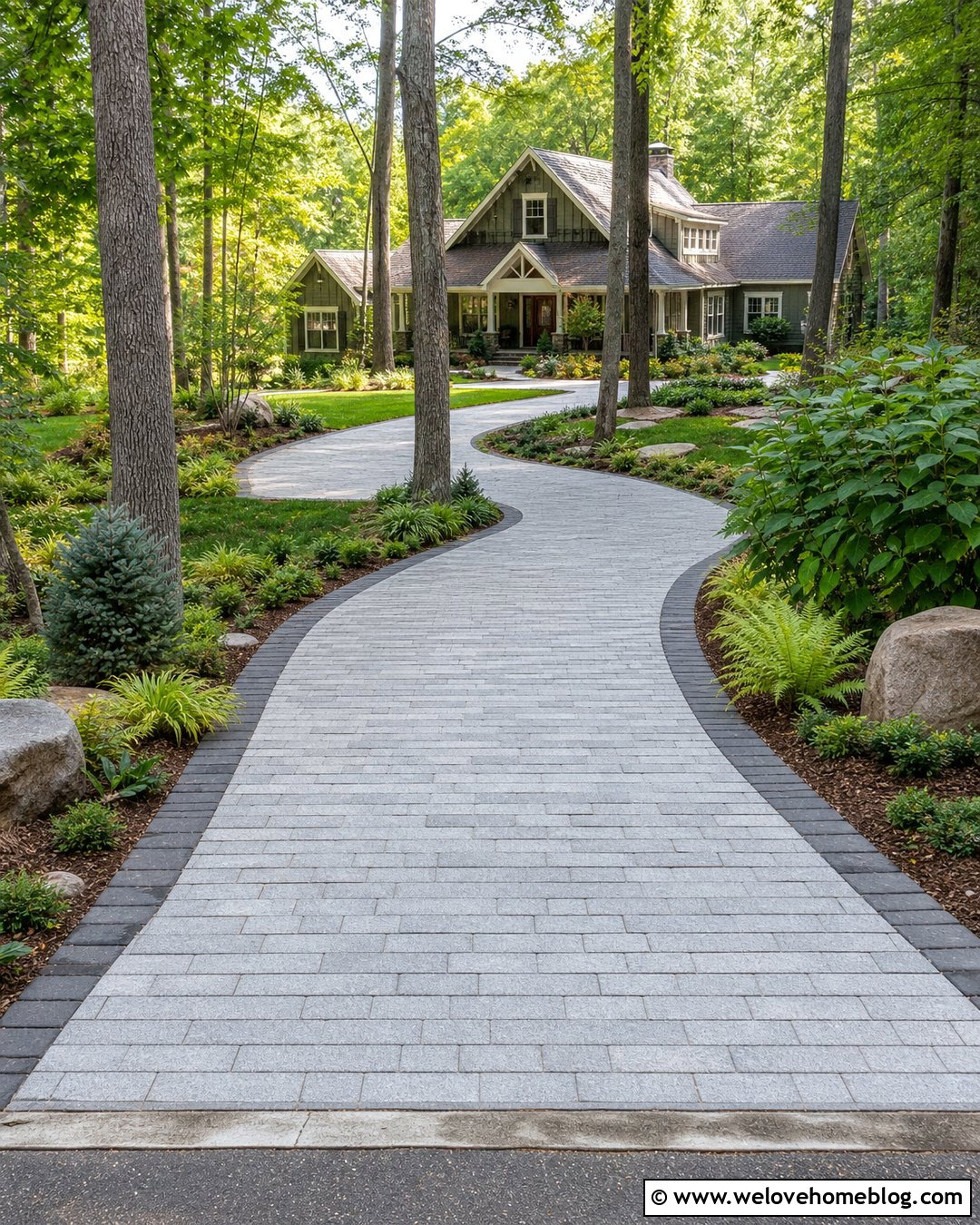
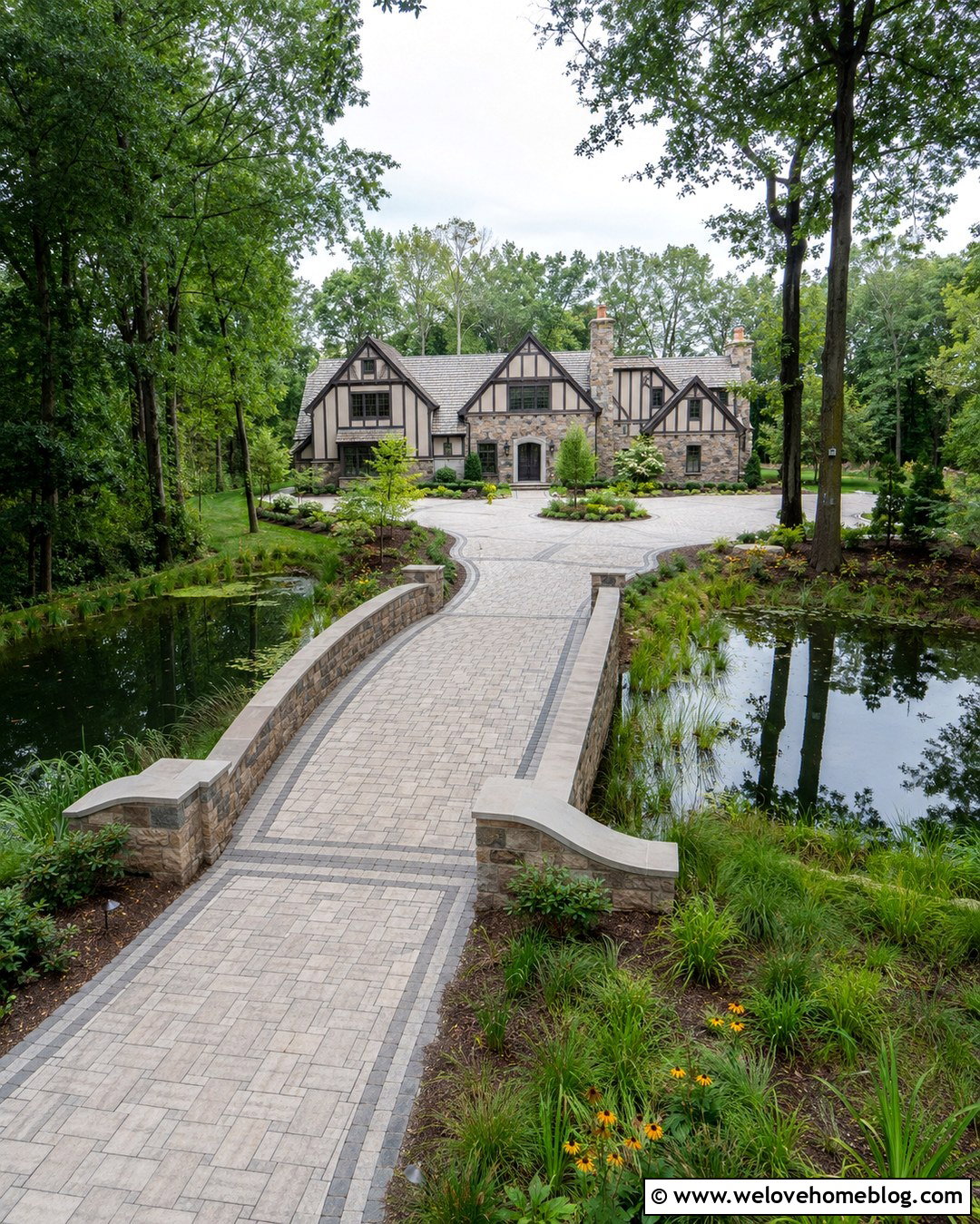
What if the house should be revealed gradually rather than seen all at once? A curved cobblestone driveway can make a standard front yard feel deeper and more private. Begin with a wide, softly flared entrance, then guide the cobbles through a gentle bend toward the garage or parking court. Lay rectangular granite cobbles in a running-bond pattern that follows the curve. A contrasting row of darker stones can sharpen the outer edge. Place taller trees and layered shrubs along the outside of the bend, while keeping the inside planting lower for visibility. This layout suits wooded properties, craftsman homes, and larger suburban yards. Avoid abrupt turns. A broad, continuous curve looks more natural and makes the driveway easier for guests, service vehicles, and trailers to navigate.
7. Cobblestone Driveway Entrance Apron
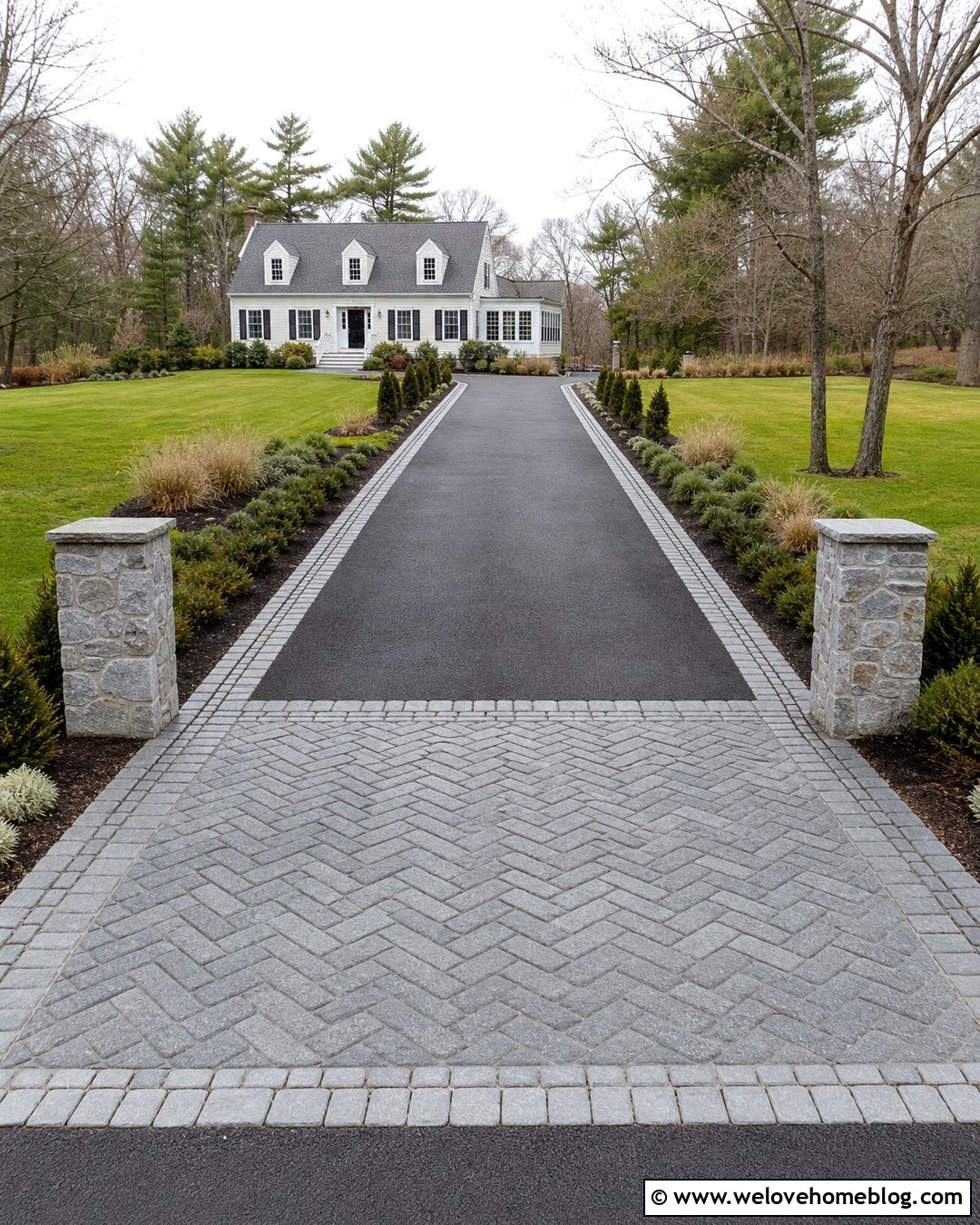
A cobblestone apron delivers much of the character of natural stone without requiring a fully cobbled driveway. Cover the first several feet of the entrance with granite cobbles, then transition into asphalt, poured concrete, gravel, or another durable surface. A herringbone pattern can help the apron stand out while visually connecting the street to the home. () Frame it with a double cobblestone border and extend the same stone along the driveway edges for continuity. Low planting beds with compact shrubs and ornamental grasses keep the entrance attractive but easy to maintain. This approach is particularly useful when updating an existing driveway. Confirm local requirements before construction because the apron may meet a public sidewalk, curb, drainage channel, or municipal right-of-way.
8. Cobblestone Driveway Entrance With Belgian Block Border
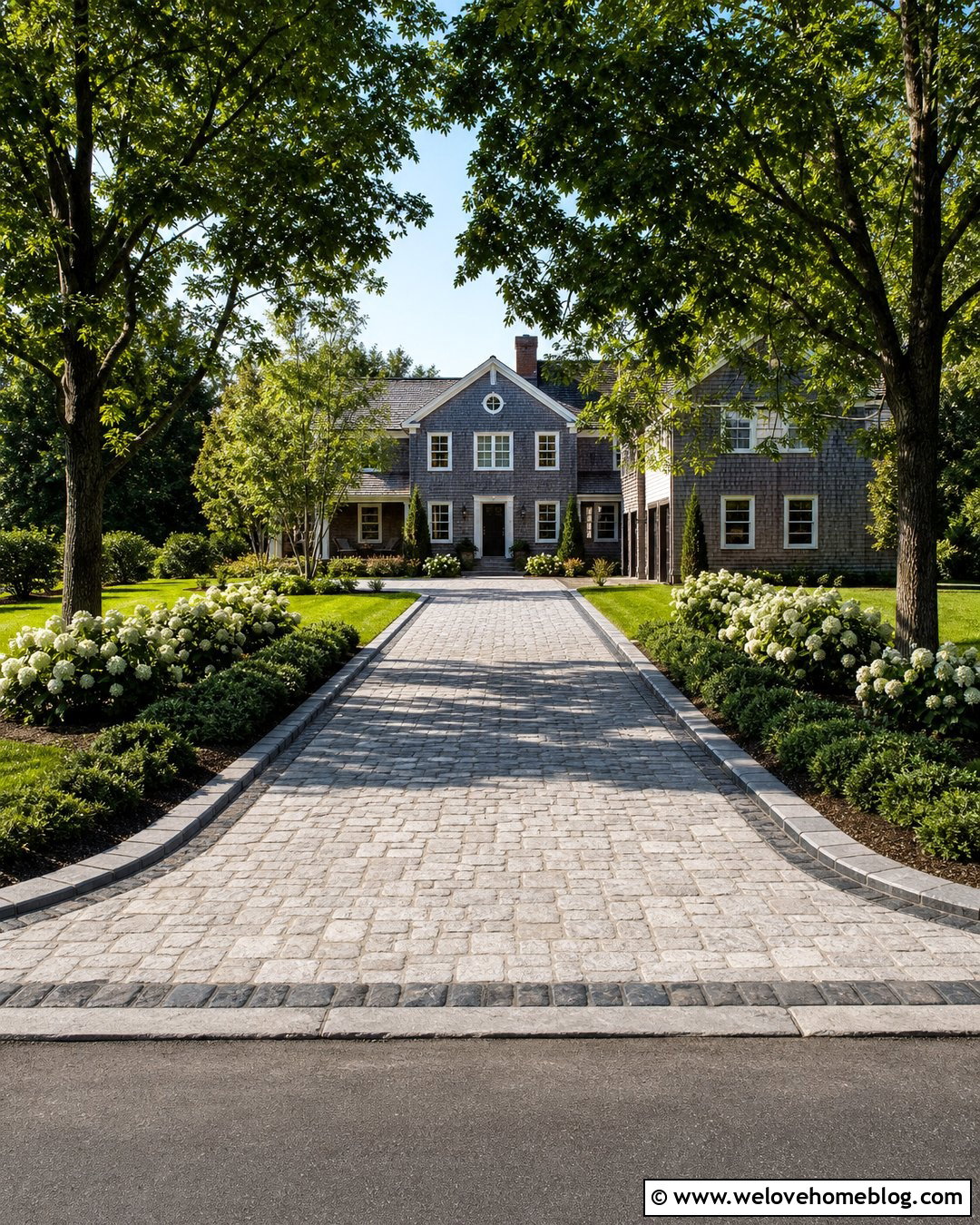
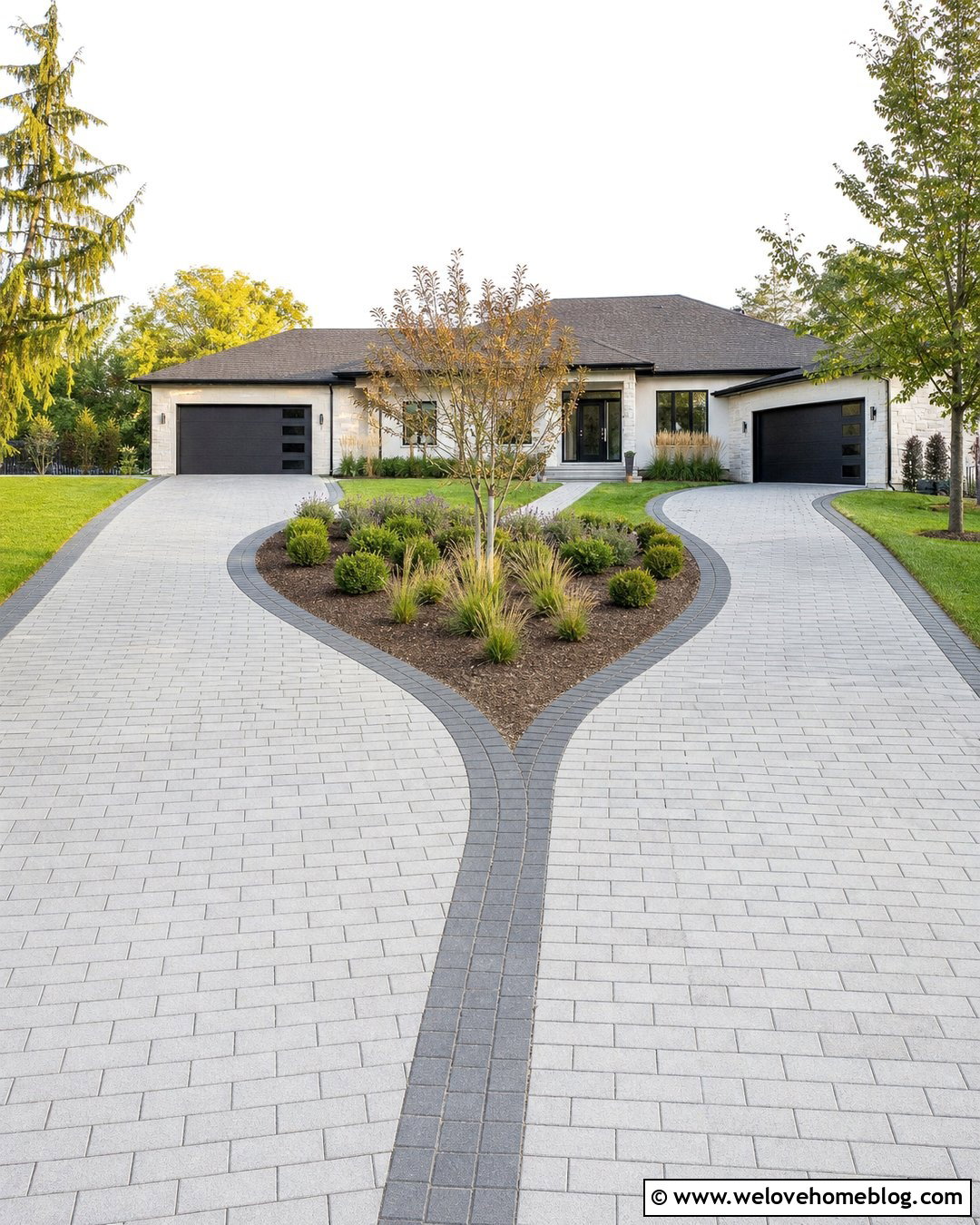
A Belgian block border adds a clean, architectural outline to an irregular cobblestone surface. Choose charcoal or deep gray blocks that contrast with lighter granite cobbles in the center. The border can begin at a flared entrance and continue along a straight driveway toward a cape cod or shingle-style home. Install the blocks in a single or double row, depending on the width and scale of the driveway. A flush border creates a smooth transition for tires, while a slightly raised edge can help separate the drive from planting beds. Add tidy lawns, white hydrangeas, and low juniper to complement the cool stone palette. Repeating the Belgian block around a nearby walkway or front planting bed will make the entire frontage look coordinated rather than pieced together.
9. Herringbone Cobblestone Driveway Entrance
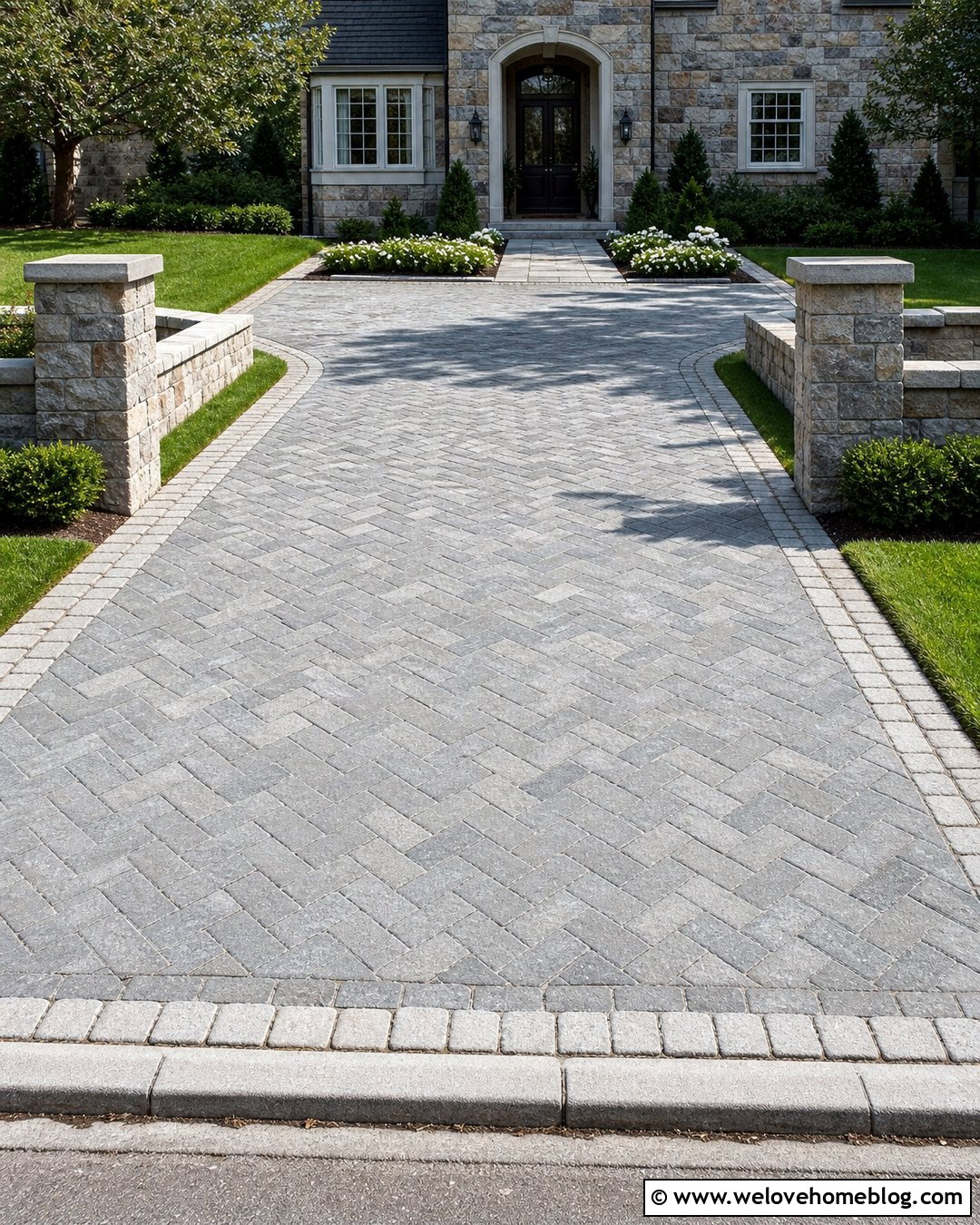
Herringbone gives a cobblestone entrance a clear pattern that feels polished and highly detailed. Rectangular granite setts are particularly effective because their uniform proportions allow the angled arrangement to remain readable across a wide surface. () Use the pattern across a straight driveway or entrance apron, then contain it with a simple soldier-course border. Medium-gray cobbles hide everyday dust while creating enough contrast for the pattern to show. Pair the driveway with low stone walls, square pillars, and restrained evergreen planting. This complete look suits traditional homes but can also complement modern architecture when the stone colors are consistent. Keep nearby landscaping simple because the patterned paving already provides visual movement. Careful base preparation and accurate alignment are essential for maintaining even joints and clean edges.
10. Fan Pattern Cobblestone Driveway Entrance
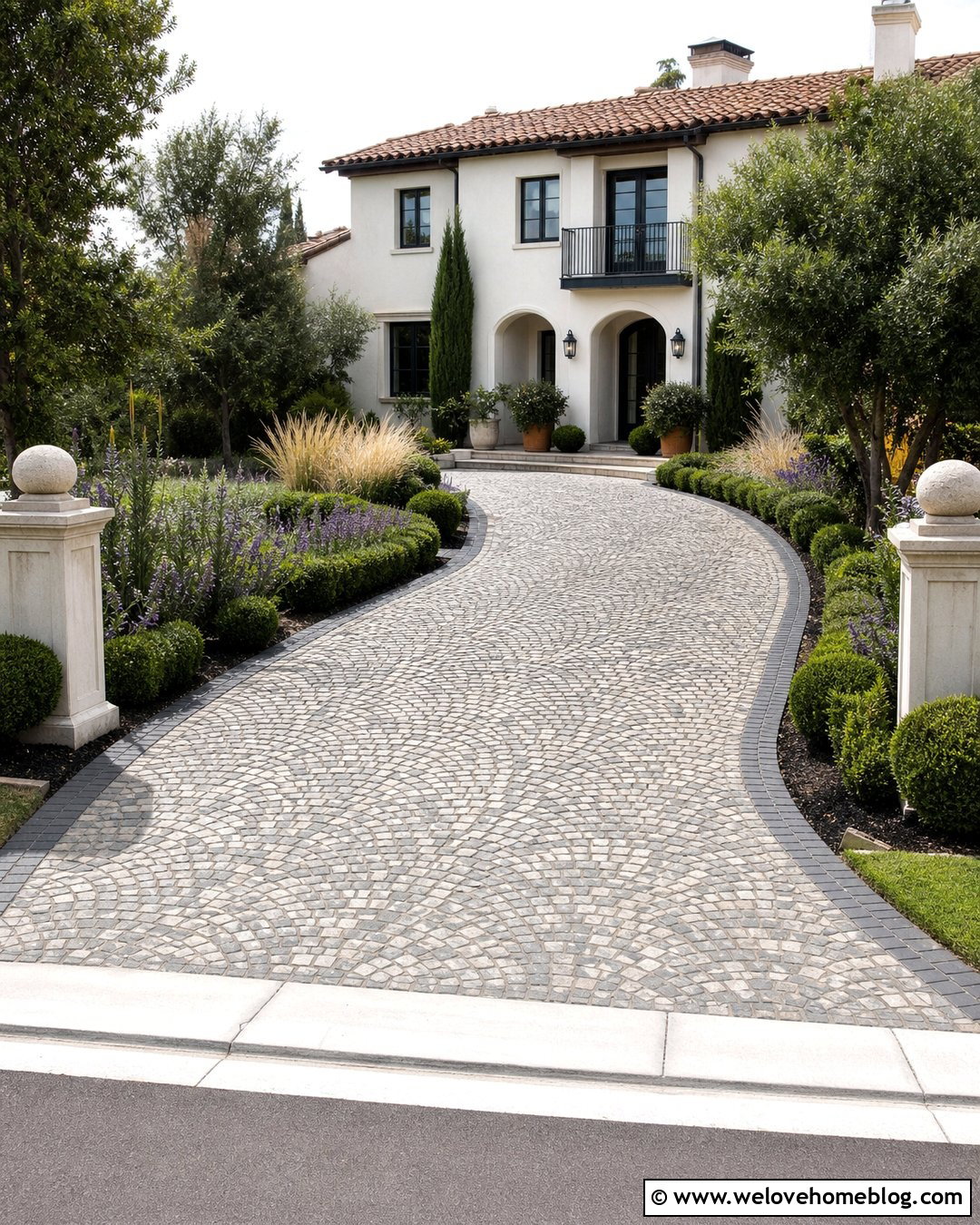
Curving rows of cobblestones can turn a wide entrance into a decorative feature without adding extra structures. A fan pattern spreads gracefully across the driveway and works especially well on a flared apron or circular approach. Use small granite cobbles in blended charcoal, silver, and warm gray tones so the arcs remain visible. Frame the patterned field with a darker cobblestone border that follows the entrance shape. Low stone pillars can mark each side without competing with the paving. Add rounded boxwood, lavender, and soft ornamental grasses to echo the curved lines. A light stucco, brick, or stone house provides an attractive background. Because this layout depends on precise spacing, it is best planned around the exact driveway width rather than being trimmed awkwardly at the edges.
11. Mixed Color Cobblestone Driveway Entrance
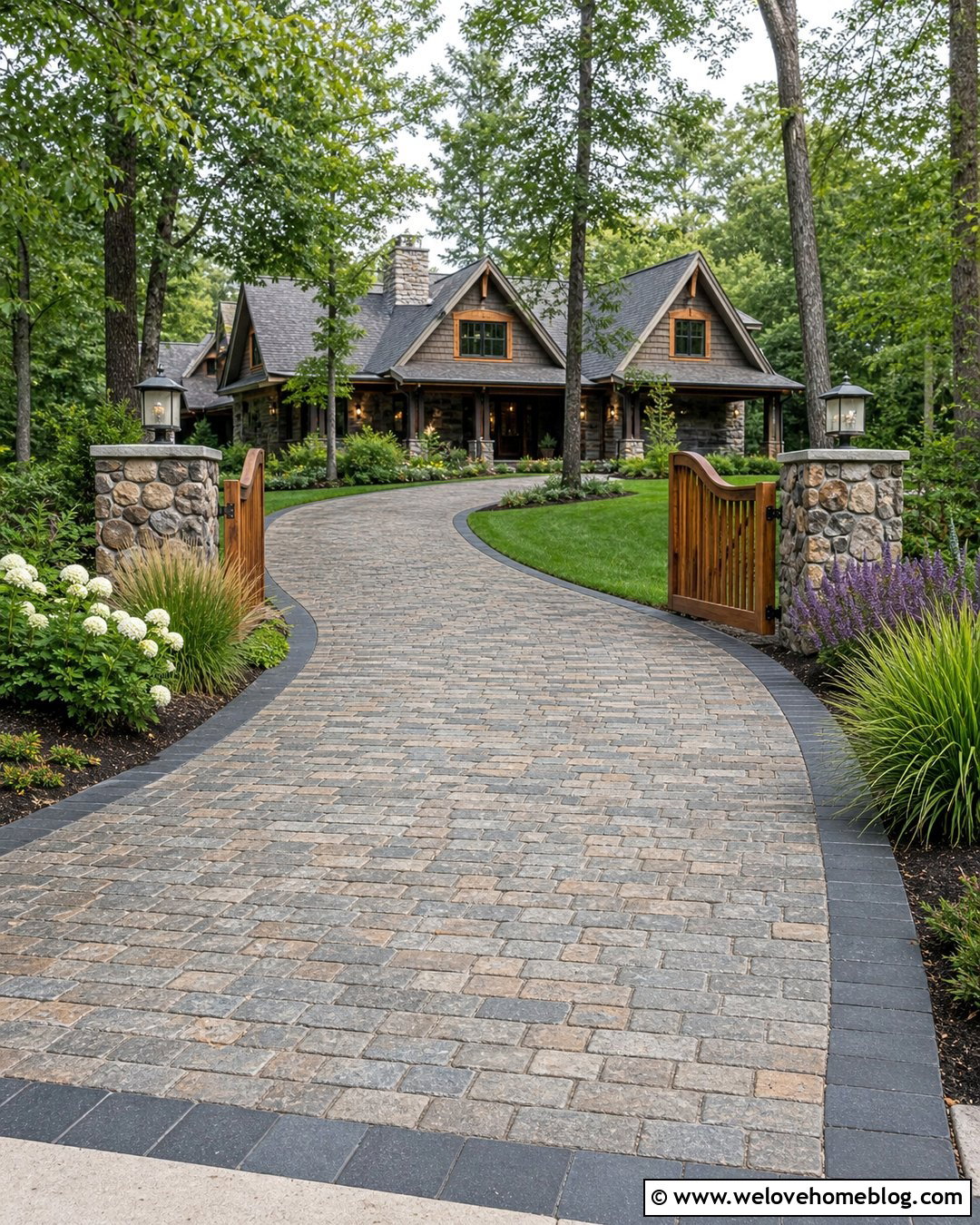
Natural variation can make a cobblestone driveway entrance feel warmer and less formal. Blend gray, brown, rust, and muted tan cobbles rather than using one uniform color. Keep the overall layout controlled with a running-bond pattern and a solid charcoal border. This balance prevents the mixed surface from appearing random. A gently curved driveway works well because the changing colors reinforce its relaxed movement toward the house. Pair the stone with timber gates, fieldstone pillars, and planting beds filled with ornamental grasses, salvia, and white flowering shrubs. The combination suits craftsman homes, rustic ranch houses, and modern farmhouses. Repeat one or two cobblestone colors in the facade, roof, or retaining walls so the entrance feels connected to the property instead of becoming a separate decorative feature.
12. Light Gray Cobblestone Driveway Entrance
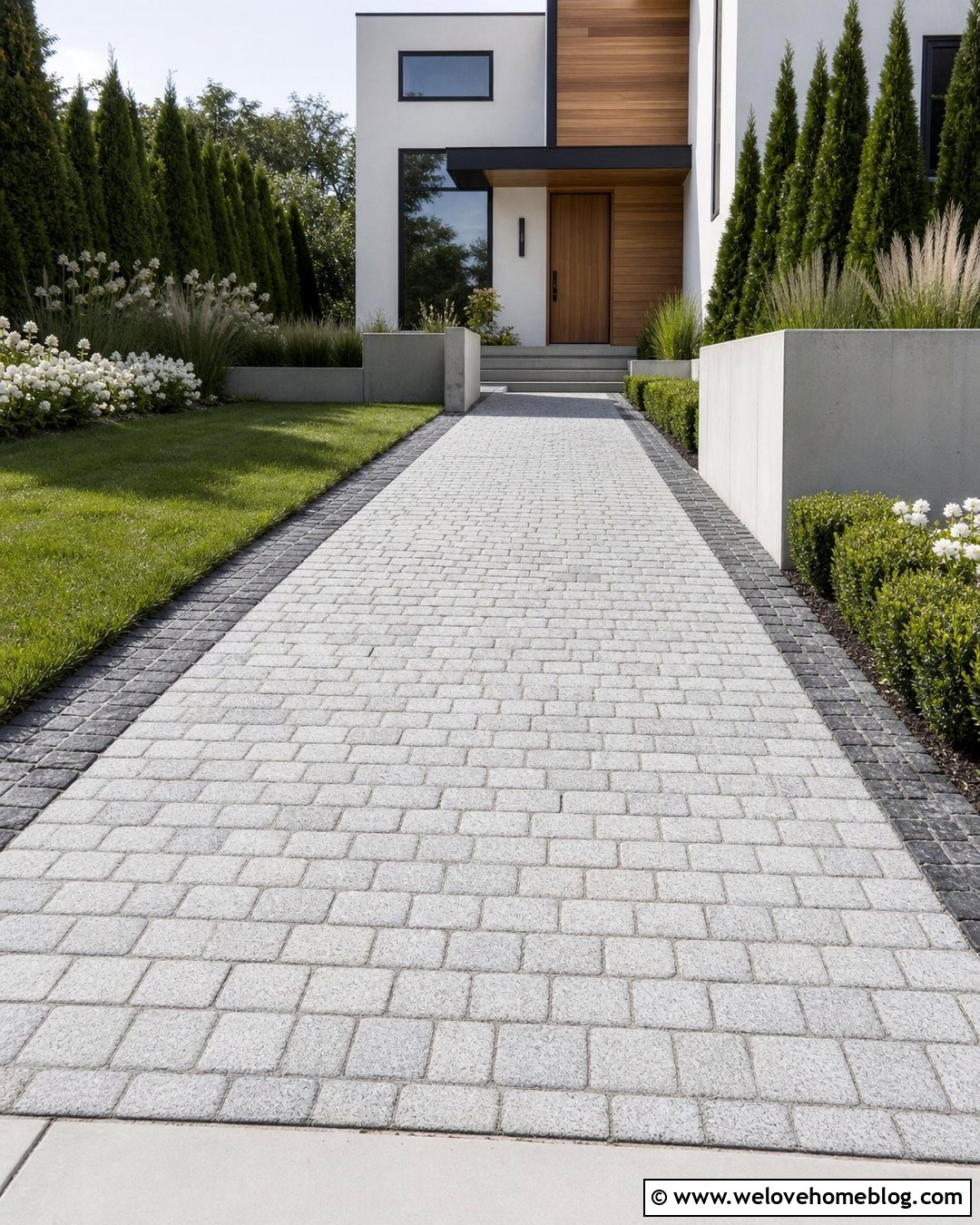
Pale gray cobblestone can look clean and contemporary while retaining the natural texture that gives stone its character. Choose tightly sized granite cobbles with subtle silver variation and install them in straight rows. A wide, linear entrance framed by smooth concrete walls or simple rendered pillars will reinforce the modern appearance. Use dark gray cobbles as a narrow perimeter band for definition. Landscaping should be structured but not severe. Try clipped evergreen masses, white flowering perennials, and upright ornamental grasses arranged in broad groups. This entrance works beautifully with a modern house featuring white stucco, warm wood siding, or charcoal metal accents. Keep utility covers, drainage details, and lighting hardware visually quiet. The restrained color palette allows the cobblestone texture and precise driveway geometry to become the main attraction.
13. Reclaimed Cobblestone Driveway Entrance
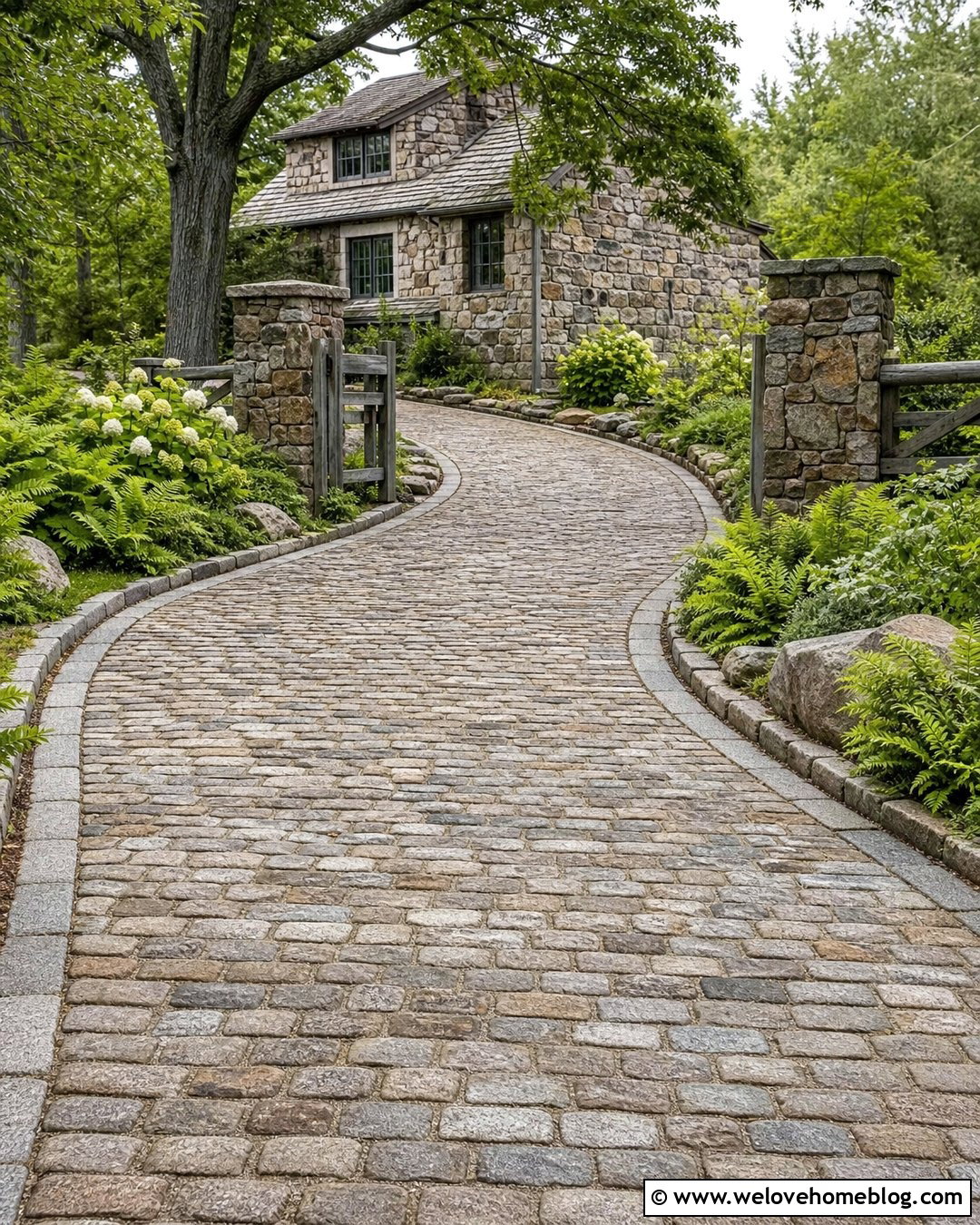
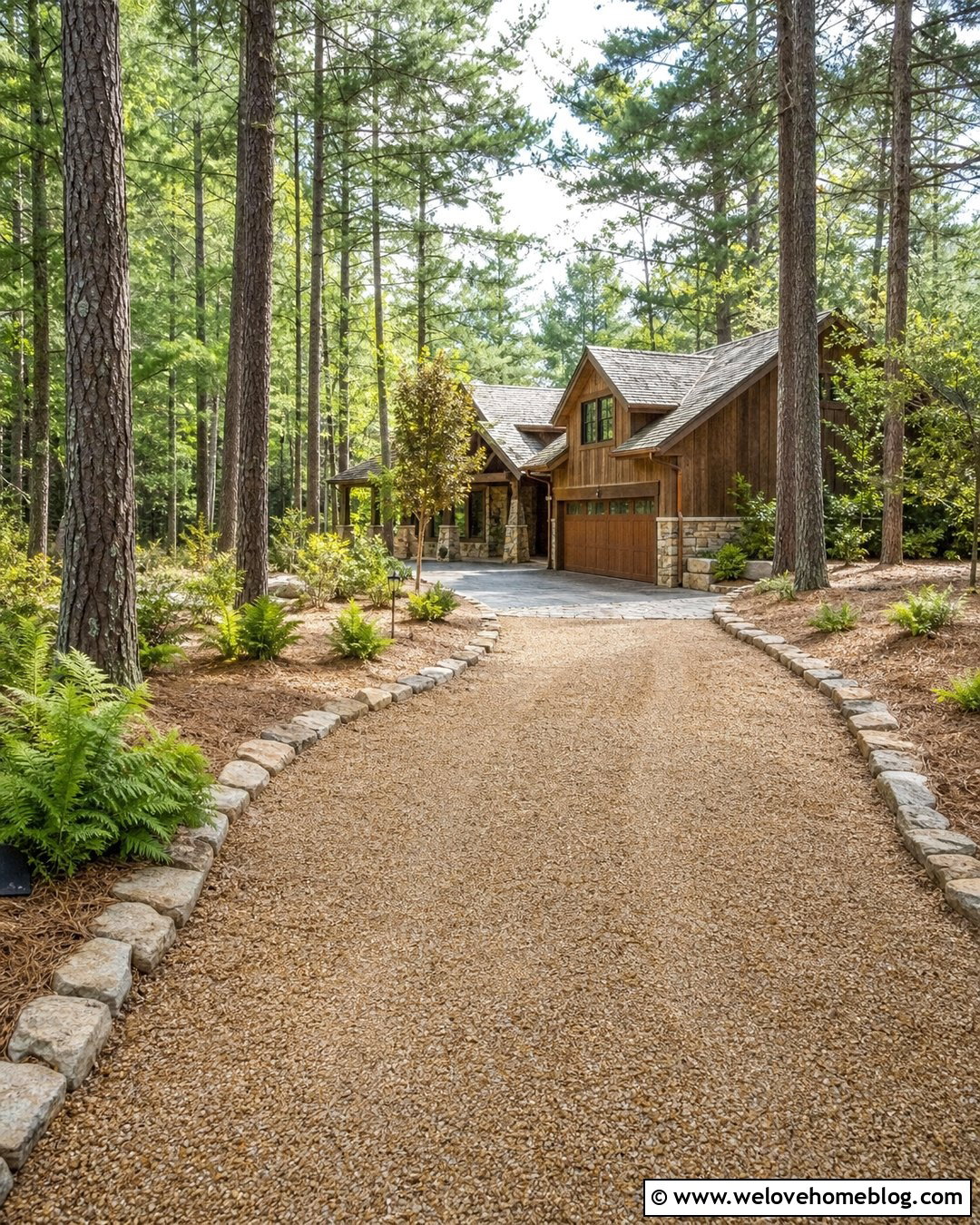
Uneven edges, softened corners, and varied colors give reclaimed cobblestones an unmistakably established appearance. They are an appealing match for older homes, converted barns, stone cottages, and traditional country properties. Arrange the stones in relaxed running courses rather than forcing them into an overly precise pattern. A gently flared entrance can lead into a winding driveway edged with reclaimed granite curbing. Use weathered stone pillars and a simple timber gate to continue the aged material palette. Ferns, native grasses, hydrangeas, and mature shade trees will make the entrance feel settled into the landscape. Because reclaimed units can vary in thickness, professional sorting and careful bedding are important. The finished surface should retain its rustic texture without creating severe dips, unstable stones, or uncomfortable transitions.
14. Cobblestone Driveway Entrance With Low Stone Walls
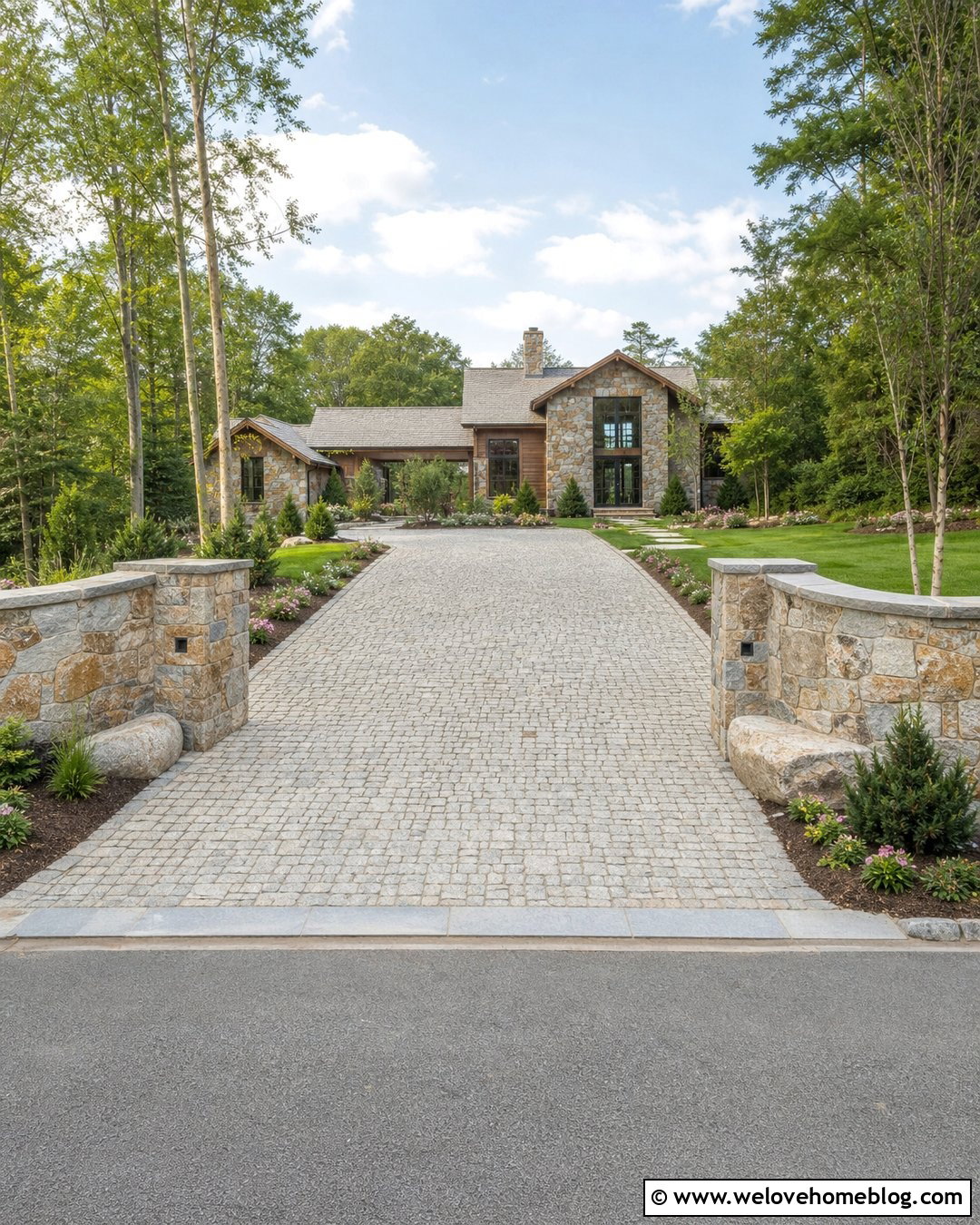
Low stone walls give a wide cobblestone entrance definition while keeping the property visible and approachable. Curve each wall gently away from the driveway to create a welcoming funnel from the street. Use the same granite or fieldstone tones in both the walls and cobbles, but vary the unit size so the surfaces remain distinct. Larger irregular stones work well for the walls, while smaller rectangular cobbles create a comfortable driving area. Cap the walls with smooth slabs and place low-voltage lights beneath selected caps for discreet illumination. Behind the walls, layer compact evergreens, flowering perennials, and ornamental grasses. This entrance fits a craftsman, mountain, or rustic contemporary house. Adequate drainage behind the masonry will help prevent soil pressure and water from damaging the walls over time.
15. Cobblestone Driveway Entrance With Lavender Borders
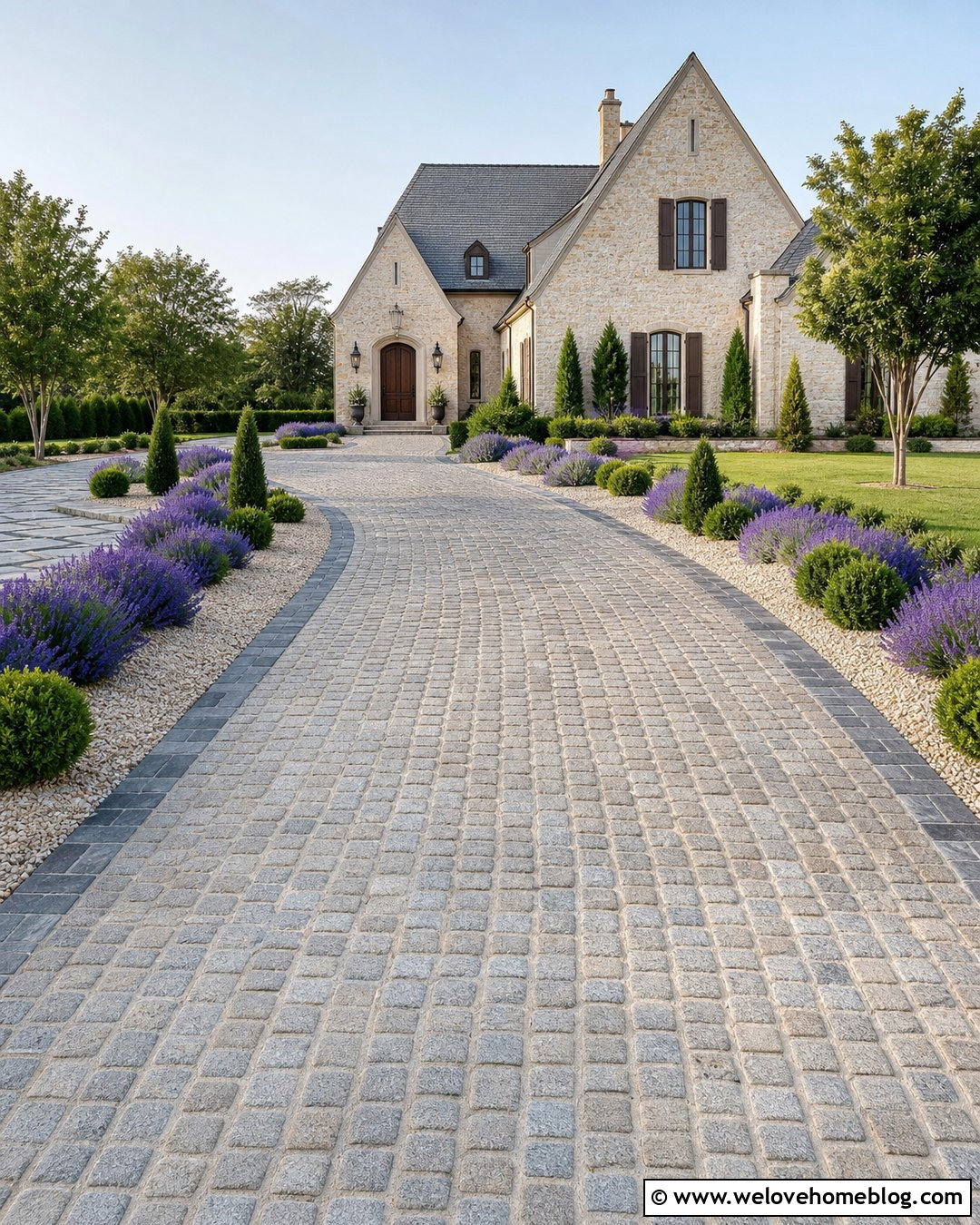
Rows of lavender bring soft color and fragrance to the rugged texture of a cobblestone entrance. Start with a straight or lightly curved driveway paved in warm gray granite cobbles. Add narrow flush borders in darker stone, then position lavender beds beyond the hard edging so growth does not obstruct the driving area. Repeating plants in generous groups creates a stronger effect than scattering individual specimens. Small clipped evergreens can add structure during seasons when the lavender is not blooming. This combination feels natural beside a cottage, French country home, or light-colored farmhouse. Use gravel mulch around the plants to complement the stone and support a tidy appearance. Choose plants suited to the site’s sun, moisture, and winter conditions rather than relying on appearance alone when planning the border.
16. Cobblestone Driveway Entrance With Boxwood Hedges
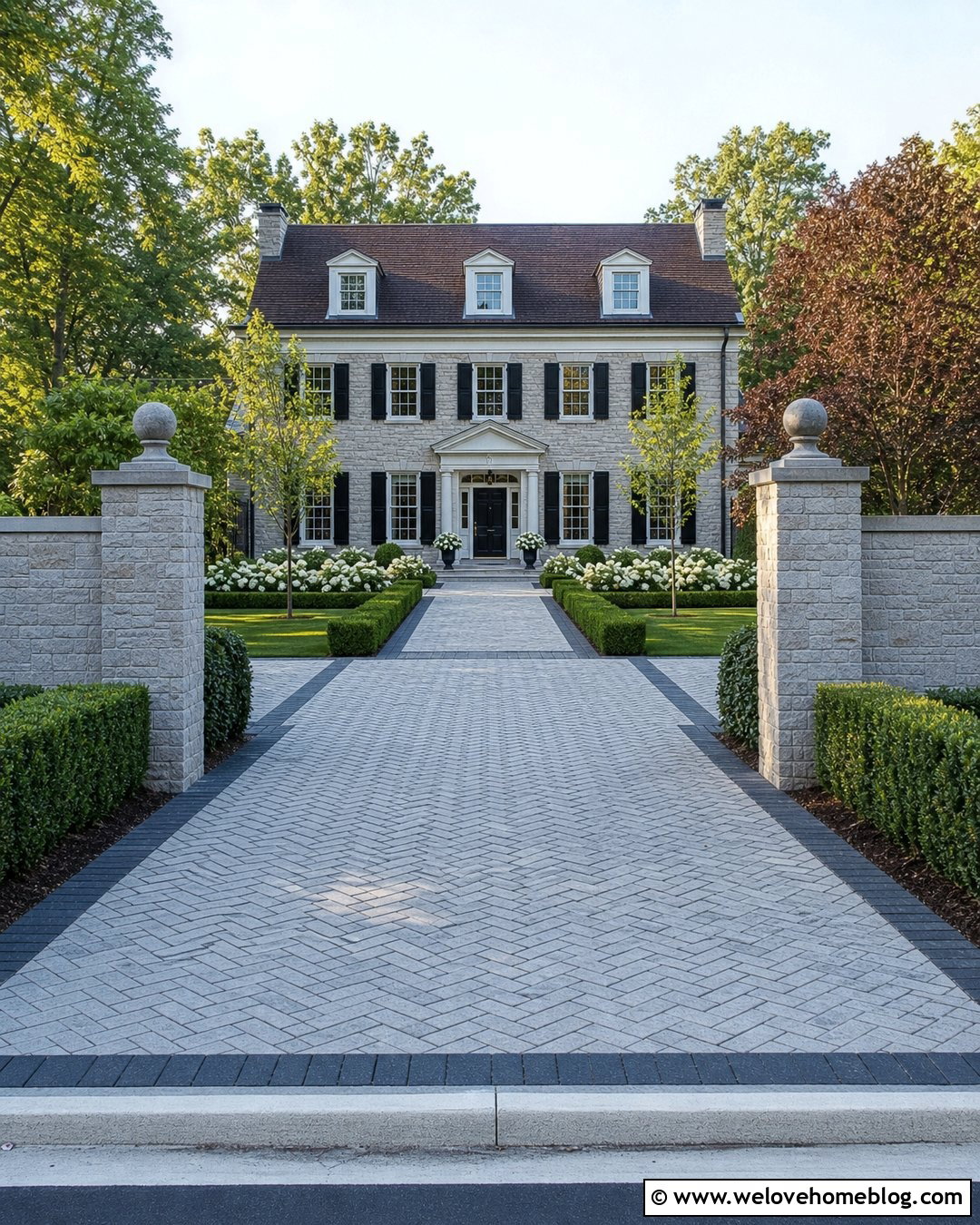
Neatly trimmed boxwood hedges create a formal frame for a classic cobblestone driveway entrance. Lay medium-gray granite cobbles in a running-bond or herringbone pattern, then add a darker border along both edges. Matching masonry pillars can establish symmetry at the road, while the hedges continue the strong lines toward a colonial or Georgian house. Keep the boxwood low near the street and allow it to become slightly taller farther into the property. This preserves visibility while creating a gradual sense of enclosure. White flowering shrubs, small trees, or seasonal planting beds can be placed behind the hedge for contrast. Leave enough space between plants and paving for mature growth. A narrow maintenance strip also prevents branches, soil, and mulch from spreading onto the cobblestone surface.
17. Tree Lined Cobblestone Driveway Entrance
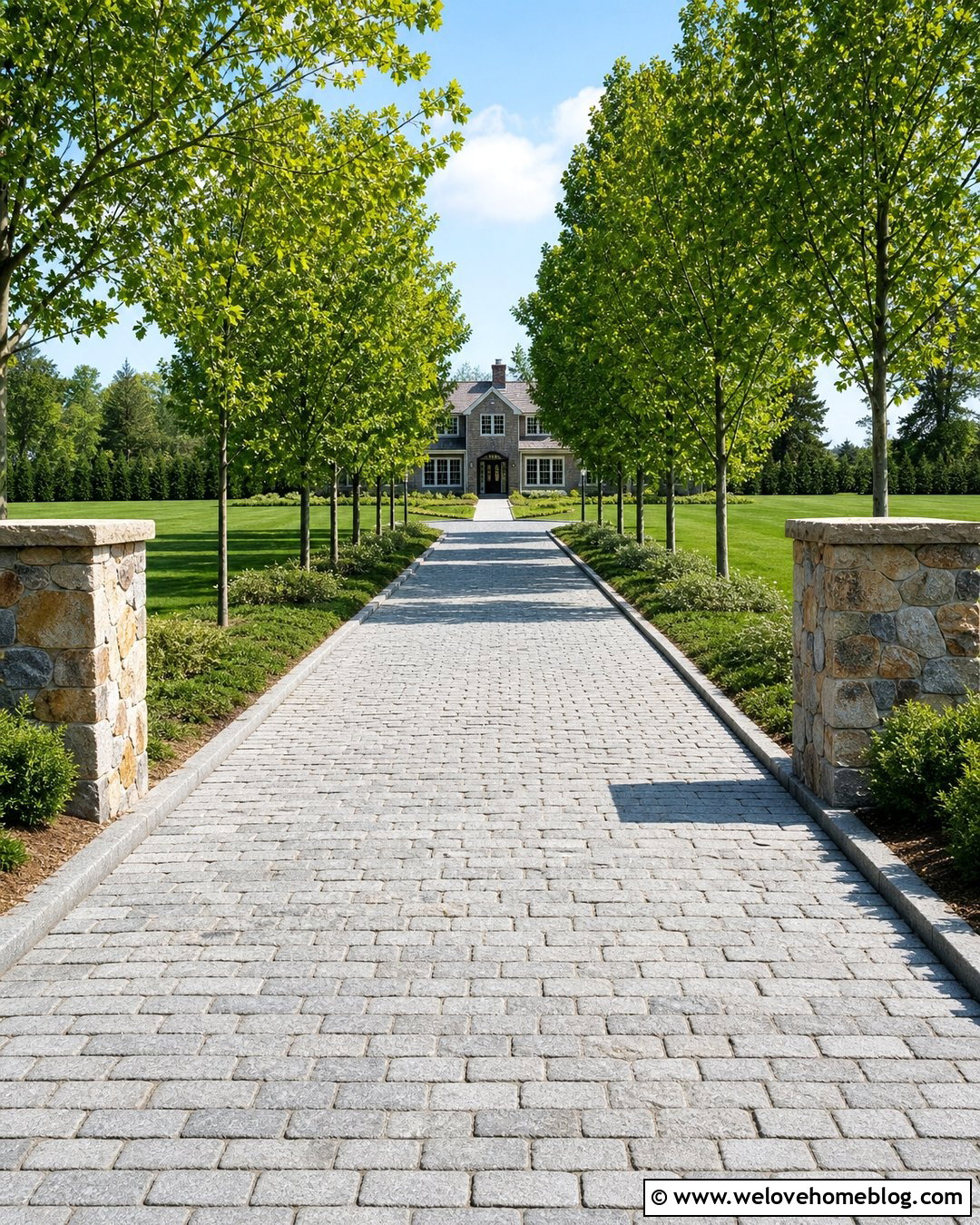
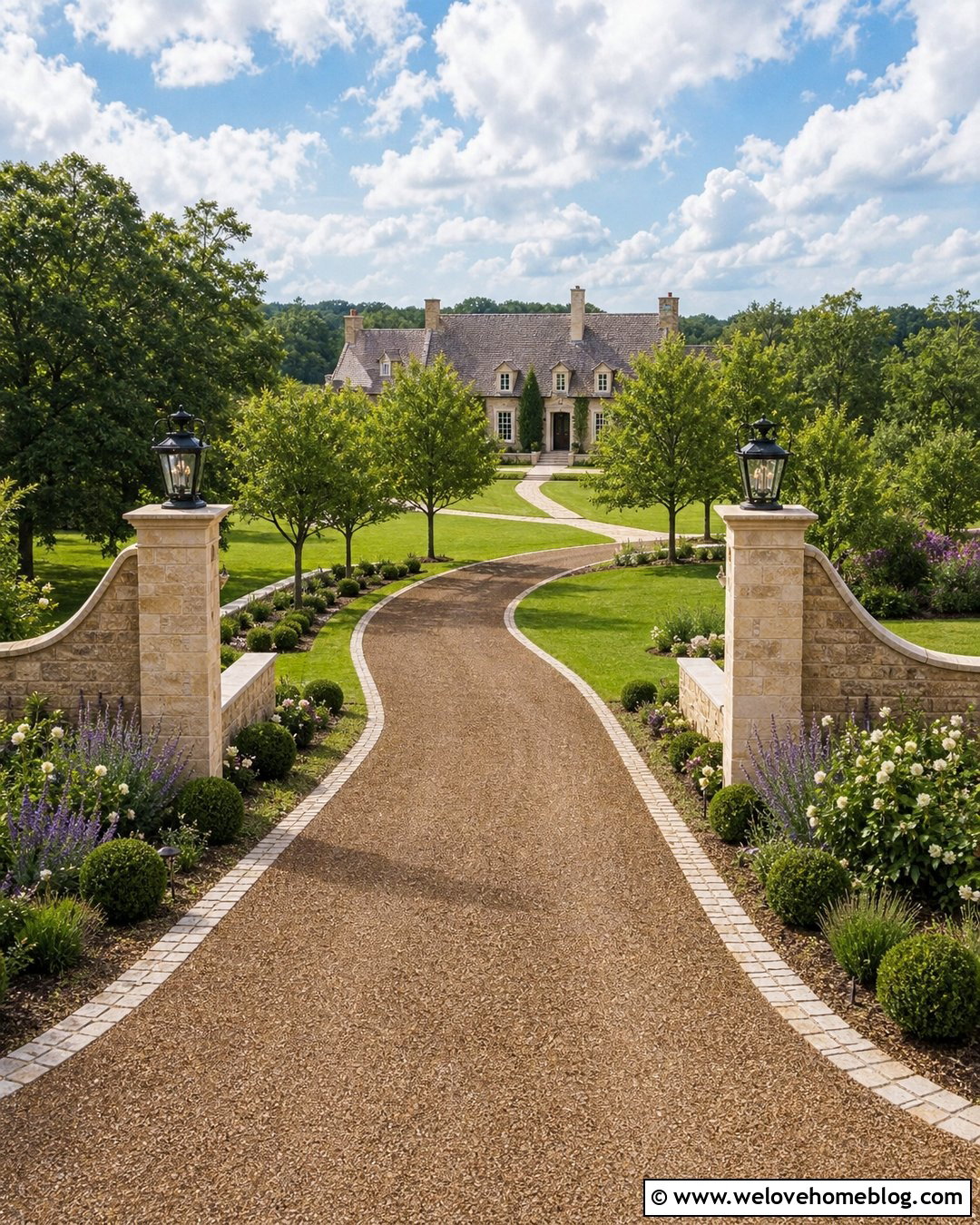
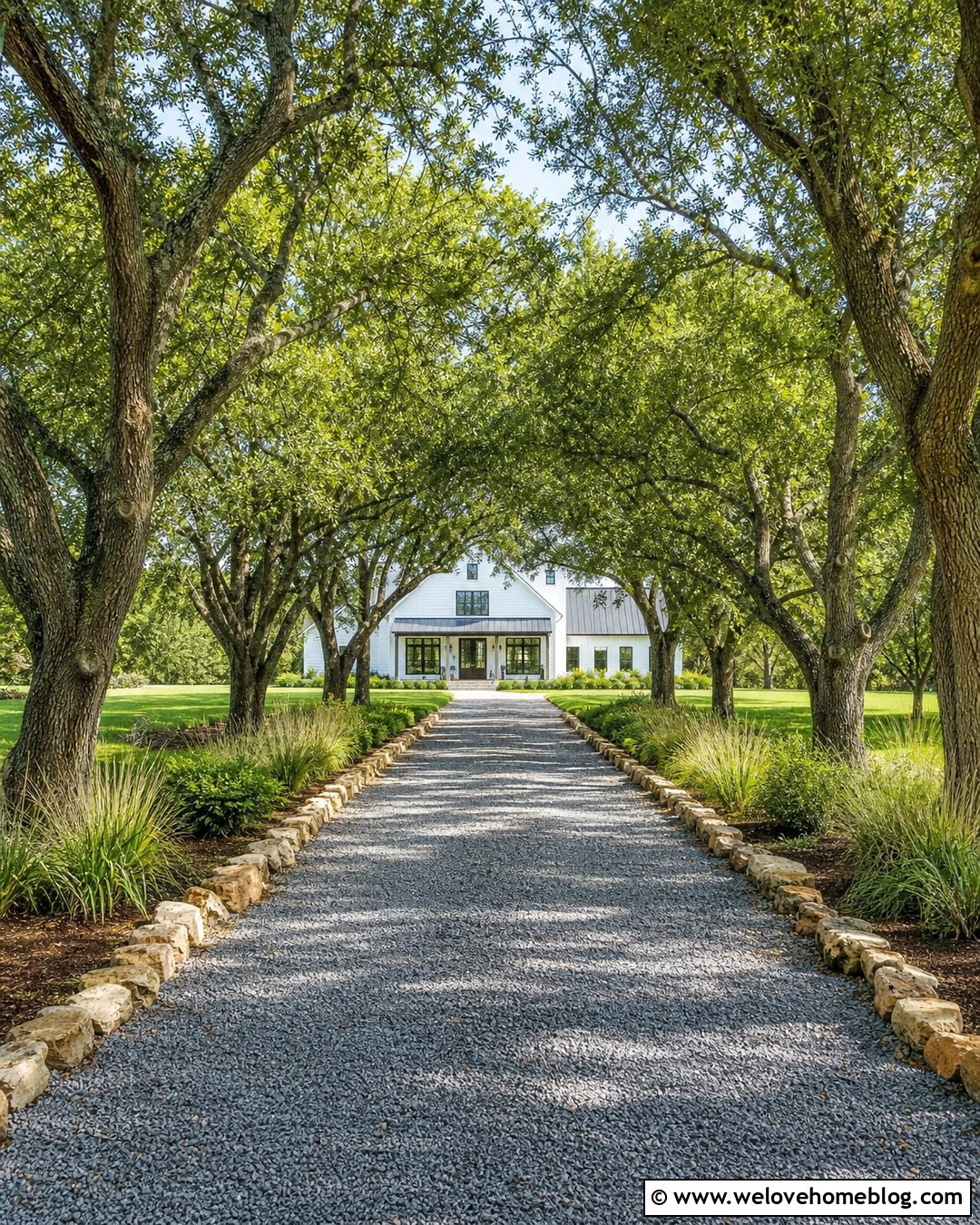
A long cobblestone driveway becomes more memorable when evenly spaced trees frame the approach. Begin with broad stone pillars at the entrance, then continue a straight band of warm gray cobblestones toward a farmhouse, estate home, or traditional residence. Use flush granite curbing to contain the paving and protect the adjacent soil. Deciduous trees can provide seasonal change, while evergreens create stronger year-round screening. Position trunks far enough from the driveway to protect roots, branches, and vehicle clearance as the trees mature. Low ground cover or simple lawn between the trees keeps the composition uncluttered. At the roadside, leave wider gaps and lower planting for clear views. Repeating the same tree type creates rhythm, while the textured cobblestones keep the long approach from feeling plain or overly rigid.
18. Cobblestone Driveway Entrance With Lantern Pillars
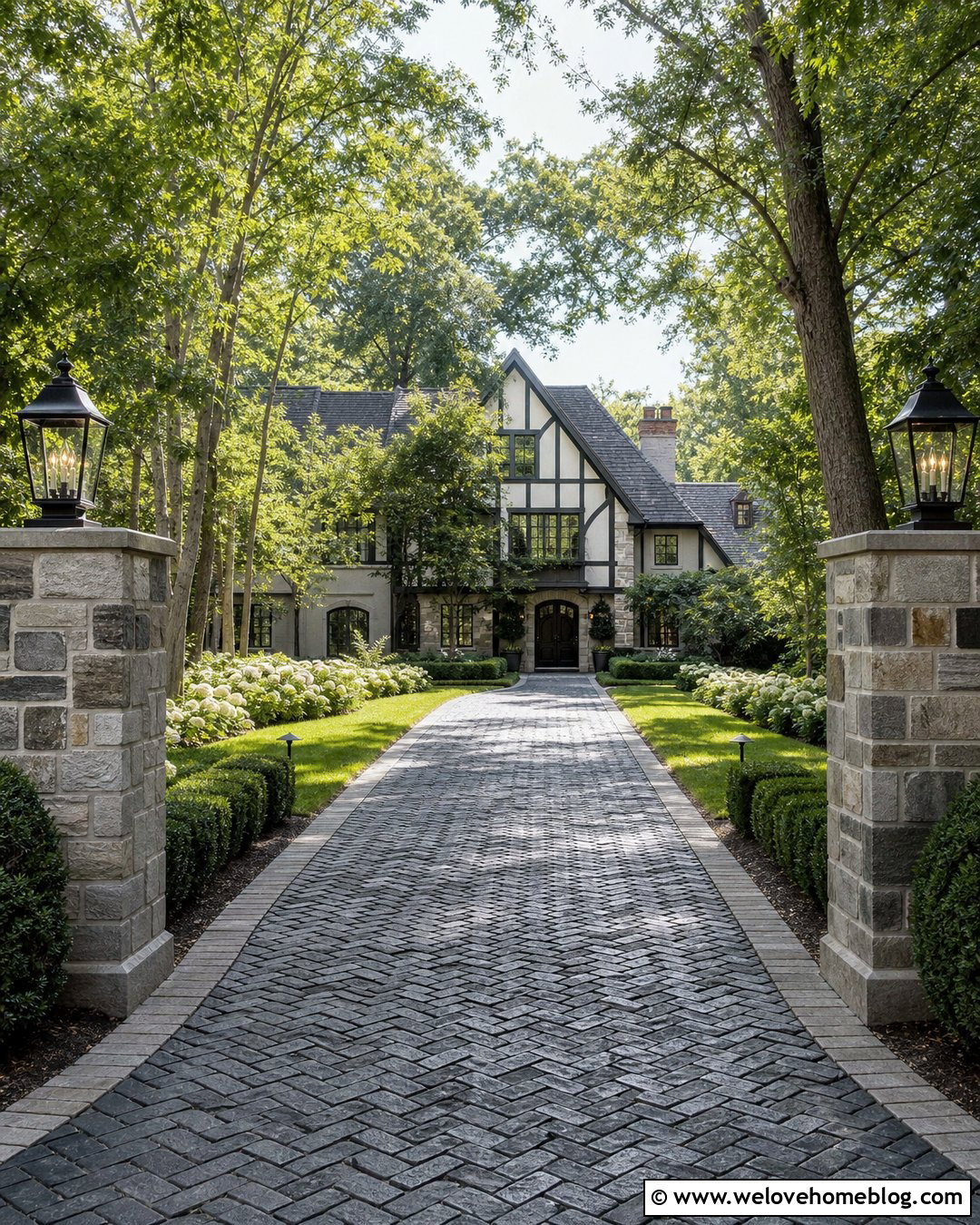
Lantern-topped pillars make a cobblestone entrance easier to recognize while adding traditional architectural detail. Place substantial stone or brick pillars on both sides of a straight driveway, then install lanterns sized to match their width and height. The fixtures should feel integrated rather than perched awkwardly on small caps. Below them, use dark granite cobbles in a herringbone pattern with a lighter stone border. Continue matching low walls or clipped shrubs outward from the pillars to connect the entrance with the property boundary. A colonial, Tudor, or craftsman house provides a suitable backdrop. Supplemental low path lights can guide the driveway without competing with the pillars. During installation, coordinate wiring, gate controls, drainage, and masonry work so the finished entrance remains clean and free of visible conduit.
19. Cobblestone Driveway Entrance With Address Sign
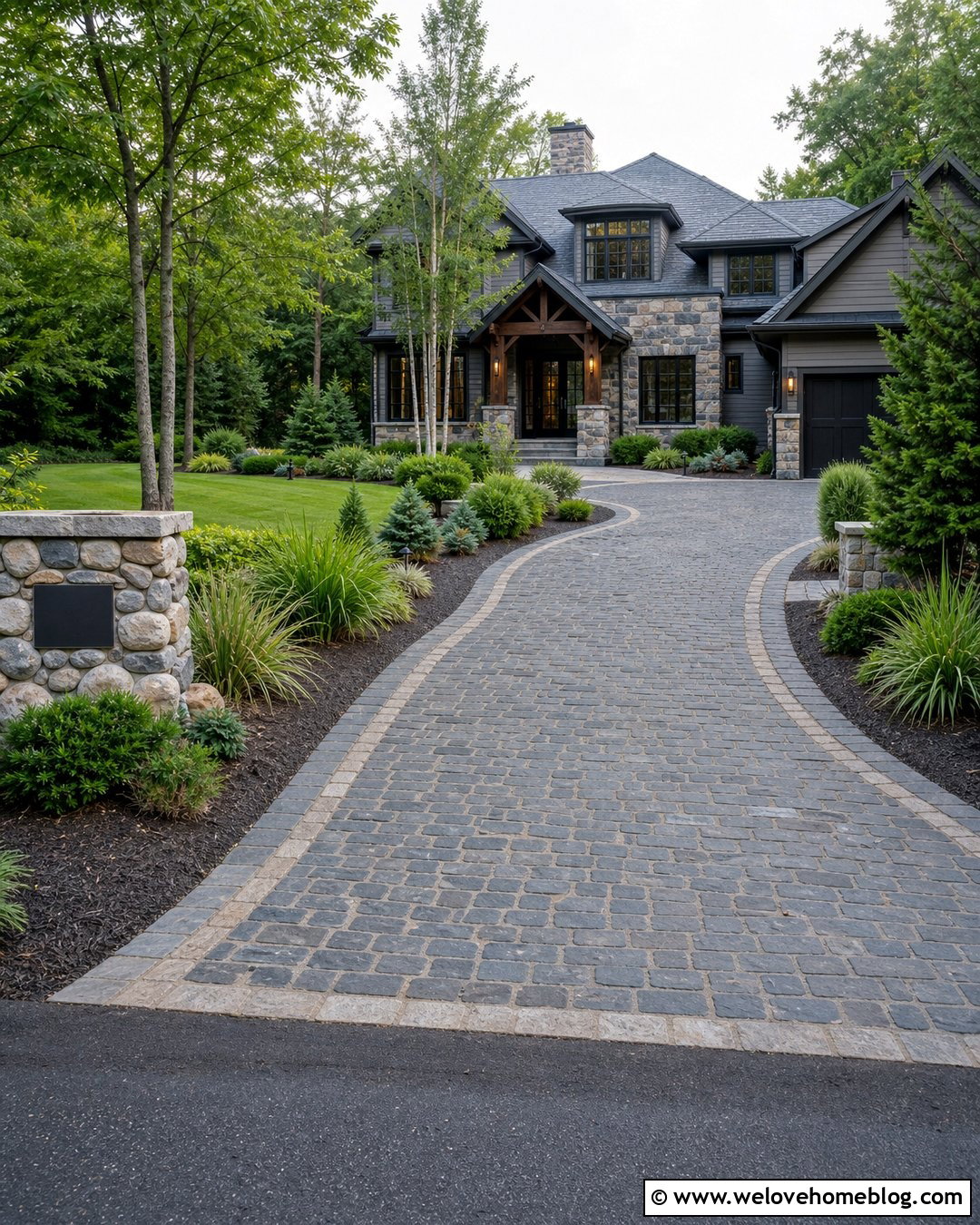
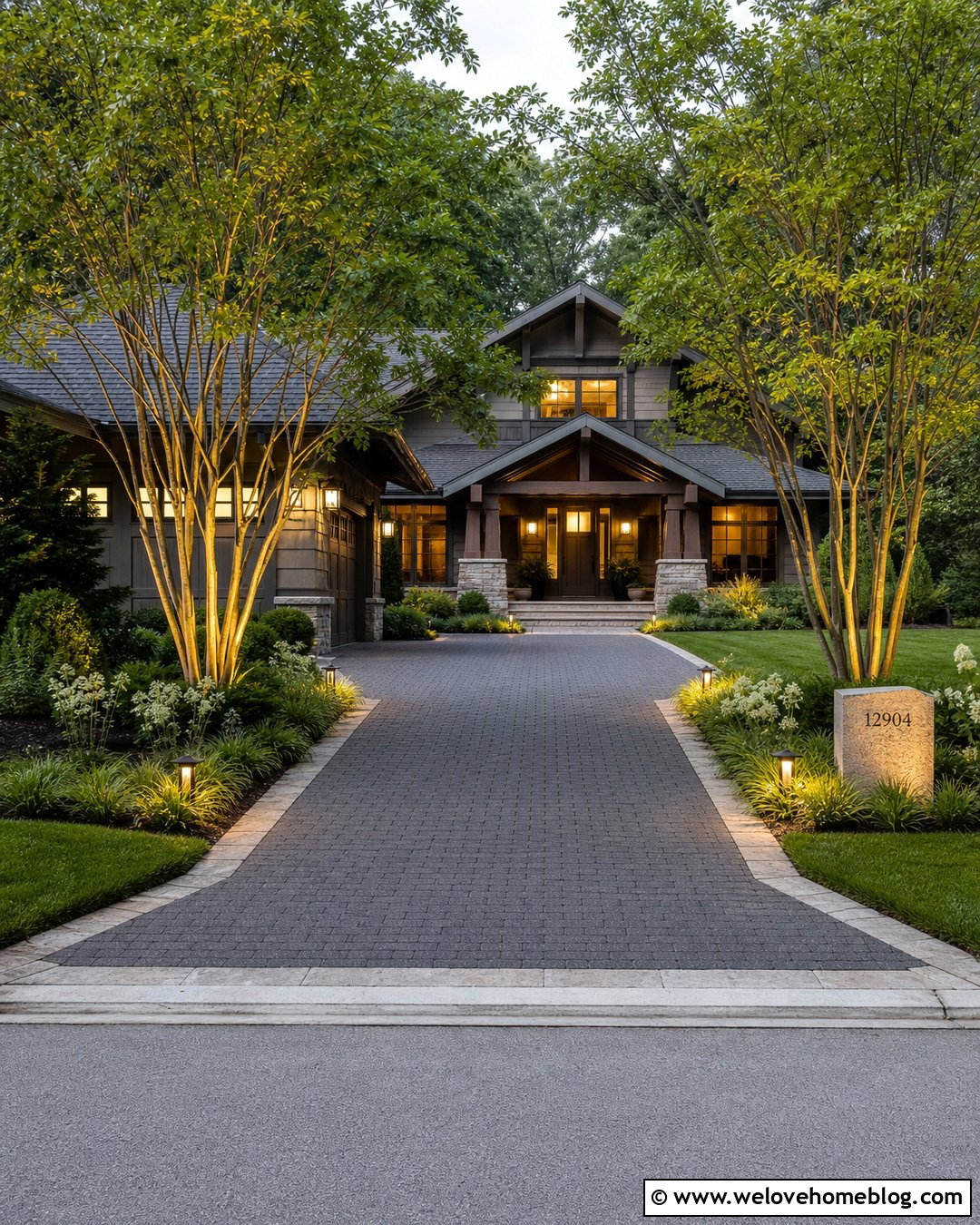
An integrated address marker can make a cobblestone driveway entrance easier to locate without adding visual clutter. Build a low stone monument or single masonry pillar beside a wide cobblestone apron. Select a smooth plaque that contrasts clearly with the surrounding stone and can be seen from the road. The sign structure should share colors with the driveway border, retaining wall, or house facade. Use a gently curved entrance and continue the cobblestones toward a craftsman or contemporary home. Compact ornamental grasses and evergreen shrubs can frame the marker without covering it. Keep tall plants farther back to maintain visibility. A small shielded light can illuminate the address area after dark. Position the marker where it will not interfere with sightlines, snow removal, drainage, or vehicle turning movements.
20. Small Cobblestone Driveway Entrance
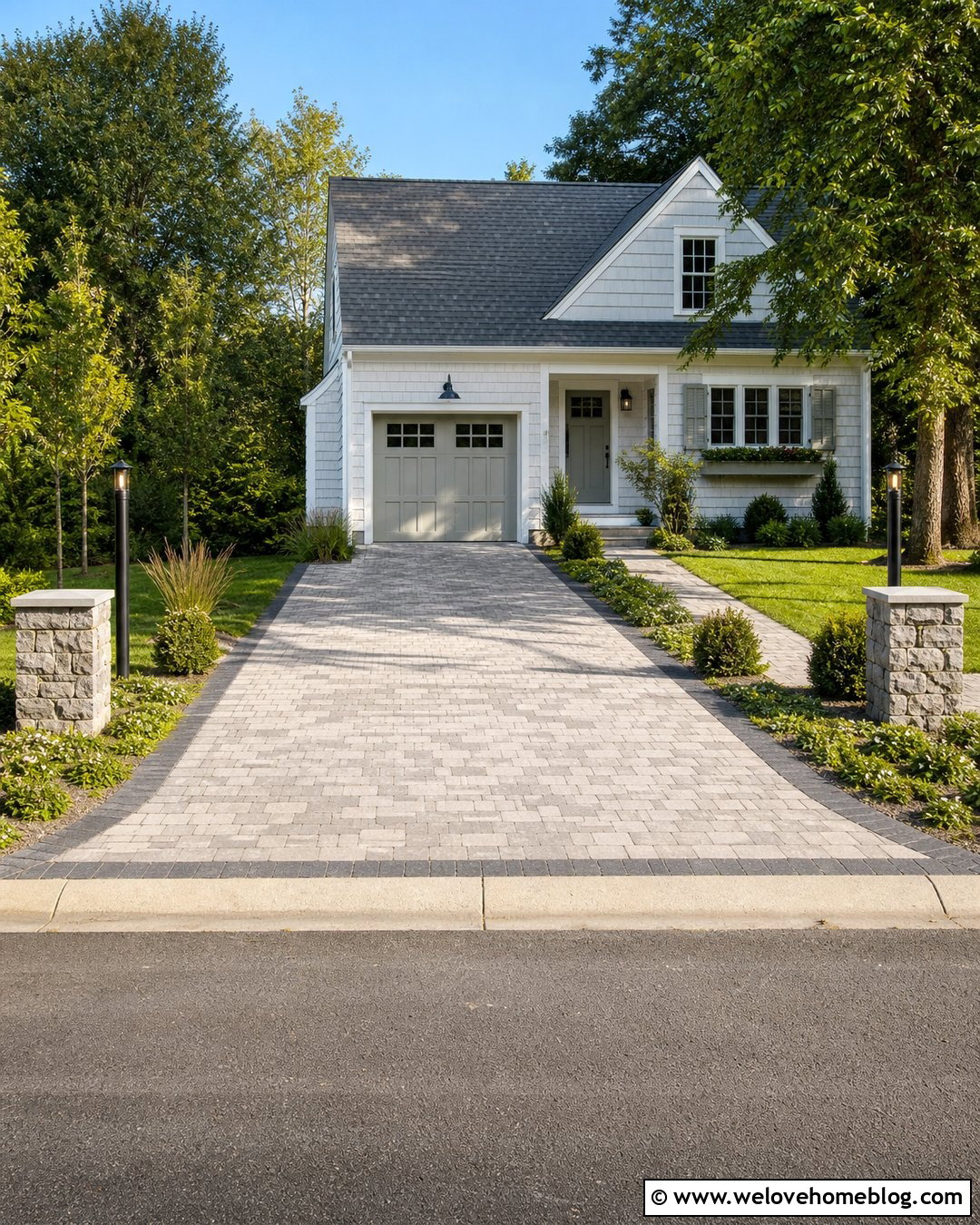
A compact front yard can still support a distinctive cobblestone entrance when every element is carefully scaled. Use small-format gray granite cobbles across a short, straight driveway leading to a single garage. A simple running-bond pattern will make the narrow space feel orderly, while a dark border creates definition without taking up planting room. Skip oversized gates and pillars. Instead, use low stone posts, compact lights, or a slim address marker near the sidewalk. Narrow beds filled with upright grasses, dwarf evergreens, and low ground cover can soften the edges without crowding vehicles. Connect the driveway to the front walk with matching cobblestone detailing. Limiting the palette to two stone colors and a few repeated plants keeps the entrance visually calm, open, and appropriately proportioned.
Conclusion:
The best cobblestone entrance is more than a decorative patch of stone. It creates a clear transition from the road, supports comfortable vehicle movement, and introduces the style of the home. Gates, pillars, borders, lighting, and landscaping should complement the cobbles rather than compete with them. Before choosing a look, consider driveway width, turning needs, drainage, maintenance, visibility, and the scale of the front yard. You can use cobblestone across the full approach or reserve it for an apron that upgrades an existing surface. Whether your home is traditional, rustic, or modern, these 20 Cobblestone Driveway Entrance Ideas offer practical ways to create a durable and welcoming first impression.

Related posts:
Leave a Reply