
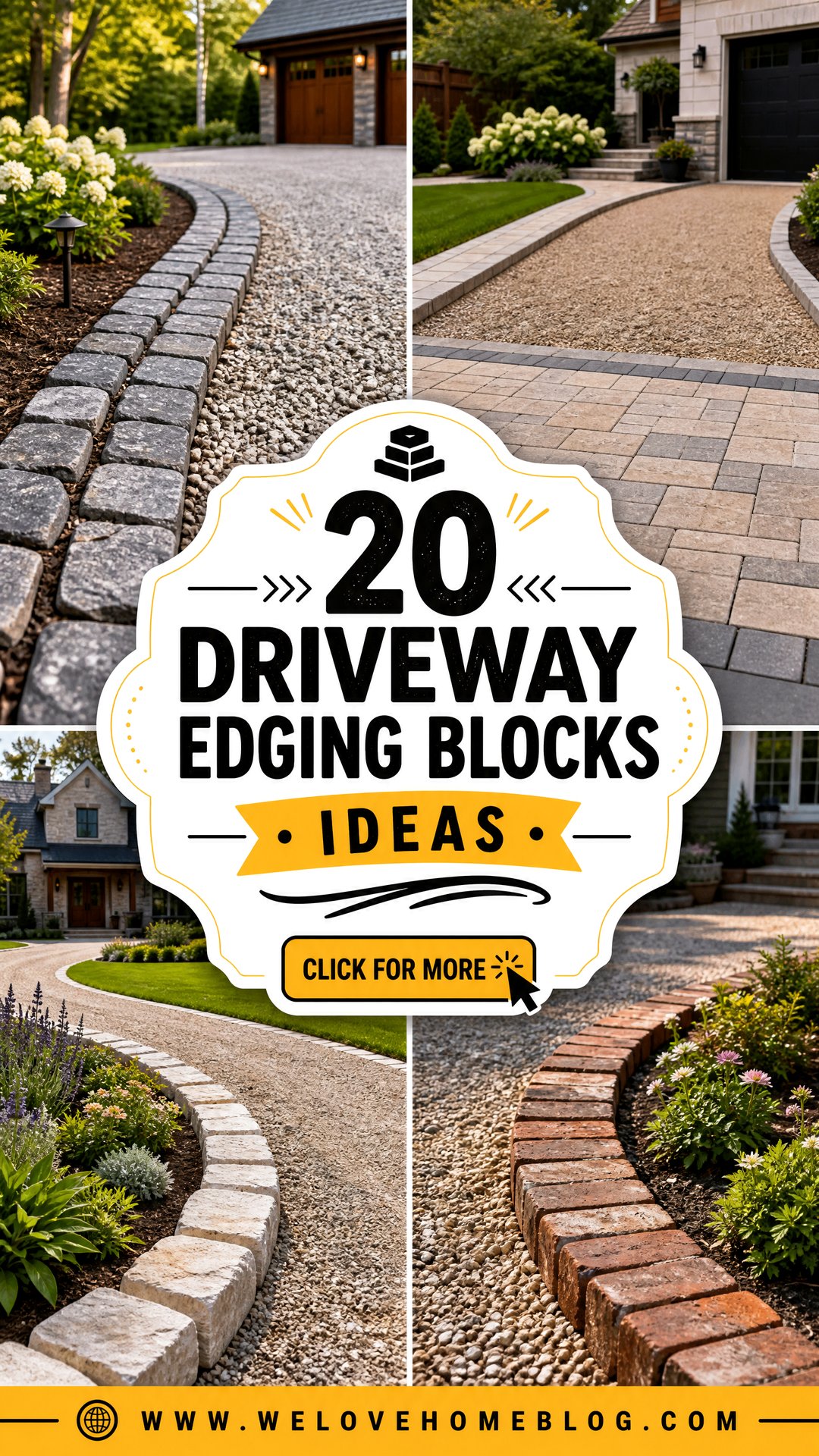
Driveway edging blocks do more than create a tidy line between paving and landscaping. They support vulnerable driveway edges, contain loose aggregates, simplify lawn care, and give the entire front yard a more finished appearance. The right design depends on your driveway surface, home exterior, drainage needs, and desired level of contrast. Granite setts can strengthen asphalt, while brick adds warmth to concrete. Smooth charcoal pavers suit modern homes, and softly weathered cobblestones complement cottage or farmhouse settings. The block height and layout matter too. Flush borders create easy transitions, while raised blocks provide stronger separation from planting beds. The complete looks below combine practical layouts, coordinated materials, and attractive landscaping in **20 Driveway Edging Blocks Ideas**.
1. Belgian Block Driveway Edging
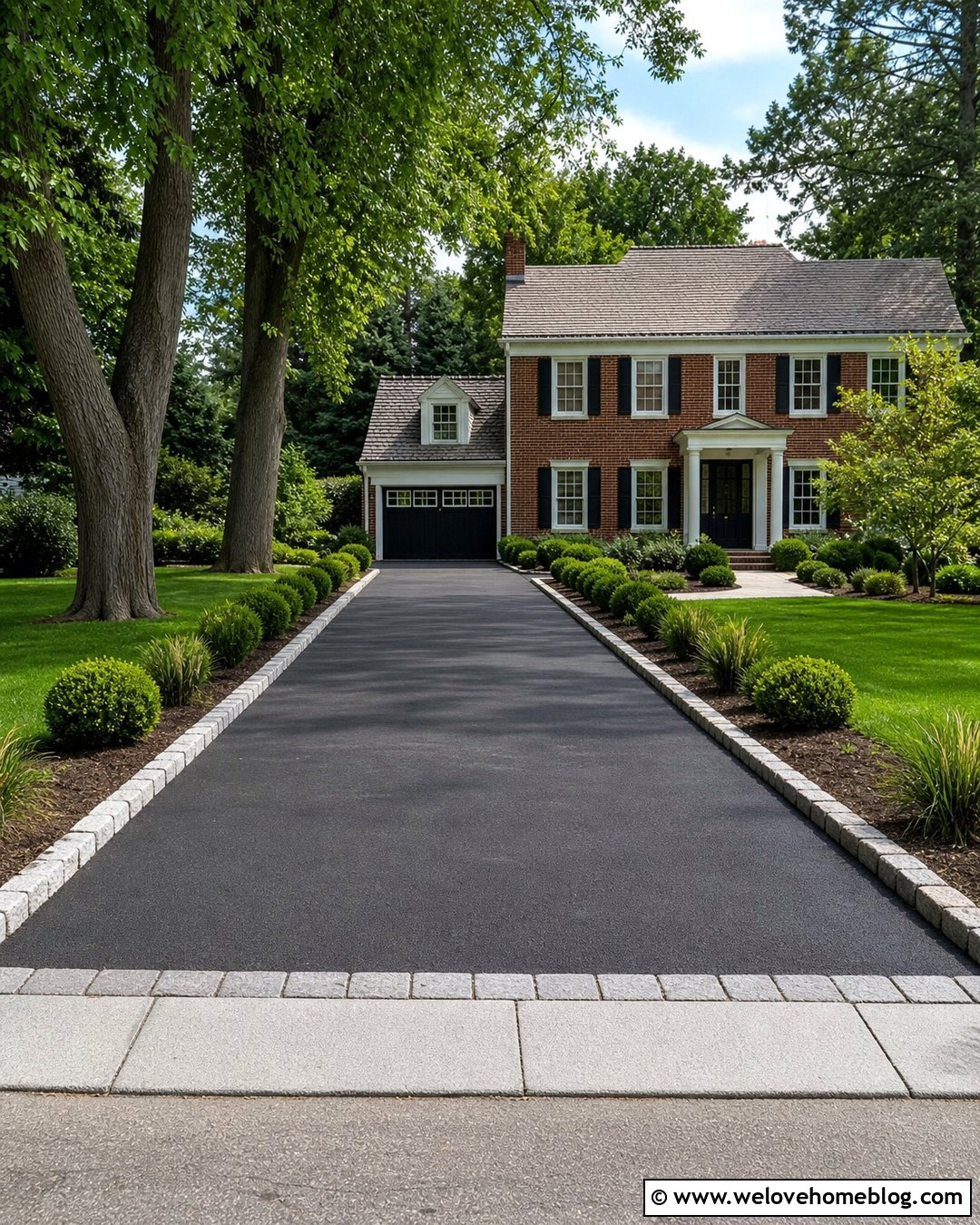
Belgian blocks give a black asphalt driveway a strong, traditional frame that can handle a visually substantial home. Use gray granite blocks in a single soldier course, setting each piece perpendicular to the driveway edge. A slightly raised installation separates the asphalt from lawn and discourages soil from spilling onto the surface. Keep the driveway straight, then widen the border near the garage and sidewalk to create balanced transitions. Deep green boxwoods, ornamental grasses, and a simple concrete walkway complete the setting without competing with the granite. This combination looks especially appropriate beside a brick colonial or Cape Cod house. For dependable results, place the blocks over a compacted base and secure them with proper edge support.
2. Brick Driveway Edging Blocks
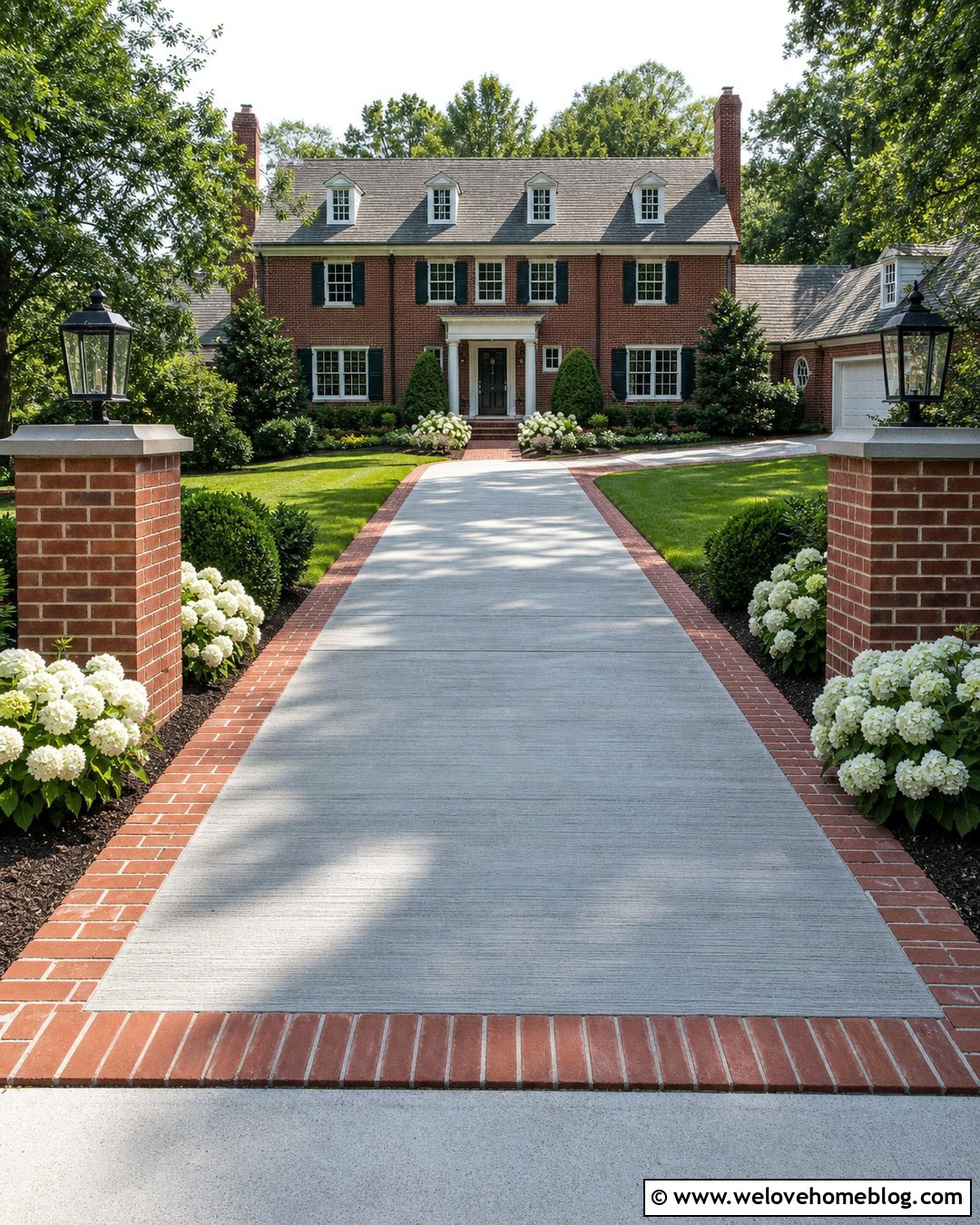
Warm red brick edging can soften the plain appearance of a wide gray concrete driveway. Lay the bricks lengthwise in a running bond to create a smooth, continuous border from the curb to the garage. Matching brick pillars at the entrance can help the edge feel connected to the architecture rather than added later. Keep the bricks nearly flush with the concrete where people walk, then raise them slightly beside planting beds. White hydrangeas, clipped evergreen shrubs, and fresh dark mulch create a clean contrast with the red tones. This complete driveway look works well with colonial, Georgian, and traditional ranch homes. Select paving bricks rated for exterior ground use because ordinary wall bricks may not perform as well in demanding driveway conditions.
3. Charcoal Driveway Edging Blocks
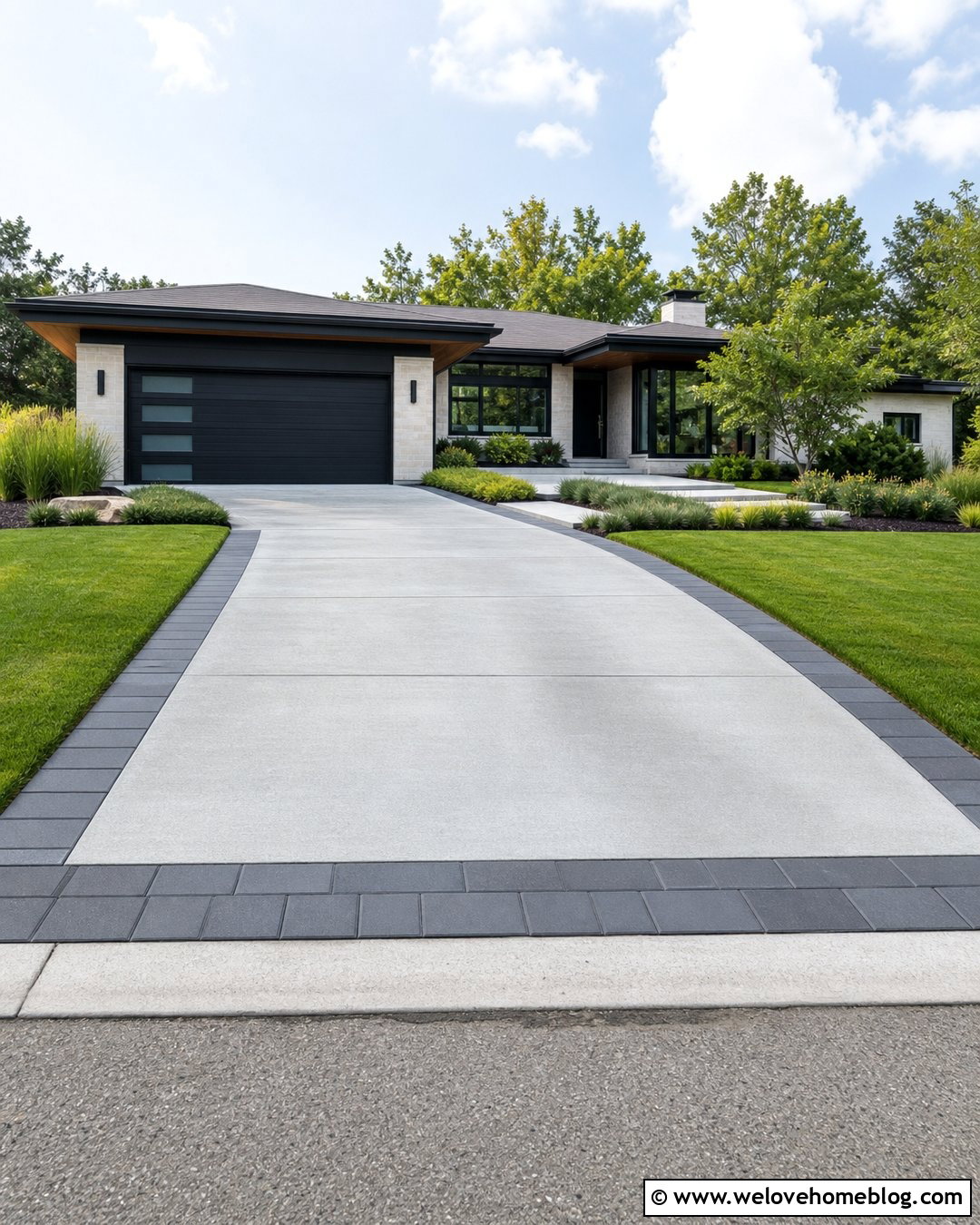
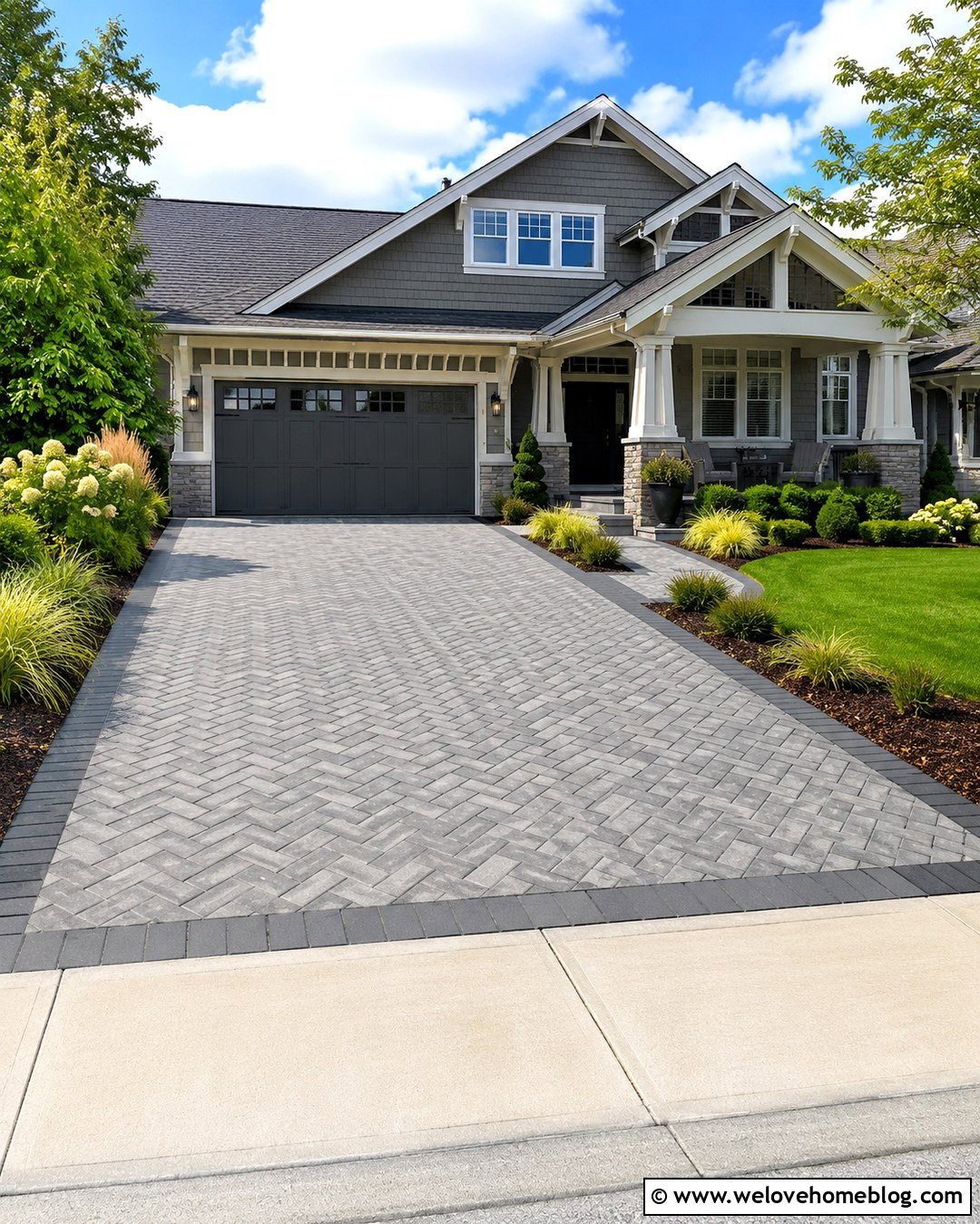
A light concrete driveway becomes sharper and more contemporary when framed with charcoal concrete edging blocks. Choose smooth rectangular pavers and install them in one straight row along both sides. Repeat the dark color in the garage door, window frames, and walkway border to make the design feel intentional. A flush installation maintains the clean geometry and prevents the edging from becoming a visual barrier. Low ornamental grasses, compact junipers, and broad sections of lawn keep the landscaping simple. At the curb, turn the charcoal blocks across the driveway to form a coordinated apron line. This restrained palette is ideal for a modern or updated midcentury home, where strong contrast and uncomplicated materials usually create the most convincing curb appeal.
4. Cobblestone Blocks For A Gravel Driveway
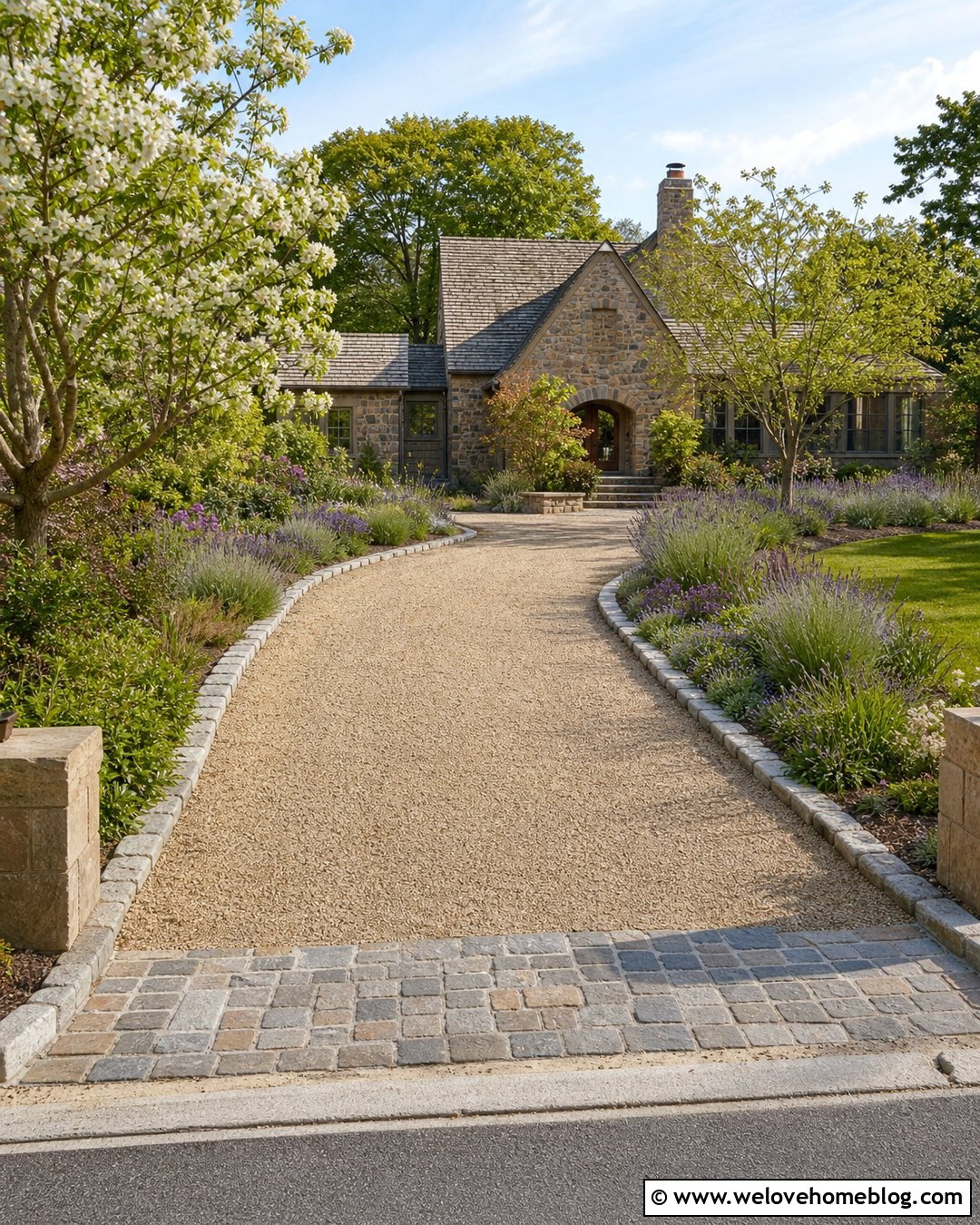
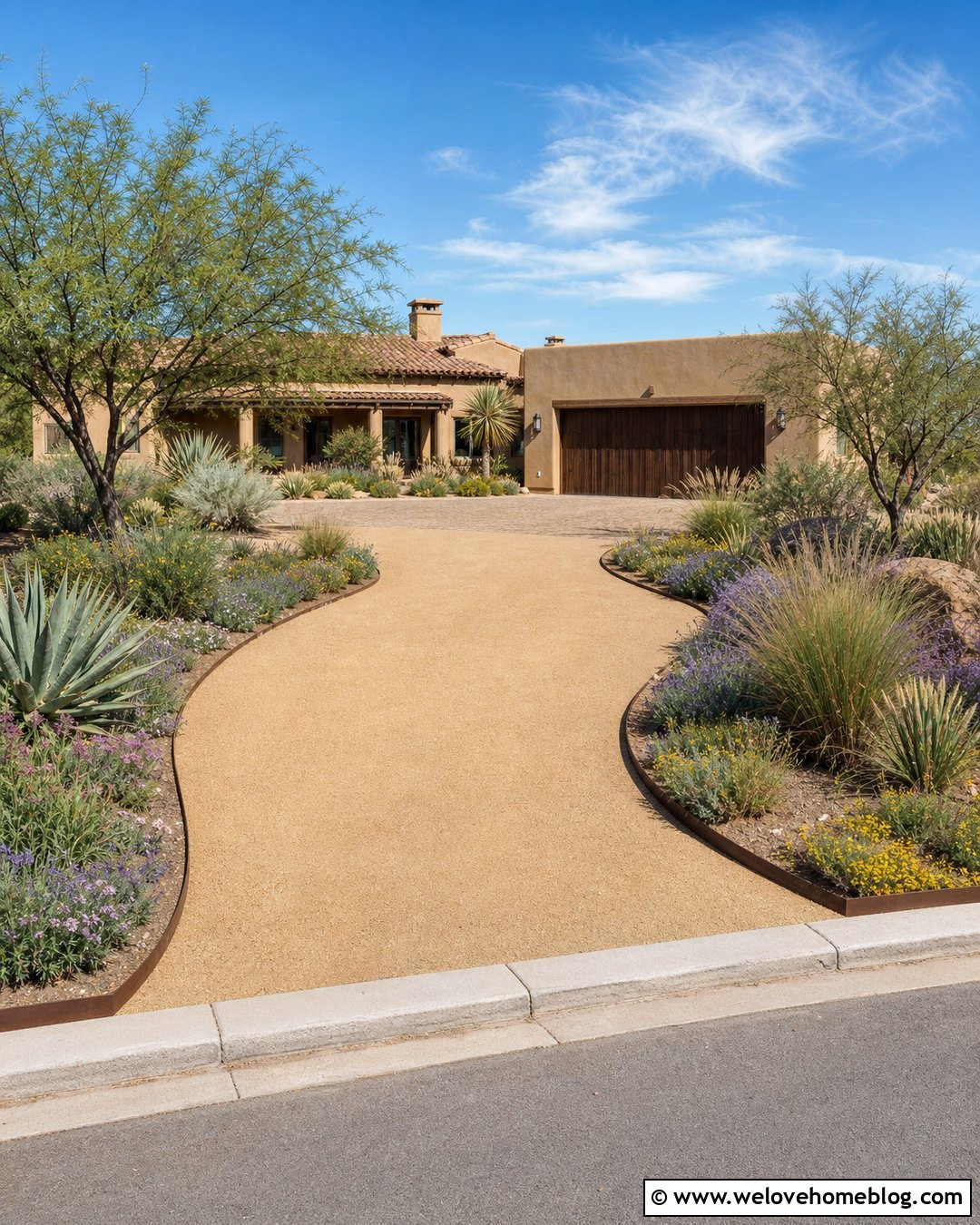
Loose gravel needs a visible, stable edge, and chunky cobblestone blocks provide both structure and character. Pair warm beige pea gravel with weathered gray cobbles laid in a gently raised single row. A curved driveway makes the irregular stone surfaces feel natural, especially when the border follows broad planting beds rather than tight bends. Behind the blocks, use lavender, catmint, dwarf grasses, and small flowering trees to soften the hardscape. Extend the cobblestones across the entrance as an apron that helps define the transition from street to driveway. This combination suits a cottage, country, or stone-faced home. The edging should have solid support beneath and behind it so vehicle movement and shifting gravel do not gradually push the blocks outward.
5. Concrete Driveway Edging Blocks
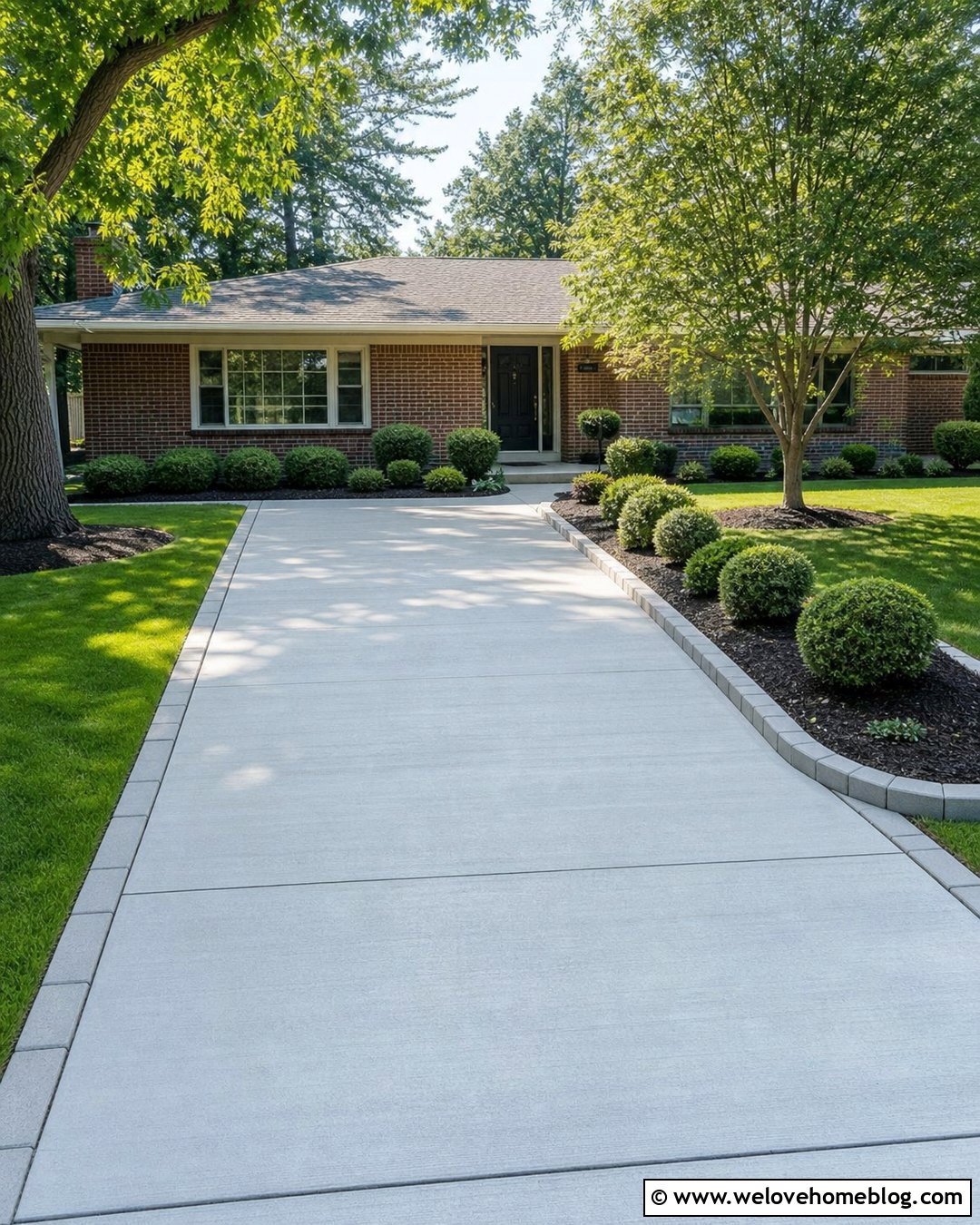
For an understated border, match a broom-finished concrete driveway with pale gray precast concrete edging blocks. The similar tones produce a subtle outline rather than a dramatic contrast, making the driveway appear wider and calmer. Install long rectangular blocks flush with the pavement along the lawn, then use raised sections around mulched planting beds. A straight layout leading to a simple ranch house keeps the overall design practical. Add rounded shrubs, two small shade trees, and a walkway made from the same pale concrete. Slight variations in texture will separate the edging from the main surface without introducing another strong color. This approach is useful when the house already has several exterior materials and the driveway needs to look polished without making the front yard feel visually busy.
6. Raised Driveway Edging Blocks
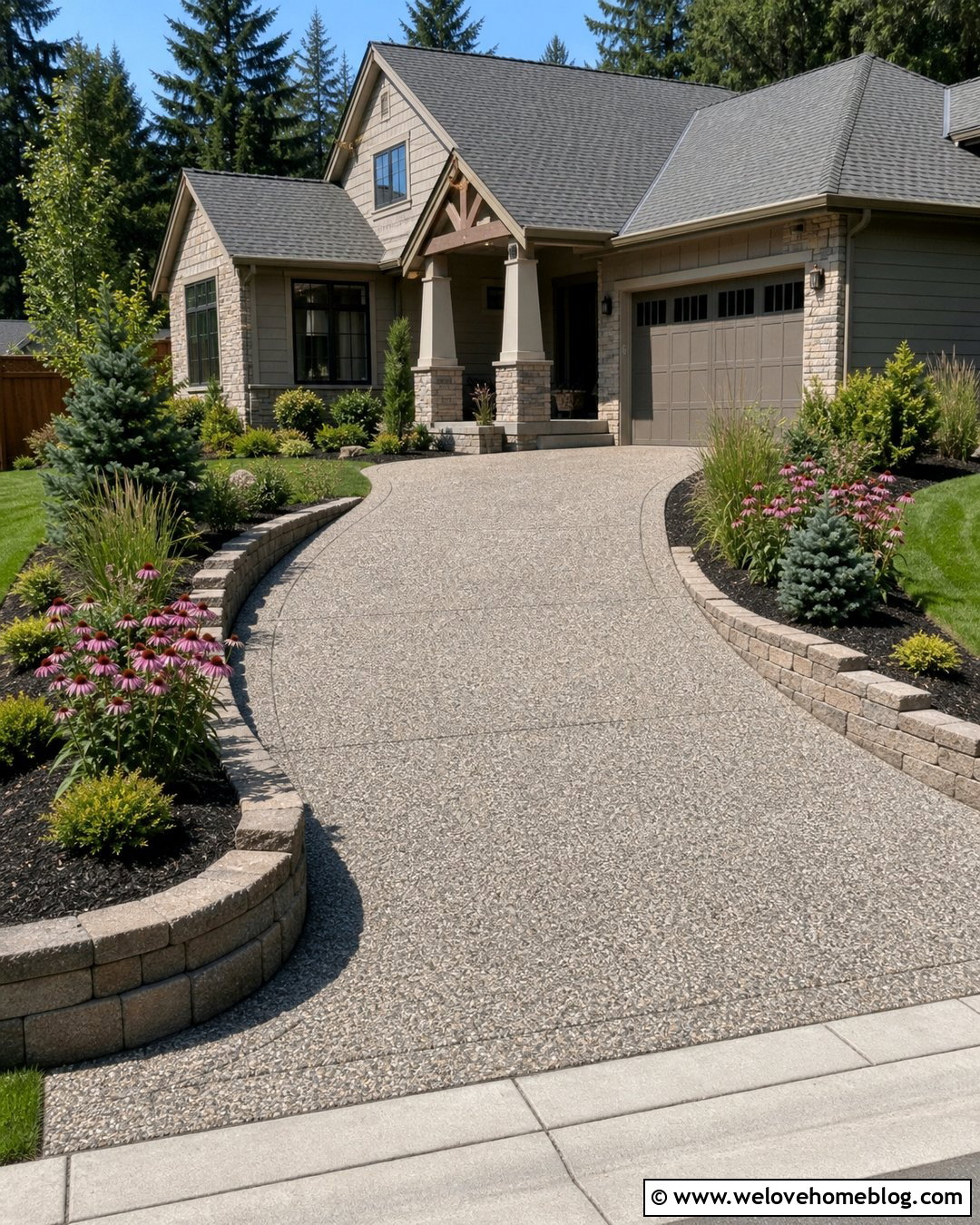
Raised edging blocks create a clear boundary where a driveway sits beside sloped beds or loose mulch. Use rough-faced tan concrete blocks along a curved exposed-aggregate driveway, keeping the top of the border consistently above the driving surface. The warm edge can coordinate with stone veneer on a craftsman house, while the exposed aggregate adds texture without looking overly decorative. Plant compact evergreens, coneflowers, and ornamental grasses behind the blocks, leaving enough space so mature growth does not obstruct the driveway. Near the sidewalk and garage, transition gradually to flush-set blocks to reduce tripping hazards. Raised borders are most successful when they look integrated with the grading. They should guide runoff thoughtfully rather than trapping water against the driveway or directing it toward the foundation.
7. Flush Driveway Edging Blocks
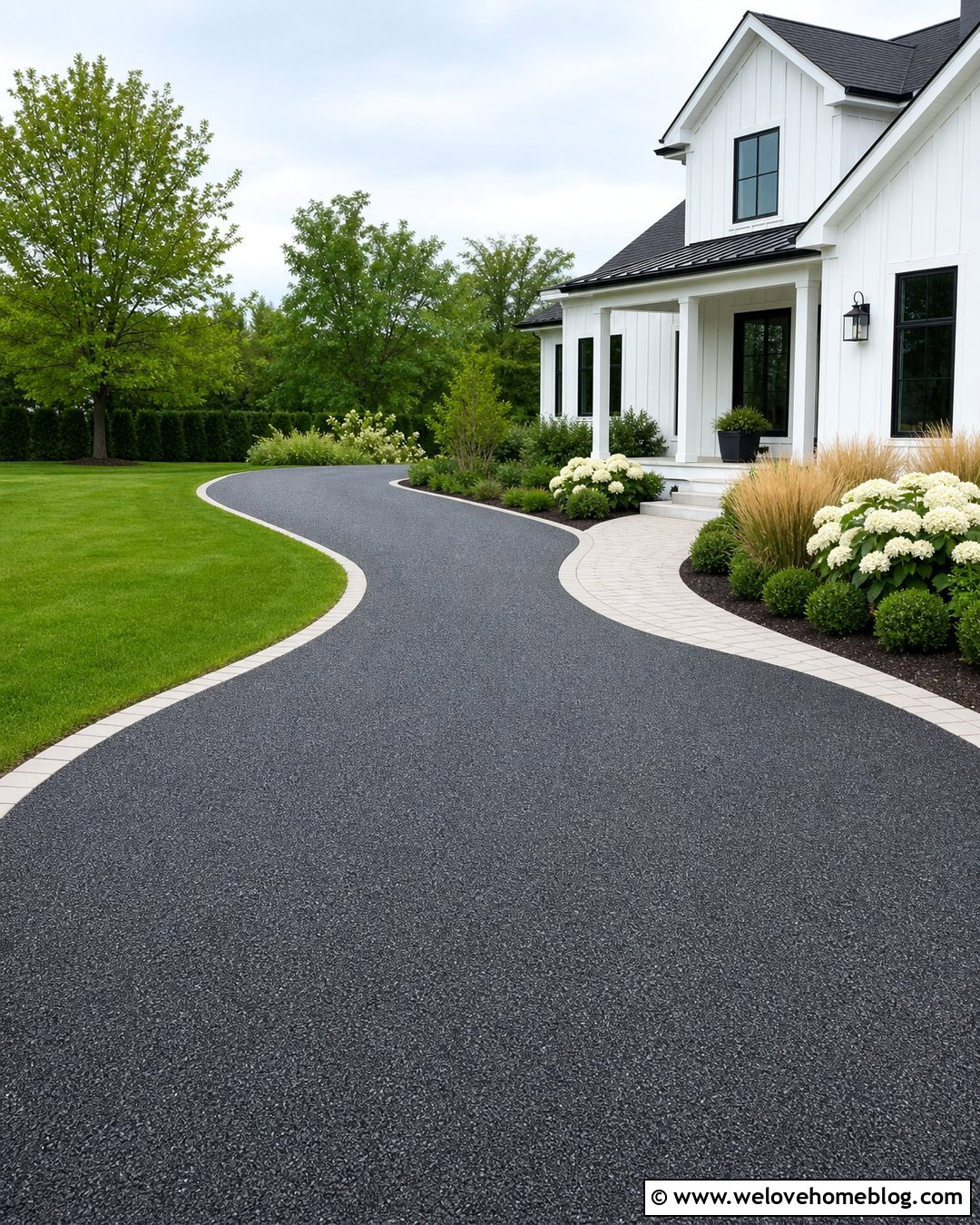
A flush border is ideal when you want crisp definition without interrupting foot traffic, drainage, or lawn mowing. Frame a dark resin-bound gravel driveway with smooth ivory concrete blocks set level with the finished surface. Use a gently curved layout to lead the eye toward a white modern farmhouse and detached garage. The light blocks will brighten the perimeter while preventing the driveway from blending into surrounding planting beds. Continue the same units around the walkway for a unified front-yard plan. Soft grasses, white flowering shrubs, and a neatly cut lawn keep the palette relaxed. Because the edging sits flush, precise installation is important. Consistent joints and an even line will determine whether the finished driveway looks professionally detailed or simply surrounded by mismatched paving pieces.
8. Double Row Driveway Edging Blocks
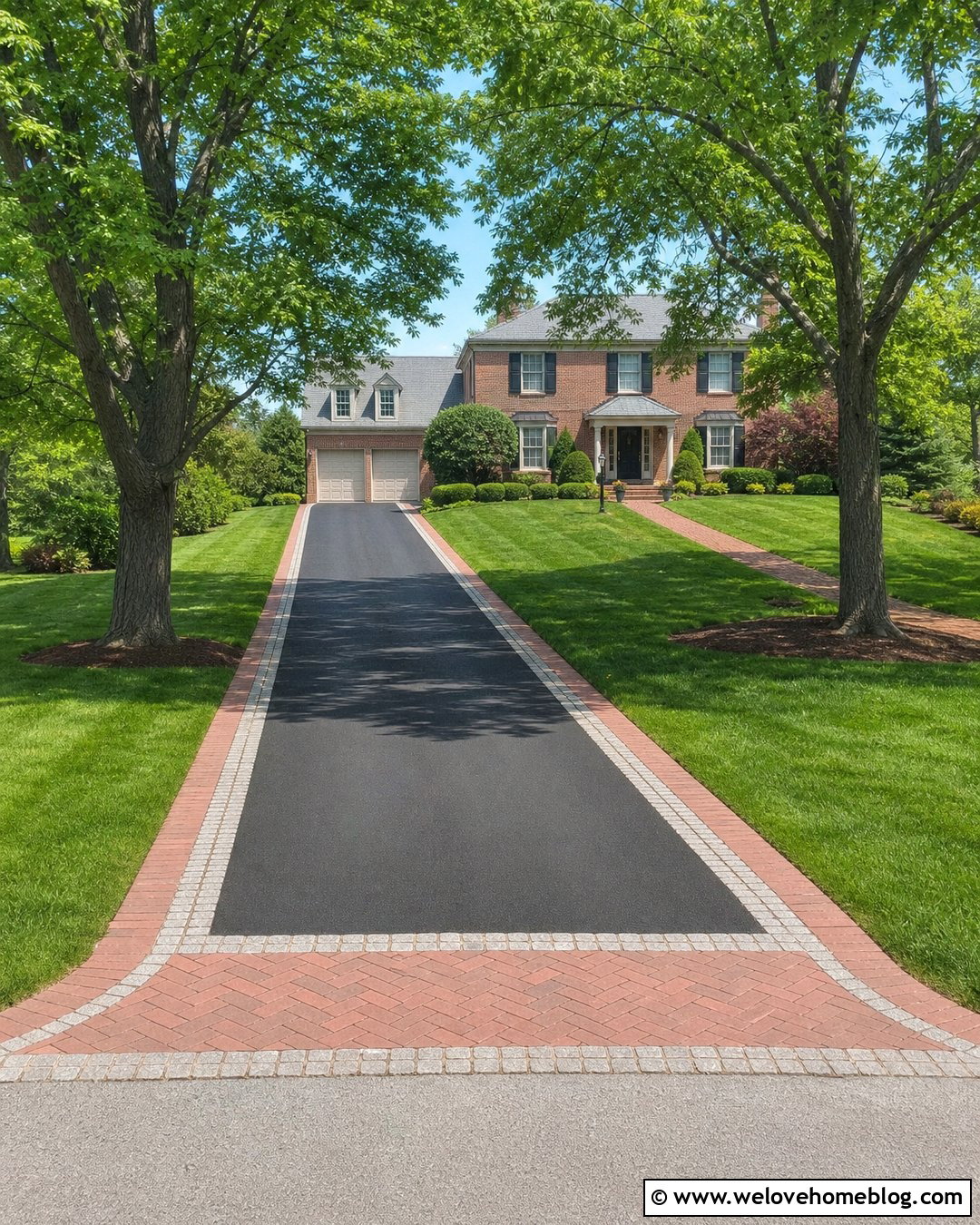
Two rows of edging blocks create a more substantial border for a long or oversized driveway. Pair a black asphalt surface with one inner row of gray granite setts and one outer row of muted red clay pavers. The granite provides a strong transition next to the asphalt, while the brick connects with a red brick house in the background. Lay both rows in straight, parallel lines and widen them into a decorative apron at the road. Large lawn panels, mature maples, and simple foundation shrubs balance the broad hardscape. This layered border works particularly well on a long driveway because it remains noticeable from the curb. Keep the colors subdued and repeat existing facade materials so the double edging looks coordinated rather than unnecessarily ornate.
9. Curved Driveway Edging Blocks
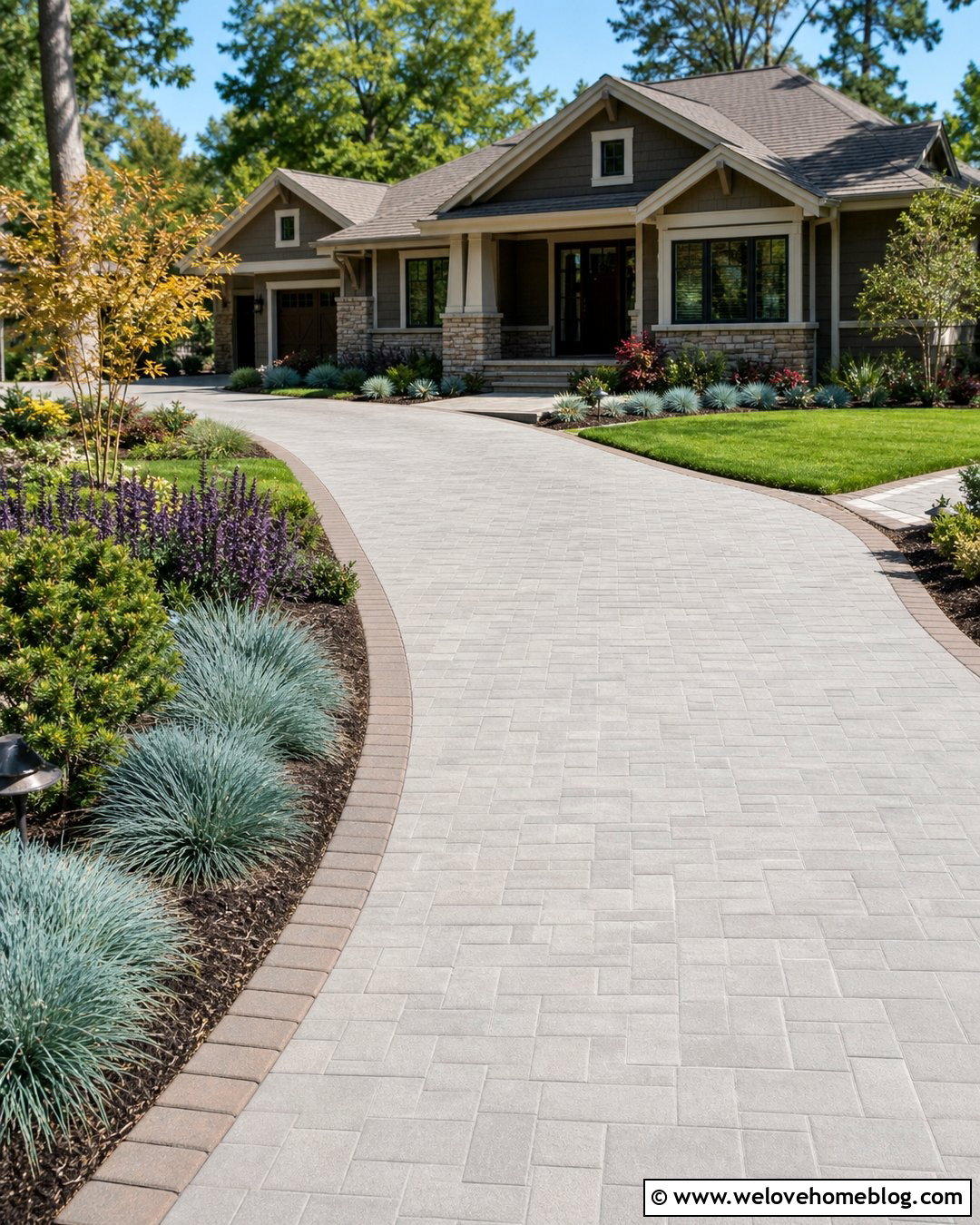
Curved driveways benefit from smaller edging blocks that can follow sweeping lines without awkward gaps. Use tumbled concrete pavers in warm taupe around a curved light-gray paver driveway. The softened edges and blended coloring create an approachable look beside a craftsman bungalow. Install the blocks in a narrow soldier course, adjusting the joints gradually around each bend instead of creating sudden angle changes. On the outside curve, add layered beds with dwarf evergreens, blue fescue, flowering perennials, and a small ornamental tree. Keep the inside curve more open with lawn and low ground cover to preserve visibility. Repeating the taupe blocks around the front walkway will connect the driveway to the entrance and make the complete landscape appear carefully planned.
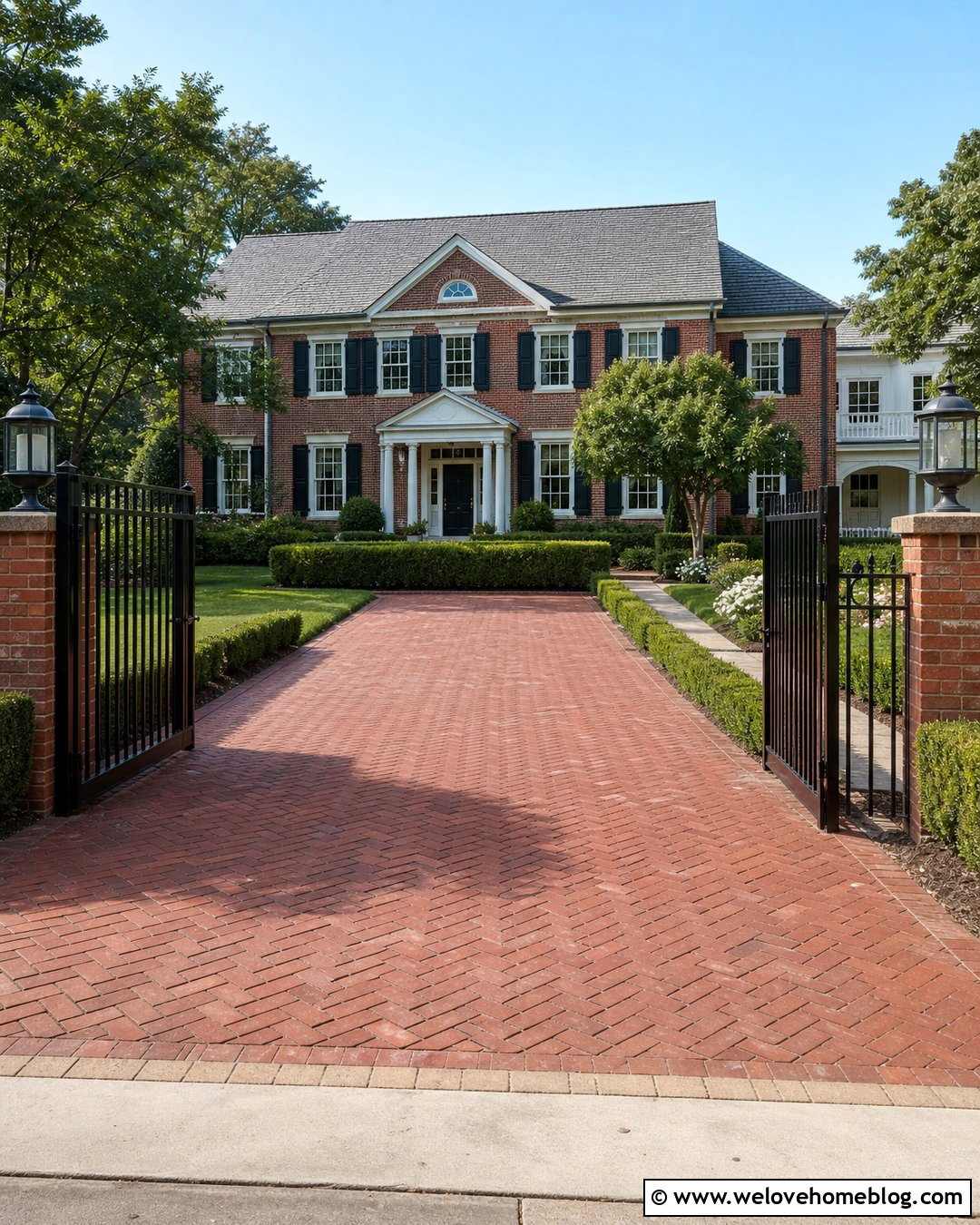
10. Circular Driveway Edging Blocks
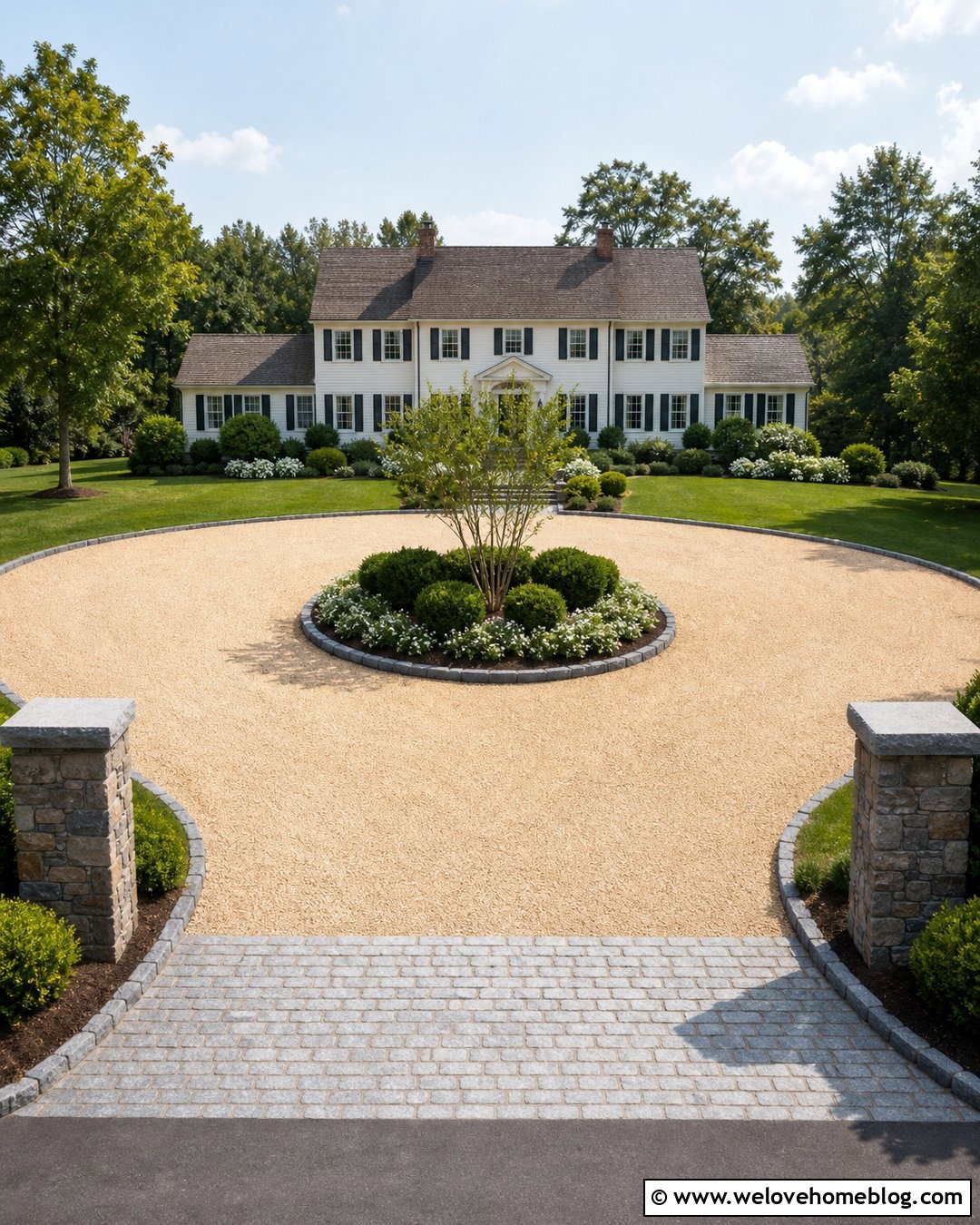
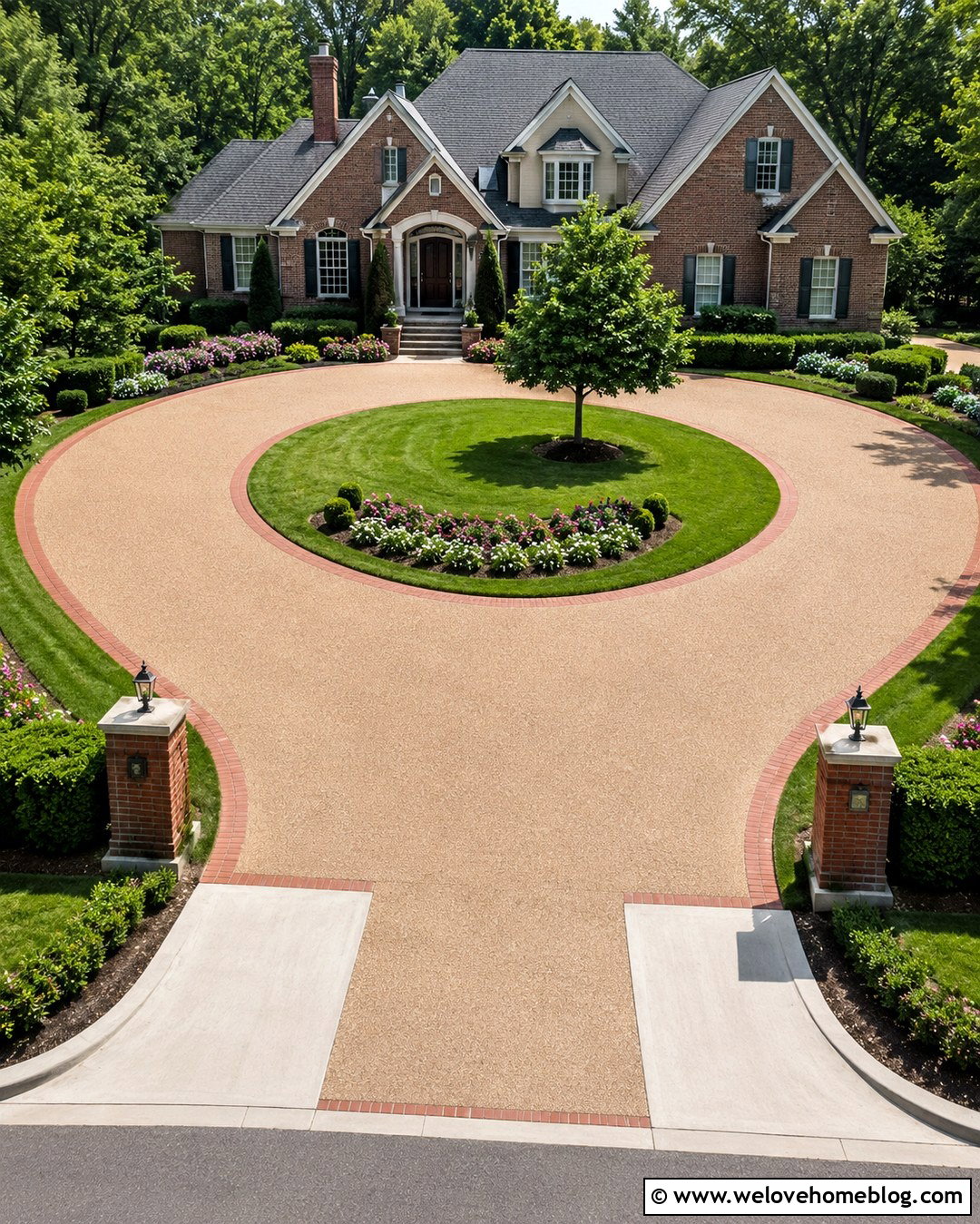
A circular driveway needs edging that emphasizes its shape while controlling the central landscape island. Surround a buff-colored gravel driveway with dark gray granite blocks, using the same stone on both the outer perimeter and inner circle. The strong outline makes the layout readable from the curb and keeps loose gravel away from lawn and planting soil. In the center, use a small multi-stem tree, low evergreen shrubs, and seasonal perennials arranged below driver sightlines. Add a granite block apron between simple entrance pillars for a polished arrival. This design complements a symmetrical colonial or stately traditional house. The curves should remain broad and consistent, with carefully fitted block joints, so the circle feels graceful and vehicles have comfortable room to turn.
11. Driveway Edging Blocks With A Paver Apron
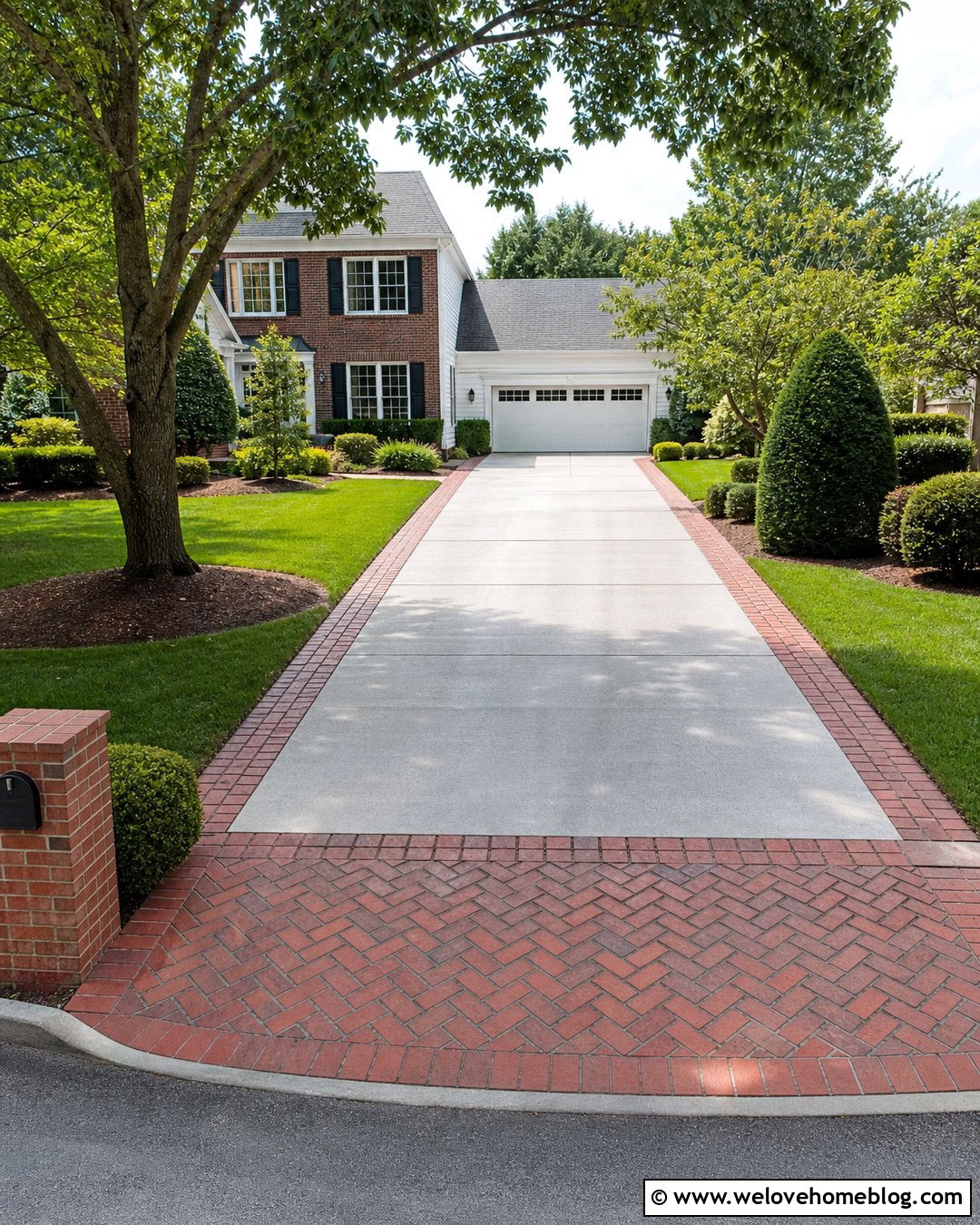
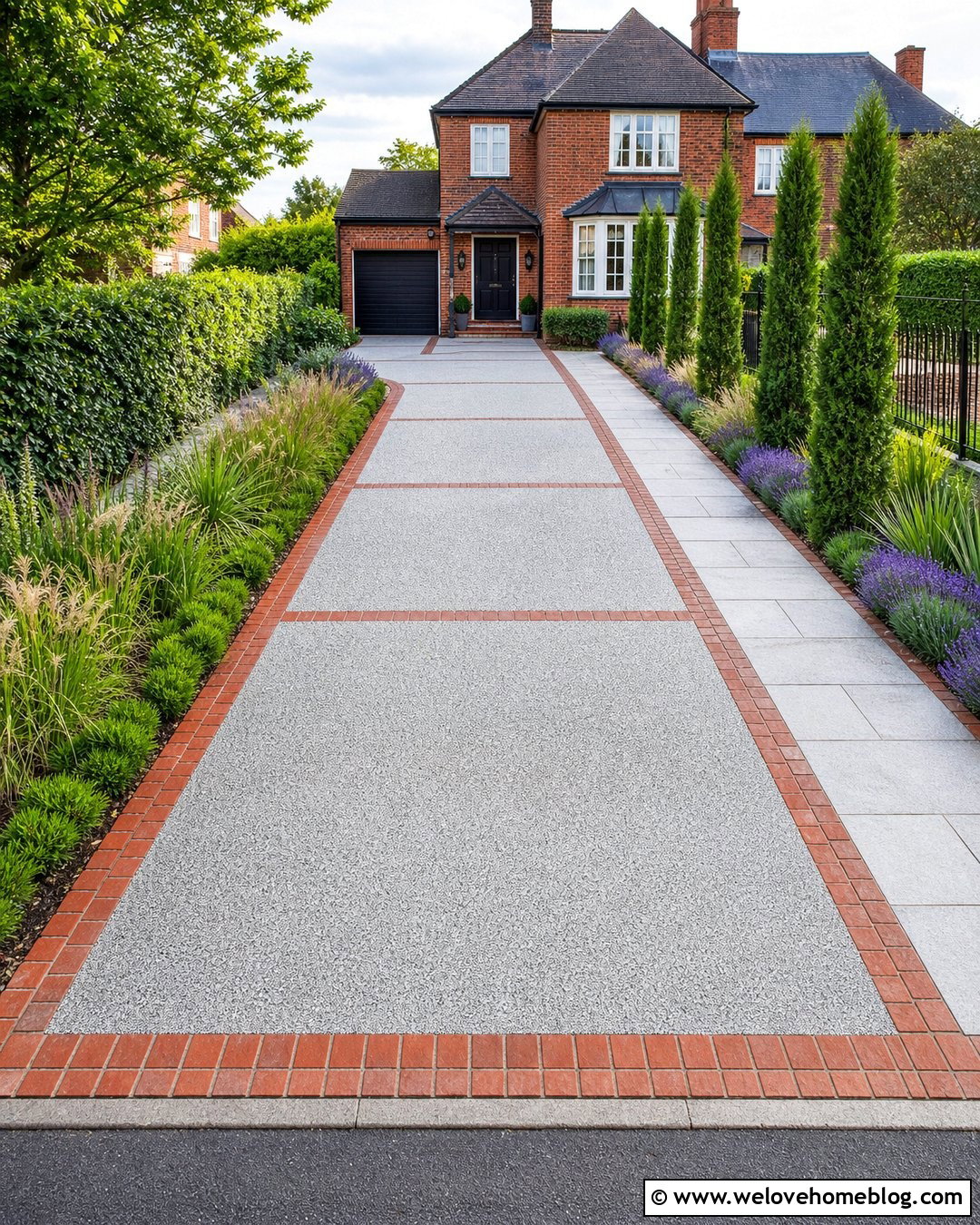
Connecting driveway edging to a coordinating apron makes the entrance look wider and more finished. Start with a medium-gray poured concrete driveway framed by reddish-brown brick pavers. At the curb, expand those bricks into a broad herringbone apron that spans the full driveway width. This introduces pattern where it has the greatest visual impact without covering the entire driving area. Continue the brick toward the house as a slim edge, then repeat it around the front walkway. A classic two-story home, green lawn, clipped shrubs, and matching brick mailbox provide a balanced setting. Use a clear transition between the apron and concrete so the two surfaces read as one design. The result offers strong curb appeal while keeping most of the driveway simple and restrained.
12. Driveway Edging Blocks With Grass Strips
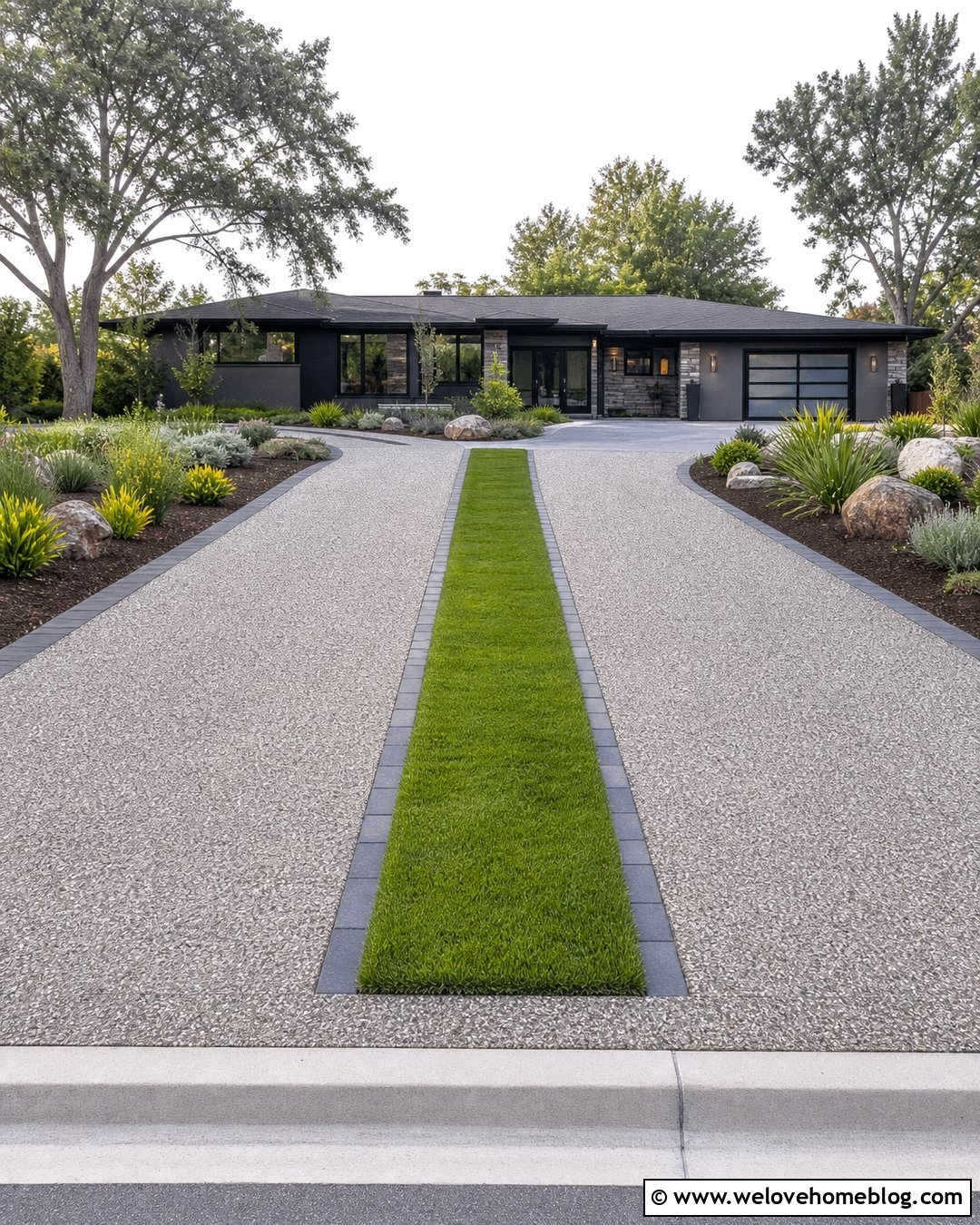
Grass strips between paving can reduce the visual weight of a wide driveway, especially when edging blocks keep every section clearly defined. Use two parallel lanes of exposed-aggregate concrete bordered by slim charcoal paver blocks, leaving a green strip through the center. The dark edging provides crisp separation between the concrete and turf while repeating the color of a modern ranch home’s roof and windows. Continue the blocks around curved planting beds near the garage. Drought-tolerant grasses, low shrubs, and a few sculptural boulders create an easygoing landscape. This design works best where the center strip can receive adequate light and irrigation. Keep the blocks flush with the grass to make mowing easier and to maintain a smooth, uncluttered driveway profile.
13. Limestone Driveway Edging Blocks
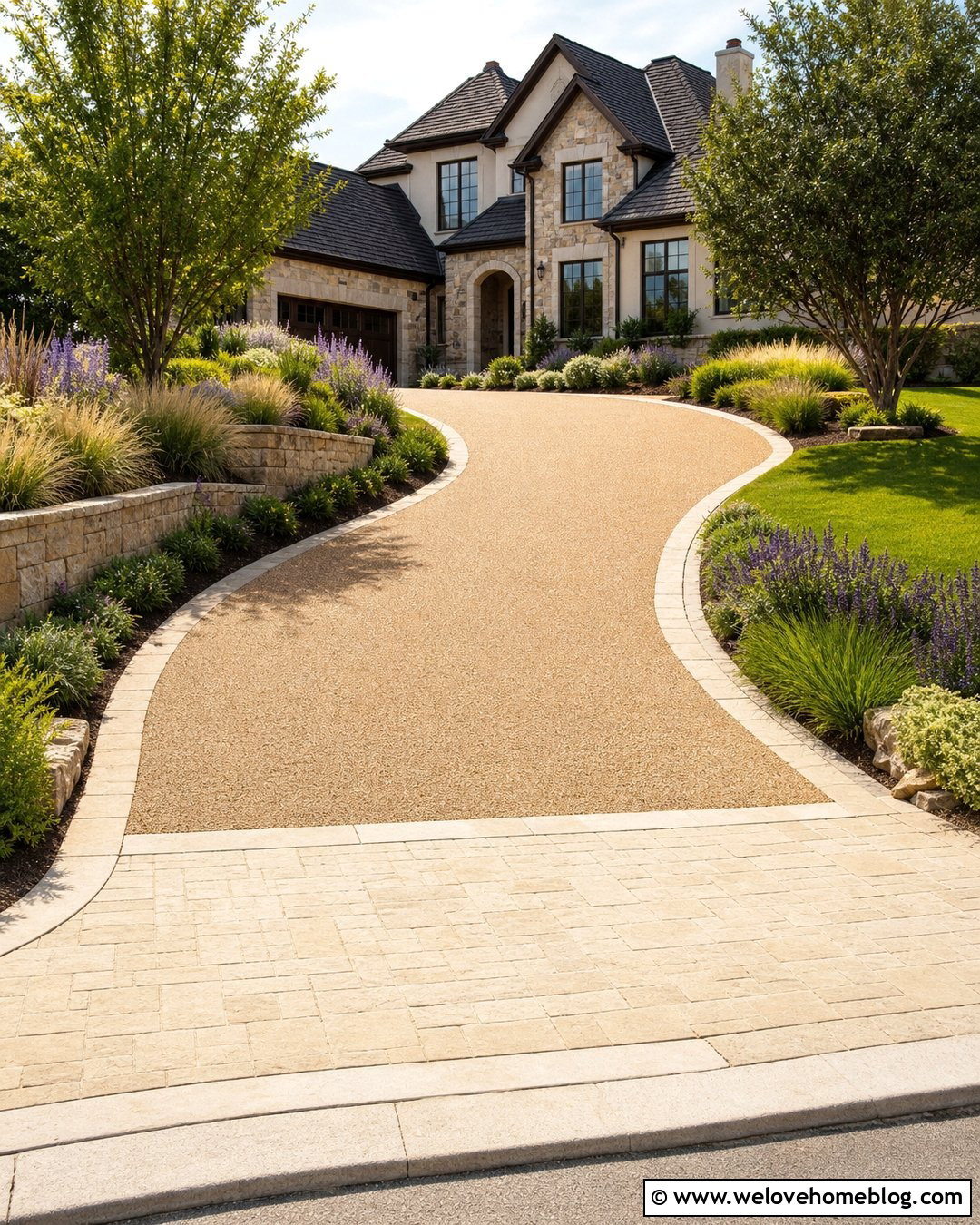
Pale limestone edging brings a refined but natural finish to warm-toned driveway surfaces. Pair rectangular cream limestone blocks with a honey-colored resin-bound gravel driveway that curves gently toward a stone-and-stucco house. Set the blocks in a single flush row beside the lawn and raise them slightly where they hold back planted slopes. Their light color will define the driveway without creating the heaviness of a dark border. Use sage-green shrubs, lavender, feathery ornamental grasses, and a matching limestone walkway to build a soft, cohesive palette. A wider limestone apron at the entrance can make the material more visible from the street. Choose dense stone intended for exterior hardscaping, and plan drainage carefully because light-colored surfaces can reveal soil splashes and organic staining.
14. Sandstone Driveway Edging Blocks
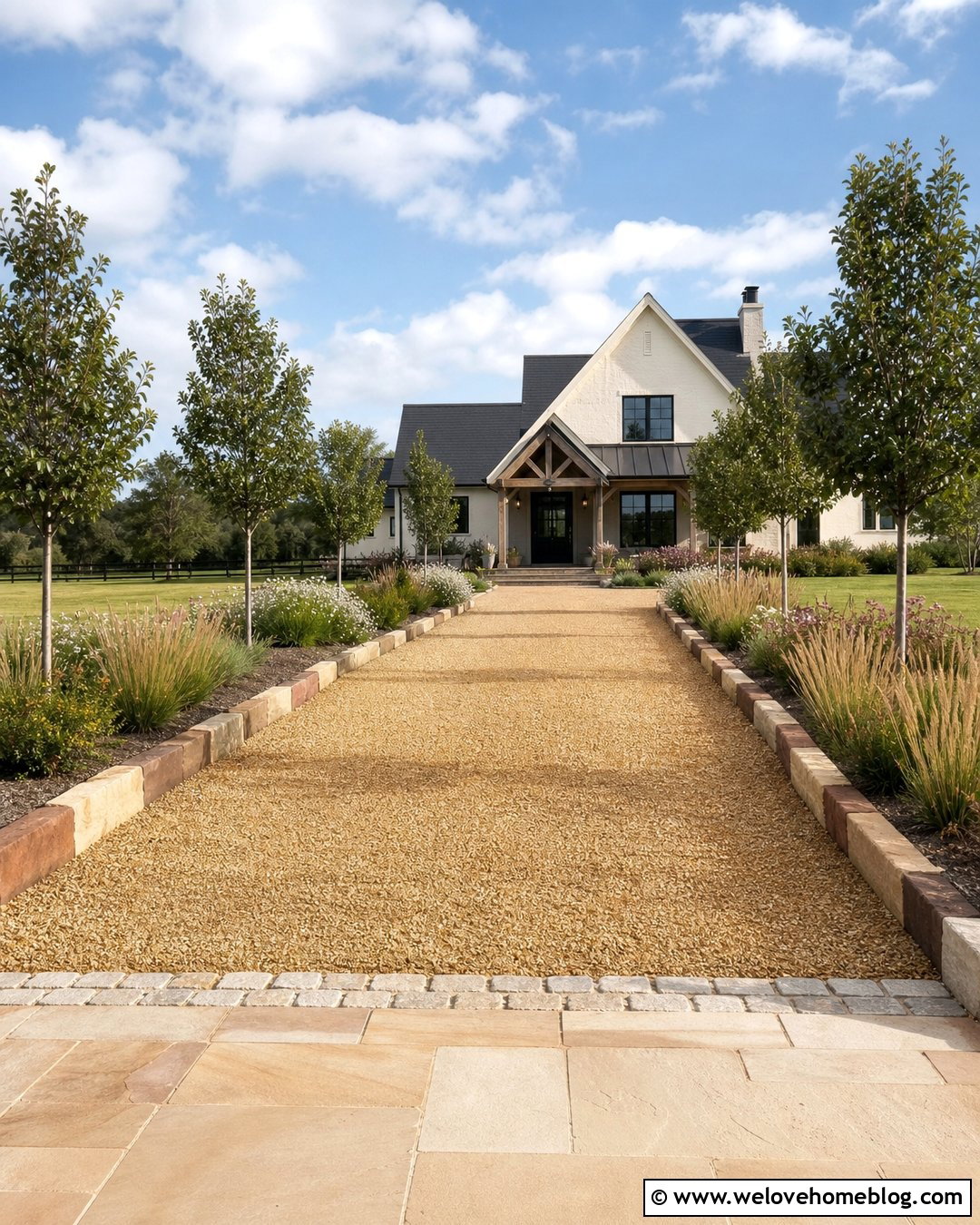
Sandstone blocks pair naturally with gravel and traditional country landscaping. Edge a straight driveway of compacted golden gravel with rectangular sandstone setts in mixed tan, brown, and muted rose tones. Set the blocks slightly above the gravel to contain the loose surface, then lower them near the walkway and garage entrance. A modern farmhouse with cream siding, a dark roof, and timber porch details will echo the relaxed material palette. Frame the approach with meadow-style grasses, white flowering perennials, and evenly spaced ornamental pear trees. Avoid using too many additional stone colors, since the sandstone already provides noticeable variation. A matching block apron at the curb and small sandstone landing near the porch will make the driveway, walkway, and house entrance feel like one continuous composition.
15. Reclaimed Brick Driveway Edging Blocks
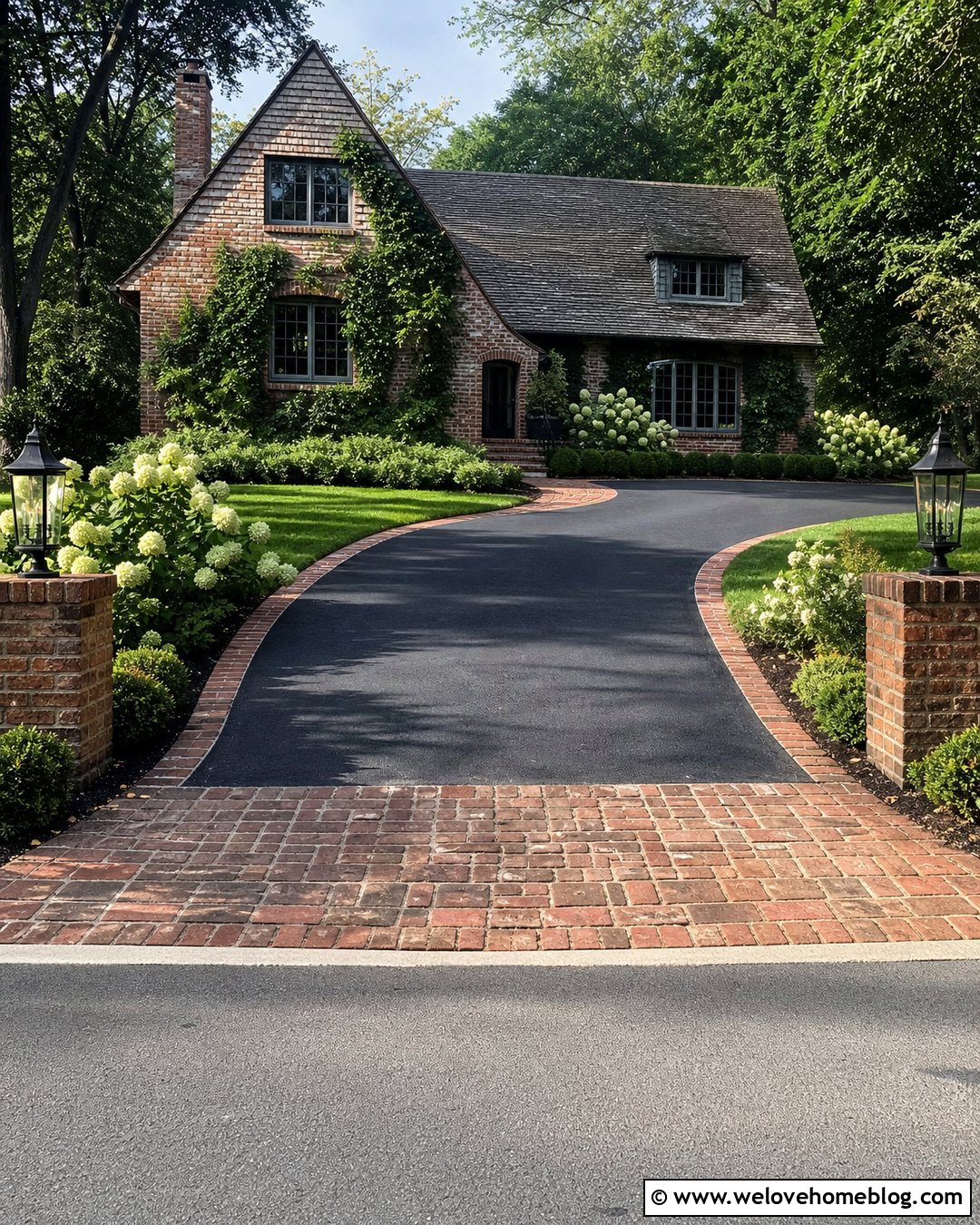
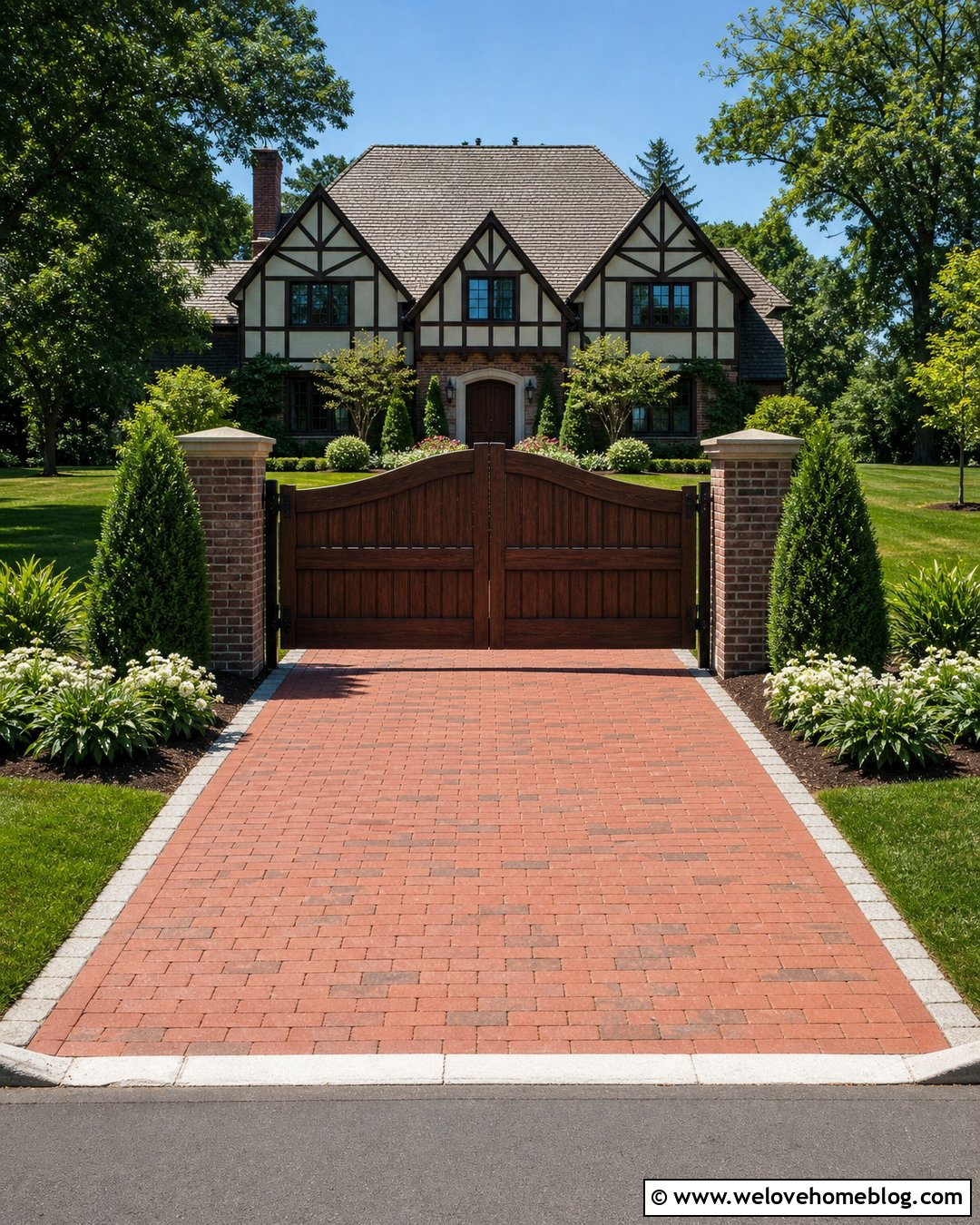
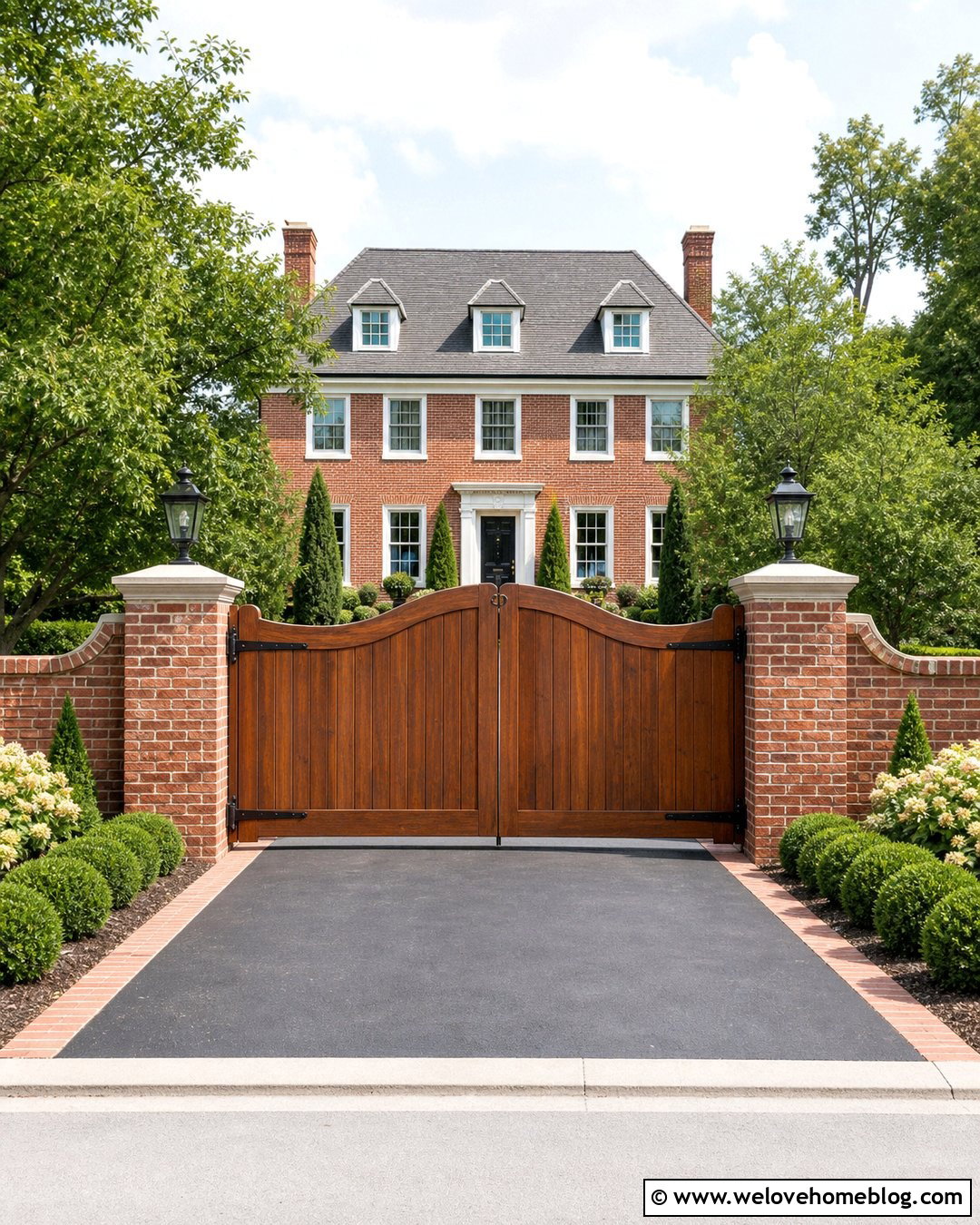
Reclaimed brick gives a newer driveway instant character when its worn coloring complements the home. Border a smooth black asphalt driveway with mixed red and brown reclaimed paving bricks laid in a soldier course. The darker driveway makes the varied brick tones stand out, while a slightly uneven surface creates a relaxed appearance. Use the same bricks for a modest entrance apron and a curved walkway leading to a cottage-style porch. Informal hydrangeas, boxwoods, climbing greenery, and deep mulch beds complete the aged look. Sort the bricks before installation so heavily damaged pieces can be removed and colors can be distributed evenly. Despite the weathered effect, the lines and base should remain carefully constructed. Controlled irregularity looks charming; loose, tilted, or unsupported bricks simply appear unfinished.
16. Modern Driveway Edging Blocks
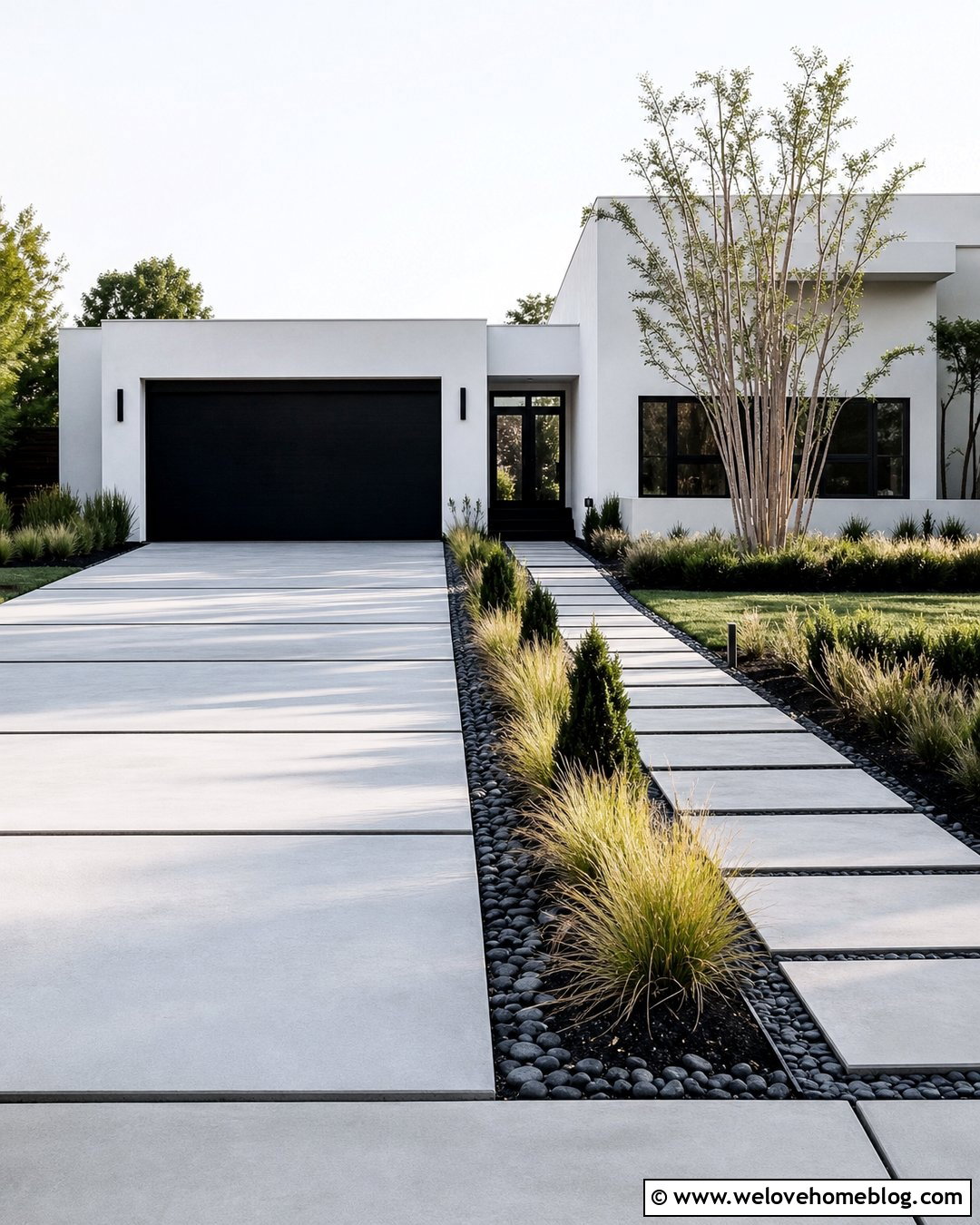
Large-format edging blocks can give a modern driveway a bold architectural outline. Frame wide slabs of light-gray poured concrete with elongated black concrete blocks, maintaining narrow joints and perfectly straight lines. Include slim gravel channels or dark river rock beds beyond the blocks to strengthen the monochrome palette. The driveway should lead directly to a flat-roof house with white stucco, wood accents, and black-framed windows. Use restrained landscaping such as sculptural grasses, compact evergreens, and one multi-stem tree rather than dense flower beds. At the sidewalk, continue the black blocks across the entrance as a narrow graphic band. This complete look depends on precision, so align the driveway joints, edging blocks, walkway, garage opening, and architectural lines wherever the site allows.
17. Rustic Driveway Edging Blocks
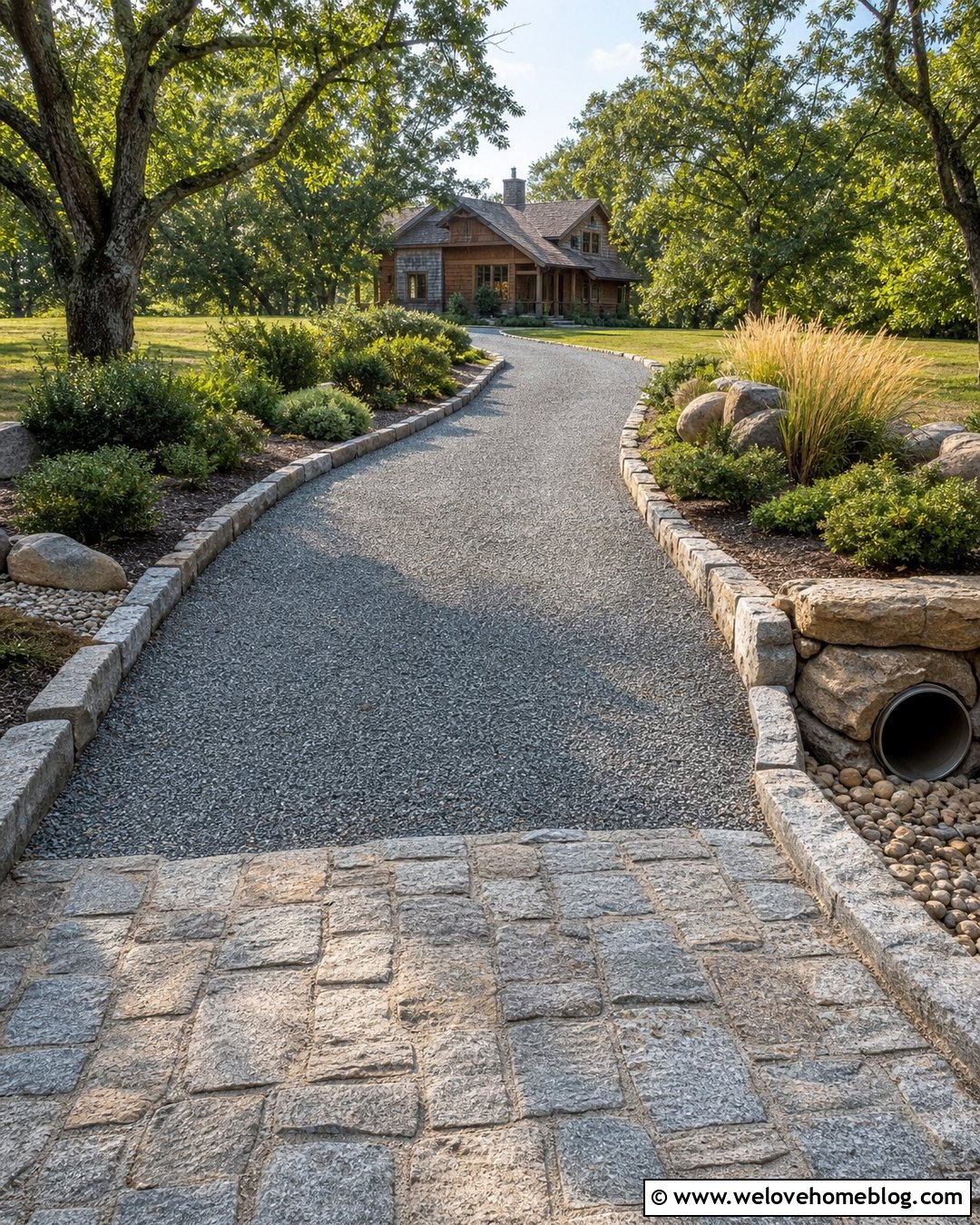
Rough granite blocks make an effective border for a rustic driveway surrounded by mature landscaping. Pair irregular gray and brown granite setts with compacted crushed-stone gravel in a broad curved layout. Keep the block faces relatively natural, but establish a smooth inside line so the gravel remains neatly contained. A cedar-sided country house, mature oak trees, native shrubs, and sweeping ornamental grasses will reinforce the informal setting. Add a small stone culvert wall or matching entrance pillars if drainage and space permit. The blocks can sit slightly raised beside planting areas and transition to flush at pedestrian crossings. Although the finished appearance should feel relaxed, the underlying installation still needs consistency. A secure base and solid backing help prevent heavy stones from leaning outward over time.
18. Driveway Edging Blocks With Flower Beds
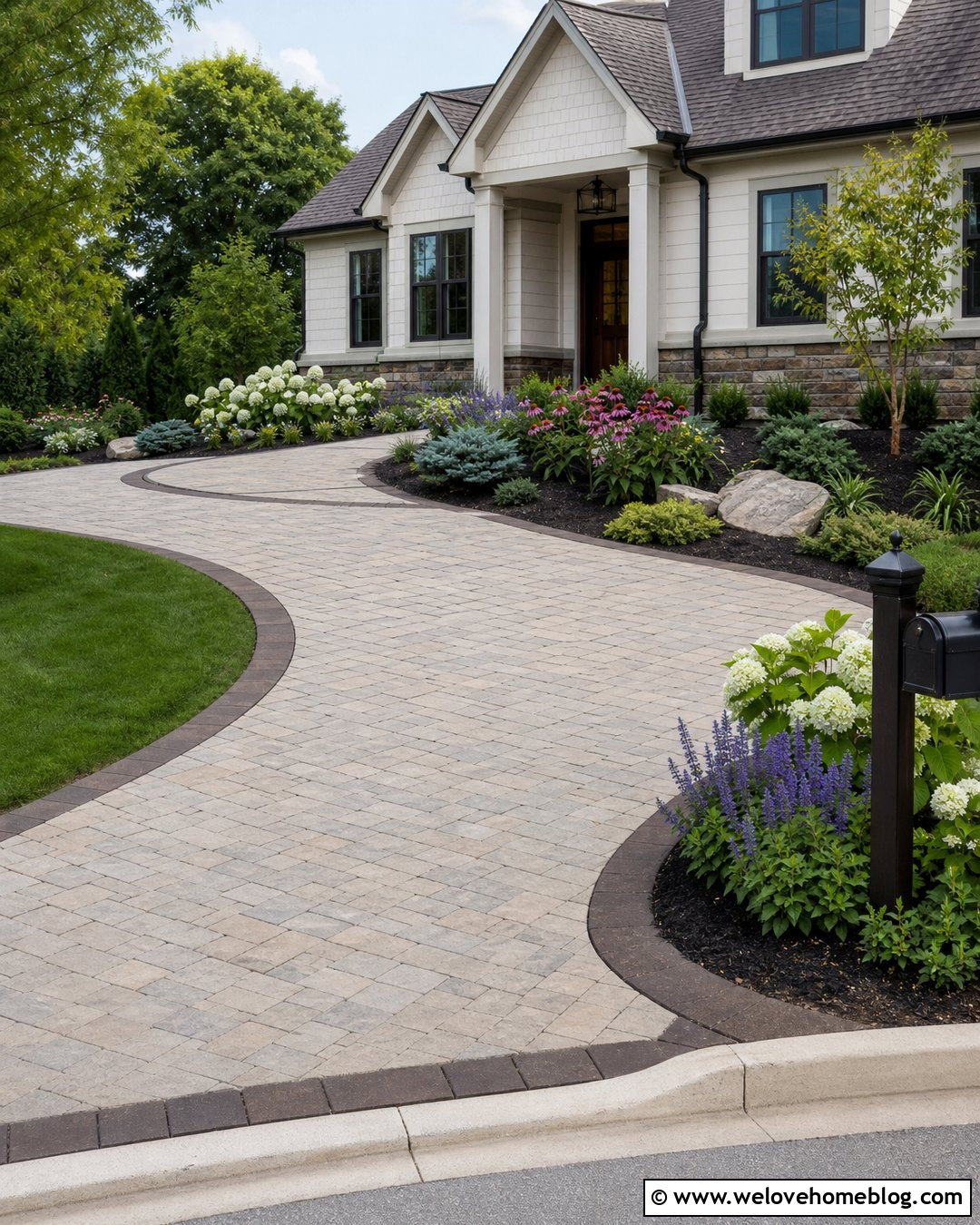
Flower beds can frame a driveway beautifully when solid blocks prevent soil, mulch, and spreading plants from crossing onto the pavement. Use warm gray interlocking concrete pavers for the driveway and edge them with dark brown tumbled blocks. Create broad curved beds along both sides, repeating the border around the walkway and near the mailbox. Plant low combinations of salvia, catmint, coneflowers, dwarf hydrangeas, and evergreen structure plants. Keep taller flowers farther from the driving edge to protect visibility and reduce maintenance. A cream craftsman home with wood accents provides an inviting background. The block color should relate to the house trim or roof, while the driveway remains lighter. This layered design makes the entire front yard feel integrated instead of treating paving and landscaping as separate projects.
19. Driveway Edging Blocks With Lighting
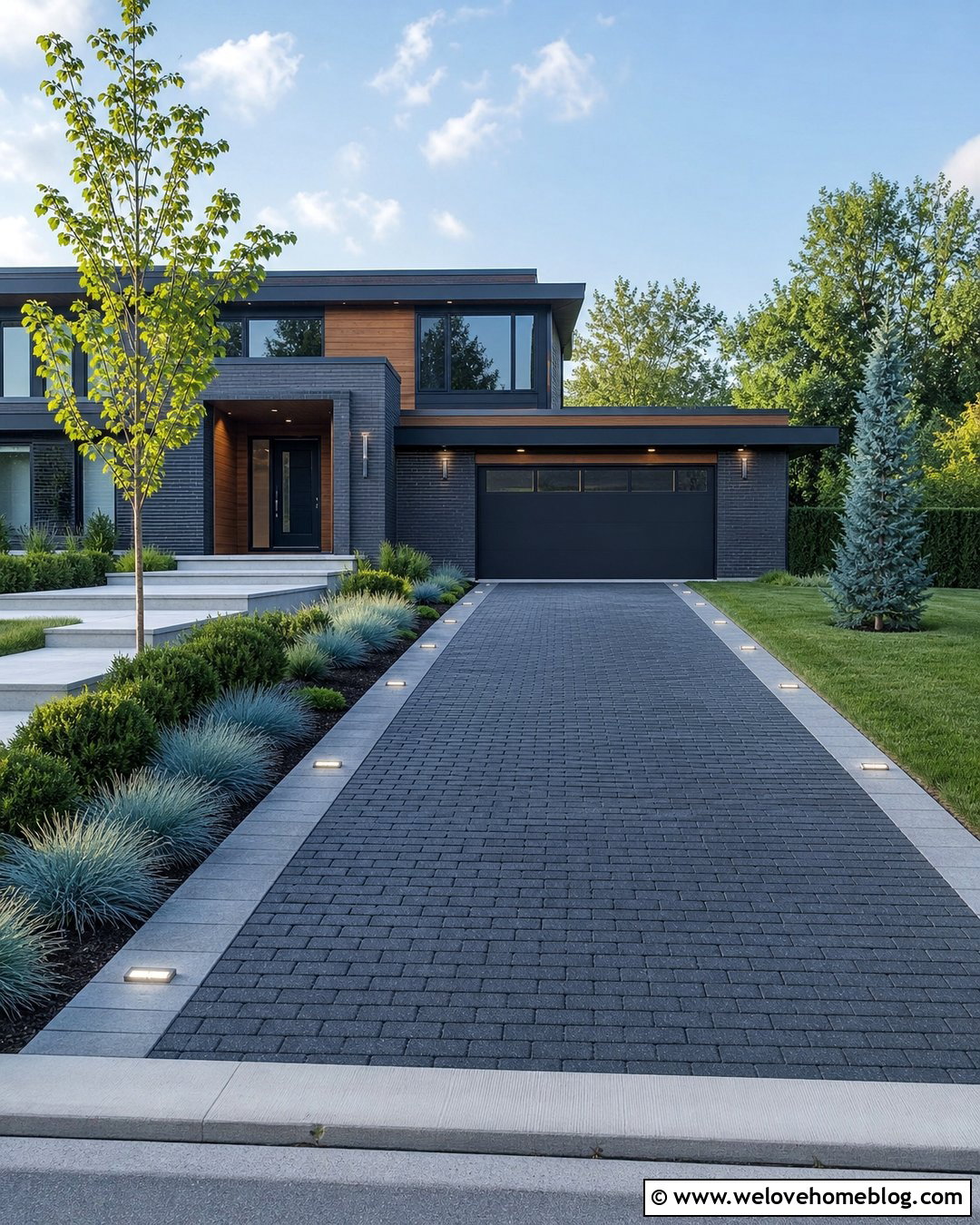
Integrated lighting can make edging blocks more useful without turning the driveway into an airport runway. Frame a charcoal permeable-paver driveway with smooth light-gray concrete blocks, then place small recessed fixtures at widely spaced intervals along the edge. During the day, the simple border maintains a crisp modern appearance. The lights should function as subtle wayfinding details rather than dominating the design. Surround the straight driveway with low evergreen shrubs, blue-green grasses, and a pale concrete walkway leading to a contemporary two-story home. Coordinate fixture finishes with exterior hardware and keep them clear of tires and snow-removal paths. Properly planned wiring and drainage are essential. Even though the lighting is part of the border, the edging blocks should remain the main visible design feature in daylight.


20. Budget Driveway Edging Blocks
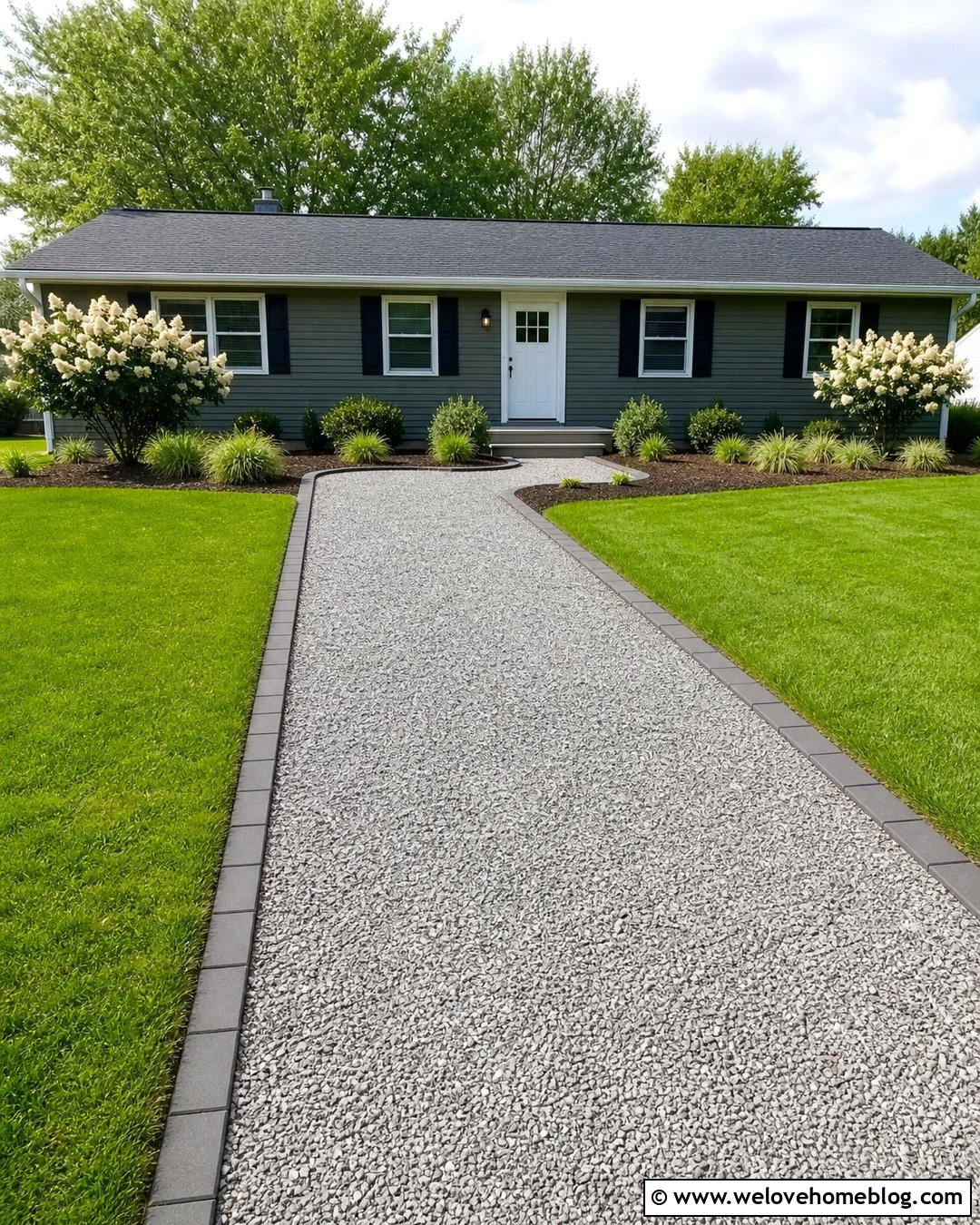
A practical edging upgrade does not require rare stone or a complex pattern. Frame a simple gray gravel driveway with standard rectangular concrete pavers in a warm charcoal tone. Lay one consistent row along each side and use the same blocks to outline a small walkway to the front porch. A straight layout reduces difficult cuts, while locally available block sizes can help control material and labor costs. Finish the scene with neatly trimmed lawn, affordable ornamental grasses, mulch, and two compact flowering shrubs near the entrance. This approach suits a modest ranch, bungalow, or starter home because it looks intentional without feeling excessive. Invest most heavily in excavation, compaction, alignment, and secure edge support. Straight, stable budget blocks will usually look better than expensive materials installed on an inadequate base.
Conclusion:
The best edging design connects the driveway surface, home exterior, entrance, and surrounding landscape. It should also provide practical support where pavement meets grass, gravel, mulch, or sloped soil. Belgian block and cobblestone offer strength and traditional character, while smooth concrete pavers create cleaner modern lines. Brick introduces warmth, and pale natural stone can soften large paved areas. Before selecting a look, consider block height, drainage, vehicle clearance, maintenance, and the amount of contrast your front yard needs. A well-built base is just as important as color or pattern. Use these **20 Driveway Edging Blocks Ideas** to create a complete entrance that feels attractive, stable, and thoughtfully connected to your home.

Related posts:

Leave a Reply