
Green driveway ideas can make a front yard feel softer, cooler, and more connected to the surrounding landscape. Instead of covering the entire approach with solid pavement, these designs combine durable driving surfaces with permeable materials, living ground cover, native planting, or stormwater features. The result can reduce runoff while adding texture and natural color to your curb appeal. Options range from reinforced grass grids and permeable pavers to gravel, recycled brick, porous asphalt, and planted ribbon driveways. The right choice depends on your climate, soil drainage, vehicle use, maintenance preferences, and home style. Always confirm local driveway, drainage, and curb-cut requirements before installation. Below, you will find 25 practical and attractive Green Driveway Ideas for different properties, budgets, and design goals.

1. Grass Paver Green Driveway
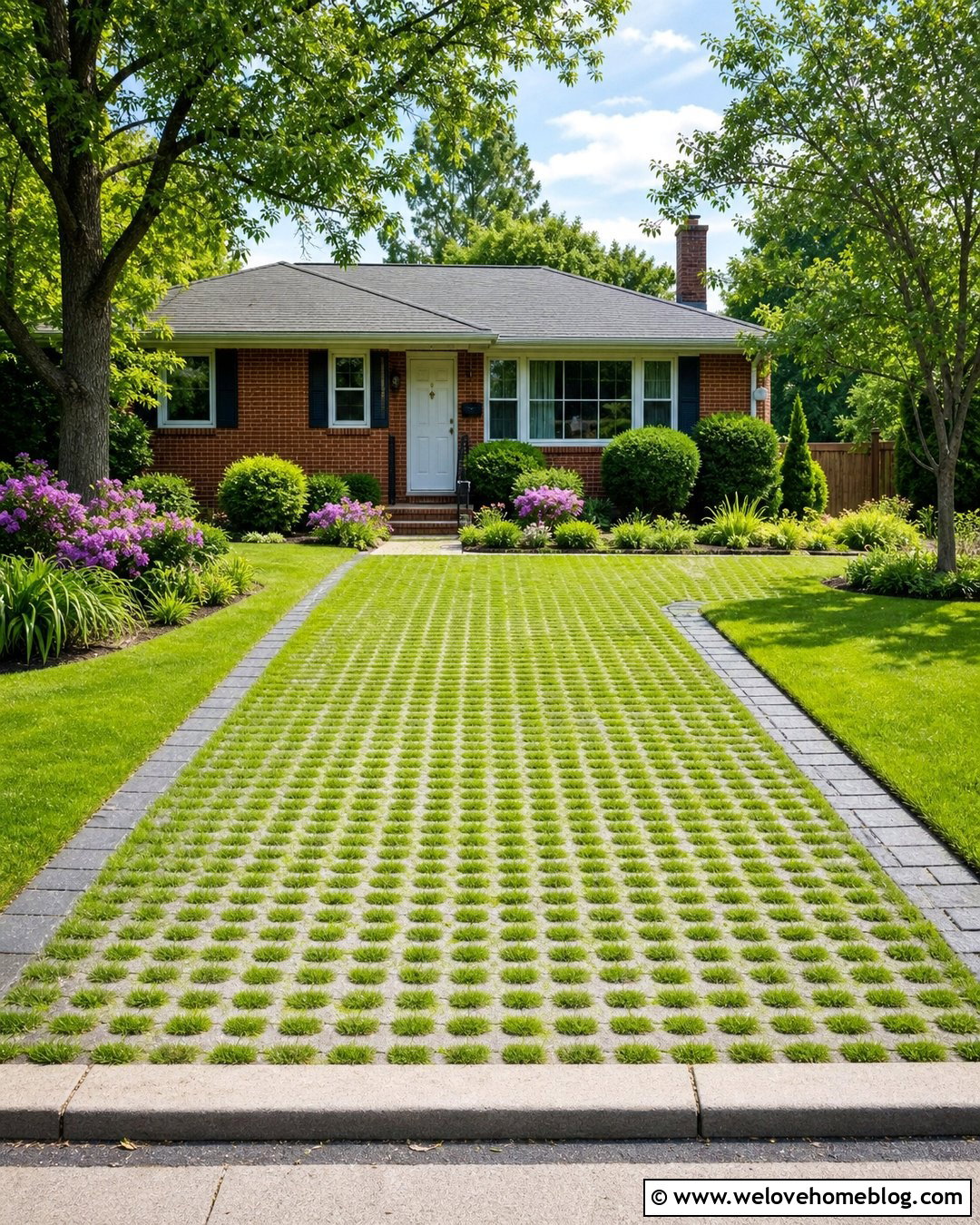
Grass pavers create the classic green driveway look while giving vehicle tires a reinforced surface. The open grid is installed over a properly prepared aggregate base, filled with suitable soil, and planted with turf. Use a straight layout for a clean suburban home or curve the driveway around existing trees for a more natural entrance. A stone or brick border keeps the edges neat and separates the driving area from garden beds. Choose grass suited to your sunlight, climate, and expected traffic. Irrigation may be needed during establishment and dry periods. Because repeated parking can weaken turf, this design works best when vehicles move regularly rather than remaining in one position for long periods. A load-rated grid and correctly engineered base are essential for lasting performance.
2. Concrete Grid Green Driveway
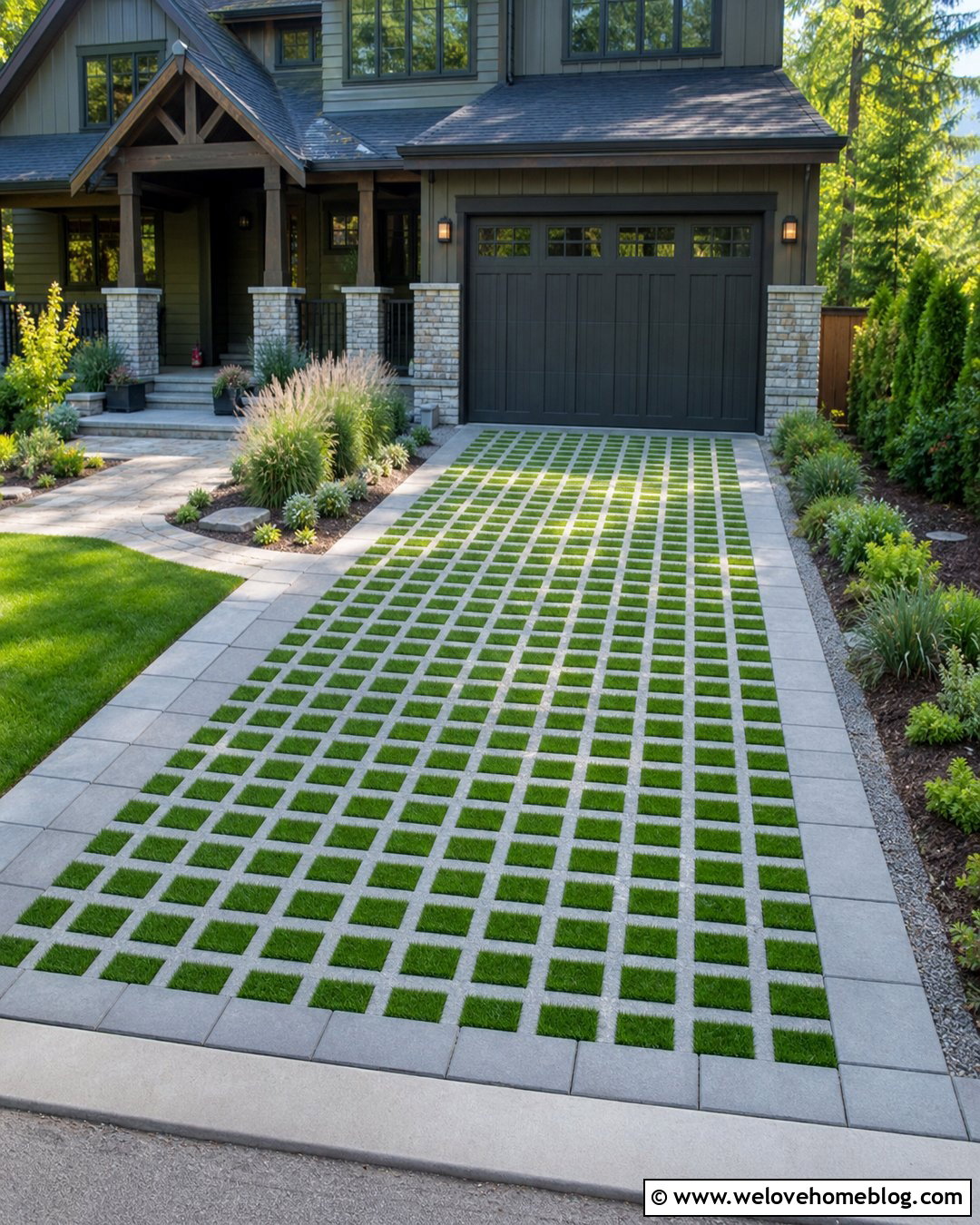
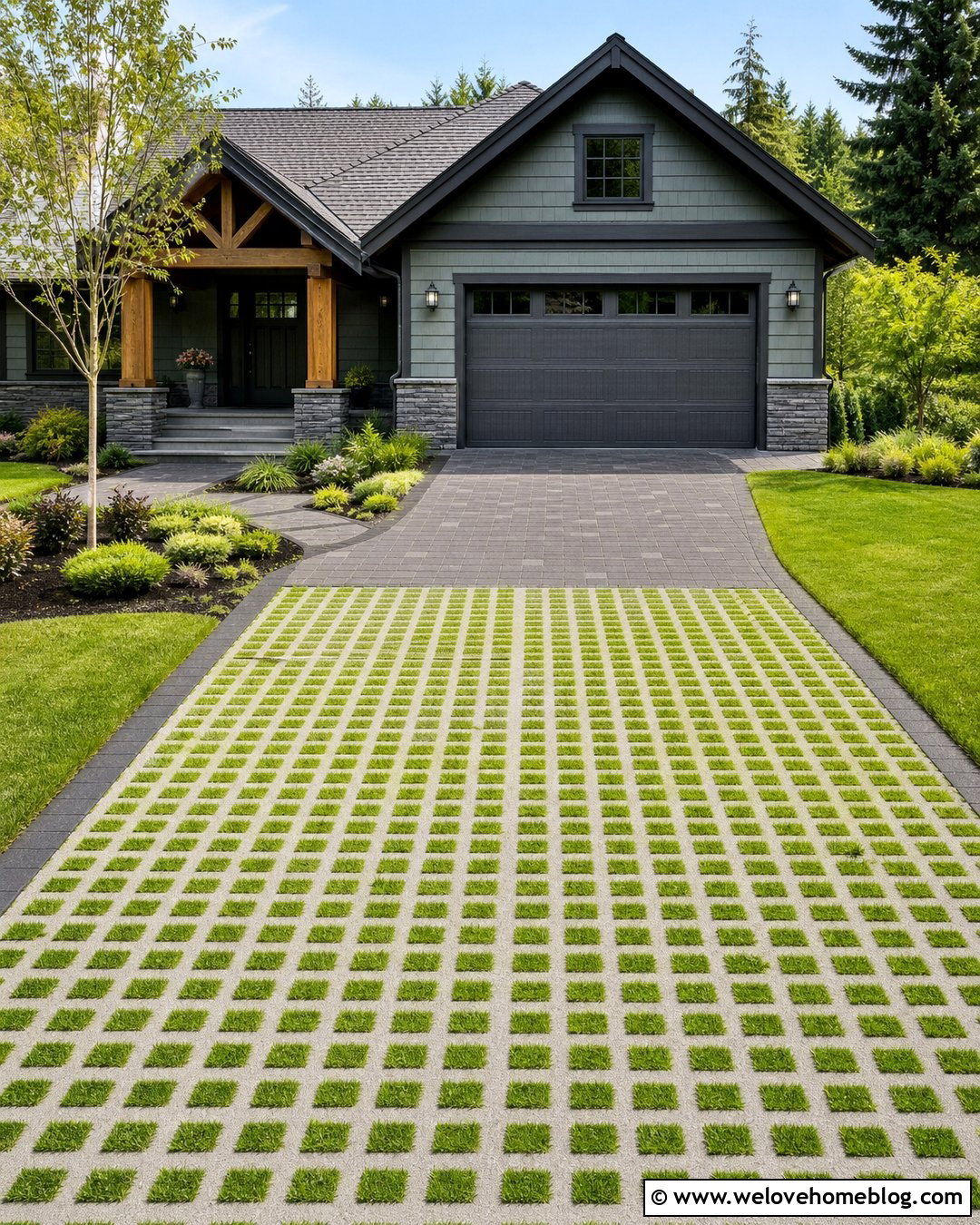
Concrete grid pavers offer a more structured appearance than lightweight plastic grass systems. Their large openings can be filled with grass, creating a durable checkerboard surface that complements ranch, craftsman, and contemporary homes. Keep the driveway straight and frame it with matching solid concrete pavers along the edges. This gives tires a clear boundary and protects the planted cells from spreading soil. Deep planting beds filled with ornamental grasses and compact evergreen shrubs can soften the strong geometric pattern. In hot climates, select a drought-tolerant turf or use gravel in areas where grass struggles. Concrete grid paving generally suits intermittent residential traffic better than heavily traveled surfaces. Good soil preparation, drainage, and a load-bearing base help prevent uneven settling and damaged cells over time.
3. Gravel Green Driveway With Grass Center
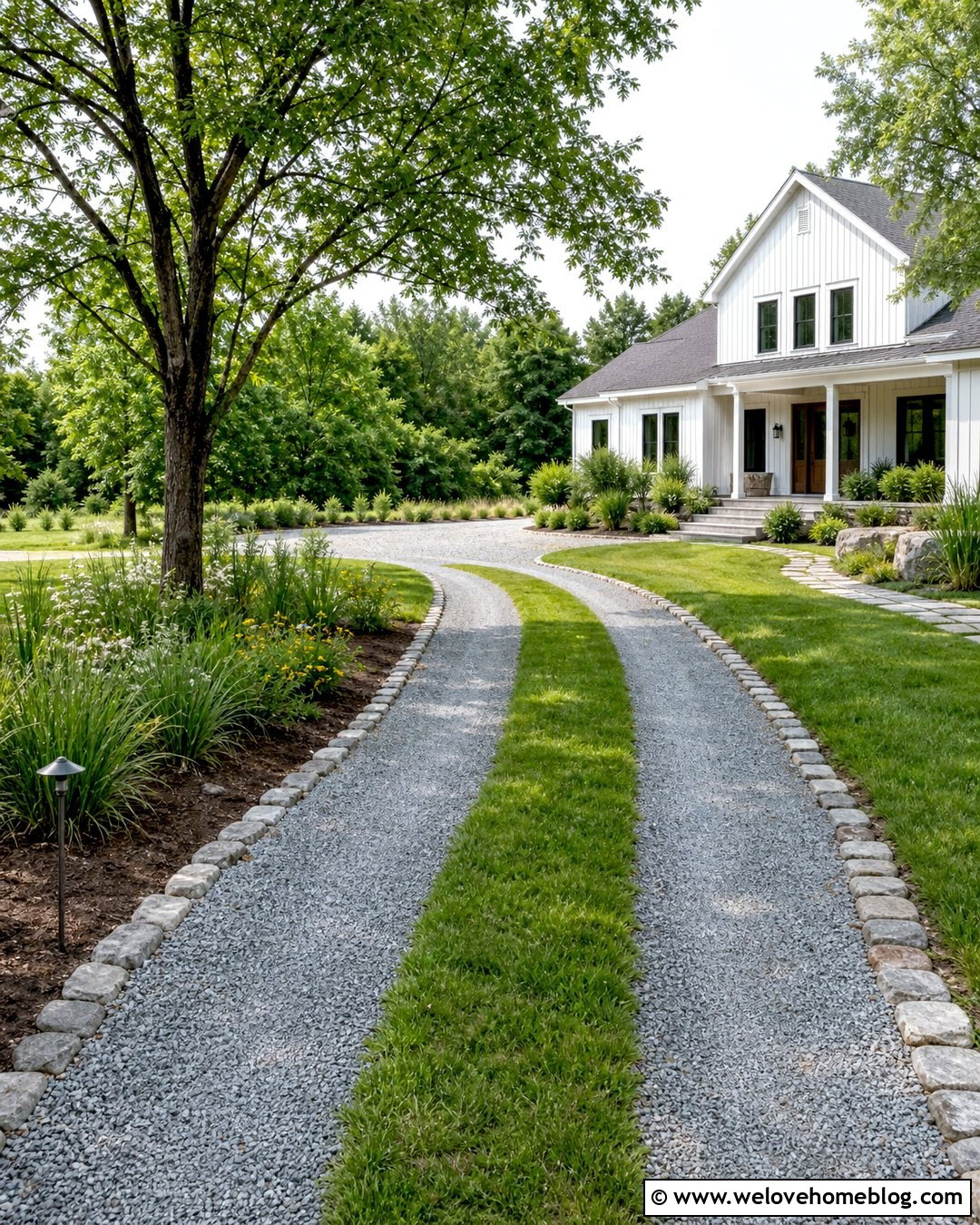
A gravel driveway with a planted center strip delivers a traditional country look without turning the entire front yard into hardscape. Place compacted, angular gravel beneath the tire tracks and run a wide grass strip through the middle. Steel, brick, or cobblestone edging will stop loose stones from migrating into the lawn. The center should remain low enough to avoid scraping vehicles, especially where the driveway changes slope. This layout looks particularly natural beside a farmhouse, cottage, or wooded craftsman home. Add shade trees near the entrance and relaxed borders of native perennials along the approach. Stabilization grids beneath the gravel can reduce rutting and movement. Plan a practical turnaround or parking pad near the house so drivers do not repeatedly cross the planted center.
4. Permeable Paver Green Driveway
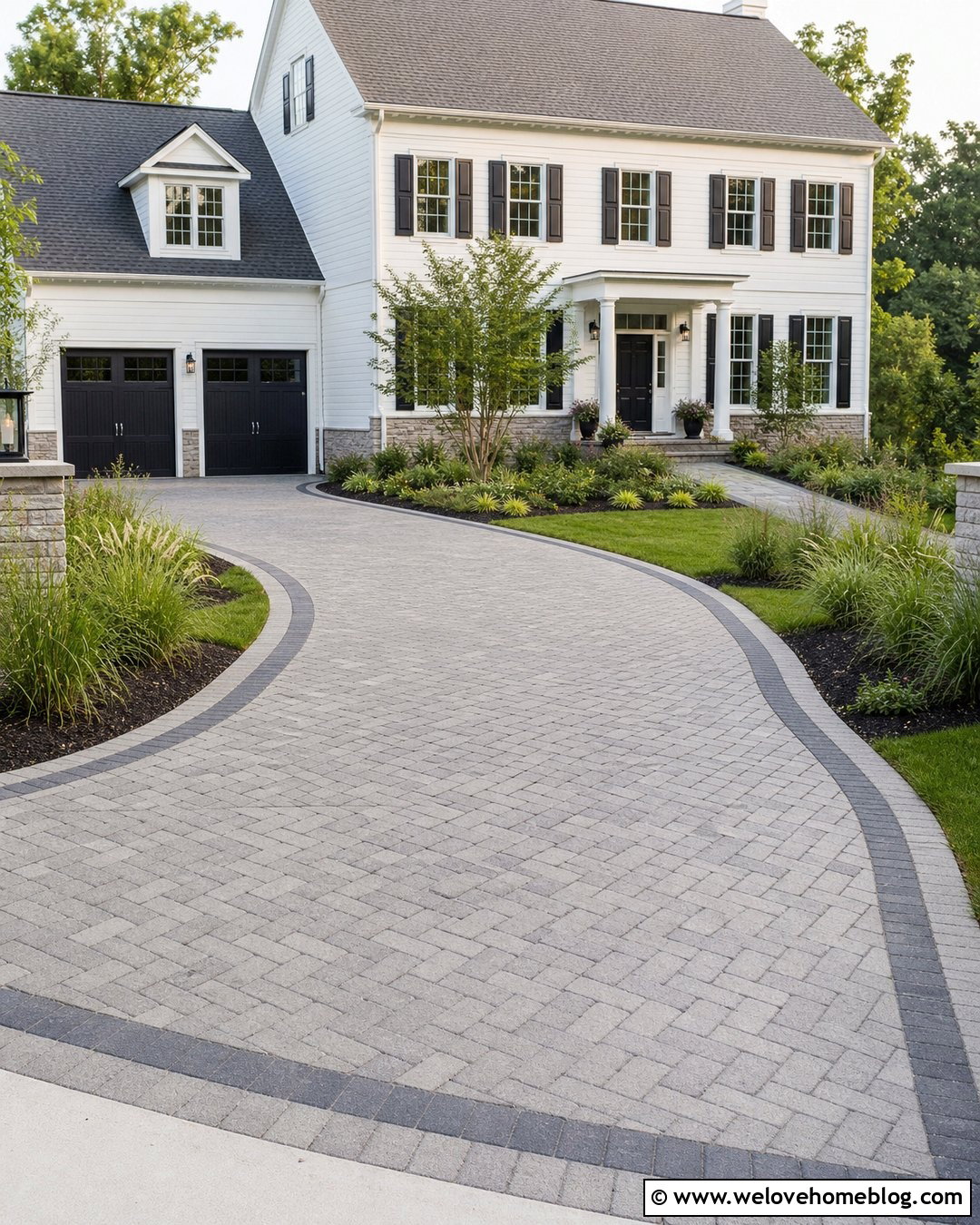
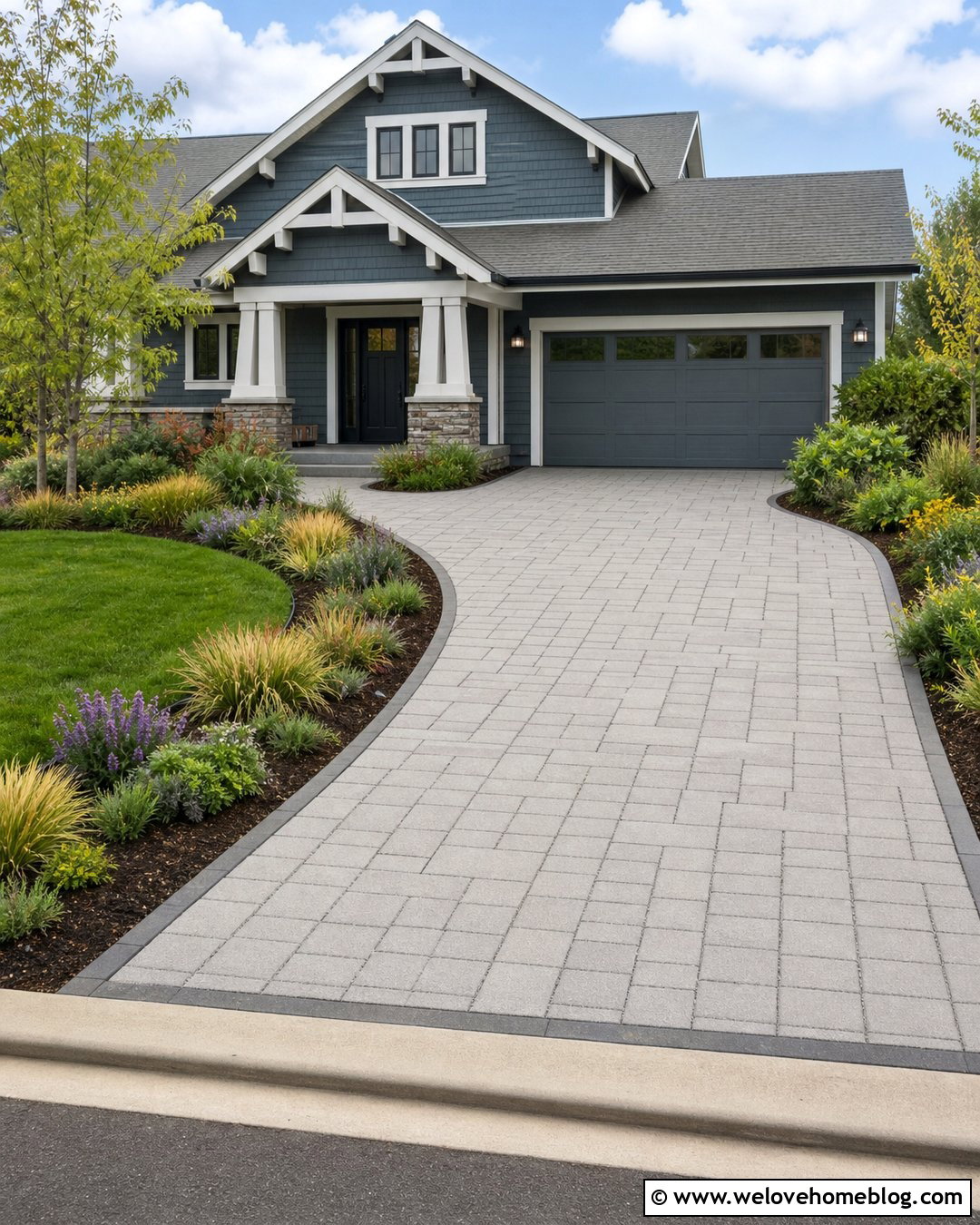
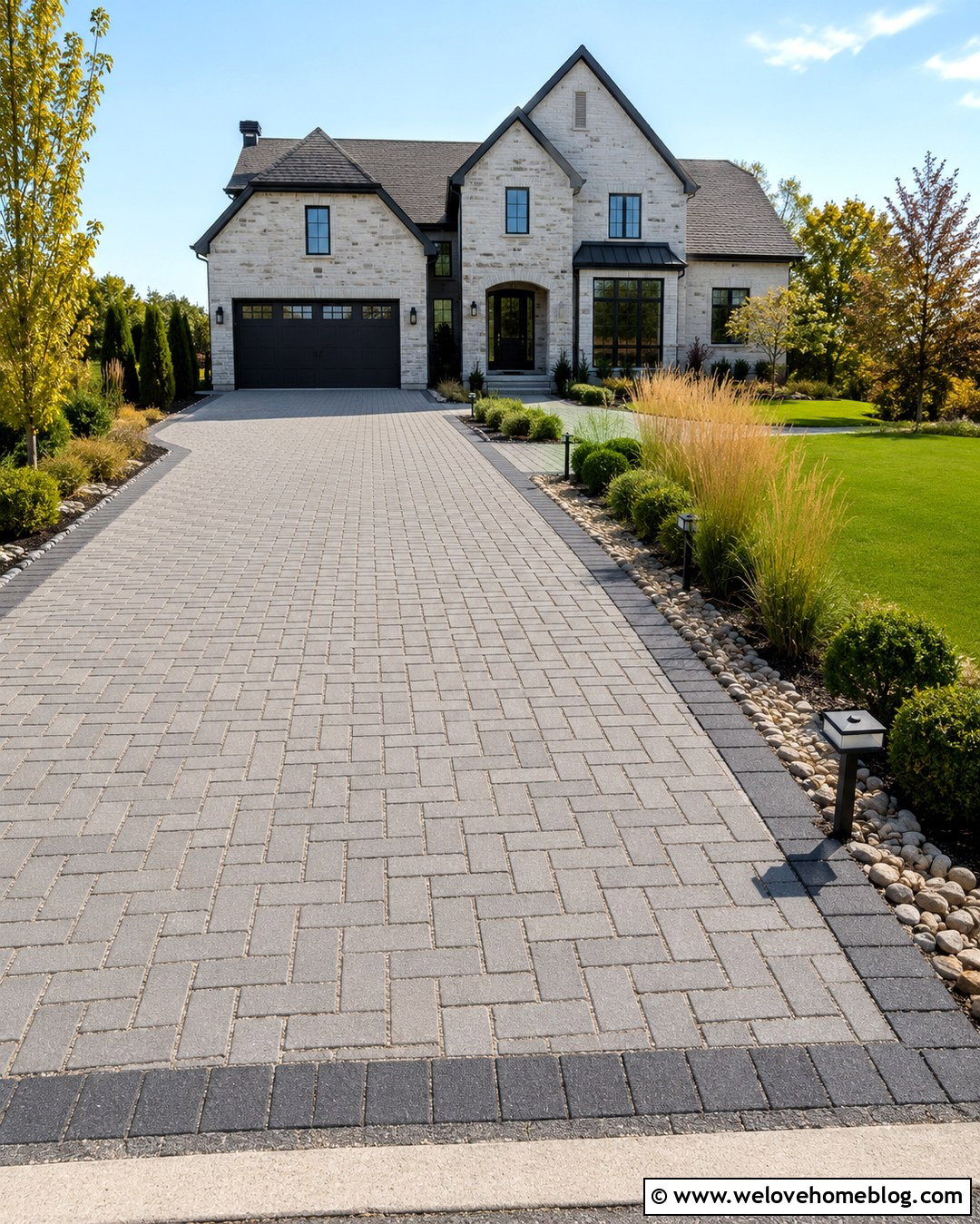
Permeable concrete pavers provide a polished green driveway for homeowners who prefer an orderly, mostly paved surface. Unlike tightly jointed conventional paving, these systems use wider joints filled with clean, permeable aggregate. Rainwater can pass through the joints and enter stone storage layers beneath the driveway rather than immediately becoming surface runoff. () Choose warm gray pavers in a running-bond or herringbone pattern, then add a darker border to define the edges. A gentle curve can make a standard suburban lot feel more spacious. Plant rain-tolerant shrubs and native grasses beside the lower edge to manage overflow during intense storms. Keep soil, mulch, and landscape debris away from the joints because fine material can gradually restrict drainage. Periodic vacuum cleaning may also be recommended.
5. Recycled Brick Green Driveway
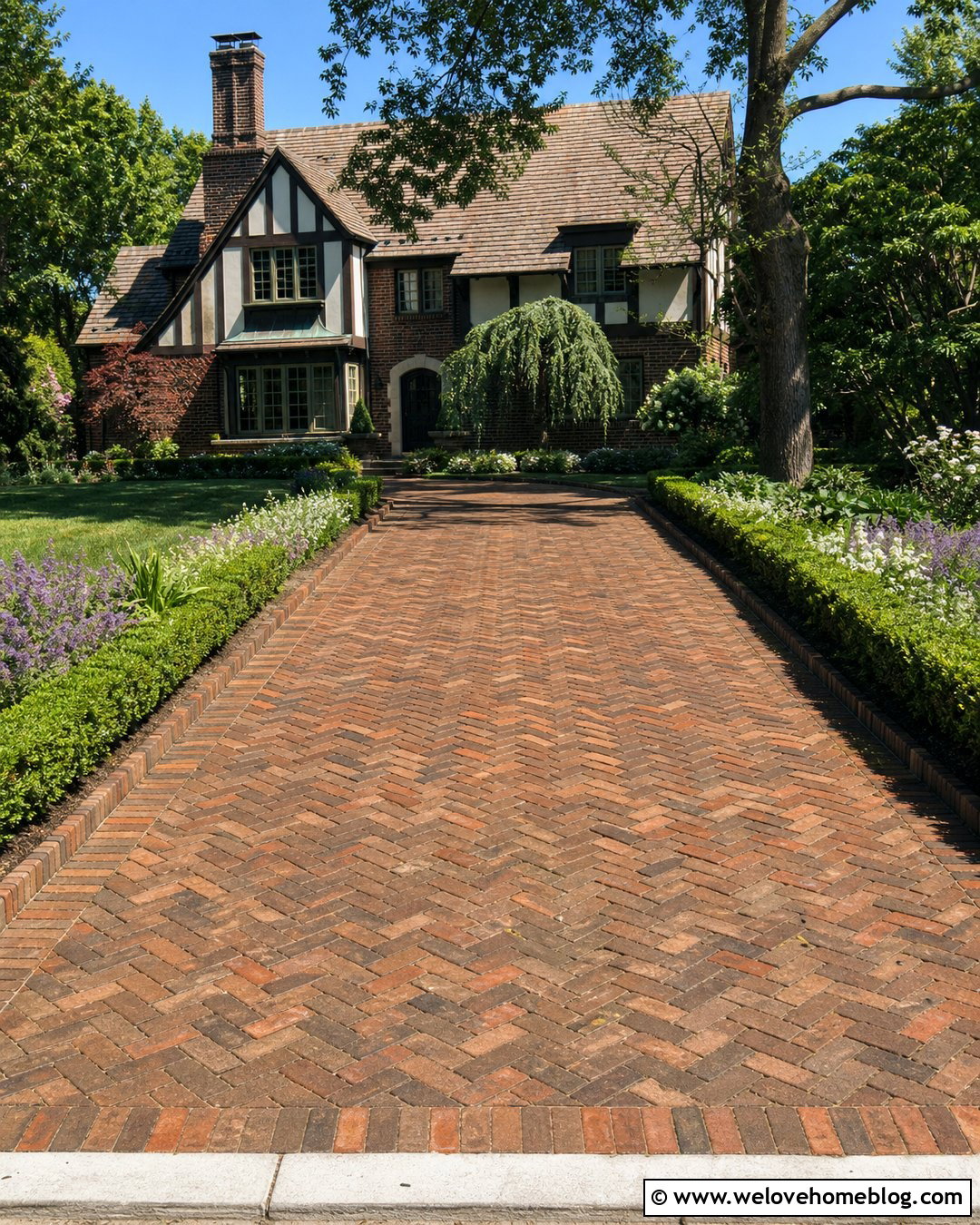
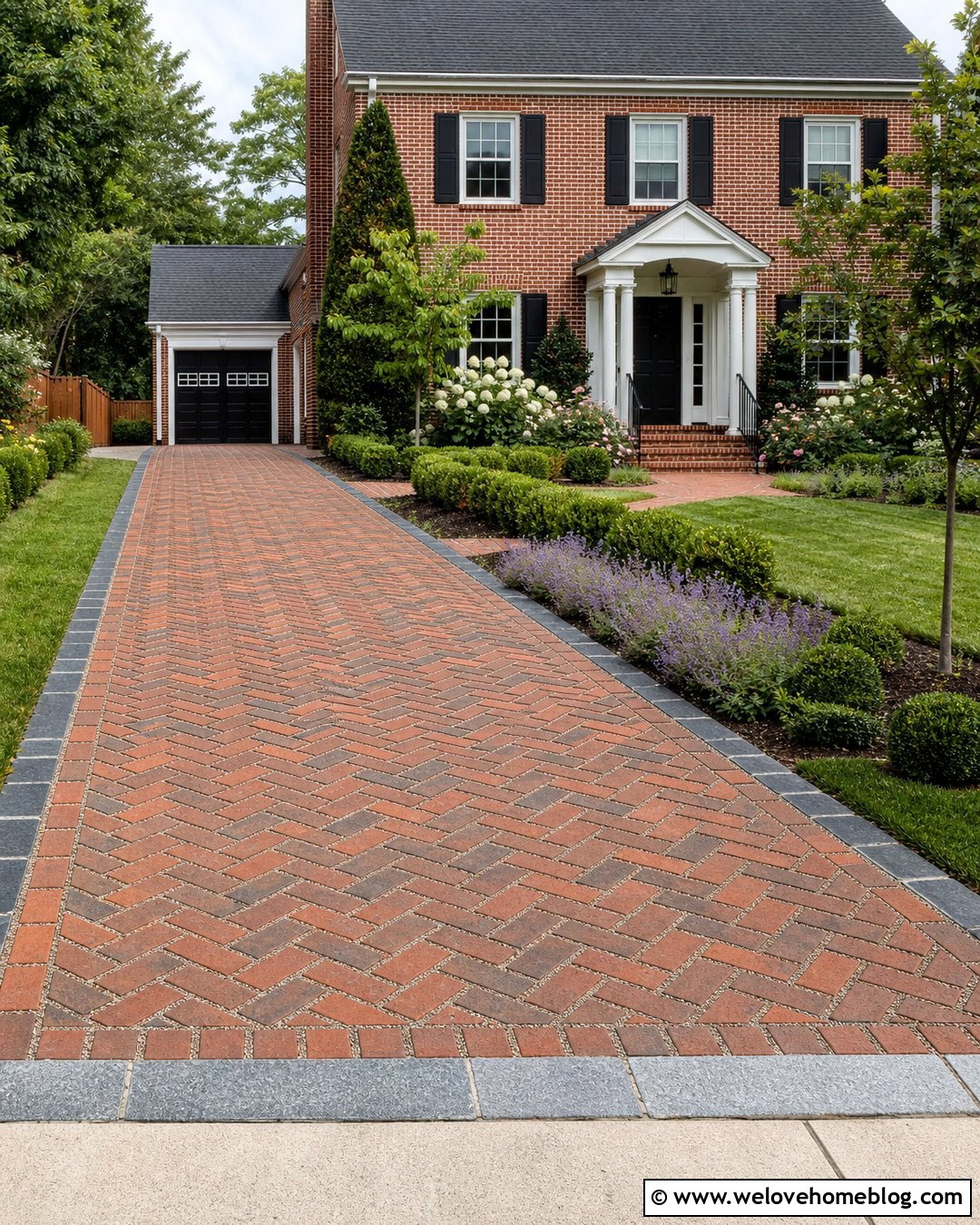
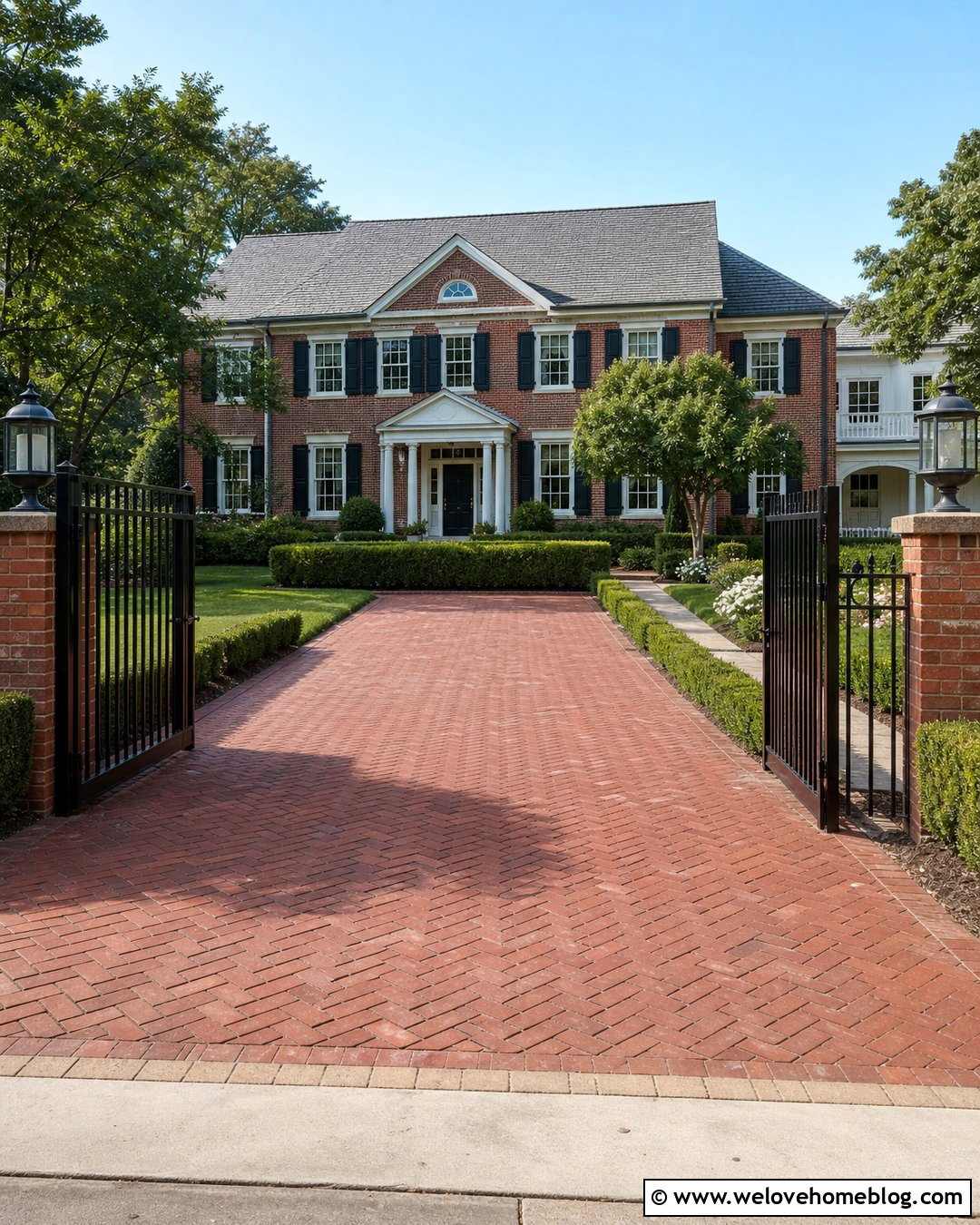
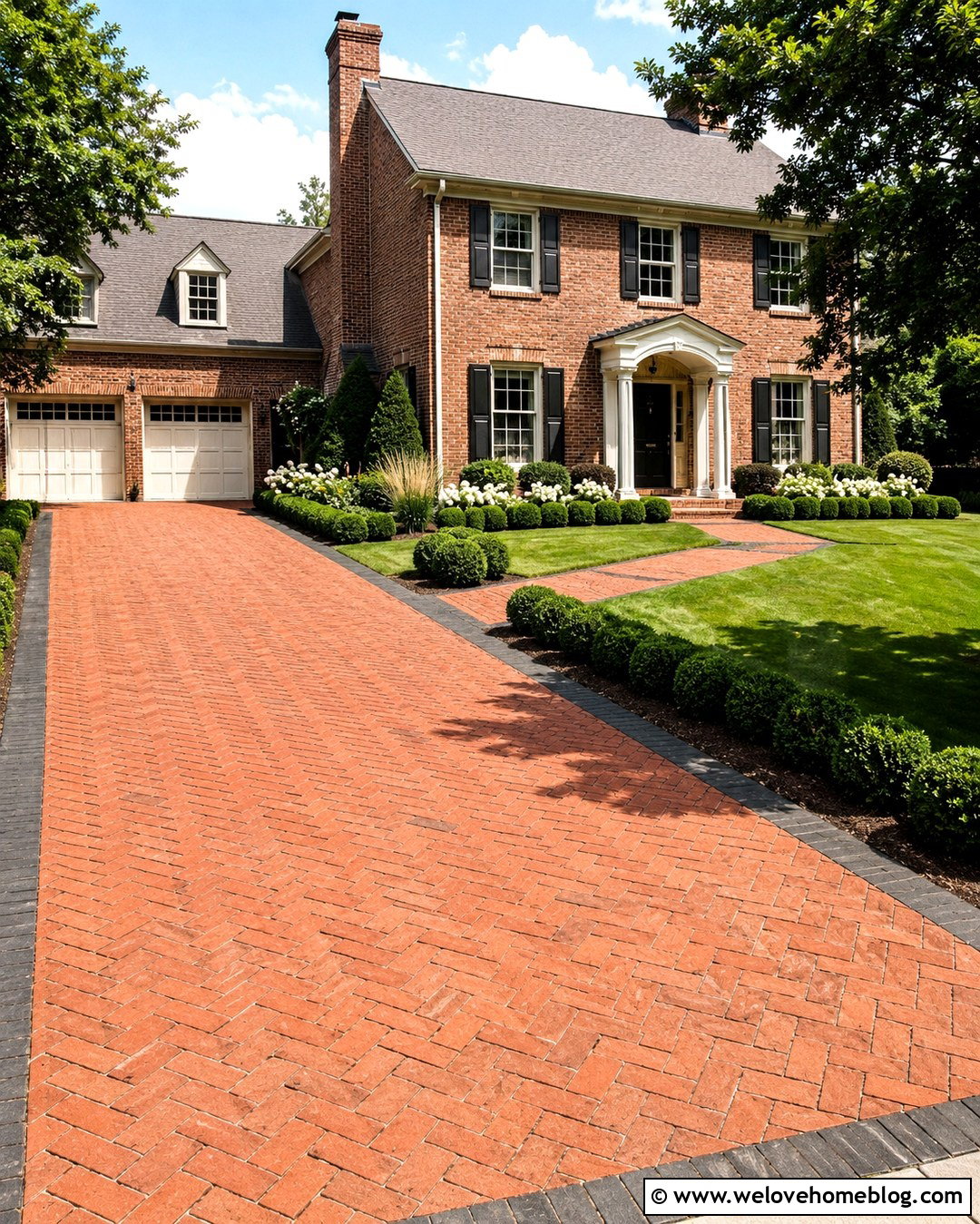
Reclaimed clay brick brings warm color and established character to a sustainable driveway. Lay salvaged bricks in a herringbone pattern for strong visual movement, leaving drainage joints where the selected paving system permits. A compacted open-graded base can improve stability and stormwater storage when the design is engineered as permeable paving. Irregular color variation works beautifully with colonial, Tudor, and cottage facades. Frame the driveway with low evergreen hedges, flowering perennials, and a simple brick walkway leading to the front door. Reuse matching bricks for the border so the complete design feels intentional. Before buying reclaimed material, confirm that the bricks are suitable for exterior paving and local freeze-thaw conditions. Old wall bricks may not provide the strength or weather resistance required for repeated vehicle traffic.
6. Pervious Concrete Green Driveway
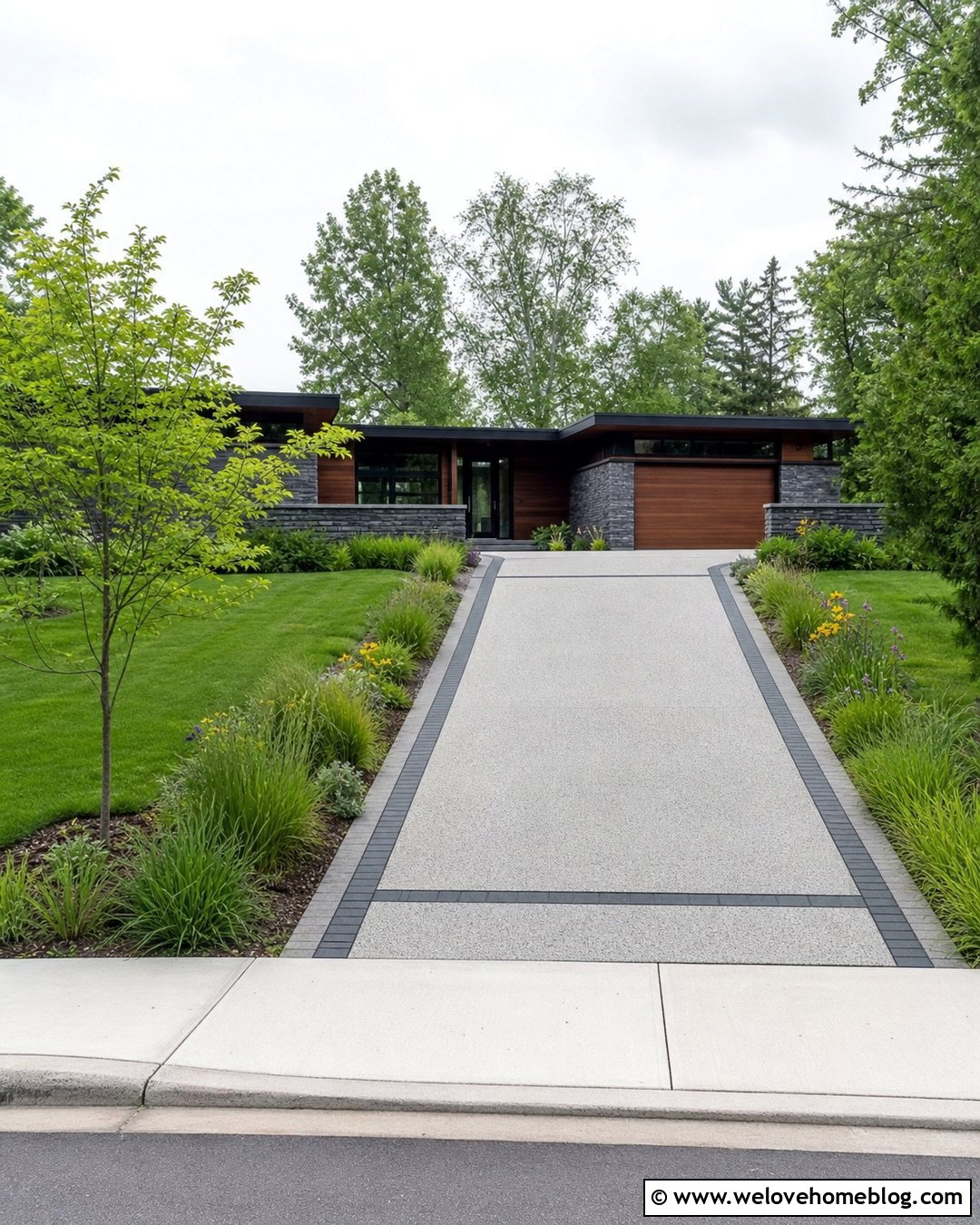
Pervious concrete creates a relatively seamless driving surface while allowing water to move through interconnected voids. Its open texture is visibly different from standard poured concrete, giving modern and midcentury homes a subtle, functional finish. Use a light natural-gray mixture to reduce the visual weight of a wide driveway. Narrow bands of dark permeable pavers can mark parking areas and introduce contrast. Along both sides, install planted swales with sedges, rushes, and locally appropriate flowering plants. This connects the driveway to the wider drainage plan instead of treating it as an isolated slab. Pervious concrete requires specialized proportioning, placement, curing, and base preparation, so experienced installation matters. The pores also need protection from sediment. Keep loose soil and mulch contained, and follow the installer’s recommended vacuum-maintenance schedule.
7. Porous Asphalt Green Driveway

Porous asphalt offers the familiar dark appearance of asphalt with an open structure designed to accept water. It can suit long driveways where grass paving or individual units would feel too visually busy. A smooth, gently curved approach framed by native meadow planting makes the black surface appear softer and more integrated with the property. Add a light granite or concrete edge for definition and a permeable parking apron near the garage. The asphalt surface must be installed over correctly sized open-graded aggregate layers that temporarily store and release water. Porous pavements can lose infiltration capacity when their openings fill with sediment, making routine preventive maintenance important. () Avoid directing muddy landscape runoff onto the driveway, and use winter maintenance practices approved for the specific system.
8. Resin-Bound Green Driveway
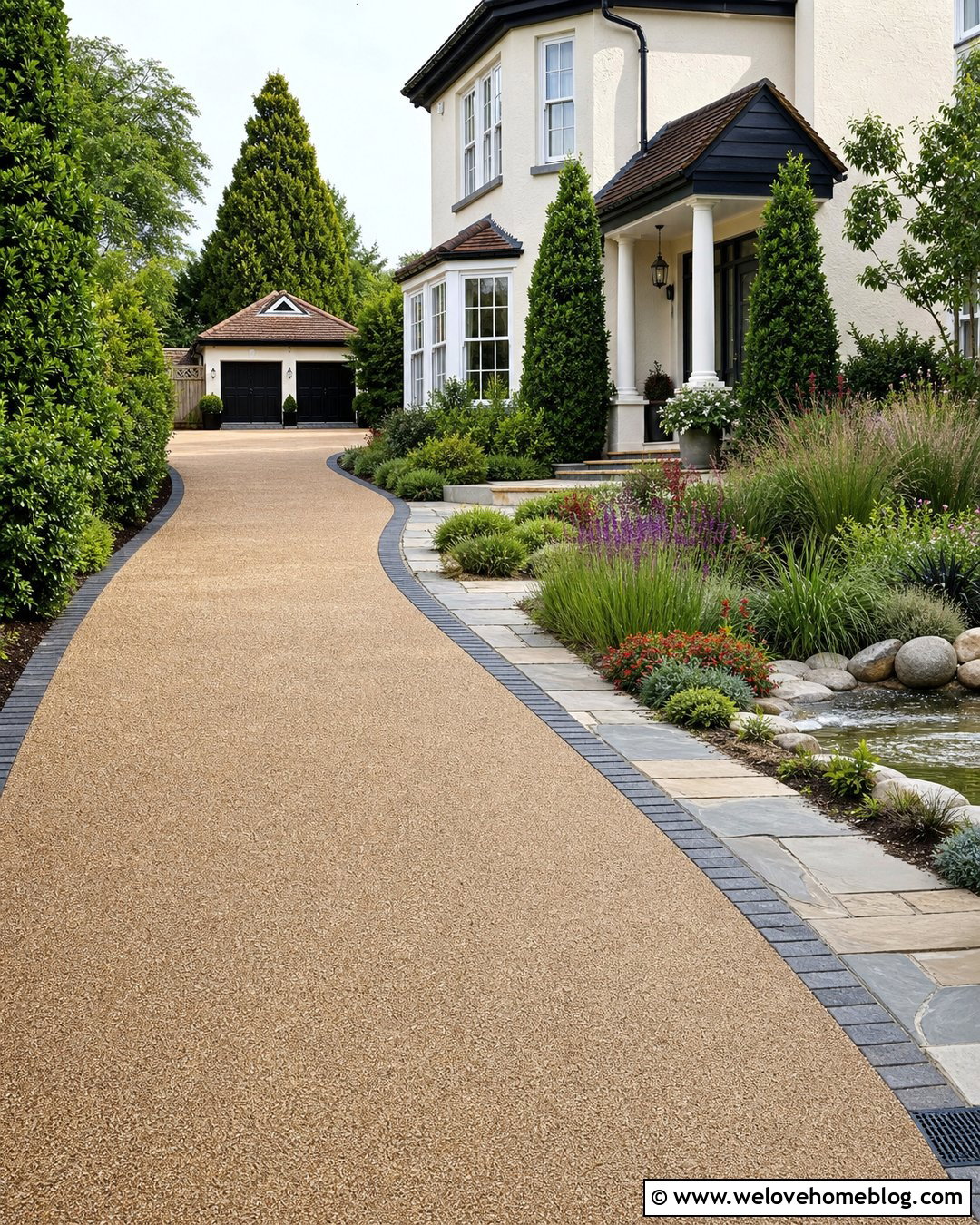
Resin-bound gravel produces a smooth, contemporary surface by coating clean aggregate and combining it with a permeable resin system. The finished driveway has the visual warmth of gravel without as much loose-stone movement. Select buff, honey, or silver aggregate to coordinate with the house facade. A sweeping layout bordered by dark granite setts can create a refined entrance for a modern farmhouse or stucco home. Keep the design green by pairing the surface with deep planting beds, a native hedge, and a small rain garden near the lowest point. Permeability depends on the complete construction, not simply the decorative surface. Confirm that the selected product, base, and installation method form a genuinely permeable system. Proper edging also supports the resin-bound material and creates clean transitions at sidewalks and garage slabs.
9. Decomposed Granite Green Driveway
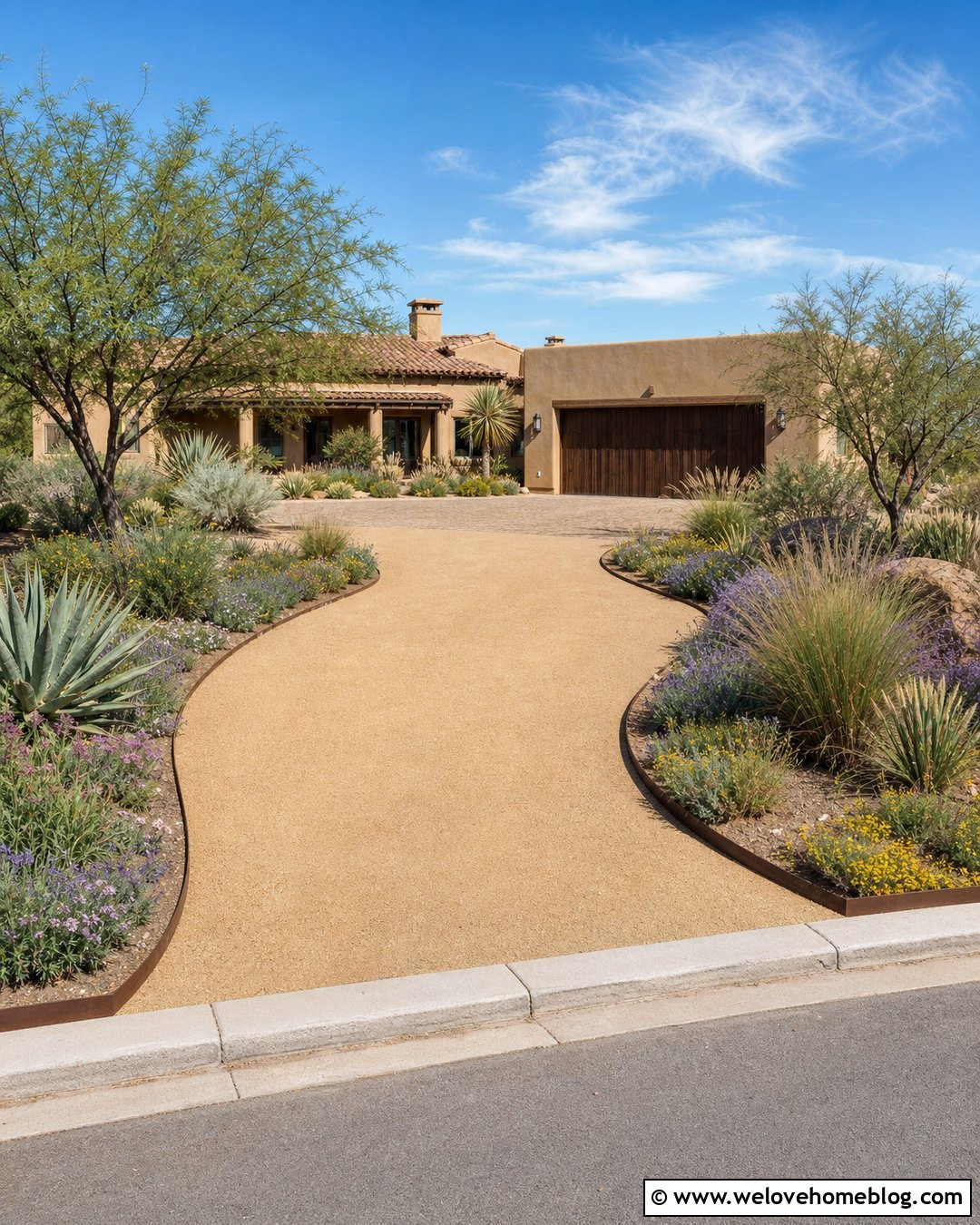
Decomposed granite gives a driveway an earthy color and relaxed appearance that works well with Southwestern, California ranch, and rustic homes. Use stabilized decomposed granite in a warm tan or muted gold for the driving surface. Shape the driveway with a broad curve and define it using weathered steel edging. Drought-tolerant planting can include native bunchgrasses, flowering ground covers, agaves, and small shade trees selected for the local climate. A permeable paver apron at the garage helps manage turning and braking forces where loose materials may wear more quickly. Decomposed granite needs careful grading and compaction to limit erosion, dust, and rutting. It may not suit every steep or high-rainfall property. Direct concentrated roof water elsewhere and include drainage features that prevent flowing water from cutting channels through the driveway.
10. Recycled Concrete Green Driveway
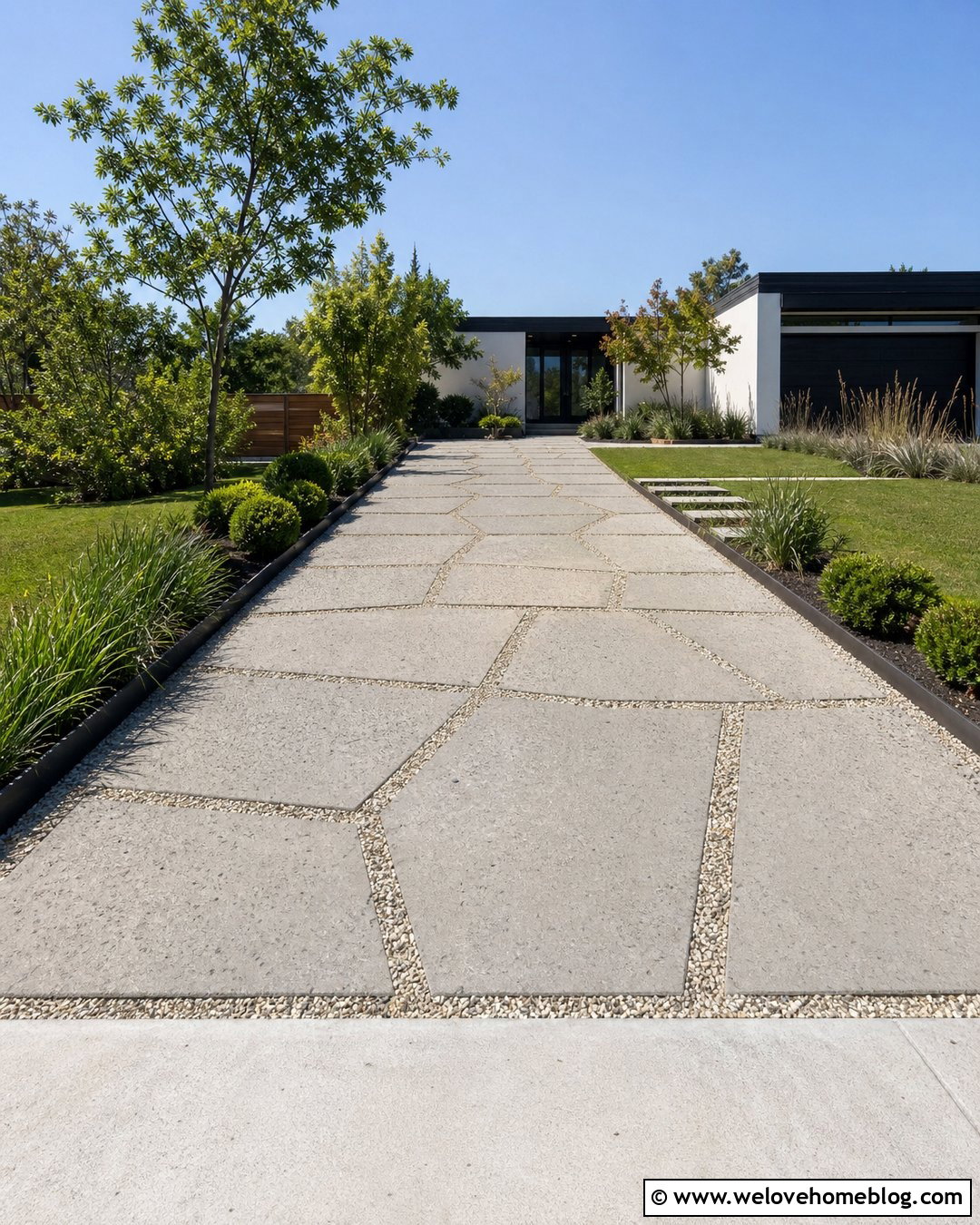
Recycled concrete pieces can become a distinctive driveway when they are installed like large irregular pavers. Leave controlled joints between the slabs and fill them with gravel or low-growing vegetation where traffic levels allow. This creates a broken-stone pattern that looks especially effective beside a modern home with simple architecture. Use smaller recycled concrete pieces for the walkway and a clean steel edge around the complete driveway. Native grasses, compact shrubs, and one sculptural tree can balance the rugged surface. The reused pieces should have adequate thickness, sound edges, and a stable base designed for vehicle loads. Avoid random placement directly over soil, which can lead to movement and cracking. Keeping tire paths relatively level will make the artistic layout more comfortable and practical for daily driving.
11. Clover Green Driveway
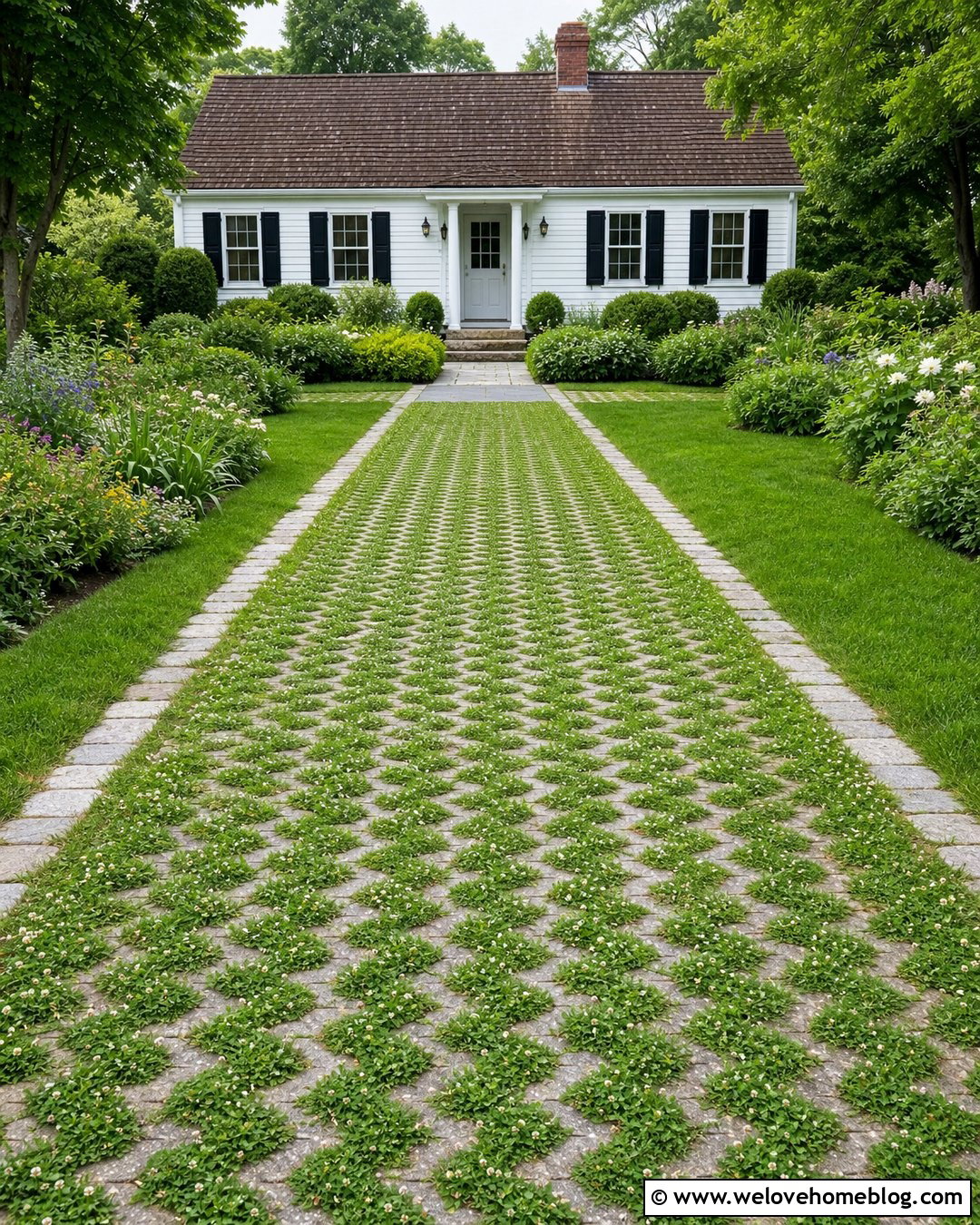
Clover can give a reinforced turf driveway a softer, meadow-like appearance, especially when blended with compatible low-growing grasses. Install a load-rated cellular grid over a strong drainage base, then fill it with an approved growing medium. A straight driveway bordered by stone setts will keep the informal planting from looking unfinished. White clover flowers add seasonal interest, while surrounding beds of native perennials continue the natural theme. However, plant selection should match local conditions and neighborhood expectations. Clover may spread beyond the driveway and can attract pollinators when blooming, so consider whether that is appropriate beside regular foot and vehicle traffic. Mowing keeps the surface tidy and improves visibility. Discuss seed mixtures with a local turf or extension specialist rather than assuming one blend will perform equally well everywhere.
12. Creeping Thyme Green Driveway
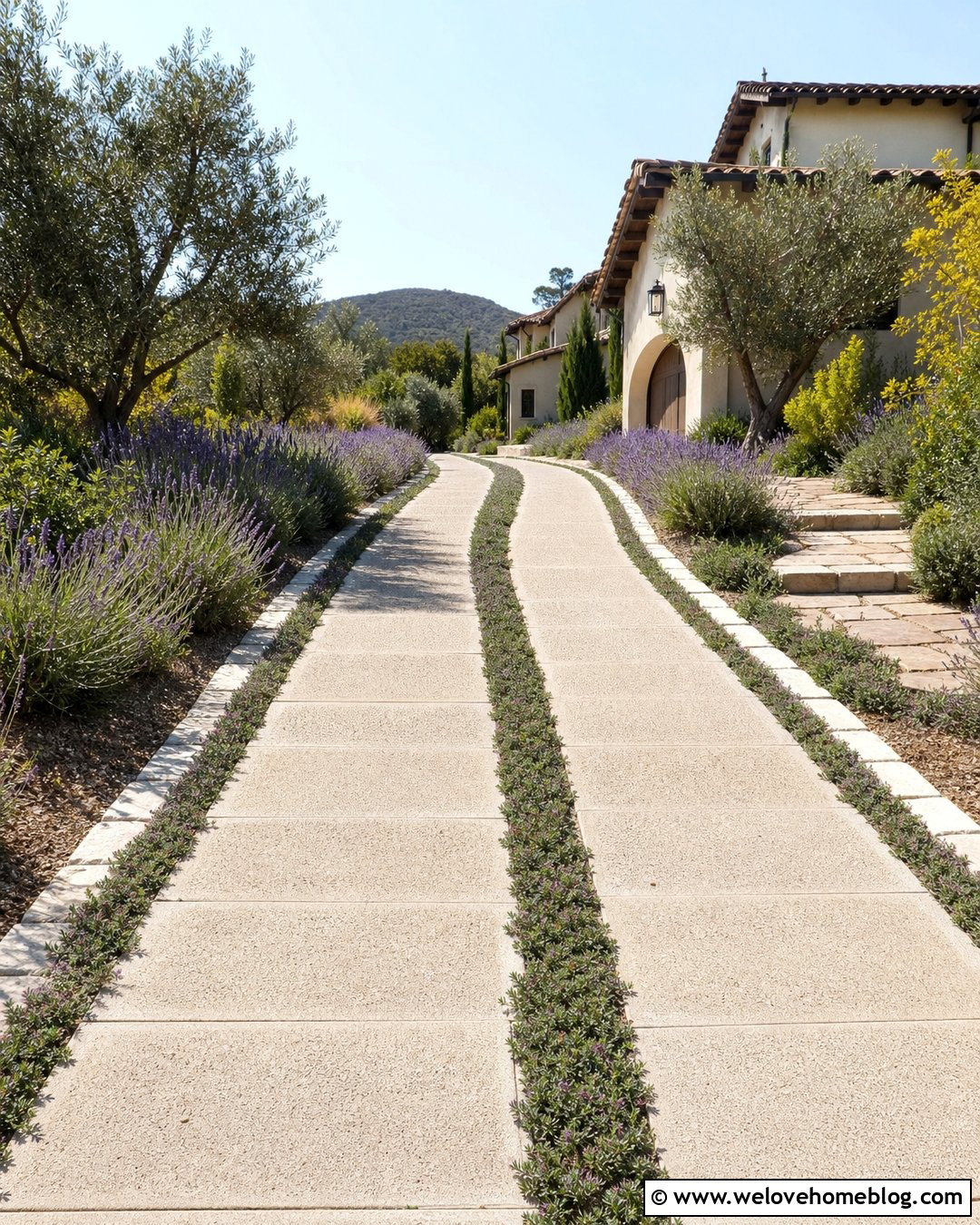
Creeping thyme adds fragrant foliage and small flowers to a lightly used green driveway, but it should be positioned carefully. Rather than planting it directly beneath the busiest tire tracks, use permeable concrete pavers for the driving lanes and establish thyme in the protected center strip and wider joints near the edges. This creates the desired green effect without expecting a delicate ground cover to tolerate constant pressure. A short curved approach works beautifully with a cottage or Mediterranean-style house. Add natural stone edging and drought-aware planting beds for a coordinated finish. Thyme generally prefers sun and free-draining conditions, so damp or shaded sites may require another plant. Leave convenient stepping areas beside parked vehicles to reduce trampling and make routine maintenance easier.
13. Shaded Green Driveway With Planted Joints
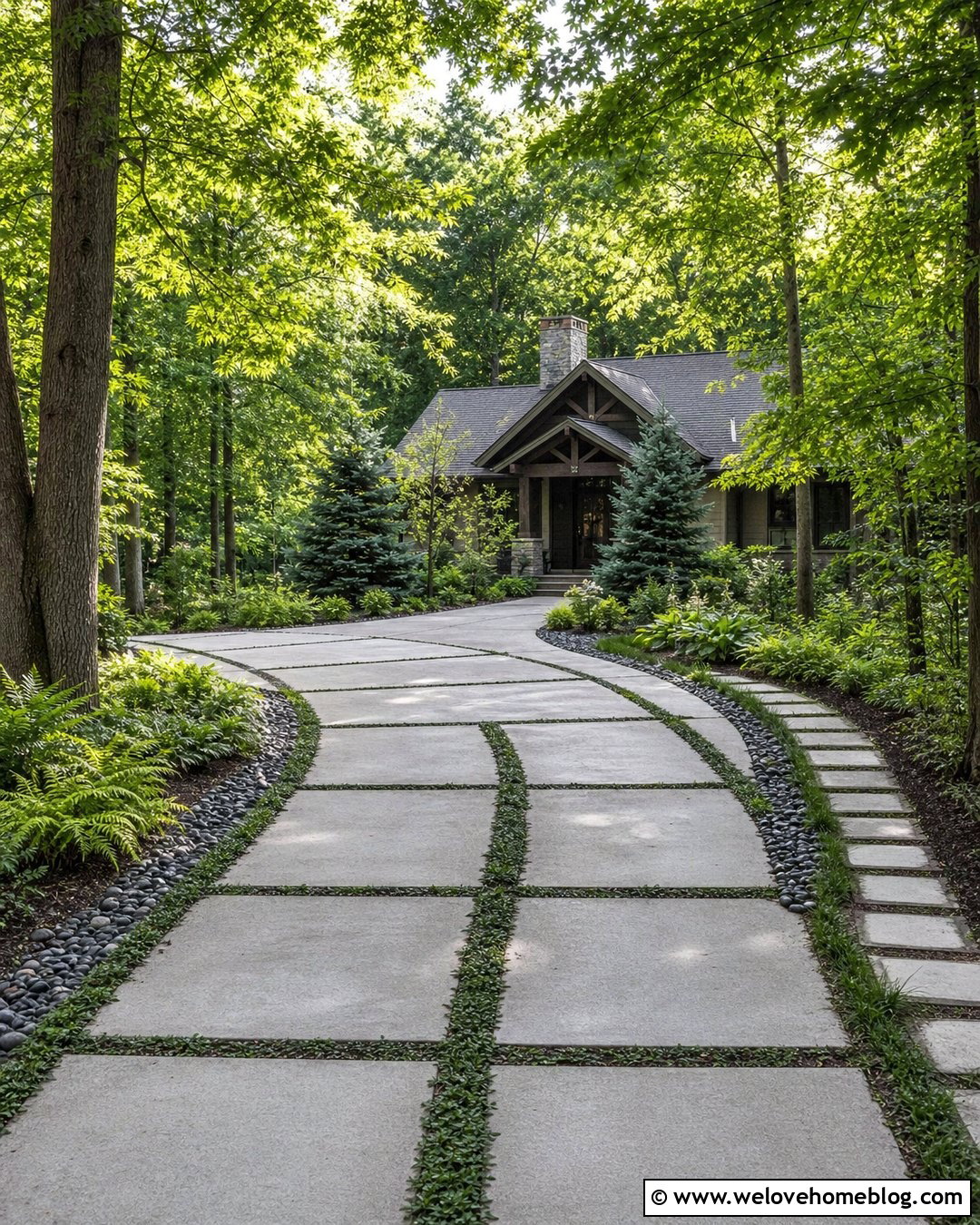
A tree-covered front yard needs a green driveway designed around shade rather than a sun-loving lawn. Use large permeable concrete slabs with broad gravel-filled joints and reserve low-growing, shade-tolerant plants for protected center and edge areas. The clean slab pattern provides reliable tire support, while the planted spaces visually connect the driveway to the woodland garden. Moss may appear naturally in damp joints, but it should not be relied on where tires turn or people walk because it can wear away and become slippery. Frame the approach with ferns, woodland sedges, and shrubs suited to local growing conditions. A curved layout can preserve mature tree roots, although excavation still requires professional planning. Keep falling leaves from blocking permeable joints by using gentle blowing and equipment recommended for the paving system.
14. Native Grass Green Driveway
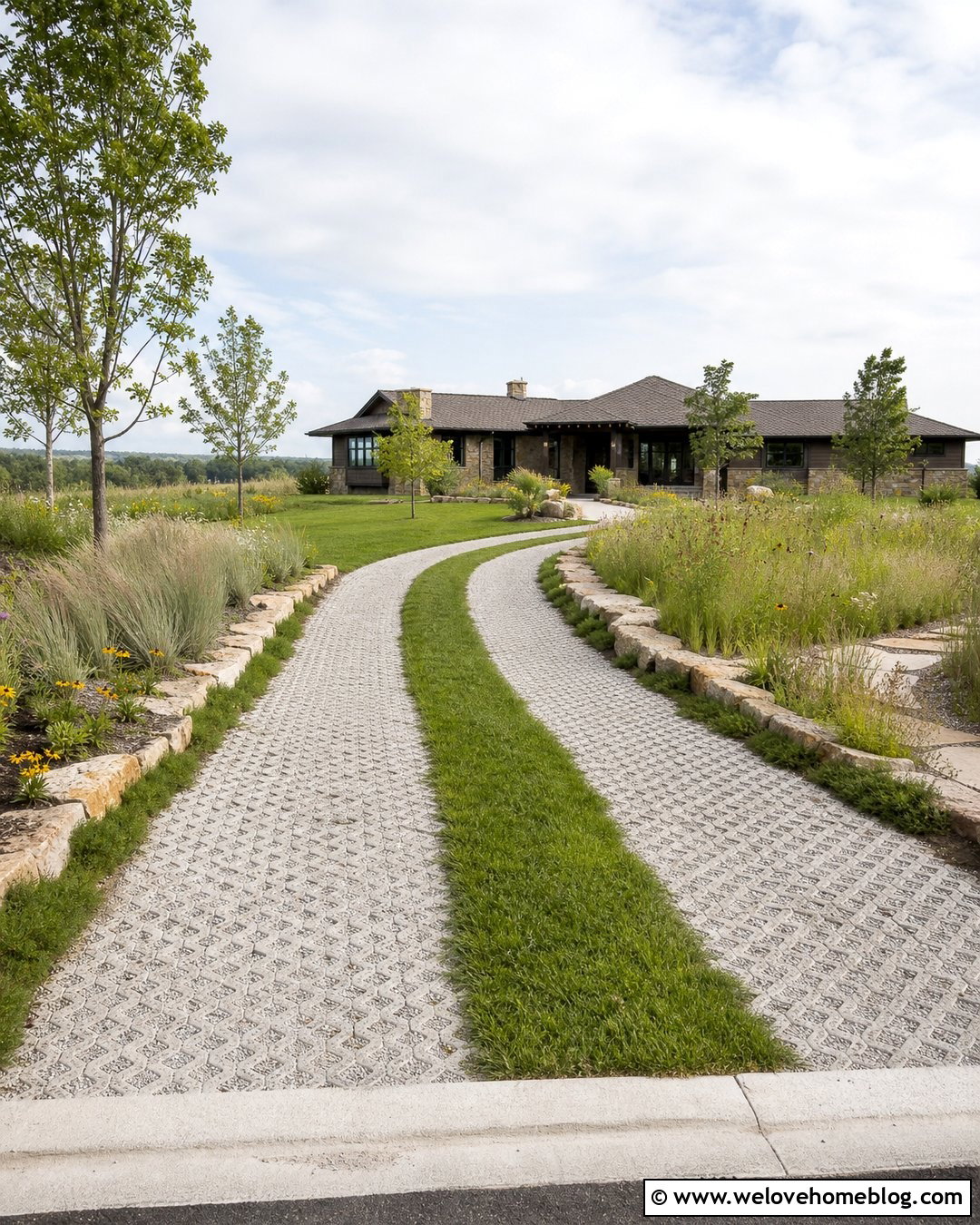
Native grasses can help a driveway blend into a prairie, meadow, or naturalistic front yard. Keep the drivable area stable with gravel-filled cellular grids and create a broad living strip through the center. Plant short native turf or locally adapted sedges where vehicle clearance and growing conditions permit. Taller ornamental grasses should remain along the outside borders, safely away from sightlines and turning areas. A gently winding layout works especially well on a larger property because it follows the landscape instead of cutting across it. Use locally sourced stone at the entrance and repeat that material around nearby planting beds. Native does not automatically mean traffic-tolerant, so verify each plant’s mature height, moisture needs, and ability to recover from pressure. The strongest design protects most vegetation from direct tire contact.
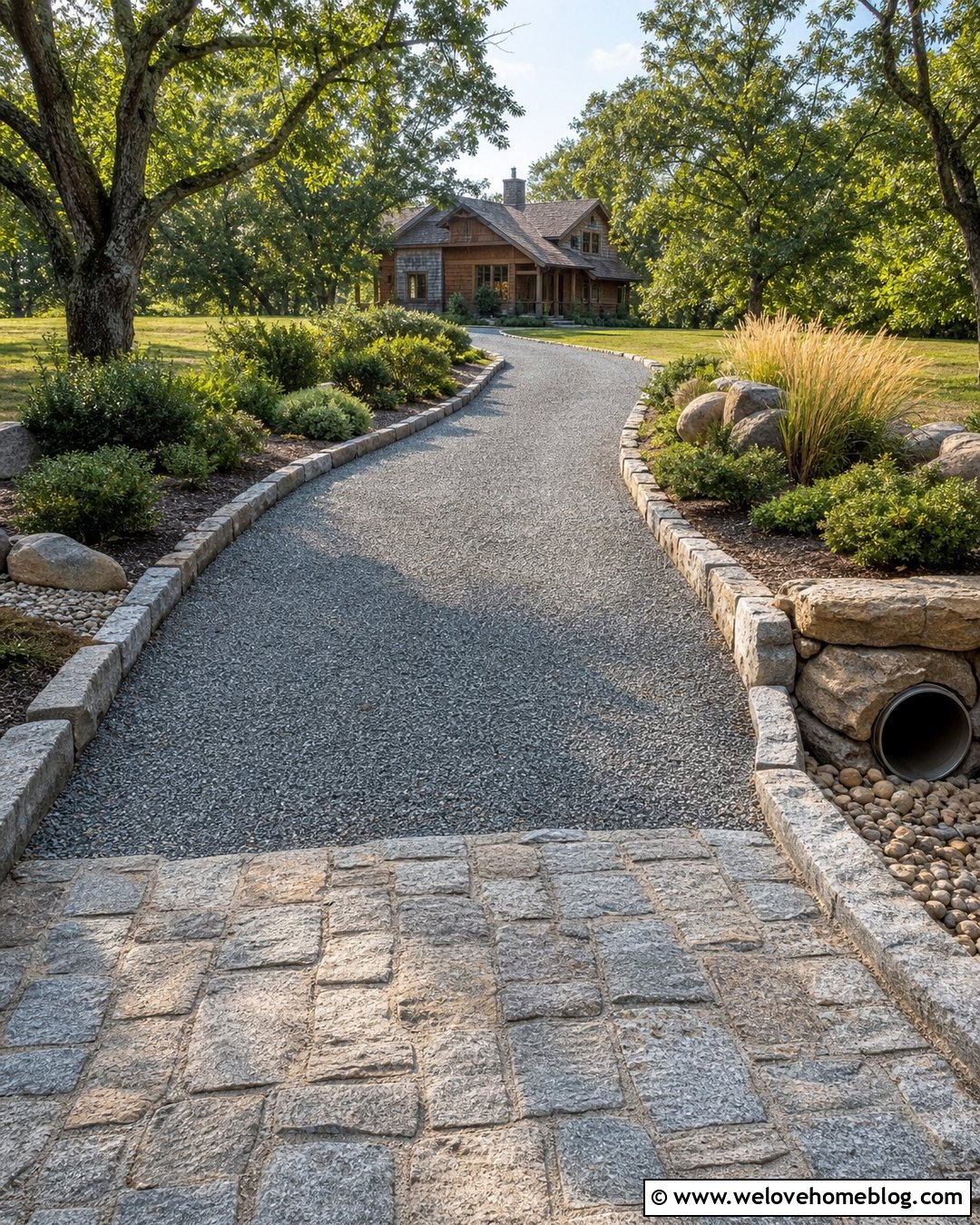
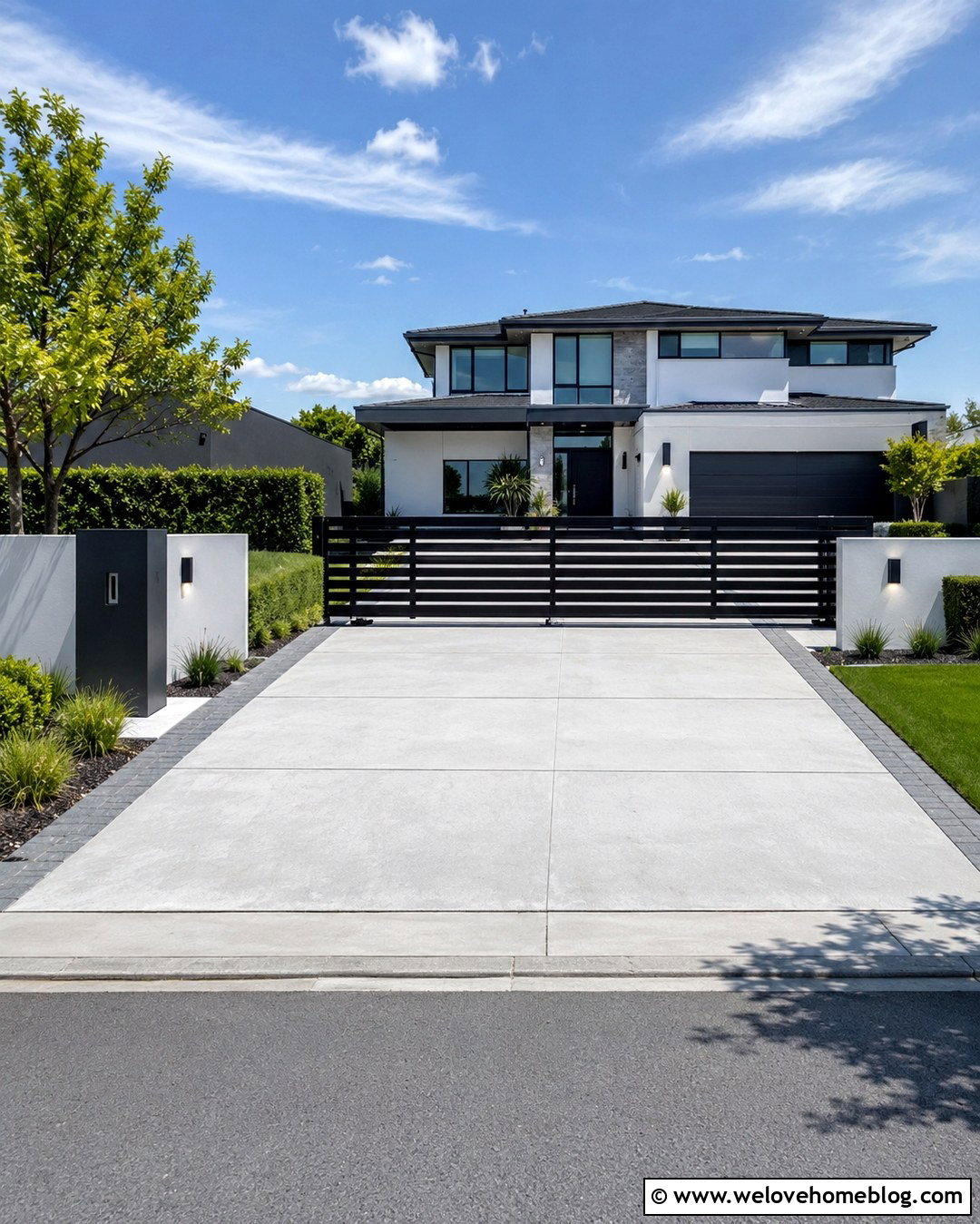
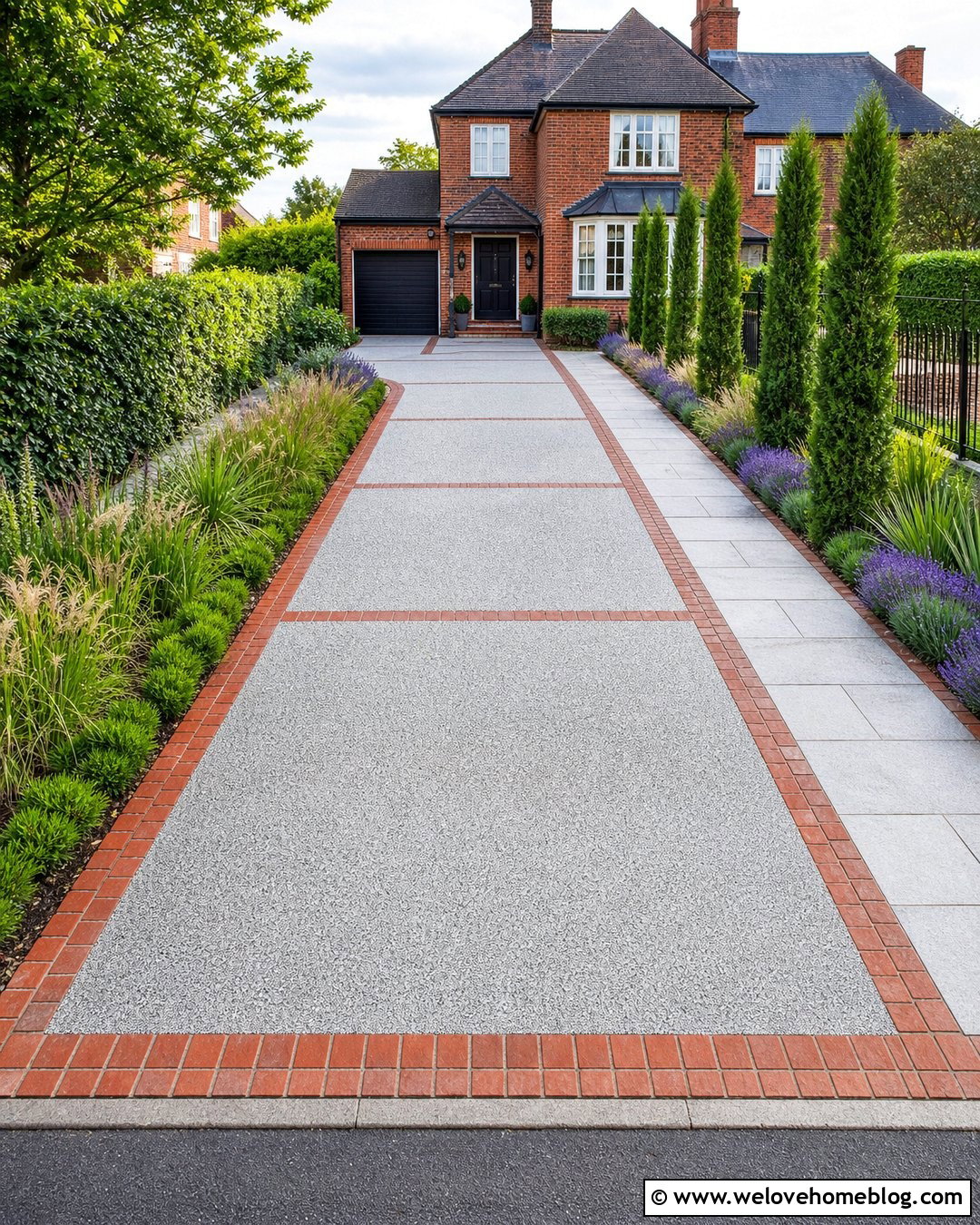
15. Green Driveway With Rain Garden
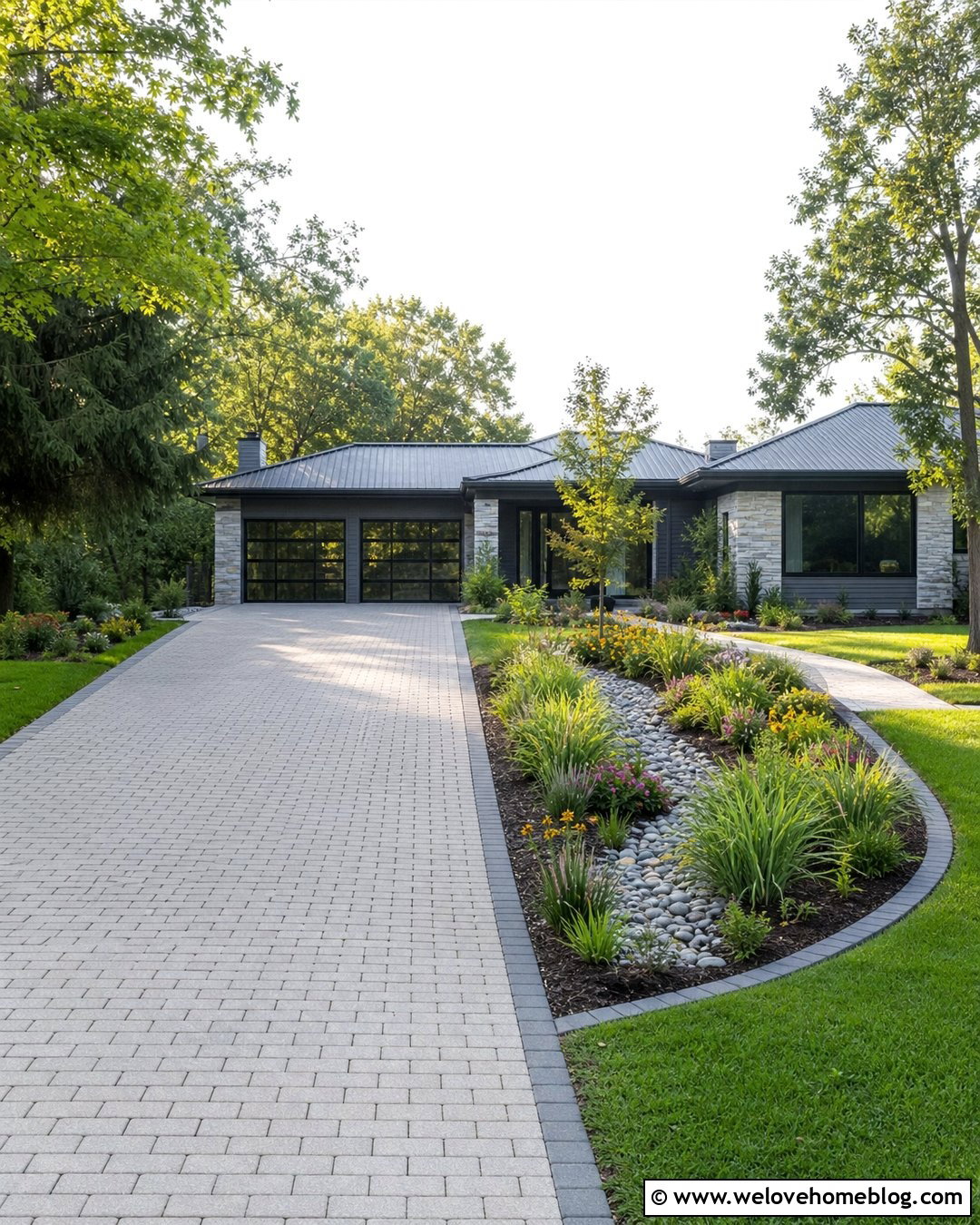
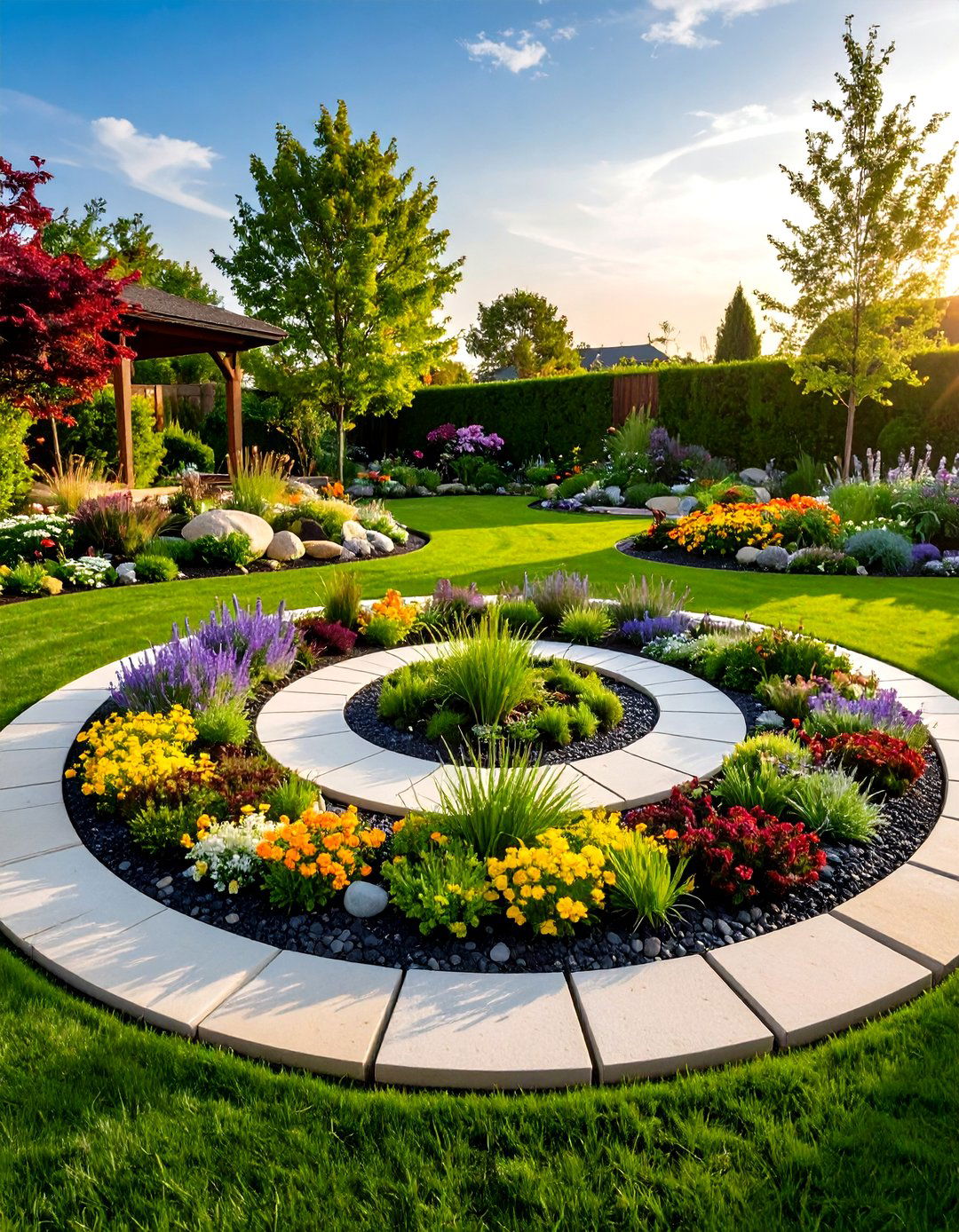
A rain garden can turn the low side of a driveway into a useful and attractive landscape feature. Build the driving surface with permeable interlocking concrete pavers, then shape a shallow planted basin where excess water can collect temporarily. Select plants according to moisture zones, placing flood-tolerant species in the center and drier selections along the upper edge. A stone-lined overflow route should safely handle storms that exceed the garden’s storage. The driveway can remain straight while the rain garden curves alongside it, creating a softer view from the street. Green infrastructure such as permeable paving and rain gardens can help absorb rainfall and reduce water pooling when properly designed for local conditions. () Keep the basin away from foundations and confirm setbacks, soils, utilities, and drainage requirements.
16. Green Driveway With Bioswale
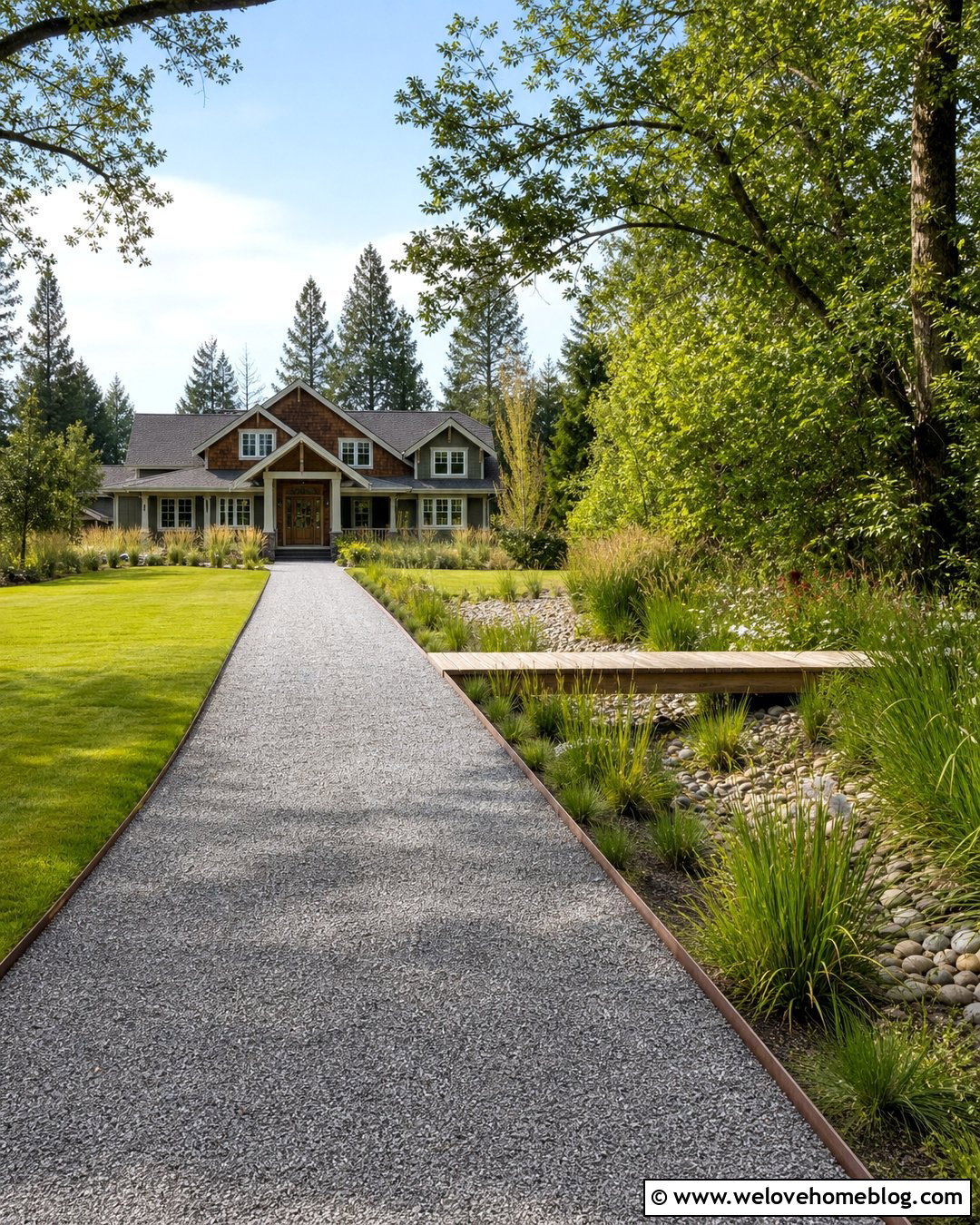
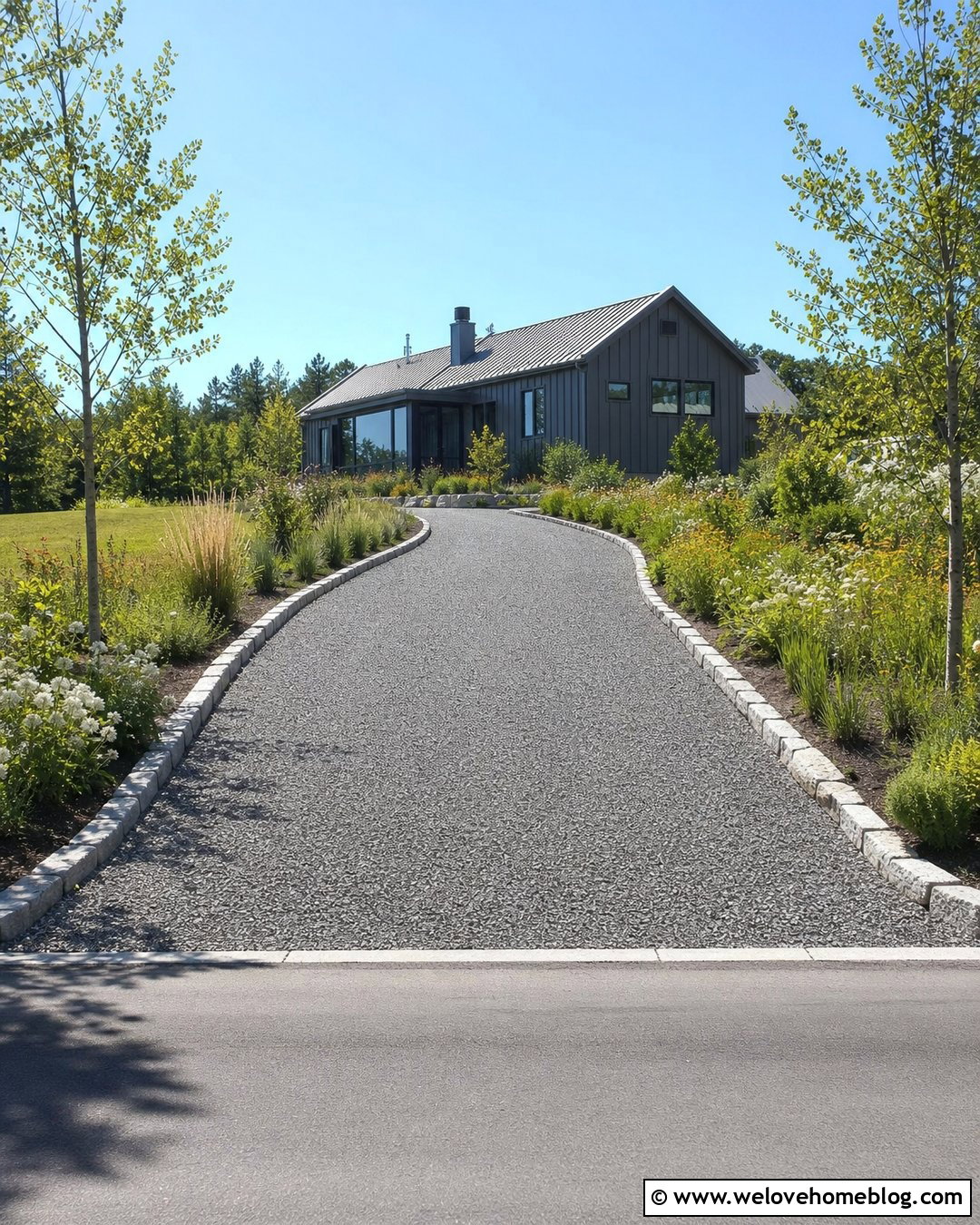
For a long driveway, a bioswale can create a continuous planted edge that guides and filters runoff. Pair a stabilized gray gravel surface with a gently sloped channel planted in native sedges, grasses, and moisture-tolerant flowering perennials. Rounded river stone at selected points can slow water and protect areas where concentrated flow enters the swale. On the opposite side, use simple steel edging and a mowed lawn strip for easy maintenance. The result feels balanced rather than overly engineered. A bioswale needs a safe overflow route and should not hold water indefinitely. Its dimensions, soil mixture, and plant palette must respond to the site’s slope and rainfall patterns. Install a small bridge or permeable stepping path where the front walkway crosses the swale, keeping pedestrian access dry and visually connected to the house.
17. Circular Green Driveway
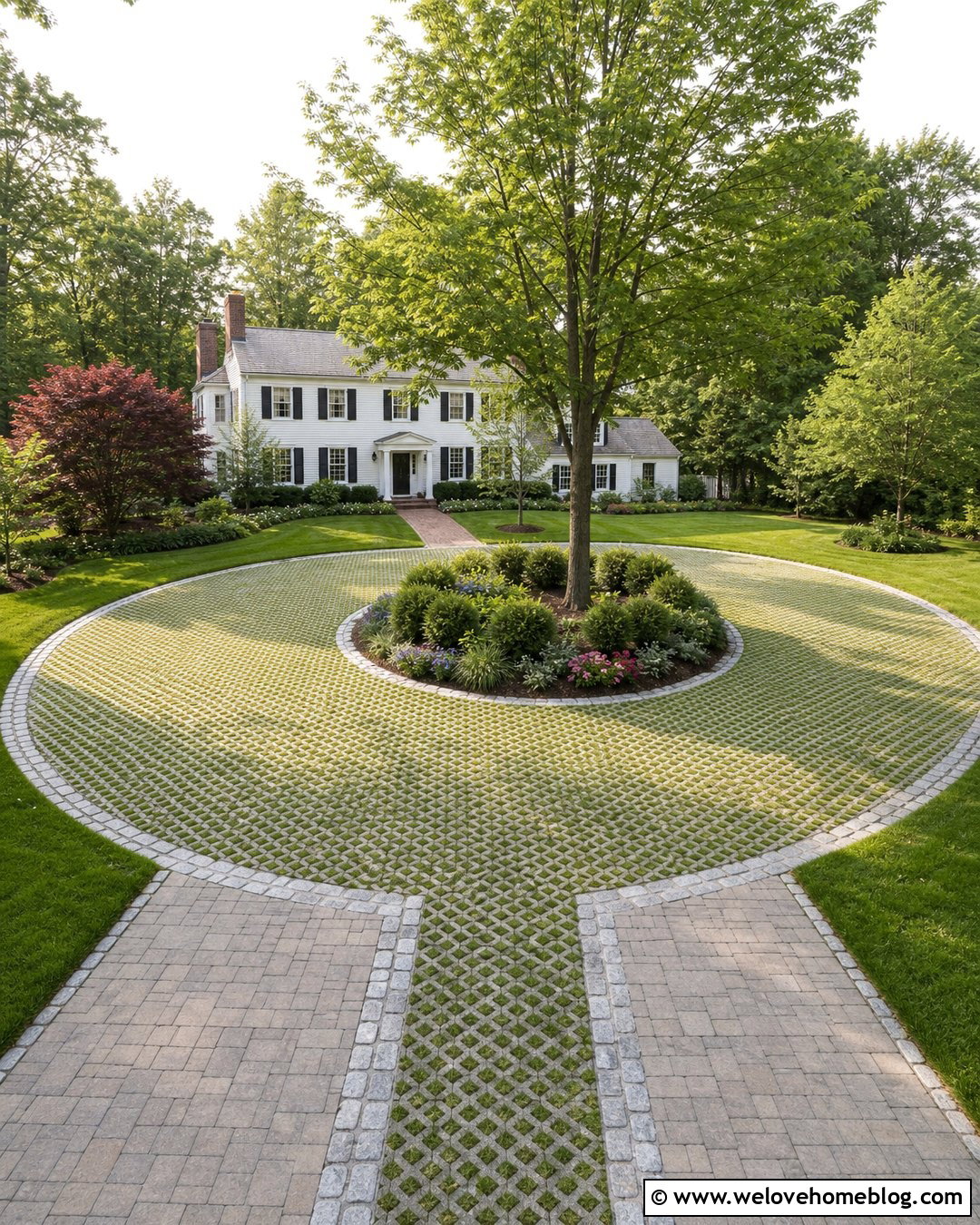
A circular green driveway gives a large front yard a graceful arrival route without requiring drivers to back into the street. Use grass-filled concrete grid pavers for the main loop and solid permeable pavers at the entrance aprons, where turning pressure is greatest. The central island can hold a native shade tree surrounded by low shrubs and flowers that preserve visibility. Cobblestone edging will define the circle and protect planted cells from garden soil. Keep the loop wide enough for expected vehicles and provide clear separation between the driveway and front walkway. A circular layout creates more paved or reinforced area than a straight drive, so permeability and planted space become especially valuable. Before construction, confirm turning radiuses, emergency access, drainage flow, and local rules for multiple curb connections.
18. Curved Green Driveway
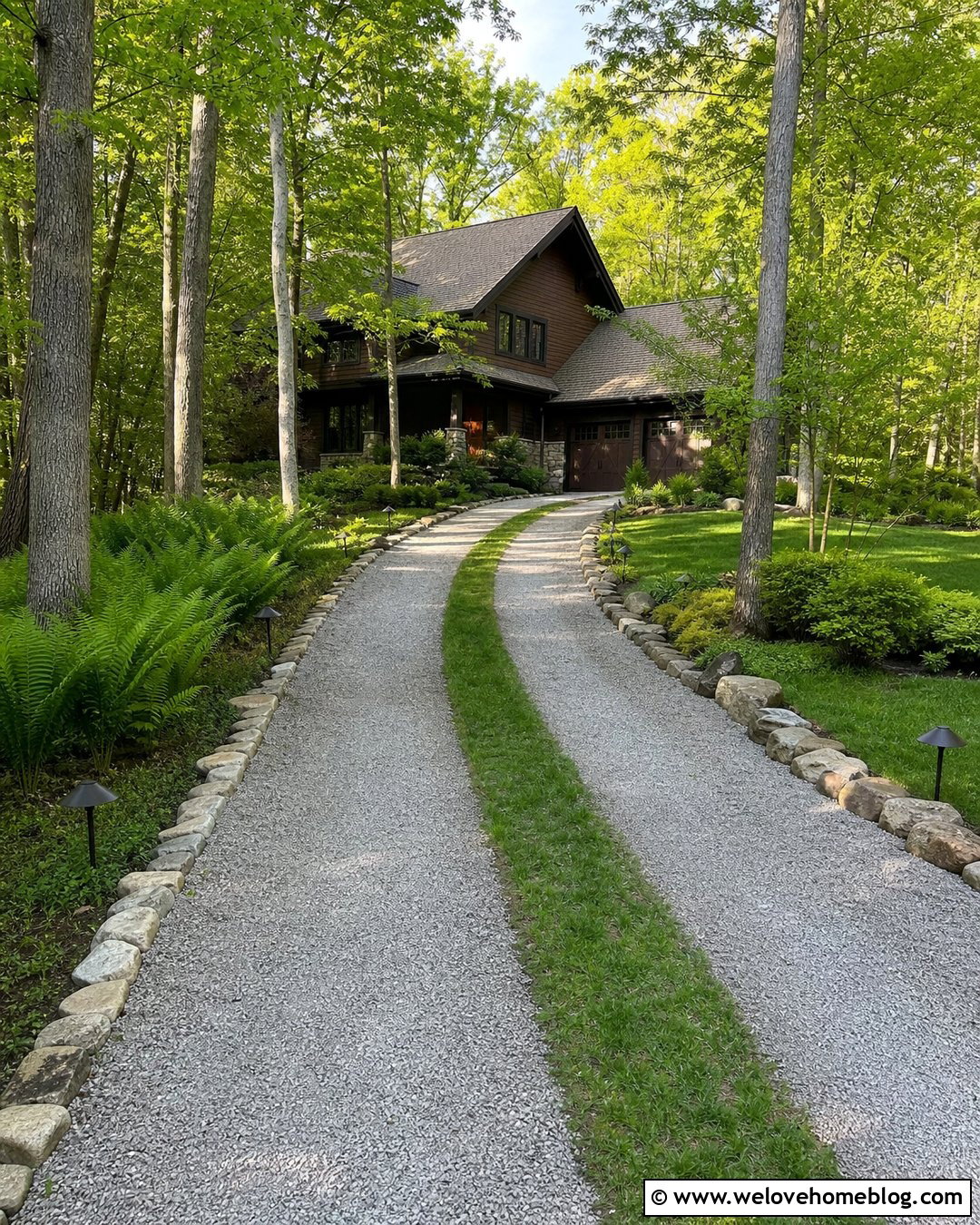
A curved driveway can preserve existing landscape features and reveal the house gradually. Create the surface with pale stabilized gravel held in cellular confinement panels, then add a wide grass center strip where vehicle clearance permits. Local fieldstone edging gives the curve a natural boundary and prevents gravel from spreading into planting beds. Use small native trees on the outside of the bend and lower plants on the inside to maintain clear views. This complete look fits country homes, craftsman houses, and wooded suburban lots. Avoid making the curve tighter than everyday vehicles can comfortably navigate. The base, cross slope, and drainage should be professionally planned so water does not wash gravel toward the street. Low path lights can identify the edge without making the entrance feel overbuilt.
19. Ribbon Green Driveway
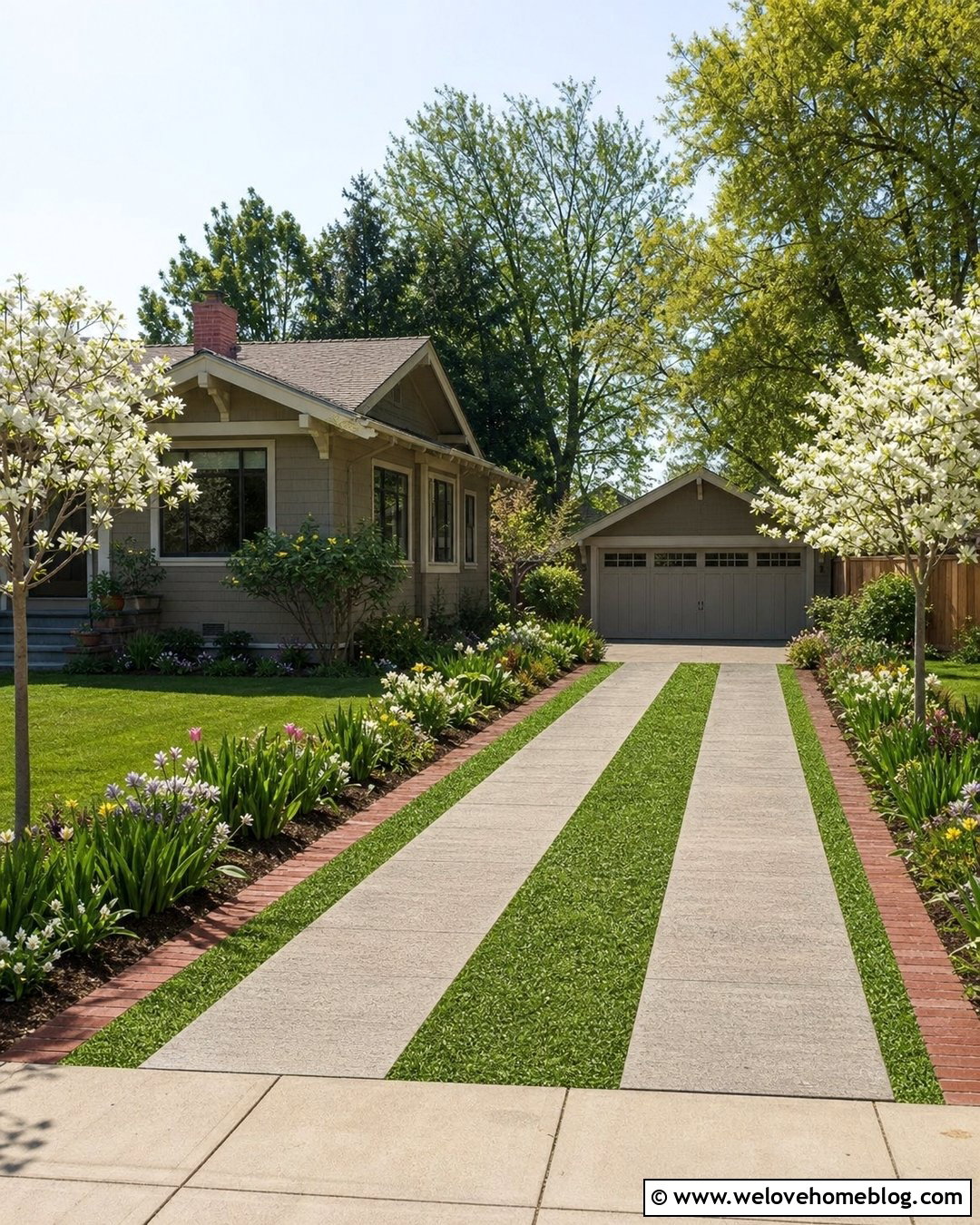
A ribbon driveway uses two narrow paved tracks with living ground cover between and around them. It is one of the simplest ways to reduce the visual width of a driveway while maintaining dependable tire contact. Build the tracks from textured concrete, brick pavers, or natural stone installed on a vehicle-rated base. Keep their spacing aligned with the vehicles normally using the property. The planted center can contain tough turf, clover, or another locally suitable low ground cover. Add a matching paved apron at the garage because tires turn and stop more frequently there. Brick edging and relaxed perennial borders can give the layout a cottage or bungalow character. Ribbon driveways work best on straight or gently curved approaches where drivers can remain aligned without repeatedly crossing the center planting.
20. Modern Green Driveway
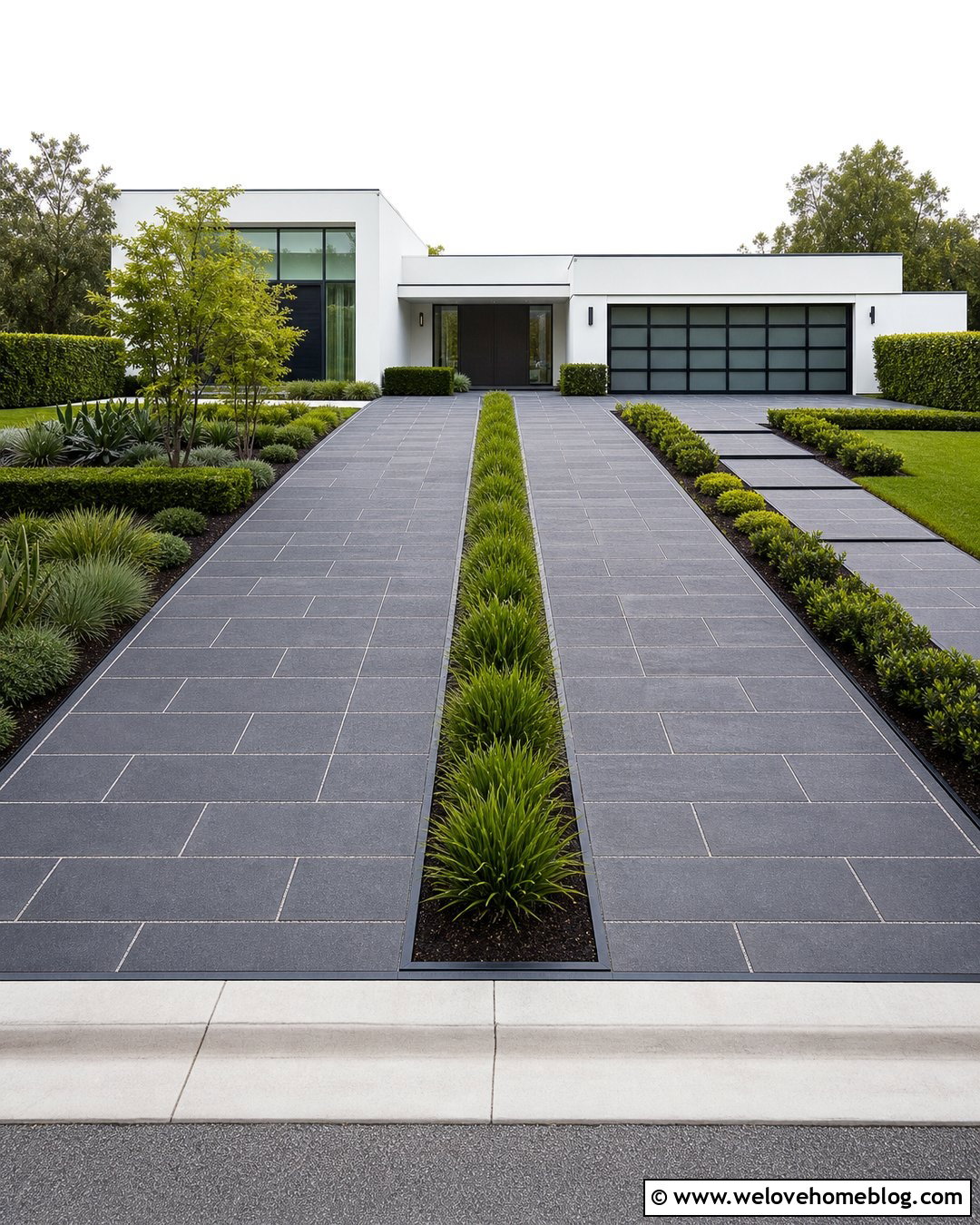
A modern green driveway can combine strong geometry with generous planting. Use large-format charcoal permeable concrete pavers separated by narrow aggregate joints. Divide the broad surface into two driving bands with a central strip of ornamental grass and evenly spaced stepping slabs. Keep the layout straight and align it with the garage, front door, and architectural lines of the house. Black metal edging creates crisp boundaries, while rectangular beds of native grasses and clipped evergreen shrubs add controlled greenery. Include a permeable walkway made from the same pavers to create a unified entrance. Choose plants that remain below vehicle sightlines and do not spill into parking areas. The limited material palette makes every detail noticeable, so careful grading, precise cuts, and consistently filled joints are important to the finished appearance.
21. Farmhouse Green Driveway
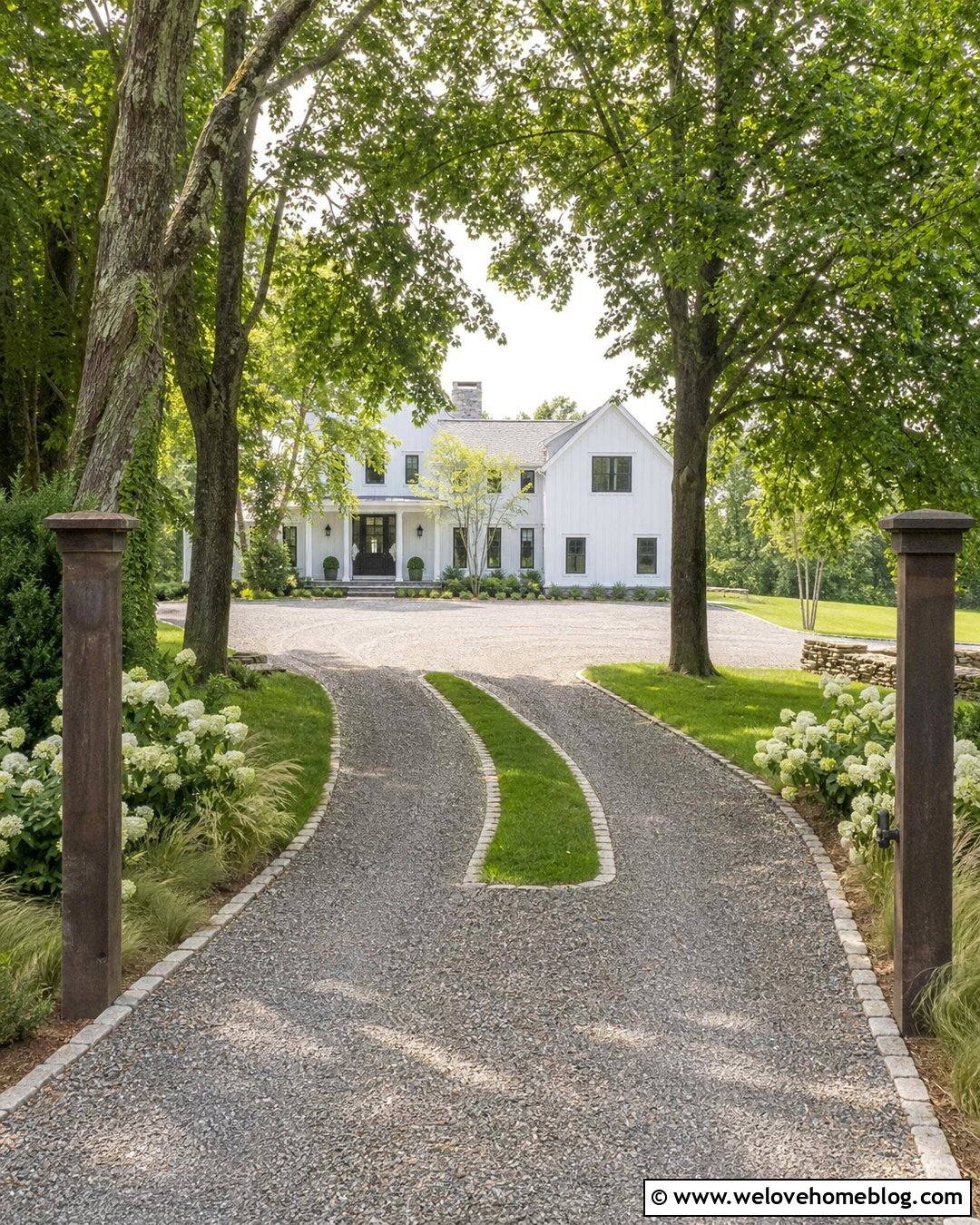
A farmhouse green driveway should feel practical, welcoming, and comfortably connected to the land. Use warm gray crushed stone stabilized with a hidden cellular grid to create a broad, gently curved approach. Add a grassy center strip along the quieter portion, then transition to a full-width gravel parking court near the garage or barn. Reclaimed granite blocks can form durable edges at the entrance, while timber posts and a simple farm gate provide structure. Plant native shade trees at generous intervals and use informal borders of hydrangeas, grasses, and seasonal perennials closer to the house. Keep loose gravel away from public roads with a solid apron or properly designed transition. The finished driveway should feel relaxed, but its base, drainage, turning space, and edge restraint still require precise planning.
22. Small Green Driveway
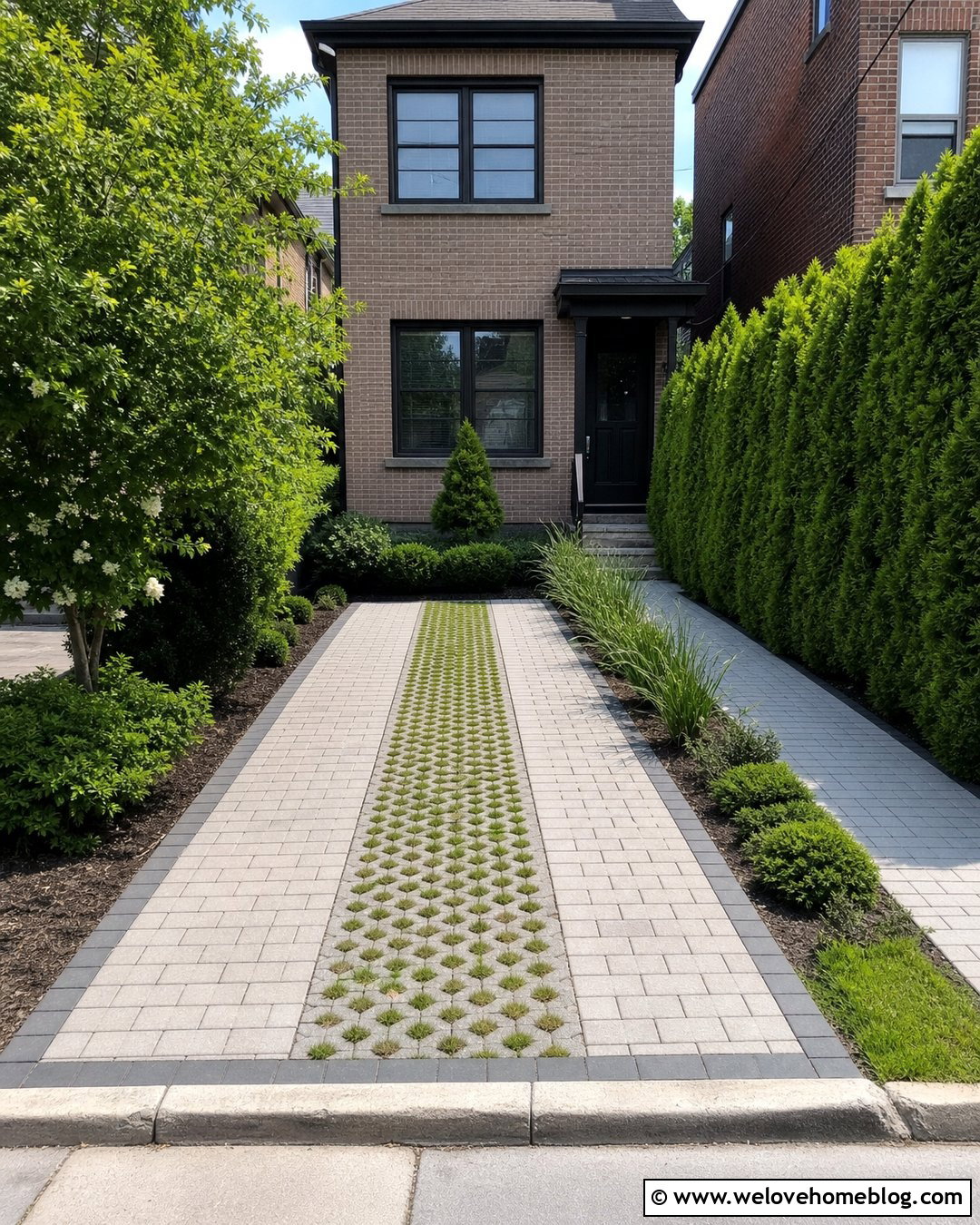
Even a compact front yard can support a green driveway without losing necessary parking space. Install light-gray permeable pavers in two clear tire zones and use grass-filled grid cells between them. Continue the same pavers into a narrow front walkway, creating a tidy connection without adding another unrelated material. Low planting beds along one edge can contain compact native shrubs, ornamental grasses, and ground covers that will not scratch parked vehicles. On the property-line side, a slim hedge or trellis provides privacy while preserving usable width. A straight layout usually makes the most efficient use of a small lot. Carefully measure doors, mirrors, trash-bin access, and pedestrian paths before finalizing the design. Clean borders and a restrained plant palette prevent this space-saving driveway from feeling crowded or visually fragmented.
23. Sloped Green Driveway
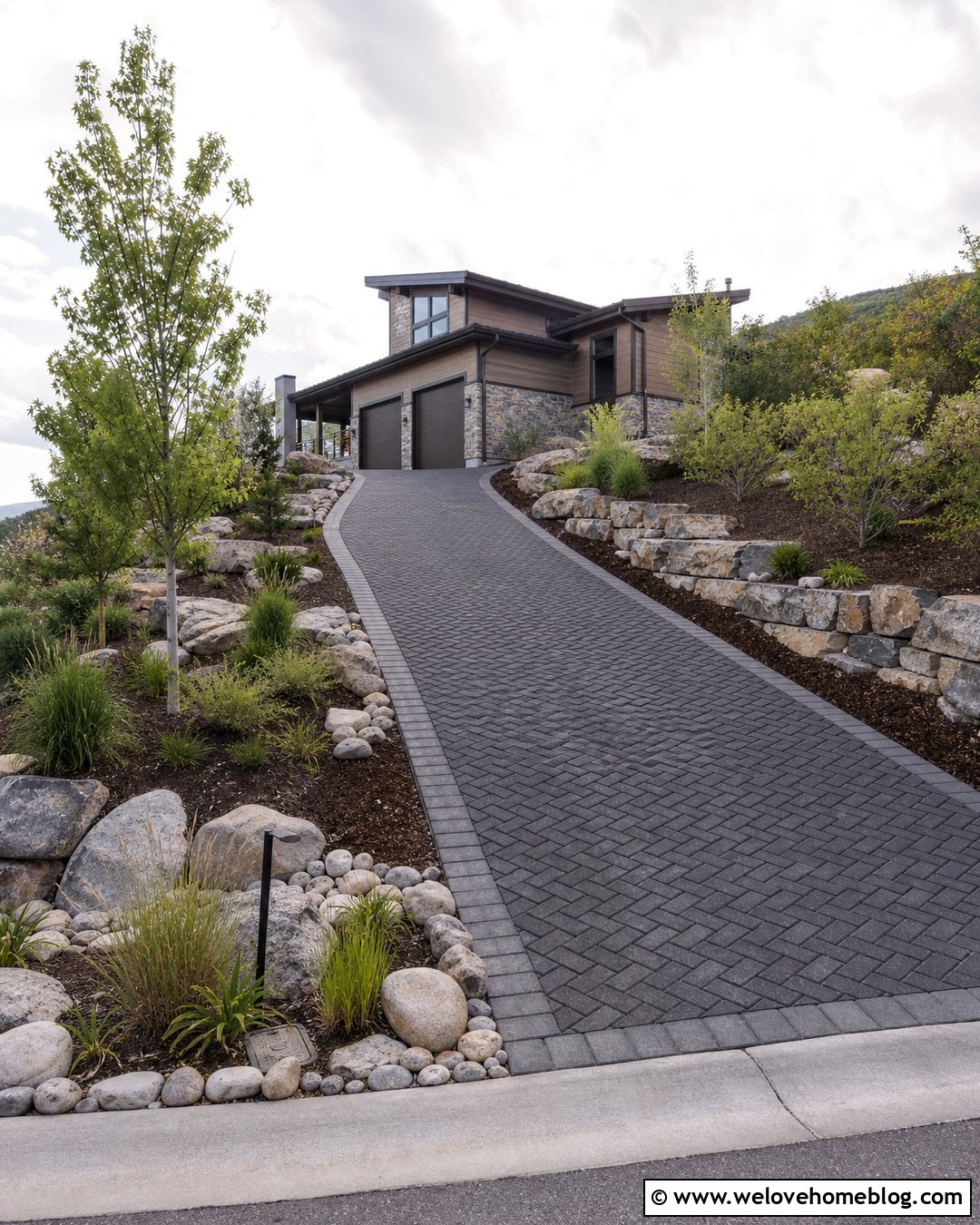
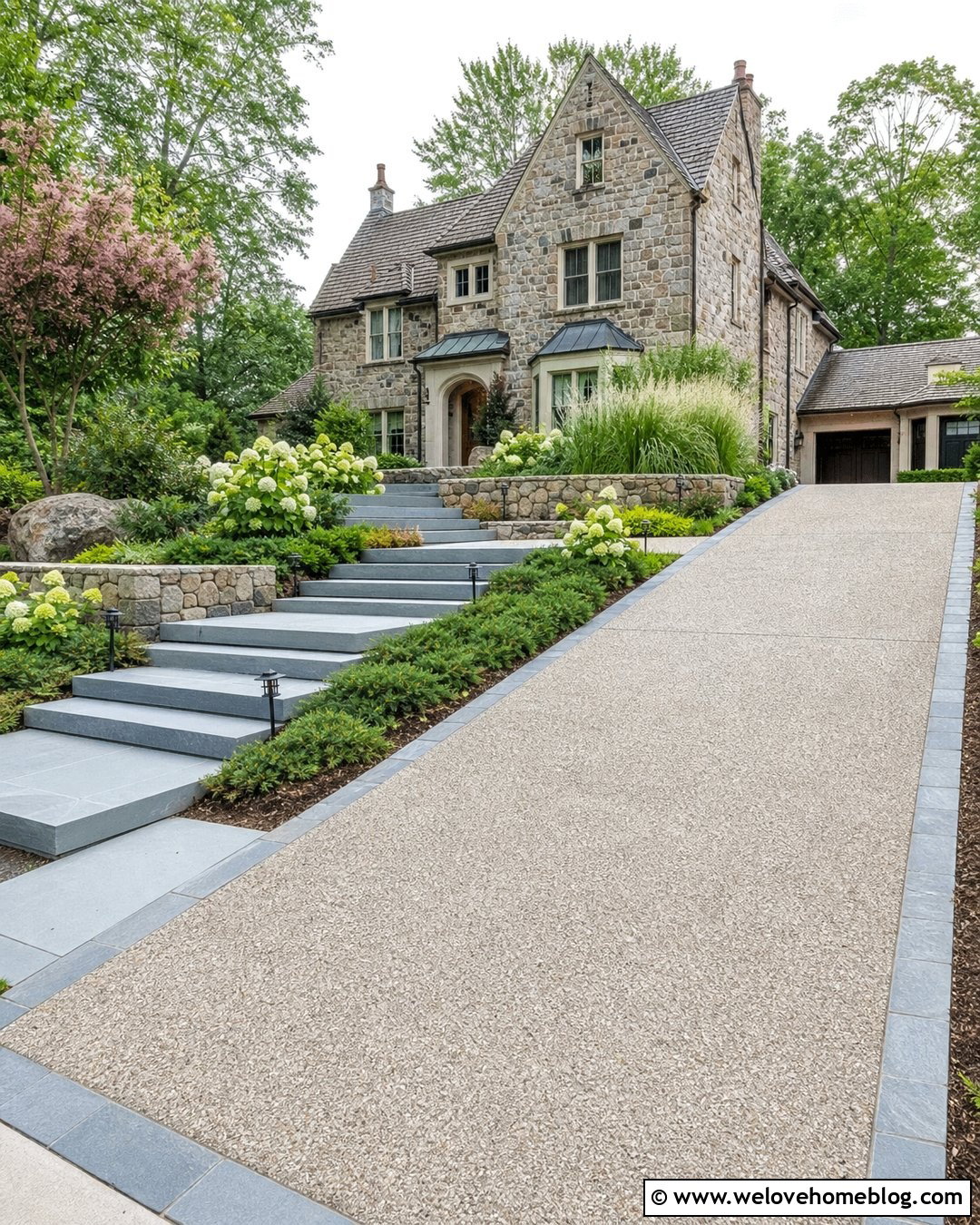
Sloped sites need stronger erosion control than flat green driveways. Use permeable interlocking concrete pavers with a textured finish and sturdy edge restraints rather than loose gravel that may migrate downhill. Lay the pavers in a pattern suited to the expected traffic and incorporate subtle cross-drainage where required by the site design. Terraced planting beds can follow one side of the driveway, supported by low stone retaining walls and filled with deep-rooted native shrubs and grasses. At the bottom, include a drainage or infiltration feature that receives water without sending it across the sidewalk. Grass-filled grids may work on mild slopes, but suitability depends on product specifications, soil, climate, and vehicle use. Consult qualified professionals for steep approaches, unstable ground, retaining walls, or drainage near the home’s foundation.
24. Green Driveway With Solar Lighting
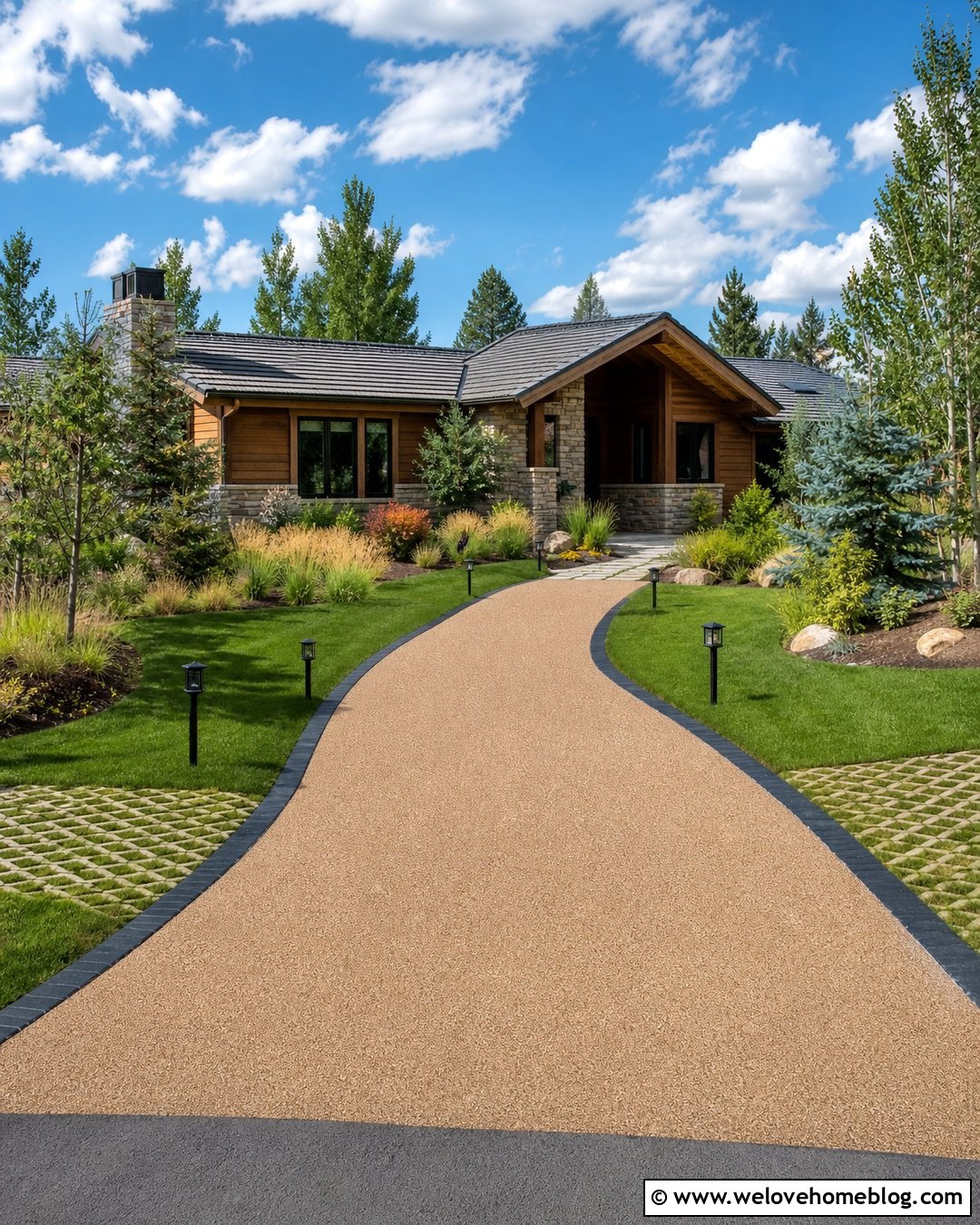
Thoughtful lighting makes a green driveway easier to follow while preserving its natural character. Choose a tan resin-bound gravel surface with a sweeping curve and dark stone edging. Place shielded solar bollards at wider intervals along the outside edge, where they can mark the route without becoming obstacles. In the center or along quieter margins, introduce reinforced grass panels that break up the paved area. Layer nearby landscaping with native shrubs, meadow grasses, and small trees that will not shade every solar panel. Solar fixtures need adequate sun exposure and may provide less consistent output during cloudy seasons, so evaluate the site before relying on them for essential illumination. During the day, simple fixture shapes and coordinated finishes should support the curb appeal rather than dominate the planted driveway design.
25. Green Driveway With Native Borders
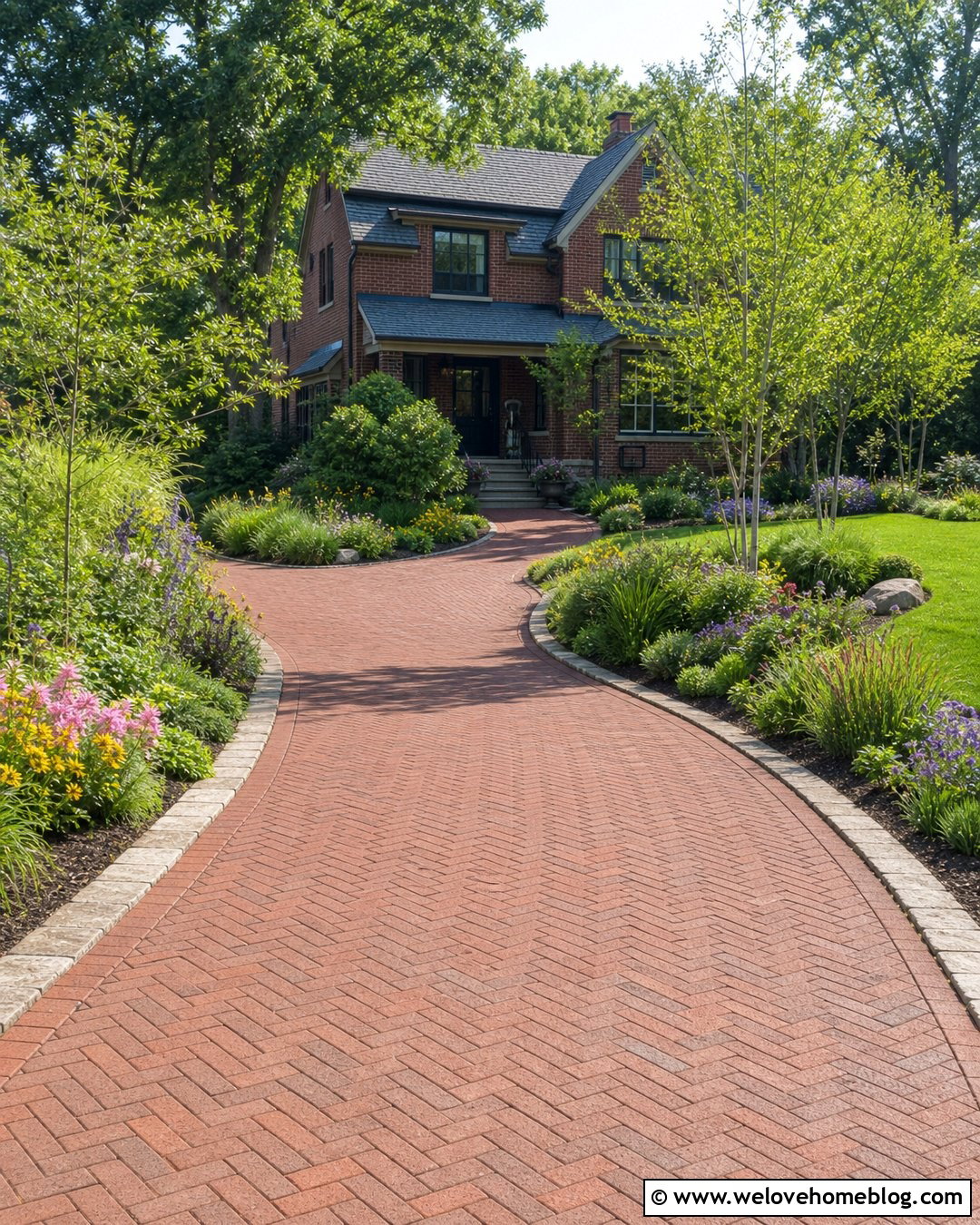
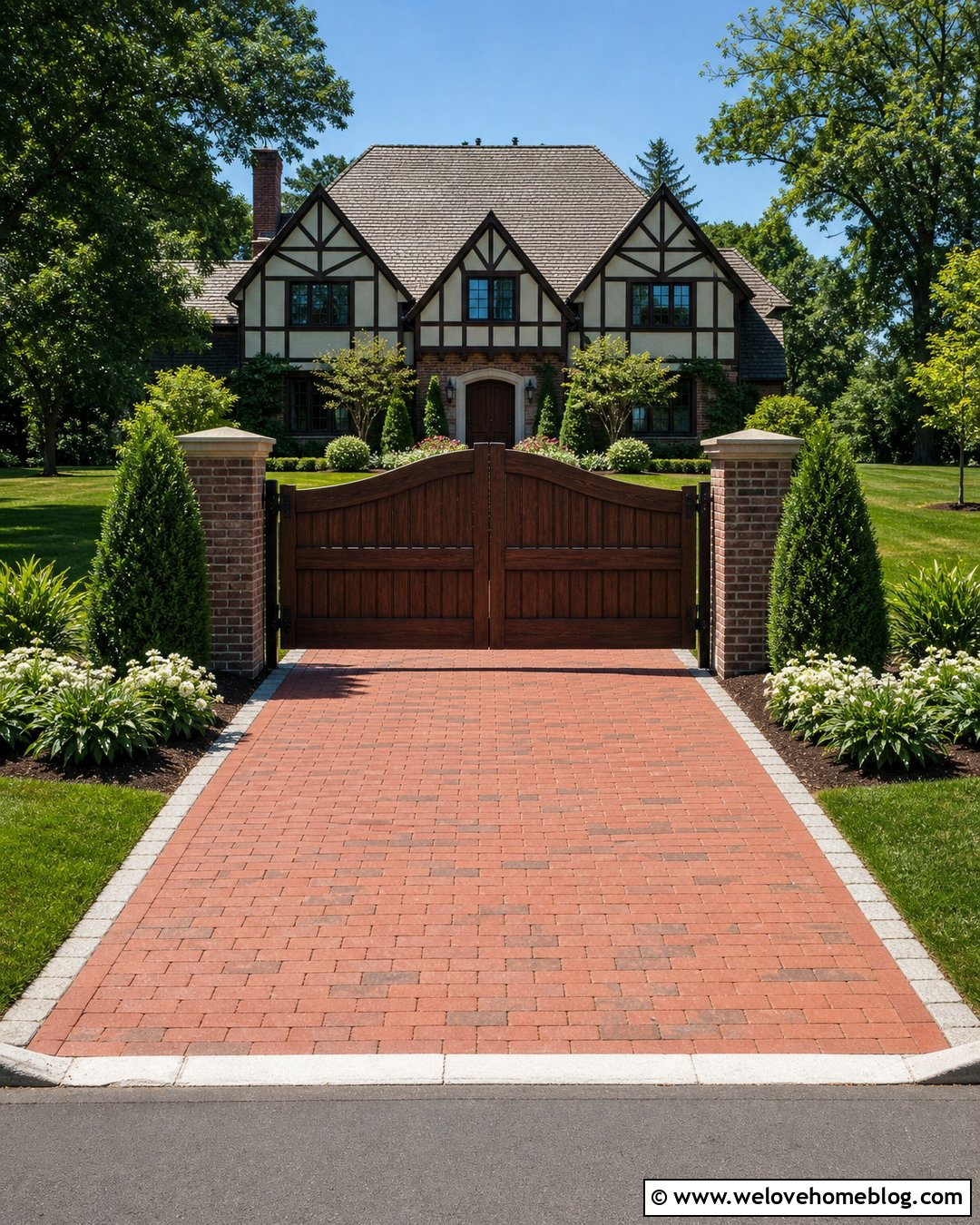
Native borders can make almost any driveway feel greener, even when a living driving surface is impractical. Start with permeable clay brick pavers in a warm red-brown herringbone pattern. Add generous planting beds on both sides, using regionally appropriate shrubs, grasses, flowering perennials, and one or two small canopy trees. A low stone curb keeps soil and mulch from washing into the permeable joints. Shape the driveway with a subtle curve and widen it near the garage for comfortable parking. Repeat a few plants on both sides to create continuity, but leave clear sightlines at the street. Select species based on mature size rather than nursery size. Plants that lean into the driveway can obstruct doors, trap moisture, and require constant pruning, so allow sufficient clearance from the finished pavement.
Conclusion:
The best Green Driveway Ideas balance environmental goals with safe access, reliable vehicle support, and attractive curb appeal. Grass grids and ribbon driveways create the most visible greenery, while permeable pavers, porous asphalt, pervious concrete, and stabilized gravel offer practical alternatives for demanding areas. Rain gardens, bioswales, native borders, and shade trees can make the entire entrance work as one connected landscape. Before choosing a design, evaluate traffic, slope, soil infiltration, sunlight, snow removal, and maintenance needs. Local regulations may also affect materials, drainage, and curb connections. A qualified installer or landscape professional can help design the correct base and overflow route, ensuring your green driveway remains functional, stable, and beautiful through changing seasons.

Related posts:


Leave a Reply