
A cracked, chipped, or uneven driveway does not always need to become an expensive eyesore. These **20 Broken Concrete Driveway Ideas** explore practical ways to repair damage, improve curb appeal, and create a surface that feels intentional again. Depending on the driveway’s condition, you might fill minor cracks, resurface sound slabs, replace damaged sections, or combine existing concrete with gravel, brick, and pavers. The best approach also considers drainage, edging, landscaping, and the architecture of the house. Deep settlement, widespread heaving, or recurring cracks should be professionally assessed before cosmetic work begins. () From affordable patching to complete redesigns, the following **20 Broken Concrete Driveway Ideas** offer solutions for different homes, budgets, and levels of damage.

1. Broken Concrete Driveway With Matching Crack Repair
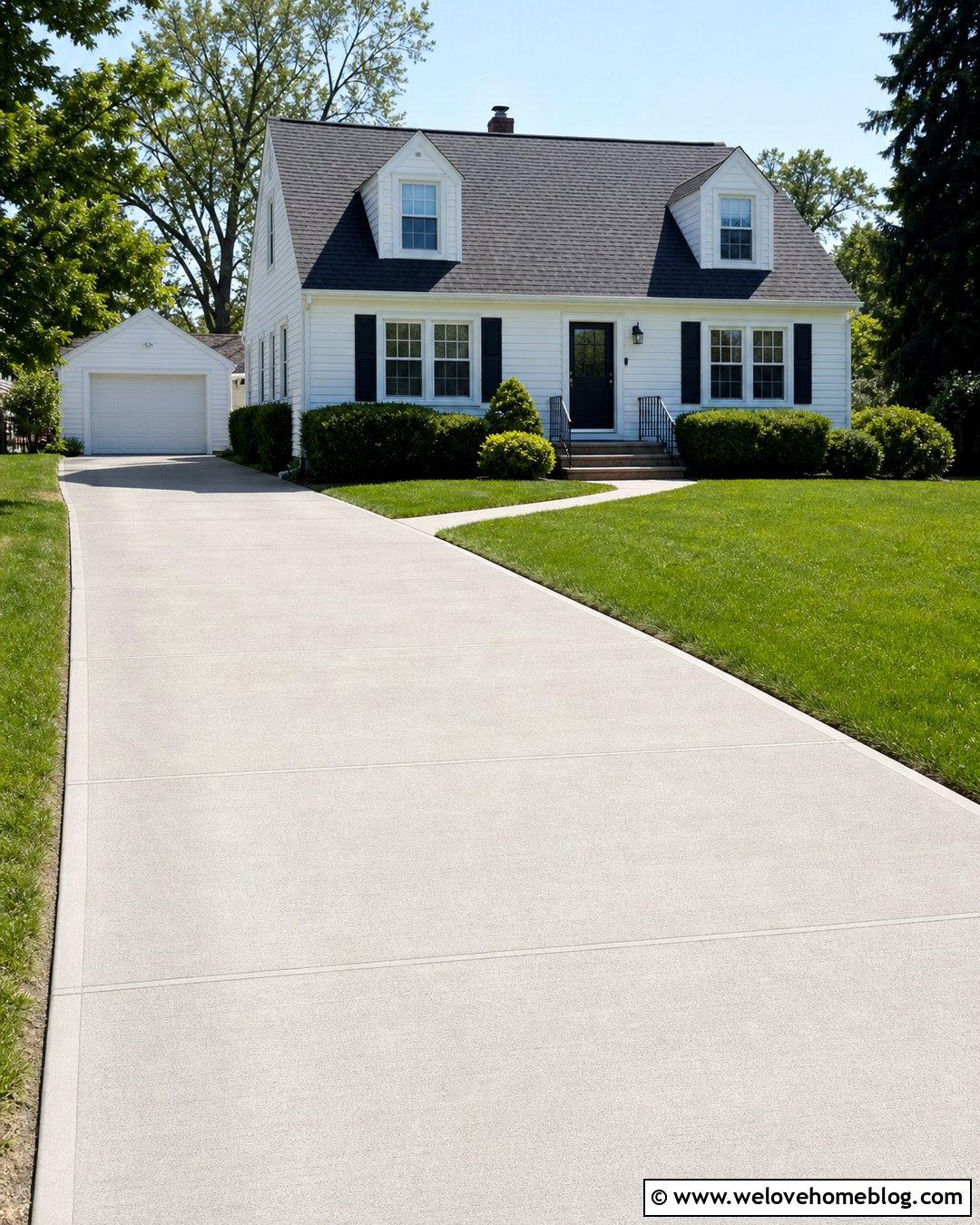
Small cracks can look far less distracting when the repair color closely matches the original concrete. Begin with a thorough cleaning so dirt, weeds, and loose material do not interfere with the repair. Use a flexible, driveway-rated crack filler for narrow moving cracks and an appropriate patching compound for larger stable gaps. A light pressure wash afterward can help the old and repaired areas appear more consistent. Finish the complete look with straight lawn edges, low evergreen shrubs, and a simple concrete walkway leading to the entrance. This understated treatment works especially well for ranch and Cape Cod homes. It keeps the existing gray poured concrete driveway visually quiet while preventing the repaired lines from becoming the main curbside feature. ()
2. Resurfaced Broken Concrete Driveway
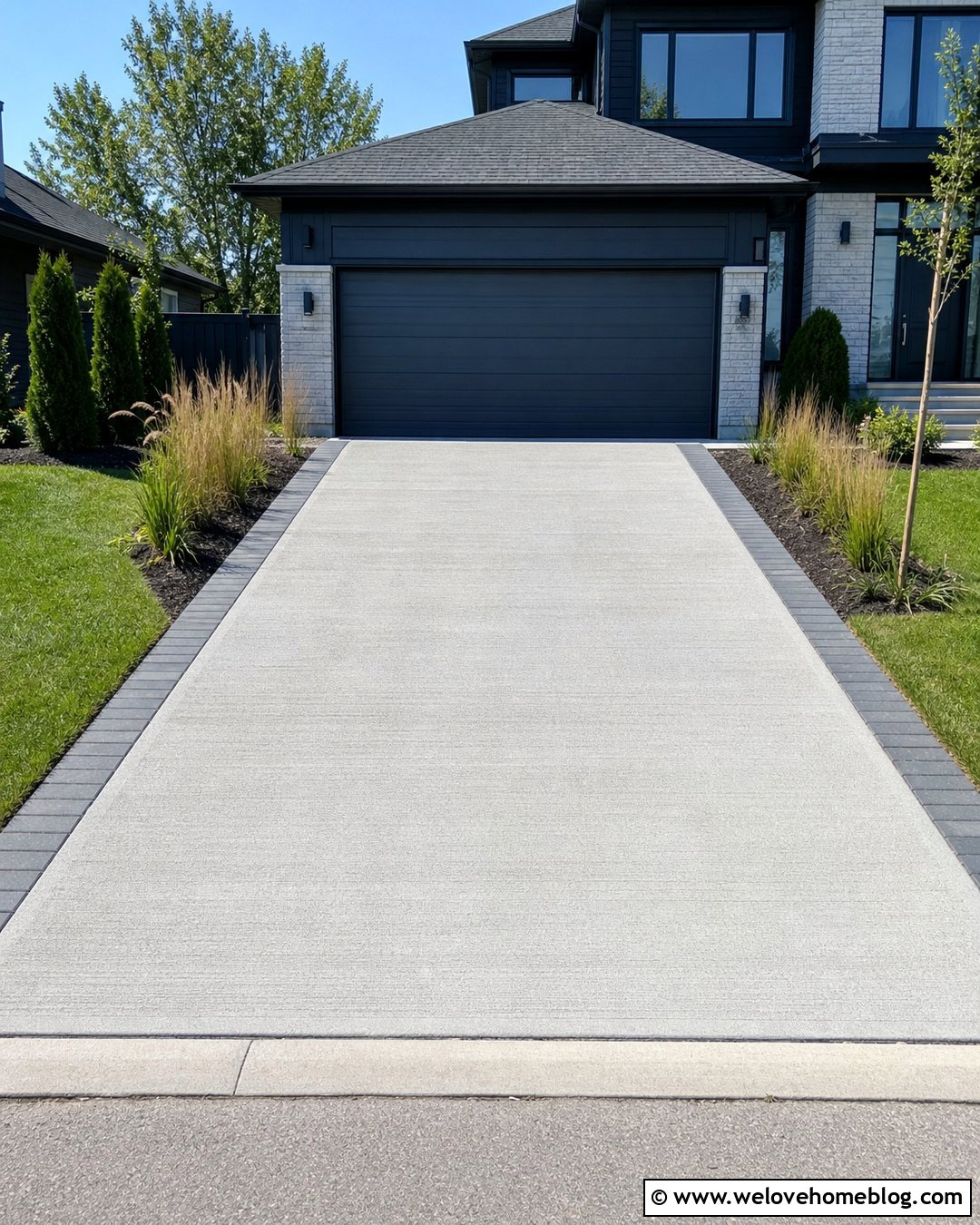
When the driveway remains generally stable but looks worn, a concrete resurfacing system can create a cleaner, more unified finish. Cracks, pits, and broken edges should be properly repaired before the resurfacing layer is installed. Choose a soft gray coating with a light broom texture to improve traction without making the surface look overly rough. Continue the new finish across the entire straight driveway rather than covering only random patches. Dark charcoal paver edging can sharpen the sides, while ornamental grasses and compact shrubs soften the transition into the yard. This complete design suits a contemporary suburban home because the limited color palette looks organized and fresh. Resurfacing should only be considered after movement, drainage problems, and unstable slabs have been addressed. ()
3. Stained Broken Concrete Driveway
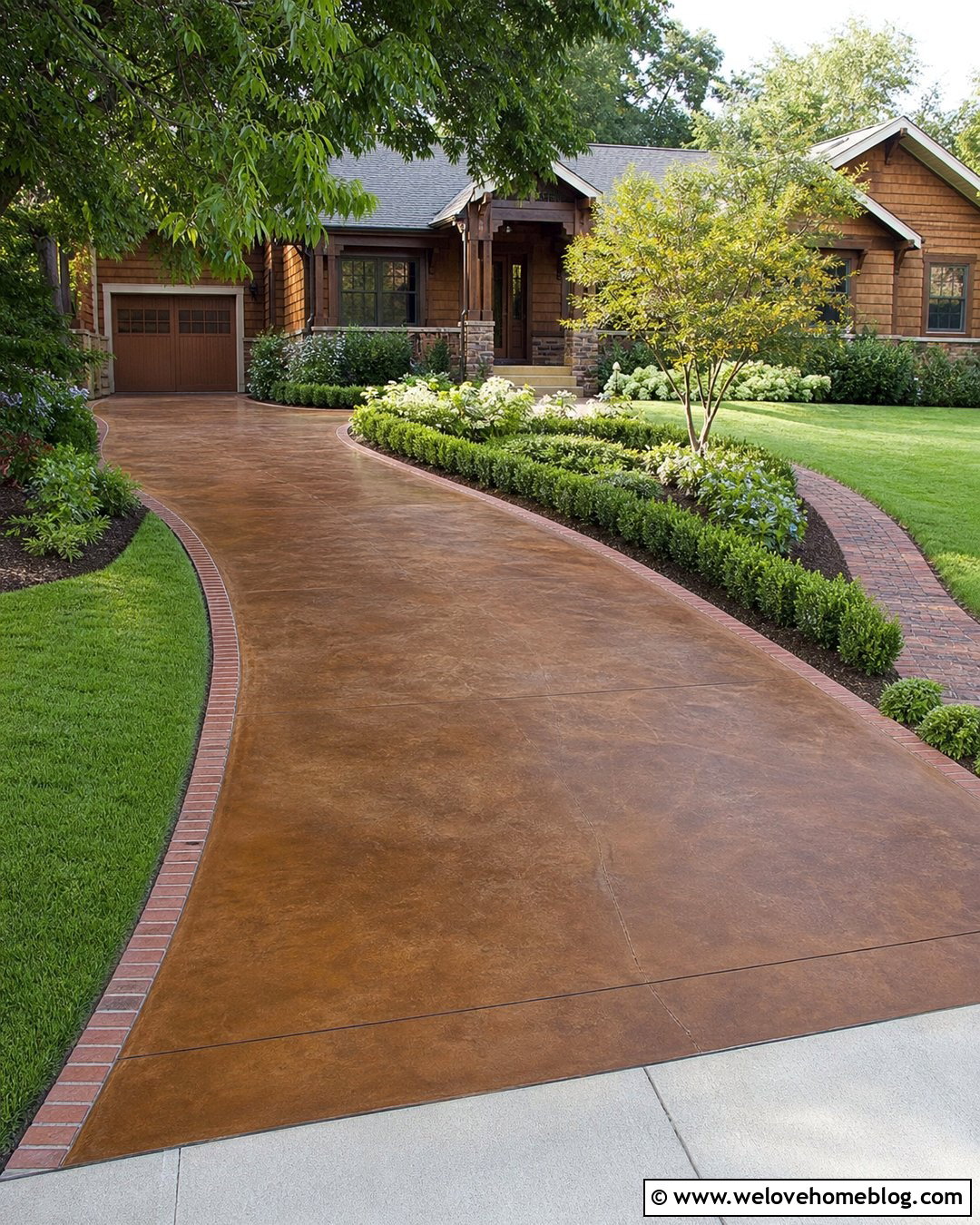
Warm concrete stain can help repaired areas blend into an older driveway with natural discoloration. Earthy walnut, sandstone, or muted charcoal tones tend to complement visible texture better than a very pale, uniform coating. Repair loose sections first, then apply the selected color across the full driveway for continuity. A curved layout bordered with clay brick creates a finished transition between the stained concrete and green lawn. Add layered planting beds containing boxwood, flowering perennials, and one small ornamental tree near the entrance. The result feels especially comfortable beside a craftsman or traditional brick house. Existing variations remain visible, but they read as part of a rich, weathered finish instead of neglected damage. Test the stain in an inconspicuous place before treating the complete surface.
4. Broken Concrete Driveway With Dark Repair Lines
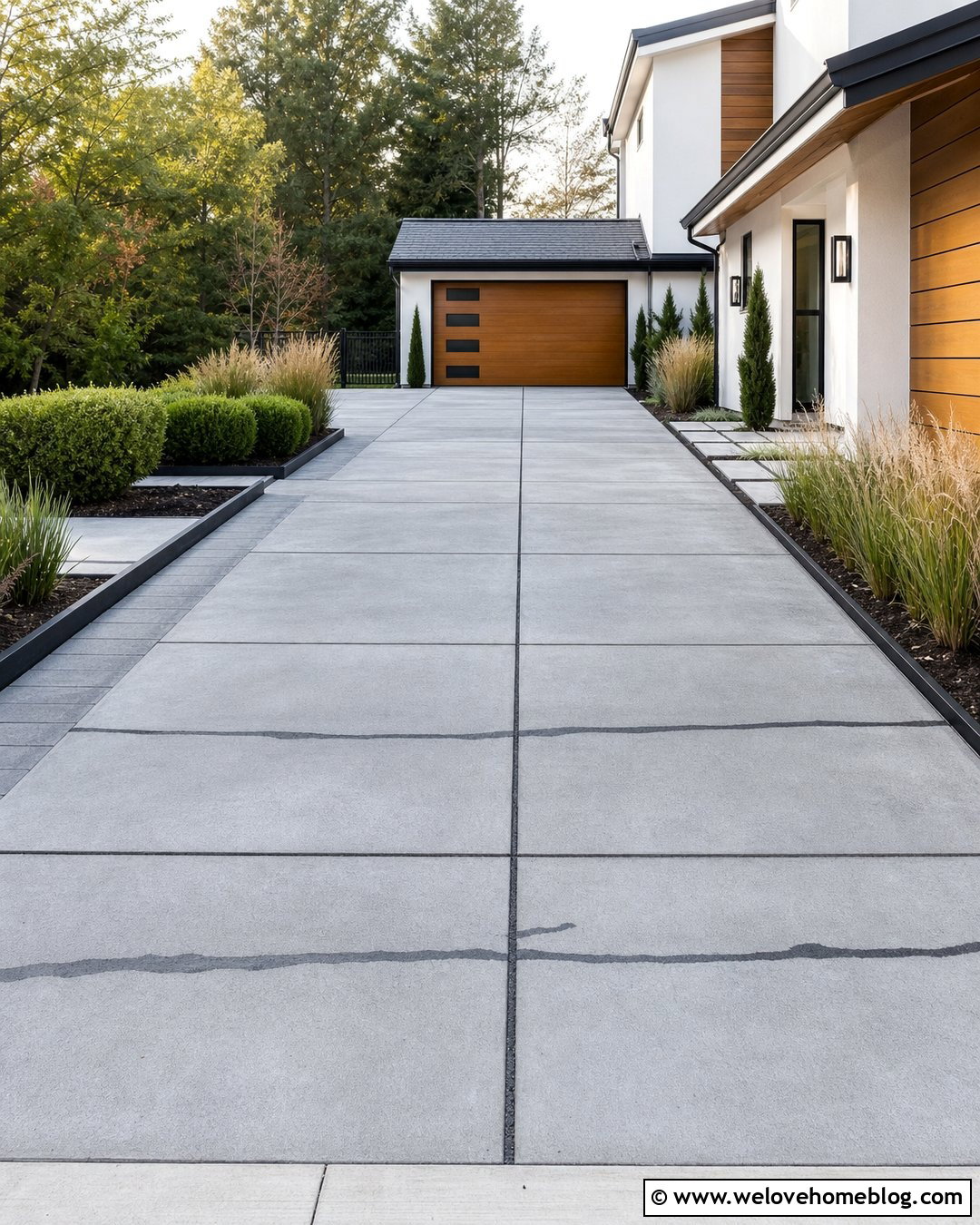
Instead of trying to make every repaired crack disappear, use dark repair lines as part of a bold graphic design. This approach works best on stable cracks that have been cleaned and filled with a compatible charcoal-colored material. Extend selected lines with carefully planned saw-cut joints to form larger geometric sections across the driveway. The pattern should feel balanced rather than random, especially when viewed from the curb. Pair the gray poured concrete with black steel landscape edging, clipped shrubs, and rectangular planting beds. A modern house with white stucco, natural wood, or dark siding provides an ideal backdrop. Keep decorations limited so the linework remains clear. The finished driveway celebrates visible repair while presenting it as a deliberate feature of the overall landscape.
5. Broken Concrete Driveway With Brick Ribbons
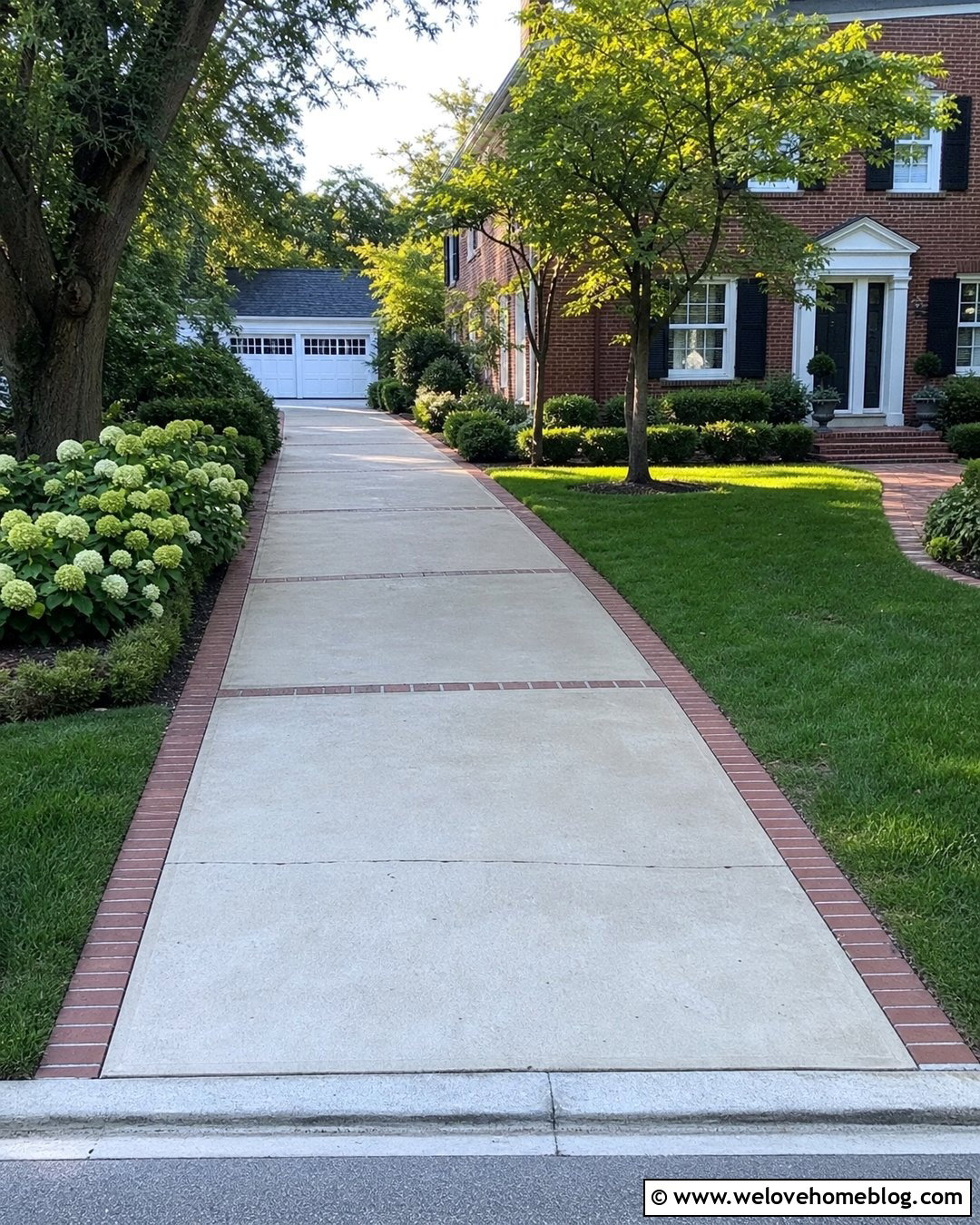
Brick ribbons can divide an aging concrete driveway into smaller, better-proportioned panels. Remove narrow bands of badly cracked concrete at carefully chosen intervals, then install clay brick pavers over a properly prepared base. Running-bond or soldier-course patterns both create strong visual separation. Select red-brown brick for a colonial house or charcoal brick for a more contemporary exterior. Match the ribbons with a brick border along both driveway edges and around the connecting front walkway. Low hedges, hydrangeas, and a healthy lawn complete the traditional curb view. This method can make isolated concrete sections appear intentional while replacing some of the most damaged material. Placement matters because decorative bands should not hide unresolved movement or weak base conditions beneath the remaining driveway.
6. Broken Concrete Driveway With Paver Inserts
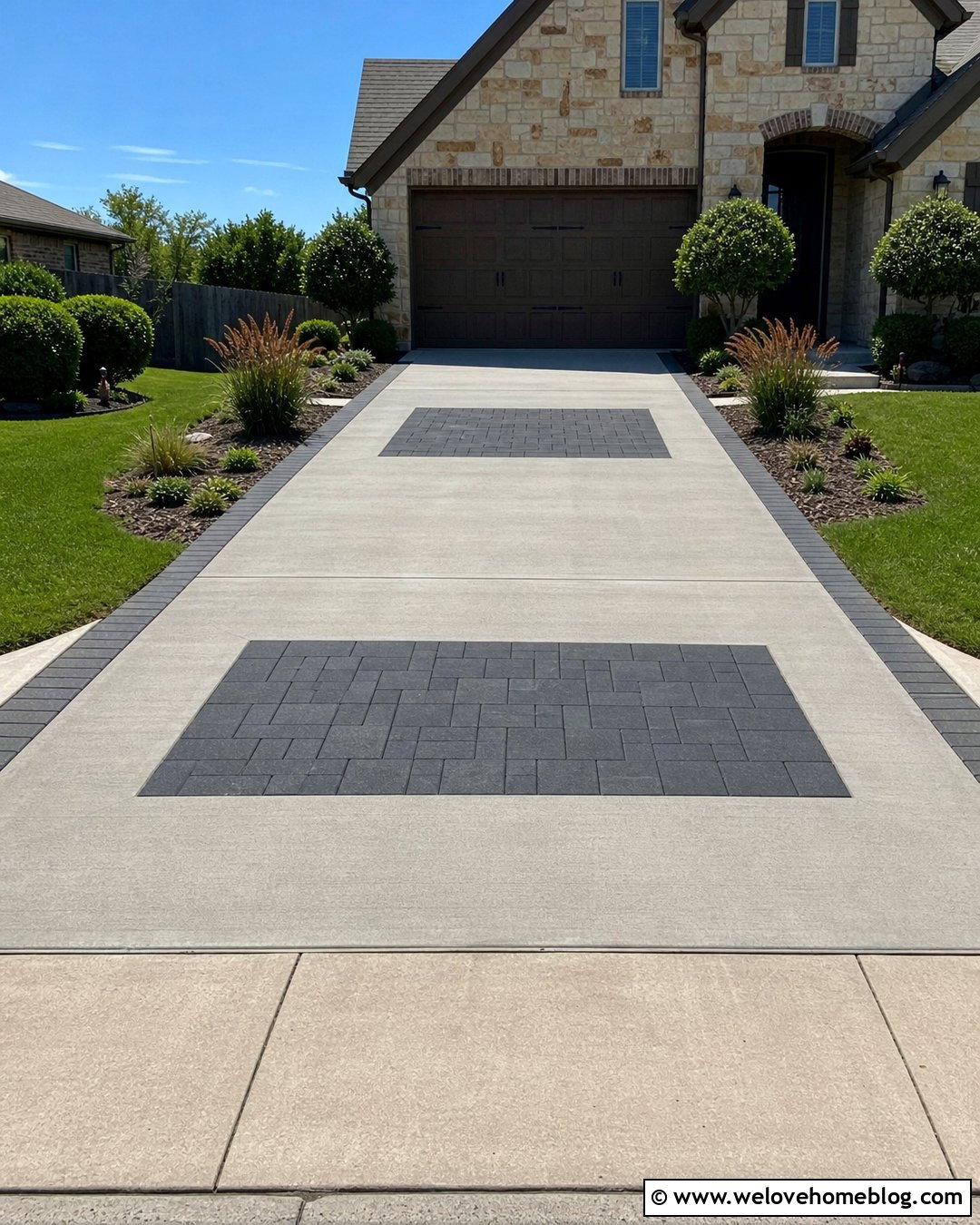
Large interlocking paver inserts offer an attractive answer when specific concrete panels have failed but the surrounding slabs remain usable. Remove the damaged areas in clean rectangles, rebuild the base, and install vehicle-rated concrete pavers flush with the existing surface. Repeat the paver color near the garage apron or street entrance so the insert does not look like an accidental patch. Medium-gray concrete paired with charcoal pavers creates a modern appearance, while warm tan pavers suit beige stone and stucco homes. Frame the driveway with low grasses, rounded shrubs, and a matching paver walkway. The combination introduces texture without replacing every slab. Careful grading and edge restraint are essential for keeping the inserted areas stable, level, and visually connected to the original driveway.
7. Broken Concrete Driveway With Gravel Strips

Replacing long damaged sections with gravel strips can give an old concrete driveway a lighter, more landscaped character. Keep sound concrete beneath the normal tire paths, then remove fractured areas between or beside them. Fill those spaces with compacted angular gray gravel rather than loose rounded stone that moves easily. Steel or concrete edging helps contain the aggregate and creates crisp lines. Repeat the gravel in nearby planting beds to connect the driveway with the yard. Drought-tolerant grasses, lavender, and low junipers suit this relaxed layout, especially beside a modern farmhouse or desert-inspired home. Plan the strips so vehicles remain supported by stable concrete. Proper excavation, drainage, and compaction are important because simply pouring gravel into shallow cracks will not create a lasting surface.
8. Broken Concrete Driveway With Grass Joints
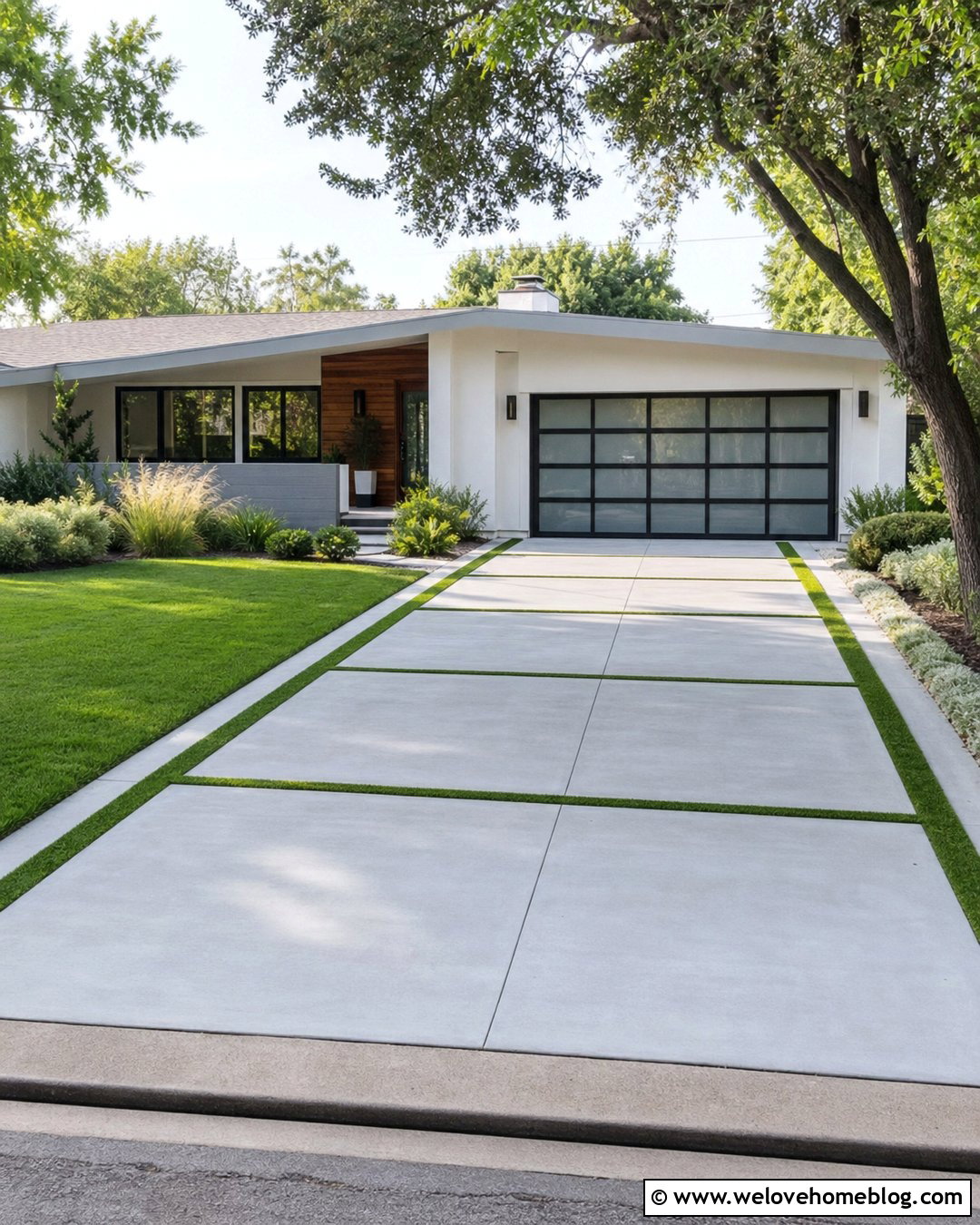
Green joints can transform selected gaps in a broken driveway into a structured garden detail. This solution works best when damaged strips can be removed without affecting the main load-bearing concrete under vehicle tires. Create evenly spaced openings, rebuild the edges, and plant low-growing turf or a locally suitable ground cover in the prepared joints. Wide gray concrete panels and narrow green bands create a clean rhythm leading toward the house. Add a simple lawn, architectural grasses, and rectangular beds to reinforce the pattern. The complete look is particularly effective with a flat-roof modern home or updated midcentury ranch. Grass joints require trimming and irrigation planning, so they are not maintenance-free. They also need a stable layout that prevents soil from washing onto the driving surface.
9. Broken Concrete Driveway With Exposed Aggregate Patches
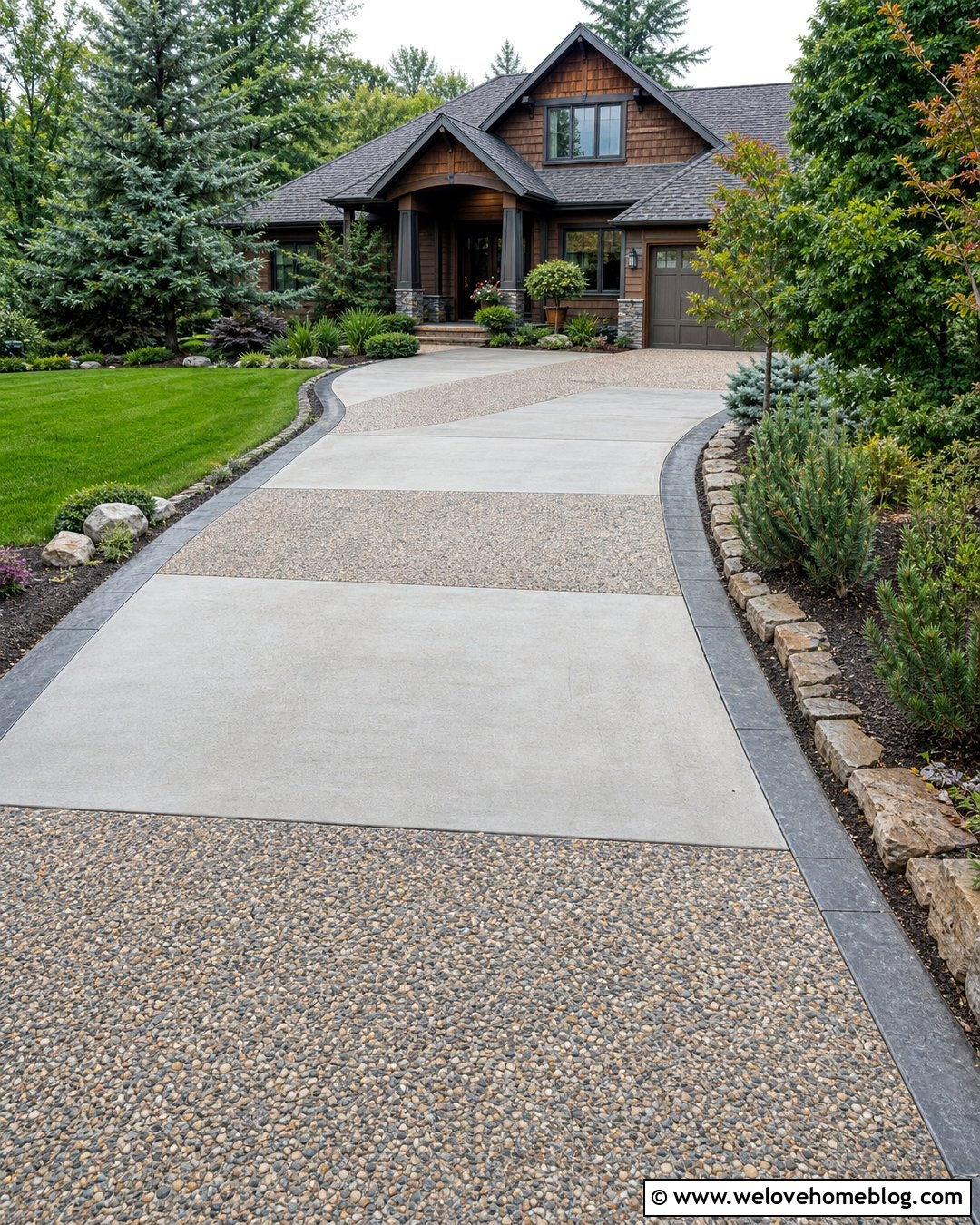
Exposed aggregate can turn large repair areas into purposeful textural panels. Instead of attempting to match old smooth concrete perfectly, replace severely damaged sections with a contrasting pebble-finished concrete mix. Use the new material at the driveway entrance, garage apron, or central turning area, where a broad panel looks more intentional than several small patches. Choose aggregate colors that relate to the house facade, such as warm river stone beside brick or cool gray stone beside painted siding. A matching aggregate walkway and natural stone edging can carry the texture through the landscape. Surround the driveway with simple shrubs and mulch beds so the mixed surfaces remain the focus. Professional finishing helps produce consistent exposure, safe transitions, and a surface appropriate for regular vehicle use.
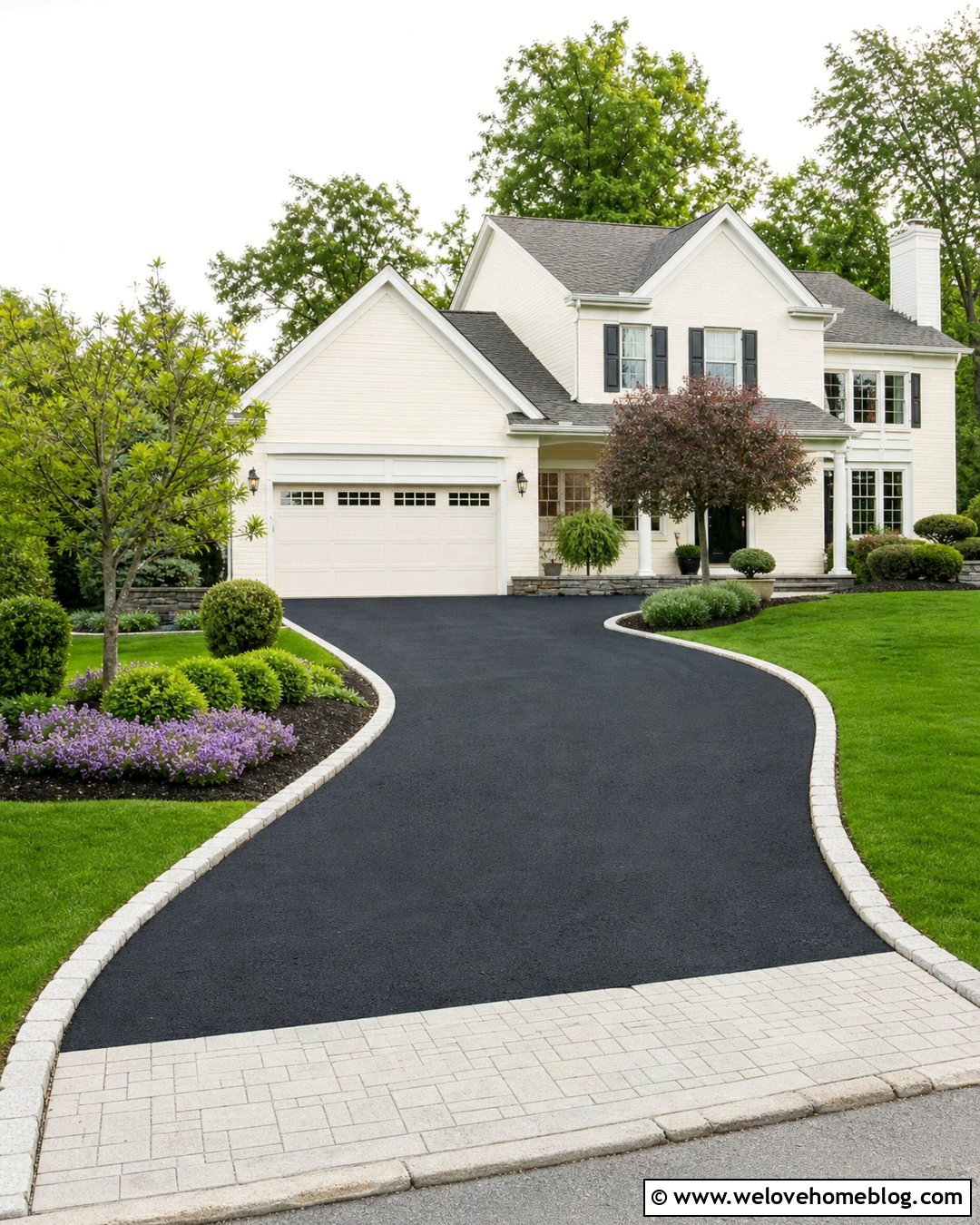

10. Broken Concrete Driveway With a Stamped Overlay
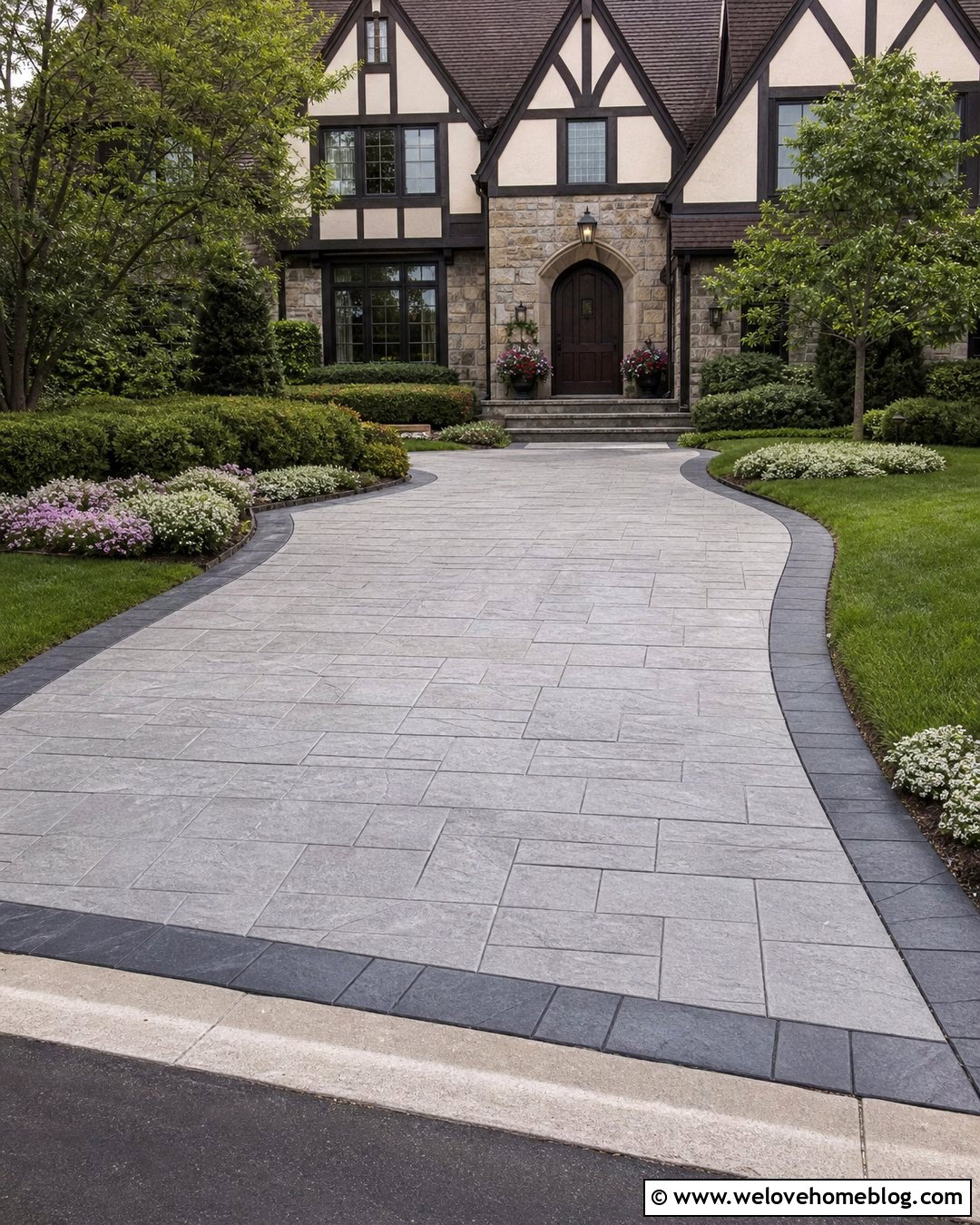
A stamped concrete overlay can refresh a worn driveway while adding the appearance of stone or brick. The existing concrete must first be evaluated, cleaned, and repaired because an overlay will not correct unstable slabs or continuing movement. Choose a restrained pattern, such as large ashlar stone in soft gray, rather than an overly busy design that highlights every variation. Apply the pattern across the full driveway for a cohesive result. A darker stamped border can define the curved edges and coordinate with the front steps. Complete the scene with layered shrubs, flowering ground cover, and a smooth walkway to the porch. This design pairs naturally with craftsman, Tudor, and traditional homes. Use subtle color variation to create depth without making the driveway dominate the facade.
11. Broken Concrete Driveway With Replaced Slabs
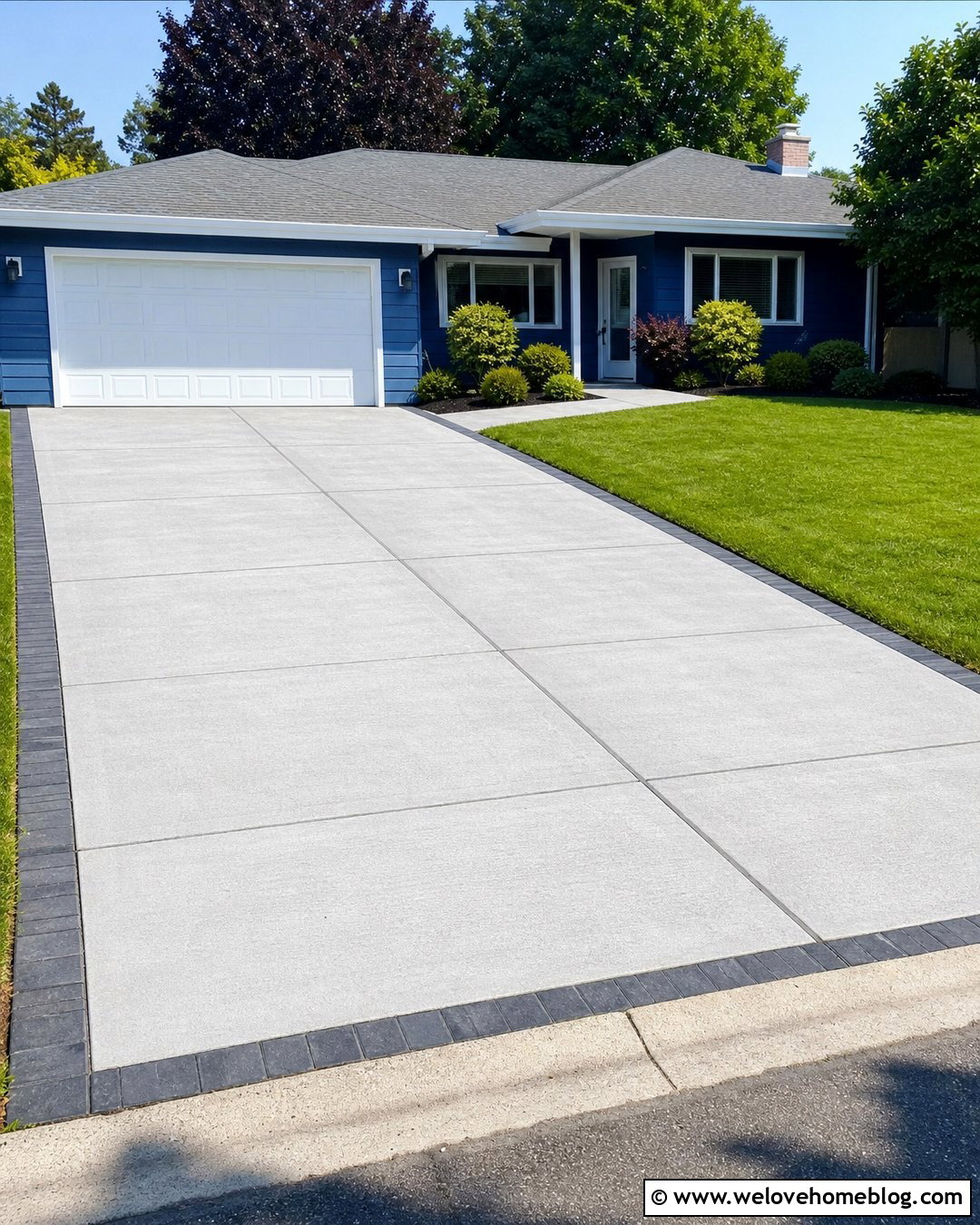
Sometimes the cleanest solution is to replace only the individual slabs that are badly cracked, sunken, or crumbling. Existing control joints make logical boundaries for removal, helping new panels fit into the driveway’s original layout. Correct the underlying base or drainage issue before placing new broom-finished gray concrete. Although fresh slabs may initially look lighter, cleaning the older concrete can reduce the contrast. A charcoal paver border around the full driveway also pulls the mixed tones together. Pair the refreshed surface with a straight walkway, neatly trimmed lawn, and foundation shrubs suited to the home. This practical layout works for nearly any suburban house. Avoid irregular feather-edged patches, which can look unfinished and may create thin, vulnerable concrete along the repair perimeter.
12. Broken Concrete Driveway With a Stone Border
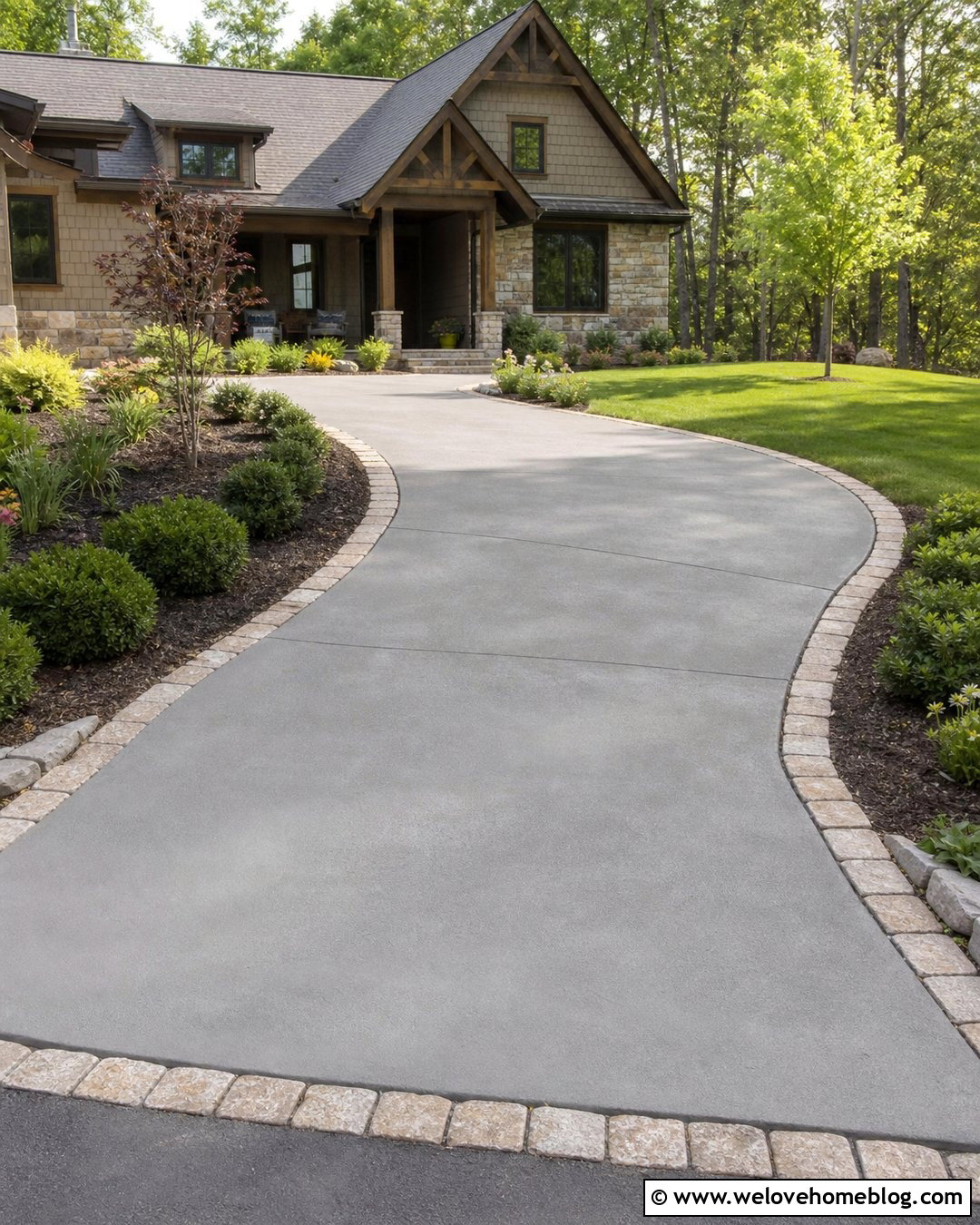
A natural stone border can shift attention away from minor surface wear and give the complete driveway a more substantial frame. Repair the concrete first, then install granite setts, cobblestones, or cut limestone along both edges. Choose stones with enough contrast to be visible but not so much that the border feels disconnected from the house. A gently curved gray concrete driveway with warm granite edging suits a craftsman or country-style property. Repeat the same stone around planting beds and along the front walkway. Add low shrubs near the street, taller plants closer to the house, and an ornamental tree near the curve. The border helps the older concrete appear deliberately contained while creating a durable transition between the driving surface, lawn, and surrounding landscape.
13. Broken Concrete Driveway With a New Garage Apron
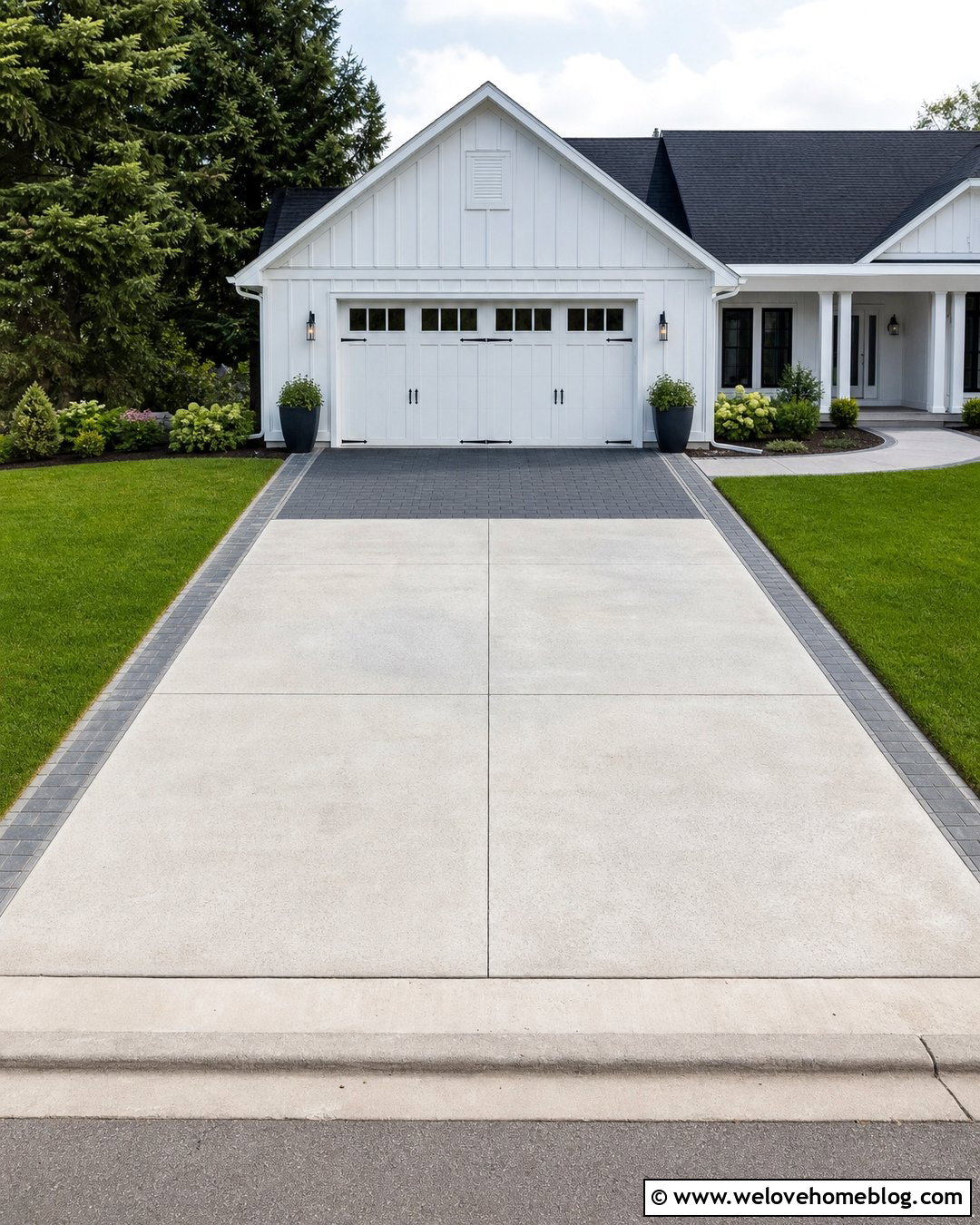
Damage is often most noticeable where the driveway meets the garage, making a replacement apron a useful visual upgrade. Remove the fractured concrete across the full garage width and install a broad panel of new poured concrete, exposed aggregate, or vehicle-rated pavers. A straight transition line creates a cleaner result than several small repaired corners. Coordinate the apron with the garage doors, walkway, and driveway edging. For example, charcoal concrete pavers can ground a light gray driveway beside a white modern farmhouse. Continue narrow charcoal borders toward the street to connect old and new materials. Balanced foundation shrubs, planters beside the garage, and a clear pedestrian path complete the design. Ensure the apron drains away from the building and meets the garage floor without an awkward ledge.
14. Broken Concrete Driveway With a Paver Entrance
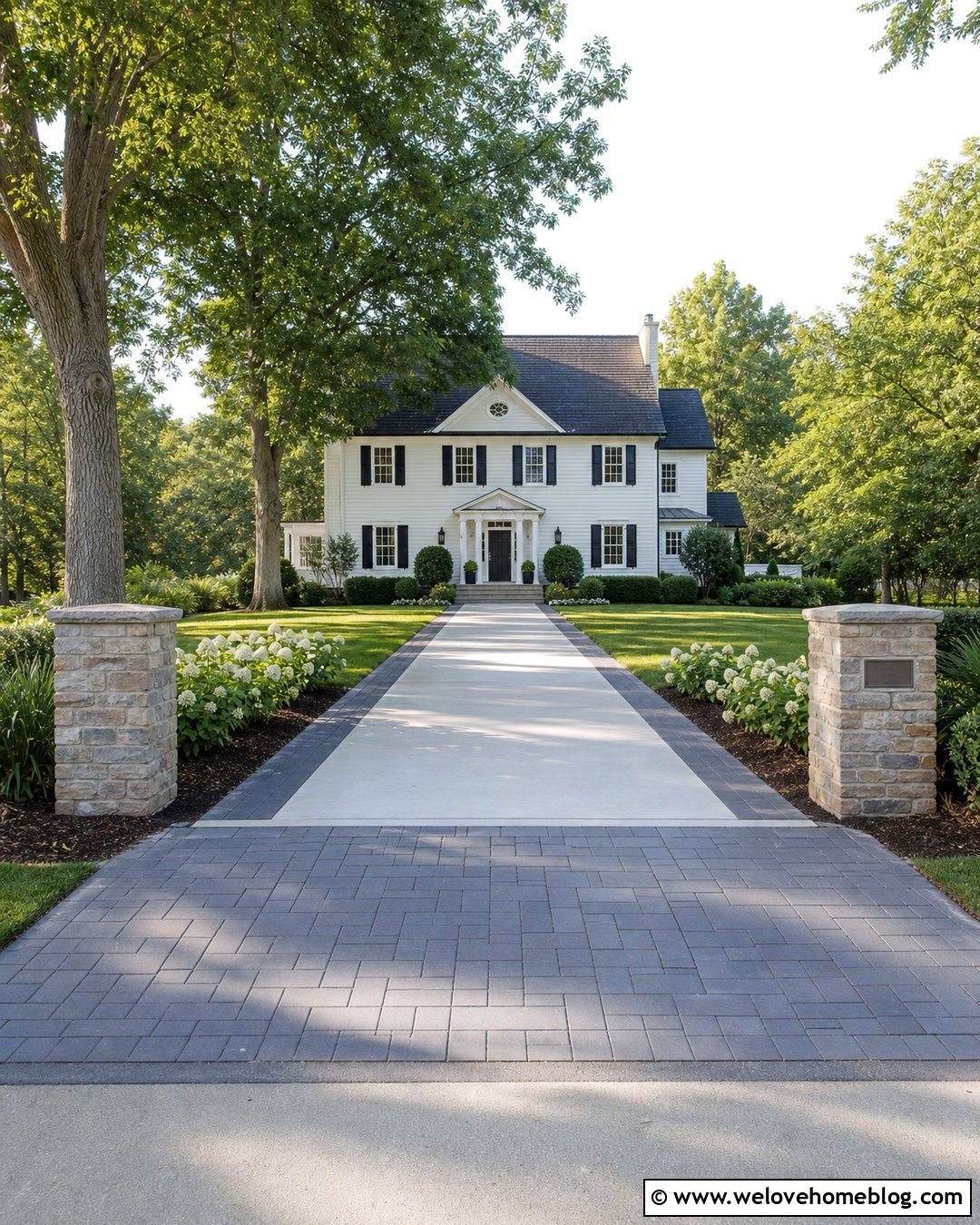
A wide paver entrance can replace the concrete area that commonly breaks near the street while improving the home’s first impression. Cut the remaining driveway along a straight or gently curved line, prepare a stable base, and install interlocking concrete pavers across the full opening. Extend the pavers several feet inward so the entrance reads as a planned feature rather than a narrow repair. Use charcoal pavers with cool gray concrete or blended tan pavers with warmer slabs. Low stone pillars, an address marker, and symmetrical planting beds can frame the curb without blocking visibility. Continue a slim paver ribbon along the driveway edges for consistency. The complete look suits colonial, ranch, and craftsman homes while creating a strong transition from the street to the existing concrete.
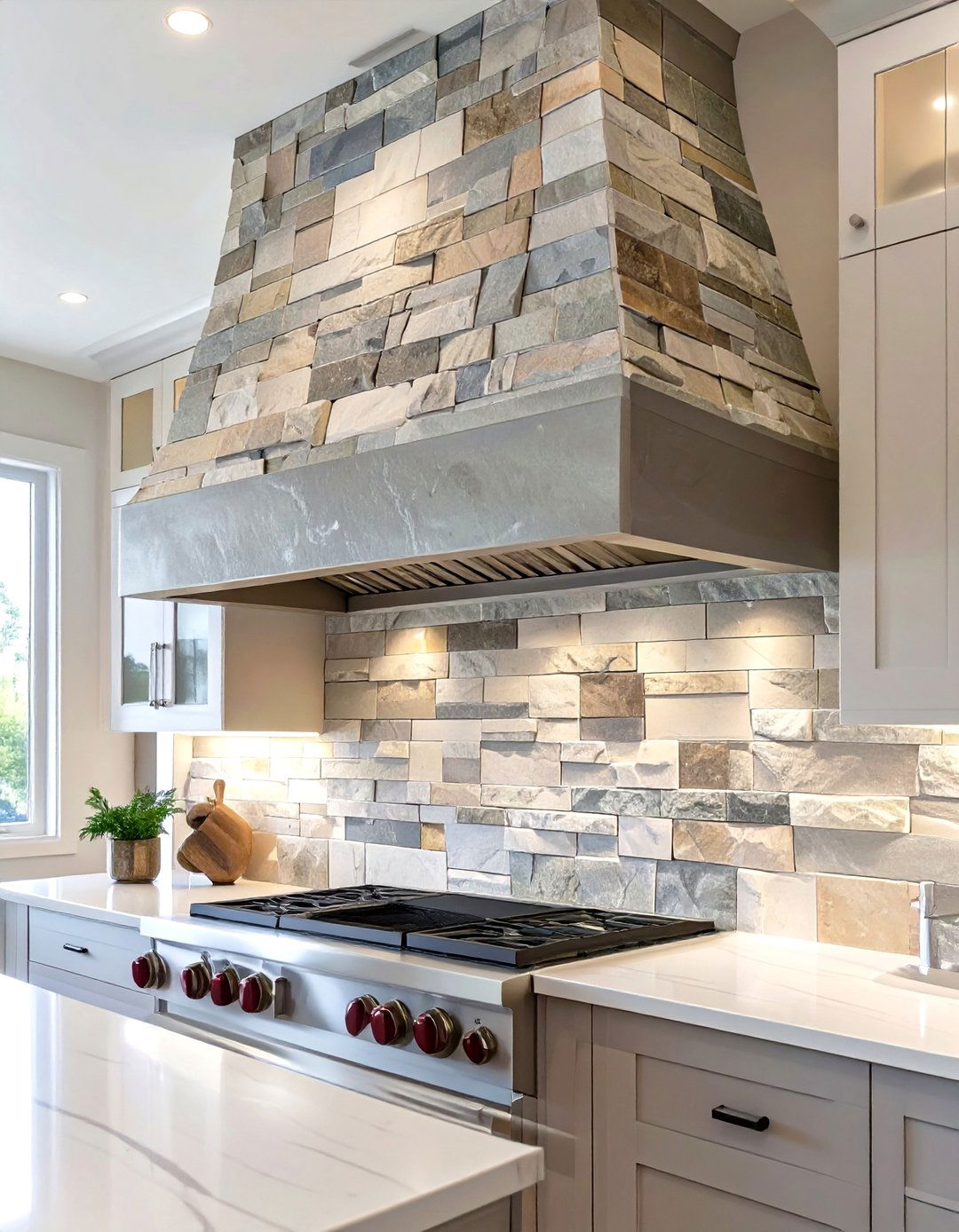



15. Broken Concrete Driveway With a Drainage Channel
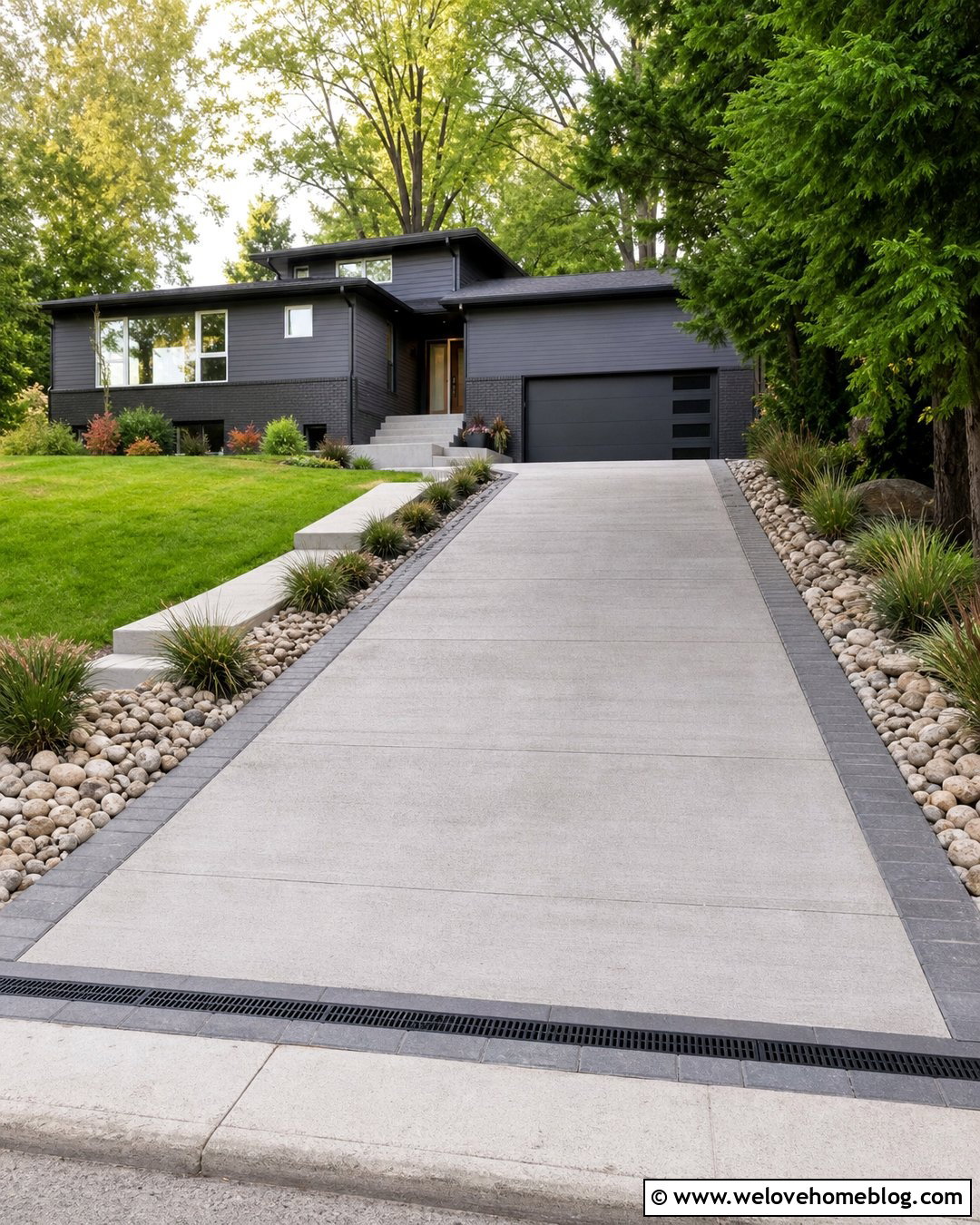
Standing water can make existing cracks and surface deterioration more troublesome, so a visible drainage channel may become part of the redesign. Install a properly sized trench drain across a low garage apron or another professionally identified collection point. Frame the channel with a dark paver band to make it look integrated instead of purely utilitarian. Repair the surrounding gray broom-finished concrete and create positive surface flow toward the drain. Along the sides, use stone-lined planting beds with moisture-tolerant grasses and compact shrubs. A gently sloped driveway leading to a contemporary or split-level home works well with this clean arrangement. Drainage must discharge to an approved location under local requirements. The finished design should manage runoff without sending water toward the house or neighboring property.
16. Broken Concrete Driveway With Recycled Concrete Gravel
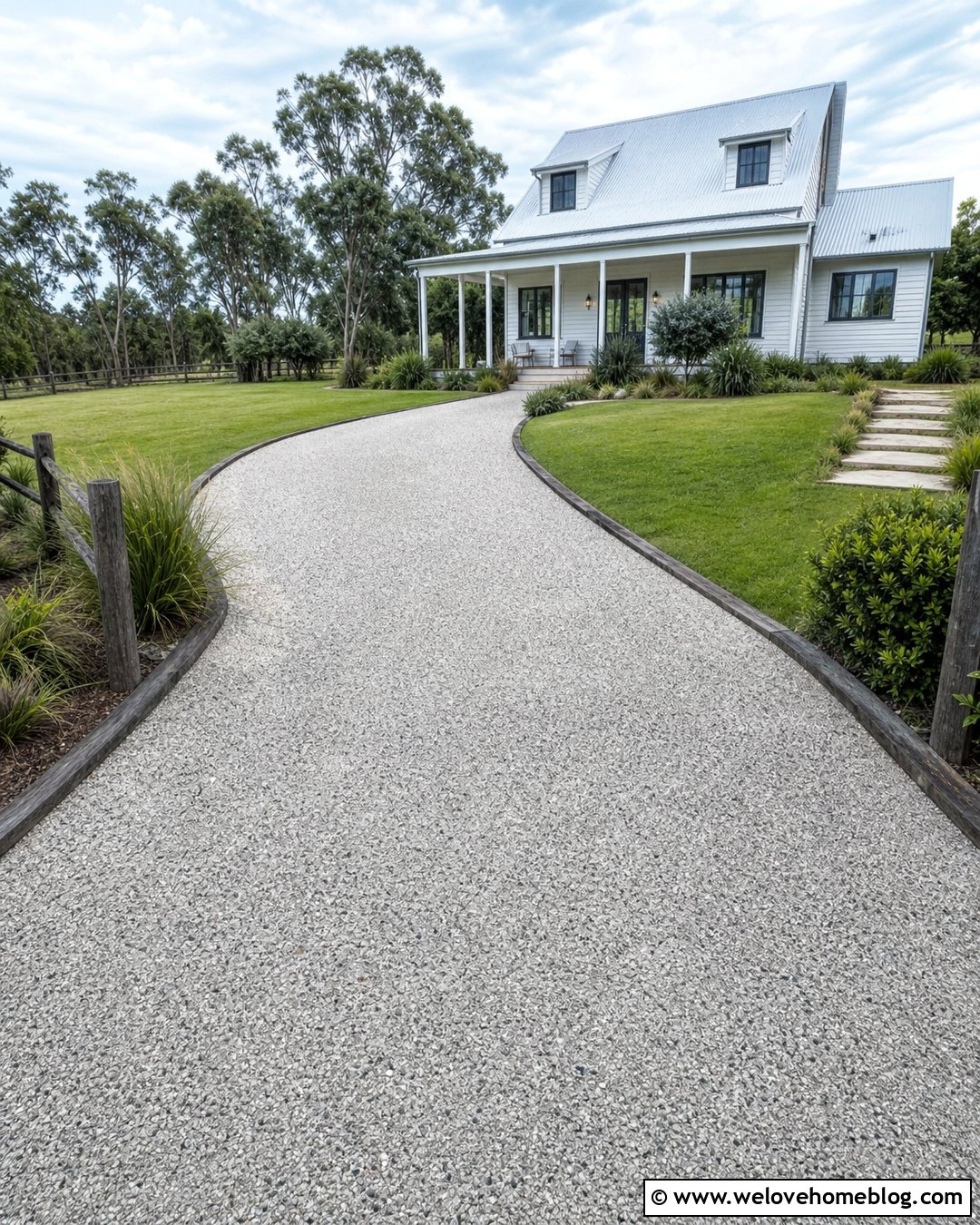
When the existing driveway has widespread failure, removing it and rebuilding with recycled concrete aggregate can create a practical, textured alternative. Crushed concrete should be properly processed, graded, installed over a suitable base, and compacted in layers. Use finer material at the top to produce a more even driving surface. Timber, steel, or concrete curbing can contain the angular aggregate along a straight or gently curved layout. Frame the driveway with native grasses, evergreen shrubs, and informal planting beds for a relaxed appearance. This light gray surface pairs especially well with a country house, cottage, or modern farmhouse. Reuse selected larger concrete pieces as garden edging away from vehicle paths, giving the former driveway material a second role within the surrounding landscape.
17. Broken Concrete Driveway With Urbanite Edging
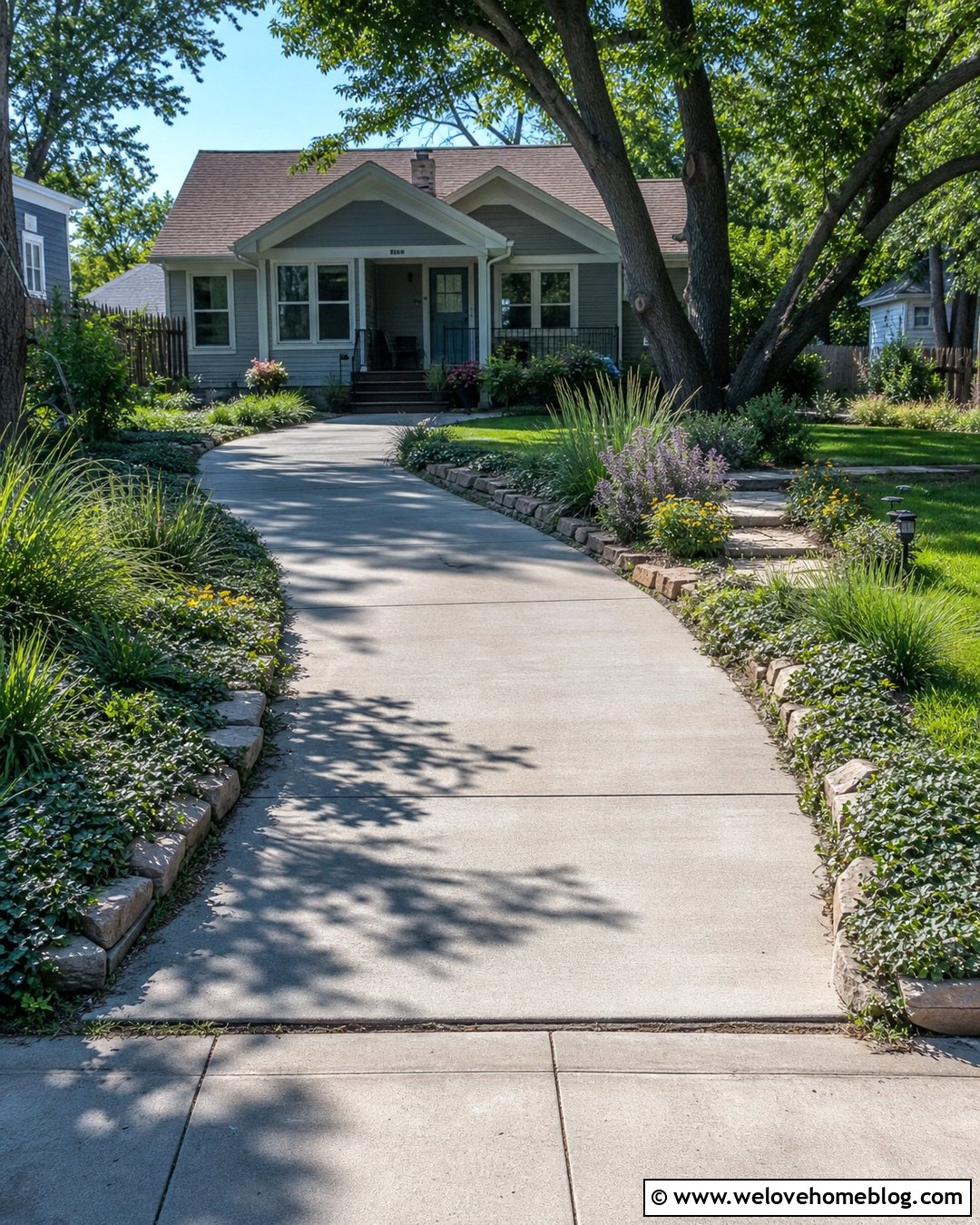
Large pieces of salvaged concrete, often called urbanite, can be reused as landscape edging after damaged slabs are removed. Keep these irregular pieces outside the driving surface, where uneven edges will not interfere with tires or walking routes. Stack similar-thickness sections in a low border beside a repaired gray concrete driveway, placing the broken faces outward for a stone-like texture. Fill the adjacent beds with creeping ground cover, ornamental grasses, and flowering perennials that soften the rugged material. A curved driveway leading to a cottage, bungalow, or rustic ranch provides a natural setting for this approach. Repeating the urbanite around a mailbox bed or walkway creates continuity. Stable placement is important, particularly near slopes, drainage paths, or areas where children regularly play.
18. Broken Concrete Driveway With Cobblestone Repairs
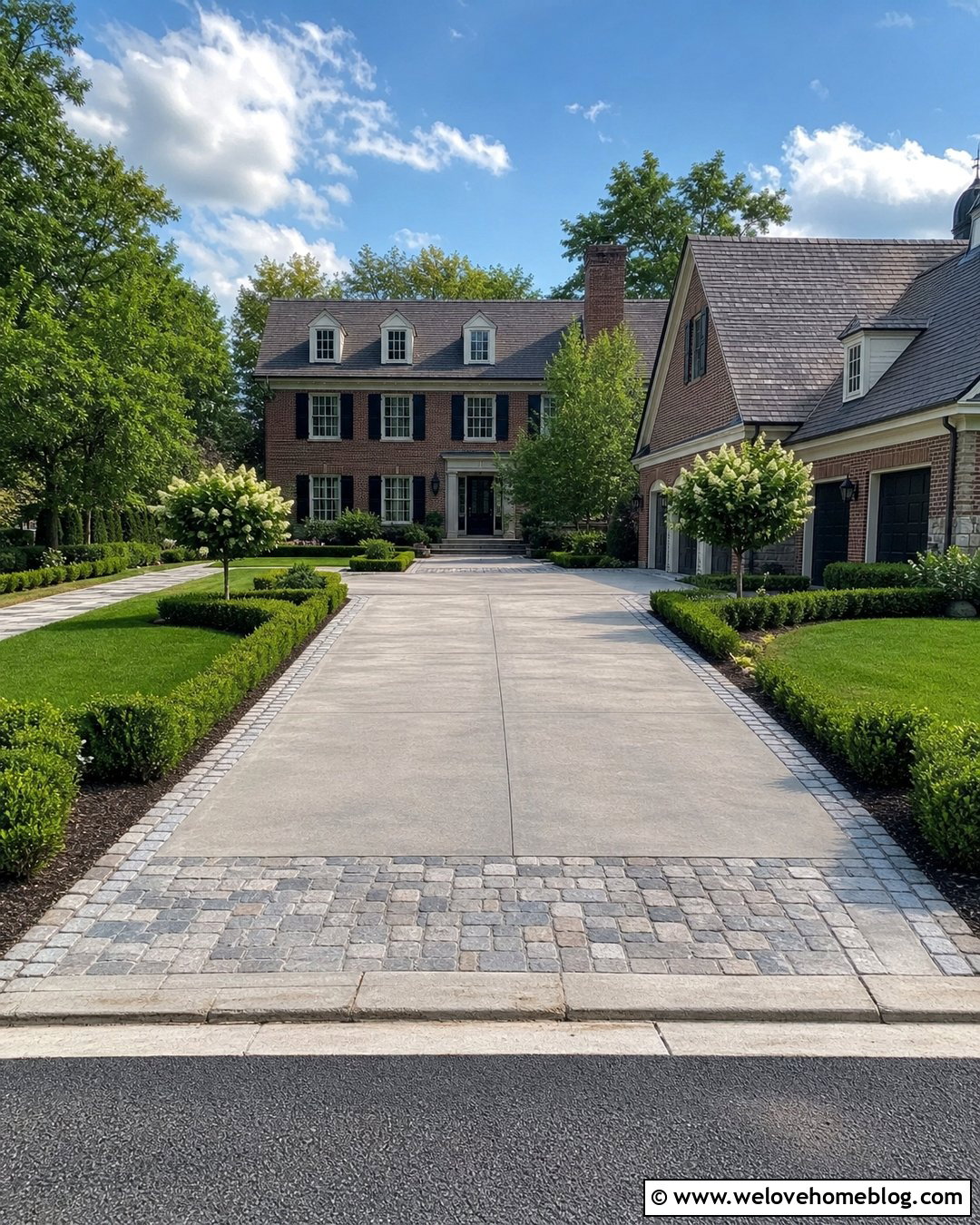
Cobblestone replacement panels can bring character to an older concrete driveway while removing isolated areas of severe damage. Use granite cobbles in broad rectangular bands rather than forcing individual stones into random cracks. Suitable locations include the driveway entrance, a central cross-band, and the garage apron. Keep the cobbles flush with the concrete to reduce uncomfortable bumps and improve the transition for wheels. A soft gray driveway with charcoal and silver granite complements a colonial or European-inspired house. Border the full layout with matching cobbles, clipped boxwood, and symmetrical trees near the entrance. A brick or stone walkway can continue the traditional material palette. Because cobblestones require a carefully prepared base and secure edge restraints, professional installation may provide a neater, more stable long-term result.
19. Broken Concrete Driveway With Concrete Paver Replacement
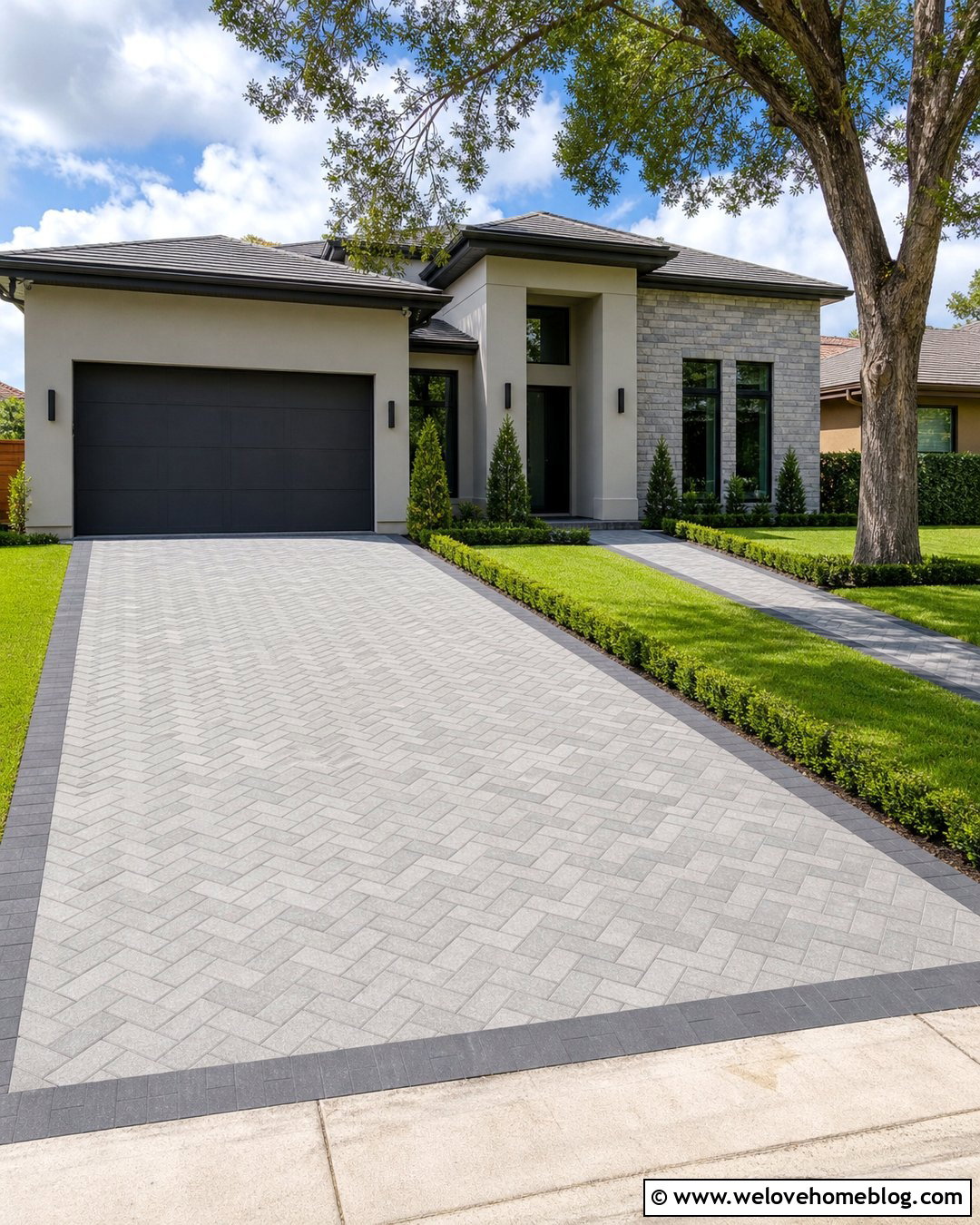
Replacing the complete damaged surface with concrete pavers offers flexibility when repairs are no longer visually or structurally sensible. Choose vehicle-rated pavers in blended gray tones and install them over a professionally prepared, well-drained base. A herringbone pattern provides a classic appearance, while a running bond or large-format grid feels more modern. Keep the driveway shape simple and add a darker perimeter course to define the edges. For a polished suburban look, combine the pavers with a matching front walkway, broad lawn panels, low hedges, and one shade tree. The house facade should guide the color choice. Cool charcoal suits modern siding, while warm gray complements brick and stone. Save clean pieces of the removed concrete for appropriate landscape reuse or send the debris to a concrete recycling facility.


20. New Concrete Driveway With Reused Broken Concrete Landscaping
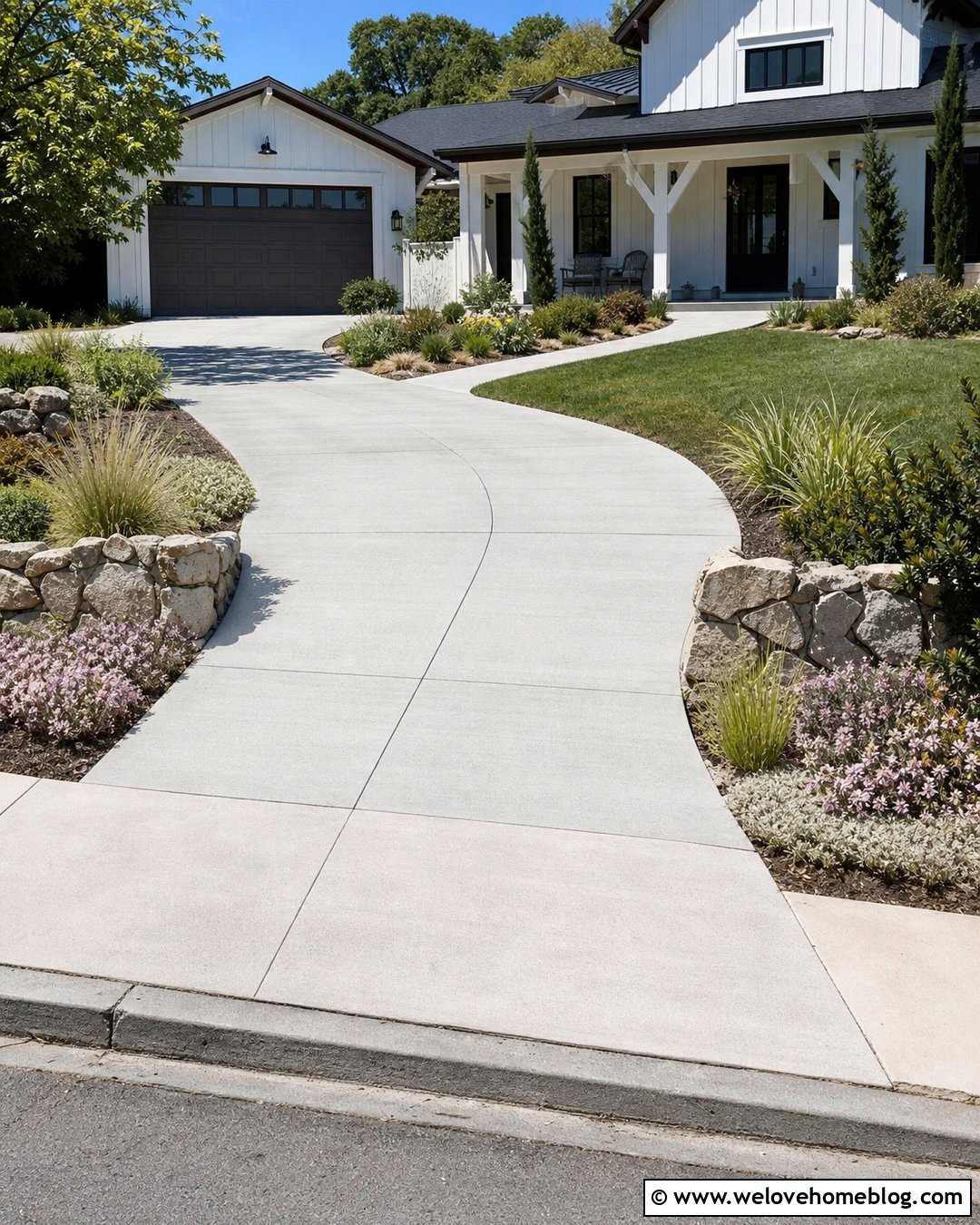
A completely new driveway may be the responsible choice when the old surface has extensive breakup, major settlement, or recurring movement. Once the cause has been corrected, install a properly designed poured concrete driveway with planned control joints, a consistent broom finish, and clean transitions at the street and garage. Reuse selected pieces of the former concrete as low garden walls or edging well beyond the vehicle path. Their rough texture can frame drought-tolerant grasses, shrubs, and flowering ground cover. A gently curved driveway bordered by these recycled pieces works beautifully with a modern farmhouse or updated ranch. Keep the new driving surface simple so the landscaped urbanite provides contrast. This approach combines a reliable fresh start with thoughtful material reuse and a visually connected front-yard design.
Conclusion:
The right solution depends on whether the damage is cosmetic, localized, or connected to a deeper problem such as settlement, roots, poor drainage, or an inadequate base. Minor cracks may suit careful filling, staining, or resurfacing, while severely broken sections may need removal and reconstruction. Brick ribbons, paver inserts, gravel bands, stone borders, and new entrance aprons can help repaired areas become part of a complete design. Always prioritize a stable, vehicle-ready surface before adding decorative finishes. With sensible planning, these **20 Broken Concrete Driveway Ideas** can turn an aging driveway into a safer, cleaner, and more attractive approach that complements the house, walkway, landscaping, and overall curb appeal.

Related posts:

Leave a Reply