
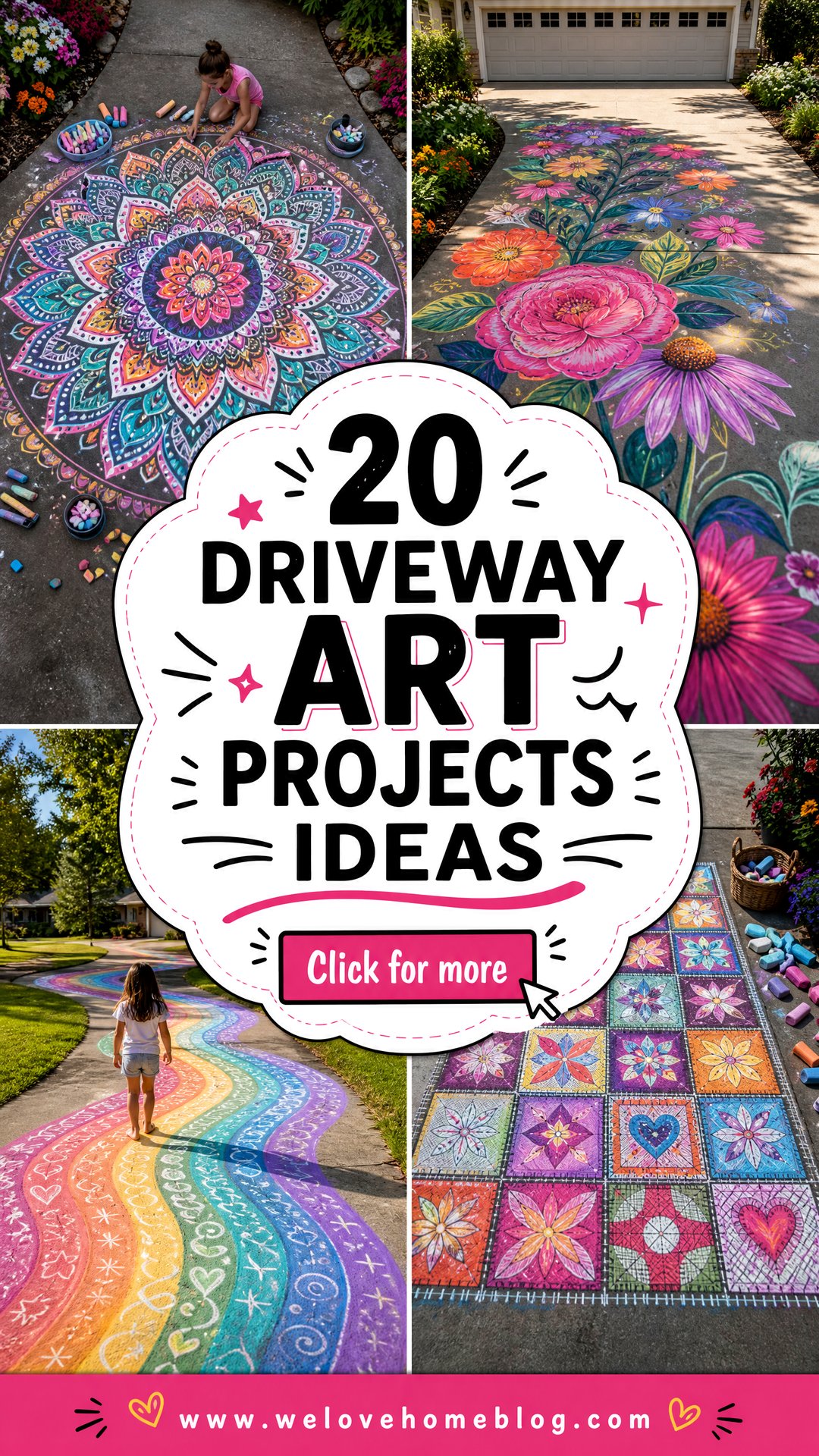
A driveway can become more than a place to park. With washable chalk, temporary paint, stencils, and simple planning, it can turn into a colorful outdoor canvas for family creativity. These 20 Driveway Art Projects Ideas include bold murals, interactive games, nature themes, optical illusions, and photo-worthy designs. Each project considers the complete setting, including the driveway material, layout, borders, landscaping, and house beyond it. Sweep the surface first, check the weather, and test colors in a hidden area. Use washable products for temporary designs and keep walking paths clear. Whether you have a wide concrete apron or a narrow asphalt drive, you can find an approachable project in these 20 Driveway Art Projects Ideas.
1. Driveway Chalk Mosaic
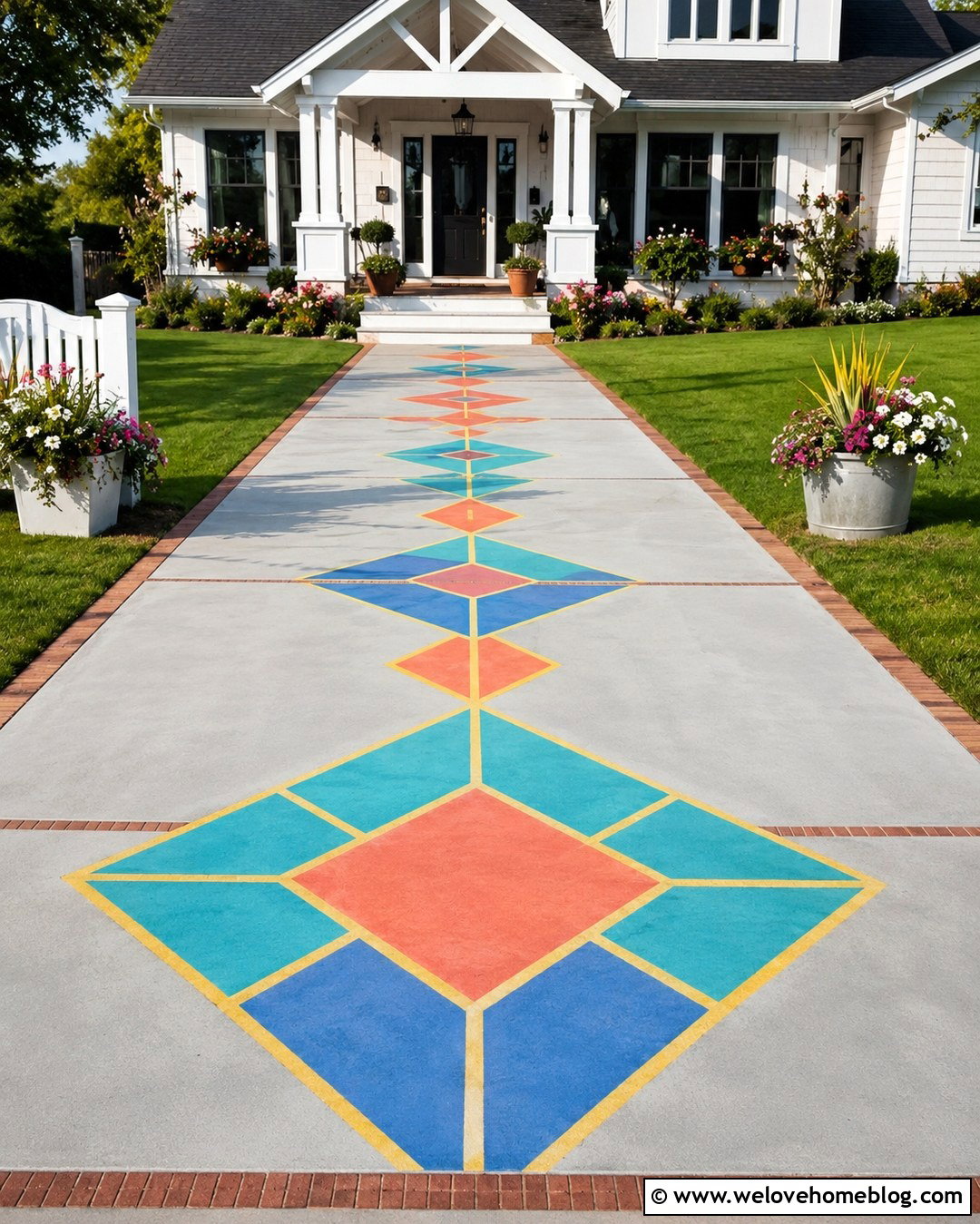
Painter’s tape makes it easy to create a clean, colorful mosaic across a gray poured concrete driveway. Start with a large rectangle, circle, or arch near the entrance, then divide it into uneven geometric sections. Fill each space with bright sidewalk chalk or washable chalk paint before carefully removing the tape. The exposed concrete forms crisp lines between the colors. For a complete look, repeat several mosaic colors in nearby planters, porch accessories, or flower beds. A straight driveway works especially well because the artwork can create a visual path toward the house. Keep the design away from tire tracks if the driveway must remain usable, or place it across the full apron for a temporary weekend display. ()
2. Driveway Mandala Art
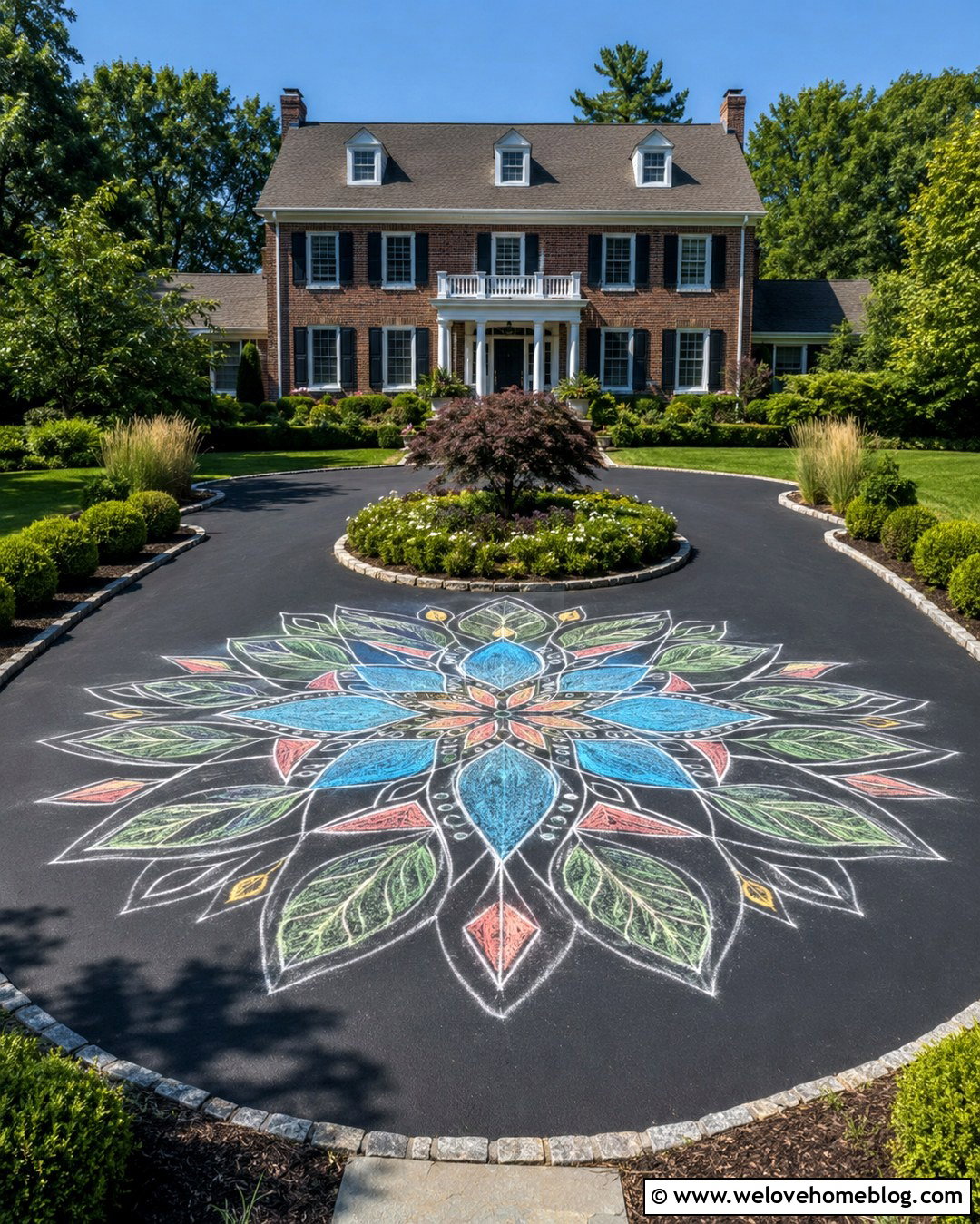
A large chalk mandala can turn the center of a circular or wide driveway into a striking focal point. Use a string tied to a chalk stick to draw several concentric circles. Divide the circles into equal sections, then add repeating petals, leaves, dots, diamonds, and curved lines. White outlines with blue, coral, yellow, and green details will stand out clearly against black asphalt. Position the mandala where it can be seen from the curb without interfering with the main walkway. Frame the driveway with clipped shrubs, ornamental grasses, or simple stone edging so the detailed artwork remains the star. This project can be completed gradually, making it a relaxing choice for families, groups, or anyone who enjoys symmetrical patterns.
3. Driveway Flower Mural
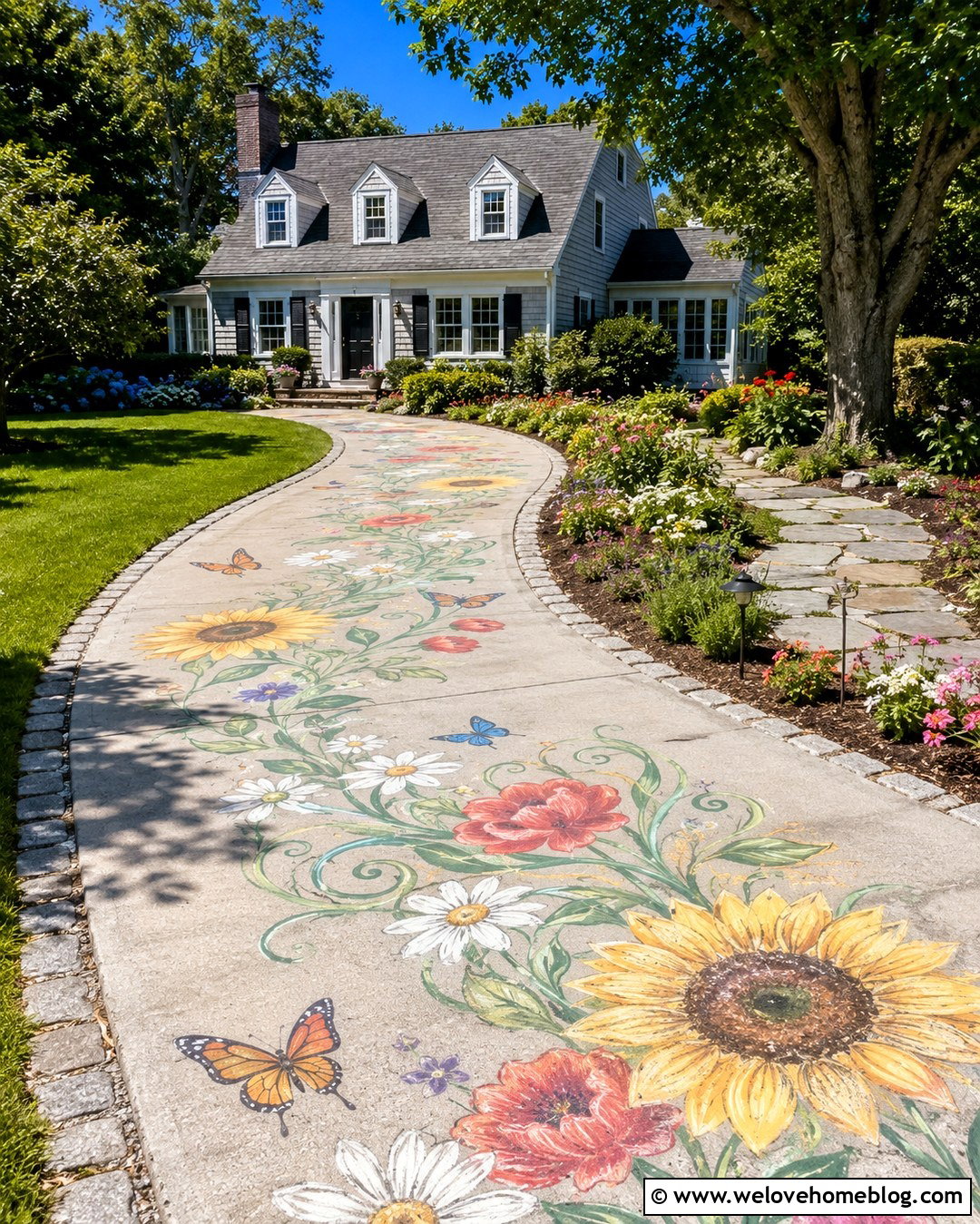
Imagine a sweeping garden that begins on the lawn and appears to continue across the driveway. Draw oversized chalk flowers along one side of a light concrete surface, using curved stems to guide the eye toward the front door. Sunflowers, daisies, coneflowers, poppies, and simple wildflowers are easy to recognize and forgiving to draw. Connect the artwork to real planting beds by matching a few colors or flower shapes. A curved driveway makes the mural feel especially natural because the stems can follow its edge. Use deep green outlines, bright petals, and scattered butterflies to fill empty areas. Leave the central driving lane less detailed so vehicles can pass without immediately disturbing the most attractive parts of the design.
4. Driveway Rainbow Path
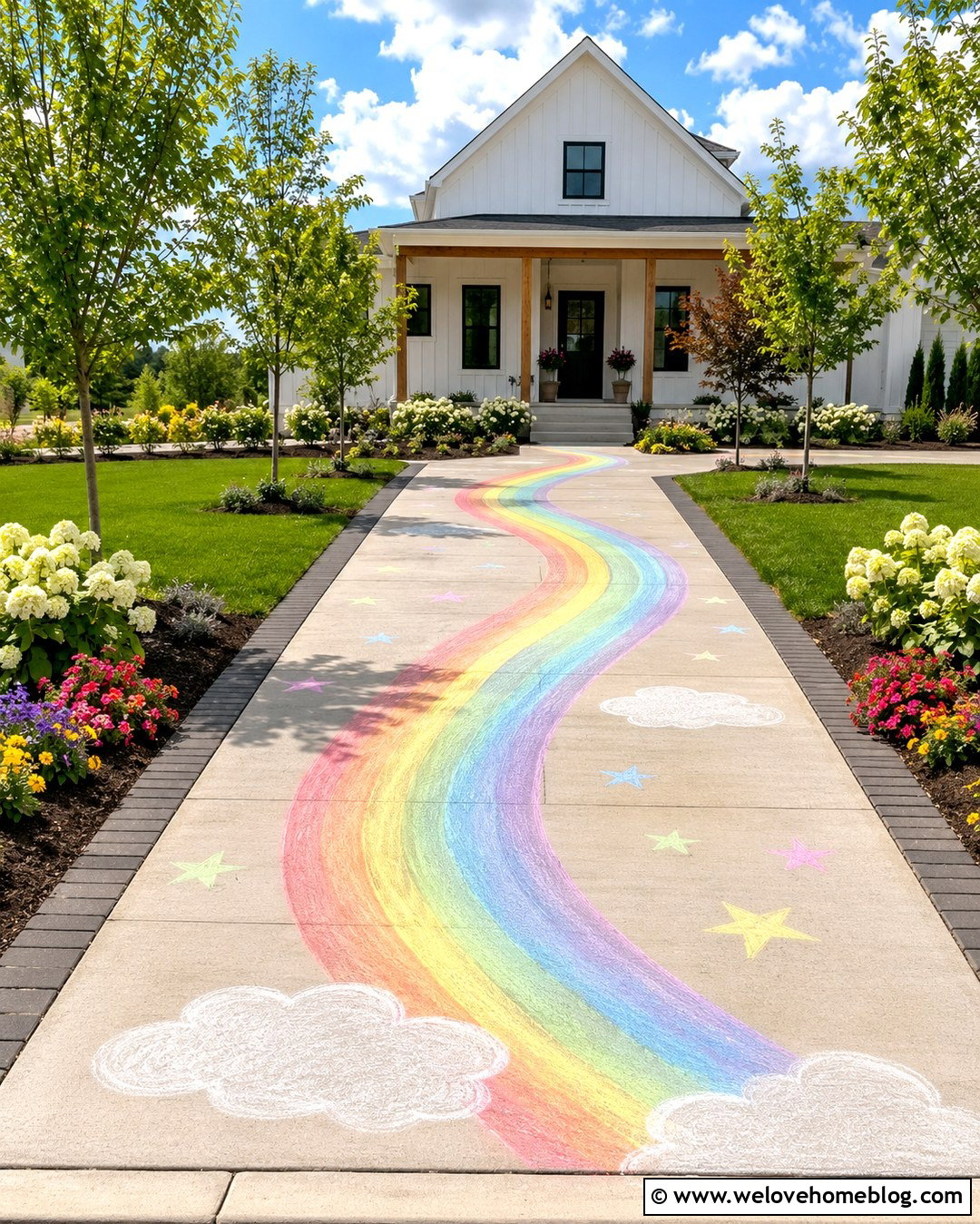
A rainbow path creates a cheerful entrance without requiring advanced drawing skills. On a straight concrete driveway, sketch wide bands that begin near the curb and curve gently toward the house. Fill each band with washable sidewalk chalk, keeping the colors bold and evenly spaced. White clouds can cover imperfect ends and provide fun areas for names, stars, or short messages. Continue the theme with colorful annuals beside the driveway and a clean white paver border. If the driveway is long, create several smaller rainbow arches rather than coloring the entire surface. This saves materials and makes the project easier to finish. The result works as both a driveway mural and a playful route that children can follow from the sidewalk to the porch.
5. Driveway Ocean Mural
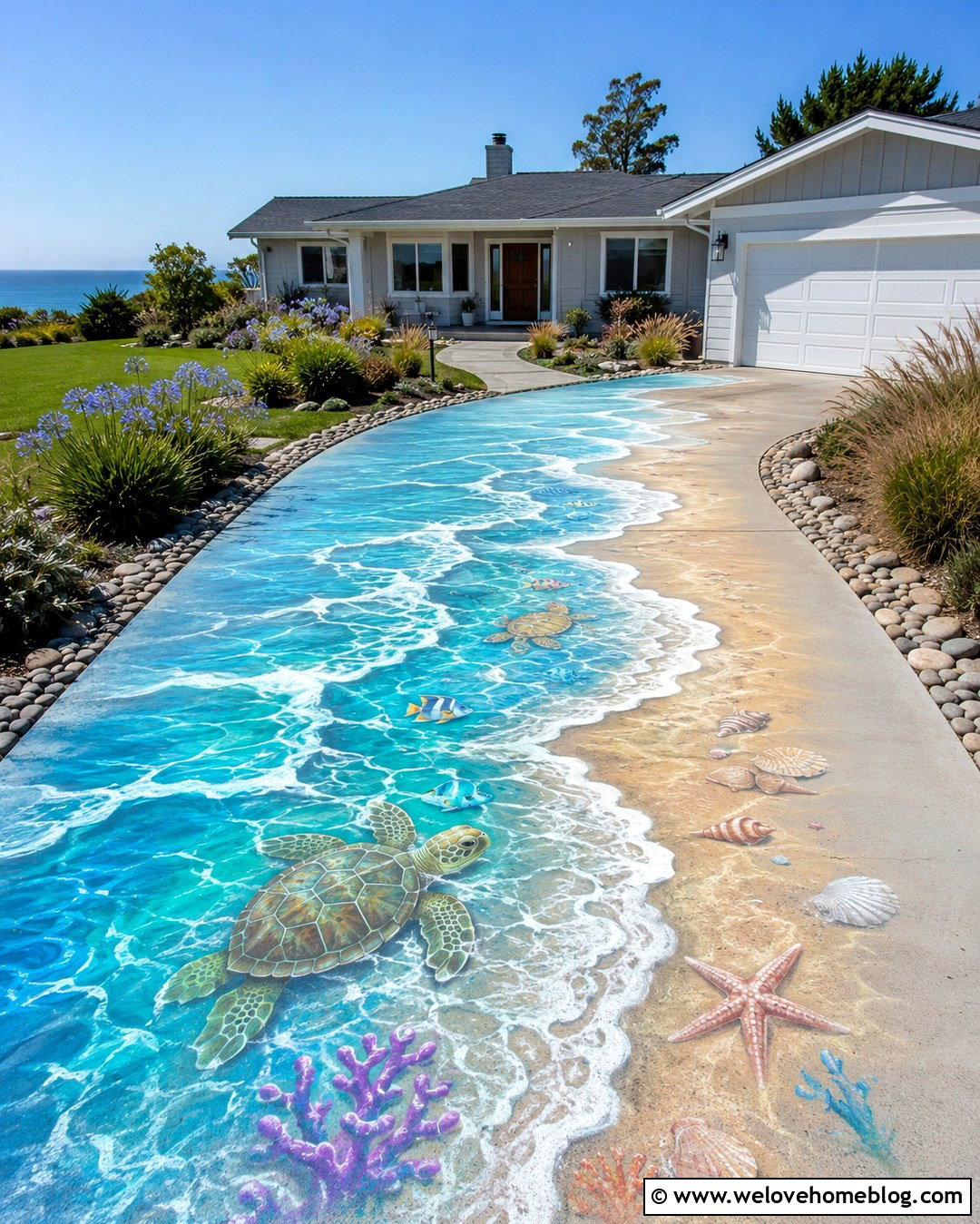
Blue chalk waves look dramatic against a pale poured concrete driveway, especially when the design stretches across a broad parking area. Begin with several flowing horizontal lines, then layer turquoise, navy, aqua, and white to suggest moving water. Add simple fish, shells, sea turtles, bubbles, and coral around the edges. A curved driveway can become a natural shoreline, with tan chalk sand following one border and blue water filling the wider center. Real ornamental grasses and rounded landscape stones will help connect the ocean scene to the yard. Avoid making every section equally detailed. One large wave or sea creature should act as the focal point, while smaller elements carry the theme toward the house without making the complete approach appear overly busy.
6. Driveway Solar System Art
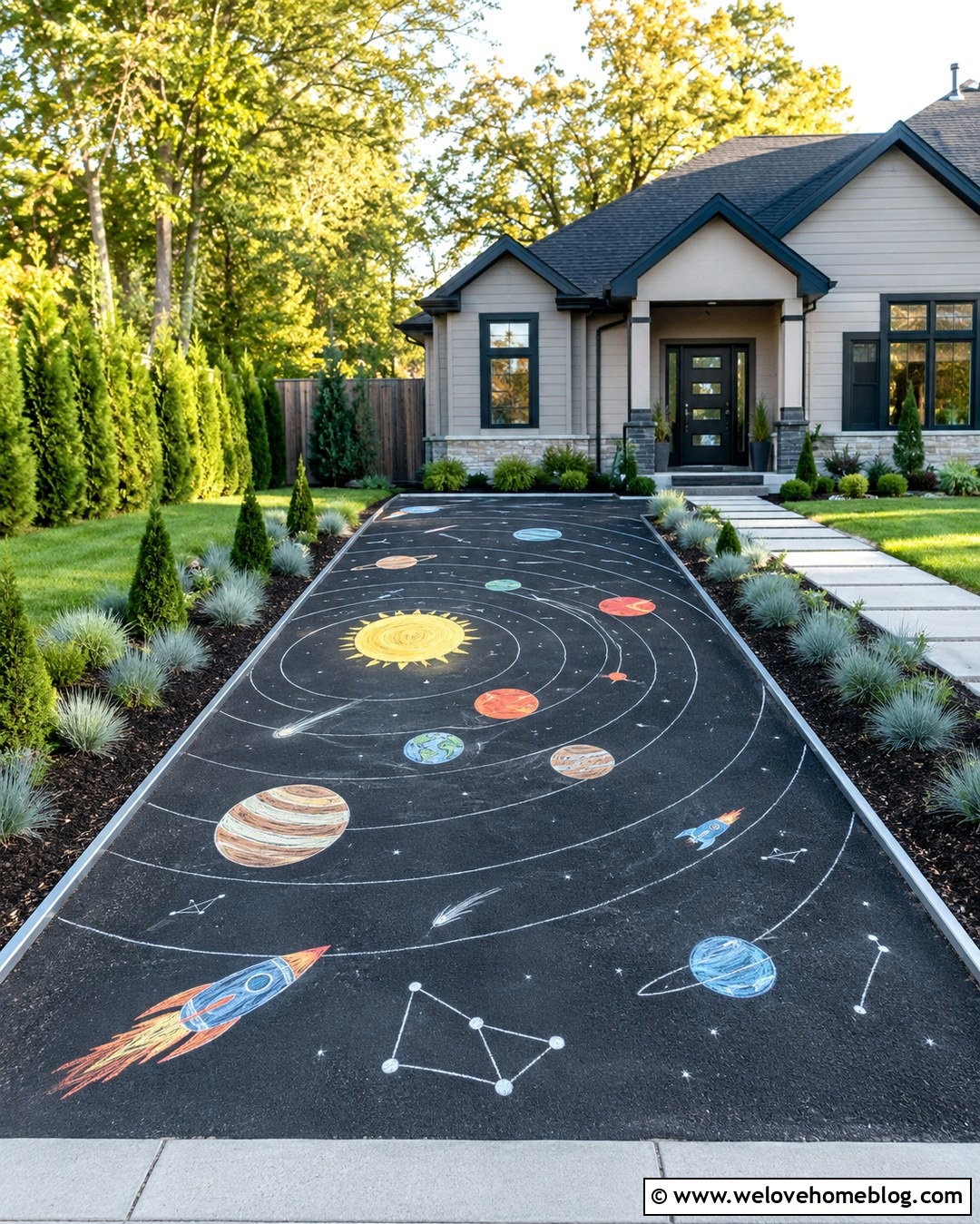
Turn a dark asphalt driveway into a giant view of outer space with bright planets, stars, and orbit lines. Place a large yellow sun near the garage and arrange the planets along the length of the driveway. Exact scale is not necessary, but varying their sizes will make the composition more interesting. Use blues and greens for Earth, rusty orange for Mars, and striped bands for Jupiter. White chalk creates strong orbit lines and constellation details against the black surface. Add small rockets, comets, and astronaut footprints for playful movement. Low landscape lighting, dark mulch beds, and silver-green plants can extend the theme around the driveway during the day. Keep the planets widely spaced so each one remains easy to see from the curb.
7. Driveway 3D Pond Art
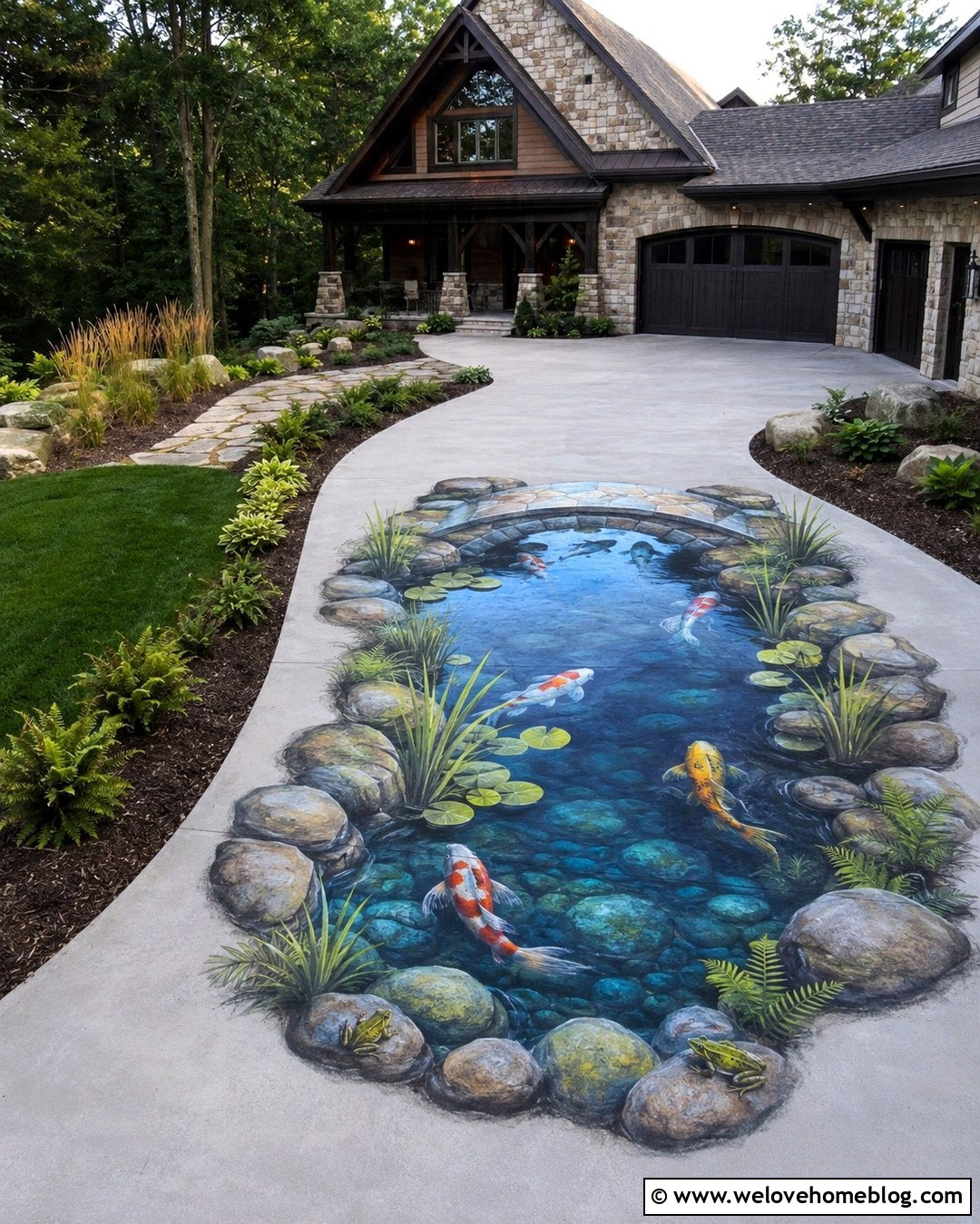
A carefully planned 3D pond can make a flat driveway appear to open into a watery garden. Choose a wide section of smooth concrete and draw an oval pond using slightly stretched shapes that look correct from one marked viewing spot. Deep blue shading belongs at the center, while lighter aqua and white highlights define the edges. Add lily pads, koi fish, reeds, frogs, and a small painted-looking bridge to strengthen the illusion. Place the artwork beside real planting beds with ferns, hostas, or ornamental grasses for a seamless transition. The driveway should remain visible around the mural so viewers understand the optical effect. Photograph the finished project from the intended curb angle, where the distorted drawing appears most realistic and dimensional.
8. Driveway Geometric Pattern
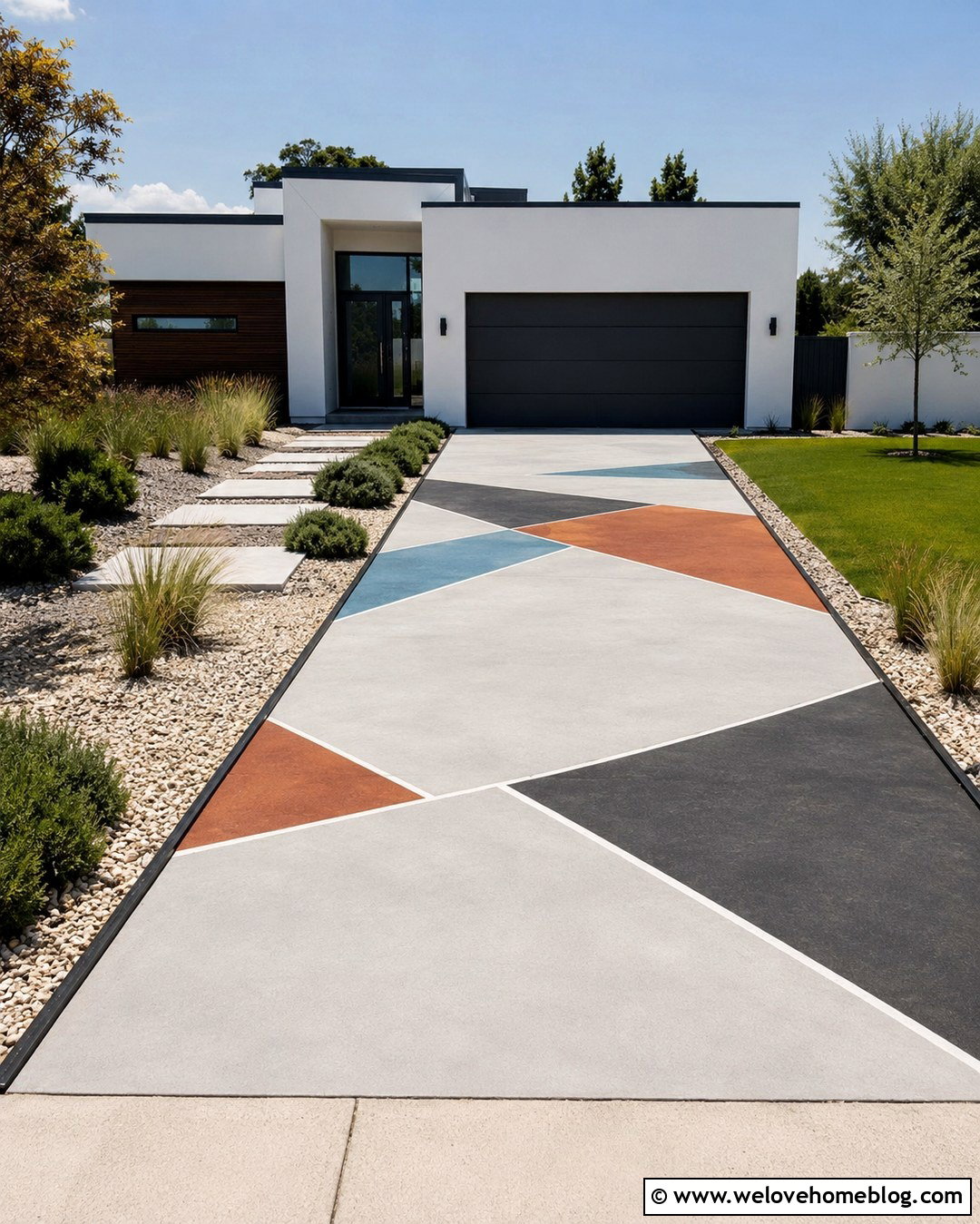
Bold geometric art gives a modern driveway a clean, graphic appearance. On a smooth concrete surface, use painter’s tape to create triangles, diamonds, zigzags, or wide diagonal bands. Limit the palette to three or four colors, such as charcoal, white, terracotta, and muted blue, to complement a contemporary house. A straight driveway with steel or dark paver edging provides the strongest architectural setting. Keep the largest shapes near the curb and gradually reduce their size toward the garage to create visual movement. Washable chalk paint delivers broader, more even color than individual chalk sticks. Balance the sharp artwork with simple landscaping, including clipped grasses, gravel beds, and low evergreen shrubs. The full design should feel organized rather than randomly filled.
9. Driveway Stained Glass Art
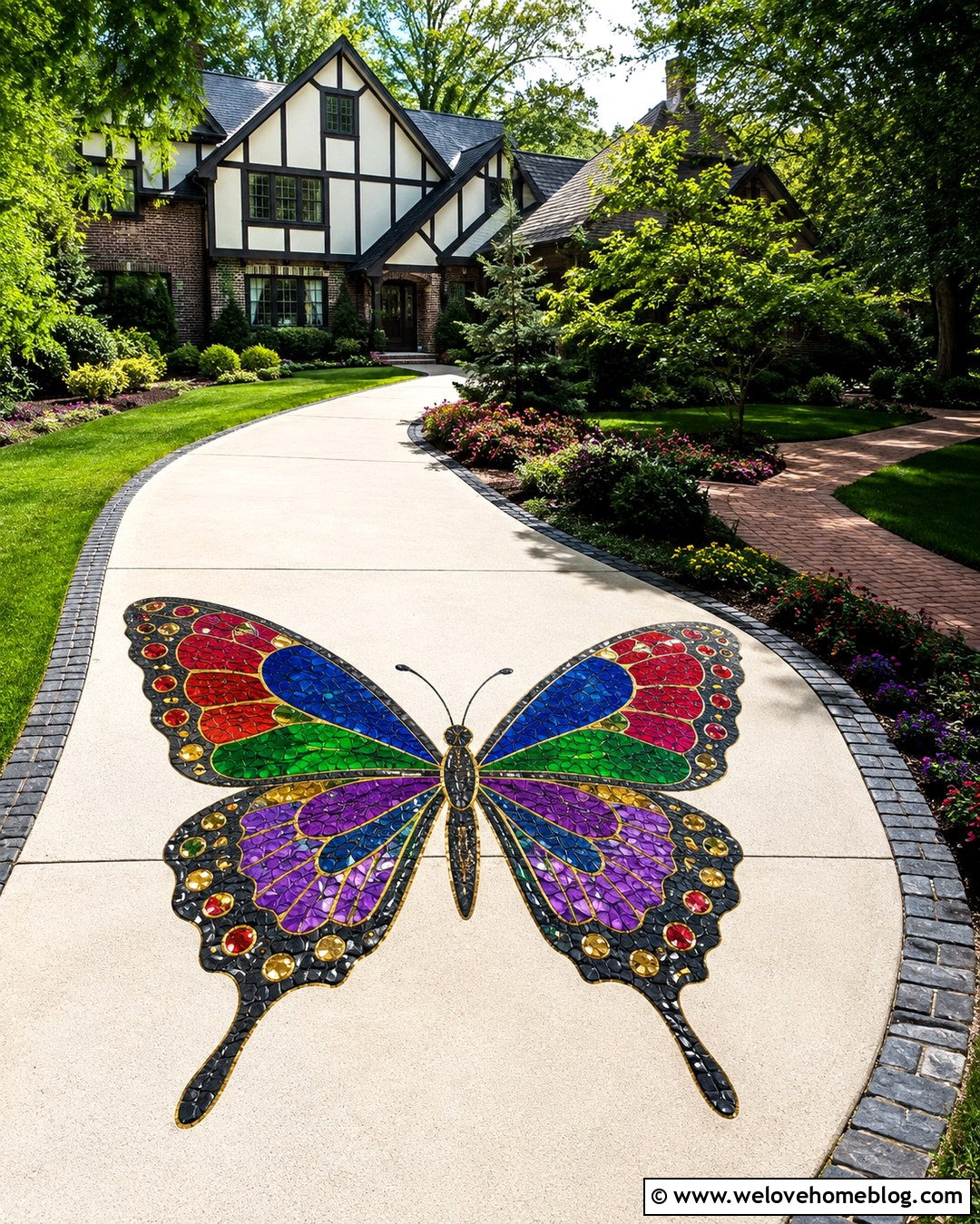
A stained glass pattern brings rich color and strong black outlines to a plain driveway. Sketch a large butterfly, flower, sun, or abstract window shape on smooth concrete. Divide the main figure into smaller sections, then fill them with jewel-toned sidewalk chalk in ruby, sapphire, emerald, violet, and gold. Thick charcoal or black lines between the colors create the leaded-glass effect. Position the artwork near a brick ribbon or dark stone border to visually anchor it. On a narrow driveway, use one elongated design that follows the approach instead of a wide circle. Surrounding flower beds can repeat the same jewel tones through foliage and blooms. Lightly misting or blending washable chalk may produce denser color, but test the method first on a small area.

10. Driveway Neighborhood Map
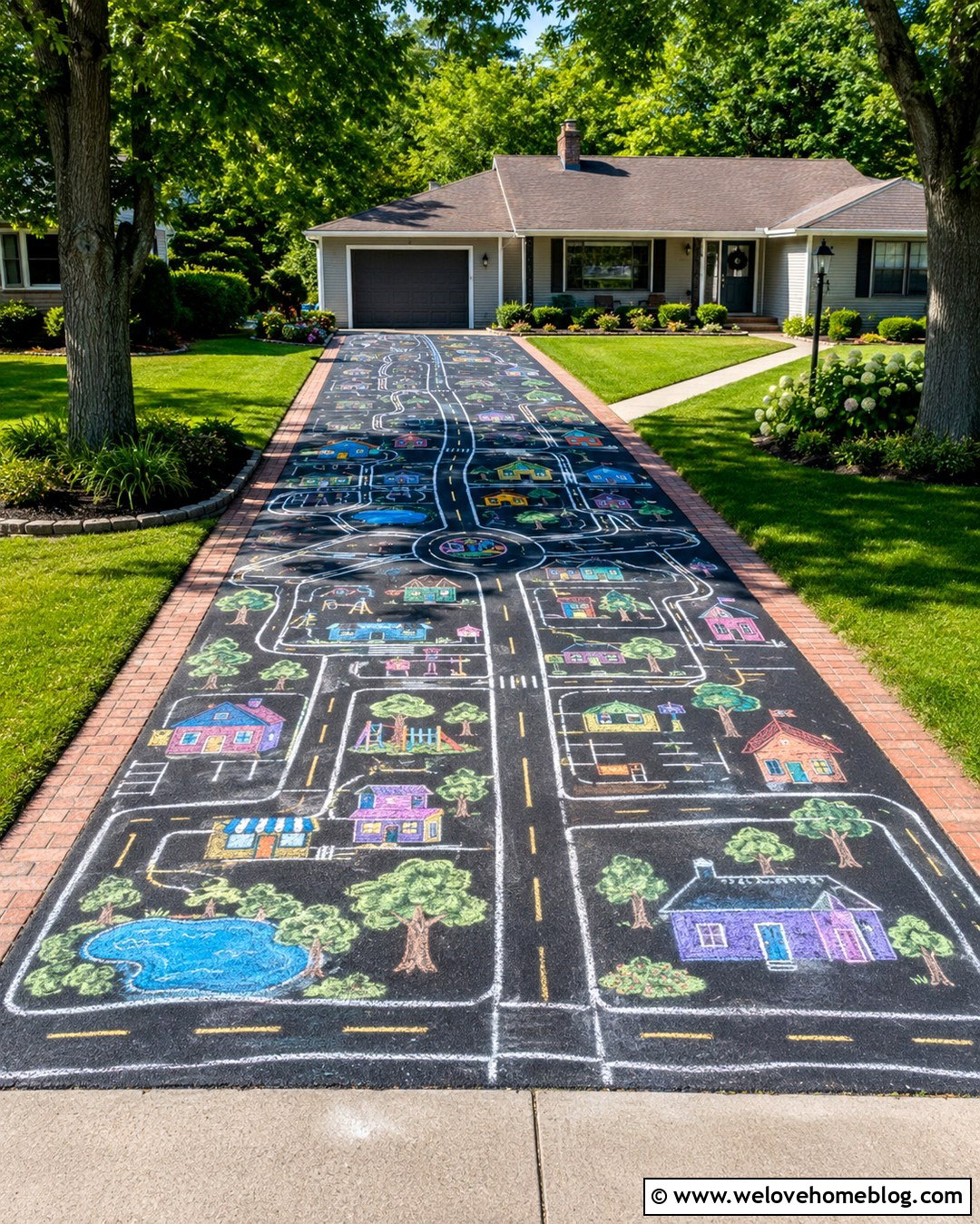
A simplified neighborhood map transforms a long driveway into an interactive art project. Draw wide chalk roads that follow the driveway’s shape, then add houses, parks, trees, stores, ponds, and recognizable local landmarks. Children can contribute their own homes or imagined destinations, making the artwork feel personal without requiring perfect drawing. Black asphalt provides a road-like base, while white and yellow chalk can define lanes and intersections. Use green, blue, and red for the surrounding features. A brick border and lawn strips help frame the map like a giant illustrated page. Leave enough open space between buildings for toy vehicles or walking games. Near the garage, finish with a large drawing of the family home so the map has a clear destination.
11. Driveway Chalk Quilt
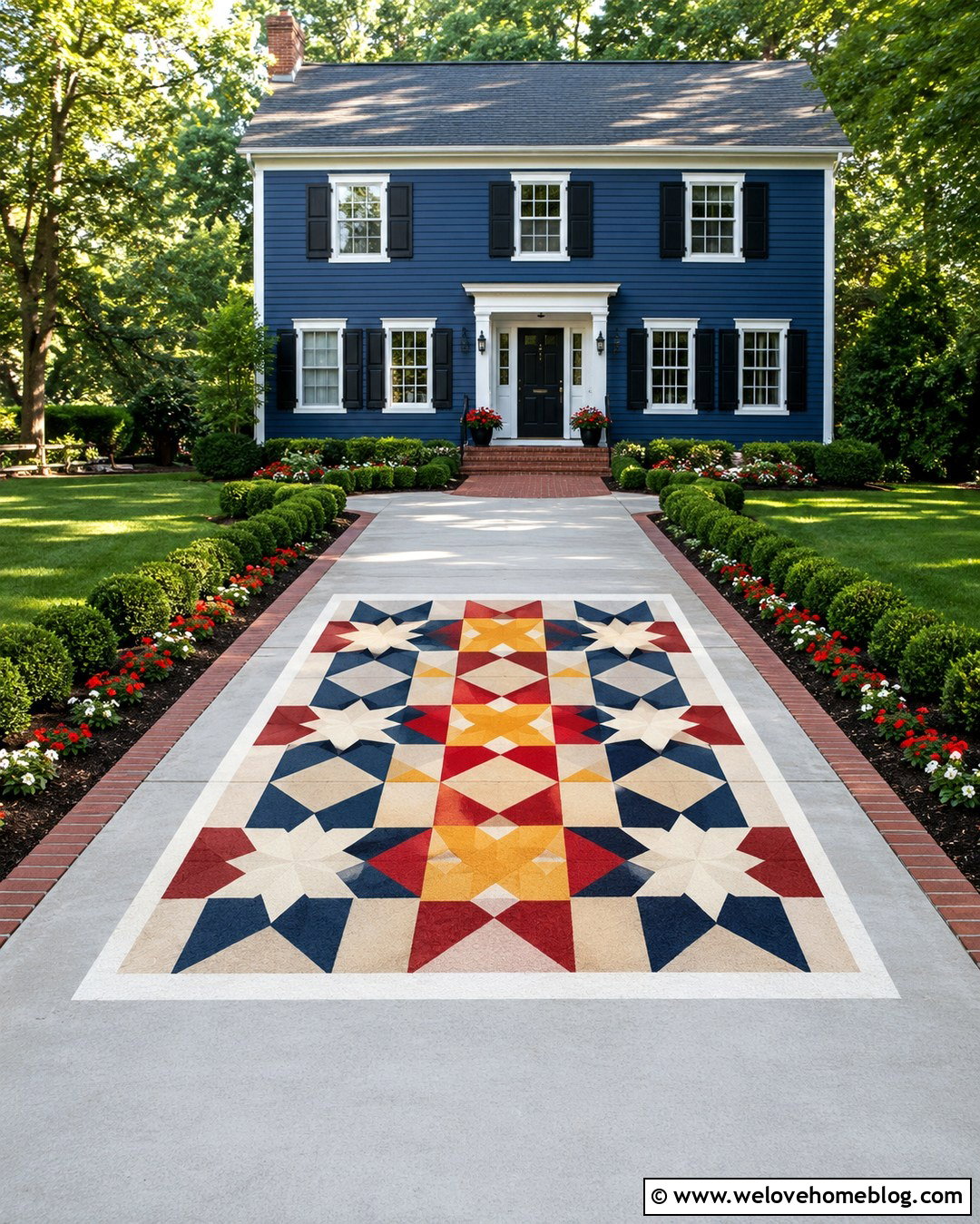
Traditional quilt blocks translate beautifully into large driveway artwork because they rely on simple repeating shapes. Divide a square area of poured concrete into an even grid, then choose a recognizable pattern such as pinwheels, stars, chevrons, or interlocking diamonds. Fill the sections with coordinated chalk colors instead of using every shade available. Navy, red, cream, and golden yellow suit a colonial home, while sage, dusty blue, and terracotta complement a modern farmhouse. Frame the chalk quilt with a wide white outline that resembles fabric binding. A symmetrical driveway with brick edging will reinforce the structured composition. Families can assign one block to each participant, creating a collaborative project that still looks unified when the individual sections are viewed together from the street.
12. Driveway Butterfly Wings
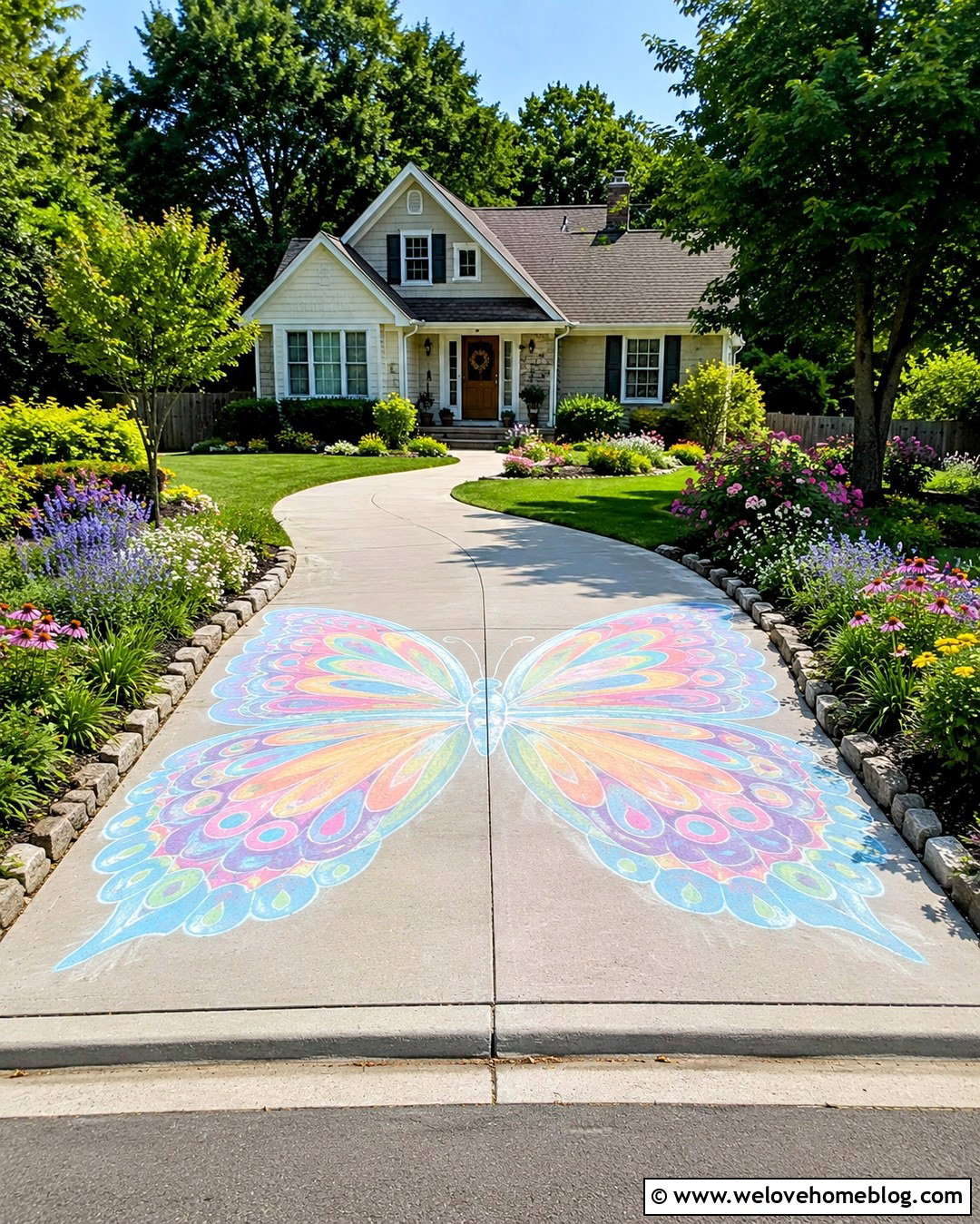
Oversized butterfly wings create an easy photo backdrop while adding color to the entire driveway approach. Draw the wings across a broad section of light concrete and leave a clear space in the middle where someone could stand without covering the design. Use thick outlines, symmetrical shapes, and large color areas that remain readable from a distance. Smaller circles, teardrops, and scalloped bands can decorate each wing. Connect the art to nearby landscaping with butterfly-friendly flower beds, low shrubs, and a simple stone edge. A gently curved driveway makes the wings appear to open toward the house. Keep the walkway and vehicle path unobstructed. For a more polished composition, repeat one or two wing colors on the porch or in container plantings near the entrance.
13. Driveway Botanical Border
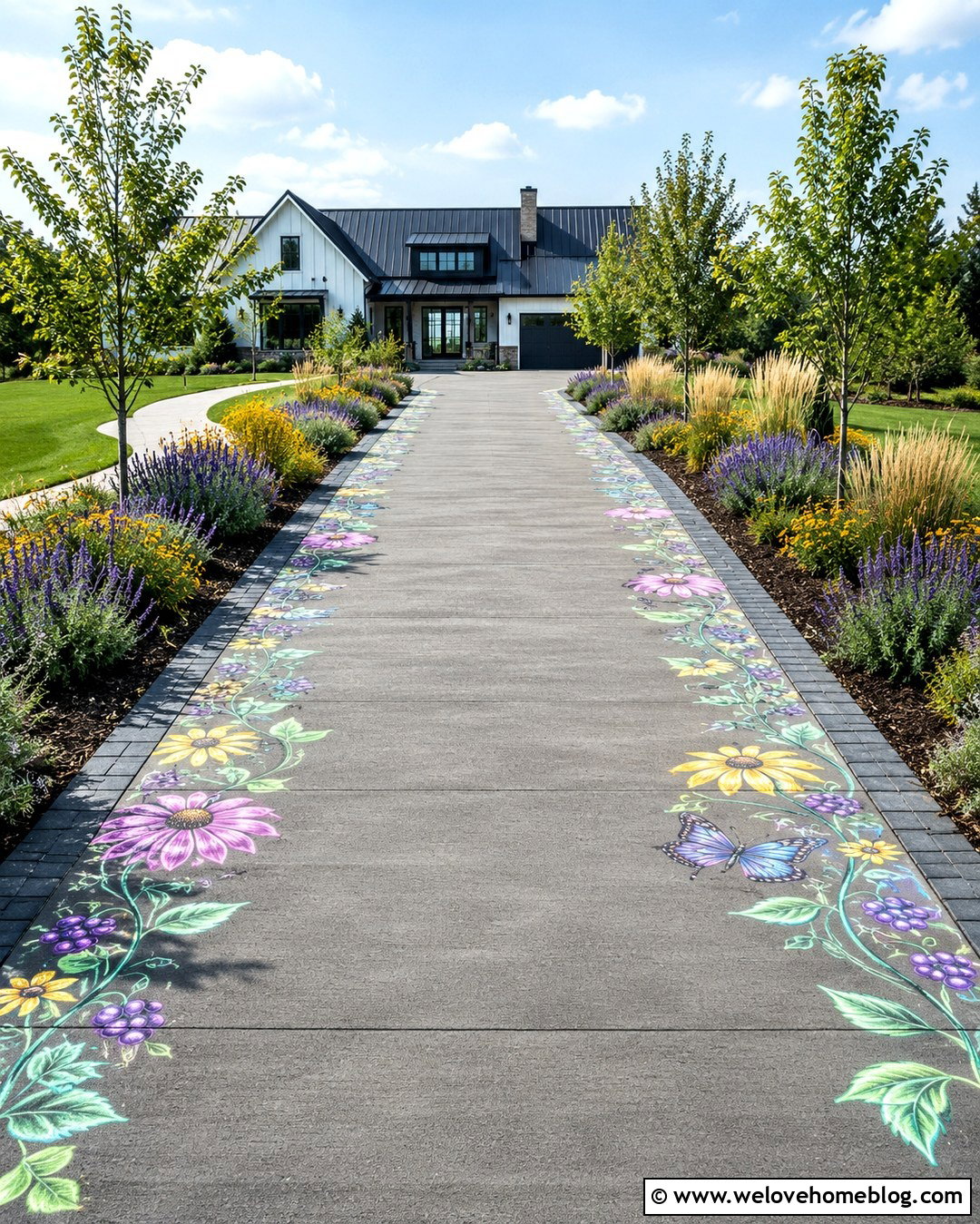
Not every driveway project needs to cover the entire surface. A chalk botanical border can follow both edges while leaving the center open for normal use. On gray poured concrete, draw winding green vines with oversized leaves, flowers, berries, and small garden insects. Allow the stems to curve around existing paver ribbons, walkway connections, and planting-bed corners. Match the chalk flowers to real lavender, black-eyed Susans, salvia, or ornamental grasses growing nearby. The repeated border gives a long straight driveway more rhythm and helps guide attention toward the front entrance. Use thicker shapes near the curb and finer details closer to the house. Because most of the artwork sits outside the tire lanes, it may remain visible longer while still giving the complete driveway a colorful, coordinated appearance.
14. Driveway Positive Message Mural
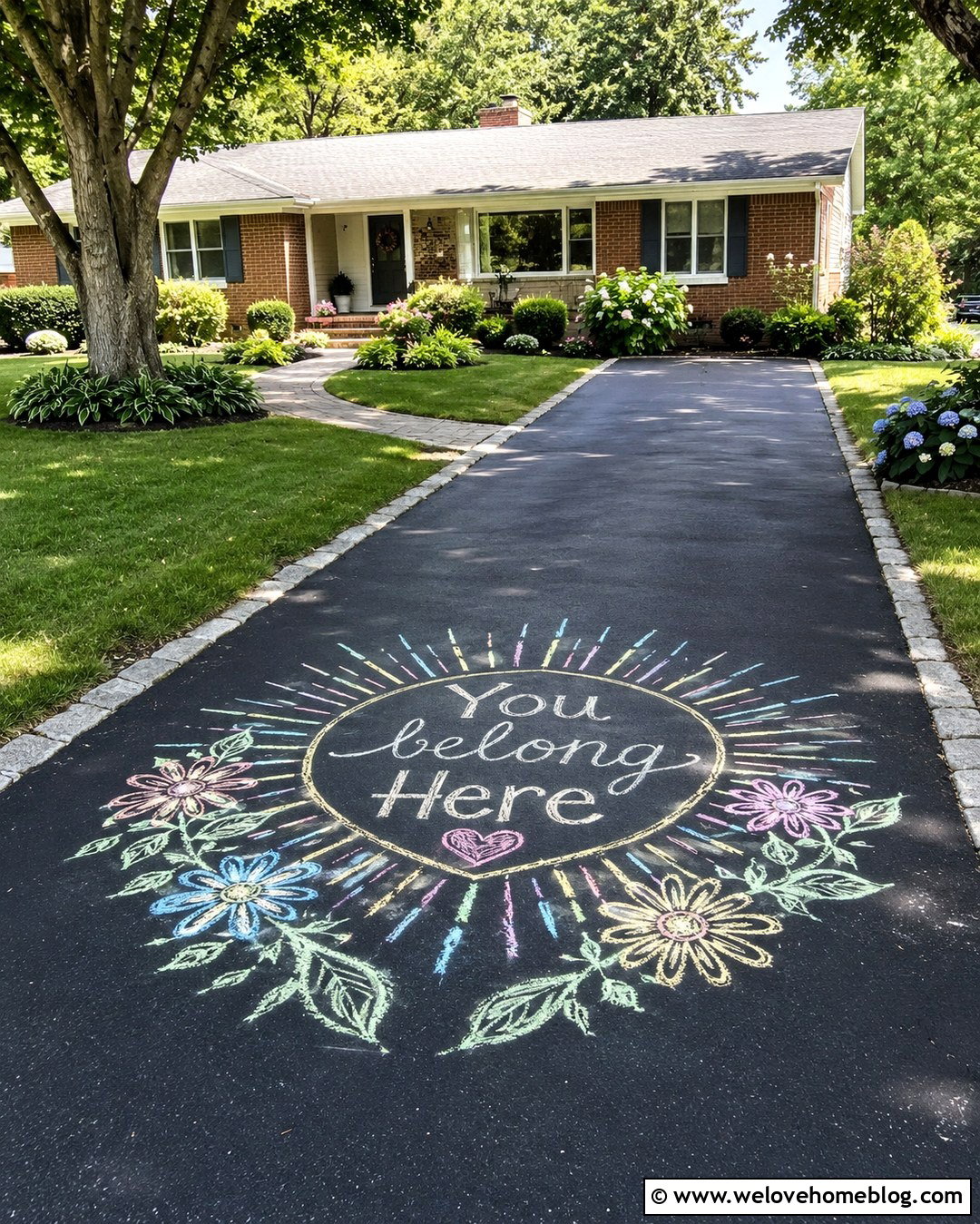
A short uplifting message can anchor a larger mural without making the driveway resemble a signboard. Choose a few simple words and place them inside a sunburst, floral frame, rainbow, or field of colorful geometric shapes. Block letters are easiest to read from the sidewalk, especially when outlined in white or black. A smooth asphalt driveway offers excellent contrast for pale yellow, blue, pink, and green chalk. Keep the text centered and use decorative artwork to fill the surrounding space. Flower beds, a neat lawn, and a welcoming front walkway complete the curb view. Before filling the letters, lightly mark the centerline and spacing so the words remain balanced. Select a friendly, general message that works for neighbors, visitors, and family members throughout the season.


15. Driveway Shadow Tracing Art
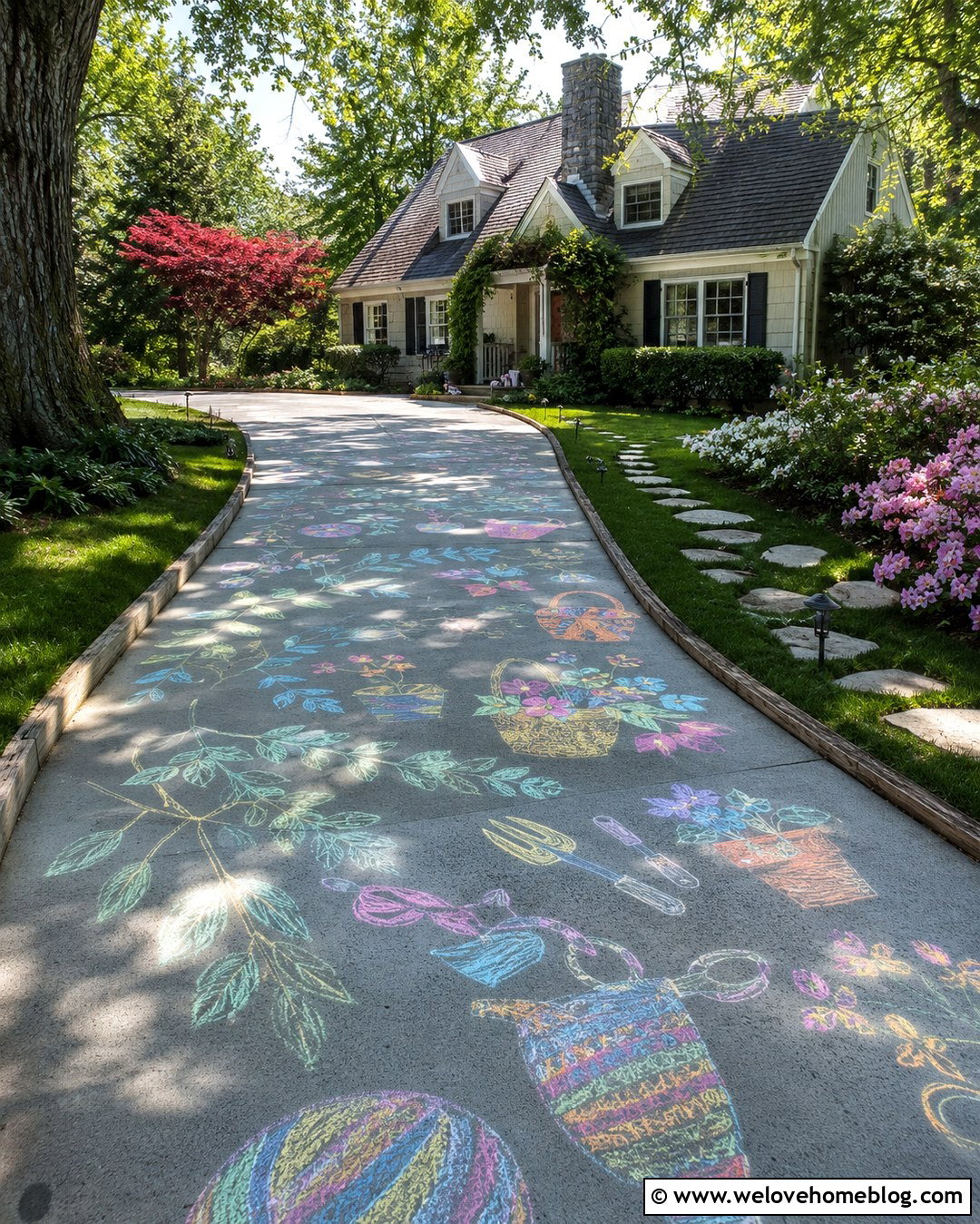
Sunny weather creates the perfect opportunity to turn shadows into original driveway drawings. Arrange safe, lightweight objects beside a smooth concrete surface so their shadows fall across the driveway. Trace the silhouettes of plants, garden tools, toys, baskets, or outdoor furniture with chalk. After moving the objects, fill the shapes with patterns, faces, flowers, or bright blocks of color. Real tree shadows can inspire an especially large branching mural along a curved drive. Connect the silhouettes with a shared palette so the finished artwork looks intentional rather than scattered. Frame the project with simple timber edging and relaxed cottage planting. Because shadows shift quickly, complete the outlines first. Coloring and decorating can continue later after the original forms have been captured on the surface.
16. Driveway Hopscotch Garden
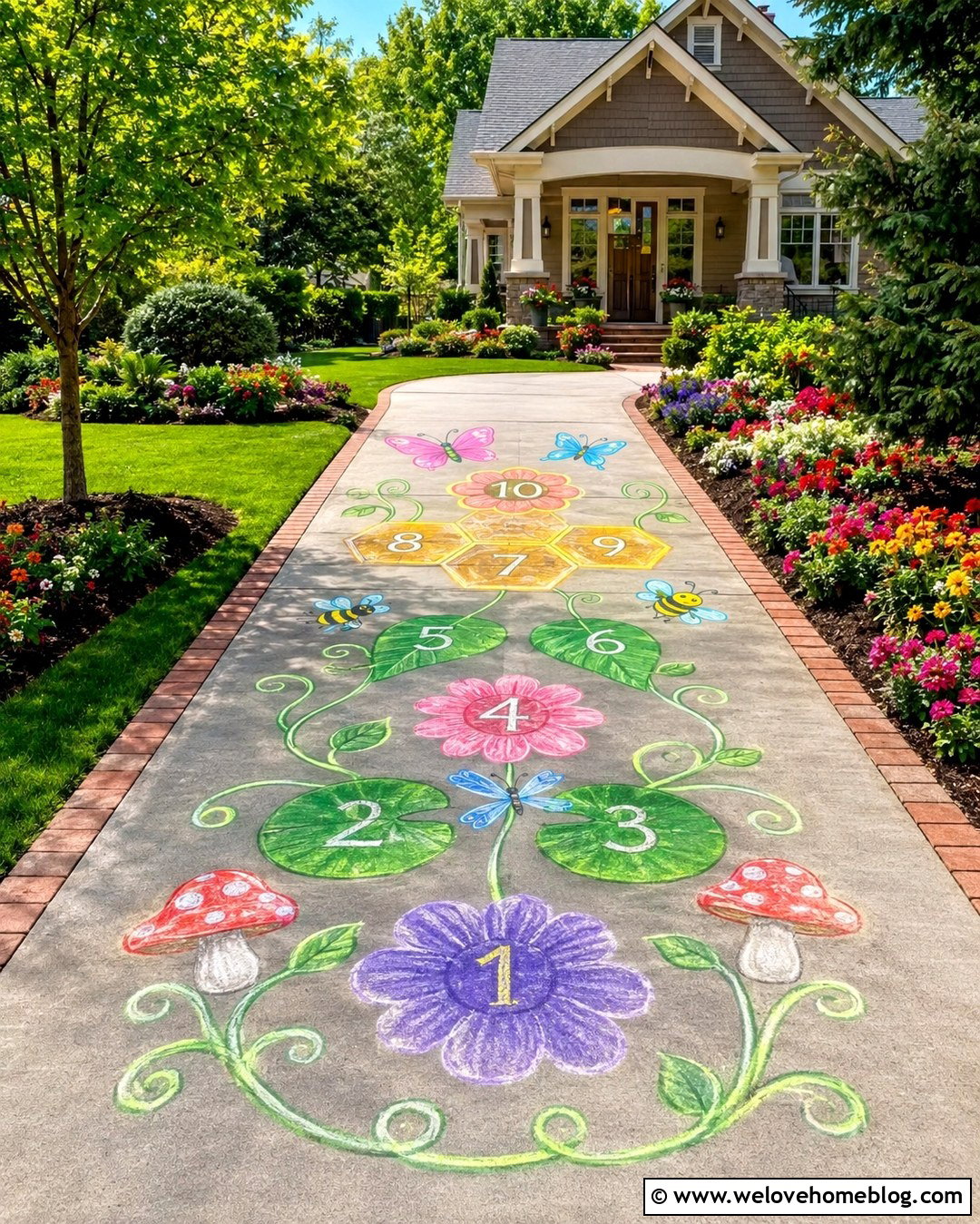
A garden-themed hopscotch course combines active play with a complete driveway mural. Replace basic numbered boxes with flower centers, lily pads, steppingstones, leaves, or honeycomb cells. Arrange the path along one side of a straight concrete driveway so the remaining lane stays open. Use bright chalk outlines and large numbers that are easy to recognize while moving. Add bees, ladybugs, butterflies, mushrooms, and curling vines between the play spaces. Nearby planting beds with colorful annuals can make the illustrated garden appear to grow beyond the pavement. Finish the course near the porch or walkway rather than the garage door. The route may be short for younger children or extended with turns, jumping circles, and balance lines for a more challenging outdoor activity.
17. Driveway Constellation Mural
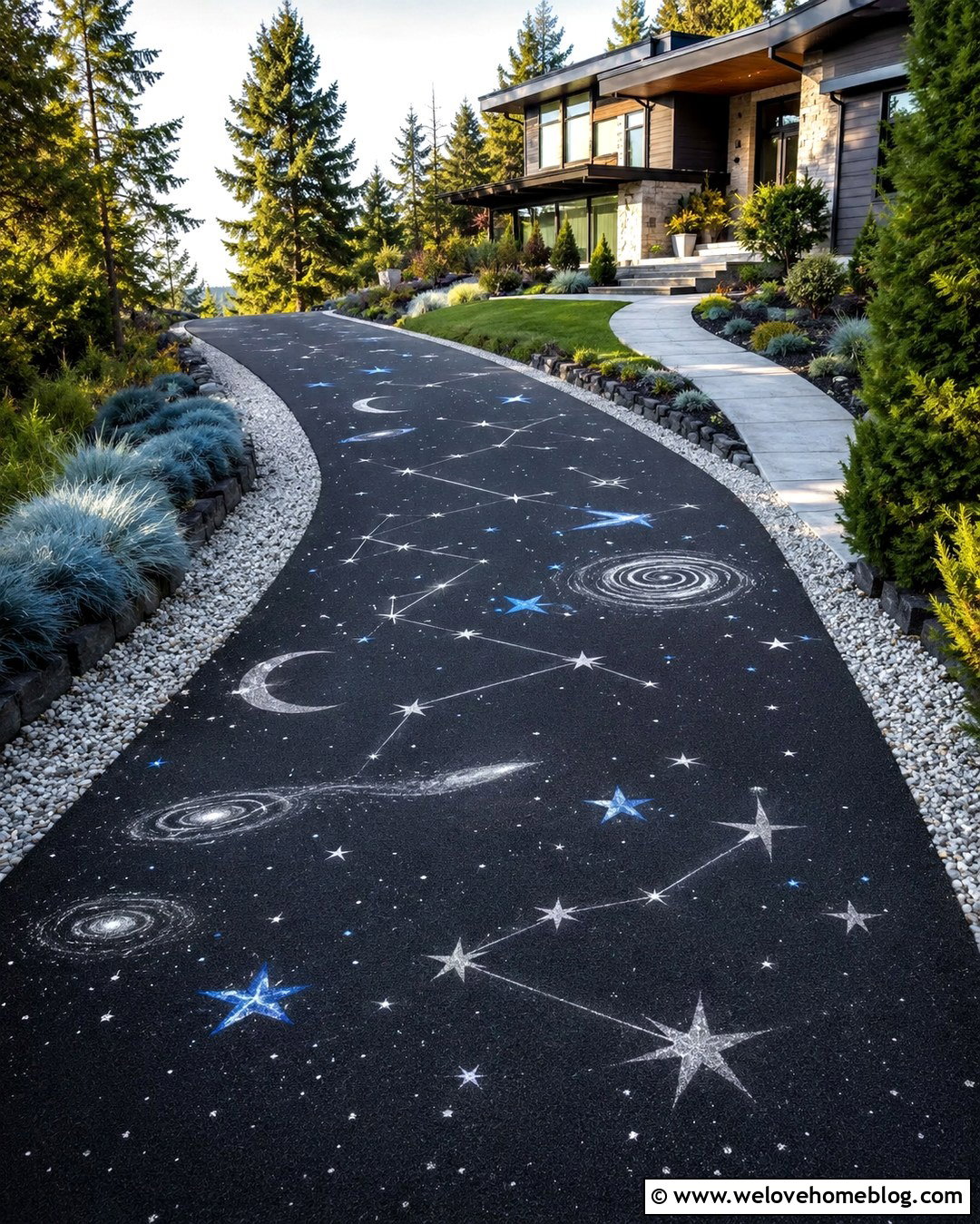
A constellation mural offers a simpler alternative to a detailed solar system. Begin with a clean black asphalt driveway and draw clusters of large white, pale blue, and silver stars. Connect selected stars with thin lines to form familiar or completely invented constellations. Add crescent moons, comets, swirling galaxies, and scattered dots to soften the empty areas. A long driveway works well because the constellations can appear to travel from the curb toward the house. Frame the dark surface with light gravel beds, blue-green ornamental grasses, and subtle stone edging. Avoid crowding every section. Open black areas help the brighter shapes stand out. Labeling can be added for an educational project, but an image-only composition will create a cleaner and more sophisticated curb view.
18. Driveway House Portrait
A chalk portrait of the home creates a personalized mural that connects directly to the surrounding property. Stand near the curb and sketch the main shapes of the facade, including the roofline, windows, front door, porch, and large trees. The drawing does not need perfect perspective. Focus on recognizable colors and features. Position the portrait near the driveway entrance so viewers can compare it with the real house in the background. On a pale concrete driveway, use charcoal outlines with brick red, blue, green, or cream accents. Add an illustrated lawn and flower beds that echo the actual landscaping. A decorative chalk frame will separate the picture from tire lanes and pavement joints. This project also makes a memorable backdrop for a home anniversary or family photograph.
19. Driveway Nature Print Art
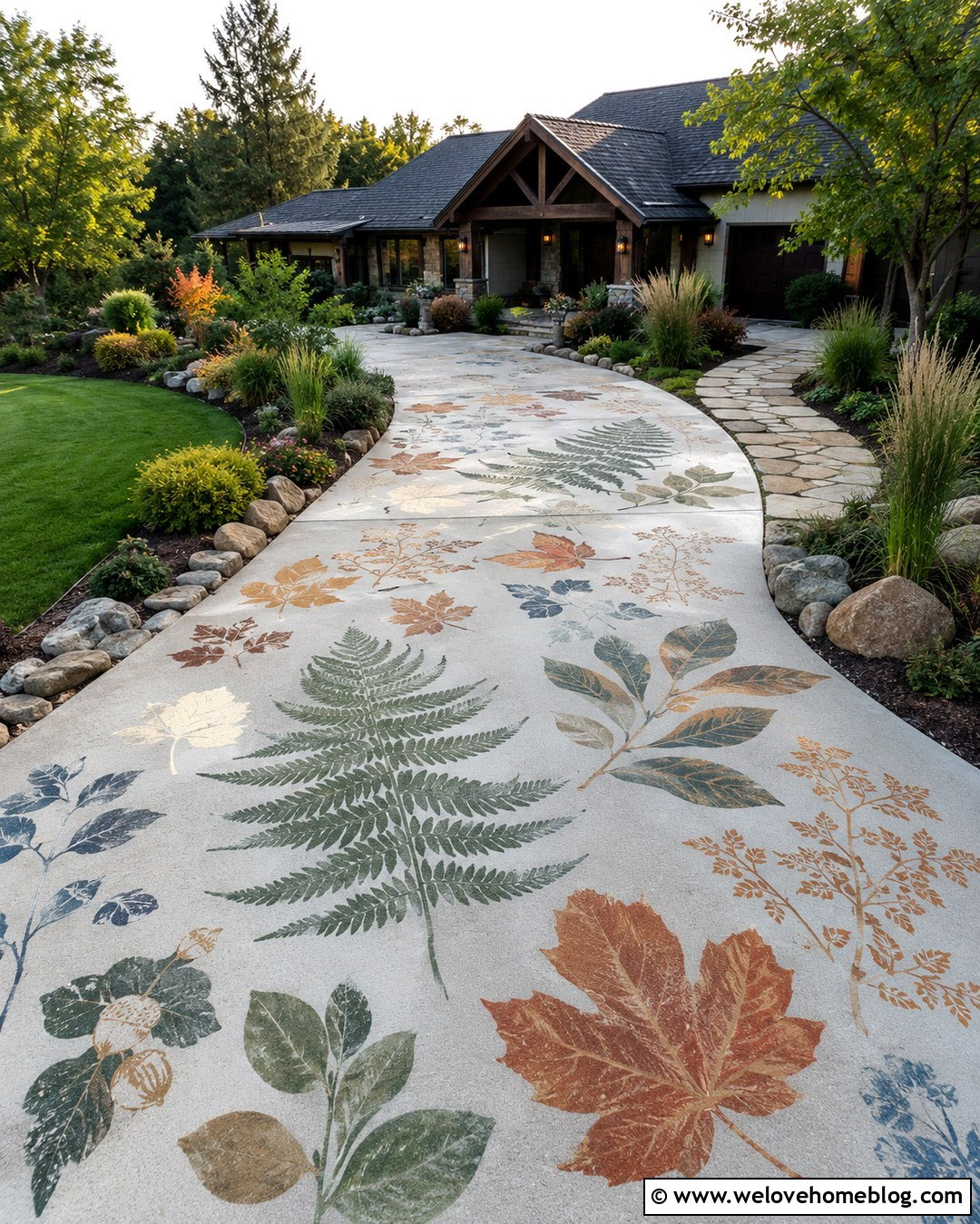
Leaves, flowers, and textured natural objects can inspire a layered driveway composition. Arrange large leaves on smooth poured concrete, trace around them, and fill each silhouette with chalk lines that suggest veins and organic patterns. Ferns, maple leaves, magnolia foliage, and simple flower heads create varied shapes. Repeat the forms in a sweeping band that curves from the driveway entrance toward a side garden. Earthy green, ocher, rust, blue, and cream tones will blend naturally with stone edging and mature landscaping. Small acorns, twigs, and seedpod outlines can fill gaps without overwhelming the main leaves. Keep real plant material away from moving vehicles and remove it after tracing. The final mural should resemble a botanical print displayed across the full driveway approach.


20. Driveway Collaborative Mural
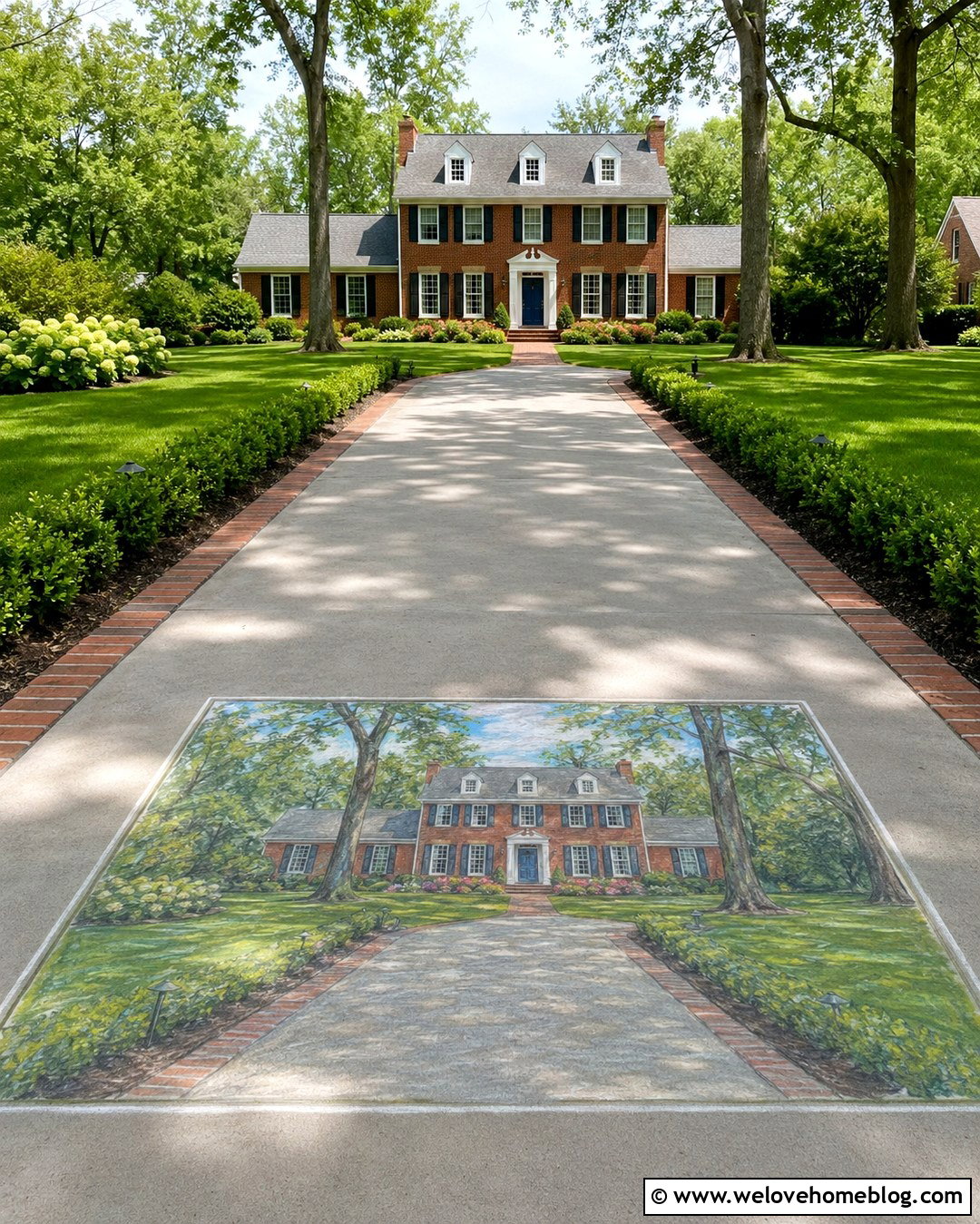
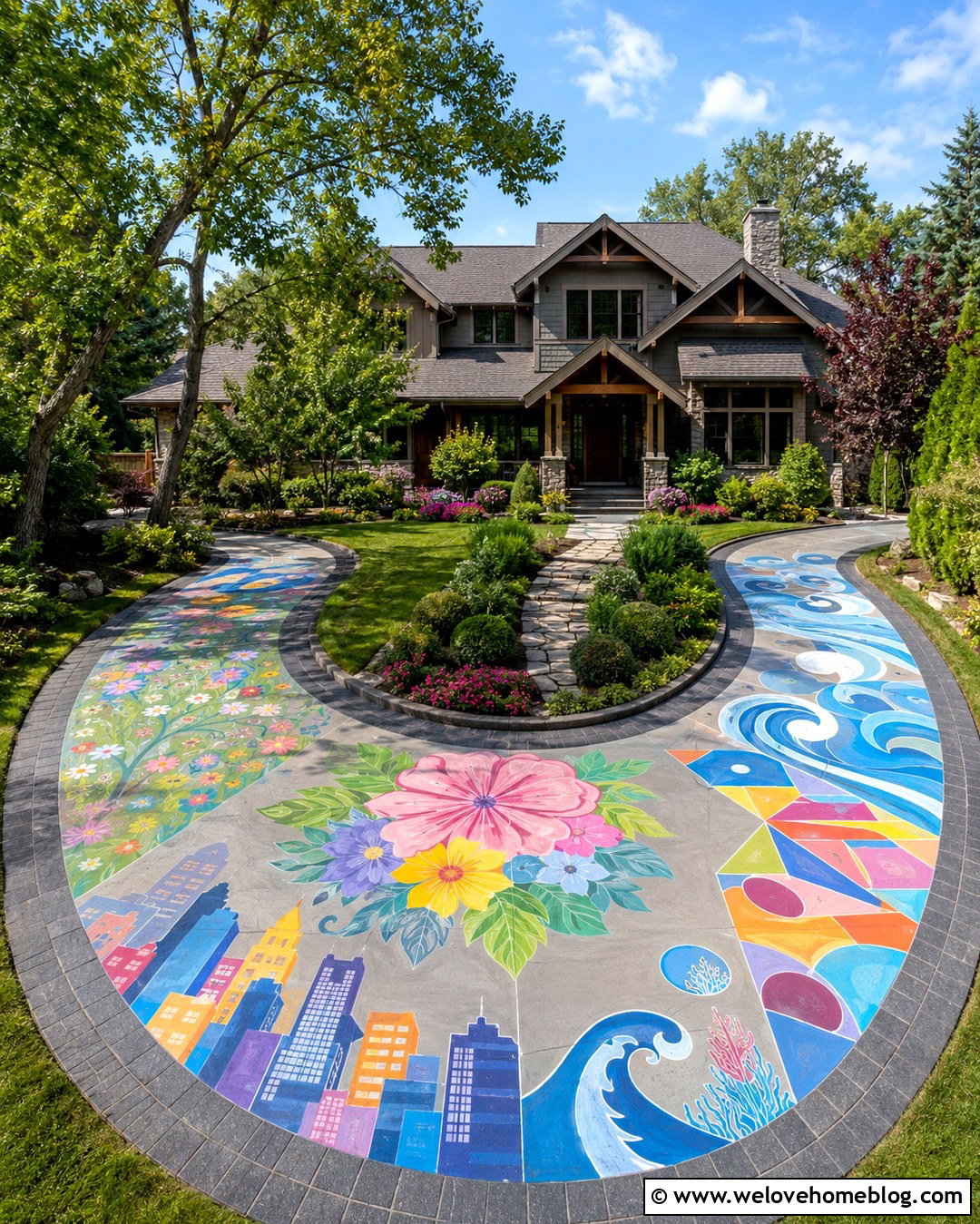
A collaborative mural lets every participant contribute while maintaining one complete design. First choose a shared theme, such as a garden, city, underwater world, or abstract color grid. Outline several connected sections across a wide concrete driveway and assign one area to each person. Repeated colors, borders, and background shapes will tie the individual drawings together. A central image can provide the main focal point, while smaller contributions spread toward the lawn, walkway, and garage. Using a measured grid can also help transfer a prepared sketch onto a larger surface. () Place the most detailed work outside active tire paths when possible. Once finished, photograph the entire driveway from the curb before capturing close views of individual sections.
Conclusion:
The best driveway artwork feels connected to the surface, yard, and home instead of looking like a small drawing placed at random. Use the driveway’s shape to guide the composition, then repeat colors or forms from nearby landscaping. Washable chalk keeps projects approachable and allows the design to change whenever inspiration strikes. A taped mosaic may suit a modern house, while flowers, quilt blocks, or botanical borders can complement traditional architecture. Interactive maps and games also turn the space into an outdoor activity area. With basic preparation and a clear focal point, these 20 Driveway Art Projects Ideas can transform an ordinary residential approach into a welcoming, creative canvas.

Related posts:



Leave a Reply