
A blacktop surface can be far more attractive than it first appears. The best asphalt driveway ideas combine smooth paving with a thoughtful layout, durable borders, layered landscaping, and an entrance that complements the home. Asphalt also creates a strong visual backdrop for brick, stone, concrete pavers, flowers, ornamental grasses, and crisp green lawns. Whether you have a narrow suburban lot, a sloped front yard, or a long country approach, small design choices can give the driveway a polished, custom appearance. You can introduce curves, decorative aprons, parking areas, lighting, and practical drainage without losing the material’s simple character. Explore these complete, curb-friendly looks to find 40 Asphalt Driveway Ideas suited to different homes, yards, and budgets.

1. Asphalt Driveway With Brick Edging
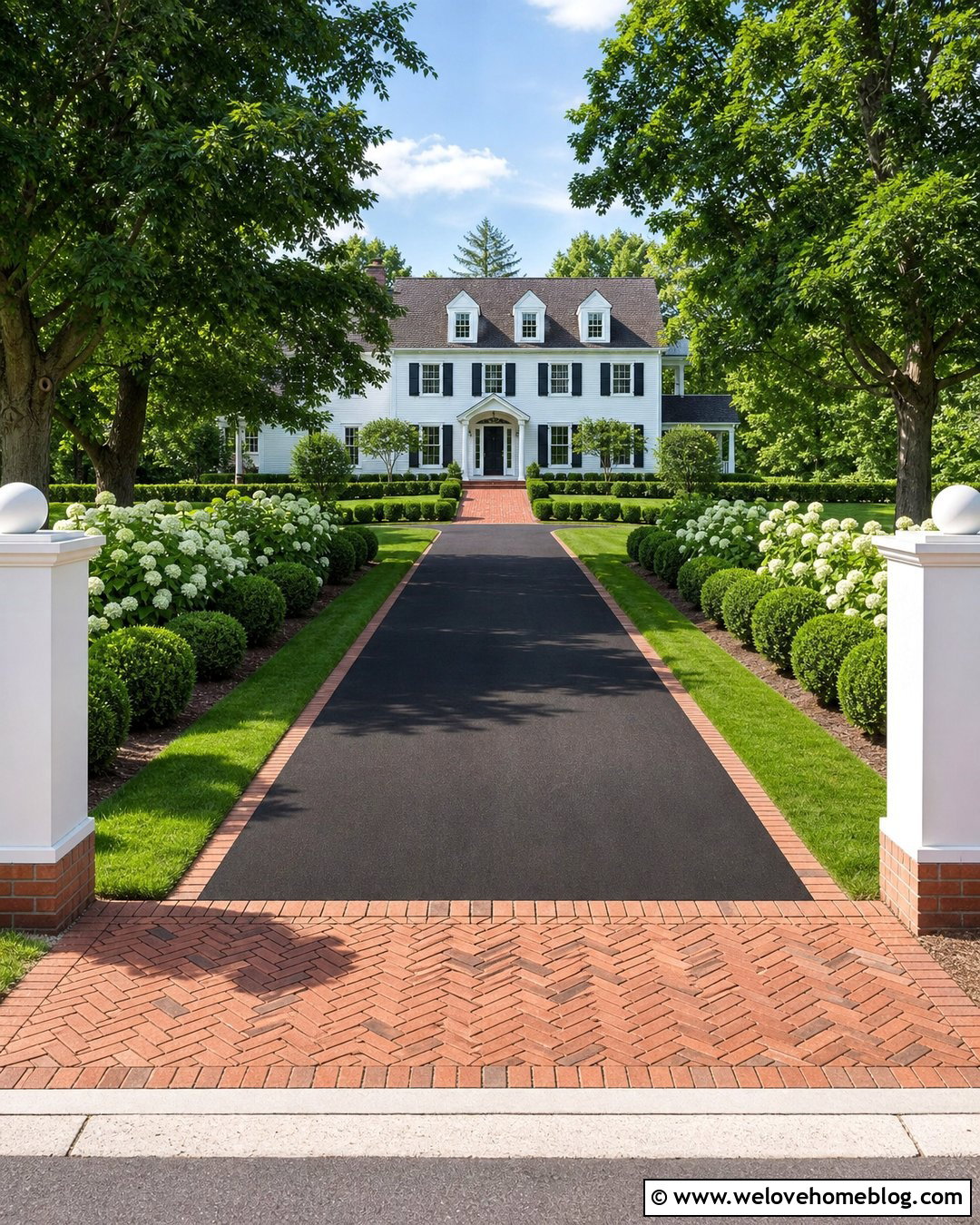
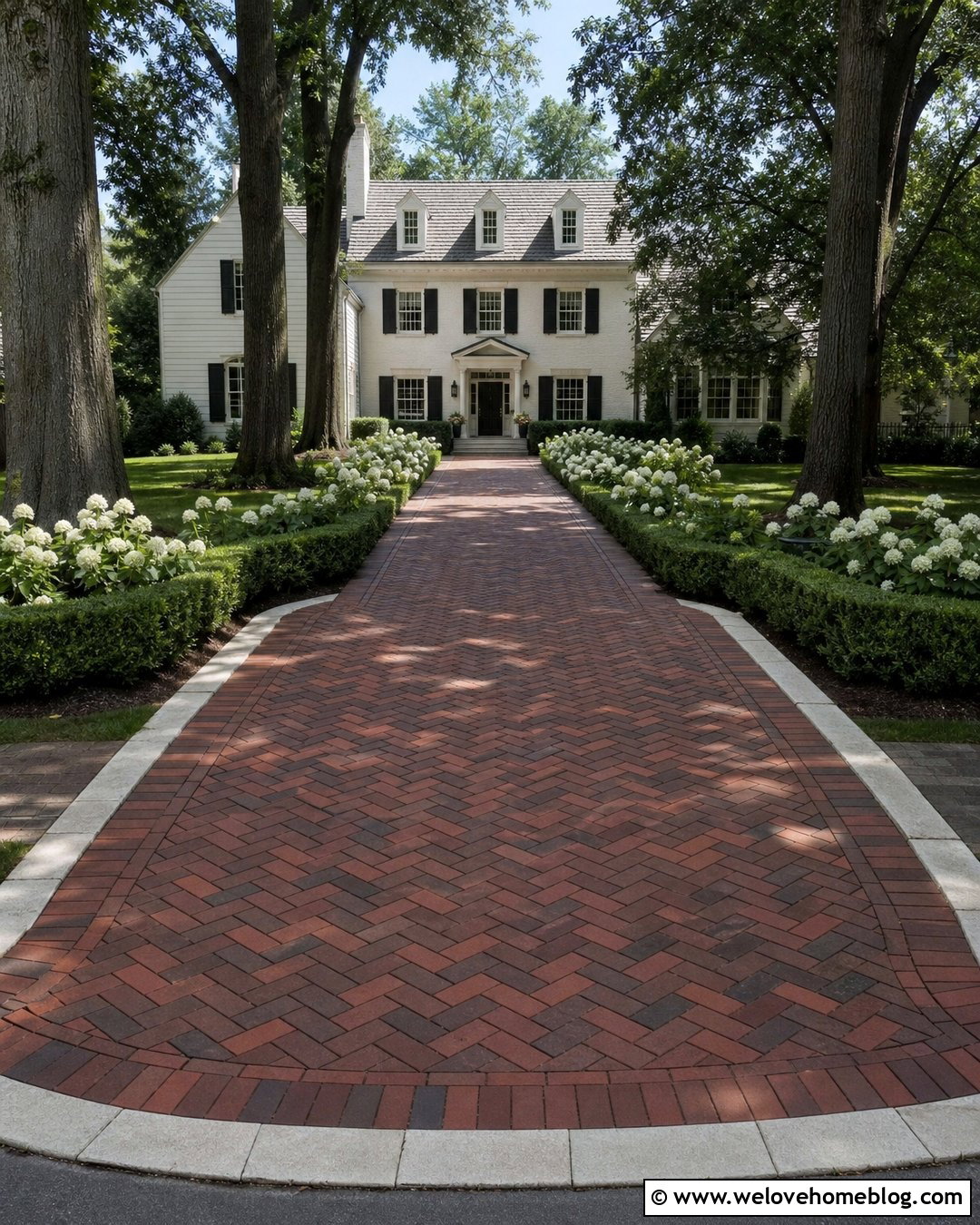
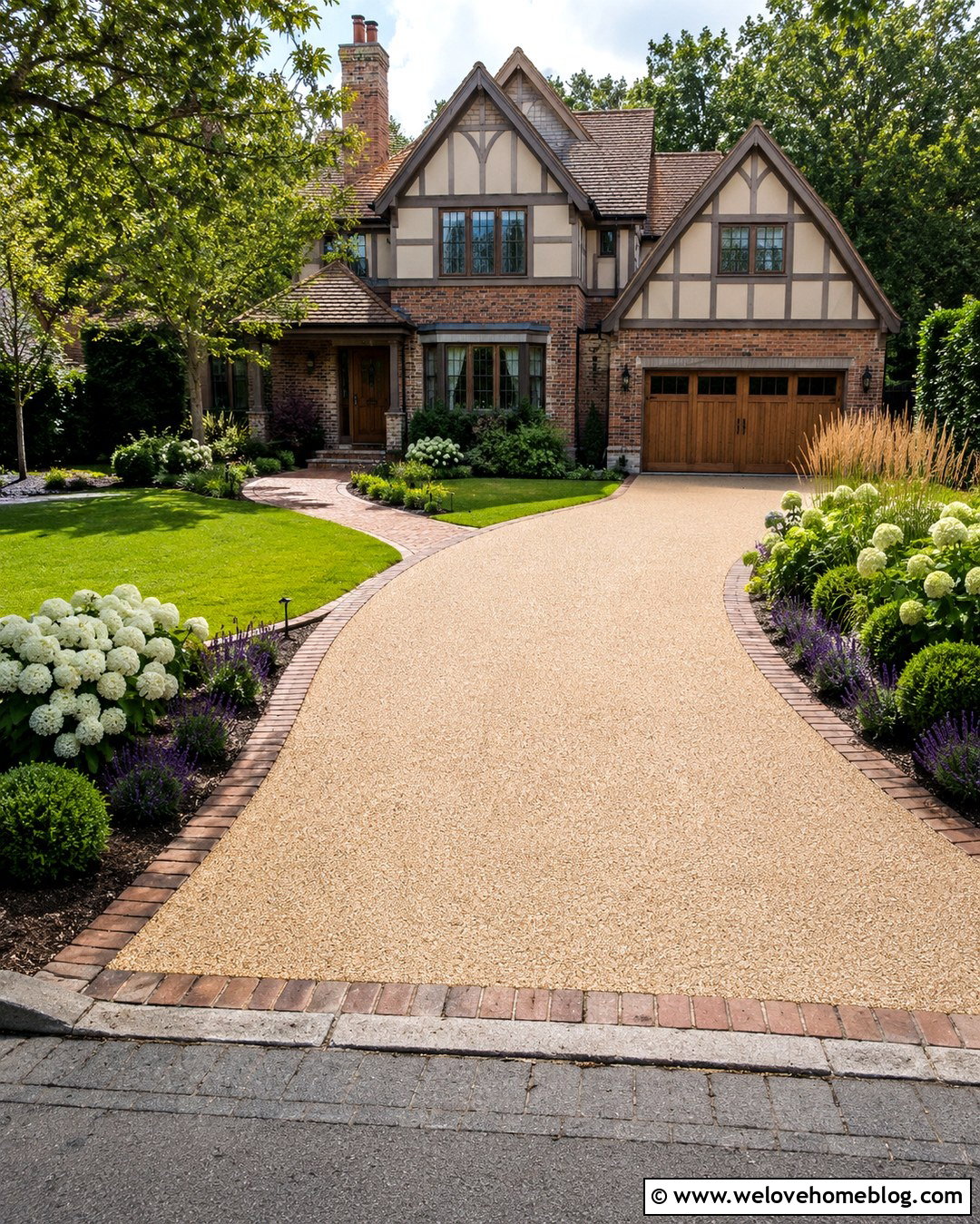
Warm red brick creates a sharp, traditional outline around a smooth black asphalt driveway. Use one or two rows of clay brick along both sides, then repeat the material across the entrance as a decorative apron. A straight layout works especially well for Colonial and Cape Cod homes because it reinforces their balanced architecture. Keep the surrounding lawn neatly trimmed and add symmetrical planting beds near the garage. Boxwood, hydrangeas, and small flowering trees soften the dark pavement without covering the brickwork. For a cohesive finish, build the front walkway from matching brick. The strong contrast gives an affordable asphalt surface a more established appearance while helping visually separate vehicle space from the lawn and garden.
2. Asphalt Driveway With Cobblestone Border
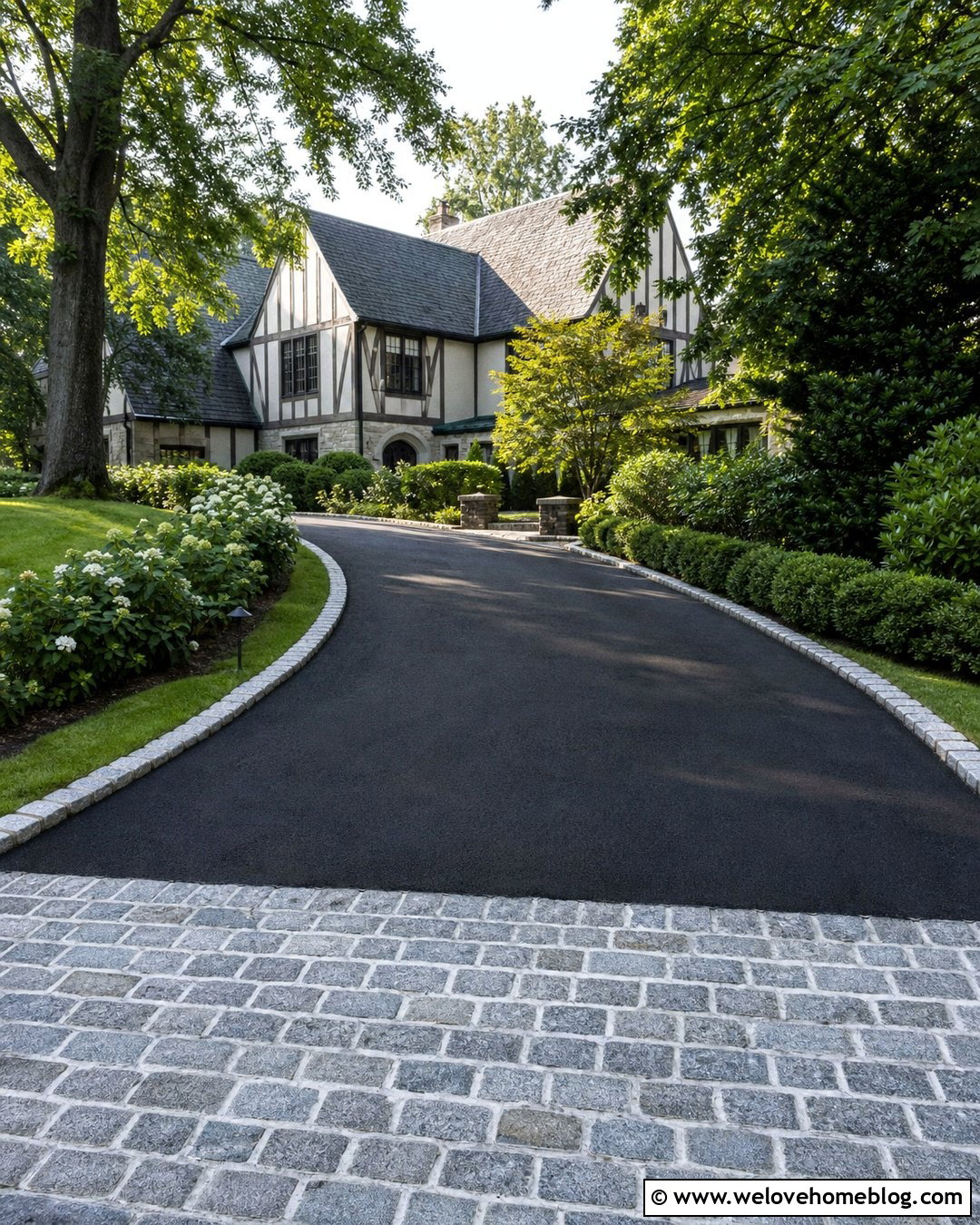
Cobblestone edging gives black asphalt a substantial, old-world frame. Granite or Belgian block can follow a straight driveway or sweep around gentle curves without making the surface feel overly decorated. Choose gray blocks for a subtle transition or mixed charcoal and tan stone for more visible texture. A cobblestone apron at the street can repeat the border and create a formal entrance. This combination looks natural beside Tudor, Colonial, and European-inspired homes. Frame the driveway with clipped hedges, shade trees, and simple lawn areas so the stone remains noticeable. Because vehicle traffic can shift poorly supported blocks, the border should be installed over a suitable base and positioned as part of the driveway construction whenever possible. ()
3. Asphalt Driveway With Concrete Paver Edging
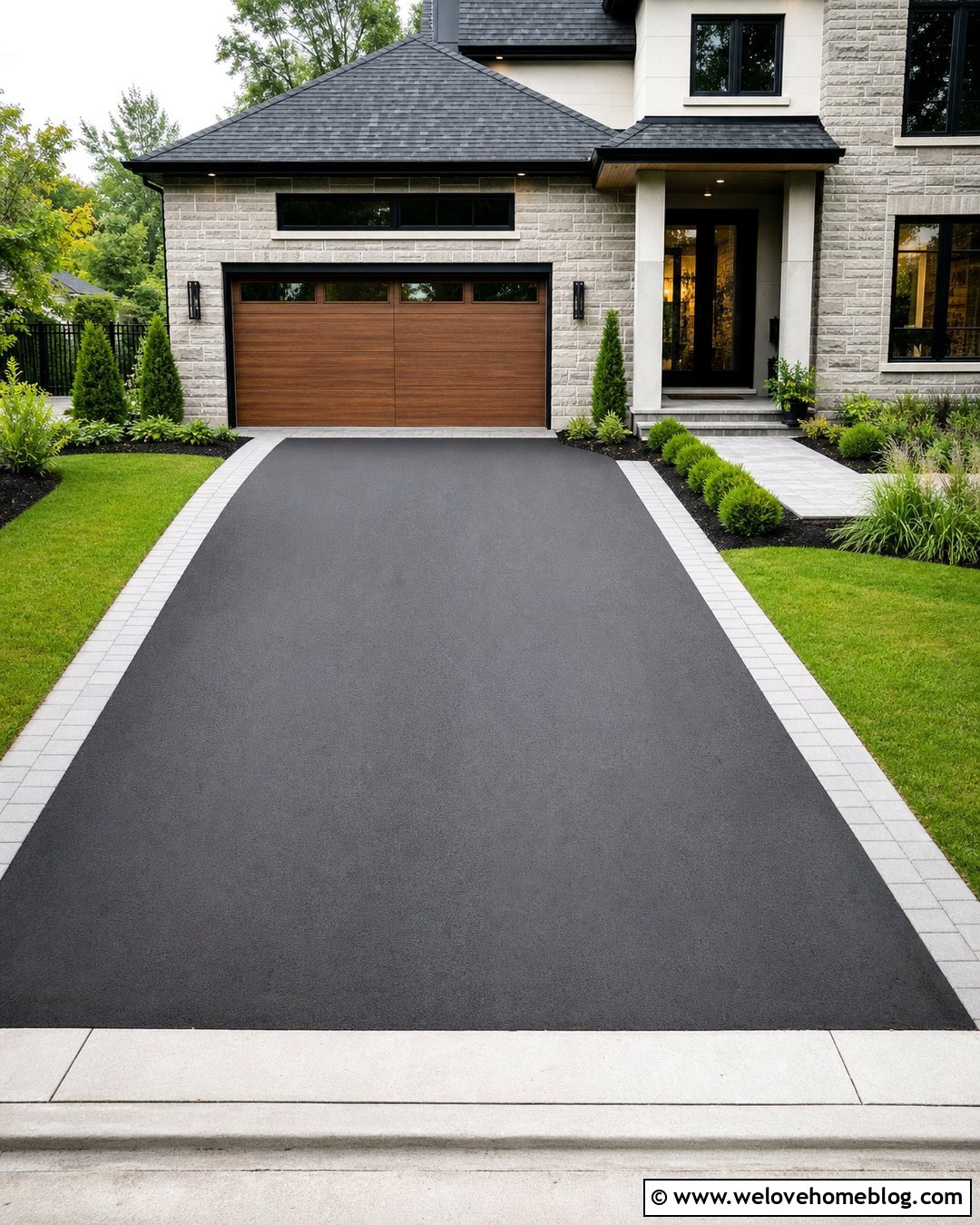
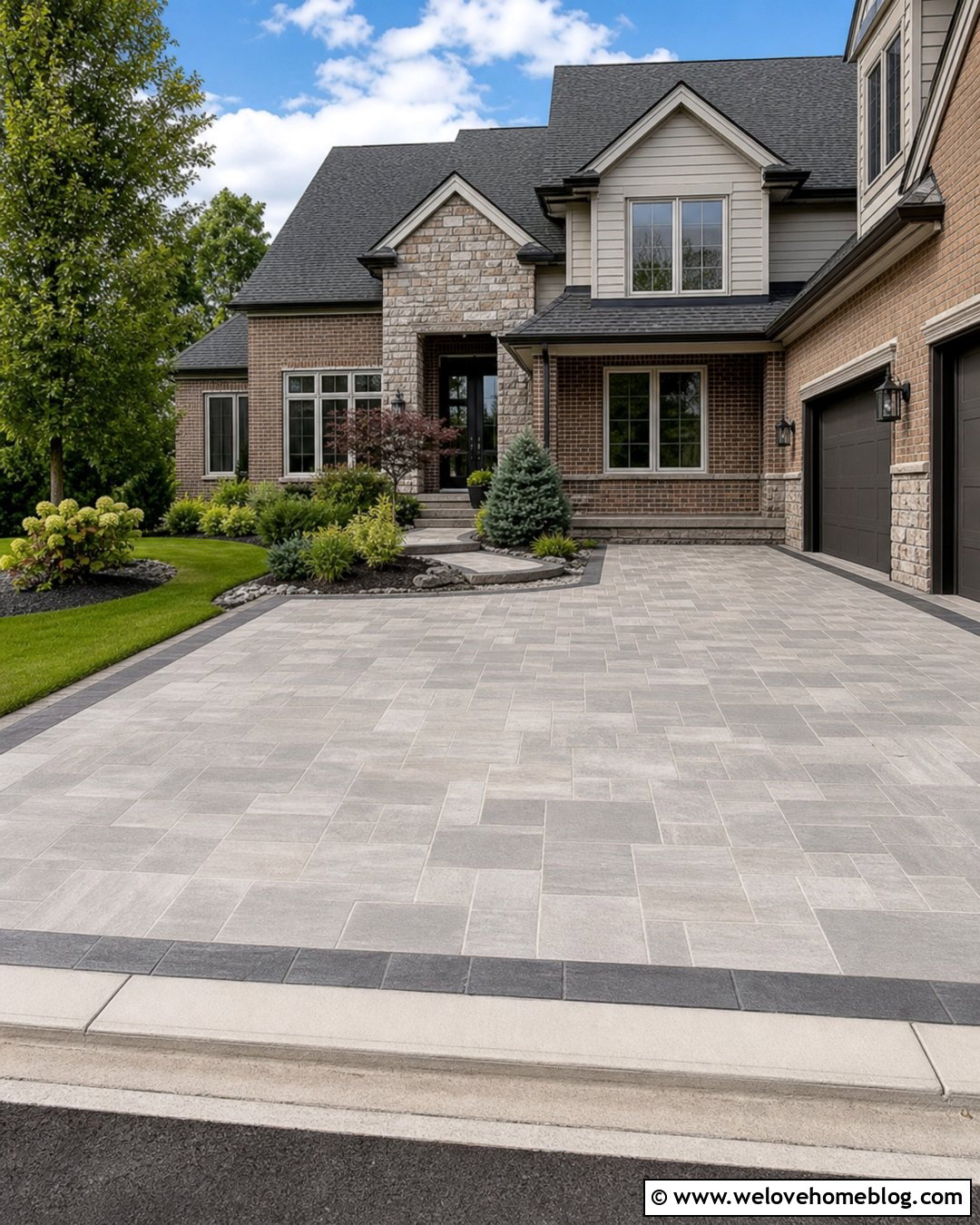
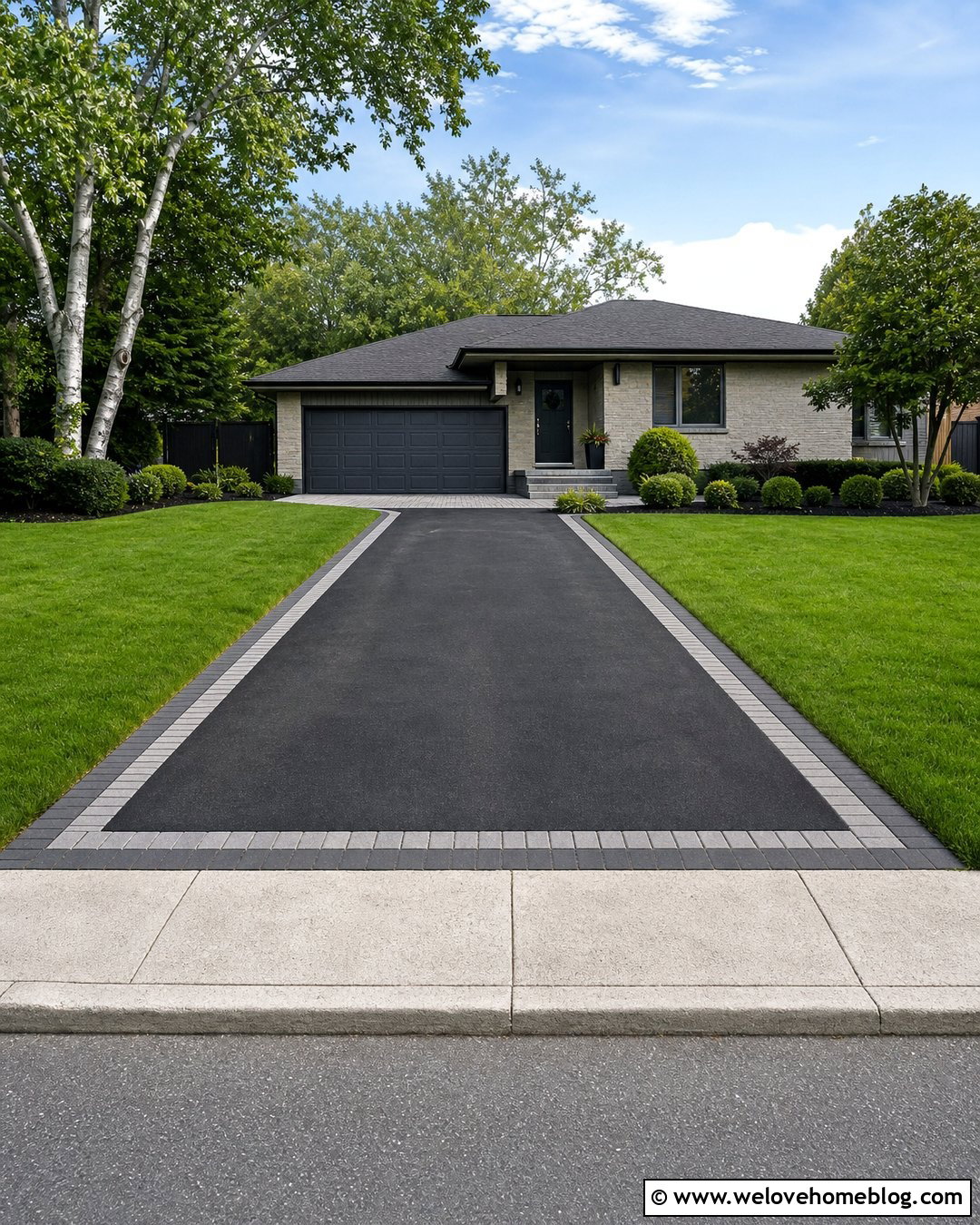
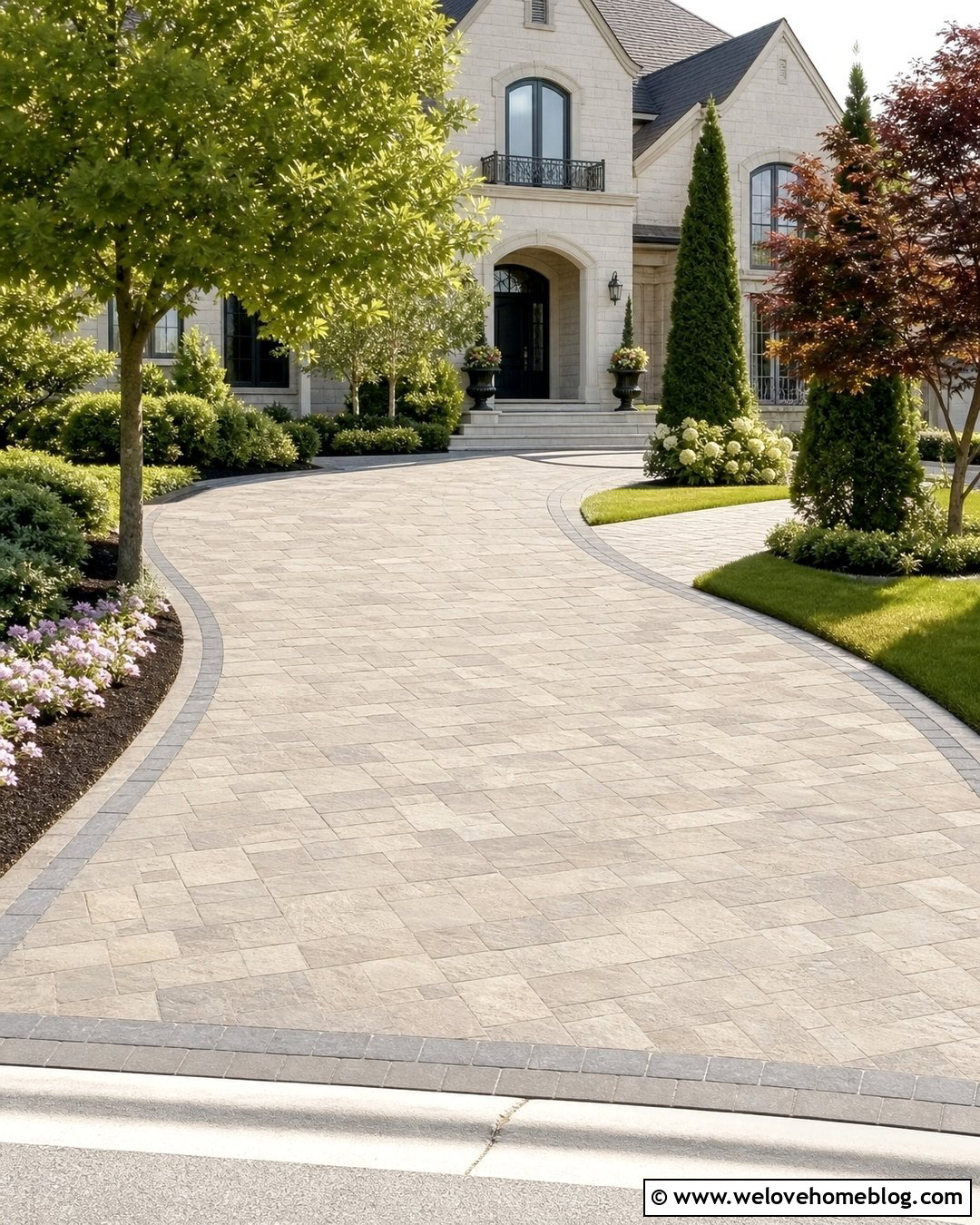
Concrete pavers offer a clean, customizable border for a residential asphalt driveway. Select rectangular pavers in light gray, charcoal, or warm beige, depending on the colors used on the house. A single paver row delivers a restrained look, while a wider double row makes the driveway feel more substantial. Continue the pavers around a curved parking pad or across the garage threshold to connect each paved area. Low evergreen shrubs and ornamental grasses can soften the hard edges without creating maintenance problems. This complete look suits contemporary, ranch, and transitional homes. For greater visual consistency, use the same pavers on the walkway and front steps. The repeated material makes asphalt feel like an intentional part of the landscape plan.
4. Asphalt Driveway With Stone Apron
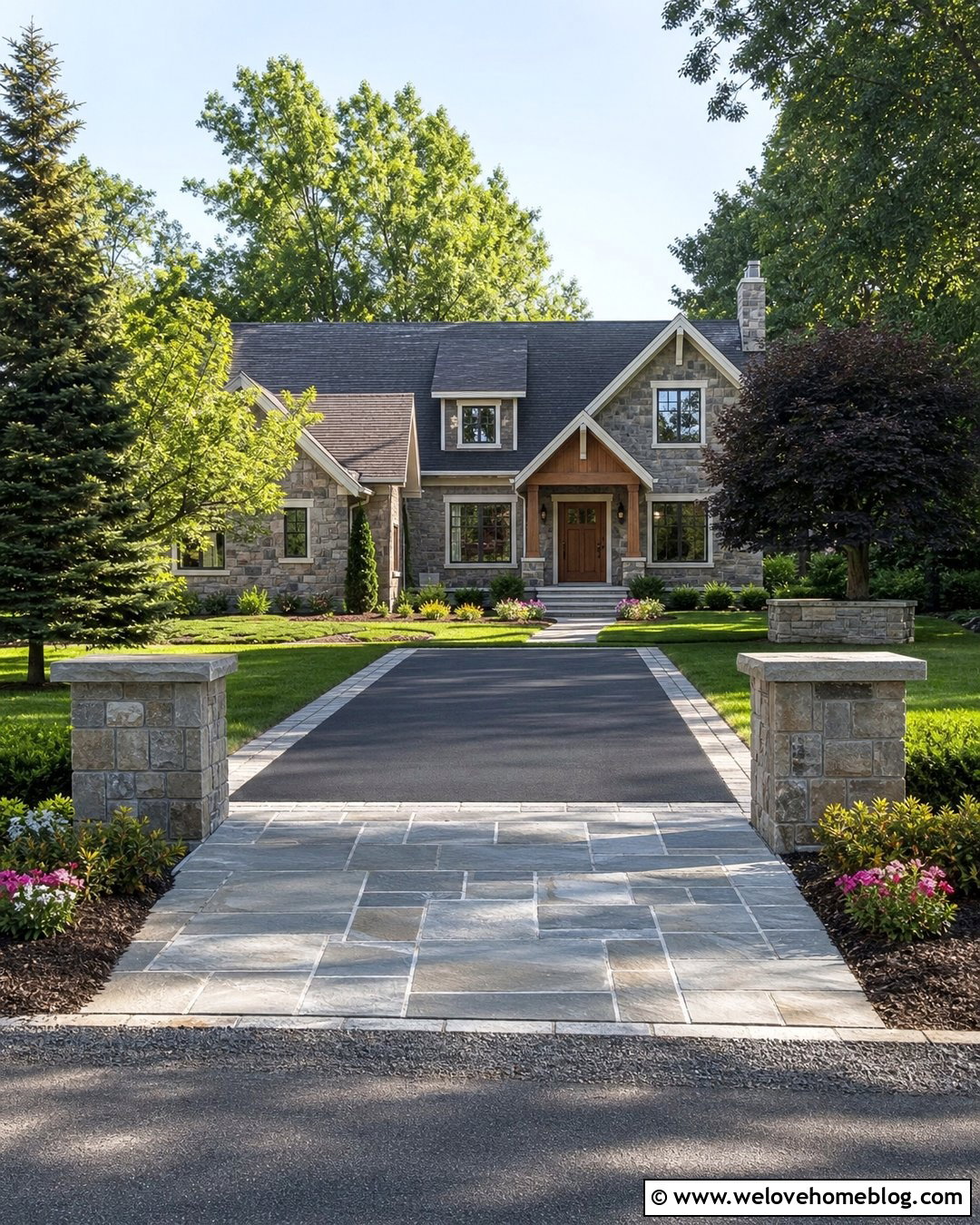
A natural stone apron transforms the point where an asphalt driveway meets the street. Install rectangular granite, bluestone, or limestone units across the full entrance, then use a narrower row of matching stone along the driveway edges. The apron should be wide enough to read as a distinct design feature rather than a small strip. Dark asphalt keeps the focus on the stone’s natural color and texture. Add low planting beds on both sides of the entrance with compact shrubs, seasonal flowers, and landscape lighting. Stone pillars can provide additional definition on a large property. This arrangement works beautifully for Craftsman, traditional, and country homes, particularly when the facade already includes stone veneer, masonry steps, or a matching garden wall.
5. Curved Asphalt Driveway With Landscaping
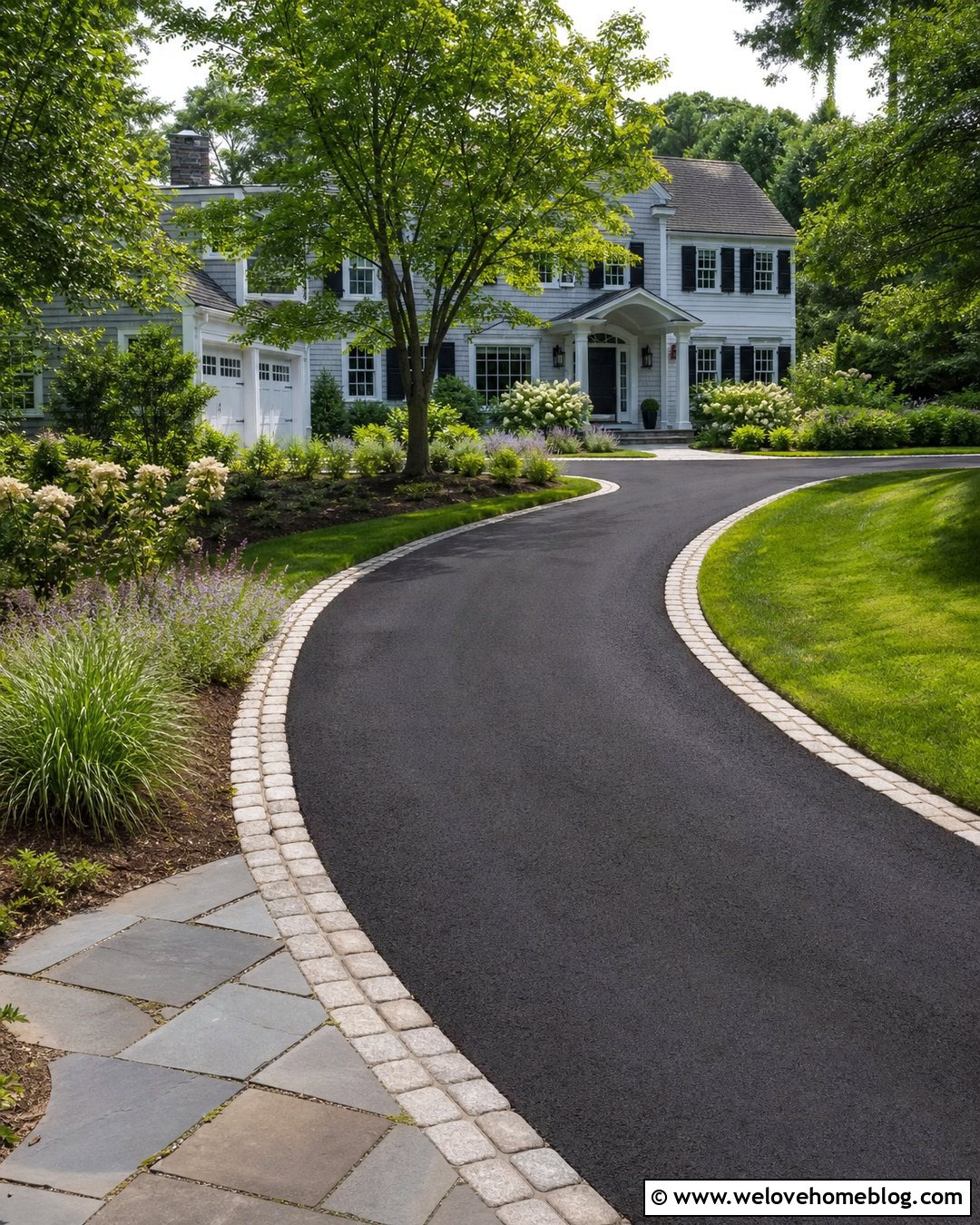
A gently curved asphalt driveway creates a softer approach than a direct line from the road to the garage. Follow the outside edge with sweeping beds filled with ornamental grasses, flowering shrubs, and low ground covers. Keep plants lower near the street so the driveway entrance remains easy to see. On the inside curve, a specimen tree or small island bed can become a natural focal point. Use stone or brick edging to sharpen the pavement line and prevent the landscape from looking loose. This design is best for a medium or large front yard where the curve has enough space to appear gradual. The resulting driveway feels integrated with the property instead of cutting abruptly through the lawn.
6. Circular Asphalt Driveway With Center Island
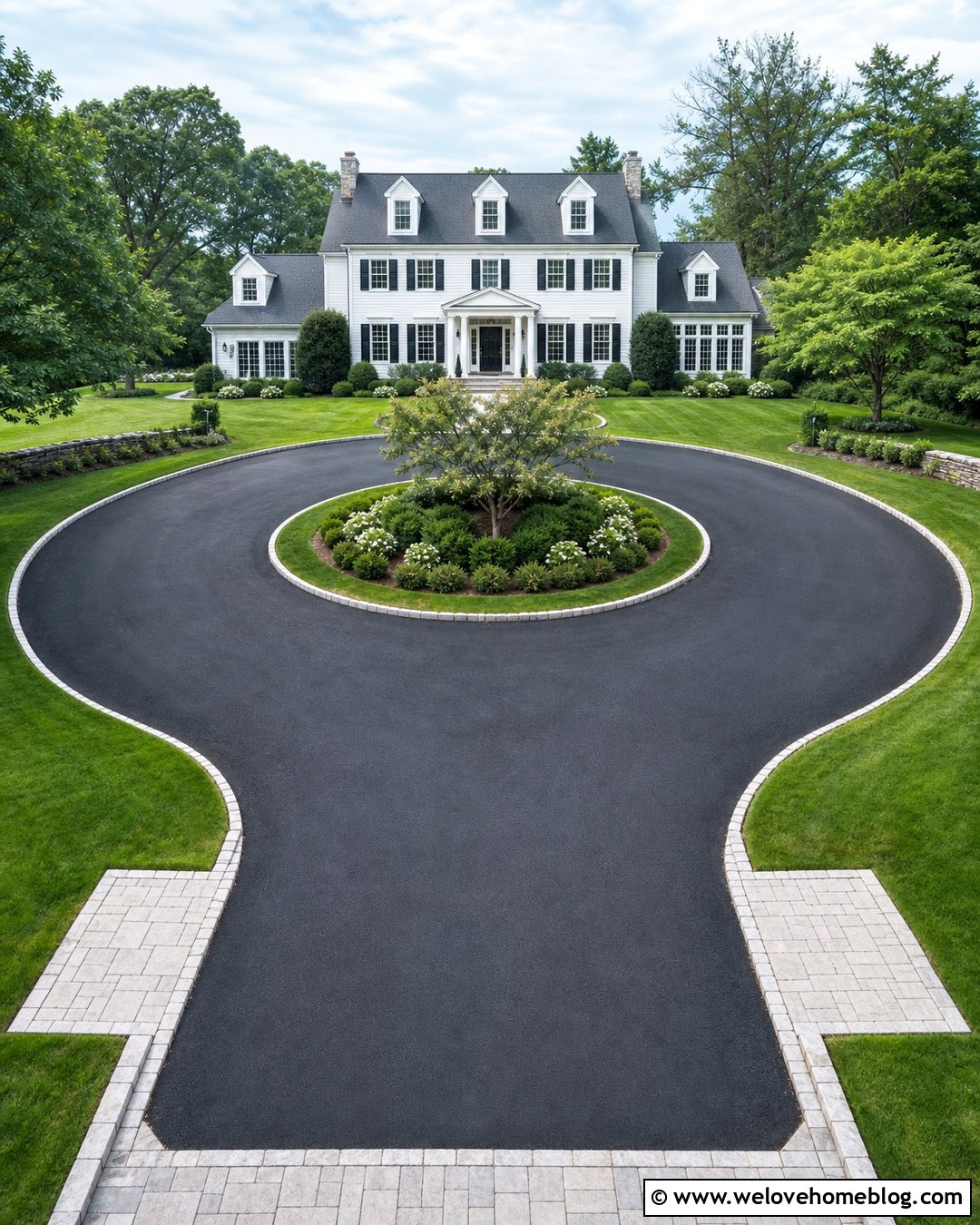
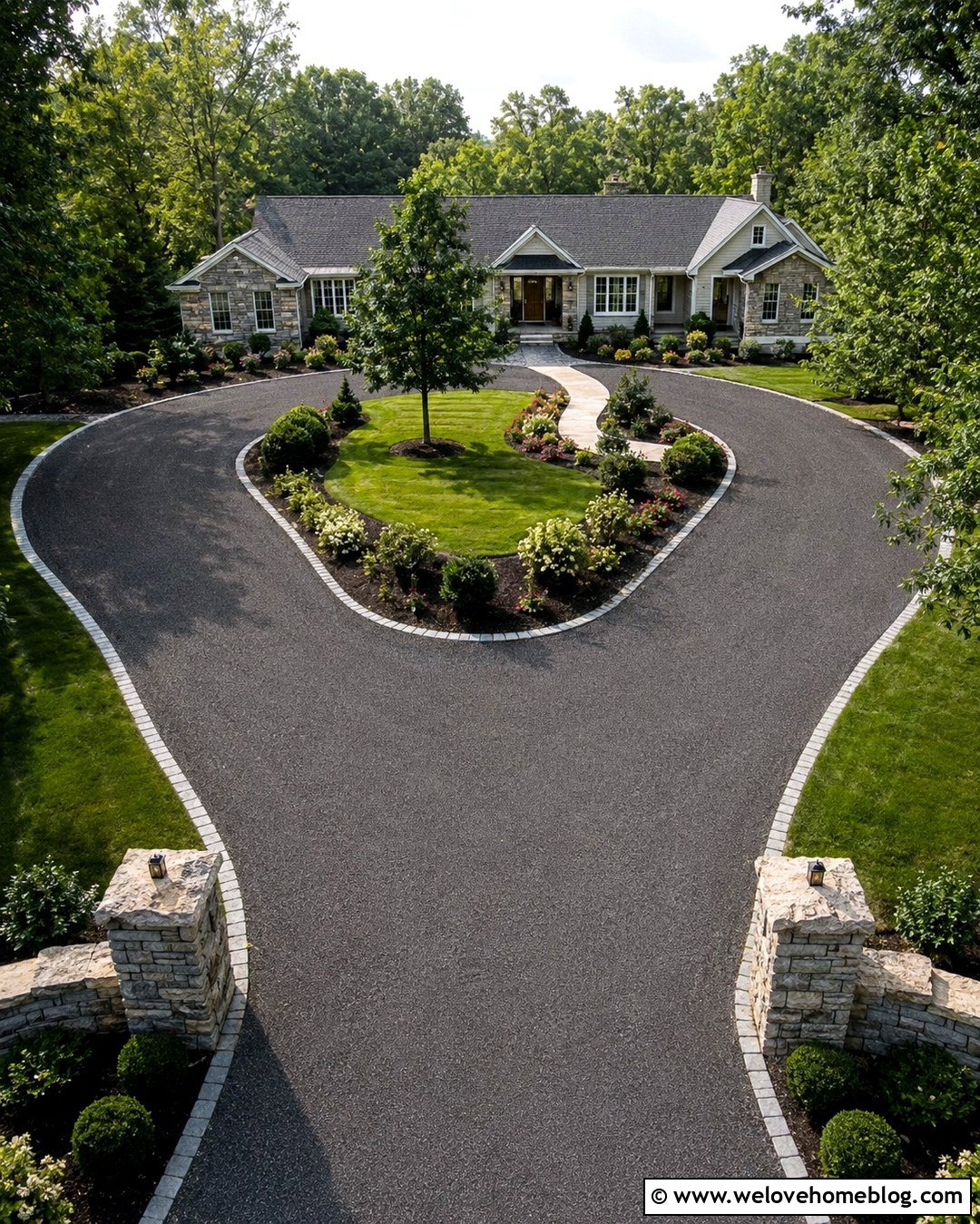
A circular asphalt driveway offers convenient movement while creating space for a landscaped centerpiece. Shape the pavement around a broad center island and connect both ends to the street. Inside the island, combine a small ornamental tree with evergreen shrubs, flowers, and a neatly defined stone border. Avoid oversized plants that could block views across the loop. A contrasting paver apron at each entrance makes the circulation pattern easier to understand and gives the design a finished appearance. This layout suits wide lots and homes with centered front doors. Add a walkway from the inner curve to the porch so guests have a clear route. The complete design feels formal, practical, and welcoming without requiring an entirely premium paved surface.
7. Asphalt Driveway With Grass Edging
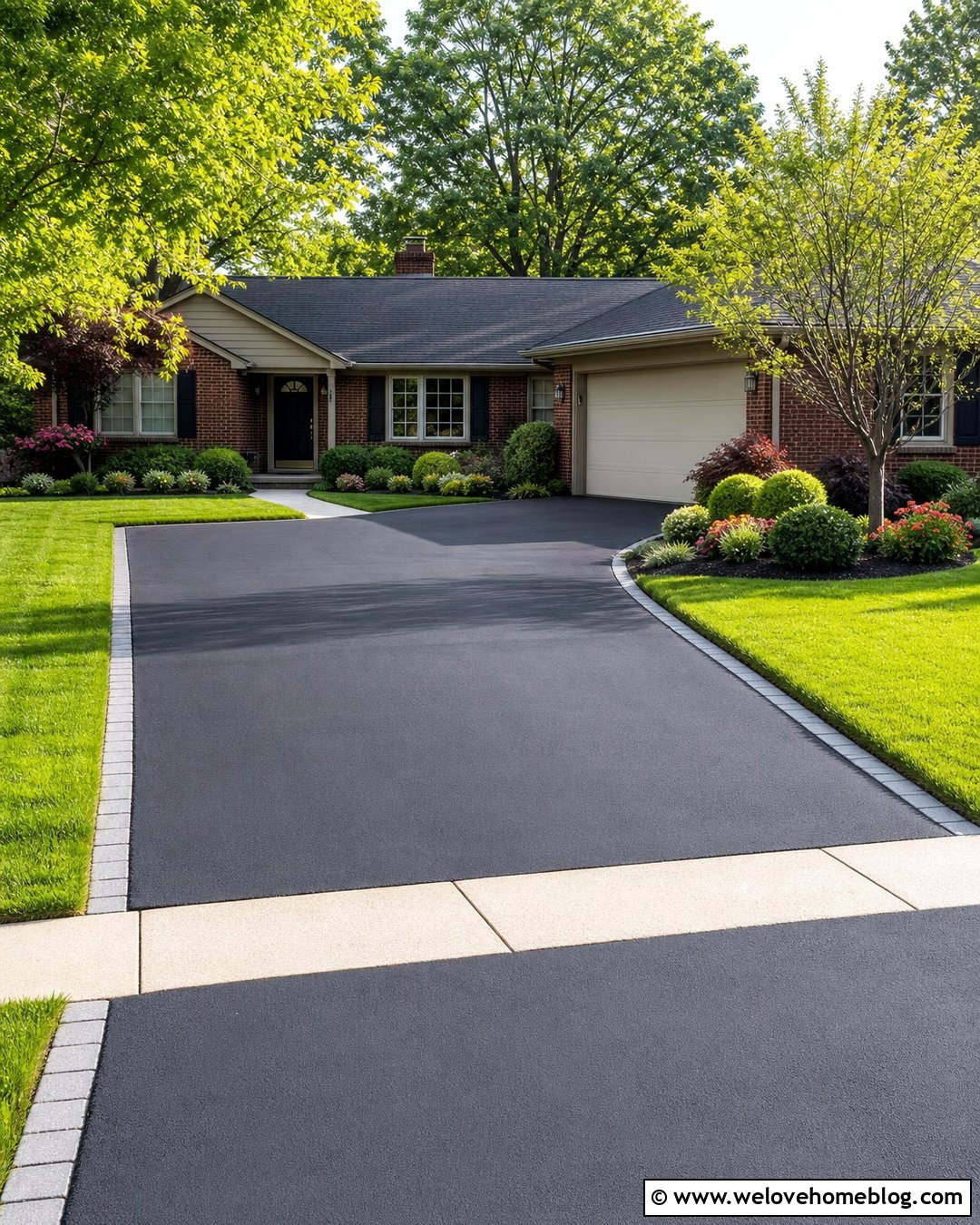
Sometimes the cleanest design is also the simplest. A smooth asphalt driveway bordered by healthy green grass can look polished when the edges remain crisp and the pavement follows a balanced shape. Use a straight layout for a compact suburban property or a gentle curve for a wider lawn. Bring topsoil close to the supported asphalt edge, but avoid creating raised soil that traps runoff against the pavement. Regular trimming will preserve the sharp line between lawn and blacktop. Near the house, introduce small foundation beds with rounded shrubs and seasonal color. A concrete walkway can cross the lawn without competing with the driveway. This low-cost arrangement suits ranch, split-level, and modest traditional homes where uncluttered landscaping feels most appropriate.
8. Asphalt Driveway With Gravel Border
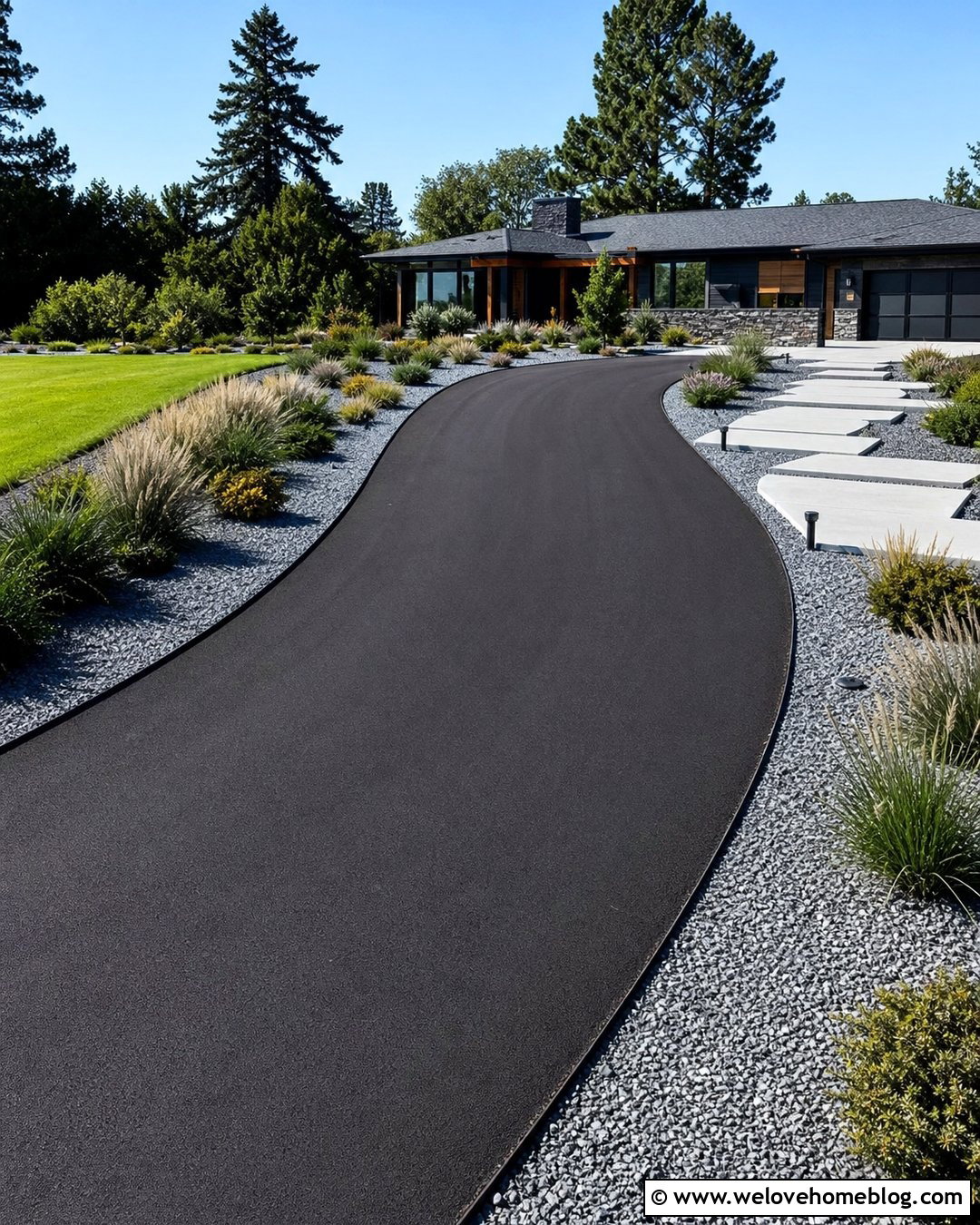
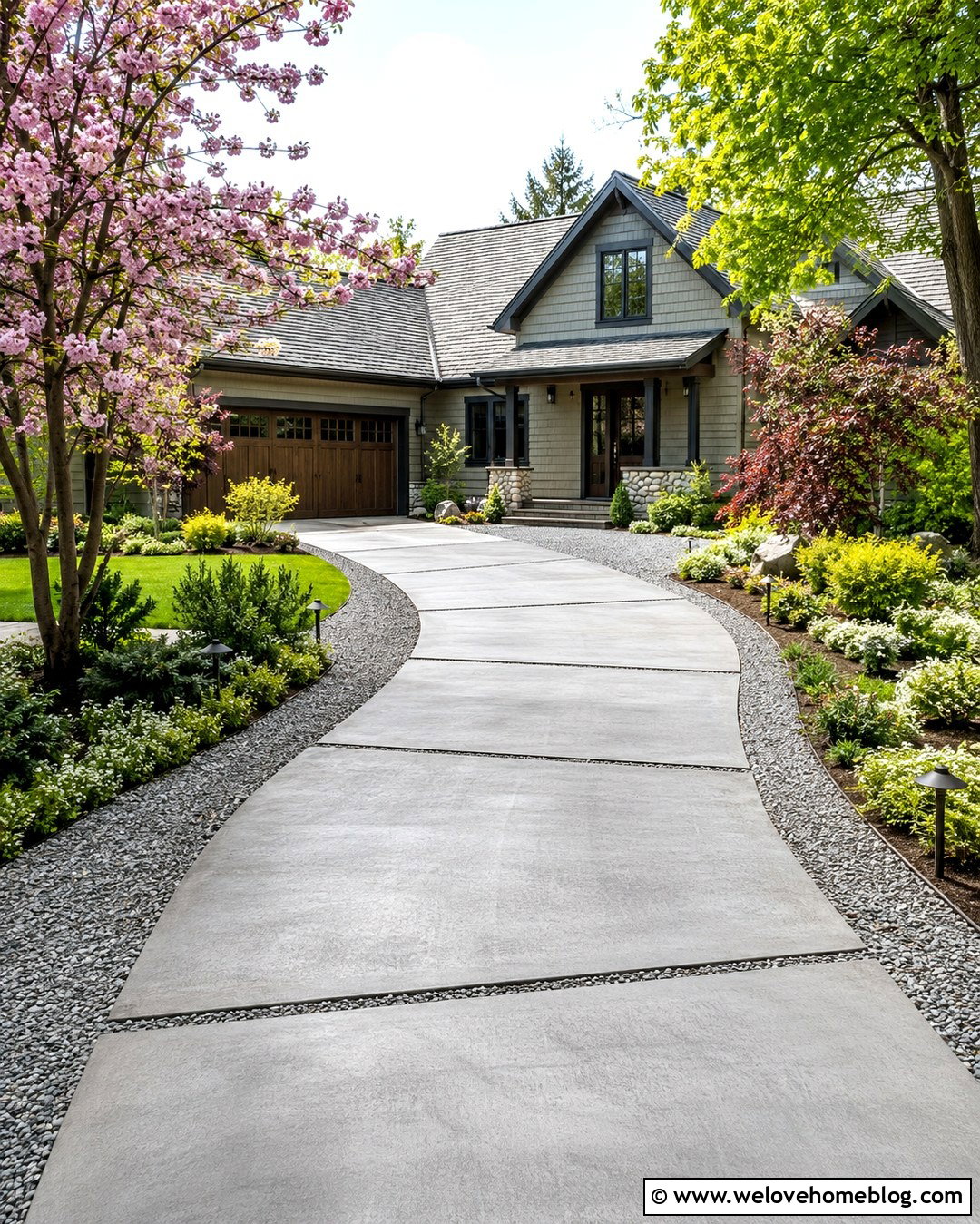
A gravel border introduces texture while keeping the asphalt driveway relaxed and practical. Place a strip of washed pea gravel, crushed granite, or river rock along each side, contained by discreet steel edging. Choose a gravel tone that relates to the house, such as warm tan beside brick or cool gray beside painted siding. Widen the gravel strips near the street to form planting pockets with drought-tolerant grasses and compact shrubs. A straight or lightly curved driveway works equally well with this treatment. The loose stone visually separates the blacktop from lawn and planting beds while creating a transition between hard and soft surfaces. This complete look is particularly effective for ranch, contemporary, and low-maintenance suburban landscapes.
9. Asphalt Driveway With Timber Edging
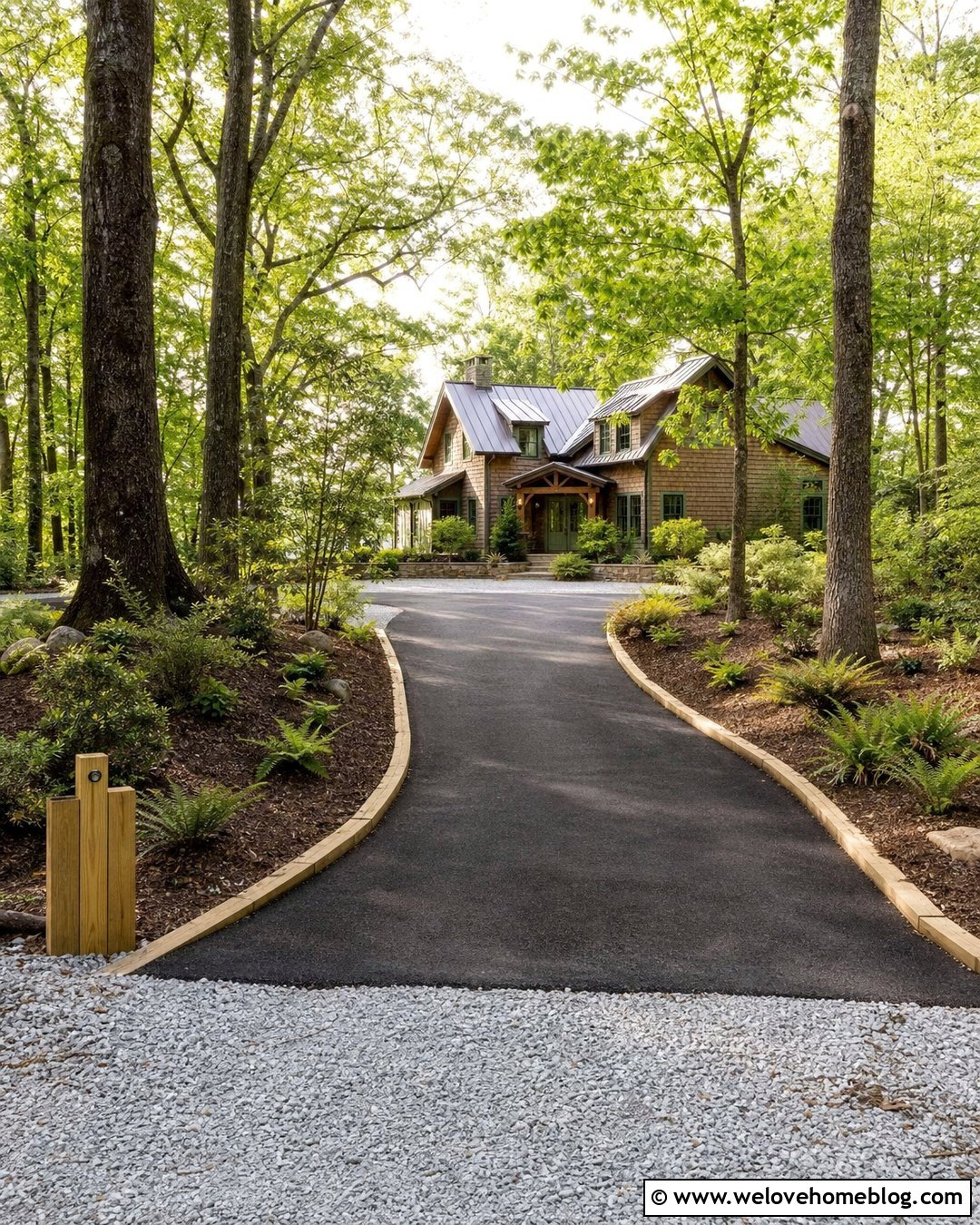
Timber edging gives an asphalt driveway a casual, rustic appearance that complements wooded and country properties. Use pressure-treated landscape timbers or naturally durable wood positioned along a straight or gently winding pavement edge. Pair the border with bark mulch, native shrubs, ferns, and mature trees for a driveway that settles naturally into its surroundings. A crushed-stone apron at the entrance can reinforce the informal character, while low wooden posts provide space for address numbers or lighting. Keep the timber profile low so tires are less likely to strike it. This design works best where the border primarily organizes nearby landscaping rather than acting as a formal curb. The combination feels warm, approachable, and appropriate beside cabins, cottages, and rustic farmhouses.

10. Asphalt Driveway With Steel Edging
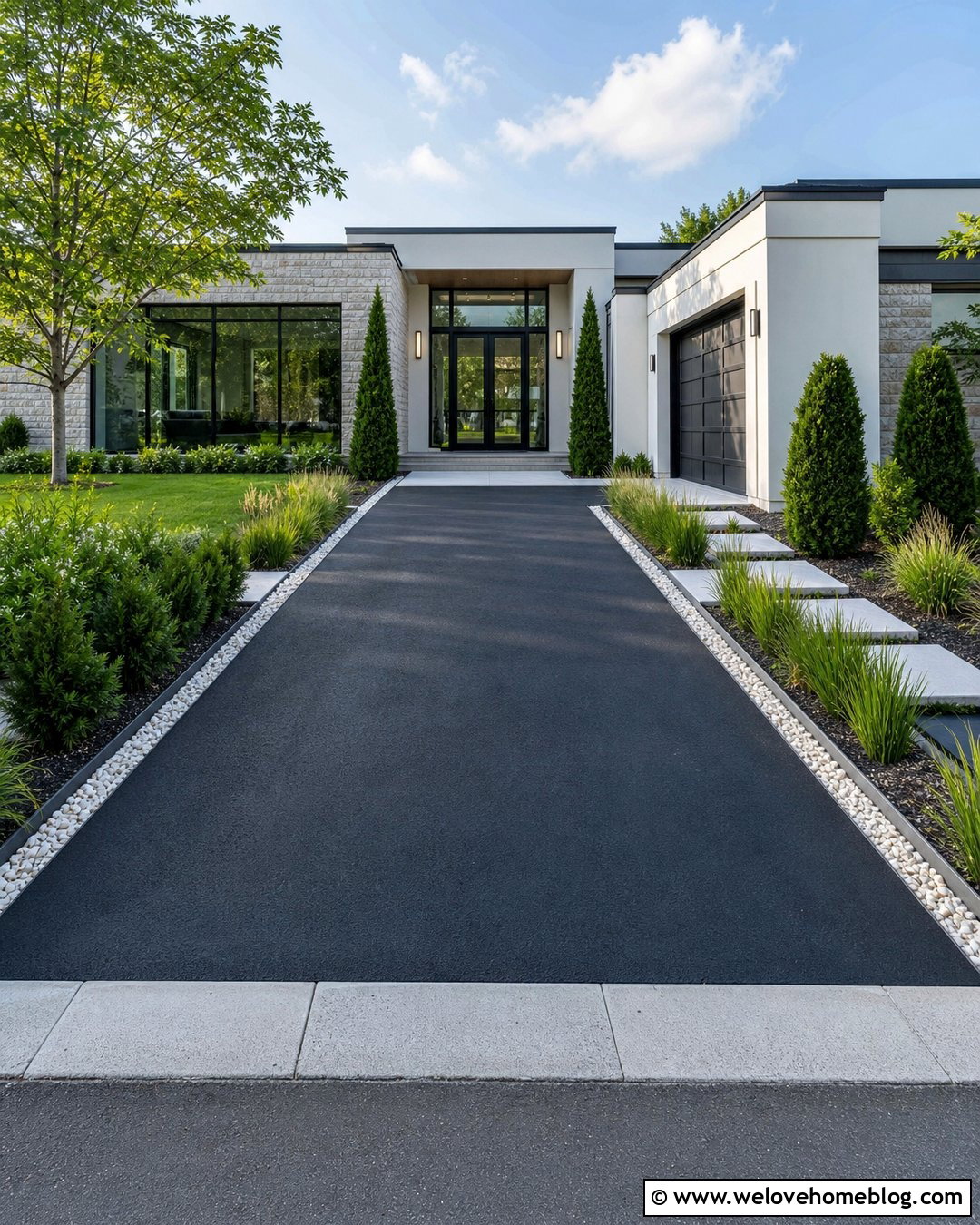
Slim steel edging creates a precise boundary without adding a heavy decorative border. It is especially effective beside a modern asphalt driveway where crisp geometry matters more than visible ornament. Use the edging to separate blacktop from pale gravel, linear planting beds, or evenly trimmed grass. A straight driveway with a rectangular parking area reinforces the contemporary appearance. Plant ornamental grasses, compact evergreens, and architectural perennials in organized groups rather than scattered arrangements. Dark powder-coated steel nearly disappears against the pavement, while galvanized metal creates a brighter outline. Continue the same edging around the front walkway and planting beds to unify the landscape. This understated approach allows the asphalt, house facade, and structured greenery to work together as one clean composition.
11. Asphalt Driveway With White Stone Edging
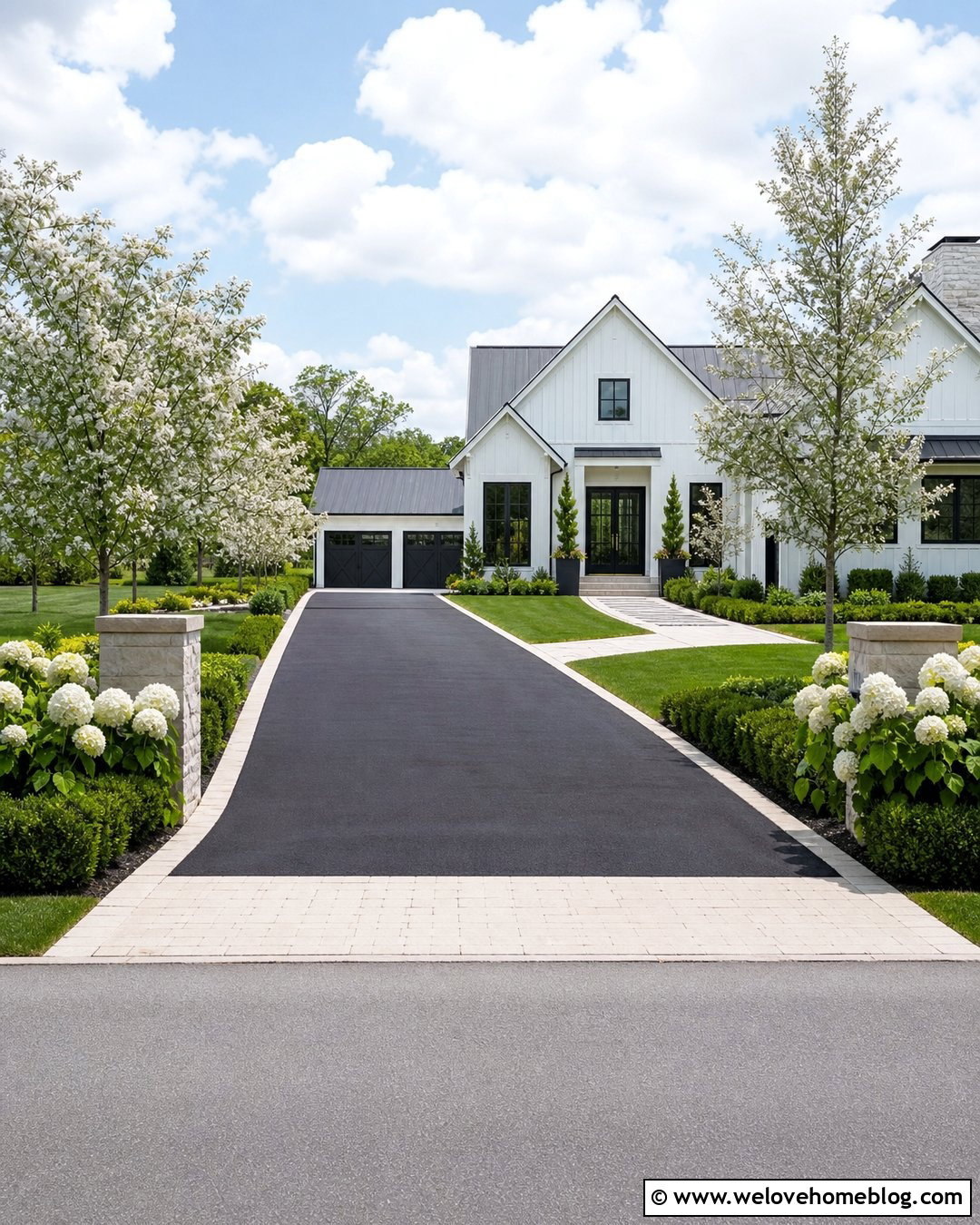
Bright stone creates dramatic contrast against a deep black asphalt surface. Use pale limestone blocks, light granite setts, or smooth concrete curbing along both sides of a straight driveway. Repeat the light tone in a wide entrance apron or walkway leading to the front door. The border looks especially fresh beside white siding, light stucco, or a painted brick facade. Add green lawn and restrained planting beds so the palette remains simple. White hydrangeas, boxwood, and small flowering trees can reinforce the bright exterior without overwhelming it. This look suits modern farmhouse, coastal, and transitional homes. Choose materials that tolerate local weather and routine cleaning, since very pale edging may show soil, leaf stains, and tire marks more readily.
12. Asphalt Driveway With Red Brick Apron
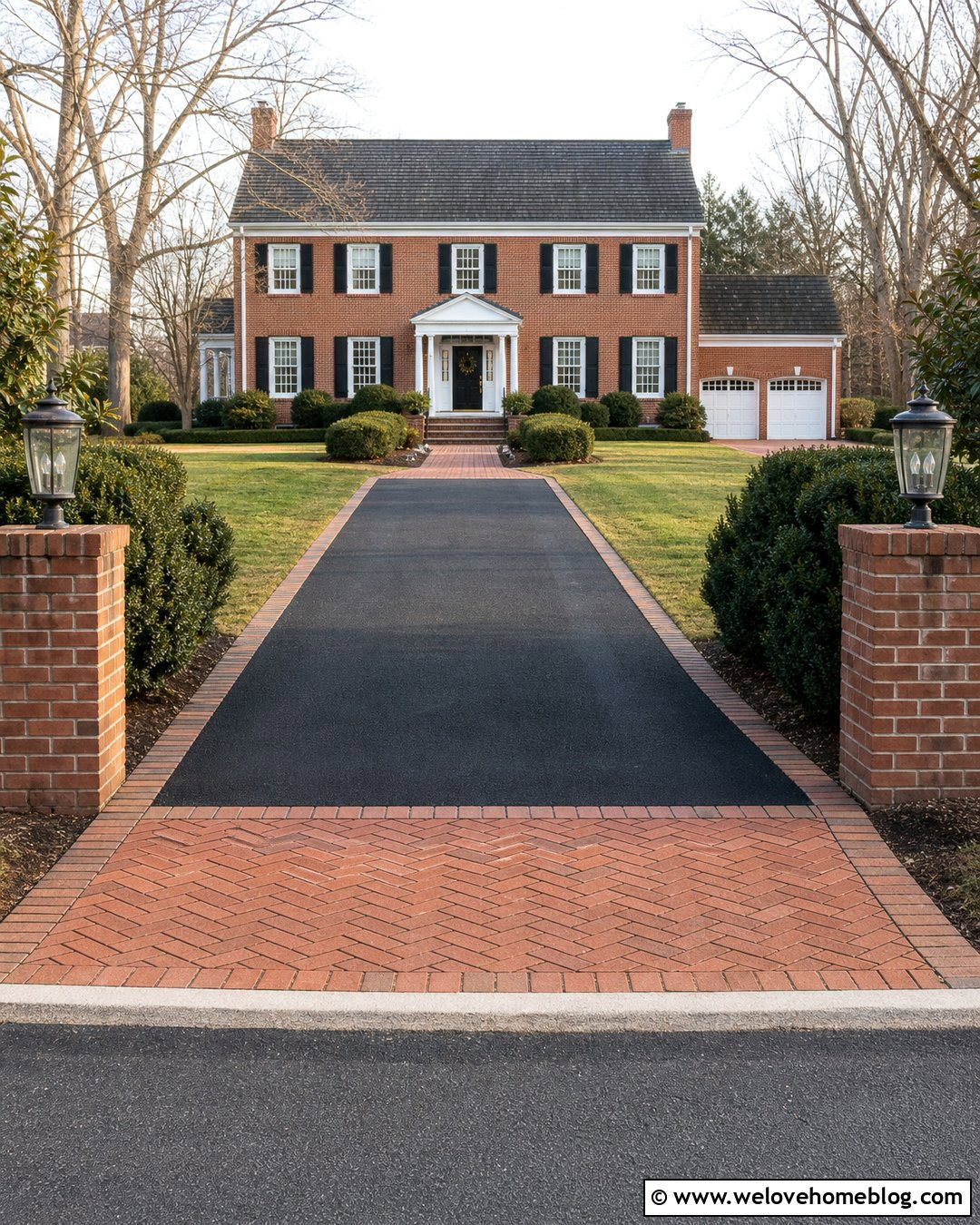
A red brick apron brings warmth and traditional detail to a plain blacktop driveway. Lay clay brick pavers across the driveway entrance in a herringbone or running-bond pattern, then continue a single row along both asphalt edges. The apron can also be repeated directly in front of the garage doors for a balanced appearance. Red brick pairs naturally with Colonial houses, brick ranch homes, and white-painted farmhouses. Frame the entrance with low evergreen shrubs and simple masonry light posts. Keep the driveway itself straight and uncluttered so the brick sections become clear focal points. Matching the front walkway to the apron helps connect the garage approach with the main entrance, giving the entire front yard a coordinated and deliberately planned character.
13. Asphalt Driveway With Paver Ribbons
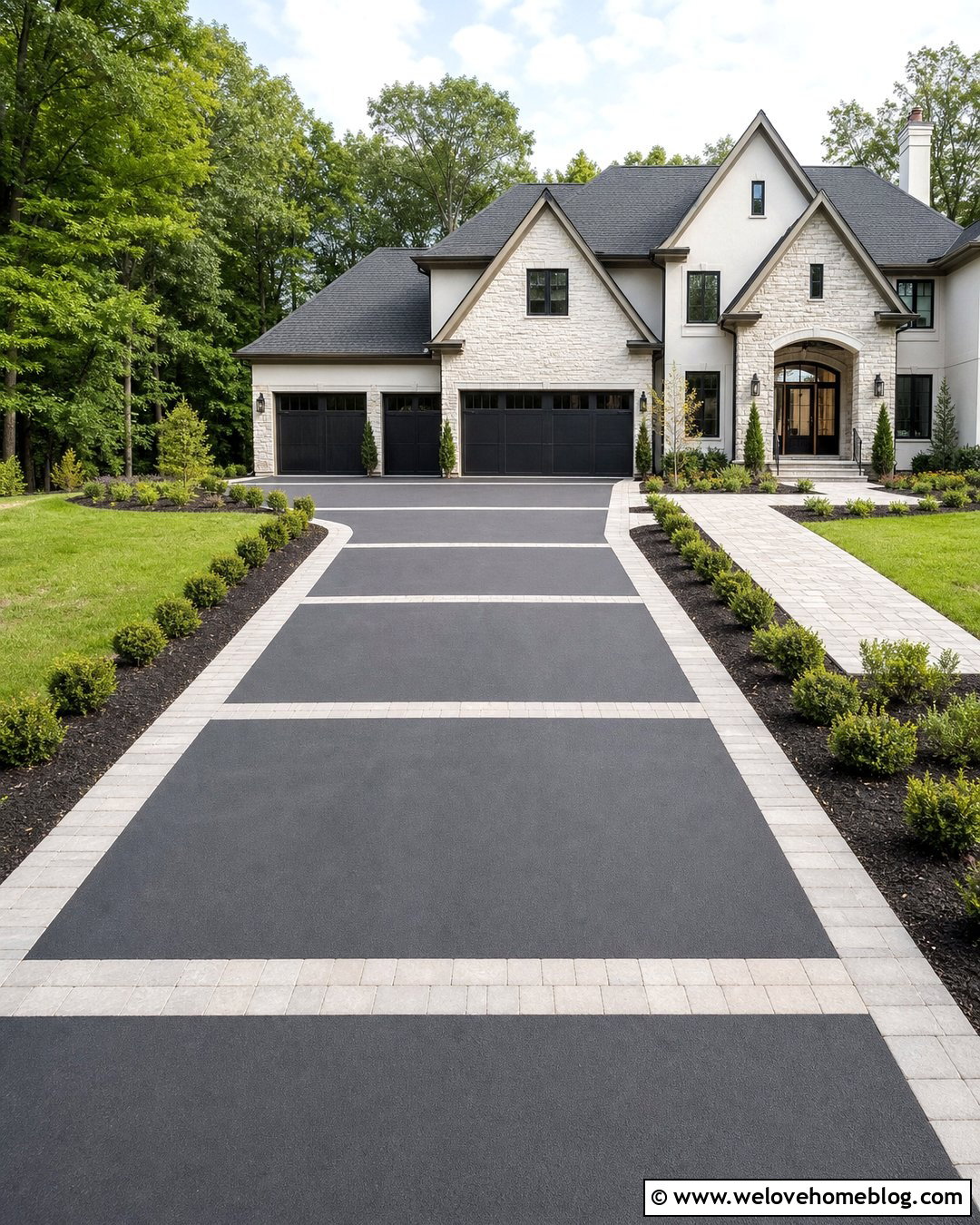
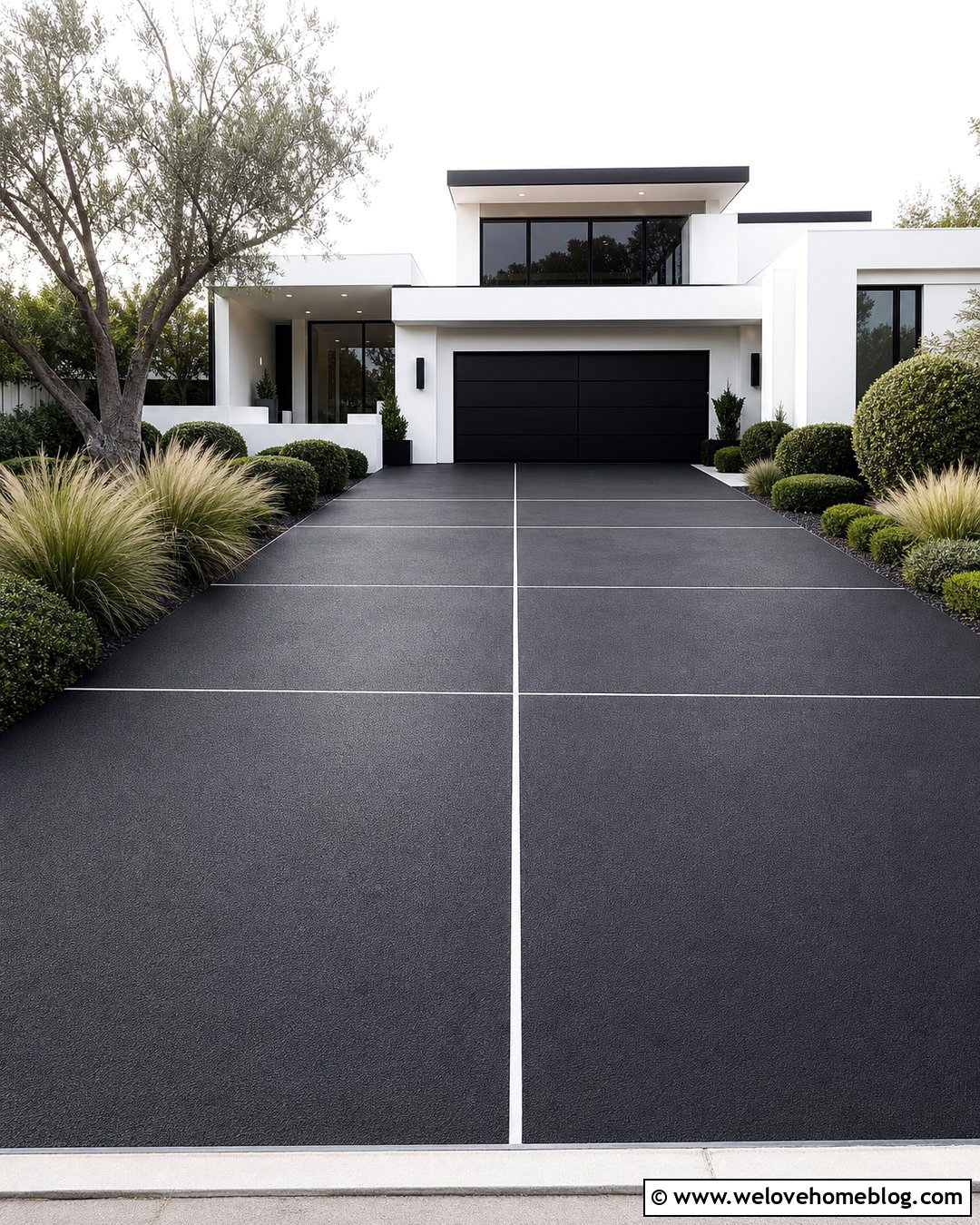
Paver ribbons divide a broad asphalt driveway into visually organized sections. Install narrow bands of contrasting concrete or brick pavers across the pavement at the entrance, parking area, and garage threshold. The bands break up a large black surface without interfering with its practical function. Choose charcoal pavers for a subtle contemporary effect or warm brick tones for a more traditional look. Matching edge bands can outline the full driveway and reinforce the repeated pattern. This treatment works well on wide suburban driveways with multiple garage doors. Add rectangular planting beds, evenly spaced shrubs, and a walkway made from the same pavers. The repeated lines guide the eye toward the house and give standard asphalt a more customized, structured appearance.
14. Asphalt Driveway With Stamped Asphalt Border
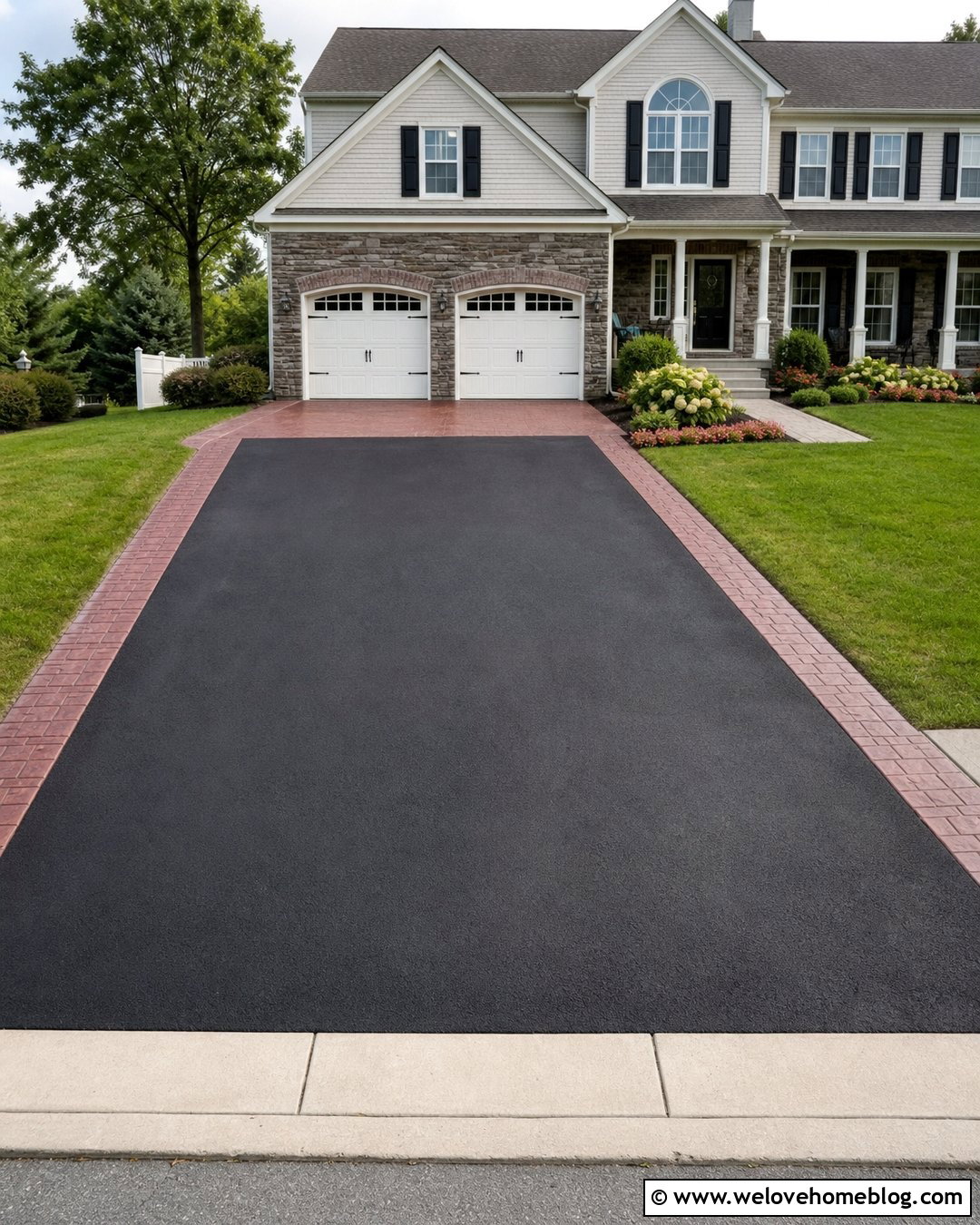
Stamped asphalt can create a decorative border while keeping the main driveway surface consistent. Apply the patterned treatment along the edges and entrance, using a brick, stone, or cobblestone-inspired texture. A muted red, brown, or charcoal coating can increase contrast without making the border look disconnected from the pavement. This design is useful when you want the appearance of individual masonry units with fewer visual transitions. Pair it with a straight driveway, tidy lawn, and compact foundation beds for a clean suburban look. A stamped apron near the garage can repeat the entrance treatment. Careful color selection is essential, so coordinate the border with roof shingles, exterior masonry, shutters, or other permanent house features rather than short-lived seasonal decorations.
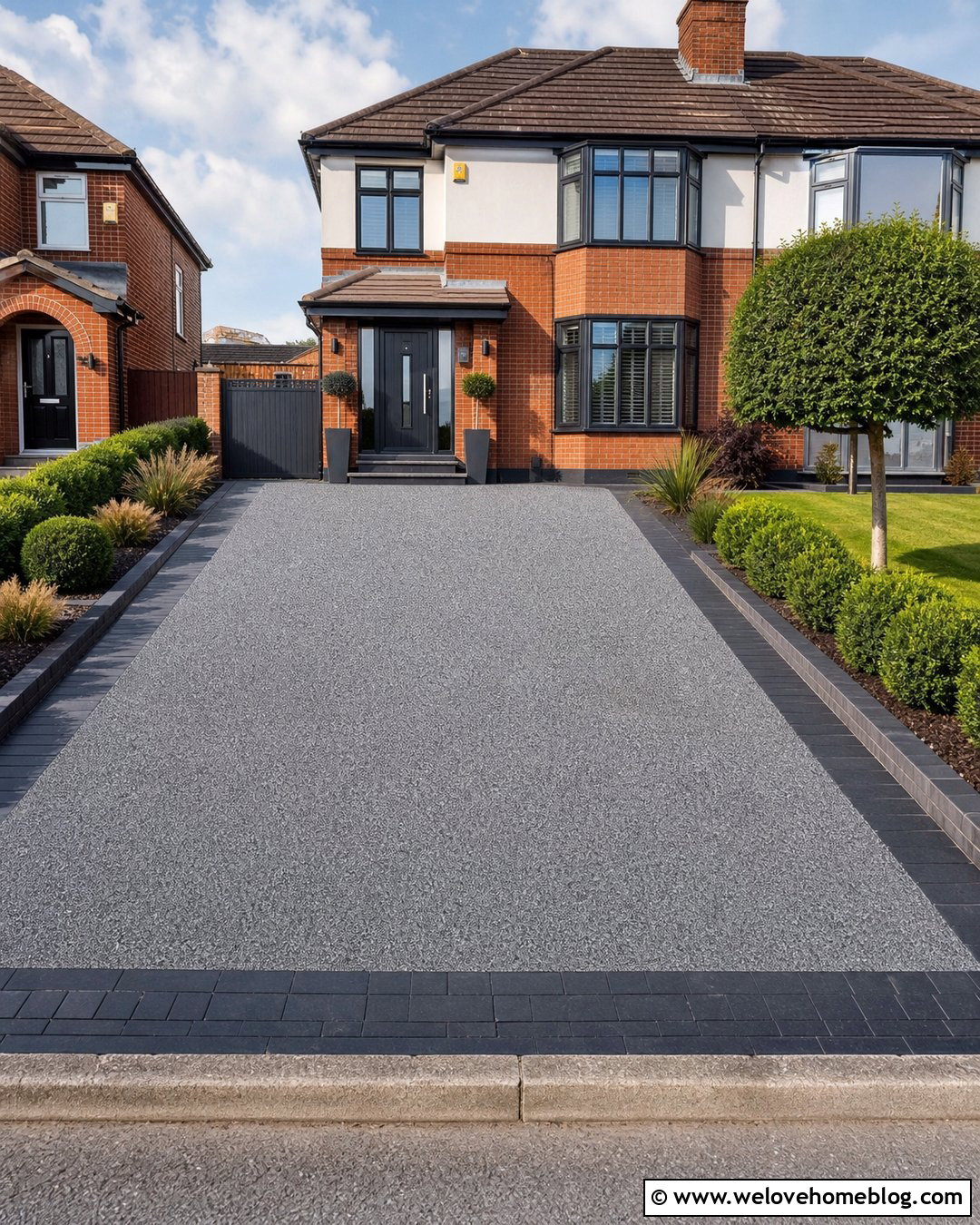
15. Asphalt Driveway With Colored Asphalt Border
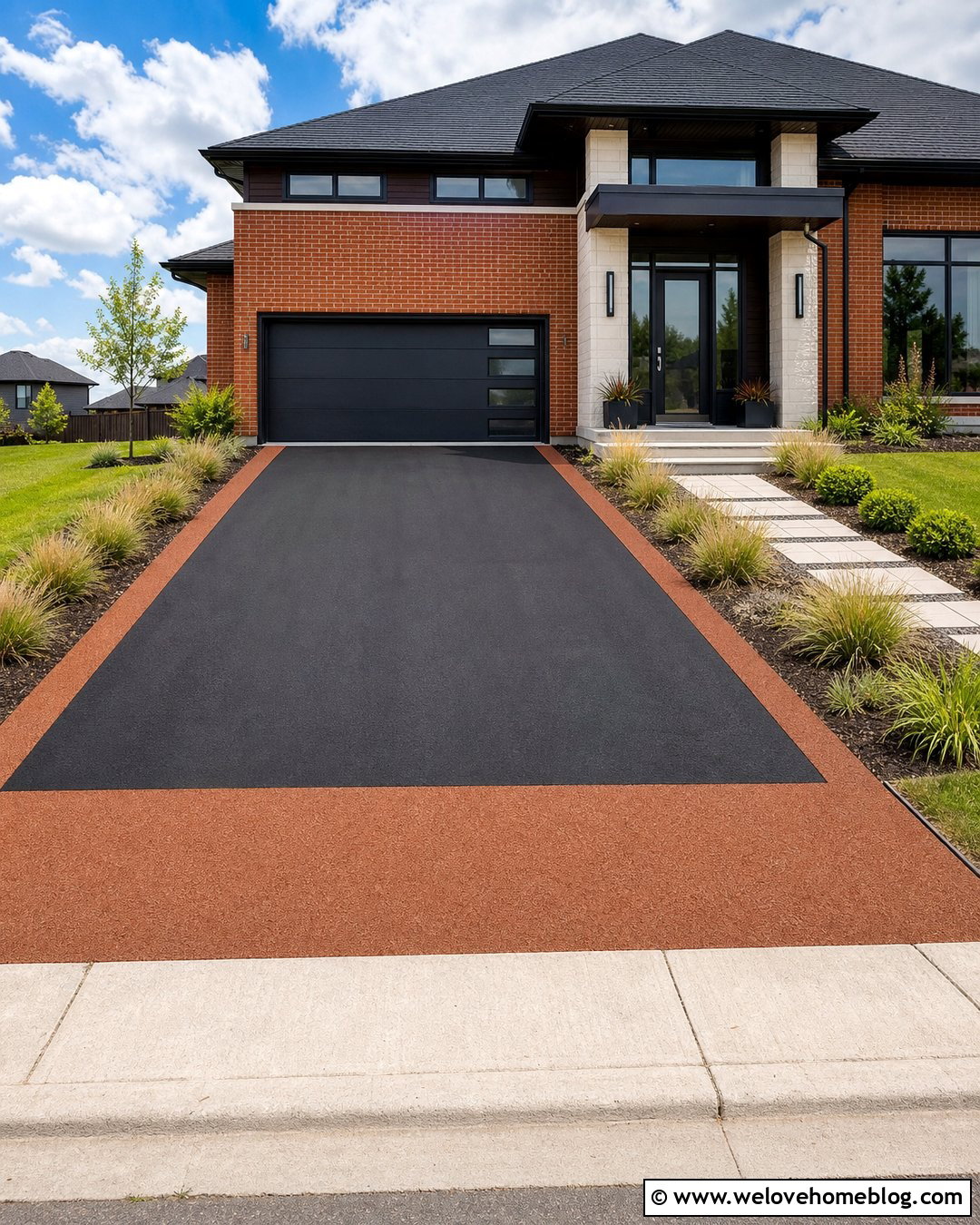
A colored asphalt border provides subtle definition around a traditional black driving surface. Deep red, earthy brown, or soft gray bands can outline the driveway and distinguish a parking pad or turnaround area. Keep the layout simple so the color appears architectural rather than overly decorative. For a modern home, use a charcoal-gray border and linear landscaping. For a brick house, consider a warm reddish edge that echoes the facade. Add low planting beds outside the colored band, leaving enough open space to preserve visibility at the entrance. This design can also include a matching colored apron across the curb approach. The result is a unified pavement treatment with enough tonal variation to make a wide driveway feel more detailed and visually balanced.
16. Asphalt Driveway With Concrete Curb
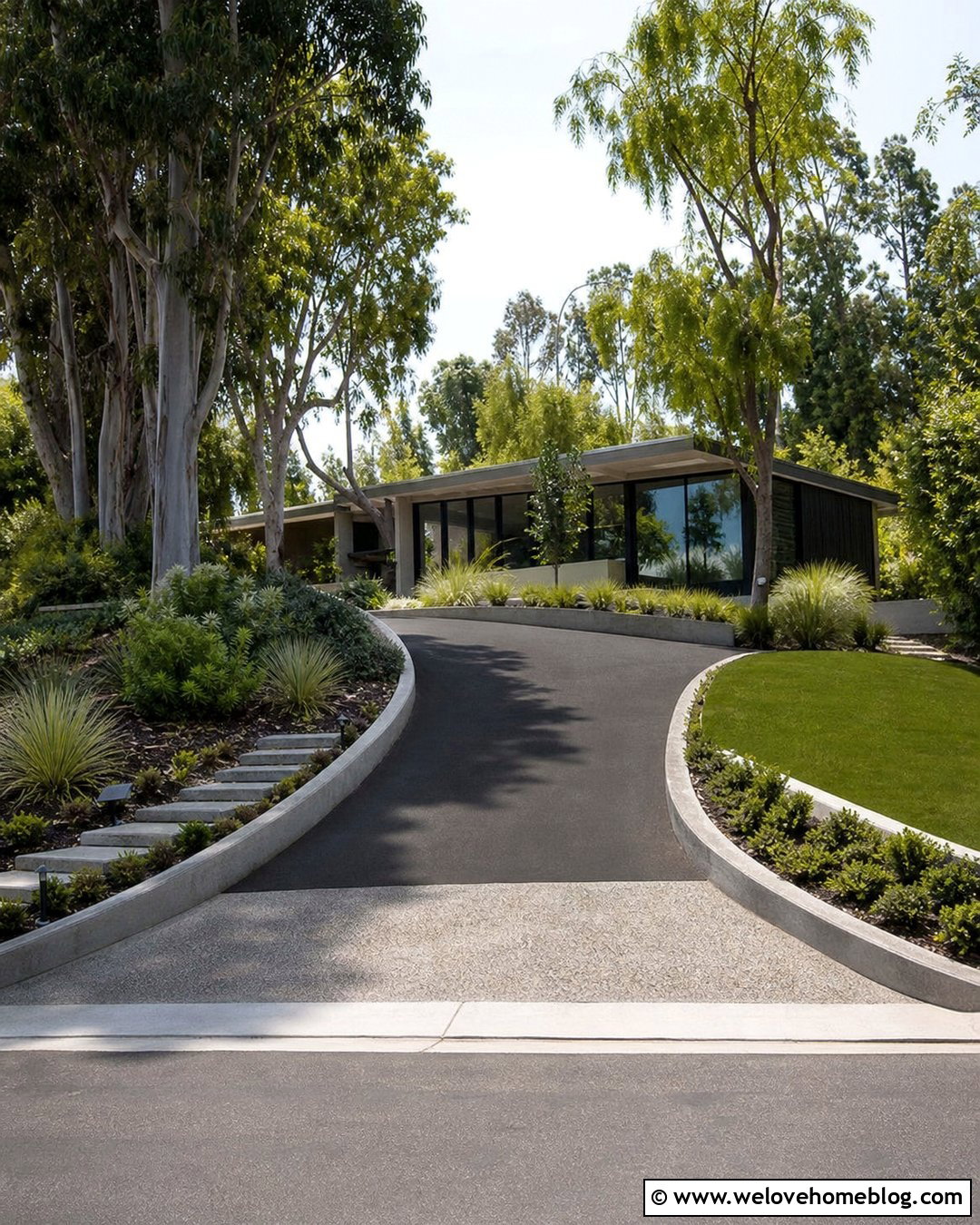
A poured concrete curb creates a strong, clearly defined frame around asphalt. It works particularly well on sloped properties, around landscaped islands, or wherever soil and mulch need better separation from the driving surface. Choose a low-profile gray curb for a practical look or a wider exposed-aggregate curb for added texture. Follow the driveway’s curves carefully so the border appears smooth and intentional. Behind the curb, plant ground covers, compact shrubs, and ornamental grasses that will not spill heavily onto the pavement. A concrete apron at the street can connect the edge treatment across the entrance. This complete arrangement suits contemporary, mid-century, and hillside homes, where clean boundaries and organized drainage are important parts of the overall design.
17. Asphalt Driveway With Belgian Block Edging
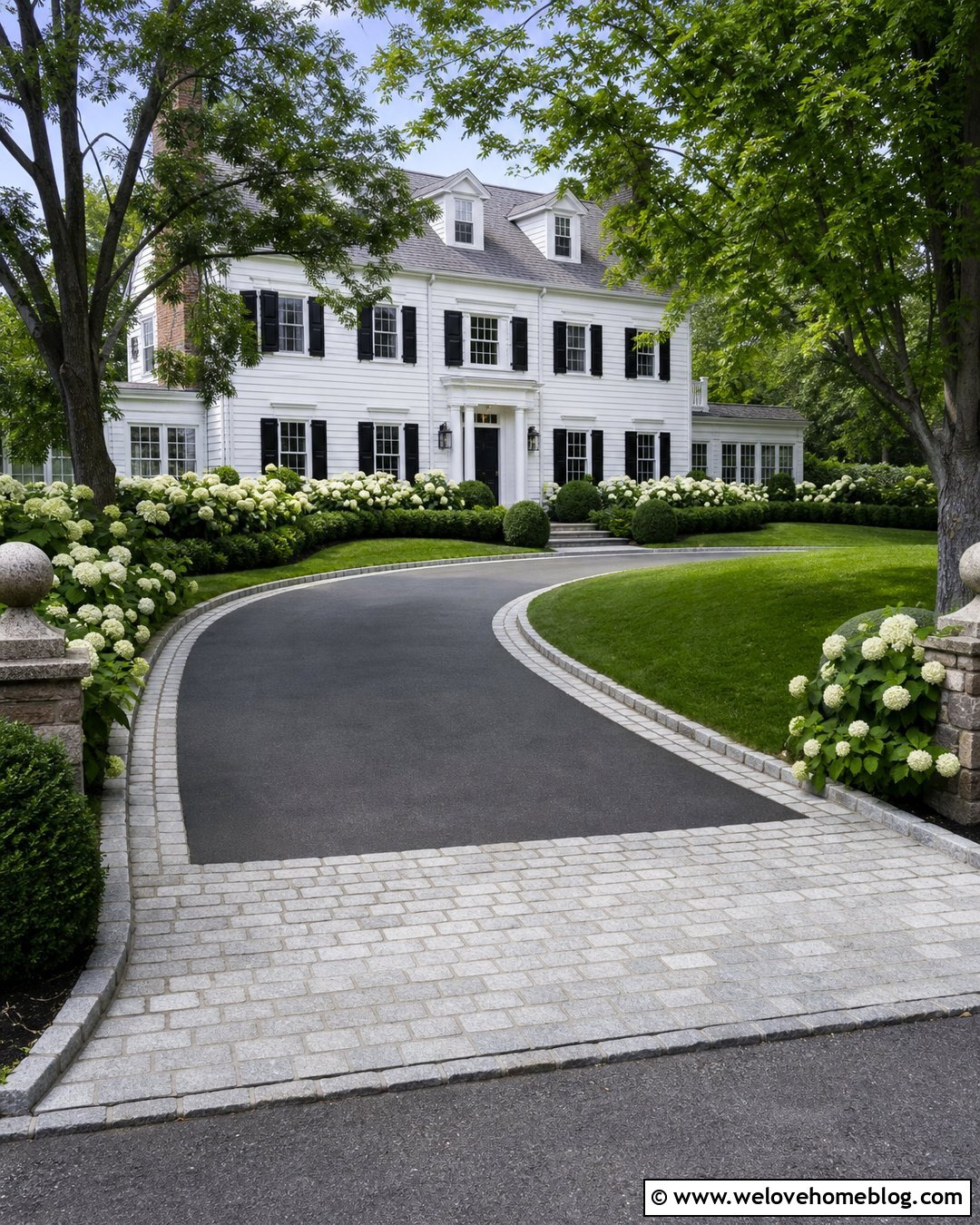
Belgian block gives an asphalt driveway a durable-looking, high-end outline. Use one row of rectangular granite blocks set lengthwise for a narrow edge or two rows for a more prominent border. Mixed gray and charcoal tones blend easily with blacktop, while warm granite can complement brick and natural stone facades. Continue the block across the entrance as an apron and around any parking bay or turnaround. Formal hedges, mown lawn, and evenly spaced trees work well with the substantial masonry. For a softer effect, pair the stone with hydrangeas and layered perennial beds. This complete design fits Colonial, Tudor, and traditional homes, giving a simple asphalt surface the visual weight of a more elaborate custom driveway.
18. Asphalt Driveway With River Rock Landscaping
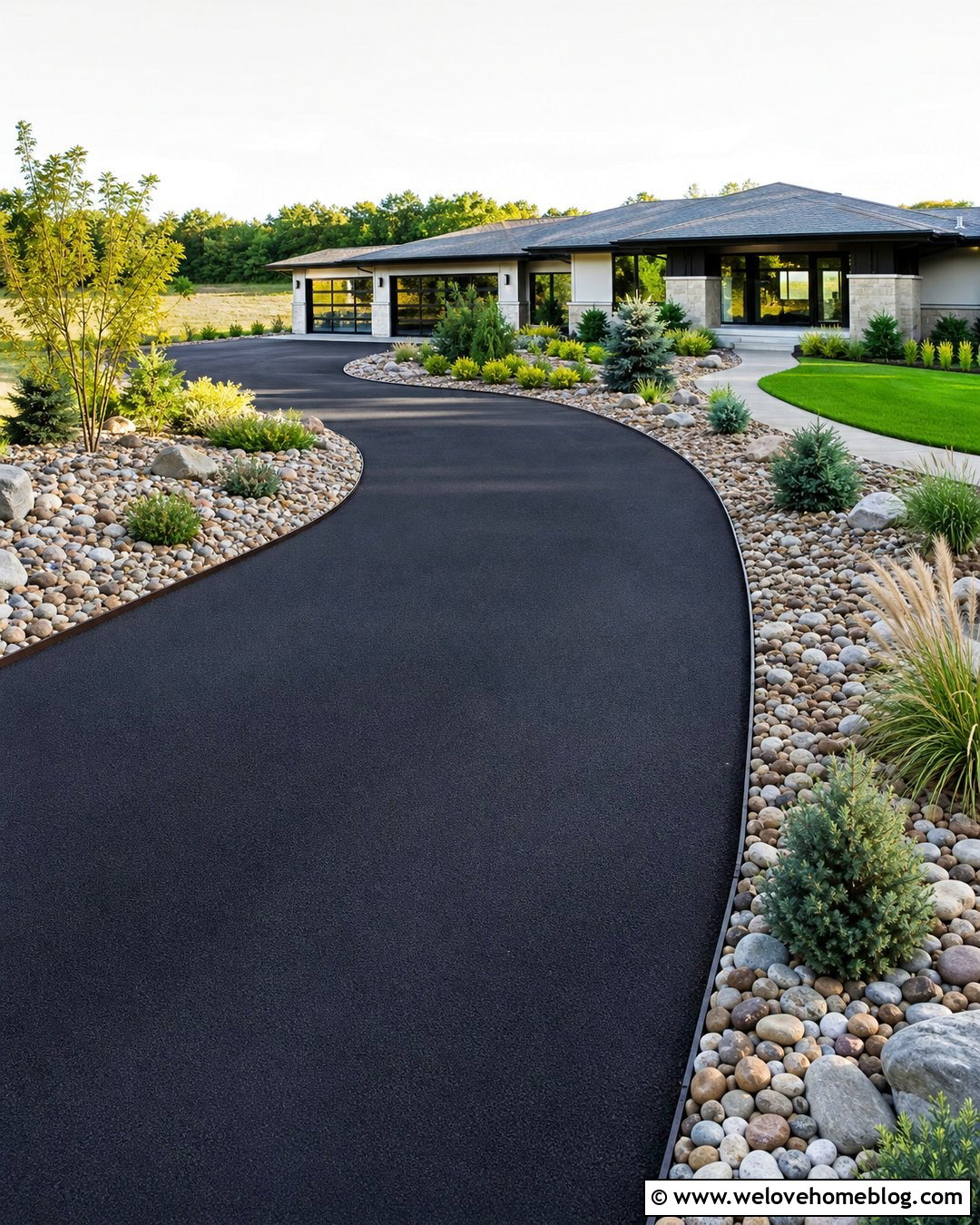
River rock landscaping can soften asphalt while creating a low-maintenance edge. Build gently curved beds beside the driveway and fill them with smooth gray, tan, and brown stones. Add clusters of ornamental grasses, dwarf evergreens, and drought-tolerant perennials so the rock does not resemble an empty drainage strip. Steel or stone edging should keep the river rock separated from the pavement. A slightly curved driveway reinforces the natural movement of the planting beds. This arrangement suits ranch houses, contemporary homes, and properties in dry or transitional climates. Repeat the river rock near the front walkway and foundation for continuity. The varied stone colors balance the solid black surface and make the driveway feel integrated with the surrounding yard.
19. Asphalt Driveway With Mulch Beds
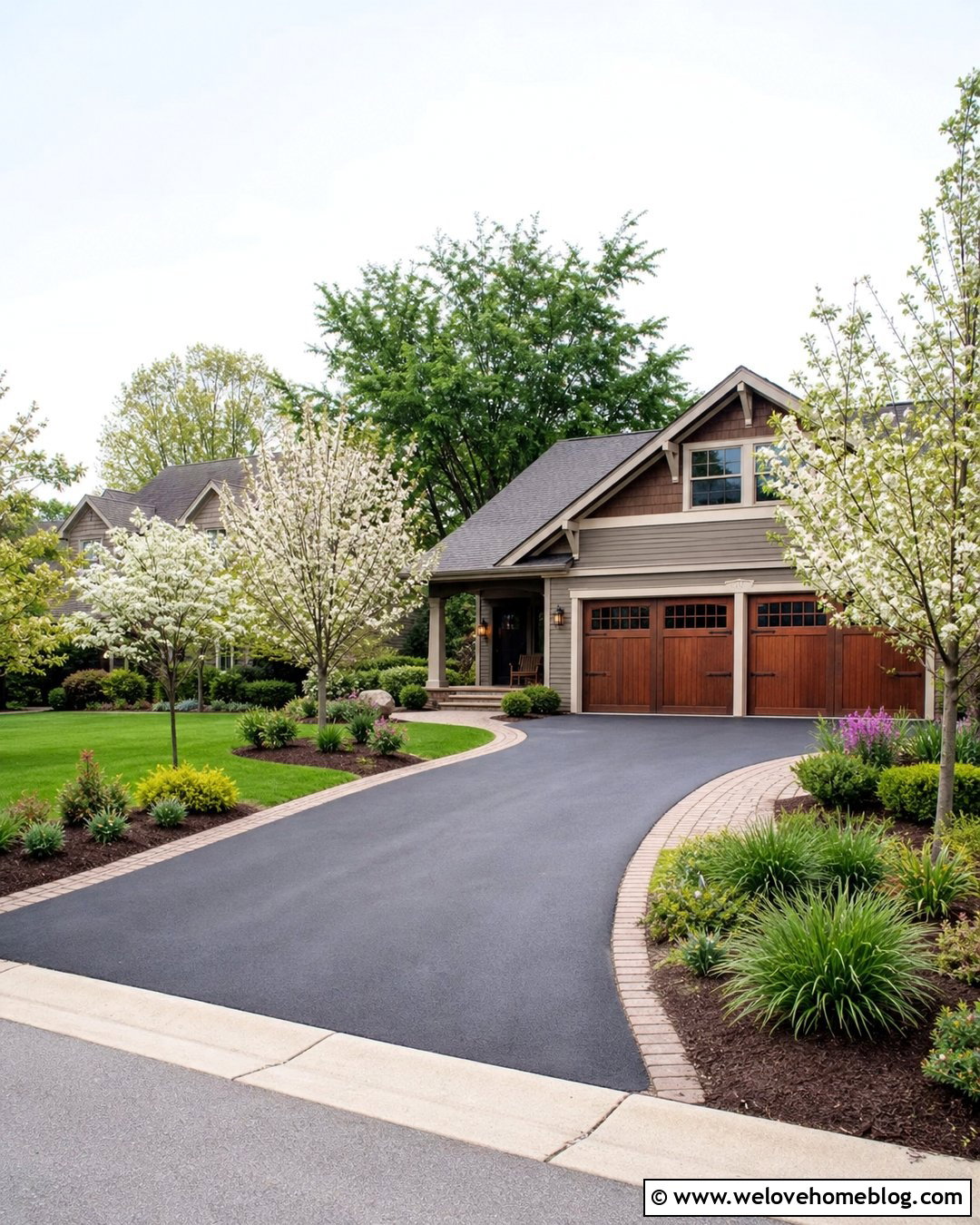
Curved mulch beds are an affordable way to frame a basic asphalt driveway. Shape the beds to follow the pavement, then plant repeating groups of shrubs, perennials, and small ornamental grasses. Dark brown mulch creates a softer transition from black asphalt to green lawn, while cedar-colored mulch introduces warmer contrast. Use brick, stone, or discreet metal edging to keep the beds neat. Near the street, select low plants that preserve clear sightlines. Taller flowering shrubs and small trees can be placed closer to the house, where they help frame the garage and facade. This design works for nearly any suburban home. Repeating a limited plant palette keeps the complete driveway landscape cohesive and easier to maintain throughout the seasons.

20. Asphalt Driveway With Hydrangea Borders
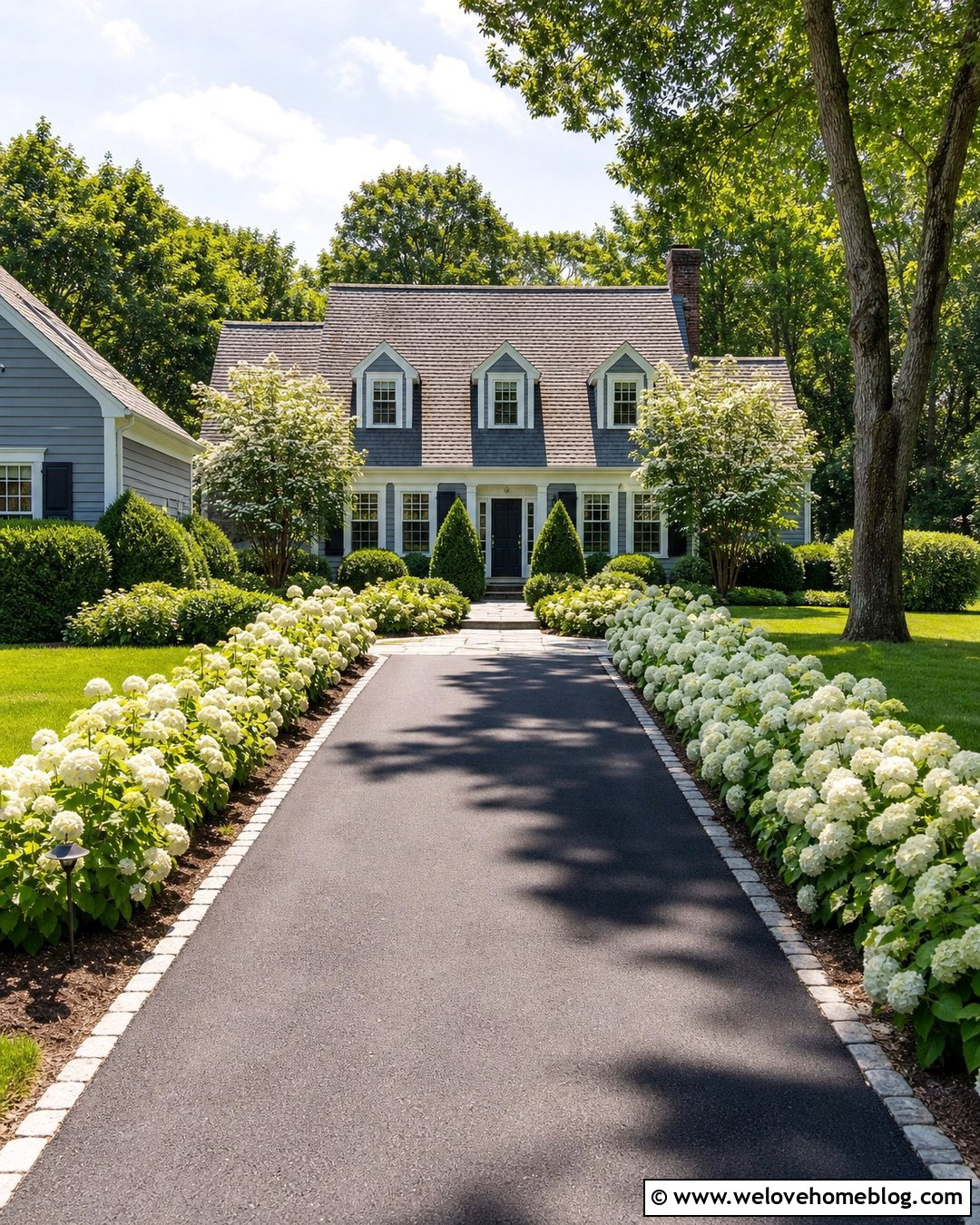
Full hydrangea borders can turn a black asphalt driveway into a lush garden approach. Plant generous drifts along one or both sides, leaving enough distance between mature shrubs and the pavement. White blooms create a classic contrast, while blue or pink varieties add softer color depending on local growing conditions. Define the planting beds with granite blocks, brick, or a narrow gravel strip. A straight driveway makes symmetrical hydrangea rows feel formal, while a curved driveway creates a relaxed cottage character. Add evergreen shrubs near the entrance for year-round structure and small trees closer to the house for shade. This complete look suits Cape Cod, Colonial, cottage, and farmhouse exteriors, especially when flower colors repeat those used around the porch.
21. Asphalt Driveway With Ornamental Grasses
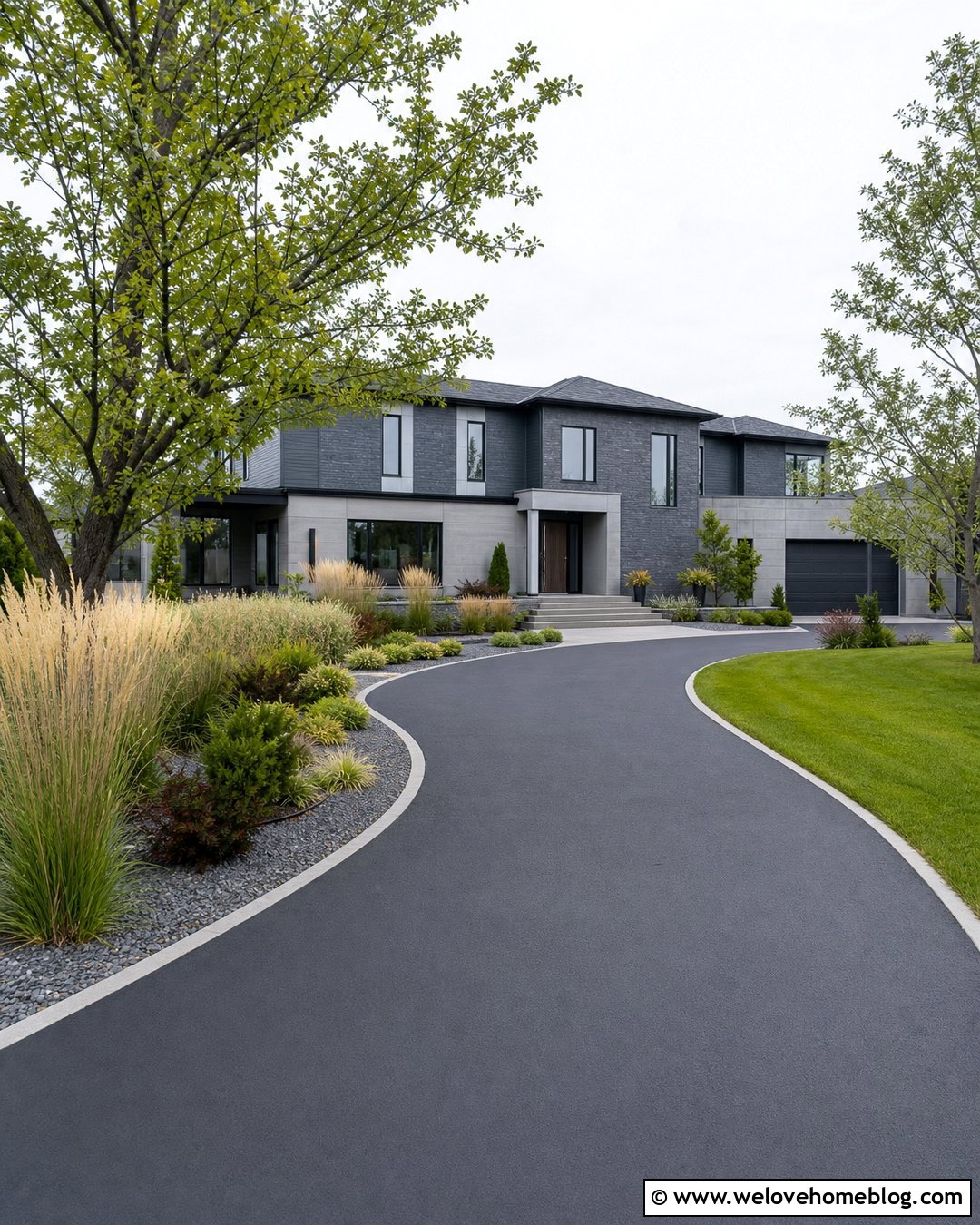
Ornamental grasses bring movement and soft texture to the hard surface of an asphalt driveway. Arrange grasses in repeated clusters along wide gravel or mulch beds rather than planting one continuous, crowded row. Combine upright switchgrass with smaller fountain grasses and low ground covers to produce varied height. A curved blacktop driveway works especially well because the plants emphasize its flowing shape. Use steel edging or pale stone curbing to maintain a clean boundary. For a contemporary home, limit the palette to two or three species and repeat them near the front walkway. Keep taller grasses away from the street entrance and inner curves where visibility matters. The finished landscape feels relaxed, modern, and visually interesting without relying on elaborate masonry.
22. Asphalt Driveway With Boxwood Hedges
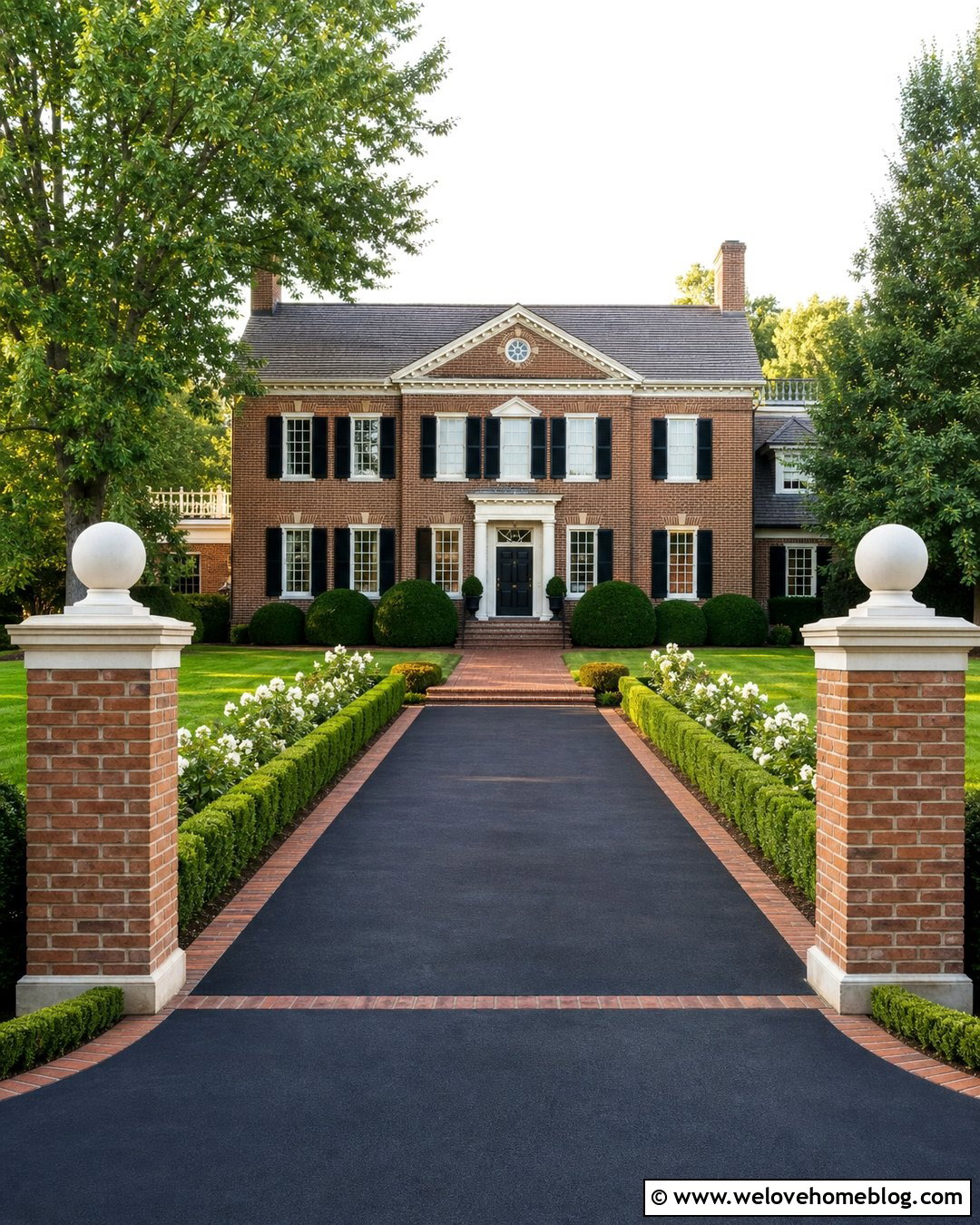
Boxwood hedges give an asphalt driveway a formal, carefully maintained appearance. Low clipped rows can follow a straight driveway toward a symmetrical Colonial or Georgian-style home. Place a brick or stone edge between the pavement and planting soil to protect the crisp boundary. At the entrance, slightly taller boxwood forms can frame masonry pillars without blocking visibility. Add white flowering plants behind the hedge for seasonal contrast and repeat the same greenery around the front walkway. The dark asphalt, bright lawn, and structured shrubs create a simple but powerful composition. Avoid making the hedge too tall or narrow, since a compact profile feels more welcoming and is less likely to crowd vehicles. This complete look is orderly, traditional, and suitable for broad front yards.
23. Asphalt Driveway With Native Plant Borders
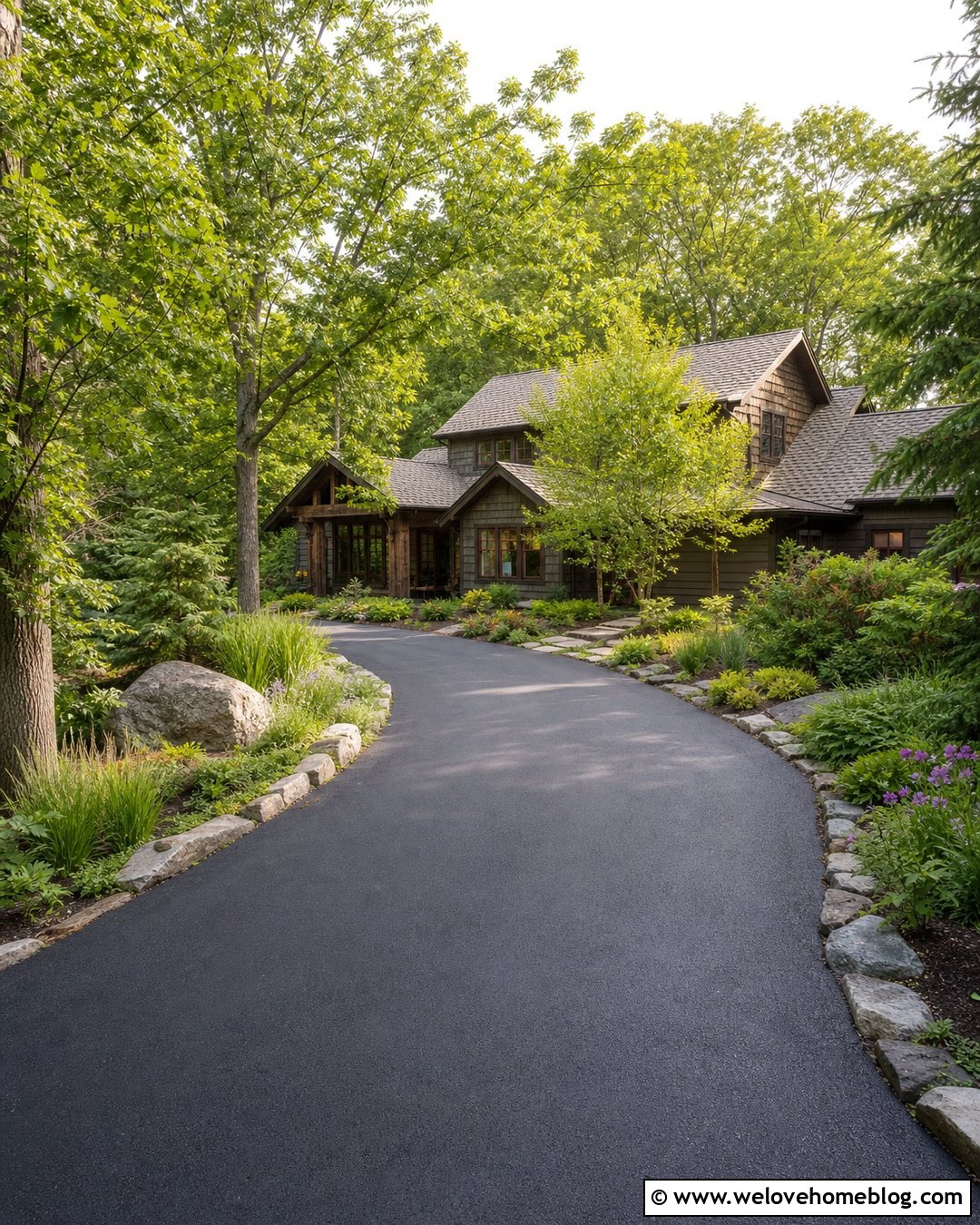
Native planting can make an asphalt driveway feel connected to the surrounding regional landscape. Build wide, informal beds along a gently curved blacktop surface and select locally appropriate grasses, flowering perennials, shrubs, and small trees. Repeat plants in groups to create order while maintaining a natural appearance. A border of local stone or weathered steel can contain the beds and relate them to the architecture. Keep vegetation low around the road entrance and place taller plants farther inside the property. This approach works especially well beside Craftsman houses, woodland homes, and modern residences with natural materials. Include a clear walkway through the planting so visitors can reach the front door comfortably. The driveway becomes part of a living landscape rather than an isolated paved strip.
24. Asphalt Driveway With Evergreen Landscaping
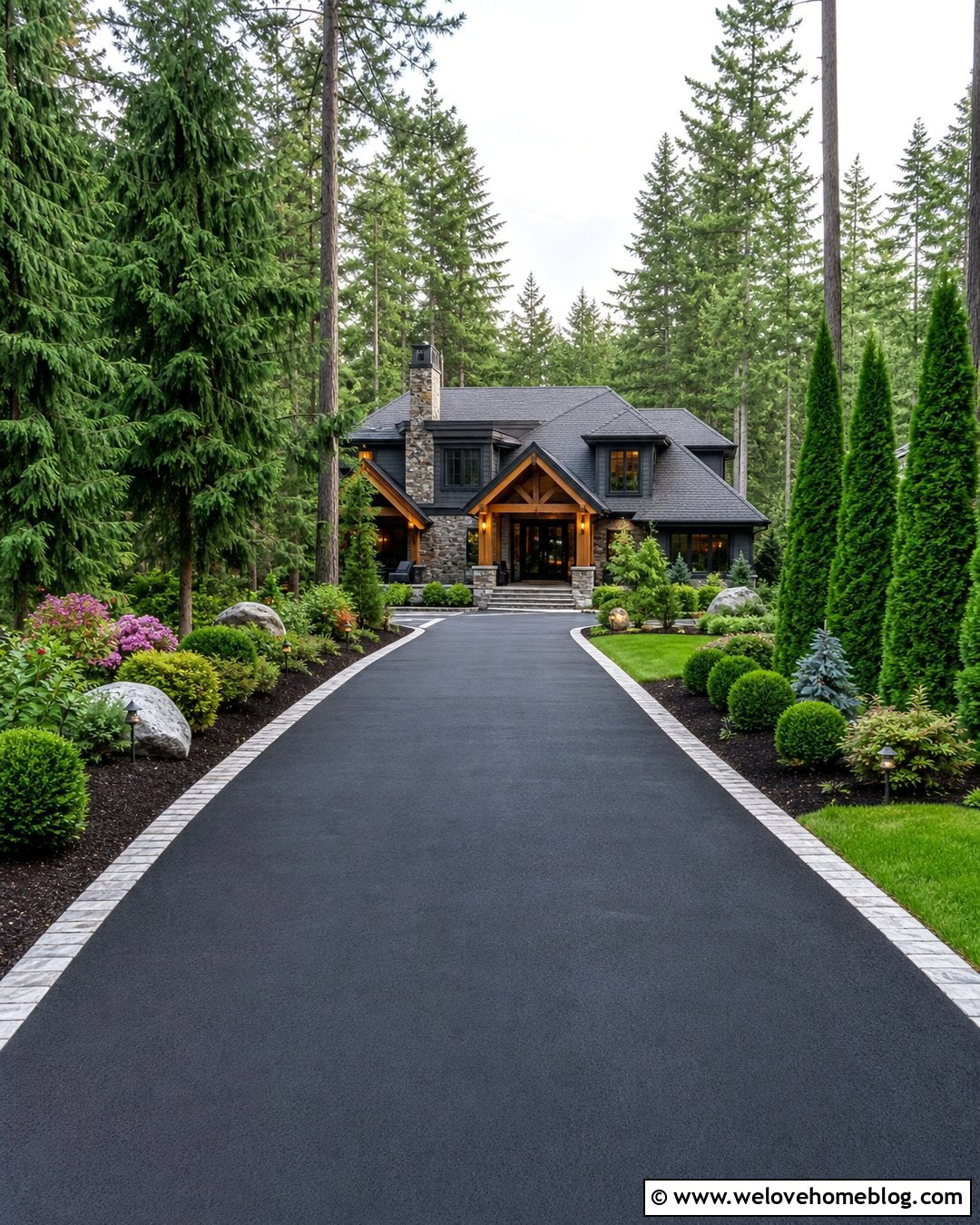
Evergreen landscaping keeps an asphalt driveway framed throughout the year. Use a layered combination of low junipers, rounded boxwood, upright arborvitae, and compact conifers, selecting sizes that fit the available yard. Arrange taller plants near the house and shorter varieties along the pavement. A gray stone border can separate the beds from the blacktop while complementing the foliage’s blue-green tones. This design suits a straight or gently curved driveway and works with traditional, contemporary, or mountain-style architecture. Add a few deciduous flowering shrubs for seasonal color without losing the evergreen structure. Landscape lighting placed between plants can define the approach after sunset, while the daytime design remains clean. The overall look is substantial, organized, and dependable in every season.
25. Asphalt Driveway With Tree-Lined Entrance
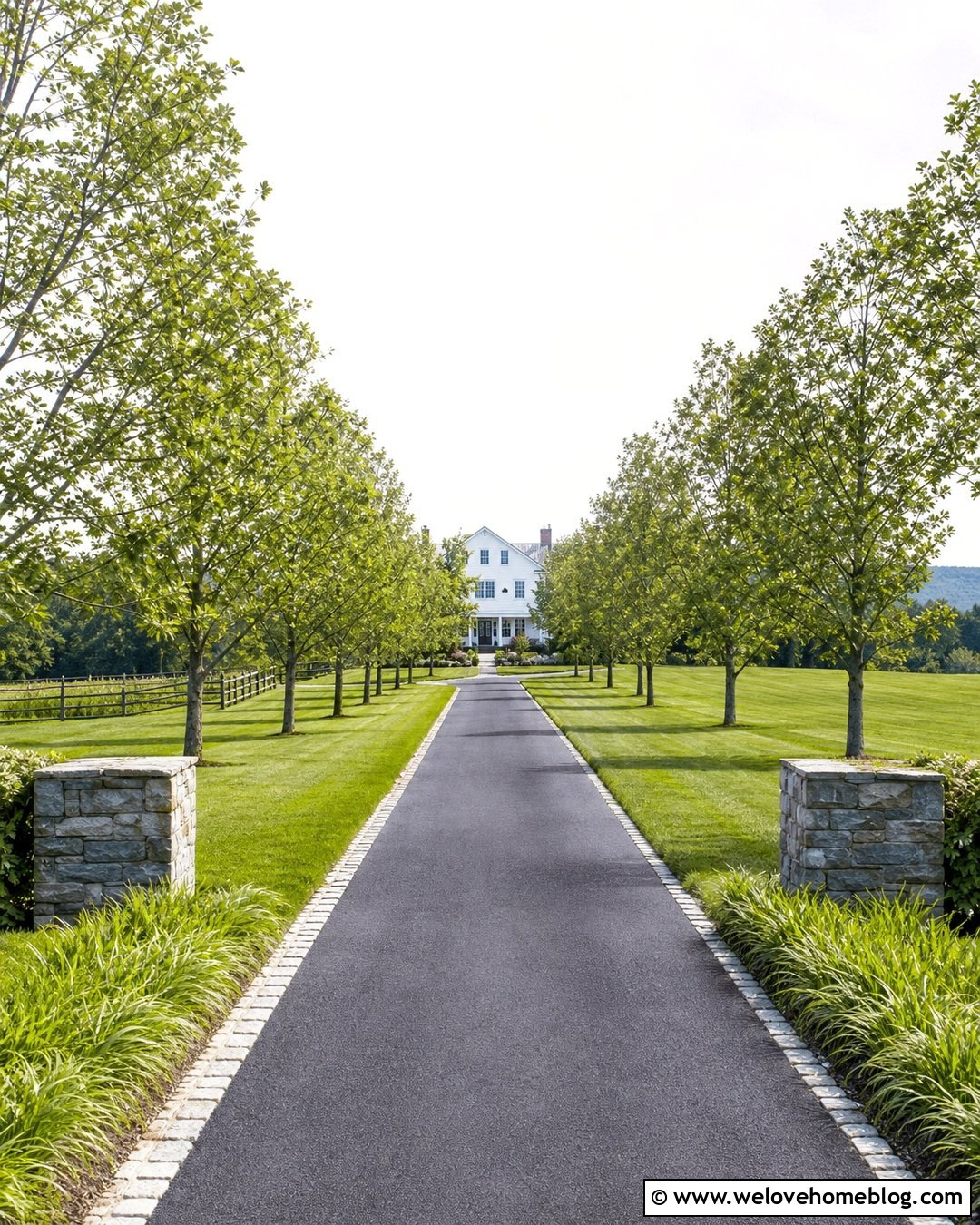
A tree-lined asphalt driveway creates a memorable approach to a home set back from the street. Plant evenly spaced deciduous trees outside broad lawn or ground-cover strips, allowing enough room for mature trunks, roots, and canopies. A straight driveway creates a formal axis, while a long gentle curve feels more relaxed. Border the asphalt with cobblestone or a narrow mown grass edge, depending on the home’s character. At the entrance, use low stone walls or simple pillars to establish a clear starting point. Choose trees suited to the local climate and avoid species likely to drop messy fruit over the pavement. This layout works beautifully for country, farmhouse, Colonial, and estate properties, turning a practical route into a cohesive landscape feature.
26. Asphalt Driveway With Solar Lighting
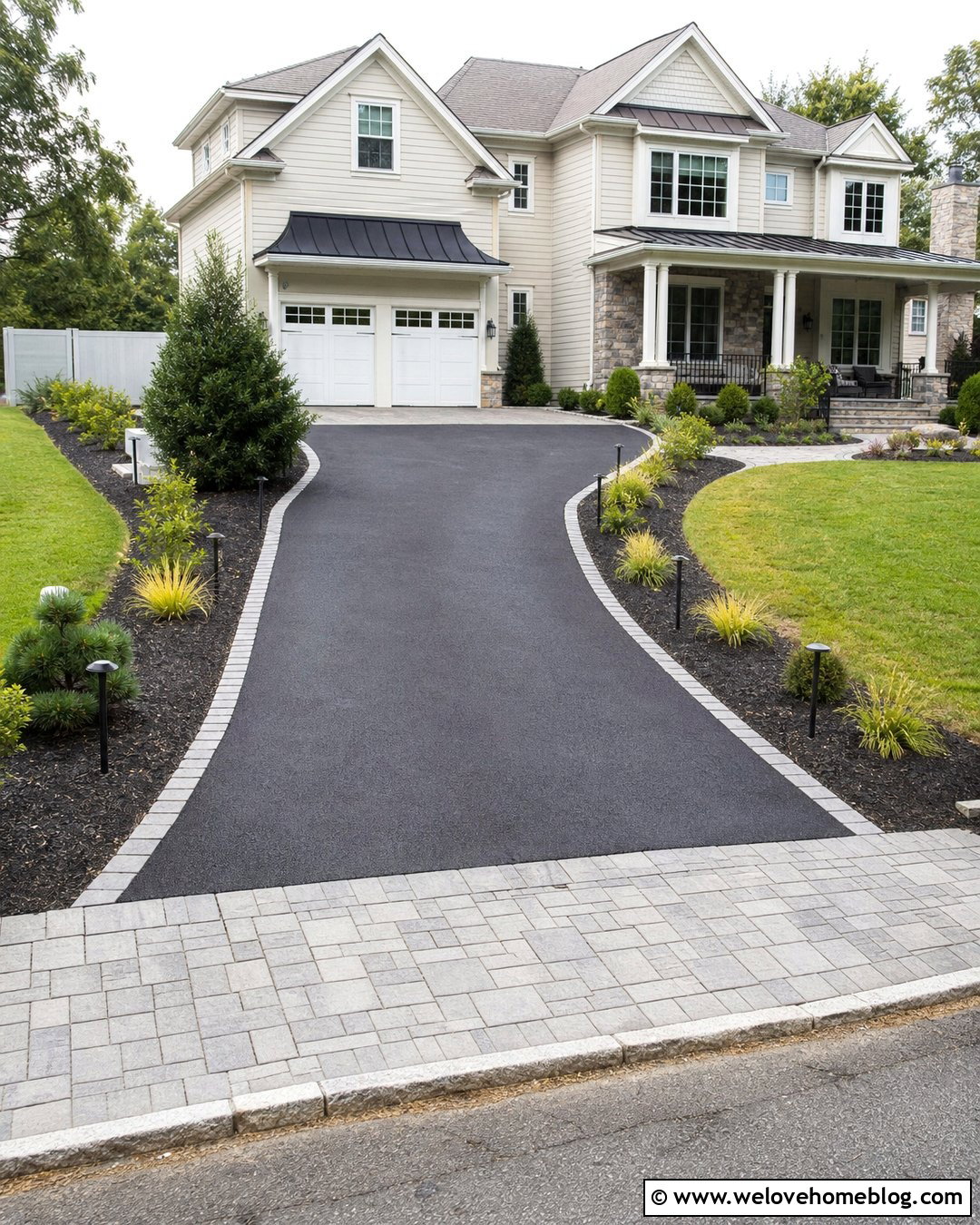
Solar lighting can define an asphalt driveway without requiring an elaborate hardwired installation. Place simple fixtures at consistent intervals outside the pavement edge, preferably within gravel or mulch beds rather than directly beside vehicle tires. A curved driveway benefits from lights positioned around each bend, while a straight driveway looks balanced with symmetrical rows. Select fixtures that complement the house, such as black lantern forms for traditional architecture or slim metal posts for a modern facade. Combine the lighting with low shrubs and ornamental grasses so the landscape looks finished during daylight. A contrasting paver apron at the entrance provides another visible cue. Keep fixture spacing restrained; a few well-positioned lights create a cleaner complete design than a crowded runway effect.
27. Asphalt Driveway With Stone Pillars
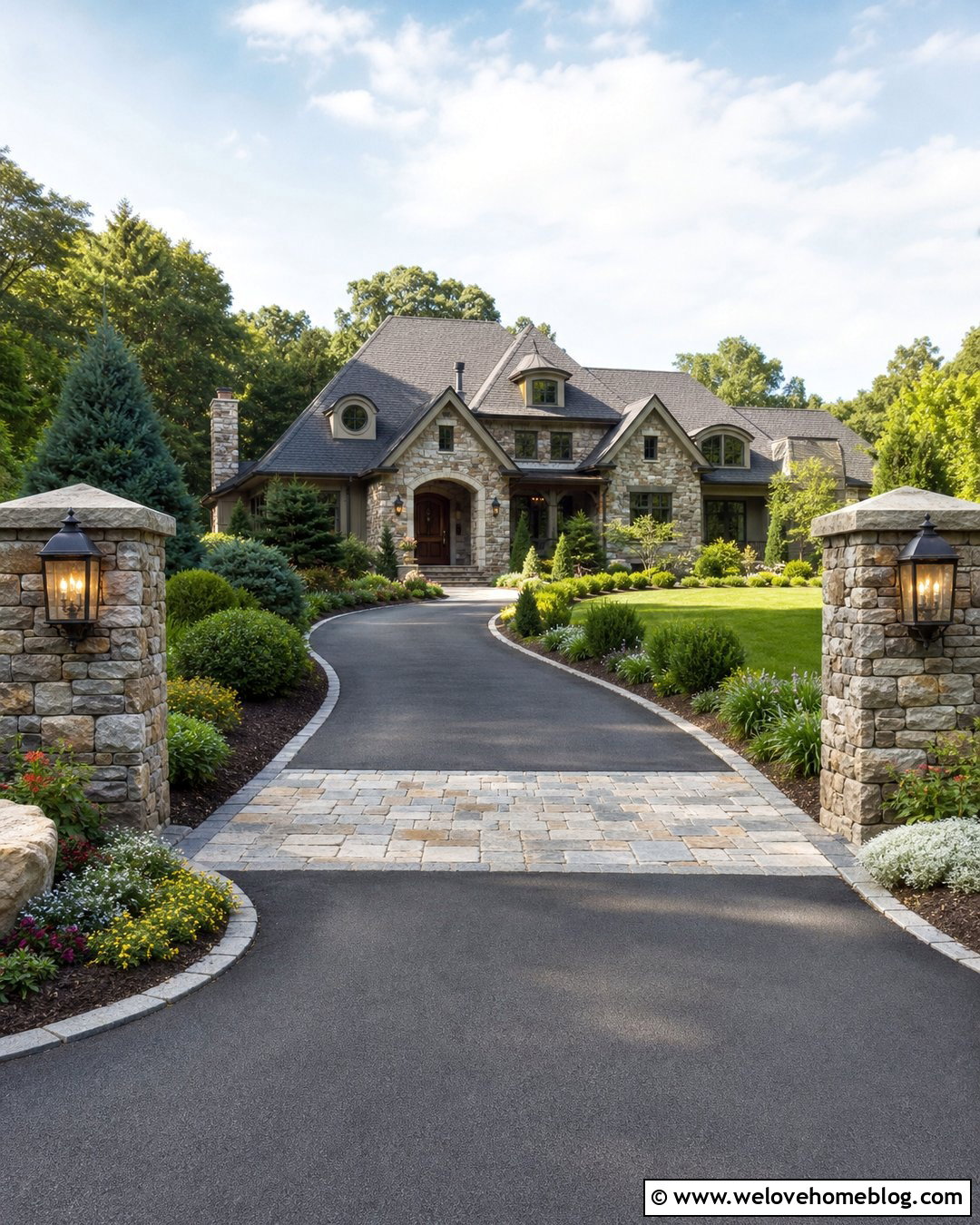
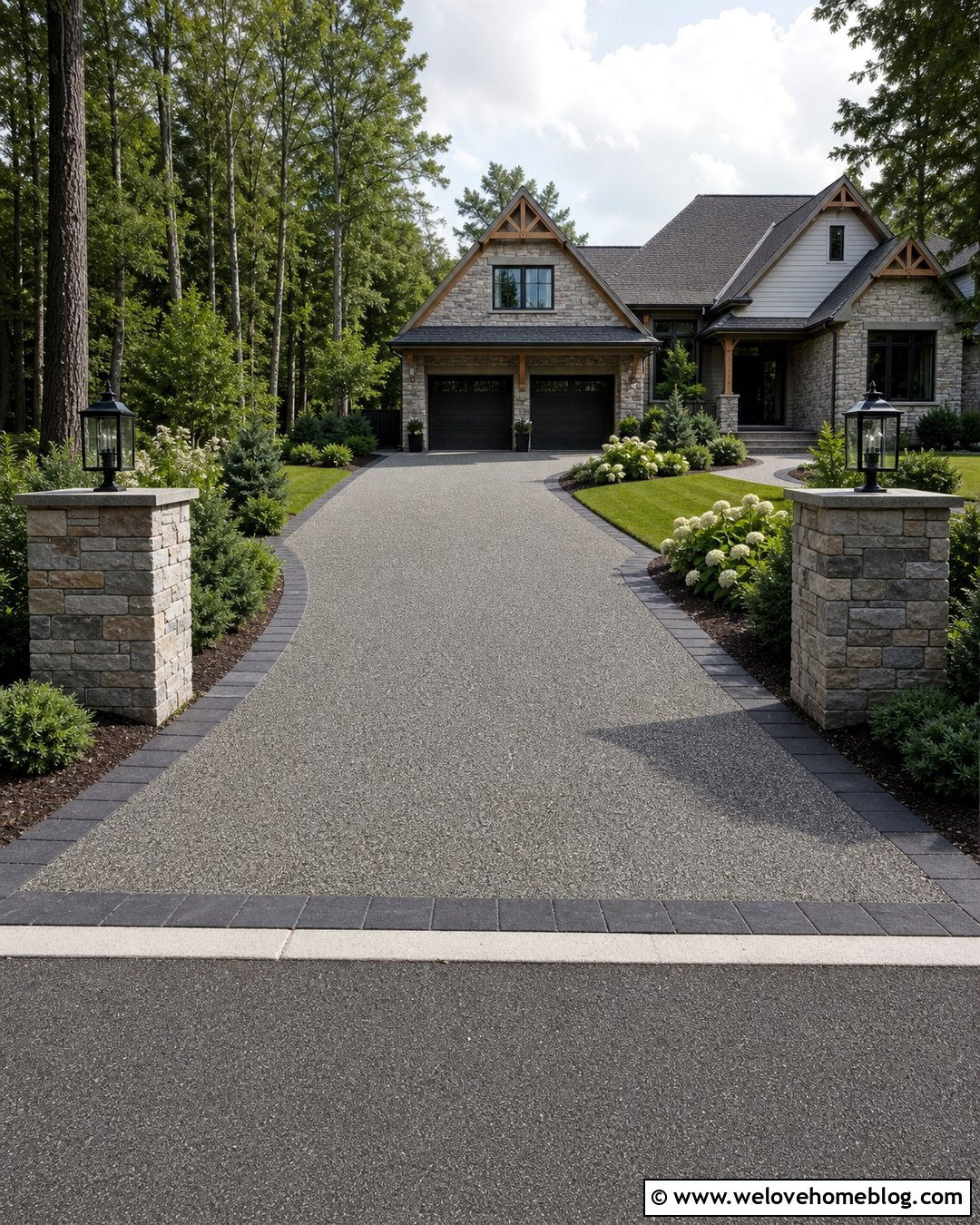
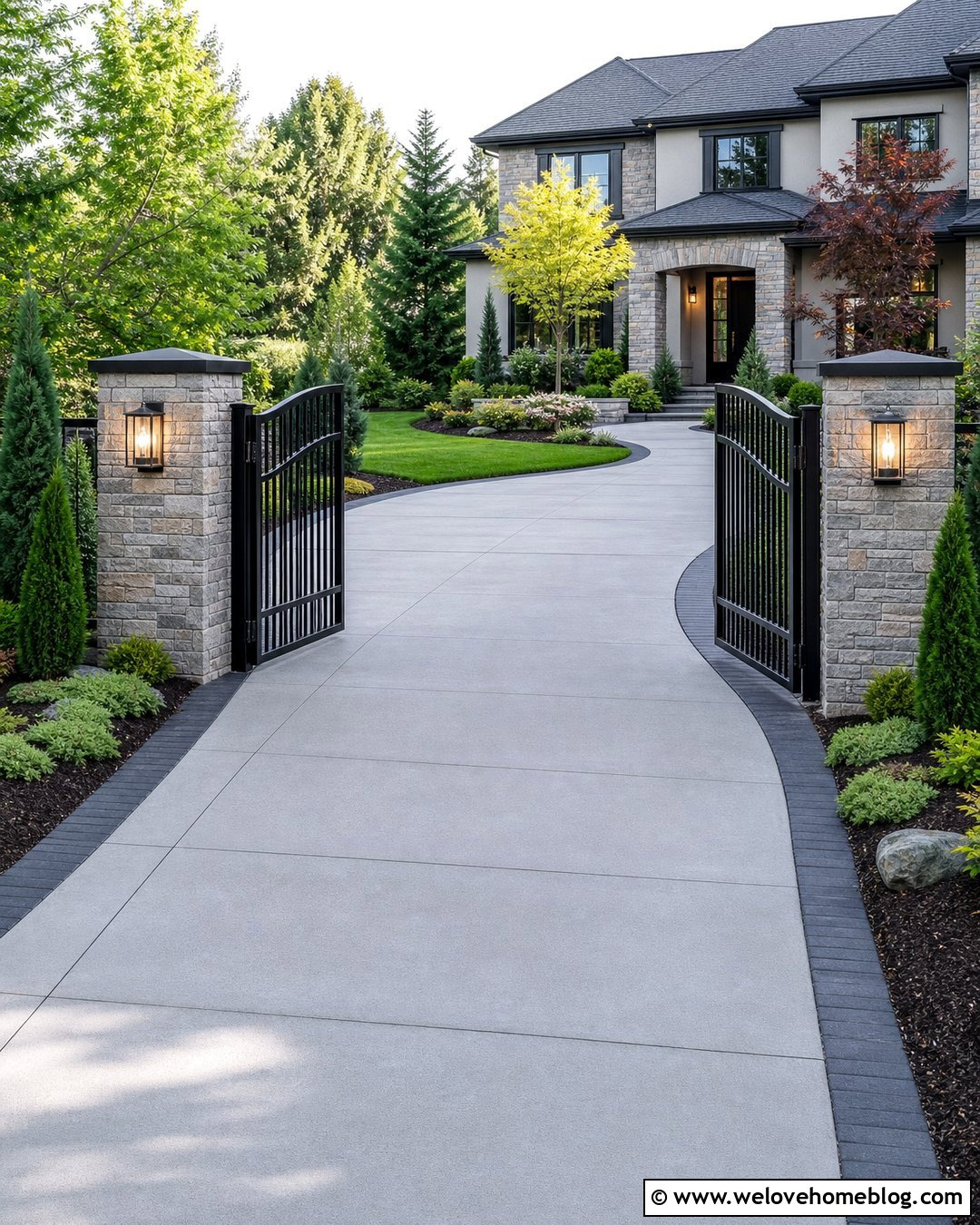
Stone pillars make a strong entrance for a long or wide asphalt driveway. Build them on both sides of the approach using masonry that matches the house, retaining walls, or foundation. The black pavement can pass between the pillars and transition through a stone or paver apron. Add low planting beds around the bases with evergreen shrubs, ground covers, and seasonal flowers. Lantern-style fixtures on top provide a traditional finish, while flat caps keep the design more contemporary. A gently curved layout can reveal the house gradually beyond the entrance. Keep the pillars comfortably outside the vehicle path and preserve open sightlines toward the road. This complete arrangement suits Craftsman, country, mountain, and traditional properties where the driveway needs a more visible architectural beginning.
28. Asphalt Driveway With Brick Pillars
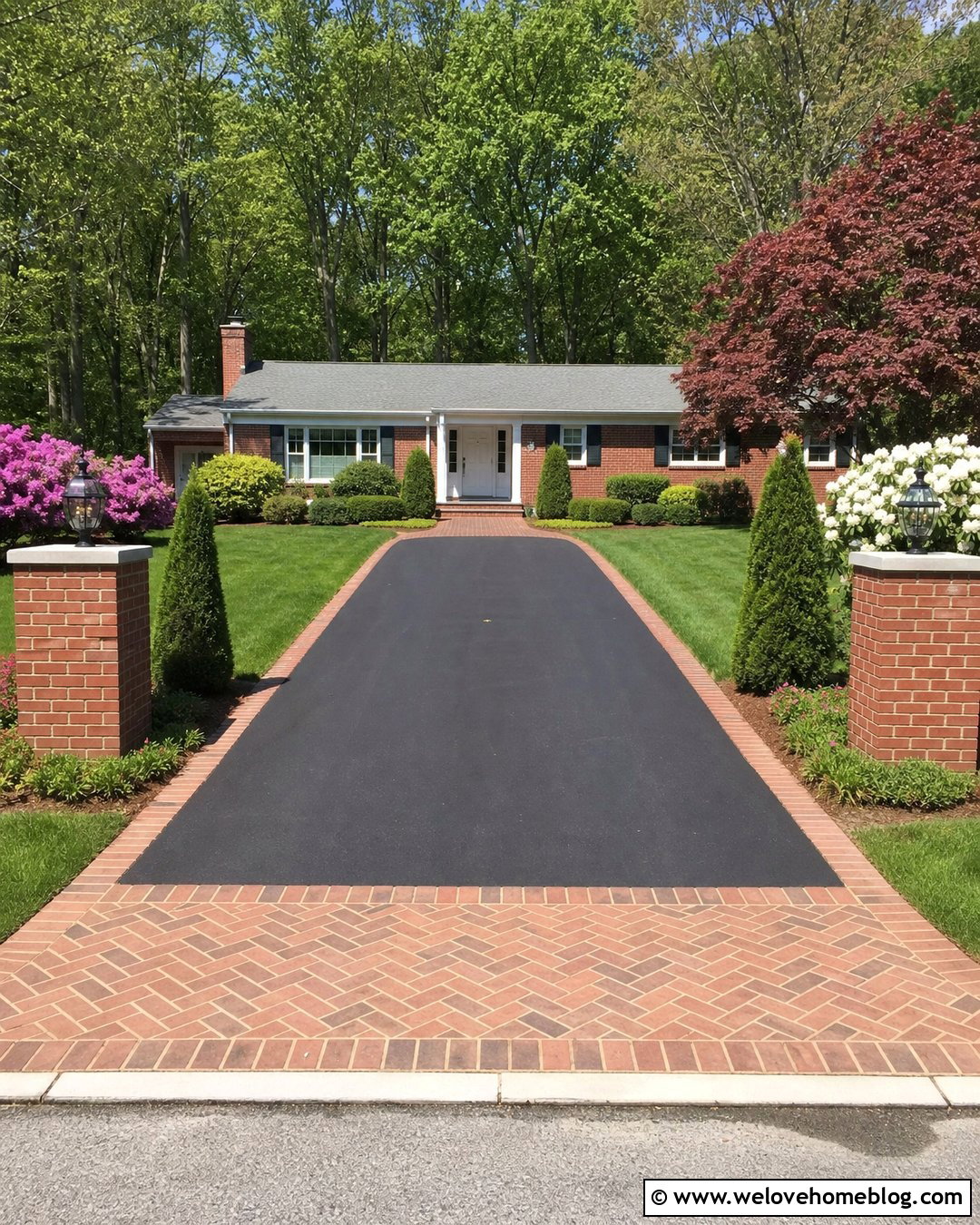
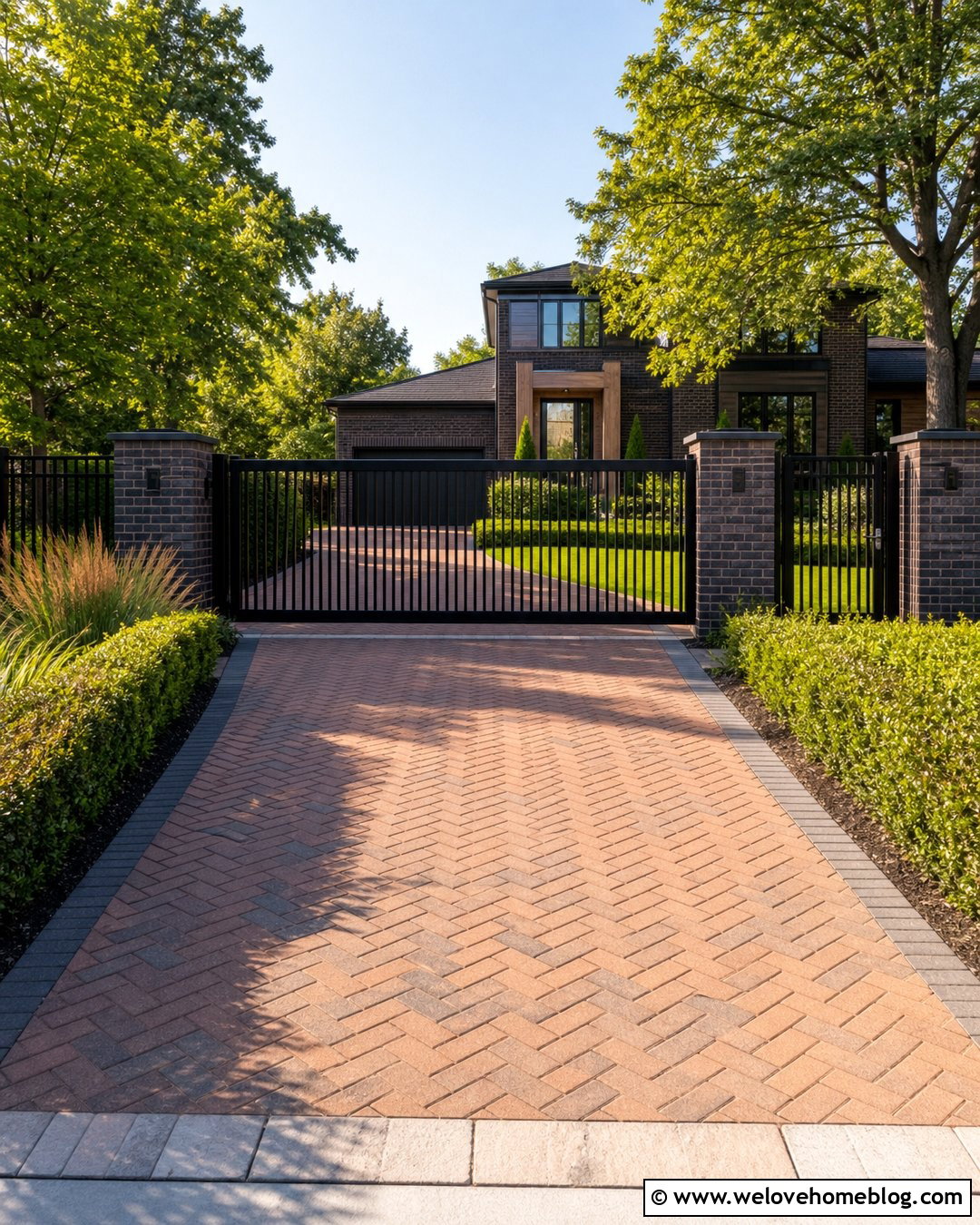
Brick pillars connect an asphalt driveway entrance to a brick house or masonry landscape. Use matching or coordinating brick rather than introducing an unrelated red or brown tone. A herringbone brick apron between the pillars can create a smooth visual transition to the black asphalt beyond. Plant clipped evergreens, flowering shrubs, and low ground covers around each base, keeping the arrangement balanced on both sides. Traditional lanterns and a simple address plaque can make the entrance easier to identify. This design works particularly well with Colonial, Georgian, ranch, and traditional suburban homes. Continue a single brick border along the driveway or repeat the material at the garage. These small connections help the pillars feel integrated with the full approach instead of standing alone.
29. Asphalt Driveway With Modern Gate
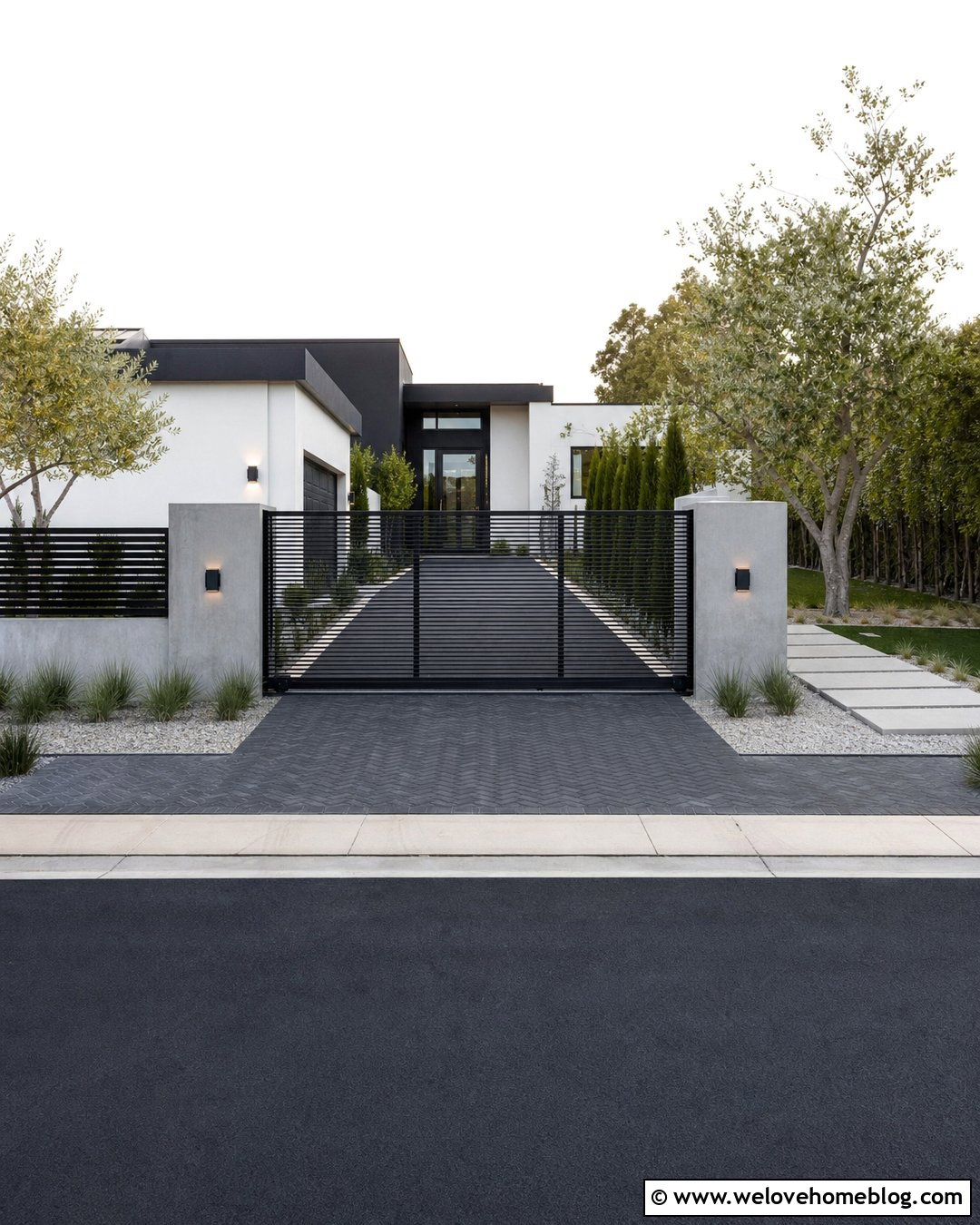
A modern gate can give an asphalt driveway privacy without making the entrance feel heavy. Choose a streamlined horizontal-slat or open metal design in black, charcoal, or natural wood. Pair it with square concrete or stucco pillars and a wide paver apron that provides a distinct stopping area. The asphalt driveway beyond should remain straight and visually uncluttered. Linear planting beds with ornamental grasses, compact evergreens, and pale gravel reinforce the modern geometry. Set the gate far enough inside the property to create appropriate entry space where site conditions allow. Integrated address numbers and simple lighting can finish the entrance. This complete look complements contemporary, minimalist, and mid-century homes, balancing dark paving with architectural lines and restrained landscaping.
30. Asphalt Driveway With Farmhouse Gate
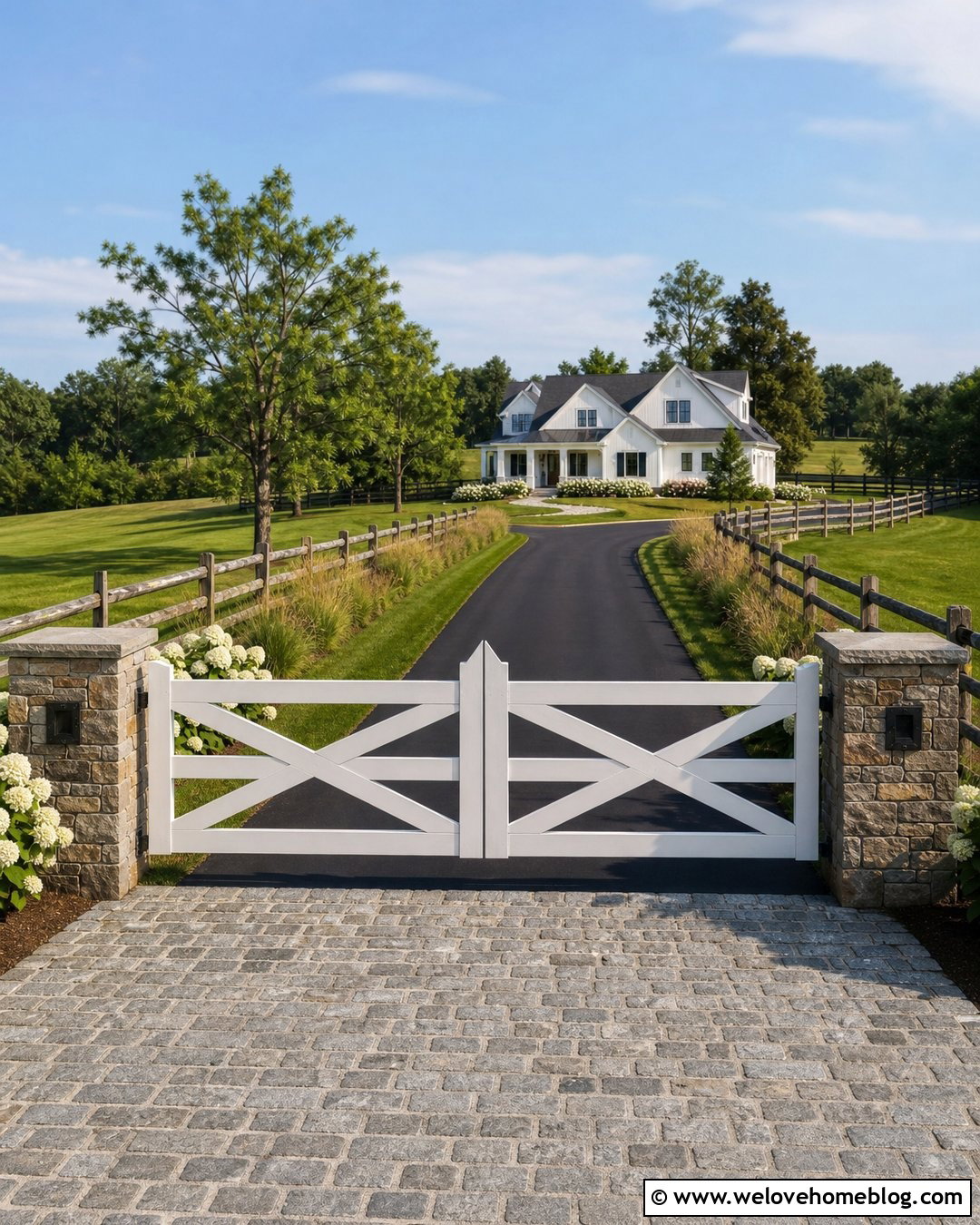
A simple farmhouse gate gives a long asphalt driveway a welcoming rural character. Use a white or natural-wood swing gate between low stone or brick pillars. Behind it, allow the blacktop to curve gently through open lawn toward a farmhouse, barn-inspired garage, or country home. Add split-rail fencing along part of the entrance and plant native grasses, hydrangeas, or flowering shrubs around the pillars. A cobblestone apron can dress up the road transition without making the design feel formal. Keep the planting loose but organized, and leave generous clearance around the moving gate. The contrast between smooth black asphalt, pale fencing, and green landscape produces a familiar country look that feels practical, bright, and thoughtfully connected to the architecture.
31. Asphalt Driveway With Parking Pad
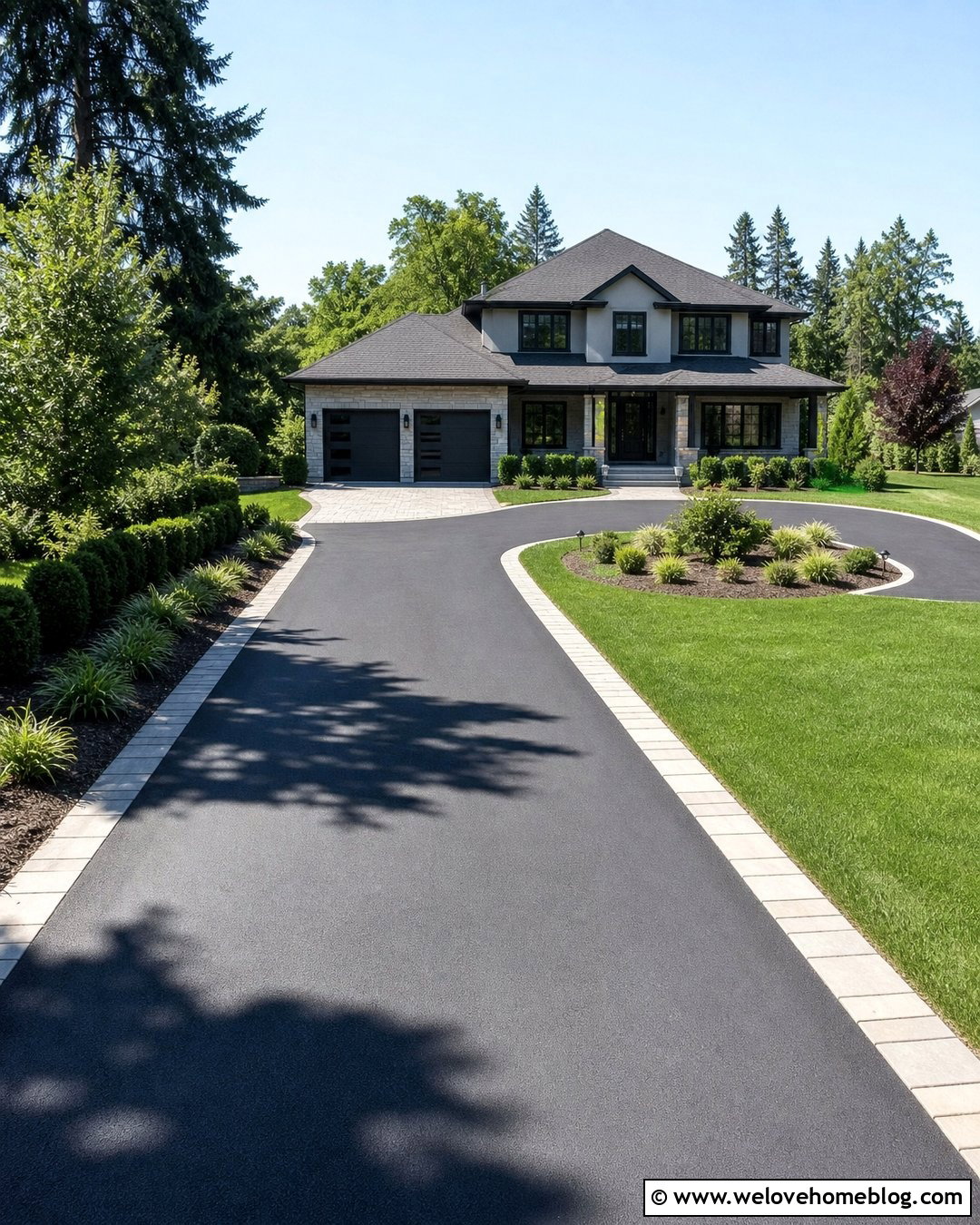
An integrated parking pad gives an asphalt driveway extra function while preserving an orderly front yard. Position the pad beside the main drive and shape its corners to match the overall layout. A rectangular pad suits a modern or suburban home, while a curved extension blends more naturally into a larger landscape. Outline the area with brick or concrete pavers so it appears intentional rather than added later. Use a planting island, hedge, or low ornamental grasses to soften the outer edge without restricting door clearance. Continue the asphalt seamlessly between the driveway and parking space. A matching paver apron near the garage can balance the design. This solution provides flexible parking while keeping the main approach open and visually organized.
32. Asphalt Driveway With Turnaround Area
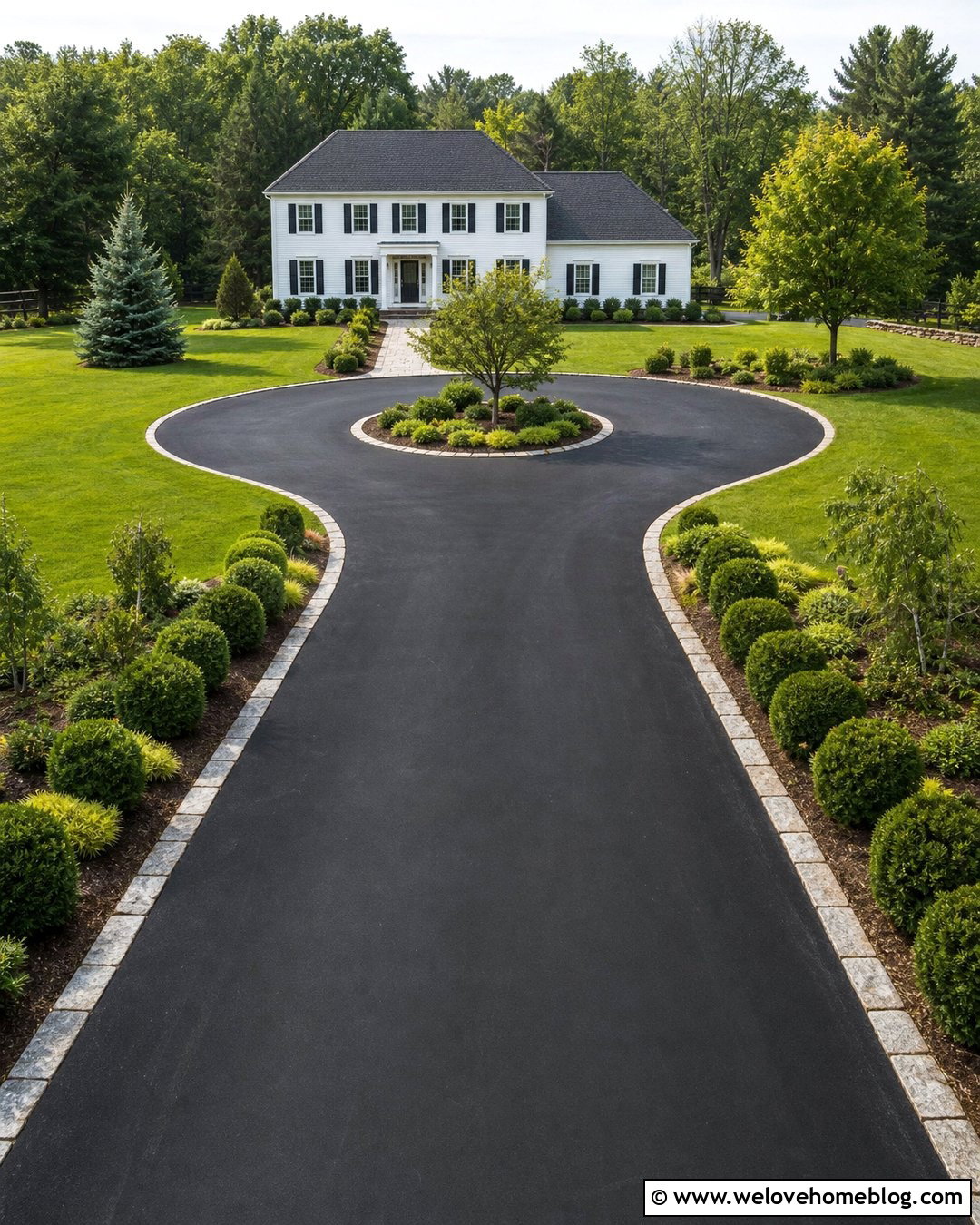
A turnaround area improves the layout of a long driveway while offering another opportunity for landscaping. Create a circular, teardrop, or hammerhead extension near the house, depending on the available space. Continue the same smooth black asphalt throughout and define the outer edges with stone blocks or concrete pavers. A landscaped center island can soften a circular turnaround, while perimeter beds work better around a hammerhead layout. Plant low shrubs and ground covers that preserve clear vehicle movement. Connect the area to the front walkway so guests can easily identify the route to the door. This complete design works well for homes set far from the street, particularly when backing the full length of the driveway would be inconvenient or visually disruptive.
33. Narrow Asphalt Driveway With Edging
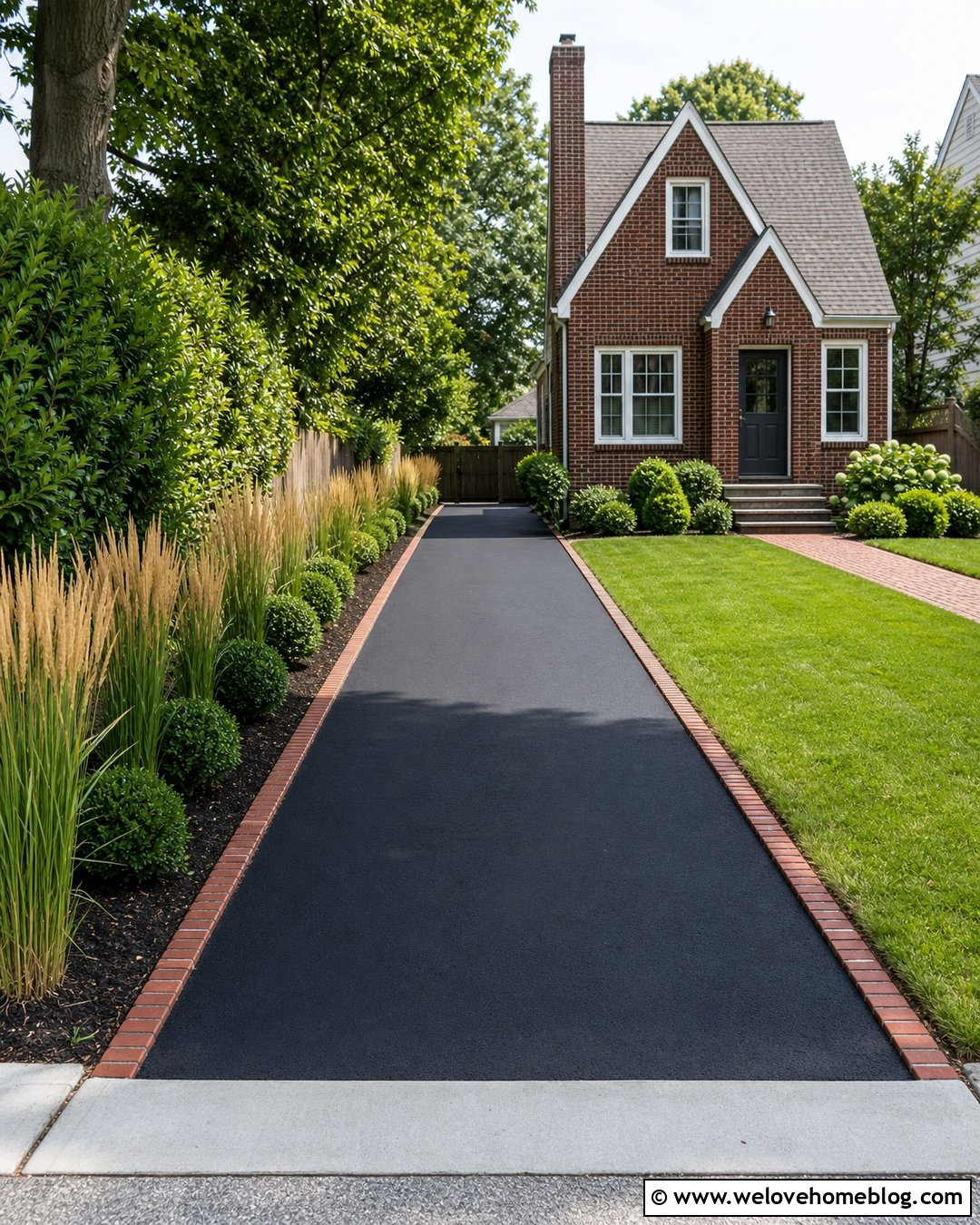
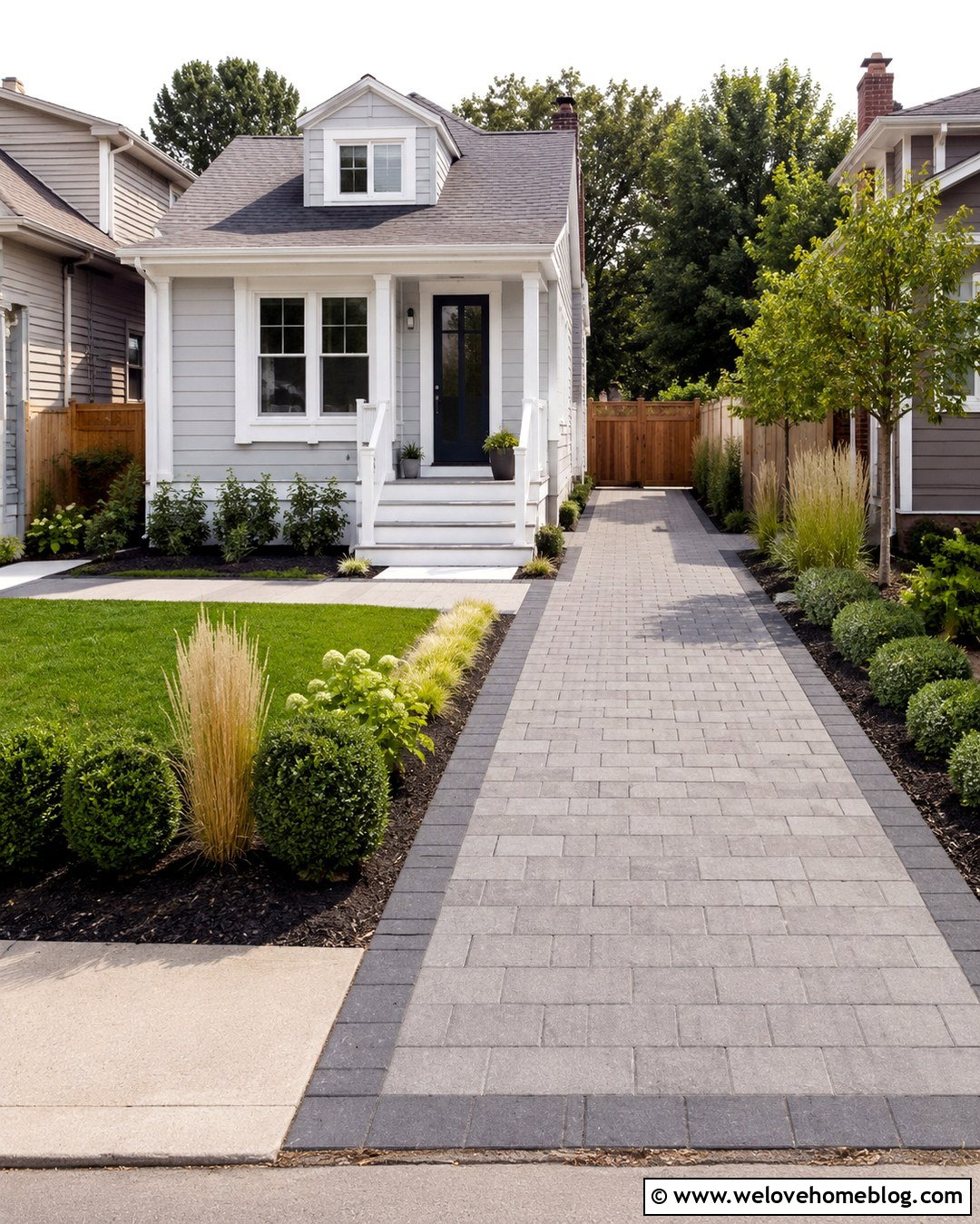
A narrow asphalt driveway can feel polished when every surrounding detail is carefully scaled. Keep the pavement straight or use only a slight curve so valuable width is not lost. Install a slim brick, cobblestone, or steel edge rather than a wide decorative border. On one side, use a narrow planting bed with upright grasses or compact shrubs. Maintain open lawn or a simple walkway on the other side to prevent the space from feeling enclosed. Near the garage, widen the asphalt enough to support comfortable movement where the lot allows. Light-colored edging can make the dark surface appear more defined. This efficient design suits cottages, urban homes, and older suburban properties where the side yard provides limited driveway space.
34. Wide Asphalt Driveway With Paver Bands
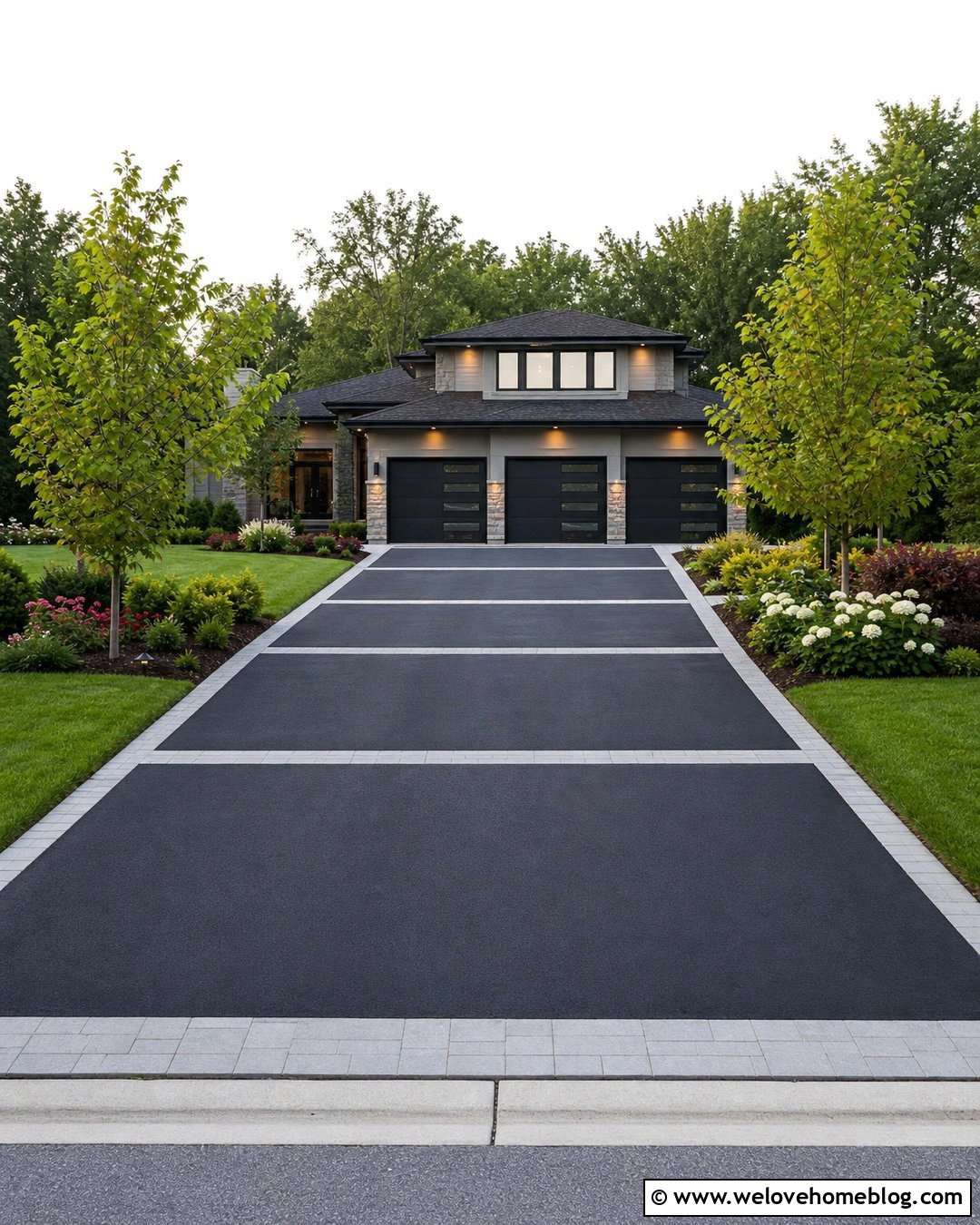
A wide asphalt driveway benefits from decorative bands that reduce the appearance of one uninterrupted black surface. Use light gray or warm beige pavers to divide the driveway into broad visual panels. Place bands across the entrance, before the parking area, and near multiple garage doors. Matching paver edging can outline the sides and connect the separate bands. Frame the pavement with symmetrical lawn areas and generously sized planting beds so the landscape remains proportional to the driveway. This arrangement is ideal for large suburban and contemporary homes with two- or three-car garages. Keep the paver pattern simple and repeat colors already found on the facade. The result feels customized and balanced without sacrificing the smooth, practical asphalt driving surface.
35. Sloped Asphalt Driveway With Retaining Wall
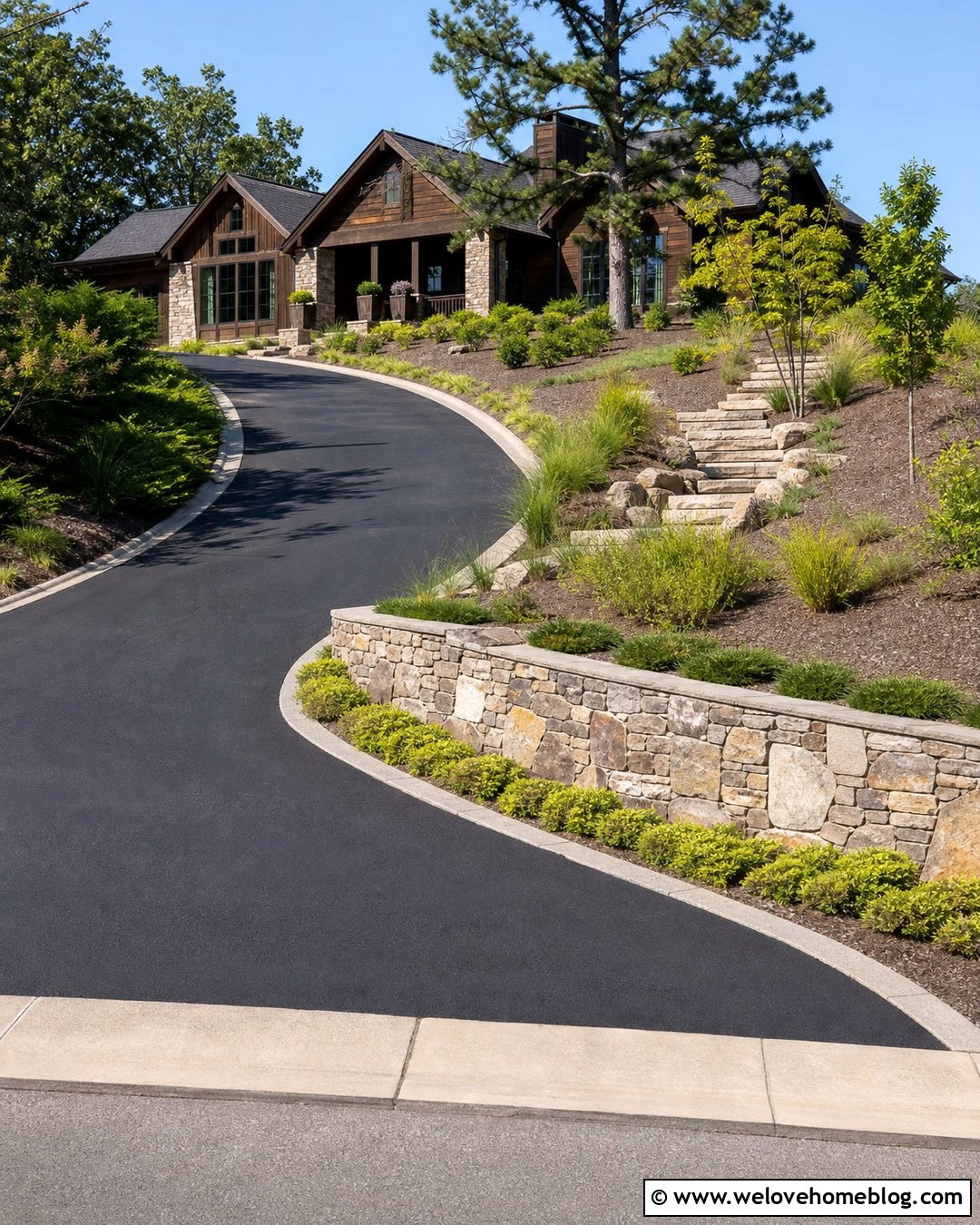
A sloped asphalt driveway can become an attractive landscape feature when retaining walls are incorporated into the full design. Use natural stone, segmental concrete block, or poured concrete walls to hold planting beds along the higher side. Keep the wall height and shape proportional to the slope, adding steps and guard features where required. On the lower side, a low curb and ground-cover planting can define the edge. Follow the grade with a smooth asphalt surface and introduce gentle curves where the site provides enough room. Plant trailing greenery, compact shrubs, and ornamental grasses above the wall to soften the masonry. This coordinated approach suits hillside, contemporary, Craftsman, and mountain homes while giving the challenging elevation a clear visual structure.
36. Asphalt Driveway With Drainage Swale
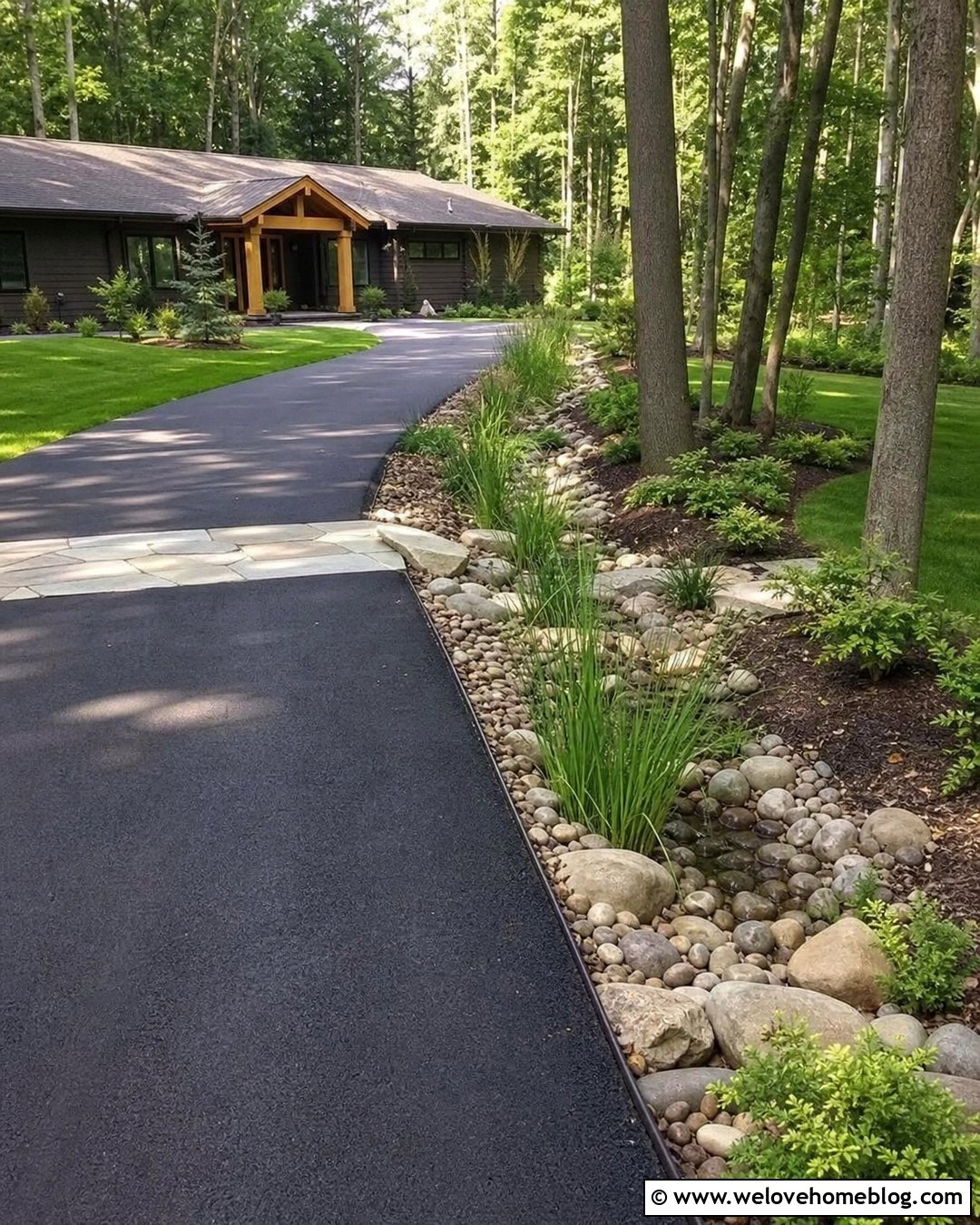
A landscaped drainage swale can look like an intentional part of an asphalt driveway rather than a leftover ditch. Shape a shallow planted channel beside the lower edge of the pavement and line it with river rock, moisture-tolerant grasses, and suitable native plants. Use a neat stone or steel border between the asphalt and swale to preserve a readable boundary. A small stone-lined crossing can connect the driveway to the front walkway. This treatment works naturally with a curved drive and an informal Craftsman, ranch, or woodland home. The planting should remain low near the street and should not interfere with driveway visibility. By repeating river rock in nearby foundation beds, the practical feature becomes part of a cohesive front-yard landscape.
37. Asphalt Driveway With Garage Apron
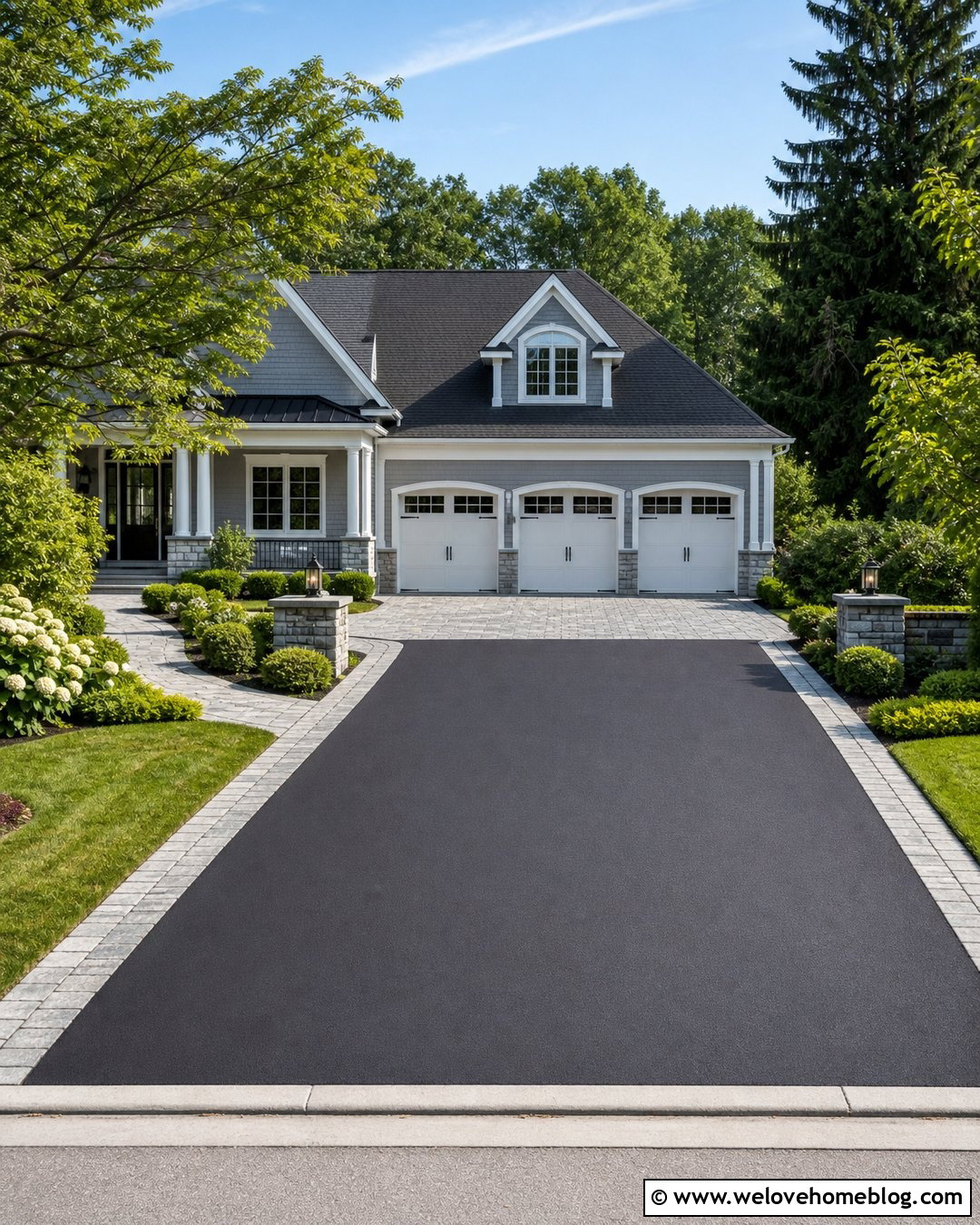
A decorative garage apron creates a finished transition between asphalt and the garage doors. Use concrete pavers, brick, cobblestone, or exposed-aggregate concrete across the full width of the building. Extend the apron several feet outward so its material and pattern are clearly visible. Continue a narrow matching border down the driveway to connect the garage area with the street entrance. This look is especially effective on a broad blacktop driveway serving multiple bays. Add simple foundation beds beside the garage and keep shrubs low enough that they do not crowd vehicle access. Coordinate the apron color with the facade, roof, and walkway. The contrast makes the garage approach feel intentionally designed while retaining asphalt across the largest, most frequently used surface.
38. Asphalt Driveway With Front Walkway
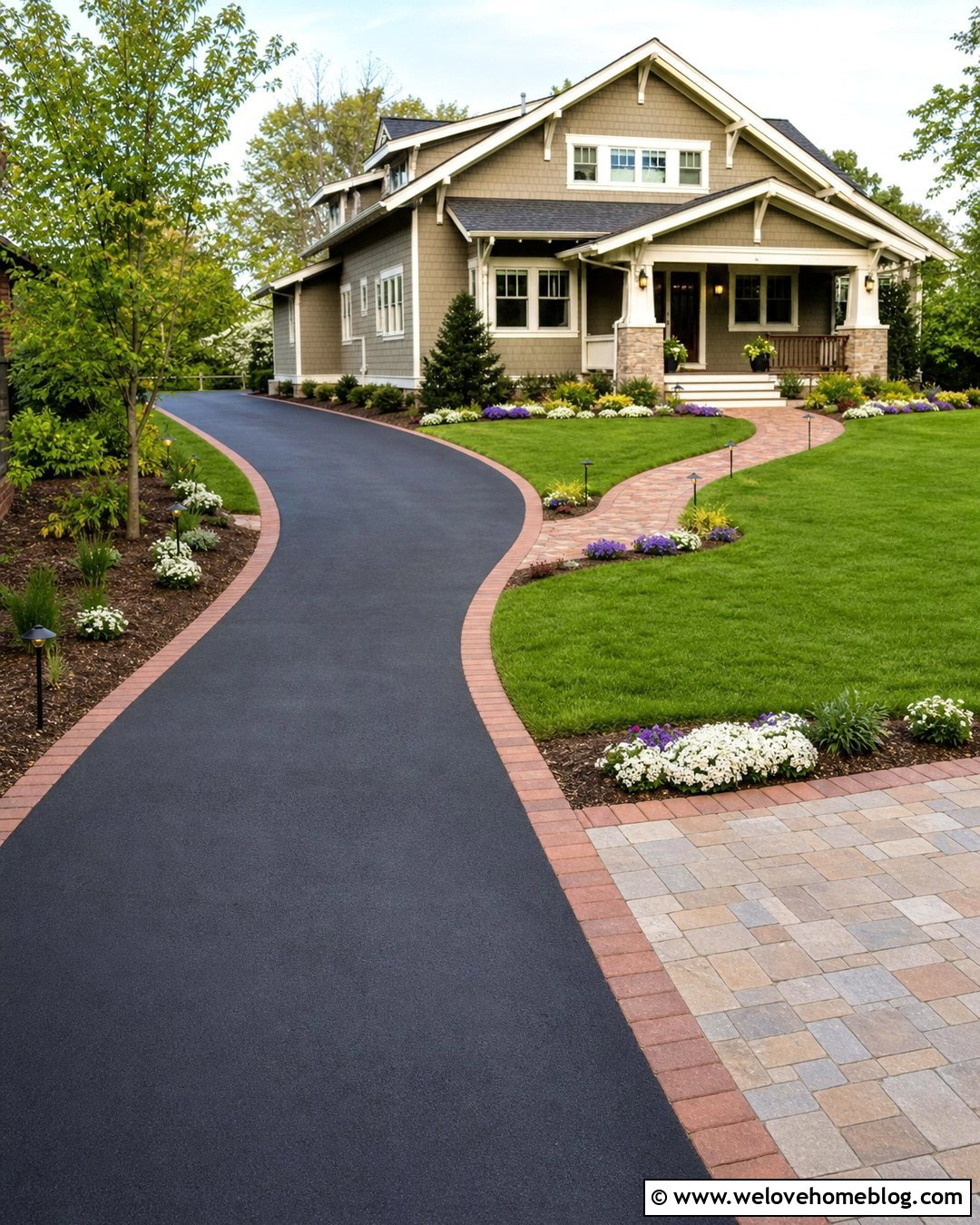
A well-placed front walkway helps an asphalt driveway support the home’s main entrance rather than directing all attention toward the garage. Branch a brick, stone, or concrete paver path from the driveway and curve it gently toward the porch. Mark the connection with a wider landing, contrasting paver band, or small planting bed. Keep the walkway clearly separated from vehicle space through color and texture. Low shrubs, flowers, and lighting can frame the pedestrian route without narrowing it. This layout works for straight and curved driveways alike. Repeat the walkway material along the asphalt edge or entrance apron to unify the design. The completed front yard feels more welcoming because visitors can immediately understand where to park and how to reach the door.
39. Asphalt Driveway With Drought-Tolerant Landscaping
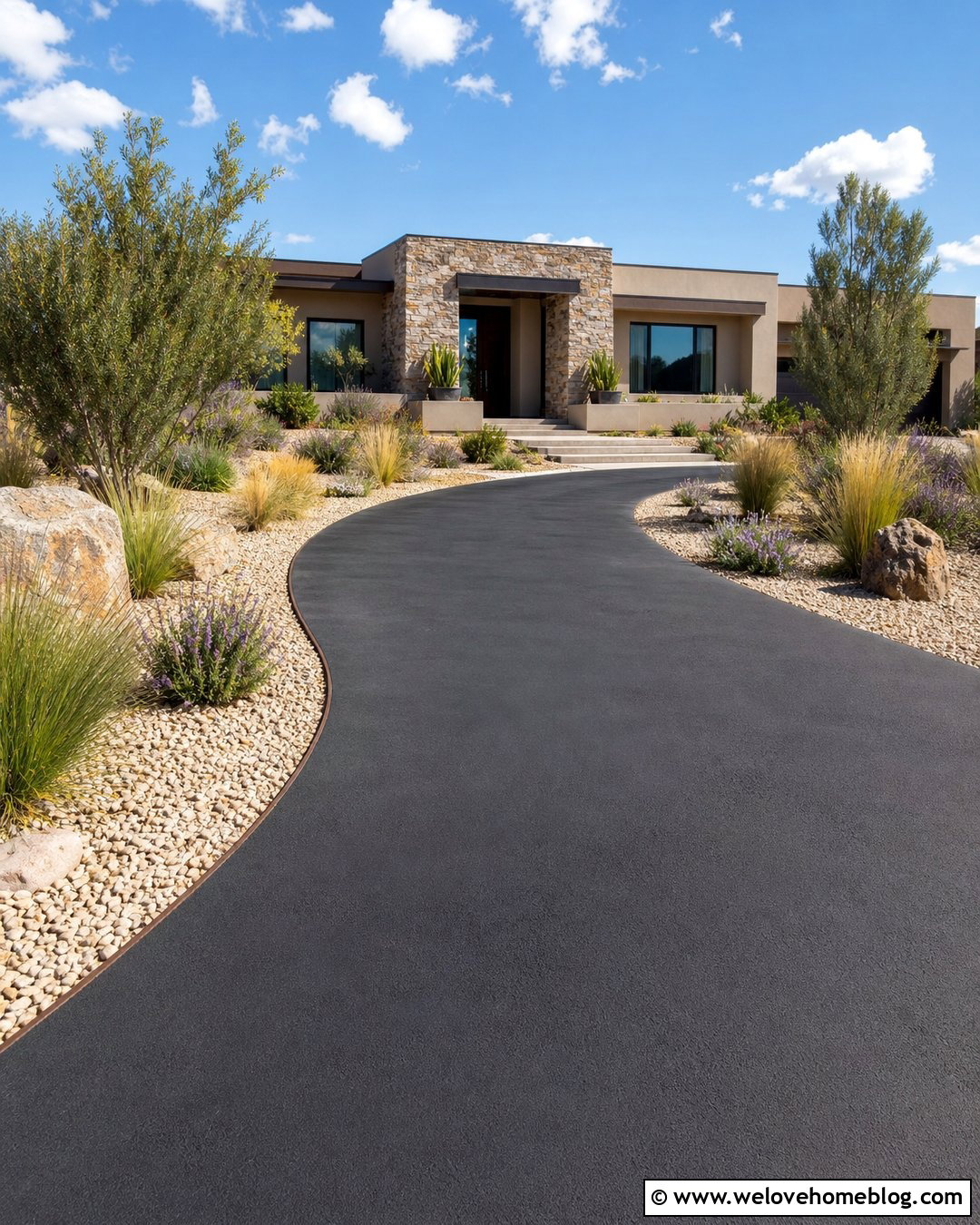
Drought-tolerant landscaping can provide rich texture around asphalt without depending on broad lawns. Border the driveway with gravel beds containing ornamental grasses, flowering perennials, sculptural shrubs, and regionally appropriate plants. Use boulders sparingly as anchors, then repeat smaller stones near the walkway and foundation. A curved asphalt layout complements the flowing shapes of dry garden beds, while steel edging maintains a crisp pavement boundary. Choose light-colored gravel to balance the heat-absorbing appearance of blacktop and create strong visual contrast. Keep thorny or spreading plants away from vehicle doors and pedestrian routes. This complete design works especially well for contemporary ranch, Southwestern, and low-water suburban homes, giving the property color and structure through foliage, stone, and careful spacing.
40. Asphalt Driveway With Mixed Material Entrance
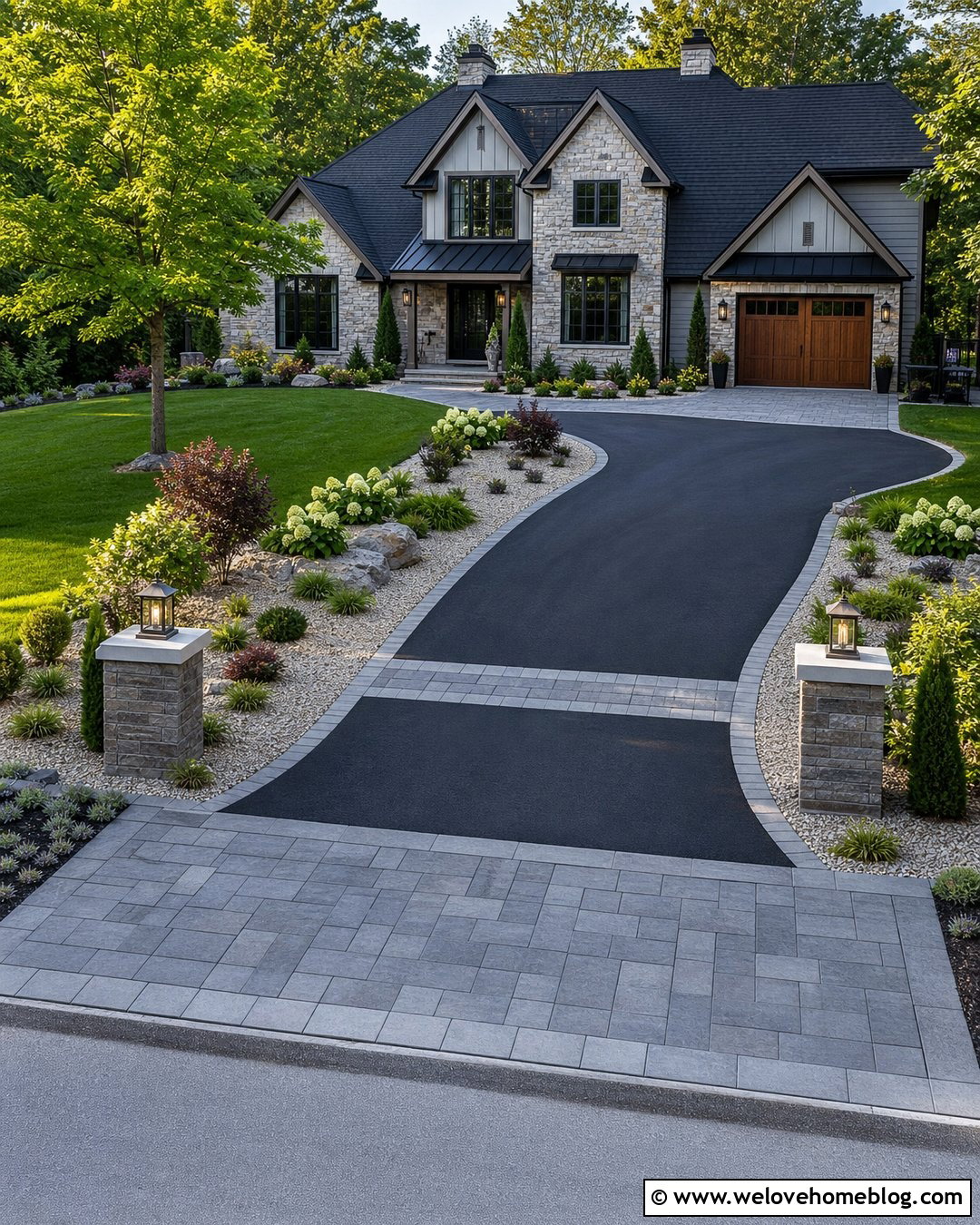
A mixed-material entrance combines asphalt’s simplicity with decorative surfaces where they will have the greatest visual impact. Begin with a wide brick, cobblestone, or concrete paver apron at the street, then transition to smooth black asphalt leading toward the house. Repeat the accent material along the edges, at a walkway crossing, or outside the garage. Two landscaped beds can frame the entrance with low shrubs, flowers, and address pillars. Keep the material palette limited so the driveway does not look fragmented. For example, charcoal pavers, black asphalt, and pale gravel produce a modern look, while red brick and clipped greenery feel traditional. This balanced approach gives the entire driveway a custom identity without covering every square foot in premium masonry.
Conclusion:
The most appealing asphalt driveway ideas treat the pavement as one part of a complete front-yard design. A simple black surface can look refined when its shape, border, entrance, landscaping, and walkway support the architecture of the house. Brick and cobblestone add traditional character, while steel edging, pale gravel, and linear planting create a more modern result. Curves can soften large yards, and decorative aprons can improve the appearance of compact suburban driveways. Consider everyday vehicle movement, visibility, drainage, mature plant sizes, and long-term maintenance before choosing a layout. With thoughtful planning, these 40 Asphalt Driveway Ideas can turn practical blacktop into an attractive and cohesive approach to your home.

Related posts:
Leave a Reply