
The right driveway surface can make a home feel more polished before anyone reaches the front door. These 35 Driveway Flooring Ideas explore practical materials, patterns, colors, and layouts for traditional, modern, rustic, and transitional homes. Concrete and asphalt offer a familiar foundation, while brick, natural stone, gravel, resin, and permeable pavers create more distinctive entrances. Material choice should also reflect drainage, climate, maintenance expectations, installation quality, and budget—not appearance alone. Permeable paving, gravel grids, and porous surfaces are especially useful when reducing runoff is a priority. () From affordable crushed stone to detailed cobblestone, the complete looks below combine durable flooring with thoughtful borders, landscaping, and architecture. Use these 35 Driveway Flooring Ideas to find an approach that fits your property.

1. Smooth Poured Concrete Driveway Flooring
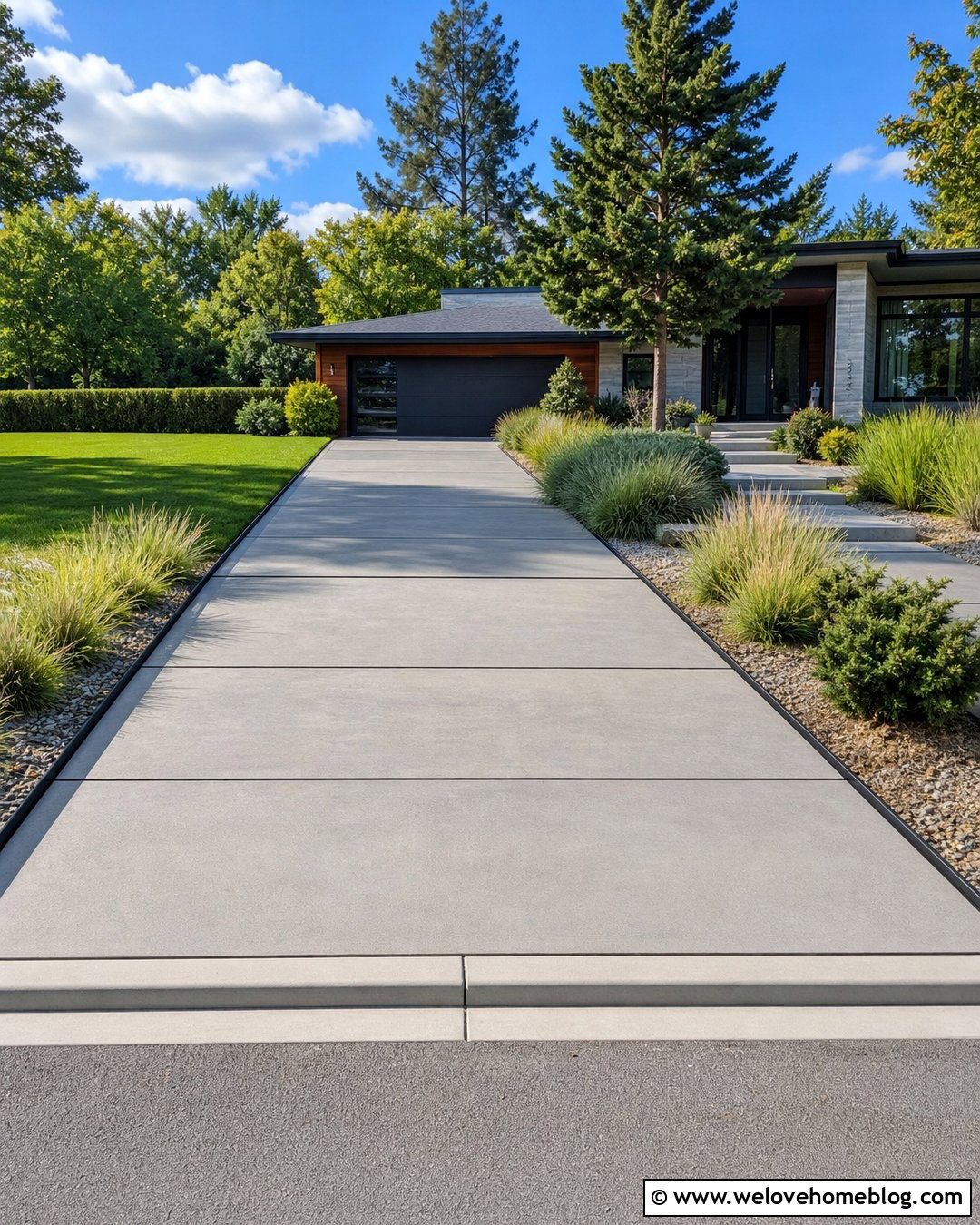
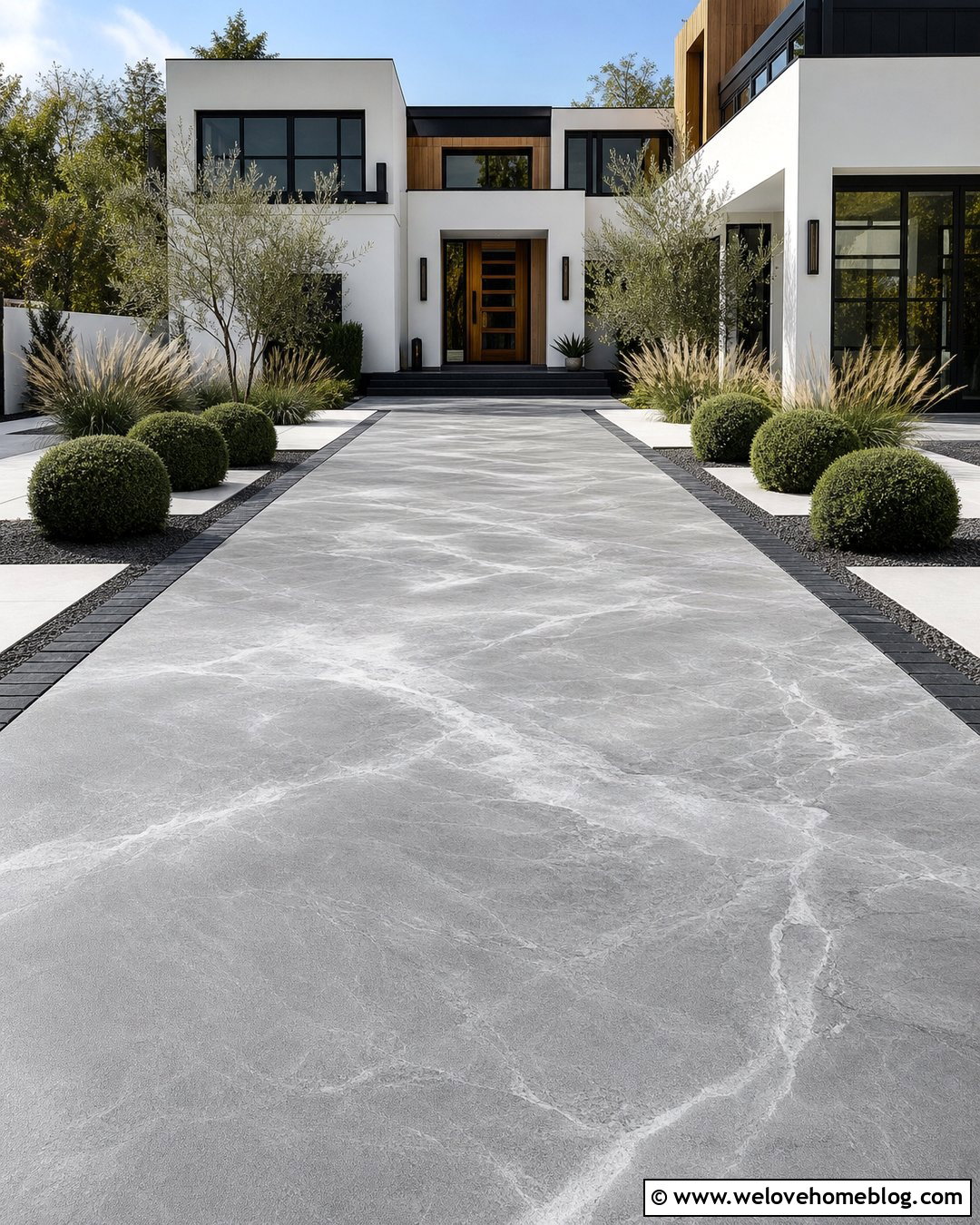
Smooth poured concrete creates a clean driveway that works especially well with modern and midcentury homes. Divide the surface into large rectangular slabs using narrow control joints for an orderly architectural look. A straight layout can visually extend the lines of a low-profile house, while dark steel edging gives the pale concrete a crisp boundary. Add ornamental grasses, compact evergreen shrubs, and a simple concrete walkway beside the driveway. The relatively plain surface makes landscaping and exterior materials stand out rather than compete for attention. Choose a warm gray or soft greige concrete instead of stark white to reduce glare. Ask the installer about the appropriate finish and joint placement, since an overly slick surface may be unsuitable for wet or sloped locations.
2. Broom Finished Concrete Driveway Flooring
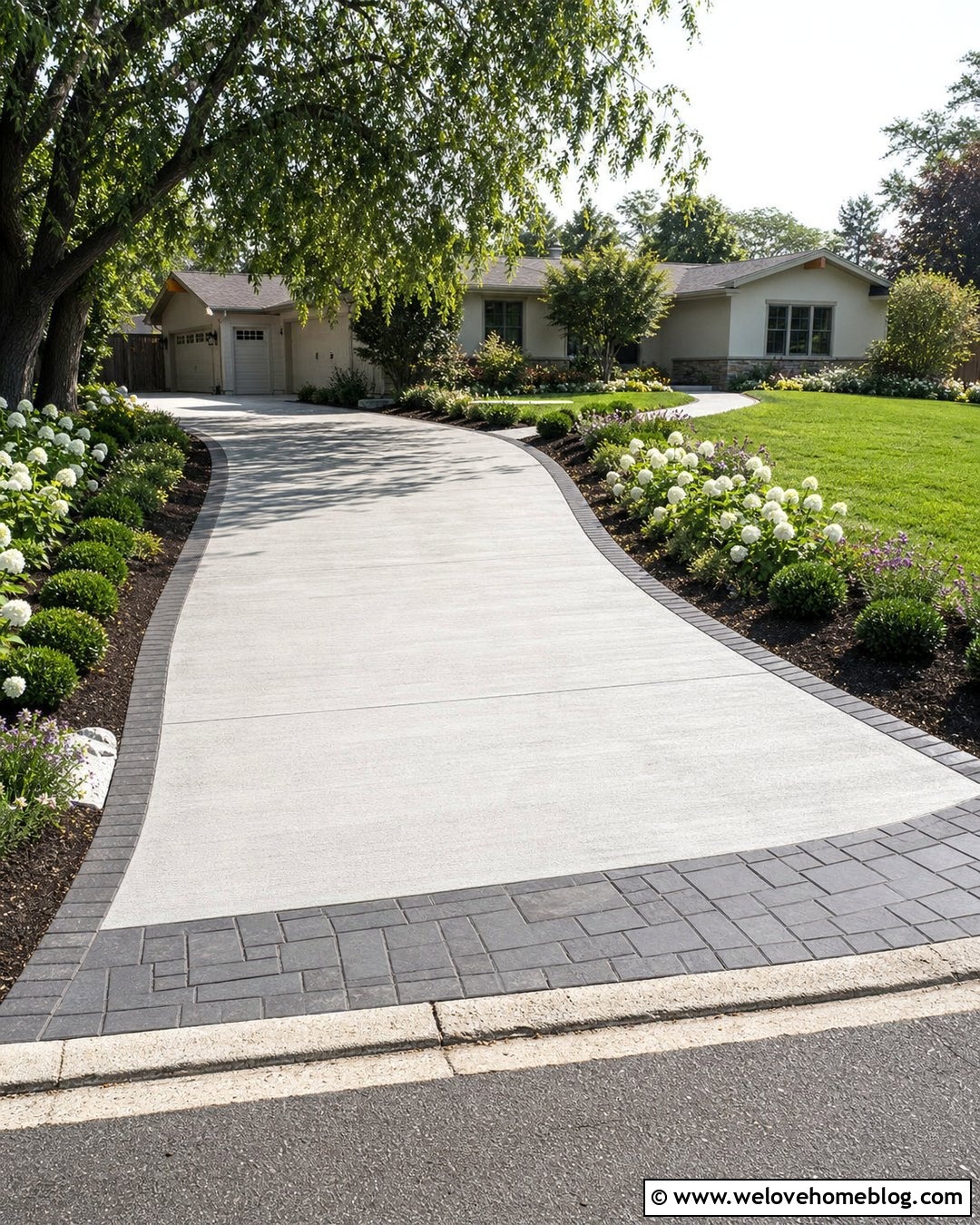
A broom-finished concrete driveway has fine surface lines that create a practical, understated appearance. It suits ranch houses, suburban colonials, and modern farmhouses because it feels clean without looking overly decorative. Use a gently curved layout to soften a wide front yard, then frame the concrete with charcoal paver edging. Mulched planting beds filled with hydrangeas, dwarf boxwoods, and flowering perennials can follow the same curve. Near the sidewalk, add a wider paver apron to make the entrance easier to notice. The broom texture should run consistently across each section for a professional result. Light gray concrete hides dust better than bright white surfaces, while a contrasting border helps separate the driveway from the lawn and protects its visual shape.
3. Exposed Aggregate Driveway Flooring
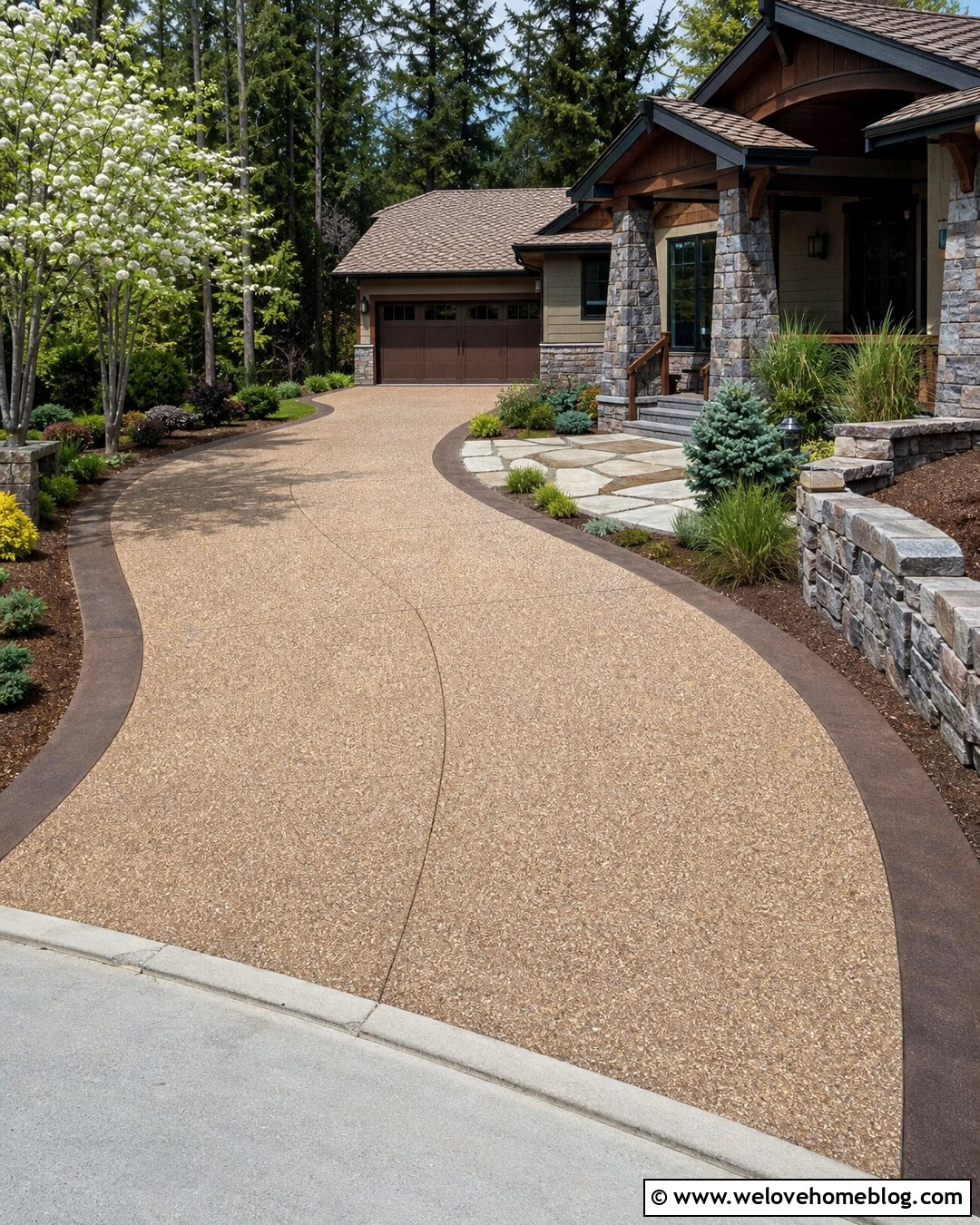
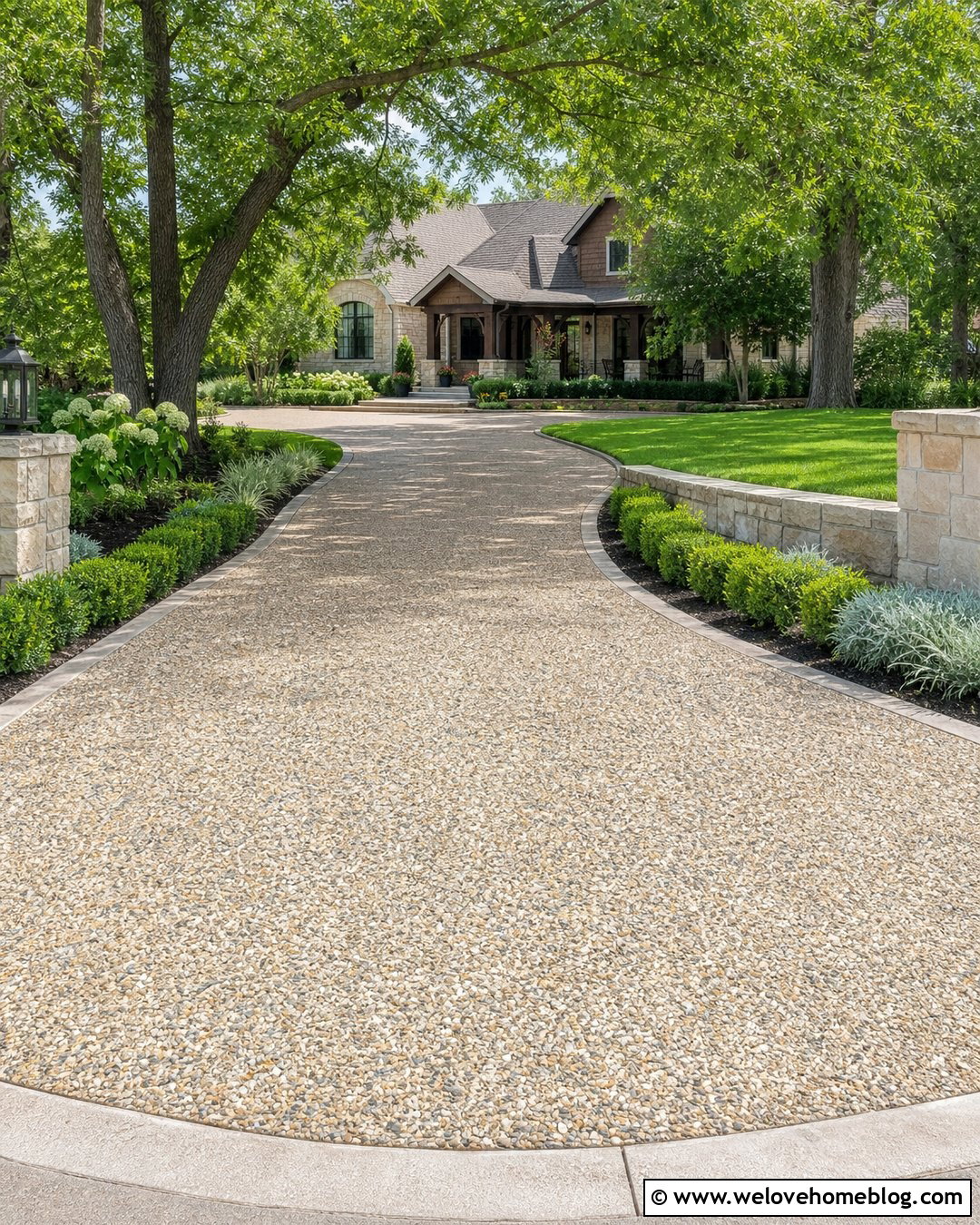
Exposed aggregate brings natural color and texture to concrete without requiring individual stones to be laid across the entire driveway. Small pebbles become visible at the surface, producing a speckled finish that can complement stone veneer, brick, or wood siding. For a cohesive Craftsman-style entrance, use warm tan aggregate on a curved driveway with dark brown concrete bands at the edges. Repeat the driveway colors in a flagstone walkway and low retaining wall. Layered beds of ornamental grasses, junipers, and small flowering trees will keep the textured paving from feeling too hard. Select an aggregate blend that relates to the house facade. Samples should be viewed outdoors because wet stones, direct sunlight, and shade can noticeably change the flooring’s apparent color.
4. Stamped Stone Concrete Driveway Flooring
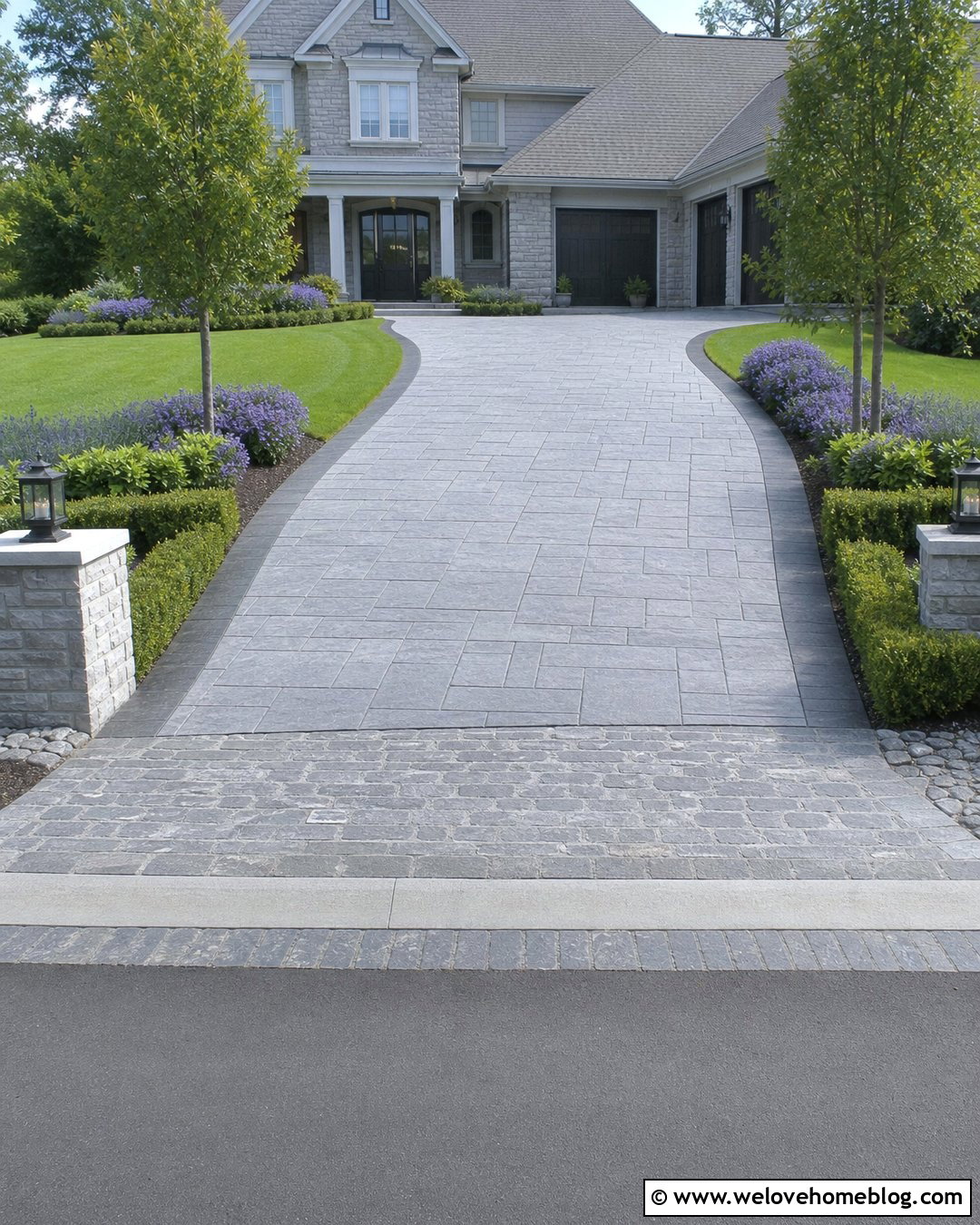
Stamped concrete can give a driveway the pattern of cut stone while maintaining a continuous concrete base. A large ashlar slate pattern feels more convincing than a small, overly busy stamp on a broad surface. Use medium gray concrete with subtle charcoal shading, then create a smooth contrasting border around the driveway. This flooring works beautifully on a sweeping approach to a traditional two-story house. Plant clipped boxwoods near the entrance and loosen the composition with lavender, salvia, and small ornamental trees. Keep the color variation restrained so the surface does not appear artificial. Pattern alignment is particularly noticeable near garage doors, walkways, and curved edges, making careful installation important. A cobblestone-look apron can provide another layer of detail without covering the full driveway.
5. Stained Concrete Driveway Flooring
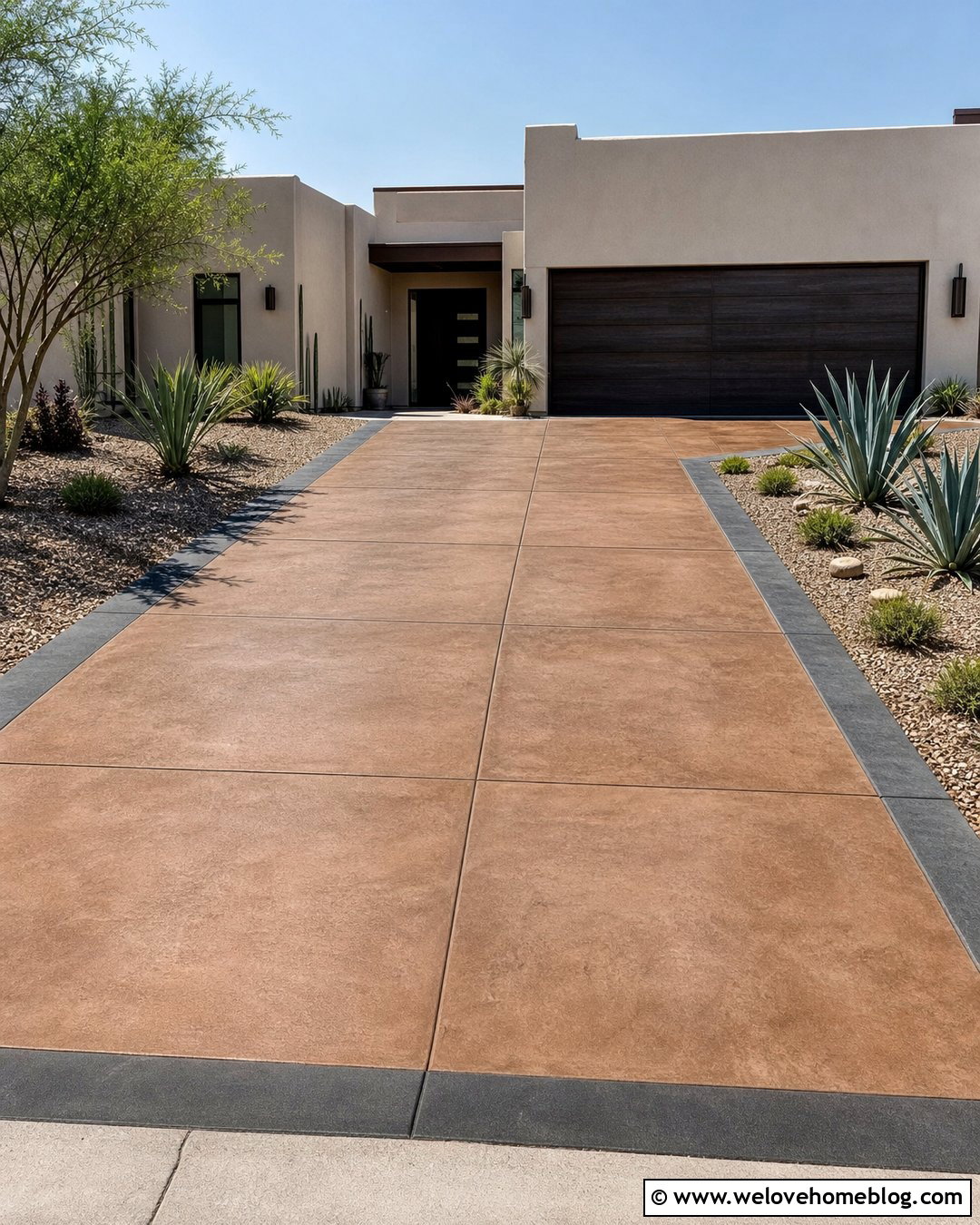
Stained concrete offers more warmth than standard gray paving and can connect the driveway to brick, stucco, or natural wood details on the house. Consider a muted sandstone-brown stain over a lightly textured concrete surface. Divide the driveway into broad squares and surround it with a dark charcoal border for definition. A straight approach works well for a Southwestern or contemporary stucco home, especially when paired with gravel planting beds, agaves, yuccas, and drought-tolerant grasses. Color should look softly varied rather than perfectly uniform. Test the stain on the actual concrete whenever possible because the final shade can respond to the slab’s condition and composition. Continue one flooring color into the front walkway to make the driveway and entrance feel intentionally connected.
6. Concrete Slab And Grass Strip Driveway Flooring
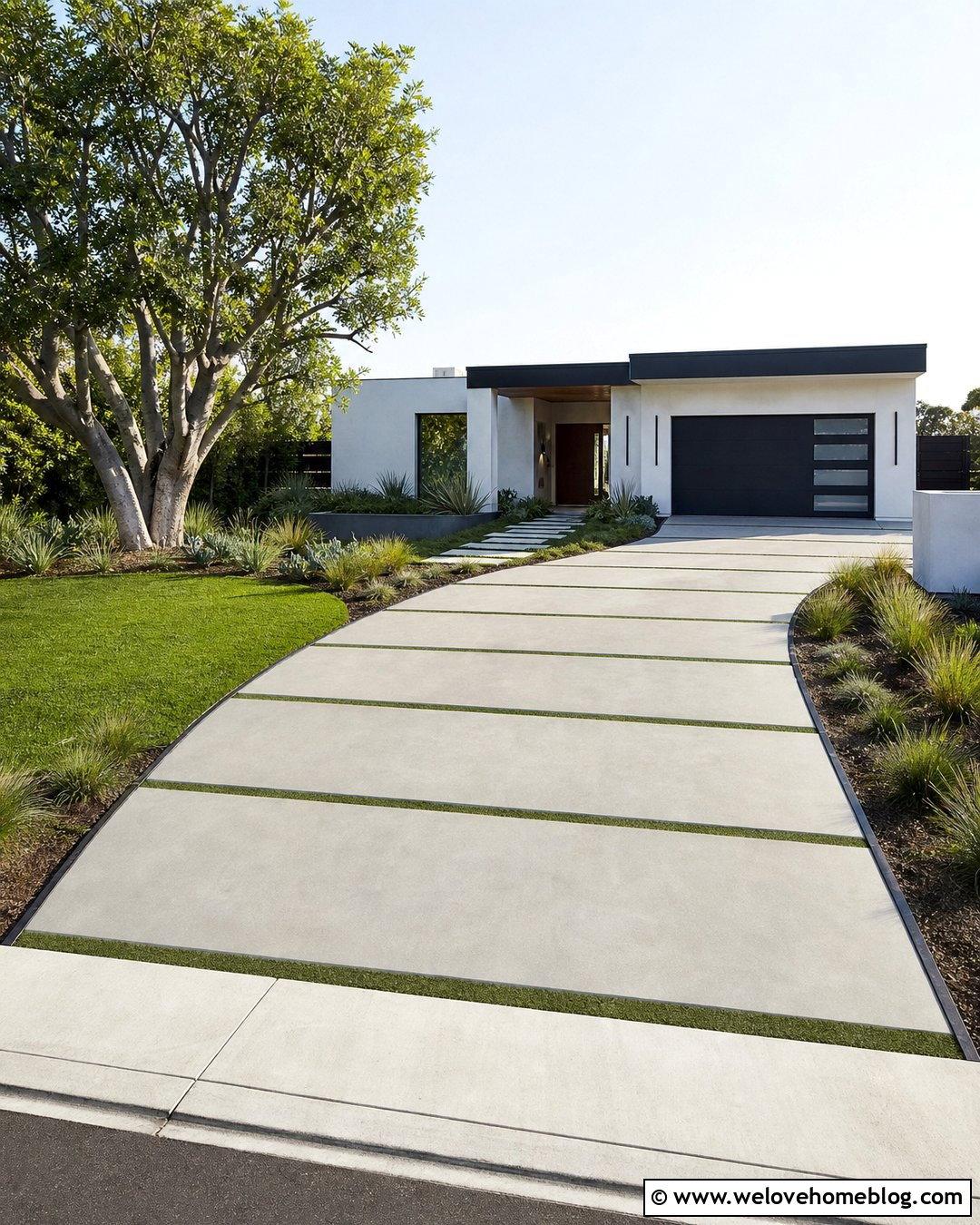
Large concrete slabs separated by narrow grass strips create a lighter alternative to one uninterrupted paved area. This arrangement looks best on a straight or gently curved driveway leading to a modern home. Keep the gaps consistent and select a durable lawn type suited to local growing conditions and vehicle exposure. The green joints can connect visually with a broad front lawn, while simple steel edging prevents nearby planting beds from spreading into the driveway. Use large slabs instead of many small blocks to maintain a calm, uncluttered composition. The base and drainage still require careful planning, especially where the strips may collect water. Complete the look with rectangular stepping stones, low grasses, and one sculptural tree near the house for balanced modern curb appeal.
7. Interlocking Concrete Paver Driveway Flooring
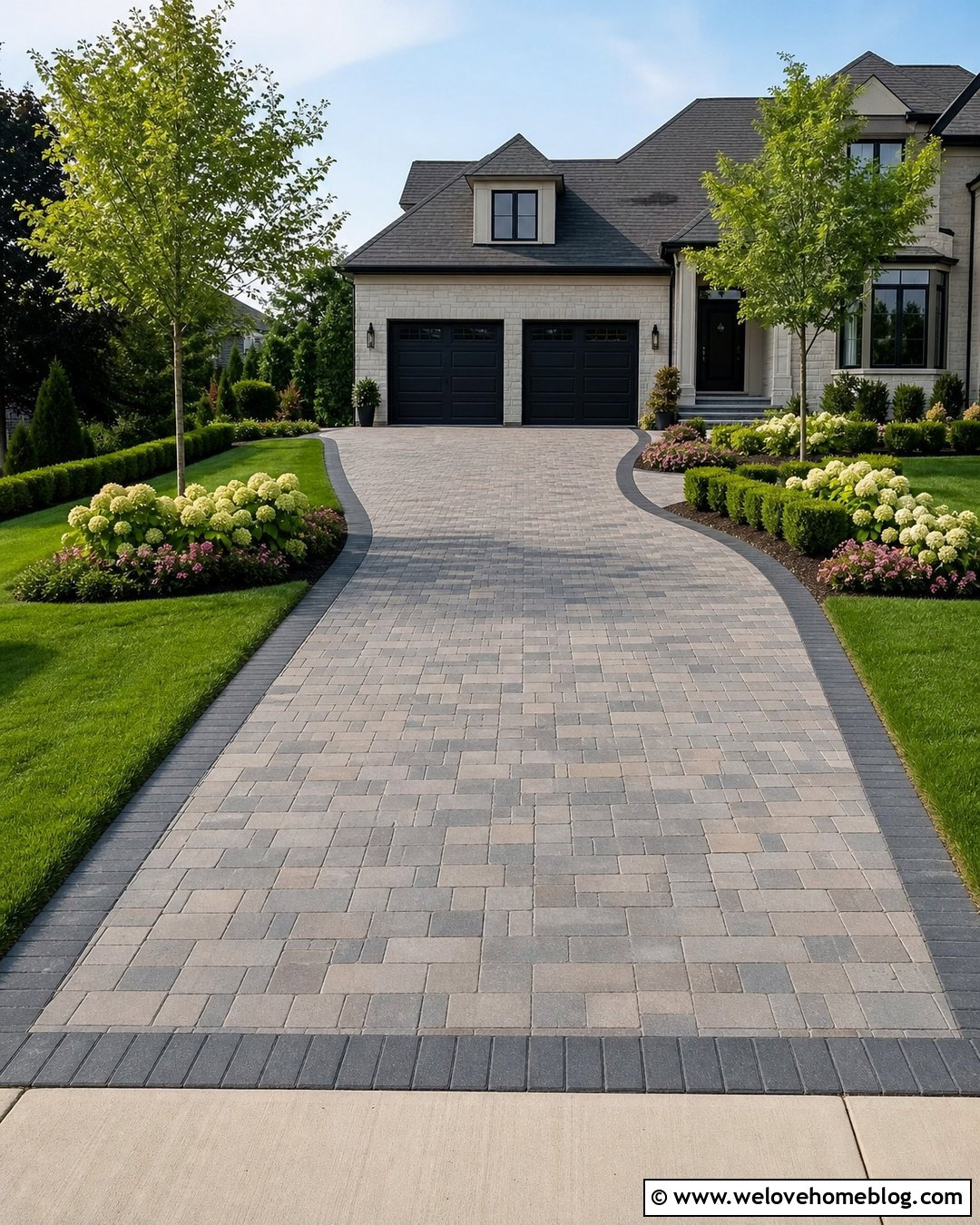
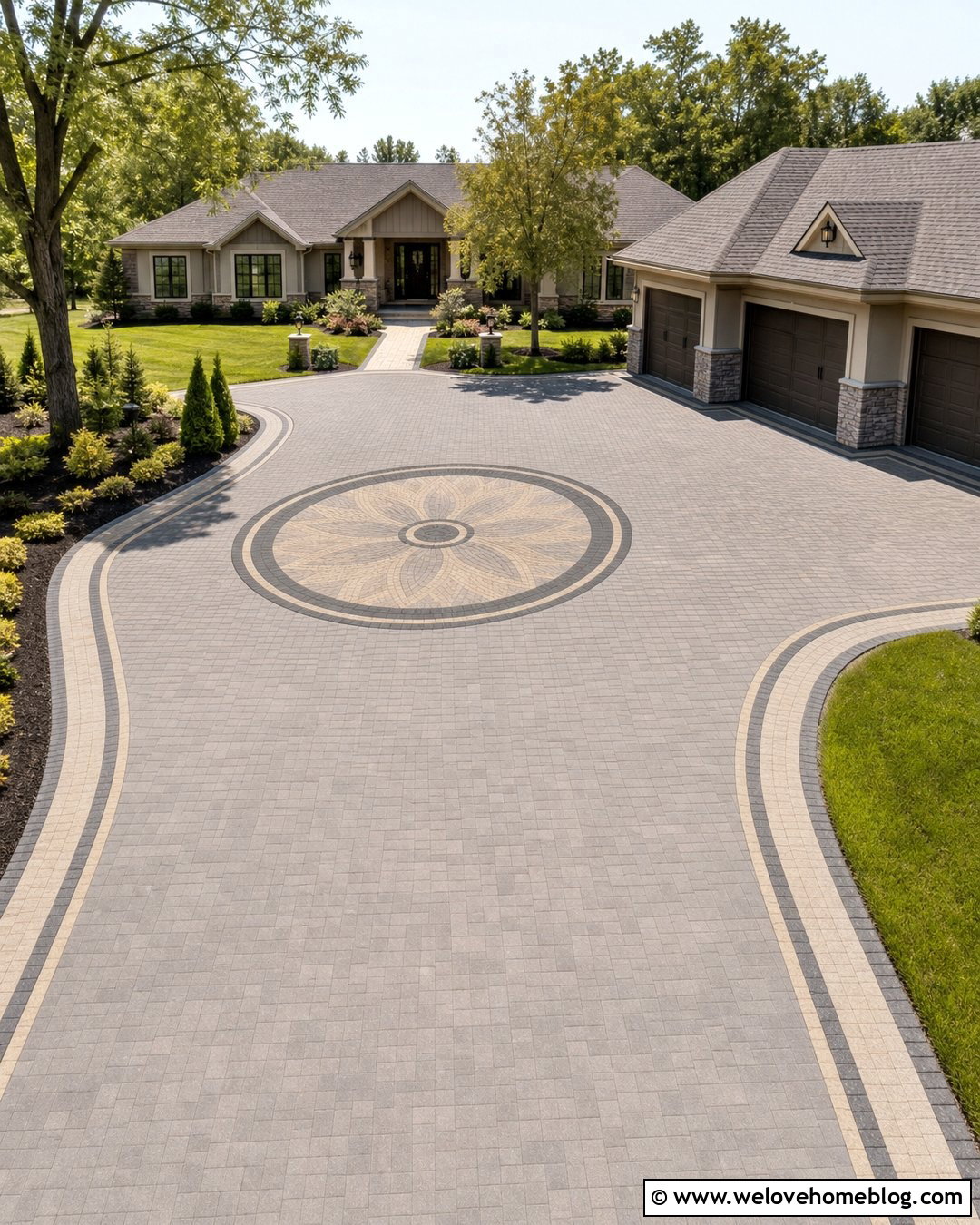
Interlocking concrete pavers provide a structured surface with numerous possibilities for color and pattern. For a timeless suburban driveway, choose medium-size rectangular pavers in blended gray and taupe tones. Lay them in a running bond or modified herringbone pattern, then install a darker soldier-course border around the perimeter. A wide, gently flared entrance can make the driveway feel welcoming without consuming the entire yard. Connect it to a matching front walkway and use curved planting beds to soften the straight paver lines. Boxwoods, hydrangeas, and a neatly maintained lawn suit the tailored appearance. The pavers should be rated for vehicular use and installed over a properly prepared base. Save strongly contrasting colors for the border so the main surface remains visually calm.
8. Large Format Concrete Paver Driveway Flooring
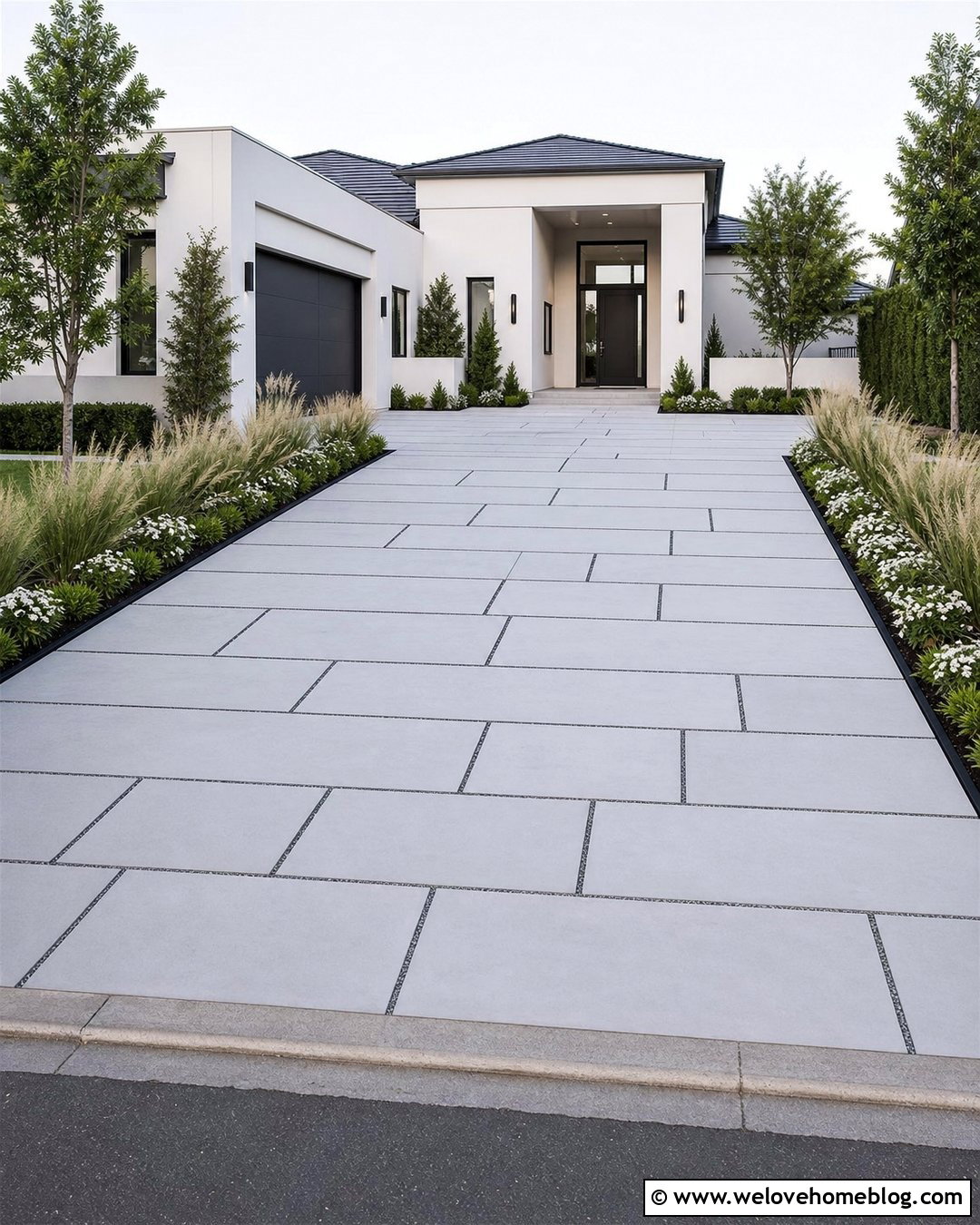
Large-format concrete pavers create broad, simple lines that complement contemporary architecture. Choose oversized rectangular units in a pale gray tone and arrange them in a staggered pattern across a wide straight driveway. Narrow joints filled with dark aggregate will emphasize each paver without creating a distracting grid. Border the surface with black metal edging and linear beds of feather reed grass, dwarf evergreens, and white flowering perennials. A matching walkway can branch from the driveway at a clean right angle. This design is most effective when the paver scale relates to the width of the garage and facade. Avoid adding too many colors or decorative inlays. The strong proportions, precise installation, and restrained landscaping should provide most of the driveway’s visual interest.
9. Permeable Concrete Paver Driveway Flooring
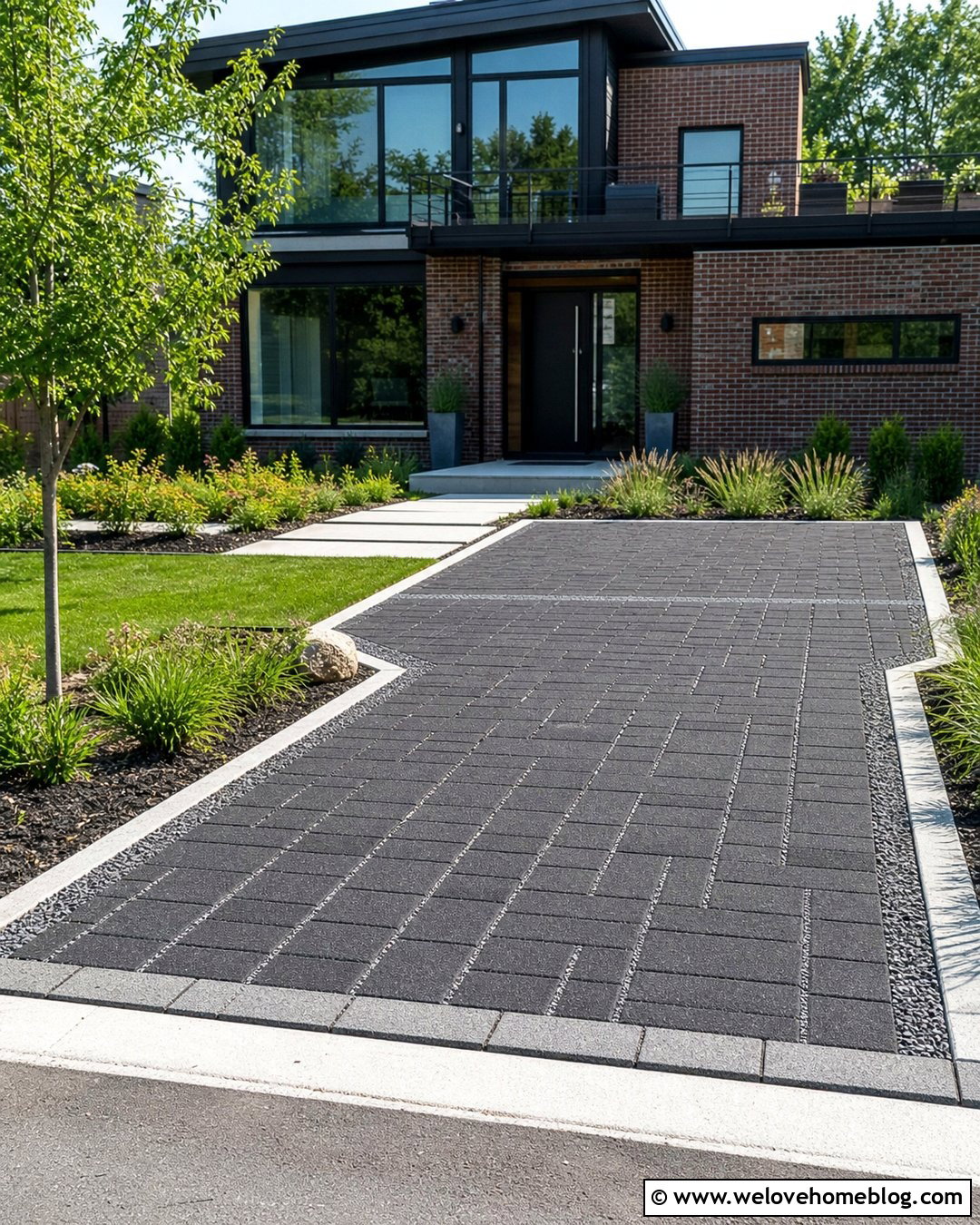
Permeable concrete pavers combine a tailored appearance with joints designed to let water enter the stone-filled layers below. They are different from conventional pavers laid with tightly sanded joints, so the complete base system must be designed for infiltration and site conditions. () Choose charcoal rectangular pavers with visibly wider gray aggregate joints for a contemporary house. A straight driveway with a gently widened parking area keeps the layout functional, while a pale concrete curb contains the edges. Add rain-friendly planting beds with ornamental grasses, low shrubs, and native perennials. A linear channel or planted drainage feature can be integrated where necessary. Before selecting this flooring, confirm local requirements and whether the soil, slope, and groundwater conditions support a permeable installation.
10. Herringbone Brick Driveway Flooring
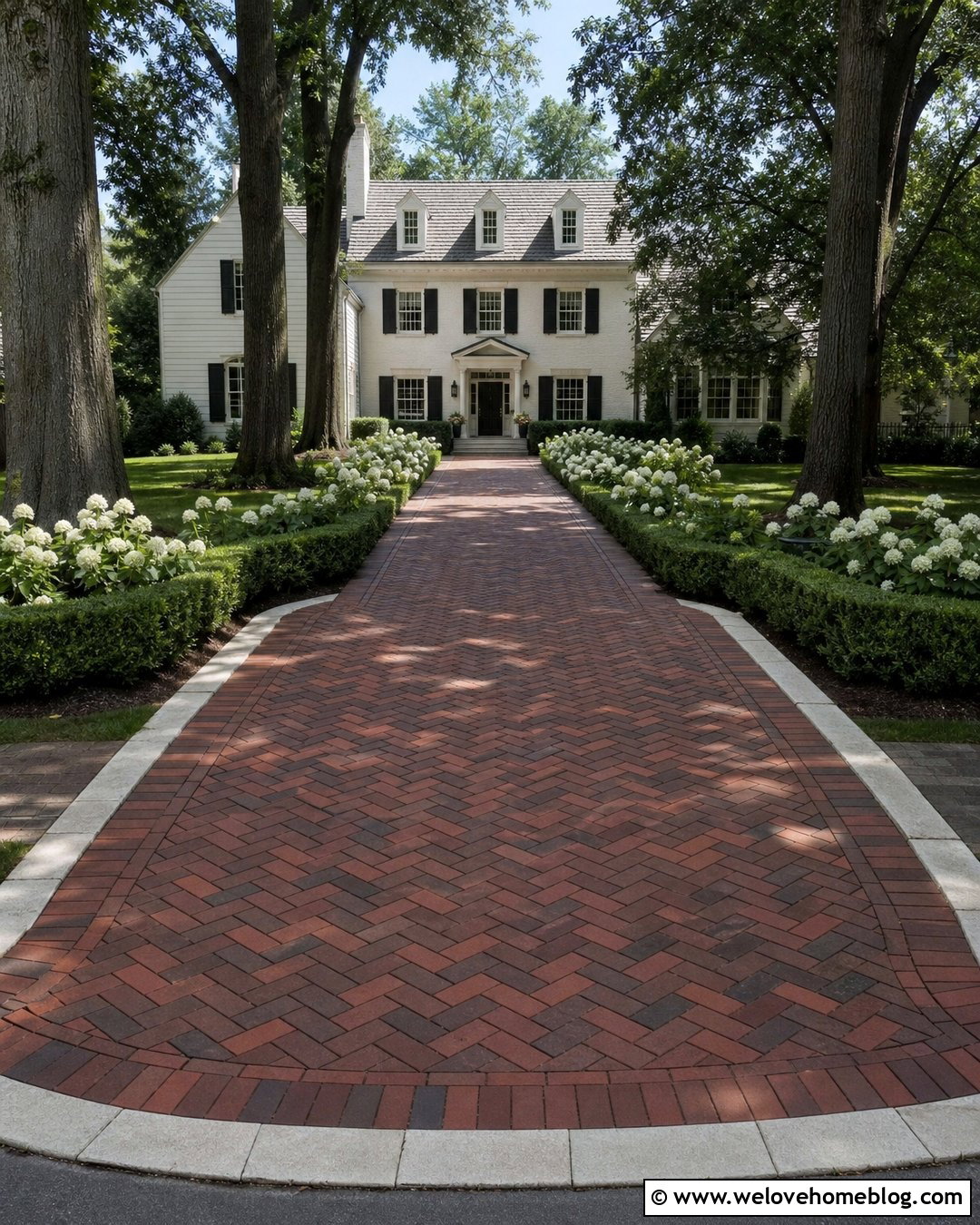
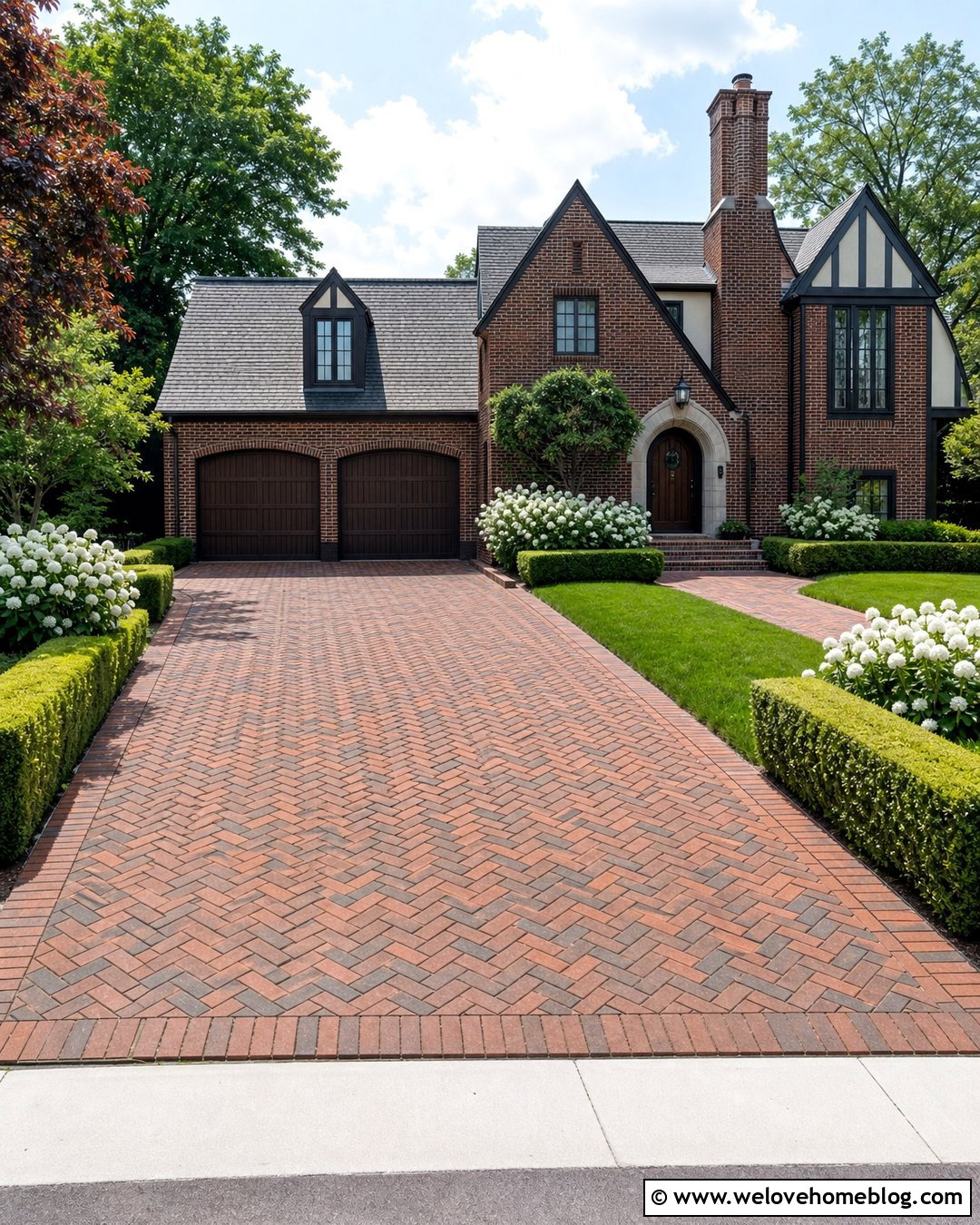
Clay brick pavers laid in a herringbone pattern create a classic driveway with strong visual movement. Deep red and brown bricks pair naturally with colonial, Tudor, and traditional brick houses. Use a straight driveway with a slightly flared entrance, then frame it with bricks installed in a simple soldier course. Cream limestone curbing can brighten the edges and provide contrast against the dark clay tones. Surround the driveway with clipped hedges, mature shade trees, and white flowering shrubs for an established appearance. A herringbone arrangement is particularly suitable visually because the angled pattern breaks up long straight runs. Continue the border along the front walkway, but change the walkway to a running bond so each area remains distinct. Slight color variation gives the flooring authentic depth.
11. Basketweave Brick Driveway Flooring
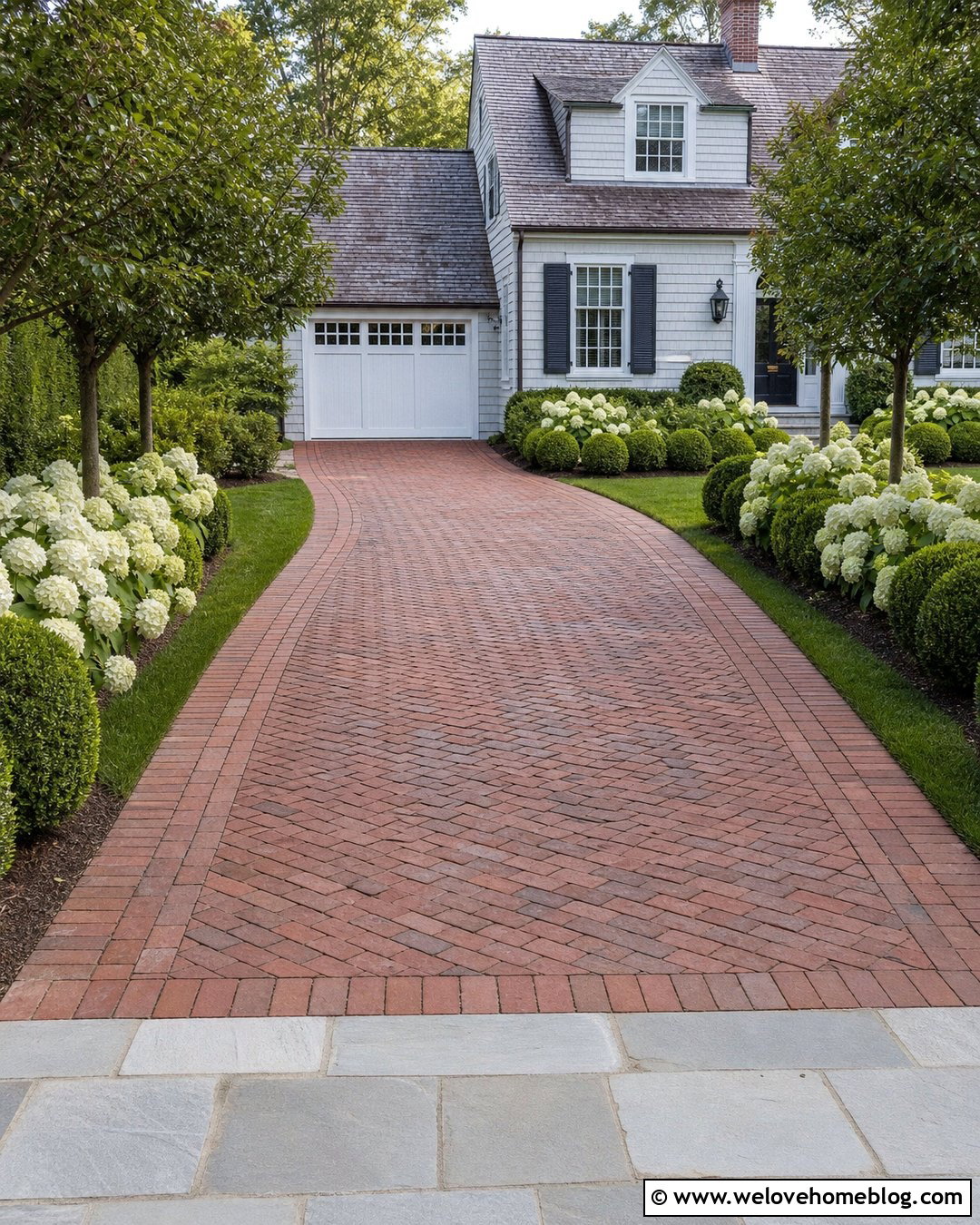
A basketweave brick driveway feels orderly, traditional, and slightly less directional than herringbone paving. The repeating pairs of bricks create a detailed surface that works best on a compact driveway where the pattern can be appreciated from the curb. Choose weathered red clay brick with subtle charcoal variation, then add a double soldier-course border. A short curved approach to a Cape Cod house can be framed with white hydrangeas, rounded boxwoods, and a narrow lawn strip. Use matching brick for the walkway but separate it from the driveway with a limestone threshold. Because basketweave is visually active, keep gates, edging, and plantings relatively simple. Careful alignment around curves and garage entrances helps the geometric pattern feel deliberate rather than uneven or crowded.
12. Reclaimed Brick Driveway Flooring
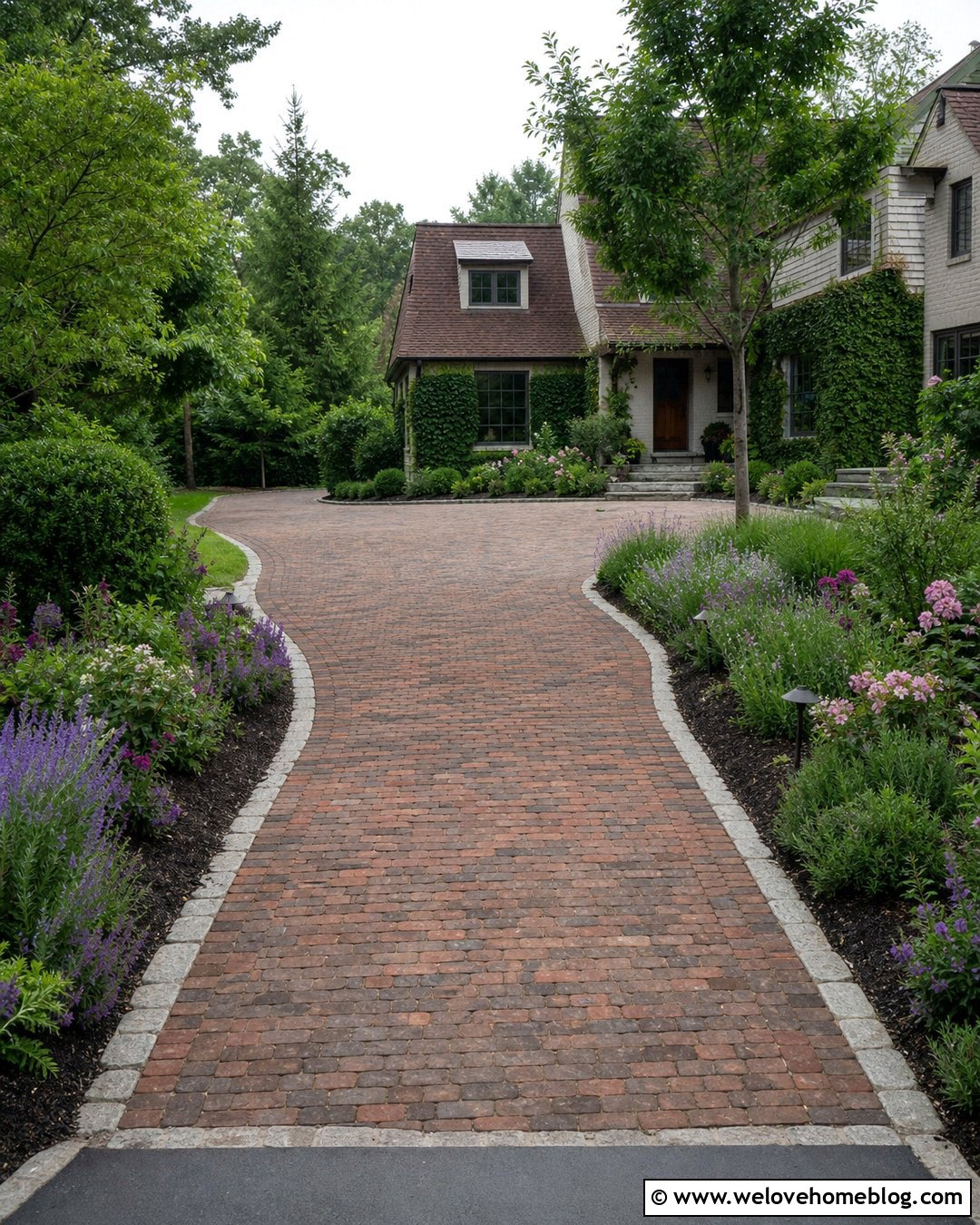
Reclaimed brick introduces softened colors, irregular edges, and a sense of age that suits historic or cottage-inspired homes. Blend muted reds, browns, and occasional charcoal bricks instead of using a perfectly uniform batch. A gently winding driveway can enhance the relaxed character, especially when edged with weathered granite setts. Plant lavender, catmint, roses, and low evergreen shrubs in loose beds along the approach. Near the garage, widen the brick surface into a simple rectangular parking court. Reclaimed units must be suitable for exterior paving and vehicle loads, since not every old brick is appropriate for a driveway. Keep transitions level and avoid excessively uneven pieces. The finished flooring should feel naturally aged while still providing a stable, carefully constructed driving surface.
13. Granite Cobblestone Driveway Flooring
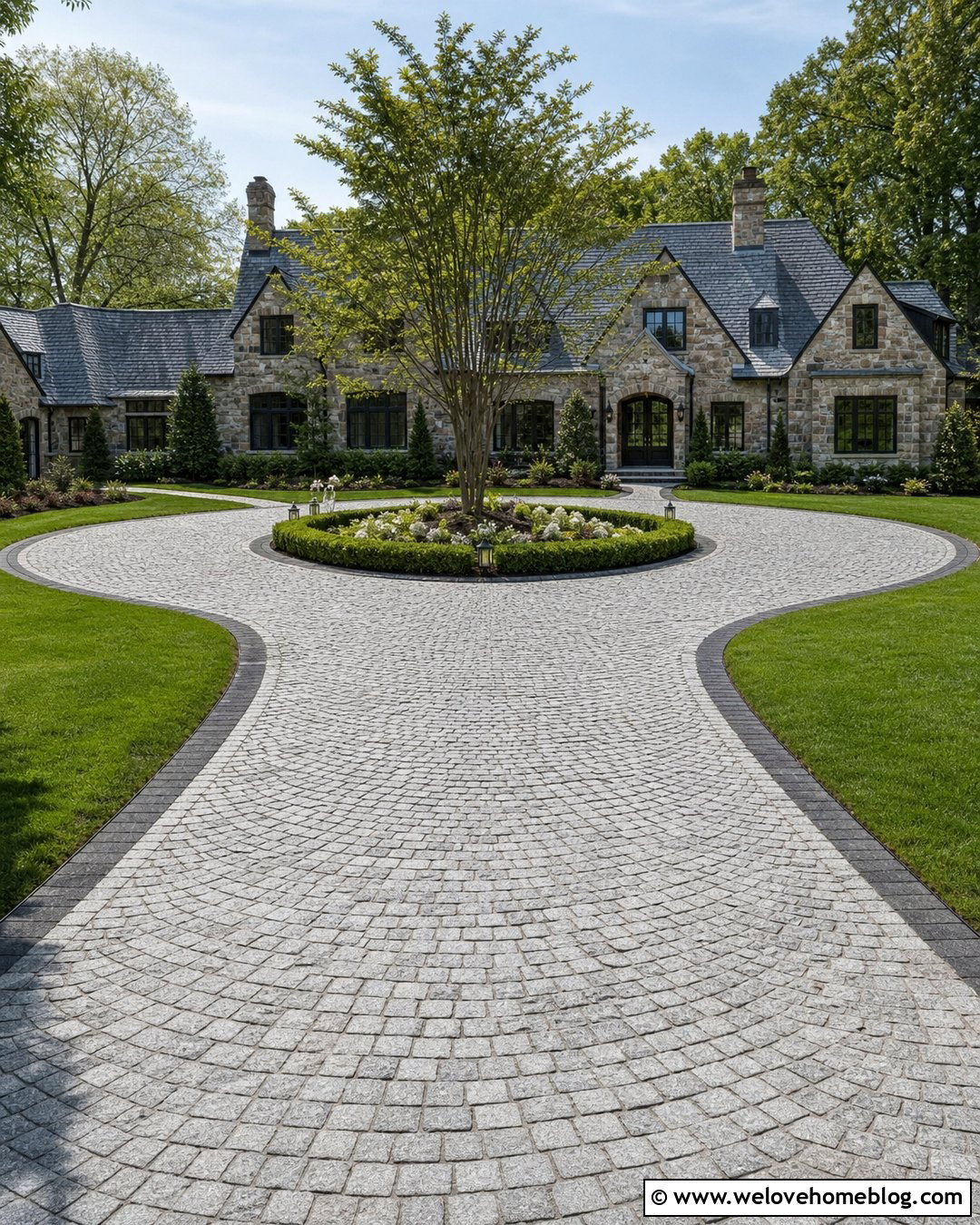
Granite cobblestone creates a substantial driveway with rich texture and strong old-world character. Use rectangular gray setts in a fan or running pattern for a large circular approach to a stone colonial house. A slightly darker granite border can define the curves without introducing another material. Place a landscaped island at the center with a multi-stem tree, low boxwoods, and seasonal flowers. Wide lawn areas around the outer edge will prevent the heavily textured stone from overwhelming the property. Cobblestone is a premium, labor-intensive surface, so it can also be limited to an apron or parking court when a full installation is impractical. Select relatively even stones for smoother vehicle and pedestrian movement, while retaining enough variation to preserve the material’s distinctive character.
14. Sandstone Paver Driveway Flooring
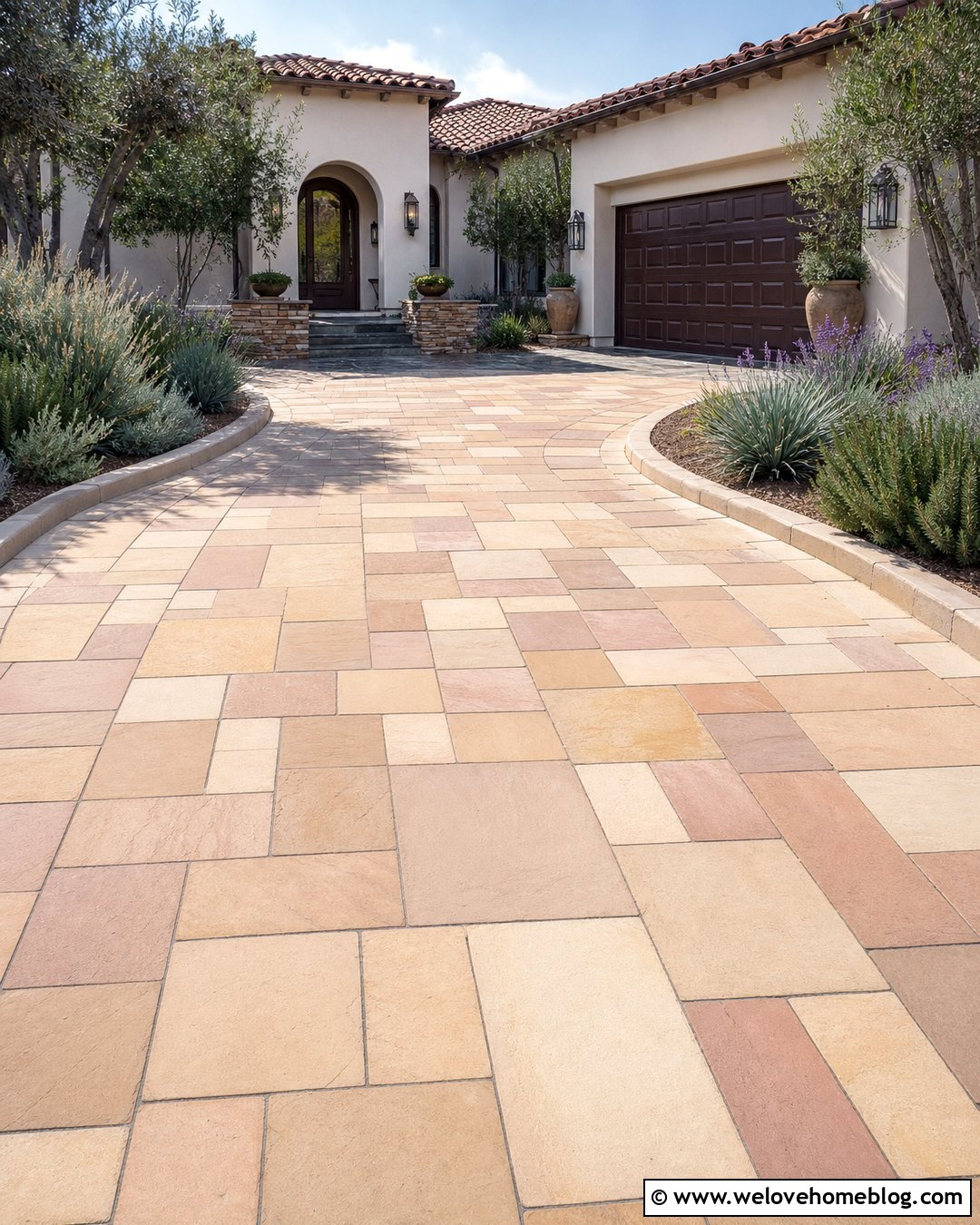
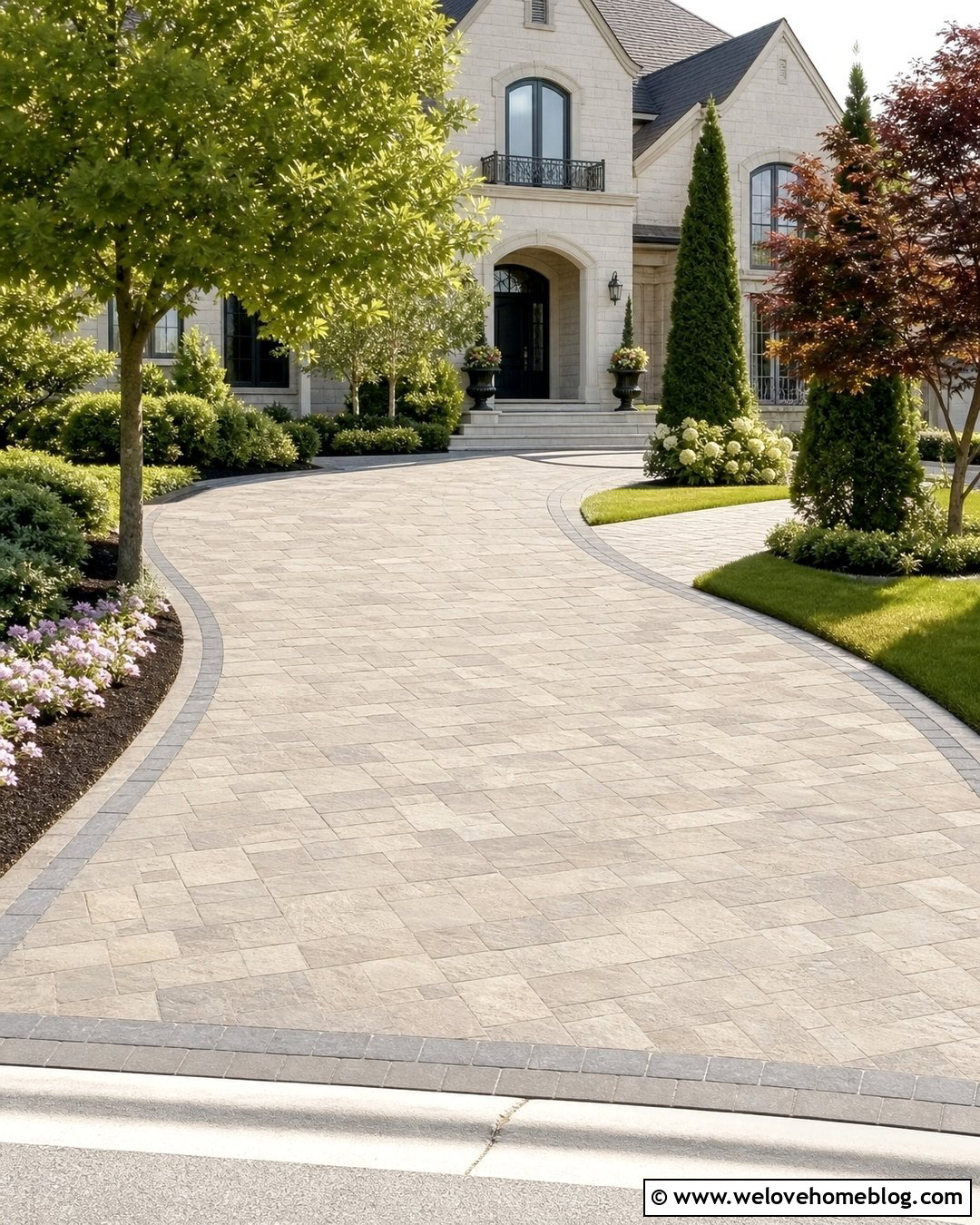
Sandstone pavers bring warm beige, buff, and muted rose tones to a driveway. They work particularly well with stucco, stone, and Mediterranean-inspired houses. Choose thick pavers intended for driveway use and arrange them in a mixed rectangular pattern. A curved layout can follow the natural shape of the front yard, while matching sandstone curbs hold each side. Use drought-tolerant planting beds with rosemary, lavender, ornamental grasses, and silvery foliage to reinforce the warm palette. A darker stone apron at the sidewalk will visually anchor the entrance. Sandstone can vary widely in density, texture, and weather resistance, so material selection should match the climate and expected traffic. Keep joint widths consistent to give the varied stone sizes a unified, professionally planned appearance.

15. Bluestone Paver Driveway Flooring
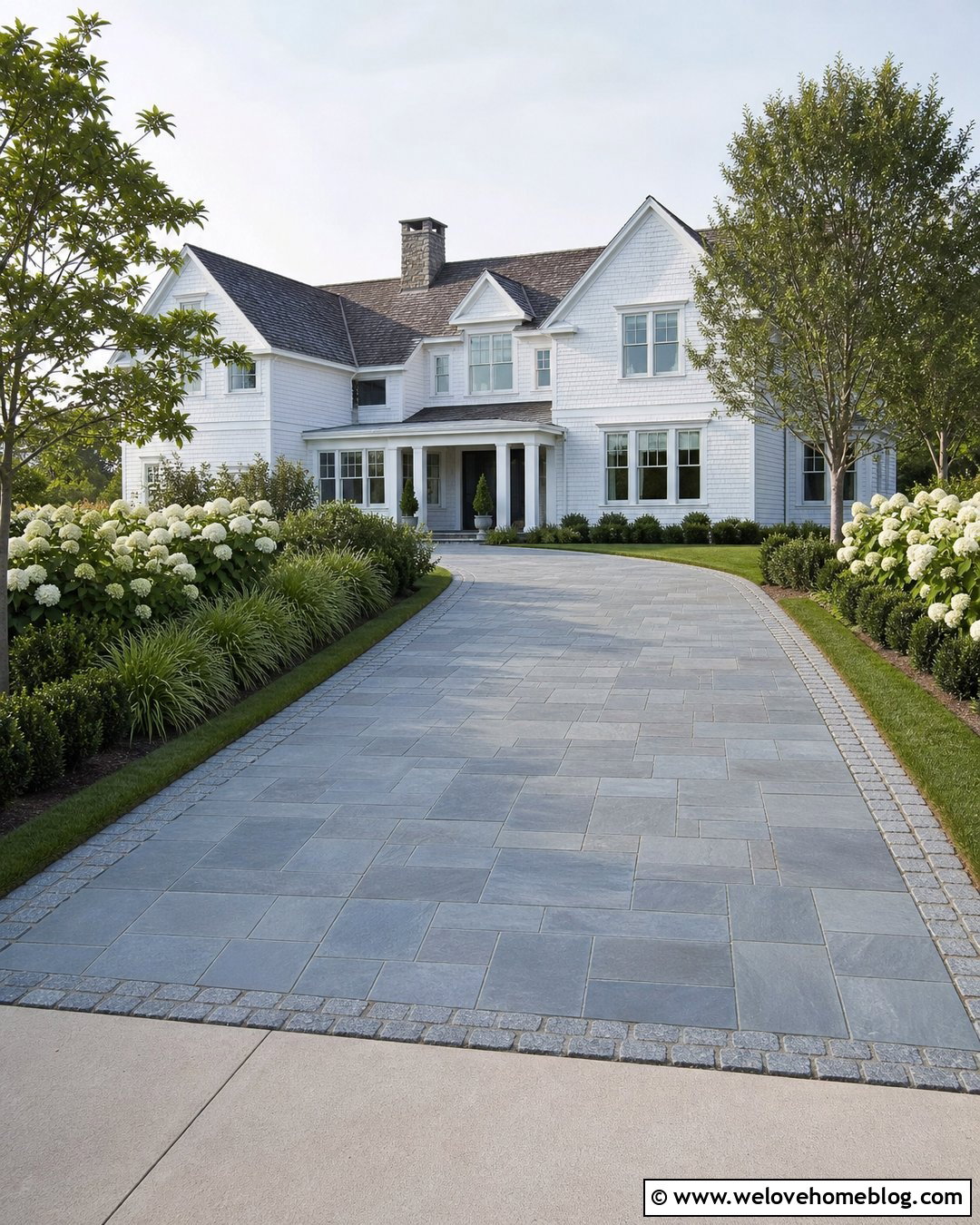
Bluestone driveway pavers create a refined blue-gray surface that pairs beautifully with white, gray, or natural cedar siding. Use large rectangular pieces in a random ashlar layout across a broad, straight driveway. A charcoal cobblestone border can frame the stone and make the lighter blue tones more noticeable. Along the sides, plant white hydrangeas, inkberry hollies, and low grasses for a cool, restrained palette. Connect the driveway to the front steps with a matching bluestone walkway, but vary the slab size to create a subtle transition. Since natural bluestone can display rust, green, and brown undertones, review the intended color range before ordering. A lightly textured finish will look more appropriate outdoors than an overly smooth surface and can support a more natural appearance.
16. Flagstone And Gravel Driveway Flooring
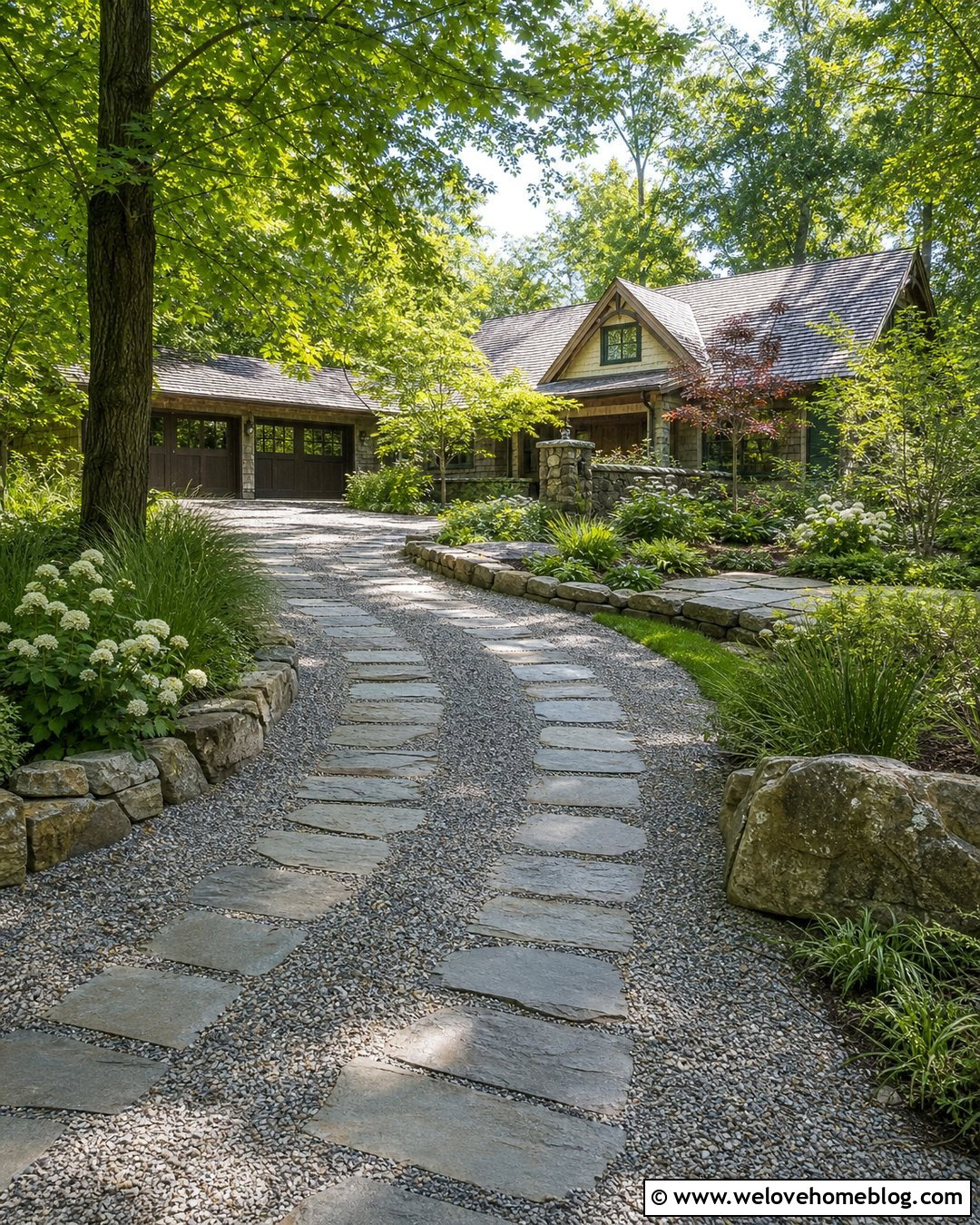
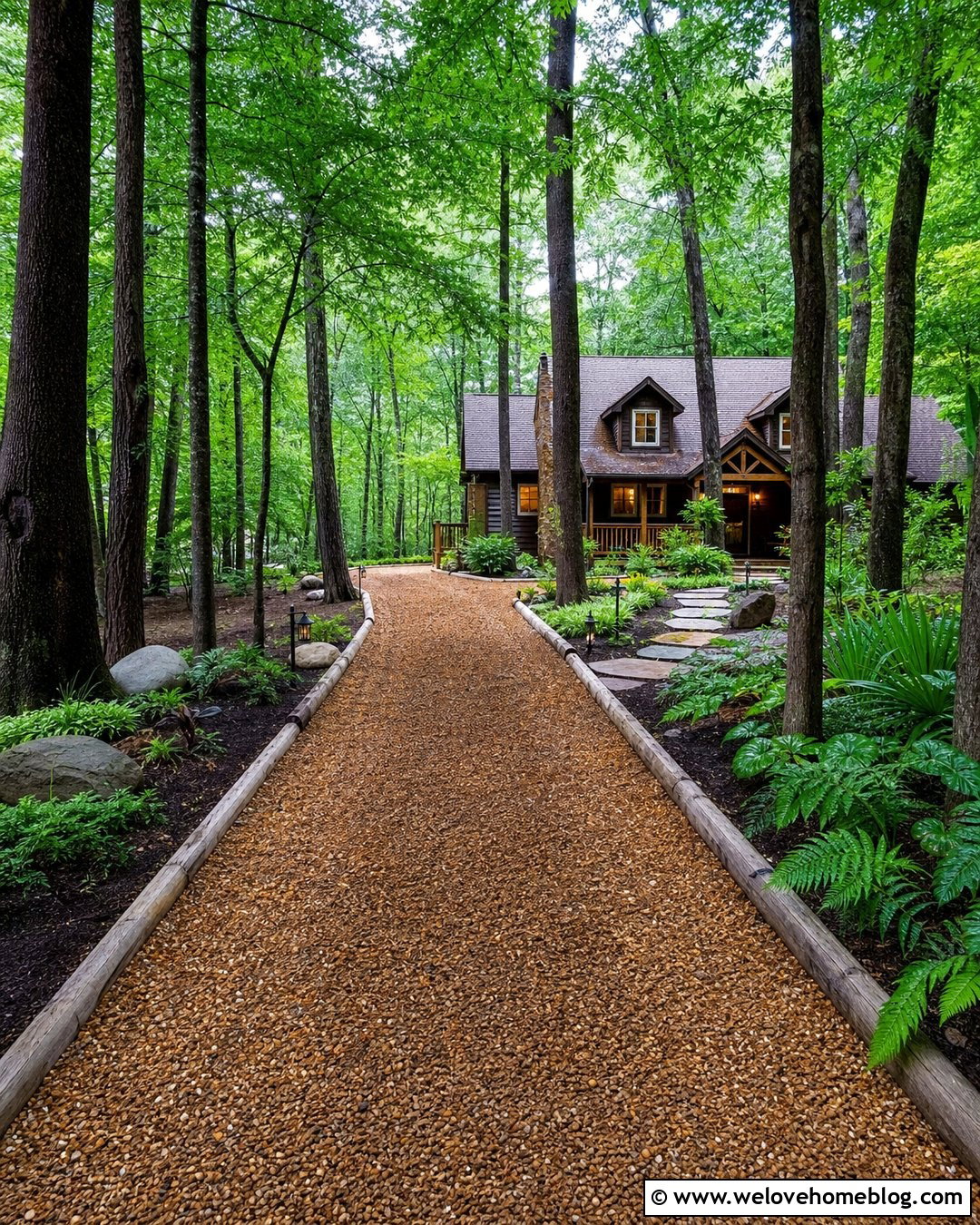
Flagstone and gravel can be combined to create a relaxed country driveway with a clearly defined driving surface. Place wide flagstone wheel tracks within compacted gray gravel, leaving a narrow gravel strip through the center. Use irregular fieldstone edging to contain the loose material and connect the driveway with surrounding stone walls. A gently curved approach works well for a cottage, cabin, or rustic ranch house. Frame it with native grasses, flowering shrubs, and mature deciduous trees. The flagstone should be thick, stable, and laid over a driveway-grade base rather than treated like a casual garden path. Keep stone gaps narrow enough to simplify driving and walking. At the garage, transition to a full flagstone parking pad for a cleaner, more practical stopping area.
17. Pea Gravel Driveway Flooring
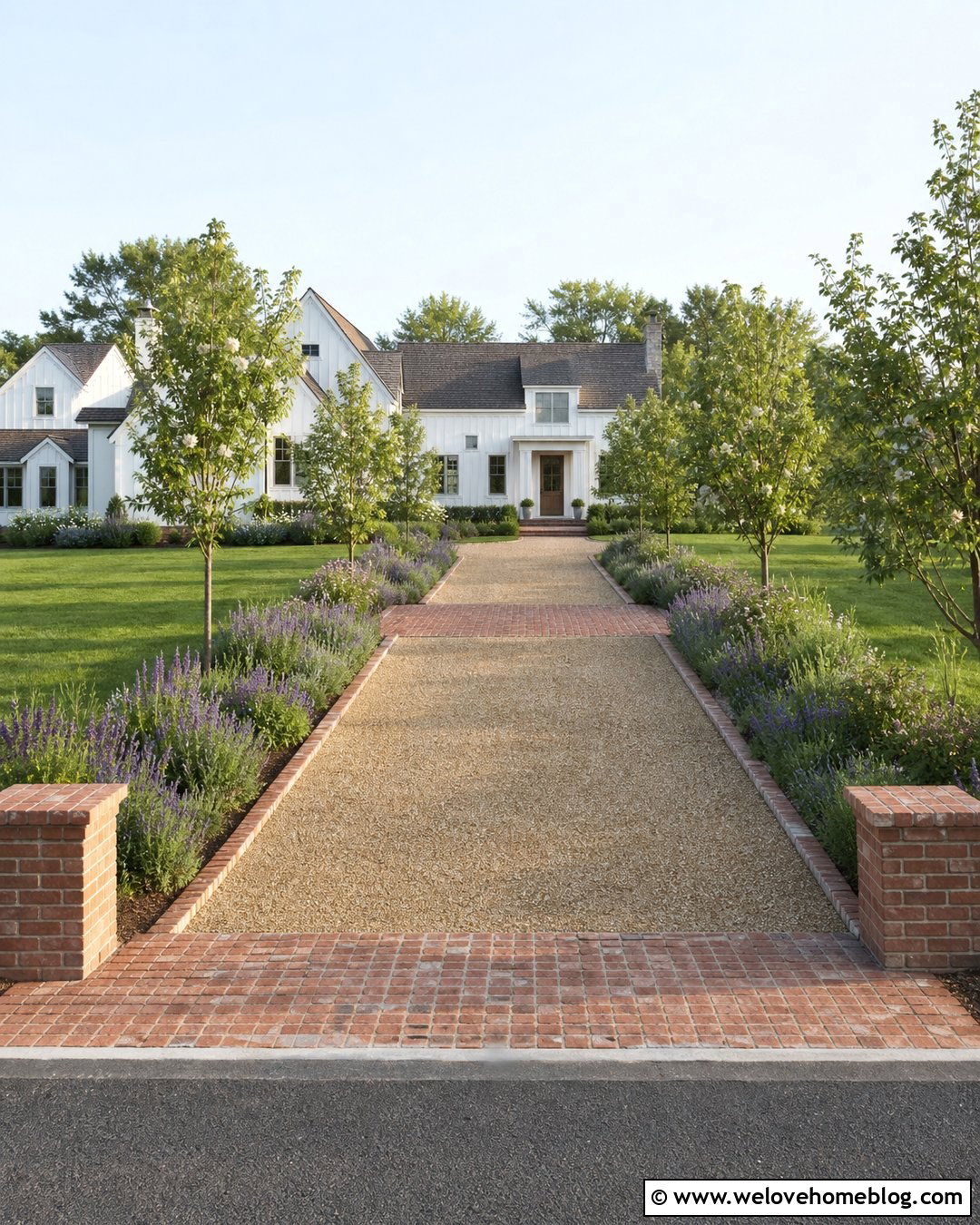
Pea gravel produces a soft, rounded texture and a welcoming informal appearance. Use warm tan pea gravel on a straight driveway leading to a white farmhouse, then contain it with a substantial brick or cobblestone edge. Because rounded stones can migrate more readily than angular aggregate, thoughtful containment and a stable base are especially important. () Add a red brick apron at the road and repeat the brick around a small parking court near the house. Long beds of lavender, catmint, and ornamental pear trees can create a pleasant approach. Keep planting set back slightly so fallen leaves are easier to remove. The contrasting colors of pale gravel, red brick, green lawn, and white siding create a complete country-inspired entrance.
18. Crushed Granite Driveway Flooring
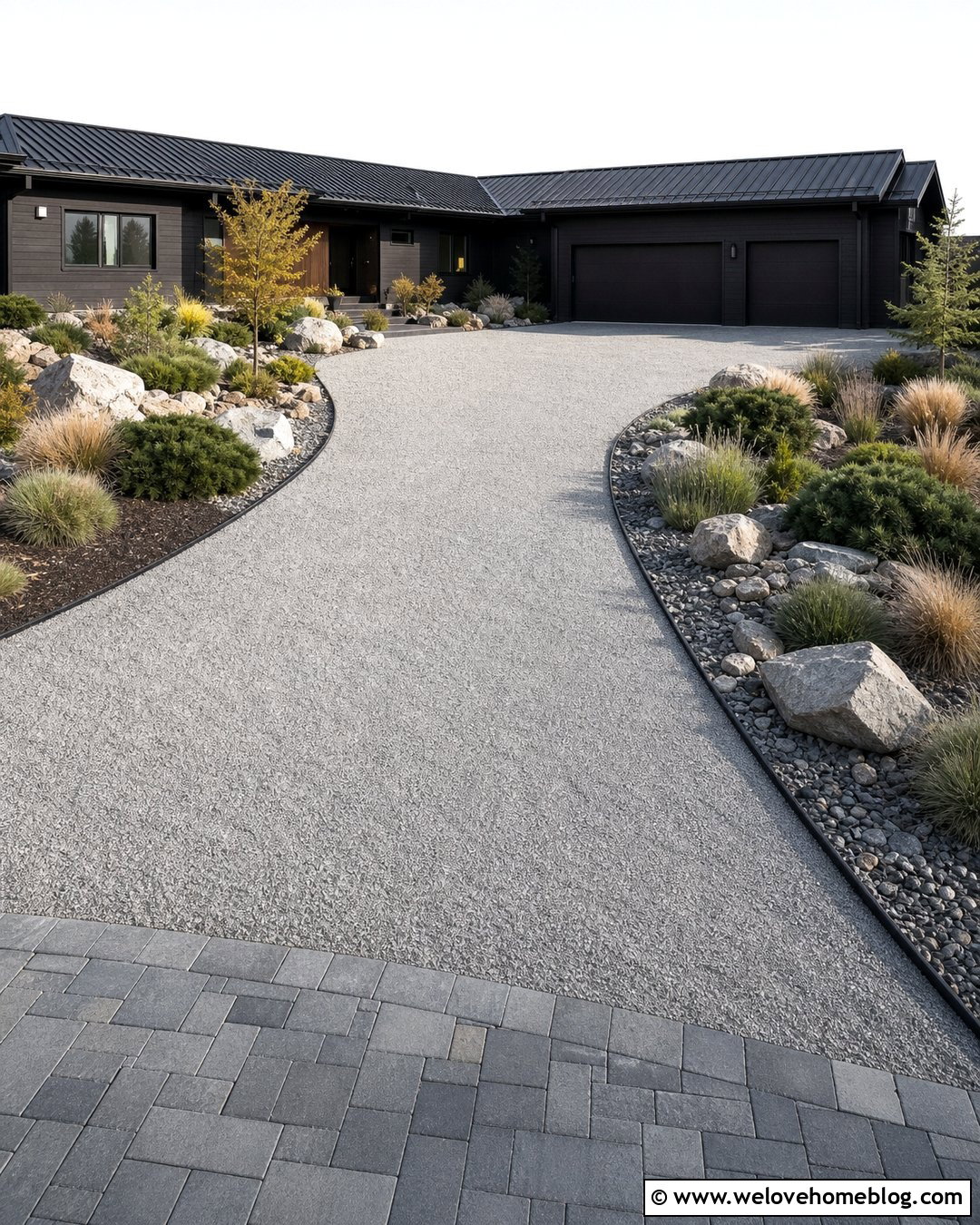
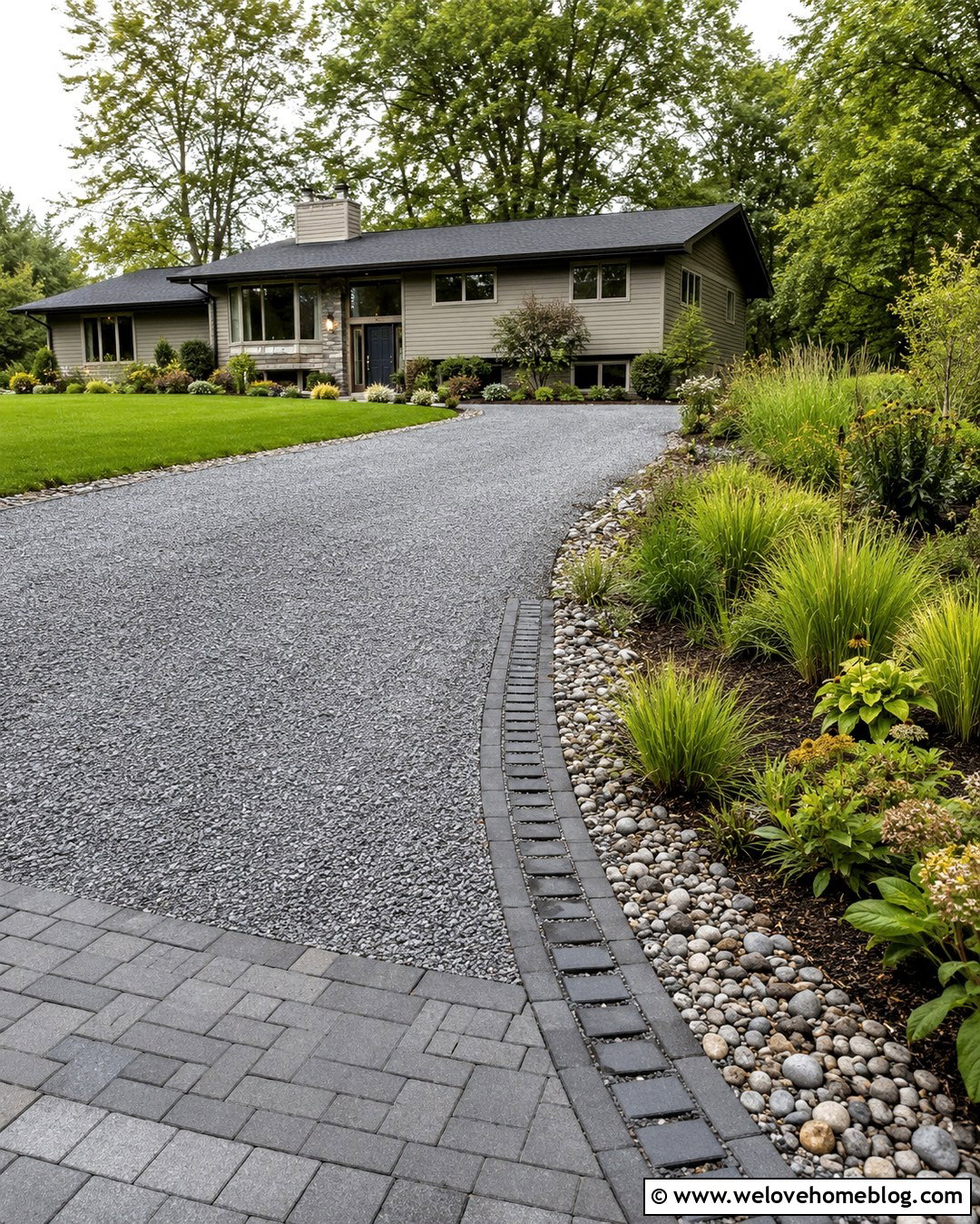
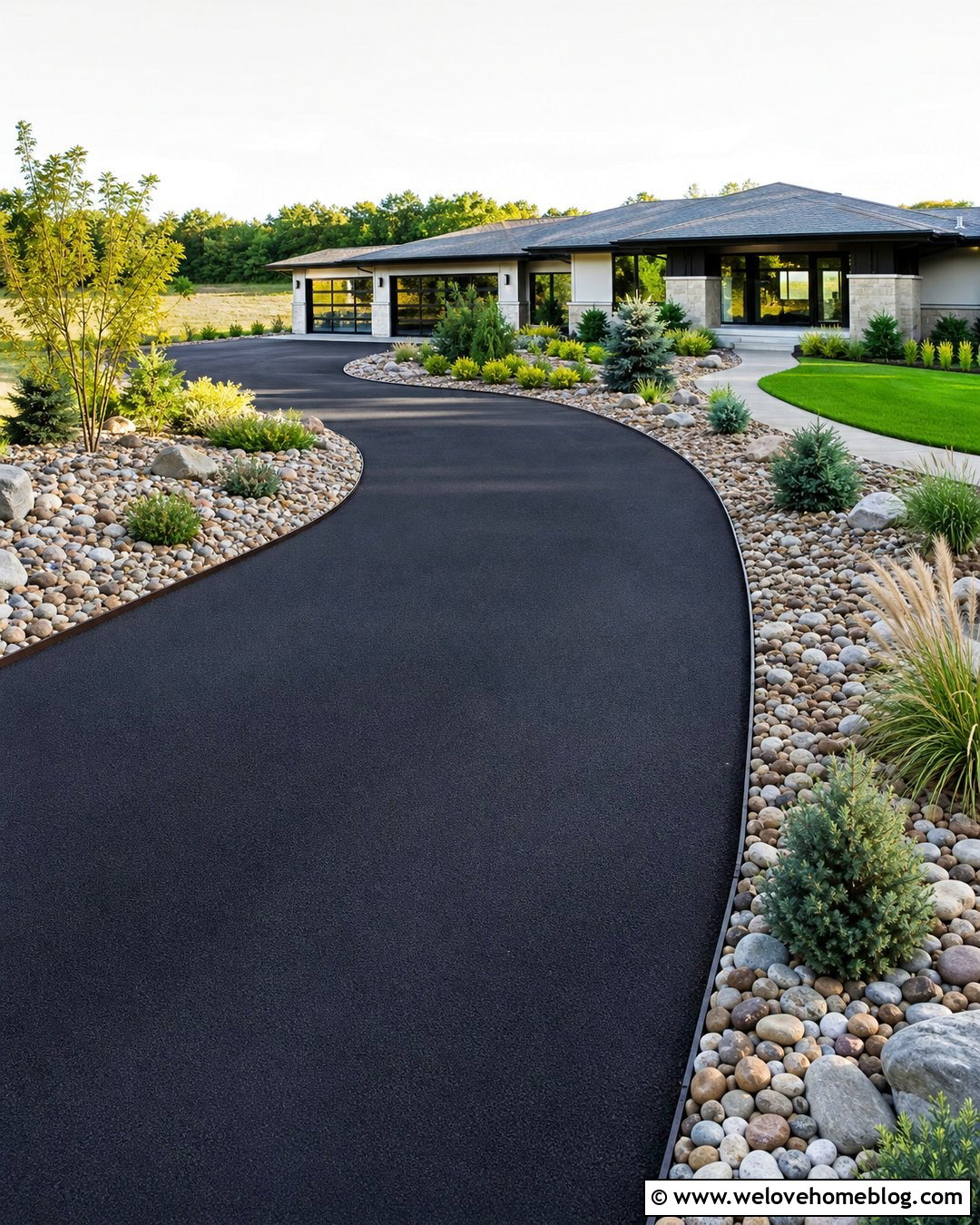
Crushed granite offers a more angular, compactable surface than rounded decorative gravel. A medium gray blend can suit both traditional and contemporary houses, depending on the border and landscaping. For a modern ranch home, use a wide curved driveway contained by dark steel edging and a charcoal paver apron. Plant drought-tolerant grasses, low junipers, and sculptural shrubs in beds of larger granite rock. The driveway should gradually widen near the garage, allowing the curve to feel intentional rather than abrupt. Proper grading helps direct water away from buildings and vulnerable planting areas. Periodic raking and replenishment may still be needed to maintain an even finish. The understated granite color allows bold architectural details, dark siding, and structured landscaping to become the main visual features.
19. Limestone Gravel Driveway Flooring
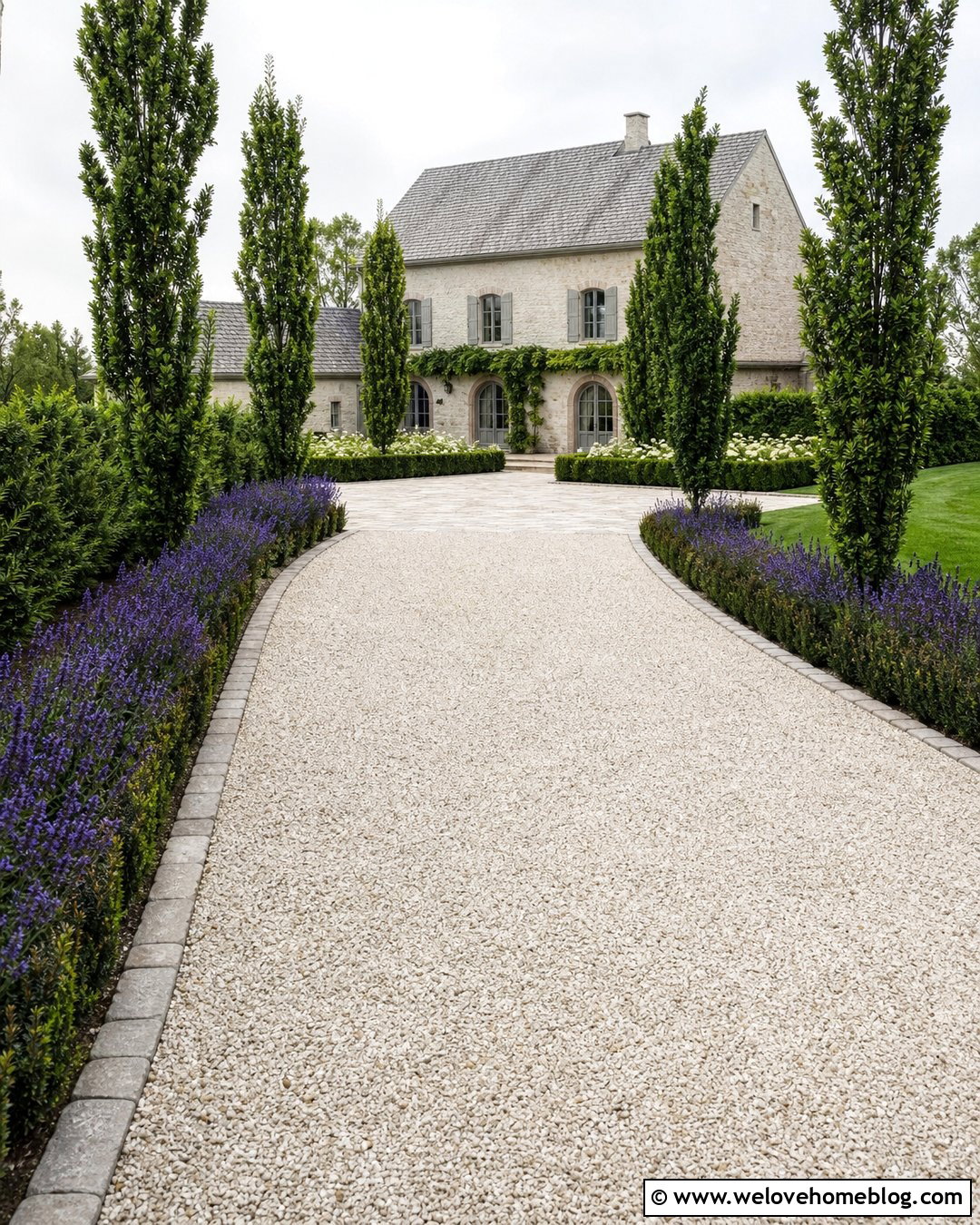
Pale limestone gravel brightens a long driveway and complements farmhouse, French country, and light brick exteriors. Choose angular cream or buff stone that can settle into a firm surface, then edge the drive with warm gray cobblestones. A gently winding layout can reveal the house gradually while preserving larger areas of lawn. Plant rows of upright trees along part of the approach, but leave breaks for open views and easier maintenance. Near the home, transition to a rectangular limestone-paver parking court so guests have a smoother place to step out. Dark green shrubs and purple flowering plants provide contrast against the light flooring. Be aware that very pale aggregate can show soil and organic debris, so avoid placing it directly beneath trees that drop heavy fruit, sap, or dense leaves.


20. Decomposed Granite Driveway Flooring
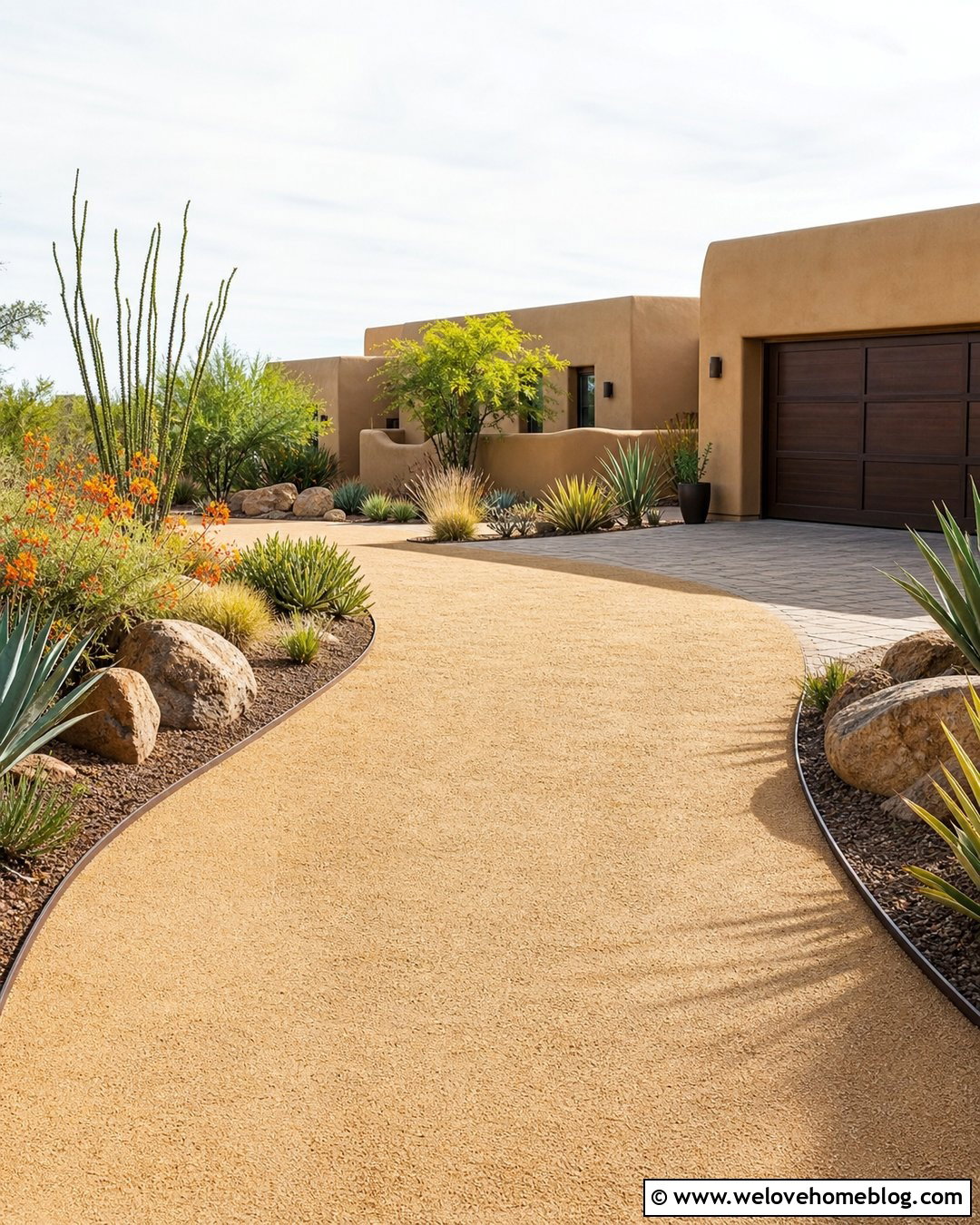
Decomposed granite creates a fine-textured, earthy driveway that blends easily into dry landscapes. Select a stabilized warm gold or reddish-brown material for a Southwestern ranch or adobe-style home. A broad curved layout can follow existing desert trees and reduce the need for severe grading. Install steel edging to keep the surface separate from gravel mulch and planting beds. Use agaves, yuccas, desert spoon, ornamental grasses, and scattered boulders to frame the approach. A band of concrete pavers near the garage helps create a clean transition and reduces loose particles around doors. The final color should relate to the local soil and house facade. Site drainage, compaction, stabilization, and material suitability should be discussed with an experienced installer before choosing this surface for regular vehicle traffic.
21. Gravel Grid Driveway Flooring
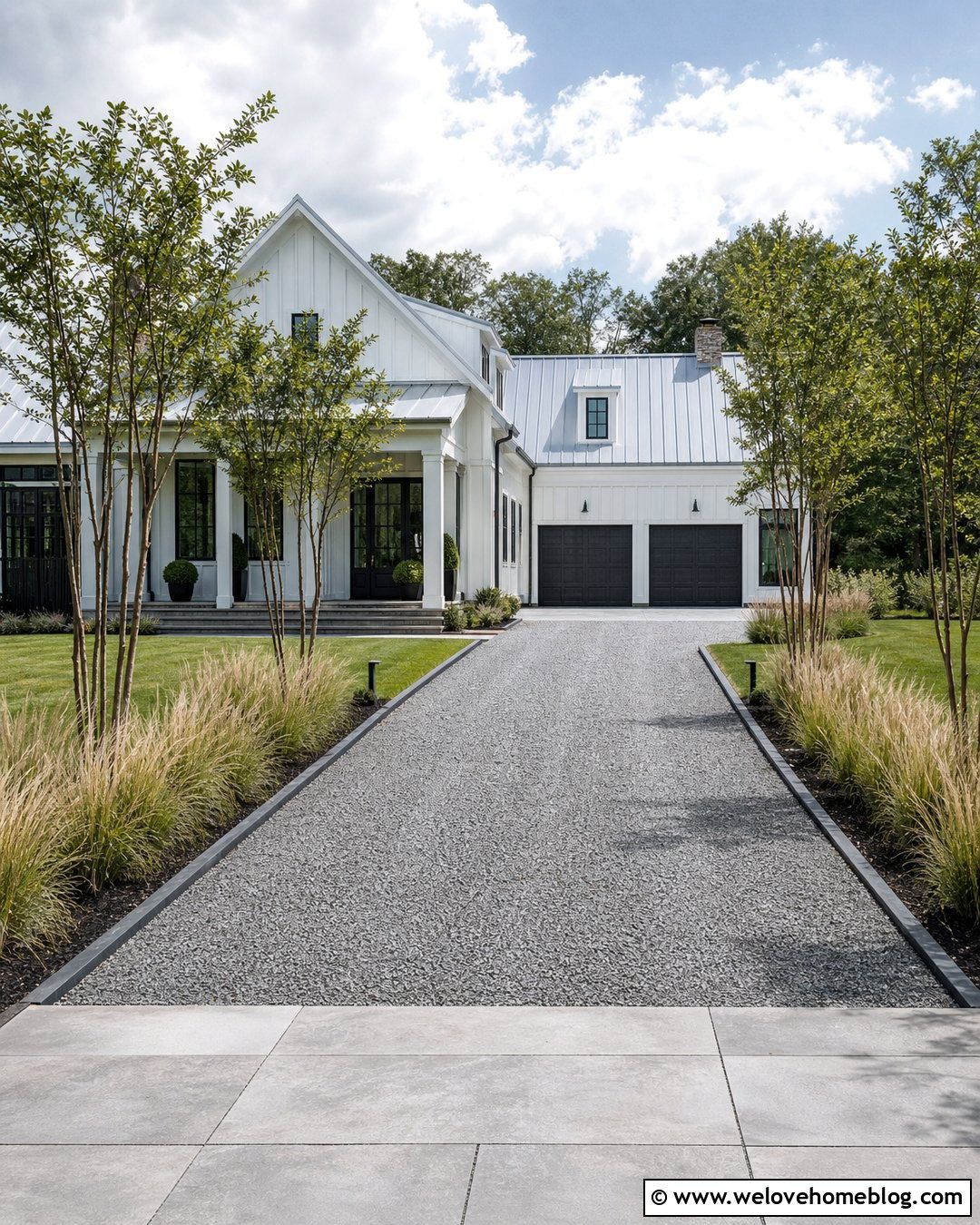
A gravel grid stabilizes loose stone within a cellular structure, helping the driveway maintain a more consistent shape. Fill the grid with angular gray gravel and use the same stone in nearby landscape beds for continuity. A straight driveway leading to a contemporary farmhouse can be edged with dark concrete curbs and finished with a large-format paver apron. Add rows of ornamental grasses and small multi-stem trees along one side, leaving the other side open to lawn. The grid should be designed for driveway loads and installed over a suitable base rather than placed directly on soft soil. Choose a gravel size compatible with the cells. When correctly detailed, the completed surface retains the natural look of aggregate while presenting a more organized, defined entrance than an uncontained gravel drive.
22. Black Asphalt Driveway Flooring
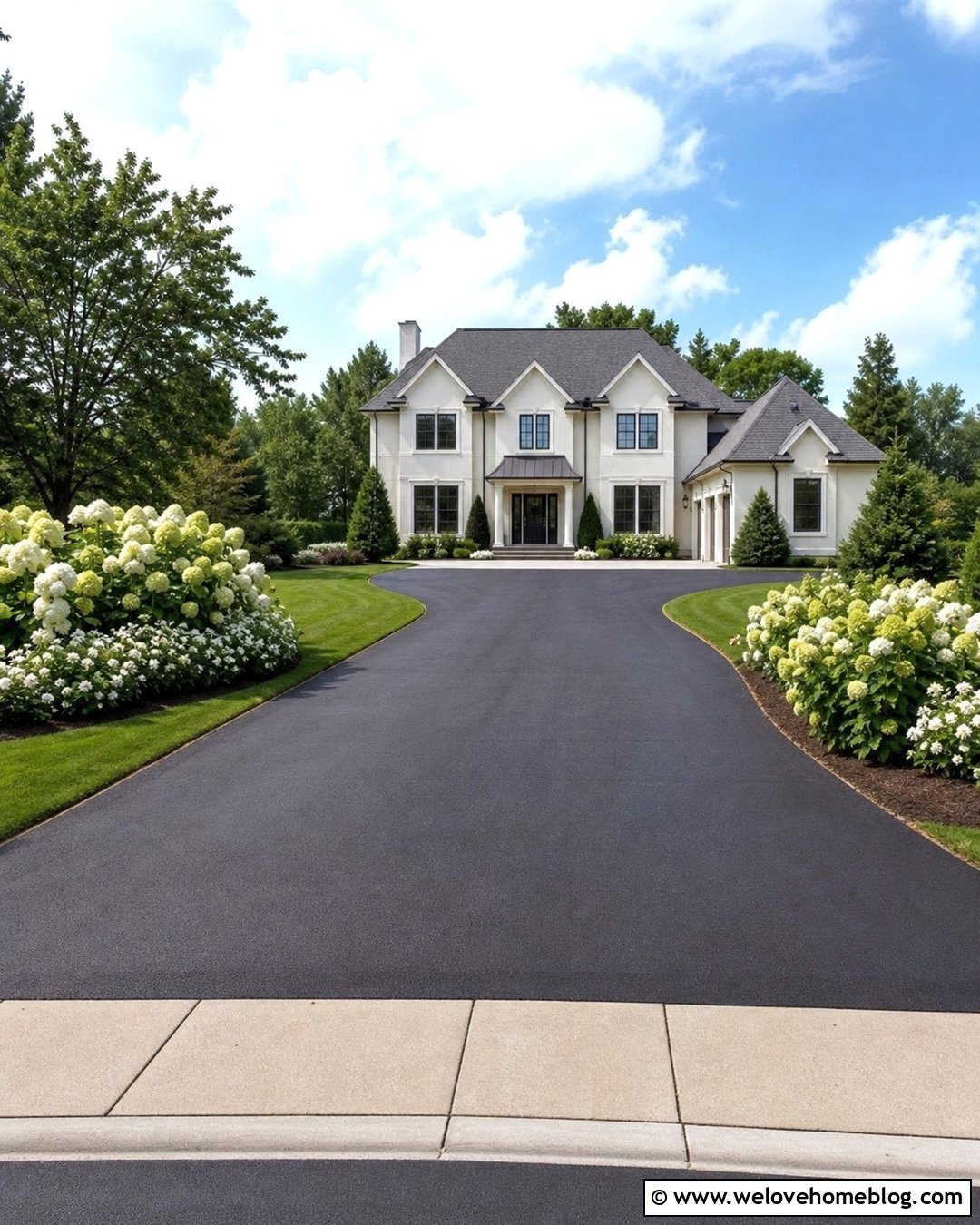
Black asphalt creates a smooth, visually simple driveway that can provide strong contrast with pale siding, brick, and green landscaping. For a classic suburban home, use a gently curved asphalt surface with clean edges and a light gray concrete apron at the sidewalk. Frame both sides with broad lawn strips and layered beds of hydrangeas, compact evergreens, and flowering trees. A matching asphalt parking area near the garage keeps the layout practical and unified. The dark flooring can become visually dominant, so avoid making every surrounding feature equally heavy. Pale curbs, white flowers, and a light facade will balance it. Asphalt installation, drainage, sealing, and repair requirements vary with climate and site conditions, making local professional guidance useful when planning the complete driveway.
23. Asphalt And Brick Border Driveway Flooring
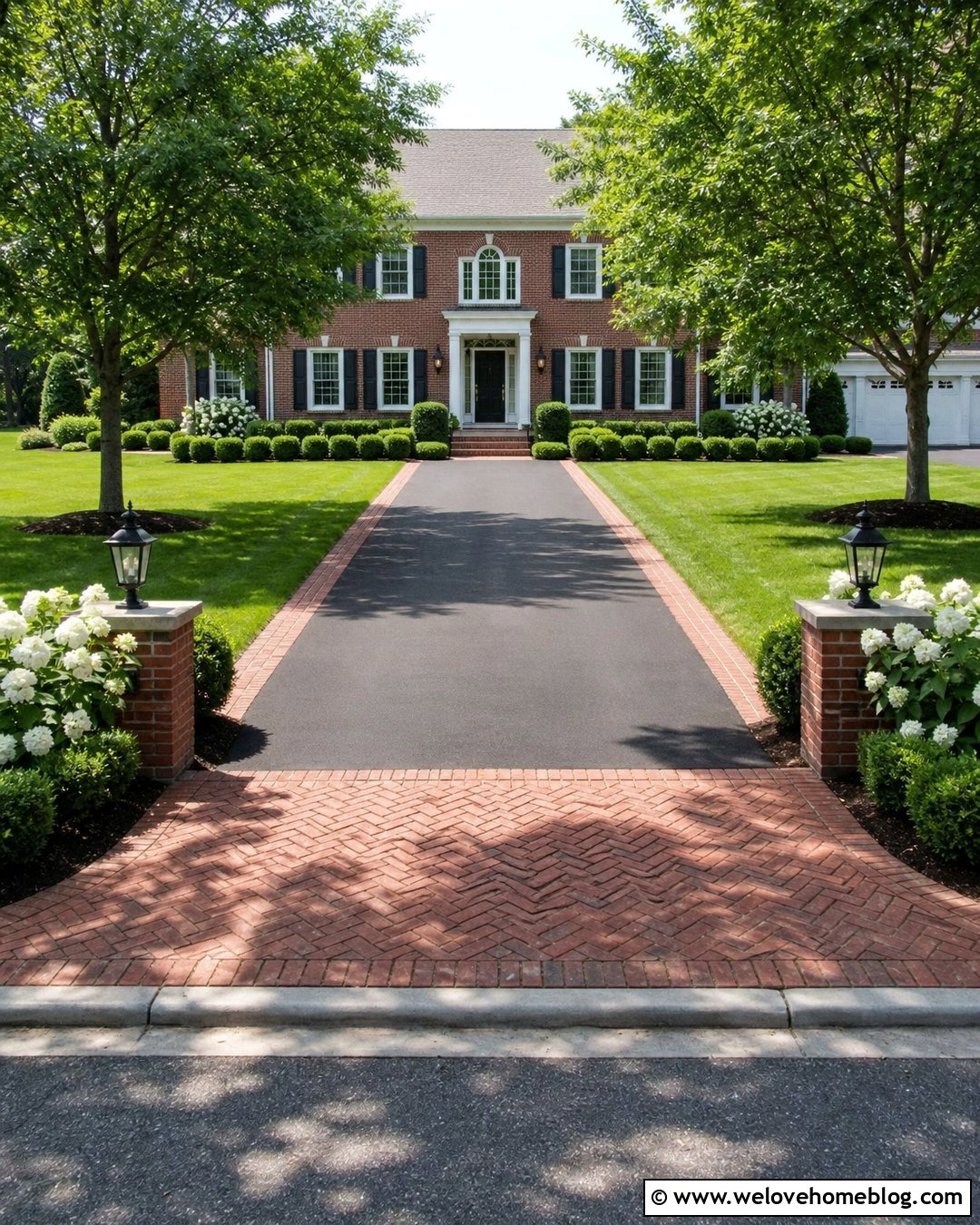
An asphalt driveway gains instant definition when surrounded by a red or brown brick border. This combination delivers a familiar driving surface while adding traditional color near the lawn, sidewalk, and garage. Use a straight black asphalt driveway with a double brick soldier course leading to a brick colonial house. Widen the brickwork into a fan-shaped apron at the road and repeat it as a threshold in front of the garage. Neatly clipped boxwoods, white flowering shrubs, and two small shade trees complete the symmetrical entrance. Set the brick border securely so it contains the asphalt edge and remains visually even. The red brick should relate closely to the house without needing to match perfectly. Slight variation usually produces a more natural, established appearance.
24. Chip Seal Driveway Flooring
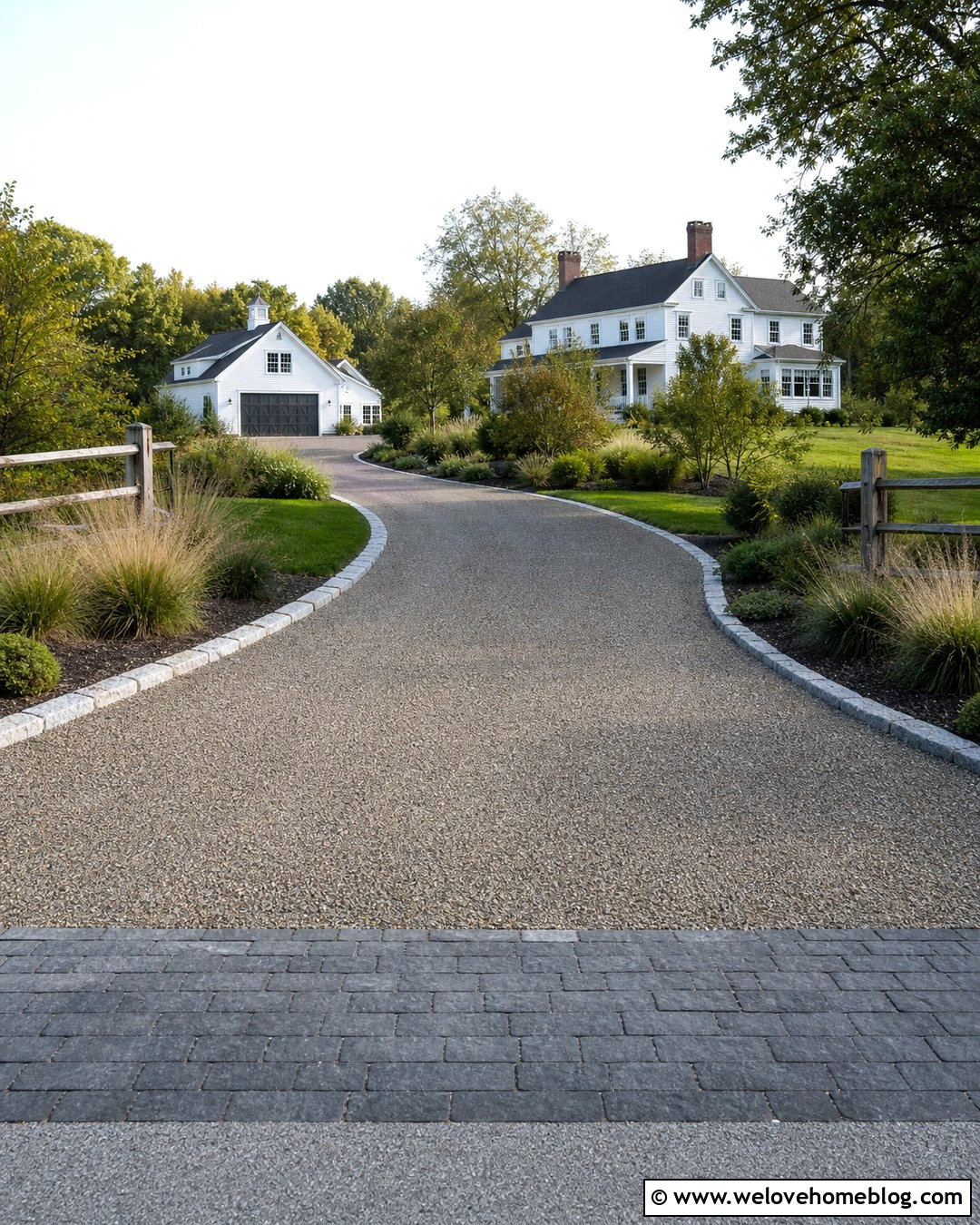
Chip seal combines an asphalt-based layer with aggregate rolled into the surface, creating more visible texture and color than plain black asphalt. () Choose a warm gray-brown aggregate blend for a long country driveway approaching a traditional farmhouse. Edge the surface with weathered timber or rough granite blocks, depending on the desired level of formality. A sweeping curve can follow existing trees and open into a wide parking area near a detached garage. Native grasses, split-rail fencing, and informal shrub masses reinforce the rural setting. Use a darker paver apron at the public road to create a crisp entrance. Aggregate color and size strongly affect the finished appearance, so review a large installed sample rather than selecting from a small handful of stone.
25. Porous Asphalt Driveway Flooring
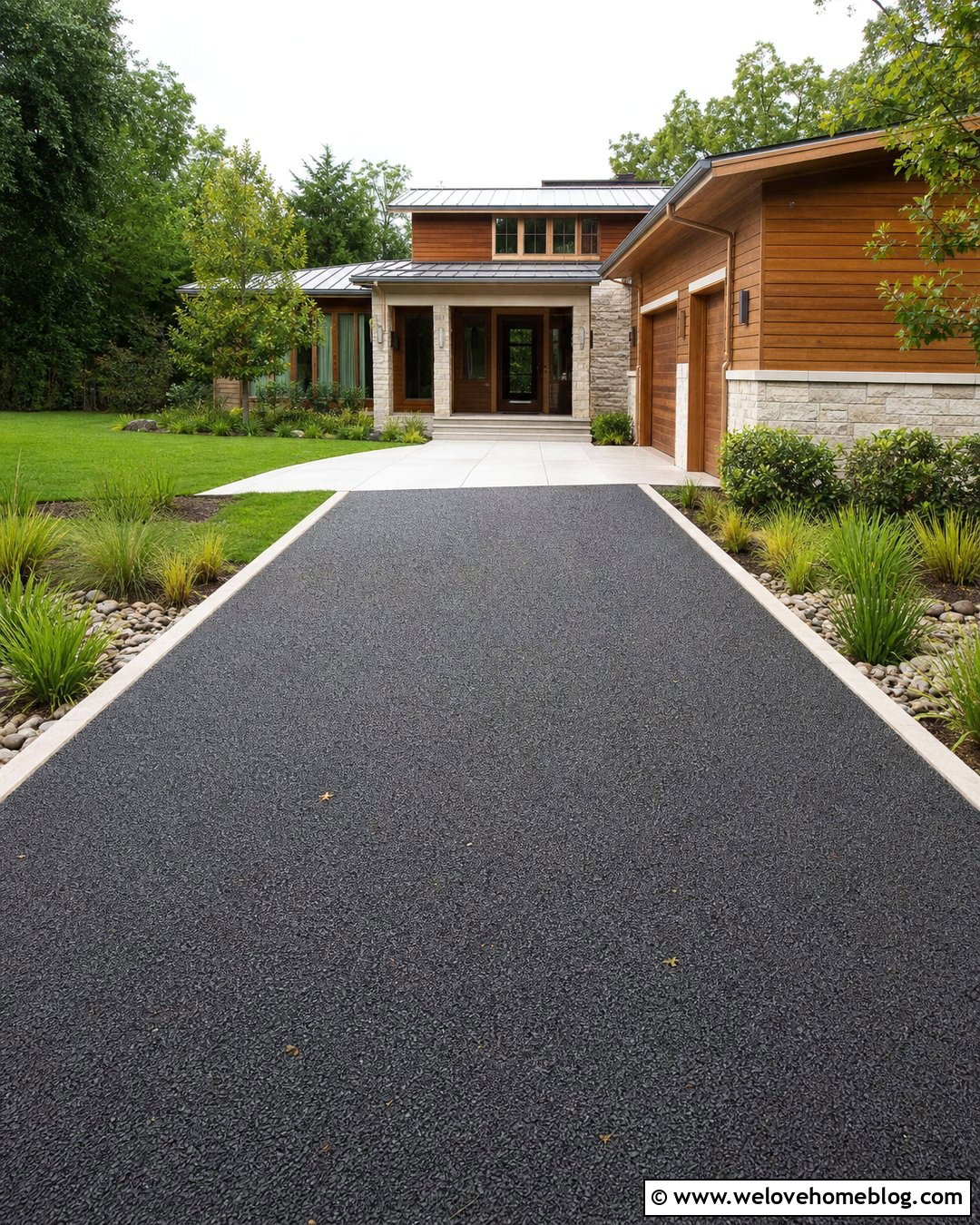
Porous asphalt resembles conventional asphalt but is part of a permeable pavement system designed to allow water through the surface into open-graded stone layers below. () It can suit homeowners who want a dark, continuous driveway without a visible paver grid. Use it on a straight approach to a contemporary cedar-and-stone house, bordered by pale granite curbs. Add planted drainage beds with sedges, switchgrass, and moisture-tolerant shrubs along the lower side of the property. A light concrete walkway provides contrast and guides visitors toward the entrance. The performance of porous asphalt depends on appropriate site conditions, engineering, base preparation, and long-term care. Confirm whether it is suitable for local soil, slope, winter maintenance practices, and municipal requirements.
26. Resin-Bound Gravel Driveway Flooring
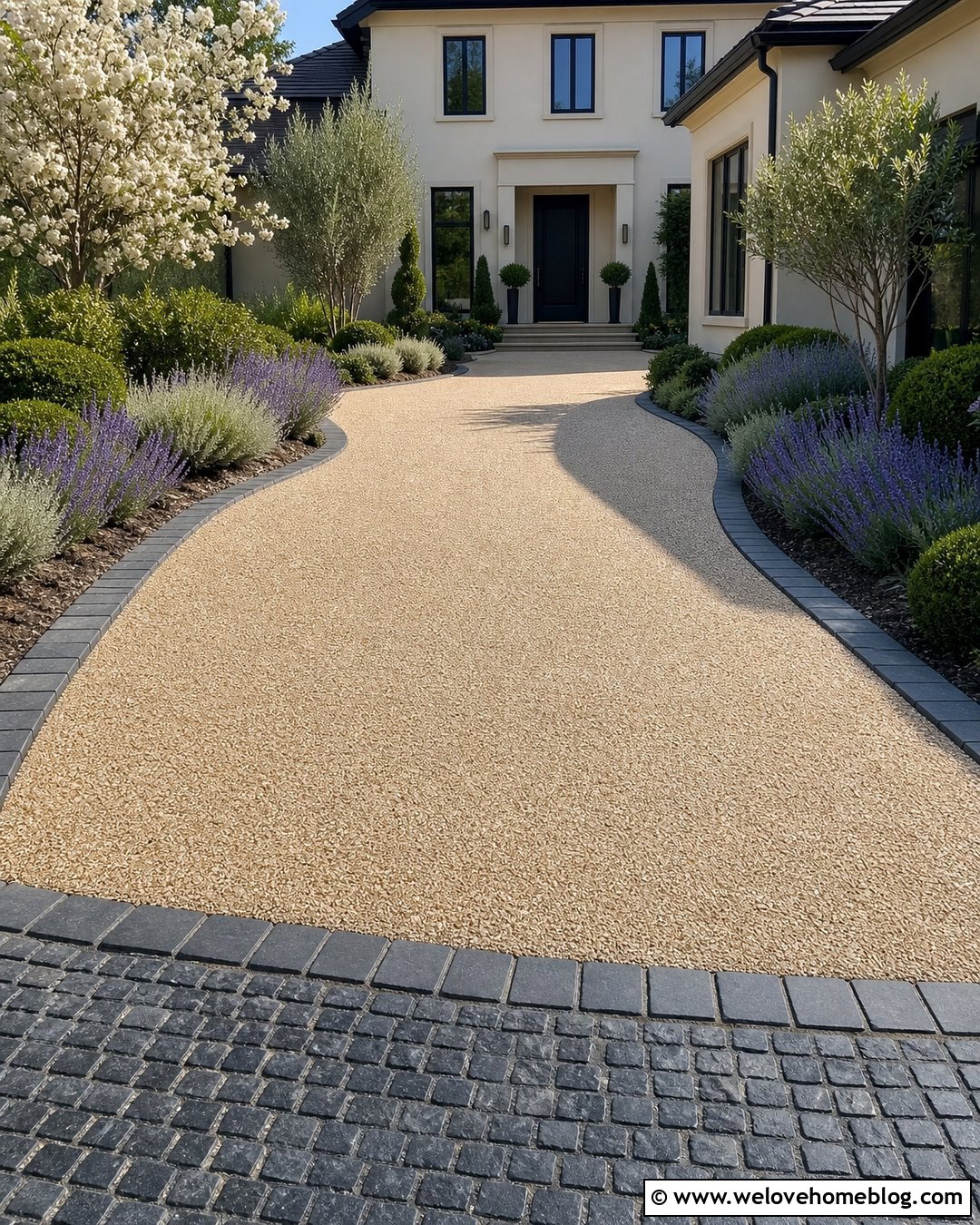
Resin-bound gravel creates a smooth-looking surface by mixing decorative aggregate with resin before installation. It can deliver the appearance of small gravel without the same loose-stone character. Choose a warm beige aggregate blend for a curved driveway leading to a modern stucco house. Define the shape with charcoal concrete edging and add a dark cobblestone apron at the road. Plant structured beds with olive-toned shrubs, lavender, grasses, and small flowering trees. A matching resin-bound walkway can branch gently toward the front door. Keep color changes minimal so the surface looks refined rather than patterned. Resin-bound and resin-bonded installations are not identical, so confirm the intended system, drainage behavior, base requirements, UV stability, and local suitability with a qualified specialist before installation.
27. Resin-Bonded Stone Driveway Flooring
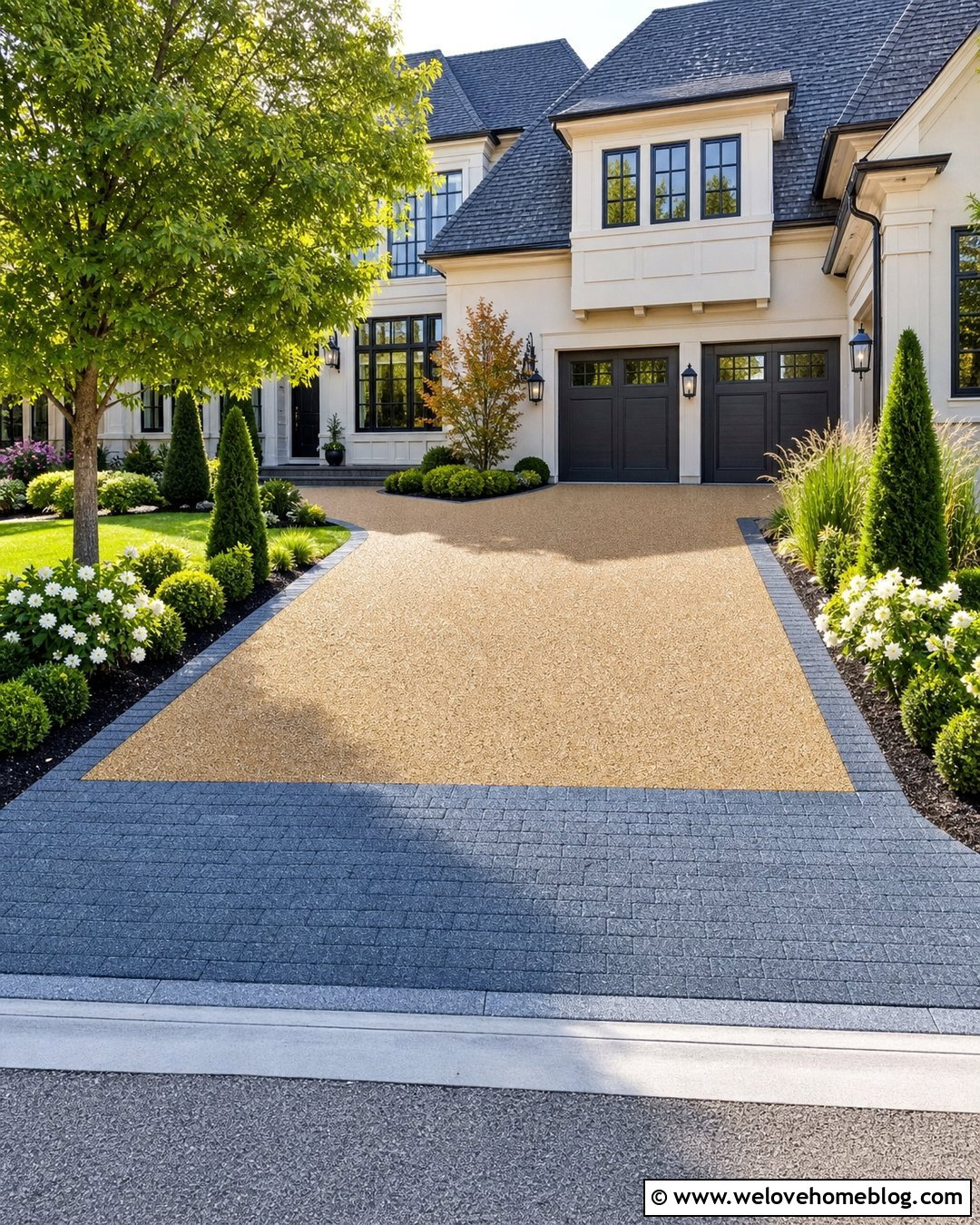
Resin-bonded stone provides a textured decorative finish in which aggregate is scattered over a resin-coated base. The exposed stone can resemble loose gravel while remaining attached to the surface. Use golden gravel over a straight driveway leading to a cream-colored traditional house. A dark granite sett border will contain the visual composition and create a durable-looking transition beside the lawn. Add symmetrical planting beds with clipped evergreens, roses, and ornamental grasses. Near the sidewalk, form a slightly wider granite apron that clearly marks the entrance. Because resin-bonded and resin-bound surfaces differ in installation and permeability, homeowners should understand which product is being specified. Select an aggregate color that will not visually exaggerate dust, tire marks, or fallen leaves in the local setting.
28. Crushed Shell Driveway Flooring
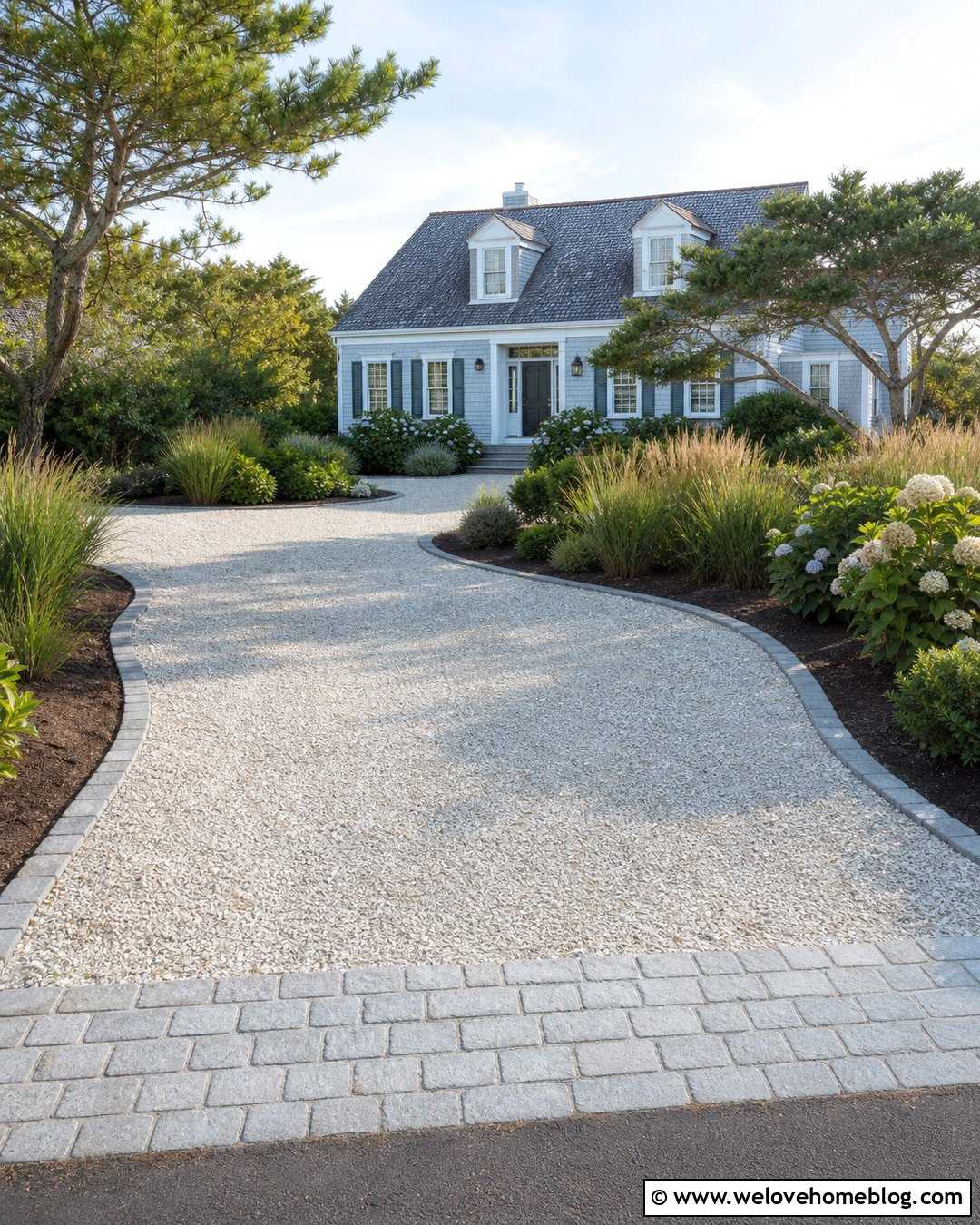
Crushed shell creates a bright coastal driveway with natural variation in white, cream, and pale gray tones. It looks especially appropriate beside Cape Cod, coastal cottage, and low-country architecture. Use a wide horseshoe layout leading to a light blue shingle-sided house. Contain the shell with simple gray cobblestone edging and add a matching stone apron at both street entrances. Plant salt-tolerant grasses, hydrangeas, wax myrtles, and small wind-shaped trees around the curves. A pale shell surface can reflect considerable light, so pair it with soft facade colors and darker green planting for balance. Availability, permitted use, compaction, replenishment, and environmental considerations can vary by region. Confirm that the selected shell product is responsibly sourced and appropriate for residential vehicle traffic.
29. Recycled Asphalt Driveway Flooring
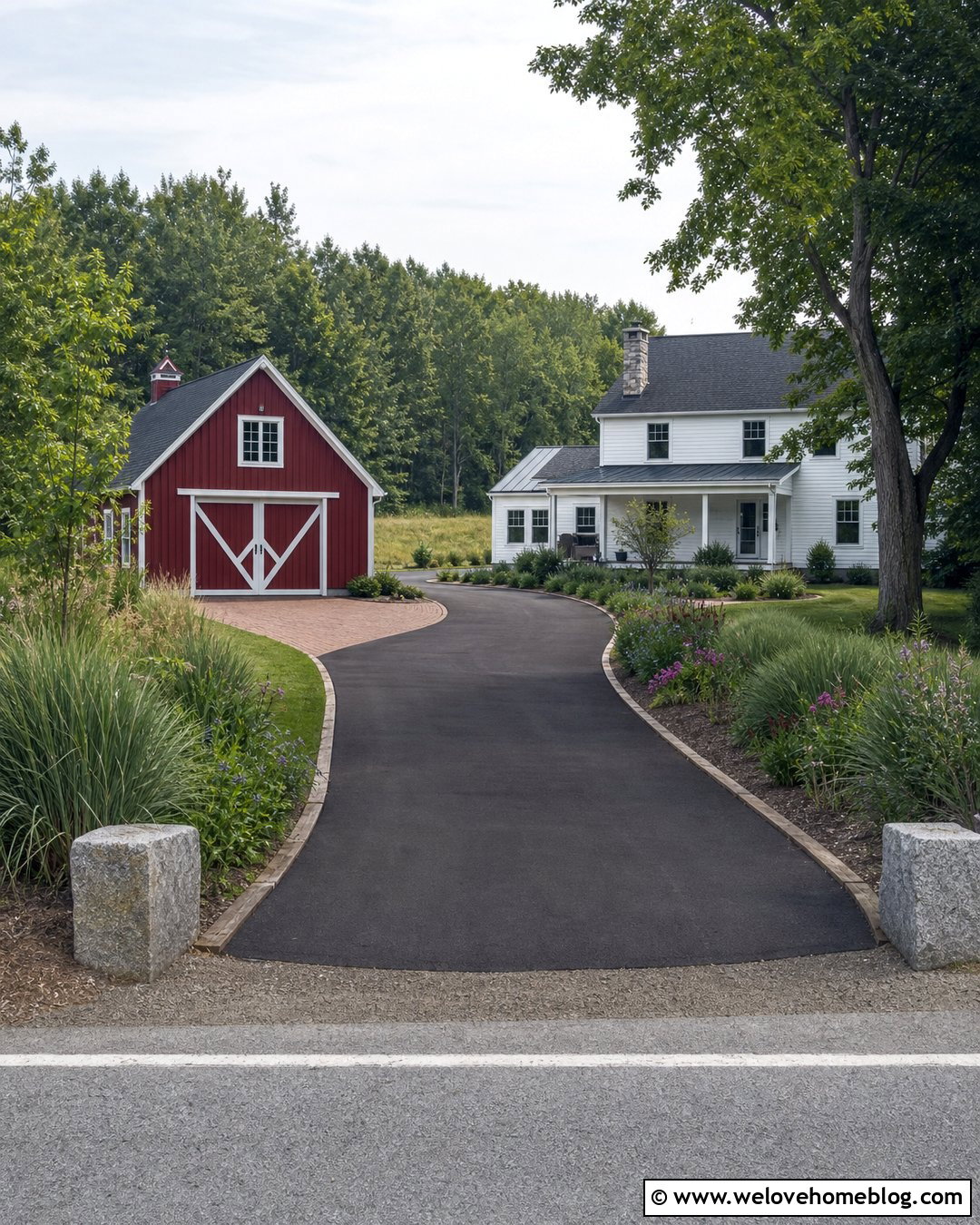
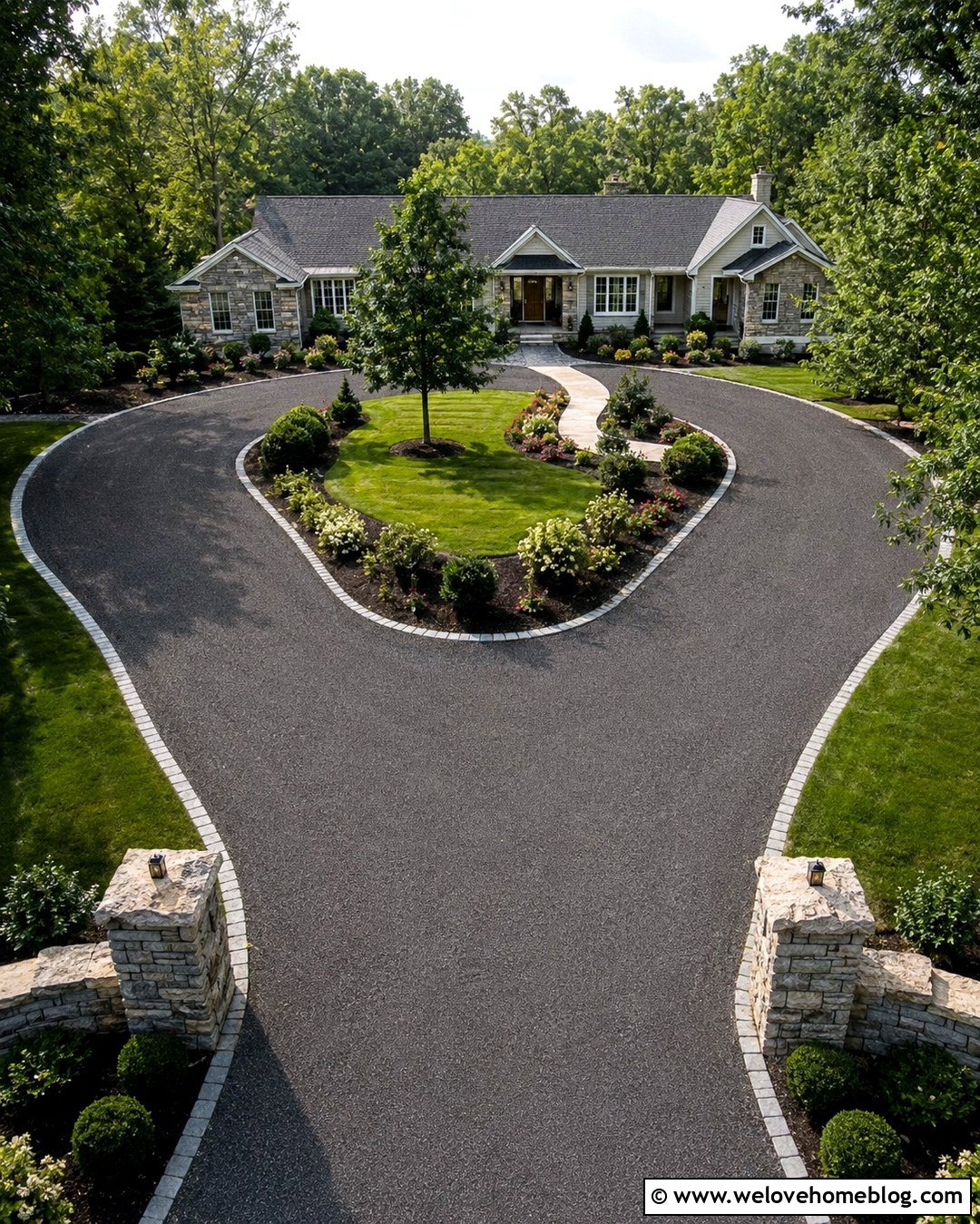
Recycled asphalt can create a dark, compacted driveway with a softer and more granular appearance than newly paved asphalt. It works well for long rural approaches where a fully decorative surface may not suit the budget or setting. Use a broad, gently curved layout leading to a red barn-style garage and modern farmhouse. Edge the driveway with sturdy timber on straight sections and granite blocks near the entrance. Plant native grasses, deciduous trees, and low flowering shrubs in informal groups. Add a brick-paver parking pad near the house to provide a cleaner pedestrian zone. Recycled asphalt products and installation methods vary, so examine the proposed material and finished examples. Proper grading, compaction, containment, and drainage remain important for creating a stable, orderly-looking surface.
30. Grass Paver Driveway Flooring
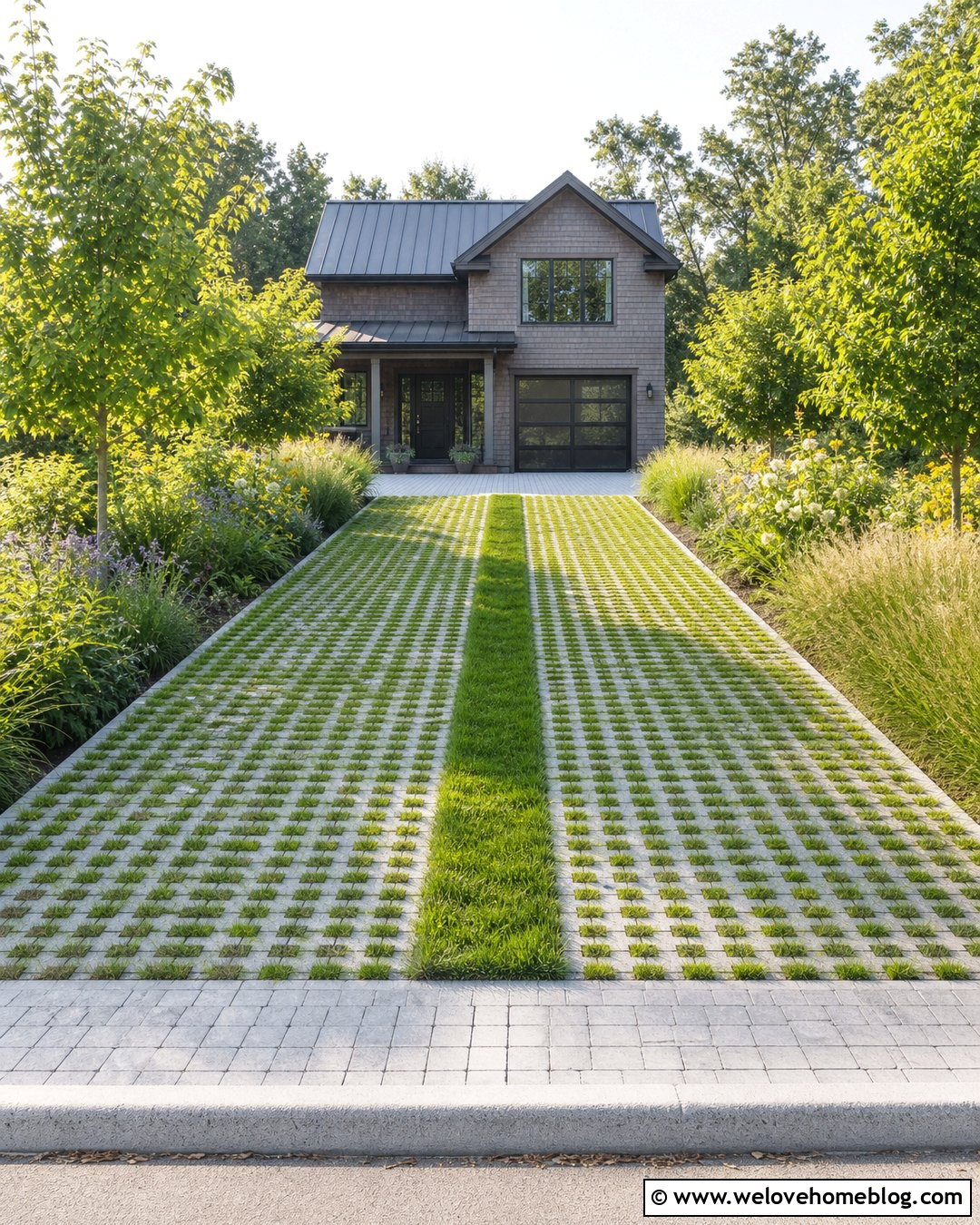
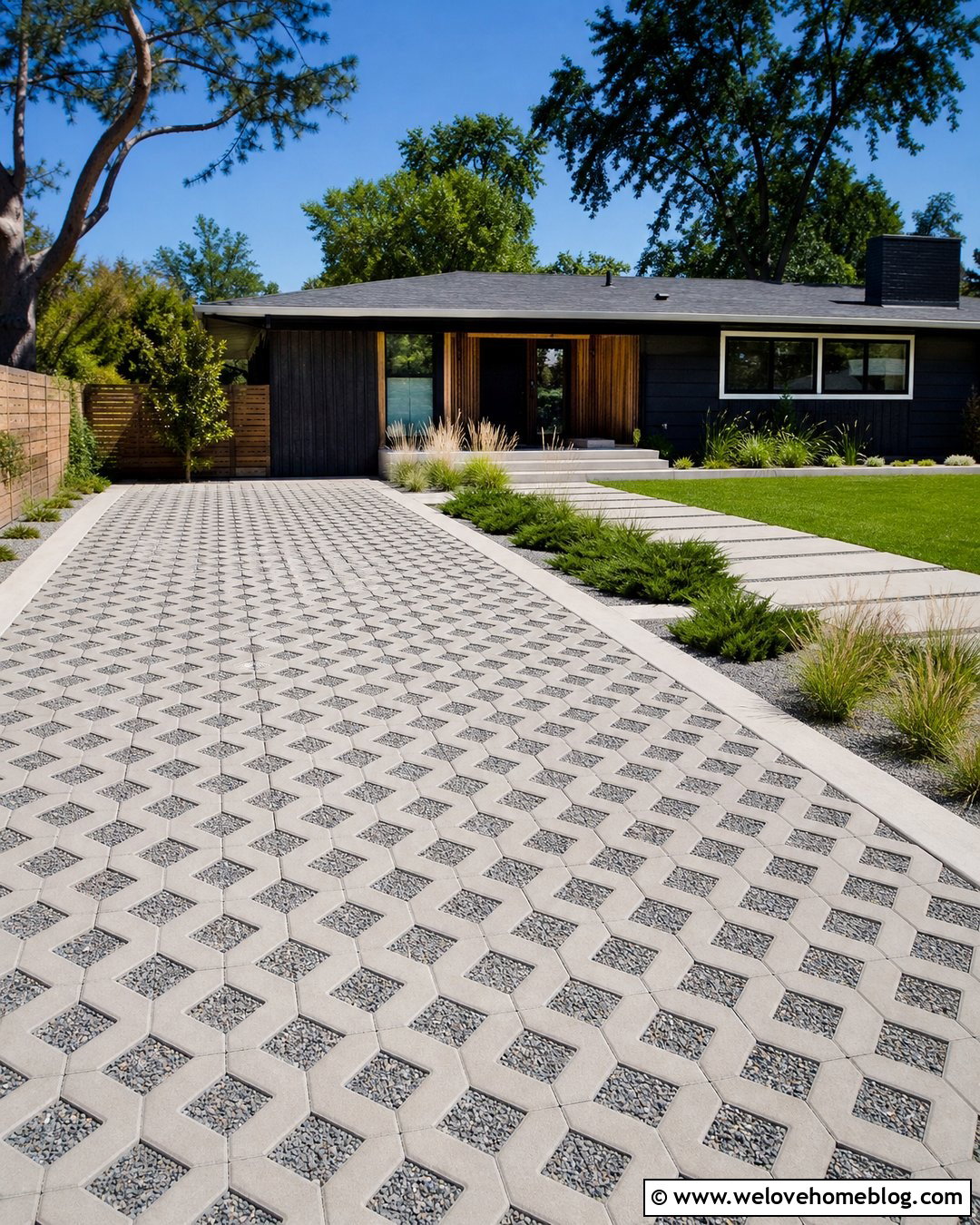
Grass pavers create a reinforced green surface with open cells that support vegetation while accommodating vehicle use. The driveway can blend into a lawn more effectively than a wide strip of solid paving. Use two broad grass-paver lanes on a straight approach to a contemporary cottage, separated by a narrow planted strip. Install concrete paver bands at the sidewalk, garage, and pedestrian crossing points for cleaner transitions. Surround the driveway with meadow-like grasses, native flowers, and a few compact trees. Grass-grid systems are among the permeable driveway approaches used to encourage water infiltration. () However, appearance and performance depend on sunlight, climate, soil, irrigation, drainage, grass selection, and traffic frequency. Avoid this flooring where constant parking would prevent healthy growth.
31. Pervious Concrete Driveway Flooring
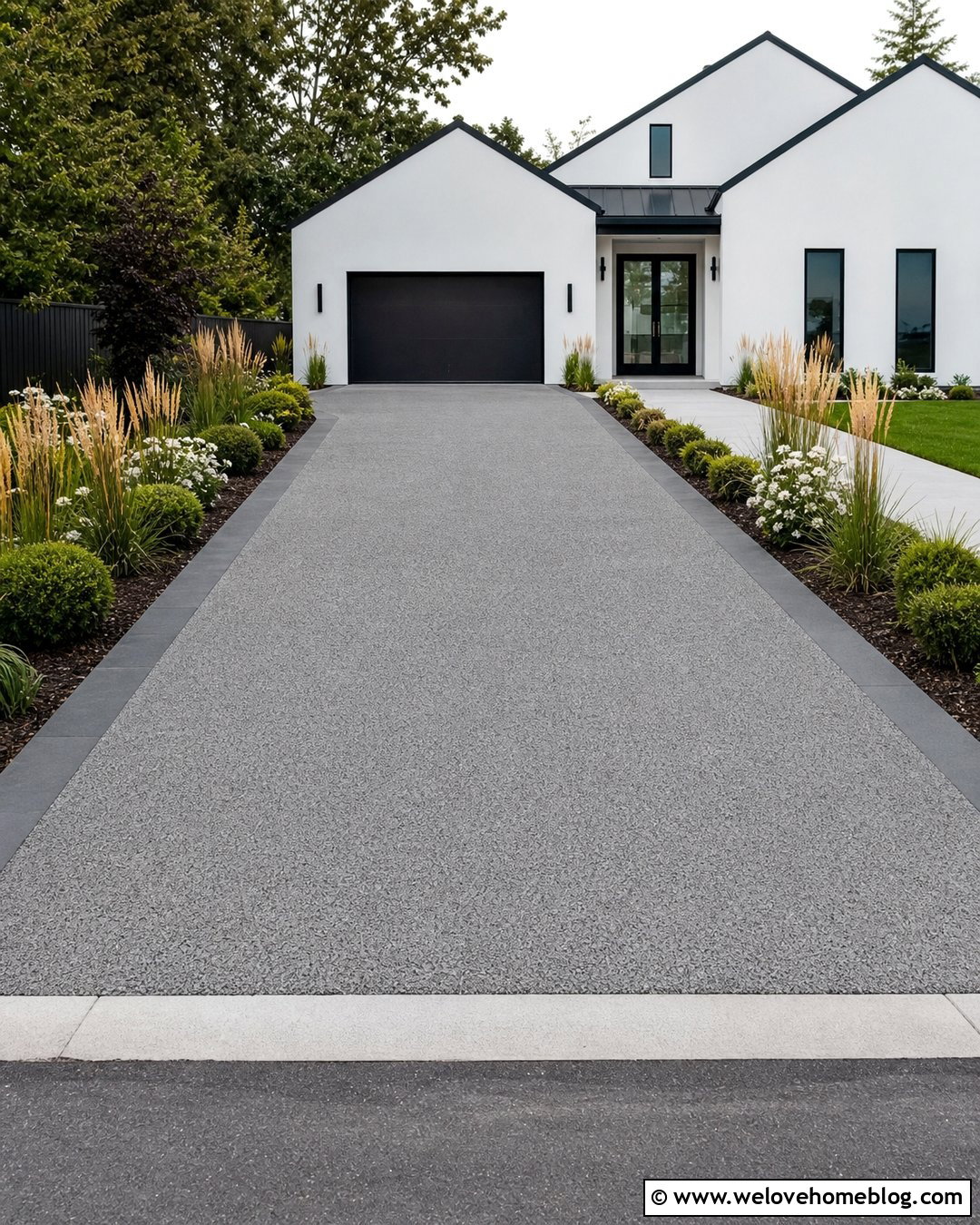
Pervious concrete has an open-textured structure designed to let water pass through the pavement into the prepared layers underneath. () Its coarse appearance can be turned into an attractive feature when paired with clean borders and modern landscaping. Choose a medium gray surface for a wide straight driveway leading to a minimalist white house. Frame it with smooth charcoal concrete bands and linear beds of ornamental grasses, evergreen mounds, and white flowering plants. Use solid concrete only at carefully planned thresholds if required by the design. Pervious concrete is a complete engineered system rather than simply a different decorative finish. Site suitability, structural design, placement methods, drainage, clogging prevention, winter care, and local regulations should all be reviewed before installation.
32. Concrete And Paver Driveway Flooring
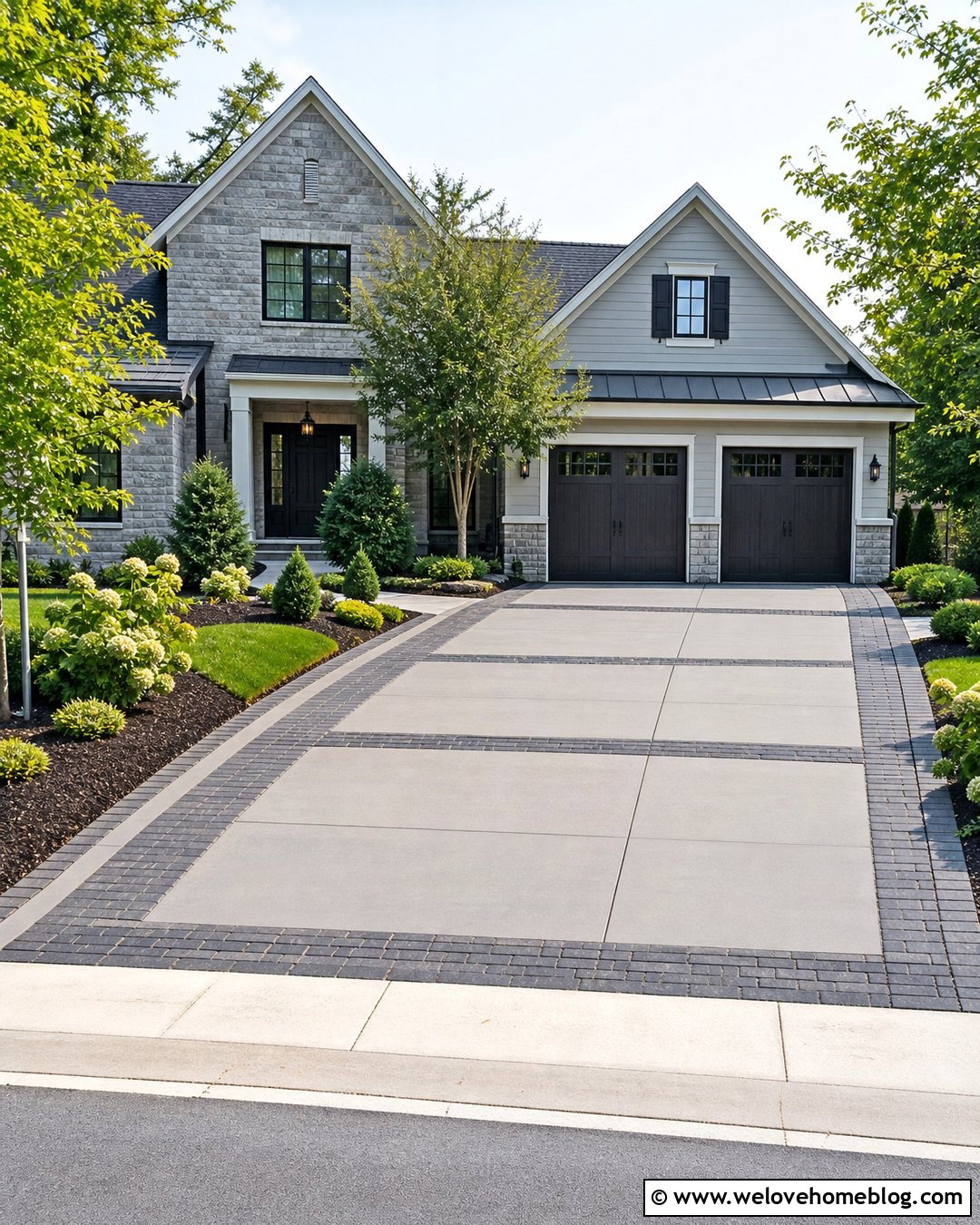
Combining poured concrete with paver bands can make a broad driveway feel more detailed without the expense of paving every square foot with individual units. Use warm gray concrete panels divided by charcoal interlocking paver ribbons. Run one band across the entrance, another near the garage, and narrow borders along both sides. This arrangement works well on a wide straight driveway leading to a transitional stone-and-siding house. Curved beds of hydrangeas, dwarf evergreens, and small trees will soften the rectangular surface. Align the paver bands with garage doors, windows, or walkway connections so they relate to the architecture. Limit the palette to two closely coordinated colors. Too many contrasting strips can break the surface into small sections and make the driveway appear shorter or busier.
33. Gravel And Cobblestone Driveway Flooring
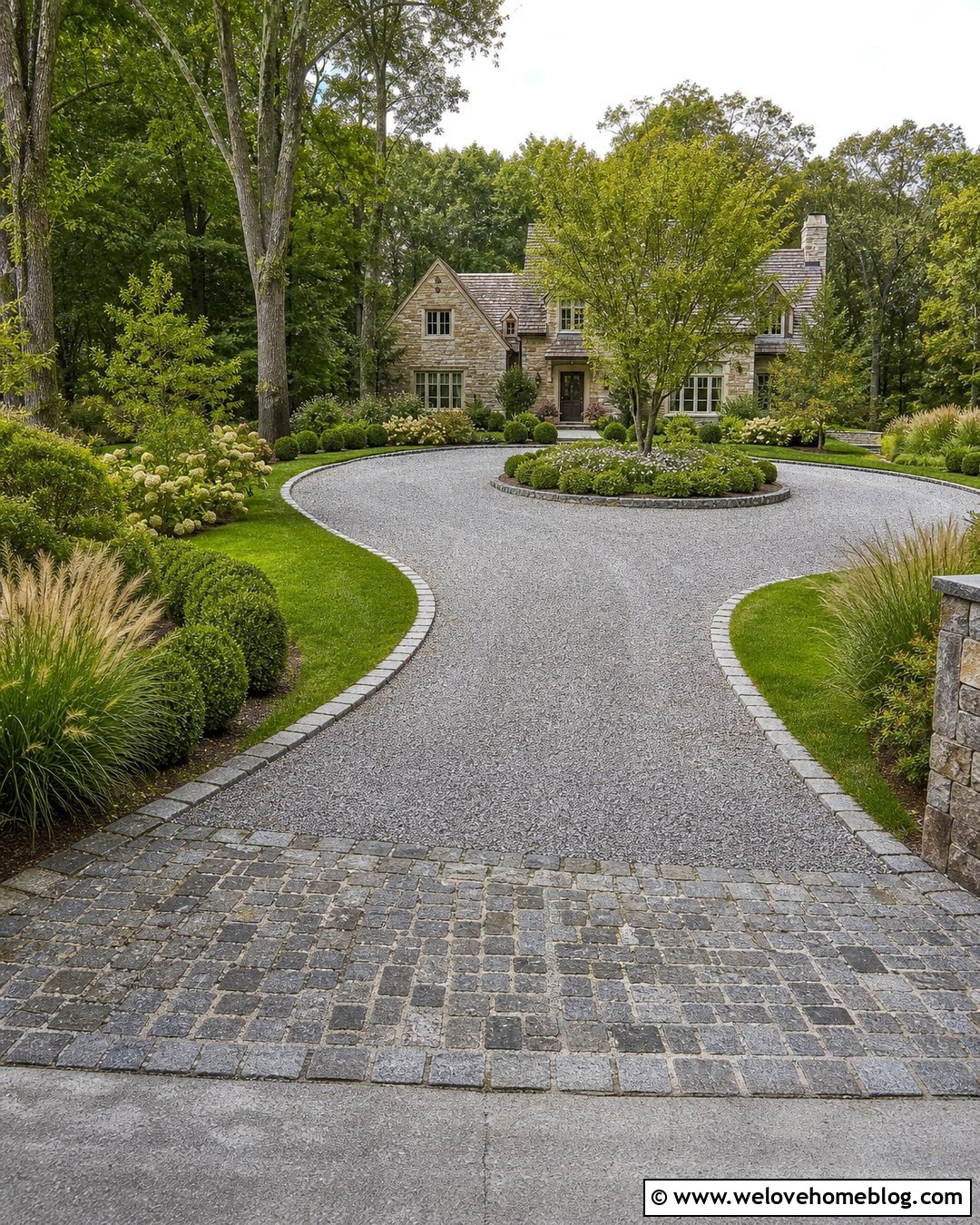
A gravel driveway with a full cobblestone apron balances affordability with a strong, polished entrance. Use compacted gray crushed stone for the main curved approach and install dark granite cobblestones across the first several feet at the street. Continue a single cobblestone row along both driveway edges to contain the gravel. Near a traditional stone house, repeat the cobblestones around a circular parking court and in the front walkway. Layer the surrounding landscape with boxwoods, ornamental grasses, flowering shrubs, and mature canopy trees. The apron catches attention from the curb while the gravel keeps the long driveway relaxed. Choose angular driveway gravel rather than purely decorative rounded stone, and ensure the border is substantial enough to resist movement from vehicles and routine maintenance.
34. Geometric Paver And Gravel Driveway Flooring
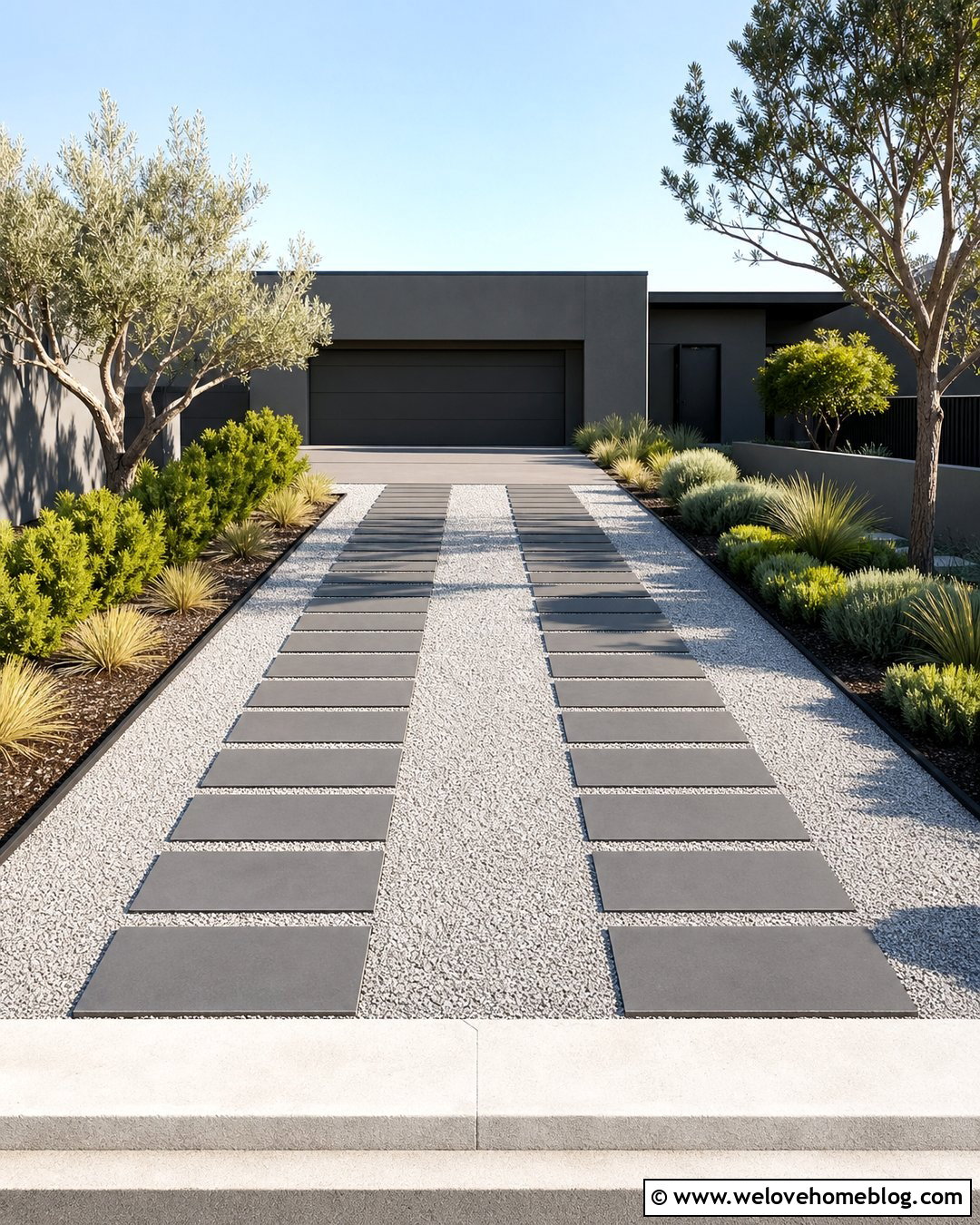
Large geometric pavers set within gravel create a modern driveway with an open, rhythmic layout. Use oversized charcoal concrete rectangles positioned as paired wheel tracks within fine light gray crushed stone. Keep the driveway straight and align the pavers with a flat-roofed modern house and horizontal garage doors. Dark steel edging will preserve the outer lines, while low grasses, compact shrubs, and sculptural trees provide movement around the hard geometry. Add a solid paver landing in front of the garage and a matching stepping-stone walkway toward the entrance. The gravel should sit slightly below the paver surface to reduce migration. Precise spacing is essential because uneven gaps will be highly visible. This combination feels lighter and more landscape-focused than one uninterrupted slab.
35. Travertine Paver Driveway Flooring
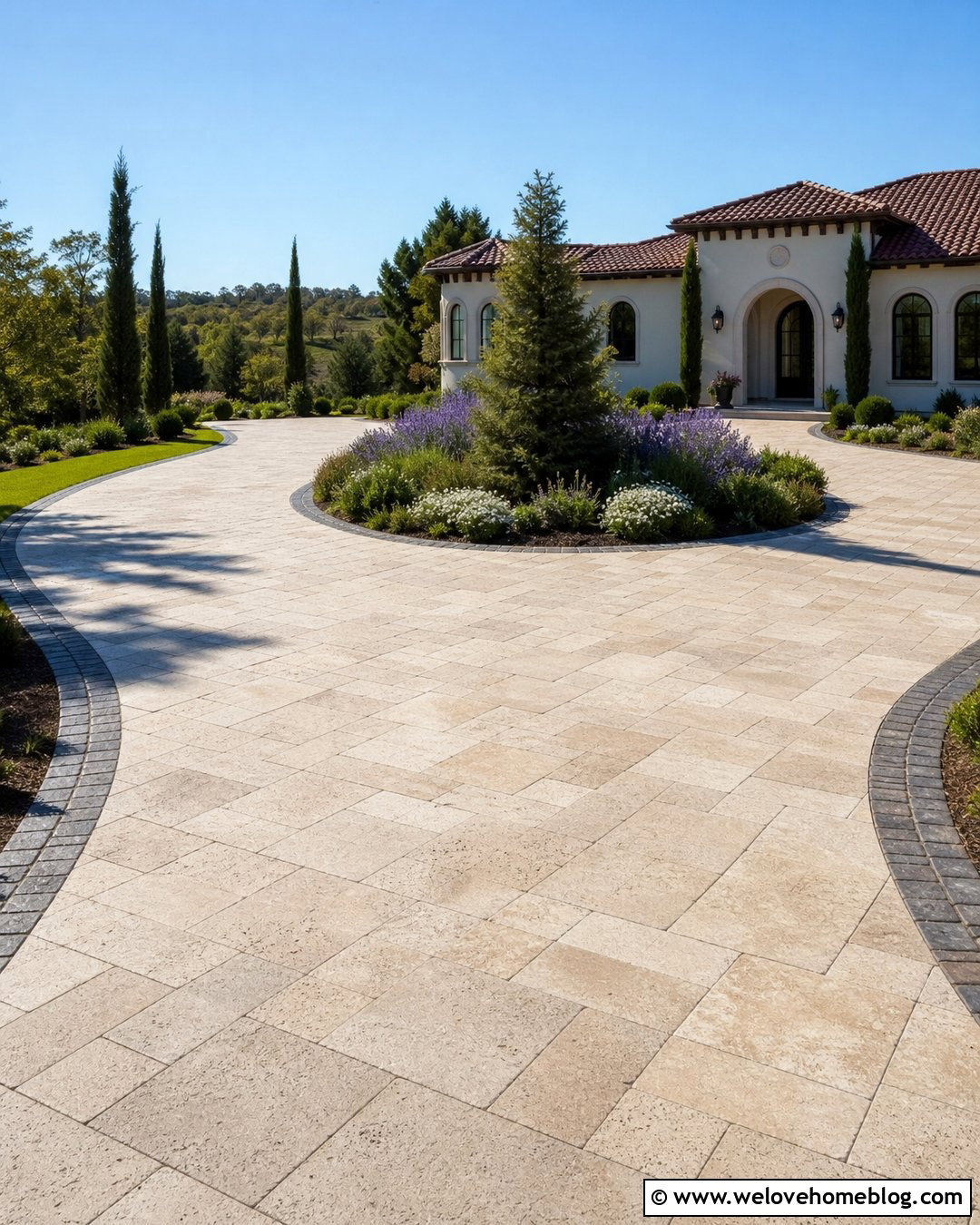
Travertine pavers give a driveway a warm, upscale appearance that complements Mediterranean, Spanish, and contemporary stucco homes. Select thick, vehicle-rated pavers in blended ivory, beige, and light walnut tones. Arrange them in a French pattern across a broad circular driveway, then use darker tumbled stone for the outer border and central island. Plant the island with a sculptural evergreen tree, lavender, rosemary, and low flowering groundcovers. Repeat the travertine on the front walkway and entry steps for continuity. Since natural stone characteristics and climate suitability vary, choose the stone, finish, and installation system with local conditions in mind. Avoid an overly glossy finish outdoors. Subtle surface texture and natural color variation will make the driveway feel inviting without appearing excessively formal.
Conclusion:
The best driveway is more than a durable place to park. It should support drainage, suit the climate, complement the house, and create an attractive connection between the street and front entrance. These 35 Driveway Flooring Ideas show how concrete, asphalt, brick, gravel, natural stone, resin, and permeable systems can produce very different complete looks. Before choosing, compare maintenance requirements, surface texture, installation needs, local rules, and long-term repair options. Then coordinate the flooring with a purposeful shape, stable edging, accessible walkway, and landscaping that will remain manageable as it matures. A well-planned driveway can improve daily function while giving the entire property a more cohesive and welcoming appearance.

Related posts:


Leave a Reply