
A practical driveway does not need an elaborate finish or premium paving stone. The best budget designs reduce material use, rely on locally available aggregates, and add curb appeal through simple borders, thoughtful shapes, and low-maintenance planting. Gravel is generally among the least expensive driveway surfaces, while recycled aggregate, asphalt, plain concrete, and permeable grids can also offer good value when suited to the site. However, proper excavation, grading, compaction, and drainage should remain priorities because weak preparation can lead to ruts, puddles, and repeated repairs. () The complete looks below combine affordable surfaces with realistic edging, landscaping, and entrance details, giving you 20 inexpensive driveway ideas that feel finished rather than temporary.

1. Crushed Stone Driveway With Metal Edging
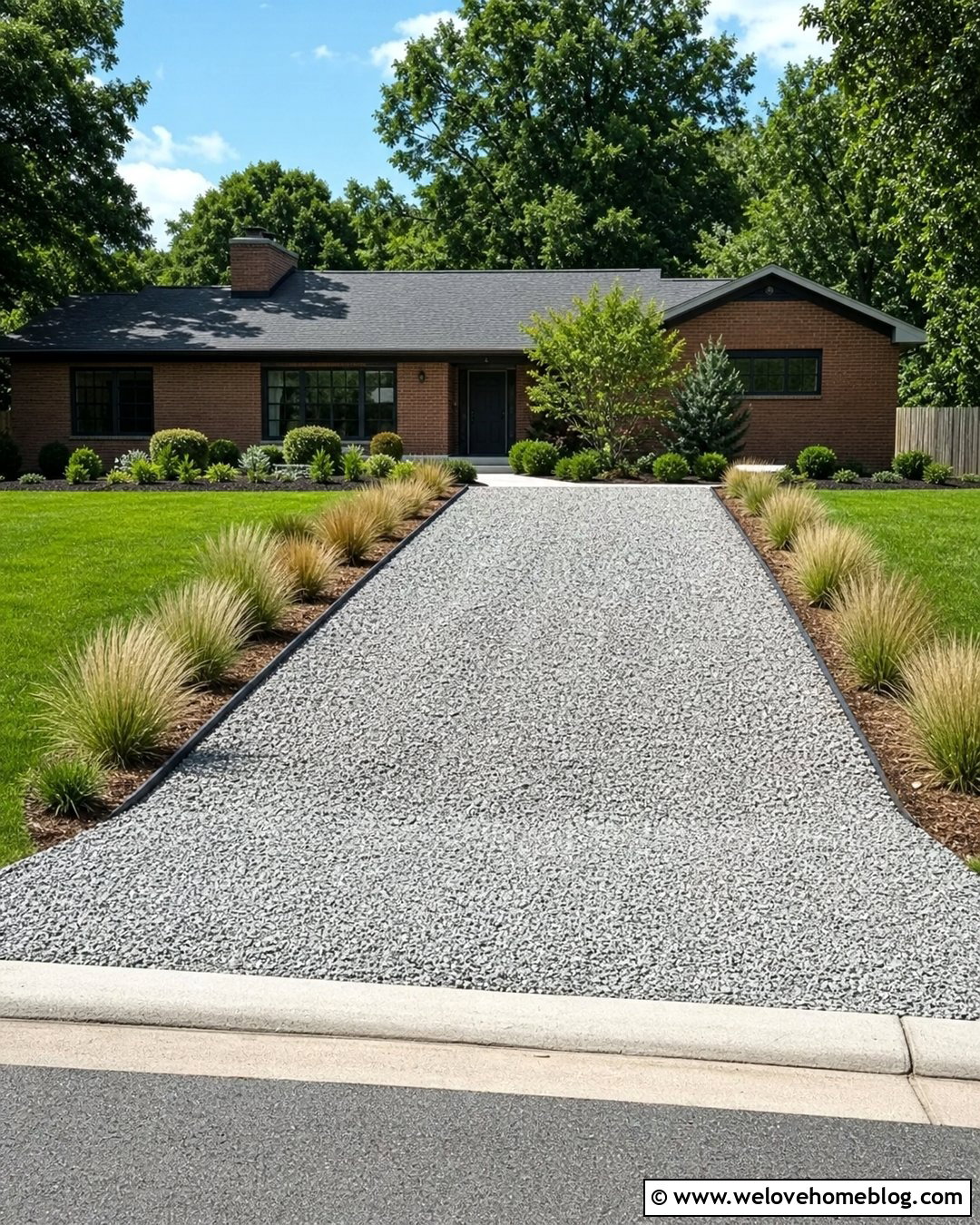
Crushed stone creates a sturdy, straightforward driveway that suits ranch homes, cabins, and traditional suburban properties. Choose angular, locally quarried stone rather than smooth gravel because the pieces lock together more effectively after compaction. A straight layout also keeps excavation and edging simple. Install dark steel or aluminum edging along both sides to contain the aggregate and create a clean outline. Narrow beds filled with ornamental grasses can soften the metal without requiring expensive landscaping. Near the street, add a compacted stone apron that is slightly wider than the main drive. The restrained combination of gray crushed stone, black edging, green lawn, and repeating grasses gives this inexpensive surface a polished appearance while making routine raking and replenishment easier.
2. Pea Gravel Driveway With Brick Borders
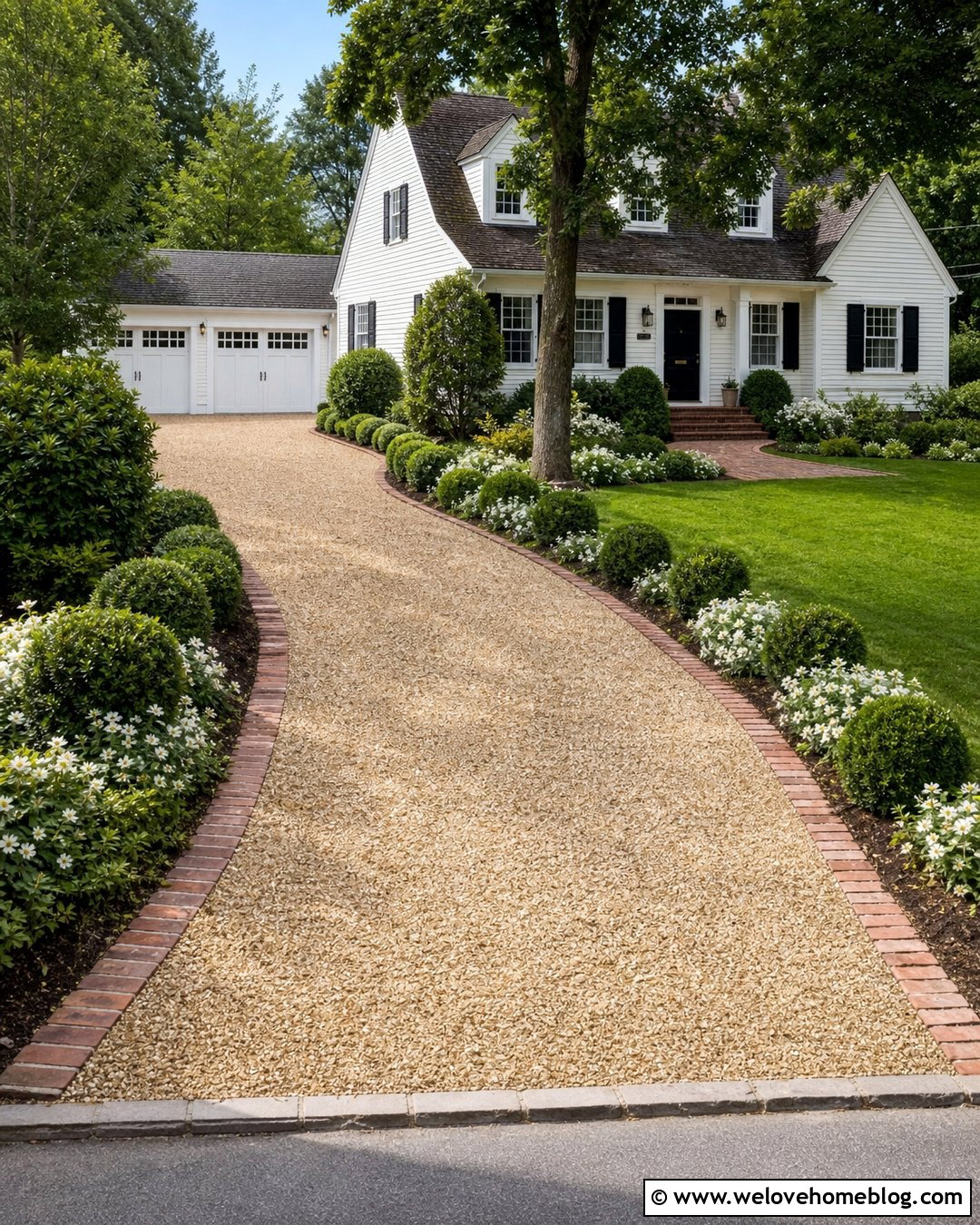
Warm pea gravel can brighten a smaller home while introducing a softer, more decorative appearance than standard gray stone. Use it over a properly compacted aggregate base rather than spreading it directly onto soil. Because rounded pea gravel tends to move, frame the entire driveway with reclaimed brick set firmly at surface level. Gravel migration is a common consideration with loose driveway materials, making a defined edge especially useful. () A gently curved layout works well beside a cottage or Cape Cod house, particularly when the brick border continues into the front walkway. Complete the design with compact boxwoods, flowering ground cover, and a narrow lawn. Buying used brick locally can lower costs while making the border look established and intentional.
3. Quarry Process Driveway With Timber Edging
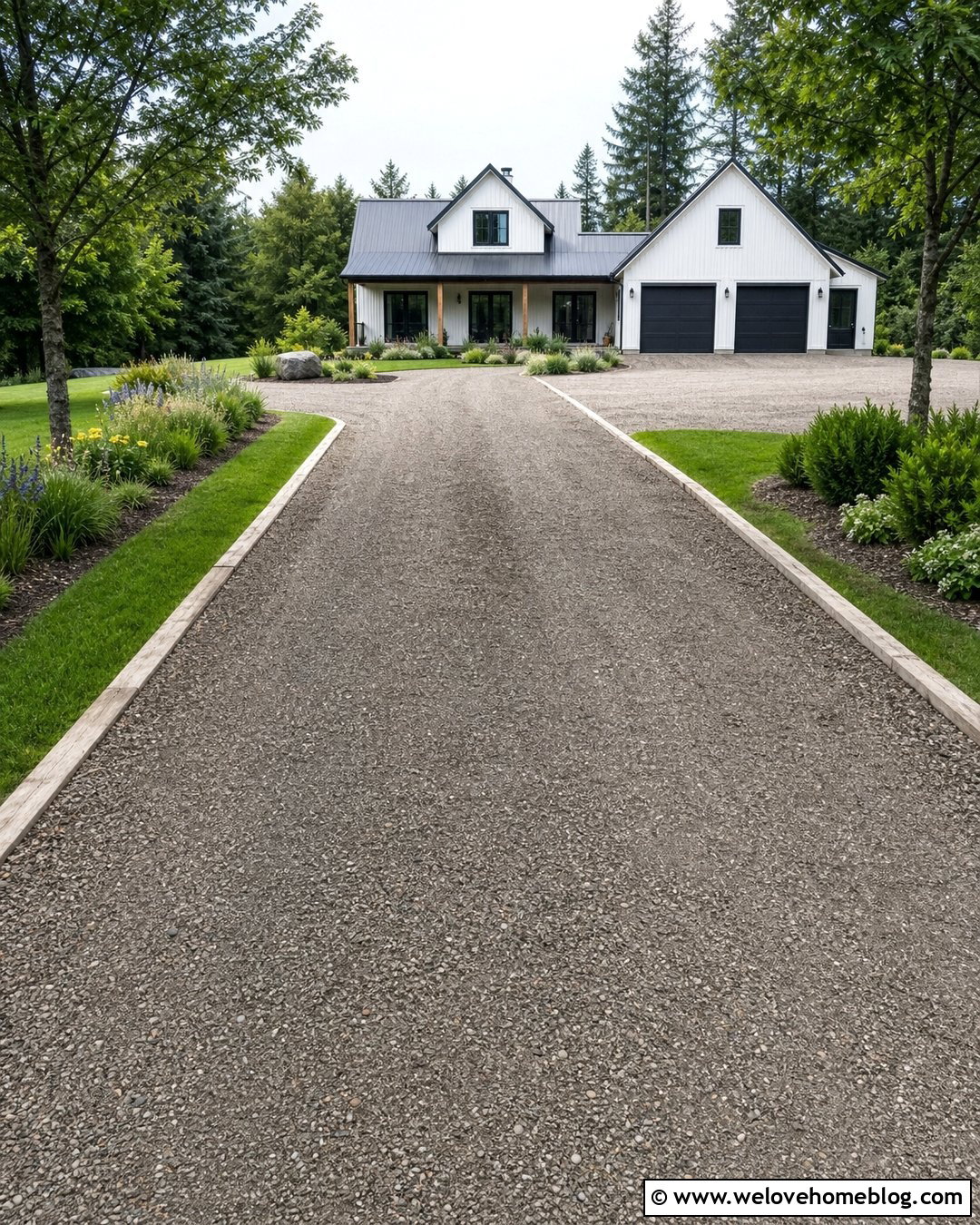
Quarry process, sometimes sold as crusher run, combines stone fragments with fine particles that compact into a firm, practical surface. Its natural gray-brown color looks especially appropriate beside a farmhouse, rustic ranch, or wooded country home. Keep the driveway straight and use pressure-treated landscape timbers as affordable side restraints. Secure the timbers with appropriate stakes so they remain aligned under vehicle traffic and seasonal ground movement. A simple strip of mowed grass can separate the driveway from mixed beds containing native shrubs and hardy perennials. At the house, widen the surface into a basic rectangular parking area rather than adding complicated curves. The compacted texture, strong timber lines, and informal planting create a complete country-style entrance without the cost of full concrete or decorative pavers.
4. Decomposed Granite Driveway With Desert Landscaping
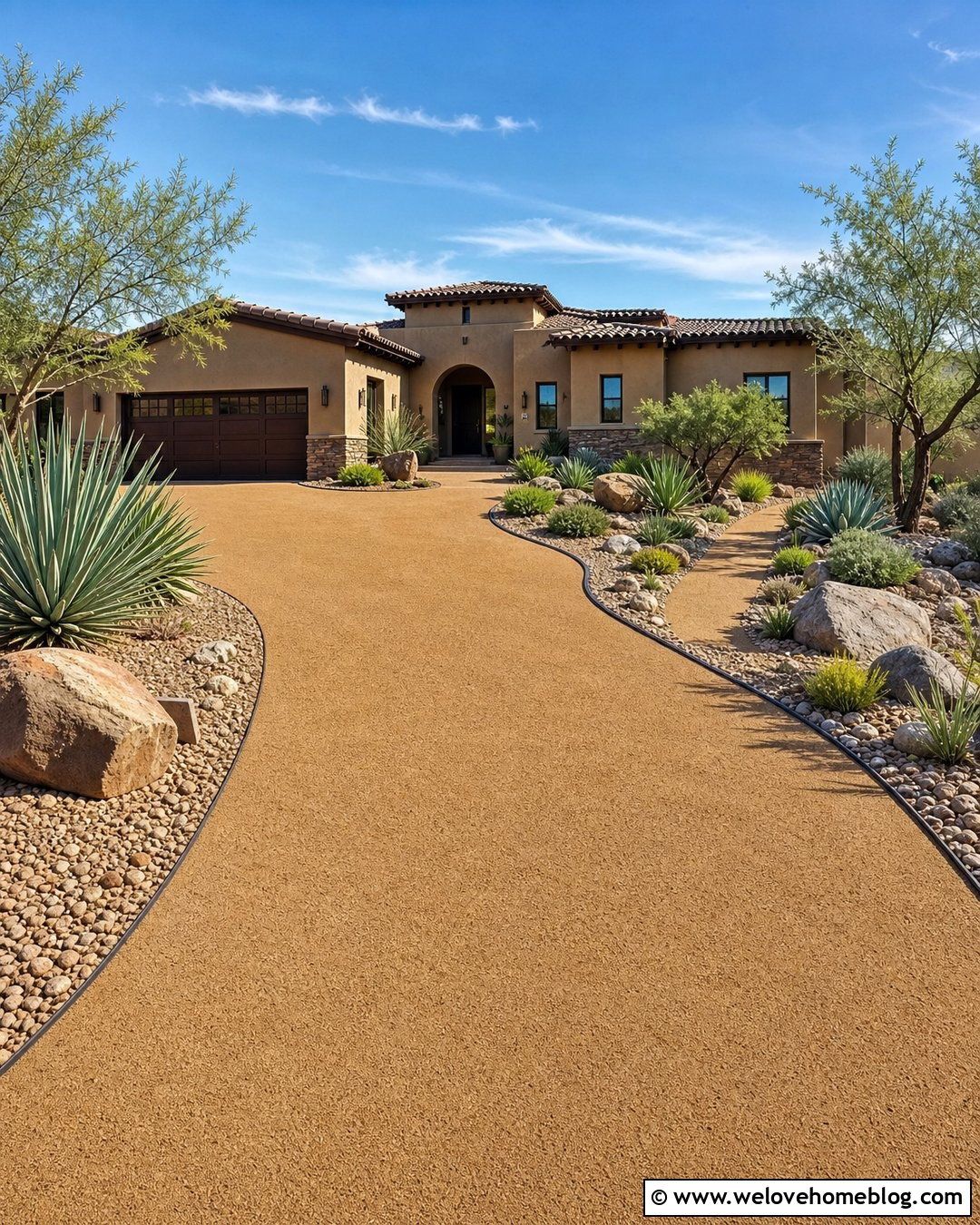
Decomposed granite creates a warm, finely textured surface that fits Southwestern, modern, and Mediterranean-inspired homes. It is most practical where local availability and climate make it suitable. Select stabilized decomposed granite if loose dust or erosion is a concern, and install it over a well-prepared base. A broad, gently curved driveway can follow the natural contours of a dry yard without requiring complicated paving patterns. Use inexpensive steel edging to separate the golden-brown surface from beds of decorative rock. Agave, yucca, ornamental grasses, and drought-tolerant shrubs provide structure without hiding the driveway. Large accent boulders can be limited to the entrance, where they make the strongest visual impact. Matching the walkway to the driveway material keeps the overall landscape cohesive and avoids purchasing another surface.
5. Recycled Asphalt Driveway With Gravel Shoulders
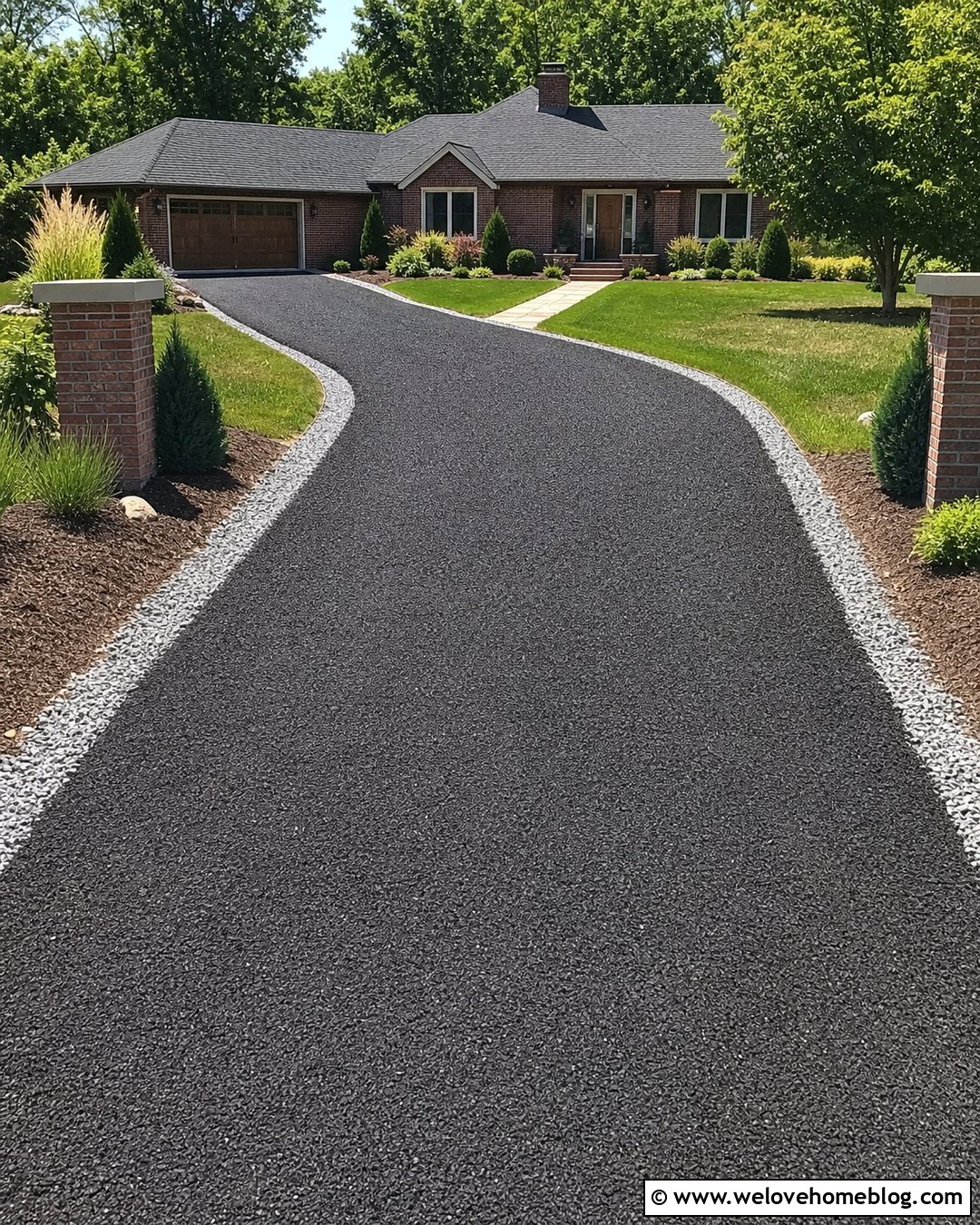
Recycled asphalt millings can provide the dark appearance of pavement while reusing material removed from older roads and parking areas. Availability, quality, and local installation requirements vary, so obtain the material from a reputable supplier and confirm that it is appropriate for residential use. Create a straight or subtly curved driveway with compacted millings in the center and narrow gray gravel shoulders along both sides. The lighter shoulders define the dark driving surface and accommodate minor runoff without expensive masonry borders. Plant low evergreen shrubs near the house and keep the entrance landscaping open for visibility. A simple concrete or stone walkway can cross the driveway near the front door. This restrained material palette works especially well with brick ranch homes and modest modern farmhouses.
6. Crushed Concrete Driveway With Stone Edging
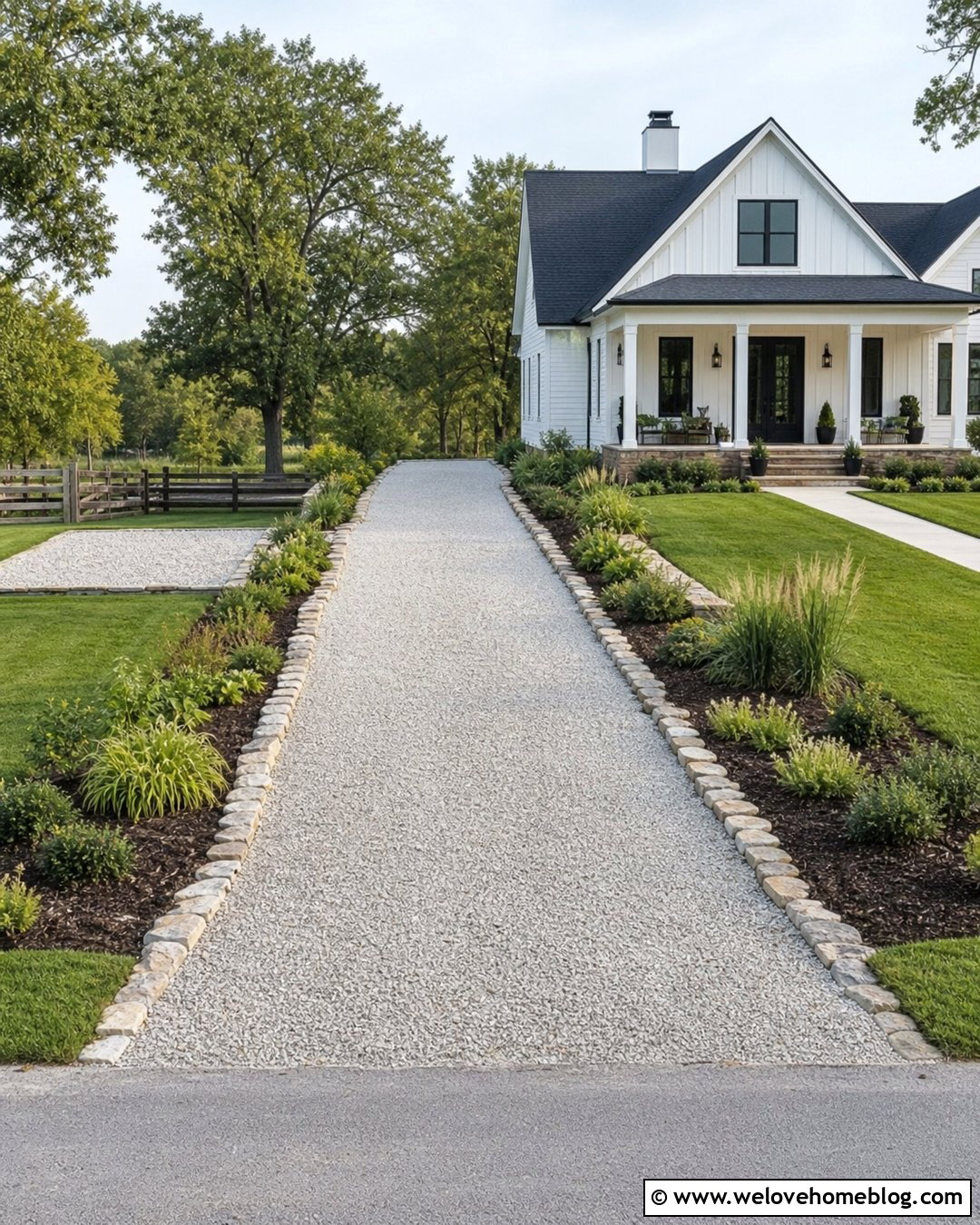
Crushed concrete aggregate can turn recycled construction material into a functional driveway surface. Its mixed light-gray tones work well with white siding, pale brick, and contemporary facades. Choose processed material with an appropriate, consistent size and avoid loads containing debris or exposed reinforcement. A compact straight driveway is the easiest shape to grade and maintain. Edge it with larger reclaimed stones placed in a shallow trench, creating a durable visual boundary without buying manufactured curbs. Beyond the stones, use broad sweeps of mulch, hardy shrubs, and a few ornamental grasses. A matching crushed-concrete parking pad can sit beside the garage without looking like an afterthought. Ask suppliers about material origin and local rules before ordering, since recycled aggregate specifications and acceptance can differ by location.
7. Crushed Shell Driveway With Coastal Planting
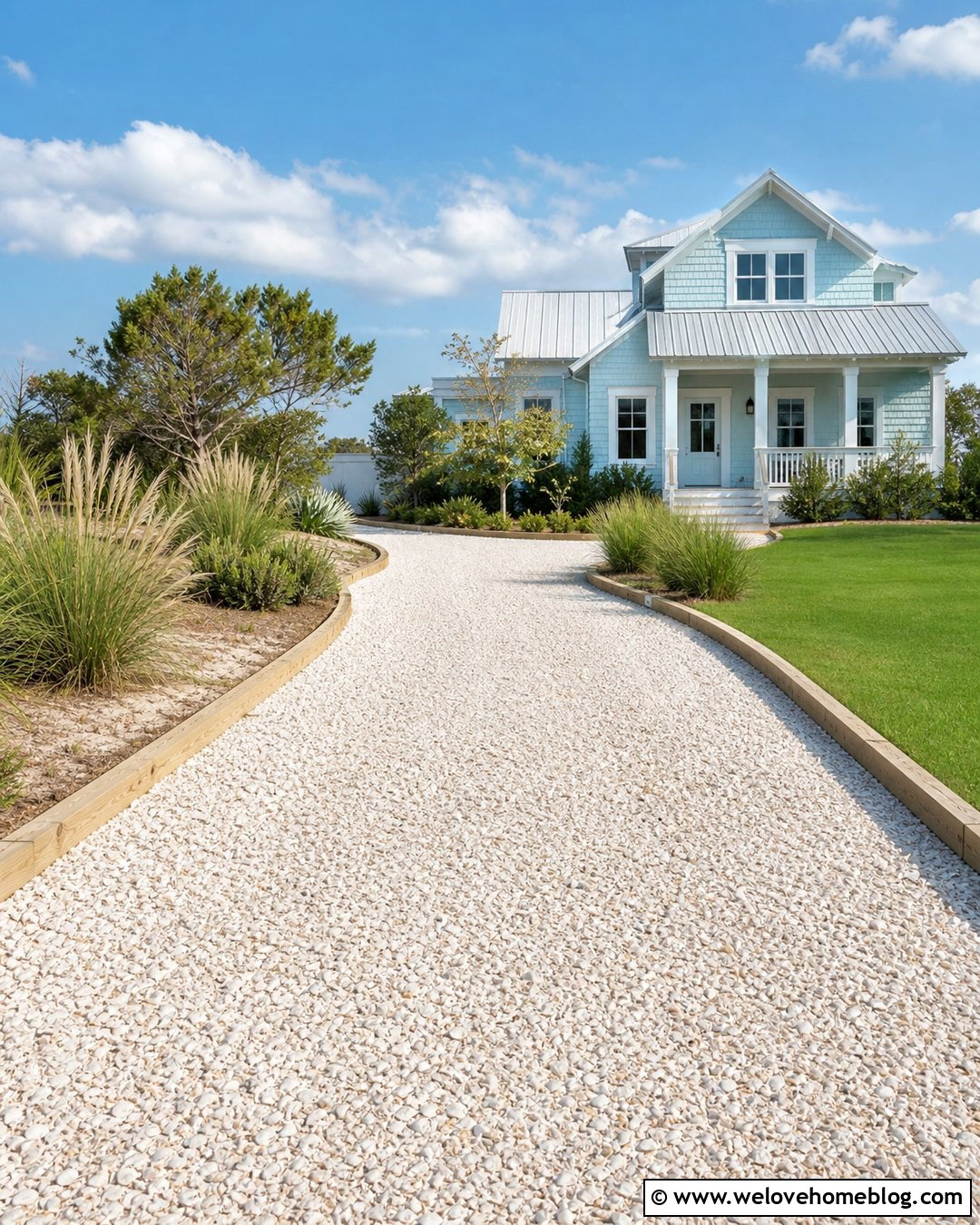
In coastal areas where crushed shell is readily available, it can create a bright driveway with relaxed regional character. The pale surface gradually settles and blends with sandy landscapes, making it a natural match for beach cottages and low-country homes. Build a compacted base first, then use shell as the visible top layer rather than relying on a thin covering over bare soil. Frame a slightly curved driveway with simple pressure-treated timber or pale concrete edging. Plant salt-tolerant ornamental grasses, low evergreen shrubs, and spreading ground cover in wide, uncluttered beds. A shell walkway leading toward the porch can visually connect the parking area and house. Since hauling often determines whether an aggregate remains economical, compare locally sourced shell with nearby gravel before selecting this complete coastal look.
8. Tar And Chip Driveway With Stone Pillars
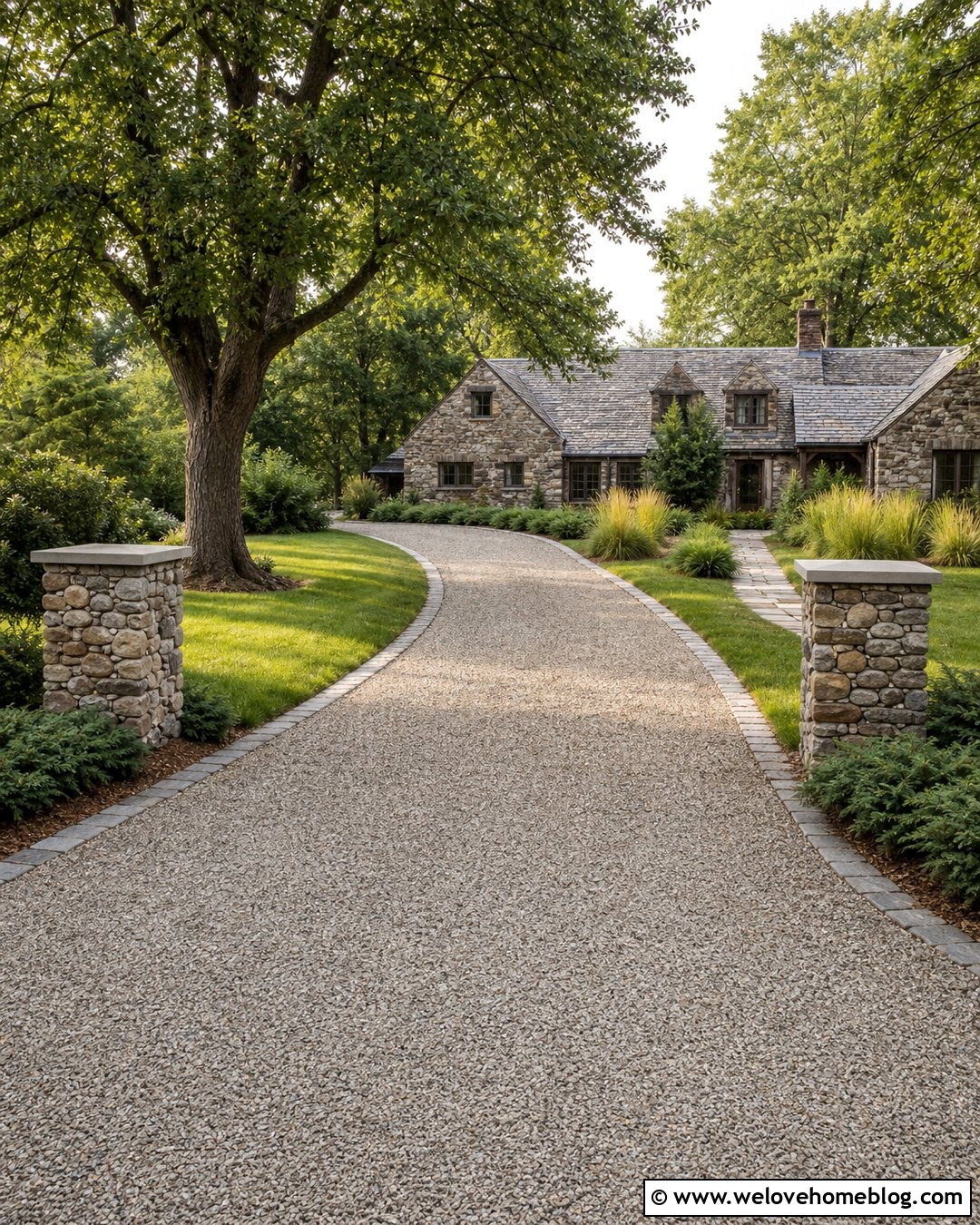
A tar-and-chip, or chip-seal, driveway offers the visual texture of loose stone with a more bound surface. Installation normally requires experienced contractors and suitable equipment, but it may be a cost-conscious alternative to more decorative paving in some markets. Choose a locally available tan or gray stone chip that complements the house facade. A long, gently curved driveway looks complete when bordered by mowed lawn rather than continuous masonry edging. Place two modest fieldstone pillars at the street entrance and connect them visually with low beds of juniper or ornamental grass. Keep the pillars simple and skip elaborate gates to control costs. Before proceeding, compare local contractor quotes and confirm maintenance expectations, climate suitability, drainage needs, and whether this surfacing method is available in your area.
9. Black Asphalt Driveway With Brick Apron
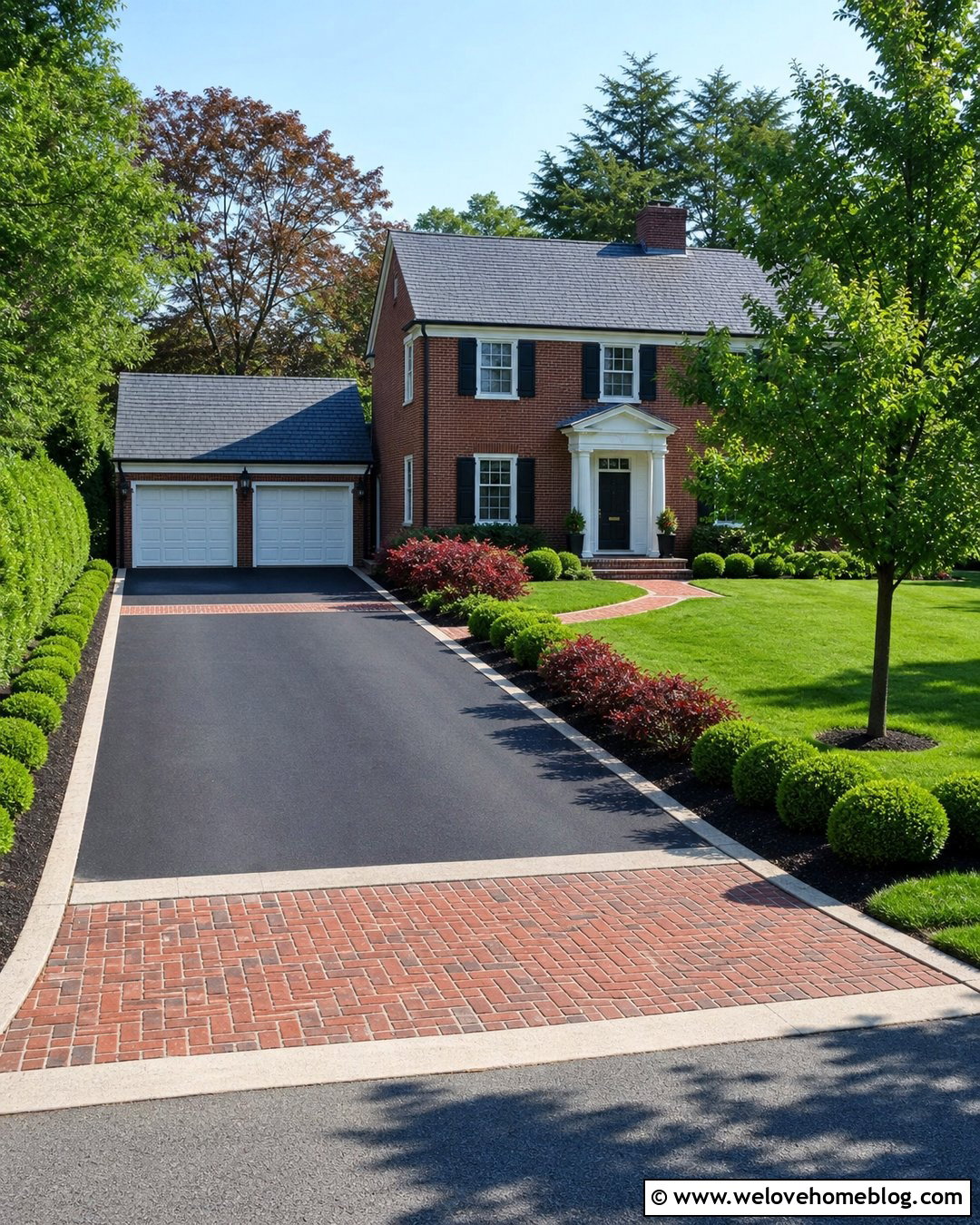
Standard black asphalt provides a clean, familiar surface for homes in many American neighborhoods. Its simplicity makes it easy to upgrade selectively instead of paying for decorative treatment across the entire driveway. Use plain asphalt for the long straight section, then install a narrow reclaimed-brick apron where the drive meets the street. A matching brick ribbon near the garage can repeat the color without using enough brick to dominate the budget. Keep the side borders simple with flush concrete curbing or compacted gravel shoulders. Red barberry, green boxwoods, and a small shade tree can connect the dark pavement with a brick colonial or ranch facade. The finished design feels customized because the higher-detail material appears only at important transition points, where it delivers the greatest visual benefit.

10. Asphalt Driveway With Mulch Borders
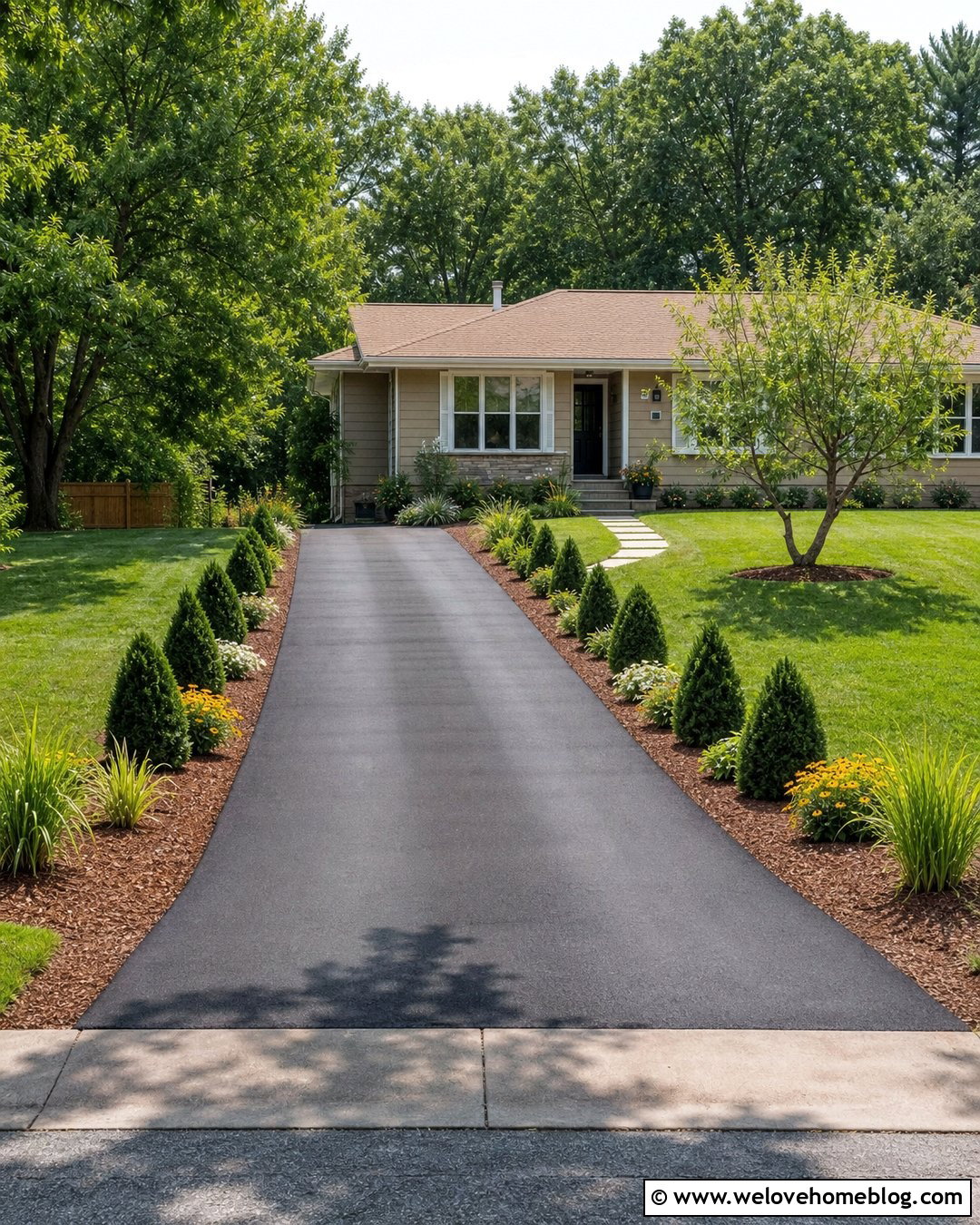
If decorative stone edging stretches the budget, deep mulch beds can give a basic asphalt driveway a softer, more finished outline. Begin with a straight black asphalt surface and shape wide planting beds along the outer edges. Use sweeping bed lines rather than numerous tight curves, which can complicate mowing and create an overly busy appearance. Fill the beds with affordable shredded bark and repeat a limited selection of resilient shrubs, ornamental grasses, or flowering perennials. A single small tree near the front corner can balance the garage without obstructing sightlines. Add a concrete stepping path from the driveway to the front walk for convenient access. This complete layout is especially suitable for a simple suburban ranch because the dark asphalt, brown mulch, green plants, and open lawn create clear visual layers.
11. Plain Concrete Driveway With Gravel Borders
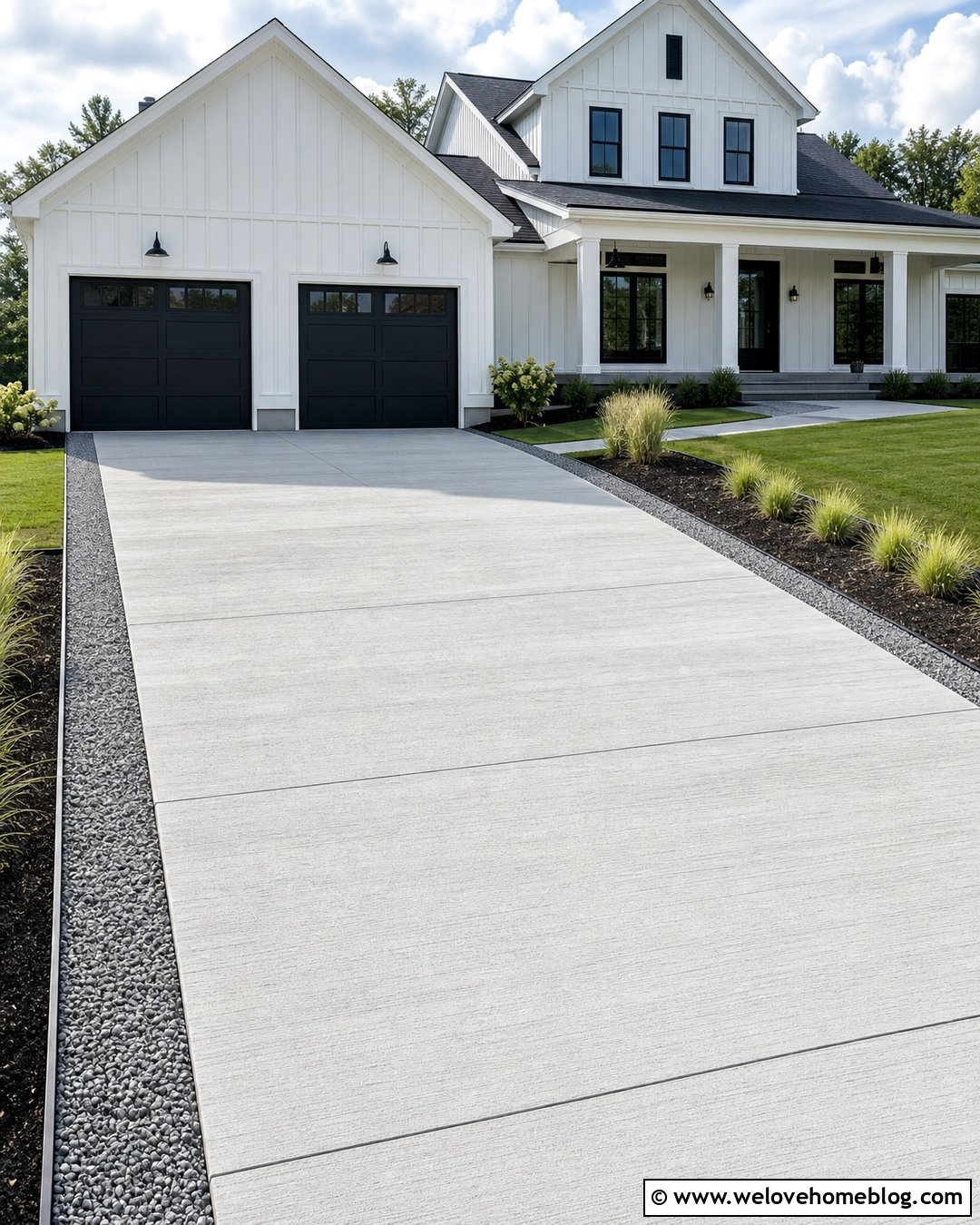
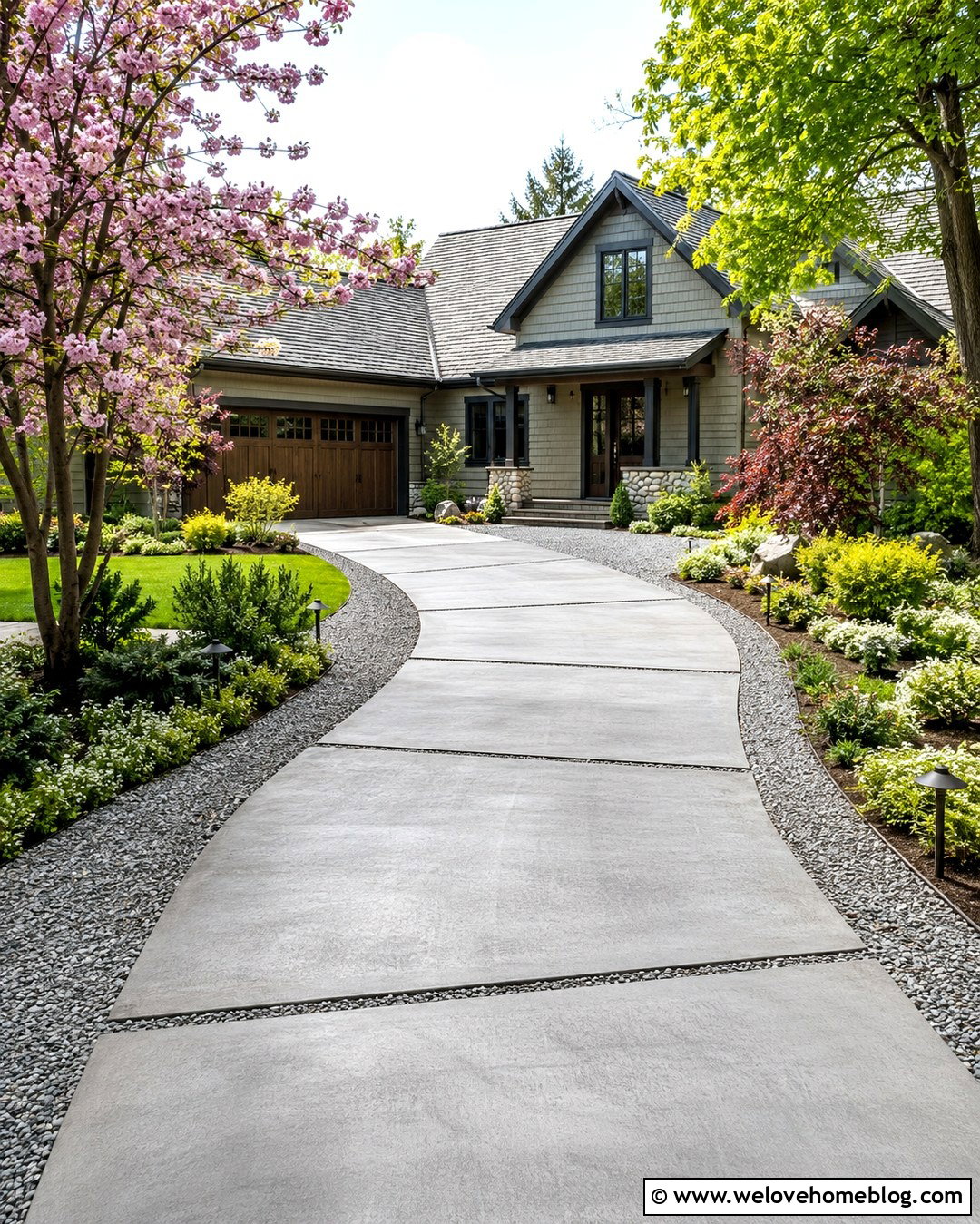
Plain broom-finished concrete can look crisp and modern without coloring, stamping, or complex decorative scoring. Keep the driveway rectangular to reduce complicated forming and place decorative detail around it instead. Narrow bands of inexpensive gray gravel can run along both sides, separating the concrete from lawn and catching scattered soil or mulch. Use flexible metal edging beyond the gravel to maintain clean lines. Near a modern farmhouse or contemporary ranch, plant evenly spaced ornamental grasses in rectangular beds. A simple poured-concrete walkway can meet the driveway at a right angle, continuing the uncluttered geometry. Concrete pricing depends heavily on preparation, dimensions, labor, access, and local conditions, so compare plain finishes before adding upgrades. Standard concrete is generally positioned below elaborate stone or full paver installations in material comparisons. ()
12. Concrete Strip Driveway With Gravel Center
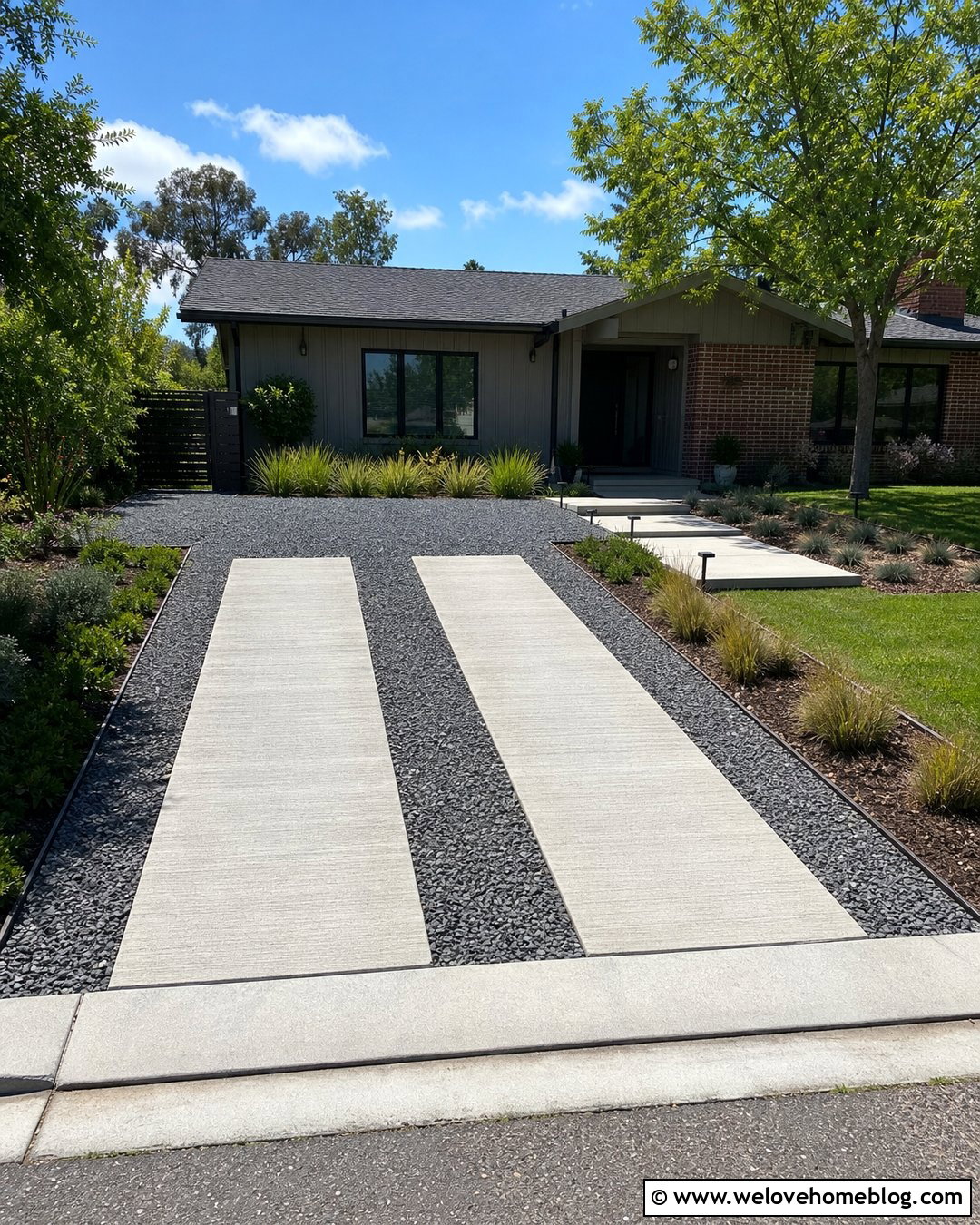
Two concrete wheel strips can reduce the amount of poured material while still creating defined tracks for vehicles. This design works best on a straight, properly engineered residential driveway where the strips are sized and reinforced for expected loads. Fill the middle and outer shoulders with compacted gravel to prevent the gaps from becoming muddy. Dark gray gravel creates attractive contrast with light broom-finished concrete, while flush steel edging keeps each material in place. Continue the gravel into a small parking area near the garage so vehicles can maneuver comfortably. Low ground cover, native grasses, and a simple lawn frame the narrow layout without crowding it. Before construction, confirm local driveway standards, fire-access requirements, drainage rules, and whether separated wheel tracks are permitted for the property.
13. Concrete Grid Driveway With Gravel Infill
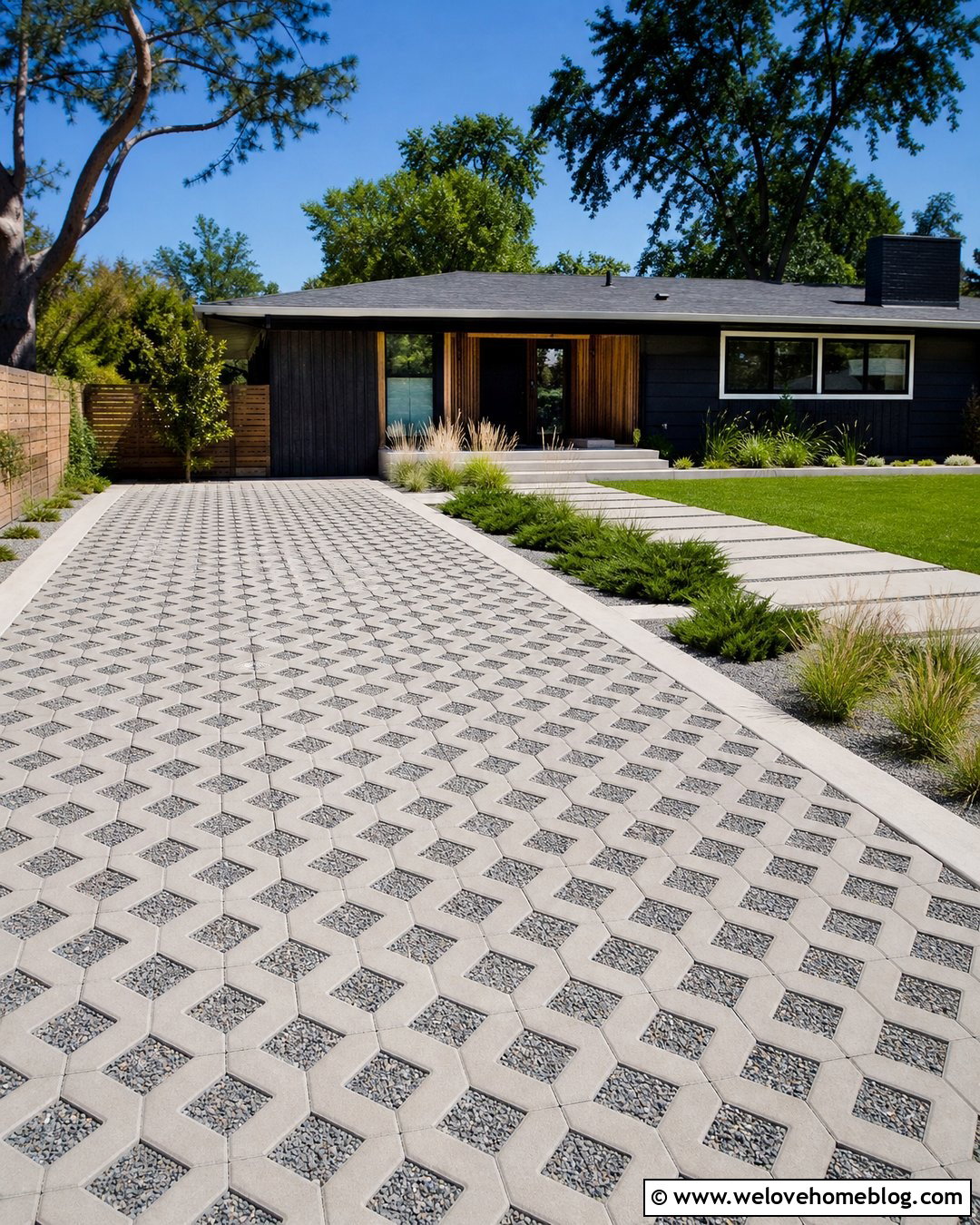
Concrete grid pavers use open cells that can be filled with gravel, creating a structured surface without covering every square foot in solid paving. Choose light-gray grid units with angular gray stone infill for a clean, contemporary appearance. A straight driveway leading to a midcentury ranch keeps the installation pattern simple. Frame the drive with flush concrete curbs, then repeat the same gravel in a nearby walkway or planting-bed accent. Low junipers and tufted grasses reinforce the geometric design while leaving the driveway fully visible. Open-grid and permeable paving systems require correctly designed base layers, and their suitability depends on soil, drainage, loading, maintenance, and climate. Permeable surfaces can help rainwater and snowmelt pass through the pavement instead of producing as much surface runoff. ()
14. Plastic Gravel Grid Driveway With Steel Edging
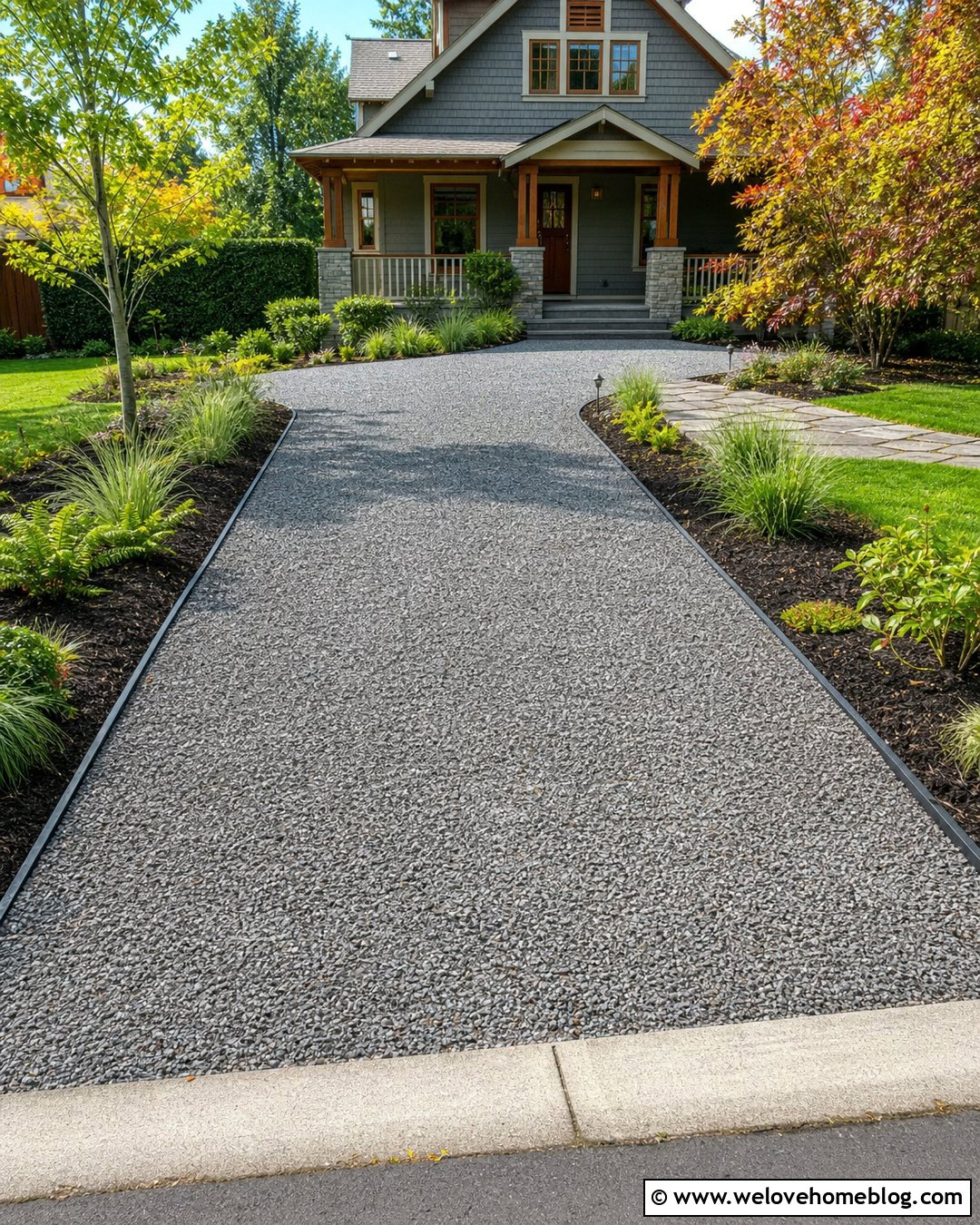
A plastic stabilization grid can help hold loose gravel in a defined pattern and reduce spreading when installed over the correct base. Cover the filled grid as directed by the manufacturer so the plastic is not visually dominant or exposed to inappropriate loads. Choose medium-gray angular gravel for a straight driveway leading to a simple Craftsman home. Black steel edging along both sides reinforces the clean boundary, while small beds of ferns, low shrubs, and native grasses soften the approach. At the street, widen the gravel slightly to form a welcoming entrance and provide practical turning clearance. Grid specifications differ, so select a product rated for residential vehicles and follow requirements for excavation, aggregate depth, drainage, compaction, slope, and anchoring. The finished surface should look like a complete gravel driveway rather than visible plastic panels.


15. Grass Grid Driveway With Concrete Borders
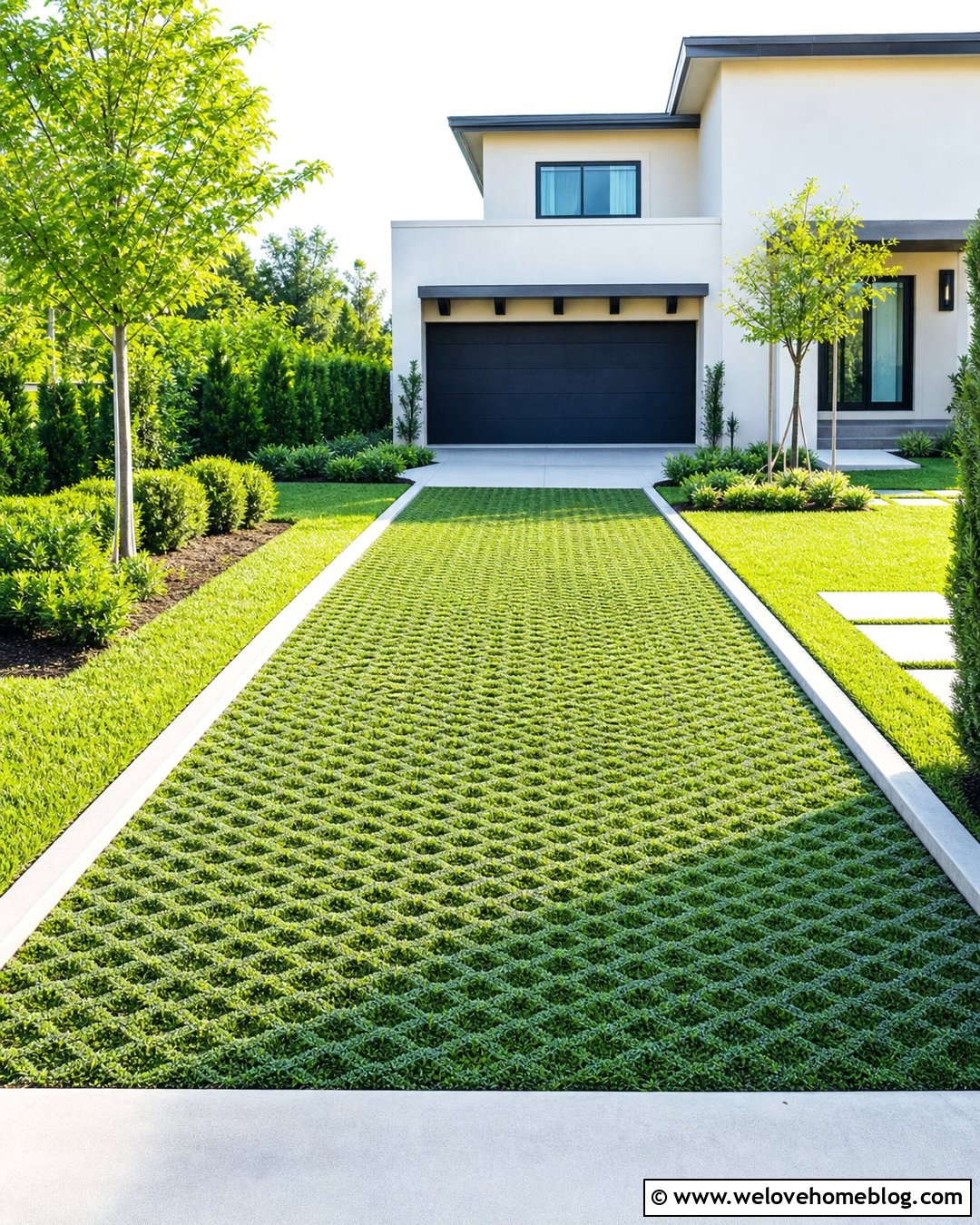
A reinforced grass driveway can reduce the visual impact of a large parking surface while preserving a green front yard. Use a load-rated cellular grid filled with suitable soil and a durable grass variety chosen for local sun, rainfall, irrigation, and traffic conditions. This solution is better for moderate use than for areas where vehicles constantly turn in place. Border the straight driveway with narrow concrete curbs to prevent the grid from shifting into adjacent beds. A short concrete apron near the garage can handle the most concentrated movement and create a clean transition. Repeat low shrubs along one side while leaving the other open as lawn. The green surface, pale concrete border, and simple planting work particularly well with contemporary homes where a full dark driveway would feel visually heavy.
16. Gravel Driveway With Reclaimed Brick Apron
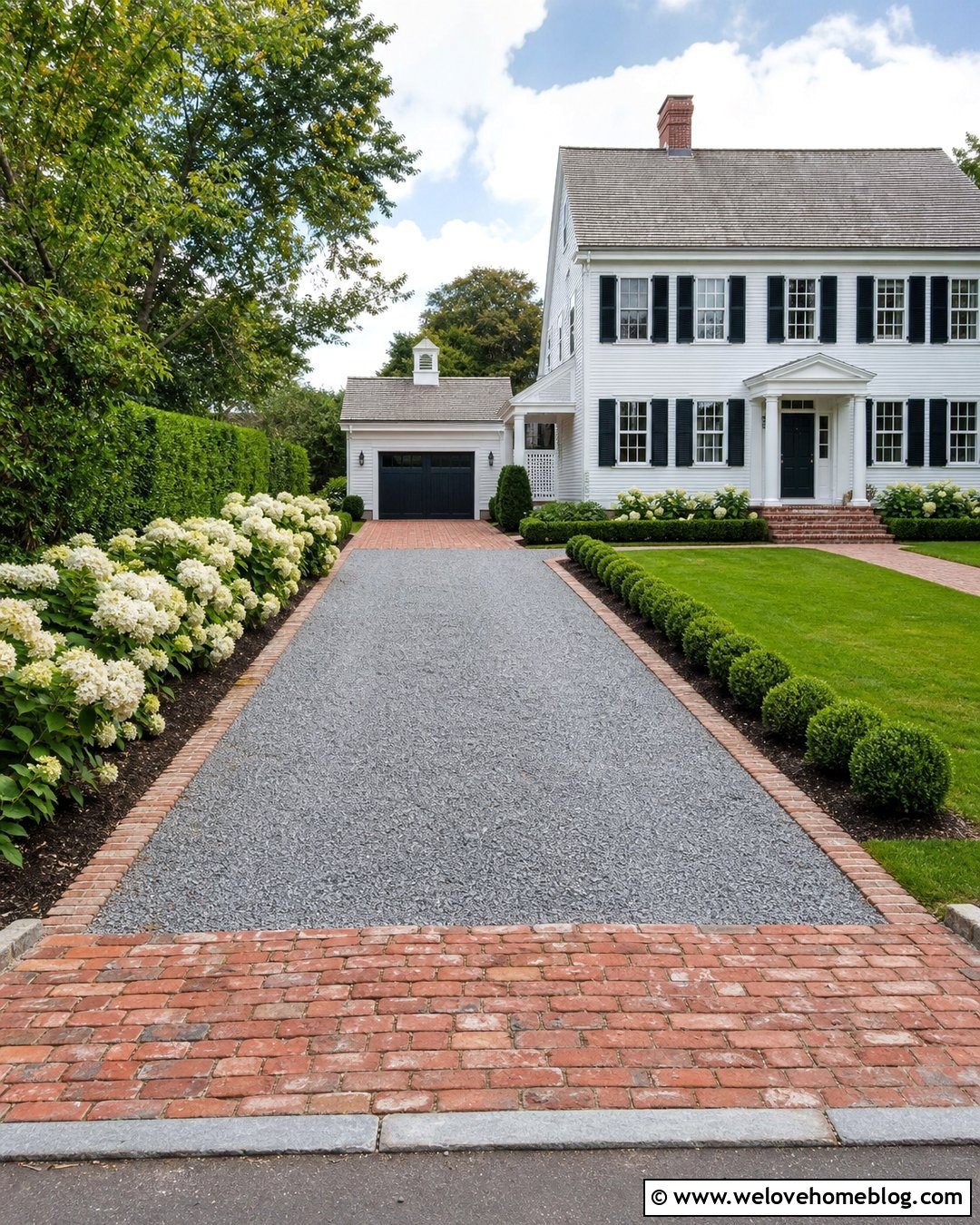
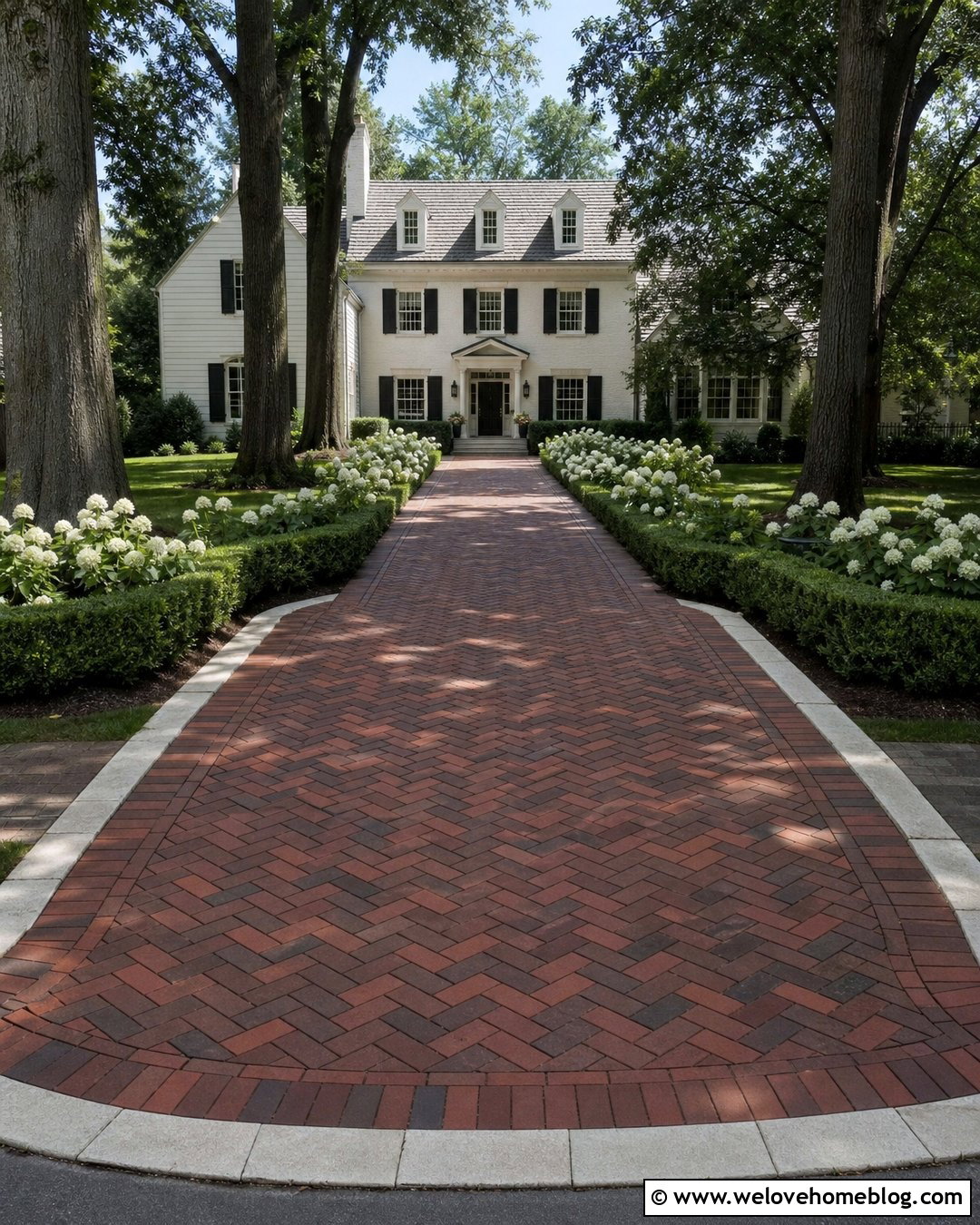
Combining an affordable gravel body with a small reclaimed-brick apron concentrates the decorative material where it is most noticeable. Lay compacted gray gravel along the main straight driveway, then use weathered red brick across the entrance and near the garage threshold. Set the brick over a properly prepared base and contain it with rigid edging so the transition can tolerate vehicle movement. Continue a thin brick border along one side only, leading toward a matching front walkway. A row of hydrangeas or compact evergreen shrubs can balance the accent without requiring symmetrical planting everywhere. This design suits colonial, Craftsman, and cottage homes because the brick echoes traditional architecture while gravel keeps the larger area economical. Select sound reclaimed units intended to withstand exterior conditions and expected loads.
17. Gravel Driveway With Concrete Paver Ribbons
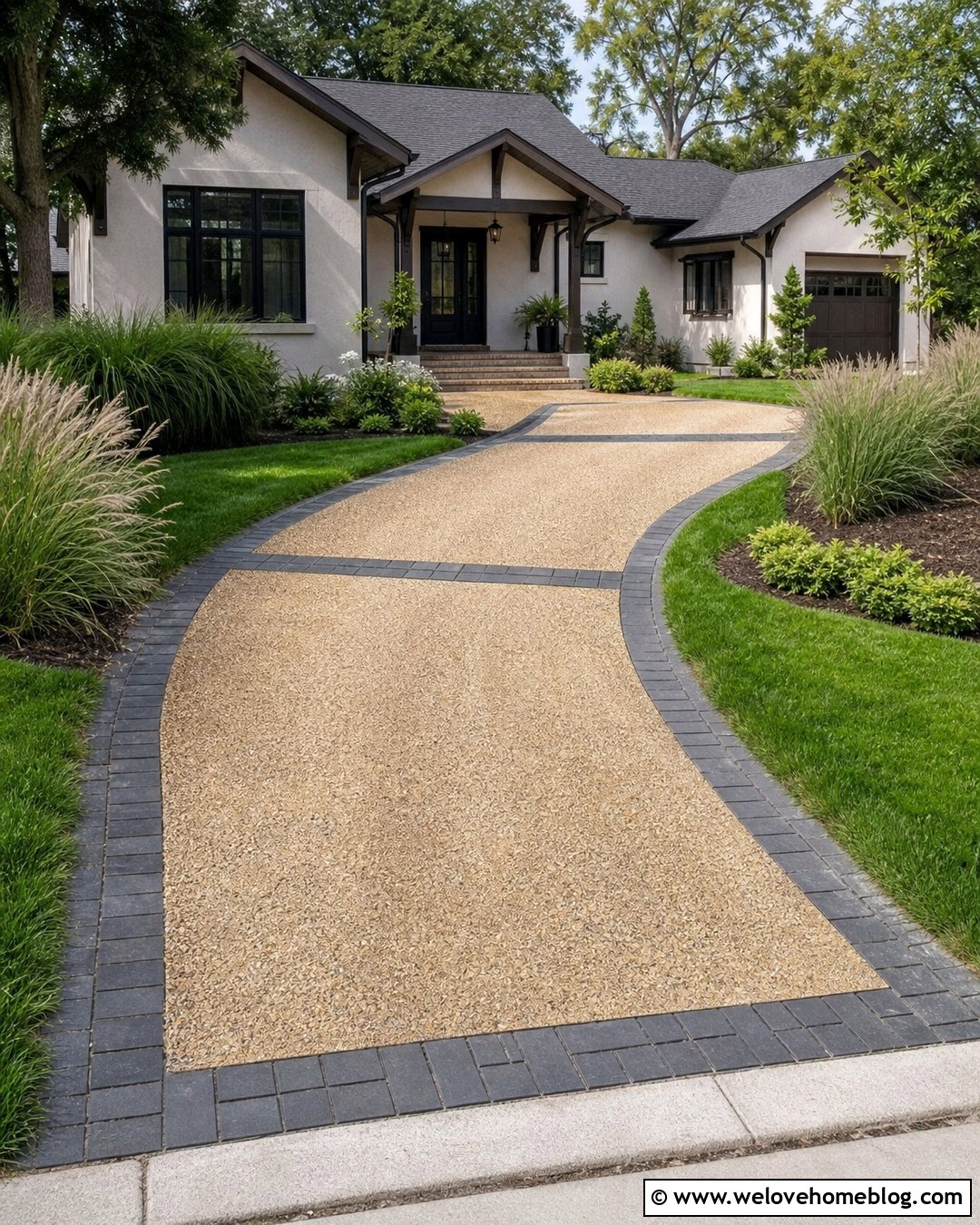
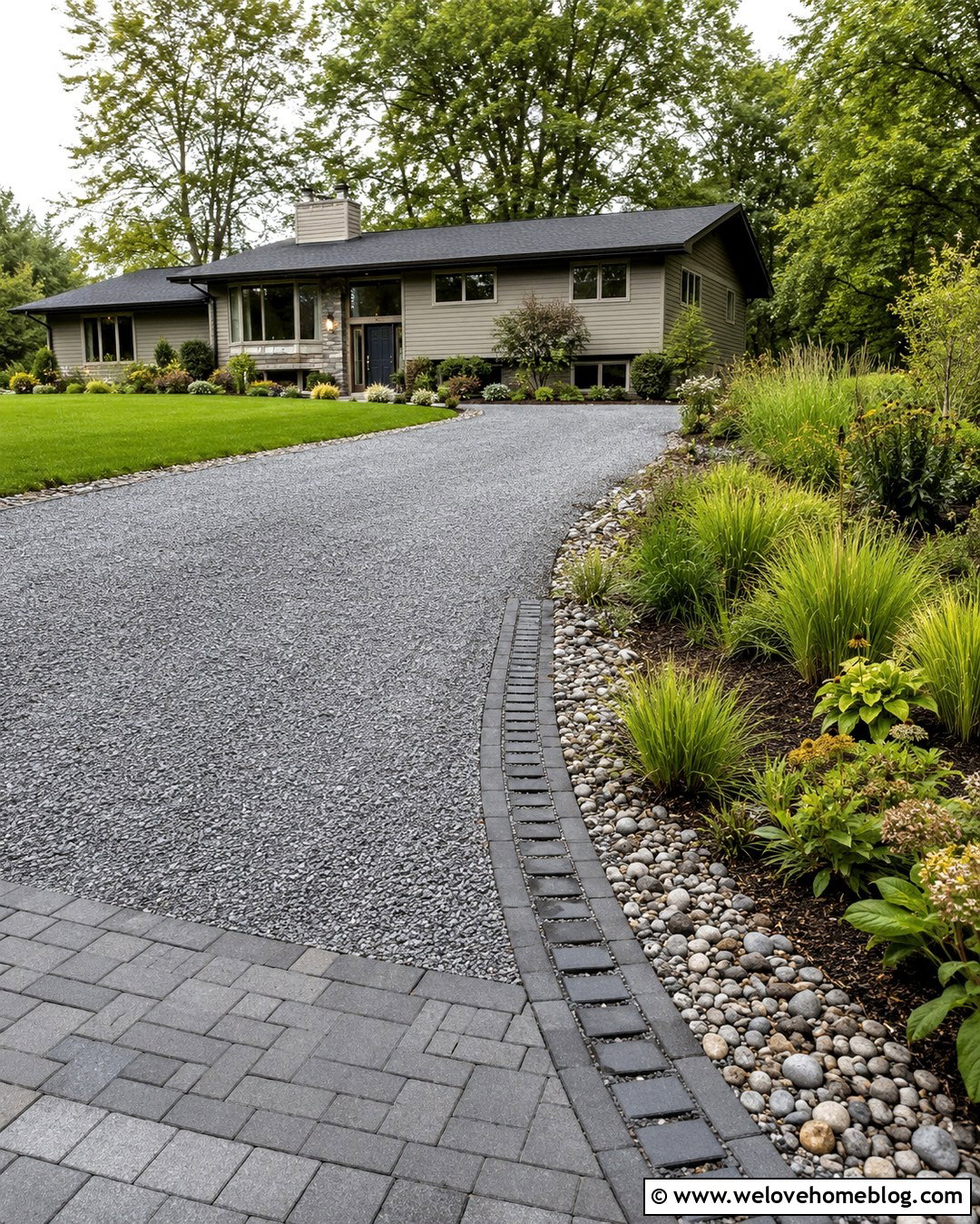
Concrete pavers can add structure without covering the entire driveway when they are used as narrow ribbons. Start with compacted tan gravel on a gently curved approach, then install charcoal concrete pavers along each edge. Add one transverse paver band at the entrance and another before the parking area to create a repeated pattern. The pavers need a stable base and secure edge restraint, even though they occupy only a small part of the surface. Frame the curve with mowed lawn on one side and a broad bed of ornamental grasses on the other. A light-colored stucco or Craftsman house provides attractive contrast in the background. This mixed-material look uses the more expensive product selectively, making the driveway feel intentionally designed while retaining gravel across most of its area.
18. Narrow Gravel Driveway With Native Plants
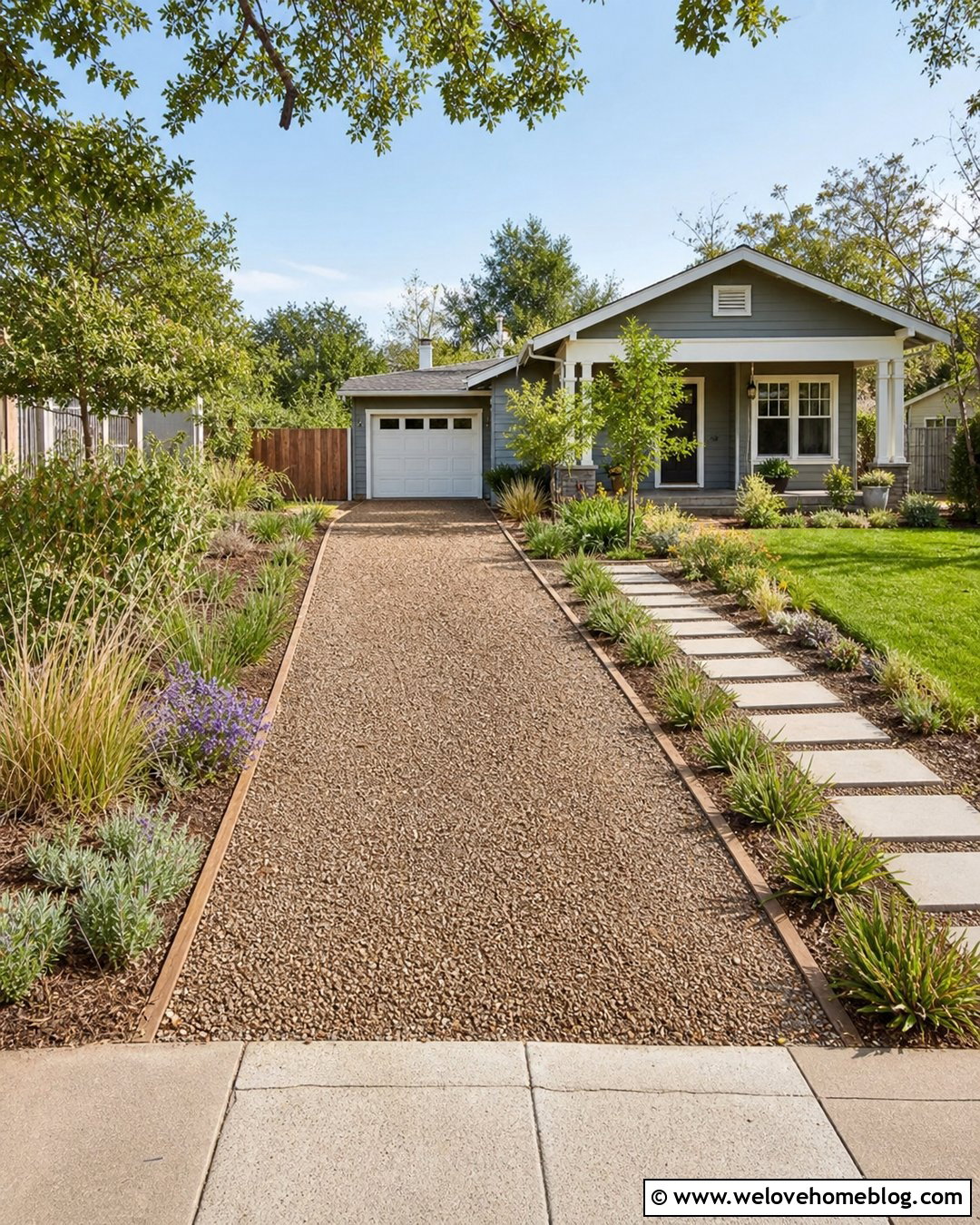
Reducing unnecessary paved width can lower material and excavation needs, provided the dimensions still meet local codes and practical access requirements. A narrow, straight driveway of compacted brown crushed gravel works well beside a small bungalow or cottage. Use flush timber edging to define the route without making the confined area feel crowded. On one side, install a simple stepping-stone walkway separated from the driveway by a slim planting bed. Fill the remaining borders with regionally appropriate native grasses, ground covers, and compact flowering shrubs. Repeating only a few species creates a calmer, more cohesive appearance and can simplify care. Keep larger plants away from the street and garage so drivers retain clear visibility. The result maximizes useful parking space while leaving more of the small front yard available for greenery.
19. Refreshed Concrete Driveway With Painted Borders
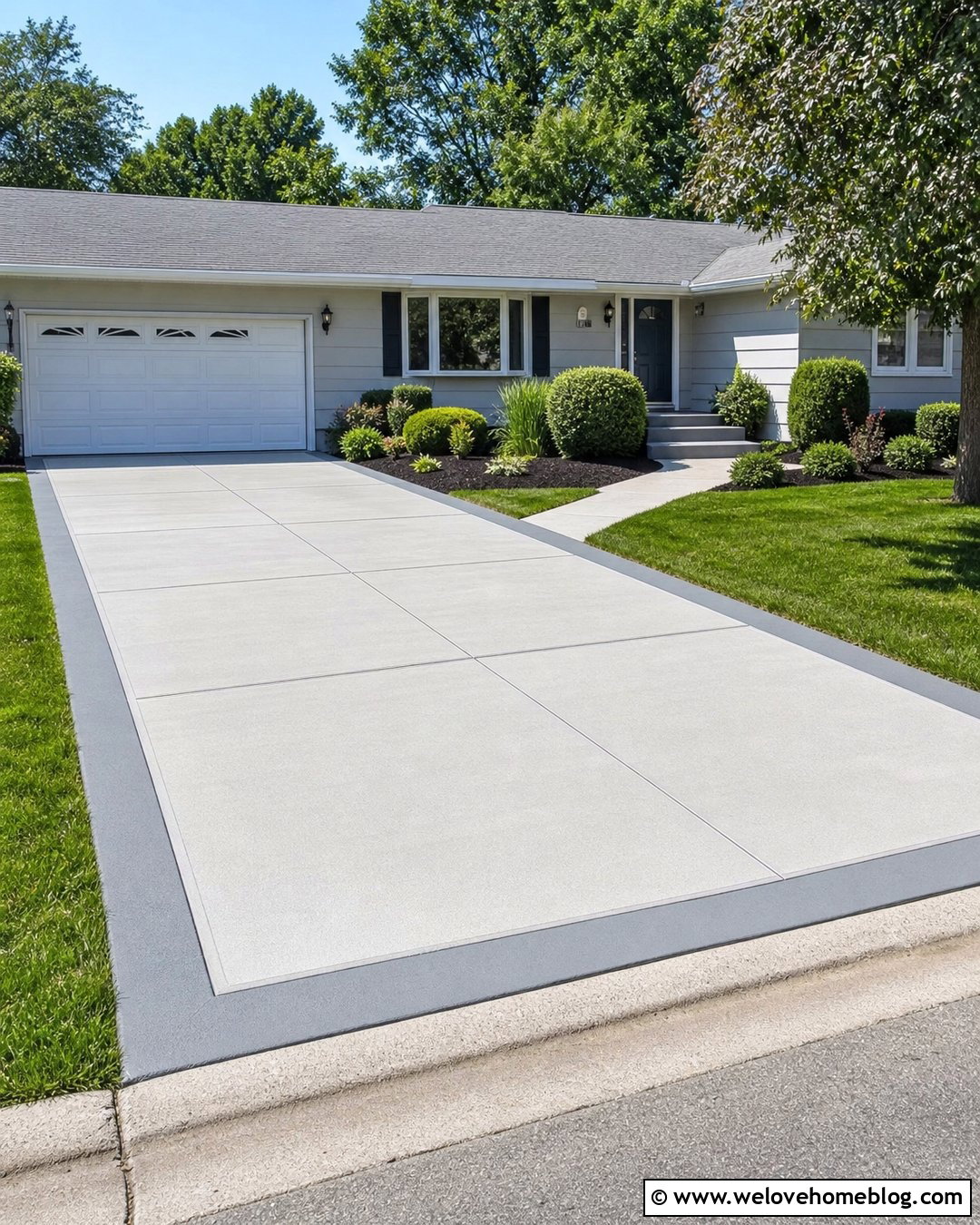
When an existing concrete driveway remains structurally serviceable, improving its appearance may be more economical than replacing the entire slab. Have significant settlement, drainage problems, wide cracks, and extensive deterioration professionally assessed before treating the surface. After suitable cleaning and compatible repairs, add a restrained border using an exterior coating specifically approved for concrete driveways and vehicle traffic. A medium-gray border around lighter existing concrete can sharpen the edges without trying to imitate expensive stone. Extend the gray tone onto a small front step or walkway detail for continuity. Fresh mulch beds, clipped shrubs, and simple solar-free daytime landscape accents can complete the update. Follow product instructions for surface preparation, weather conditions, curing, traction, and recoating because decorative coatings cannot correct underlying structural failure.



20. Circular Gravel Driveway With Simple Center Bed
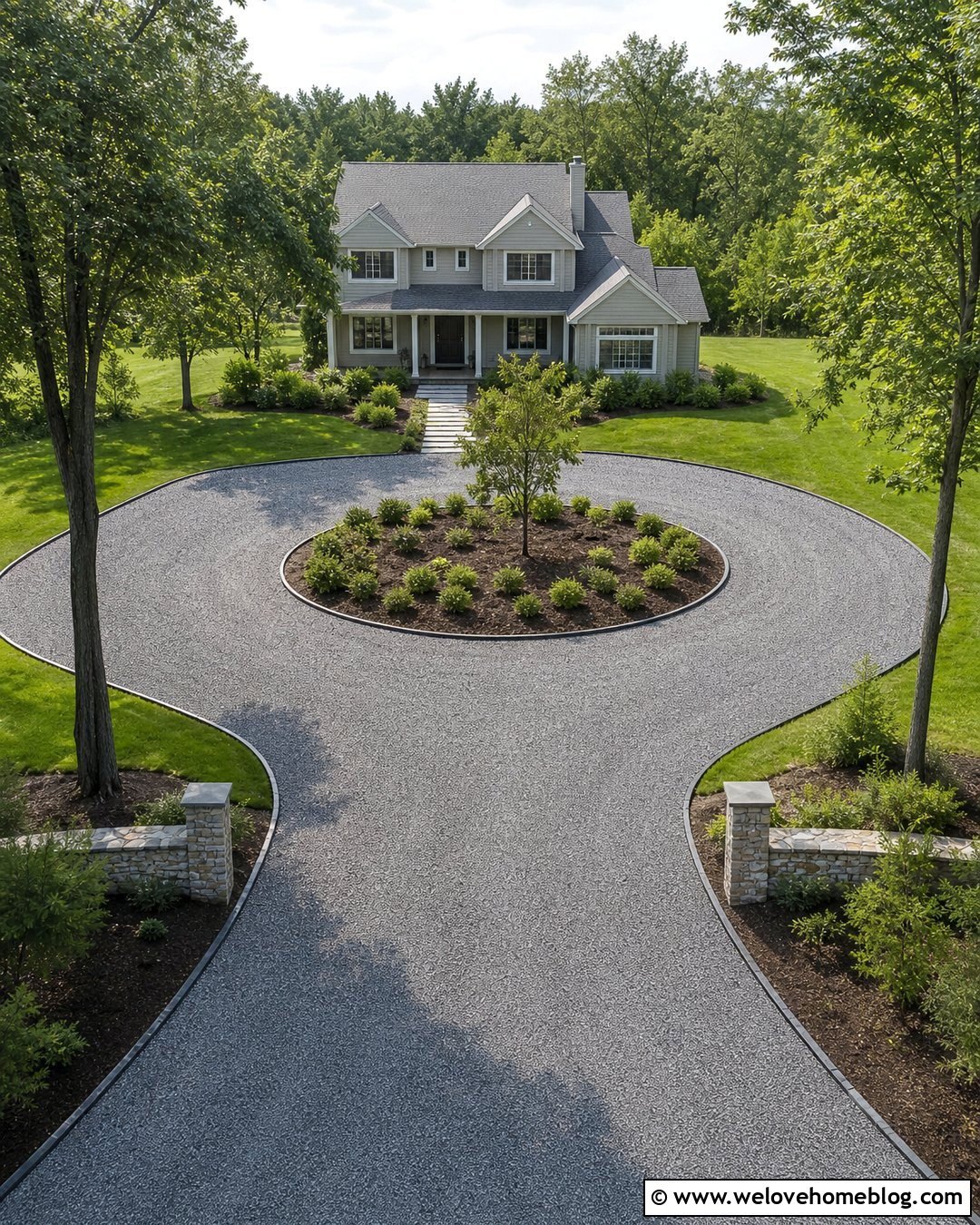
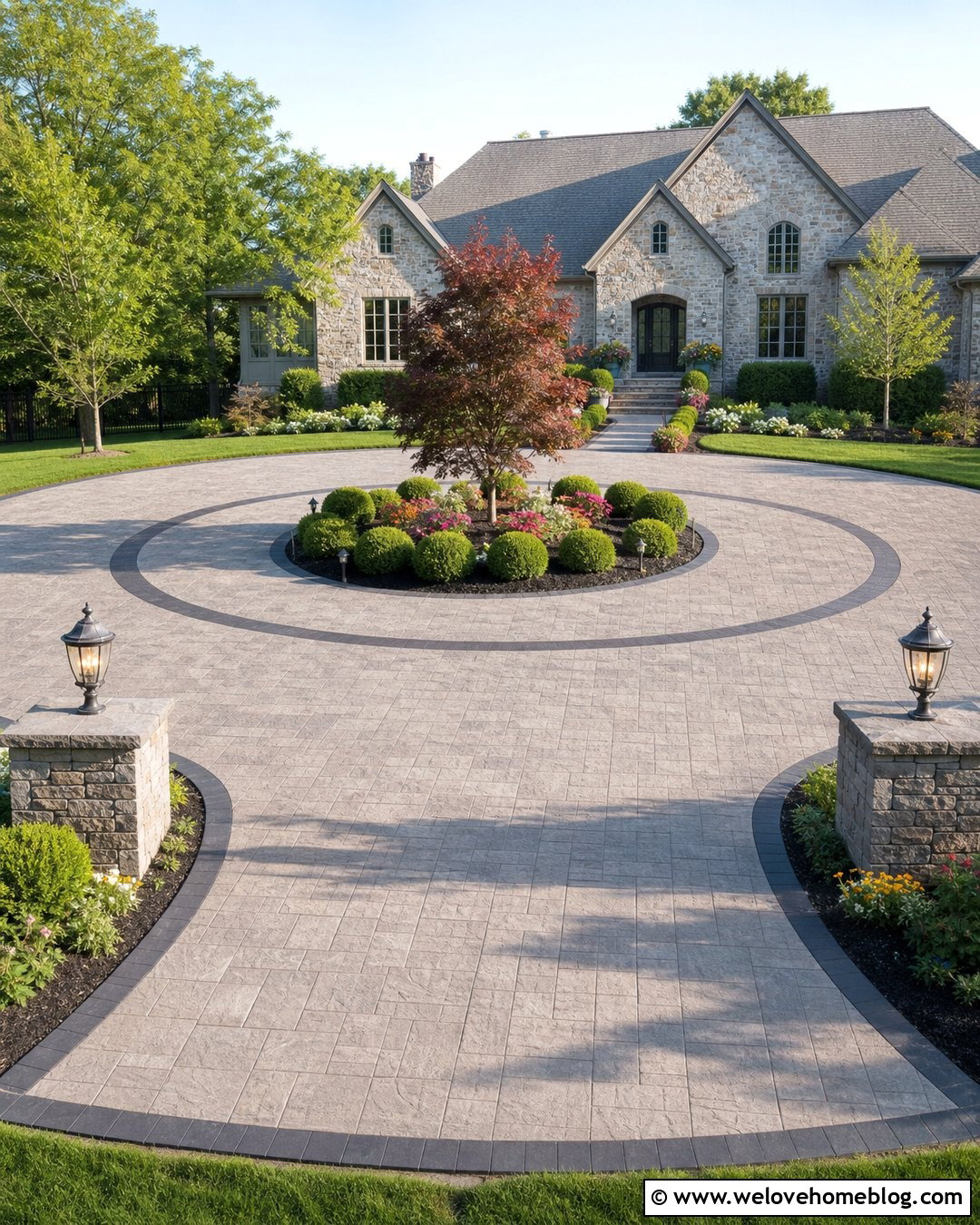
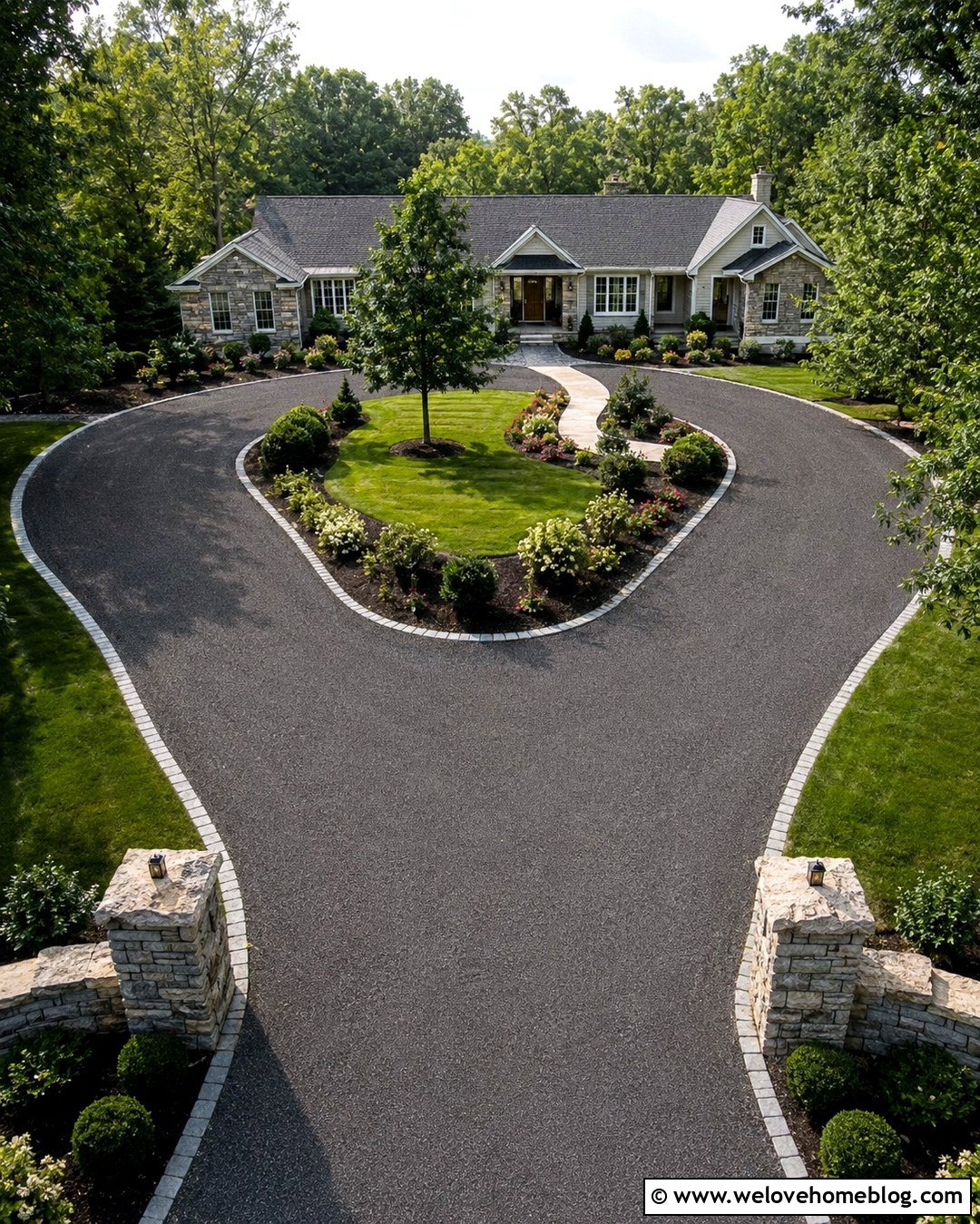
A compact circular driveway can remain budget conscious when it uses locally sourced gravel and avoids elaborate masonry. Keep the loop proportionate to the yard rather than creating an oversized motor court. Compact gray crushed stone across the full circular route and contain it with dark steel edging. In the middle, create a simple oval island filled with mulch, one small ornamental tree, and a low ring of hardy shrubs. This single focal bed is easier to maintain than several narrow planting strips. Use open lawn outside the loop and connect the front door with a short gravel or stepping-stone walkway. Circular layouts require adequate turning dimensions, safe visibility, and properly planned entrances, so verify local regulations and site access before building. The cohesive shape makes basic gravel feel purposeful and welcoming.
Conclusion:
The most successful budget driveway is not necessarily the one with the lowest initial material price. It is the design that suits the soil, slope, climate, vehicle use, drainage, and maintenance you can realistically manage. Start with proper site preparation, then save money through locally sourced aggregate, simple layouts, selective decorative accents, and uncomplicated landscaping. Reclaimed brick, gravel borders, mulch beds, and small paver ribbons can make a basic surface look customized without covering the entire area in premium materials. Compare multiple local quotes and verify permits before construction. Whether you refresh existing concrete or install compacted stone, these 20 inexpensive driveway ideas can create a functional, attractive entrance without unnecessary extras.

Related posts:


Leave a Reply