
A well-planned metal gate can make a driveway feel safer, more private, and far more polished. These 20 Installation Of Metal Driveway Gates Ideas cover practical layouts for straight, curved, narrow, sloped, and spacious entrances. You will find classic wrought iron, streamlined steel, lightweight aluminum, and mixed-material gates paired with concrete, asphalt, gravel, brick, and paver driveways. Each complete look considers the gate movement, supporting posts, surrounding landscaping, and architectural style of the home. Before choosing a design, measure the opening, check the driveway grade, and determine where vehicles can wait safely. Automation, drainage, electrical access, and emergency entry should also be planned early. Explore these 20 Installation Of Metal Driveway Gates Ideas to create an entrance that functions smoothly and improves curb appeal.
1. Double Swing Metal Driveway Gate
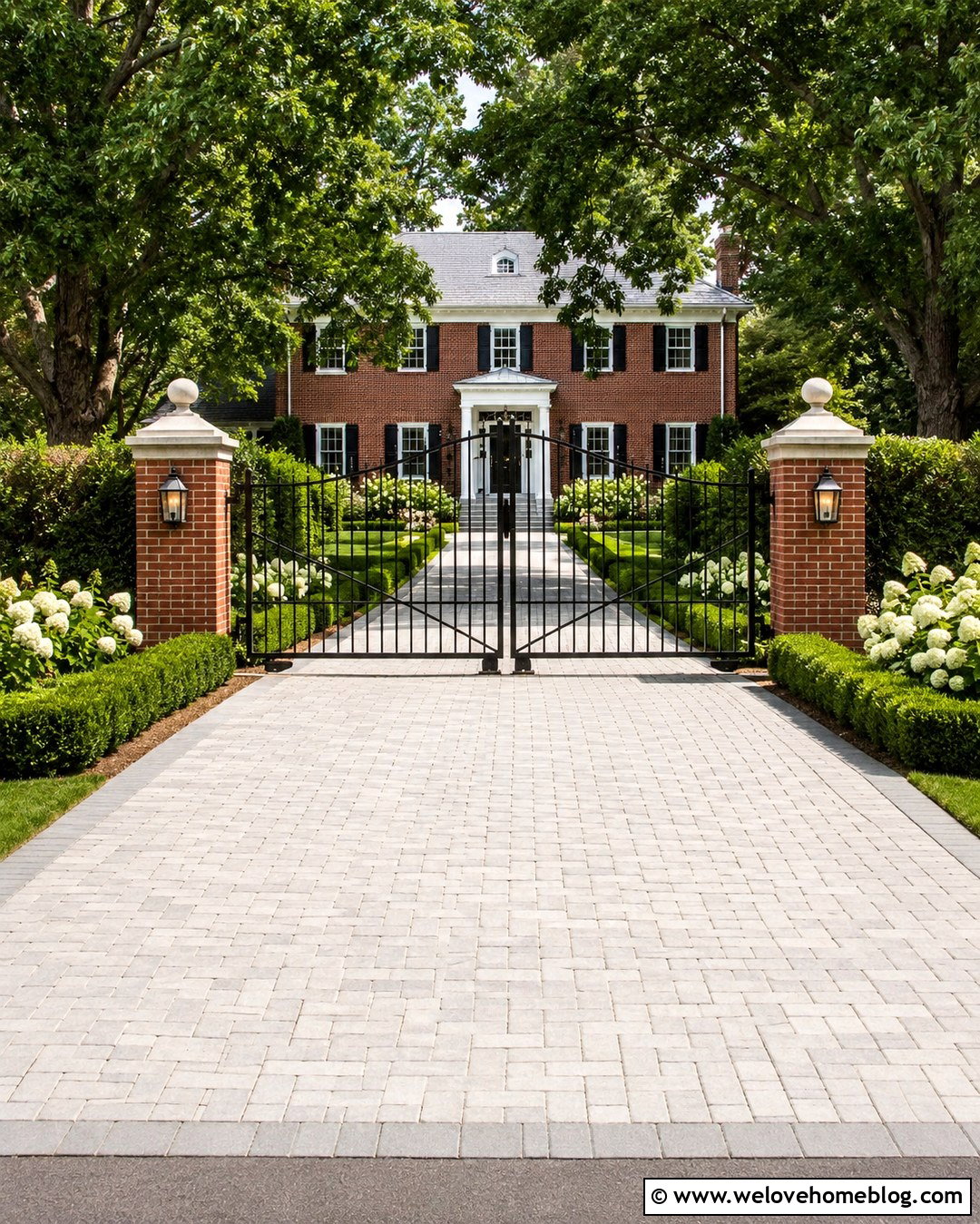
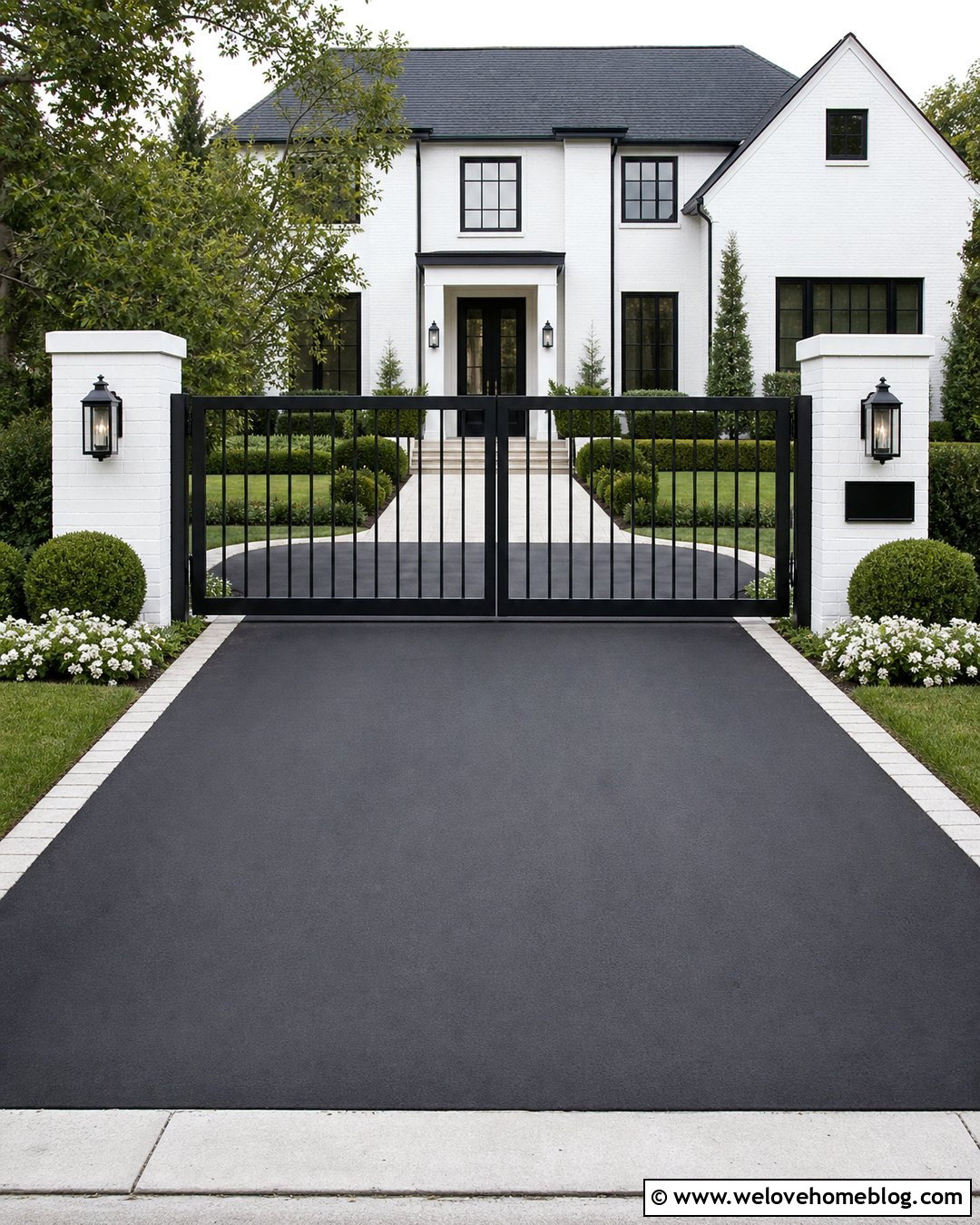
A double swing metal driveway gate creates a balanced entrance that works especially well on a wide, level approach. Install two matching steel or wrought iron leaves between masonry pillars, allowing them to meet cleanly at the driveway center. An inward-opening arrangement keeps the panels away from the street, but the driveway must provide enough clear space for the full swing. Pair a black powder-coated gate with light concrete pavers and low evergreen borders for crisp contrast. Underground conduit can hide electrical wiring when automation is planned. Strong posts, correctly sized hinges, and aligned gate stops help prevent sagging. Add photocell safety sensors and a keypad near the entrance without placing either where drivers must lean dangerously from their vehicles. ()
2. Single Swing Metal Driveway Gate

For a standard-width entrance, a single swing metal driveway gate offers a clean layout with fewer moving parts. A rectangular steel frame with vertical bars looks simple and suits a suburban ranch or traditional brick home. Install the hinge post on the side with the strongest footing and the greatest open clearance. Because one large leaf places considerable leverage on its post, solid foundations and heavy-duty adjustable hinges are important. A straight asphalt driveway can be softened with a brick threshold, clipped shrubs, and a matching pedestrian gate. Choose an opener rated for the gate’s actual weight, length, and expected use. If the driveway slopes across the opening, confirm that the bottom rail will clear the surface throughout its complete travel.
3. Sliding Metal Driveway Gate
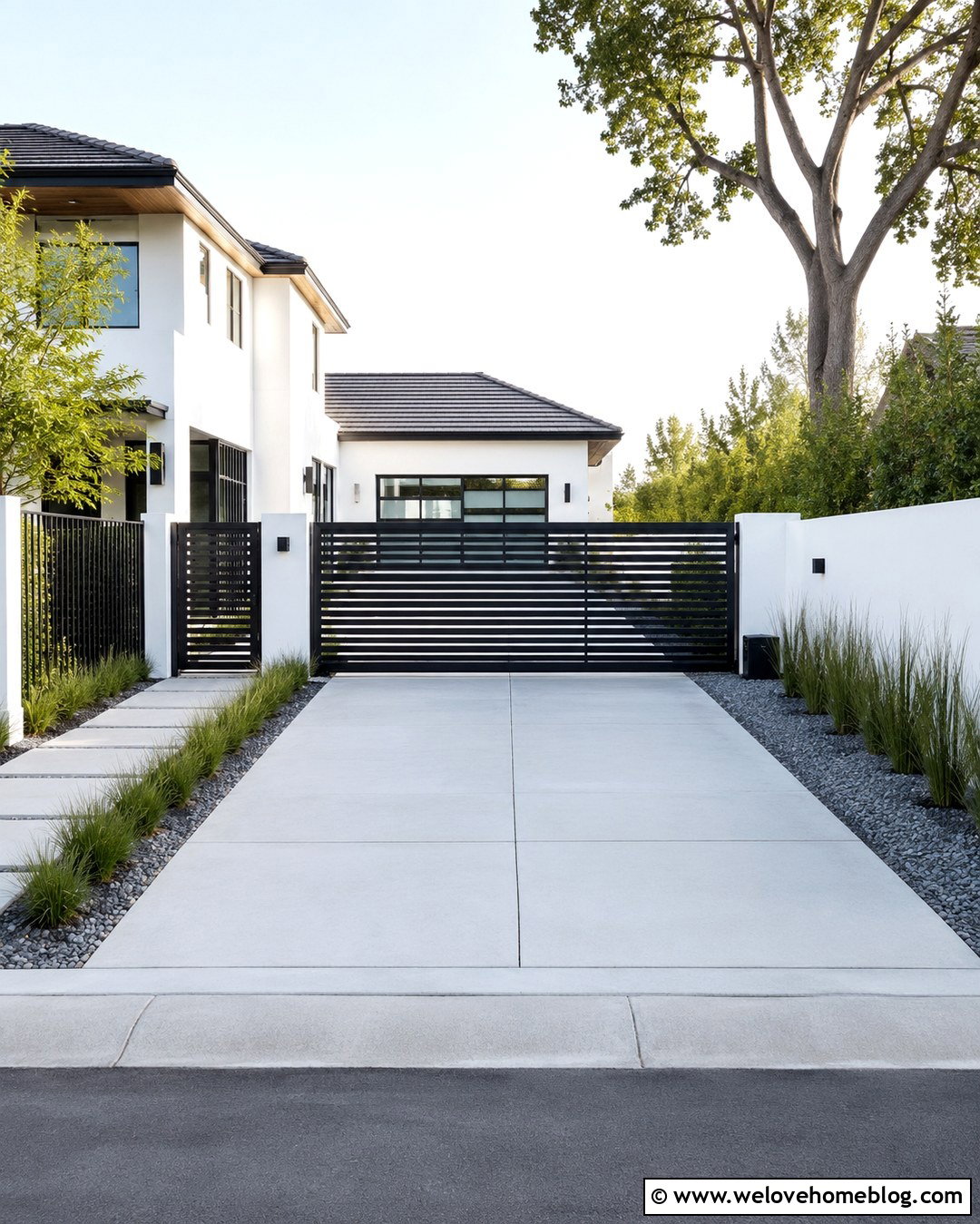
A sliding metal driveway gate is useful when vehicles park close to the entrance or there is not enough depth for swinging panels. This complete look combines a horizontal steel gate with a smooth poured-concrete driveway, narrow planting beds, and a modern stucco house. The gate travels parallel to the fence, so the side receiving it must remain unobstructed. A tracked system can be economical on a level entrance, although the track needs reliable drainage and regular cleaning. Install the motor behind the fence line where it remains protected yet accessible for servicing. Simple horizontal slats provide partial privacy without making the entrance feel heavy. Coordinate the gate, fence, address marker, and pathway lighting to create one consistent frontage. ()
4. Cantilever Metal Driveway Gate
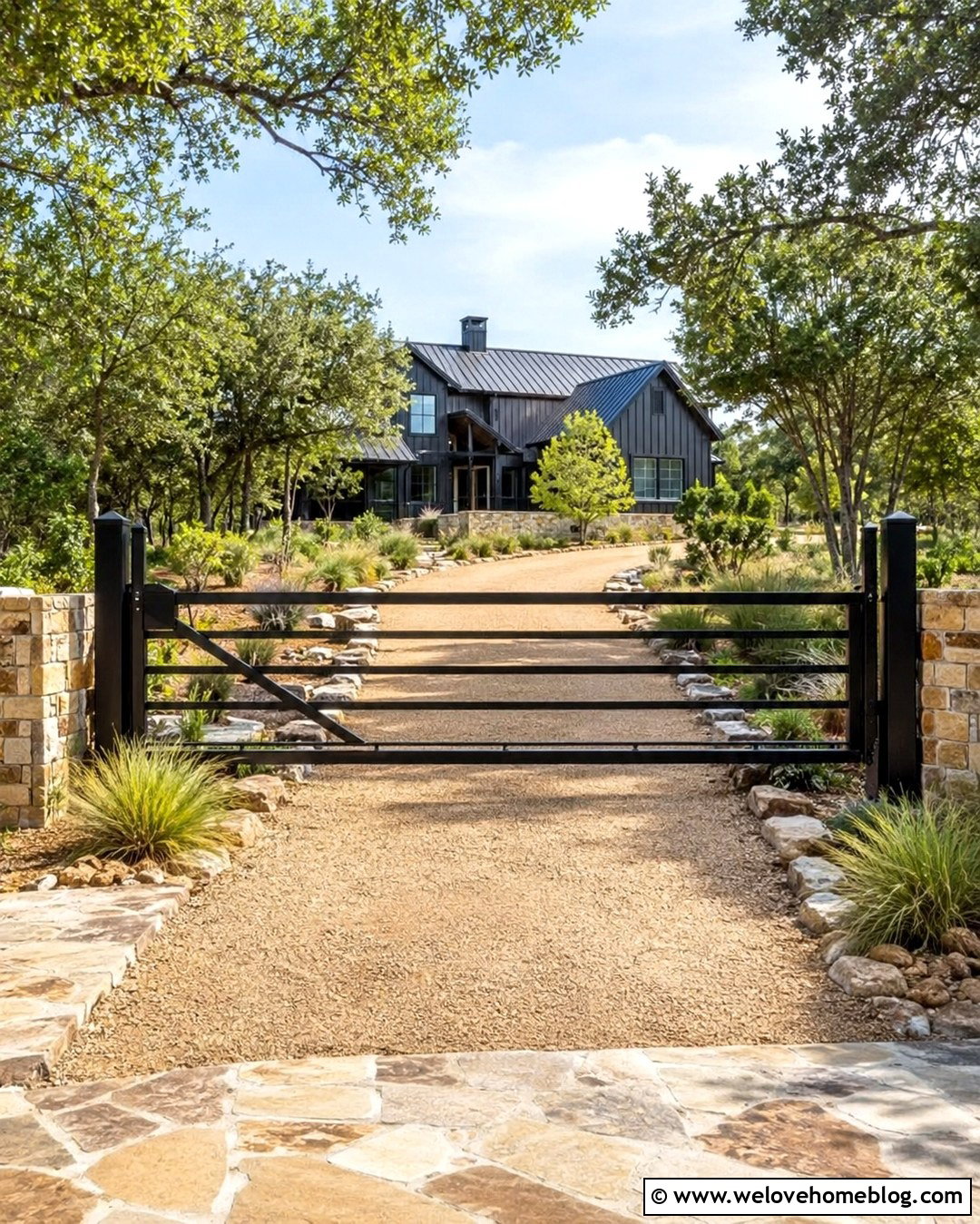
Loose gravel, snow, leaves, or uneven paving can make a ground track inconvenient. A cantilever metal driveway gate avoids this problem by suspending the moving panel above the entrance. Use a galvanized steel frame with open vertical bars to reduce visual weight and wind resistance. The gate requires a counterbalance section and adequate space beside the driveway, so careful measuring is essential before fabrication. Pair it with a broad gravel driveway, stone retaining borders, native grasses, and a contemporary country house. Concrete foundations must support the roller posts and repeated gate movement. Keep the motor and controls inside the property line. This installation provides a smooth, uncluttered crossing because no track interrupts the driveway surface or creates a channel for debris. ()
5. Modern Horizontal Metal Driveway Gate
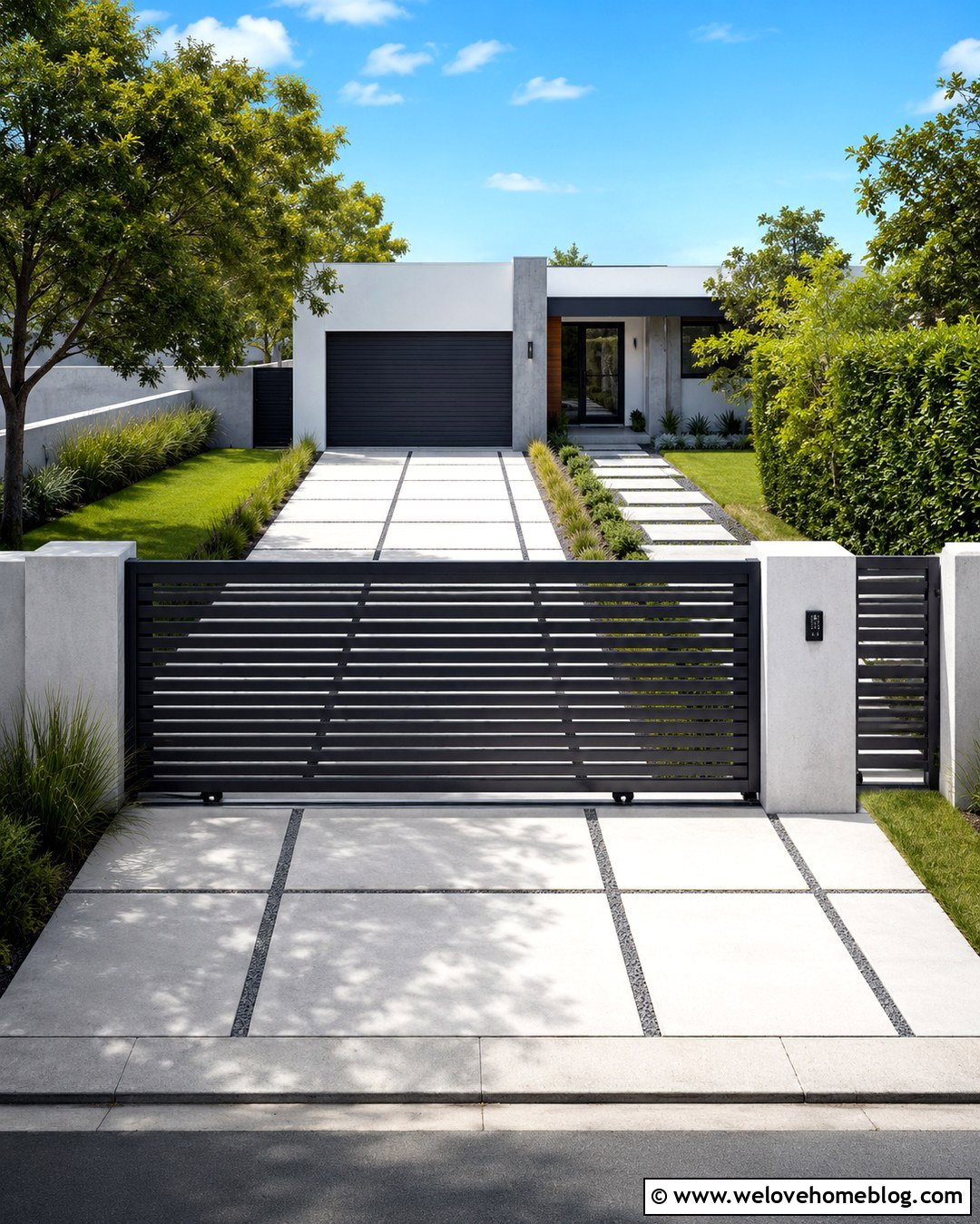
Strong horizontal lines can visually widen a compact entrance and complement a modern home. Install a black or charcoal aluminum gate with evenly spaced horizontal slats between smooth concrete pillars. A sliding configuration works neatly with a short, straight driveway where swing clearance is limited. Continue the contemporary look with large-format concrete pavers, dark gravel joints, linear planting beds, and architectural grasses. The slat spacing can provide partial privacy while allowing air to move through the gate. Hide the operator behind a matching metal enclosure rather than leaving equipment exposed at the curb. Recessed pillar lighting and a flush-mounted keypad add practical detail without introducing clutter. Use corrosion-resistant fasteners and a durable exterior finish suited to the property’s local weather conditions.
6. Wrought Iron Metal Driveway Gate
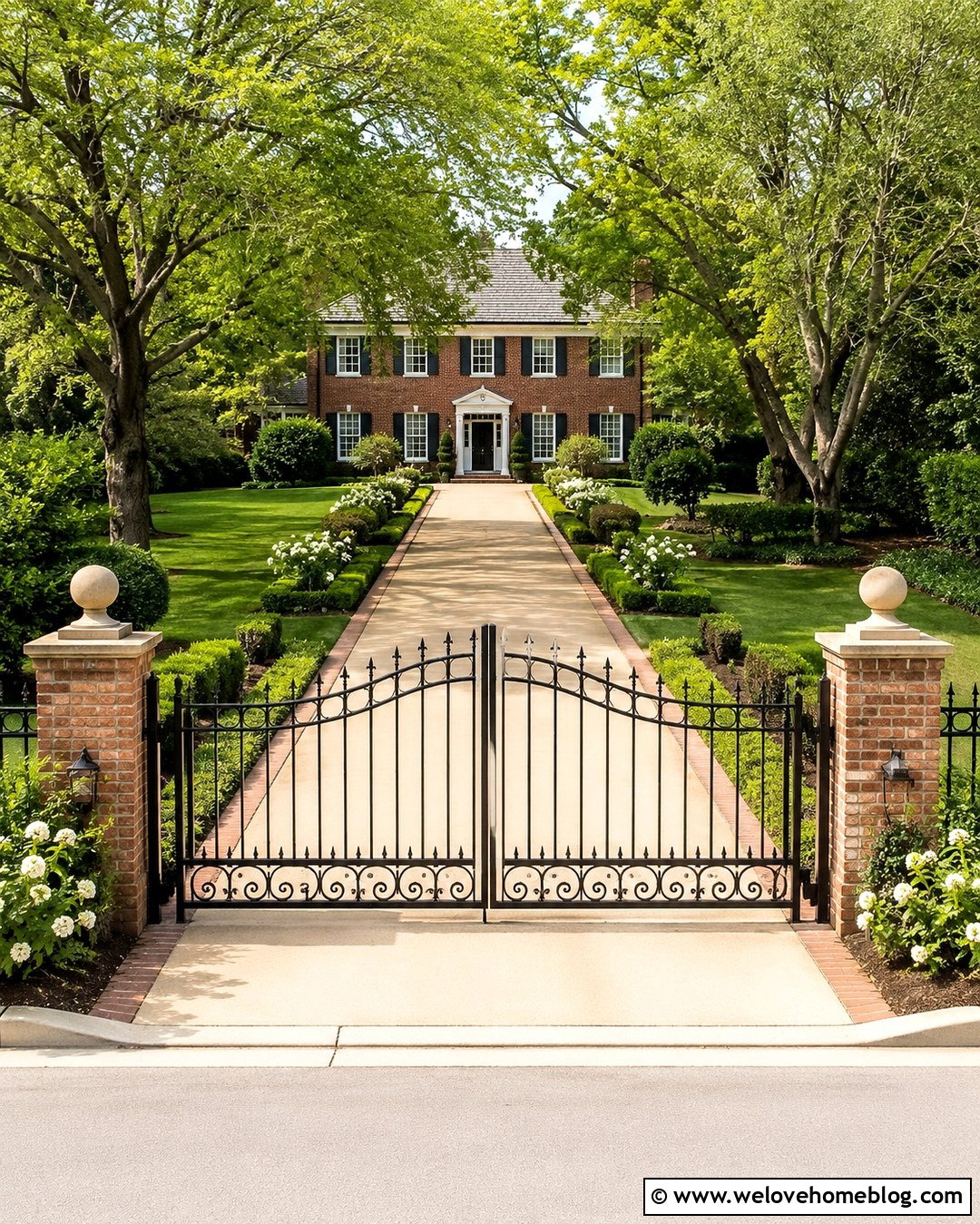
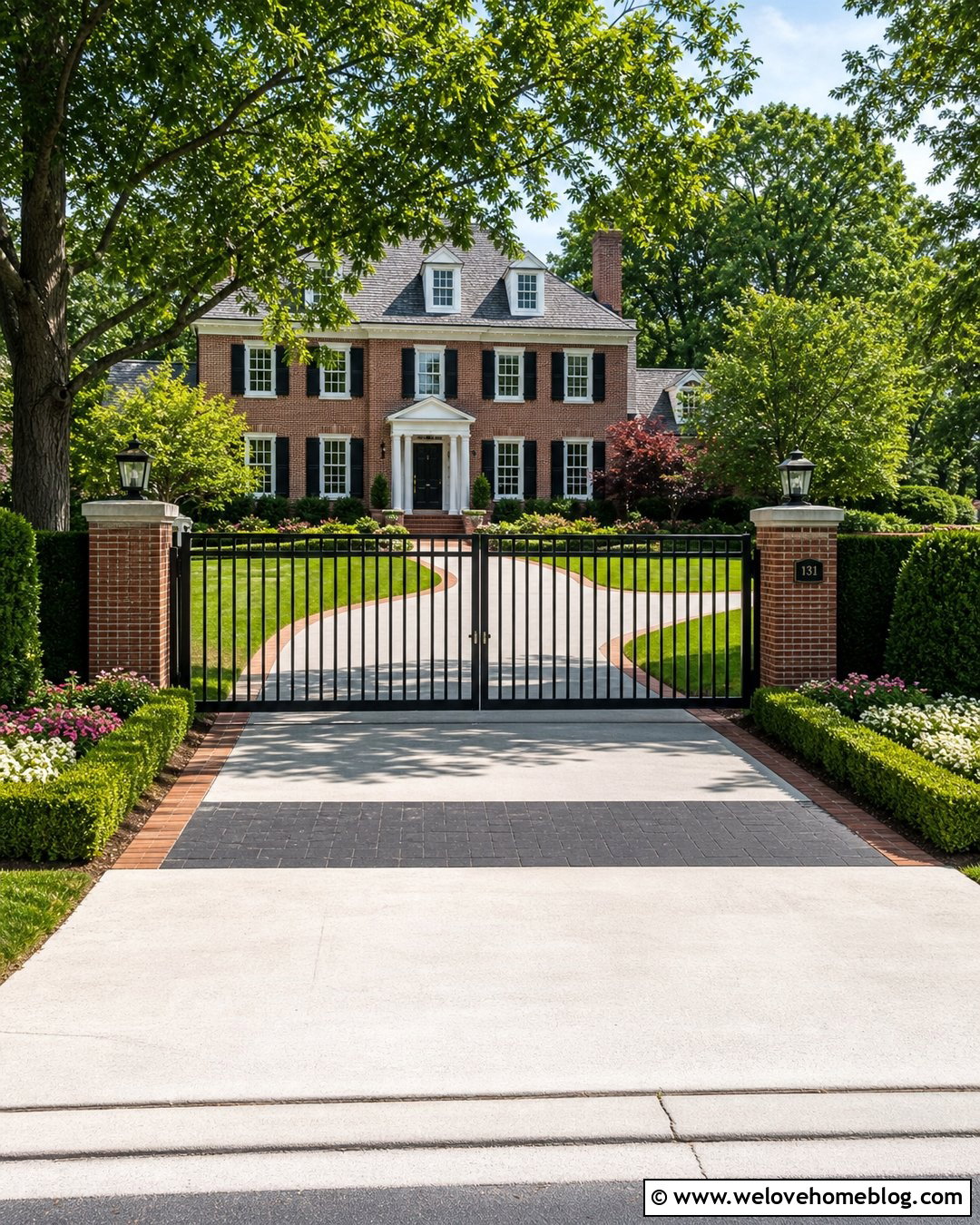
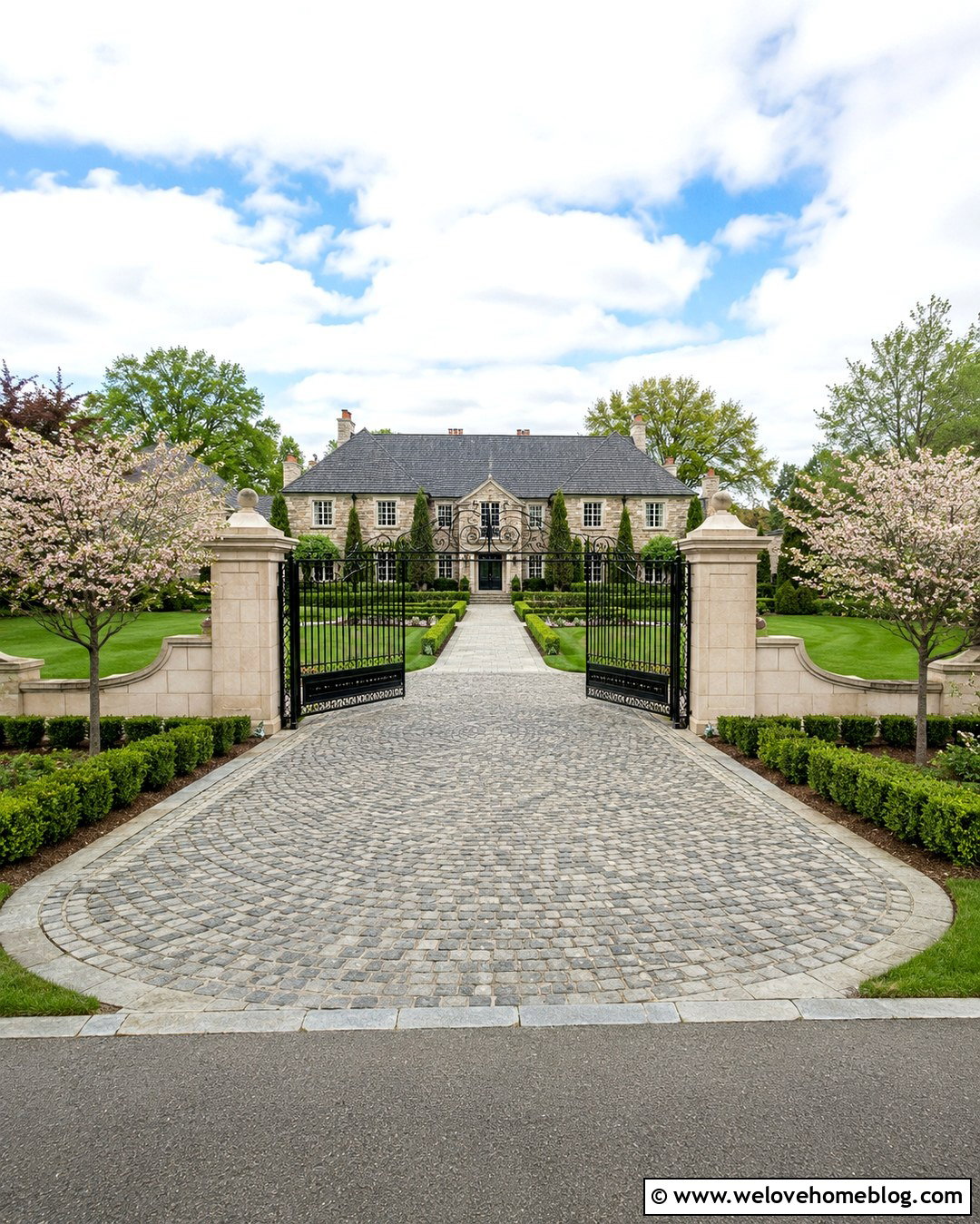
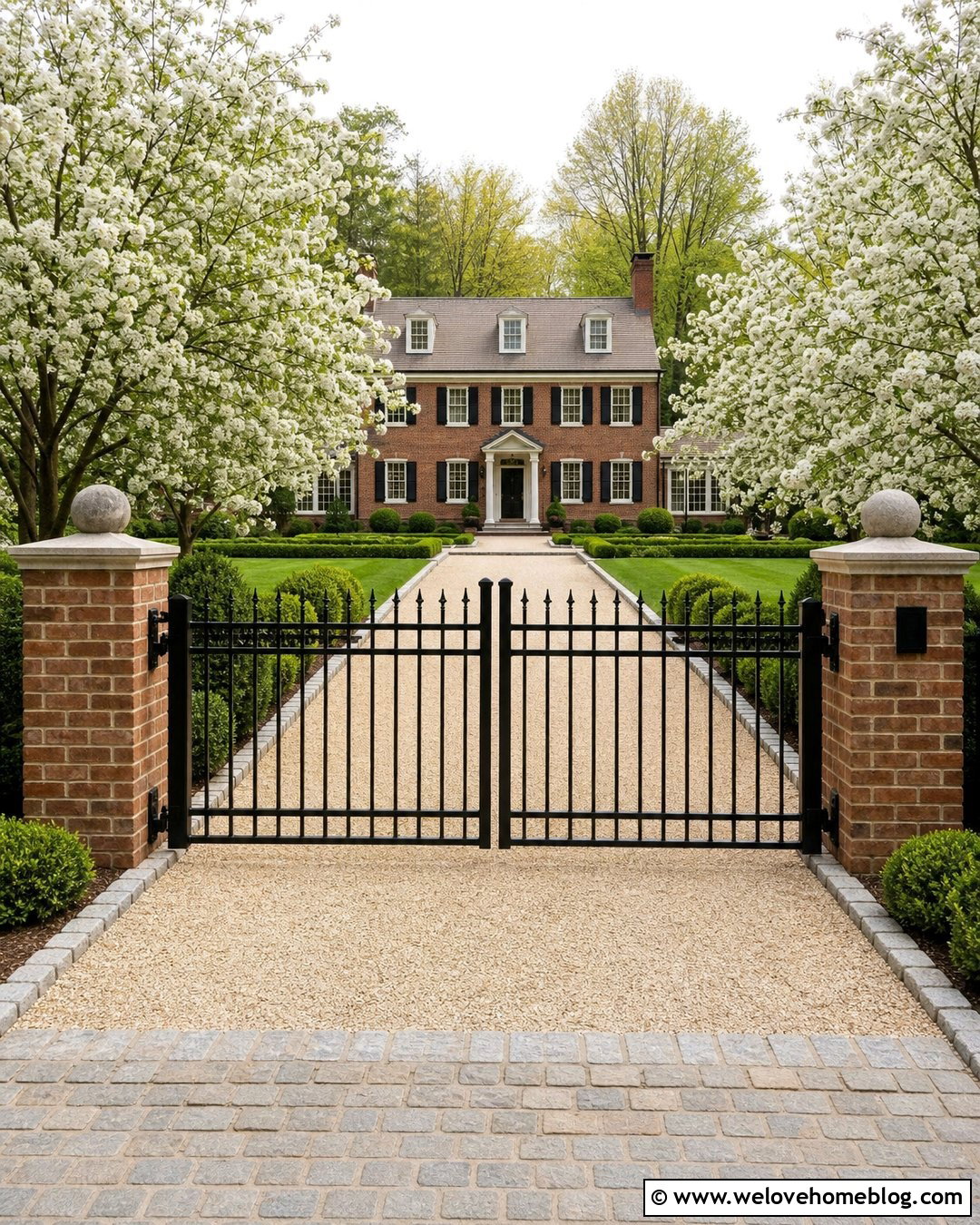
Curved rails, restrained scrollwork, and tapered pickets give a wrought iron gate a traditional appearance without overwhelming the entrance. A double swing installation looks particularly natural between red brick pillars at a colonial or Georgian-style home. Carry the color and texture into the driveway with clay brick edging around pale concrete or warm-toned pavers. Neatly clipped boxwood, flowering shrubs, and a central walkway soften the metalwork. Decorative gates still need functional bracing, properly supported posts, and hinges designed for their weight. Keep ornate details smooth and appropriately spaced so clothing and belongings are less likely to catch. A satin black protective finish highlights the design while making small chips easier to identify during routine inspections and maintenance.
7. Metal Driveway Gate With Stone Pillars
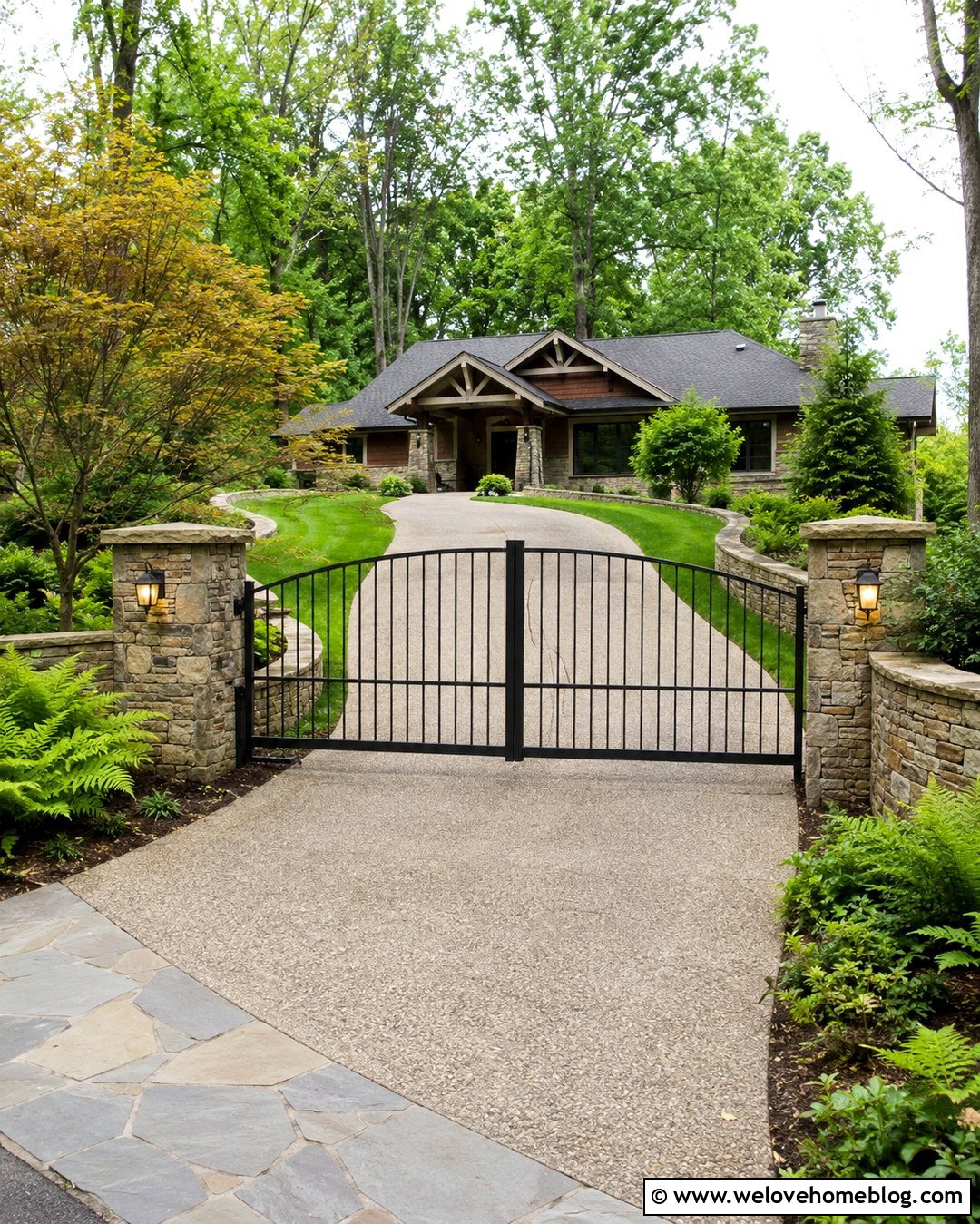
Natural stone pillars give a metal driveway gate a grounded, permanent appearance. This installation works beautifully at a craftsman home with an exposed-aggregate driveway and layered woodland landscaping. Set a simple dark steel double gate between broad pillars faced with locally compatible stone. The gate should remain visually lighter than the pillars, allowing both materials to feel balanced. Capstones help direct water away from the masonry, while concealed conduit keeps power and communication wiring protected. Integrate warm-white fixtures into the pillar faces for a clear entrance after dark, although daytime curb appeal should remain the design priority. Repeat the stone along low driveway walls or planting-bed edges. This creates a connected composition rather than making the gate look like a separate addition.
8. Metal Driveway Gate With Brick Pillars
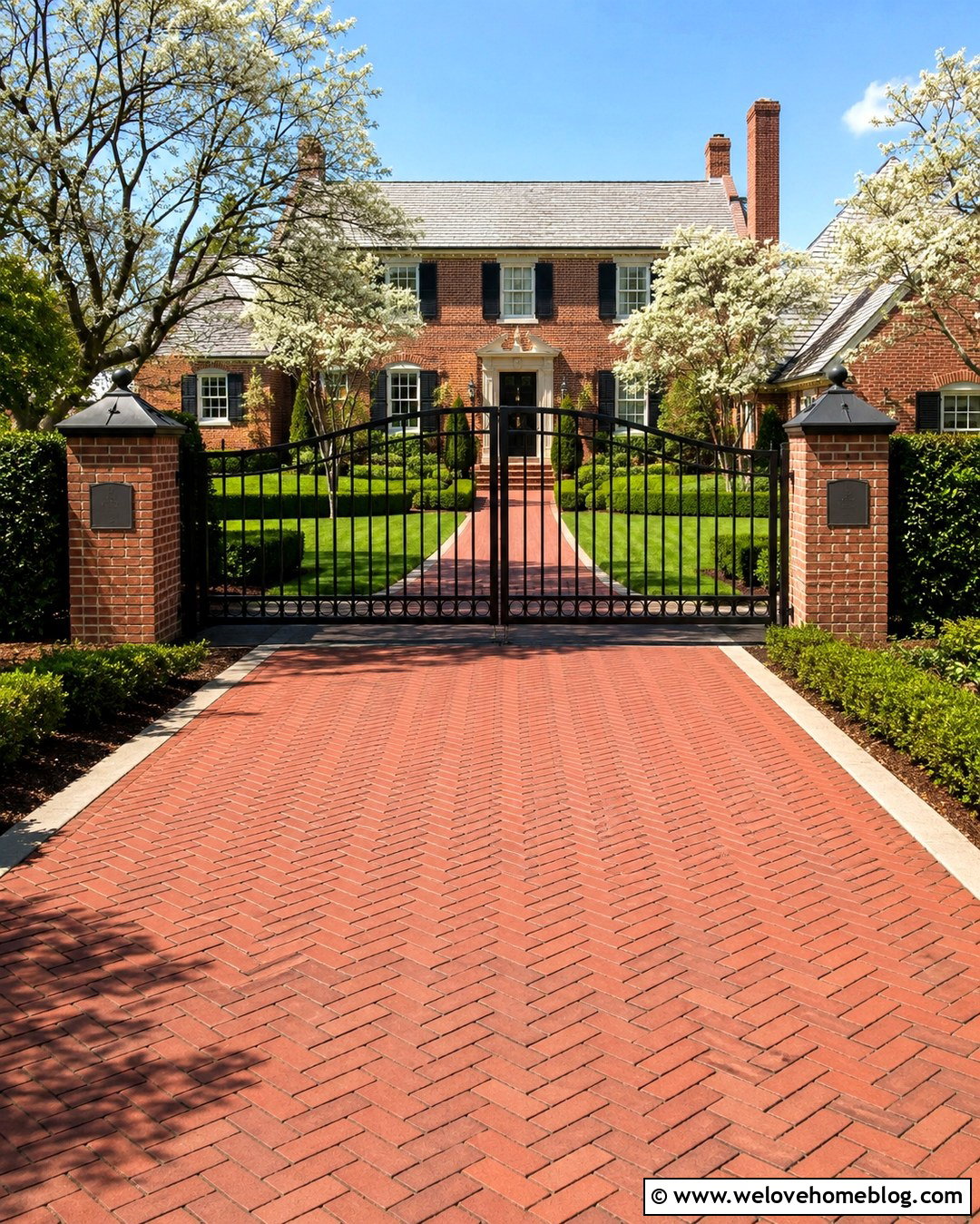
Brick pillars can connect a new metal gate to an existing brick facade, chimney, or driveway border. Choose bricks that coordinate with the house instead of attempting an imperfect match that may look accidental. A black steel gate with an understated arched top pairs well with a straight herringbone brick driveway and symmetrical planting beds. Install the pillars on substantial foundations, and plan internal support for the gate hardware rather than relying on decorative masonry alone. Dark metal caps protect the pillar tops and repeat the gate finish. Place an address plaque on one pillar and access controls on the other for visual balance. Low hedges and small ornamental trees can frame the entrance while preserving clear sightlines for drivers entering or leaving the property.
9. Metal Driveway Gate With Concrete Posts
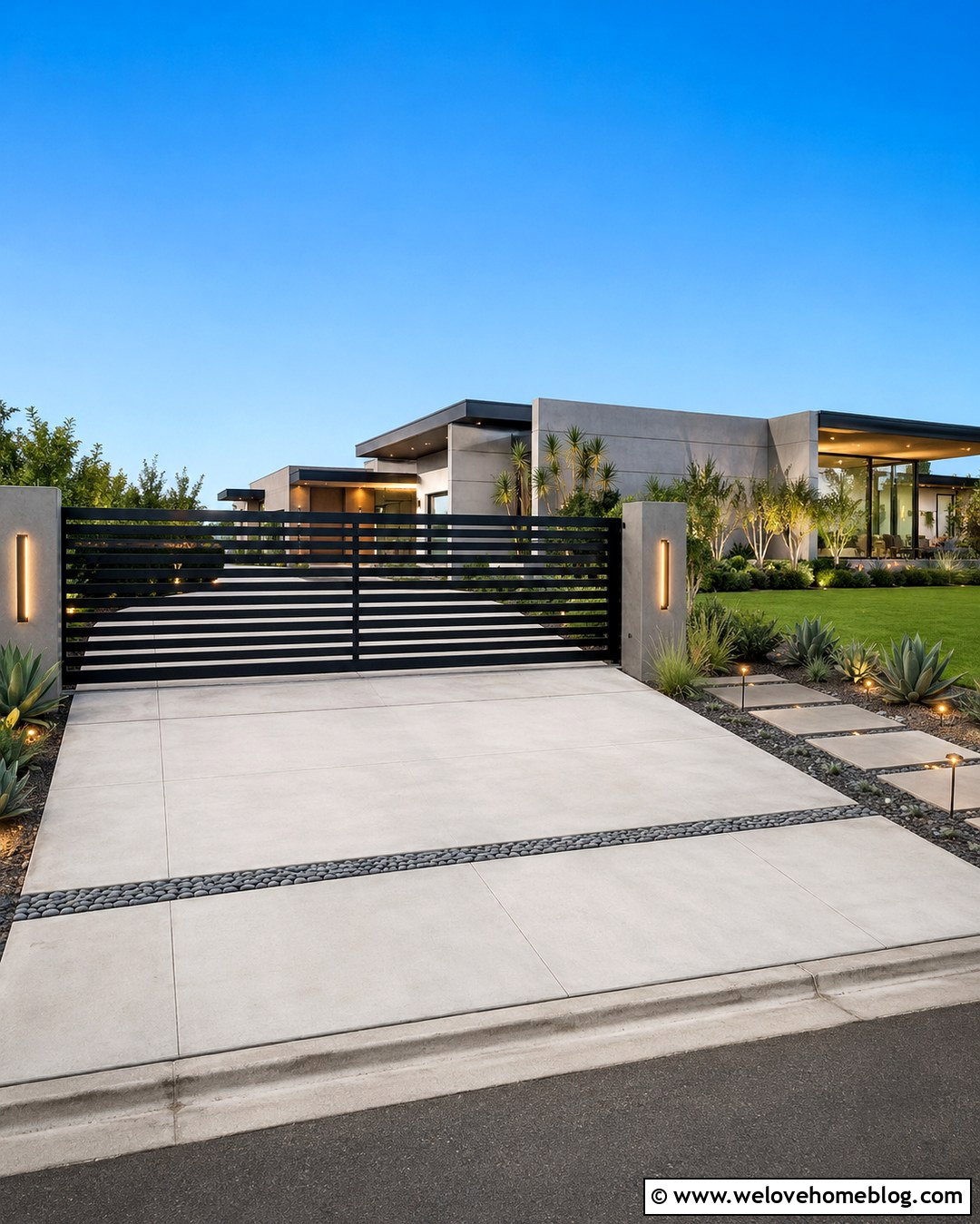
Smooth concrete posts offer a minimal backdrop for a contemporary metal driveway gate. They work best when their proportions relate to the gate height and the scale of the home. Combine warm gray posts with a matte black steel sliding gate, a pale gray poured-concrete driveway, and drought-tolerant planting. The simple palette makes the entrance feel orderly without appearing stark. During construction, coordinate reinforcement, footing depth, conduit routes, and hardware attachment points before pouring the posts. This avoids unnecessary surface-mounted cables later. Add narrow vertical lights or small recessed fixtures for visibility. A strip of river rock beneath the gate can improve the visual transition between the driveway and planting beds, provided it does not interfere with wheels, sensors, or drainage.
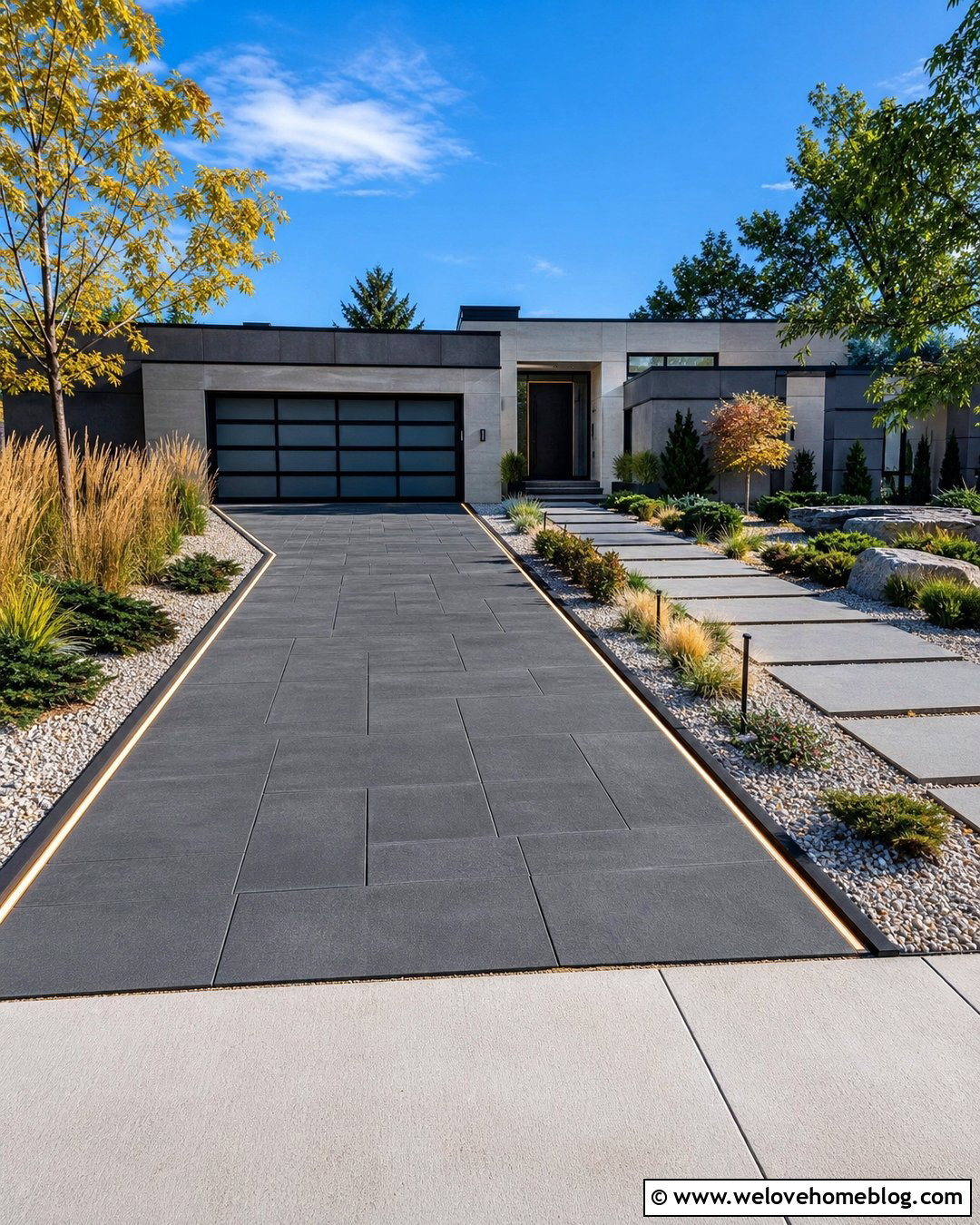
10. Metal Driveway Gate On A Sloped Driveway
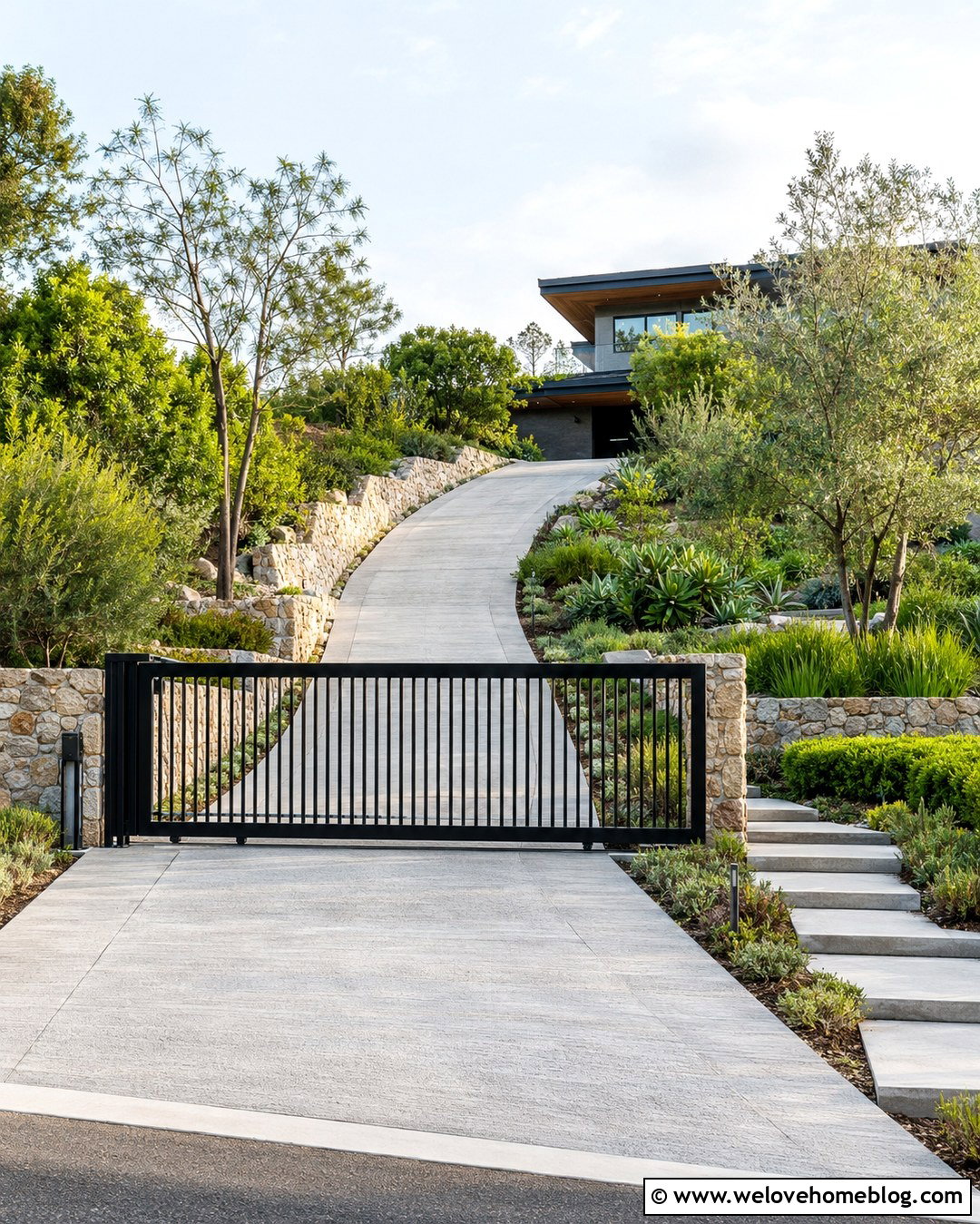
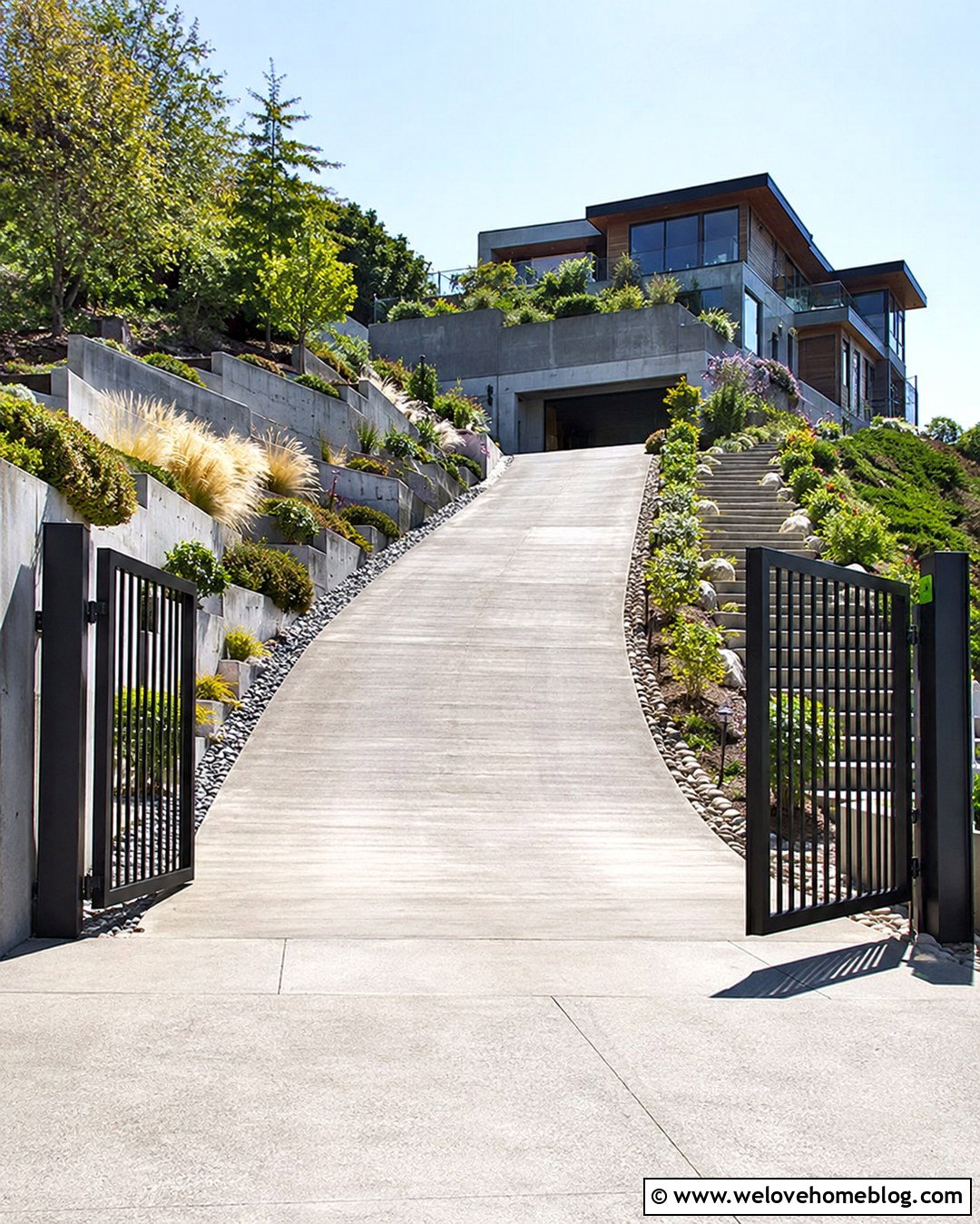
A sloped driveway requires more planning than a flat entrance because a standard gate leaf may strike the rising surface. A cantilever or sliding steel gate is often the cleanest solution when enough side space is available. Pair the gate with a textured concrete driveway, a low stone retaining wall, and stepped planting beds that follow the grade. This arrangement feels intentional and helps the landscaping visually absorb the slope. If a swing gate is preferred, custom rising hinges may be possible, but the movement, ground clearance, weight distribution, and automation must be evaluated carefully. Position drainage so runoff does not collect around motors or foundations. Keep the entrance broad and visible, with plants low enough to preserve safe views along the road. ()
11. Metal Driveway Gate For A Gravel Driveway
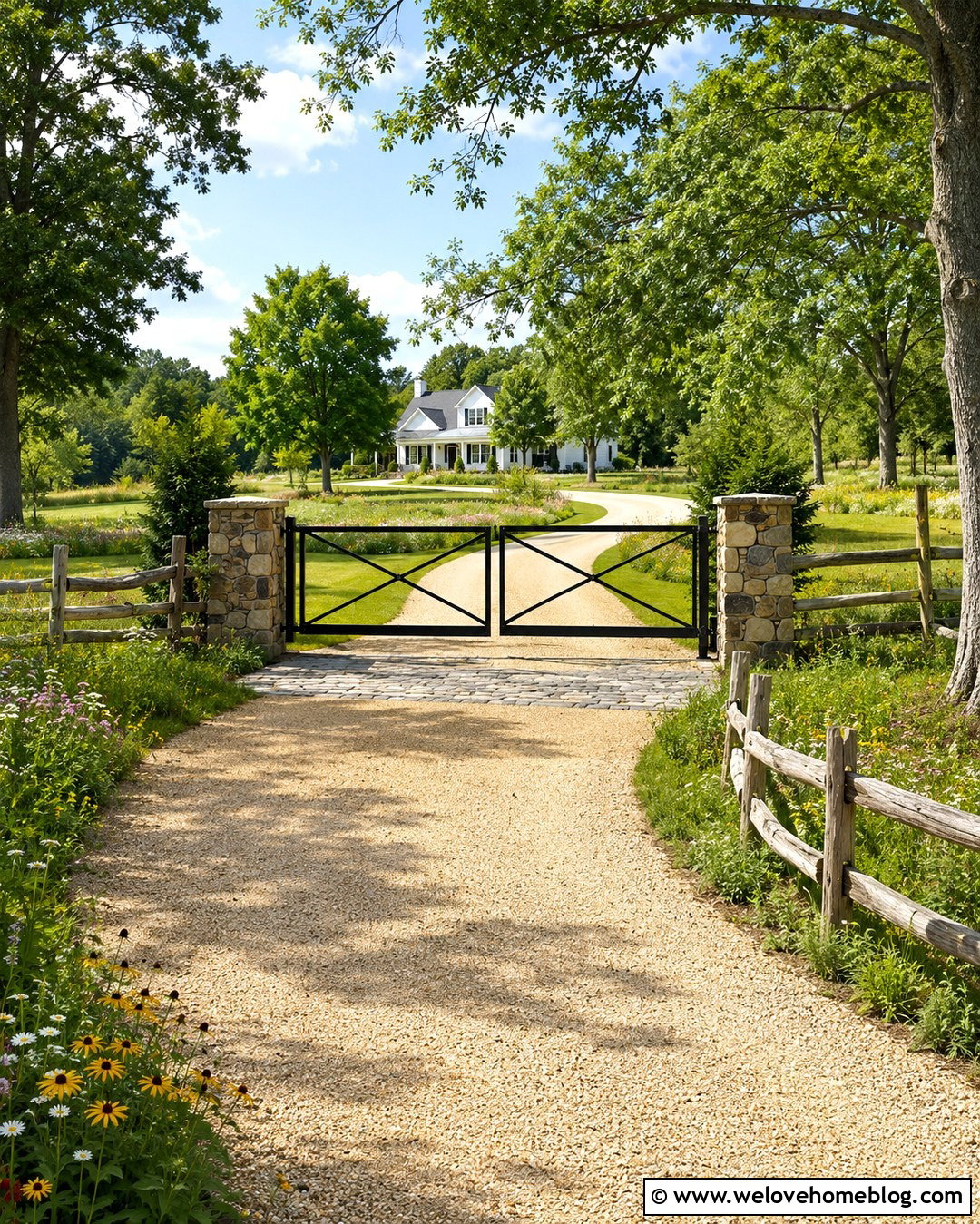
A gravel driveway benefits from a gate installation that does not depend on a ground track. Use a cantilever steel gate or a properly positioned swing gate to avoid wheels repeatedly dragging through loose aggregate. A black farm-style metal frame looks attractive with tan crushed stone, cobblestone edging, split-rail fencing, and native meadow planting. Extend a stable paved apron beneath the entrance to reduce gravel migration near the road. Concrete gate foundations should remain separate from loose driveway material and be sized for the structure and soil. Solar automation may suit a remote rural entrance when utility power is difficult to reach, but sun exposure, battery capacity, gate weight, and daily use must be assessed. Finish the look with stone pillars and a visible address marker.
12. Metal Driveway Gate For A Narrow Entrance
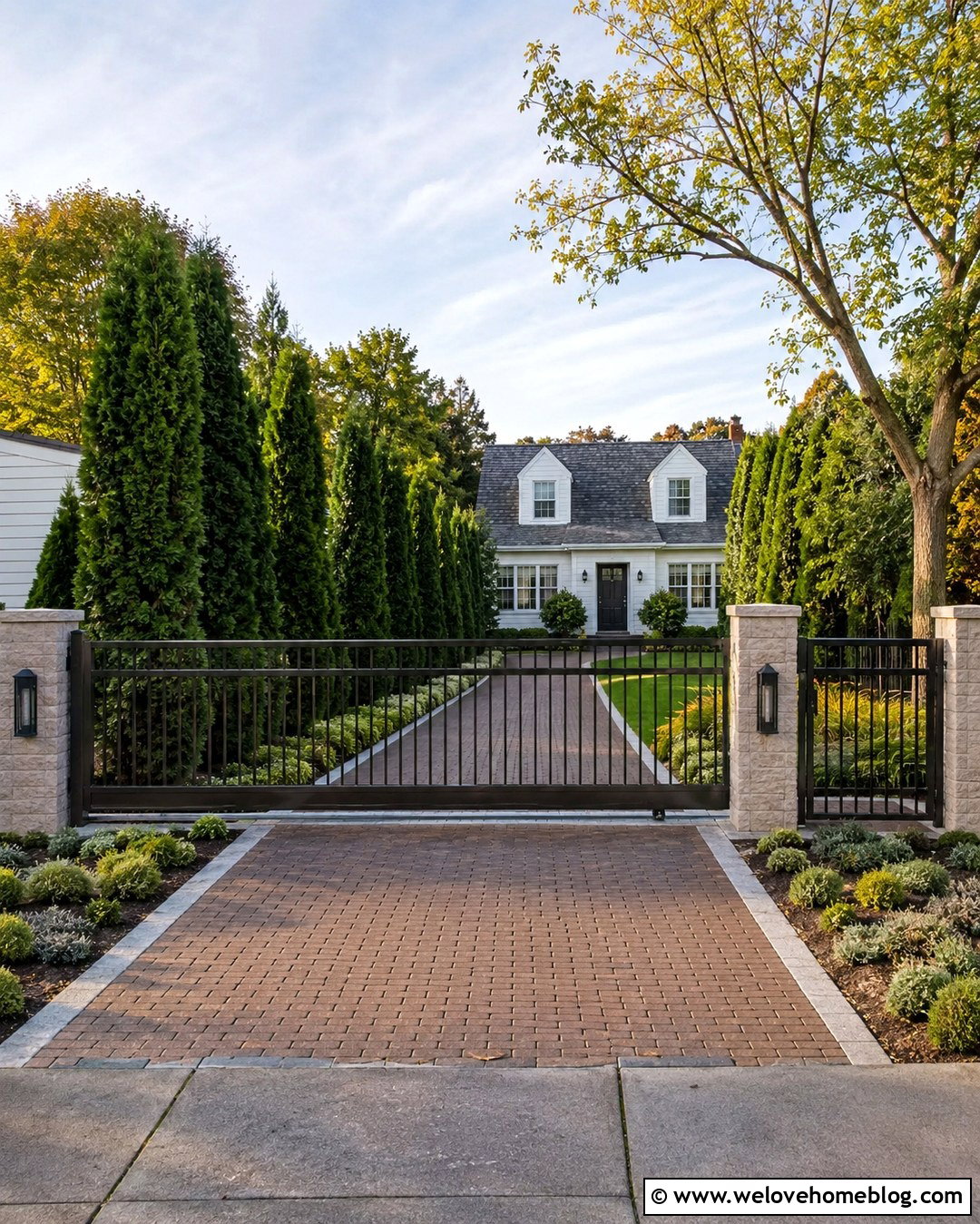
When space is tight, every inch of the entrance must work efficiently. A compact single sliding metal gate can preserve the full driveway depth and avoid panels swinging toward parked vehicles. Choose slim vertical steel bars in a dark bronze finish to complement a narrow brick driveway and a cottage-style house. Keep pillars modest so they do not make the opening feel smaller. A matching pedestrian gate can be integrated beside the driveway if sufficient frontage remains. Locate the keypad where a driver can stop without blocking the street, and protect it with a small metal hood. Columnar evergreens, low groundcover, and narrow planting strips provide greenery without crowding the approach. Accurate measurements are especially important because limited side storage can determine whether a conventional slide or telescoping system fits.
13. Metal Driveway Gate With Privacy Panels
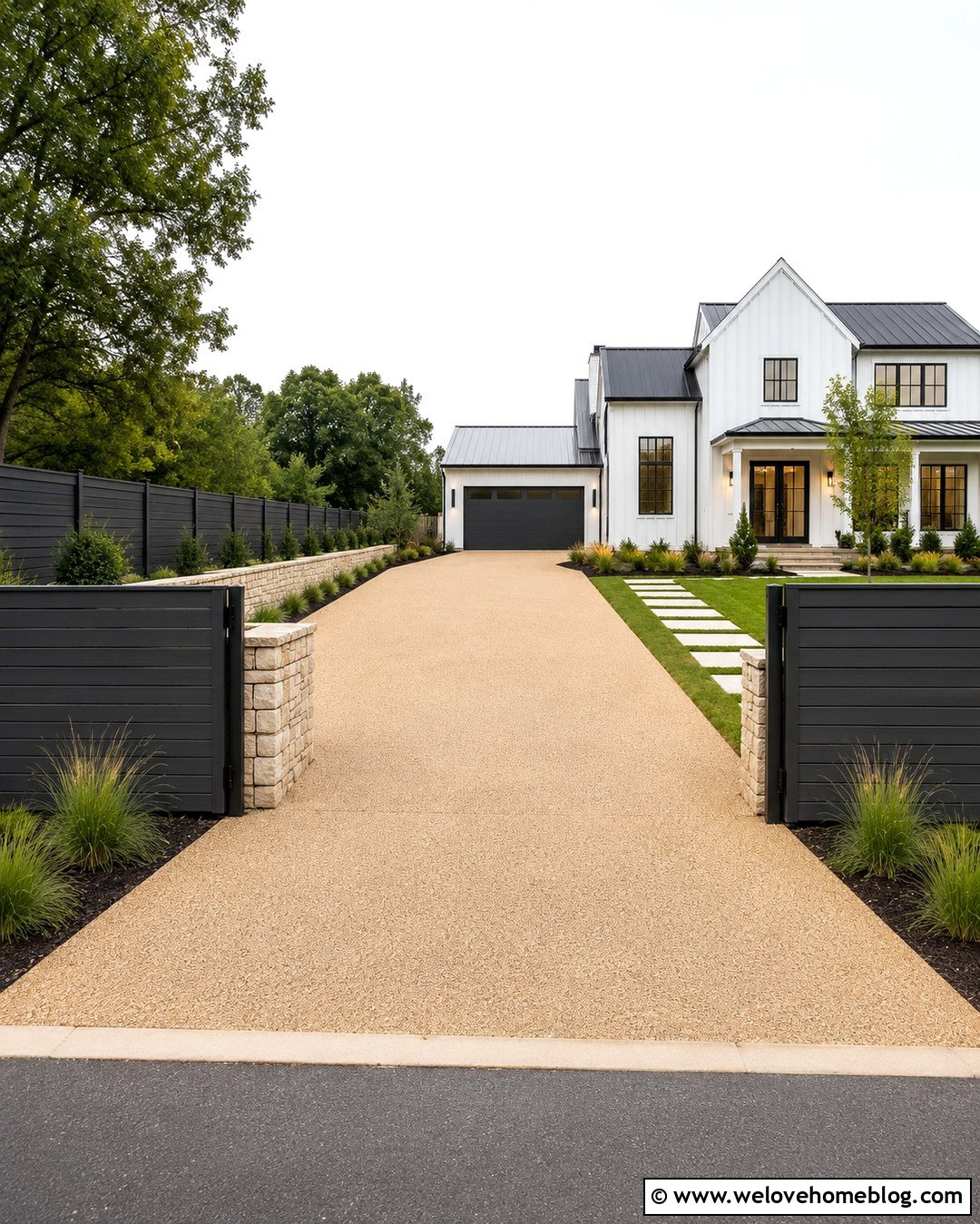
Solid or closely spaced metal panels can screen a driveway from the street while creating a bold architectural entrance. Use powder-coated aluminum or steel panels within a reinforced frame, keeping the design compatible with wind exposure and operator capacity. A horizontal sliding gate looks cohesive beside a modern farmhouse with a resin-bound gravel driveway and simple board-and-batten siding. Flank the entrance with low stone walls, ornamental grasses, and broad planting beds to soften the solid surface. Small perforations or spaced slats can reduce the enclosed feeling while maintaining useful privacy. Because opaque gates catch more wind than open-bar designs, the posts, foundations, rollers, and automation require appropriate engineering. Match the adjoining fence height and finish so the frontage reads as one continuous, carefully planned boundary.
14. Laser Cut Metal Driveway Gate
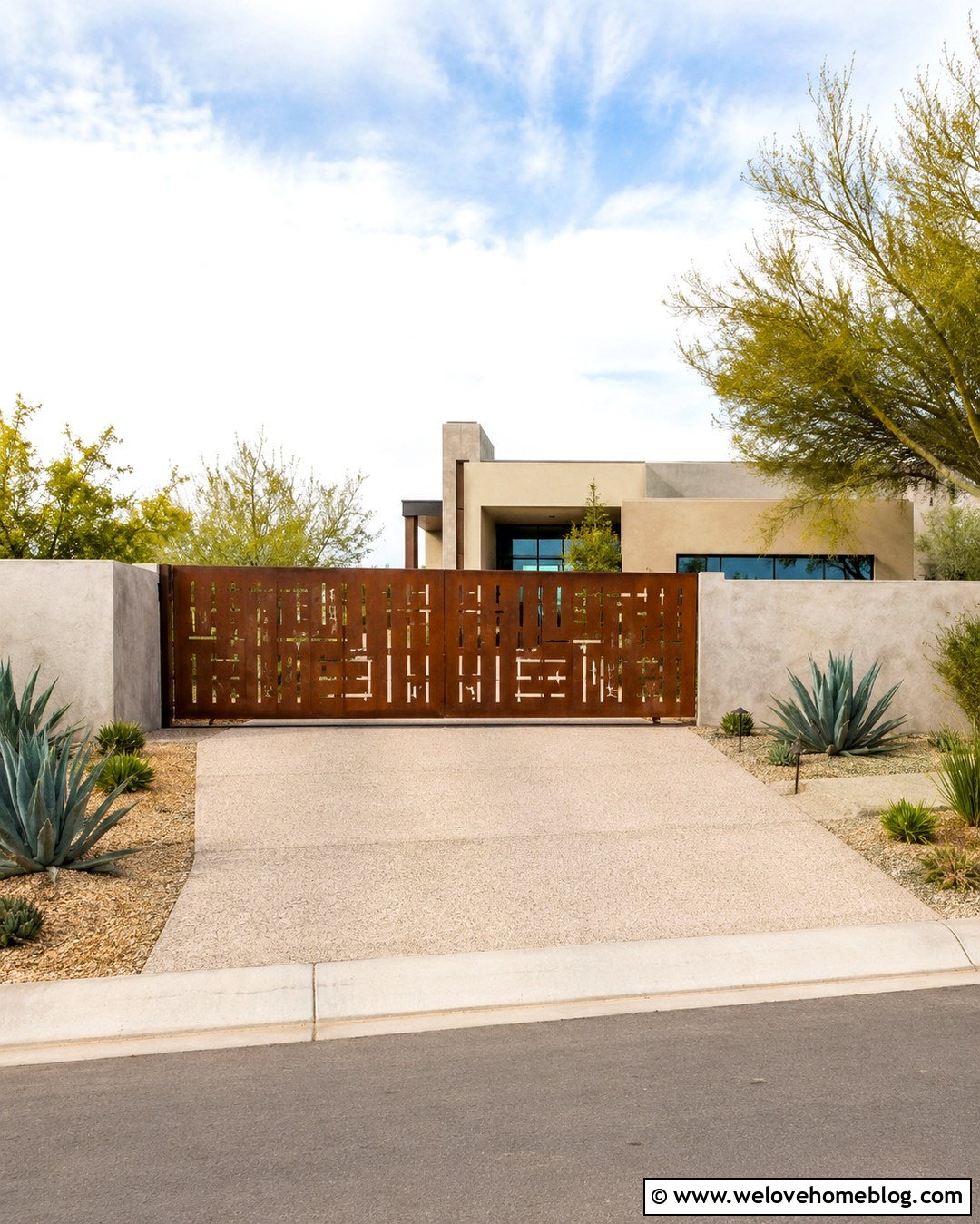
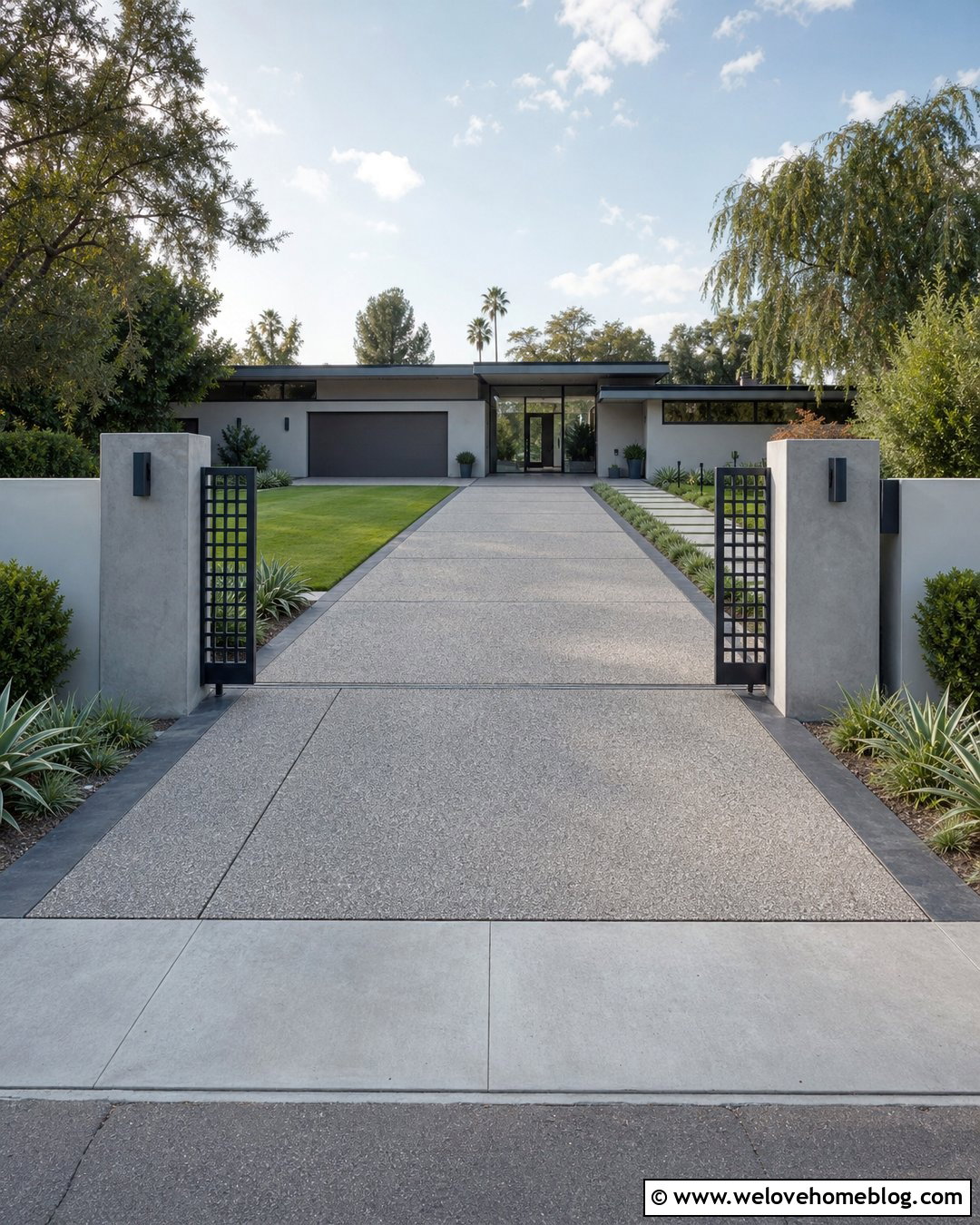
A laser-cut metal driveway gate adds pattern while maintaining a streamlined silhouette. Select a simple geometric or botanical design that can be read from the curb without becoming visually busy. A weathered steel panel can suit a desert-modern home, while powder-coated aluminum feels cleaner beside white stucco. Install the gate as a sliding panel over a light exposed-aggregate driveway, then frame it with decomposed granite, sculptural shrubs, and restrained concrete walls. The cutout percentage affects privacy, airflow, weight, and wind exposure, so pattern selection should be practical as well as decorative. Keep the house number and access controls simple to avoid competing focal points. A protective finish can preserve the intended color, or weathering steel can be detailed to manage runoff and staining.

15. Arched Metal Driveway Gate
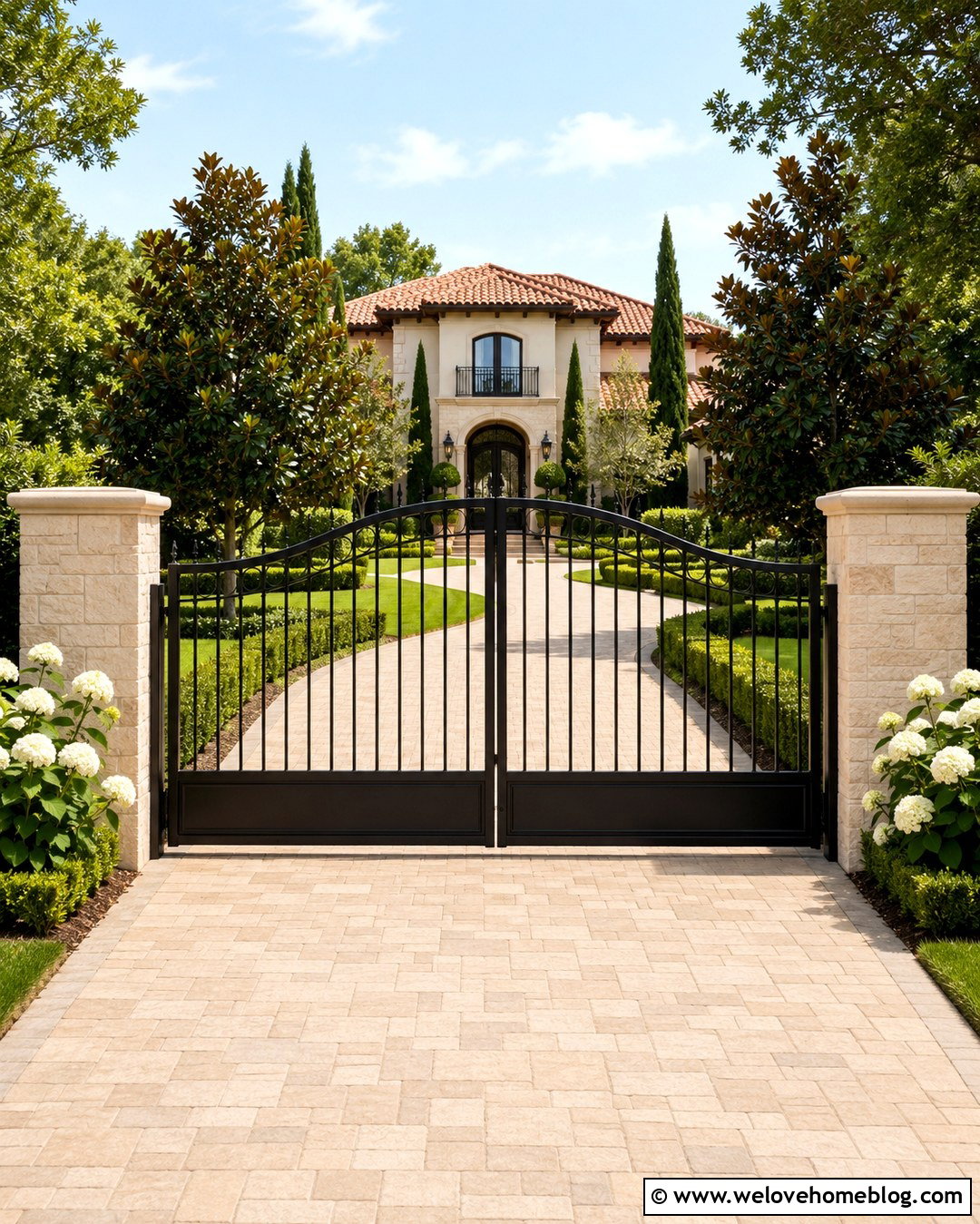
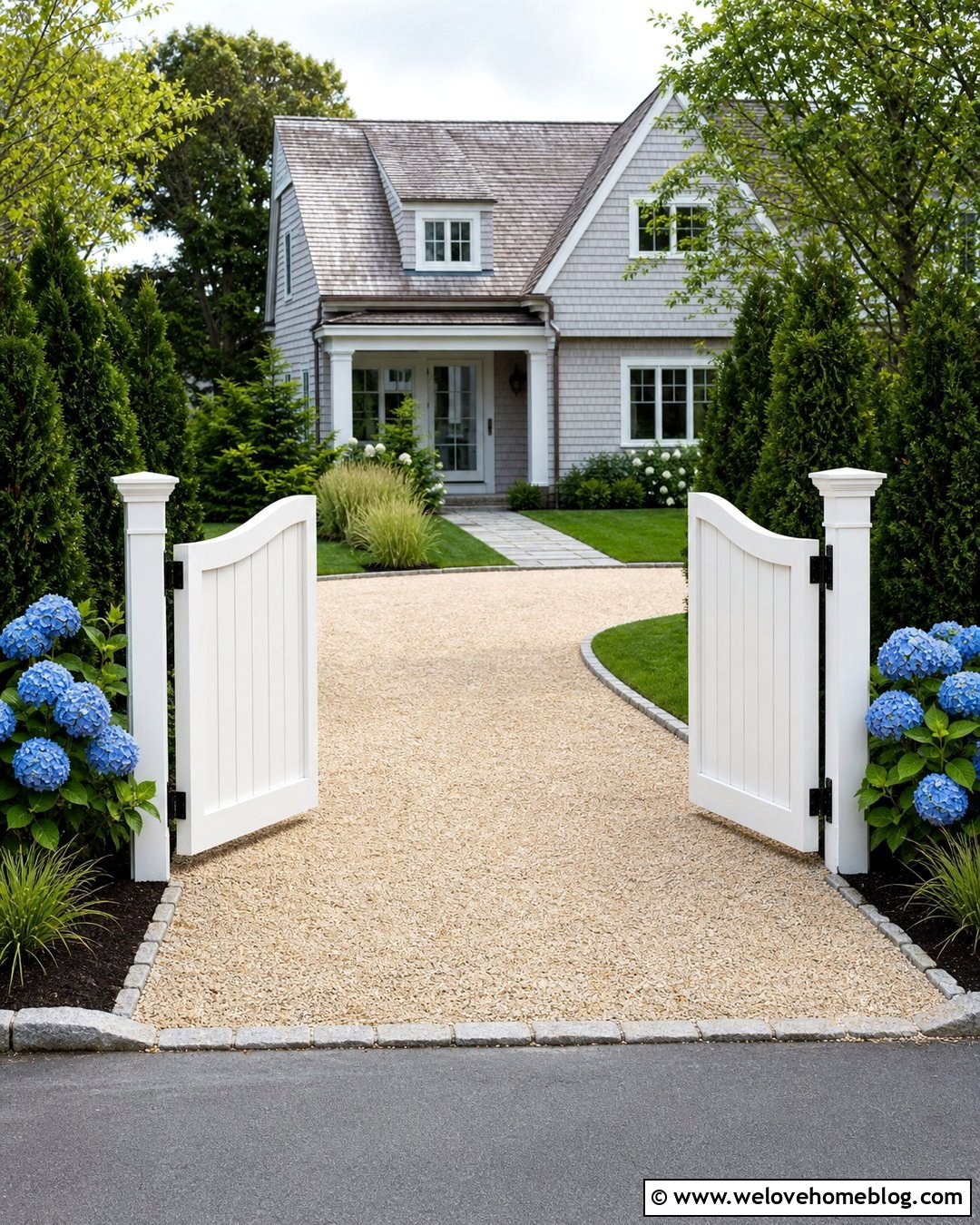
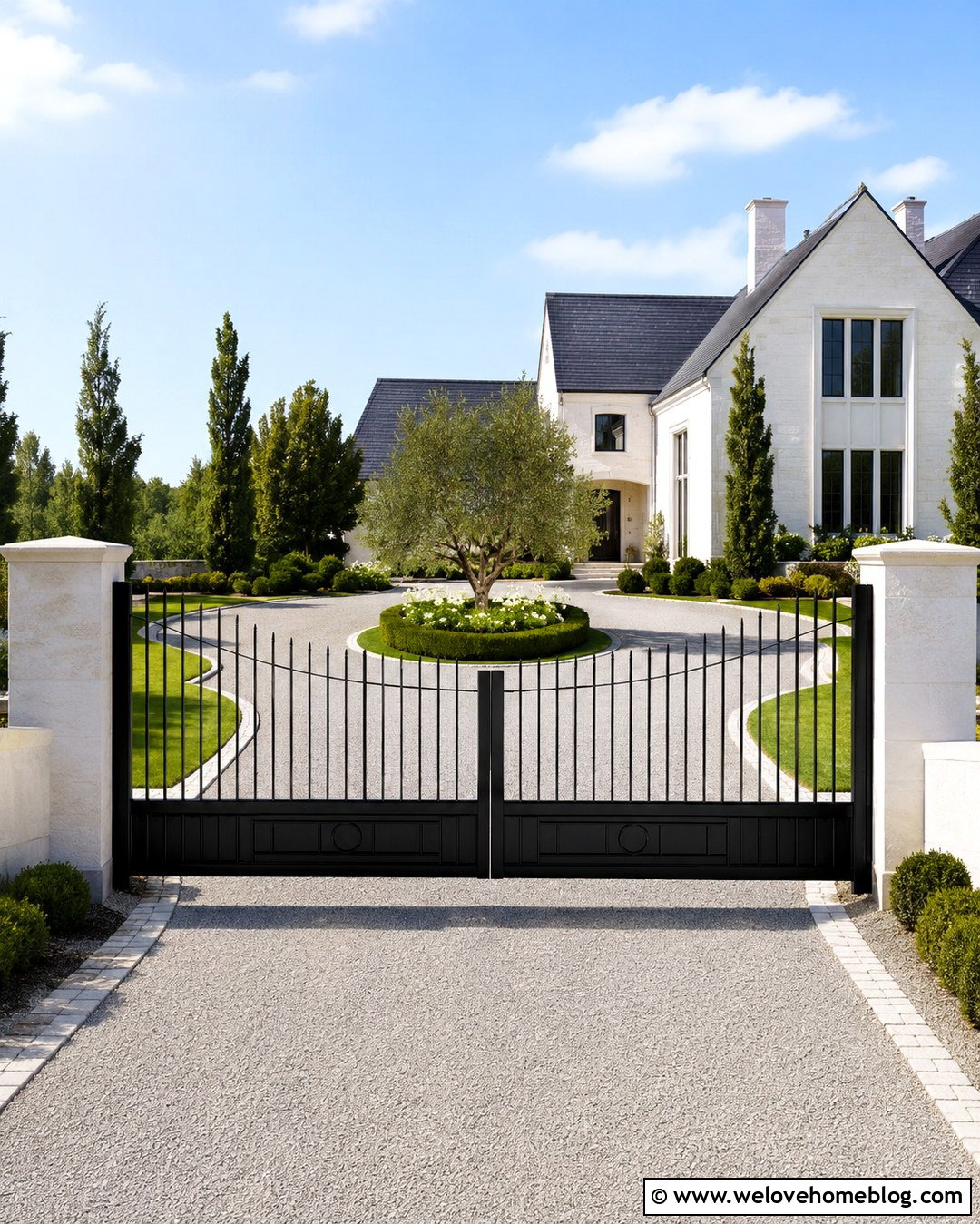
An arched metal driveway gate gives a wide entrance a softer outline and can echo curved windows or roof details on the house. Use two symmetrical steel leaves that rise gently toward the center rather than choosing an excessively tall decorative peak. Limestone pillars, warm concrete pavers, and layered hydrangea borders create a welcoming setting for the dark metalwork. Repeat the arch in a nearby pedestrian gate to unify the frontage. Position hinges and automation equipment discreetly behind the pillars where possible. The highest point should remain proportional to the opening and should not obstruct trees, lighting, or overhead services. A simple central monogram can personalize the design, but an uncluttered pattern will usually remain visually appealing longer and require less detailed cleaning.
16. Farmhouse Metal Driveway Gate
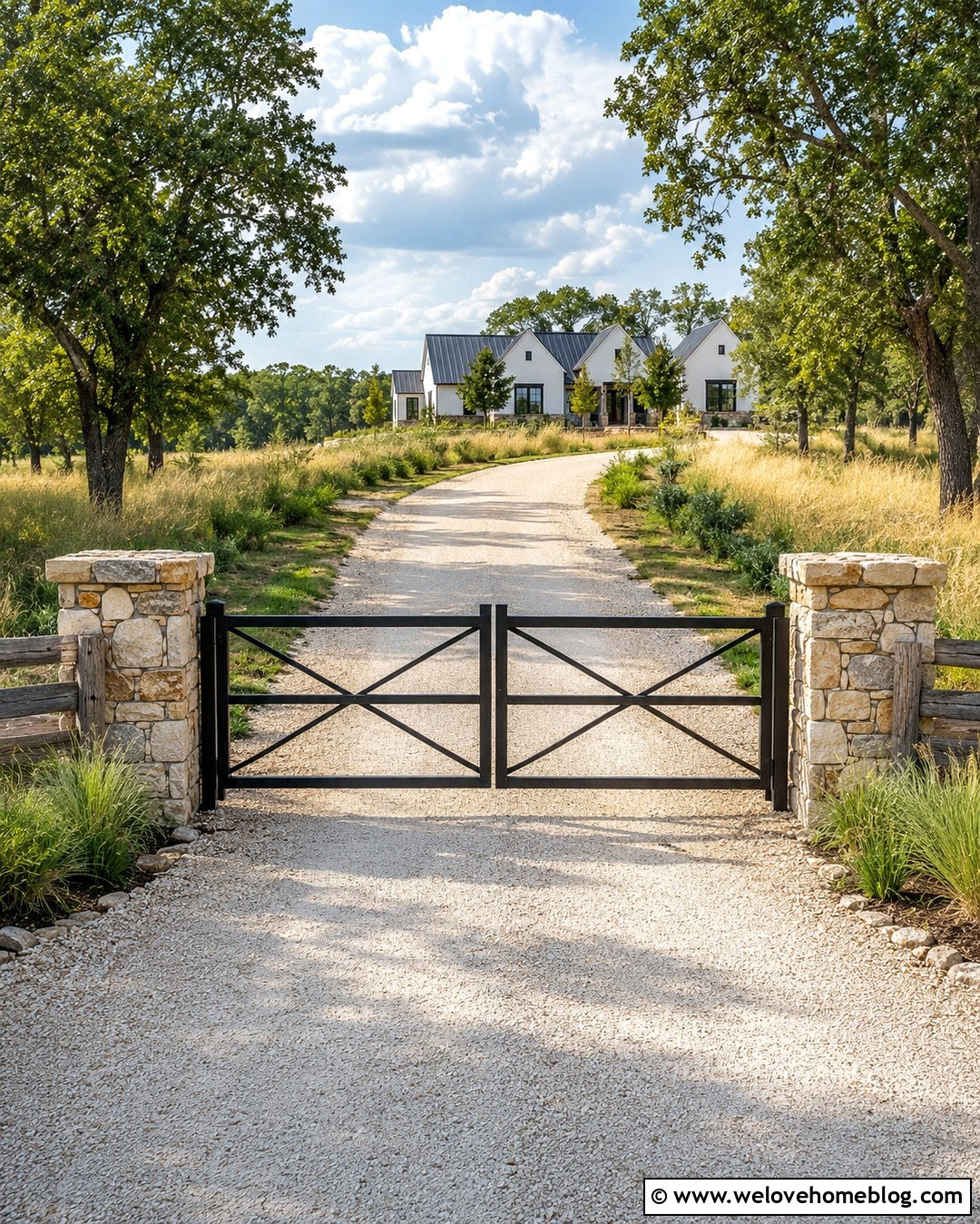
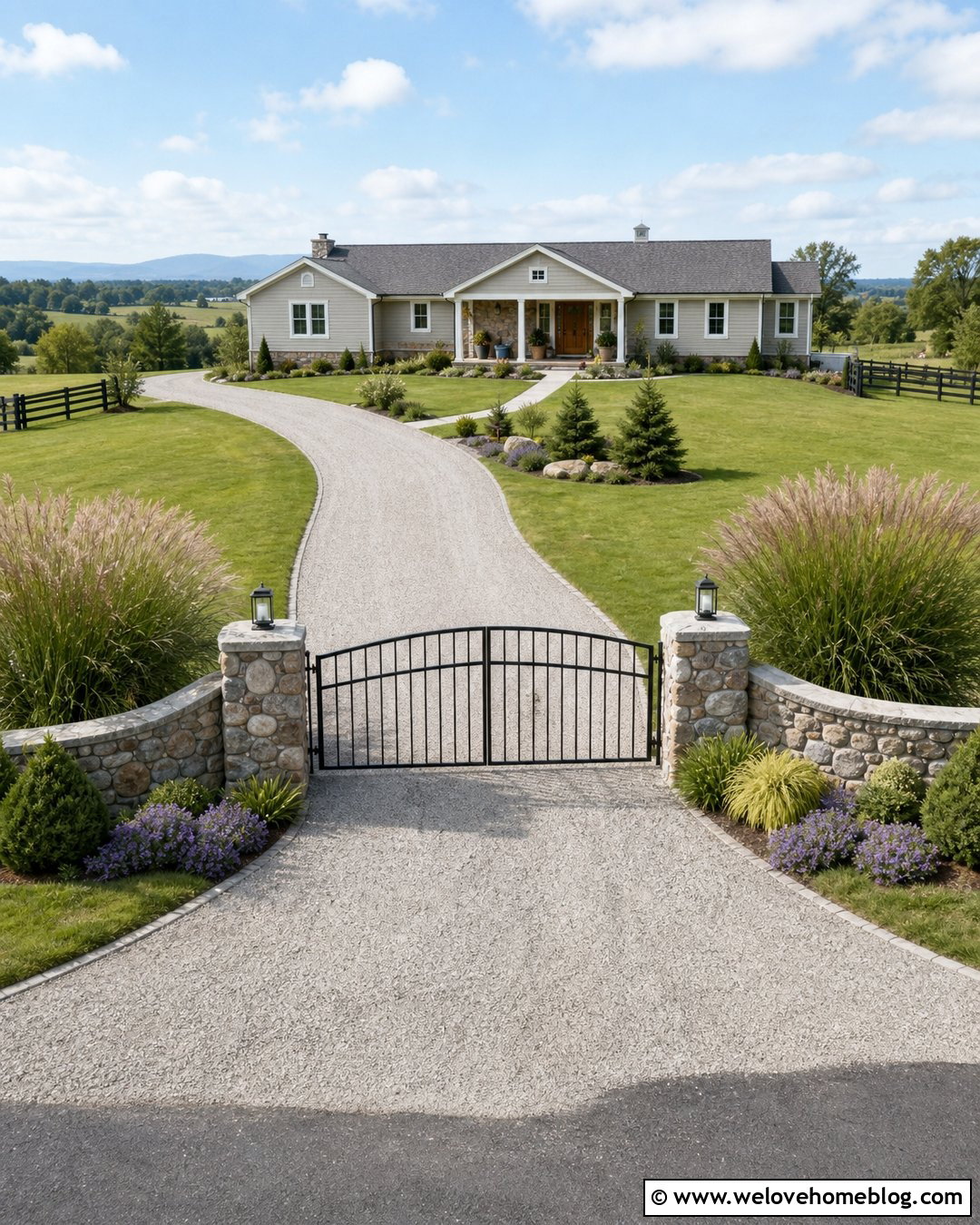
A farmhouse metal driveway gate should feel practical, open, and connected to the surrounding land. Choose a galvanized or black-painted steel gate with a straightforward cross-brace pattern. Install it across a gently curved crushed-limestone driveway leading to a white modern farmhouse. Fieldstone pillars, timber fencing, native grasses, and a small group of shade trees complete the rural entrance. A single swing panel suits a modest opening, while paired panels look more balanced across a broad drive. Keep clearance below the gate consistent enough for smooth operation without leaving an unnecessary gap. Place the motor, battery box, and controls inside a neat enclosure near the fence. A simple post-mounted address sign adds identity while remaining easy for guests and delivery drivers to see.
17. Metal Driveway Gate With Wood Infill
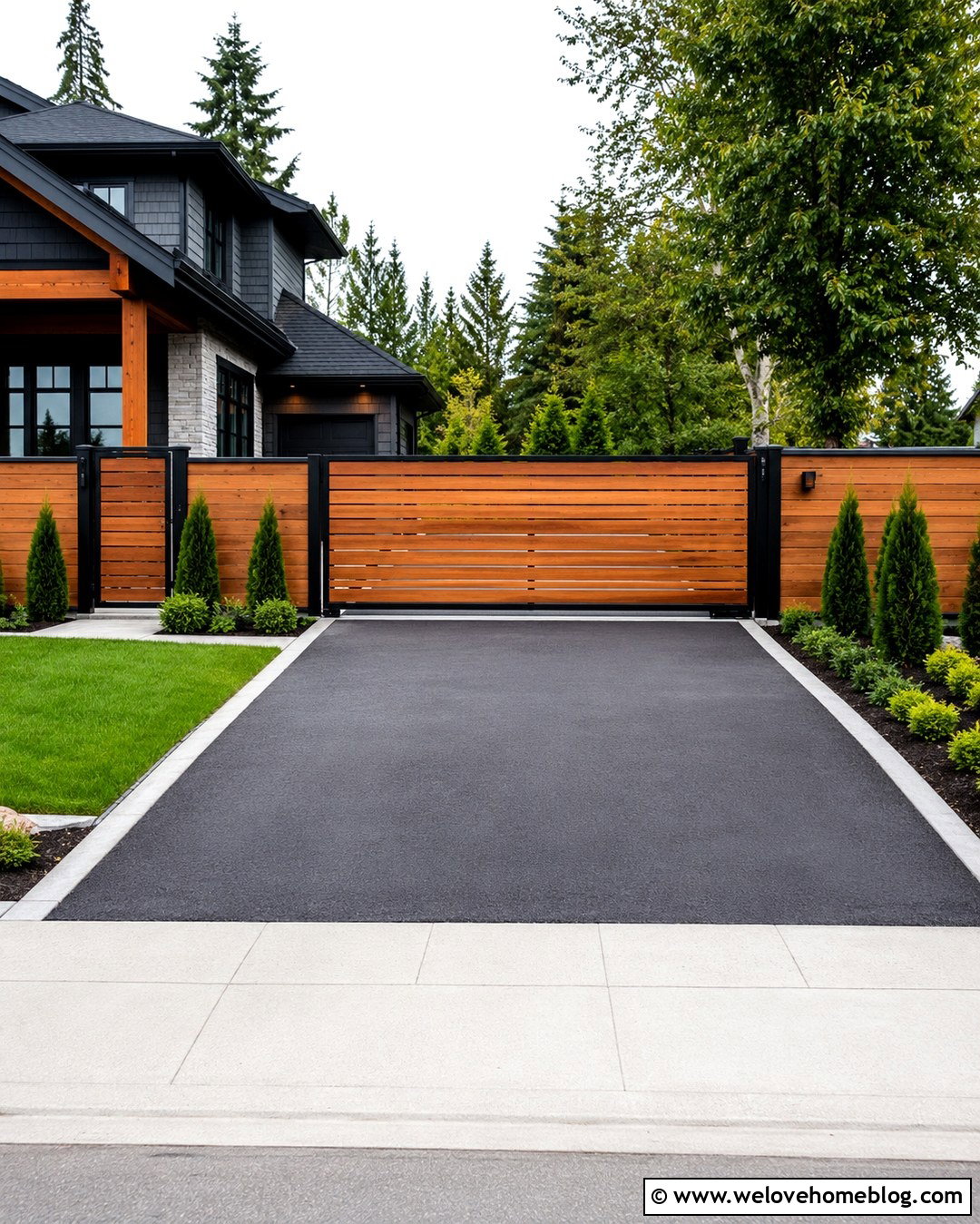
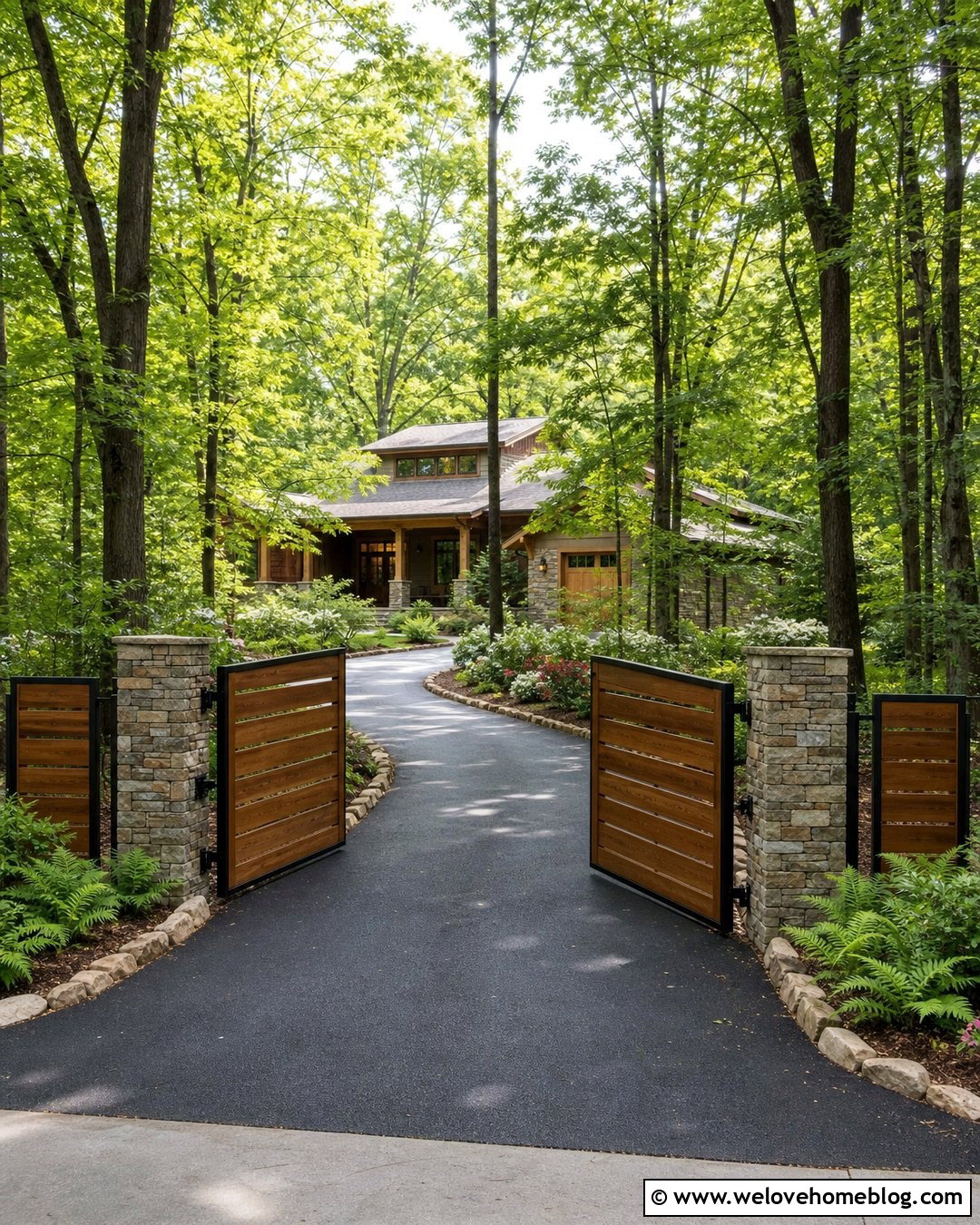
Metal framing and wood infill create a warm entrance with the strength needed for reliable gate movement. Use a welded steel perimeter frame filled with horizontal cedar boards, leaving small, even spaces for drainage and seasonal movement. A sliding configuration pairs well with a dark asphalt driveway, concrete edging, and a contemporary craftsman house. Continue the cedar tone in the front door, fence panels, or garage accents so the gate belongs to the overall design. Protect the boards with an exterior finish appropriate for local exposure, and make individual pieces replaceable when possible. Because wood adds weight and changes with moisture, hardware and automation should be selected for the completed gate rather than the empty frame. Simple evergreen planting keeps attention on the mixed materials.
18. Solar Powered Metal Driveway Gate
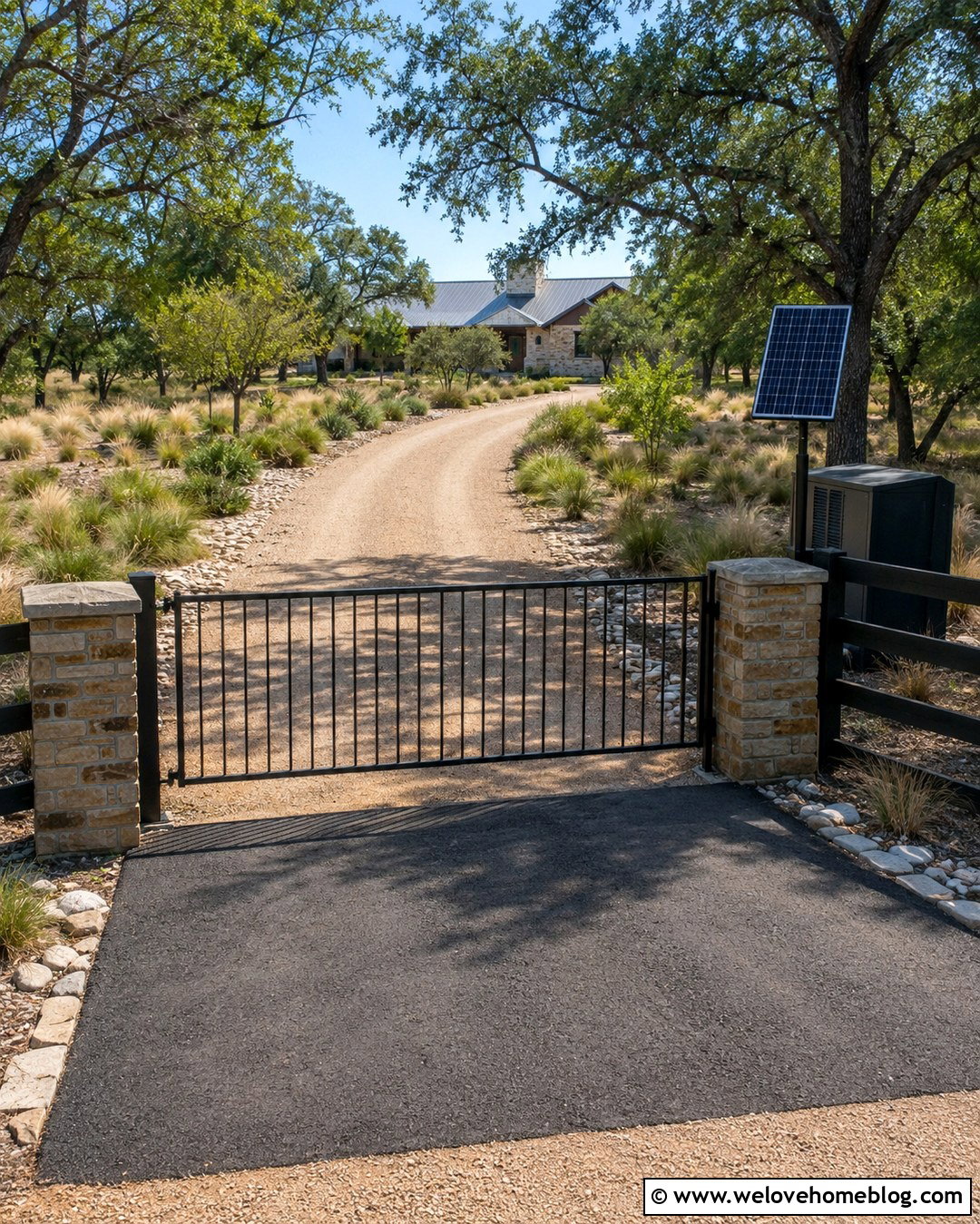
A solar-powered metal driveway gate can provide convenient automation at a long entrance where extending electrical service would be disruptive. Start with a lightweight aluminum or efficiently designed steel swing gate to reduce the energy required for each cycle. Position the solar panel where it receives dependable sunlight and remains accessible for cleaning. This setup looks natural beside a long gravel driveway, ranch fencing, stone gateposts, and drought-tolerant roadside planting. Battery capacity should reflect gate weight, daily traffic, local weather, and accessory loads such as keypads or intercoms. Include a practical manual release and secure equipment enclosure. Keep trees from shading the panel as they mature. A paved stopping area near the keypad can prevent vehicles from creating ruts beside the gravel entrance.
19. Metal Driveway Gate With Pedestrian Access
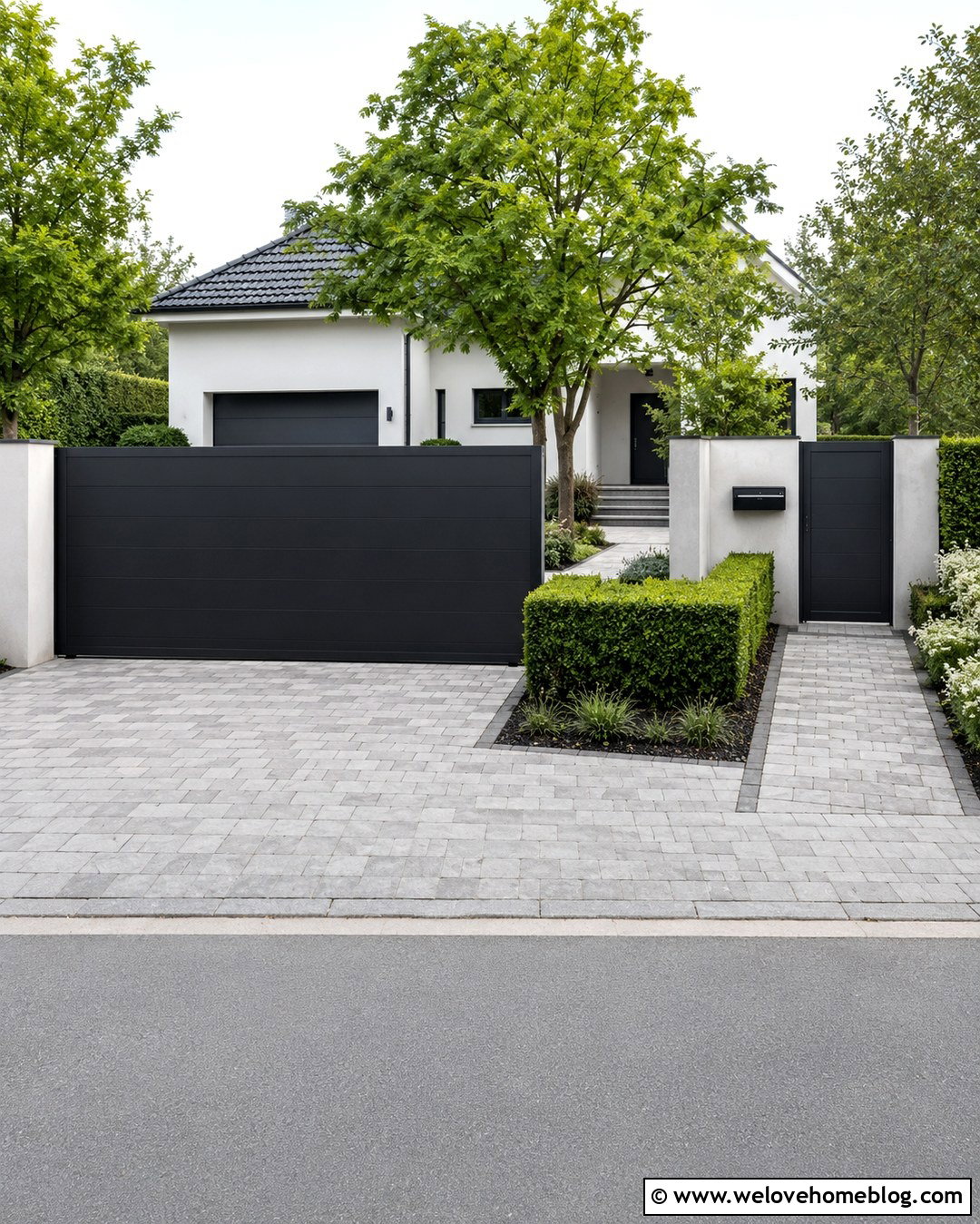
Opening the entire driveway gate for every visitor on foot wastes time and increases mechanical use. Add a separate pedestrian gate that matches the vehicle gate’s frame, spacing, color, and height. A black steel sliding driveway gate with a coordinated walk-through panel suits a concrete paver driveway leading to a modern suburban home. Place the pedestrian opening beside a continuous walkway, not directly in the vehicle path. Low hedges and garden beds can guide guests toward it naturally. Use a self-closing latch where appropriate, and keep the threshold smooth and visible. An intercom, house number, and package shelf can be grouped near the pedestrian entrance. This arrangement improves daily convenience while giving the complete frontage a balanced, professionally planned appearance. ()
20. Metal Driveway Gate With Smart Access
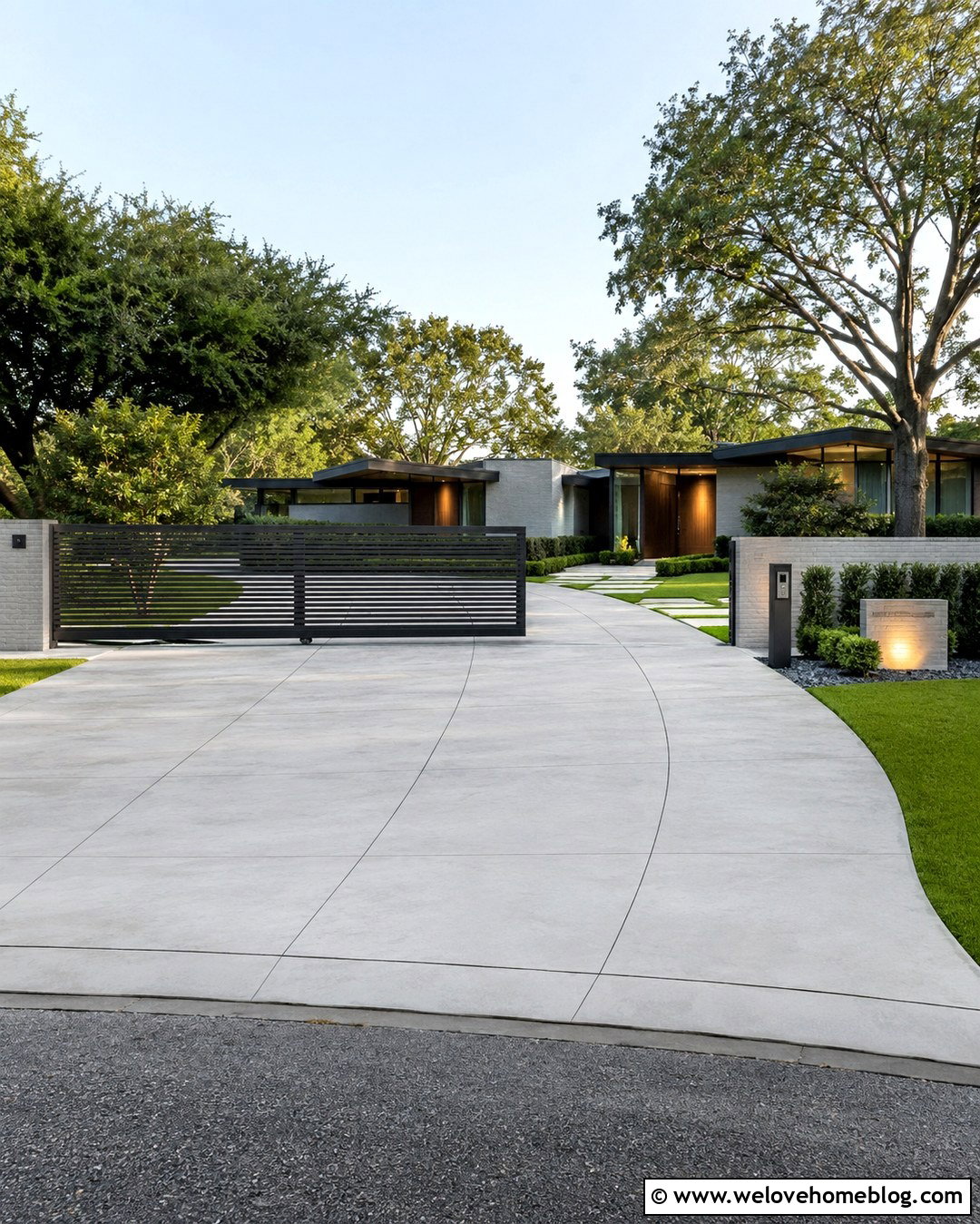
Smart access can make an automatic metal driveway gate easier to manage without changing its visual character. Pair a streamlined aluminum sliding gate with a circular concrete driveway, low masonry walls, structured shrubs, and a midcentury-modern home. Access options may include remotes, keypads, telephone entry, vehicle detection, or compatible app-based controls. Select features according to household needs rather than adding unnecessary technology. Provide battery backup, a manual release, and a clear method for emergency or service access. Safety devices must cover the gate’s moving and closing areas, while control equipment should remain protected from weather and impact. Conceal wiring in planned conduit and maintain convenient service access. A simple illuminated address marker can help guests locate the correct entrance without distracting from the gate design. ()
Conclusion:
The best metal gate installation balances appearance, movement, security, and the physical limits of the property. These 20 Installation Of Metal Driveway Gates Ideas demonstrate how swing, sliding, cantilever, privacy, and mixed-material gates can complement many driveway surfaces and house designs. Begin with accurate measurements and a careful review of the grade, drainage, traffic flow, electrical access, and available opening space. Then select a gate material, finish, and support system that fit the site. Coordinated pillars, landscaping, lighting, fencing, and address features will help the entrance feel complete. For automated gates, professional design and installation are valuable because strong foundations, suitable operators, protected wiring, emergency access, and properly positioned safety devices all affect long-term performance.

Related posts:





Leave a Reply