
A restaurant's interior design is a crucial ingredient in the recipe for success, creating an atmosphere that complements the culinary experience and invites guests to return. Beyond just tables and chairs, the design tells a story, setting the mood from the moment a customer walks through the door. From the lighting and color palette to the textures and layout, every element works together to craft a unique identity. A well-designed space not only enhances comfort but also becomes a memorable part of the dining journey, influencing perceptions and encouraging social sharing, ultimately shaping the restaurant's brand and appeal.
1. Biophilic Design with Living Walls
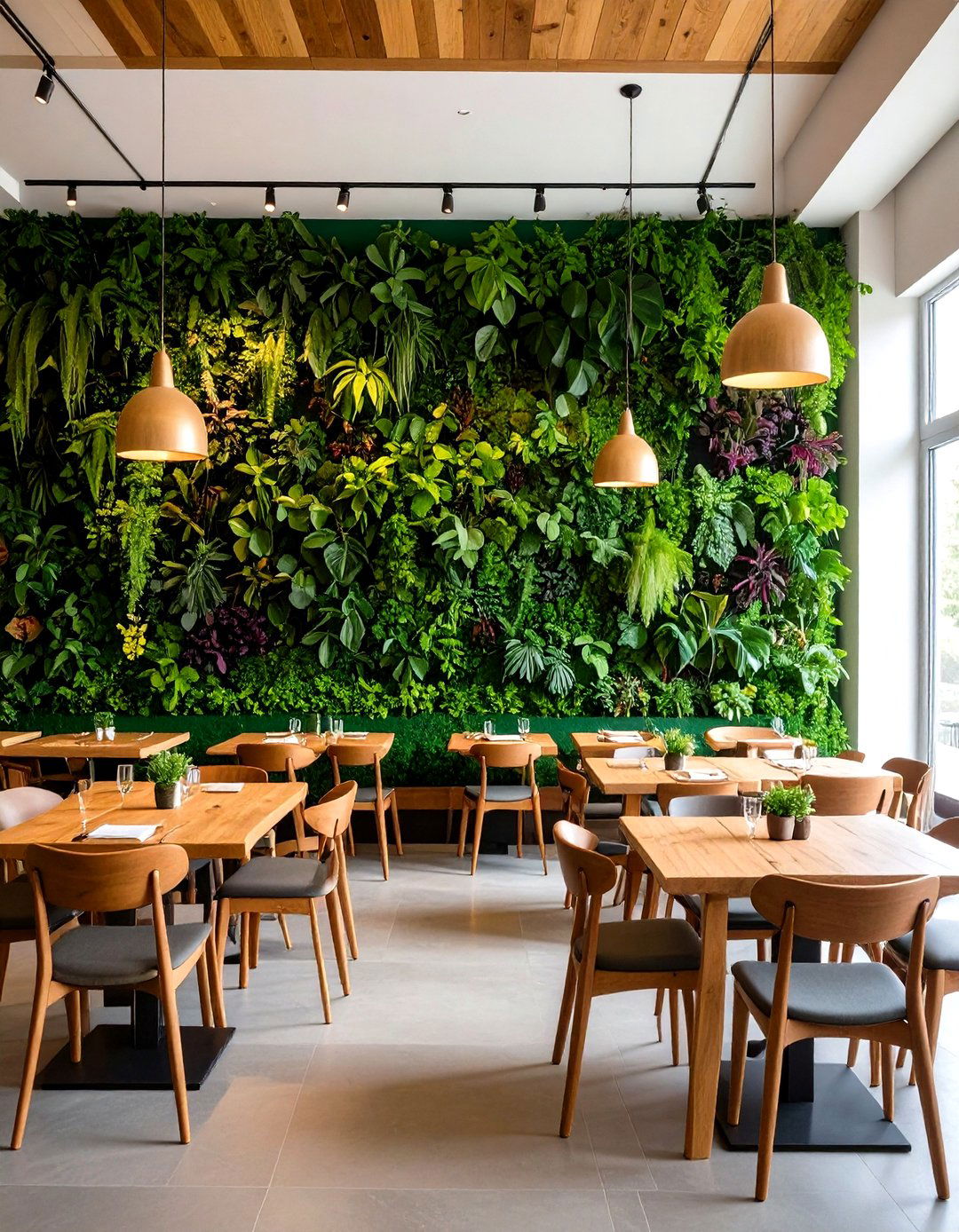
Incorporating a biophilic design connects diners with nature, fostering a serene and refreshing ambiance. A prominent living wall, lush with ferns, mosses, and other greenery, serves as a stunning focal point and natural air purifier. This approach uses natural materials like reclaimed wood for tables and stone for flooring to complement the plant life. The lighting should be bright and airy, mimicking natural daylight to enhance the vitality of the greens. This design isn't just aesthetically pleasing; it promotes well-being, making the dining space feel like a tranquil oasis away from the urban hustle, encouraging guests to relax and linger longer.
2. Industrial Chic with Exposed Ductwork
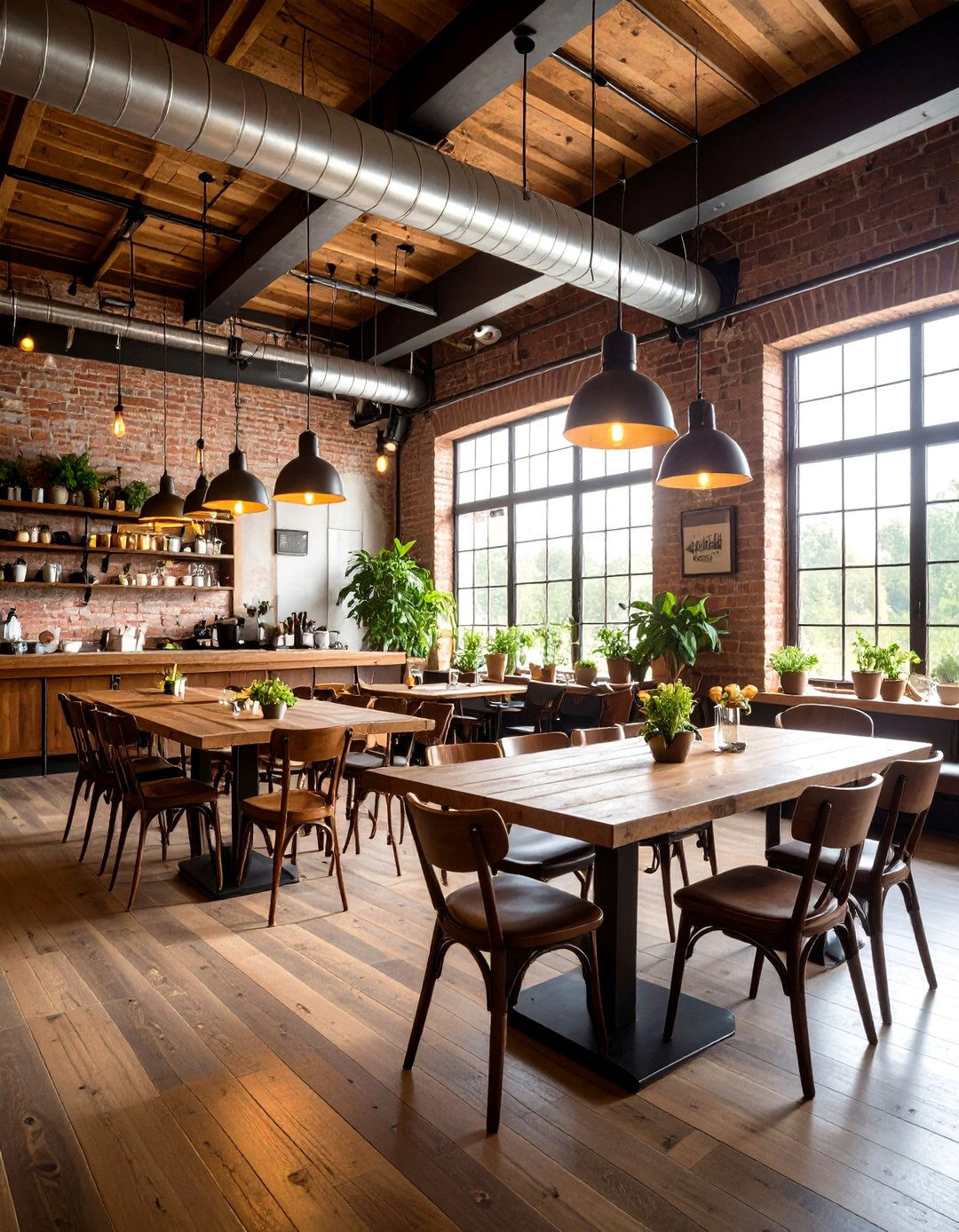
An industrial chic aesthetic embraces raw, unfinished elements for a modern and edgy vibe. This style highlights the building's original architecture, featuring exposed brick walls, visible steel beams, and uncovered ductwork as key design components. Furniture often consists of metal chairs and dark wood tabletops, contributing to the utilitarian feel. Pendant lighting with Edison bulbs casts a warm, inviting glow, softening the harshness of the raw materials. The combination of textures—rough brick, smooth metal, and warm wood—creates a layered and visually interesting environment that feels both historic and contemporary, appealing to a trendy, urban clientele.
3. Art Deco Glamour with Geometric Patterns
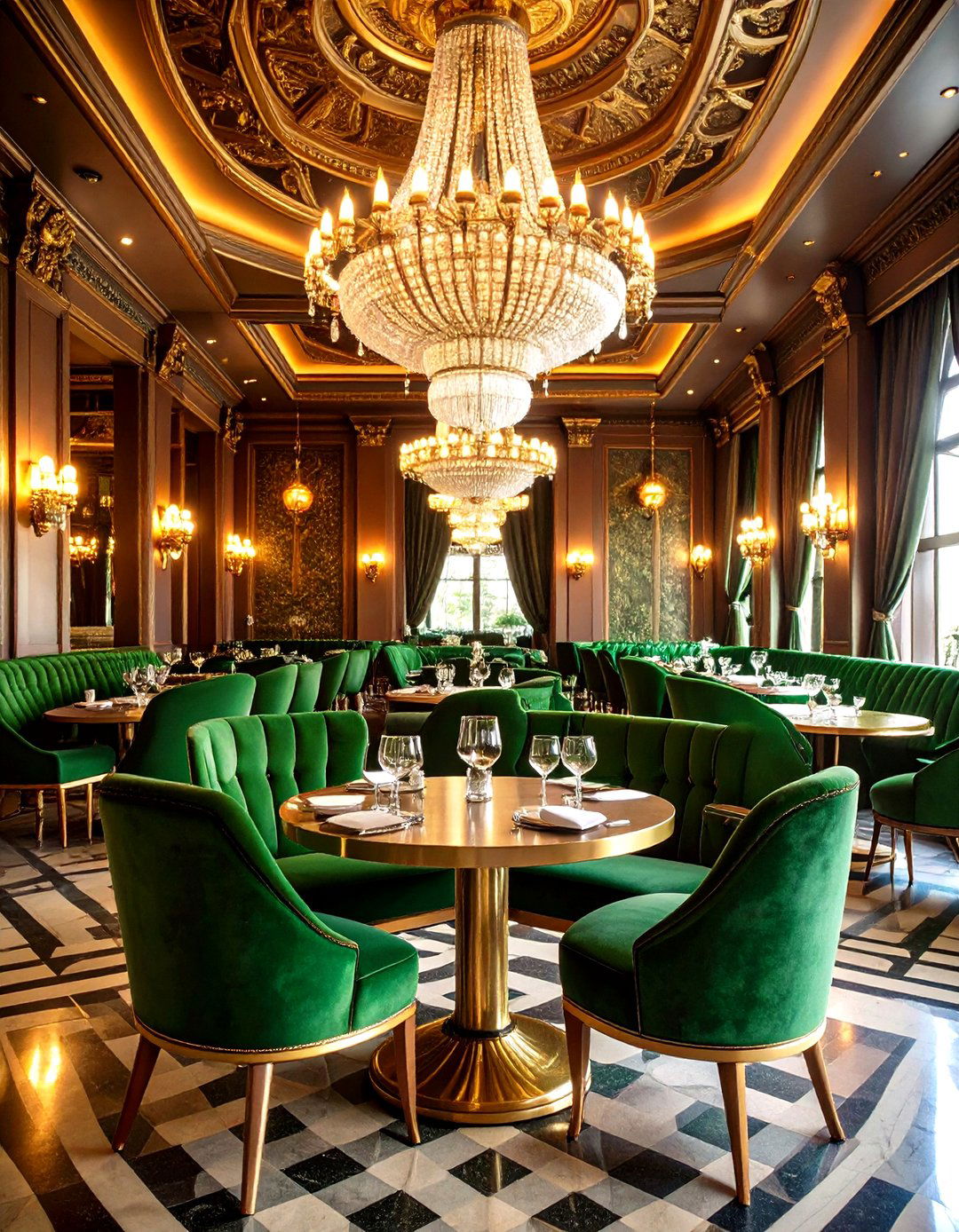
Transporting diners to a bygone era of opulence, Art Deco design is defined by its glamour and sophistication. This style utilizes bold geometric patterns on floors, walls, and upholstery, creating a sense of dynamic energy. Key features include rich materials such as polished brass, velvet, and marble, paired with a color palette of deep jewel tones like emerald green, sapphire blue, and black. Symmetrical layouts, fan-shaped motifs, and tiered chandeliers enhance the luxurious atmosphere. This dramatic and elegant setting makes dining feel like a special occasion, offering a theatrical and memorable experience that is perfect for upscale establishments.
4. Scandinavian Minimalism with Clean Lines
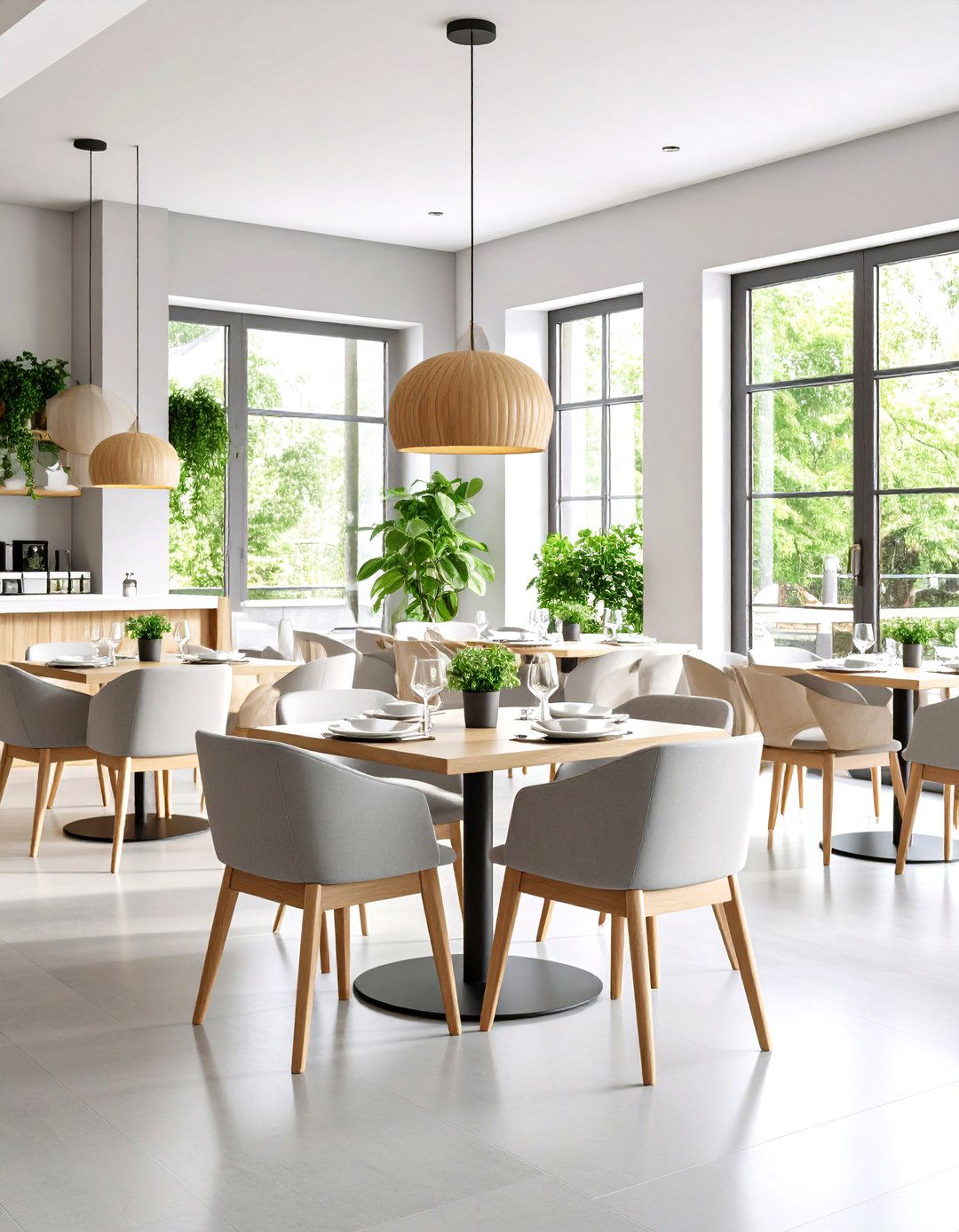
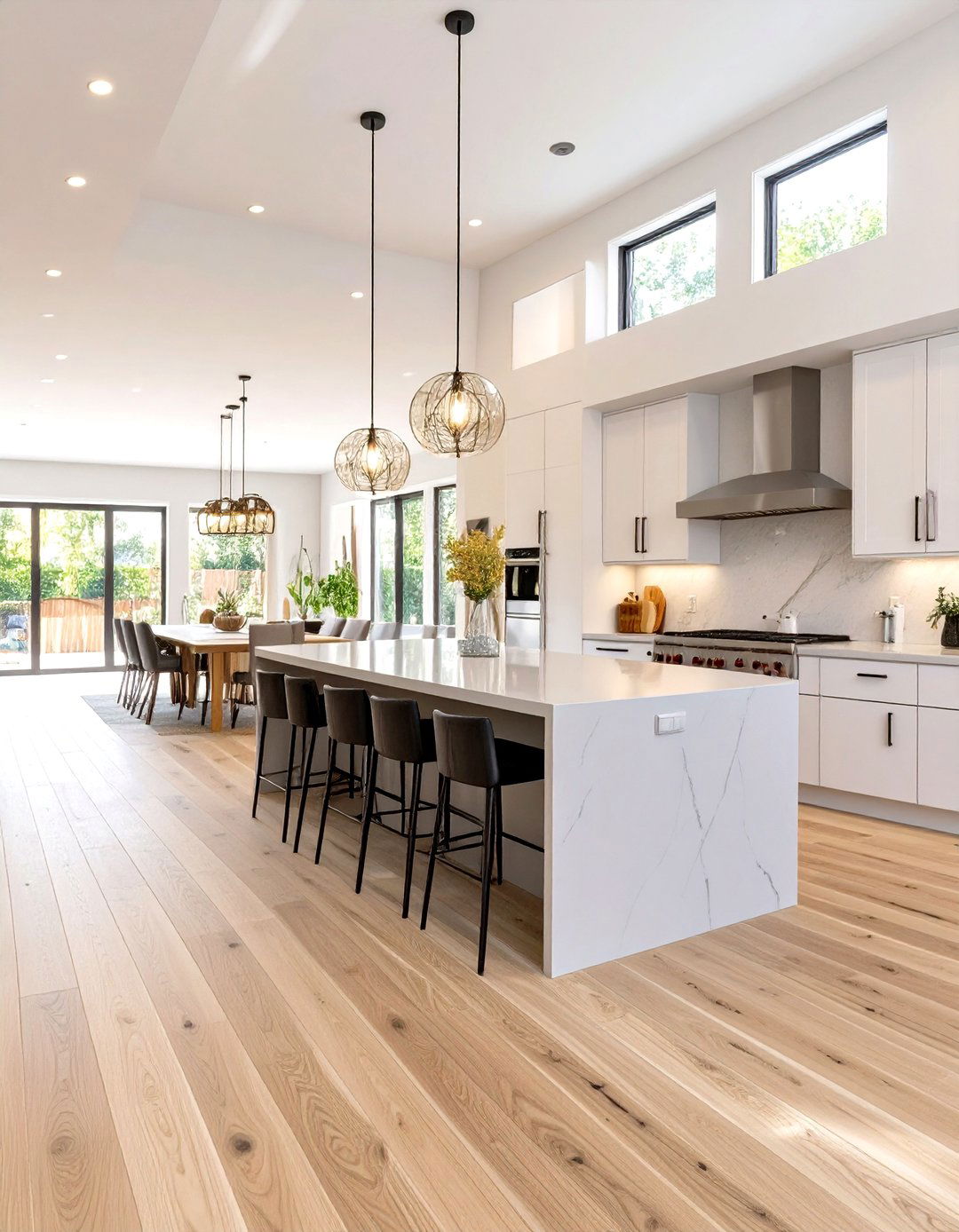
Scandinavian minimalism focuses on simplicity, functionality, and understated elegance. This design philosophy uses a neutral color palette dominated by whites, grays, and soft pastels to create a bright and airy space. Furniture is characterized by clean lines, natural wood finishes, and functional forms. The emphasis is on decluttering the environment to foster a calm and peaceful atmosphere. Large, unadorned windows allow for maximum natural light, while cozy textiles like wool throws and sheepskin rugs add warmth and texture. This approach creates a welcoming and uncluttered dining room where the focus remains on the food and conversation.
5. Modern Farmhouse with Rustic Charm
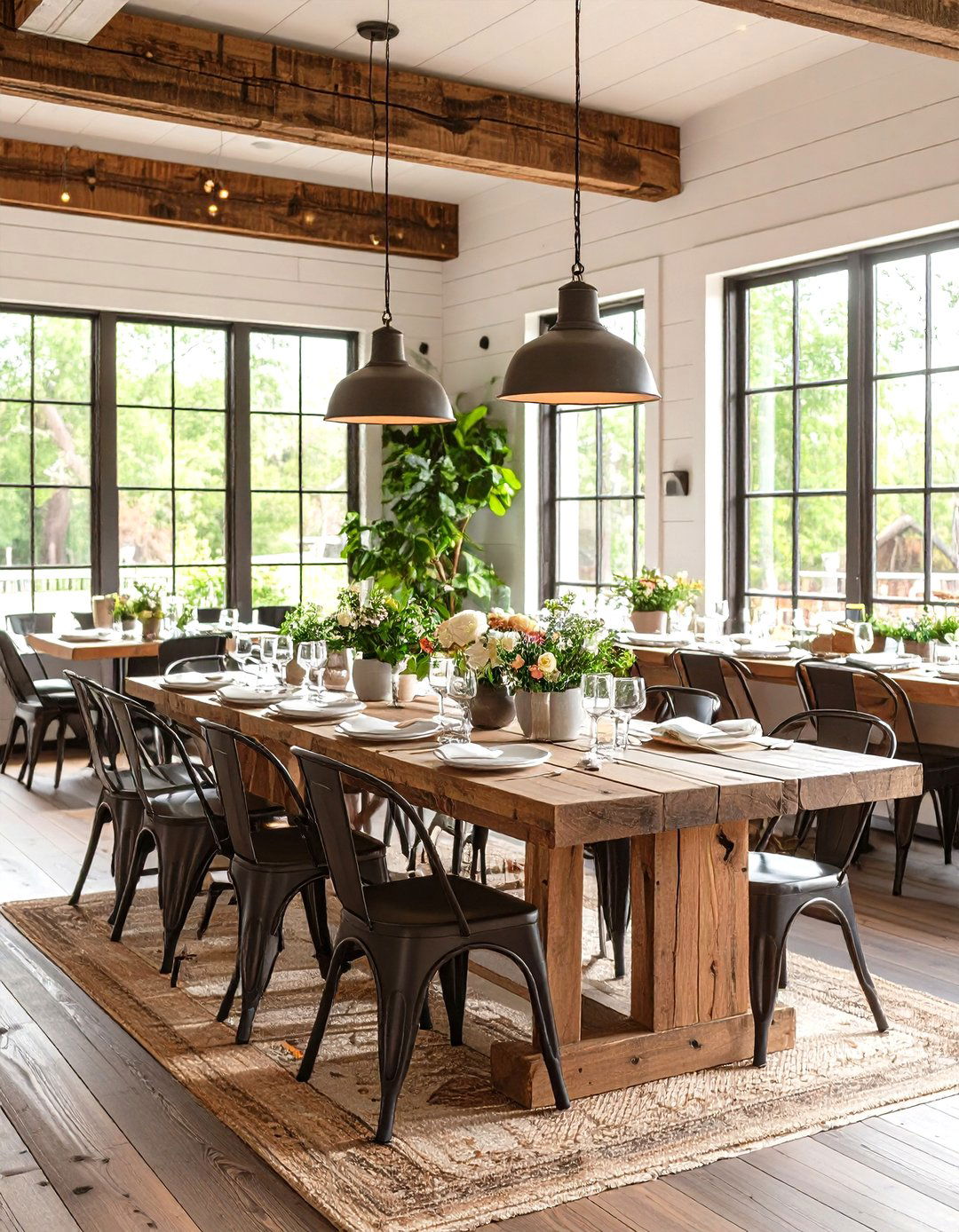
The modern farmhouse style blends rustic comfort with contemporary sleekness for a cozy and inviting atmosphere. It features classic farmhouse elements like shiplap walls, reclaimed barn wood accents, and large, communal dining tables. These rustic touches are balanced with modern fixtures, such as matte black metal chairs and minimalist pendant lighting. A neutral color palette of whites and grays keeps the space feeling fresh and open. This design creates a warm, unpretentious environment that feels like a home away from home, making it ideal for restaurants serving comfort food or farm-to-table cuisine.
6. Coastal Escape with Light and Airy Tones
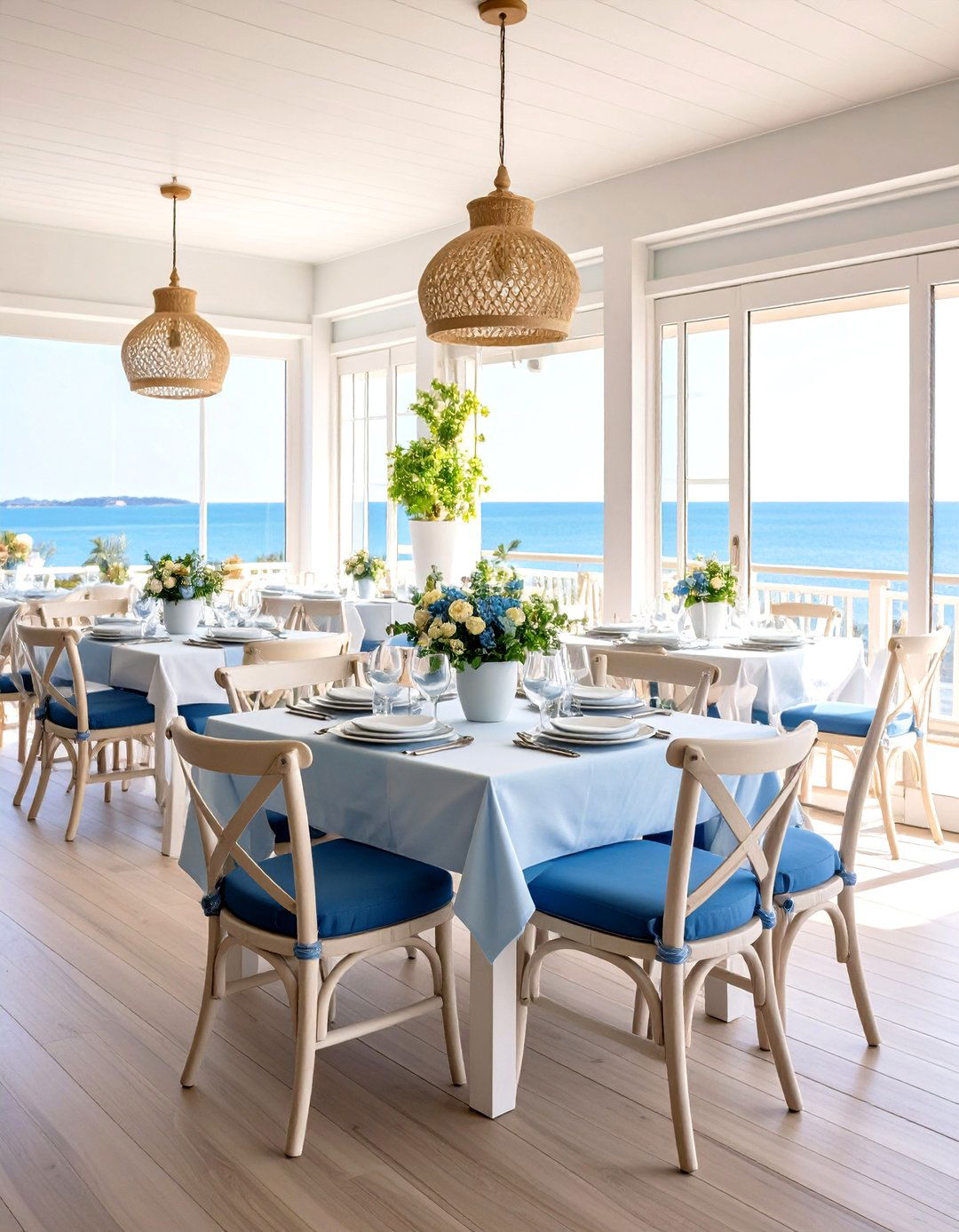
A coastal design aims to evoke the relaxed and breezy feeling of being by the sea. This style is characterized by a light and airy color palette, featuring shades of white, sandy beige, and soft blues. Natural materials like light-toned wood, rattan, and linen are used extensively in furniture and decor to create a casual, organic feel. Large windows let in abundant natural light, enhancing the open atmosphere. Subtle nautical accents, such as rope details or seascape art, can be incorporated without overwhelming the space. The result is a serene and refreshing environment that invites guests to unwind and enjoy a leisurely meal.
7. Mid-Century Modern with Iconic Furniture
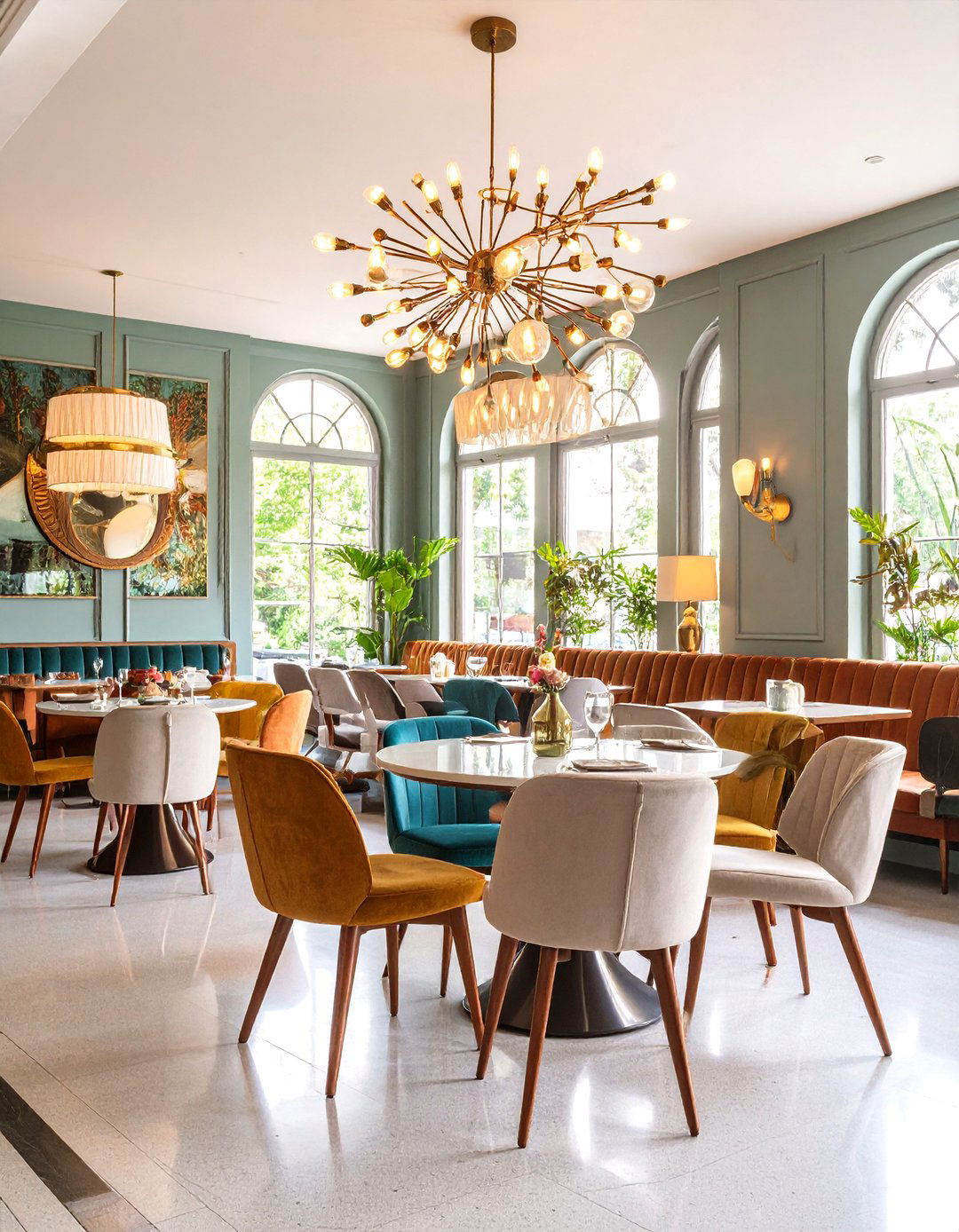
Mid-century modern design celebrates the iconic style of the 1950s and 1960s, known for its organic shapes and functionality. This aesthetic features clean lines, gentle curves, and a seamless integration of indoor and outdoor spaces. Key elements include iconic furniture pieces like Eames chairs, tapered-leg tables, and Sputnik chandeliers. The color palette often mixes earthy tones with pops of vibrant color like mustard yellow or teal. Wood, particularly teak and walnut, is a prominent material, adding warmth to the interior. This retro yet timeless design creates a sophisticated and effortlessly cool dining atmosphere that feels both nostalgic and forward-thinking.
8. Bohemian Eclectic with Mixed Patterns
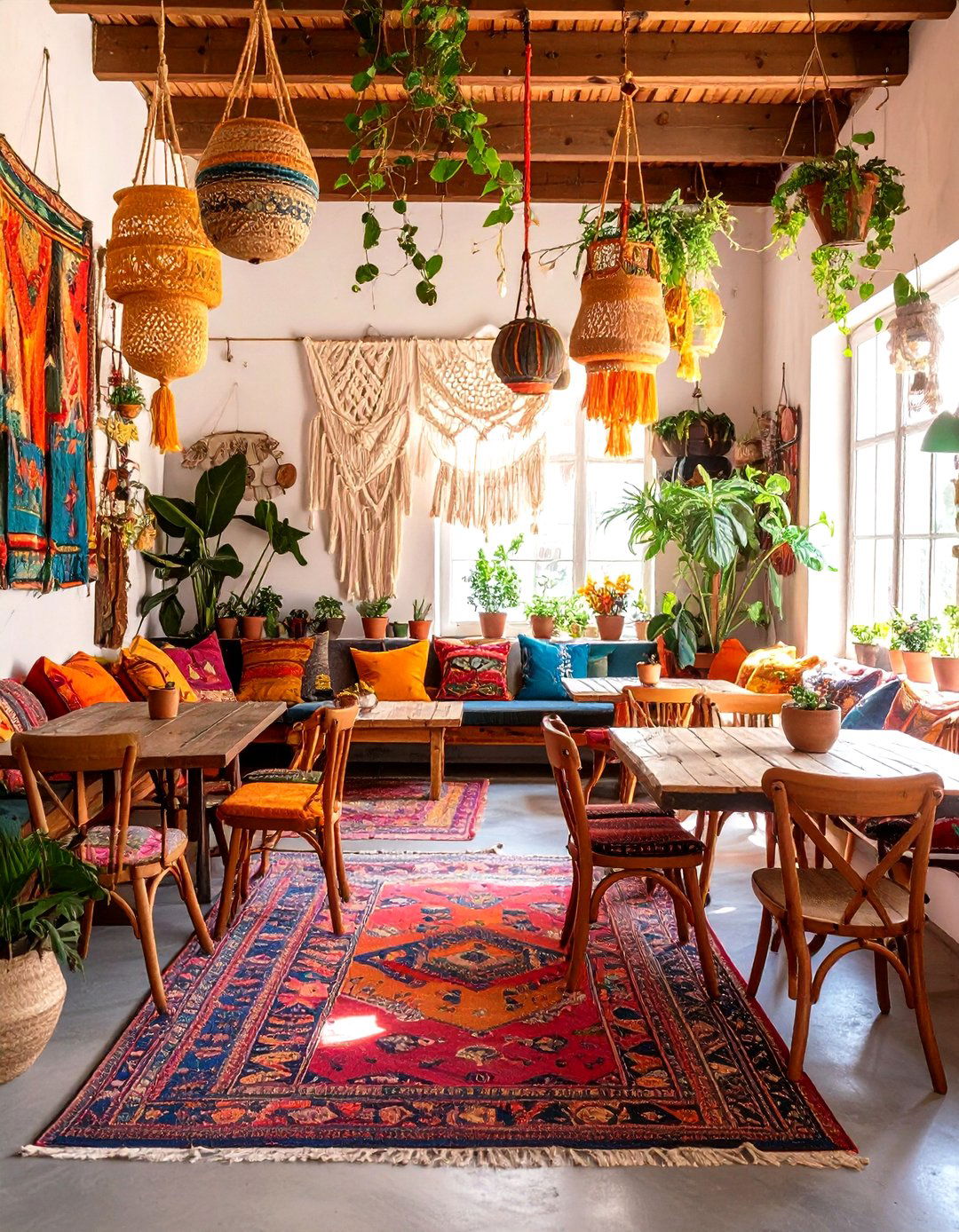
The bohemian eclectic style is a vibrant and free-spirited design that embraces a mix of patterns, textures, and colors. This look is achieved by layering various elements, such as Moroccan-patterned tiles, colorful kilim rugs, and mismatched vintage chairs. Macramé wall hangings, an abundance of potted plants, and rattan furniture contribute to the relaxed, artistic vibe. There are no strict rules, allowing for a creative and personalized space that feels warm and lived-in. Low-level seating with floor cushions can also be incorporated to enhance the casual, communal atmosphere, making it perfect for a laid-back and social dining experience.
9. Dark Academia with Moody Ambiance
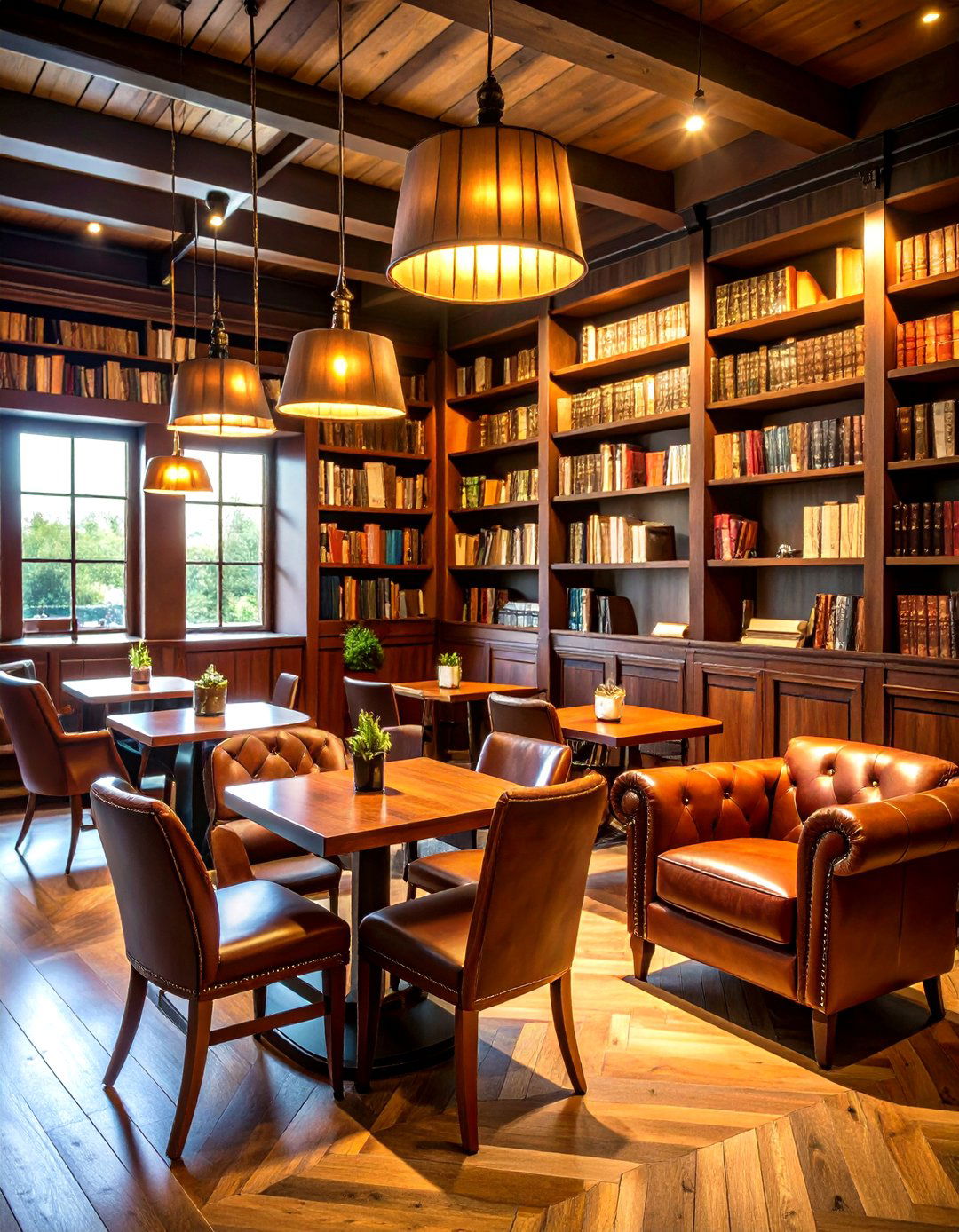
A Dark Academia theme creates a moody, intellectual, and sophisticated atmosphere reminiscent of a classic university library. This design utilizes a dark color palette with deep browns, forest greens, and charcoal grays, complemented by rich materials like dark wood paneling, leather-upholstered seating, and brass accents. Bookshelves filled with classic literature, vintage maps, and curated curiosities are essential decorative elements. Soft, warm lighting from table lamps and shaded pendants enhances the intimate and scholarly vibe. This aesthetic fosters a quiet, contemplative environment, perfect for a cozy café or an upscale bar where patrons can enjoy deep conversations.
10. Japanese Wabi-Sabi with Imperfect Beauty
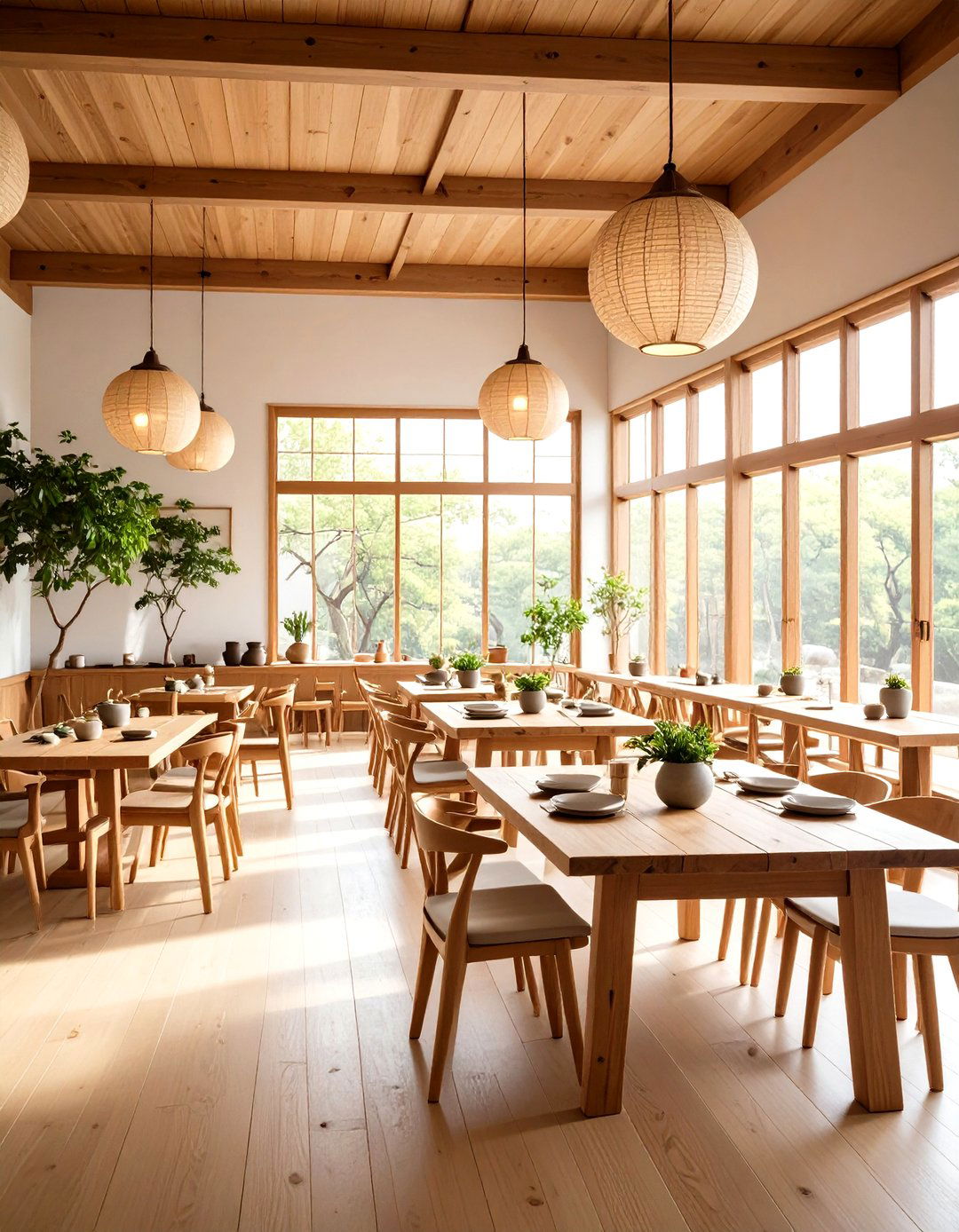
The Japanese philosophy of Wabi-Sabi finds beauty in imperfection and simplicity. This design approach creates a serene and authentic environment by using natural, unrefined materials like rough-hewn wood, handmade ceramics, and textured fabrics. The aesthetic is minimalist, focusing on a few carefully chosen objects that have personal or historical significance. The color palette is muted and earthy, drawing from nature. Asymmetry and irregularity are celebrated, creating a space that feels organic and grounded. This design encourages a mindful dining experience, where the focus is on appreciating the simple, transient beauty of the food and the surroundings.
11. Tropical Oasis with Bold Foliage Prints
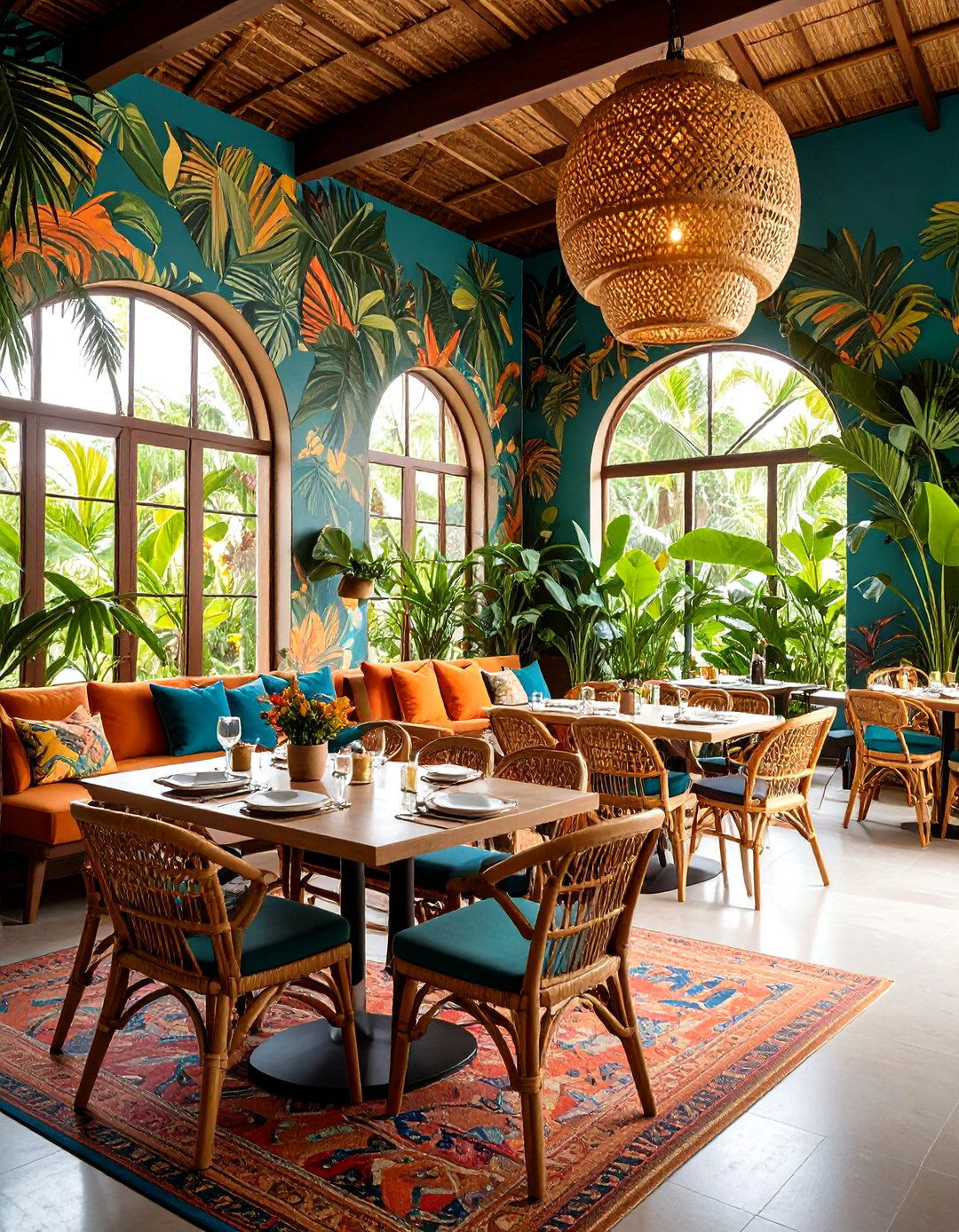
A tropical oasis design immerses diners in a vibrant, exotic environment. This style is characterized by bold foliage prints, such as large palm leaves or monstera patterns, used on wallpaper, upholstery, or accent walls. The color palette is rich and lively, featuring deep greens, bright florals, and pops of sunny yellow or coral. Natural materials like bamboo, rattan, and dark wood are used for furniture and fixtures, enhancing the jungle-like feel. The addition of numerous live plants, from small potted succulents to large fiddle-leaf figs, completes the lush, immersive experience, making the restaurant feel like a stylish getaway.
12. Speakeasy Bar with Hidden Entrance
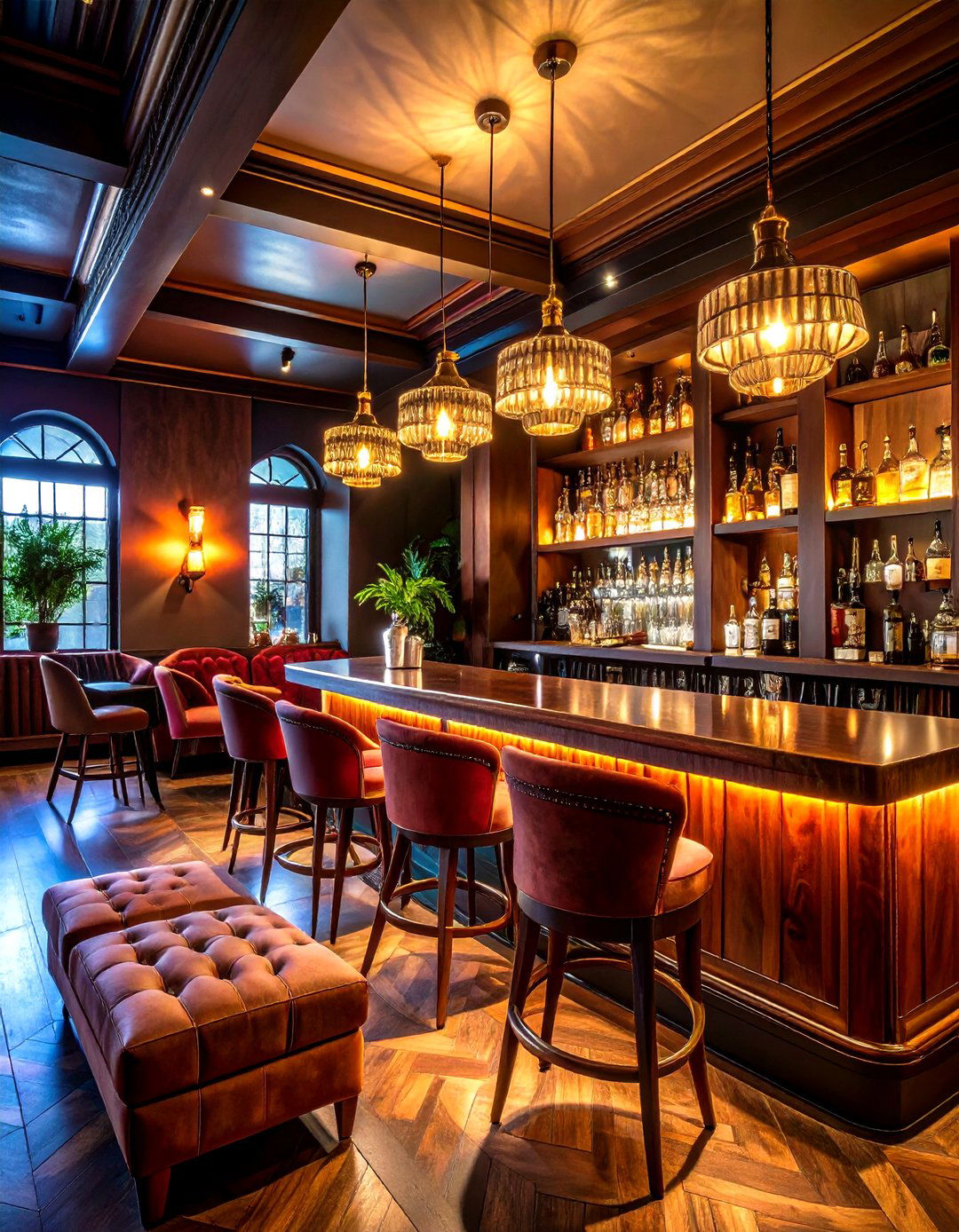
A speakeasy-inspired design creates an exclusive and secretive atmosphere, harkening back to the Prohibition era. The experience often begins with a hidden or unassuming entrance, adding an element of intrigue. Inside, the ambiance is dark and intimate, with low lighting provided by vintage-style sconces and shaded lamps. The decor features rich, dark wood, plush velvet or leather seating, and tin-pressed ceilings. A sophisticated bar with an extensive collection of spirits serves as the centerpiece. This design fosters a sense of discovery and intimacy, making guests feel like they are part of a secret club.
13. Minimalist Concrete and Steel Interior
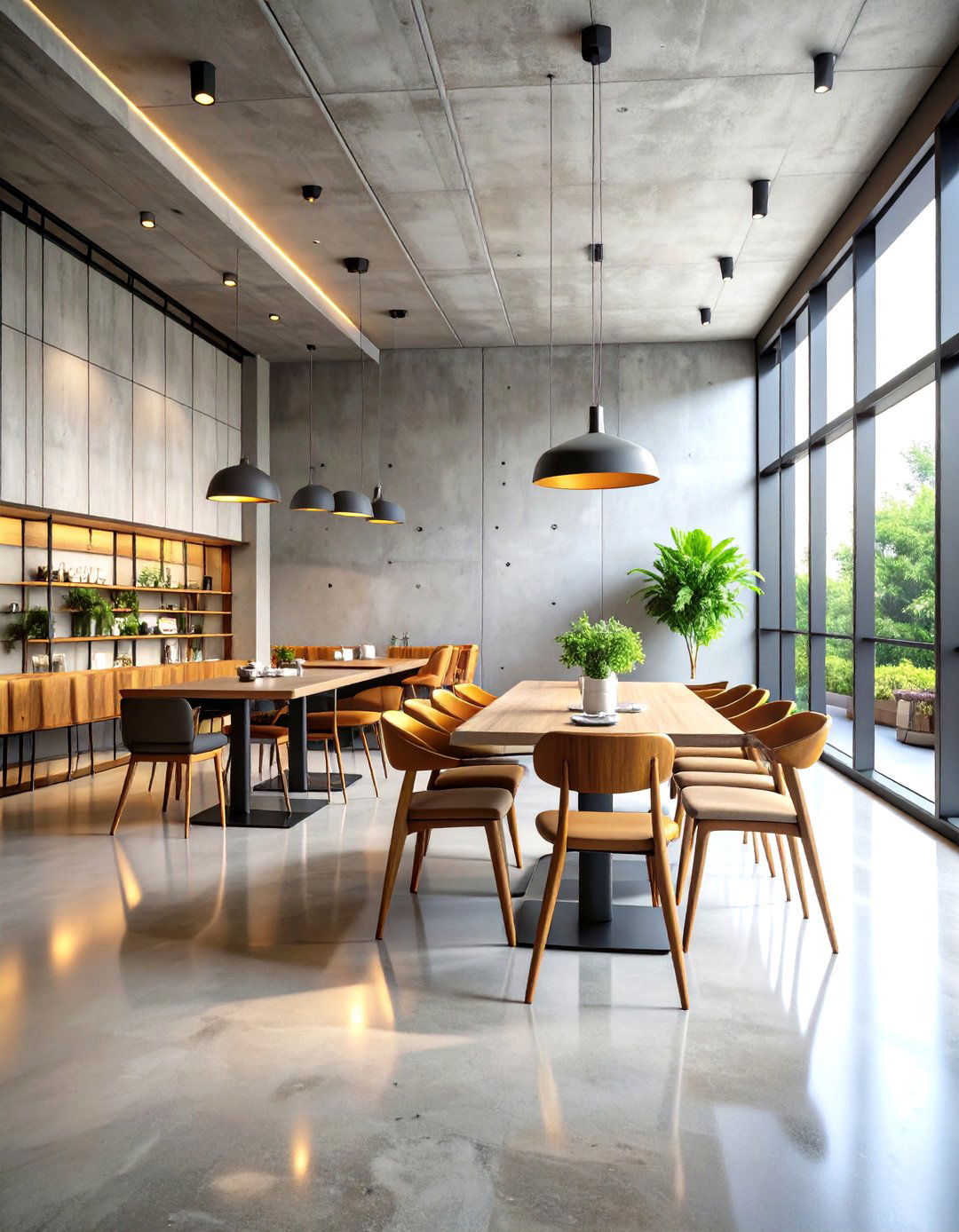
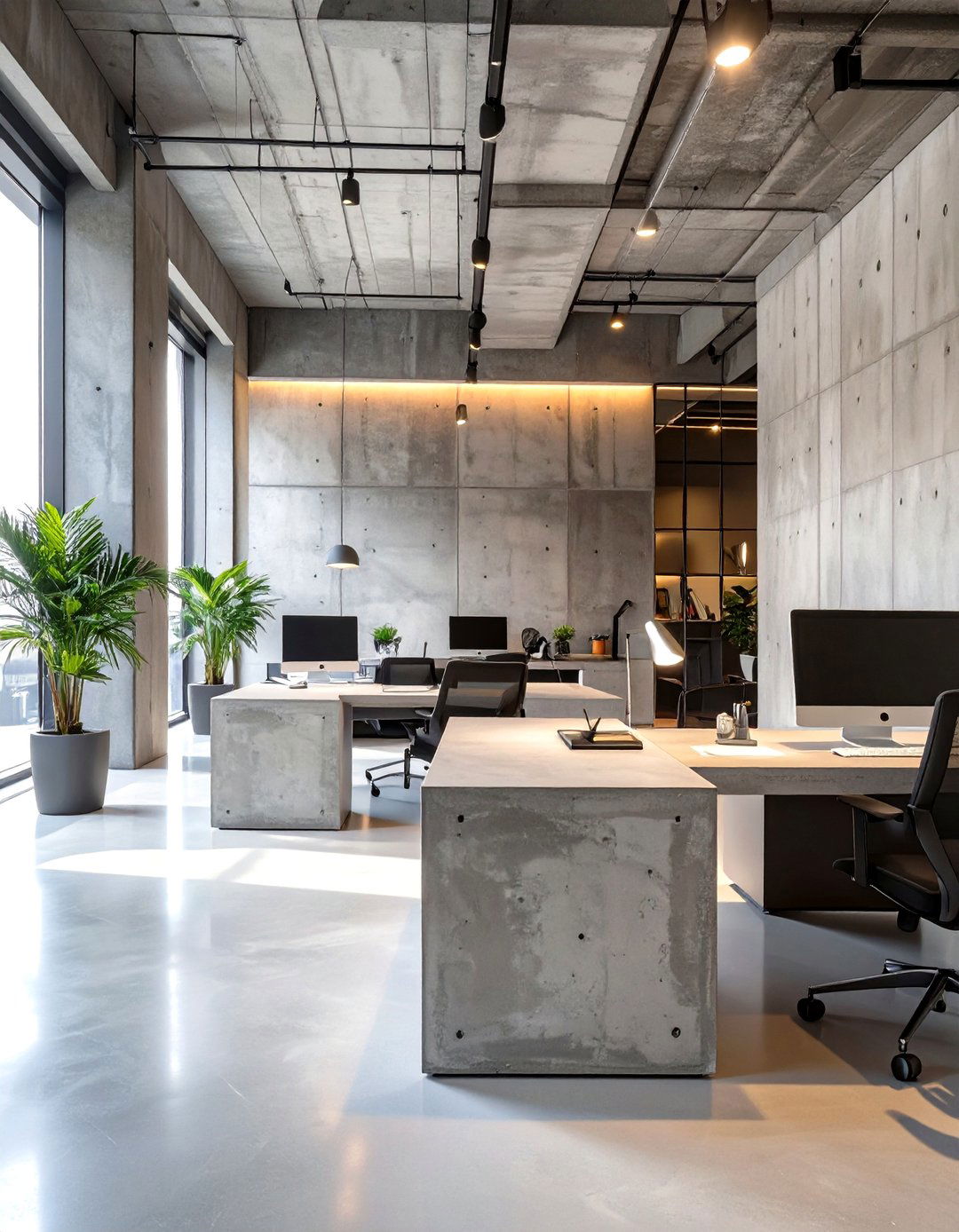
For a truly modern and stark aesthetic, a minimalist design using concrete and steel offers a powerful statement. This approach focuses on raw, industrial materials, with polished concrete floors, exposed concrete walls, and stainless steel countertops and fixtures. The furniture is kept simple and functional, often in monochromatic shades to maintain the clean, uncluttered look. The beauty of this design lies in its honesty and simplicity, allowing the architecture of the space to speak for itself. Strategic lighting can be used to highlight textures and create visual interest, preventing the space from feeling cold and turning it into a bold, architectural statement.
14. Retro Diner with Checkered Floors
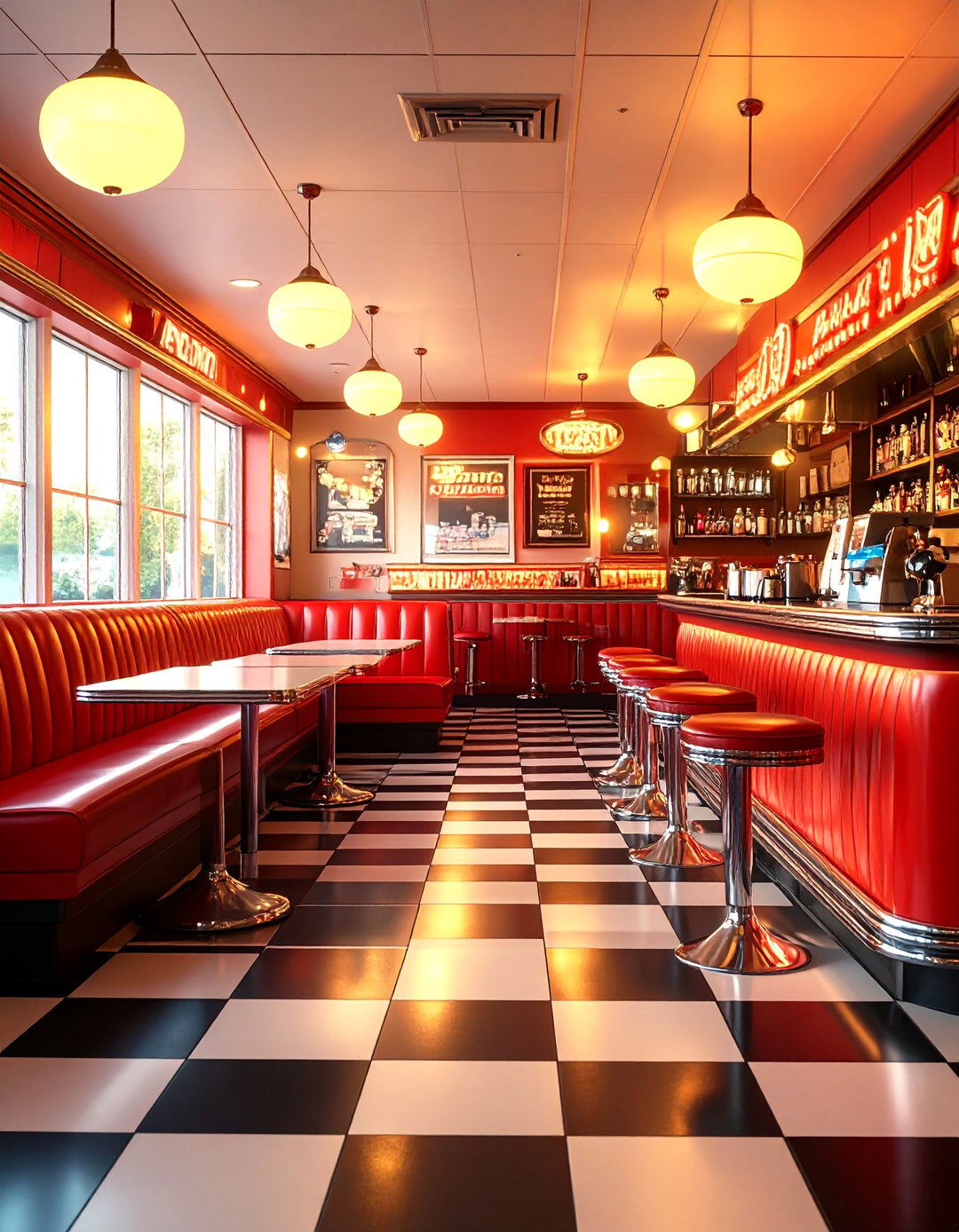
A retro diner design captures the fun and nostalgic spirit of mid-20th-century America. This style is instantly recognizable with its bold color scheme of red, white, and turquoise. Key features include black-and-white checkered floors, vinyl-upholstered booths, and chrome-edged laminate tables. A long counter with swivel stools is a classic element, inviting patrons to enjoy a casual meal. Neon signs, a vintage jukebox, and memorabilia from the era complete the look. This vibrant and cheerful design creates a playful and family-friendly atmosphere that appeals to all ages, offering a fun trip down memory lane.

15. Theatrical Dining with Dramatic Lighting
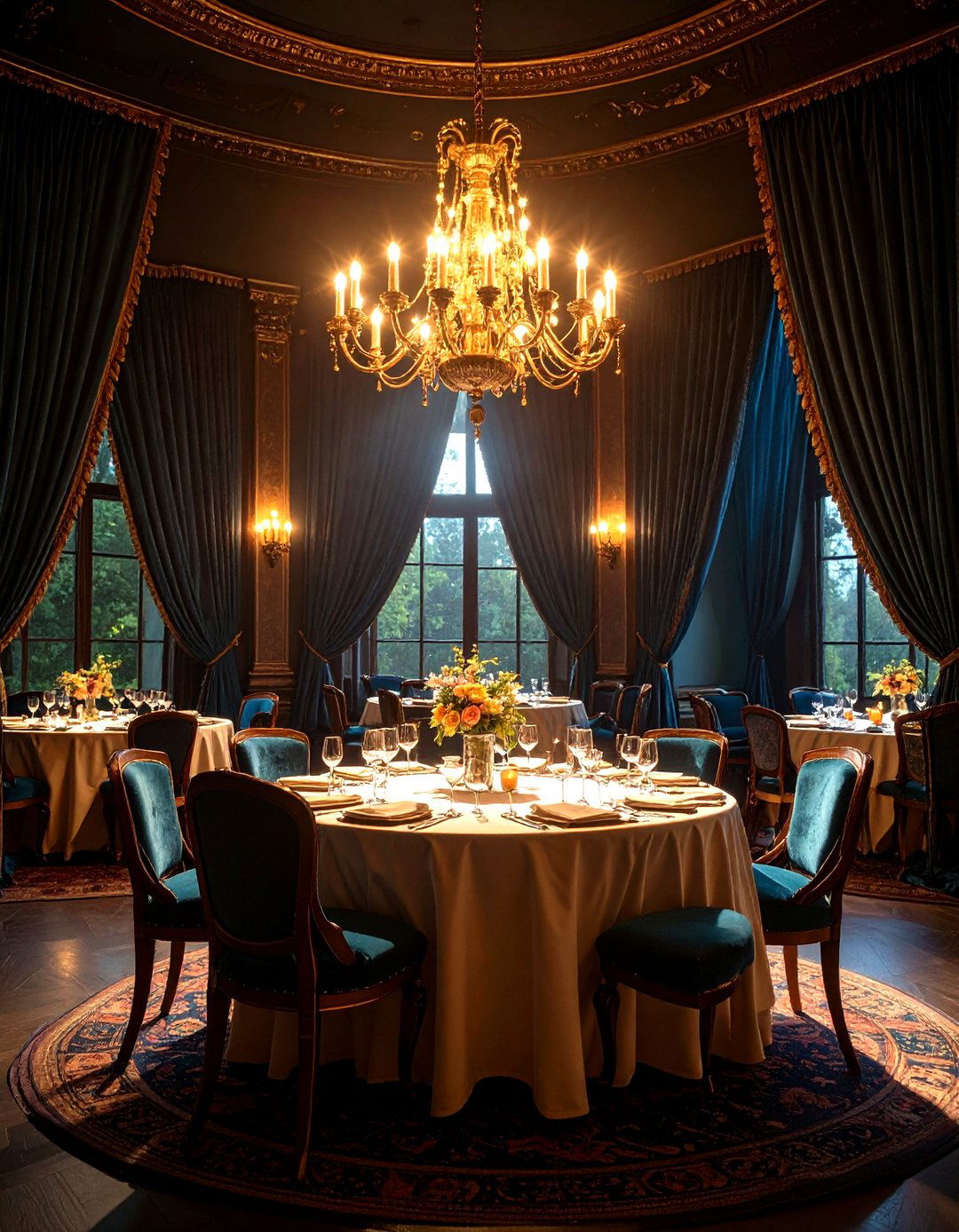
Creating a theatrical dining experience involves using dramatic lighting and bold design choices to build suspense and excitement. This concept often features spotlights focused on each table, leaving the surrounding areas in shadow to create an intimate and focused environment. Dark color palettes, heavy drapes, and elevated seating can enhance the stage-like feel. The design might also include interactive elements or a layout that offers a clear view of an open kitchen, turning the culinary process into a performance. This approach transforms a meal into an event, making it highly memorable and perfect for high-concept restaurants or special occasion dining.
16. Mediterranean Villa with Terracotta and Blue
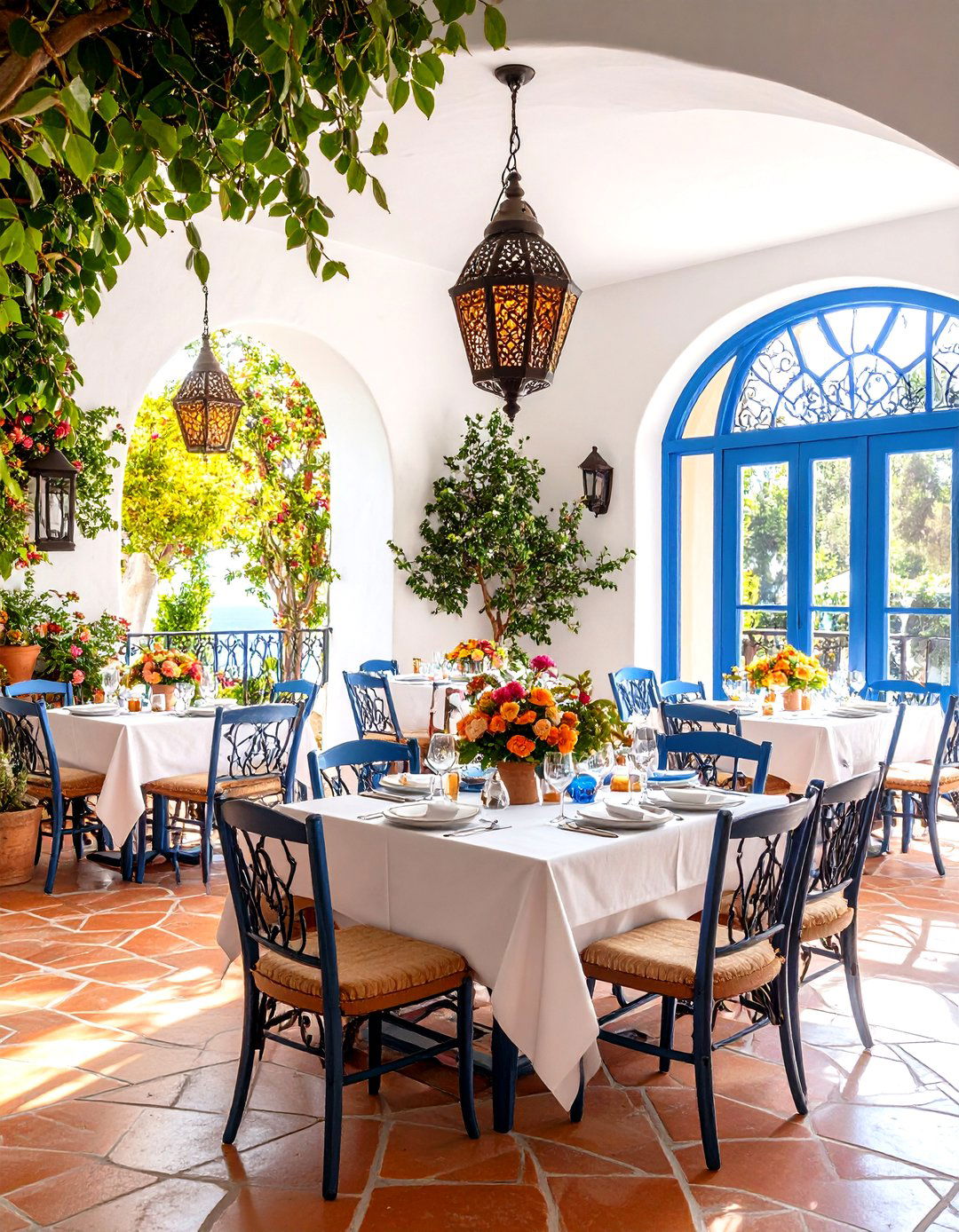
A Mediterranean villa design brings the warm and rustic charm of Southern Europe to the dining experience. This style is defined by its use of natural materials, particularly terracotta tiles for the flooring and textured stucco walls. A color palette of earthy tones, crisp whites, and vibrant blues evokes the sea and sky of the region. Arched doorways, exposed wooden beams, and wrought iron details add to the authentic feel. The space is often decorated with colorful ceramics and lush potted plants like olive trees or bougainvillea. This creates a relaxed, sun-drenched atmosphere that is both rustic and elegant.
17. Steampunk Theme with Cogs and Copper
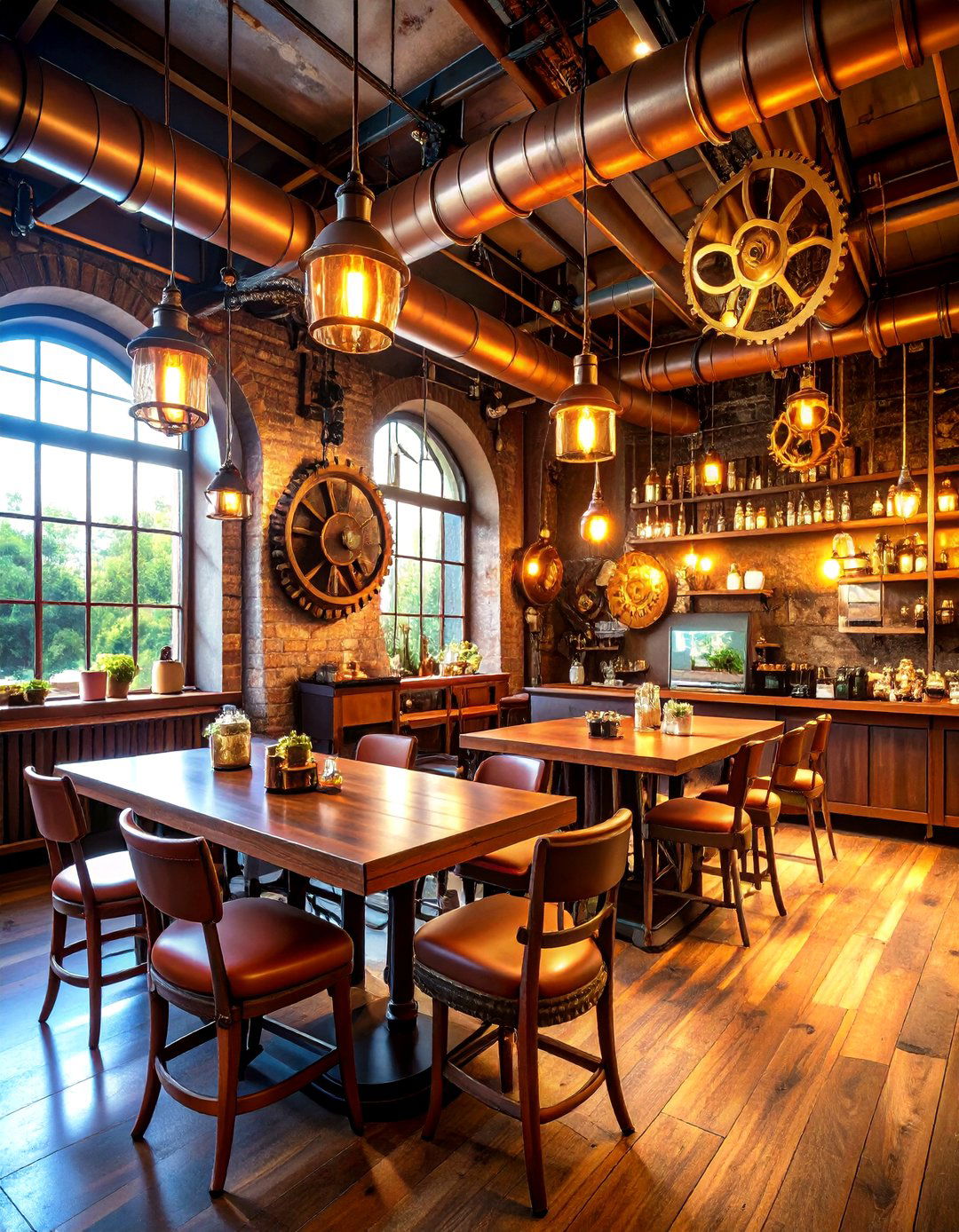
A steampunk theme combines Victorian-era aesthetics with industrial, steam-powered machinery. This imaginative design is characterized by a palette of rich browns, burnished copper, and dark metals. The decor is filled with intricate details like exposed pipes, gears, cogs, and pressure gauges. Lighting fixtures are often custom-made from repurposed industrial parts, and furniture features dark wood and leather. This highly detailed and creative style transports diners to an alternative, retro-futuristic world. It offers a unique and immersive experience that sparks curiosity and conversation, making the restaurant a destination in itself for fans of fantasy and invention.
18. Urban Garden with Hanging Planters
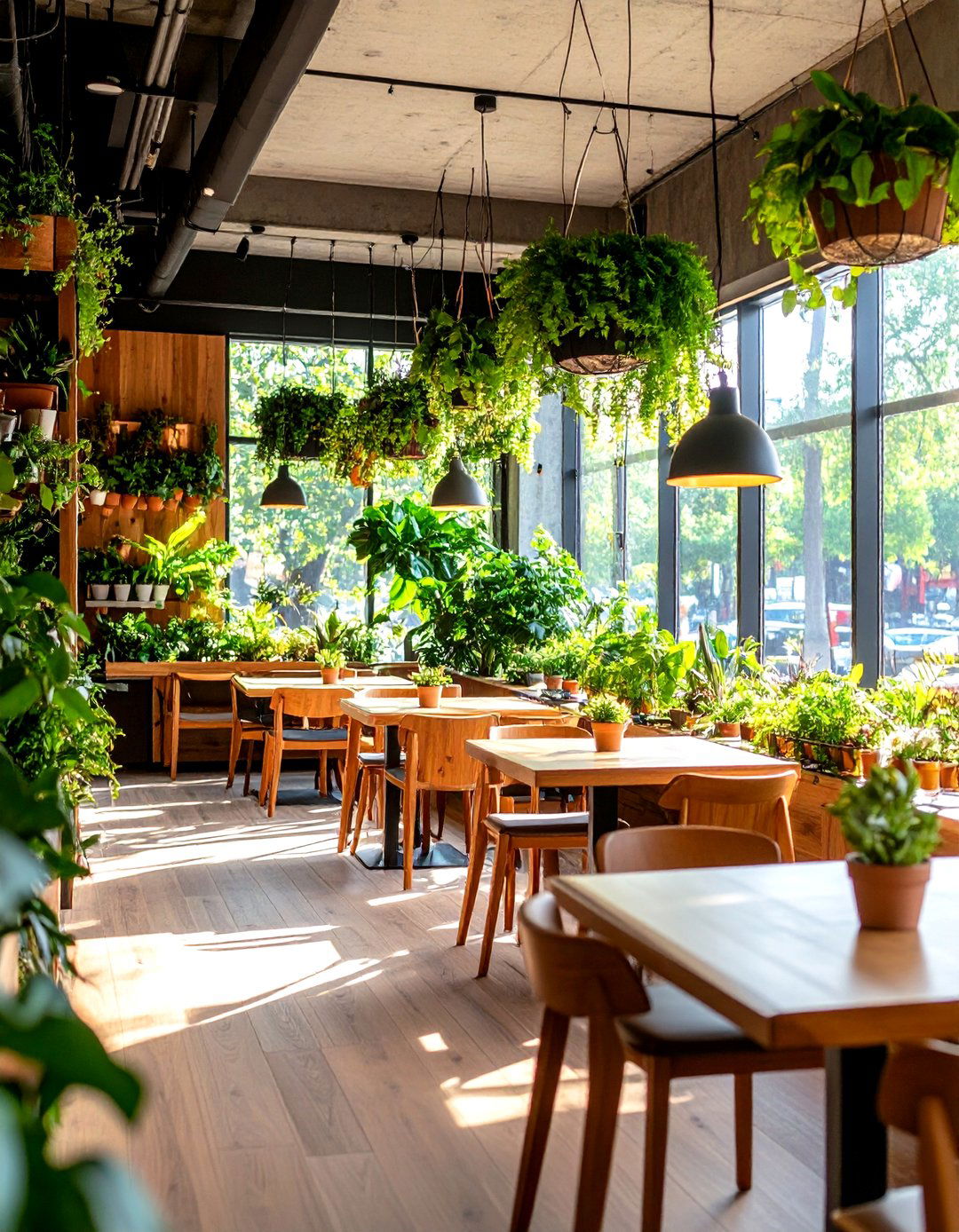
An urban garden concept brings a refreshing touch of green into a city setting, creating a vibrant yet peaceful dining space. This design makes extensive use of hanging planters, vertical gardens, and potted plants to maximize greenery without sacrificing floor space. The interior often features a mix of natural wood and industrial elements like metal and concrete, reflecting the urban environment. Large windows or skylights are crucial for providing the natural light needed for the plants to thrive. This style creates a fresh and airy atmosphere, offering a tranquil escape from the bustling city streets and connecting diners with nature.
19. Pop Art Restaurant with Bold Graphics
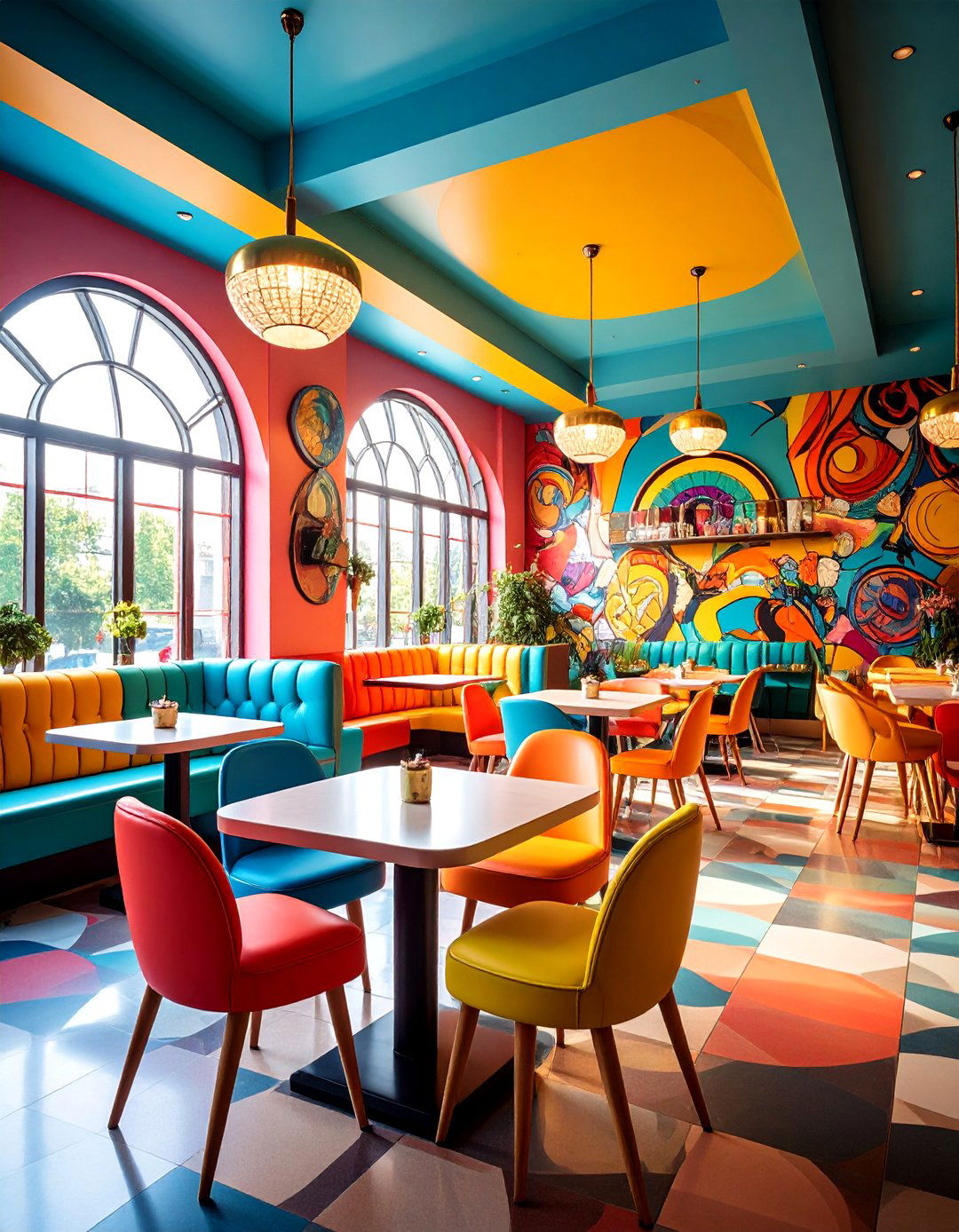
A Pop Art-inspired restaurant is all about fun, energy, and vibrant color. This design draws from the 1960s art movement, using bold graphics, comic book-style illustrations, and bright, contrasting colors like hot pink, electric blue, and sunny yellow. The walls can serve as a canvas for large-scale art pieces or graphic patterns. Furniture is often quirky and sculptural, with glossy finishes and unconventional shapes. The overall effect is playful, dynamic, and highly Instagrammable. This theme creates a lively and stimulating environment that doesn't take itself too seriously, appealing to a youthful and energetic crowd.


20. Moroccan Riad with Intricate Tiles
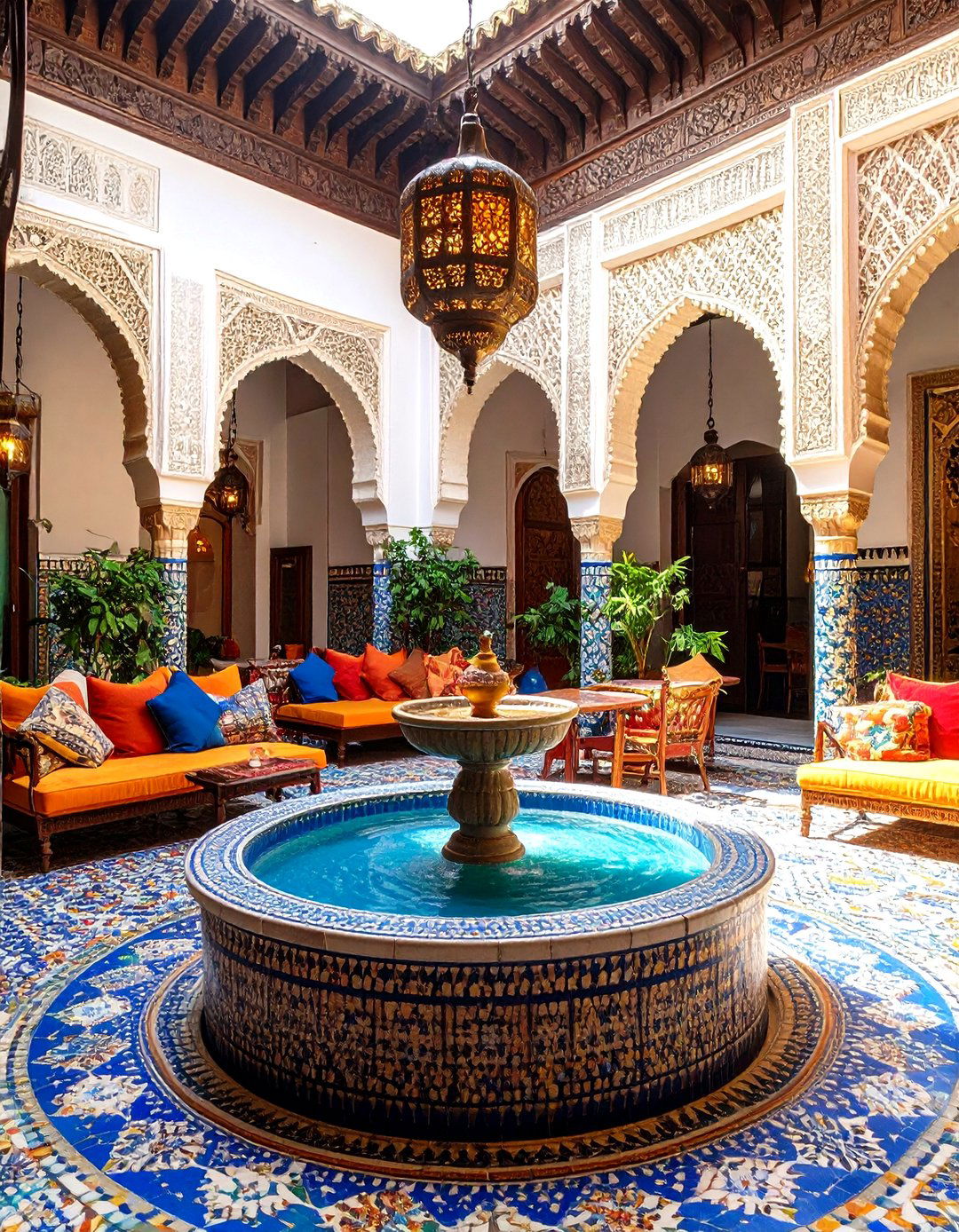
A Moroccan Riad design transports guests to an exotic and enchanting North African courtyard. This style is renowned for its intricate tilework, known as Zellige, which features complex geometric patterns in vibrant colors. Key elements include carved wood accents, ornate metal lanterns that cast intricate shadows, and plush, low-level seating with colorful cushions and textiles. An indoor water feature, like a small fountain, can add to the tranquil, courtyard-like atmosphere. The rich textures and detailed craftsmanship create a luxurious and intimate setting that is both opulent and inviting, offering a truly immersive cultural experience.
21. Monochrome Interior with Texture Variation
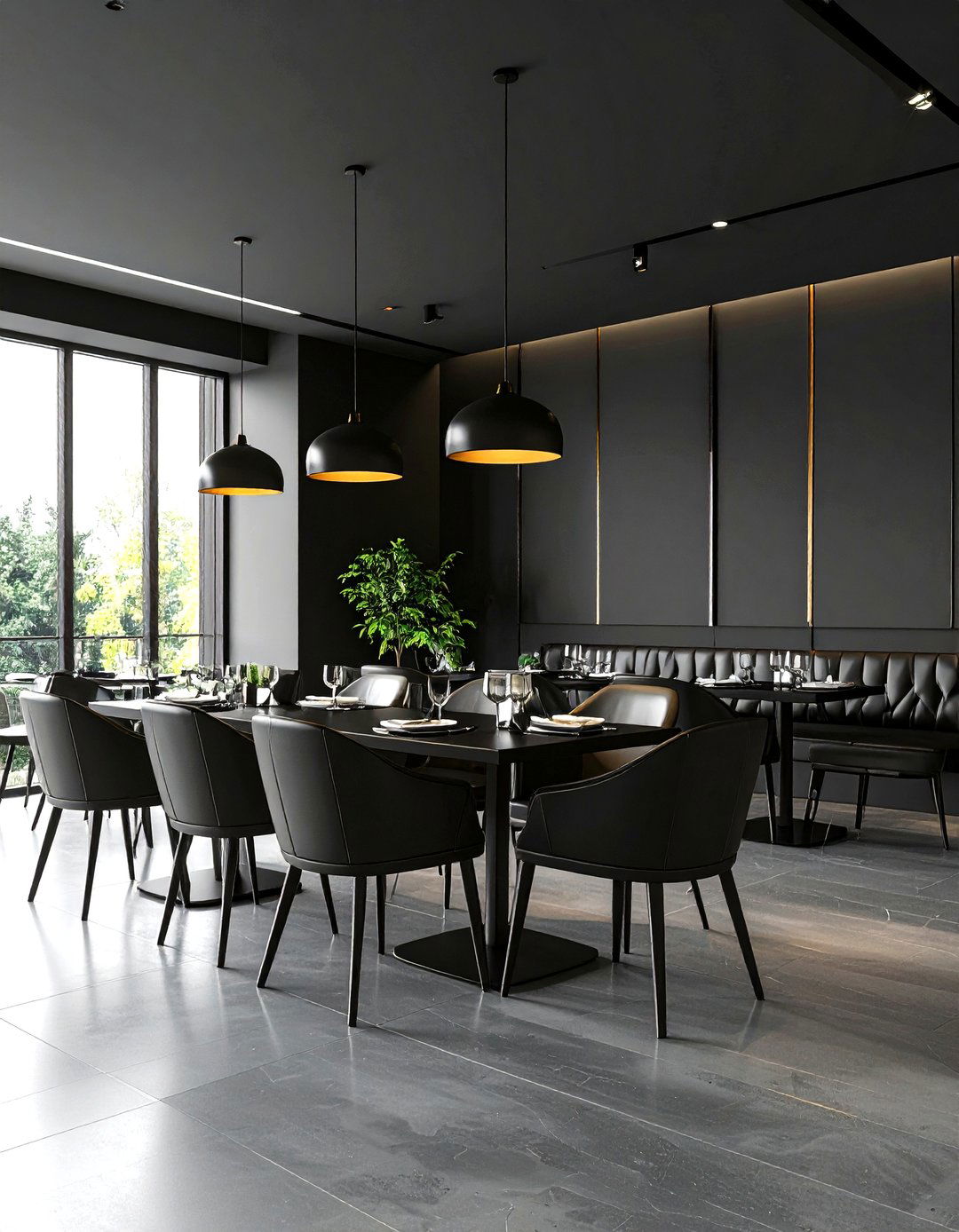
A monochrome design scheme, focusing on a single color or shades of it, creates a sophisticated and contemporary look. To prevent the space from feeling flat, this approach relies heavily on texture variation. For example, in an all-black interior, you might find matte walls, glossy tables, leather seating, and velvet curtains. This interplay of different surfaces adds depth and visual interest. Strategic lighting is essential to highlight these textures and create a dynamic, layered environment. The result is a bold, cohesive, and elegant space that feels both modern and timeless, allowing the food and guests to provide the color.
22. Library Cafe with Bookshelves and Armchairs
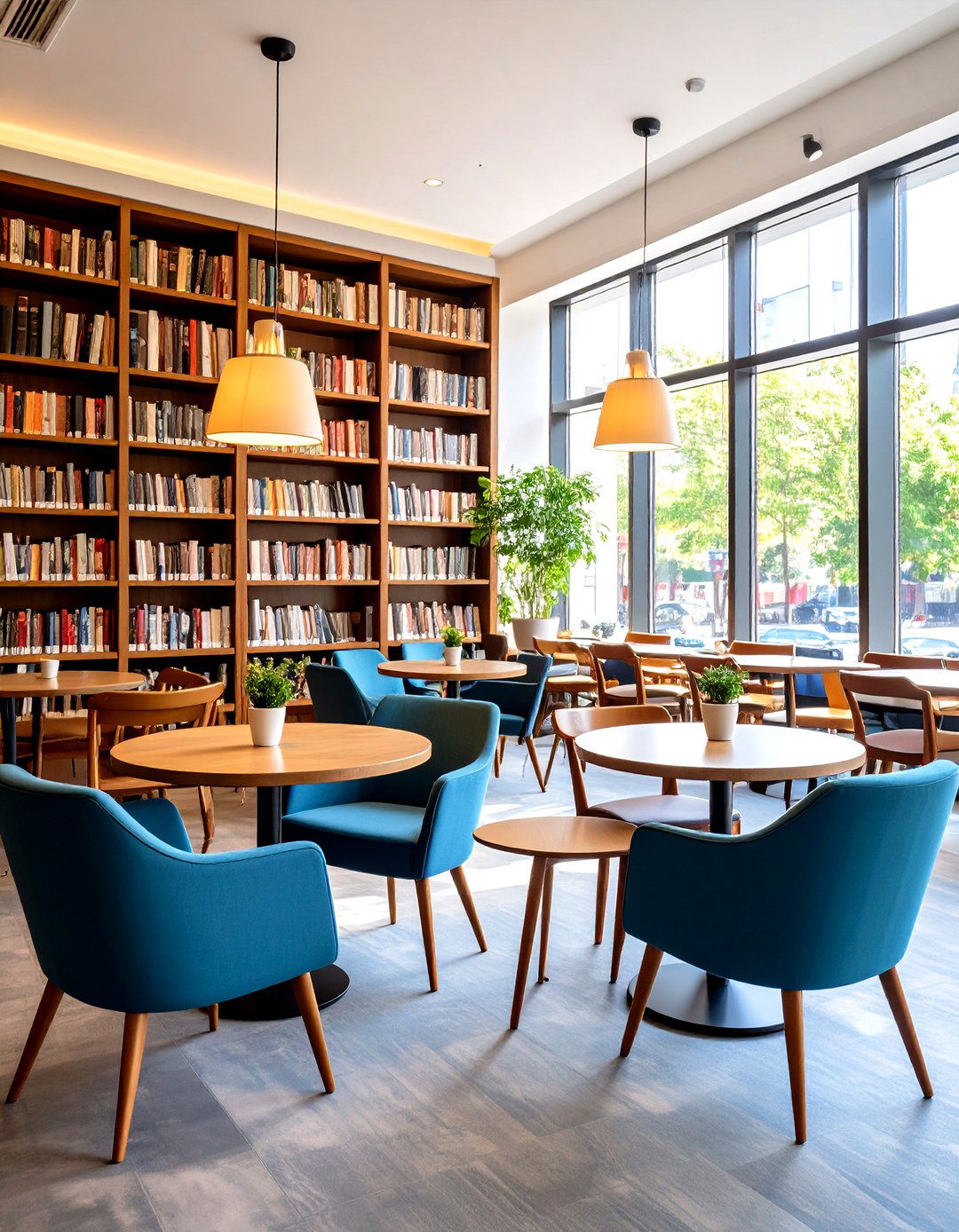
A library café design cultivates a quiet, cozy, and intellectual atmosphere, perfect for patrons looking to relax with a book and a coffee. The main feature is floor-to-ceiling bookshelves filled with a diverse collection of books. Comfortable seating is a must, with plush armchairs and small wooden tables creating intimate nooks for reading and conversation. Soft, warm lighting from classic reading lamps enhances the studious and calming vibe. The scent of old books mixed with freshly brewed coffee creates a unique sensory experience. This theme provides a welcoming retreat for those seeking a peaceful escape from the everyday hustle.
23. Aviation Theme with Aluminum and Rivets
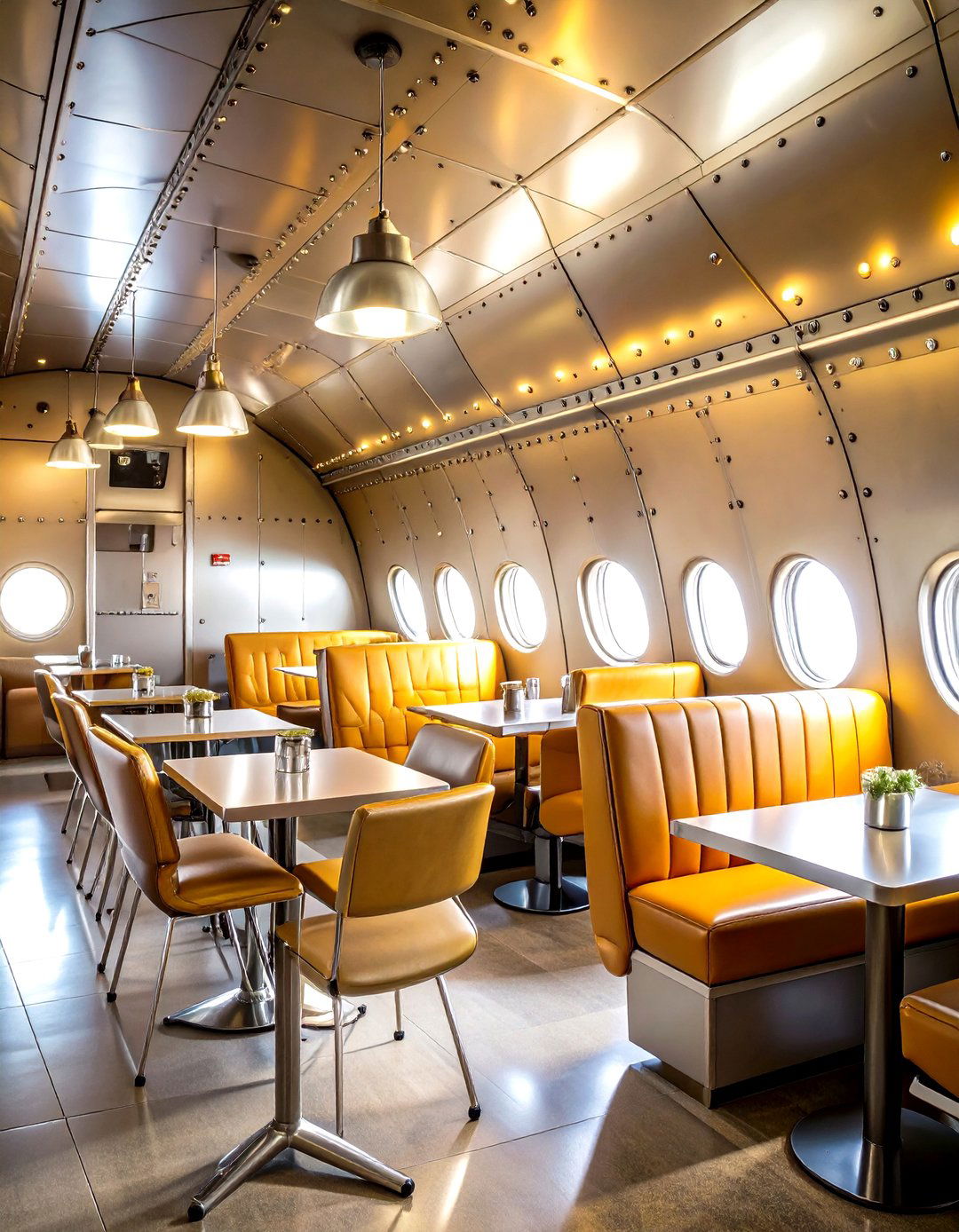
An aviation-themed restaurant captures the thrill and nostalgia of early flight. This design incorporates materials and motifs from vintage aircraft, such as polished aluminum paneling with exposed rivets on walls or bars. Furniture can be inspired by airplane seats, with curved lines and leather upholstery. Decor might include propeller art, vintage travel posters, and aeronautical charts. The color palette often features metallic silver, deep blues, and classic browns. This unique and adventurous theme creates a dynamic and conversation-starting environment, appealing to history buffs, travel enthusiasts, and anyone looking for a distinctive dining experience.
24. Sustainable Design with Reclaimed Materials
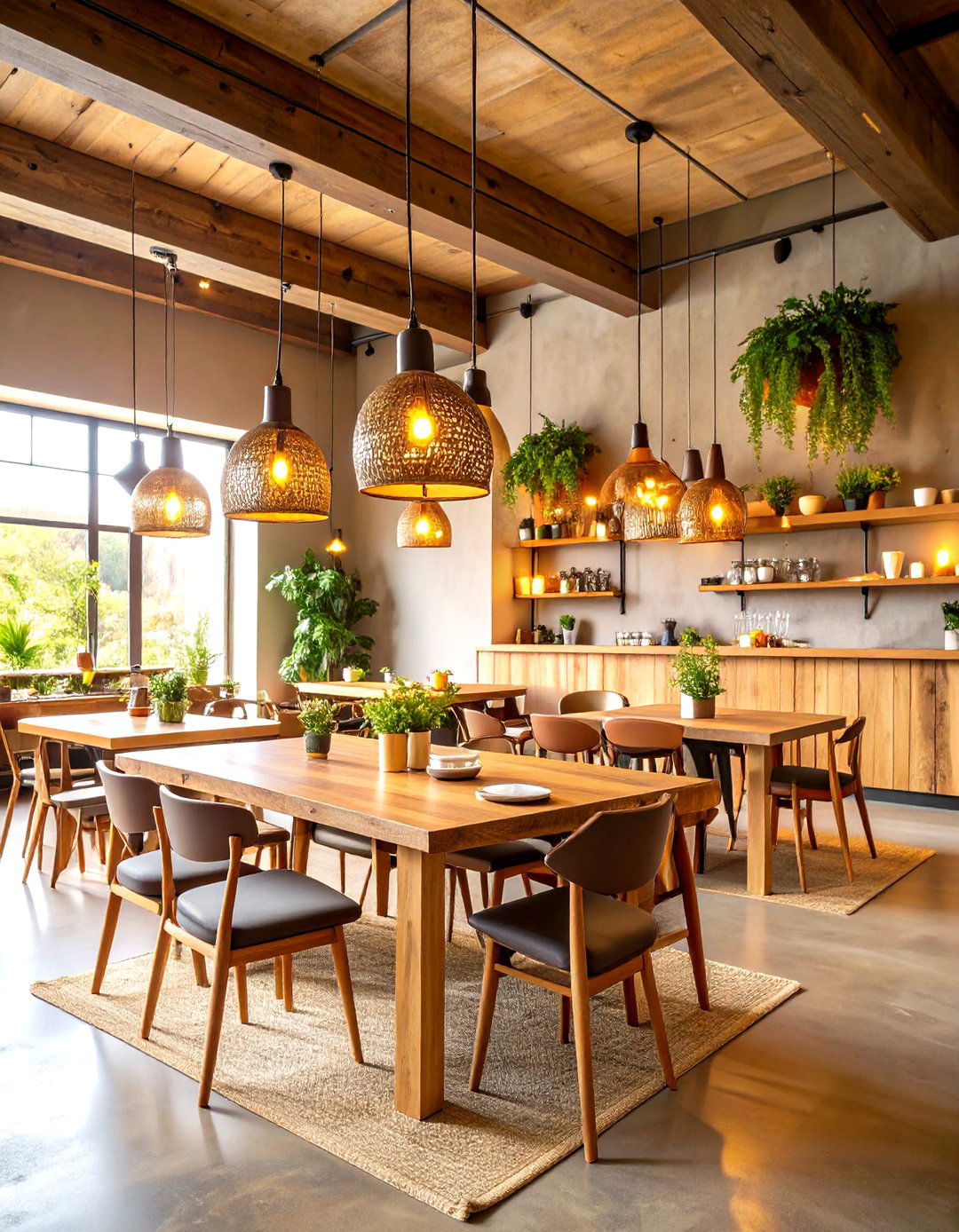
A sustainable design philosophy focuses on environmental responsibility by using reclaimed, recycled, and eco-friendly materials. This approach can feature tabletops made from salvaged wood, lighting fixtures crafted from recycled glass bottles, or walls built with reclaimed bricks. The decor emphasizes natural elements and energy-efficient solutions, such as LED lighting and live plants. This design not only reduces the restaurant's environmental footprint but also tells a compelling story about its values. It creates an authentic, earthy, and conscientious atmosphere that resonates with a growing number of environmentally-aware diners, adding a layer of meaning to their meal.
25. Hollywood Regency with Lacquered Surfaces
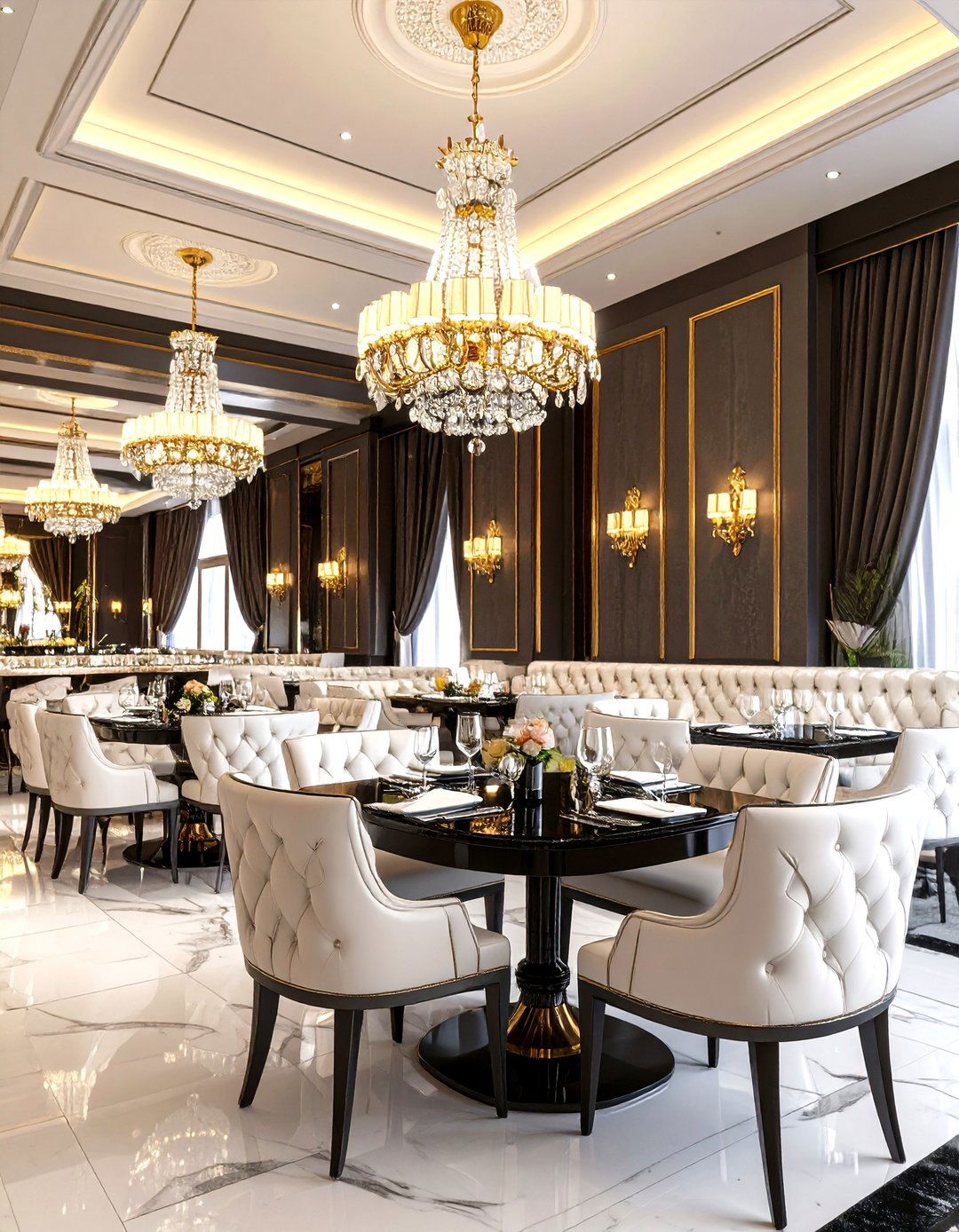
Hollywood Regency is a design style that exudes glamour, drama, and luxury. It is characterized by its bold use of color, metallic finishes, and high-gloss lacquered surfaces. The furniture is often opulent and sculptural, featuring tufted upholstery, mirrored accents, and animal prints. Crystal chandeliers and dramatic lighting fixtures add to the lavish feel. The layout is designed to be both comfortable and impressive, perfect for seeing and being seen. This style creates a sophisticated and theatrical environment, making every guest feel like a star and turning a simple dinner into a glamorous event.
26. Gothic Revival with Arches and Vaults
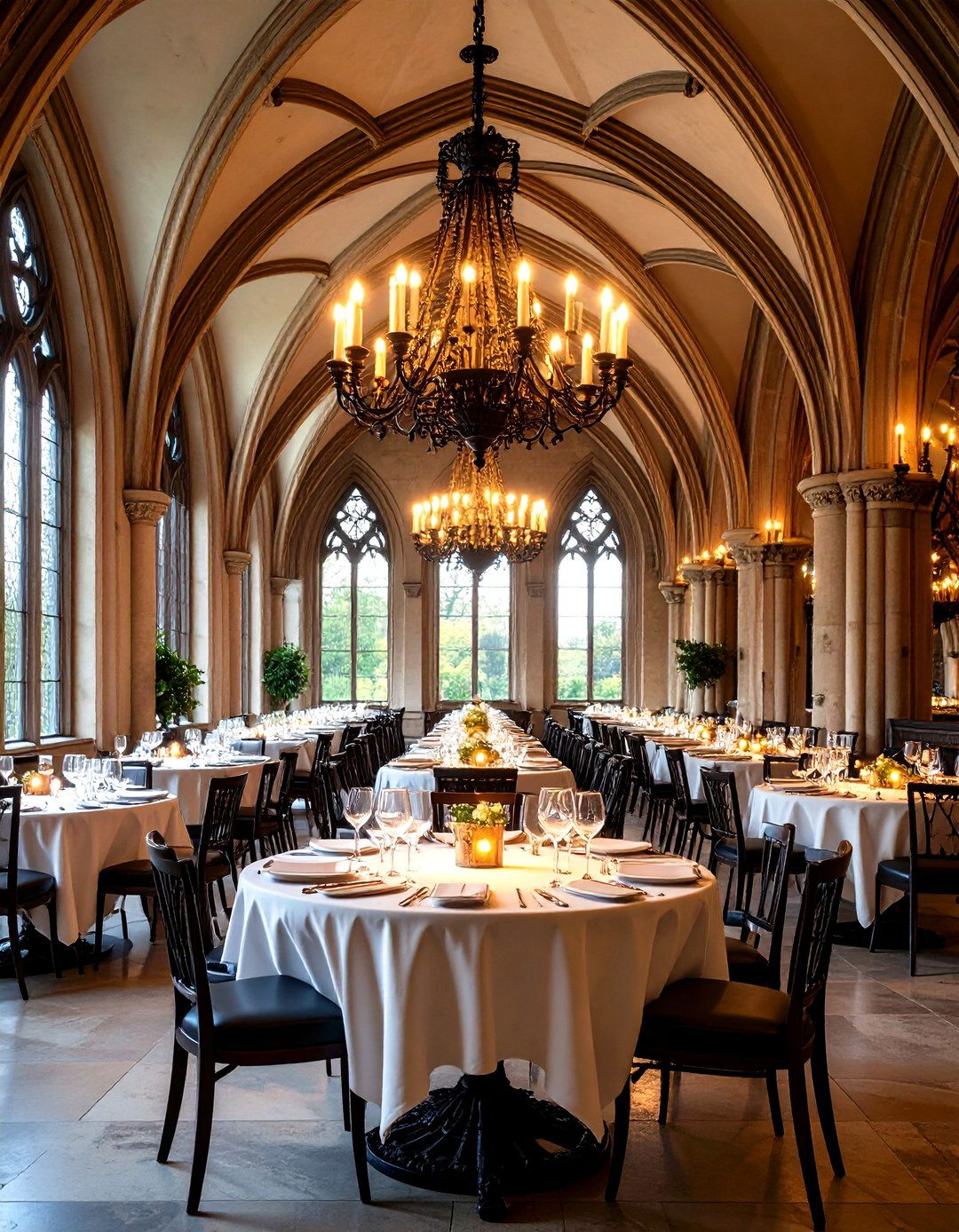
A Gothic Revival design creates a dramatic and awe-inspiring atmosphere with its soaring architectural elements. This style is defined by pointed arches, vaulted ceilings, and intricate tracery, reminiscent of medieval cathedrals. The color palette is typically dark and moody, with deep reds, purples, and blacks, complemented by stone and dark wood. Wrought iron candelabras and stained-glass windows enhance the historic and mysterious ambiance. Seating often consists of high-backed wooden chairs or pews. This powerful and evocative design offers a unique and unforgettable dining experience, transporting guests to another time and place with its grandeur.
27. Southwestern Style with Adobe and Textiles
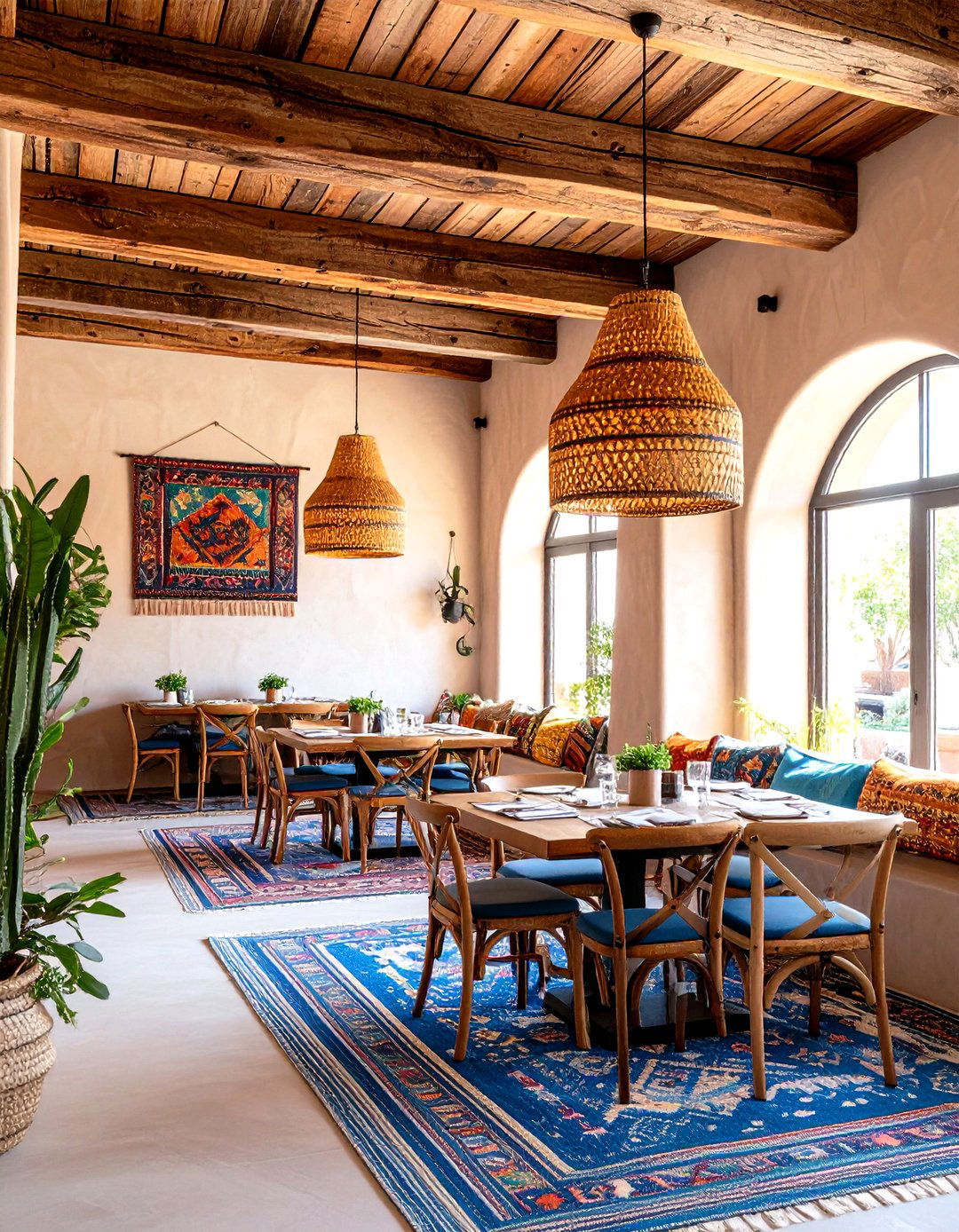
A Southwestern design captures the warm, earthy spirit of the American Southwest. This style features architectural elements inspired by adobe buildings, with curved walls and plaster finishes in warm, sun-baked colors. Exposed wooden ceiling beams, known as vigas, are a characteristic feature. The interior is decorated with vibrant, handwoven textiles in geometric patterns, such as rugs and wall hangings. Furniture is typically rustic and made of solid wood, while decor includes pottery, cacti, and art depicting desert landscapes. This creates a relaxed, inviting, and culturally rich atmosphere that feels both rustic and artistic.
28. Open Kitchen Concept for a Live Show
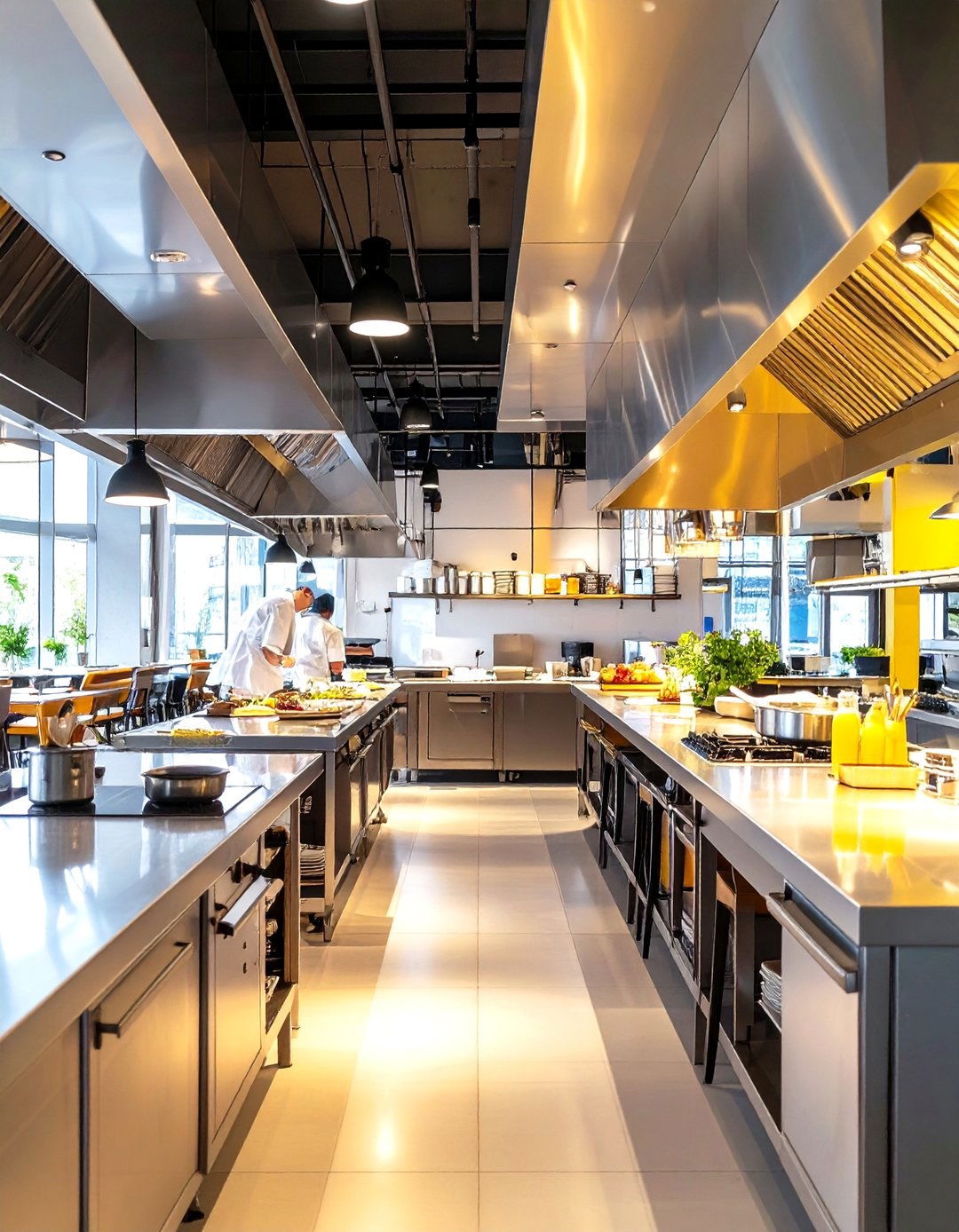
An open kitchen design turns the act of cooking into a form of entertainment, breaking down the barrier between chefs and diners. This concept makes the kitchen the focal point of the restaurant, allowing guests to watch the culinary team in action. The layout requires a seamless integration of the cooking and dining areas, often with a counter where patrons can sit and observe. Stainless steel surfaces, professional-grade equipment, and excellent ventilation are essential. This transparent approach builds trust and creates a dynamic, energetic atmosphere, offering a multisensory experience where the sights and sounds of the kitchen enhance the meal.
29. Street Art and Graffiti Interior
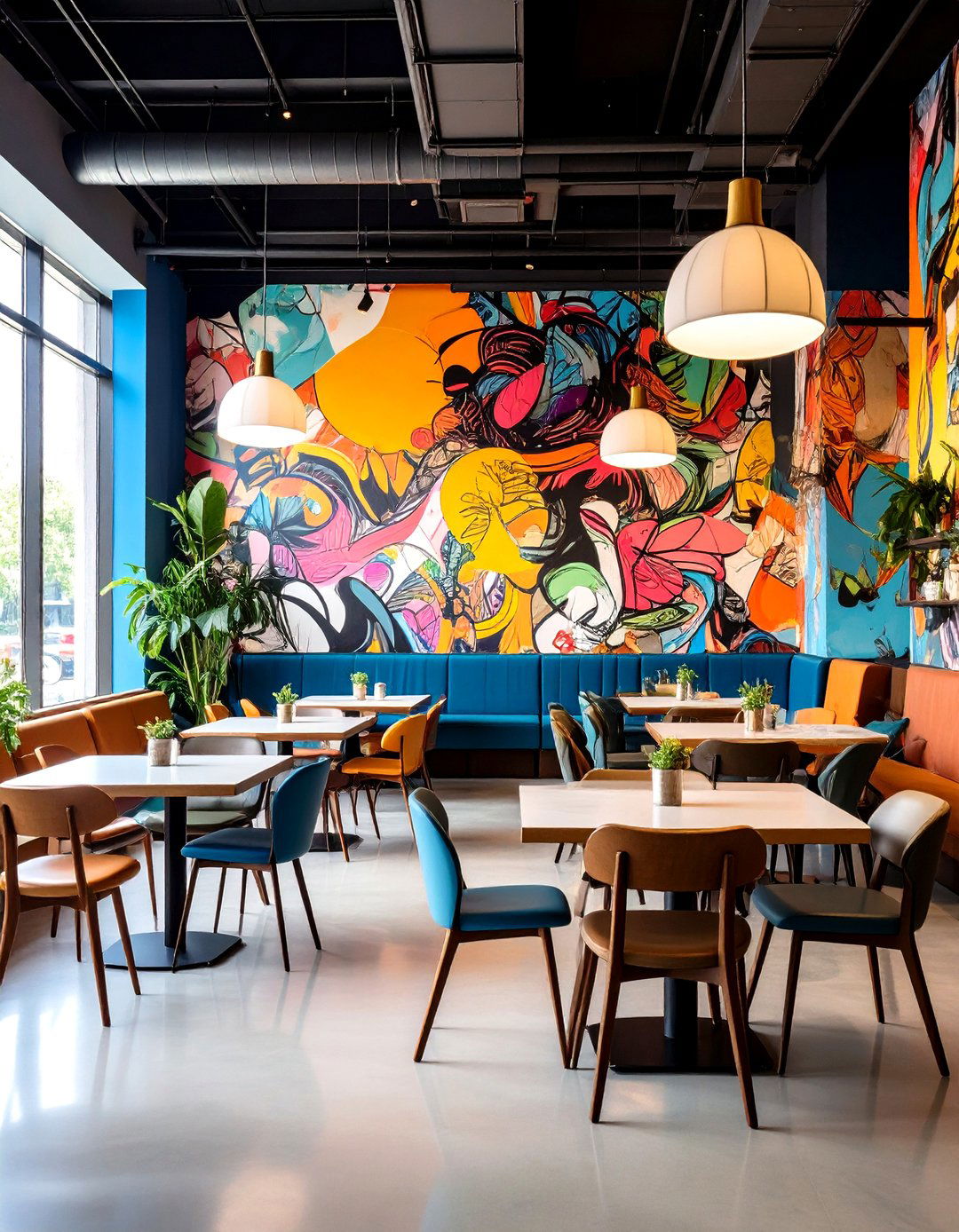
An interior decorated with street art and graffiti brings a vibrant, urban edge to the dining experience. This design embraces the raw energy of the city by commissioning local artists to create custom murals and graffiti tags directly on the walls. The style is bold, colorful, and often carries a social or cultural message. It can be paired with industrial elements like concrete floors and exposed pipes to enhance the urban feel. Furniture is typically simple and functional, allowing the artwork to take center stage. This creates a dynamic, youthful, and highly photogenic environment that celebrates contemporary urban culture.
30. Futuristic Design with LED Lighting
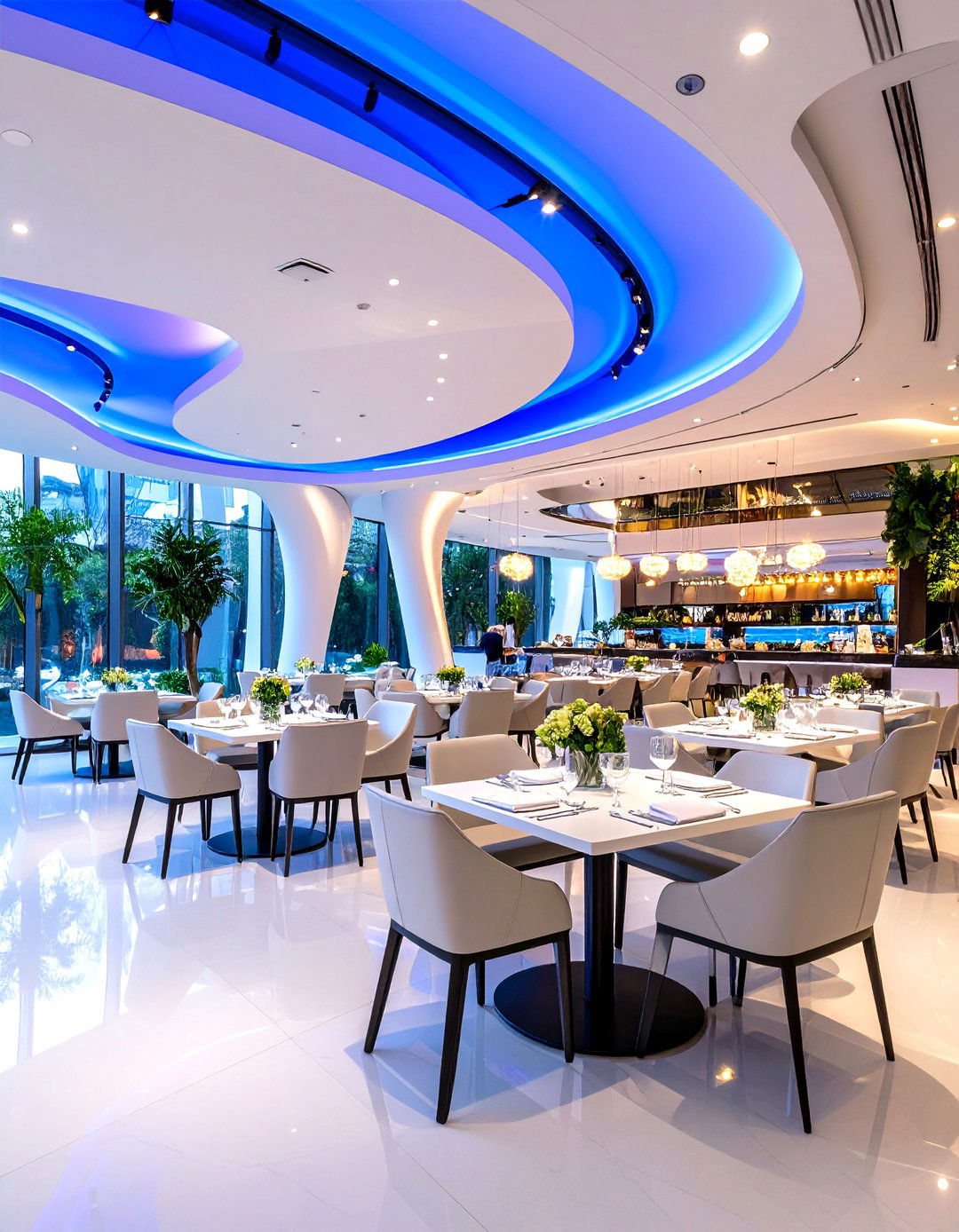
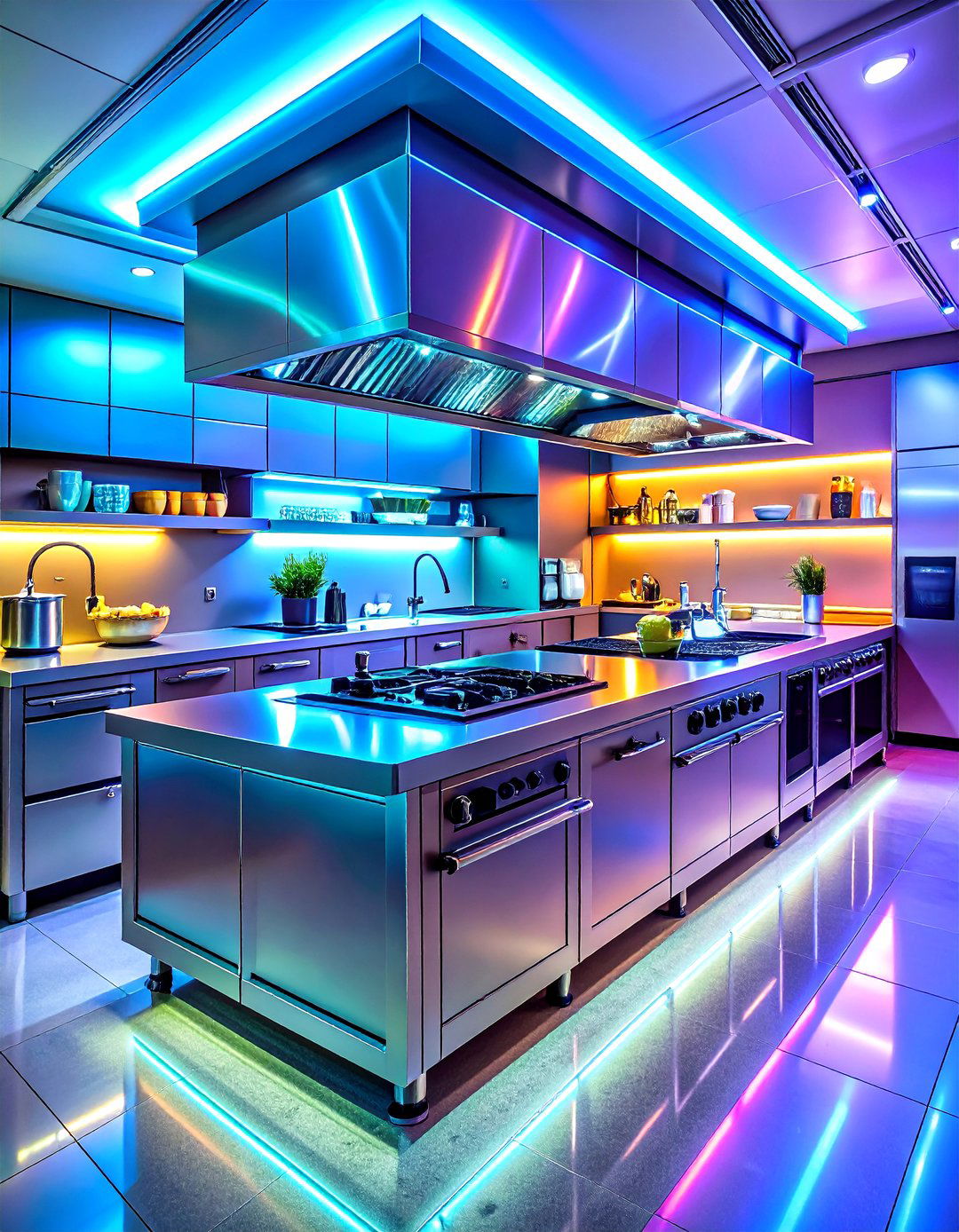
A futuristic design offers a sleek, minimalist, and technologically advanced dining environment. This style is characterized by clean lines, curved forms, and a monochromatic color palette, often in white or metallic silver. LED lighting is a key element, used to create dynamic and colorful effects on walls, ceilings, and furniture, allowing the mood of the space to change instantly. Furniture is often modular and made from modern materials like acrylic or polished chrome. Interactive surfaces, such as touch-screen menus built into tables, can further enhance the high-tech experience. This creates a cutting-edge and immersive atmosphere.
Conclusion:
Ultimately, the most successful restaurant interior designs are those that create a cohesive and immersive world for the diner. Whether the goal is rustic comfort, urban edge, or futuristic fantasy, the key lies in thoughtful execution and attention to detail. By aligning the physical environment with the culinary concept and brand identity, a restaurant can craft a truly memorable experience. This encourages guest loyalty and transforms the space from a mere place to eat into a destination in its own right, ensuring it stands out in a competitive market.

Related posts:



Leave a Reply