
A well-built gravel grid driveway combines the relaxed look of loose stone with a stronger, more controlled driving surface. These 20 Driveway Gravel Grid Installation Ideas explore complete designs for narrow lots, sloped yards, modern homes, country properties, and busy family driveways. Each look pairs a suitable gravel color with a practical layout, secure edging, drainage planning, and landscaping that suits the home. Gravel grids perform best when installed over a properly prepared, compacted base and filled with compatible angular aggregate. The finished surface can remain permeable while resisting common problems such as spreading gravel, shallow wheel tracks, and untidy edges. Use these complete designs to plan materials, borders, entrances, and planting through 20 Driveway Gravel Grid Installation Ideas.

1. Straight Gravel Grid Driveway With Brick Edging
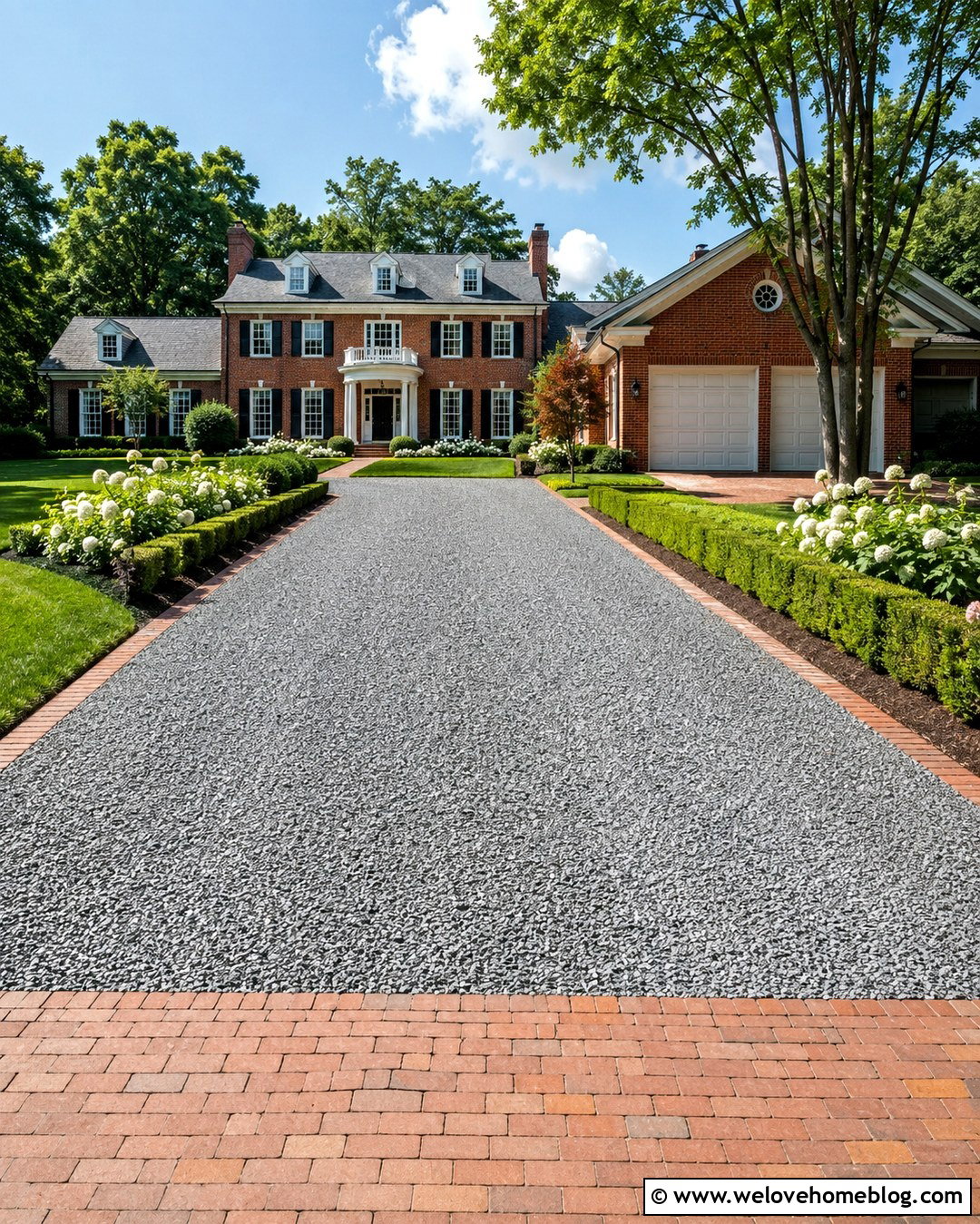
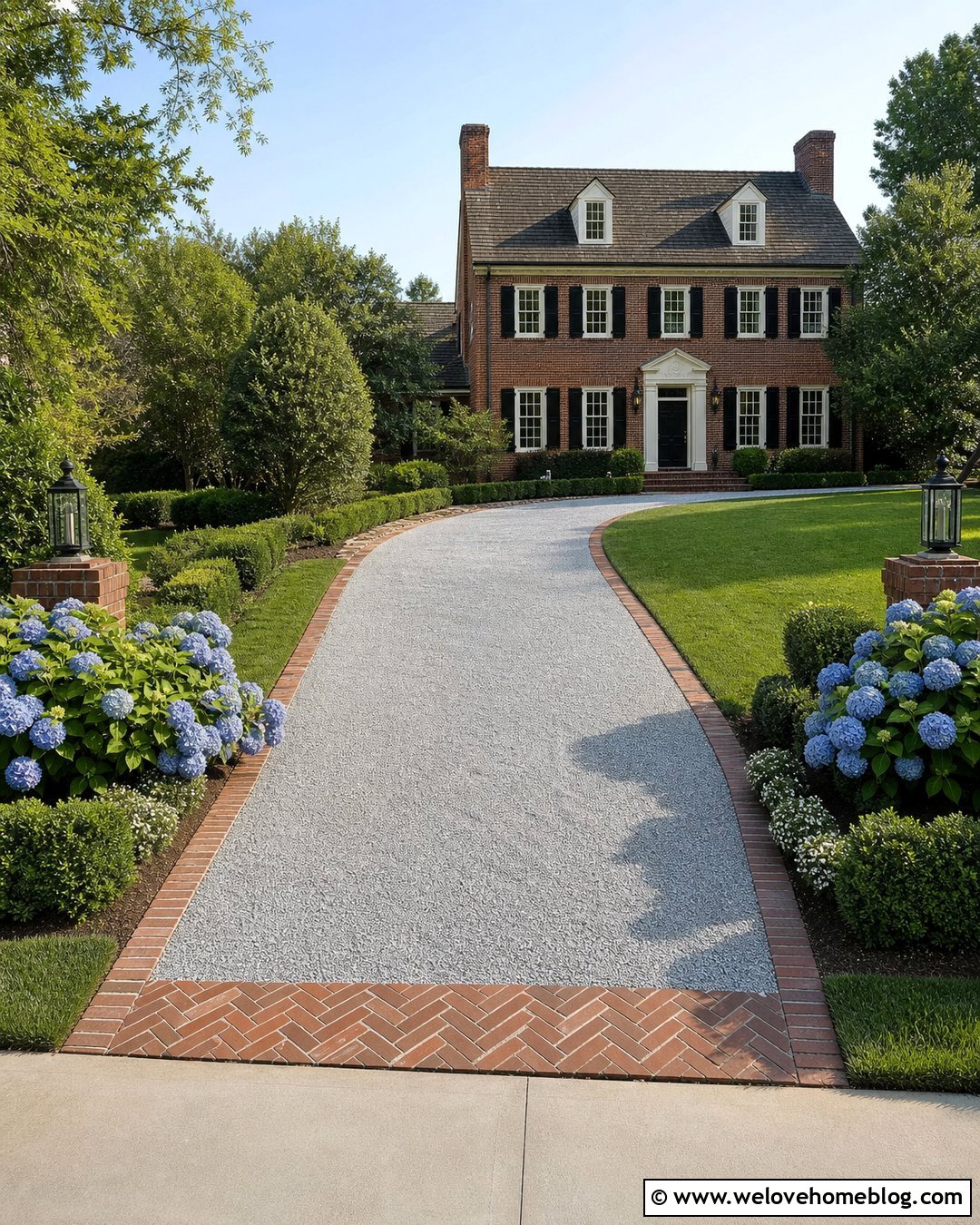
A straight layout gives a gravel grid driveway a clean, organized appearance that suits many suburban homes. Fill the grid cells with angular gray gravel, then frame the driving surface with clay brick edging. The warm brick color softens the cool stone and creates a clear transition into the lawn. Install the bricks over a firm base so they provide reliable lateral restraint instead of shifting under tire pressure. At the garage, add a brick apron that visually connects the edging on both sides. Low boxwood shrubs and simple perennial beds can frame the approach without hiding the driveway. This installation works especially well with traditional colonial, Cape Cod, and red brick houses where crisp lines support a balanced facade.
2. Curved Gravel Grid Driveway With Stone Borders
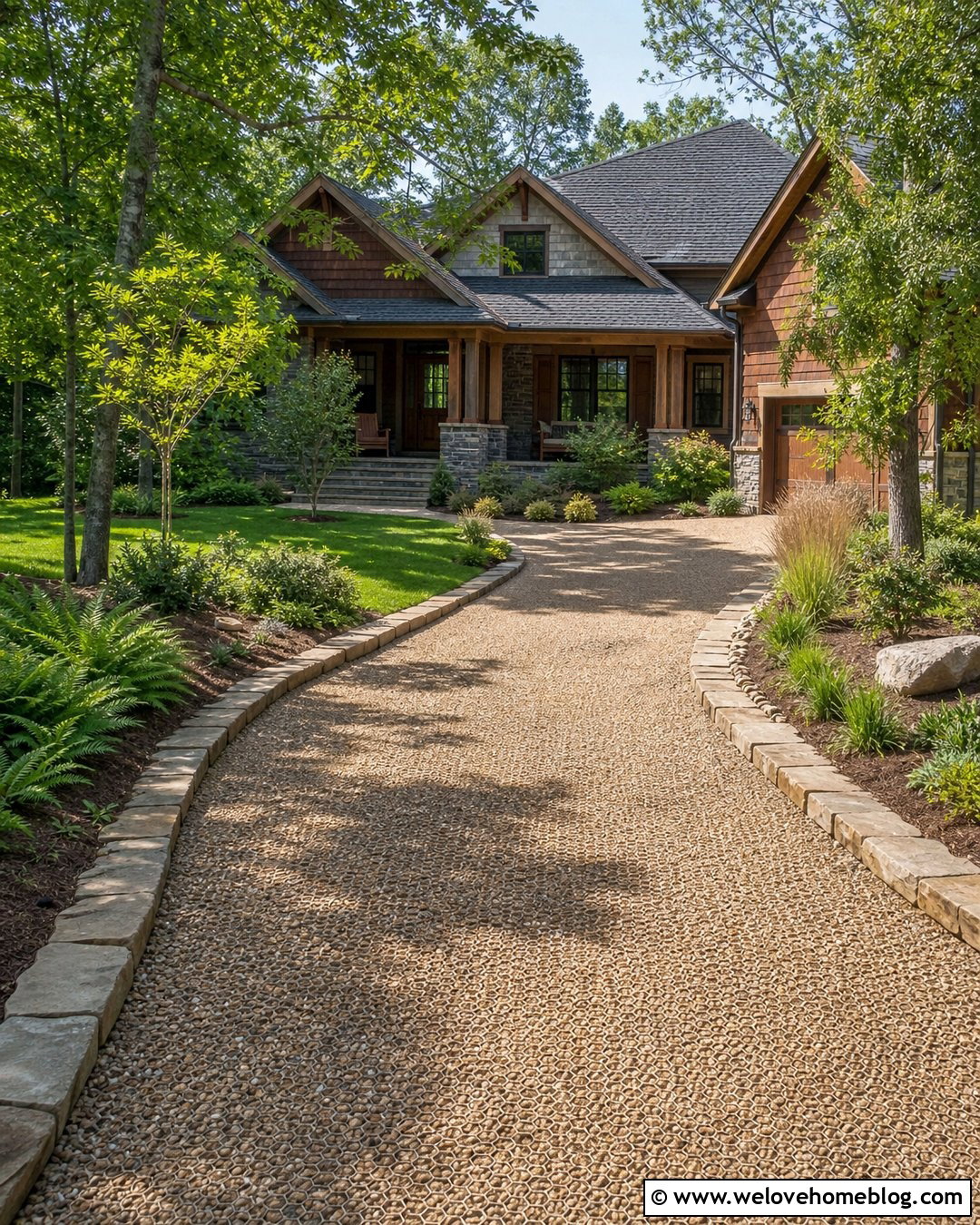
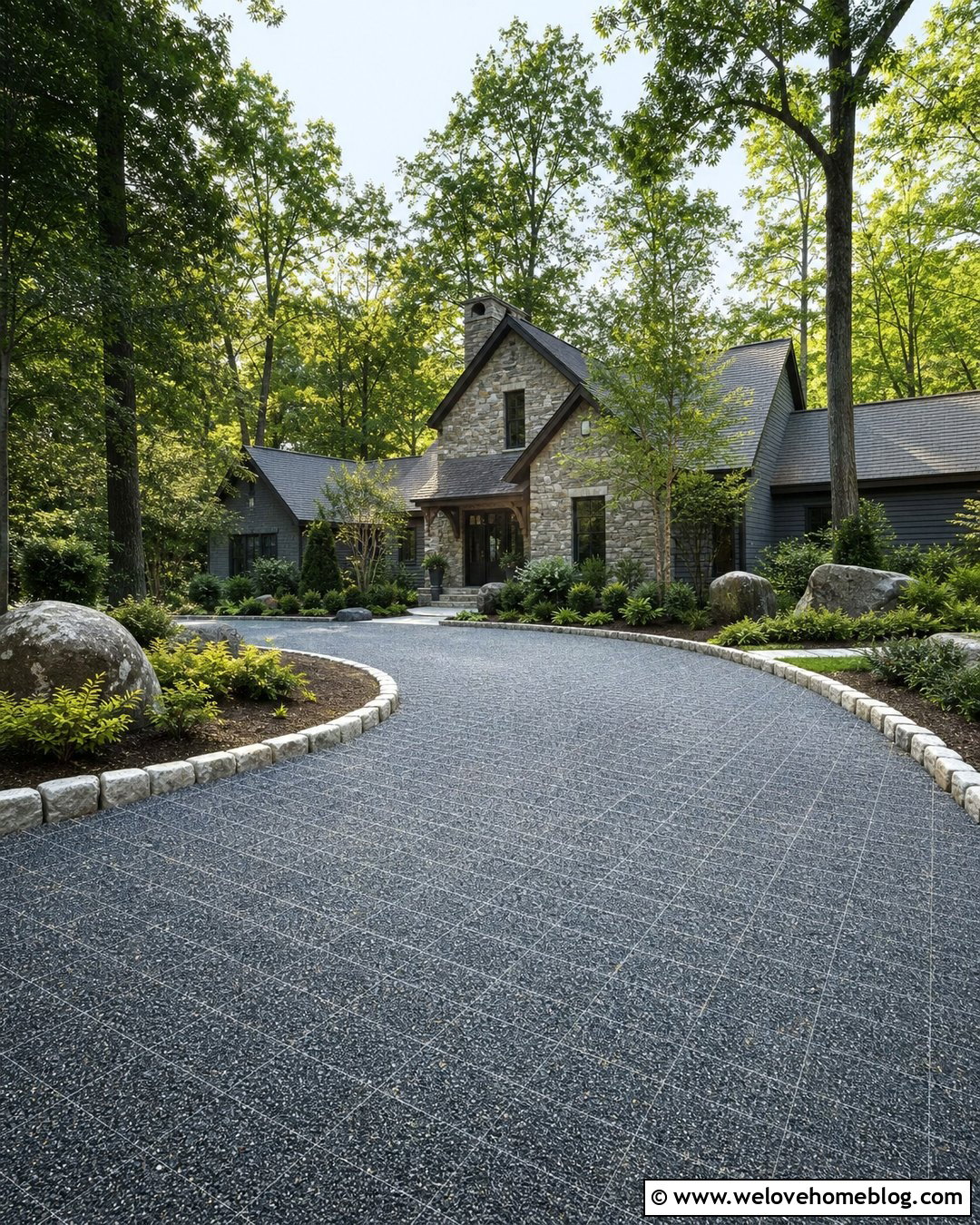
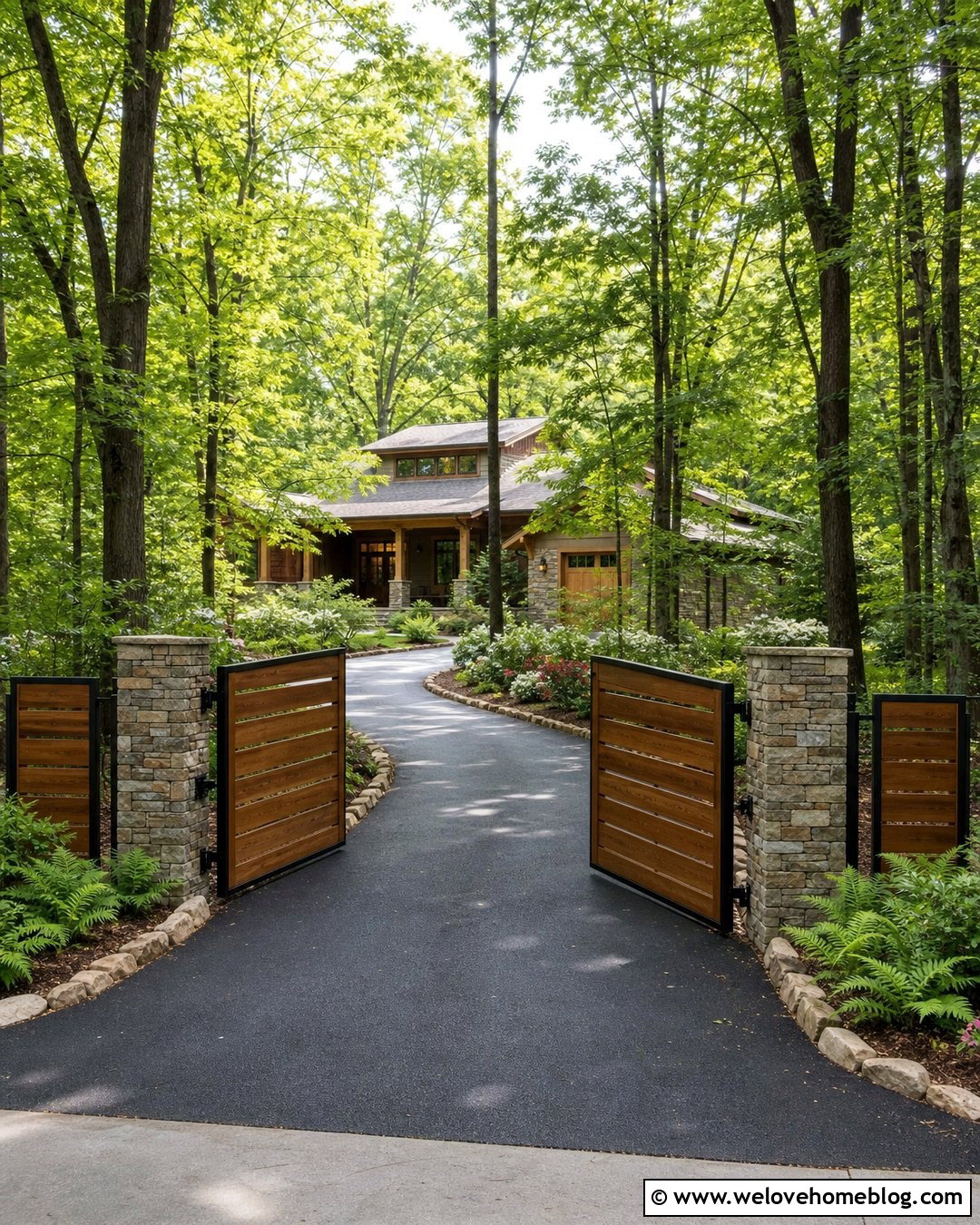
Can a practical driveway still feel natural and relaxed? A gently curved gravel grid installation creates a softer approach to a craftsman or woodland home. Use tan crushed gravel inside the grids and border the curve with large, flat fieldstones. The edging should follow the radius smoothly and remain firmly anchored so the gravel cannot spill into nearby planting beds. Cut grid panels carefully along the curve, avoiding narrow unsupported pieces at the outer edge. Ferns, ornamental grasses, native shrubs, and small understory trees can emphasize the flowing route. Keep taller plants away from sightlines near the street. The result is a stable, permeable driveway that appears to wind naturally through the landscape instead of cutting across it.
3. Sloped Gravel Grid Driveway With Concrete Curbs
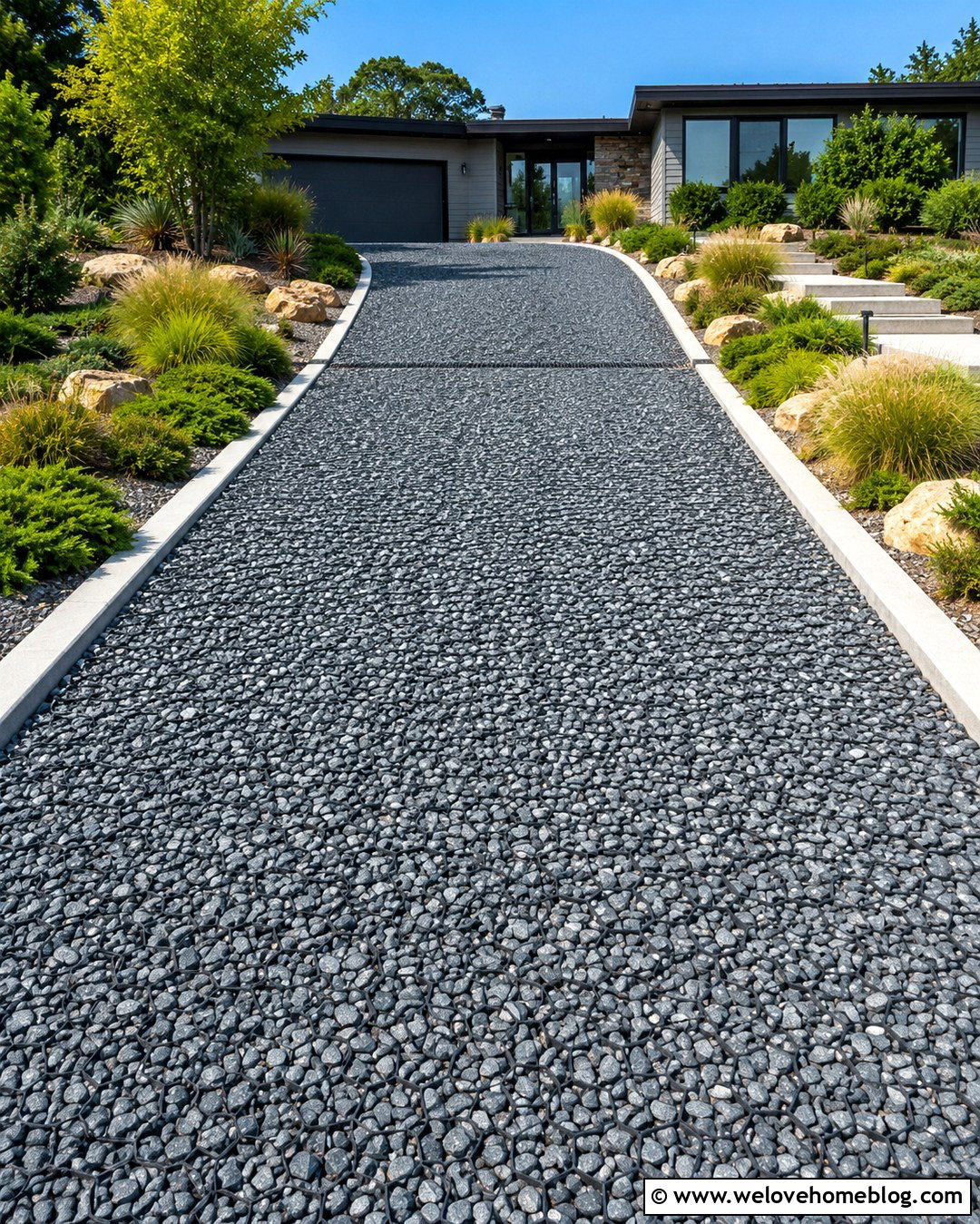
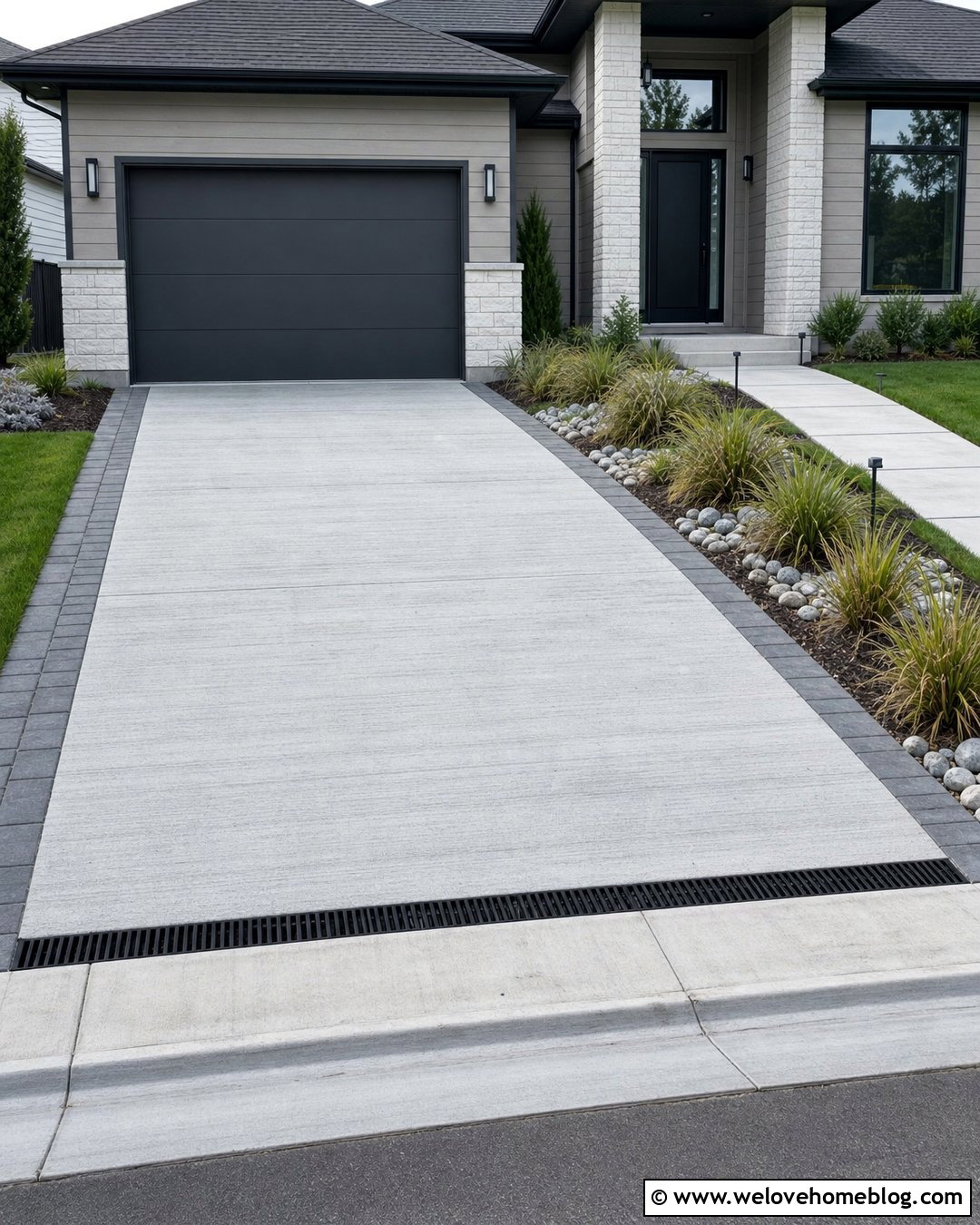
A sloped driveway needs more control than a level gravel surface. Choose a vehicle-rated grid, use angular crushed stone, and anchor the panels according to the manufacturer’s requirements. Running the cell orientation across the incline and securing the system can help hold the infill on challenging grades. () Poured concrete curbs along both sides provide strong edge restraint and create channels for planned drainage. Use medium-gray gravel to make the surface look coordinated rather than overly rustic. A trench drain near the garage can intercept water before it reaches the building. Drought-tolerant grasses, creeping juniper, and stone mulch will complement the slope without needing frequent maintenance. Always confirm that the selected grid is approved for the site’s exact gradient and vehicle loads.
4. Circular Gravel Grid Driveway With Center Landscaping
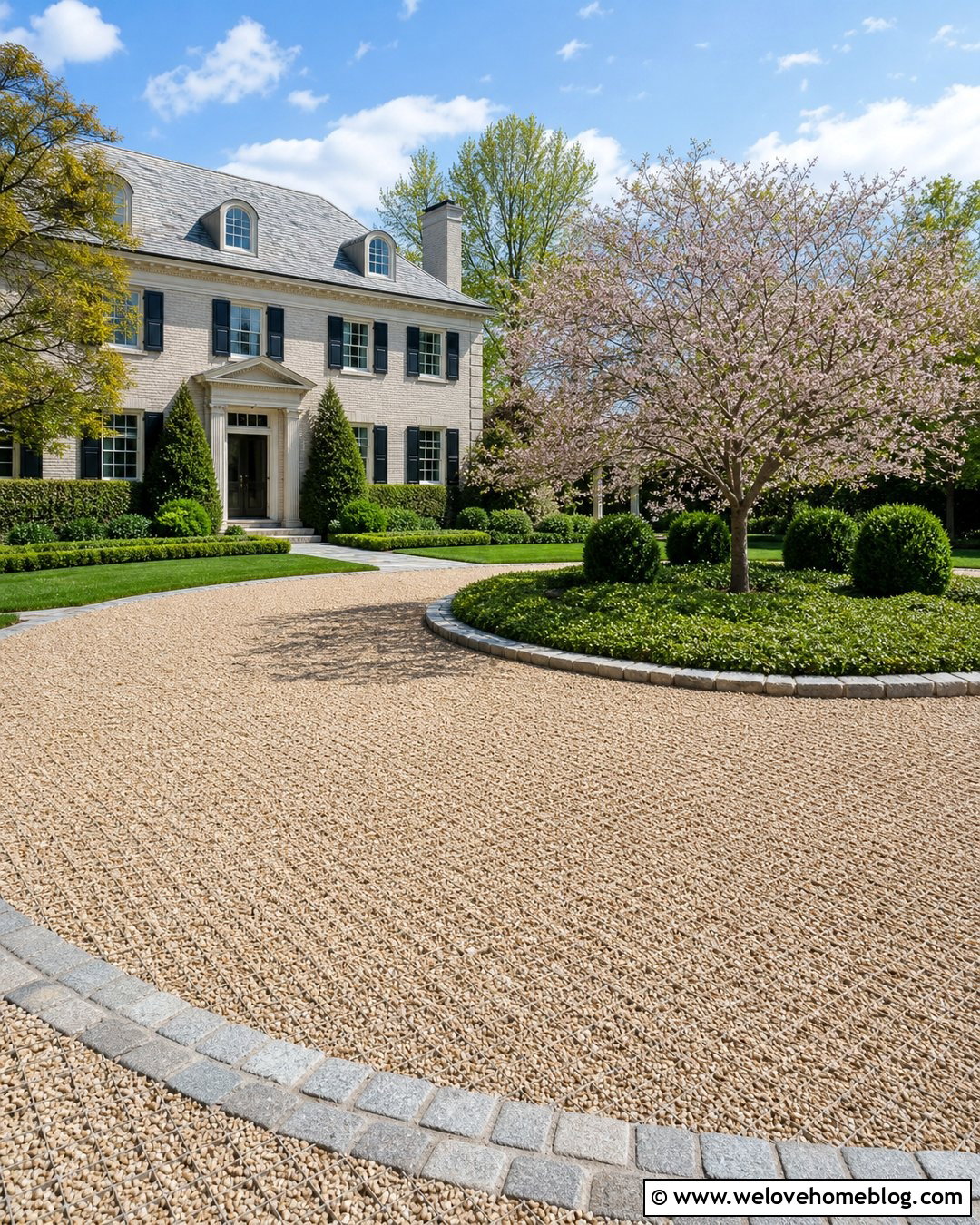
A circular gravel grid driveway creates an inviting arrival area while allowing vehicles to move without reversing. Warm beige crushed gravel pairs beautifully with a landscaped center island edged in cobblestone. Build the grid system continuously around the circle, trimming panels neatly at both the inner and outer curves. The center can hold a small ornamental tree, layered evergreen shrubs, and low ground covers that preserve visibility. Use matching cobblestone at the street entrance to strengthen the traditional appearance. A stable compacted base is especially important around turning areas because tires place sideways pressure on the surface. This complete design works well with colonial, Georgian, and large country homes, giving the front yard a polished layout without losing the softer character of gravel.
5. Modern Gravel Grid Driveway With Steel Edging
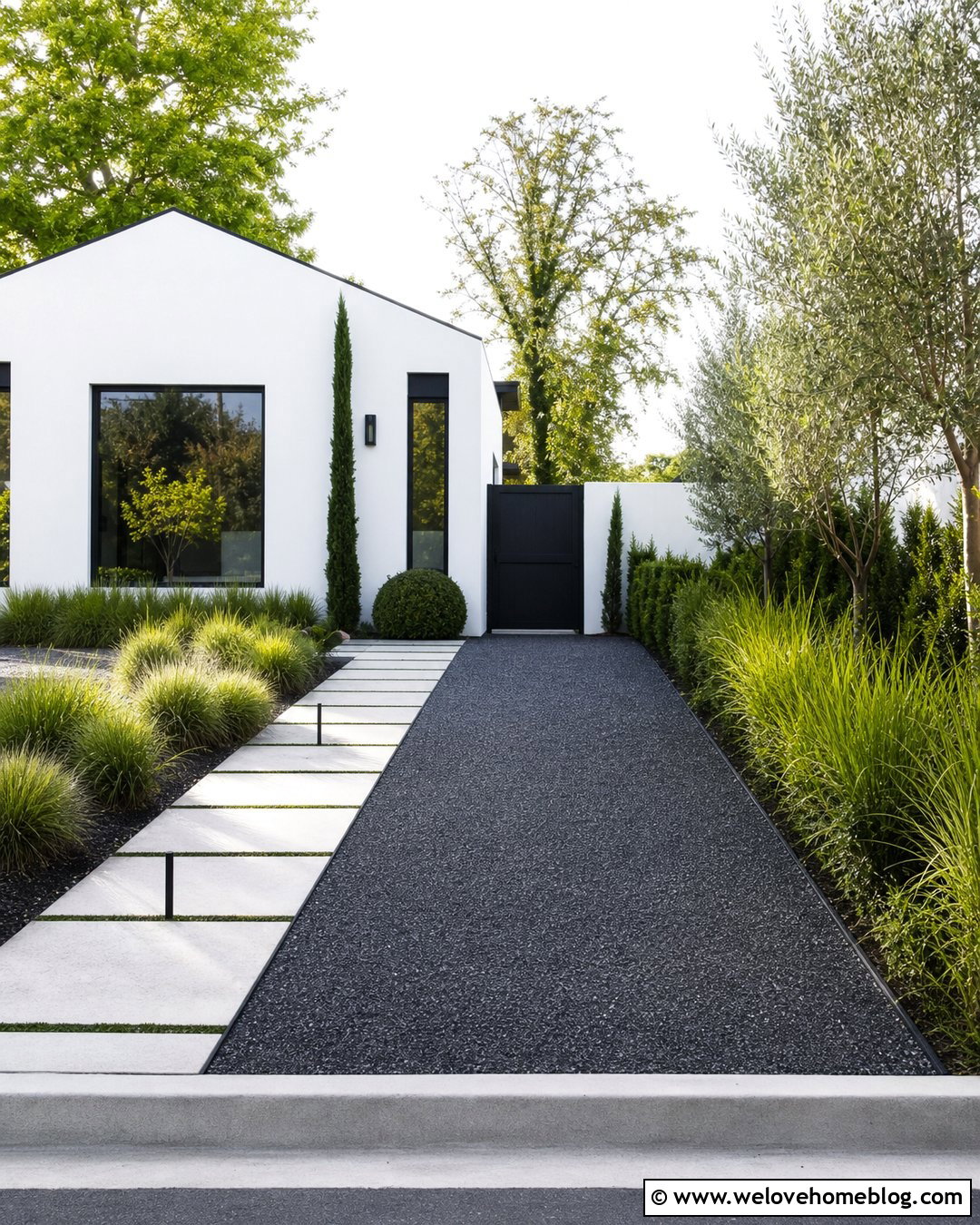
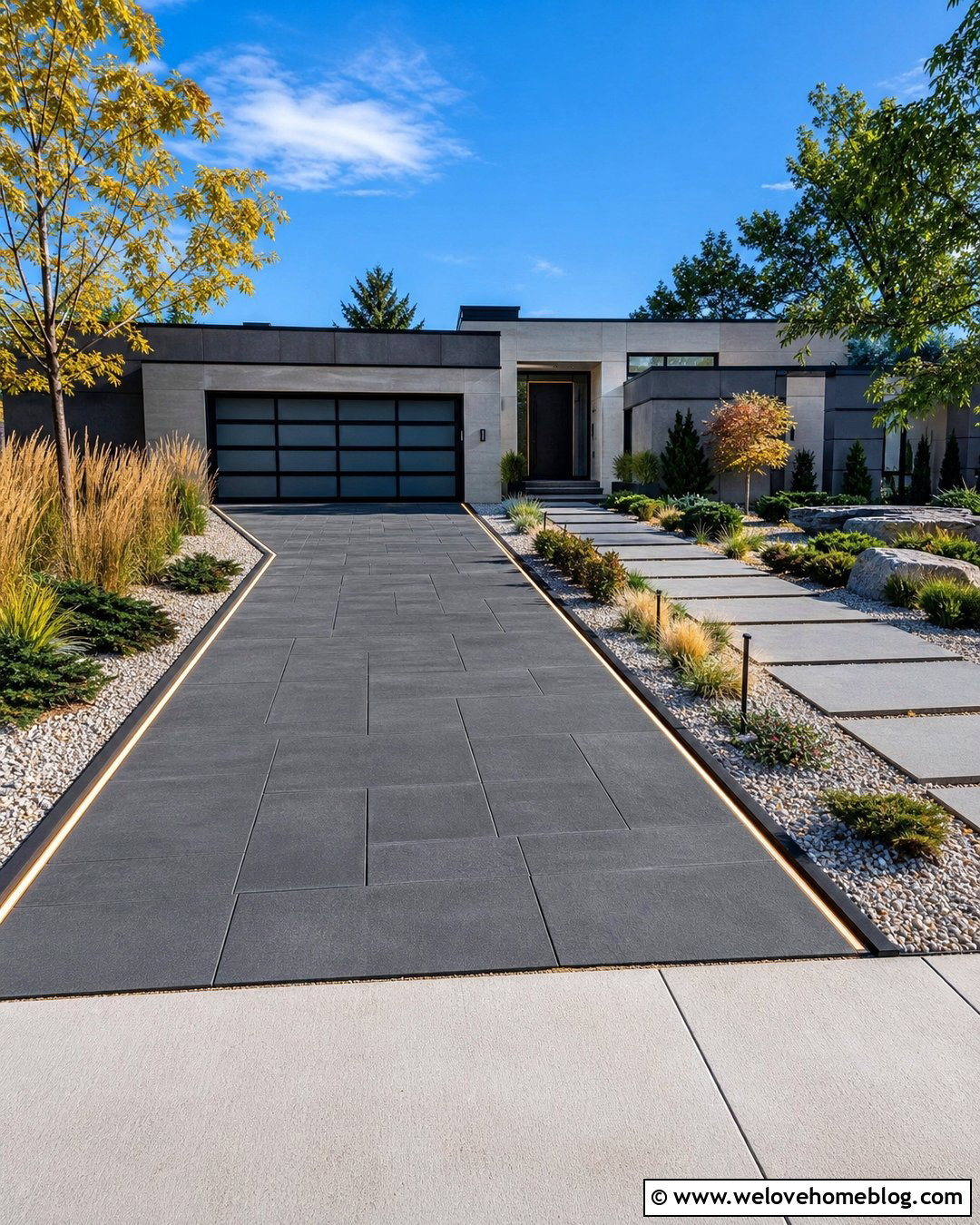
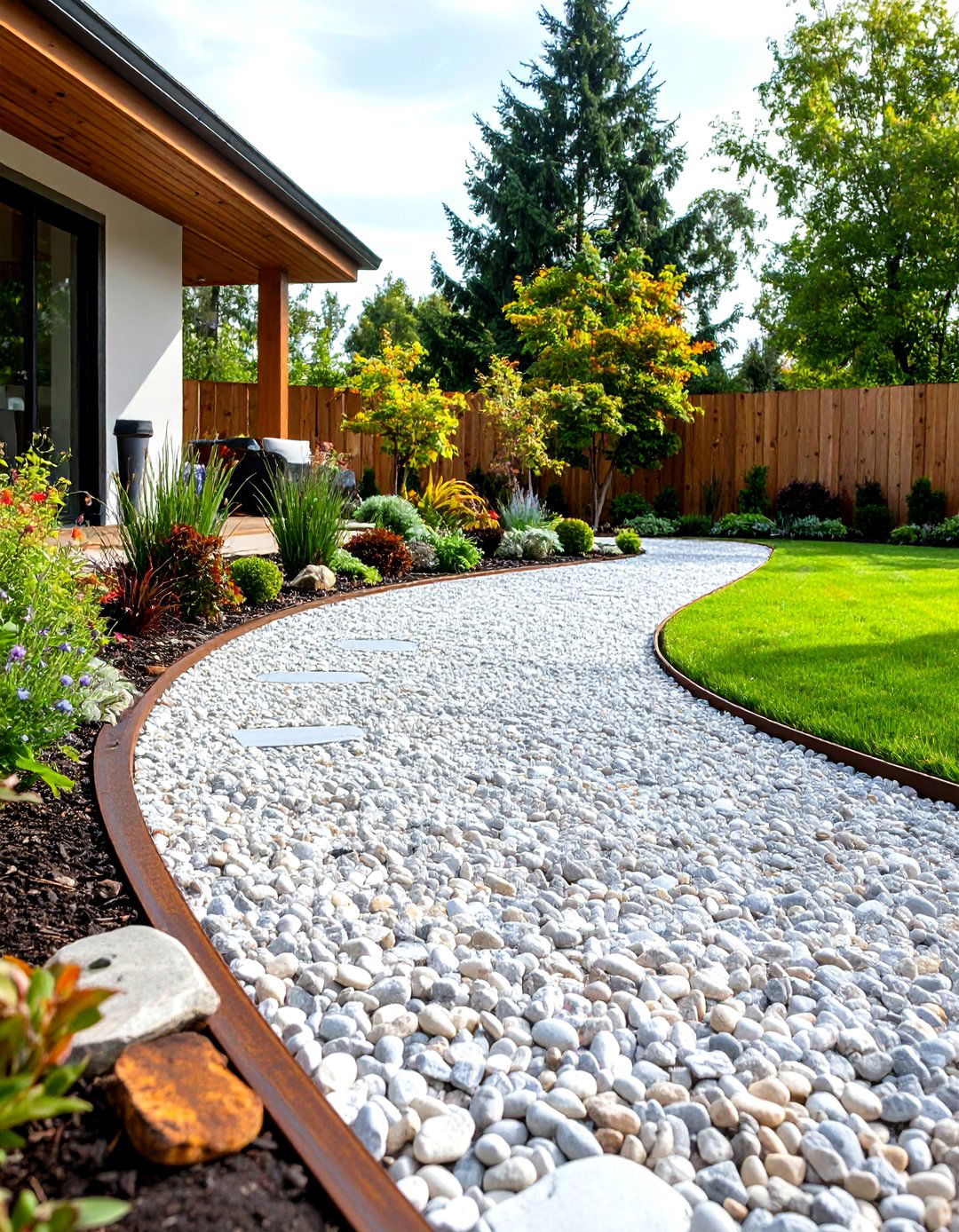
Sharp lines and restrained colors make a gravel grid driveway feel distinctly modern. Fill black or dark-gray stabilization grids with charcoal crushed granite, then contain the surface with flush steel edging. The nearly hidden grid supports the stone while the slim metal border creates a precise transition into lawn and planting beds. Keep the driveway straight or use a simple offset layout leading to the garage. Large concrete walkway slabs can cross one edge without interrupting the driving surface. Complete the look with clipped grasses, compact evergreen shrubs, and a few sculptural trees. A white stucco, dark siding, or mixed-material modern house provides an ideal background. Select corrosion-resistant edging suited to local conditions and secure it deeply enough to withstand repeated vehicle movement.
6. Farmhouse Gravel Grid Driveway With Timber Edging
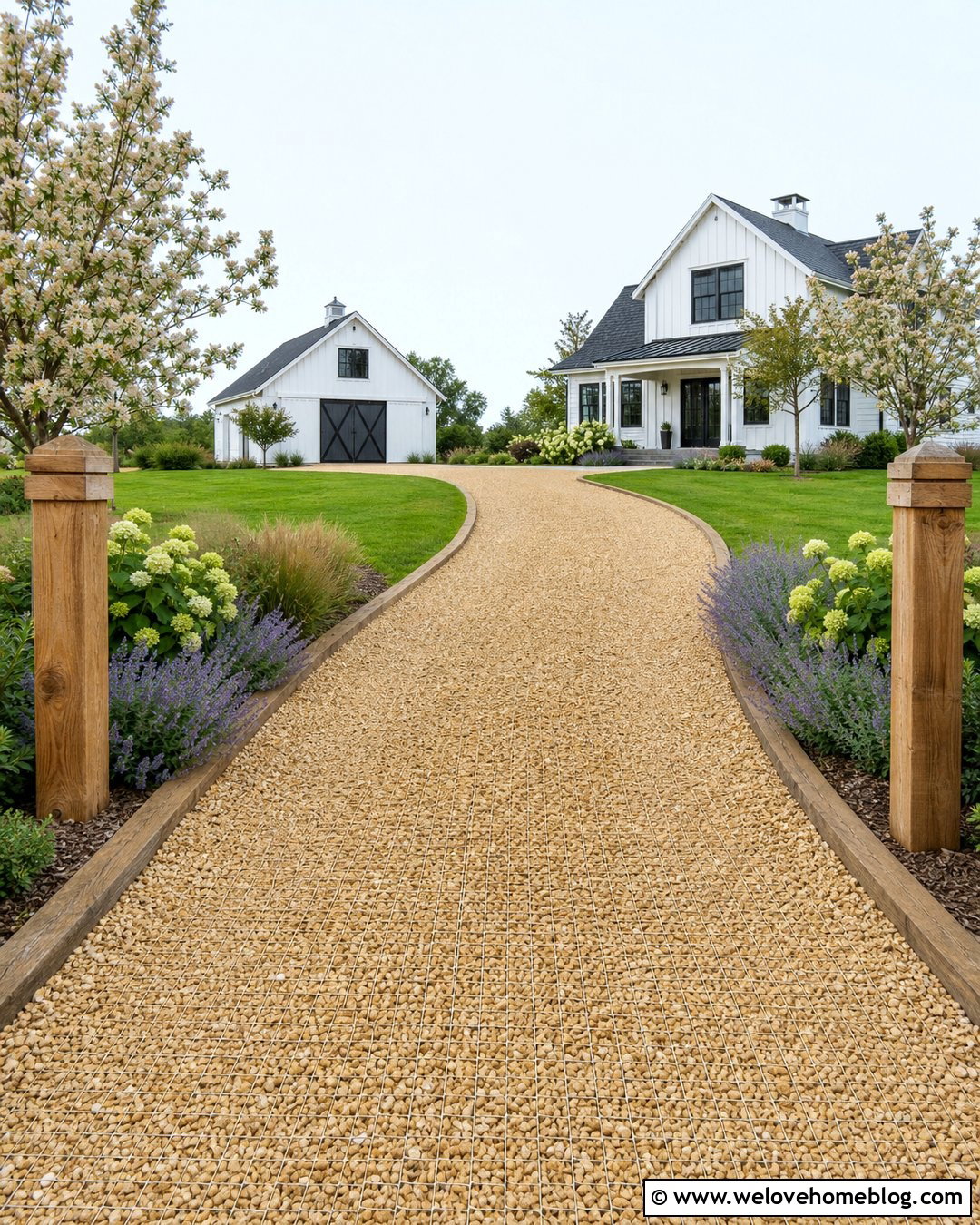
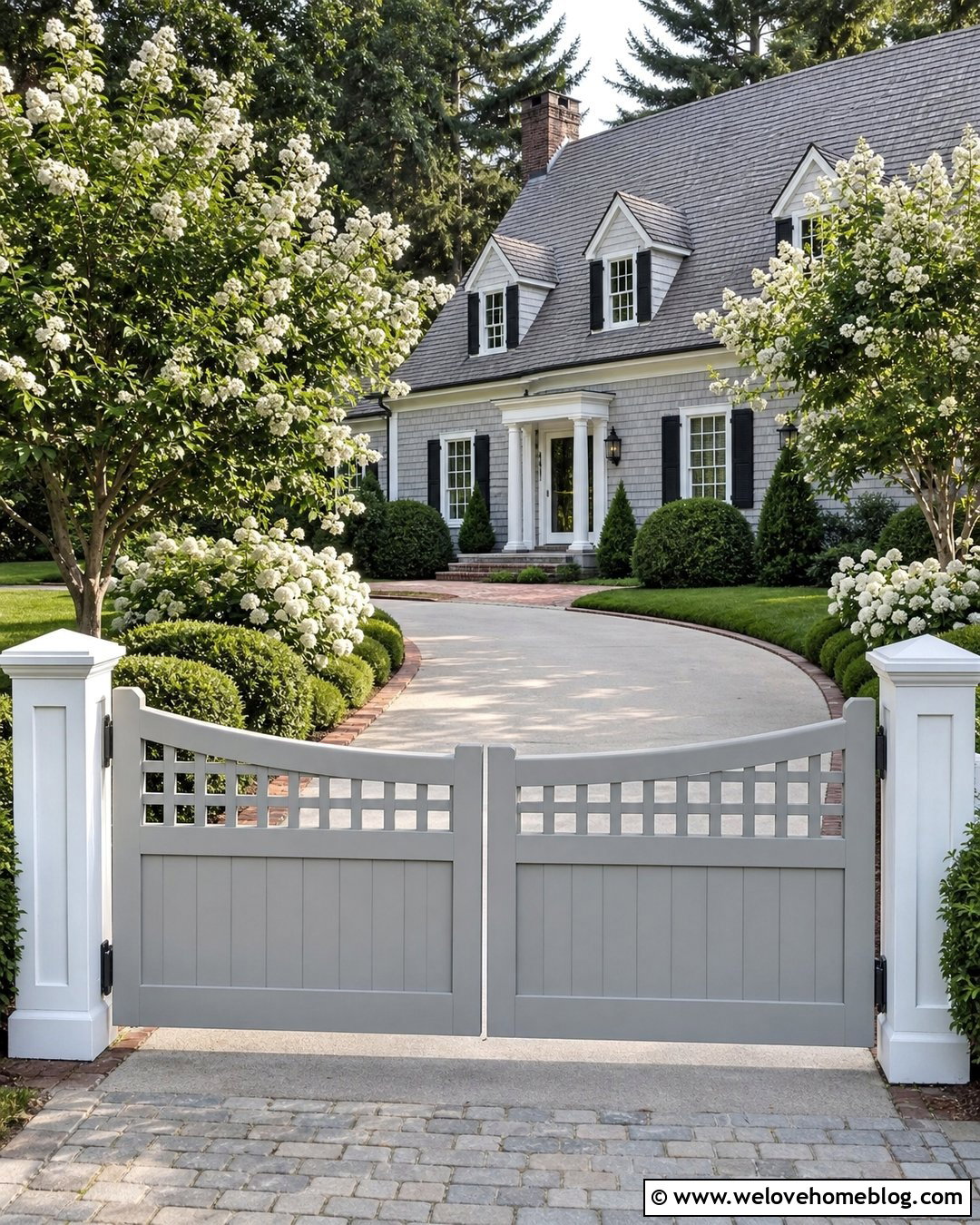
Crunchy golden gravel, natural timber, and open planting create an approachable farmhouse entrance. Install beige or honey-toned angular gravel in load-rated grids along a wide, gently curved driveway. Pressure-treated landscape timbers can form the border when they are properly anchored and separated from vulnerable siding or structures. Add a wider gravel parking pad near the garage or barn so everyday vehicles have room to turn. At the entrance, simple timber posts and a wooden farm gate can repeat the border material. Lavender, hydrangeas, ornamental grasses, and small flowering trees soften the long route. Ensure the timber edges remain high enough to contain the gravel but low enough to avoid becoming a tire hazard. This design feels rural while maintaining a stable, carefully defined surface.
7. White Gravel Grid Driveway With Black Paver Border
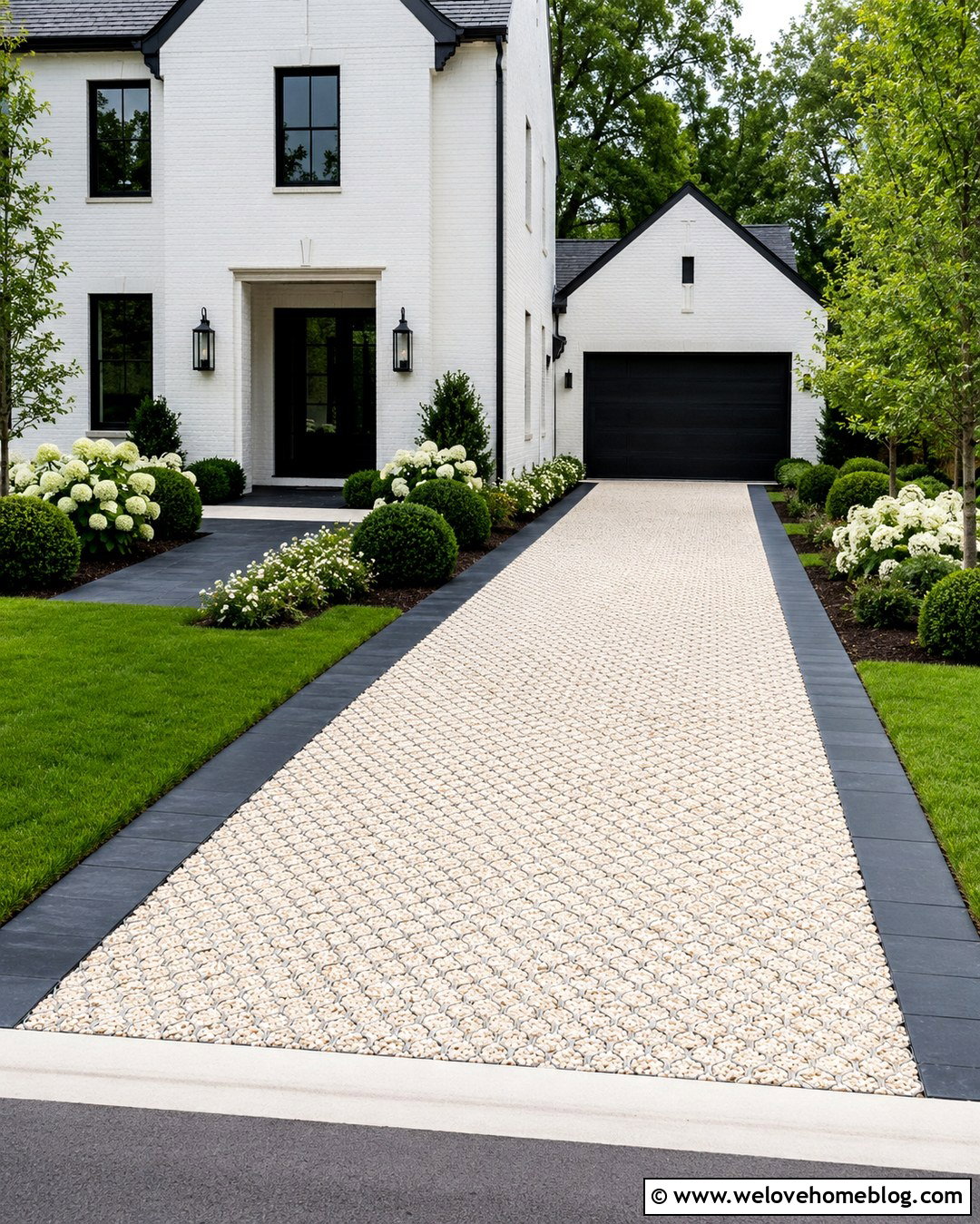
High contrast can turn a simple driveway into a strong architectural feature. Fill the grids with off-white angular limestone or pale marble gravel and surround the surface with a black concrete paver border. The dark ribbon clearly defines a straight or rectangular driveway and prevents the light gravel from blending into adjacent beds. Because very pale stone can show dirt, choose a locally suitable aggregate that is durable under vehicle traffic and easy to replenish. Repeat the black pavers in the front walkway or entry steps for visual continuity. Green lawn, rounded shrubs, and white flowering plants keep the palette fresh. This complete installation is especially effective beside a white brick, light stucco, or contemporary farmhouse facade with black windows and roof details.
8. Gravel Grid Driveway With Cobblestone Entrance Apron
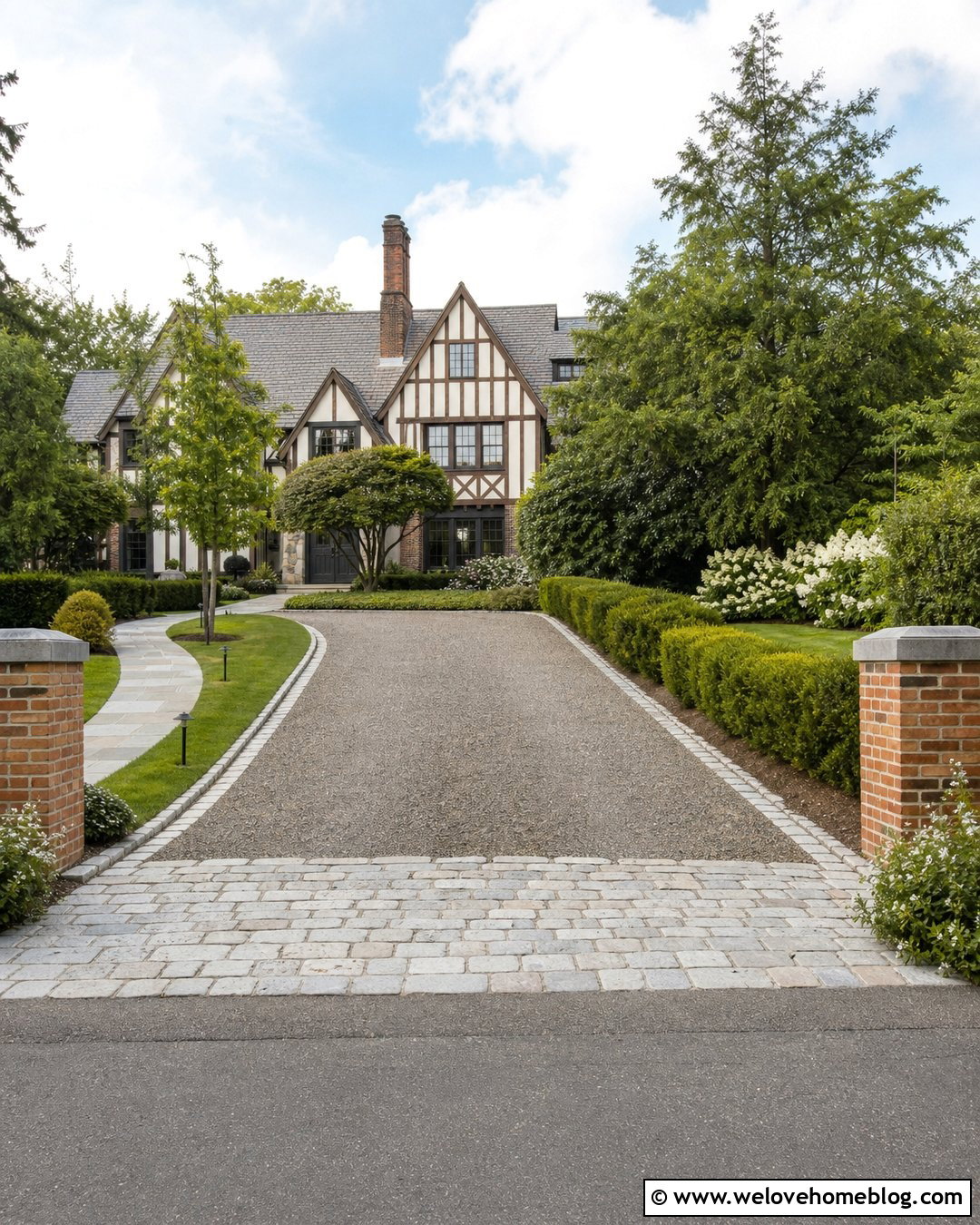
The street connection often receives concentrated turning and braking forces. A cobblestone entrance apron can create a durable transition before the gravel grid section begins. Use warm gray angular gravel throughout the main driveway, with granite cobbles extending several feet inward from the curb. A cobblestone border can then continue along each side, making the apron feel integrated. Set the stones over a suitable structural base and coordinate finished heights so tires move smoothly between surfaces. Brick pillars, low hedges, and symmetrical planting beds can frame the entrance without narrowing it. This traditional arrangement suits Tudor, colonial, and European-inspired homes. The apron also provides a tidy visual threshold, reducing the unfinished appearance that can occur when loose gravel meets the public roadway directly.
9. Gravel Grid Driveway With Grass Center Strip
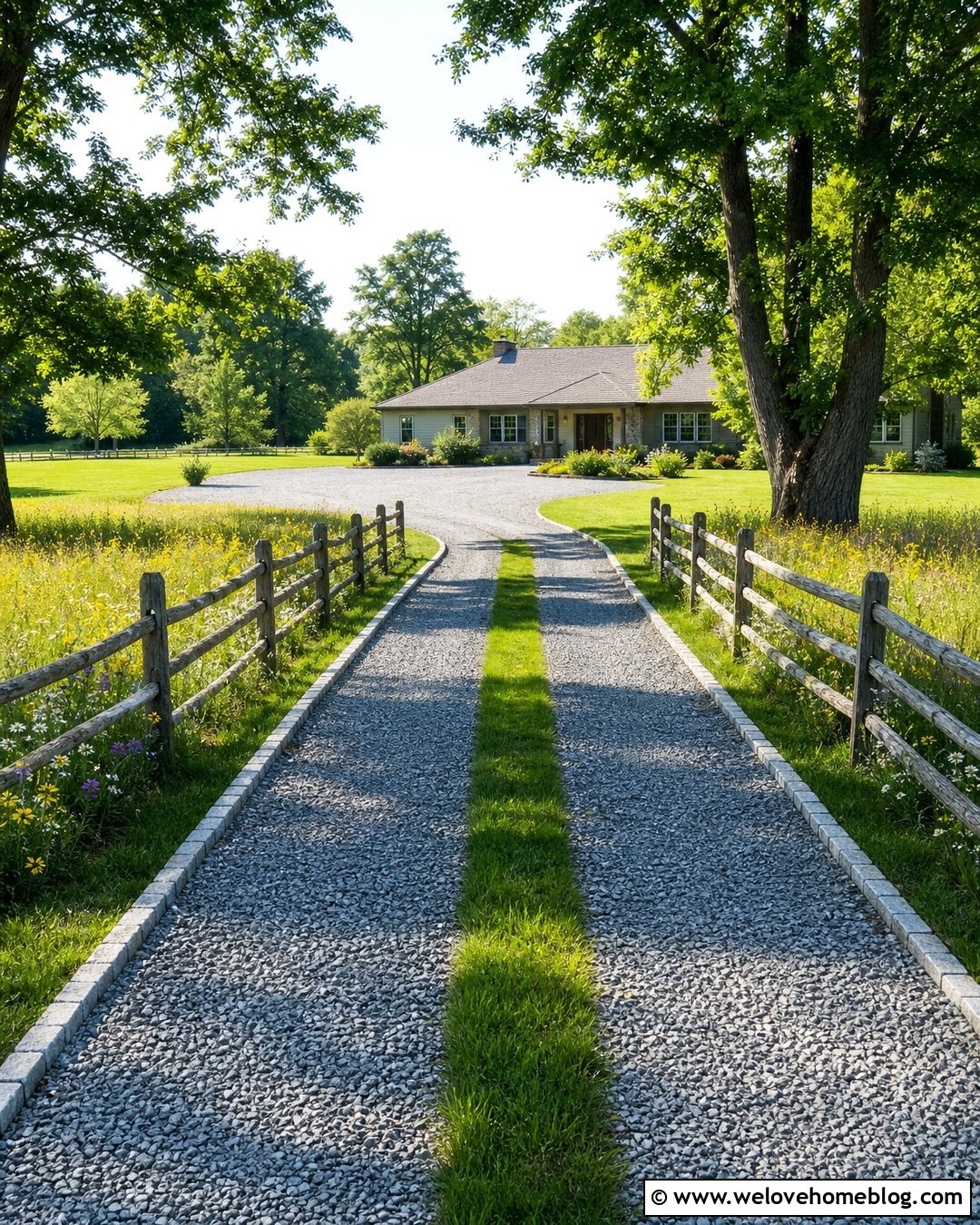
A grass center strip reduces the visible amount of gravel and gives a long driveway a softer country character. Install two broad gravel grid wheel lanes using compacted gray crushed stone, then create a reinforced grass strip between them. The dimensions should match expected vehicle widths while leaving enough tolerance for visitors and delivery vehicles. Use solid edge restraints along the outside boundaries and durable transitions around the center strip. The grass area needs suitable soil, drainage, sunlight, and an easy mowing plan. Near the house, widen the wheel lanes into a full parking and turning surface. This design is best for lighter residential traffic rather than unpredictable heavy use. Meadow planting, split-rail fencing, and mature shade trees complete the relaxed approach to a ranch or country home.
10. Gravel Grid Driveway With Paver Parking Pad
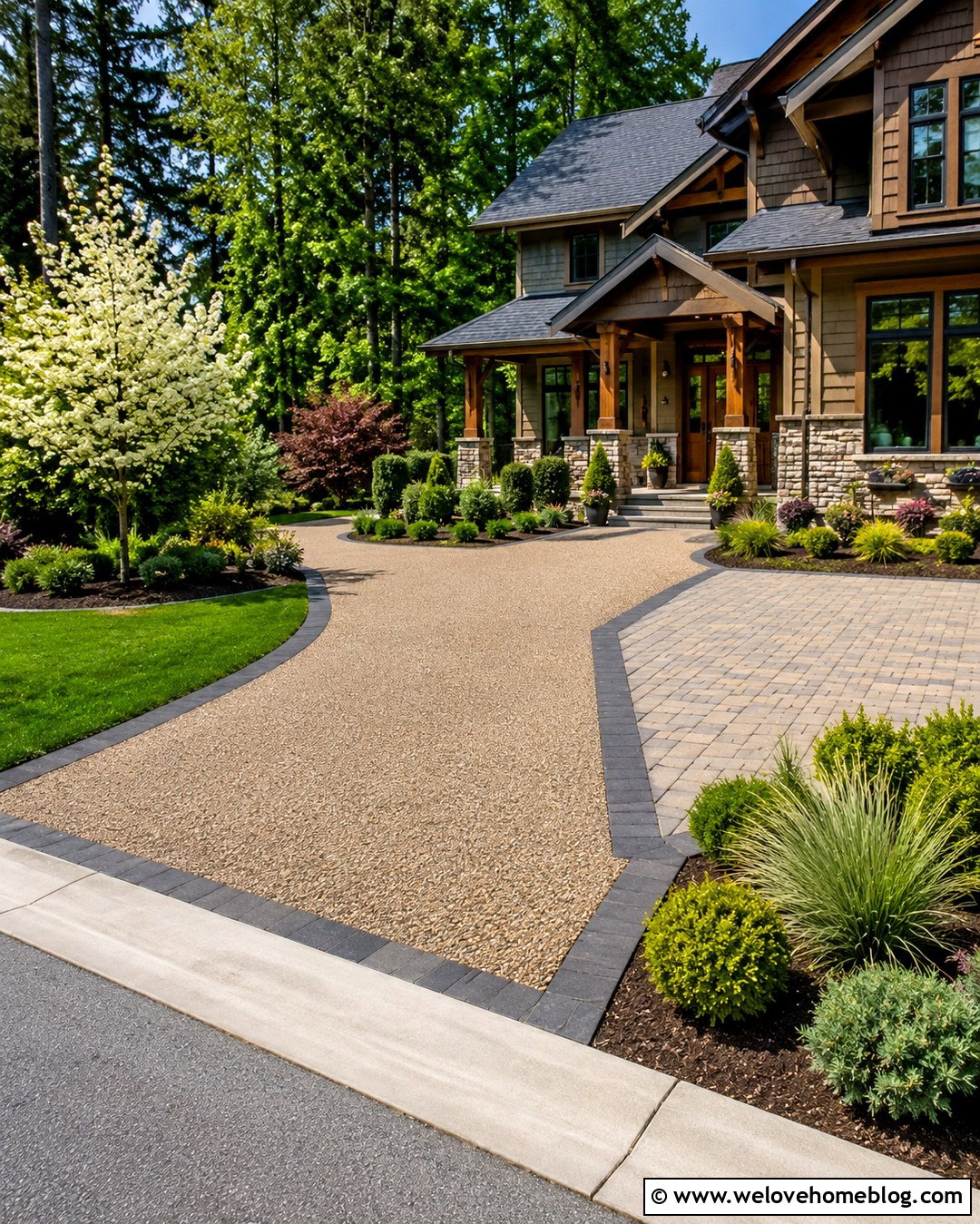
When parking demand exceeds the width of a driveway, an integrated side pad offers a practical solution. Install tan gravel-filled grids along the main approach and create a rectangular parking bay using complementary concrete pavers. A dark paver ribbon can outline both surfaces and clearly define where guests should park. Prepare each section for its expected loads while maintaining a smooth, trip-free transition between materials. The parking pad may also serve as a turnaround area on narrow properties. Screen it with layered shrubs, ornamental grasses, or a small flowering tree, but leave adequate door-opening space. This combination gives a craftsman or suburban home the charm of gravel and the structured appearance of paving. It also breaks up a large driveway so the front yard feels less dominated by one material.
11. Long Gravel Grid Driveway With Tree-Lined Borders
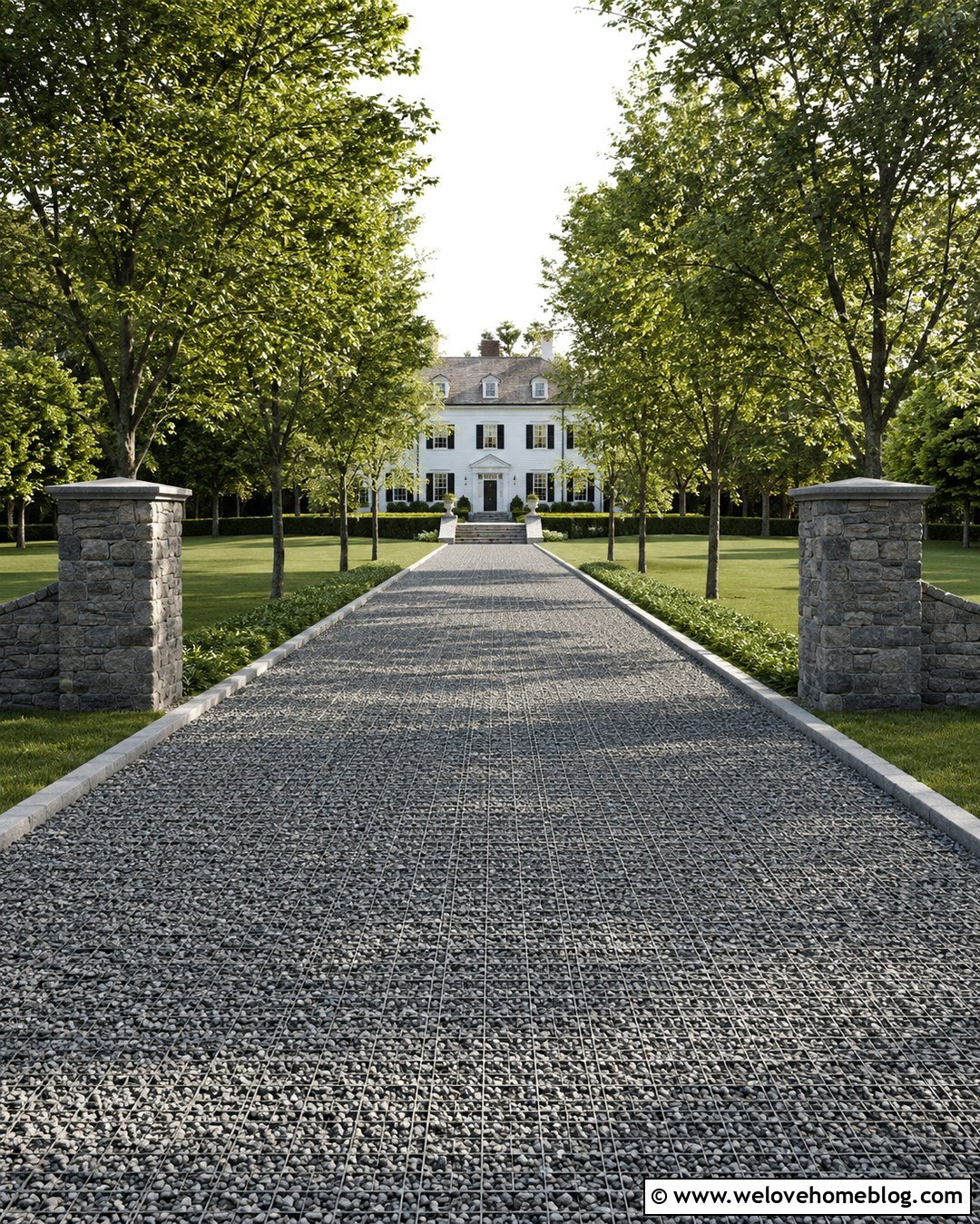
A long driveway can become one of the property’s strongest landscape features. Use warm gray gravel over a properly engineered grid system and follow a straight route toward the home. Low granite curbs or flush concrete edging will keep the surface contained without competing with the view. Plant matching rows of deciduous trees beyond the edges, leaving sufficient space for mature trunks and roots. Underplant with simple lawn or low ground cover to preserve the formal perspective. Periodic drainage outlets may be necessary where the grade changes, since permeability depends on the entire base and subgrade design, not gravel alone. The finished approach suits a colonial, Southern, or estate-style house. At the entry, stone pillars and restrained lighting can establish a visible destination without making the route feel crowded.
12. Narrow Gravel Grid Driveway With Flush Edging
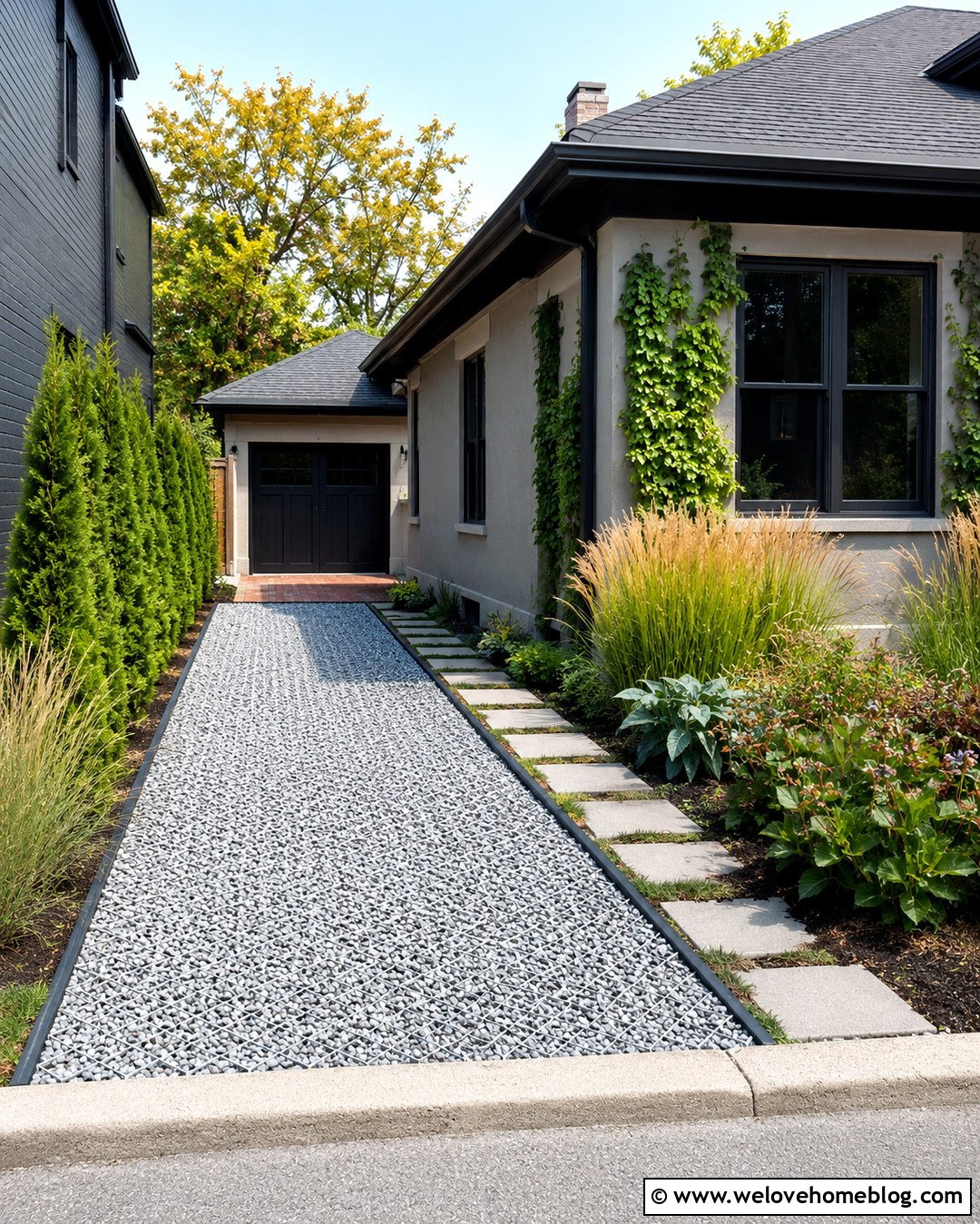
Small side yards need a driveway that uses every available inch without looking cramped. A narrow gravel grid installation filled with light-gray crushed stone can create a tidy route beside a bungalow or urban cottage. Choose flush metal or paver edging so car doors and tires are not obstructed by raised borders. Add a compact brick or concrete apron at the garage threshold for a smooth material transition. On the house side, use a narrow walkway or stepping stones rather than a deep planting bed. Upright evergreen shrubs, wall-trained vines, and slim ornamental grasses provide greenery without reducing clearance. Bright gravel can also make the passage feel more open. Confirm the finished width meets local requirements and allows safe access for vehicles, pedestrians, utilities, and emergency services.
13. Gravel Grid Driveway With Drainage Swale
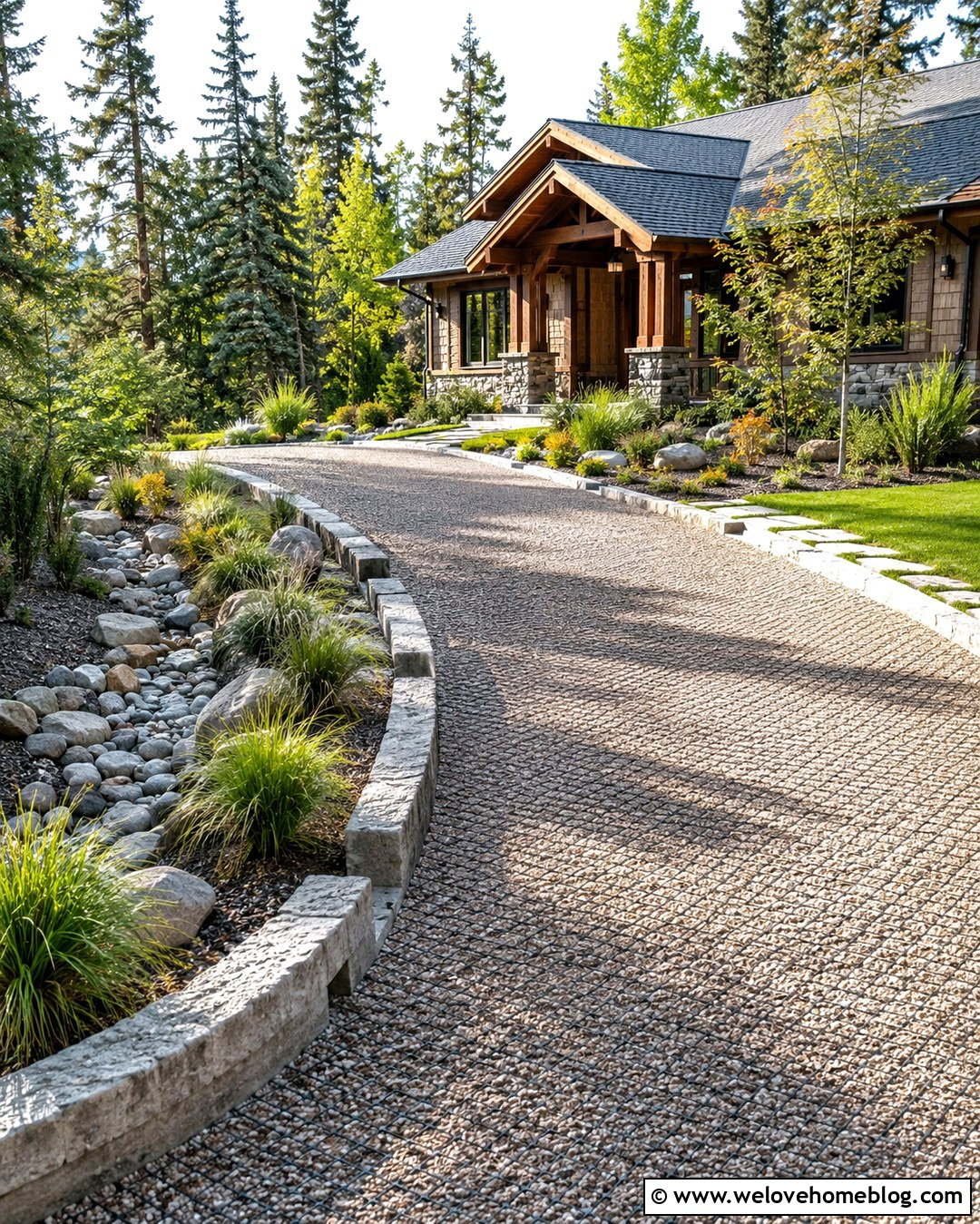
Heavy rain can overwhelm a driveway if runoff has nowhere safe to go. Combine a pale brown gravel grid surface with a shallow planted swale running along the lower side of the driveway. A stone curb or reinforced edge separates the driving area from the drainage feature while allowing water to enter at planned openings. Fill the swale with regionally appropriate moisture-tolerant grasses, sedges, shrubs, and decorative rock. The driveway itself still needs a stable, permeable base and positive grading away from the house. Geotextile may be specified to separate weak or fine-grained soil from the aggregate layers. () This complete installation is useful for ranch, craftsman, and naturalistic homes where stormwater management can become part of the landscaping rather than an exposed pipe or bare ditch.
14. Two-Tone Gravel Grid Driveway With Stone Ribbon
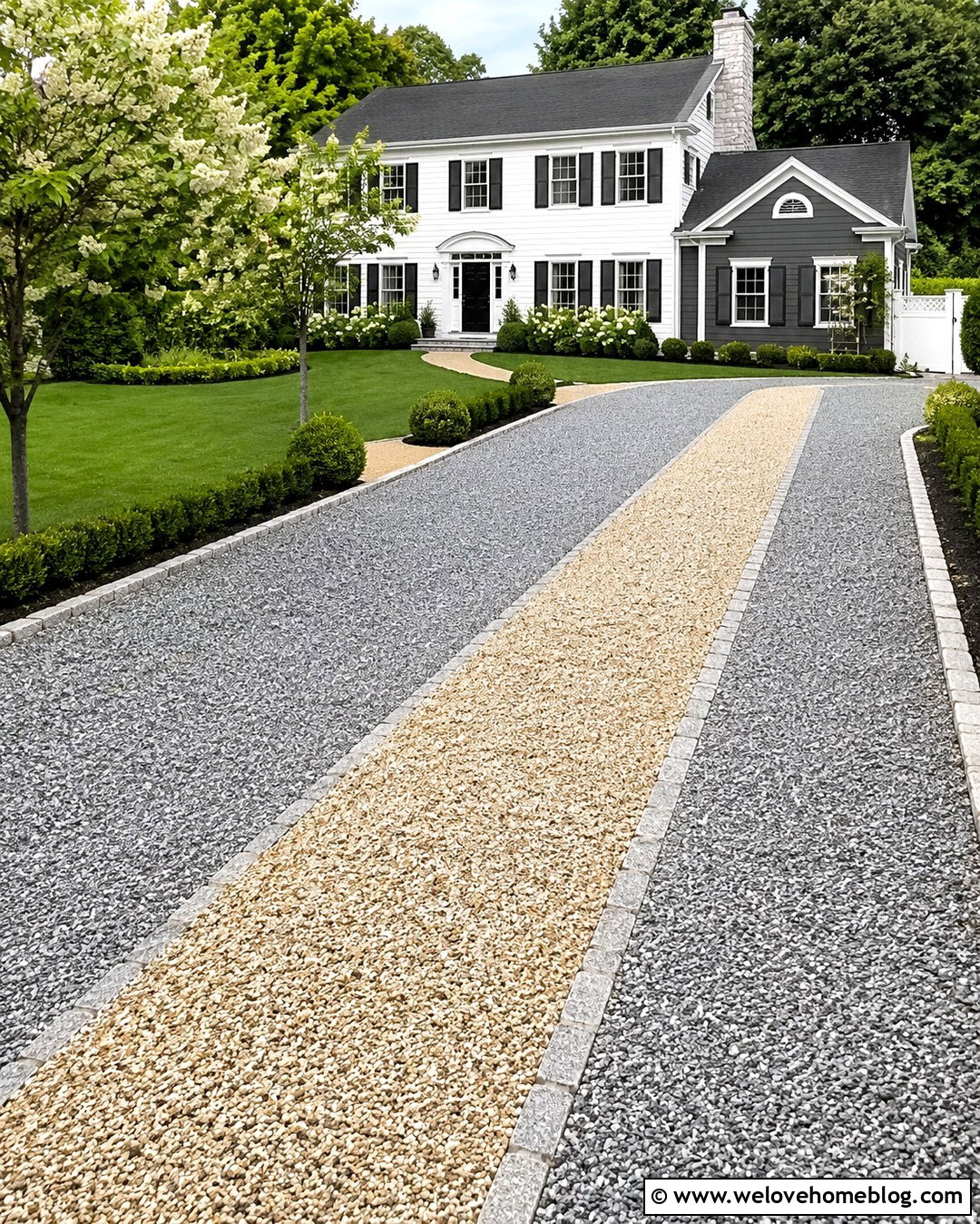
Two gravel colors can add detail without sacrificing the natural character of the surface. Use medium-gray angular gravel across the main grid installation, then create a central ribbon with buff crushed stone held in a separate grid section. A slim row of granite setts can divide the colors and prevent mixing. Continue the buff tone into a front walkway or turning circle to connect the driveway with the house entrance. Keep the pattern simple, since narrow decorative bands can become difficult to install and maintain. Flush stone edging around the perimeter gives the design a finished boundary. Boxwood, white hydrangeas, and small flowering trees complement the neutral palette. This tailored look suits transitional, colonial, and updated traditional houses where plain gravel might otherwise feel too informal.

15. Horseshoe Gravel Grid Driveway With Brick Pillars
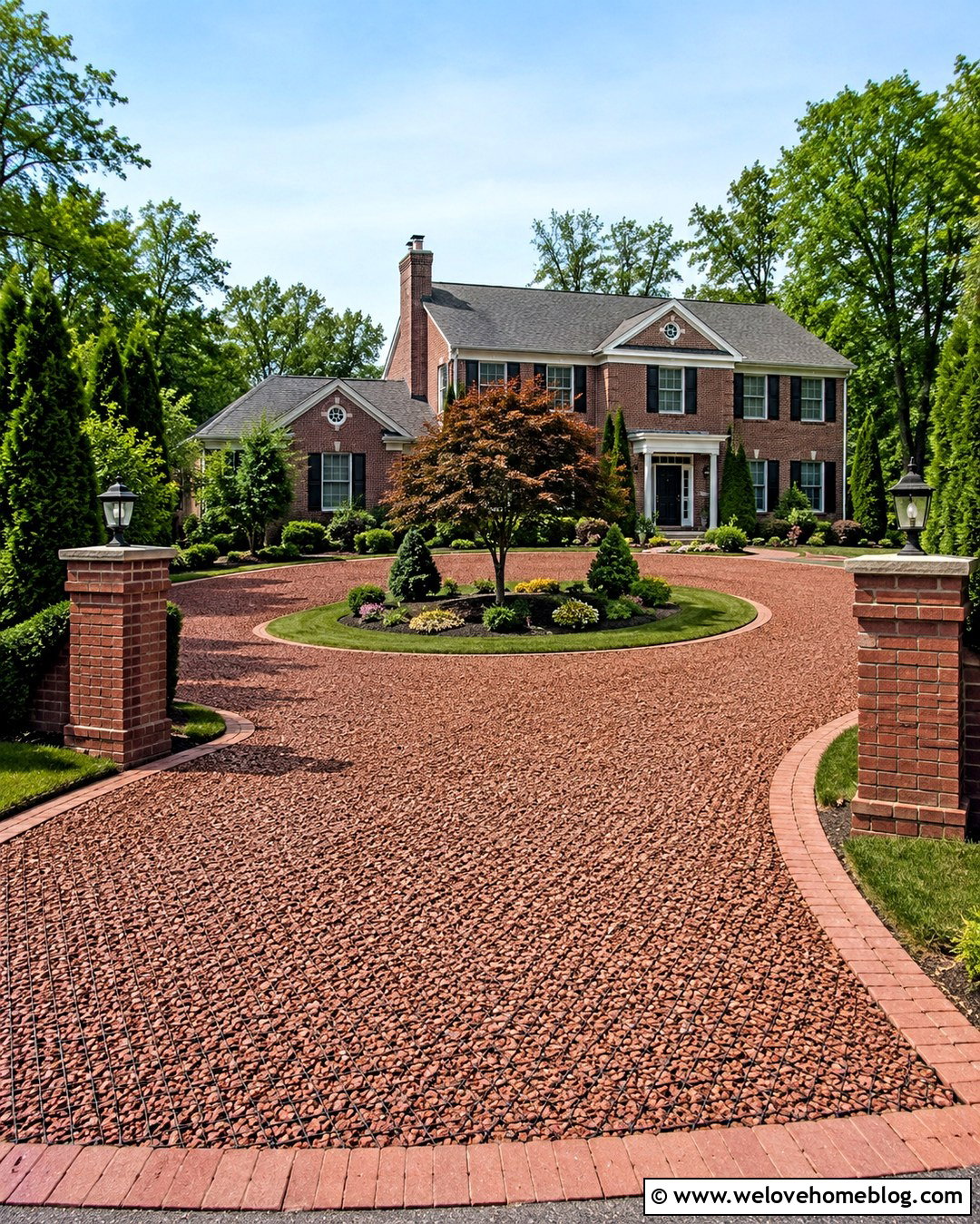
A horseshoe layout creates separate entry and exit points while adding a gracious front-yard feature. Fill vehicle-rated grids with reddish-brown crushed stone and define both openings with brick pillars that match the house. Curved brick edging can follow the complete horseshoe and protect nearby lawn from spreading gravel. In the central lawn, use a layered planting bed with a small ornamental tree, evergreens, and seasonal perennials. Keep planting low near the street so drivers can see pedestrians and approaching traffic. The grid panels must be carefully trimmed and securely restrained around the long curves. Add a wider section near the front entrance for passenger drop-off. This complete design is especially appropriate for brick colonial, traditional ranch, and Georgian-inspired homes on broad suburban lots.
16. Gravel Grid Driveway With Recycled Brick Border
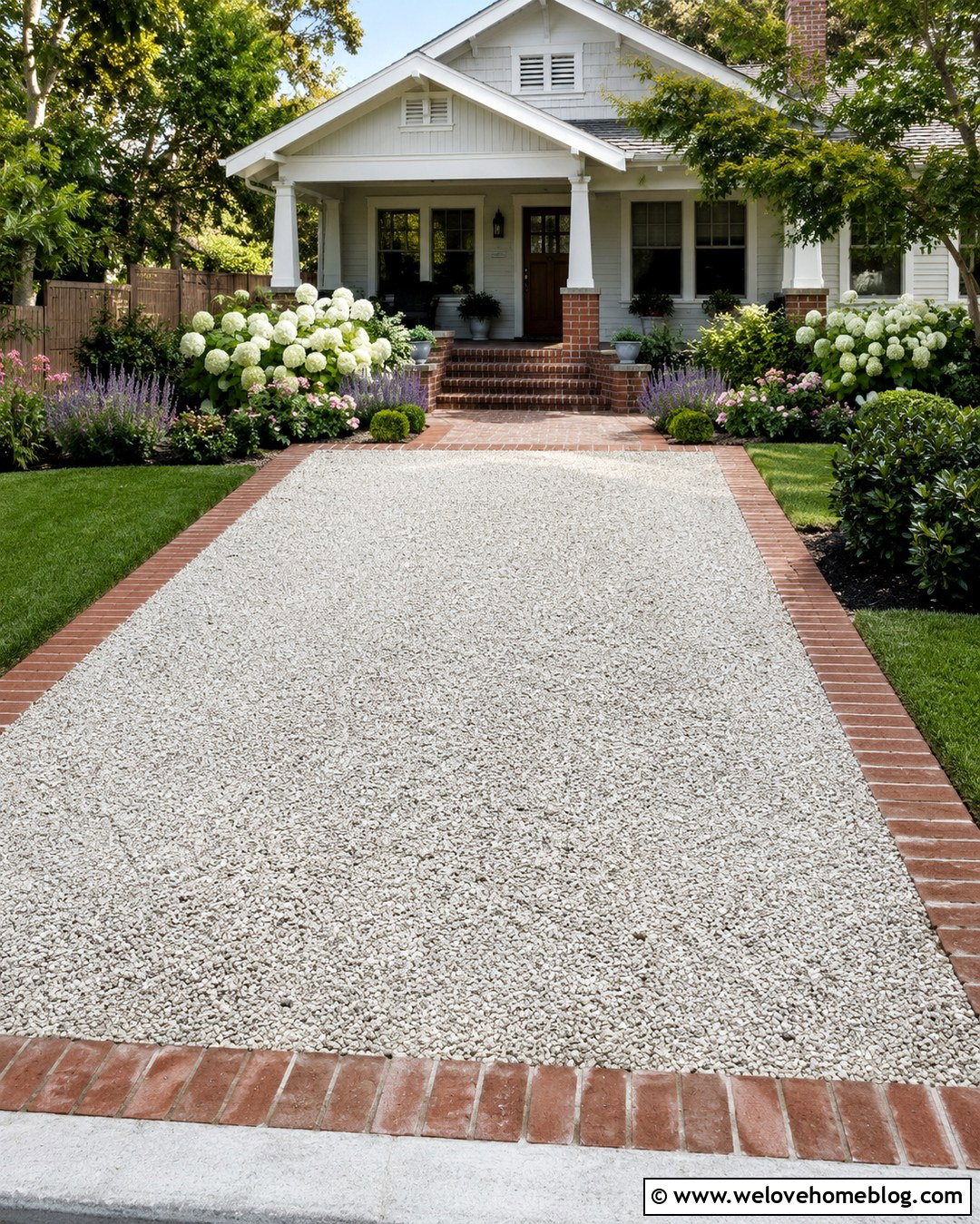
Weathered brick brings warmth and history to a newly installed gravel driveway. Fill the grid cells with compact angular limestone, then use reclaimed clay bricks as a wide perimeter border. Arrange the bricks in a soldier course or simple running bond for a controlled, practical edge. Inspect salvaged units carefully because heavily cracked or soft bricks may not withstand freeze-thaw exposure and vehicle contact. A matching brick walkway can connect the driveway to the front porch. Surround the layout with cottage-style planting, including hydrangeas, salvia, compact roses, and evergreen structure plants. The warm red border works especially well with craftsman cottages, painted brick houses, and traditional bungalows. Keep the brick edge firmly supported so it contains the aggregate rather than acting as a loose decorative strip.
17. Gravel Grid Driveway With Solar Path Lighting
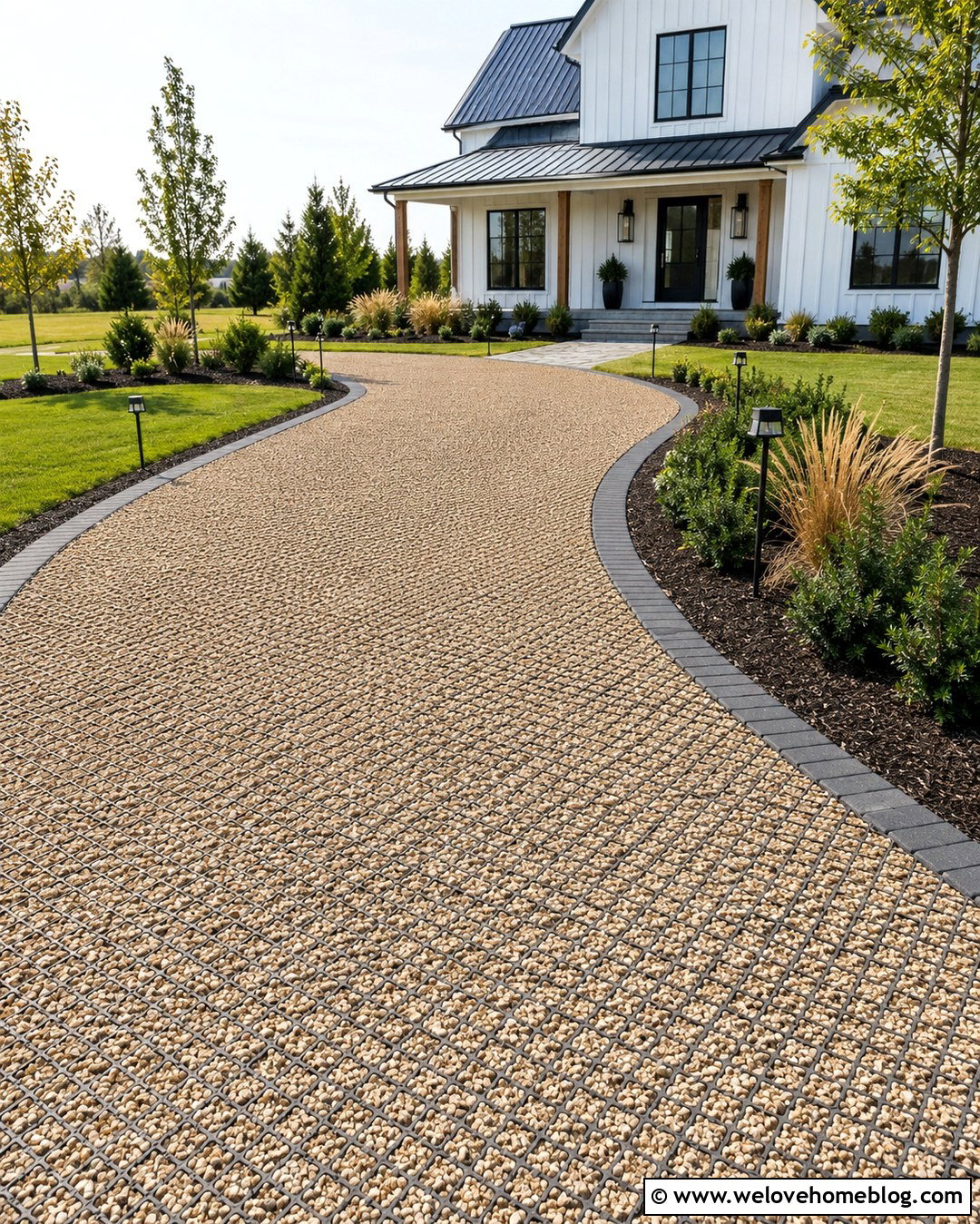
Driveway lighting should improve orientation without creating daytime clutter. Install warm beige crushed gravel in a straight or gently curved grid driveway, framed by a low charcoal paver border. Place simple solar or low-voltage fixtures beyond the structural edge at consistent intervals. Their daytime finish should coordinate with the house hardware and border color. Avoid putting lights where turning tires, snowplows, or lawn equipment can strike them. Layer low evergreen shrubs and ornamental grasses behind the fixtures so the landscaping feels complete during daylight hours. At the garage, use compatible wall lighting to identify the destination. This look works beautifully with modern farmhouse, craftsman, and contemporary ranch homes. Confirm that solar fixtures receive enough direct sun, or choose wired lighting where tree cover limits charging.
18. Gravel Grid Driveway With Natural Stone Retaining Wall
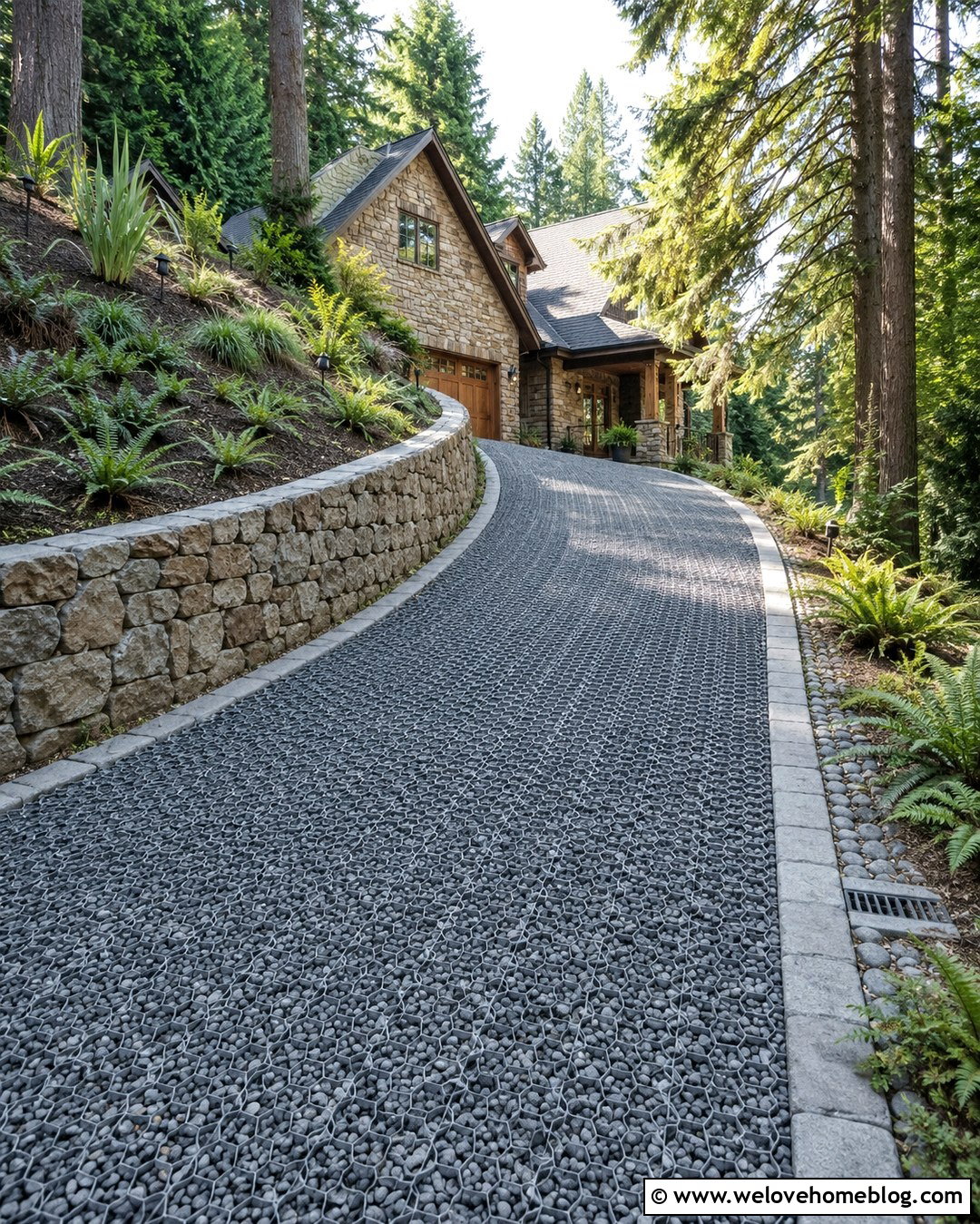
A driveway cut into a hillside benefits from a coordinated surface and retaining system. Use dark-gray crushed granite inside heavy-duty gravel grids, then install a professionally designed natural stone retaining wall along the uphill side. The wall can follow a gentle curve while a sturdy curb protects its base from vehicle contact. Add drainage behind the wall according to the engineered design, and direct outlets away from the driveway foundation. On the downhill side, use a low stone edge and ground-cover planting to maintain an open view. Ferns, native grasses, and evergreen shrubs will help the driveway blend into a wooded property. This rugged installation complements mountain cabins, craftsman homes, and stone-faced ranch houses. Significant walls, steep grades, and unstable soils should be evaluated by qualified local professionals.
19. Gravel Grid Driveway With Modern Address Pillar
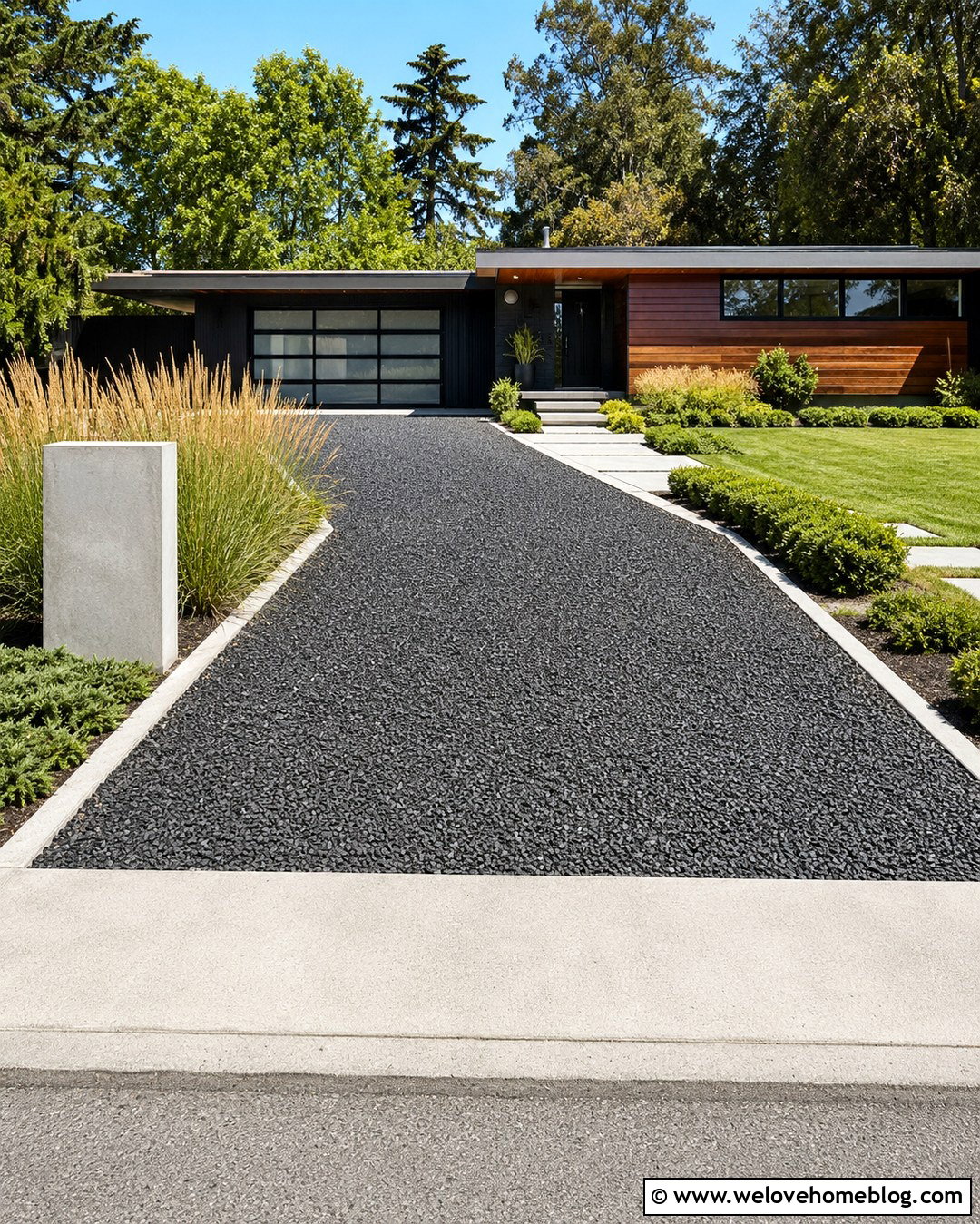
A bold address feature can make a simple gravel driveway easier to find and more visually complete. Install charcoal angular gravel within a straight grid layout, using flush concrete edging along both sides. At the curb, position a rectangular concrete or masonry address pillar beside a widened entrance apron. Keep it outside required sight triangles and far enough from the driving path to avoid contact with mirrors or turning vehicles. Repeat the pillar’s finish in the front walkway, mailbox base, or garage facade. Minimal planting with feather reed grass, low juniper, and neatly shaped shrubs will support the modern appearance. The resulting entrance feels organized and welcoming without an elaborate gate. This look pairs naturally with contemporary, midcentury modern, and minimalist suburban houses.


20. Gravel Grid Driveway With Mixed Gravel Courtyard
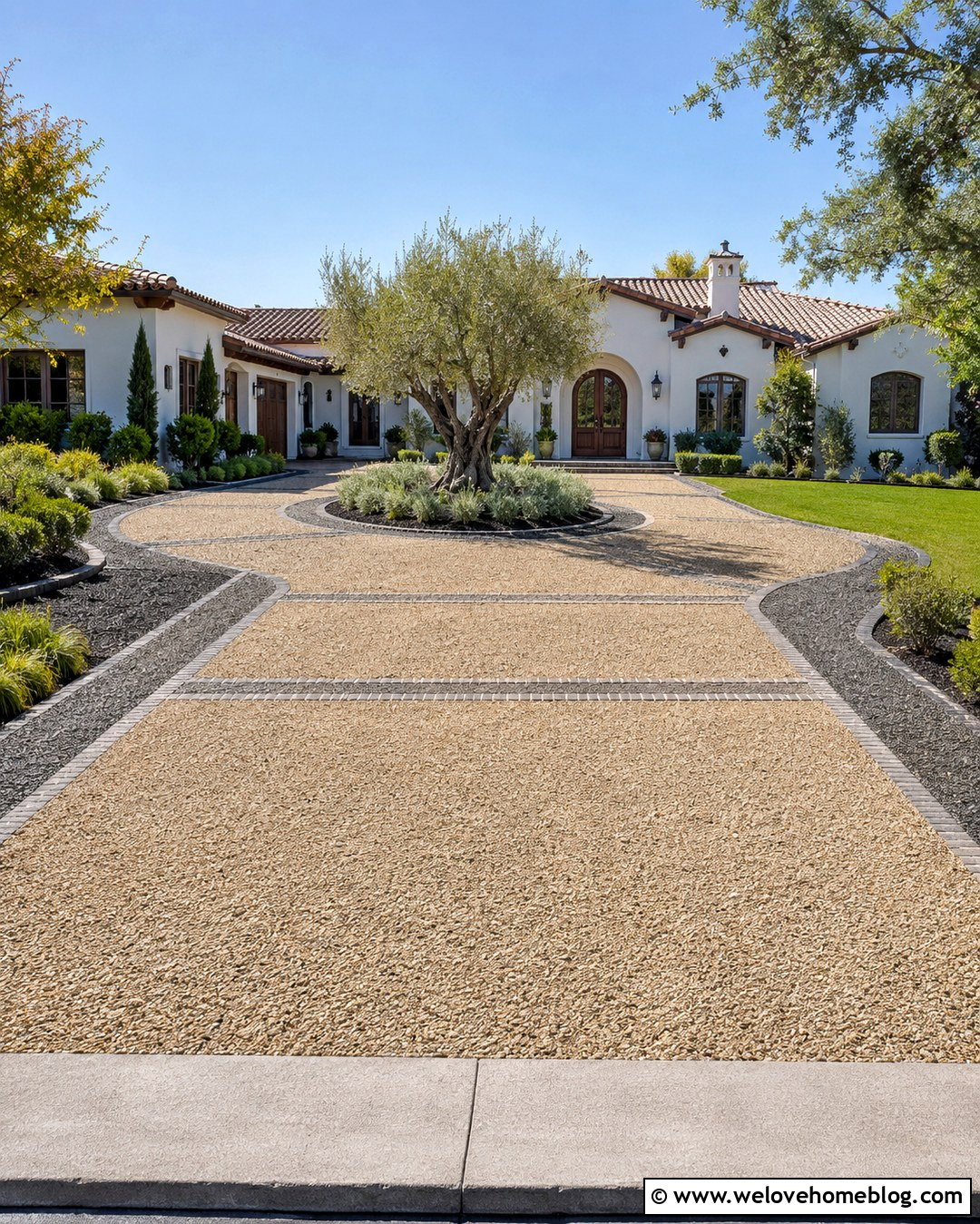
A broad front courtyard offers parking, turning space, and an attractive arrival point. Use buff angular gravel in stabilization grids for the main circular or rectangular court, then define parking zones with darker crushed granite bands. Granite setts or concrete paver ribbons should separate the aggregates so they do not mix under tires. Add a central tree island or large planter only when enough turning clearance remains around it. Near the home, continue one paver ribbon into the front walkway for a connected appearance. Strong perimeter restraint is essential because turning wheels apply lateral force to the gravel. Edge restraints support permeable paving systems by limiting horizontal movement around the installation. () This substantial design suits Spanish revival, modern farmhouse, and large ranch homes with wide front elevations.
Conclusion:
The best gravel grid driveway is more than a layer of attractive stone. It combines a load-appropriate grid, stable sub-base, reliable edge restraint, compatible gravel, thoughtful drainage, and landscaping that fits the home. These 20 Driveway Gravel Grid Installation Ideas show how straight, curved, circular, narrow, sloped, and courtyard layouts can become complete curb-appeal features. Before construction, check local driveway, drainage, and entrance requirements. Follow the grid manufacturer’s specifications instead of relying on one standard base depth for every property. Soil, climate, slope, traffic, and aggregate availability can all affect the final system. With careful planning, a gravel grid installation can look natural while providing a cleaner, more controlled surface for everyday vehicles.

Related posts:





Leave a Reply