
Ground grid driveways combine practical reinforcement with a clean, customizable finish. The hidden cellular system holds gravel, crushed stone, grass, or other permeable fill in place, helping the surface look more even under regular vehicle traffic. It can suit everything from a compact suburban parking space to a sweeping country entrance. The real design opportunity comes from pairing the right fill color with a thoughtful driveway shape, durable edging, attractive landscaping, and a house style that complements the overall look. Proper base preparation and drainage planning remain essential, so product specifications and local site conditions should guide installation. Whether you prefer modern gravel, soft green turf, or a rustic stone finish, these complete **20 Ground Grid Driveway Ideas** offer plenty of inspiration.

1. Gray Gravel Ground Grid Driveway
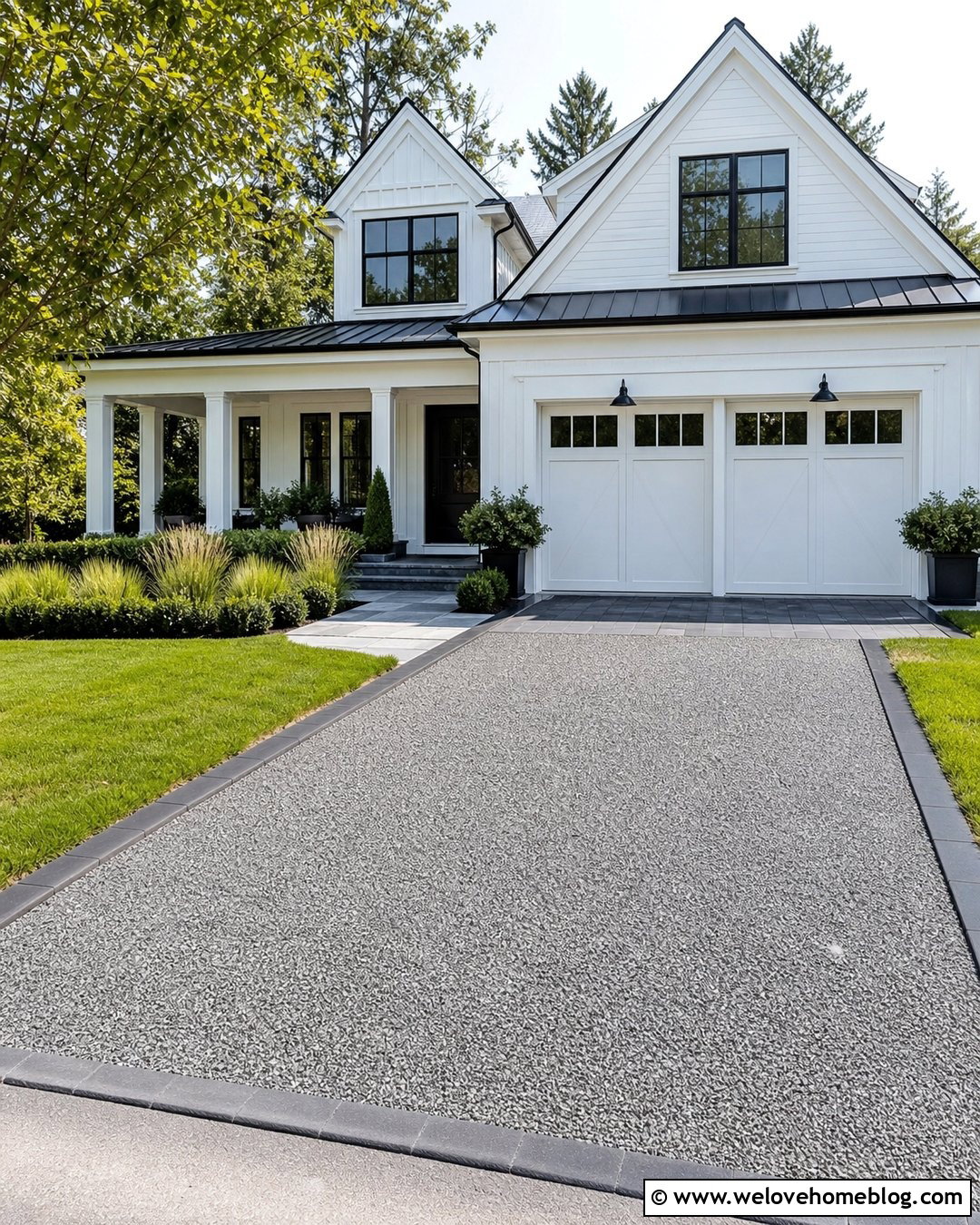
A gray gravel ground grid driveway creates a simple surface that works with almost any home exterior. Fill a heavy-duty cellular grid with angular gray limestone or crushed granite so the stones lock together inside the openings. A straight layout feels tidy and makes parking easy, especially on a standard suburban lot. Add charcoal concrete curbing along both sides to stop loose material from reaching the lawn. Low boxwood shrubs, ornamental grasses, and a paved walkway can soften the broad gravel area without hiding its clean lines. Near the garage, install a narrow paver apron for a polished transition. This complete design looks especially balanced beside a white Craftsman house with dark roofing and understated black exterior details.
2. Pea Gravel Ground Grid Driveway
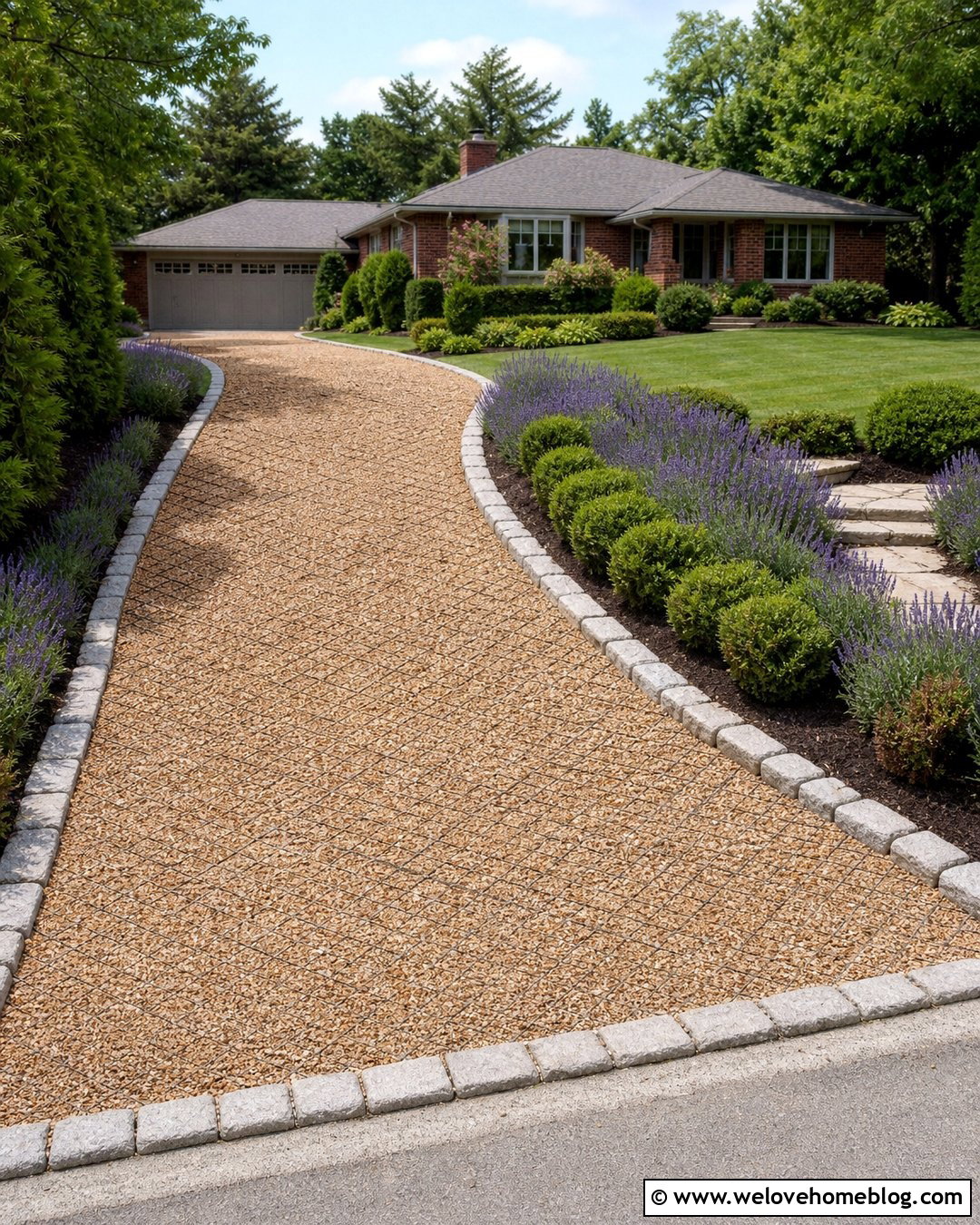
Do you like the warm, relaxed appearance of pea gravel but worry about stones moving under tires? A ground grid can contain the rounded gravel and create a more controlled driving surface. Choose a honey-toned pea gravel mix for a gently curved driveway leading to a brick ranch home. Use a sturdy cobblestone border to strengthen the edges and create a clear divide between the gravel and surrounding lawn. Wide planting beds filled with lavender, compact evergreen shrubs, and flowering perennials can follow the curve. Because rounded gravel behaves differently from angular aggregate, confirm the correct stone size and grid depth with the product manufacturer. The finished driveway feels informal, inviting, and carefully integrated into the front yard.
3. White Gravel Ground Grid Driveway
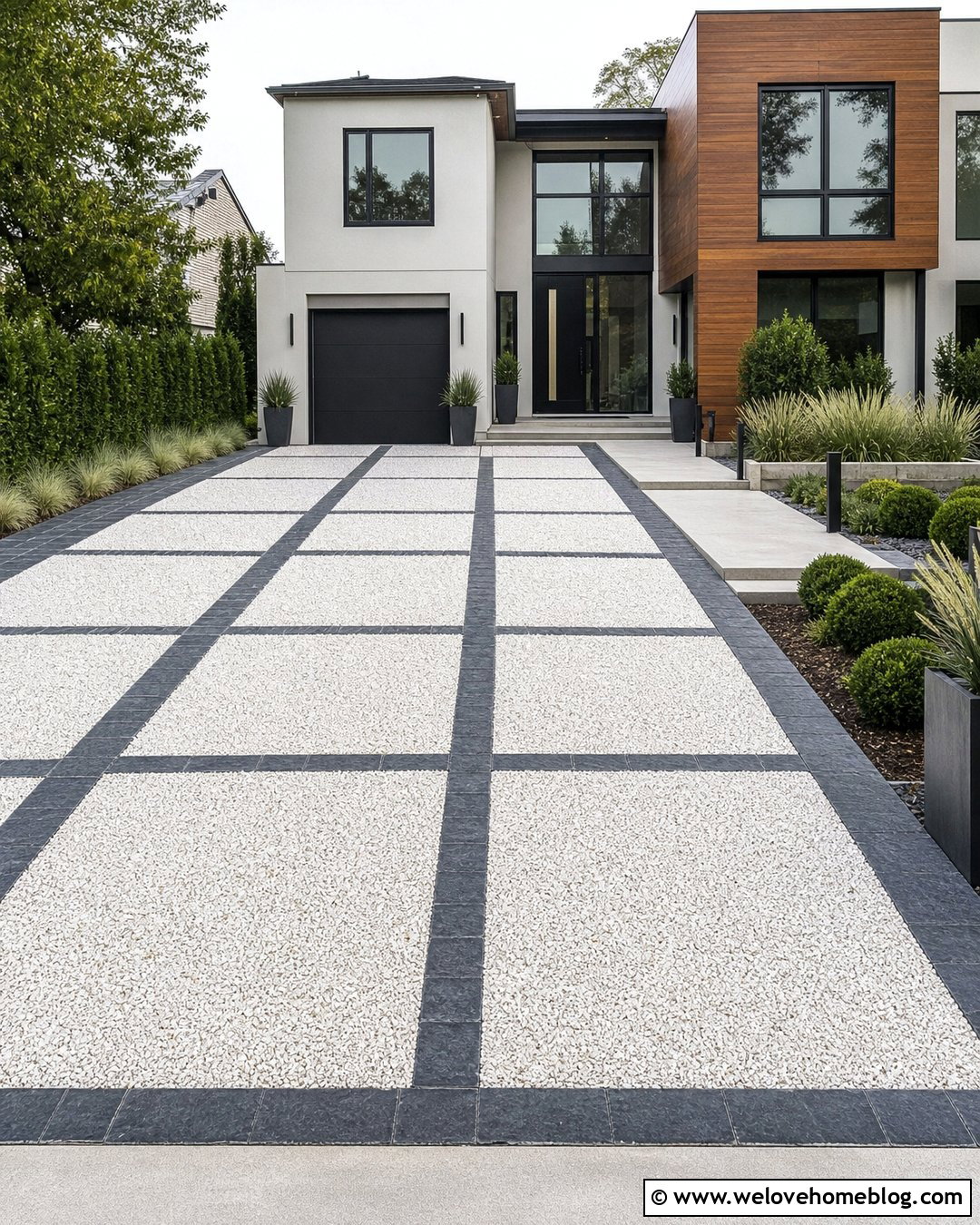
Bright white gravel gives a ground grid driveway a crisp finish that stands out against green landscaping. This treatment works particularly well on a broad, straight approach to a contemporary house. Fill the grid with white marble chips or pale crushed limestone that meet the grid manufacturer’s specifications. Dark granite setts can outline the driveway and create strong visual contrast without overwhelming the light surface. Repeat the black-and-white palette through charcoal planters, a pale walkway, and a restrained foundation bed. Drought-tolerant grasses and rounded evergreen shrubs provide movement while keeping maintenance manageable. White aggregate may show leaves and dirt faster than mixed gravel, so use it where routine blowing or raking is realistic. The result is bright, modern, and highly defined.
4. Black Gravel Ground Grid Driveway
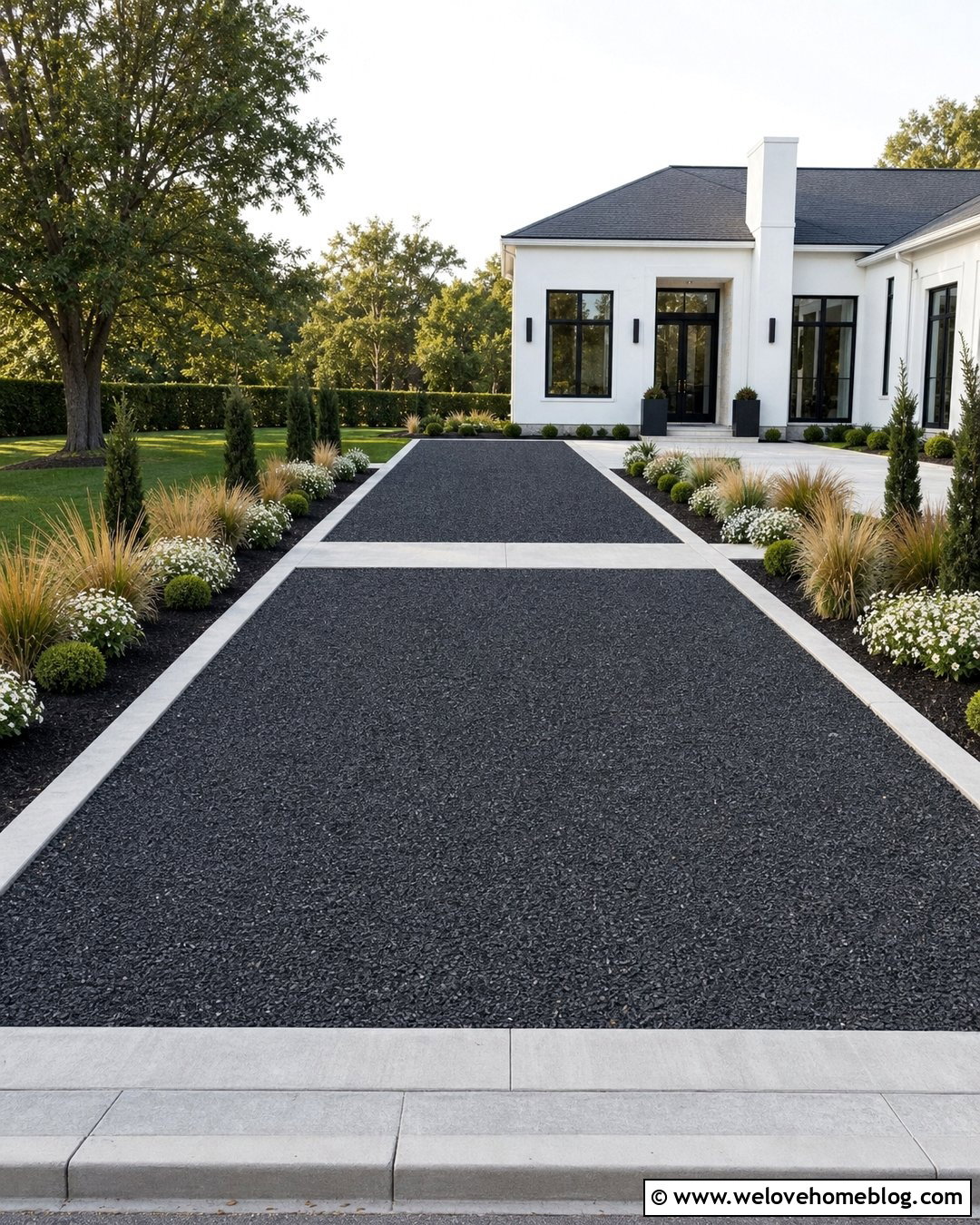
For bold curb appeal, combine a gravel stabilization grid with black basalt or dark crushed granite. The rich surface can make a light-colored home look sharper while giving the driveway an almost paved appearance from a distance. A wide rectangular layout suits a modern two-story house with white stucco, wood accents, and black-framed windows. Border the grid with smooth poured concrete bands to keep the dark gravel securely contained. Linear beds planted with fountain grass, dwarf evergreens, and white flowering perennials reinforce the contemporary geometry. A matching concrete walkway can cross the driveway near the front entrance. Dark stone can become warm in direct sun, so consider the local climate and exposure. Visually, this ground grid design is dramatic, orderly, and sophisticated.
5. Grass Ground Grid Driveway
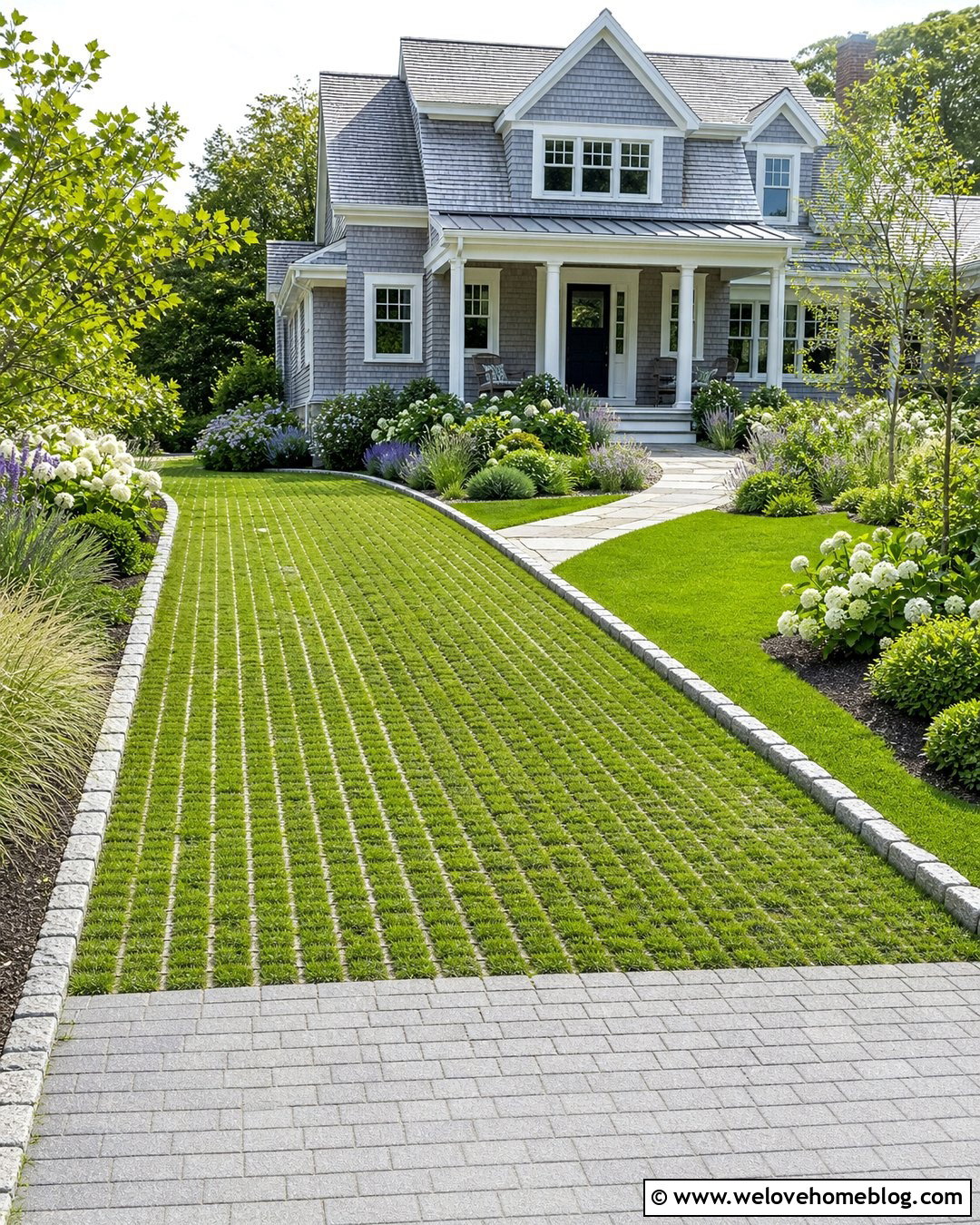
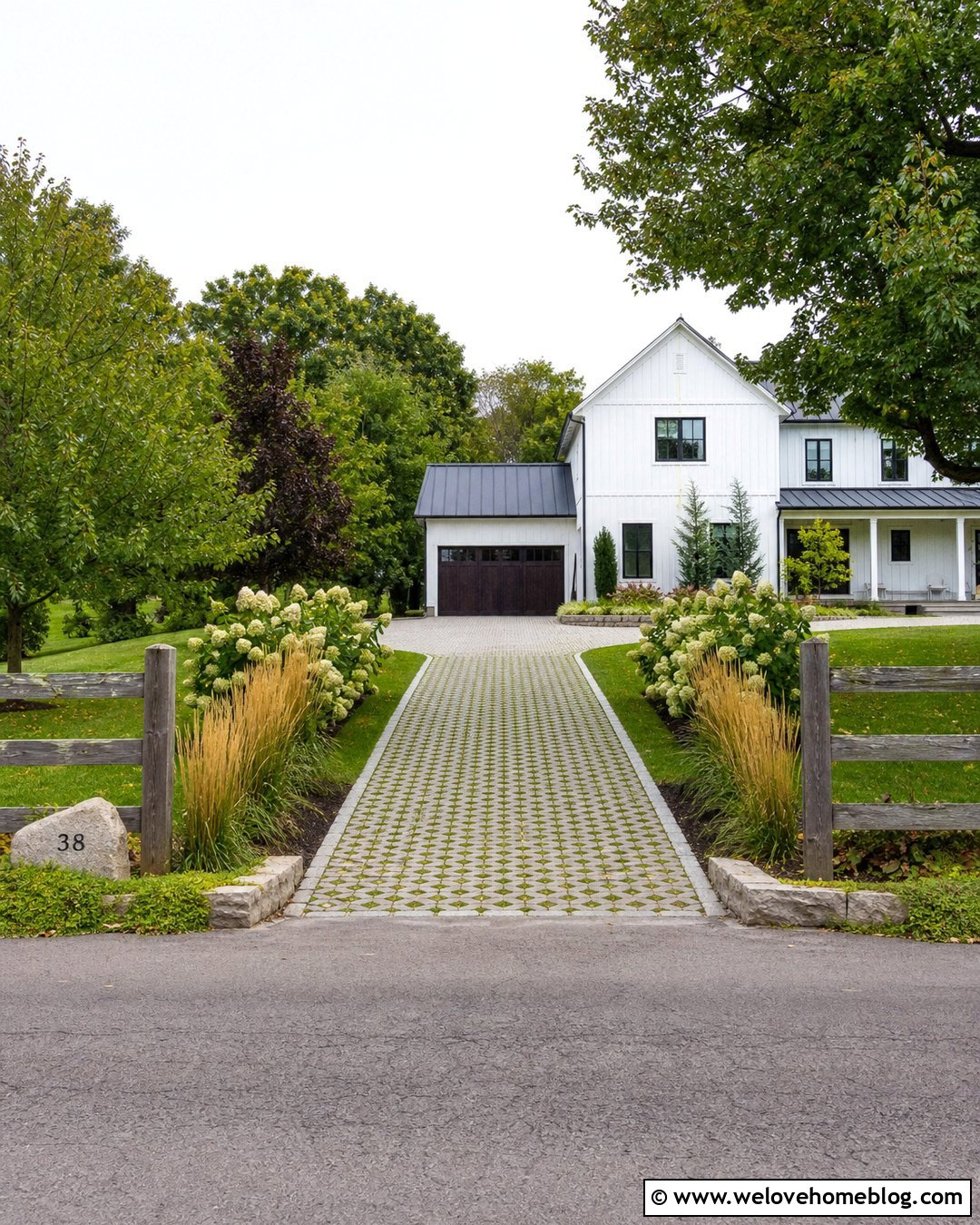
A grass-filled ground grid allows a driveway to blend into the lawn instead of appearing as a separate slab. It is an appealing choice for a cottage, farmhouse, or property where greenery is more important than a formal paved look. Use a load-rated turf reinforcement grid over a properly prepared, free-draining base, then fill it with the soil blend recommended for the system. Select grass suited to the region, sunlight, and expected traffic. A straight driveway can be framed with natural stone edging and informal beds of hydrangeas, salvia, and ornamental grasses. Include a firm paved apron at the street and garage to protect busy transition points. Regular watering, mowing, and occasional reseeding help the living surface remain full and attractive.
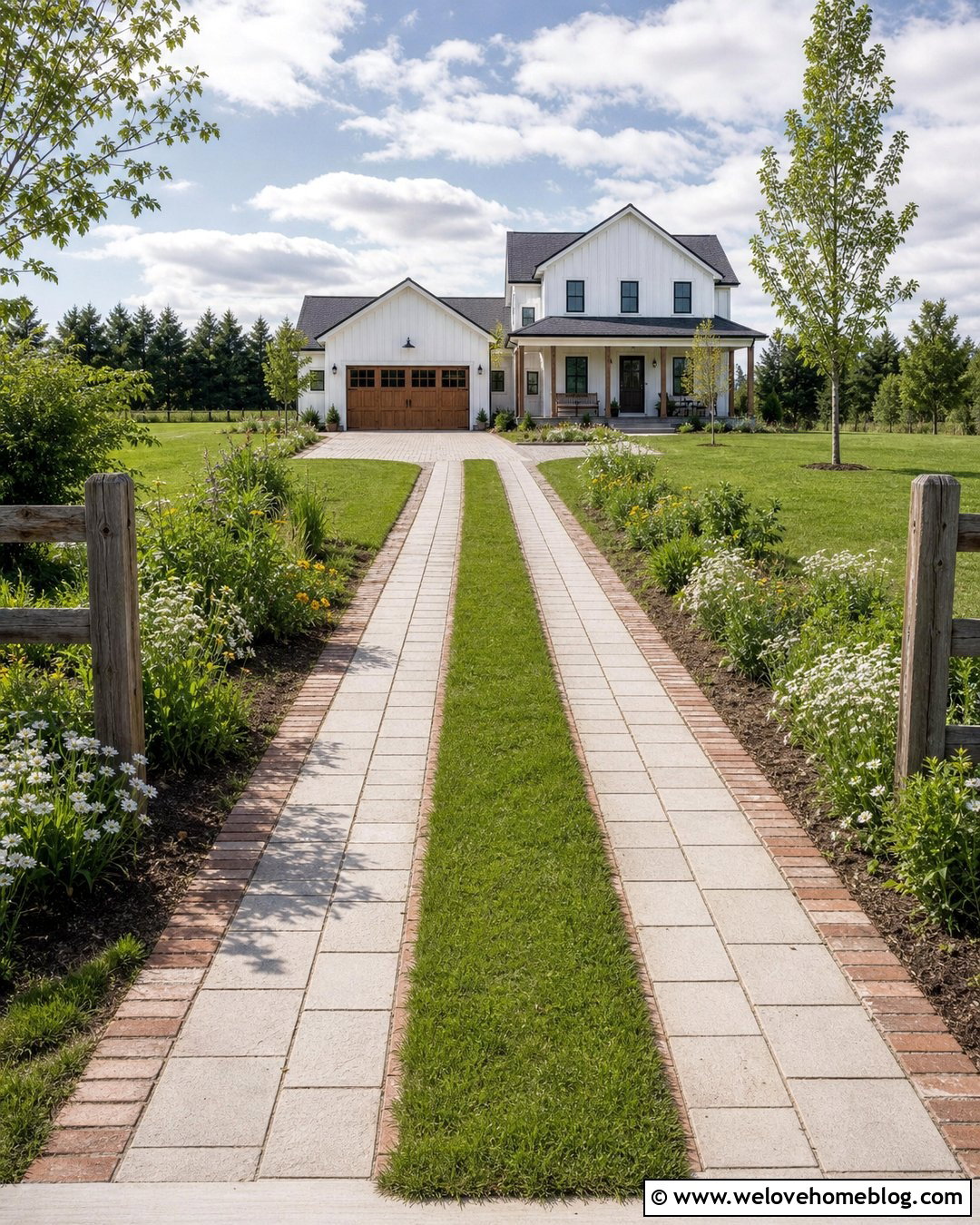
6. Grass And Gravel Ground Grid Driveway
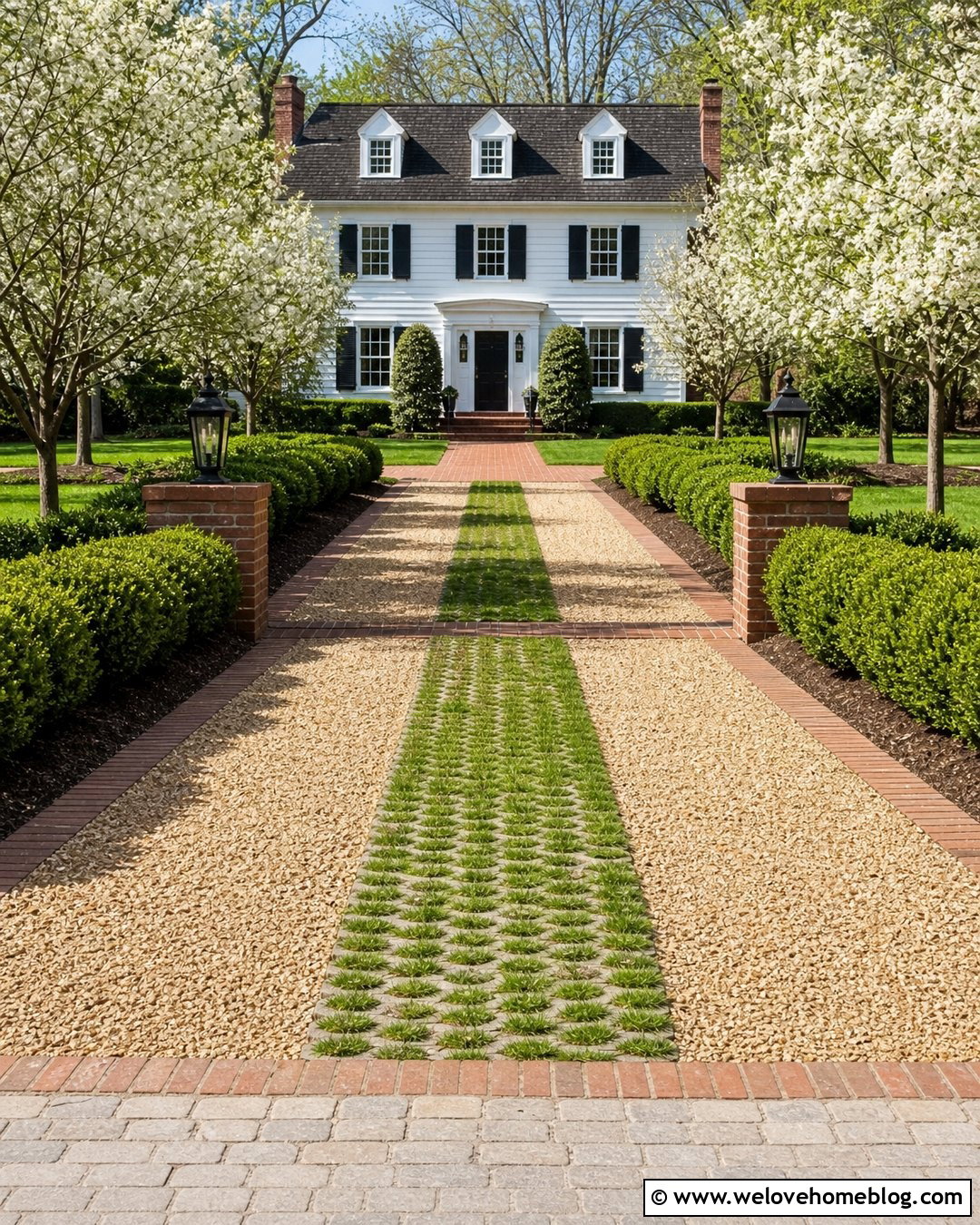
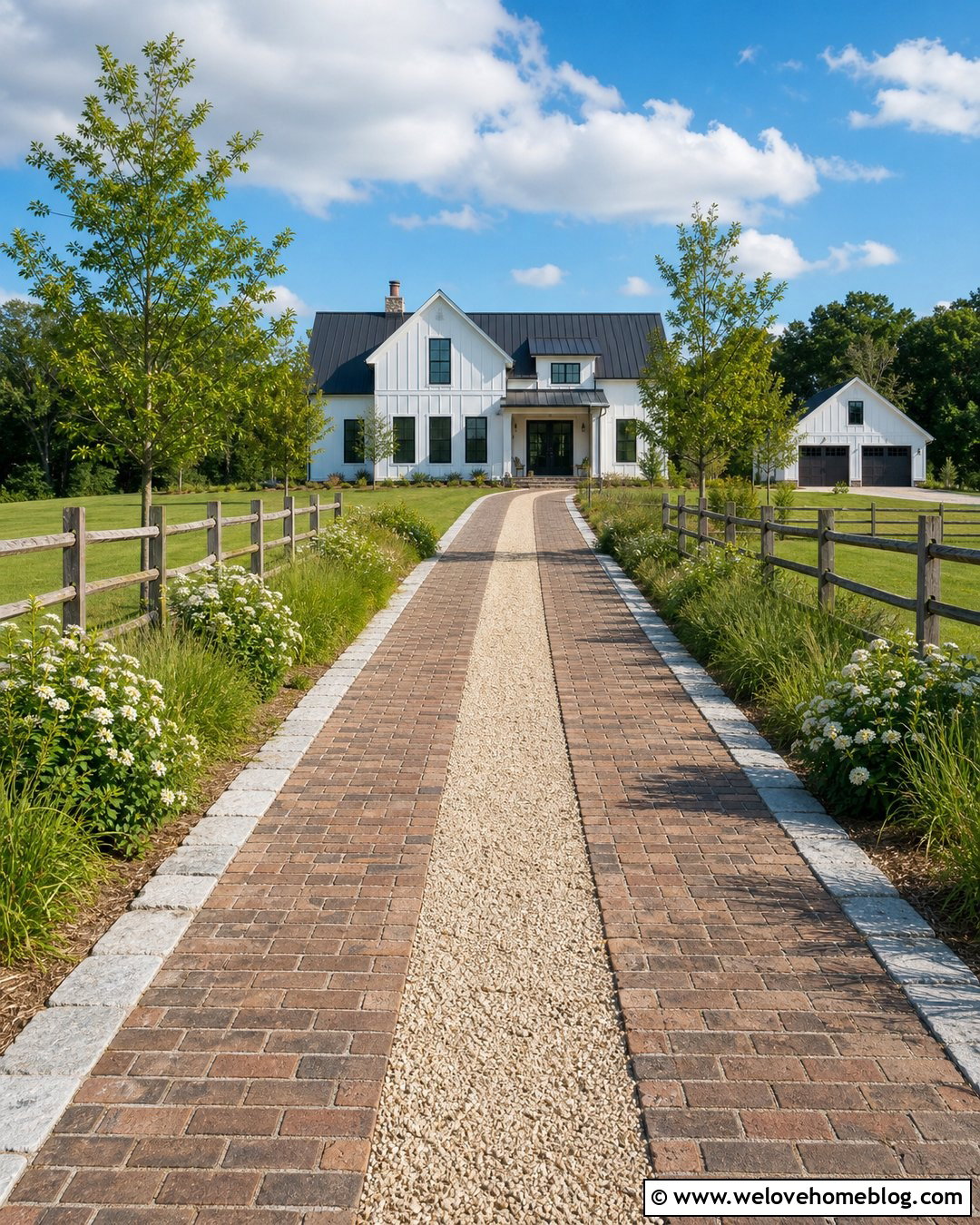
Combining grass and gravel creates a visually interesting driveway while keeping the entire layout permeable. Design two gravel-filled wheel tracks with a broad grass-grid strip running through the center. The gravel supports the areas receiving the most frequent tire traffic, while the green middle strip connects visually with the lawn. Warm tan crushed stone, dark brick edging, and a straight approach work beautifully with a traditional Colonial home. Continue the brick as a narrow ribbon across the driveway near the sidewalk for a finished entrance. On both sides, use symmetrical beds with clipped shrubs, small flowering trees, and seasonal perennials. This arrangement requires accurate track spacing and careful installation. When properly planned, it delivers a classic ribbon-driveway appearance with added ground reinforcement and drainage.
7. Crushed Granite Ground Grid Driveway
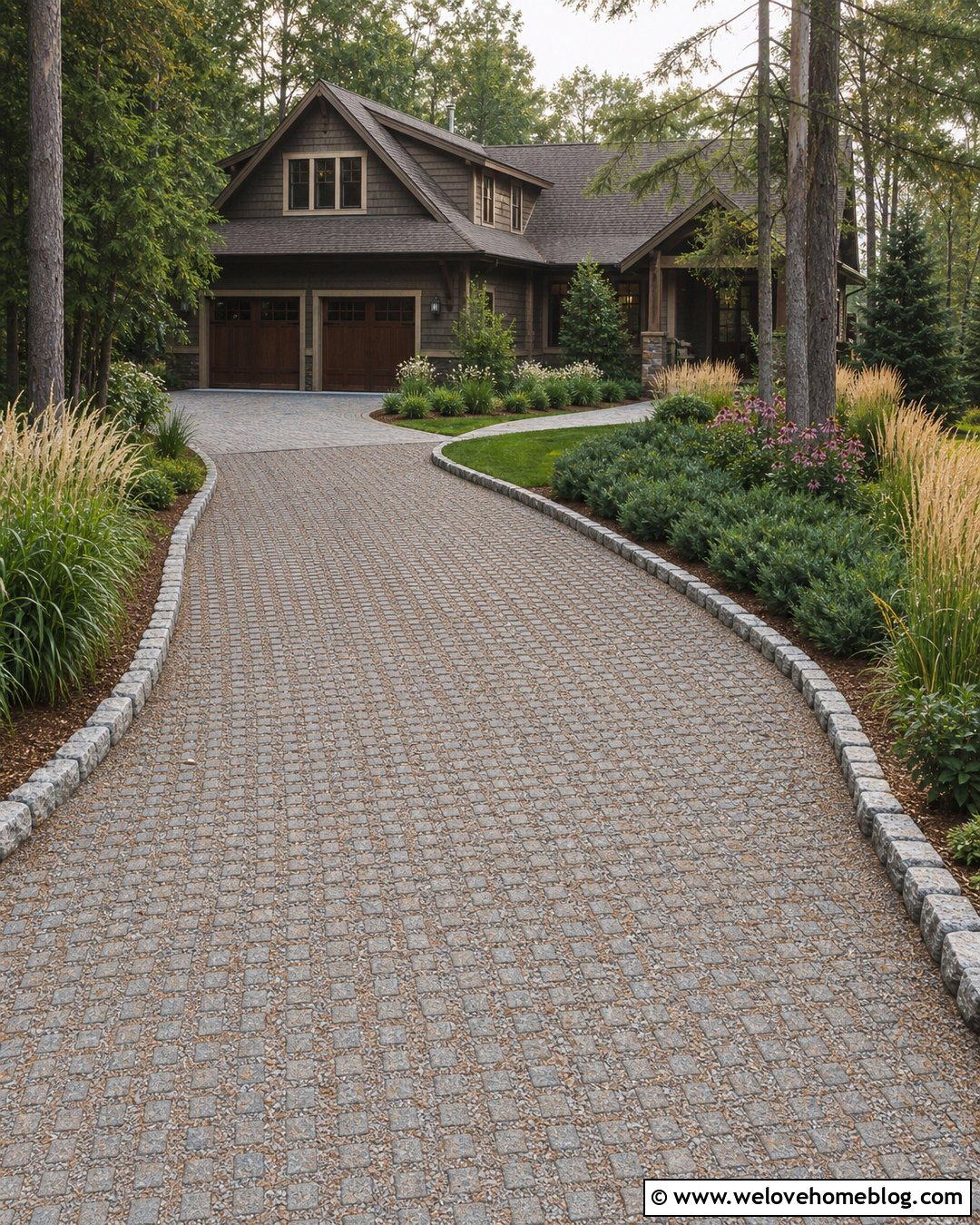
Crushed granite brings natural color variation and a firm-looking texture to a grid-supported driveway. Choose an earthy blend of gray, brown, and muted rose tones for a wide approach to a rustic Craftsman home. A sweeping curve can reveal the house gradually while leaving space for a central lawn or mature tree. Use rough-cut granite blocks as edging so the border relates directly to the driveway fill. Layer the surrounding beds with juniper, feather reed grass, coneflowers, and low-growing ground cover. The angular aggregate should be sized to settle securely into the grid cells without leaving the grid exposed. At the garage, a band of matching granite pavers creates a smoother threshold. This coordinated design feels natural, durable, and appropriate for a wooded residential setting.
8. Limestone Ground Grid Driveway
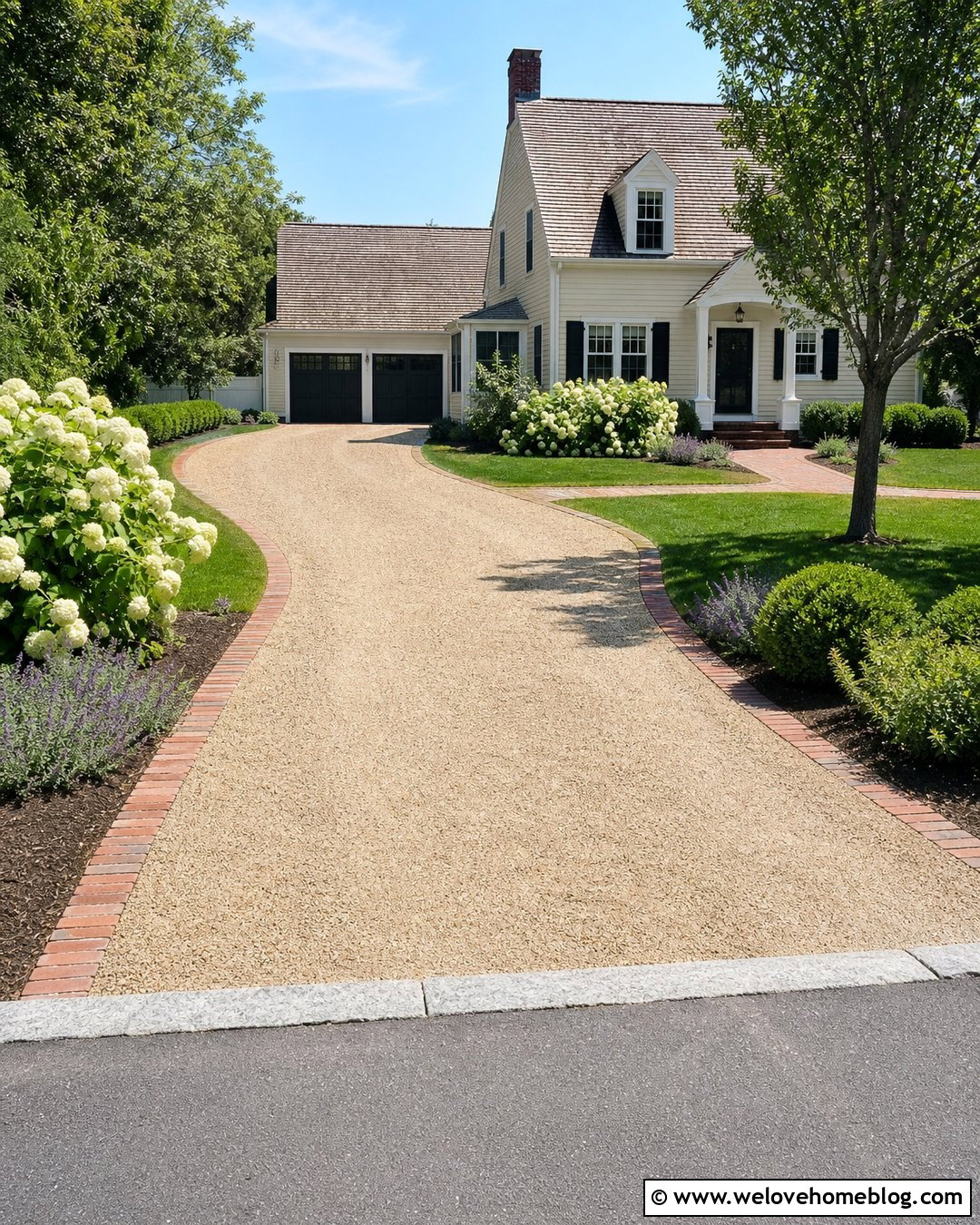
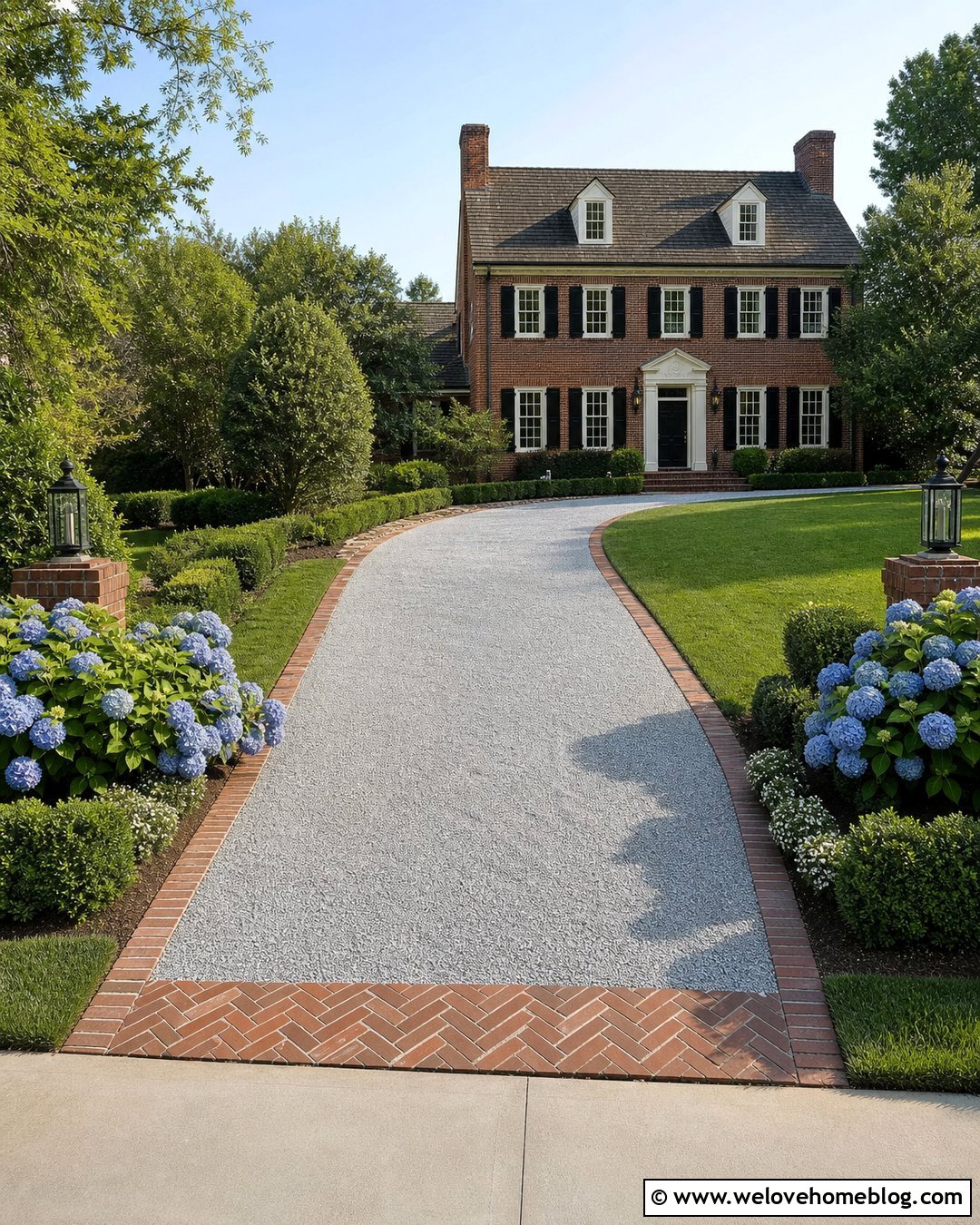
Pale limestone can make a ground grid driveway feel warm and established rather than stark. A buff crushed limestone finish pairs especially well with cream siding, tan brick, or natural stone walls. Create a softly curved driveway leading to a Cape Cod house, then define the outer edge with weathered clay brick. Brick ribbons placed at the entrance and garage add repetition and make the gravel area appear more intentional. Plant hydrangeas, inkberry shrubs, catmint, and a small ornamental tree along the curve. Limestone shade and dust levels vary, so inspect a sample before selecting the final aggregate. With the cells properly filled and the edges firmly restrained, the surface reads as one continuous driveway. The pale color also keeps the front yard feeling open and welcoming.
9. Red Gravel Ground Grid Driveway
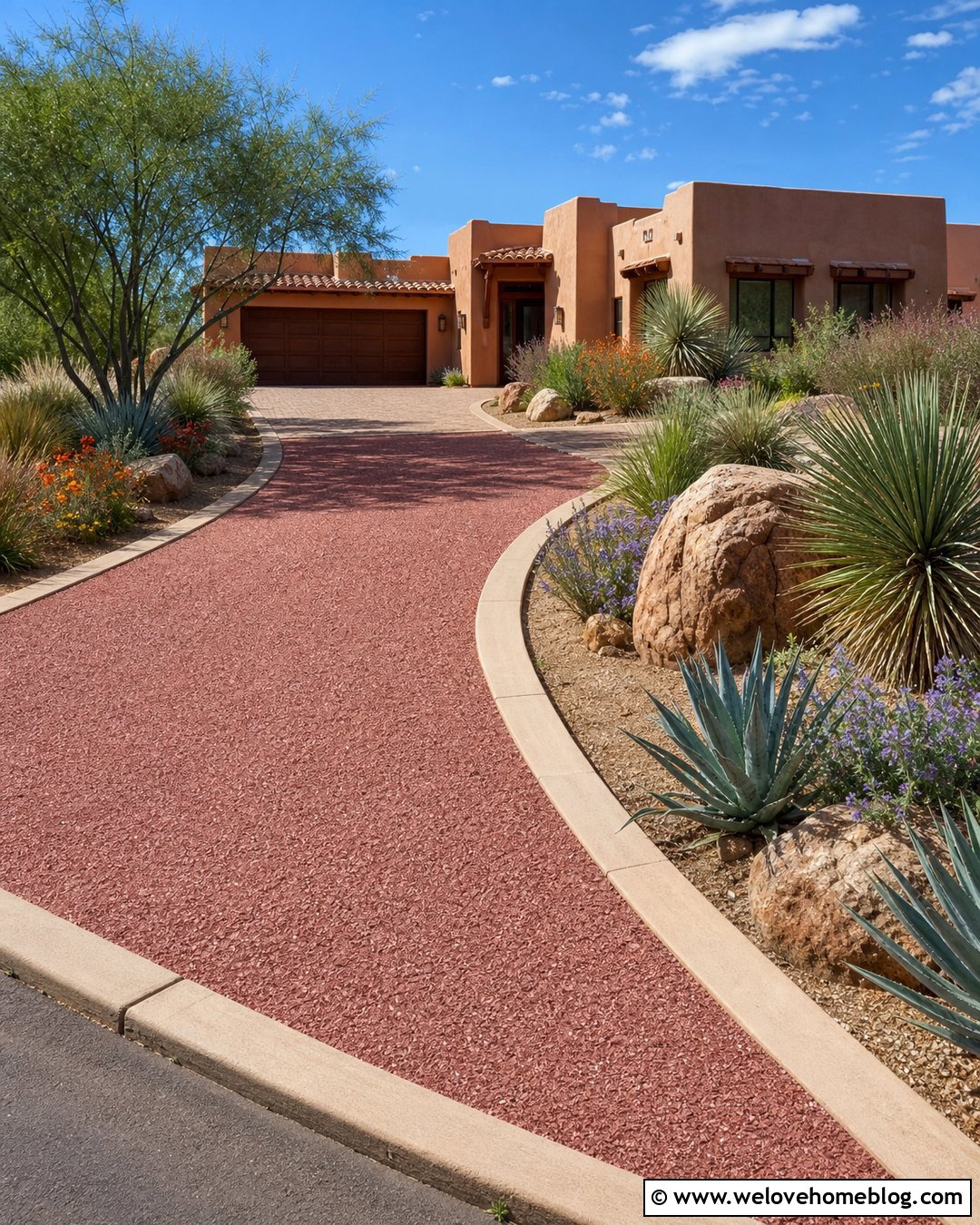
Red granite or crushed brick-toned stone can turn a practical ground grid driveway into a strong architectural feature. This warm surface looks particularly cohesive beside an adobe-inspired, Southwestern, or brown brick house. Use a gently curved layout with tan concrete edging to control the gravel while maintaining a relaxed profile. Desert-friendly planting beds can include agave, yucca, native grasses, flowering sage, and decorative boulders. Leave generous sightlines near the street so the entrance remains open and easy to navigate. A strip of tan pavers at the garage creates a smooth transition and repeats the edging color. Choose angular aggregate rather than oversized decorative rock for better grid filling. The red, rust, and sand tones work together to create a distinctive yet practical driveway landscape.
10. Circular Ground Grid Driveway
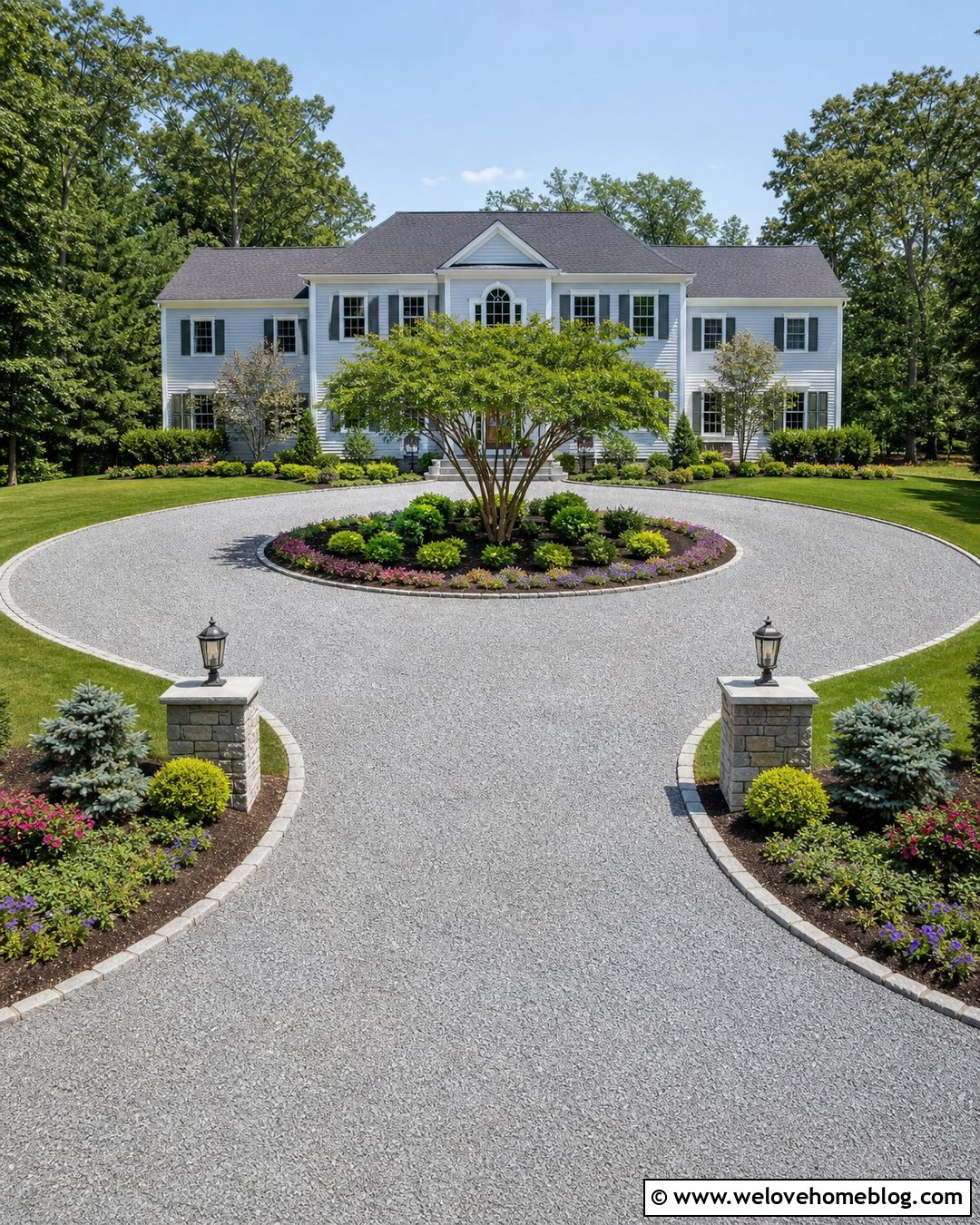
A circular ground grid driveway can create an impressive entrance without relying on an impermeable paved surface. Fill the grid with medium-gray crushed stone and organize the driveway around a large central planting island. Natural stone curbing should define both the inner and outer curves, providing firm edge restraint and a refined outline. In the island, combine a multi-stem ornamental tree with low evergreen shrubs and colorful perennials that will not obstruct views across the driveway. At the street, simple stone pillars can mark the two entry points. A broad walkway should connect the circle to the front door without crossing awkward parking zones. This layout works well in front of a symmetrical Colonial or Georgian-inspired home. Accurate grading helps water move safely away from the house and planted center.
11. Curved Ground Grid Driveway
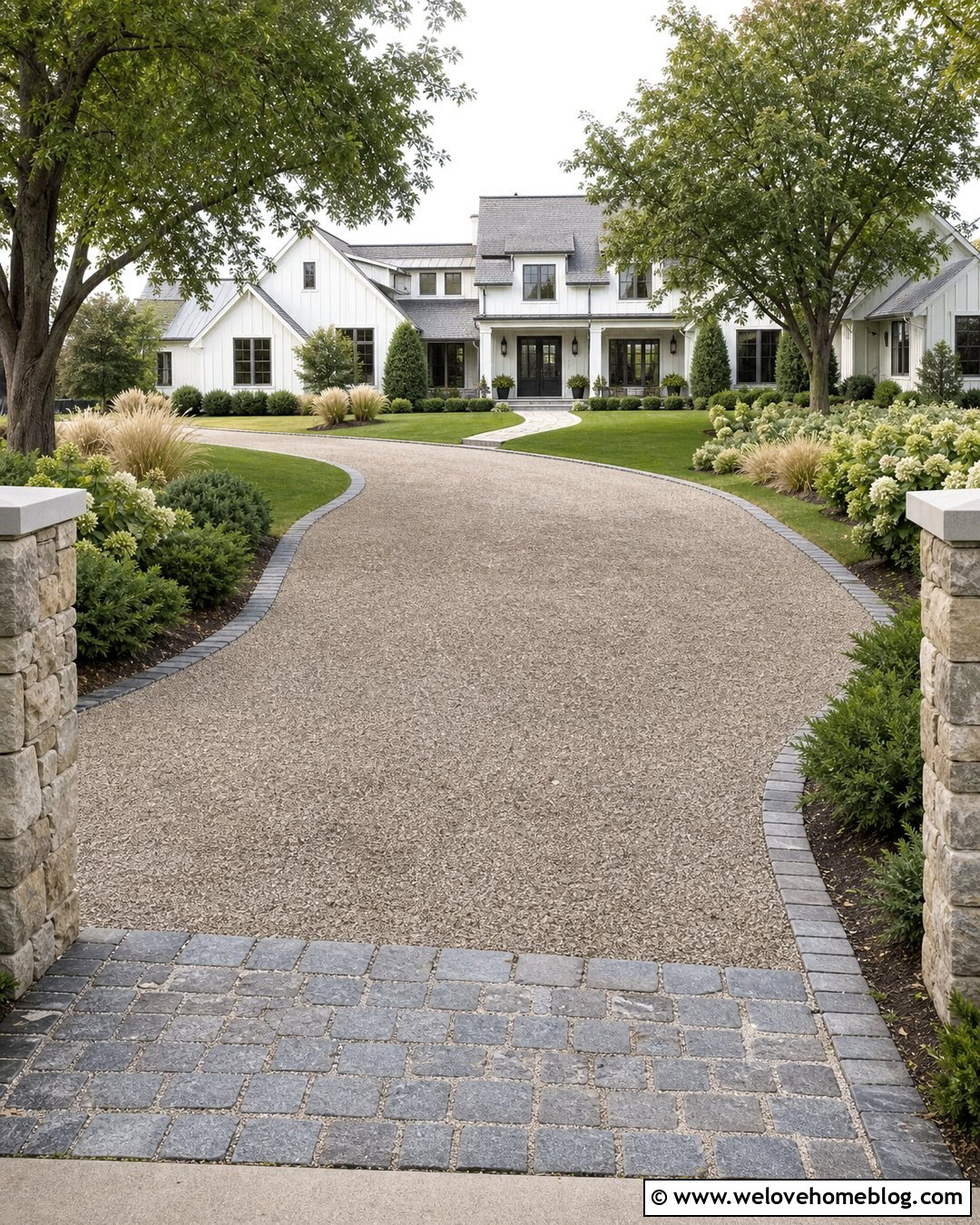
A curved driveway can make a short approach feel longer and help the layout move around existing trees or landscape features. Use a flexible ground grid filled with warm gray gravel to create a smooth arc toward a modern farmhouse. Dark cobblestone edging gives the loose-stone surface a strong outline and protects adjacent planting beds. Follow the curve with drifts of ornamental grasses, compact hydrangeas, and low juniper rather than placing isolated plants along the edge. A mature shade tree can become part of the composition, provided the excavation and base design protect its root zone. Add a wide cobblestone apron where the driveway meets the road. Together, the restrained gravel color, continuous border, and layered planting create a complete approach that feels natural rather than rigid.
12. Sloped Ground Grid Driveway
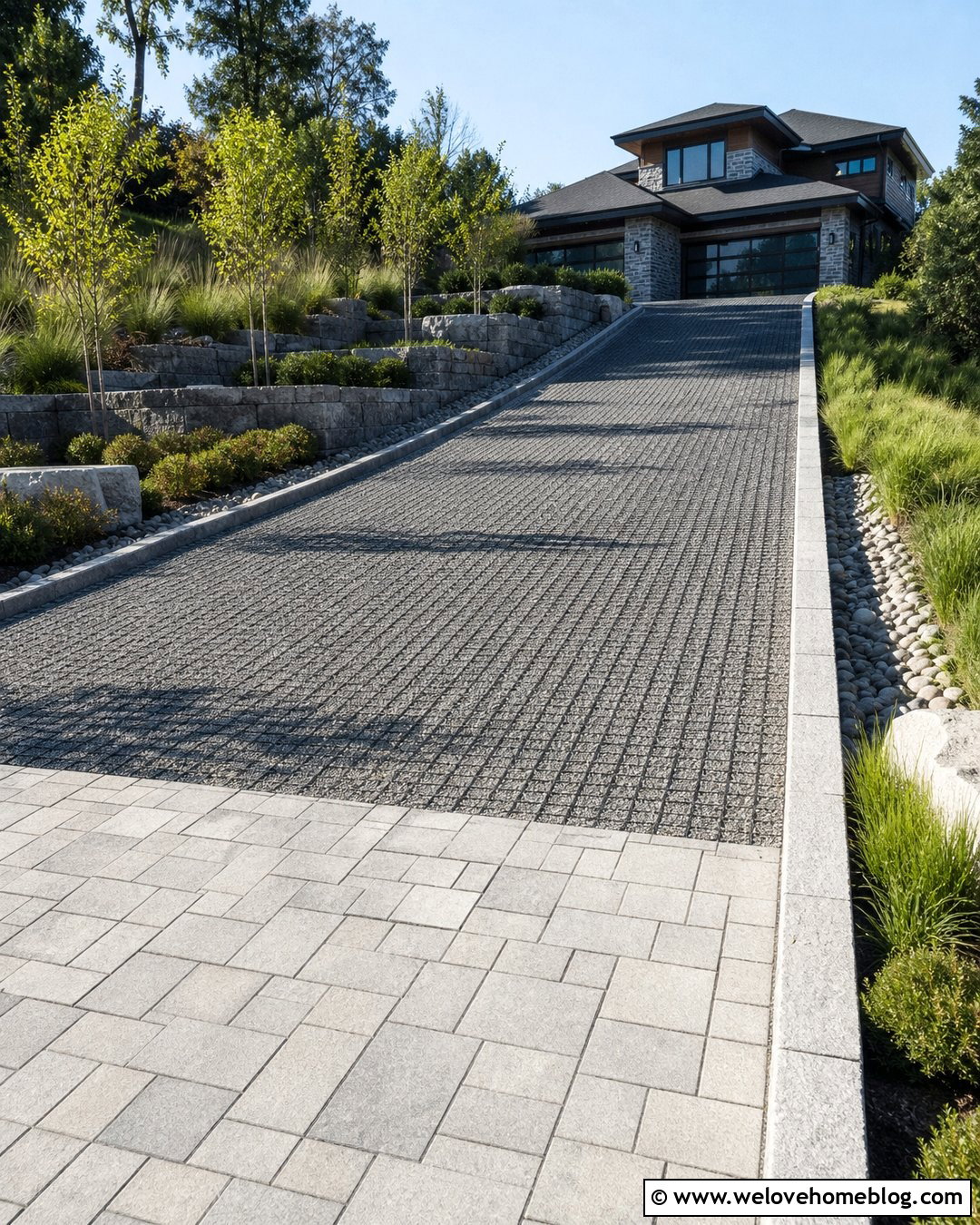
Sloped sites require more than an attractive gravel color. The base, drainage, edge restraint, grid anchoring, and manufacturer’s slope limits must all suit the property. For a gentle incline, consider a textured ground grid filled with angular gray limestone that resists movement better than smooth, rounded stone. Strong granite curbs can run along both edges, while a permeable paver apron stabilizes the entrance and garage transition. Direct surrounding runoff toward a landscaped swale or another approved drainage area rather than allowing water to rush down the driving surface. Deep-rooted ornamental grasses and low shrubs can stabilize the adjacent beds. A straight approach keeps maneuvering simple. Before construction, have a qualified local professional evaluate steep grades, difficult soil, erosion concerns, and drainage near the home’s foundation.
13. Farmhouse Ground Grid Driveway
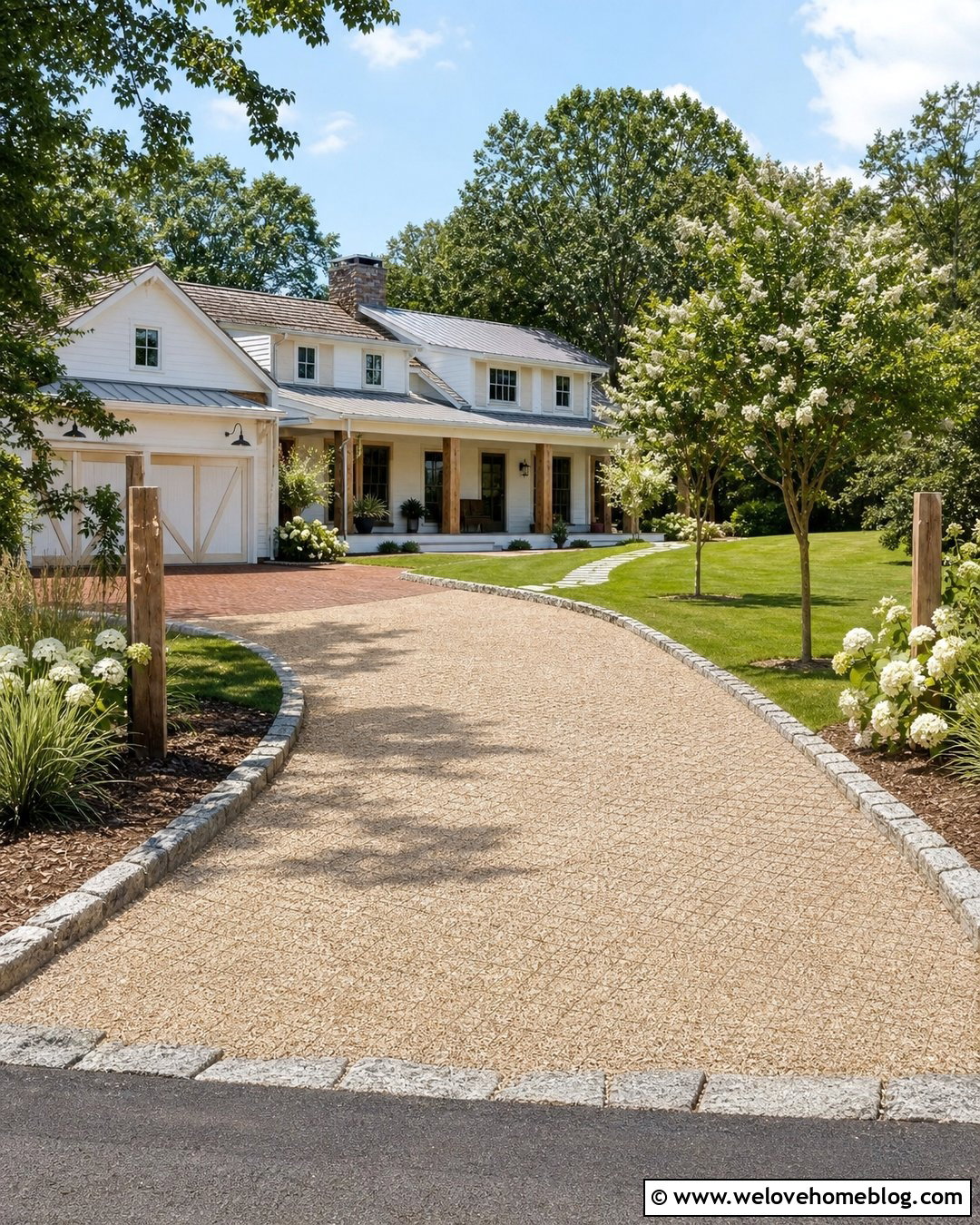
Imagine a warm gravel lane leading toward white siding, a deep porch, and a simple gabled roof. A farmhouse ground grid driveway can achieve that familiar country appearance while keeping the aggregate more stable. Choose tan crushed stone with subtle gray variation and install it in a wide, gently curving layout. Weathered granite blocks or heavy timber can define the edges, depending on the home’s details and maintenance preferences. Plant rows of native grasses, white hydrangeas, and small flowering trees along selected sections instead of lining the entire drive too formally. At the entrance, use simple timber posts with downcast lights and a modest address marker. A brick apron near the garage adds an older, collected character. The finished design should feel practical, open, and connected to the landscape.
14. Modern Ground Grid Driveway
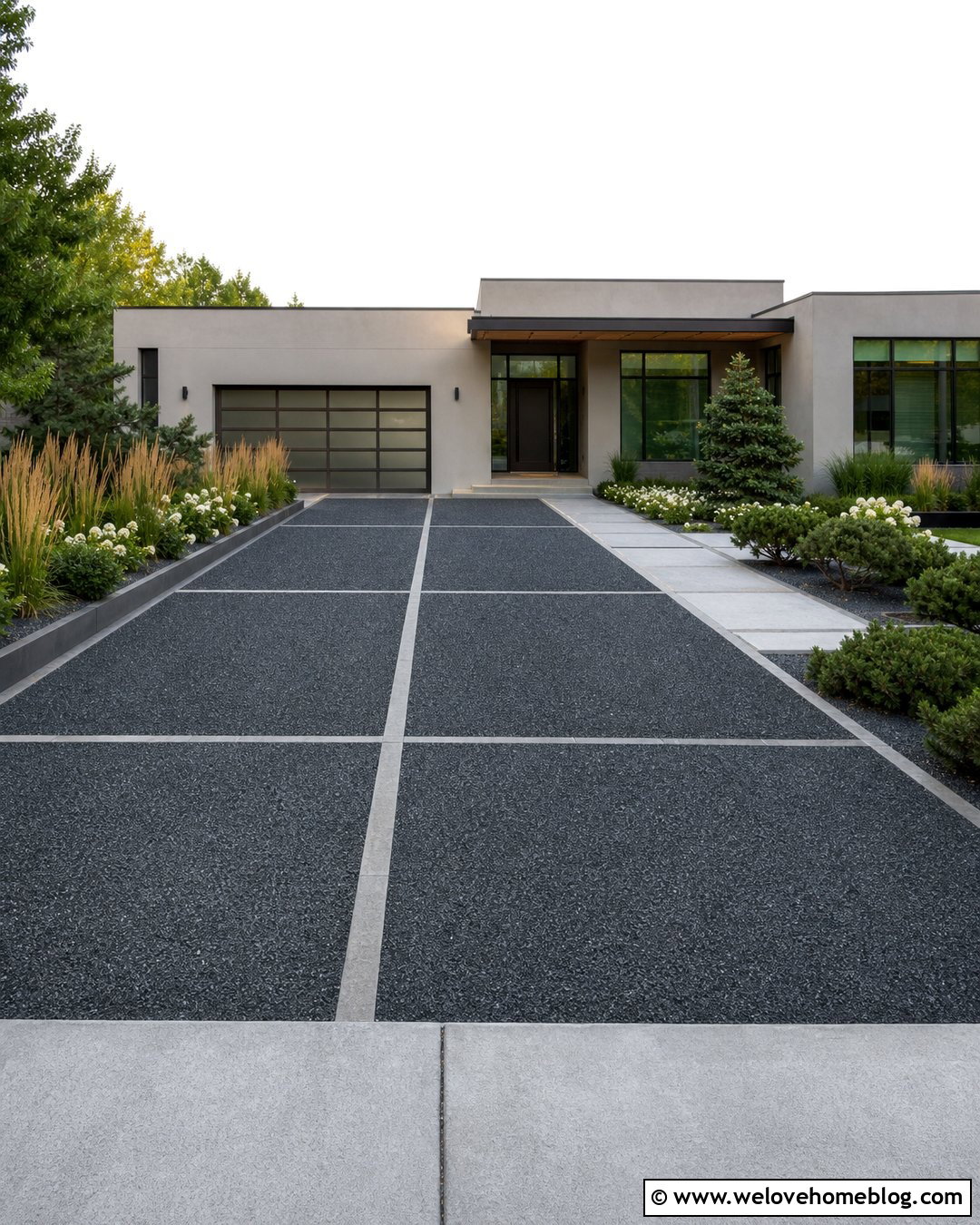
Clean geometry helps a ground grid surface complement contemporary architecture. Use dark gray crushed granite inside a rigid cellular system and form a broad, straight driveway divided by narrow concrete bands. These bands can mark parking bays, strengthen transitions, and visually connect the driveway to the home’s walkway. Choose flush steel or concrete edging so the perimeter remains sharp without creating a bulky border. Keep the landscaping simple but not empty. Rectangular beds with feather reed grass, dwarf pines, and low white flowers can soften the hard lines. A flat-roofed home with light stucco, natural wood cladding, and black windows completes the composition. From the curb, the driveway should appear even and uncluttered, with the hidden grid doing its work beneath the carefully selected aggregate fill.
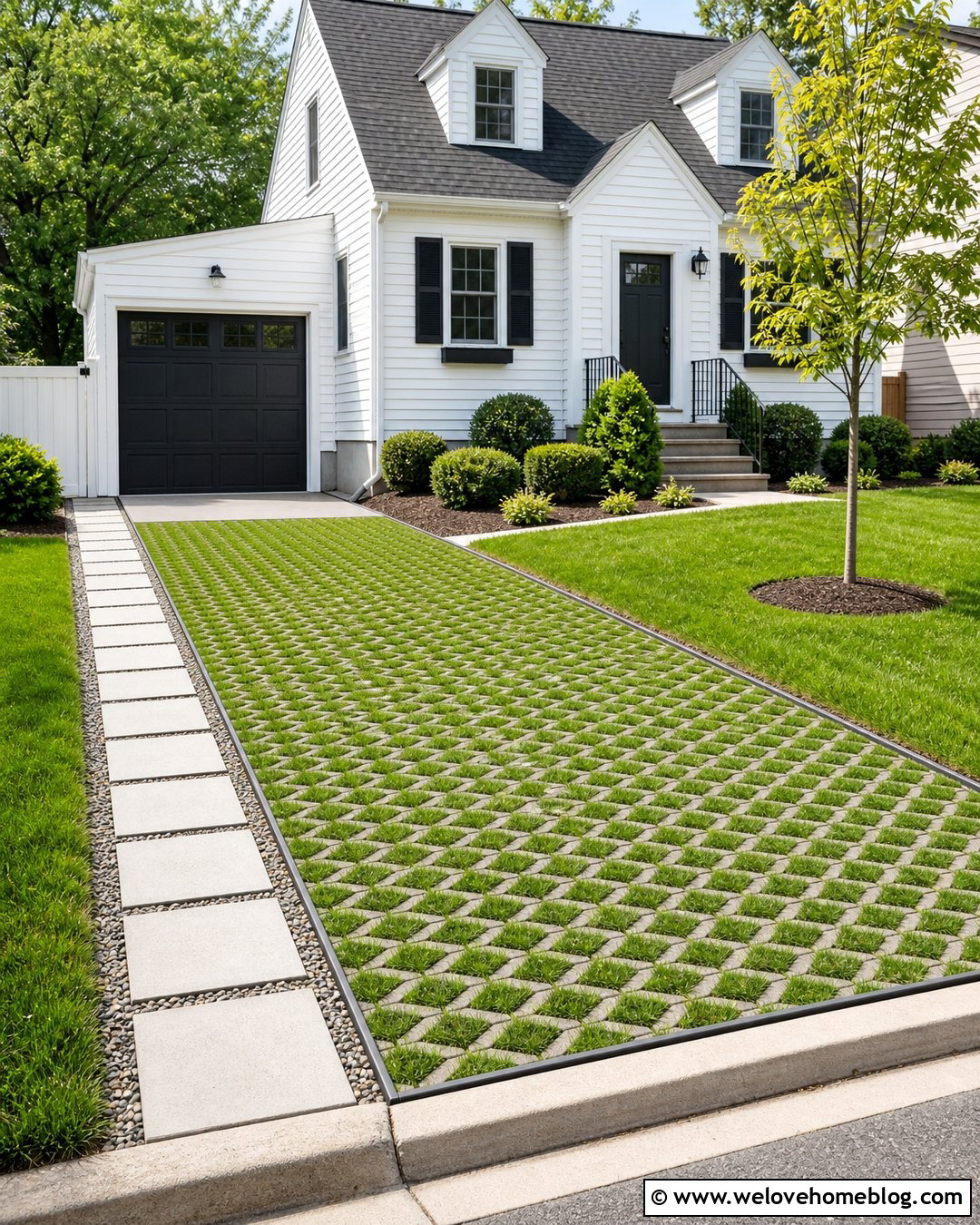
15. Cottage Ground Grid Driveway
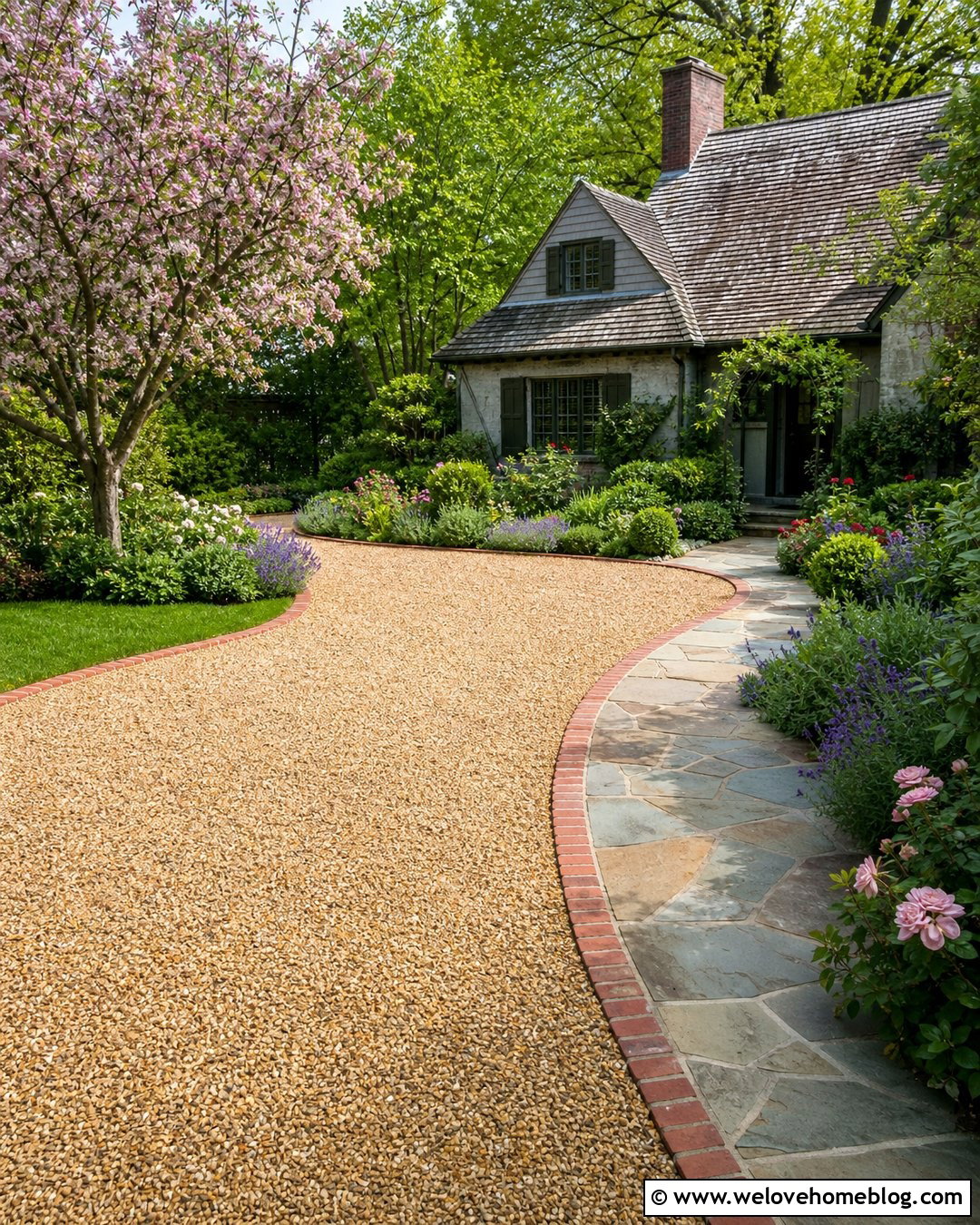
Soft curves and warm materials make a grid-supported driveway feel right at home beside a cottage. Fill the cells with honey-colored pea gravel or small rounded gravel approved for the selected system. Then shape the driveway into a narrow, curved approach with a small parking area near the house. Reclaimed-looking brick edging adds a traditional boundary and keeps the gravel away from dense planting beds. Use lavender, catmint, roses, dwarf evergreens, and a flowering tree to frame the route without reducing visibility. An irregular flagstone walkway can branch from the parking area toward the front door. Avoid crowding the surface with too many colors; the warm gravel, aged brick, and abundant greenery already provide plenty of detail. This ground grid look feels informal, charming, and carefully planned.
16. Ground Grid Driveway With Paver Border
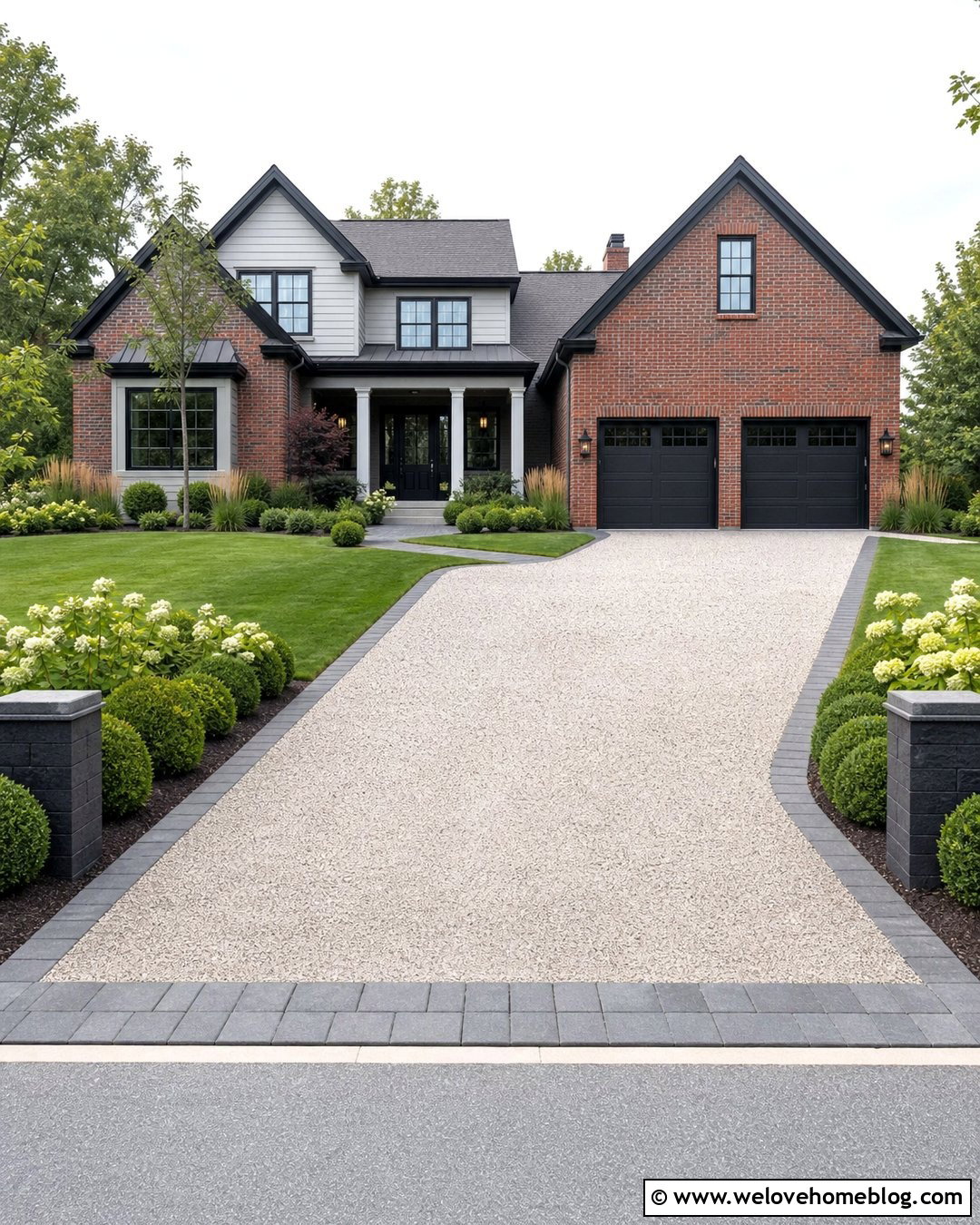
A paver border can transform a basic ground grid driveway into a more finished architectural feature. Start with light gray crushed limestone inside the grid, then surround it with a double row of charcoal concrete pavers. The dark frame clearly defines the driveway and creates reliable separation from lawns and planting beds. Add a matching paver ribbon across the entrance and another in front of the garage to repeat the detail. A broad, straight layout complements a brick-and-siding transitional home. Keep the planting balanced with rounded boxwoods, panicle hydrangeas, and upright ornamental grasses. The walkway can use the same charcoal pavers for a connected exterior palette. This approach is especially useful when you want the relaxed texture of gravel but prefer the crisp outline associated with paved driveways.
17. Ground Grid Driveway With Stone Edging
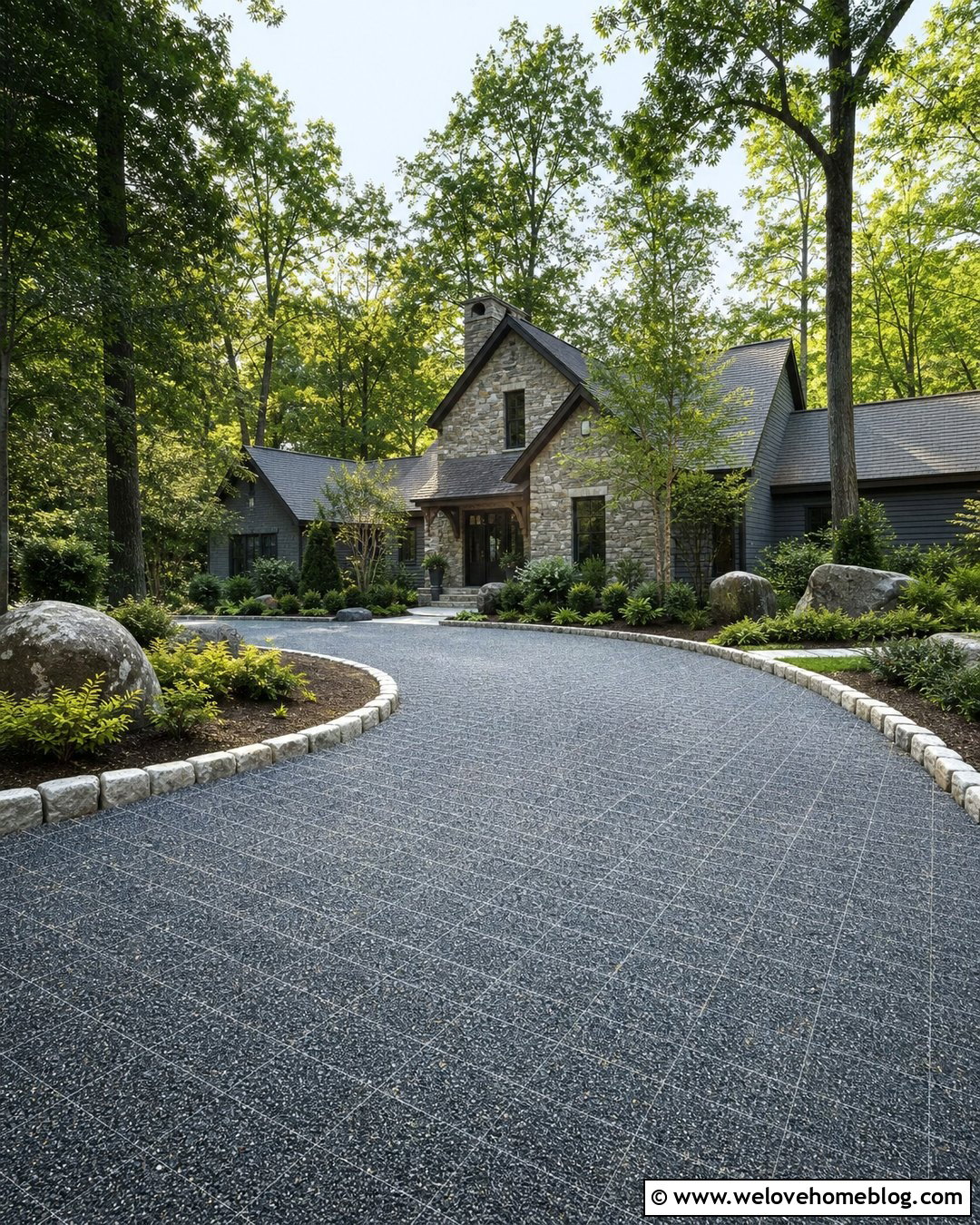
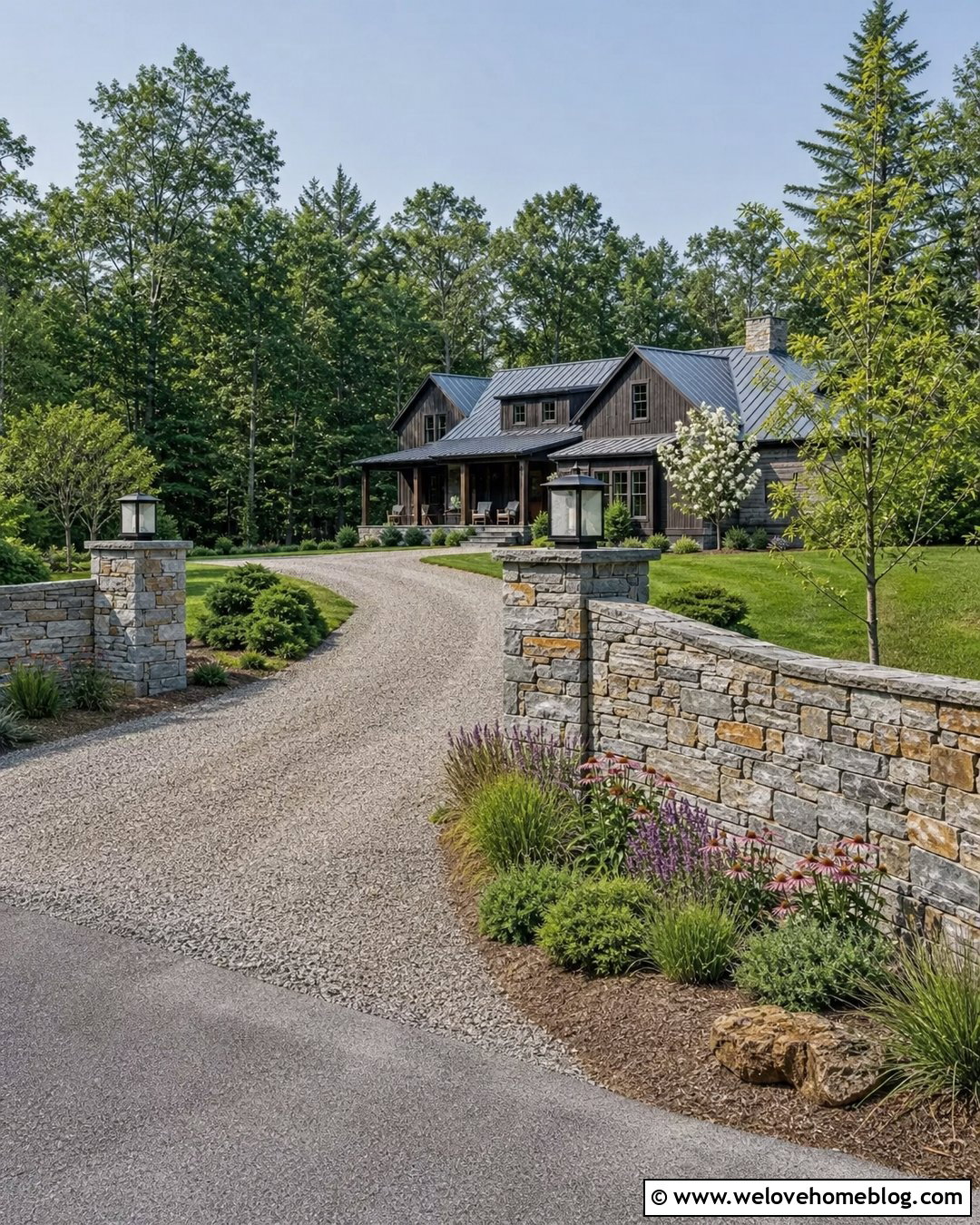
Natural stone edging gives a gravel-filled ground grid a substantial, landscape-focused appearance. Choose blue-gray crushed stone for the driveway and use chunky fieldstone curbs along a wide, sweeping curve. The irregular border works well beside a wooded property, stone-clad house, or rustic contemporary home. Set the stones firmly and keep their tops consistent enough to avoid creating an untidy edge. Behind them, layer ferns, native shrubs, sedges, and woodland ground covers that suit the local growing conditions. A few larger boulders can mark the driveway entrance, but they should remain safely outside vehicle clearance areas. Near the house, transition to large-format bluestone pavers for the walkway. The shared blue-gray palette allows the driveway, edging, landscaping, and architecture to feel like one coordinated design.
18. Ground Grid Driveway With Rain Garden
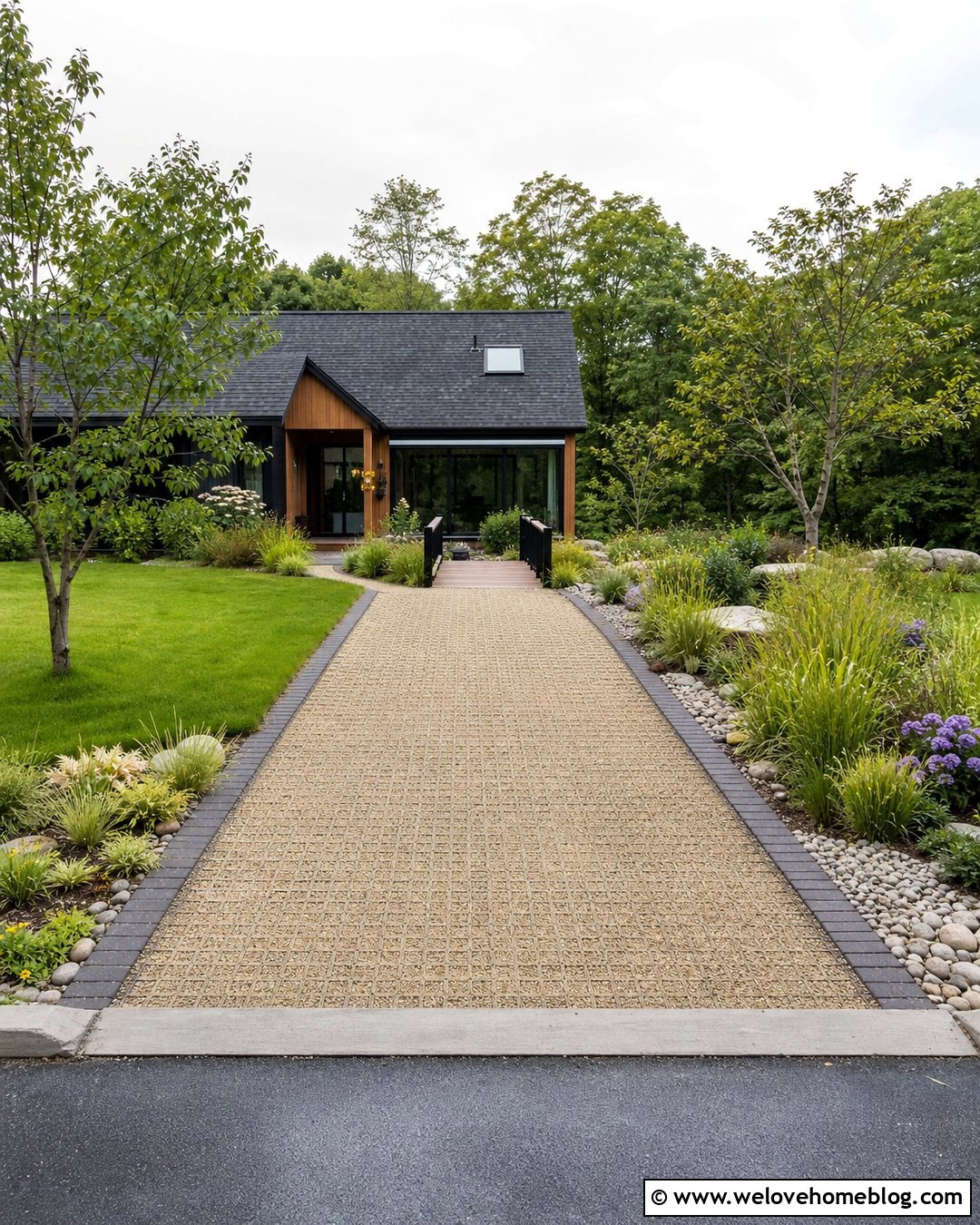
A rain garden can turn driveway drainage into an attractive part of the front landscape. Build a gravel-filled ground grid driveway with a gentle cross-slope that directs surface water toward a planted depression, subject to a site-specific drainage plan. Medium tan crushed stone keeps the driveway neutral, while a dark brick border defines its edge. Fill the rain garden with moisture-tolerant native grasses, flowering perennials, and shrubs selected for the region. Decorative river stone can line the inlet area, but it should remain outside the vehicle surface. A small bridge-style walkway or stepping path may connect the driveway to the front entrance. This design suits an eco-conscious ranch or contemporary cottage. Keep the rain garden an appropriate distance from foundations, utilities, septic components, and neighboring property.
19. Ground Grid Driveway Around A Tree
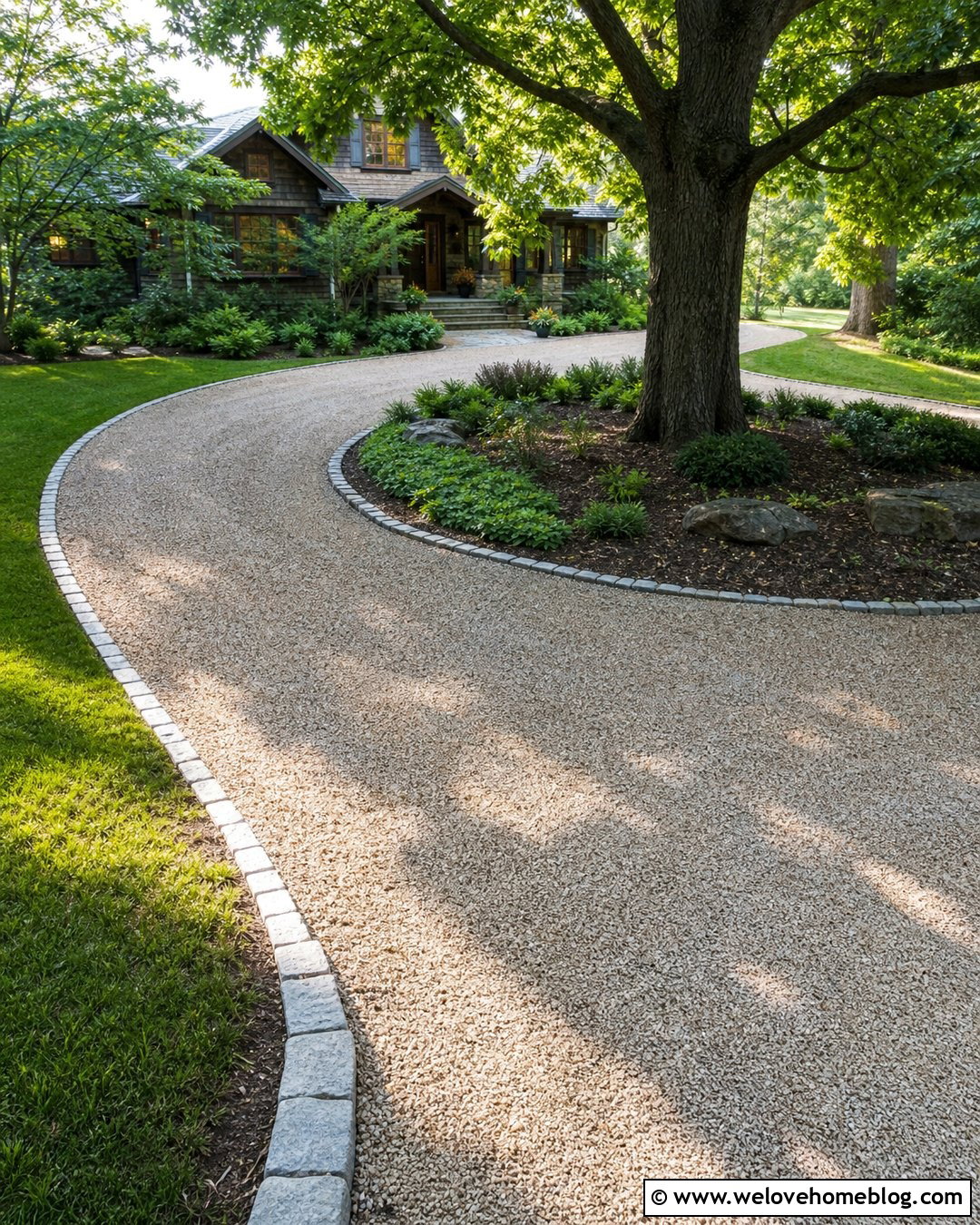
A mature tree can become the focal point of a ground grid driveway when the layout respects its roots. Rather than paving a straight line through the yard, curve the driveway around a generous planted island. Fill the grid with light brown crushed gravel and frame both sides with low granite setts. The central island can contain mulch, shade-tolerant ground cover, and a few low plants placed outside the tree’s trunk flare. Avoid raising soil around the trunk or excavating major roots simply to fit the driveway. An arborist and site professional can help determine an appropriate protection zone and base construction. This layout looks especially natural in front of a Craftsman or wooded ranch home. The completed approach preserves greenery while providing an organized, reinforced driving route.
20. Ground Grid Parking Pad Driveway
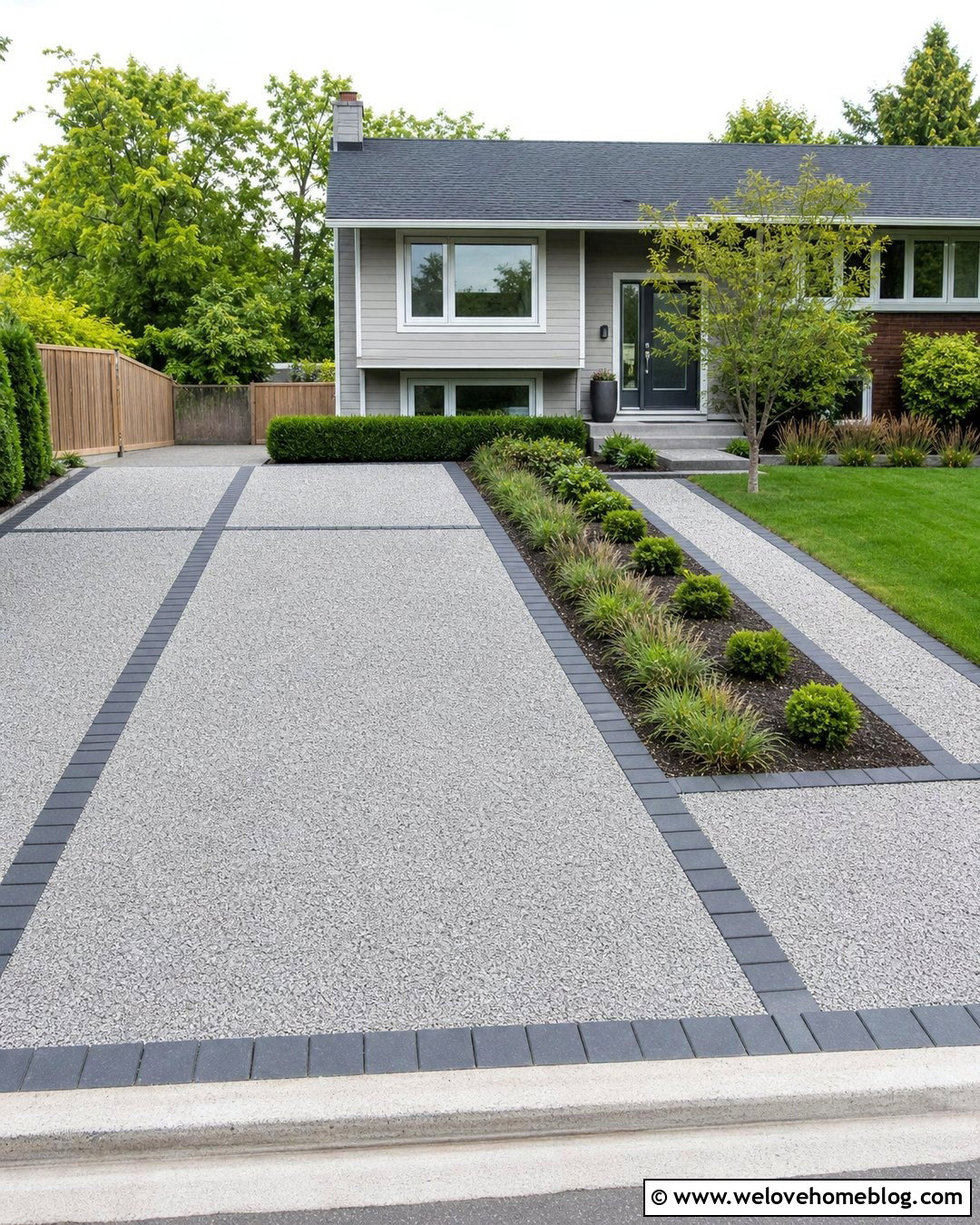
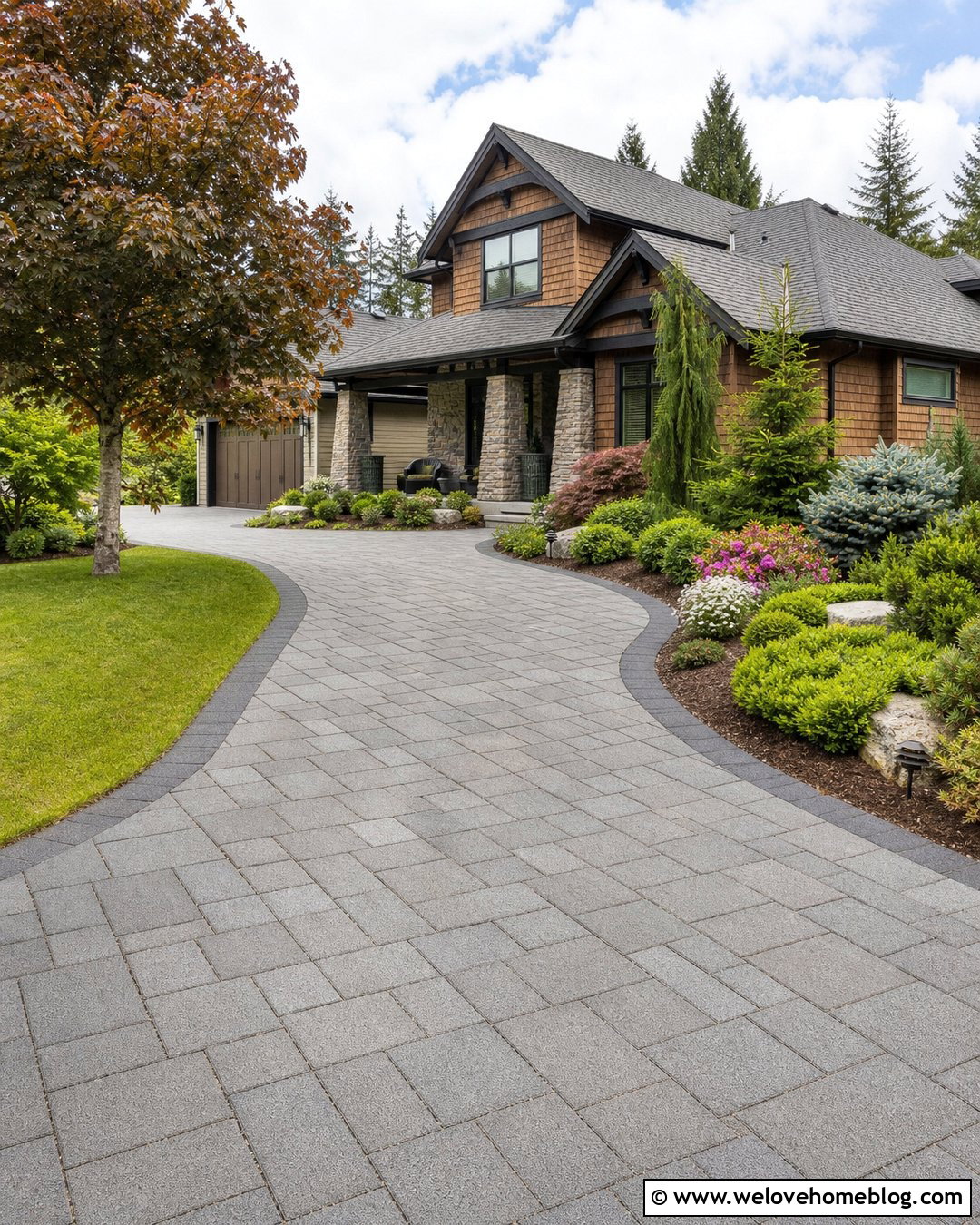
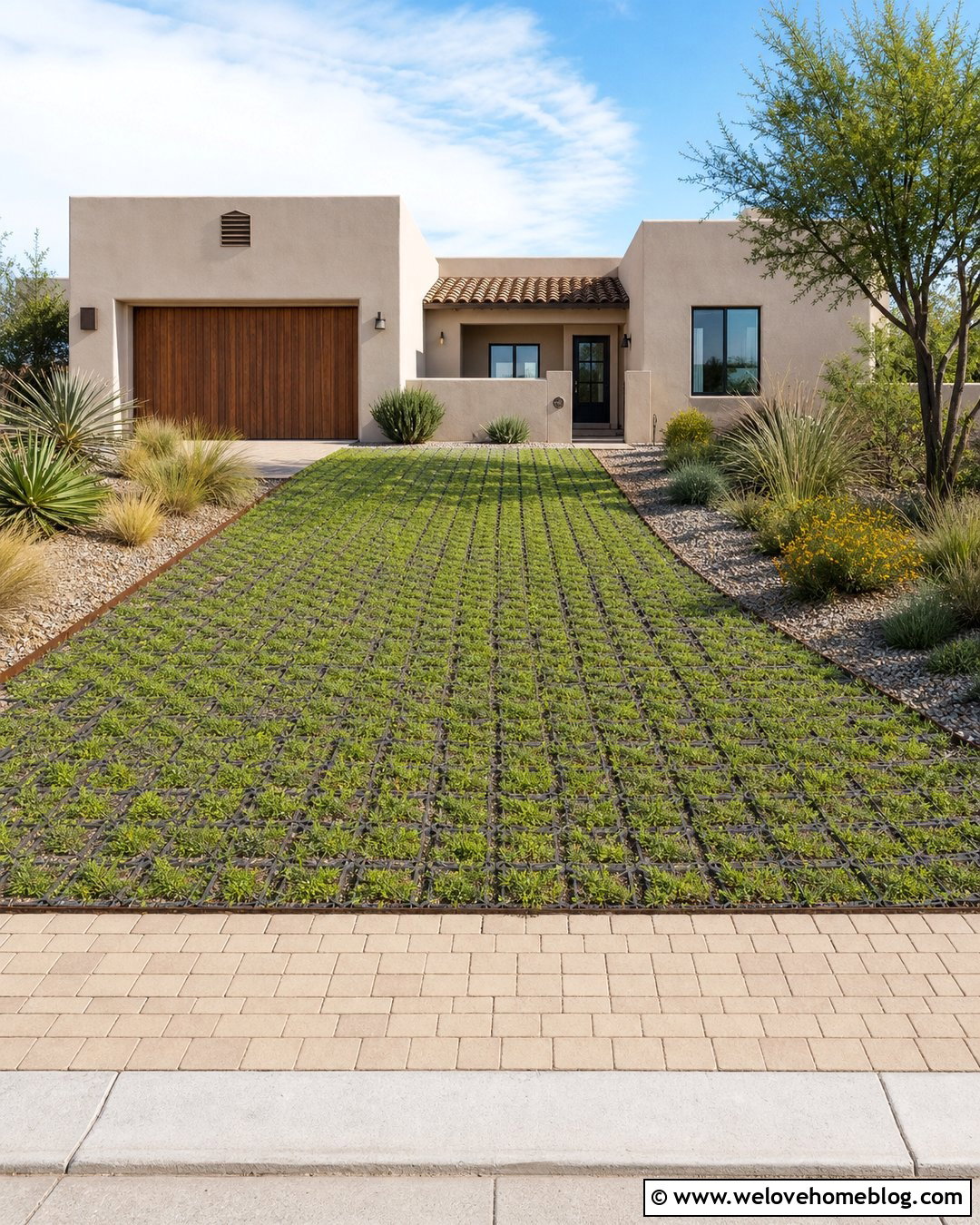
A ground grid parking pad can add useful space without making the entire front yard look paved. Extend a short driveway with a rectangular grid section filled with matching gray crushed granite. Separate the new pad from the existing surface with a charcoal paver ribbon, then use the same pavers around its outer edge. Keep a grass or planting strip between the parking area and front walkway so the yard retains some softness. Compact shrubs, ornamental grasses, and a small tree can screen the pad without limiting access or visibility. Match the fill color to the existing driveway whenever possible for a seamless result. Before installation, verify property setbacks, utility locations, drainage requirements, curb-cut rules, and local parking regulations. The finished pad should look intentional, not like an improvised gravel extension.
Conclusion:
The best ground grid driveway balances surface strength, drainage, appearance, and everyday convenience. Gravel color is important, but the full design also depends on driveway shape, base construction, edging, transitions, planting, and the architecture of the house. Angular stone creates a firm, textured finish, while grass-filled grids help larger parking areas blend into the yard. Curved routes, circular layouts, contrasting paver borders, and rain gardens can make a functional surface feel thoughtfully landscaped. Always select a vehicle-rated system and follow its installation requirements, particularly on slopes or challenging soil. With careful planning, these **20 Ground Grid Driveway Ideas** can inspire a stable, attractive, and welcoming residential entrance.

Related posts:
Leave a Reply