
Solar features can make a driveway safer, more attractive, and easier to navigate without adding extensive underground wiring. The best **solar driveway ideas** combine practical lighting or energy systems with the driveway’s surface, shape, borders, entrance, and surrounding landscape. Solar fixtures perform best when their panels receive reliable daylight, while batteries store that energy for nighttime use. Shading, cloudy weather, snow, and dirt can reduce charging, so thoughtful placement matters. () From affordable marker lights beside gravel to solar canopies that support home energy needs, there is an option for nearly every property and budget. Use these complete driveway looks to find functional, curb-friendly inspiration among the following **20 Solar Driveway Ideas**.

1. Solar Driveway Paver Lights
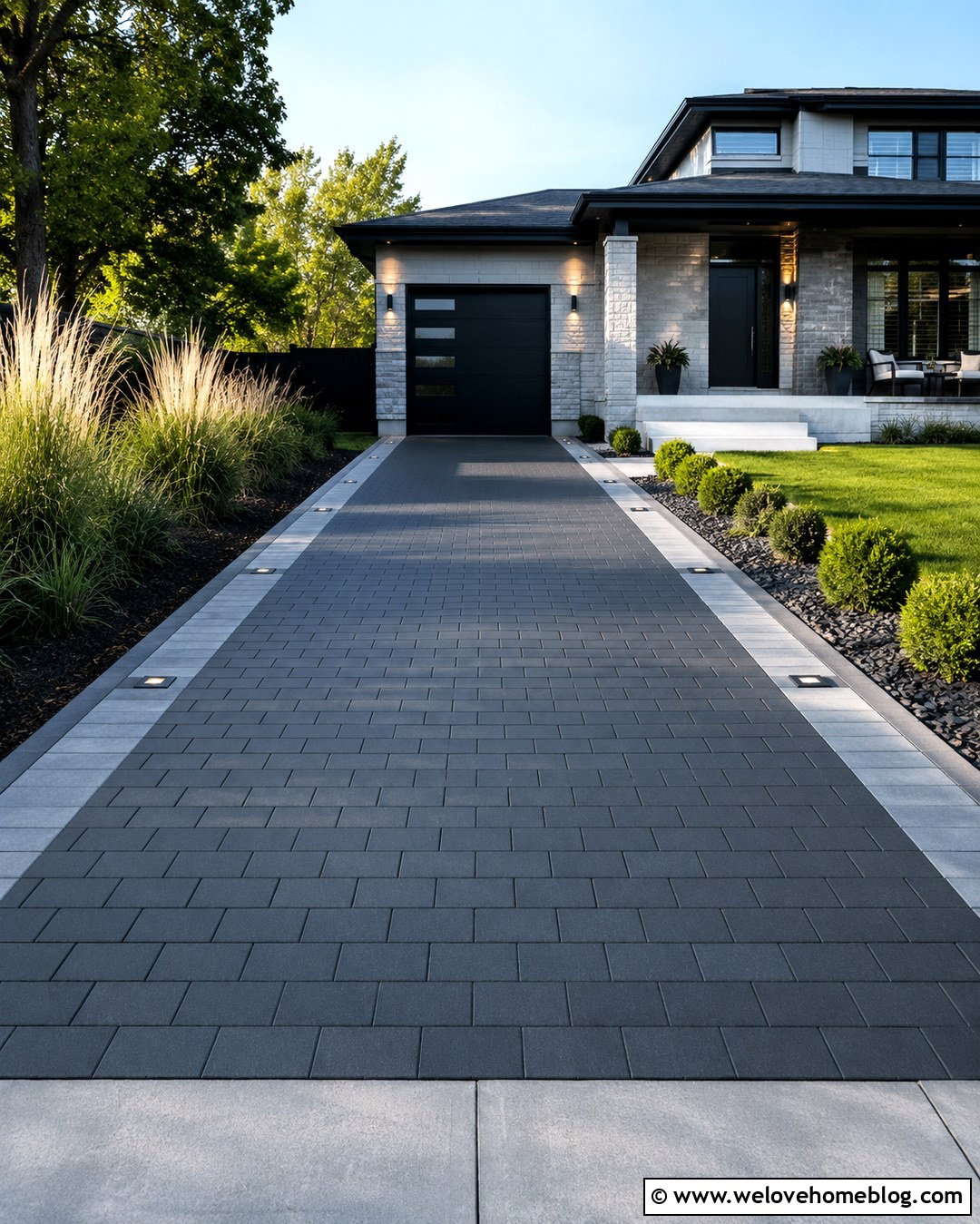
Recessed solar paver lights create a clean, built-in appearance that works especially well with a modern driveway. Start with charcoal concrete pavers arranged in a running bond pattern. Install square solar lights at measured intervals along both edges, keeping them outside the main tire paths whenever possible. A pale gray border can define the driveway while connecting it visually to the front walkway. Finish the design with clipped ornamental grasses, compact evergreen shrubs, and a simple concrete path leading to a contemporary house. Choose fixtures specifically rated for wet outdoor conditions and potential vehicle loads. Removable units are helpful because batteries and housings may eventually require maintenance. The finished driveway feels streamlined during the day and gains a clearly defined approach after sunset.
2. Solar Driveway Edge Lights

For an easy upgrade, line a straight driveway with low solar edge lights rather than cutting into the surface. A black asphalt driveway provides strong contrast against light granite curbing and soft green planting beds. Position the fixtures just behind the curb so tires, lawn equipment, and snow-removal tools are less likely to damage them. Repeating the lights at consistent intervals creates a balanced approach without making the entrance feel overdecorated. White hydrangeas, dwarf boxwoods, and a neatly trimmed lawn soften the dark pavement around a traditional colonial home. Make sure each solar panel faces an open section of sky instead of sitting beneath dense foliage. This complete design offers a crisp border, simple maintenance, and better visual guidance along the full driveway.
3. Solar Driveway Gate Lights

A driveway gate becomes more welcoming when its posts include solar-powered lanterns. Pair a curved pea gravel driveway with a black metal swing gate and substantial fieldstone pillars. Mount one appropriately scaled lantern on each pillar, creating a strong entrance that remains attractive even when the lights are off. Cobblestone edging keeps loose gravel contained, while lavender, catmint, and compact flowering shrubs frame the approach. Continue the curve through an open lawn toward a warm white modern farmhouse. Since the entrance may be far from an electrical connection, solar fixtures can simplify installation. Avoid oversized lamps that overwhelm the pillars or direct glare toward the road. A coordinated gate, surface, border, and planting plan gives the property a polished country character from the curb.
4. Solar Driveway Pillar Lights

Brick pillars topped with solar lights suit a classic driveway leading to a craftsman or traditional home. Use clay brick pavers in a herringbone pattern for the surface, then repeat the same brick on two low entrance pillars. Dark bronze solar lanterns add contrast and help connect the entrance with the home’s exterior hardware. A soldier-course brick border creates a finished edge, while curved planting beds filled with azaleas, ferns, and low evergreens prevent the pillars from looking isolated. Keep nearby shrubs below the solar panels so they do not interfere with charging. If the driveway is wide, add a central brick apron between the pillars to make the transition from the street feel intentional. This arrangement brings architecture, lighting, and landscaping into one cohesive entrance.
5. Solar Driveway Bollard Lights
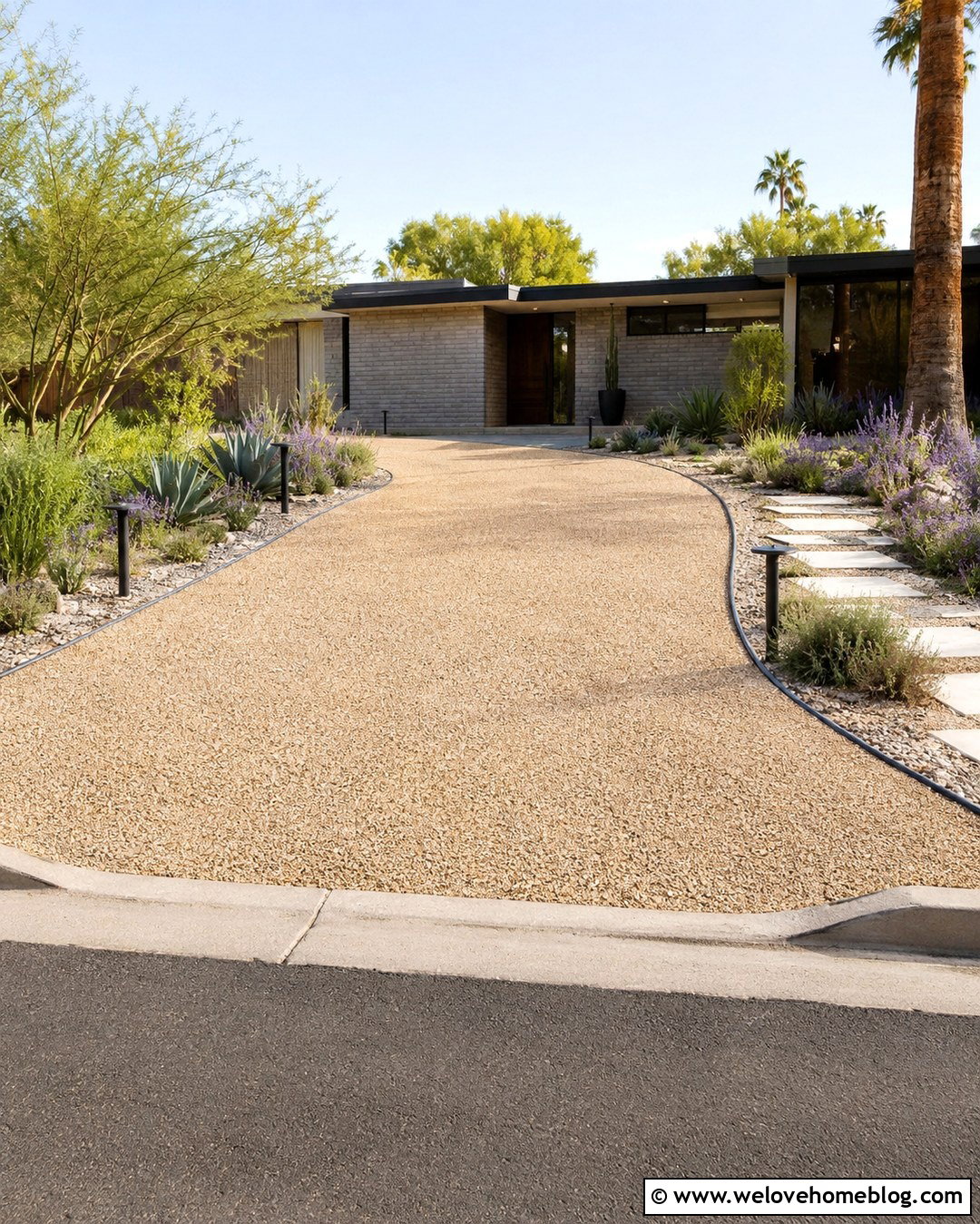
Slim solar bollards can add structure to a long driveway without creating a row of visually heavy fixtures. Combine a pale resin-bound gravel surface with a gently curved layout leading toward a low-profile midcentury modern house. Use matte black cylindrical bollards along the outside curve, spacing them evenly behind a narrow steel edge. Drought-tolerant grasses, agave, salvia, and decorative gravel can fill the adjoining beds, creating a water-wise landscape that complements the streamlined lighting. Choose shielded bollards that direct illumination downward rather than outward into neighboring properties. Responsible outdoor lighting is most effective when it is targeted, controlled, and no brighter than necessary. () The result is an orderly driveway that feels contemporary without depending on elaborate masonry or extensive planting.
6. Solar Driveway Motion Lights

Motion-activated solar lights are useful when a driveway needs occasional brightness rather than continuous illumination. Build the look around a wide brushed concrete driveway with a straight approach to a suburban ranch house. Mount adjustable solar motion lights on the garage corners and place smaller matching fixtures on short entrance posts near the street. A charcoal paver border prevents the concrete from appearing too plain, while rounded shrub beds and two small ornamental trees frame the facade. Angle every fixture toward the driveway and away from bedroom windows or neighboring yards. Motion controls reduce unnecessary operating time and can preserve stored battery power. They also keep the daytime design uncluttered because fewer fixtures may be needed. The entire layout feels practical, approachable, and suitable for a busy family property.
7. Solar Driveway Brick Lights

Solar brick lights can blend naturally into a driveway border when their size and color coordinate with the surrounding masonry. Create a light gray poured-concrete driveway with a curved brick ribbon running along both sides. Place rectangular solar lights within selected sections of the red clay brick border rather than scattering them across the concrete. Repeat the brick around a nearby walkway and front planting bed to make the lighting feel integrated. Flowering dogwoods, hostas, and low hedges complement a Cape Cod house with white siding and dark shutters. Leave open space above the miniature solar panels and provide drainage around each fixture. This design offers the visual warmth of brick, the simplicity of concrete, and a subtle lighting system that does not dominate the daytime curb appeal.
8. Solar Driveway Address Sign

A solar address sign can become the organizing feature of a compact driveway entrance. Pair a straight exposed-aggregate driveway with a low limestone wall that holds large, easy-to-read house numbers. Install a small solar panel on the wall’s sunny side and use downward-facing illumination over the numbers. Dark concrete edging gives the warm aggregate surface a sharper outline, while native grasses and flowering perennials soften the base of the sign. Continue the same stone around a mailbox or front walkway for a coordinated appearance. A modern craftsman house in the background completes the look. Keep tall plants away from the address panel so emergency visitors and delivery drivers have a clear view. The result feels customized without requiring a large gate, tall columns, or complicated entrance structure.
9. Solar Driveway Lantern Posts

Traditional solar lantern posts can provide a formal rhythm along a circular driveway. Use warm-toned cobblestone for the driving surface and a contrasting granite border around the central lawn. Position taller black lantern posts near the entrance and shorter matching fixtures along the inner circle, avoiding excessive numbers that could make the landscape feel crowded. A mature shade tree or tiered fountain can anchor the center, surrounded by neatly clipped boxwood and seasonal flowers. The driveway should lead naturally toward a brick Georgian or colonial-style home. Select lanterns with proportionate tops and concealed solar panels for a more authentic appearance. Warm, downward-focused light generally feels more comfortable than harsh blue-white output. This complete arrangement creates a gracious approach while preserving a recognizable, traditional residential character.


10. Solar Driveway Spotlights

Solar spotlights can highlight landscaping and architecture while also making the driveway boundaries easier to recognize. Choose tan decomposed granite for a wide, gently curved country driveway with weathered timber edging. Instead of aiming every light across the driving surface, direct selected fixtures toward oak trees, stone retaining walls, and the front facade of a rustic ranch house. Hide the fixture bases among ornamental grasses and low native shrubs, but leave each solar panel exposed to daylight. A flagstone walkway can branch from the driveway and continue the natural color palette. Use narrow beams for trees and wider beams for walls, then check that none shine directly toward the street. This layered approach makes the landscape feel dimensional while maintaining a relaxed, rural appearance during daylight hours.
11. Solar Driveway Strip Lights
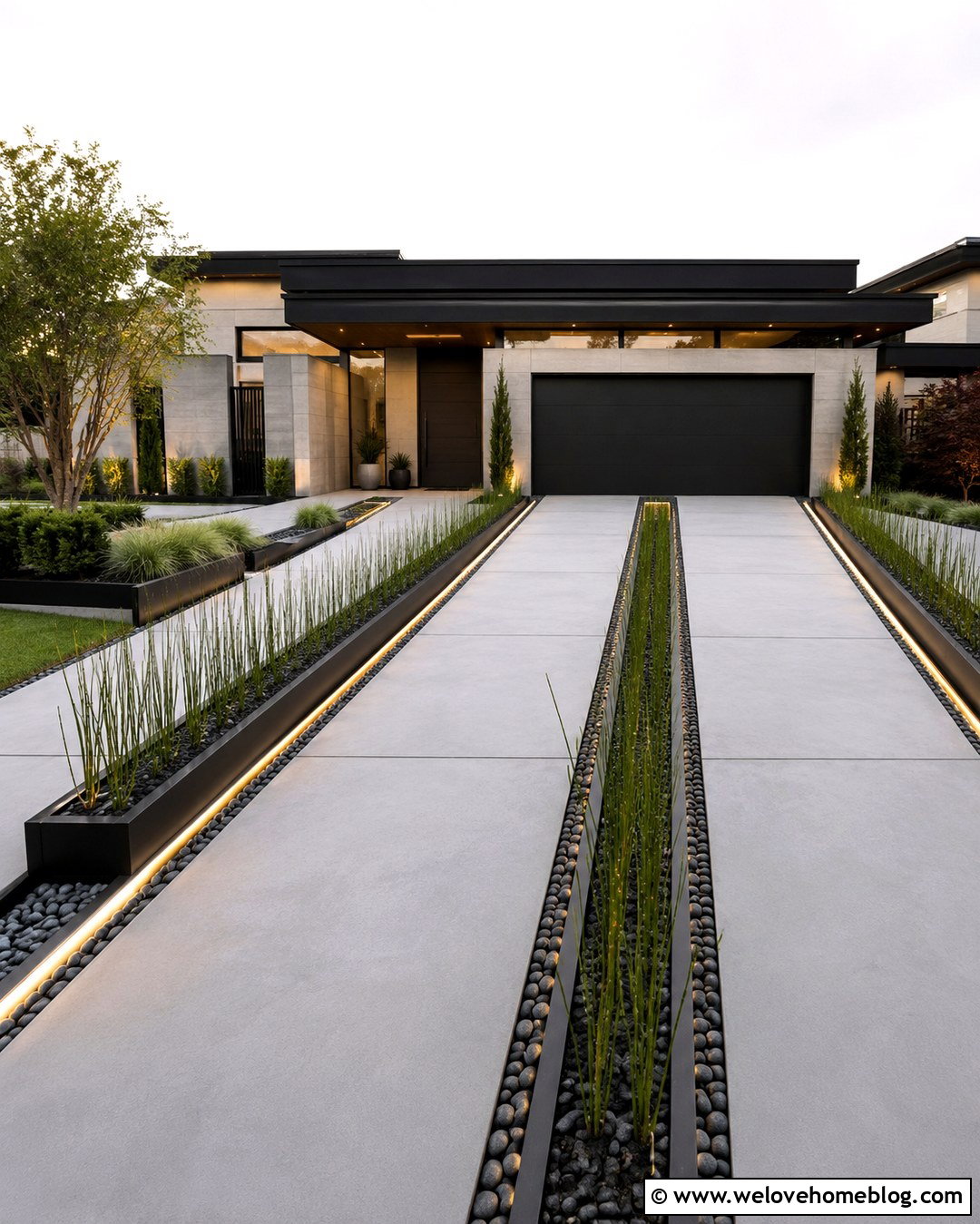
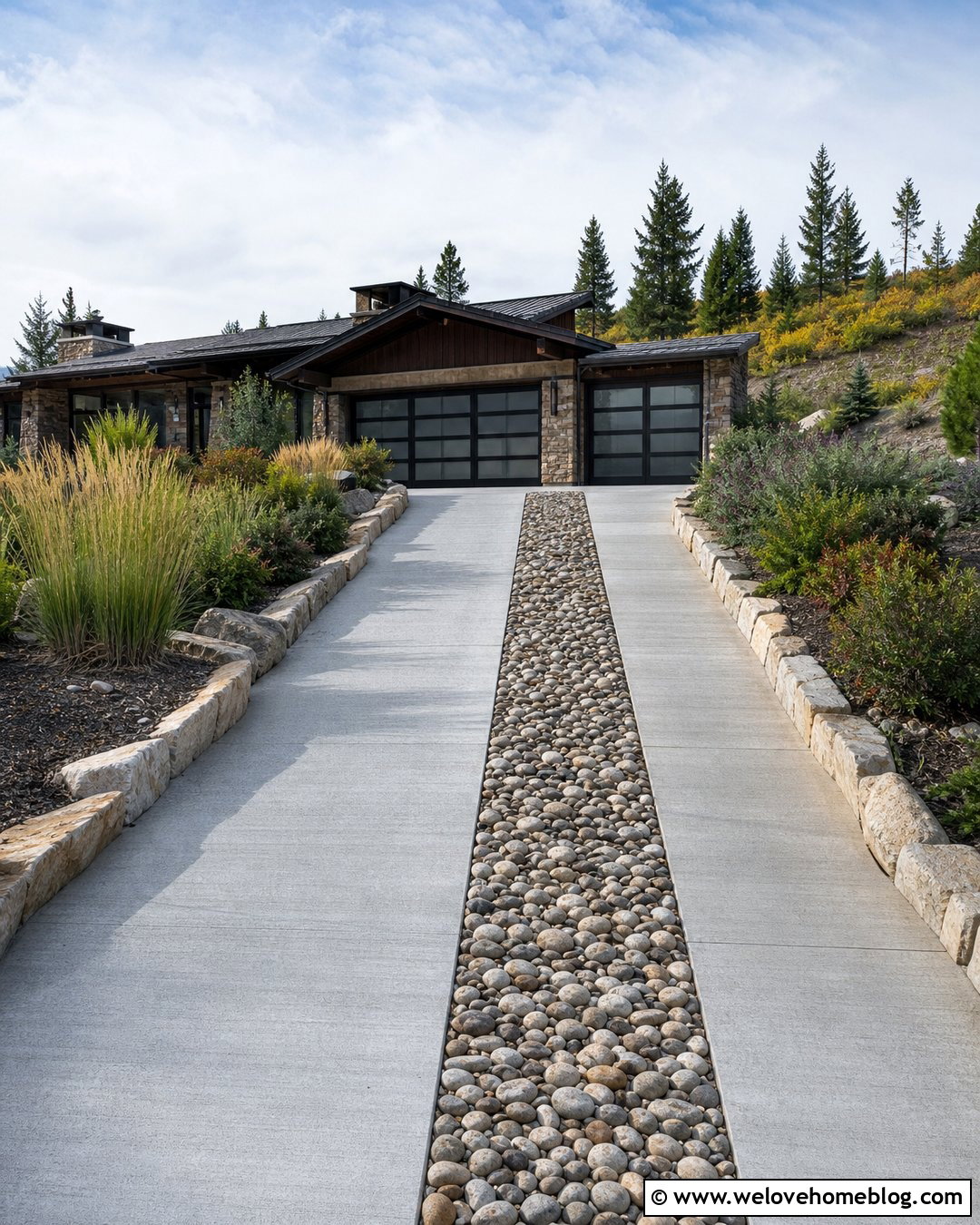
Flexible solar strip lighting can emphasize the outline of a driveway when it is installed in a protected channel. Design a modern split concrete driveway with dark river-rock joints and two wide wheel tracks. Place weather-resistant solar LED strips beneath the overhanging edges of raised steel borders, allowing the source to remain concealed. Linear planting beds filled with horsetail reed, ornamental grasses, and compact evergreens reinforce the strong geometry. A flat-roof contemporary house with wood and white stucco finishes provides a fitting background. The solar collector can sit discreetly in a sunny bed near the garage. Avoid placing flexible lighting where tires, standing water, or landscaping tools can reach it. The finished look is architectural and refined, with the lighting supporting the driveway’s lines rather than becoming the main daytime feature.
12. Solar Driveway Disk Lights
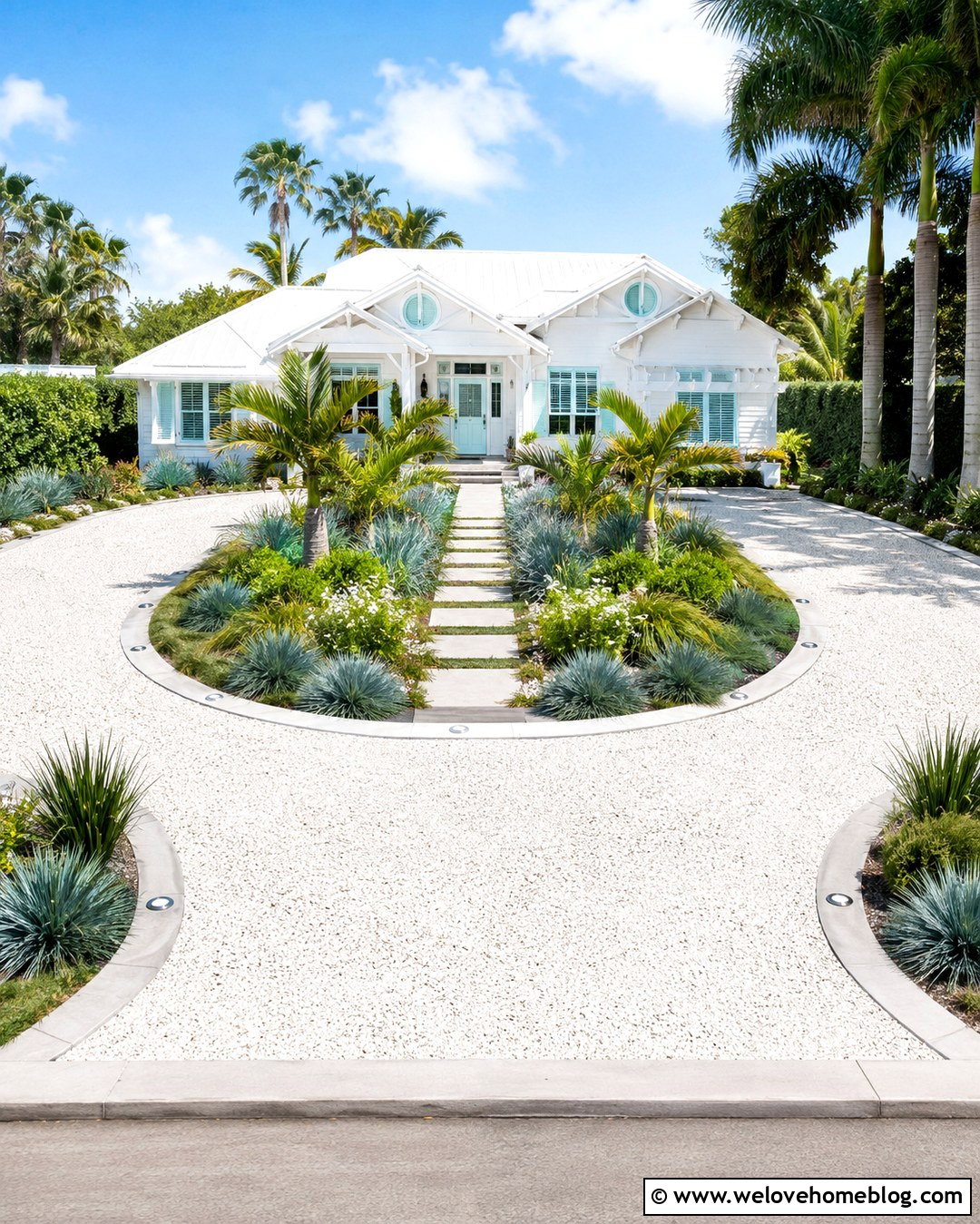
Flush solar disk lights offer a simple way to mark the perimeter of a small driveway. Pair a white seashell or limestone gravel surface with a compact horseshoe layout in front of a coastal-style home. Install stainless-steel solar disks within a stable concrete or paver edge so they remain level and protected from shifting gravel. Blue-green ornamental grasses, dwarf palms, and low flowering plants can frame the driveway without casting heavy shade. Add a pale stepping-stone walkway through the center garden to connect the parking area with the porch. Select sealed fixtures designed for ground-level outdoor use, and avoid inexpensive disks where vehicles will repeatedly turn. The bright gravel, reflective metal, and breezy planting scheme create a fresh entrance that feels especially appropriate for warm coastal settings.
13. Solar Driveway Fence Lights

A fence-lined driveway can feel narrow or dark unless the lighting is carefully integrated. Create a straight gray gravel driveway leading toward a white modern farmhouse, with black timber fencing running along one side. Mount compact solar downlights on alternating fence posts so the fixtures wash light toward the gravel rather than outward. Use black aluminum edging to contain the surface and repeat the fence color around the front porch. On the opposite side, plant a loose row of hydrangeas, ornamental grasses, and young shade trees to balance the strong fence line. The solar panels should sit above the rails where they receive open daylight. This design turns a practical property boundary into part of the overall driveway composition while maintaining enough open space for comfortable vehicle movement.
14. Solar Driveway Tree Lights

Mature trees along a driveway can support a dramatic but natural solar lighting plan. Begin with a wide crushed-stone driveway that curves gently through a wooded front yard toward a craftsman cottage. Define the edges with irregular fieldstone and shade-tolerant groundcovers. Mount discreet solar uplights near selected tree trunks, using remote panels placed in nearby sunny clearings instead of relying on panels under the canopy. Highlight only a few well-shaped trees to preserve depth and avoid an overlit woodland effect. Ferns, hostas, woodland grasses, and a stone walkway can connect the drive to the front porch. The combination of pale stone, textured borders, and layered planting keeps the driveway visible without removing its secluded character. It is especially effective on larger, naturally landscaped properties.

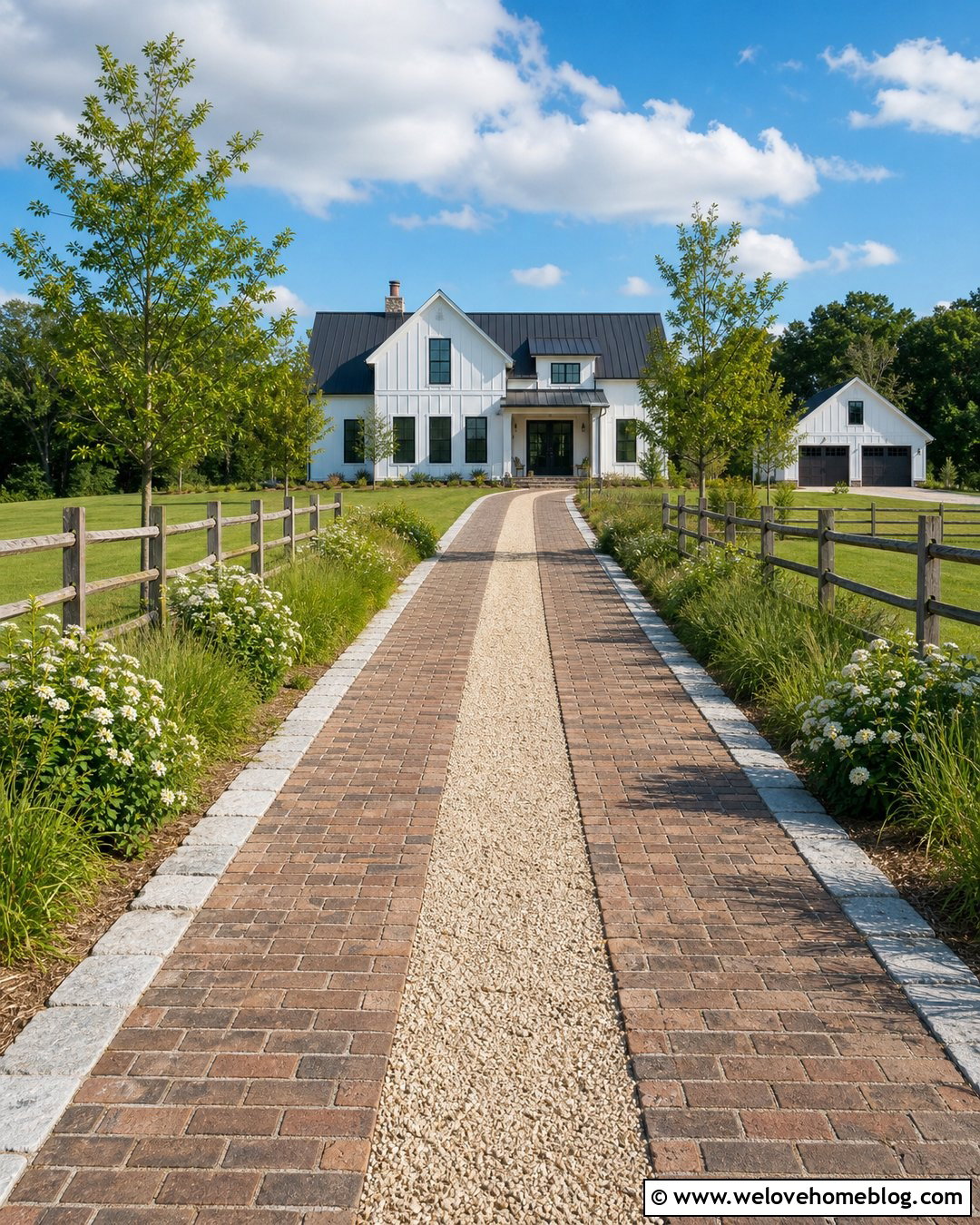
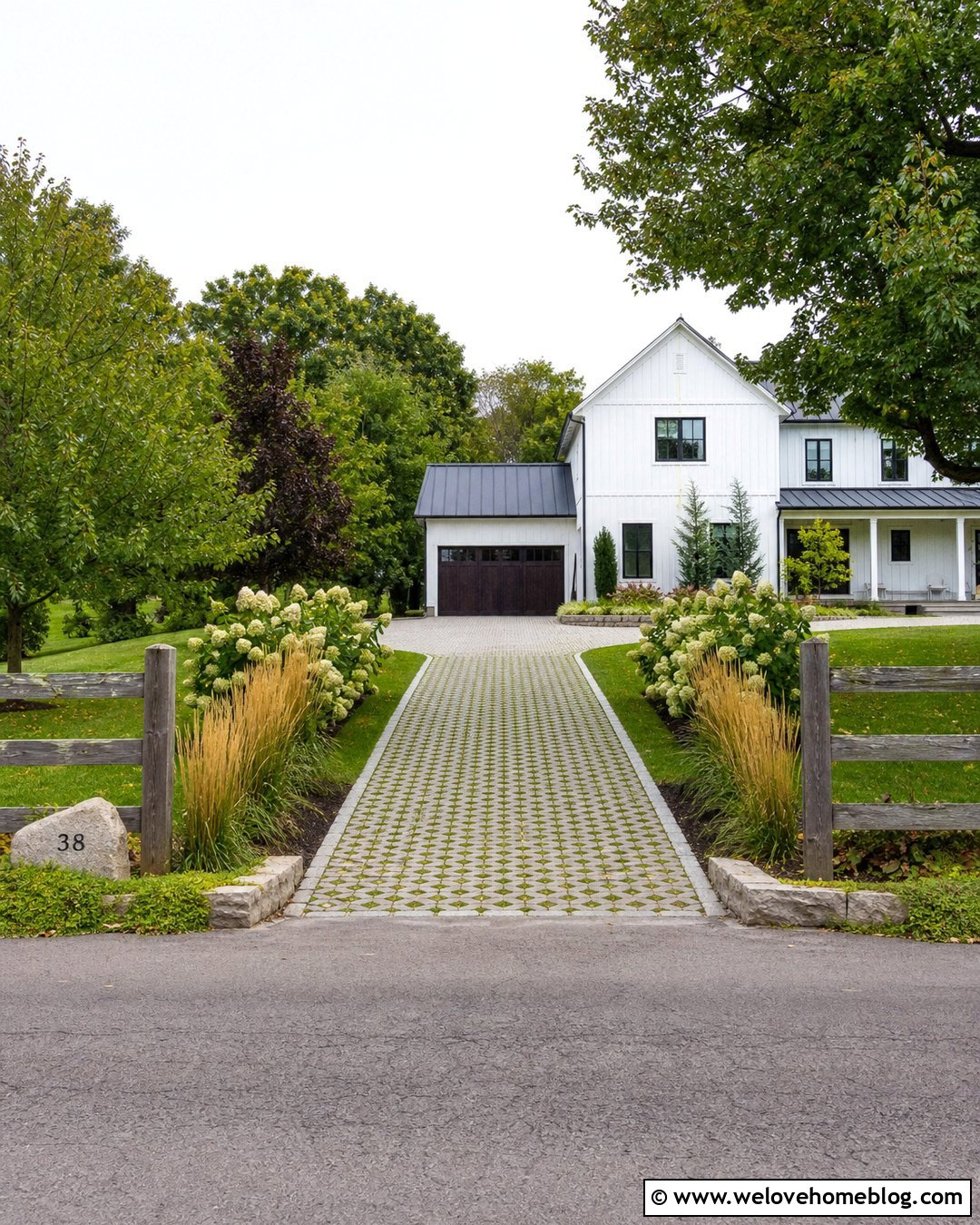

15. Solar Driveway Pergola Entrance
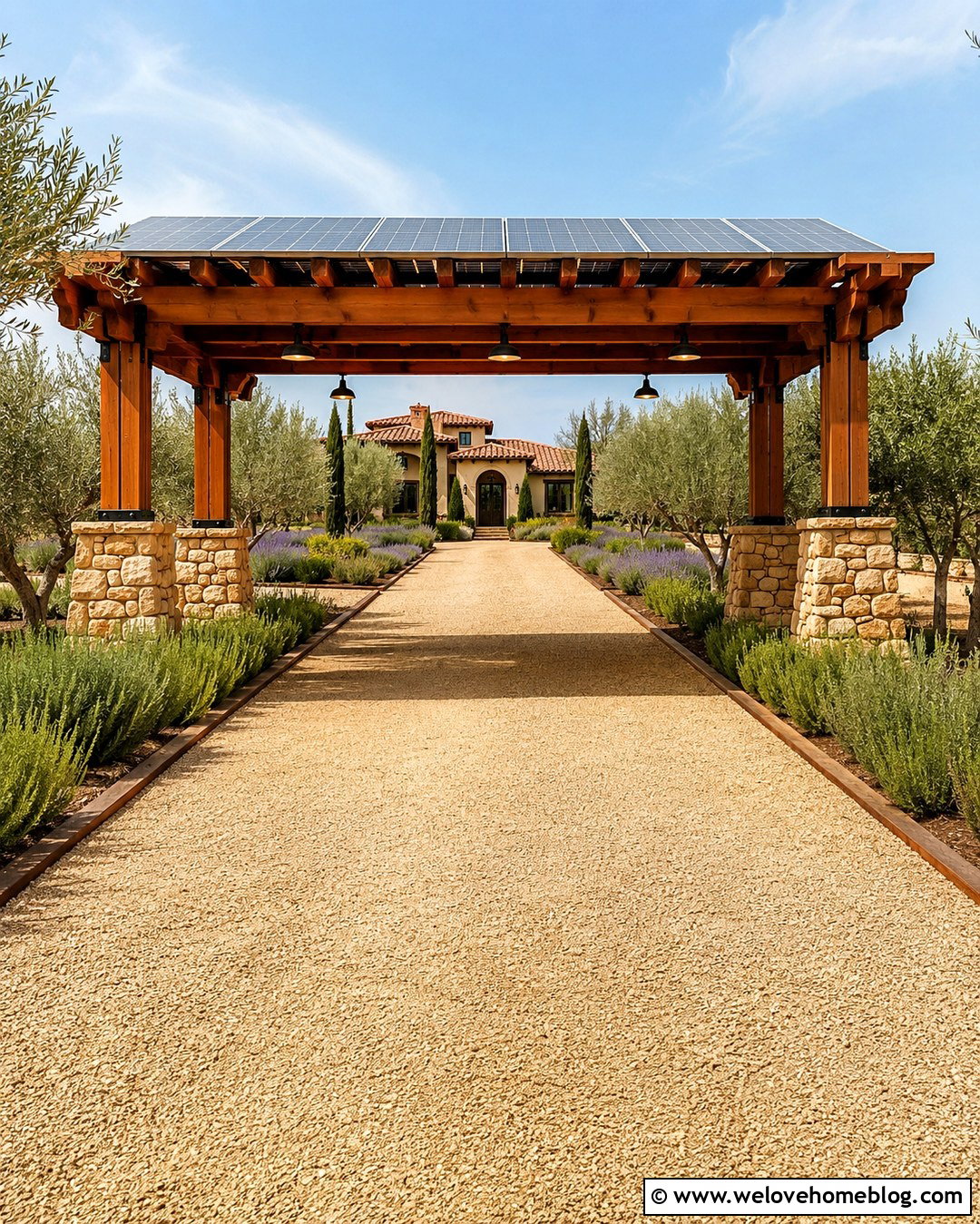
A solar pergola can turn the entrance of a driveway into a useful architectural feature. Pair a straight tan gravel driveway with a cedar pergola spanning the approach near the house. Add a slim solar panel array to the pergola roof and use the collected energy for downward-facing lights beneath the beams. Timber edging, rosemary hedges, lavender, and small olive-like ornamental trees create a warm Mediterranean-inspired landscape around a stucco home. Keep the overhead structure high and wide enough for expected vehicles, service access, and local clearance requirements. Stone pillars at the base can protect the posts and connect visually with a flagstone walkway. The solar equipment should look intentionally integrated rather than added later. This design combines shade, lighting, structure, and a memorable sense of arrival.
16. Solar Driveway Carport
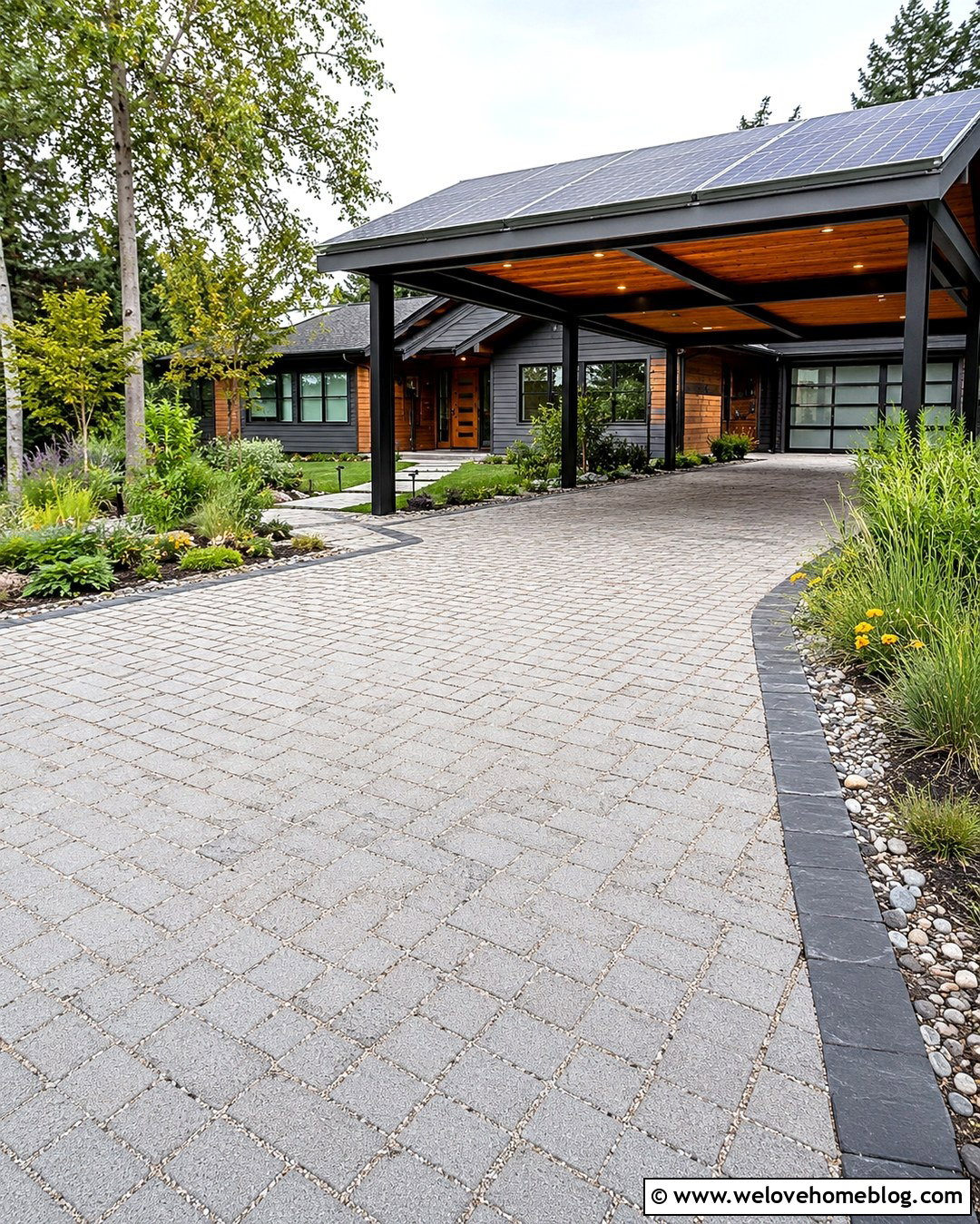
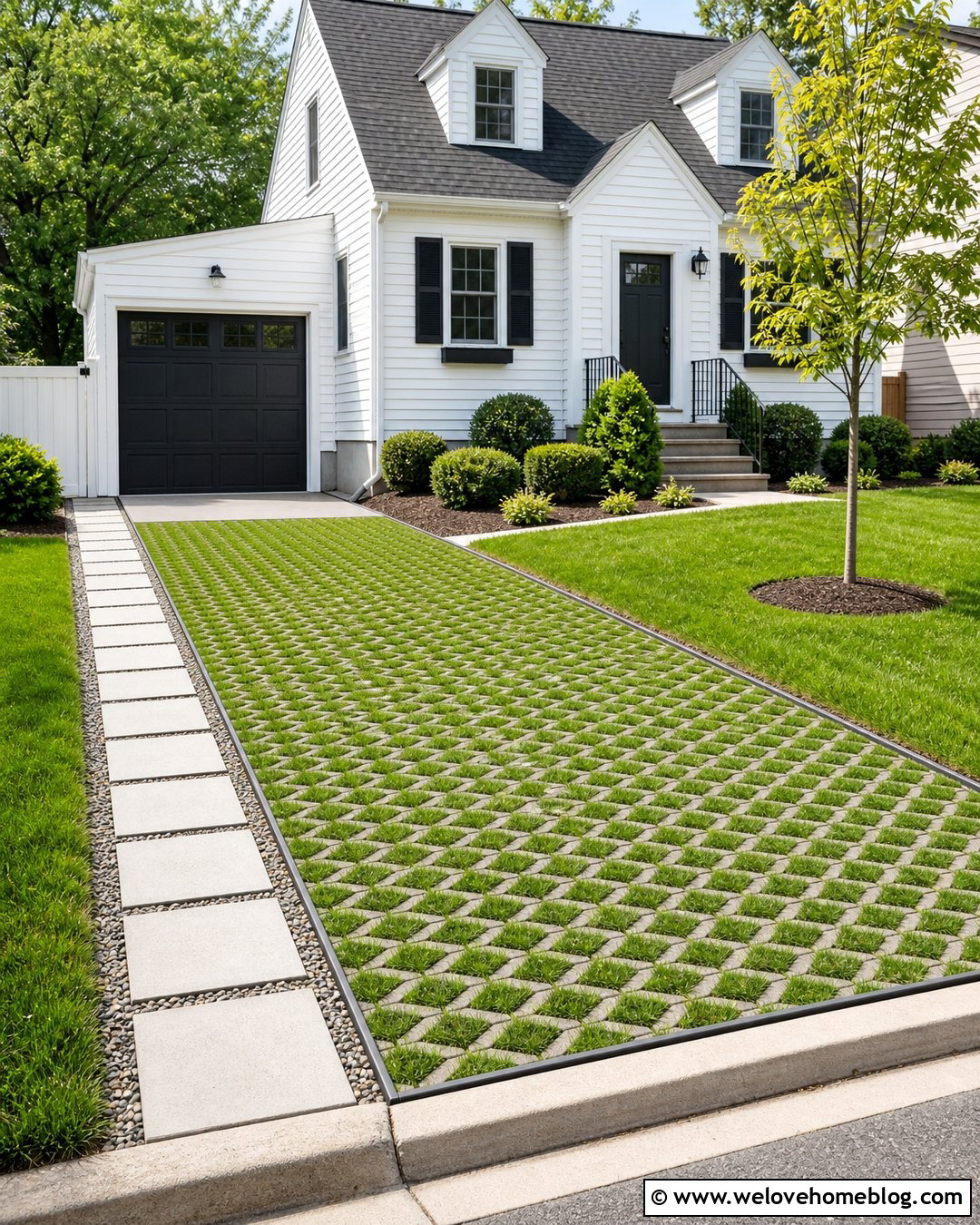
A solar carport works well when a property needs covered parking but has limited roof space for photovoltaic panels. Use permeable concrete pavers for a broad side driveway leading to a clean-lined steel and wood carport. Grass-filled joints or gravel-filled openings help soften the parking surface, while a darker paver border defines vehicle positions. Install photovoltaic panels across the carport roof and include integrated downward-facing lights beneath the canopy. Surround the structure with rain gardens, native shrubs, and a paved walkway connecting it to a contemporary ranch house. A complete photovoltaic system may require panels, electrical controls, an inverter, and optional battery storage, so professional planning is important. () This substantial upgrade can make the driveway serve as both an attractive arrival space and productive home infrastructure.
17. Solar Driveway EV Charging Canopy
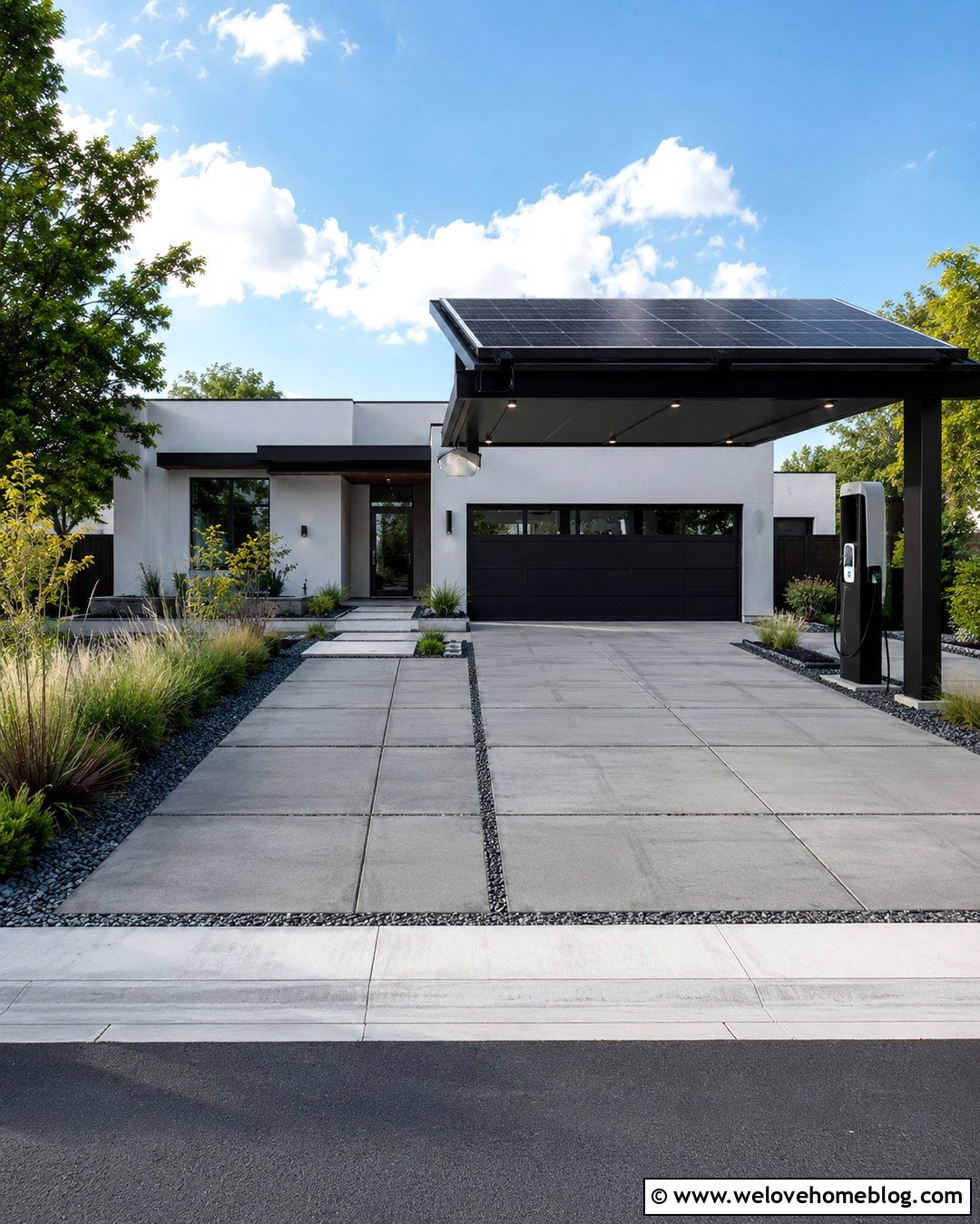
For an electric vehicle household, a solar charging canopy can become the centerpiece of a modern driveway. Build the surface with large-format gray concrete pavers arranged in a simple grid and edged with black cobblestone. Position a cantilevered canopy over one parking bay, leaving the remaining driveway open for turning and guest access. Solar panels cover the canopy, while the charger and electrical equipment sit on a protected side post. Add motion-controlled downlights beneath the roof for practical nighttime use. Linear rain gardens, sculptural grasses, and a direct walkway lead toward a minimalist home. Solar energy can support EV charging, but system output, storage, utility connections, and charging demand must be evaluated together. The completed design feels organized and forward-looking rather than resembling an improvised parking shelter.
18. Solar Heated Driveway

A solar-supported snow-melting driveway can suit a cold-climate home undergoing a major paving renovation. Choose dark concrete pavers for a gently sloped driveway leading to a mountain-style house, with radiant heating components professionally installed beneath the primary tire paths and entrance apron. Rooftop photovoltaic panels can help offset household electricity use, while the snow-melting system receives reliable power through the home’s electrical setup. Solar production and heating demand do not always occur at the same time, making system sizing, utility service, controls, and possible storage important planning considerations. Batteries allow solar energy to be used after production, but the full installation still requires careful engineering. () Granite curbing, evergreen beds, and a heated front walkway complete this durable winter-focused entrance.
19. Solar Driveway Marker Posts

Solar marker posts are a practical choice for a long rural driveway where the edges may be difficult to see. Use compacted brown gravel for a sweeping approach through an open meadow toward a country farmhouse. Install simple dark metal marker posts along curves, culvert crossings, and the final parking area rather than placing them at unnecessarily close intervals. Their solar panels should face open sky and remain accessible for cleaning. A split-rail fence, native wildflowers, and groups of deciduous trees can follow the drive without making it feel overly formal. Large stone edging near the house creates a tidier transition into the parking apron. Because clouds, dirt, vegetation, and snow can reduce solar charging, choose fixtures with adequate battery capacity for local conditions. ()
20. Solar Driveway Canopy Entrance
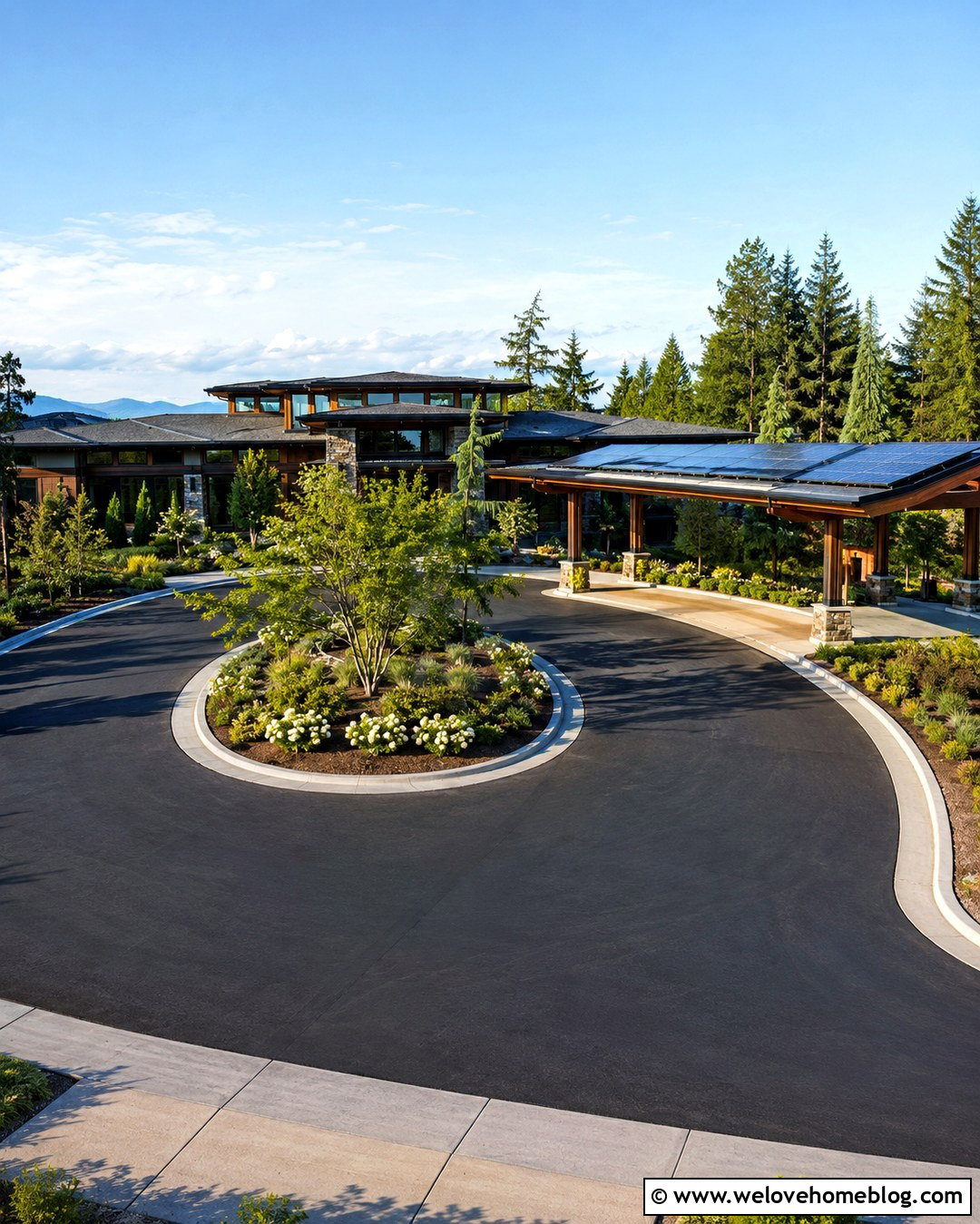
A wide solar canopy at the driveway entrance can give a contemporary property a strong visual identity. Create a circular black asphalt driveway with a pale concrete border and a landscaped center island. Near the garage, add a broad timber-and-steel canopy topped with photovoltaic panels, covering the passenger drop-off area without blocking the circle. Integrate downward-facing lights, concealed drainage, and a clearly marked walkway beneath the structure. Layered evergreen shrubs, white flowering plants, and multi-stem trees soften the dark pavement around a modern prairie-style house. Repeat the canopy’s wood tone on the garage doors and address monument. Professional structural and electrical design will help the installation handle weather, drainage, and energy demands. The final result combines convenient shelter, solar production, lighting, and high-impact curb appeal.
Conclusion:
The most successful **20 Solar Driveway Ideas** treat solar technology as part of the complete entrance rather than an isolated accessory. Small properties may need only well-positioned edge lights, illuminated address numbers, or gate lanterns. Larger upgrades can include solar carports, EV charging canopies, or professionally designed snow-melting systems supported by home solar power. Whichever approach you choose, coordinate the fixtures with the driveway material, shape, border, landscaping, and architecture. Check daylight exposure before installation, keep panels clear of plants and debris, and select outdoor products suited to their location. Thoughtful spacing and controlled brightness will create a driveway that looks polished during the day and feels welcoming after sunset.

Related posts:





Leave a Reply