
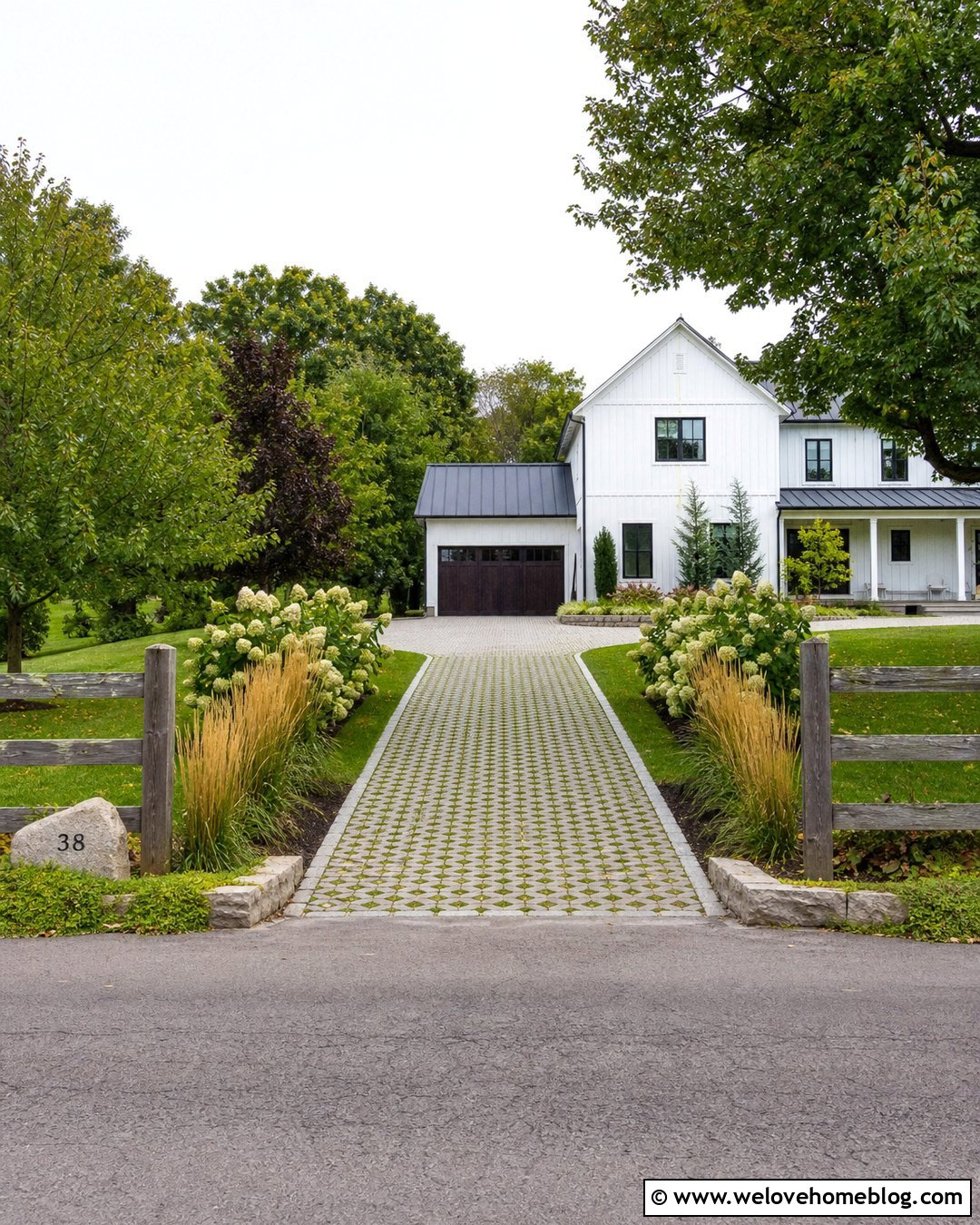
Grass pavers create a driveway that feels more like part of the landscape than a solid parking surface. Their open cells support vehicle traffic while letting turf grow and rainwater soak into the underlying aggregate base. A successful installation depends on proper excavation, load-bearing base preparation, drainage, and grass suited to the site’s sunlight and climate. () Concrete grass blocks offer a strong, structured appearance, while recycled plastic grids can nearly disappear beneath established turf. You can also customize the driveway with stone borders, contrasting aprons, native planting, lighting, and different layouts. The complete looks below provide practical inspiration for modern homes, traditional properties, compact yards, and larger landscapes using **45 grass pavers driveway ideas**.
1. Straight Concrete Grass Paver Driveway
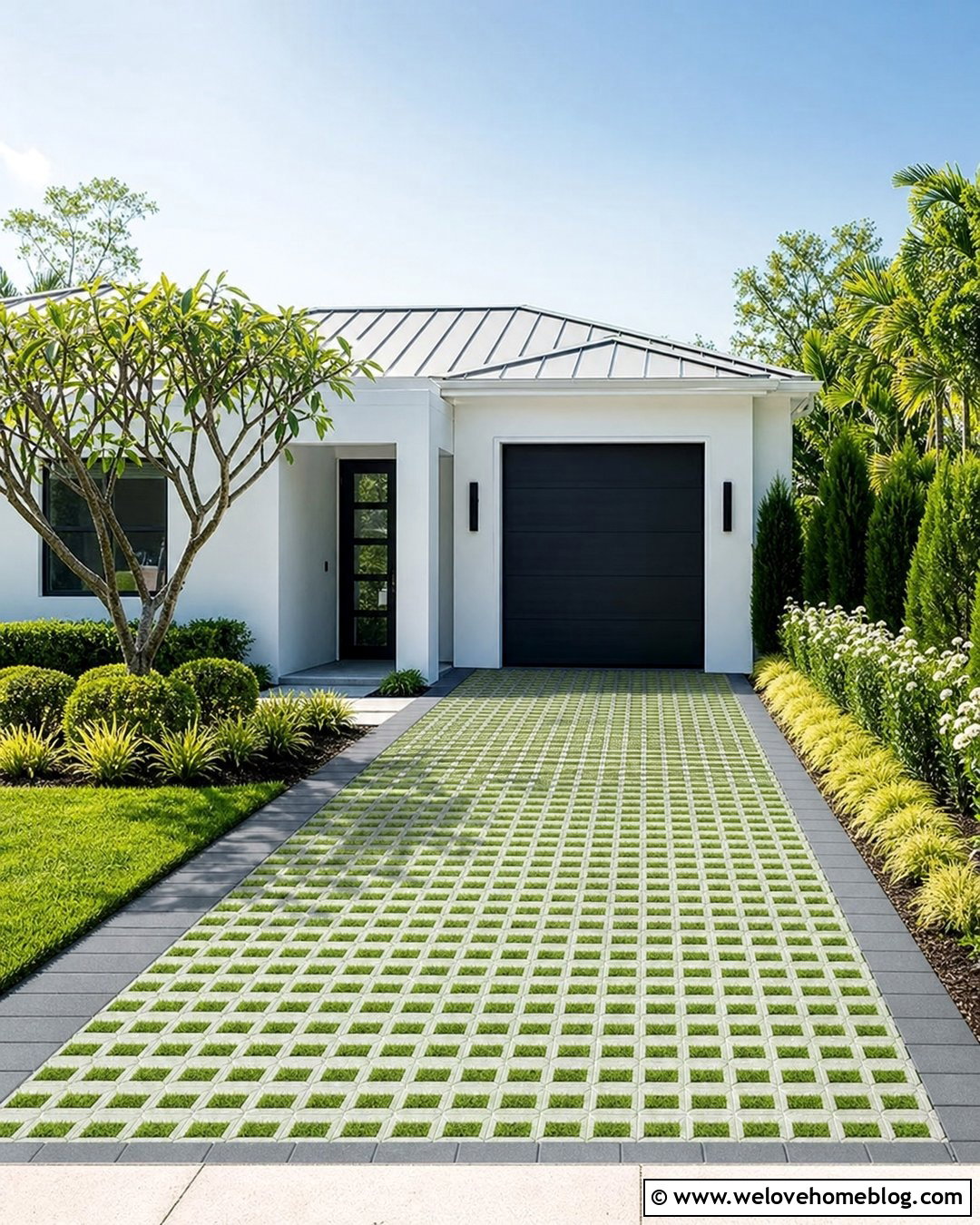
A straight concrete grass paver driveway creates a clean approach that works especially well with a modern home. Choose square concrete turf blocks with evenly sized openings and plant a dense, low-growing grass inside them. A dark charcoal paver border can frame the green surface and keep the edges looking intentional. Continue the border around a matching walkway for visual consistency. Simple ornamental grasses, clipped shrubs, and one small specimen tree provide landscaping without hiding the geometric grid. At the street, use a solid concrete or permeable paver apron to protect the grass cells from turning vehicles. This complete design feels crisp and organized while allowing the driveway to blend naturally into the surrounding front lawn.
2. Curved Grass Paver Driveway With Stone Edging
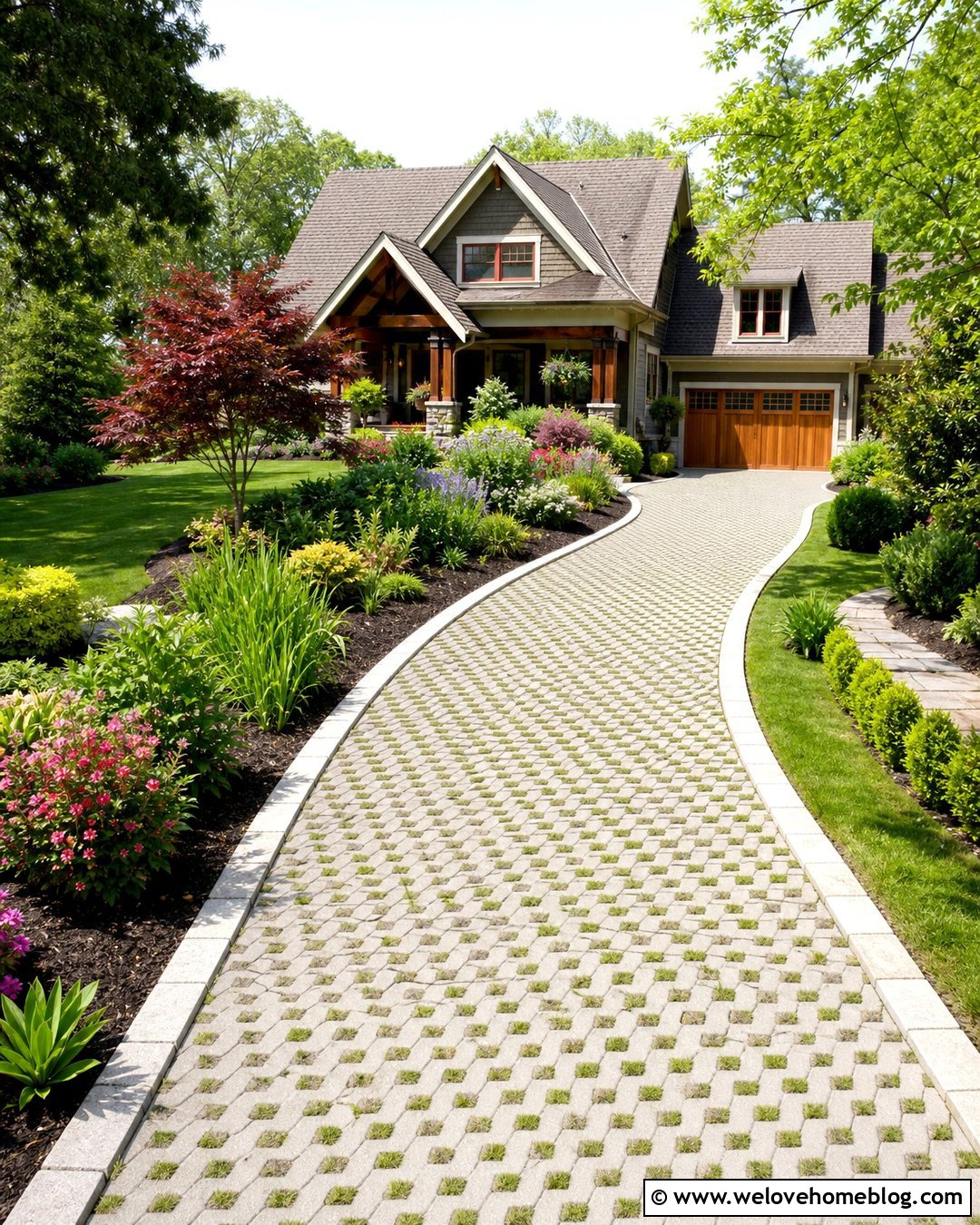
Soft curves make a grass paver driveway feel integrated with the yard rather than placed on top of it. Use concrete grass blocks along a gently bending route and contain the shape with pale limestone or granite edging. The stone border gives tires a visible guide and protects the outer turf from accidental driving. On the inside curve, create a wide planting bed filled with layered evergreen shrubs, flowering perennials, and a small ornamental tree. Keep the opposite side more open with lawn to prevent the approach from feeling narrow. A short stone walkway can branch toward the front entrance. This layout is particularly attractive beside Craftsman and traditional homes, where natural materials and relaxed planting support the architecture.
3. Grass Paver Ribbon Driveway
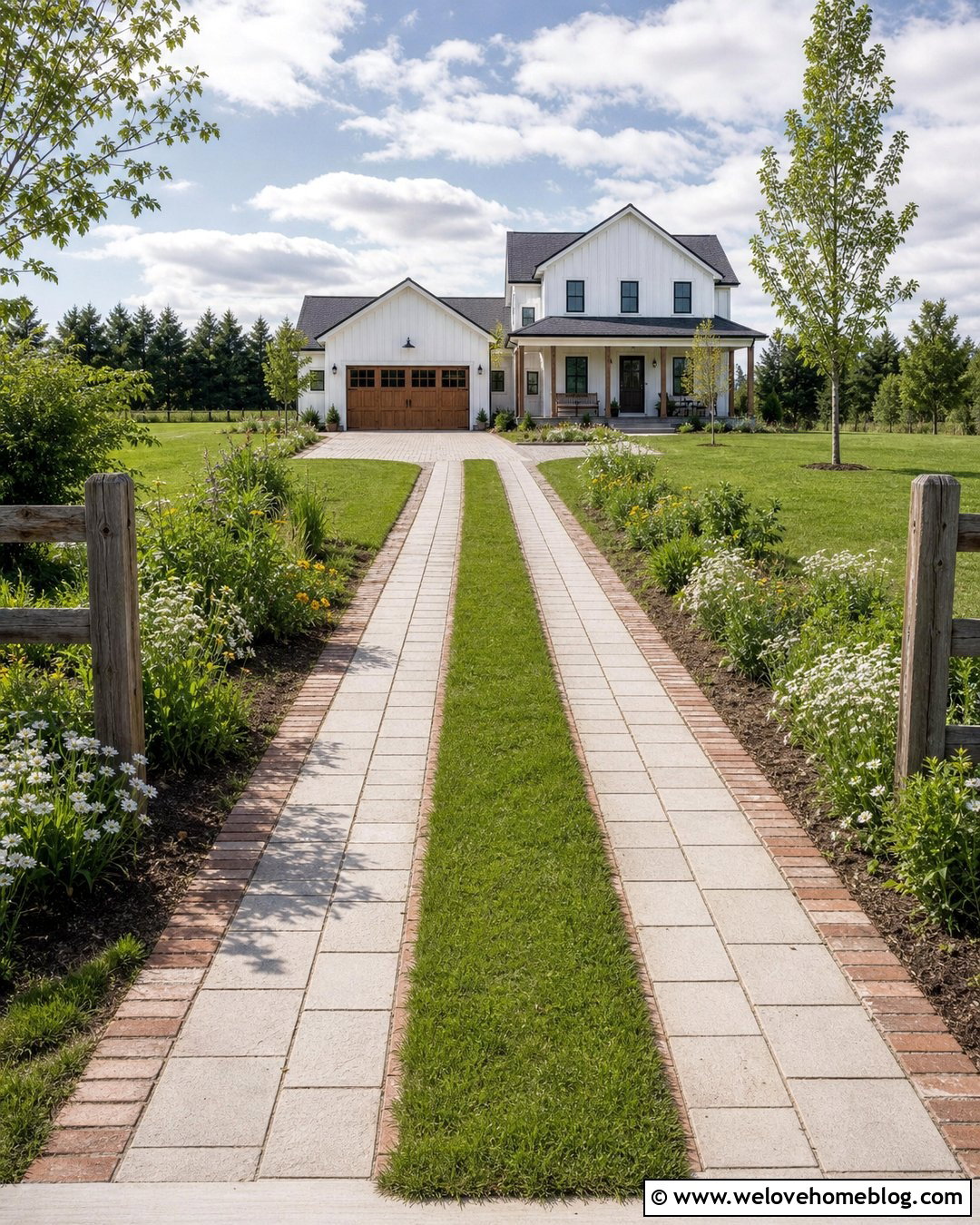
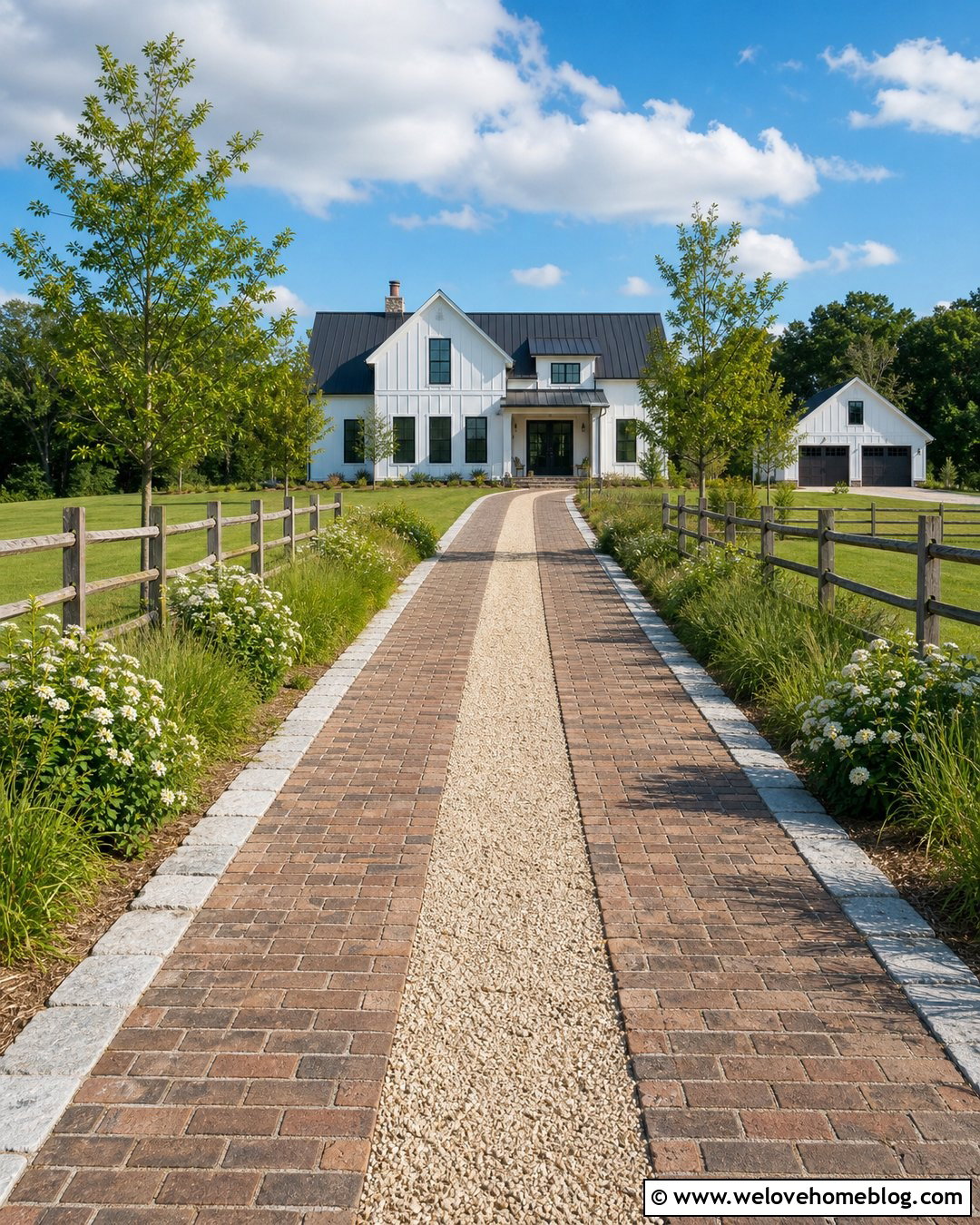
A ribbon layout limits paving to the areas that actually carry vehicle tires. Install two parallel tracks of concrete grass pavers, then maintain a wider strip of ordinary lawn or reinforced turf between them. The result resembles a classic country driveway but offers better stability during wet weather. Brick edging can define both sides and introduce warm color near a farmhouse or cottage. Match the track spacing to the vehicles that normally use the property and create a wider paved landing near the garage. Low flower beds along the outer edges soften the long lines without interfering with doors. Because precise alignment matters, clearly marked edges and a properly compacted base help this minimalist grass paver driveway remain functional and polished.
4. Circular Grass Paver Driveway
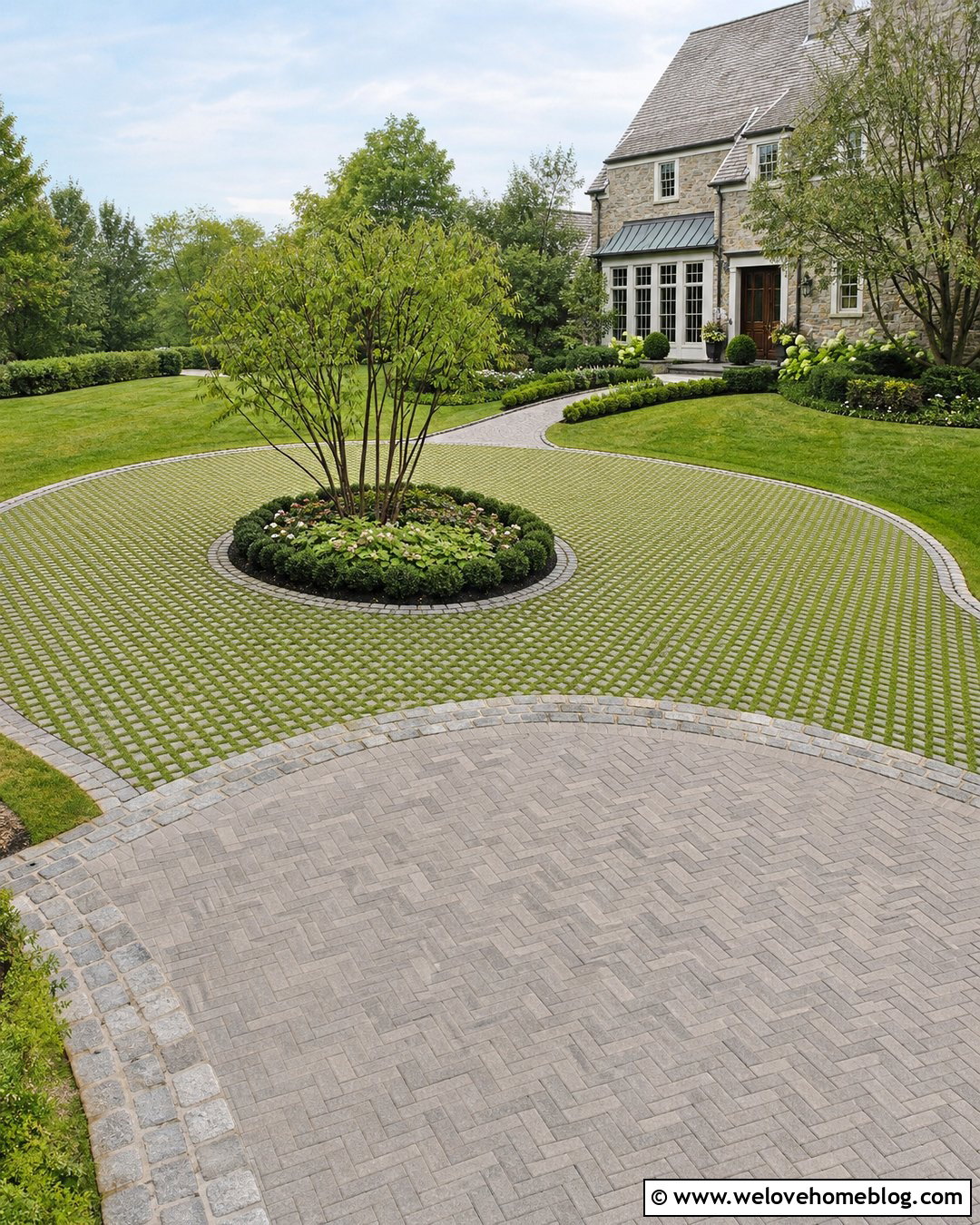
A circular grass paver driveway creates an impressive entrance without covering the entire front yard in solid paving. Concrete turf blocks can form the driving loop, while a central island anchors the composition. Plant the island with a multi-stem tree, clipped evergreens, and low flowers that will not block sightlines. A border of contrasting brick or cobblestone makes the circular shape easier to read from the curb. Consider using solid pavers at the road entrance and directly in front of the house, where vehicles turn or stop more often. Grass pavers across the remaining loop maintain the green appearance. This arrangement works best where the property has enough width for comfortable turning and a balanced landscape on both sides.
5. Small Grass Paver Driveway
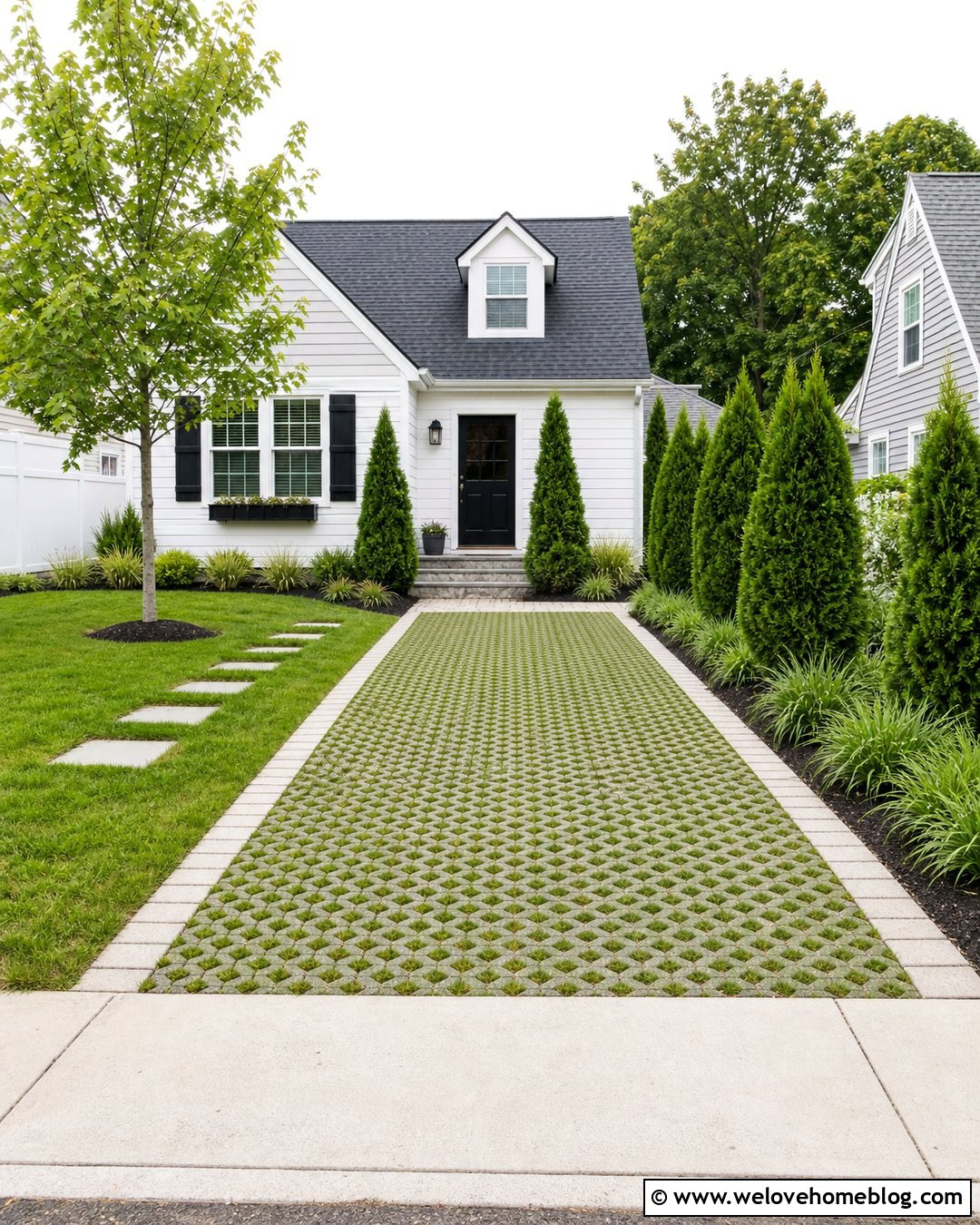
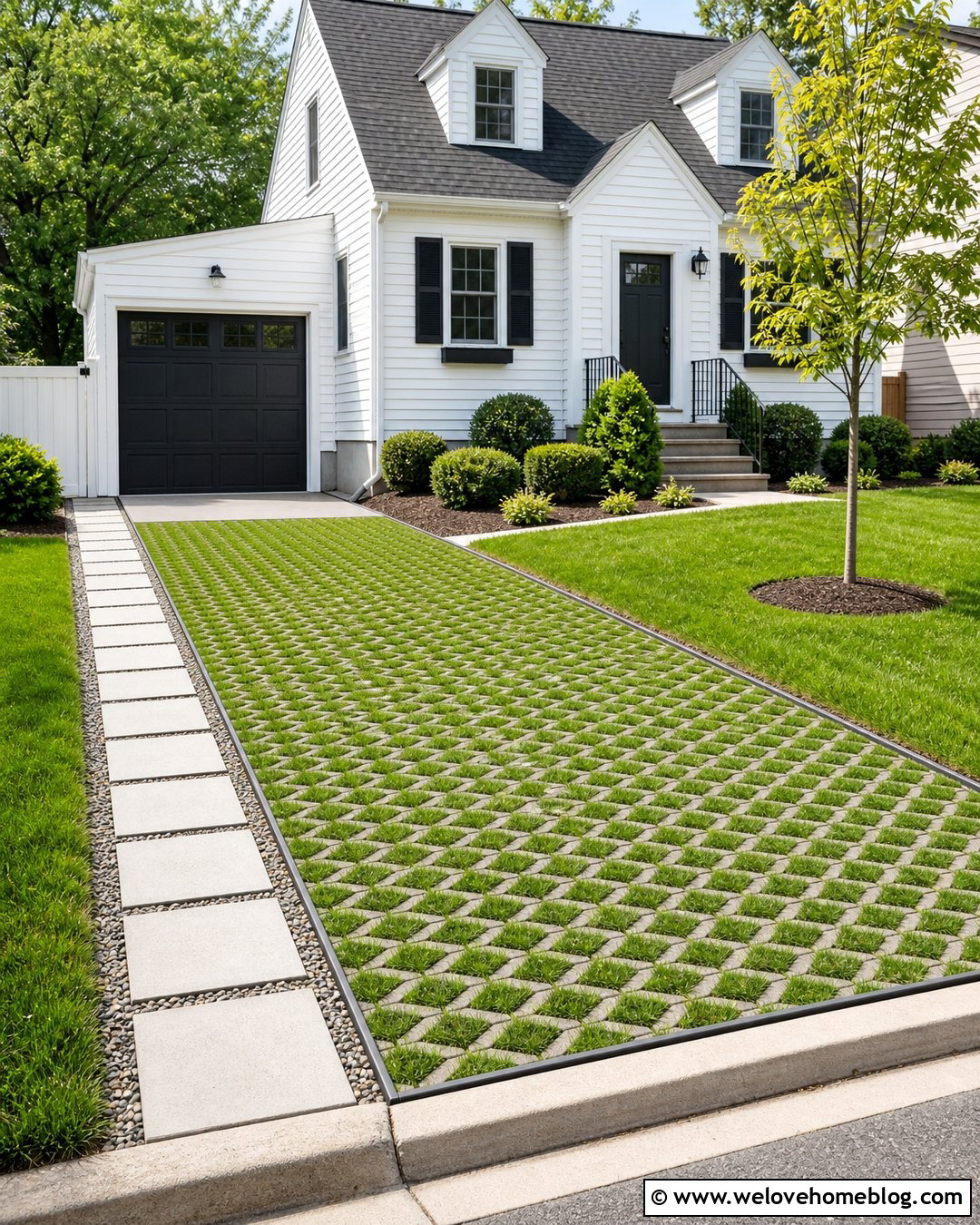
Grass pavers can make a compact front yard feel less dominated by parking. Cover a short single-car driveway with recycled plastic turf grids so the grass appears nearly continuous with the neighboring lawn. Add a narrow concrete paver border to establish a clean edge and prevent soil from spreading into the cells. A simple stepping-stone walkway can run beside the driveway rather than consuming additional space. Use upright shrubs, compact grasses, and one slender tree to add height without crowding the parking area. Near the garage, install a small band of solid pavers where tires frequently turn. Keeping the materials and planting palette restrained gives a narrow property a calmer, more spacious appearance while still creating a dependable place to park.
6. Long Grass Paver Driveway With Trees
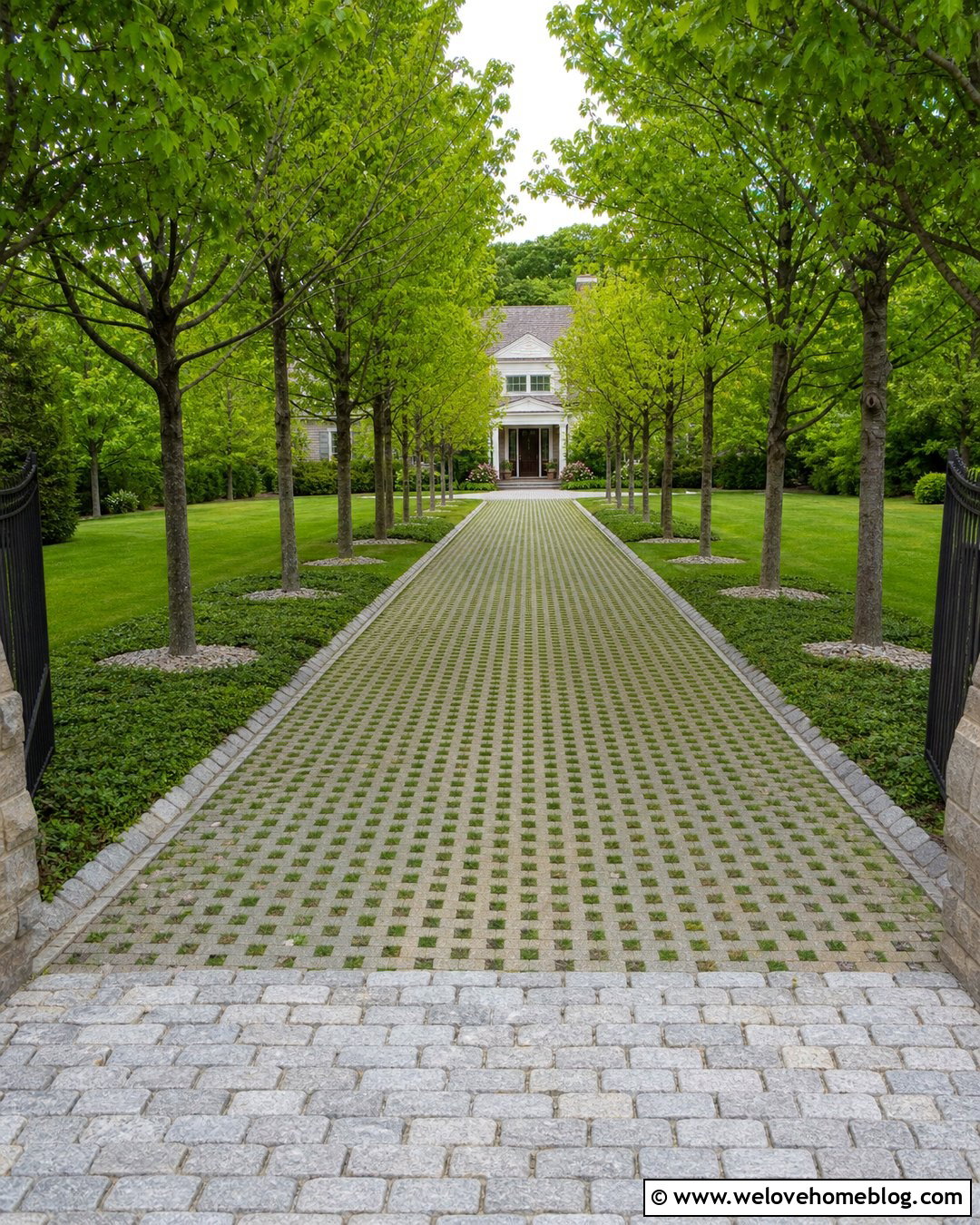
A long grass paver driveway becomes a memorable landscape feature when framed by evenly spaced trees. Use heavy-duty concrete grass blocks or load-rated plastic grids over a professionally prepared aggregate base. The green driving surface will visually connect with the lawn, while rows of upright trees define the route to the house. Add narrow gravel maintenance strips around the trunks so roots and mowing equipment do not compete directly with the driveway edge. Low native ground covers can fill the spaces between trees. A stone or brick apron at the entrance gives the driveway a clear beginning and protects the turf grids from sharp turns. This complete approach suits large suburban lots, country homes, and properties with deeply set-back garages.
7. Wide Double Grass Paver Driveway
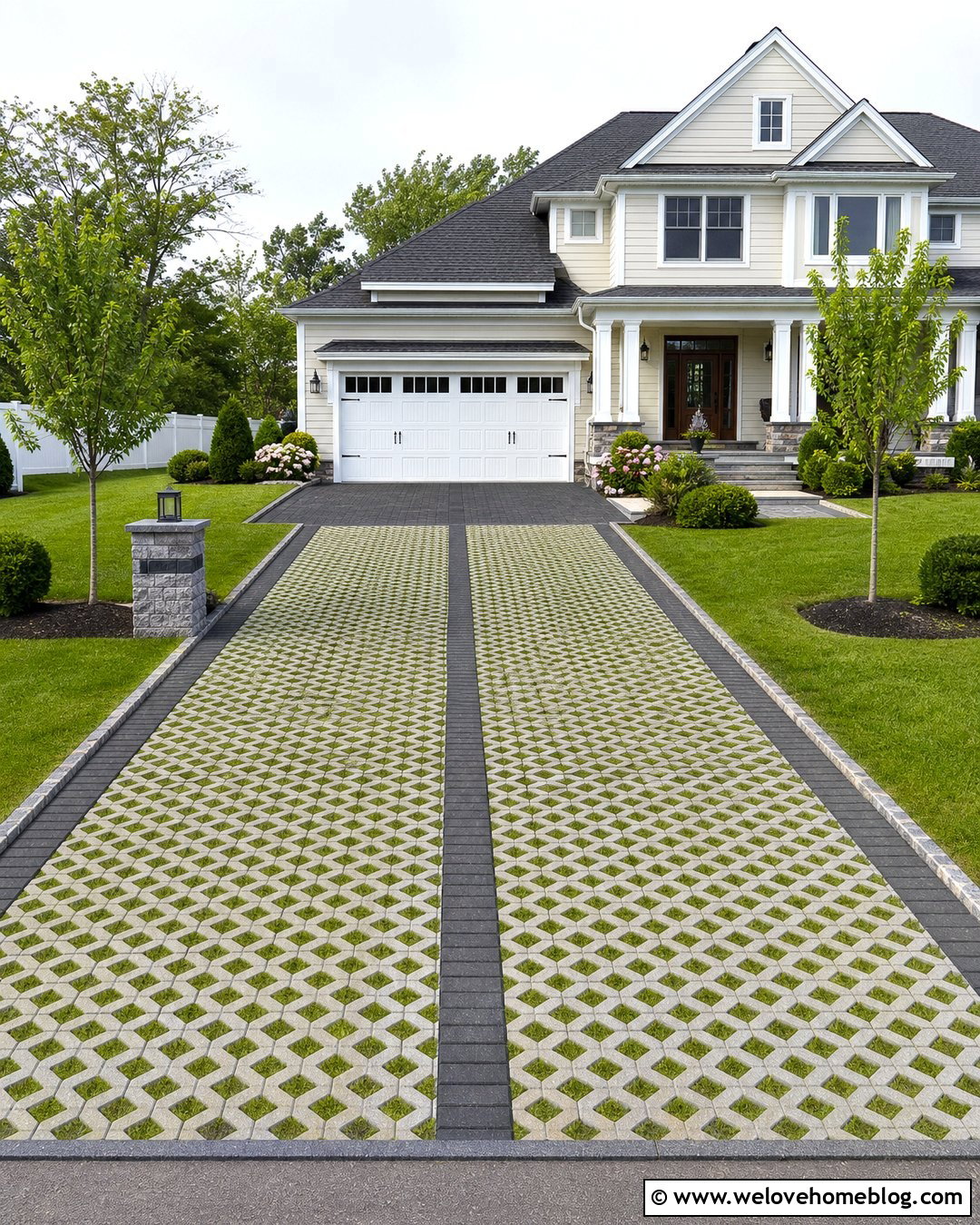
A two-car driveway can appear surprisingly green when grass pavers replace a broad concrete slab. Lay concrete turf blocks across the full width, using a subtle central ribbon of charcoal pavers to organize the surface. Matching side borders help contain the grass cells and create a neat transition to planting beds. In front of the garage, add a deeper band of solid permeable pavers where cars regularly maneuver. Frame the driveway with symmetrical shrubs, small trees, and a broad walkway leading to the front door. The grass should remain slightly below the top of the blocks so tires carry the load instead of crushing the turf. This structured layout combines practical parking space with the softer curb appeal of a landscaped front yard.
8. Sloped Grass Paver Driveway
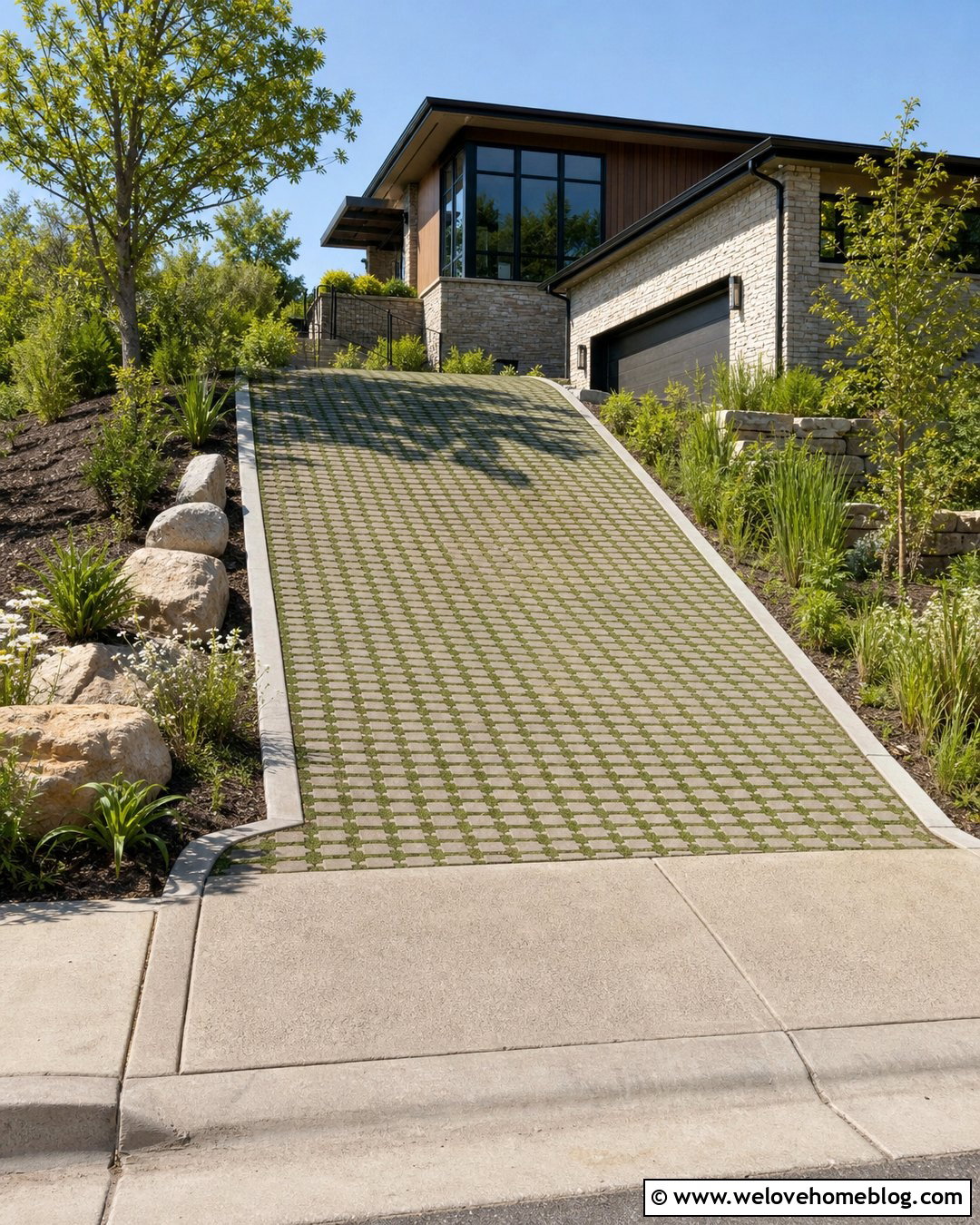
A sloped driveway requires a stable base, careful grading, and strong edge restraint. Concrete grass blocks are often a practical choice because their visible cells create traction and their weight gives the surface a substantial feel. Run the blocks up a straight or gently curving slope, then contain both sides with concrete curbs or mortared stone edging. Direct water toward planted drainage areas rather than allowing it to rush toward the garage. Deep-rooted shrubs and ornamental grasses can stabilize nearby banks while making the incline feel less severe. Use a solid textured apron at the bottom and a level landing near the garage. The finished driveway should look green and welcoming, but its drainage and structural preparation must guide every decorative decision.
9. Grass Paver Driveway With Gravel Apron
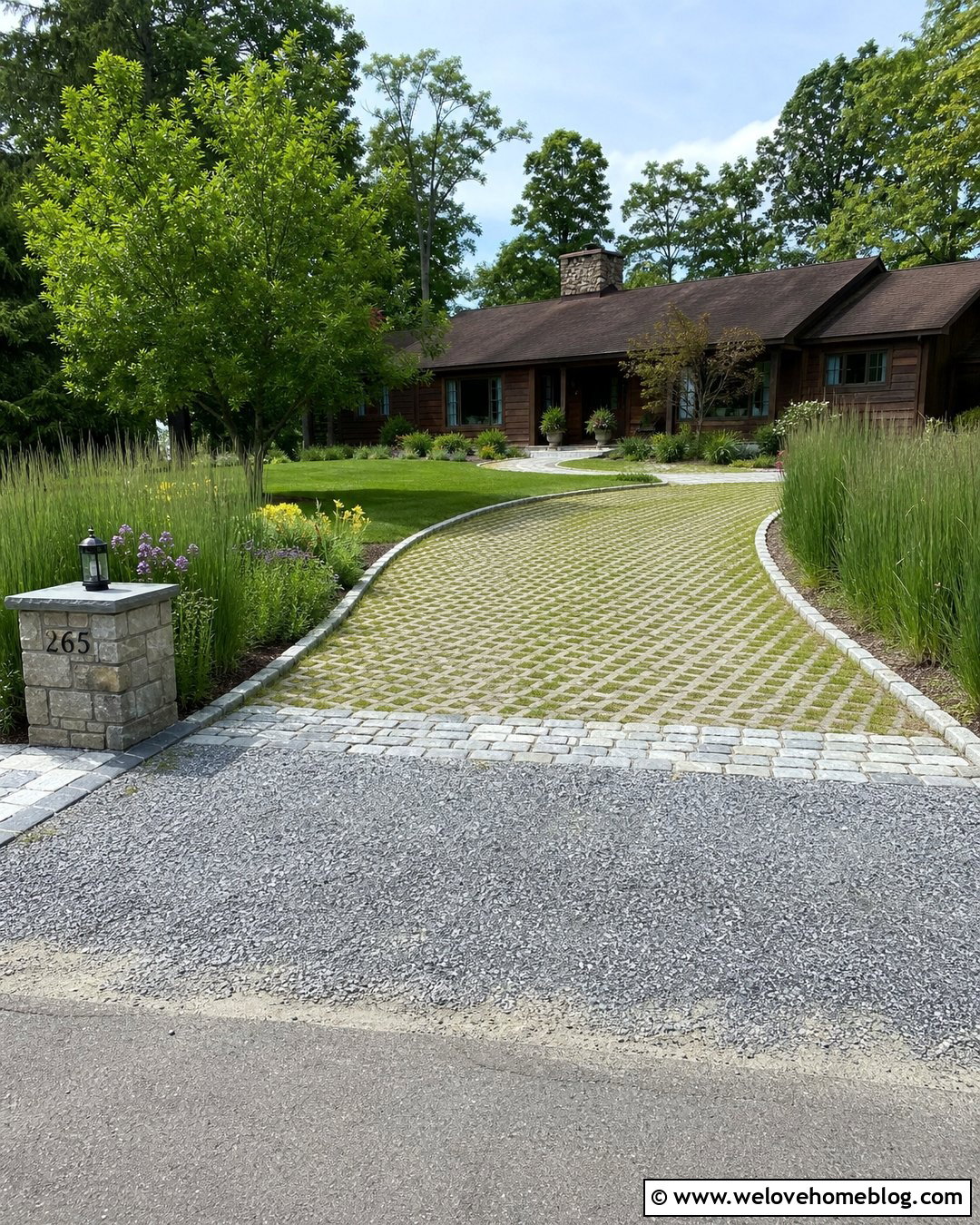
Combining grass pavers with gravel creates a relaxed driveway that suits casual country landscapes. Install concrete turf blocks along the main parking and driving area, then use compacted angular gravel for the entrance apron. A cobblestone transition band between the materials prevents the change from appearing accidental. Gravel also handles occasional turning at the curb without exposing delicate turf to constant tire movement. Continue cobblestone edging along both sides of the grass pavers to contain soil and simplify maintenance. Plant meadow grasses, flowering perennials, and informal shrubs around the driveway rather than formal hedges. Select gravel that complements the house facade, such as warm tan for brick or cool gray for painted siding. Together, the materials create a permeable, textured approach.
10. Gray Grass Paver Driveway With Black Border
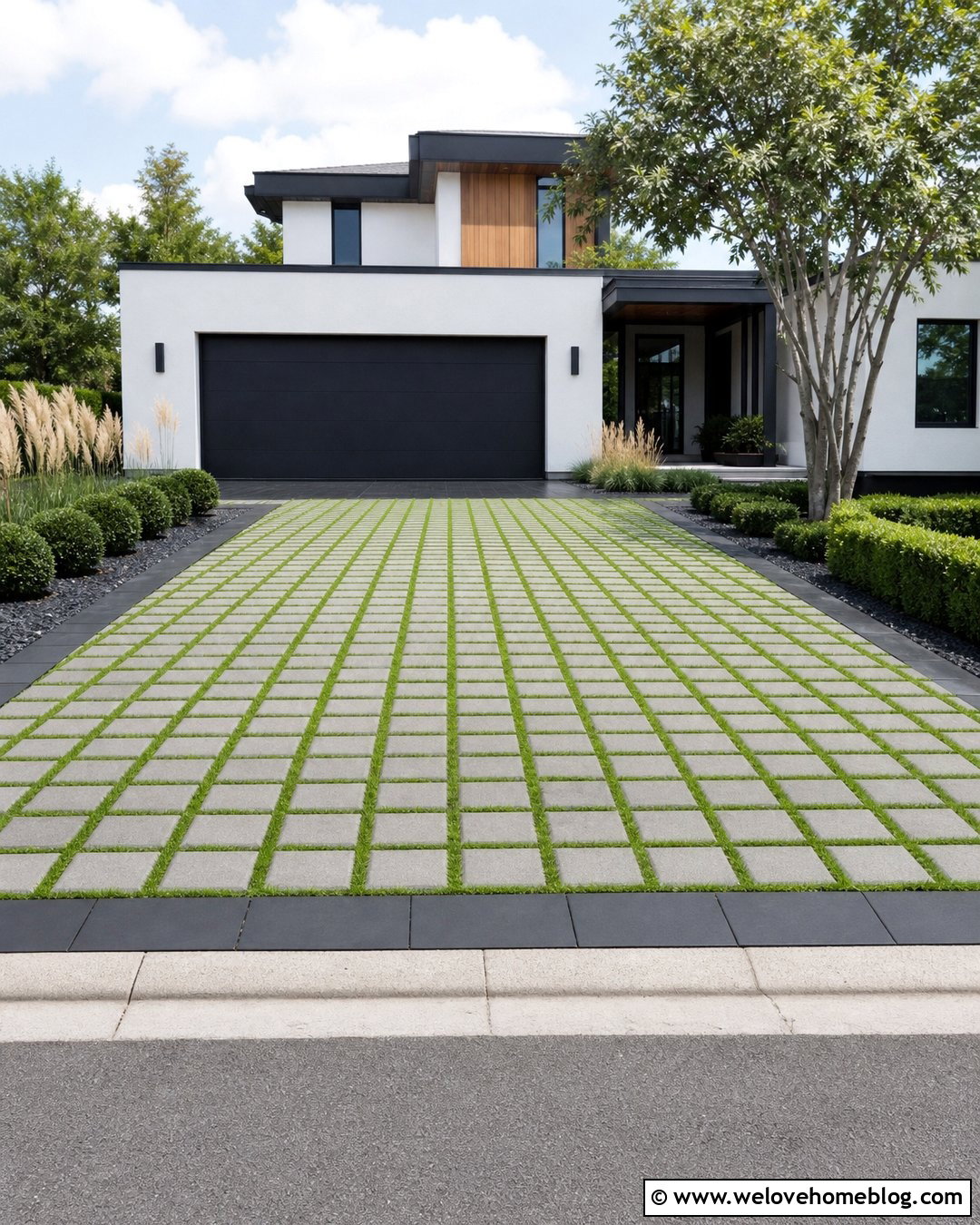
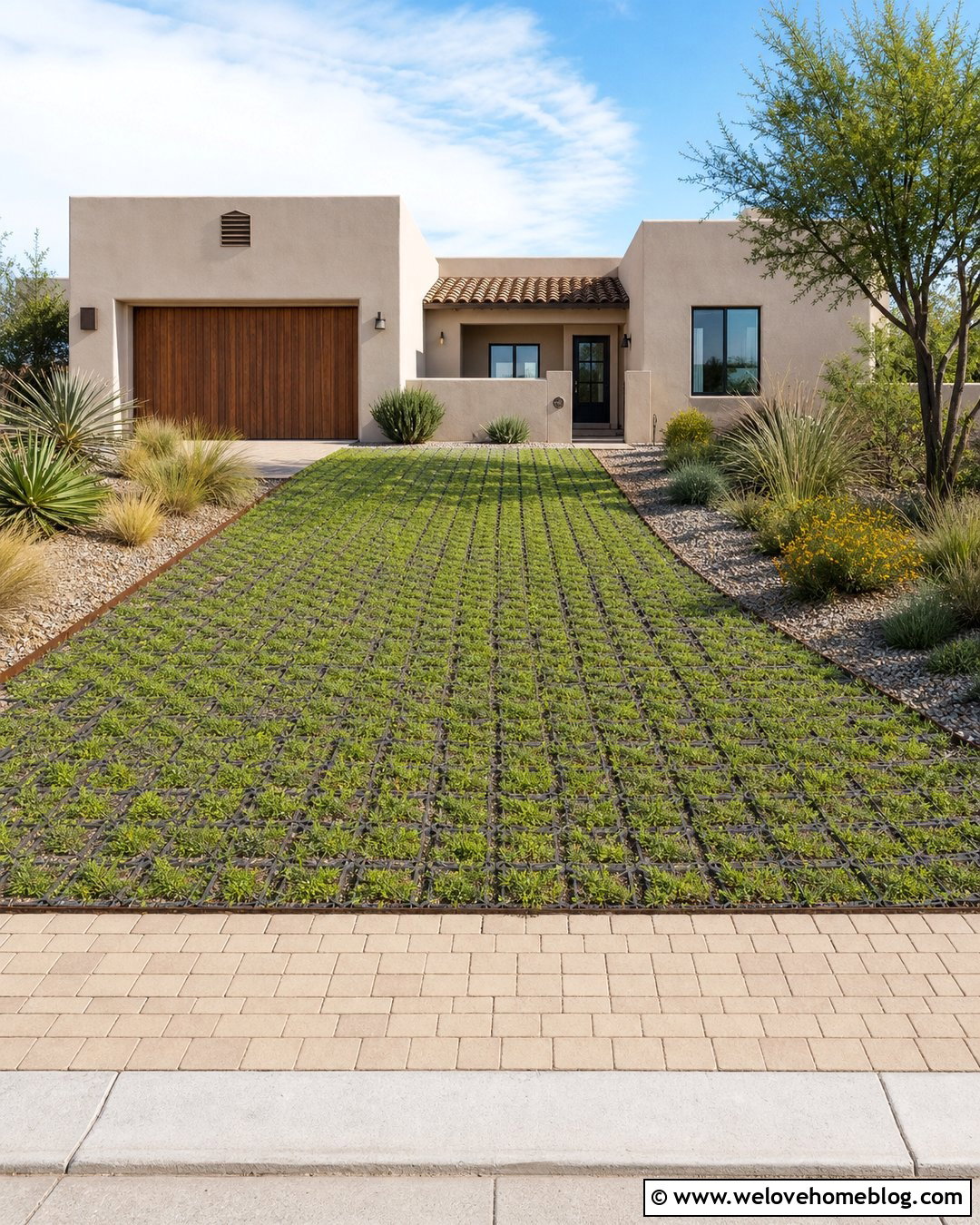
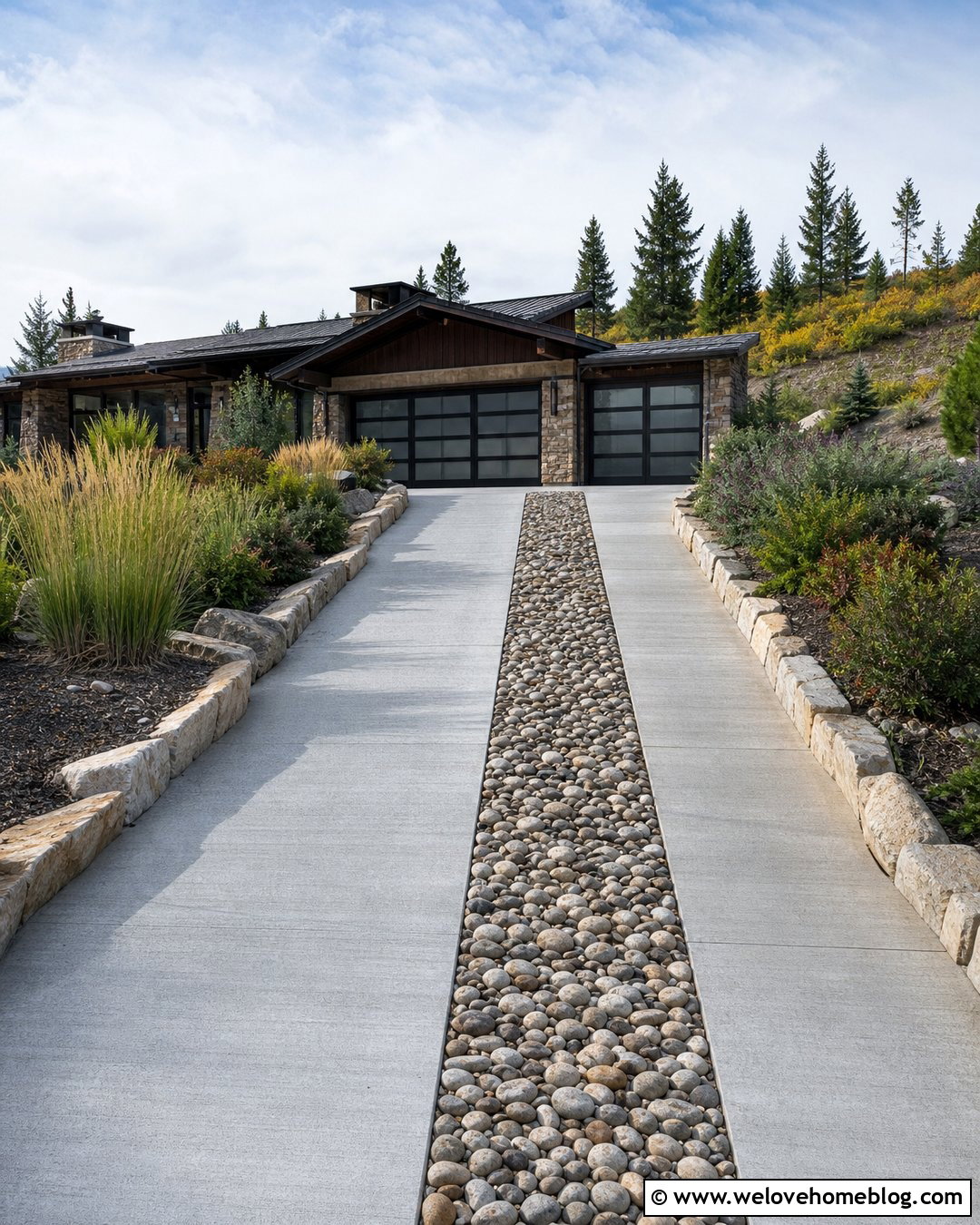
A dark border gives green grass pavers a sharper, more contemporary appearance. Choose cool gray concrete turf blocks and surround the driveway with smooth charcoal concrete pavers. The strong outline clearly separates the drivable surface from the lawn, walkway, and planting beds. Maintain a straight layout with a generous landing in front of the garage. Repeating the charcoal material on the front path and porch steps helps connect the driveway to the house. Use simple landscaping, such as clipped boxwood alternatives, feather reed grass, and a multi-stem tree placed in pale decorative gravel. The contrast between dark edging, gray blocks, and fresh turf creates depth without excessive ornament. This combination works particularly well with white, black, or natural wood modern facades.
11. Checkerboard Grass Paver Driveway
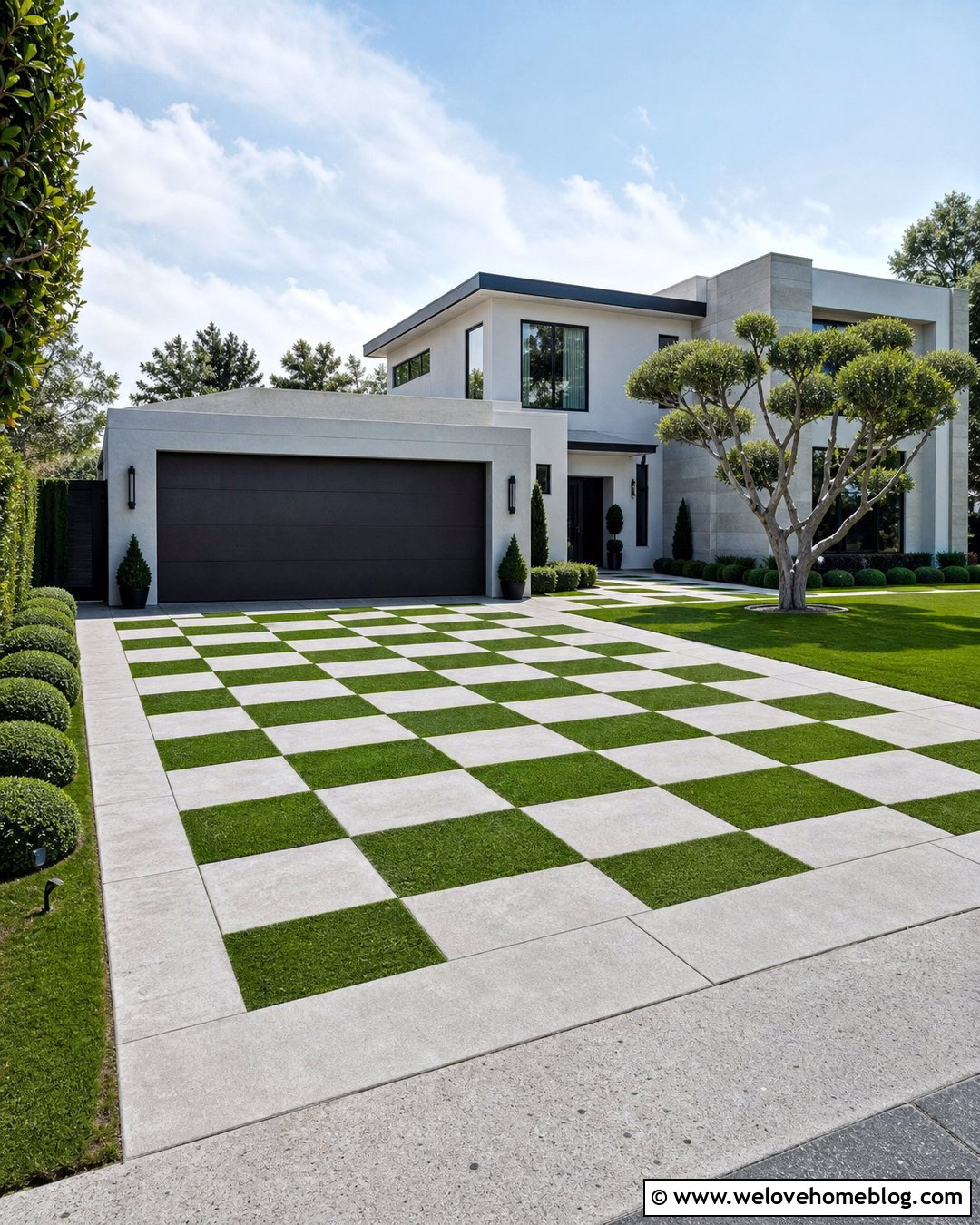
A checkerboard layout creates a bold geometric surface while preserving generous areas of greenery. Alternate large square concrete pavers with square grass-filled spaces over a properly engineered, vehicle-rated base. The concrete sections should be thick enough for driveway traffic and arranged so tires remain supported throughout the approach. A solid perimeter of matching concrete locks the pattern together and protects vulnerable outer corners. Keep the surrounding landscape simple so it does not compete with the grid. Broad lawn panels, rounded shrubs, and one sculptural tree are usually enough. Continue a smaller version of the checkerboard pattern along the walkway for a coordinated entrance. This distinctive driveway works best with modern, minimalist, and midcentury homes featuring strong horizontal or rectangular architectural lines.
12. Large Concrete Pavers With Grass Joints
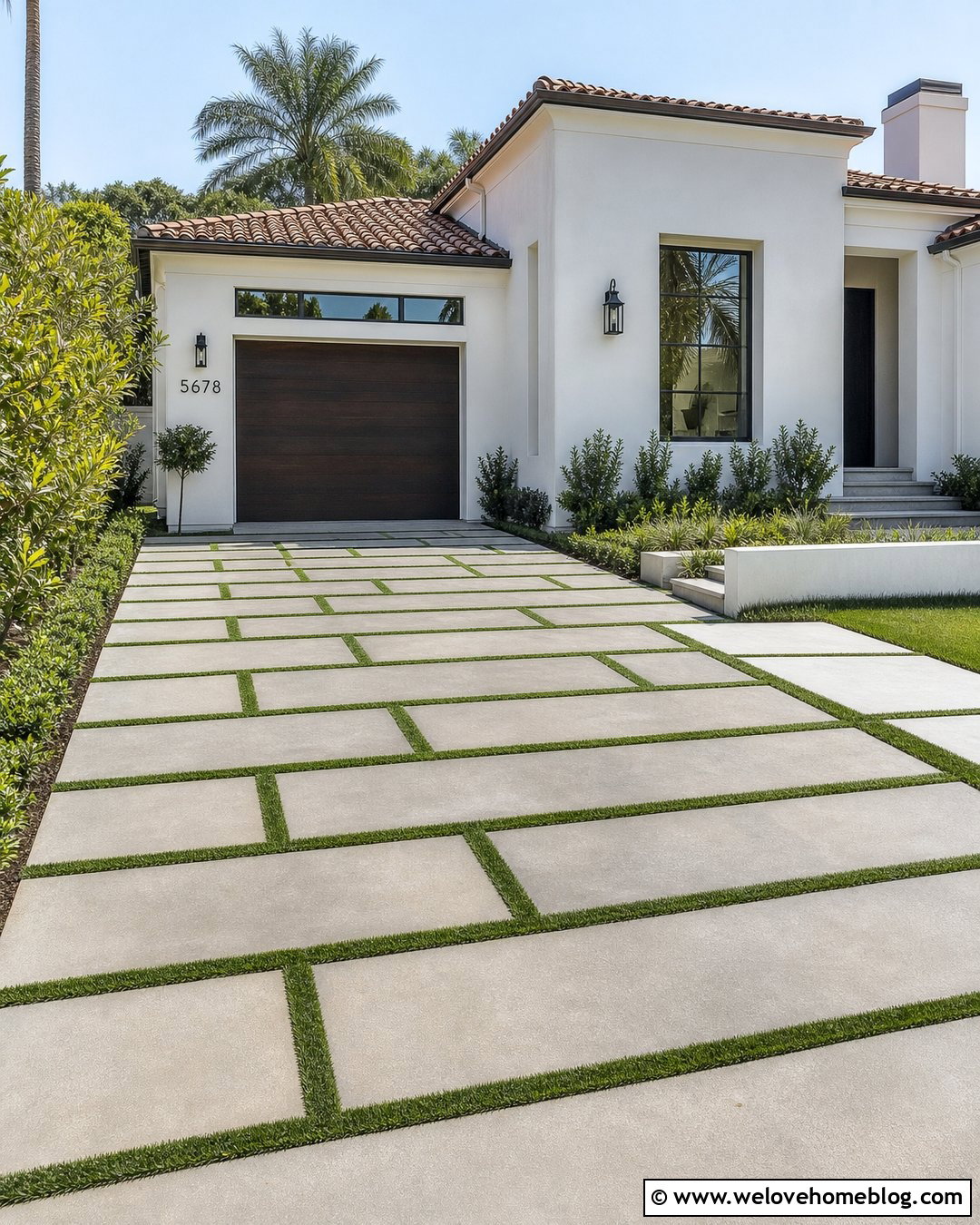
Large-format concrete pavers separated by wide grass joints offer a refined alternative to traditional open-cell blocks. Place rectangular, vehicle-rated concrete slabs in an orderly running pattern with reinforced planting gaps between them. The grass bands should be planned as part of the structural system rather than added between ordinary patio slabs. Use a concealed edge restraint or narrow steel border for a precise finish. A straight driveway and restrained foundation planting allow the oversize geometry to remain visible from the street. Match the warm or cool gray concrete to the home’s exterior materials. This design delivers more exposed hard surface than a typical turf-block driveway, making it suitable for frequently used parking areas while still introducing greenery and stormwater-friendly joints throughout the approach.
13. Recycled Plastic Grass Grid Driveway
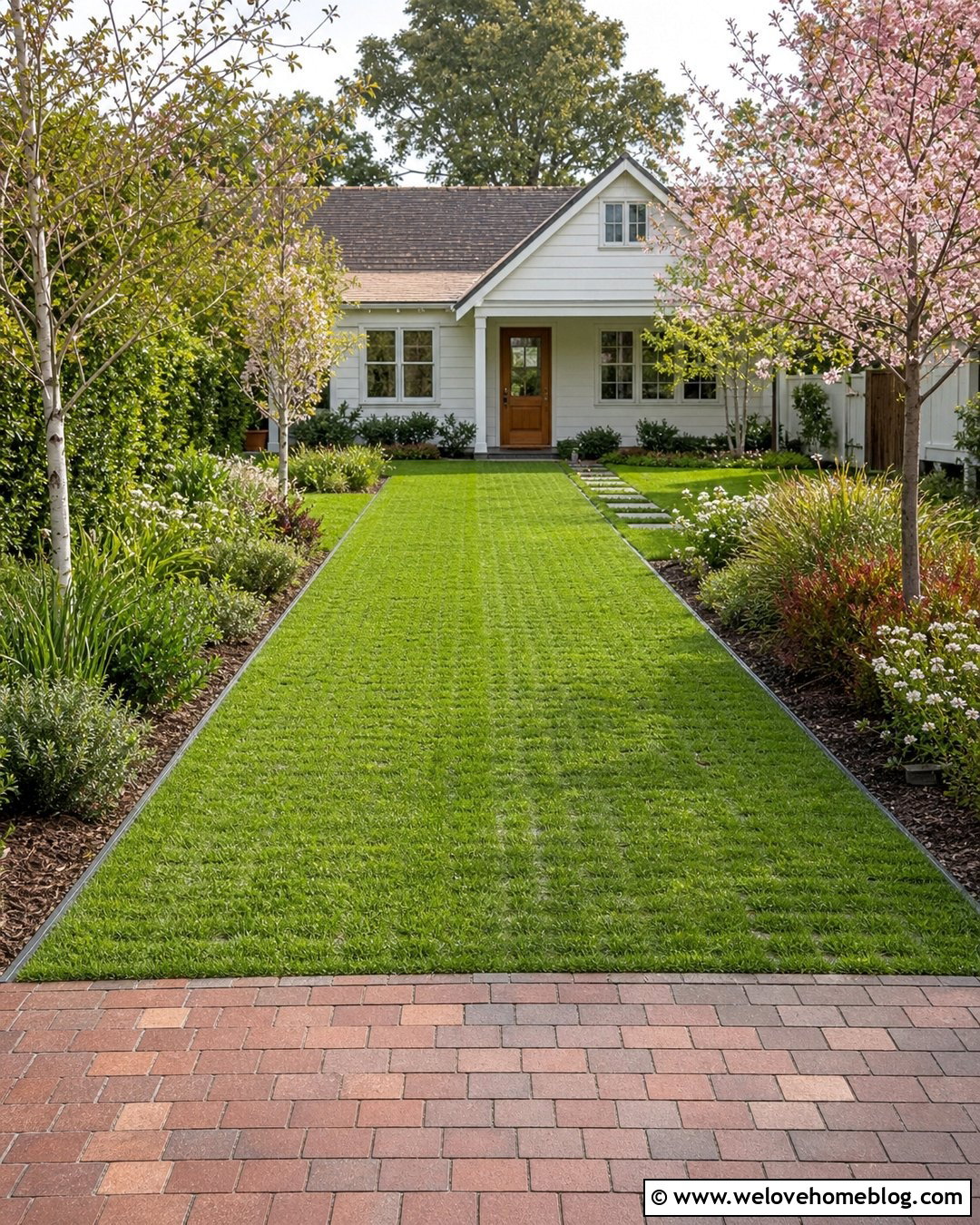
Recycled plastic turf grids can create the appearance of an uninterrupted lawn while reinforcing the surface underneath. This works especially well for a secondary driveway, guest parking area, or discreet approach beside the house. Install load-rated grids over an open aggregate base, fill the cells with suitable growing material, and seed or sod them with climate-appropriate grass. Once established, the grid should sit beneath the turf rather than remain visually dominant. Use flush steel edging to separate the reinforced area from planting beds. A row of small trees and low native shrubs can mark the driveway without adding hard visual boundaries. At the street, a brick or concrete apron provides a clear entrance and handles the higher wear created by turning vehicles.
14. Grass Paver Driveway With Buffalo Grass
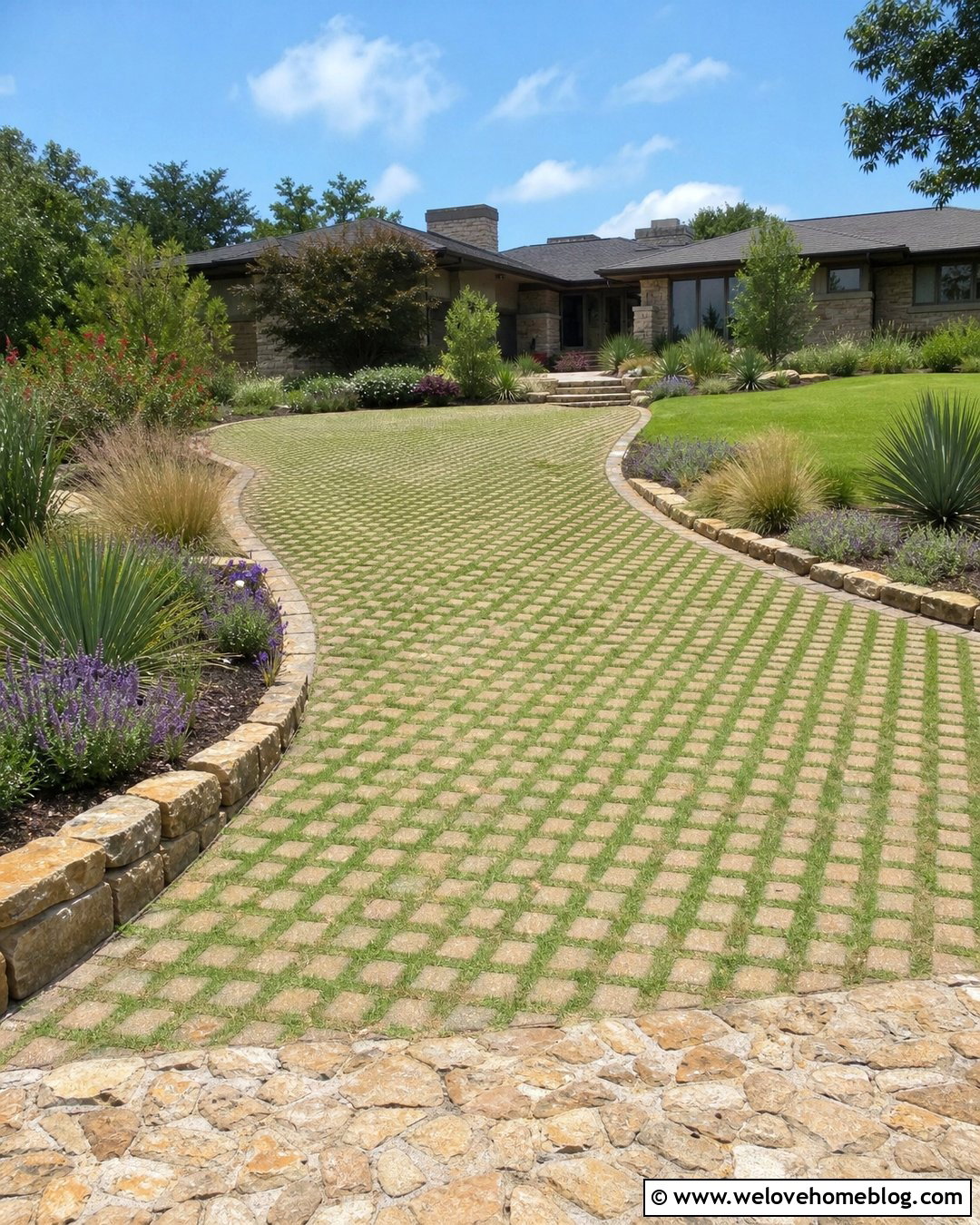
Buffalo grass can give a grass paver driveway a soft, natural appearance in sunny regions where this warm-season species is suitable. Pair it with broad concrete turf blocks that leave enough open space for healthy growth. A curved driveway bordered by locally sourced stone reinforces the relaxed, regional character. Around the edges, repeat drought-conscious plants such as yucca, little bluestem, salvia, and compact flowering shrubs. Avoid crowding the turf with tall plants that create excessive shade. A permeable stone apron at the curb can reduce wear where vehicles turn onto the grid. During dormancy, buffalo grass may change color, so select pavers and border stones that remain attractive throughout the year. The resulting look is natural, practical, and visually connected to a prairie-inspired landscape.
15. Grass Paver Driveway With Clover Infill
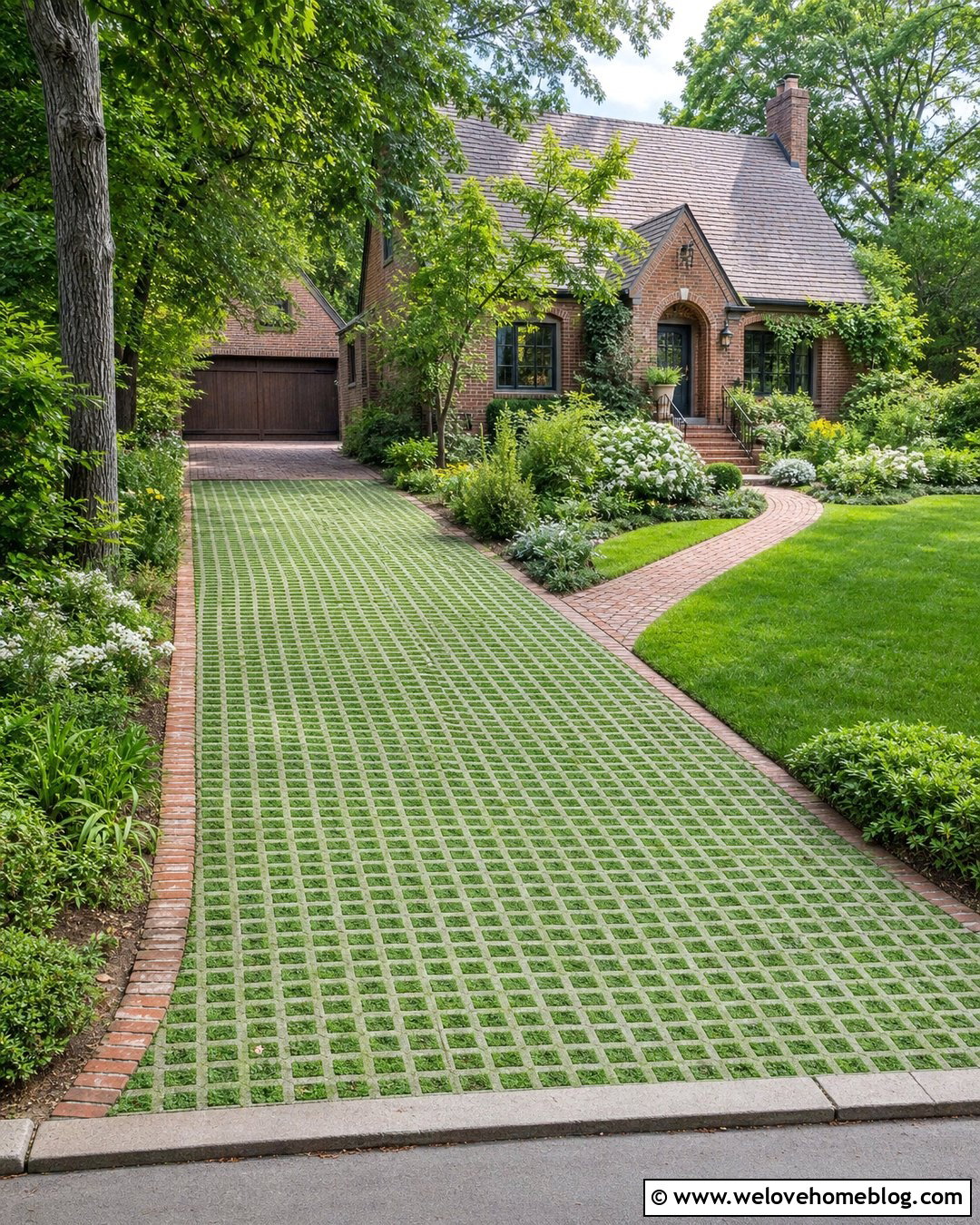
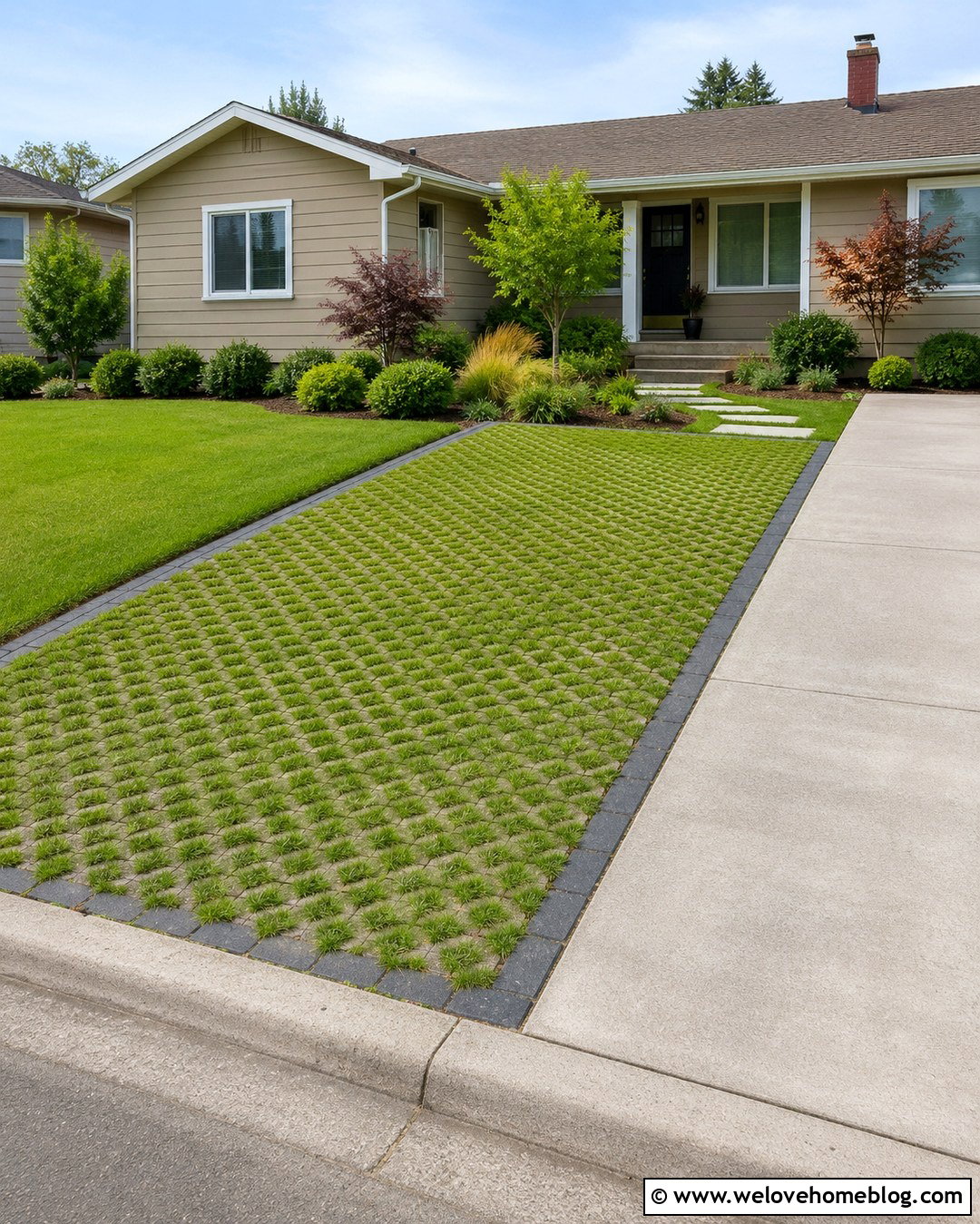
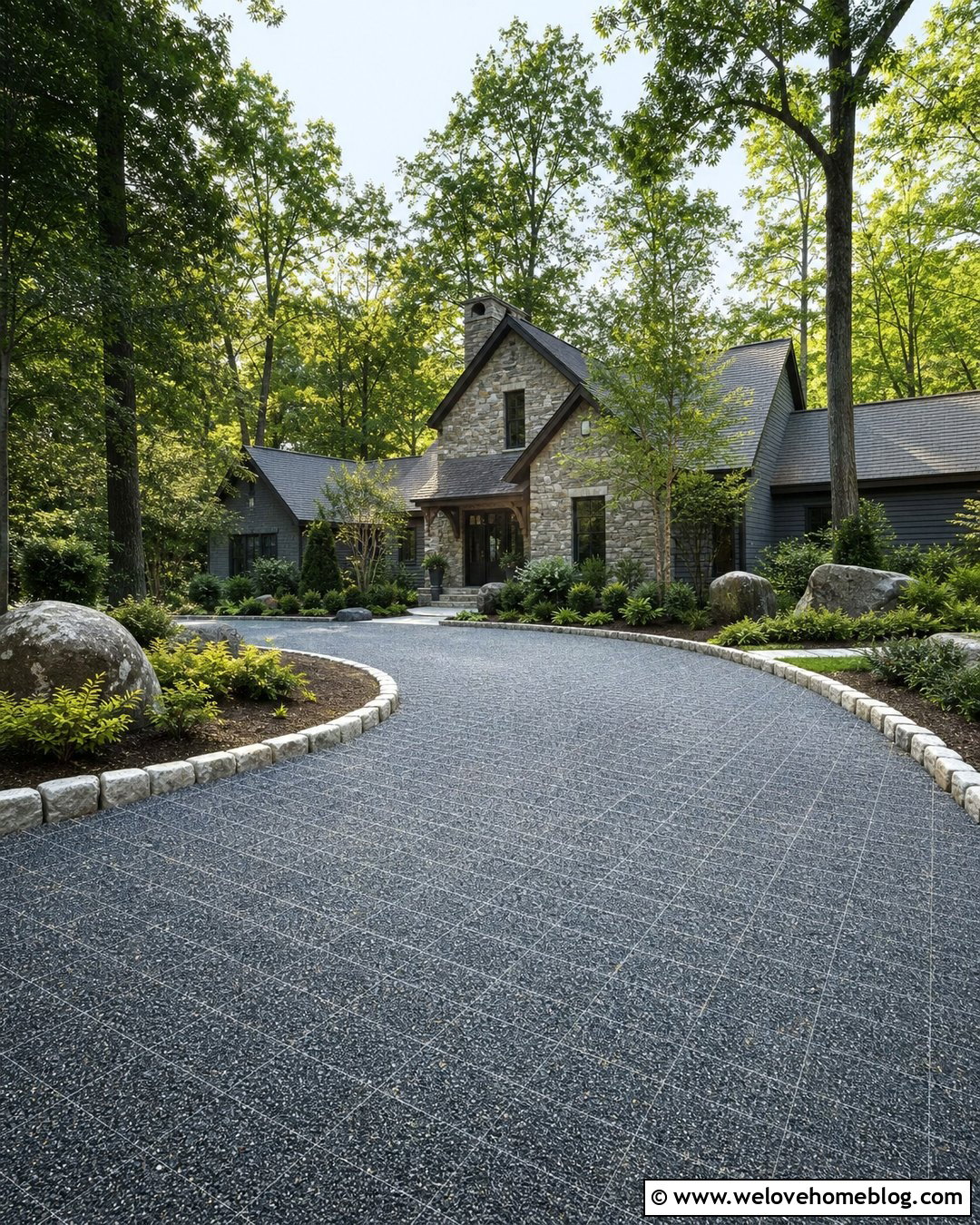
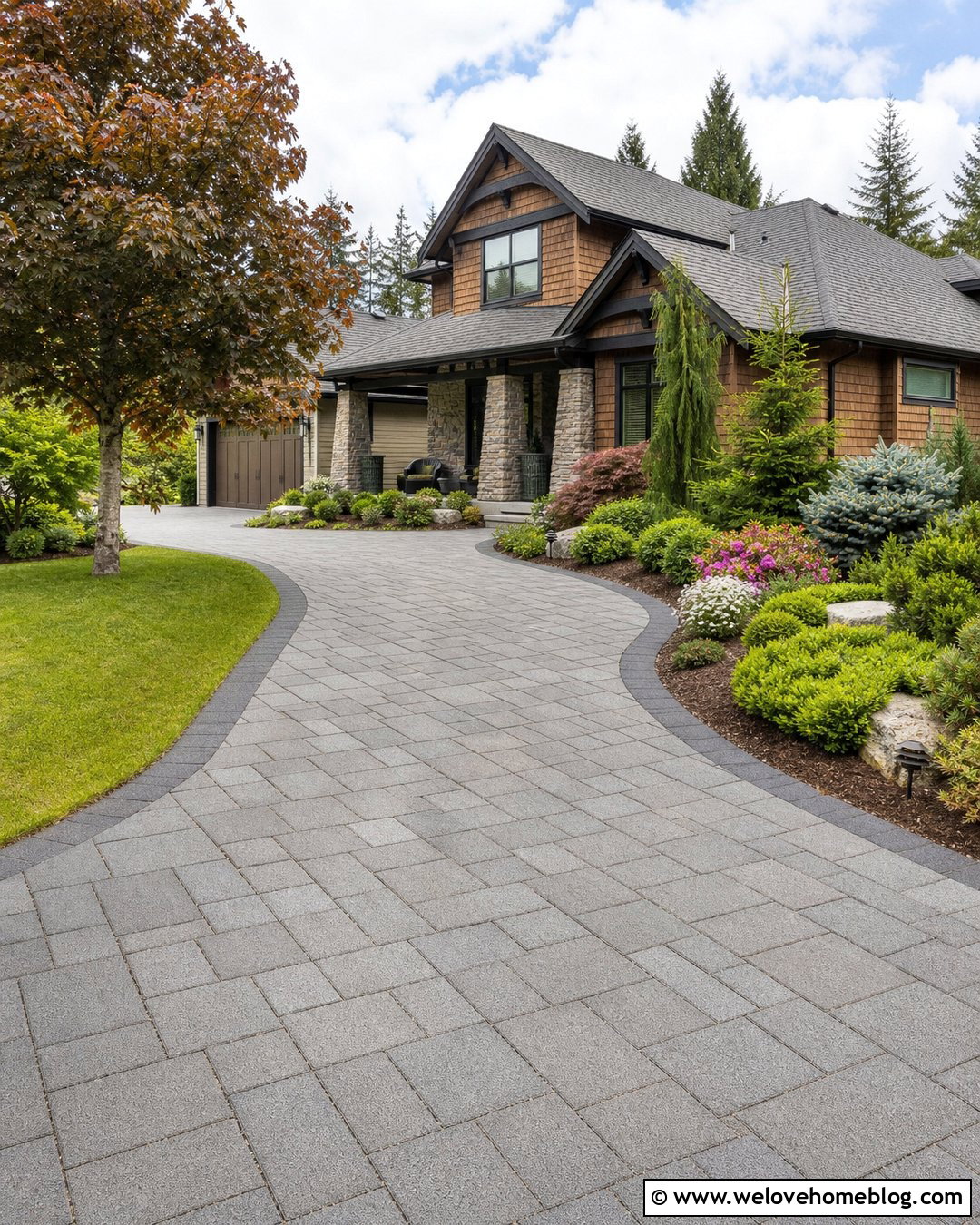
Low-growing clover can produce a lush, informal finish in grass pavers where local conditions support it. Use it alone or as part of an appropriate seed blend selected for vehicle exposure, soil, and sunlight. Square concrete grass blocks keep the surface orderly, while the small leaves soften the visible openings. Frame the driveway with reclaimed brick edging and cottage-style planting beds containing hardy flowering perennials. A gently curved layout makes the entrance feel relaxed and helps the greenery blend into the front garden. Because not every ground cover tolerates repeated parking, this look is better suited to a lightly used driveway or overflow space. A solid brick landing near the garage can take the heaviest traffic while preserving the planted character across the rest of the approach.
16. Grass Paver Driveway With Creeping Thyme
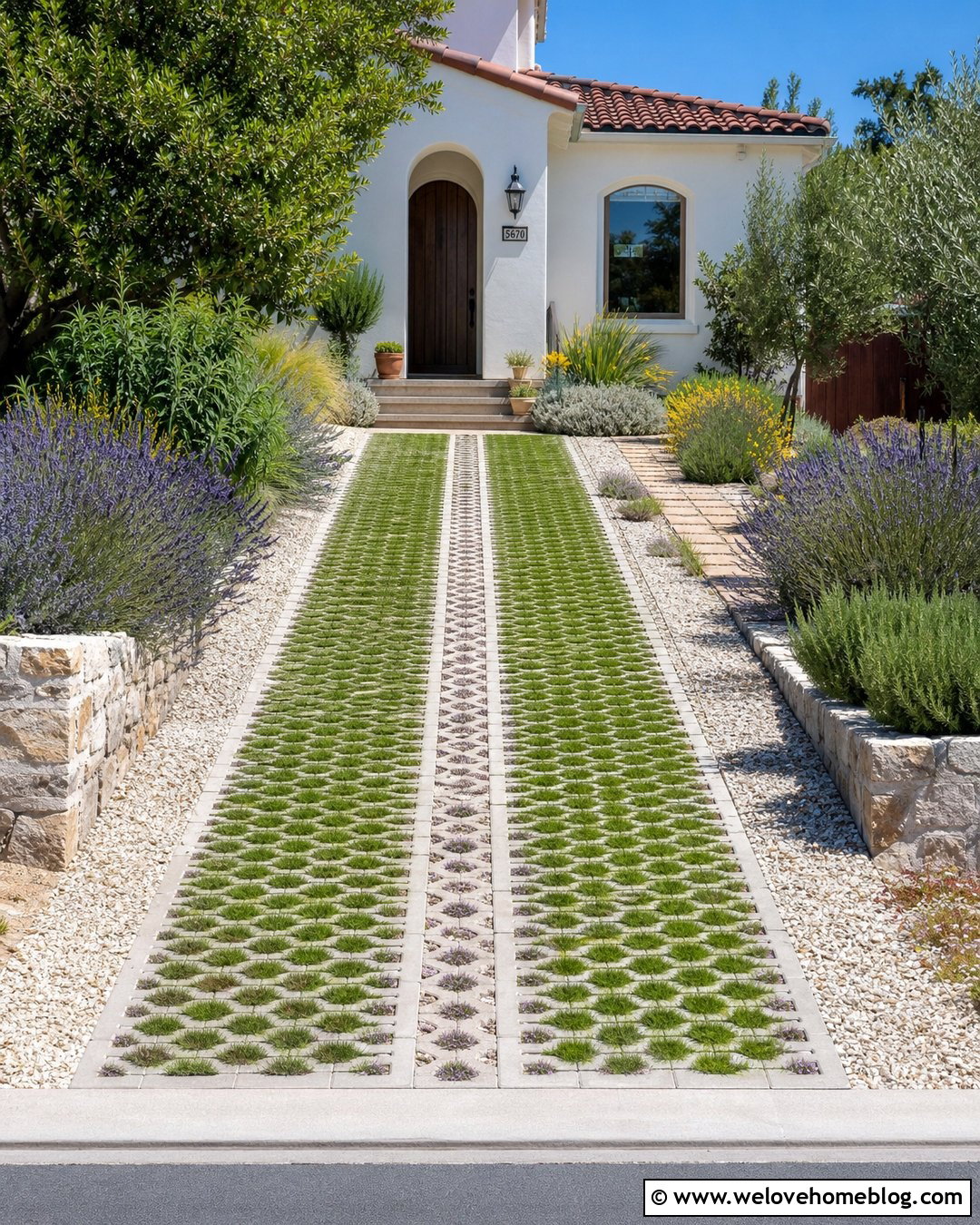
Creeping thyme brings fine texture and seasonal color to a lightly traveled grass paver driveway. It is most practical along outer cells, between occasional-use parking spaces, or in sunny areas receiving limited tire pressure. Use pale concrete turf blocks in a compact straight layout, then surround them with gravel strips that provide drainage and keep spreading plants controlled. A low stone wall and Mediterranean planting can extend the drought-conscious theme. Lavender, santolina, rosemary, and ornamental grasses create a cohesive border without overwhelming the driveway. Reserve plain turf or gravel-filled cells for the wheel paths if the area receives regular traffic. This balanced design provides the decorative appeal of thyme while placing tougher materials in the sections expected to handle daily vehicle movement.
17. Shaded Grass Paver Driveway With Sedge
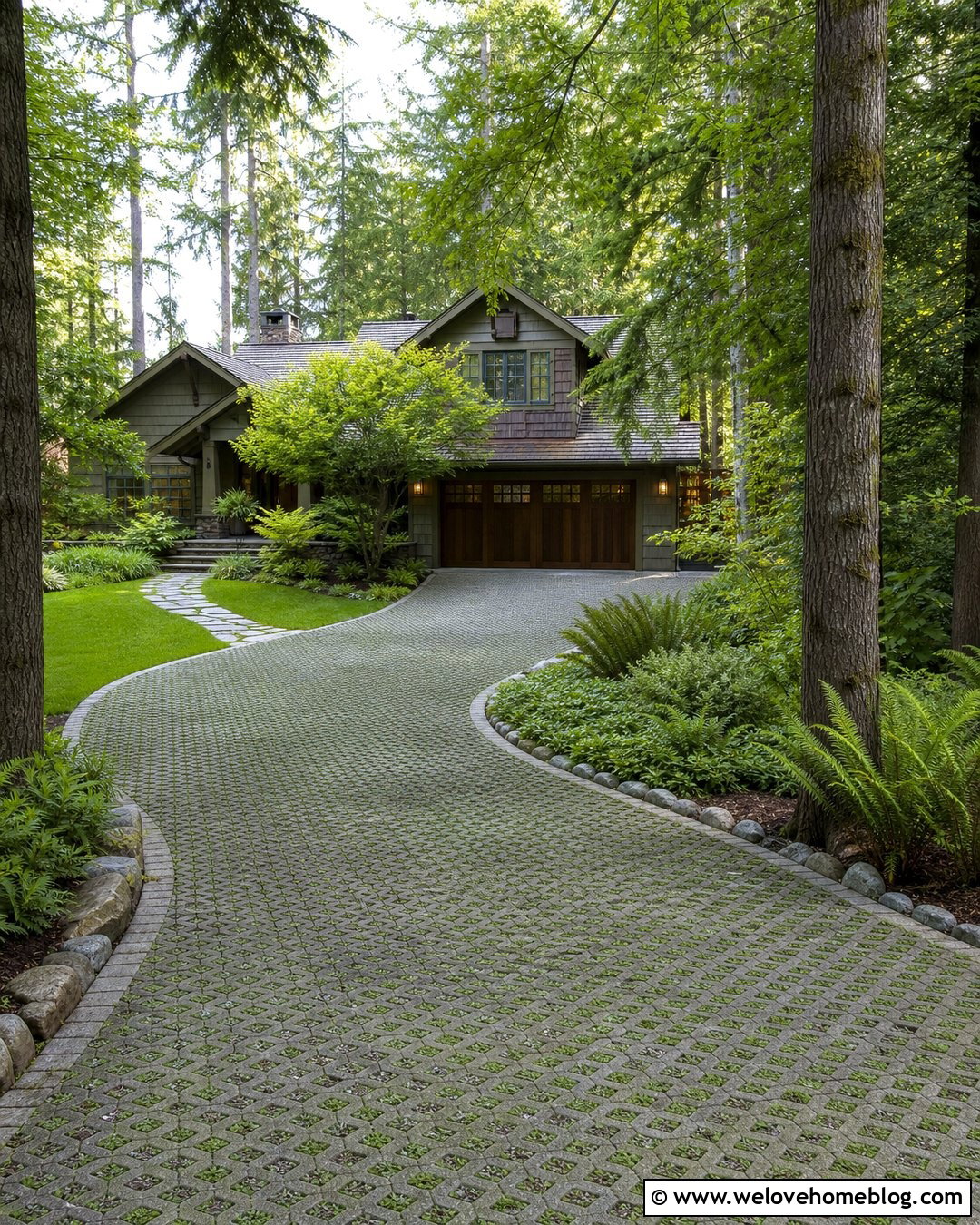
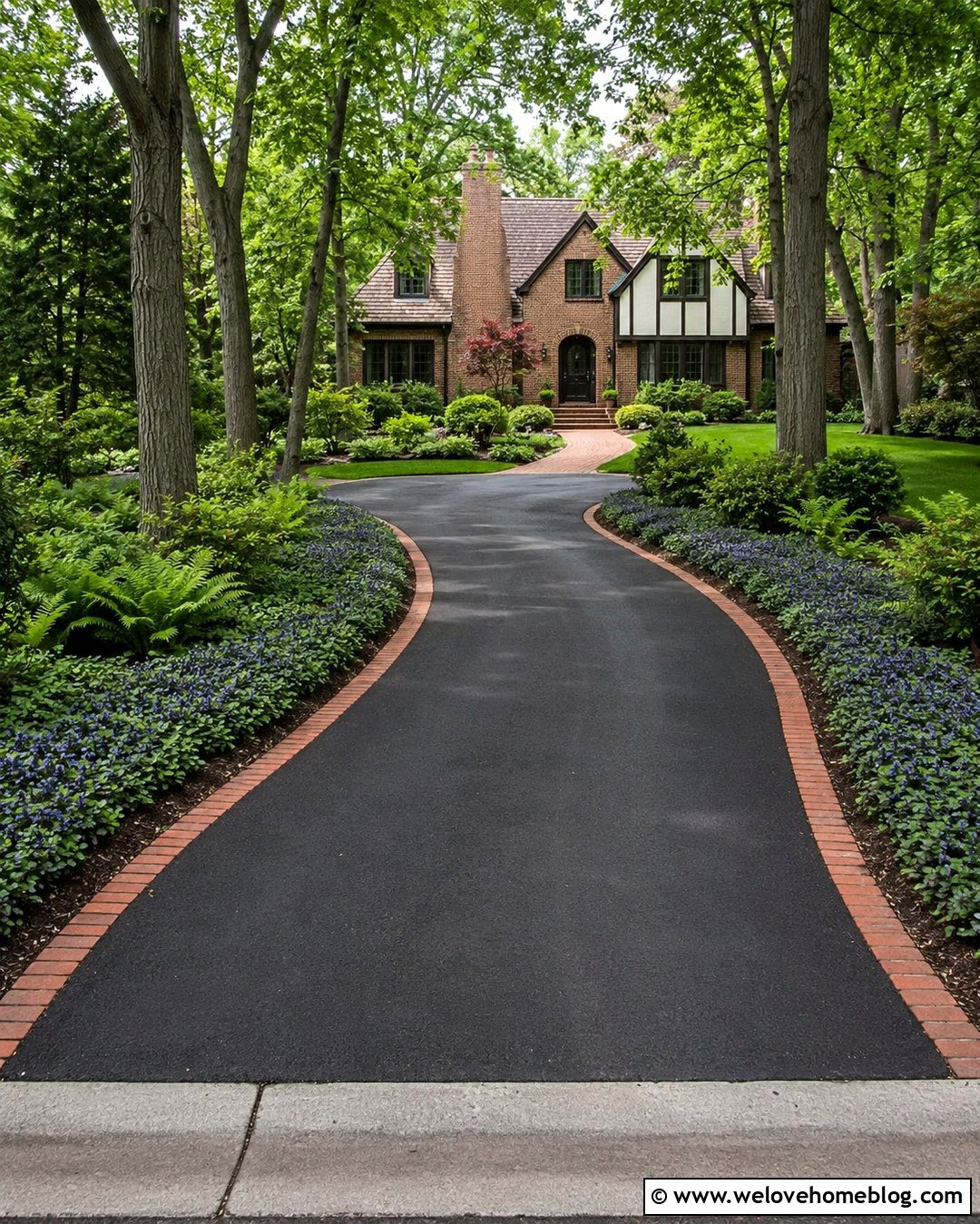
A partially shaded driveway needs planting selected for lower light and intermittent vehicle traffic. Grass-like sedges can provide a softer alternative where conventional lawn struggles, but the exact variety should match the region, moisture level, and expected use. Install open concrete pavers along a gently curved approach beneath high-canopy trees. Broad stone edging will protect roots and clearly separate the driving surface from woodland planting beds. Fill those beds with ferns, shade-tolerant shrubs, and restrained ground covers. Keep the canopy pruned high enough to improve visibility and airflow. If vehicles remain parked for long periods, consider gravel in the most shaded cells and sedge in brighter sections. This practical mix maintains the woodland appearance without depending on dense turf in conditions where it may not thrive.
18. Grass Paver Driveway With Artificial Turf
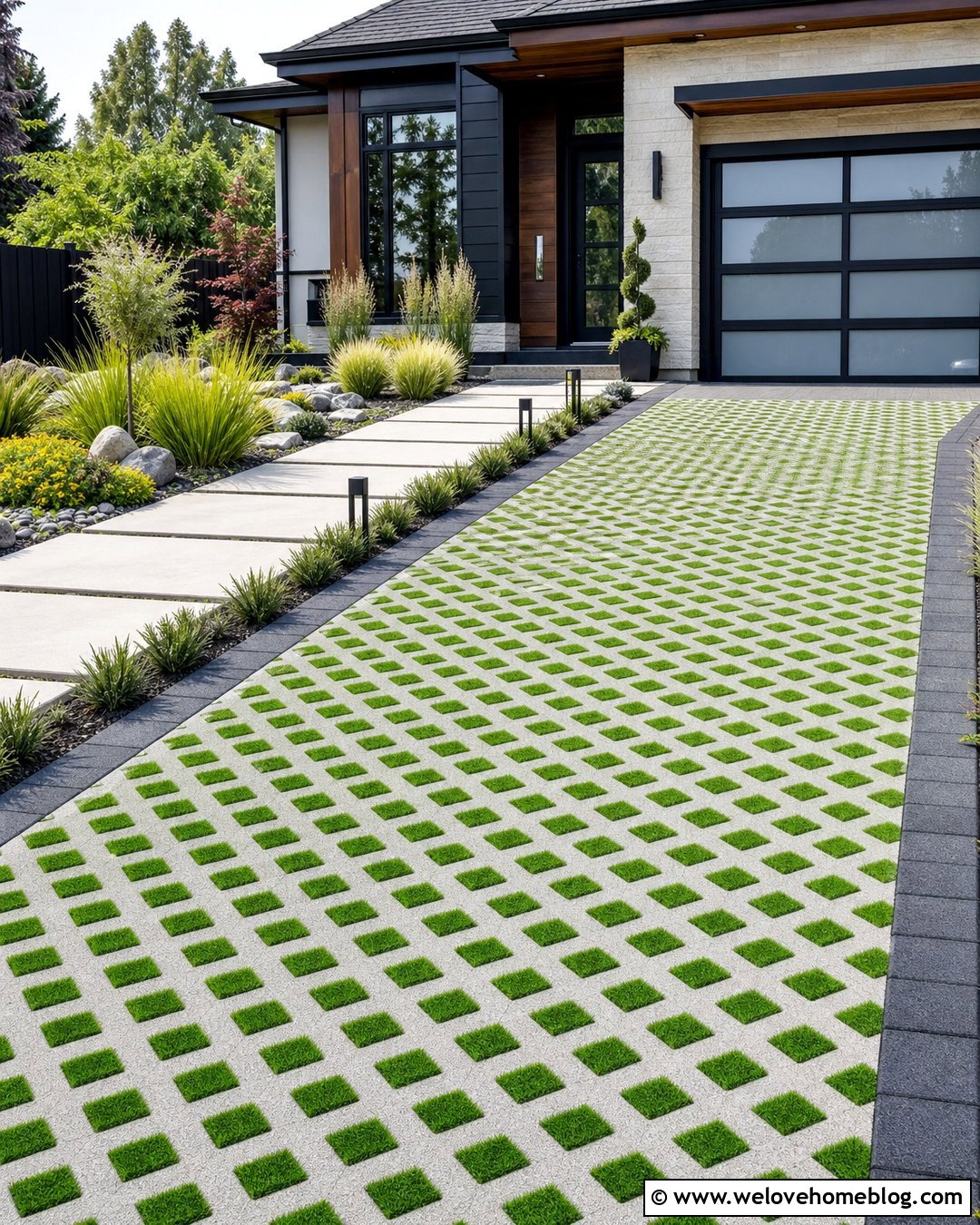
Artificial turf infill provides a consistently green appearance where living grass would be difficult to maintain. Fit short, dense synthetic turf into vehicle-rated concrete or plastic grid cells, making sure the complete system is designed for driveway loads and drainage. A straight layout with dark paver edging creates a polished contemporary look. Extend the same edging around low-maintenance beds filled with sculptural shrubs, ornamental grasses, and decorative stone. The artificial turf should be trimmed carefully so the grid remains level and tires contact the structural pavers. Use a solid permeable apron at the garage and street to handle regular turning. This design can reduce mowing and patch repair, although periodic cleaning and heat considerations should be included when deciding whether it suits the site.
19. Grass And Gravel Grid Driveway
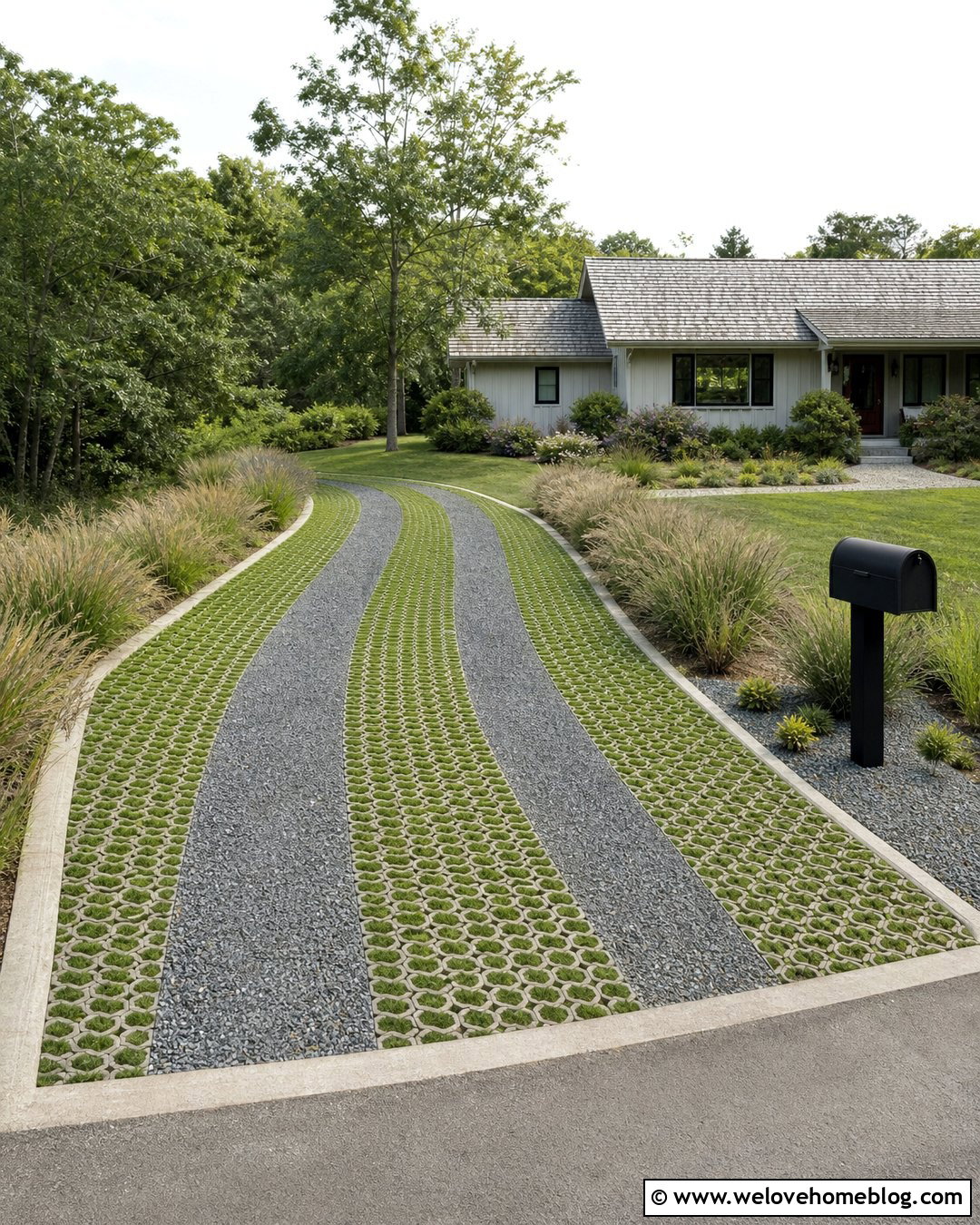
Mixing grass-filled and gravel-filled grid cells adds texture while placing tougher infill where vehicles travel most. Use grass in the center and along the outer sections, then fill the primary wheel paths with compact, angular gray gravel. The supporting grid should continue beneath both materials so the entire driveway performs as one surface. Concrete edging contains the gravel and creates a neat transition to the lawn. A curved layout can lead toward a ranch home surrounded by native grasses and broad planting beds. Repeat the same gravel in the walkway or around a mailbox to unify the frontage. This hybrid approach is useful when full turf coverage would be difficult to maintain but homeowners still want a driveway that appears greener than conventional concrete or asphalt.
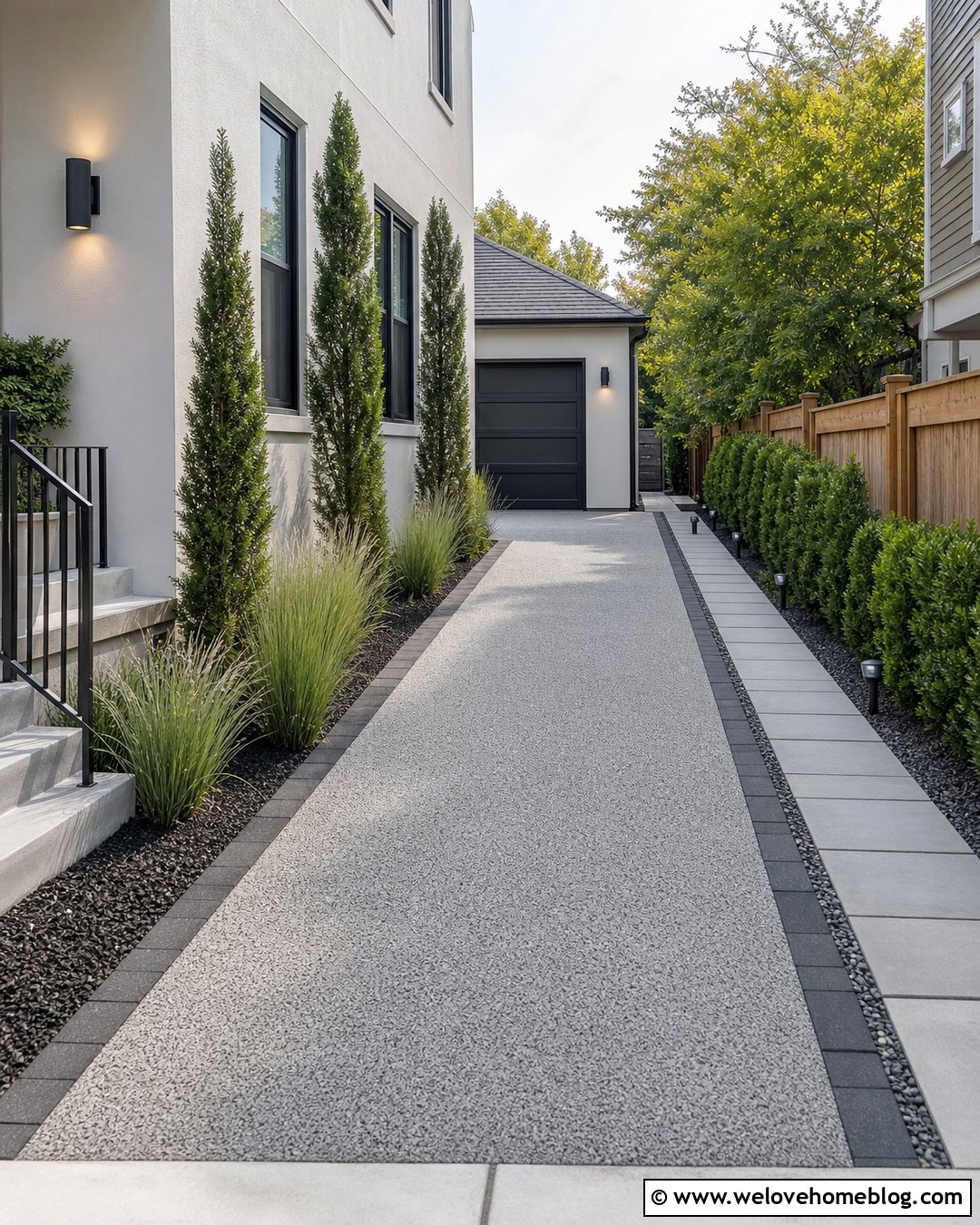
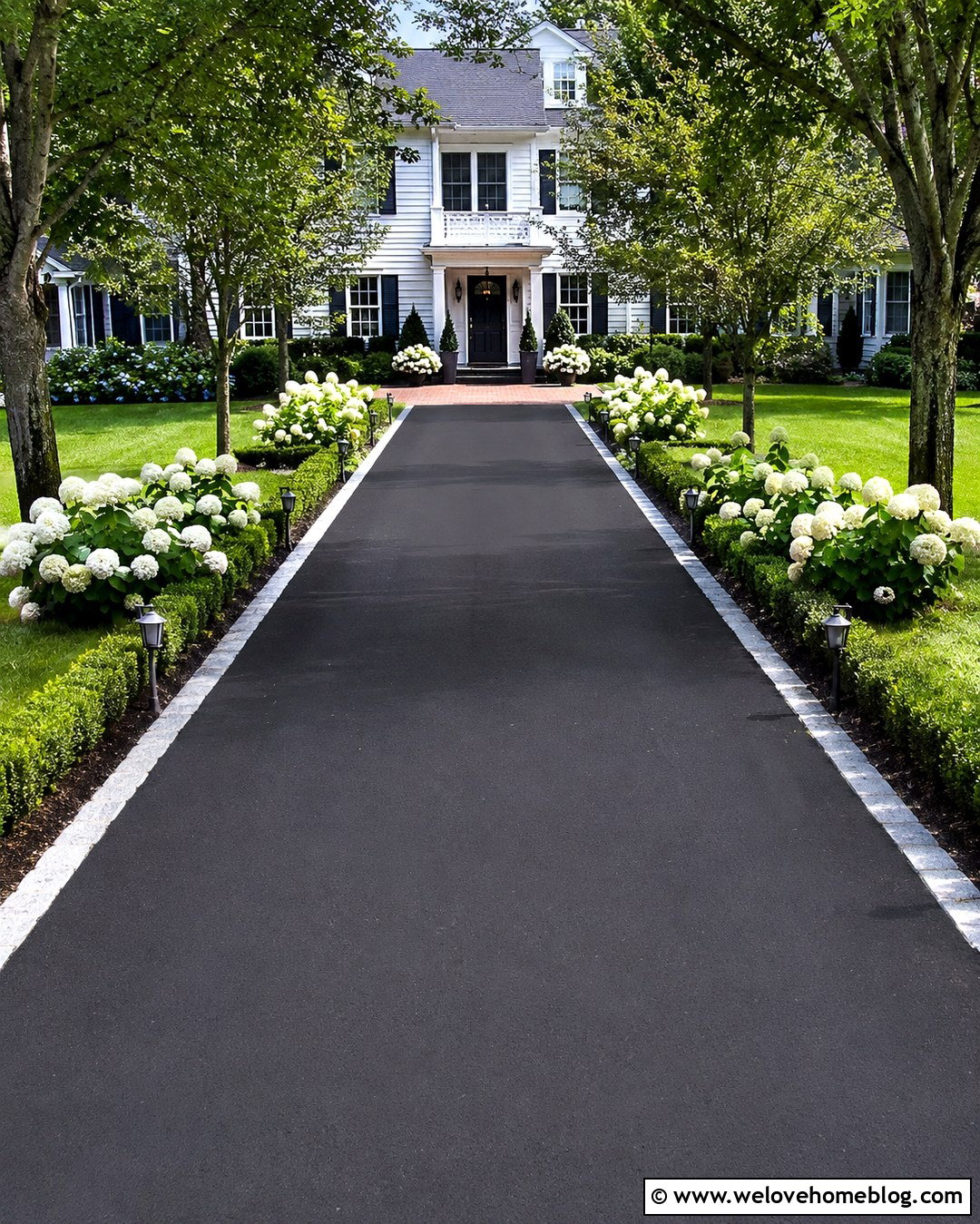
20. Grass Paver Driveway With Brick Apron
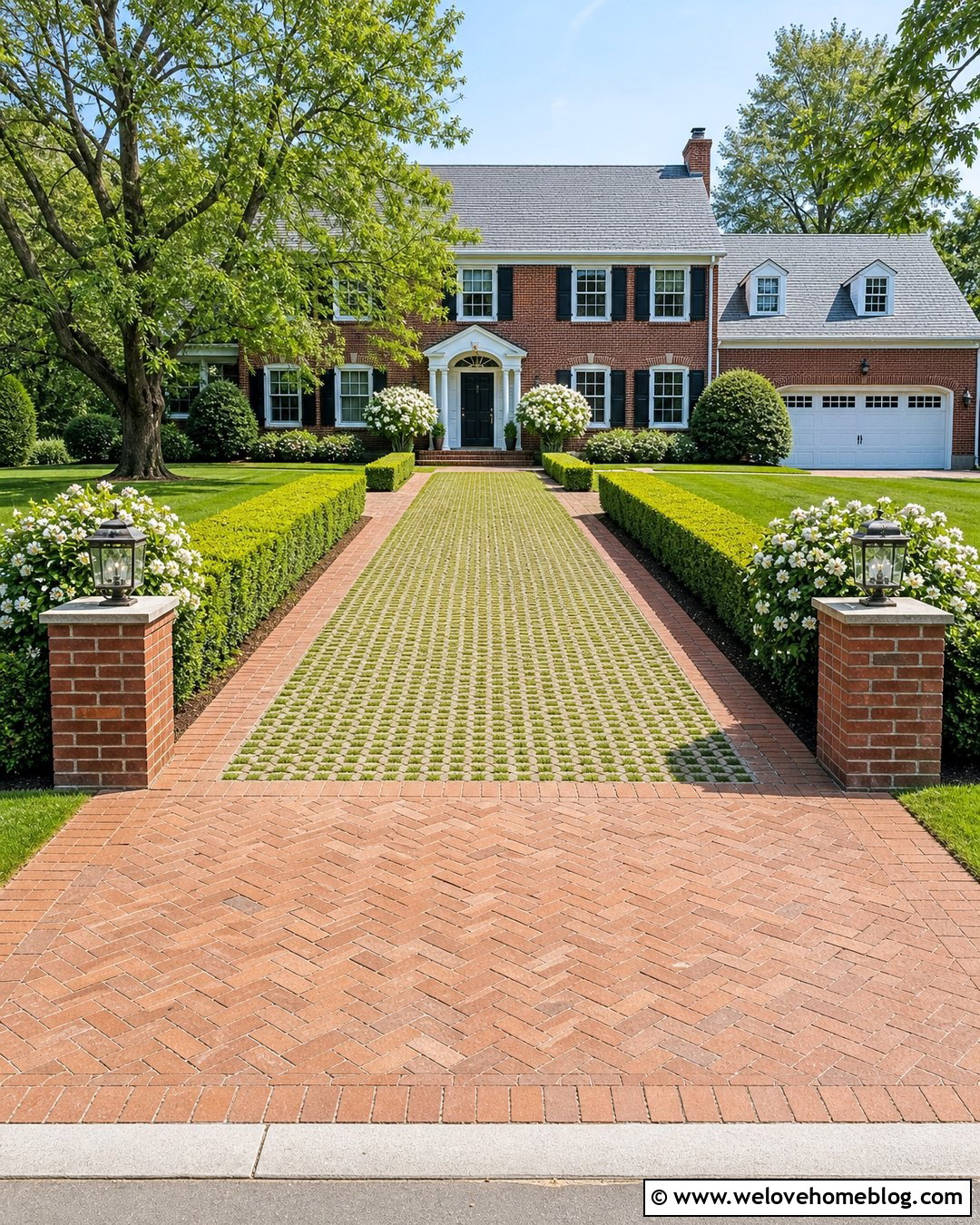
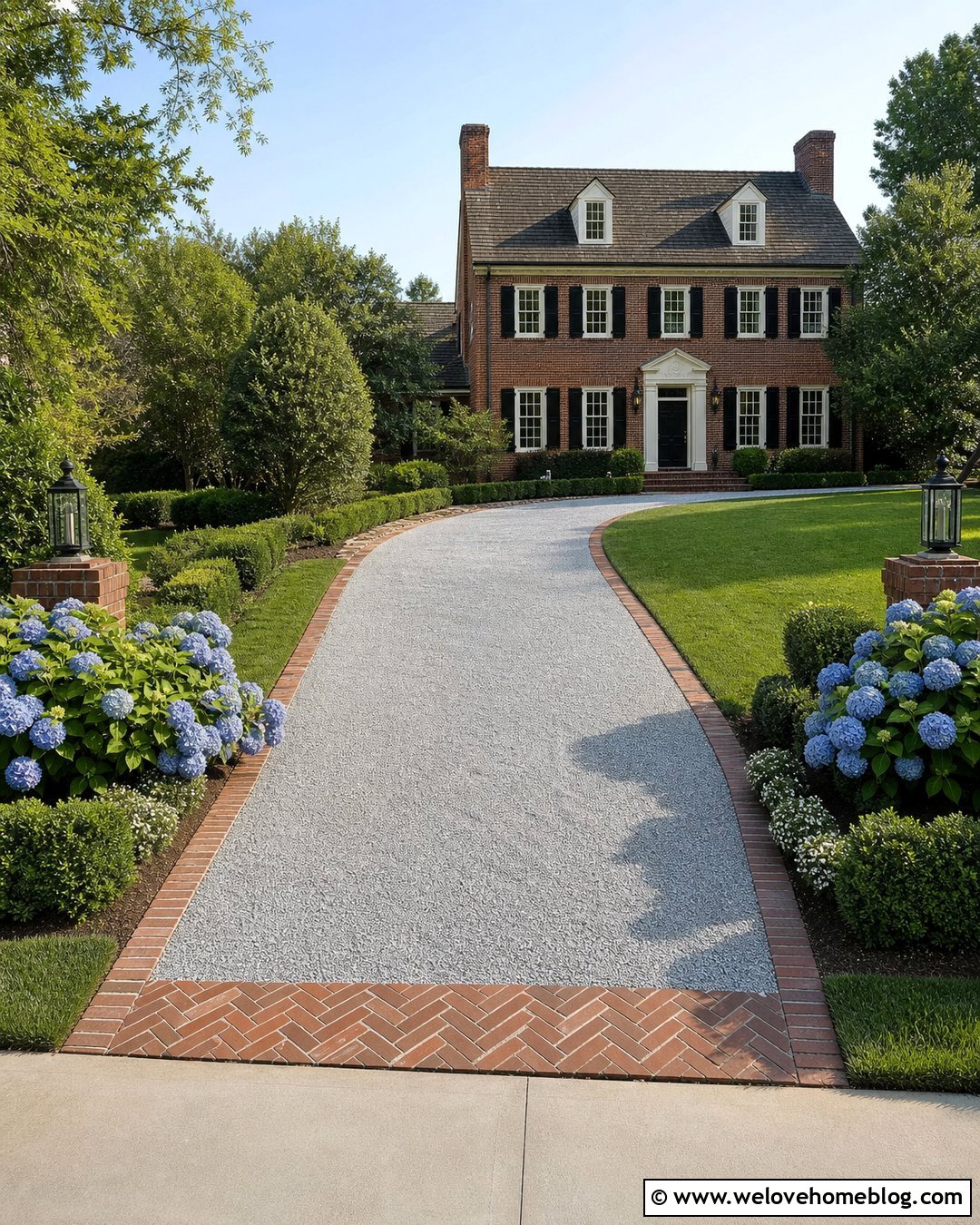
A red or brown brick apron can give a grass paver driveway a strong traditional entrance. Lay clay brick pavers in a herringbone pattern at the street and repeat them in a wider landing in front of the garage. Between these areas, use concrete grass blocks filled with healthy turf. Narrow brick ribbons along each side connect the two hardscape zones and keep the design visually organized. This combination looks especially natural beside Colonial, Georgian, and traditional brick homes. Add clipped evergreen hedges, symmetrical flowering shrubs, and a straight walkway to reinforce the formal architecture. The brick protects the highest-wear sections while the planted pavers soften the main driveway. Choose brick colors already present on the house so the surface feels like an intentional architectural extension.
21. Grass Paver Driveway With Cobblestone Border
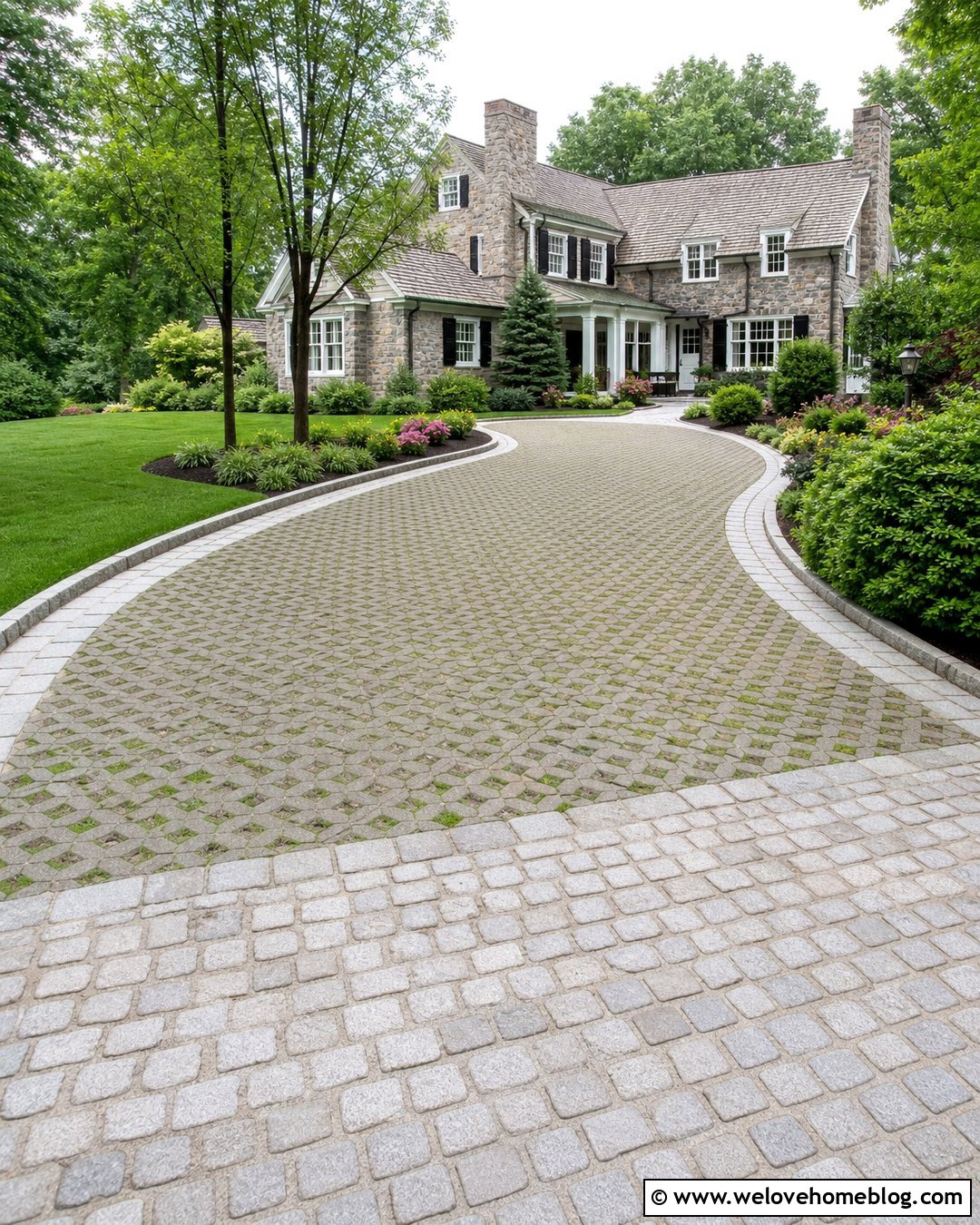
Cobblestone edging brings weight and definition to the open texture of grass pavers. Use concrete turf blocks for a broad, slightly curved driveway and install granite cobbles along both sides. The irregular color of the stone creates a handsome transition between the grid and surrounding lawn. At the entrance, widen the cobblestone border into a substantial apron that visually welcomes vehicles. Layer evergreen shrubs, flowering perennials, and small trees behind the edging, leaving enough clearance for open car doors. A matching cobblestone path can lead toward the porch. This combination suits historic homes, country properties, and traditional new builds. The border should be securely set so it can resist tire contact and prevent the driveway base or planting material from moving outward over time.
22. Grass Paver Driveway With Limestone Edging
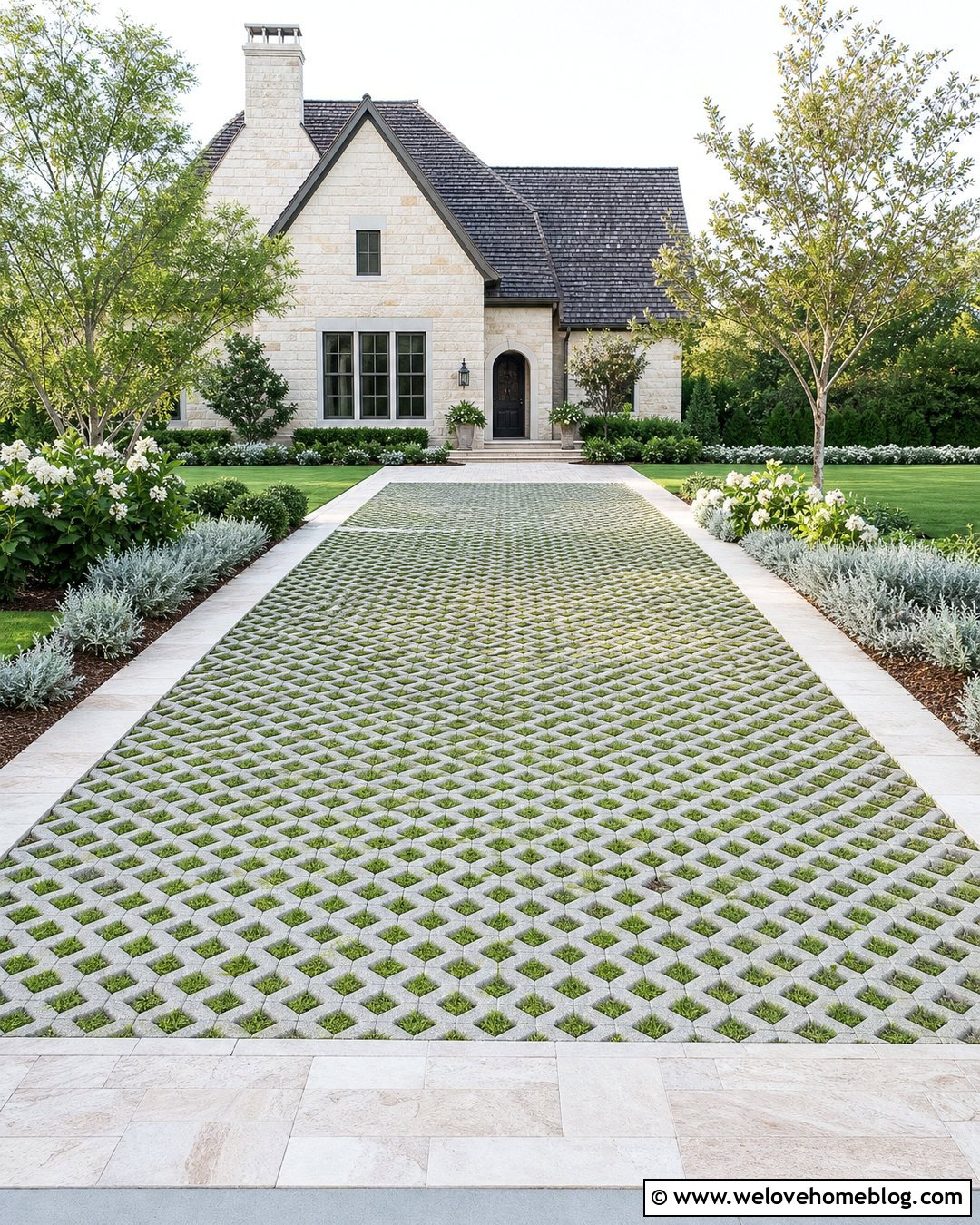
Pale limestone edging brightens a green driveway and pairs beautifully with light stucco, cream brick, and natural stone homes. Install gray concrete grass pavers along a wide straight approach, then frame them with rectangular limestone units. Keep the stones relatively smooth and consistent for a tailored appearance. A matching limestone walkway can branch from the driveway and lead to the front entrance. Use soft green shrubs, white flowers, and silvery foliage in the surrounding beds to continue the restrained palette. Near the curb, create a deeper limestone band that announces the driveway entrance. Since limestone characteristics vary, select an exterior grade suitable for the local climate and vehicle exposure. The completed design feels light, orderly, and comfortably connected to the home’s facade.
23. Grass Paver Driveway With Steel Edging
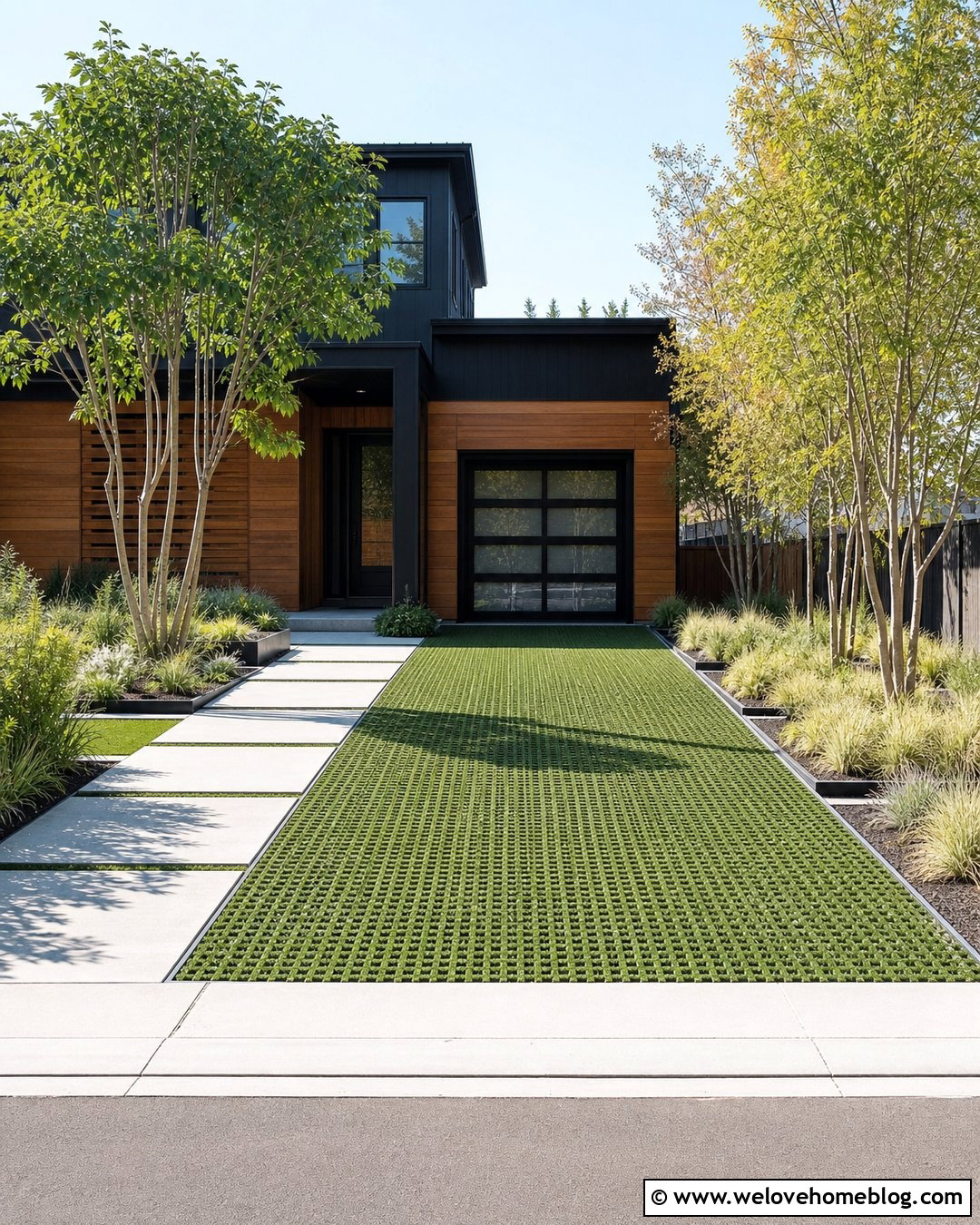
Steel edging gives grass pavers a thin, precise boundary that almost disappears from a distance. It is ideal for contemporary landscapes where bulky curbs or rustic stone would distract from simple geometry. Use recycled plastic turf grids or concrete grass blocks in a straight driveway and install flush dark steel along the perimeter. Divide adjacent planting beds into clean rectangular zones containing ornamental grasses, ground covers, and multi-stem trees. A large concrete slab walkway can cross the green driveway near the front door, creating a strong horizontal detail. Keep the turf evenly trimmed so the crisp shape remains visible. Proper anchoring is important because driveway edges receive pressure from tires and soil movement. The finished approach feels green and minimal without looking unfinished or overly casual.
24. Grass Paver Driveway With Timber Edging
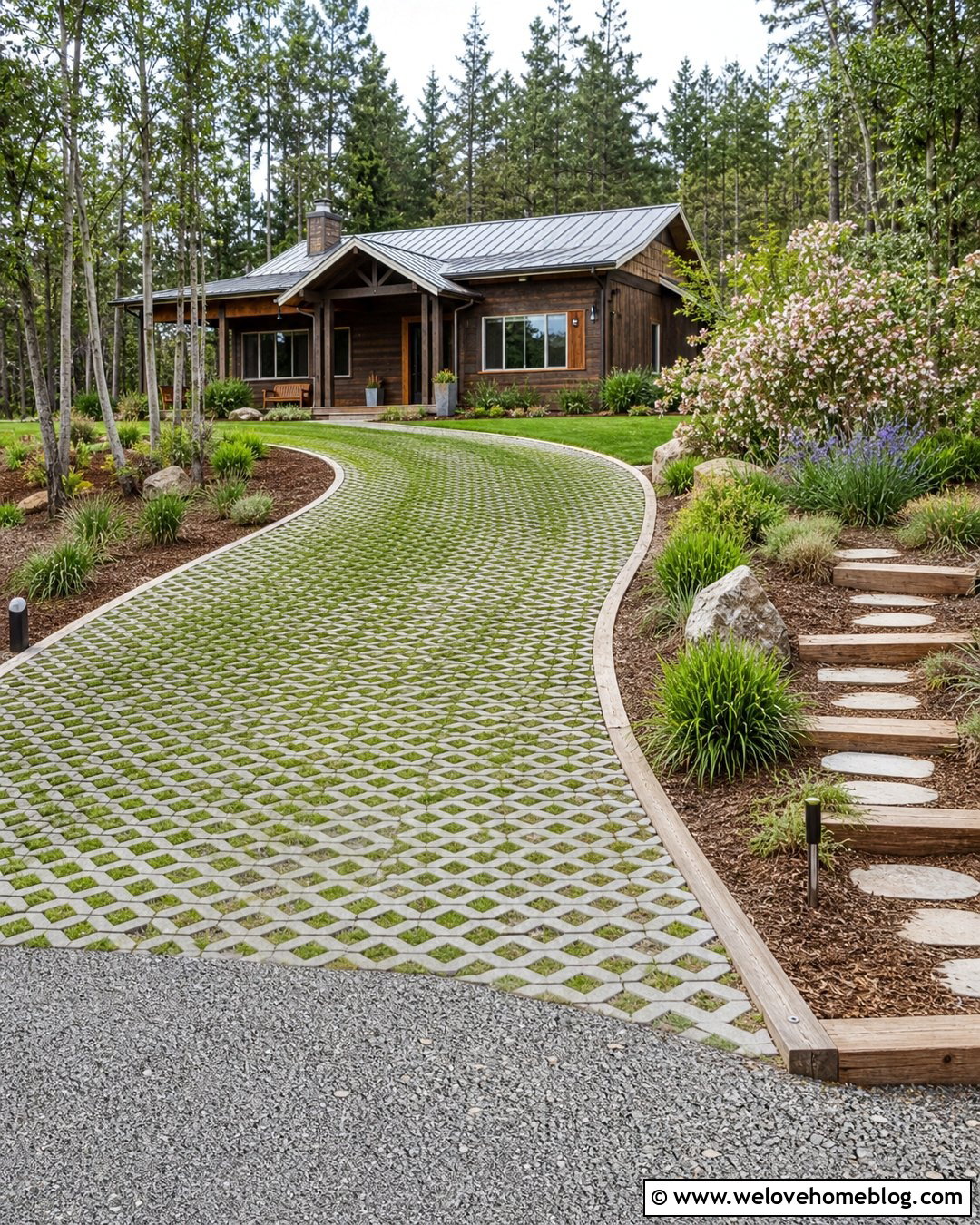
Timber edging supports a relaxed grass paver driveway beside a cabin, country home, or rustic modern house. Use heavy-duty plastic grass grids across a gently curving route and contain the surface with durable landscape timbers rated for ground contact. Keep the timber level with the grid to reduce tripping and tire hazards. Beyond the border, plant native grasses, flowering shrubs, and informal groups of small trees. A compacted gravel apron at the road adds another natural texture and protects the grid from turning traffic. Repeat the timber around a simple stepping-stone walkway or nearby planting beds. Because wood eventually weathers, the design should allow individual edging pieces to be replaced. The result feels informal, green, and well suited to a wooded residential setting.
25. Grass Paver Driveway With Planting Strips
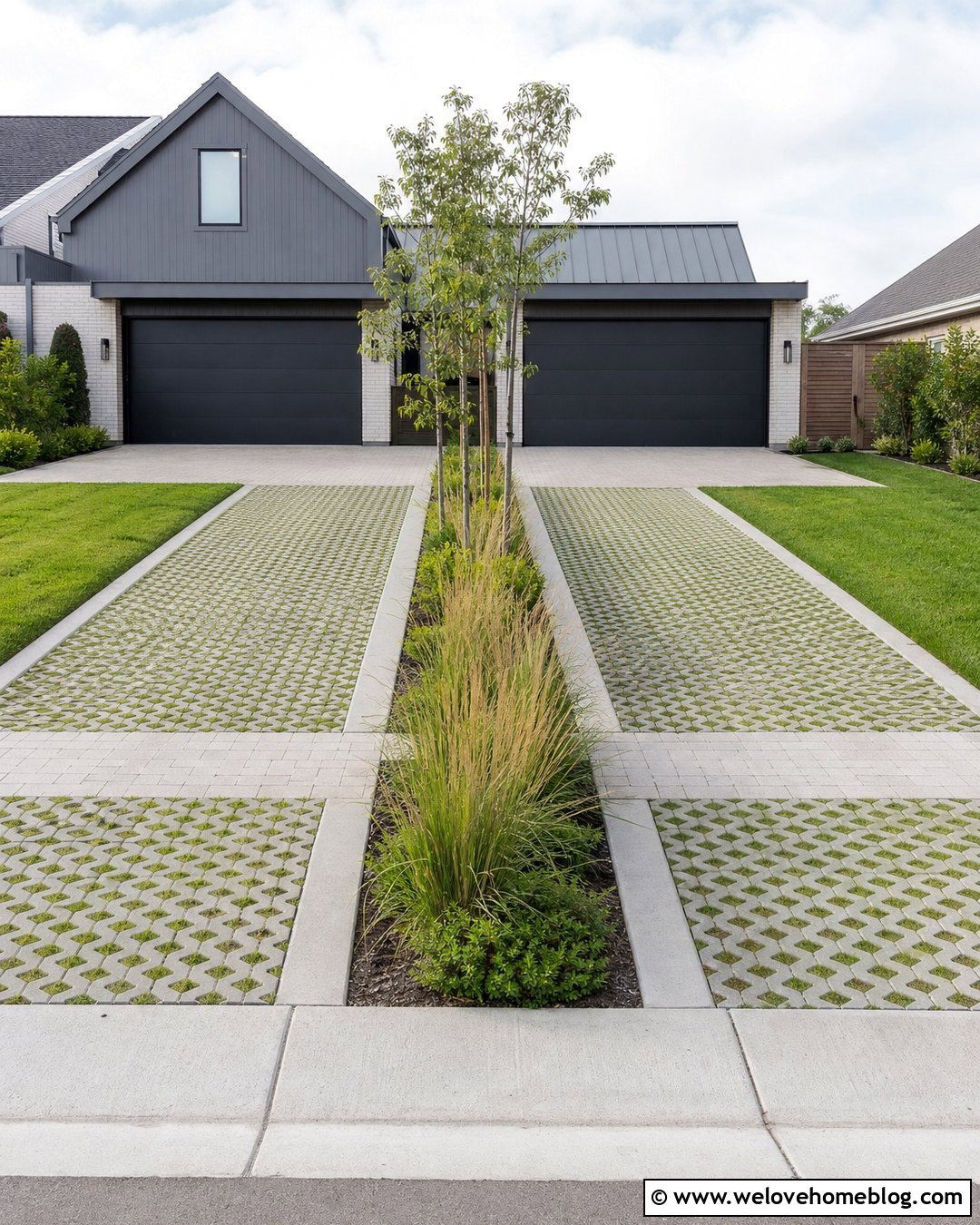
Planting strips can break up a wide grass paver driveway and make parking feel less dominant. Divide a two-car approach with a long central bed containing upright grasses, low shrubs, and one or two carefully placed trees. Concrete grass blocks continue on both sides, creating separate parking lanes that reconnect near the garage. Use solid concrete edging around the central bed so soil and roots do not spread into the paver cells. Low planting near the street preserves visibility, while taller vegetation can appear closer to the house. A matching walkway can cross the bed with a small bridge of concrete pavers. This arrangement requires more width than a conventional driveway, but it turns a broad parking area into a structured part of the front landscape.
26. Grass Paver Driveway With Lavender Borders
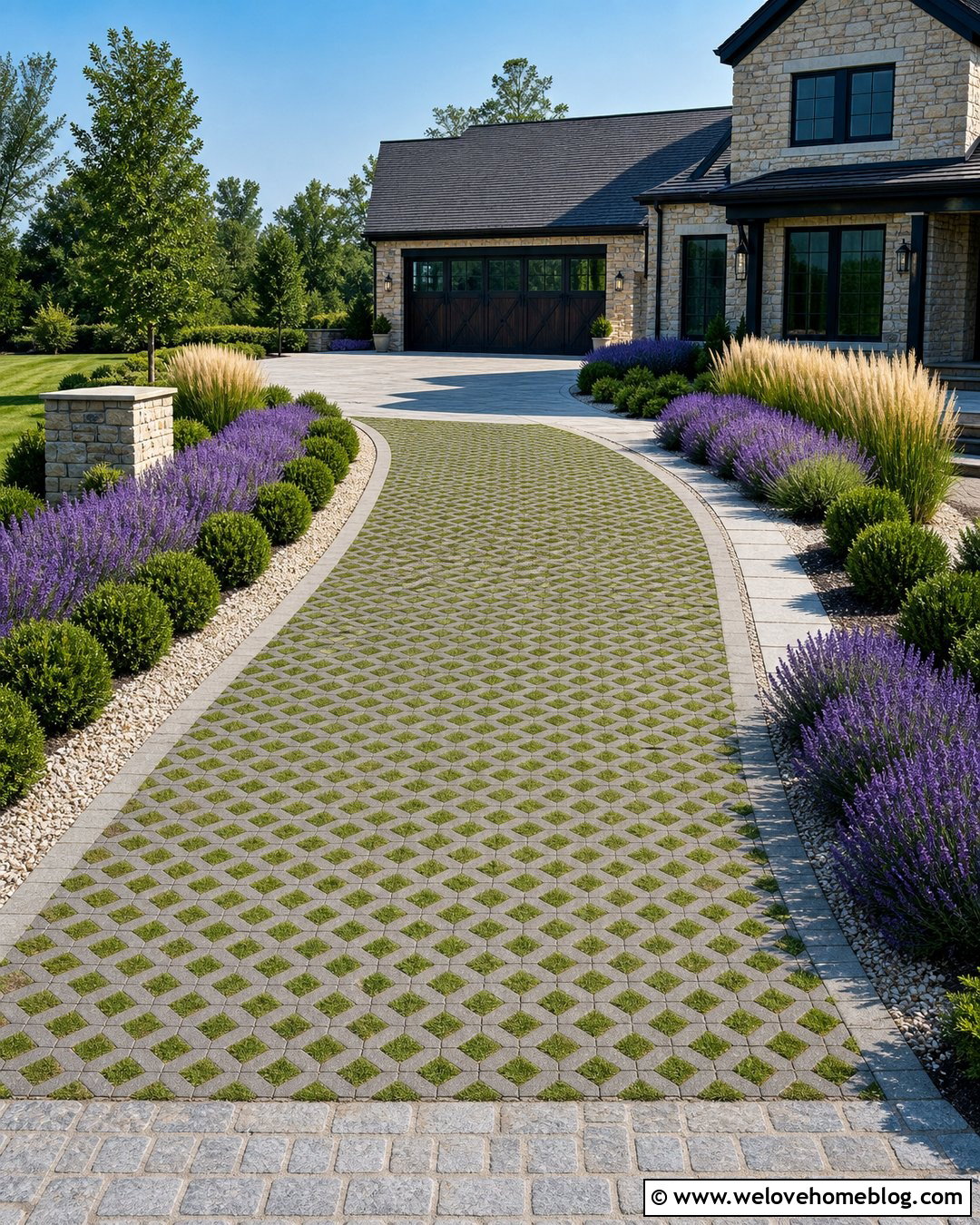
Lavender borders add fragrance, color, and soft movement to a sunny grass paver driveway. Pair warm gray concrete turf blocks with narrow bands of pale gravel along both sides. Plant lavender beyond the gravel so mature stems do not lean directly into the driving area. A straight or gently curved approach works well, especially beside a stone cottage, modern farmhouse, or Mediterranean-style home. Repeat the lavender near the front walkway and mix it with ornamental grasses or compact evergreen shrubs for year-round structure. Use a stone apron at the road and a larger solid landing near the garage. The repeated purple flowers and green paver cells create a welcoming garden atmosphere, while the gravel strips provide separation that makes trimming and routine driveway maintenance easier.
27. Grass Paver Driveway With Native Prairie Planting
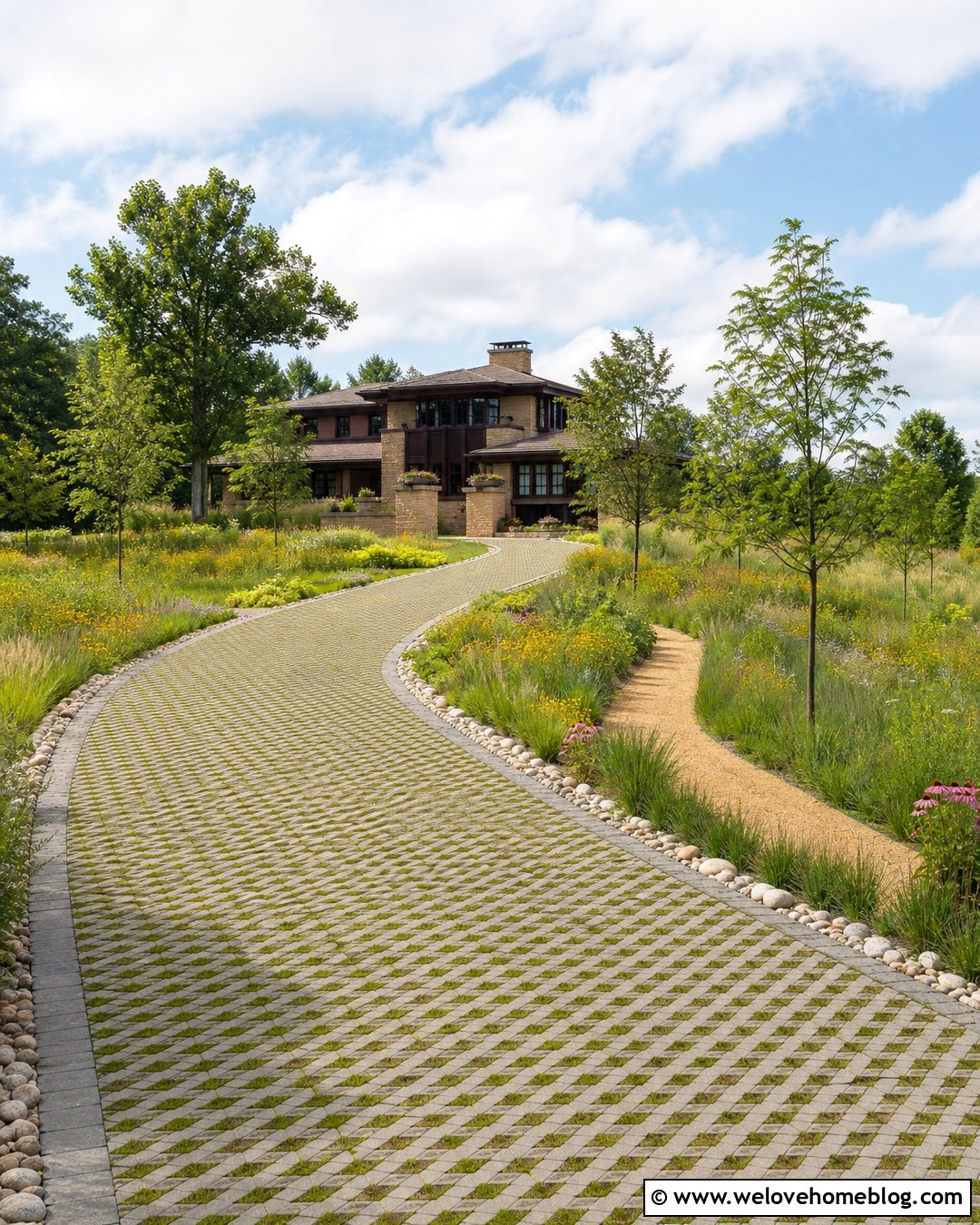
Native prairie planting can transform a long grass paver driveway into a naturalistic entrance. Use low concrete grass blocks filled with turf suited to the regional climate, then frame the route with broad drifts of native grasses and flowering perennials. Keep vegetation short near the road and along inside curves to preserve clear sightlines. Taller plants can appear farther back or around the house. Natural stone edging provides subtle separation without making the design overly formal. A crushed-stone walkway through the planting can connect the driveway to the porch. Because native species vary by region, choose plants based on local soil, rainfall, and maintenance goals. The complete landscape offers changing texture through the seasons and reduces the visual impact of a large drivable surface.
28. Grass Paver Driveway With Rain Garden
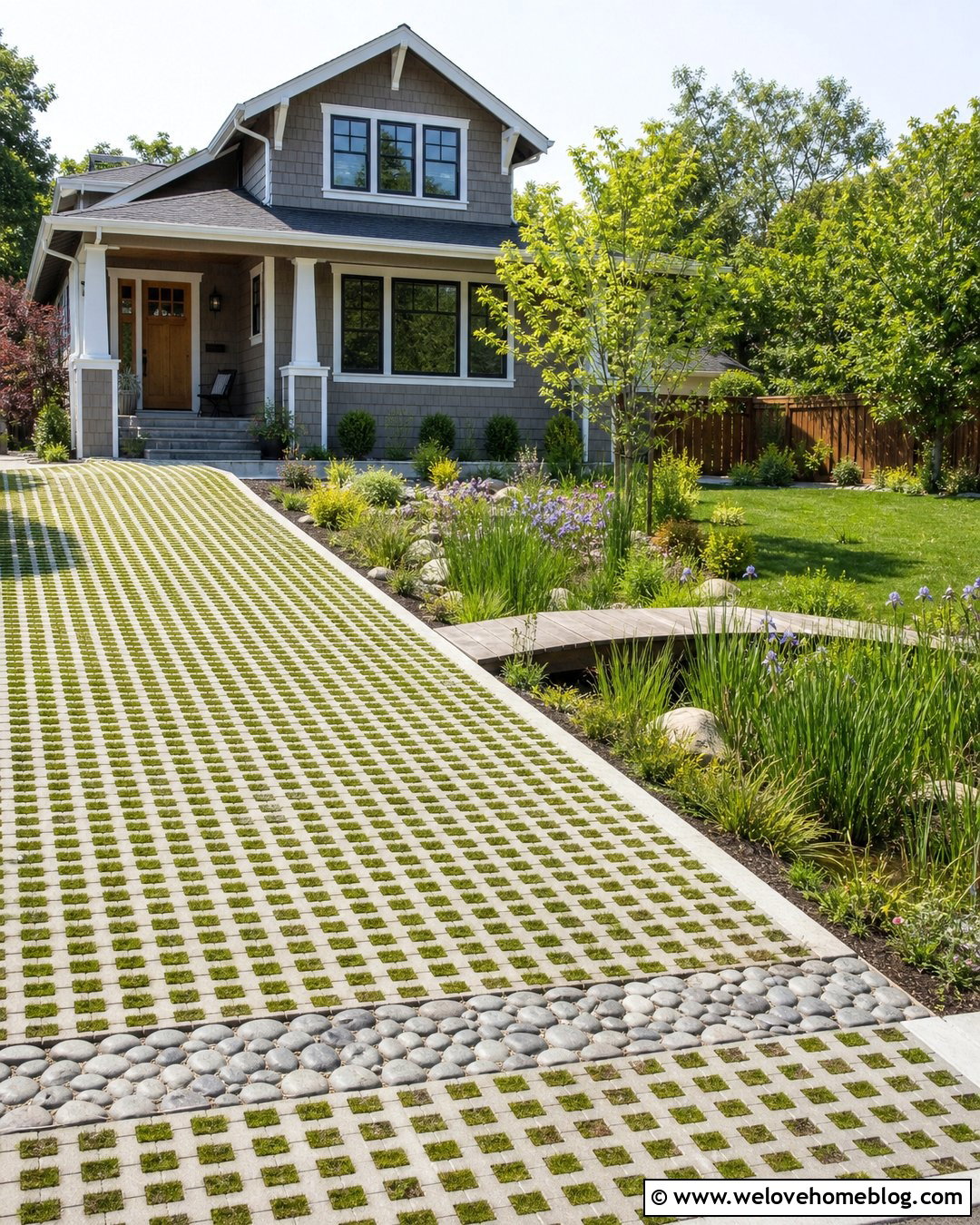
A rain garden placed beside grass pavers creates a coordinated approach to stormwater management. Grade the driveway so appropriate runoff moves toward a shallow planted basin rather than the foundation or public street. Concrete turf blocks form the main driving surface, while a band of river stone marks the transition into the rain garden. Fill the basin with locally suitable plants that tolerate temporary moisture as well as drier periods. Keep its deepest area safely away from walking routes and vehicle edges. A small bridge-style walkway can cross the planted drainage zone on the way to the porch. The driveway, stone band, and layered vegetation should look like one planned landscape. Site-specific drainage design is essential because soil conditions and local requirements can differ significantly.
29. Grass Paver Driveway With Bioswale
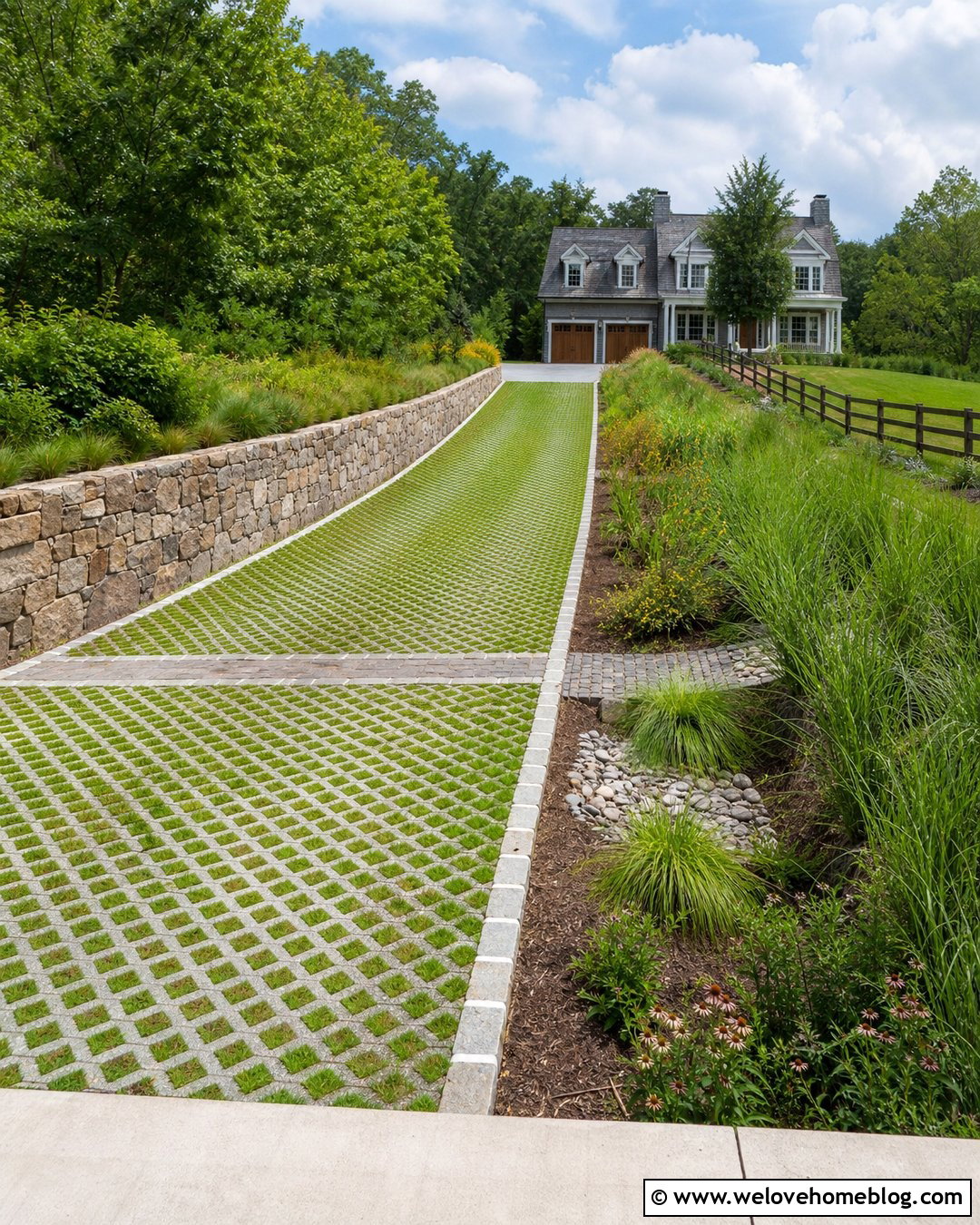
A bioswale works well beside a long or sloped grass paver driveway where water needs a defined path through the landscape. Install load-rated concrete grass blocks on the driving lane and create a shallow, planted channel along the lower side. Stone check areas can slow water movement, while grasses, sedges, and moisture-tolerant perennials help cover the swale. Use a strong concrete or stone edge between the driveway and planting to prevent tires from entering the depression. A culvert or reinforced crossing may be needed where the walkway meets the house. Keep taller plants away from the street entrance for safe visibility. When carefully engineered, this complete design turns necessary drainage into an attractive green border that visually extends the permeable character of the driveway.
30. Modern Farmhouse Grass Paver Driveway
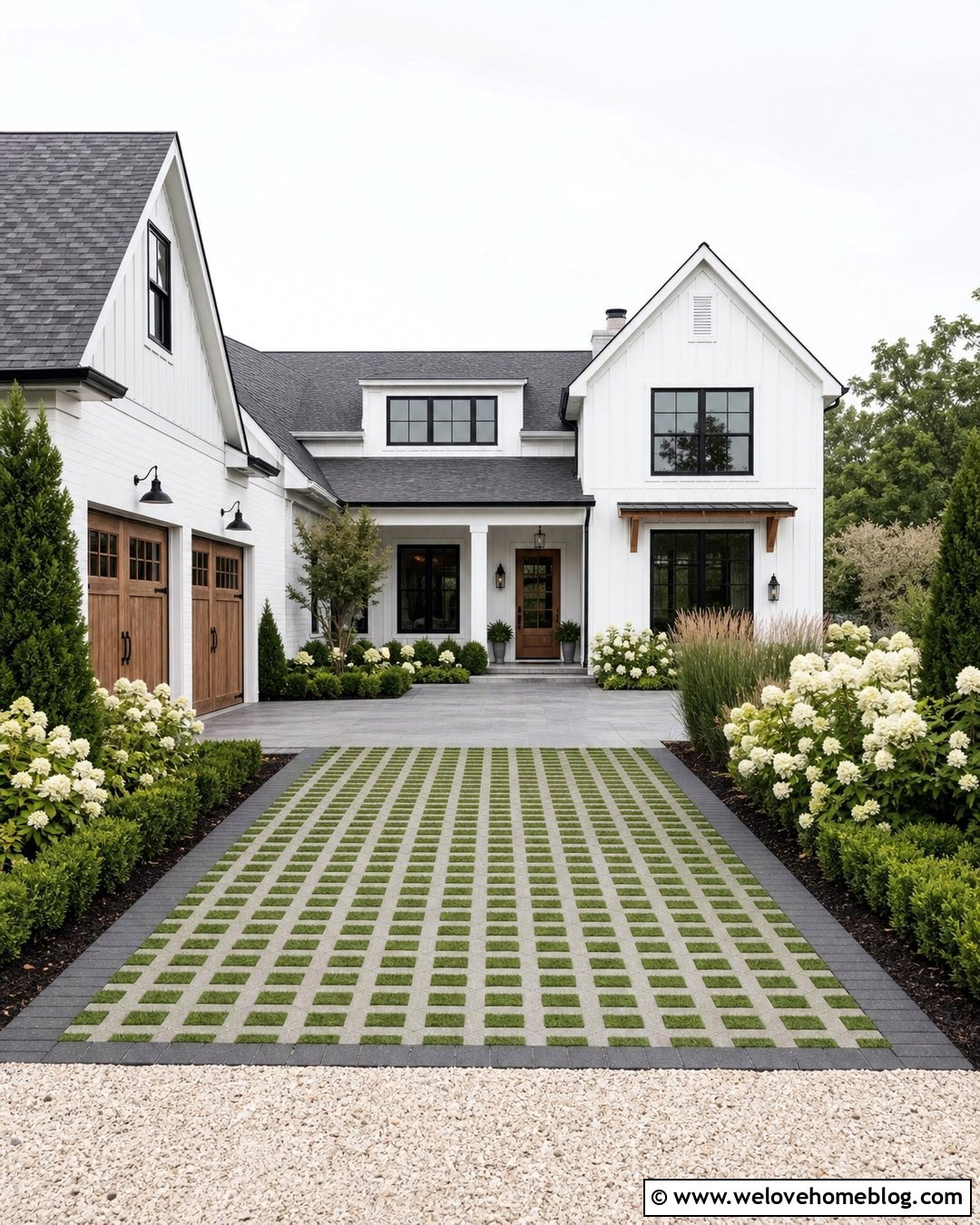
A modern farmhouse pairs naturally with a grass paver driveway framed by simple, familiar materials. Choose rectangular concrete turf blocks in a straight approach and add dark brick or charcoal paver edging. A pale gravel apron can introduce a country texture without making the entrance feel rustic. Plant white flowering shrubs, clipped evergreens, and groups of upright ornamental grass along the sides. Near the house, create a wide solid paver landing that connects the garage, mudroom, and front walkway. Black metal lights and a restrained address marker can echo dark windows or roof details. The combination of structured grass cells, clean borders, and relaxed planting complements white siding and natural wood accents while keeping the large driveway visually connected to the lawn.
31. Ranch House Grass Paver Driveway
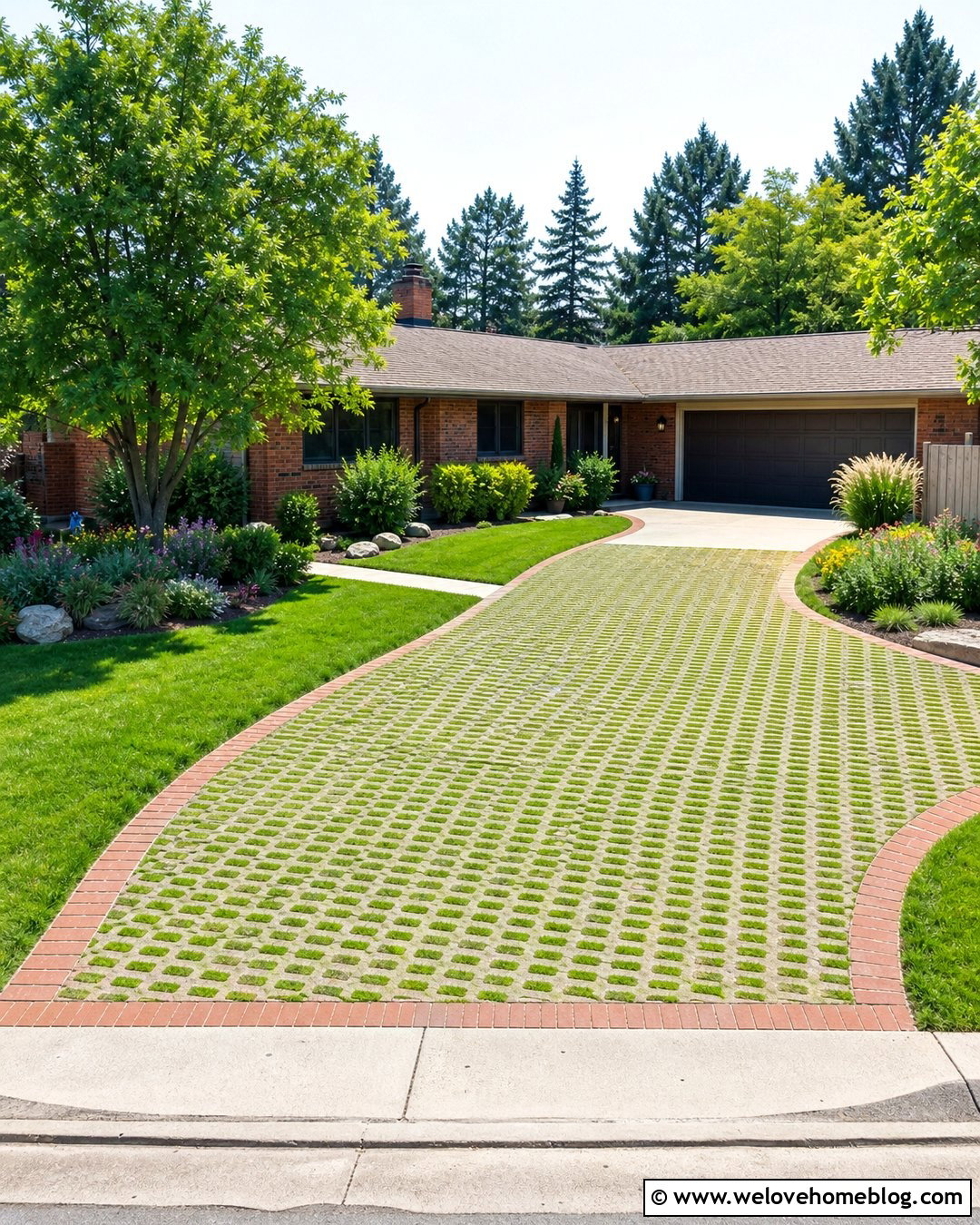
The broad horizontal lines of a ranch house suit a wide grass paver driveway with understated detailing. Use concrete grass blocks across a gently curved approach that opens into a two-car parking area. A low red brick border can connect the driveway to an existing brick facade or chimney. Keep foundation planting layered but low, using spreading evergreen shrubs, ornamental grasses, and a few flowering perennials. One sculptural shade tree placed away from the driving surface adds height without blocking the home. A straight concrete walkway can cross the green pavers and lead directly to the entrance. The driveway should feel generous but not oversized. Allowing turf to fill much of the surface reduces the visual weight of parking in front of a one-story home.
32. Colonial Grass Paver Driveway
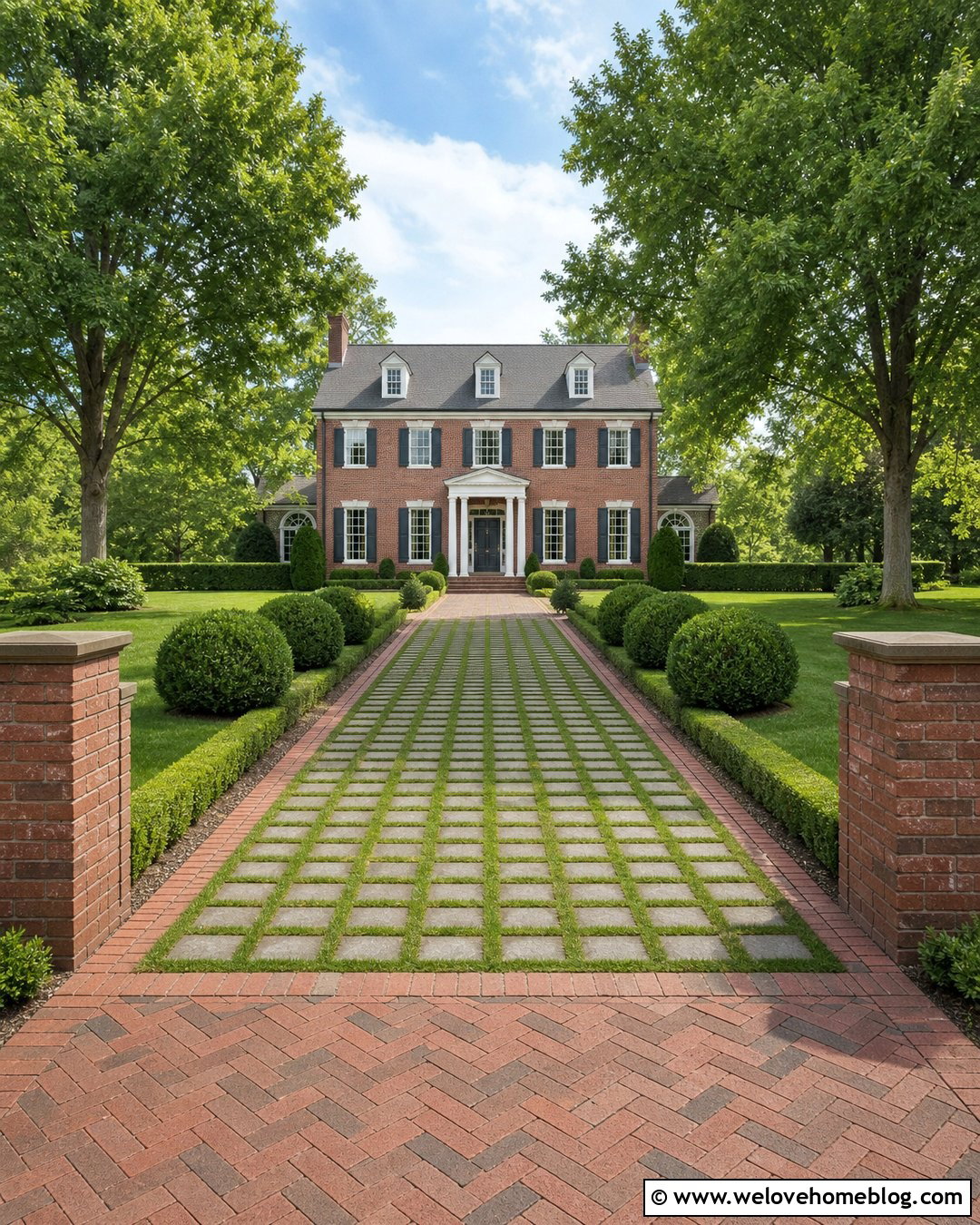
A Colonial home benefits from a symmetrical grass paver driveway with formal borders. Install square concrete turf blocks on a straight axis leading toward a side or detached garage. Edge the surface with clay brick that matches the house, then repeat the brick around the walkway and entrance steps. Balanced hedges, rounded shrubs, and paired small trees reinforce the orderly facade. At the street, use brick pillars or low masonry markers to frame a herringbone brick apron. The green driveway keeps the frontage softer than an uninterrupted paved slab while maintaining a clear geometric structure. Avoid overly loose planting that competes with the architecture. Crisp turf, straight edges, and evenly spaced landscape elements allow the permeable surface to feel appropriate for a traditional, formal property.
33. Cape Cod Grass Paver Driveway
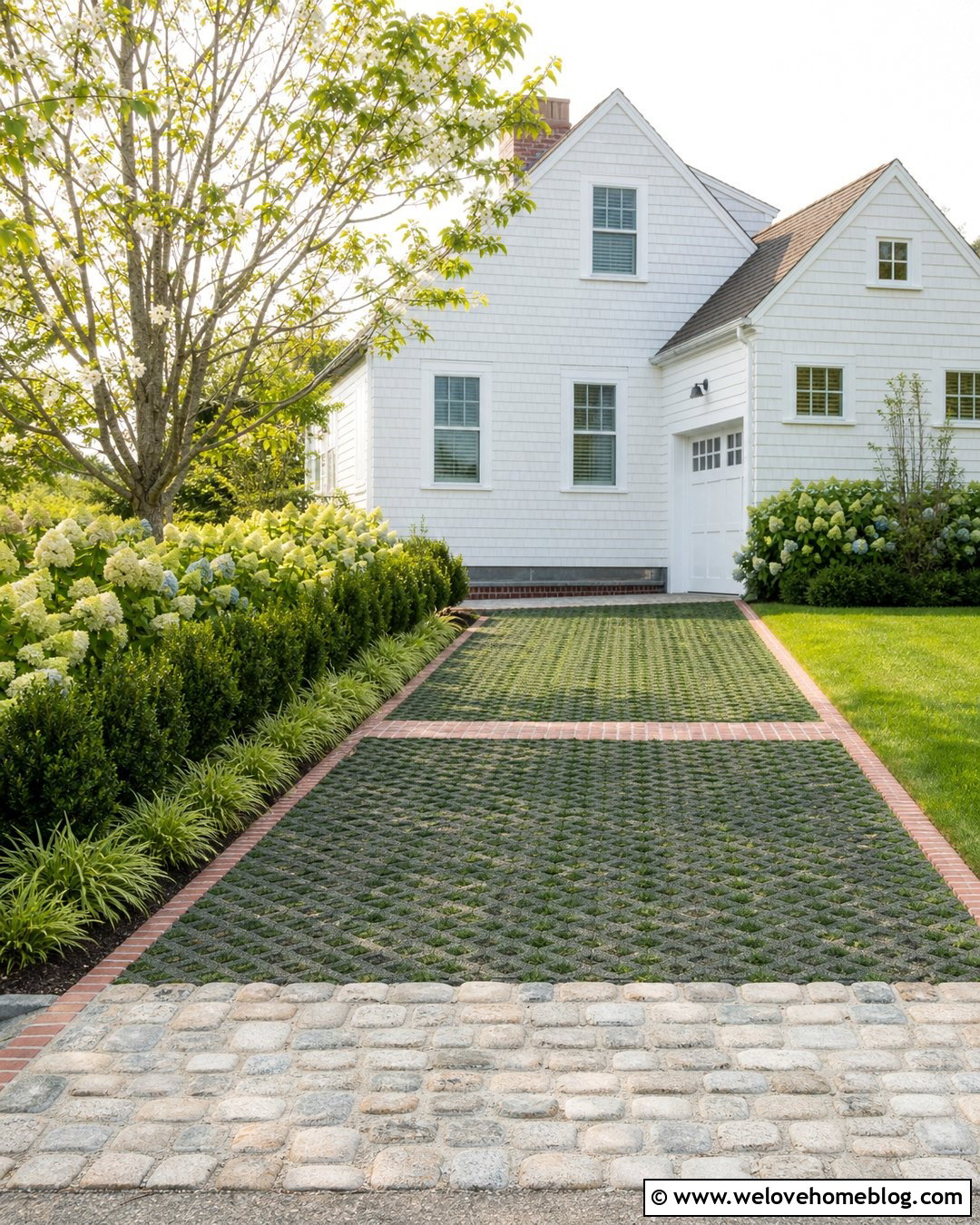
A Cape Cod home looks welcoming with a compact grass paver driveway bordered by weathered brick or pale cobblestone. Use recycled plastic turf grids for a soft, lawn-like surface and choose a straight layout leading to a side garage. Plant hydrangeas, inkberry, compact ornamental grasses, and a small flowering tree around the approach. A brick walkway can cross the driveway and continue to the front door, creating a practical route through the green surface. Keep the palette light and simple, especially beside white shingles or painted siding. A cobblestone apron at the curb provides structure and protects the grid from turning tires. The finished design should feel informal but carefully maintained, with greenery softening the modest scale and traditional details of the house.
34. Craftsman Grass Paver Driveway
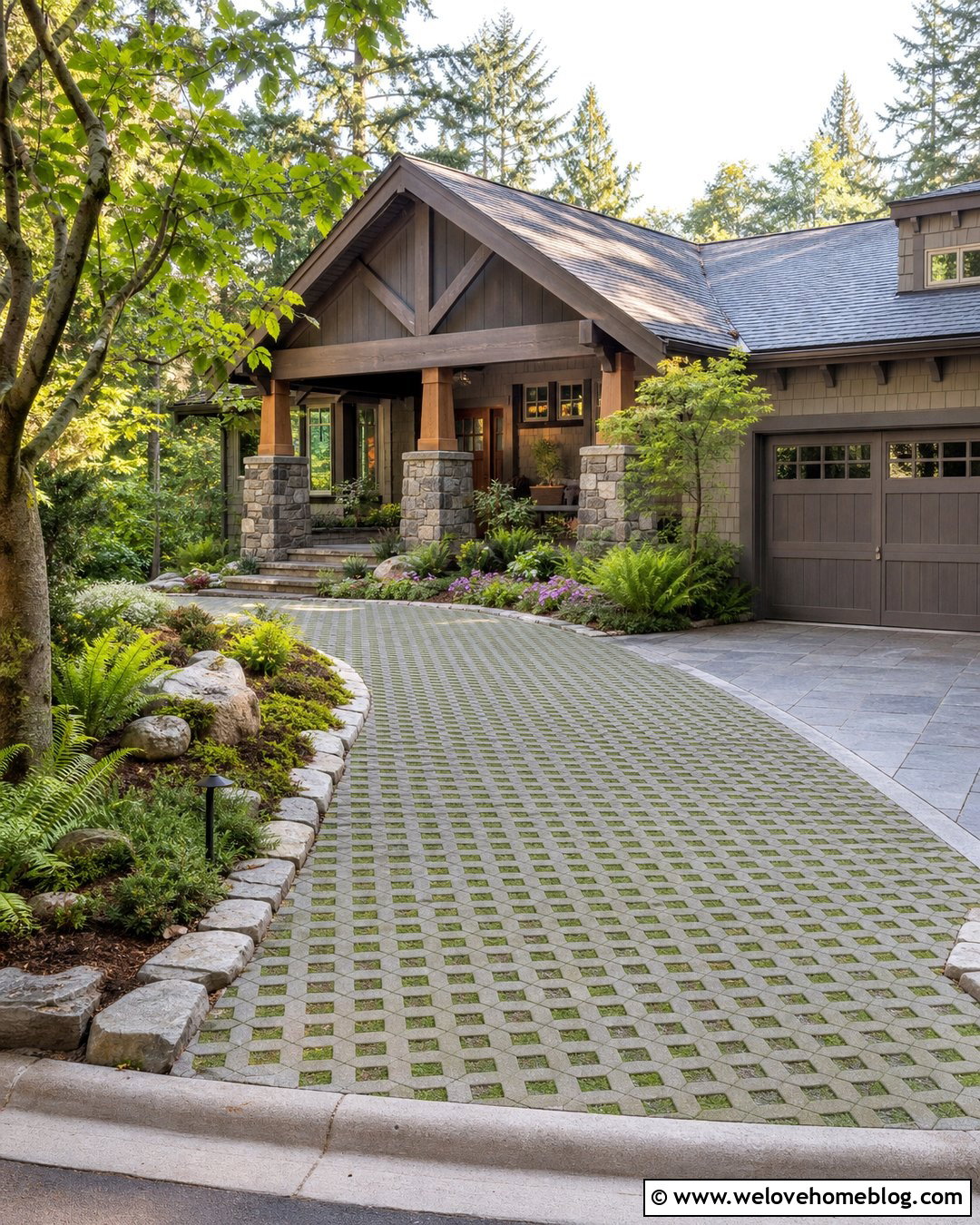
Natural materials make grass pavers feel at home beside a Craftsman house. Select sturdy concrete turf blocks in a warm gray tone and create a gently curving driveway edged with irregular stone. Repeat the stone on porch columns, retaining walls, or the front walkway to connect the landscape with the architecture. Plant layered evergreen shrubs, ferns, ornamental grasses, and flowering ground covers around the approach. A small native tree can anchor the inside curve without blocking views. At the garage, transition to solid textured pavers in a complementary earthy color. The combination of green cells, substantial stone, and relaxed planting supports the handcrafted character associated with Craftsman homes. Keep the layout broad enough for comfortable turning while preserving generous garden space beside it.
35. Midcentury Grass Paver Driveway
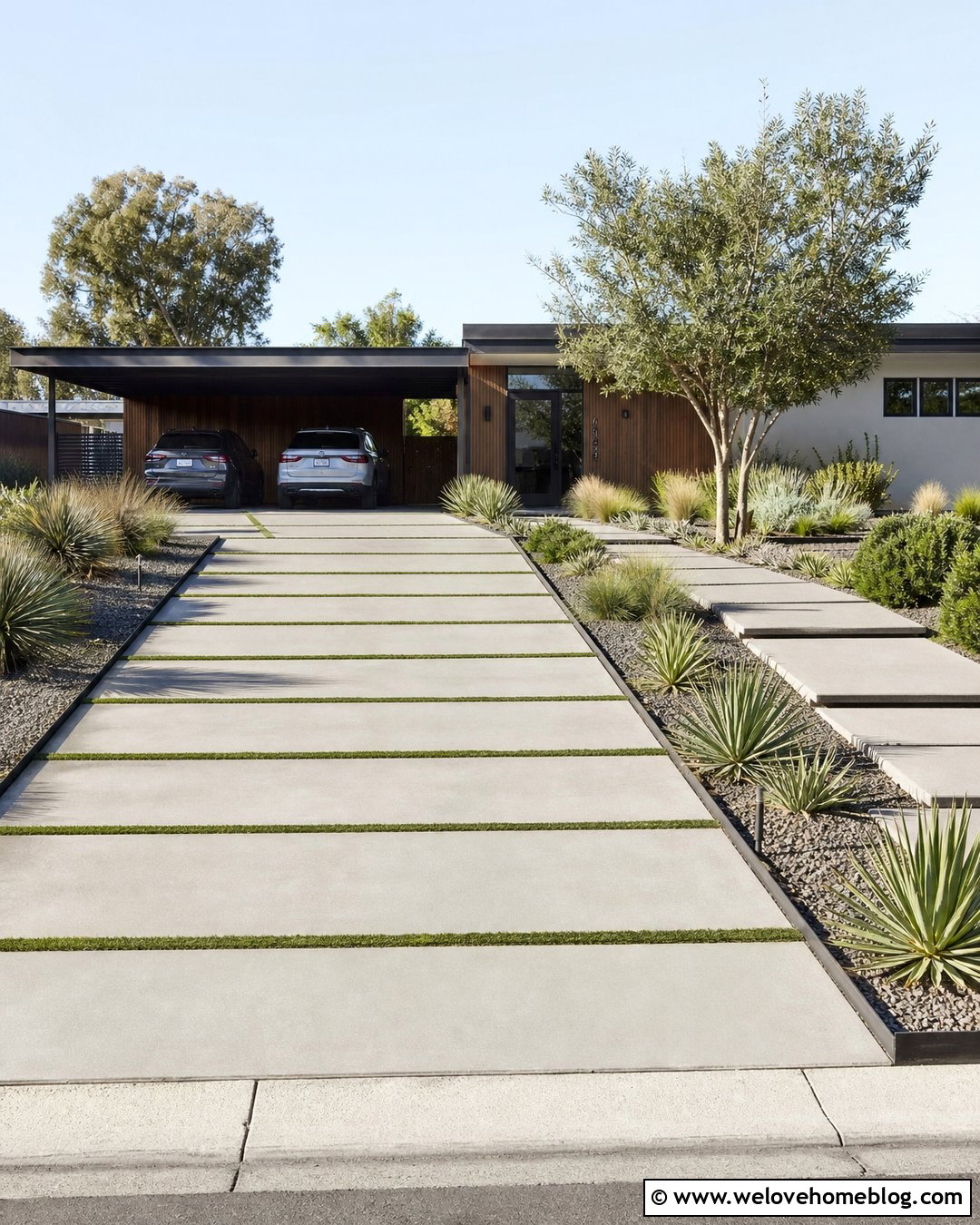
A midcentury home calls for strong geometry and restrained planting. Use large rectangular concrete pavers with reinforced grass joints, arranging them in linear bands that echo the home’s low roof and horizontal windows. A narrow black steel edge provides a crisp transition to gravel planting beds. Fill those beds with sculptural grasses, yucca, compact evergreen shrubs, and one architectural specimen tree. An offset concrete walkway can intersect the driveway at a clean right angle. Near the carport, continue the pavers into a wider landing while maintaining planted joints wherever practical. Warm gray concrete complements natural wood, brick, and neutral stucco. The complete look feels period-aware but current, blending the green driveway with a simple landscape rather than surrounding it with a conventional lawn.
36. Contemporary Grass Paver Driveway
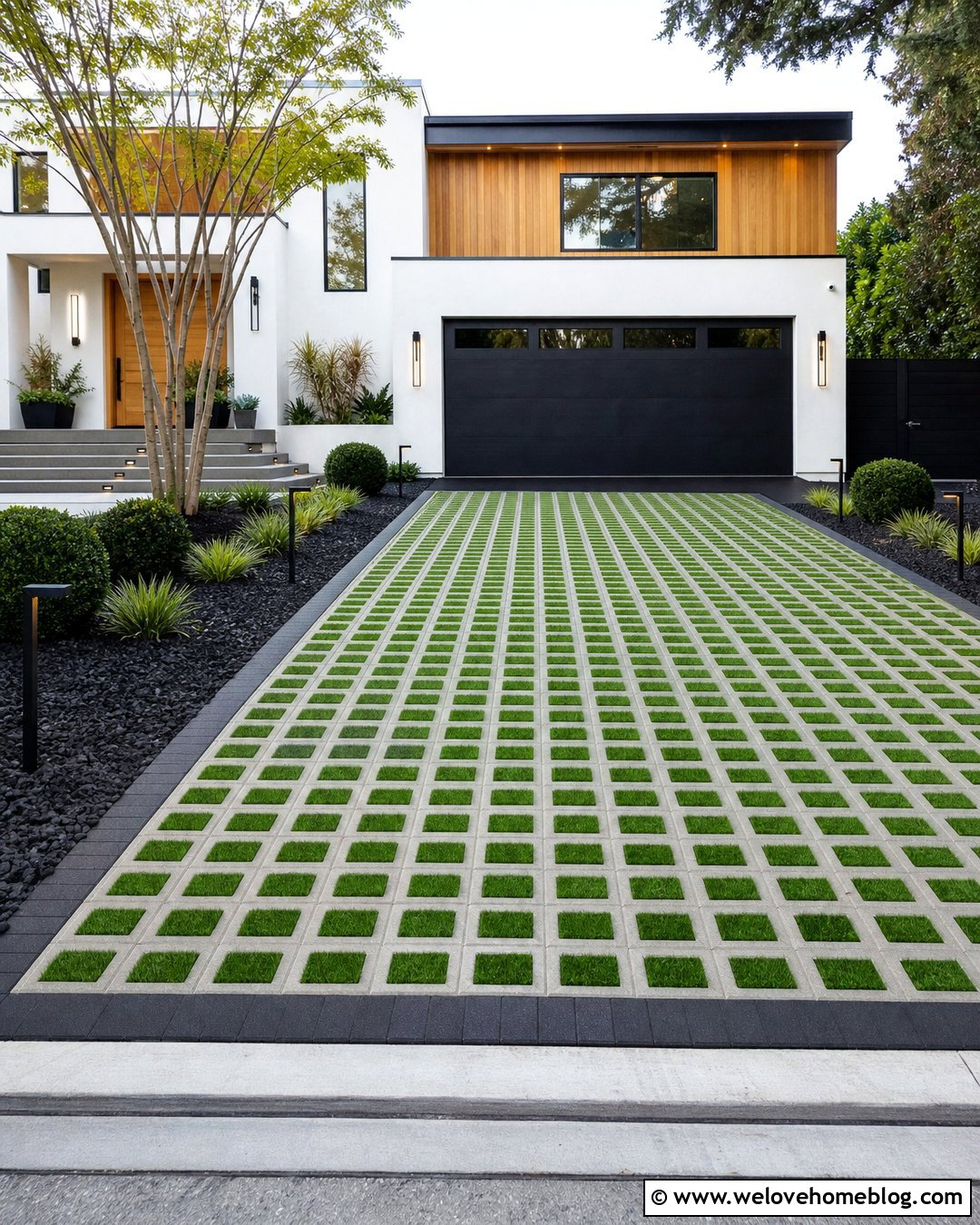
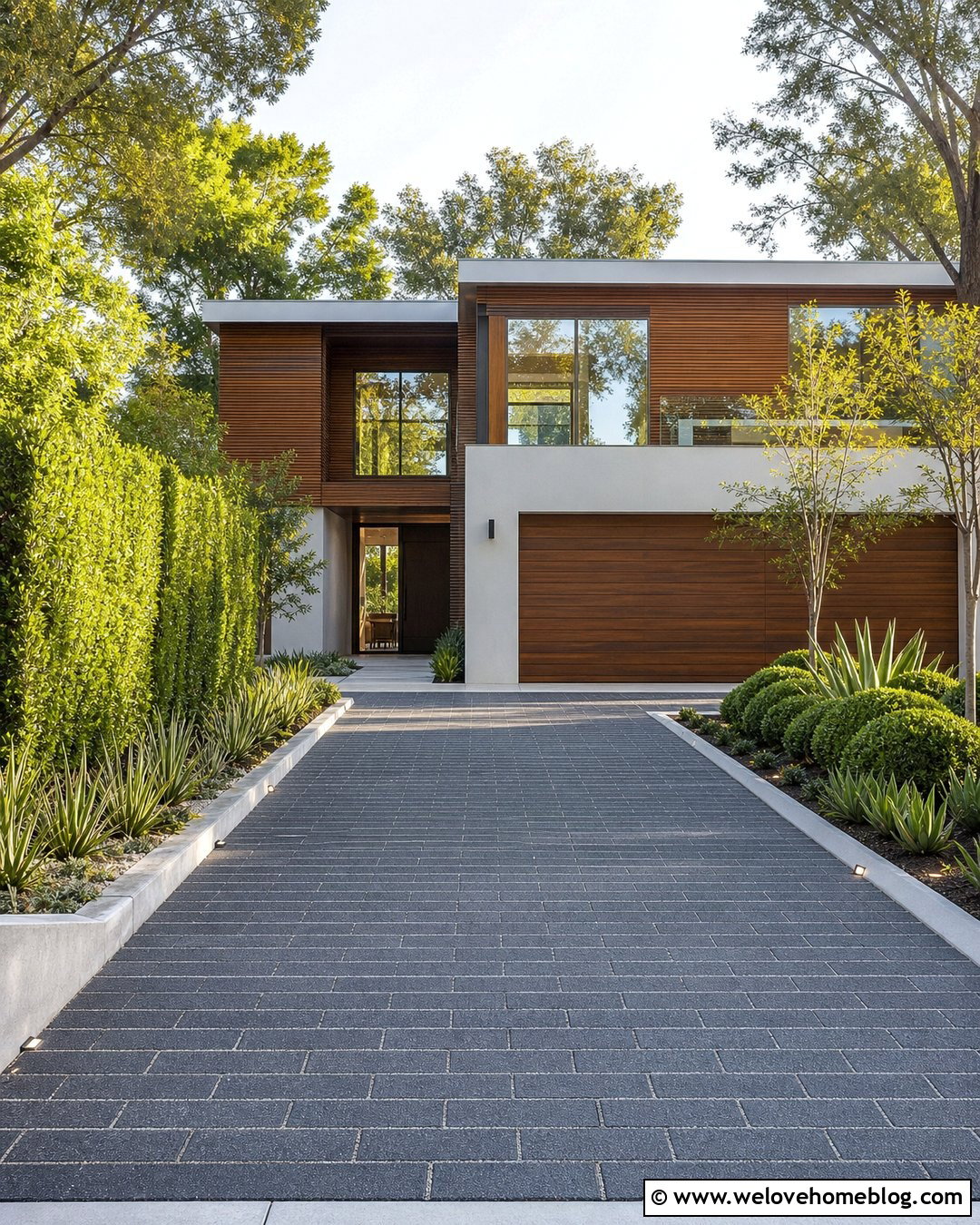
Contemporary architecture provides an ideal backdrop for a graphic grass paver pattern. Choose concrete blocks with large square openings and arrange them across a wide, straight driveway. Frame the surface with smooth black pavers, then repeat that dark material on the front steps and walkway. Use rectangular planting beds filled with clipped shrubs, ornamental grasses, and pale decorative stone. A flat-roofed home with white stucco and wood panels will make the fresh green turf stand out. Keep lighting fixtures simple and place them along the border rather than in the driving path. A solid black paver apron in front of the garage can handle concentrated turning. The result is an orderly green surface that complements modern architecture without appearing overly industrial or severe.
37. Cottage Grass Paver Driveway
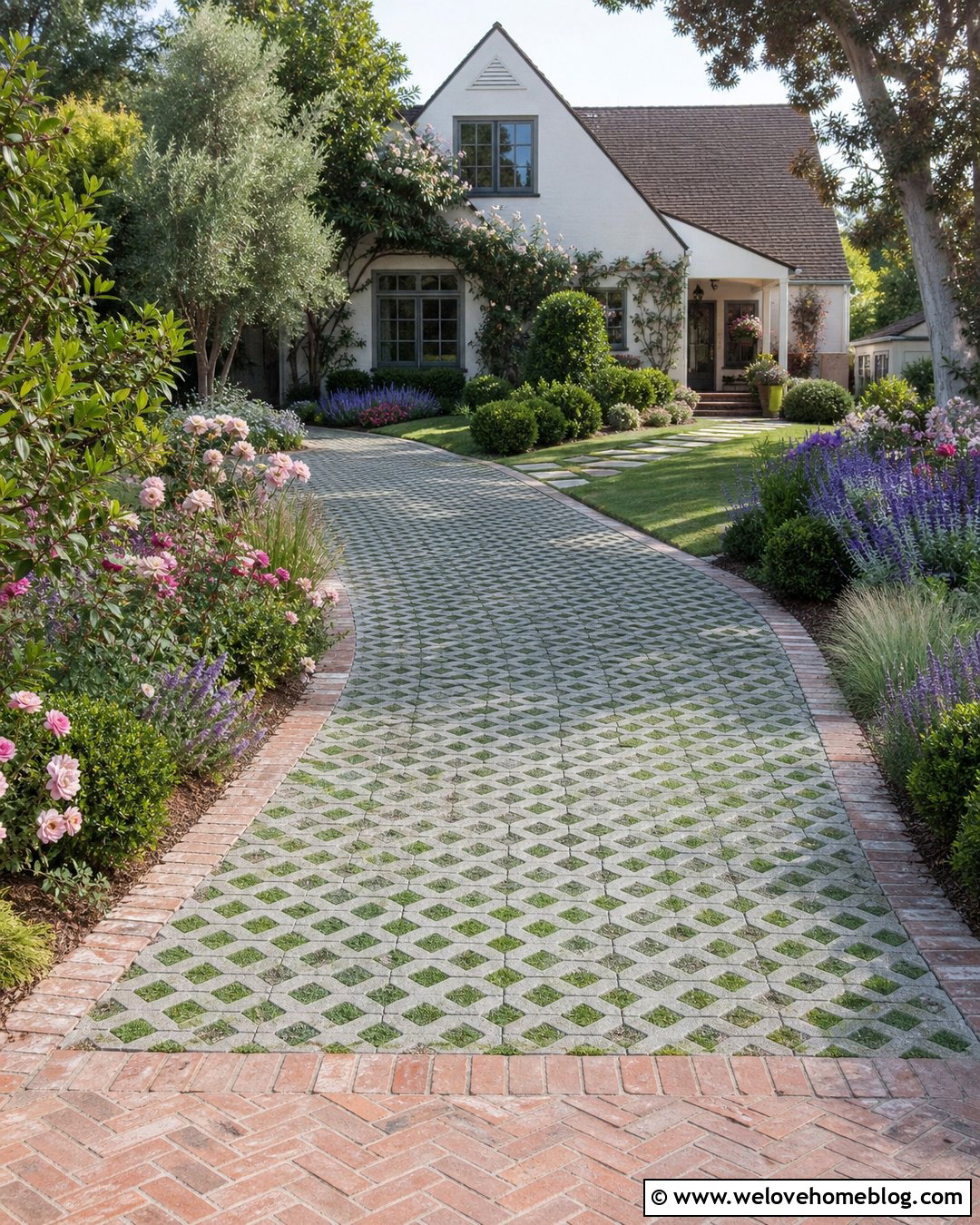
A cottage setting allows a grass paver driveway to feel soft, established, and garden-focused. Lay concrete turf blocks along a narrow curving approach with reclaimed brick edging. Allow generous flower beds to follow the curves, using roses, catmint, salvia, ornamental grasses, and compact shrubs. Keep plants trimmed back from the driving edge so doors can open and visibility remains clear. A brick apron near the road gives the driveway a defined entrance, while a stepping-stone path branches toward the porch. The paver grid should remain visible enough to communicate structure, even if the grass grows slightly softer than in a formal design. This combination creates practical access without introducing a large, visually hard surface into a small and highly planted front yard.
38. Mediterranean Grass Paver Driveway
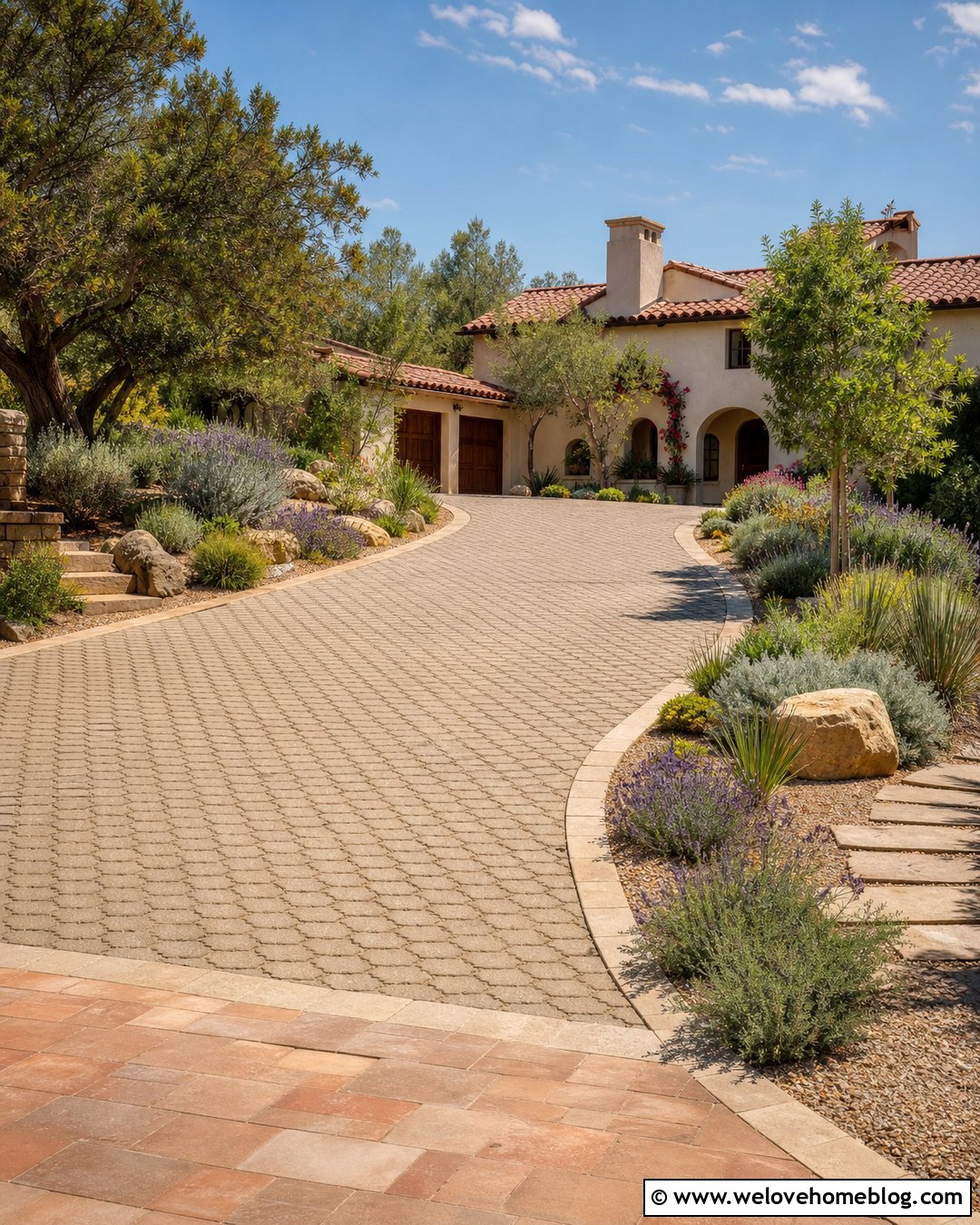
Warm stone and drought-conscious planting give a grass paver driveway a Mediterranean character. Use sand-colored concrete turf blocks in a broad curved approach, framed by tumbled limestone edging. Fill the grid with a grass variety appropriate for the local climate and available irrigation. Beyond the border, arrange olive-like trees suited to the region, lavender, rosemary, ornamental grasses, and pale gravel. A solid band of terracotta-toned pavers can form the entrance apron and repeat near the garage. Keep the layout open and sunlit, with planting placed in large, simple groups. Beside a stucco home with a tile roof, the combination of warm masonry, green cells, and silvery foliage produces a cohesive landscape that feels inviting without relying on dense lawn everywhere.
39. Coastal Grass Paver Driveway
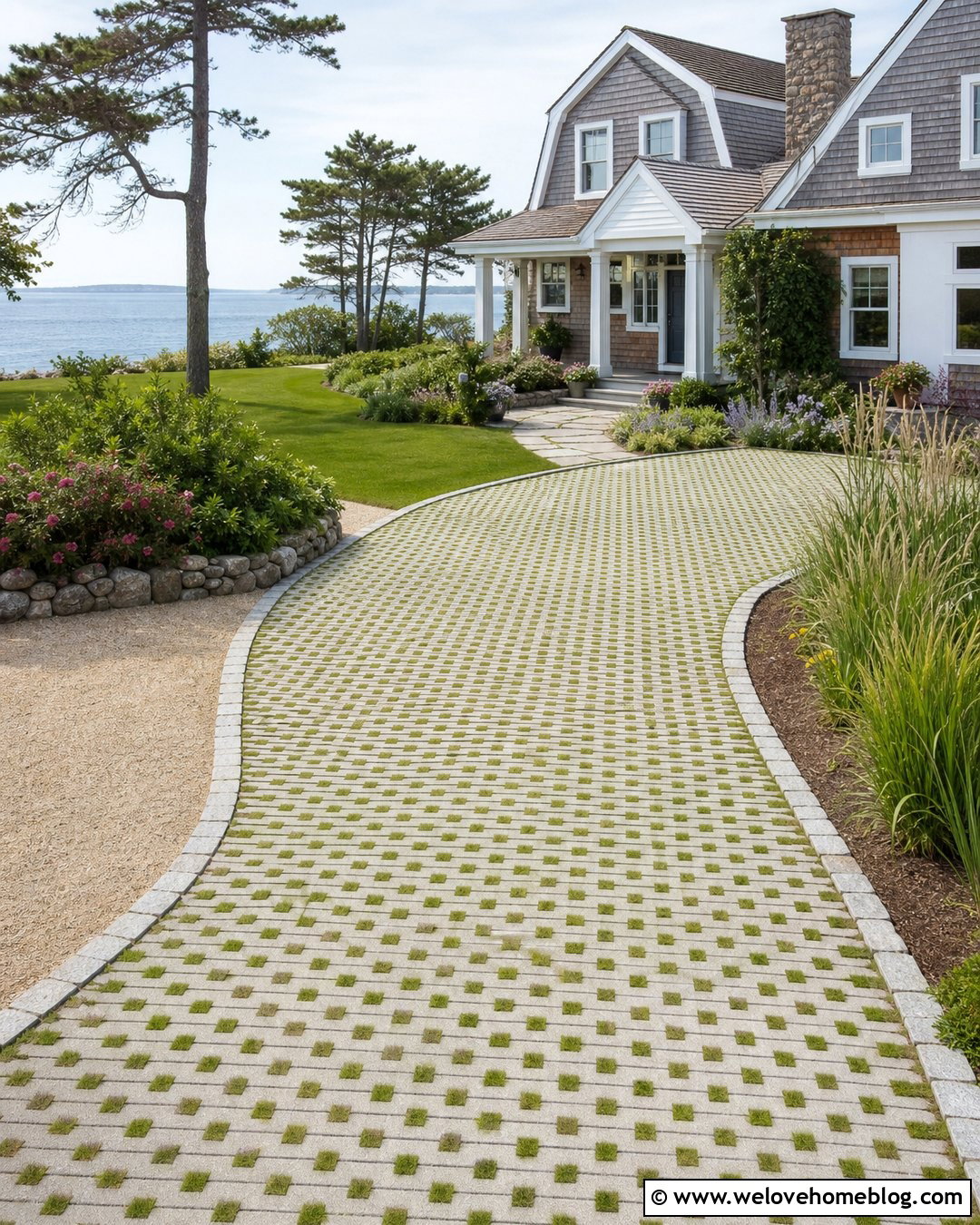
A coastal grass paver driveway should feel light, durable, and visually connected to its breezy surroundings. Choose pale gray concrete grass blocks with a simple straight or gently curved layout. Frame them with granite cobbles or weathered-looking concrete edging that complements shingle siding. Plant salt- and wind-tolerant species appropriate to the actual site, arranging grasses, low shrubs, and flowering perennials in informal drifts. A shell-toned gravel apron can introduce coastal texture, provided the material is locally suitable and securely contained. Keep the planting low near the road and leave open lawn around the house. The restrained palette of green, gray, and sandy beige produces an easygoing entrance while the structured grid prevents the driveway from looking like an undefined patch of grass.
40. Country Estate Grass Paver Driveway
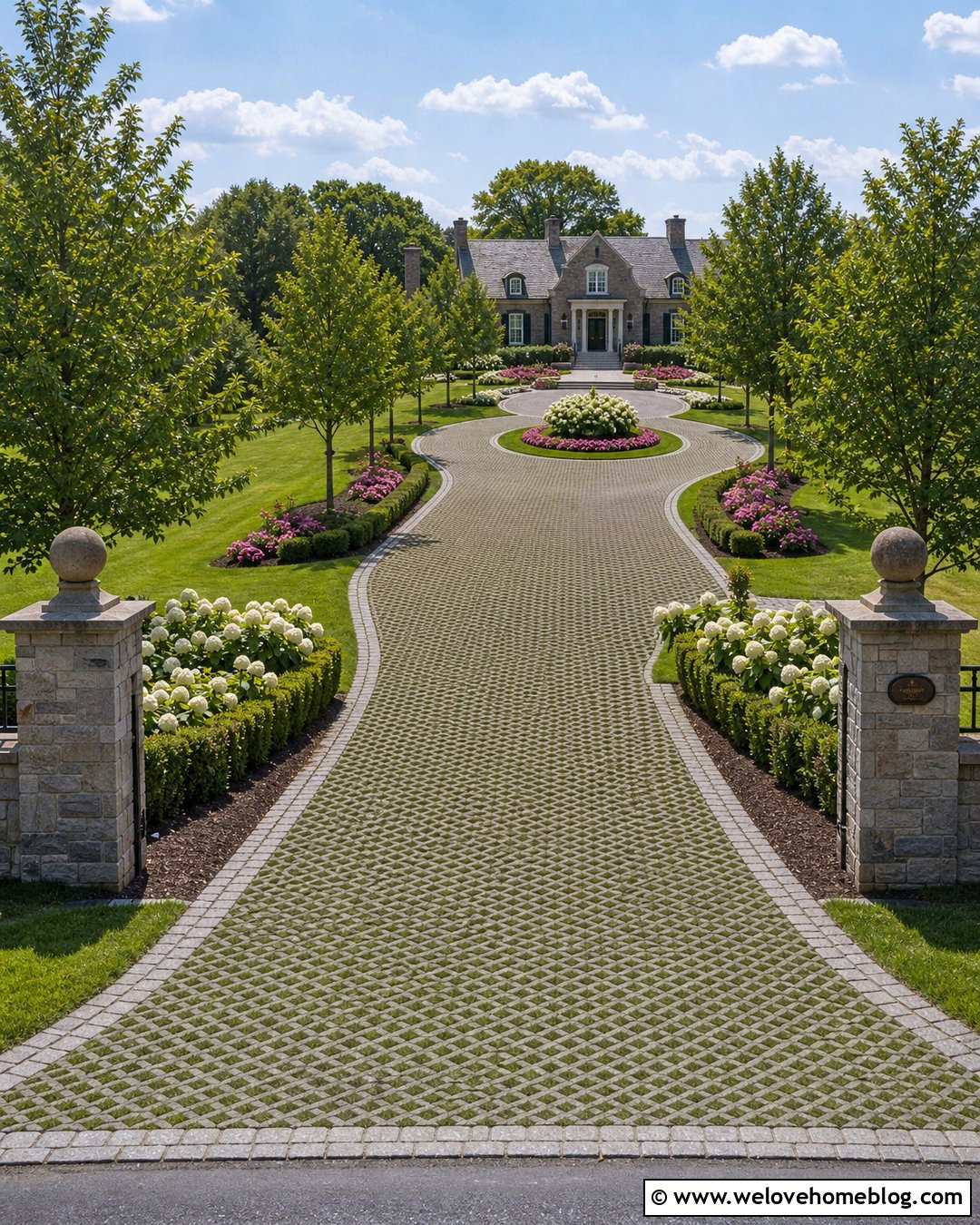
A broad grass paver driveway can create a stately approach while preserving the green character of a large property. Use substantial concrete turf blocks along a sweeping curve that leads toward the house and continues into a spacious arrival court. Granite setts can edge the route and form solid turning bands at key locations. Plant evenly spaced deciduous trees along the outer approach, then transition to formal hedges and symmetrical beds near the residence. A central lawn island can organize the arrival court without blocking vehicle movement. Stone gateposts at the street provide an architectural starting point. Despite the driveway’s size, the repeated turf cells prevent it from appearing like an enormous paved lot and help the entrance remain connected to the surrounding fields and lawns.
41. Grass Paver Driveway With Metal Gate
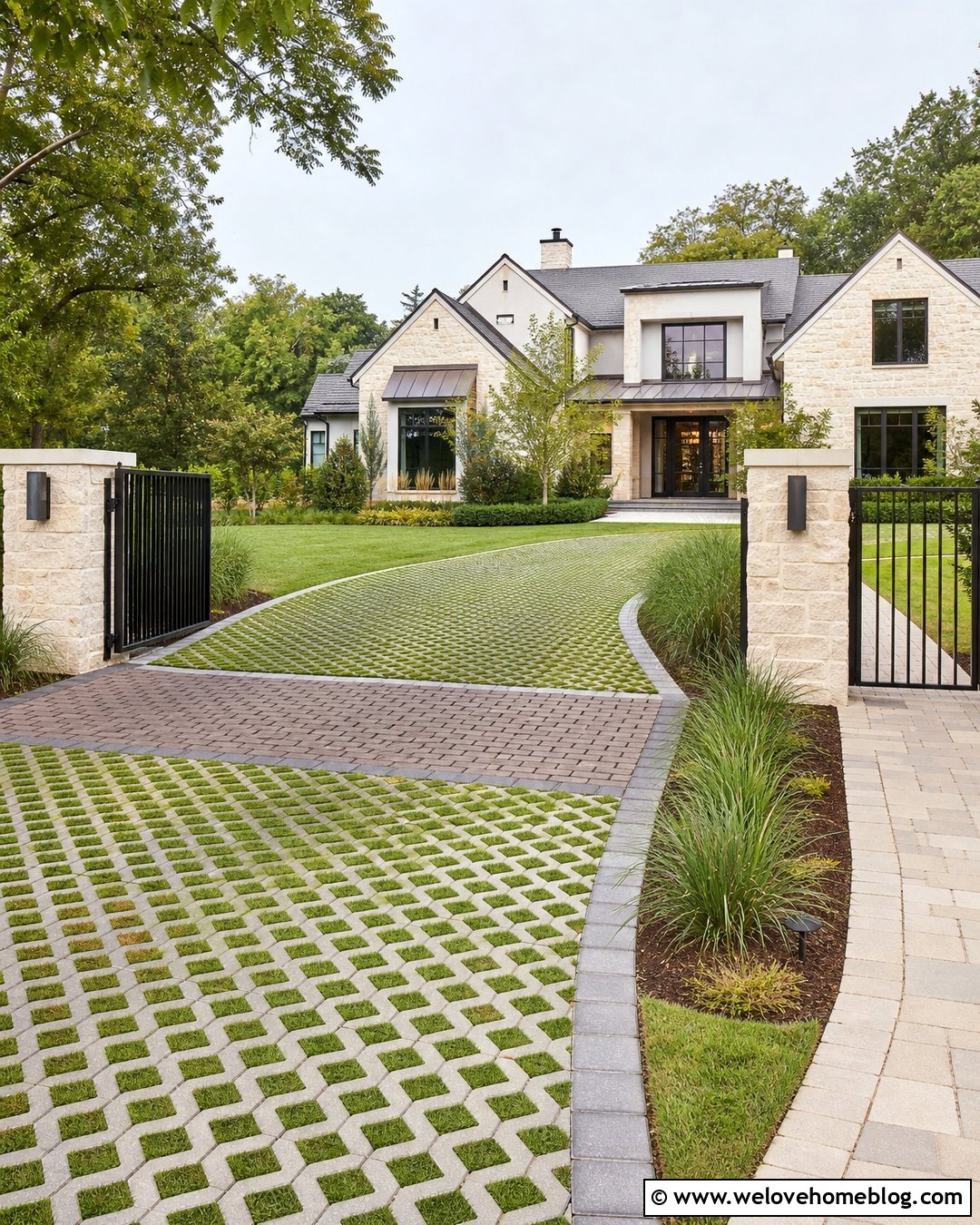
A slim metal gate can give a grass paver driveway security without hiding the green approach beyond it. Begin with a stone or permeable brick apron at the street, then continue with concrete grass blocks along a straight or curving route. Support the gate with simple masonry pillars that match the house foundation or facade. Keep the swing path or sliding track on solid paving so moving components do not interfere with turf growth. Low hedges and ornamental grasses can soften the pillars while preserving visibility. Add a separate pedestrian gate connected to a clearly defined walkway. The open design of the metalwork should allow the driveway, lawn, and house to remain visible from the curb, creating a secure entrance that still feels welcoming and residential.
42. Grass Paver Driveway With Stone Pillars
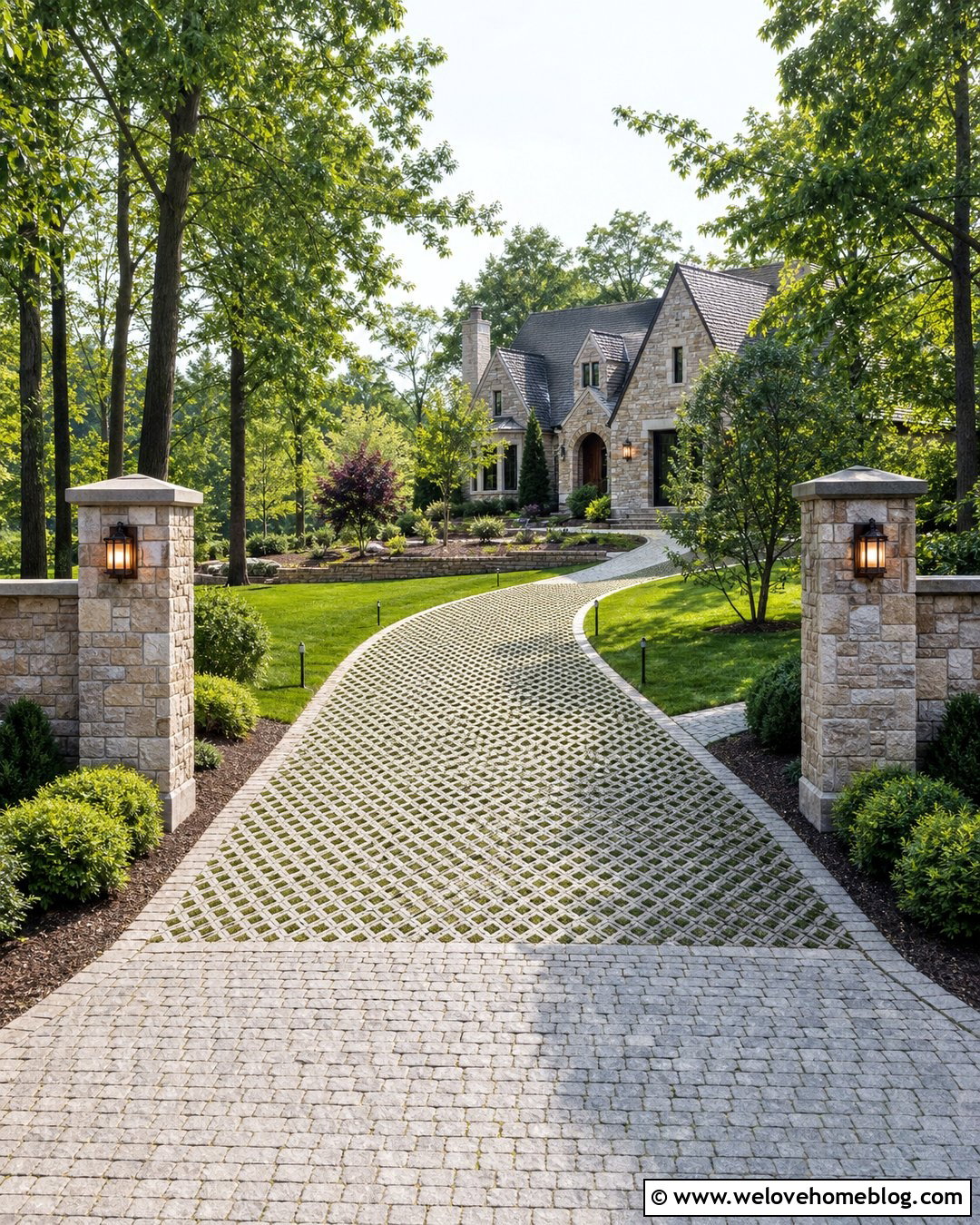
Stone pillars create a substantial entrance for a long grass paver driveway. Position them outside the vehicle clearance area and connect them visually with a granite or cobblestone apron. Beyond the entrance, use concrete turf blocks filled with dense grass and edged by narrow bands of matching stone. A gentle curve can reveal the house gradually while rows of trees or layered shrubs frame the route. Integrate lighting, gate hardware, and address details into the pillars rather than adding separate fixtures that clutter the entrance. Keep nearby planting low so drivers can see oncoming traffic when leaving the property. Repeating the pillar stone on the house, walkway, or retaining walls makes the entrance feel integrated instead of decorative. The complete design is formal, green, and clearly defined.
43. Grass Paver Driveway With Low Lighting
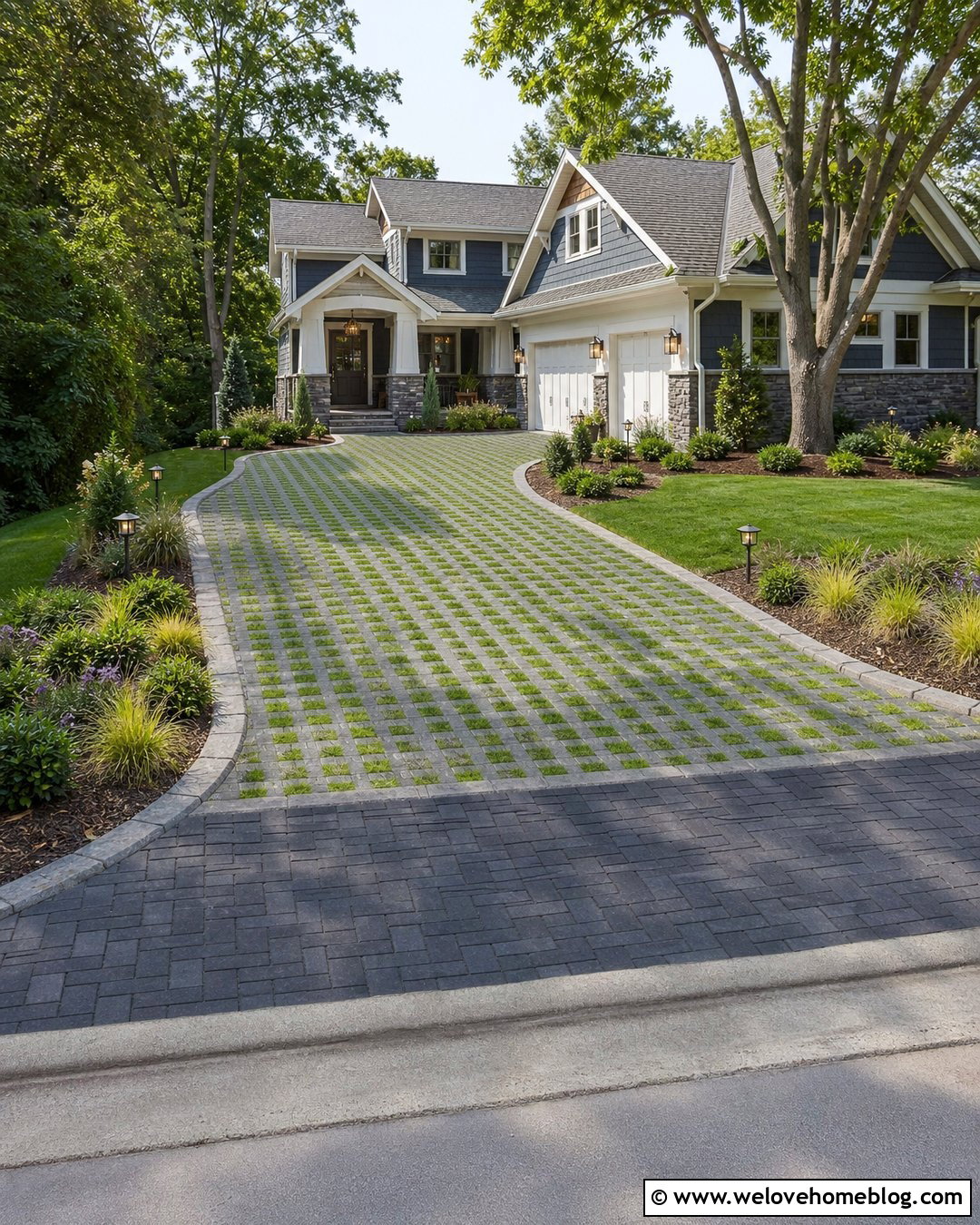
Low landscape lighting can outline a grass paver driveway without placing fixtures where tires or maintenance equipment may damage them. Use concrete turf blocks on a curved approach and install shielded path lights in planting beds beyond the stone edging. Space fixtures evenly enough to reveal the route while avoiding the appearance of an airport runway. During the day, the lights should blend with ornamental grasses, compact shrubs, and ground covers. Add brighter functional illumination near the garage, front steps, and address marker. A dark brick apron can provide contrast at the street entrance. Although nighttime function drives the lighting plan, the complete driveway should remain attractive in daylight, with the paver material, green infill, borders, and planting forming a cohesive curb view.
44. Grass Paver Driveway With Address Sign
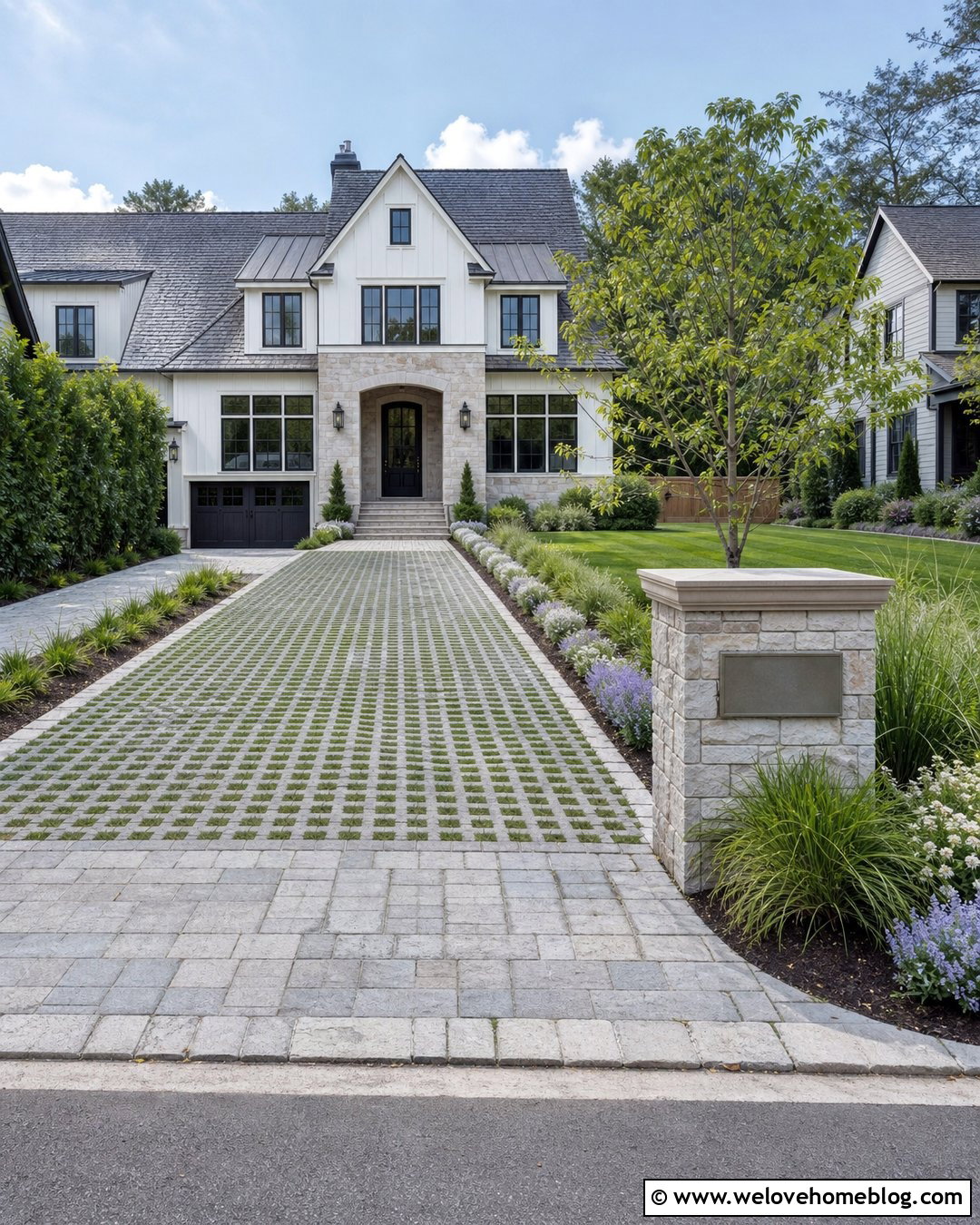
An integrated address sign helps visitors recognize a grass paver driveway that might otherwise blend into the lawn. Place a simple masonry or metal marker near the entrance, safely outside sight triangles and vehicle clearance. Use concrete turf blocks for the driveway and create a contrasting brick or stone apron around the sign area. Low ornamental grasses and flowering ground covers can frame the marker without hiding the numbers. Continue the apron material as narrow edging along the driveway and around the front walkway. A small tree farther back provides height and helps anchor the entrance composition. Choose sign materials that repeat the home’s exterior finishes. This creates a clear focal point at the curb while preserving the driveway’s green, permeable appearance as it leads toward the house.
45. Grass Paver Motor Court
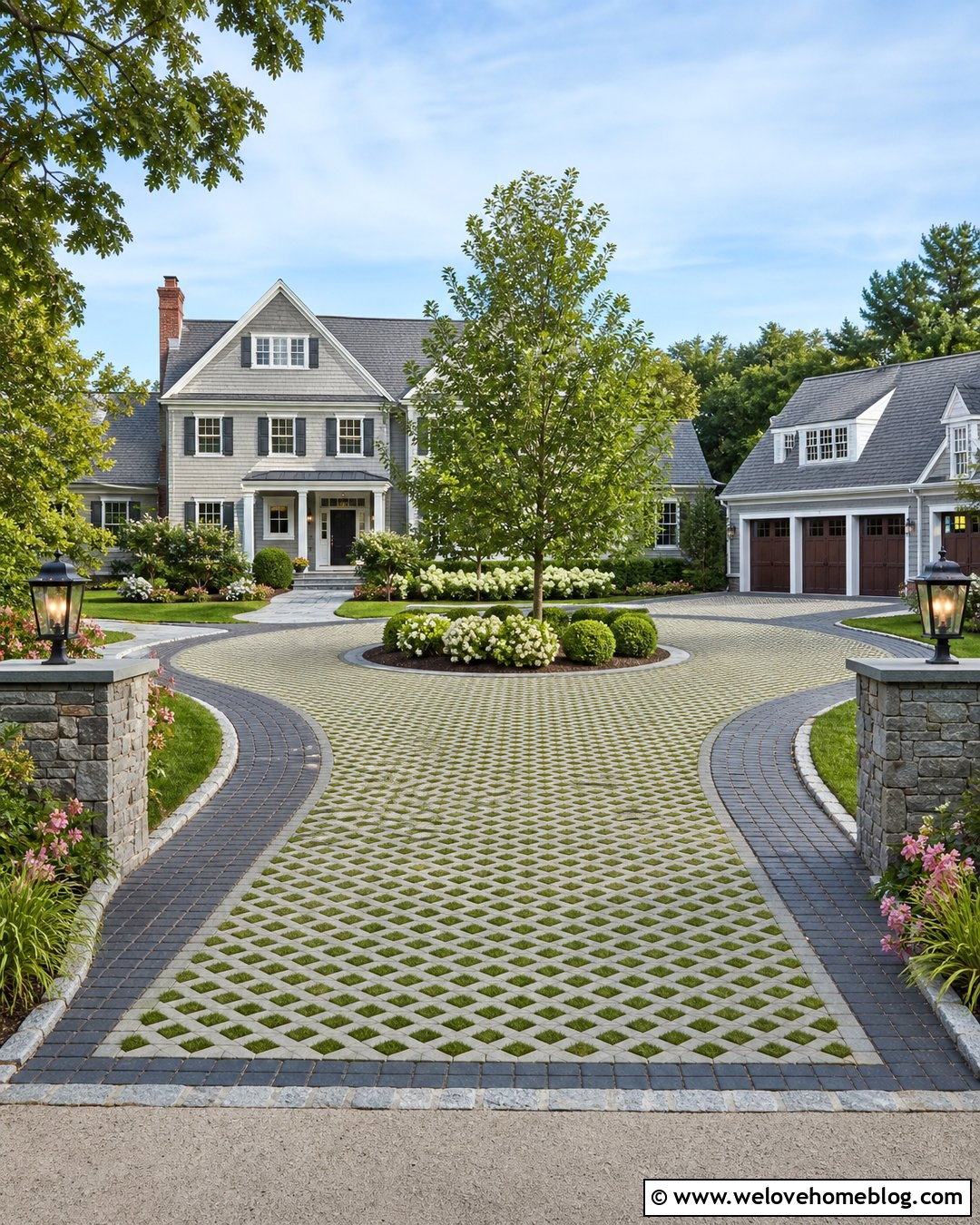
A grass paver motor court provides generous maneuvering space without turning the front of the house into a solid expanse of paving. Arrange concrete turf blocks across a broad rectangular or rounded court in front of the garage. Use solid paver bands to mark parking bays, turning routes, and the connection to the main driveway. A central planted island can contain a small tree, clipped shrubs, and low flowers, provided it leaves enough room for safe circulation. Stone edging around the court gives the grid a durable frame. Connect the front door with a wide, clearly visible walkway that does not require guests to cross planted cells unnecessarily. The green surface, organized hardscape bands, and structured landscaping create a functional arrival area with softer residential curb appeal.
Conclusion:
The best grass paver driveway balances greenery with the structural demands of daily vehicle traffic. Its material, layout, edging, planting, and entrance should work together as one complete design. Concrete grass blocks provide visible geometry, while plastic turf grids can produce a more continuous lawn effect. Solid aprons and turning bands protect heavily used areas, and strong borders keep the driveway stable and defined. Before installation, evaluate sunlight, drainage, soil, slope, expected traffic, local requirements, and regional grass choices. Most importantly, invest in a properly designed aggregate base. Whether your property is compact, contemporary, traditional, or rural, these **45 grass pavers driveway ideas** offer practical ways to create greener and more attractive parking.

Related posts:
Leave a Reply