
A grass strip driveway blends dependable vehicle access with the softness of a green lawn. Instead of covering the entire approach in hard paving, the design places living grass or artificial turf between concrete, brick, stone, gravel, or permeable paver sections. The result can feel lighter, cooler, and more connected to the surrounding yard. It also offers plenty of flexibility. Grass strips can run between wheel tracks, divide large slabs, create geometric grids, or highlight a curved entrance. The right layout depends on your home, climate, maintenance routine, and parking needs. Proper base preparation, drainage, edging, and tire placement are essential for lasting results. Explore these complete and practical **20 Grass Strip Driveway Ideas** to find a look that complements your home.

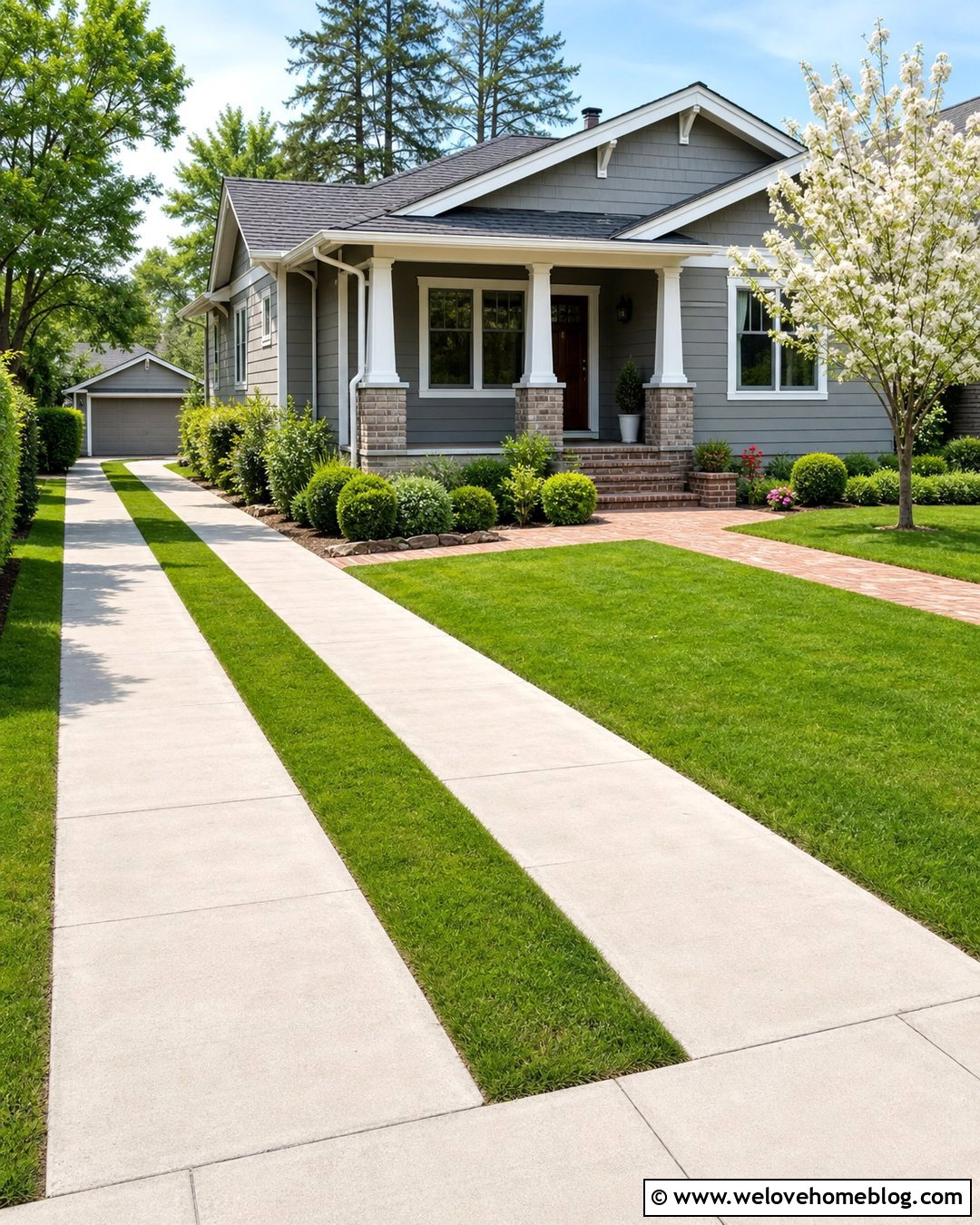
1. Concrete Ribbon Grass Strip Driveway
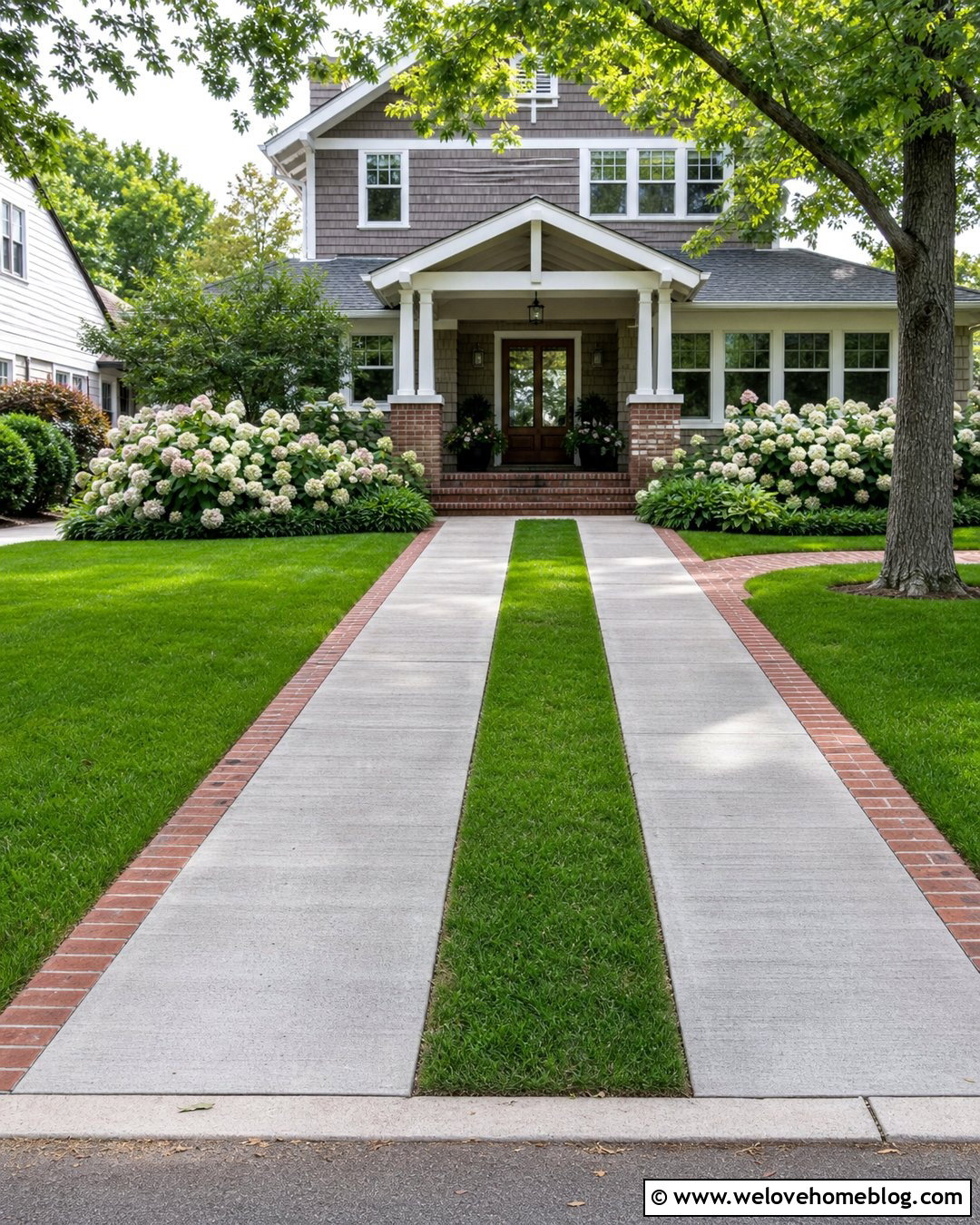
A traditional concrete ribbon driveway uses two parallel concrete tracks with a continuous grass strip through the center. This layout reduces the visual weight of a fully paved surface while providing firm support beneath vehicle tires. Keep the tracks wide enough for comfortable daily use and finish them with a light broom texture for traction. A narrow brick border can define the outside edges and connect the driveway to a matching front walkway. Let the center grass merge naturally into the lawn near the curb for a seamless appearance. This complete look works especially well with Craftsman homes, cottages, and older ranch houses. Choose durable turf suited to your region, and install a proper aggregate base beneath the concrete tracks to limit settling.
2. Modern Concrete Slab Grass Strip Driveway
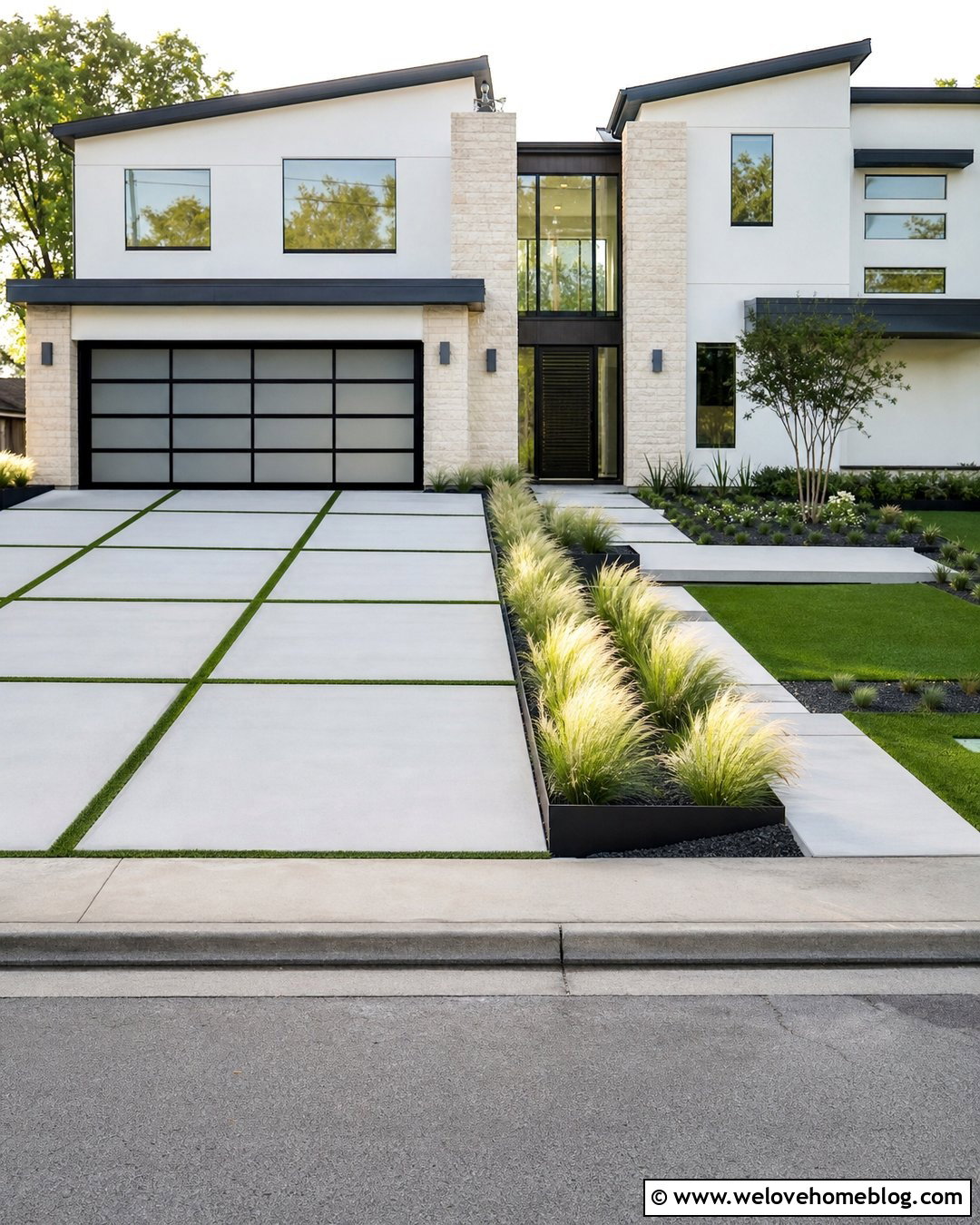
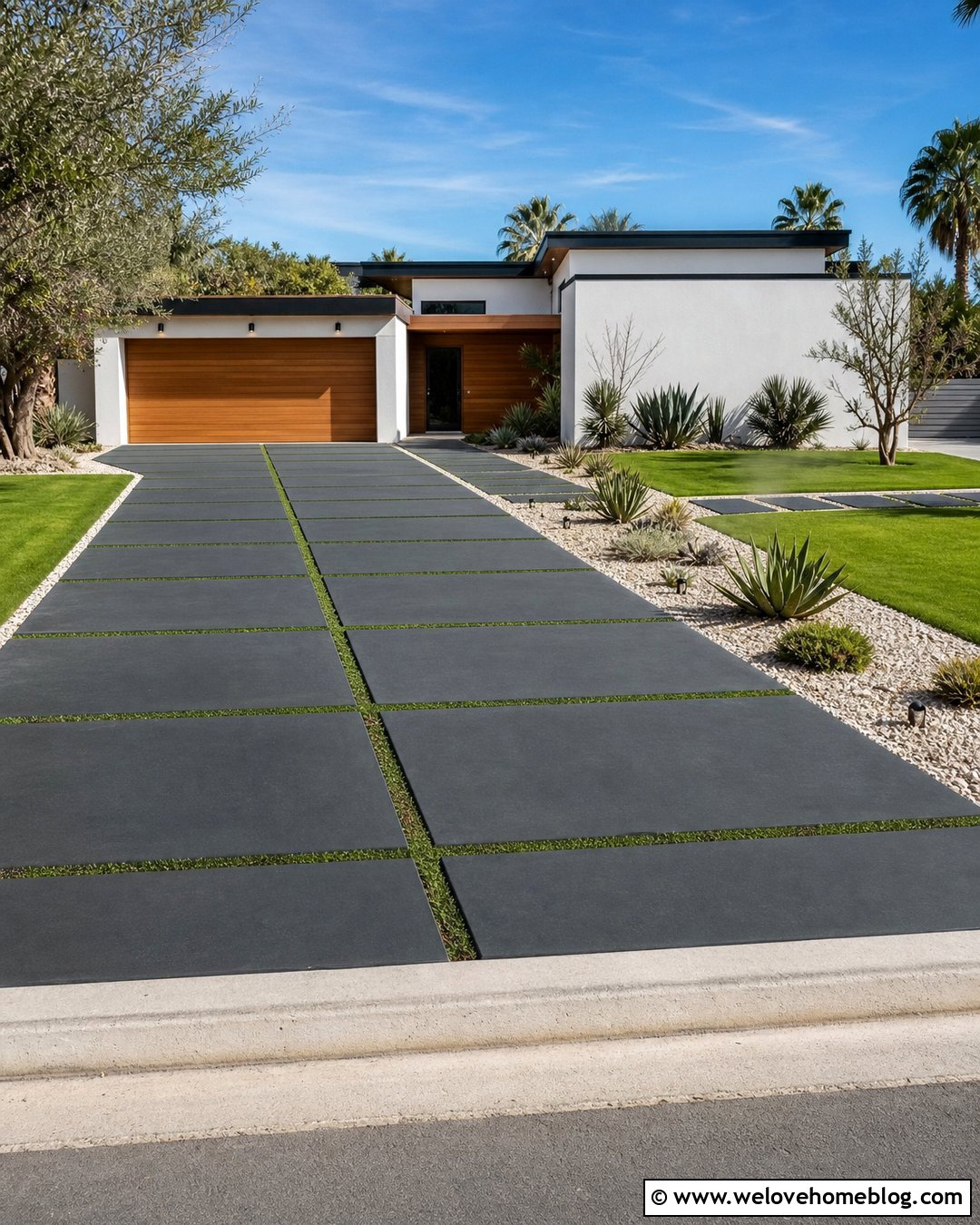
Large rectangular concrete slabs separated by precise grass strips create a clean, modern driveway. Use smooth light-gray poured concrete with narrow green joints running across and along the surface. The repeated geometry makes a wide driveway feel organized rather than overwhelming. Dark steel edging can maintain crisp boundaries between the concrete and turf, while low ornamental grasses soften the sides without hiding the pattern. Continue the same slab dimensions into the walkway for a unified approach to the house. This design looks particularly effective beside a contemporary home with simple rooflines and neutral siding. Natural grass delivers a softer finish, but artificial turf may be more practical where tires repeatedly cross the narrow joints. Keep every strip level with the slabs to reduce tripping hazards.
3. Brick Ribbon Grass Strip Driveway
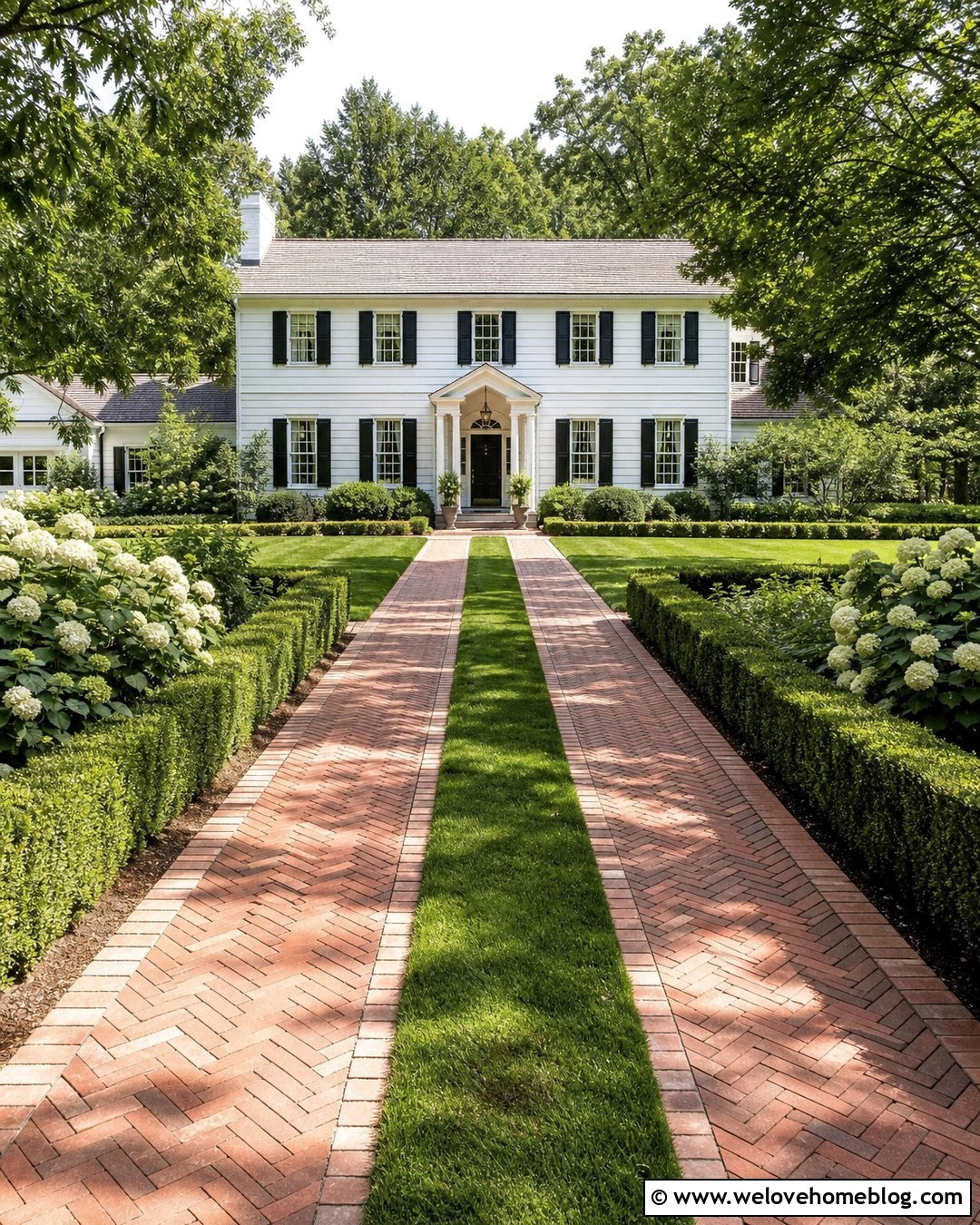
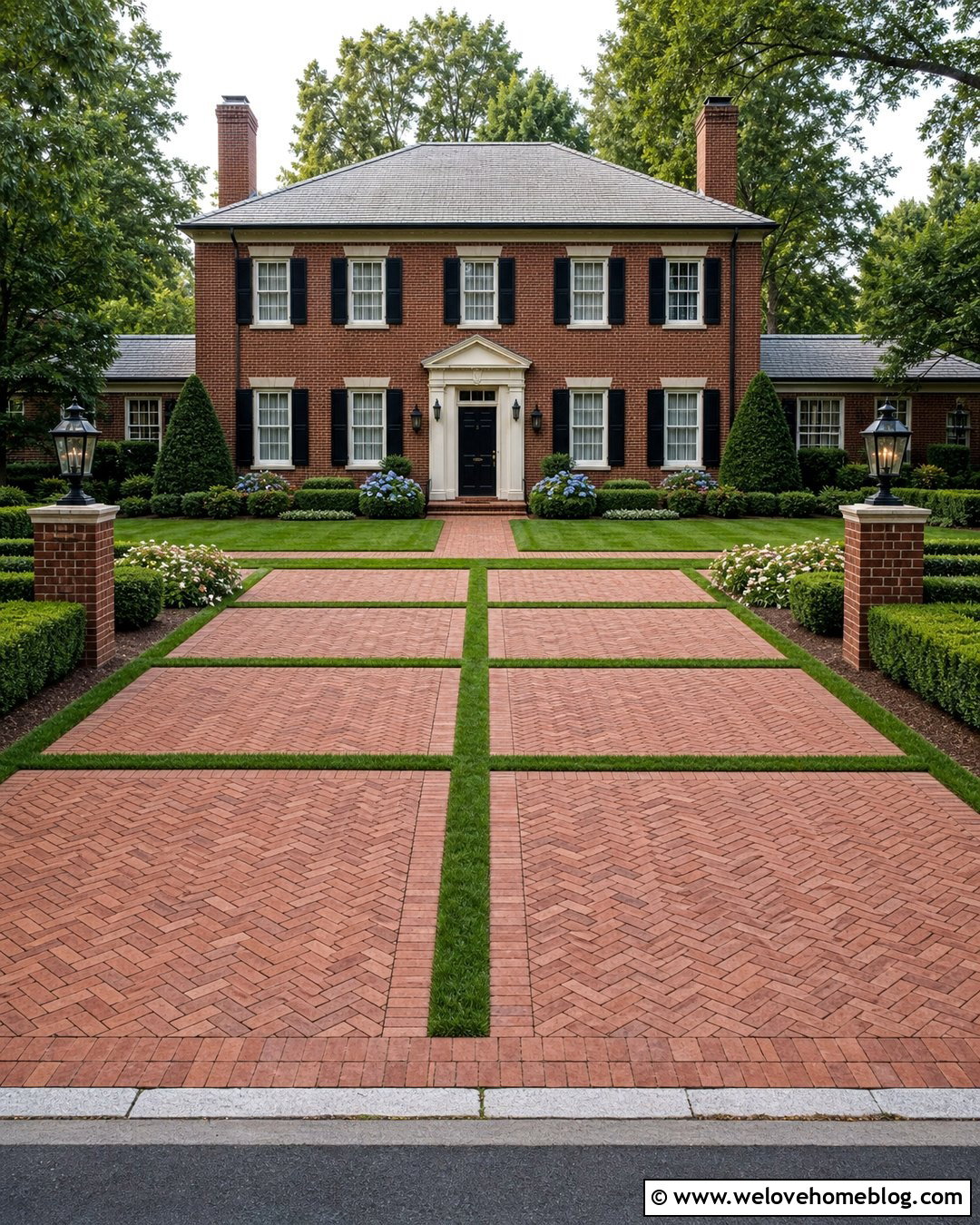
Warm clay brick wheel tracks with a lush center strip bring traditional character to a grass strip driveway. Lay the bricks in a herringbone pattern so the surface feels detailed and established. A soldier-course brick border can hold the edges securely and create a tailored transition into the lawn. This driveway pairs naturally with Colonial, Georgian, and Cape Cod homes, especially when the brick color echoes the chimney or front steps. Frame the entrance with clipped boxwood, hydrangeas, and a simple brick walkway. The central grass should remain slightly below the paving so soil does not wash onto the bricks. Because brick can shift under heavy loads, a compacted base and secure edge restraints are important. The finished design feels green, welcoming, and comfortably traditional.
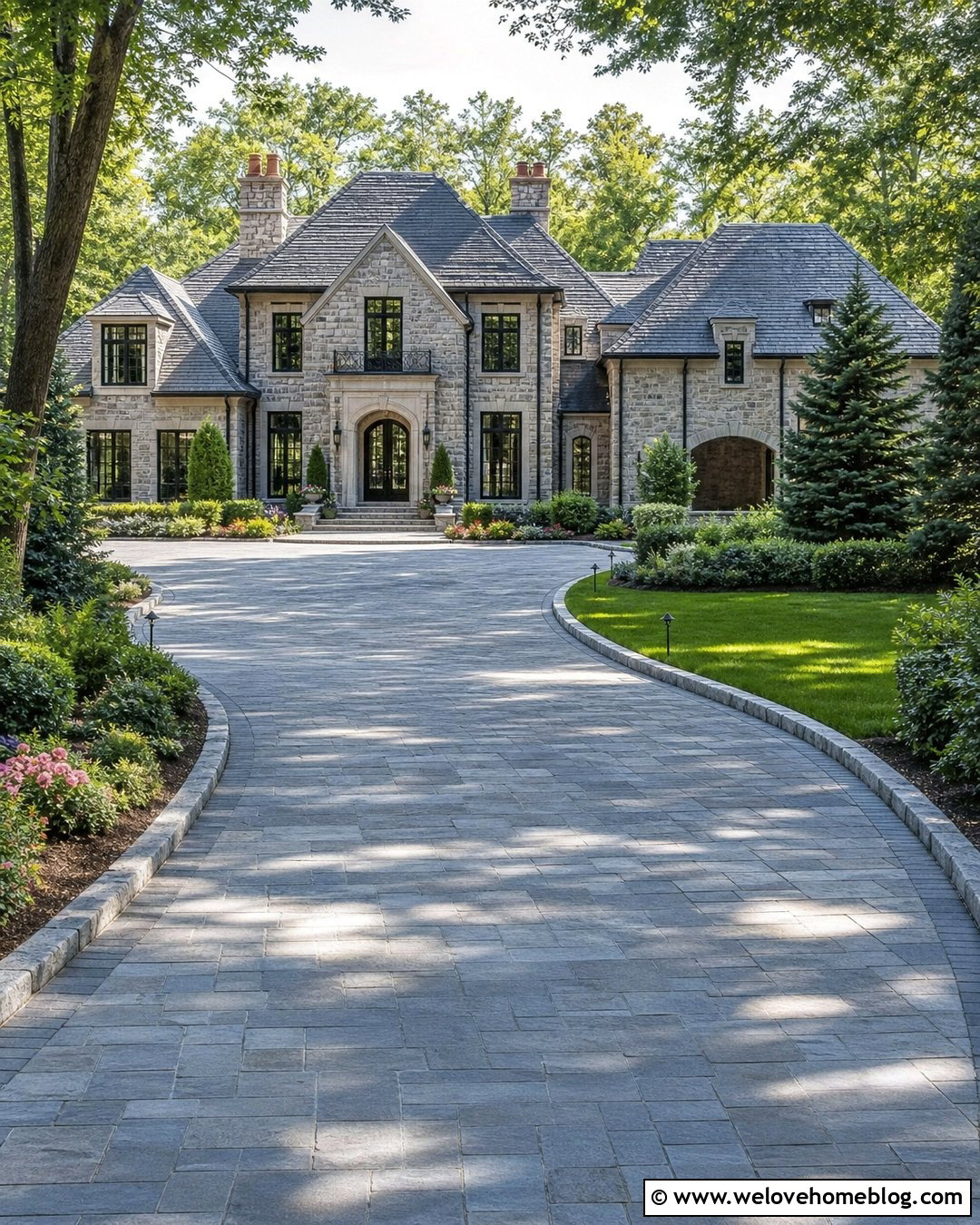
4. Curved Paver Grass Strip Driveway
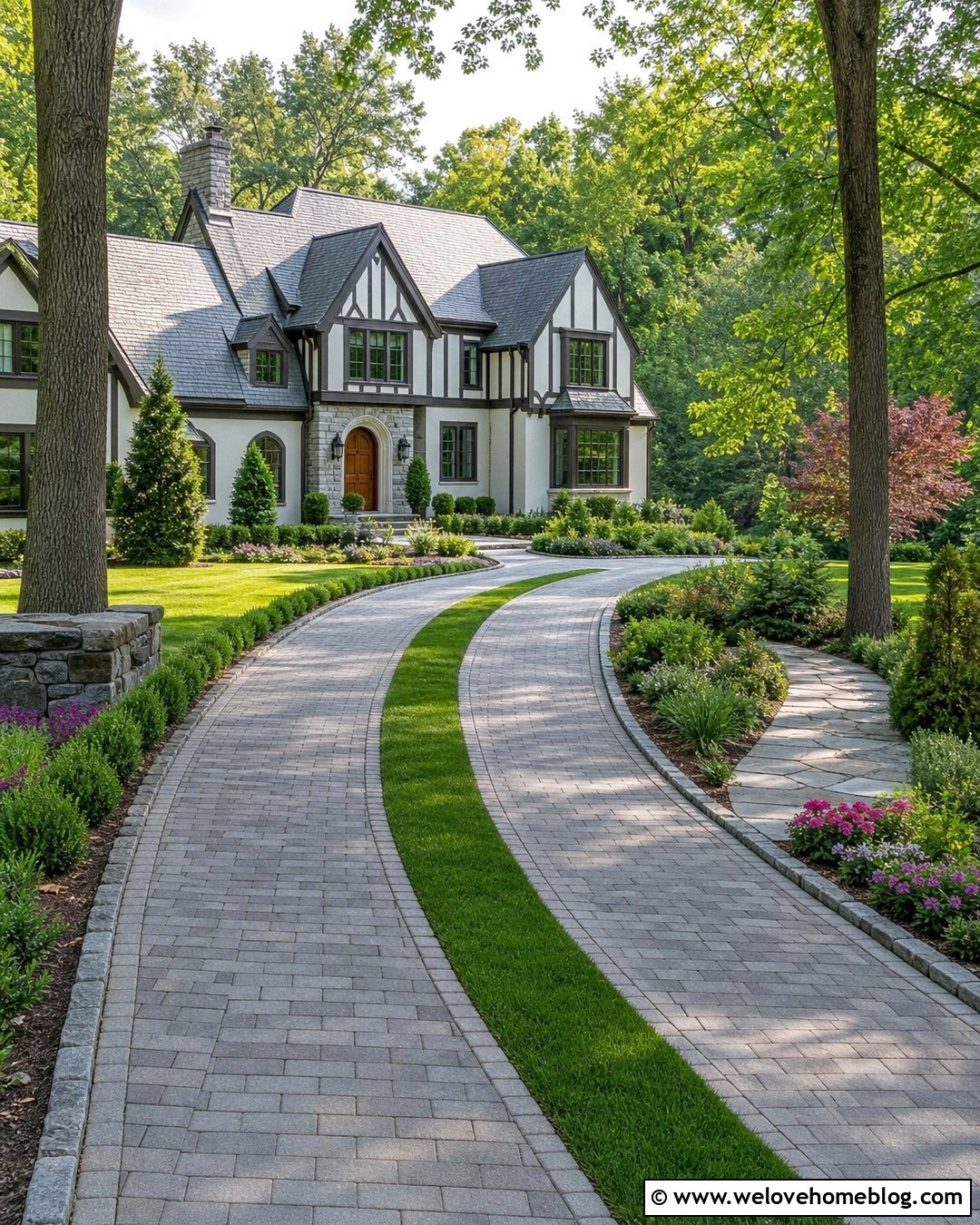
Does a straight driveway feel too rigid for your front yard? A gently curved paver driveway with a center grass strip can create a softer approach. Use charcoal or warm-gray concrete pavers for two broad wheel tracks, then follow the same curve with a consistent ribbon of turf. Cobblestone edging strengthens the outside boundaries and gives the layout a finished appearance. Plant low shrubs and flowering perennials along the outer curve while keeping taller plants away from sightlines near the street. This complete design suits a Tudor, traditional, or wooded suburban home. The curve should be generous enough for vehicles to follow without repeatedly driving onto the grass. Before construction, test the proposed route with marking paint to confirm comfortable turning space and garage alignment.
5. Gravel Grass Strip Driveway
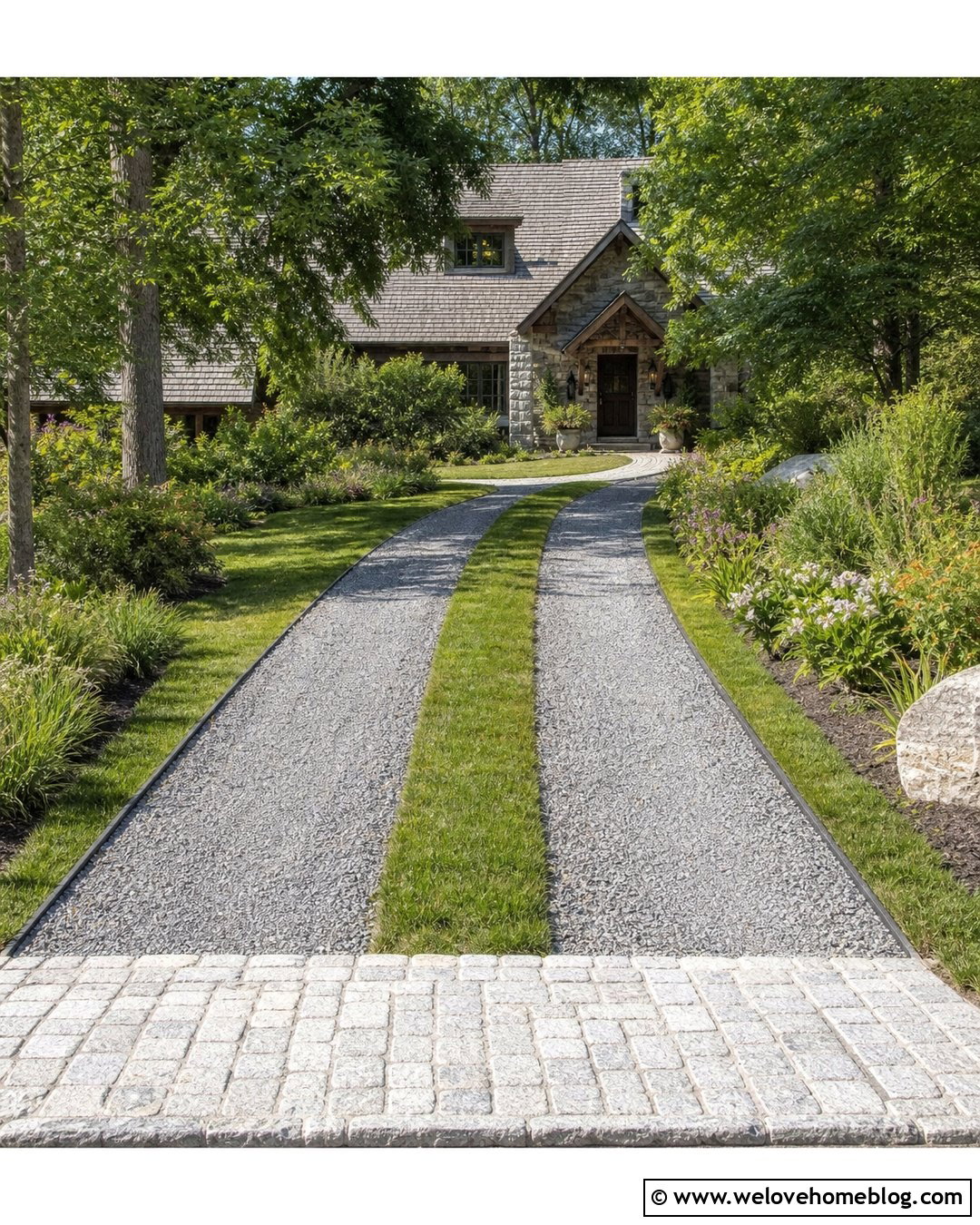
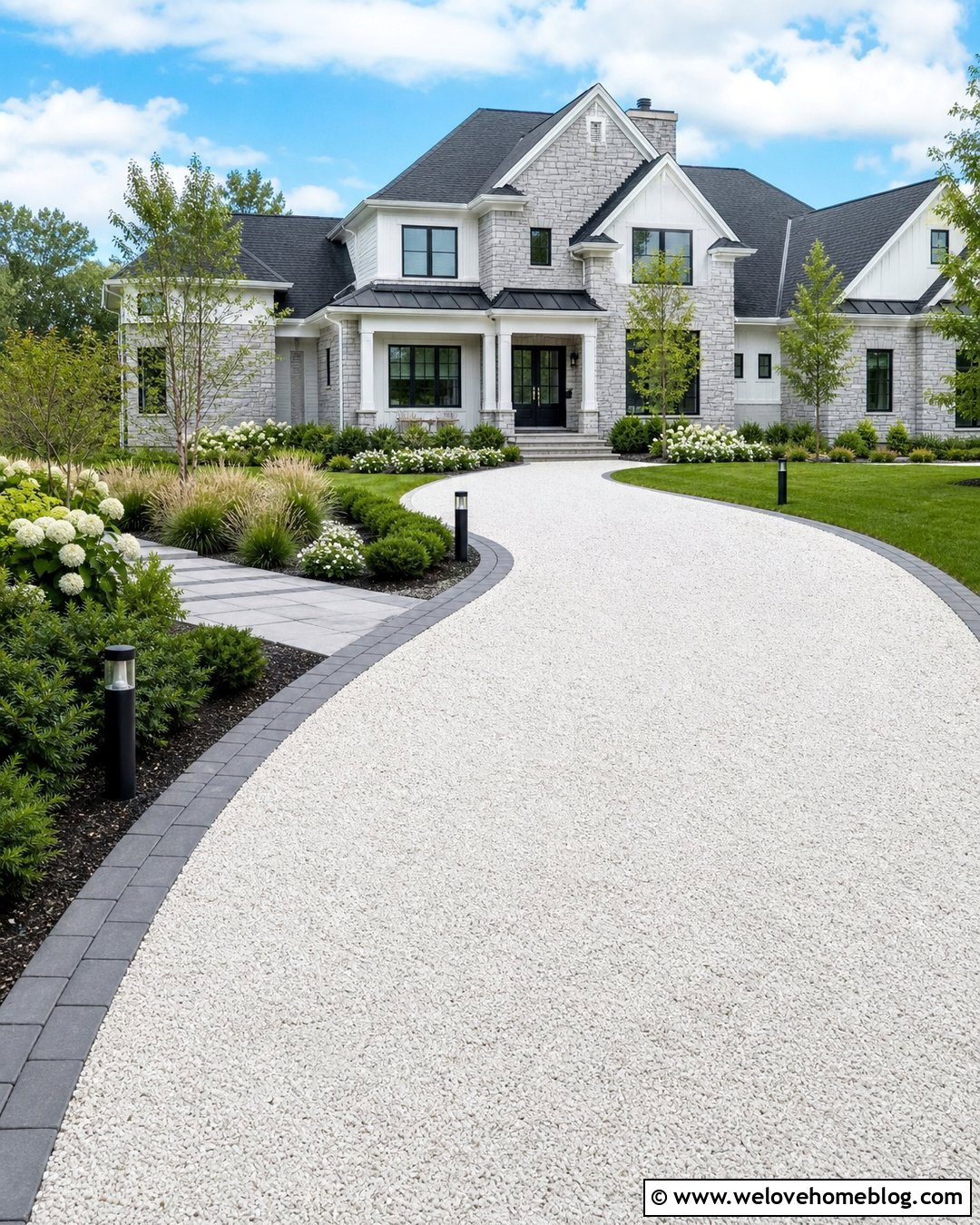
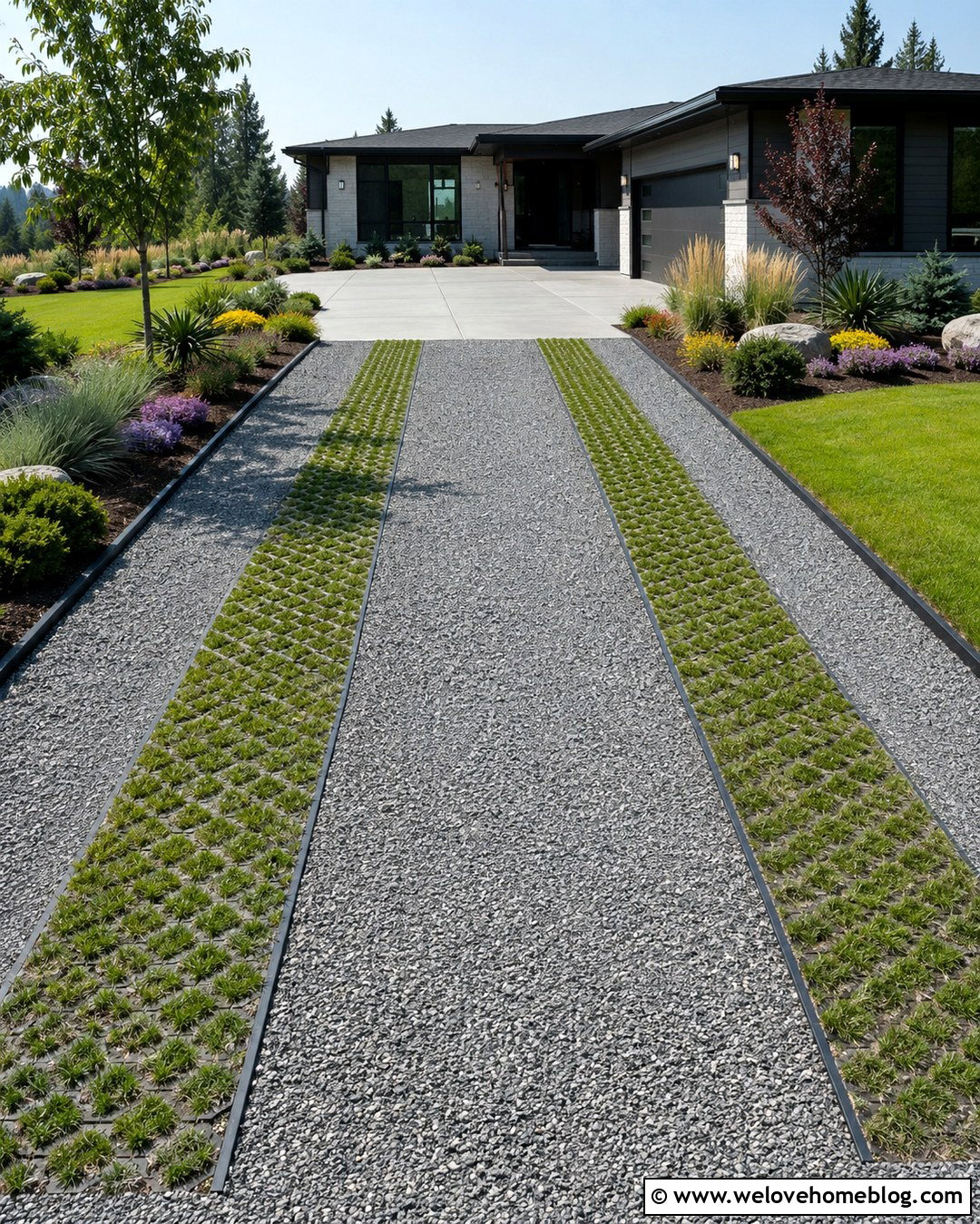
A gravel driveway can gain definition from a bold grass strip running through its center. Use compacted gray crushed stone for two stable tire lanes rather than loose, rounded gravel that moves easily. Steel, brick, or granite edging helps keep the aggregate out of the turf and maintains clean parallel lines. At the street, add a short paver apron to prevent gravel from scattering into the roadway. The grassy middle can continue toward a country-style house and end in a wider lawn near the garage. Native shrubs, small trees, and informal perennial beds reinforce the relaxed setting. This layout works particularly well for long rural approaches because it uses less hard material than a full-width paved driveway. Periodic raking and gravel replenishment will keep the tracks even.
6. Concrete Grid Grass Strip Driveway
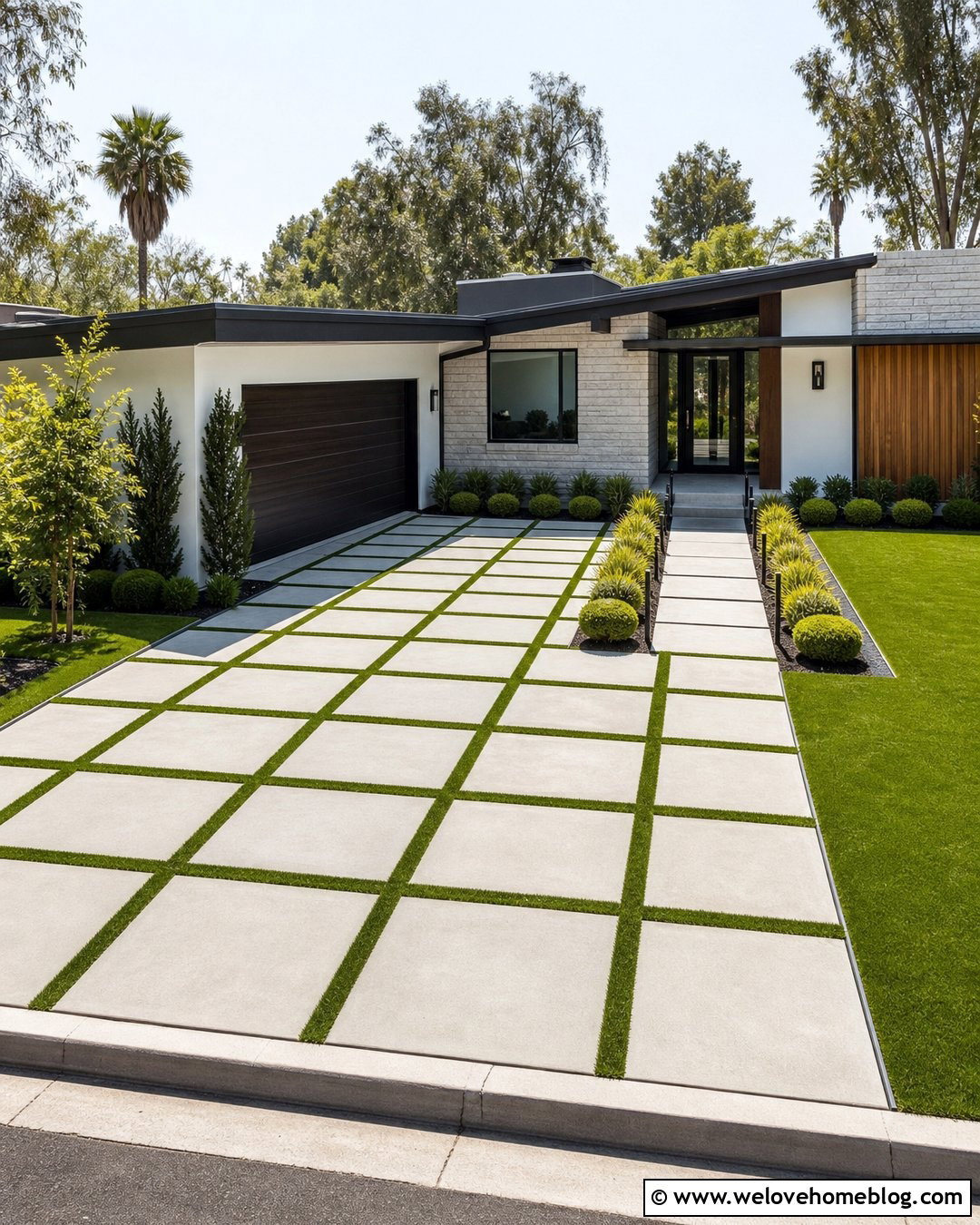
A concrete grid turns grass strips into an intentional geometric feature across the entire driveway. Arrange medium or large square concrete pavers in straight rows, leaving evenly sized green joints between every unit. The repeating pattern creates more visual interest than one central strip and helps break up a broad parking area. Select reinforced pavers rated for driveway loads, and place them over a properly compacted base. Artificial turf can maintain a consistent appearance where frequent parking makes living grass difficult to grow. Surround the driveway with simple lawn panels, sculptural shrubs, and a straight walkway leading to a modern or midcentury home. Use flush metal edging around the perimeter. The concrete and greenery should form one level surface so tires, lawn equipment, and pedestrians can cross comfortably.
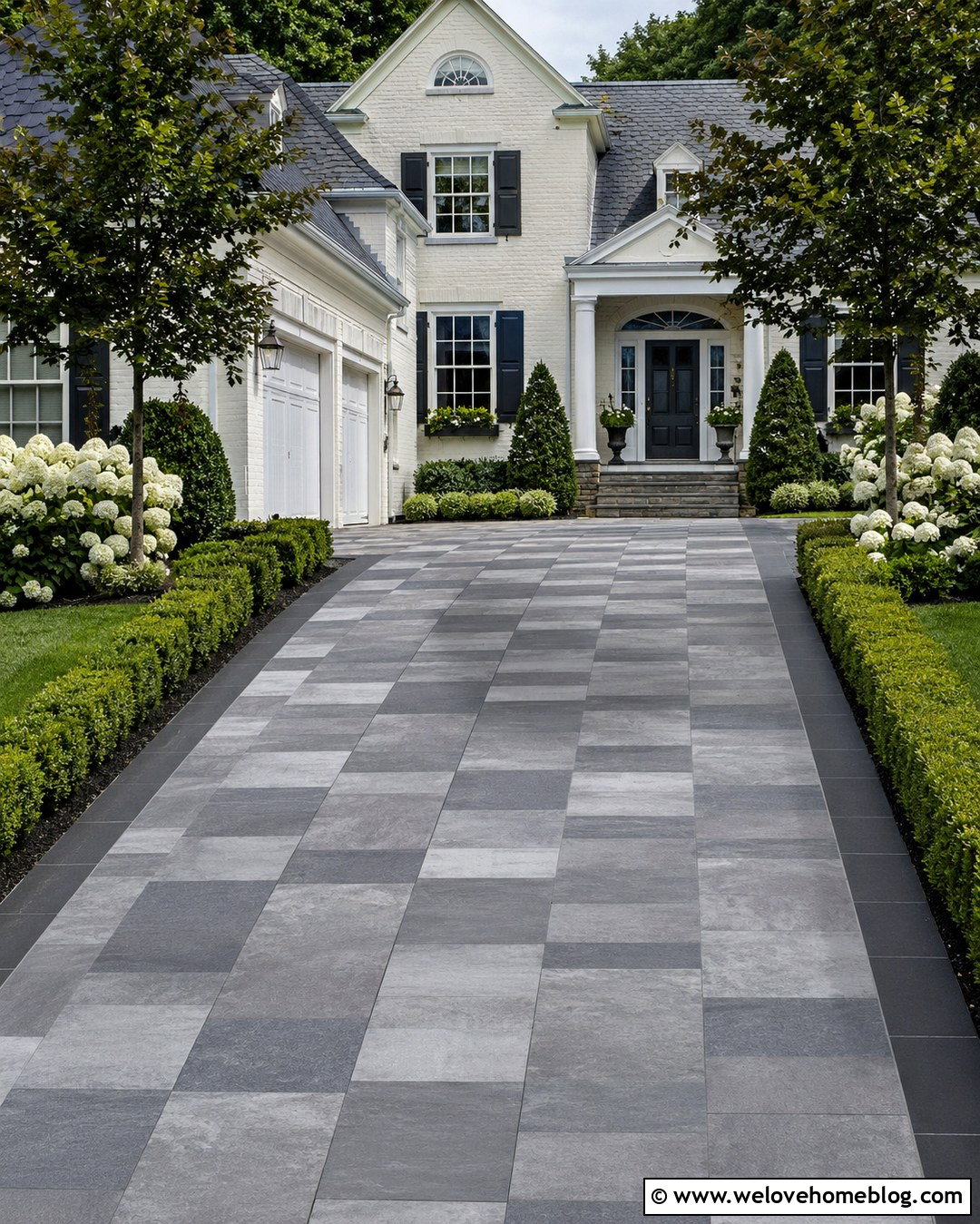
7. Checkerboard Grass Strip Driveway
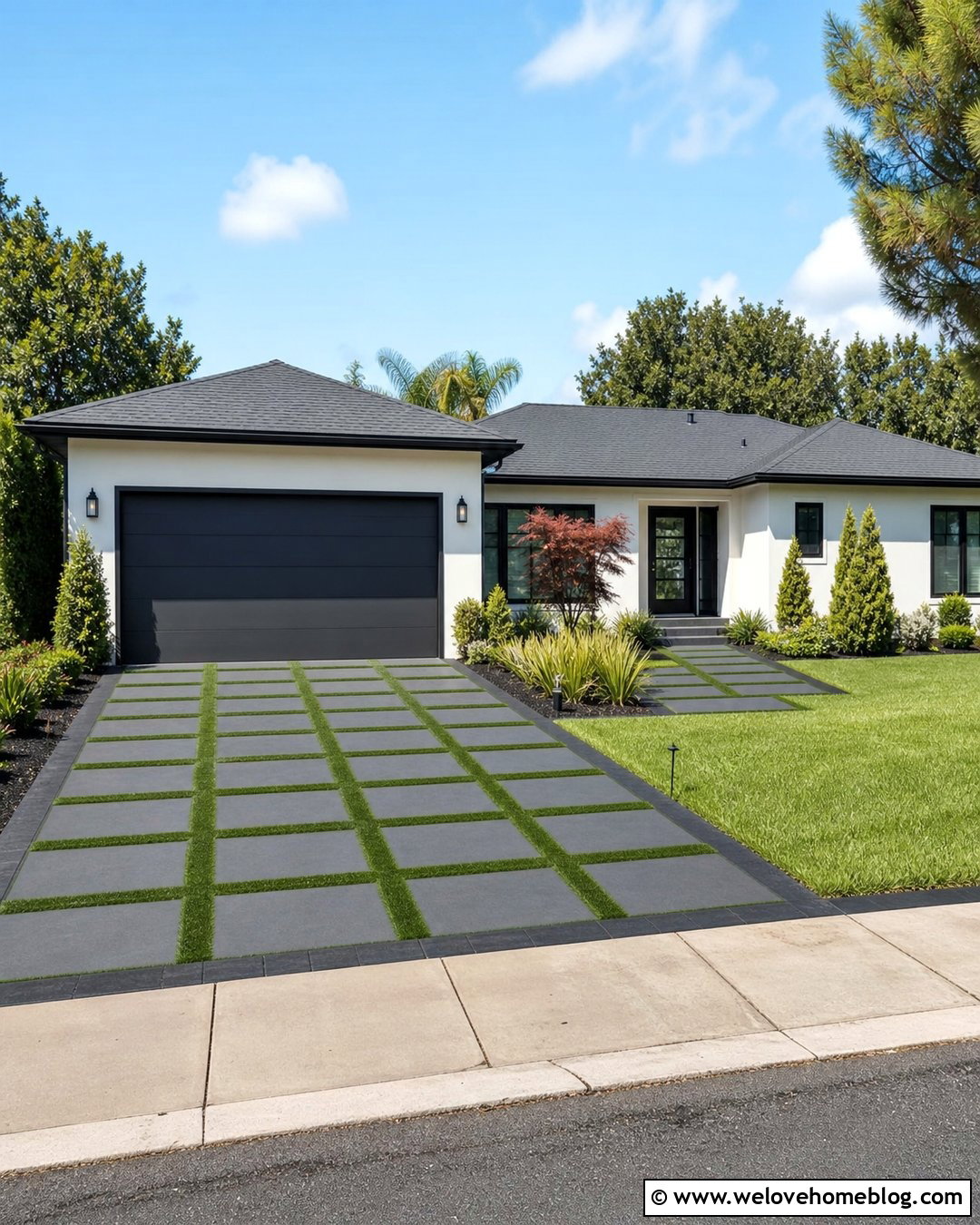
For a more noticeable pattern, combine square concrete pavers and turf in a driveway-scale checkerboard. Keep the paved squares aligned beneath the primary wheel paths so the design remains practical, not purely decorative. Smaller grass squares can fill the spaces between pale-gray or charcoal pavers. A solid paver border around the entire driveway prevents edge movement and frames the pattern like an outdoor rug. This playful layout complements contemporary homes, renovated ranch houses, and compact urban properties. Repeat one paver color in the front steps or walkway to connect the landscape. Artificial turf usually produces the sharpest checkerboard because each square retains an even color and height. If using real grass, include suitable soil depth, accessible irrigation, and a mowing plan before setting the final spacing.
8. Flagstone Grass Strip Driveway
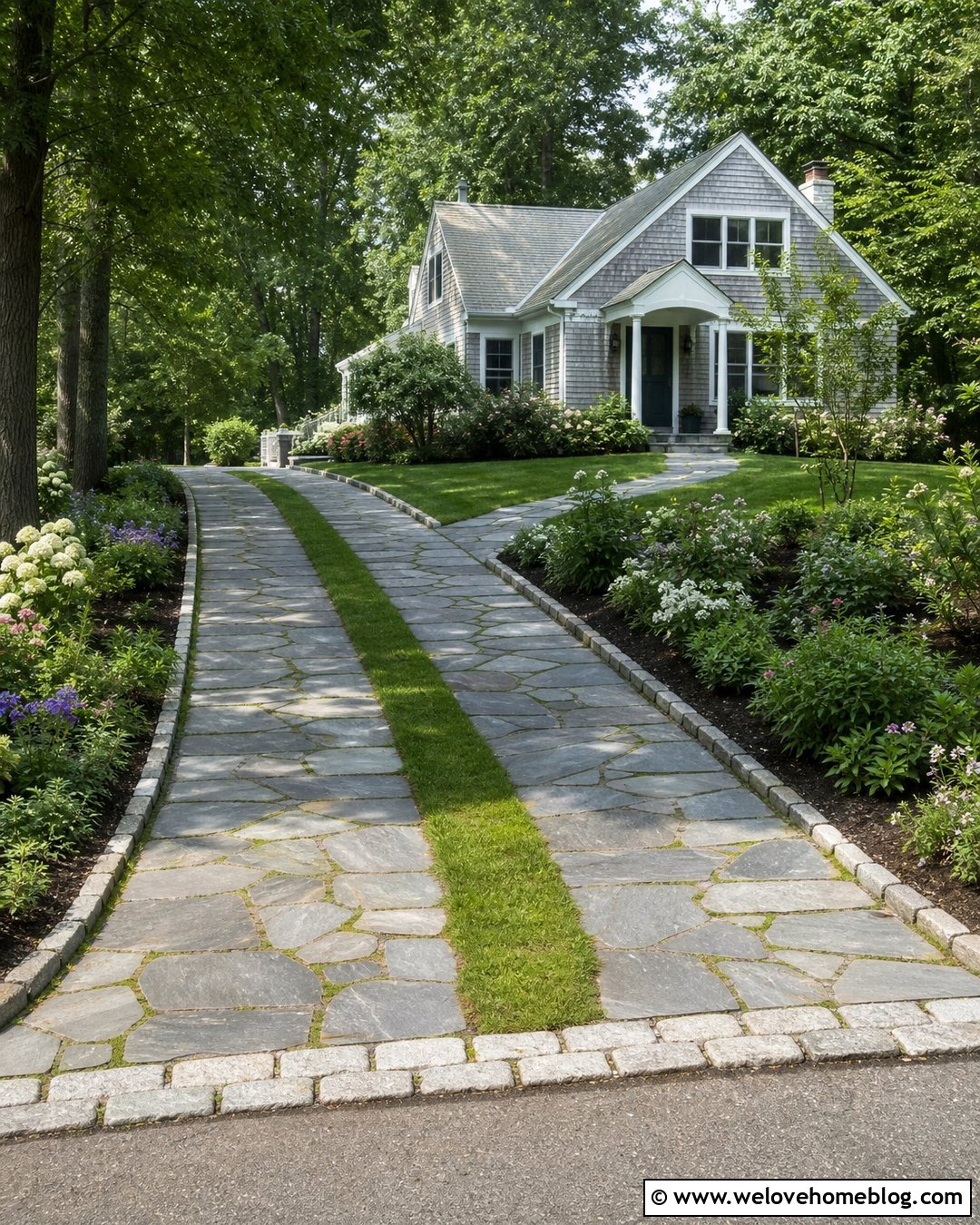
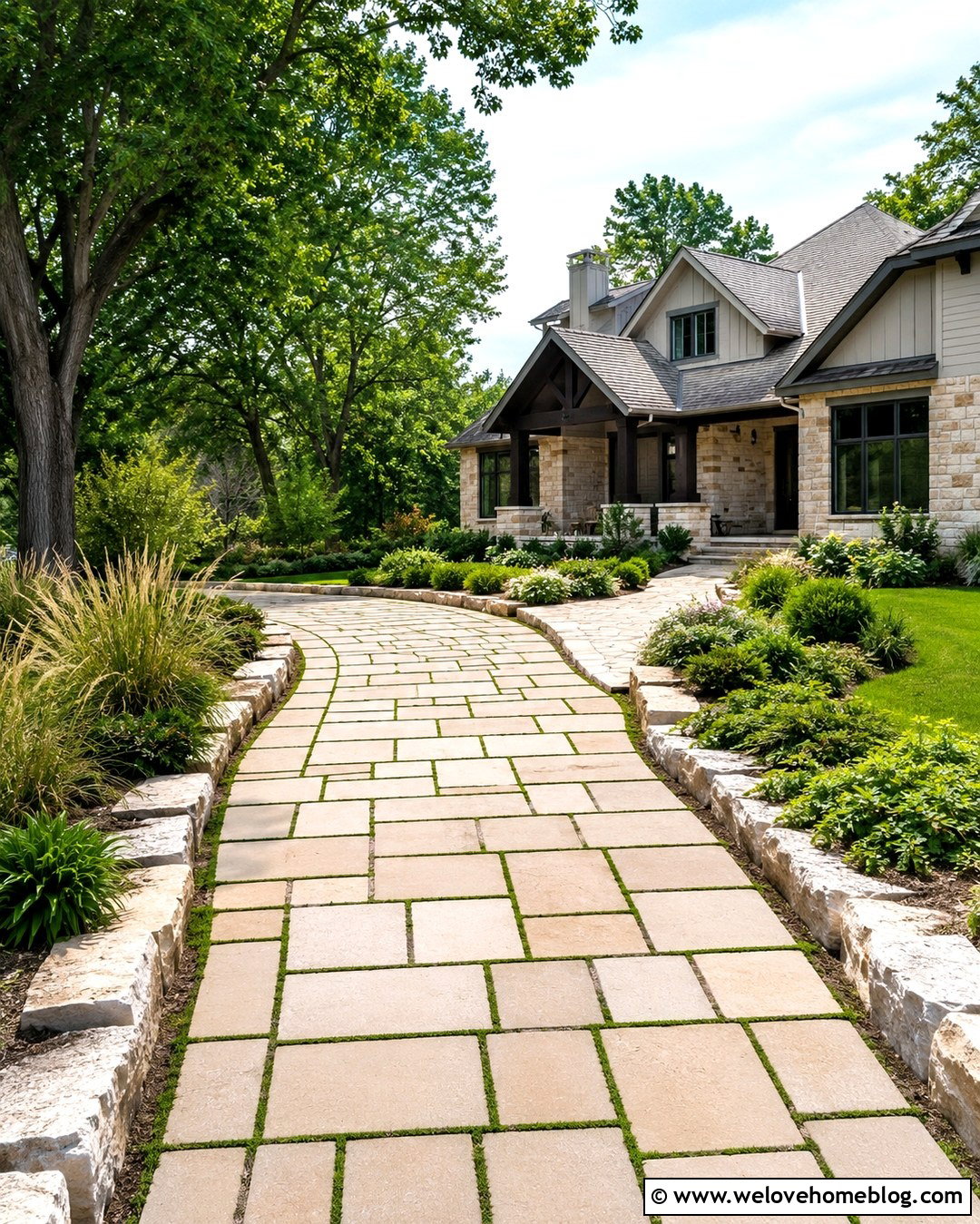
Irregular flagstone and grass can create a natural driveway that feels integrated into a garden. Choose thick, vehicle-rated pieces of bluestone or locally available flagstone, then arrange them as two broad tracks with a continuous grassy middle. Smaller green joints between selected stones can make the transition feel even more organic. Keep the stones reasonably level and avoid overly wide gaps where tires may sink or edges could become vulnerable. Natural stone curbing along the driveway sides provides extra structure. Complete the look with layered native planting, shade trees, and a stepping-stone walkway leading to a cottage or rustic ranch home. The varying stone shapes introduce character, while the grass prevents the approach from looking heavily paved. Professional base installation is worthwhile because irregular stone requires careful support.
9. Cobblestone Grass Strip Driveway
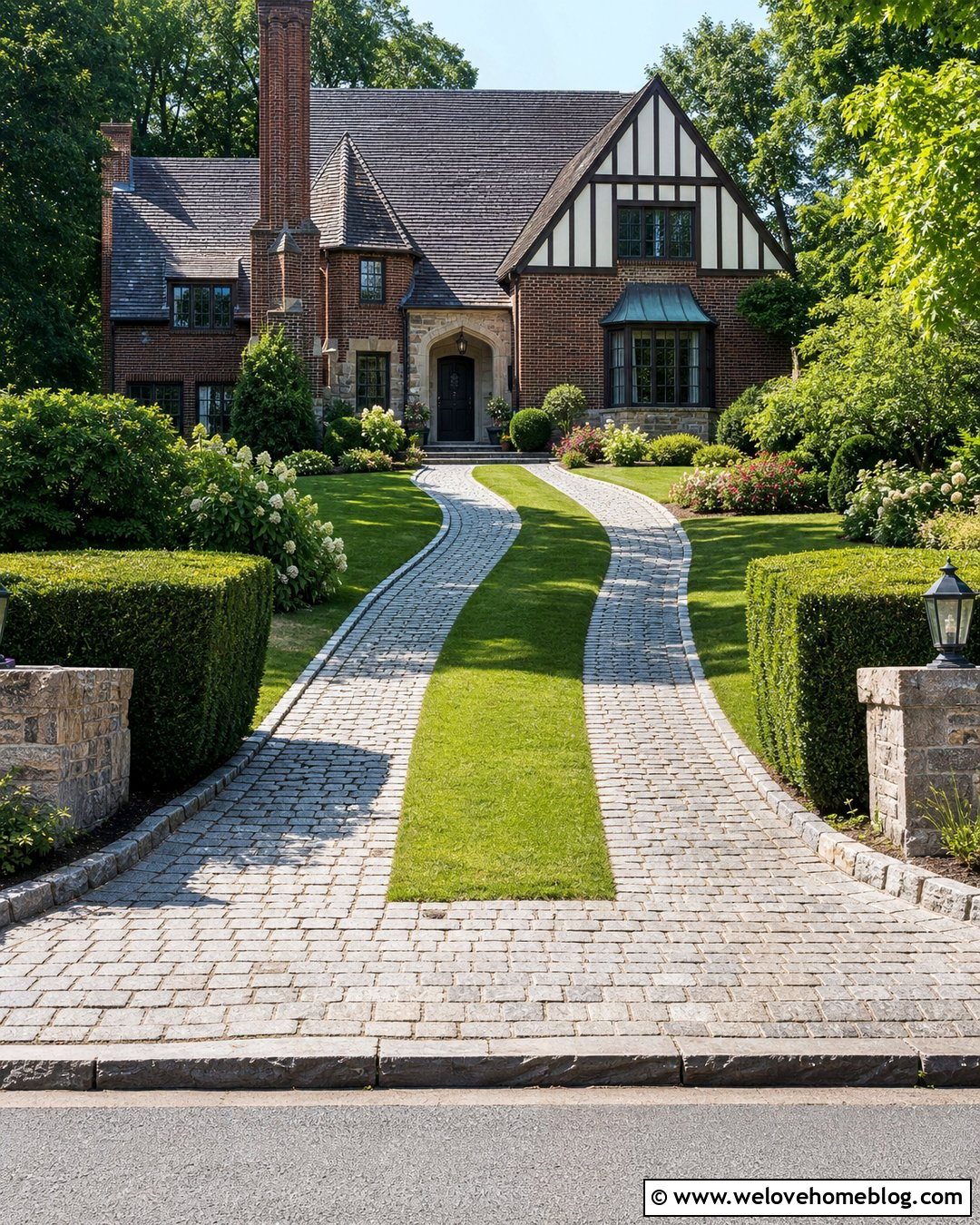
A cobblestone grass strip driveway delivers an established appearance with strong texture and clear definition. Build two straight or gently curved tracks from granite cobblestones, leaving a broad strip of closely trimmed grass in the center. Use matching cobbles as outer edging and at the curb apron to create a durable frame. The rough stone works beautifully with Tudor, European-inspired, and traditional brick houses. Surround the approach with clipped evergreen hedges, flowering borders, and a stone walkway that repeats the driveway material. Because cobblestones have uneven surfaces, thoughtful installation is necessary to provide comfortable tire paths and safe walking areas. Select stones with relatively flat tops, maintain tight joints, and consider a smoother paved landing near the garage. The greenery keeps the formal stonework from feeling severe.
10. Artificial Turf Grass Strip Driveway
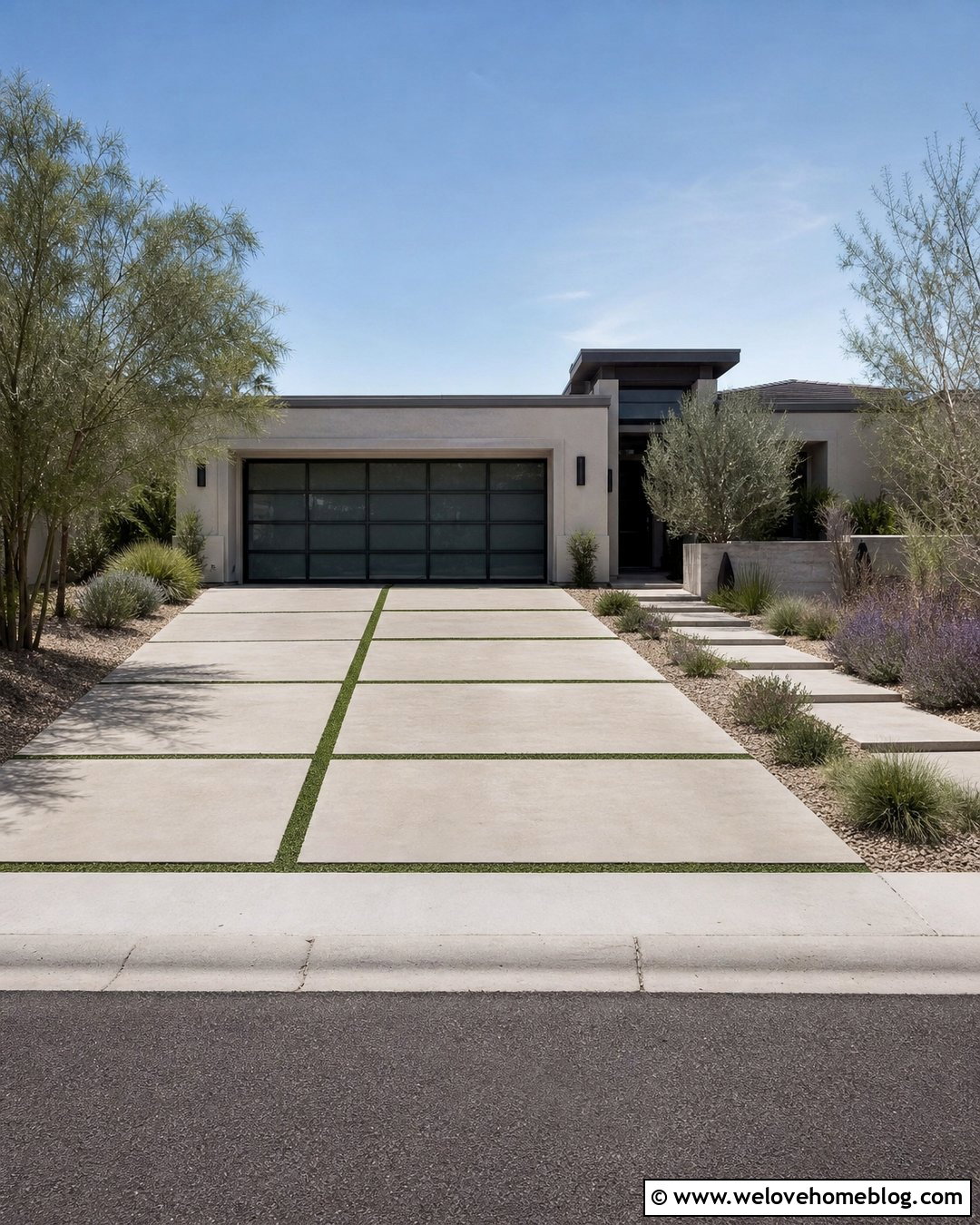
Artificial turf offers a consistently green alternative for driveways exposed to heavy use, shade, drought, or difficult mowing conditions. Pair narrow turf strips with large warm-gray concrete slabs for a sleek but approachable design. A permeable, well-drained base beneath the synthetic grass helps prevent trapped water and surface irregularities. Keep the turf pile short so it does not fold or catch where vehicle tires cross the joints. Black metal edging can maintain sharp divisions without becoming visually dominant. Complete the setting with drought-tolerant shrubs, gravel planting beds, and a modern stucco house. Choose exterior turf designed for drainage and demanding traffic rather than a decorative indoor product. Occasional brushing, debris removal, and rinsing will help preserve a tidy appearance without the cutting and feeding required by living grass.
11. Circular Grass Strip Driveway
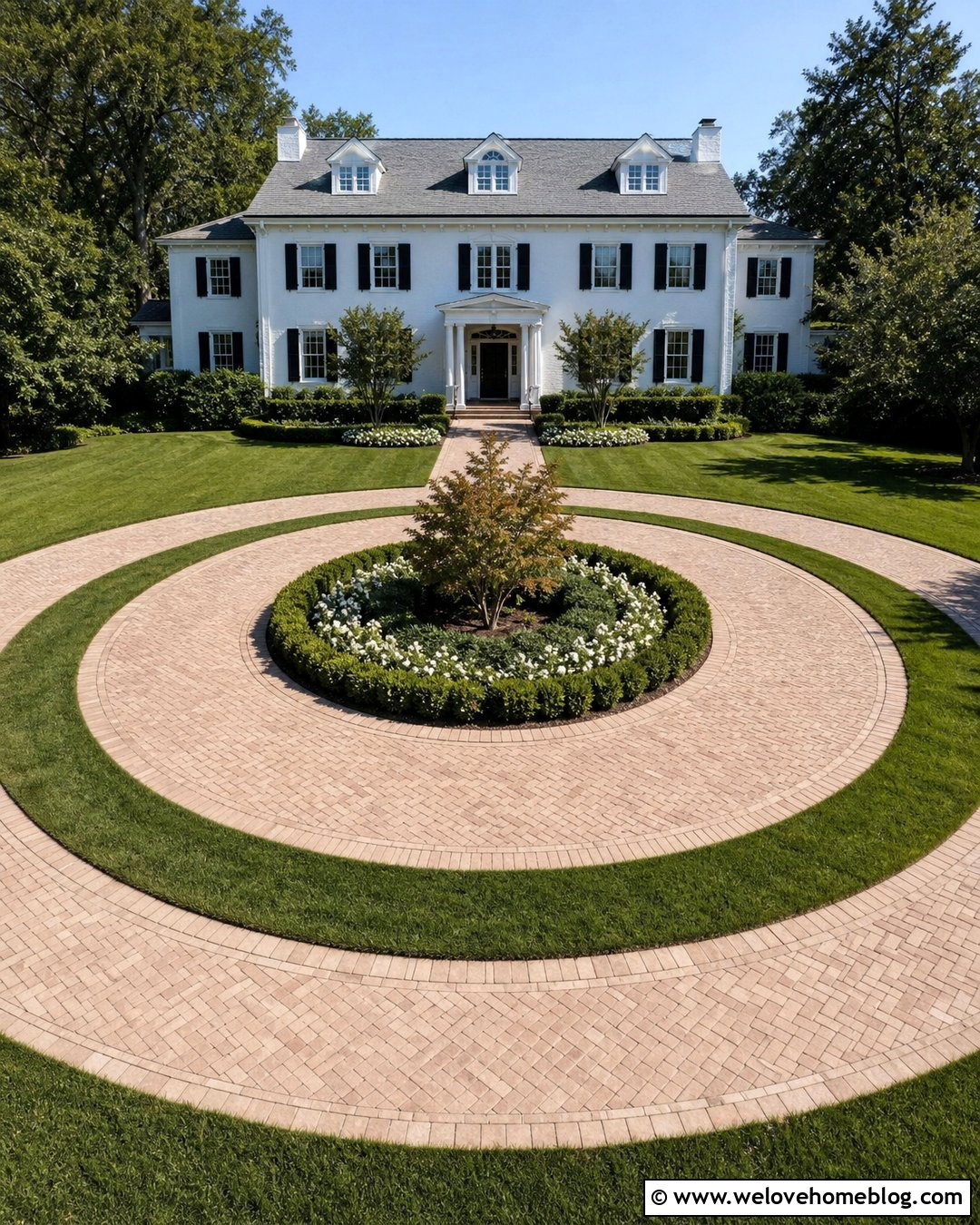
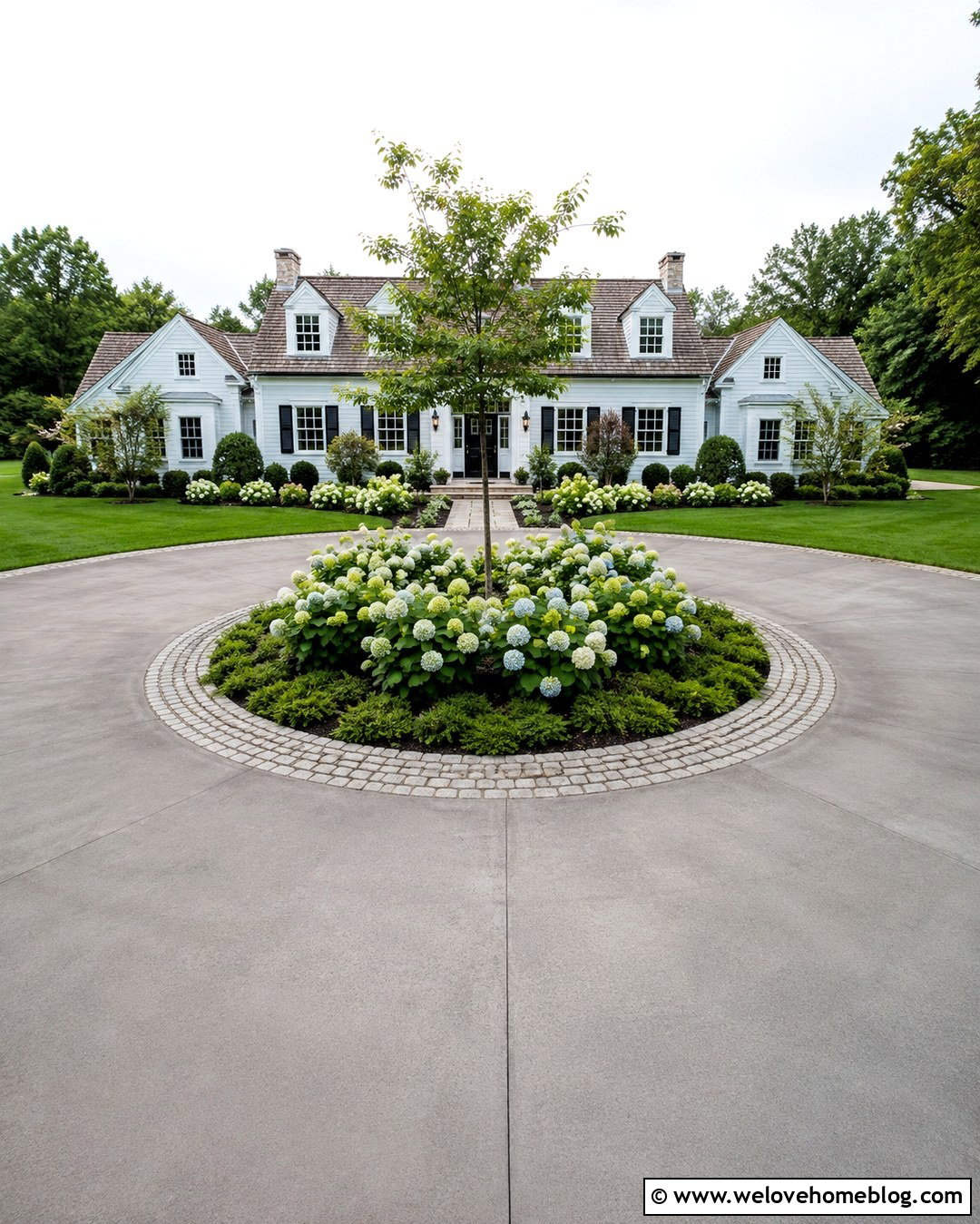
A circular driveway becomes softer and more landscape-friendly when grass separates its paved wheel tracks. Create two concentric bands of light concrete, clay brick, or concrete pavers around a planted center island. The green strip should follow the complete curve without becoming so wide that turning vehicles leave the paved surface. In the island, use a small ornamental tree, low shrubs, and groundcover that preserve clear views across the driveway. Matching stone edging can outline both the turf and planting bed. This layout suits larger Colonial, farmhouse, and traditional properties where the front elevation benefits from a balanced arrival area. Plan entrances and exits carefully so vehicles can move naturally through the circle. A reinforced base along tighter curves helps protect the edges from repeated tire pressure.
12. Farmhouse Gravel Grass Strip Driveway
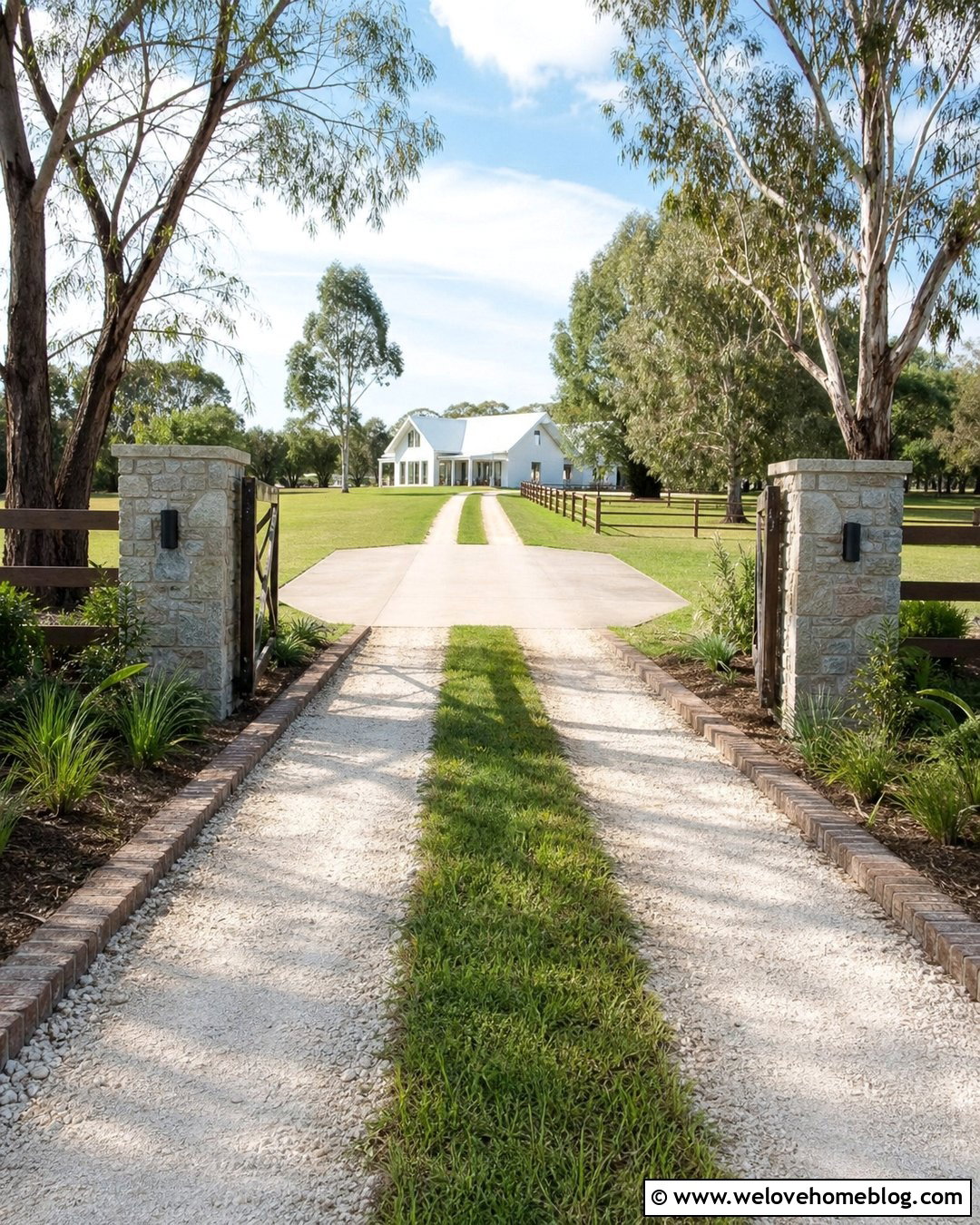
A long gravel driveway with a generous grass center creates a relaxed approach to a modern farmhouse. Use pale crushed limestone or compacted tan gravel for the wheel tracks, then edge the center strip with weathered brick or low steel restraints. The green ribbon can widen near the house and visually connect with the surrounding lawn. At the entrance, simple timber fencing, stone pillars, and native shade trees establish a welcoming rural character. Finish the garage area with a brick or concrete parking apron where vehicles turn and stand most often. This reduces rutting while preserving the softer gravel-and-grass look along the main approach. Keep drainage directed away from the tracks, and crown or grade the gravel appropriately. Informal planting beds complete the design without making maintenance overly demanding.
13. Small Grass Strip Driveway
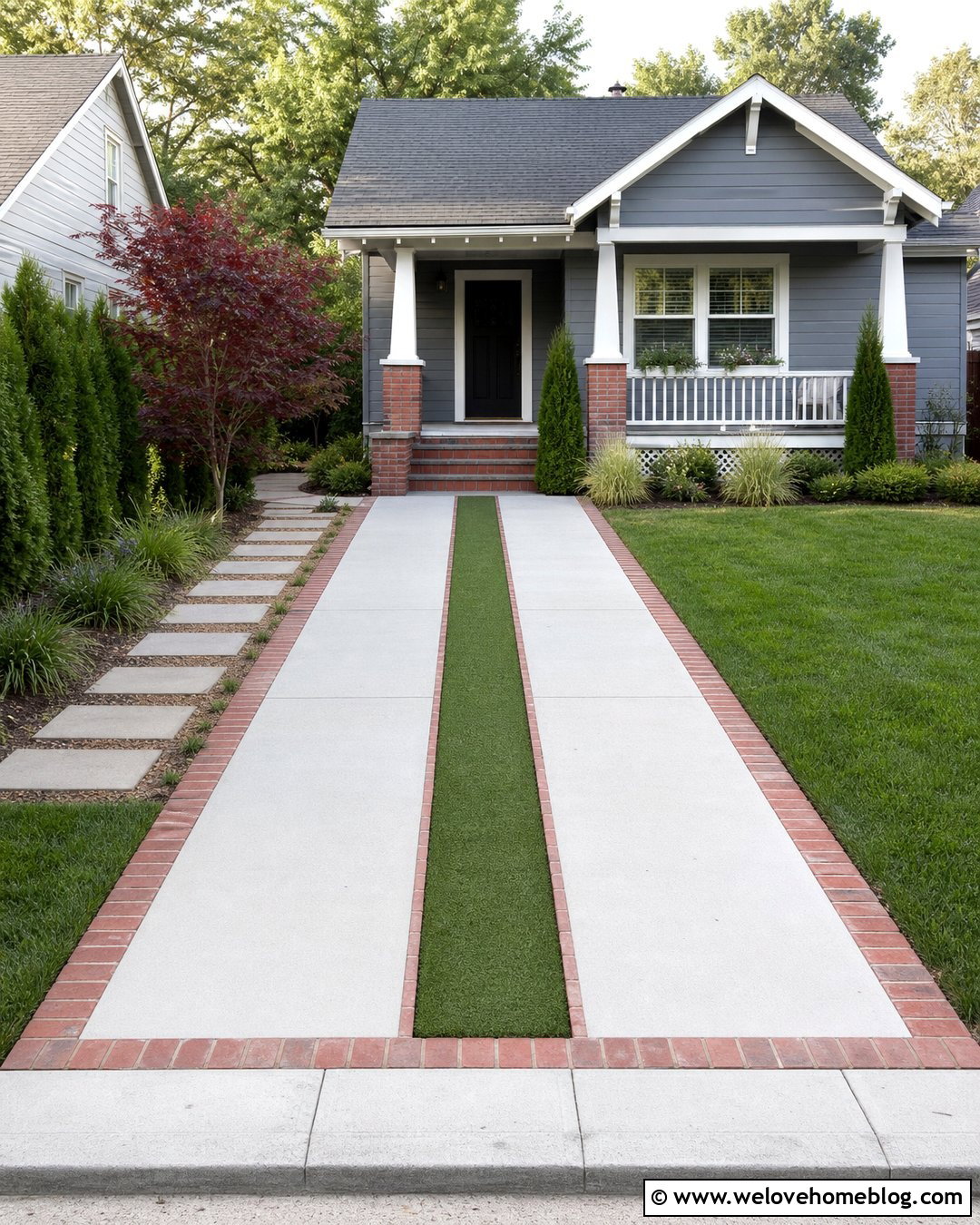
A narrow urban driveway can use one slim grass strip to add greenery without sacrificing practical parking space. Place the strip between two smooth poured-concrete wheel tracks and keep its width proportionate to the limited area. A flush brick border will separate the turf from the concrete while introducing subtle color. Along one side, add a narrow stepping-stone walkway so visitors do not need to walk on the wheel track. Compact evergreen shrubs, ornamental grasses, and one small accent tree can frame the driveway without crowding it. This arrangement complements bungalows, townhomes, and small Craftsman houses. Artificial turf is useful if the center receives constant shade or is difficult to mow. Careful measurements are essential because even a slight misalignment can cause tires to repeatedly damage the green section.
14. Wide Grass Strip Driveway
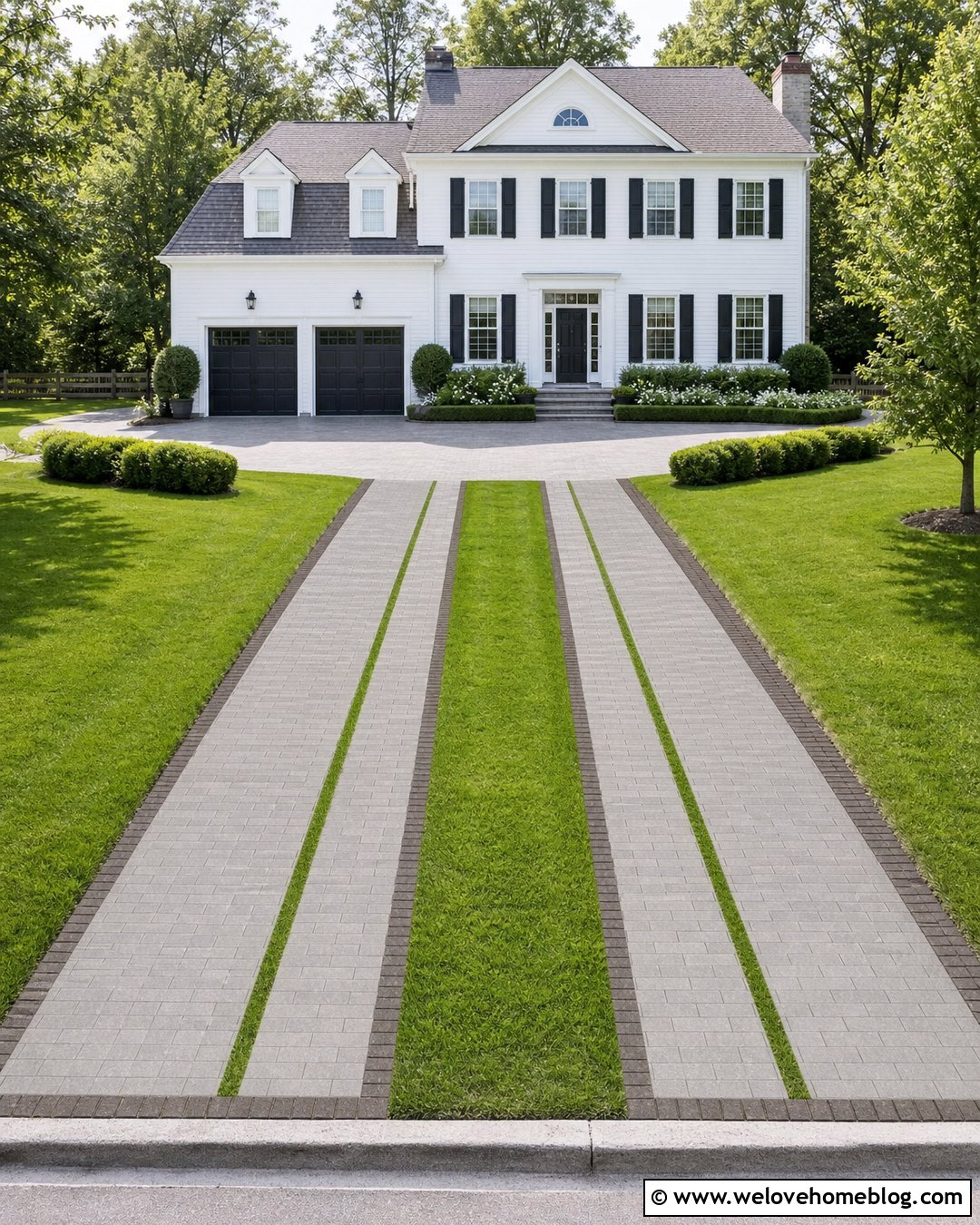
A broad two-car driveway can feel less like a parking lot when grass strips divide its paved surface. Use four parallel concrete or concrete-paver tracks, creating one tire pair for each garage bay. Add narrow green ribbons between the tracks and one slightly wider landscaped strip down the center. Low groundcover or trimmed turf can fill the central area without obstructing vehicle doors. Border the driveway with dark brick to define its width and connect it visually to the house facade. Balanced planting beds on both sides reinforce the symmetry of a Colonial or modern traditional home. Near the garage, transition to a solid paved apron that allows easier turning and parking. This complete layout keeps large expanses visually organized while retaining enough hard surface for regular household use.


15. Sloped Grass Strip Driveway
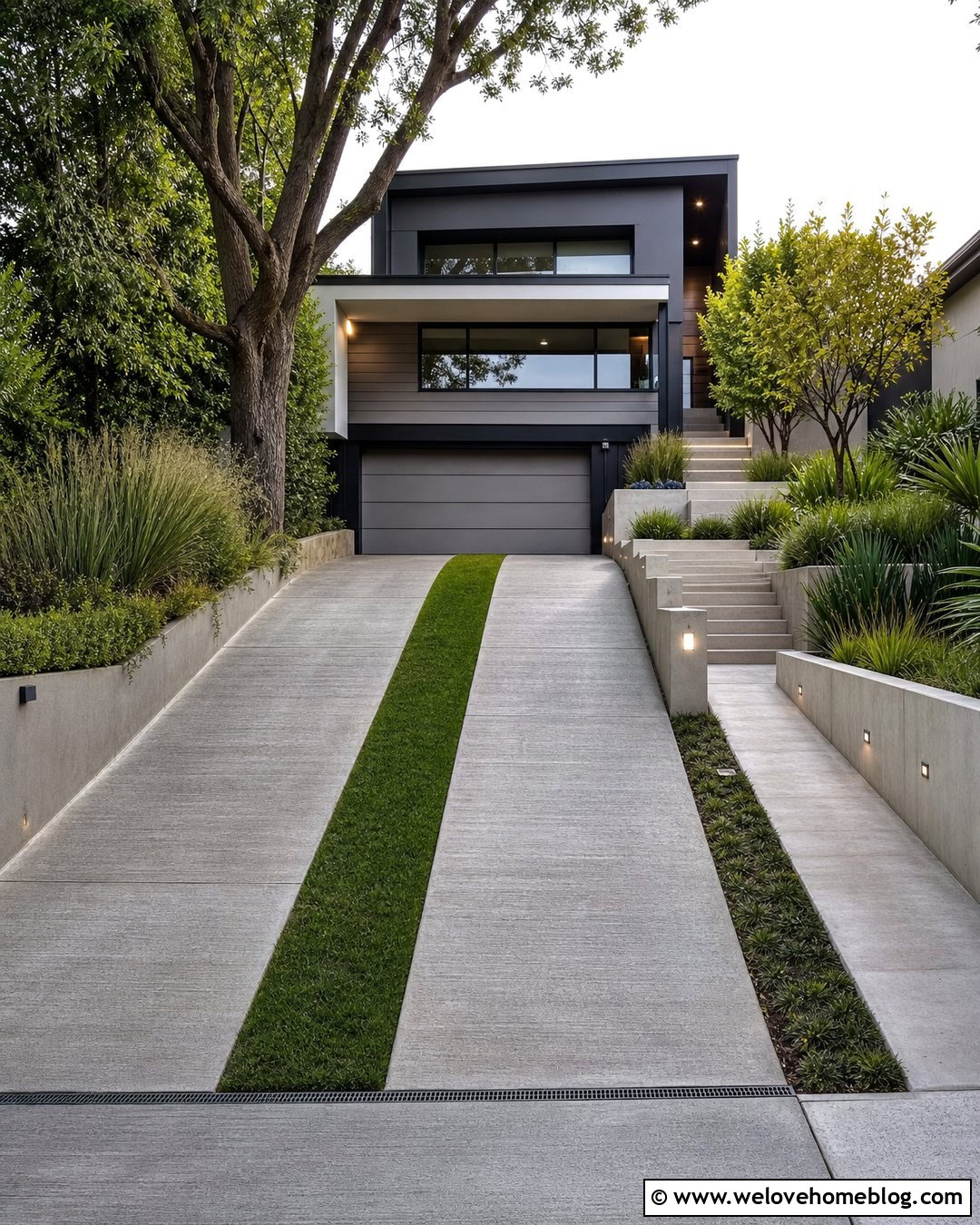
A sloped grass strip driveway requires careful grading, traction, and erosion control, but it can still look attractive. Textured concrete wheel tracks offer a more dependable driving surface than loose gravel on an incline. Divide the tracks with a narrow strip of dense, low-growing turf and contain it with flush concrete curbs. Crosswise drainage channels or a discreet trench drain near the garage can help manage water before it reaches the house. On the sides, use terraced planting beds with deep-rooted shrubs and ornamental grasses to stabilize the surrounding soil. This design works with hillside ranch, contemporary, and split-level homes. Avoid abrupt transitions that could scrape low vehicles. A qualified local contractor should assess the slope, runoff direction, base depth, and reinforcement needs before installation begins.
16. Grass Strip Driveway With Stone Borders
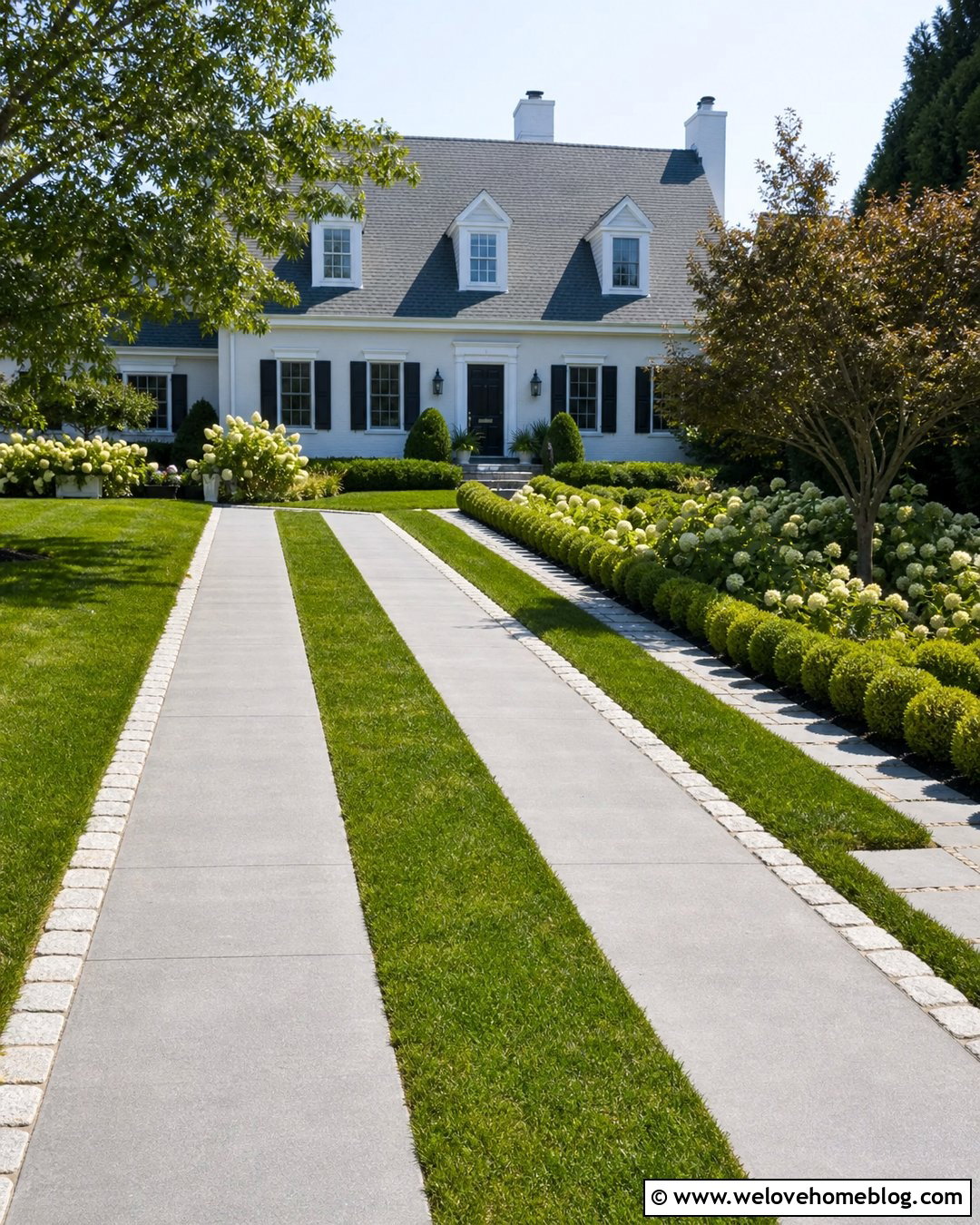
Natural stone borders can transform a simple grass strip driveway into a more finished landscape feature. Start with two smooth, light-gray concrete tracks and a centered strip of healthy turf. Frame the outer edges with rectangular granite setts or locally sourced stone, keeping the border flush enough for safe vehicle clearance. Repeat the stone around nearby planting beds and along the front walkway to create visual continuity. Soft hydrangeas, boxwood, and a small ornamental tree can balance the strong hardscape lines. This combination suits traditional, transitional, and Cape Cod homes. The stone border does more than decorate the surface; it clearly separates the driveway from soil and lawn. Install secure restraints beneath the stones so they remain aligned despite tires, freeze-thaw movement, and routine yard maintenance.
17. Grass Strip Driveway With Brick Borders
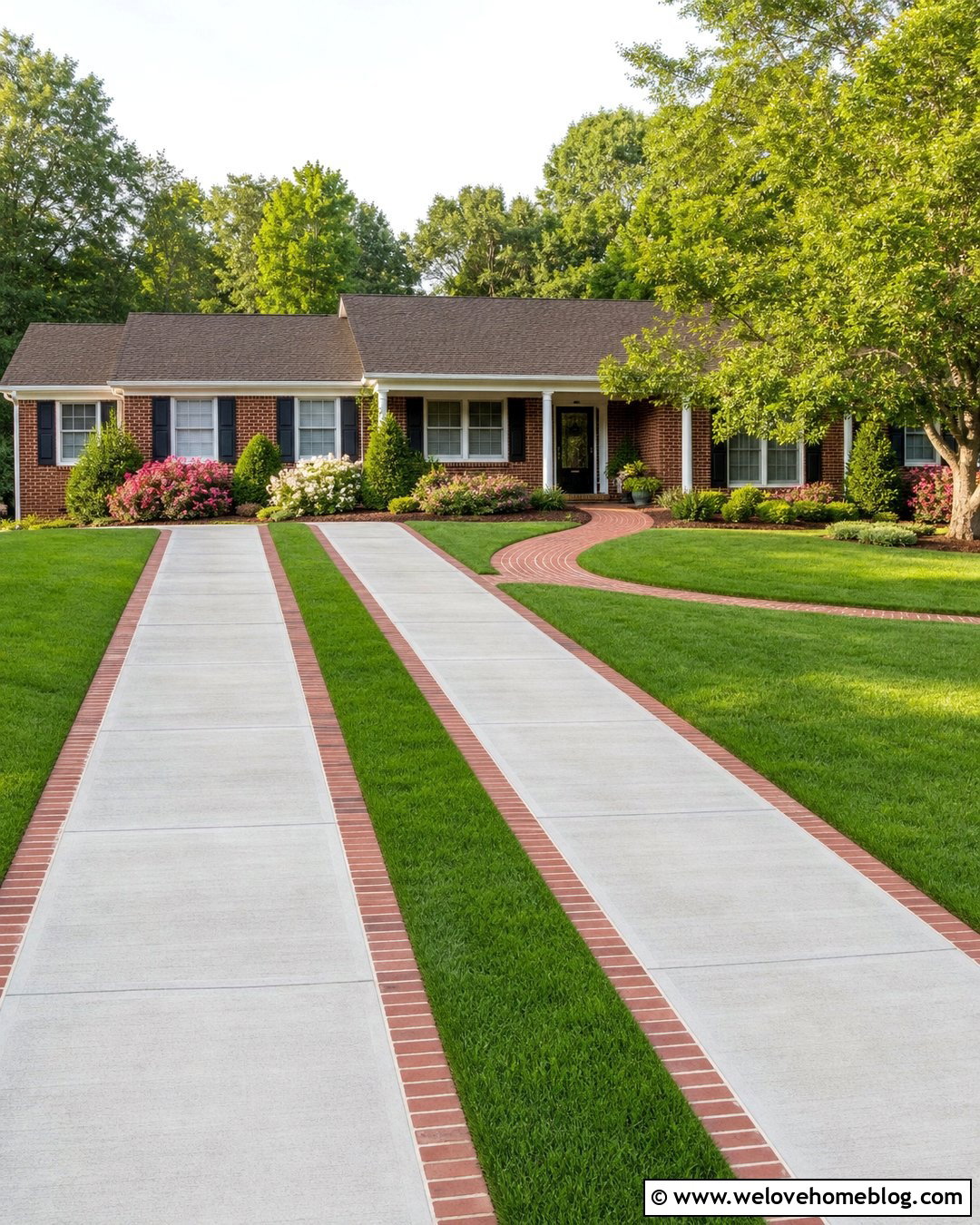
Brick borders add warmth and traditional detail to a straightforward concrete-and-grass driveway. Pour two broom-finished concrete wheel tracks, then install red or brown clay bricks along the center strip and outside edges. A soldier-course pattern gives the design a simple, orderly frame without competing with the home. Use the same brick for a curved walkway leading from the driveway to the porch. Surrounding beds filled with flowering shrubs, evergreen structure, and seasonal perennials will make the complete approach feel established. This combination is especially suitable for brick ranch houses, Colonial homes, and Craftsman exteriors. Choose paving bricks made for outdoor ground contact rather than softer wall bricks. Proper edge support and a compacted base will help the border resist movement caused by vehicle weight and changing weather.
18. Grass Strip Driveway With Landscape Lighting
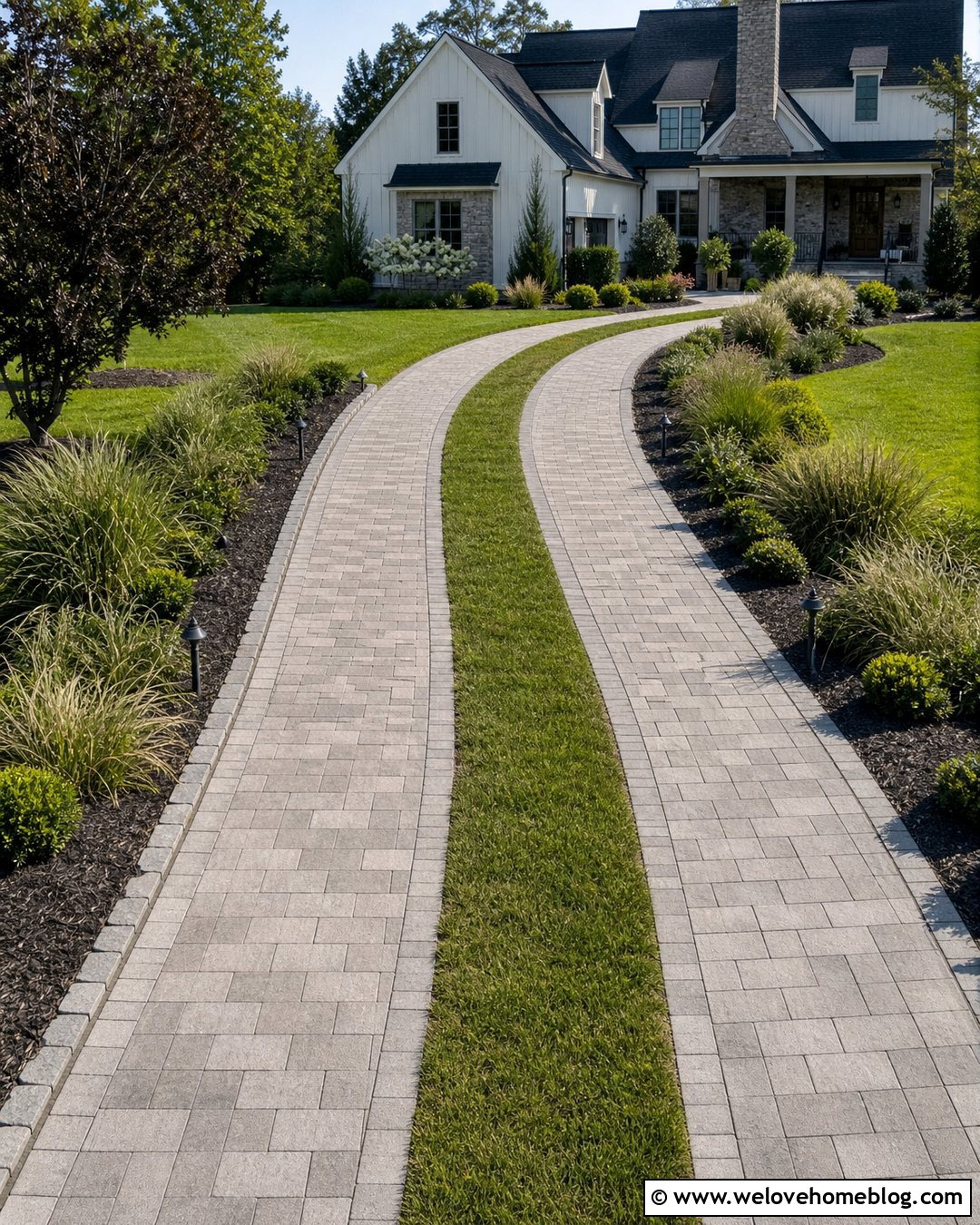
Well-positioned landscape lighting can make a grass strip driveway easier to navigate while supporting its daytime curb appeal. Use warm-gray concrete pavers for two curved wheel tracks with a continuous green strip between them. During installation, place low-profile fixtures along the outer borders rather than inside the tire path. Spacing them evenly will emphasize the driveway’s curve and guide attention toward the garage. In daylight, black fixtures can blend into beds of ornamental grass, compact shrubs, and groundcover. Add matching lights near the walkway and entrance pillars for a cohesive landscape plan. This complete look complements contemporary and transitional homes. Keep fixtures away from mower routes and snow-removal zones. Choose shielded designs that direct illumination toward the surface instead of producing unnecessary glare toward neighboring properties.
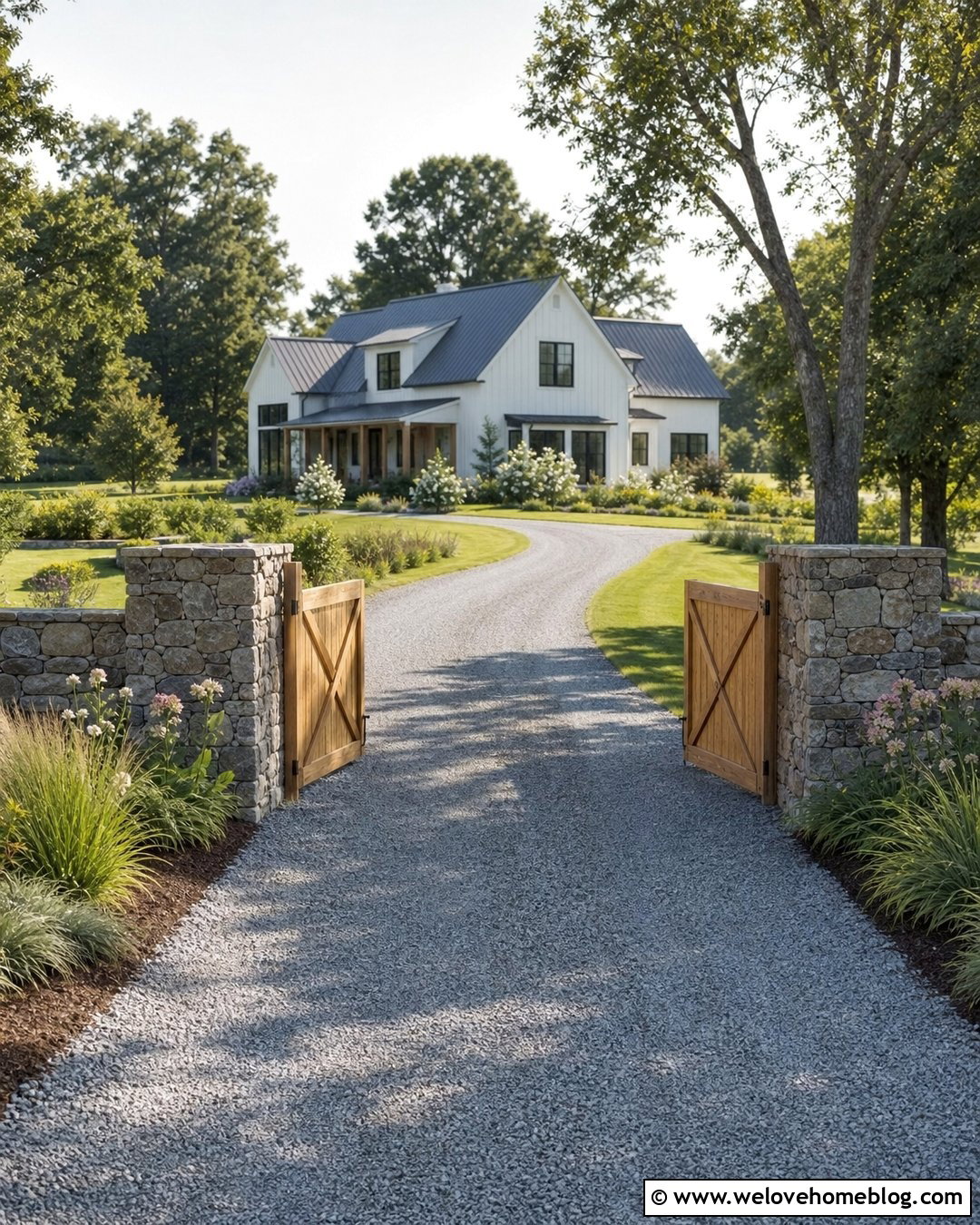
19. Grass Strip Driveway With Entrance Pillars
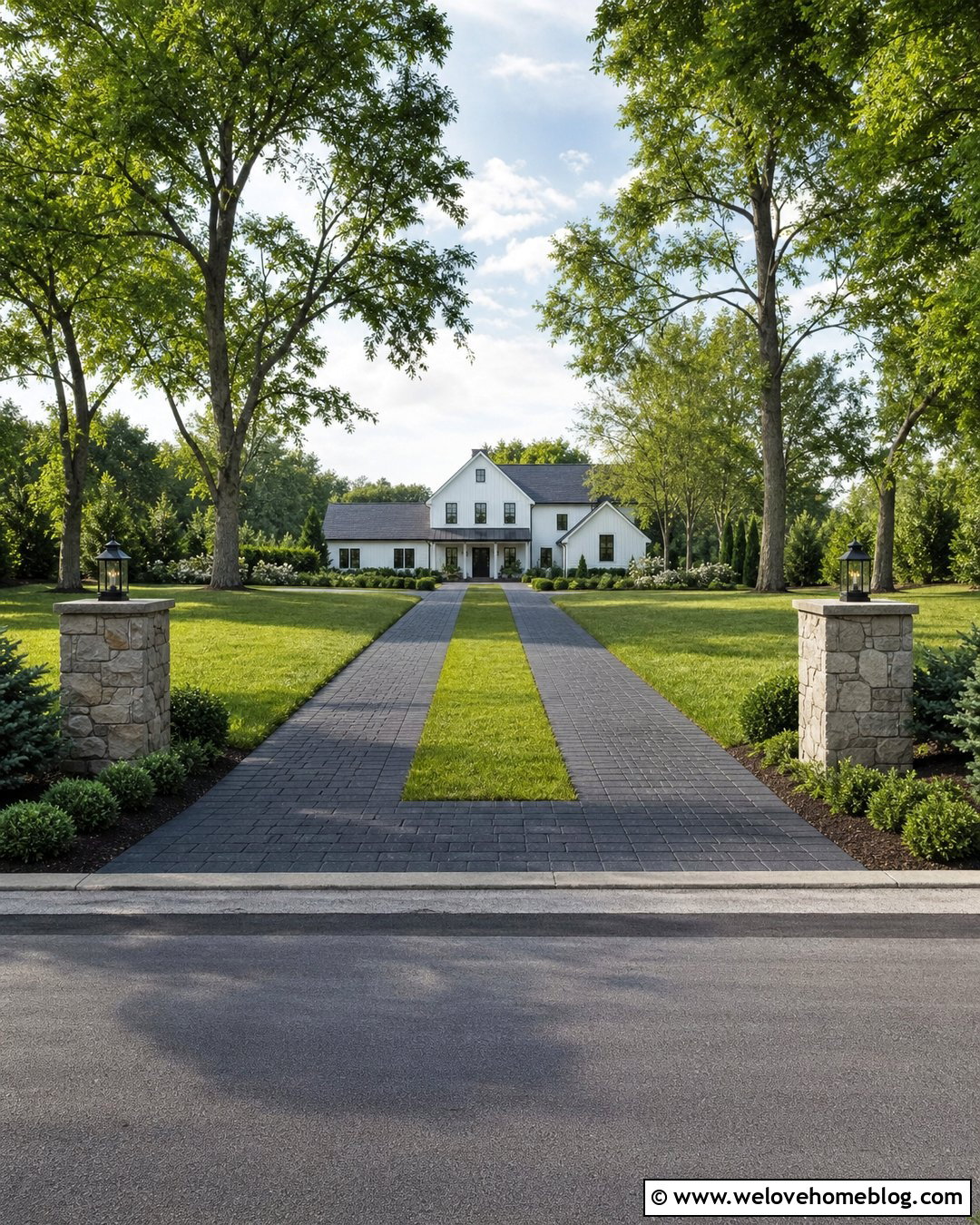
A pair of entrance pillars gives a grass strip driveway a clear beginning and stronger street presence. Build the wheel tracks from dark charcoal concrete pavers, leaving a broad, neatly trimmed green strip between them. At the curb, use stone or brick pillars that repeat materials found on the house. Low walls or restrained planting beds can extend from each pillar without limiting visibility. Continue the grass strip through the gateway so the green center becomes a visual line leading toward the front elevation. This arrangement works beautifully for long traditional, farmhouse, and country driveways. Include a wider paver apron at the entrance to accommodate turning vehicles and protect the turf edges. Simple lanterns and a coordinated address plaque can complete the pillars without making the entry look overly ornate.



20. Grass Strip Driveway With Permeable Pavers
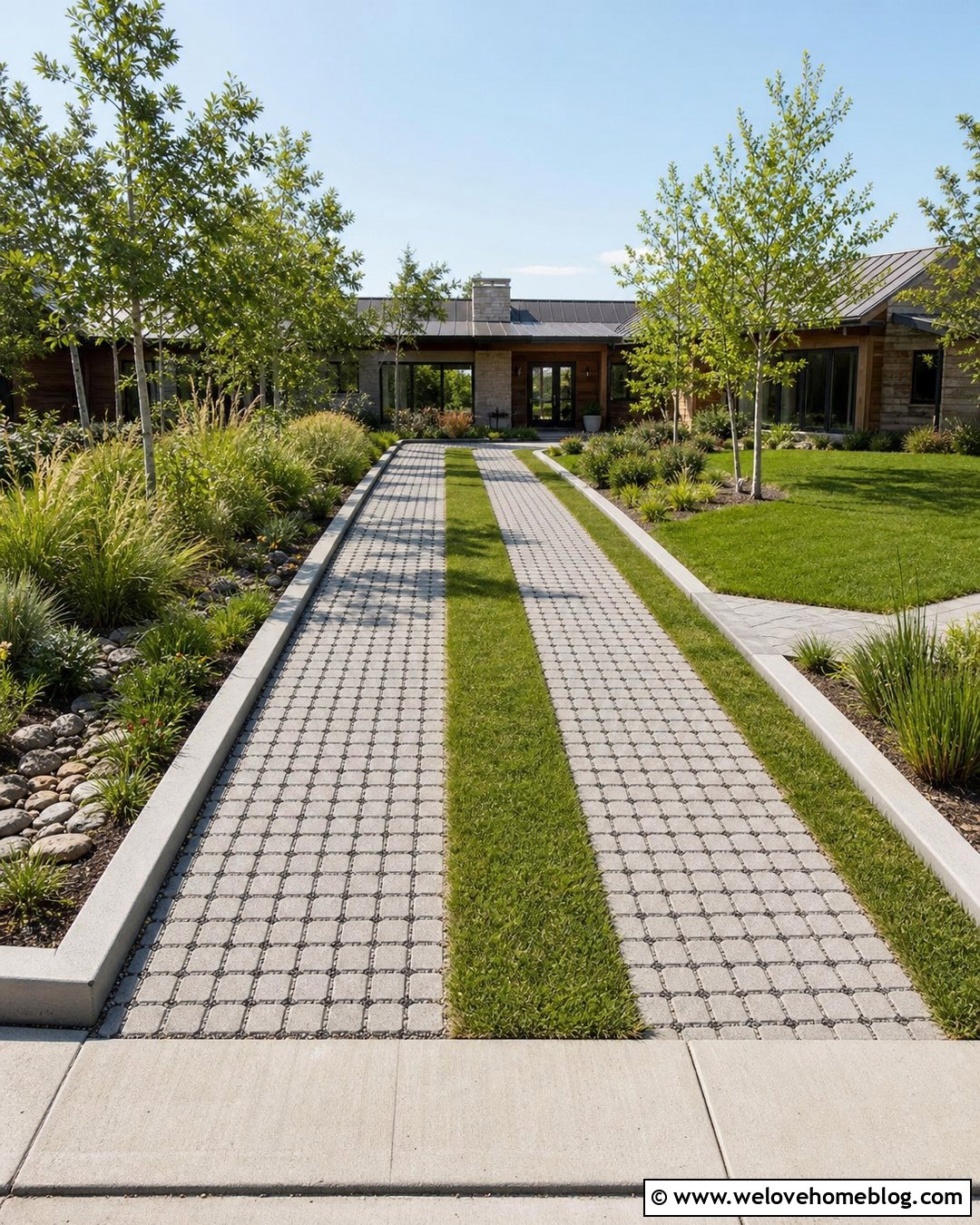
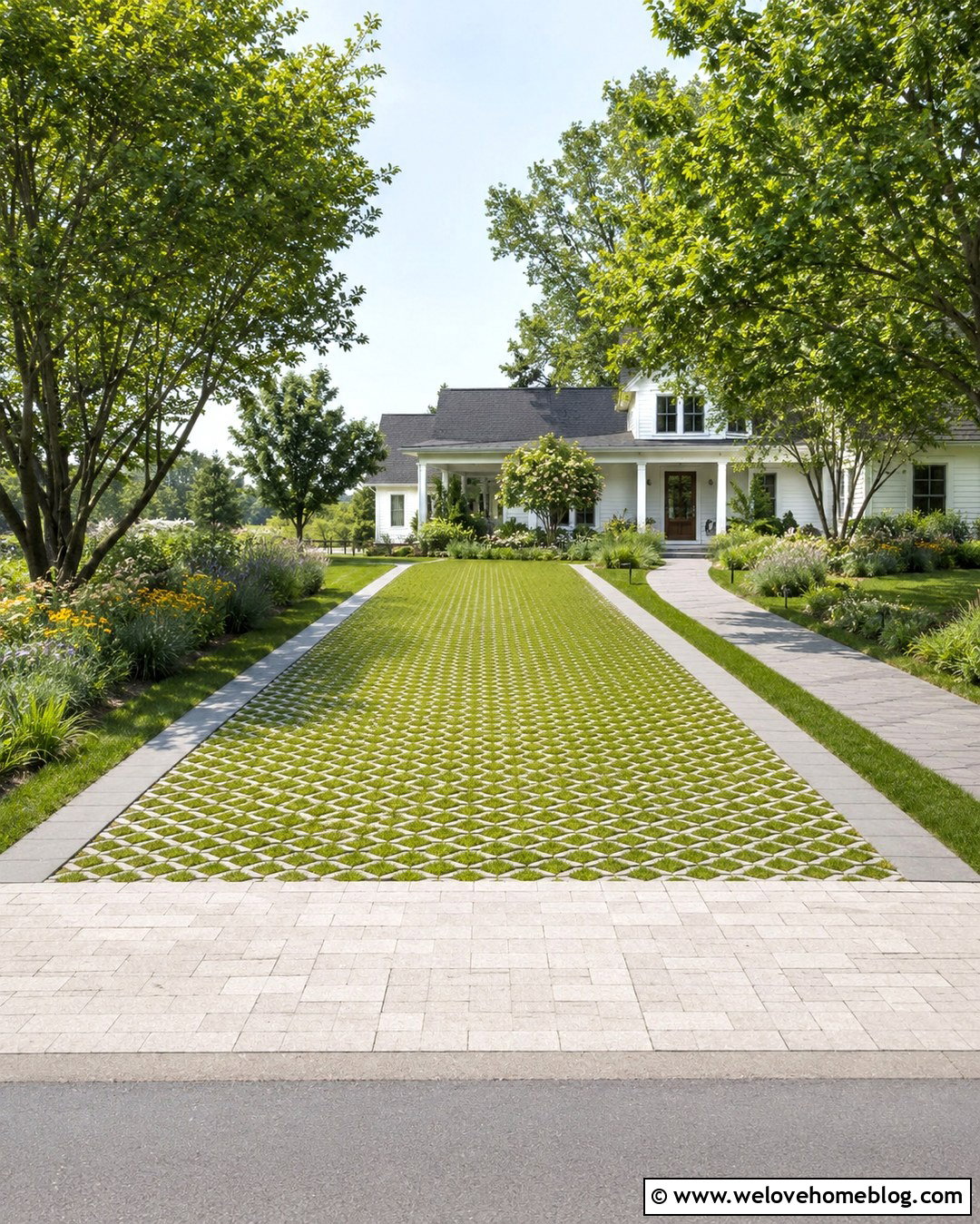
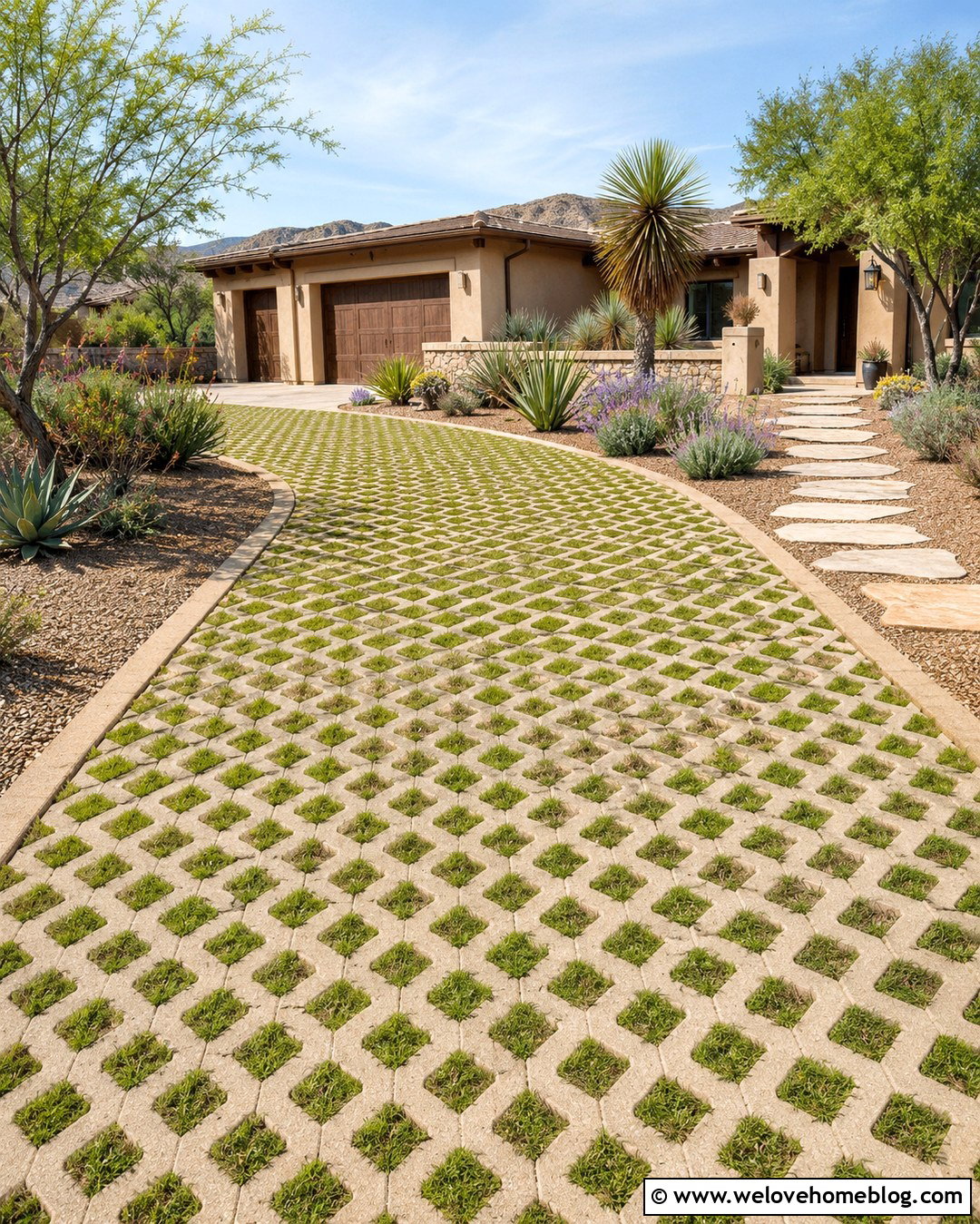
Permeable concrete pavers paired with grass strips create a driveway that looks structured while allowing more open joints than conventional paving. Arrange the pavers as two wheel tracks or a full grid, depending on parking needs. Fill the primary green sections with durable turf and use small aggregate in narrower joints where grass maintenance would be difficult. A crushed-stone reservoir and carefully prepared base are essential parts of the complete system. Border the driveway with low concrete curbing, rain-garden planting, and native shrubs that suit local conditions. This practical landscape fits modern, ranch, and environmentally focused home designs. Keep sediment from collecting in open joints, since clogged spaces may reduce drainage. Local soil, slope, frost conditions, and regulations should guide the final construction details.
Conclusion:
The best grass strip driveway balances attractive greenery with stable tire paths, easy maintenance, and safe access. Concrete ribbons offer traditional simplicity, while large slabs and geometric grids create a more modern appearance. Brick, cobblestone, gravel, flagstone, and permeable pavers provide additional ways to coordinate the driveway with your home. Before choosing a layout, consider vehicle width, turning movements, drainage, sunlight, irrigation, mowing access, and local weather. Natural grass gives the softest landscape connection, but artificial turf may perform better in heavily traveled or shaded spaces. With proper preparation and clear edging, these **20 Grass Strip Driveway Ideas** can inspire a greener, lighter, and more distinctive entrance.

Related posts:
Leave a Reply