
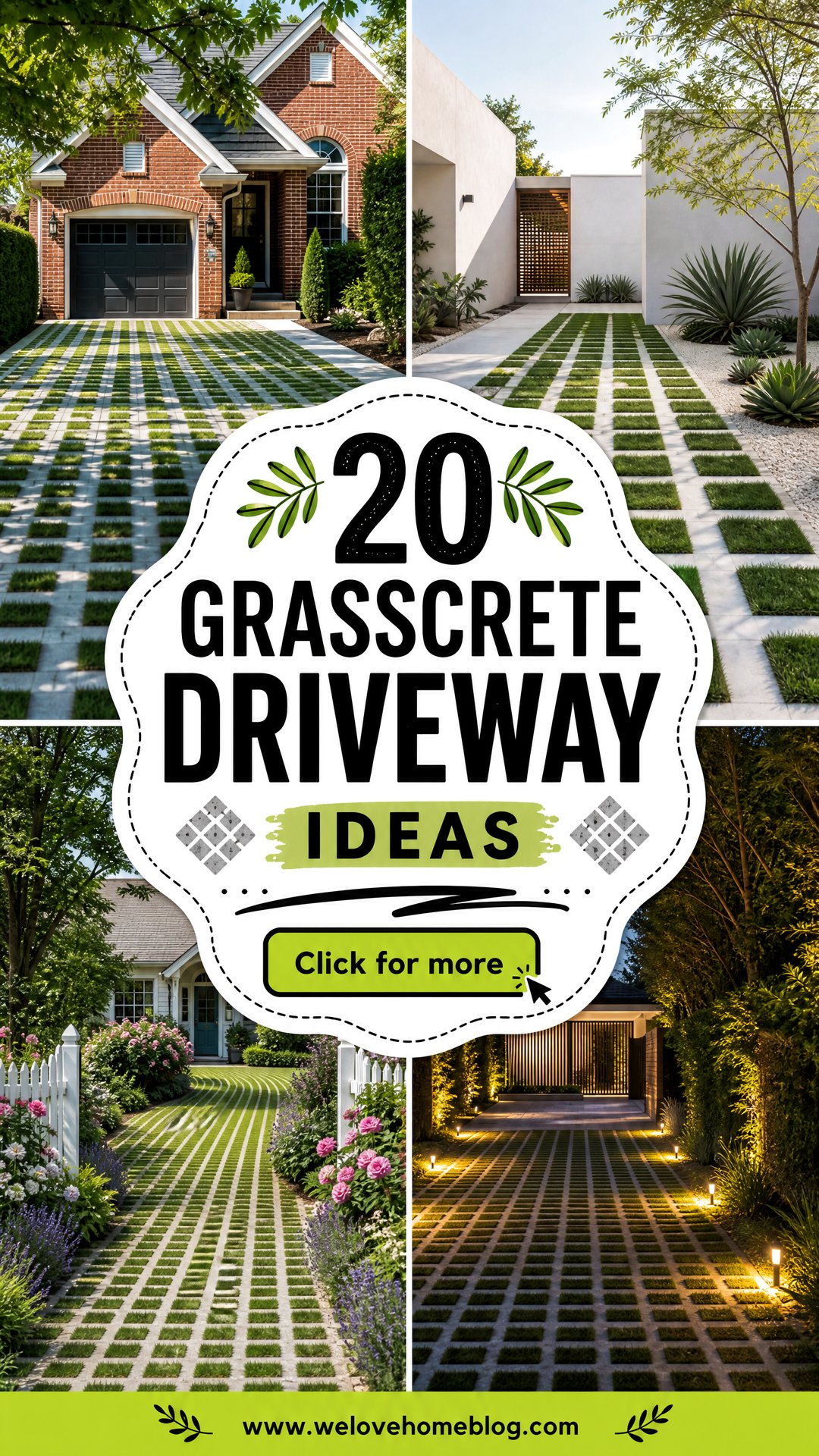
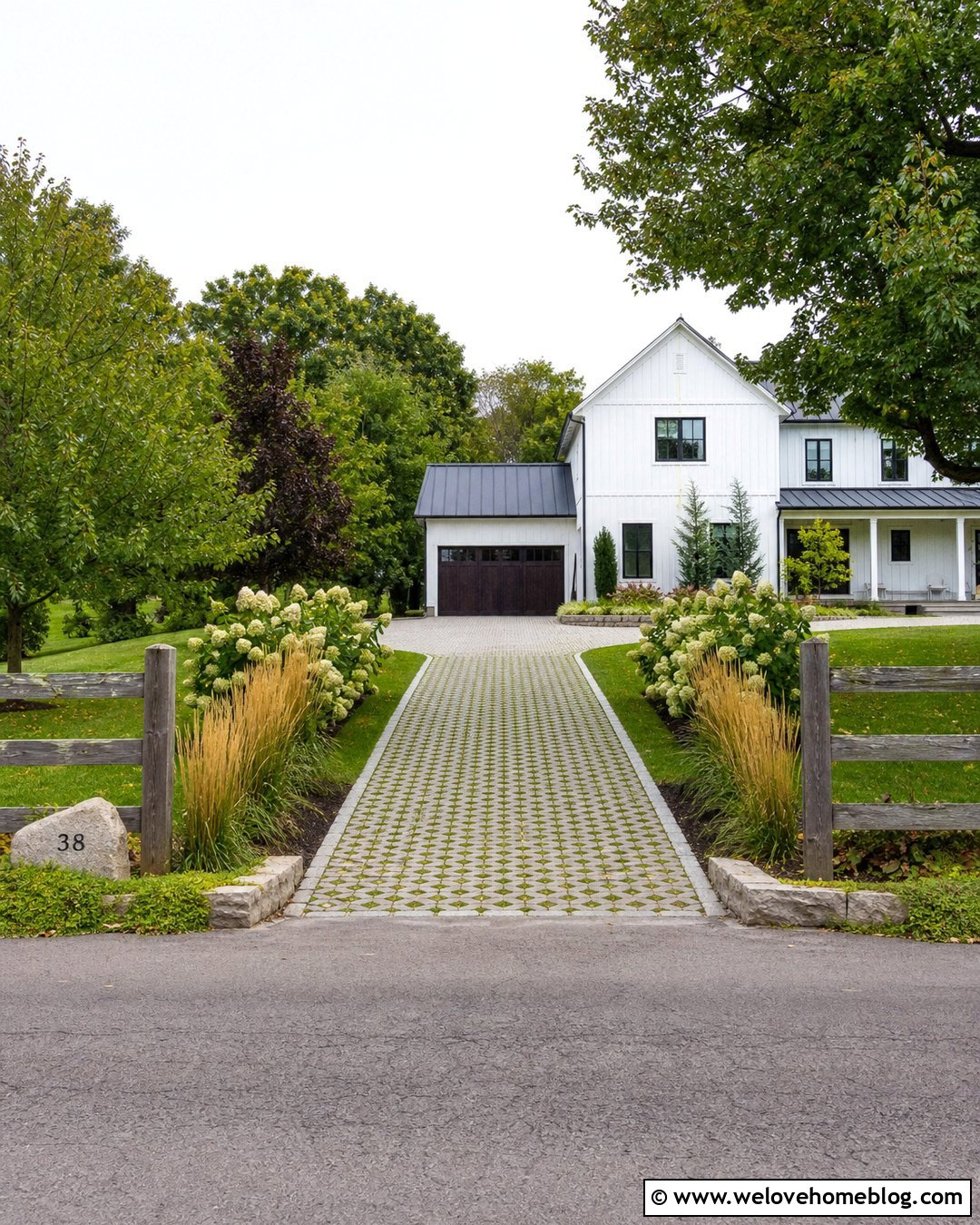
Grasscrete blends the strength of concrete with the softer look of living turf, creating a driveway that feels connected to the yard instead of covering it. Its open concrete grid supports vehicle traffic while allowing grass to grow through the voids and rainwater to move into the prepared base below. () The best designs consider much more than the grid itself. Driveway shape, turf choice, borders, planting beds, entry details, and the architecture of the home should work as one complete composition. Proper base preparation is also essential for keeping the surface stable and well drained. From streamlined modern layouts to welcoming country entrances, the following 20 Grasscrete Driveway Ideas offer practical inspiration for creating greener, more attractive curb appeal.
1. Straight Grasscrete Driveway With Brick Edging
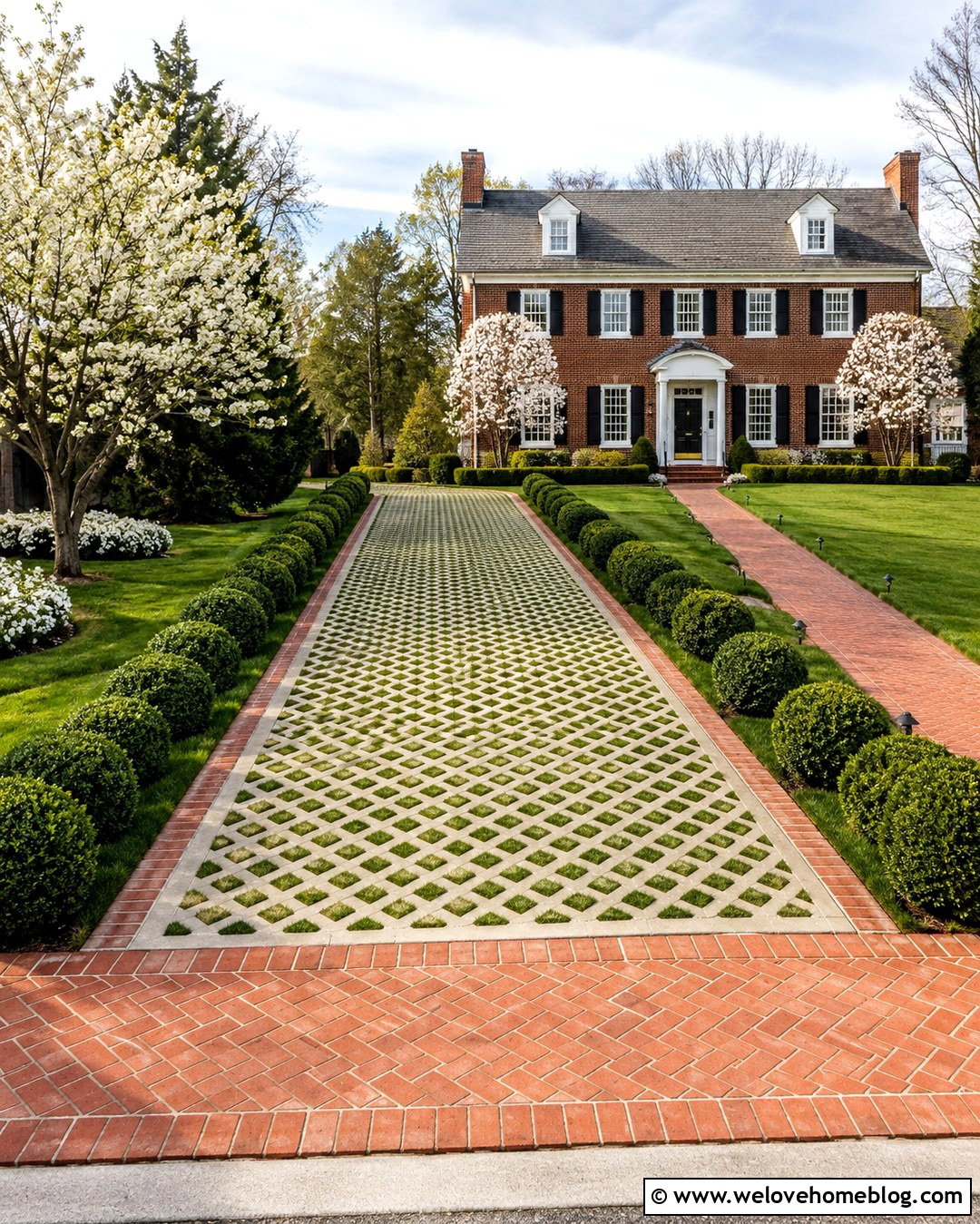
A straight Grasscrete driveway creates an orderly approach that works especially well with traditional homes. Use turf-filled concrete cells across the main driving surface, then add red or charcoal brick edging to define both sides. The brick keeps the green grid from visually blending into the lawn and provides a clean transition near planting beds. A matching brick apron at the street can make the entrance feel more finished. Keep landscaping simple with clipped shrubs, ornamental grasses, and one small flowering tree near each front corner. A straight walkway running parallel to the driveway strengthens the balanced layout. This complete look suits colonial, Cape Cod, and Georgian-inspired houses where symmetry and clear lines support the architecture.
2. Modern Grasscrete Driveway With Black Metal Edging
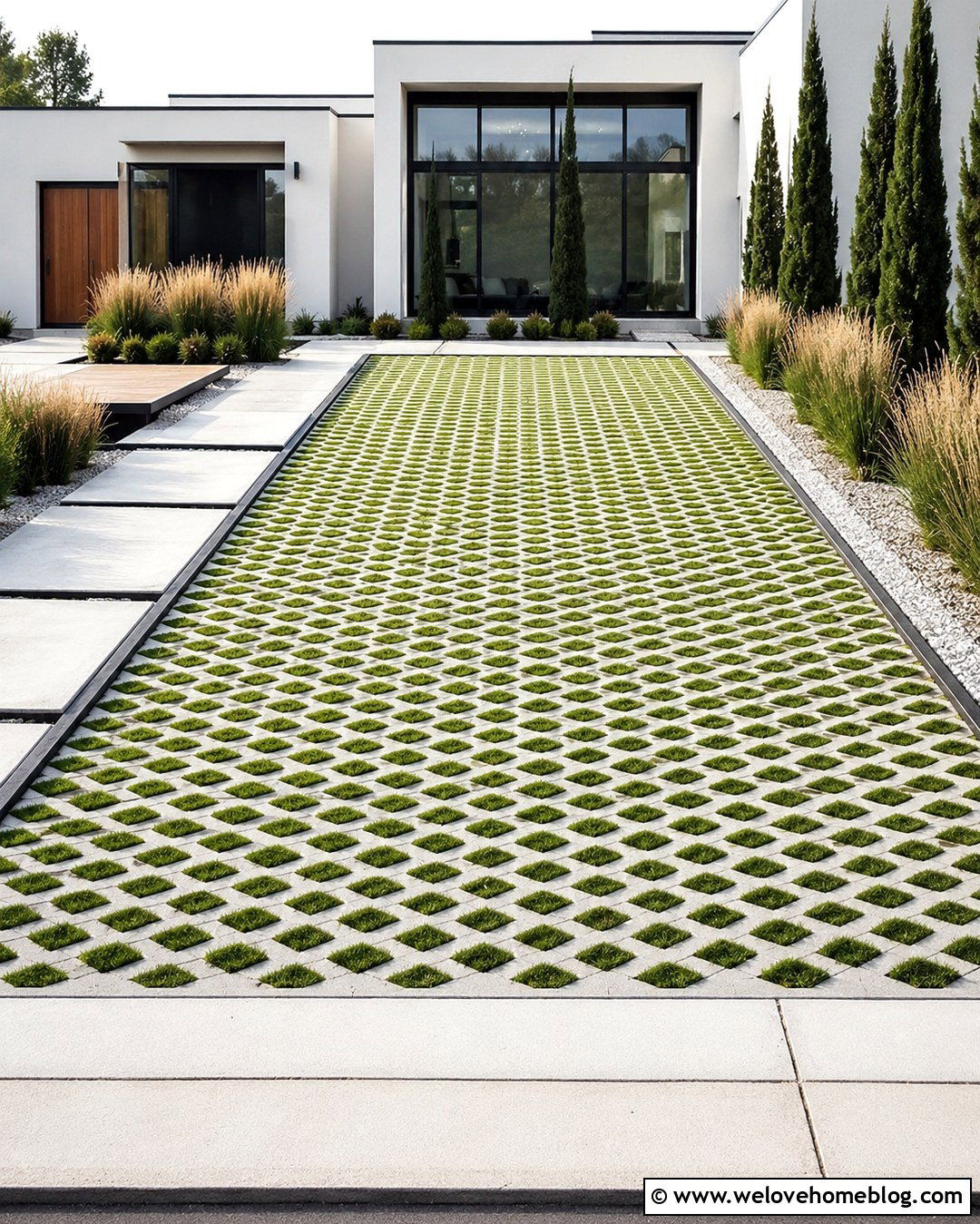
Clean geometry helps a Grasscrete driveway complement a modern house without feeling overly rustic. Choose a rectangular concrete grid with closely trimmed dark green turf, arranged in one wide, straight layout. Slim black metal edging creates a precise boundary while connecting visually with black window frames, railings, or exterior lighting. Along one side, install a narrow bed of pale gravel planted with upright ornamental grasses and compact evergreen shrubs. The opposite edge can meet a simple lawn for a balanced but slightly asymmetrical composition. Large concrete stepping pads should lead from the driveway to the entrance. This combination brings together greenery, concrete, and dark architectural accents while retaining the crisp appearance expected from contemporary residential landscaping.
3. Curved Grasscrete Driveway With Stone Borders
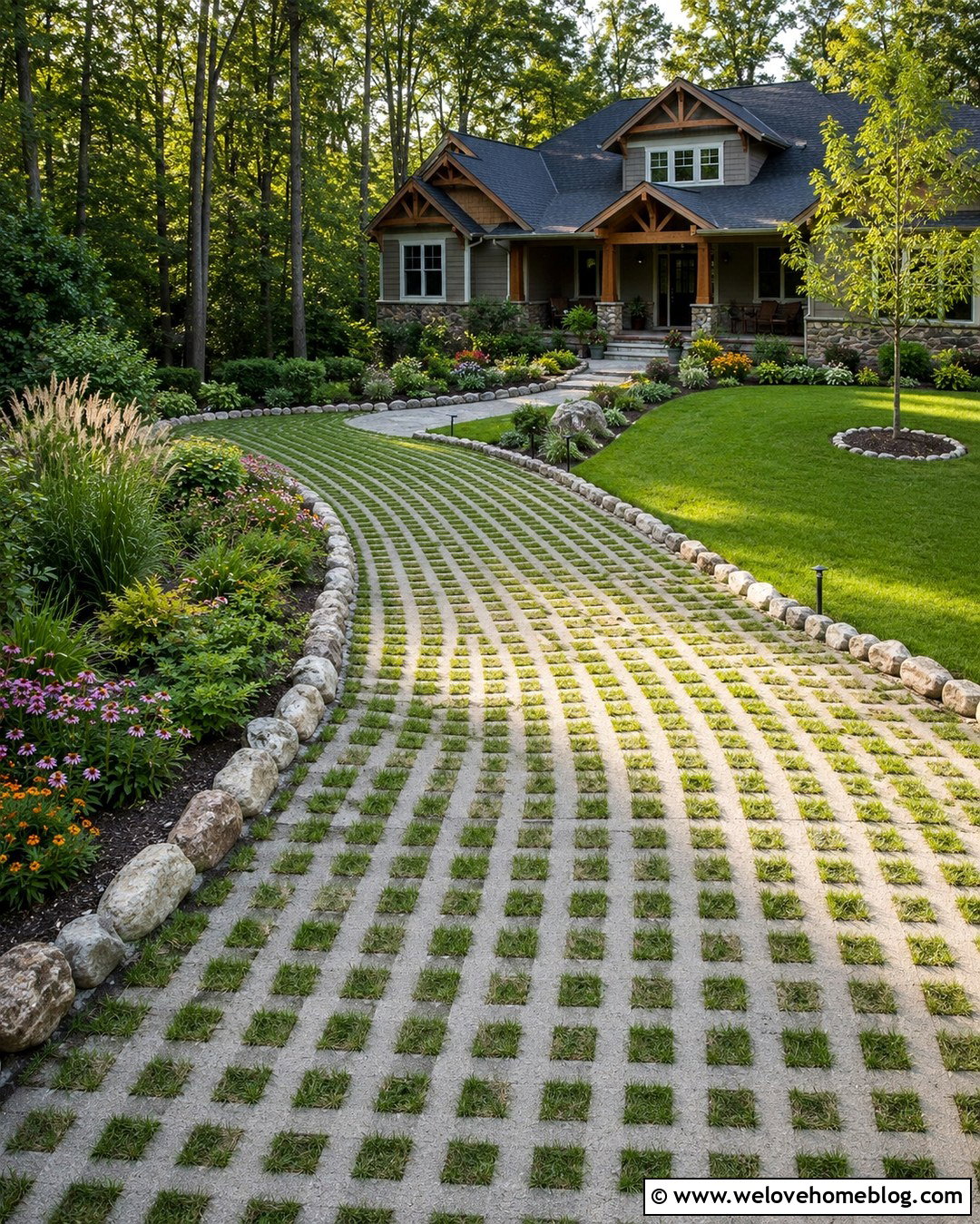
A gentle curve can make a short front yard feel deeper and create a more inviting journey toward the house. Lay the Grasscrete surface in a broad sweep rather than using tight bends that complicate parking. Natural gray stone borders will hold the shape visually and introduce a relaxed texture beside the green cells. Position layered planting beds along the outer curve, using low shrubs near the driveway and taller plants farther back. The inner curve can frame an open lawn or a single specimen tree. At the garage, transition into a slightly wider parking pad using the same turf-filled grid. This design works beautifully with craftsman, cottage, and ranch homes surrounded by informal, established landscaping.
4. Circular Grasscrete Driveway With A Planted Island
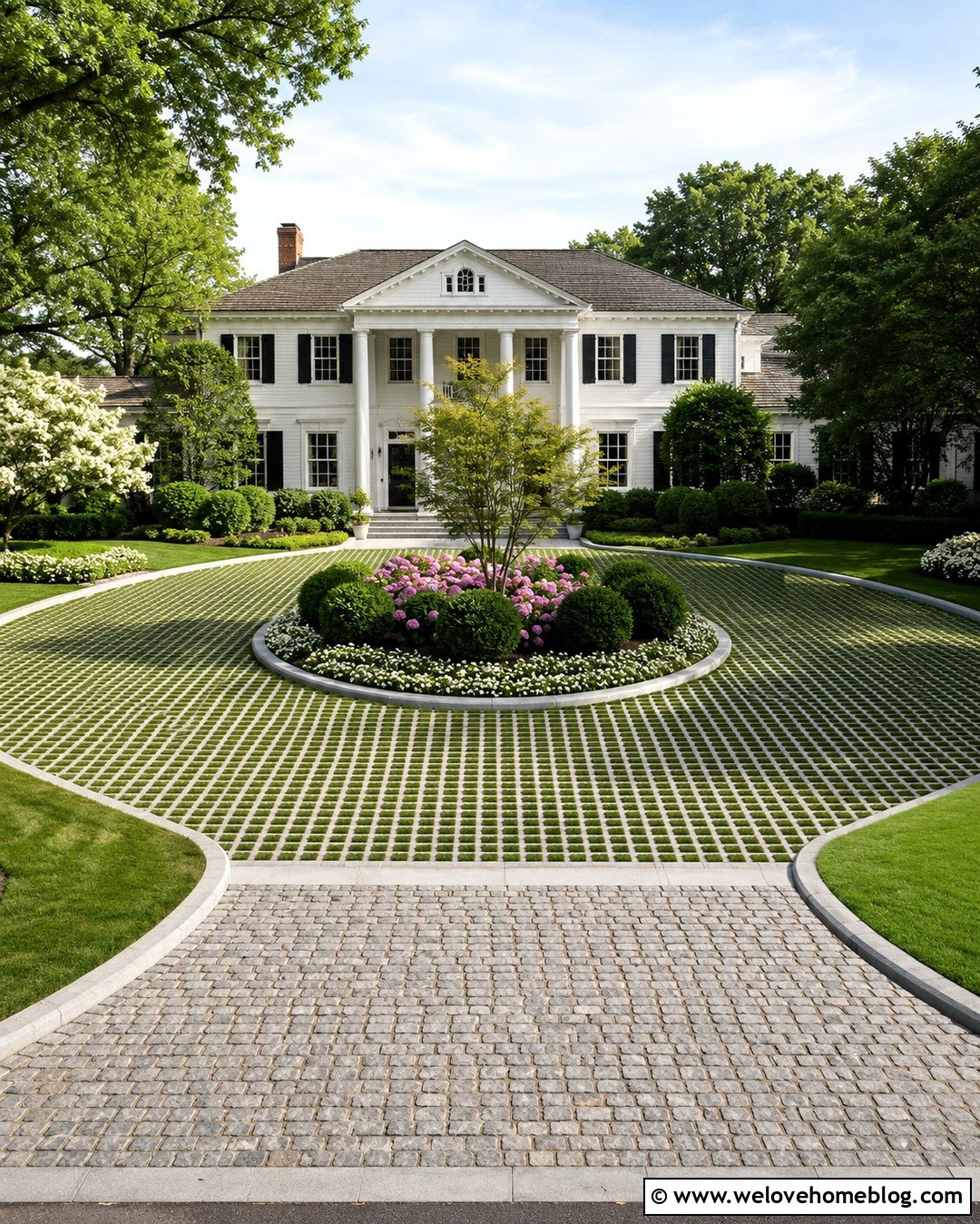
A circular Grasscrete driveway creates convenient vehicle movement while turning the front yard into a major landscape feature. Keep the concrete grid continuous around the loop so the living surface reads as one unified design. In the center, build a generous planting island with a small ornamental tree, evergreen structure, flowering shrubs, and low ground cover. A stone curb around the island protects the plants and provides a crisp contrast with the turf-filled cells. The outer driveway edge can transition directly into lawn, making the circle feel greener and less dominant. Use a solid concrete or cobblestone apron where the driveway meets the road. This layout best suits wider lots with enough turning space and a centered front entrance.
5. Grasscrete Driveway With Concrete Wheel Tracks
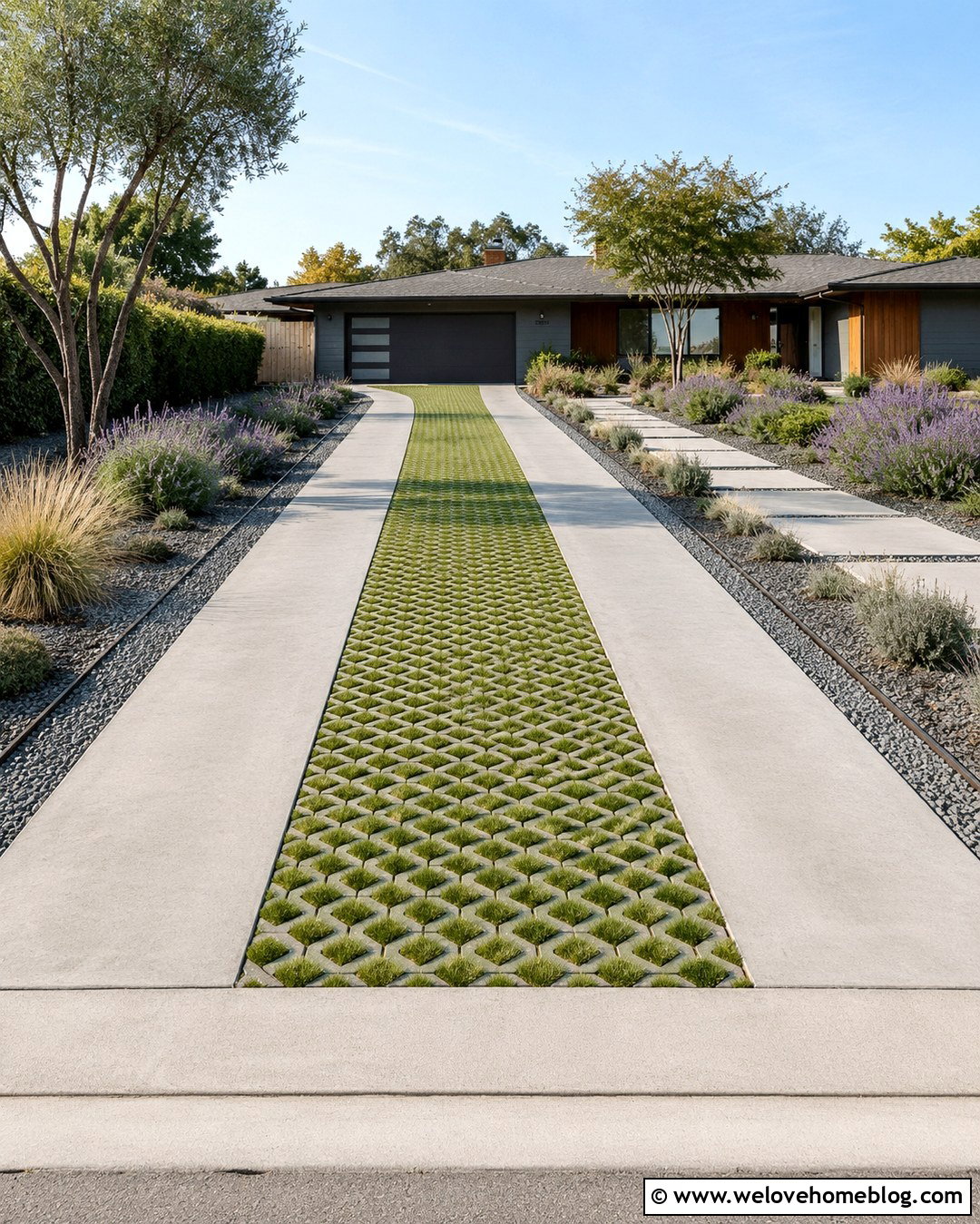
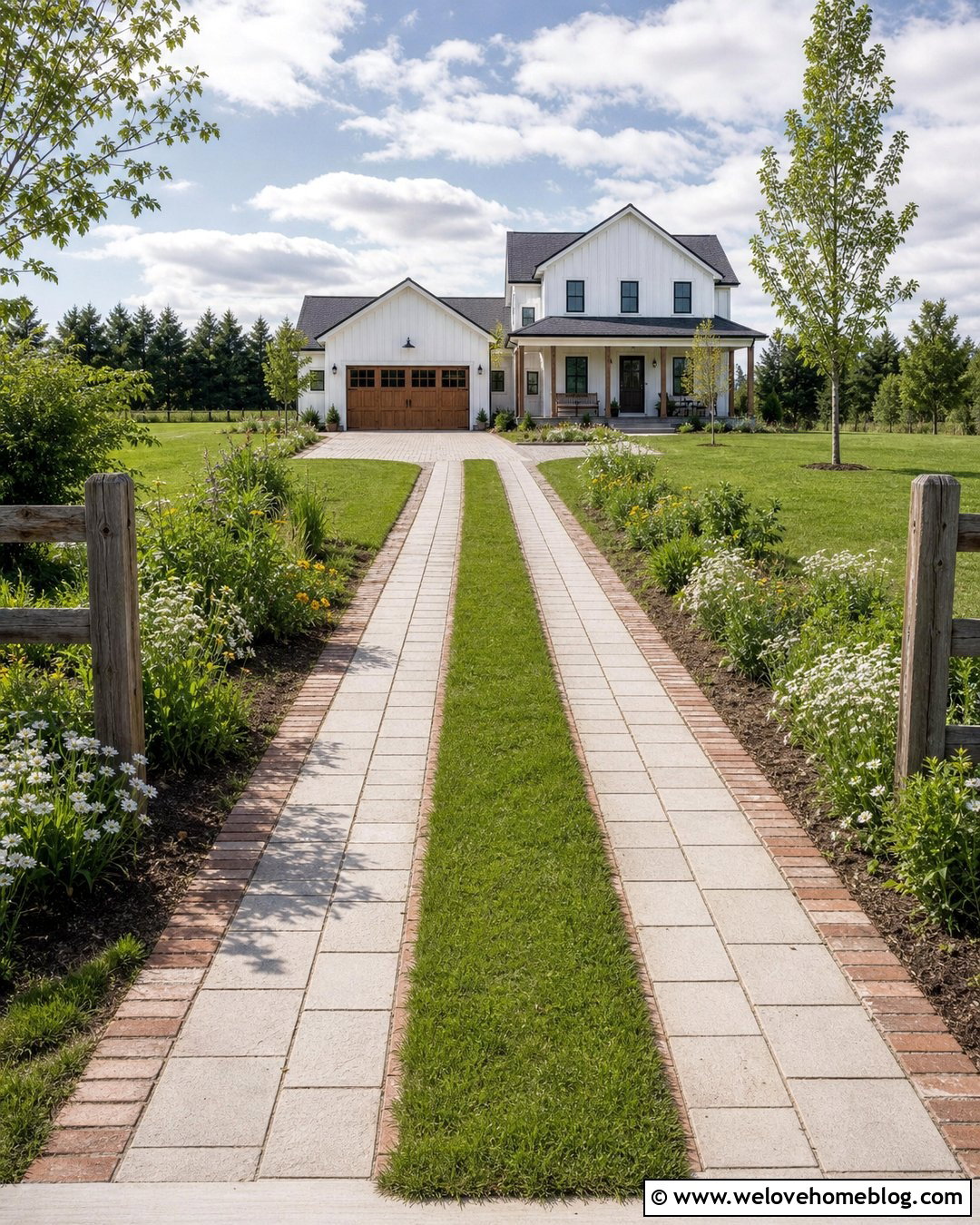
Concrete wheel tracks can add dependable driving lanes while preserving a generous amount of green space. Install two smooth poured-concrete strips along the expected tire path, then use turf-filled Grasscrete between and around them. The solid strips create a clear route to the garage and reduce repeated wear on the most heavily traveled areas. Keep their color close to the Grasscrete grid for a cohesive appearance. Narrow gravel drainage bands and low steel edging can frame both sides. Plant drought-tolerant grasses, lavender, or compact shrubs beyond the borders. This practical hybrid design works well on long, lightly sloped driveways. It also gives ranch and midcentury homes a simple, linear approach without creating one large uninterrupted concrete surface.
6. Grasscrete Driveway With Cobblestone Apron
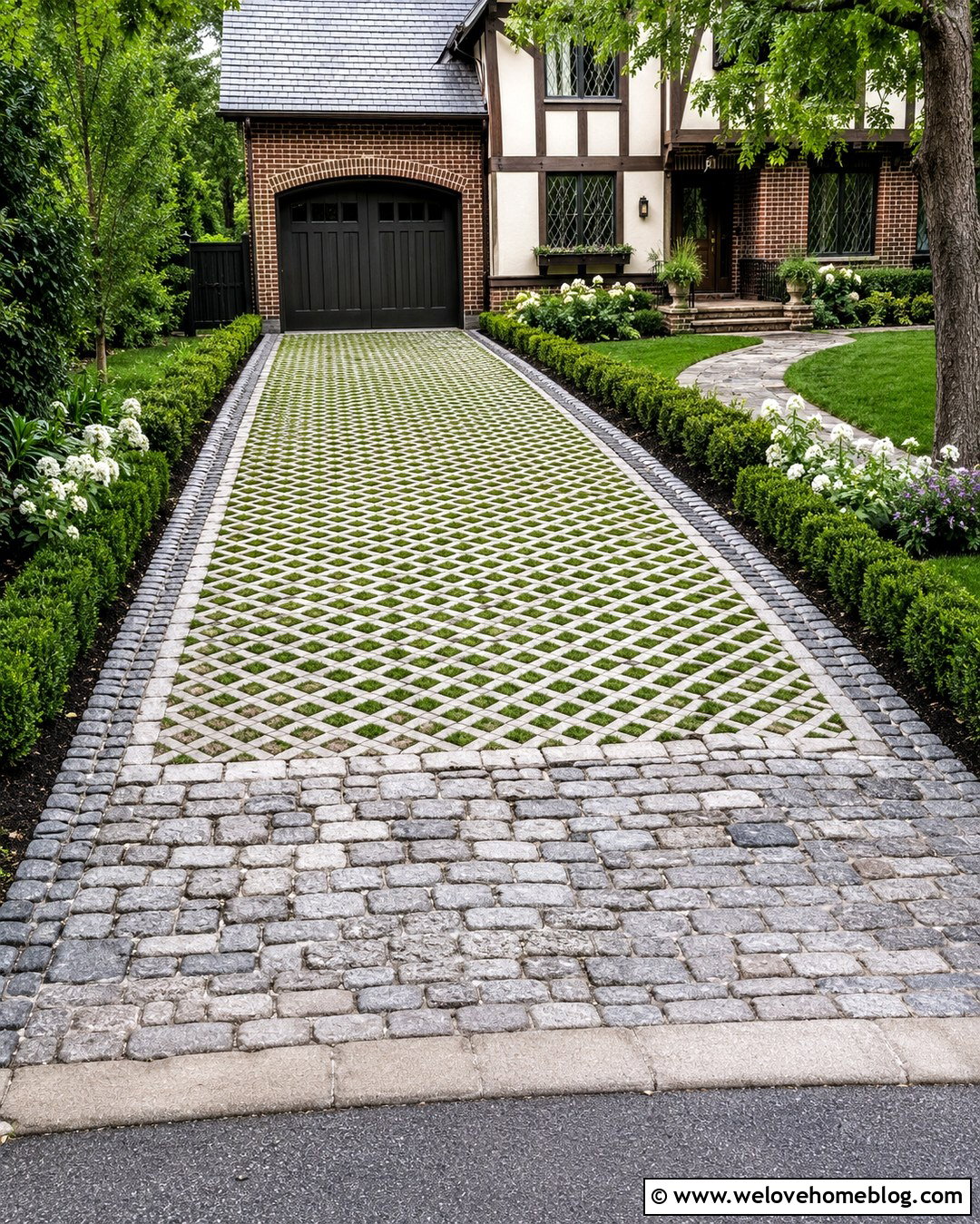
The street-facing apron is an ideal place to give a Grasscrete driveway more definition. Begin with a wide band of gray or warm-toned cobblestone, then transition into the green concrete grid for the remainder of the approach. The contrasting apron marks the property entrance and visually separates the driveway from the road. Repeat the cobblestone in narrow side borders or around a nearby walkway to make the combination look intentional. Behind the apron, keep the Grasscrete layout straight or gently tapered toward the garage. Low hedges and seasonal flowering beds can frame the entrance without blocking visibility. This complete design pairs particularly well with Tudor, European cottage, and traditional brick homes where textured masonry already appears on the facade.
7. Grasscrete Driveway With Native Plant Borders
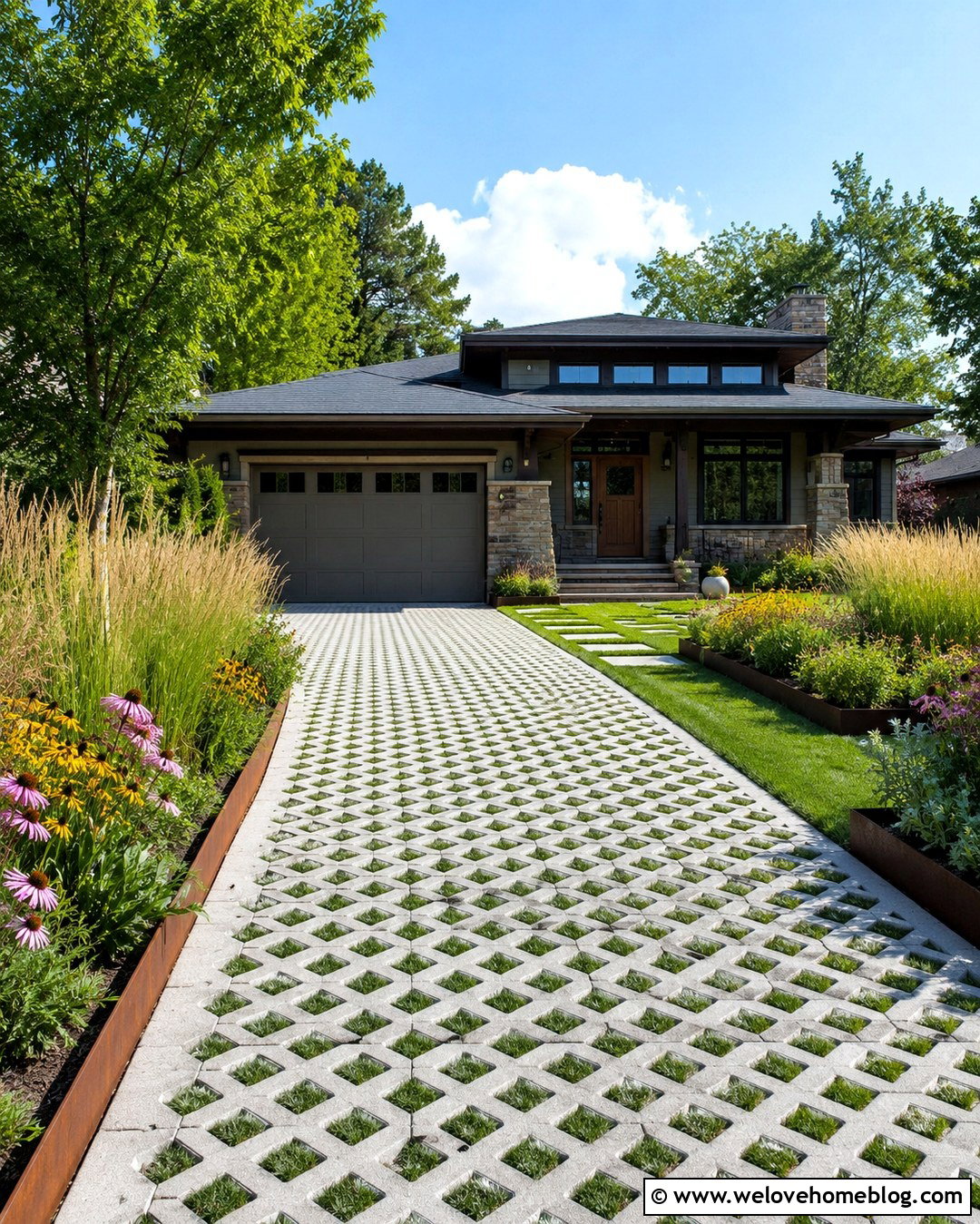
Picture a green driveway surrounded by soft grasses, seasonal flowers, and plants suited to the local climate. Begin with a simple Grasscrete grid that connects naturally to the lawn. On both sides, create deep native planting beds with lower species near the driving surface and taller plants toward the property boundaries. Use stone or weathering-steel edging to prevent soil from washing into the concrete cells. A few flat stepping stones can provide access for garden maintenance. Choose plants according to regional sunlight, soil, moisture, and winter conditions instead of relying only on appearance. The resulting landscape can feel relaxed but organized. It is an excellent match for craftsman, prairie, rustic contemporary, and nature-focused homes.
8. Grasscrete Driveway With Artificial Turf
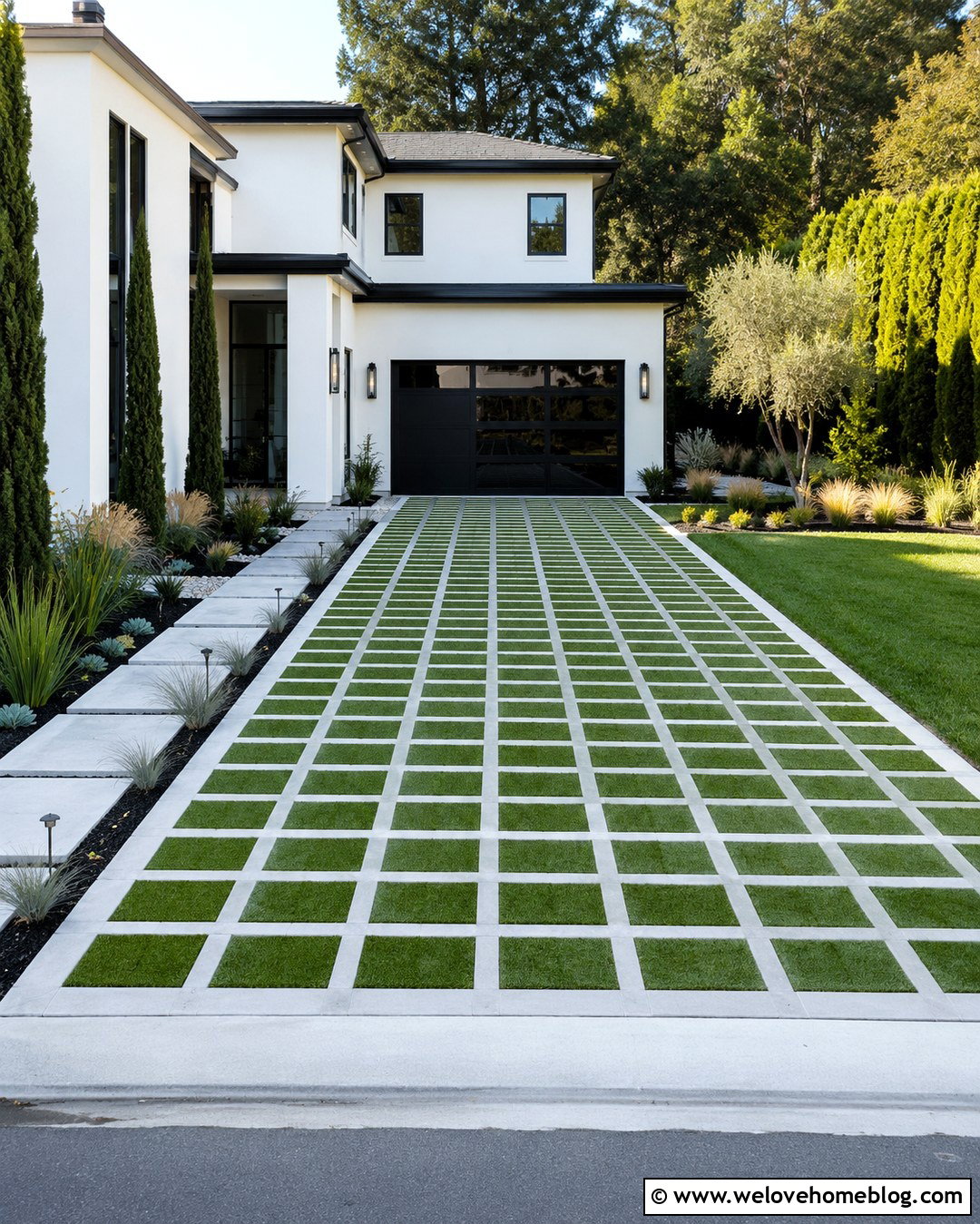
Where natural grass struggles under frequent use, artificial turf can produce a more consistently green Grasscrete pattern. Fill the concrete grid openings with short, realistic-looking artificial turf rather than tall or overly bright synthetic grass. The neat finish works particularly well with geometric driveway layouts and modern architecture. Add poured-concrete edging around the perimeter to keep the boundary crisp. Nearby landscaping should include real plants, such as sculptural evergreens, ornamental grasses, and drought-tolerant ground covers, so the driveway does not feel disconnected from the yard. A pale stone walkway can cross the grid near the entrance. This approach reduces mowing within the cells, although the surface still needs occasional cleaning and debris removal to maintain its orderly appearance.
9. Grasscrete Driveway With Gravel-Filled Parking Areas
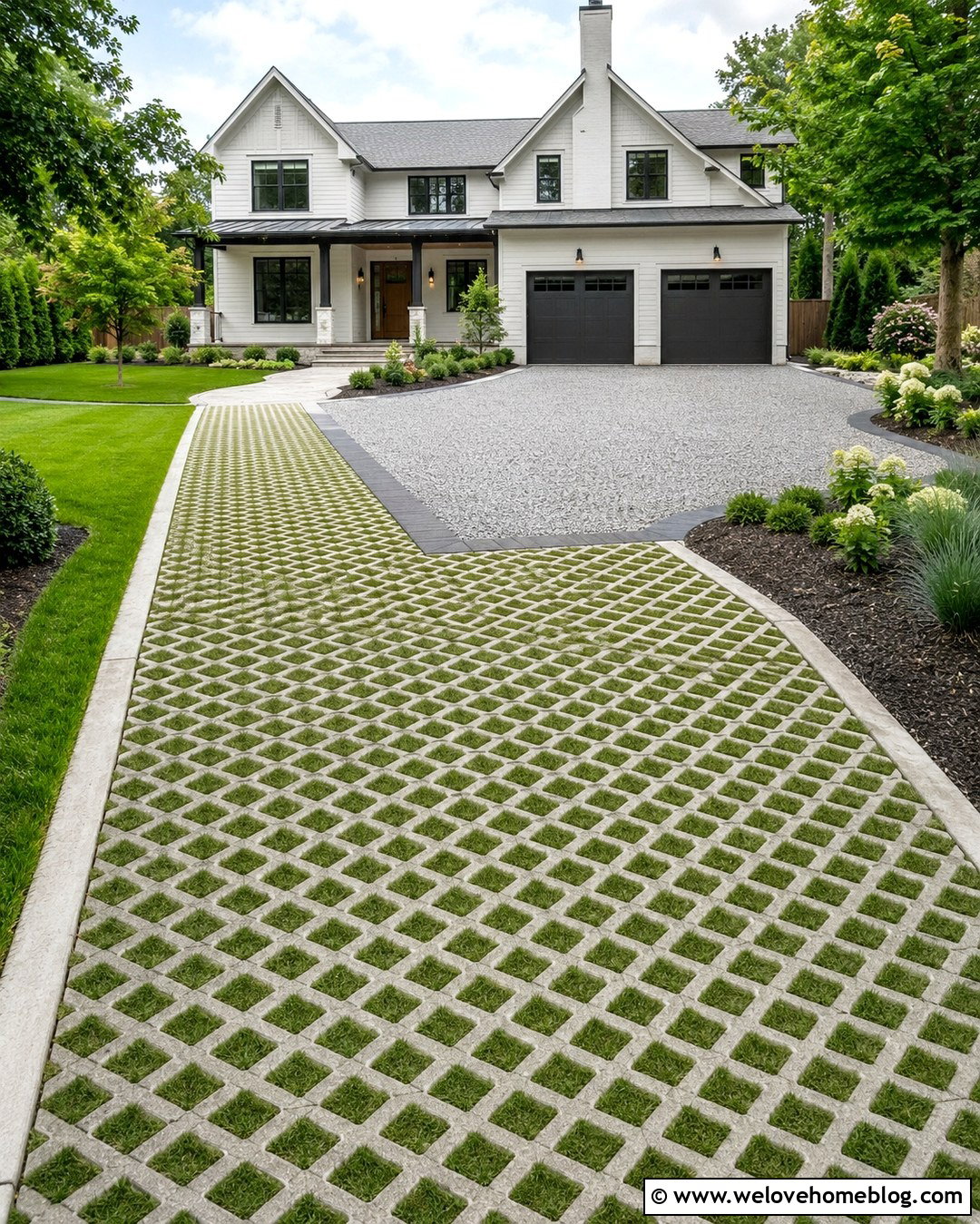
A mixed infill design can divide driving, parking, and landscape zones without changing the concrete grid system. Use healthy turf in the primary approach, then fill the cells beneath frequently parked vehicles with angular gray gravel. This prevents the parking area from looking bare if grass receives limited light or repeated pressure. Create a gradual, clearly planned transition rather than mixing materials randomly. A dark paver ribbon can outline the gravel-filled parking pad and make it look deliberate. Continue turf-filled Grasscrete around the edges to preserve the green character. Add rain-friendly planting beds, compact shrubs, and a walkway connecting the pad to the house. This versatile arrangement suits busy households that want permeability, practical parking, and a softer residential appearance.
10. Grasscrete Driveway With A Modern Farmhouse Entrance
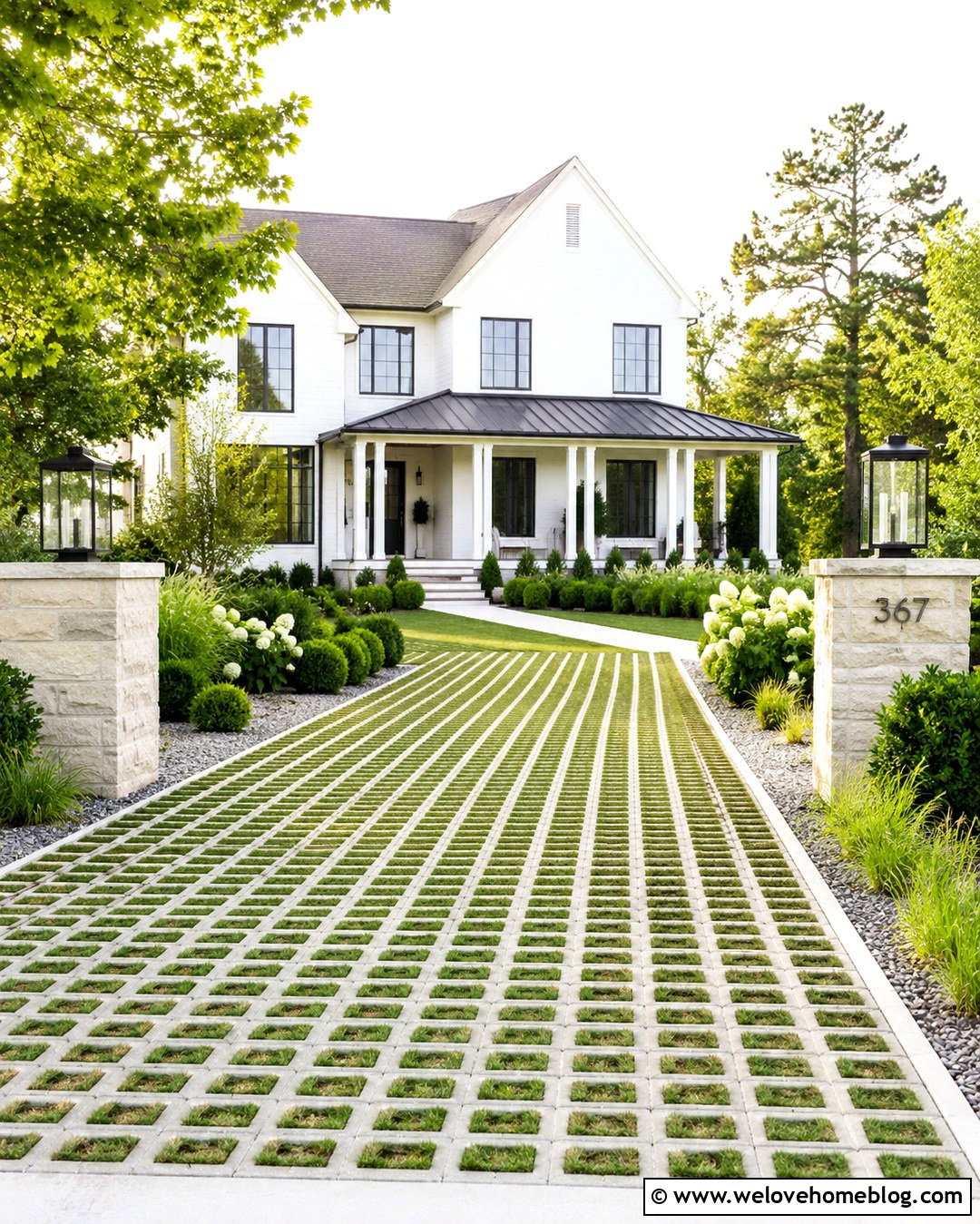
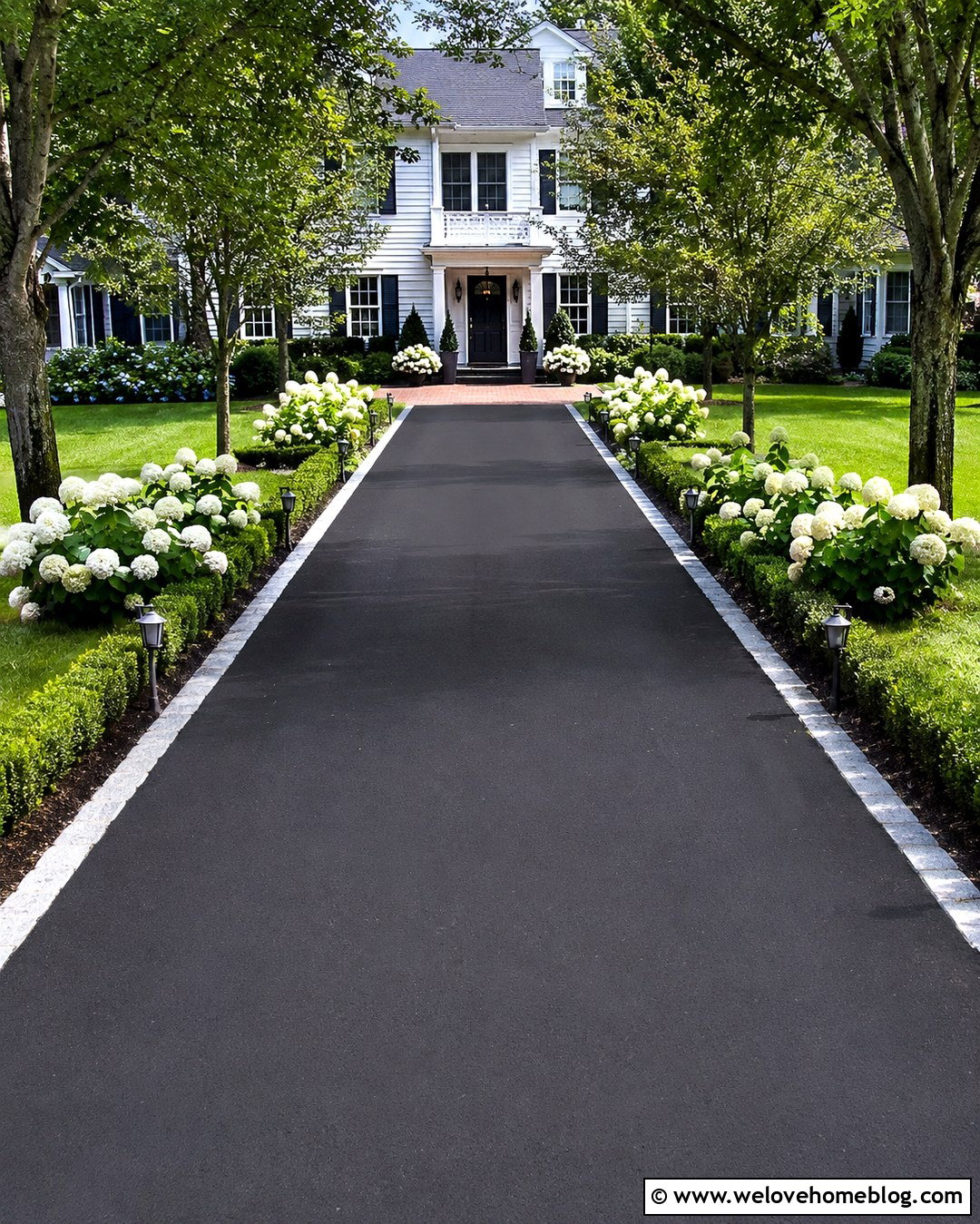
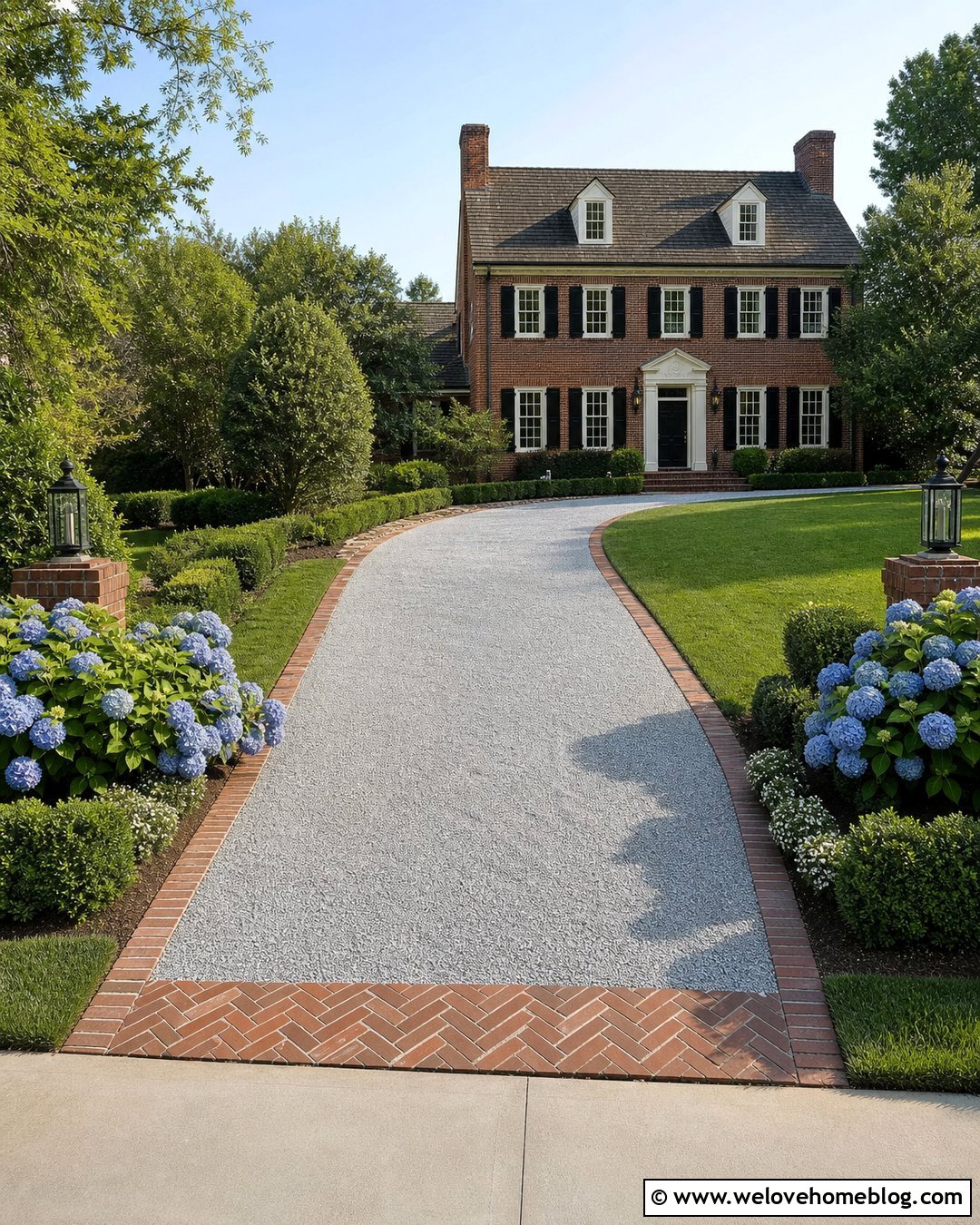
White siding, dark trim, and a green Grasscrete approach create an appealing modern farmhouse combination. Use a broad, straight driveway with a pale gray concrete grid and closely cut turf. Frame the entrance with low stone pillars that coordinate with the home’s foundation or front porch. Black lantern-style fixtures can add definition without making the design overly decorative. Along the driveway, use simple gravel-edged beds filled with hydrangeas, rounded evergreens, and upright grasses. A narrow brick or concrete walkway should branch toward the porch near the upper section. Keep large rural-style lawns visible on both sides so the green driveway feels integrated with the property. The result is welcoming, structured, and practical rather than formal or overly polished.
11. Narrow Grasscrete Driveway With Flush Lawn Edges
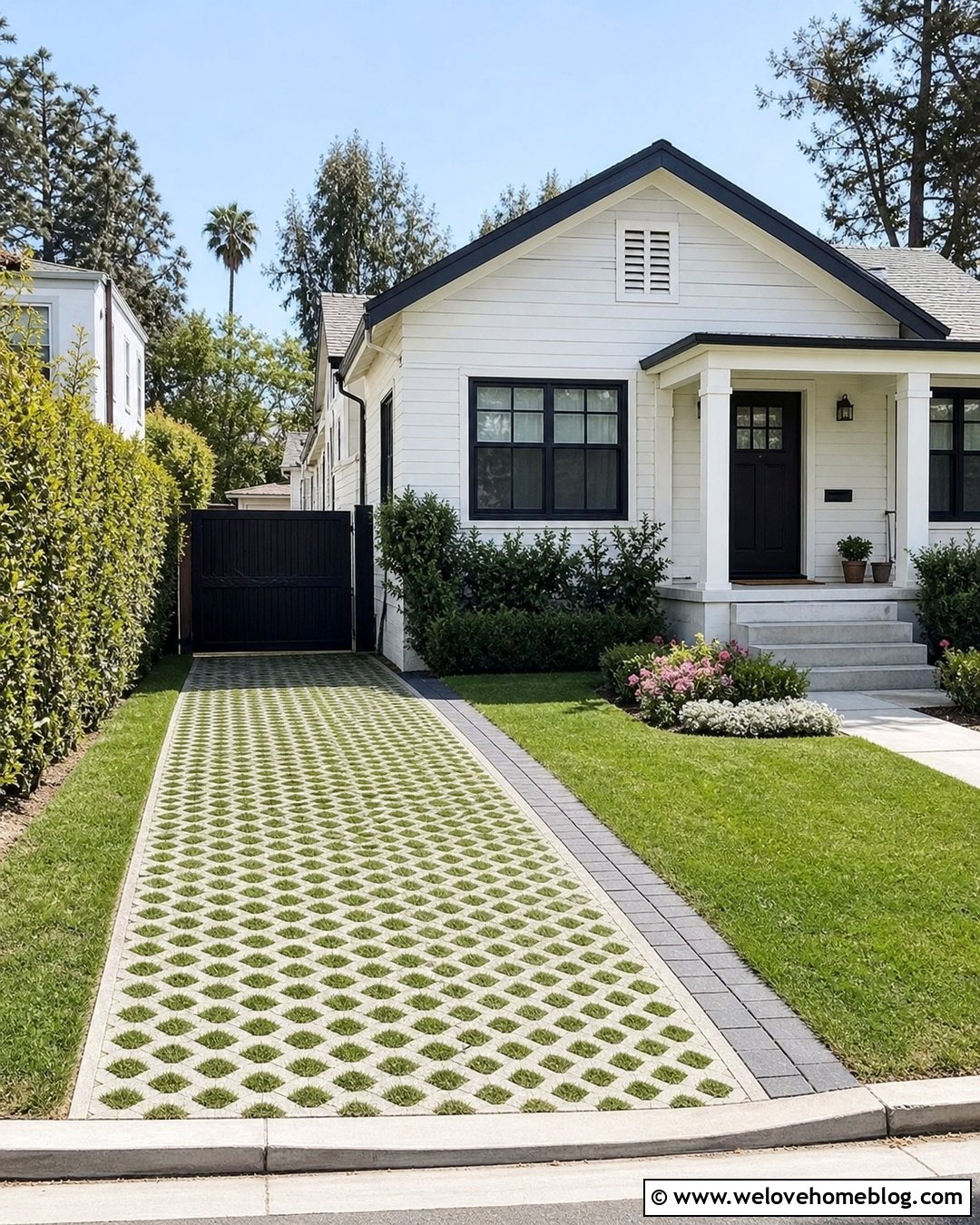
Small lots often benefit from a driveway that blends into the surrounding yard. Install a narrow Grasscrete surface with edges set flush against the lawn, avoiding raised curbs that could make the space feel tighter. The concrete cells provide a visible structure while the matching turf creates a continuous green plane. A slim paver ribbon along the house side can protect the foundation and offer a clean place to step out. On the opposite side, choose compact shrubs or a low planting bed that will not crowd vehicle doors. Widen the driveway slightly near the garage or parking space to improve daily use. This understated design suits bungalows, duplexes, urban cottages, and smaller suburban homes where every section of the front yard matters.
12. Wide Grasscrete Driveway With A Center Grass Strip
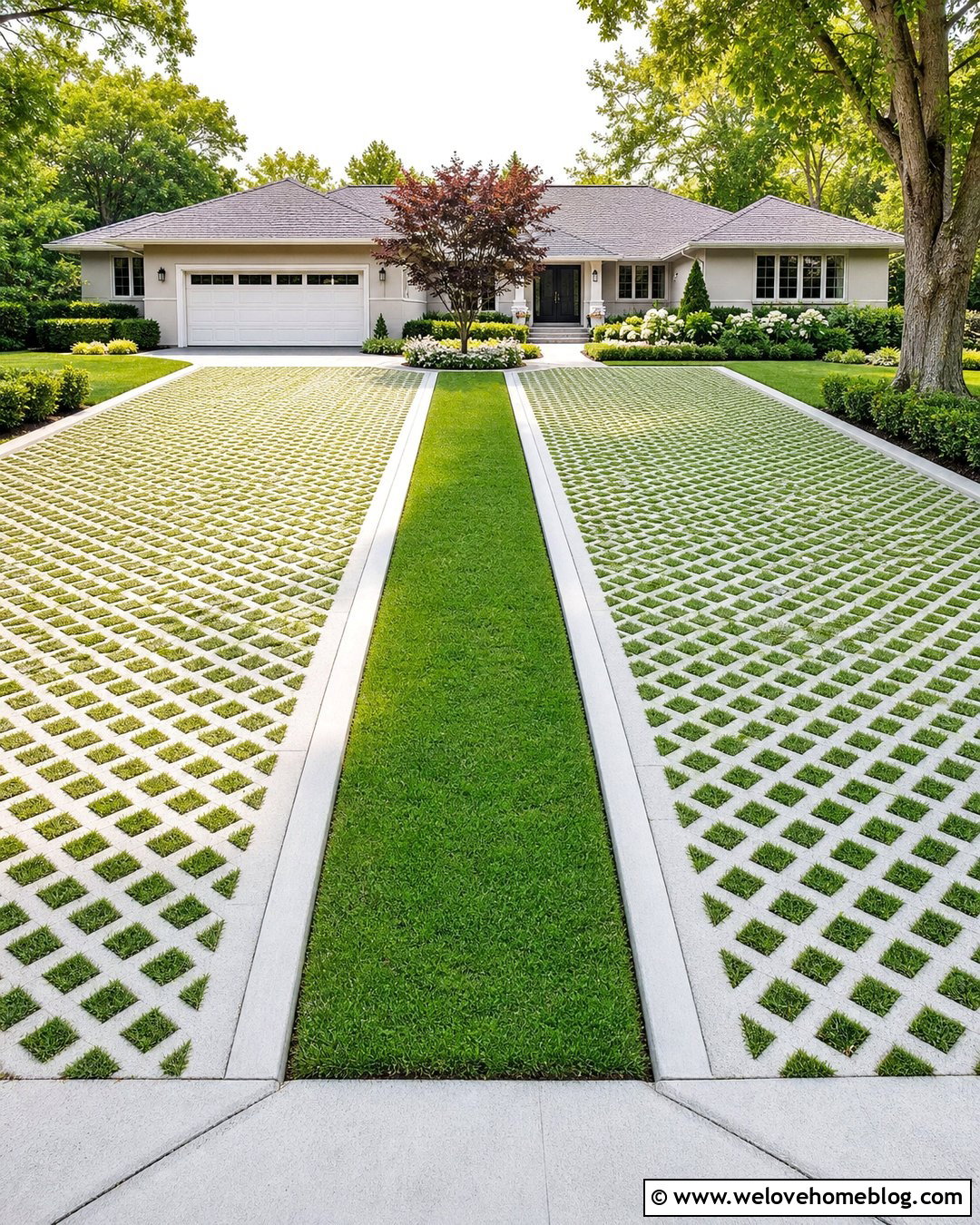
Breaking up a wide driveway can make it feel less like a parking lot. Use Grasscrete across two generous driving lanes, then place a continuous lawn strip through the center. The central strip should align with the space between vehicles and remain wide enough to look intentional. Low-profile concrete or stone edging can protect its shape while staying clear of tires. Near the house, let the strip end in a small circular bed, a specimen tree, or a paved walkway. Match the turf inside the Grasscrete cells to the center lawn for a unified green surface. This arrangement works well for two-car garages and broad ranch homes. It provides strong visual rhythm while softening the scale of a large front parking area.
13. Sloped Grasscrete Driveway With Retaining Walls
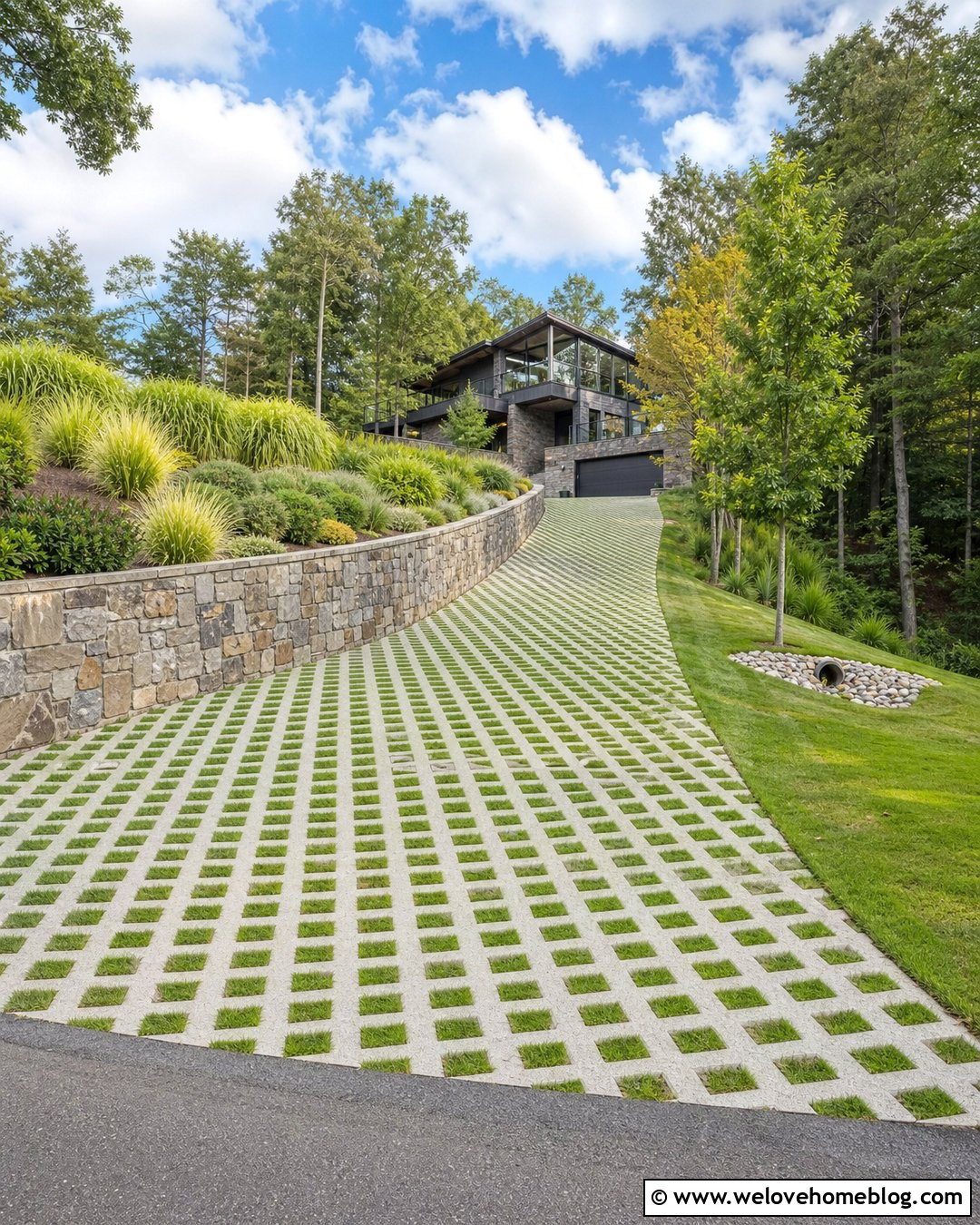
A sloping lot requires a driveway design that handles grade changes as part of the overall landscape. Use a reinforced Grasscrete system over a professionally prepared structural base, with the layout following a gradual, controlled incline. Low retaining walls can border the uphill side and hold layered planting beds in place. Choose textured stone or concrete blocks that complement the house facade. On the downhill edge, maintain an open lawn or install a planted drainage area where appropriate for the site. Recessed wall lights can improve visibility without cluttering the green surface. Because slope, soil, runoff, and vehicle loading vary considerably, the final construction should be designed for local conditions. This look suits hillside modern, craftsman, and woodland homes.
14. Grasscrete Driveway With A Brick House
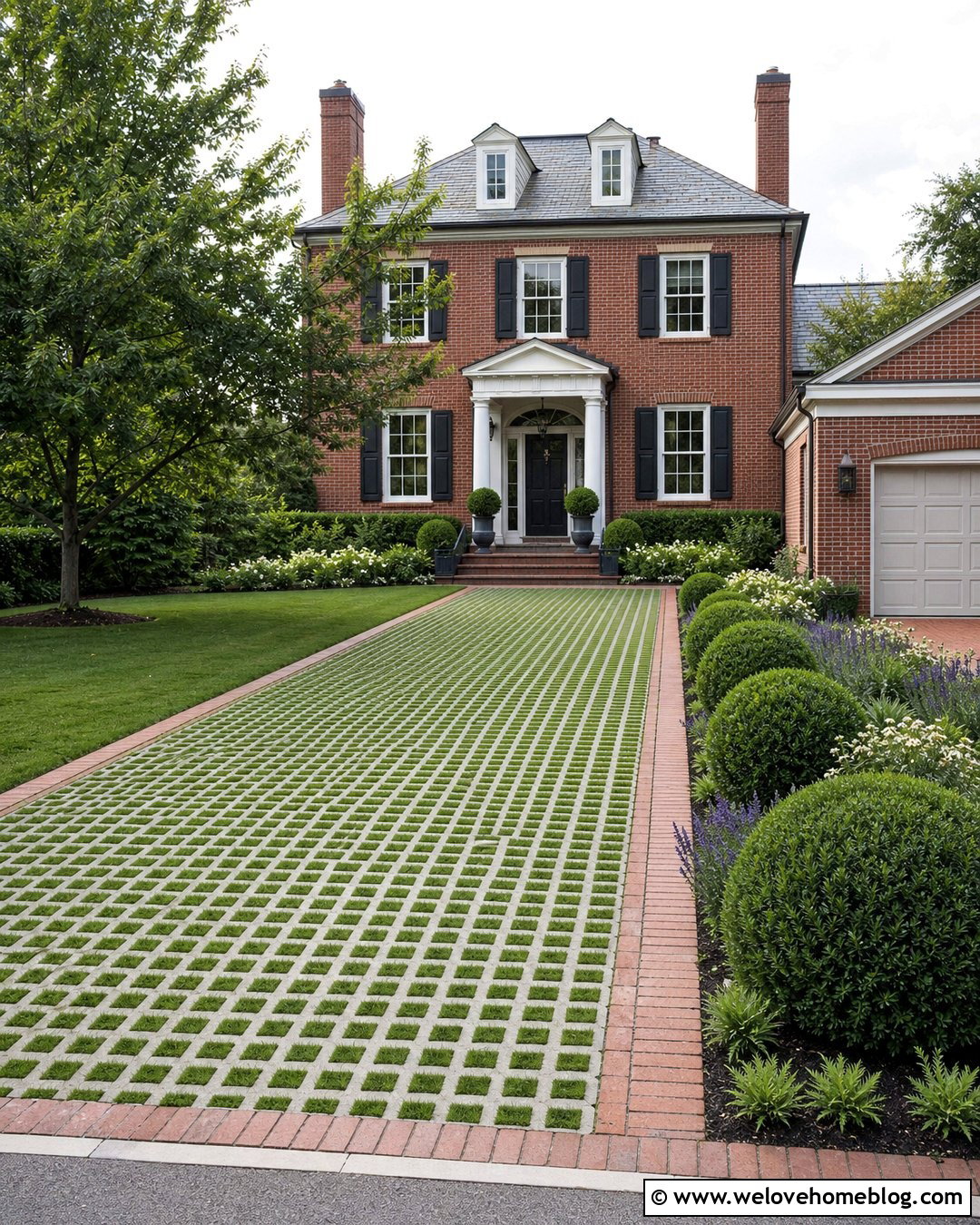
Grasscrete can soften the heavy appearance of a traditional brick exterior while repeating its orderly geometry. Select a rectangular concrete grid and fill it with dense, neatly trimmed turf. Add a narrow clay brick border in a color drawn from the house facade, such as deep red, brown, or muted charcoal. The border can continue into a herringbone walkway leading toward the front door. Use rounded evergreen shrubs, flowering perennials, and an open front lawn to balance the masonry. At the garage threshold, introduce a brick soldier course for a clean transition. This complete driveway feels established and coordinated without requiring the entire surface to be brick. It works especially well with colonial, Georgian, and traditional suburban homes.
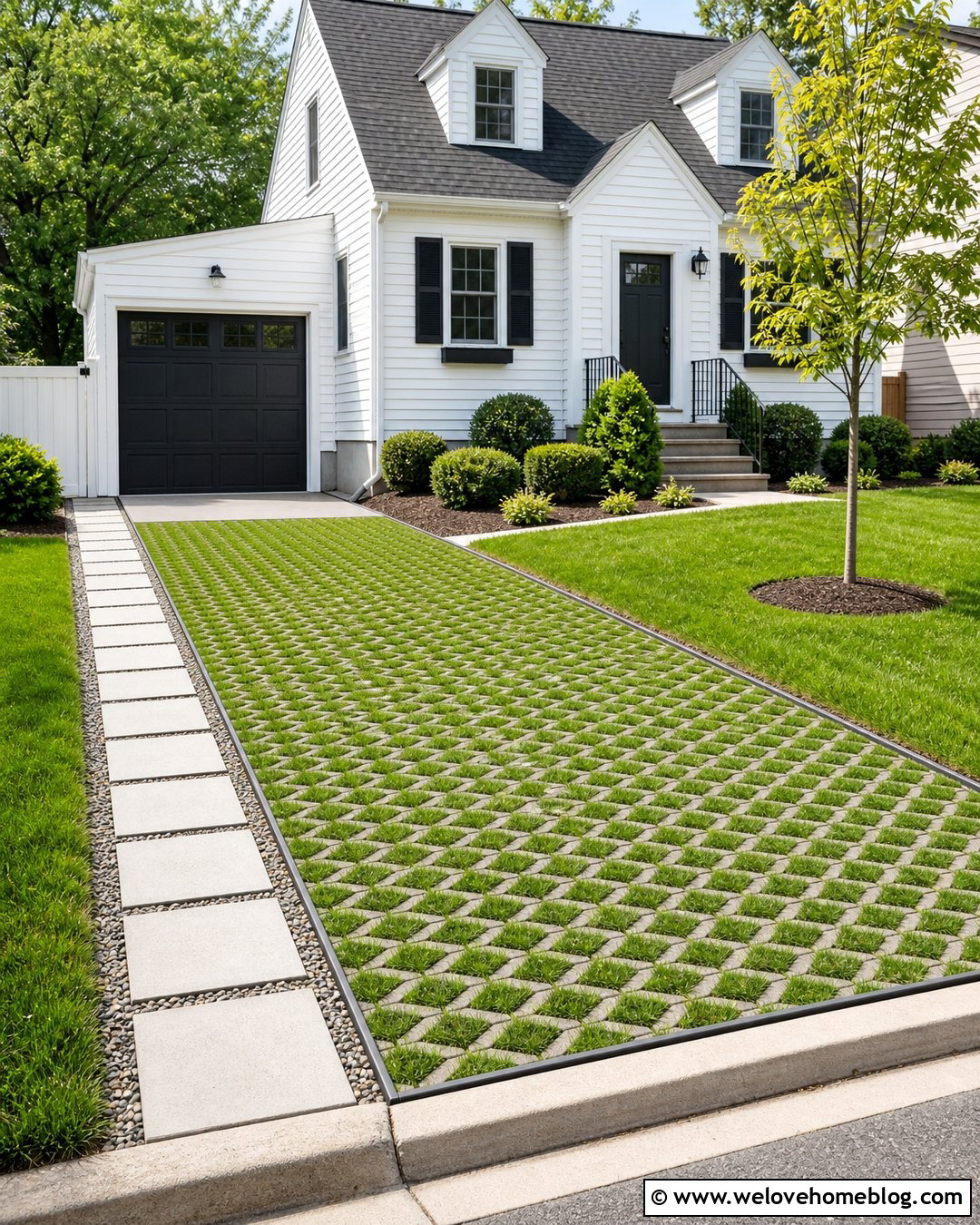
15. Grasscrete Driveway With A Minimalist Landscape
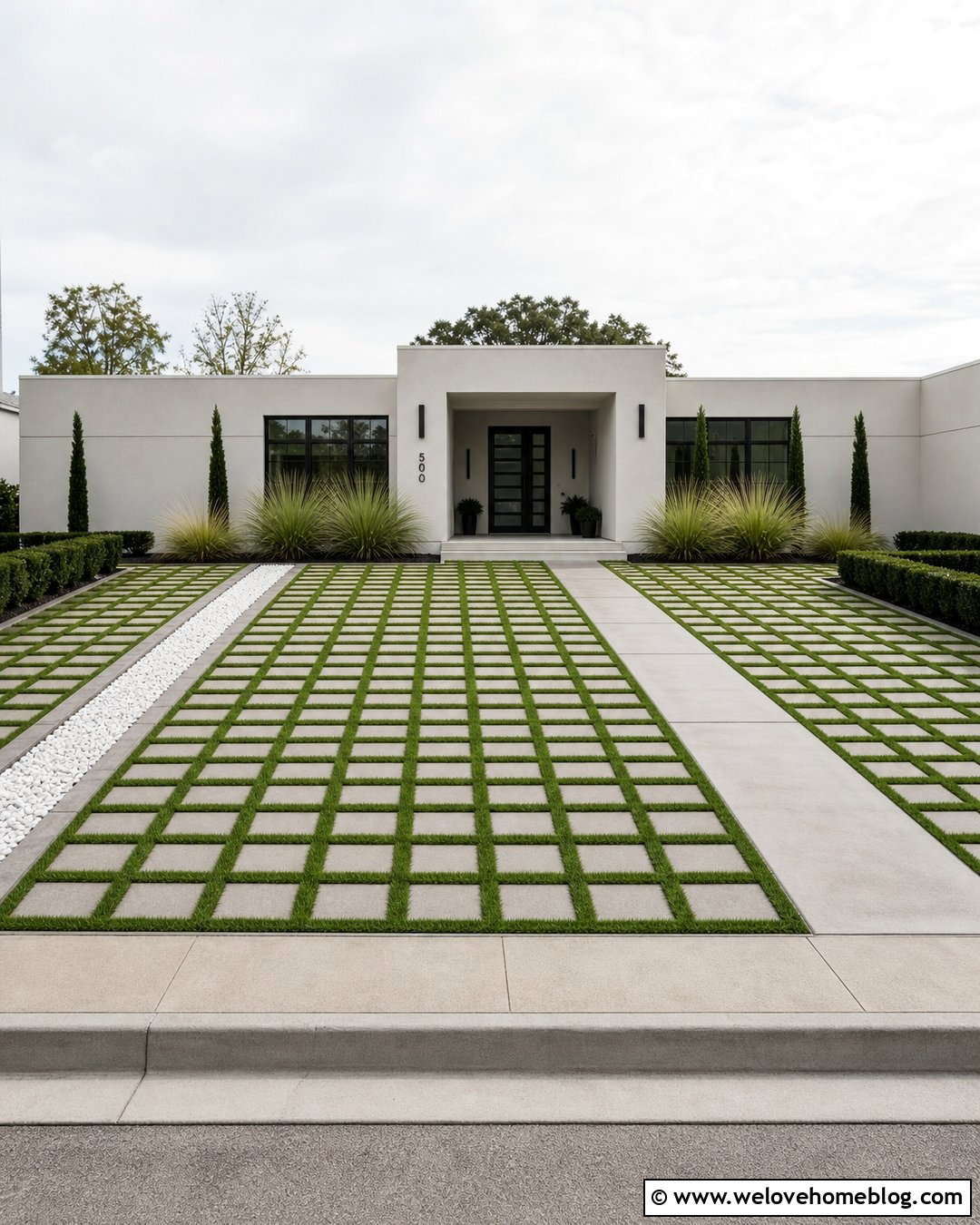
Could a green driveway still feel sharply minimalist? The key is limiting the palette and keeping every line intentional. Use a large-scale square Grasscrete grid with evenly clipped turf across a straight driveway. Edge it with smooth poured concrete that matches the home’s pale facade. Instead of busy flower beds, add one band of decorative gravel, several sculptural grasses, and a few carefully spaced evergreen forms. A single concrete walkway can cross the driveway at a right angle near the entrance. Avoid ornate pillars or contrasting patterns that compete with the grid. This restrained composition makes the living surface the main feature. It is particularly effective beside flat-roofed homes, contemporary townhouses, and simple modern residences with large windows and monochromatic finishes.
16. Grasscrete Driveway With Cottage Garden Borders
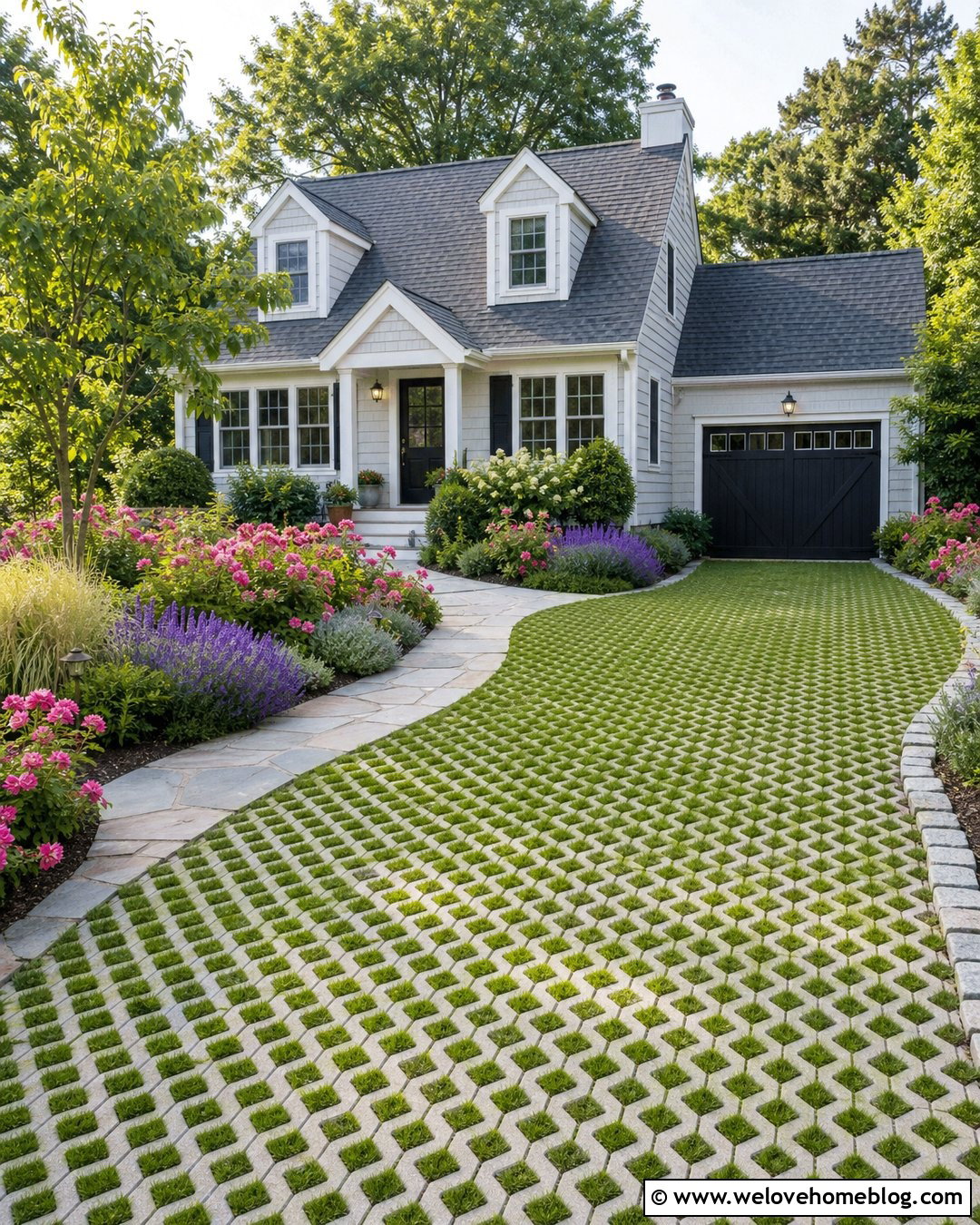
A cottage garden brings color and softness to the strong concrete framework of Grasscrete. Choose a gently curved driveway with a gray turf-filled grid and an informal cobblestone edge. Behind the stone, arrange layered beds containing compact roses, salvia, catmint, ornamental grasses, and evergreen shrubs suited to the local conditions. Keep plants low near the street and driveway entrance to protect sightlines. Farther toward the house, taller flowers can create a fuller, more enclosed approach. A flagstone walkway should weave from the driveway to the front porch, reinforcing the relaxed character. The finished look feels lush without allowing plants to spill into tire paths. It pairs naturally with cottage, Cape Cod, English-inspired, and storybook-style homes.
17. Grasscrete Driveway With Wood Entry Gates
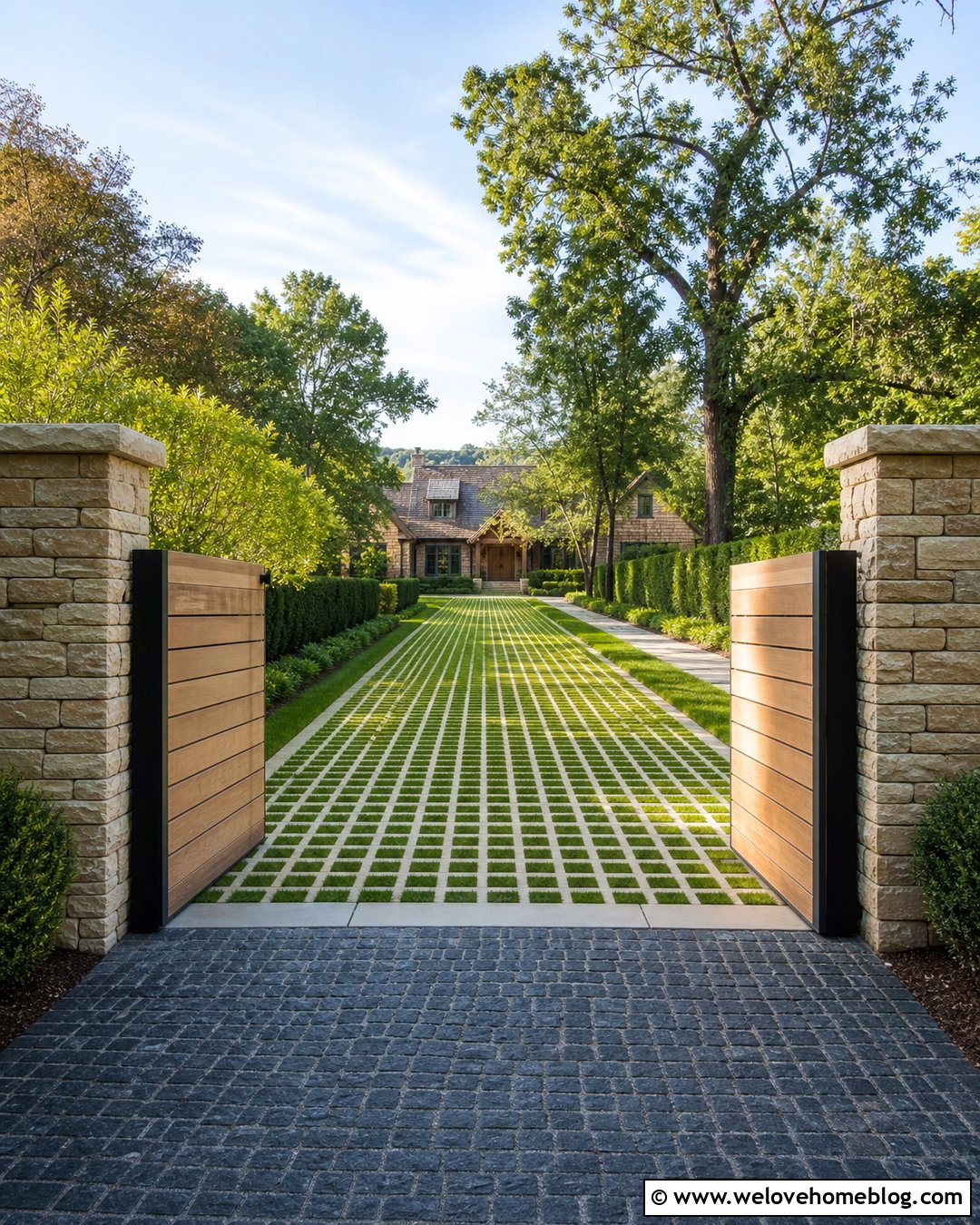
Wood gates can give a Grasscrete driveway privacy and warmth while preserving its natural character. Set a pair of horizontal cedar or stained hardwood gates between simple stone or rendered masonry pillars. Continue the turf-filled concrete grid beneath the gate so the surface remains visually uninterrupted from the street to the house. A darker stone apron outside the entrance can provide a durable threshold and stronger definition. Use clipped hedges along the property line, then transition to looser shrubs and trees beyond the gate. Keep control boxes, hinges, and access equipment neatly integrated into the pillars. This full entrance design complements contemporary country homes, modern farmhouses, mountain residences, and properties where natural materials are already prominent.
18. Grasscrete Driveway With Low Landscape Lighting
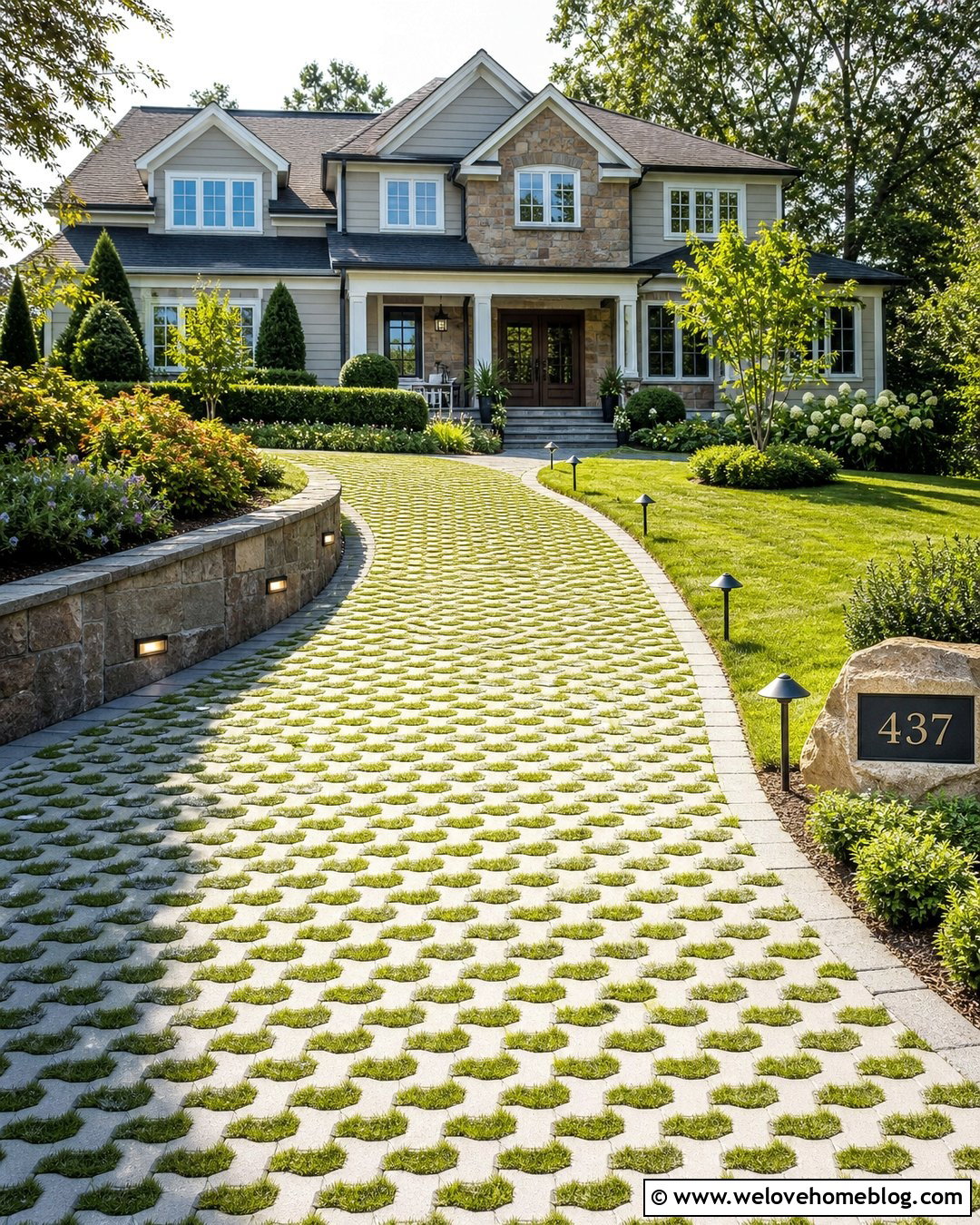
Thoughtfully placed lighting can define a Grasscrete driveway without covering the green surface with visible fixtures. Install short, shielded path lights along one border, spacing them evenly and directing illumination toward the driveway edge. On the opposite side, use subtle lighting within a low stone wall or planting bed to create balance. During the day, the turf-filled concrete grid, restrained borders, and layered shrubs should remain the primary visual elements. Keep fixtures simple and coordinate their finish with the home’s exterior hardware. A small light near the house-number marker can clarify the entrance. This approach works with straight or curved driveways and suits modern, craftsman, and transitional homes that need safe navigation alongside polished curb appeal.
19. Grasscrete Driveway With A Permeable Paver Walkway
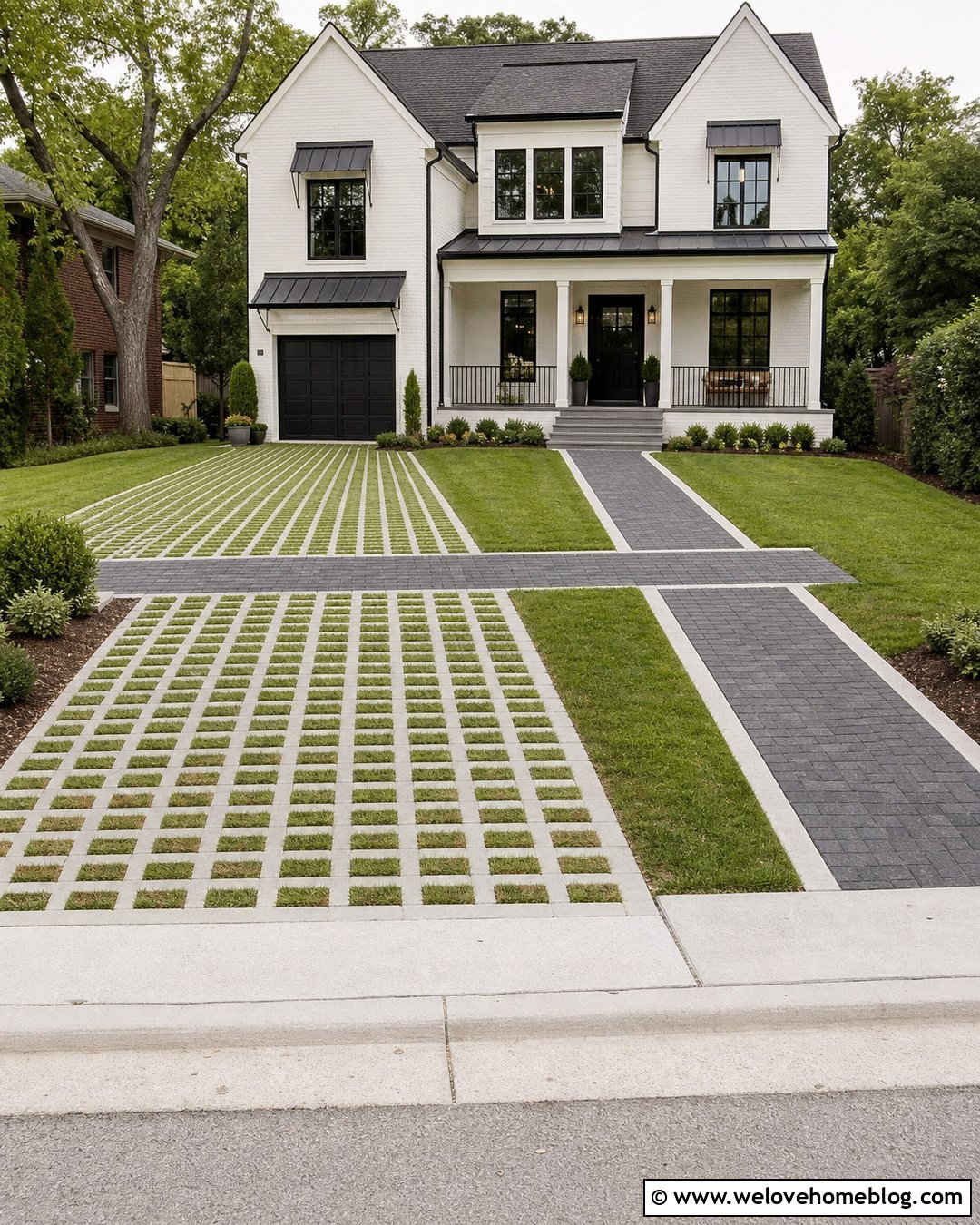
Pairing Grasscrete with a permeable walkway creates a consistent landscape while making pedestrian movement easy to understand. Use a straight turf-filled grid for the driveway and install permeable concrete pavers in a contrasting pattern beside it. A charcoal or warm gray walkway clearly separates foot traffic from vehicle space without introducing an unrelated material. Where the walkway crosses the driveway, continue the pavers as a wide ribbon that remains level with the grid. Frame both surfaces with low planting beds, small shrubs, and open lawn. Near the porch, widen the path into a welcoming landing. This coordinated plan works for households that frequently use the front entrance and suits transitional, craftsman, contemporary, and traditional suburban architecture.
20. Grasscrete Driveway With A Tree-Lined Approach
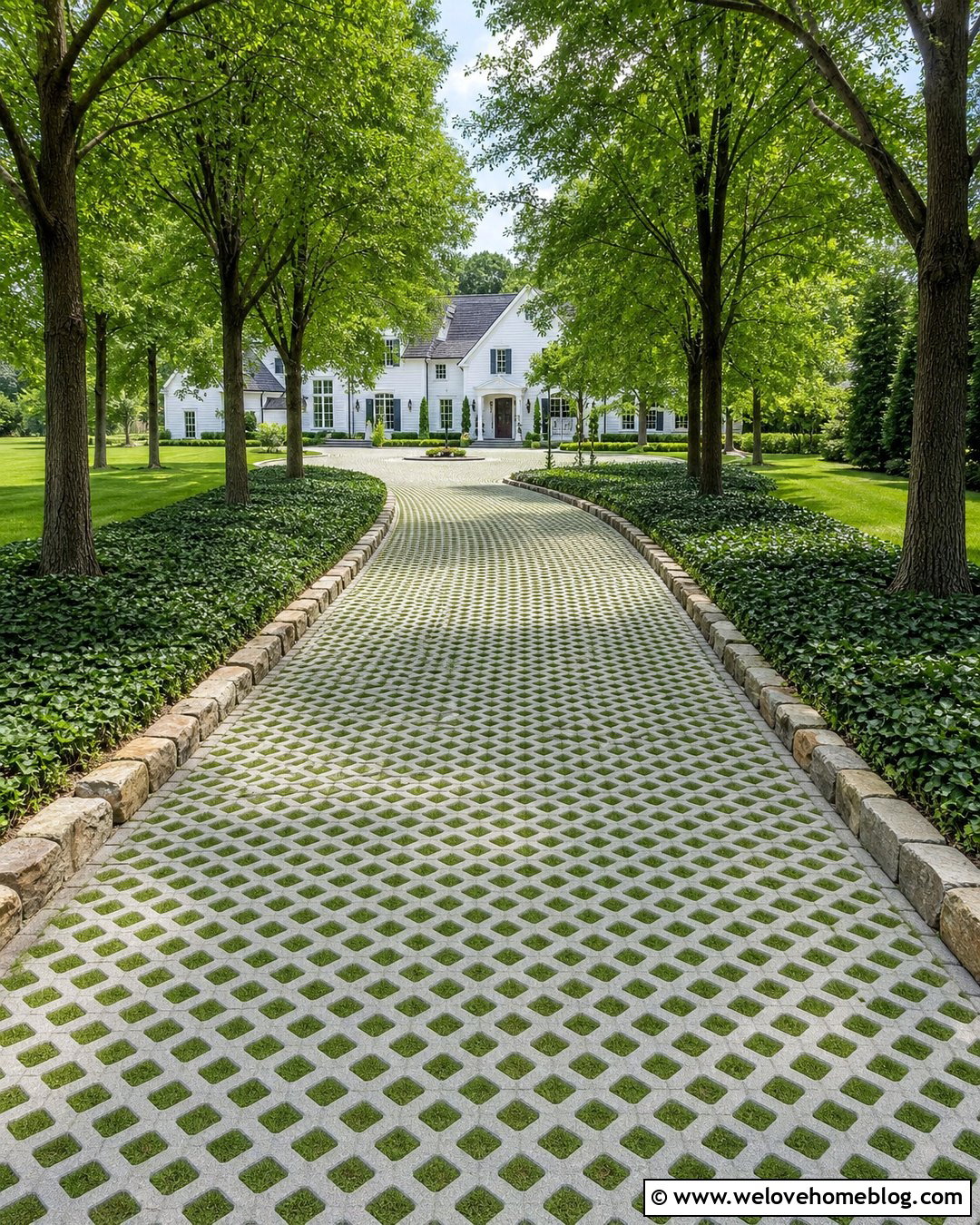
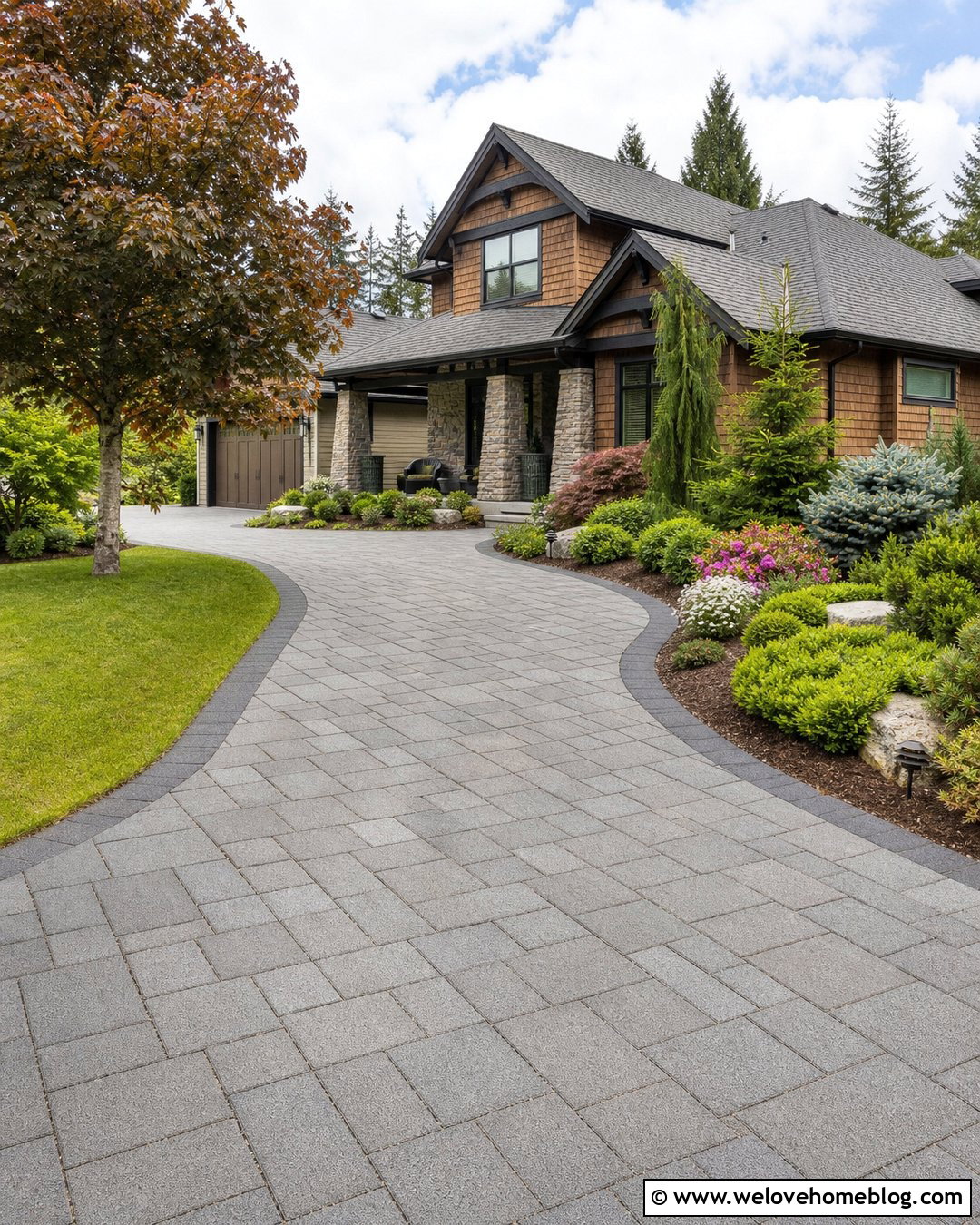
A long Grasscrete driveway can feel like a natural extension of the landscape when trees frame the full approach. Use a straight or softly curved concrete grid filled with durable turf. Plant evenly spaced trees well beyond the driveway edge, allowing enough room for mature trunks, roots, and canopies. Beneath them, create broad beds of low ground cover or neatly maintained lawn. Natural stone edging can define the driveway without competing with the strong green corridor. At the house, widen the surface into a turning area or parking court using the same Grasscrete material. The repeating trees create structure, while the living grid keeps the entrance visually soft. This design is ideal for spacious country, colonial, farmhouse, and estate-style properties.
Conclusion:
The strongest Grasscrete driveway designs balance vehicle access, drainage planning, turf health, maintenance, and curb appeal. Start by choosing a layout that fits the property, whether that means a narrow straight approach, a broad parking court, or a circular drive. Then coordinate the concrete grid with purposeful borders, walkways, planting beds, lighting, and entry features. Natural turf offers the softest transition into the yard, while artificial grass or gravel infill may suit demanding areas. A properly designed and prepared base remains essential for long-term stability and performance. Use these 20 Grasscrete Driveway Ideas to create a greener entrance that feels cohesive with both your home and the surrounding landscape.

Related posts:
Leave a Reply