
A green driveway can feel like part of the lawn while still providing a stable route to the garage. Drivable grass systems typically use concrete lattice pavers, reinforced turf grids, or solid wheel tracks to protect the ground from rutting and compaction. They also allow rainwater to soak through the surface instead of flowing directly toward the street. () The best design depends on vehicle frequency, sunlight, soil drainage, climate, and the architecture of your home. Proper excavation and a compacted, free-draining base remain essential, even when the finished surface looks soft and natural. From narrow suburban approaches to sweeping country entrances, the following 20 drivable grass driveways ideas combine dependable construction with attractive landscaping.

1. Straight Concrete Grass Paver Driveway
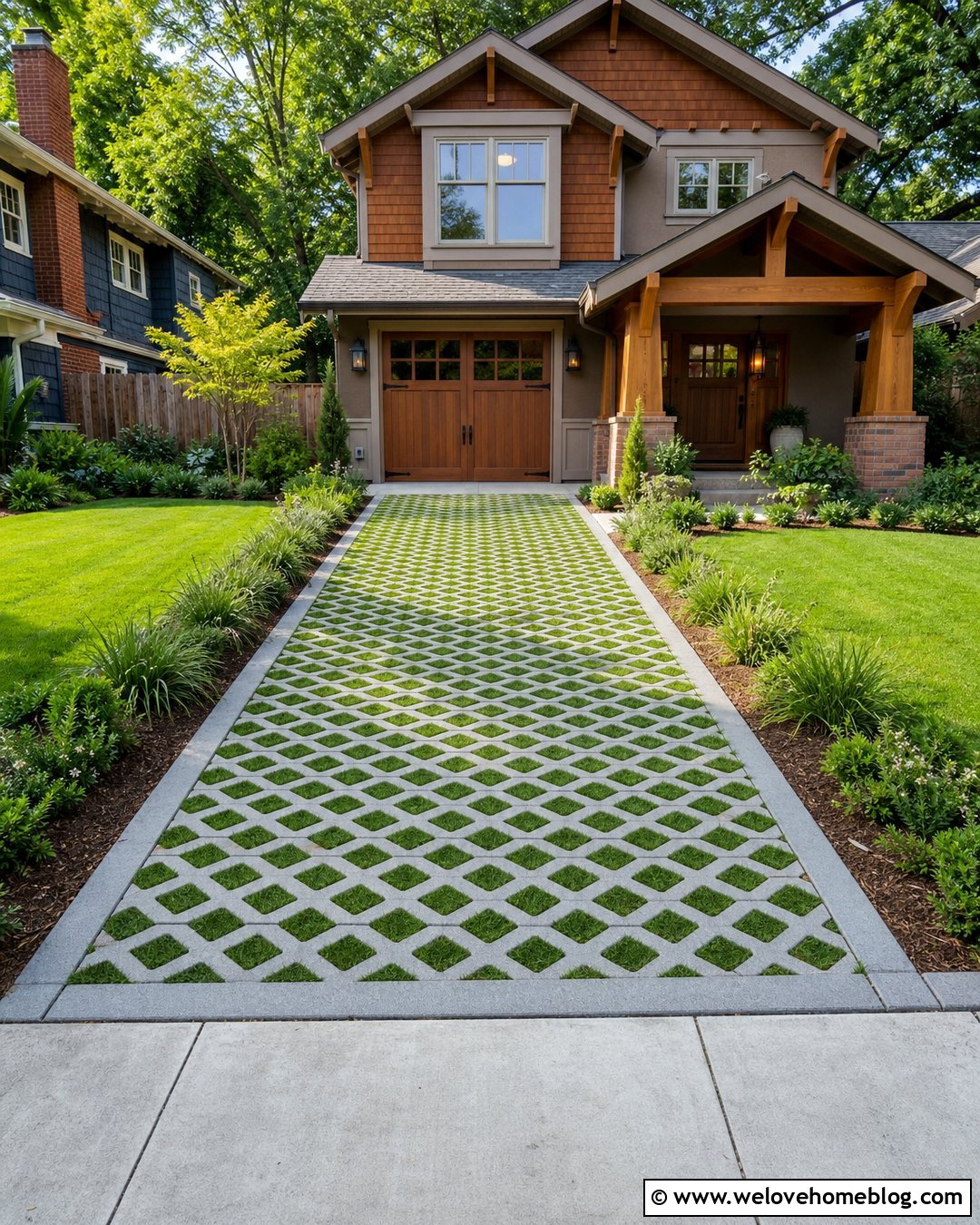
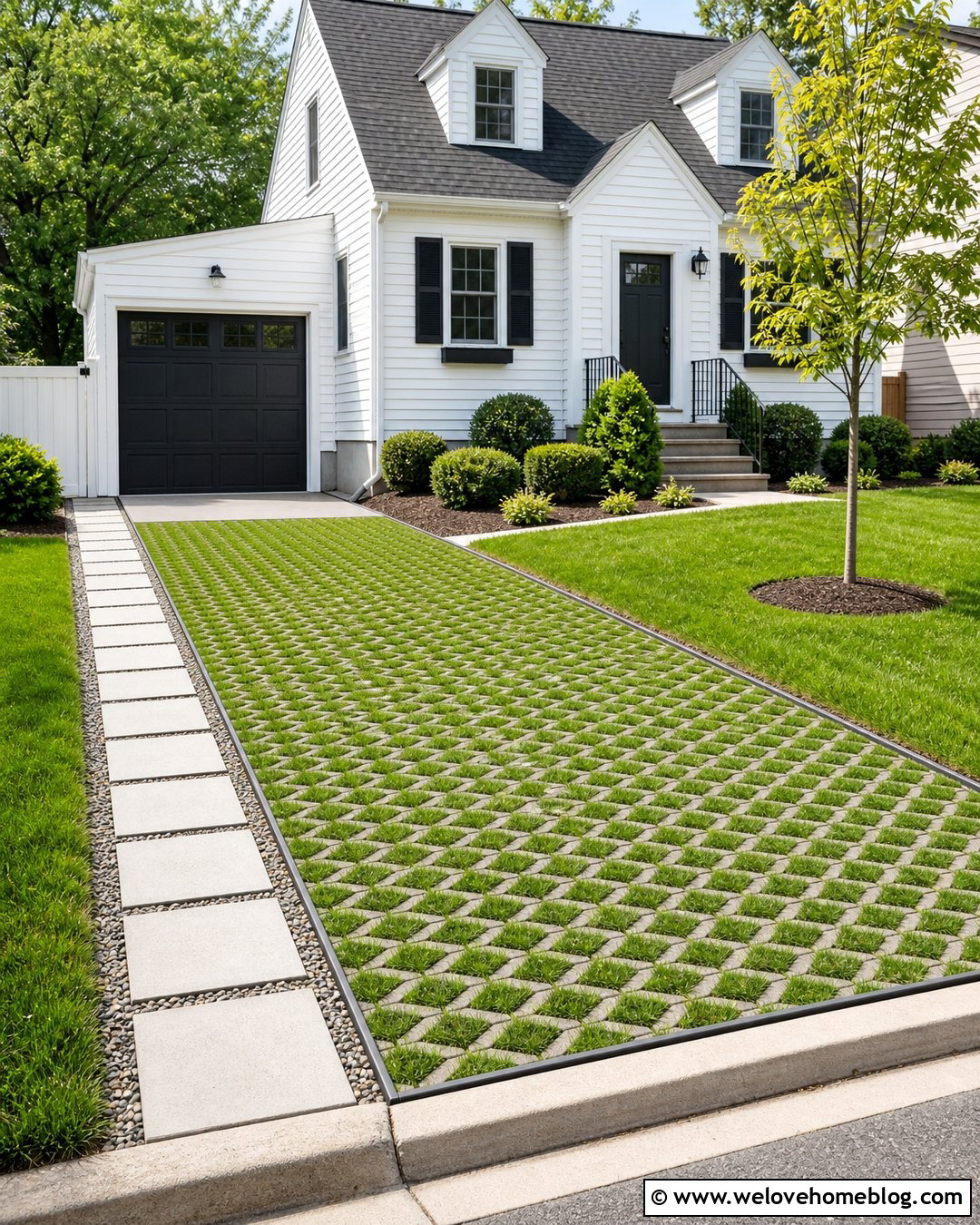
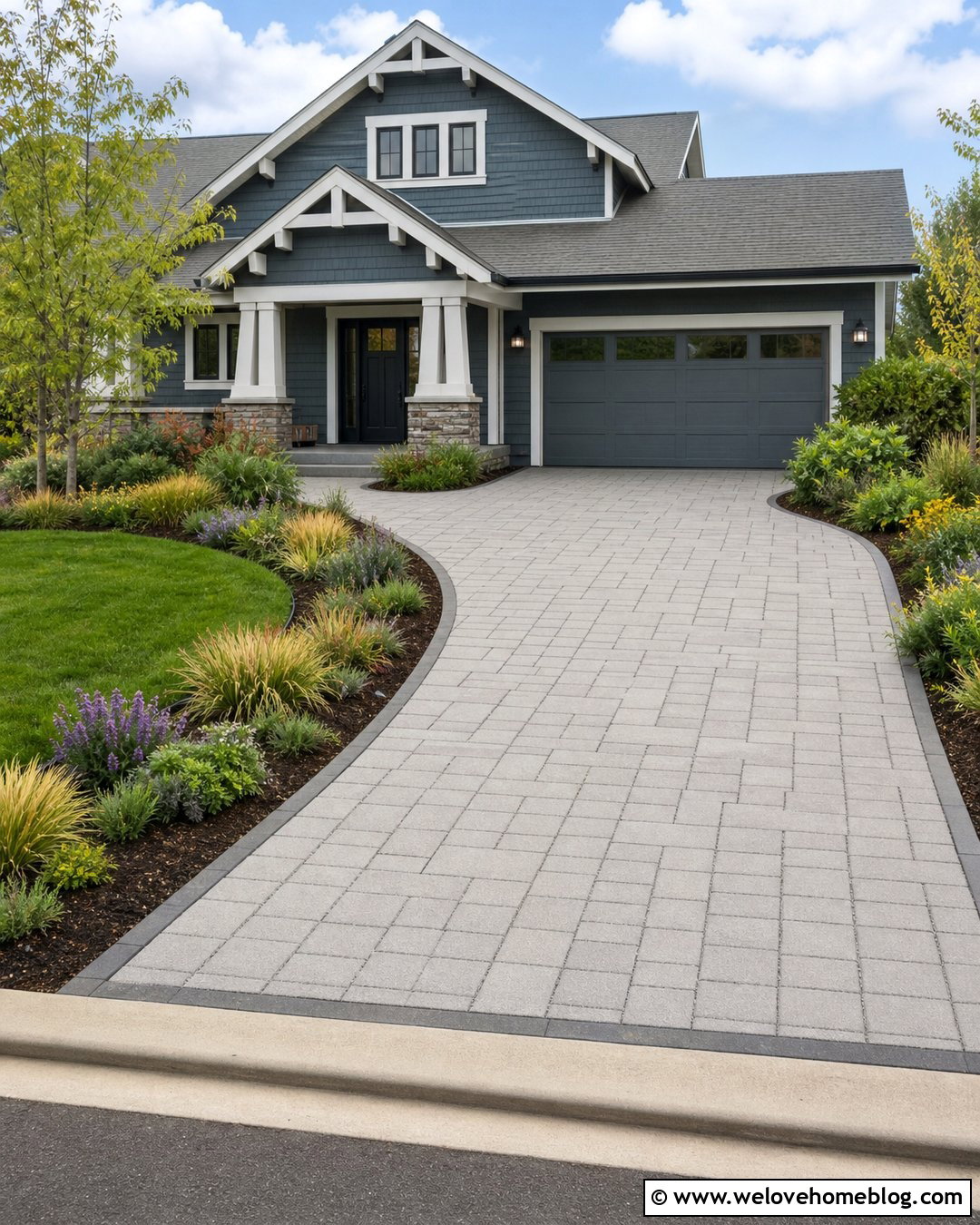
A straight driveway covered with concrete grass pavers creates a clean route that blends naturally into the front lawn. The open cells hold soil and turf, while the raised concrete framework supports vehicle tires. Choose a grass variety suited to your local sunlight, rainfall, and maintenance routine. A flush concrete apron at the street can protect the softer edge from turning vehicles and snow-removal equipment. Along both sides, narrow beds filled with compact shrubs and ornamental grasses keep the layout structured without crowding the driving area. This complete look works especially well with ranch, Craftsman, and midcentury homes. Continue the same pavers to the garage, or add a solid concrete landing near the doors where vehicles are parked most frequently.
2. Curved Plastic Grid Grass Driveway
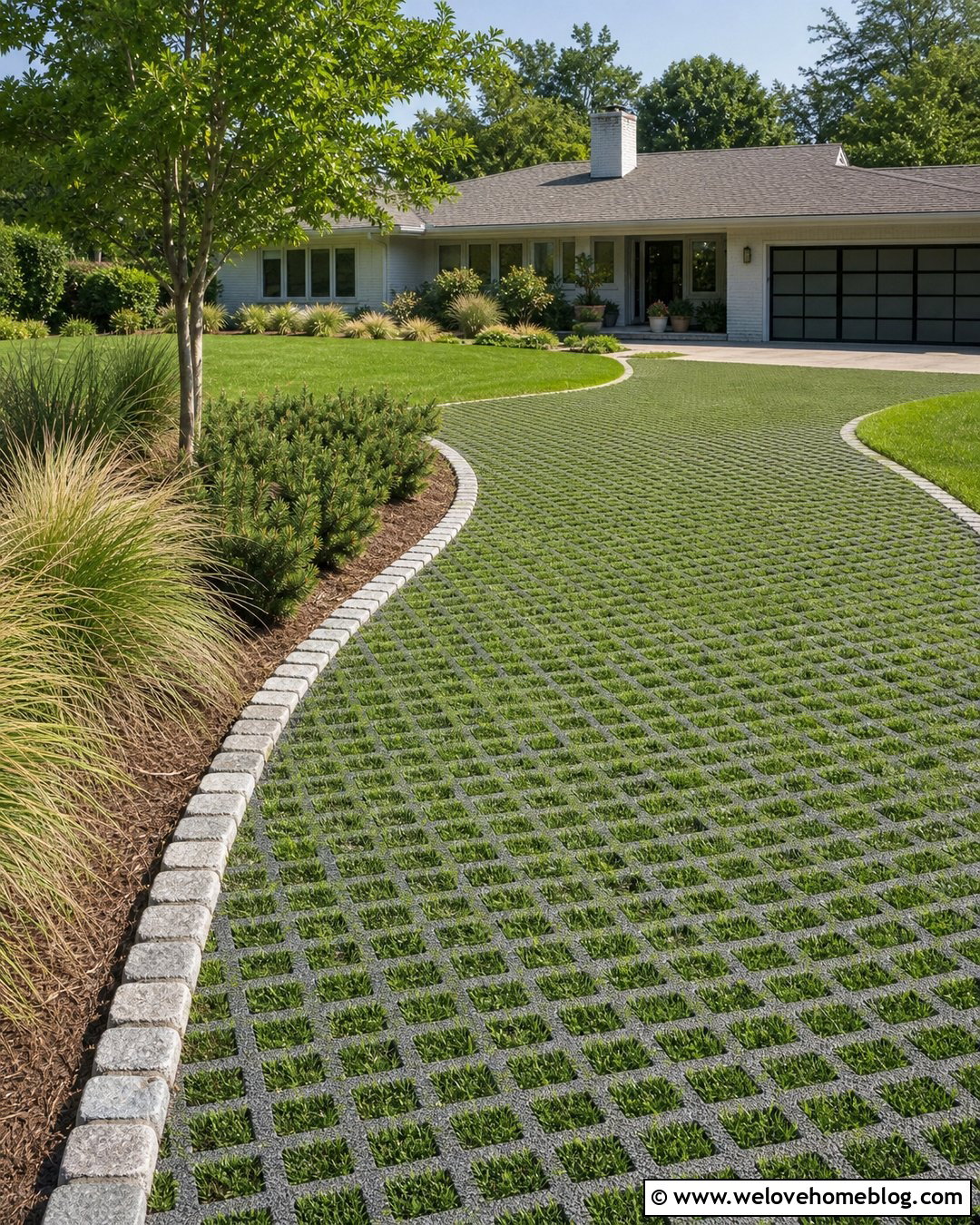
A gently curved driveway makes a compact front yard feel larger because the entire house is not revealed at once. Recycled HDPE grass grids can reinforce the curved route without creating the heavy appearance of continuous concrete. Once the cells are properly filled and established, the surface resembles a smooth extension of the lawn. Define the outside curve with granite cobbles to protect planting beds from tire traffic. On the inside, use a broad sweep of low shrubs, native grasses, and one ornamental tree as a focal point. The driveway should gradually widen near the garage to simplify turning. Because grid performance depends heavily on the subbase, drainage, and expected vehicle loads, follow the manufacturer’s installation specifications or consult an experienced contractor. ()
3. Grass Driveway With Concrete Tire Tracks
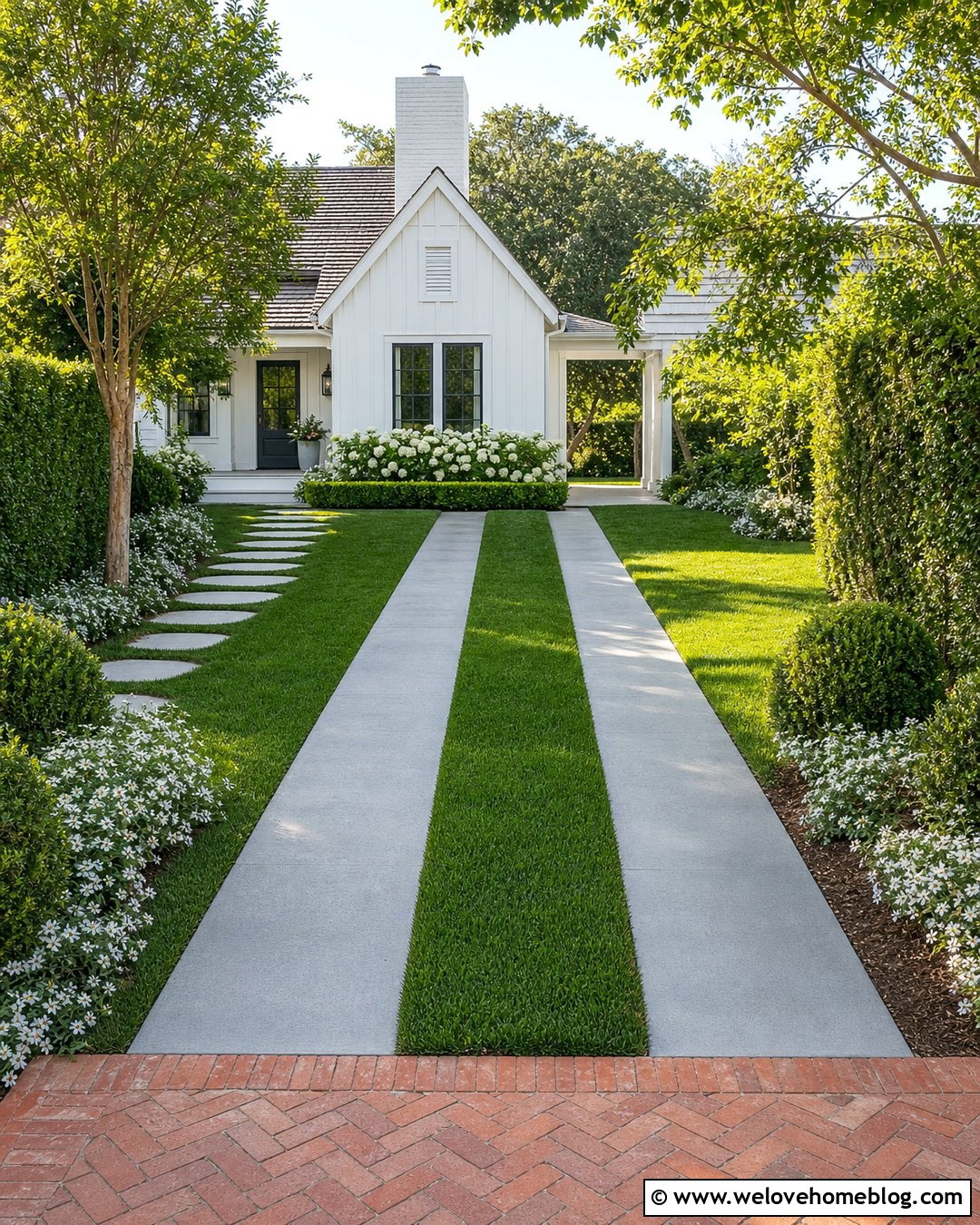
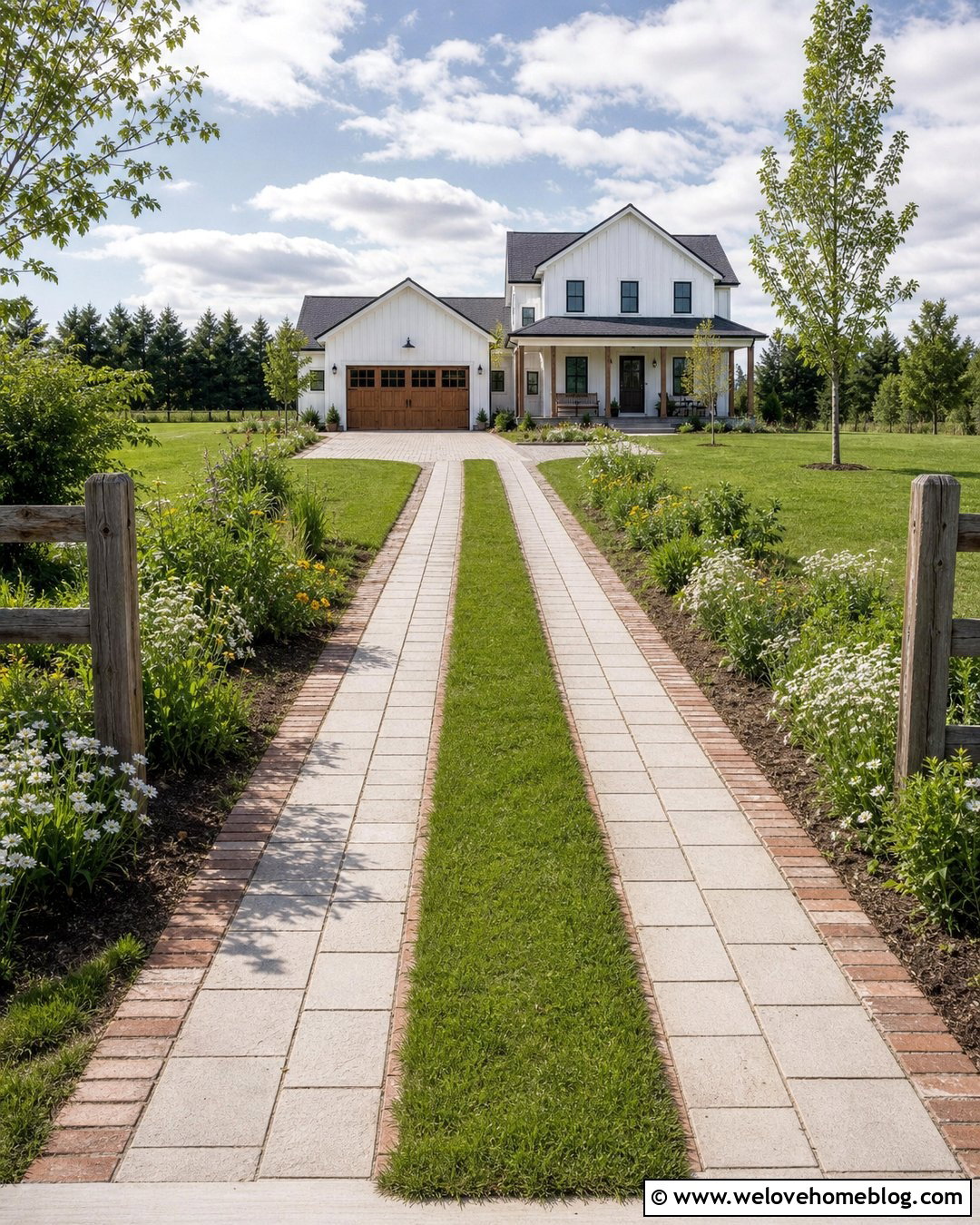
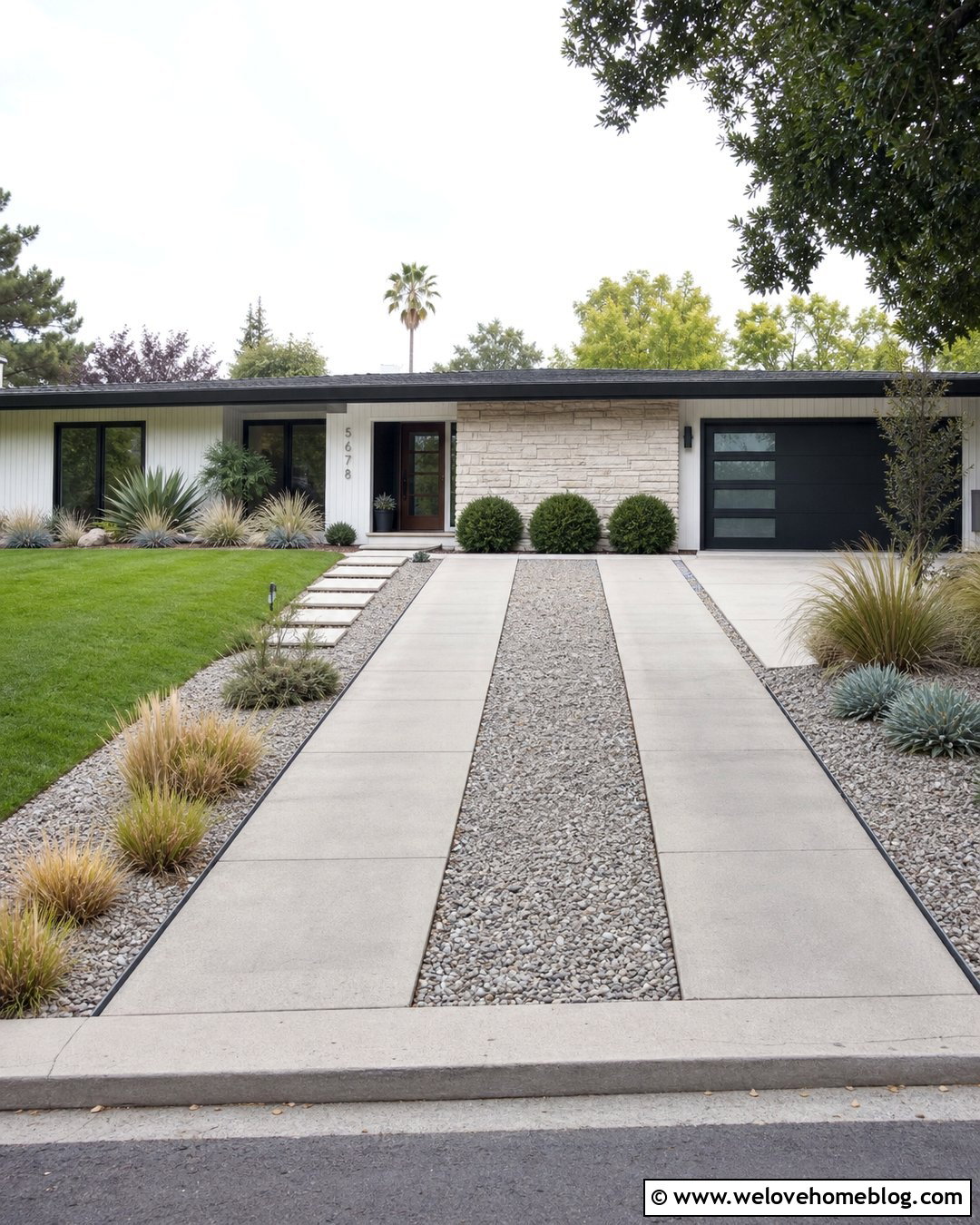
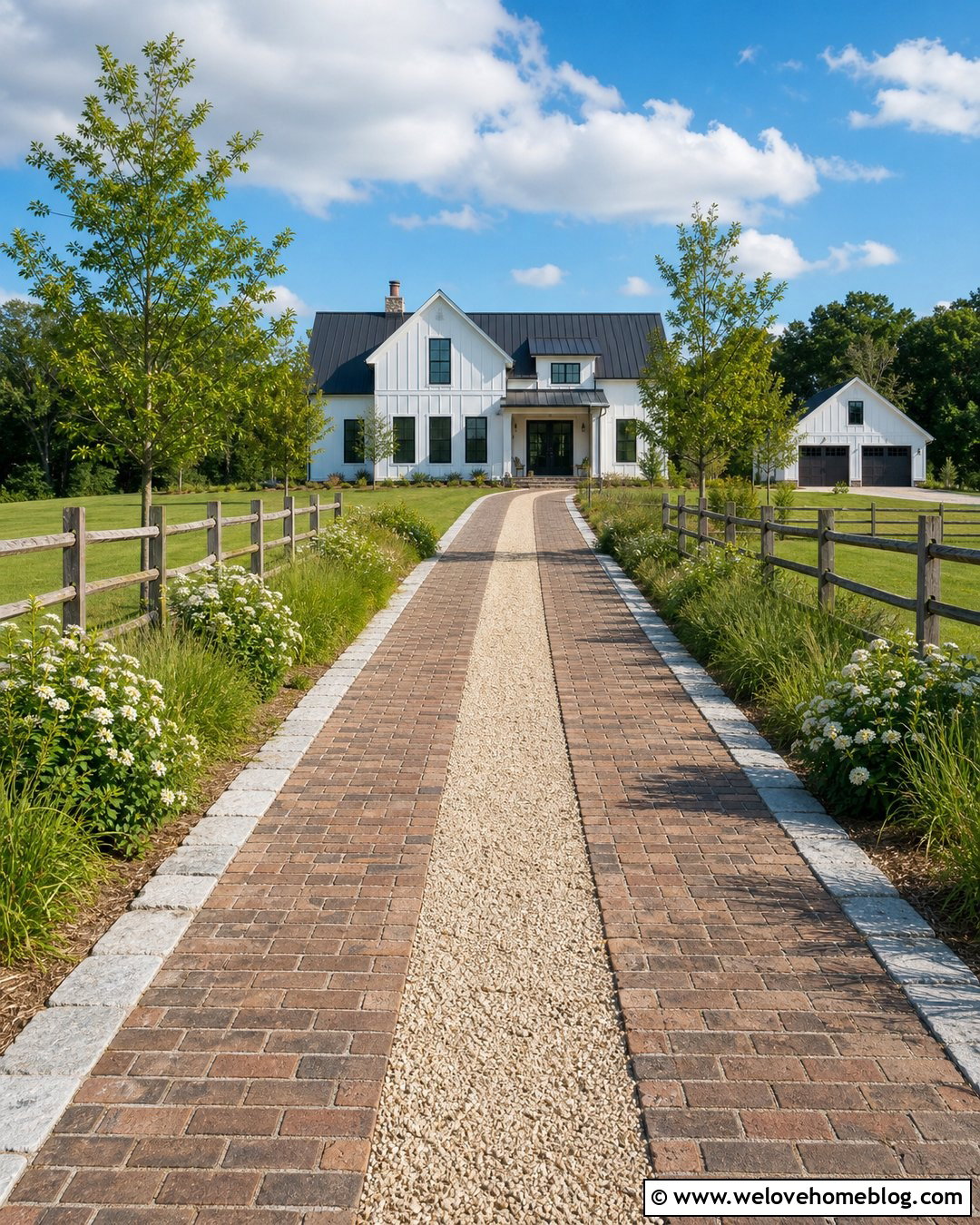
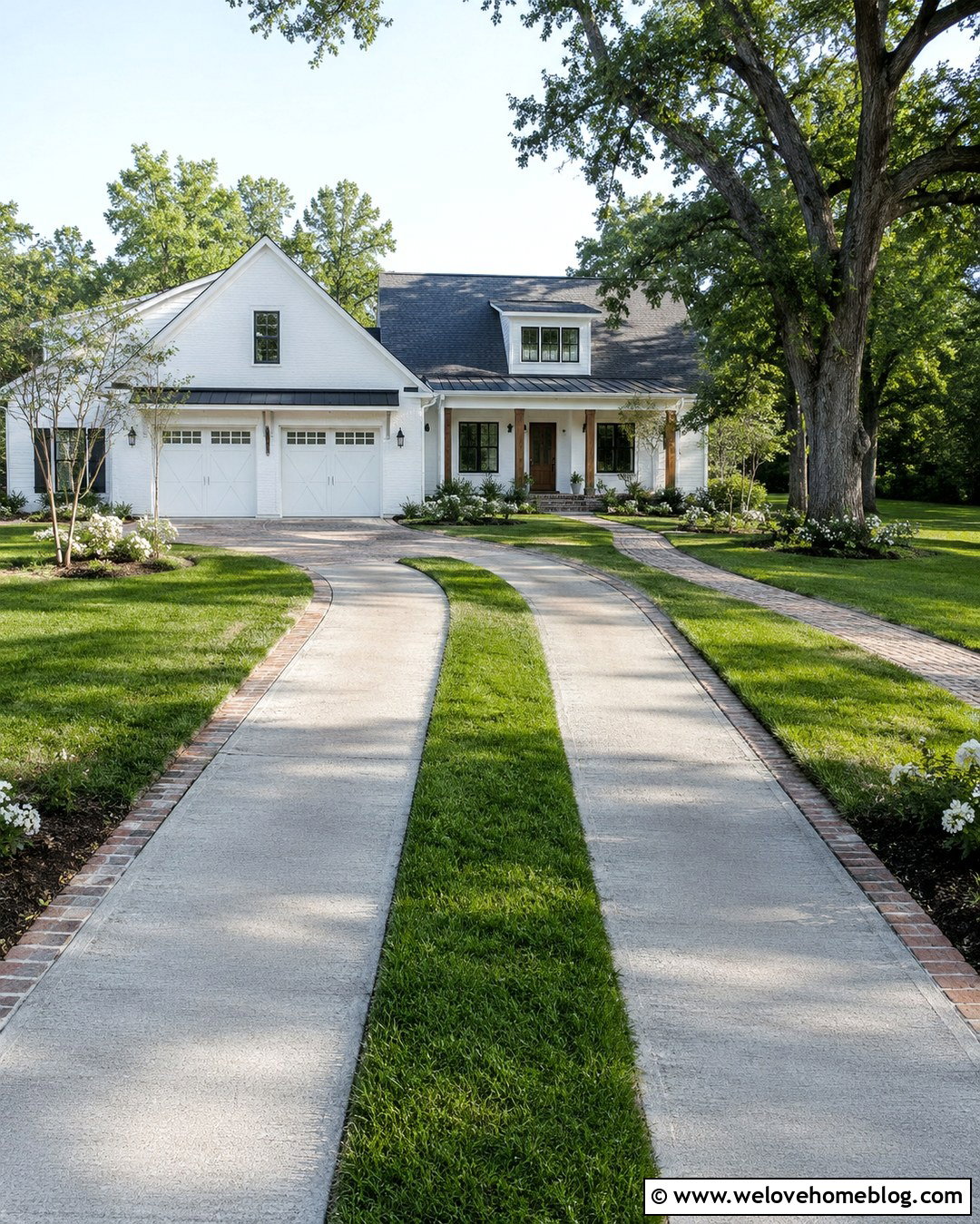
Two poured-concrete tire tracks offer a practical compromise between a lawn driveway and a fully paved surface. The tracks carry the vehicle weight, while reinforced grass fills the center and outer strips. This arrangement reduces the amount of visible hardscape and gives a cottage, bungalow, or farmhouse an informal character. Keep each track wide enough to accommodate normal tire placement, and use a slightly broader paved section where the driveway curves. A clay brick apron can mark the entrance and introduce a warm color against the green turf. Frame the route with flowering ground covers, clipped shrubs, and a simple stepping-stone walkway. For easier care, install the concrete nearly flush with the grass so a mower can travel across the complete surface without repeatedly catching raised edges.
4. Circular Concrete Turf Block Driveway
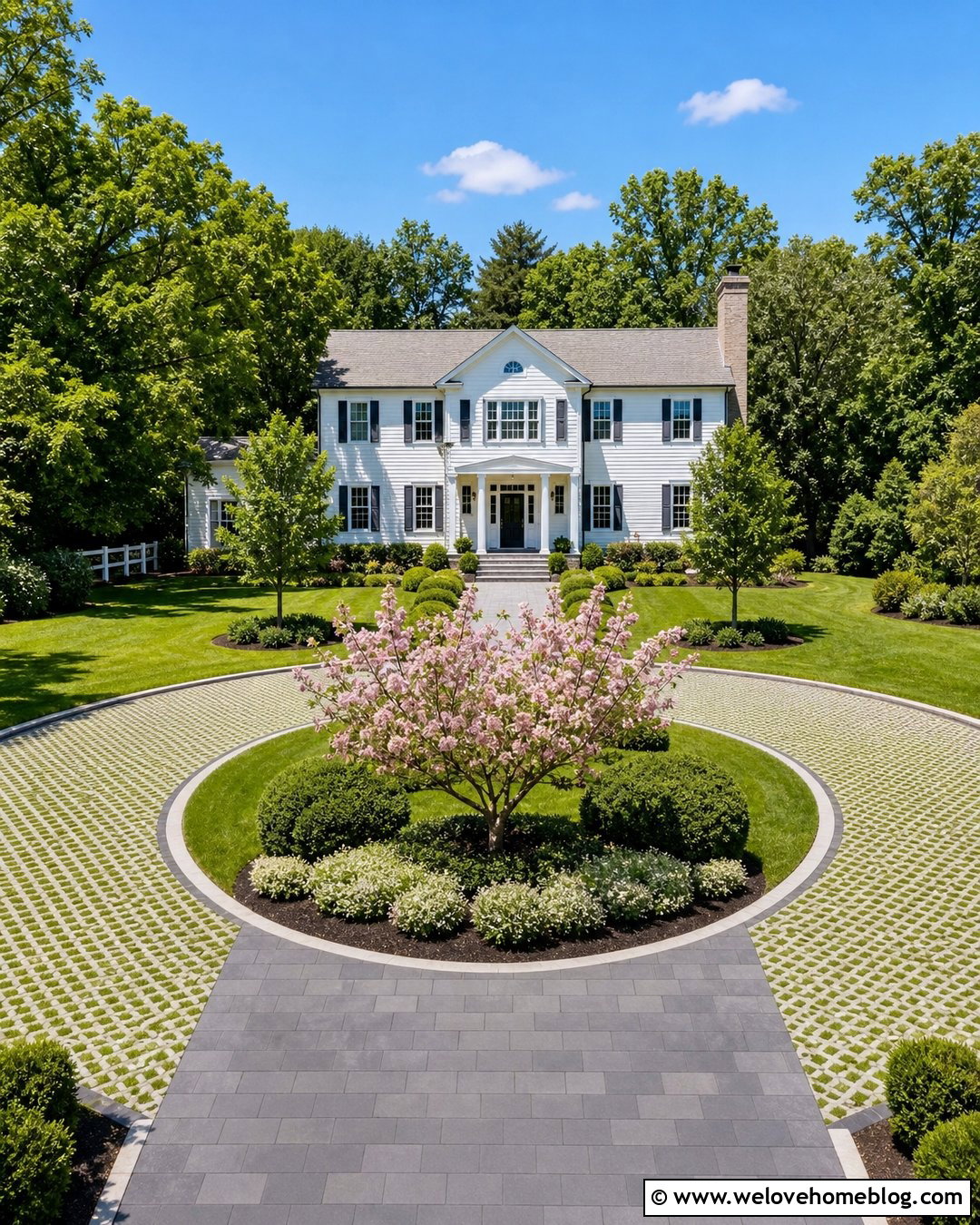
A circular grass driveway creates an elegant arrival sequence without covering the entire front yard in solid paving. Concrete turf blocks can form the driving loop, while a landscaped island provides the central focal point. Fill the island with a small flowering tree, layered evergreen shrubs, and low ground covers that preserve sightlines. A solid paver apron at the road visually anchors the entrance and handles frequent turning more effectively. Near the front steps, connect the loop to a wide walkway made from coordinating concrete pavers. This design is best suited to a broad property with enough space for comfortable turning radiuses. Before construction, confirm that the circle can accommodate delivery vehicles and that runoff will move toward planted ground rather than collecting beside the house or garage.
5. Grass Driveway With Brick Apron
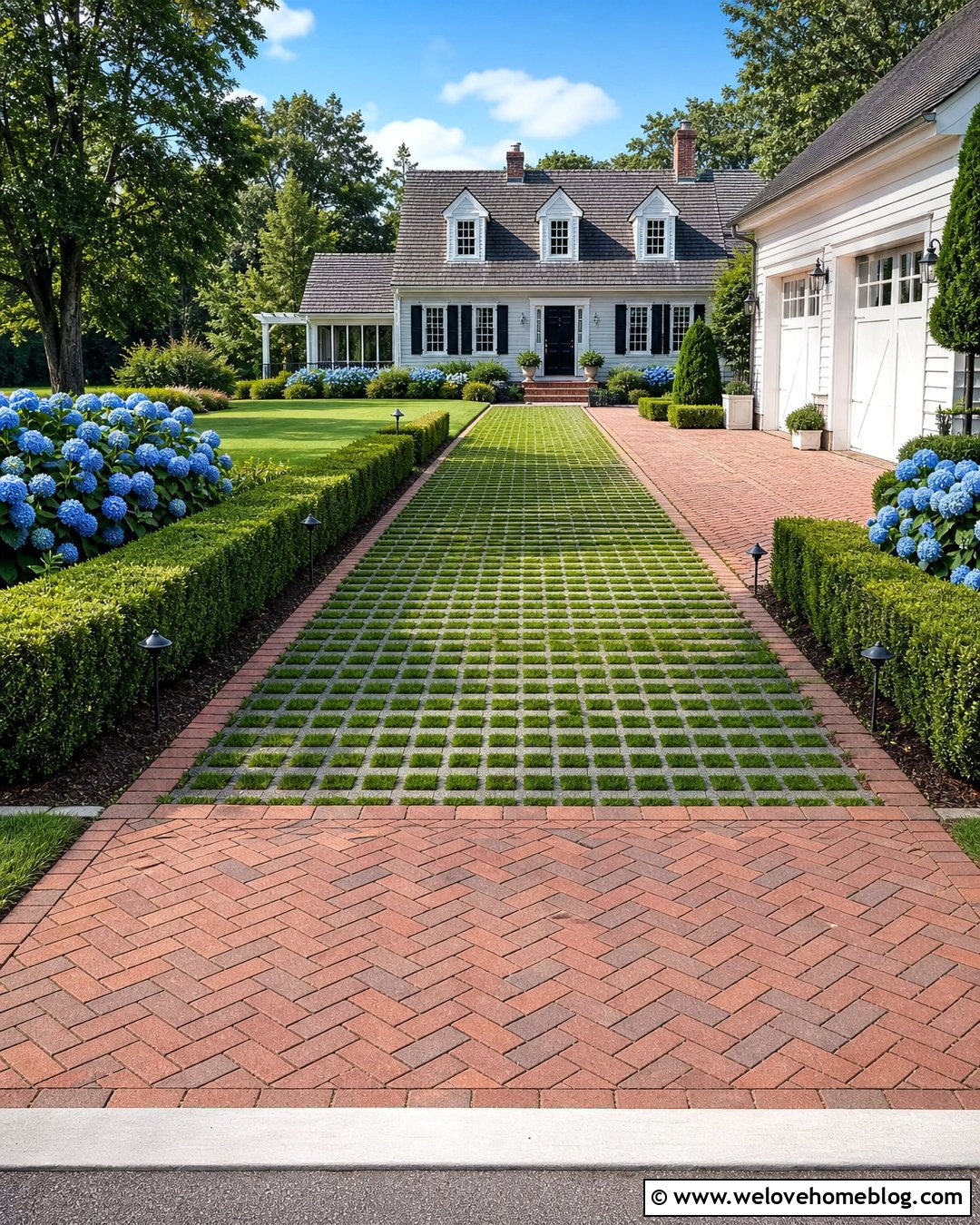
A red or brown clay brick apron gives a green driveway a finished entrance and creates a durable transition from the street. Behind the apron, reinforced grass grids continue toward the garage, allowing the main driveway to merge visually with the lawn. Repeat the brick along both edges as a narrow mowing strip so the entrance material feels connected to the entire design. A straight layout complements Colonial and Cape Cod homes, especially when paired with boxwood, hydrangeas, and symmetrical walkway planting. Use a herringbone pattern across the apron because the angled layout adds texture and suits a traditional facade. Keep the brick and grass surfaces nearly level to minimize bumps. Where vehicles stop near the garage, consider a wider brick landing that protects heavily used turf from excessive wear.
6. Grass Driveway With Cobblestone Borders
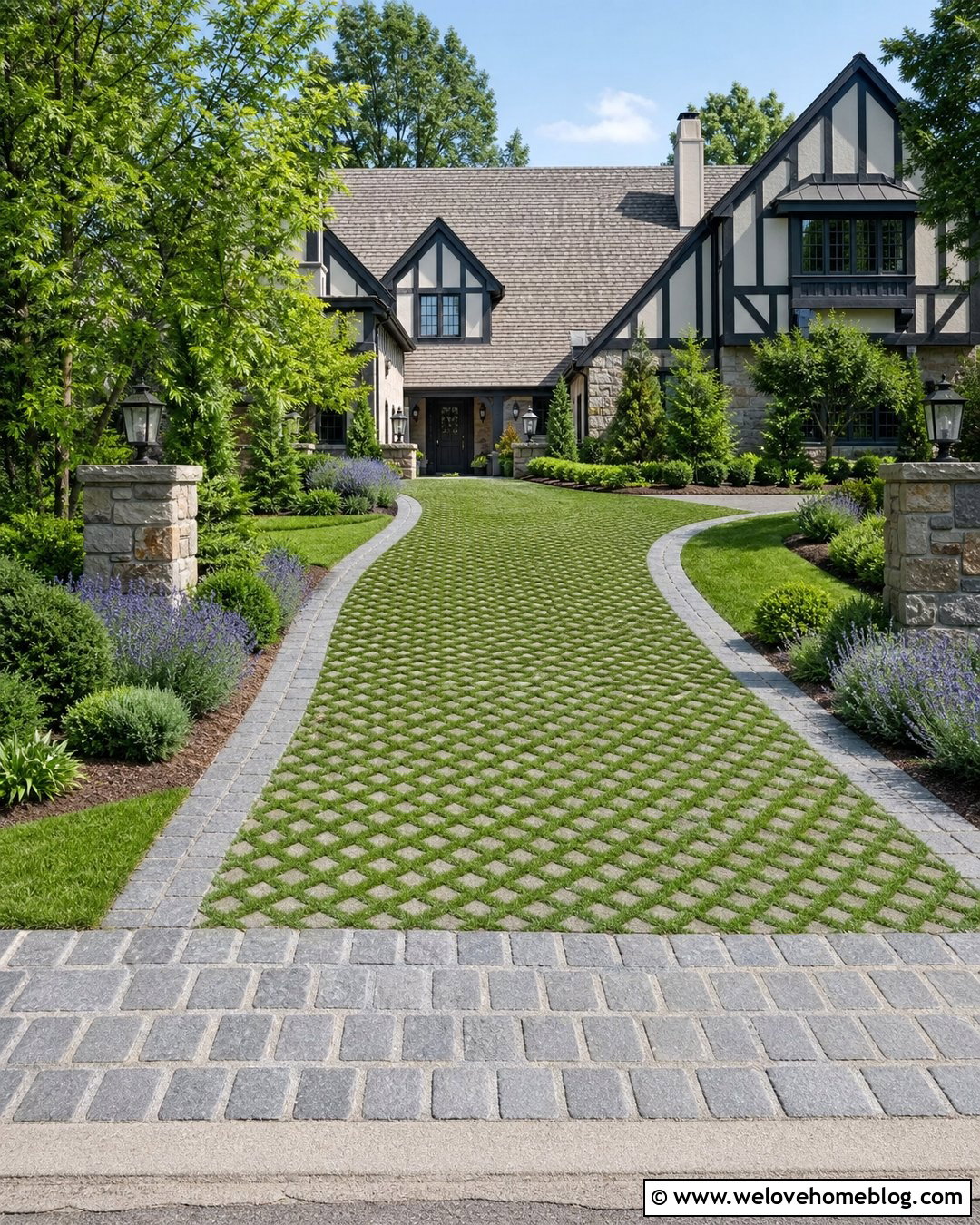
Dark gray cobblestone borders give a drivable grass driveway clear definition without taking away its natural character. Set the cobbles along a reinforced turf-grid surface, following a soft curve from the street to a detached garage or carriage house. The stones protect the driveway edges, provide a visible guide for drivers, and create a tidy transition into planting beds. A matching cobblestone apron can reinforce the entrance where turning forces are greater. Complete the look with lavender, catmint, dwarf evergreens, and a clipped lawn that meets the stones cleanly. This combination feels appropriate beside stone cottages, Tudor homes, and traditional brick houses. Choose cobbles with relatively even tops and install them flush enough to avoid creating an awkward ridge beside the grass driving surface.
7. Modern Grass Grid Driveway
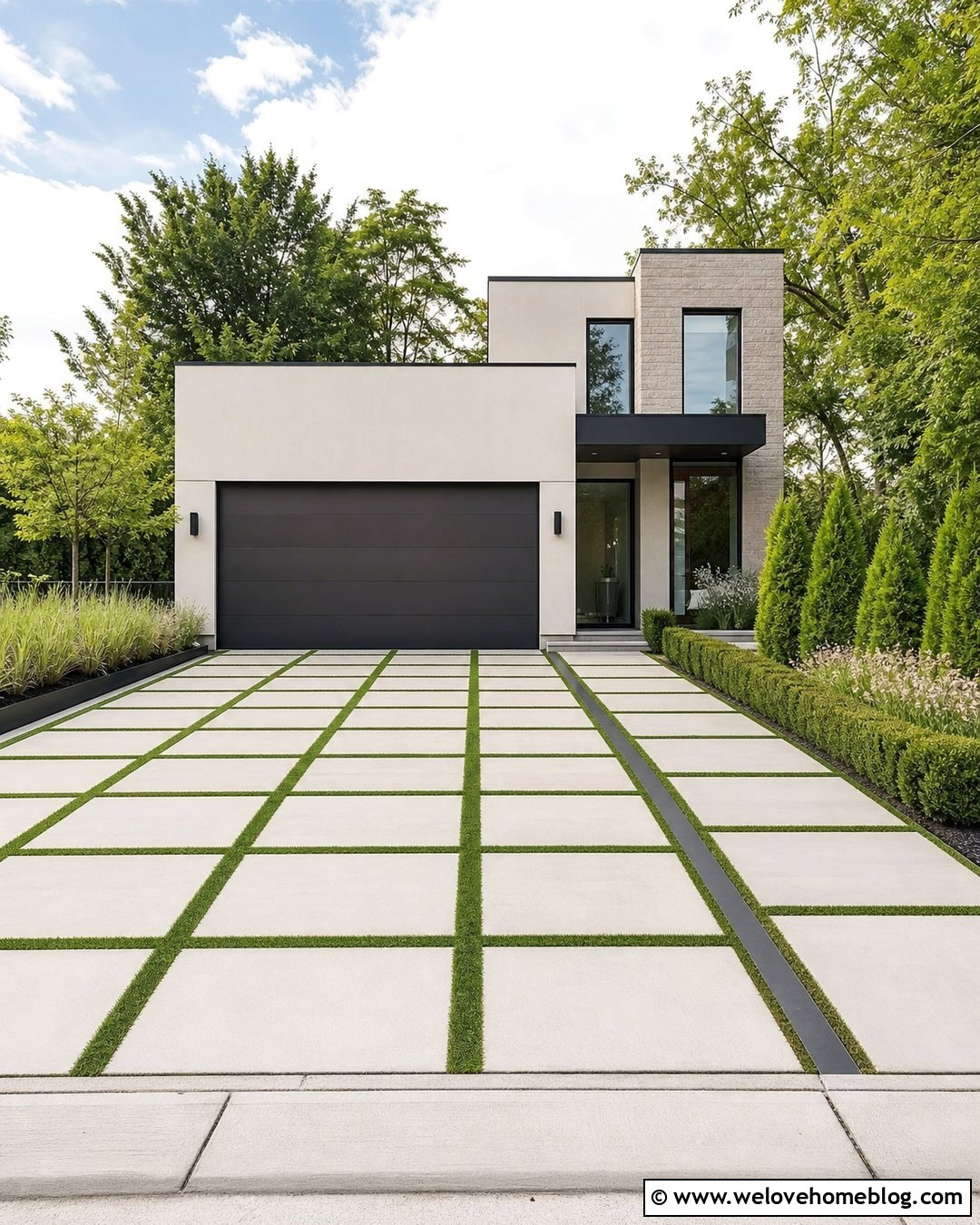
A geometric grass-grid driveway can soften modern architecture while preserving its crisp lines. Use square precast concrete pavers with open turf joints, arranging them in a precise grid across a broad, straight approach. Dark steel edging creates a sharp perimeter, while rectangular beds of ornamental grasses and compact evergreen shrubs repeat the geometry of the driveway. Near the garage, a band of smooth gray poured concrete provides a durable stopping zone and visually connects with the house facade. Large stepping slabs can form a separate walkway to the front door without interrupting the driveway pattern. Keep the plant palette restrained and the grass evenly trimmed. The finished surface should look intentional rather than like an ordinary lawn that happens to receive vehicle traffic, making careful alignment and grading especially important.
8. Farmhouse Grass Driveway With Stone Pillars
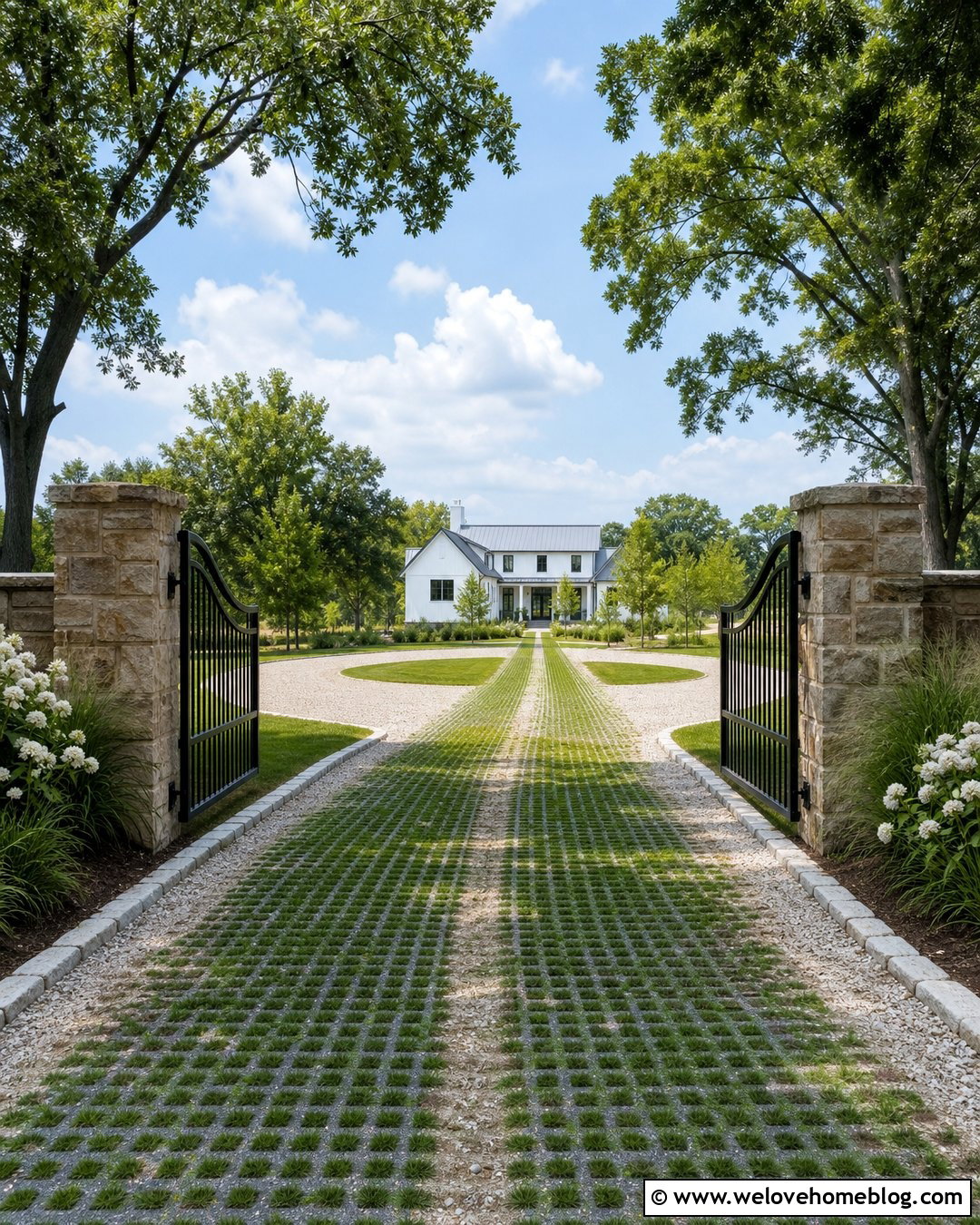
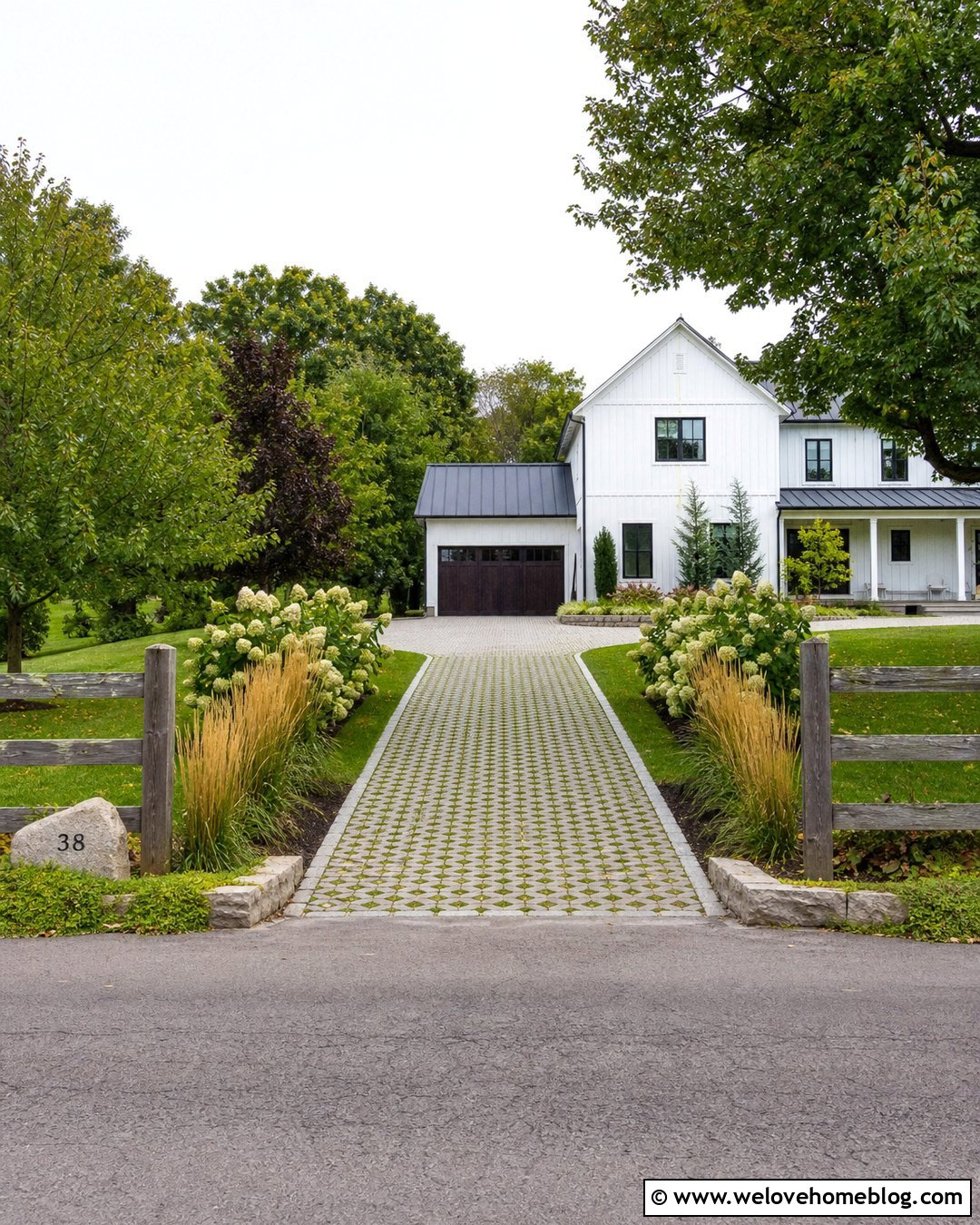
A long reinforced grass driveway can provide a relaxed approach to a modern farmhouse without looking unfinished. Mark the entrance with substantial fieldstone pillars and a simple timber or black metal gate set far enough from the road for safe vehicle access. Recycled plastic grass grids beneath the turf help maintain a consistent driving surface, while pale limestone curbing defines both edges. Continue native grasses, white flowering shrubs, and scattered shade trees along the route to create a layered country setting. A wider gravel-and-grass turning court near the house gives guests room to maneuver. The stone pillars should coordinate with foundation stone, porch details, or nearby retaining walls. Low-voltage fixtures can be integrated discreetly into the entrance landscaping without overpowering the natural daytime appearance.
9. Narrow Grass Driveway For A Small Yard
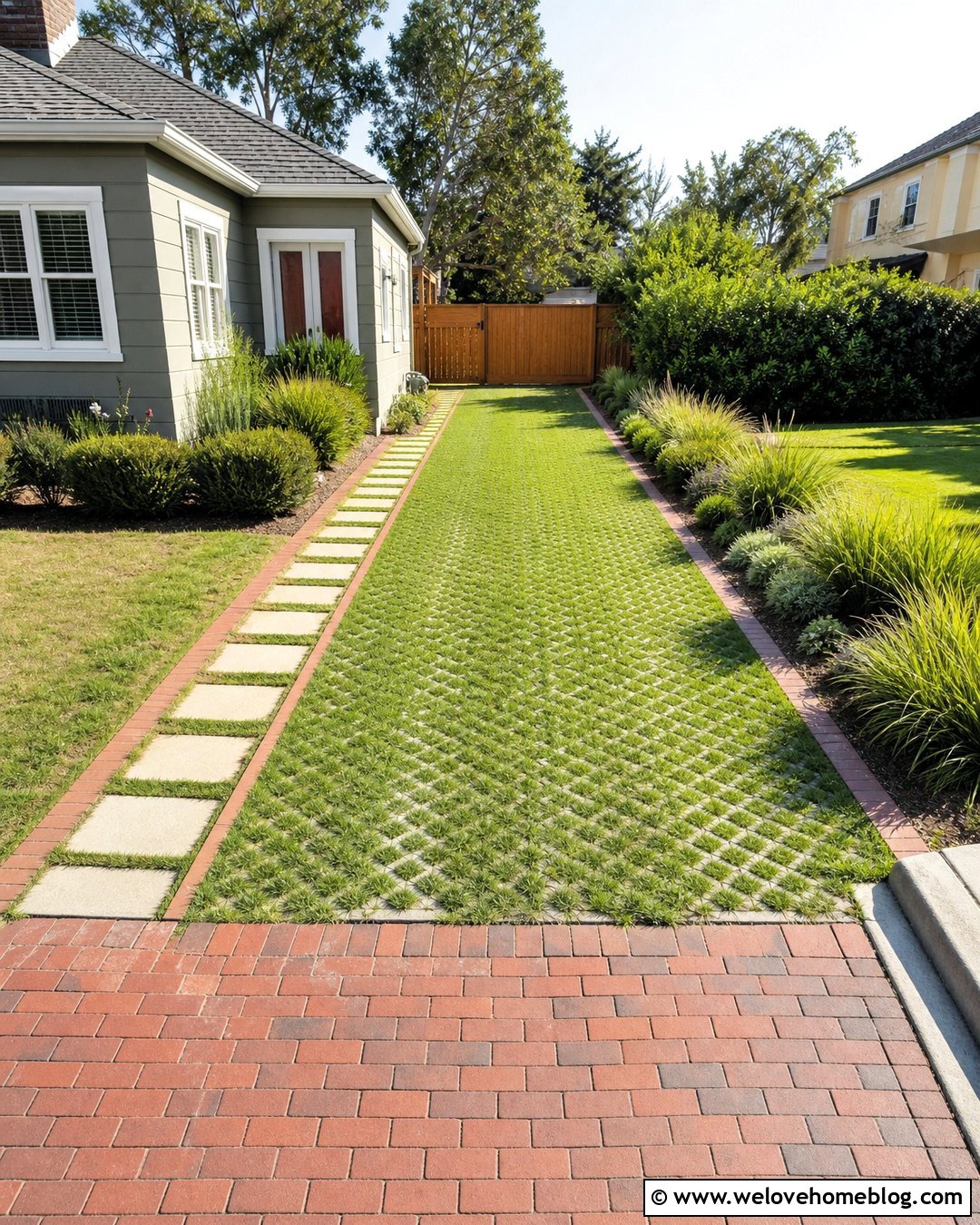
When front-yard space is limited, a narrow drivable grass strip can provide parking without making the property feel dominated by pavement. Use heavy-duty plastic turf grids across a straight, single-car route beside the house. Install a slim concrete curb along the foundation side and a flush brick mowing edge along the lawn side. Near the sidewalk, a wider brick apron helps guide the vehicle into the restricted opening. Choose low plants such as sedges, dwarf shrubs, and creeping ground covers so doors can open comfortably. A stepping-stone path can run parallel to the driveway and lead visitors toward the entrance. Check the required driveway width and property setbacks before finalizing the layout. Keep utility access, drainage, and trash-bin movement in mind when planning such a compact arrangement.
10. Grass Driveway With Natural Stone Wheel Tracks
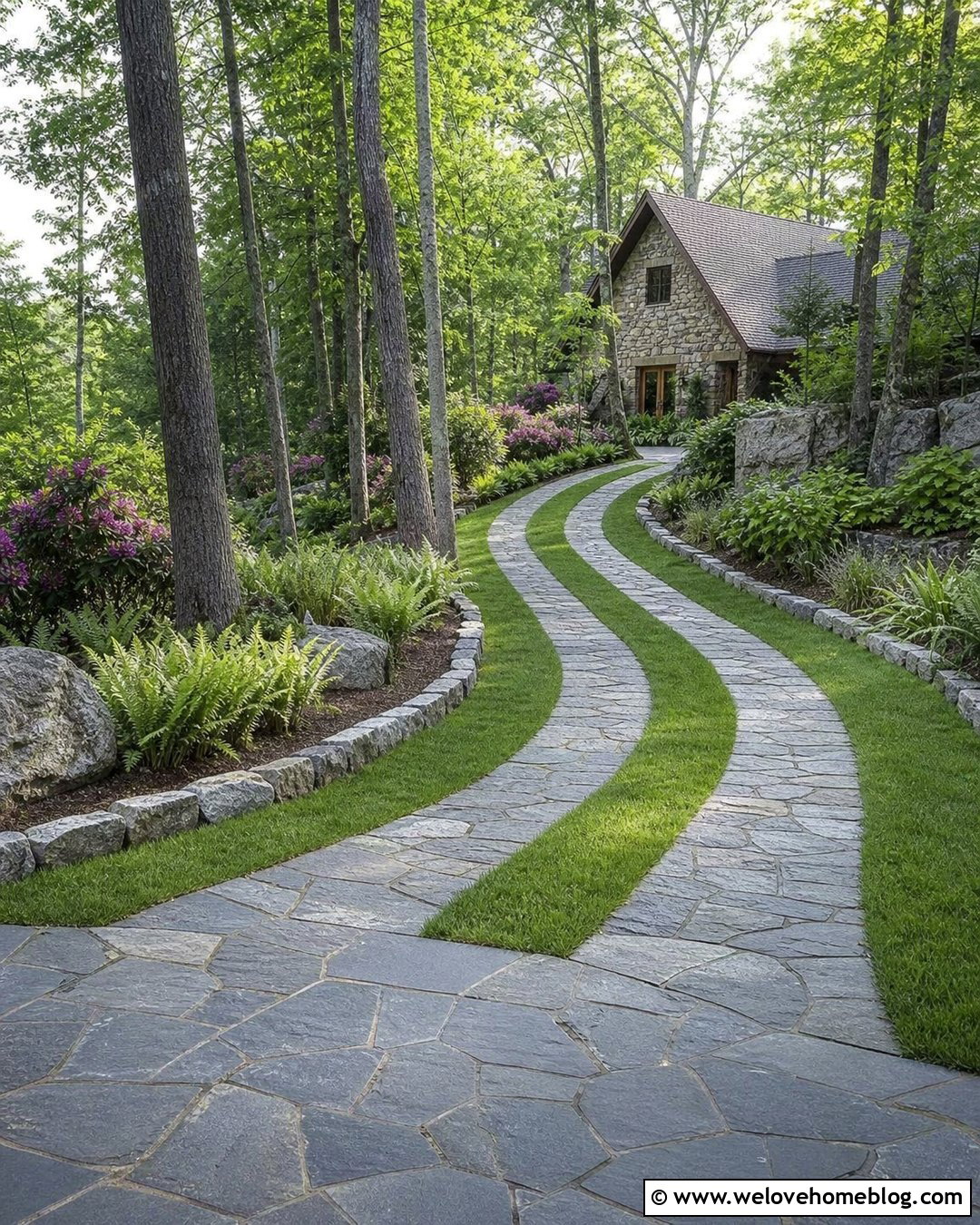
Natural stone wheel tracks create a timeless driveway that feels particularly suitable for cottages and wooded properties. Select flat granite, bluestone, or locally sourced ledgestone slabs with enough thickness and strength for the intended loads. Set them over a properly prepared base and maintain consistent spacing for vehicle tires. Reinforced turf between and beside the stones creates a continuous green surface, while irregular stone edging helps the driveway blend into surrounding planting beds. Ferns, woodland grasses, rhododendrons, and small native trees can frame the route in partial shade. Near the road, use a broader area of tightly fitted stone to form a stable apron. The result should appear natural but remain carefully engineered, with even grades and no raised slab corners that could interfere with vehicles or mowers.
11. Sloped Grass Paver Driveway
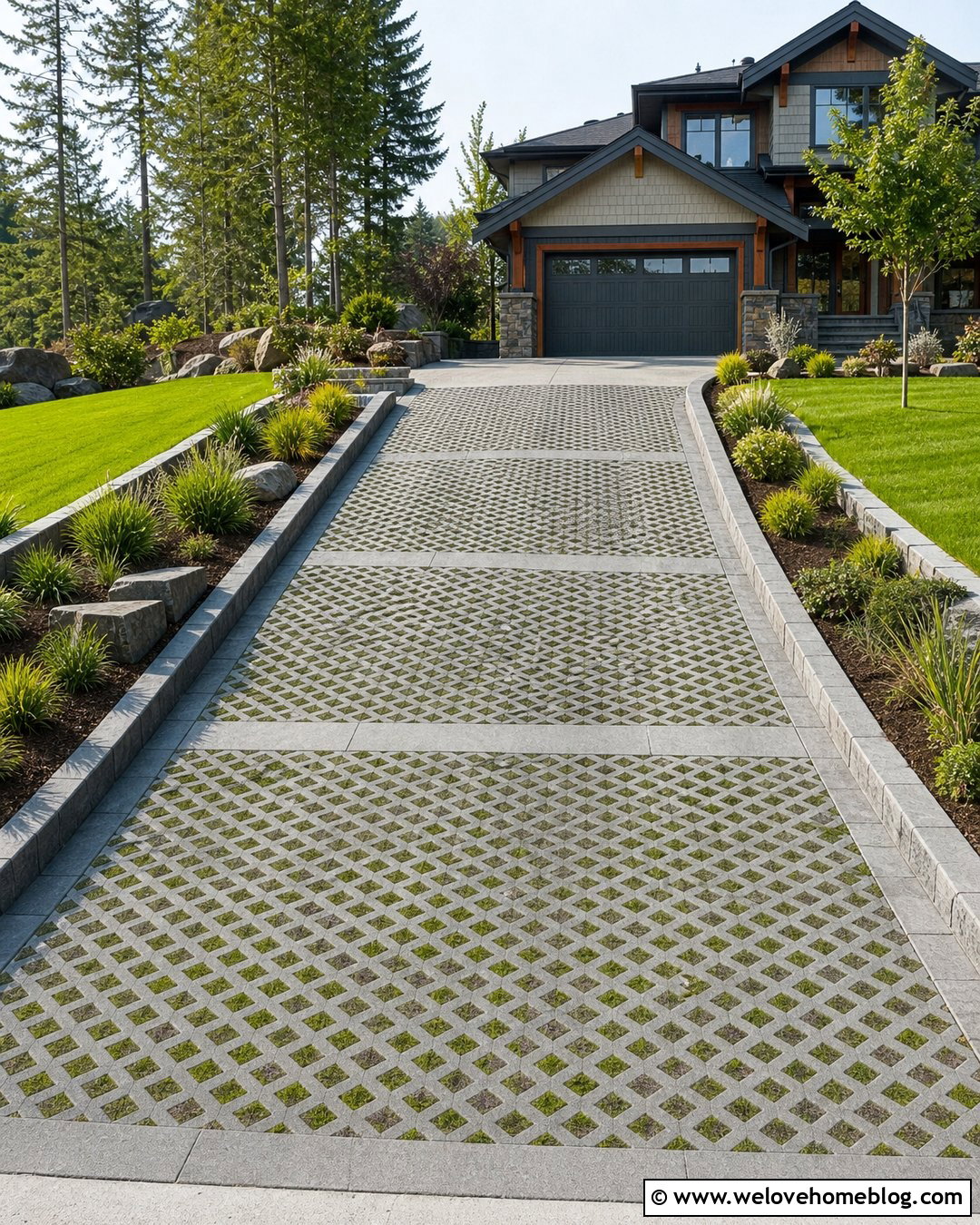
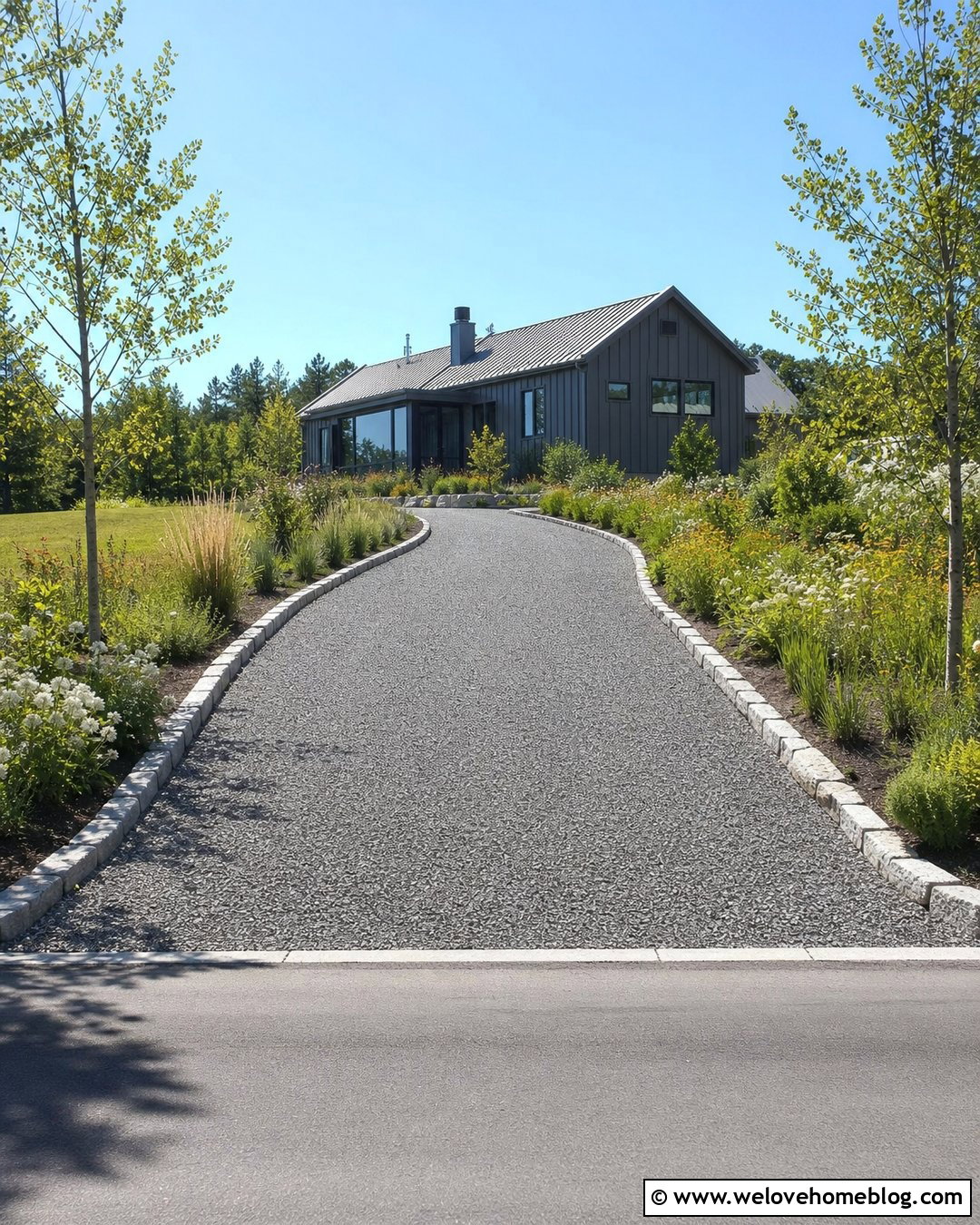
A sloped grass driveway needs stronger visual edges and especially careful water management. Concrete lattice pavers are a practical choice because their substantial structure can create a defined, reinforced surface. Divide a long incline with subtle cross bands of textured concrete pavers, which add visual rhythm and can help identify changes in grade. Stone curbs along both sides keep the route contained and separate it from planted drainage areas. Use deep-rooted ornamental grasses and compact native shrubs on the downhill border to create a finished landscape. Avoid directing runoff toward the garage or neighboring property. The base, slope, drainage outlets, and paver system should be designed for local rainfall and soil conditions. On challenging sites, professional grading advice is far more valuable than correcting erosion or settlement after installation.
12. Grass Driveway With Gravel Parking Pad
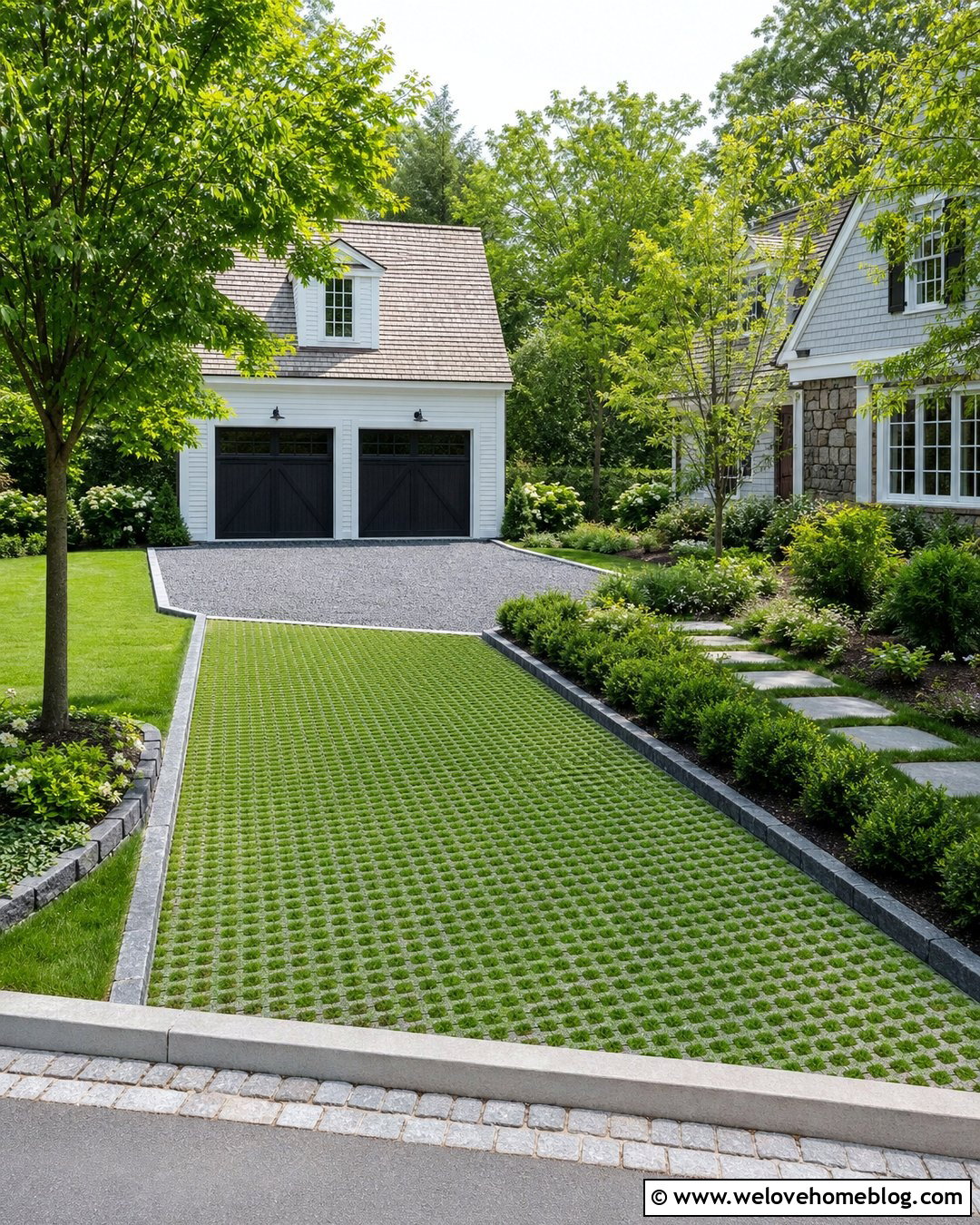
Combining reinforced grass with a gravel parking pad places each material where it performs best. Use turf grids along the main approach, then transition to compacted angular gravel in a widened parking area near a detached garage. A granite sett border can contain the gravel and create a crisp division between the two permeable surfaces. This layout allows the grass section to blend with the yard while keeping regularly parked vehicles off living turf. Plant small canopy trees around the parking pad for shade, but position them where branches and roots will not obstruct cars. A stepping-stone walkway can connect the parking area to the house. Choose angular driveway gravel rather than loose, rounded pea gravel because it interlocks more effectively and is less likely to scatter under turning tires.
13. Grass Driveway With Paver Ribbons
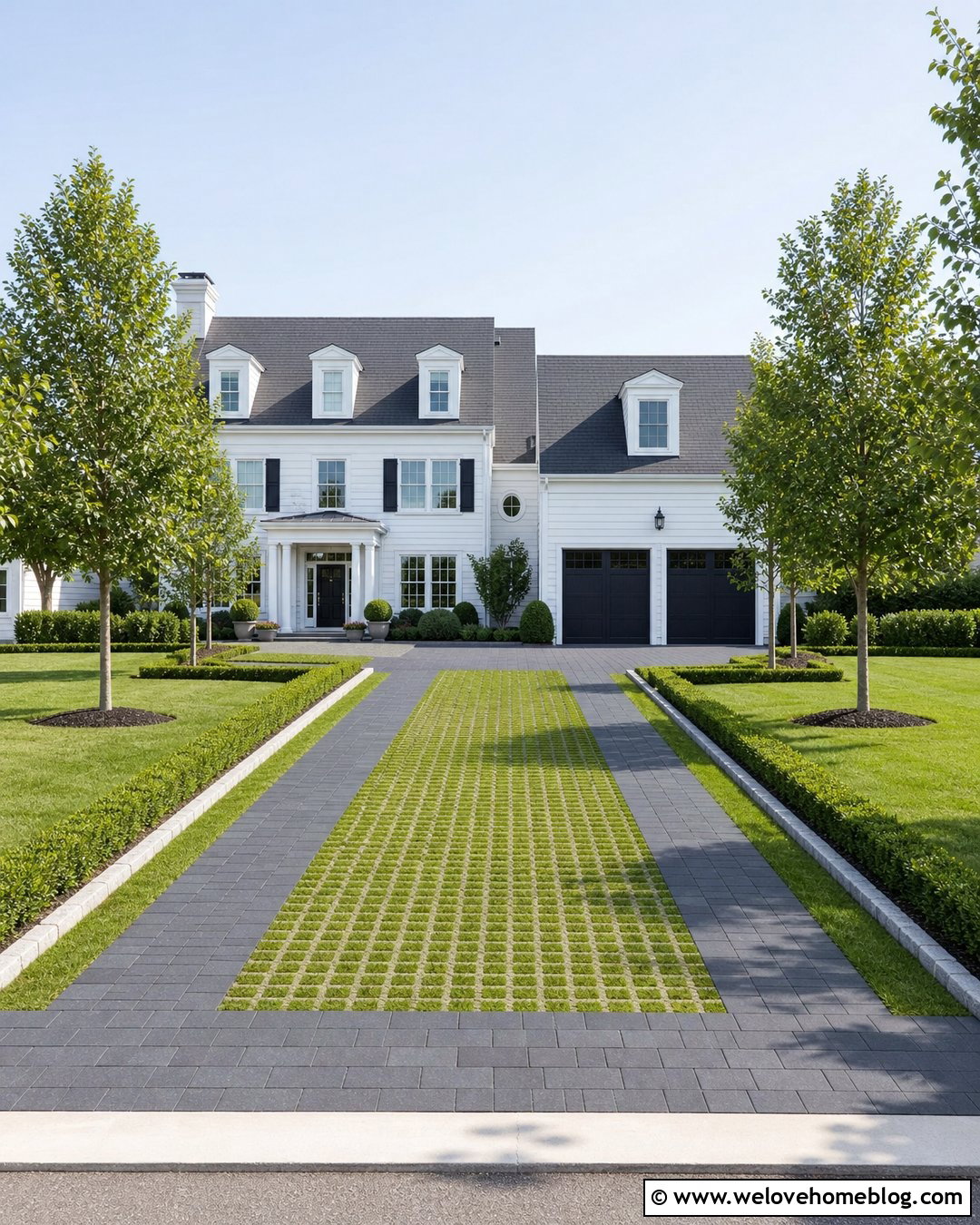
Paver ribbons can turn a simple grass driveway into a tailored feature that complements the house. Begin with reinforced turf grids across the complete driving area, then install parallel bands of charcoal concrete pavers along the wheel paths and perimeter. The dark ribbons remain visible through every season and provide extra support in the most traveled zones. A matching paver apron and garage landing unite the composition. Surround the straight driveway with clipped hedges, rectangular lawn panels, and evenly spaced ornamental trees for a formal appearance. This layout works well with contemporary Colonial and transitional homes. Maintain generous turf openings between the ribbons so the design still reads as a green driveway. Accurate measurements are essential because uneven or wandering bands will be noticeable from the curb.
14. Shaded Grass Driveway With Sedges
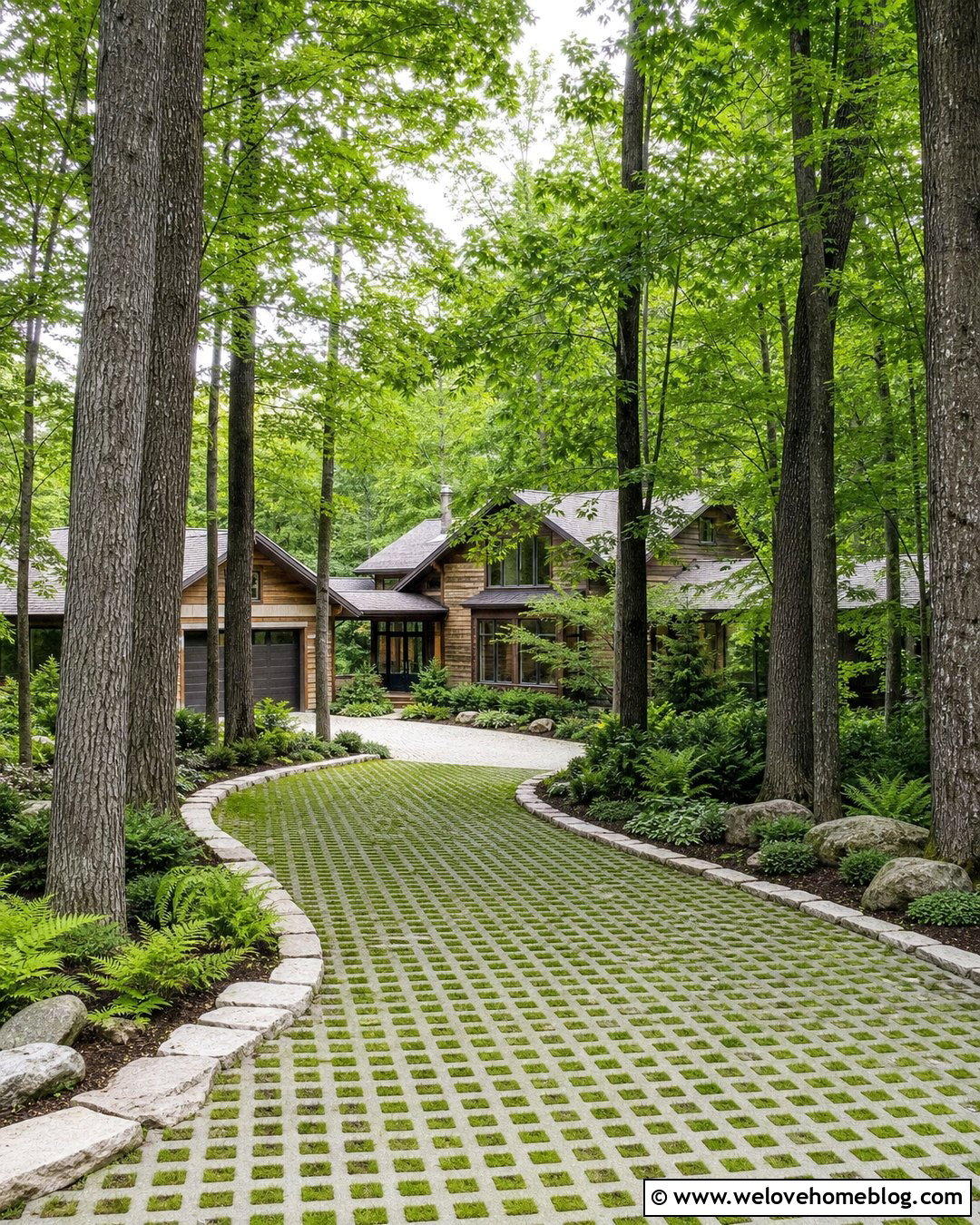
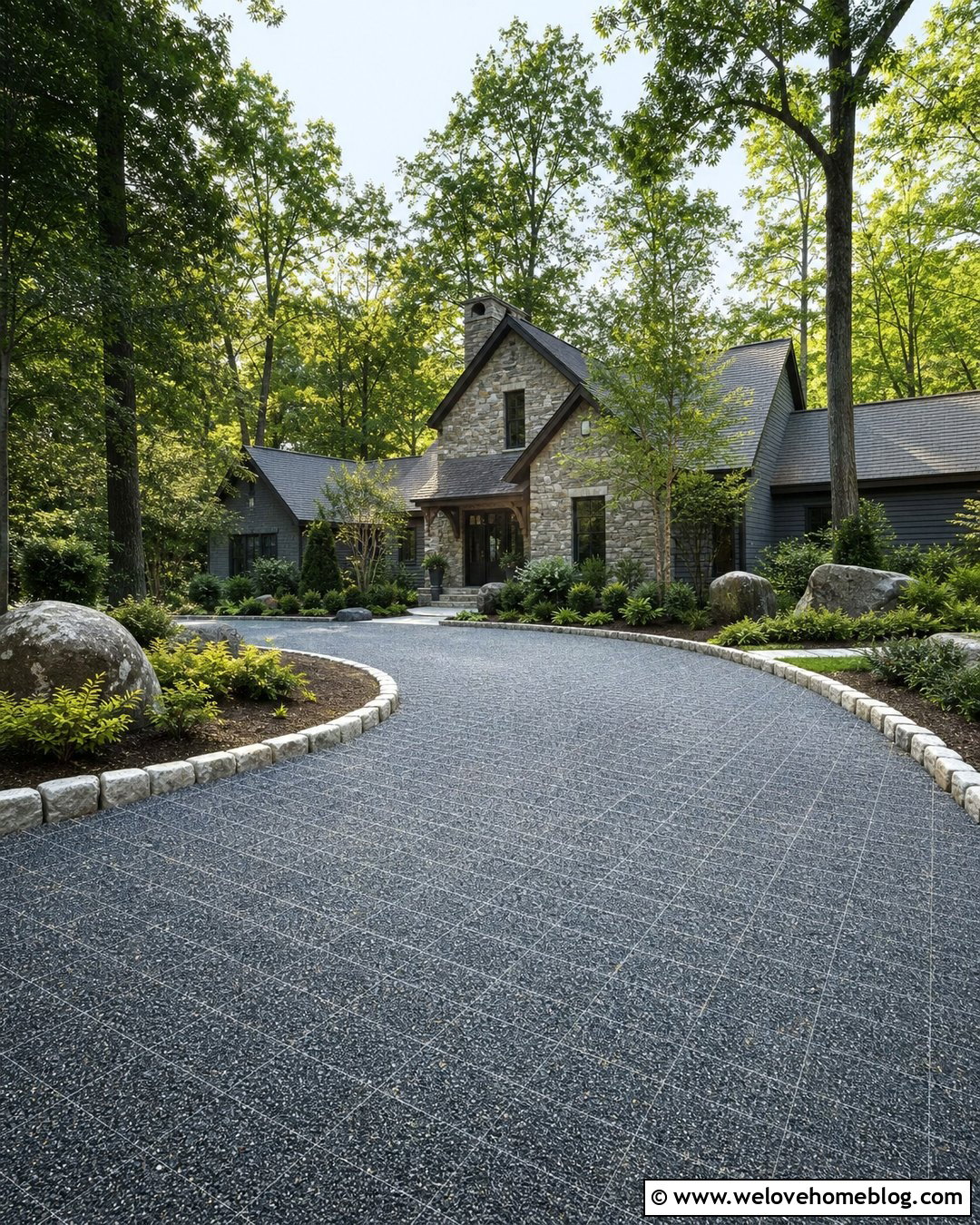
Traditional lawn grass may struggle beneath mature trees, but a reinforced driveway planted with traffic-tolerant sedges can create a greener solution for a shaded property. Use an open concrete plantable-paver system with soil-filled cells, then select plants recommended for the site’s light, climate, and moisture conditions. A softly curved layout protects major tree trunks and gives the route a woodland character. Border the surface with weathered granite stones and layered beds of ferns, low shrubs, and woodland ground covers. Keep vegetation trimmed near the driving zone so the route remains easy to read. Avoid excavating carelessly around established roots. An arborist or landscape professional can help position the driveway and determine whether construction may damage important trees. The finished design should feel integrated with the woodland rather than cut through it.
15. Drought Tolerant Grass Driveway
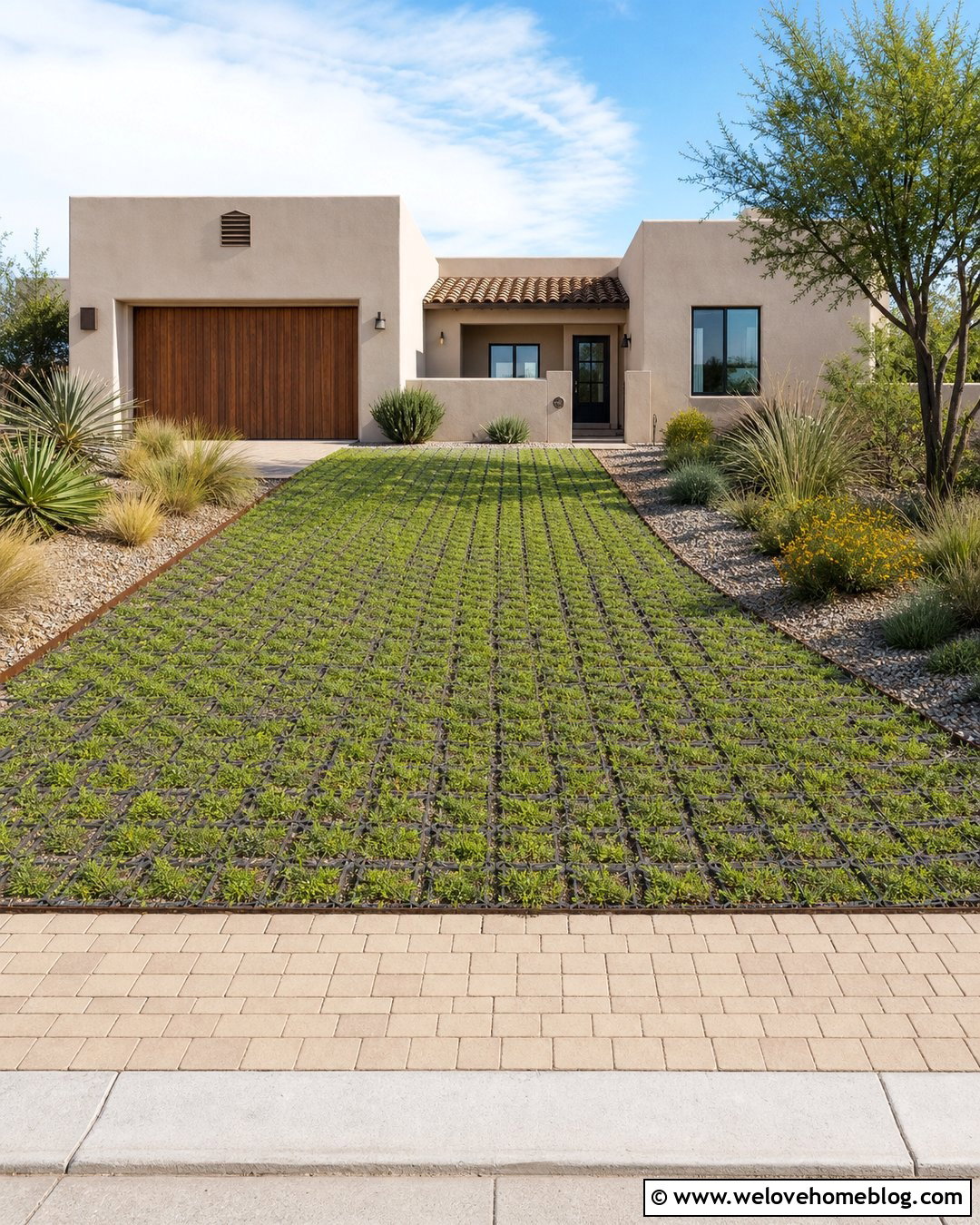
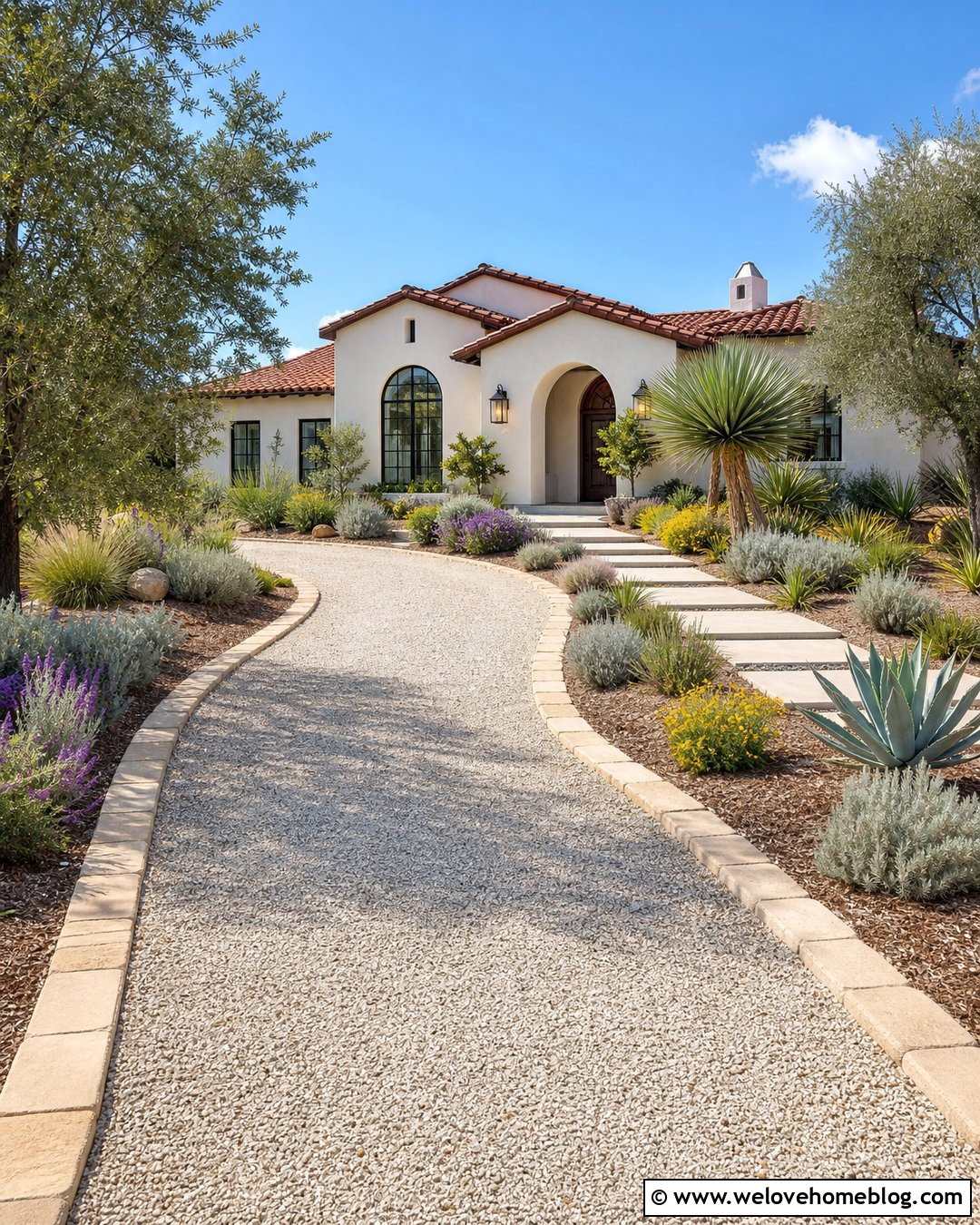
In a dry climate, a drivable green driveway should use turf or low-growing plants selected for modest water needs. Install a load-rated plastic grid over a permeable aggregate base, then fill it with an appropriate sandy planting mix and regionally suitable grass. Frame the straight driveway with gravel mulch, sculptural native shrubs, and drought-tolerant ornamental grasses. Rust-colored steel edging provides a crisp transition between the living driving surface and the surrounding xeriscape. A band of tan concrete pavers at the street adds a durable apron and echoes a stucco or Southwestern facade. Keep irrigation targeted rather than spraying the entire frontage. Even drought-adapted turf usually requires attentive watering during establishment, so plan irrigation access before construction instead of treating it as a later addition.
16. Grass Driveway With Wildflower Borders
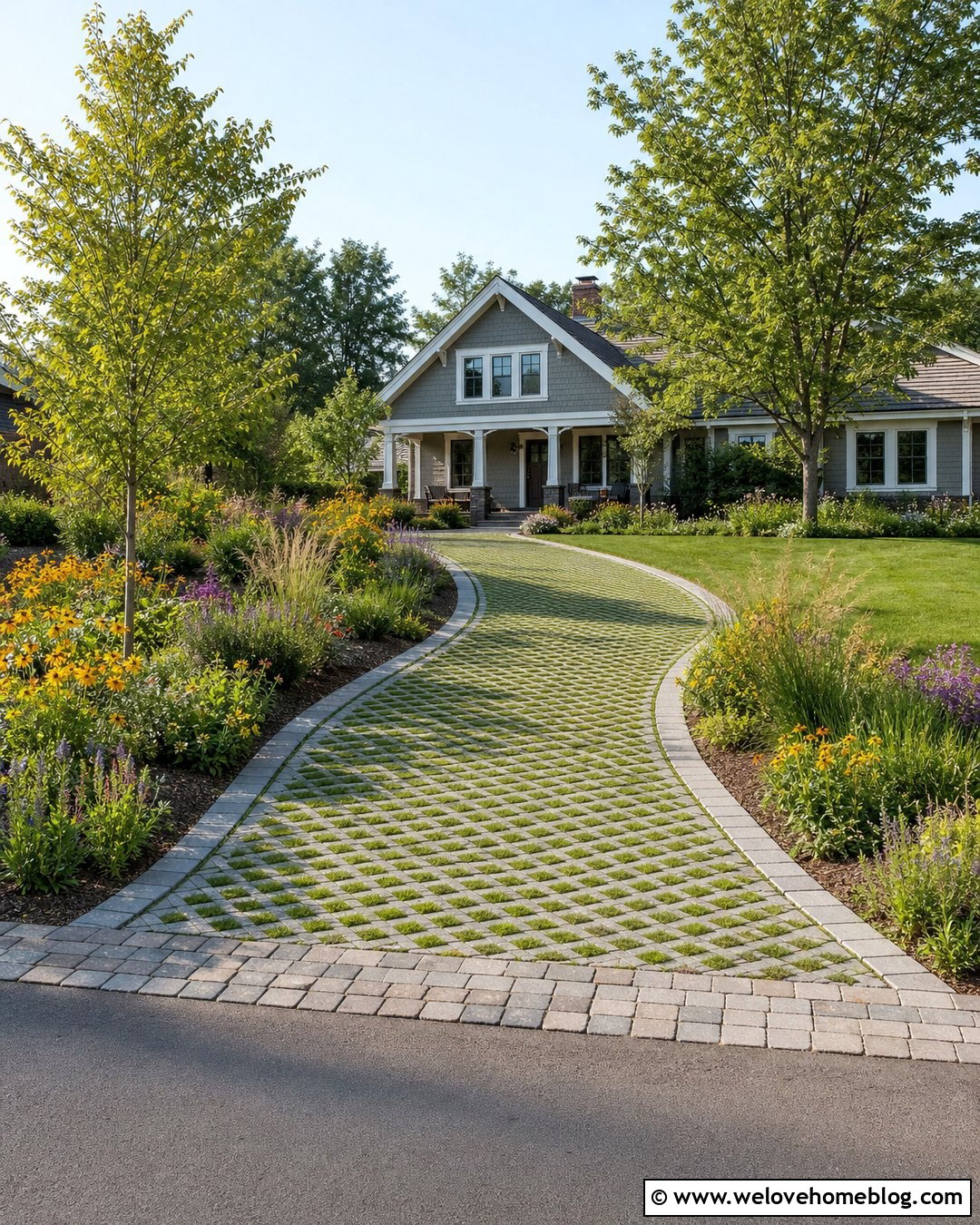
A reinforced grass driveway can become the calm green center of a pollinator-friendly front landscape. Use concrete grass pavers in a broad, gently curved layout, with the turf kept short across all vehicle areas. On both sides, create generous wildflower borders using regionally appropriate perennials and ornamental grasses. Set a narrow strip of cobblestones between the driveway and planting beds to prevent stems from flopping into the tire path. At the entrance, a simple cobblestone apron gives the informal landscape a polished starting point. This look pairs beautifully with cottages, Craftsman homes, and rural properties. Keep taller plants farther from the street and inside corners so drivers retain clear views. A mown lawn strip or low ground-cover band can make the abundant planting feel deliberate and manageable.
17. Split Grass Driveway With Garden Island
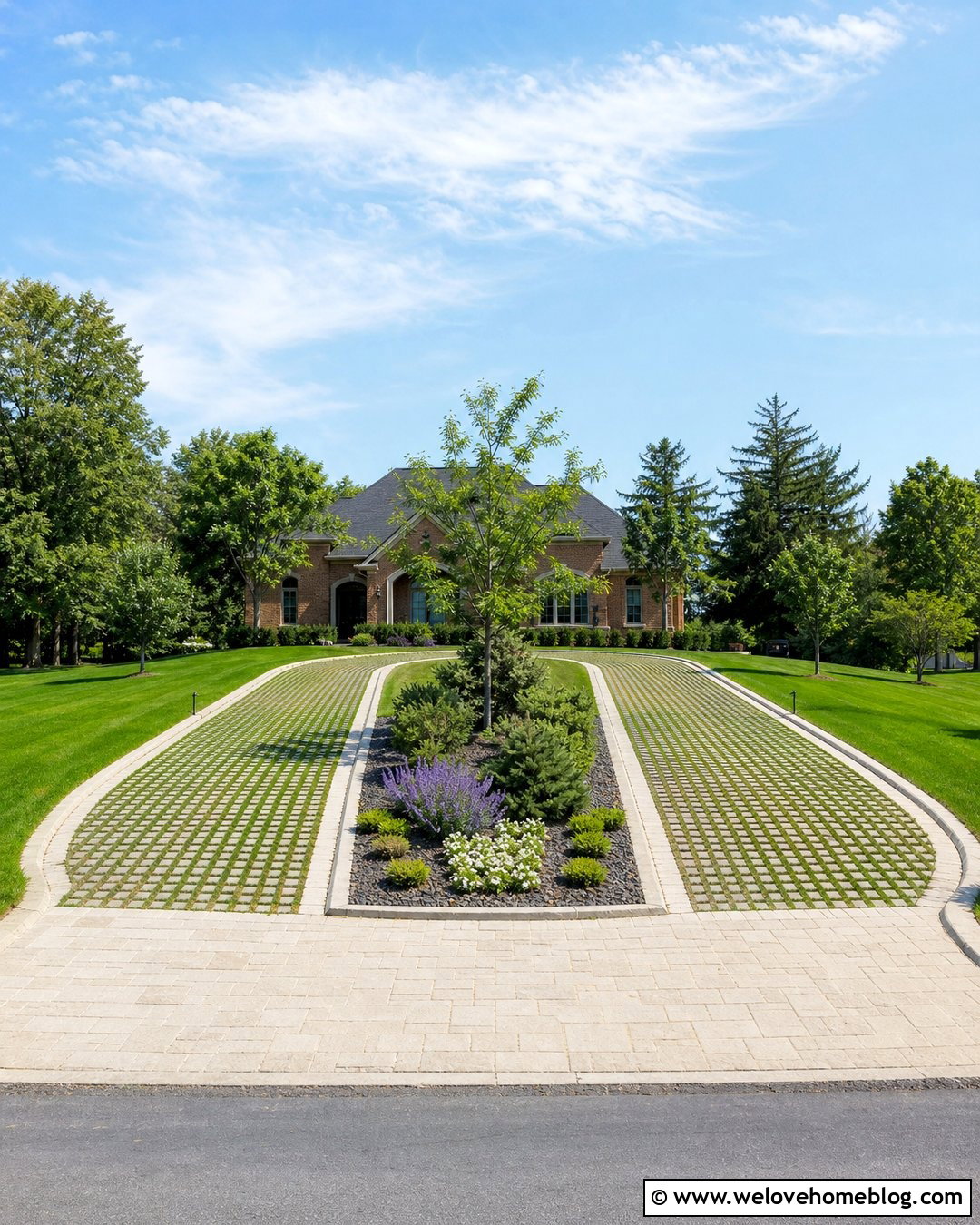
A split driveway uses two reinforced grass lanes that divide around a landscaped island before meeting near the garage. This layout adds interest to a wide front yard and can preserve an existing tree or create space for a new focal-point garden. Form both lanes with square concrete turf blocks and outline them with narrow limestone curbs. In the center, combine a small ornamental tree with low evergreen shrubs, flowering perennials, and stone mulch. Keep the island planting short near each end to protect visibility. A shared limestone paver apron at the street visually joins the two lanes and creates a strong entrance. Before selecting this arrangement, test the turning geometry carefully. Both sides must provide enough width for vehicles without encouraging tires to cross the planted island or adjacent lawn.
18. Grass Driveway With A Wooden Gate
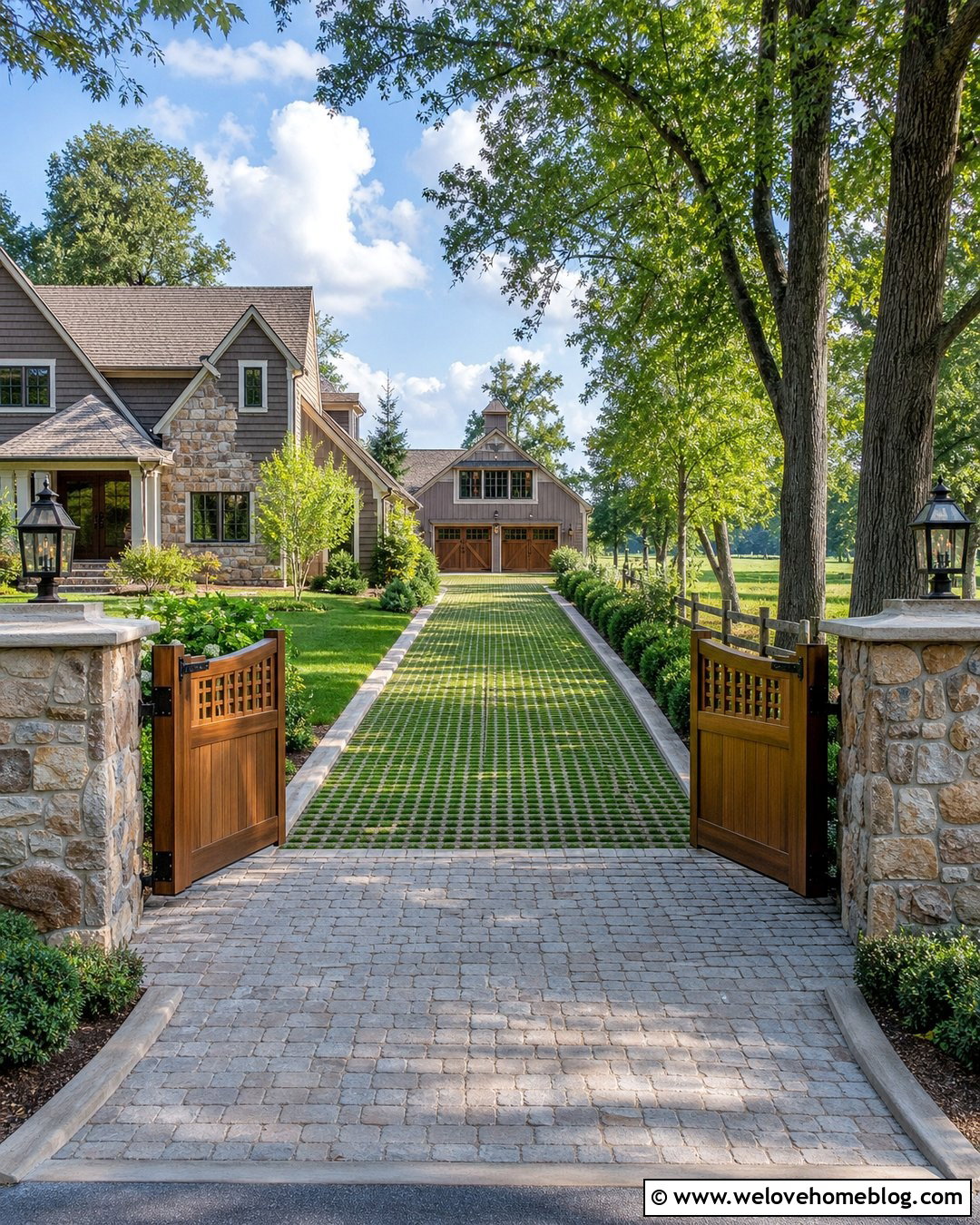
A wooden gate can give a green driveway privacy and country character while keeping the overall entrance welcoming. Run a reinforced plastic-grid grass driveway in a straight line toward a farmhouse, barn-style garage, or rustic contemporary home. Set a simple cedar gate between stone or heavy timber posts, leaving a generous paved or cobblestone pull-off area in front. This prevents a waiting vehicle from blocking the road and reduces wear on grass near the gate. Edge the driveway with flush timber-look concrete curbs for a coordinated appearance without placing untreated wood directly against wet soil. Plant informal hedges, flowering shrubs, and shade trees beyond the entrance. Choose gate hardware and automation equipment rated for outdoor use, and position controls where they do not interfere with drainage or vehicle movement.
19. Coastal Grass Driveway With Shell Borders
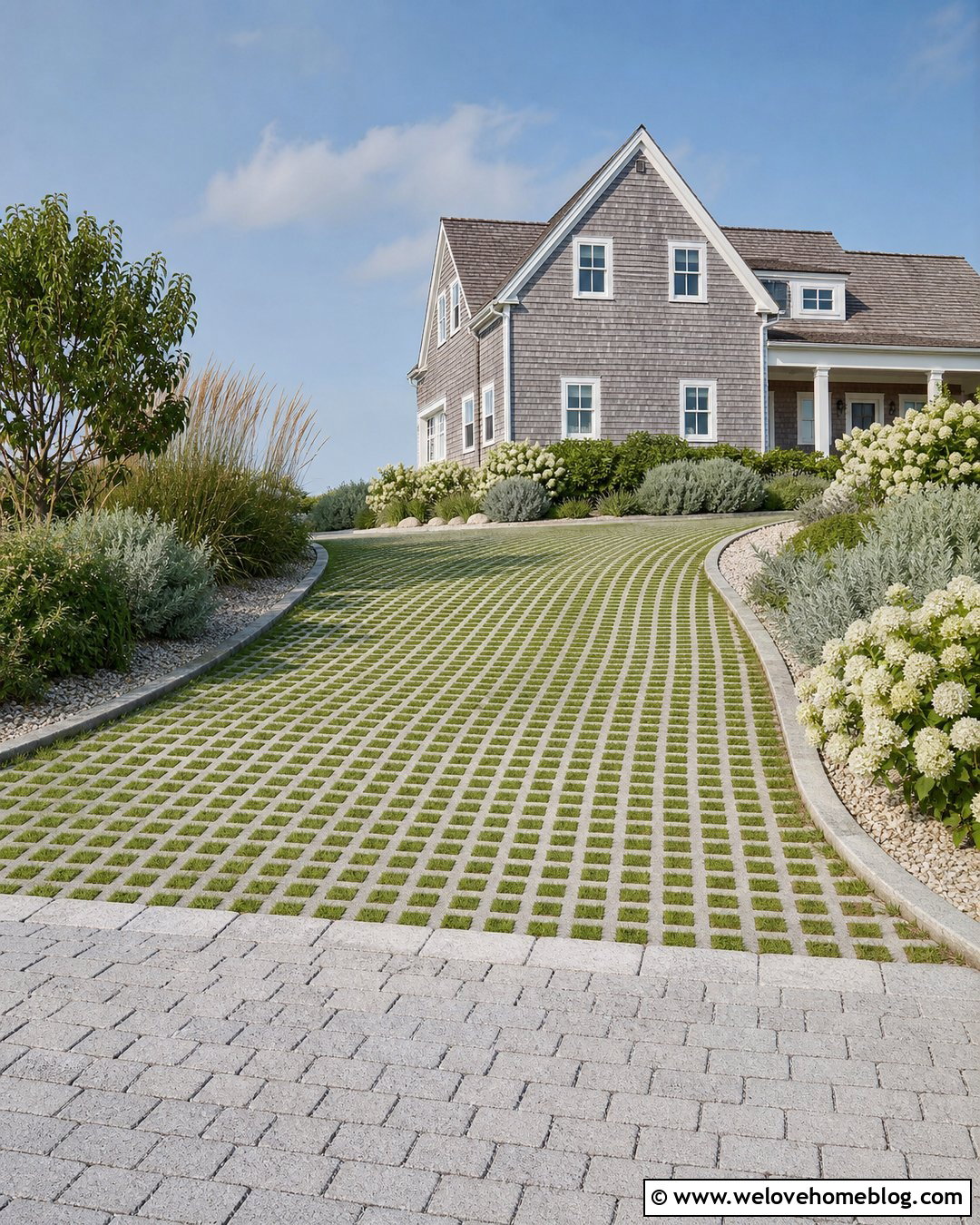
A coastal grass driveway can combine an airy green surface with pale materials that complement weathered siding and relaxed landscaping. Use light gray concrete turf blocks across a gently curving approach, allowing dense grass to fill the open cells. Contain crushed shell borders behind sturdy stone or concrete edging so loose pieces do not migrate onto the driving surface. Add beach grass, inkberry, low hydrangeas, and salt-tolerant shrubs suited to the local conditions. A wide apron of light gray permeable concrete pavers gives the entrance a clean finish and handles repeated turning. Keep the palette simple, using silver-green foliage, white flowers, and natural stone. Because coastal soils, salt exposure, and storms vary considerably, select turf and structural details based on the property’s actual environmental conditions.
20. Grass Driveway With A Stone Garage Landing
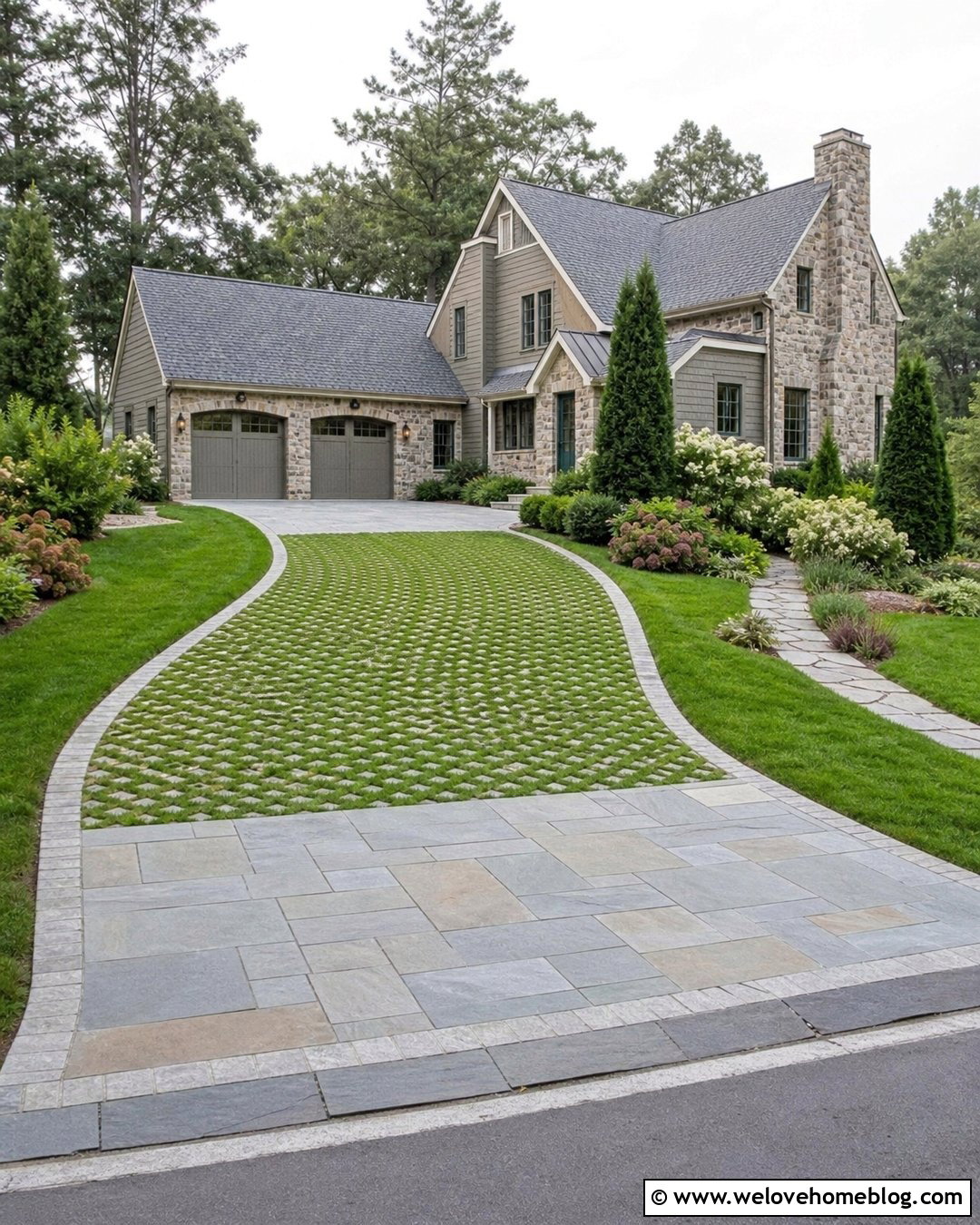
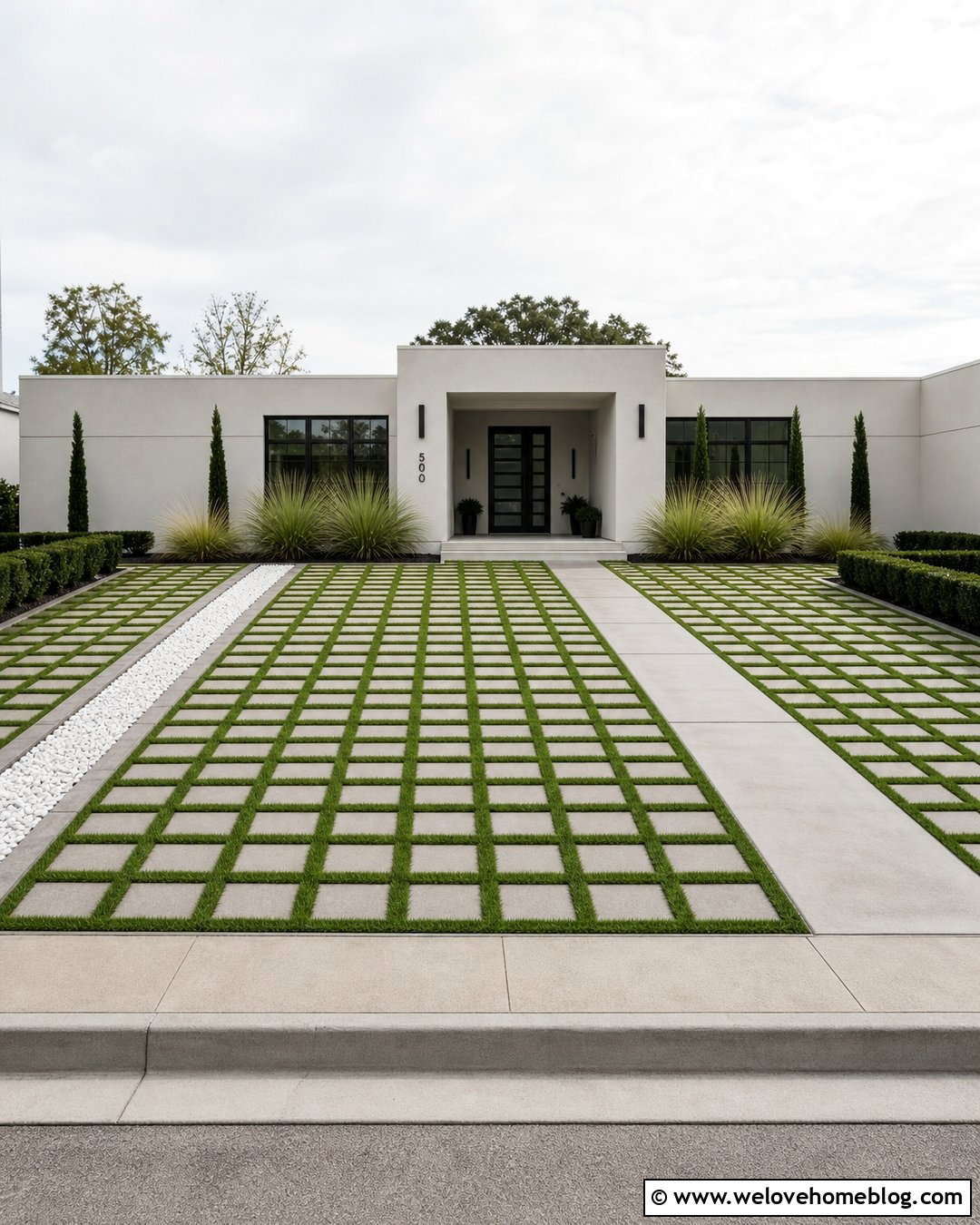
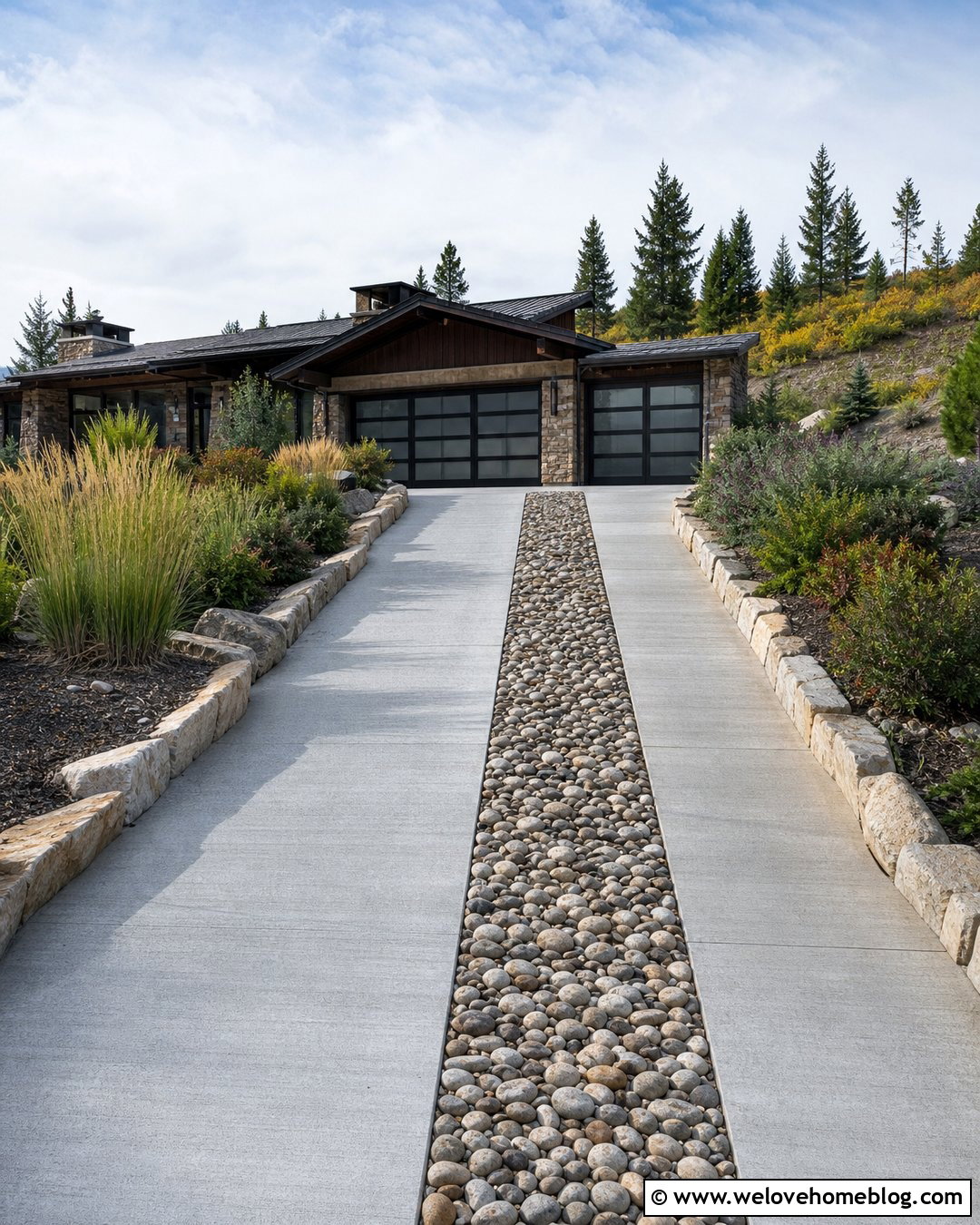
A solid landing near the garage protects the area where vehicles stop, turn, and remain parked for long periods. Build the main approach with reinforced concrete grass pavers, then transition to thermal-finished bluestone or durable concrete pavers several feet before the garage doors. Repeat the landing material as a thin border and street apron to create a connected design. The grass section can follow a gentle curve through the front lawn, while the landing remains rectangular and aligned with the building. Frame the route with layered evergreens, flowering shrubs, and a separate stone walkway to the entry. This hybrid layout provides a green curb view without asking living turf to perform equally well in every location. Use a contractor-designed base beneath both surfaces to limit uneven settling at the transition.
Conclusion:
Drivable grass can make a front yard feel larger, greener, and less dominated by hard paving. The strongest designs combine a load-rated reinforcement system with a stable base, sensible drainage, suitable grass, and durable materials in high-traffic areas. Shape matters too. Straight routes provide simplicity, curves create a softer approach, and circular layouts offer easier vehicle movement on larger properties. Borders, aprons, gates, planting beds, and garage landings should function as parts of one coordinated landscape. Before installation, verify local regulations and match the system to your soil, slope, climate, and expected traffic. Use these 20 drivable grass driveways ideas to create an attractive entrance that remains practical for everyday use.

Related posts:
Leave a Reply