

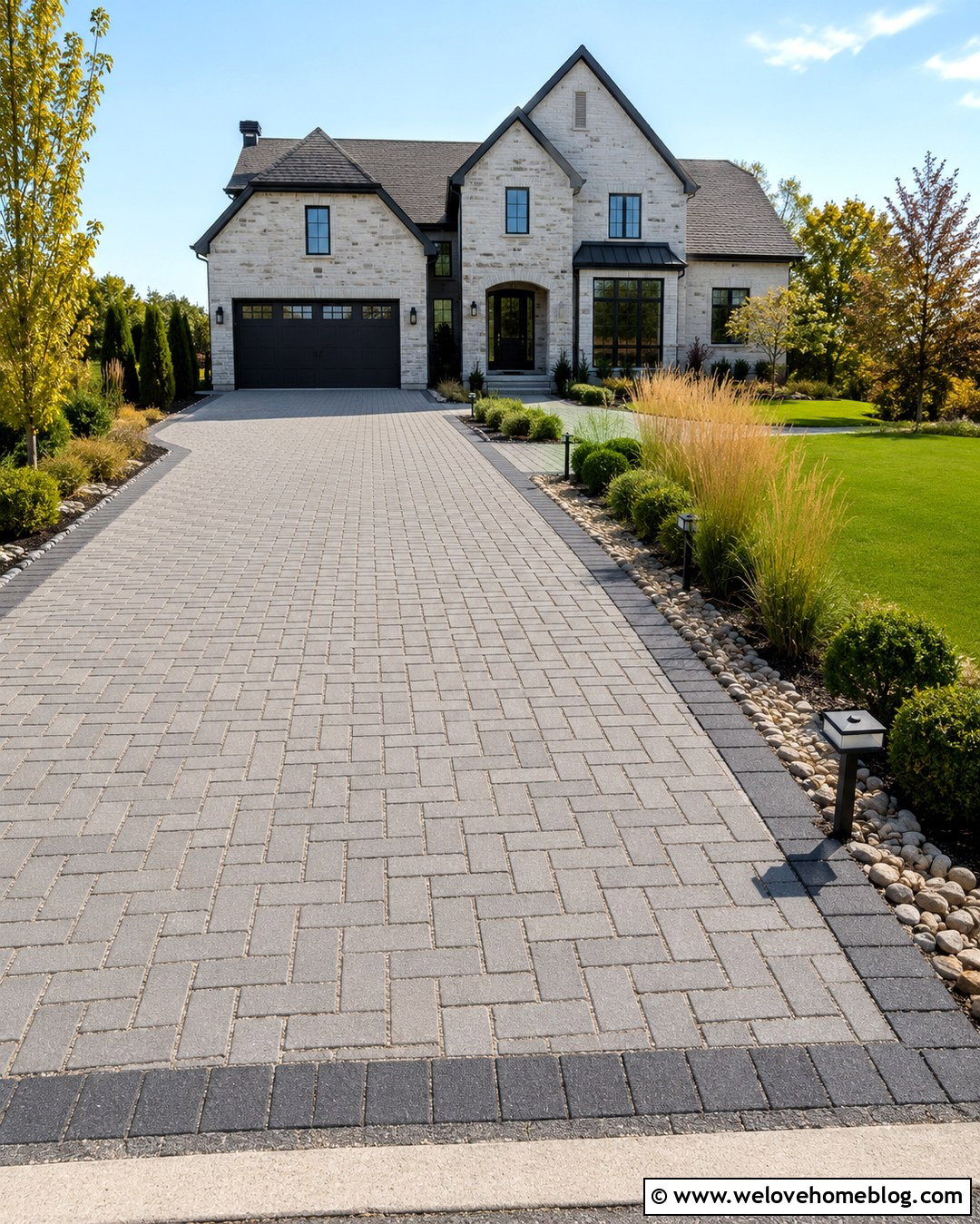
1. Permeable Concrete Paver Driveway
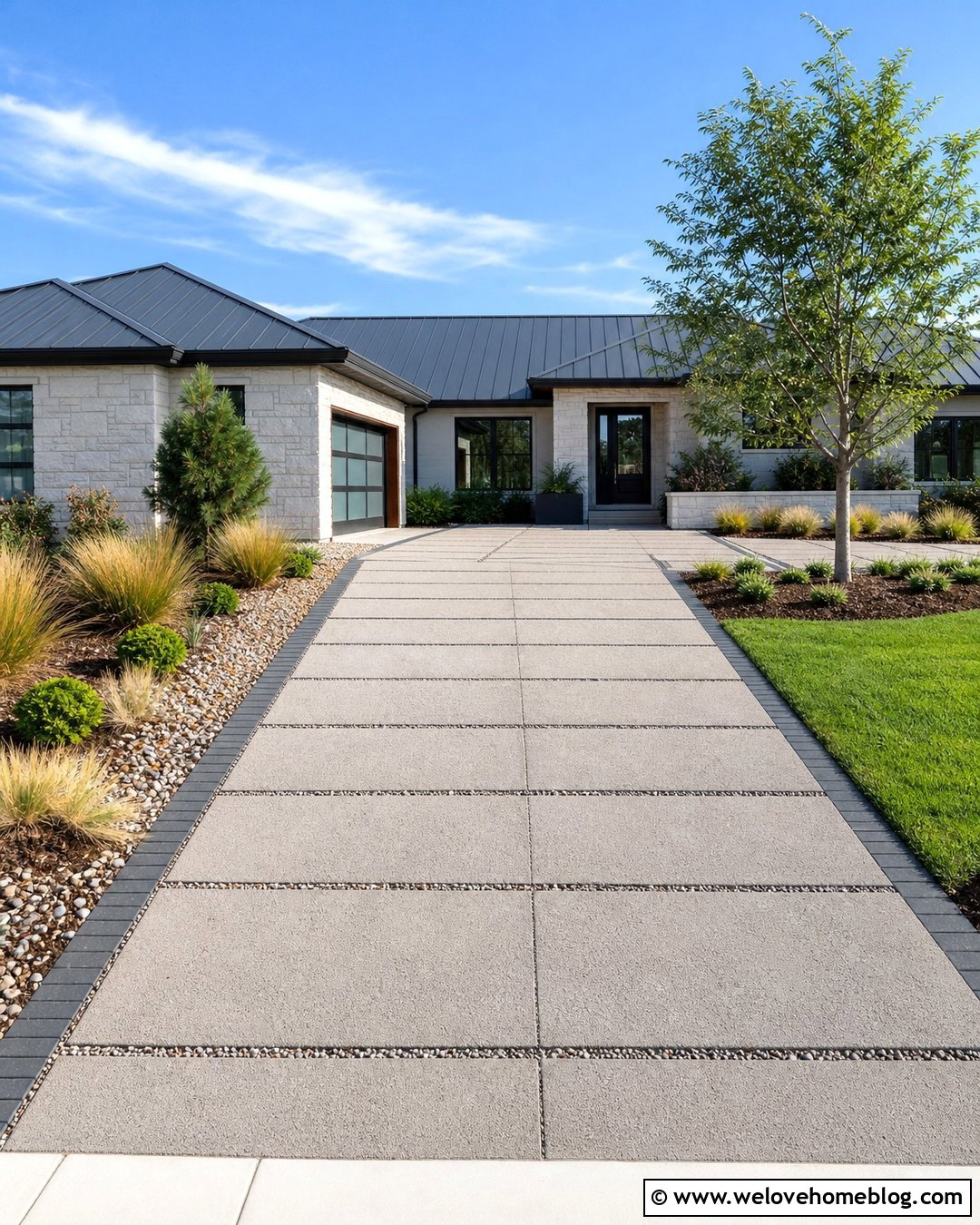
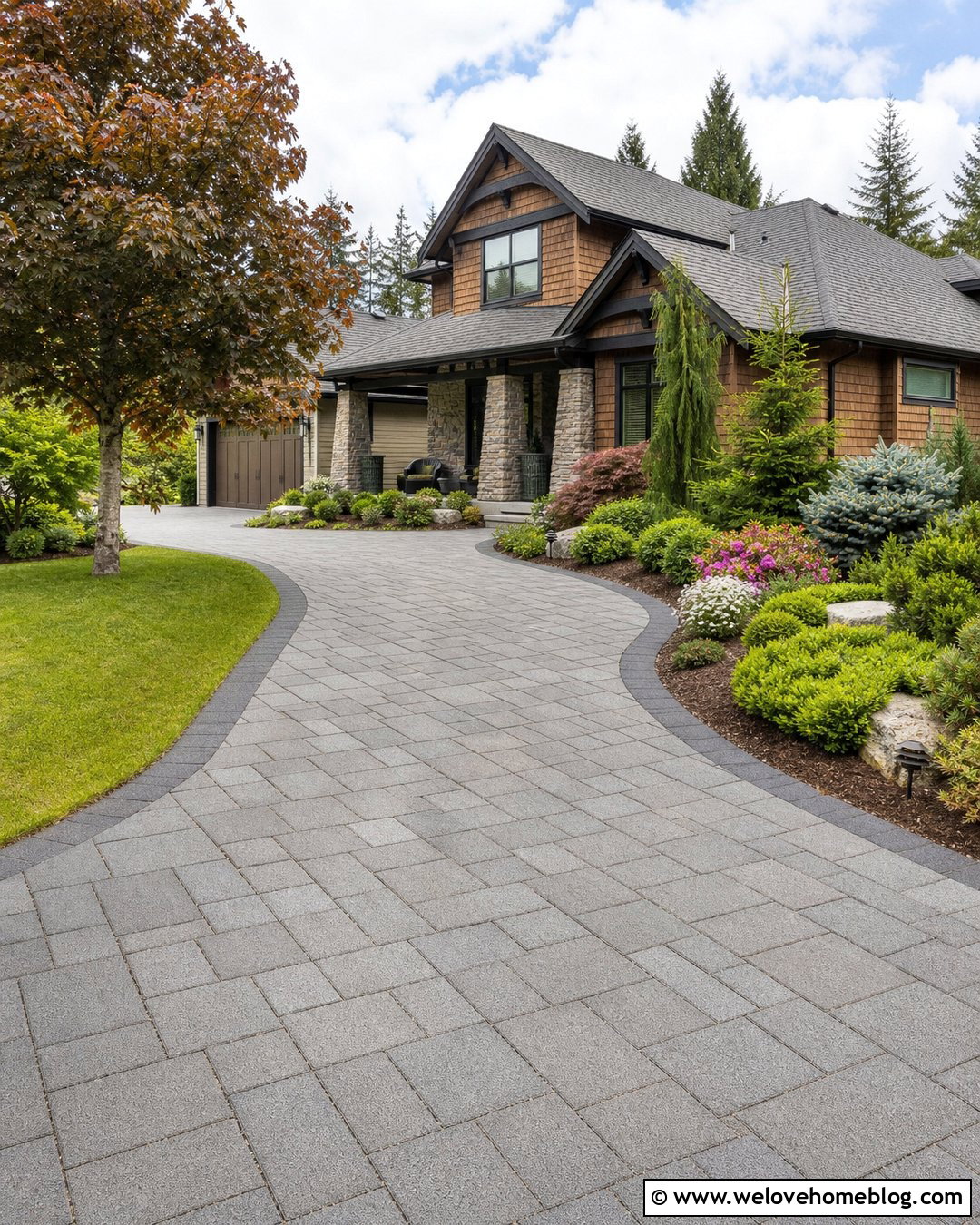
Permeable concrete pavers create a polished driveway without covering the yard in one solid, nonporous slab. Choose light gray rectangular pavers with wider joints filled with clean, open-graded stone. Underneath, a properly designed crushed-stone reservoir can temporarily hold water before it enters suitable soil or an underdrain. Frame a straight driveway with a darker paver ribbon to control the edges and sharpen the entrance. Native ornamental grasses, compact shrubs, and one shade tree can soften the hardscape without dropping excessive debris into the joints. Keep loose mulch away from the paving to reduce clogging. This complete look works especially well with modern, ranch, and Craftsman homes where clean lines and dependable vehicle access are equally important.
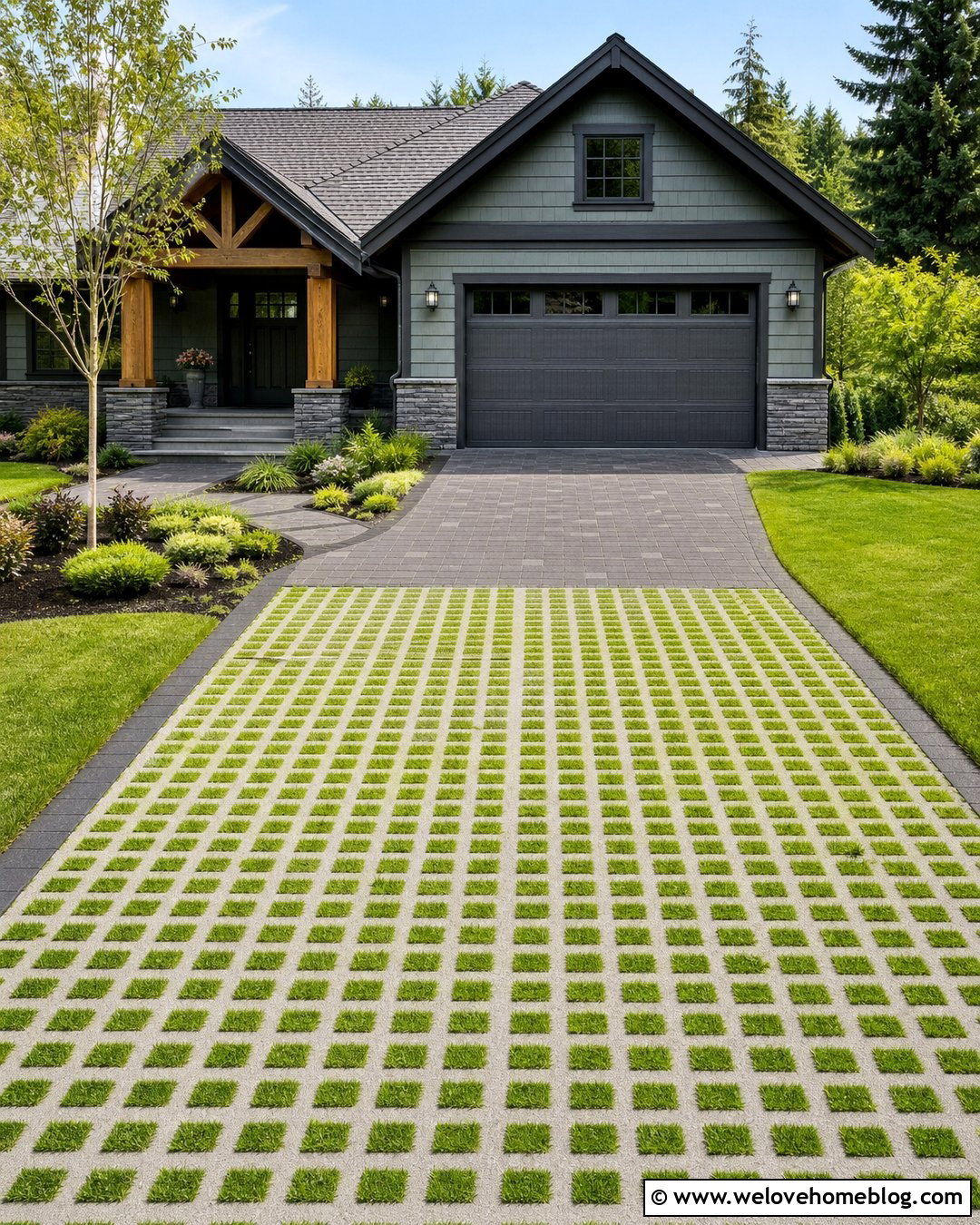
2. Grass Grid Driveway

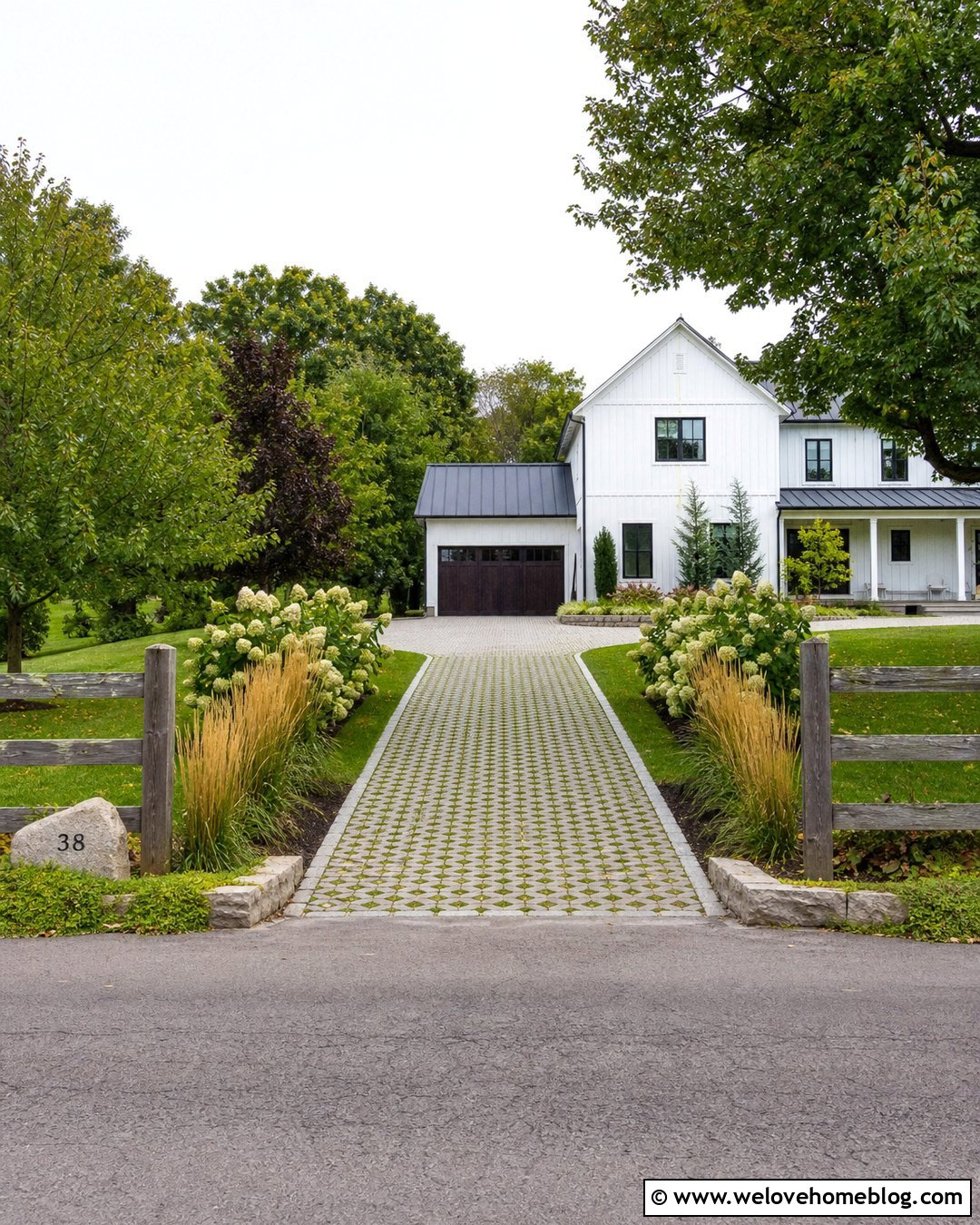
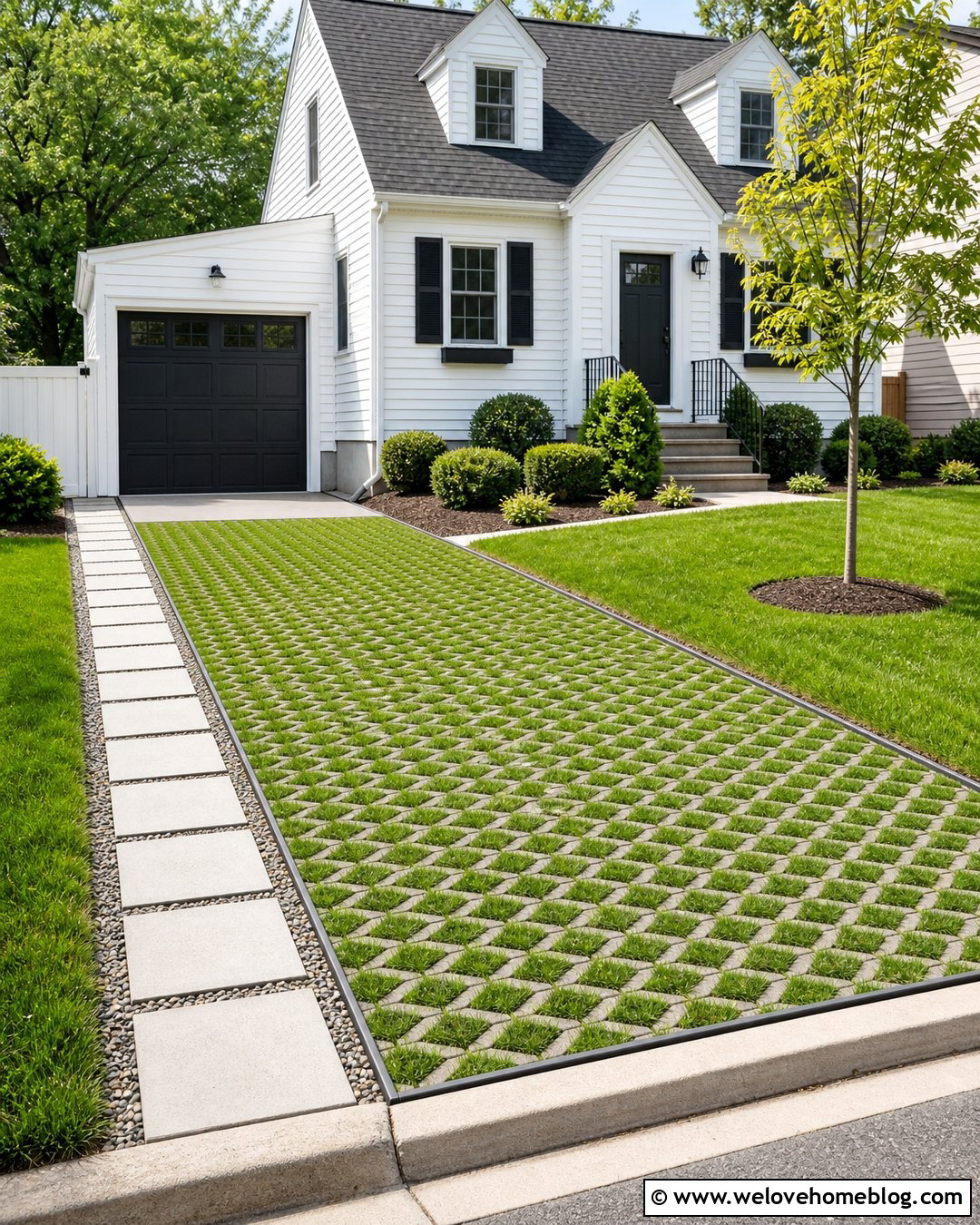
Imagine approaching a home over two green parking lanes that visually blend into the lawn. A grass grid driveway uses load-bearing concrete or recycled plastic cells filled with soil and durable turf. The grid supports vehicle weight while leaving planted openings across much of the surface. Use a straight or gently curved layout with flush concrete edging, so tires remain contained and mowing is easier. A solid permeable paver apron near the street can create a cleaner transition and handle frequent turning. Select grass suited to your region, sunlight, and expected traffic instead of choosing it for appearance alone. This living driveway is best for lighter residential use, overflow parking, or homes with generous front yards where a large conventional paved area would feel visually overpowering.
3. Gravel Grid Driveway
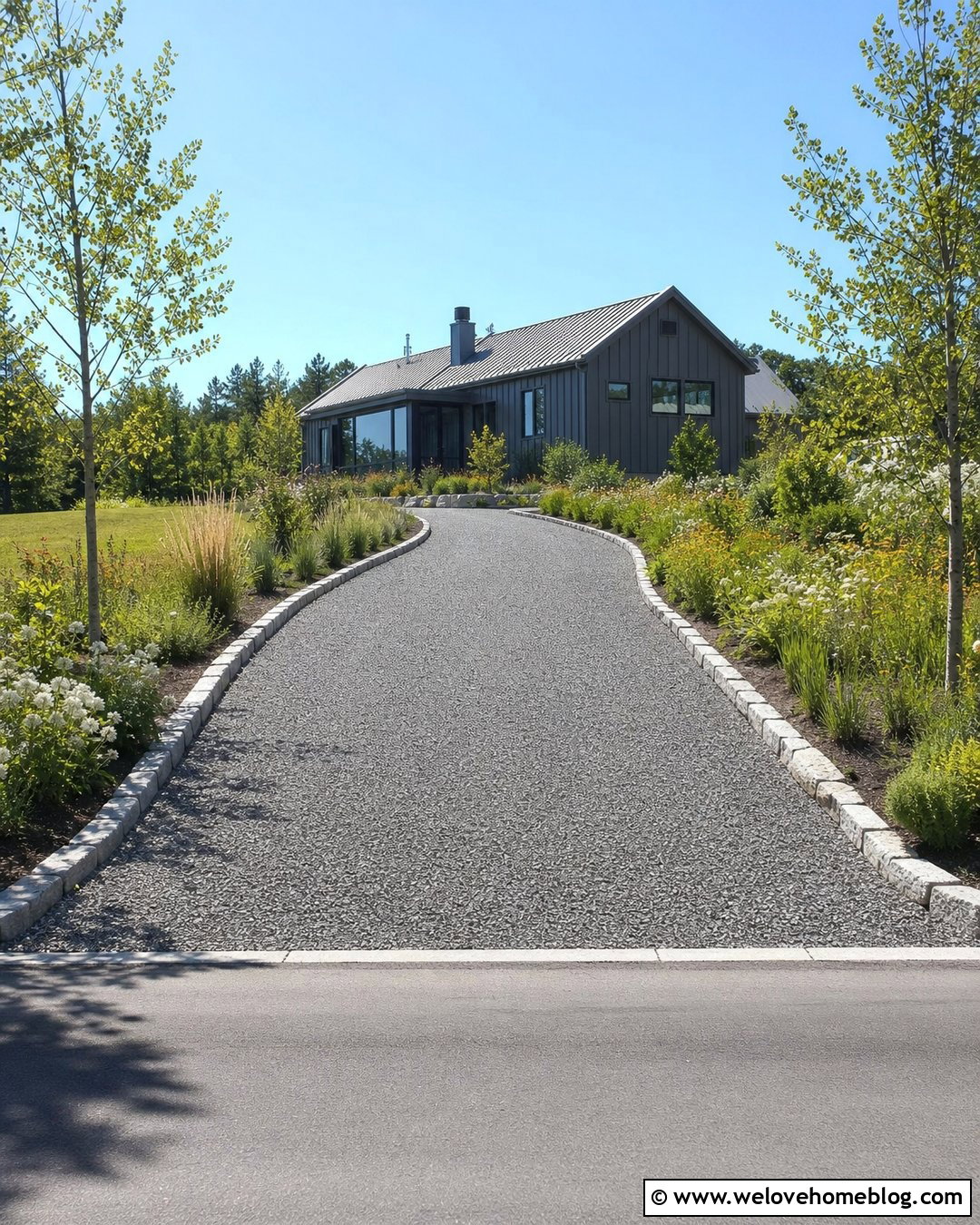
Loose gravel becomes neater and more stable when it is installed inside a load-bearing cellular grid. Fill recycled plastic or concrete grid panels with angular gray gravel that locks together better than smooth, rolling stones. A curved driveway can then follow the natural shape of the yard without developing deep tire ruts along every bend. Add reclaimed granite curbing at the street and low steel edging beside planting beds. Drought-tolerant native shrubs, flowering perennials, and small trees will give the entrance structure while keeping irrigation needs appropriate for the region. The driveway should have a professionally prepared, free-draining aggregate base rather than gravel spread directly over soil. This combination suits contemporary farmhouses, woodland homes, and casual suburban properties that need a practical but natural-looking surface.
4. Recycled Brick Driveway
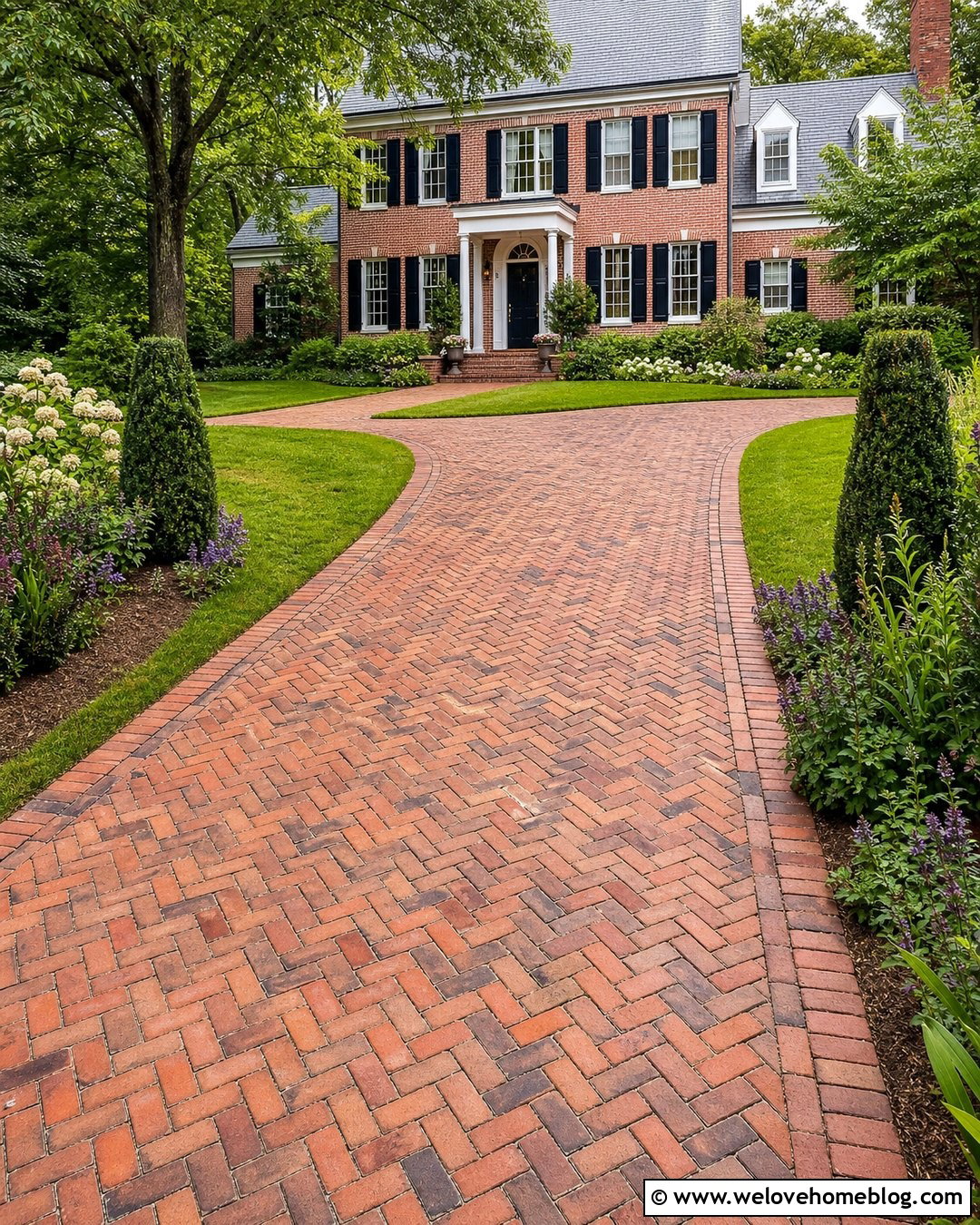
Weathered brick can give an eco-conscious driveway warmth, history, and a welcoming connection to an older house. Source sound reclaimed clay bricks locally when possible, then lay them over a suitable permeable aggregate base with open joints filled with small stone. A herringbone pattern provides a strong visual structure for the main driving area, while a simple running-bond border defines its curved edges. Pair the red and brown brick tones with a Colonial or Cape Cod facade, clipped evergreen shrubs, native flowering borders, and a brick walkway. Reused bricks should be inspected for damage and suitability for vehicular loads before installation. A professionally prepared base remains essential. The result feels established rather than newly constructed and keeps useful masonry in service instead of treating it as waste.
5. Reclaimed Cobblestone Driveway
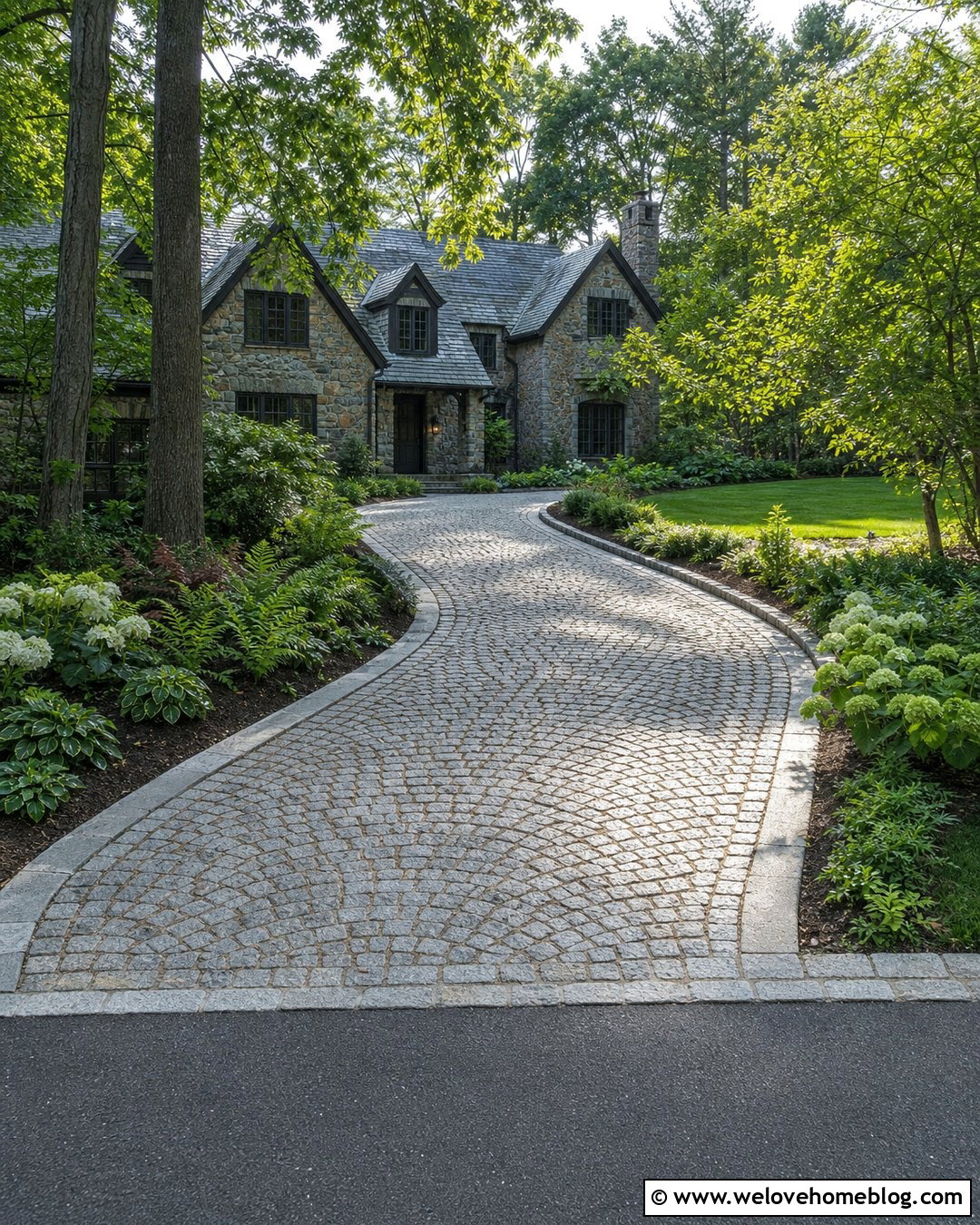
Reclaimed granite cobblestones can turn a compact driveway into a durable, old-world surface with considerable texture. Use full-depth stones rated for vehicle traffic and set them over a carefully engineered aggregate foundation. Wider stone-filled joints can support drainage when the complete pavement system is designed as permeable. A fan or staggered pattern looks natural on a short curved approach, while a flush granite border keeps the edges from spreading. Frame the driveway with native ferns, woodland sedges, hydrangeas suited to the site, and an understated stone walkway. The irregular gray and charcoal tones pair beautifully with Tudor, stone cottage, and traditional brick homes. Because reclaimed cobbles vary in size, skilled installation helps create a smoother driving path and a consistent slope away from the house foundation.
6. Pervious Concrete Driveway
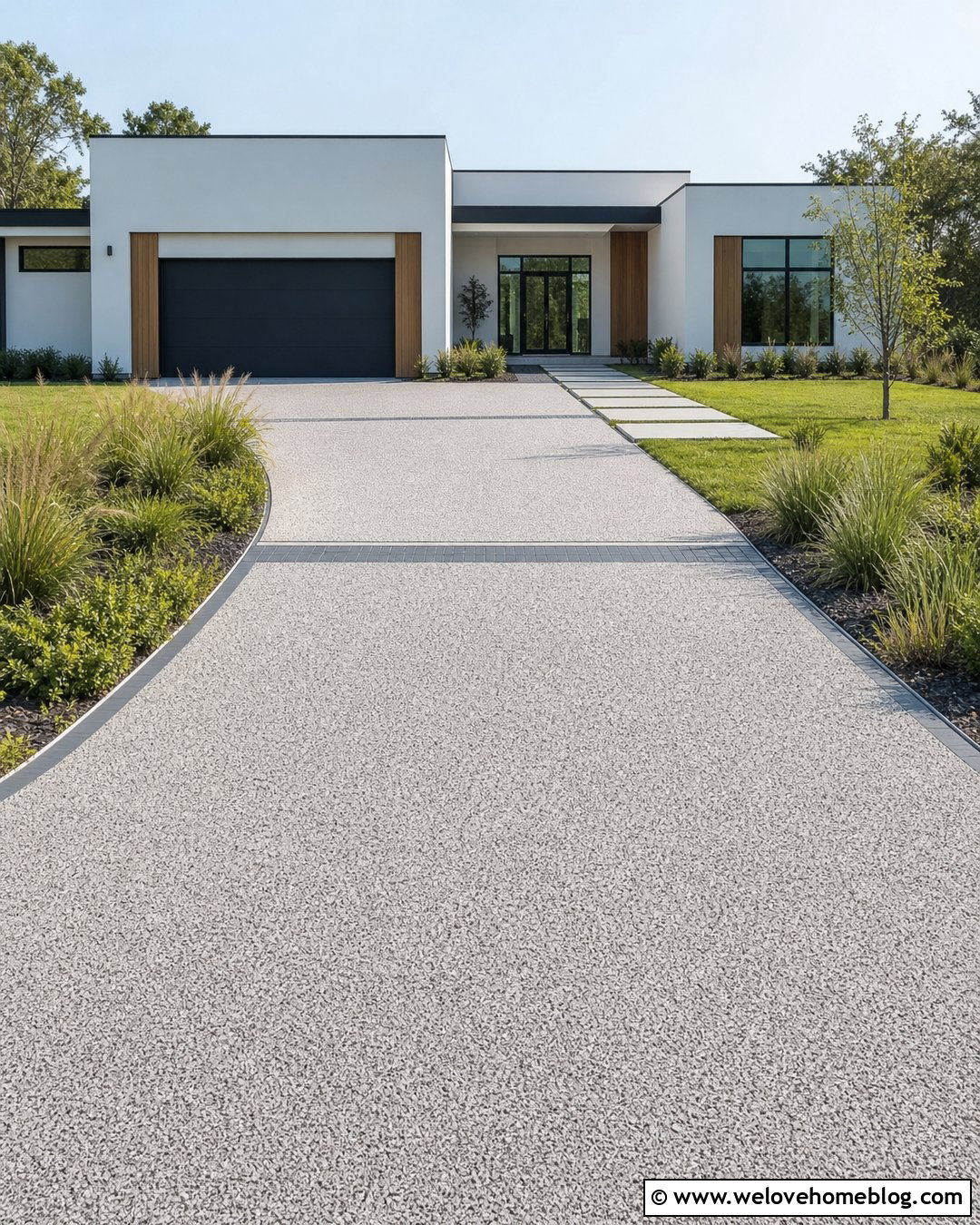
Pervious concrete offers the continuous appearance of concrete but contains connected voids that allow water to pass through the surface. It should be installed by a contractor familiar with its specialized mixing, placement, curing, and base requirements. The EPA recognizes pervious concrete as one of several permeable pavement options that can store or infiltrate stormwater through underlying soil and gravel layers. () Choose a pale natural-gray finish to create a bright, simple driveway for a modern home. Break up the expanse with narrow bands of permeable pavers and planting beds filled with native grasses. A straight layout with a softly flared entrance keeps the look orderly. Prevent surrounding soil, mulch, and lawn clippings from washing onto the porous surface and blocking its openings.
7. Porous Asphalt Driveway
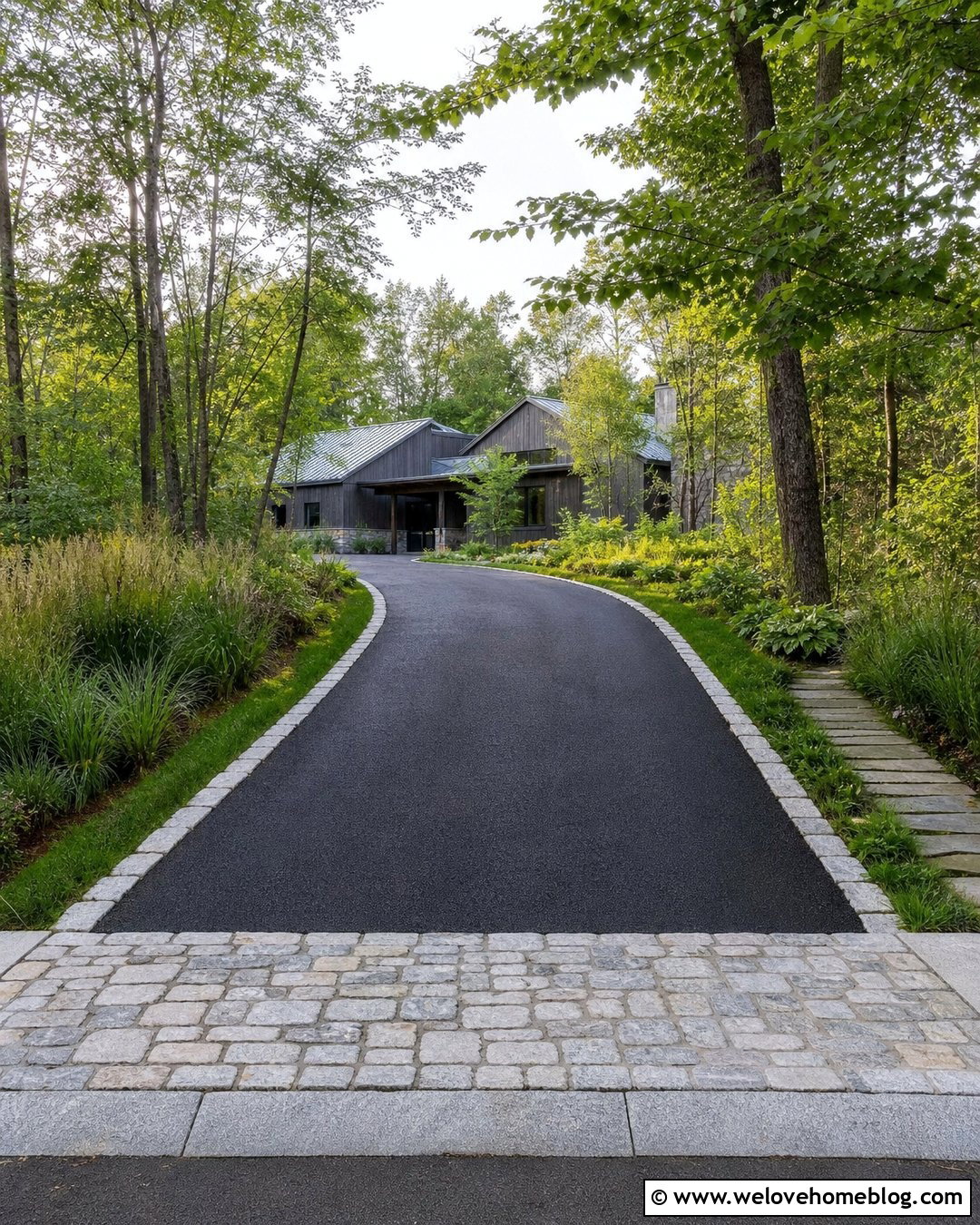
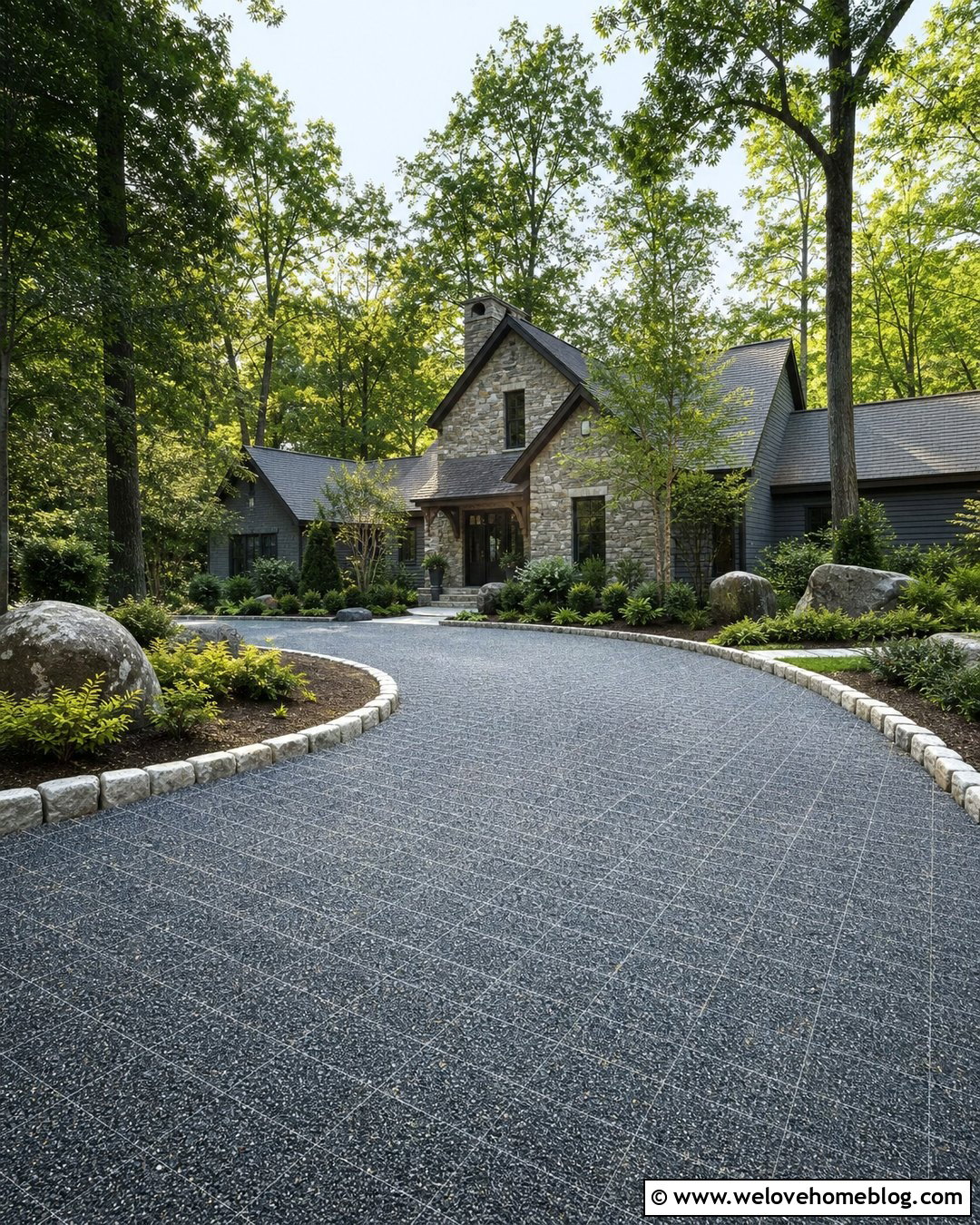
Homeowners who prefer the familiar appearance of asphalt can consider a professionally designed porous asphalt system. Unlike standard dense asphalt, porous asphalt allows water to move through interconnected openings into a stone reservoir below. Create a long, gently curved black driveway with a clean recycled-granite border and a permeable cobblestone apron near the road. Trees, meadow grasses, and layered native shrubs can make the dark surface feel less dominant in a large front yard. Porous asphalt is not simply regular asphalt placed over gravel; the surface, aggregate layers, drainage, soil conditions, and construction methods must function as one system. EPA guidance includes porous asphalt among permeable pavement choices for managing rain where it falls. () Regular inspection also helps identify sediment buildup or drainage problems early.
8. Resin-Bound Gravel Driveway
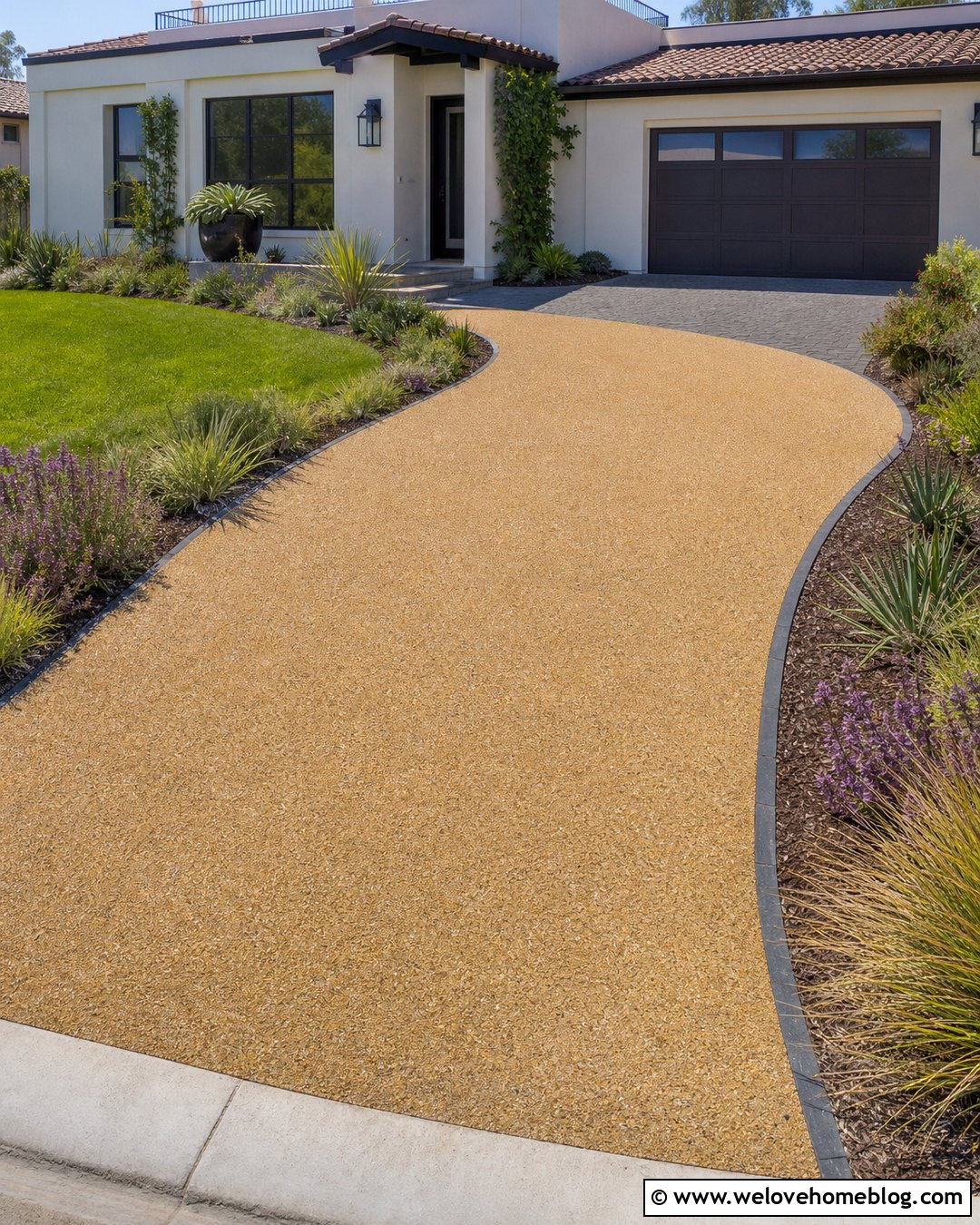
A resin-bound gravel driveway creates a smooth, stone-textured surface that can remain permeable when the aggregate, binder, base, and installation method are specifically designed for drainage. Select locally available golden or gray aggregate to reduce the visual impact of a large paved entrance. Recycled glass can be added sparingly as a decorative accent if the chosen system is approved for driveway use. A sweeping curved layout works well with a contemporary home, while dark metal edging keeps the surface crisp beside drought-tolerant planting. Add a permeable paver threshold at the garage and a wide planted bed between the driveway and walkway. Confirm the product’s permeability, recycled content, repair process, UV stability, and installation requirements. Not every resin surface is permeable, so clear specifications matter more than a green product label.
9. Recycled Concrete Aggregate Driveway
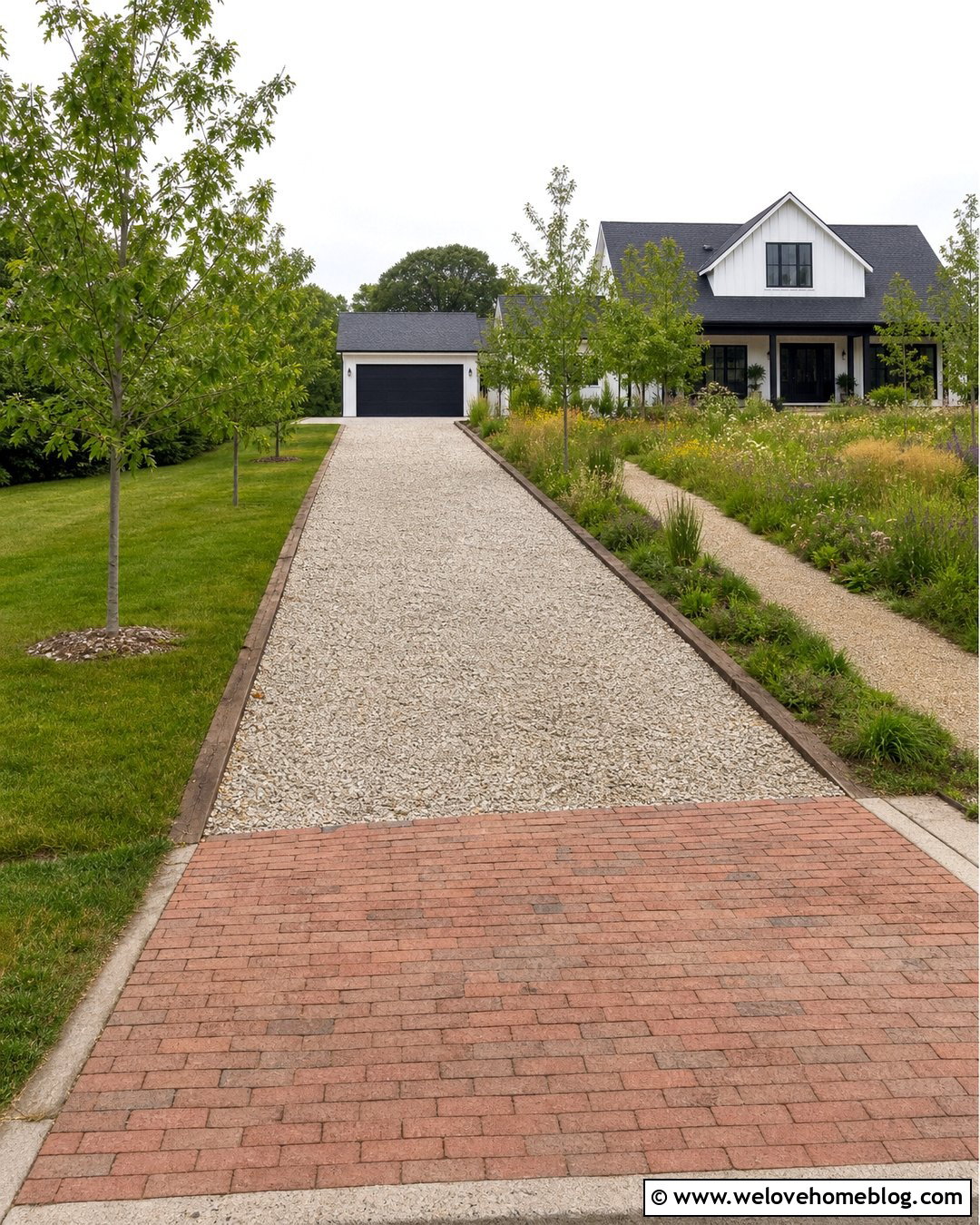
Crushed concrete reclaimed from demolition can become a practical driveway aggregate when it has been processed, screened, and confirmed suitable for residential use. Its mixed cream, gray, and warm stone tones look especially appropriate beside a modern farmhouse. Use compacted recycled concrete for a straight driveway with a defined crown or drainage-friendly cross slope. Stabilizing grids can help hold the aggregate in place on frequently used sections. Edge the surface with reclaimed timber or salvaged granite, then add native meadow planting along one side and a mowed lawn strip along the other. A brick or paver apron can prevent loose particles from migrating onto the street. Ask suppliers about material cleanliness, particle size, source, and local requirements. Good grading and base preparation are still necessary for long-term performance.
10. Local Pea Gravel Driveway
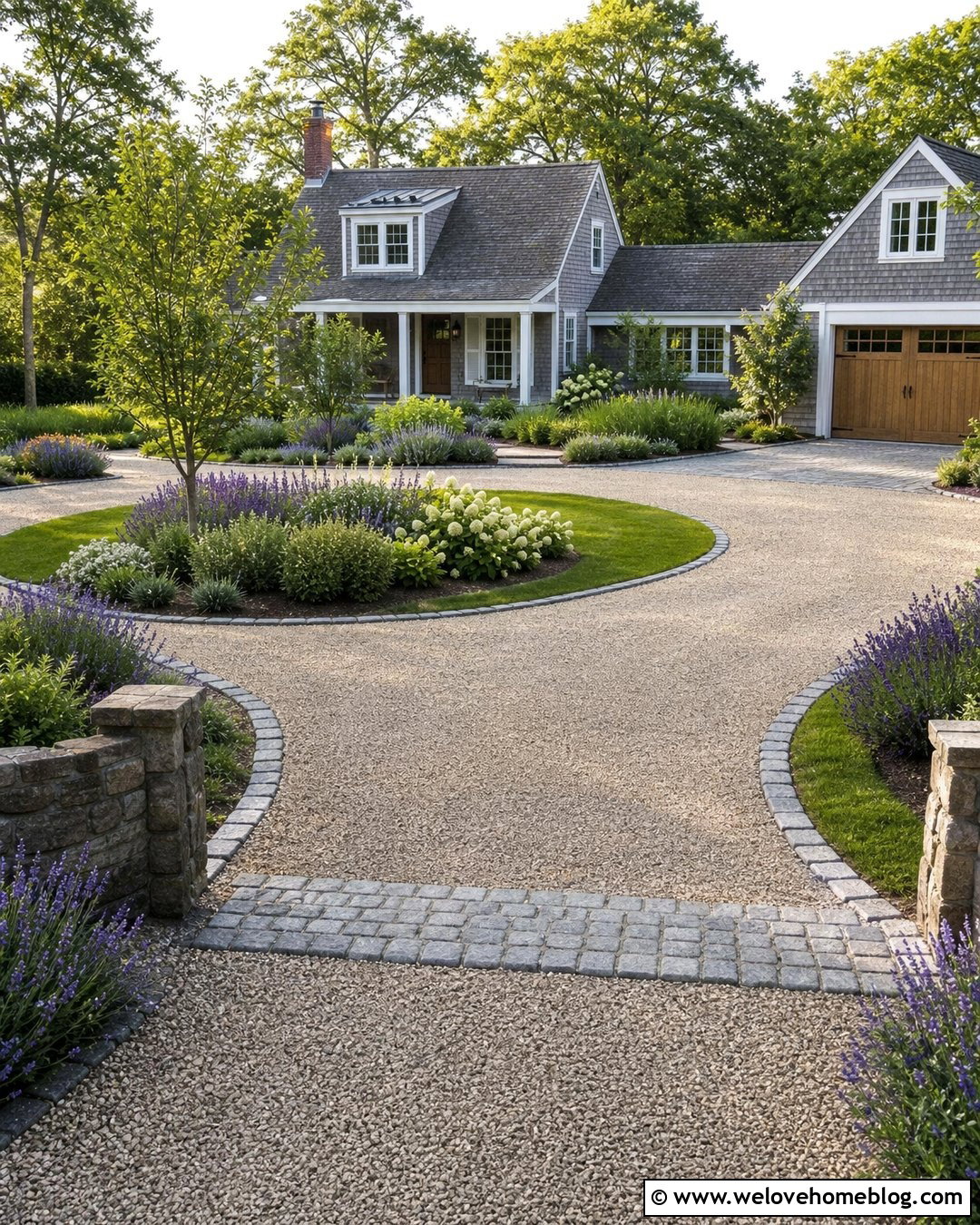
A pale pea gravel driveway feels relaxed and inviting, particularly when its color reflects stone found within the surrounding region. Because rounded pea gravel can shift under tires, contain it within a strong stabilization grid and solid edge restraint. A short horseshoe layout can provide convenient entry and exit without creating an oversized parking court. Use cobblestone borders around the curves and a firmer permeable paver pad near the garage. Lavender, native sage, ornamental grasses, and compact flowering shrubs can frame the surface without spilling into the driving lane. Buy from a nearby quarry or landscape supplier when practical, and compare hauling distance with other available aggregates. The complete design works well for cottages, ranch homes, and country properties where a softer material complements informal architecture and established landscaping.
11. Decomposed Granite Driveway
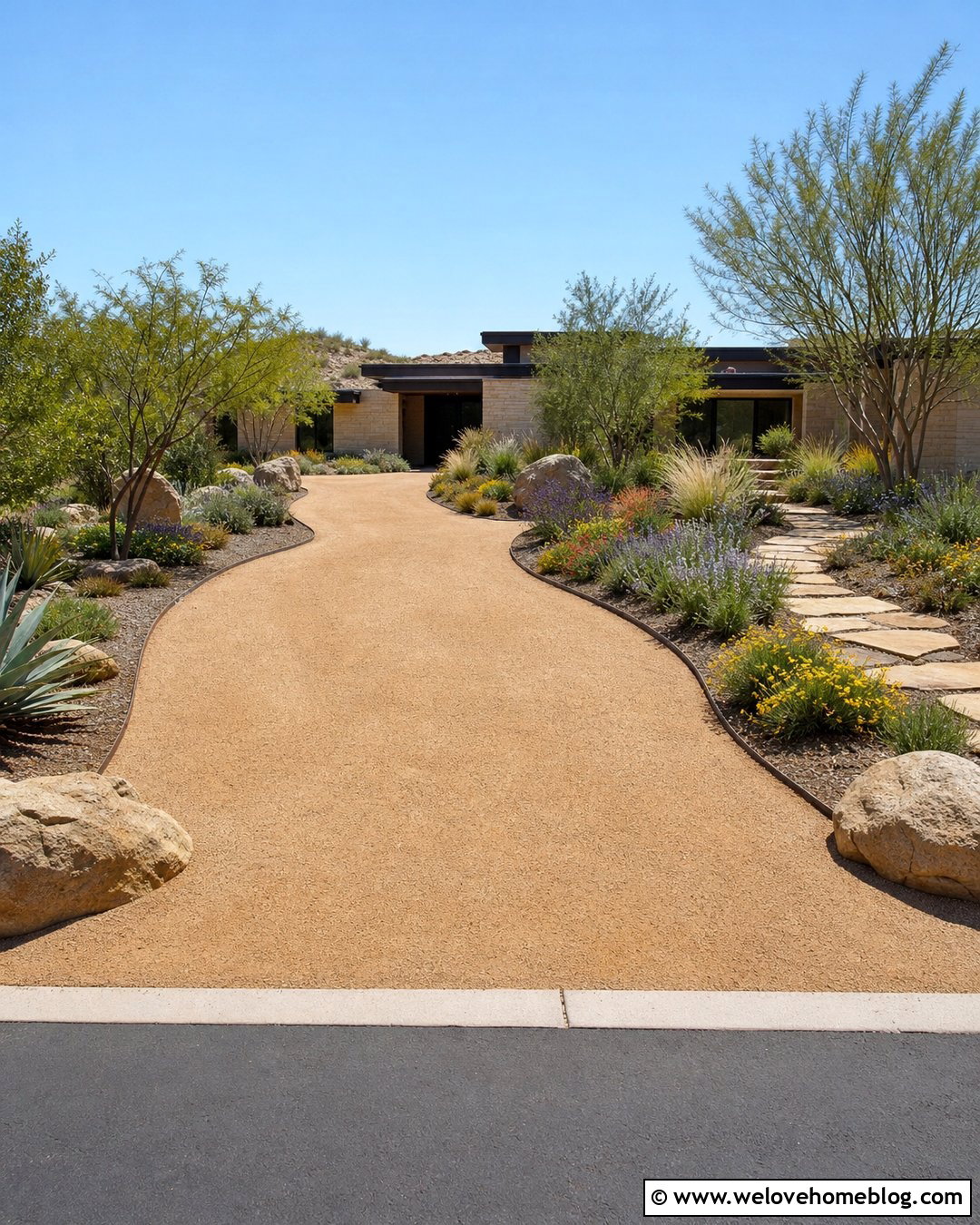
Decomposed granite gives a driveway a warm, earthy color and a finer texture than conventional gravel. Choose a compactable product intended for vehicular areas, not loose decorative stone designed only for garden paths. A gently curved tan driveway can follow the contours of a dry-climate yard and reduce unnecessary excavation. Steel edging creates a clean boundary, while larger local boulders protect the corners where vehicles commonly cut across planting beds. Complete the look with regionally native grasses, flowering perennials, small desert trees, and a stone walkway leading to the porch. Drainage characteristics vary by product, compaction, stabilizer, soil, and base design, so do not assume every decomposed granite installation is fully permeable. Use a sample area first to evaluate color, dust, tracking, firmness, and maintenance needs.
12. Recycled Shell Driveway

In coastal regions, properly processed recycled shell can create a bright driveway that feels closely connected to the local landscape. Oyster, clam, or other approved shells gradually compact into a textured surface with soft white and beige tones. Use them only where recycled shell aggregate is legally and responsibly available through a reputable supplier. A straight driveway edged with reclaimed brick can lead toward a coastal cottage, while salt-tolerant native grasses and compact shrubs frame the approach. Add a stone-filled drainage strip near the garage to prevent shell fragments from reaching doors and interior floors. The material may not suit every climate, neighborhood, or accessibility requirement. Ask about cleaning, sizing, sharp fragments, vehicle performance, replenishment, and sourcing before purchase. A solid aggregate base will keep the shell layer more stable.
13. Tire Track Driveway With Groundcover
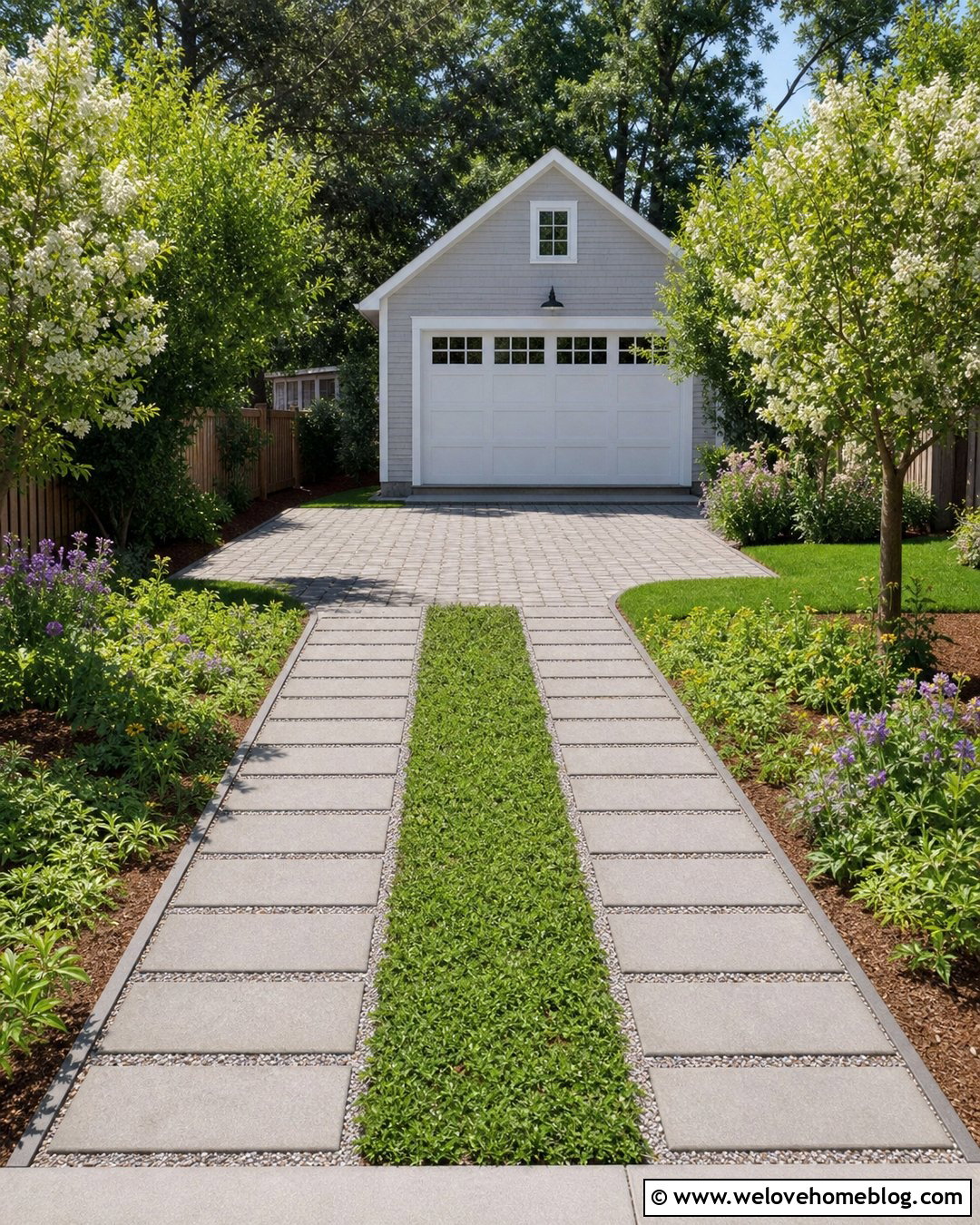
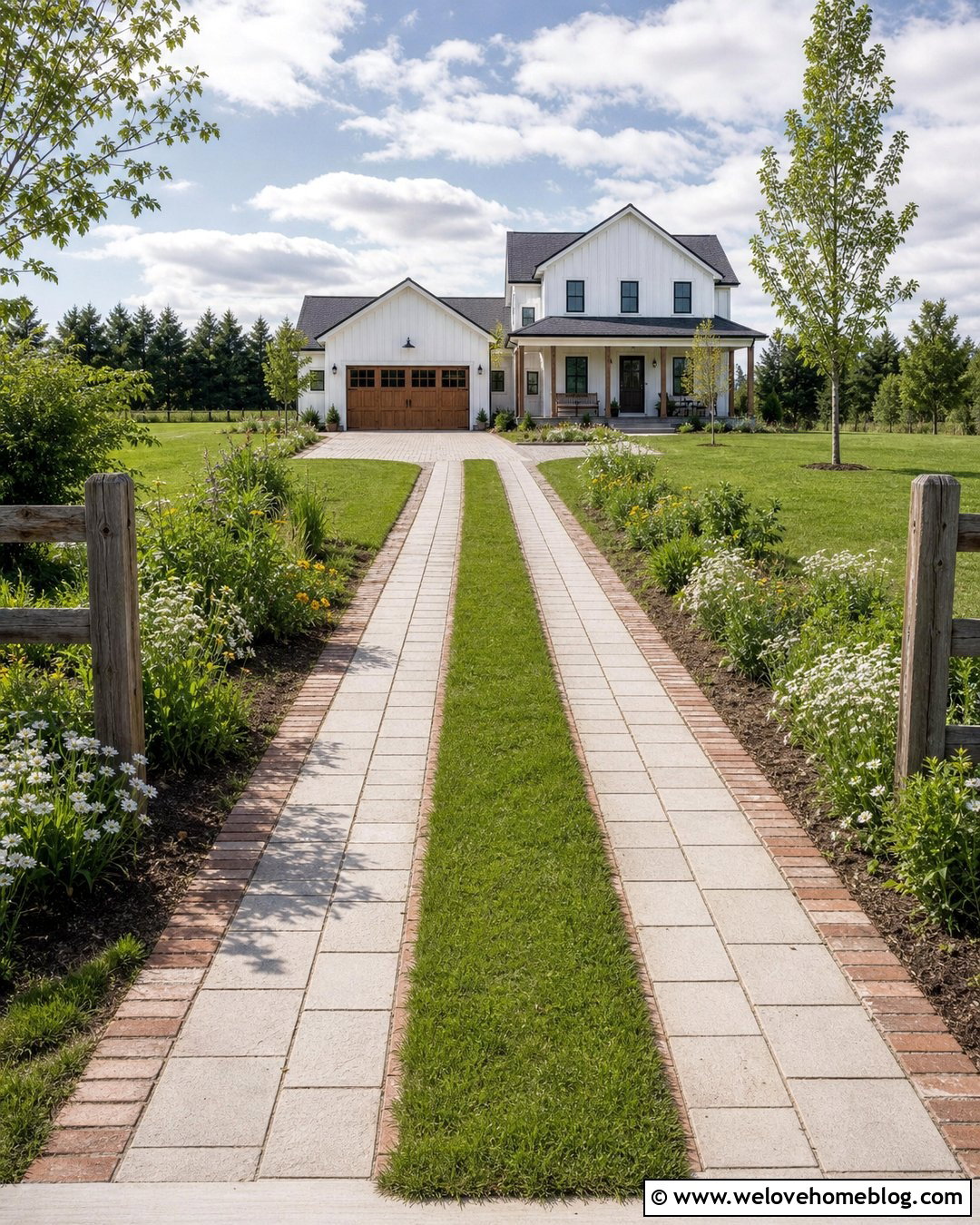
Why pave the full width when vehicles consistently use only two narrow paths? A tire track driveway places durable permeable concrete pavers or reclaimed stone beneath the wheels while maintaining a planted strip through the center. Low-growing groundcover can fill the middle where sunlight, water, and local conditions permit. Choose a species that is noninvasive, traffic tolerant, and suitable for the region. Continue the tracks in a straight line toward a detached garage, using gravel-filled joints and flush steel edging for a tidy finish. Native pollinator beds along both sides can turn unused frontage into habitat. This reduced-paving look complements cottages, accessory dwelling units, and casual rural homes. Include a stable turnaround or parking pad where needed, since frequent steering across the planted center can quickly damage it.
14. Permeable Flagstone Driveway
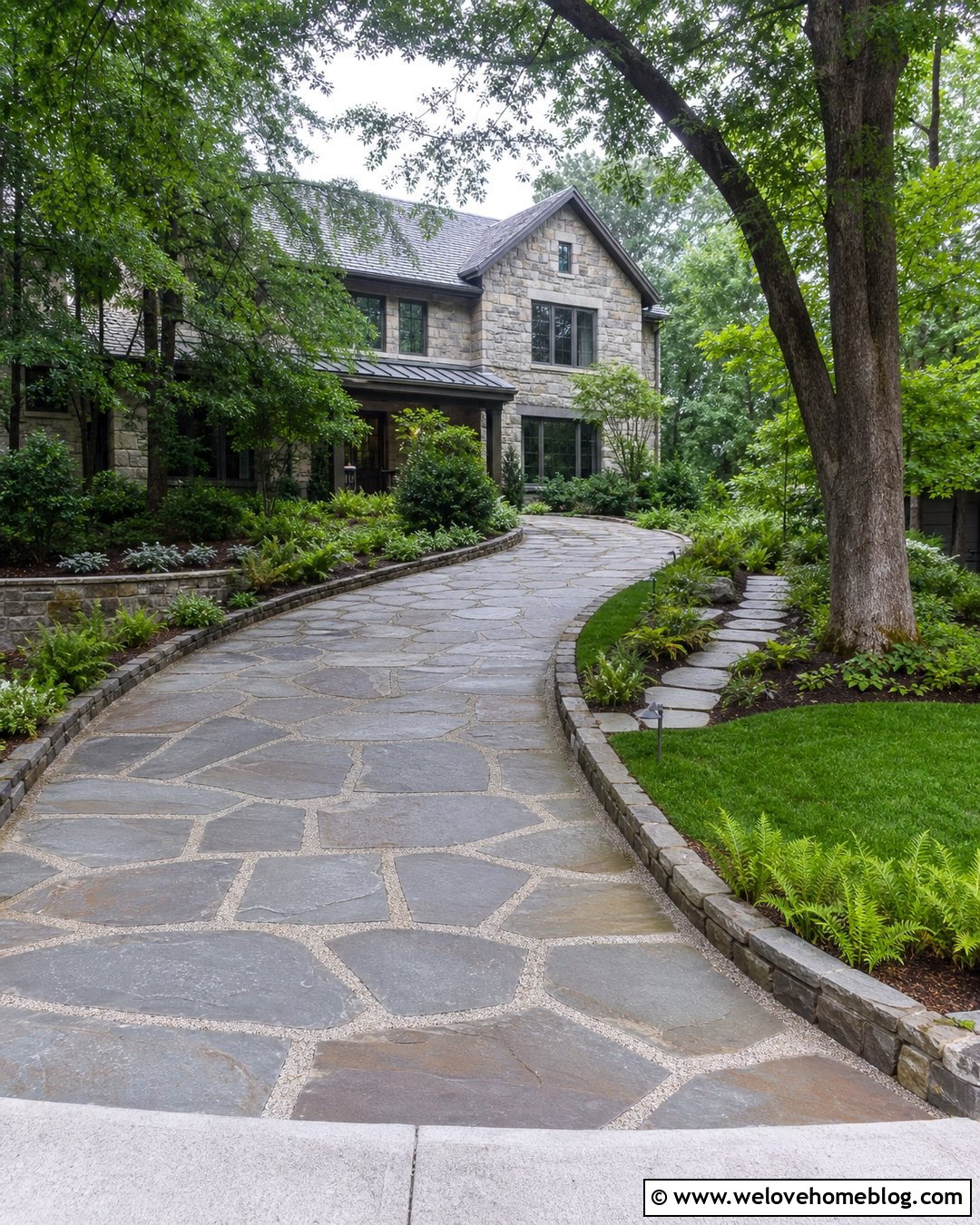
Large natural flagstones can form an elegant driveway when they are thick enough for vehicles and installed over a properly designed base. Space irregular slabs with consistent gravel-filled joints, allowing the joint areas to contribute to drainage. A curved layout will emphasize the organic shapes and lead naturally toward a stone or Craftsman house. Use locally sourced flagstone where feasible, then repeat the same material in a narrow walkway and low retaining border. Native ferns, sedges, flowering groundcovers, and shade-tolerant shrubs can fill nearby beds without obscuring the driveway edges. Avoid placing thin patio-grade slabs where cars will travel. A contractor should select the stone thickness, base depth, joint material, and edge restraint for the site. The completed entrance feels integrated with the landscape rather than laid over it.

15. Open-Joint Clay Paver Driveway

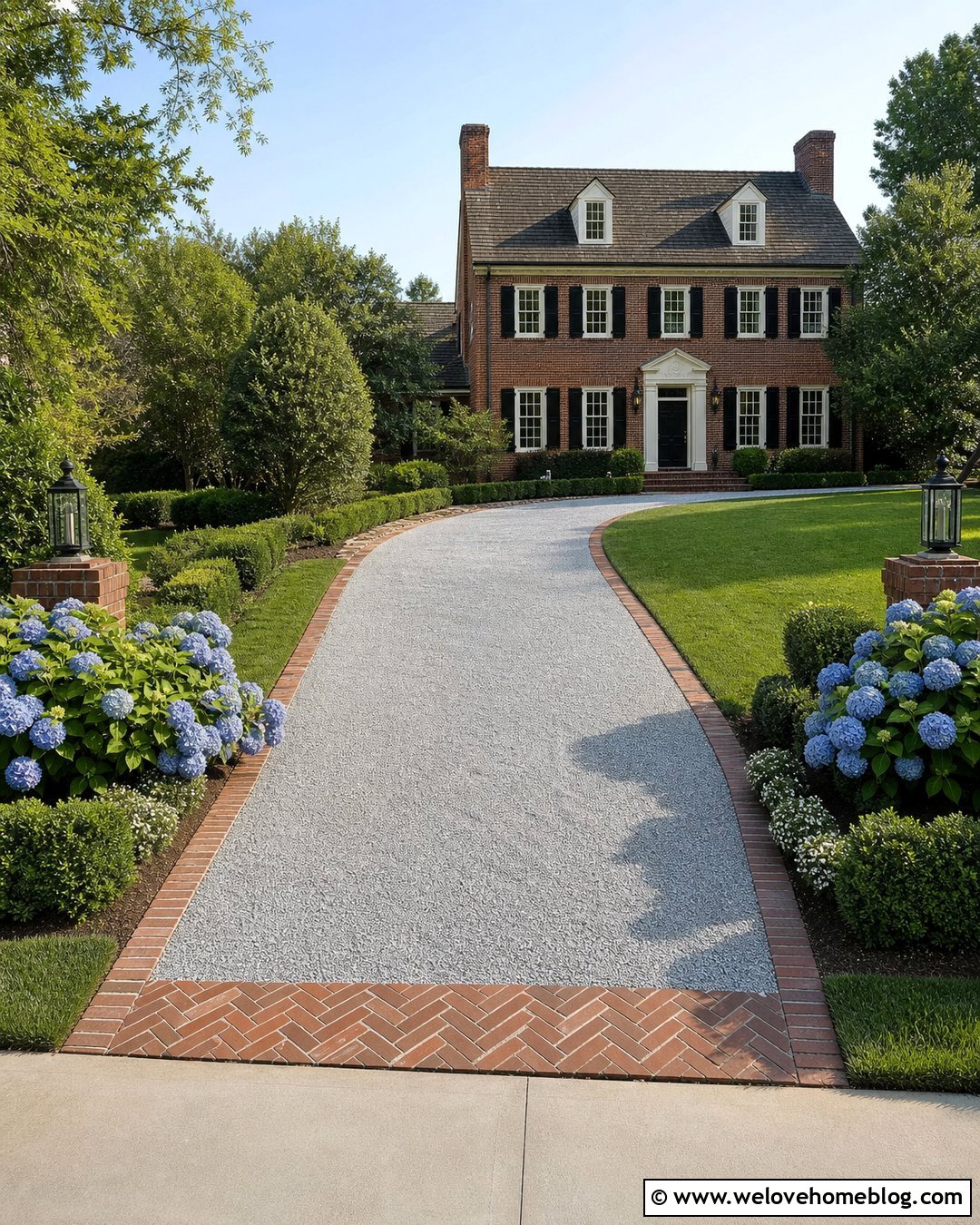
Clay pavers offer lasting color, and an open-joint installation can create a more water-conscious alternative to tightly mortared brickwork. Select new or reclaimed pavers rated for driveways and local freeze-thaw conditions. Lay them in a herringbone pattern over an open-graded aggregate system, then fill the wider joints with clean, compatible stone. A contrasting charcoal paver border can define a compact rectangular driveway beside a red brick home. Add narrow native planting beds, a permeable walkway, and one well-positioned deciduous tree for summer shade. Keep soil and mulch below the paver edge to limit sediment washing into the joints. The pavers alone do not make the driveway permeable; the joints, bedding, base, subgrade, slope, and drainage outlet must be planned as a complete system.
16. Gravel And Paver Driveway
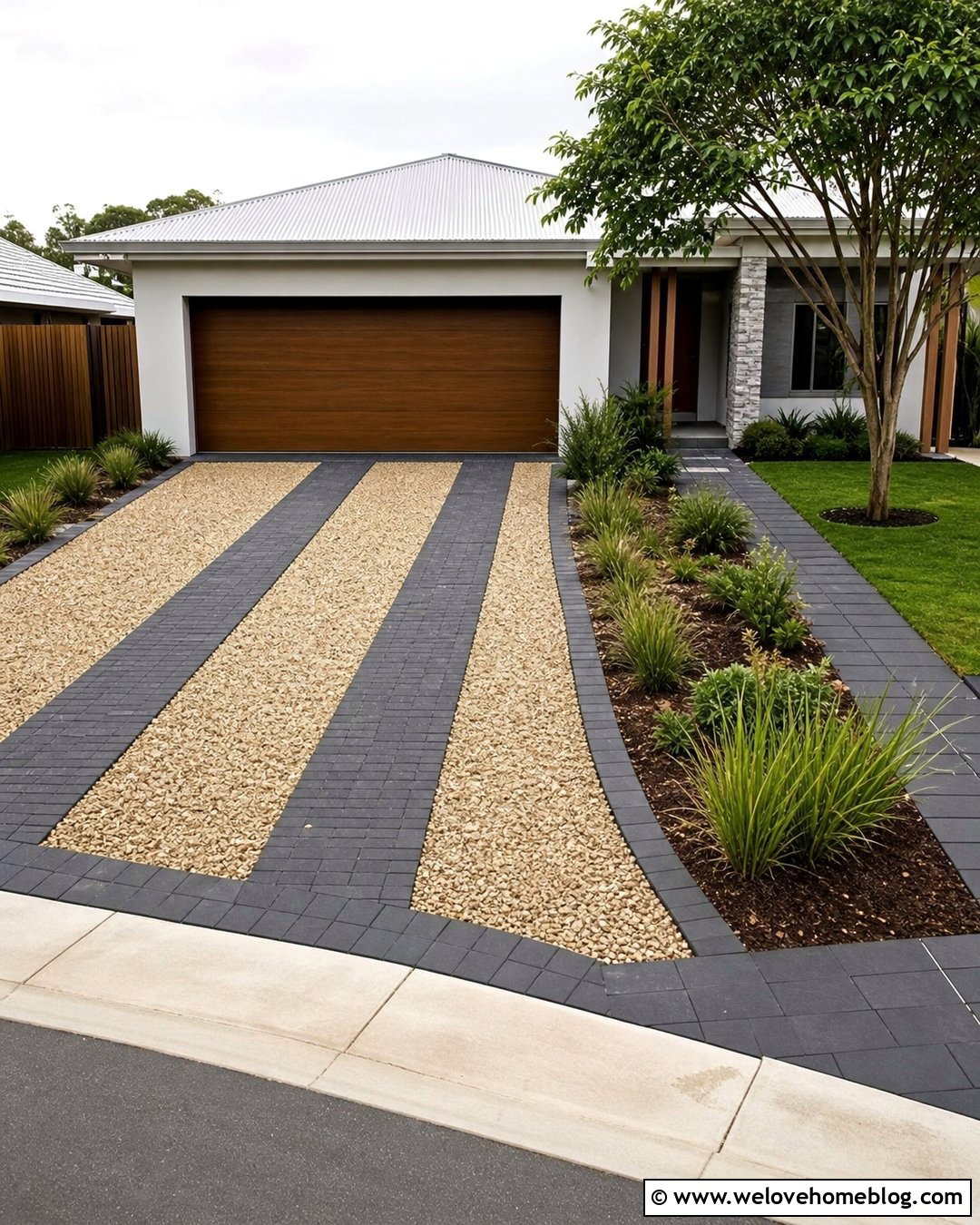
Combining gravel with permeable pavers can place the strongest surface where it is needed while keeping the overall design relaxed. Use charcoal concrete pavers for wheel tracks, the garage apron, and turning points. Fill the remaining field with angular buff gravel held inside a stabilization grid. A split layout can guide one lane toward the garage and another toward a small parking bay without making the entire front yard look paved. Match the paver border to the home’s walkway for visual continuity. Native shrubs, rain-tolerant grasses, and a small canopy tree can soften the divided areas. This hybrid approach also makes different zones easier to recognize. Before installation, plan snow removal, accessibility, drainage, utility access, and expected traffic so every material is placed where its performance is most useful.
17. Circular Permeable Driveway With Rain Garden
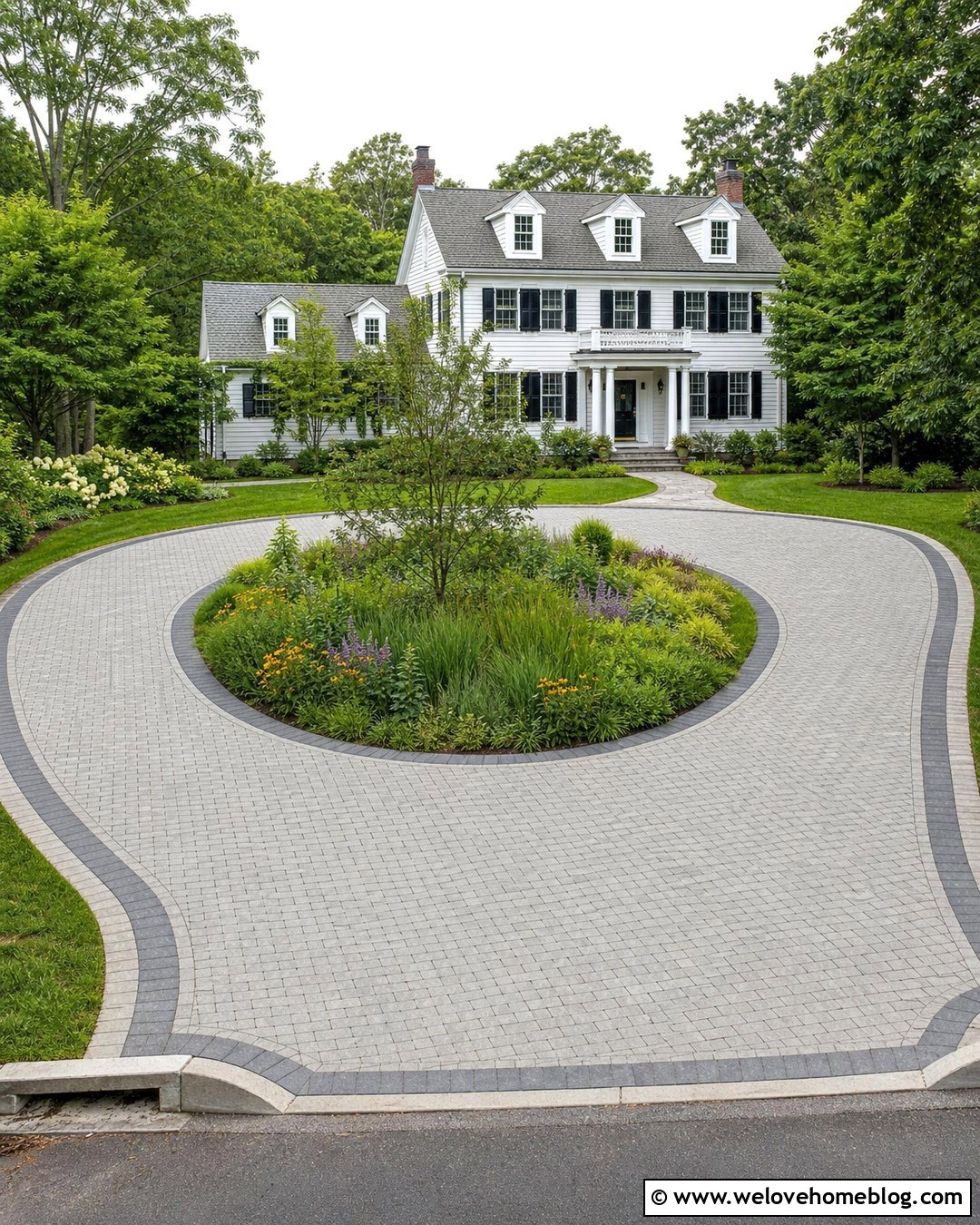
A circular driveway can remain landscape-focused when its center becomes a working rain garden instead of a decorative lawn island. Use permeable interlocking concrete pavers in a broad loop, with gray aggregate-filled joints and a darker paver edge. Direct suitable surface flow toward a planted depression through carefully positioned curb openings. The center garden can contain regionally native sedges, flowering perennials, shrubs, and a small tree selected for alternating wet and dry conditions. Rain gardens are designed to receive runoff from hard surfaces such as driveways and allow it to soak into suitable soil. () Keep the garden appropriately separated from foundations, septic systems, and utilities. A site professional can size the feature and determine whether an overflow outlet or soil amendment is necessary.
18. Curved Gravel Driveway With Bioswale
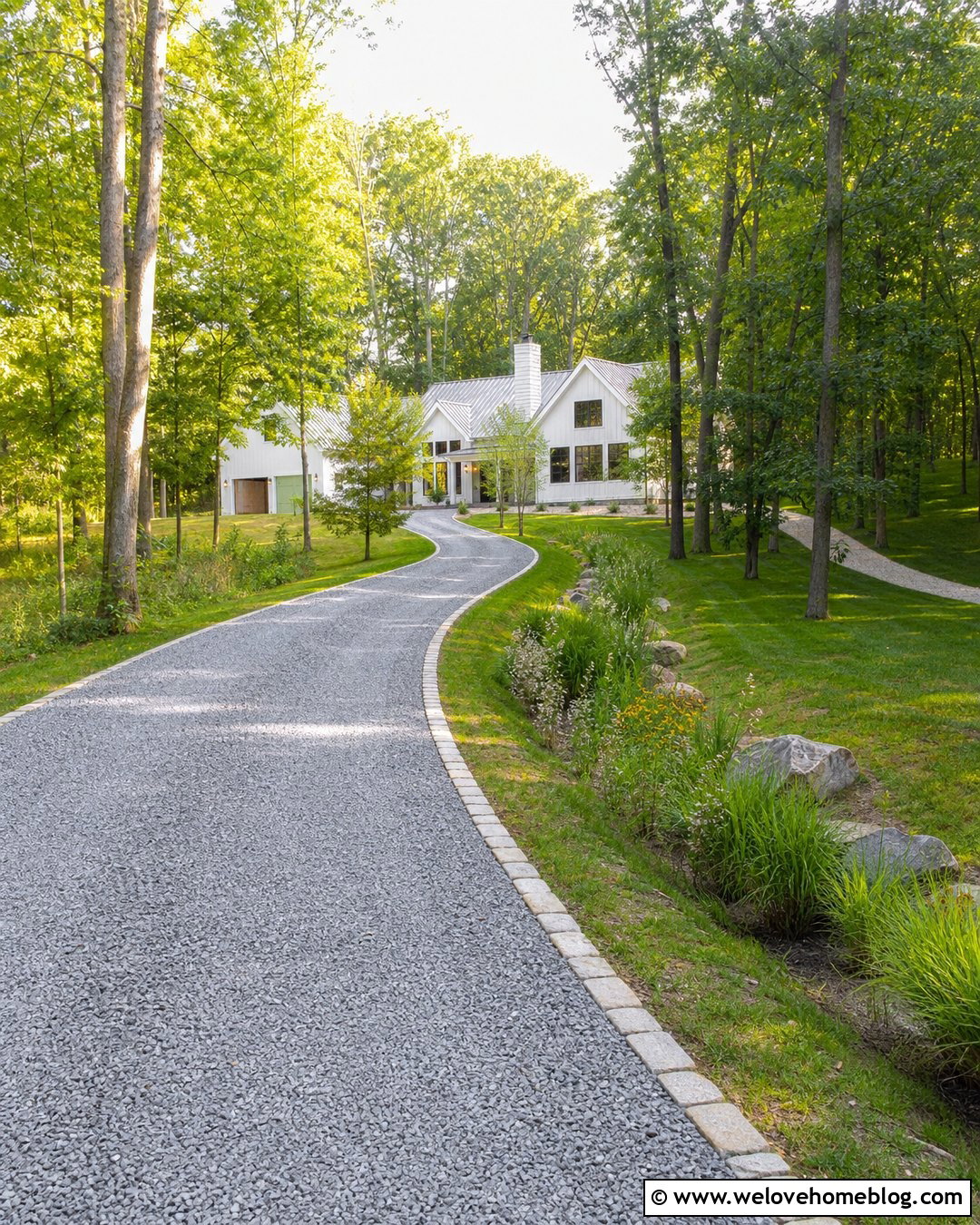
A long gravel driveway often produces concentrated runoff along its downhill edge. Turn that vulnerable strip into a shallow vegetated bioswale that follows the curve of the entrance. Use compacted angular gray gravel held by a recycled stabilization grid, then edge the driving surface with flush stone so water can reach the planted channel at planned locations. Fill the swale with native grasses, sedges, flowering perennials, and small shrubs suited to local moisture patterns. A stone check structure may help slow water on a mild slope when professionally designed. On the opposite side, maintain a simple mowed strip and scattered shade trees. This complete look fits wooded, rural, and modern farmhouse settings. Soil infiltration, driveway pitch, storm intensity, and safe overflow routes should guide the final layout.
19. Permeable Driveway With Native Tree Borders
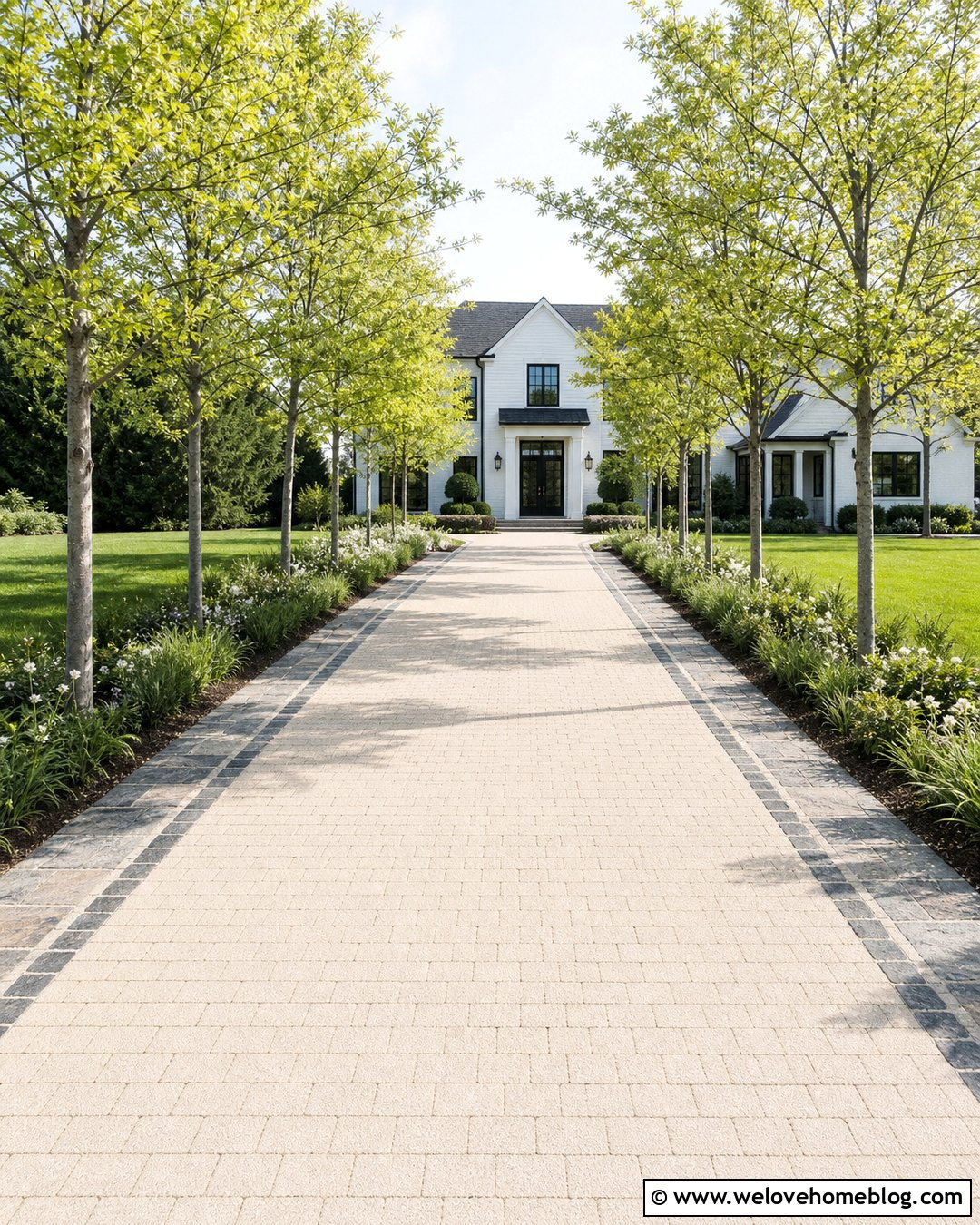
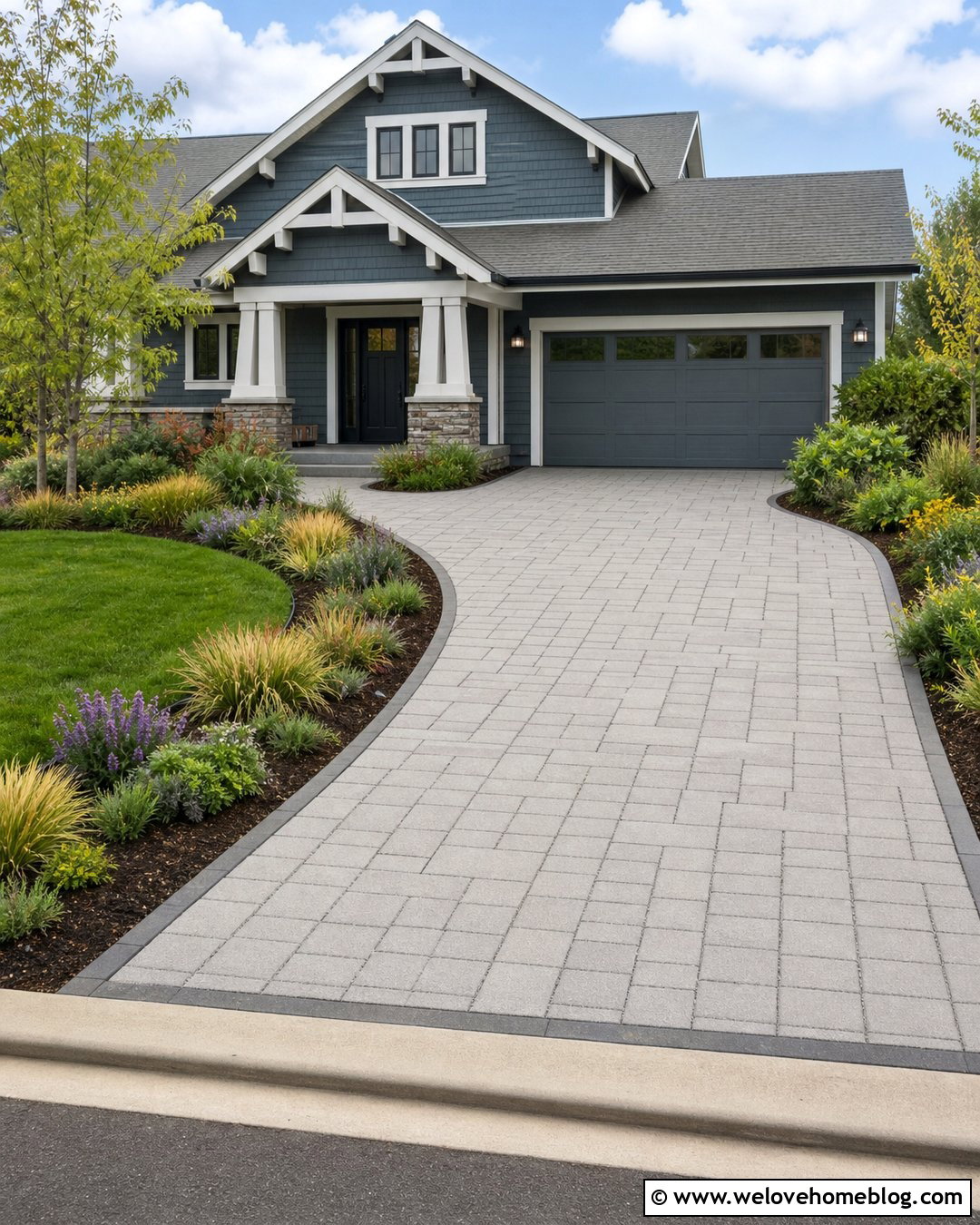
A tree-lined driveway can support shade and curb appeal without relying on a thirsty lawn along the full approach. Start with light-colored permeable concrete pavers arranged in a straight running-bond pattern. Add generous planting strips on both sides, using regionally native canopy trees spaced for their mature size. Underplant them with sedges, flowering groundcovers, and compact shrubs rather than exposed mulch that can wash into paver joints. Install root-friendly planting areas and keep trunks safely back from vehicle doors, sightlines, utilities, and paving edges. A contrasting stone ribbon can separate the permeable surface from the beds. The pale paving and leafy border create an inviting entrance for a Colonial, Craftsman, or transitional home. Plan for leaf collection so organic debris does not accumulate and restrict infiltration.
20. Narrow Permeable Driveway
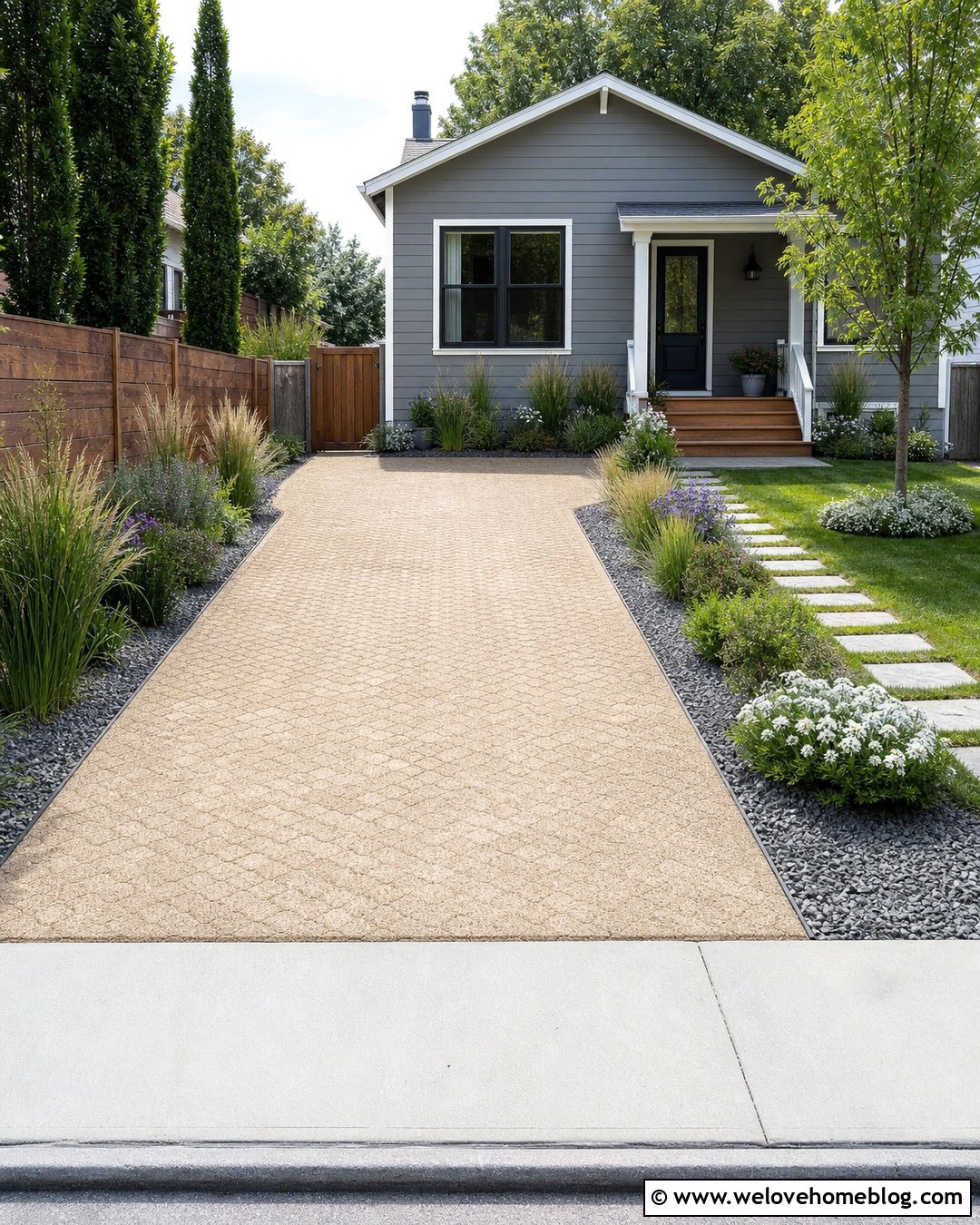
A narrower driveway uses less paving material and leaves more room for soil, trees, and planting, provided its dimensions still meet local access and safety requirements. Create a single straight lane with buff permeable pavers and a slightly wider parking pad near the garage. Add compact gravel shoulders where occasional tire clearance is needed, rather than widening the entire route. Low native shrubs, bunch grasses, and flowering perennials can line the approach without blocking visibility. A separate stepping-stone walkway keeps pedestrians out of the vehicle lane and protects nearby planting. This efficient layout is especially useful for small urban lots, cottages, and detached garages. Confirm minimum width, emergency access, drainage, turnaround needs, and property setbacks before reducing pavement. Thoughtful proportions make the entrance feel greener, not cramped.
Conclusion:
The most effective 20 Eco Friendly Driveway Ideas balance environmental goals with safe access, durability, maintenance, and everyday appearance. Permeable pavers, gravel grids, porous asphalt, pervious concrete, reclaimed masonry, and reduced-width layouts can all play a role. Rain gardens, bioswales, native borders, and shade trees make the driveway part of the larger landscape instead of an isolated parking surface. However, successful results depend on the hidden construction too. Soil conditions, aggregate depth, grading, edge restraint, drainage, and overflow planning require careful attention. Permeable pavement also needs inspection and debris removal to help prevent clogging. () Choose a complete design that fits your climate, property, budget, and realistic maintenance routine.

Related posts:




Leave a Reply