
Choosing between gravel and concrete is not only about price. The best surface should suit your home, climate, driveway length, drainage needs, and willingness to handle maintenance. Gravel offers a relaxed look, natural drainage, and a lower initial cost, but loose stones need occasional leveling and replenishment. Concrete creates a firm, polished surface with broad design flexibility, although installation usually costs more and cracks may require repair. () Both materials can deliver strong curb appeal when the shape, edging, planting, and house architecture work together. The following complete driveway looks include affordable rural layouts, clean modern finishes, decorative borders, and practical hybrid designs. Use these 20 Gravel Vs Concrete Driveway Ideas to find the right balance between appearance, performance, and upkeep.

1. Pea Gravel Driveway With Cobblestone Edging
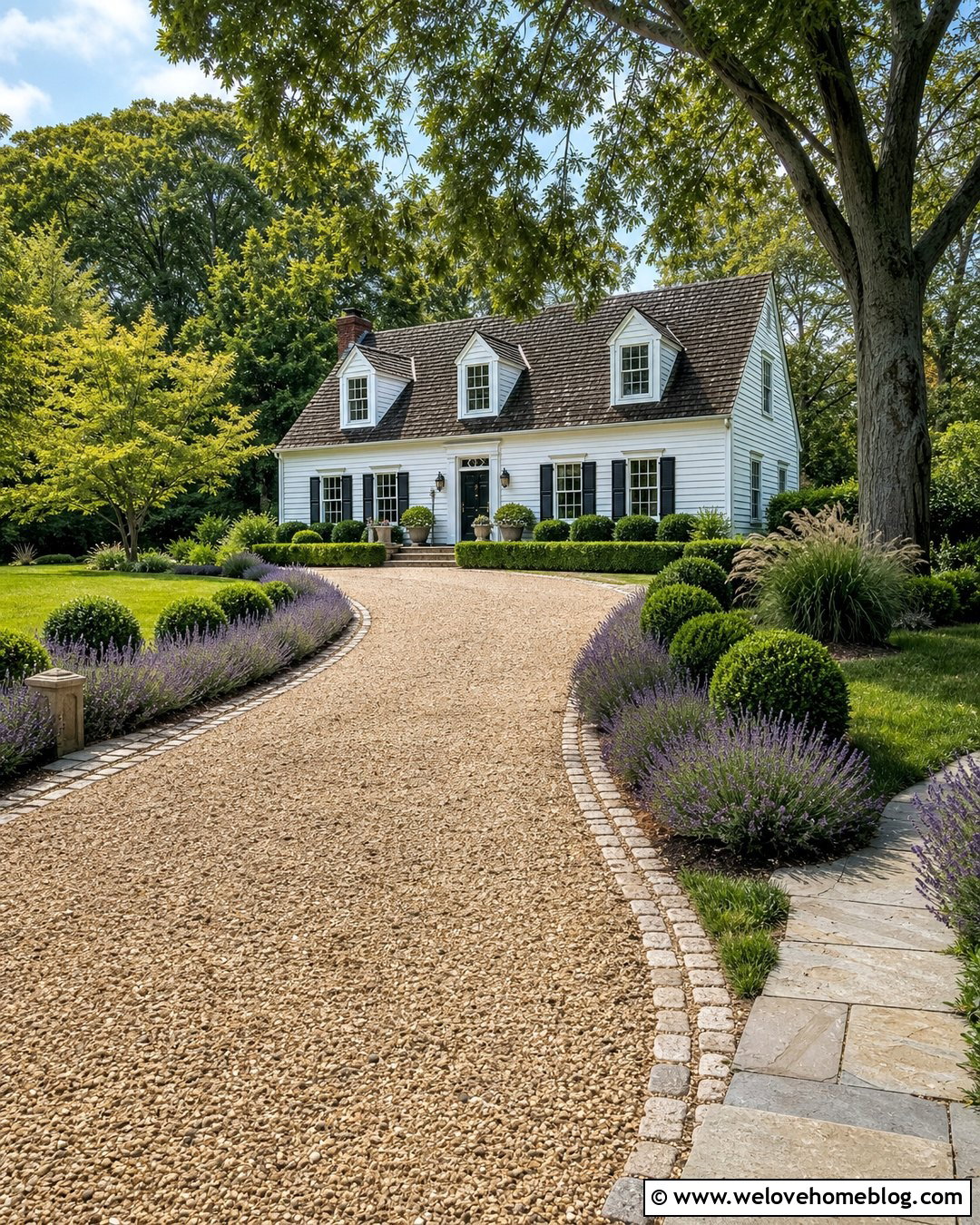
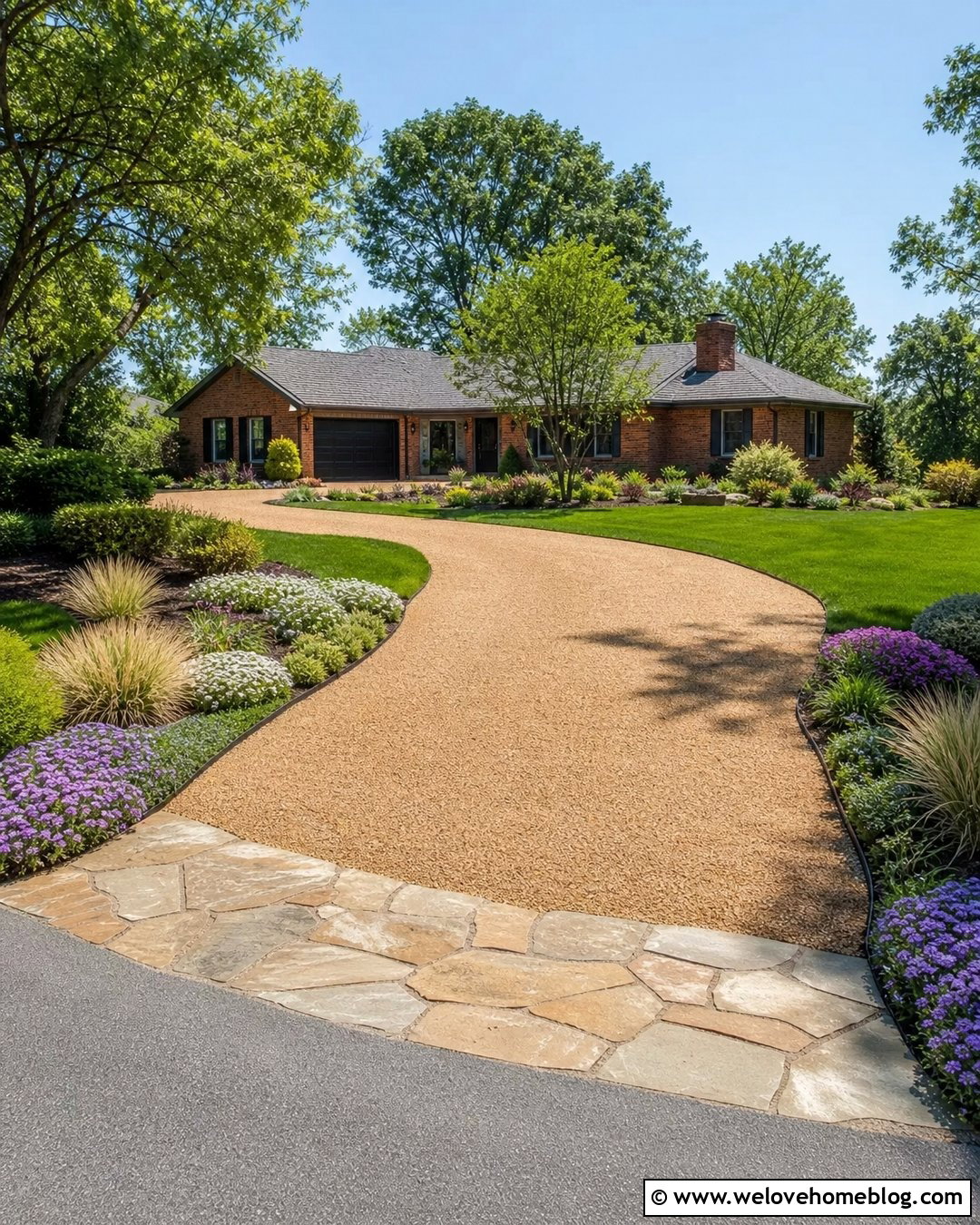
A pea gravel driveway brings soft color and an informal texture to a cottage, Cape Cod, or traditional home. Use compacted beige pea gravel across a gently curved layout, then contain it with cobblestone edging set flush enough to simplify mowing. Lavender, boxwood, and ornamental grasses can frame the curve without hiding the driveway. Compared with plain concrete, this look feels warmer and usually costs less to install. However, rounded pea gravel can shift under tires, so a strong compacted base and secure borders are important. Gravel grids can provide additional stability in frequently used areas. Choose this complete design when you want natural drainage, a welcoming garden atmosphere, and an easy way to refresh the surface by adding more stone.
2. Brushed Concrete Driveway With Brick Borders
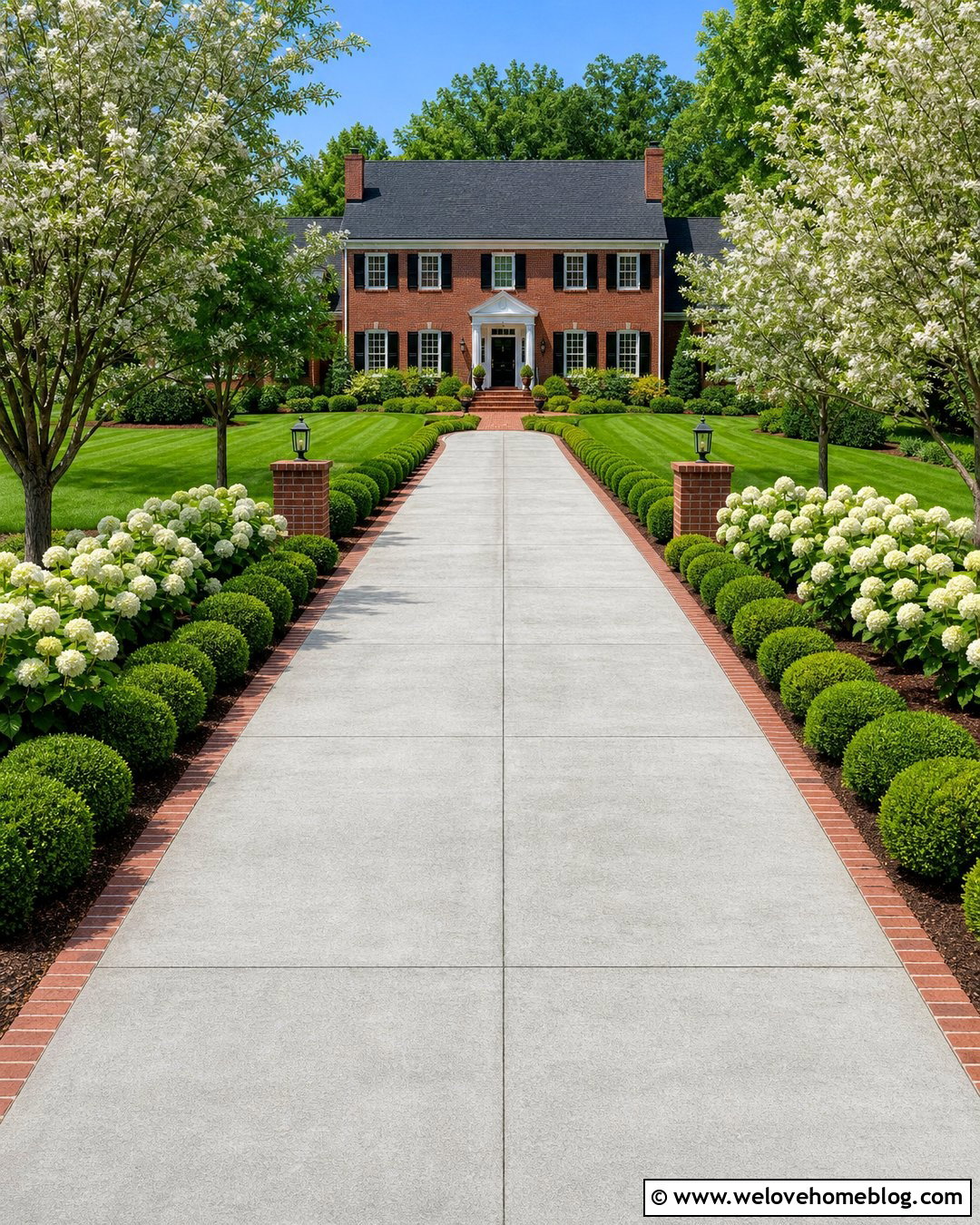
Imagine a clean brushed concrete driveway stretching toward a red brick colonial house. A straight double-width layout creates an orderly approach, while clay brick borders connect the pale concrete with the facade. Add symmetrical planting beds filled with boxwood, hydrangeas, and small flowering trees. Compared with gravel, brushed concrete gives wheels, strollers, and trash bins a smoother surface. It also stays more clearly defined along lawns and walkways. Control joints should be planned as part of the design rather than treated as an afterthought. They can align with brick ribbons or architectural features for a balanced appearance. This driveway works especially well for busy suburban homes where low routine maintenance and a formal curb view matter more than achieving the lowest installation price.
3. Gray Gravel Driveway With Steel Edging
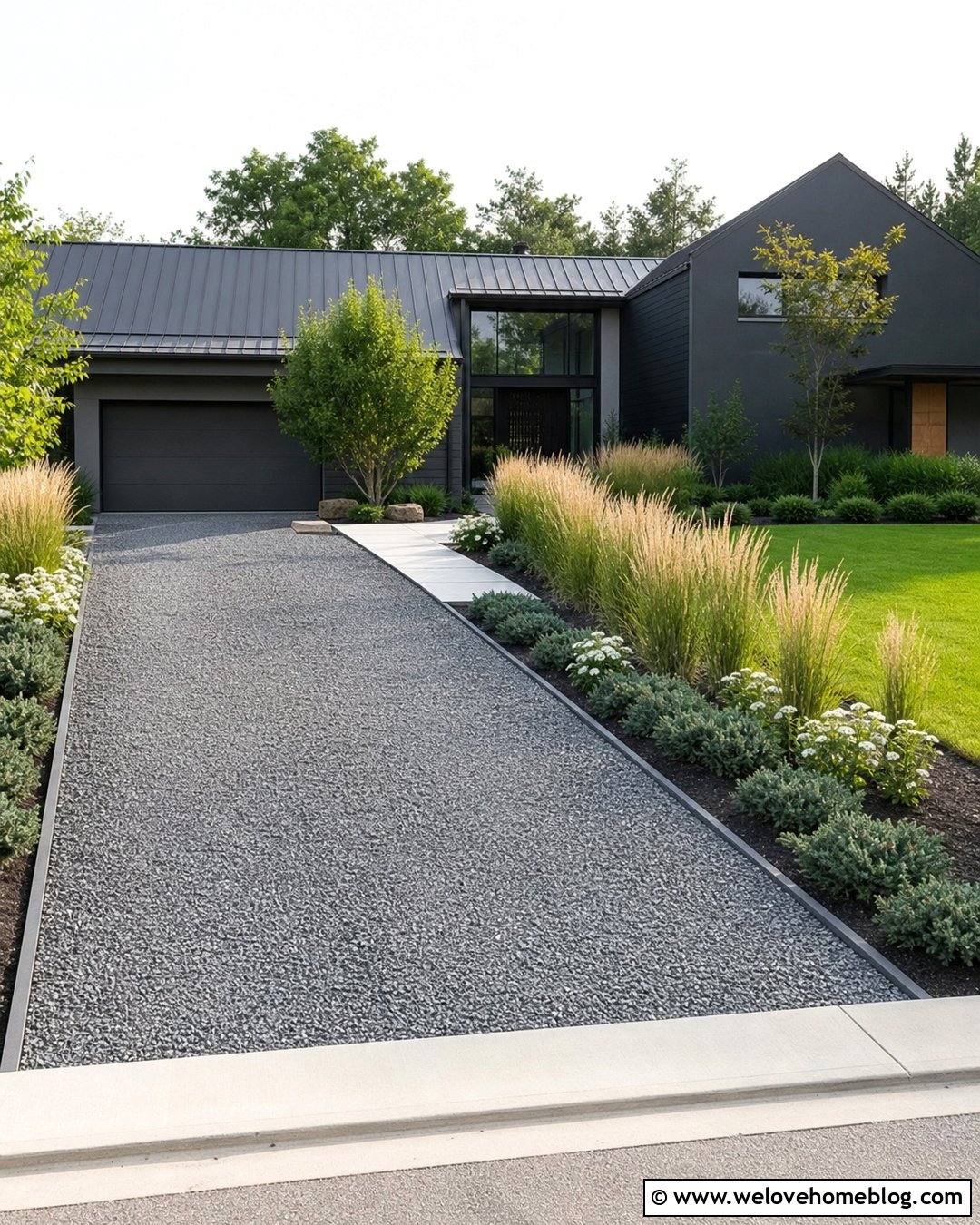
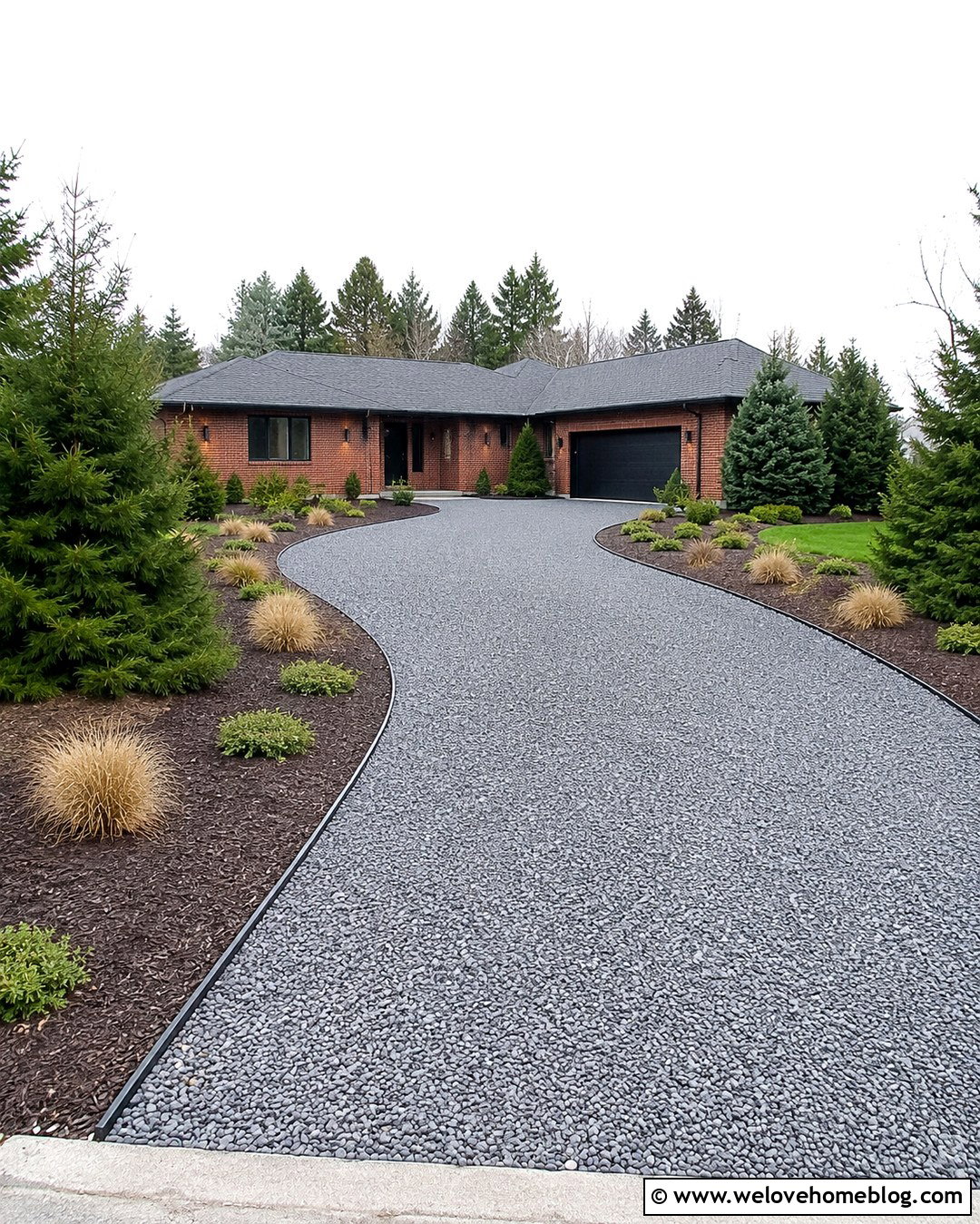
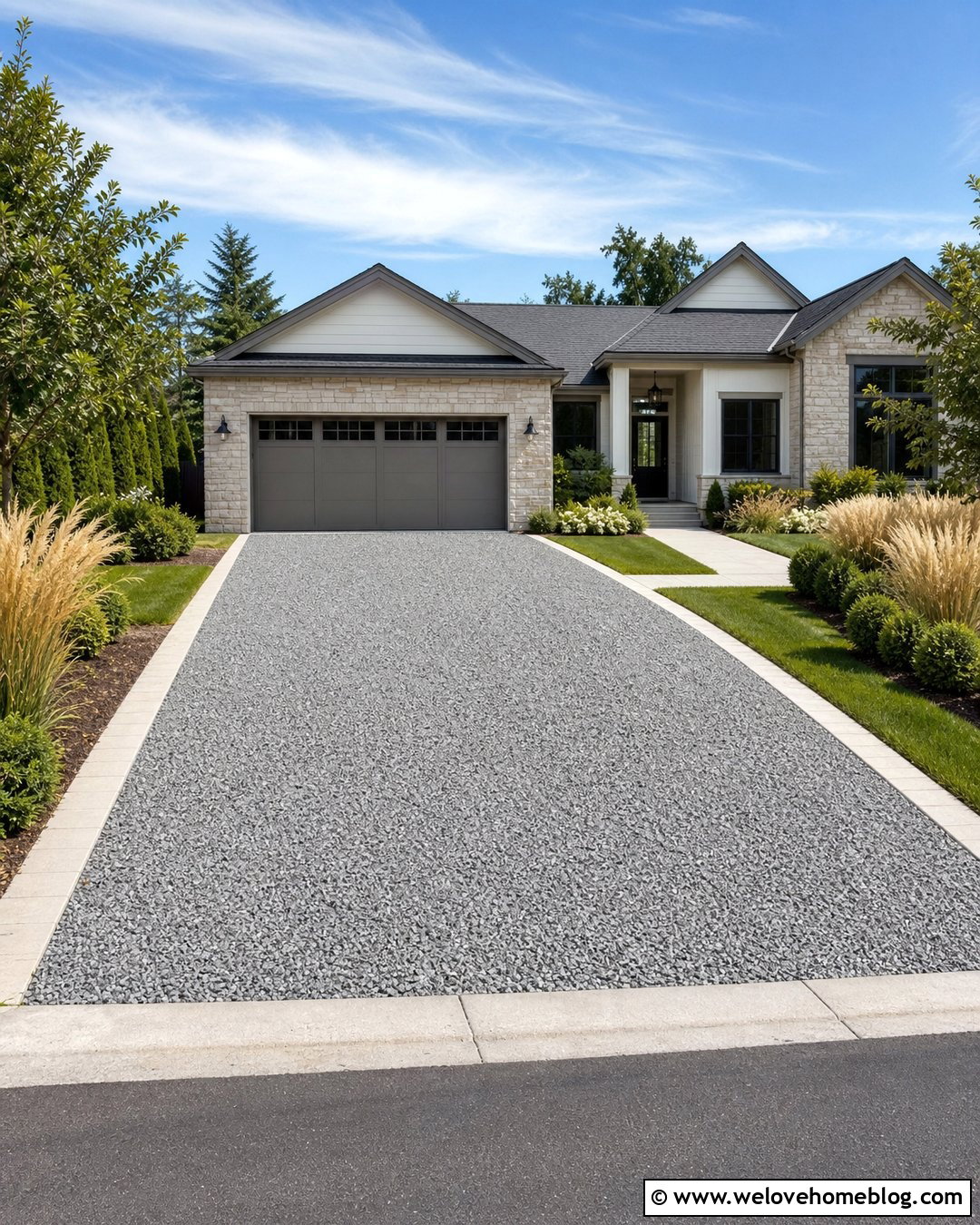
For a modern home, gravel does not have to look rustic. Angular gray crushed gravel creates a sharper, more stable surface than rounded decorative stones. Run it along a wide, straight driveway contained by slim black steel edging. Linear beds of feather reed grass, low juniper, and white flowering perennials can soften the hard lines without making the entrance feel crowded. The gray material coordinates naturally with charcoal siding, black windows, and concrete walkways. Gravel provides a permeable surface, but proper grading and a compacted base are still necessary to manage runoff and prevent ruts. () This look offers a less expensive alternative to a full concrete installation while maintaining the simple geometry associated with contemporary residential design.
4. Stamped Concrete Driveway With Stone Pillars
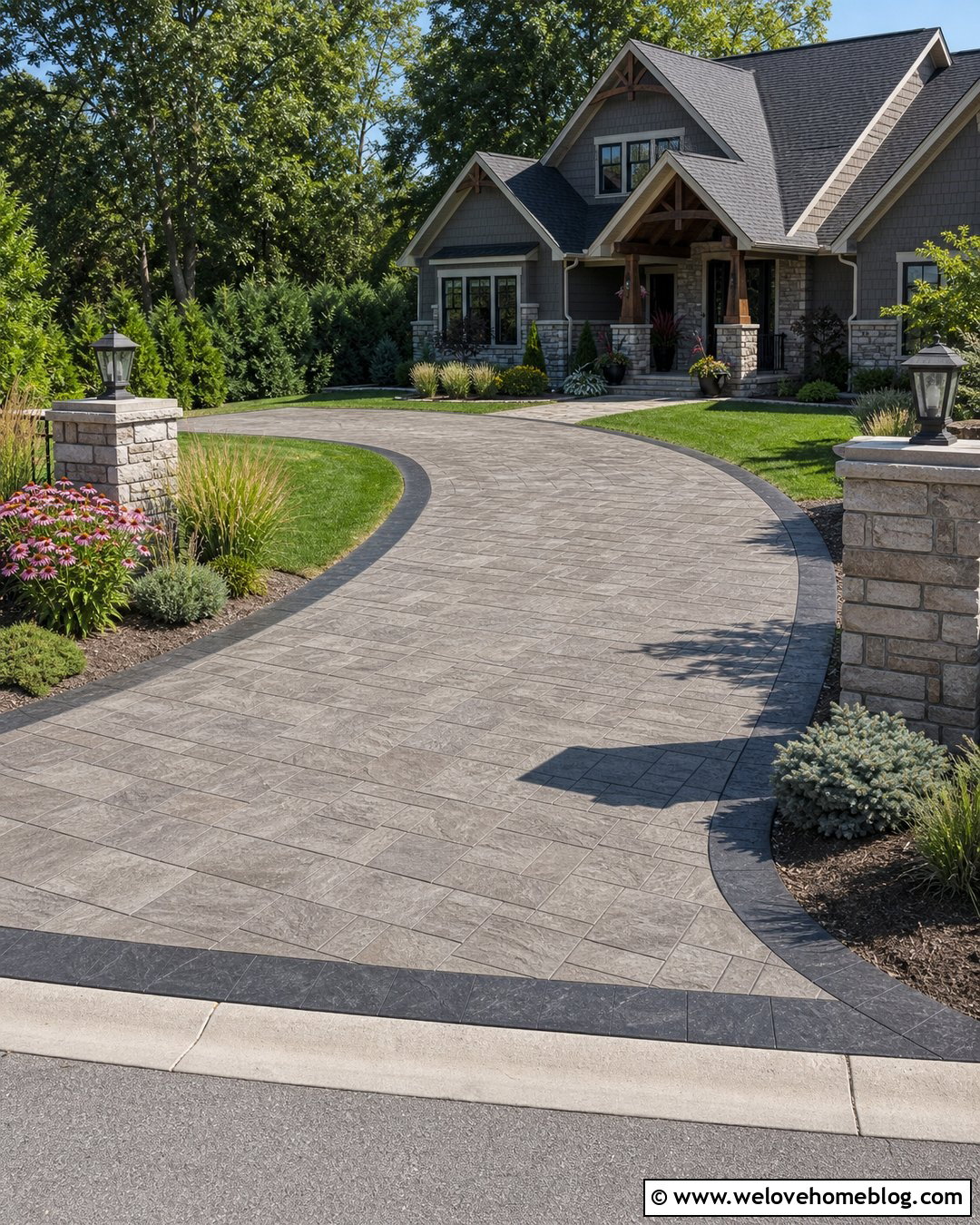
Stamped concrete can create the appearance of individual stone units without covering the entire driveway in natural stone. Choose a warm ashlar slate pattern for a curved approach leading to a craftsman home. At the curb, low stone pillars can mark the entrance and repeat the colors of the stamped surface. Use a darker integral color or border stain around the perimeter for definition. Layered beds of dwarf evergreens, coneflowers, and ornamental grasses complete the view. Compared with gravel, this driveway feels more permanent and provides a stable surface on everyday parking areas. Decorative concrete costs more than a basic pour, and the pattern should be scaled to the driveway’s dimensions. Careful color selection keeps the finished surface from competing with the house.
5. White Gravel Driveway With Brick Ribbon
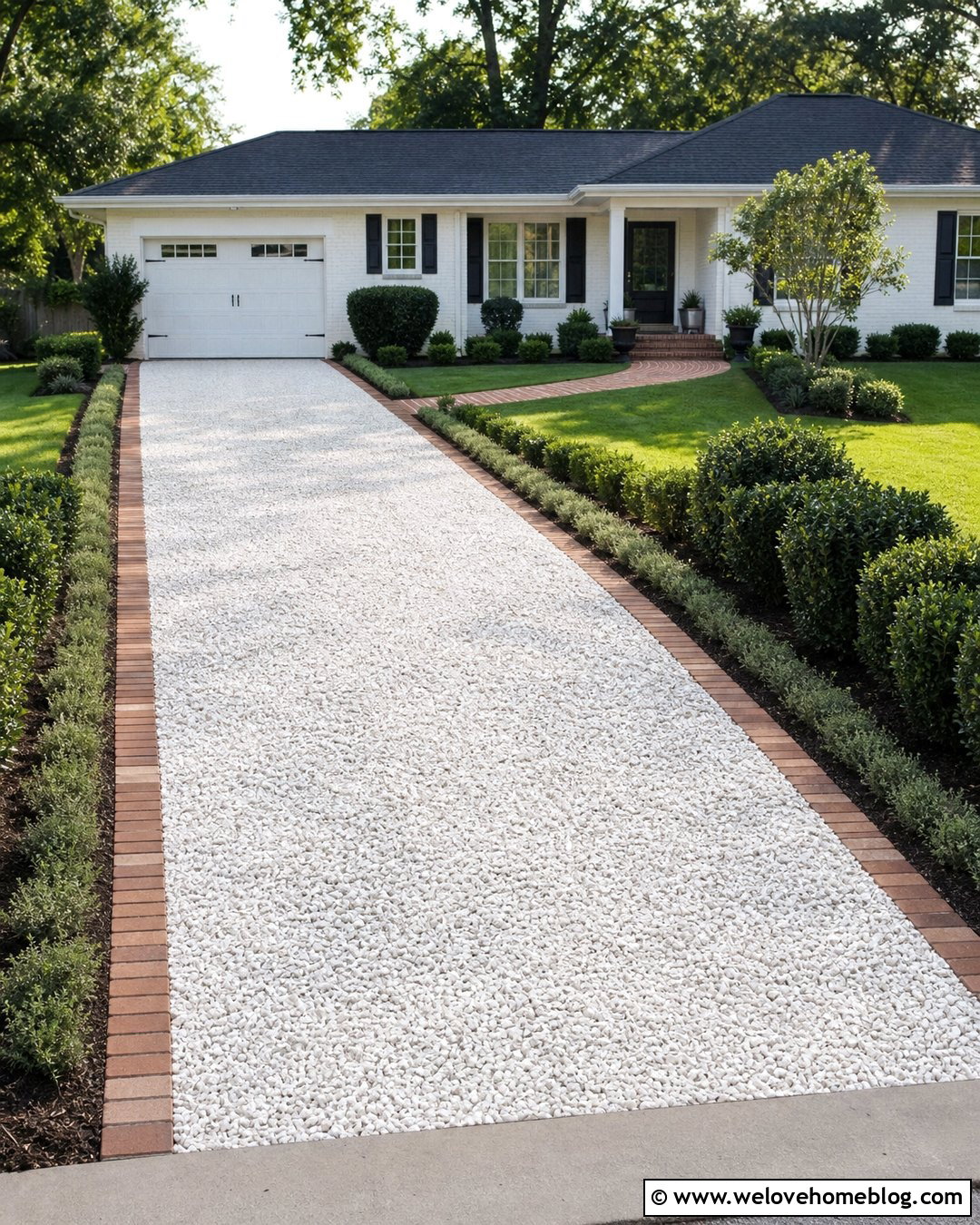
Bright white gravel can make a small front yard feel lighter and more spacious. Use angular marble chips or pale limestone in a narrow straight driveway leading to a painted brick ranch house. A clay brick ribbon running along each side keeps the gravel contained and adds warmth. Repeat the brick around a matching walkway for a connected layout. Low-growing thyme, compact hollies, and neat lawn panels prevent the bright stone from feeling stark. Compared with white or light-gray concrete, gravel creates more texture and allows rainwater to move through the surface. It may show leaves, soil, and tire movement more easily, so regular raking is helpful. This design is most practical on a relatively level site where strong edging can limit stone migration.
6. Concrete Ribbon Driveway With Gravel Center
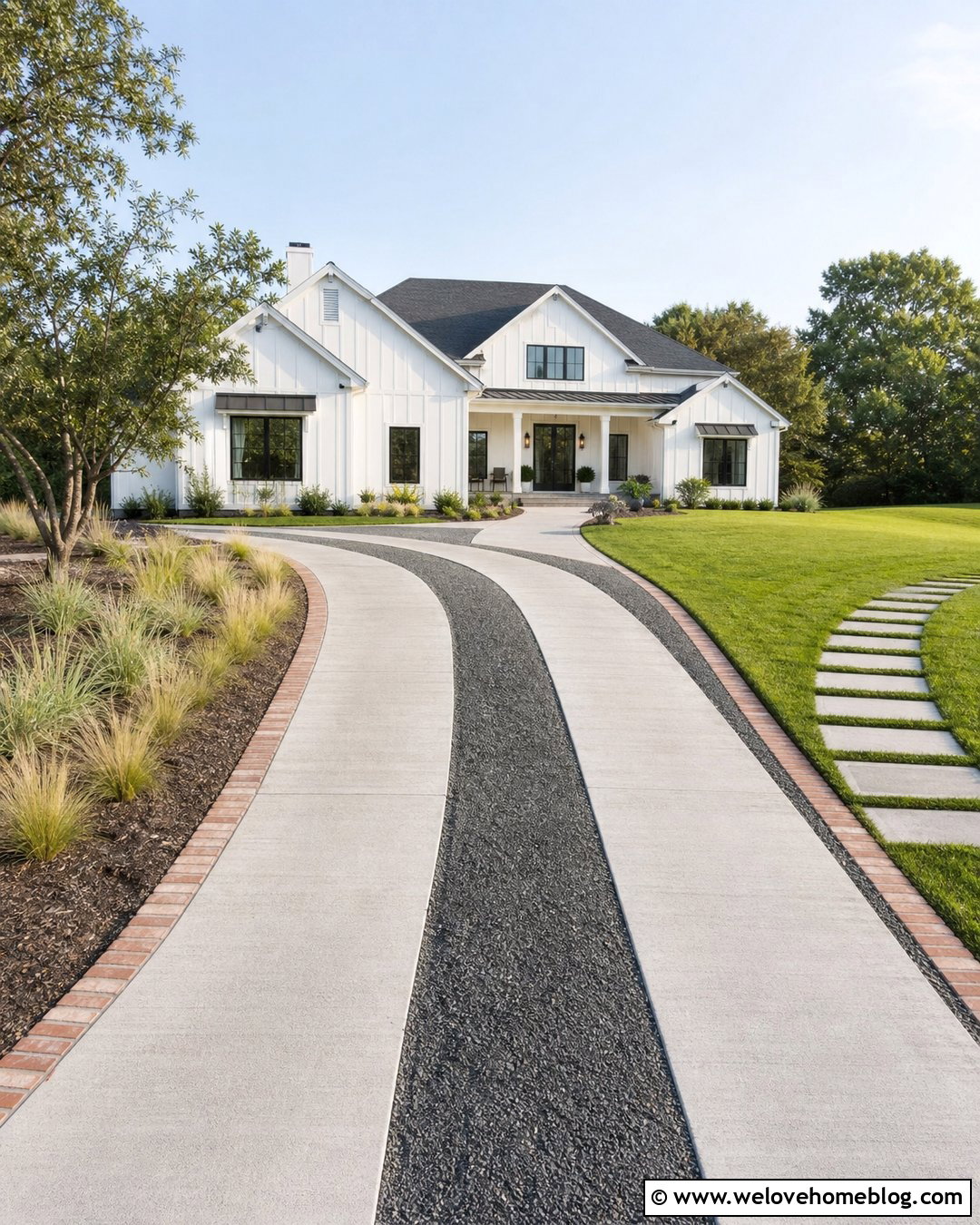
Can’t decide between gravel and concrete? A ribbon driveway combines both materials in one practical layout. Two smooth concrete tracks support vehicle tires, while compacted gray gravel fills the center and side strips. This reduces the amount of poured concrete and introduces a permeable-looking visual break. Use straight ribbons for a modern farmhouse or gently curve them toward a detached garage. Brick edging, native grasses, and a stepping-stone walkway can connect the driveway to the yard. Precise track spacing is essential because different vehicles need enough usable width. The gravel sections should sit slightly below the concrete to control loose stones. This hybrid look offers more structure than an all-gravel driveway while appearing lighter and less expansive than a full concrete slab.
7. Crushed Stone Driveway With Timber Edging
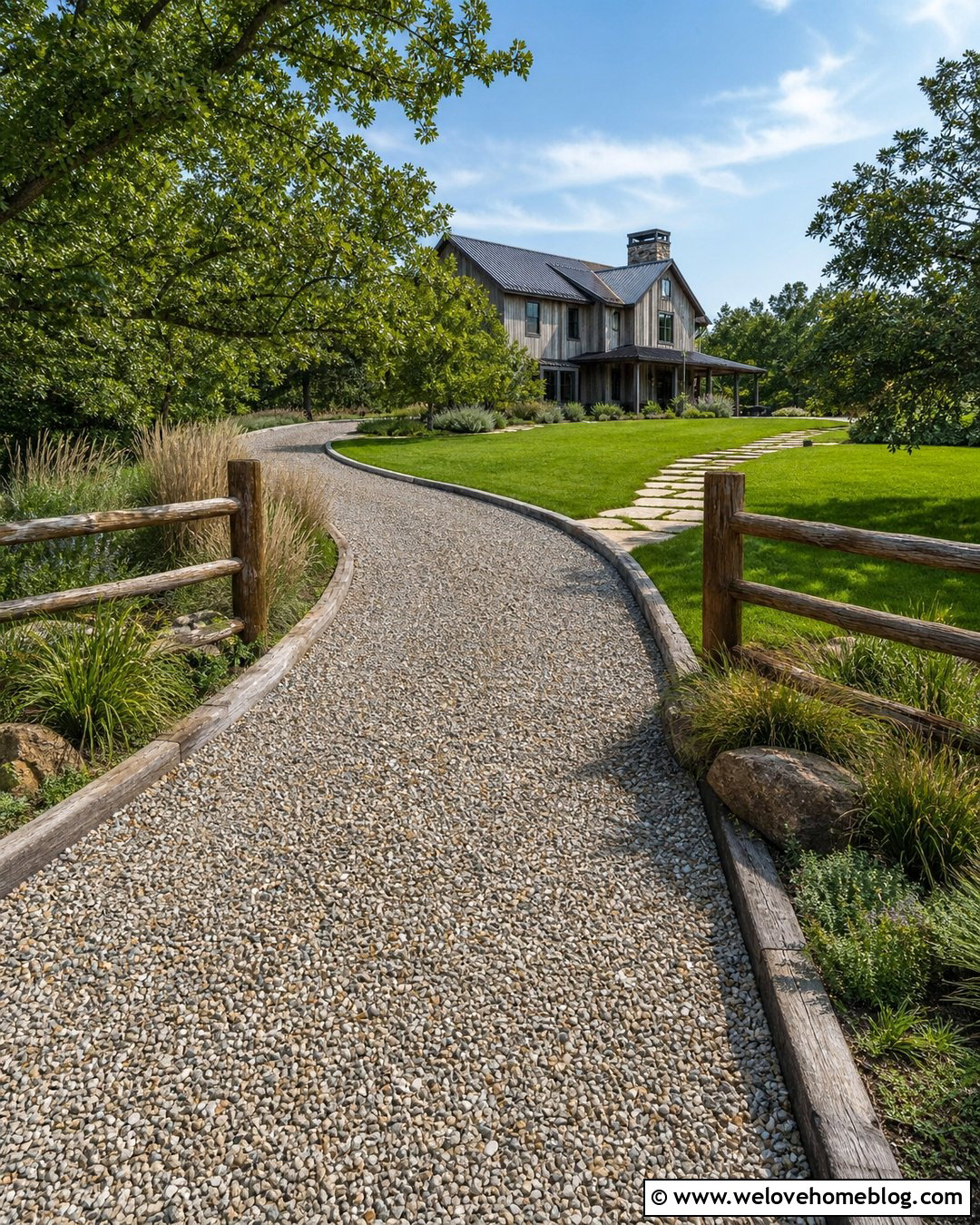
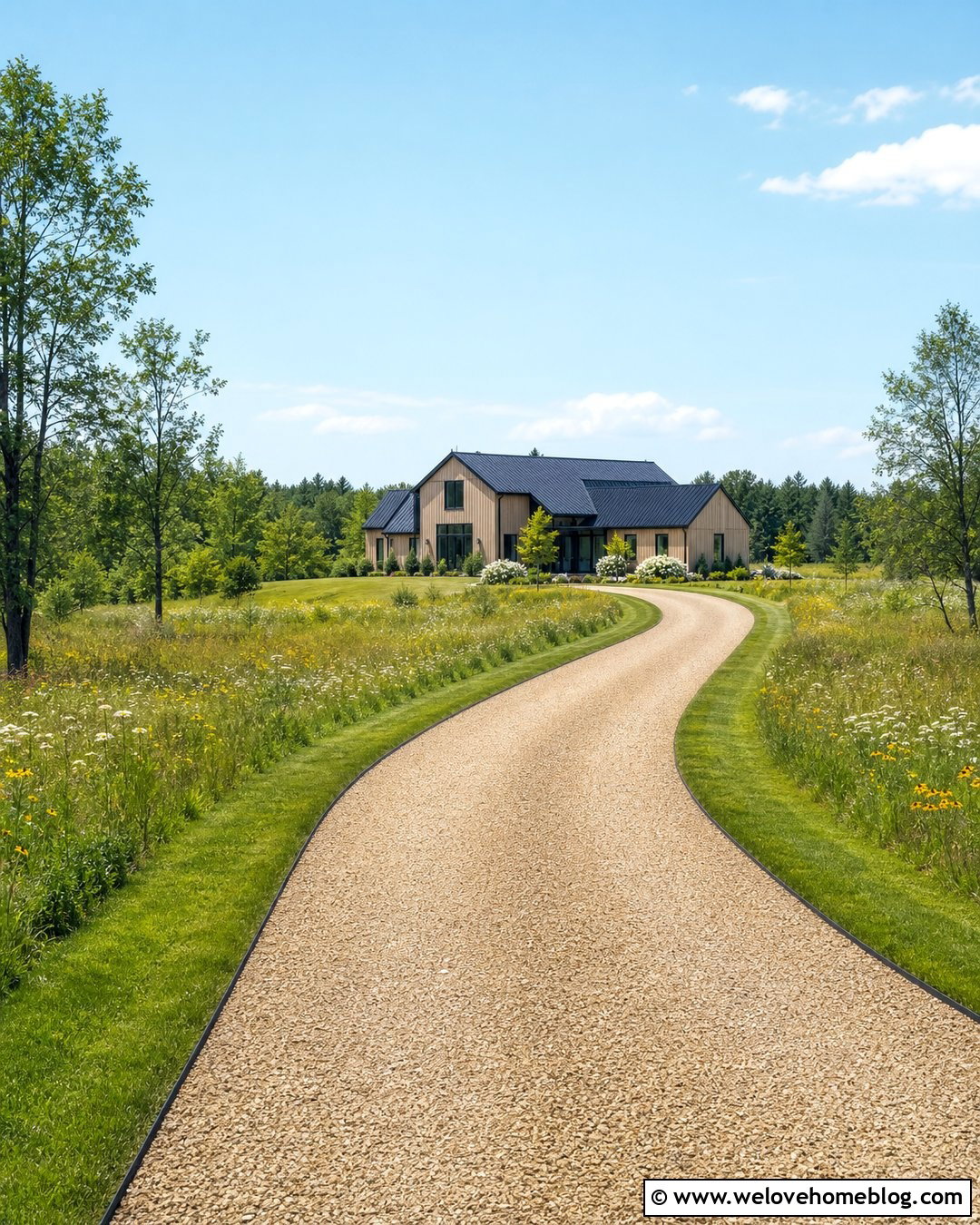
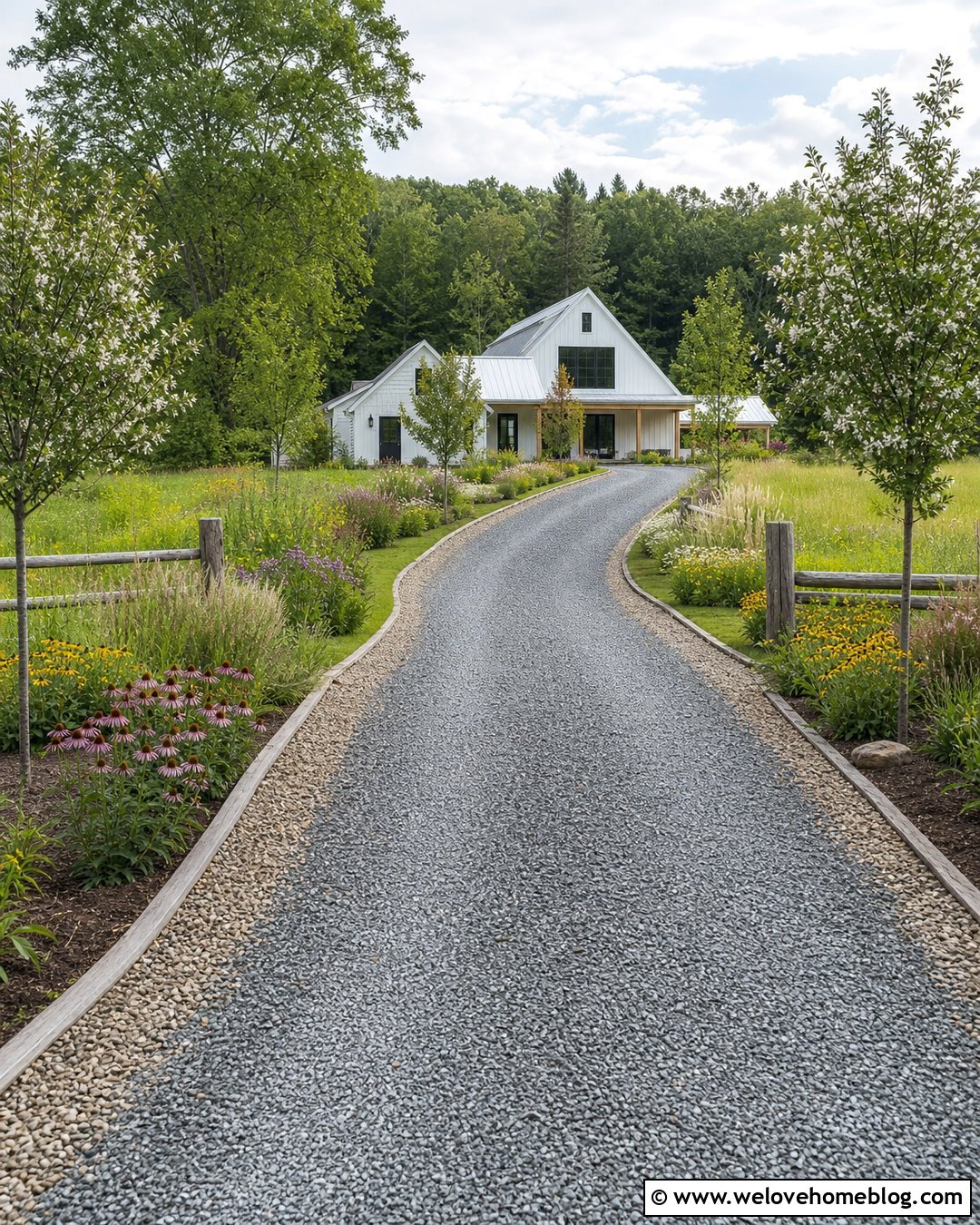
A long country driveway looks natural when surfaced with compacted crushed stone. Select a mixed tan and gray aggregate with angular pieces that lock together under pressure. Shape the driveway into a soft curve and contain the sides with heavy landscape timbers secured below the finished stone level. Native grasses, split-rail fencing, and groups of deciduous trees can guide the eye toward a farmhouse or barn-style garage. Compared with concrete, crushed stone is generally more economical for covering a long distance. It is also easier to reshape if the entrance or parking area changes later. Gravel requires periodic grading and replacement where stones wash away or migrate. () A crowned center and planned drainage channels help protect the complete layout during heavy rainfall.
8. Exposed Aggregate Concrete Driveway With Grass Borders
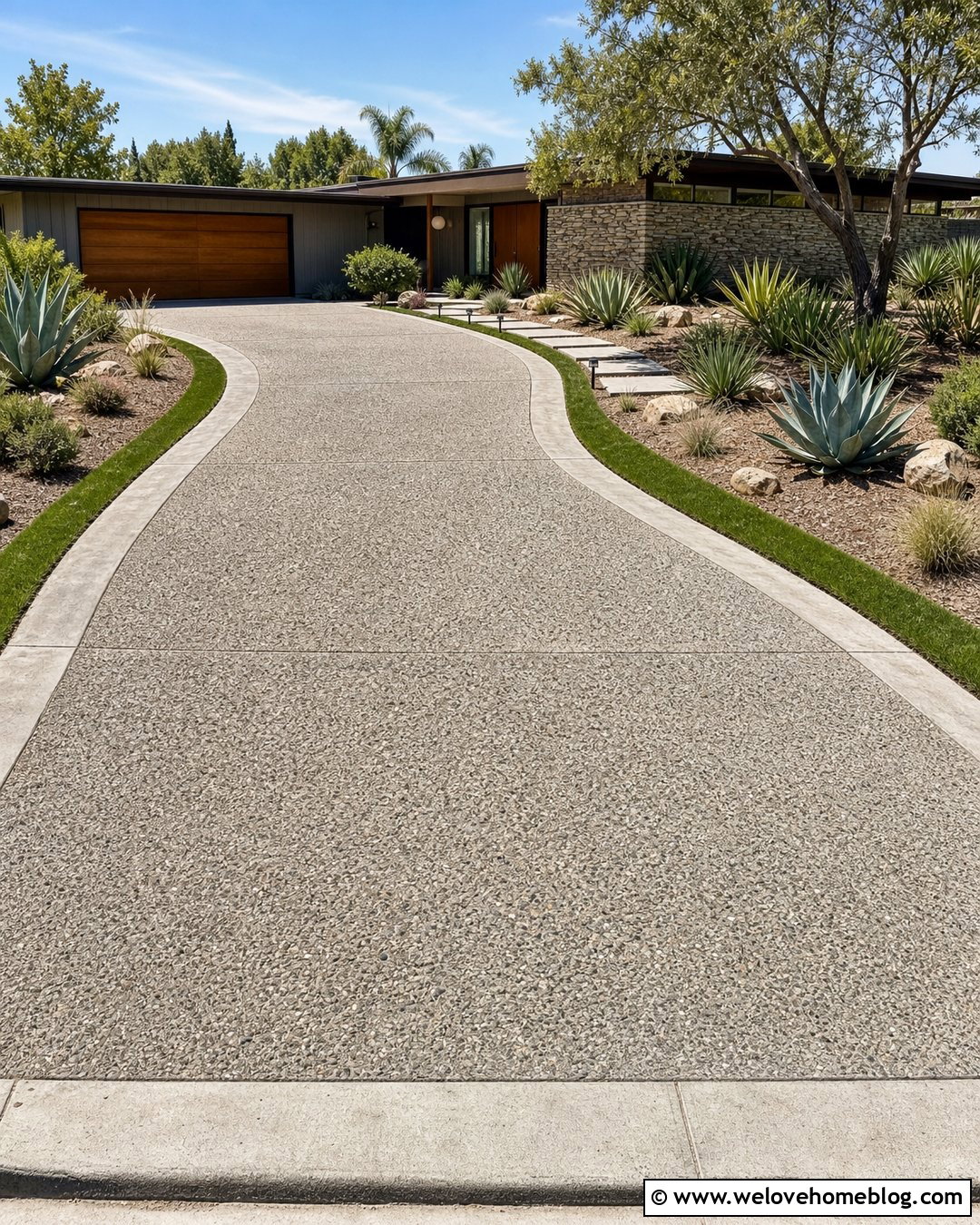
Exposed aggregate concrete adds visible stone texture while retaining the firm surface of a poured driveway. Use a warm gray and tan aggregate blend on a broad curved layout serving a midcentury ranch house. Narrow grass borders can follow both sides, separating the concrete from deeper beds of agave, ornamental grass, or drought-tolerant shrubs. A smooth concrete band around the perimeter provides a clean finish and makes the textured center feel intentional. Compared with loose gravel, exposed aggregate stays in place and creates a stable walking surface. The textured finish can also disguise light dust better than completely smooth concrete. Select an aggregate color that coordinates with the roof, masonry, and local landscape. Proper sealing helps preserve the appearance and makes routine cleaning more manageable.
9. Gravel Circular Driveway With Tree Island
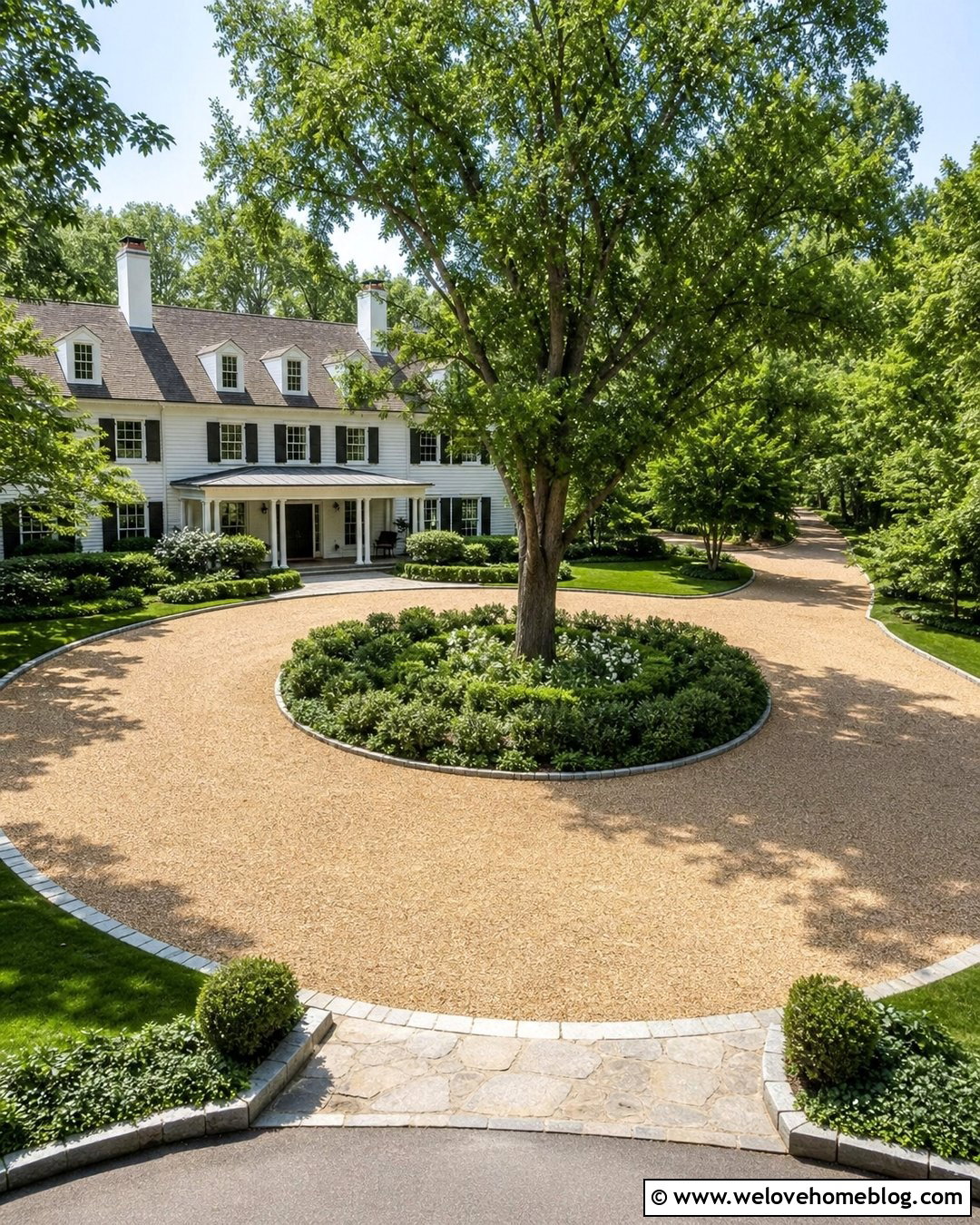
A circular gravel driveway creates a graceful arrival sequence without requiring vehicles to reverse toward the street. Use compacted golden gravel around a large central island planted with a single shade tree, low shrubs, and seasonal groundcover. Natural stone curbing should define both the inner and outer edges so the gravel remains within the driving lane. This complete layout suits colonial, country, and traditional homes with wider front yards. Compared with a concrete circle, gravel can make the large paved area feel softer and less dominant. It may also reduce the initial expense of covering so much ground. Confirm that the turning radius is generous enough for regular vehicles, deliveries, and emergency access. Keep island plants low near entry and exit points for clear visibility.
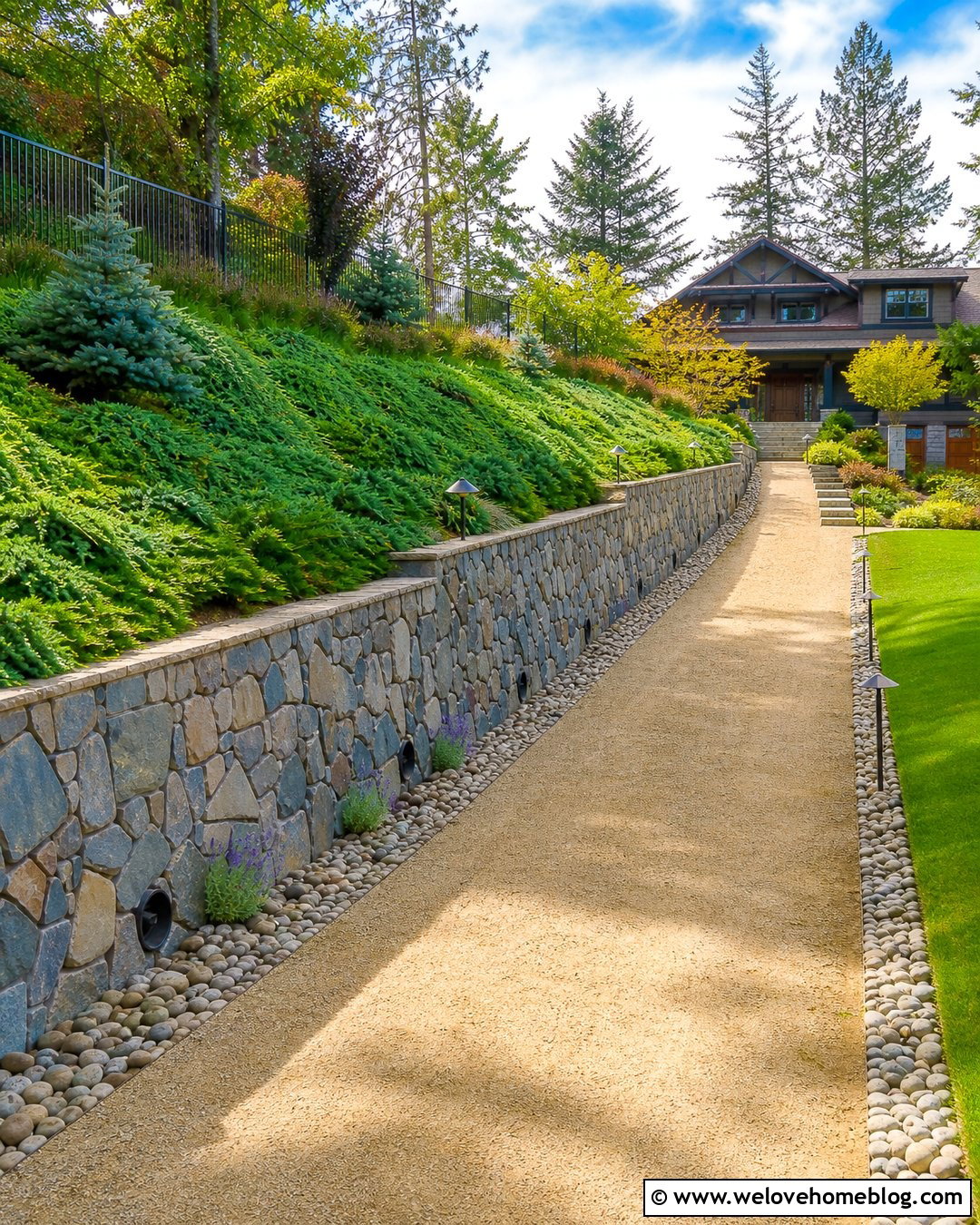
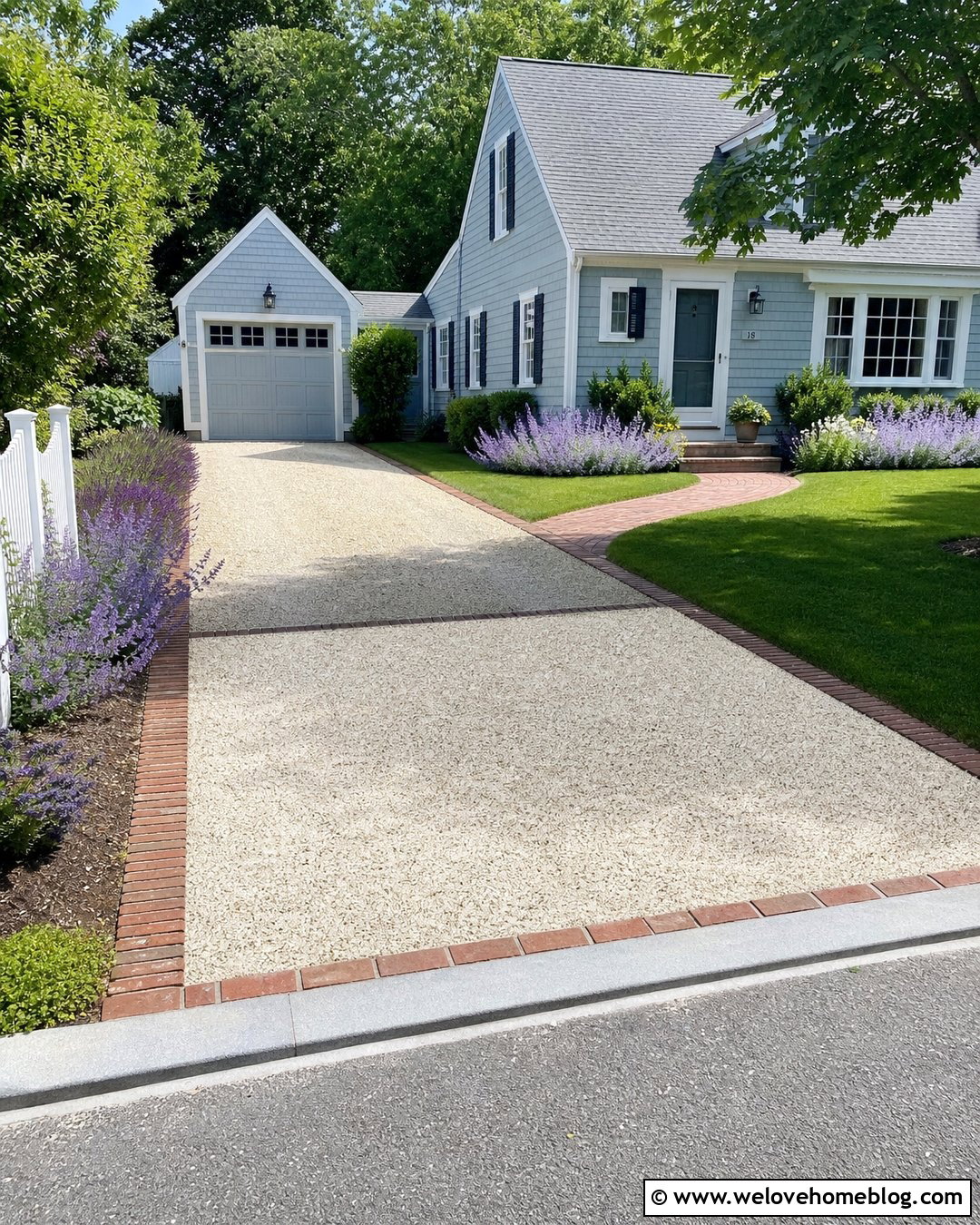
10. Broom Finish Concrete Driveway With Paver Bands
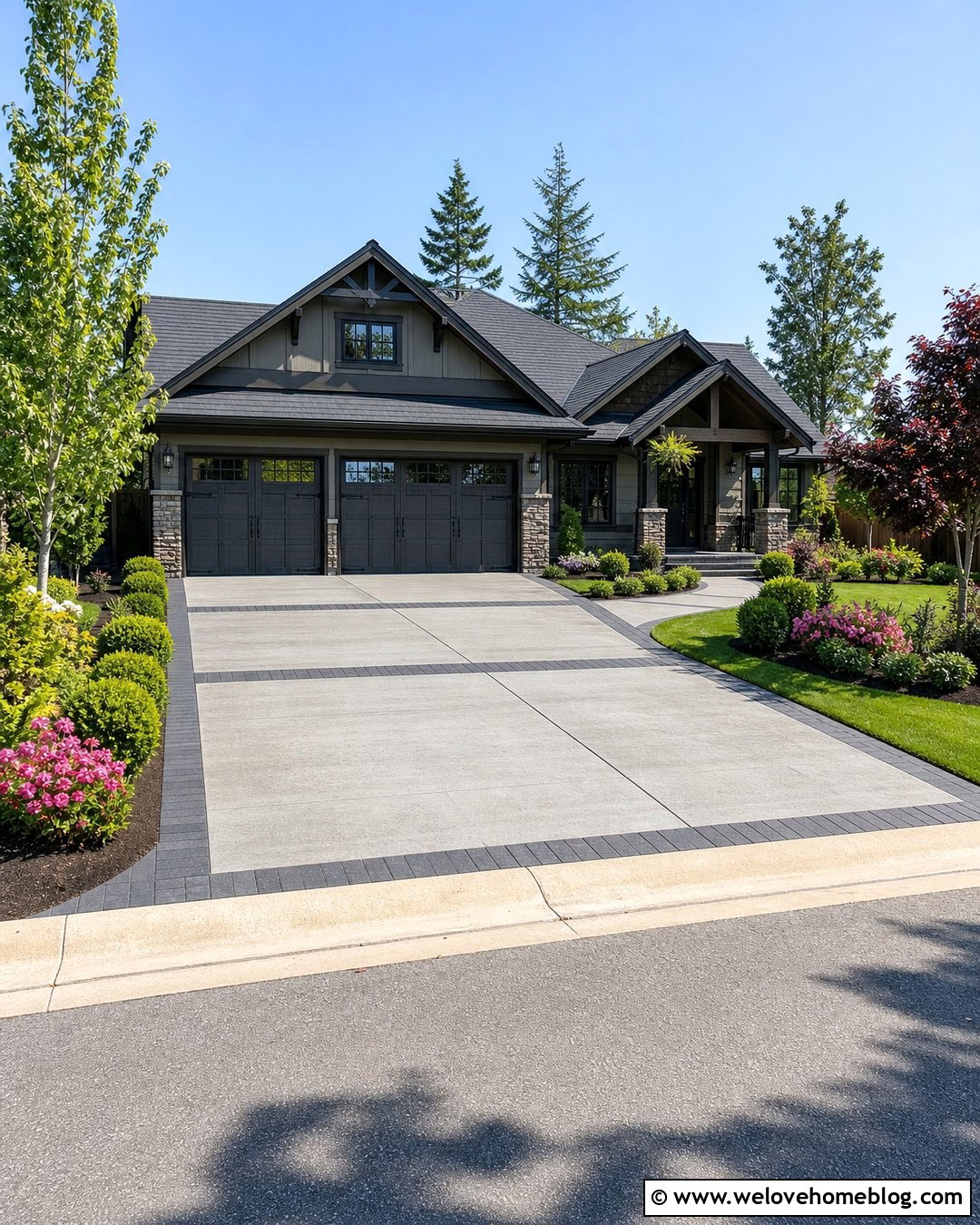
A broom finish offers practical traction and a simple appearance, but decorative paver bands can keep it from looking basic. Divide a wide concrete driveway into balanced rectangular sections using charcoal concrete pavers. Carry the same pavers around the border and into the front walkway. This approach works especially well with a contemporary craftsman or transitional home. Foundation beds filled with clipped shrubs, flowering perennials, and small ornamental trees add softness. Compared with gravel, the continuous concrete surface is easier for bicycles, wheeled equipment, and mobility devices to cross. Place the paver bands where planned joints are needed so functional lines become part of the pattern. The contrast should remain subtle enough that the driveway complements the house instead of becoming the property’s busiest feature.
11. Black Gravel Driveway With Concrete Curbs
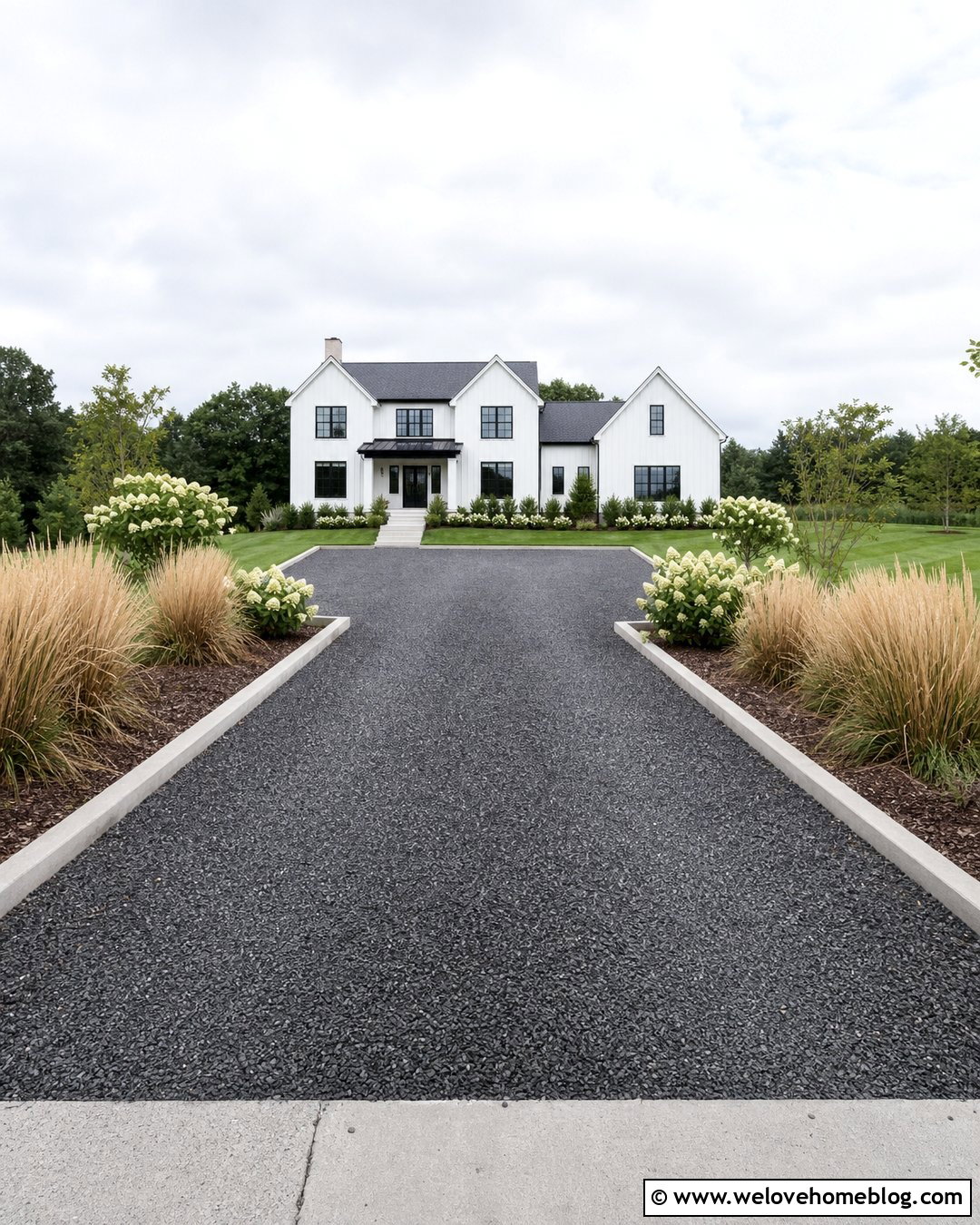
Deep charcoal gravel creates a dramatic approach to a light-colored modern farmhouse. Choose angular basalt or dark crushed granite for a straight driveway with a generous parking court near the garage. Low poured-concrete curbs provide crisp containment and visually connect the gravel with concrete steps or a front walkway. Along the sides, use pale ornamental grasses, white hydrangeas, and fresh green lawn to balance the dark surface. Gravel naturally introduces more texture than solid concrete, but black stone may become noticeably warm in strong sun. Dust and lighter debris can also stand out. A stable subbase and periodic raking will keep the parking area neat. This design suits homeowners who want contemporary contrast and drainage benefits without committing to a full dark-tinted concrete installation.
12. Salt Finish Concrete Driveway With Desert Landscaping
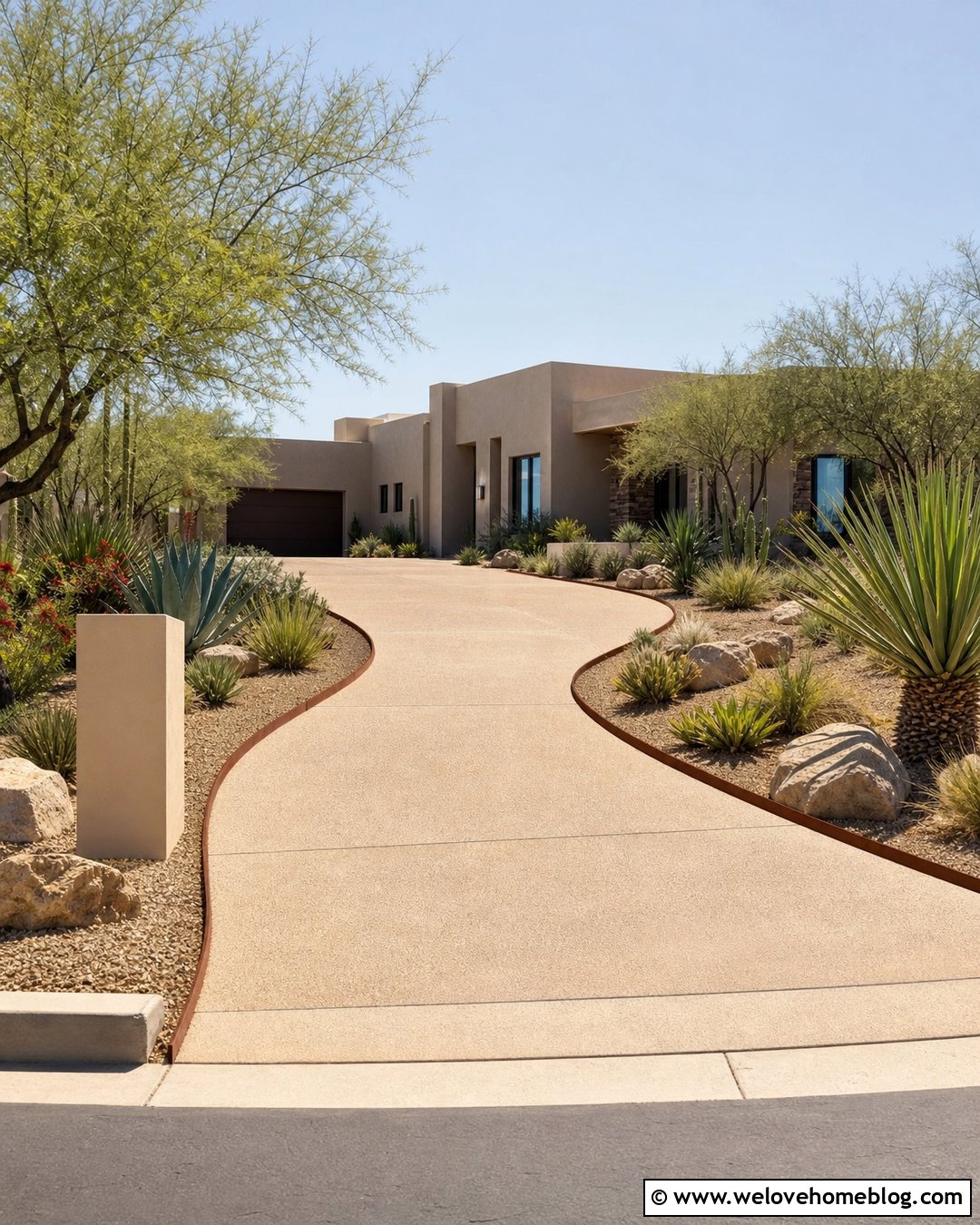
A light salt finish gives concrete a fine, speckled texture that fits comfortably around Southwestern and desert-modern homes. Pour warm beige concrete across a gently curved driveway, then frame it with decomposed granite beds, boulders, agave, yucca, and drought-tolerant grasses. Corten steel edging can separate planting areas from the concrete without adding bulky borders. Compared with a loose gravel driveway, the solid surface prevents decorative landscape stone from blending into the parking lane. The pale color also coordinates with stucco walls and natural desert tones. Include a subtle cross slope or drainage channel so water does not collect near the garage. Although the texture is understated, a carefully placed walkway and address pillar can give the complete entrance a distinctive, finished appearance.
13. Gravel Driveway With Concrete Parking Pad
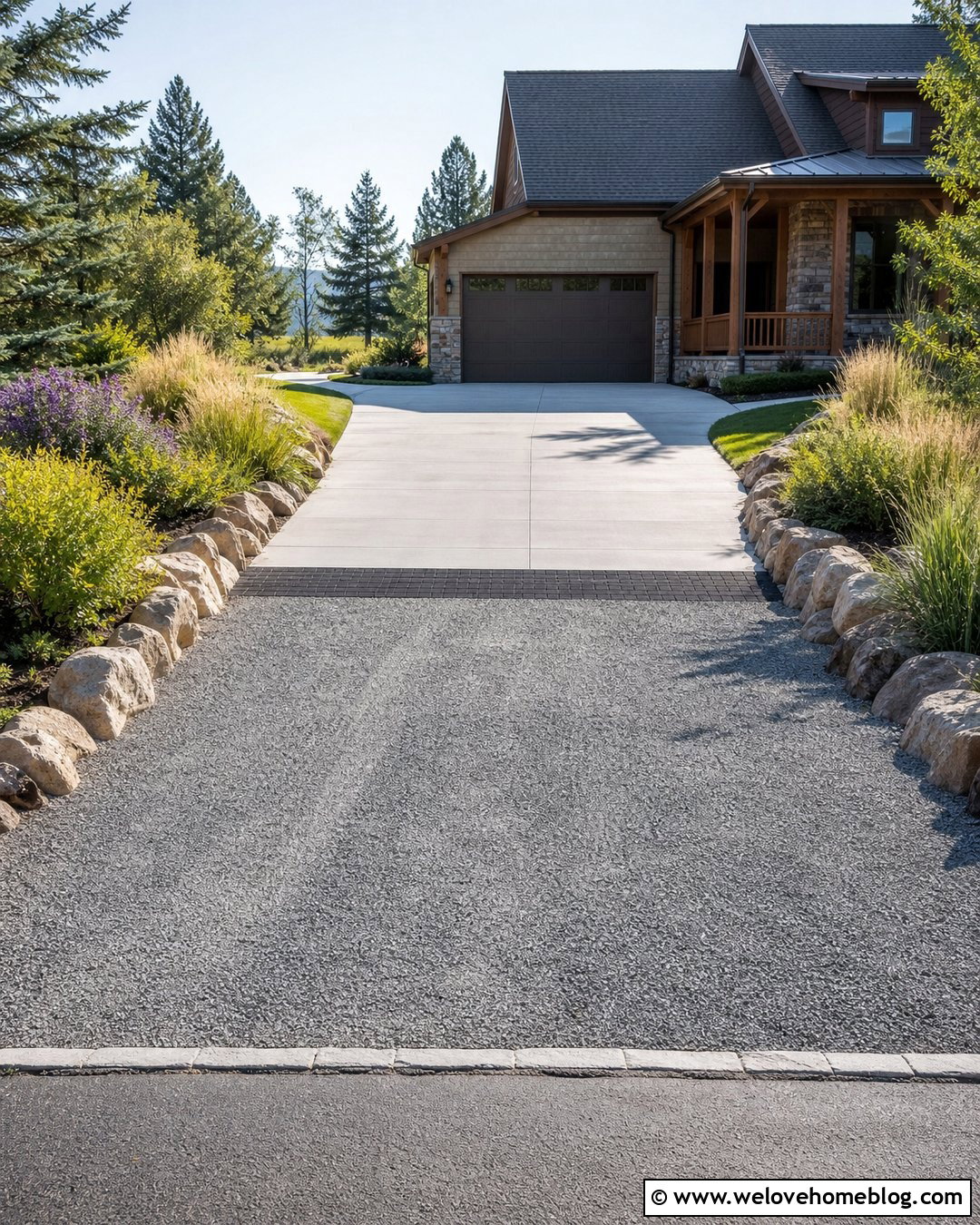
A gravel approach paired with a concrete parking pad can direct the budget toward the areas that receive the most daily use. Surface the long driveway with compacted gray crushed stone, then transition to broom-finished concrete near the garage. A straight paver band between the materials creates a deliberate break and helps catch loose gravel. This combination works for rural homes, deep suburban lots, and properties with detached garages. The concrete pad provides a firm place for parking, unloading, and moving bins, while the gravel keeps the longer section affordable. Make the concrete area large enough for doors to open without stepping onto loose stone. Both surfaces need compatible grading so water moves away from buildings. Matching stone borders and native planting beds can visually unite the two zones.
14. Colored Concrete Driveway With Limestone Edging
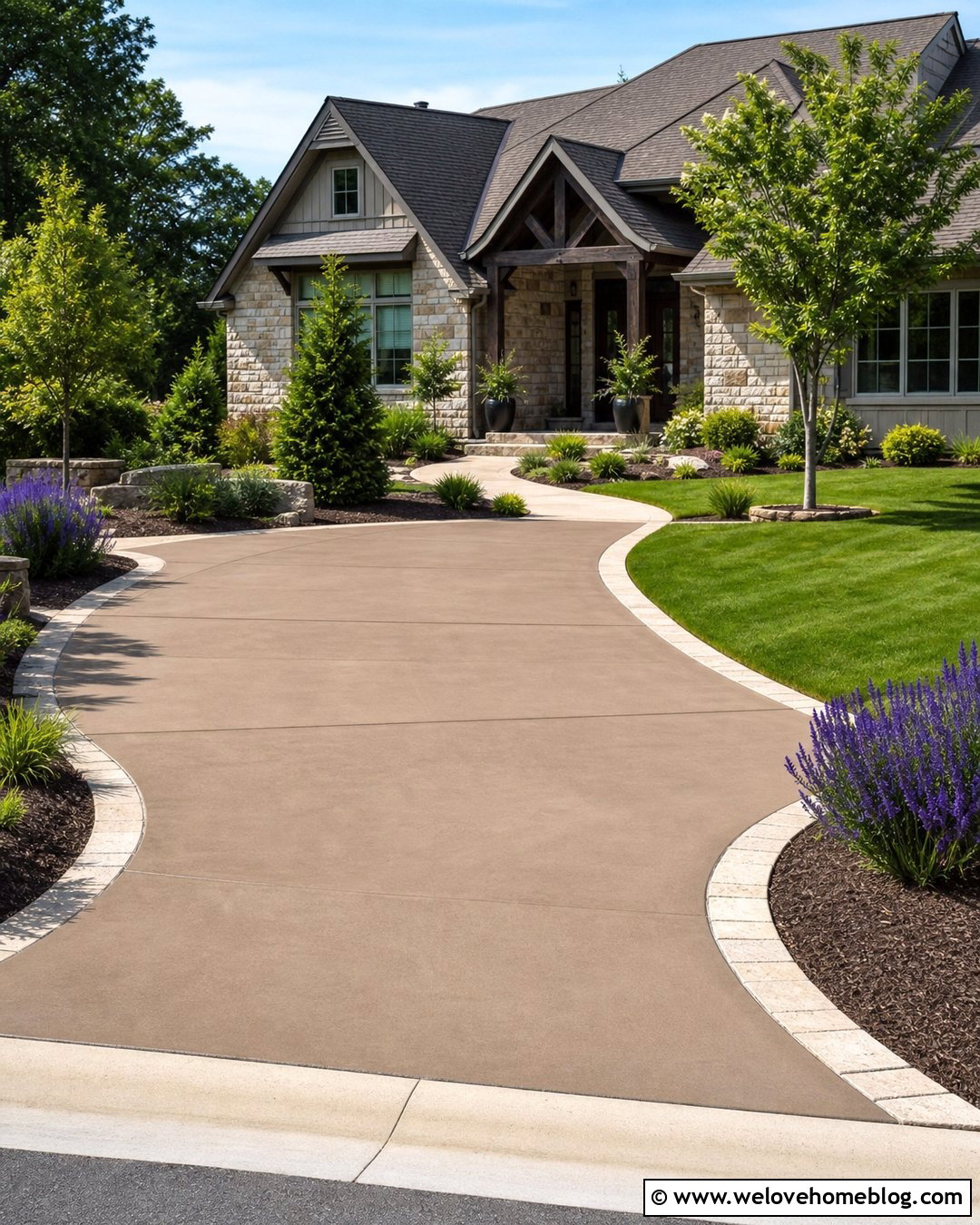
Warm taupe concrete can blend more naturally with a home and garden than standard cool gray. Use an integral color across a curved driveway leading to a stone-front craftsman house. Cream limestone edging can define the curves and repeat masonry colors from the facade. Beside the driveway, create layered beds with dwarf trees, evergreen shrubs, salvia, and ornamental grasses. Compared with tan gravel, colored concrete delivers a similar earth-toned palette without loose surface material. Always review a cured color sample because sunlight, finishing methods, and sealing can affect the final appearance. Keep the design restrained by using one primary concrete color and one border material. This complete look provides a refined transition between natural landscaping and a durable, structured parking surface.
15. Gravel Horseshoe Driveway With Brick Entrance
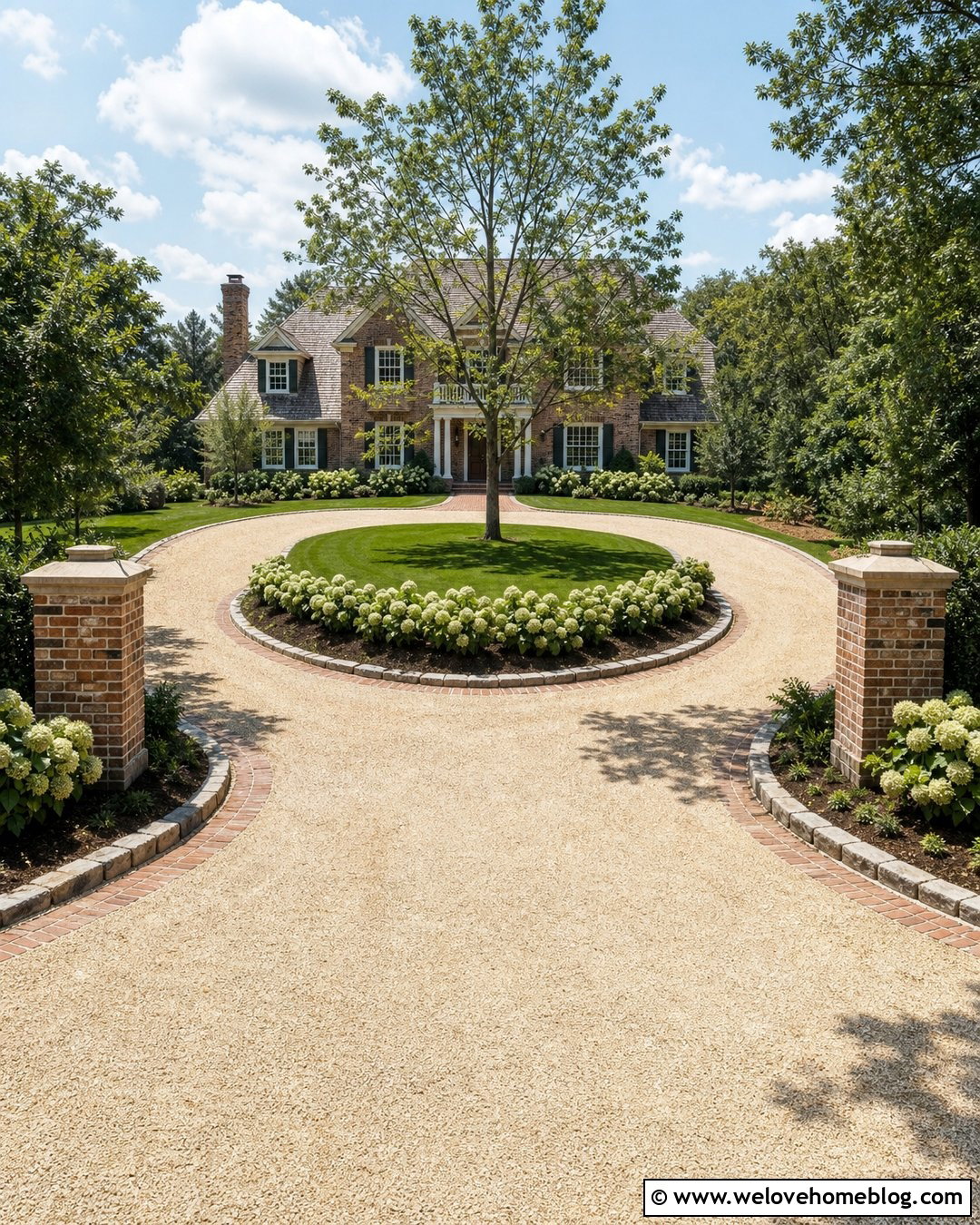
A horseshoe driveway offers two access points and creates a traditional, welcoming front approach. Cover the sweeping lane with compacted buff gravel and mark both curb openings with low brick pillars. Matching brick edging can continue along the inner curves, while natural stone may define the outer edge beside the lawn. In the center, plant a simple arrangement of lawn, a specimen tree, and low hydrangeas so the house remains visible. Compared with poured concrete, gravel keeps this large layout visually relaxed and may reduce the cost of surfacing the full loop. The entrance and exit need clear sightlines, suitable spacing, and approval under local access requirements. Strong borders and a well-built base are particularly important along curves where tires can push gravel outward.
16. Polished Concrete Driveway With Gravel Strips
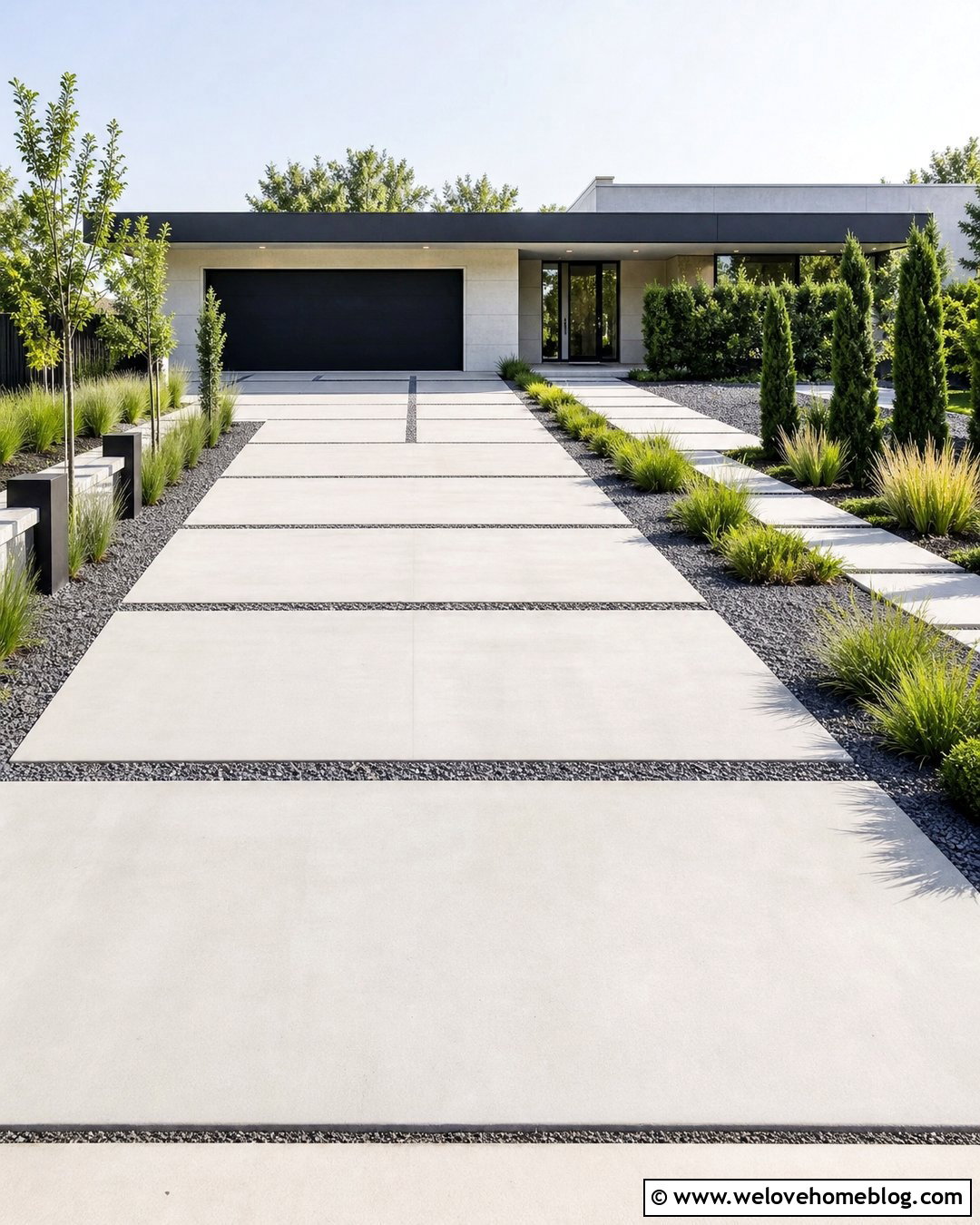
For a minimalist home, large smooth concrete panels separated by narrow gravel strips create strong geometry. Use light-gray steel-troweled or finely finished concrete in a straight driveway leading to a flat-roof modern house. Fill the joints between panels with dark gray decorative gravel contained by slim metal channels. Continue the same gravel into linear planting beds with sculptural grasses and compact evergreens. The strips soften the visual scale of the concrete and can highlight the panel layout, although they should not replace properly engineered drainage. Keep loose stones below the concrete surface to reduce scattering. This design costs more than a basic gravel driveway but offers a cleaner daily-use surface. It is especially effective when the walkway, steps, and house trim repeat the same restrained color palette.
17. Red Gravel Driveway With Natural Stone Borders
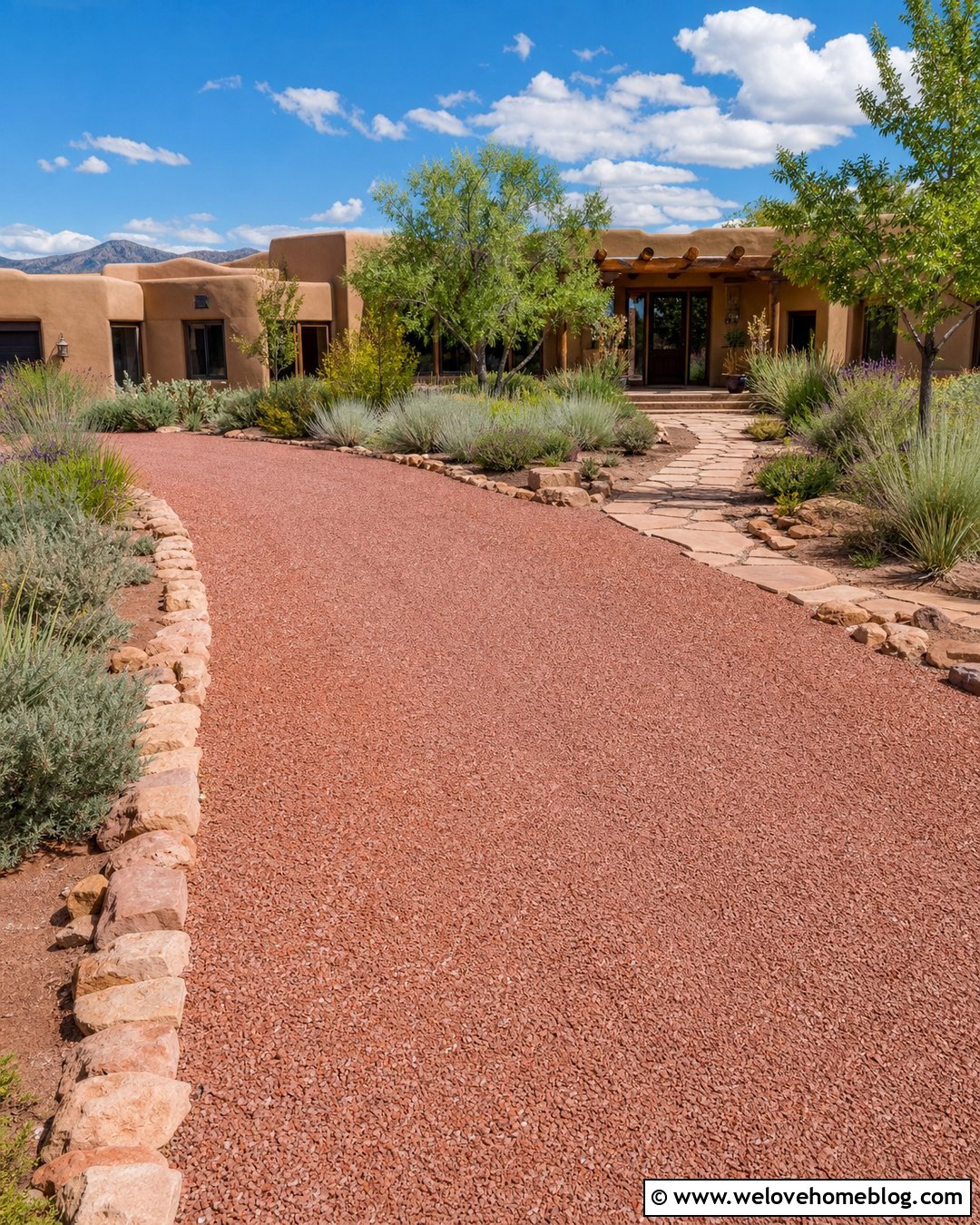
Red crushed granite can give a driveway rich color without using brick or tinted concrete. Spread the angular gravel across a broad curved layout approaching an adobe, ranch, or rustic stone house. Tan natural stone borders can contain the material and soften the transition into dry planting beds. Use sage, rosemary, ornamental grasses, and small desert trees to reinforce the warm regional palette. Compared with colored concrete, gravel develops a looser, more organic appearance and can be replenished without trying to match a cured slab. Choose stone that is locally available whenever possible, since delivery can significantly influence the project budget. Avoid combining too many red materials. Neutral borders, simple planting, and a pale facade allow the driveway color to remain attractive rather than overwhelming.
18. Concrete Driveway With Gravel Drainage Border
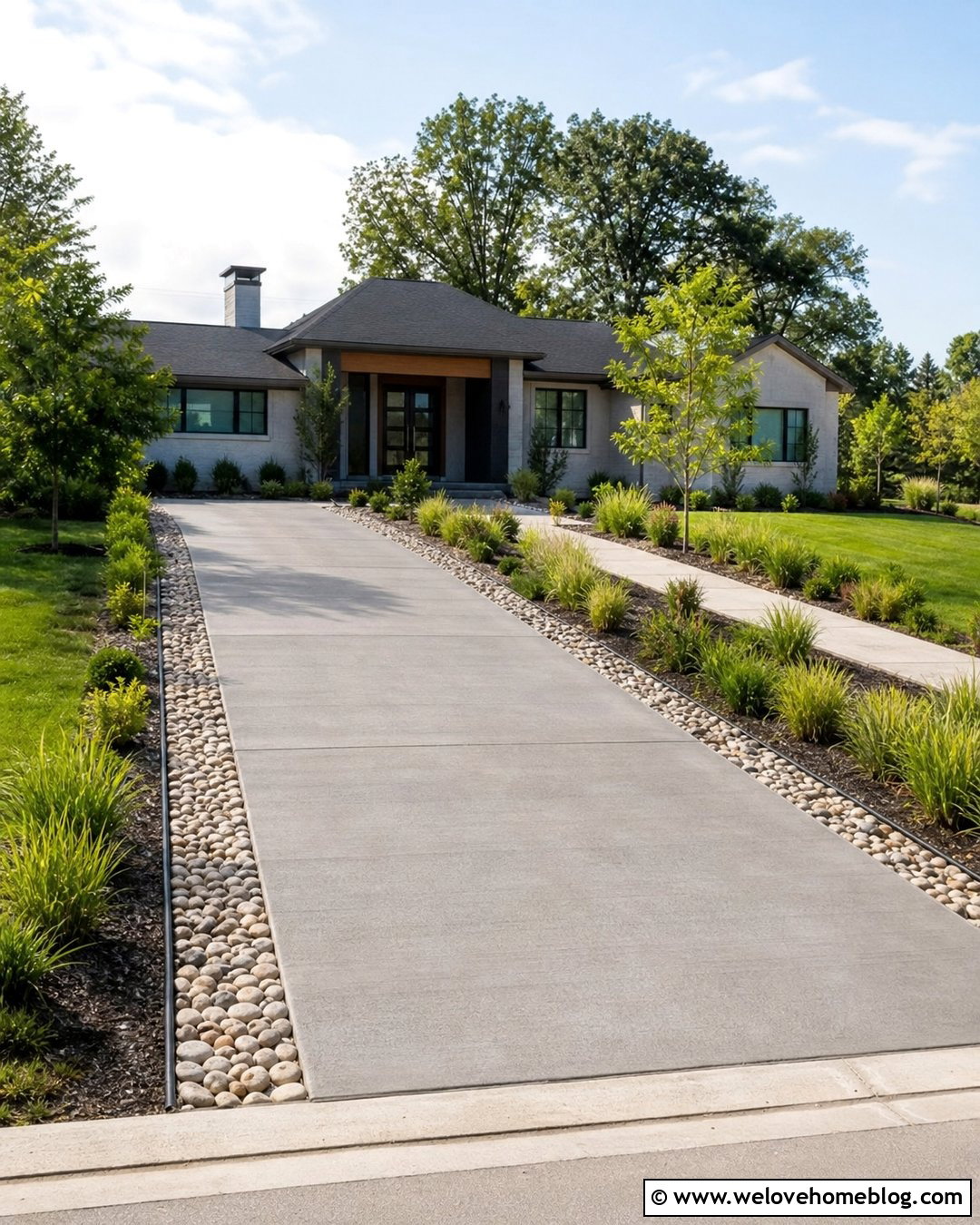
A concrete driveway can gain visual texture and better-defined drainage zones when paired with gravel borders. Use medium-gray broom-finished concrete in a straight or slightly sloped layout. Along one or both sides, install wide strips of river rock or angular drainage gravel over a properly designed drainage system. Steel edging can separate the stone from lawn and planting beds. Add moisture-tolerant grasses, shrubs, or native perennials where runoff naturally moves. Solid surfaces generally need deliberate grading and drainage planning because they do not absorb water like loose gravel. () This complete look is useful for modern ranch and contemporary homes, where simple bands complement clean architecture. The gravel should be sized and contained carefully so it does not scatter onto the concrete or create a difficult walking edge.
19. Gravel Driveway With Paved Walkway
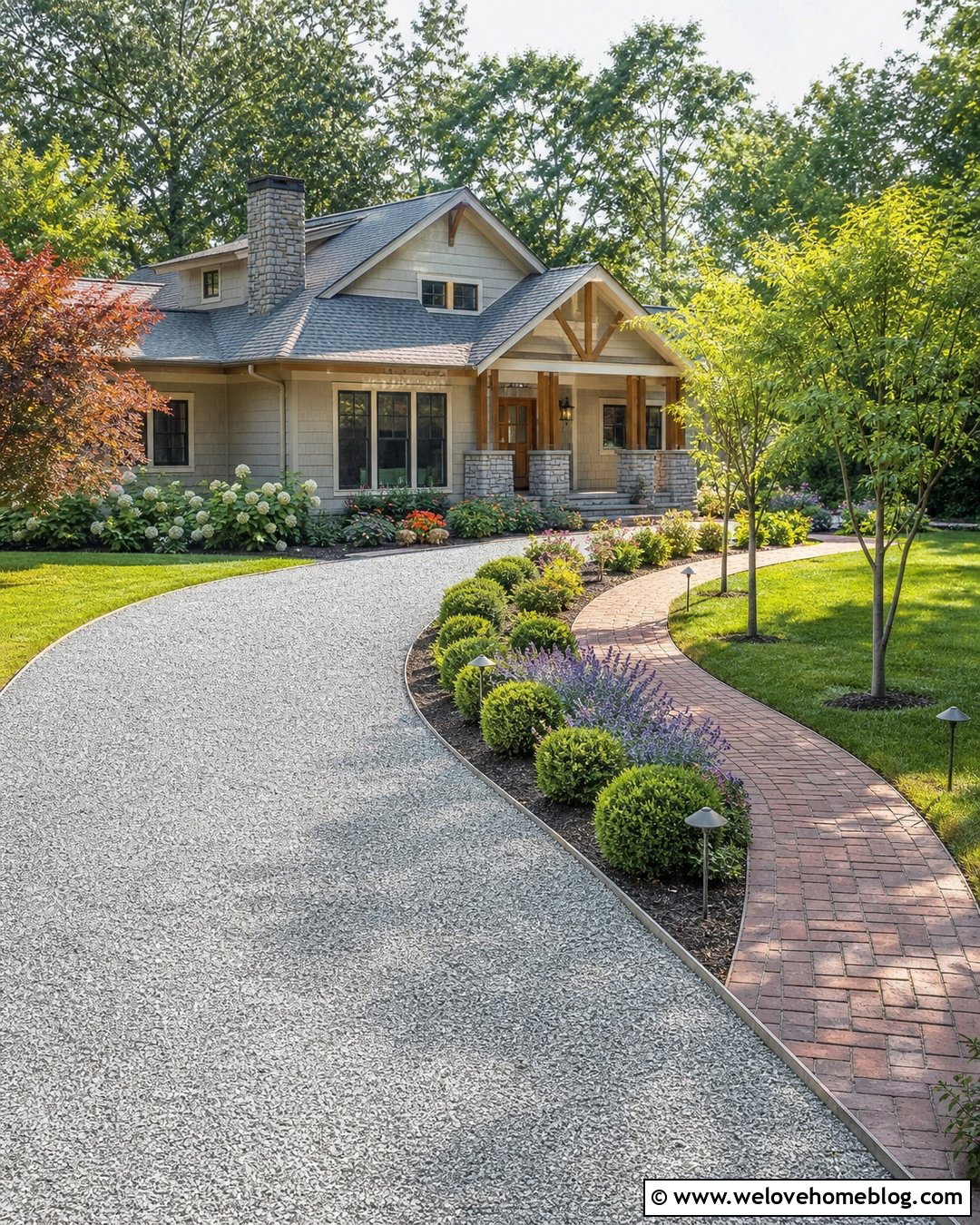
A separate paved walkway makes a gravel driveway more comfortable for guests while preserving its relaxed appearance. Choose light-gray crushed limestone for a gently curved driveway, then install a clay brick or concrete paver path from the curb to the front door. A narrow planting bed can separate the two routes and hold boxwood, catmint, and seasonal flowers. Steel or stone edging should keep gravel away from the walkway. This layout is ideal for cottage, craftsman, and traditional suburban houses. Compared with paving everything in concrete, it concentrates the smooth material where people walk most often. Coordinate the path color with the house and driveway borders for unity. Low path lighting and an unobstructed route make the entrance easier to understand without turning the front yard into one large hardscape area.
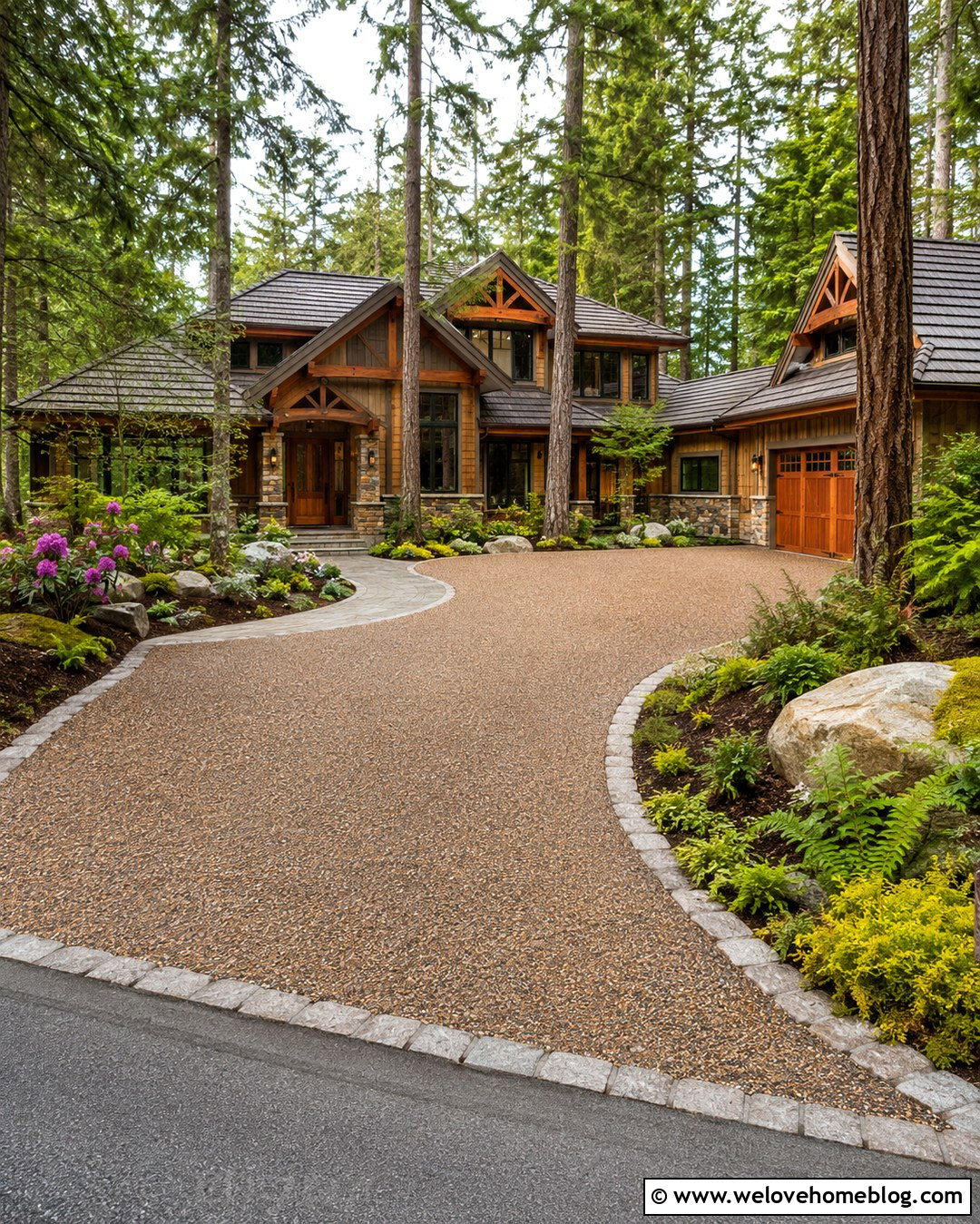
20. Concrete Circular Driveway With Gravel Courtyard
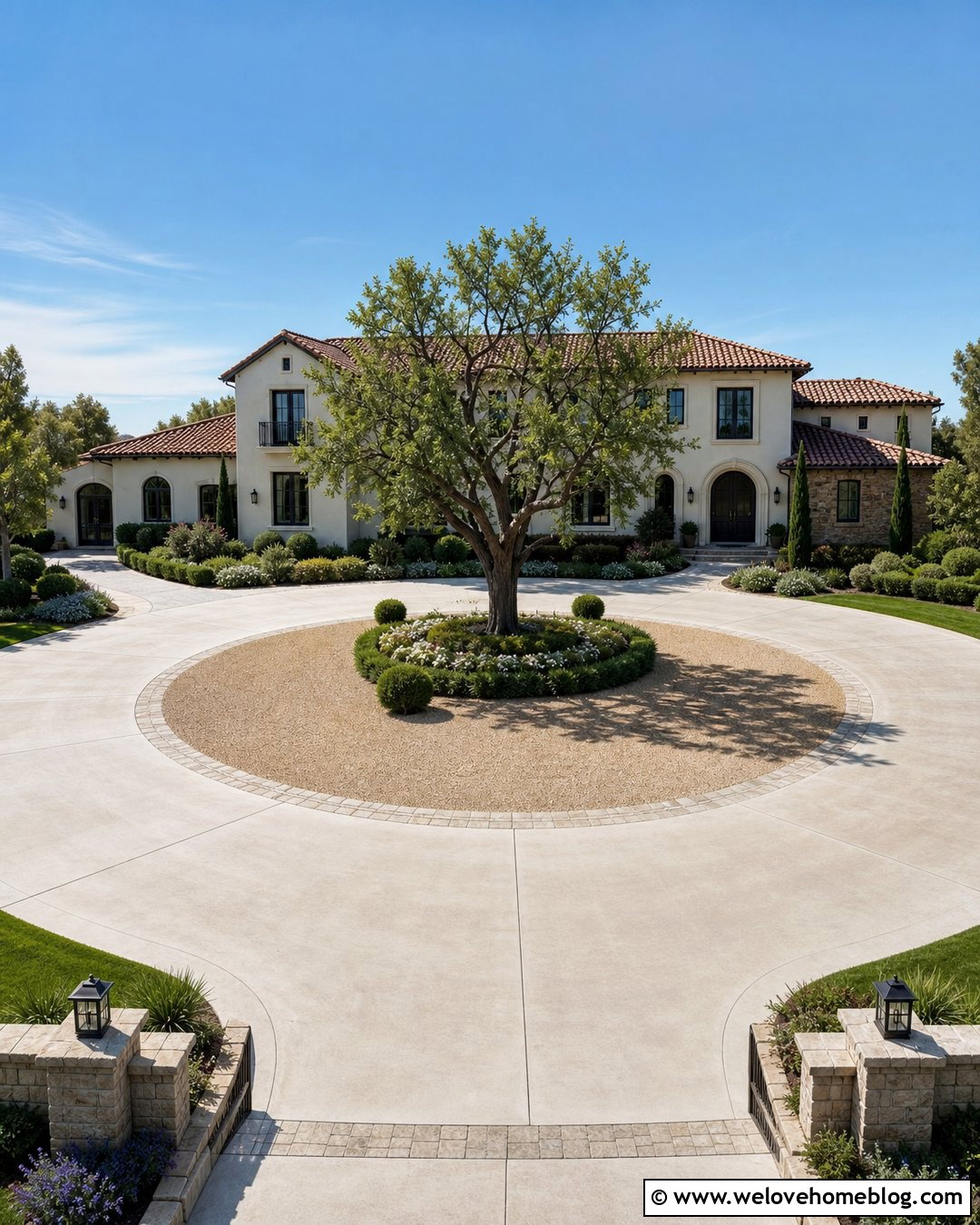
A concrete circular driveway provides a formal, stable approach, while a gravel center keeps the layout from feeling overly paved. Pour light-gray concrete around a wide central courtyard filled with compacted beige gravel. Define the transition with a flush cobblestone ring that follows the circle precisely. A fountain is unnecessary; a specimen tree, clipped shrubs, and low flowering plants can create an attractive focal point with less visual clutter. This arrangement suits colonial, Mediterranean, and large transitional homes. Compared with an all-gravel circle, concrete gives the driving lane a firmer surface and clearer edges. Compared with full concrete coverage, the gravel center adds permeability and texture. Ensure that the turning circle, drainage slope, and planting island dimensions are planned before choosing decorative materials.
Conclusion:
The right driveway should support daily life while strengthening the entire curb view. Gravel is appealing for long approaches, natural settings, flexible layouts, and budget-conscious projects. Concrete offers a stable surface, defined edges, decorative finishes, and less frequent routine upkeep. Hybrid designs can provide the best qualities of both by placing concrete in high-use areas and gravel in drainage strips, centers, or longer sections. Whichever option you prefer, invest in good excavation, a stable base, effective grading, and borders that suit the material. Local climate and site conditions should guide the final construction details. These 20 Gravel Vs Concrete Driveway Ideas show that either material can look polished when it works with the house, landscaping, and entrance.

Related posts:


Leave a Reply