
A tired driveway can make an otherwise attractive home feel unfinished. The right landscaping makeover can change that first impression without requiring a complete rebuild. These **20 Driveway Landscaping Before And After Ideas** combine practical surfaces, defined borders, layered plants, drainage solutions, and welcoming entrances. Each transformation treats the driveway and front yard as one connected design. Some updates use affordable gravel, mulch, and fresh edging. Others introduce pavers, retaining walls, rain gardens, or structured planting beds. Before choosing a look, consider your climate, maintenance needs, visibility from the street, and how water moves across the property. Use these complete makeovers to inspire your own **20 Driveway Landscaping Before And After Ideas**.

1. Concrete Driveway With Curved Mulch Beds
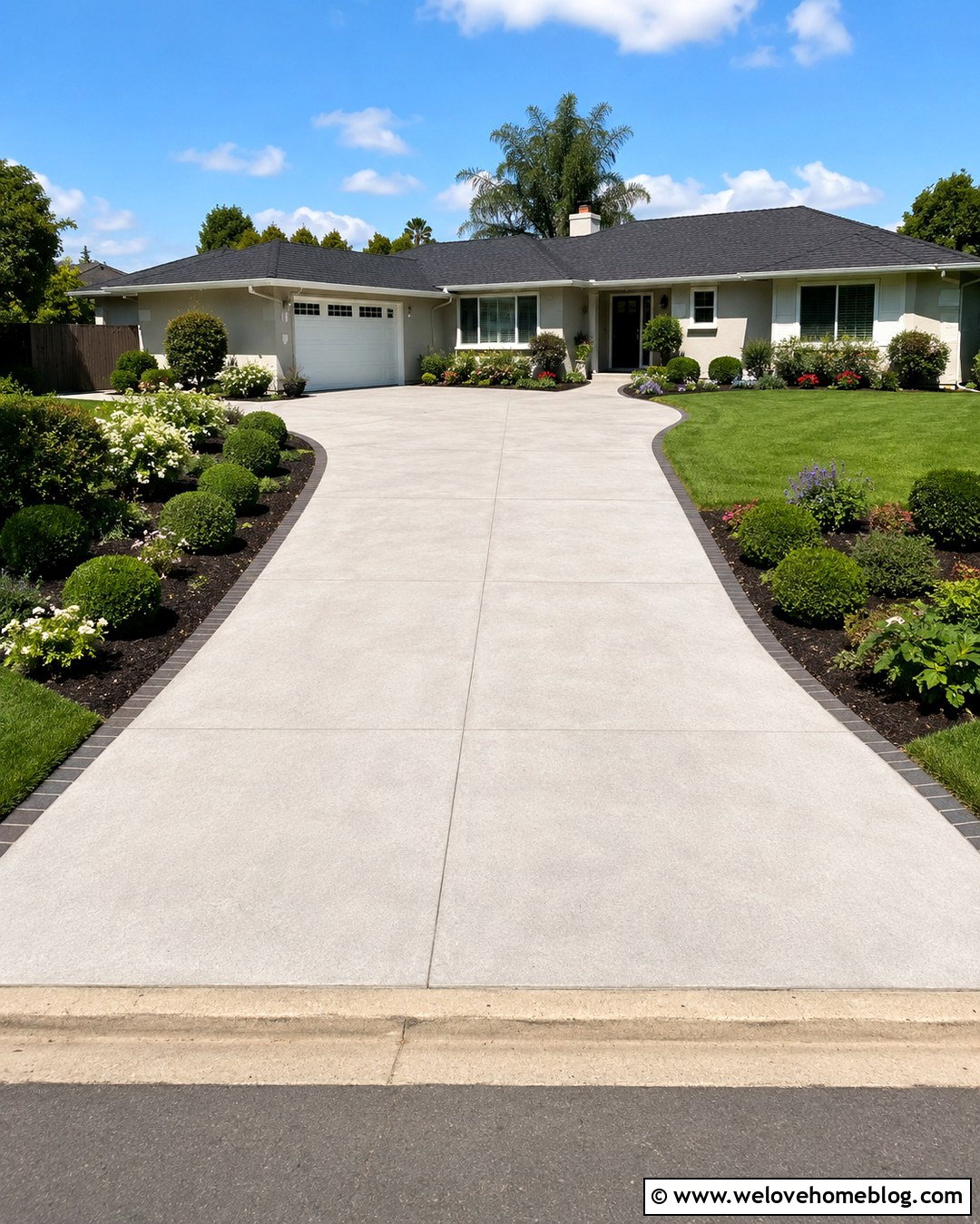
Before the makeover, a plain concrete driveway may look disconnected from the lawn, especially when grass grows unevenly along its edges. The after version introduces wide, curved planting beds that guide the eye from the street toward the house. Dark brown mulch contrasts nicely with light gray poured concrete, while low evergreen shrubs create year-round structure. Add flowering perennials in small groups rather than scattering individual plants. A brick or steel mowing edge keeps the curves crisp and prevents mulch from spilling onto the driving surface. Finish the transformation with a matching walkway that branches toward the front door. The combination makes basic concrete appear more intentional without changing the driveway itself.
2. Asphalt Driveway With Stone Edging And Grasses
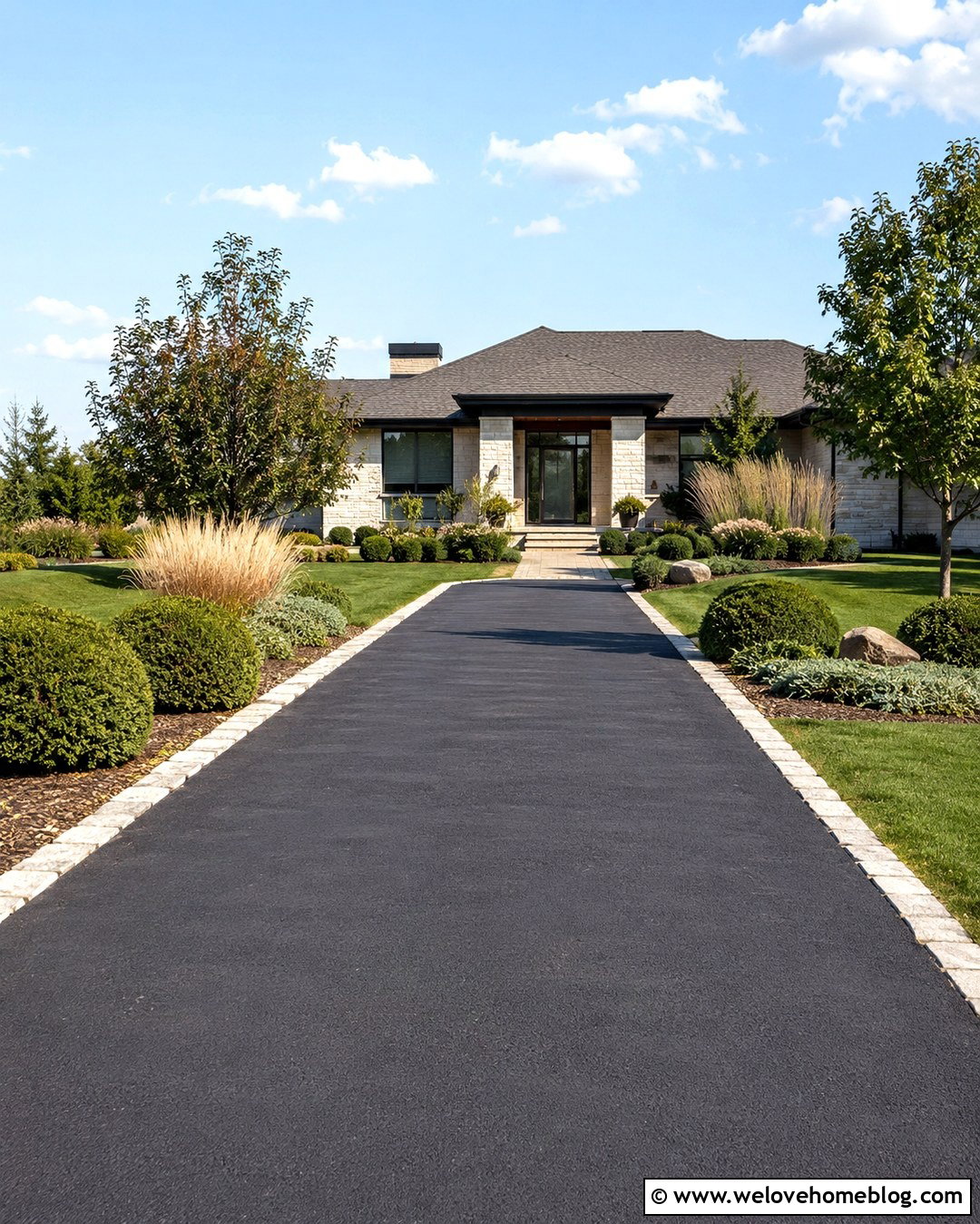
Black asphalt often looks unfinished when it meets patchy grass without a clear transition. For a stronger after appearance, frame the driveway with light natural-stone edging and generous beds of ornamental grasses. The pale border creates definition against the dark surface, while flowing grasses soften its long, straight lines. Choose compact varieties near the street so drivers maintain clear views when entering or leaving the property. Taller grasses can be placed closer to the house or along a blank garage wall. Include a few rounded evergreen shrubs to provide shape during winter. This makeover works especially well with contemporary ranch homes because the simple materials feel clean, practical, and balanced without becoming overly formal. ()
3. Gravel Driveway With Cobblestone Edging And Lavender
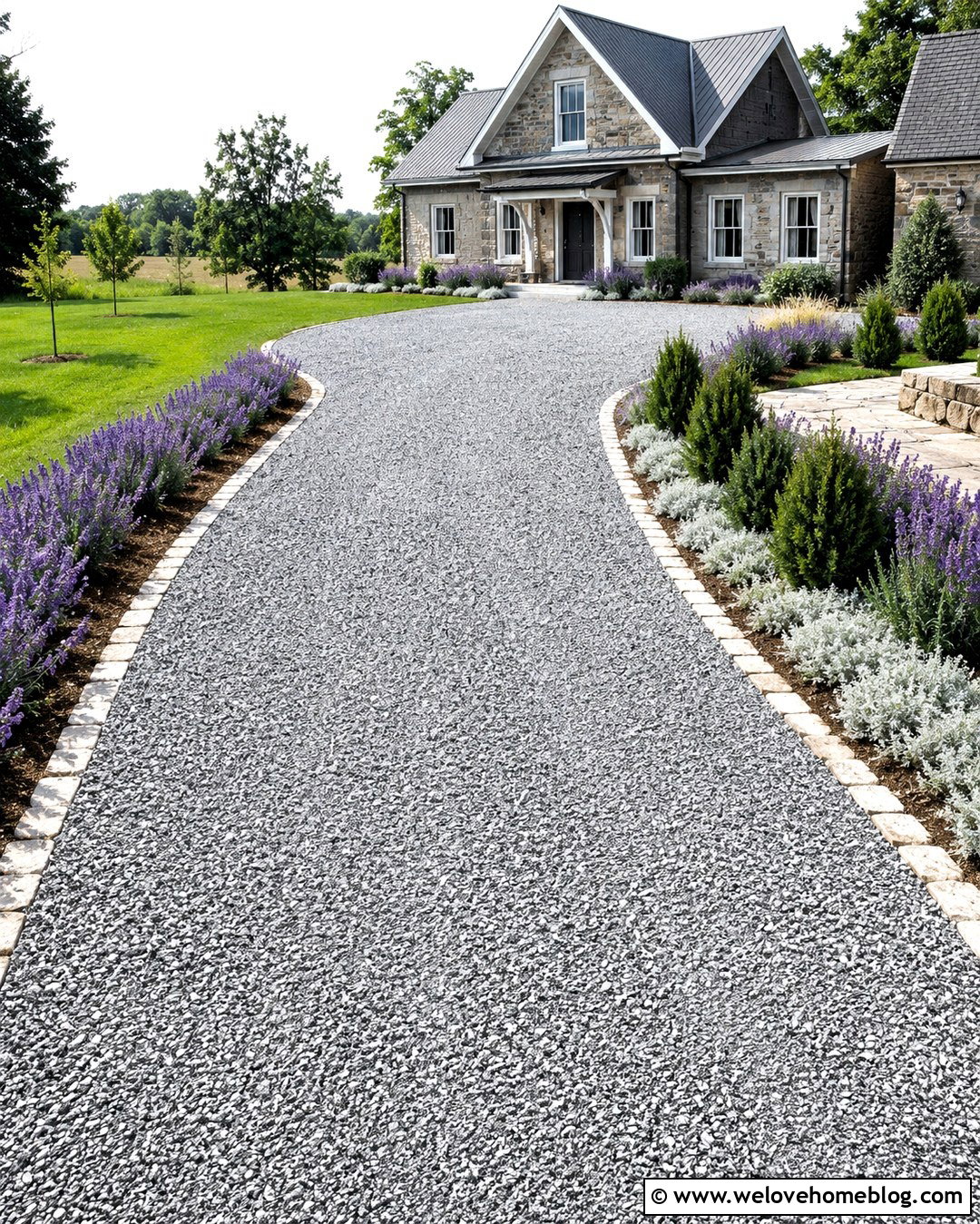
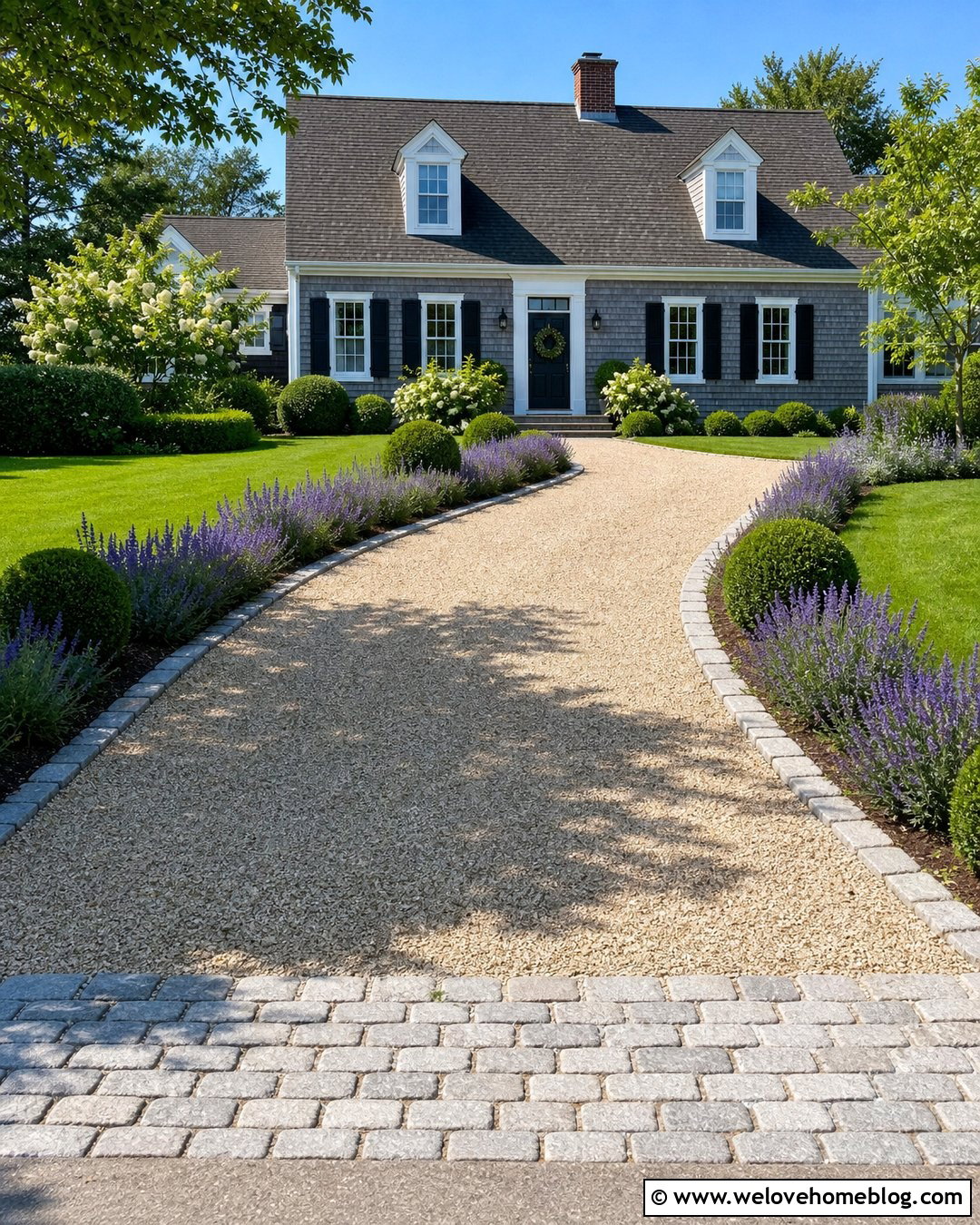
A neglected gravel driveway can develop weeds, thin patches, spreading stones, and undefined sides. Its after transformation begins with a compacted base and a fresh layer of gray gravel that creates an even, durable-looking surface. Cobblestone edging contains the loose material and adds a traditional detail that feels appropriate beside a cottage or country home. Long lavender beds can follow both sides of the driveway, supported by silvery ground cover and a few upright evergreens near the house. Leave adequate clearance between mature plants and vehicle doors. The finished driveway feels relaxed yet carefully organized. It also becomes easier to maintain because the stone border separates the gravel, planting soil, and surrounding lawn. ()
4. Narrow Driveway With Low Layered Planting
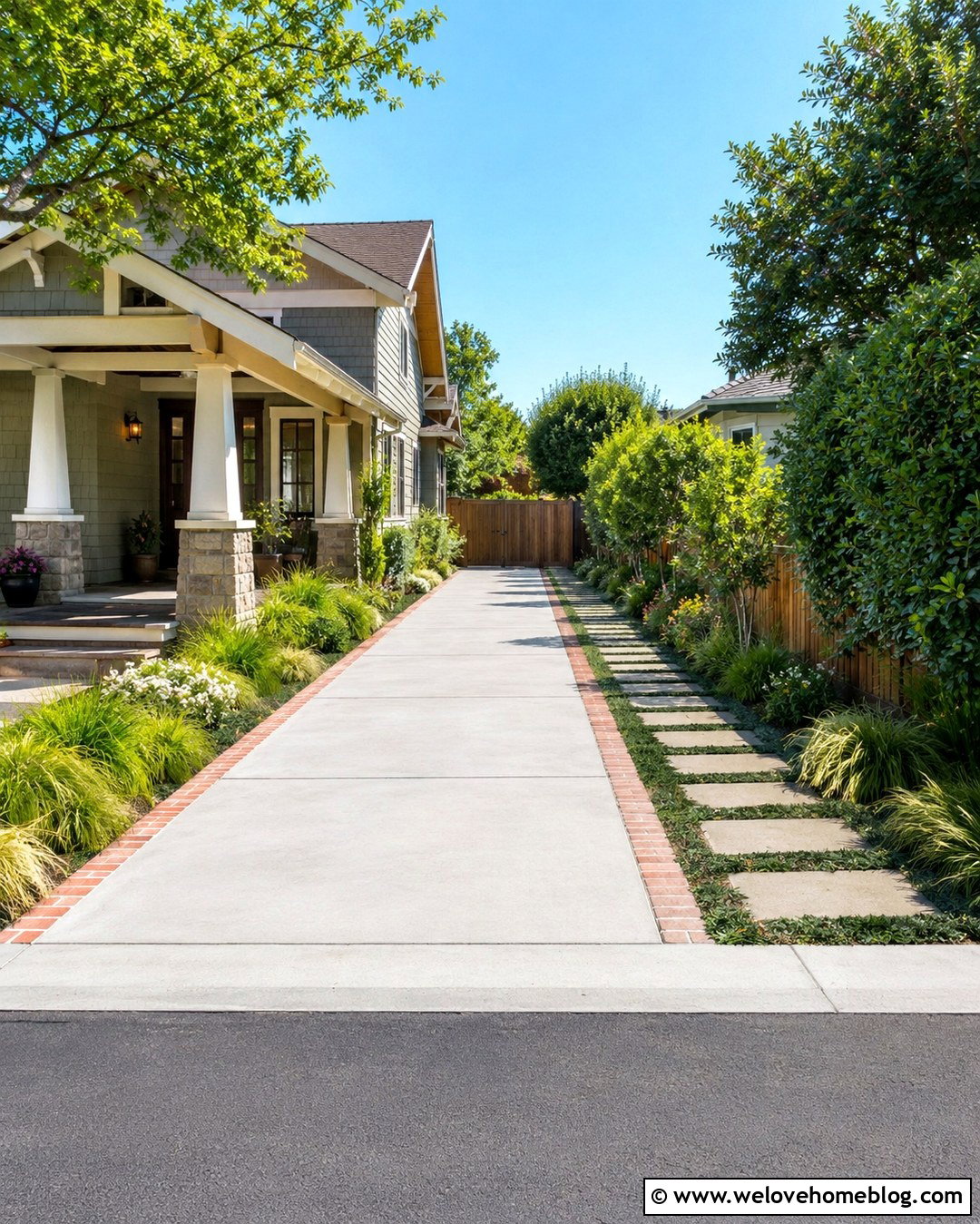
Does a narrow driveway feel squeezed between the house and property line? The after design should create openness rather than adding tall plants that make the space feel tighter. Keep the existing concrete or paver surface, then install slim planting beds with low ground cover, compact grasses, and small flowering shrubs. Repeat only a few varieties to prevent visual clutter. A narrow brick ribbon can define the pavement without taking away valuable driving width. On the house side, connect the driveway to a separate stepping-stone walkway so visitors have a clear route to the entrance. The completed landscape feels wider because the planting stays below eye level, the borders remain orderly, and every feature follows the same simple direction.
5. Circular Driveway With A Landscaped Center Island
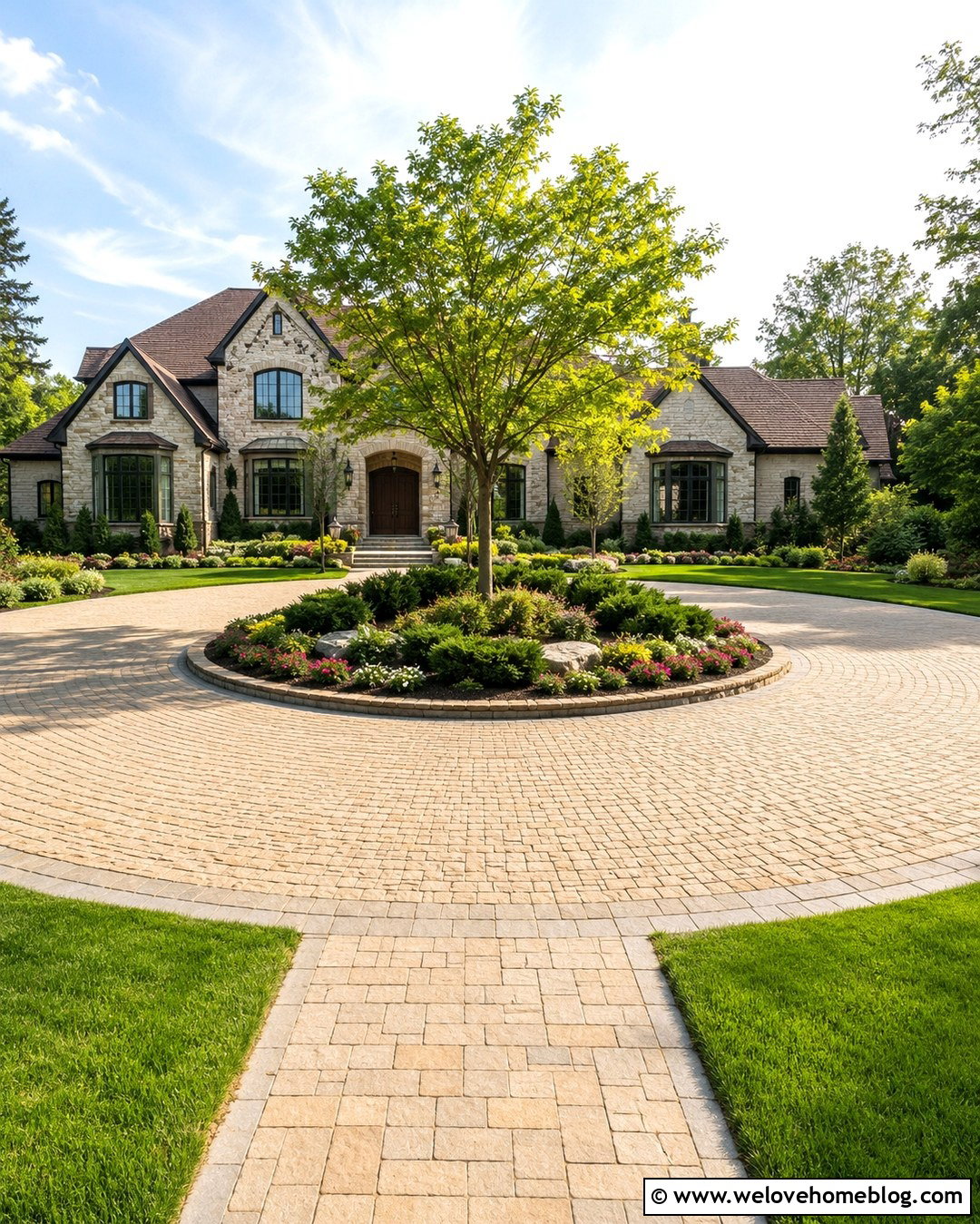
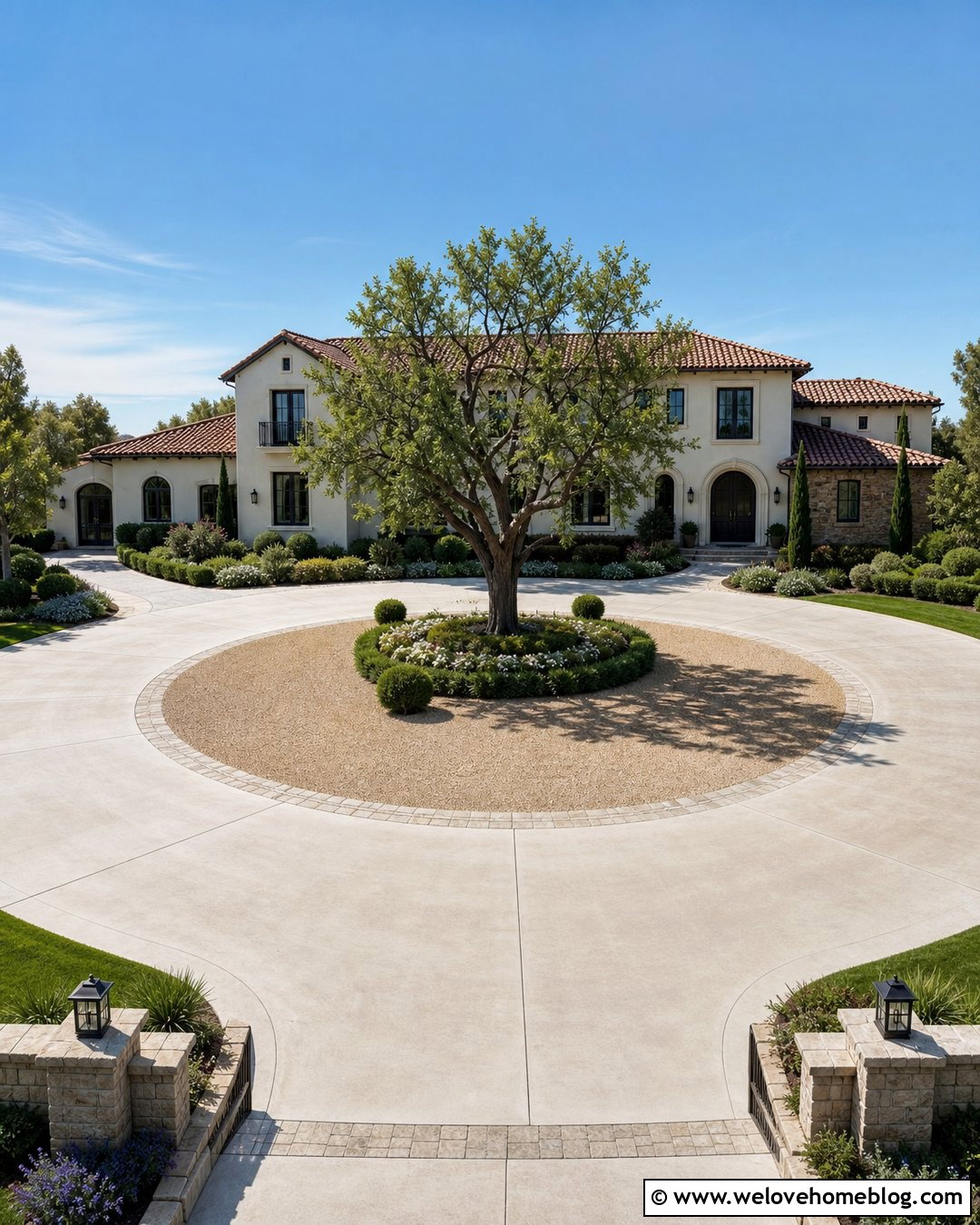
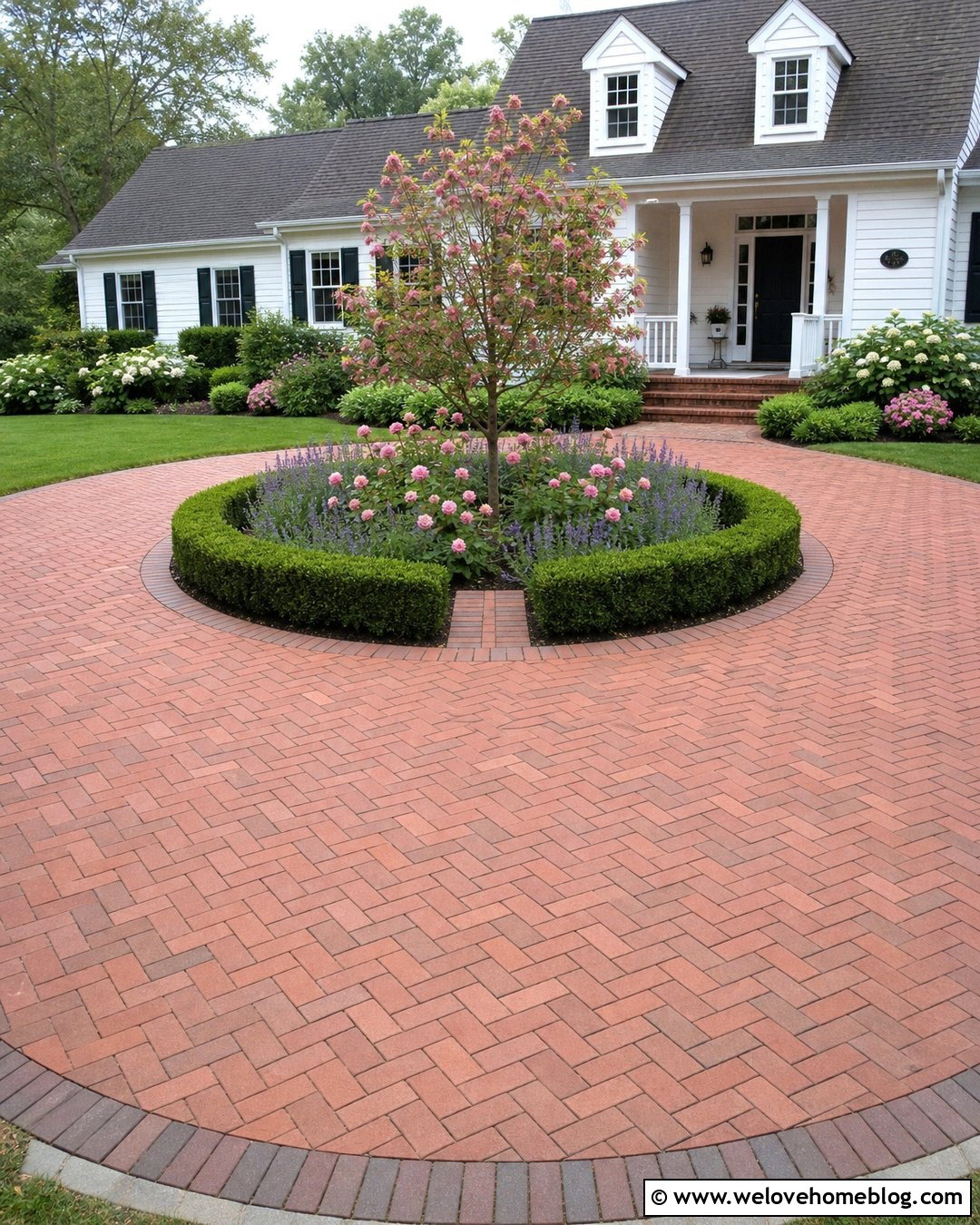
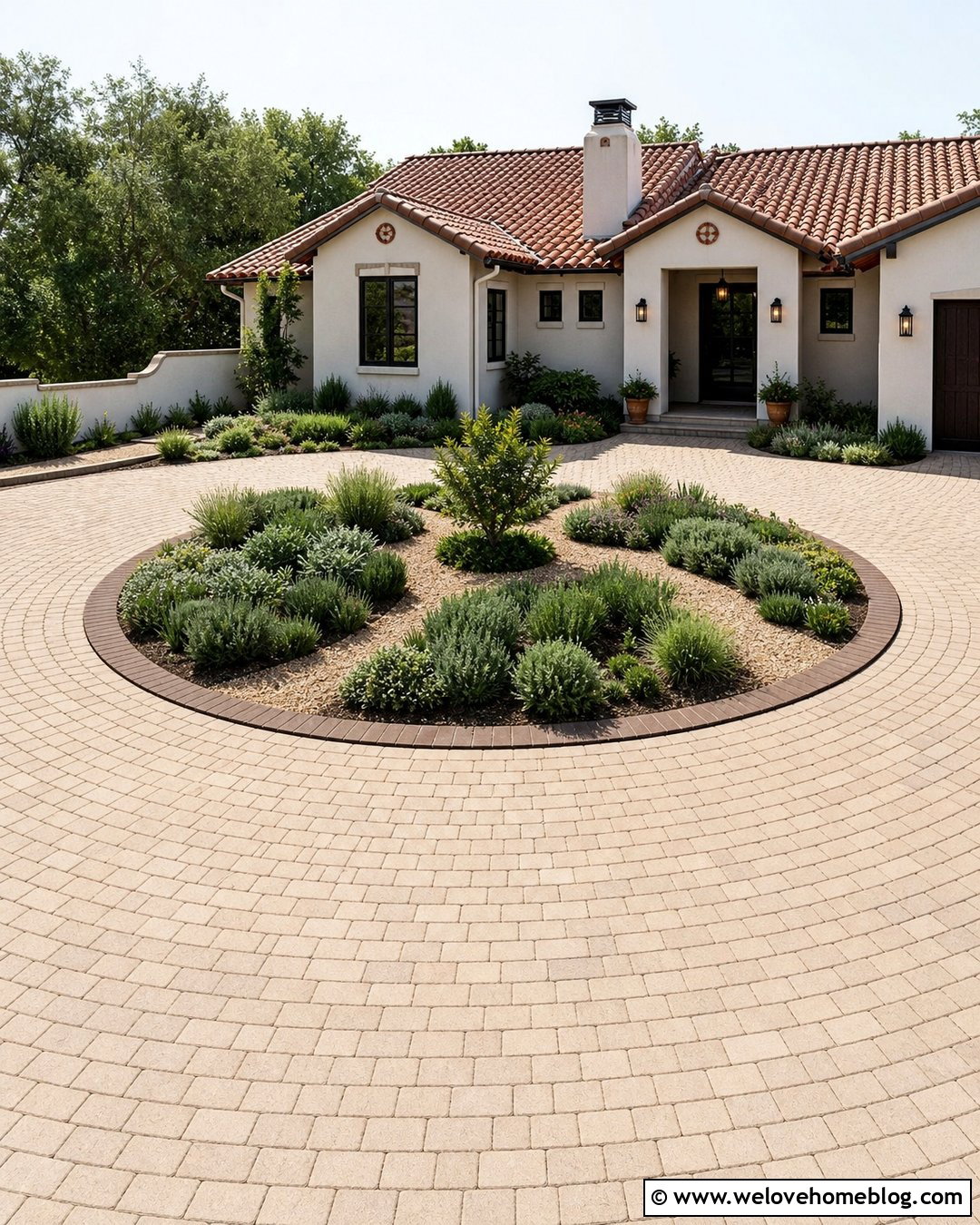
An empty circular driveway may appear oversized and dominated by pavement. Transforming the center into a landscaped island gives the layout a clear focal point and breaks up the hard surface. Start with a small ornamental tree that fits the available space without blocking the house. Surround it with a layered arrangement of low evergreens, flowering perennials, and seasonal ground cover. A stone or brick border should echo materials found on the home’s facade. Keep plants near the driveway edge short enough to protect visibility around the curve. The after view feels established and welcoming, while the circular route remains easy to navigate. A simple path through the island can also connect parking areas with the front entrance.
6. Sloped Driveway With Retaining Walls And Drainage Beds
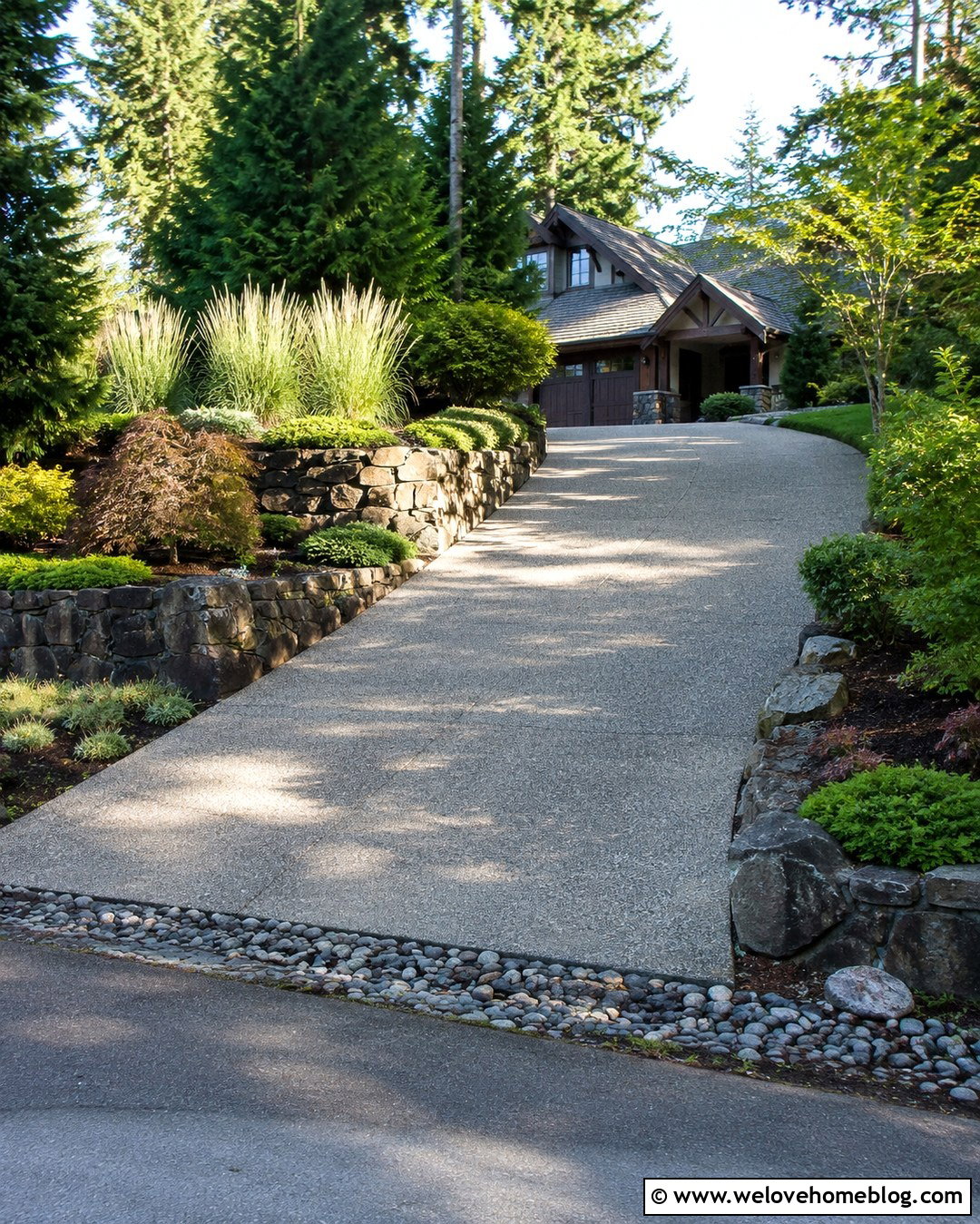
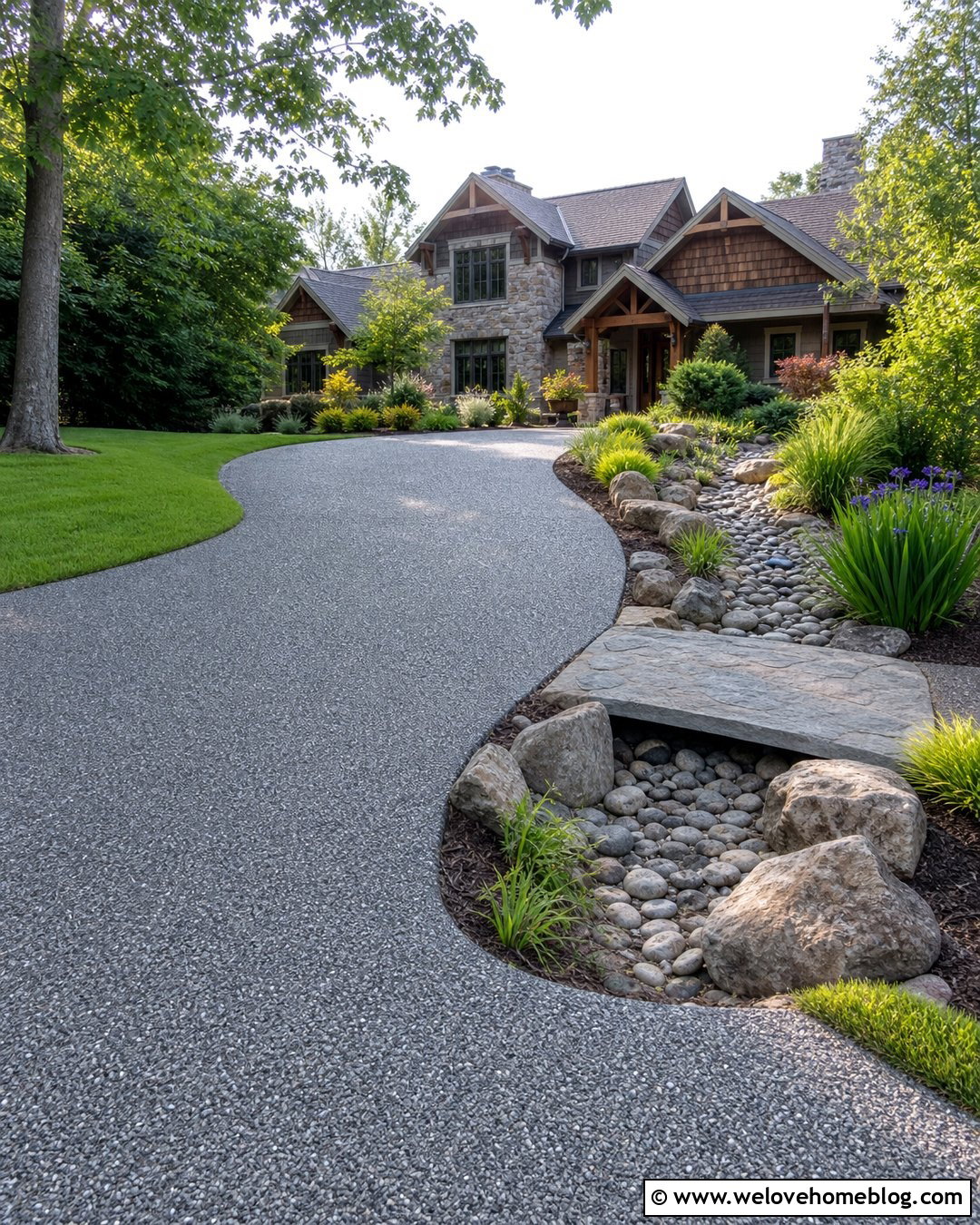
Before landscaping, a sloped driveway may be surrounded by eroded soil, exposed roots, or struggling grass. The after design uses low retaining walls to stabilize the sides and create level planting terraces. Natural stone looks comfortable beside a craftsman or wooded home, while smooth concrete blocks suit a modern exterior. Fill the terraces with deeply rooted shrubs, ornamental grasses, and spreading ground cover selected for local conditions. A gravel drainage strip or planted swale can be incorporated at the lower edge, depending on the site plan. Water should always be directed away from the house and garage. Because grading and drainage affect the driveway’s long-term performance, consult a qualified local professional before building walls or changing runoff patterns. ()
7. Modern Concrete Driveway With Grass Strips
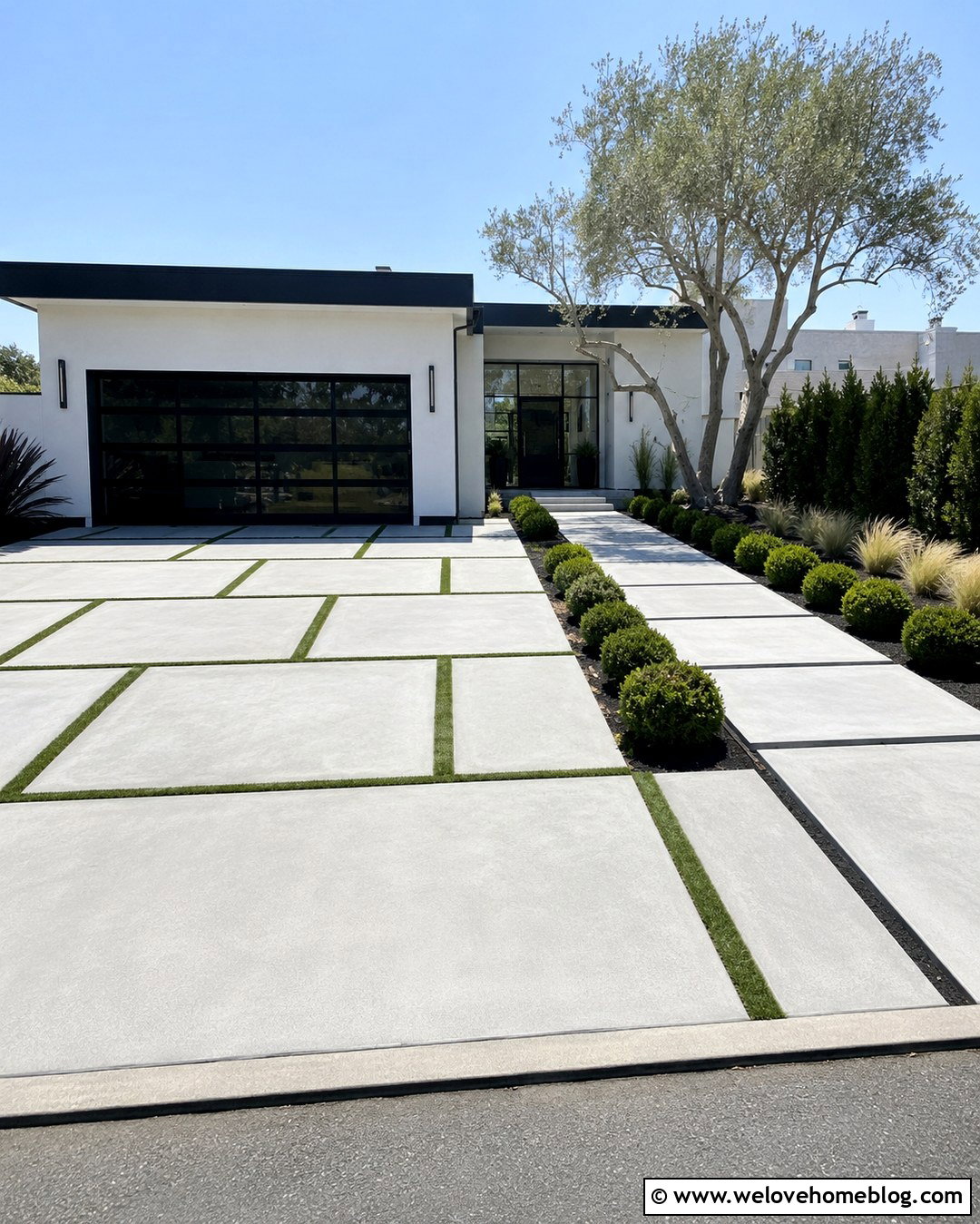
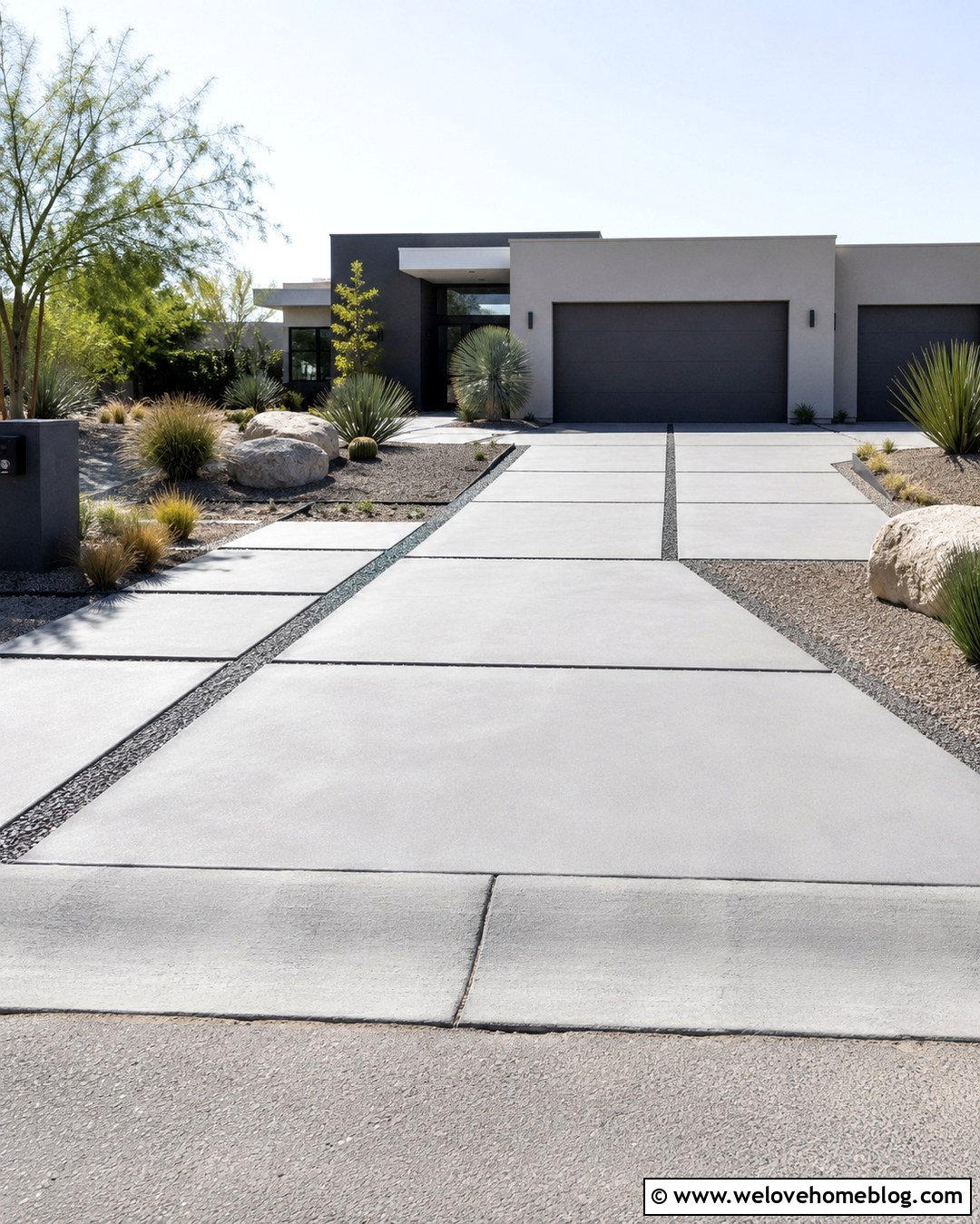
A large solid concrete driveway can make a modern home’s front yard feel harsh and overly paved. In the after version, clean bands of grass or low ground cover divide large concrete slabs into a geometric grid. Dark metal edging keeps each planted strip straight and prevents soil from spreading across the pavement. Continue the grid into nearby landscape beds using clipped shrubs, architectural grasses, and one sculptural tree. A wide concrete walkway can connect the driveway to the front door without introducing another material. The finished design feels greener while preserving the home’s minimalist character. If planted joints will receive vehicle traffic, their width, base construction, irrigation, and plant selection should be planned for durability rather than appearance alone.
8. Farmhouse Gravel Driveway With Timber Borders
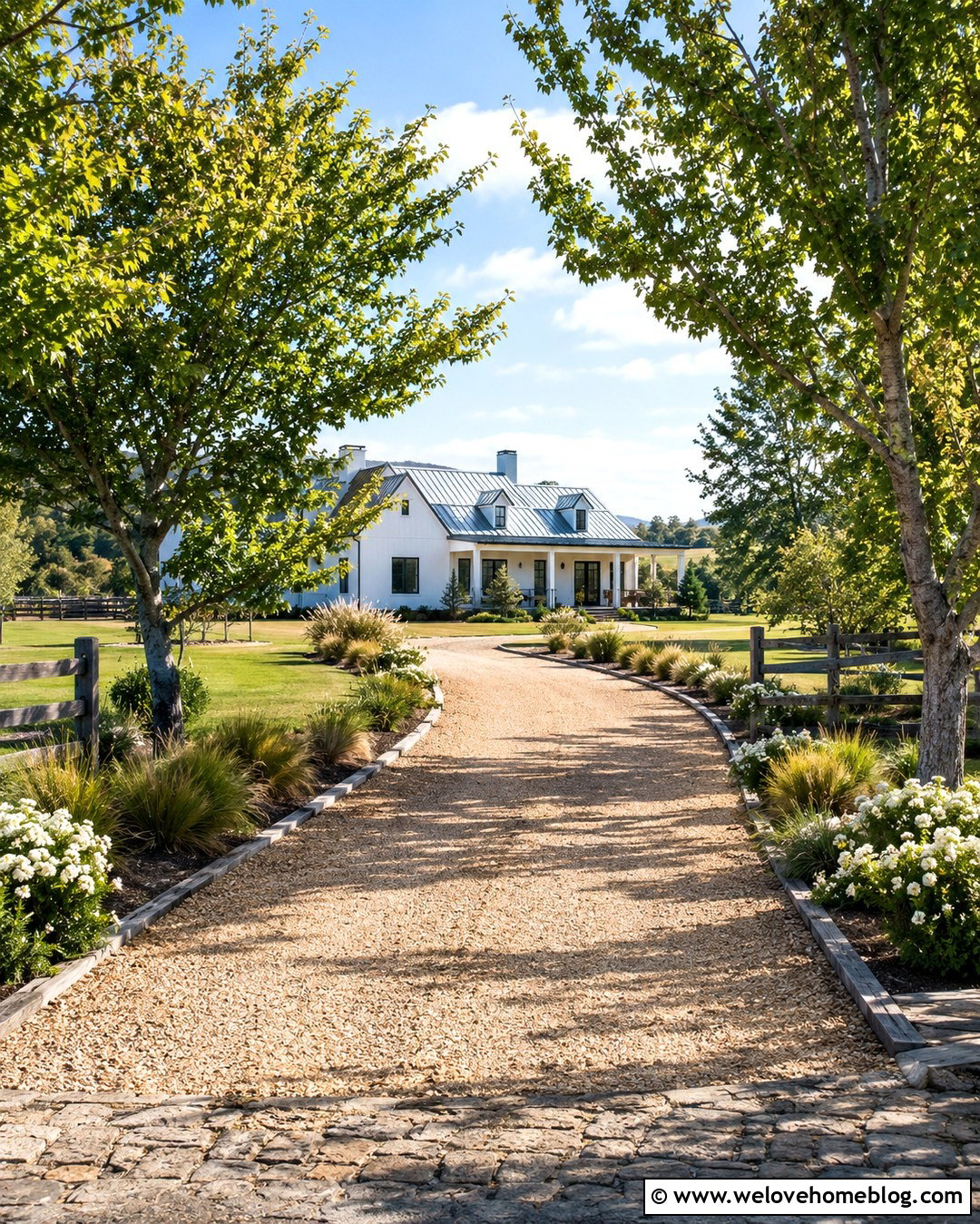
A loose gravel drive beside a farmhouse can look messy when stones disappear into the lawn and weeds take over the entrance. The after design keeps the relaxed country character but introduces stronger organization. Use warm beige crushed gravel for the main surface and heavy timber borders along the straighter sections. Near the road, switch to stone edging for a more durable entrance transition. Frame the approach with native grasses, white flowering shrubs, and simple split-rail fencing. A pair of small deciduous trees can mark the driveway without creating a formal gate. The result feels natural rather than manicured. Repeating timber, gravel, and white flowers near the porch helps the driveway landscaping connect visually with the house.
9. Brick Driveway With Cottage Garden Borders
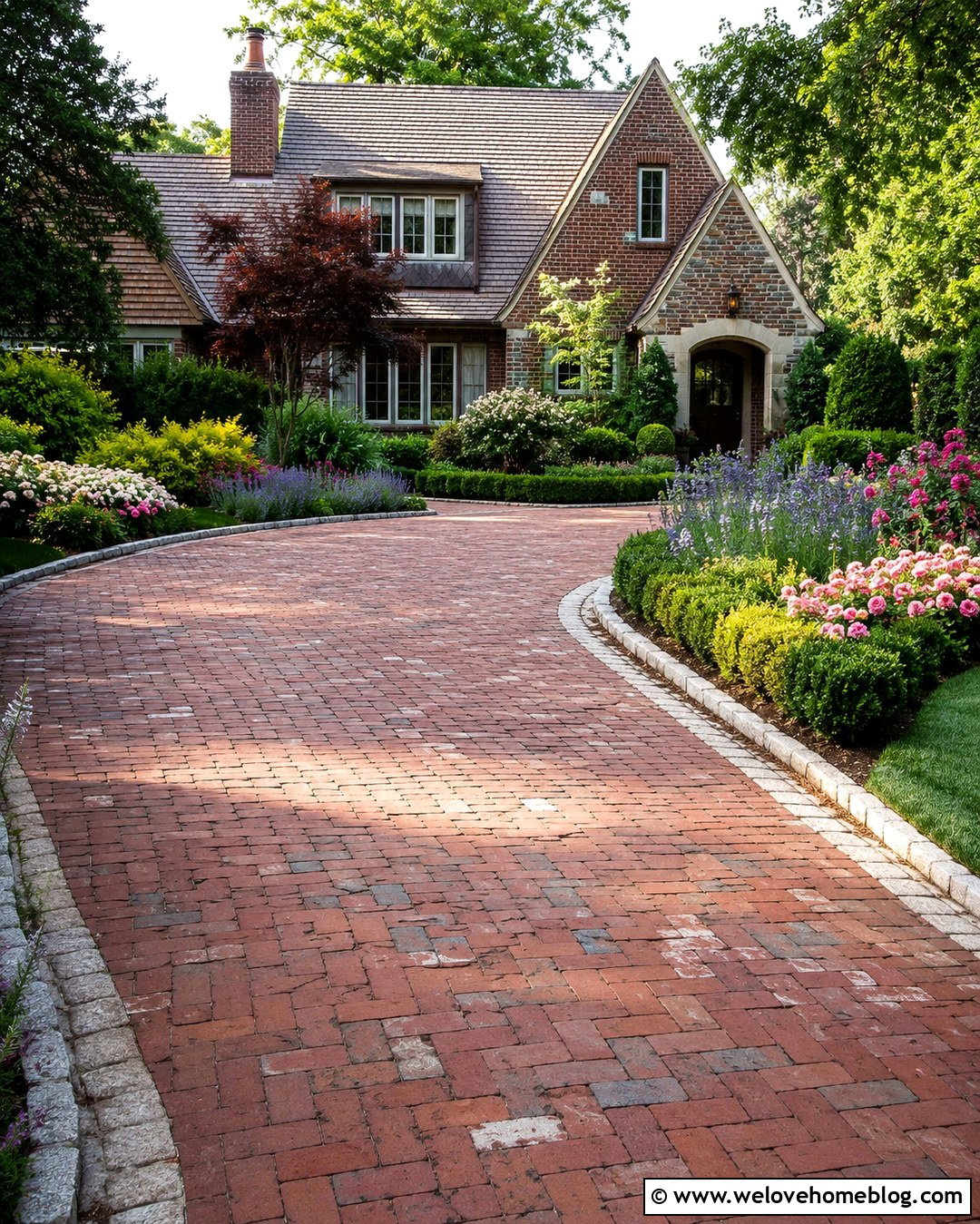
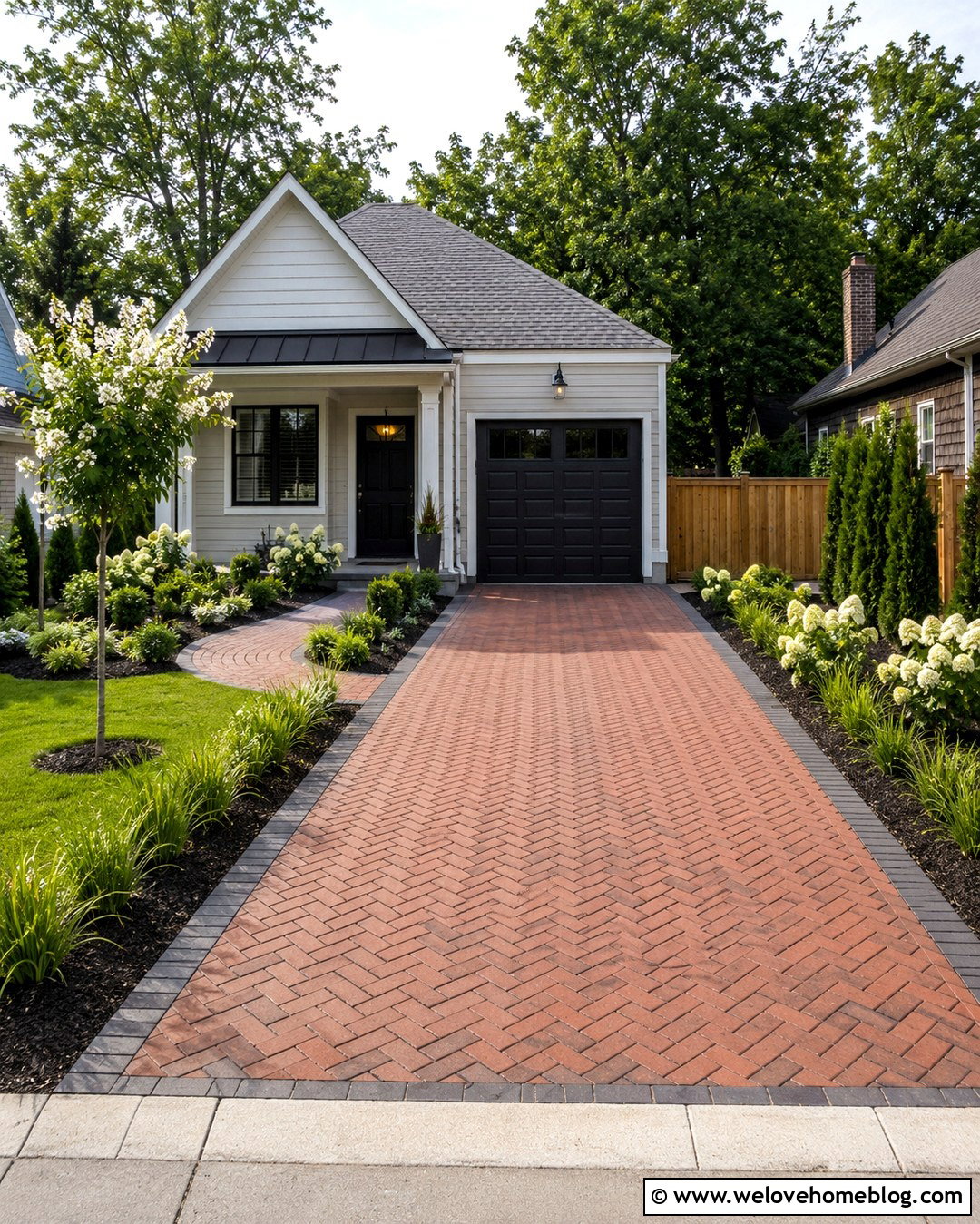
An aging brick driveway can feel dark and forgotten when its surrounding beds become overgrown. Rather than replacing the character-rich surface, the after makeover cleans and repairs the brick while reshaping the landscaping around it. Curved cottage beds filled with compact roses, catmint, salvia, and evergreen mounds soften the edges. Keep taller flowers toward the back so they do not lean over parked vehicles. A narrow cobblestone curb prevents soil and mulch from washing onto the brick. Near the garage, use simpler greenery to avoid making the space look crowded. The finished driveway gains color and texture while retaining its traditional charm. Repeating brick in the walkway or front steps gives the full property a coordinated appearance.
10. Concrete Driveway With A Paver Entrance Apron
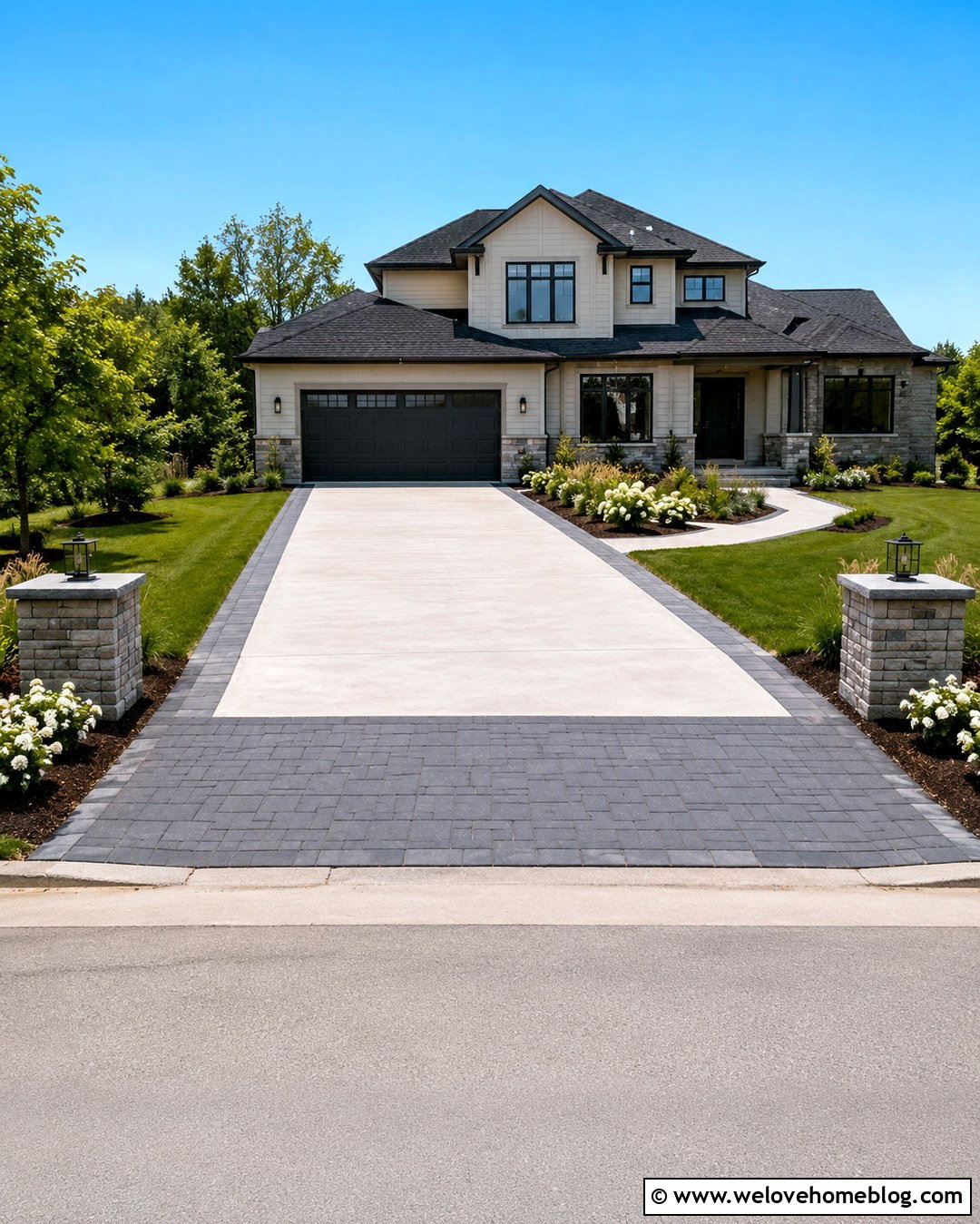
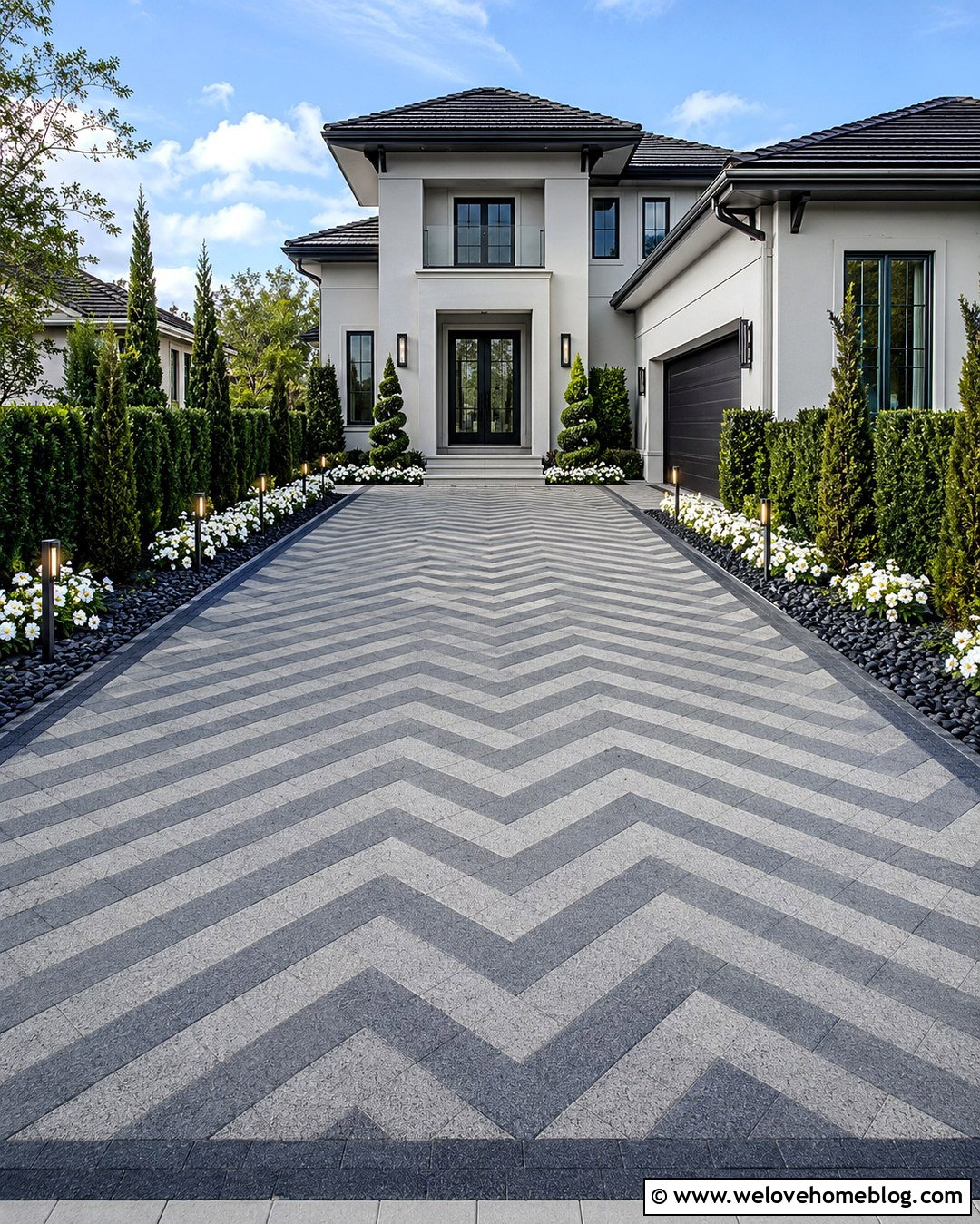
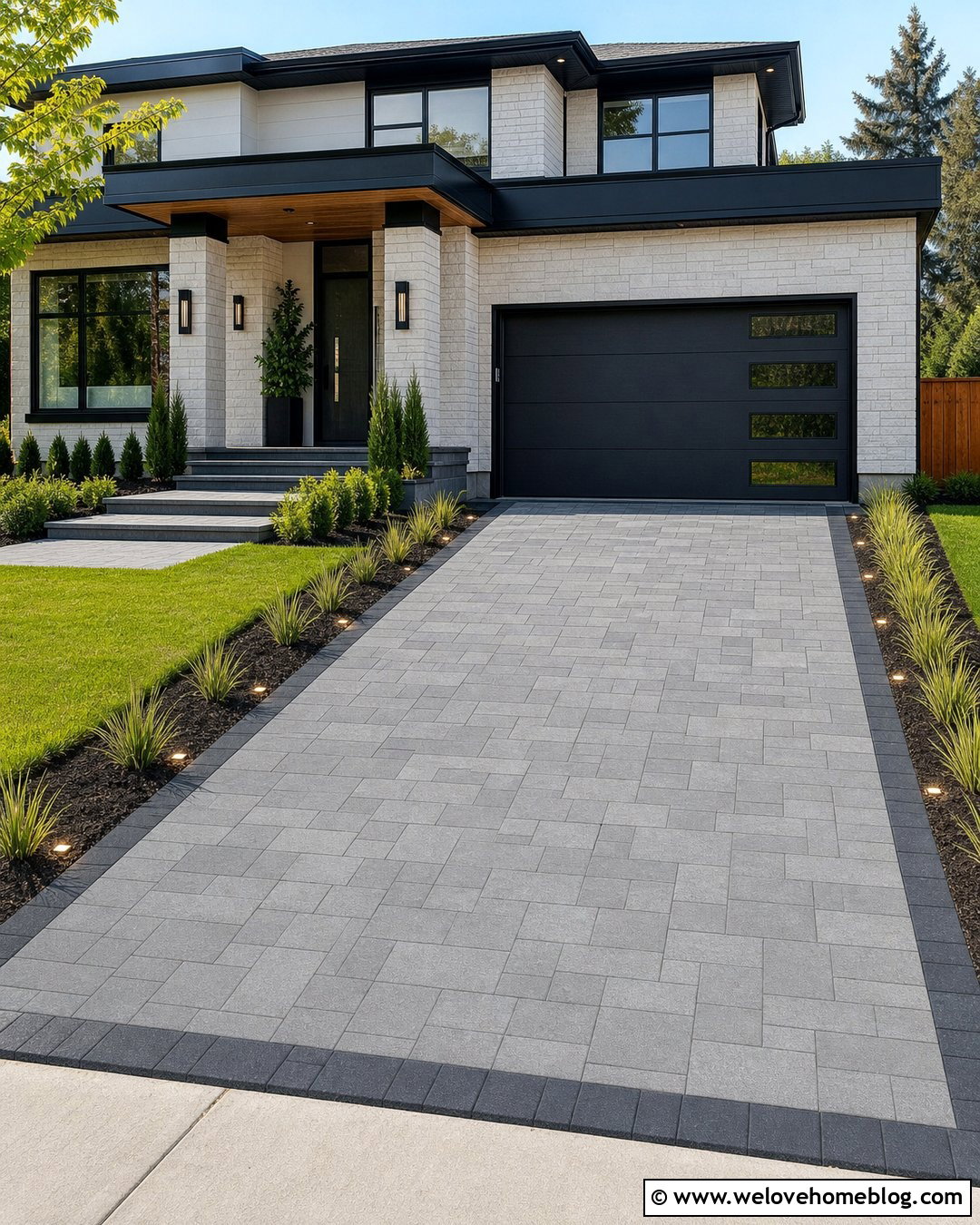
When a driveway looks plain from the street, the entrance is often the best place to concentrate a makeover budget. The after design adds a contrasting paver apron across the first section of the existing gray concrete driveway. Charcoal, tan, or clay-colored pavers can be selected to complement the roof and exterior masonry. Build matching planting beds on both sides of the apron, using low shrubs, seasonal flowers, and ornamental grasses. Masonry columns or a simple address marker can strengthen the entrance without creating a closed-off feeling. Continue a narrow paver ribbon along the driveway edges for added continuity. The completed look provides a clear arrival point and makes standard concrete feel like part of a custom landscape.
11. Long Driveway With A Tree-Lined Entrance
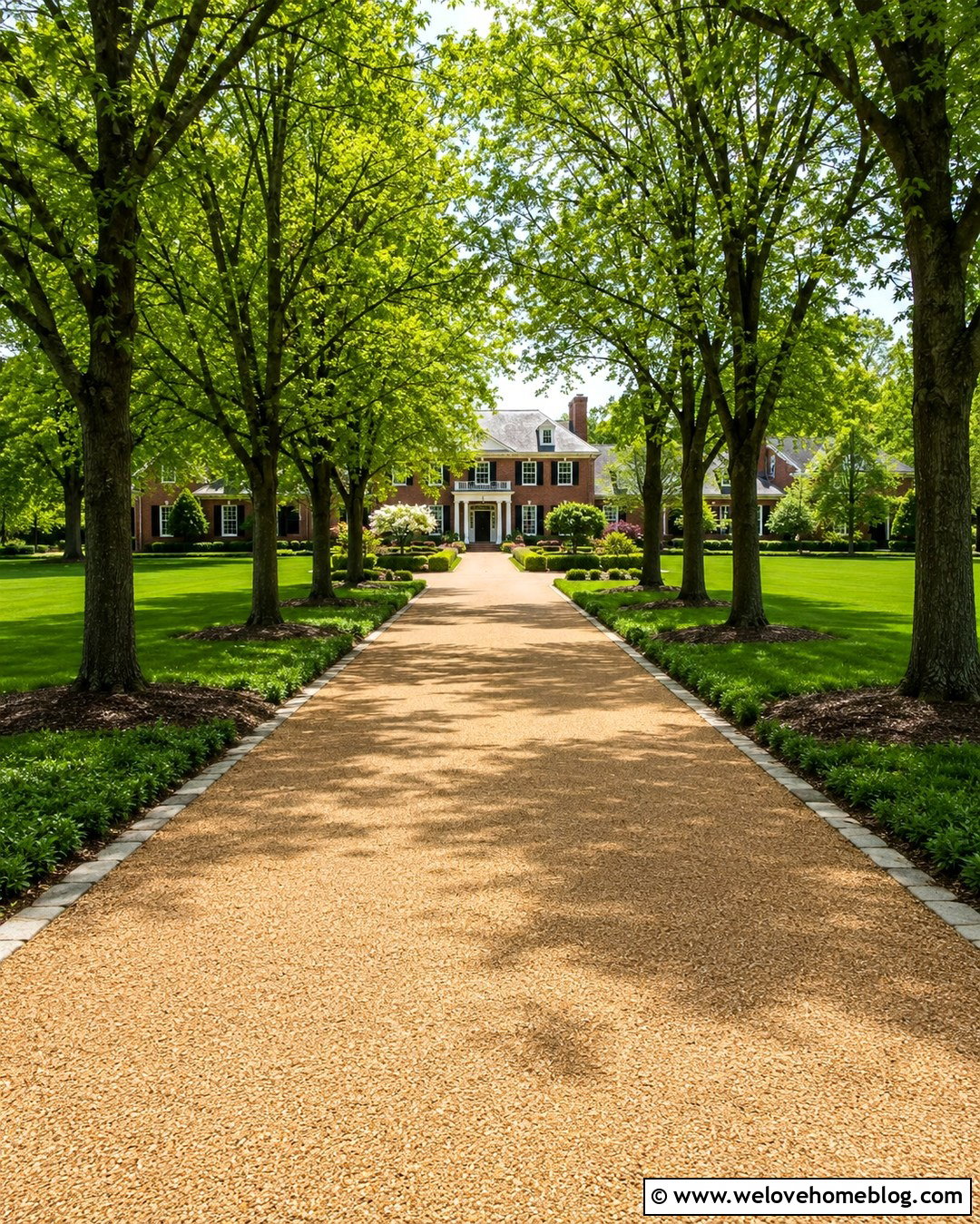
A long driveway surrounded by open lawn can feel bare, exposed, and visually disconnected from the house. The after version uses evenly spaced trees to frame the approach and create a stronger sense of direction. Choose a species suited to the region, soil, overhead utilities, and available mature width. Plant trees far enough from the pavement to protect sightlines and allow for future growth. Low ground cover or simple mulch rings can keep the layout clean beneath the canopy. Near the home, transition to layered shrubs and wider planting beds so the landscape becomes more detailed as visitors arrive. The result feels established and inviting, while the repeated trunks help connect the street entrance to the architecture in the distance. ()
12. Small Driveway With Corner Planting Beds
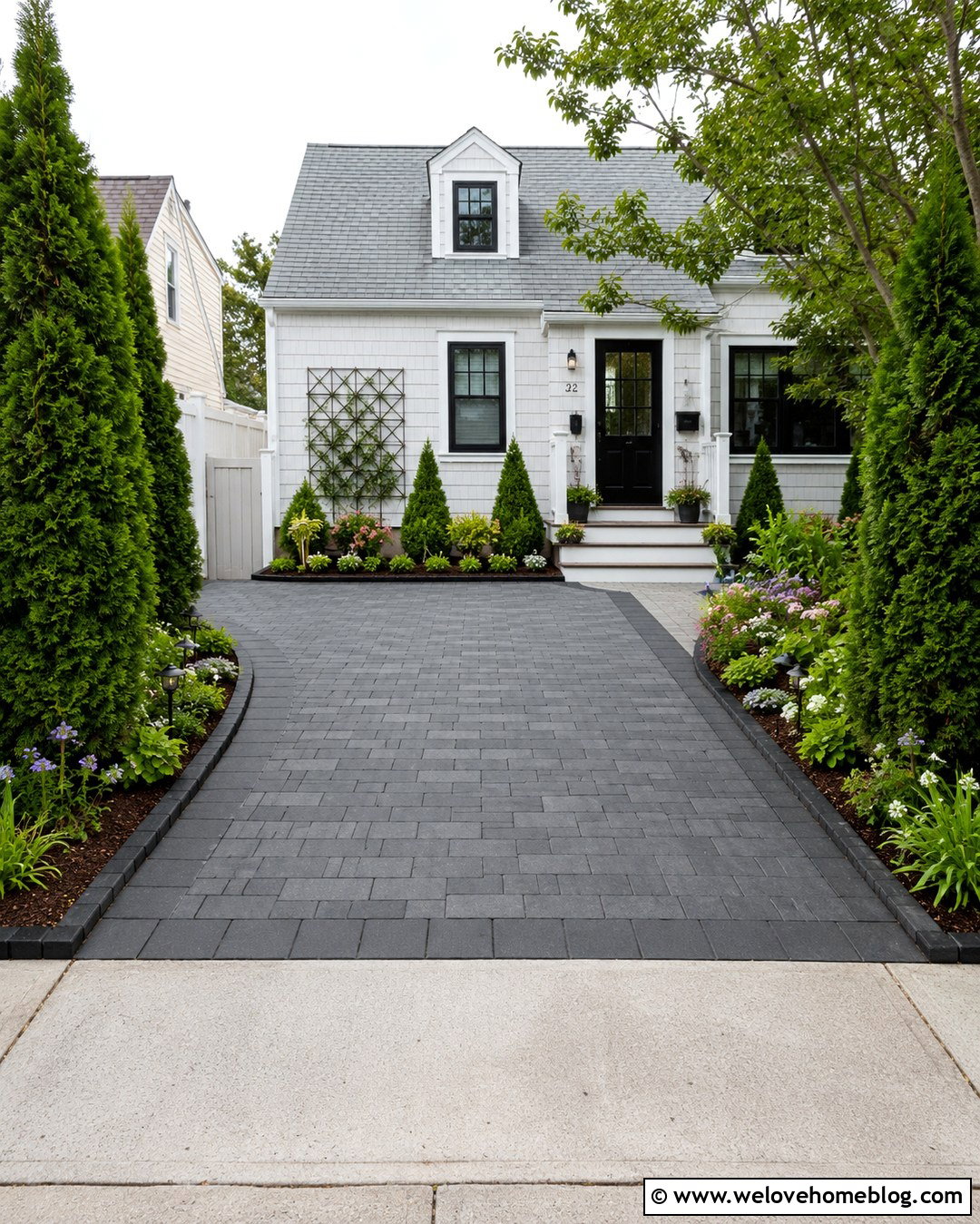
Before its update, a small driveway may appear crowded because every inch of the front yard is devoted to parking. The after design preserves the usable surface while reclaiming two corner areas for landscaping. Create compact triangular or curved beds where the driveway meets the sidewalk and front walkway. Use an upright evergreen, low flowering plants, and tidy ground cover in each bed. Matching brick edging gives the tiny landscape a finished border without narrowing the drive. A wall-mounted trellis near the garage can add greenery vertically when ground space is limited. Keep the plant palette restrained and maintain clear access to vehicle doors, trash bins, and utility equipment. Small changes look more effective when every element has a defined purpose.
13. Woodland Driveway With Ferns And Natural Stone
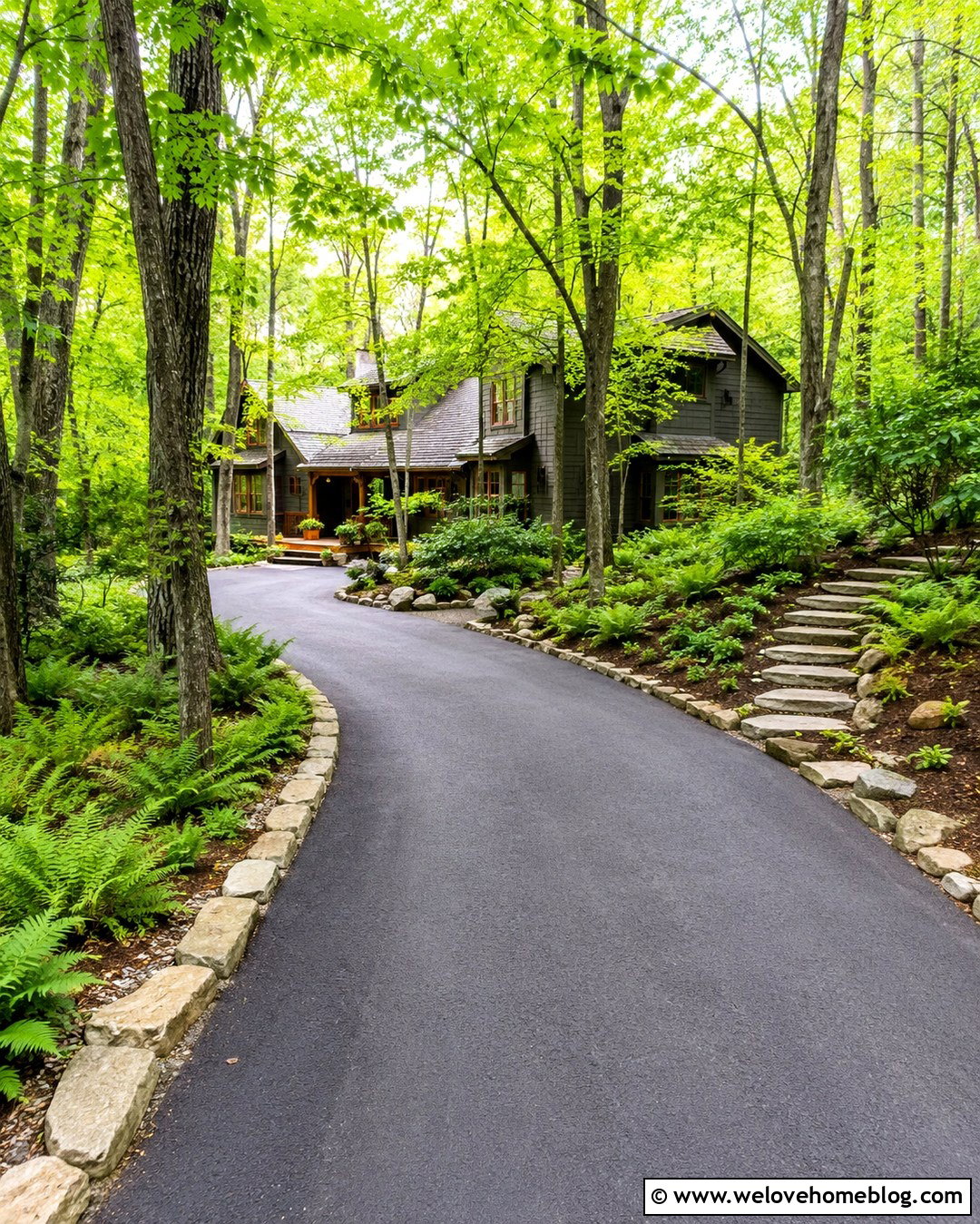
A shaded driveway under mature trees can look muddy and sparse when sun-loving lawn repeatedly fails. The better after solution works with the woodland conditions instead of fighting them. Retain the asphalt or compacted gravel surface, then define its edges with irregular natural stone. Replace thin grass with broad planting beds containing regionally appropriate ferns, sedges, shade-tolerant shrubs, and woodland ground cover. Curving the beds around existing tree trunks creates a more natural layout while protecting important roots from unnecessary disturbance. Add a stepping-stone path between the parking area and entrance. The finished setting feels lush and deliberate, even without colorful flowers. Leaf litter can be managed as part of the natural look rather than hidden under excessive decorative mulch.
14. Desert Driveway With Gravel And Drought-Tolerant Plants
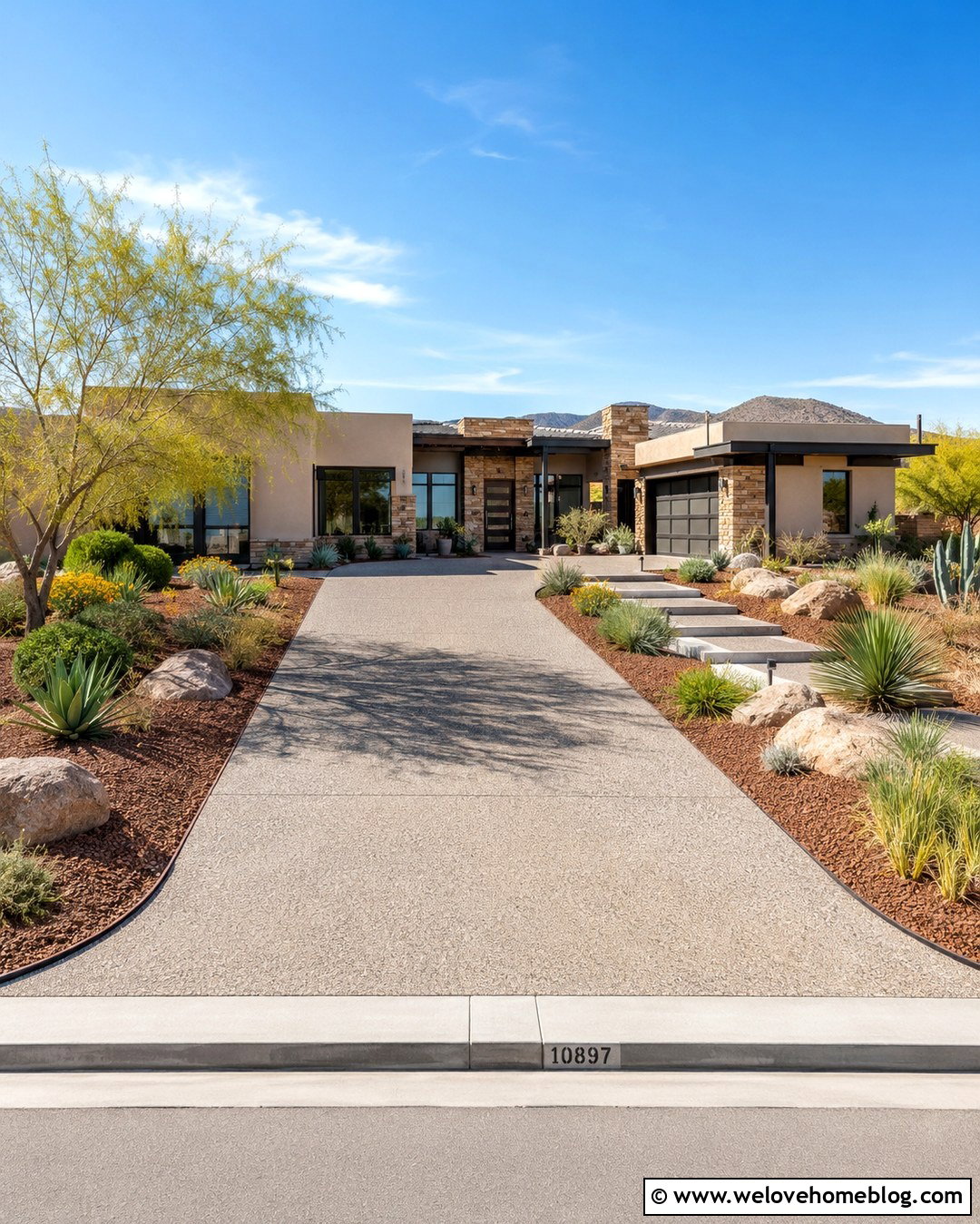
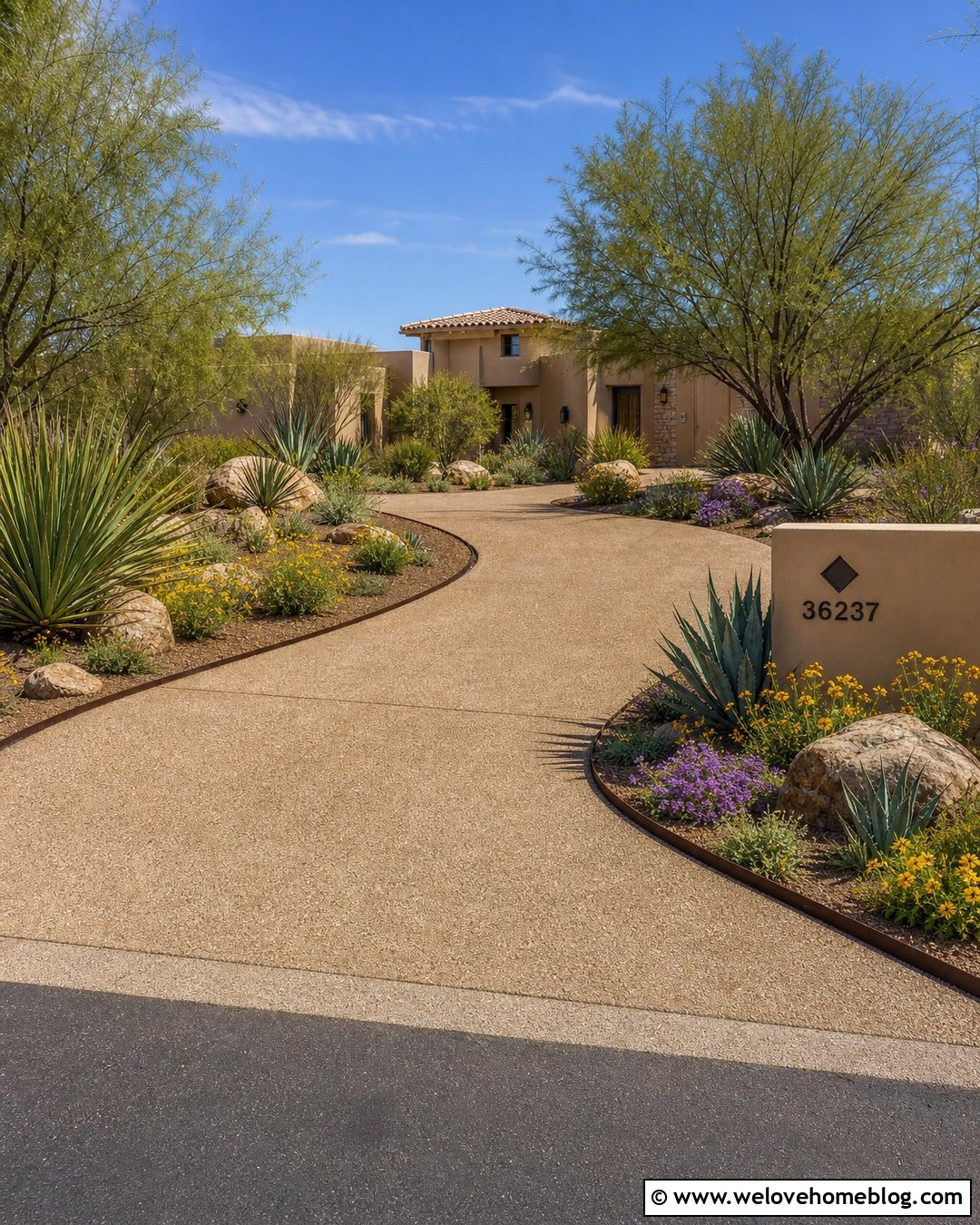
A water-hungry lawn beside a driveway can become patchy and difficult to maintain in a dry climate. The after makeover replaces struggling turf with layered gravel beds, drought-tolerant plants, and carefully positioned accent boulders. A light exposed-aggregate concrete driveway provides a practical central surface, while rust-colored decomposed granite creates contrast along its borders. Arrange agaves, yuccas, compact ornamental grasses, and flowering native perennials in uneven groups. Leave open gravel between plants to keep the landscape from appearing crowded. Steel edging creates a clean division between the driving surface and decorative aggregate. The final yard feels colorful, spacious, and regionally appropriate. Always confirm mature plant size and local suitability, especially when placing spiky plants near walkways or vehicle doors.
15. Driveway With A Planted Rain Garden
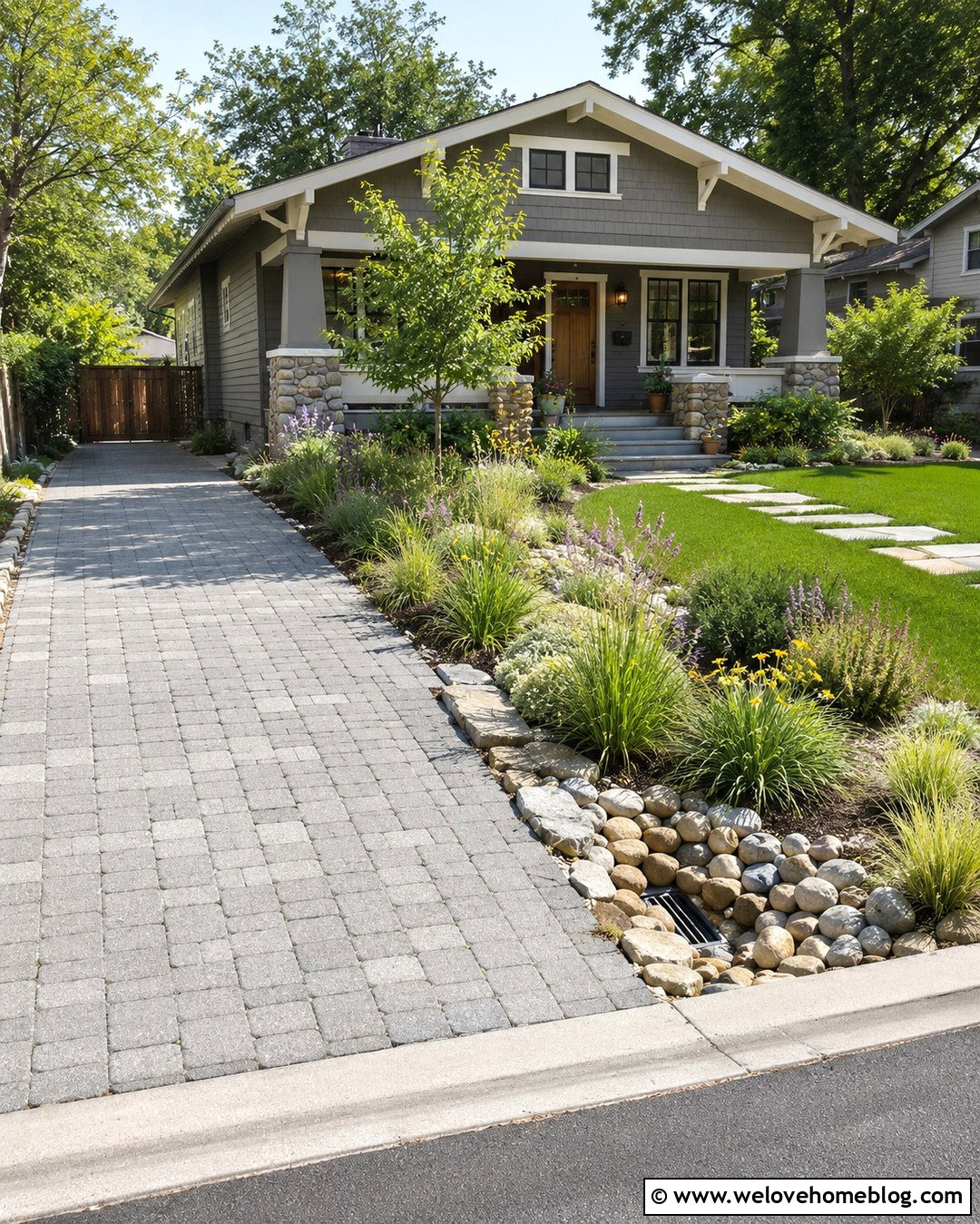
Puddles along the lower edge of a driveway often leave the surrounding yard muddy and unattractive. In the after design, a shallow rain garden becomes both a drainage feature and a landscaped focal point. Place it where runoff can be managed safely, based on the property’s grading and local requirements. Use moisture-tolerant native grasses, flowering perennials, and low shrubs arranged in layered groups. River rock can define the inlet while a crisp stone border separates the garden from the driveway. The planting should not obstruct sightlines or pedestrian access. A stepping-stone walkway may cross the wider part of the bed if needed. This transformation turns a problem area into a softer transition between pavement and lawn while helping the driveway feel integrated with the yard. ()
16. Curved Driveway With Hydrangea Borders
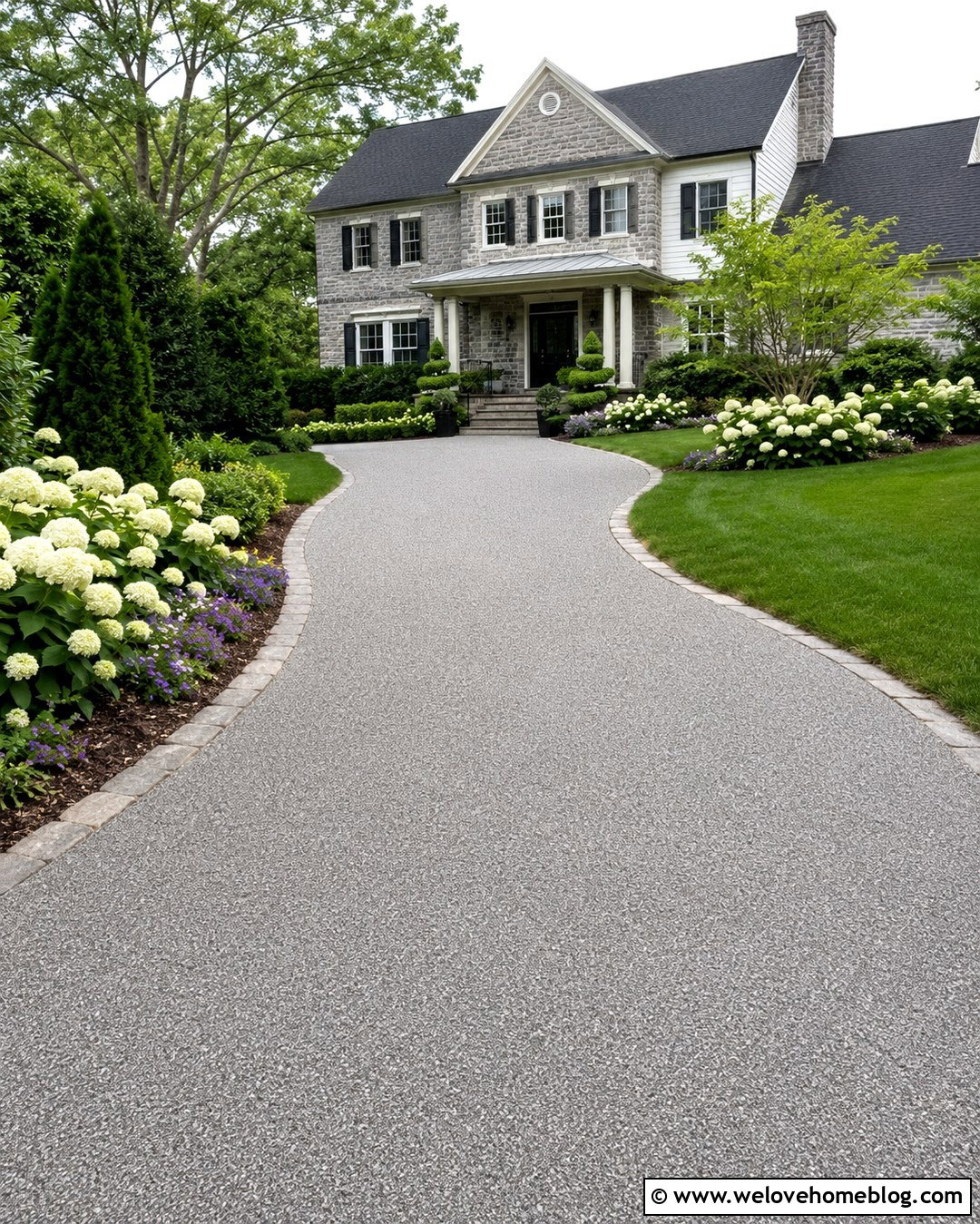
A curved driveway loses much of its appeal when the surrounding lawn follows uneven, ragged edges. The after makeover emphasizes the curve with broad beds of hydrangeas, compact evergreens, and low flowering ground cover. Stone edging keeps the planting line smooth and prevents mulch from washing onto the driveway. Place the largest shrubs along the outside curve, where there is usually more room, and use lower plants on the inside to preserve visibility. A small ornamental tree near the final bend can frame the first full view of the house. The repeated plants make the route feel calm and connected. Select hydrangea varieties for the site’s sunlight, climate, soil, and mature size rather than choosing by flower color alone. ()
17. Coastal Driveway With Shell Gravel And Native Grasses
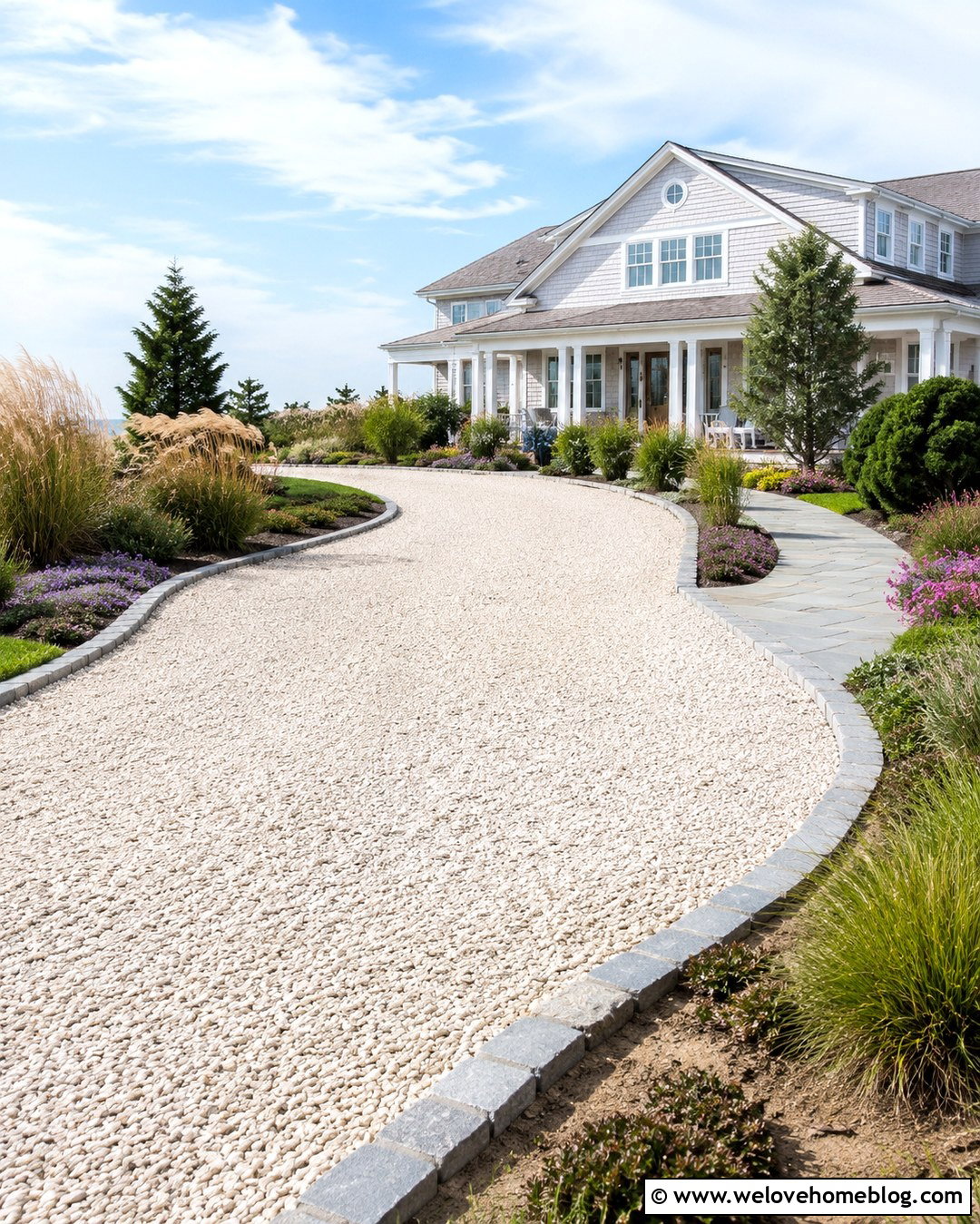
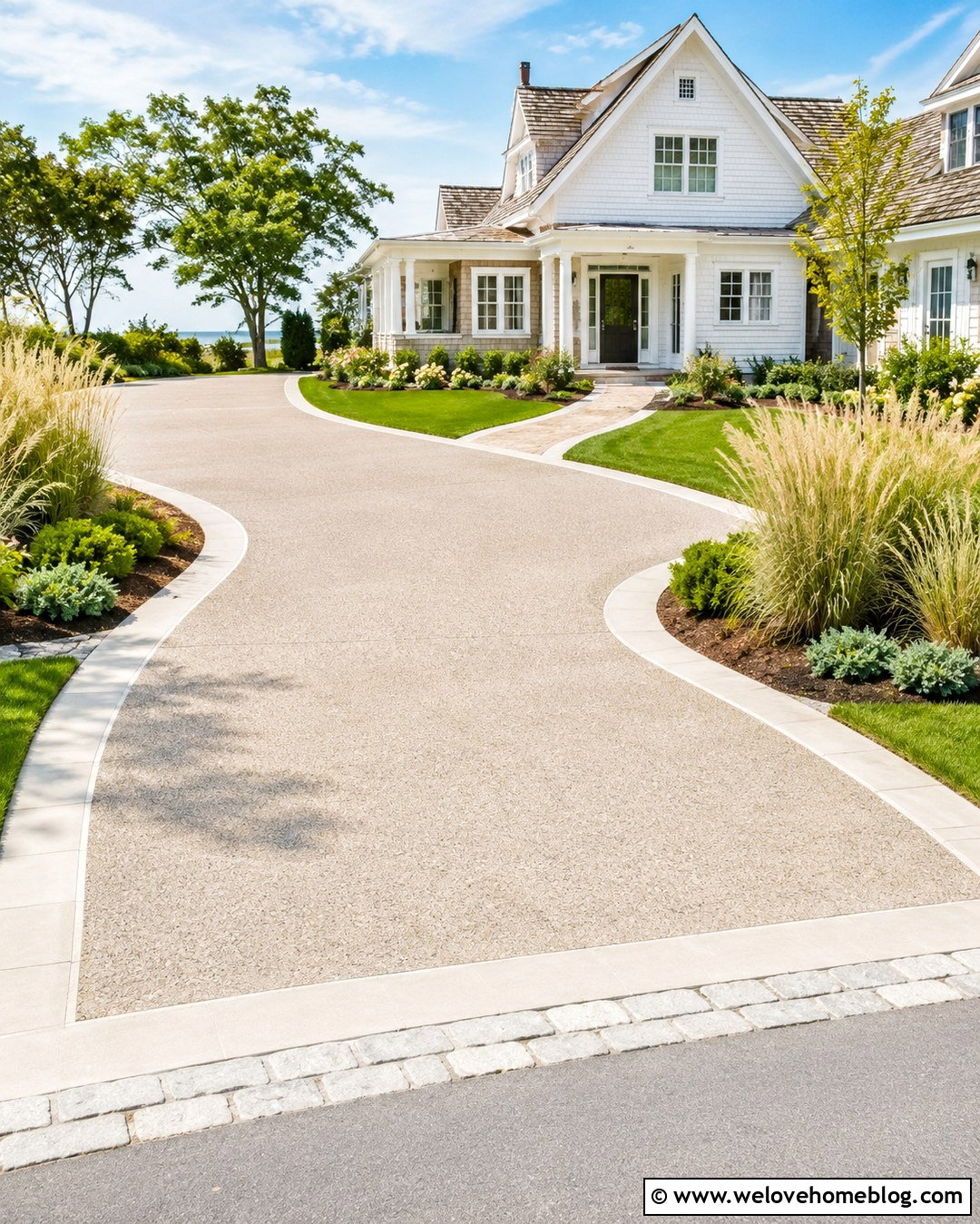
A plain seaside driveway can feel unrelated to its bright coastal setting. The after design introduces pale crushed-shell gravel or light-toned aggregate contained by sturdy stone or concrete edging. Drifts of salt-tolerant native grasses create movement without blocking the open view. Add low flowering ground cover and a few sculptural evergreen shrubs that can handle local wind and soil conditions. A gently curved layout feels more natural than sharp corners, especially beside a coastal cottage. Keep planting beds broad and simple so the light driveway remains the main feature. A bluestone walkway can provide a stable pedestrian route from the parking area to the porch. The final look feels airy, durable, and connected to the surrounding landscape.
18. Colonial Driveway With Symmetrical Evergreen Beds
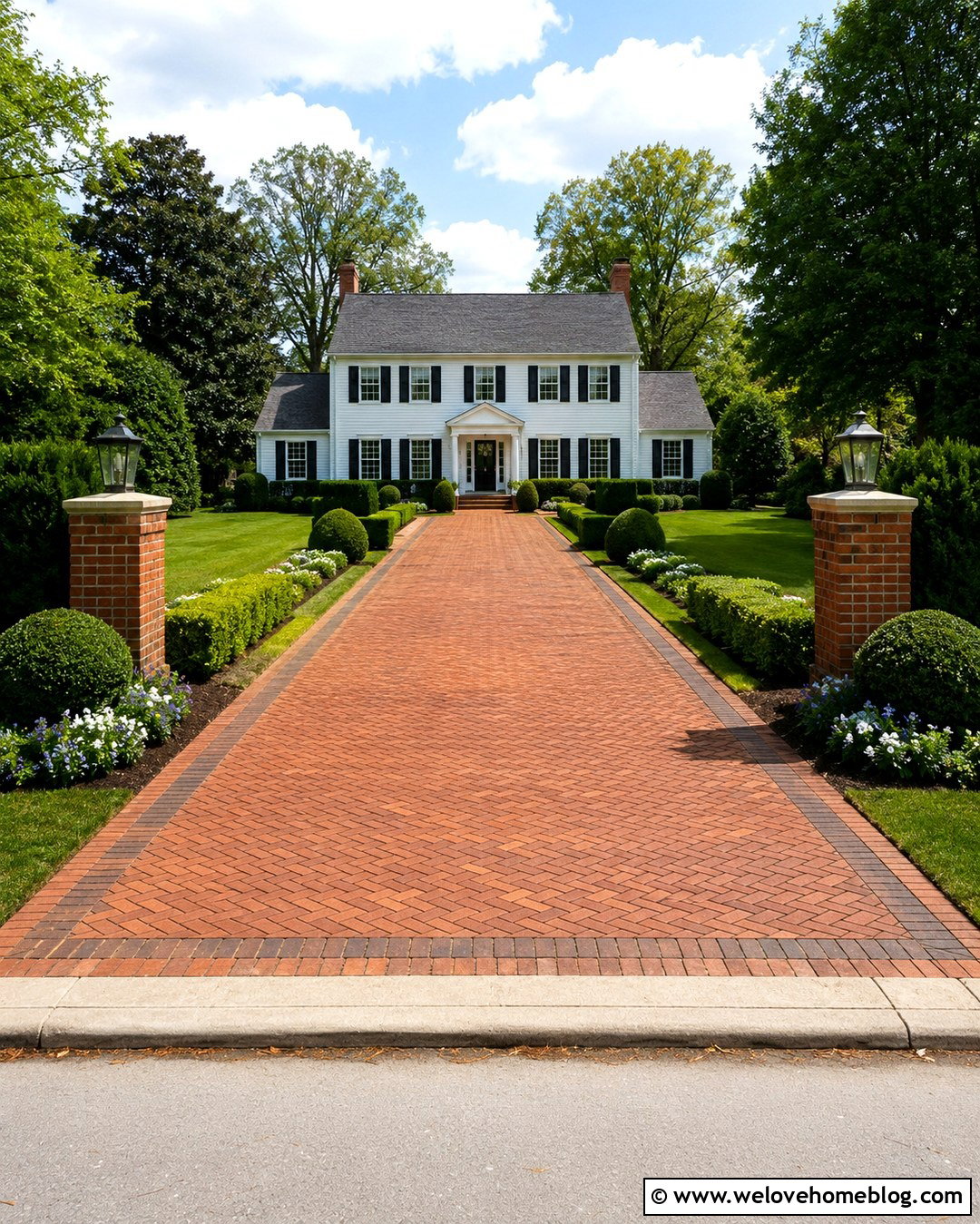
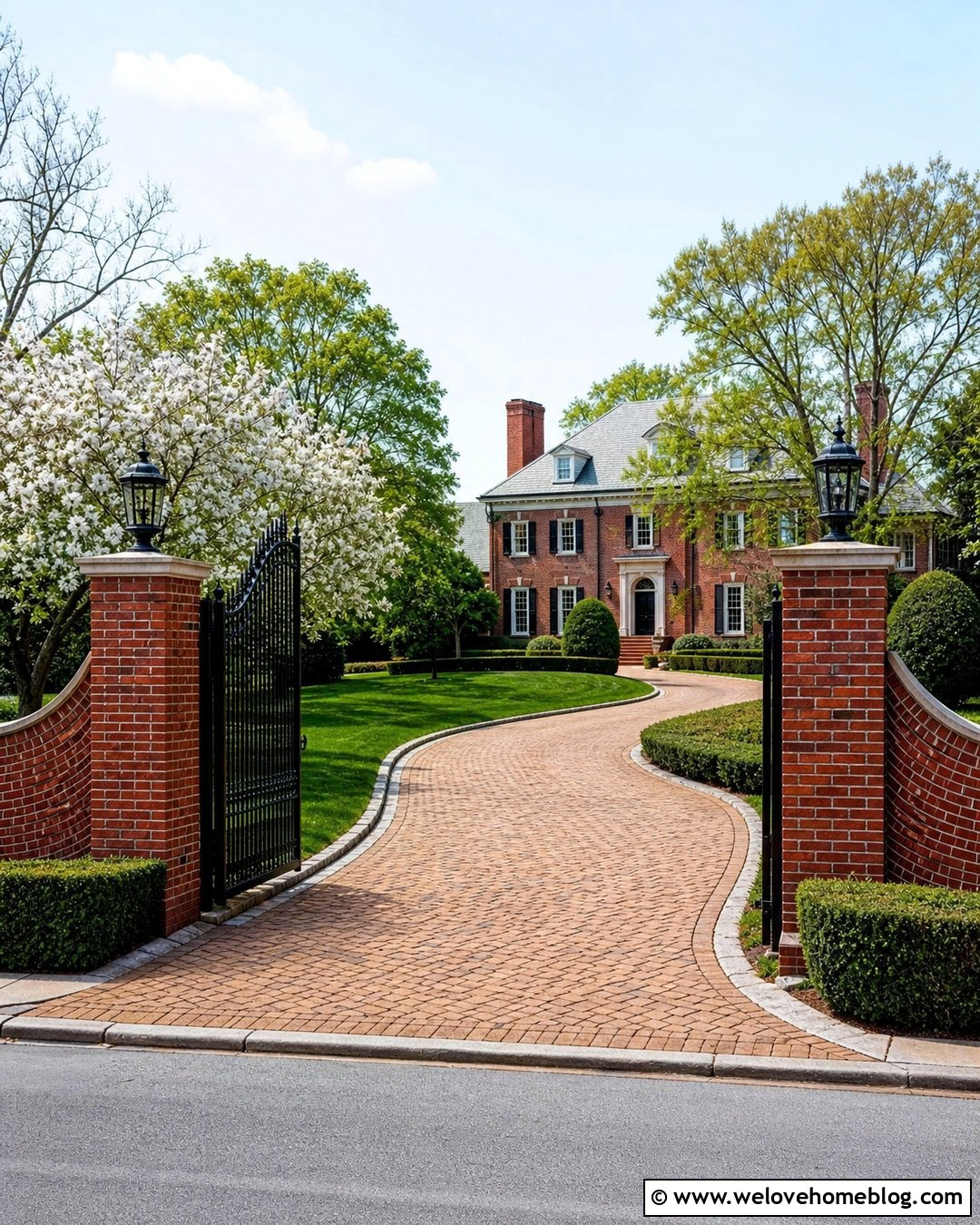
An unbalanced driveway can make a formal colonial home appear less orderly than its architecture suggests. The after design restores symmetry with matching planting beds on both sides of a straight asphalt or brick driveway. Use rounded evergreen shrubs as the main structure, then layer compact flowering plants in front. Brick edging can coordinate with the home’s chimney, steps, or facade details. At the street entrance, matching masonry pillars and low hedges create a defined but welcoming arrival. Keep the central sightline open so the front door remains visible. The finished design feels traditional without becoming stiff. Repeating the same materials and plants in the foundation beds helps connect the driveway, walkway, and house into one balanced composition.
19. Budget Driveway With Mulch And Recycled Brick Edging
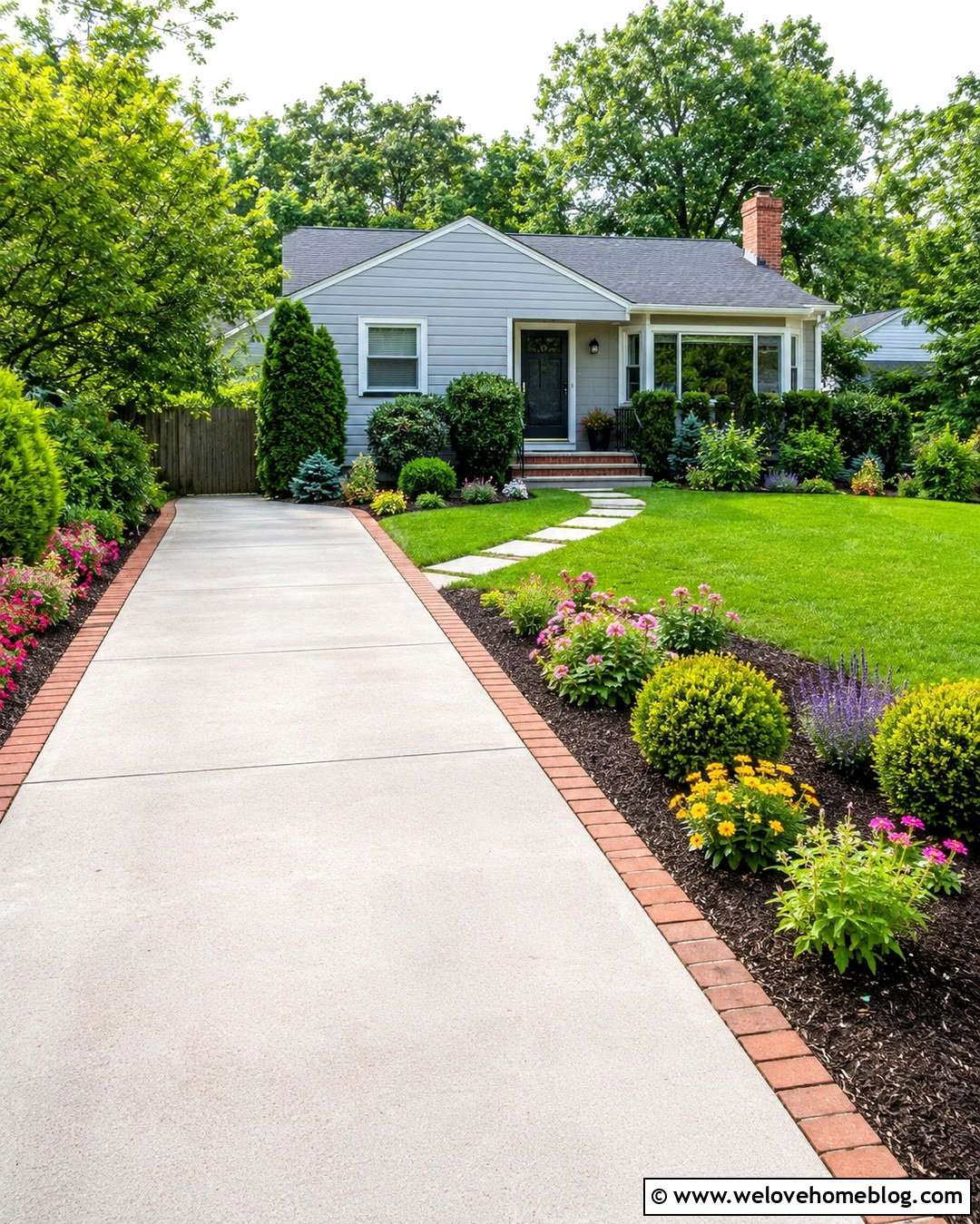
A driveway makeover does not need major construction to produce a noticeable before-and-after change. Begin by cleaning the existing concrete, asphalt, or gravel and removing weeds from the edges. Use salvaged or recycled bricks to create a simple border, then install wide mulch beds along the most visible side. Divide inexpensive perennials and repeat them in small groups for a fuller appearance. A few compact shrubs near the entrance provide lasting structure, while annual flowers can supply quick seasonal color. Refresh thin lawn areas and trim plants away from the driving surface. The completed design looks organized because the lines are clean and the materials repeat. This approach also allows improvements to be completed in manageable stages as the budget permits.



20. Driveway With Coordinated Landscape Lighting
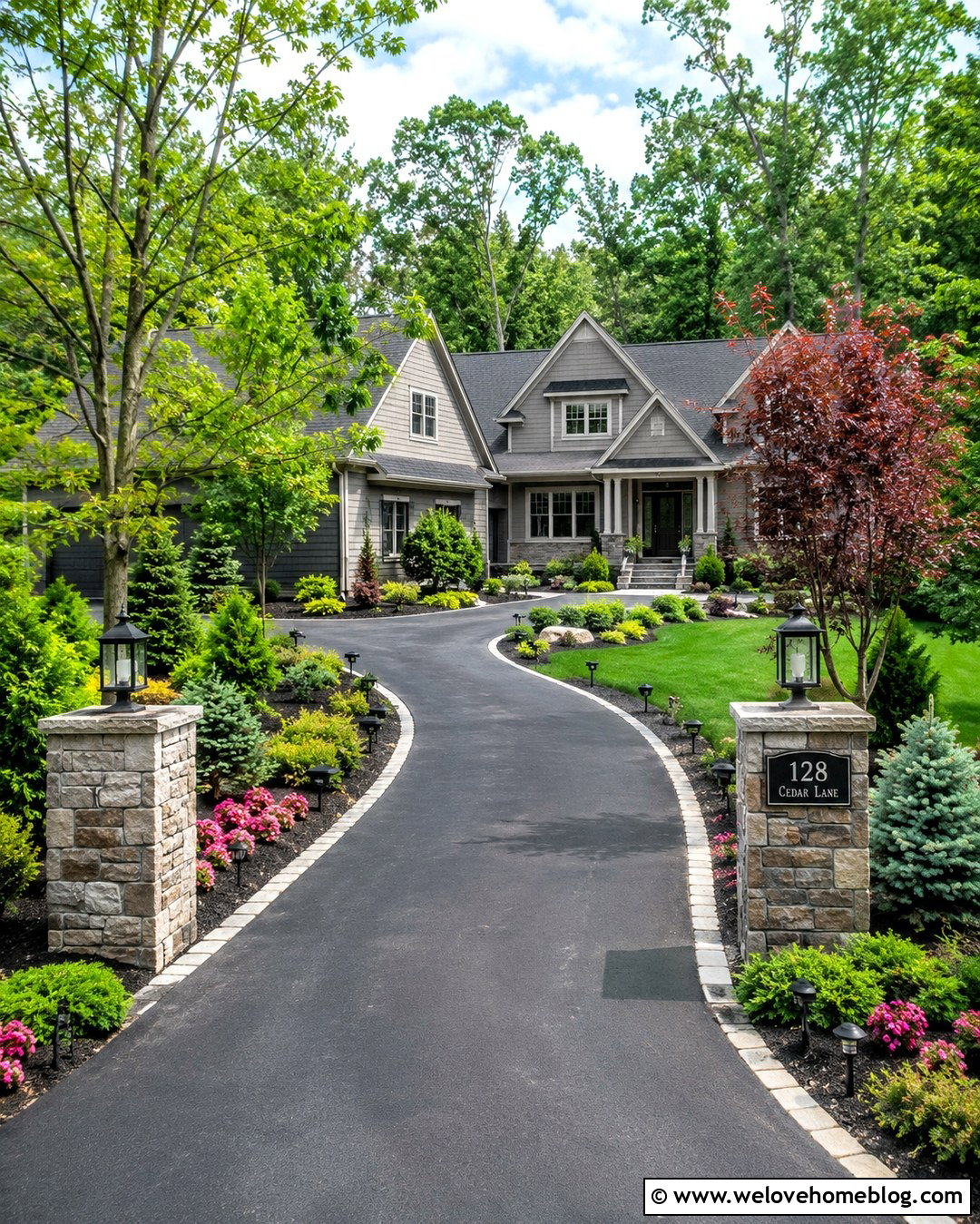
A driveway may look attractive during the day but disappear into an uninviting front yard after sunset. The after makeover uses coordinated lighting fixtures as part of a complete landscape rather than placing random lights along the pavement. Low path lights can follow planting beds, while subtle uplights emphasize entrance trees, stone pillars, or the home’s facade. During the day, dark bronze or black fixtures should blend into the mulch and foliage. Pair the lighting with clean driveway edging, layered shrubs, and a clearly marked walkway. Avoid positioning fixtures where tires, snow equipment, or lawn mowers can damage them. A restrained lighting plan makes the driveway easier to understand after dark while preserving a polished daytime appearance. ()
Conclusion:
These **20 Driveway Landscaping Before And After Ideas** show how thoughtful borders, plants, surfaces, and entrances can completely change a home’s street view. A successful transformation does more than hide an unattractive edge. It connects the driveway to the house, improves visual flow, and supports safe daily use. Start with essential concerns such as drainage, grading, vehicle clearance, and visibility. Then choose materials and plants that complement the home and suit local conditions. Even an affordable update with fresh gravel, mulch, clean edging, and repeated shrubs can create a strong after result. Whether your driveway is small, circular, sloped, or long, treat the full approach as one coordinated landscape.

Related posts:
Leave a Reply