
A well-designed driveway entrance does more than mark where vehicles enter. It frames the property, guides attention toward the house, and creates a welcoming first impression. The best 25 Beautiful Driveways Entrance Landscaping Ideas combine a practical surface with thoughtful borders, layered plants, clear sightlines, and architectural details that suit the home. Current driveway landscaping trends favor complete, coordinated designs using defined edges, native planting, ornamental grasses, masonry pillars, and attractive lighting. () Whether you have a narrow suburban drive, a sweeping country approach, or a compact front yard, there is a layout that can work. The complete driveway looks below offer useful inspiration for planning your own 25 Beautiful Driveways Entrance Landscaping Ideas.

1. Driveway Entrance With Stone Pillars And Boxwoods
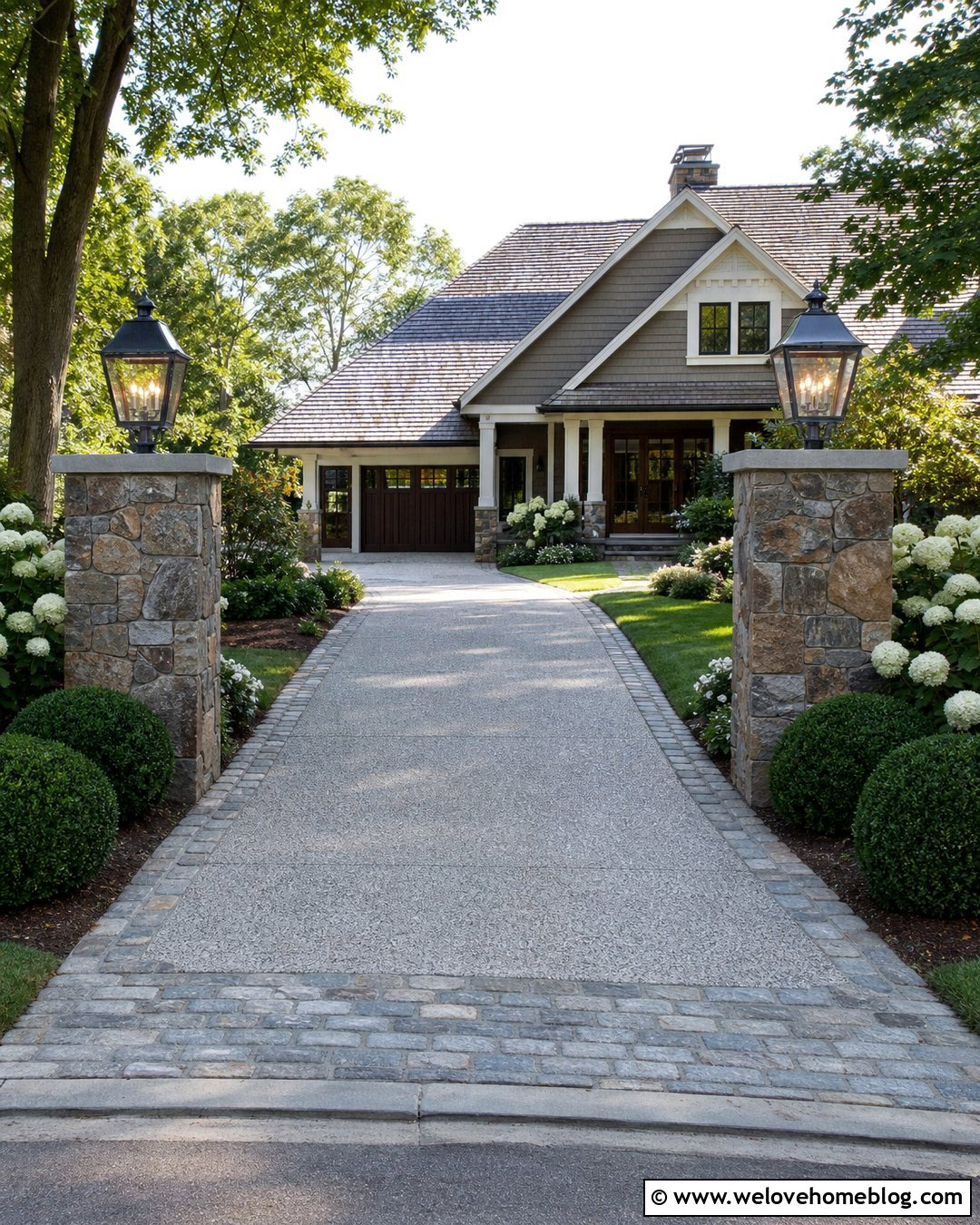
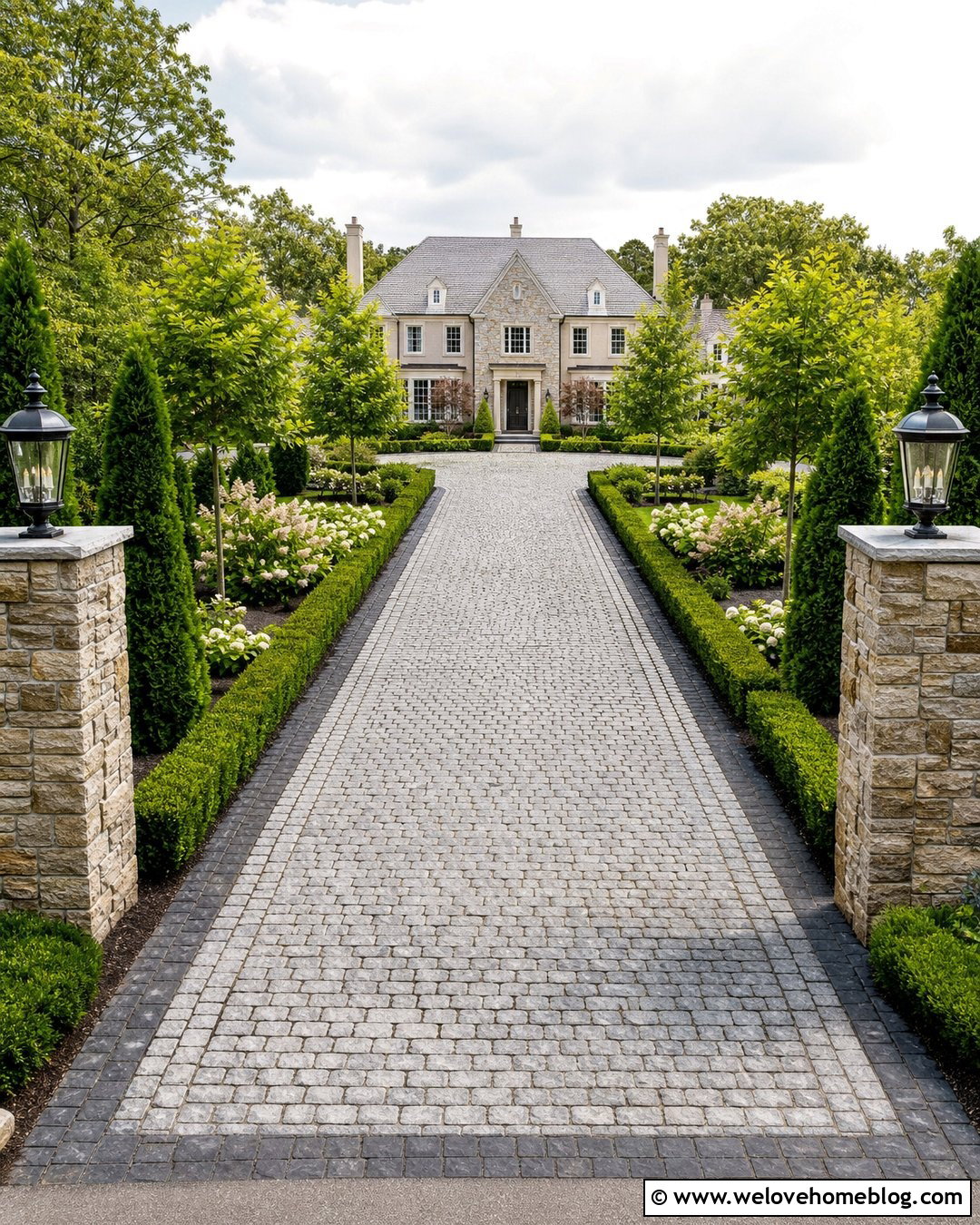
Create a balanced entrance by placing substantial stone pillars on both sides of a straight exposed aggregate driveway. Choose stone that repeats colors found on the house, front steps, or retaining walls. This simple connection makes the entire property feel coordinated. Add rounded boxwoods near the pillar bases, then layer in low flowering perennials and neat ground cover. Keep taller plants behind the pillars so they do not restrict views of the road. A contrasting cobblestone apron can protect the entrance while visually separating the driveway from the street. For a polished finish, install lanterns on top of the pillars and continue matching stone edging toward the house. This complete look works especially well with Craftsman, ranch, and traditional homes.
2. Gravel Driveway Entrance With Split Rail Fence
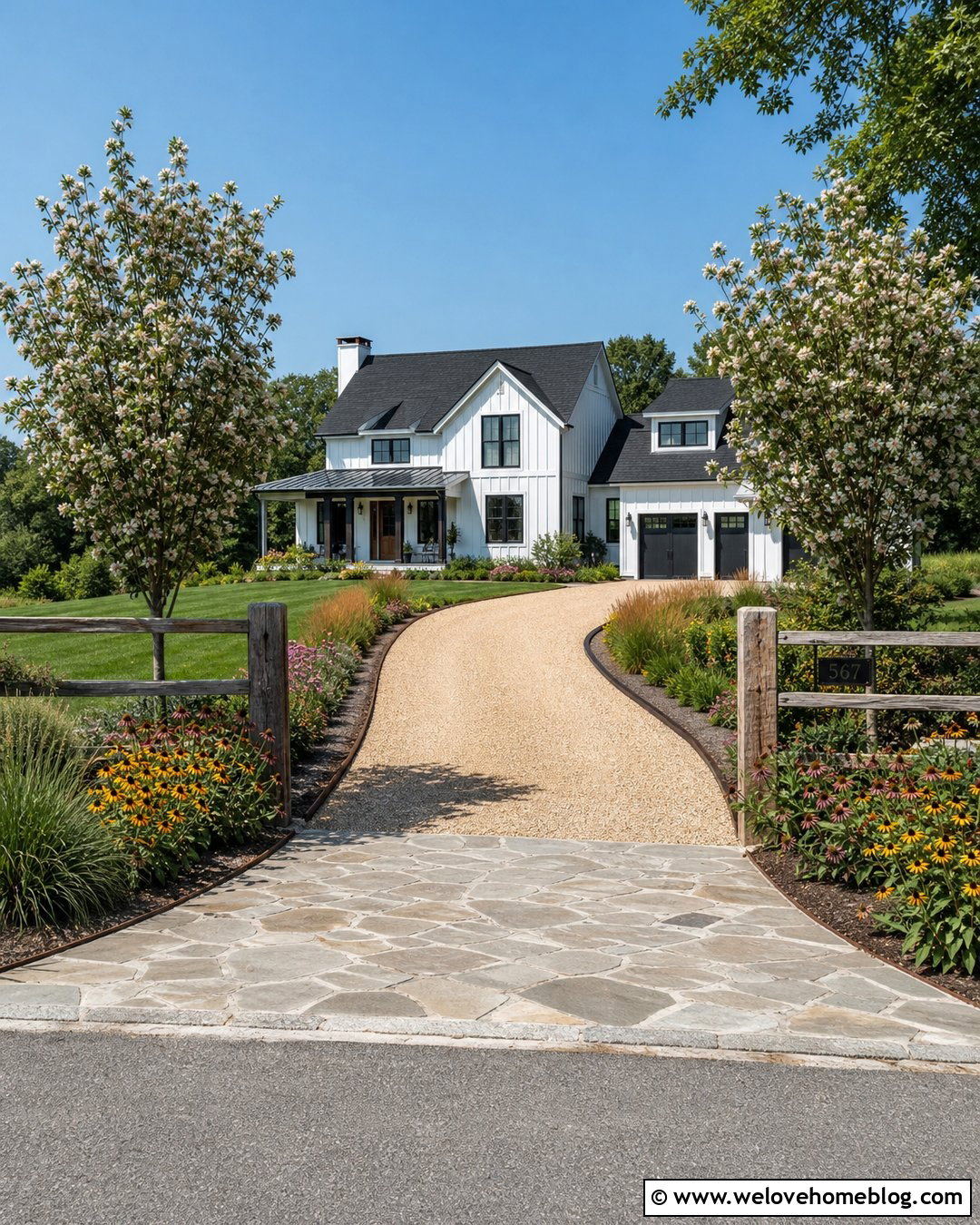
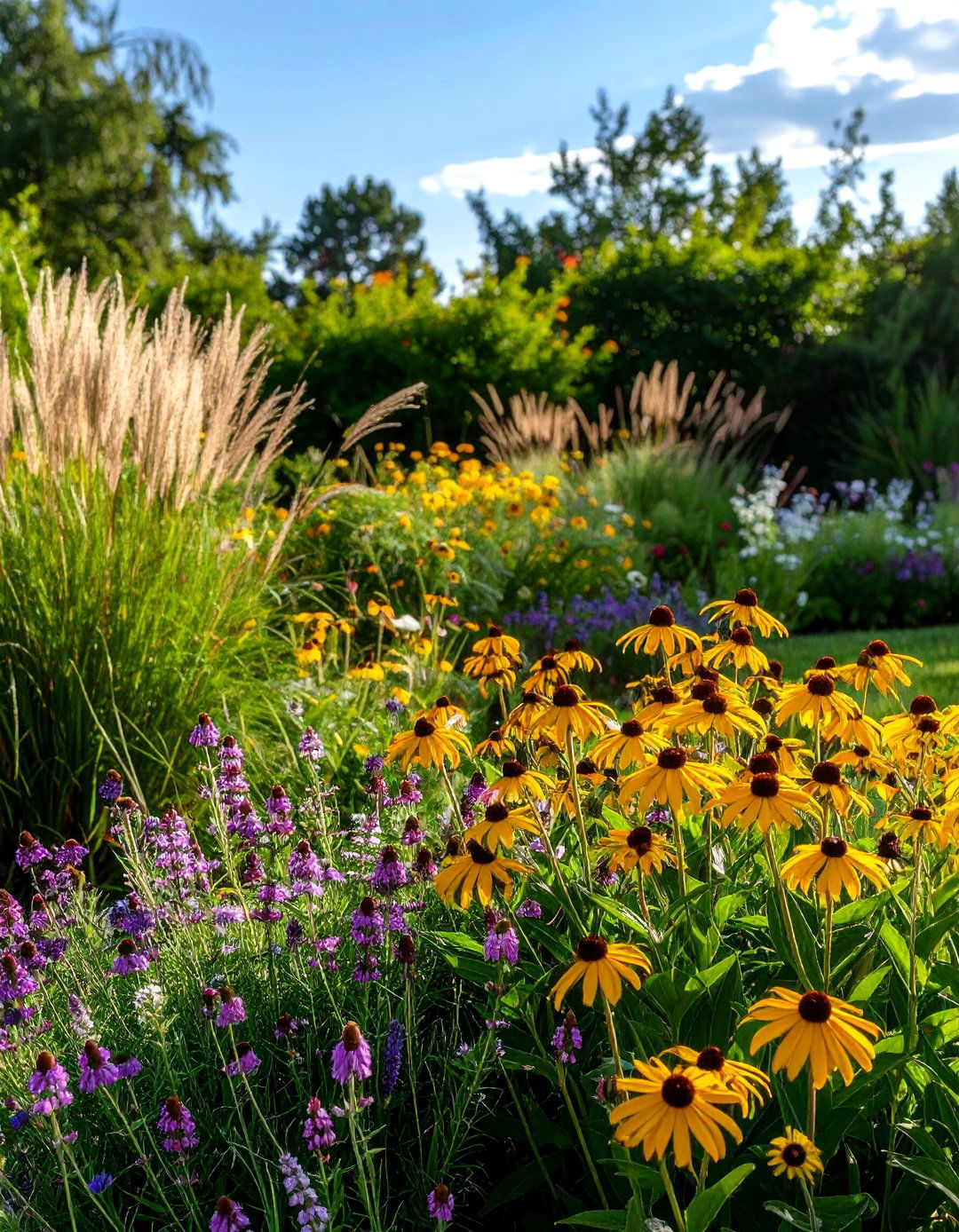
The soft crunch of gravel immediately gives a driveway a relaxed country character. Use warm buff gravel for a gently curved entrance leading toward a farmhouse or cottage. Define both sides with dark timber edging so loose stones remain contained. A short split rail fence can follow the curve without making the property feel closed off. Around the fence posts, plant drifts of ornamental grasses, black-eyed Susans, coneflowers, and other regionally appropriate plants. Their loose shapes complement the informal driveway surface. Place two small flowering trees farther inside the property to frame the approach. A wide stone apron at the road creates a clean transition and reduces scattered gravel. The result feels rustic, practical, and thoughtfully landscaped rather than unfinished.
3. Brick Driveway Entrance With Hydrangea Borders
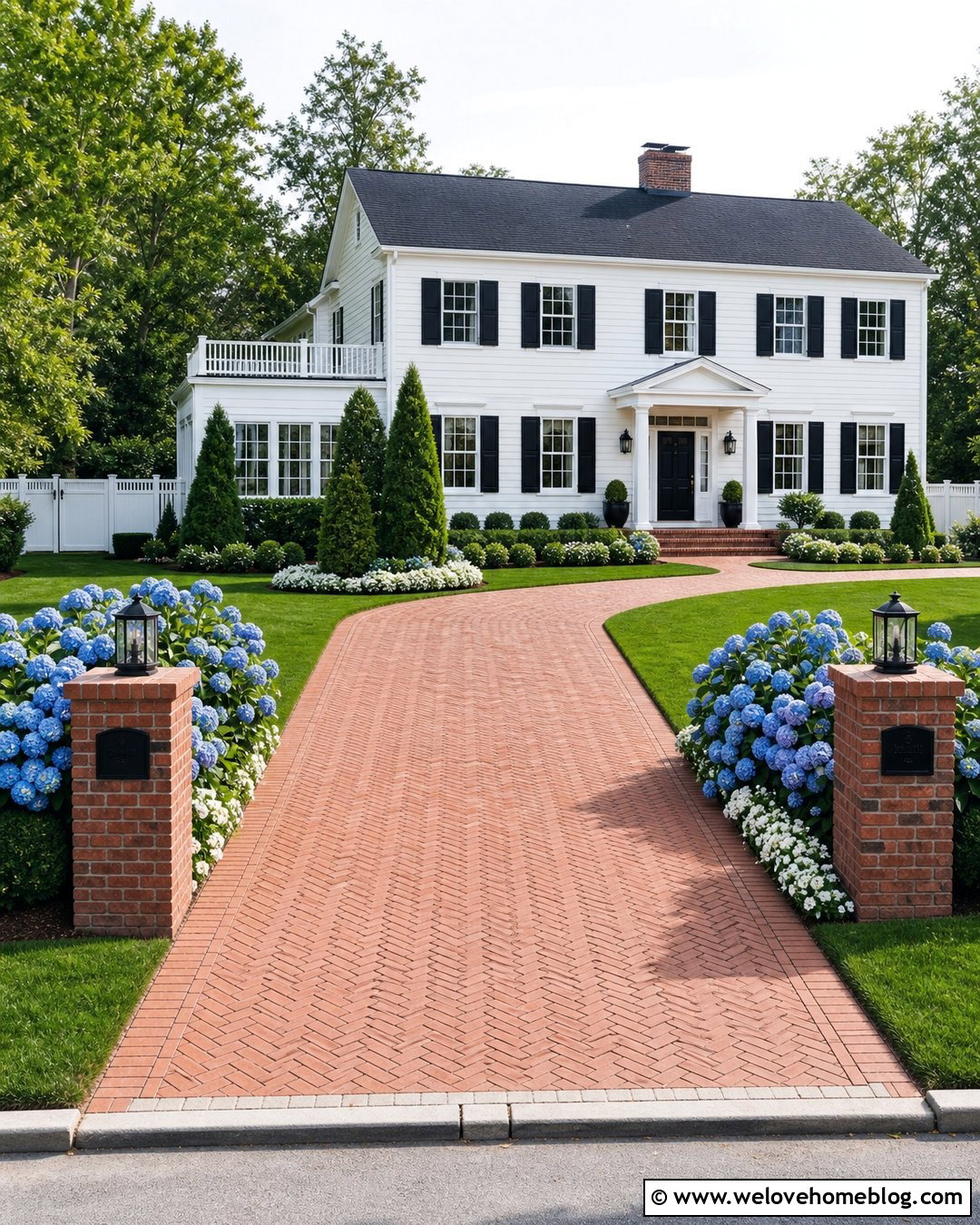
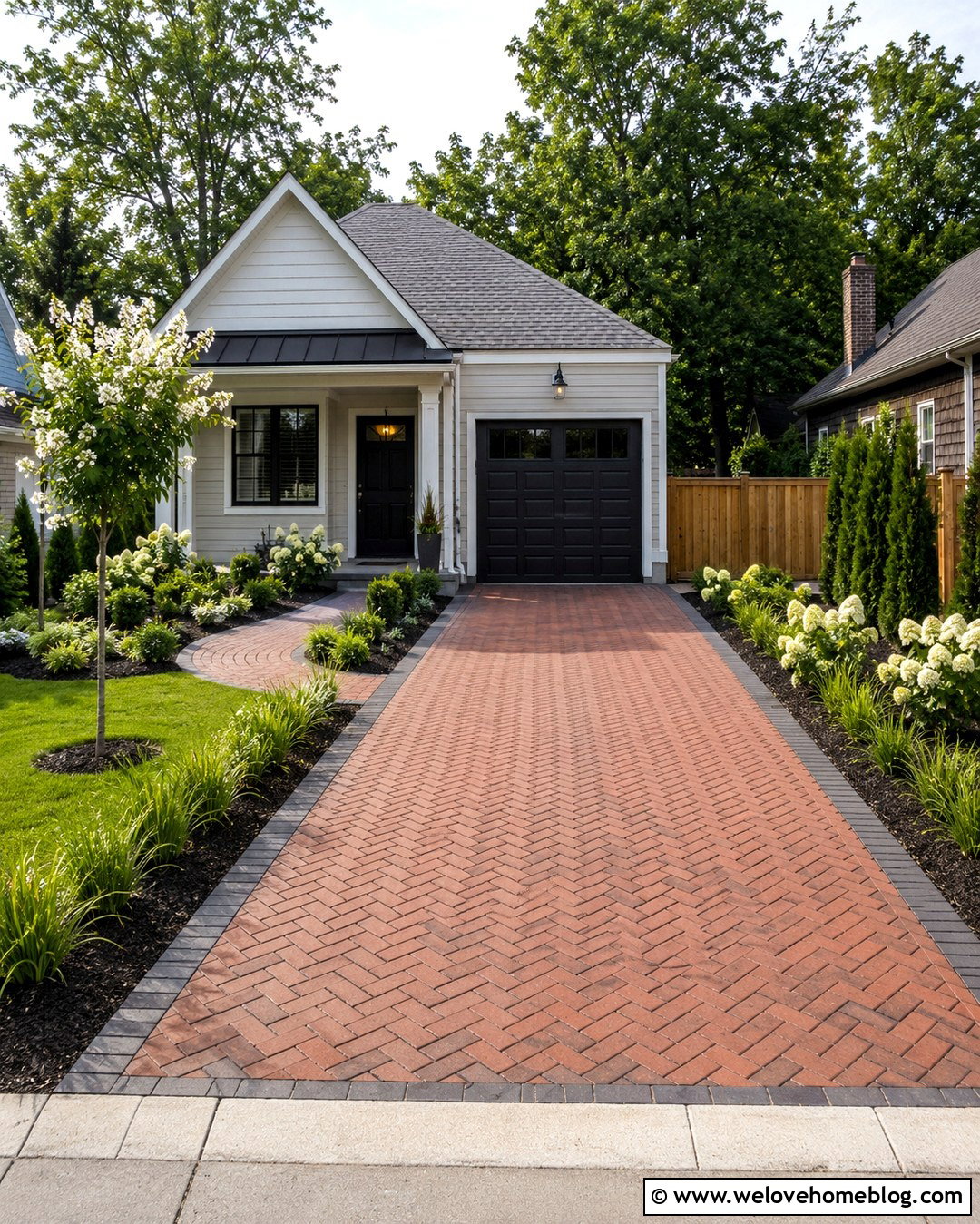
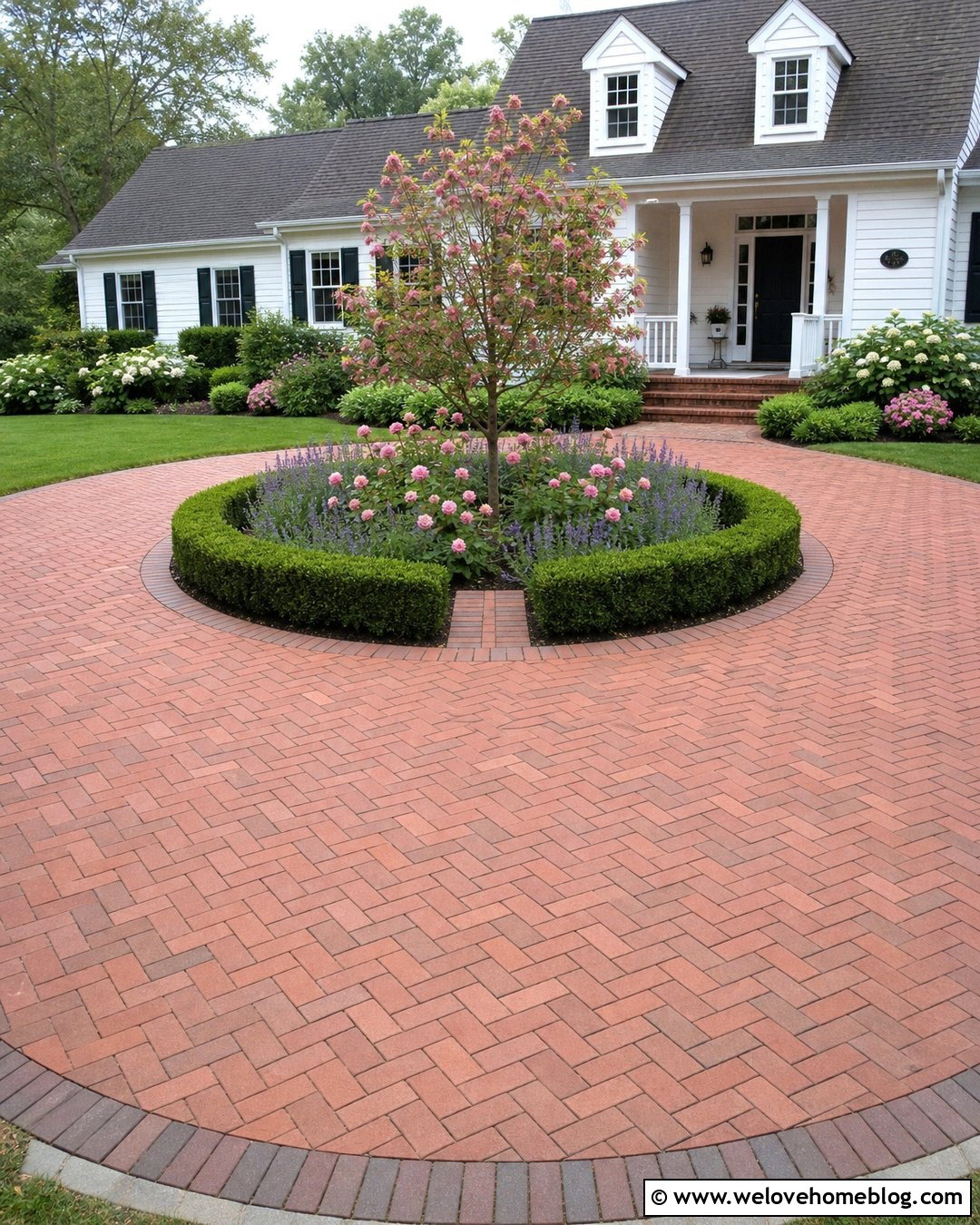
Rich red clay brick pavers bring warmth and traditional detail to a home’s entrance. Lay the bricks in a herringbone pattern across a straight or subtly flared driveway, then add a soldier-course border for a crisp edge. On both sides, create deep planting beds with compact hydrangeas, evergreen foundation shrubs, and low white flowers. Repeating the same plant groups produces symmetry without making the landscape look rigid. Brick mailbox pillars or short entrance walls can connect the hardscape to a Colonial or Cape Cod facade. Leave enough space between mature shrubs and the paving to prevent branches from leaning into the driving area. A coordinating brick walkway leading toward the front door completes the composition and makes the pedestrian route easy to recognize.
4. Curved Driveway Entrance With Flowering Trees
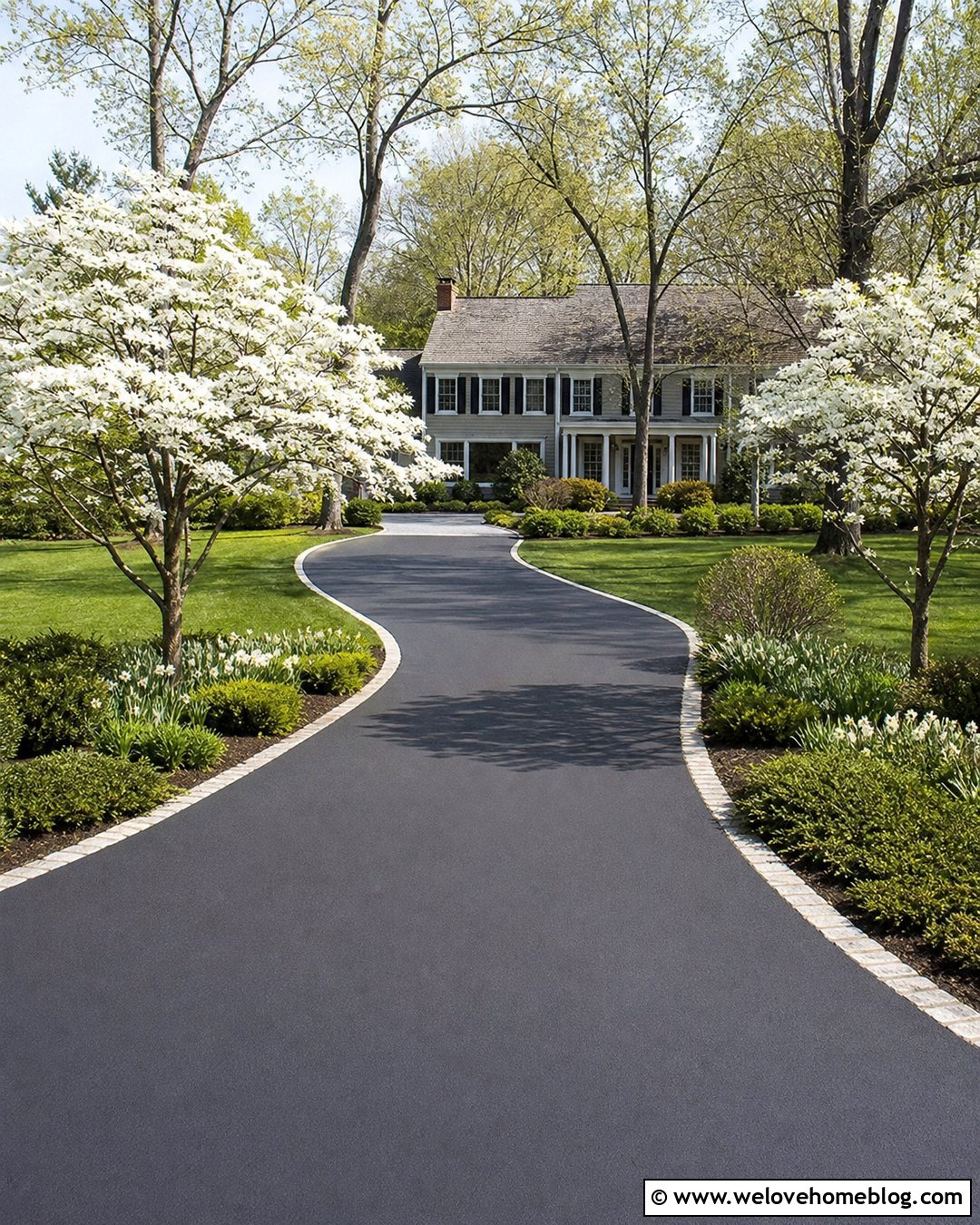
A curved driveway can turn the arrival into a gradual reveal instead of presenting the entire house at once. Use smooth black asphalt for an affordable, quiet surface and frame it with light granite cobblestone edging. Position a pair of flowering trees near the entrance, but set them back enough to preserve open views of pedestrians and traffic. Mature plant size and road visibility should guide every placement decision. () Continue the curve with broad planting beds containing compact evergreen shrubs, spring bulbs, and low ground cover. Avoid tall, dense plants at the street corner. Farther along the driveway, larger trees can create shade and structure. This layout feels graceful and established, especially when it approaches a traditional two-story home surrounded by an open lawn.
5. Modern Driveway Entrance With Ornamental Grasses
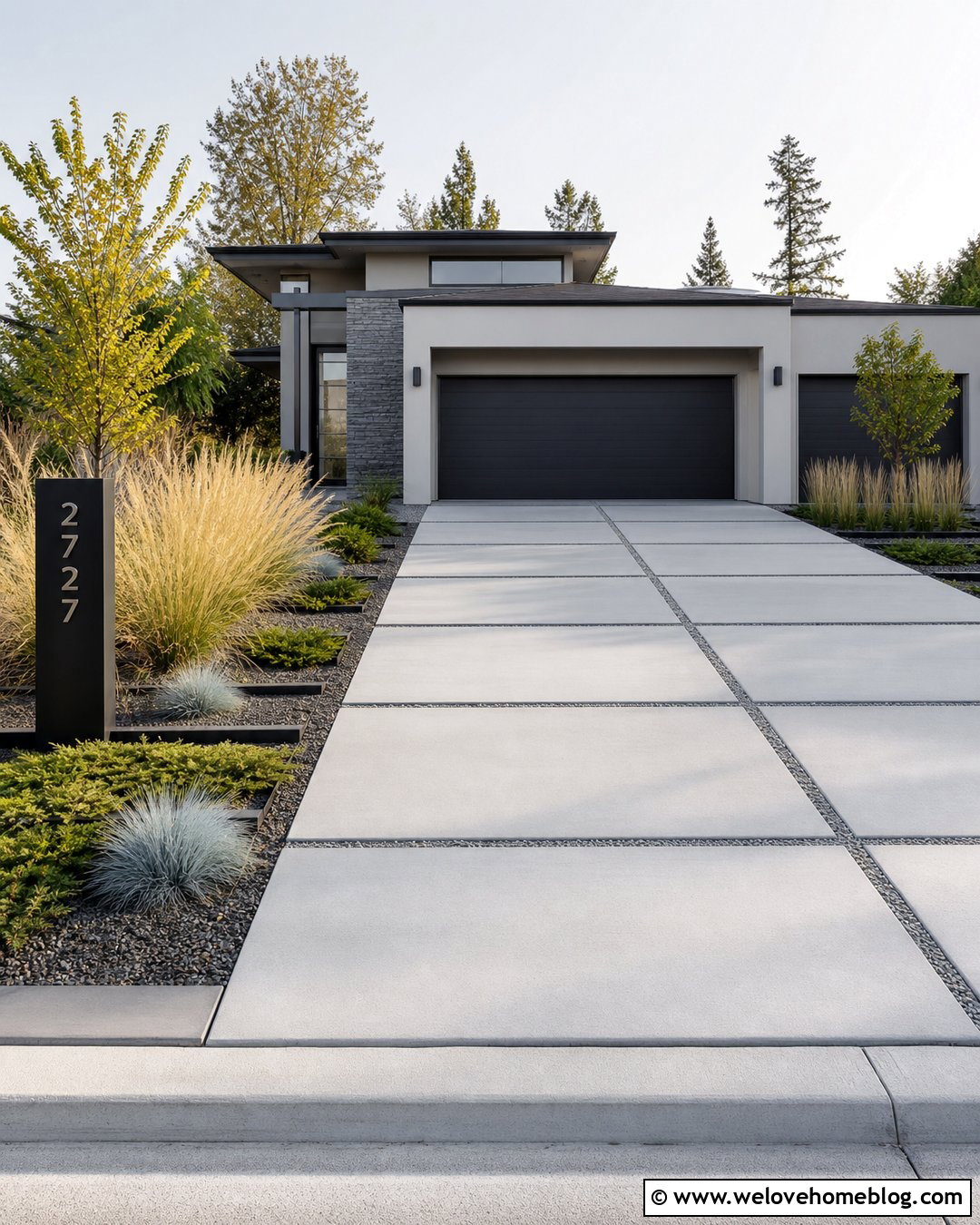
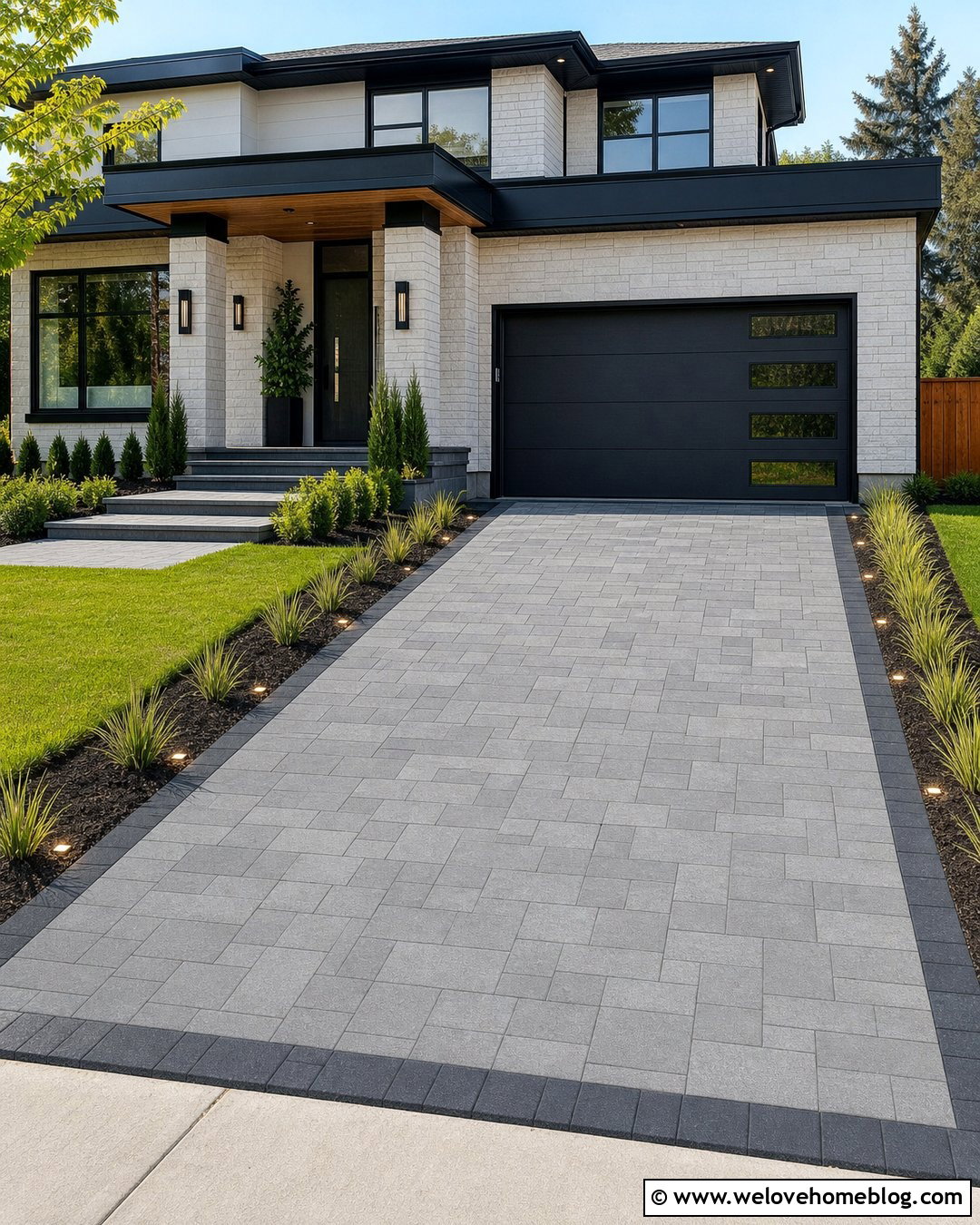
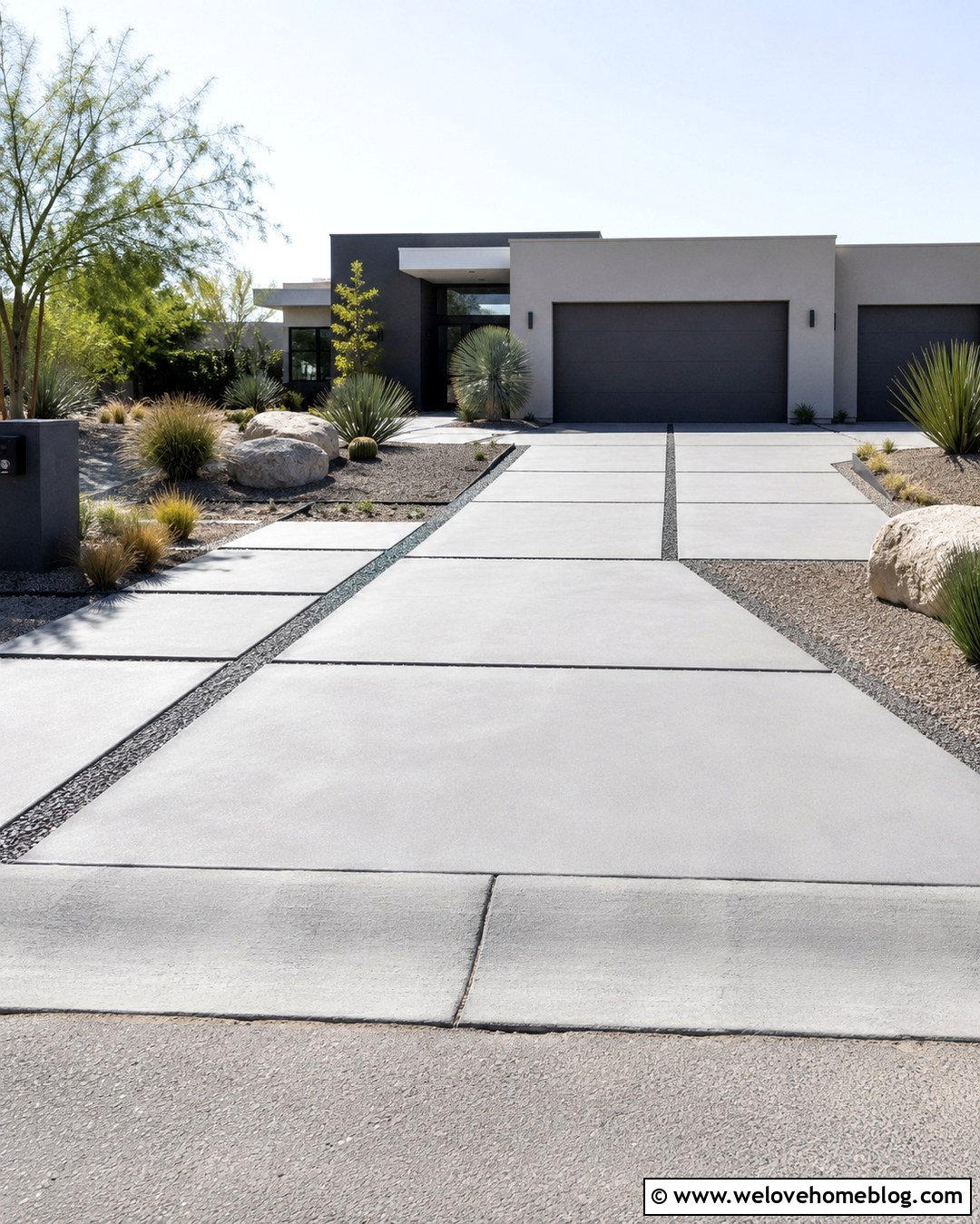
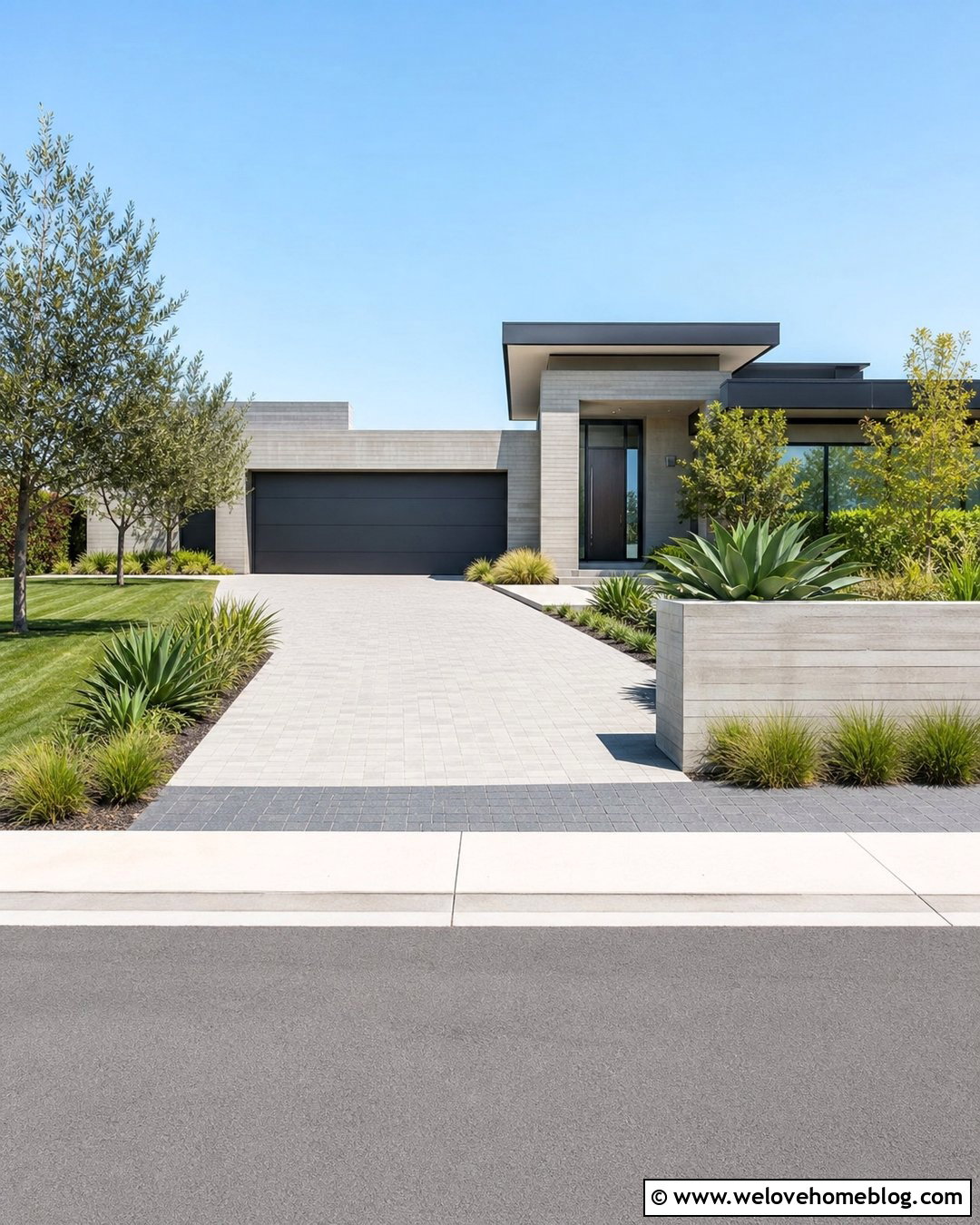
Clean lines and restrained planting can give a modern driveway entrance strong curb appeal without excessive decoration. Start with large-format light gray concrete slabs separated by narrow gravel joints. Use a straight layout that lines up with the garage or front facade. Along one side, install a slim black steel address monument surrounded by feather reed grass, blue fescue, and low evergreen ground cover. Repeat the grasses on the opposite side to create visual balance. Dark steel edging keeps the planting beds sharp and separates them from the driveway. Choose plants with simple forms and limit the color palette to green, silver, and one seasonal accent. This landscaping approach softens the broad concrete surface while preserving the uncluttered appearance expected around a contemporary home.
6. Circular Driveway Entrance With Center Island
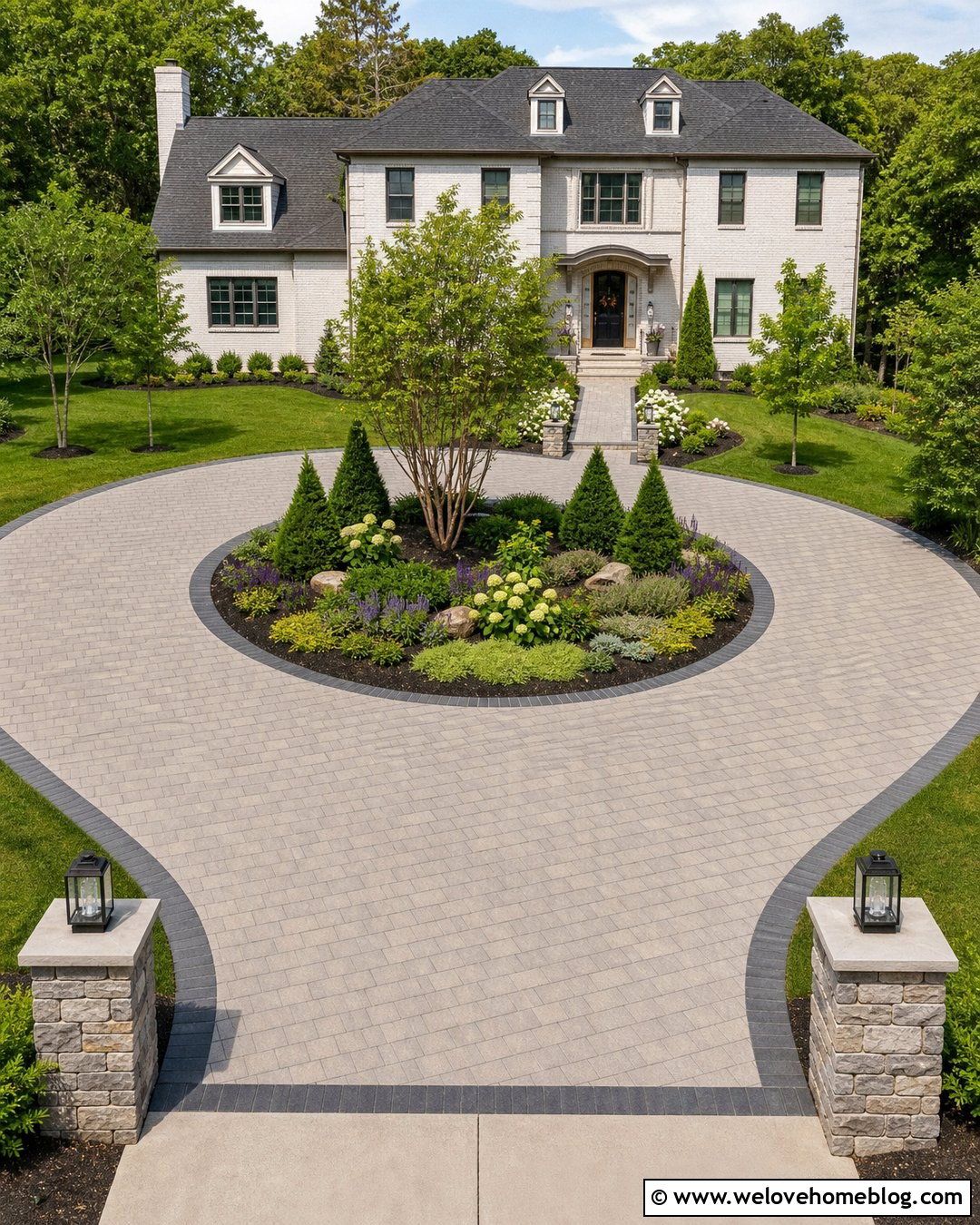
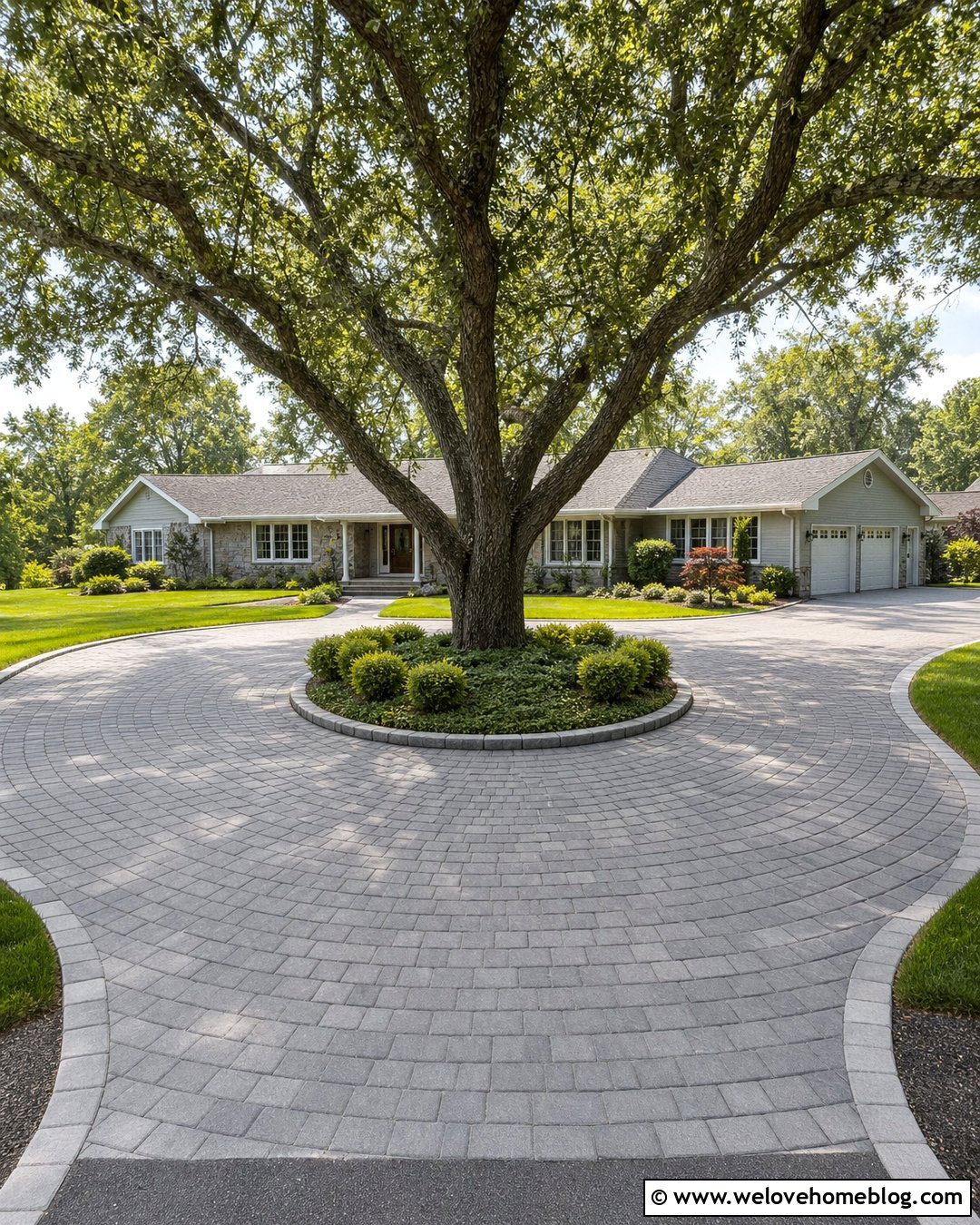
A circular paver driveway becomes much more attractive when its center island is treated as a major landscape feature. Use charcoal and warm gray concrete pavers in a repeating running-bond pattern, with a darker border defining the circular shape. In the island, place one multi-stem ornamental tree slightly off center and surround it with clipped evergreens, flowering perennials, and a low ground-cover ring. Keep plants closest to the driving lane short so drivers can see across the circle. Matching beds at the two street entrances will visually connect the island to the rest of the yard. Low stone walls or modest pillars can mark each opening. This complete arrangement gives a large front yard structure while creating an elegant approach to the house.
7. Farmhouse Driveway Entrance With Wooden Gate
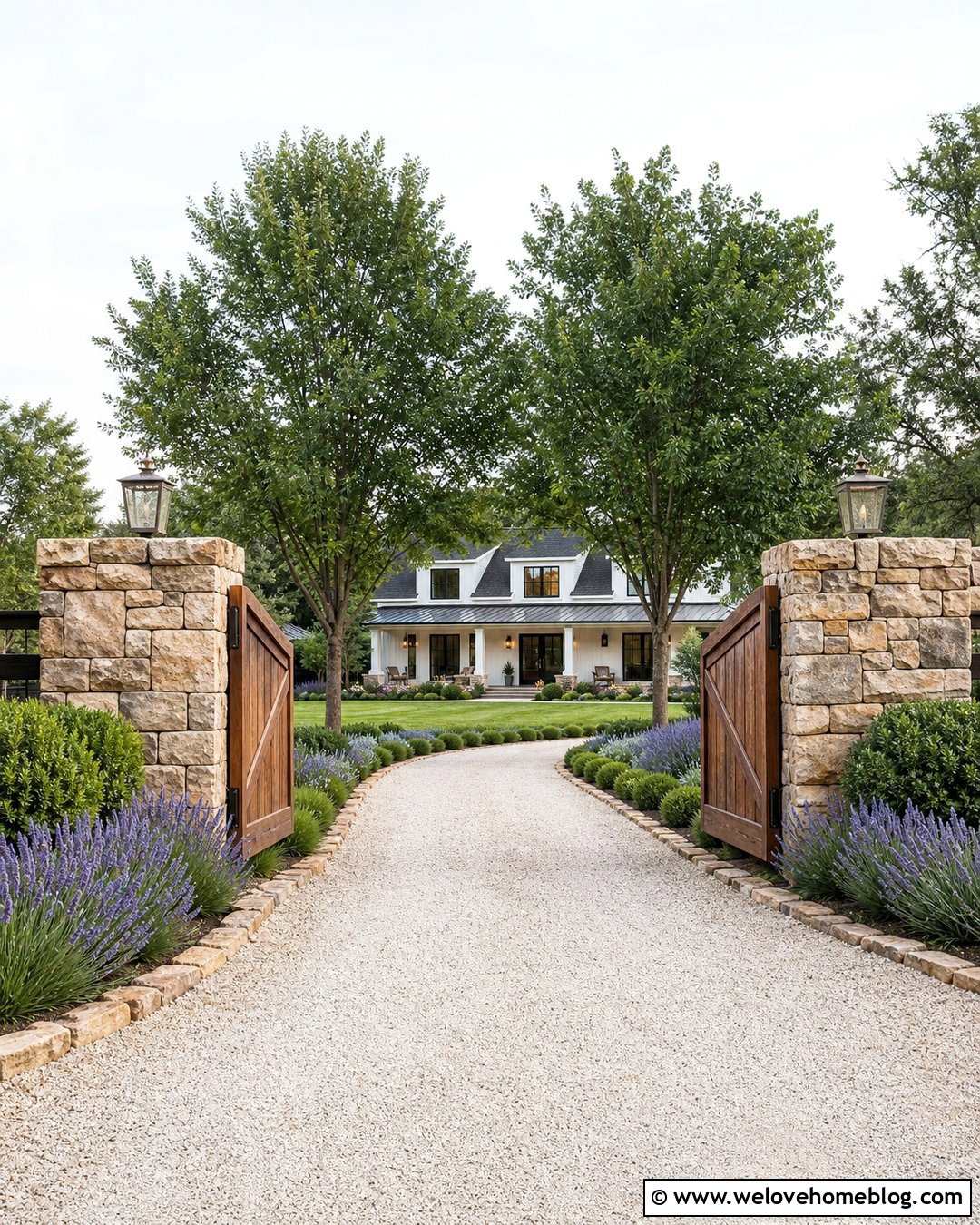
A wide wooden gate can make a farmhouse driveway feel welcoming, secure, and connected to its rural surroundings. Pair a natural cedar gate with chunky fieldstone pillars and a pale crushed limestone driveway. Set the gate back from the road so a vehicle can wait safely without blocking traffic. Beside the pillars, plant lavender, catmint, compact grasses, and small evergreen shrubs in loose groups. Continue the fieldstone as low edging around the entrance beds for a unified look. A pair of deciduous trees placed beyond the gate can frame the view toward the house. Keep the timber finish natural or use a muted stain that coordinates with the home’s porch posts. The combination of gravel, wood, stone, and soft planting creates authentic farmhouse character.
8. Cobblestone Driveway Entrance With Climbing Roses
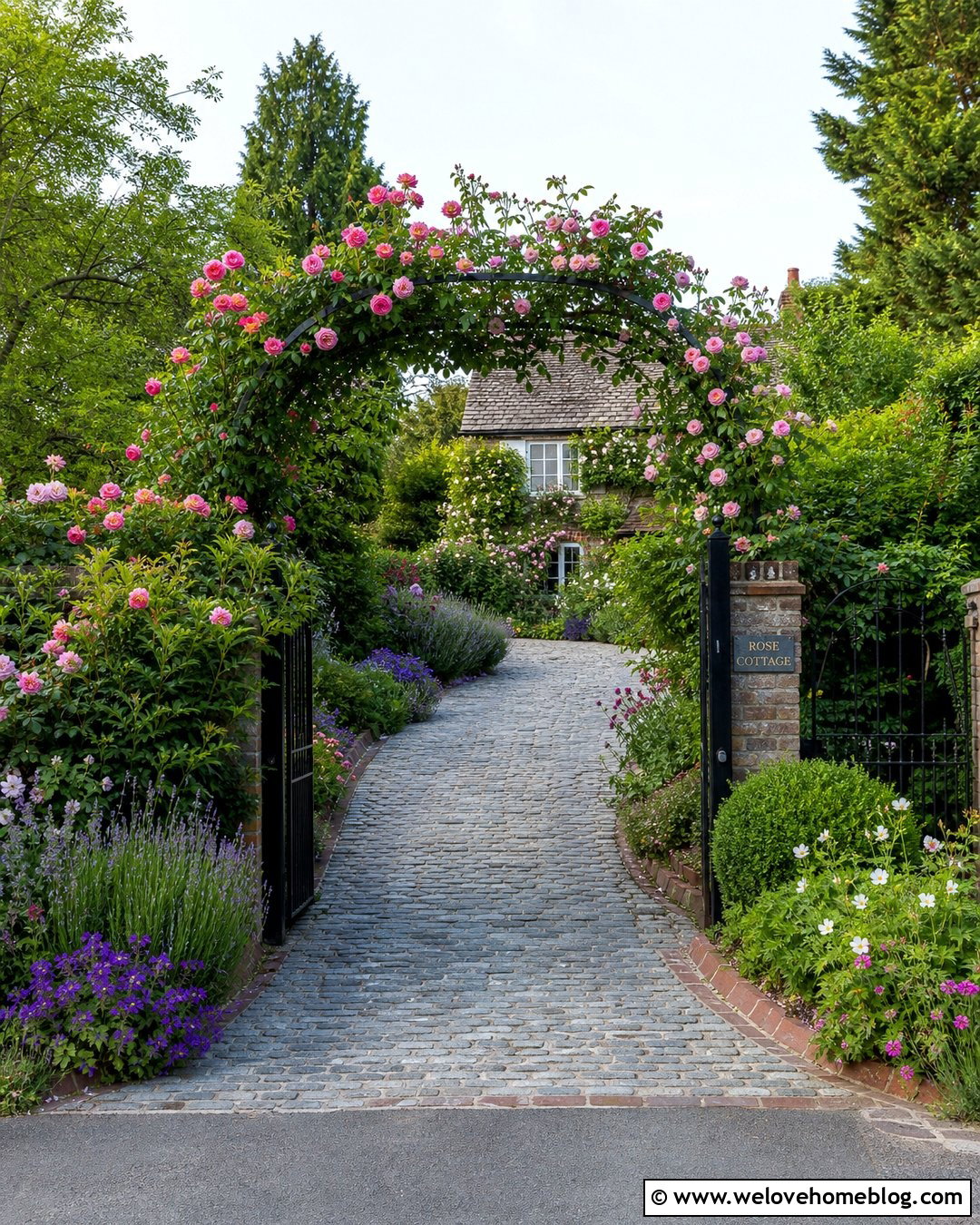
For a romantic cottage approach, combine an aged cobblestone driveway with an open metal arbor and climbing roses. The cobbles can follow a narrow, gently curving route toward a cottage-style house, while reclaimed brick edging creates a warm transition into the garden. Train roses across the arbor without allowing thorny growth to hang into the driving space. Underneath, layer lavender, hardy geraniums, catmint, and low evergreen shrubs for texture beyond the main blooming season. A coordinating pedestrian gate beside the driveway gives visitors a clearly defined path. Keep the planting abundant but trim the street-facing corners to maintain visibility. This look works best when the colors and materials feel slightly weathered, allowing the driveway entrance to blend naturally with an informal cottage garden.
9. Budget Driveway Entrance With Native Plants
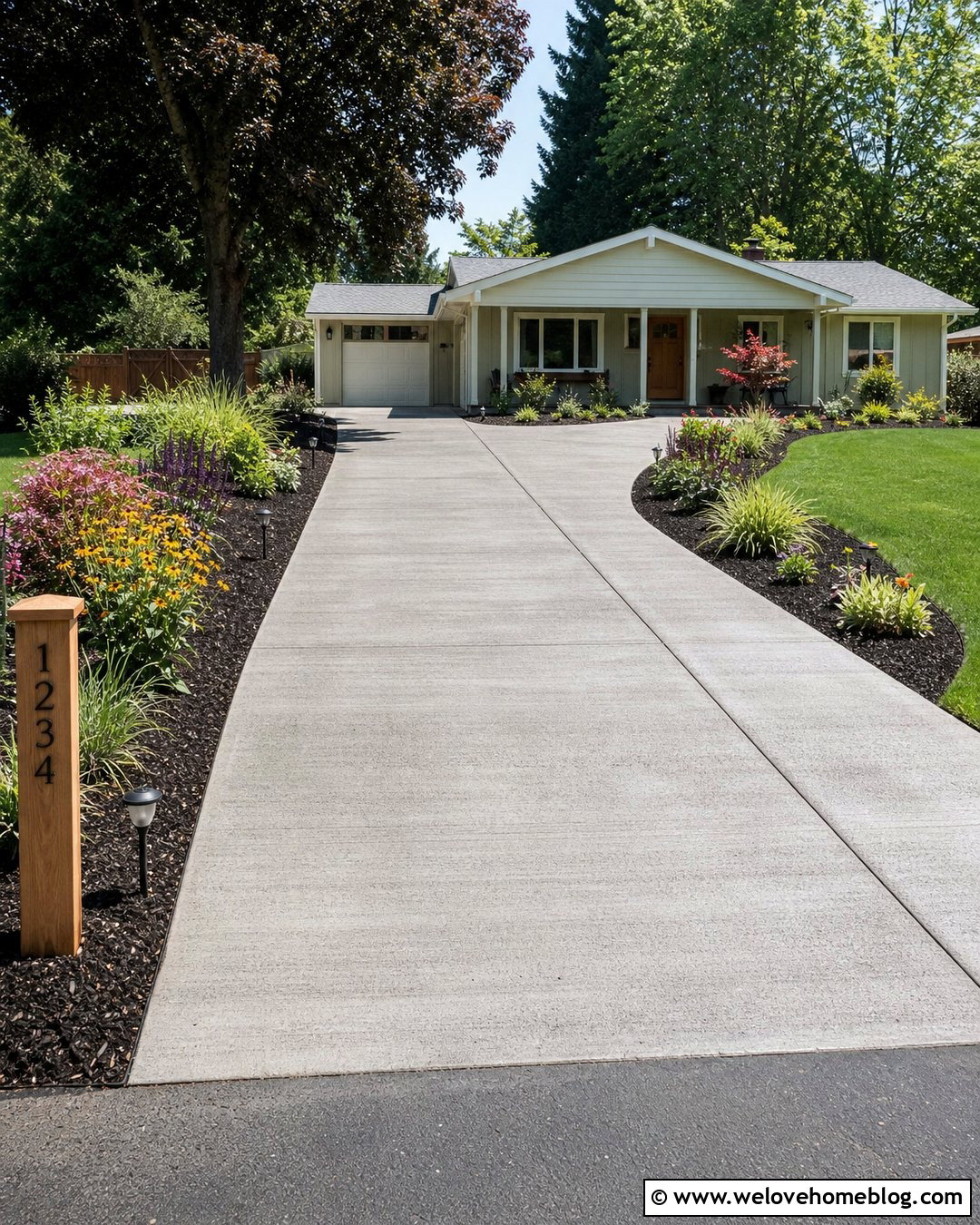
An attractive driveway entrance does not require masonry columns or extensive construction. Refresh a basic gray concrete driveway by cutting clean curved beds into the lawn on both sides of the entrance. Edge them with affordable steel or molded landscape edging, then cover the soil with dark shredded mulch. Fill the beds with durable native shrubs, grasses, and flowering perennials suited to local sun, soil, and rainfall. Native planting can provide seasonal texture while fitting the conditions of its region. () Arrange plants in repeated clusters rather than scattering individual varieties. Add one simple wooden address post and two modest landscape lights as focal points. The dark mulch, organized planting, and freshly defined lawn edges can make an ordinary driveway appear intentional without changing the existing surface.
10. Small Driveway Entrance With Raised Planters
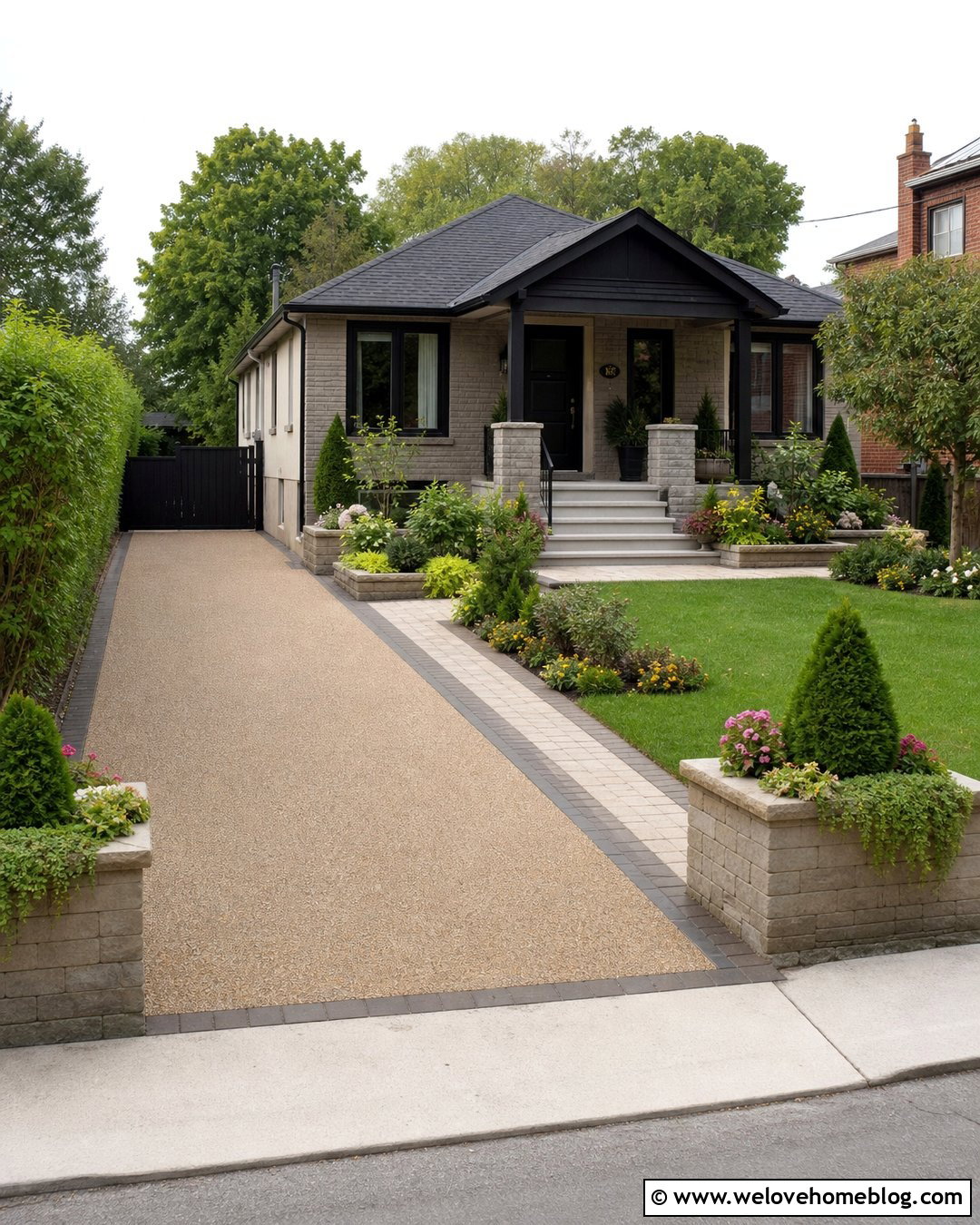
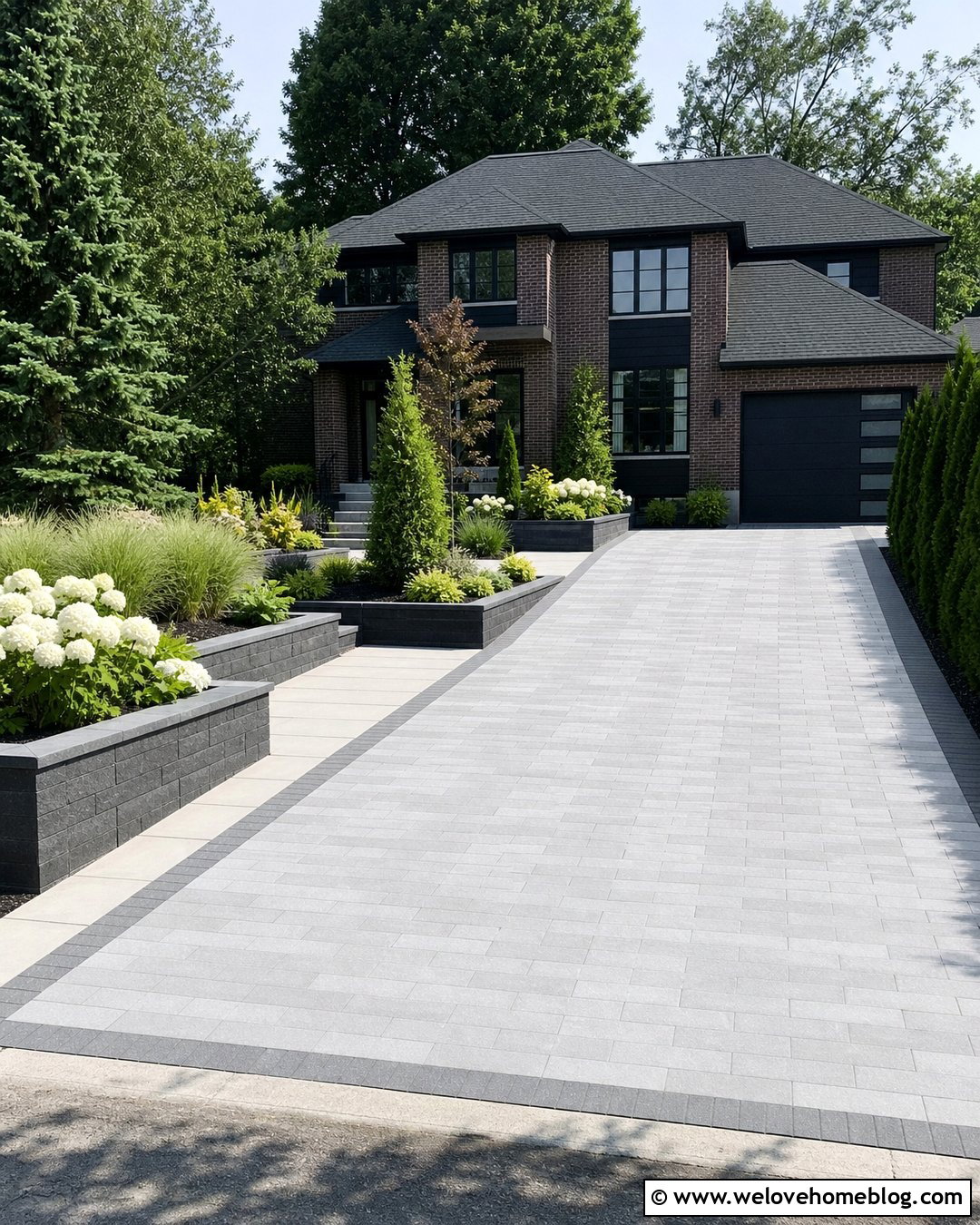
When the front yard is narrow, compact raised planters can add greenery without reducing usable driveway width. Begin with a straight tan resin-bound gravel driveway leading to a small bungalow or townhouse. Construct low rectangular planters from matching buff brick along the outer corners of the entrance. Fill them with compact evergreen shrubs, cascading ground cover, and one restrained group of seasonal flowers. Keep the walls low enough to preserve clear street views. A narrow brick ribbon along the driveway edges can visually connect the planters while containing the resin-bound surface. On the house side, add a coordinating walkway that leads visitors away from vehicle space. This organized design introduces color and definition while keeping the entrance open, easy to navigate, and appropriately scaled for a smaller property.
11. Low Maintenance Driveway Entrance With Evergreens
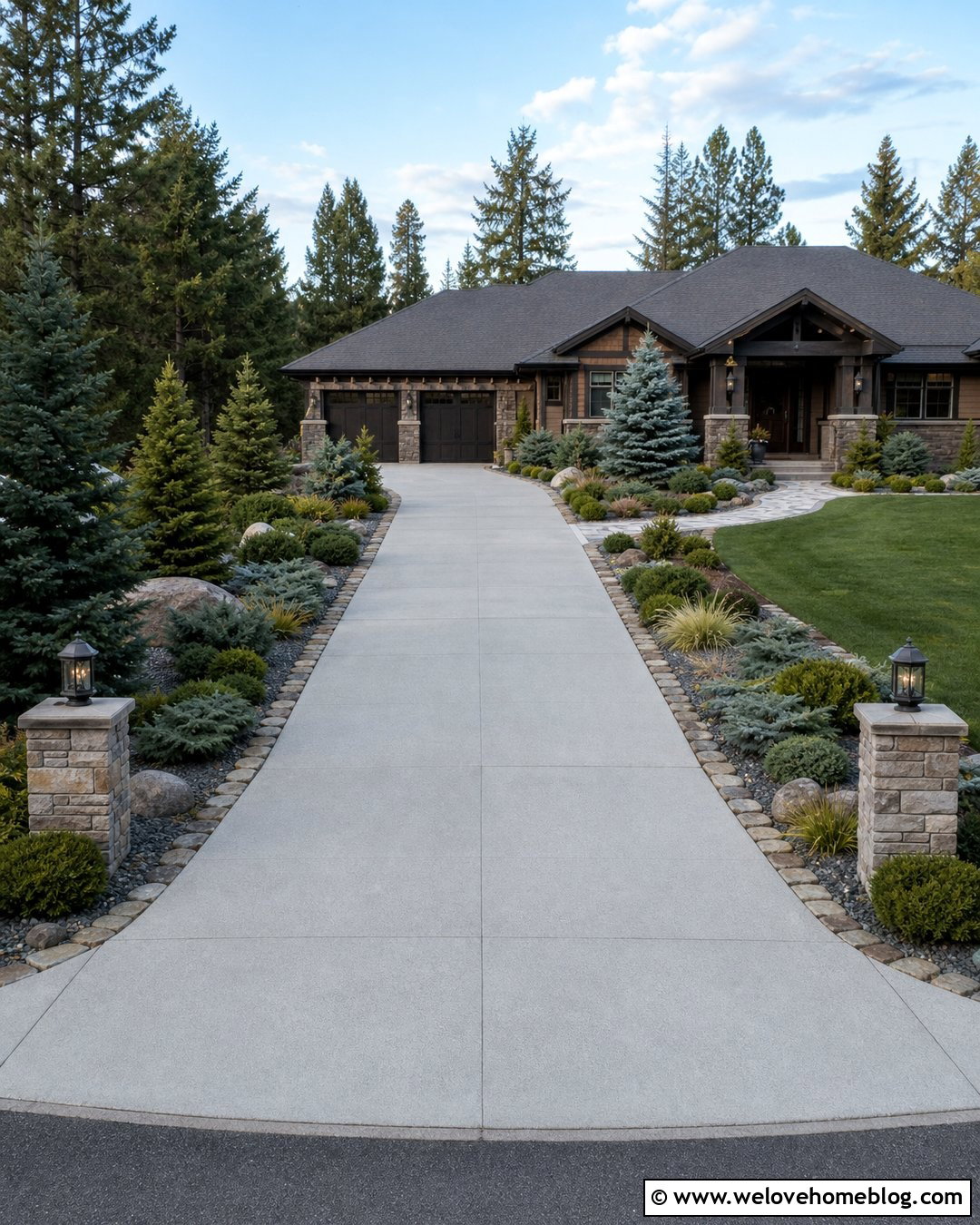
Evergreens give a driveway entrance dependable structure without relying on a short flowering season. Pair a medium gray poured concrete driveway with wide beds containing dwarf conifers, compact inkberry holly, creeping juniper, and ornamental sedges. Arrange the plants in broad groups with varied heights rather than a narrow single-file row. Natural stone edging can separate the beds from the driveway and echo stone details on a ranch or Craftsman home. Cover open soil with gravel mulch for a tidy appearance and easier cleanup near the pavement. Include one or two flowering plants for seasonal interest, but allow foliage color and texture to carry the design. Select shrubs according to their mature size so the beds remain manageable and branches do not narrow the driveway over time.
12. Driveway Entrance With Privacy Hedges
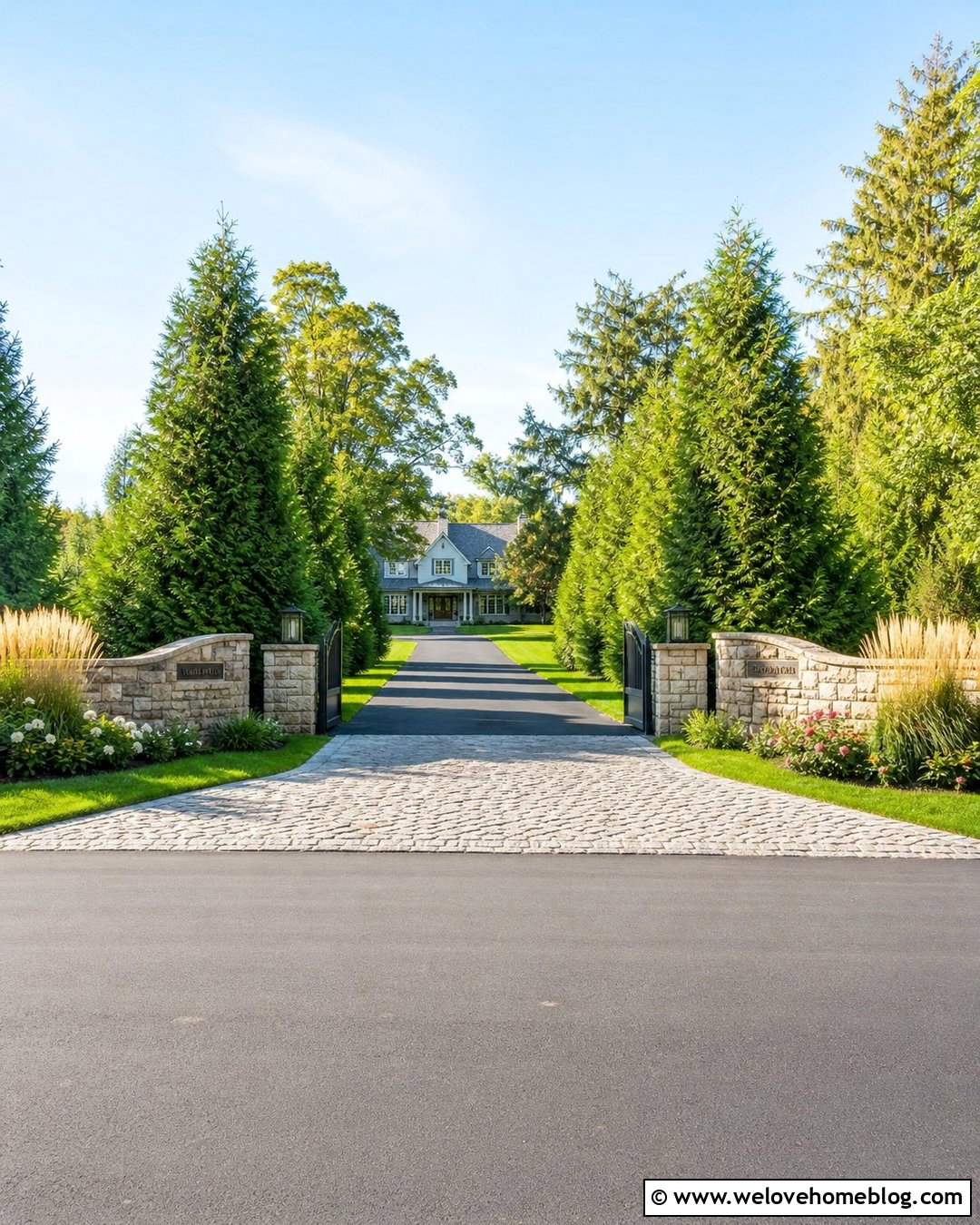
A hedge-lined entrance can provide privacy while still feeling friendly and open from the street. Use a wide asphalt driveway with a flared cobblestone apron, then plant staggered evergreen hedges along the property boundaries rather than directly beside the driving lane. Leave generous openings around the entrance to protect visibility. Behind low stone marker walls, combine the hedges with airy grasses and small flowering shrubs. This layered arrangement looks softer than a solid wall of greenery. For a longer driveway, continue the hedge only partway toward the house, then transition into lawn and scattered trees. A simple black metal gate can add definition without blocking the view. The dark asphalt, pale stone, and dense green foliage create a refined entrance suitable for a traditional or transitional home.
13. Desert Driveway Entrance With Boulders And Agave
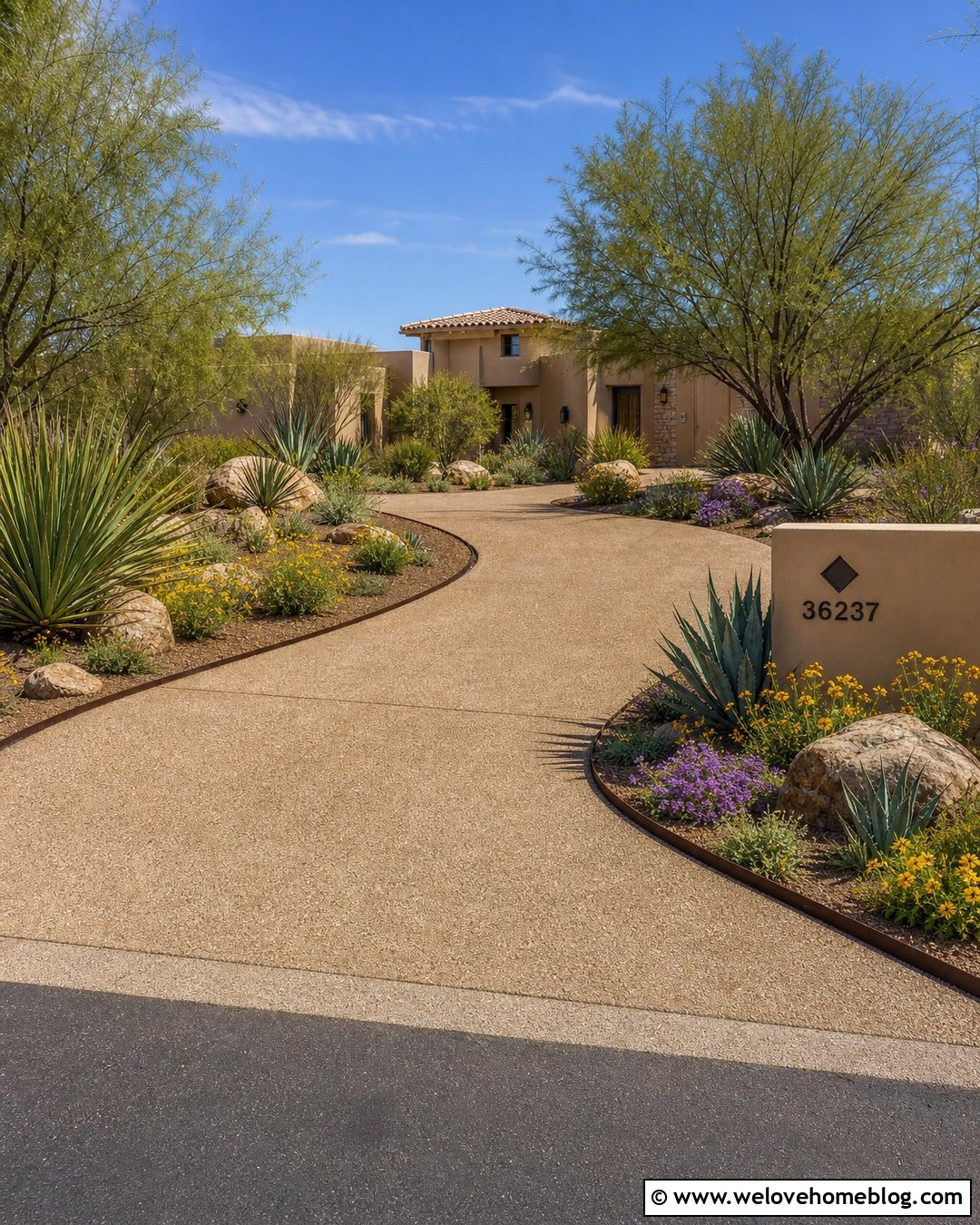
In a dry climate, a driveway entrance can look vibrant without a conventional lawn. Choose warm sand-colored concrete with an exposed aggregate finish and shape the entrance into a broad, gentle curve. Build asymmetrical gravel beds along both sides using decomposed granite in a slightly darker tone. Place several large local boulders as anchors, then arrange agave, yucca, desert spoon, and low flowering plants around them. Keep sharp or rigid plants safely back from vehicle doors and pedestrian routes. Weathered steel edging provides a clean boundary between the aggregate driveway and gravel beds. A stucco address wall near one side can match the home’s facade. This complete xeriscape design uses bold forms, open space, and regional materials to create an entrance that feels intentional and climate appropriate.
14. Coastal Driveway Entrance With Blue Hydrangeas
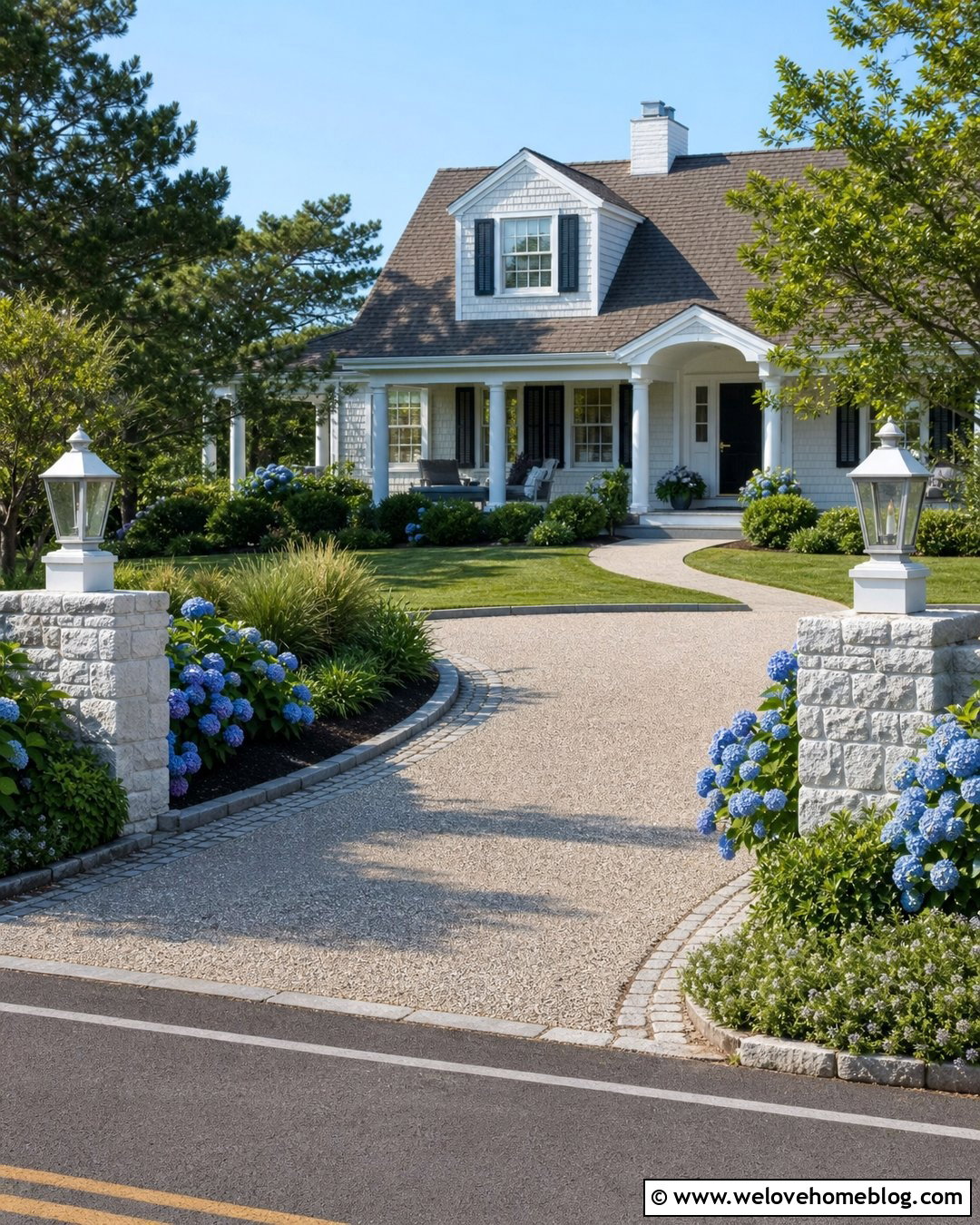
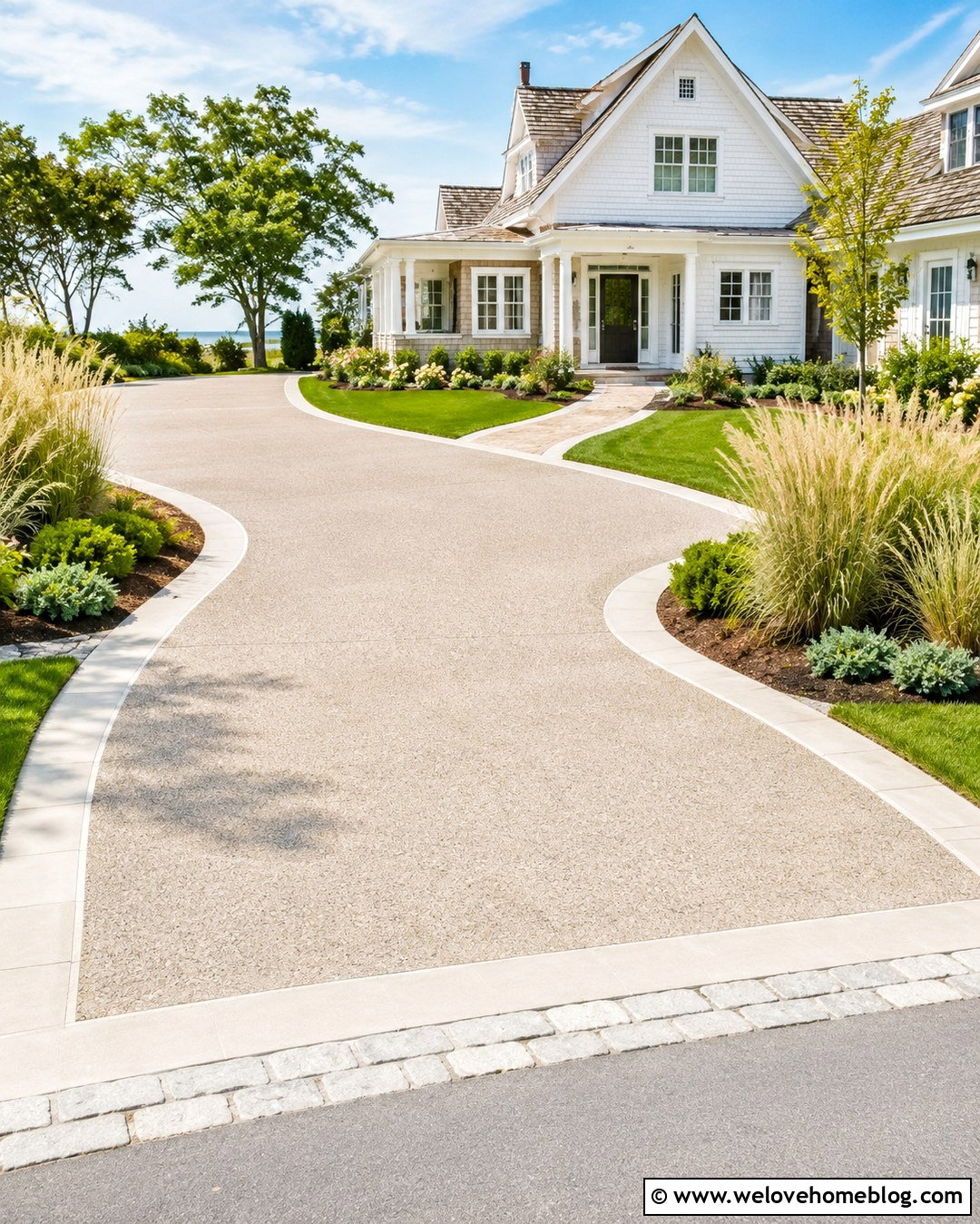
A coastal-inspired entrance feels fresh when pale materials are paired with breezy, rounded planting. Use light gray resin-bound gravel for a softly curved driveway approaching a shingle-style or Cape Cod house. Frame the street opening with low white stone walls and beds of blue hydrangeas, inkberry holly, ornamental grasses, and spreading ground cover. Include enough evergreen foliage to hold the arrangement together when hydrangeas are not blooming. A narrow granite sett border keeps the driveway edge crisp and adds subtle texture. White lantern posts can mark the entrance without appearing heavy. Beyond the walls, allow the lawn and plant beds to flow naturally toward the house. The restrained blue, green, gray, and white palette creates a relaxed seaside character while keeping the driveway entrance polished and easy to identify.
15. Woodland Driveway Entrance With Natural Stone
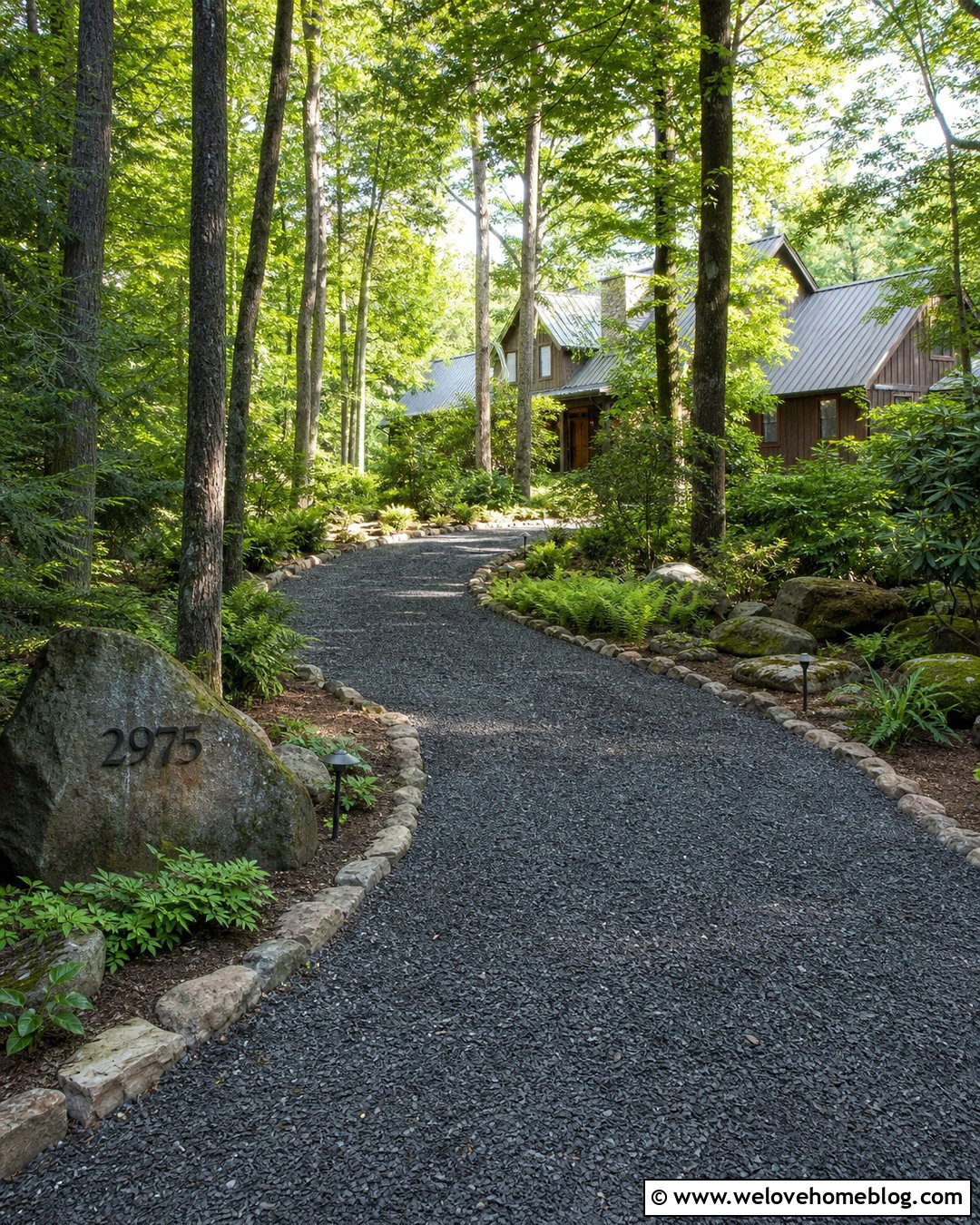
A wooded property benefits from an entrance that appears to belong within the surrounding landscape. Begin with dark gray crushed stone on a winding driveway and contain it with irregular fieldstone edging. Use large mossy boulders on both sides of the entrance, placing them far enough from the pavement to avoid creating hazards. Under existing trees, create layered beds of native ferns, shade-tolerant shrubs, sedges, and woodland ground covers. A rustic stone address marker can sit within one bed instead of standing alone beside the road. Use occasional pools of low planting rather than a continuous formal border. The driveway should disappear gently into the trees before revealing the house. This natural arrangement works beautifully with cabins, mountain homes, and rustic contemporary architecture.
16. Ranch Driveway Entrance With Ornamental Grass Borders
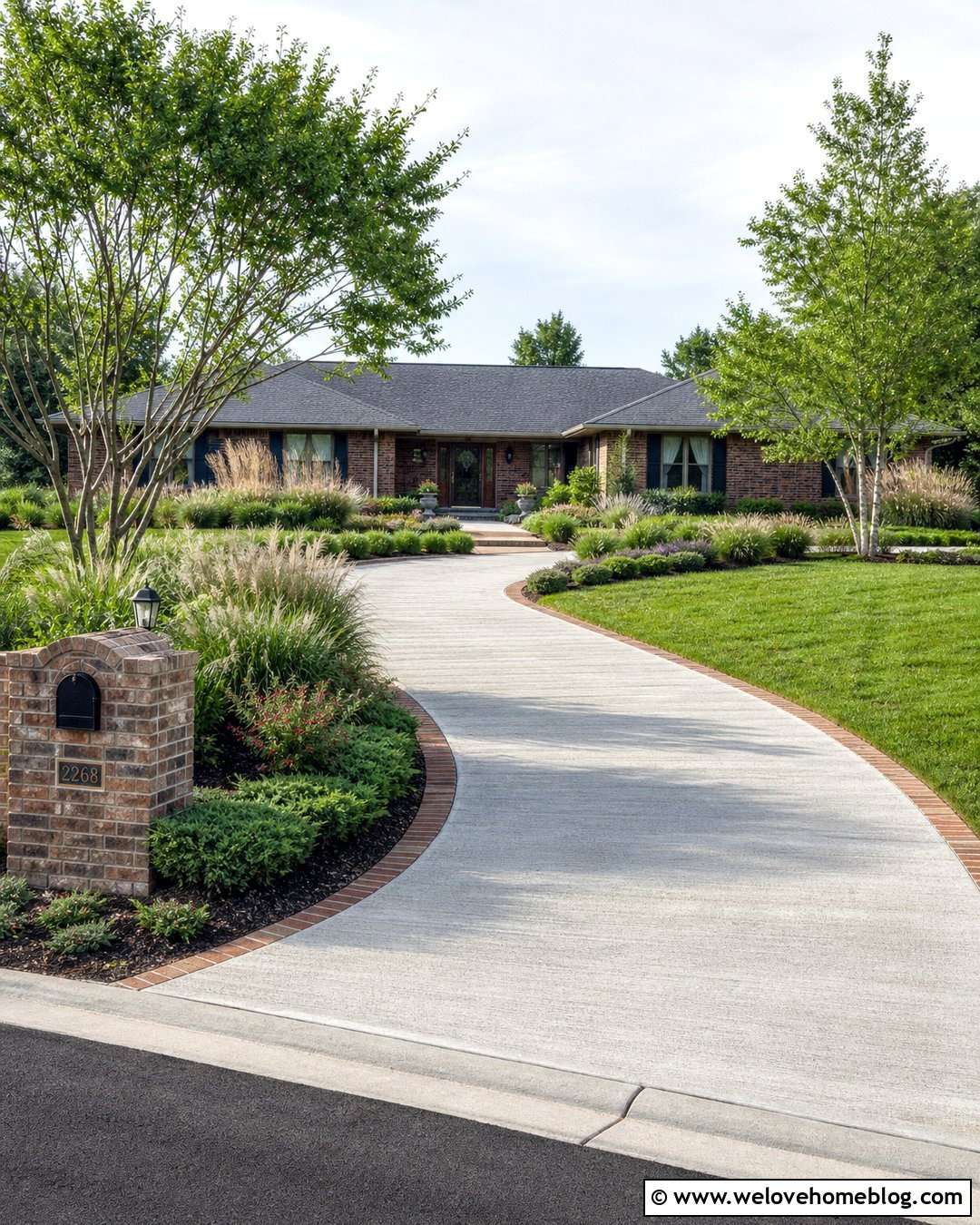
A low ranch home often looks best with landscaping that emphasizes its broad horizontal shape. Use a wide broom-finished concrete driveway with a shallow curve and a warm brick border. At the entrance, create sweeping beds filled with switchgrass, compact fountain grass, low junipers, and long-blooming perennials. Arrange the grasses in repeated masses instead of mixing too many individual plants. Add one low brick mailbox wall that matches the driveway border and house facade. Keep the planting nearest the street short, then gradually increase its height as the beds move toward the house. A few small multi-stem trees can add vertical structure without overwhelming the low roofline. This complete design makes a practical suburban driveway feel softer, wider, and more connected to the architecture.
17. Colonial Driveway Entrance With Brick Walls
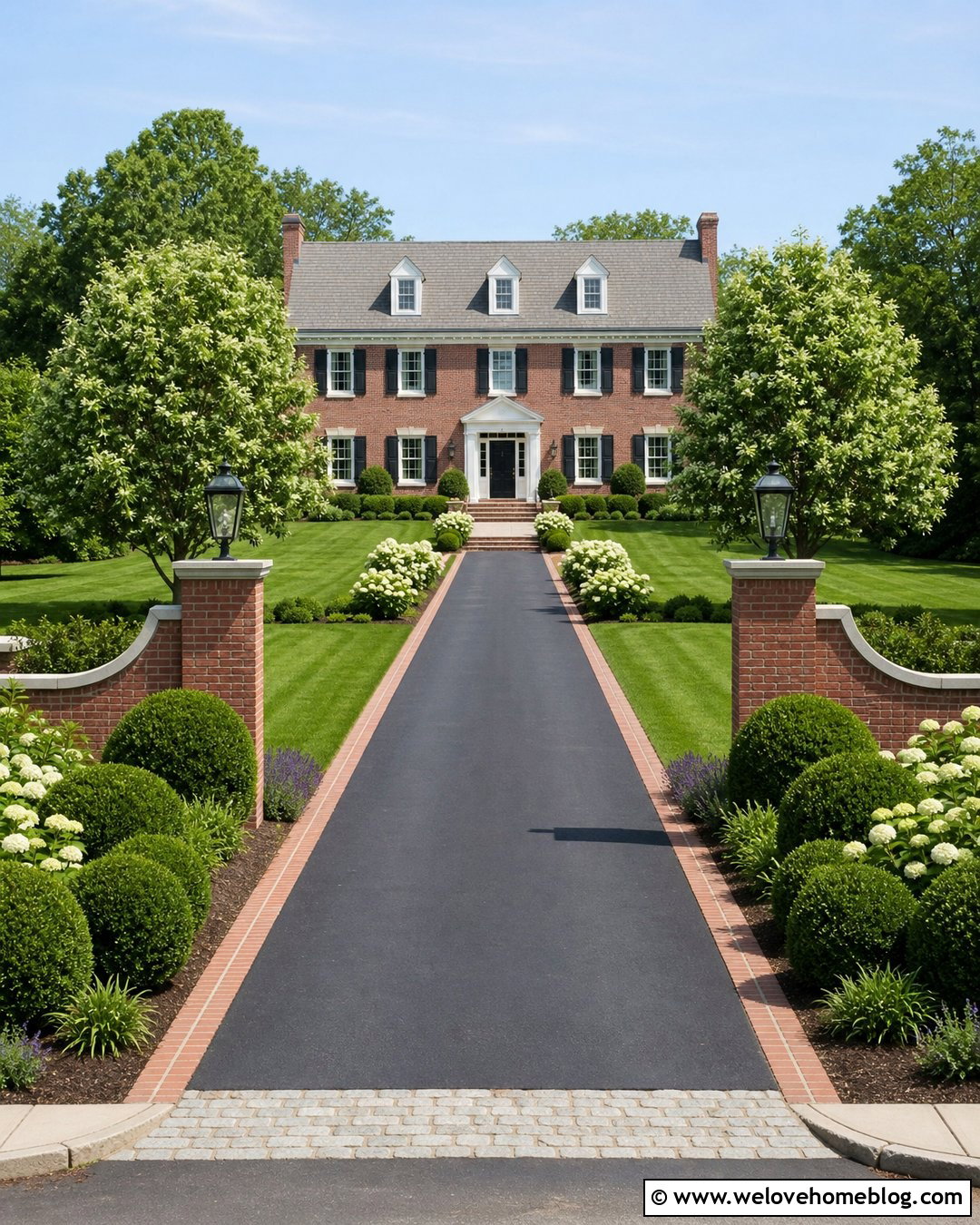
Symmetry is especially effective when landscaping the driveway entrance of a Colonial home. Lay a straight black asphalt driveway with red brick edging, then install matching low brick walls that gently curve away from the street opening. Cap the walls with pale limestone for clean contrast. Place identical lantern-topped brick pillars at the inner ends, and soften their bases with rounded boxwoods, white flowering shrubs, and neat perennial borders. Continue the planting toward the house in balanced groups rather than perfectly straight lines. Two matching ornamental trees can frame the distant facade and strengthen the formal axis. The red brick should repeat material already found on the house, walkway, or front steps. This coordinated approach creates a stately entrance without needing an oversized gate or overly elaborate landscaping.
18. Modern Driveway Entrance With Black Metal Gate
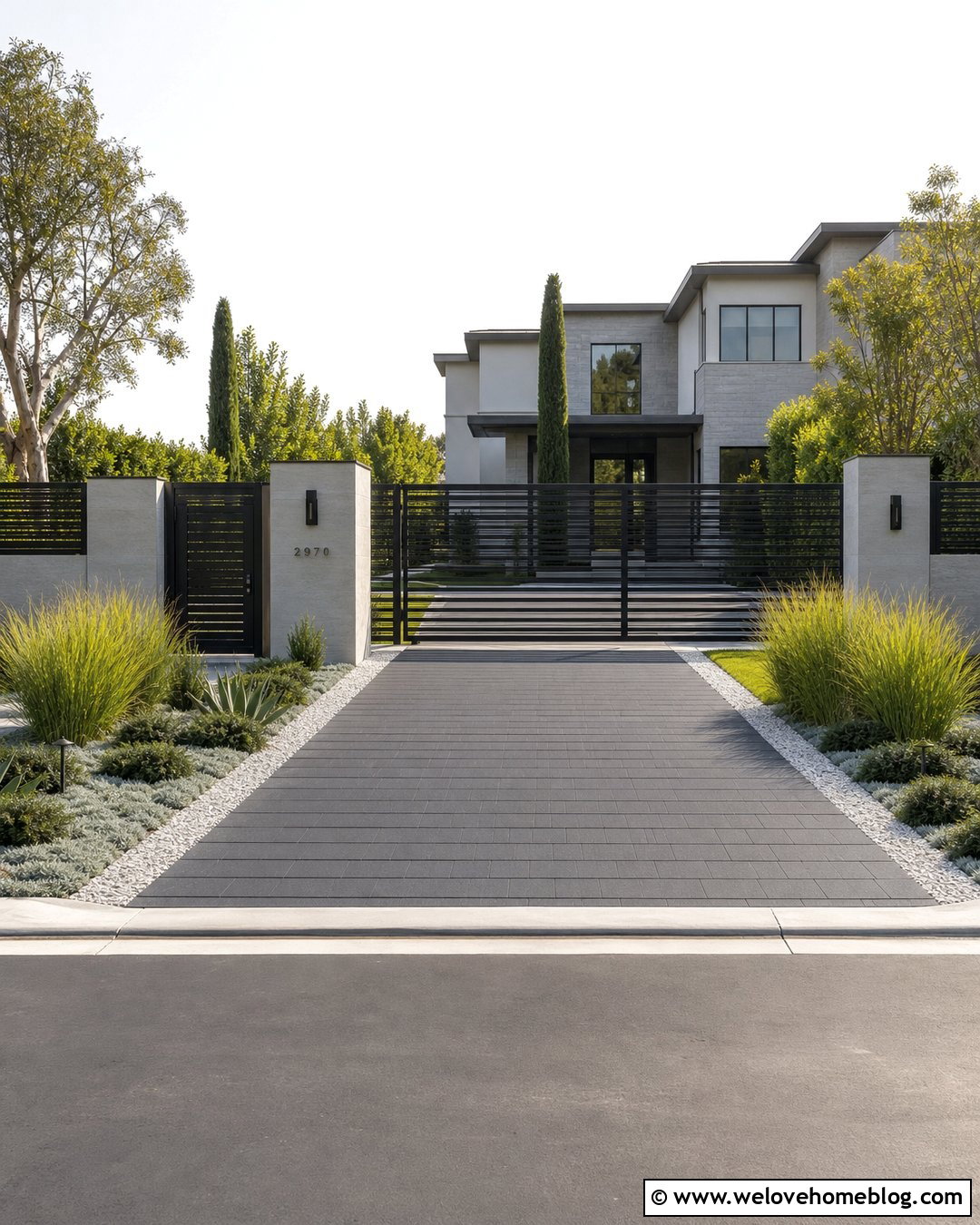
A streamlined black gate can become the focal point of a contemporary driveway entrance. Pair it with smooth charcoal concrete pavers arranged in a linear pattern and narrow bands of pale gravel. Use simple concrete pillars or dark steel posts that repeat the geometry of the gate. On each side, create rectangular planting beds with upright grasses, clipped evergreen forms, and low silver foliage. Avoid colorful planting mixes that would distract from the strong materials. A horizontal slatted fence can extend from the gate and partially screen the front yard while maintaining a consistent modern look. Include a separate pedestrian opening when space allows. The entrance should be set back appropriately from the road, with plants kept low around the corners. This creates a clean, secure, and visually balanced arrival.
19. Driveway Entrance With Rain Garden Planting
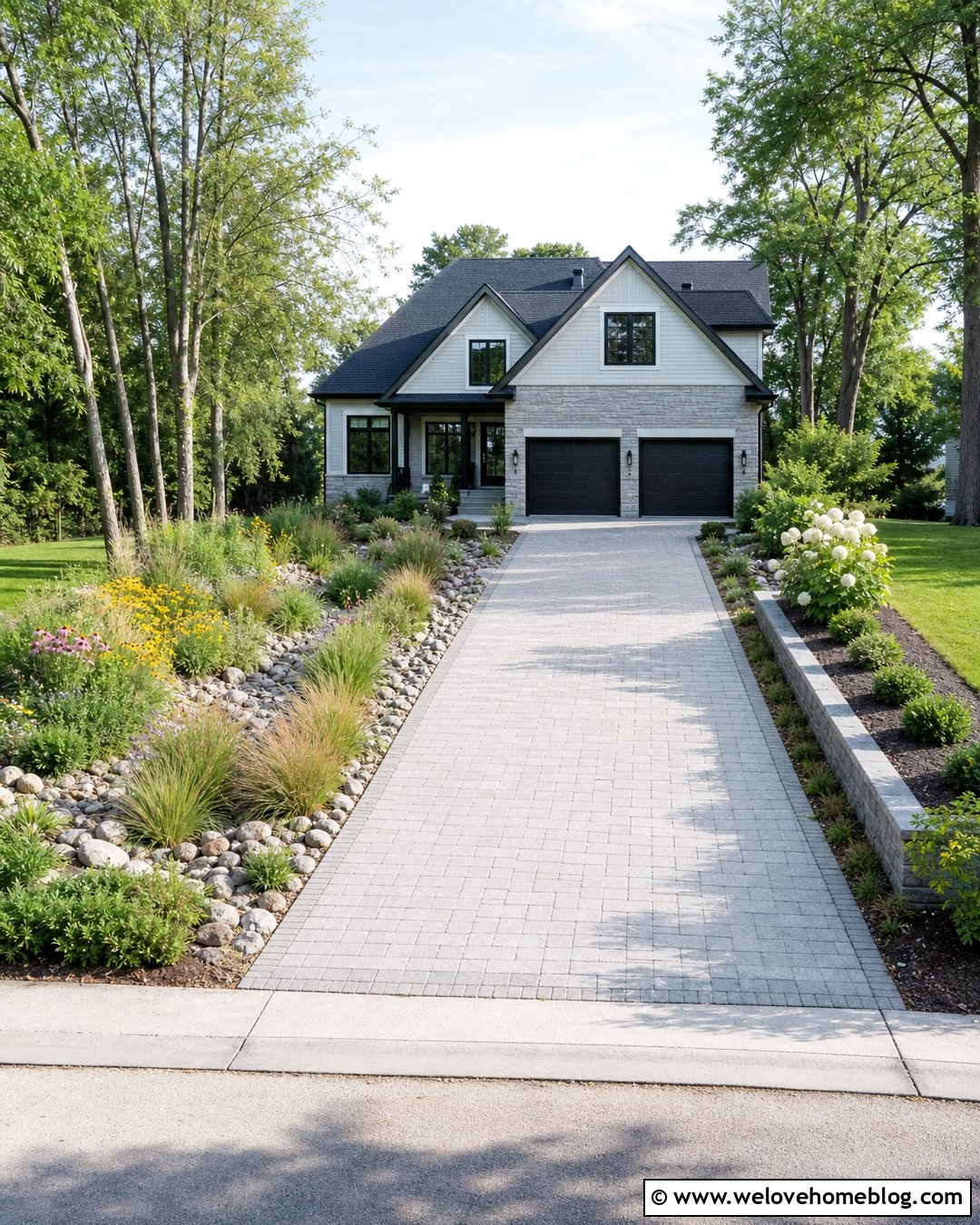
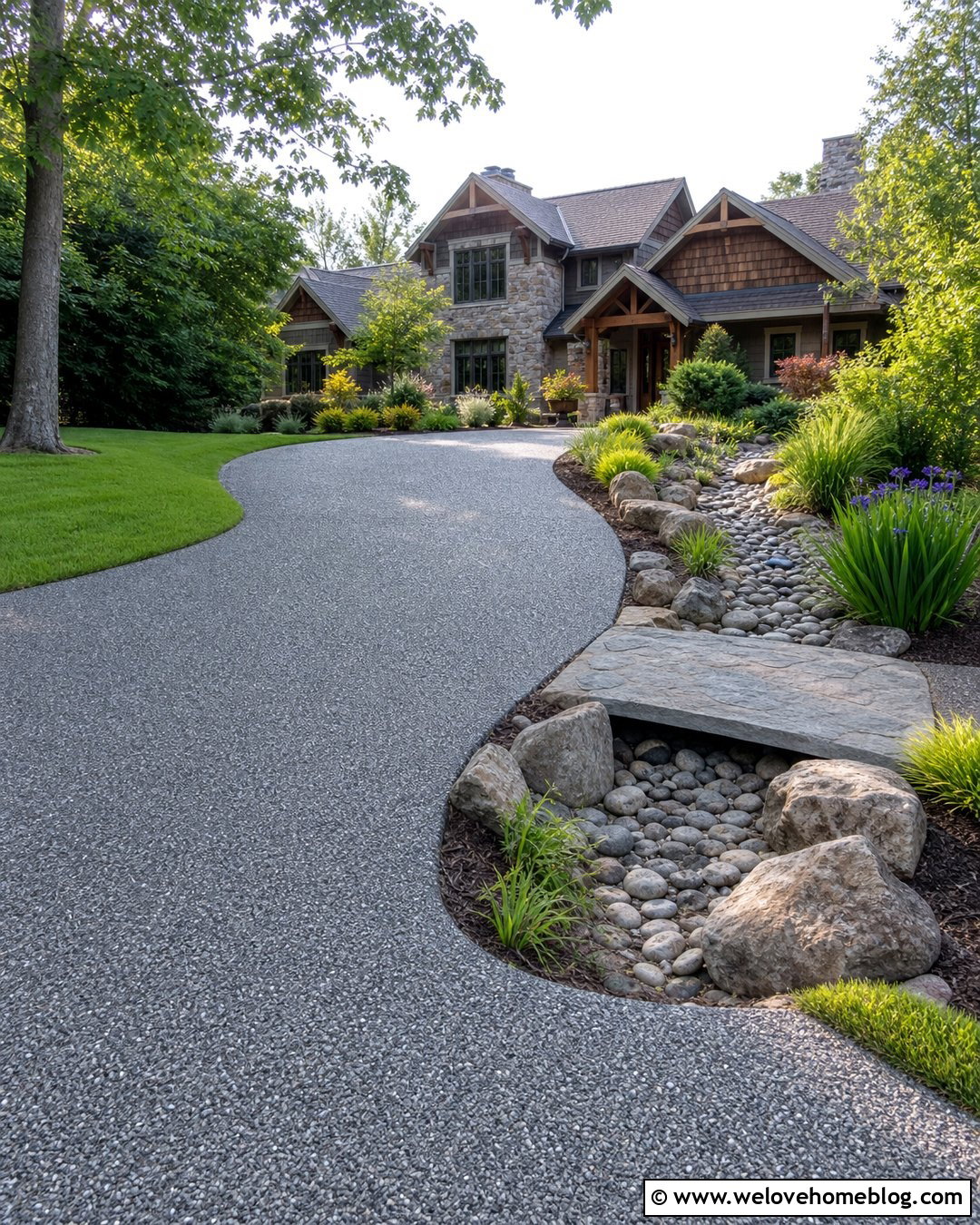
A planted drainage area can become an attractive part of the entrance rather than an overlooked low spot. Use permeable concrete pavers for a straight driveway, with a shallow rain garden placed along one side beyond the driveway edge. Shape it as a broad, gently depressed bed and fill it with regionally suitable plants that tolerate occasional wet and dry conditions. Add smooth river rock near the inflow point and use low grasses and flowering perennials around the outer edge. A raised stone border on the opposite side can create visual balance. Keep the rain garden separate from vehicle turning areas and verify drainage requirements before construction. Coordinating the pavers, stone, and naturalistic planting produces an entrance that looks purposeful while helping manage water within the landscape.
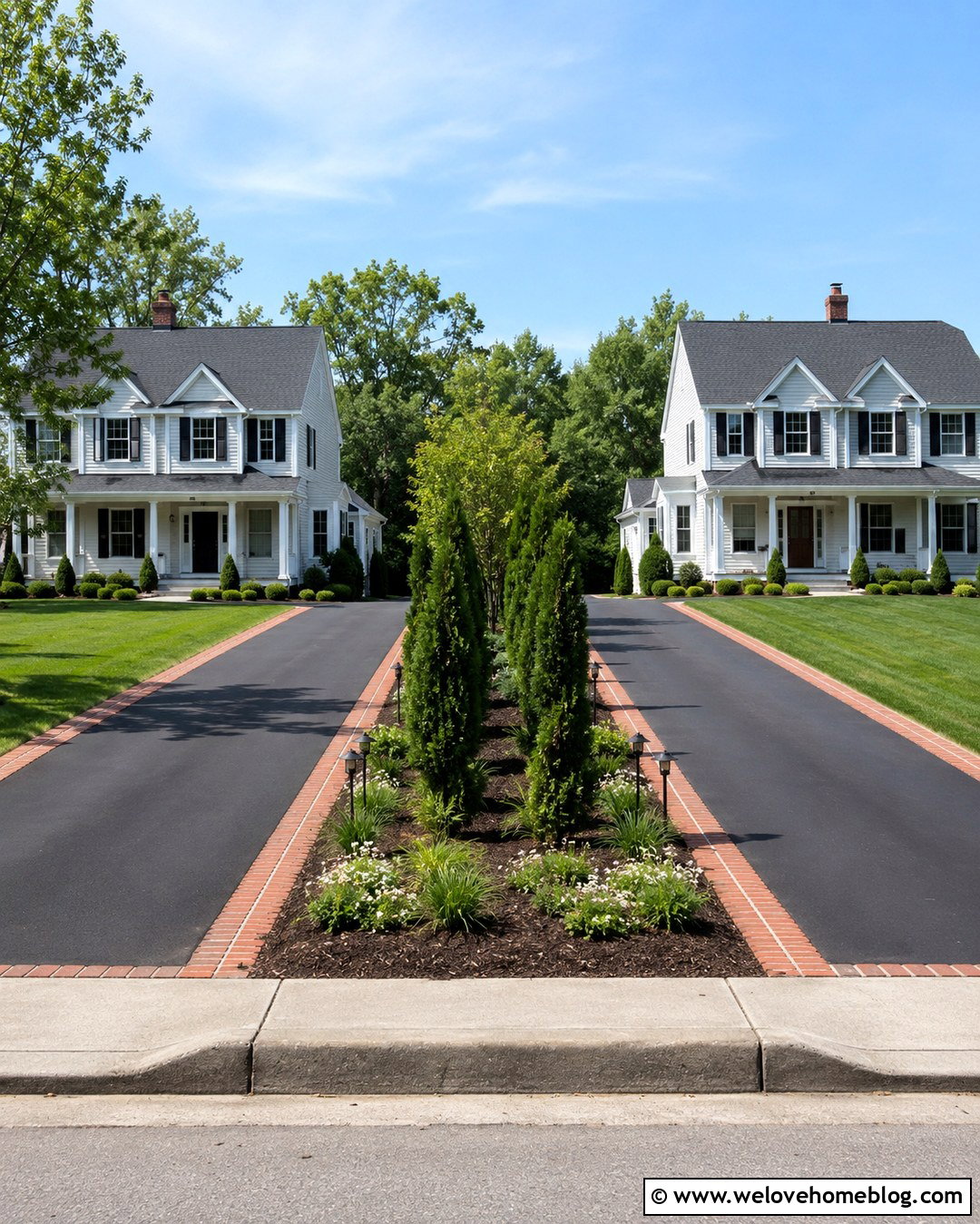
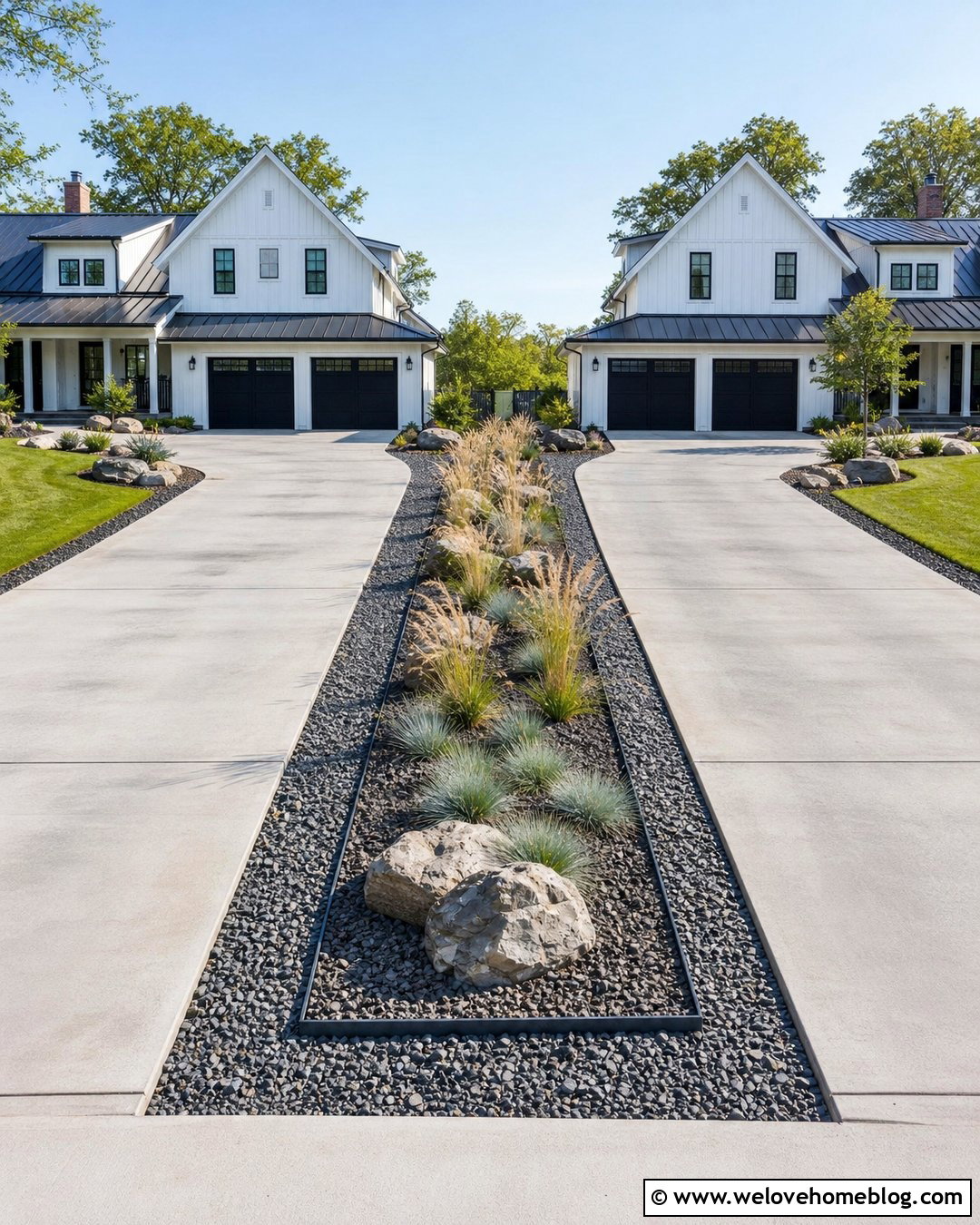
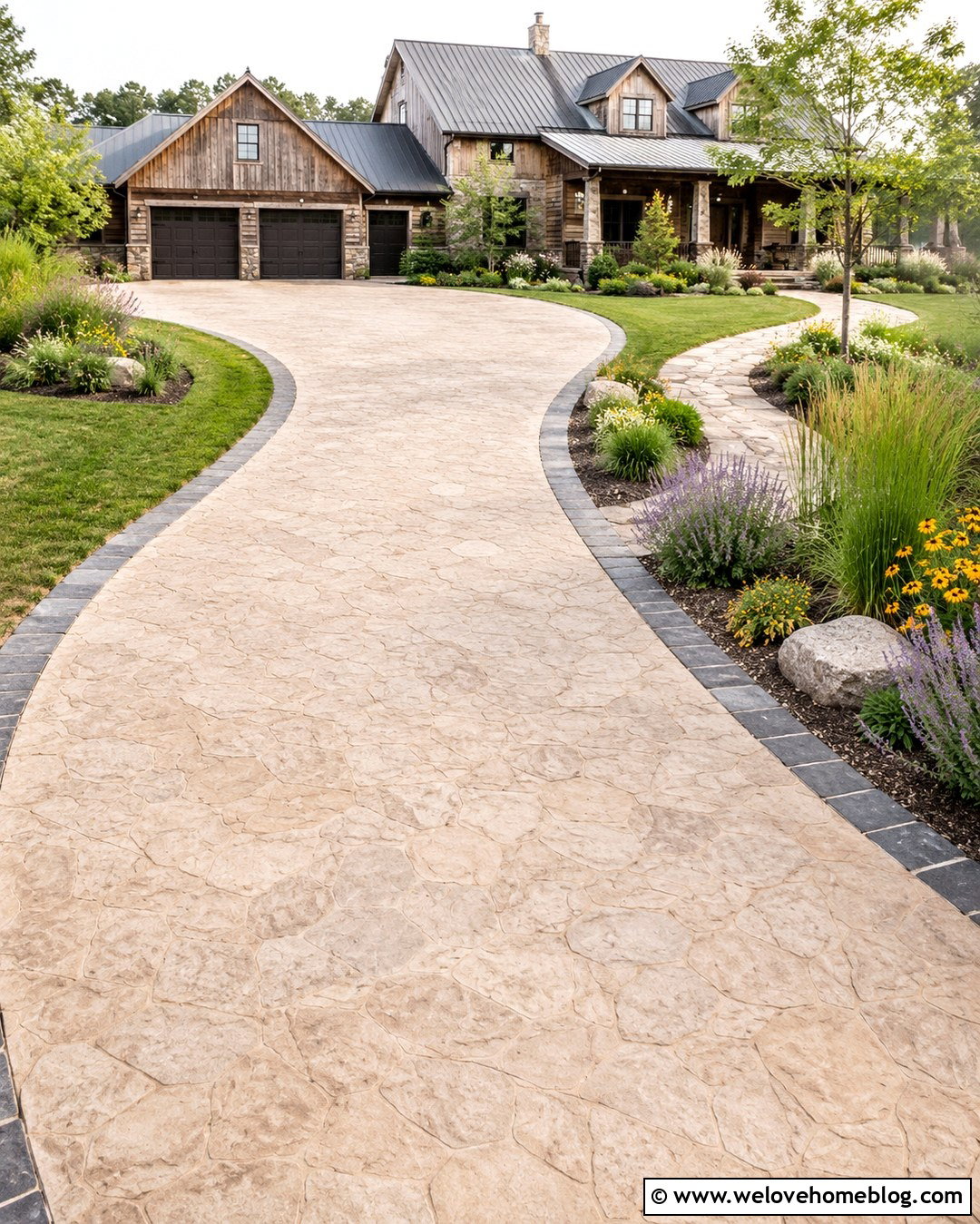
20. Driveway Entrance With Matching Flowering Trees
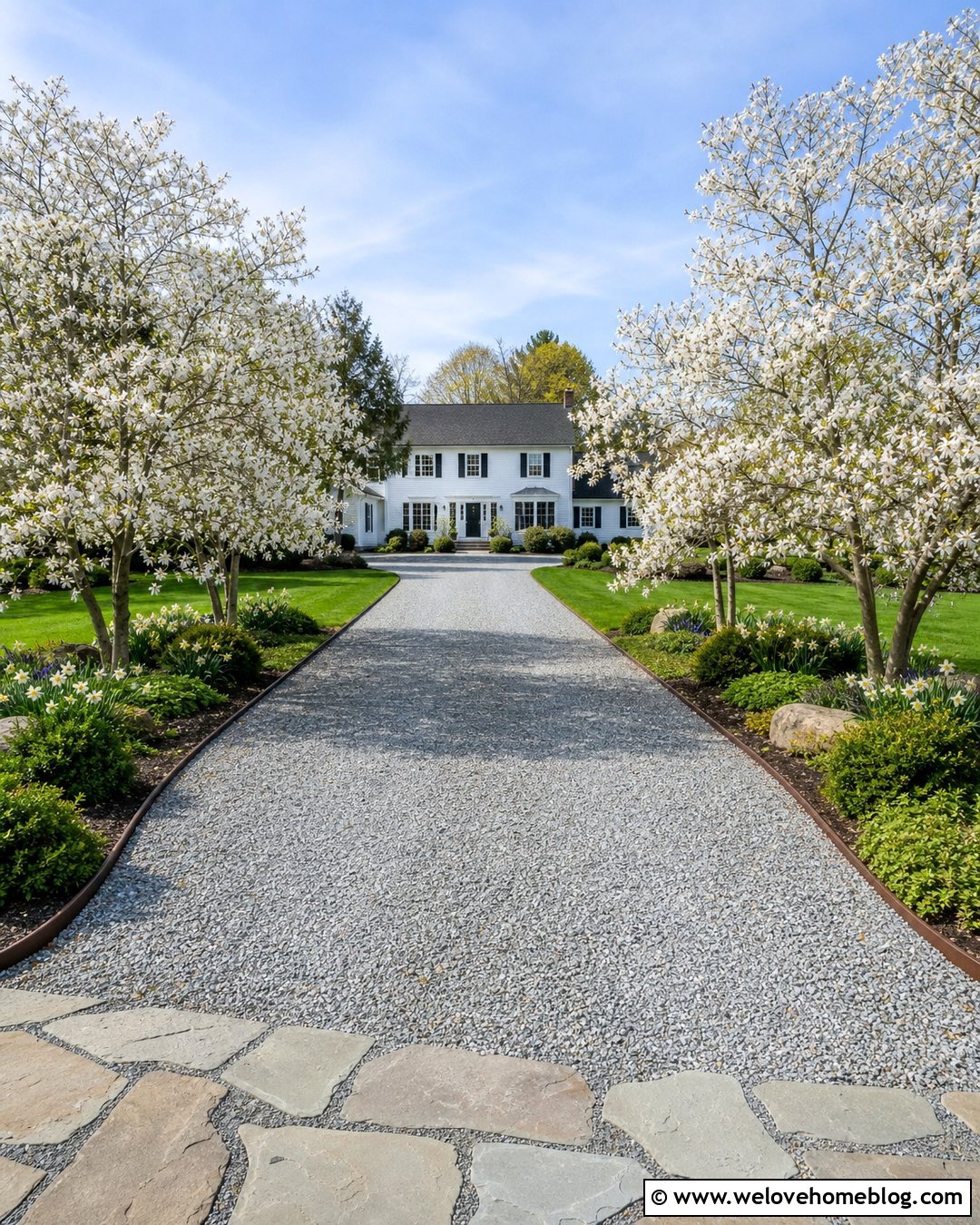
Two matching flowering trees can frame an entrance beautifully when they are given enough room to develop. Choose a pale gray gravel driveway with a wide, straight layout leading toward a white traditional home. Position the trees within generous lawn islands on both sides, far enough from pavement, overhead utilities, and road corners. Surround each tree with a curved bed of low evergreen shrubs, spring bulbs, and ground cover. Use dark metal edging to hold a crisp shape around the beds. Near the street, install a simple stone apron that keeps gravel from spilling outward. Repeating the trees and beds creates visual balance, while the loose gravel prevents the composition from feeling overly formal. Select a species suited to local growing conditions and available root space.
21. Driveway Entrance With Address Sign Landscaping
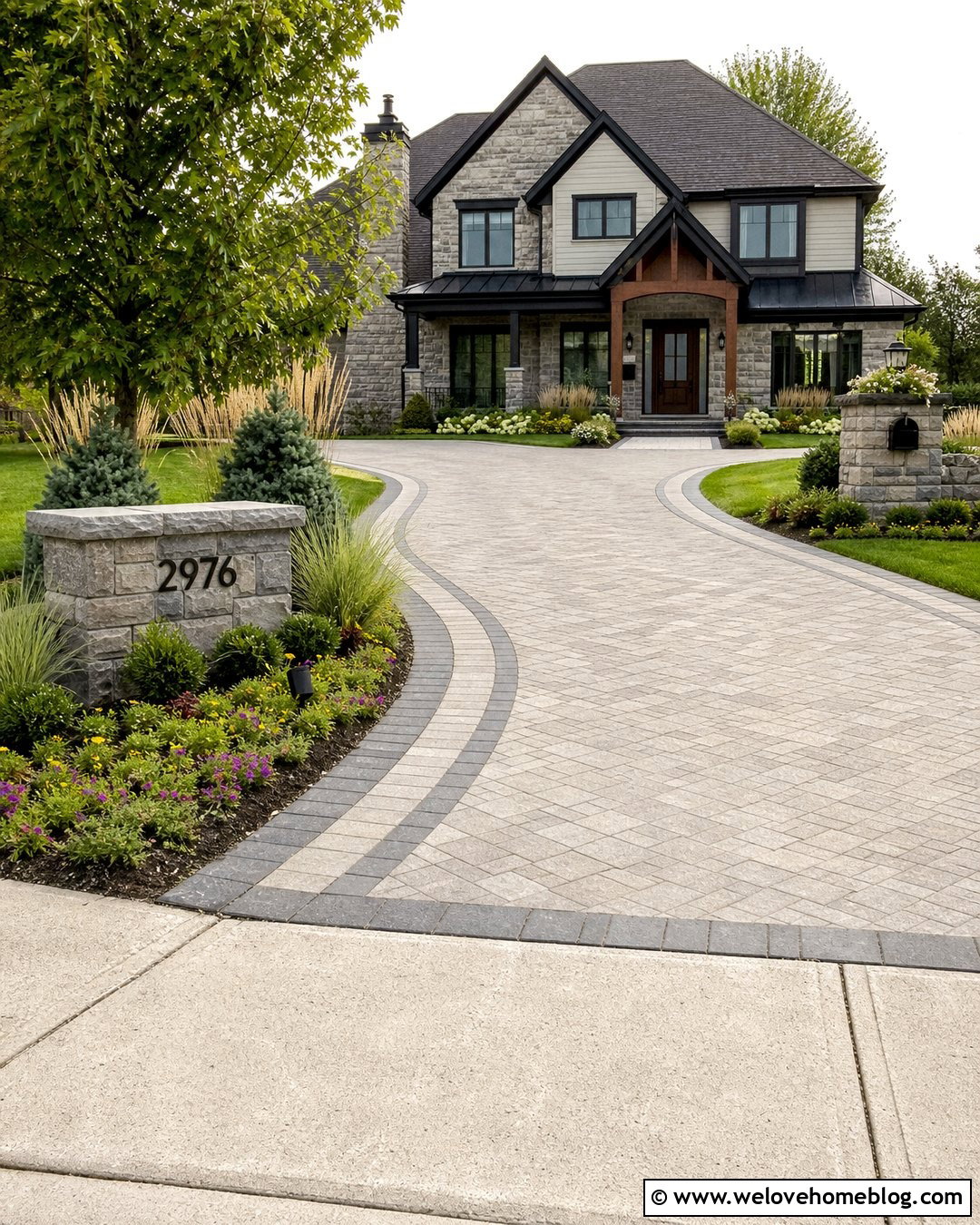
An address sign becomes more attractive when it is integrated into the complete driveway design. Use a warm gray interlocking paver driveway with a subtle curved entrance and a dark charcoal border. Place a low stone address monument on the wider side of the curve, where it is visible without interfering with traffic sightlines. Build a layered bed around it using dwarf evergreens, ornamental grass, low flowers, and spreading ground cover. Leave the numbers unobstructed as plants mature. Repeat the monument’s stone around a nearby mailbox or short retaining edge to create continuity. On the opposite side of the driveway, use a smaller coordinating bed to balance the entrance without duplicating every feature. The result feels established, readable, and connected to the home’s exterior materials.
22. Driveway Entrance With Landscape Lighting
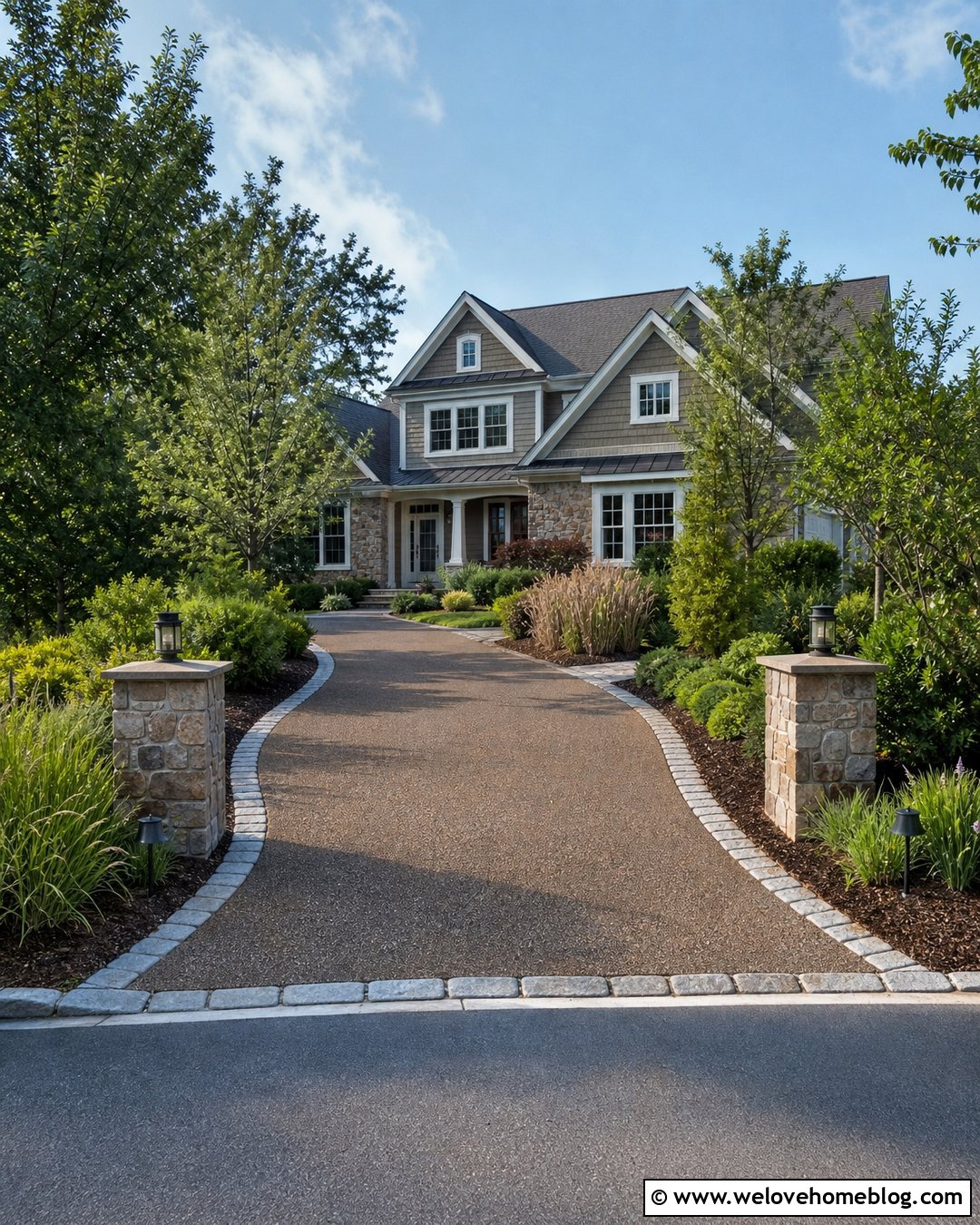
Lighting works best when it supports a complete daytime landscape instead of becoming the only decorative feature. Start with a curved brown-toned asphalt driveway bordered by pale granite cobbles. At the entrance, install two low stone pillars surrounded by layered shrubs and ornamental grasses. Place shielded landscape lights near the pillars, beneath small trees, and along selected points of the curve. During the day, the fixtures should blend into the planting rather than forming an obvious row. Continue a few lights toward the house to make the route easy to understand after dark. Keep fixtures outside areas exposed to tires, snow removal, or lawn equipment. With balanced planting, strong edging, and carefully positioned illumination, the entrance remains appealing in bright daylight while also offering a clear nighttime approach.
23. Driveway Entrance With Garden Arbor
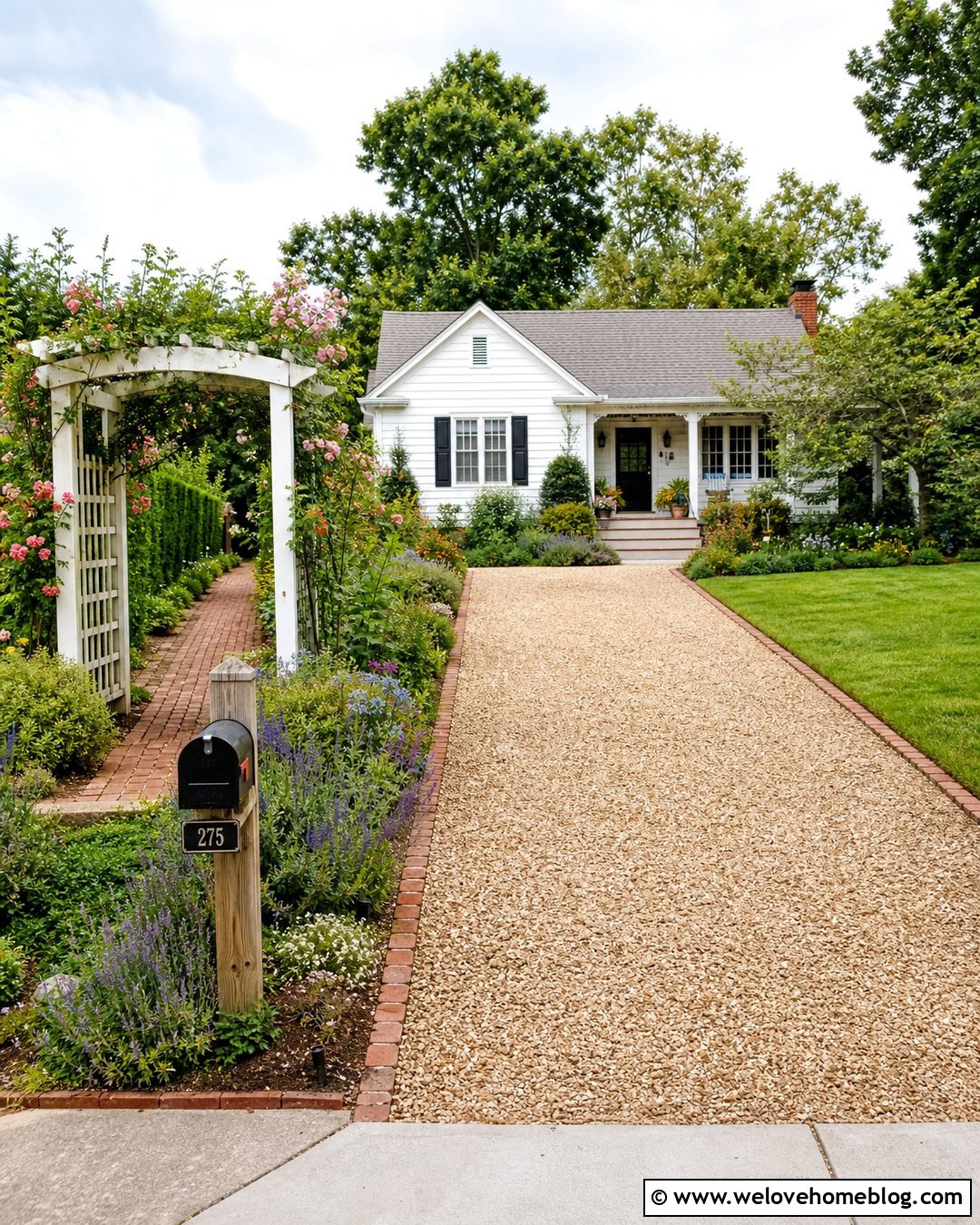
A garden arbor can mark a pedestrian path beside the driveway while giving the whole entrance a welcoming cottage character. Use a tan pea gravel driveway contained by reclaimed brick edging. Beside the street opening, create a separate brick walkway that passes beneath a painted wood arbor and continues toward the front door. Train a nonaggressive flowering vine over the structure, keeping growth away from the driving lane and overhead visibility areas. Surround the arbor with layered perennial beds, compact shrubs, and fragrant herbs. On the other side of the driveway, repeat several of the same plants around a low wooden mailbox post. The matching materials and planting connect both sides. This layout clearly separates vehicles and pedestrians while making the entrance feel like part of the garden.
24. Driveway Entrance With Large Planters
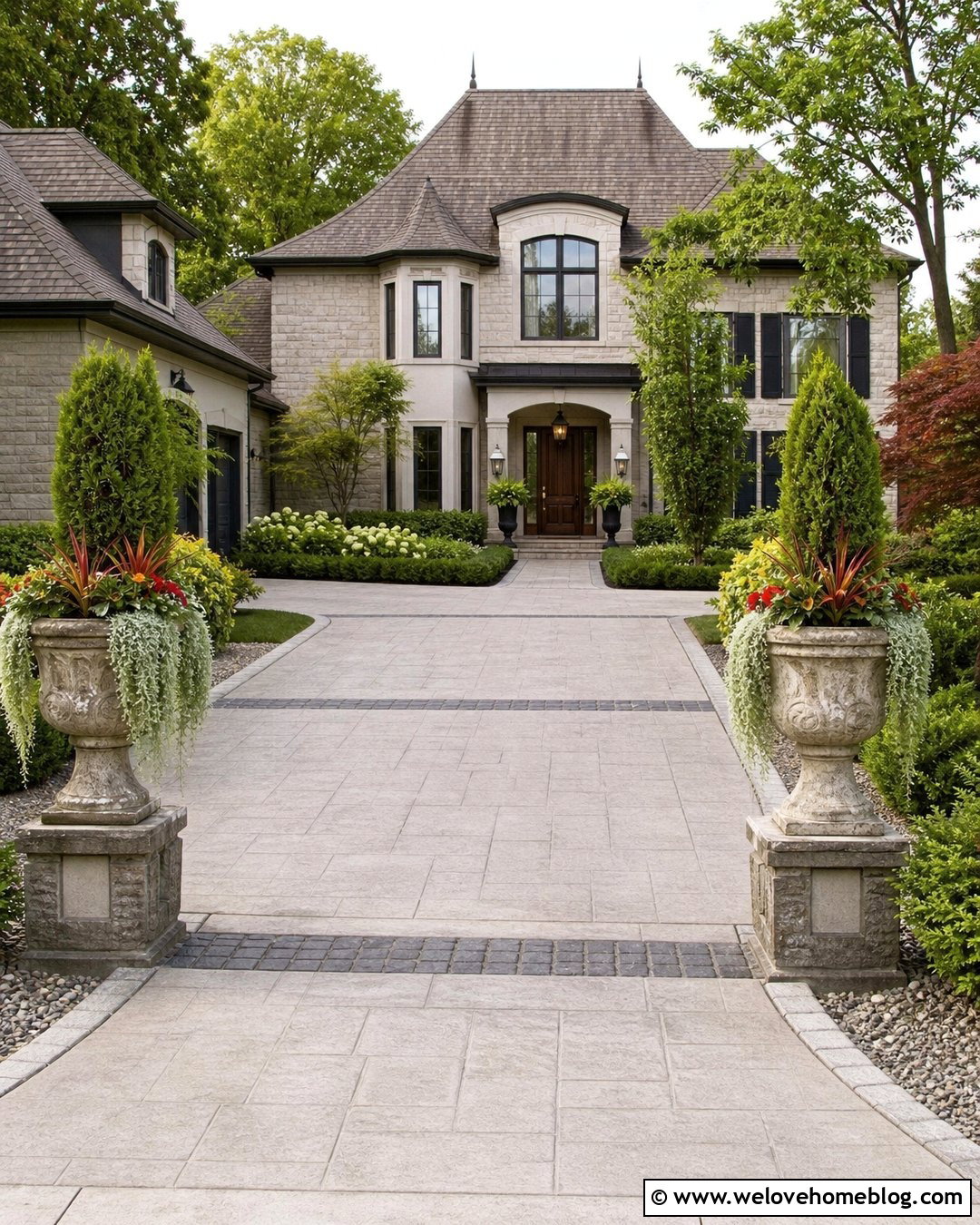
Large planters offer an adaptable way to define an entrance when permanent beds are limited. Pair a straight, light gray stamped concrete driveway with two substantial frost-resistant planters placed beyond the driveway corners. Choose containers that coordinate with the house, such as charcoal squares for a modern home or aged stone urns for a traditional facade. Fill them with a structured evergreen centerpiece, soft trailing foliage, and a restrained seasonal accent. Surround each planter with a narrow bed of low shrubs and decorative gravel so it does not appear isolated. Add contrasting paver bands across the driveway entrance to connect both sides visually. Keep containers clear of vehicle paths and maintain open street views. This arrangement provides strong symmetry and can be refreshed without rebuilding the driveway.
25. Mixed Material Driveway Entrance With Layered Landscaping
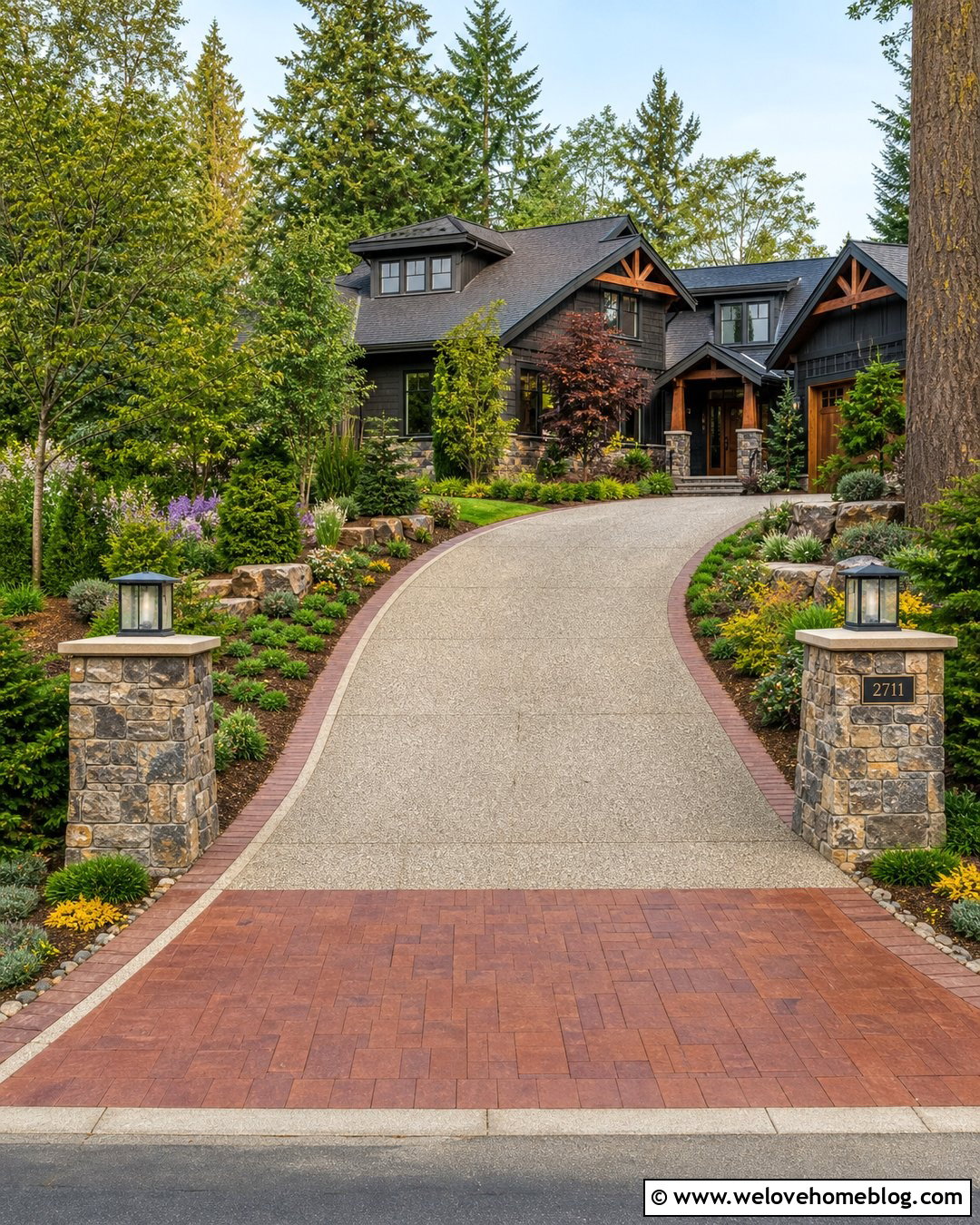
Combining materials can create a distinctive entrance, provided the colors and patterns remain coordinated. Use a light exposed aggregate concrete driveway with a wide apron of clay brick pavers at the street. Continue the brick as narrow edge bands along a gently curved approach. On both sides, install layered beds containing evergreen shrubs, ornamental grasses, flowering perennials, and one small tree. Low natural stone walls can hold the beds where the yard slopes, while matching stone pillars mark the opening. Repeat no more than a few main materials so the design does not become visually busy. The brick adds warmth, the concrete keeps the larger surface practical, and the planting softens every transition. This balanced combination suits many traditional, Craftsman, and updated suburban homes.
Conclusion:
The most effective 25 Beautiful Driveways Entrance Landscaping Ideas treat the driveway, borders, plants, entrance features, and house as one coordinated composition. Begin with the practical requirements, including vehicle movement, drainage, visibility, maintenance, and mature plant sizes. Then choose surface and edging materials that connect with the home’s existing colors and architecture. Stone pillars, flowering trees, native borders, gates, lighting, address signs, and planters can all provide character, but they should never crowd the driving area. Even a simple driveway can look polished when beds are generously shaped and plants are repeated in organized groups. With thoughtful planning, your entrance can feel welcoming from the street and attractive throughout every season.

Related posts:

Leave a Reply