
Choosing trees for a long driveway is about more than creating a beautiful entrance. The right species must suit your climate, soil, available width, maintenance goals, and driveway surface. Mature canopy spread and root space matter because large trees need considerably more planting area and distance from pavement than small ornamental trees. () These 25 best trees to line a long driveway ideas pair dependable tree choices with complete driveway designs, including surfaces, borders, lighting, and supporting plants. Before planting, check overhead lines, underground utilities, drainage, and sightlines near the road. Choose regionally adapted or native trees whenever possible. Then use the following 25 best trees to line a long driveway ideas to create an approach that feels welcoming, balanced, and practical.

1. Columnar Oak Trees Along A Straight Gravel Driveway
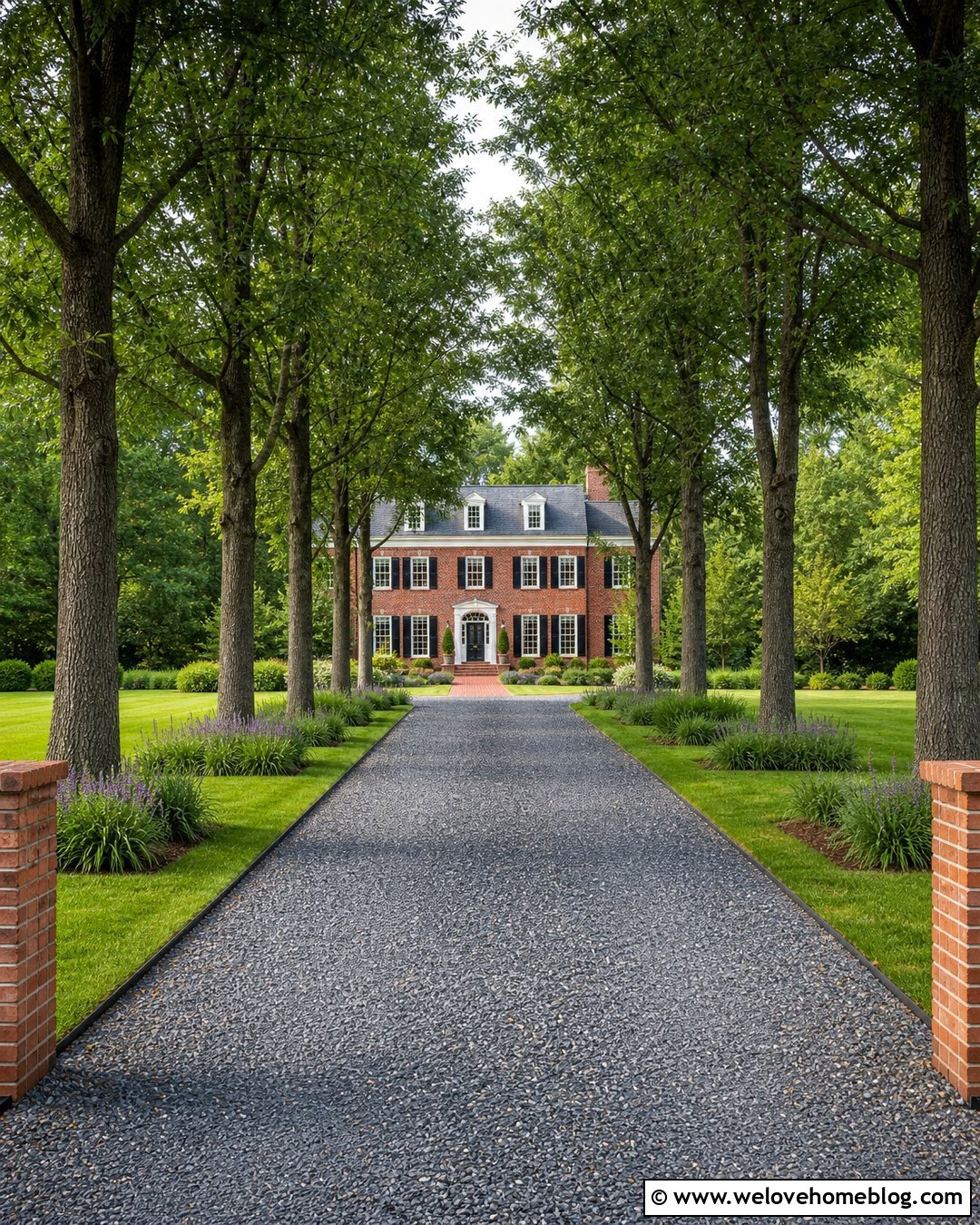
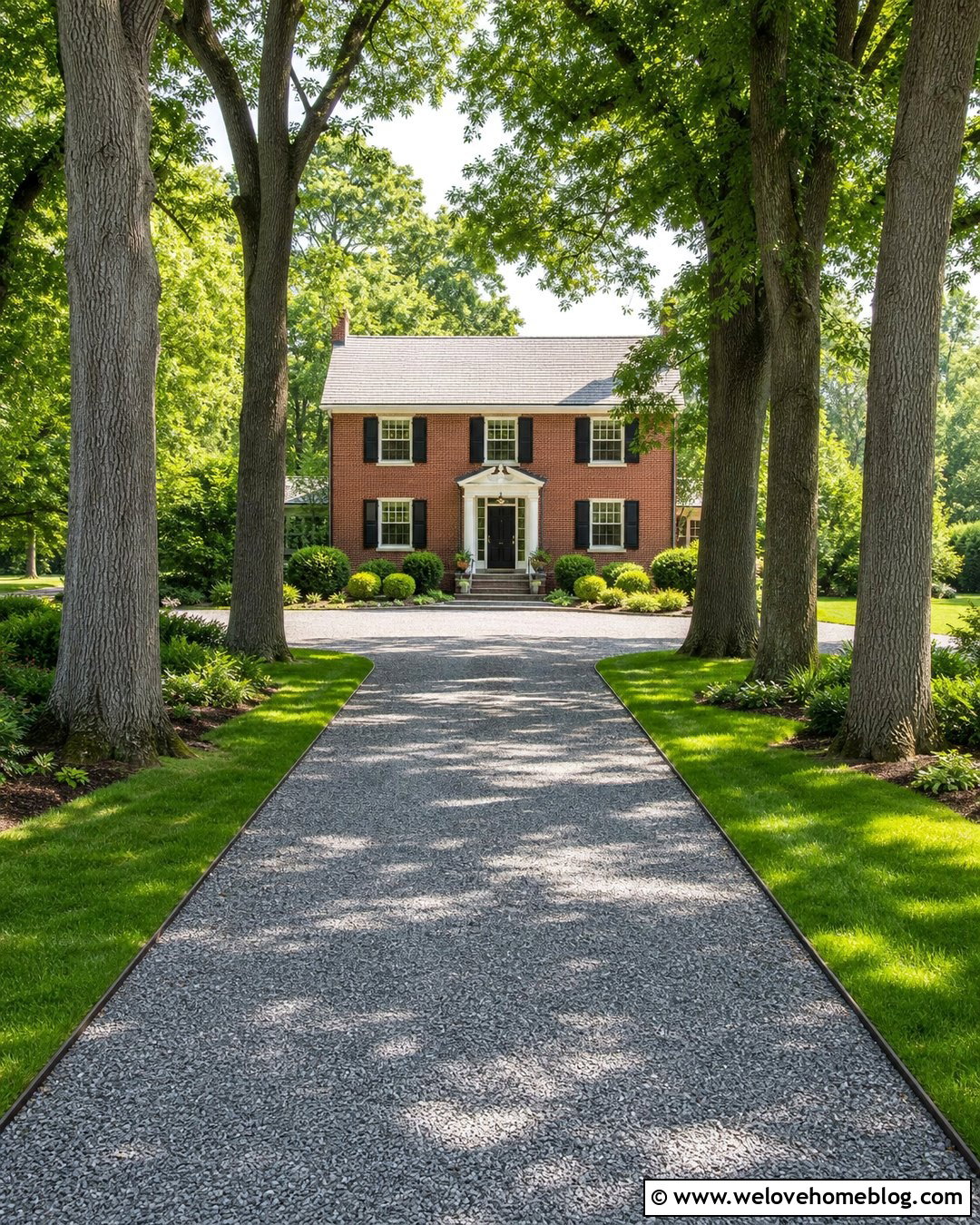
Columnar oaks create a strong vertical rhythm without overwhelming a relatively narrow entrance. Use them on both sides of a straight gray gravel driveway, spacing each tree according to its mature canopy width rather than its nursery size. A deep grass strip between the gravel and trunks gives roots more room while making leaf cleanup easier. Add steel edging to keep loose stone out of the planting beds. Low masses of catmint, ornamental grasses, or native sedges can soften the formal tree line without blocking visibility. Columnar English oak cultivars work in many cooler regions, while locally recommended upright oaks may perform better elsewhere. This complete look suits brick colonials, large farmhouses, and traditional homes with long, symmetrical approaches.
2. European Hornbeam Trees Along A Paver Driveway
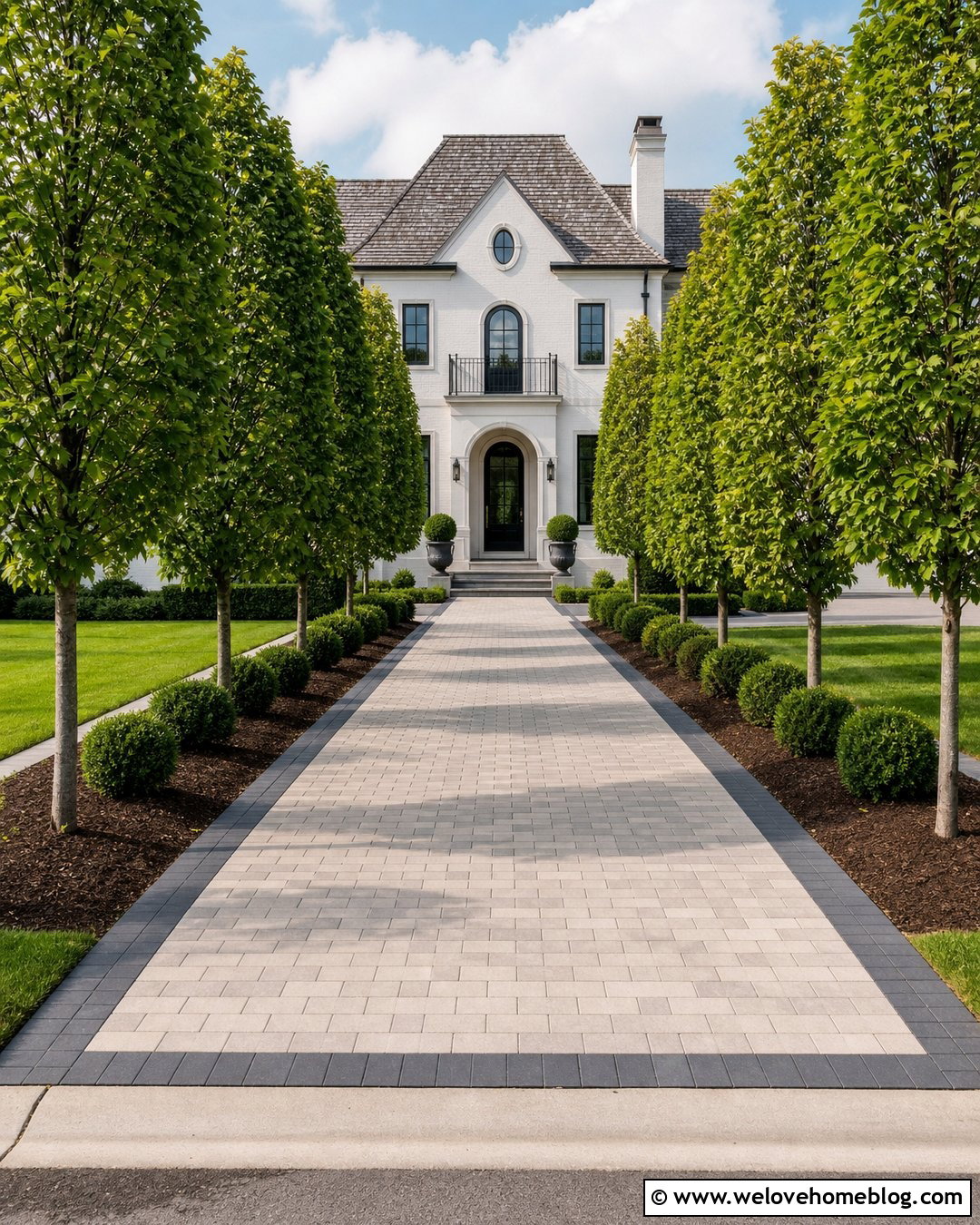
For a tailored entrance that still feels green and natural, line a straight paver driveway with European hornbeam trees. Hornbeams respond well to pruning, so the row can be maintained as upright individual trees or trained into a formal pleached screen. Warm gray concrete pavers in a running-bond pattern provide a refined surface, while darker soldier-course borders visually contain the driveway. Keep generous planting strips along both sides and cover them with shredded hardwood mulch. Repeating boxwood mounds or compact inkberry shrubs beneath the trees strengthens the symmetry. This design works especially well beside a European-inspired home, painted-brick residence, or updated colonial. Regular formative pruning during the early years will help create consistent trunks, balanced crowns, and a clean passage.
3. Thornless Honeylocust Trees Along An Asphalt Driveway
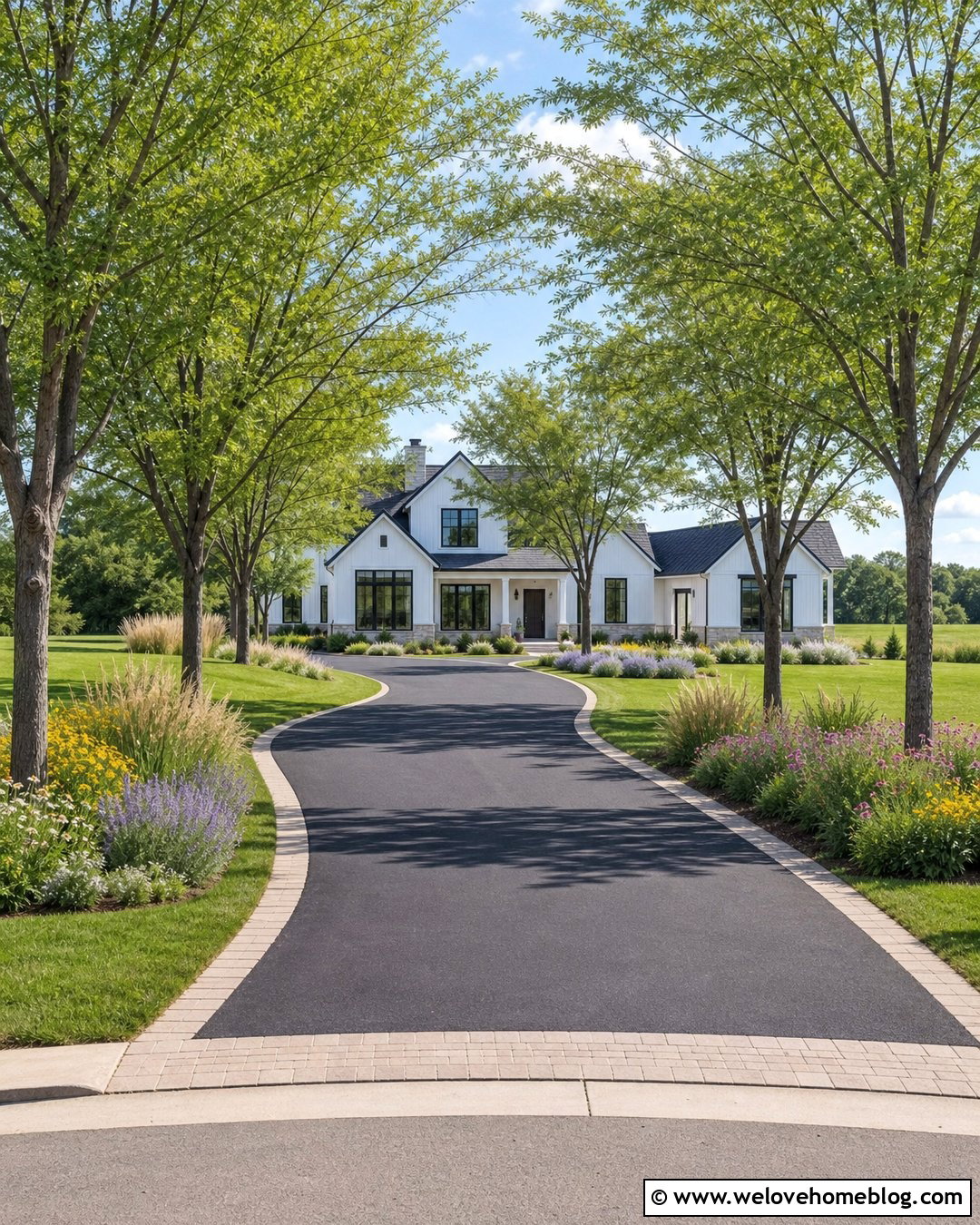
Sunlight filters beautifully through the fine foliage of thornless honeylocust trees, creating light shade without turning the driveway into a dark tunnel. Plant a matched row beside a gently curved black asphalt driveway with a buff concrete paver border. The pale edging brightens the asphalt and provides a practical transition to wide lawn panels around the trees. Choose a thornless, podless cultivar when available to reduce sharp thorns and seedpod cleanup. Honeylocust is especially useful where homeowners want an airy canopy rather than dense shade. Underplanting can remain simple with turf, native prairie grasses, and occasional flowering perennials. The relaxed arrangement complements ranch homes, contemporary farmhouses, and large suburban properties while preserving clear views of the house from the road.
4. Disease-Resistant Elm Trees Along A Concrete Driveway
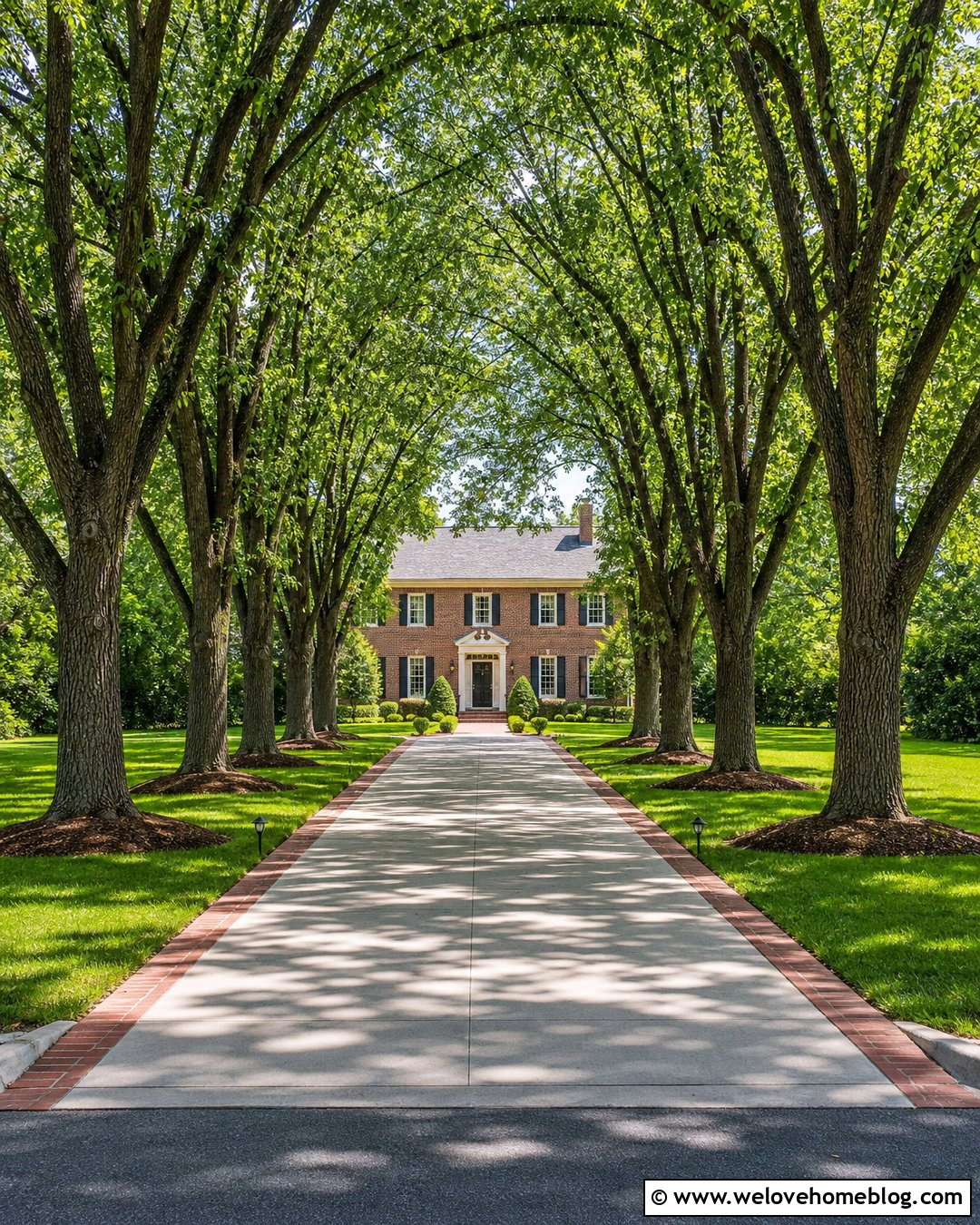
A long avenue of disease-resistant American elm cultivars can eventually create the high, arching canopy associated with classic residential streets. Pair the trees with a wide, straight broom-finished concrete driveway and narrow clay-brick ribbons along both edges. Large uninterrupted lawn strips provide valuable rooting space and keep the overall design uncluttered. Select modern cultivars recommended for resistance to Dutch elm disease and suitability for your region. Because mature elms become substantial shade trees, position them well away from pavement, utilities, and the house. Structural pruning is important while the trees are young. This design is best for spacious properties where the trees can reach their natural size. A colonial, Georgian, or traditional farmhouse at the end completes the stately composition.
5. Willow Oak Trees Along A Curved Concrete Driveway
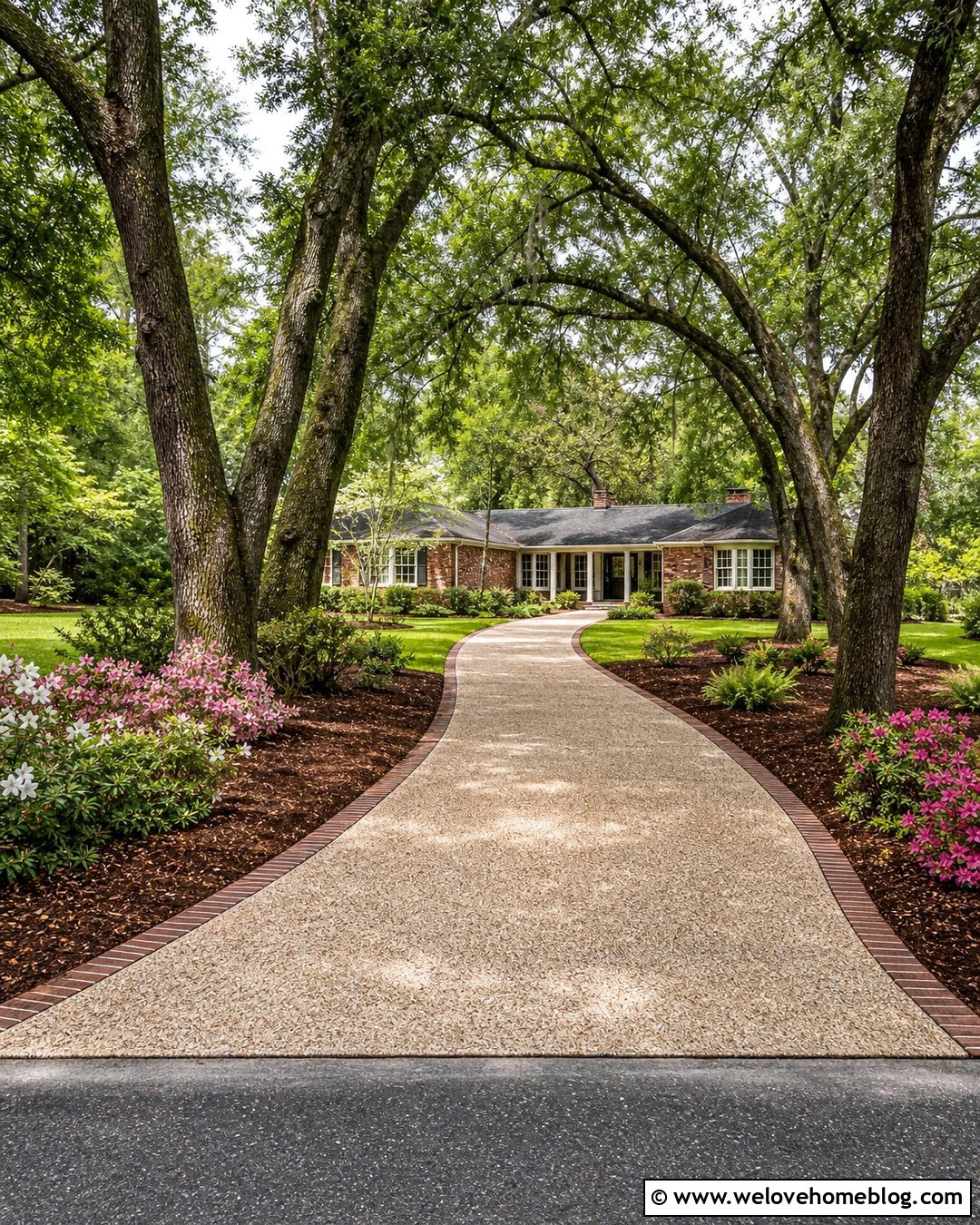
Willow oaks have slender leaves and a fine-textured canopy that can make a sweeping driveway feel graceful rather than heavily shaded. Use them along the outside edges of a broad, curved exposed-aggregate concrete driveway. A dark brick border can follow the curve, while large mulched planting islands protect the trunks from mowers and vehicle traffic. This oak is generally best suited to suitable regions of the eastern and southern United States, so local soil and climate compatibility should be confirmed. Leave enough setback for its large mature canopy and root system. Native azaleas, ferns, and sweeping lawn areas create a layered woodland effect. The complete design pairs naturally with Southern traditional homes, brick ranch houses, and spacious country properties.
6. Bur Oak Trees Along A Country Gravel Driveway
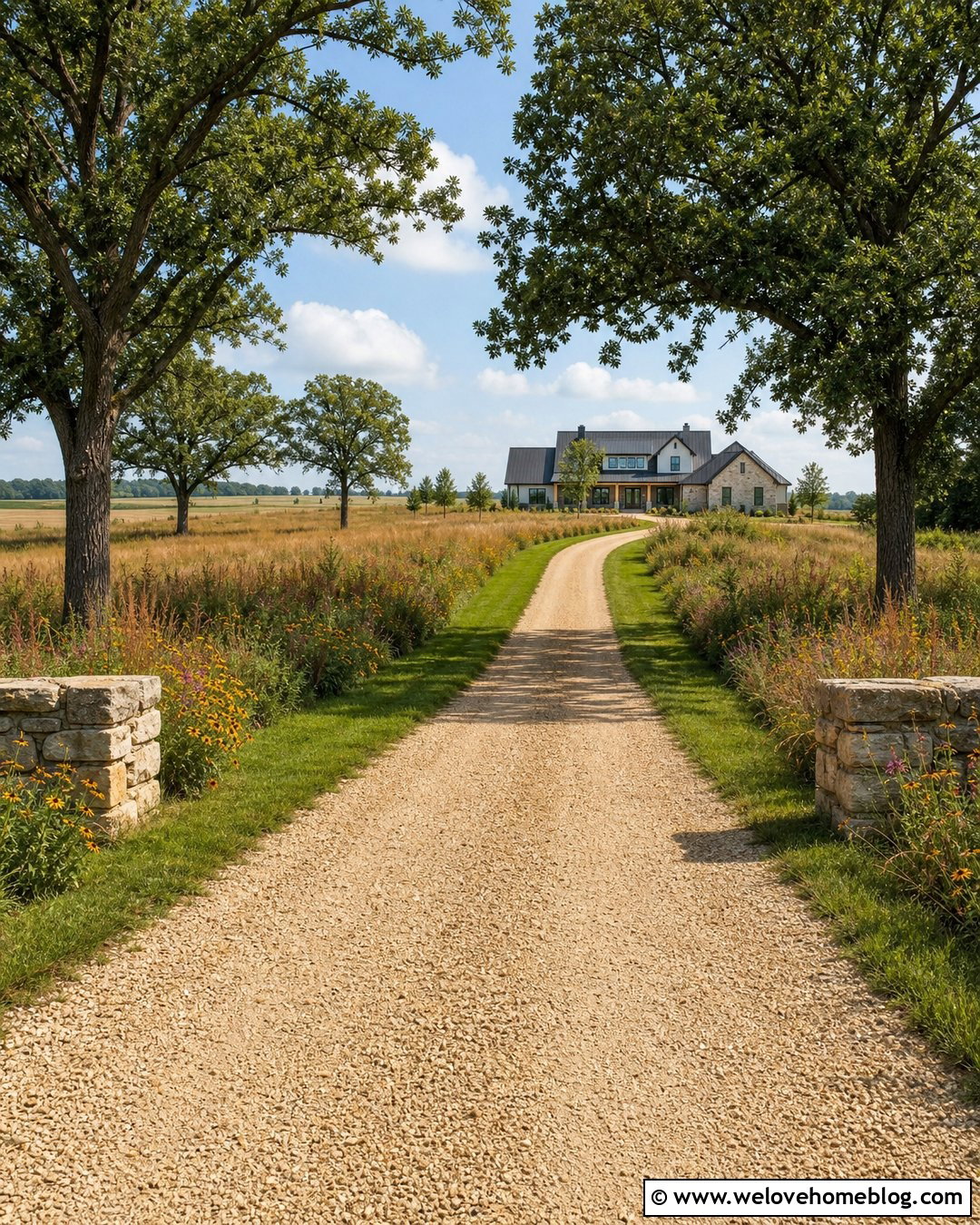
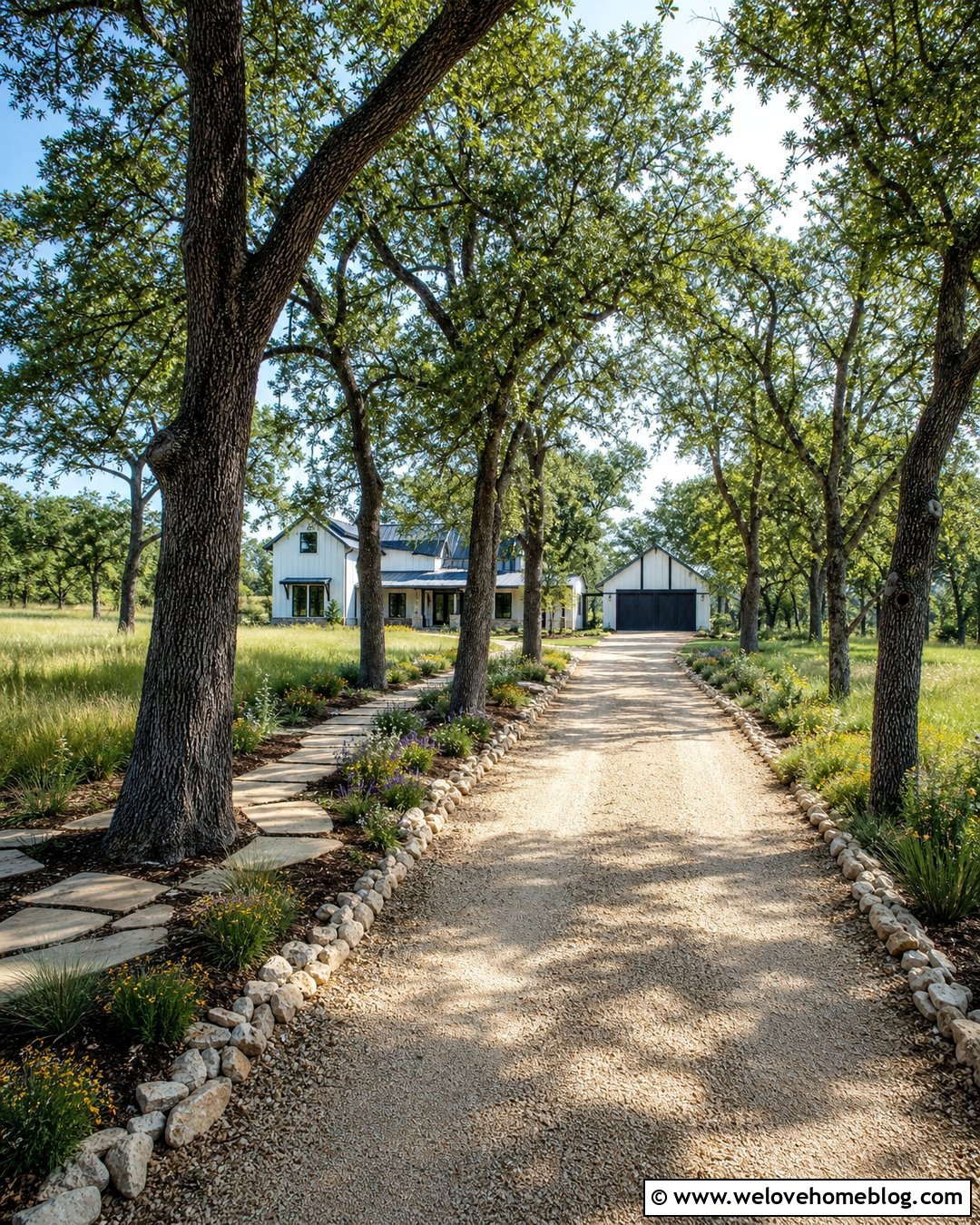
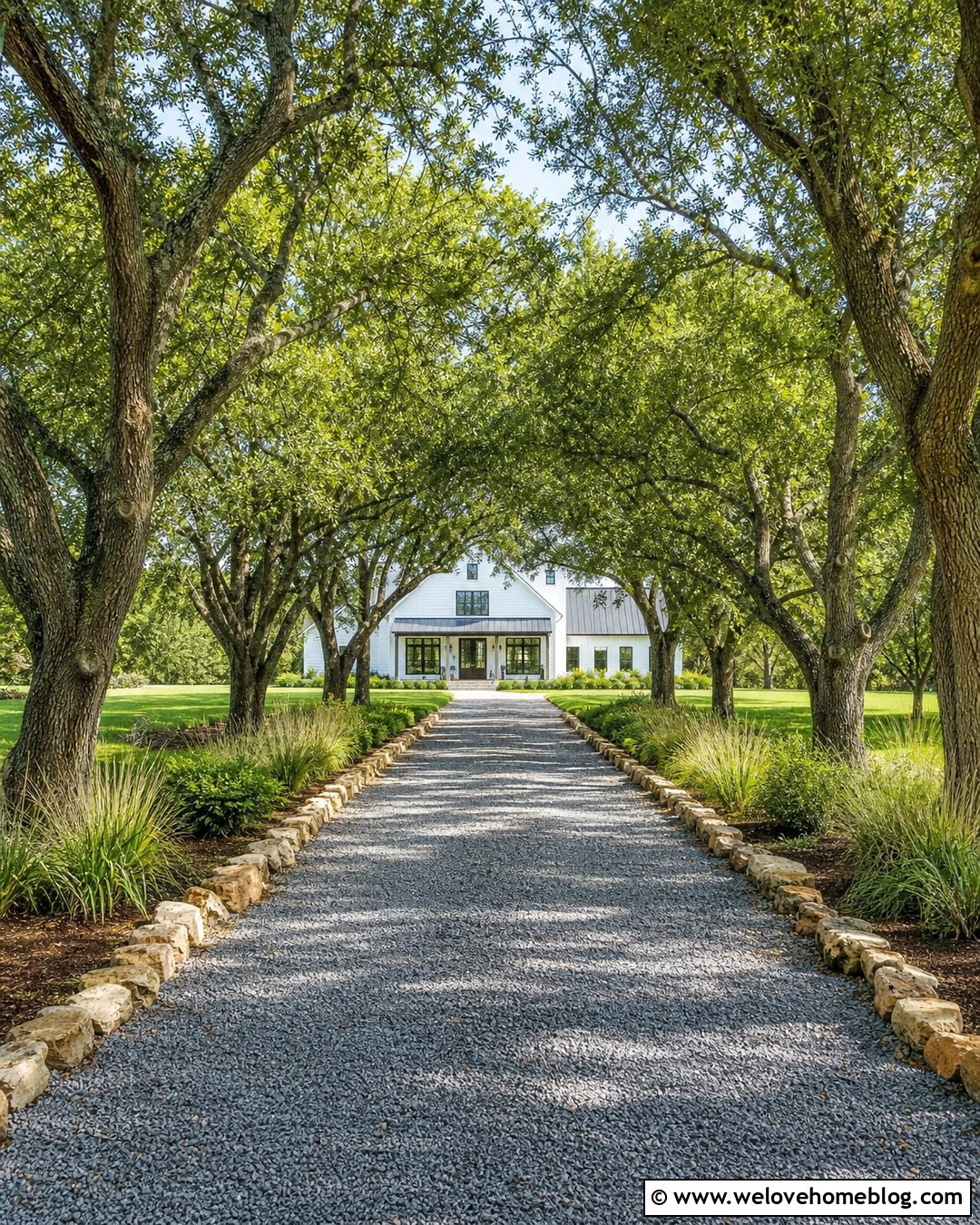
Few trees give a rural property more presence than mature bur oaks. Their rugged branching and broad crowns suit a long tan crushed-stone driveway leading to a farmhouse, barn-style home, or prairie residence. Plant the trees in wide meadow strips rather than narrow beds beside the drive. This gives them substantial rooting room and allows the massive canopies to develop naturally. Rough limestone edging at the entrance can contain the gravel, while the rest of the drive transitions softly into mown grass. Native little bluestem, coneflowers, and black-eyed Susans can fill sunny spaces between young trees. Bur oaks grow slowly but offer a lasting landscape framework. Keep fallen acorns and leaves in mind when planning maintenance near frequently used parking or walking areas.
7. Swamp White Oak Trees Along A Resin-Bound Driveway
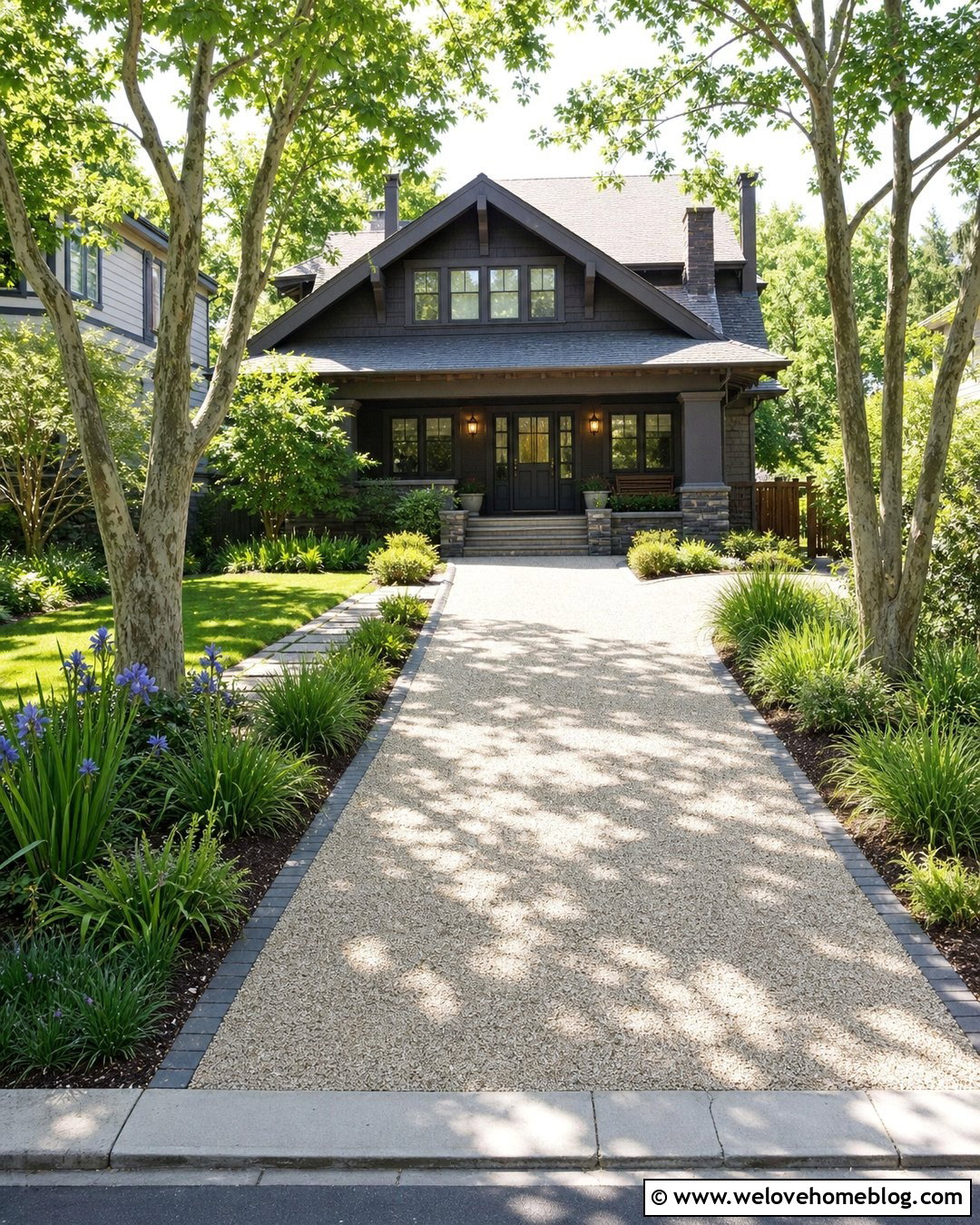
Where soil remains moist but is not permanently flooded, swamp white oak can form an impressive long-term driveway canopy. A light beige resin-bound gravel driveway keeps the approach smooth and visually bright, while broad planting strips handle stormwater on both sides. Edge the drive with dark granite setts and shape shallow rain-garden depressions beyond the tree trunks. Moisture-tolerant sedges, blue flag iris, and inkberry can help integrate the oak rows into the drainage design. The driveway should still be graded so standing water does not collect on the surface or against tree trunks. This combination feels polished yet ecological. It works well with Craftsman homes, modern lodge-style houses, and properties where runoff management is as important as curb appeal.
8. Southern Live Oak Trees Along A Circular Driveway
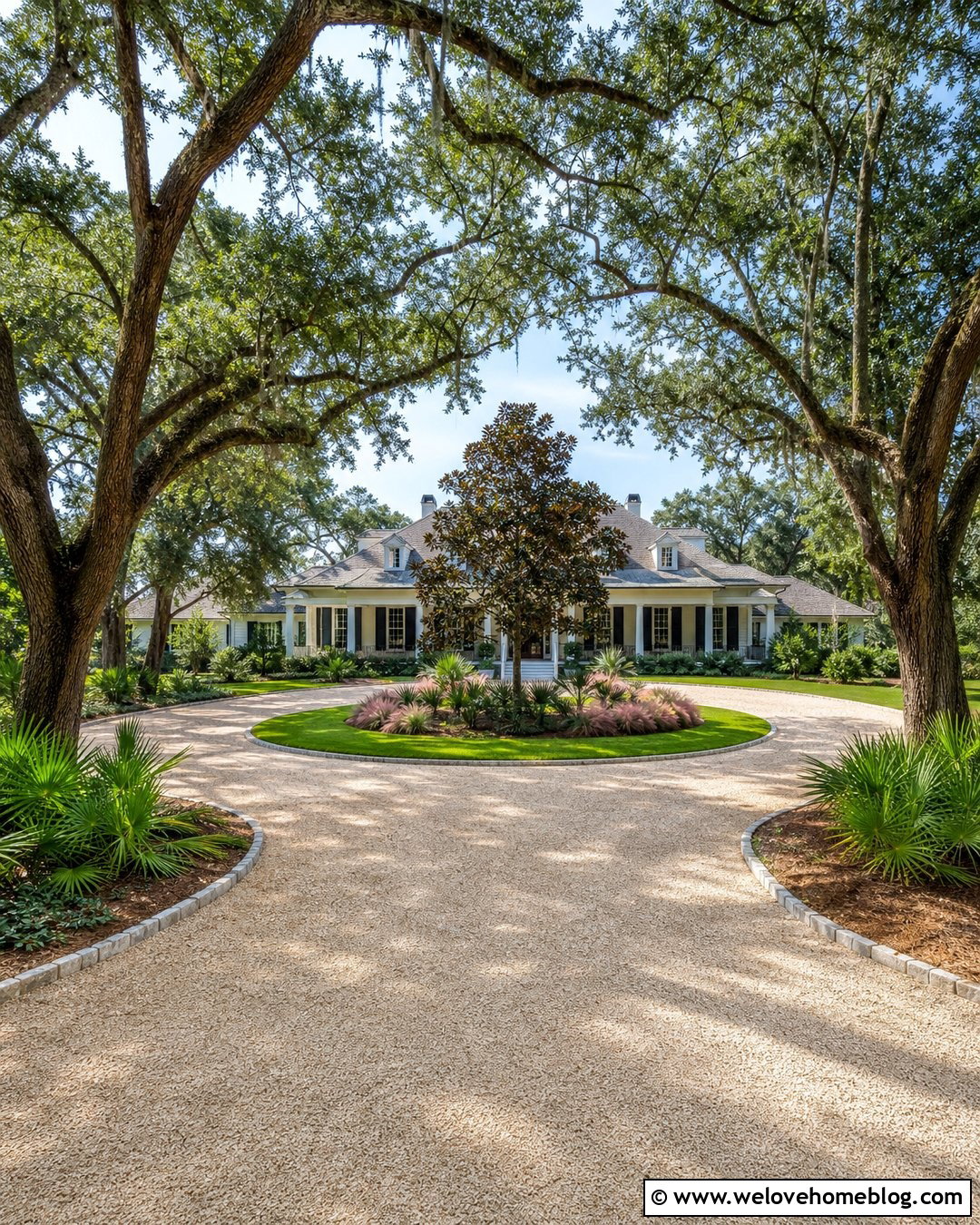
Southern live oaks create one of the most dramatic driveway entrances, but they require a warm climate and considerable room. Arrange them outside a wide circular driveway surfaced with warm-toned shell gravel or compacted limestone. The trees should frame the approach rather than stand close enough for their spreading limbs and roots to crowd the pavement. A central lawn island with low palmettos, muhly grass, and a specimen magnolia keeps the circle open and balanced. Use natural stone curbing where the driveway meets planting areas. Over time, the broad evergreen crowns can create a memorable estate-like setting. This plan is best for large Southern properties, coastal homes, and low-country residences where live oaks can develop without aggressive topping or constant clearance pruning.
9. Ginkgo Trees Along A Formal Brick Driveway
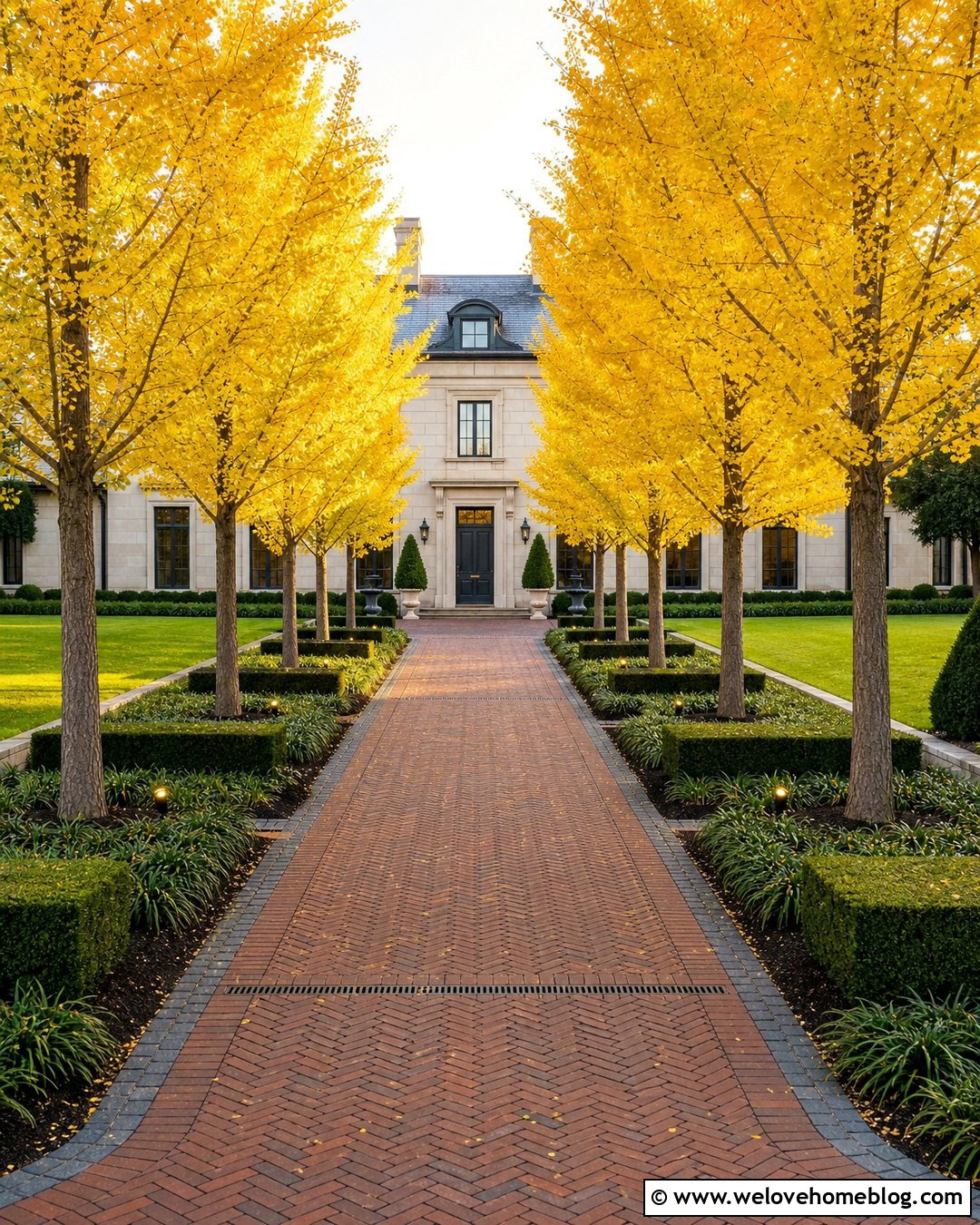
A double row of male ginkgo cultivars gives a formal driveway clean structure and brilliant golden fall color. Pair the trees with clay brick pavers laid in a herringbone pattern, bordered by charcoal stone setts. Use only male cultivars because female trees can produce unpleasant-smelling fruit. Ginkgo trees have a distinctive upright shape when young and become broader with age, so spacing should reflect the selected cultivar’s mature spread. Long rectangular beds of liriope, low ornamental grasses, or neatly clipped shrubs can connect the individual trees. Simple uplights placed outside the trunk flare add evening emphasis without cluttering the drive. This polished arrangement suits limestone houses, Georgian architecture, traditional brick homes, and symmetrical properties with a clearly defined front entrance.
10. Japanese Zelkova Trees Along A Modern Concrete Driveway
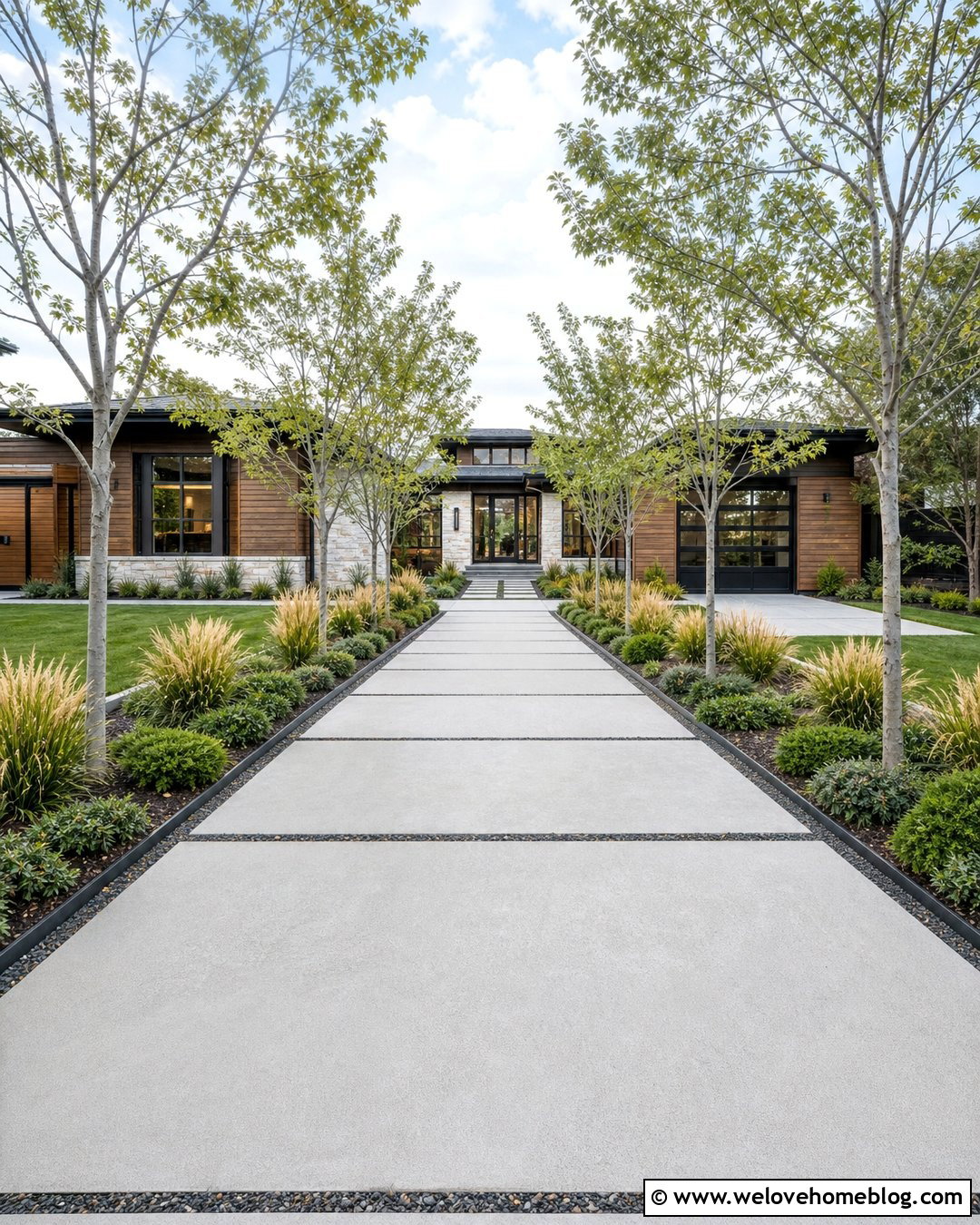
Japanese zelkova offers an attractive vase-shaped canopy that can soften the hard lines of a modern home. Plant the trees along a straight driveway made from large-format light gray concrete slabs separated by narrow gravel joints. Wide linear planting beds should sit between the pavement and tree trunks, providing better root space than small individual cutouts. Fill those beds with feather reed grass, compact junipers, and low native ground covers. The repeated trunks establish order, while the spreading crowns add shade and movement above the minimalist surface. Select a cultivar with a mature size that fits the property, and begin structural pruning early. This driveway look works particularly well with contemporary houses, midcentury homes, and modern ranch designs featuring wood, stone, and neutral-colored facades.
11. Serviceberry Trees Along A Pea Gravel Driveway
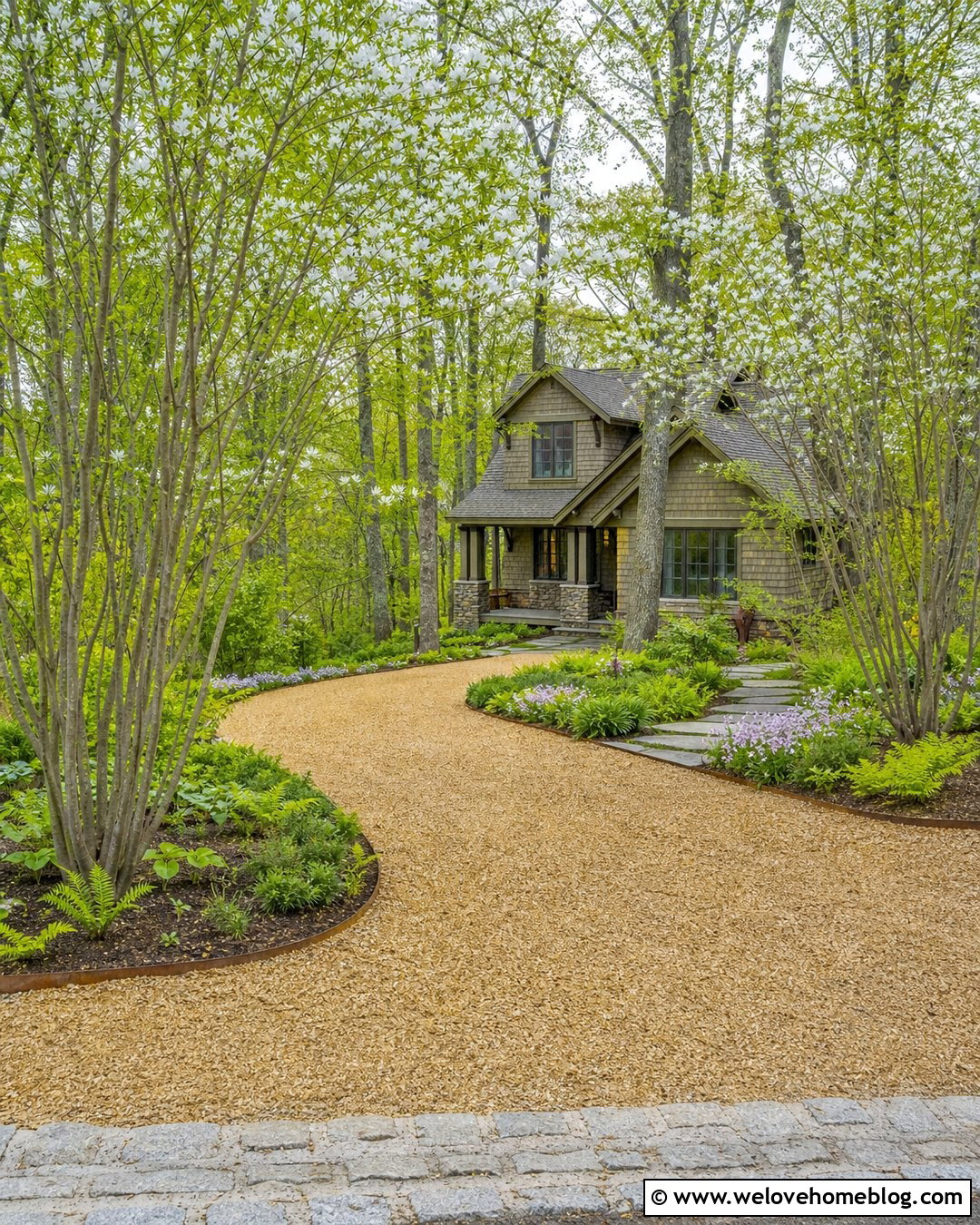
Serviceberry trees are an appealing choice when a long driveway needs a smaller scale, spring flowers, berries, and fall color. Line a gently winding pea gravel driveway with multi-stem specimens positioned in broad, informal planting pockets. Weathered steel edging keeps the small gravel contained while adding a clean definition to the curves. Beneath the trees, combine native ferns, woodland phlox, sedges, and low spreading shrubs. Serviceberries can feel naturalistic without becoming untidy, especially when their lower growth is selectively pruned to maintain visibility. Birds may be attracted to the fruit, so expect some seasonal activity and cleanup. The complete design is ideal for woodland homes, Craftsman cottages, rustic contemporary houses, and properties where a towering formal avenue would feel out of scale.
12. Eastern Redbud Trees Along A Curved Paver Driveway
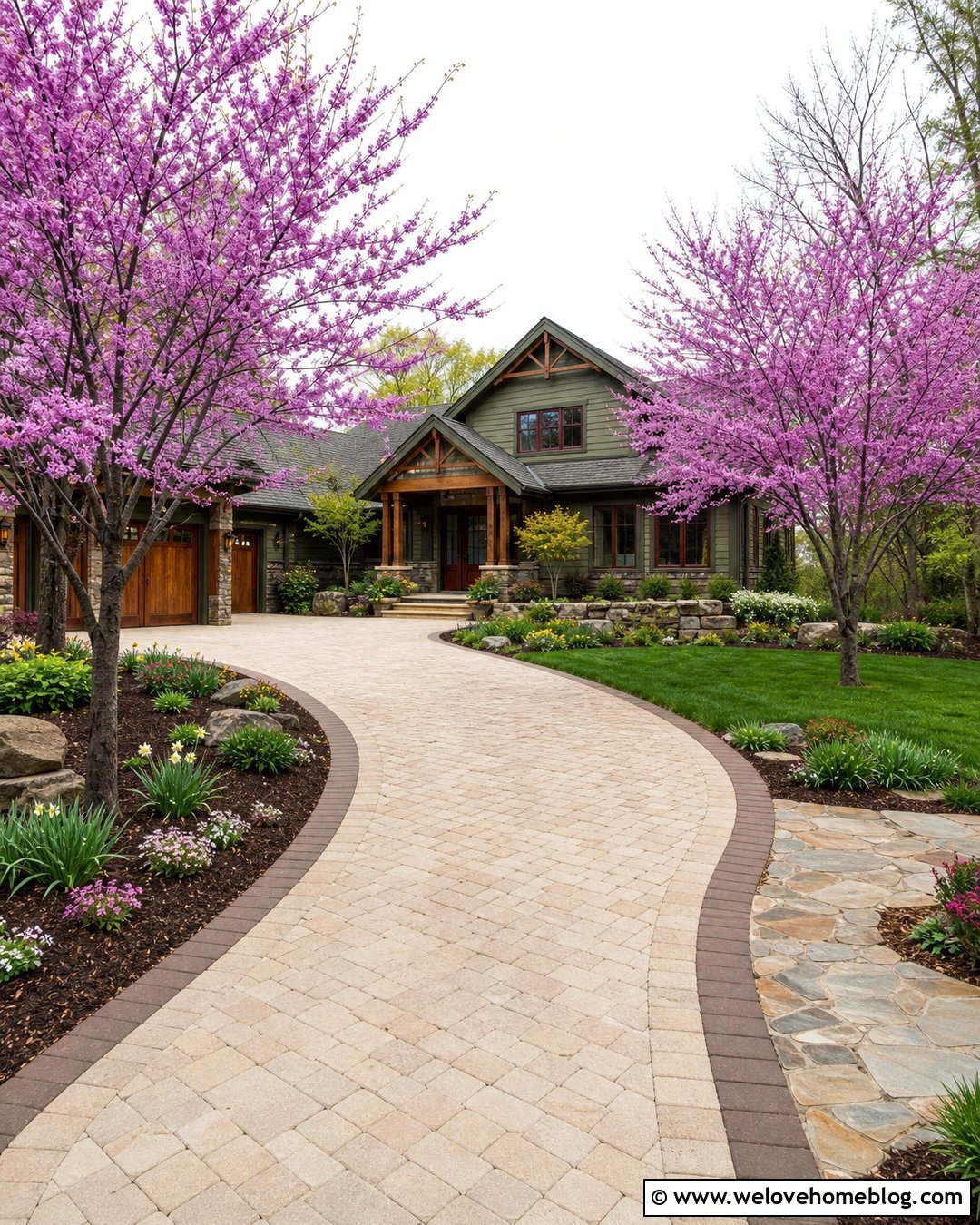
In spring, a line of eastern redbuds can transform a long driveway with vivid flowers before the leaves emerge. Use them along a curved driveway surfaced with warm beige concrete pavers and finished with a dark brown paver border. Because redbuds remain smaller than major shade trees, they fit properties with moderate planting width or overhead limitations. Arrange the trees in relaxed spacing rather than forcing perfect symmetry. Ground the design with sweeps of woodland sedges, foamflower, coral bells, and spring bulbs. Keep the planting beds wide enough to protect the trunks from lawn equipment. Redbuds are especially effective near Craftsman homes, wooded ranch houses, and cottage-inspired facades. Regional native selections generally offer the strongest connection to local soil, weather, and wildlife.
13. Flowering Dogwood Trees Along A Woodland Driveway
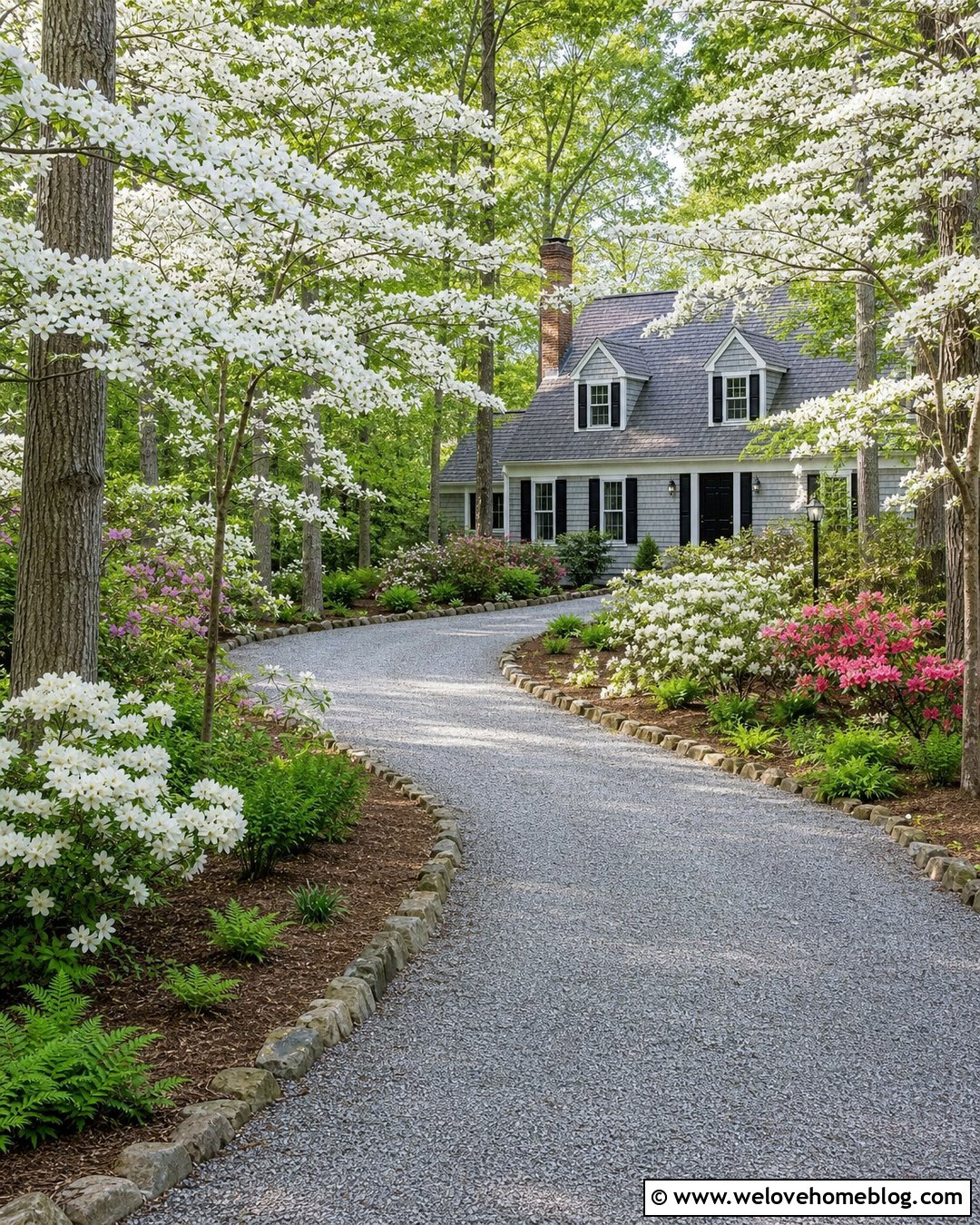
A woodland-edge driveway lined with flowering dogwoods offers delicate spring color and an elegant layered appearance. Choose a softly curved, fine-textured gray gravel surface with natural fieldstone edging. Position the dogwoods where they receive suitable light and protection rather than exposing them to reflected heat from pavement all day. Existing taller trees can provide a filtered canopy, while native azaleas, ferns, oakleaf hydrangeas, and woodland ground covers fill the lower level. Allow open mulch rings around trunks instead of piling material against the bark. Where local disease pressure is high, choose resistant cultivars or locally suitable dogwood species. This complete driveway look feels at home beside Cape Cod houses, mountain cottages, rustic stone homes, and shaded suburban properties with an established woodland backdrop.
14. Crabapple Trees Along A Brick-Edged Asphalt Driveway
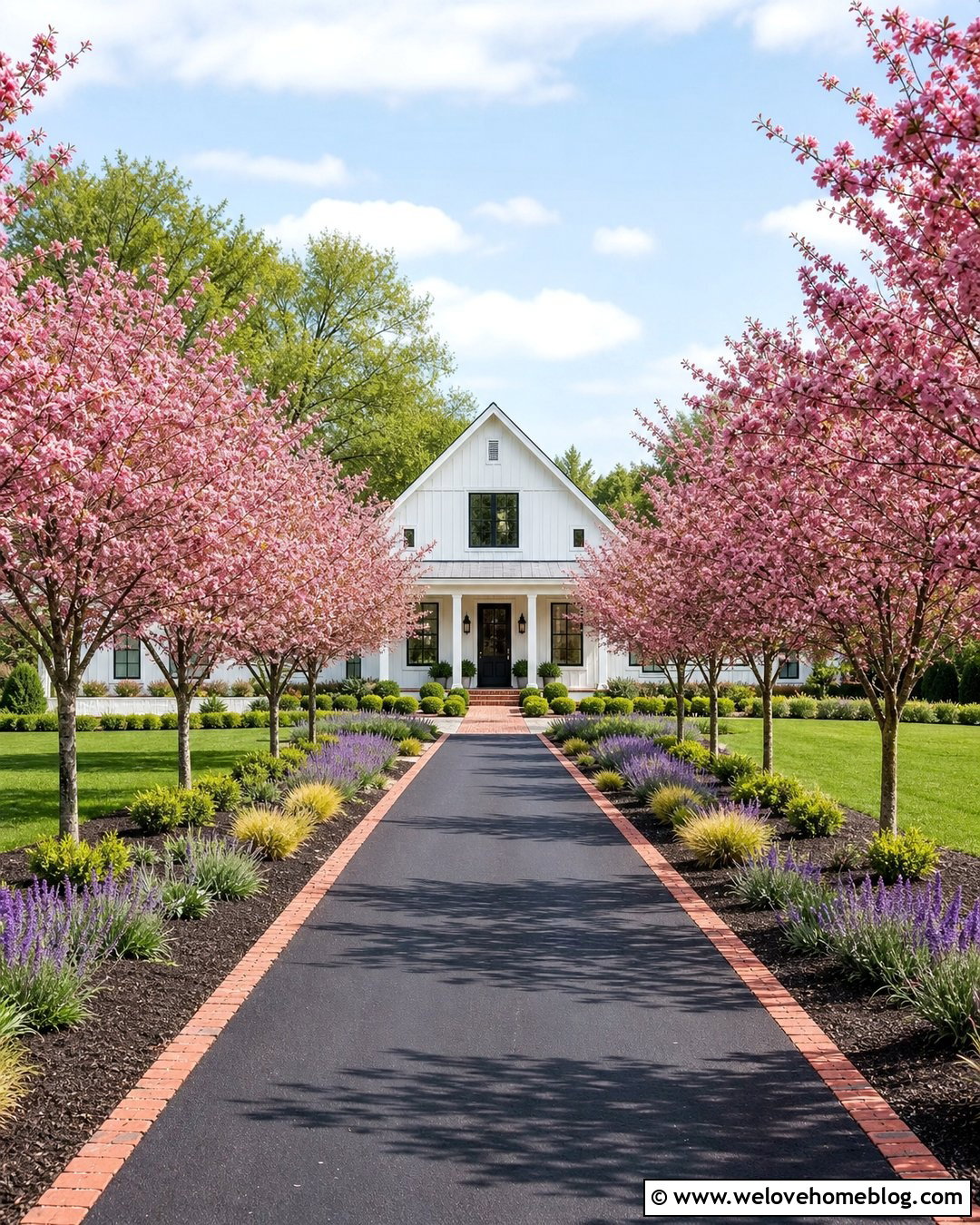
Crabapple trees create a colorful spring entrance without requiring the space needed by large oaks or elms. Line a straight black asphalt driveway with compact, disease-resistant crabapple cultivars and a red clay brick edge. Matching tree spacing gives the drive a formal rhythm, while generous mulched beds protect roots and simplify mowing. Look for cultivars valued for persistent small fruit, attractive branching, and resistance to common foliage diseases. To avoid a crowded appearance, use one cultivar throughout the main row and repeat low plants such as catmint, salvia, or dwarf grasses beneath it. Seasonal petals and fruit may require cleanup, particularly near garage aprons. This cheerful design complements white farmhouses, cottage homes, traditional ranch houses, and modest properties that need a strong entrance at a manageable scale.
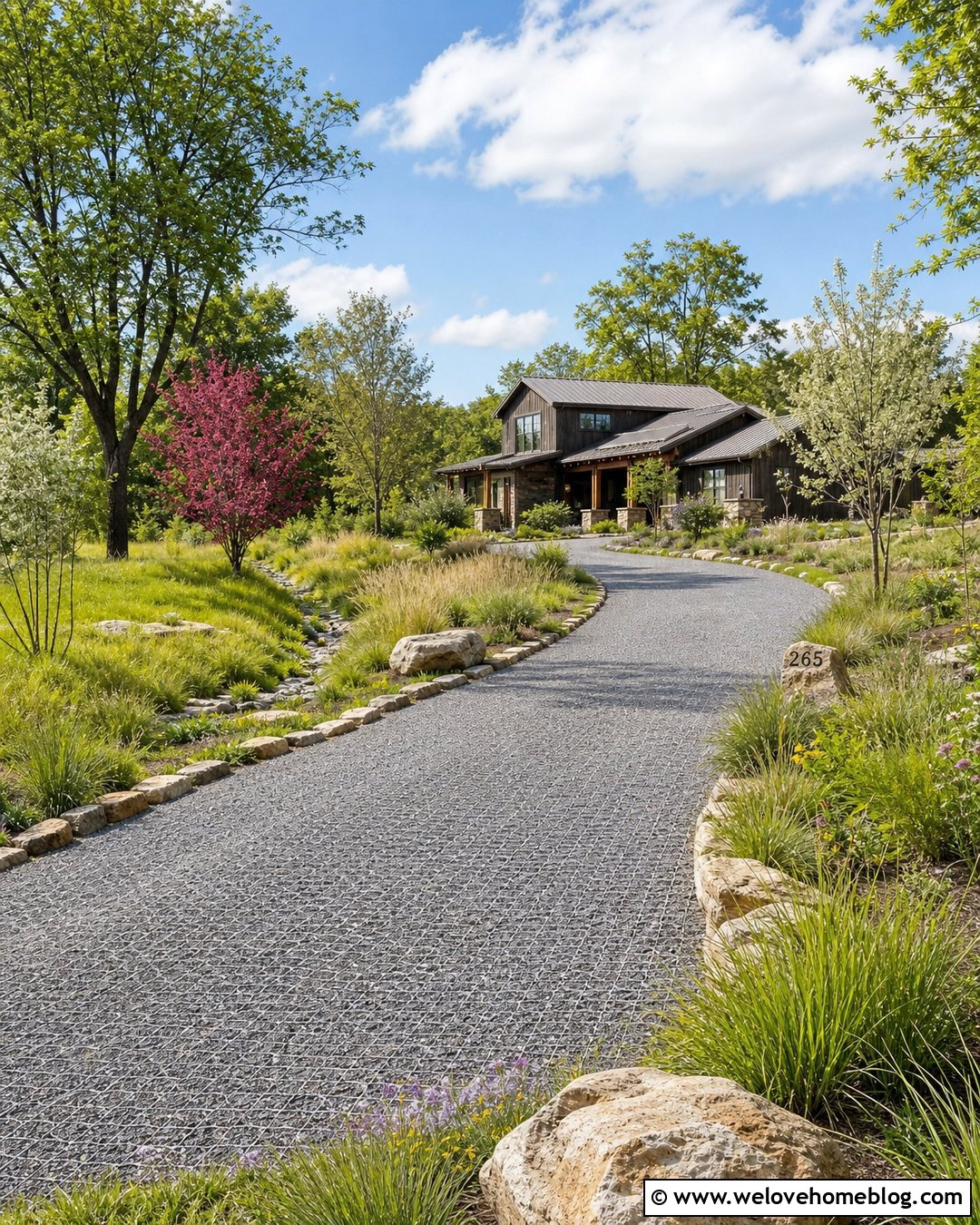
15. Crape Myrtle Trees Along A Southern Paver Driveway
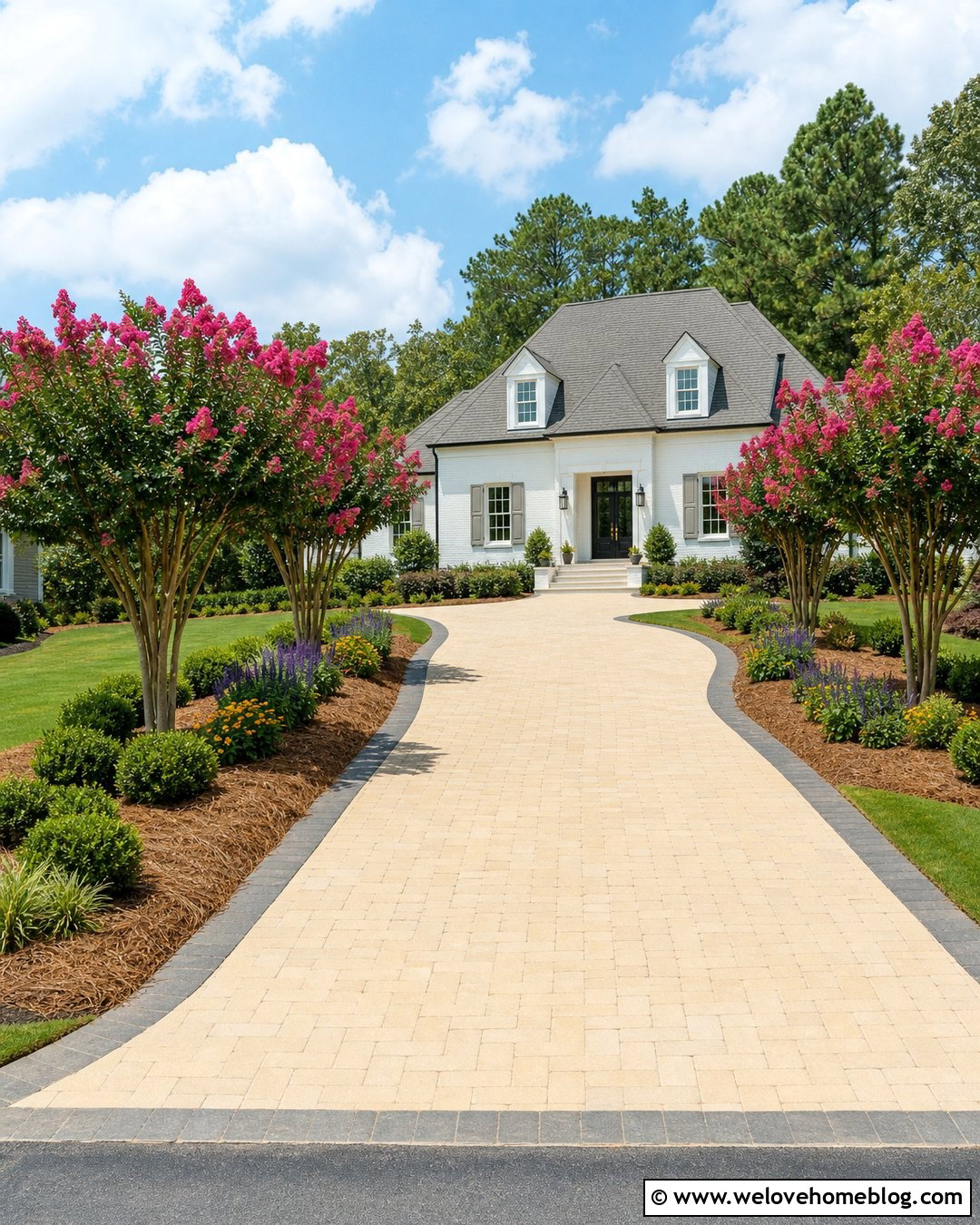
Crape myrtles bring summer flowers, smooth bark, and a light canopy to a long driveway in warm regions. Pair evenly spaced trees with a sweeping driveway of sand-colored concrete pavers and a contrasting charcoal border. Choose a cultivar that reaches the correct mature height so severe topping is never necessary. Place each trunk cluster in a wide planting bed filled with pine straw, compact evergreen shrubs, and heat-tolerant perennials. Repeating masses of lantana, salvia, or ornamental grasses can carry color along the full approach. Keep branches pruned high enough for comfortable driveway clearance while retaining the tree’s natural form. This bright, orderly composition works with Southern brick homes, Mediterranean-inspired houses, stucco residences, and modern farmhouses in areas where crape myrtles reliably tolerate local winters.
16. Little Gem Magnolia Trees Along A Concrete Driveway
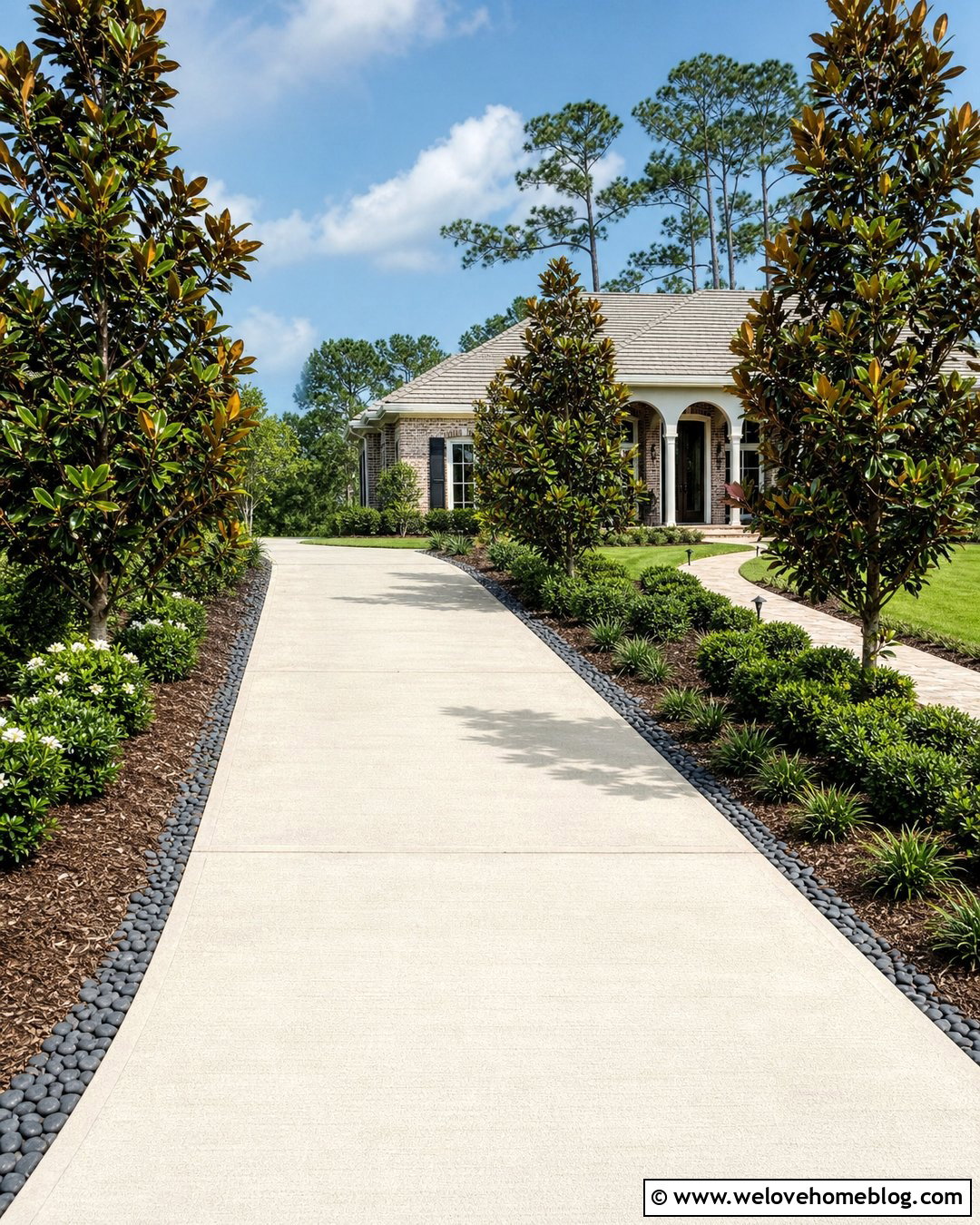
Little Gem southern magnolias can create an evergreen driveway border without the enormous scale of a full-size southern magnolia. Set them along a straight driveway of warm white poured concrete with a subtle broom finish. A narrow band of dark river rock can separate the concrete from broad mulched planting beds, while low gardenias, dwarf yaupon holly, or liriope repeat beneath the trees. The upright magnolias provide year-round screening, glossy foliage, and large white flowers. They still need adequate room for their mature width, so avoid squeezing them into a thin strip beside the pavement. Fallen leaves and petals should be expected as part of routine upkeep. This polished design suits Southern ranch homes, painted-brick houses, coastal residences, and compact estate-style properties.
17. Italian Cypress Trees Along A Mediterranean Driveway
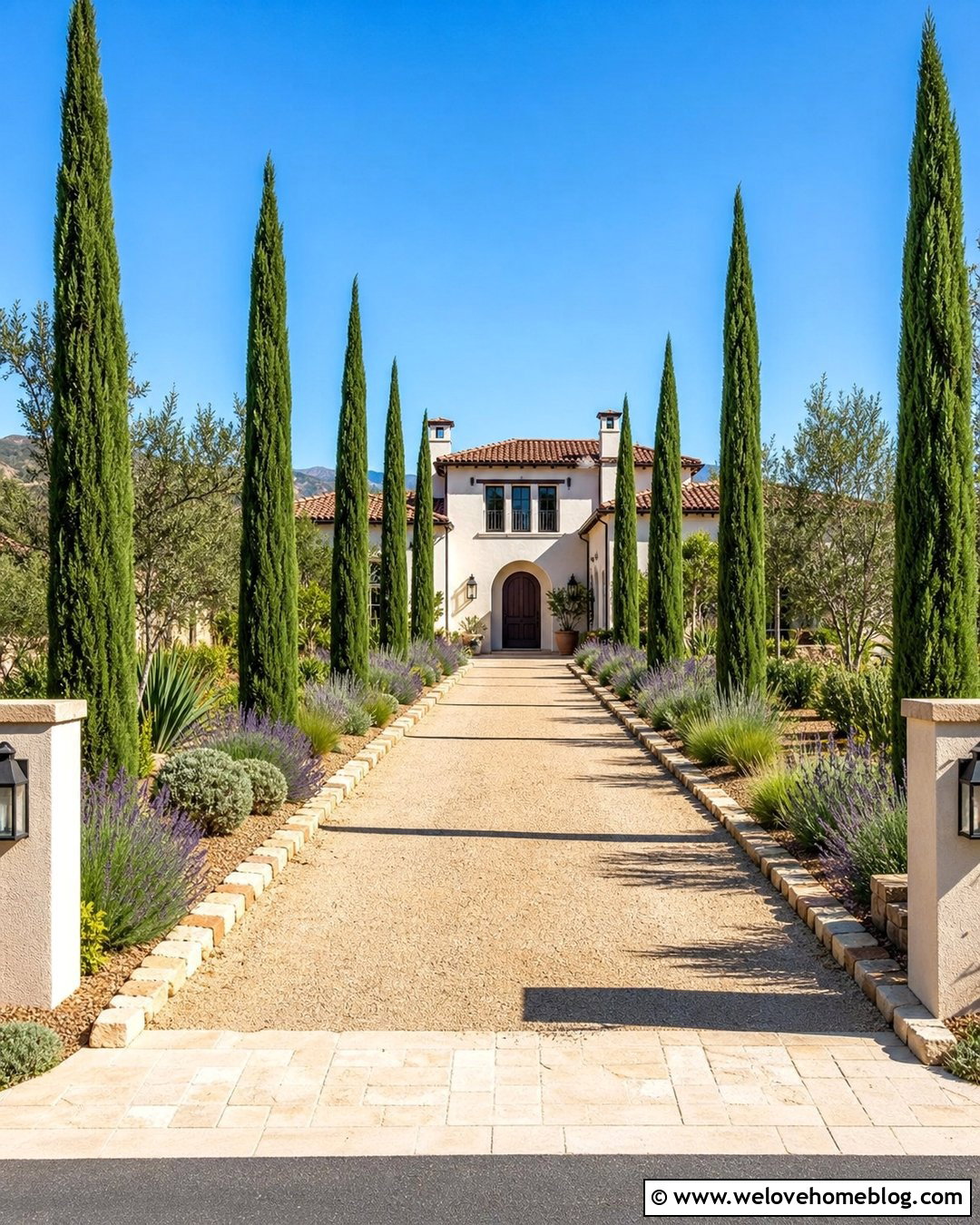
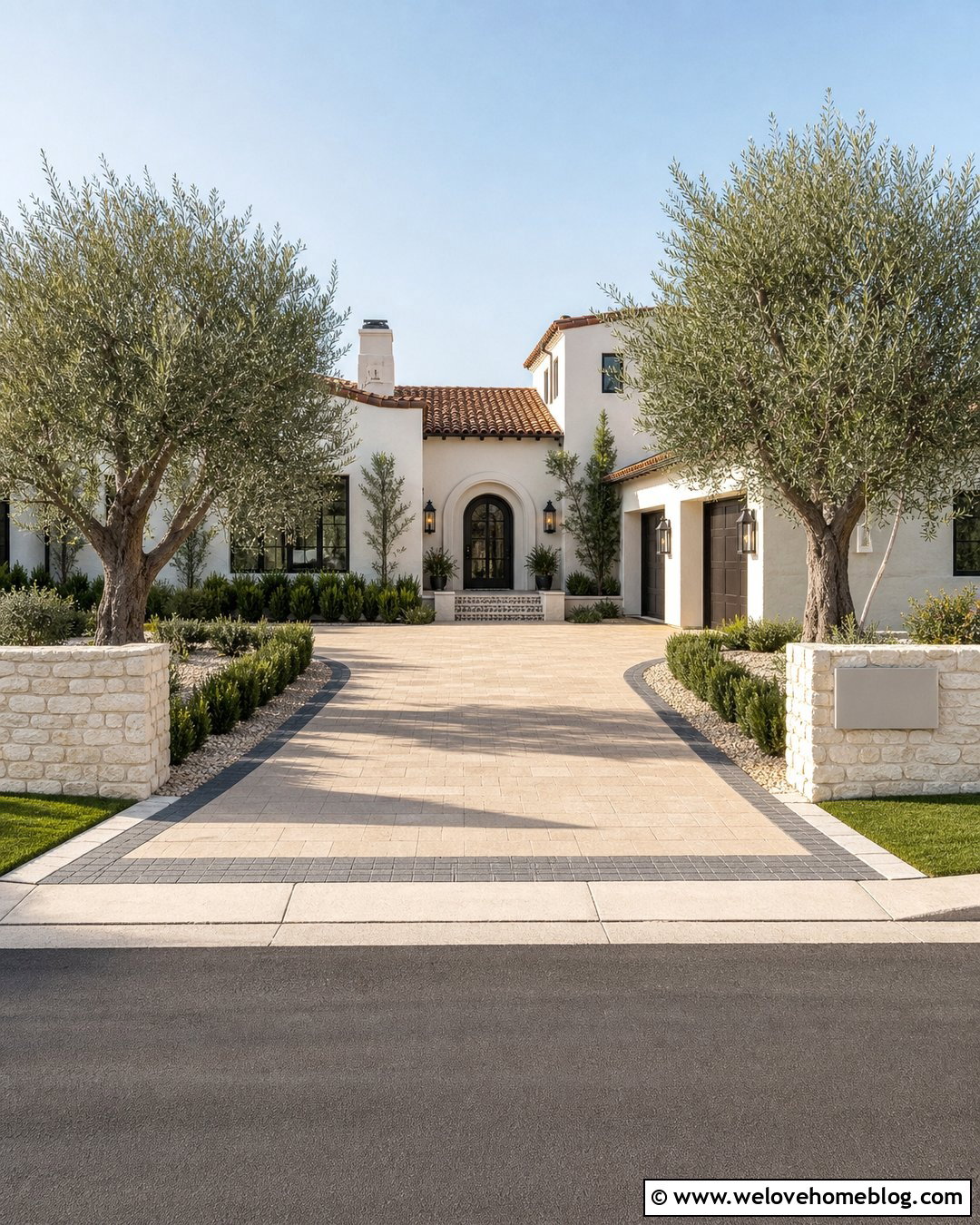
Tall Italian cypress trees create a narrow, unmistakably formal line in warm, relatively dry climates. Use them beside a straight driveway surfaced with pale tan decomposed granite and edged with warm limestone blocks. Their strong vertical shape can visually lengthen the approach while preserving more lateral space than broad-canopied trees. Keep the trunks back from the driveway in continuous beds containing lavender, rosemary, sage, and drought-tolerant ornamental grasses. Drip irrigation helps deliver water efficiently without regularly soaking the driveway surface. Italian cypress requires an appropriate climate and well-drained conditions, and local disease concerns should be considered before planting an entire row. The finished design is especially effective with stucco homes, terracotta roofs, Spanish Revival architecture, and Mediterranean-inspired houses featuring simple, symmetrical facades.
18. Taylor Juniper Trees Along A Narrow Gravel Driveway
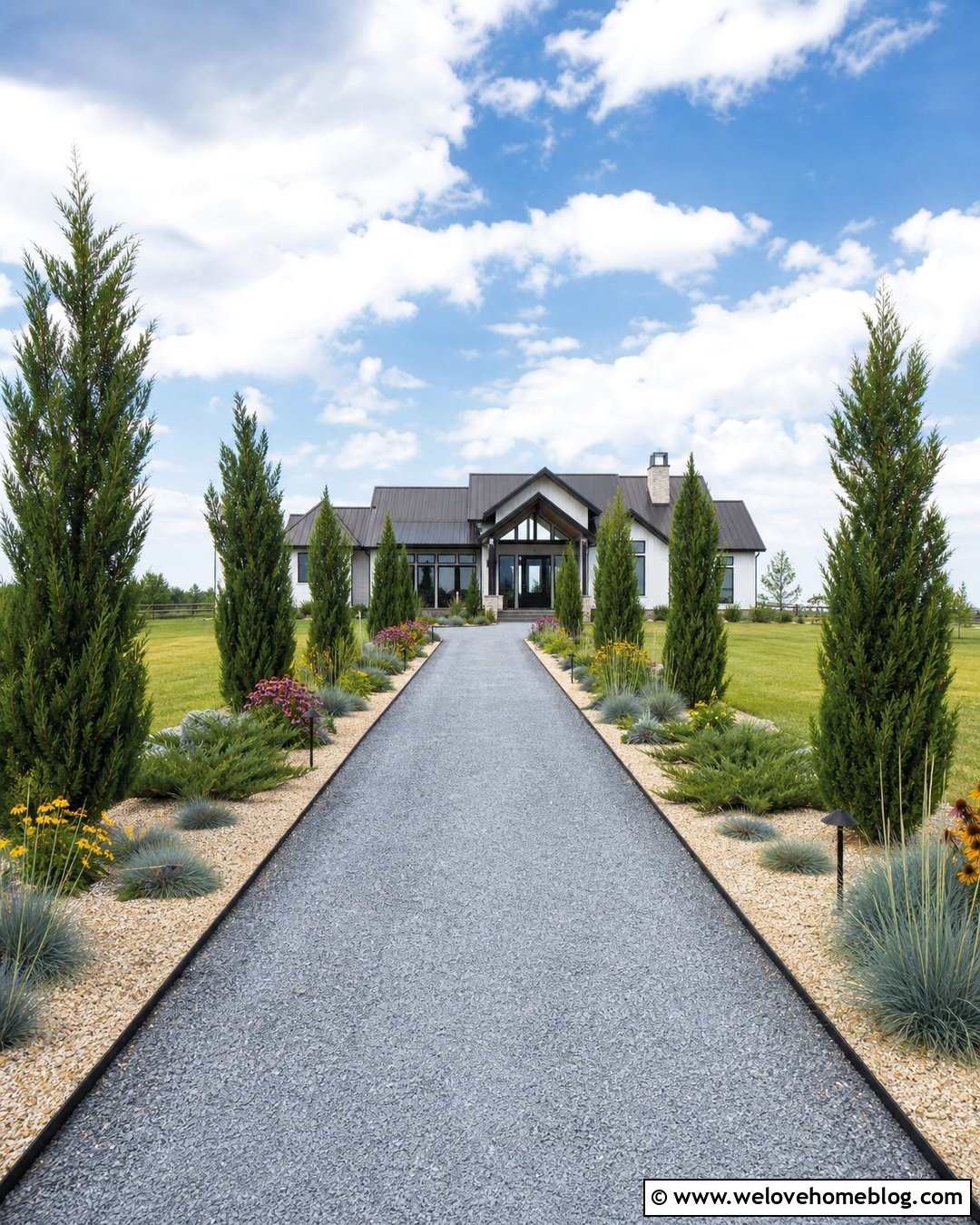
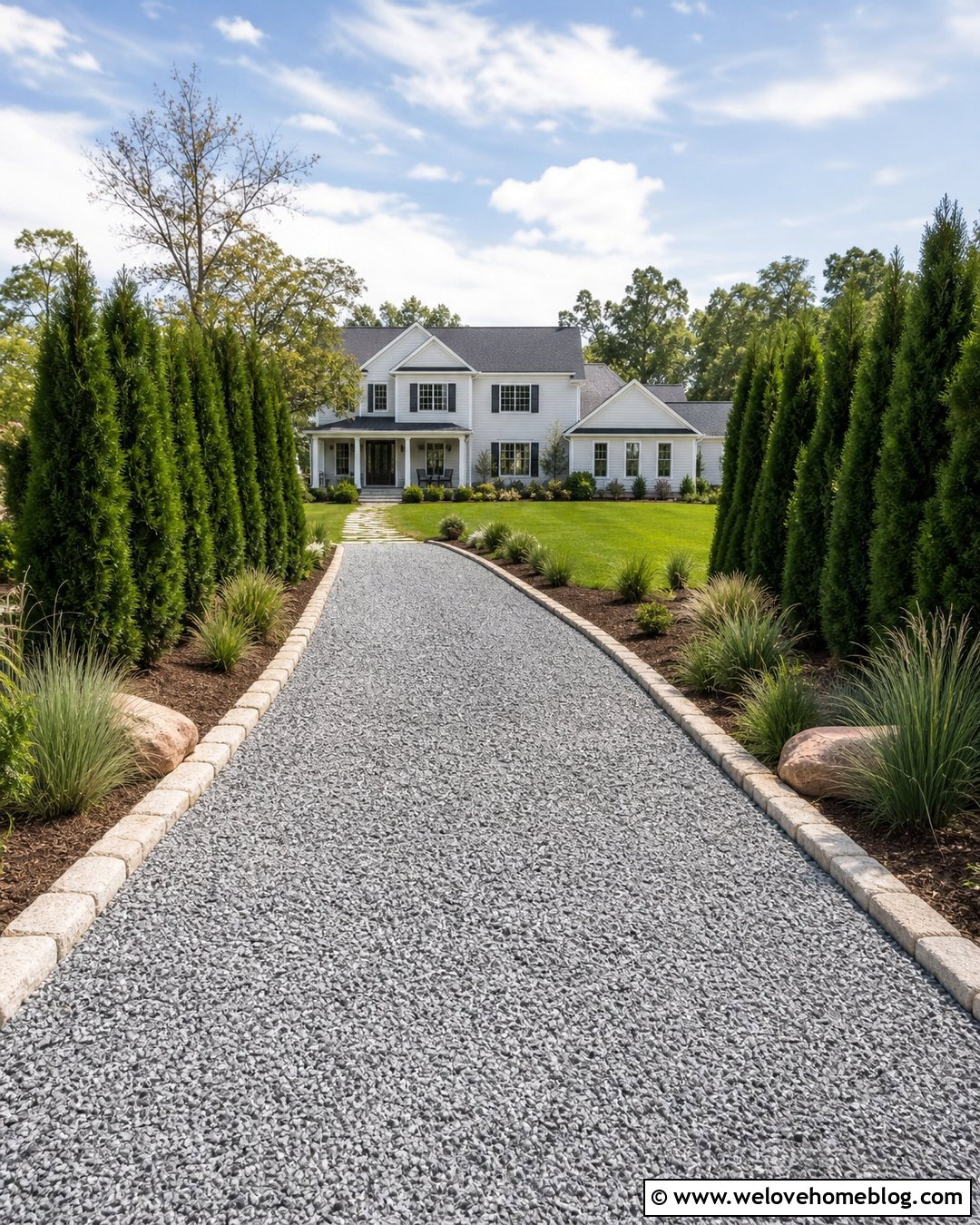
Taylor juniper is useful when the planting area beside a long driveway is narrow but year-round vertical greenery is wanted. Arrange the slim evergreen trees along a straight driveway of blue-gray crushed granite with black steel edging. Place them in a staggered pattern rather than crowding two rigid walls against the pavement. Gravel-mulched beds with blue fescue, creeping juniper, and drought-tolerant native flowers maintain a cohesive, low-maintenance appearance. The trees can screen neighboring land while keeping the drive visually open. Confirm that the site provides suitable drainage and sun, and space the plants for their mature width. This streamlined combination pairs well with modern farmhouses, prairie-style homes, small ranch properties, and cold-climate residences where an Italian cypress appearance is desired but winter hardiness is essential.
19. Green Giant Arborvitae Trees Along A Privacy Driveway
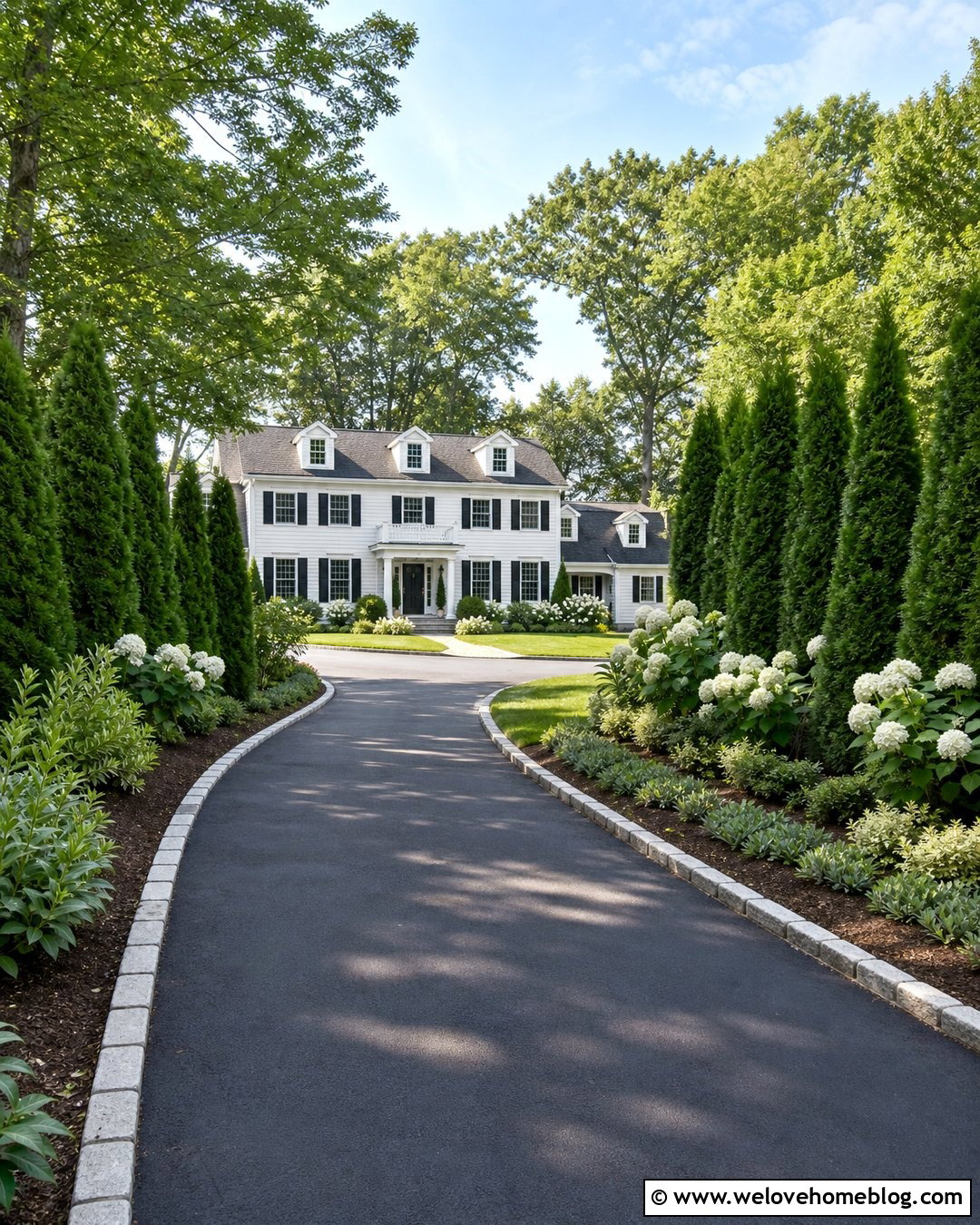
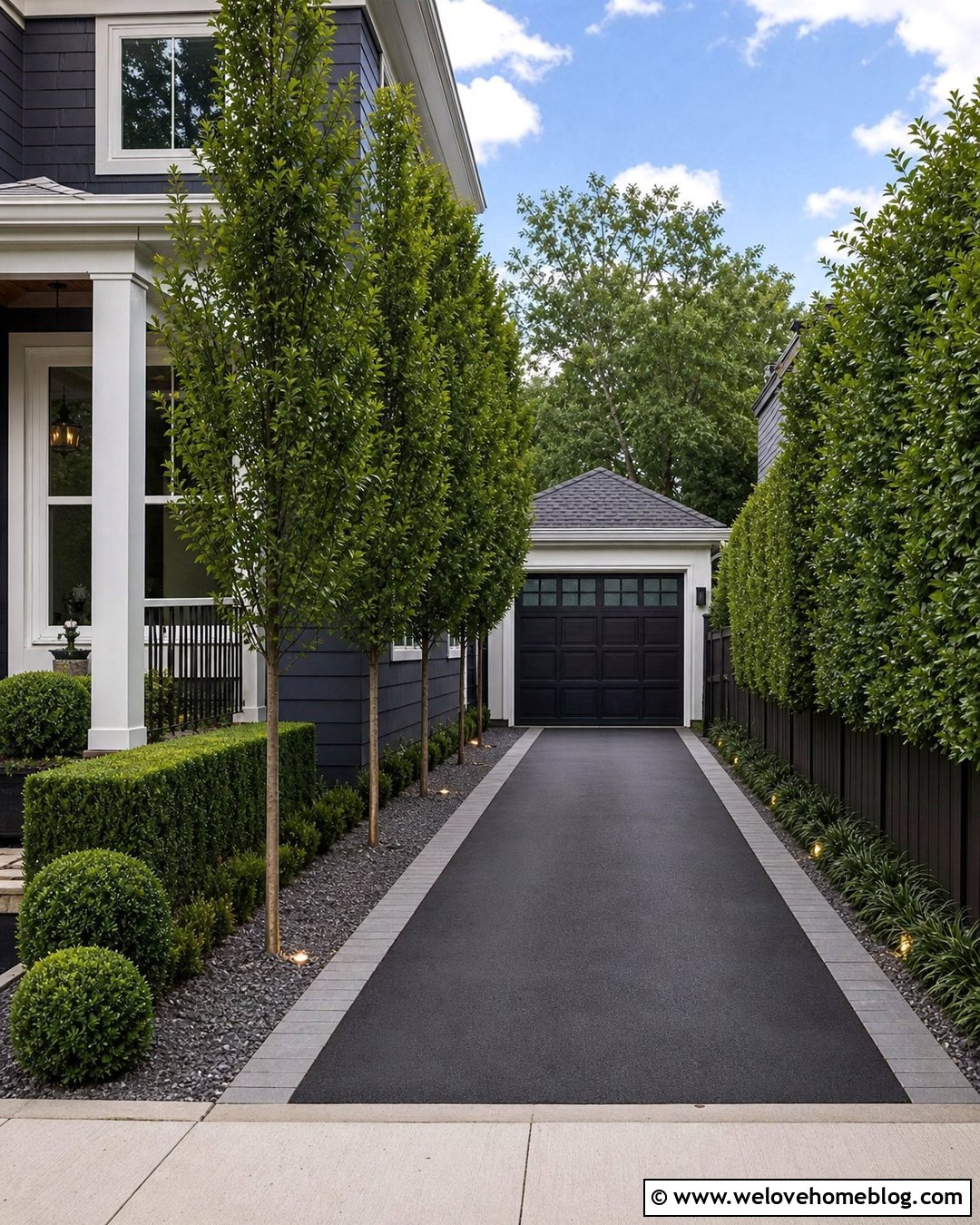
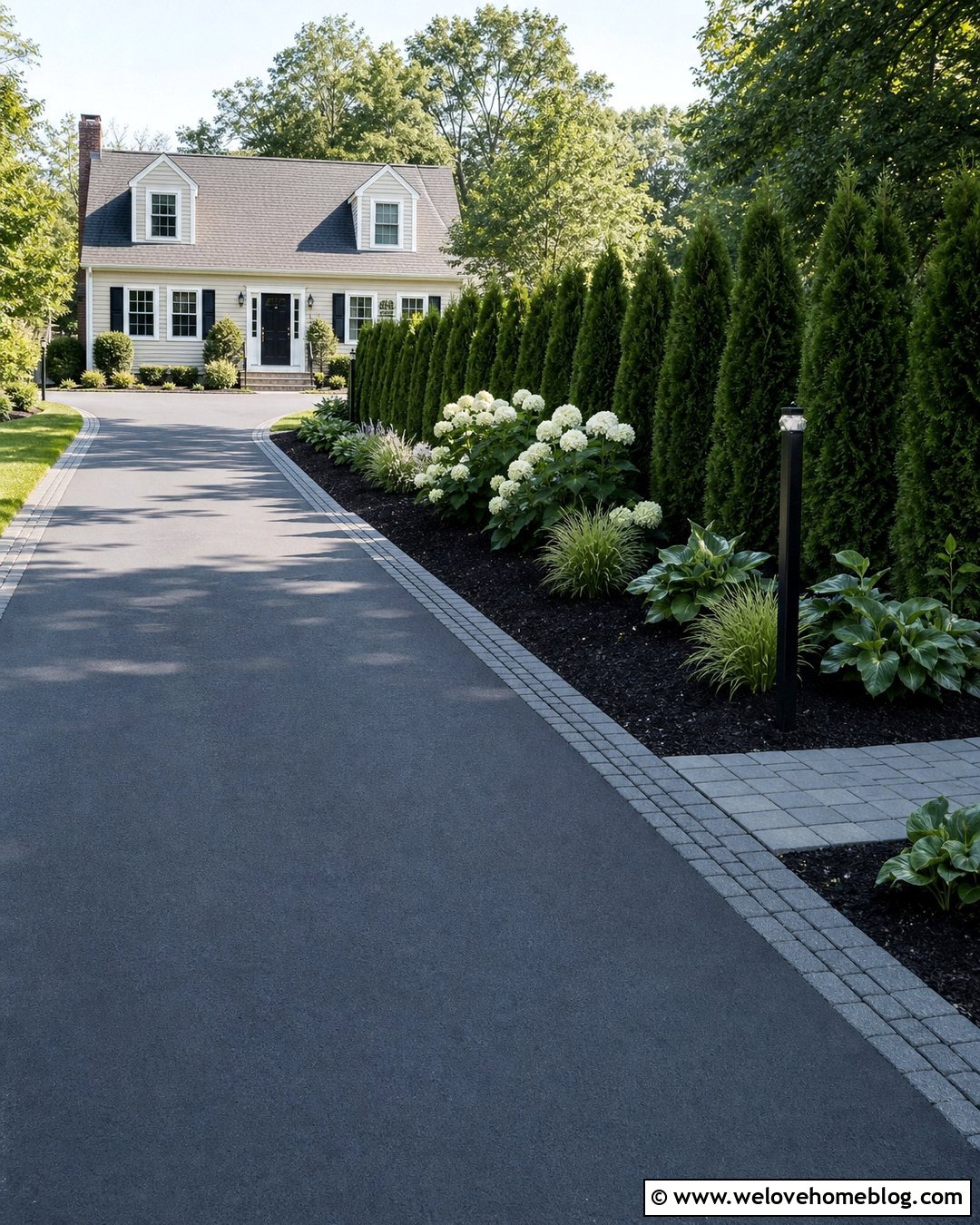
When privacy is the main objective, Green Giant arborvitae can form a substantial evergreen backdrop beside a long driveway. Use them with a wide, gently curved black asphalt surface edged by light gray concrete cobbles. Instead of placing the trees directly against the asphalt, create broad planting strips with enough room for their mature spread. A staggered arrangement feels softer and closes visual gaps more effectively than a cramped single row. Add hydrangeas, inkberry, or shade-tolerant ground covers along the front edge for depth. These vigorous evergreens should not be planted beneath utility lines or where regular shearing would be needed to keep them within bounds. The complete look suits large suburban lots, country homes, and properties needing separation from neighboring houses or roadside views.
20. Eastern Red Cedar Trees Along A Rustic Driveway
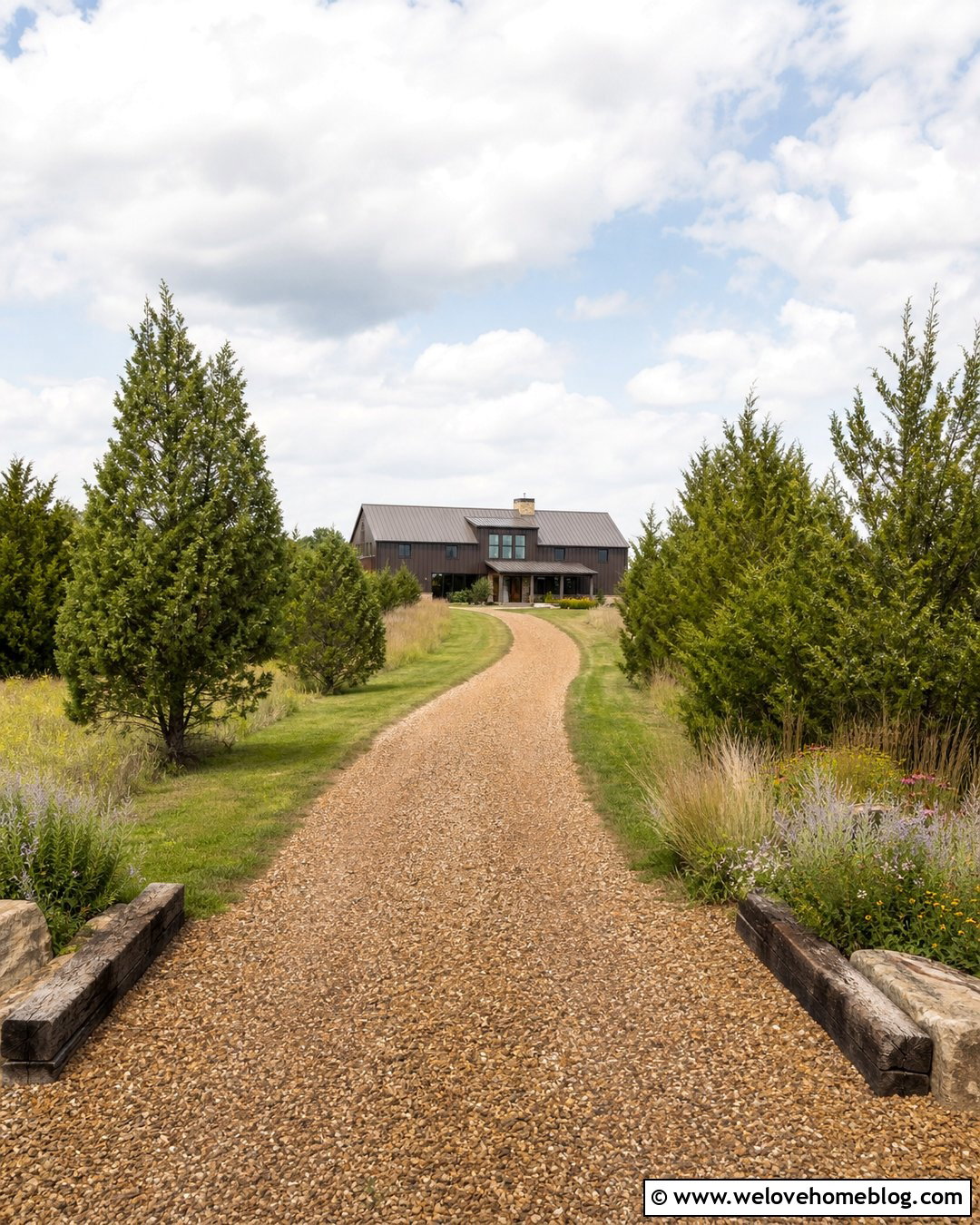
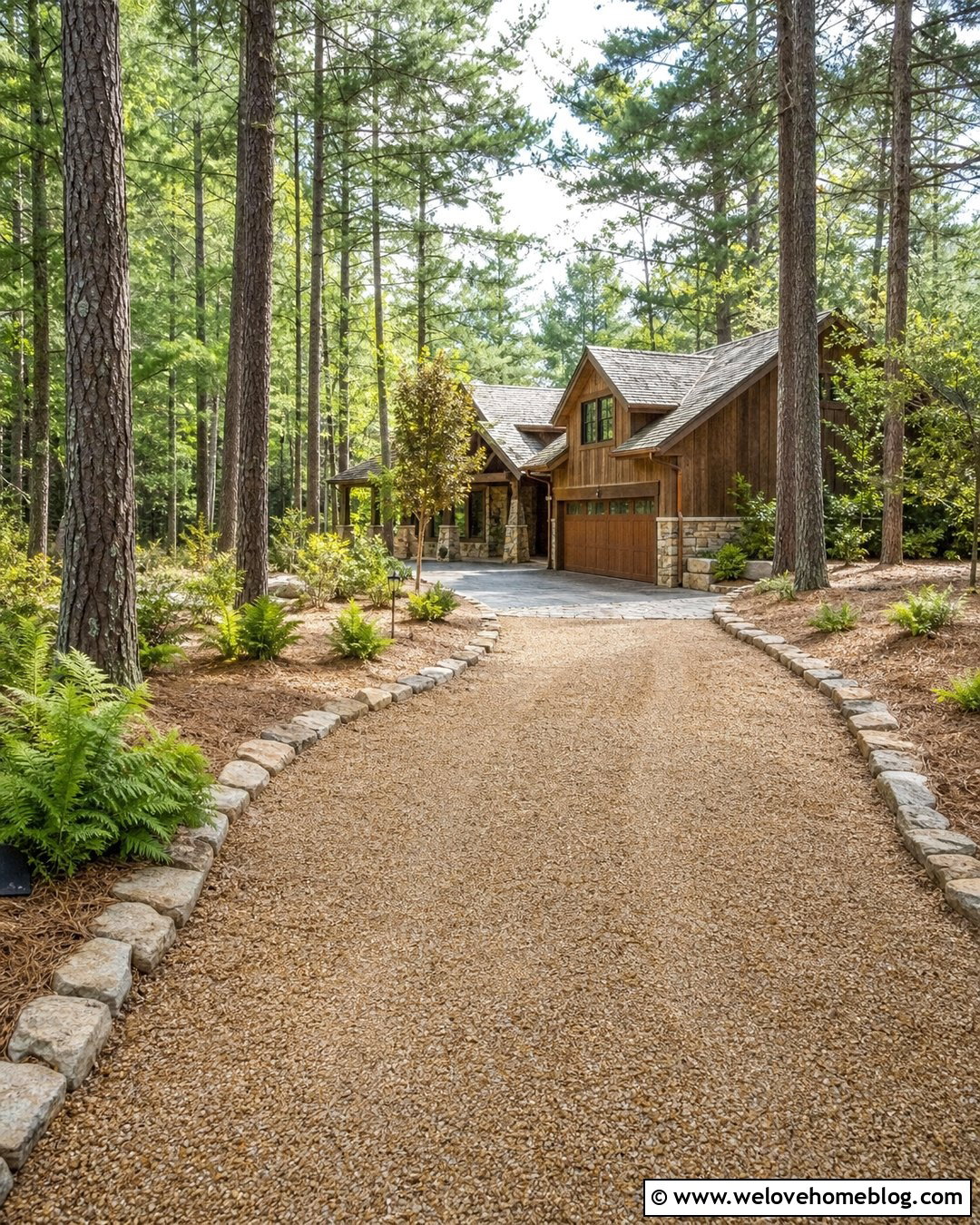
Eastern red cedar creates a durable, natural-looking entrance on rural properties, especially where native evergreens blend into surrounding fields or woodland. Line a long driveway of brown crushed stone with irregular groups of cedars rather than perfectly identical spacing. Reclaimed timber edging can contain the gravel near the entrance, while farther sections transition into mown meadow. Mix little bluestem, switchgrass, asters, and coneflowers between the trees to create a layered native border. Maintain open sightlines at the road and allow enough width for snow removal, trailers, and delivery vehicles. Eastern red cedar can provide screening and winter structure, but its suitability should be checked around orchards or other sensitive plantings. This design works beautifully with cabins, barndominiums, farmhouses, and rustic country residences.
21. Norway Spruce Trees Along A Wide Country Driveway
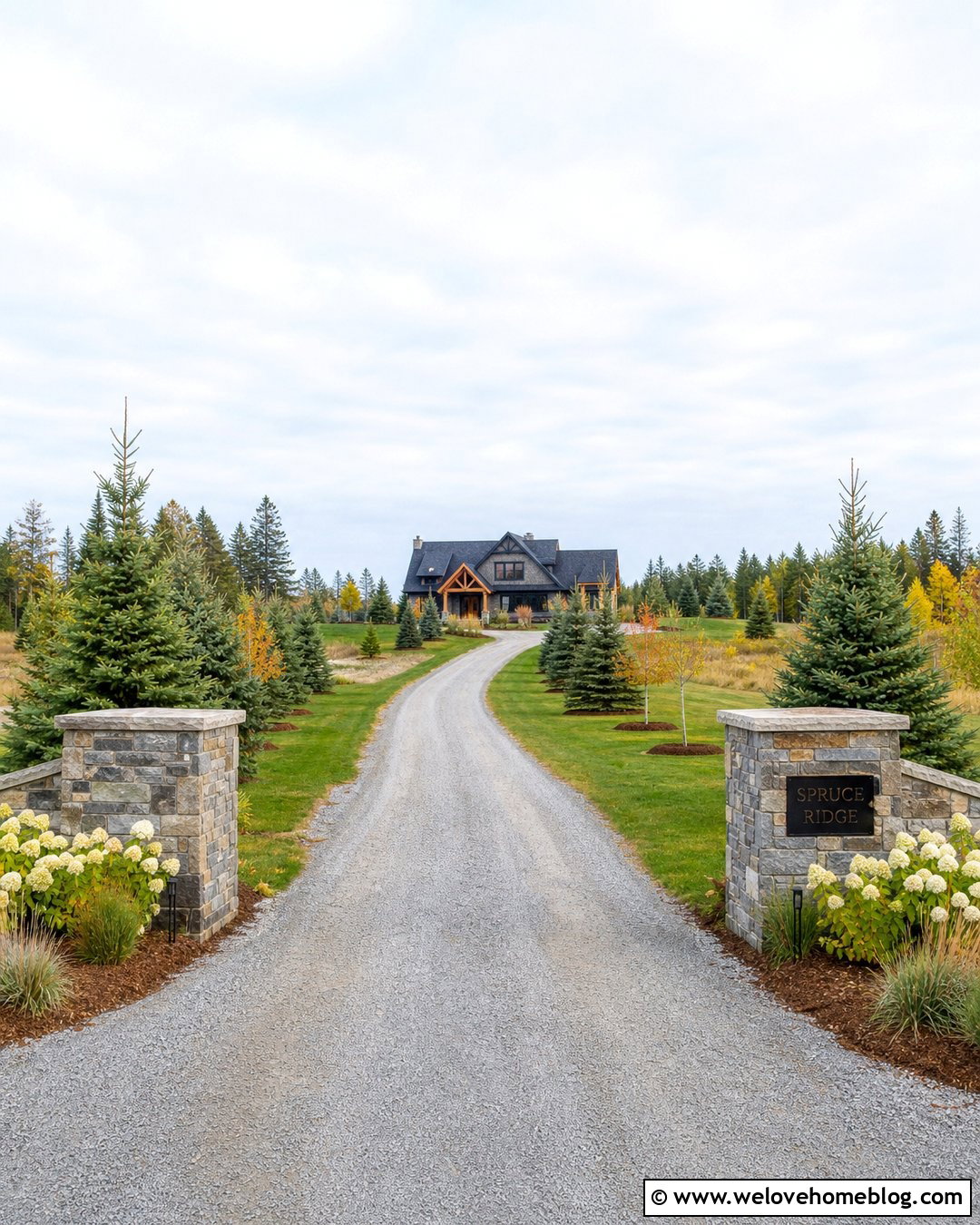
A spacious country driveway can support the sweeping lower branches and substantial mature size of Norway spruce. Plant the trees in a staggered double row beyond broad grass shoulders beside a long driveway of compacted gray limestone. Their evergreen mass creates wind protection and a strong sense of enclosure, but the trees should never be crowded against the travel surface. Keep drainage ditches, utility access, and winter snow storage in mind when establishing the planting line. Natural mulch rings can protect young trunks until the lower branches shade the ground. Use clusters of deciduous shrubs near the entrance to prevent the composition from feeling too dark or repetitive. This large-scale arrangement suits mountain homes, northern farmhouses, lodges, and rural properties exposed to cold winds.
22. Serbian Spruce Trees Along A Curved Cobblestone Driveway
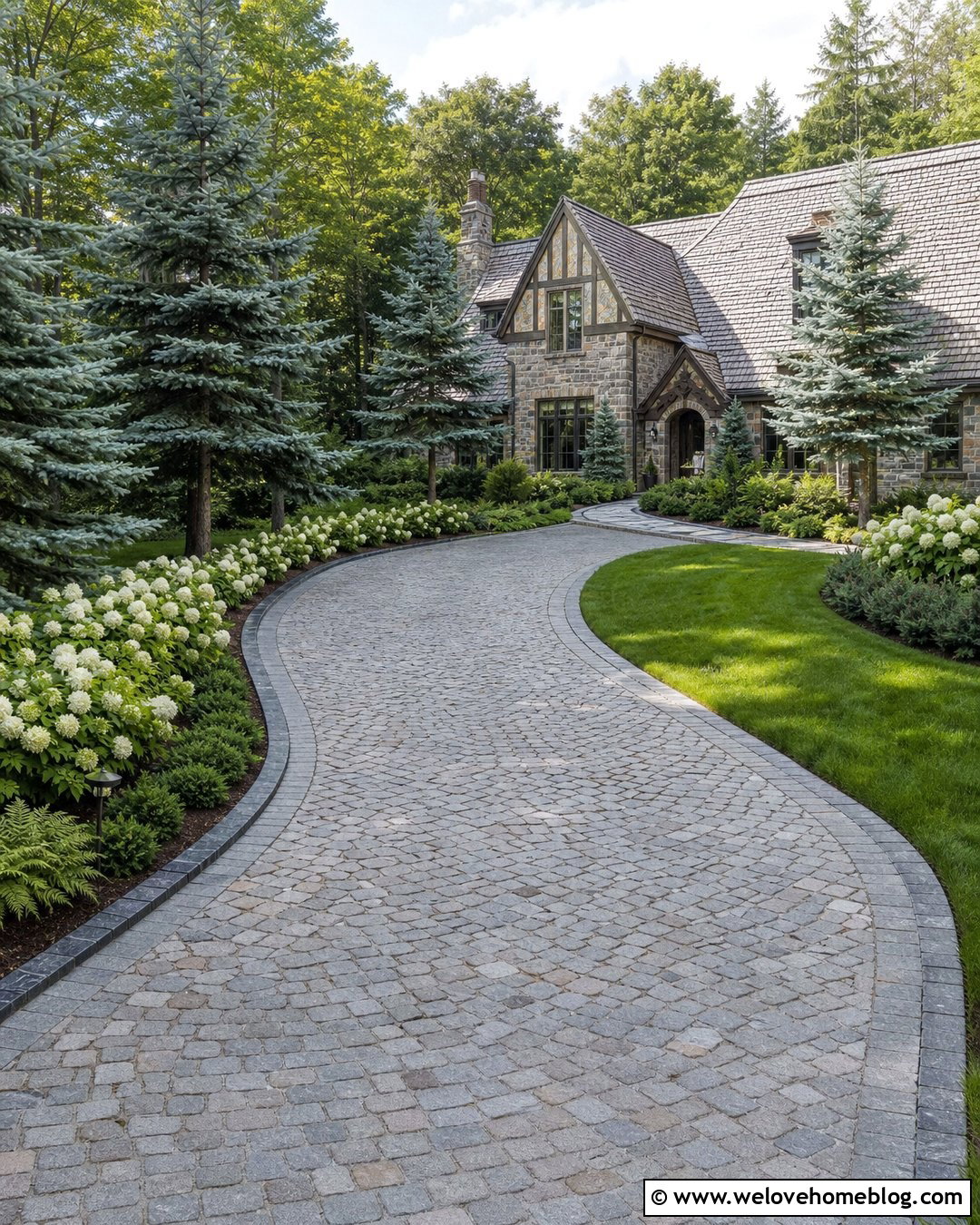
Serbian spruce has a relatively narrow, graceful profile that can provide evergreen structure without the visual weight of broader spruce species. Pair a loose row with a gently curved cobblestone driveway in mixed gray tones. Dark granite curbing can reinforce the edge, while sweeping lawn and deep beds of hydrangeas, ferns, and low junipers soften the transition. Offset the trees rather than planting them directly opposite one another, creating a natural rhythm as the driveway approaches the house. Their silvery undersides add subtle color when branches move in the wind. Provide suitable drainage and enough setback for mature growth. This sophisticated woodland design complements Tudor homes, stone cottages, European-inspired houses, and contemporary residences surrounded by mature deciduous trees.
23. River Birch Trees Along A Permeable Paver Driveway
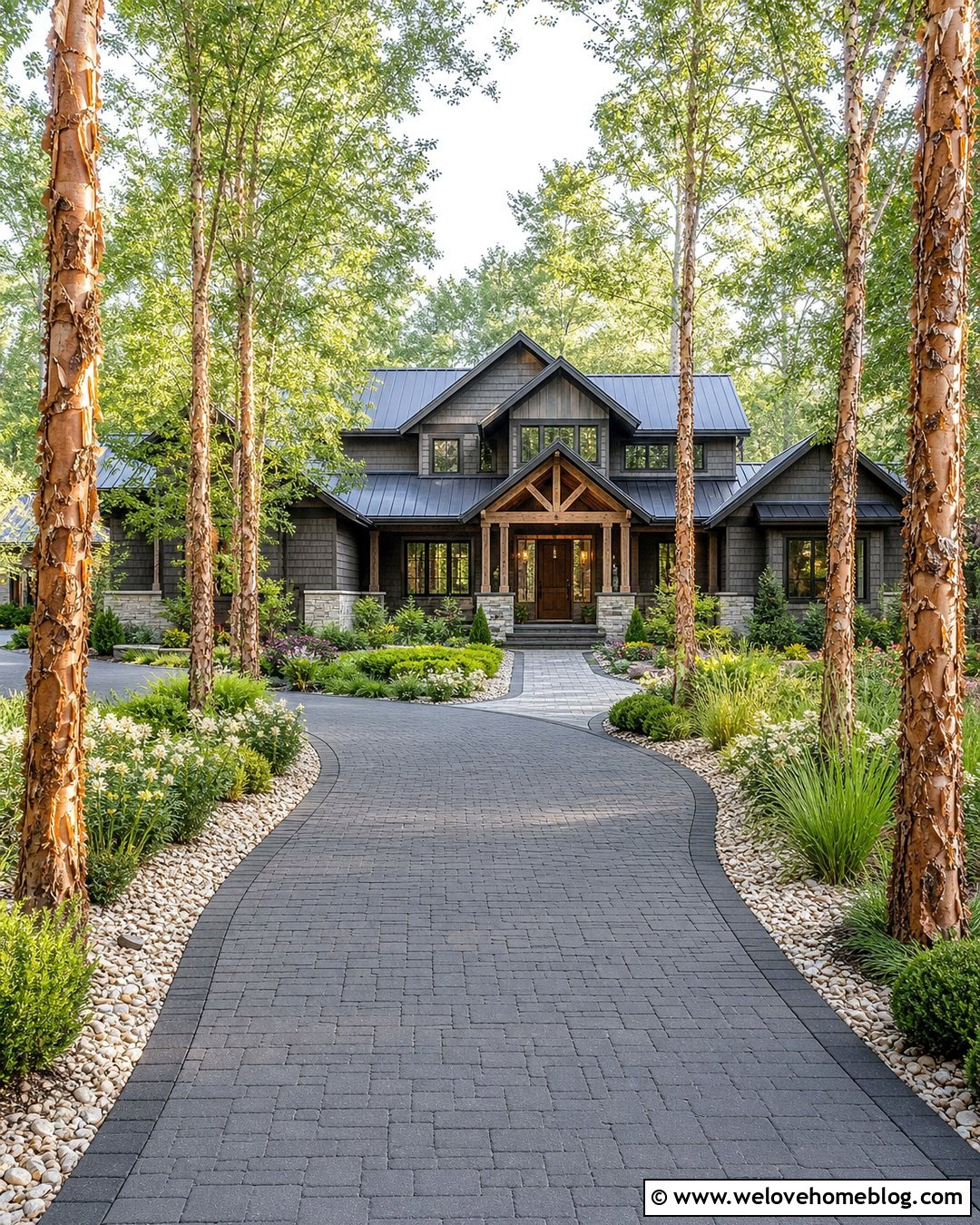
River birch brings peeling bark, fine branches, and movement to a driveway landscape with seasonally moist soil. Use single-trunk or carefully selected multi-trunk trees along a curved driveway of permeable charcoal concrete pavers. Broad bioswale-style planting beds can collect runoff beyond the pavement, combining the birches with sedges, sweetspire, inkberry, and moisture-tolerant perennials. Because mature roots and trunks need room, avoid small pavement cutouts or narrow strips. Light-colored gravel around the outer beds can highlight the cinnamon-toned bark while keeping mulch away from the trunks. Expect seasonal twig and leaf cleanup as part of maintenance. This complete water-conscious design pairs well with modern woodland houses, contemporary Craftsman homes, lake properties, and residences where stormwater must be managed attractively.
24. Bald Cypress Trees Along A Long Wet-Site Driveway
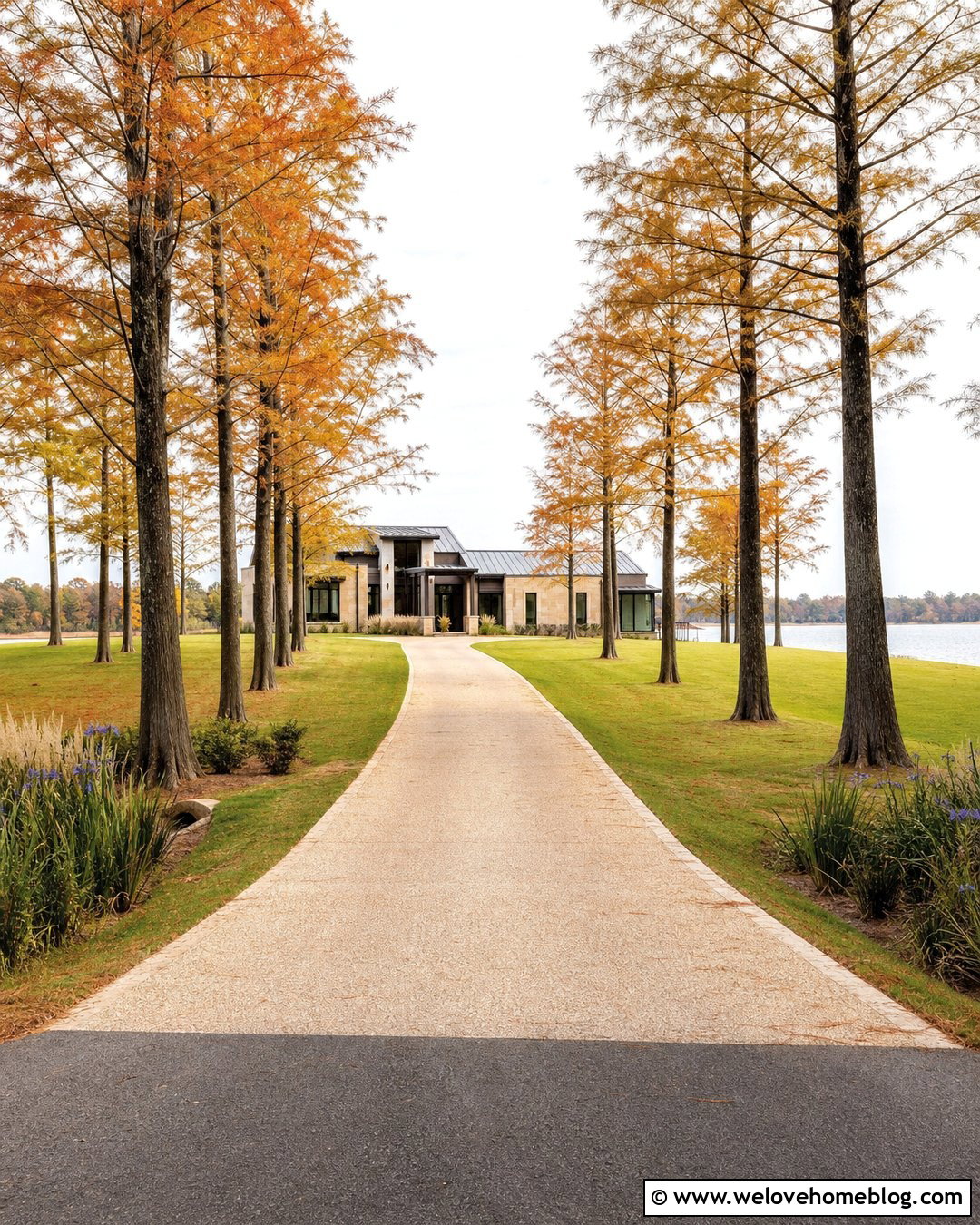
Bald cypress can create a distinctive avenue where a long driveway crosses damp ground, but it should be positioned thoughtfully around pavement and drainage structures. Use a raised driveway of tan exposed-aggregate concrete with wide grass shoulders and shallow planted swales. Set the trees well beyond the pavement edge so their trunks, roots, and possible knee development do not interfere with the driving surface. Moisture-loving iris, rushes, buttonbush, and native grasses can fill the drainage areas between trees. In fall, the feathery foliage develops warm color before dropping, giving this deciduous conifer strong seasonal interest. The design is well suited to Southern and southeastern properties, lake houses, contemporary rural homes, and low-lying sites where ordinary driveway trees may struggle with wet soil.
25. Male Ginkgo Trees Along A Circular Paver Driveway
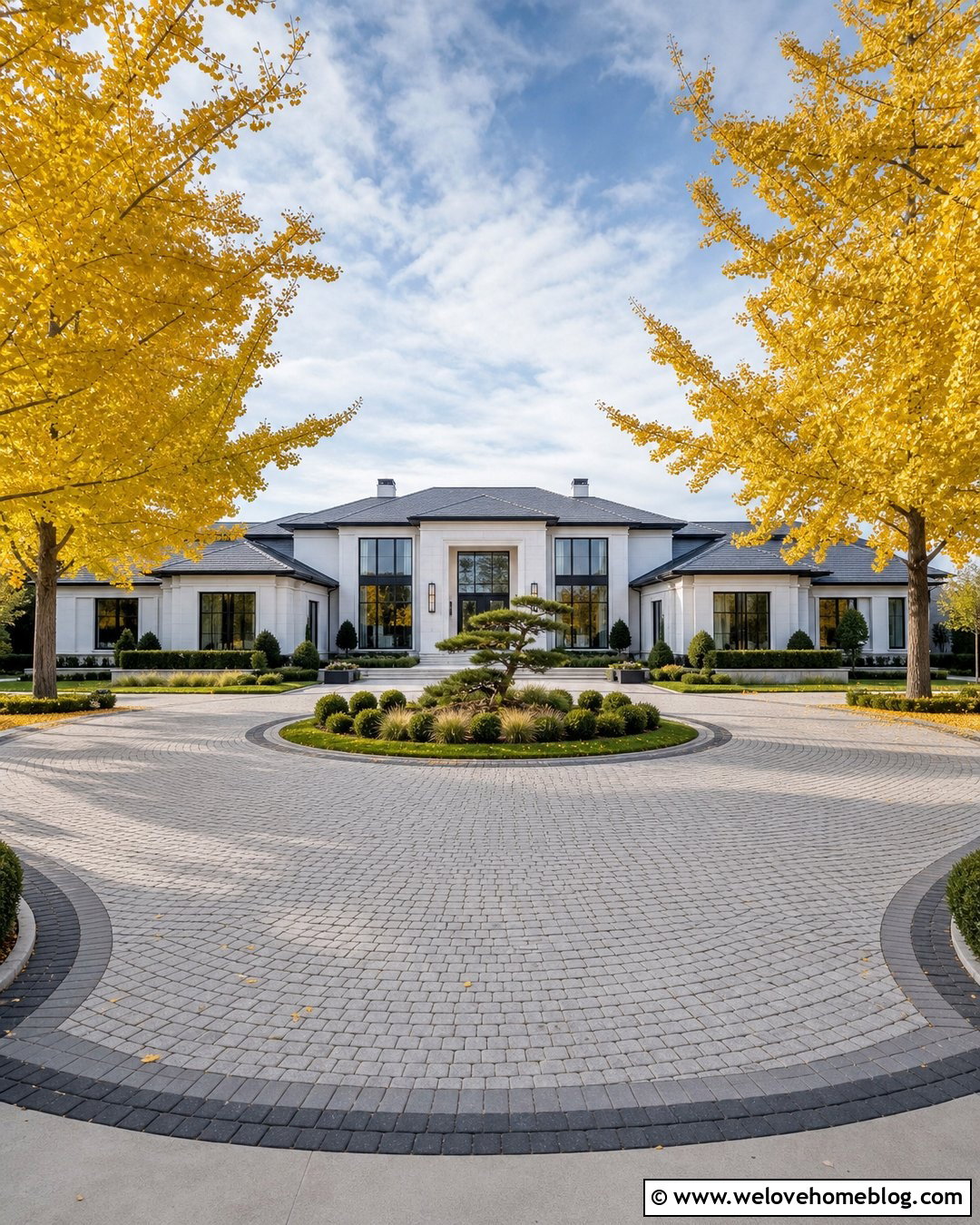
For a memorable final approach, use male ginkgo trees to frame a broad circular driveway made from light gray concrete pavers in a fan pattern. The trees can stand around the outside curve, leaving the central island open for lawn, a sculptural evergreen, and low ornamental grasses. A charcoal paver band defines both edges and connects the circle to the front walkway. Select a male cultivar with an upright or uniform habit to avoid messy fruit and maintain a consistent avenue. Golden autumn foliage gives the entire entrance a dramatic seasonal transformation. Leave substantial planting space between trunks and paving, and avoid placing trees where they restrict road visibility. This formal arrangement suits contemporary estates, large colonials, and symmetrical modern homes.
Conclusion:
The best driveway tree is one that fits the property after it reaches maturity, not simply the tree that looks attractive at the nursery. Compare expected height, canopy width, rooting space, climate tolerance, drainage needs, litter, and pruning requirements before selecting a full row. Large trees need wide planting zones, while columnar evergreens and smaller flowering trees can work where space is tighter. It is also wise to confirm local disease concerns and recommended cultivars with a regional extension office or qualified arborist. These 25 best trees to line a long driveway ideas show how tree choice, driveway material, edging, lighting, and supporting plants can work together to create a practical, lasting entrance.

Related posts:


Leave a Reply