
Choosing the right trees can turn an ordinary driveway into a welcoming, well-framed approach that improves privacy, shade, seasonal color, and curb appeal. These 25 trees to line driveway ideas include narrow evergreens, flowering ornamentals, native trees, and large-canopy options for different climates and property sizes. Before planting, consider each tree’s mature spread, root space, sunlight needs, drainage, and distance from pavement, utilities, gates, and buildings. Consistent spacing creates a formal avenue, while staggered planting feels more natural. Mulched beds, low ground covers, stone borders, and attractive driveway materials help connect the trees to the wider landscape. Use the following 25 trees to line driveway ideas to create an entrance that looks balanced in every season.

1. Italian Cypress Gravel Driveway
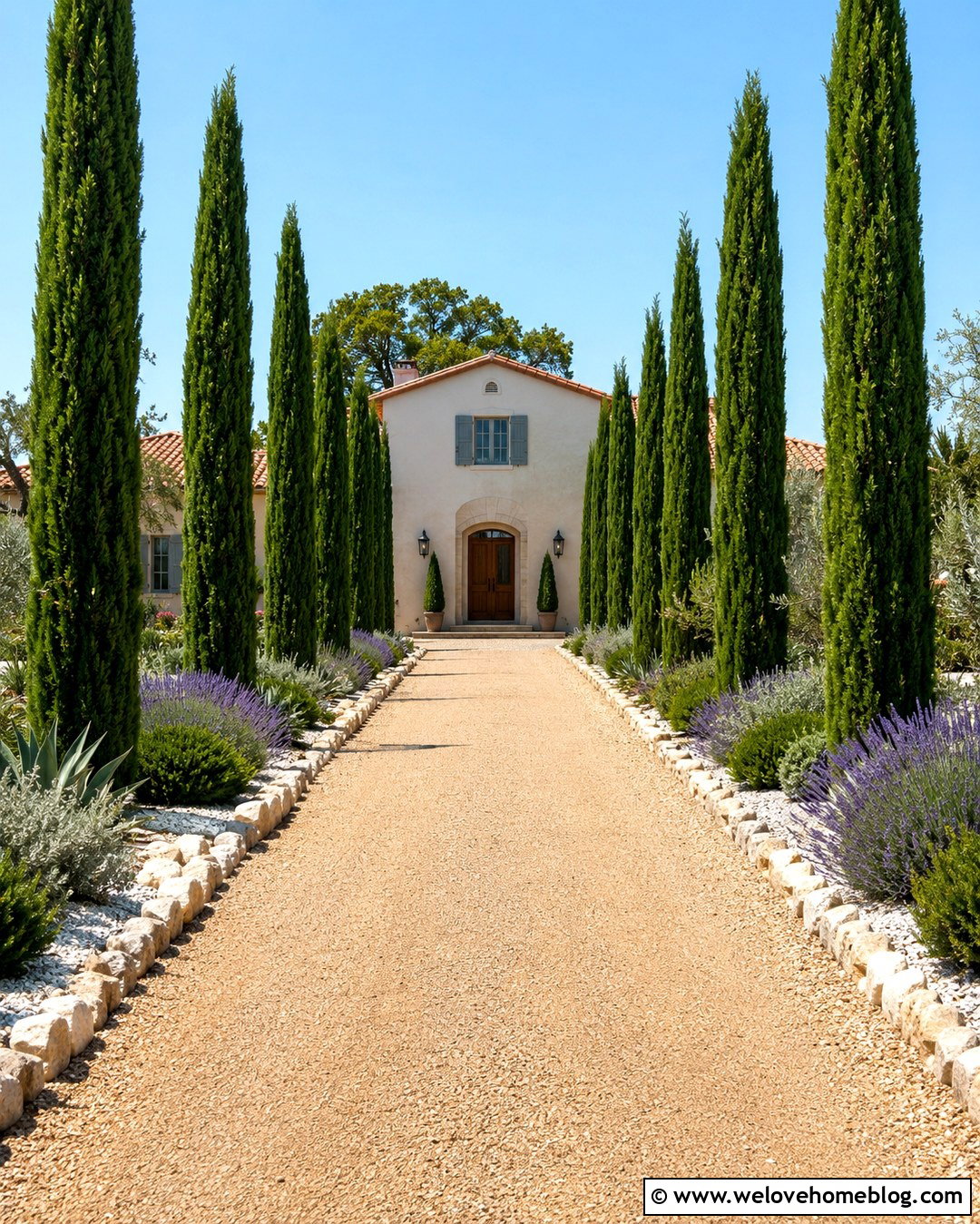
Italian cypress creates a tall, narrow frame that suits warm, dry landscapes and properties with limited planting width. Place evenly spaced trees along both sides of a straight beige gravel driveway to emphasize its length without crowding vehicles. Steel edging or pale limestone curbing keeps loose gravel away from the planting beds. Around each tree, use drought-tolerant lavender, rosemary, low ornamental grasses, and light-colored gravel mulch. This combination works especially well with stucco, Spanish Colonial, and Mediterranean-style homes. Italian cypress needs good drainage and enough setback from the driving surface to reach its mature width. Repeating the same tree, spacing, and understory produces a formal appearance, while simple planting beds keep maintenance manageable.
2. Emerald Green Arborvitae Paver Driveway
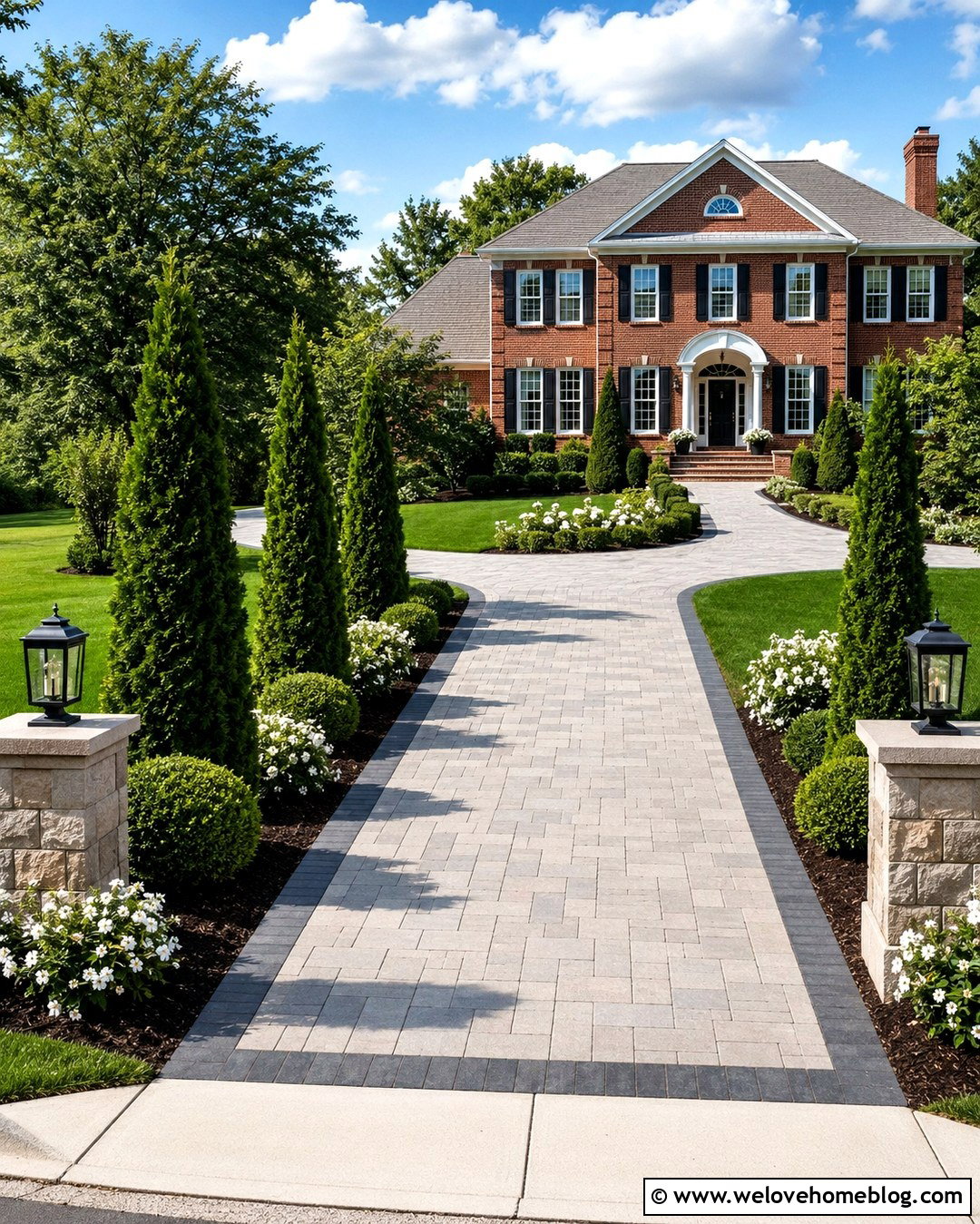
For a compact suburban entrance, Emerald Green arborvitae provides tidy evergreen structure without the broad spread of many screening trees. Line a straight driveway made from warm gray concrete pavers with evenly spaced arborvitae rather than planting them as one continuous hedge. Small gaps preserve air movement and allow every tree to develop a defined shape. Add a charcoal paver border, low boxwood mounds, and white flowering perennials to create a polished transition between the driveway and lawn. This design fits Colonial, Cape Cod, and traditional brick homes. Check the expected mature width of the selected plants before deciding on spacing. A drip irrigation line beneath dark mulch can simplify watering and keep the narrow side beds looking consistently neat.
3. Taylor Juniper Asphalt Driveway
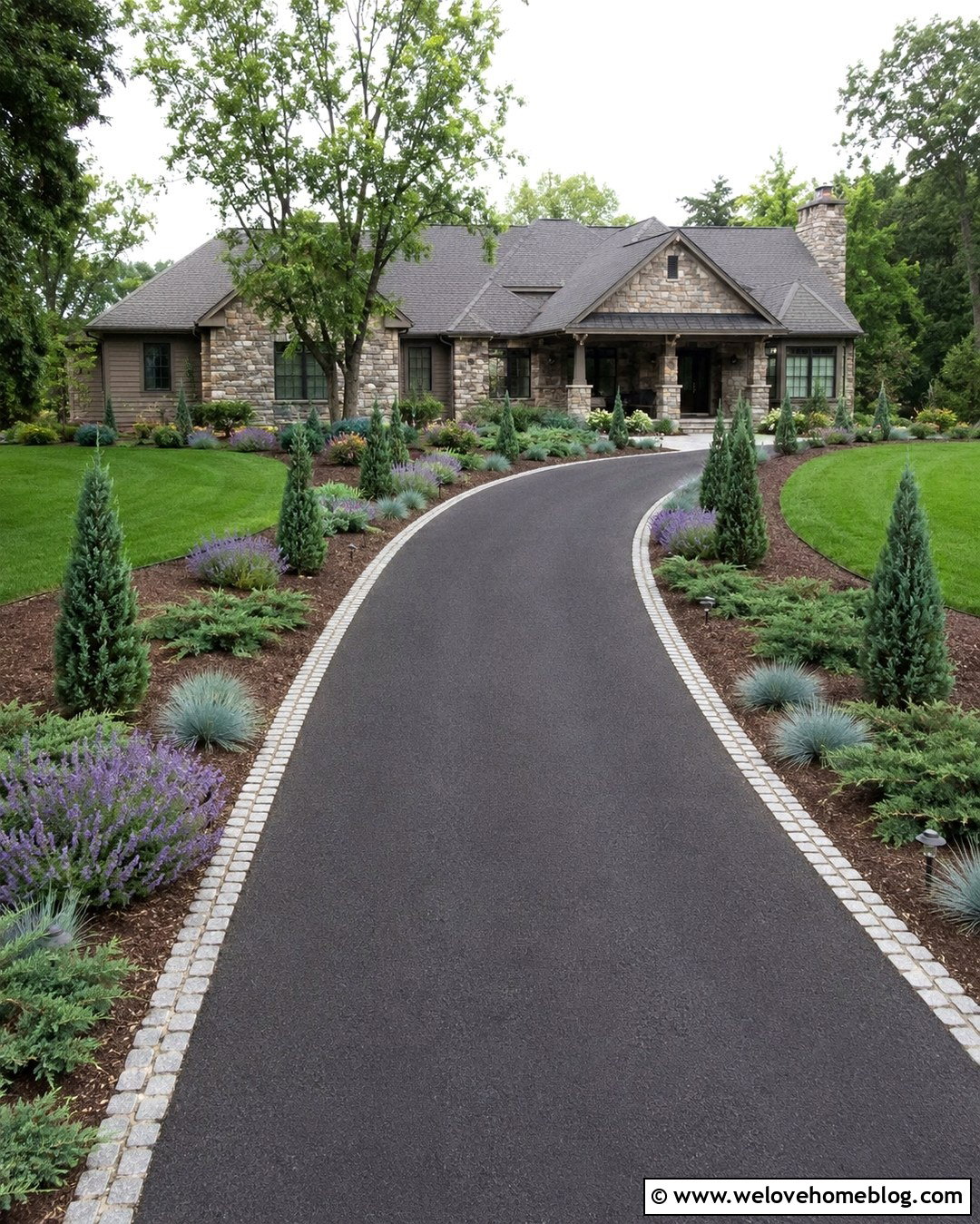
Taylor juniper is useful when you want narrow evergreen columns beside a driveway but need a cooler, more relaxed look than Italian cypress. Its blue-green foliage pairs beautifully with a smooth black asphalt surface and a light gray cobblestone edge. Plant the trees in matched rows along a straight or gently curved approach, leaving open lawn between individual specimens. Low-growing catmint, creeping juniper, and blue fescue can soften the bases without hiding the upright forms. This combination complements stone ranch homes, modern farmhouses, and rustic Craftsman exteriors. Avoid squeezing the trees into tiny strips of compacted soil. A broad mulched bed provides better growing conditions and protects the trunks from mowers, string trimmers, and winter maintenance equipment.
4. Columnar Hornbeam Concrete Driveway
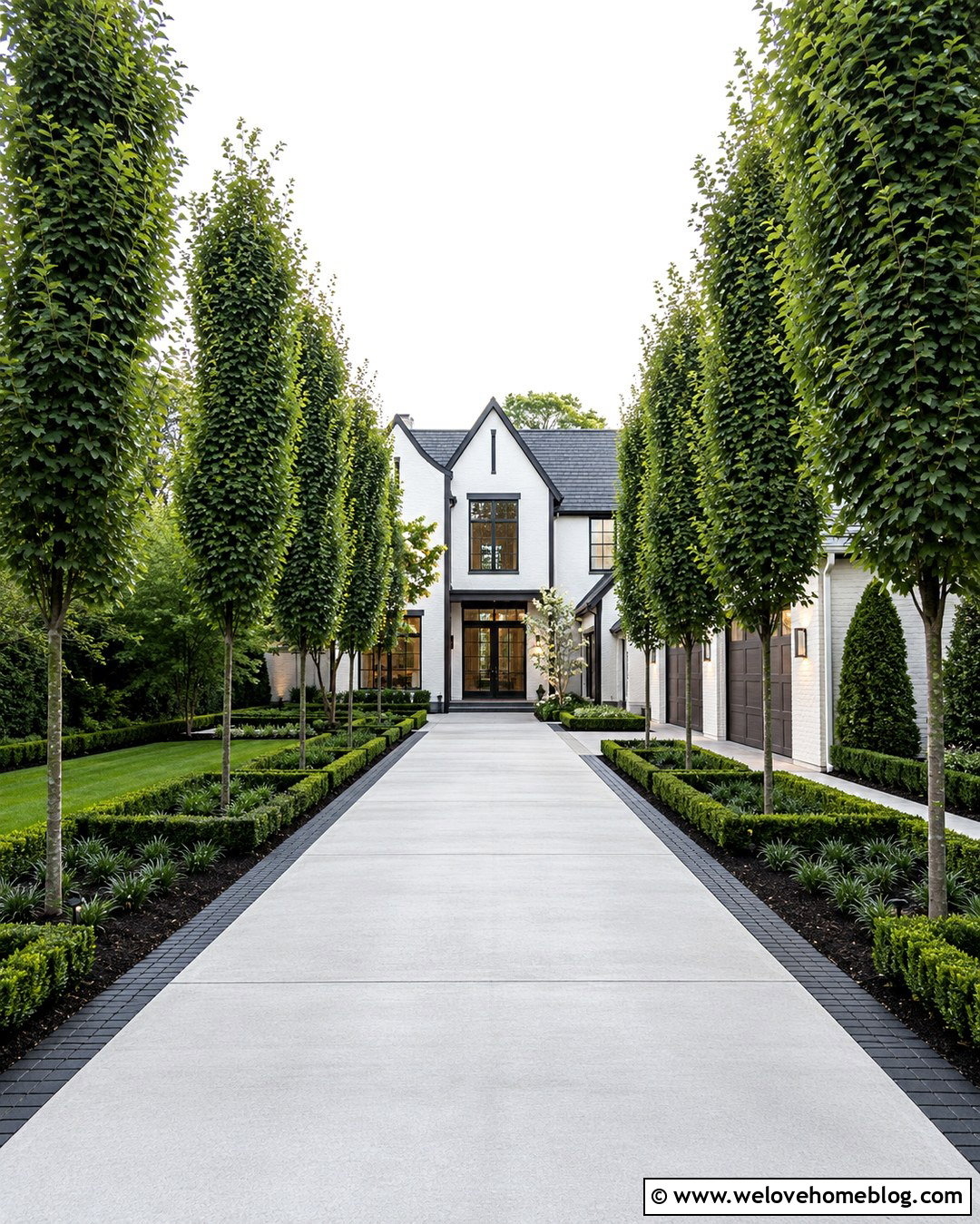
Columnar hornbeam creates a crisp, architectural avenue beside a modern poured concrete driveway. The upright trees can be planted in symmetrical rows, then lightly shaped when young to encourage consistent form and suitable clearance. Separate the gray concrete from the planting beds with a narrow black paver ribbon. Beneath the trees, use clipped boxwood, liriope, or simple gravel mulch for a restrained landscape that does not compete with the canopy. This complete look works with contemporary, Tudor, and formal European-inspired houses. Hornbeam is especially attractive where seasonal foliage is preferred over a solid evergreen screen. Give every tree enough soil volume and room for its mature crown. Regular structural pruning is easier and healthier than trying to reduce overgrown trees later.
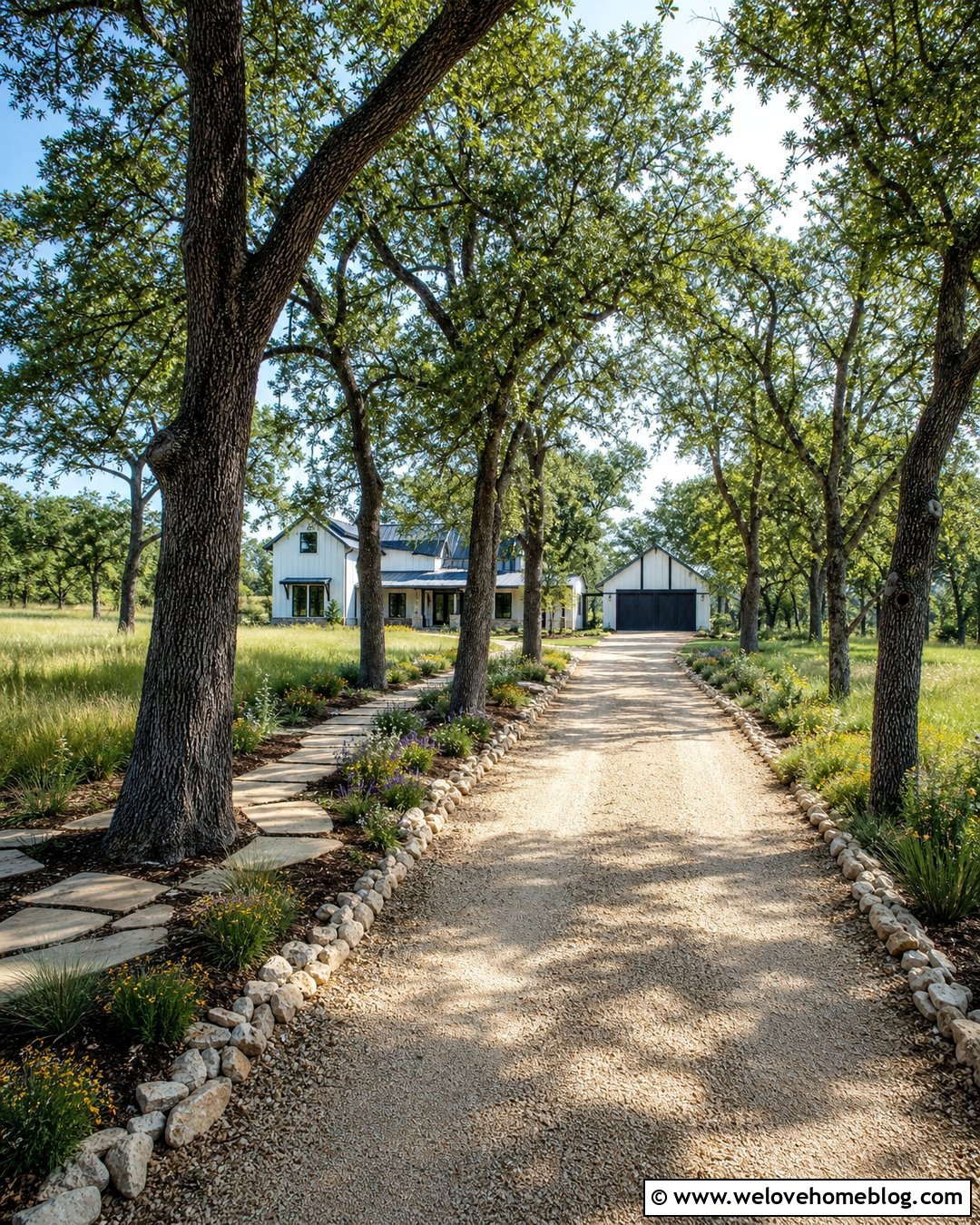
5. Columnar Oak Long Driveway
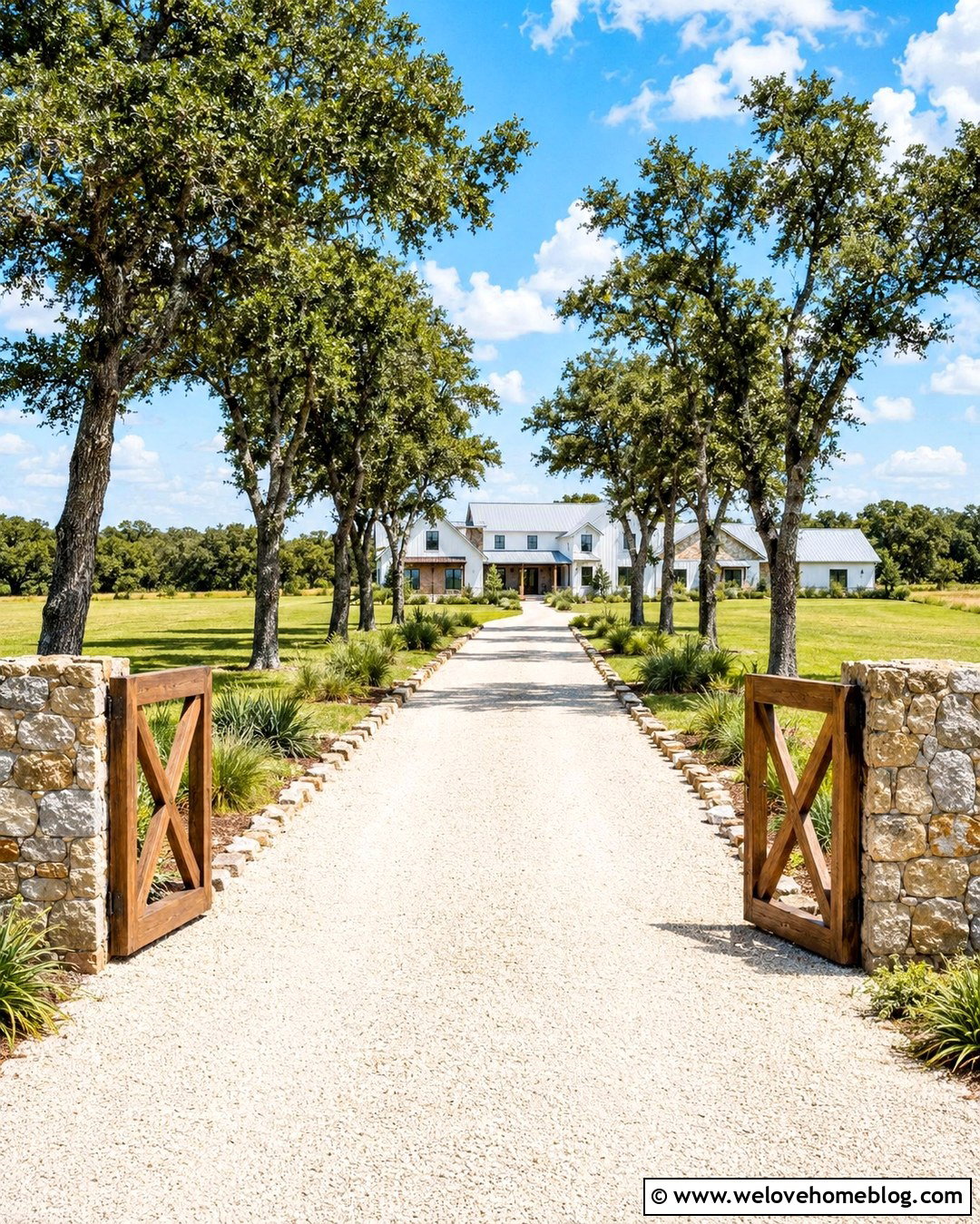
A long country driveway has enough scale for columnar oaks, which provide height and a stronger canopy while maintaining a relatively upright outline. Use them in two widely spaced rows along a straight crushed-stone driveway leading toward a farmhouse or large brick home. Natural fieldstone edging can define the surface, while sweeping lawn and masses of native grasses keep the overall setting open. As the trees grow, their crowns create a strong rhythm without immediately forming a dense tunnel. Large trees need generous setbacks from pavement, drainage ditches, utility lines, and underground services. Plan for maintenance vehicles, delivery trucks, and snow removal when setting the rows. This design is most successful when the driveway is long enough to match the eventual size of the trees.
6. Red Maple Curved Driveway
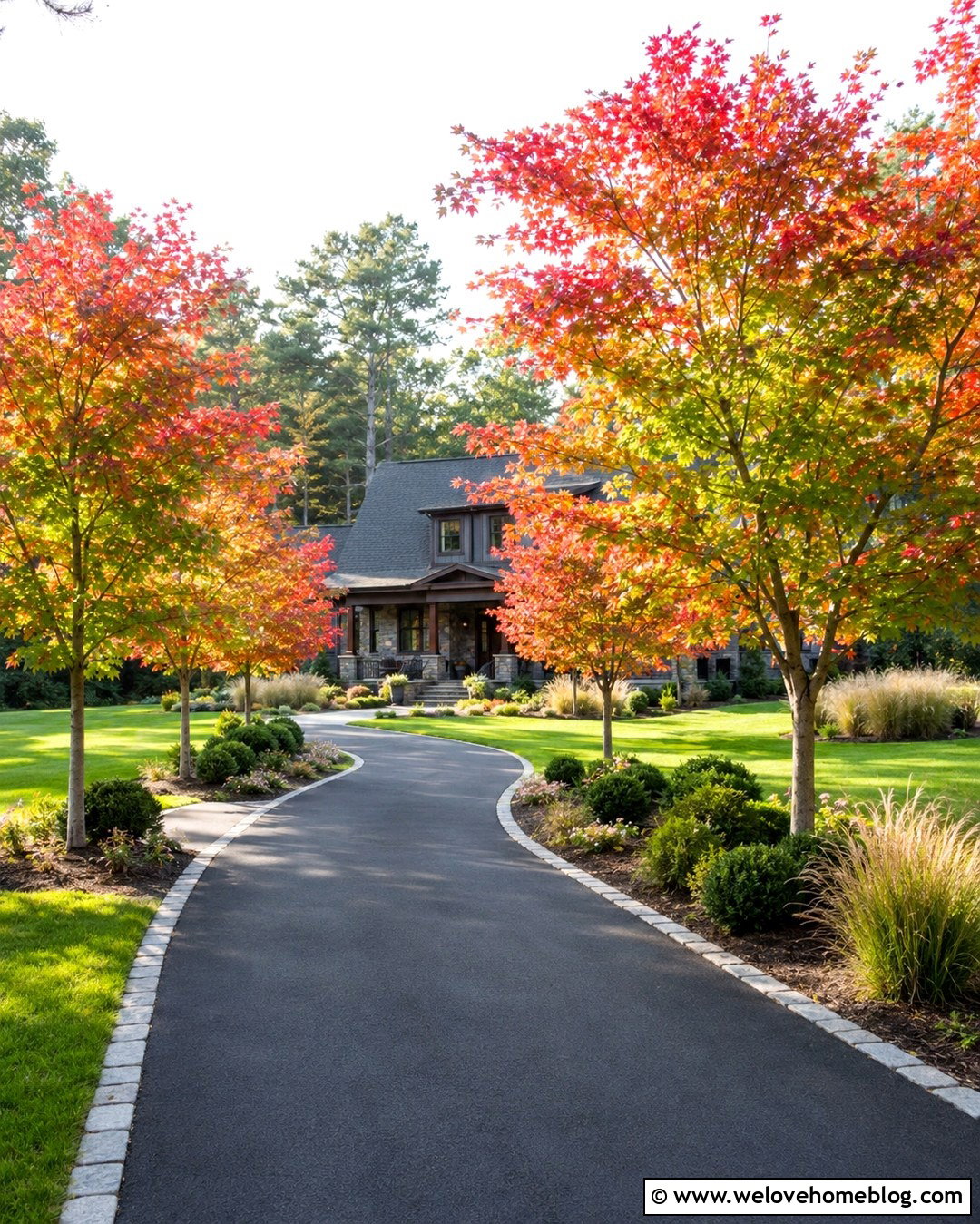
Imagine a gently curved driveway glowing with red and orange foliage each fall. Red maples can create that effect while providing cooling shade during warmer months. Pair the trees with a dark gray asphalt driveway, granite edging, broad lawn, and curved beds filled with inkberry, switchgrass, and seasonal perennials. A staggered arrangement feels more natural than perfectly matched rows and follows the movement of the driveway beautifully. This landscape works well around ranch, Craftsman, and wooded contemporary homes. Keep the trees away from areas exposed to heavy deicing salt or severely compacted soil. Their eventual canopy requires adequate clearance from roofs and overhead wires. Selecting a locally suitable cultivar helps the tree line perform better in the property’s soil, moisture, and climate conditions.
7. Sugar Maple Country Driveway
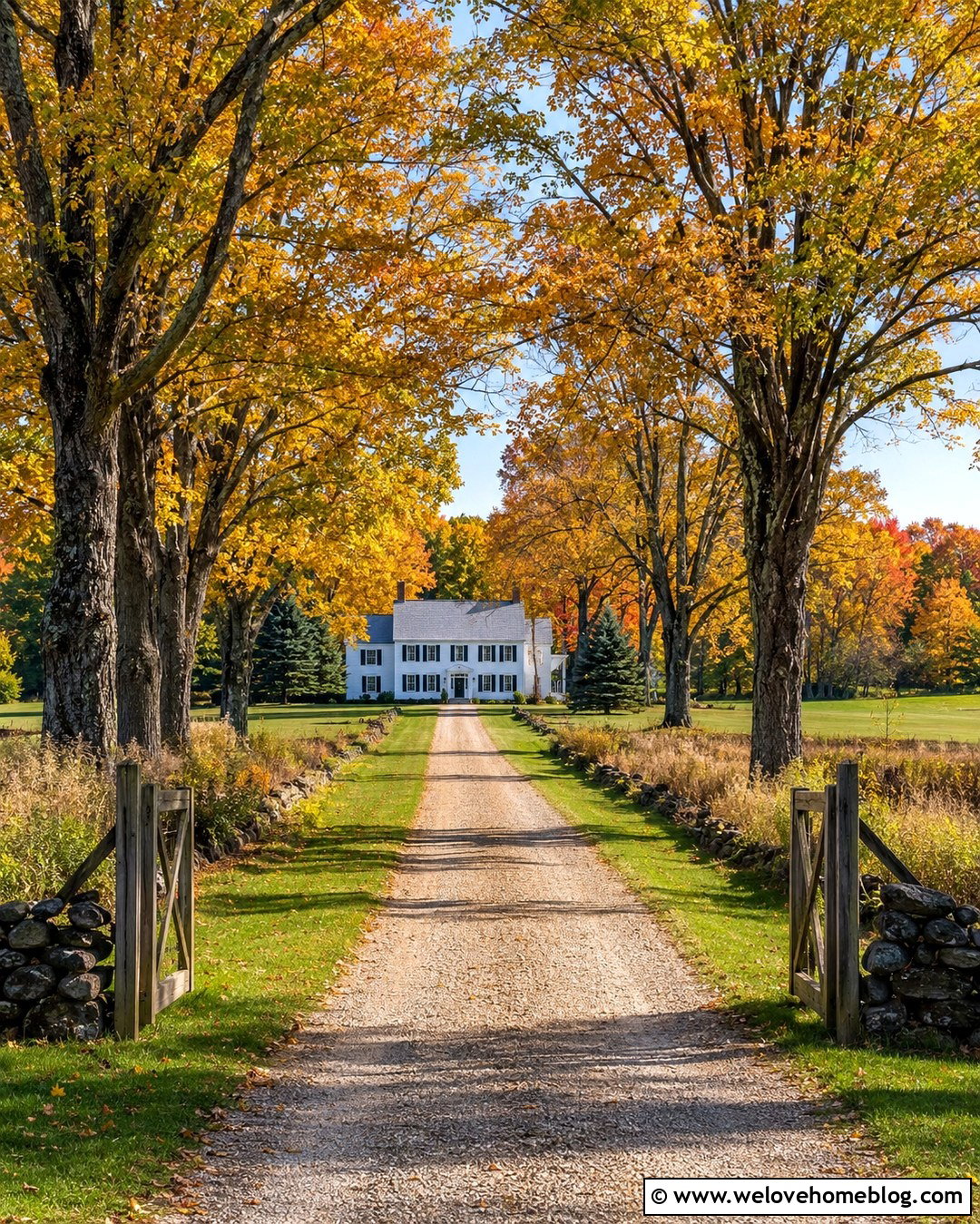
Sugar maples are best reserved for a spacious driveway where their broad crowns and root systems have room to mature. Set them well beyond both edges of a long tan gravel drive, using generous grass strips between the trees and vehicle surface. A low fieldstone border, meadow planting, and simple wooden entrance gate complete the classic country setting. The wide spacing allows sunlight to reach the lawn while eventually creating a high canopy over the approach. This design pairs naturally with Colonial farmhouses, stone homes, and rural estates. Sugar maples can struggle in harsh paved environments, poorly drained ground, and places receiving frequent road salt. Test the site first and choose another tree if conditions are unsuitable. Proper placement is more important than creating an immediate tunnel effect.
8. Flowering Dogwood Brick Driveway
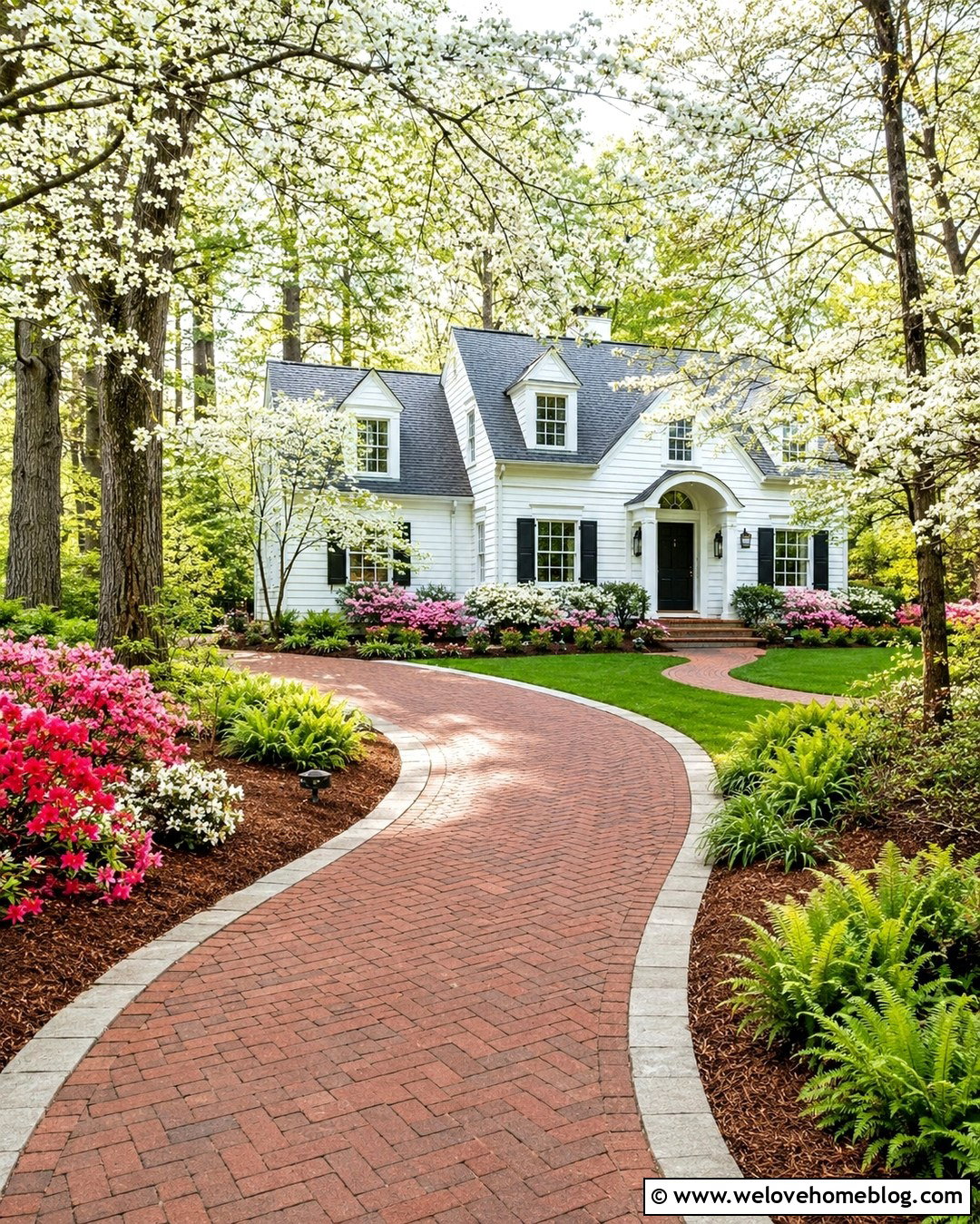
Flowering dogwood brings spring blooms, layered summer foliage, fall color, and attractive branching to a smaller residential driveway. Use single-trunk specimens along a gently curved red clay brick driveway with a flush limestone border. The warm brick and pale flowers create an inviting entrance for a traditional cottage, Cape Cod, or white Colonial house. Extend the planting beds around the trees with azaleas, ferns, woodland sedges, and shredded bark mulch. Dogwoods generally look best in loose groupings or a lightly staggered line rather than a rigidly clipped arrangement. Provide suitable light, moisture, and air circulation, and choose a disease-resistant tree recommended for the region. Keep branches pruned for comfortable vehicle clearance while preserving the tree’s naturally graceful, horizontal structure.
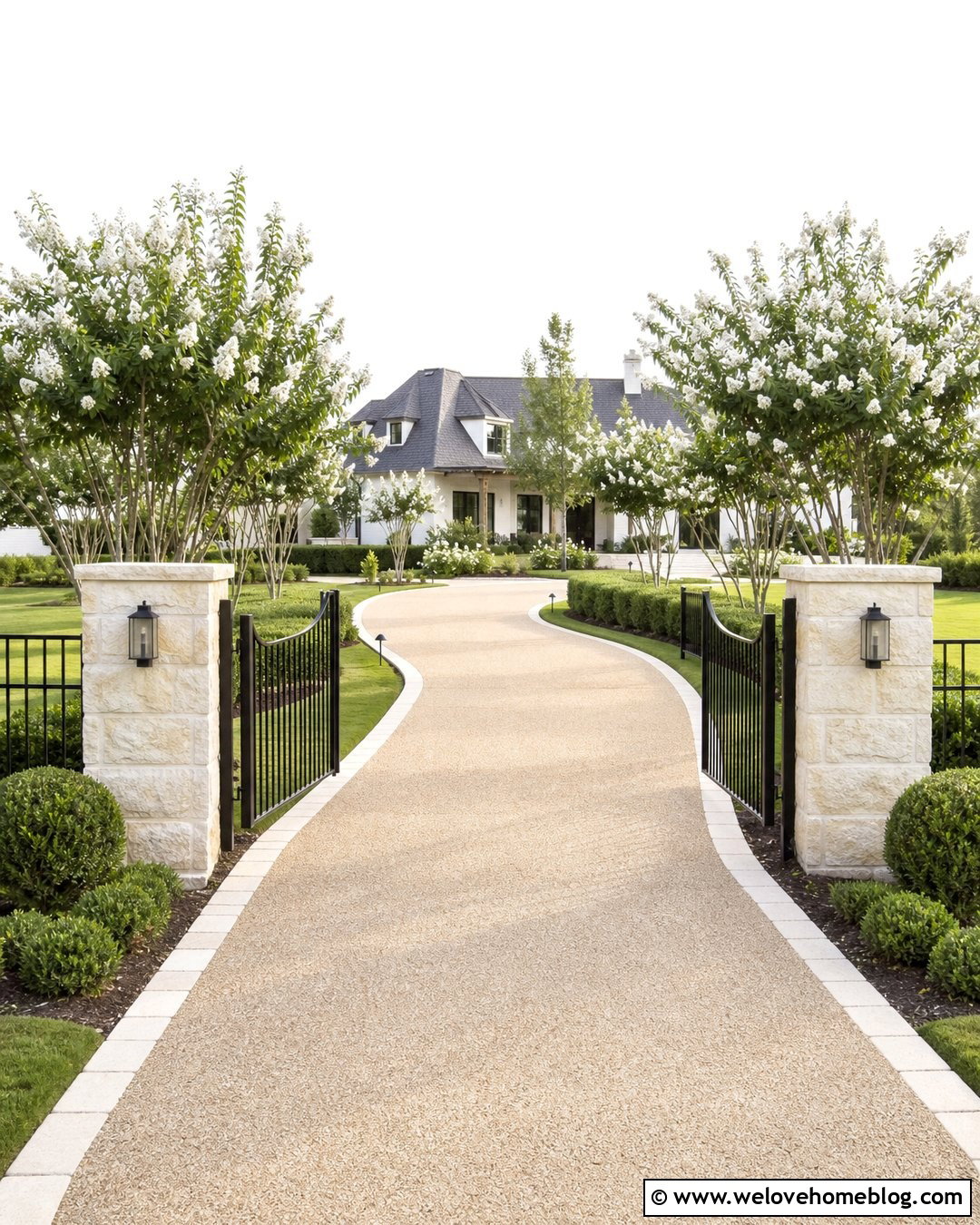
9. Crape Myrtle Circular Driveway
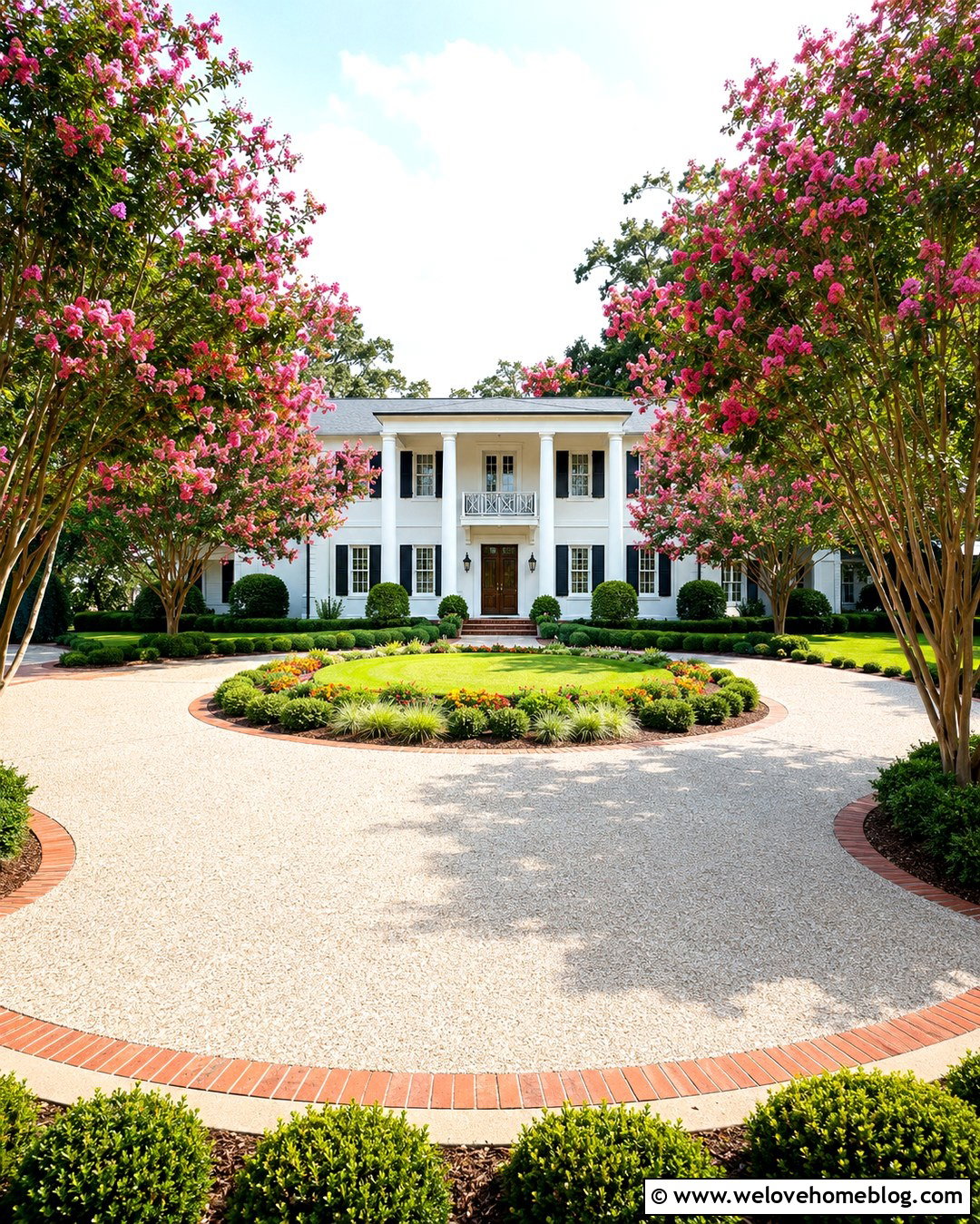
Crape myrtles can frame a circular driveway with summer flowers, sculptural trunks, and colorful fall foliage. Plant matched tree-form specimens around the outside curve of a pale exposed aggregate driveway, leaving the central island open for lawn, low shrubs, and one simple focal planting. A red brick soldier-course border gives the circular layout a clean outline. This look is particularly effective with Southern Colonial, coastal, and painted brick homes. Choose cultivars that match the available space and local winter conditions, since mature sizes vary considerably. Position trunks beyond door-swing and bumper areas, and avoid severe topping. Careful pruning should remove crossing growth while maintaining the natural canopy. Repeating low lantana, dwarf grasses, or evergreen ground covers beneath the trees unifies the complete entrance.


10. Serviceberry Cottage Driveway
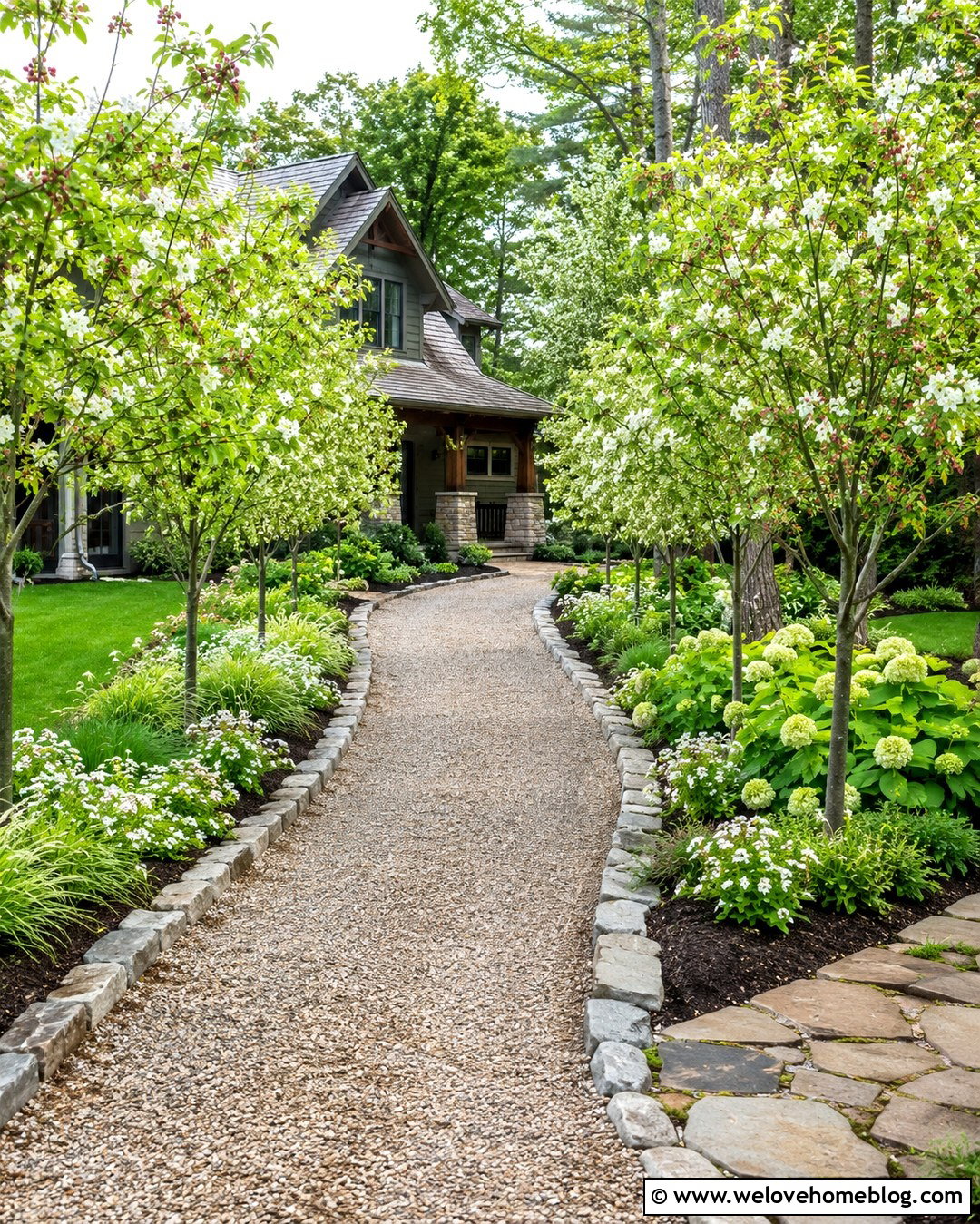
Serviceberry creates a soft, four-season driveway border with spring flowers, summer foliage, berries, and warm autumn color. Line a narrow pea gravel driveway with small, evenly spaced tree-form serviceberries, allowing their crowns to remain relaxed rather than tightly clipped. Add weathered granite edging, native sedges, low hydrangeas, and white flowering ground covers to build a layered cottage landscape. This design feels at home beside Craftsman cottages, shingle houses, and woodland cabins. Serviceberry is especially helpful where a large shade tree would overwhelm the available space. However, dropped fruit may require occasional cleanup near heavily used pavement. Give each tree a mulched planting area instead of surrounding its trunk with turf. The finished driveway feels intimate, natural, and attractive across several seasons.
11. Crabapple Cobblestone Driveway
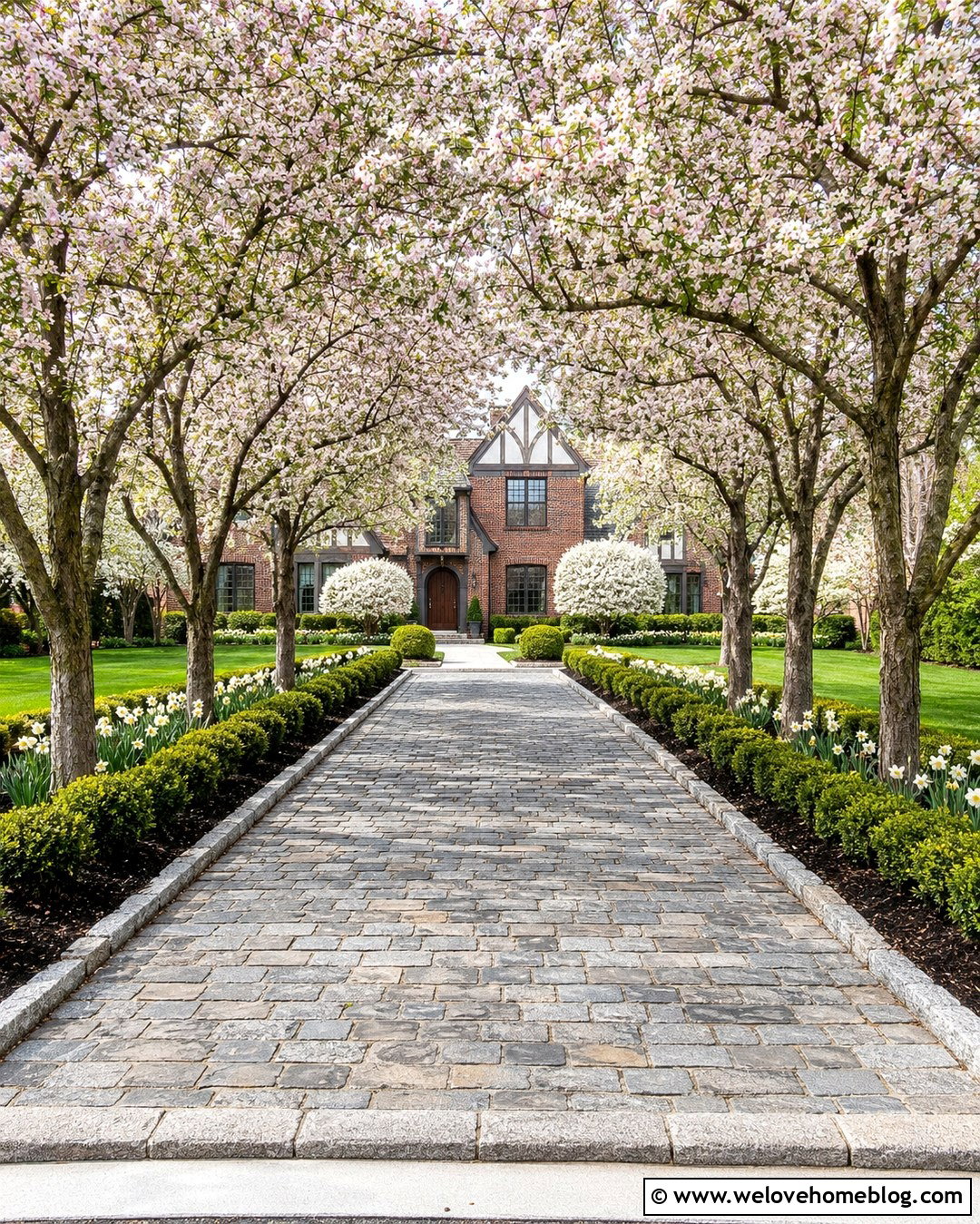
A cobblestone driveway lined with flowering crabapples creates a traditional entrance filled with spring color. Choose upright, disease-resistant cultivars with small persistent fruit to reduce cleanup on the driving surface. Plant them in balanced rows beside full-width planting beds rather than directly against the cobblestone. Clipped boxwood, early bulbs, and dark mulch provide a clean foundation beneath the blossoms. Granite setts can form a durable transition between the driveway and beds. This complete design suits Tudor, Colonial Revival, and classic brick houses. Crabapple varieties differ greatly in height, width, flower color, and fruit behavior, so compare mature characteristics carefully. Spacing should keep branches away from mirrors and vehicle doors while allowing the crowns to create a visually connected avenue as they develop.
12. Eastern Redbud Concrete Paver Driveway
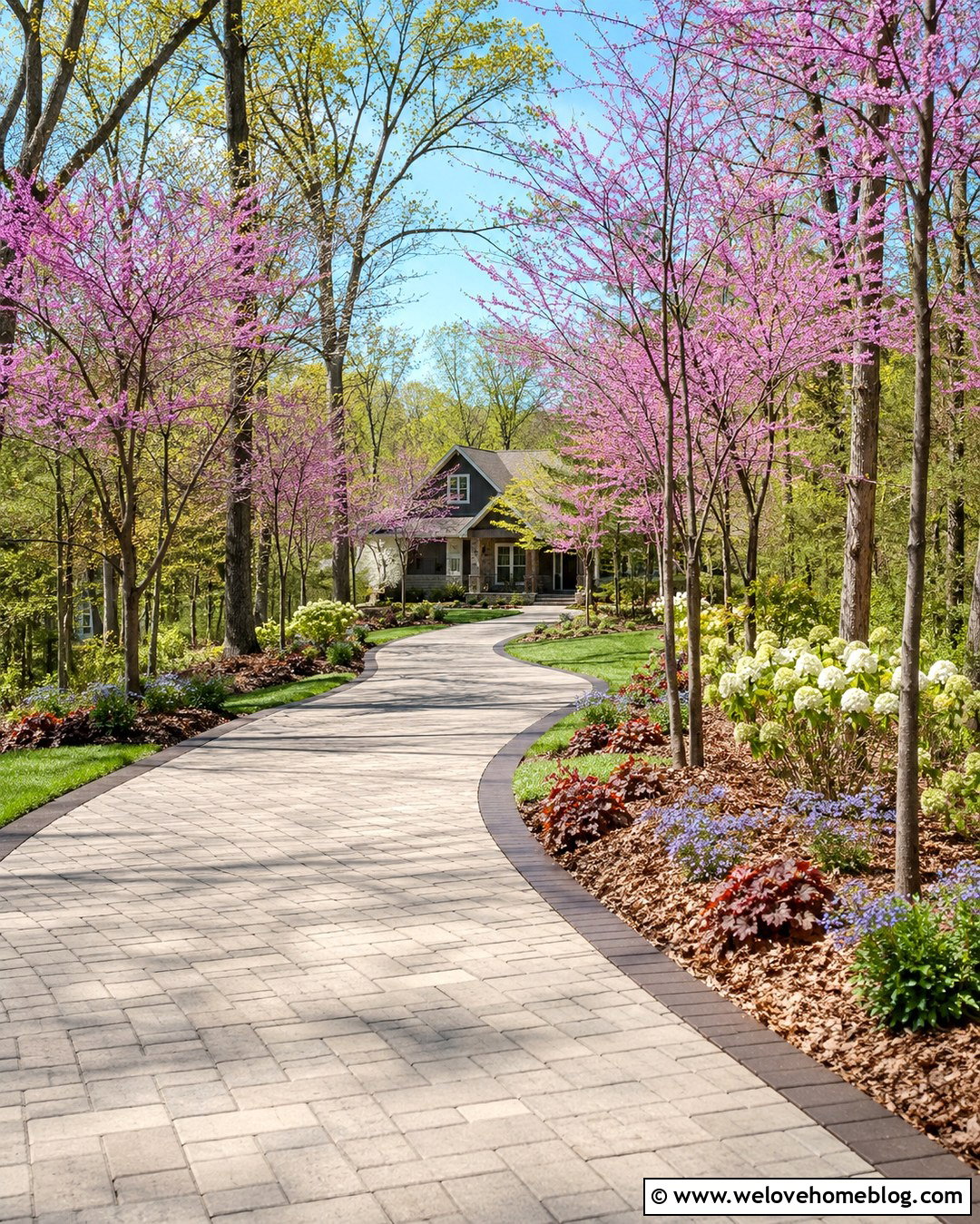
Eastern redbuds offer vivid spring flowers and heart-shaped foliage without the overwhelming scale of large shade trees. Arrange them in a loose, staggered line beside a curved driveway made from light taupe concrete pavers. A dark brown paver border can outline the curve, while oakleaf hydrangeas, coral bells, woodland phlox, and leaf mulch create a natural understory. The informal planting works beautifully with Craftsman, rustic contemporary, and wooded ranch homes. Redbuds often develop low or spreading branches, so locate them far enough from the pavement and train young trees for suitable clearance. They are more convincing as part of a layered woodland edge than as tightly spaced formal columns. The result is a colorful driveway that blends gracefully into an existing tree-filled yard.
13. Little Gem Magnolia Resin Driveway
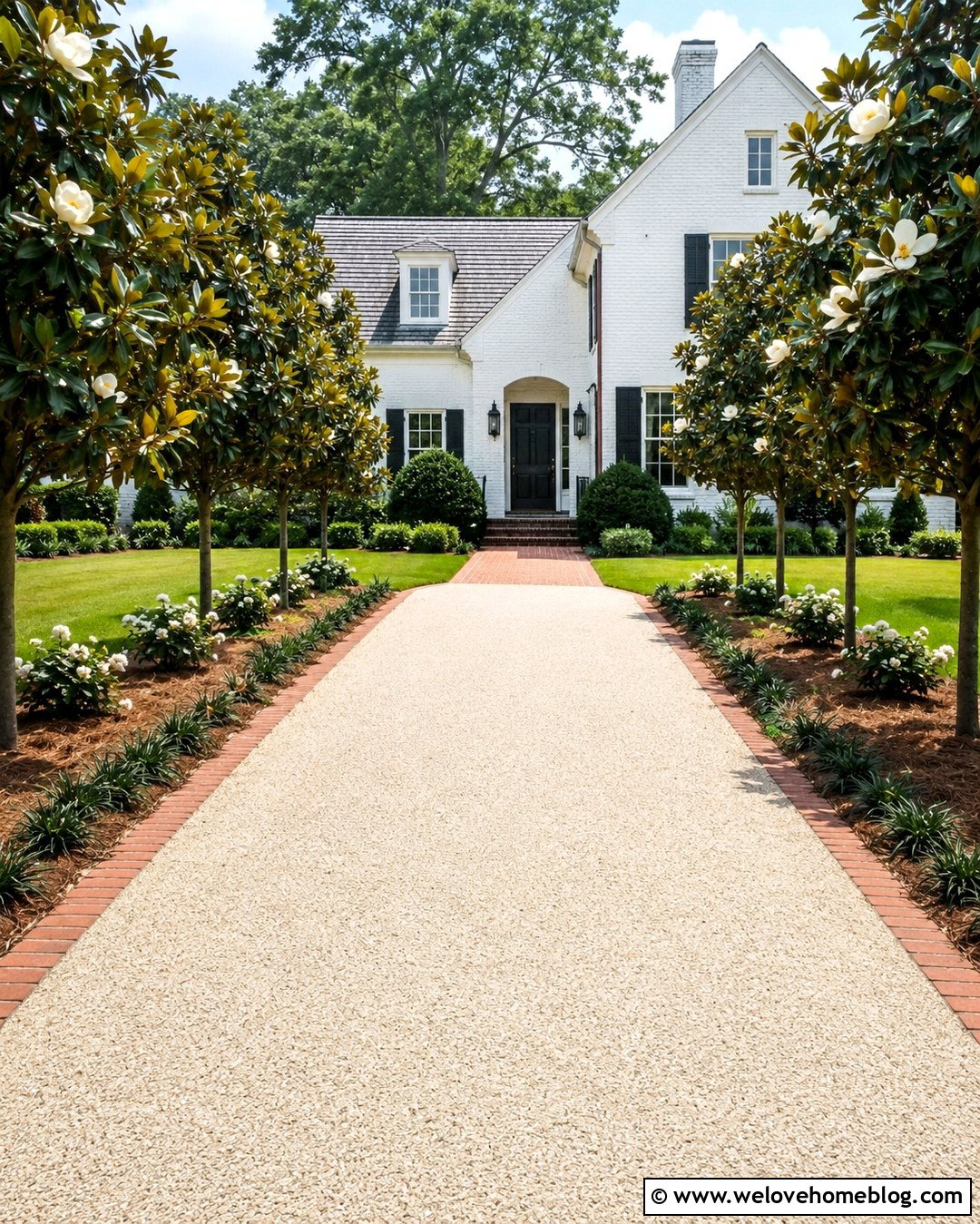
Little Gem magnolia gives a driveway glossy evergreen foliage, fragrant white flowers, and a refined Southern character. Pair evenly spaced trees with a cream resin-bound gravel driveway and a thin clay brick border. Their compact pyramidal forms can frame a straight approach without requiring the enormous space associated with full-size Southern magnolias. Underplant the tree line with dwarf gardenias, mondo grass, and clean pine-straw mulch for a cohesive evergreen landscape. This combination complements white brick, coastal, and modern Southern homes. Even compact magnolias need room for their eventual width, so avoid planting trunks directly beside the driving edge. Keep lower branches where space permits, or gradually raise the canopy if vehicle clearance is required. Consistent irrigation during establishment supports healthy, even growth.
14. Japanese Maple Courtyard Driveway
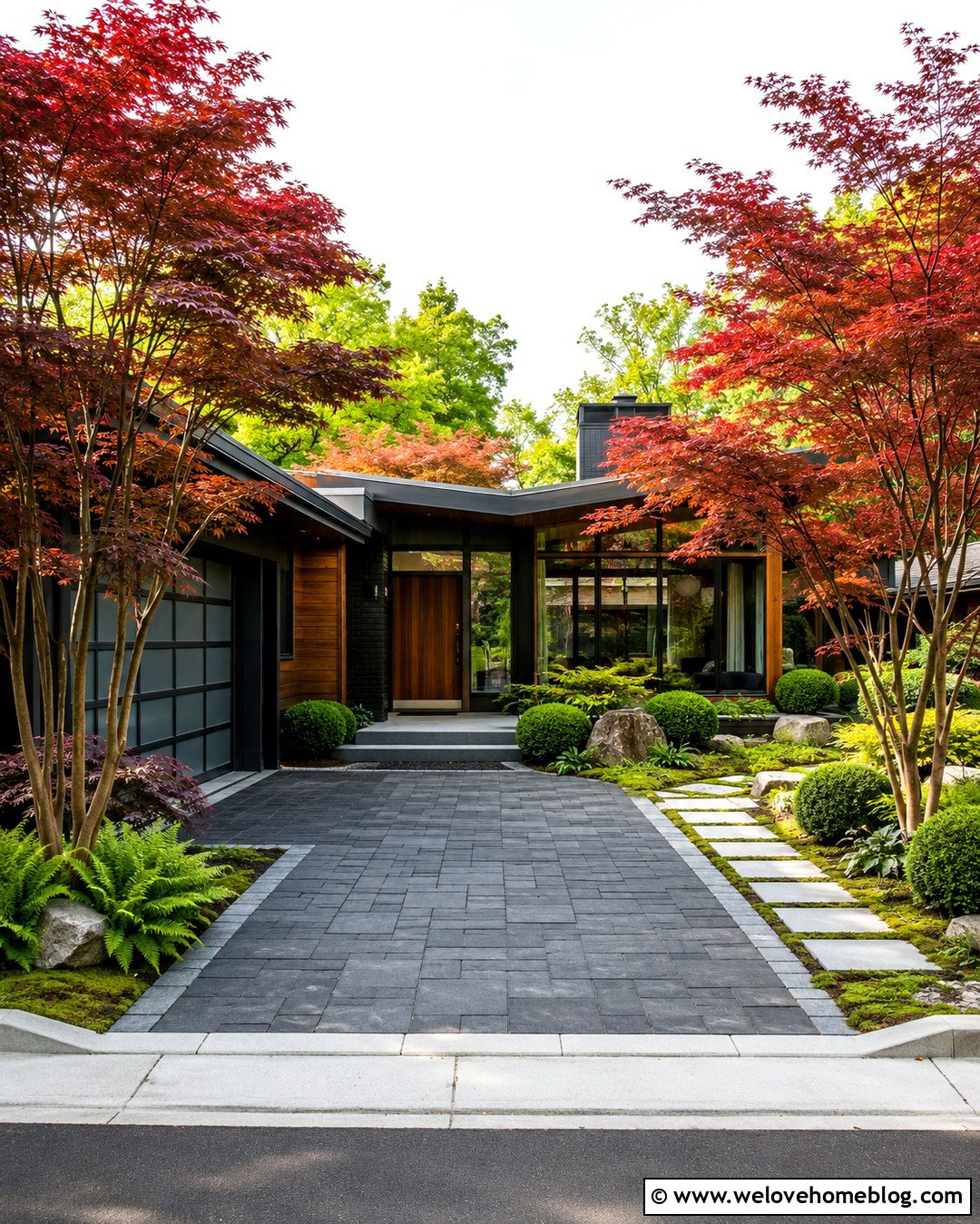
Japanese maples can transform a short driveway into an intimate courtyard entrance with layered foliage and elegant branching. Select upright cultivars rather than low, weeping forms, then place them along one or both sides of a charcoal concrete paver driveway. Use rectangular bluestone edging, mossy ground covers, ferns, and rounded evergreen shrubs to connect the trees with the house walkway. A staggered layout feels calmer than a strict row and suits modern, Asian-inspired, and midcentury homes. Protect delicate foliage from harsh reflected heat, strong wind, and intense afternoon exposure where necessary. These trees are better for short, lightly used residential drives than long rural avenues. Subtle landscape lighting may be installed beneath the canopies, but the daytime composition should remain clean and uncluttered.
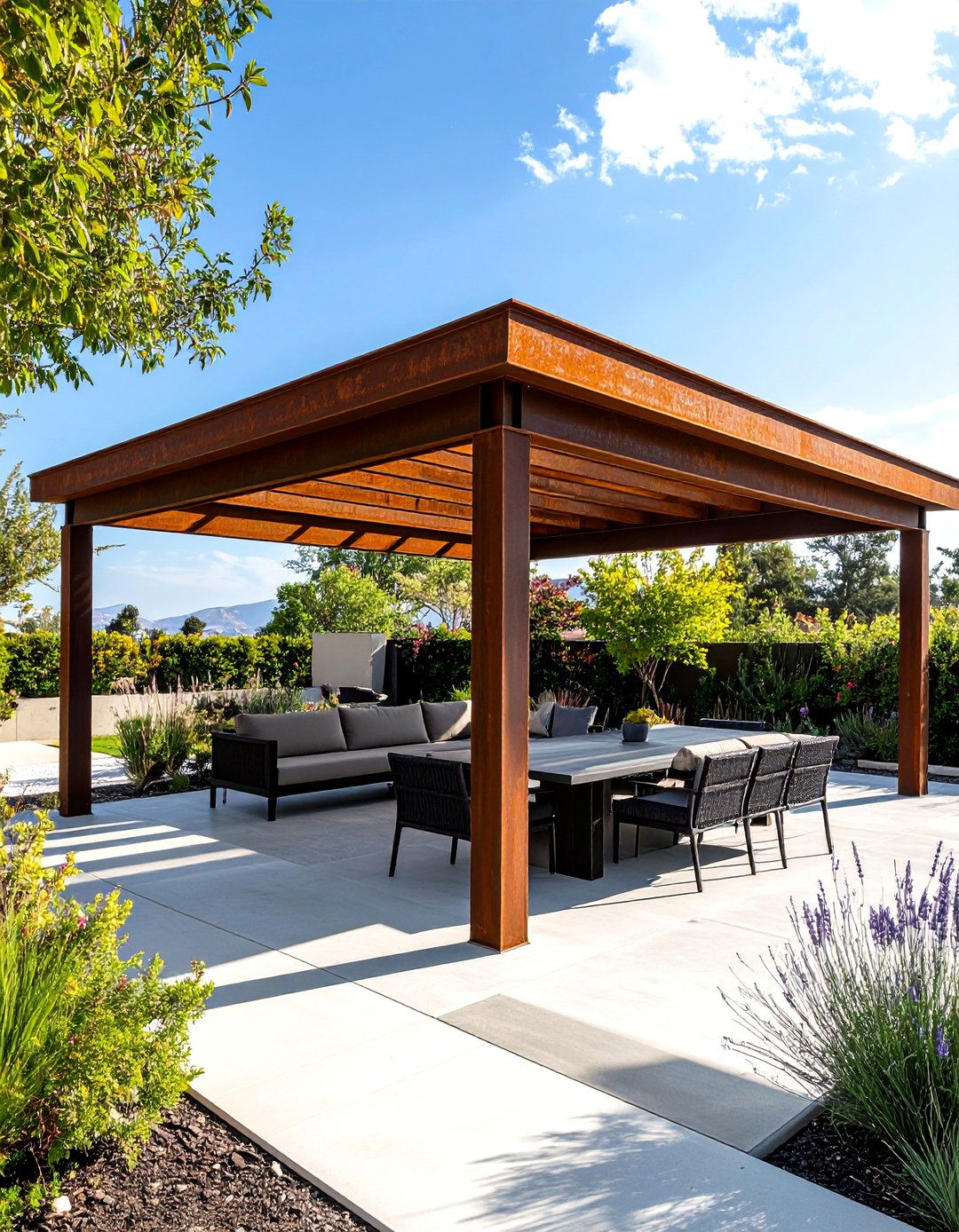


15. River Birch Farmhouse Driveway
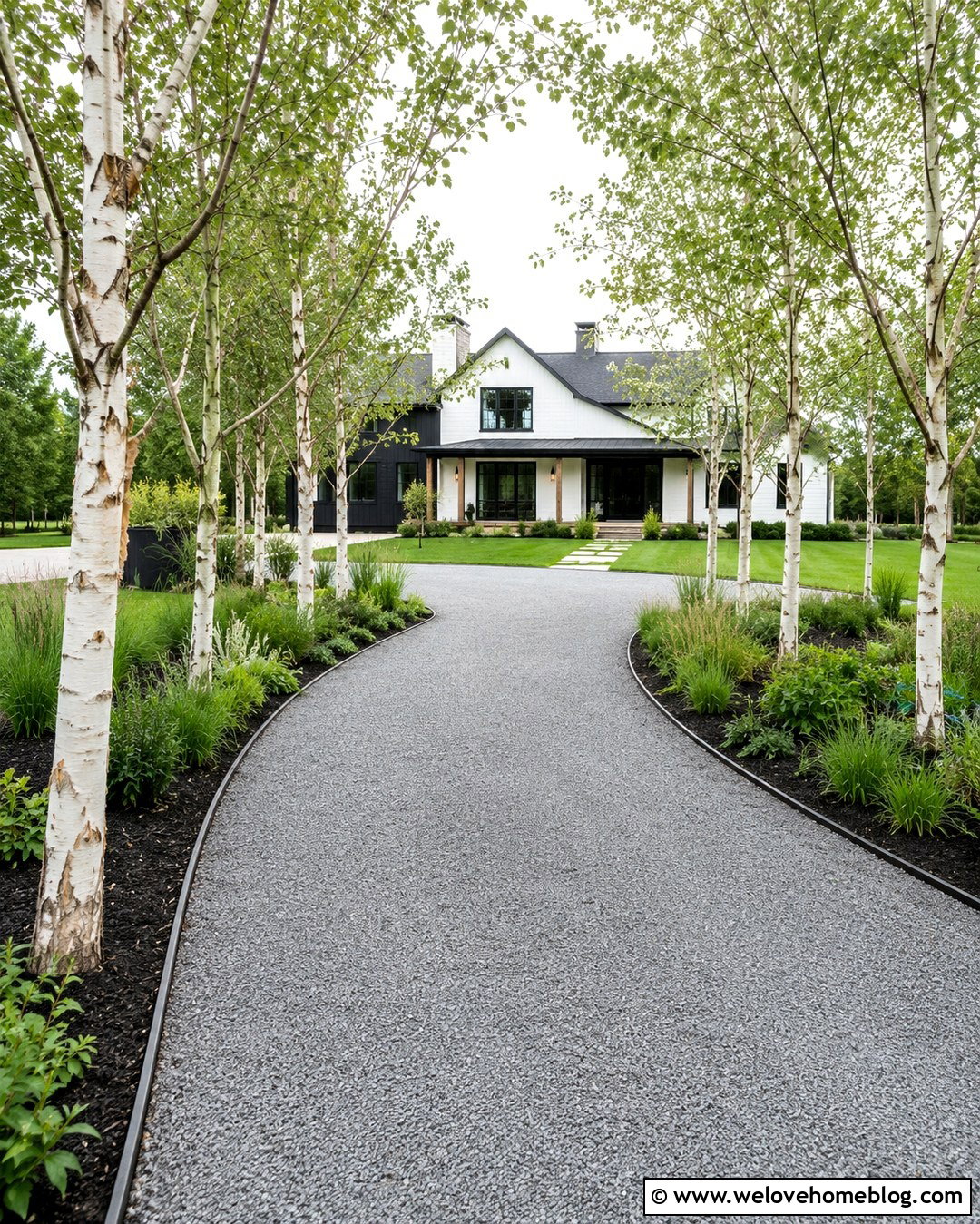
River birch brings textured peeling bark and a light, airy canopy to a wide farmhouse driveway. Use single-trunk trees where a formal row is desired, or carefully spaced multi-trunk specimens for a more natural appearance. Pair them with a gently curved gray gravel driveway, steel edging, broad swaths of switchgrass, and shallow rain-garden planting in wetter sections. The pale trunks stand out against dark mulch and a black-and-white modern farmhouse facade. River birches need more width than columnar trees, so place them well away from pavement and buildings. Their best location is a roomy landscape with soil that does not remain excessively dry. Keep drainage channels open, avoid piling mulch against the trunks, and allow the canopies to form a loose overhead rhythm rather than a tightly enclosed tunnel.
16. Bald Cypress Rural Driveway
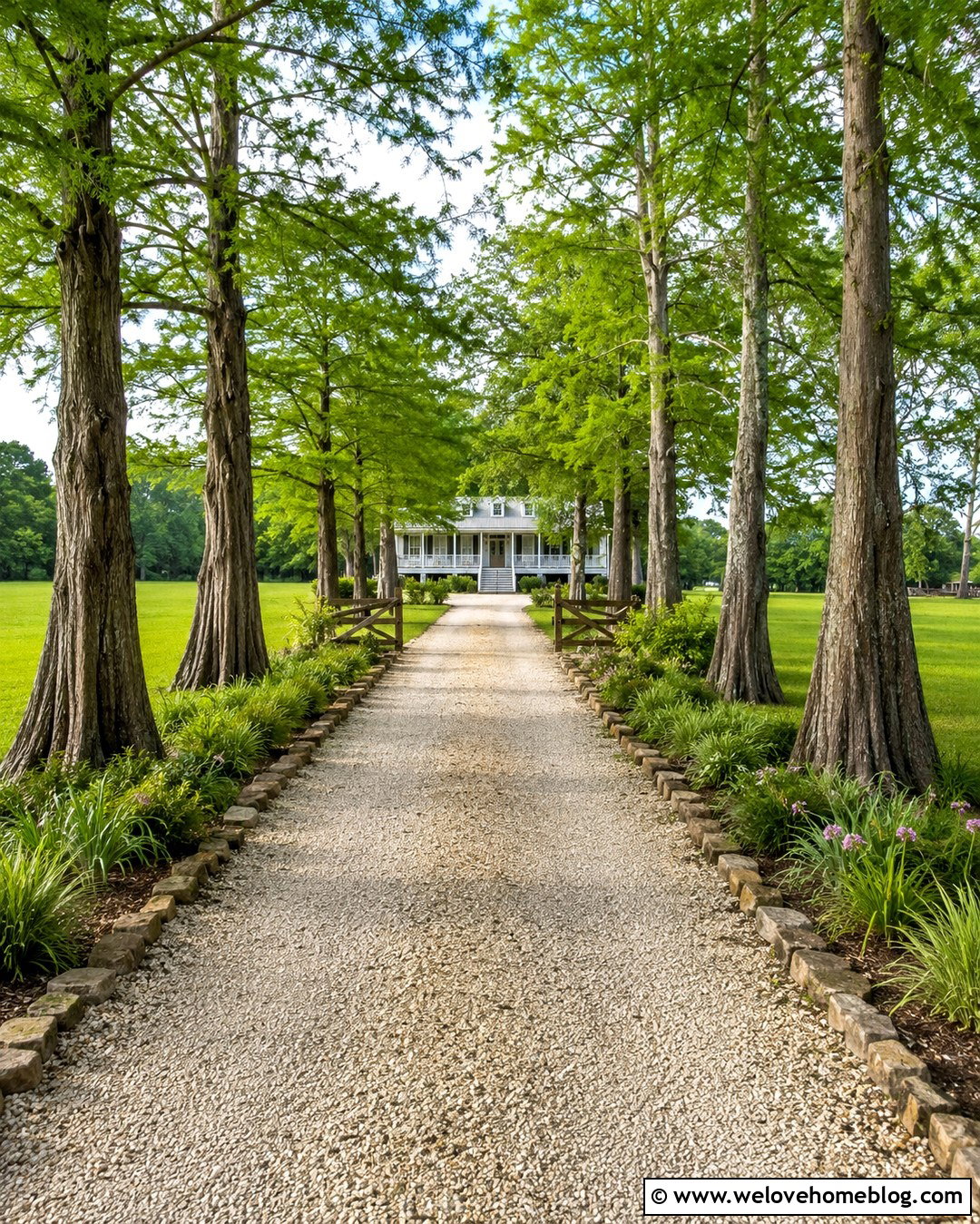
Bald cypress offers a strong vertical form, soft green foliage, coppery fall color, and excellent presence along a large rural driveway. Plant the trees in widely spaced rows beside a straight oyster-shell or pale crushed-limestone surface. Low stone edging, open meadow grass, and moisture-tolerant native planting can reinforce the relaxed country setting. The simple palette suits raised Southern cottages, barn-inspired homes, and waterfront properties. Although bald cypress is associated with wet landscapes, it can also be used in suitable ordinary soils once established. The trees eventually become large, so provide substantial distance from pavement, septic areas, and overhead utilities. Their buttressed bases and surface roots need room. Used at the correct scale, the repeated trunks create a memorable approach without requiring clipped, formal landscaping.
17. Live Oak Estate Driveway
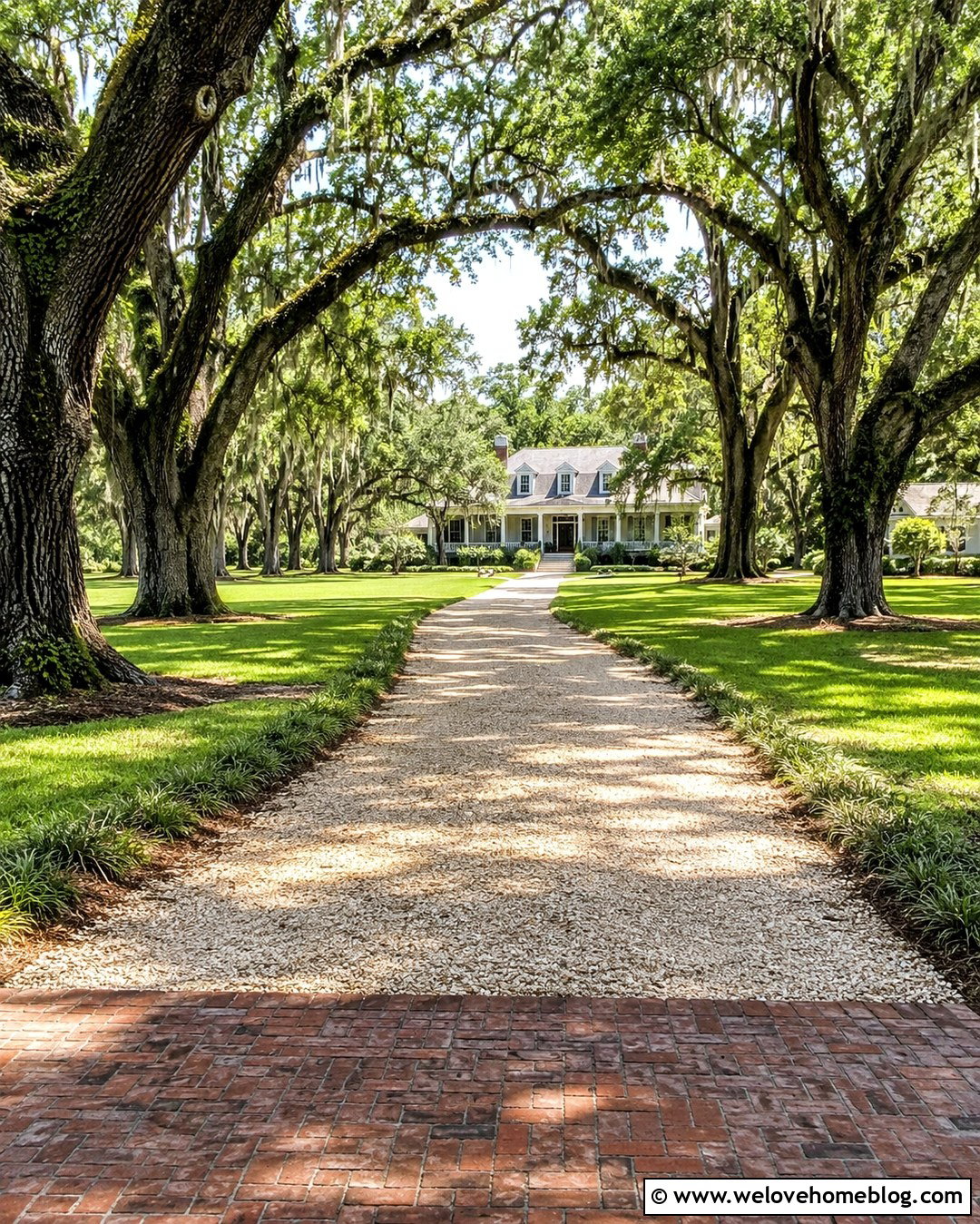
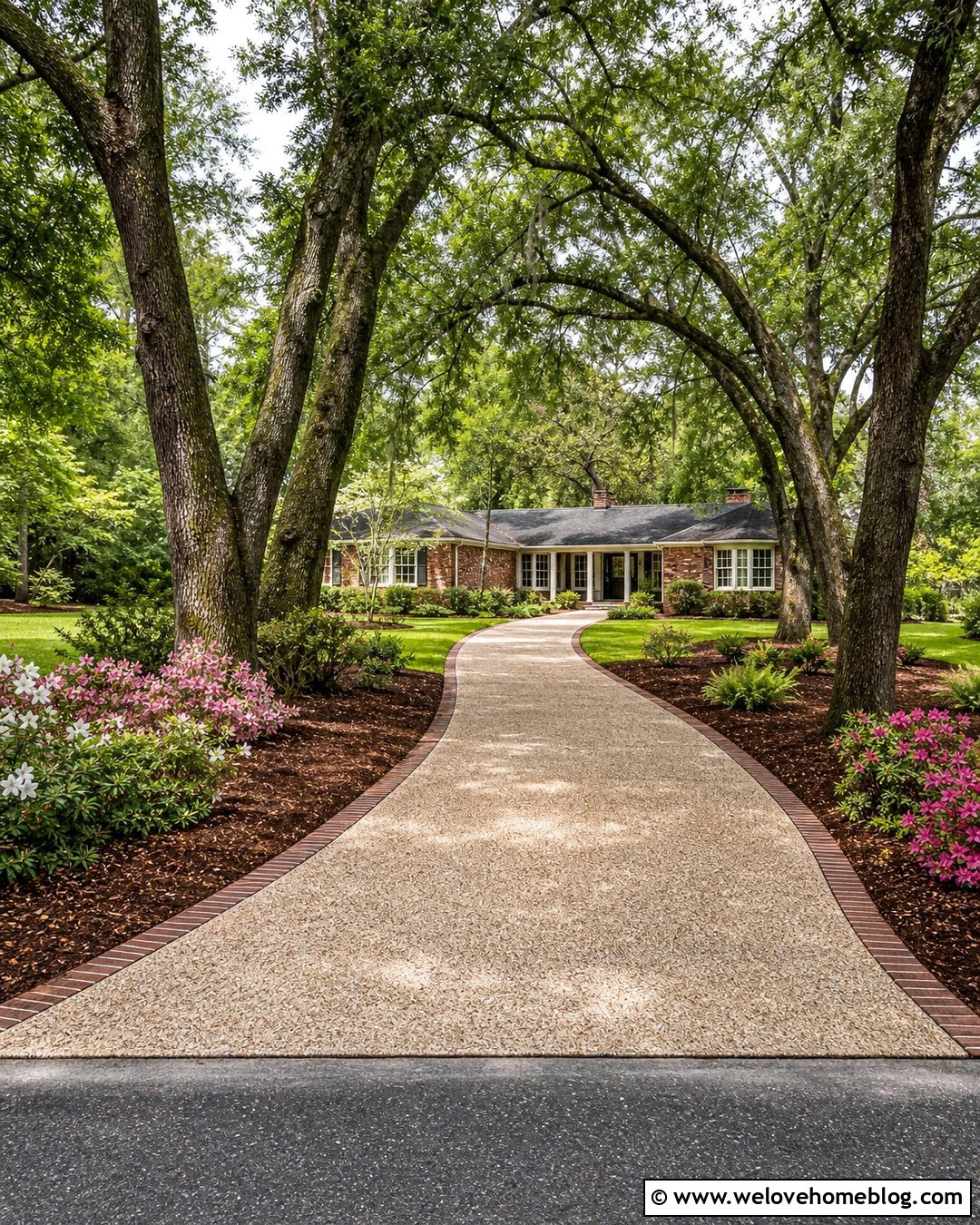
Few tree-lined entrances feel more established than a broad driveway framed by live oaks. This design requires substantial land because the trees develop wide crowns and should sit far beyond the pavement edges. Use a gently curving crushed-shell driveway with natural grass shoulders, simple native ground covers, and a brick entrance apron. As the oaks mature, their branches can form a high, spreading canopy over the approach to a Southern estate, low-country house, or large ranch home. Avoid forcing live oaks into narrow suburban strips or placing them near foundations and utilities. Plan long-term clearance with professional structural pruning while the trees are young. Spanish moss may appear naturally in some regions, but the design remains impressive without it. Generous spacing protects both the trees and driveway.
18. American Holly Brick-Edged Driveway
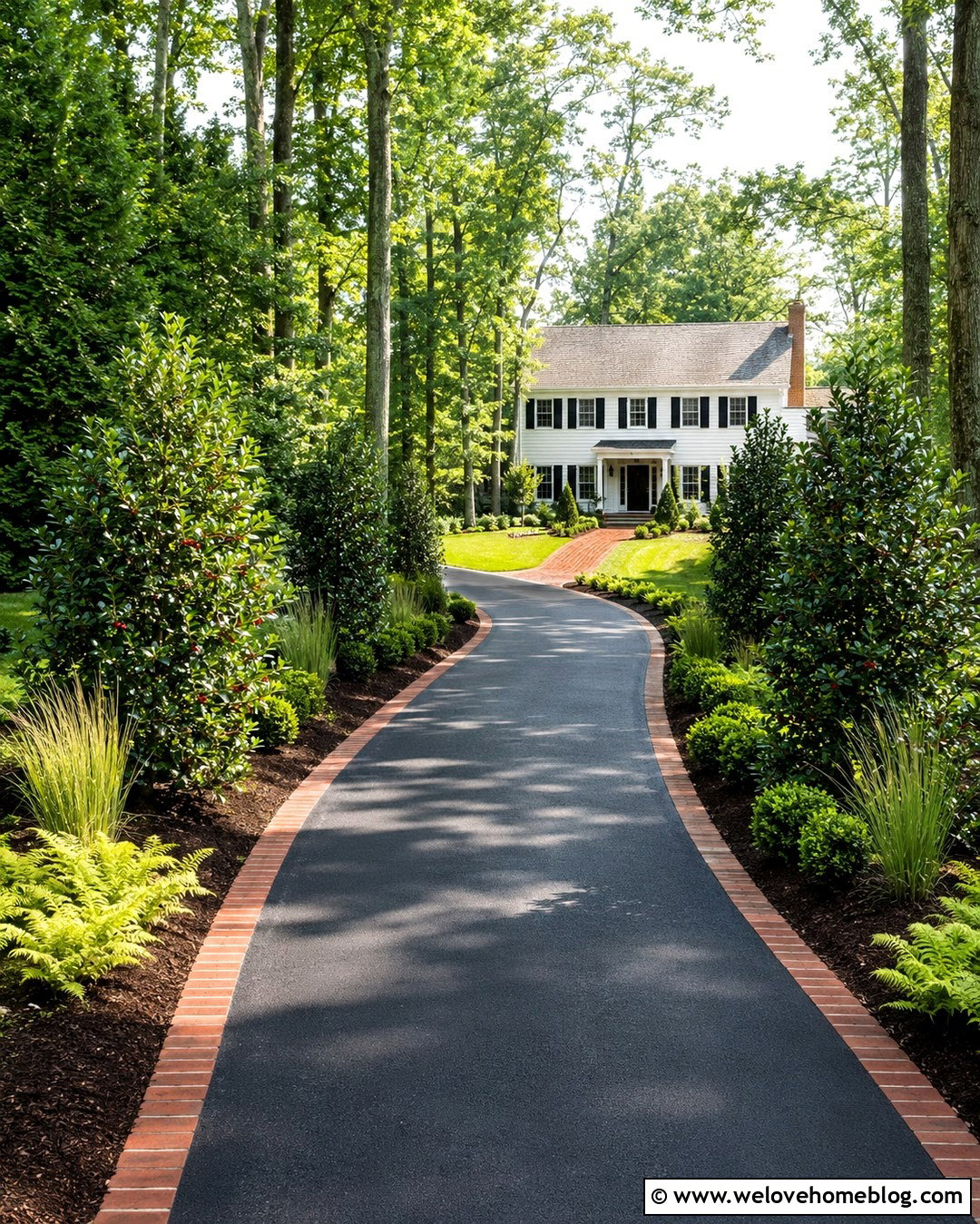
American holly provides evergreen structure, strong vertical accents, and valuable winter character for a woodland driveway. Plant selected tree-form hollies in a staggered arrangement beside a dark asphalt surface finished with a red brick edge. Combine them with inkberry, native ferns, switchgrass, and broad mulch beds to create a layered screen rather than a hard wall. This design works with traditional brick, Colonial, and woodland Craftsman homes. Male and female plant selection matters if decorative berries are wanted, so consult a knowledgeable local nursery. Hollies can become broad over time and may have low branches, making a generous setback important. Their dense foliage is useful for privacy, but spacing them as individual trees keeps the driveway open, improves airflow, and produces a more natural finished landscape.
19. Green Giant Arborvitae Long Driveway
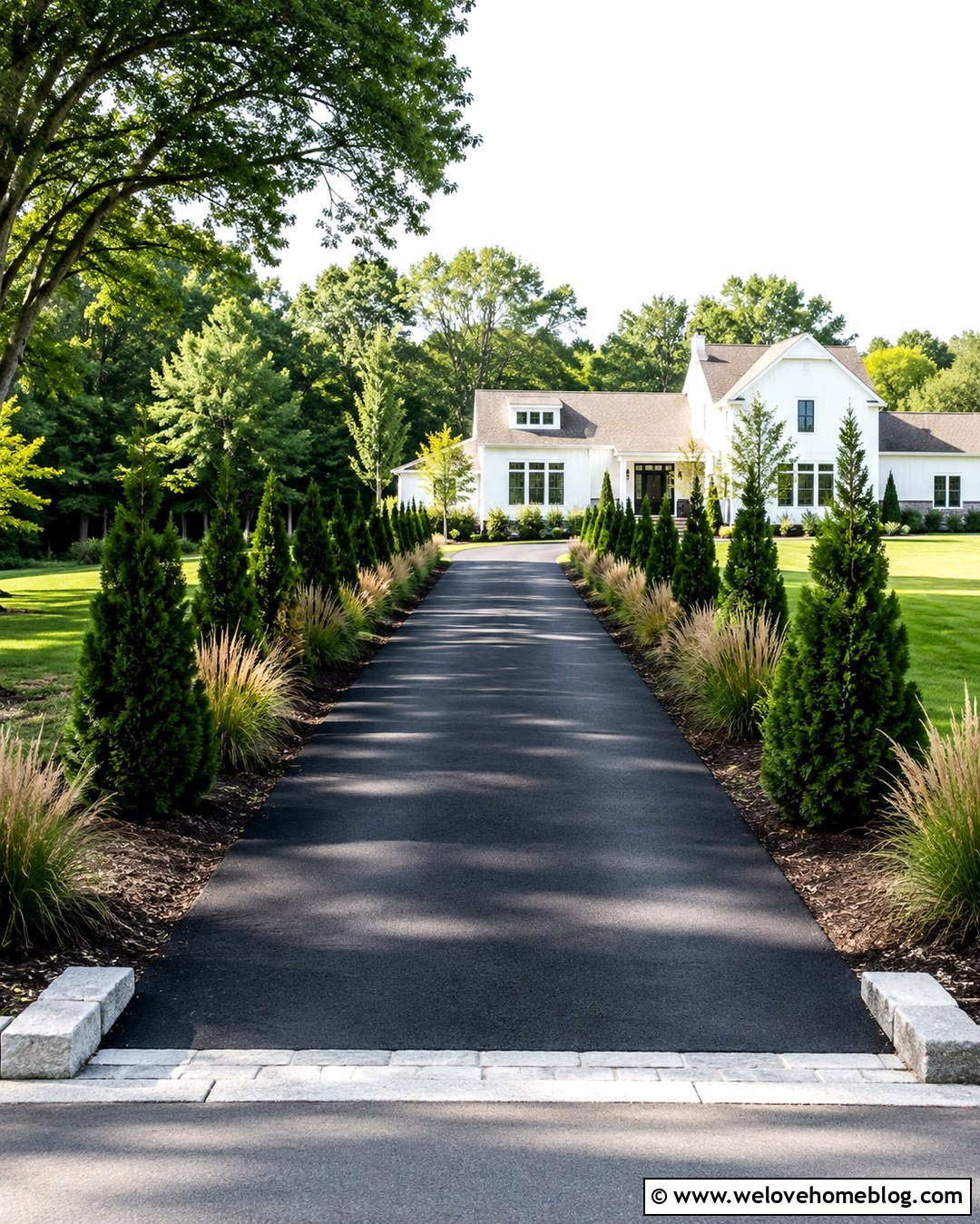
Green Giant arborvitae can create year-round screening along a long driveway, but its eventual size demands more space than narrow residential arborvitae. Set the trees back in wide mulched beds beside a straight black asphalt driveway with a pale granite curb. Instead of forming an unbroken wall, use measured gaps and repeat clusters of ornamental grasses between the trees. This creates privacy while preventing the entrance from feeling confined. The bold evergreen line suits modern farmhouses, country homes, and properties with neighboring buildings to screen. Keep the planting away from overhead wires and allow adequate width for each tree to mature. A drip line can encourage even establishment. At the driveway entrance, lower shrubs and clear sightlines should replace tall screening so drivers can safely see approaching traffic.


20. Columnar Blue Spruce Stone Driveway
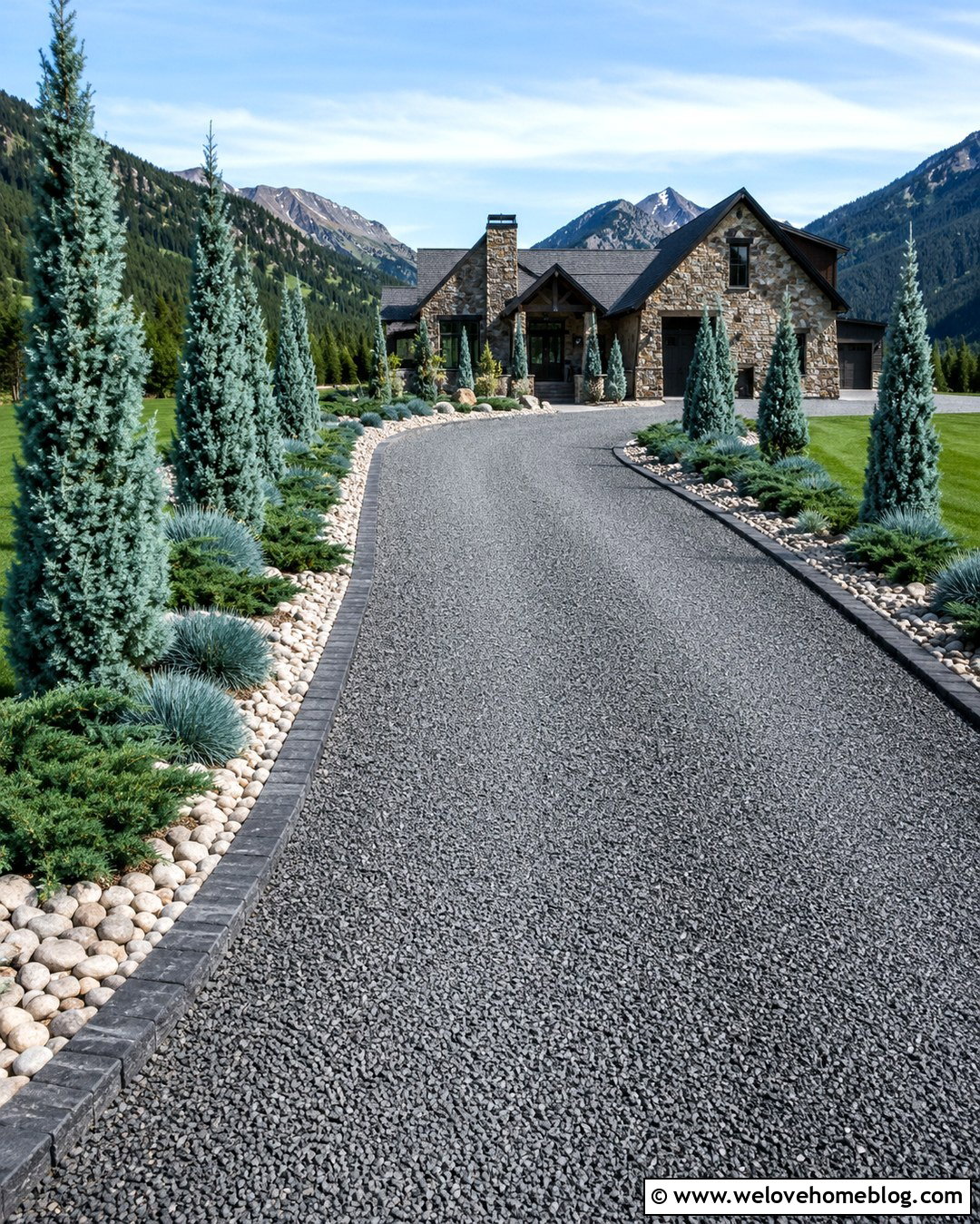
Columnar blue spruce introduces cool blue foliage and a narrow pyramidal shape to a driveway in a cold-climate landscape. Pair evenly spaced specimens with a gray crushed-stone driveway, dark granite edging, and beds of low juniper, blue fescue, and pale river rock. The colors work especially well with mountain homes, stone cottages, and modern cabins. Set the trees beyond snow-storage areas so plowed snow, road grit, and salt do not pile against their trunks. The repeating evergreen forms provide winter interest even when surrounding perennials are dormant. Choose a cultivar suited to the site and confirm its mature width before planting. Avoid dense, poorly drained beds and provide steady care during establishment. The finished entrance feels structured but still connected to the rugged surrounding landscape.
21. Ginkgo Tree Concrete Driveway
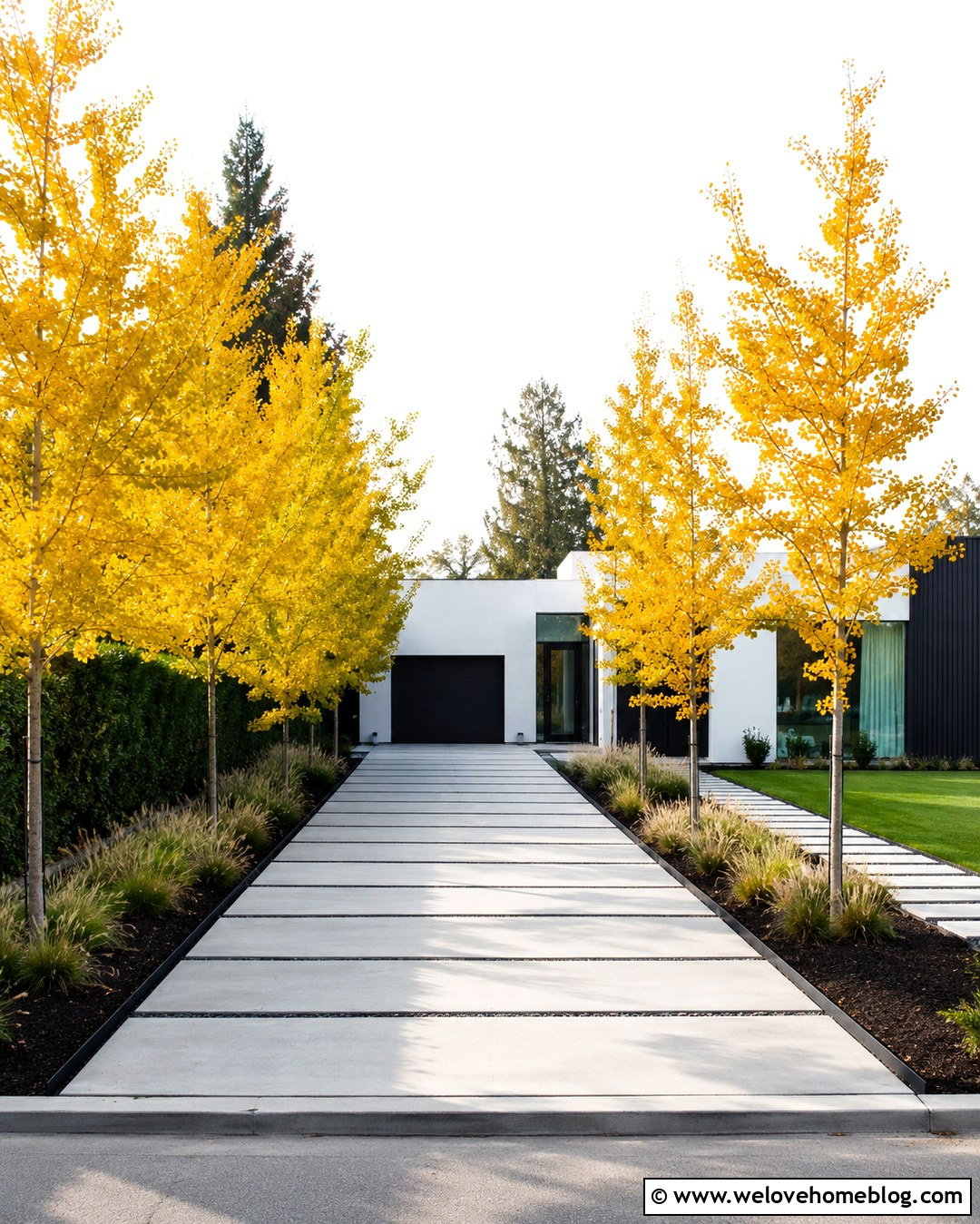
An upright male ginkgo cultivar creates a distinctive driveway avenue with clean branching and brilliant golden fall foliage. Use it beside a wide, straight driveway made from large-format light gray concrete slabs separated by narrow gravel joints. Black metal edging, clipped ornamental grasses, and rectangular mulch beds strengthen the contemporary layout. Male cultivars are preferred near pavement because they avoid the messy fruit produced by female trees. This complete landscape suits modern, minimalist, and updated midcentury homes. Ginkgo trees become substantial over time, so the planting strip must provide adequate soil and canopy space. Keep trees away from overhead utilities and use consistent spacing to create a formal rhythm. Their simple leaf shape and strong seasonal color bring warmth to an otherwise restrained hardscape palette.
22. Zelkova Paver Driveway
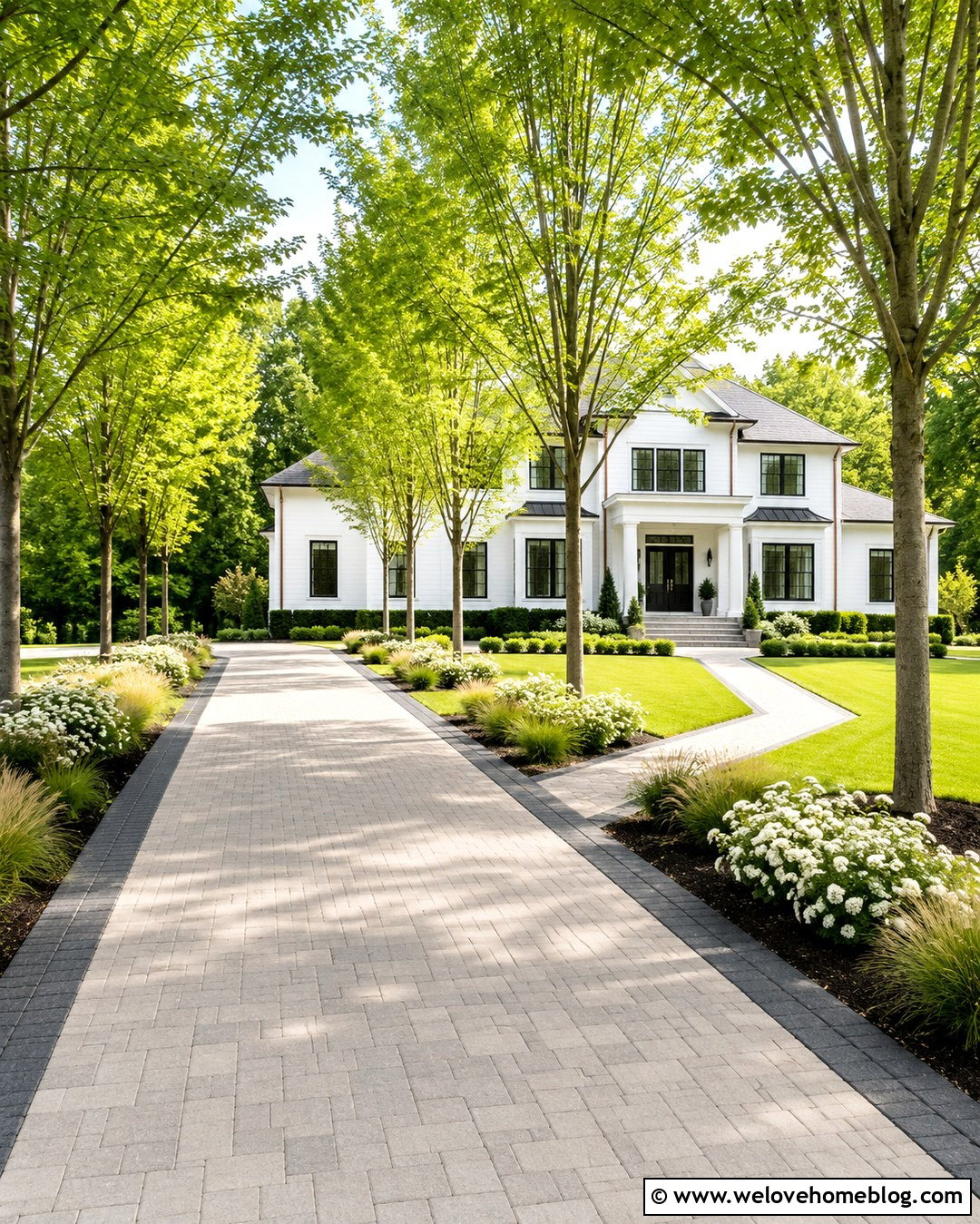
Zelkova can form a graceful, high canopy along a roomy suburban or estate driveway. Use upright cultivars in evenly spaced rows beside a warm gray interlocking paver surface with a contrasting charcoal border. Broad lawn panels between the pavement and tree trunks provide breathing room, while low masses of spirea and ornamental grasses add texture near the house. This balanced design suits brick ranches, contemporary Colonials, and large Craftsman homes. Zelkovas mature into sizeable shade trees, making careful placement essential. Allow space for roots, keep branches clear of vehicles, and avoid overhead utility conflicts. Early structural pruning can help develop strong, raised crowns. The finished driveway remains open at ground level while gaining summer shade and an attractive sequence of trunks leading toward the front elevation.
23. Thornless Hawthorn Driveway
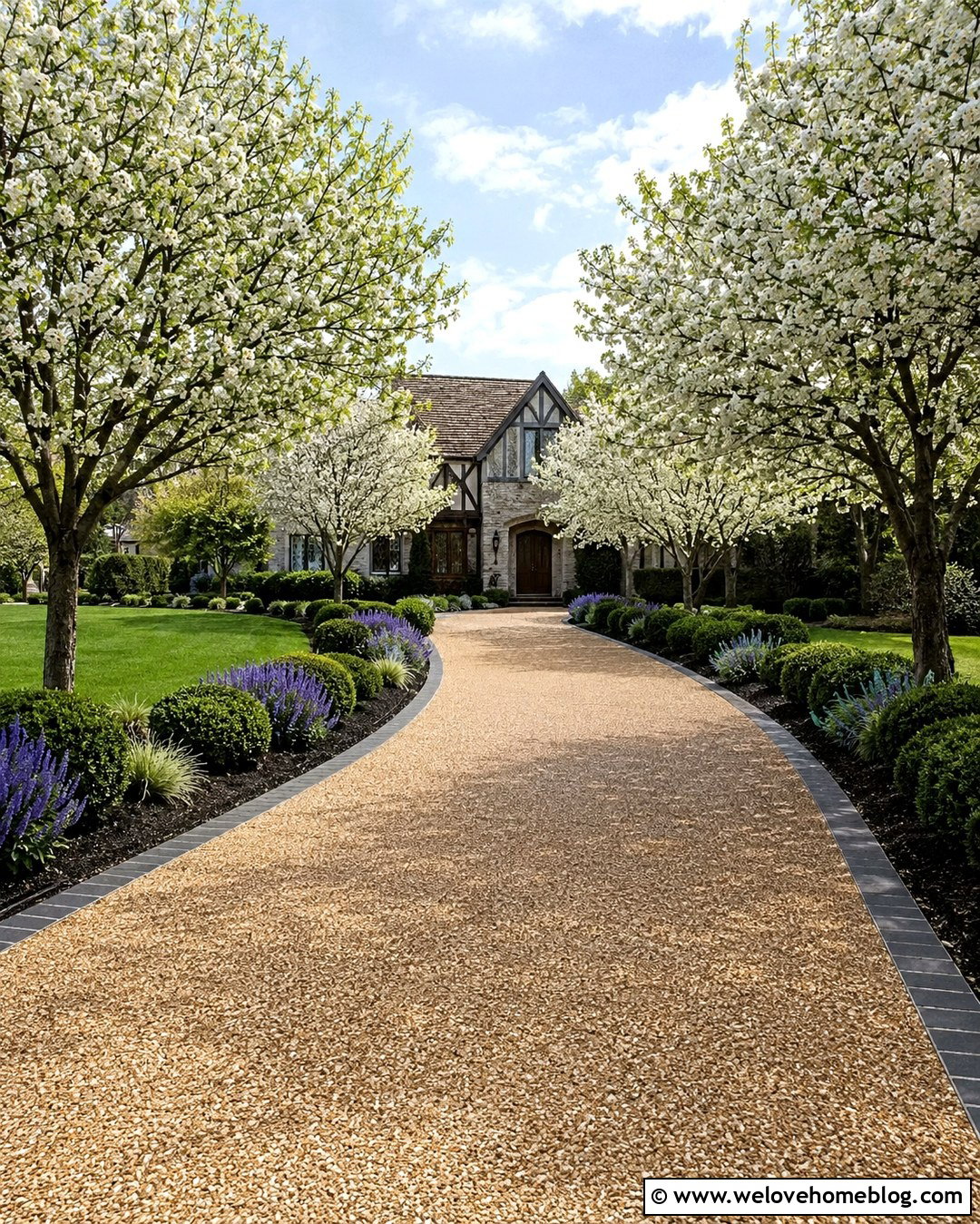
Thornless hawthorn adds spring flowers, dense foliage, fall interest, and a manageable ornamental scale to a residential driveway. Choose a proven thornless cultivar, then plant it in balanced rows beside a softly curved tan resin-bound gravel surface. A dark brick border, clipped inkberry, salvia, and low ornamental grasses can frame each tree without blocking the driveway. This combination complements English cottage, Tudor, and traditional brick homes. Hawthorn cultivars vary in disease resistance, fruit production, and crown shape, so local selection is important. Keep the trunks beyond passenger-door areas and prune young trees to develop safe clearance. Rather than planting them too closely for instant impact, allow each crown to mature naturally. Repeated flowering trees create a strong entrance while retaining a comfortable residential scale.
24. Japanese Tree Lilac Narrow Driveway
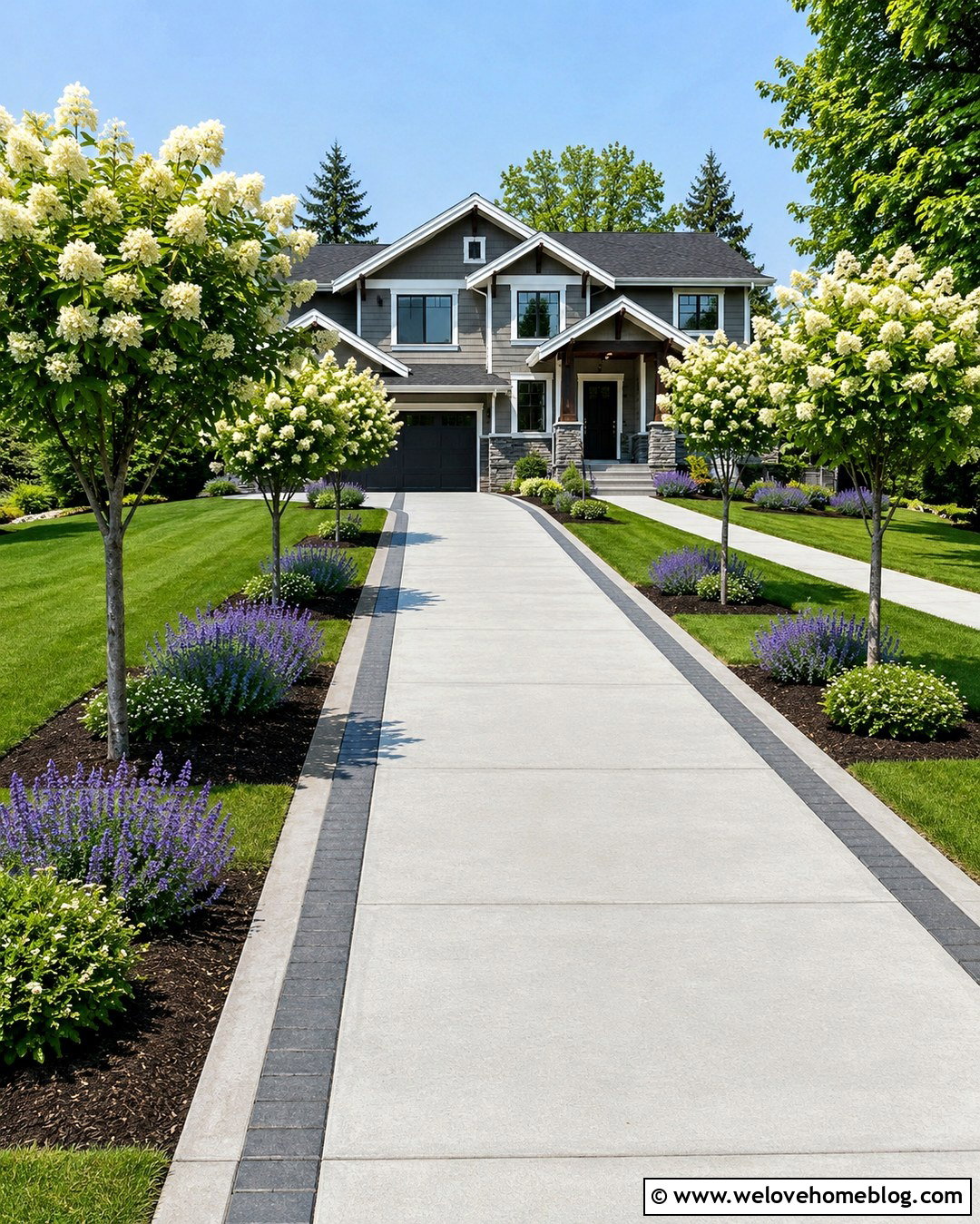
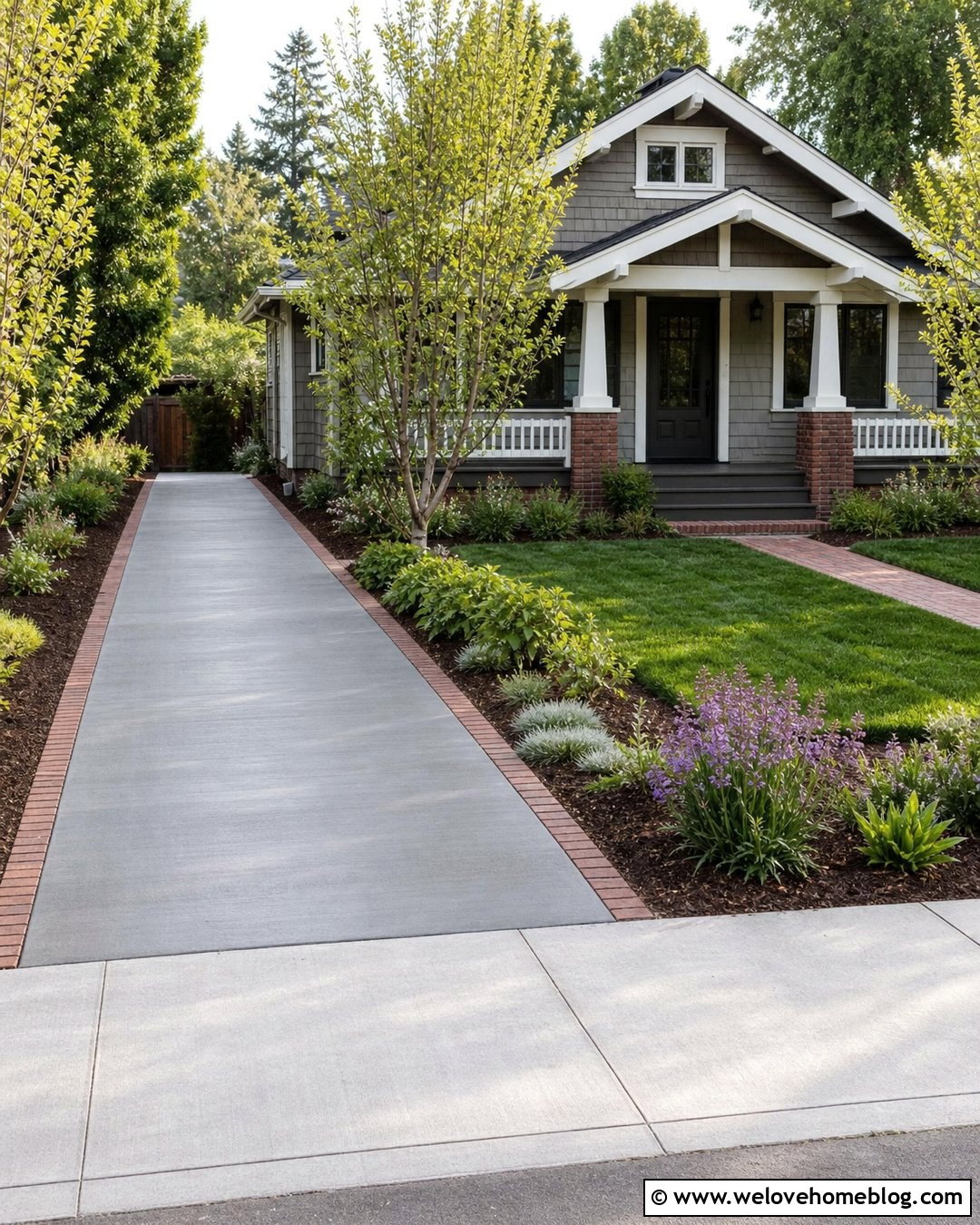
Japanese tree lilac is a practical ornamental choice for a narrow driveway where a broad shade tree would feel crowded. Line a straight light gray concrete driveway with single-trunk specimens planted in rectangular beds beyond a dark paver ribbon. Low catmint, compact spirea, and neatly mulched ground keep the design colorful without reducing vehicle clearance. Creamy seasonal flowers and a rounded canopy soften the clean hardscape. This look pairs well with suburban Craftsman, split-level, and contemporary homes. Allow enough setback for the mature crown, and select trees with strong central leaders and balanced branching. Japanese tree lilac can also work near some utility situations when its mature size is appropriate. Repeating identical beds and spacing gives the modest driveway a more intentional, finished appearance.
25. Mixed Native Tree-Lined Driveway
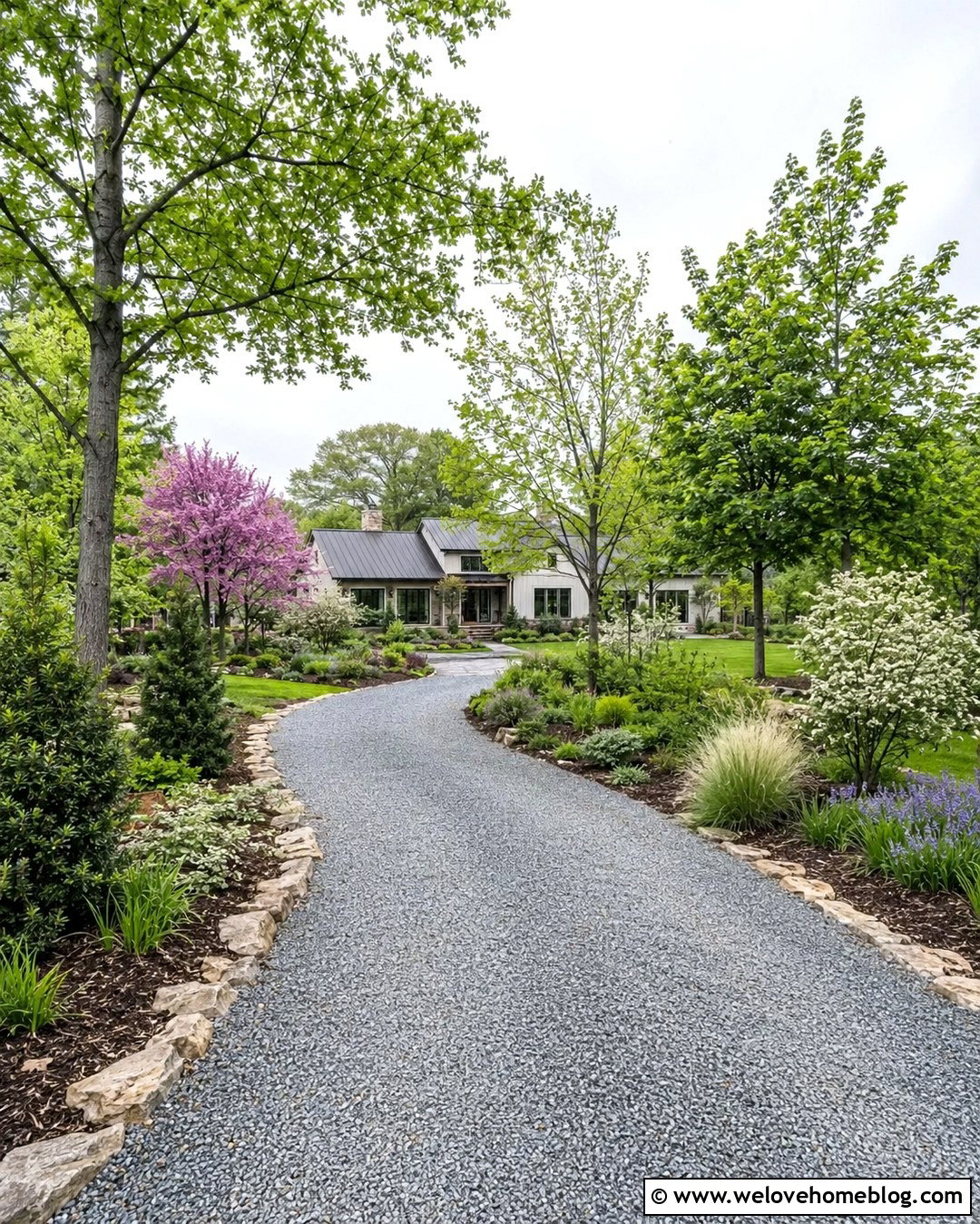
A mixed native tree line gives a long driveway seasonal variety and greater visual resilience than a single-species avenue. Combine locally appropriate oaks, serviceberries, redbuds, hollies, and hornbeams in a planned sequence beside a curved permeable gravel driveway. Keep the largest canopy trees farthest from the pavement, then use smaller flowering trees near the entrance and house. Fieldstone edging, native grasses, flowering perennials, and generous mulch beds connect the different species. This informal arrangement suits woodland homes, rural farmhouses, and natural contemporary architecture. Repeat several species instead of planting one of everything, which helps the landscape feel organized. Match every selection to local soil, moisture, climate, and available space. The completed driveway offers privacy, wildlife value, seasonal interest, and a relaxed sense of arrival.
Conclusion:
The best tree-lined driveway combines attractive plants with realistic long-term planning. These 25 trees to line driveway ideas show how evergreens, flowering trees, native species, and large shade trees can work with gravel, asphalt, concrete, brick, pavers, and resin-bound surfaces. Measure the planting space and research mature height, crown width, root needs, and local hardiness before buying. Account for utilities, drainage, road salt, snow storage, visibility, and vehicle clearance. Wide rural drives can support oaks and maples, while narrow suburban entrances benefit from upright junipers, arborvitae, hornbeams, and compact ornamentals. Consistent spacing, suitable borders, and simple understory planting will make the entire approach feel cohesive and intentional.

Related posts:
Leave a Reply